


Abstract
Background and Clinical Significance: Severe malignant central airway obstruction can cause fatal asphyxia. Therapeutic airway intervention generally provides the most immediate relief, but some patients decline it. Case Presentation: A 74-year-old woman presented with approximately 90% tracheal obstruction and complete right main bronchial occlusion. Pancreatic metastasis was present at diagnosis; contrast-enhanced brain CT showed no brain metastases. She declined airway stenting and radiotherapy. Because diagnostic bronchoscopy was considered liable to worsen her respiratory status, carboplatin, nab-paclitaxel, and pembrolizumab were started before histopathological confirmation, after discussion of diagnostic uncertainty and treatment risks. Bronchial artery embolization and diagnostic biopsy followed on hospital day 4. Post-bronchoscopic respiratory instability required mechanical ventilation until day 7. Biopsy confirmed squamous cell carcinoma with a programmed death-ligand 1 tumour proportion score of 1%. Computed tomography approximately 1 month after treatment initiation showed tumour regression and airway reopening. She discontinued supplemental oxygen and was discharged ambulatory. After beginning the second cycle, she chose to discontinue anticancer therapy and died under palliative care approximately 1 month after discharge. Conclusions: This case documents short-term clinical improvement and airway recanalization after chemoimmunotherapy in a patient who declined airway-directed treatment. The timing and causes of early improvement cannot be established precisely, and the observation does not establish safety, comparative efficacy, or a survival benefit. Systemic therapy should not substitute for urgent airway intervention when immediate mechanical relief is required.
1. Introduction and Clinical Significance
Malignant central airway obstruction (MCAO) involves clinically important narrowing of the trachea, main bronchi, or bronchus intermedius by an intraluminal tumor, extrinsic compression, or a mixed mechanism. In a recent imaging-based cohort, MCAO involving at least 25% of the airway lumen was identified in 17% of patients with lung cancer and was independently associated with shortened survival [1]. Beyond its prognostic significance, progressive narrowing may lead to post-obstructive infection, atelectasis, respiratory failure, or fatal asphyxia. Preventing progression to complete obstruction is therefore a time-sensitive clinical objective.
The 2025 American College of Chest Physicians clinical practice guideline suggests therapeutic bronchoscopy as an adjunct to systemic medical therapy and/or local radiation for symptomatic central airway obstruction [2]. Rigid bronchoscopy, mechanical debulking, ablation, dilation, and stent placement can restore airway patency rapidly, although the choice of treatment depends on the site and mechanism of obstruction, distal airway viability, patient condition, available expertise, and patient preference [2,3,4]. Systemic anticancer therapy generally has a slower and less predictable onset and is therefore not considered a substitute for urgent mechanical relief in impending respiratory collapse.
Nevertheless, some patients decline airway-directed procedures or cannot undergo them. Evidence guiding systemic therapy as the initial strategy in this setting remains limited. We report a patient with severe tracheal and right main bronchial obstruction who declined stenting and radiotherapy and experienced rapid clinical stabilization followed by radiographic airway recanalization after early chemoimmunotherapy. The case illustrates both the potential short-term utility and the important limitations of this approach.
2. Case Presentation
A 74-year-old woman with a 20-pack-year smoking history and no major pre-existing illness was referred for progressive dyspnea. Two weeks before admission, breathlessness had worsened and begun to interfere with walking and daily activities. At presentation, she had a modified Medical Research Council dyspnea grade of 3 and an Eastern Cooperative Oncology Group performance status of 2. She lived alone and remained independent in eating and bathing, although prolonged walking caused marked dyspnea.
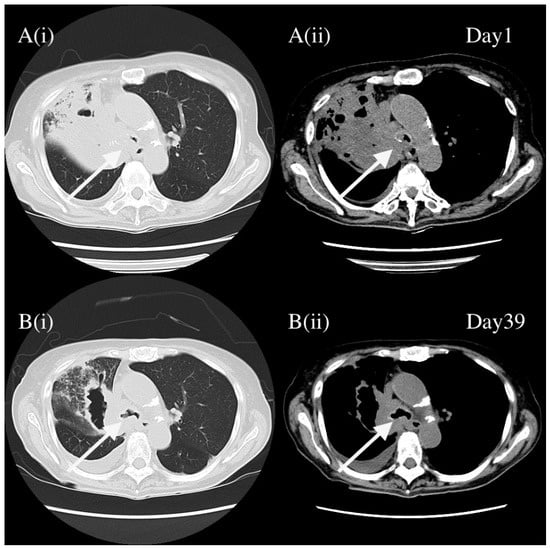
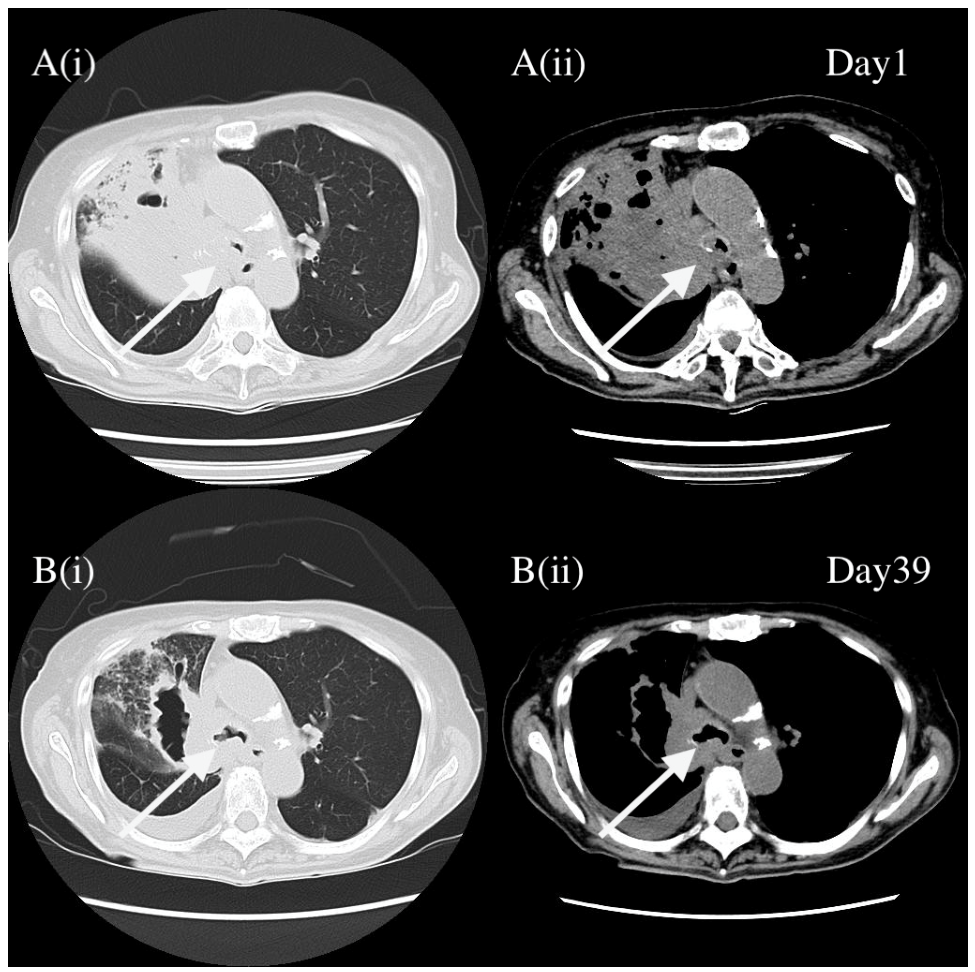
Her respiratory rate was 25 breaths/min, oxygen saturation was 98% while receiving oxygen at 0.5 L/min, heart rate was 110 beats/min, blood pressure was 125/94 mmHg, and body temperature was 36.2 degrees C. Physical examination revealed wheezing and increased work of breathing. Contrast-enhanced chest computed tomography (CT) demonstrated a centrally located tumor occupying approximately 90% of the tracheal lumen, complete obstruction of the right main bronchus, and right upper-lobe collapse (Figure 1A). Pancreatic metastasis was present at the initial diagnosis, establishing metastatic lung cancer. Contrast-enhanced brain CT showed no brain metastases. No major vascular invasion was identified. Airway stenting and radiotherapy were proposed, but the patient declined both interventions. The attending respiratory physician led the clinical decision-making process in consultation with the respiratory medicine team and after discussion with the patient.
Figure 1.
Computed tomography before and after chemoimmunotherapy. (A(i,ii)) On admission, the central tumor caused near-complete tracheal narrowing and complete obstruction of the right main bronchus (arrows). (B(i,ii)) Approximately 1 month after treatment initiation (image labeled day 39), the tumor had markedly regressed and the trachea and right main bronchus had reopened (arrows). Lung-window images are shown on the left and mediastinal-window images on the right.
Because of progressive symptoms and the risk of complete tracheal occlusion, early systemic therapy aimed at tumor reduction was discussed. The treating team was concerned that diagnostic bronchoscopy and tissue sampling in the presence of severe airway narrowing could precipitate respiratory deterioration. Systemic therapy was initiated before tissue sampling because deterioration during or after bronchoscopy might have precluded subsequent anticancer treatment. The aim was to preserve the opportunity to initiate systemic therapy while the patient could still tolerate it; clinically meaningful tumor shrinkage within the two days before biopsy could not be assumed. Although histopathological confirmation was not yet available, squamous cell carcinoma was clinically suspected based on the central tumor location, severe airway obstruction, markedly elevated CYFRA 21-1 level (58.3 ng/mL), and normal ProGRP level. Both tumor marker results were available before treatment initiation. After discussion of the diagnostic uncertainty, potential adverse effects, and the possibility that urgent airway intervention might still become necessary, she accepted empiric chemoimmunotherapy. On hospital day 2, she received carboplatin (area under the curve 5 on treatment day 1), nab-paclitaxel (100 mg/m2 on treatment days 1, 8, and 15), and pembrolizumab (200 mg on treatment day 1).
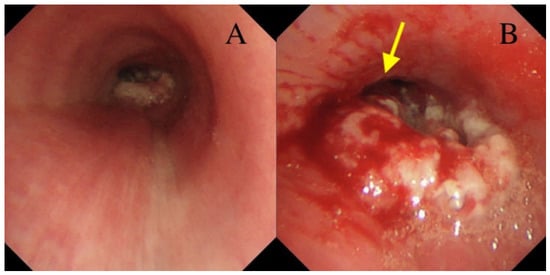
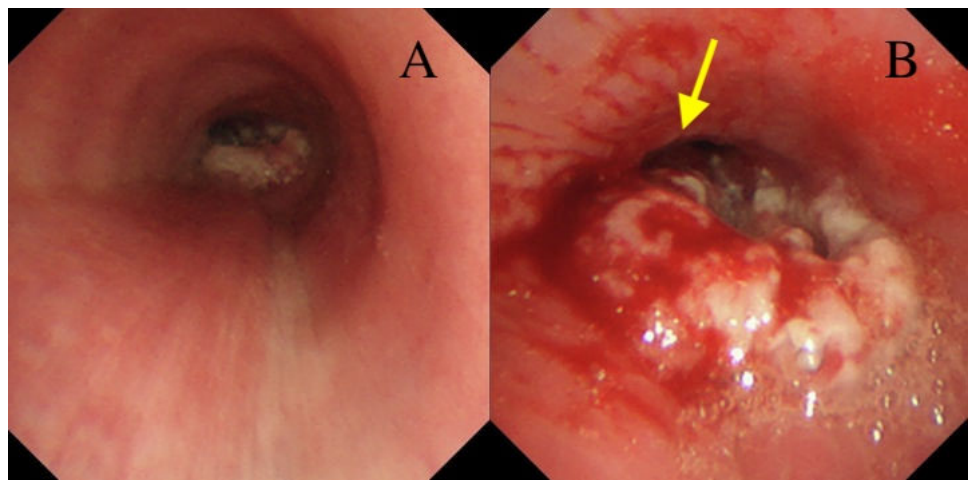
Because the residual airway lumen was extremely narrow, even limited biopsy-related bleeding was considered potentially hazardous. After consultation between respiratory medicine and radiology, prophylactic bronchial artery embolization with gelatin sponge was performed on hospital day 4 to reduce the bleeding risk before tissue sampling. Flexible bronchoscopy showed a friable tumor causing severe distal tracheal obstruction (Figure 2). A diagnostic biopsy was obtained without therapeutic tumor debulking, ablation, or stent placement. The possibility of endotracheal intubation had been explained to the patient before bronchoscopy, and informed consent had been obtained. Despite control of bleeding, respiratory instability occurred after bronchoscopy, requiring conventional orotracheal intubation and standard mechanical ventilation. No special airway-isolation technique or modifications to conventional ventilatory management were required. Oxygenation improved on the same day, and she was extubated on hospital day 7 to oxygen at 4 L/min by nasal cannula. Supplemental oxygen was then gradually reduced.
Figure 2.
Bronchoscopic findings during diagnostic evaluation. (A) A friable endobronchial tumor produced severe narrowing of the distal tracheal lumen. (B) Contact bleeding was observed during tissue sampling; the arrow indicates the residual airway lumen. No therapeutic debulking, ablation, or stent placement was performed.
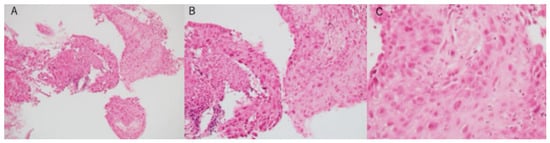
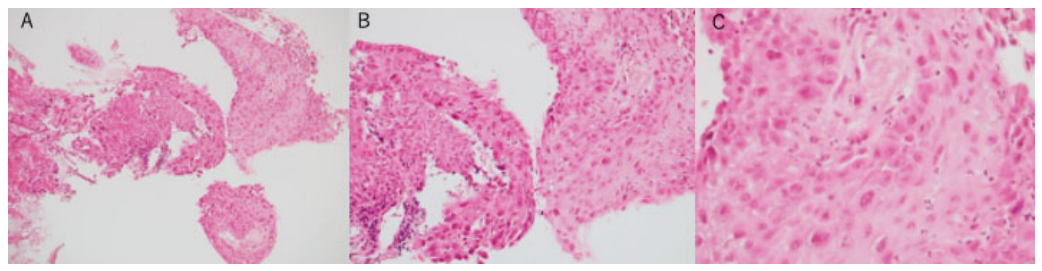
Histopathologic examination confirmed squamous cell carcinoma (Figure 3). No actionable driver alteration was detected, and programmed death-ligand 1 expression was low, with a tumor proportion score of 1%. The serum squamous cell carcinoma antigen level was 16.7 ng/mL (result available after treatment initiation). Carcinoembryonic antigen was not elevated.
Figure 3.
Histopathological findings of the bronchoscopic biopsy specimen. Hematoxylin and eosin-stained sections show atypical epithelial cells with enlarged, pleomorphic nuclei and eosinophilic cytoplasm, consistent with squamous cell carcinoma. Original magnification: (A) ×100; (B) ×200; (C) ×400.
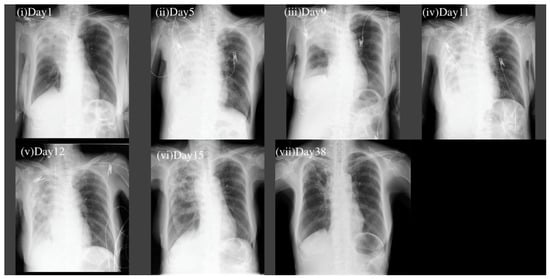
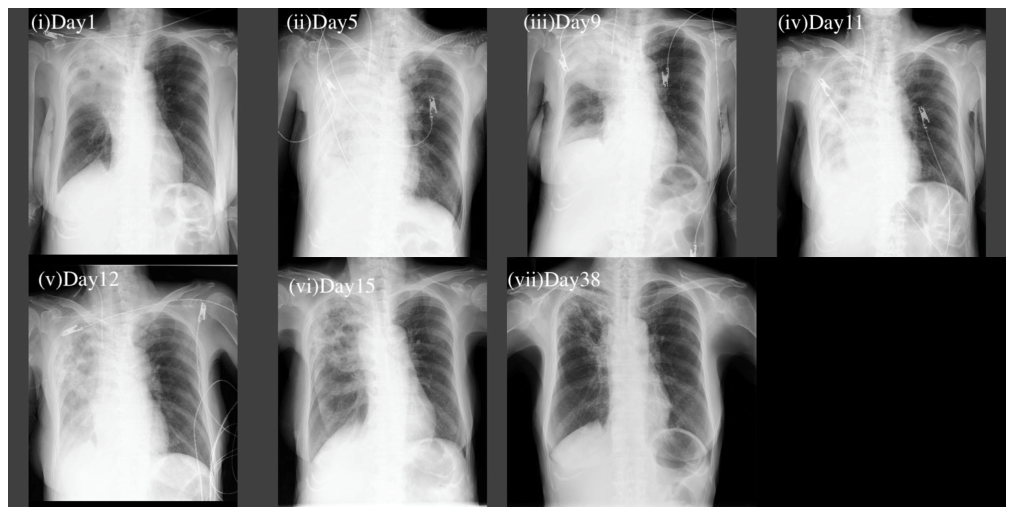
Serial chest radiographs demonstrated dynamic right-sided atelectatic changes followed by gradual re-expansion (Figure 4). Follow-up CT approximately 1 month after treatment initiation showed marked tumor shrinkage and reopening of both the tracheal lumen and right main bronchus (Figure 1B). She no longer required supplemental oxygen, had an oxygen saturation of 97% on room air, and was discharged ambulatory.
Figure 4.
Serial chest radiographs on hospital days 1, 5, 9, 11, 12, 15, and 38. The images show dynamic right-sided atelectatic changes after diagnostic bronchoscopy followed by gradual re-expansion during chemoimmunotherapy and supportive care.
Despite clinical improvement, the patient continued to decline airway stenting and radiotherapy. After the second treatment cycle had begun, the patient expressed a preference to prioritize comfort and quality of life rather than continue anticancer therapy. Following discussion with her family, treatment was discontinued and she was transferred to hospice care. Dyspnea worsened after discharge, and she died under palliative care approximately 1 month later. No further CT or bronchoscopic assessment was performed. The patient’s clinical course is summarized in Table 1.
Table 1.
Clinical timeline.
3. Discussion
This case demonstrates substantial but temporary clinical and radiographic improvement in severe MCAO after early chemoimmunotherapy without therapeutic bronchoscopic recanalization, airway stenting, or radiotherapy. The initial objective was not to establish systemic therapy as a new standard for MCAO, but to achieve prompt tumor reduction while respecting the decision of a patient who declined therapeutic airway intervention. The marked airway reopening approximately 1 month later and the transition from oxygen dependence and mechanical ventilation to ambulatory discharge represent clinically meaningful short-term outcomes.
Therapeutic bronchoscopy remains the preferred approach when immediate airway relief is required. In a multicenter registry, therapeutic bronchoscopy achieved high technical success and improved dyspnea and health-related quality of life in many patients [3]. The AQuIRE registry also showed that these procedures carry measurable risks, particularly in urgent or emergent settings and in patients with poor physiologic reserve [4]. Current guidance therefore emphasizes individualized treatment by a multidisciplinary team, with rigid bronchoscopy, debulking, ablation, dilation, stenting, radiation, and systemic therapy used according to anatomy, urgency, and patient goals [2]. The present case should be interpreted within that framework rather than as evidence against therapeutic bronchoscopy. At our institution, there is no fixed algorithm specifically for patients who decline airway-directed intervention. Management is individualized according to airway anatomy, clinical urgency, available options, and the patient’s informed preferences. Cultural or social influences on this patient’s choices were not formally assessed, and their contribution cannot be determined; this single case cannot establish whether similar refusals are becoming more frequent.
Clinical improvement and radiographic tumor response should be distinguished. The patient was extubated on hospital day 7, whereas airway reopening was documented by CT approximately 1 month after treatment initiation. These observations do not establish that systemic therapy provided immediate airway relief. The day-4 deterioration and subsequent recovery occurred in the context of bronchoscopy, bronchial artery embolization, mechanical ventilation, and other supportive care. Resolution of obstructive atelectasis may also have contributed to the improvement in oxygenation and radiographic appearance. The relative contributions of tumor regression, lung re-expansion, and supportive care cannot be quantified from the available observations. In contrast, therapeutic bronchoscopy can provide mechanical relief during the procedure and should not be deferred solely while awaiting an uncertain systemic response [2,3]. The systemic regimen was selected because rapid tumor reduction was considered necessary to prevent further airway obstruction. Squamous cell carcinoma was clinically suspected based on the central tumor location, severe airway obstruction, markedly elevated CYFRA 21-1 level (58.3 ng/mL), and normal ProGRP level. Although small-cell lung cancer could not be excluded, these findings supported the clinical suspicion of squamous cell carcinoma, consistent with previous epidemiological and tumor marker studies [1,5]. The elevated SCC antigen level (16.7 ng/mL), which became available after treatment initiation, further supported this suspicion.
In KEYNOTE-407, pembrolizumab combined with carboplatin and paclitaxel or nab-paclitaxel improved survival and response outcomes in metastatic squamous non-small cell lung cancer, with benefit observed across programmed death-ligand 1 expression categories [6]. Therefore, the low tumor proportion score of 1% in our patient does not imply that pembrolizumab was inactive. Conversely, the early response cannot be attributed specifically to chemotherapy because all three agents were administered together. This was an individualized decision under diagnostic uncertainty and should not be interpreted as support for routinely initiating chemoimmunotherapy before histopathological confirmation. The subsequent deterioration after biopsy documents the procedural risk encountered in this patient, but it does not establish that pretreatment prevented or reduced that risk.
We previously reported durable airway improvement after early carboplatin, nab-paclitaxel, and pembrolizumab in a patient with MCAO and programmed death-ligand 1 expression of 100% who also declined invasive airway treatment [7]. More recently, marked resolution of multifocal airway mucosal recurrence of squamous cell carcinoma after platinum-taxane immunochemotherapy was described when local salvage therapy was considered prohibitively risky [8]. The present case differs by the combination of low programmed death-ligand 1 expression, near-complete tracheal narrowing, complete right main bronchial occlusion, temporary mechanical ventilation, and a brief observed period of clinical benefit in the setting of subsequent treatment discontinuation. Together, these reports suggest that rapid systemic tumor reduction can sometimes create a therapeutic window, but they do not identify reliable criteria for selecting systemic therapy alone. The additional lesson of the present case lies in treatment selection under diagnostic uncertainty and the possibility that meaningful short-term improvement may not necessarily translate into durable benefit.
Several safeguards are essential if this strategy is considered. The patient should not have ongoing or imminent respiratory collapse that requires immediate mechanical relief; close monitoring and a rescue airway plan must be available; tumor histology and expected treatment sensitivity should be considered; and the patient must understand that systemic therapy may fail before a response occurs. Radiotherapy can occasionally facilitate extubation in selected patients with malignant airway obstruction [9], while interventional pulmonary procedures can also permit liberation from mechanical ventilation [10]. These options should be discussed rather than delayed solely in anticipation of a systemic response. Clinicians sometimes face difficult decisions at the intersection of patient preferences, medical appropriateness, and ethical responsibilities. In time-critical situations, they may be required to act before diagnostic uncertainty can be fully resolved. The present case highlights this challenge, illustrating the complexity of balancing patient autonomy, clinical urgency, and the risks of treatment under uncertainty.
This report has several limitations. First, it describes a single patient and cannot establish the comparative effectiveness of chemoimmunotherapy and airway-directed treatment. Second, early serial CT or repeat bronchoscopy was not performed, so the precise onset of airway reopening is unknown. Third, the individual contributions of chemotherapy and pembrolizumab cannot be separated. Fourth, no validated patient-reported quality-of-life instrument was used; improvement is inferred from oxygen discontinuation, extubation, and ambulatory discharge. Finally, treatment discontinuation according to patient preference and the absence of subsequent airway imaging limit assessment of response durability; the cause of recurrent dyspnea cannot be established, and no survival benefit can be inferred.
4. Conclusions
Early chemoimmunotherapy produced marked but temporary airway recanalization in a patient with severe MCAO who declined stenting and radiotherapy. In carefully selected and closely monitored patients, systemic therapy may create a short clinical window for further planning. It should not be considered a substitute for urgent therapeutic bronchoscopy or other airway-directed treatments when respiratory collapse is imminent.
Author Contributions
Conceptualization, A.N.; investigation, A.N. and N.K.; data curation, A.N.; visualization, A.N.; writing—original draft preparation, A.N.; writing—review and editing, N.K. and K.I. All authors have read and agreed to the published version of the manuscript.
Funding
This research received no external funding.
Institutional Review Board Statement
Ethical review and approval were not required for this single-patient case report in accordance with the institutional policy of Japanese Red Cross Ise Hospital.
Informed Consent Statement
Written informed consent was obtained from the patient for publication of this case report and the accompanying images.
Data Availability Statement
All data relevant to this case are included in the article. Additional de-identified information may be available from the corresponding author on reasonable request, subject to institutional and ethical requirements.
Conflicts of Interest
The authors declare no conflicts of interest.
References
- Ivanick, N.M.; Kunadharaju, R.; Bhura, S.; Mengiste, H.; Saeed, M.; Saradna, A.; Grover, H.; Kalvapudi, S.; Yendamuri, S.; Yu, H.; et al. Epidemiology and survival of malignant central airway obstruction in lung cancer identified on cross-sectional imaging. J. Bronchol. Interv. Pulmonol. 2024, 31, e0970. [Google Scholar] [CrossRef] [Scilit] [PubMed]
- Mahmood, K.; Frazer-Green, L.; Gonzalez, A.V.; Shofer, S.L.; Argento, A.C.; Welsby, I.; Hales, R.; Shojaee, S.; Gardner, D.D.; Chang, J.Y.; et al. Management of central airway obstruction: An American College of Chest Physicians clinical practice guideline. Chest 2025, 167, 283–295. [Google Scholar] [CrossRef] [Scilit] [PubMed]
- Ost, D.E.; Ernst, A.; Grosu, H.B.; Lei, X.; Diaz-Mendoza, J.; Slade, M.; Gildea, T.R.; Machuzak, M.S.; Jimenez, C.A.; Toth, J.; et al. Therapeutic bronchoscopy for malignant central airway obstruction: Success rates and impact on dyspnea and quality of life. Chest 2015, 147, 1282–1298. [Google Scholar] [CrossRef] [Scilit] [PubMed]
- Ost, D.E.; Ernst, A.; Grosu, H.B.; Lei, X.; Diaz-Mendoza, J.; Slade, M.; Gildea, T.R.; Machuzak, M.; Jimenez, C.A.; Toth, J.; et al. Complications following therapeutic bronchoscopy for malignant central airway obstruction: Results of the AQuIRE Registry. Chest 2015, 148, 450–471. [Google Scholar] [CrossRef] [Scilit] [PubMed]
- Liu, L.; Teng, J.; Zhang, L.; Cong, P.; Yao, Y.; Sun, G.; Liu, Z.; Yu, T.; Liu, M. The Combination of the Tumor Markers Suggests the Histological Diagnosis of Lung Cancer. BioMed Res. Int. 2017, 2017, 2013989. [Google Scholar] [CrossRef] [Scilit] [PubMed] [PubMed Central]
- Paz-Ares, L.; Luft, A.; Vicente, D.; Tafreshi, A.; Gümüş, M.; Mazières, J.; Hermes, B.; Çay Şenler, F.; Csőszi, T.; Fülöp, A.; et al. Pembrolizumab plus chemotherapy for squamous non-small-cell lung cancer. N. Engl. J. Med. 2018, 379, 2040–2051. [Google Scholar] [CrossRef] [Scilit] [PubMed]
- Nigi, A.; Iwamoto, K.; Yabana, T.; Tanaka, H.; Toyoshima, H. Non-invasive prevention of malignant airway obstruction in an elderly lung cancer patient using early chemo combination with pembrolizumab therapy: A case study. Respirol. Case Rep. 2025, 13, e70135. [Google Scholar] [CrossRef] [Scilit] [PubMed]
- Li, Z.; Wang, C.; Tay, Y.; Li, S. Marked response to immunochemotherapy in airway mucosal recurrence of lung squamous cell carcinoma. Interdiscip. Cardiovasc. Thorac. Surg. 2026, 41, ivag193. [Google Scholar] [CrossRef] [Scilit] [PubMed]
- Louie, A.V.; Lane, S.; Palma, D.A.; Warner, A.; Cao, J.Q.; Rodrigues, G.B. Radiotherapy for intubated patients with malignant airway obstruction: Futile or facilitating extubation? J. Thorac. Oncol. 2013, 8, 1365–1370. [Google Scholar] [CrossRef] [Scilit] [PubMed]
- Boyd, M.; Rubio, E. The utility of interventional pulmonary procedures in liberating patients with malignancy-associated central airway obstruction from mechanical ventilation. Lung 2012, 190, 471–476. [Google Scholar] [CrossRef] [Scilit] [PubMed]
Disclaimer/Publisher’s Note: The statements, opinions and data contained in all publications are solely those of the individual author(s) and contributor(s) and not of MDPI and/or the editor(s). MDPI and/or the editor(s) disclaim responsibility for any injury to people or property resulting from any ideas, methods, instructions or products referred to in the content. |
© 2026 by the authors. Licensee MDPI, Basel, Switzerland. This article is an open access article distributed under the terms and conditions of the Creative Commons Attribution (CC BY) license.