


Abstract
Background and Clinical Significance: B-vitamin deficiencies can lead to widespread diseases including cardiac, neurologic, hematologic, dermatologic, and oral pathologies. The often-multi-organ effects of B-vitamin deficiencies occur secondary to the roles that B-vitamins play in metabolism, myelin sheath formation, and deoxyribonucleic acid maintenance—key components of necessary processes for life; Case Presentation: The authors present an educational case of a 44-year-old female presenting with left-sided lower extremity cramps and bilateral lower extremity swelling, who on routine serological testing was found to have severe deficiencies of multiple B-vitamins—explaining her semiology; Conclusions: When B-vitamin concentrations fall below physiologically necessary levels, their dependent biochemical reactions cease, which can lead to devastating effects on the entire body, including but not limited to significant biochemical injury, disability, and/or death. Furthermore, one B-vitamin deficiency will often co-present with or co-precipitate other B-vitamin deficiencies for reasons that remain fairly unelucidated as of yet, despite numerous animal model studies. This case serves as a reminder that neurologic manifestations of systemic disease are common and that a wide differential, including metabolic causes of neurologic disease, should always be kept in the workup of patients with neurologic disease.
1. Introduction and Clinical Significance
In patients with severe B-vitamin deficiencies, major biochemical pathways can malfunction leading to the major dysfunction of multiple body systems that do not always align with clear pathophysiologic mechanisms. Many times, these will be lumped together initially as functional disease due to the lack of clear anatomic or physiologic causes. Furthermore, one B-vitamin deficiency will often co-present with or co-precipitate other B-vitamin deficiencies, likely due to impaired intestinal absorption [1,2]. Nevertheless, the actual mechanism of how and why this observed phenomenon occurs remains unelucidated. Within this case report, the authors present an educational case and pertinent biochemistry review of a 44-year-old female presenting with left-sided lower extremity cramps and bilateral lower extremity swelling, who was found to have severe deficiencies of multiple B-vitamins.
2. Case Presentation
A 44-year-old female with essential tremor, hypothyroidism, asthma, chronic migraine, bipolar I disorder, and anxiety presented with a several-year history of left posterior lower extremity cramps. These cramps were normally a “3–6/10” in severity but ranged up to “10/10” for a month that culminated in a morning with 10/10 cramping pain in the usual locations but radiating proximally into her buttocks and “causing her to fall to the ground”. There were no exacerbating or alleviating factors, and the pain was so bad that she was “in tears and blacked out.”
In the review of systems, the patient reported intermittent left-sided numbness of the lower extremity below the left hip, left-sided shooting electrical pain along the distribution of the occipital nerve, and daily bilateral headaches different from her typical migraines. Her asthma was worse, and she also noted new-onset and increasingly bothersome swelling of both lower extremities.
Physical examination was pertinent for left lower extremity weakness (strength measured at a 4/5 in the hip flexors, quadriceps, hamstrings, plantar flexors, and dorsiflexors), diminished whole left-sided sensation to fine touch, diminished proprioception and vibration bilaterally below the level of the mid-shins, crossed extensor sign, and positive Romberg sign. Palpation of the left greater occipital nerve reproduced neuralgic symptoms, and both ankles had 2+ pitting edema.
2.1. Differential Diagnosis
Due to her many symptoms and signs, the team considered that the patient might be experiencing metabolic disturbances such as worsening thyroid dysfunction, diabetes mellitus, or vitamin deficiency. We also considered autoimmune diseases such as systemic lupus, rheumatoid arthritis, or Sjogren’s disease, polyneuropathy, radiculopathy from cervical disc herniation or tumor, and multiple sclerosis. Lastly, we considered whether this patient might be suffering not from a single root cause but from multiple coinciding disease states.
2.2. Results and Final Diagnosis
Given this patient’s specific constellation of symptoms, obtaining a B-vitamin status assessment was of high importance. The serum vitamin B1 (normal: 8–30 nmol/L) and vitamin B2 (normal: 6.2–39 nmol/L) were undetectable; B9 was low at 3.4 ng/mL (normal: >4.0); B12 was insufficient at 425 pg/mL (optimal levels being 500 pg/mL or higher and deficient being below around 250 pg/mL depending on the laboratory) [3]; and B6 was elevated at 30.7 ng/mL (normal range of 2.1–21.7 ng/mL). The thyroid stimulating hormone level was elevated at 7.14 mIU/L (normal: 0.45 to 4.50 mIU/mL), however, free T4 was within normal limits at 1.29 ng/dL (normal: 0.8 to 1.8 ng/dL) secondary to treatment with levothyroxine. The echocardiogram was normal, including the ejection fraction. On CBC, the hemoglobin and hematocrit were normal at 13.1 g/dL and 37.6%, respectively, her MCV was elevated at 108 fL (Normal 78–100 fL), and her MCH was elevated at 37.5 pg (Normal 27–34 pg). The following results were normal: lactate dehydrogenase, angiotensin-1-converting enzyme, hepatitis acute panel, methylmalonic acid, homocysteine, serum and urine protein electrophoresis, rheumatoid factor, and Sjogren’s antibodies, MRI of her brain and entire spine with and without contrast, and a chest X-ray. All laboratory results are included in Table 1, whereas all imaging investigations and their results are included in Table 2.
Table 1.
Serum laboratory investigations.
Table 2.
Imaging investigations.
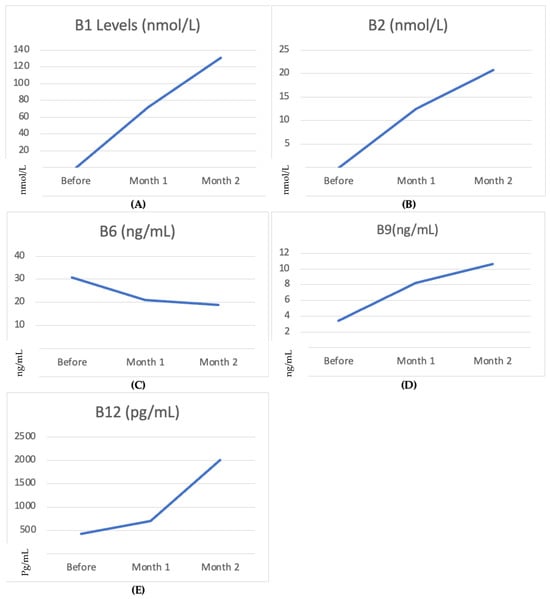
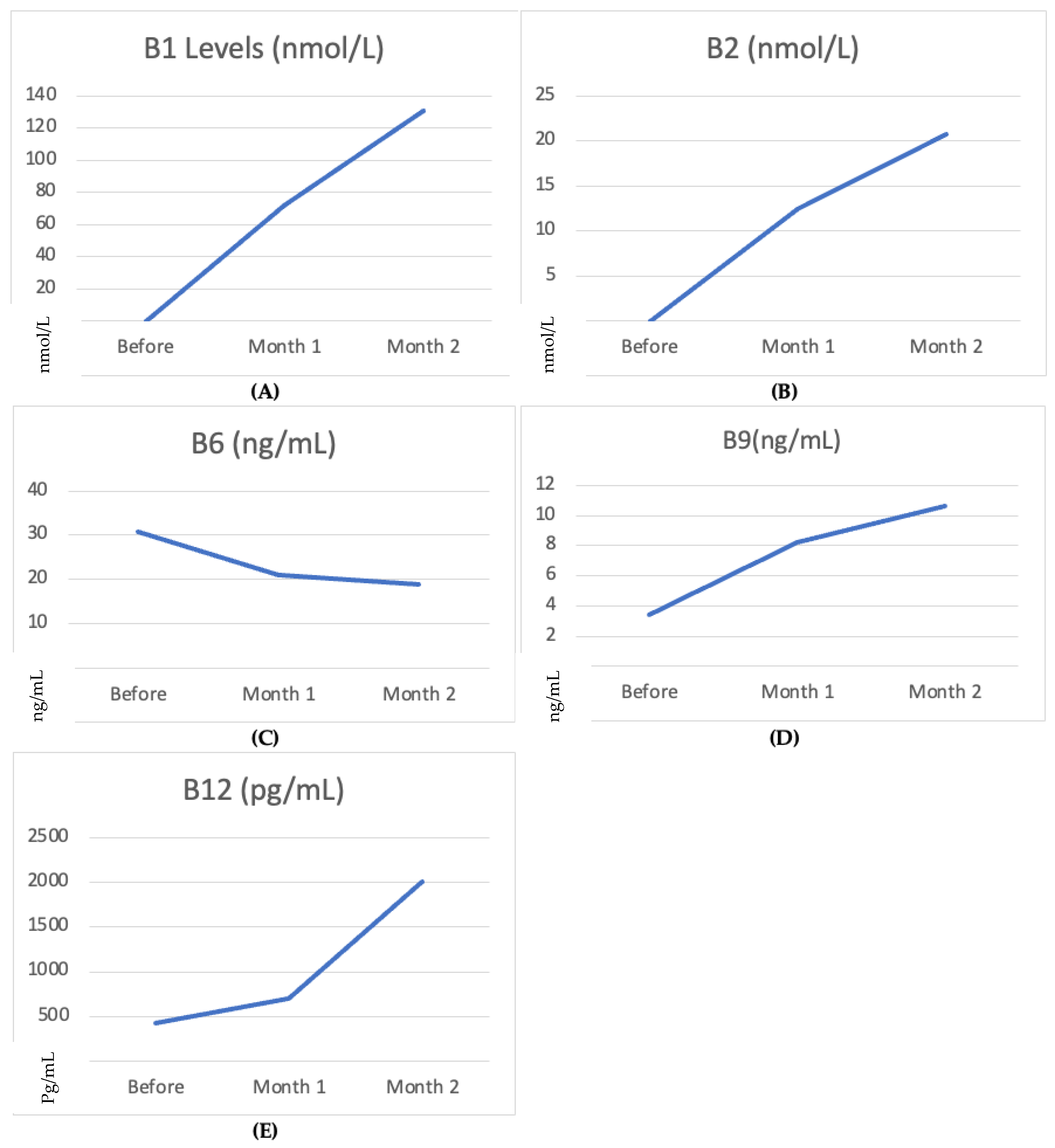
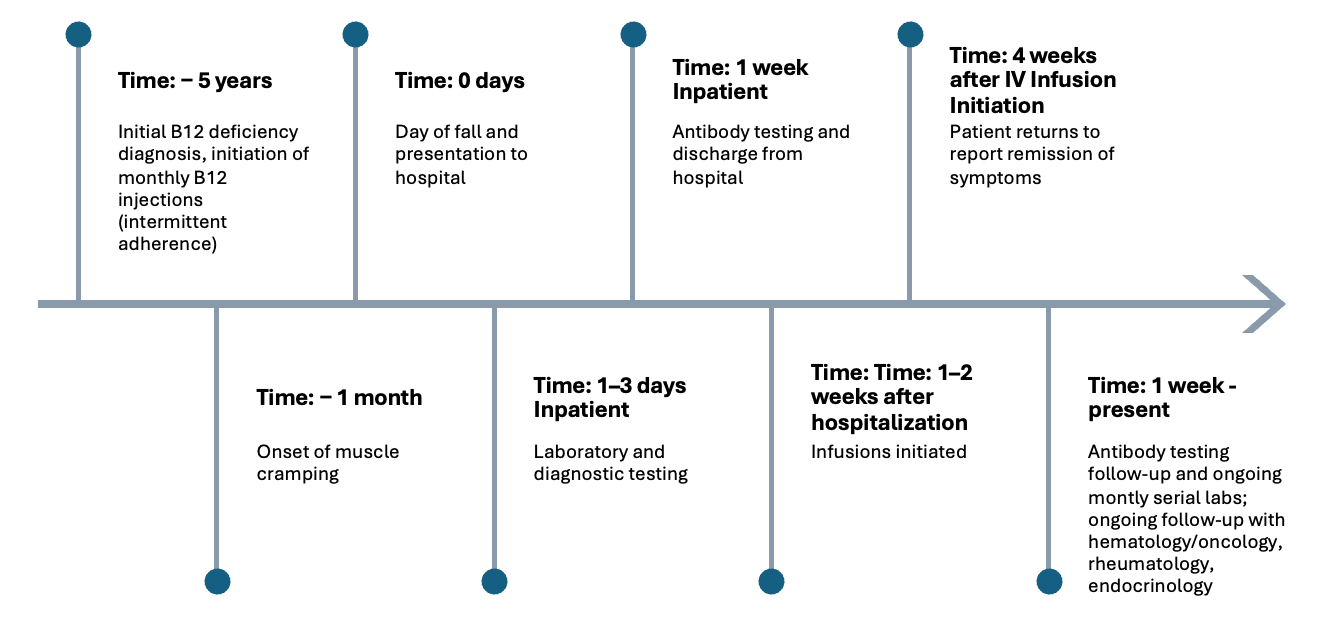
Further discussion with the patient revealed a prior diagnosis of B12 deficiency roughly 5 years prior for which she received monthly B12 injections (although she was only intermittently taking the medication). Unfortunately, she had not been worked up for the cause of the B12 deficiency at the time of discovery. Therefore, based on the severely low levels of B12 and other B-vitamins, the neurology service tested for intrinsic factor antibody, which was positive with a titer of >1.53 AU/mL. Our subsequent working diagnoses were likely pernicious anemia and both wet and dry beriberi, for which she received B1, B9, and B12 vitamin infusions on a weekly basis before she was completely transitioned to oral medications only, as a joint plan between the neurology team and her primary care physician. For the vitamin B1, she was given 500 mg of intravenous thiamine weekly for four weeks before being switched to oral thiamine at 100 mg daily. This regiment was chosen to rapidly increase the patient’s thiamine levels and provide high levels of thiamine for maintenance. For her low vitamin B2 level she was given oral riboflavin at a dose of 400 mg every night. This was chosen as this is the highest dose available orally, and it provides some benefit for migraine headaches one of her chronic illnesses. For her folate, she was infused with folic acid at 1 mg each week intravenously for four weeks followed by oral folic acid at 1 mg every day. The intravenous infusion was chosen, because the patient was also receiving intravenous treatment for her thiamine repletion, and this could be added to that infusion; the oral dose of 1 mg a day was chosen, as this is the highest over the counter dose available. For her high vitamin B6, she was instructed to take no more than 50 mg a day from all dietary sources so as to allow the vitamin B6 levels to drop naturally. For her low B12, she was infused with 1000 mcg each week intravenously for four weeks followed by subcutaneous injections of B12 1000 mcg every four weeks due to her intrinsic factor antibody disease. The intravenous infusion was chosen because the patient was also receiving intravenous treatment for her thiamine repletion. In addition, the patient underwent serial laboratory tests every month to ensure that she would no longer be deficient following the administration of vitamins (Table 3 and Figure 1). A review of the medical history, lifestyle history, and other factors that could have led to the B-vitamin deficiency other than undertreated intrinsic factor antibody disease and B12 deficiency came back negative. Therefore, the patient was referred to hematology/oncology for further treatment of her intrinsic factor antibody disease, and at the time of writing, they had sent her for further rheumatologic work-up after diagnosing her with pernicious anemia, even though her hemoglobin and hematocrit were normal at 13.1 g/dL and 37.6% respectively, based on the fact that she had a positive intrinsic factor antibodies, her history of chronic nausea and vomiting, and her hematologic abnormalities. Her MCV was elevated at 108 fL (normal 78–100 fL), and her MCH was elevated at 37.5 pg (normal 27–34 pg). In addition, the patient was referred to endocrinology for management of her hypothyroidism and titration of her levothyroxine. In addition, she was referred to Gastroenterology for potential endoscopy of the stomach and esophagus. On return visits, the patient reported that she experienced recovery of all of her symptoms including the swelling of the bilateral ankles and a normalization of her MCV to 92 fL indicating a response to the B-vitamin supplementation. Due to the full recovery of the patient with the use of the B-vitamin supplementation, the exclusion of alternative causes with imaging testing and laboratories, and the responses of her hematologic profile, the patient’s final diagnosis was made as pernicious anemia, and both wet and dry beriberi. The wet beriberi diagnosis was made based on the peripheral edema with a normal echocardiogram that resolved with the use of thiamine supplementation. In many cases of early wet beriberi, peripheral edema is the only clinical sign [4]. A full timeline of events has been included for clarity (Figure 2).
Table 3.
Levels of B-vitamins before and after treatment.
Figure 1.
B-vitamin levels throughout the treatment period of monitoring. (A) Vitamin B1 levels over time, (B) vitamin B2 levels over time, (C) vitamin B6 levels over time, (D) vitamin B9 levels over time, (E) vitamin B12 levels over time.
Figure 2.
Timeline of events for this patient from before hospitalization to the present.
3. Discussion
B-vitamins are both absorbed from dietary sources and produced in smaller amounts by native intestinal flora, and diseases that affect the gastrointestinal tract such as celiac disease, Helicobacter pylori infection, ulcerative colitis, Crohn’s Disease, and alcohol use disorder can inhibit the uptake and synthesis of these B-vitamins by the body [5,6,7]. In our patient’s case, pernicious anemia prevented B12 absorption [8]. The intrinsic factor is a human-derived glycoprotein and a co-factor for the absorption of B12 in the small intestine [8]. In pernicious anemia, antibodies bind to the intrinsic factor, preventing B12 absorption, and resulting in diminishing reserves of this necessary vitamin, as the stores are utilized for normal bodily functions [8].
Beriberi is a constellation of symptoms resulting from low thiamine (vitamin B1) [9]. Major manifestations include high output heart failure or edema (wet beriberi) and neurological symptoms such as peripheral neuropathies (dry beriberi). Wernicke–Korsakoff syndrome is a severe form of dry beriberi and the most common presentation of dry beriberi in the western world, in which destruction of the mamillary bodies, a key component of the Papez circuit responsible for episodic memory formation, prevents said episodic memory formation [9]. Low B1 levels prevent pyruvate oxidase and transketolase reactions, preventing the appropriate utilization of glucose [10]. During the treatment of this patient, it was theorized that this patient’s undetectable thiamine levels potentially resulted in signs of both wet and dry beriberi, with both peripheral edema with a normal echocardiogram that resolved with B-vitamin supplementation and peripheral neuropathy that resolved with the supplementation of vitamin B1. It cannot be excluded that there may have been a role that vitamin B6 hypervitaminosis played in this patient’s peripheral neuropathy, as both the vitamin B1 hypovitaminosis and the vitamin B6 hypervitaminosis were treated simultaneously.
In patients with one B-vitamin deficiency, there is often a second B-vitamin deficiency. The most common co-deficiency in B12 deficiency, as in our patient, is that of folate (vitamin B9), which occurs as it becomes trapped in the folate cycle as its inactive form, 5-methyltetrahydrofolate, secondary to the lack of B12 to complete the folate cycle [11]. Other deficiencies associated with B12 deficiency include riboflavin (vitamin B2) and pyridoxine (vitamin B6) [1]. Examples of such co-deficiencies includes a case series of five patients published in 1975, where researchers found those patients with B12 deficiency also suffered from B2 and B6 deficiency, which self-resolved with B12 supplementation [1]. Further, in a study published in 1977, it was demonstrated that rats with diets poor in B12 or B6 had increased thiamine levels in their feces and decreased thiamine levels in their liver, heart, sciatic nerve, and kidneys [2]. B2, B6, B9, and B12 are all used in the methionine cycle to convert the waste product homocysteine to cysteine [12]. While the potential mechanism is not fully understood, it is believed that a deficiency in one B-vitamin can impair the absorption of other B-vitamins leading to deficiencies across the spectrum of the class of vitamins [13,14]. One proposed mechanism is that in those patients with B-vitamin deficiency, the gastrointestinal mucosa becomes damaged leading to impaired absorption and loose stools, which, in turn, leads to further inability to absorb other B-vitamins and other major micronutrients including the initially low B-vitamin [13,14].
This case serves as a reminder that neurologic manifestations of systemic disease necessitate wide differential diagnoses, including metabolic causes of neurologic disease. Recognizing that her symptoms did not localize well allowed us to identify multiple severe B-vitamin deficiencies. Similar cases of odd symptoms caused by toxidromes or vitamin deficiencies have been reported before, further supporting the need for wide differentials when approaching the diagnostic needs for these patients [15,16,17,18].
One of the laboratories that was pertinent for this patient was her elevated vitamin B6 level (pyridoxal 5′-phosphate). Typically, the presentation for vitamin B6 hypervitaminosis is a painful peripheral neuropathy; nevertheless, other potential symptoms include motor neuropathy, gait abnormalities, ataxia, and tremors [19]. Based on these high levels, this hypervitaminosis, in part, may explain some of the left lower extremity motor weakness and the painful peripheral neuropathy.
Of note, this patient had normalized methylmalonic acid and homocysteine levels, likely indicative of her intermittent use of B12 injections; however, other things such as the undetectable B1 and B2, and the low levels of B9 and suboptimal levels of B12 point towards a B-vitamin deficiency as major contributor to her disease state. This particular observation also helps with demonstrating how there can be a difference between the serum levels of vitamin B12 and the cellular reserves, the latter of which leads to the biological mechanism by which symptoms and signs develop. Therefore, based on the patient’s intermittent injections of the vitamin B12, there was likely a small amount of vitamin B12 entering the system, enough to help with some normalization of the levels in the serum and prevent a significant buildup of methylmalonic acid and homocysteine, but not enough to normalize her at the cellular level, which would have prevented her from developing some of the major symptoms as described above. In a retrospective review by Solomon [20], they found that 54% of the studied patients who had objective correction of abnormalities in their hematologic macrocytosis with the use cyanocobalamin had “normal” B12 levels (>300 pg/mL) indicating that they had a functional vitamin B12 deficiency. In addition, this same cohort demonstrated that methylmalonic acid and homocysteine levels can be normal in these cases (23% had normal methylmalonic acid levels and 49% had normal homocysteine levels), indicating that these are poor markers of this cellular deficiency. As a result, a rule of thumb is that if a patient is prone to nutritional deficiencies as can be seen in metformin use with diabetes or in such cases as our patient with intrinsic factor antibodies, the targeted B12 level should be higher than 500 pg/mL [3,21,22]. This remains a controversial topic with several sources still recommending the lower cut off for B12 supplementation of below 250 pg/mL [23].
Throughout this section, there has been attention drawn to the fact that the patient had several vitamin deficiencies and how these might have led to specific symptoms. It should be noted that the causal relationship between individual vitamin abnormalities and specific clinical manifestations cannot be definitively established. This limitation is inherent to the nature of a single case report.
4. Conclusions
Patients with severe B-vitamin deficiencies can often present with symptoms that do not align well with lesional disease, due to the breakdown of major biochemical pathways. This patient’s wide variety of symptoms did indeed have a systemic root cause that helped to clearly explain her symptomology. Through appropriate testing targeted at systemic disease, based on the history and the physical exam, the patient’s root causes were identified and properly treated. This case serves as a reminder that neurologic manifestations of systemic disease are common and that a wide differential, including metabolic causes of neurologic disease, should always be retained in the workup of patients with neurologic disease.
Author Contributions
Conceptualization, Y.H., T.C.V., J.L., J.F., E.T. and J.A.T.; methodology, Y.H., T.C.V., J.L., J.F., E.T. and J.A.T.; validation, T.C.V., J.F. and J.A.T.; writing—original draft preparation, Y.H., T.C.V., J.L., J.F., E.T. and J.A.T.; writing—review and editing, Y.H., T.C.V., J.L., J.F., E.T. and J.A.T.; supervision, T.C.V. and J.A.T.; project administration, T.C.V. All authors have read and agreed to the published version of the manuscript.
Funding
This research received no external funding.
Institutional Review Board Statement
The study was conducted in accordance with the Declaration of Helsinki. Ethical review and approval were waived for this study due to the nature of this work as a single-patient case report. The patient provided written informed consent for publication of their de-identified clinical information and imaging. Case reports involving a single patient with informed consent are exempt from formal IRB review per the University of Arizona IRB policy, consistent with the Common Rule (45 CFR 46), which does not classify case reports as human subject research requiring IRB oversight. These instead are anecdotal accounts of what happened to a single patient.
Informed Consent Statement
Written informed consent has been obtained from the patient to publish this paper.
Data Availability Statement
The original contributions presented in this study are included in the article. Further inquiries can be directed to the corresponding authors.
Conflicts of Interest
The authors declare no conflicts of interest.
References
- Dastur, D.K.; Santhadevi, N.; Quadros, E.V.; Gagrat, B.M.; Wadia, N.H.; Desai, M.M.; Singhal, B.S.; Bharucha, E.P. Interrelationships between the B-vitamins in B12-deficiency neuromyelopathy. A possible malabsorption-malnutrition syndrome. Am. J. Clin. Nutr. 1975, 28, 1255–1270. [Google Scholar] [CrossRef] [Scilit]
- Nishino, K.; Itokawa, Y. Thiamine metabolism in vitamin B6 or vitamin B12 deficient rats. J. Nutr. 1977, 107, 775–782. [Google Scholar] [CrossRef] [Scilit]
- Henry-Okafor, Q.; Ziegler, C.; Steed, J. Vitamin B12 and Folate Deficiencies: Implications for Mood and Cognitive Disorders. J. Nurse Pract. 2026, 22, 105865. [Google Scholar] [CrossRef] [Scilit]
- Tan, M.L.; Willis, C.G.; Tan, M.L.; Willis, C.G. Beriberi: A reversible cause of acute severe pulmonary hypertension. Cureus 2022, 14, e27376. [Google Scholar] [CrossRef] [Scilit]
- Yoshii, K.; Hosomi, K.; Sawane, K.; Kunisawa, J. Metabolism of Dietary and Microbial Vitamin B Family in the Regulation of Host Immunity. Front. Nutr. 2019, 6, 48. [Google Scholar] [CrossRef] [Scilit]
- Guéant, J.L.; Guéant-Rodriguez, R.M.; Alpers, D.H. Vitamin B12 absorption and malabsorption. Vitam. Horm. 2022, 119, 241–274. [Google Scholar] [CrossRef] [Scilit]
- Martel, J.L.; Kerndt, C.C.; Doshi, H.; Sina, R.E.; Franklin, D.S. Vitamin B1 (thiamine). In StatPearls [Internet]; StatPearls Publishing: St. Petersburg, FL, USA, 2024. [Google Scholar]
- Htut, T.W.; Thein, K.Z.; Oo, T.H. Pernicious anemia: Pathophysiology and diagnostic difficulties. J. Evid.-Based Med. 2021, 14, 161–169. [Google Scholar] [CrossRef] [Scilit]
- Self, M.; Signorelli, J.; Lasoff, D.; Lafree, A.; Coyne, C.; Hayden, S.R.; Wardi, G. A beriberi unhealthy latte: Encephalopathy and shock from severe nutritional deficiency. J. Emerg. Med. 2021, 61, 314–319. [Google Scholar] [CrossRef] [Scilit]
- Bettendorff, L. Thiamine. In Present Knowledge in Nutrition; Academic Press: Cambridge, MA, USA, 2020; pp. 171–188. [Google Scholar]
- Butola, L.K.; Kute, P.K.; Anjankar, A.; Dhok, A.; Gusain, N.; Vagga, A. Vitamin B12-do you know everything. J. Evol. Med. Dent. Sci. 2020, 9, 3139–3147. [Google Scholar] [CrossRef] [Scilit]
- Stach, K.; Stach, W.; Augoff, K. Vitamin B6 in health and disease. Nutrients 2021, 13, 3229. [Google Scholar] [CrossRef] [Scilit]
- Han, A.; Almeida, L.; Anand, N.; Salloum, I.M.; Kanaan, S.; Gadad, B.S.; Daher, J.P.L. Exploring neuropsychiatric manifestations of vitamin B complex deficiencies. Front. Psychiatry 2025, 16, 1569826. [Google Scholar] [CrossRef] [Scilit]
- Sechi, G.; Sechi, E.; Fois, C.; Kumar, N. Advances in clinical determinants and neurological manifestations of B vitamin deficiency in adults. Nutr. Rev. 2016, 74, 281–300. [Google Scholar] [CrossRef] [Scilit]
- Sharma, V.; Surendra, L.; Sivakumar, M.; Varkey, T.C.; Singh, A. Gabapentin and Baclofen Polypharmacy Presenting as Non-specific Abdominal Pain and Hyper-Reflexivity: A Case Report. Neurol. Lett. 2025, 4, 48–52. [Google Scholar] [CrossRef] [Scilit]
- Maramattom, B.V. Dry and Wet at the Same Time. Acute Polyneuritic Beriberi Complicated by Heart Failure (Shoshin Beriberi). Neurol. India 2025, 73, 173–176. [Google Scholar] [CrossRef] [Scilit]
- Dekker, M.J.; Heerdink, G.C.; Plattel, C.H. Vitamin B12 deficiency-induced neuropathy and cognitive and motor impairment in the elderly: A case study. Food Nutr. Bull. 2024, 45, S53–S57. [Google Scholar] [CrossRef] [Scilit]
- Singanayagam, A.; Gange, N.; Singanayagam, A.; Jones, H. Folate deficiency presenting as pyrexia: A case report. Cases J. 2008, 1, 275. [Google Scholar] [CrossRef] [Scilit]
- Sun, Y.; Yu, X.; Teng, Y.; Sun, Y. Toxic Effects of Excess Vitamins A, B6, and Folic Acid on the Nervous System. Behav. Neurol. 2025, 2025, 7888243. [Google Scholar] [CrossRef] [Scilit]
- Solomon, L.R. Cobalamin-responsive disorders in the ambulatory care setting: Unreliability of cobalamin, methylmalonic acid, and homocysteine testing. Blood 2005, 105, 978–1137. [Google Scholar] [CrossRef] [Scilit]
- Tiwari, A.; Kumar Singh, R.; Satone, P.D.; Meshram, R.J. Metformin-Induced Vitamin B12 Deficiency in Patients With Type-2 Diabetes Mellitus. Cureus 2023, 15, e47771. [Google Scholar] [CrossRef] [Scilit]
- Hussain, M.S.; Srivastava, N.; Singh, G.; Kumar, R. Long-Term Use of Metformin and Vitamin B12 Deficiency in Diabetes. Curr. Drug Saf. 2025, 20, 258–270. [Google Scholar] [CrossRef] [Scilit]
- Green, R.; Allen, L.; Bjørke-Monsen, A.L.; Brito, A.; Guéant, J.-L.; Miller, J.W.; Molloy, A.M.; Nexo, E.; Stabler, S.; Toh, B.-H.; et al. Vitamin B12 deficiency. Nat. Rev. Dis. Primers 2017, 3, 17040. [Google Scholar] [CrossRef] [Scilit]

Disclaimer/Publisher’s Note: The statements, opinions and data contained in all publications are solely those of the individual author(s) and contributor(s) and not of MDPI and/or the editor(s). MDPI and/or the editor(s) disclaim responsibility for any injury to people or property resulting from any ideas, methods, instructions or products referred to in the content. |
© 2026 by the authors. Licensee MDPI, Basel, Switzerland. This article is an open access article distributed under the terms and conditions of the Creative Commons Attribution (CC BY) license.