


Abstract
Present and future rare isotope accelerator facilities provide new opportunities to explore the structure of unstable nuclei. We report the measurements of the elastic scattering angular distributions of 21Na and 22Na on the doubly magic 40Ca above the Coulomb barrier energies, using high-purity post-accelerated ISOL beams from Beijing Radioactive Ion Beam Facility (BRIF). Angular distributions were measured with a silicon detector telescope array, and relative cross sections were determined with a CaF2 target on Au backing. The data were well reproduced by optical model calculations with Woods–Saxon and USNP potentials, the latter giving better agreement. These results confirm the stable operation and performance of the BRIF ISOL production and post-acceleration system, demonstrate its capability to provide radioactive beams of useful intensity and purity for future investigations of reaction dynamics and astrophysically relevant processes involving proton-rich nuclei, and simultaneously extend proton-rich elastic scattering studies to heavier systems.
1. Introduction
When nuclear studies extend toward the proton-rich or neutron-rich sides of the chart of nuclides—particularly near the drip lines—the resulting isotopes exhibit strong instabilities that impose substantial experimental challenges [1,2]. Studies of exotic nuclei are essential for understanding nucleosynthesis pathways and stellar evolution. In addition, weakly bound nuclei often present structural features markedly different from those of stable isotopes, such as spatially extended matter distributions or halo-like configurations arising from their extremely low separation energies [3]. These unique characteristics make reaction dynamics involving drip-line nuclei an important topic in low-energy nuclear physics [4,5,6,7].
The advent of rare-isotope beam (RIB) technology has enabled systematic studies of such exotic systems. As early as 1985, Tanihata et al. employed RIBs at LBNL’s BEVALAC to investigate the structure of neutron-rich nuclei such as 11Li, leading to the landmark discovery of neutron halos [8]. Since then, RIBs have become powerful tools for probing novel nuclear structures and reaction mechanisms far from the stable line, stimulating broad scientific interest worldwide [9].
At present, two principal methods are used to produce RIBs. Projectile fragmentation (PF), or the in-flight method, can generate extremely short-lived nuclei (lifetimes down to several hundred nanoseconds) but typically yields beams with large energy spreads, sizable emittances, and high energies. In contrast, the isotope-separation online (ISOL) method provides beams with adjustable energies and excellent purity, albeit with limitations in producing very short-lived nuclides. Major PF facilities include FRS [10] at GSI, RIBF [11] at RIKEN, RIBLL [12] at IMP CAS, and FRIB [13] at MSU, while ISOL facilities such as ISOLDE [14] at CERN, SPIRAL [15] at GANIL, ISAC [16] at TRIUMF, and BRIF [17,18] at CIAE represent the complementary approach. New large-scale facilities, including FAIR [19], HIAF [20], and RAON [21], are expected to expand global capabilities for studying rare isotopes further.
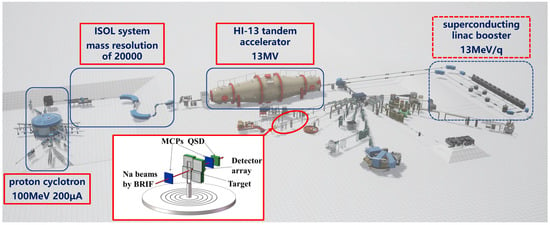
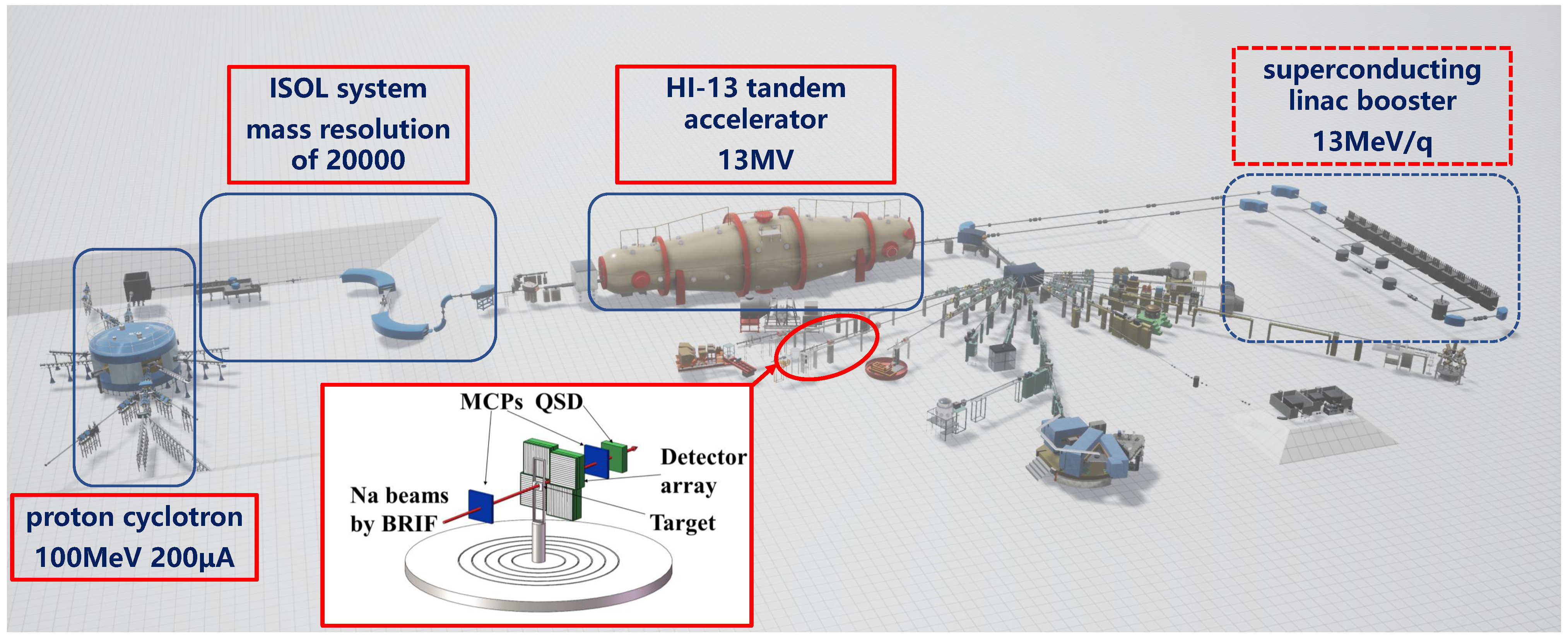
Although extensive experimental efforts have been devoted to the study of weakly bound nuclei, the availability of post-accelerated ISOL beams for medium-mass proton-rich isotopes remains comparatively limited worldwide. In this context, it is crucial not only to pursue new physics cases but also to validate the performance and reliability of emerging radioactive ion beam facilities capable of delivering such beams. The commissioning of post-acceleration systems, in particular, requires benchmark reaction measurements that can simultaneously assess beam purity, intensity, energy definition, and stability under realistic experimental conditions. Therefore, demonstration experiments using well-understood reaction channels provide an effective approach to verify facility performance while extending the accessible region of exotic nuclei. The Beijing Radioactive Ion Beam Facility (BRIF) [17,18], located at the China Institute of Atomic Energy, is an ISOL-based complex designed for the production and post-acceleration of high-purity radioactive ion beams. The facility integrates several major components: a compact 100-MeV proton cyclotron capable of delivering 200 µA beam currents [22]; a high-efficiency production target and ion-source assembly optimized for rapid release and ionization of reaction products [23]; an ISOL mass-separation system with a resolving power approaching 2 × 10⁴ [24]; the 13 MV HI-13 tandem accelerator used for charge breeding and post-acceleration [25]; and a superconducting linear accelerator capable of accelerating ions up to 13 MeV/q. A schematic overview of the facility is presented in Figure 1.
Figure 1.
The layout of BRIF and the experimental setup in the target chamber at the R60 terminal. The two MCPs are used to measure TOF signals, and the QSD was used to monitor the intensity of the beam. The silicon detector array was used to detect the scattered particles. The two MCPs were dismantled to perform the elastic scattering angular distribution measurements.
Since entering operation in 2015, BRIF has delivered a variety of radioactive beams—including 20,21,22Na and 37,38K—and has supported several milestone experiments. These include the first direct observation of the exotic -- decay sequence in 20Na [26], initial reaction studies demonstrating the feasibility of precision measurements with post-accelerated beams [27], and the first online collinear laser spectroscopy of radioactive nuclei in China [28]. At present, the facility can provide 58 different species of RIBs with half-lives down to 58 ms. The combination of high beam purity, broad species coverage, and a flexible acceleration scheme makes BRIF a powerful platform for detailed investigations of reaction dynamics and structure phenomena in unstable nuclei.
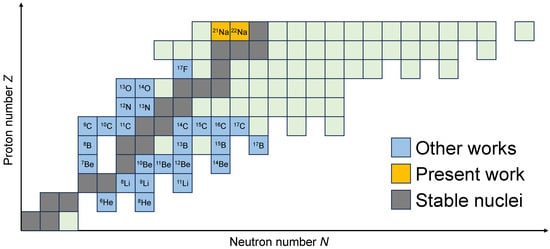
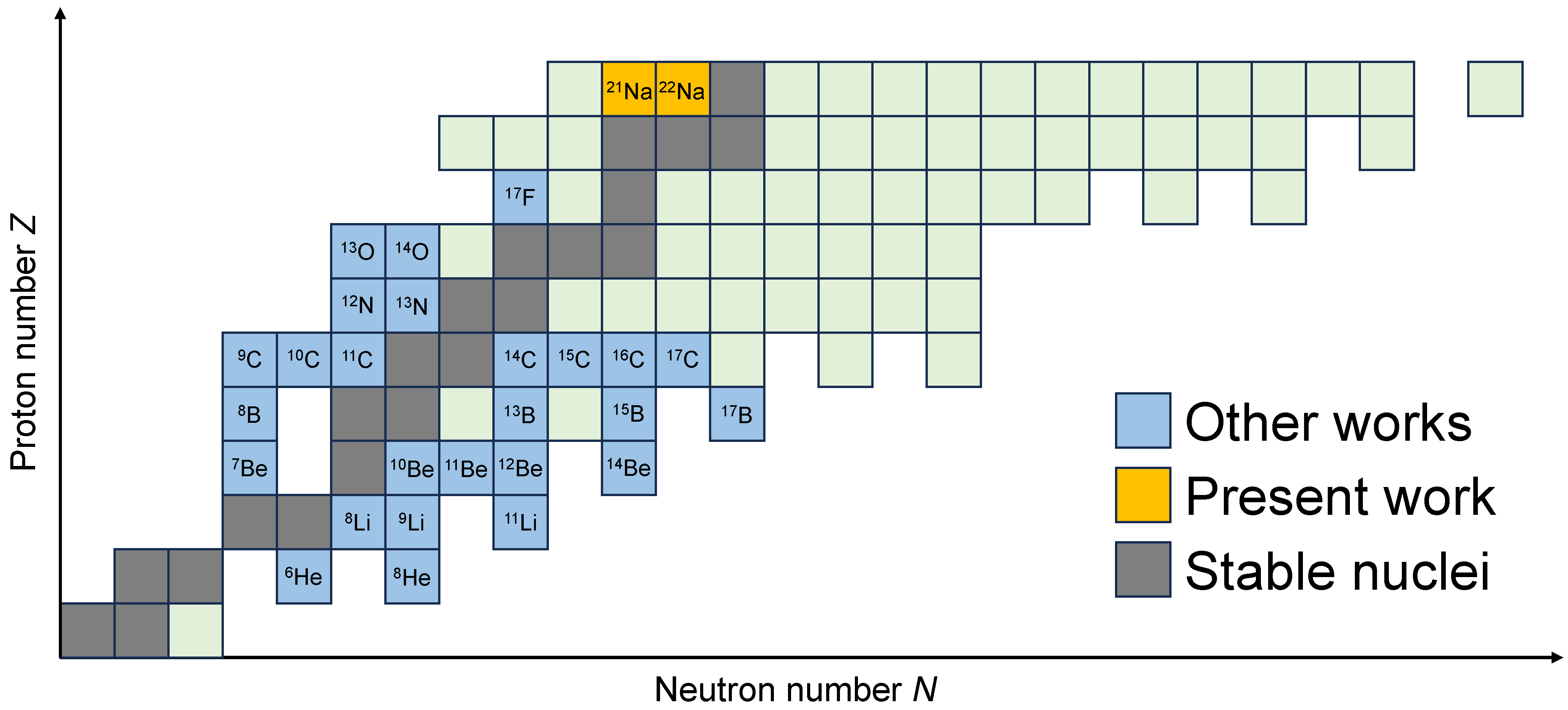
Elastic scattering, as a process occurring at the periphery of the nucleus, cannot directly provide information about the internal structure of the nucleus. However, it can probe the tail of the wave function to study the properties of the nuclear surface. Moreover, constraining the radii and diffuseness parameters of rare isotopes through elastic scattering is of significant importance for studying r-process nucleosynthesis. In weakly bound nuclei, due to the tunneling effect, weakly bound nucleons can penetrate the classically forbidden region, forming a halo-like structure surrounding a tightly bound core. The angular distribution data and optical potential parameters derived from elastic scattering between weakly bound and tightly bound nuclei allow for in-depth investigation of these properties [29]. There are many experiments performed for the measurement of elastic-scattering angular distributions of weakly bound nuclei, including neutron-rich nuclei [30,31,32,33,34,35,36,37,38,39] and neutron-deficient nuclei [29,33,40,41,42,43,44,45,46,47,48,49,50], as shown in Figure 2. Based on existing experiments, scientifically rigorous experimental and analytical methodologies have been established, enabling multi-faceted investigations into the properties of weakly bound nuclei. However, in the aforementioned studies, the heaviest nuclide examined is only 17F, which somewhat limits the generalizability of findings on weakly bound nuclei. Therefore, research on heavier weakly bound nuclei is highly desirable.
Figure 2.
Radioactive nuclei whose reaction mechanisms have been studied so far with measurement of elastic scattering cross sections [5,29,30,31,32,33,34,35,36,37,38,39,40,41,42,43,44,45,46,47,48,49,50]. Other works can be found from the references in Refs. [5,32]. The blue and orange squares represent the nuclei studied in other works and present work, respectively.
This experiment, utilizing the 21Na and 22Na beams provided by the BRIF facility, successfully performed the elastic scattering measurements of proton-rich nuclei 21Na and 22Na with the double-magic nucleus 40Ca at energies above the Coulomb barrier. The results not only demonstrate the excellent and reliable performance of the BRIF facility equipped with its post-acceleration system but also expand the scope of exotic nuclear. The main results of this study were previously reported in a short communication in Ref. [51]. In this article, we present a comprehensive description of the experiment and a detailed analysis of the data.
2. Experimental Setup
The measurements were performed at BRIF of CIAE. Radioactive Na isotopes were generated by bombarding an MgO production target with a 100 MeV proton beam delivered by the on-site compact cyclotron operating at a current of 10 eµA. After diffusing out of the heated target matrix, the reaction products were ionized and extracted into the ISOL system. A two-stage mass-separation scheme provided the required beam purity, isolating the Na isotopes from other reaction fragments prior to post-acceleration.
Following mass selection, the radioactive ions were injected into the HI-13 tandem accelerator, which boosted the 21Na and 22Na beams to kinetic energies suitable for scattering measurements. These beams were then transported to the R60 reaction station via the standard BRIF beamline optics. The R60 station houses a large cylindrical chamber with a diameter of 1.2 m, allowing the installation of extended detector arrays and accommodating a wide range of reaction geometries. In this experiment, the 21Na and 22Na beam energies were 91 MeV and 87 MeV, respectively, with a beam energy spread of 1% and an emittance of 40 mm·mrad·MeV1/2 [52]. With the assistance of an analyzing magnet, the beam purity could reach nearly 100%. Their typical intensities were 1.2 × 10⁴ pps for 21Na and 2.5 × 10⁵ pps for 22Na. The measured 22Na beam spot at the scattering target exhibited FWHM values of 2.49 mm (horizontal) and 2.36 mm (vertical), demonstrating good beam focusing at the target position.
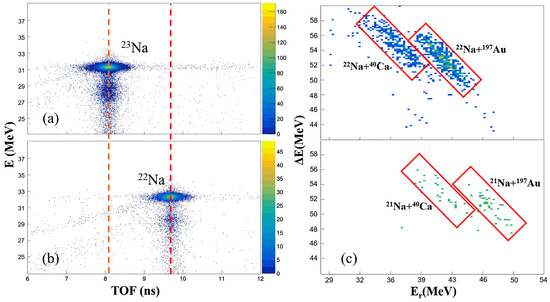
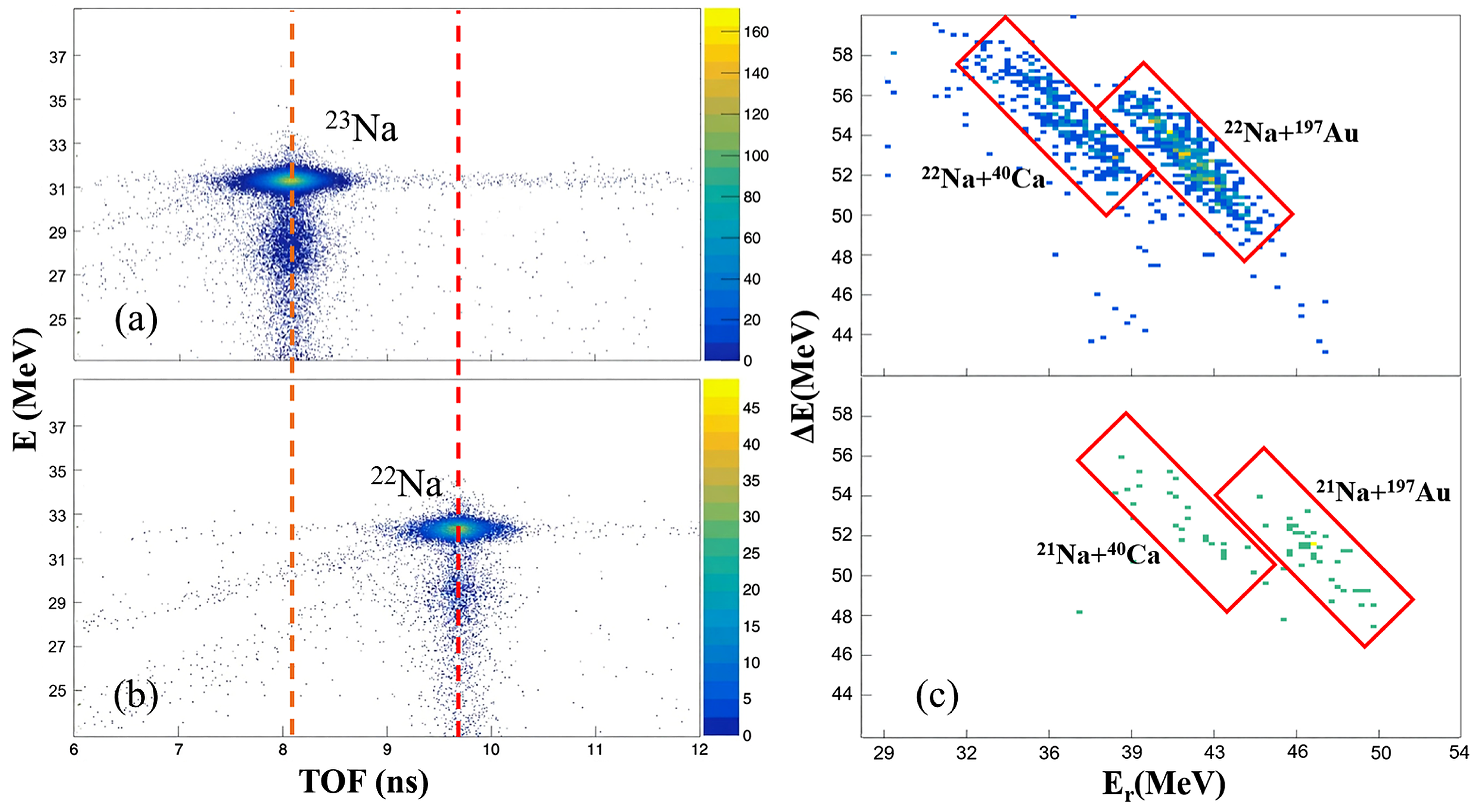
Beam identification at the reaction chamber entrance relied on a pair of micro-channel plates (MCPs) timing detectors positioned upstream and downstream of the target. The fast timing signals from the MCPs provided time-of-flight (TOF) information, which, combined with the total deposited energy, enabled isotope separation. Representative TOF–energy correlations are shown in Figure 3, including both the reference 23Na spectrum from Ref. [27] and the new 22Na data. A 1000 µm quadrant silicon detector (QSD) located downstream monitored the beam rate and independently confirmed the beam energy. After the identity and stability of the Na beams were verified, the MCP detectors were withdrawn from the beam path so as not to obstruct the scattering measurements.
Figure 3.
The left panel illustrates the identification of the beam particles. The horizontal axis represents the total energy determined with the QSD, and the vertical axis corresponds to the TOF signal measured with the MCPs for the 23Na beam in (a) from Ref. [27] and 22Na from this work in (b). (c) Presents the measurement of the residual energy (Er) versus the energy lost () in the first two planes of the silicon detector array (300 and 20 µm, respectively). The upper panel of (c) corresponds to the elastic scattering of 22Na(40Ca, el), while the lower panel shows the data for the elastic scattering of 21Na(40Ca, el). This figure also shows the elastic scattering data of 21,22Na beams on Au (target substrate).
The scattering target consisted of a natural CaF2 layer with an areal density of 1120 ± 55 µg/cm2, deposited onto a 400 µg/cm2 Au foil that served as a mechanical backing and provided a secondary scattering reference. Target thickness was determined using two methods. During CaF2 vacuum evaporation, the thickness was monitored in real time with a quartz crystal film thickness monitor. For verification, a 10 µm aluminum foil comparator was placed next to the Au substrate so that CaF2 was deposited simultaneously on both. After deposition, the foil was removed and weighed with an ultra-precision electronic balance (with an accuracy of 10−7 g), and the measured CaF2 thickness was used to determine the thickness of the target on the Au substrate. A silicon-detector telescope array placed 10 cm downstream of the target detected the reaction products. The array consisted of four identical telescopes, each composed of three detection layers. The first two layers were single-sided silicon-strip detectors (SSSDs) of 20 µm and 300 µm thickness, respectively. Each SSSD comprised 16 parallel strips 3 mm wide with 0.1 mm inter-strip spacing; the two SSSDs in each telescope were oriented orthogonally to provide two-dimensional position determination with an energy resolution of roughly 0.3%. The final layer was a 1000 µm QSD with an active area of 50 × 50 mm2, primarily used to identify light charged particles such as protons and particles. Altogether, the strip detectors provided 1024 effective pixels for angular reconstruction. The array covered laboratory scattering angles from 10.2∘ to 39.6∘.
Energy-loss calculations show that by the time the beams reached the center of the CaF2 target, their energies were reduced to 86.46 MeV for 21Na and 82.27 MeV for 22Na. For the elastic scattering analysis, only the first two layers of each telescope were required: the 20 µm SSSD recorded the energy loss , and the 300 µm SSSD measured the residual energy . Typical - distributions and total-energy spectra are presented in the right panel of Figure 3. The locations corresponding to scattering from 40Ca are clearly distinguished from those associated with reactions on the Au backing, allowing the events of interest to be selected unambiguously. No reliable particles originating from breakup events were observed in the spectra of this experiment.
3. Data Analysis and Discussion
The differential cross section of a reaction can be expressed as
where N and I represent the numbers of the emitted ions and the incident ions, respectively; denotes the number of the target atom per unit area, and represents the solid angle.
To suppress uncertainties associated with the solid angle and the absolute beam normalization, a relative-normalization technique was employed in this work. At the beam energies of interest, the elastic scattering of Na ions from 197Au is purely Coulombic; therefore, its differential cross section is given exactly by the Rutherford formula. By simultaneously measuring elastic events from both 40Ca and 197Au in the composite CaF2/Au target, the ratio of the Na+40Ca differential cross section to the Rutherford prediction can be obtained from
Here, and represent the numbers of scattered 21,22Na ions arising from interactions with 40Ca and 197Au, respectively; and are the corresponding areal densities of Ca and Au atoms in the target. denotes the Rutherford differential cross section for Na+X scattering at the appropriate energy in the laboratory reference system. As is evident from the structure of the expression, both the solid-angle factor and the absolute beam-intensity normalization cancel out, leaving the ratio dependent only on measurable yields and well-defined target parameters. For the angular distribution analysis, data recorded by detectors within an interval of 2∘ in laboratory angle were merged to form a single experimental data point.
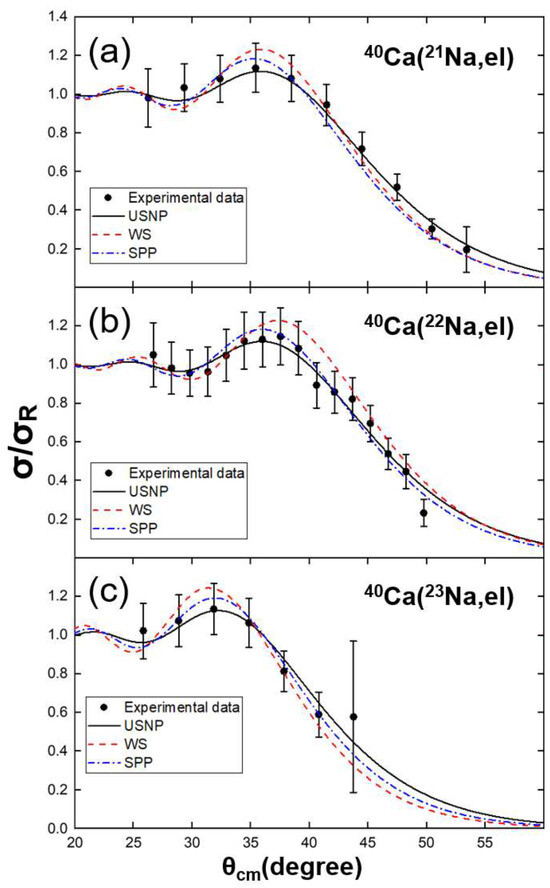
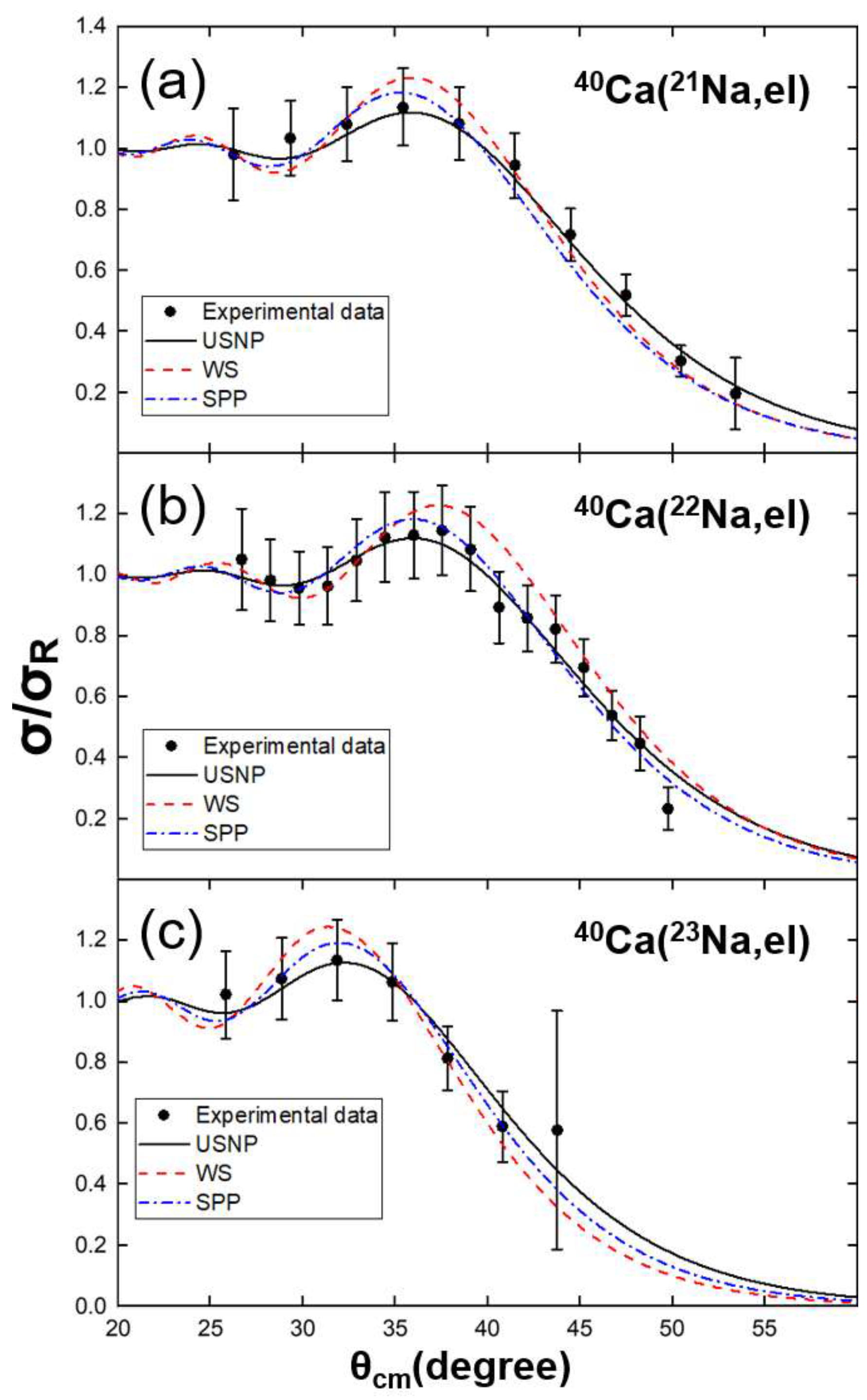
In Figure 4, the experimental elastic-scattering angular distributions for the 21,22Na+40Ca systems measured in the present work are displayed. For comparison, the corresponding data for the stable nucleus 23Na+40Ca from Ref. [27] are also included. The error bars shown in the figure represent statistical uncertainties only. To characterize the reaction dynamics, the experimental angular distributions were compared with optical-model calculations using two different global interaction parameterizations: a Woods–Saxon (WS) systematic potential [53], the updated systematic single-folding model potential (USNP) [54], and the São Paulo potential (SPP) [55]. The 23Na+40Ca data from Ref. [27] were analyzed using the same approach to provide a consistent reference. The root mean square (rms) matter radii of 20,21,22Na are listed in Table 1, along with comparisons to calculations from the Hartree–Fock calculations with the SkX interactions (HFSkX) and other experimental results [56]. The proton and neutron density distributions of the projectile are obtained from Hartree–Fock calculations based on the SkX parameterization for 21Na and 23Na, considering the good agreement between data and results of optical model calculations with USNP. However, the rms radii of the matter distributions of 22Na is 2.819 fm, which is larger than the experimental value of 2.72 ± 0.04 fm. Therefore, the original density distribution of 22Na is rescaled so that the rms radii agree with its experimental value. The predicted angular distribution with this changed density distribution provides a better description of the elastic scattering data for the 22Na+40Ca system. This suggests that it is possible to extract the rms radii of heavy ions from the optical model analysis of the elastic scattering data with the USNP systematics. As shown in Figure 4, both potentials reproduce the general features of the measured angular distributions reasonably well; moreover, the calculations employing the USNP potential show systematically better agreement with the data over the full angular range.
Figure 4.
(a–c) Elastic scattering angular distributions of 21,22,23Na+40Ca and the optical model calculations. The points represent the results obtained in 21,22Na+40Ca experiments and the experimental results of 23Na+40Ca from Ref. [27]. The black solid, red dashed, and blue dotted curves represent the results of optical model calculations for 21,22,23Na+40Ca with USNP [54], WS [53], and SPP [55], respectively.
Table 1.
HFSkX, EXP, and USNP denote the rms matter radii of 20,21,22Na obtained from HFSkX calculations, previous experimental data [56], and the recommended values in this work, respectively.
For the proton-rich nuclei of interest, although 21Na and 22Na have relatively different proton separation energies (2.432 MeV for 21Na and 6.739 MeV for 22Na), the consistency of their angular distributions indicates that this level of separation energy difference is insufficient to manifest an enhancement in coupling effects within this energy region. Meanwhile, it is noteworthy that the USNP potential describes the present 21,22Na data without any adjustment of its parameters, despite being developed primarily from optical model analysis of elastic scattering data of stable nuclei. The energy dependence of USNP is a predominant factor, though the extraction of rms radii from the optical model analysis of elastic scattering is affected by many factors. This result demonstrates the robustness and predictive power of the folding-type potential when extrapolated to proton-rich systems in the medium-mass region. Combining the present results with previous experimental data on 8B [29], 9C [50], 12N [32], and 13O [33], it is observed that at incident energies of two to three times the Coulomb barrier, the breakup effect has a negligible influence on elastic scattering cross section (although the breakup cross section is known to be affected by structural effects, as documented in Ref. [50]). This phenomenon may be attributed to two primary factors: most importantly, this is the centrifugal and Coulomb barriers experienced by their valence protons that suppressed the breakup coupling effects to the elastic scattering channel [57]. Secondly, the influence of the Coulomb interaction is also diminished due to the relatively high incident energy. The excellent agreement between the present experimental data and theoretical calculations provides strong evidence for the reliability of the BRIF facility and its post-acceleration system. In the future, we plan to conduct a series of experiments at the BRIF facility to further advance the understanding of exotic nuclei from multiple perspectives.
4. Conclusions
In summary, we have carried out elastic-scattering measurements of the proton-rich nuclei 21,22Na on the doubly magic nucleus 40Ca using post-accelerated radioactive ion beams delivered by BRIF. Beyond the specific reaction study, this experiment serves as a commissioning and validation benchmark for the BRIF ISOL production and post-acceleration system.
The successful production, mass separation, and post-acceleration of medium-mass proton-rich beams with typical intensities of 104∼105 pps, high purity, and an energy spread of approximately 1% demonstrate the stable and reliable operation of the facility. The well-defined angular distributions, clear Fresnel structures, and consistent agreement with optical-model calculations confirm the accuracy of beam energy determination, angular resolution, and normalization procedures. These results collectively establish BRIF as a capable platform for precision reaction measurements with unstable nuclei in the A ≈ 20 mass region.
From the physics perspective, no pronounced long-range suppression or strong breakup effects are observed at the present incident energies, indicating that continuum couplings play only a minor role under these conditions. Furthermore, optical-model analyses based on WS potential, USNP, and SPP showed low parameter sensitivity and yielded tightly constrained interaction strengths, suggesting that the surface properties of these Na isotopes remain relatively compact despite their modest separation energies. The present results extended the systematics of elastic scattering of weakly bound nuclei beyond the light-mass region (A ≤ 17), providing new benchmarks for reaction dynamics involving medium-mass proton-rich isotopes. These findings also highlighted the suitability of 40Ca as a clean probe nucleus for isolating weak-binding effects in exotic systems.
With the demonstrated beam quality and post-acceleration performance, BRIF is well positioned to support future experimental programs involving direct reactions, transfer reactions, and measurements of astrophysical relevance, including studies of proton-rich nuclei participating in explosive nucleosynthesis processes. The present work thus represents an important step toward expanding the experimental reach of BRIF in both nuclear structure and nuclear astrophysics research.
Author Contributions
Conceptualization: B.G., C.L. and B.T.; Methodology: W.N., B.G., C.L. and B.T.; Formal analysis: D.P. and G.Y.; Investigation: L.Y., D.W., Y.S., Q.F., Y.B., L.C. (Lei Cao), L.C. (Lihua Chen), B.C., Y.H., Q.H., H.J., C.K., K.L., Y.L. (Yaoqian Li), Y.L. (Yunju Li), Z.L. (Zhihong Li), G.L., J.L., Z.L. (Zhenwei Liu), T.L., N.M., R.M., X.M., Y.M., G.S., L.W., X.W., Y.W. (Youbao Wang), Y.W. (Yuheng Wang), P.W., S.Y., F.Y., S.Z. and Y.Z.; Data curation: Y.C. and W.N.; Writing—original draft: Y.C.; Writing—review and editing: Y.C., W.N., B.G., C.L., B.T., D.P., L.Y., D.W., G.Y., Y.S., Q.F., Y.B., L.C. (Lei Cao), L.C. (Lihua Chen), B.C., Y.H., Q.H., H.J., C.K., K.L., Y.L. (Yaoqian Li), Y.L. (Yunju Li), Z.L. (Zhihong Li), G.L., J.L., Z.L. (Zhenwei Liu), T.L., N.M., R.M., X.M., Y.M., G.S., L.W., X.W., Y.W. (Youbao Wang), Y.W. (Yuheng Wang), P.W., S.Y., F.Y., S.Z., Y.Z., T.Z. and W.L.; Supervision: T.Z. and W.L. All authors have read and agreed to the published version of the manuscript.
Funding
This work was supported by the Scientifc Research Project on Nuclear Technology Development (No. HJSYF2024(01)).
Data Availability Statement
The data supporting the findings of this study are available from the corresponding author upon reasonable request.
Acknowledgments
The authors thank the technical staff for their efforts to deliver the 21,22Na ISOL beam.
Conflicts of Interest
The authors declare no conflicts of interest.
References
- Pfützner, M.; Karny, M.; Grigorenko, L.V.; Riisager, K. Radioactive decays at limits of nuclear stability. Rev. Mod. Phys. 2012, 84, 567. [Google Scholar] [CrossRef] [Scilit]
- Nakamura, T.; Sakurai, H.; Watanabe, H. Exotic nuclei explored at in-flight separators. Prog. Part. Nucl. Phys. 2017, 97, 53. [Google Scholar] [CrossRef] [Scilit]
- Ye, Y.; Yang, X.; Sakurai, H.; Hu, B. Physics of exotic nuclei. Nat. Rev. Phys. 2025, 7, 21–37. [Google Scholar] [CrossRef] [Scilit]
- Keeley, N.; Raabe, R.; Alamanos, N.; Sida, J.L. Fusion and direct reactions of halo nuclei at energies around the Coulomb barrier. Prog. Part. Nucl. Phys. 2007, 59, 579. [Google Scholar] [CrossRef] [Scilit]
- Keeley, N.; Alamanos, N.; Kemper, K.W.; Rusek, K. Elastic scattering and reactions of light exotic beams. Prog. Part. Nucl. Phys. 2009, 63, 396. [Google Scholar] [CrossRef] [Scilit]
- Back, B.B.; Esbensen, H.; Jiang, C.L.; Rehm, K.E. Recent developments in heavy-ion fusion reactions. Rev. Mod. Phys. 2014, 86, 317. [Google Scholar] [CrossRef] [Scilit]
- Canto, L.F.; Gomes, P.R.S.; Donangelo, R.; Lubian, J.; Hussein, M.S. Recent developments in fusion and direct reactions with weakly bound nuclei. Phys. Rep. 2015, 596, 1–86. [Google Scholar] [CrossRef] [Scilit]
- Tanihata, I.; Hamagaki, H.; Hashimoto, O.; Shida, Y.; Yoshikawa, N.; Sugimoto, K.; Yamakawa, O.; Kobayashi, T.; Takahashi, N. Measurements of Interaction Cross Sections and Nuclear Radii in the Light p-Shell Region. Phys. Rev. Lett. 1985, 55, 2676. [Google Scholar] [CrossRef] [Scilit]
- Ma, C.W.; Wei, H.L.; Liu, X.Q.; Su, J.; Zheng, H.; Lin, W.-P.; Zhang, Y.-X. Nuclear fragments in projectile fragmentation reactions. Prog. Part. Nucl. Phys. 2021, 121, 103911. [Google Scholar] [CrossRef] [Scilit]
- Geissel, H.; Armbruster, P.; Behr, K.H.; Brünle, A.; Burkard, K.; Chen, M.; Folger, H.; Franczak, B.; Keller, H.; Klepper, O.; et al. The GSI projectile fragment separator (FRS): A versatile magnetic system for relativistic heavy ions. Nucl. Instrum. Methods Phys. Res. B 1992, 70, 286. [Google Scholar] [CrossRef] [Scilit]
- Sakurai, H. RI Beam Factory Project at RIKEN. Nucl. Phys. A 2008, 805, 526c. [Google Scholar] [CrossRef] [Scilit]
- Sun, Z.; Zhan, W.L.; Guo, Z.Y.; Xiao, G.; Li, J.-X. RIBLL, the radioactive ion beam line in Lanzhou. Nucl. Instrum. Methods Phys. Res. A 2003, 503, 496. [Google Scholar] [CrossRef] [Scilit]
- Portillo, M.; Sherrill, B.M.; Choi, Y.; Cortesi, M.; Fukushima, K.; Hausmann, M.; Kwan, E.; Lidia, S.; Ostroumov, P.; Ringle, R.; et al. Commissioning of the Advanced Rare Isotope Separator ARIS at FRIB. Nucl. Instrum. Methods Phys. Res. B 2023, 540, 151. [Google Scholar] [CrossRef] [Scilit]
- Kugler, E.; Fiander, D.; Johnson, B.; Haas, H.; Przewloka, A.; Ravn, H.; Simon, D.; Zimmer, K. The new CERN-ISOLDE on-line mass-separator facility at the PS-Booster. Nucl. Instrum. Methods Phys. Res. B 1992, 70, 41. [Google Scholar] [CrossRef] [Scilit]
- Gales, S. GANIL-SPIRAL2: A new era. J. Phys. Conf. Ser. 2011, 267, 012009. [Google Scholar] [CrossRef] [Scilit]
- Bricault, P.G.; Dombsky, M.; Schmor, P.W.; Stanford, G. Radioactive ion beams facility at TRIUMF. Nucl. Instrum. Methods Phys. Res. B 1997, 126, 231. [Google Scholar] [CrossRef] [Scilit]
- Liu, W.; Li, Z.; Bai, X.; Wang, Y.; Lian, G.; Zeng, S.; Yan, S.; Wang, B.; Zhao, Z.; Zhang, T.; et al. Current progress of nuclear astrophysics study and BRNBF at CIAE. Nucl. Instrum. Methods Phys. Res. B 2003, 204, 62. [Google Scholar] [CrossRef] [Scilit]
- Nan, W.; Guo, B.; Chen, J.; Cui, B.; Fu, W.; Jia, X.; Kan, C.; Li, J.; Li, Y.; Lin, C.; et al. Nuclear physics at BRIF. Prog. Part. Nucl. Phys. 2025, 145, 104188. [Google Scholar] [CrossRef] [Scilit]
- FAIR Official Website. Available online: https://fair-center.eu (accessed on 25 January 2026).
- Zhou, X.H.; Yang, J.C.; Project Team, H. Status of the high-intensity heavy-ion accelerator facility in China. AAPPS Bull. 2022, 32, 35. [Google Scholar] [CrossRef] [Scilit]
- Lee, J.; Yim, H.J.; Hashimoto, T.; Park, Y.-H.; Hwang, W.; Park, S.-J.; Jeong, J.-W.; Heo, S.; Yoo, K.-H.; Yeon, Y.-H.; et al. Recent progress of ISOL facility at RAON. Nucl. Instrum. Methods Phys. Res. B 2023, 542, 17. [Google Scholar] [CrossRef] [Scilit]
- Zhang, T.J.; Li, Z.G.; Yin, Z.G. Design and construction status of CYCIAE-100, a 100 MeV H− cyclotron for RIB production. Nucl. Instrum. Methods Phys. Res. B 2008, 266, 4117. [Google Scholar] [CrossRef] [Scilit]
- Tang, B.; Cui, B.Q.; Chen, L.H.; Huang, Q.; Ma, R.; Ma, Y.; Ma, X.; Jiang, W. The development of the FEBIAD ion source for BRISOL. Nucl. Instrum. Methods Phys. Res. B 2020, 463, 154. [Google Scholar] [CrossRef] [Scilit]
- Cui, B.Q.; Peng, Z.H.; Ma, Y.J.; Ma, R.; Tang, B.; Zhang, T.; Jiang, W. Status of Beijing radioactive ion beam facility. Nucl. Instrum. Methods Phys. Res. B 2008, 266, 4113. [Google Scholar] [CrossRef] [Scilit]
- Tian, Y.M.; Xu, J.X.; Liu, Z.Y.; Yang, S.C.; Qin, J.C.; Guan, X.L.; Du, X.R.; Ning, S.L.; Yang, B.F.; Yu, Y.F.; et al. Progress report on the HI-13 tandem accelerator. Nucl. Instrum. Methods Phys. Res. A 1986, 244, 39. [Google Scholar] [CrossRef] [Scilit]
- Wang, Y.B.; Su, J.; Han, Z.Y.; Tang, B.; Cui, B.Q.; Ge, T.; Lyu, Y.L.; Brown, B.A.; Yuan, C.X.; Chen, L.H.; et al. Direct observation of the exotic β-γ-α decay mode in the Tz = −1 nucleus 20Na. Phys. Rev. C 2021, 103, L011301. [Google Scholar] [CrossRef] [Scilit]
- Nan, W.; Guo, B.; Lin, C.J.; Yang, L.; Wang, D.-X.; Shen, Y.-P.; Tang, B.; Cui, B.-Q.; Ge, T.; Lyu, Y.-L.; et al. First proof-of-principle experiment with the post-accelerated isotope separator on-line beam at BRIF: Measurement of the angular distribution of 23Na + 40Ca elastic scattering. Nucl. Sci. Tech. 2021, 32, 53. [Google Scholar] [CrossRef] [Scilit]
- Wang, S.J.; Yang, X.F.; Bai, S.W.; Liu, Y.; Zhang, P.; Liu, Y.; Hu, H.; Li, H.; Tang, B.; Cui, B.; et al. Collinear laser spectroscopy, ISOL, Radioactive isotopes, Hyperfine structure, Nuclear properties. Nucl. Instrum. Methods Phys. Res. A 2022, 1032, 166622. [Google Scholar] [CrossRef] [Scilit]
- Yang, Y.Y.; Wang, J.S.; Wang, Q.; Pang, D.; Ma, J.B.; Huang, M.R.; Han, J.L.; Ma, P.; Jin, S.L.; Bai, Z.; et al. Elastic scattering of the proton drip-line nucleus 8B off a natPb target at 170.3 MeV. Phys. Rev. C 2013, 87, 044613. [Google Scholar] [CrossRef] [Scilit]
- Távora, V.G.; Ovejas, J.D.; Martel, I.; Keeley, N.; Acosta, L.; Borge, M.; Tengblad, O.; Arokiaraj, A.; Babo, M.; Cederkall, J.; et al. Strong coupling effects on near-barrier 15C + 208Pb elastic scattering. Phys. Lett. B 2024, 855, 138770. [Google Scholar] [CrossRef] [Scilit]
- Santos, O.C.B.; Lichtenthäler Filho, R.; Pires, K.C.C.; Umbelino, U.; Zevallos, E.O.N.; de Lara, A.L.; Serra, A.S.; Scarduelli, V.; Alcántara-Núñez, J.; Lépine-Szily, A.; et al. Elastic scattering and 7Li production in the 8Li+120Sn reaction. Phys. Rev. C 2024, 110, 034610. [Google Scholar] [CrossRef] [Scilit]
- Wang, K.; Yang, Y.Y.; Jin, L.; Moro, A.M.; Guimarães, V.; Li, J.G.; Duan, F.F.; Sun, Z.Y.; Yang, G.; Pang, D.Y.; et al. Elastic scattering and breakup reactions of the mirror nuclei 12B and 12N on 208Pb using ab initio structure inputs. Phys. Rev. C 2024, 109, 014624. [Google Scholar] [CrossRef] [Scilit]
- Wang, K.; Yang, Y.Y.; Guimarães, V.; Pang, D.Y.; Duan, F.F.; Sun, Z.Y.; Lei, J.; Yang, G.; Xu, S.W.; Ma, J.B.; et al. Elastic scattering investigation of radioactive 13B and 13O projectiles on a 208Pb target at intermediate energies. Phys. Rev. C 2022, 105, 054616. [Google Scholar] [CrossRef] [Scilit]
- Aguilera, E.F.; Torabi, F.; Morales-Rivera, J.C. Simultaneous analysis of elastic scattering and fusion in 6He+64Zr: A transition in direct reaction mechanisms and halo effects. Phys. Rev. C 2021, 104, 054612. [Google Scholar] [CrossRef] [Scilit]
- Fernández-García, J.P.; Pietro, A.D.; Figuera, P.; Gómez-Camacho, J.; Lattuada, M.; Lei, J.; Moro, A.M.; Rodríguez-Gallardo, M.; Scuderi, V. Breakup mechanisms in the 6He+64Zn reaction at near-barrier energies. Phys. Rev. C 2019, 99, 054605. [Google Scholar] [CrossRef] [Scilit]
- Cook, K.J.; Carter, I.P.; Simpson, E.C.; Dasgupta, M.; Hinde, D.J.; Bezzina, L.T.; Kalkal, S.; Sengupta, C.; Simenel, C.; Swinton-Bland, B.M.A.; et al. Interplay of charge clustering and weak binding in reactions of 8Li. Phys. Rev. C 2018, 97, 021601. [Google Scholar] [CrossRef] [Scilit]
- Marquínez-Durán, G.; Martel, I.; Sanchez-Benitez, A.M.; Acosta, L.; Berjillos, R.; Dueñas, J.; Rusek, K.; Keeley, N.; Álvarez, M.A.G.; Borge, M.J.G.; et al. Precise measurement of near-barrier 8He+208Pb elastic scattering: Comparison with 6He. Phys. Rev. C 2016, 94, 064618. [Google Scholar] [CrossRef] [Scilit]
- Acosta, L.; Sanchez-Benitez, A.M.; Gomez, M.E.; Martel, I.; Pérez-Bernal, F.; Pizarro, F.; Rodríguez-Quintero, J.; Rusek, K.; Alvarez, M.A.G.; Andrés, M.V.; et al. Elastic scattering and α-particle production in 6He+208Pb collisions at 22 MeV. Phys. Rev. C 2011, 84, 044604. [Google Scholar] [CrossRef] [Scilit]
- Lemasson, A.; Shrivastava, A.; Navin, A.; Rejmund, M.; Keeley, N.; Zelevinsky, V.; Bhattacharyya, S.; Chatterjee, A.; de France, G.; Jacquot, B.; et al. Modern Rutherford experiment: Tunneling of the most neutron-rich nucleus. Phys. Rev. Lett. 2009, 103, 232701. [Google Scholar] [CrossRef] [Scilit]
- Palli, K.; Pakou, A.; Moro, A.M.; O’MAlley, P.D.; Acosta, L.; Sánchez-Benítez, A.M.; Souliotis, G.; Aguilera, E.F.; Andrade, E.; Godos, D.; et al. Breakup of the proton halo nucleus 8B at a sub-Coulomb energy. Phys. Rev. C 2025, 111, 024615. [Google Scholar] [CrossRef] [Scilit]
- Magro, P.L.D.; Guimarães, V.; Linares, R.; Rangel, J.; Zamora, J.C.; Rogachev, G.V.; Koshchiy, E.; Bishop, J.; Barbui, M.; Parker, C.E.; et al. Elastic scattering in the 12N+197Au system at Elab = 70 MeV. Phys. Rev. C 2025, 111, 034609. [Google Scholar] [CrossRef] [Scilit]
- Palli, K.; Pakou, A.; O’Malley, P.D.; Acosta, L.; Sánchez-Benítez, A.M.; Souliotis, G.; Moro, A.M.; Aguilera, E.F.; Andrade, E.; Godos, D.; et al. Elastic scattering of 8B+natZr at the sub-barrier energy of 26.5 MeV. Phys. Rev. C 2024, 109, 064614. [Google Scholar] [CrossRef] [Scilit]
- Luo, T.P.; Yang, L.; Lin, C.J.; Ma, N.-R.; Wen, P.-W.; Jia, H.-M.; Yang, F. Reaction dynamics of proton-rich nuclei at energies around the Coulomb barrier: The cases of 7Be, 8B, and 17F. Nucl. Sci. Tech. 2024, 35, 212. [Google Scholar] [CrossRef] [Scilit]
- Palli, K.; Pakou, A.; Moro, A.M.; O’MAlley, P.D.; Acosta, L.; Sánchez-Benítez, A.M.; Souliotis, G.; Aguilera, E.F.; Andrade, E.; Godos, D.; et al. Quasielastic scattering of 7Be+natZr at sub- and near-barrier energies. Phys. Rev. C 2023, 107, 064613. [Google Scholar] [CrossRef] [Scilit]
- Ovejas, J.D.; Martel, I.; Dell’Aquila, D.; Acosta, L.; Aguado, J.; de Angelis, G.; Borge, M.; Briz, J.; Chbihi, A.; Colucci, G.; et al. Suppression of Coulomb-nuclear interference in the near-barrier elastic scattering of 17Ne from 208Pb. Phys. Lett. B 2023, 843, 138007. [Google Scholar] [CrossRef] [Scilit]
- Sgouros, O.; Soukeras, V.; Palli, K.; Pakou, A. Global approach for the reactions 7Be+28Si and 7Be+208Pb at near- and sub-barrier energies. Phys. Rev. C 2022, 106, 044612. [Google Scholar] [CrossRef] [Scilit]
- Rong, C.H.; Rangel, J.; Wu, Y.S.; Zhang, G.X.; Lin, C.J.; Cardozo, E.N.; Wang, X.Y.; Yang, L.; Ma, N.R.; Wang, D.X.; et al. Study of quasi-elastic scattering of 17F+208Pb at energies around Coulomb barrier. Eur. Phys. J. A 2021, 57, 143. [Google Scholar] [CrossRef] [Scilit]
- Wang, K.; Yang, Y.Y.; Moro, A.M.; Guimarães, V.; Lei, J.; Pang, D.Y.; Duan, F.F.; Lou, J.L.; Zamora, J.C.; Zamora, J.C.; et al. Elastic scattering and breakup reactions of the proton drip-line nucleus 8B on 208Pb at 238 MeV. Phys. Rev. C 2021, 103, 024606. [Google Scholar] [CrossRef] [Scilit]
- Mazzocco, M.; Keeley, N.; Boiano, A.; Boiano, C.; Commara, M.L.; Lagni, A.; Manea, C.; Parascandolo, C.; Pierroutsakou, D.; Signorini, C. Direct processes for the systems 7Be, 8B+208Pb at Coulomb barrier energies. J. Phys. Conf. Ser. 2020, 1643, 012096. [Google Scholar] [CrossRef] [Scilit]
- Yang, Y.Y.; Liu, X.; Pang, D.Y.; Patel, D.; Chen, R.F.; Wang, J.S.; Ma, P.; Ma, J.B.; Jin, S.L.; Bai, Z.; et al. Elastic scattering of the proton drip line nuclei 7Be, 8B, and 9C on a lead target at energies around three times the Coulomb barriers. Phys. Rev. C 2018, 98, 044608. [Google Scholar] [CrossRef] [Scilit]
- Nan, W.; Guo, B.; Lin, C.J.; Pang, D.Y.; Yang, L.; Wang, D.X.; Yang, G.; Shen, Y.P.; Tang, B.; Fan, Q.W.; et al. First experiment using post-accelerated unstable ion beams at BRIF: Angular distribution of the 21,22Na elastic scattering from doubly magic 40Ca. Sci. Bull. 2025, 70, 2925–2928. [Google Scholar] [CrossRef] [Scilit]
- Li, K.; Kan, C.; Wang, X.; Hu, Y.; Yang, B.; Qin, J.; Guan, X.; Su, S.; Bao, Y.; You, Q.; et al. Practice and innovation in the operation and maintenance of HI-13 tandem accelerator for 35 years. Nuclear Tech. 2023, 46, 080005. [Google Scholar] [CrossRef]
- Gan, L.; Li, Z.H.; Sun, H.B.; Hu, S.P.; Li, E.T.; Zhong, J. Systematic study of the Woods-Saxon potential parameters between heavy-ions. Chin. Phys. C 2021, 45, 5. [Google Scholar] [CrossRef] [Scilit]
- Yang, G.; Duan, F.F.; Wang, K.; Yang, Y.Y.; Sun, Z.Y.; Guimarães, V.; Pang, D.Y.; Chen, W.L.; Jin, L.; Xu, S.W. Elastic scattering of 13C and 14C isotopes on a 208Pb target at energies of approximately five times the Coulomb barriers. Chin. Phys. C 2024, 48, 034001. [Google Scholar] [CrossRef] [Scilit]
- Chamon, L.; Carlson, B.; Gasques, L. São Paulo potential version 2 (SPP2) and Brazilian nuclear potential (BNP). Comput. Phys. Commun. 2021, 267, 108061. [Google Scholar] [CrossRef] [Scilit]
- Suzuki, T.; Geissel, H.; Bochkarev, O.; Chulkov, L.; Golovkov, M.; Fukunishi, N.; Hirata, D.; Irnich, H.; Janas, Z.; Keller, H.; et al. Nuclear radii of Na and Mg isotopes. Nucl. Phys. A 1998, 630, 661–677. [Google Scholar] [CrossRef] [Scilit]
- Yang, Y.Y.; Liu, X.; Pang, D.Y. Distinction between elastic scattering of weakly bound proton- and neutron-rich nuclei: The case of 8B and 11Be. Phys. Rev. C 2016, 94, 034614. [Google Scholar] [CrossRef] [Scilit]

Disclaimer/Publisher’s Note: The statements, opinions and data contained in all publications are solely those of the individual author(s) and contributor(s) and not of MDPI and/or the editor(s). MDPI and/or the editor(s) disclaim responsibility for any injury to people or property resulting from any ideas, methods, instructions or products referred to in the content. |
© 2026 by the authors. Licensee MDPI, Basel, Switzerland. This article is an open access article distributed under the terms and conditions of the Creative Commons Attribution (CC BY) license.