


Abstract
Pediatric neurodevelopmental disorders (NDDs) encompass a highly heterogeneous group of conditions characterized by complex interactions among genetic, molecular, developmental, and environmental factors. Growing evidence increasingly supports an important role for neuroglial dysfunction, including disturbances in astrocytic, microglial, and oligodendroglial biology, in the pathophysiology of disorders such as autism spectrum disorder, global developmental delay, intellectual disability, and rare neurogenetic syndromes. At the same time, artificial intelligence (AI)-assisted analytical approaches are becoming increasingly relevant in pediatric diagnostics through integration of multidimensional datasets, including clinical phenotypes, neuroimaging, genomic sequencing, and molecular biomarkers. This review examines the evolving intersection of neuroglial biology and AI-based analytical methods in pediatric NDDs. Current understanding of neuroglial mechanisms underlying disease vulnerability and developmental heterogeneity is discussed alongside emerging applications of machine learning, deep phenotyping platforms, radiogenomics, and large language models in diagnostic interpretation and clinical decision support. Important translational and ethical challenges, including algorithmic bias, interpretability limitations, data governance, and disparities in data accessibility, are also considered. Overall, integration of neuroglial research with AI-assisted analytical frameworks may contribute to more biologically informed interpretation of pediatric neurodevelopmental disorders and support ongoing development of increasingly individualized diagnostic approaches.
1. Introduction
Pediatric neurodevelopmental disorders (NDDs), including autism spectrum disorder (ASD), global developmental delay (GDD), intellectual disability (ID), attention-deficit/hyperactivity disorder (ADHD), and numerous rare neurogenetic syndromes, represent a major global health challenge due to their high prevalence, lifelong functional consequences, and substantial socioeconomic burden [1]. These disorders are characterized by marked clinical and biological heterogeneity arising from complex interactions among genetic susceptibilities, epigenetic regulation, environmental exposures, and dynamic neurodevelopmental processes [2,3]. Despite continuing advances in molecular diagnostics, neuroimaging, and clinical phenotyping, establishing timely and precise diagnoses remains challenging for many affected children, frequently resulting in prolonged diagnostic odysseys, delayed intervention, and limited opportunities for individualized care [2,4].
Traditionally, research into pediatric NDDs has focused predominantly on neuronal dysfunction. However, growing evidence increasingly supports an important role for neuroglial cells, including astrocytes, microglia, oligodendrocytes, and their progenitors, in neurodevelopmental homeostasis and disease pathophysiology. Neuroglia participate in synaptic maturation, immune surveillance, metabolic support, myelination, and maintenance of neural circuitry, while disturbances in neuroglial development or function have been implicated across a broad spectrum of neurodevelopmental conditions [5,6]. Altered neuroglial signaling may contribute to neuroinflammation, disrupted synaptic connectivity, aberrant circuit formation, and developmental regression in susceptible individuals [5].
At the same time, artificial intelligence (AI)-assisted analytical approaches are becoming increasingly relevant in biomedical research and clinical diagnostics through integration of complex multidimensional datasets. Machine learning, deep learning, natural language processing, and large language models (LLMs) are increasingly capable of supporting analysis of genomic, transcriptomic, neuroimaging, electronic health record, and phenotypic data within more integrated diagnostic frameworks [7,8,9]. In pediatric neurodevelopmental medicine, these technologies may support earlier disease recognition, improved genotype–phenotype interpretation, variant prioritization, and more individualized diagnostic assessment in clinically complex cases [7].
Integration of neuroglial biology with AI-assisted analytical methods may further support more biologically informed diagnostic and research frameworks in pediatric neurodevelopmental medicine. By combining mechanistic understanding of neuroglial dysfunction with multidimensional data analysis, these approaches may contribute to more comprehensive interpretation of disease heterogeneity and improve understanding of complex developmental phenotypes [8,10].
This review critically examines current knowledge regarding neuroglial involvement in pediatric NDDs while exploring emerging applications of AI-based analytical approaches in pediatric neurodevelopmental diagnostics. In addition, we discuss important translational and ethical challenges, as well as future directions at the intersection of neuroglial biology, computational medicine, and precision pediatric neuromedicine.
Given the substantial biological and technological complexity of the field, this review aims to provide a clinically oriented integrative overview rather than an exhaustive systematic analysis of all individual mechanistic and computational domains.
2. Literature Search Strategy
This review was designed as a comprehensive narrative synthesis of current scientific evidence exploring the intersection between neuroglial biology and AI-driven diagnostic innovation in pediatric NDDs. The primary objective was to integrate contemporary mechanistic insights into neuroglial dysfunction with emerging computational approaches relevant to disorders such as ASD, GDD, ID, and rare pediatric neurogenetic syndromes.
A structured literature search was conducted between 1 March 2026, and 30 April 2026, using major biomedical and interdisciplinary databases, including PubMed/MEDLINE, Scopus, and Web of Science. The search primarily covered studies published from January 2015 through April 2026 to ensure emphasis on contemporary evidence, while select seminal earlier publications were included when essential for foundational understanding of neuroglial biology or computational methodologies.
Search strategies incorporated combinations of controlled vocabulary and free-text terms related to neuroglial function (“neuroglia,” “astrocytes,” “microglia,” “oligodendrocytes,” “glial dysfunction”), pediatric neurodevelopmental pathology (“autism spectrum disorder,” “global developmental delay,” “intellectual disability,” “rare genetic disorders,” “pediatric neurology”), and computational technologies (“artificial intelligence,” “machine learning,” “deep learning,” “large language models,” “deep phenotyping,” “genomics,” “precision medicine”).
Eligible publications included original research articles, systematic reviews, meta-analyses, translational studies, computational modeling reports, and clinically relevant diagnostic investigations. Priority was given to studies demonstrating methodological quality, translational relevance, interdisciplinary significance, and recency.
Greater emphasis was placed on recent studies with direct translational relevance to pediatric neurodevelopmental diagnostics, neuroglial biology, and AI-assisted clinical applications. Seminal earlier publications were selectively retained when considered foundational for understanding core neurobiological mechanisms or computational methodologies. In addition, studies integrating multidimensional clinical, imaging, genomic, or developmental data were prioritized in order to support the interdisciplinary focus of the review.
Particular emphasis was placed on studies addressing: Neuroglial mechanisms contributing to pediatric neurodevelopmental pathology; AI-assisted genomic diagnostics, variant prioritization, and genotype–phenotype modeling; Machine learning applications in neuroimaging, developmental classification, and biomarker discovery; Deep phenotyping frameworks and rare disease diagnostic support systems; Emerging applications of large language models in pediatric precision medicine.
Studies focused exclusively on adult neurodegenerative disorders without meaningful pediatric or developmental relevance were generally excluded unless they provided critical mechanistic insights applicable to pediatric neurobiology. Publications lacking sufficient methodological transparency or translational value were also deprioritized.
To enhance comprehensiveness, manual cross-referencing of bibliographies from selected high-priority articles was performed to identify additional relevant studies. Given the substantial biological, technological, and methodological heterogeneity across included literature, this review was structured as an integrative narrative synthesis rather than a formal systematic review or meta-analysis.
The final body of evidence was thematically organized into key domains: neuroglial contributions to neurodevelopmental disease mechanisms, current and emerging AI applications in pediatric diagnostics, translational opportunities for integrating neurobiology with computational medicine, ethical and practical implementation challenges, and future directions for precision pediatric neuromedicine. This interdisciplinary framework was selected to provide clinicians, neuroscientists, geneticists, and computational researchers with a cohesive and clinically relevant overview of one of the most rapidly evolving frontiers in pediatric medicine.
3. Neuroglial Mechanisms in Pediatric Neurodevelopmental Disorders
For decades, the pathophysiology of pediatric NDDs was predominantly conceptualized through a neuron-centric framework, emphasizing synaptic dysfunction, neuronal migration abnormalities, and disrupted cortical connectivity. However, growing experimental, genetic, and translational evidence has substantially expanded this perspective, positioning neuroglial cells as a vital regulator of both normal neurodevelopment and disease pathogenesis [11]. Astrocytes, microglia, oligodendrocytes, and their precursor populations actively participate in shaping neural circuits, synaptic maturation, immune surveillance, myelination, metabolic homeostasis, and blood–brain barrier integrity. Consequently, disturbances in neuroglial development or function may profoundly alter developmental trajectories, contributing to a broad range of pediatric neurological and neurodevelopmental phenotypes (Table 1) [6].
Table 1.
Neuroglial Cell Types and Their Roles in Pediatric Neurodevelopmental Disorders.
3.1. Astrocytes and Synaptic Homeostasis
Astrocytes are increasingly recognized as vital modulators of synaptic formation, pruning, neurotransmitter recycling, ion homeostasis, and metabolic support during brain development. Beyond passive support roles, astrocytes actively regulate excitatory and inhibitory balance through glutamate uptake, calcium signaling, and secretion of neurotrophic factors [12]. Dysfunctional astrocytic signaling has been implicated in ASD, ID, and epilepsy, where altered astrocyte-mediated synaptic regulation may contribute to aberrant neuronal connectivity and cortical excitability [13]. In syndromic neurodevelopmental disorders, such as Rett syndrome and Fragile X syndrome, astrocytic abnormalities may exacerbate neuronal dysfunction through impaired support functions and dysregulated inflammatory responses [14].
3.2. Microglia and Neuroimmune Dysregulation
Microglia serve as the resident immune cells of the central nervous system and play significant roles in synaptic pruning, neuroimmune surveillance, developmental circuit refinement, and response to damaging environmental effects. During early neurodevelopment, microglial cells critically influence synaptic elimination and network maturation [15]. Aberrant microglial activation has emerged as important contributor to multiple pediatric NDDs, particularly ASD and developmental regression syndromes. Excessive or dysregulated microglial activation may promote chronic neuroinflammation, inappropriate synaptic pruning, and altered neuronal network architecture. Genetic syndromes involving immune dysregulation or metabolic dysfunction may further amplify these processes, making microglia both mechanistic mediators and potential therapeutic target [16,17].
3.3. Oligodendrocytes, Myelination, and Neural Connectivity
Oligodendrocytes are responsible for myelin production and maintenance, which are essential for efficient neuronal communication, circuit synchronization, and cognitive development [18]. Myelination abnormalities have been increasingly documented in GDD, ID, leukodystrophies, and various rare neurogenetic disorders. Disrupted oligodendrocyte maturation may impair white matter integrity, slow neural transmission, and contribute to cognitive dysfunction, motor deficits, and behavioral disturbances. Emerging transcriptomic and neuroimaging studies suggest that subtle oligodendroglial dysfunction may also play underrecognized roles in broader neurodevelopmental phenotypes beyond classical demyelinating conditions [19].
3.4. Neuroglial Crosstalk and Systems-Level Pathophysiology
Importantly, neuroglial dysfunction rarely occurs in isolation. Astrocytes, microglia, oligodendrocytes, neurons, and vascular elements engage in highly coordinated bidirectional communication throughout development. Perturbations in one glial population may trigger cascading effects across neuroimmune, metabolic, and synaptic networks. For example, microglial activation may induce astrocytic inflammatory states, while astrocytic dysfunction may alter oligodendrocyte maturation and neuronal resilience. This systems-level perspective suggests that pediatric NDDs often arise from complex multicellular dysregulation rather than isolated cellular defects [20].
3.5. Genetic Architecture of Neuroglial Dysfunction
Advances in genomic medicine increasingly reveal that many genes implicated in pediatric NDDs exert direct or indirect effects on neuroglial biology. Variants affecting synaptic scaffolding proteins, chromatin remodeling pathways, mitochondrial regulation, immune signaling, and glial developmental programs may converge on shared neuroglial dysfunction pathways. Rare monogenic syndromes and polygenic neurodevelopmental conditions alike may therefore involve glial contributions that remain incompletely recognized within traditional diagnostic frameworks [21].
Collectively, contemporary evidence increasingly supports an expanded conceptual framework in pediatric neurodevelopmental medicine, in which neuroglial mechanisms are recognized alongside neuronal processes as critical contributors to disease pathophysiology. Increasing recognition of neuroglial dysfunction may contribute to a more comprehensive understanding of pediatric NDDs while supporting ongoing development of biologically informed diagnostic approaches [5].
4. Artificial Intelligence in Pediatric Neurodevelopmental Diagnostics
Artificial intelligence (AI) is increasingly being incorporated into pediatric neurodevelopmental diagnostics through analytical approaches capable of integrating complex clinical, genomic, neuroimaging, and molecular datasets. Pediatric NDDs are characterized by substantial phenotypic heterogeneity, overlapping clinical presentations, variable genetic architectures, and complex developmental trajectories, frequently creating significant diagnostic uncertainty even within specialized clinical settings. AI-based methodologies may help address some of these challenges through advanced pattern recognition, predictive modeling, and computational decision-support systems (Table 2) [22].
Table 2.
Representative Applications of Artificial Intelligence in Pediatric Neurodevelopmental Diagnostics.
4.1. Machine Learning and Genomic Diagnostics
Machine learning (ML) methodologies are increasingly being integrated into genomic medicine, substantially enhancing variant prioritization, pathogenicity prediction, and genotype–phenotype correlation across a wide spectrum of pediatric neurodevelopmental disorders [23]. In rare disease diagnostics, AI-assisted frameworks can process and interpret complex datasets derived from whole-exome sequencing (WES), whole-genome sequencing (WGS), transcriptomic analyses, epigenomic signatures, and broader multi-omic platforms with a scale and efficiency that frequently exceed conventional manual analytical strategies [24]. By combining genomic findings with structured phenotypic data, particularly through Human Phenotype Ontology (HPO)-based descriptors, advanced computational models have contributed to improved diagnostic yields in children presenting with GDD, ID, ASD, and syndromic neurodevelopmental conditions [25]. These systems are especially valuable in cases involving phenotypic heterogeneity, incomplete clinical presentation, or atypical disease trajectories, where traditional phenotype-first approaches may be limited [24].
In clinical genomic practice, AI-assisted variant prioritization platforms such as Exomiser have increasingly supported interpretation of WES and WGS data in children with diagnostically complex neurodevelopmental presentations [23].
Beyond their potential to accelerate diagnosis, AI-driven genomic platforms may also contribute to disease stratification, reverse phenotyping, candidate gene discovery, and personalized therapeutic planning, thereby reinforcing the transition toward precision pediatric medicine [26]. As these technologies continue to evolve, their broader potential may extend beyond automated diagnosis toward the development of biologically informed interpretive systems that could help clarify relationships between molecular variation and complex neurodevelopmental processes [23].
Importantly, the current clinical maturity of AI applications in pediatric neurodevelopmental medicine remains heterogeneous. Several approaches, including AI-assisted variant prioritization, phenotype-driven syndrome recognition, and selected neuroimaging analyses, are already being incorporated into specialized diagnostic workflows and research-supported clinical practice. In contrast, fully integrated multimodal frameworks combining neuroglial biology, multi-omic datasets, longitudinal developmental modeling, and advanced AI-assisted precision diagnostics remain largely investigational and continue to require substantial prospective validation before broader clinical implementation [23,24,25,26].
4.2. Deep Phenotyping and Clinical Decision Support
Deep phenotyping platforms may represent one of the most clinically relevant emerging applications of AI in pediatric neurodevelopmental medicine. By integrating facial recognition technologies, developmental assessments, neuroimaging findings, electronic health records, and structured phenotypic descriptors, AI-assisted systems may enhance syndrome recognition, refine differential diagnosis generation, and improve diagnostic precision [27]. Facial analysis tools and phenotype-driven diagnostic software have shown growing utility in identifying rare neurogenetic syndromes, particularly when combined with genomic testing, reverse phenotyping strategies, and multidisciplinary clinical evaluation [28]. These approaches may help reduce diagnostic delays, improve case prioritization, and support clinicians managing diagnostically complex or phenotypically heterogeneous disorders [23]. Examples already applied in pediatric rare disease diagnostics include AI-assisted facial phenotyping platforms such as DeepGestalt and Face2Gene, which have demonstrated utility in supporting recognition of syndromic neurodevelopmental disorders when integrated with clinical and genomic evaluation [28].
Beyond diagnostic recognition, AI-enabled clinical decision support systems may further expand the translational relevance of these technologies across pediatric neurodevelopmental care. Through the integration of multidimensional clinical, molecular, and longitudinal patient data, such systems may assist in prognostic stratification, diagnostic optimization, therapeutic planning, and long-term care coordination. In resource-limited or highly specialized settings, these platforms may augment clinical expertise by facilitating earlier recognition of rare disorders and improving access to precision-informed management strategies [29].
Rather than replacing clinician judgment, AI-supported decision systems are more appropriately viewed as decision-augmenting frameworks that may enhance interpretive consistency, reduce cognitive burden, and potentially improve the management of increasingly complex biomedical information. As validation efforts continue and model interpretability advances, deep phenotyping and AI-assisted clinical decision support may become increasingly important components of next-generation pediatric precision medicine [30].
4.3. Neuroimaging, Radiomics, and Biomarker Discovery
Advanced AI methodologies, including deep learning, radiomics, and multimodal computational modeling, may facilitate analysis of complex pediatric neuroimaging datasets and support characterization of neurodevelopmental abnormalities. Machine learning frameworks can analyze structural, functional, metabolic, and connectivity patterns derived from magnetic resonance imaging (MRI), diffusion tensor imaging (DTI), electroencephalography (EEG), functional MRI (fMRI), and other neurodevelopmentally relevant modalities. These technologies have demonstrated emerging utility in early autism risk stratification, white matter abnormality detection, seizure pattern characterization, developmental trajectory modeling, and biomarker discovery across a broad spectrum of pediatric neurological and neurodevelopmental disorders [31].
Beyond pattern recognition, AI-driven neuroimaging approaches may increasingly support integration of imaging-derived biomarkers with genomic, transcriptomic, and clinical phenotypic data, potentially contributing to more biologically informed diagnostic and prognostic frameworks. Such multidimensional integration may be particularly relevant in disorders involving neuroglial dysfunction, synaptic abnormalities, and broader network-level developmental disturbances. Linking structural and functional imaging findings with molecular and developmental data may help improve understanding of disease heterogeneity, support earlier recognition of clinically complex conditions, and contribute to more individualized diagnostic approaches [32].
As computational neuroimaging models continue to evolve, their future clinical utility may extend beyond automated image interpretation toward more integrated analysis of neuroimaging, molecular, and developmental data within pediatric neurodevelopmental medicine [33].
4.4. Large Language Models and Emerging Clinical Applications
LLMs are emerging as potentially relevant tools within pediatric neurodevelopmental diagnostics, particularly through their capacity to integrate expanding biomedical knowledge with complex clinical information. Through integration of extensive medical literature, clinical histories, structured phenotypic descriptors, genomic reports, neurodevelopmental assessments, and evolving diagnostic frameworks, LLM-based systems may increasingly assist clinicians in rare disease recognition, literature-informed differential diagnosis generation, variant interpretation, and genomic counseling support. These capabilities may be particularly valuable in pediatric neurodevelopmental medicine, where phenotypic heterogeneity, rare syndromic presentations, evolving developmental trajectories, and rapidly expanding biomedical knowledge frequently challenge conventional diagnostic workflows [34,35].
Beyond information retrieval, LLMs may also contribute to the interpretation of diagnostically ambiguous cases by contextualizing molecular findings within broader clinical and biological frameworks. These systems may further support reverse phenotyping strategies, facilitate structured clinical documentation, and enhance multidisciplinary diagnostic collaboration. In resource-limited or highly specialized settings, validated LLM-assisted platforms may improve access to advanced interpretive support, thereby potentially reducing disparities in diagnostic expertise [36].
Importantly, despite their emerging potential, current LLM applications remain constrained by significant limitations, including factual inaccuracies, hallucinations, inconsistent reproducibility, limited mechanistic transparency, regulatory uncertainty, and the need for rigorous domain-specific validation. In pediatric contexts, where diagnostic precision carries profound developmental, therapeutic, and psychosocial implications, these concerns are particularly consequential. Therefore, LLMs are best conceptualized not as autonomous diagnostic systems, but as clinician-augmenting tools whose utility depends heavily on expert oversight, evidence-based implementation, and integration within broader biologically grounded diagnostic frameworks [37].
Despite their emerging promise, current LLM-based applications in pediatric neurodevelopmental medicine remain largely exploratory and should not be viewed as autonomous diagnostic systems. Their clinical utility continues to depend heavily on expert clinician oversight, rigorous domain-specific validation, and careful integration within established evidence-based diagnostic frameworks [34,35,36,37].
5. Integrating Neuroglial Biology and Artificial Intelligence: Toward Mechanistically Informed Precision Diagnostics
While neuroglial biology and AI have traditionally evolved as distinct scientific domains, their convergence may offer an increasingly relevant framework for advancing pediatric neurodevelopmental medicine. Neuroglial dysfunction is increasingly recognized as a critical mechanistic contributor to the biological foundations of pediatric NDDs, whereas AI offers computational tools for integrating complex biological and clinical data into more refined diagnostic frameworks [6]. The integration of these fields may support the transition from predominantly descriptive diagnostics toward more biologically informed, mechanism-based precision medicine (Table 3) [40].
Table 3.
Integration of Neuroglial Biology and AI Across Diagnostic Layers.
5.1. AI as a Tool for Decoding Neuroglial Complexity
Neuroglial cells participate in interconnected biological processes involving immune signaling, metabolic regulation, synaptic modulation, and neurodevelopmental homeostasis. Through dynamic interactions with neuronal, vascular, and immunologic systems, astrocytes, microglia, and oligodendrocytes contribute substantially to both normal neurodevelopment and disease pathophysiology. The complexity of these interactions may limit interpretation through conventional reductionist approaches alone [5].
AI may provide useful computational approaches for addressing this complexity. Through machine learning, deep neural networks, systems biology modeling, and advanced pattern recognition methodologies, AI-based systems can assist analysis of large-scale neurobiological datasets to identify potentially relevant molecular patterns, candidate biomarkers, and mechanistic relationships [26].
Integration of transcriptomic, proteomic, neuroimaging, and genomic datasets may further improve understanding of neuroglial contributions to pediatric neurodevelopmental disorders. For example, machine learning models applied to single-cell sequencing or glial gene-expression datasets may reveal molecular signatures associated with astrocytic dysregulation, microglial activation states, oligodendroglial maturation deficits, or disrupted glial–neuronal communication pathways [42].
AI-driven approaches may also support identification of biologically meaningful disease subgroups within clinically heterogeneous conditions such as ASD, GDD, and ID, where diverse pathogenic mechanisms frequently converge on overlapping phenotypic presentations [22].
Nevertheless, meaningful implementation requires careful consideration of dataset quality, biological standardization, interpretability, and clinical validation. Neuroglial systems remain highly context-dependent across developmental stages and disease states, emphasizing the importance of biologically grounded computational frameworks [10].
5.2. Multi-Omic Integration and Systems-Level Disease Modeling
Pediatric NDDs rarely arise from singular molecular abnormalities. They reflect highly complex interactions among genomic, epigenomic, transcriptomic, proteomic, metabolomic, immunologic, and environmental factors that collectively shape neurodevelopmental trajectories [11]. Historically, this degree of biological complexity has posed substantial challenges for conventional research and diagnostic frameworks, which often focus on isolated biomarkers or discrete pathways without fully capturing the broader systems-level architecture of disease. AI methodologies may provide increasingly informative computational approaches for integrating multidimensional biological datasets into more cohesive predictive and mechanistic models [7].
Through advanced machine learning, deep learning architectures, and systems biology platforms, AI is able to simultaneously analyze diverse layers of biological information, including genomic sequencing data, epigenetic modifications, transcriptomic signatures, proteomic and metabolomic profiles, neuroimaging biomarkers, developmental phenotypes, and environmental exposures. This integrative capability allows for potential identification of convergent biological pathways that may underlie neurodevelopmental pathology, particularly in relation to neuroglial dysfunction [41].
Such multidimensional modeling may increasingly contribute to more biologically informed diagnostic frameworks. Rather than relying exclusively on symptom-based classifications, AI-assisted systems may help identify biologically coherent disease subtypes characterized by shared molecular, cellular, and neuroglial features. In practical terms, paediatric patients presenting with similar behavioral or developmental manifestations may potentially be stratified into more mechanistically informed categories based on integrated neuroglial, genomic, and systems-level biomarkers. This evolving approach may improve diagnostic precision, strengthen genotype–phenotype correlation, support earlier recognition of higher-risk developmental trajectories, and inform more individualized therapeutic strategies [42,45].
The translational relevance of such approaches may be particularly important in diagnostically unresolved pediatric populations, where conventional genomic or clinical evaluations may not always provide definitive etiological explanations. By integrating weak or ambiguous signals across multiple biological platforms, AI methodologies may help reveal previously underrecognized pathogenic relationships that could be less readily identifiable through conventional frameworks alone. This strategy may be especially valuable in rare diseases, syndromic developmental disorders, and heterogeneous conditions such as autism spectrum disorder or intellectual disability, where underlying biological complexity often exceeds existing classification systems [46].
Furthermore, systems-level disease modeling allows NDDs to be conceptualized as dynamic biological networks rather than static genetic defects. AI may help model complex interactions among glial populations, neuronal circuitry, immune pathways, developmental timing, and environmental influences, generating predictive frameworks that more accurately reflect real-world disease biology. Longitudinal applications may eventually permit adaptive monitoring of developmental progression, treatment responsiveness, and evolving neurobiological states throughout childhood, thereby enabling earlier and more personalized intervention [38].
Despite these advances, important challenges remain. Multi-omic datasets are inherently resource-intensive, biologically heterogeneous, and often constrained by limited pediatric-specific cohort sizes. Standardization, reproducibility, and model interpretability remain critical barriers to widespread clinical implementation. In particular, as predictive complexity increases, maintaining biological explainability becomes essential to ensure clinician trust, ethical responsibility, and translational utility [47].
5.3. Translational Applications in Clinical Diagnostics
In real-world pediatric clinical practice, the integration of AI with neuroglial biology may offer increasingly relevant opportunities to refine diagnostic workflows by linking mechanistic biological insight with practical clinical decision-support systems. While much of neuroglial research has historically remained within experimental or translational domains, AI-driven frameworks may increasingly facilitate its direct application to routine pediatric diagnostics, particularly in children with complex, atypical, or diagnostically unresolved neurodevelopmental presentations [8].
One of the most immediate translational potential for this application lies in genomic medicine. AI-informed systems may improve prioritization of glia-associated causative variants during the genomic analysis. Conventional variant interpretation often focuses on “neuron-centric” disease genes or broad pathogenicity metrics, potentially underrecognizing variants that contribute to disease through astrocytic, microglial, oligodendroglial, or broader neuroimmune pathways [41].
Similarly, radiogenomic integration may represent an increasingly relevant approach for identifying neuroglial biomarker signatures through the combined analysis of neuroimaging and molecular data. AI models capable of correlating white matter abnormalities, neuroinflammatory imaging signatures, or structural developmental changes with genomic and transcriptomic markers may reveal biologically meaningful diagnostic signals that are difficult to detect through isolated analyses. Such approaches may be particularly valuable in disorders where subtle neuroglial dysfunction contributes to clinical manifestations without overt classical imaging abnormalities [43,44].
Another potentially valuable clinical application lies in predictive modeling of developmental trajectories. Pediatric NDDs often evolve dynamically over time, with substantial variability in symptom progression, developmental regression, and treatment responsiveness. AI systems integrating neuroglial biomarkers with longitudinal phenotypic, imaging, and genomic data may allow earlier identification of children at increased risk for severe progression, atypical developmental patterns, or specific therapeutic vulnerabilities. This may support proactive intervention strategies during critical developmental windows when therapeutic impact is greatest [39].
AI-informed neuroglial models may also facilitate more precise stratification of treatment responsiveness by identifying mechanistically relevant biological subgroups. Children with superficially similar clinical diagnoses may differ substantially in underlying neuroglial, inflammatory, or molecular pathology, influencing therapeutic outcomes. Mechanistically informed computational frameworks may therefore improve personalization of both pharmacologic and supportive interventions, moving beyond broad symptom-based treatment approach [48].
Moreover, improved recognition of rare neurogenetic syndromes involving glial dysfunction may represent an important translational application of integrated AI frameworks. Many rare pediatric disorders remain underdiagnosed due to phenotypic variability, incomplete syndrome recognition, and limited clinician familiarity. AI systems capable of integrating facial phenotyping, genomic data, neuroimaging, and neuroglial biological markers may support earlier recognition of such conditions, thereby reducing prolonged diagnostic odysseys and improving access to targeted care pathways [26].
Despite these opportunities, translational implementation remains dependent on rigorous prospective validation, standardized biomarker development, integration with clinical infrastructure, and clinician oversight. The true value of AI-informed neuroglial diagnostics will depend not only on computational performance but also on clinical interpretability, biological relevance, and ethical deployment [48].
5.4. Challenges of Biological and Computational Integration
Despite its potential, integration of neuroglial biology with AI remains challenged by the biological complexity and heterogeneity of pediatric NDDs. Neuroglial systems are highly dynamic and context-dependent, varying across developmental stages, environmental exposures, disease states, and genetic backgrounds. This complexity complicates efforts to define standardized biomarkers and construct computational models capable of accurately capturing biologically meaningful disease mechanisms [49].
Additional limitations arise from the quality, diversity, and availability of multimodal pediatric datasets integrating neuroglial biomarkers, genomics, neuroimaging, and deep phenotyping. Many existing AI systems remain constrained by limited external validation, reduced generalizability, and insufficient interpretability, particularly in clinically heterogeneous populations. Addressing these challenges will require biologically grounded computational frameworks, standardized multimodal datasets, and close collaboration among neuroscientists, clinicians, geneticists, and computational researchers [48].
5.5. Future Framework for Precision Pediatric Neuromedicine
Future pediatric neurodevelopmental diagnostics may increasingly depend on integrated approaches that combine neuroglial biology, genomic medicine, advanced phenotyping, neuroimaging, and AI-assisted analytical methods within more comprehensive diagnostic frameworks. Rather than relying on isolated clinical or molecular findings, emerging models may support interpretation of pediatric NDDs through integration of multidimensional biological and developmental data [7].
Within this context, growing recognition of neuroglial dysfunction may contribute to more biologically informed understanding of disease heterogeneity across conditions such as ASD, GDD, ID, and rare neurogenetic syndromes. Integration of glial-specific molecular pathways, neuroimmune interactions, developmental signaling mechanisms, and systems-level neurobiology into computational diagnostic models may improve interpretation of clinically complex or diagnostically unresolved presentations [50].
Genomic medicine will likely remain a central component of these evolving frameworks, particularly as genomics, transcriptomics, and epigenetic profiling become increasingly incorporated into pediatric clinical practice. AI-assisted analytical approaches may further support contextual interpretation of genomic findings by integrating molecular data with neuroglial, phenotypic, imaging, and developmental information. Such strategies may improve interpretation of variants of uncertain significance and support recognition of atypical genotype–phenotype relationships [41].
Advanced phenotyping technologies, including digital developmental assessments, neuroimaging biomarkers, longitudinal behavioral monitoring, and structured clinical datasets, may further support biological characterization of pediatric NDDs [26].
AI-based analytical systems may also facilitate integration of genomic, neuroglial, imaging, and phenotypic data within more comprehensive diagnostic models. Such approaches may support earlier disease recognition, improved stratification of clinically complex cases, and increasingly individualized diagnostic interpretation [22].
Nevertheless, successful implementation of these frameworks will depend on biologically grounded computational models, standardized multimodal datasets, rigorous clinical validation, and careful integration into real-world pediatric practice (Figure 1) [48].
Figure 1.
Conceptual framework illustrating the integration of neuroglial biology, multimodal data layers, and AI-assisted analytical approaches in pediatric neurodevelopmental diagnostics. The figure summarizes the relationship between neuroglial mechanisms, multidimensional biological and clinical datasets, artificial intelligence methodologies, and their potential translational applications within precision pediatric neuromedicine. Abbreviations: AI, artificial intelligence; BBB, blood–brain barrier; CNV, copy number variant; DTI, diffusion tensor imaging; EEG, electroencephalography; EHR, electronic health record; GDD, global developmental delay; MRI, magnetic resonance imaging; NDDs, neurodevelopmental disorders; PET, positron emission tomography; WES, whole-exome sequencing; WGS, whole-genome sequencing.
6. Ethical Challenges and Translational Limitations
Despite the promising perspective of integrating neuroglial biology and AI into pediatric neurodevelopmental diagnostics, significant ethical, practical, and translational challenges must be critically addressed before these innovations can be safely and equitably implemented in real-world clinical settings. Pediatric populations represent a uniquely sensitive context, where predictive uncertainty, developmental variability, data privacy, and long-term psychosocial implications require particularly rigorous scrutiny (Table 4) [51].
Table 4.
Ethical and Translational Challenges of AI-Assisted Precision Diagnostics in Pediatric Neurodevelopmental Disorders.
6.1. Algorithmic Bias and Dataset Limitations
One of the most significant barriers to the responsible implementation of AI in pediatric neurodevelopmental medicine is algorithmic bias arising from non-representative, incomplete, or disproportionately selective training datasets. AI systems are fundamentally dependent on the quality, diversity, and scale of the data on which they are developed, and many currently available biomedical datasets remain heavily oriented toward specific geographic regions, ethnic groups, socioeconomic contexts, healthcare infrastructures, or research populations. This imbalance may substantially limit the generalizability of predictive models and introduce systematic disparities in diagnostic accuracy across diverse pediatric populations [52].
In the context of pediatric NDDs, this challenge is particularly consequential. Rare disorders may already be underdiagnosed or mischaracterized due to limited clinician familiarity, variable expressivity, or insufficient molecular characterization. When AI models are trained predominantly on narrow populations, these systems risk reinforcing preexisting healthcare inequities by reducing diagnostic performance for underrepresented groups, increasing rates of misclassification, delaying diagnosis, and potentially excluding vulnerable populations from the benefits of precision medicine [51].
These issues are further magnified within neuroglial research, where pediatric-specific multimodal datasets remain comparatively limited relative to adult biomedical resources. Comprehensive datasets integrating neuroglial biomarkers, pediatric transcriptomics, advanced neuroimaging, longitudinal developmental phenotypes, and genomic sequencing are still emerging and often restricted to highly specialized research centers. As a result, many predictive models may suffer from small cohort sizes, fragmented data sources, limited external validation, and increased susceptibility to overfitting [49].
Overfitting poses a particularly important translational concern, as highly optimized models may perform exceptionally well within controlled development environments yet fail to maintain comparable performance in broader clinical practice. Reduced external validity may undermine clinician trust, compromise reproducibility, and ultimately limit adoption of otherwise promising AI technologies [53].
Additionally, dataset limitations are not solely demographic but also biological. Static or cross-sectional datasets may inadequately capture this developmental complexity, leading to oversimplified or biologically incomplete predictive frameworks. Longitudinal pediatric datasets capable of reflecting evolving neuroglial states remain especially scarce, despite their likely importance for accurate developmental modeling [50].
Ultimately, without careful management of algorithmic bias and dataset limitations, AI systems risk perpetuating or amplifying inequities rather than reducing them. Responsible progress in pediatric neurodevelopmental diagnostics therefore depends on ensuring that computational innovation is built upon biologically robust, demographically inclusive, and ethically equitable data foundations capable of serving the full diversity of children affected by complex neurodevelopmental disorders [39].
6.2. Interpretability and the “Black Box” Problem
Many advanced AI systems, particularly deep learning architectures and highly complex neural networks, operate as sophisticated “black box” models whose internal computational pathways are often difficult, or in some cases, nearly impossible to interpret in clinically meaningful ways. While such models may achieve good predictive accuracy across genomic analysis, neuroimaging interpretation, phenotypic classification, and developmental trajectory modeling, their practical deployment in pediatric neurodevelopmental medicine is fundamentally constrained by the need for biological plausibility, clinical transparency, and ethical accountability [54].
In pediatric medicine, diagnostic decisions frequently carry profound and lasting consequences that extend far beyond immediate clinical categorization. Diagnostic outputs may influence reproductive counseling, treatment prioritization, long-term developmental expectations, educational planning, psychosocial adaptation, family dynamics, and future healthcare decision-making. In this context, clinicians and families must be able to understand not only what a model predicts, but also why a particular prediction or recommendation was generated. When AI systems provide highly consequential outputs without interpretable reasoning, clinician trust may be undermined, informed consent processes become substantially more difficult, and regulatory acceptance may be hindered. This challenge is particularly relevant when integrating AI into neuroglial and neurodevelopmental diagnostics [51].
The lack of interpretability also creates significant barriers to multidisciplinary integration. Clinical geneticists, neurologists, developmental pediatricians, radiologists, and neuroscientists must be able to critically evaluate AI-generated insights within established biological and clinical frameworks. Black-box systems that fail to provide transparent rationale may reduce collaborative confidence and undermine adoption even when predictive performance appears strong [54].
Explainable AI (XAI) frameworks are therefore becoming increasingly essential. XAI methodologies aim to preserve predictive performance while providing interpretable insights into the features, pathways, and decision structures underlying model outputs. In pediatric neurodevelopmental medicine, XAI may facilitate identification of biologically relevant genomic variants, neuroglial biomarkers, imaging patterns, or developmental risk factors while allowing clinicians to contextualize predictions within patient-specific realities [55].
Importantly, explainability should not be viewed merely as a technical refinement but as a foundational requirement for ethically responsible implementation. Transparent AI systems are more likely to support clinician oversight, patient-centered communication, reproducibility, and regulatory compliance, while also reducing risks of hidden biases or biologically implausible associations [51].
6.3. Privacy, Data Governance, and Consent
AI-driven pediatric neurodevelopmental diagnostics rely heavily on the integration of highly sensitive multidimensional datasets. While such comprehensive data integration offers substantial opportunities for precision diagnostics and mechanistic discovery, it also introduces major ethical challenges related to privacy protection, long-term data governance, consent, and responsible stewardship of vulnerable pediatric populations [56].
Unlike many traditional medical datasets, pediatric neurodevelopmental data often possess uniquely sensitive characteristics. Genomic information may carry lifelong implications not only for the child but also for biological relatives, reproductive decision-making, and future health predictions. Neurodevelopmental phenotypes may evolve over time, while predictive AI systems may generate probabilistic assessments of future developmental trajectories rather than immediate diagnoses. These factors substantially increase the ethical complexity surrounding data collection, storage, interpretation, and secondary use [51].
Protecting patient privacy is therefore of the greatest importance. Large-scale AI systems often require cross-institutional data sharing, multicenter validation, and integration of international datasets to achieve sufficient scale and diversity. However, such collaboration raises concerns regarding secure data transmission, anonymization limitations, potential reidentification risks, and regulatory inconsistencies across healthcare systems [51].
Long-term data governance presents an additional challenge. Pediatric data may remain clinically relevant across decades, particularly in disorders involving developmental progression, evolving phenotypes, or future therapeutic innovations. Determining who controls access, how data may be reused, whether consent remains valid over time, and how future technological advances may alter data sensitivity are all complex unresolved issues [56].
Consent in pediatric AI applications is particularly challenging issue because children cannot provide fully autonomous informed consent. Decisions are typically made by parents or legal guardians, whose understanding of future data use, predictive uncertainty, and potential downstream consequences may be limited. Ethical concerns become even more pronounced when AI systems are used for predictive risk modeling, early vulnerability detection, or probabilistic developmental forecasting, where the psychosocial implications may be substantial despite uncertain clinical immediacy [57].
Furthermore, questions of data ownership, secondary commercial use, algorithm development by private entities, and benefit-sharing remain increasingly relevant as AI becomes more integrated into healthcare systems. Without robust governance structures, there is potential for exploitation, inequitable access, or loosing of patient trust [56].
6.4. Psychological and Social Implications
Earlier and increasingly precise AI-driven diagnostics in pediatric neurodevelopmental medicine offer substantial potential benefits, however alongside these clinical advantages, predictive and highly sensitive computational systems may also generate significant psychological and social consequences that require careful ethical consideration [51].
One of the primary concerns involves predictive labeling during early childhood. AI systems capable of identifying subtle genomic, neurodevelopmental, imaging, or neuroglial biomarkers may increasingly generate probabilistic risk profiles long before overt clinical manifestations fully emerge. While early recognition may support proactive intervention, such predictions may also alter parental perceptions, developmental expectations, and family decision-making in ways that carry substantial emotional and psychosocial weight [58].
Families receiving early predictive information may experience heightened anxiety, anticipatory distress, or chronic uncertainty, particularly when prognostic models provide risk estimations rather than definitive diagnoses. In conditions characterized by variable expressivity, incomplete penetrance, or broad phenotypic spectra, AI-generated predictions may suggest vulnerability without reliably forecasting severity, progression, or functional outcomes. This uncertainty may create substantial psychological burden while offering limited immediate clinical utility [22].
Stigmatization represents an additional concern. Early diagnostic or predictive labels may unintentionally influence how children are perceived within families, educational systems, healthcare environments, or broader social contexts. Children identified as being at elevated neurodevelopmental risk may face altered expectations, unnecessary medicalization, or social bias, potentially shaping developmental opportunities and psychosocial experiences independent of actual biological outcomes [62].
Moreover, the use of AI-driven predictions may challenge traditional developmental narratives by shifting focus toward future risk rather than present functioning. Overreliance on predictive models may narrow future perspectives, emphasizing potential pathology over developmental variability and resilience. These concerns are particularly pronounced in pediatric rare diseases and complex neurodevelopmental disorders, where clinical uncertainty is already substantial and where AI-generated outputs may be perceived as highly authoritative despite its probabilistic limitations [49].
To responsibly navigate these challenges, computational innovation must be paired with equally sophisticated counseling infrastructures. Quality and meaningful genetic counseling, developmental counseling, psychosocial support, and multidisciplinary clinical oversight are essential to contextualize AI-derived findings within biologically realistic, ethically grounded, and family-centered frameworks [57].
7. Future Perspectives
7.1. Toward Multimodal Precision Diagnostics
Future pediatric neurodevelopmental diagnostics may increasingly rely on multimodal approaches integrating genomic, neuroglial, imaging, developmental, clinical, and environmental data within unified analytical frameworks. As understanding of pediatric NDDs continues to evolve, it is becoming increasingly clear that isolated diagnostic modalities may inadequately capture the biological complexity underlying these conditions [48].
Emerging precision models may combine genomic and epigenomic profiling, neuroimaging biomarkers, longitudinal developmental phenotyping, neuroglial molecular signatures, and environmental data to support more biologically contextualized disease interpretation. Within this framework, AI-assisted analytical systems may facilitate integration of multidimensional datasets, potentially improving early disease recognition, refinement of genotype–phenotype relationships, and identification of biologically relevant disease subgroups [41].
7.2. Neuroglial Biomarkers as Emerging Therapeutic Targets
As understanding of neuroglial dysfunction continues to evolve, neuroglial pathways are increasingly recognized not only as contributors to pediatric NDDs, but also as potential sources of diagnostic biomarkers and therapeutic targets [63].
Given their important biological roles, glial dysfunction may provide meaningful indicators of disease mechanisms and developmental vulnerability. AI-assisted biomarker discovery may further support identification of glia-specific molecular signatures associated with disease progression, therapeutic responsiveness, and neurodevelopmental trajectories through integration of transcriptomic, proteomic, neuroimaging, and genomic datasets [32].
AI-driven analysis of single-cell transcriptomics, inflammatory signaling pathways, radiomic profiles, and glial gene-expression networks may additionally help identify biologically relevant disease subgroups within clinically heterogeneous disorders. Such approaches may support earlier intervention strategies and contribute to development of more biologically informed therapeutic frameworks [64].
Future translational applications may also include biomarker-guided clinical trials, glia-targeted therapeutic strategies, and longitudinal monitoring of evolving neuroglial profiles across developmental stages. These approaches may be particularly relevant during early developmental windows in which therapeutic timing could significantly influence long-term outcomes [32].
7.3. Evolution of Large Language Models and Clinical Decision Support
LLMs and advanced clinical reasoning systems may assume an increasingly important role in pediatric precision medicine, particularly in diagnostic support, clinical interpretation, and access to specialized expertise. Unlike earlier generations of narrow computational tools, modern LLM-based systems are increasingly capable of integrating contextual clinical information, biomedical literature, phenotypic data, and genomic findings within more comprehensive analytical frameworks [34].
Future applications may include support for syndrome recognition, literature-informed differential diagnosis generation, and contextual interpretation of complex genomic findings. Such approaches may be particularly valuable in rare diseases and atypical neurodevelopmental presentations, where phenotypic variability and rapidly evolving biomedical knowledge frequently complicate conventional diagnostic interpretation.
In addition, these technologies may contribute to more accessible family-centered communication by helping translate complex genetic and neurodevelopmental information into clearer educational and counseling frameworks [65].
Nevertheless, rigorous validation, transparency, and continuous clinician oversight will remain essential, particularly in pediatric medicine where diagnostic decisions may carry significant long-term implications [57].
7.4. Federated Learning and Global Collaborative Networks
To address current limitations related to dataset fragmentation, population bias, limited cohort diversity, and unequal access to pediatric precision medicine resources, federated learning frameworks and international collaborative pediatric data networks may become increasingly important in future neurodevelopmental diagnostics [59].
Federated learning enables collaborative AI model development across multiple institutions without centralized transfer of sensitive patient-level data. Through distributed model optimization, institutions may contribute to large-scale computational analyses while maintaining local data privacy and regulatory compliance [60].
In pediatric neurodevelopmental medicine, such systems may facilitate integration of genomic, neuroimaging, neuroglial biomarker, phenotypic, and longitudinal developmental datasets across geographically diverse populations. Broader representation may improve external validity, reduce algorithmic bias, and enhance diagnostic reliability, particularly for underrepresented populations [61].
Rare disease diagnostics may particularly benefit from these collaborative frameworks, as individual centers often encounter only limited numbers of highly specific neurogenetic or neuroglial syndromes. Integration of data across international pediatric networks may improve recognition of rare and atypical disease patterns while supporting biomarker discovery and refinement of biologically informed disease models [34].
Nevertheless, successful implementation will require standardized datasets, interoperable infrastructures, transparent governance, and equitable international collaboration. Despite these challenges, federated learning frameworks may represent an important step toward more scalable and globally accessible pediatric precision medicine [60].
7.5. Challenges That Will Define Progress
Despite growing advances in neuroglial research, AI-assisted diagnostics, and multimodal precision medicine, future clinical progress will depend on addressing several important scientific, regulatory, and translational challenges. Standardization of neuroglial biomarkers, development of high-quality multimodal pediatric datasets, and prospective validation of AI systems across diverse populations will remain essential for meaningful clinical implementation [32,39].
Additional priorities include explainable AI frameworks, transparent governance, clinician education, and equitable integration across healthcare systems. Because pediatric neurodevelopmental medicine involves complex biological variability and potentially lifelong diagnostic implications, successful translation will require careful balance between computational innovation, biological interpretability, and responsible clinical oversight [56,66].
8. Limitations
This review should be interpreted within the context of several important limitations. First, the present work was designed as an integrative narrative review rather than a formal systematic review or meta-analysis. Although a structured literature search strategy was applied, study selection and thematic synthesis inherently involved a degree of interpretive prioritization, which may introduce selective emphasis and limit reproducibility compared with systematic evidence synthesis methodologies.
Second, the interdisciplinary scope of this review encompasses several rapidly evolving and individually extensive domains, including neuroglial biology, pediatric neurodevelopmental disorders, and artificial intelligence–assisted diagnostics. While this broad integrative framework was intentionally selected to provide a clinically relevant overview of converging developments across these fields, it may necessarily sacrifice mechanistic depth within certain highly specialized areas.
Third, direct evidence specifically linking neuroglial mechanisms, AI-based analytical methods, and pediatric diagnostic outcomes remains relatively limited. Many currently available studies remain exploratory, heterogeneous, or indirectly connected across biological and computational domains. Furthermore, neuronal and neuroglial contributions to neurodevelopmental disorders are biologically interconnected and difficult to fully separate within existing mechanistic models.
Finally, many AI applications discussed in this review remain investigational and have not yet undergone extensive prospective clinical validation in pediatric populations. Available pediatric neuroglial biomarker datasets also remain relatively sparse, heterogeneous, and frequently derived from specialized research cohorts, limiting generalizability and large-scale translational implementation.
9. Conclusions
Pediatric NDDs represent a highly heterogeneous group of conditions characterized by complex biological mechanisms, variable developmental trajectories, and substantial diagnostic uncertainty. Although neuron-centered models remain fundamental to current understanding, growing evidence increasingly supports an important role for neuroglial dysfunction in the pathophysiology of disorders such as ASD, GDD, ID, and rare neurogenetic syndromes.
At the same time, AI-assisted analytical approaches are becoming increasingly relevant in pediatric diagnostics through integration of genomic, phenotypic, neuroimaging, and molecular data. Machine learning methodologies, advanced phenotyping platforms, radiogenomic approaches, and emerging LLM-based systems may support improved interpretation of clinically complex and biologically heterogeneous neurodevelopmental disorders.
Integration of neuroglial biology with AI-based analytical frameworks may contribute to more biologically informed diagnostic approaches by linking molecular, developmental, imaging, and clinical data within broader mechanistic models of disease. Such approaches may improve interpretation of diagnostically unresolved cases and support increasingly individualized diagnostic and therapeutic strategies.
Nevertheless, important scientific, ethical, and translational challenges remain, including dataset limitations, interpretability, validation, data governance, and equitable clinical implementation. Continued progress will therefore require rigorous biological validation, transparent computational frameworks, and sustained multidisciplinary collaboration across neuroscience, genomics, computational medicine, and pediatric clinical practice.
Author Contributions
For Conceptualization, N.I. and A.S.; methodology, N.I.; investigation, N.I.; writing—original draft preparation, N.I.; writing—review and editing, N.I. and A.S.; supervision, A.S.; project administration, A.S. All authors have read and agreed to the published version of the manuscript.
Funding
This research received no external funding.
Data Availability Statement
This article is a review and did not involve the generation or analysis of new datasets. Therefore, data sharing is not applicable.
Conflicts of Interest
The authors declare no conflicts of interest.
Abbreviations
The following abbreviations are used in this manuscript:
| Abbreviation | Full Term |
| ADHD | Attention-deficit/hyperactivity disorder |
| AI | Artificial intelligence |
| ASD | Autism spectrum disorder |
| BBB | Blood–brain barrier |
| CNV | Copy number variant |
| DTI | Diffusion tensor imaging |
| EEG | Electroencephalography |
| EHR | Electronic health record |
| fMRI | Functional magnetic resonance imaging |
| GDD | Global developmental delay |
| HPO | Human Phenotype Ontology |
| ID | Intellectual disability |
| LLM | Large language model |
| ML | Machine learning |
| MRI | Magnetic resonance imaging |
| NDDs | Neurodevelopmental disorders |
| PET | Positron emission tomography |
| RNA | Ribonucleic acid |
| WES | Whole-exome sequencing |
| WGS | Whole-genome sequencing |
| XAI | Explainable artificial intelligence |
References
- Aldharman, S.S.; Al-Jabr, K.H.; Alharbi, Y.S.; Alnajar, N.K.; Alkhanani, J.J.; Alghamdi, A.; Abdellatif, R.A.; Allouzi, A.; Almallah, A.M.; Jamil, S.F. Implications of Early Diagnosis and Intervention in the Management of Neurodevelopmental Delay (NDD) in Children: A Systematic Review and Meta-Analysis. Cureus 2023, 15, e38745. [Google Scholar] [CrossRef] [Scilit] [PubMed]
- Hung, K.-L. Genetic Diagnosis in Children with Developmental Delay. Children 2024, 11, 669. [Google Scholar] [CrossRef] [Scilit] [PubMed]
- Kim, Y.S.; Choi, J.; Yoon, B.-E. Neuron-Glia Interactions in Neurodevelopmental Disorders. Cells 2020, 9, 2176. [Google Scholar] [CrossRef] [Scilit]
- Bauskis, A.; Strange, C.; Molster, C.; Fisher, C. The diagnostic odyssey: Insights from parents of children living with an undiagnosed condition. Orphanet J. Rare Dis. 2022, 17, 233. [Google Scholar] [CrossRef] [Scilit] [PubMed]
- Cichorek, M.; Kowiański, P.; Lietzau, G.; Lasek, J.; Moryś, J. Neuroglia—Development and role in physiological and pathophysiological processes. Folia Morphol. 2021, 80, 766–775. [Google Scholar] [CrossRef] [Scilit] [PubMed]
- Butt, A.; Verkhratsky, A. Neuroglia: Realising their true potential. Brain Neurosci. Adv. 2018, 2, 2398212818817495. [Google Scholar] [CrossRef] [Scilit]
- Brasil, S.; Pascoal, C.; Francisco, R.; Dos Reis Ferreira, V.; Videira, P.A.; Valadão, A.G. Artificial Intelligence (AI) in Rare Diseases: Is the Future Brighter? Genes 2019, 10, 978. [Google Scholar] [CrossRef] [Scilit] [PubMed]
- Wojtara, M.; Rana, E.; Rahman, T.; Khanna, P.; Singh, H. Artificial intelligence in rare disease diagnosis and treatment. Clin. Transl. Sci. 2023, 16, 2106–2111. [Google Scholar] [CrossRef] [Scilit] [PubMed]
- Ao, G.; Chen, M.; Li, J.; Nie, H.; Zhang, L.; Chen, Z. Comparative analysis of large language models on rare disease identification. Orphanet J. Rare Dis. 2025, 20, 150. [Google Scholar] [CrossRef] [Scilit]
- Bitsch, A.; Henrich, M.; Körber, S.S.E.; Büttner, K.; Herden, C. Establishment of an AI-supported scoring system for neuroglial cells. Front. Cell. Neurosci. 2025, 19, 1584422. [Google Scholar] [CrossRef] [Scilit] [PubMed] [PubMed Central]
- Nagata, K.I. Pathophysiological Mechanism of Neurodevelopmental Disorders—Overview. Cells 2022, 11, 4082. [Google Scholar] [CrossRef] [Scilit] [PubMed] [PubMed Central]
- Beard, E.; Lengacher, S.; Dias, S.; Magistretti, P.J.; Finsterwald, C. Astrocytes as Key Regulators of Brain Energy Metabolism: New Therapeutic Perspectives. Front. Physiol. 2021, 12, 825816. [Google Scholar] [CrossRef] [Scilit] [PubMed] [PubMed Central]
- Vakilzadeh, G.; Martinez-Cerdeño, V. Pathology and Astrocytes in Autism. Neuropsychiatr. Dis. Treat. 2023, 19, 841–850. [Google Scholar] [CrossRef] [Scilit] [PubMed]
- Siracusa, R.; Fusco, R.; Cuzzocrea, S. Astrocytes: Role and Functions in Brain Pathologies. Front. Pharmacol. 2019, 10, 1114. [Google Scholar] [CrossRef] [Scilit] [PubMed] [PubMed Central]
- Borst, K.; Dumas, A.A.; Prinz, M. Microglia: Immune and non-immune functions. Immunity 2021, 54, 2194–2208. [Google Scholar] [CrossRef] [Scilit] [PubMed]
- Fan, G.; Ma, J.; Ma, R.; Suo, M.; Chen, Y.; Zhang, S.; Zeng, Y.; Chen, Y. Microglia Modulate Neurodevelopment in Autism Spectrum Disorder and Schizophrenia. Int. J. Mol. Sci. 2023, 24, 17297. [Google Scholar] [CrossRef] [Scilit] [PubMed] [PubMed Central]
- Luo, Y.; Wang, Z. The Impact of Microglia on Neurodevelopment and Brain Function in Autism. Biomedicines 2024, 12, 210. [Google Scholar] [CrossRef] [Scilit] [PubMed]
- Butt, A.M.; Papanikolaou, M.; Rivera, A. Physiology of Oligodendroglia. Adv. Exp. Med. Biol. 2019, 1175, 117–128. [Google Scholar] [CrossRef] [Scilit] [PubMed]
- Galvez-Contreras, A.Y.; Zarate-Lopez, D.; Torres-Chavez, A.L.; Gonzalez-Perez, O. Role of Oligodendrocytes and Myelin in the Pathophysiology of Autism Spectrum Disorder. Brain Sci. 2020, 10, 951. [Google Scholar] [CrossRef] [Scilit] [PubMed] [PubMed Central]
- Bogus, K.; Marchesi, N.; Campagnoli, L.I.M.; Pascale, A.; Pałasz, A. Glial Cells as Key Mediators in the Pathophysiology of Neurodegenerative Diseases. Int. J. Mol. Sci. 2026, 27, 884. [Google Scholar] [CrossRef] [Scilit] [PubMed]
- Gao, S.; Shan, C.; Zhang, R.; Wang, T. Genetic advances in neurodevelopmental disorders. Med. Rev. 2021, 5, 139–151. [Google Scholar] [CrossRef] [Scilit] [PubMed] [PubMed Central]
- Ramírez, M.A.N.; Rodríguez, M.M.; Salas, M.J.C.; Rincón, E.H.H. Artificial intelligence in diagnosis of pediatric neurodevelopmental disorders: A scoping review. World J. Pediatr. 2026, 22, 315–329. [Google Scholar] [CrossRef] [Scilit] [PubMed] [PubMed Central]
- Choi, R.Y.; Coyner, A.S.; Kalpathy-Cramer, J.; Chiang, M.F.; Campbell, J.P. Introduction to Machine Learning, Neural Networks, and Deep Learning. Transl. Vis. Sci. Technol. 2020, 9, 14. [Google Scholar] [CrossRef] [Scilit] [PubMed] [PubMed Central]
- Kufel, J.; Bargieł-Łączek, K.; Kocot, S.; Koźlik, M.; Bartnikowska, W.; Janik, M.; Czogalik, Ł.; Dudek, P.; Magiera, M.; Lis, A.; et al. What Is Machine Learning, Artificial Neural Networks and Deep Learning?—Examples of Practical Applications in Medicine. Diagnostics 2023, 13, 2582. [Google Scholar] [CrossRef] [Scilit] [PubMed] [PubMed Central]
- Köhler, S.; Øien, N.C.; Buske, O.J.; Groza, T.; Jacobsen, J.O.; McNamara, C.; Vasilevsky, N.; Carmody, L.C.; Gourdine, J.; Gargano, M.; et al. Encoding Clinical Data with the Human Phenotype Ontology for Computational Differential Diagnostics. Curr. Protoc. Hum. Genet. 2019, 103, e92. [Google Scholar] [CrossRef] [Scilit]
- Ali, A.; Kausar, M.A.; Anwar, S.; Khan, F.H.; Elagib, H.M.; Shahien, M.M.; Alshabrmi, F.M. The expanding role of artificial intelligence in personalised medicine: From innovation to individualized care. Front. Med. 2026, 13, 1795879. [Google Scholar] [CrossRef] [Scilit]
- Wang, Q.; Tang, X.; Yang, K.; Huo, X.; Zhang, H.; Ding, K.; Liao, S. Deep phenotyping and whole-exome sequencing improved the diagnostic yield for nuclear pedigrees with neurodevelopmental disorders. Mol. Genet. Genom. Med. 2022, 10, e1918. [Google Scholar] [CrossRef] [Scilit] [PubMed] [PubMed Central]
- Mishima, H.; Suzuki, H.; Doi, M.; Miyazaki, M.; Watanabe, S.; Matsumoto, T.; Morifuji, K.; Moriuchi, H.; Yoshiura, K.-I.; Kondoh, T.; et al. Evaluation of Face2Gene using facial images of patients with congenital dysmorphic syndromes recruited in Japan. J. Hum. Genet. 2019, 64, 789–794. [Google Scholar] [CrossRef] [Scilit]
- Wang, Q.; Yin, J.; Zhang, X.; Ou, H.; Li, F.; Zhang, Y.; Wan, W.; Guo, C.; Cao, Y.; Luo, T.; et al. Applications of artificial intelligence in early childhood health management: A systematic review from fetal to pediatric periods. Front. Pediatr. 2025, 13, 1613150. [Google Scholar] [CrossRef] [Scilit] [PubMed] [PubMed Central]
- Obuchowicz, R.; Piórkowski, A.; Nurzyńska, K.; Obuchowicz, B.; Strzelecki, M.; Bielecka, M. Will AI Replace Physicians in the Near Future? AI Adoption Barriers in Medicine. Diagnostics 2026, 16, 396. [Google Scholar] [CrossRef] [Scilit]
- Huang, W.; Shu, N. AI-powered integration of multimodal imaging in precision medicine for neuropsychiatric disorders. Cell Rep. Med. 2025, 6, 102132. [Google Scholar] [CrossRef] [Scilit] [PubMed] [PubMed Central]
- Ben-Jaafar, A.; Sinha, A.; Nkrumah-Boateng, P.A.; Roy, S.; Sanker, V.; Mohamed, S.; Sarfo-Adu, F.; Ali, S.H.; Wireko, A.A. Artificial intelligence-based biomarkers for the diagnosis and treatment of neurological conditions: A narrative review. Mol. Brain 2026, 19, 26. [Google Scholar] [CrossRef] [Scilit] [PubMed] [PubMed Central]
- Loosen, A.M.; Kato, A.; Gu, X. Revisiting the role of computational neuroimaging in the era of integrative neuroscience. Neuropsychopharmacology 2025, 50, 103–113. [Google Scholar] [CrossRef] [Scilit] [PubMed] [PubMed Central]
- Carbonari, V.; Veltri, P.; Guzzi, P.H. Decoding Rarity: Large Language Models in the Diagnosis of Rare Diseases. arXiv 2025. [Google Scholar] [CrossRef] [Scilit]
- Chen, X.; Yi, H.; You, M.; Liu, W.; Wang, L.; Li, H.; Zhang, X.; Guo, Y.; Fan, L.; Chen, G.; et al. Enhancing diagnostic capability with multi-agents conversational large language models. npj Digit. Med. 2025, 8, 159. [Google Scholar] [CrossRef] [Scilit]
- Willmen, T.; Völkel, L.; Ronicke, S.; Hirsch, M.C.; Kaufeld, J.; Rychlik, R.P.; Wagner, A.D. Health economic benefits through the use of diagnostic support systems and expert knowledge. BMC Health Serv. Res. 2021, 21, 947. [Google Scholar] [CrossRef] [Scilit] [PubMed] [PubMed Central]
- Vrdoljak, J.; Boban, Z.; Vilović, M.; Kumrić, M.; Božić, J. A Review of Large Language Models in Medical Education, Clinical Decision Support, and Healthcare Administration. Healthcare 2025, 13, 603. [Google Scholar] [CrossRef] [Scilit] [PubMed] [PubMed Central]
- Rotondo, D.; Lagostena, L.; Magnelli, V.; Dondero, F. Advanced Cellular Models for Neurodegenerative Diseases and PFAS-Related Environmental Risks. NeuroSci 2025, 6, 125. [Google Scholar] [CrossRef] [Scilit] [PubMed] [PubMed Central]
- Mohamed, S.; Ben-Jaafar, A.; Frimpong, M.; Roy, S.; Sanker, V.; Nkrumah-Boateng, P.A.; Imran, S.; Mumeen, A.A.; Mohamed, S.; Wireko, A.A. Applying artificial intelligence in neurodevelopmental disorders management and research. Eur. J. Med. Res. 2026, 31, 185. [Google Scholar] [CrossRef] [Scilit] [PubMed] [PubMed Central]
- Hampel, H.; Gao, P.; Cummings, J.; Toschi, N.; Thompson, P.M.; Hu, Y.; Cho, M.; Vergallo, A. The foundation and architecture of precision medicine in neurology and psychiatry. Trends Neurosci. 2023, 46, 176–198. [Google Scholar] [CrossRef] [Scilit] [PubMed] [PubMed Central]
- Yetgin, A. Revolutionizing multi-omics analysis with artificial intelligence and data processing. Quant. Biol. 2025, 13, e70002. [Google Scholar] [CrossRef] [Scilit] [PubMed] [PubMed Central]
- Airoldi, M.; Remori, V.; Fasano, M. Statistical Methods for Multi-Omics Analysis in Neurodevelopmental Disorders: From High Dimensionality to Mechanistic Insight. Biomolecules 2025, 15, 1401. [Google Scholar] [CrossRef] [Scilit]
- Sabir, A.H.; Morley, E.; Sheikh, J.; Calder, A.D.; Beleza-Meireles, A.; Cheung, M.S.; Cocca, A.; Jansson, M.; Lillis, S.; Patel, Y.; et al. Diagnostic yield of rare skeletal dysplasia conditions in the radiogenomics era. BMC Med. Genom. 2021, 14, 148. [Google Scholar] [CrossRef] [Scilit] [PubMed] [PubMed Central]
- Offiah, A.C.; Hall, C.M. The radiologic diagnosis of skeletal dysplasias: Past, present and future. Pediatr. Radiol. 2020, 50, 1650–1657. [Google Scholar] [CrossRef] [Scilit] [PubMed] [PubMed Central]
- Babu, M.; Snyder, M. Multi-Omics Profiling for Health. Mol. Cell. Proteom. 2023, 22, 100561. [Google Scholar] [CrossRef] [Scilit] [PubMed] [PubMed Central]
- Subasri, M.; Cressman, C.; Arje, D.; Schreyer, L.; Cooper, E.; Patel, K.; Ungar, W.J.; Barwick, M.; Denburg, A.; Hayeems, R.Z. Translating Precision Health for Pediatrics: A Scoping Review. Children 2023, 10, 897. [Google Scholar] [CrossRef] [Scilit]
- Ouhmouk, M.; Baichoo, S.; Abik, M. Challenges in AI-driven multi-omics data analysis for Oncology: Addressing dimensionality, sparsity, transparency and ethical considerations. Inform. Med. Unlocked 2025, 57, 101679. [Google Scholar] [CrossRef] [Scilit]
- Mohajer-Bastami, A.; Moin, S.; Ahmad, S.; Ahmed, A.R.; Pouwels, S.; Hajibandeh, S.; Yang, W.; Parmar, C.; Kermansaravi, M.; Khalil, M.; et al. Artificial intelligence in healthcare: Applications, challenges, and future directions. A narrative review informed by international, multidisciplinary expertise. Front. Digit. Health 2025, 7, 1644041. [Google Scholar] [CrossRef] [Scilit] [PubMed] [PubMed Central]
- Li, Y.-H.; Li, Y.-L.; Wei, M.-Y.; Li, G.-Y. Innovation and challenges of artificial intelligence technology in personalized healthcare. Sci. Rep. 2024, 14, 18994. [Google Scholar] [CrossRef] [Scilit]
- Brunklaus, A.; Symonds, J.D. Artificial intelligence and genomics in paediatric neurology: Promise, pitfalls, and the importance of clinical judgement. Dev. Med. Child Neurol. 2026, 68, 6–7. [Google Scholar] [CrossRef] [Scilit] [PubMed]
- Rigby, M.J. Ethical Dimensions of Using Artificial Intelligence in Health Care. AMA J. Ethics 2019, 21, 121–124. [Google Scholar] [CrossRef] [Scilit]
- Rubeis, G.; Dubbala, K.; Metzler, I. “Democratizing” artificial intelligence in medicine and healthcare: Mapping the uses of an elusive term. Front. Genet. 2022, 13, 902542. [Google Scholar] [CrossRef] [Scilit] [PubMed] [PubMed Central]
- Cohen, J.P.; Cao, T.; Viviano, J.D.; Huang, C.-W.; Fralick, M.; Ghassemi, M.; Mamdani, M.; Greiner, R.; Bengio, Y. Problems in the deployment of machine-learned models in health care. CMAJ 2021, 193, E1391–E1394. [Google Scholar] [CrossRef] [Scilit] [PubMed] [PubMed Central]
- London, A.J. Artificial Intelligence and Black-Box Medical Decisions: Accuracy versus Explainability. Hastings Cent. Rep. 2019, 49, 15–21. [Google Scholar] [CrossRef] [Scilit] [PubMed]
- Li, Y.; Sun, Q.; Akman, A.; Schuller, B.W. Explainable AI for Healthcare; Studies in Health Technology and Informatics; IOS Press: Amsterdam, The Netherlands, 2025; Volume 330, pp. 632–652. [Google Scholar] [CrossRef] [Scilit] [PubMed]
- Ethics and Governance of Artificial Intelligence for Health. Available online: https://www.who.int/publications/i/item/9789240029200 (accessed on 18 August 2025).
- Allen, J.W.; Earp, B.D.; Wilkinson, D. AI-assisted consent in paediatric medicine: Ethical implications of using large language models to support decision-making. J. Med. Ethics, 2025; online ahead of print. [CrossRef] [Scilit] [PubMed] [PubMed Central]
- Löytömäki, J.; Laakso, M.-L.; Huttunen, K. Social-Emotional and Behavioural Difficulties in Children with Neurodevelopmental Disorders: Emotion Perception in Daily Life and in a Formal Assessment Context. J. Autism Dev. Disord. 2023, 53, 4744–4758. [Google Scholar] [CrossRef] [Scilit] [PubMed] [PubMed Central]
- Bakas, S.; Li, X.; Shah, P.; Roth, H.R. Federated Learning in Healthcare: From Research to Real-World Deployment. Annu. Rev. Biomed. Eng. 2026, 28, 163–186. [Google Scholar] [CrossRef] [Scilit] [PubMed]
- Teo, Z.L.; Jin, L.; Li, S.; Miao, D.; Zhang, X.; Ng, W.Y.; Tan, T.F.; Lee, D.M.; Chua, K.J.; Heng, J.; et al. Federated machine learning in healthcare: A systematic review on clinical applications and technical architecture. Cell Rep. Med. 2024, 5, 101419. [Google Scholar] [CrossRef] [Scilit] [PubMed] [PubMed Central]
- Michelson, D.J.; Clark, R.D. Optimizing Genetic Diagnosis of Neurodevelopmental Disorders in the Clinical Setting. Clin. Lab. Med. 2020, 40, 231–256. [Google Scholar] [CrossRef] [Scilit] [PubMed]
- Serchuk, M.D.; Corrigan, P.W.; Reed, S.; Ohan, J.L. Vicarious Stigma and Self-Stigma Experienced by Parents of Children with Mental Health and/or Neurodevelopmental Disorders. Community Ment. Health J. 2021, 57, 1537–1546. [Google Scholar] [CrossRef] [Scilit] [PubMed] [PubMed Central]
- Garden, G.A.; Campbell, B.M. Glial biomarkers in human central nervous system disease. Glia 2016, 64, 1755–1771. [Google Scholar] [CrossRef] [Scilit] [PubMed] [PubMed Central]
- Noh, M.-Y.; Kwon, H.S.; Kwon, M.-S.; Nahm, M.; Jin, H.K.; Bae, J.-S.; Kim, S.H. Biomarkers and therapeutic strategies targeting microglia in neurodegenerative diseases: Current status and future directions. Mol. Neurodegener. 2025, 20, 82. [Google Scholar] [CrossRef] [Scilit] [PubMed] [PubMed Central]
- Clusmann, J.; Kolbinger, F.R.; Muti, H.S.; Carrero, Z.I.; Eckardt, J.-N.; Laleh, N.G.; Löffler, C.M.L.; Schwarzkopf, S.-C.; Unger, M.; Veldhuizen, G.P.; et al. The future landscape of large language models in medicine. Commun. Med. 2023, 3, 141. [Google Scholar] [CrossRef] [Scilit] [PubMed] [PubMed Central]
- Aster, A.; Laupichler, M.C.; Rockwell-Kollmann, T.; Masala, G.; Bala, E.; Raupach, T. ChatGPT and Other Large Language Models in Medical Education—Scoping Literature Review. Med. Sci. Educ. 2024, 35, 555–567. [Google Scholar] [CrossRef] [Scilit] [PubMed] [PubMed Central]
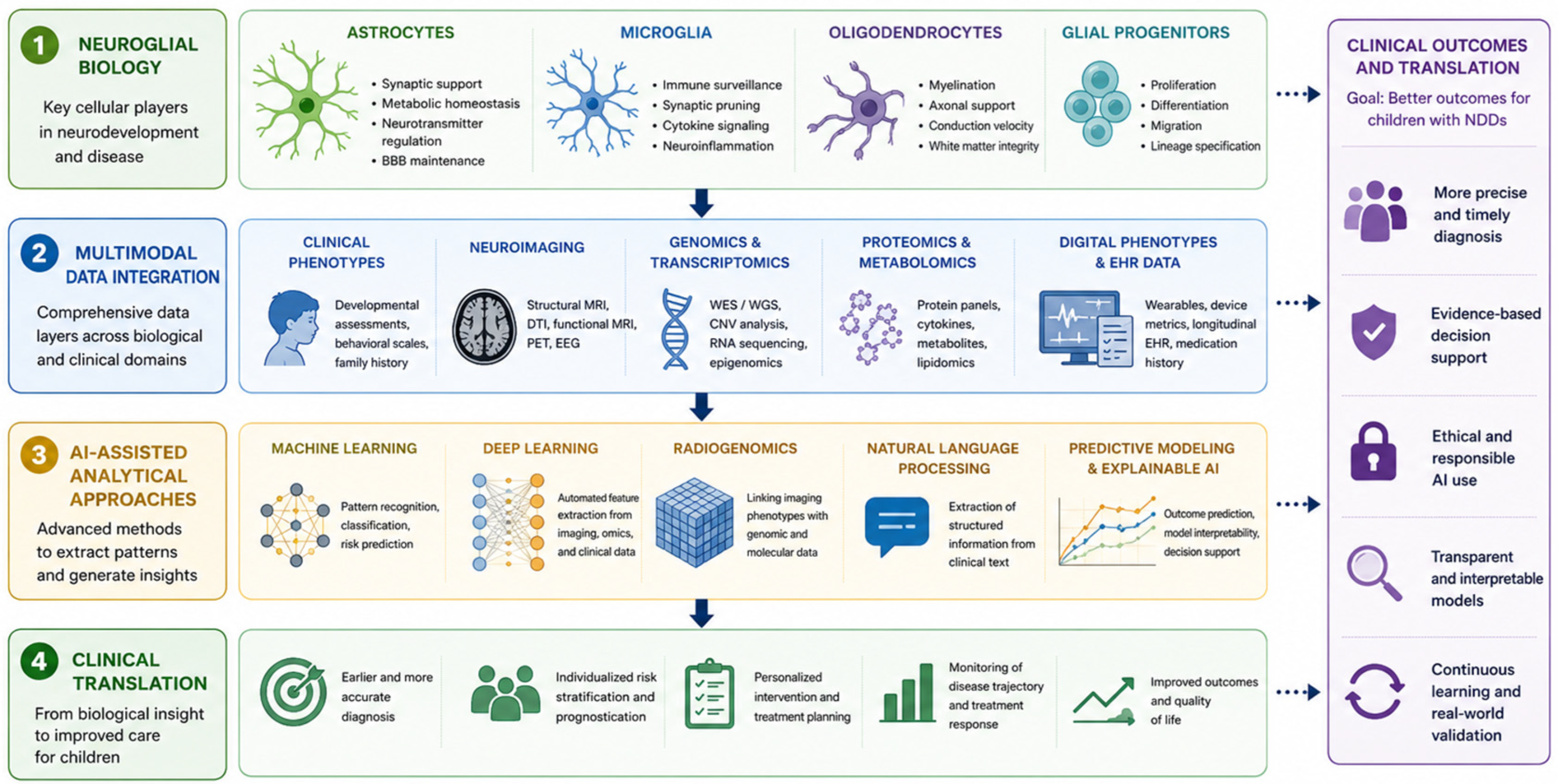

Disclaimer/Publisher’s Note: The statements, opinions and data contained in all publications are solely those of the individual author(s) and contributor(s) and not of MDPI and/or the editor(s). MDPI and/or the editor(s) disclaim responsibility for any injury to people or property resulting from any ideas, methods, instructions or products referred to in the content. |
© 2026 by the authors. Licensee MDPI, Basel, Switzerland. This article is an open access article distributed under the terms and conditions of the Creative Commons Attribution (CC BY) license.