


Abstract
This study investigates the reaction of charred wood cladding systems to fire, focusing on the influence of wood species, charred surface treatment, flame retardant treatment, surface coating and board orientation. Nine different configurations of larch and spruce cladding samples with 20 mm thickness were investigated, which were installed into the system according to standard requirements. The samples differed by wood type, charred surface treatment, board orientation, covering with flame retardant agents and additional surface coverings. Two commercial flame retardant treatments and three commercial surface coatings were included in the experimental matrix. Fire behaviour was evaluated according to the EN 13823 Single Burning Item (SBI) method, analysing the ignition time, fire growth rate index, total heat release from the specimen in the first 600 s of exposure to the main burner flames, smoke growth rate index and total smoke production from the specimen in the first 600 s of exposure to the main burner flames as indicators. Although it was determined that the ignition time fluctuated in a relatively narrow range (from 5 min 12 s to 5 min 36 s), analyses of the additional SBI indicators revealed much clearer differences between the systems. The best results were obtained for the charred notched spruce system treated with the phosphate-, urea- and biocide-based flame retardant, which had the longest ignition time and lowest values for the investigated indicators. Meanwhile, the least favourable behaviour was observed in the notched untreated spruce system and in the horizontally oriented system, marked by higher fire spreading and smoke formation values. The obtained results show that the reaction of a wood cladding system to fire is not determined only by the type or application rate of flame retardant, but also the whole system’s structure, including the wood type, surface processing, covering combination and installation configuration.
1. Introduction
Wood is widely used in building and facade finishing due to its renewable sources, aesthetic qualities and favourable strength-to-mass ratio. However, its usage is limited by its natural flammability and thermal degradation [1,2,3]. The behaviour of wood during a fire is associated with thermal cleavage, volatile flammable product formation, igniting, release of heat, carbon layer formation and smoke generation. Due to this, an improvement in wood resistance to fire generally means an effect on these interconnected processes [1,4]. Processing with flame retardant agents and protective covering usage in wood products is considered not only as an additional protective measure, but also as one of the most important aspects for expanding wood usage in building partition and facade finishing systems [1,4].
In the literature and in practice, various solutions are applied for wood facade protection. These solutions include wood modification for surface coverings, flame-retardant agent products and their combinations [1,4,5]. Nevertheless, the behaviours of such multilayered systems in real operation conditions can differ from those of their separate components. Due to this, the whole system’s reaction to fire must be evaluated, taking into account the cladding type, presence of an air gap, foundation and surface finishing [1,6]. In this context, surface charring is a practically relevant wood surface treatment method because it forms a carbonised outer layer that may reduce direct heat and mass transfer to the underlying wood. However, the protective role of such a charred layer should not be considered automatic, since its effectiveness depends on layer continuity, surface cleaning, subsequent coating and the way in which the cladding is installed as a system.
Increasing attention to sustainability through the use of building materials produced from renewable sources has promoted the usage of wood in both constructive and finishing solutions [7]. Nevertheless, one of the most important aspects limiting the wider application of wood is its natural flammability and its related reaction to fire [2].
The behaviour of wood during a fire is influenced by a complicated physical and chemical process, including thermal degradation, ignition, volatile flammable product formation, heat release, smoke formation and carbon layer formation [1,3,4,8]. As all of these processes are closely related to each other, increasing resistance to heat for wood cannot be considered only as a surface protection problem. Wood modification and additional covering can significantly change the thermal degradation rate, burning intensity and the nature of fire development [6,8,9].
When protecting wood facade systems, it is imperative to take into account not only the properties of the material itself but also that, in real fire conditions, the behaviour of the entire system is determined by many factors. The reaction to fire depends on the type of wood, density, moisture, use of coverings, element configuration, mounting type and gaps behind the cladding solutions. Due to these reasons, fire safety evaluation should not be based only on separate component characteristics, as only system-scale experiments allow for reliable evaluation of realistic behaviours during a fire [1,6,9]. In this context, the Single Burning Item method is particularly relevant for such cladding systems, which evaluates the reaction of an installed assembly to fire, rather than the individual behaviours of isolated material samples.
The effects of flame retardant processing on wood flammability and thermal degradation are often evaluated using thermogravimetric analysis and cone calorimetry, which allows for comparison of the cleavage process, ignition characteristics and heat release [8]. In the literature, the increase in resistance to fire after treatment of wood with spreadable coatings has been analysed in several main ways: applying bio-based phosphorus compounds, inorganic silicon basis modifiers, borate systems, water-based flame retardant agents, various surface coverings and combined thermal and chemical modification solutions [4,10]. Newer reviews have shown that, for wood, flame retardant protection using phosphorus, boron, silicon and carbon layer-forming components is especially important, while surface flame retardant and intumescent covers are considered practical directions due to their comparatively simple application, economy, and ability to form a heat- and mass transfer-limiting protective barrier [4,5,10,11]. In practical façade-type applications, flame retardant systems may therefore represent different treatment concepts, including salt-type phosphate-based systems and polymeric non-salt-based systems. Comparing such treatment concepts at a system level is relevant because their effectiveness depends not only on their chemical composition, but also on the interaction with the charred wood substrate, coating layer and installation configuration.
In recent years, more and more attention has been dedicated to bio-based materials as sustainable flame retardant system alternatives [4]. Research on phytic acid-modified delignified timber has shown that these solutions can significantly lower the general heat release and improve the reaction to fire. Due to this, bio-based phosphorus compounds are considered a prospective direction when aiming to create environmentally favourable flame retardant systems [12]. Relevant research has shown that the reaction to fire can be improved not only with a surface layer, but also by changing the timber microstructure itself and its thermal degradation rate [12,13].
Another important direction is represented by inorganic and organic–inorganic flame retardant systems. Sodium silicate and related silicon-based formulations have been associated with improved flame retardancy, smoke reduction and additional functional benefits, such as increased water resistance or enhanced material stability [4,14,15]. Specific studies on sodium silicate and silica-based wood modification have further indicated that such treatments may form more stable inorganic networks within the wood structure and modify the material’s response during heating [16]. In addition, selected studies on combined wood modification using silica sol, phenolic resin and high-temperature treatment have shown that such systems can also affect the wood’s physical and mechanical properties [17,18]. When assessing these solutions, it is necessary to consider not only their flame retardant effect, but also their wider influence on the treated wood substrate [15,17,18].
Flame retardant agent processing often changes not only the wood’s reaction to fire, but also its operational properties [4,19,20,21]. Analyses of the effects of flame retardant processing on the measurement stability and thermal degradation properties of timber have emphasised that flame retardant agents can affect the timber’s cleavage trajectory, moisture behaviour and structural stability [8,19,20,21]. Analogously, in research on water-based flame retardant agent-based coverings, it has been emphasised that their effectiveness is related not only to their chemical composition but also their interaction with the foundation, covering formation and protective layer properties. For these reasons, the nominal product composition alone does not allow us to reliably predict the final properties [4,10,22].
A separate space is occupied by research on advanced surface technologies and practical application. Studies on flame retardant agents without halogens and water-resistant covering deposition using DBD technology [23], as well as plasma-assisted flame retardant agent impregnation schemes [24], have shown that modern wood protection measures more often than not coordinate several functions at the same time—for example, lower flammability, control over surface moisture and improved protective system penetration or grip. At the same time, research on the fire safety of historical wooden architecture [25,26,27] has shown that effective protection against fire remains relevant both to new and historical constructs; when evaluating heritage objects, it is necessary to take into account not only the material’s flammability but also realistic fire scenarios, evacuation time and limited protection measure implementation possibilities. Classical work on Douglas fir processing using borates and natural extracts has also confirmed the varying effectiveness of different flame retardant agent systems: borates were associated with an obvious flame retardant effect, while natural extracts did not provide a noticeable increase in resistance to fire [28].
Therefore, when evaluating the reaction of wooden facades or covering systems to fire, it is not enough to depend on general knowledge about flame retardant agent groups or individual material laboratory indicators. Therefore, realistic installed systems are necessary, enabling comparison of the effects of wood types, surface processing, thermal modifications, oil coverings and different flame retardant agents. In this context, this work analyses EN 13823 (SBI) sample results for different covered and processed timber cladding systems [1,4,6]. The goal of this work is to compare the reactions of differently processed charred wood cladding systems to fire under the EN 13823 Single Burning Item test, with an emphasis on the ignition time, fire growth, heat release and smoke production as indicators.
2. Materials and Methods
2.1. Materials
In this study, nine different wooden cladding system configurations were analysed. Timber cladding comprising 20 mm-thickness larch or spruce wood was used as samples. The cladding was divided into notched and charred unnotched categories, according to their surface preparation. Samples Nr. 1–8 were installed with vertical board orientation and sample group Nr. 9 with horizontal orientation. The experimental matrix was designed to compare charred wood cladding systems, rather than to quantify the improvement relative to raw untreated wood. Therefore, non-charred and fully untreated wood groups were not included. Within the scope of this study, sample groups 1–4 serve as the internal reference subset, since they represent charred cladding systems without flame retardant treatment.
In the experiment, two commercial timber flame retardant agents products were used: UT—“Ultra” (“MultiPro System OÜ”, Tallinn, Estonia) and AB—“Arlitas B418” (UAB “Danushis Chemicals”, Kretinga, Lithuania). According to the manufacturer’s description, the UT flame retardant agent is a water-based impregnating agent, dedicated to protecting wood and wooden constructs against fire. The manufacturer also specifies that it is a product without halogens and that it contains about 30% iron hydrogen phosphate. AB is a flame retardant solution for wood, also dedicated to protecting wooden surfaces and constructs against fire. It is based on a salt-based system, including potassium potash and ammonium phosphate. As the specific full compositions are not presented in their publicly available product pages, the flame retardant agents used in this work are described according to their functional type and manufacturer-provided information about their active components. Their technical properties are presented in Table 1.
Table 1.
Technical properties of flame retardant agents.
These two products were selected because they represent two practically relevant flame retardant treatment concepts for timber cladding; namely, a phosphate-based salt-type system and a polymeric non-salt-based system. The expected mode of action of such treatments is associated with promoting char formation, modifying thermal degradation and reducing the release of combustible volatiles during heating. The present study does not quantify the chemical retention, penetration depth or distribution of the flame retardants within the wood substrate; instead, the treatments are evaluated at the level of complete mounted cladding systems.
Three commercial timber coverings were used for sample surface finishing: Remmers Induline OW-815 (RM), Renner YS C110 (RN) and Sikkens Cetol Premium Timber Oil (SK). RM (“Remmers” GmbH Löningen, Germany), according to its technical description, is a water-based protective wooden covering dedicated to exterior wooden surfaces. In it, special UV absorbents and lignin stabilisers are used, and the product is recommended for wooden constructs with limited or minimally changing measurement stability. RN (“Renner Italia” S.p.A. Minerbio, Italy) is described by the manufacturer as a hydro-oil dedicated to exterior work. SK (“AkzoNobel”, Amsterdam, The Netherlands), according to its technical description, is a deeply absorbing wood-conserving oil, dedicated to exterior wood; it feeds, colours and protects the surface and forms a natural matte surface. The coverings used in this research encompass both water-based protective systems and oil-type deeply absorbing covers, allowing for comparison of not only flame retardant agents but also different surface layers in terms of their effects on the wood’s reaction to fire. The covering technical characteristics are presented in Table 2.
Table 2.
Technical properties of wood covering agents.
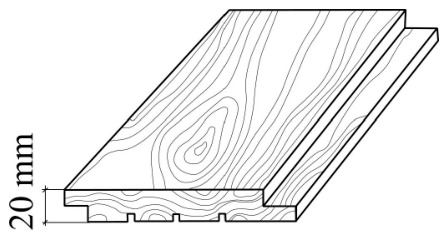
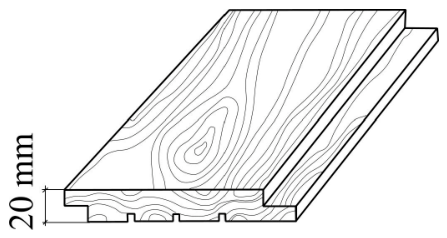
Spruce and larch wood were used for the samples, properties of which are presented in Table 3. The values presented in Table 3 are reference values used to characterise the selected wood species, and should not be interpreted as individually measured density or moisture values for each treated specimen after surface preparation and coating. The claddings used in these experiments for samples were produced from this timber. A schematic of the cut section of the cladding is presented in Figure 1. During specimen selection, boards with obvious macroscopic irregularities that could strongly bias the SBI response, such as large knots, severe cracks or visible resin pockets, were avoided where possible. However, no formal defect grading procedure or quantitative anatomical characterisation was performed, and this is acknowledged as a limitation of the material characterisation process.
Table 3.
Wood technical properties.
Figure 1.
Wooden cladding cut section.
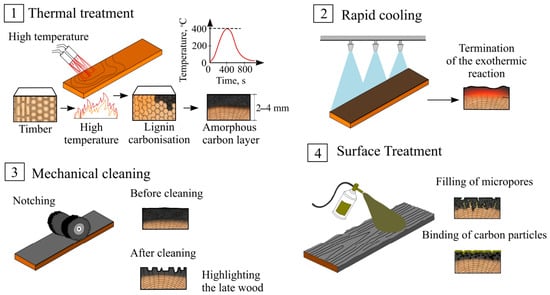
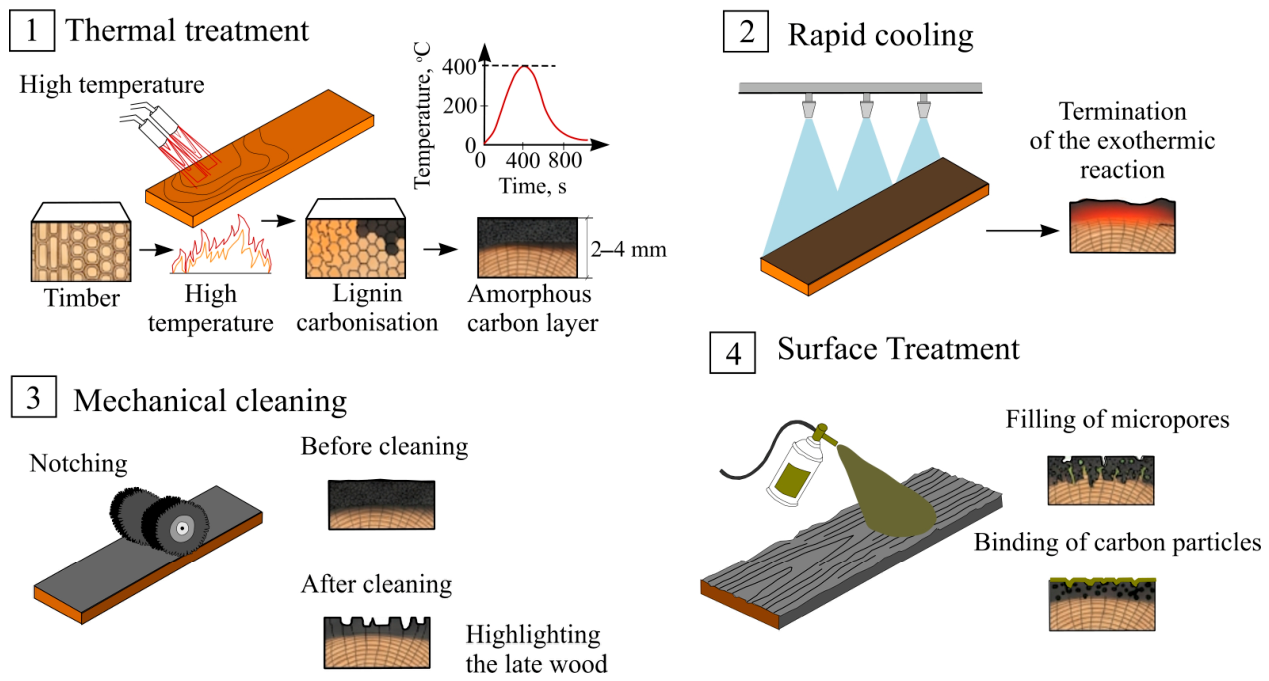
Spruce and larch wood cladding was prepared using traditional Japanese Shou Sugi Ban (also known as Yakisugi) wood burning technology. This technology uses thermal wood treatment at a temperature of 300–400 °C. When processing the wood, controlled wood surface pyrolysis takes place, the goal of which is to form a 2–4 mm-thickness amorphous carbon layer on the cladding surface. After the burning process, sudden cooling is performed using a water spray. This stops the exothermic process, such that the wood’s structural integrity is not damaged and wood cleaving processes are avoided. After cooling, the cladding surface is cleaned with nylon brushes (notching). During the cleaning process, loose ash and carbon layers are removed. Usually, during such a burning process, the wood inside soft early wood grooves burns away while later wood remains, as it is stronger and harder. In later experiments, some of the products were cleaned using brushes (notching), while others were used without cleaning, as summarized in Table 4. After such processing or without it, the samples were covered in flame retardant agents followed by the special covers described in Table 2. The sample surface preparation schema is shown in Figure 2.
Table 4.
Researched sample groups and surface processing schemes.
Figure 2.
Wood cladding thermal treatment and preparation scheme.
Nine sample groups were used. Sample groups 1–4 were dedicated to evaluating the influence of wood type and surface processing, using charred wood with a surface-protective covering system without a flame retardant agent. Sample groups 5–9 were dedicated to comparing the effects of different flame retardant agents, their opacities, additional aqueous or oil coverings and board orientation on the wood cladding system’s reaction to fire.
2.2. Sample Preparation and System Assembly
Samples were experimented on according to the EN 13823:2020+A1:2022 standard for the reaction to fire of building products affected by a Single Burning Item (SBI) [29]. Samples were prepared according to the requirements of wood cladding systems. They were installed on a hard surface with a gap for air. To determine the difference between samples covered in flame retardant agents, covered with coverings and prepared with different surface treatment methods, sample groups were designed as described in Table 4. The sample groups were chosen taking into account the wood type, surface treatment, board orientation and covering schema. Flame retardant products and surface coatings were applied by brush according to the application rate defined for each sample group. The application rates were not selected to provide an equalised chemical dosage between different products, but to reflect practical treatment schemes and product-specific recommended usage ranges. Therefore, the application rate was treated as part of the tested system configuration, rather than as an independently optimised variable. When the sample group used both flame retardant agents and an additional oil or protective cover in an aqueous base, the flame retardant agent was spread on both cladding sides; with an oil or protective covering only, it was spread on the exterior surface alone.
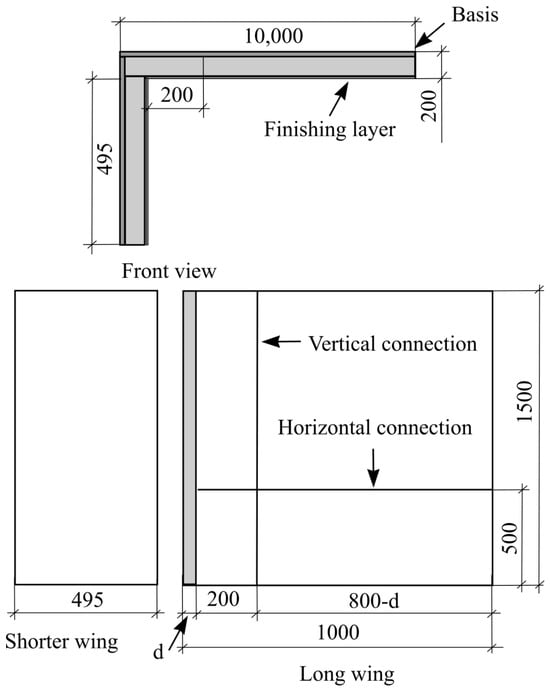
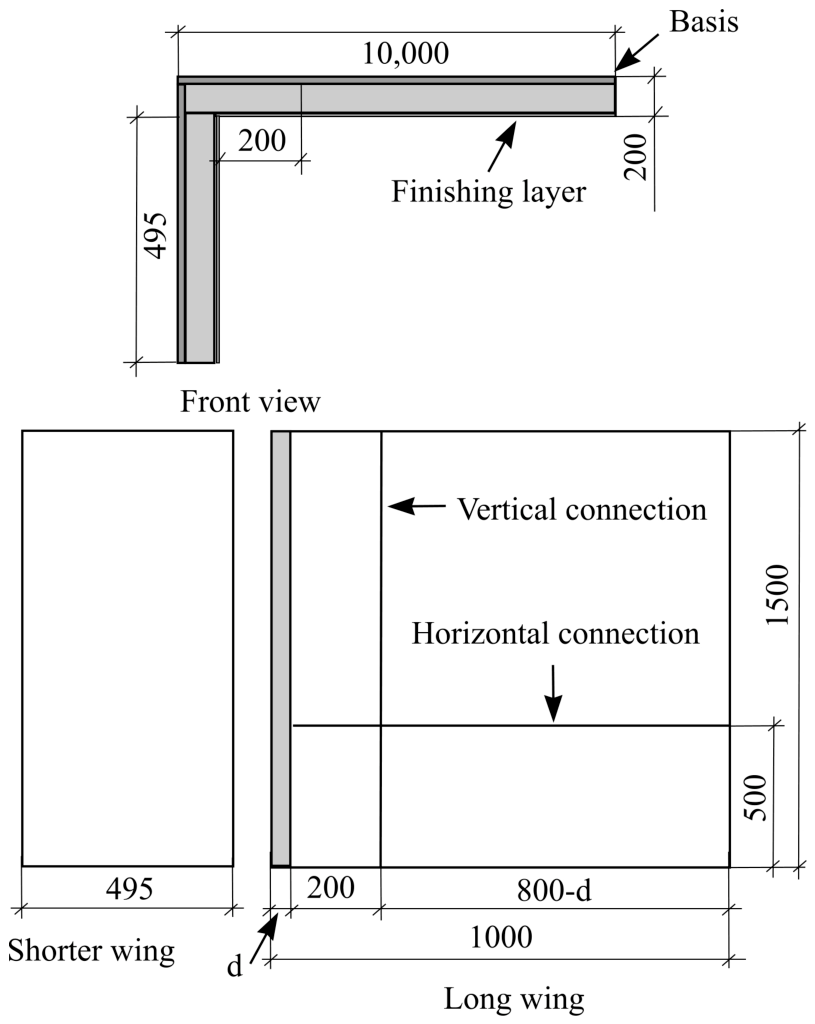
The SBI (Single Burning Item) samples, according to the EN 13823, were formed using 40 mm × 40 mm spruce battens, enabling cladding installation with an air gap. Sample systems were constructed from 20 mm-thickness cladding (which are described in Table 4), 40 mm spruce battens and a plasterboard base. The evaluated object was not a singular cladding element, but the whole constructed system.
The corner sample was composed of two wings (Figure 3), connected at a 90° degree angle to form an inner room corner. According to the EN 13823 installation description, the long wing height was 1500 mm, with a width of 1000 mm, while the shorter wing height was 1500 mm, with a width of 495 mm. If there were vertical connections in the final usage system, the long wing surface had to form a vertical connection 200 mm from the inner corner; meanwhile, if the connections were horizontal, a horizontal connection at a 500 mm height from the long wing edge was required. The maximum sample thickness, according to the design, cannot exceed 200 mm. As there must be an air gap between the cladding and base in a real application, the samples were installed with an air gap.
Figure 3.
SBI sample system geometry and installation (all dimensions are in mm).
The sample system base used a plasterboard panel. The LST EN 13823 installation description specifies that an A2-s1,d0 class standard base needs to be a plasterboard panel according to EN 520, with a density of 700 ± 100 kg/m3 and thickness of 1.5 ± 0.5 mm. The plasterboard base used in this experiment satisfied these standard base requirements.
After complete sample preparation, mounted systems were conditioned according to the EN 13238:2010 standard requirements. A conditioning room was used, which had a constant temperature of 23 ± 2 °C and humidity of 50 ± 5%. Samples were held under these conditions for 20 days. The moisture content of each specimen was not measured immediately before the SBI test. Therefore, the reported conditioning regime describes the controlled pre-test exposure conditions rather than directly measured moisture values at the exact time of testing.
2.3. Sample Method
For each sample group, three replicate specimens with the same nominal geometry and system configuration were tested. The reported values represent the mean values of the replicate tests, and the variability of the results is reported as the standard deviation in the relevant result table and figures. The SBI method was applied as a system-level reaction-to-fire test, which is suitable for comparing differently installed and differently treated wood cladding assemblies in the early fire development stage. The evaluated outputs included ignition time, fire growth rate index (FIGRA), total heat release from the specimen during the first 600 s of exposure to the main burner flames (THR600s), smoke growth rate index (SMOGRA), total smoke production from the specimen during the first 600 s of exposure to the main burner flames (TSP600s), lateral flame spread (LFS) and flaming droplets or particles (FDP). This study does not use the SBI data to assign a formal EN 13501-1 reaction-to-fire classification but, instead, to compare the relative performance of the investigated cladding systems.
2.4. The Experimental Comparison Logic
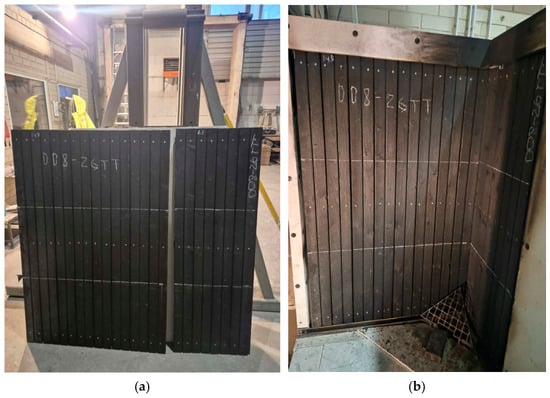
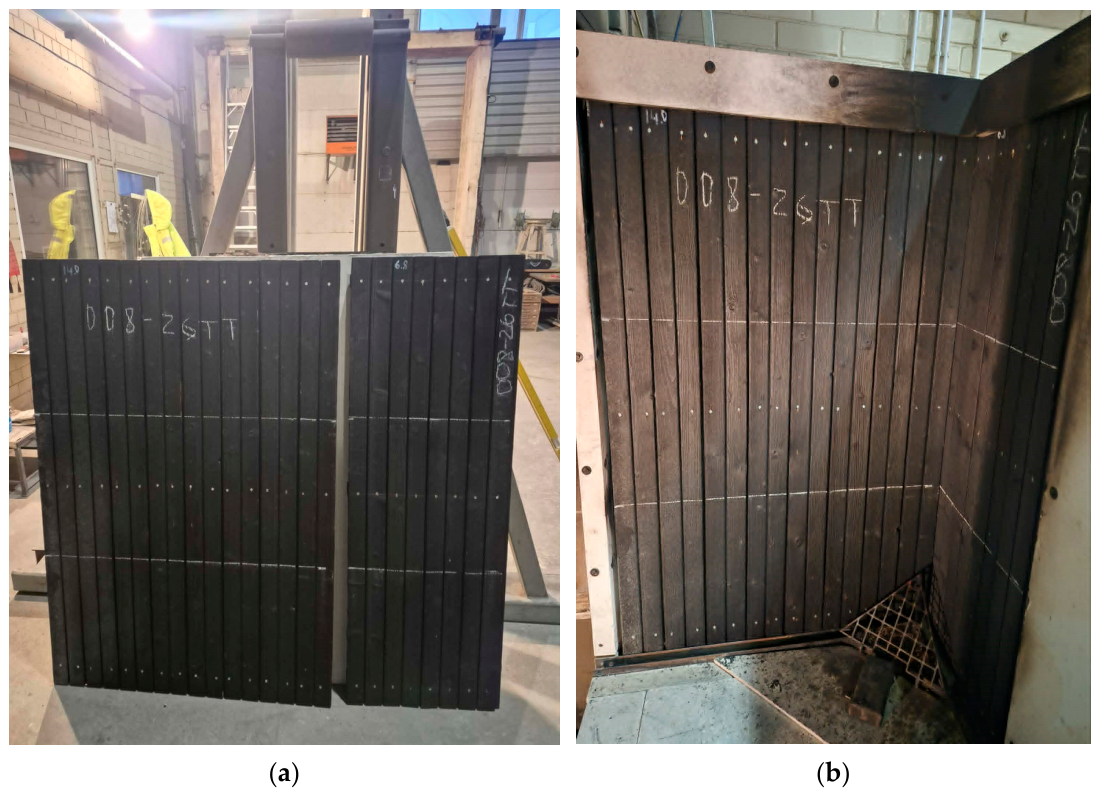
Sample groups were prepared so that they could be evaluated separately and in combination for the main system variable effects reflecting the reaction to fire. Examples of specimens prepared for testing are shown in Figure 4. First, wood types (larch and spruce), surface finishes (notched and unnotched charred surface) and board orientation (vertical and horizontal) were compared. Second, the flame retardant agent type and its application rate was evaluated, comparing the AB and UT systems. Third, the combined covering effect was investigated, where the flame retardant agents were combined with different oil or protective covers. This scheme allows for investigation of not only the effectiveness of different products, but also their reaction to fire when changing the entire wood cladding system’s composition.
Figure 4.
View of the assembled stand with samples: (a) both wings of the specimens before installation in the wall; (b) installed wall.
The investigated configurations in this work were treated as realistically installed wooden facade and finishing system configurations, not only as individual laboratory work samples. This approach corresponds both to the EN 13823:2020+A1:2022 [29] sample logic and the research goal—that is, to compare how different covering and modification solutions affect the behaviour of the installed system in the early fire spreading stage.
The experimental matrix was not intended as a full factorial design covering all possible combinations of wood species, surface preparations, flame retardant treatments, coatings and board orientations. Instead, it was designed to compare selected practical cladding configurations. Consequently, the results should be interpreted as comparative system-level findings for the tested configurations, rather than as a complete optimisation study of individual treatment parameters.
3. Results
3.1. General SBI Indicator Comparison
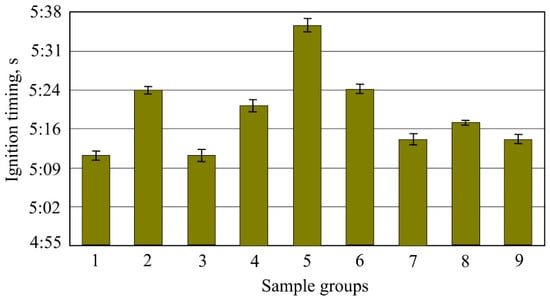
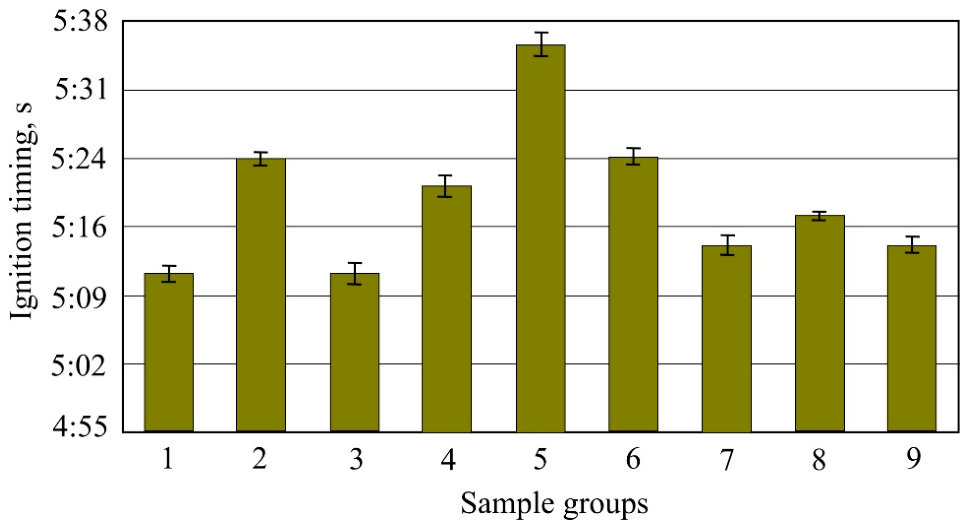
According to the EN 13823 (SBI) experiment, all investigated wood cladding systems caught on fire within a comparatively small interval—from 5 min 12 s to 5 min 36 s. The ignition time results are shown in Figure 5. The heat release and smoke development behaviour was compared using the standardised SBI indicators FIGRA, THR600s, SMOGRA and TSP600s. The values reported in this section represent the mean values obtained from three replicate SBI tests for each sample group. Error bars represent the ± standard deviation (SD) of three specimens (n = 3).
Figure 5.
Comparison of mean ignition time by sample group.
When including the heat release and smoke formation indicators in the results, it becomes obvious that the system behaviour after ignition differs more than the ignition time results. When the full set of SBI indicators was considered, group 5 (charred notched spruce treated with AB flame retardant) showed the lowest THR600s, SMOGRA, TSP600s and FIGRA0.4MJ values. In contrast, groups 4 and 9 showed the highest values for several post-ignition indicators, including FIGRA, THR600s and TSP600s.
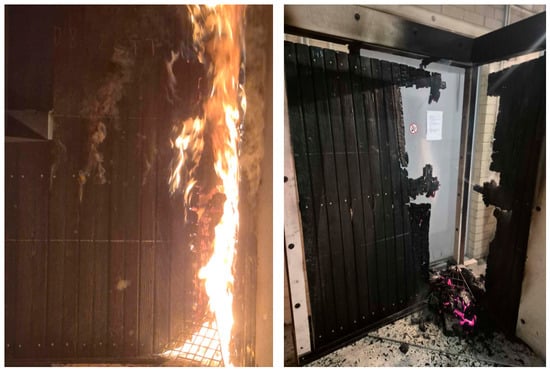
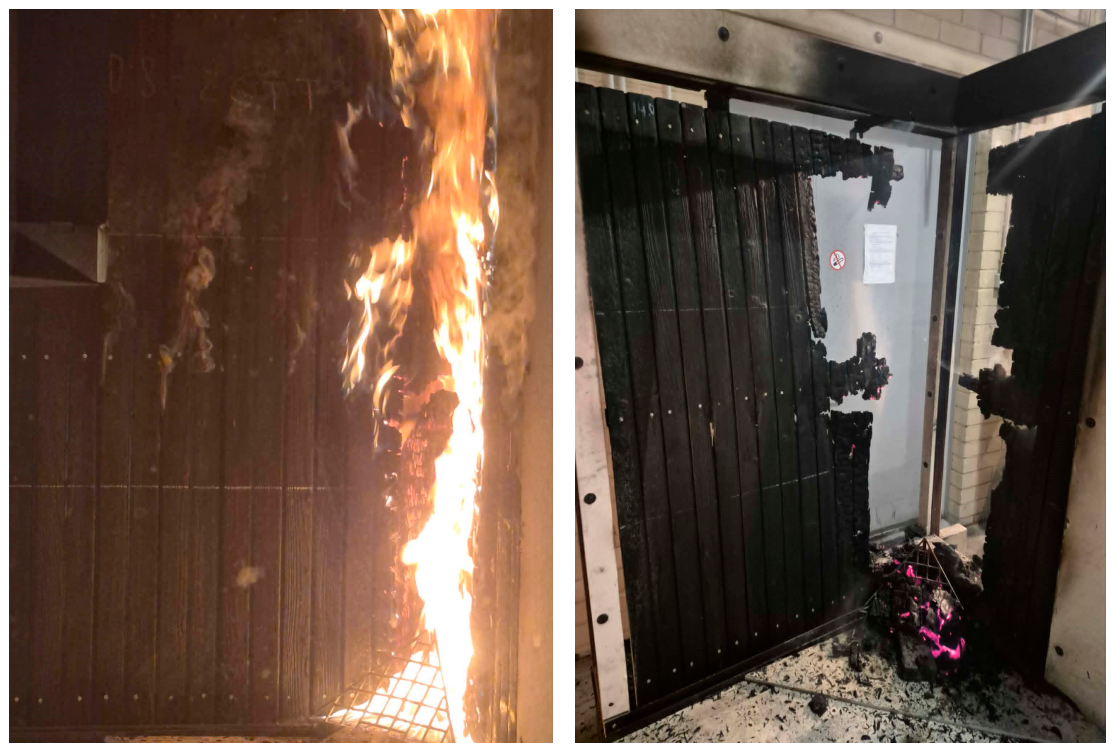
The appearance of the samples after the test is shown in Figure 6. General sample results are summarised in Table 5. No systems had the flame reach the sample edge (LFS = No) (LFS—lateral flame spread on the long specimen wing), and no traces of burning drops or particles were found (FDP = No). This indicates that the main differences between the systems were not in terms of edge flame spreading or burning particle fall, but instead in heat release rate, general heat release amount and smoke formation intensity. The reported SBI results are used for a comparative performance assessment only, and are not used in this study to assign formal EN 13501-1 reaction-to-fire classes.
Figure 6.
Image of samples during and after testing using the SBI method.
Table 5.
Mean values of the main SBI indicators for the investigated cladding systems.
3.2. Heat Release Indicators: FIGRA and THR600s
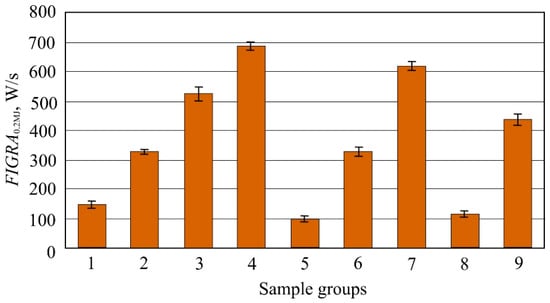
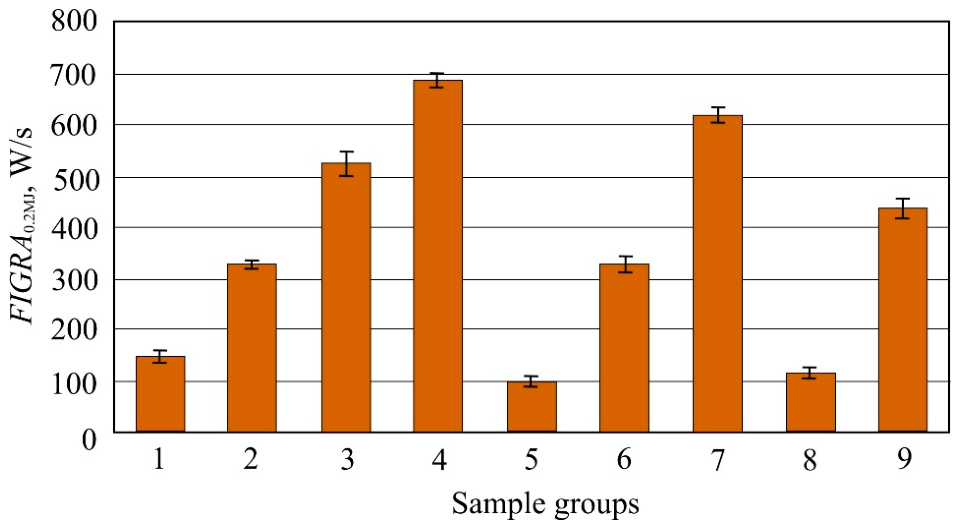
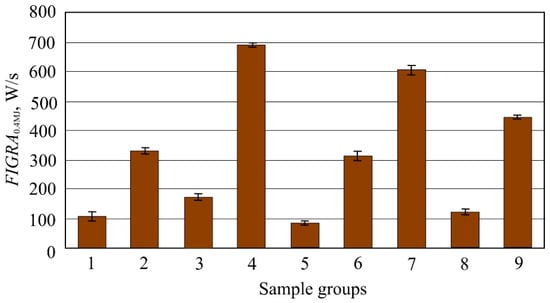
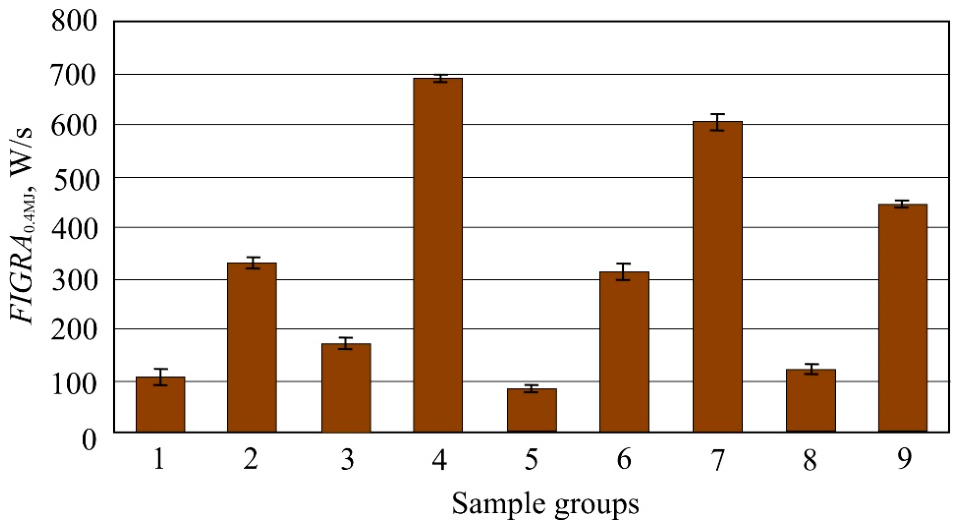
Ignition time alone was insufficient to evaluate the differences between systems, as some of the samples that caught on fire at the same time demonstrated different fire spreading rates. This is especially well shown by the FIGRA indicators (Figure 7 and Figure 8). The lowest were the FIGRA0.2MJ and FIGRA0.4MJ values determined in group 5 (99.1 W/s and 82.3 W/s, respectively), while the highest were observed for group 4 (both 692.1 W/s). Therefore, the slowest and fastest developing systems in terms of the fire spreading rate differed by more than six times. This means that, despite the fact that the systems had a similar ignition time, the fire essentially spread in a different manner after ignition.
Figure 7.
Comparison of mean FIGRA0.2MJ by sample group.
Figure 8.
Comparison of FIGRA0.4MJ by sample group.
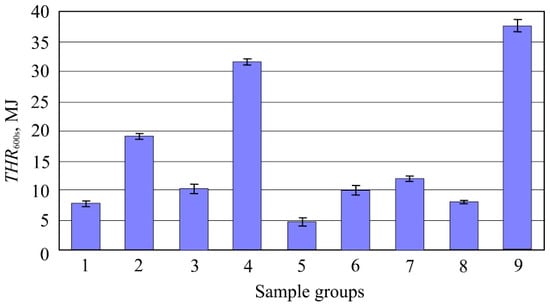
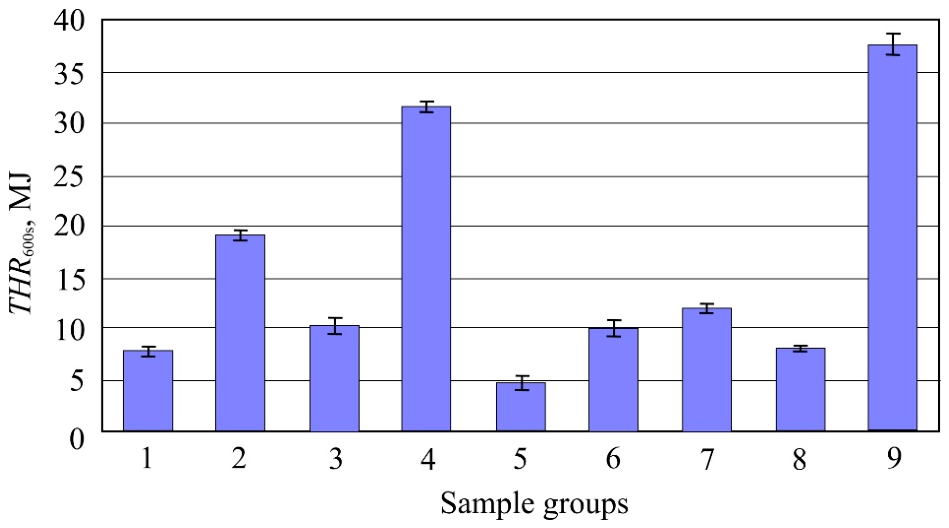
The THR600s indicators also showed clear differences between systems (Figure 9). The lowest general heat release during 600 s was determined in group 5 (4.9 MJ), while the highest was in group 9 (37.7 MJ). High THR600s values were observed in group 4 (31.7 MJ) and group 2 (19.1 MJ). Meanwhile, groups 1, 5 and 8 had relatively low general heat release (8.1 MJ, 4.9 MJ and 8.2 MJ, respectively). These data show that some systems, while igniting a few seconds earlier than others, released far greater heat energy during further burning.
Figure 9.
Comparison of mean THR600s by sample group.
The evaluation of different groups can be divided into several important comparisons. Groups 5 and 6, both of which are composed of charred notched spruce, while differing in the used flame retardant agent, showed essentially different behaviours: the AB flame retardant-covered system caught on fire the latest and had the lowest FIGRA and THR600s indicators, while the UT flame retardant agent-covered system had three times higher FIGRA0.2MJ and more than two times higher THR600s. An obvious difference can also be seen between group 8 and 9, where the same material system differed only in the board orientation: a horizontal orientation was correlated with significantly higher FIGRA and THR600s indicators, even though the difference in ignition time was only 3 s.
3.3. Smoke Formation Indicators: SMOGRA and TSP600s
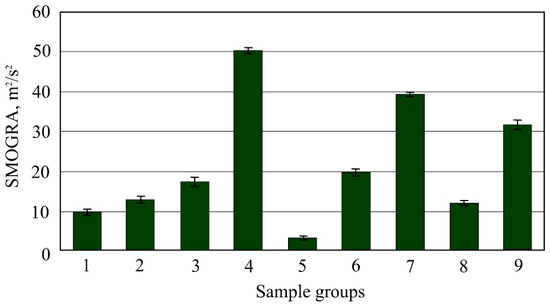
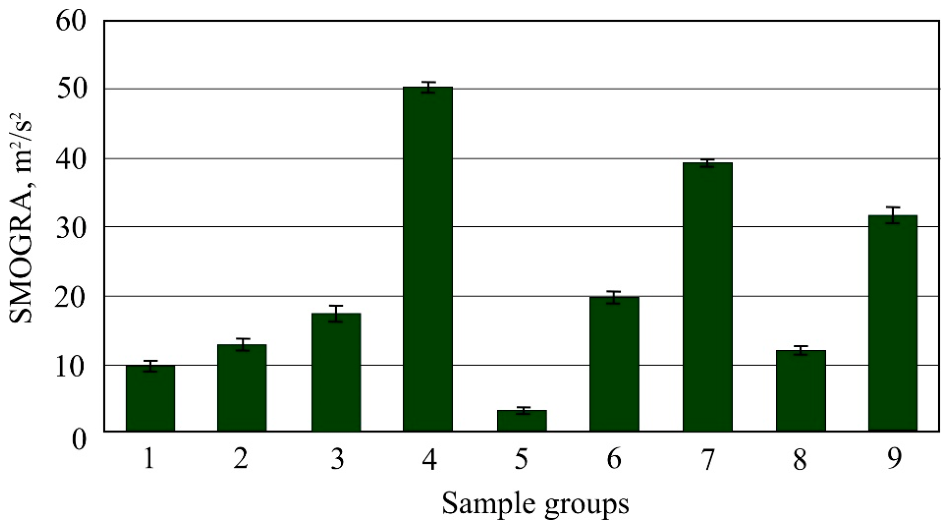
Smoke formation indicators differed significantly (Figure 10). The lowest SMOGRA was observed in group 5 (3.4 m2/s2), while the highest was in group 4 (50.3 m2/s2). High SMOGRA values were also shown in group 7 (39.4 m2/s2) and group 9 (31.8 m2/s2). Meanwhile, groups 1, 2, 3 and 8 had a relatively low smoke increase speed. This shows that these systems not only released low heat, but also generated smoke slower.
Figure 10.
Comparison of mean SMOGRA by sample group.
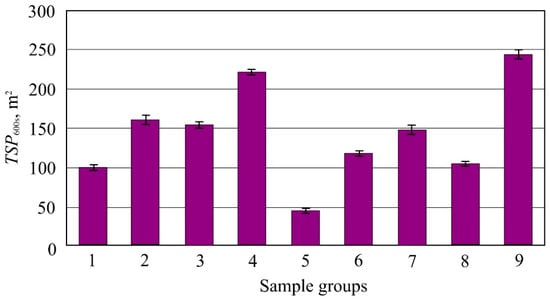
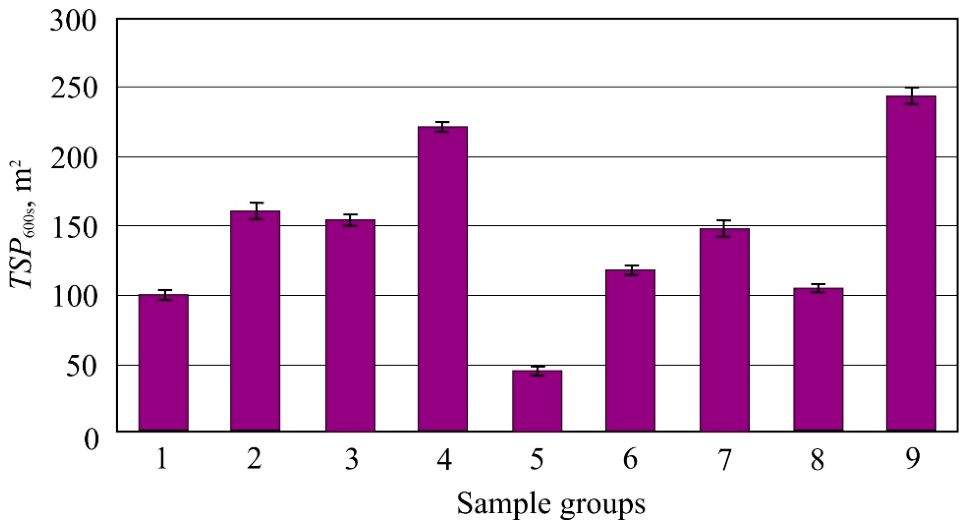
The TSP600s indicators differentiated systems even more clearly (Figure 11). The lowest general smoke amount was determined for group 5 (47.3 m2), while the highest was for group 9 (243.6 m2). High TSP600s values were also shown by group 4 (218.0 m2) and group 2 (161.6 m2). Intermediate values were observed in groups 3, 6 and 7, while groups 1 and 8 showed relatively low general smoke amounts (100.9 m2 and 104.5 m2, respectively). Therefore, according to the smoke indicators, the best results were shown by group 5, while the worst were obtained for groups 4 and 9.
Figure 11.
Comparison of mean TSP600s by sample group.
The smoke indicators showed that the differences between systems appeared not only in the general amount but also the formation dynamic of smoke. Groups 4, 7 and 9 showed a faster increase in smoke amount and higher TSP peaks while, for group 5, smoke formation was obviously lower and slower. This essentially matches the FIGRA and THR600s results; thus, these systems stand out as most favourable not only for their heat release characteristics, but also their smoke-related properties.
3.4. Influence of Wood Type, Surface Treatment and Orientation on SBI Indicators
When comparing groups 1–4, it can be noted that the effect of surface treatment was ambiguous for all indicators. According to ignition time, the notched surface for both the larch and spruce systems was related to longer ignition; however, according to FIGRA, THR600s and TSP600s, this tendency was not universal. In the case of larch, the notched system (group 2) was marked with a longer ignition time but also with higher FIGRA and THR600s indicators when compared to the unnotched system (group 1). In the case of spruce, the notched system (group 4) showed not only a longer ignition time but also the worst FIGRA, THR600s, SMOGRA and TSP600s indicators compared to group 3. Thus, the increased ignition time in this case did not mean lower fire intensity after ignition.
Comparing groups 5–7, it can be clearly seen that the largest differences were associated not with the wood substrate—which was the same in all three cases—but with the surface treatment scheme. Group 5, treated with AB, showed the most favourable performance within this set, exhibiting the longest ignition time and the lowest FIGRA, THR600s, SMOGRA and TSP600s values. Group 6, treated with UT, showed intermediate behaviour; whereas group 7, treated with UT and additionally coated with RN, demonstrated the fastest fire growth among these three systems and notably higher smoke production. In this comparison, the UT + RN system showed higher FIGRA, SMOGRA and TSP600s values than the UT-only system.
Comparing groups 8 and 9, it was determined that the change from vertical to horizontal board orientation alone was related with significantly worse FIGRA, THR600s and TSP600s indicators in the latter. Even though the ignition time difference between these systems was not high (5:18 compared to 5:15), the horizontally oriented system stands out with more than 4.5 times higher general heat over 600 s (37.7 MJ compared to 8.2 MJ) and more than double the amount of smoke (243.6 m2 compared to 104.5 m2). This comparison shows that the difference between the vertical and horizontal orientation was small for ignition time, but much larger in terms of THR600s and TSP600s.
3.5. Summary of Observed SBI Trends
The SBI results show that ignition time alone did not fully differentiate the investigated cladding systems. Although ignition times varied within only a 24 s interval, the post-ignition indicators showed larger differences between the configurations. Group 5 showed the lowest overall heat release and smoke production indicators, whereas groups 4, 7 and 9 showed higher values in several post-ignition parameters. Therefore, the following discussion focuses on the possible reasons for these observed differences, particularly the effects of charred surface condition, flame retardant treatment, additional coating and board orientation.
4. Discussion
The results of the present study show that the reaction of charred wood cladding systems to fire cannot be interpreted from ignition time alone. Although all investigated systems ignited within a relatively narrow interval, the post-ignition SBI indicators, such as FIGRA, THR600s, SMOGRA and TSP600s, revealed much larger differences in fire growth and smoke development. This means that the early ignition event and the subsequent fire development should not be treated as equivalent manifestations of fire performance. In the investigated systems, a configuration that ignited slightly later did not necessarily show lower fire growth or lower smoke production afterwards. This observation is consistent with previous studies emphasising that the fire behaviours of timber cladding must be assessed at a system level, rather than from individual material properties [1,6].
The comparison between spruce and larch should be interpreted cautiously, because the present study did not include direct measurements of density, resin content, chemical composition or anatomical structure for each individual specimen after treatment. Nevertheless, these material characteristics may influence ignition, heat release and smoke production. Differences in wood density, extractive and resin content, permeability and anatomical structure can affect heat transfer, volatile release and char formation during burning. Therefore, the observed differences between spruce and larch in this study should be treated as system-level differences under the tested configurations, rather than as a direct proof of a species-specific combustion mechanism.
The comparison of groups 1–4 suggests that charred surface notching affected fire behaviour in a more complex way than a simple improvement or deterioration. In both wood species, notched surfaces were associated with somewhat longer ignition times. However, this did not translate into consistently better FIGRA, THR600s, SMOGRA or TSP600s values. A plausible explanation is that notching after charring changes not only the roughness of the exposed surface, but also the integrity, continuity and local thickness distribution of the residual char layer. In practice, notching removes loose ash and carbonised fragments, and exposes a more structured relief of early wood and late wood. Such a surface may delay local ignition in some cases, while at the same time creating conditions for less uniform thermal shielding during continued burning. Because no microstructural or chemical characterisation of the char layer was carried out in this study, this explanation should be treated as a reasoned interpretation rather than a directly proven mechanism. In addition, the mass loss associated with the brushing or removal of loose charred material was not quantified. Cone calorimeter testing could provide complementary material-scale information on the ignition, heat release and mass loss of brushed and unbrushed surfaces, but such testing would address material-scale behaviours rather than the system-level SBI responses investigated in this work. Still, this observation is in agreement with the broader literature showing that thermal modification and subsequent flame retardant treatment alter degradation pathways, mass transfer and char formation in a coupled rather than isolated manner [3,8,9,19,20].
The clearest treatment-related differences were observed in groups 5–7, where the wood substrate was kept constant and only the surface treatment scheme changed. This is important because it reduces the risk of attributing the observed differences to wood species or gross geometric variation. Within this subset, the AB-treated system showed the most favourable overall performance, combining the longest ignition time with the lowest FIGRA, THR600s, SMOGRA and TSP600s values. By contrast, the UT-treated system showed intermediate behaviour, while the UT + RN combination showed faster fire growth and higher smoke production. The most likely interpretation is that the additional surface layer did not simply add a passive protective effect, but modified the way in which heat, volatiles and degradation products were generated and transported through the surface region. In other words, the fire response of the combined UT + RN system should not be understood as the sum of two separate products, but as the behaviour of a new multilayer system. This interpretation is well aligned with recent studies stressing that the effectiveness of flame retardant and protective coatings depends not only on their nominal composition, but also on their interaction with the substrate, penetration depth, film continuity and barrier formation during heating [4,10,22]. However, because flame retardant retention, penetration depth and spatial distribution in the charred substrate were not quantified, the present interpretation should be understood as a plausible system-level explanation rather than as direct evidence of the treatment mechanism.
The comparison of groups 8 and 9 further reinforces the system-level nature of fire performance. Here, the material composition was the same, while the board orientation changed from vertical to horizontal. The ignition time difference remained small, but the horizontally oriented system showed substantially higher THR600s and TSP600s values. This indicates that geometric arrangement can have a limited influence on the ignition moment while still strongly affecting the subsequent development of burning and smoke production. A physically plausible explanation is that board orientation changes the interaction between the flame, joints and exposed charred surface. In the horizontal configuration, the joints and surface relief may favour local flame attachment, convective heat accumulation and longer residence of hot gases along the cladding surface. In addition, wood is an anisotropic material, and heat transfer, pyrolysis propagation, cracking and volatile release pathways may differ depending on the orientation of the exposed surface and the direction of the flame spread relative to the board geometry. As a result, the same material formulation can generate different post-ignition behaviours when installed in a different orientation. Thus, even when the material formulation is unchanged, the installed configuration may significantly alter the overall fire behaviour of the system [1,6].
Another important observation is that a higher nominal flame retardant application rate did not automatically ensure a more favourable SBI performance. Groups 8 and 9 used a higher UT application rate than group 6, yet their overall fire performance was not consistently better, particularly in the horizontally oriented system. It should also be noted that the treatment amounts used in this study were not selected as optimised threshold concentrations; instead, they were based on practical treatment schemes and product-specific application ranges. Therefore, the present results should not be interpreted as defining an optimum dosage for the tested flame retardants. Instead, the application rate should be considered as one component of the complete tested system, together with the surface condition, coating interaction, layer distribution and mounting geometry. This suggests that the product amount alone is not a sufficient predictor of reaction to fire. Instead, the results indicate that the performance depends on a combination of factors, including charred surface condition, coating interaction, layer distribution and mounting geometry. This interpretation is consistent with studies emphasising that the behaviour of treated timber is controlled by coupled substrate–coating interactions, rather than the loading level alone [4,10,22]. A further practical issue is the long-term durability of the charred surface layer. The present study evaluated freshly prepared and conditioned specimens, and did not include weathering, aging, leaching, ultraviolet exposure, wetting–drying cycles or mechanical abrasion. In real façade applications, these factors may gradually change the continuity, adhesion, thickness and moisture behaviour of the carbonised layer, and of any additional coating or flame retardant treatment. Consequently, the reaction-to-fire performance measured in these SBI tests should be interpreted as the performance of the tested systems under the investigated laboratory preparation and conditioning conditions, not as a direct prediction of long-term façade performance after service exposure.
At the same time, the results should be interpreted with caution. This study does not provide direct physico-chemical evidence for the mechanisms responsible for the observed differences because no microscopic, spectroscopic or residue analyses were carried out. In addition, because the study was based on three replicate SBI tests per configuration, and was not designed as a formal EN 13501-1 classification programme or full factorial optimisation study, the conclusions should be read as comparative findings for the tested systems rather than as universal classification or design rules. Therefore, the present discussion should be read as a system-level interpretation of the observed SBI trends, rather than as a fully investigated proof. Even with these limitations, the results clearly indicate that wood species, charred surface condition, flame retardant treatment, additional coating and board orientation interact in non-linear ways. For the practical design and evaluation of timber cladding, this means that product declarations alone are insufficient and that experimental testing of full-system behaviours remains essential.
5. Conclusions
In this work, according to the EN 13823 (SBI) method, nine differently processed charred wood cladding systems were compared in terms of their behaviours in the early stage of fire development. Although the ignition time of the investigated systems fluctuated within a relatively narrow range (between 5 min 12 s and 5 min 36 s), analyses of additional SBI indicators revealed that the differences between the systems became much more pronounced after ignition, particularly in relation to fire growth and smoke development. Therefore, ignition time alone is not sufficient to describe the reaction-to-fire performance of the tested cladding systems.
The main research conclusions are as follows:
- Notched charred wood surfaces were related to longer ignition times compared with unnotched surfaces for both larch and spruce systems. However, this tendency did not consistently correspond to lower FIGRA, THR600s, SMOGRA and TSP600s values, which indicates that delayed ignition alone does not necessarily mean more favourable overall fire performance under the tested system conditions.
- The longest ignition time was determined for the charred notched spruce system treated with the flame retardant agent AB. Under the investigated conditions, this system also showed the most favourable overall performance, combining the longest ignition time with the lowest FIGRA, THR600s, SMOGRA and TSP600s values.
- The system treated with UT and additionally coated with RN did not achieve more favourable performance than the system treated with UT alone. In particular, the combined treatment was associated with faster fire growth and higher smoke production, indicating that an additional coating layer does not necessarily strengthen the protective effect of the flame retardant system and should be evaluated as part of the complete cladding configuration.
- In the unnotched spruce systems treated with UT and SK, the influence of board orientation on ignition time was relatively small but measurable. In contrast, the horizontal orientation had a much stronger effect on the post-ignition behaviour of the system, leading to higher THR600s and TSP600s values than the corresponding vertical configuration. This suggests that installation arrangement can substantially affect the system-level fire behaviour even when the material composition remains unchanged.
- The obtained results indicate that the reactions of wood facade and finishing systems to fire are not determined only by the chemical composition or application rate of a single product, but by the composition of the whole system, including the wood type, surface treatment, coating combination and installation configuration.
Taking all of this into account, it can be claimed that the fire behaviour of wood cladding systems should be evaluated at the system level. The present results show that a reliable assessment of such systems requires not only ignition time analysis but also the consideration of additional SBI indicators, such as FIGRA, THR600s, SMOGRA and TSP600s, in order to more fully evaluate both ignition behaviours and the subsequent development of fire and smoke. From a practical application perspective, the results support the use of system-level SBI testing when selecting charred wood cladding configurations, because the flame retardant treatment, additional coating and board orientation may interact in a non-linear manner. The presented results should be interpreted as comparative SBI performance data for the tested configurations, and not as formal EN 13501-1 reaction-to-fire classifications or as universal optimisation rules for flame retardant dosage.
Author Contributions
Conceptualisation, M.G. and L.S.; methodology, M.G.; software, R.Z.; validation, L.S., M.G. and R.Z.; formal analysis, L.S.; investigation, M.G. and L.S.; resources, M.G.; data curation, L.S.; writing—original draft preparation, L.S. and R.Z.; writing—review and editing, L.S. and R.Z.; visualisation, R.Z.; supervision, R.Z.; project administration, R.Z. All authors have read and agreed to the published version of the manuscript.
Funding
This research received no external funding.
Data Availability Statement
The data presented in this study are available on request from the corresponding author.
Conflicts of Interest
The authors declare no conflicts of interest.
References
- Hill, C.; Kymäläinen, M.; Rautkari, L. Review of the use of solid wood as an external cladding material in the built environment. J. Mater. Sci. 2022, 57, 9031–9076. [Google Scholar] [CrossRef] [Scilit]
- Östman, B.; Brandon, D.; Frantzich, H. Fire safety engineering in timber buildings. Fire Saf. J. 2017, 91, 11–20. [Google Scholar] [CrossRef] [Scilit]
- Dietenberger, M.A.; Hasburgh, L.E. Wood Products: Thermal Degradation and Fire. In Reference Module in Materials Science and Materials Engineering; Elsevier: Amsterdam, The Netherlands, 2016. [Google Scholar] [CrossRef] [Scilit]
- Lee, Y.X.; Wang, W.; Lei, Y.; Xu, L.; Agarwal, V.; Wang, C.; Yeoh, G.H. Flame-retardant coatings for wooden structures. Prog. Org. Coat. 2025, 198, 108903. [Google Scholar] [CrossRef] [Scilit]
- Albert, C.M.; Liew, K.C. Recent development and challenges in enhancing fire performance on wood and wood-based composites: A 10-year review from 2012 to 2021. J. Bioresour. Bioprod. 2024, 9, 27–42. [Google Scholar] [CrossRef] [Scilit]
- Hopkin, D.; Spearpoint, M.; Kanellopoulos, Y.; Gorska, C.; Mayfield, C. Multi-Scale Characterisation of the Fire Hazards of Timber Cladding. Fire 2025, 8, 35. [Google Scholar] [CrossRef] [Scilit]
- Ramage, M.H.; Burridge, H.; Busse-Wicher, M.; Fereday, G.; Reynolds, T.; Shah, D.U.; Wu, G.; Yu, L.; Fleming, P.; Densley-Tingley, D.; et al. The wood from the trees: The use of timber in construction. Renew. Sustain. Energy Rev. 2017, 68, 333–359. [Google Scholar] [CrossRef] [Scilit]
- Hagen, M.; Hereid, J.; Delichatsios, M.A.; Zhang, J.; Bakirtzis, D. Flammability assessment of fire-retarded Nordic Spruce wood using thermogravimetric analyses and cone calorimetry. Fire Saf. J. 2009, 44, 1053–1066. [Google Scholar] [CrossRef] [Scilit]
- Marino, S.; Gaff, M.; Sethy, A.K.; Kamboj, G.; Rezaei, F.; Kačík, F.; Hosseini, S.B.; Li, H.; Hui, D. Enhancing the fire resistance properties of thermally modified Robinia pseudoacacia wood with natural and synthetic flame retardants: Chemical characterisation and fire behaviour. Eur. J. Wood Wood Prod. 2024, 82, 1145–1157. [Google Scholar] [CrossRef] [Scilit]
- Turku, I.; Kärki, T.; Lahtela, V. A review of flame protection of wooden materials and future potential with nano additives. Balt. For. 2023, 29, id636. [Google Scholar] [CrossRef] [Scilit]
- Fu, A.; Ulusoy, B.; Ahmadi, H.; Wu, H.; Dam-Johansen, K. Intumescent coatings: Comprehensive advances with a focus on inorganic-dominant systems. Prog. Org. Coat. 2025, 199, 108939. [Google Scholar] [CrossRef] [Scilit]
- Wang, K.; Meng, D.; Wang, S.; Sun, J.; Li, H.; Gu, X.; Zhang, S. Impregnation of phytic acid into the delignified wood to realize excellent flame retardant. Ind. Crops Prod. 2022, 176, 114364. [Google Scholar] [CrossRef] [Scilit]
- Lin, C.-F.; Zhang, C.; Karlsson, O.; Martinka, J.; Mantanis, G.I.; Rantuch, P.; Jones, D.; Sandberg, D. Phytic Acid-Silica System for Imparting Fire Retardancy in Wood Composites. Forests 2023, 14, 1021. [Google Scholar] [CrossRef] [Scilit]
- Jancík, J.; Osvaldová, L.M.; Markert, F. Thermogravimetric analysis, differential scanning calorimetry and time-to-ignition of wood materials treated with water glass flame retardants. Wood Res. 2021, 66, 15–26. [Google Scholar] [CrossRef] [Scilit]
- Yona, A.M.C.; Žigon, J.; Matjaž, P.; Petrič, M. Potentials of silicate-based formulations for wood protection and improvement of mechanical properties: A review. Wood Sci. Technol. 2021, 55, 887–918. [Google Scholar] [CrossRef] [Scilit]
- Zhou, Y.; Zhang, Y.; Zuo, Y.; Wu, Y.; Yuan, G.; Li, X. Construction of a network structure in Chinese fir wood by Na2SiF6 crosslinked Na2SiO3. J. Mater. Res. Technol. 2020, 9, 14190–14199. [Google Scholar] [CrossRef] [Scilit]
- Wang, H.; Zhang, Y.; Li, H.; Liu, W.; Wang, C.; Li, C.; Liu, M.; Cui, X. Study on the physico-mechanical properties and mechanisms of poplar wood co-modified by anoxic high-temperature heat treatment and impregnation with silica sol/phenolic resin. Ind. Crops Prod. 2024, 221, 119312. [Google Scholar] [CrossRef] [Scilit]
- Wang, H.; Zhang, Y.; Li, H.; Hou, H.; Li, C.; Liu, M. Research on the Impregnation Process and Mechanism of Silica Sol/Phenolic Resin Modified Poplar Wood. Forests 2023, 14, 2176. [Google Scholar] [CrossRef] [Scilit]
- Jiang, J.; Li, J.; Gao, Q. Effect of flame retardant treatment on dimensional stability and thermal degradation of wood. Constr. Build. Mater. 2015, 75, 74–81. [Google Scholar] [CrossRef] [Scilit]
- Lu, J.; Jiang, P.; Chen, Z.; Li, L.; Huang, Y. Flame retardancy, thermal stability, and hygroscopicity of wood materials modified with melamine and amino trimethylene phosphonic acid. Constr. Build. Mater. 2021, 267, 121042. [Google Scholar] [CrossRef] [Scilit]
- Hansen-Bruhn, I.; Hull, T.R. Flammability and burning behaviour of fire protected timber. Fire Saf. J. 2023, 140, 103918. [Google Scholar] [CrossRef] [Scilit]
- Hussain, A.; Landry, V.; Blanchet, P.; Hoang, D.-T.; Dagenais, C. Fire Performance of Intumescent Waterborne Coatings with Encapsulated APP for Wood Constructions. Coatings 2021, 11, 1272. [Google Scholar] [CrossRef] [Scilit]
- Sohbatzadeh, F.; Shabannejad, A.; Ghasemi, M.; Mahmoudsani, Z. Deposition of halogen-free flame retardant and water-repellent coatings on firwood surfaces using the new version of DBD. Prog. Org. Coat. 2021, 151, 106070. [Google Scholar] [CrossRef] [Scilit]
- Pabeliña, K.G.; Lumban, C.O.; Ramos, H.J. Plasma impregnation of wood with fire retardants. Nucl. Instrum. Methods Phys. Res. Sect. B Beam Interact. Mater. At. 2012, 272, 365–369. [Google Scholar] [CrossRef] [Scilit]
- Kincaid, S. Fire prevention in historic buildings–approaches for safe practice. Hist. Environ. Policy Pract. 2022, 13, 361–380. [Google Scholar] [CrossRef] [Scilit]
- Garcia-Castillo, E.; Paya-Zaforteza, I.; Hospitaler, A. Fire in heritage and historic buildings, a major challenge for the 21st century. Dev. Built Environ. 2023, 13, 100102. [Google Scholar] [CrossRef] [Scilit]
- Yi, X.; Lu, S.; Zhong, Y.; Zhang, J.; Guo, Y. Numerical simulation and safety assessment of fires in historic timber structures based on fire load investigation. Herit. Sci. 2024, 12, 222. [Google Scholar] [CrossRef] [Scilit]
- Baysal, E.; Altinok, M.; Colak, M.; Ozaki, S.K.; Toker, H. Fire resistance of Douglas fir (Pseudotsuga menzieesi) treated with borates and natural extractives. Bioresour. Technol. 2007, 98, 1101–1105. [Google Scholar] [CrossRef] [Scilit] [PubMed]
- EN 13823:2020+A1:2022; Reaction to Fire Tests for Building Products—Building Products Excluding Floorings Exposed to the Thermal Attack by a Single Burning Item. European Committee for Standardization (CEN): Brussels, Belgium, 2020.

Disclaimer/Publisher’s Note: The statements, opinions and data contained in all publications are solely those of the individual author(s) and contributor(s) and not of MDPI and/or the editor(s). MDPI and/or the editor(s) disclaim responsibility for any injury to people or property resulting from any ideas, methods, instructions or products referred to in the content. |
© 2026 by the authors. Licensee MDPI, Basel, Switzerland. This article is an open access article distributed under the terms and conditions of the Creative Commons Attribution (CC BY) license.