


Abstract
Due to enclosed space, long evacuation distances, and complex path structures, key nodes in deep underground spaces are prone to forming bottlenecks during fire evacuation. To collect evacuation behavior data at potential bottlenecks, an interactive video-based hypothetical choice (HC) experiment was conducted with 104 valid samples. Exit distance, sub-safe zone setting, congestion, pedestrian flow guidance, and smoke were systematically examined. The results showed that: (a) exit distance, sub-safe zone setting, congestion at the nearest exit, and smoke significantly affected evacuation decisions, with clear avoidance of near-exit congestion and smoke; (b) congestion on paths to non-nearest exits had a relatively weak effect, and pedestrian flow guidance did not produce significant herding; and (c) gender, age, professional background, and evacuation experience influenced path choice differences under certain conditions. Notably, evacuees prioritized smoke avoidance over all other cues, while congestion triggered non-compensatory route switching rather than herding behavior. These findings enrich the empirical database on pedestrian evacuation dynamics in deep underground spaces and provide a quantitative basis for evacuation simulation, spatial optimization, and safety management.
1. Introduction
Underground space is a crucial component of urban space. Without occupying limited surface space resources, it can provide an additional 25% to 40% of space [1]. China has entered a high-speed development phase in the utilization of urban underground space, with expanding scale and applications year by year. The cumulative built-up area of urban underground space has reached approximately 3.276 billion square meters, with an additional 312 million square meters added in 2023. The per capita underground space level has shown an overall upward trend. Underground space development has emerged as a critical strategy for mitigating the challenges associated with rapid urbanization, including population surges, traffic congestion, and environmental degradation [2].
To date, the development and utilization of shallow and intermediate underground spaces have become increasingly saturated, and expansion into deeper layers has become an important trend in current and future development [3,4]. Legislative frameworks for deep underground utilization vary internationally. According to the Chinese national standard named Standard for Urban Underground Space Planning (Article 3.0.6) (GB/T 51358-2019 [5]), urban underground space is stratified into four depth-based layers: shallow (0 to −15 m), sub-shallow (−15 to −30 m), sub-deep (−30 to −50 m), and deep (below −50 m). In Japan, the law on Special Measures Concerning Public Use of Areas Deep Underground (2001) defines “deep underground” as depths greater than 40 m or 10 m greater than the layer on which the deep foundation rests [6], whereas Singapore’s State Lands Act specifies deep underground as 30 m below the Singapore Height Datum [7]. This stratification underscores that deep underground spaces differ fundamentally from shallow underground or above-ground environments in terms of evacuation distance, spatial complexity, environmental conditions, and psychological factors. Contemporary deep underground spaces are characterized by increasing depth and stratification, diversified functions, and more systematic and networked spatial organization, evolving from shallow spaces with single functions to deeper and more complex multi-functional configurations [8]. In addition to underground commercial and transportation systems, various functions such as medical, office, agricultural, and scientific research laboratories have also emerged [9,10]. The deepening development and functional diversification have substantially enriched the flow of people in deep underground spaces. However, these environments are large-scale, enclosed, populated, and accident-prone owing to complex causal factors [11]. Large-scale gatherings and activities greatly increase the safety risks, especially in emergency situations [12]. If the correct and efficient evacuation of crowds cannot be effectively guaranteed, there is a high possibility of stampede accidents resulting in mass casualties [13]. Therefore, researching the safe evacuation of personnel in deep underground spaces has significant practical significance. Notably, upward evacuation from deep underground spaces presents greater challenges than downward evacuation from high-rise buildings [14,15,16].
Compared to above-ground buildings, underground spaces lack natural lighting, ventilation is difficult, and there are fewer safety exits connected to the outside, making safe evacuation and rescue more challenging [3,17]. This complexity is amplified in environments where horizontal and vertical channels interweave, generating safety issues along the evacuation path such as disaster control challenges, crowd management difficulties, and poor information coordination. Among them, how to eliminate evacuation bottlenecks at key spatial locations is one of the key issues in the design and research of underground space evacuation path safety assurance. During the evacuation process, if severe congestion occurs at the bottleneck, it will affect the overall evacuation process and may lead to panic and stampede after the fire hazard [4], increasing the uncertainty and risk of evacuation. However, some key data and design methods in existing safety evacuation regulations for underground spaces, such as speed [5,18,19], density [6,7], and simulation models [4,8,9], are still based on empirical research conducted on above-ground buildings. There is a lack of basic data collection and analysis of pedestrian behavior in deep underground space scenarios, making it difficult to identify evacuation bottlenecks and guide the design and optimization of underground spaces effectively. Given the above reasons, this study conducted a hypothesis choice experiment on underground space evacuation, analyzing 104 valid samples. The contribution of this study mainly includes the following three parts:
- (1)
- A data acquisition method framework for evacuation decision-making in deep underground spaces has been proposed. An interactive video-based HC experiment was used to collect evacuation behavior data in deep underground spaces with relatively high ecological validity. This compensates for the shortcomings of traditional questionnaires and simple experiments in terms of dynamism and immersion.
- (2)
- The path choice mechanism under the coupling effect of multiple factors in deep underground space was revealed. By constructing a multi-factor experimental system that includes exit distance, sub-safe zone setting, congestion level, herd effect, and smoke interference, the differences in the impact of each factor on path choice were quantitatively analyzed, breaking through previous research conclusions that mainly focused on single-factor or dual-exit scenarios.
- (3)
- Evacuation behavior parameters and modeling basis were provided that can be directly embedded in the evacuation simulation. Path choice ratio data for typical potential bottleneck locations under different conditions were obtained, and their significance and reliability were verified through statistical testing. This data can be used to calibrate or optimize crowd evacuation models, thereby improving the authenticity and engineering applicability of deep underground space evacuation simulations.
The remainder of this paper is organized as follows. Section 2 reviews the existing literature on the experimental method of hypothesis choice and bottleneck effects in underground spaces. Section 3 describes the research methodology, including the experimental design, variable settings, and the development of interactive video scenarios. Section 4 presents the experimental results and statistical analysis, focusing on the effects of distance, congestion, herding behavior, and smoke on evacuation path choice. Section 5 discusses the key findings and compares the results with existing studies. Finally, Section 6 concludes the study.
2. State of the Art
Generally, locations that are prone to forming evacuation bottlenecks include entrances and exits, escalator entrances, T-shaped channel intersections, and exit gate entrances. In 2000, Helbing et al. [14] published a study using a pedestrian behavior model to explore the mechanism of panic and congestion caused by the uncoordinated movement of crowds. They found that in emergency and panic situations, crowded evacuation pedestrians often form an “arched” blockage phenomenon in front of safety exits [20], while self-organized lane patterns may improve flow efficiency under obstacle conditions [21]. Yusuke Tajima and Takashi Nagatani [22] studied T-shaped channels under open boundaries in 2002 and found that blockage occurred at the intersection of T-shaped channels during the merging process from branch channels to main channels. Omidkhah et al. [23] used graph theory methods to construct spatial models and introduced importance criteria to demonstrate the impact of different obstacles on floor evacuation performance. Based on case studies, they proposed that potential congestion points are located at key nodes such as building entrances and exits, corridor nodes, etc. Once congestion occurs at these nodes, it will affect the overall evacuation performance [24]. While these bottleneck mechanisms have been extensively documented in above-ground and shallow underground environments [11,12,14], their manifestation in deep underground spaces—where vertical evacuation distances exceed 50 m and spatial complexity is substantially greater—remains insufficiently characterized [25,26].
The optimization research on evacuation bottlenecks mainly relies on two methods: empirical research and modeling [15,20,27]. Empirical research is an important prerequisite and foundation for understanding the mechanisms of bottleneck generation and changes, improving basic databases and enhancing the accuracy of evacuation simulation. Common methods include on-site experiments [3,22,23], virtual reality experiments [25,26,28], and hypothesis choice experiments. VR technology has become increasingly prominent for studying underground evacuation behavior, offering controlled environments to examine factors that are difficult to manipulate in real settings [29,30,31]. HMD-based immersive VR, in particular, provides superior ecological validity and construction flexibility for deep underground scenarios [29], though ecological validity limitations persist when participants are aware of simulated emergencies [32,33]. Among them, hypothesis choice experiments have strong controllability in designing problems, participants can be quickly recruited, and a large amount of sample data can be collected safely, inexpensively, and comprehensively through various site modes such as the network, offline, and laboratory [34]. Combined with videos, images, and other presentation methods, this approach can recreate special building spaces and hazardous scenarios that are difficult to present in reality, and it can yield reasonably valid results. Shiwakoti et al. [35] conducted an offline questionnaire survey on 1127 passengers at Melbourne Railway Station in Australia to study their understanding and evaluation of emergency exit signs, emergency buttons, evacuation maps, and assembly area locations, as well as their impact on evacuation behavior. Duives et al. [36] conducted a declarative preference online survey in the form of text combined with a floor plan, which included 34 choice scenario experiments related to evacuation exits, involving different alarm systems, distance, angle deviation, surrounding personnel, fire, and smoke factors, and collected the importance evaluations of the respondents on the factors of exit path choice. Based on the survey results, a new cellular automaton model was proposed. Olander et al. [37] presented paired evacuation sign images to volunteers in the laboratory to collect their choice preferences and propose design recommendations for dissuasive evacuation signs. Lovreglio et al. [38] conducted a declarative preference online survey on the choice of evacuation exits in rooms, providing 12 video clips recorded by FDS+Evac. Participants were required to make choices after each scene video presentation, and the obtained data were used to model the optimal mixed logit model to understand the behavior of different types of decision makers. Also, Haghani et al. [39] conducted empirical observations in two forms: image-based hypothesis choice experiments and on-site real evacuation experiments. They found that the difference in prediction probability between the models established based on pedestrian evacuation choice data obtained by the two methods was less than 10%, indicating that the hypothesis choice experiment method can accurately obtain pedestrian evacuation choice strategies and has certain authenticity and external effectiveness. In addition, many studies have confirmed that using images or videos can effectively enhance the effectiveness of experiments, increase immersion, and avoid the differences caused by individual imagination and comprehension in traditional text questionnaires.
Table 1 summarizes the experimental settings of existing hypothesis choice studies on evacuation behavior. A systematic comparison reveals three critical gaps: limited application to deep underground scenarios, predominant reliance on text-based or static presentations, and simplified dual-exit designs that fail to capture the multi-path complexity of real underground junctions.
Table 1.
A summary of the literature on the hypothesis choice experiment of evacuation behavior.
The above content indicates that some scholars have analyzed and optimized evacuation bottlenecks that are prone to occur in buildings based on hypothesis choice experiments and have obtained many important conclusions. Nevertheless, several critical gaps remain in the context of deep underground spaces. (1) On the one hand, existing studies primarily focus on ground building environments [42,43], lacking targeted investigation of bottleneck formation under deep underground conditions characterized by large scale, long evacuation distances, and complex spatial configurations [25,28]. Notably, while factors such as exit distance [44,45], congestion visibility [46,47], and smoke conditions [48] have been examined individually in shallow settings, their interactions in deep underground multi-path scenarios remain unquantified. (2) On the other hand, there is a shortage of quantitative behavioral data to support evacuation modeling and design optimization in such environments, as most empirical studies employ simplified dual-exit settings [29,41], whereas real deep underground spaces involve three or more directional choices at key nodes where decision complexity increases nonlinearly [29]. These gaps and limitations motivate the present study to employ video-based interactive scenarios with multi-factor, multi-exit experimental designs in deep underground environments, as detailed in Section 3 and Section 4.
3. Experimental Method
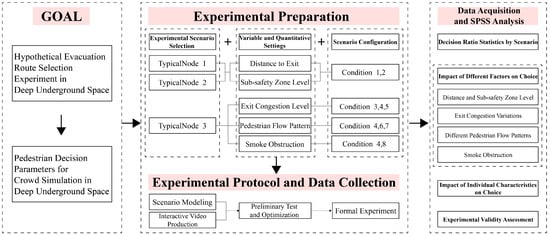
The interactive video-based hypothesis choice experiment was employed to collect pedestrian behavioral data regarding typical potential evacuation bottlenecks. The overall experimental logic is illustrated in Figure 1. The methodology comprises the following components: (1) identifying spatial scenarios of evacuation bottlenecks; (2) controlling variables, designing experimental conditions, completing video scenario production, recruiting participants, and optimizing video scenarios and experimental procedures; (3) carrying out pre-experiments and formal experiments; and (4) collecting and analyzing data, calculating decision ratios, and examining the influence of various factors on evacuation path choice strategies in deep underground spaces.
Figure 1.
Logical framework of experiments.
3.1. Experimental Scenario and Participants
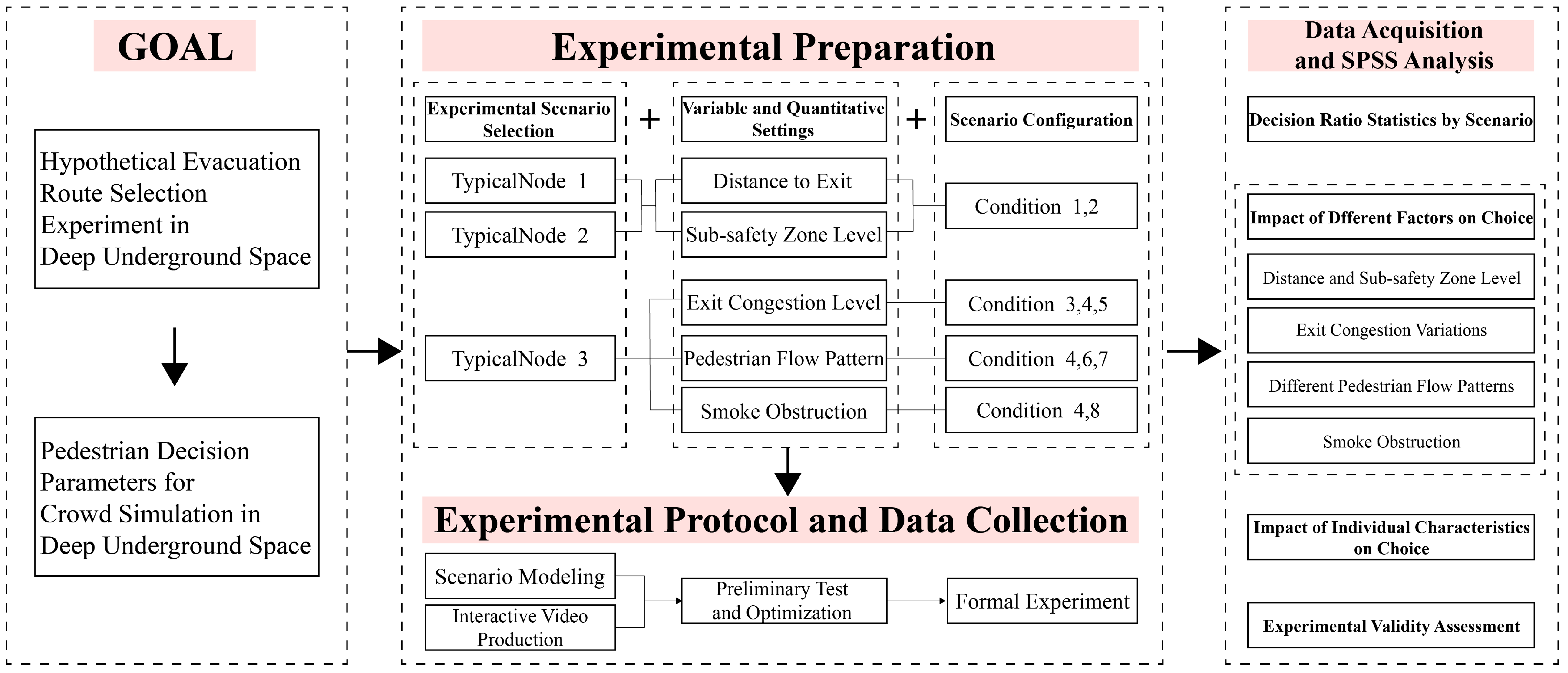
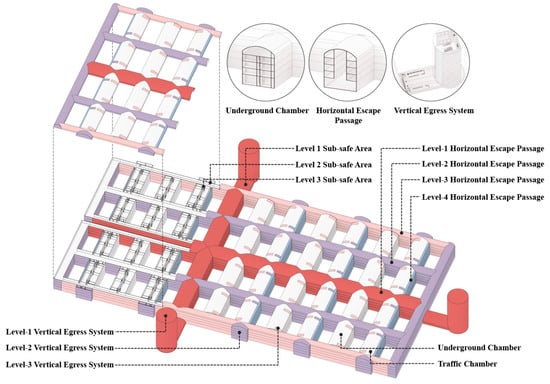
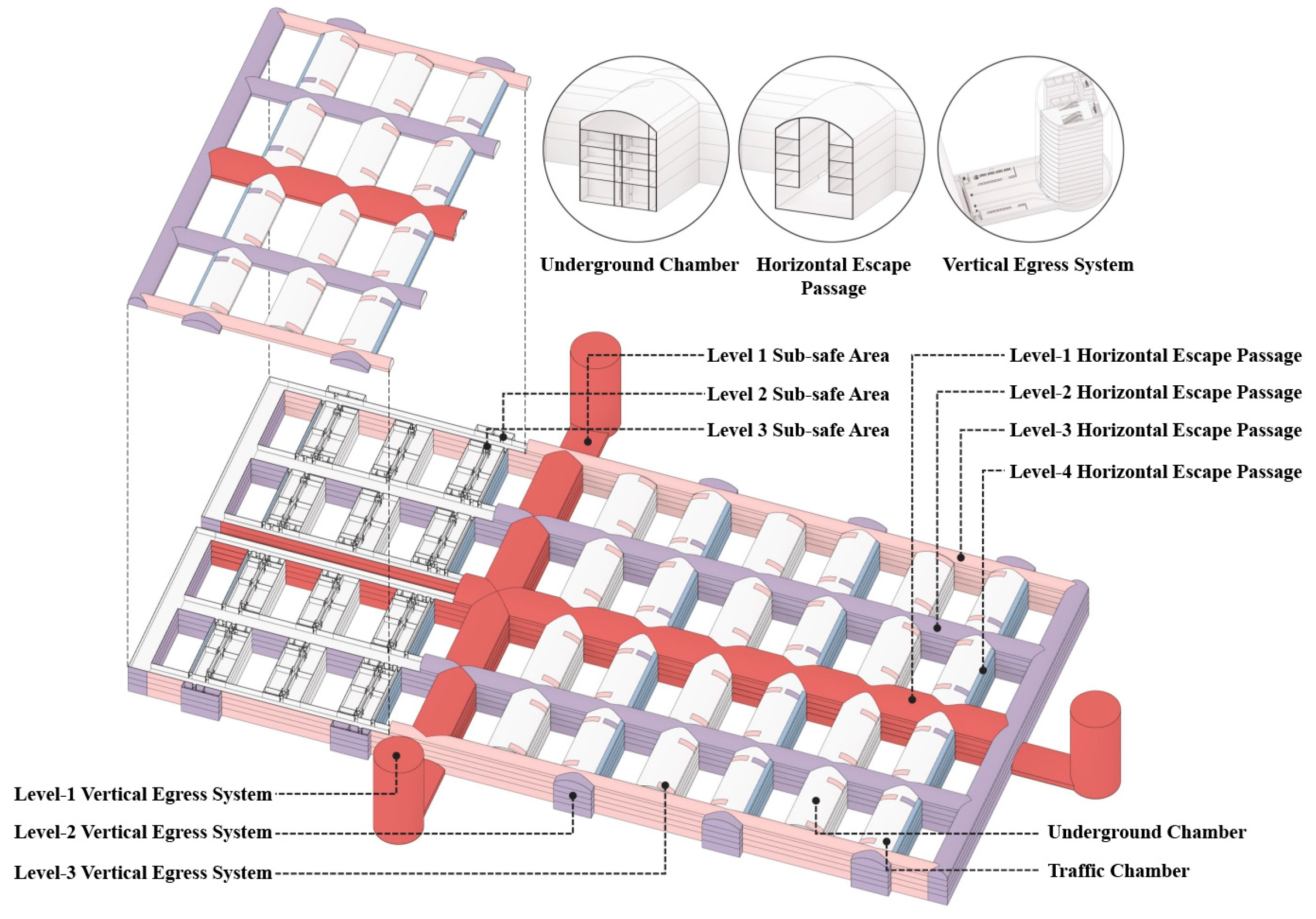
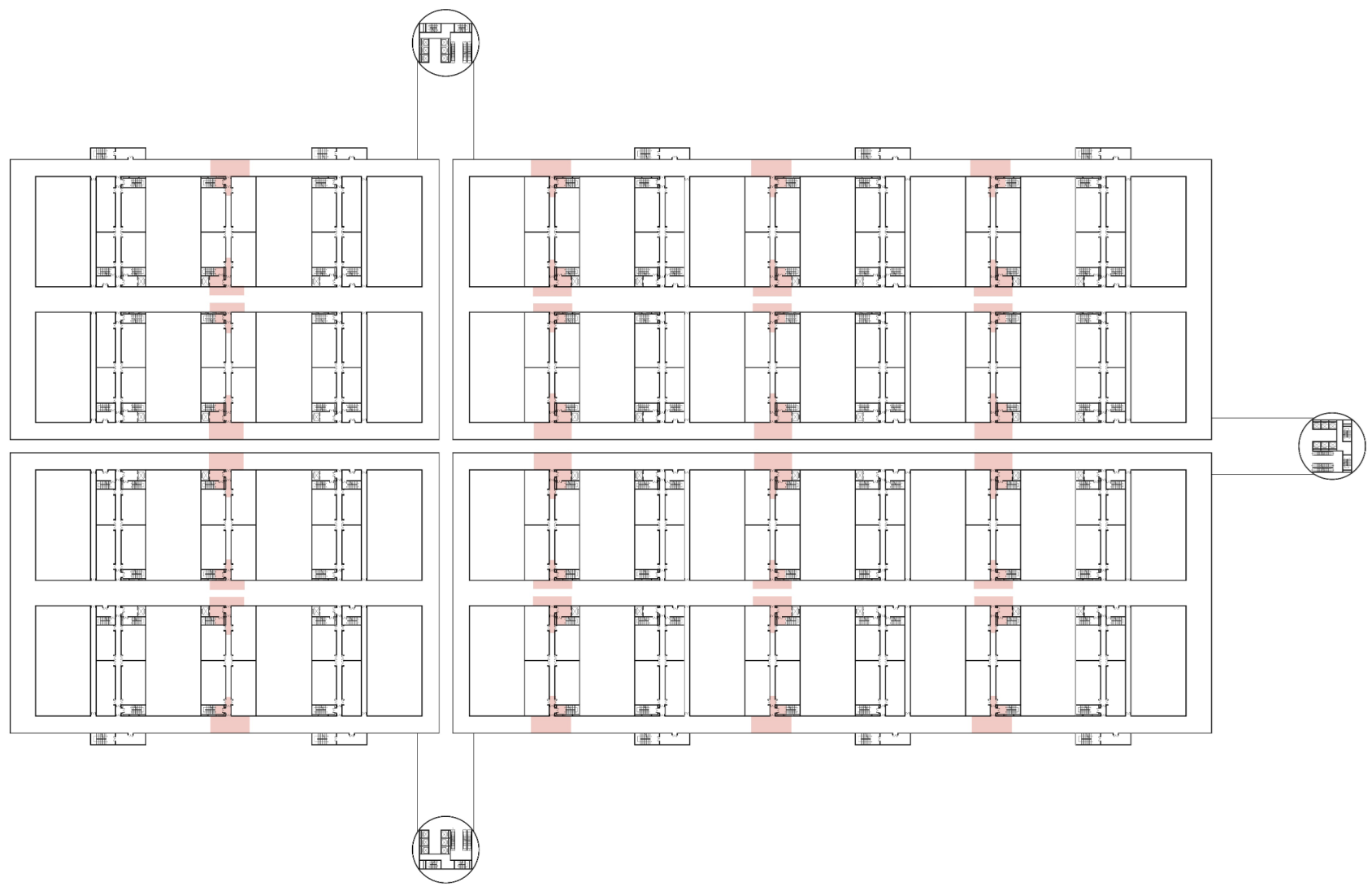
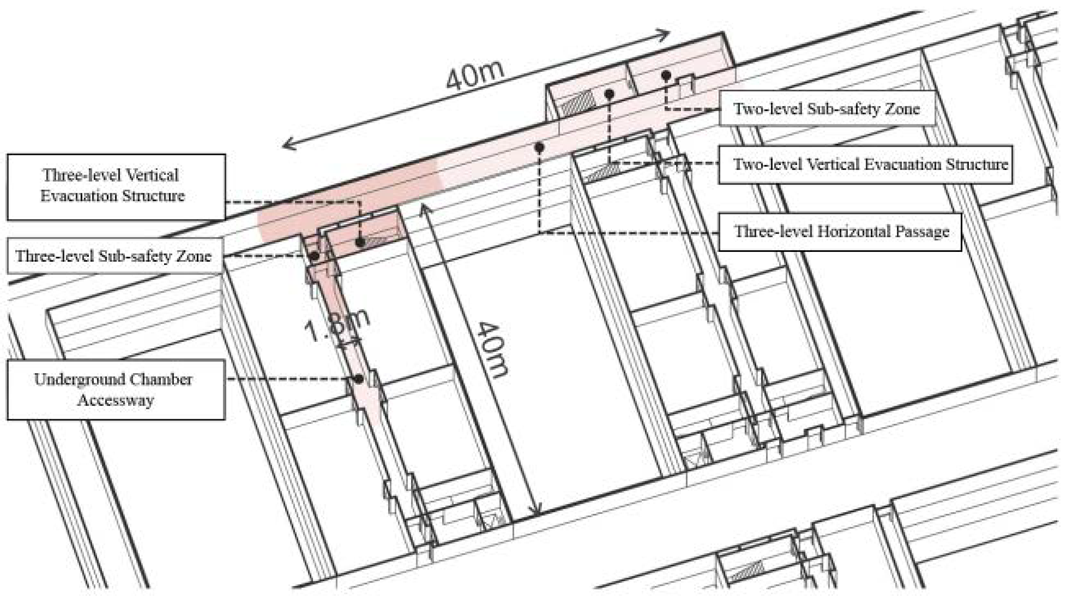
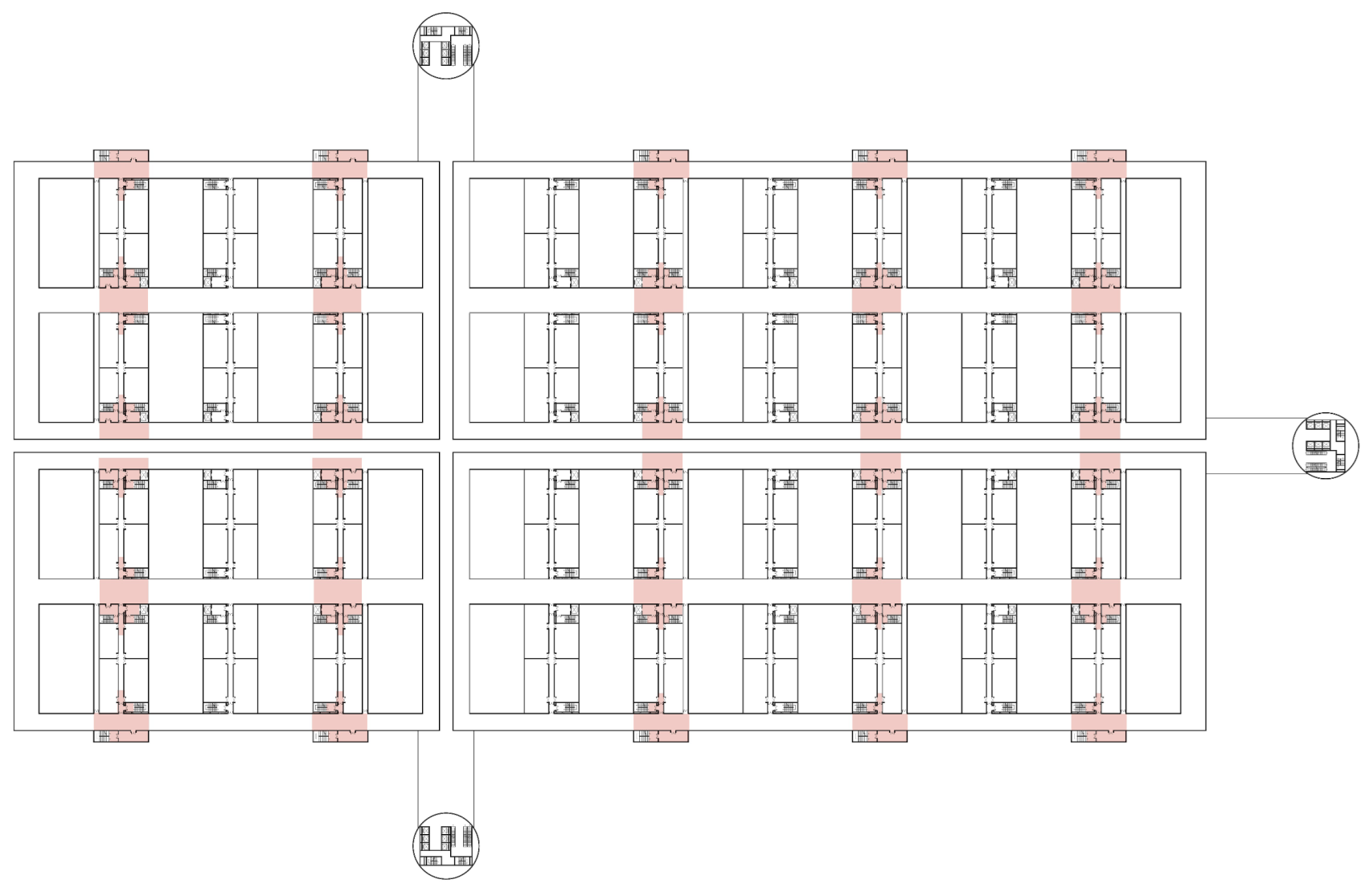
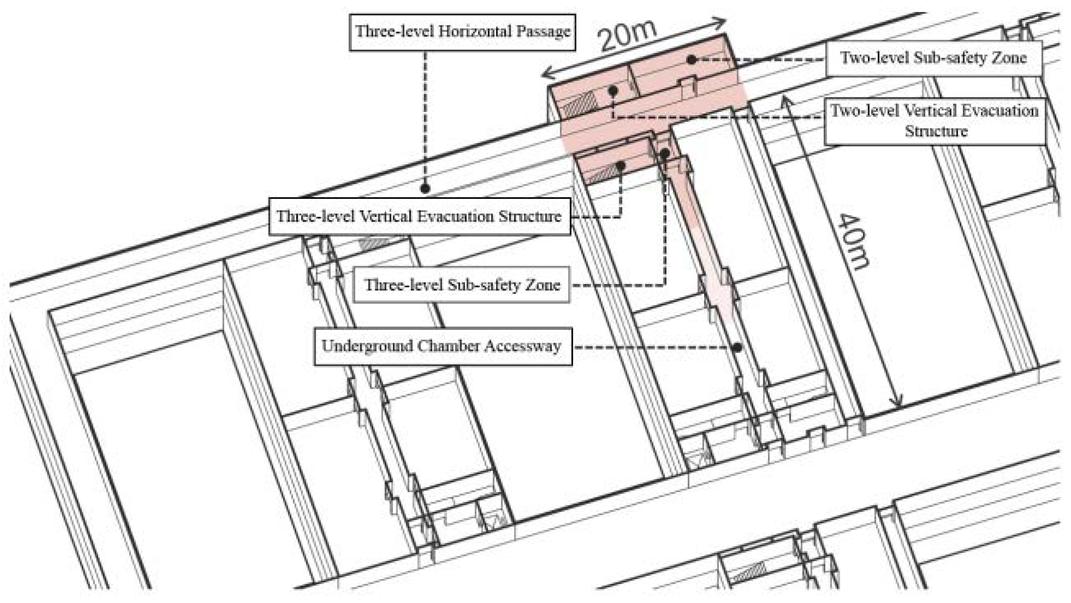
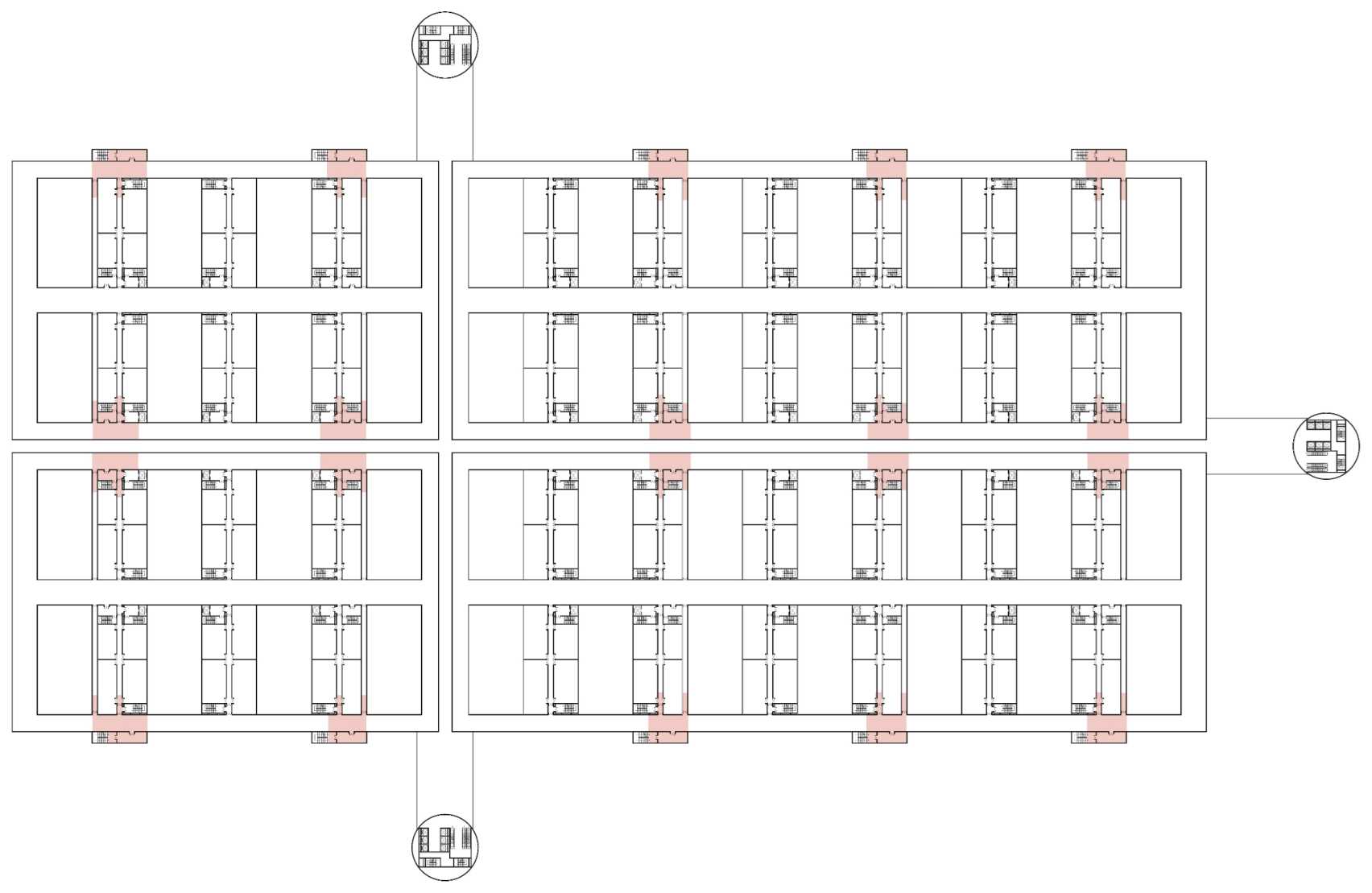
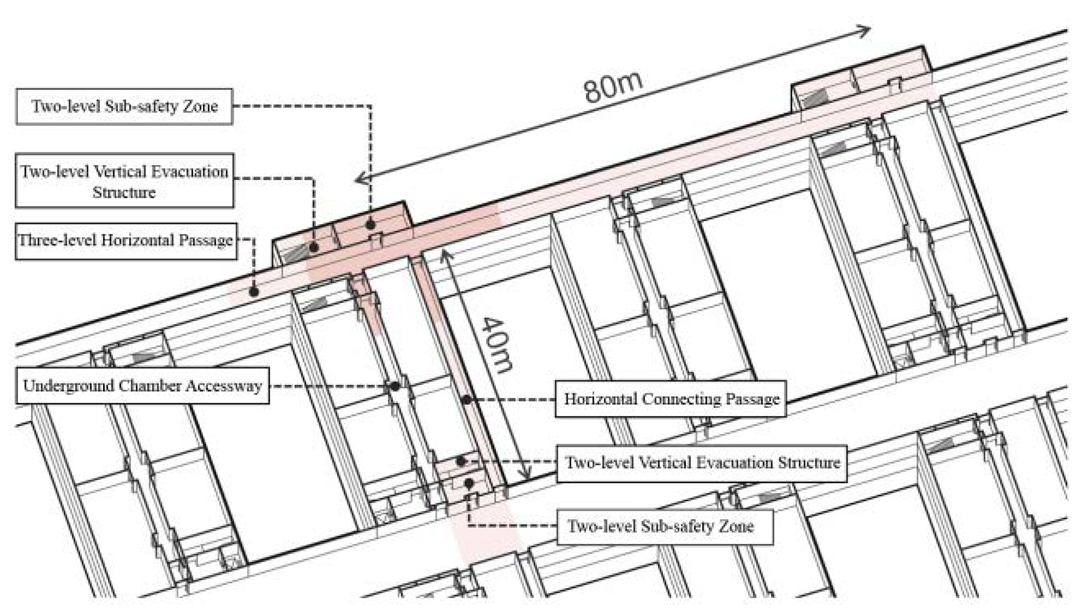
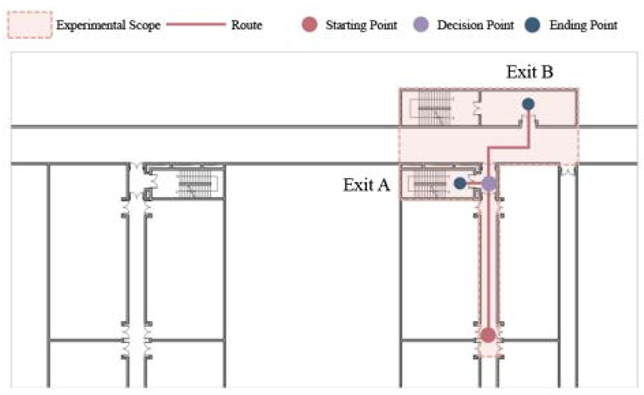
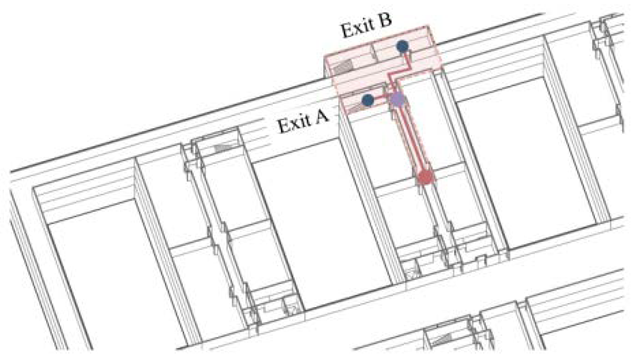
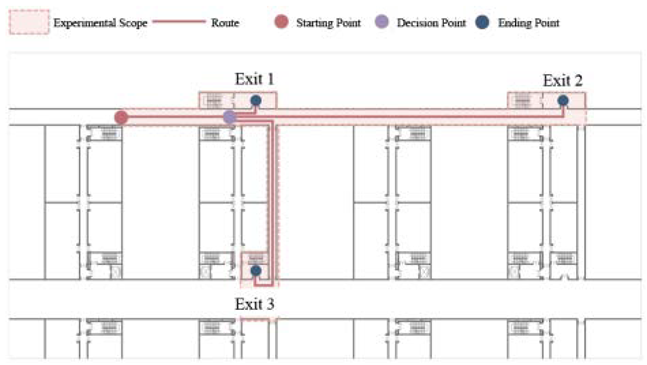
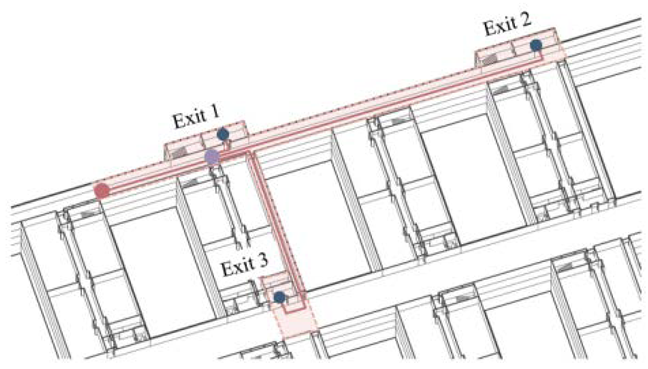
A public-service-type deep underground space was selected as the research scenario (Figure 2), with scientific research, education, and office functions as its main uses. The specific spatial pattern within the underground space can be divided into a large space and a small-scale office space. Due to the more complex structure of the small-scale office space, it is more likely to experience multi-node congestion. Therefore, this experimental scenario is based on this spatial pattern. Typical spatial scenarios were selected, as shown in Table 2. The three nodes in Table 2 correspond to the primary bottleneck types identified in Section 2: T-shaped channel intersections (Nodes 1 and 2) and multi-directional junctions (Node 3), enabling systematic examination of distance effects and multi-cue decision complexity, respectively.
Figure 2.
The typical underground space used in this research.
Table 2.
Overview of the typical potential blocking point selected in the experiment.
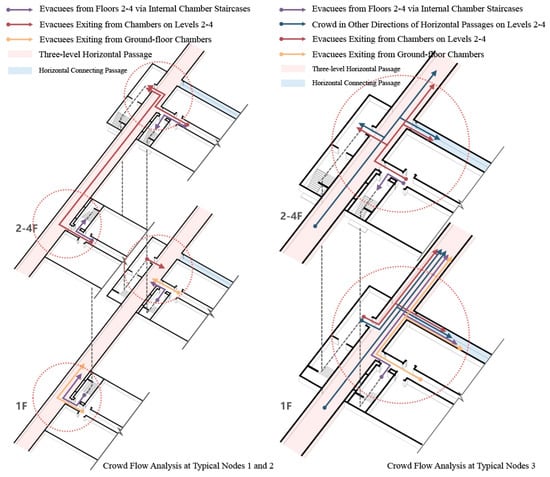
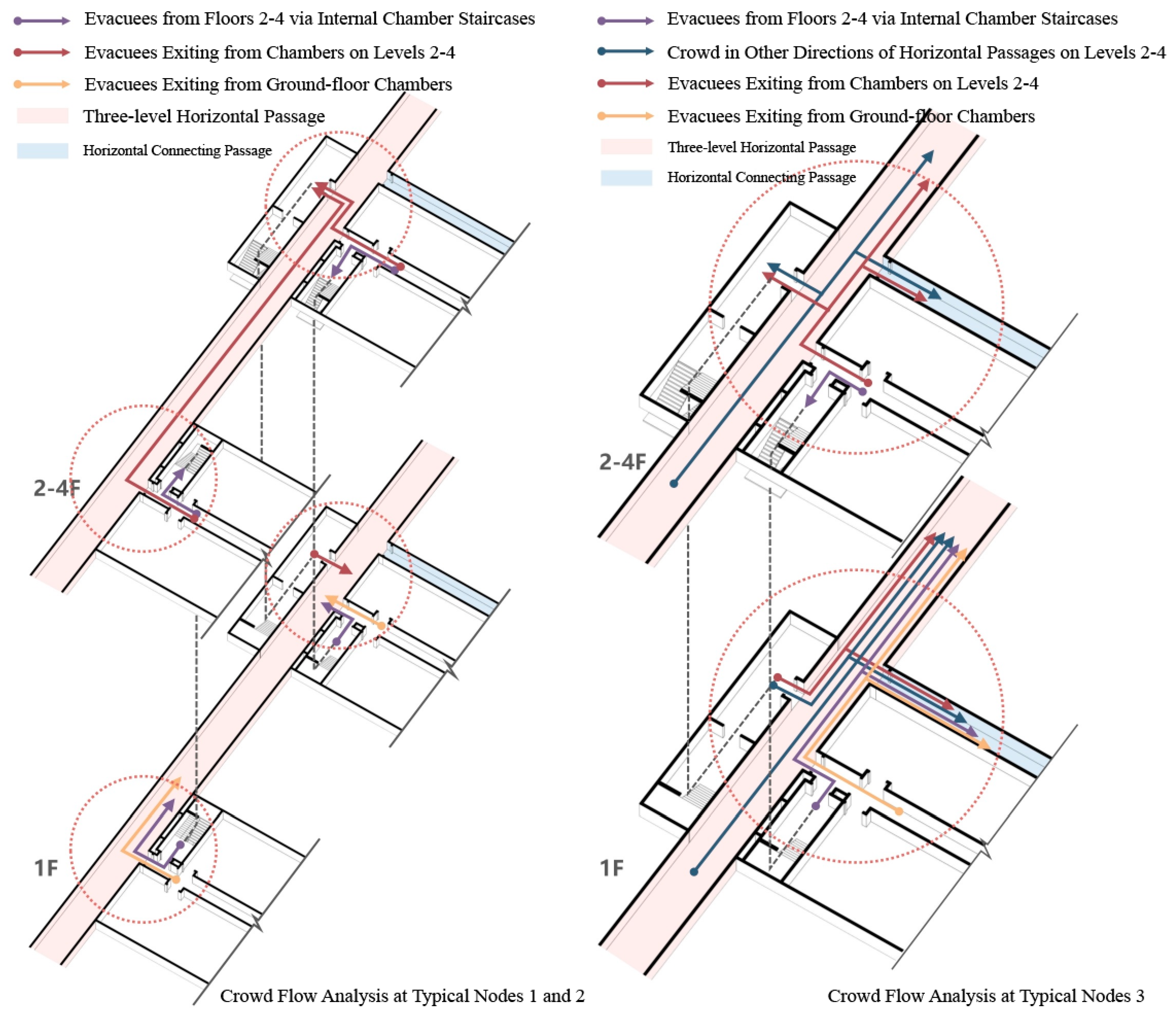
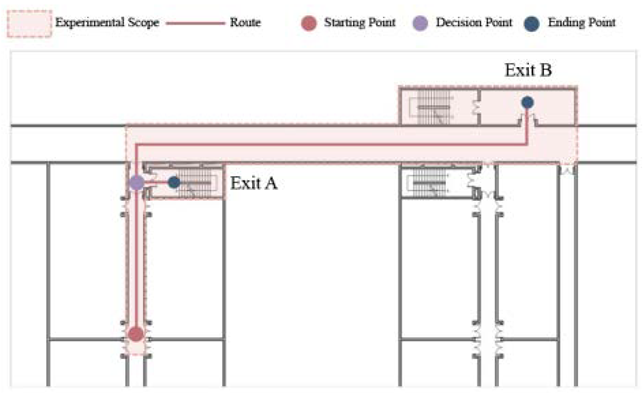
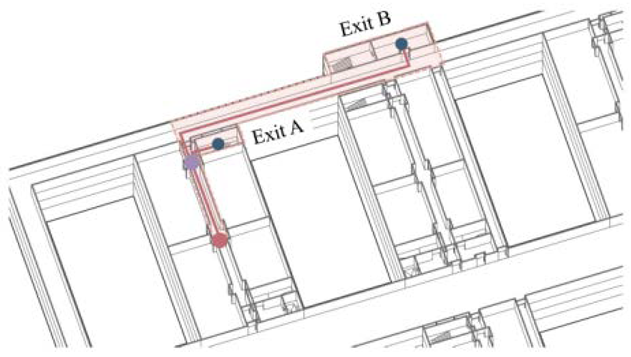
Nodes 1 and 2: Entrance and exit nodes located inside the tunnel, connecting various tunnels and horizontal passages. These nodes mainly consist of the entrances and exits of the third-level sub-safe zone and their internal evacuation stairs. The horizontal passages inside and outside the tunnel form a T-shaped channel structure. At the same time, there are two typical relative positions between the exit of the second-level sub-safe zone staircase outside the tunnel and the tunnel, forming different evacuation distances. As shown in Table 2, for Node 1, personnel distributed inside the tunnel are further away from the exit stairs of the external secondary sub-safety zone, while for Node 2, the distance from the exits of the two stairs is relatively close. The possible streamlined situations of the two types of nodes are shown in Figure 3. Personnel arriving at this node first enter the third-level sub-safety zone, and may choose to evacuate directly to the ground floor through the evacuation staircase inside the tunnel, or pass through this third-level sub-safety zone and go to the second-level sub-safety zone connected to the horizontal passage outside, and then evacuate to the ground floor through its internal evacuation staircase.
Figure 3.
Crowd flow line analysis of typical nodes selected in the experiment.
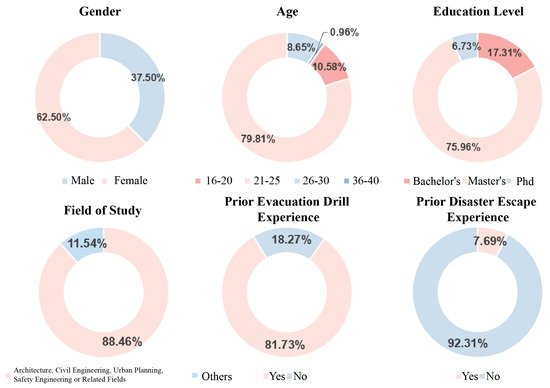
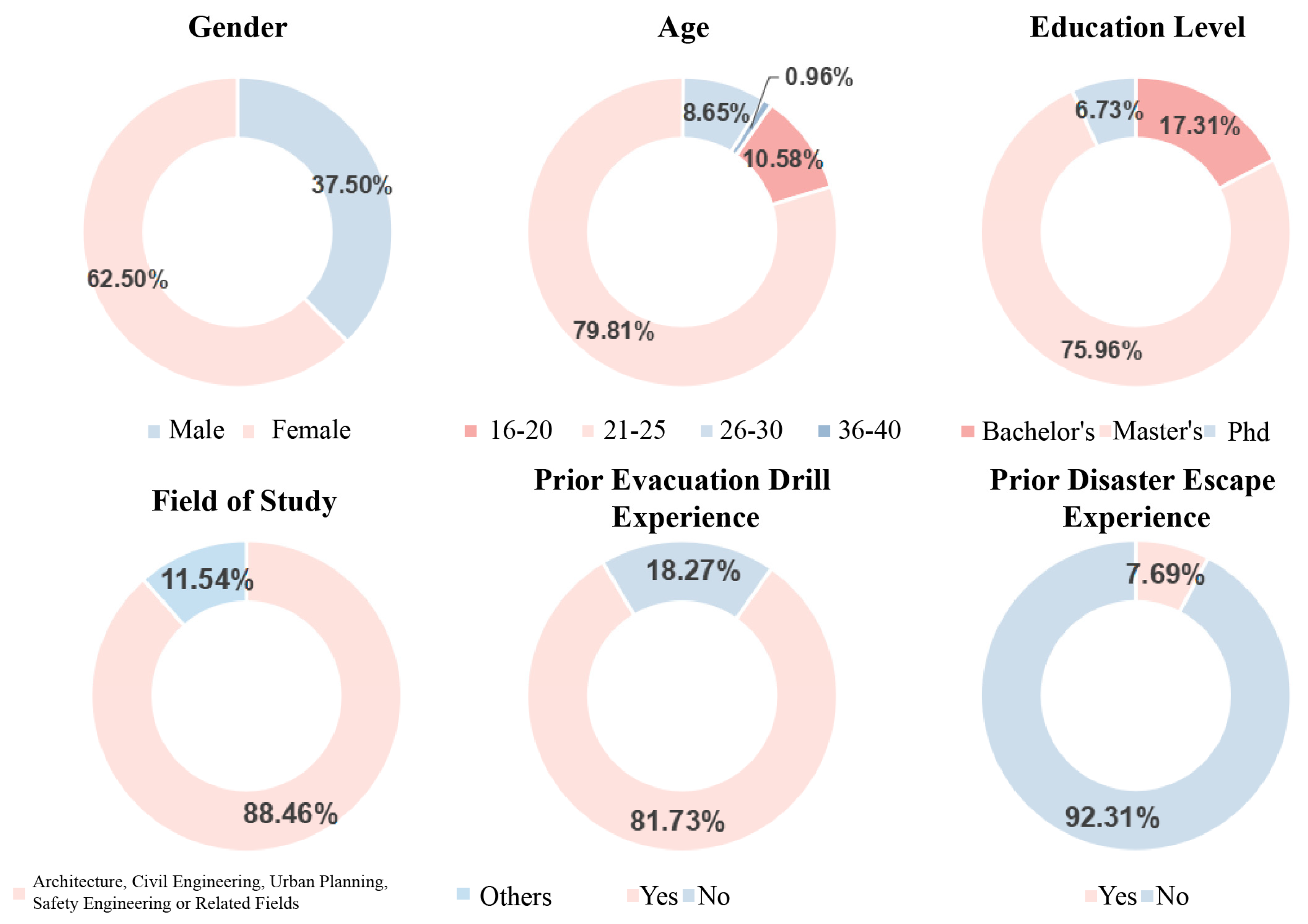
A total of 108 participants were recruited for the experiments, and 104 valid samples were collected. A statistical analysis of the participants’ basic characteristics was performed (Figure 4).
Figure 4.
Basic information statistics of subjects.
The collection content is divided into three levels. Firstly, gender and age, with 39 males and 65 females. The age group is concentrated in the 21–25 age range, with 83 people, accounting for 79.8%. Secondly, there are 11 people in the 16–20 age range, accounting for about 10.6%. There are nine people in the 26–30 age range, accounting for 8.7%, and only one person in the 36–40 age range. The population information basically conforms to the characteristics of office personnel. Next are education level and professional background, with the largest proportion of master’s students at 75.96%. A total of 92 participants were in majors related to architecture, civil engineering, planning, and safety engineering, accounting for about 88.5%, and 12 in other majors, accounting for 11.5%. Finally, in terms of experience and knowledge, about 81.7% of the participants had undergone evacuation drills, and 7.7% of the participants had real fire escape experiences.
3.2. Experimental Condition Settings
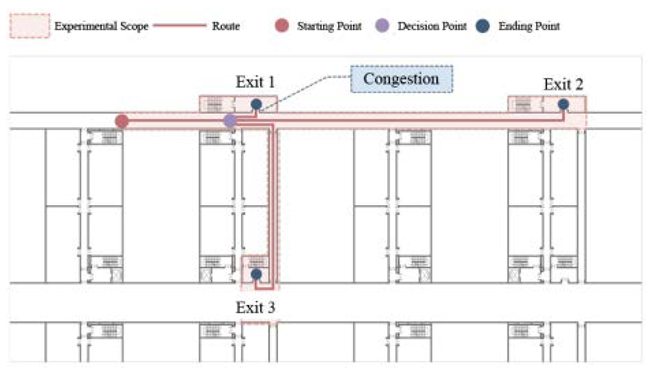
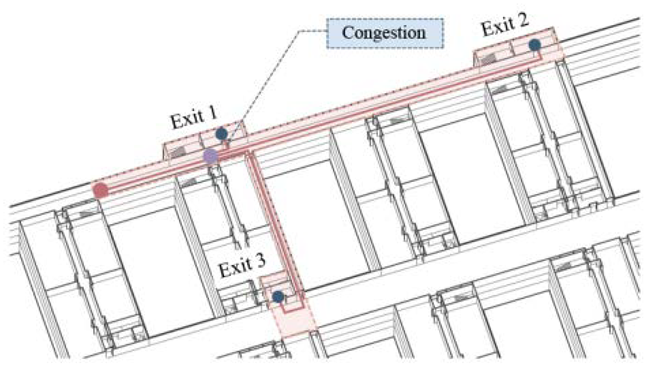
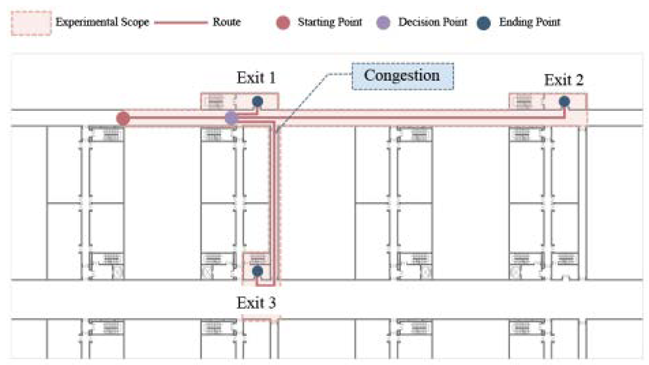
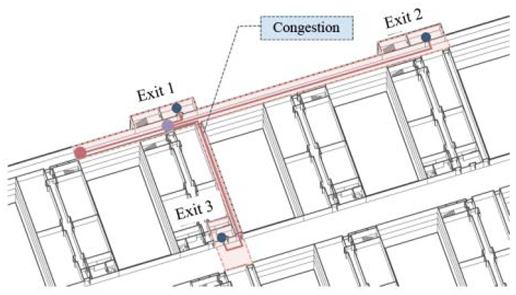
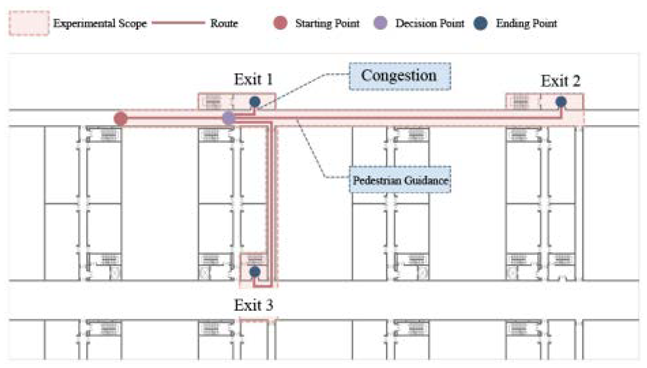
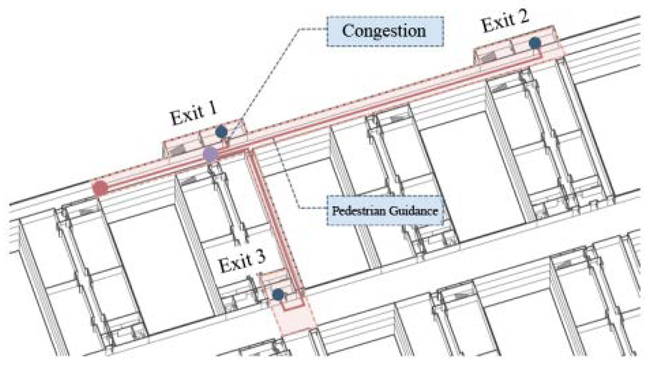
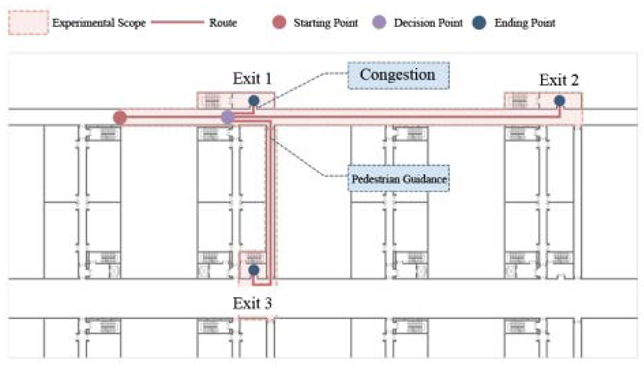
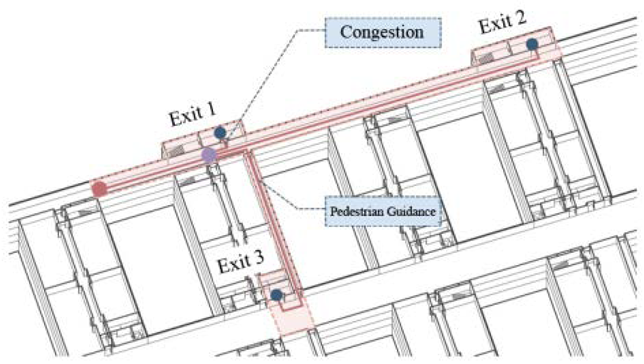
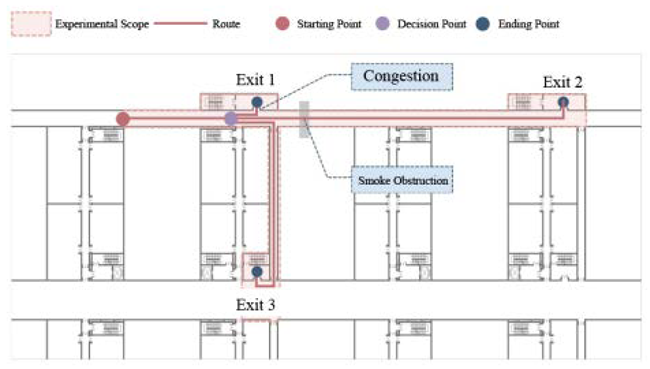
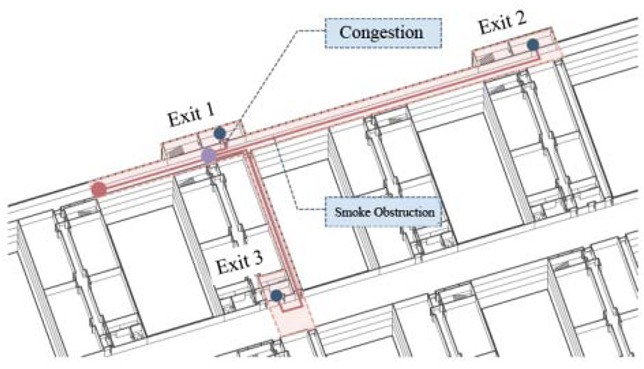
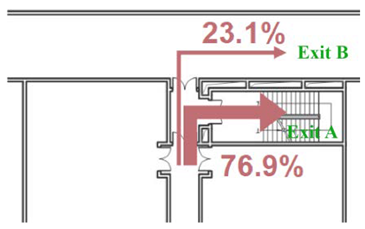
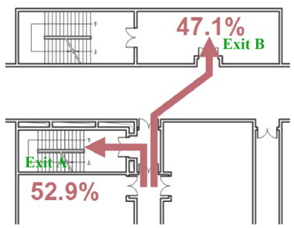
Table 3 presents the eight experimental conditions designed to test the under-investigated factors identified in Table 1. The conditions follow a progressive logic: Conditions 1–2 establish baseline distance effects; Conditions 3–5 isolate congestion location effects; Conditions 6–7 examine herding under congestion; and Condition 8 tests smoke as a veto factor. Set different exits and path directions in three types of node scenarios: in Node 1 and Node 2, set the evacuation staircase located in the third-level sub-safe zone inside the tunnel as exit A, and the entrance and exit of the second-level sub-safe zone connected to the third-level horizontal channel outside the tunnel as exit B. In Node 3, set the entrance and exit of the second-level sub-safety zone located at the decision point as exit 1, the entrance and exit of the second-level sub-safety zone directly to the next node of the same type as exit 2, and the second-level sub-safety zone reached through the transverse channel by changing direction as exit 3. The final screening obtained 6 working condition schemes for Node 3, along with two working conditions for Nodes 1 and 2, totaling 8 working conditions, as shown in Table 3. Conditions 1 and 2 do not have any additional factors, and the distance factor between the sub-safety zone and the exit is set. Conditions 3, 4, and 5 focus on the degree of congestion at the exit. Condition 3 is used as the control group, while Conditions 4 and 5 are set with different congestion locations. Condition 4 is the nearest exit congestion scenario, while Condition 5 is the non-nearest exit direction channel entrance congestion scenario. Conditions 4, 6, and 7 are designed to address the herd effect factor, with pedestrian flow guided in different directions for each condition; Conditions 4 and 8 were used to examine the effect of smoke, with Condition 4 serving as the control.
Table 3.
Experimental condition settings.
3.3. Experimental Procedure
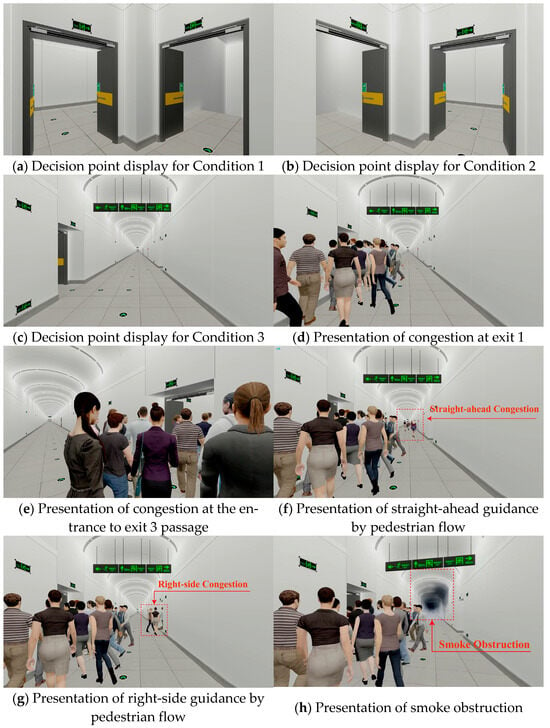
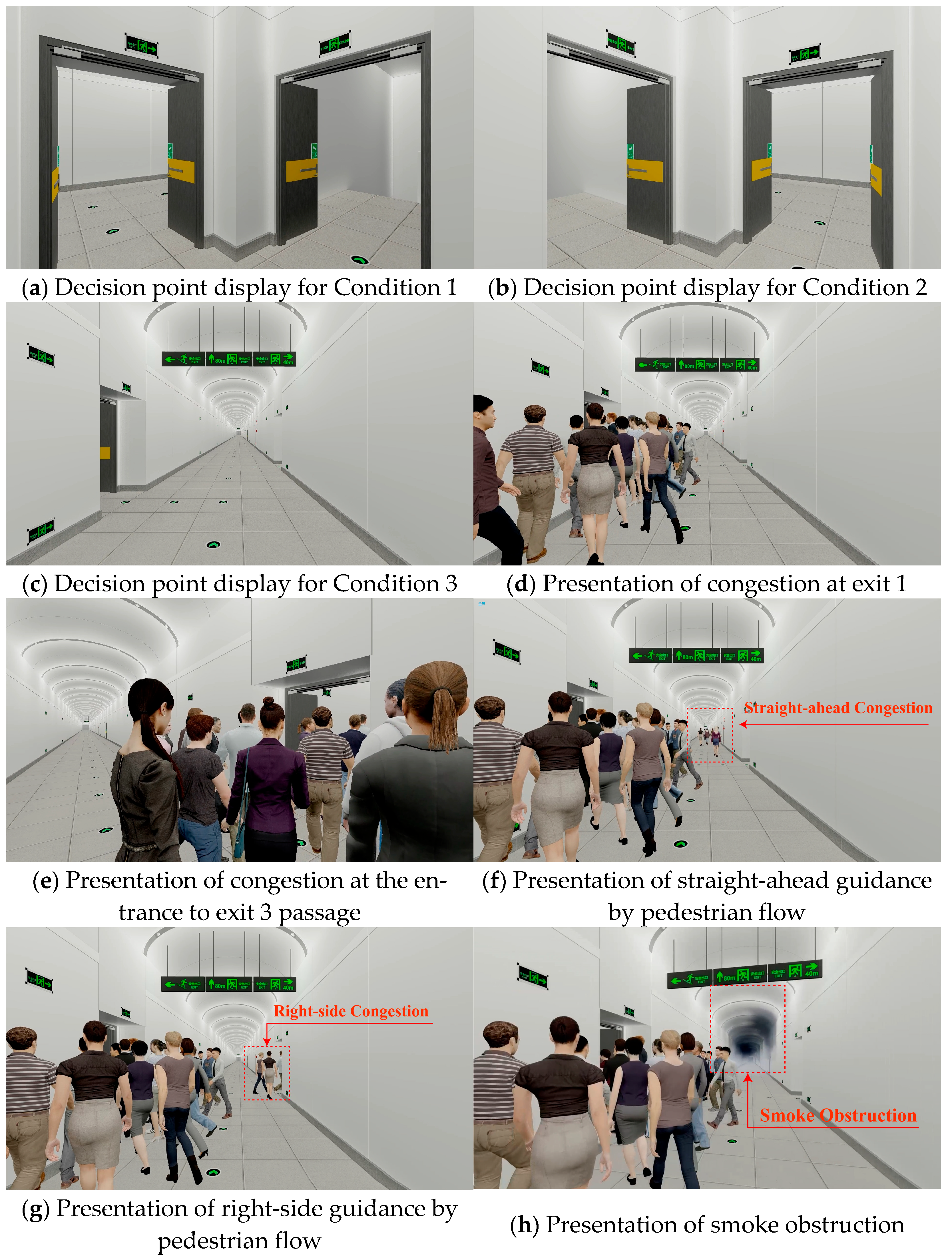
The virtual scene video in this study was imported into Lumion 10.0 for animation rendering using SketchUp modeling. The video was presented from a first-person perspective, and the virtual individuals (non-player characters, NPCs) used Lumion 10.0’s built-in character model, which can move along a specified trajectory over time and set the number of people and their distribution density. Smoke was simulated using the built-in fire and smoke effect components. In terms of space, by designing features such as structural arches, windowless passages, and no natural light, the sense of the scene in deep underground spaces was enhanced. The rendering views of key decision points in the above eight conditions are shown in Figure 5.
Figure 5.
Representative video frames of the eight experimental conditions.
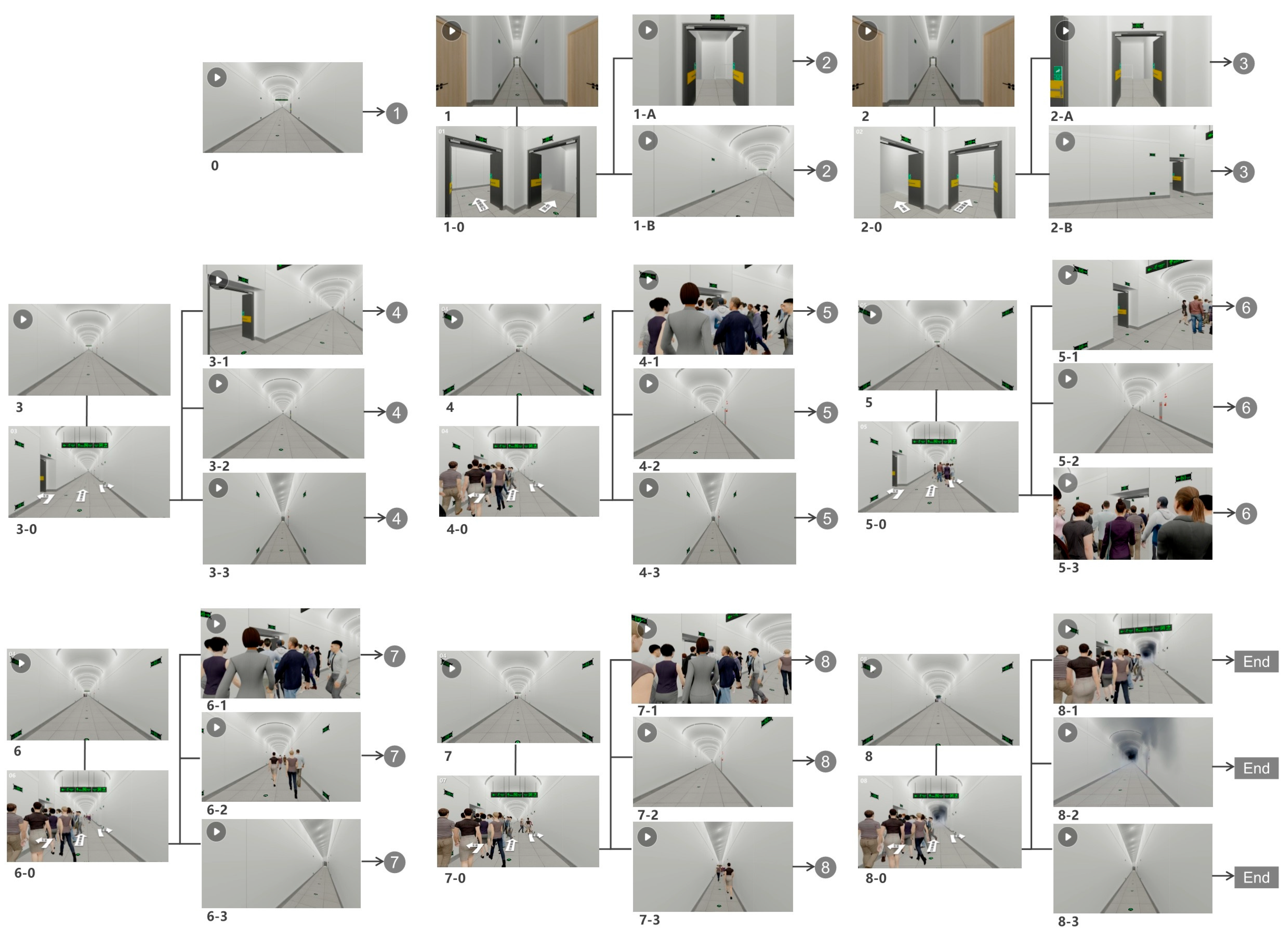
Participants viewed 31 video clips to familiarize themselves with the environment and make decisions across eight working conditions. Interactive video mode was used to link each scene, and the specific link relationships are shown in Figure 6. The logic is to play a video and present a path choice at the decision point. Upon selection, the system advances to the corresponding subsequent scene and continues playback until the end.
Figure 6.
Interactive video linkage structure for the eight experimental conditions.
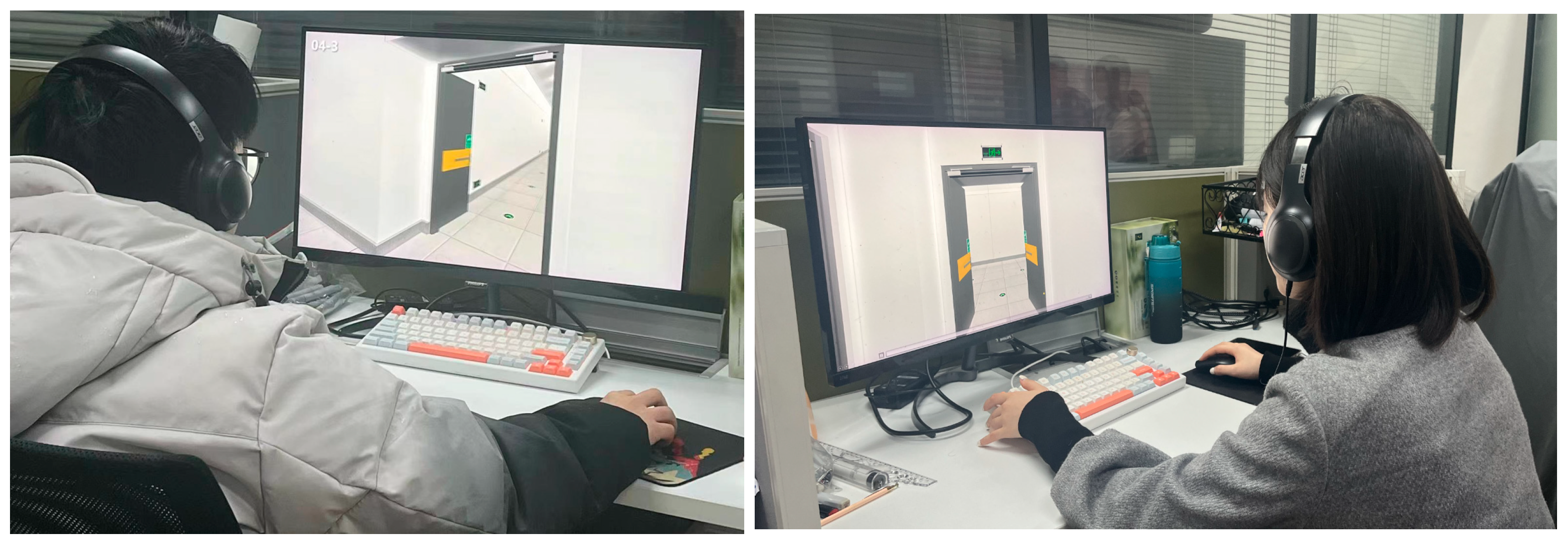
The experimental site is located in a laboratory of a certain university, and two sets of experimental equipment are prepared, each including a monitor and a headset, which can be operated interactively through a mouse (Figure 7) and can simultaneously conduct experiments for two subjects. Arrange the rooms according to the zones for waiting and conducting experiments, ensuring that each experimenter experiments independently without interference.
Figure 7.
The equipment and experimental process.
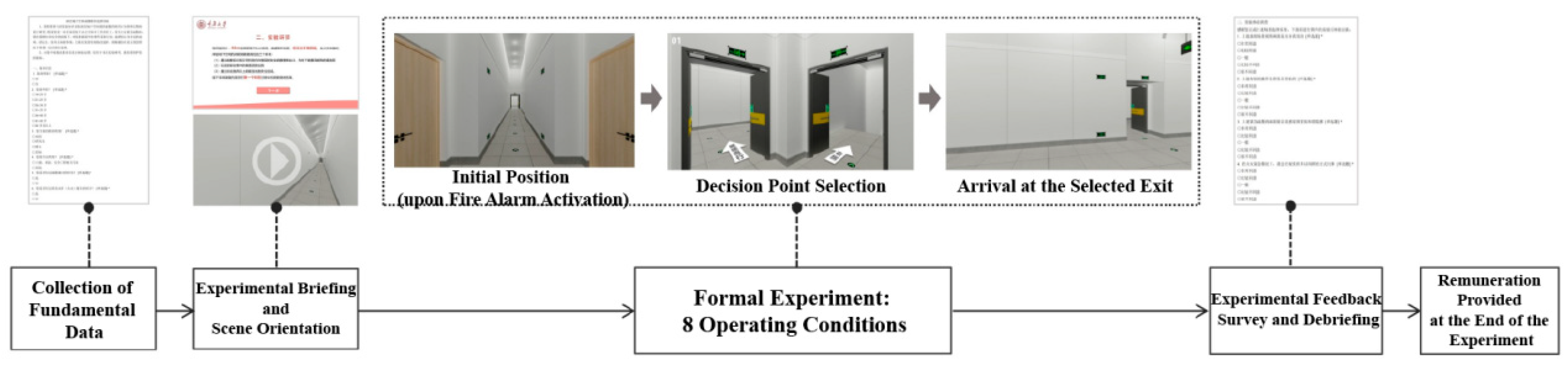
Before the formal experiment began, 8 participants were recruited for a pre-experiment to test the effectiveness of the content and experimental structure and further optimize video scene performance, introduction page language wording, and experimental procedures. After the pre-experiment, adjustments were made to the following content: the movement speed of the first perspective in the video was adjusted, the speed of turning in the picture was reduced, and the 3D dizziness of the subjects was reduced; secondly, the smoke density was increased to enhance its contrast with the indoor environment, ensuring that participants could effectively identify smoke obstruction. In addition, the interactivity of videos and the convenience of experimental operations have also been optimized, such as replacing the text-based response button at the bottom of the screen with a real-time arrow embedded in the image to indicate path choice, to enhance the real-time feedback effect of interaction and the coherence of the evacuation process display. The formal experimental procedure is shown in Figure 8, as follows:
Figure 8.
Experimental flow diagram.
- (1)
- Basic information: Inform the subjects of the nature and procedure of the experiment, understand that the purpose of the experiment is to obtain data on evacuation behavior in deep underground spaces to assist in design research, and obtain basic demographic information of the subjects. Afterwards, the subjects will be informed that they are in a −50 m deep underground space and the different stages of evacuation in the deep underground space. Firstly, the first evacuation stage of the experiment will be conducted, and the exit needs to be selected to evacuate downwards to the first floor.
- (2)
- Familiarize oneself with the environment: Watch the guidance video to familiarize oneself with the spatial environment of the floor. The video will browse the building space in order under normal conditions. During the viewing period, no visual introductions or prompts will be given to the subjects, such as evacuation signs, spatial scales, etc., to ensure that their familiarity with the scene is only affected by individual characteristics.
- (3)
- Starting the formal experiment: Before starting, emphasize to the participants that evacuation choice is based on ensuring their own safety as the first prerequisite. The videos of each working condition are independent of each other, and there is no one correct choice. Please choose according to your own first reaction in emergency evacuation situations. At the beginning of each working condition, personnel are located at the initial position. The background continuously plays the fire alarm sound and voice message “A fire has occurred now, please evacuate as soon as possible according to the instructions”. Evacuation starts from the initial position, and when the key decision point is reached, the video screen shows the direction choice option, such as left, straight, or right. The subjects need to operate the mouse here to select, and the staff will manually record it. After the choice, the video will continue to play until reaching the safety exit staircase selected by the subject, and the next condition will begin until the completion of 8 conditions.
- (4)
- Experiment completion: Fill out an experience feedback questionnaire, including feelings about the authenticity, operation methods, effectiveness, and other aspects of the video scene, and conduct subjective opinion interviews. On the one hand, investigate the reasons for the participants’ decision-making, and on the other hand, exclude invalid experimental data. After the end, remuneration will be paid to the participants.
4. Results and Analysis
4.1. Evaluation of Experimental Effectiveness
After the experiment, the post-questionnaire was adapted and developed based on Lovreglio’s questionnaire, collecting feedback from participants regarding the authenticity, usability, emotional perception, and effectiveness of the experiment. The scale used a five-point Likert scale, with 1 representing strongly disagree and 5 representing strongly agree. The specific analysis results of each question are shown in Table 4. After testing, the overall reliability of Cronbach’s alpha coefficient was 0.588 > 0.5, indicating that the questionnaire’s reliability basically meets the requirements. The validity test KMO value was 0.659 > 0.6, and p < 0.01, both of which meet the requirements. The average values of the authenticity of the interactive video scene, experimental operation, and simulation effectiveness are all greater than 4, indicating that the rendered scene has sufficient authenticity and can provide participants with a more immersive experience. The experimental choice is highly correlated with the participants’ behavior in the real world, and the experimental operation and process are intuitive, which will not cause understanding and operational barriers to the participants, ensuring the efficiency of the experimental samples. Compared with other levels, the average of emotional perception is relatively low, but still above 3. About 66.3% of the participants agree or strongly agree that they can feel a sense of tension. This indicates that combining dynamic images, evacuation alarms, and voice can provide certain sensory stimuli, effectively compensating for the limitations of hypothesis choice experiments based on interactive videos in emotional stimulation.
Table 4.
The experimental experience feedback results of the subjects.
4.2. Statistics and Analysis of Evacuation Path Choice Results
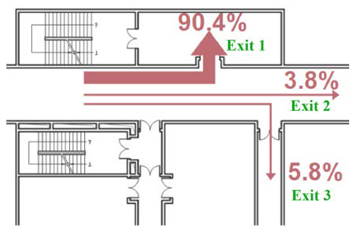
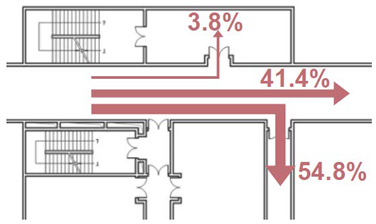
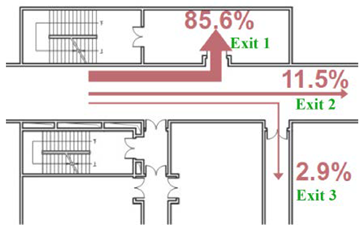
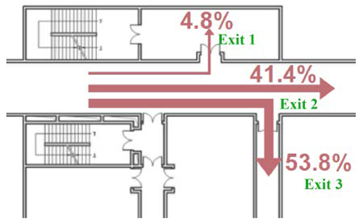
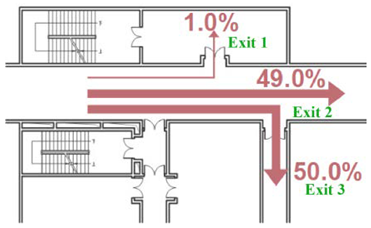
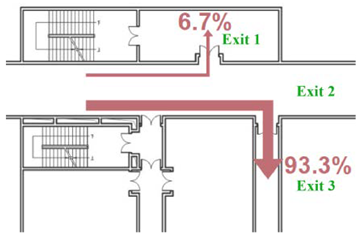
Table 5 shows the statistics of exit path choice counts and percentages at the decision points of eight conditions.
Table 5.
Exit path choice statistics and illustrations.
In Conditions 1 and 2: Approximately 76.9% of the participants in Condition 1 chose the nearest exit A, indicating that most people still prefer distance first. In Condition 2, the proportion of choice of exit A and exit B is relatively close when the distance between exit B and the initial point decreases. Compared to Condition 1, the proportion of choice of exit B in Condition 2 has significantly increased, reaching 47.1%.
In Condition 3, with the same level of sub-safety zones and without any other factors, the vast majority of participants chose the nearest exit 1, reaching 90.4%. Compared to Condition 1, under the same distance of 40 m from another exit, Condition 3 had a higher proportion of participants who chose to evacuate nearby. However, there were still 10 participants who did not choose exit 1 in the experiment. After the experiment, targeted interviews were conducted with these participants. This was mainly due to their habit of moving to the right, habitual behavior, and concerns about congestion inside the evacuation stairs. For example, sample 56 believes that their sense of direction is poor. Although the participant had familiarized herself with the spatial environment through the guidance videos, she still lost her sense of direction during the evacuation process and habitually turned to the right. A similar pattern was observed in samples 33 and 56. Due to inertia, they did not want to change their original direction of movement and instead continued forward. One subject perceived that the secondary horizontal channel connected to exit 3 was the most spacious channel, so he chose to go to exit 3 in Condition 3; in addition, some participants self-judged that the disaster source was located at the initial point through the alarm voice, hoping to move away from the disaster source as soon as possible. Therefore, they did not choose the nearest exit at the first decision point. However, it is worth noting that the alarm voice in this experiment only reminded participants that “a fire has occurred now, please evacuate as soon as possible”, and did not specify the specific location of the disaster. This reason also appeared among participants who chose exit B in Condition 1. This indicates that specifying the location and severity of the hazard in the alarm message could more effectively guide orderly evacuation. Otherwise, it may cause blind evacuation of personnel, leading to congestion or conflicts in flow lines. In addition, the statistical data of the operating condition choice results also indicate that not all personnel adopt the behavior strategy of evacuating from the nearest exit without other additional guidance, information prompts, or attractive facilities.
In Condition 4, the proportions for exits 2 and 3 were relatively close, at 41.3% and 54.8%, respectively, while the proportion of selecting exit 3 is slightly higher. Through interviews, it was found that the majority of participants who chose exit 2 believed that the passage in the direction of exit 2 was more spacious, while the majority of participants who chose exit 3 believed that exit 3 was closer. This indicates that for these participants who choose to avoid congested exits, a balance is made between the minimum exit distance and the widest passage width. From the distribution ratio of the results, the proportion of prioritizing the minimum exit distance is higher. In Condition 4, the number of participants who chose exit 1 decreased significantly, with only four people, accounting for about 3.8%. After interviews, participants who still chose exit 1 believed that even though the exit was already congested, they felt more secure being with most people. In Condition 5, when congestion occurred at a non-nearest exit, the vast majority of participants chose to escape directly from the nearest exit. However, some participants believed that the nearest exit was not used, indicating that it may be dangerous. Therefore, they chose to follow the congested crowd to exit 3 or go to exit 2 alone.
In Conditions 6 and 7, the vast majority of participants in both groups did not choose exit 1. For the choice ratios of exits 2 and 3, the results in Condition 6 were 41.3% and 53.8%, respectively. Exit 3 with no pedestrian flow has a higher choice ratio, mainly due to its closer distance to the exit and avoidance of pedestrian flow. The reasons for choosing to go straight to exit 2 mainly include a wider channel width and following the crowd. The choice results in Condition 7 were 49.0% and 50.0%, respectively, which are almost equal. Among the subjects who chose exits 2 and 3 in the two conditions, those who chose exits in the same direction as the flow of people were not entirely influenced by herd behavior, but may also be influenced by spatial structure, such as distance from the exit, channel width, etc. Participants who avoided routes with pedestrian flow were partly concerned that congestion might recur at the next exit and were also influenced by spatial factors such as channel width and evacuation distance.
In Condition 8, no participant selected the smoke-affected path, while 93.3% selected exit 3 and 6.7% selected exit 1. The reason is similar to Condition 4: even though exit 1 is congested and there is a smoke threat nearby, these participants still feel safer following the majority of people.
4.3. The Influence of Different Factors on Evacuation Path Choice
The statistical software SPSS 26 was employed to analyze whether various factors have a statistically significant impact on pedestrian behavior decisions. Due to the choice of unordered categorical variables for evacuation paths and a total sample size of n > 40, the chi-square test method was used to analyze differences. For Conditions 1 and 2, a 2 × 2 contingency table for the chi-square test was used, and for Conditions 3–8, an R × C (R > 2 or C > 2) contingency table for the chi-square test was used. For data with more than 20% of cells having an expected count T < 1 or 1 < T < 5, Fisher’s exact test was adopted.
- (1)
- Conditions 1 and 2: The impact of distance from the exit and the establishment of sub-safe zones. In Conditions 1 and 2, the main factors affecting the subjects’ decision-making are the distance from each exit and the sub-space level settings, that is, whether the subjects choose the nearest evacuation staircase exit inside the tunnel or go to the more spacious and graded second-level sub-safe zone staircase exit. Firstly, regarding the distance, the test results are shown in Table 6, p < 0.001. There is a statistically significant difference between the two experimental groups, indicating that the difference in distance between the two exits will lead to significant differences in exit choice.Table 6. Descriptive statistics and testing of the exit choice of subjects in different distance scenarios.
- (2)
- Conditions 3, 4, and 5: Impact of exit congestion level. The descriptive statistics, chi-square test, and Fisher’s exact test results for the exit path choice of participants under different congestion scenarios are shown in Table 7, with Condition 3 as the control group for testing. The chi-square test for Condition 4 shows a significant difference with a p-value < 0.001, indicating that exit congestion has a strong impact on people’s path choice. The proportion of people choosing to avoid congested exits and seek other exits is as high as 96.2%, which is higher than the conclusions of many previous studies on people’s reactions to congested exits through evacuation behavior questionnaires. This reflects that in deep underground spaces, people have a strong aversion to congestion. At the same time, the proportion of people choosing the exit 3 direction is higher than that for exit 2, that is, between the nearer but relatively narrow path direction and the farther but relatively wide path direction, the former attracts more people. The chi-square test p-value for Condition 5 and the control group is 0.081, which is greater than 0.05 and has no statistically significant impact. This indicates that congestion caused by the blind evacuation of other social groups, which is not the nearest exit, has no significant effect on the evacuation path choice. However, its p-value is close to 0.05. In terms of percentage counting, the proportion of people choosing exit 1, which is the nearest exit, is slightly reduced compared to Condition 3. This suggests that congestion caused by the blind evacuation of other social groups still has a slight impact on the judgment of other people, but the impact is not strong enough to significantly change the choice of evacuation path.Table 7. Descriptive statistics and testing of the exit choice of subjects in different exit congestion.
- (3)
- Conditions 6–7: The influence of the herding effect. Conditions 6–7 depict when the nearest congestion is at the exit, there is a relatively small group of people moving towards exit 2 or exit 3. It aims to observe whether they exhibit herding behavior. Without considering the sample of selecting the nearest congested exit 1, for the subjects who chose exits 2 or 3, using Condition 3 as the control group, the difference between their exit direction choice and different pedestrian flow directions was tested. Among them, 100 samples were collected for Condition 3, 99 samples were collected for Condition 6, and 103 samples were collected for Condition 7. The test results of the subjects’ exit path choice when using different exit directions are shown in Table 8 and Table 9.Table 8. Descriptive statistics and testing of the exit choice of subjects under different flows of people in the exit 2 direction.Table 9. Descriptive statistics and testing of the exit choice of subjects under different flows of people in the exit 3 direction.
Both results have p-values greater than 0.05, indicating that the presence of pedestrian flow in the exit direction path has no statistically significant impact on the exit choice of the subjects. From the percentage data of the cross-tabulation analysis, the proportion of results for whether there is pedestrian flow in the direction of exit 2 is almost the same, while the proportion of choice for exit 3 without pedestrian flow is 57.0%, and the proportion of choice for pedestrian flow is 50.5%, which slightly decreases, and there is no significant herding behavior. This result is contrary to the hypothesis analysis expected during the experimental design. Previous experimental studies involving different evacuation flow patterns mostly focused on two exit choices and found significant herding behavior among personnel. Based on this experiment, it can be analyzed that personnel evacuation decisions are not only influenced by the behavior of others, but also by physical environmental factors such as the number of available paths, channel width, distance, and social interaction. That is, how other people’s behavior affects individual decisions may vary depending on environmental factors. Firstly, in this experiment, congested exits will have a certain impact on the participants’ path decision-making. Most participants mentioned in the interview that after observing the recent congestion at exit 1, they were worried that following the crowd would result in them encountering congestion again; especially when some virtual characters were heading to exit 3 and the width of the transverse passage path to exit 3 was reduced, the risk of congestion was greater. For deep underground spaces, the evacuation path is longer, so under the threat of rapid spread of fire smoke, the evacuation time is more urgent, which strengthens the awareness of personnel to avoid potential congestion and avoids delays in the evacuation process. Secondly, when there is a third type of unmanned exit direction, it will also attract a certain number of people. From the above inspection and analysis results, it can be seen that after encountering a congested exit for the first time, the flow of people using non-congested exit paths cannot significantly attract the subjects, and the subjects may have a slight aversion to the virtual characters to a certain extent.
- (4)
- Conditions 4 and 8: The impact of smoke. A chi-square test was performed for Conditions 4 and 8 (Table 10), yielding p < 0.001, which indicates a statistically significant effect. In some other VR experiments or evacuation exercises related to exit choice, it has been observed that there are people who take risky actions to cross smoke areas. In this experiment, there were no reported cases, indicating that people in deep underground spaces have a stronger demand for evacuation safety and a lower likelihood of taking risky actions [49].Table 10. Descriptive statistics and testing of the exit choice of subjects in smoke and no smoke scenarios.
4.4. The Influence of Individual Characteristics on Evacuation Path Choice
The subjects’ information collected in this experiment contains different individual characteristics, including gender, professional background, evacuation experience, etc., which can be analyzed for correlation. According to the descriptive statistical analysis, there is only one person in the age range of 36–40 years old. Therefore, they were merged with 26–30 year olds to be ≥26 years old before testing. As in Section 4.3, chi-square tests were used, and Fisher’s exact test was applied when the assumptions for the chi-square test were not met. The results are shown in Table 11.
Table 11.
The individual characteristics of the subjects were analyzed with the results of exit choice chi-square test or Fisher’s exact test.
From the analysis results, it can be seen that people of different genders and professional backgrounds have significant differences in exit choice for different levels of sub-safe zones, those of different ages have significant differences in exit choice for Node 3 non-factor scenarios, and those with different evacuation experiences and fire escape experiences have significant differences in exit choice for different levels of exit congestion scenarios. Some variables showed statistically significant effects (p < 0.05) under specific conditions. In addition, a p-value greater than 0.999 for some data does not mean the variable is completely unrelated to the choice in the scenario; it may also be due to small sample sizes in some cells of the cross-tabulation for this condition, which makes it difficult to draw statistical conclusions. Further analysis was conducted on the relationships between these individual characteristics and exit choice across different scenarios:
- (1)
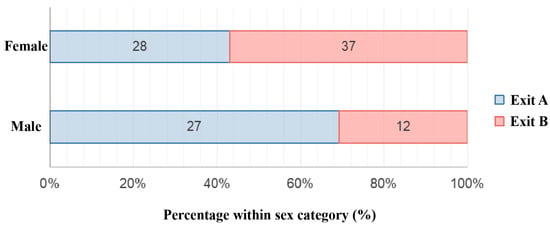
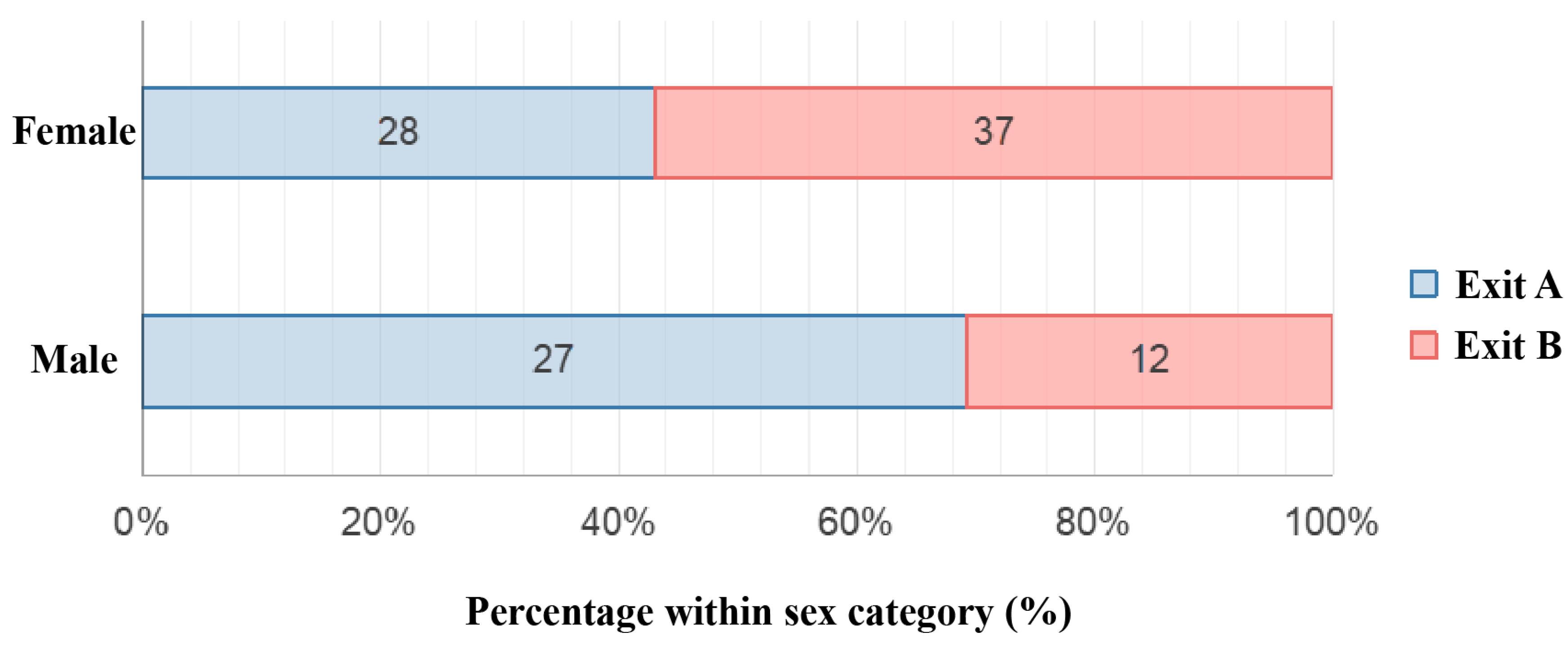
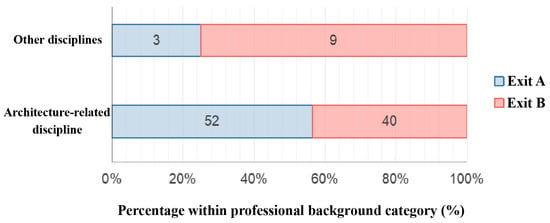
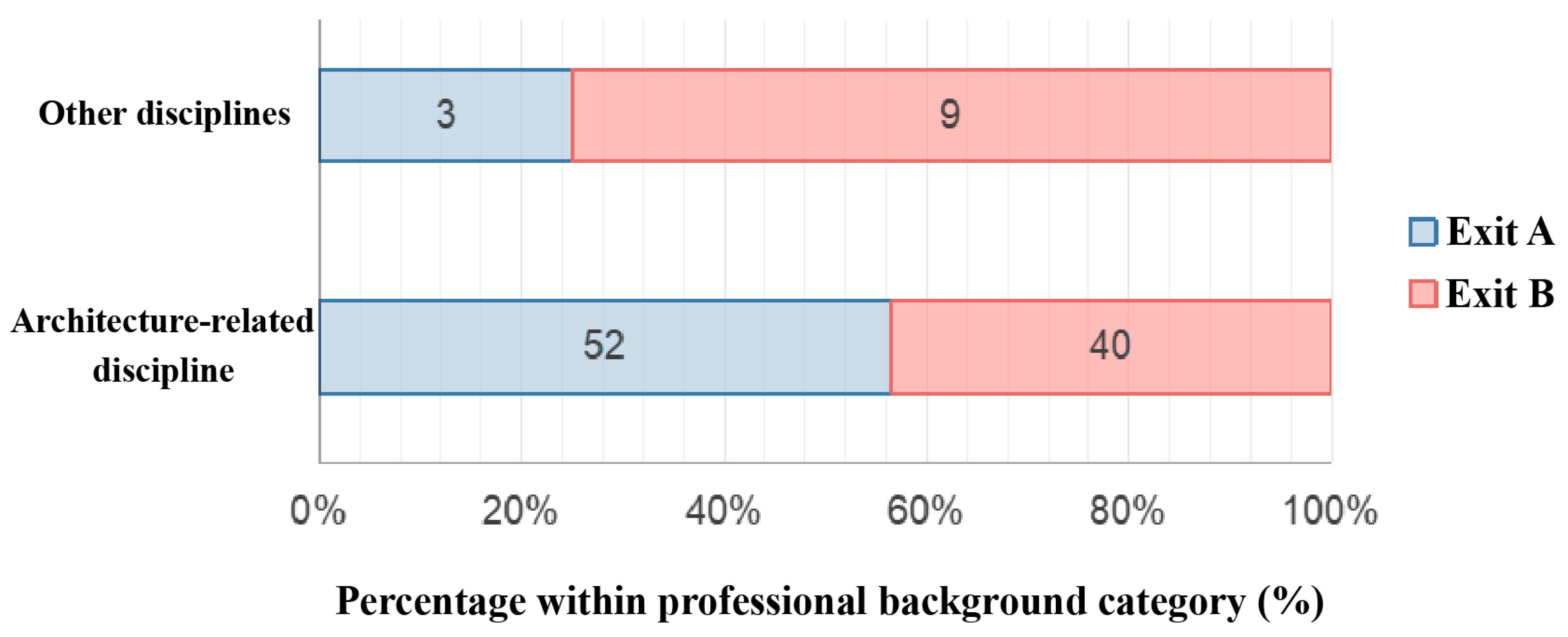
- The influence of gender and professional background on the choice of entrances and exits in different levels of sub-safe zones. The cross-analysis results of exit choice at Node 2 for different genders and professional backgrounds are shown in Figure 9 and Figure 10. Regarding gender, 69.2% of males chose exit A, while 30.8% chose exit B. Conversely, 43.1% of females chose exit A, and 56.9% chose exit B. This indicates that in the Node 2 scenario, females have a more pronounced tendency to choose exit B, which may be related to the more spacious buffer space and potential sense of security provided by the facilities in the secondary sub-safety zone where exit B is located. In the case where the distance between the two exits is only about 6 m, most males still adopt a nearby evacuation attitude. This gender difference may be related to multiple factors, such as individual risk assessment, environmental perception, and differences in understanding evacuation strategies. For participants with different professional backgrounds, 56.5% of those with backgrounds in architecture, civil engineering, planning, and safety engineering chose internal exit A, while 43.5% chose external exit B. This indicates that personnel in architecture-related fields may have stronger abilities to recognize spaces, a stronger awareness of rapid evacuation in emergencies, and are more inclined to choose the nearest and most direct evacuation path. However, nearly 75% of participants from other majors chose external exit B, indicating that non-related professionals are more inclined to choose external exit B. This may be related to the familiarity with available evacuation paths. After being given the same familiarization environment, the second-level sub-safety zone, which can provide more space and facility assistance, gave non-related professionals stronger memory points, leading them to prefer this exit during emergency evacuation, while related professionals are more familiar with the overall spatial environment and prioritize the nearest exit. In addition, due to the small sample size collected in other professional categories, this data may also lack representativeness.Figure 9. Choice analysis of the subjects of different genders in Condition 2.Figure 10. Choice analysis of the subjects in different professional backgrounds in Condition 2.
- (2)
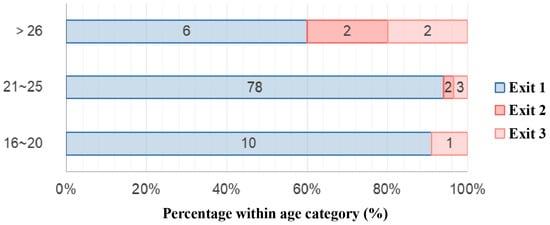
- The influence of age on the choice of evacuation paths for multiple decision-making nodes. Scenario 3 is the Node 3 scenario under no factor influence, examining whether the subjects choose to evacuate directly from the nearest exit without any other guidance or information prompts. The cross-analysis results for exit choice across different age groups under Condition 3 are shown in Figure 11. From the results, over 90% of people in the age groups of 16–20 and 21–25 chose the nearest exit 1, but 60% of participants in the age group over 26 chose the nearest exit 1, indicating that there may be more complex choice tendencies among older individuals, with the possibility of missing escape exits and increasing evacuation distances.Figure 11. Choice analysis of the subjects in different age groups in Condition 3.
- (3)
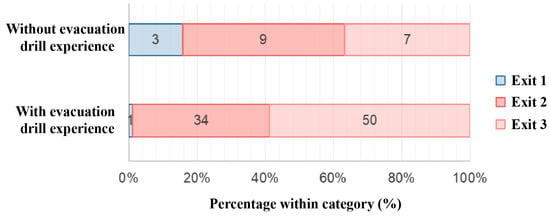
- The influence of evacuation drill experience and fire escape experience on path choice during different exit congestion situations. The cross-analysis of exit path choice for participants with different evacuation exercise experiences in Condition 4 is shown in Figure 12.Figure 12. Choice analysis of the subjects with different evacuation drill experiences in Condition 4.
Among the participants who underwent evacuation exercises, only one chose congested exit 1 in Condition 4, and almost all participants avoided the congested exit. Among the choices of exits 2 and 3, exit 3 had a higher proportion, accounting for about 58.8%. This may be due to the educational influence of the orderly and rapid evacuation strategy during the exercise, and when faced with exit congestion, they chose the nearest available exit. Among the participants who had not undergone evacuation exercises, about 15.8% chose to follow the majority of people in the crowded exit, waiting for escape, which was higher than the proportion of participants with exercise experience. About 47.4% chose the exit 2 direction, and 36.8% chose the exit 3 direction. The trend of choosing the exit 2 and exit 3 directions was opposite to that of participants with exercise experience. Choosing to be with the majority or choosing to go to exit 3 through a more spacious passage can be seen as a personal behavior strategy mode that prioritizes ensuring a sense of security.
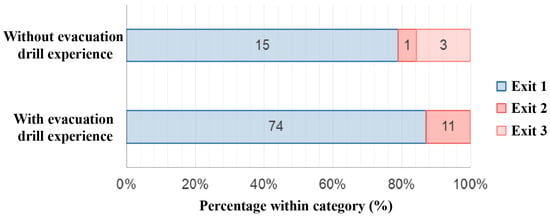
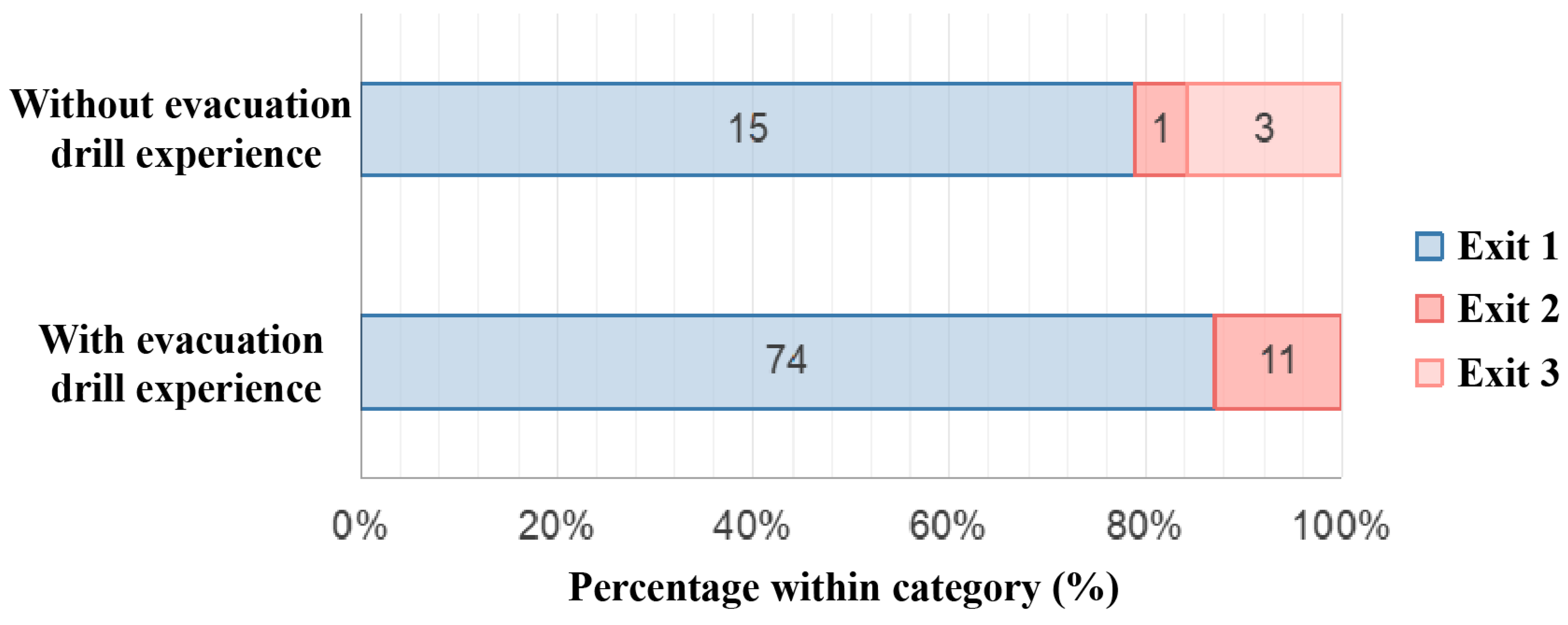
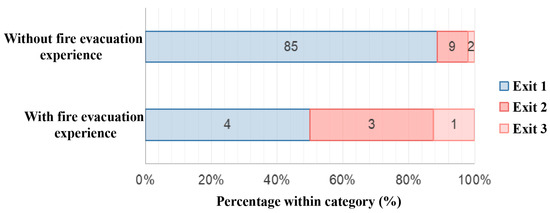
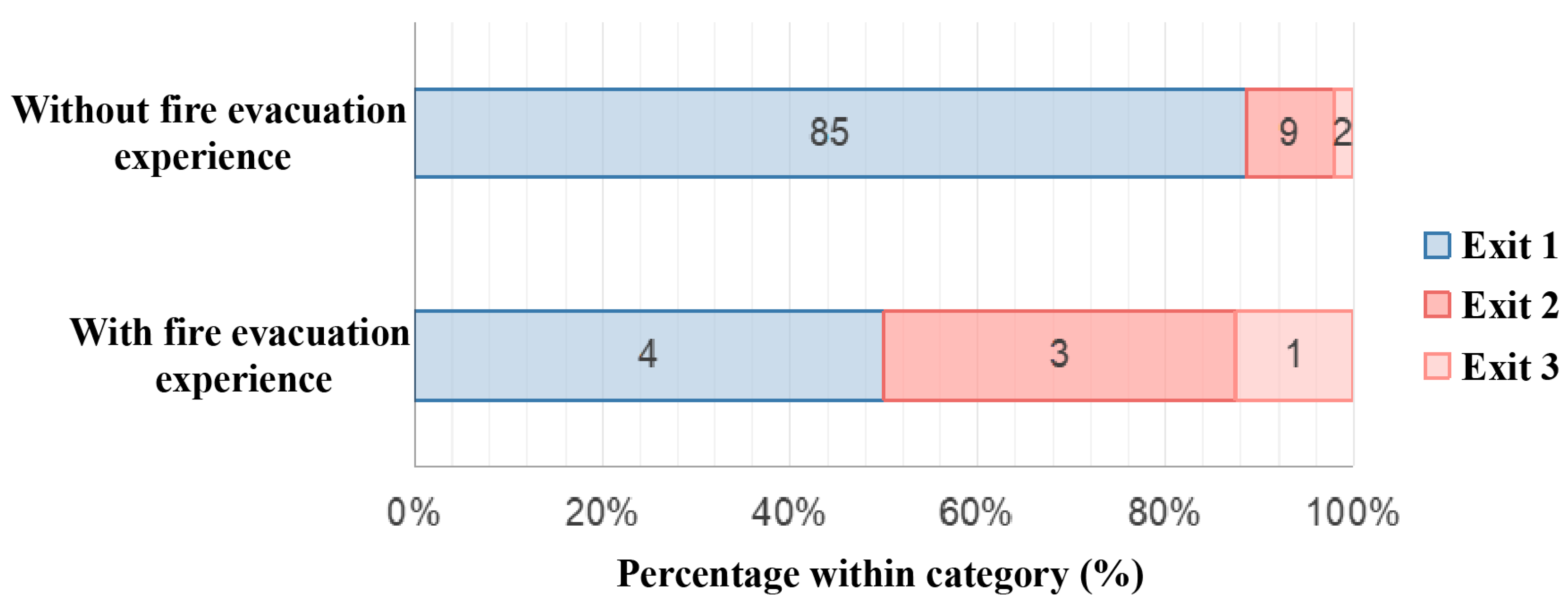
The cross-analysis of participants with different evacuation exercise experiences and fire escape experiences in Condition 5 is shown in Figure 13 and Figure 14. Most of the participants with exercise experience chose to evacuate immediately from the nearest exit 1, accounting for about 87.1%. The remaining 12.9% of the participants chose to go to exit 2 and then evacuate downwards, while no one chose to follow the congested crowd to exit 3. The overall choice trend of participants without exercise experience is consistent with that of participants with exercise experience. A total of 78.9% chose exit 1, but three people, accounting for about 15.8% of the participants, chose to follow the congested crowd. Even if they do not understand why people do not use the nearest exit, they still choose to follow the crowd’s choice. This tendency to follow the congested crowd is consistent with Condition 4, indicating that people without experience in evacuation exercises are likely to engage in blind conformity behavior during emergency evacuation due to a feeling of lack of safety.
Figure 13.
Choice analysis of the subjects with different evacuation drill experiences in Condition 5.
Figure 14.
Choice analysis of the subjects with different fire escape experiences in Condition 5.
For the characteristics of fire escape experience, most participants without fire escape experience chose the unobstructed nearest exit 1, accounting for about 88.5%, while 50.5% of participants with fire escape experience chose exit 1, which is lower than the proportion of participants without such experience. Referring to the interviews with participants who did not choose exit 1 in Condition 5, most of them did not choose the nearest exit, mainly due to concerns about potential dangers. Therefore, among participants with fire escape experience, the proportion of those who chose exit 1 was relatively low, with 37.5% of participants choosing exit 2 away from the decision point. This may be due to their past disaster escape experience, making them more sensitive to potential risks and safety.
Table 11 provides the empirical basis for the heterogeneous evacuee profiles discussed in Section 5. The condition-specific significance of individual characteristics supports scenario-specific evacuation training strategies rather than uniform intervention approaches. Based on the above analysis, regardless of whether the public adopts the best evacuation strategy or not, people without evacuation exercise experience are more likely to follow the public and are more likely to engage in blind conformity behavior. People who have experienced fire disasters are more sensitive to potential risks during evacuation.
5. Discussion
This study indicates that the choice of evacuation paths in deep underground spaces is not simply based on the principle of the nearest exit, but rather a comprehensive decision-making process influenced by distance, sub-safe zone settings, congestion visibility, smoke risk, and individual experience, which is consistent with the previous study [3]. The existing evacuation behavior parameters based on conventional building scenarios do not directly explain the decision-making mechanisms in deep underground spaces. This study provides supplementary evidence for behavior modeling in such special scenarios.
Distance remains a fundamental determinant of path choice, but its effect is moderated by spatial functional attributes. When the distance difference between alternative exits decreases, participants tend to choose exits located in the external sub-safe zone, indicating that evacuees do not simply pursue the shortest path, but instead balance path length against perceived spatial safety. The buffer space, facility support, and psychological safety expectations provided by the sub-safe zone may enhance its attractiveness during evacuation. This suggests that the sub-safe zone is not only a passive protective unit, but may also actively influence path judgment in the early stage of evacuation.
The effect of congestion shows a clear asymmetry. When congestion occurs at the nearest exit, participants significantly shift to alternative routes, indicating a high sensitivity to proximal and visible congestion risk in deep underground spaces. By contrast, congestion on a non-nearest exit route does not significantly alter overall choices, suggesting that evacuees respond less strongly to remote risks and prioritize avoiding hazards that directly obstruct their own passage. These findings imply that, in complex underground environments, the spatial position and perceptibility of congestion may be more influential than the mere presence of congestion itself.
No significant herding effect was observed in this study, which differs from some previous findings based on dual-exit or single-room scenarios [50]. One possible explanation is that, under multi-path conditions, individuals do not rely solely on the movement of others but simultaneously evaluate the likelihood of recurrent congestion, channel width, and exit distance. As a result, social cues do not become the dominant factor in route choice. In other words, conformity behavior in deep underground spaces appears to be more context-dependent, and its strength may be jointly shaped by the number of available routes, spatial complexity, and the urgency of perceived risk.
Smoke is the most direct risk factor affecting path choice. Once smoke is present on a route, participants almost completely avoid that route, indicating that smoke in deep underground spaces is not merely a general environmental disturbance, but a high-level risk signal capable of rapidly changing the decision threshold. Compared with conventional scenarios, the enclosed environment, long evacuation distance, and higher risk of disorientation in deep underground spaces may further amplify evacuees’ avoidance response to smoke. In addition, the analysis of individual differences shows that gender, professional background, age, evacuation drill experience, and fire escape experience can influence path choice under specific conditions, suggesting that evacuation behavior in deep underground spaces is heterogeneous to some extent. Accordingly, related design and management strategies should not rely solely on the assumption of an “average evacuee”.
From an engineering perspective, the findings suggest that evacuation design in deep underground spaces should prioritize congestion control at the nearest exits and key decision-making nodes, while also recognizing the positive role of sub-safe zones in route guidance. Guidance based only on pedestrian flow direction may be of limited effectiveness, whereas clearer risk communication and route-status information may be more helpful in achieving effective diversion. At the same time, this study has several limitations, including a relatively concentrated sample structure, weaker emotional stimulation in interactive video experiments compared with real fires or highly immersive virtual reality scenarios, and a focus on single decision-making behavior at nodes. Future studies may combine broader participant samples, immersive experimental approaches, and continuous behavioral tracking to further reveal the dynamic mechanisms underlying evacuation decisions in deep underground spaces.
6. Conclusions
Based on interactive video hypothesis choice experiments, 104 valid responses were collected to obtain the proportion of exit path decisions for personnel under eight typical potential blockage space conditions, and the effectiveness was verified. Based on the comparative analysis of data from different operating conditions, the following conclusions are drawn:
- (1)
- Distance and sub-safe zone settings significantly affect personnel path choice. As the distance decreases, the proportion of personnel inside the tunnel choosing to evacuate from the external secondary sub-safety zone staircase exit increases.
- (2)
- Exit congestion can have a strong impact on personnel decision-making, and compared to shallow underground spaces and ground buildings, pedestrians in deep underground spaces have a stronger reaction to exit congestion. If there is congestion at non-nearest exits, it has no significant impact on personnel decision-making.
- (3)
- In deep underground spaces, after encountering a congested exit for the first time, the use of non-congested exit paths does not cause significant conformity effects among participants, but rather has a certain degree of exclusion effect.
- (4)
- Personnel exhibit significant avoidance behavior towards smoke, and the likelihood of taking risky actions is lower in deep underground spaces.
- (5)
- Gender and professional background have a significant impact on the choice of entrances and exits in different sub-safe zones. In deep underground spaces, women pay more attention to the evacuation process than men, and those with other majors pay more attention to obtaining a sense of security through safety facilities, that is, sub-safety zones; older individuals show more diverse choices of multi-path decision points before entering the second-level sub-safe zone. Regardless of whether the congestion occurs at the nearest exit or not, individuals without evacuation exercise experience are more likely to follow the crowd and engage in blind conformity behavior. Individuals with fire evacuation experience show higher vigilance towards potential environmental risks.
These findings enrich the empirical database on evacuation behavior in deep underground spaces and provide a basis for evacuation simulation, spatial design optimization, and safety management.
Author Contributions
Conceptualization, T.Z.; methodology, Y.Z.; software, Y.Z.; validation, C.L.; formal analysis, C.L.; investigation, J.C.; resources, T.Z.; data curation, T.Z.; writing—original draft preparation, Y.Z. and C.L.; writing—review and editing, C.L.; visualization, R.Y. and H.L.; supervision, T.Z.; project administration, T.Z.; funding acquisition, T.Z. All authors have read and agreed to the published version of the manuscript.
Funding
This research was funded by the National Natural Science Foundation of China (52278005), Chongqing Municipal Education Commission Science and Technology Research Project (KJQN202304313), and Chongqing Social Science Planning Project (2023BS119).
Informed Consent Statement
Informed consent was obtained from all subjects involved in the study.
Data Availability Statement
Data are available from the corresponding author upon reasonable request.
Acknowledgments
The authors gratefully acknowledge the equipment and data analysis tool support provided by the School of Architecture and Urban Planning and the Research Center for Smart Evacuation and Safety at Chongqing University.
Conflicts of Interest
Author Haobin Li was employed by the company Chongqing ZhongBei Engineering Consulting Co., LTD. The authors declare that they have no known competing financial interests or personal relationships that could have appeared to influence the work reported in this paper.
References
- Zhao, J.-W.; Peng, F.-L.; Wang, T.-Q.; Zhang, X.-Y.; Jiang, B.-N. Advances in Master Planning of Urban Underground Space (UUS) in China. Tunn. Undergr. Space Technol. 2016, 55, 291–307. [Google Scholar] [CrossRef] [Scilit]
- Bobylev, N.; Sterling, R. Urban Underground Space: A Growing Imperative. Tunn. Undergr. Space Technol. 2016, 55, 1–4. [Google Scholar] [CrossRef] [Scilit]
- Admiraal, H.; Cornaro, A. Why Underground Space Should Be Included in Urban Planning Policy–-And How This Will Enhance an Urban Underground Future. Tunn. Undergr. Space Technol. 2016, 55, 214–220. [Google Scholar] [CrossRef] [Scilit]
- Helbing, D.; Mukerji, P. Crowd Disasters as Systemic Failures: Analysis of the Love Parade Disaster. EPJ Data Sci. 2012, 1, 7. [Google Scholar] [CrossRef] [Scilit]
- GB/T 51358-2019; Standard for Urban Underground Space Planning. China Architecture & Building Press: Beijing, China, 2019.
- Kishii, T. Utilization of Underground Space in Japan. Tunn. Undergr. Space Technol. 2016, 55, 320–323. [Google Scholar] [CrossRef] [Scilit]
- Stones, P.; Heng, T.Y. Underground Space Development Key Planning Factors. Procedia Eng. 2016, 165, 343–354. [Google Scholar] [CrossRef] [Scilit]
- Von Der Tann, L.; Sterling, R.; Zhou, Y.; Metje, N. Systems Approaches to Urban Underground Space Planning and Management–-A Review. Undergr. Space 2020, 5, 144–166. [Google Scholar] [CrossRef] [Scilit]
- Broch, E. Planning and Utilisation of Rock Caverns and Tunnels in Norway. Tunn. Undergr. Space Technol. 2016, 55, 329–338. [Google Scholar] [CrossRef] [Scilit]
- Hankin, B.D.; Wright, R.A. Passenger Flow in Subways. J. Oper. Res. Soc. 1958, 9, 81–88. [Google Scholar] [CrossRef] [Scilit]
- Cheng, J.-P.; Kang, K.-J.; Li, J.-M.; Li, J.; Li, Y.-J.; Yue, Q.; Zeng, Z.; Chen, Y.-H.; Wu, S.-Y.; Ji, X.-D.; et al. The China Jinping Underground Laboratory and Its Early Science. Annu. Rev. Nucl. Part. Sci. 2017, 67, 231–251. [Google Scholar] [CrossRef] [Scilit]
- Hmor-Vid, M.; Hmor, T.; Czirok, L. Underground Space, the Legal Governance of a Critical Resource in Circular Economy. Resour. Policy 2021, 73, 102171. [Google Scholar] [CrossRef] [Scilit]
- Guo, C.; Huo, F.; Li, Y.; Li, C.; Zhang, J. An Evacuation Model Considering Pedestrian Crowding and Stampede under Terrorist Attacks. Reliab. Eng. Syst. Saf. 2024, 249, 110230. [Google Scholar] [CrossRef] [Scilit]
- Lui, P.C.; Zhao, J.; Zhou, Y. Creation of Space in Rock Caverns in Singapore–Past, Present, and Future. In Advances in Underground Space Development: Proceedings of the 13th World Conference of ACUUS; Zhou, Y., Cai, J., Sterling, R., Eds.; Research Publishing Services: Singapore, 2012; pp. 3–10. [Google Scholar]
- Votano, L. Origin and Status of the Gran Sasso INFN Laboratory. Mod. Phys. Lett. A 2014, 29, 1430040. [Google Scholar] [CrossRef] [Scilit]
- Ronchi, E.; Nilsson, D. Fire Evacuation in High-Rise Buildings: A Review of Human Behaviour and Modelling Research. Fire Sci. Rev. 2013, 2, 7. [Google Scholar] [CrossRef] [Scilit]
- Kobes, M.; Helsloot, I.; de Vries, B.; Post, J.G. Building Safety and Human Behaviour in Fire: A Literature Review. Fire Saf. J. 2010, 45, 1–11. [Google Scholar] [CrossRef] [Scilit]
- Fruin, J.J. Designing for Pedestrians: A Level-of-Service Concept. In Highway Research Record, Number 355: Pedestrians; Highway Research Board: Washington, DC, USA, 1971; pp. 1–15. [Google Scholar]
- Older, S.J. Movement of Pedestrians on Footways in Shopping Streets. Traffic Eng. Control 1968, 10, 160–163. [Google Scholar]
- Helbing, D.; Farkas, I.; Vicsek, T. Simulating Dynamical Features of Escape Panic. Nature 2000, 407, 487–490. [Google Scholar] [CrossRef] [Scilit] [PubMed]
- Jia, X.; Murakami, H.; Feliciani, C.; Yanagisawa, D.; Nishinari, K. Pedestrian Lane Formation and Its Influence on Egress Efficiency in the Presence of an Obstacle. Saf. Sci. 2021, 144, 105455. [Google Scholar] [CrossRef] [Scilit]
- Tajima, Y.; Nagatani, T. Clogging Transition of Pedestrian Flow in T-Shaped Channel. Phys. A Stat. Mech. Its Appl. 2002, 303, 239–250. [Google Scholar] [CrossRef] [Scilit]
- Omidkhah Kharashtomi, A.; Bemanian, M.; Hafezi, M. A Filtering-Based Methodology for Assessing Evacuation Performance in Layout of Complex Infrastructures. J. Build. Perform. Simul. 2022, 15, 599–615. [Google Scholar] [CrossRef] [Scilit]
- Seyfried, A.; Steffen, B.; Klingsch, W.; Boltes, M. The Fundamental Diagram of Pedestrian Movement Revisited. J. Stat. Mech. Theory Exp. 2005, 2005, P10002. [Google Scholar] [CrossRef] [Scilit]
- Wang, C.; Li, C.; Zhou, T.; Wang, D.; An, X.; Lv, J.; Wang, J. Immersive Virtual Reality Experiments for Emergency Evacuation Response in Deep Underground Space. Tunn. Undergr. Space Technol. 2025, 163, 106729. [Google Scholar] [CrossRef] [Scilit]
- Arias, S.; La Mendola, S.; Wahlqvist, J.; Rios, O.; Nilsson, D.; Ronchi, E. Virtual Reality Evacuation Experiments on Way-Finding Systems for the Future Circular Collider. Fire Technol. 2019, 55, 2319–2340. [Google Scholar] [CrossRef] [Scilit]
- Gwynne, S.M.V.; Rosenbaum, E.R. Employing the Hydraulic Model in Assessing Emergency Movement. In SFPE Handbook of Fire Protection Engineering, 5th ed.; Hurley, M.J., Gottuk, J.D., Hall, J.R., Jr., Harada, K., Kuligowski, E.D., Puchovsky, M., Torero, J.L., Watts, J.M., Jr., Wieczorek, C.J., Eds.; Springer: New York, NY, USA, 2016; pp. 2115–2151. [Google Scholar] [CrossRef] [Scilit]
- Zanlungo, F.; Ikeda, T.; Kanda, T. Potential for the Dynamics of Pedestrians in a Socially Interacting Group. Phys. Rev. E 2014, 89, 012811. [Google Scholar] [CrossRef] [Scilit] [PubMed]
- Feng, Y.; Duives, D.C.; Hoogendoorn, S.P. Wayfinding Behaviour in a Multi-Level Building: A Comparative Study of HMD VR and Desktop VR. Adv. Eng. Inform. 2022, 51, 101475. [Google Scholar] [CrossRef] [Scilit]
- Bernardini, G.; Lovreglio, R.; Quagliarini, E.; D’Orazio, M. Can Active and Passive Wayfinding Systems Support Fire Evacuation in Buildings? Insights from a Virtual Reality-Based Experiment. J. Build. Eng. 2023, 74, 106778. [Google Scholar] [CrossRef] [Scilit]
- Feng, Z.; González, V.A.; Amor, R.; Lovreglio, R.; Cabrera-Guerrero, G. Immersive Virtual Reality Serious Games for Evacuation Training and Research: A Systematic Literature Review. Comput. Educ. 2018, 127, 252–266. [Google Scholar] [CrossRef] [Scilit]
- Feng, Y.; Duives, D.C.; Hoogendoorn, S.P. Using Virtual Reality to Study Pedestrian Exit Choice Behaviour during Evacuations. Saf. Sci. 2021, 137, 105158. [Google Scholar] [CrossRef] [Scilit]
- Haghani, M. Empirical Methods in Pedestrian, Crowd and Evacuation Dynamics: Part I. Experimental Methods and Emerging Topics. Saf. Sci. 2020, 129, 104743. [Google Scholar] [CrossRef] [Scilit]
- Kinateder, M.; Warren, W.H.; Schloss, K.B. What color are emergency exit signs? Egress behavior differs from verbal report. Appl. Ergon. 2019, 75, 155–160. [Google Scholar] [CrossRef] [Scilit] [PubMed]
- Shiwakoti, N.; Tay, R.; Stasinopoulos, P.; Woolley, P.J. Passengers’ Awareness and Perceptions of Way Finding Tools in a Train Station. Saf. Sci. 2016, 87, 179–185. [Google Scholar] [CrossRef] [Scilit]
- Duives, D.C.; Mahmassani, H.S. Exit Choice Decisions during Pedestrian Evacuations of Buildings. Transp. Res. Rec. 2012, 2316, 84–94. [Google Scholar] [CrossRef] [Scilit]
- Olander, J.; Ronchi, E.; Lovreglio, R.; Nilsson, D. Dissuasive Exit Signage for Building Fire Evacuation. Appl. Ergon. 2017, 59, 84–93. [Google Scholar] [CrossRef] [Scilit] [PubMed]
- Lovreglio, R.; Borri, D.; dell’olio, L.; Ibeas, A. A Discrete Choice Model Based on Random Utilities for Exit Choice in Emergency Evacuations. Saf. Sci. 2014, 62, 418–426. [Google Scholar] [CrossRef] [Scilit]
- Haghani, M.; Sarvi, M.; Shahhoseini, Z.; Boltes, M. How Simple Hypothetical-Choice Experiments Can Be Utilized to Learn Humans’ Navigational Escape Decisions in Emergencies. PLoS ONE 2016, 11, e0166908. [Google Scholar] [CrossRef] [Scilit] [PubMed]
- Chen, L.; Tang, T.-Q.; Huang, H.-J.; Song, Z. Elementary Students’ Evacuation Path Choice in a Classroom: A Questionnaire-Based Method. Phys. A Stat. Mech. Its Appl. 2018, 492, 1066–1074. [Google Scholar] [CrossRef] [Scilit]
- Aleksandrov, M.; Rajabifard, A.; Kalantari, M.; Lovreglio, R.; González, V.A. People Choice Modelling for Evacuation of Tall Buildings. Fire Technol. 2018, 54, 1171–1193. [Google Scholar] [CrossRef] [Scilit]
- Cuesta, A.; Abreu, O.; Balboa, A.; Alvear, D. Real-time evacuation route selection methodology for complex buildings. Fire Saf. J. 2017, 91, 947–954. [Google Scholar] [CrossRef] [Scilit]
- Wang, D.; Li, N.; Wu, S.; Zhou, T. The Impact of Corridor Directional Configuration on Wayfinding Behaviour during Fire Evacuation in Underground Spaces: An Empirical Study Based on Virtual Reality. Fire 2024, 7, 294. [Google Scholar] [CrossRef] [Scilit]
- Lovreglio, R.; Fonzone, A.; dell’olio, L. A Mixed Logit Model for Predicting Exit Choice during Building Evacuations. Transp. Res. Part A Policy Pract. 2016, 92, 59–75. [Google Scholar] [CrossRef] [Scilit]
- Lovreglio, R.; Dillies, E.; Kuligowski, E.; Rahouti, A.; Haghani, M. Exit Choice in Built Environment Evacuation Combining Immersive Virtual Reality and Discrete Choice Modelling. Autom. Constr. 2022, 141, 104452. [Google Scholar] [CrossRef] [Scilit]
- Ronchi, E.; Gwynne, S.M.V.; Purser, D.A.; Colonna, P. Representation of the Impact of Smoke on Agent Walking Speeds in Evacuation Models. Fire Technol. 2013, 49, 411–431. [Google Scholar] [CrossRef] [Scilit]
- Bode, N.W.F.; Codling, E.A. Human exit route choice in virtual crowd evacuations. Anim. Behav. 2013, 86, 347–358. [Google Scholar] [CrossRef] [Scilit]
- Fridolf, K.; Ronchi, E.; Nilsson, D.; Frantzich, H. The Representation of Evacuation Movement in Smoke-Filled Underground Transportation Systems. Tunn. Undergr. Space Technol. 2019, 90, 28–41. [Google Scholar] [CrossRef] [Scilit]
- Moussaid, M.; Perozo, N.; Garnier, S.; Helbing, D.; Theraulaz, G. The Walking Behaviour of Pedestrian Social Groups and Its Impact on Crowd Dynamics. PLoS ONE 2011, 5, e10047. [Google Scholar] [CrossRef] [Scilit] [PubMed]
- Purser, D.A. Combustion Toxicity. In SFPE Handbook of Fire Protection Engineering, 5th ed.; Springer: New York, NY, USA, 2016; pp. 2207–2307. [Google Scholar] [CrossRef] [Scilit]

Disclaimer/Publisher’s Note: The statements, opinions and data contained in all publications are solely those of the individual author(s) and contributor(s) and not of MDPI and/or the editor(s). MDPI and/or the editor(s) disclaim responsibility for any injury to people or property resulting from any ideas, methods, instructions or products referred to in the content. |
© 2026 by the authors. Licensee MDPI, Basel, Switzerland. This article is an open access article distributed under the terms and conditions of the Creative Commons Attribution (CC BY) license.