


Abstract
Disentangling the combined effects of heat and ash in natural forest fires is challenging, hindering understanding of soil microbial post-fire responses. A 90-day simulated fire experiment with 16S rRNA sequencing monitored bacterial communities and functional potential in topsoil (0–10 cm) and subsoil (10–20 cm) under seven treatments: blank control/BC, dry ash/DA, wet ash/WA, low-intensity heating/LH, high-intensity heating/HH, charcoal smoldering combustion/CSC, and Fire, with samples collected every ten days. Results: (1) α diversity declined mainly in the topsoil, with reductions of 12.04–19.82% for Shannon, 1.23–2.86% for Simpson, and 16.03–31.34% for the Chao index. Subsoil only declined under CSC. (2) Both heating and ash treatments increased the relative abundance of low-abundance and endemic taxa. Heating significantly enriched thermotolerant, xerotolerant, and oligotrophic taxa, such as Ramlibacter. (3) Topsoil heating treatments separated from BC (p ≤ 0.01), ash clustered with BC; pH and water content drove differentiation (p ≤ 0.05). (4) Topsoil predicted function potential showed early suppression (0–20 d), mid recovery (30–60 d), and late enhancement (70–90 d) for most treatments, except WA with sustained suppression. Heat determines disturbance depth and initial bacterial loss, while ash reshapes soil properties to influence community reassembly, acting as sequential but distinct environmental filters, providing a framework for post-fire bacterial community reorganization.
1. Introduction
Forest fires are among the most impactful natural disturbances in forest ecosystems, capable of rapidly reshaping vegetation structure, regulating nutrient cycling and soil biological processes, and modulating community succession and ecosystem recovery by altering interactions between above-ground and below-ground components [1,2]. As key drivers of soil biological processes, the response of microbial communities to fire disturbances not only determines the rates of organic matter decomposition, nitrogen and phosphorus transformation, and carbon cycling but also influences post-fire vegetation re-establishment and soil quality maintenance [3,4]. However, existing research on post-fire changes in soil microbiota has yielded contradictory findings: some studies report enhanced soil microbial diversity following forest fires [5,6], while others demonstrate significant reductions in microbial diversity and community stability [7,8]. This discrepancy does not stem from inherent differences in study subjects, but rather from the challenges of spatially and temporally isolating the multiple factors associated with fire disturbances.
From a mechanistic perspective, forest fires exert their effects on soil microorganisms through at least two sequential yet distinct pathways. The first pathway involves direct heat input: the combined effects of peak temperature, heat exposure duration, and heat penetration depth into the soil collectively determine the proportion of microorganisms that die immediately, enter dormancy, or survive [9,10,11]. The second pathway involves ash deposition and the subsequent reshaping of the soil physicochemical environment; ash can alter soil pH, water content, and nutrient availability [12,13,14,15], thereby regulating the post-fire reorganization of soil bacterial communities [16]. In natural fire events, these two pathways often occur simultaneously and are jointly modulated by factors such as fire behavior, fuel structure, rainfall, and topography [17,18,19]. As a result, it is challenging to disentangle the respective contributions of heat input and ash deposition solely through field surveys.
Controlled simulated fire experiments offer a powerful approach to address this challenge. In a previous study, we used pure culture methods to continuously monitor changes in cultivable microbial biomass in soil subjected to various heat treatments within a simulated fire framework. Our findings revealed that cumulative heat input, rather than a single peak temperature, more accurately explains the decline and rapid recovery of post-fire microbial biomass. Additionally, we highlighted the critical roles of deep soil layers as a buffer and microbial seed bank during the post-fire recovery process [20]. Despite these insights, pure culture methods are limited in their ability to capture the overall restructuring of microbial community composition, nor can they clarify whether ash deposition drives community reorganization along a trajectory distinct from that induced by heat treatment alone.
High-throughput sequencing (i.e., next-generation sequencing technologies that can generate millions of DNA reads in parallel) has emerged as a novel tool for investigating microbial community restructuring following fire disturbances. Previous studies have shown that high-intensity burning can significantly alter bacterial community structure and functional potential [21], leading to the rapid dominance of thermotolerant or pyrophilic taxa during the early post-fire recovery stage [22]. Research conducted in southern subtropical forests and karst forests further indicates that post-fire changes in soil pH, water content, and available nutrients are closely linked to bacterial community succession [5,23]. However, existing studies predominantly rely on field surveys, lacking systematic control over three core fire-related factors—temperature, heat input duration, and ash deposition—and often neglect the analysis of soil vertical stratification. Notably, there remains a critical gap in the quantitative tracking of bacterial communities across soil profiles and their predicted functional potential over a continuous temporal scale.
Despite multiple microbial groups participating in post-fire soil recovery, this research exclusively focuses on soil bacteria for three core reasons. Bacteria constitute the predominant fraction of soil microbial biomass and dominate pivotal nutrient transformation processes. They possess fast community turnover rates and are highly susceptible to soil physicochemical changes triggered by heat and ash, which render them ideal bioindicators for identifying dual filtering effects of fire. Furthermore, our simulated fire experiment is designed to separate heat and ash effects independently, and focusing on bacteria avoids analytical distraction and ensures targeted achievement of the core research goals.
Building on our previous research on heat-induced microbial responses, this study integrates high-throughput 16S rRNA gene sequencing with new treatments involving dry and wet ash, aiming to address three key questions regarding post-fire bacterial community composition and predicted functional potential. First, we investigate whether heat input and ash deposition represent two distinct post-fire environmental filtering mechanisms. Second, we examine whether these two filtering mechanisms exhibit differential effects across two soil layers (0–10 cm and 10–20 cm). Third, we explore the roles of soil pH, water content, and nutrient availability in driving community reorganization. Based on previous findings and existing literature, we propose three hypotheses: (1) heat input primarily determines the magnitude of early microbial loss and the vertical depth of disturbance; (2) ash deposition primarily influences subsequent community reorganization by reshaping the soil physicochemical environment; (3) the topsoil (0–10 cm) serves as the core interface for post-fire microbial responses, while the subsoil (10–20 cm) exhibits greater buffering capacity and stability.
It is important to note that sequencing samples in this study were collected using a composite design: 7 treatment groups × 2 soil layers × a 90-day continuous monitoring period (sampled at 10-day intervals), with each treatment × soil layer × time point combination corresponding to a single sequencing sample. Consequently, this study focuses on identifying consistent patterns in temporal trajectories, soil layer differentiation, and treatment effects, rather than drawing strong causal inferences about community assembly processes beyond the scope of the data. Based on this premise, the present study discusses the distinct filtering pathways constituted by heat penetration and ash deposition, and how these pathways jointly shape post-fire soil bacterial communities and their predicted functional potential.
2. Materials and Methods
2.1. Study Area and Experimental Design
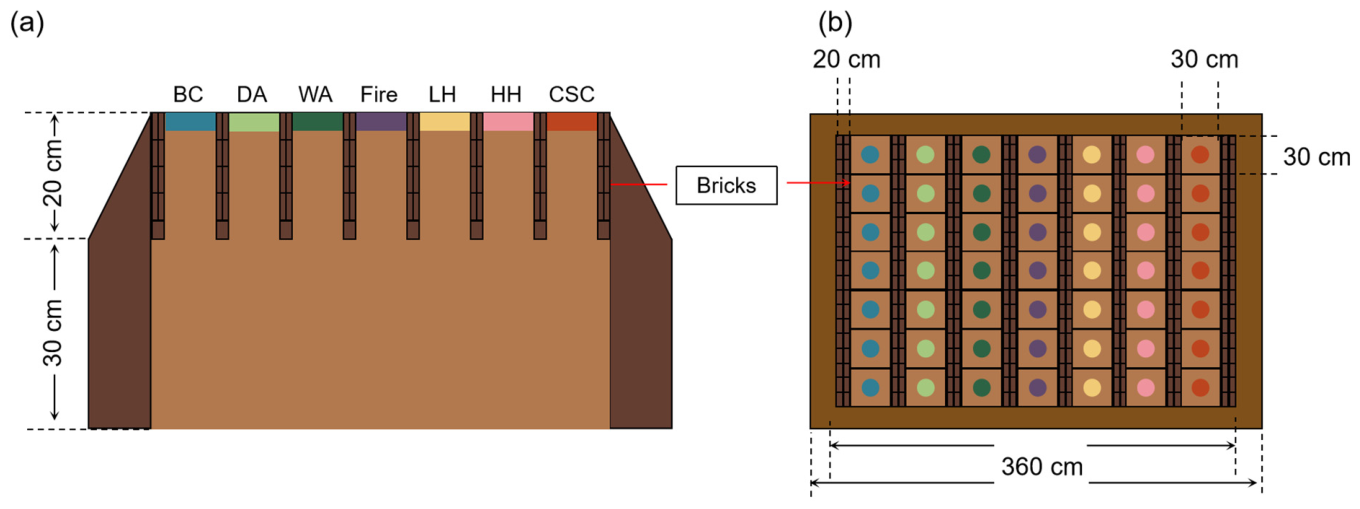
Soil was collected from a Pinus yunnanensis forest within the Dali Cangshan National Nature Reserve. The site has a subtropical plateau monsoon climate (mean annual temperature 14–16 °C, annual precipitation ~1000 mm) and the stand has remained free of fire and fertilization. The soil is a red soil typical of coniferous forests in this semi-humid region. Soil from the 0–20 cm layer was collected; after removing coarse debris and stones via a 5-mesh sieve, the soil was thoroughly homogenised and stored at 4 °C in a refrigerator. Seven treatment groups were established (Figure 1):
Figure 1.
Schematic diagram of the experimental plot design. (a) Front view of the plot design diagram. (b) Top view of the plot design diagram.
- (1)
- BC: Blank control, with no fire or ash treatment applied.
- (2)
- DA: Dry ash treatment, in which 260 g of pine needles were completely combusted, cooled to ambient temperature, and the resulting dry ash was evenly spread over the soil surface.
- (3)
- WA: Wet ash treatment, in which 260 g of pine needles were completely burned in a metal barrel. After cooling, the ash was sprayed with deionized water until it reached a saturated, paste-like consistency with no free-standing water and was then uniformly spread over the soil surface. This treatment simulated ash deposition followed by light rainfall.
- (4)
- Fire: Spread 260 g of pine needles evenly over the soil surface and set them alight, allowing them to burn completely to simulate the conditions of a natural wildfire.
- (5)
- LH: Low-intensity heating, involving continuous heating with a blowtorch set to medium flame for 20 min.
- (6)
- HH: High-intensity heating, involving continuous heating with a blowtorch set to medium flame for 1 h.
- (7)
- CSC: Charcoal smoldering combustion treatment, light 200 g of charcoal and allow it to burn until red-hot; once it has reached a steady burn, place it in aluminum foil and set it on a small sample tray, then bake for 4 h.
The quantity of pine needles used in each treatment (260 g) was determined based on field measurements of natural litter loading. All surface pine needles within a randomly selected 1 m2 quadrat at the study site were collected and weighed. This mass was then scaled down proportionally to match the surface area of the experimental microplot. Thus, the 260 g applied per microplot represents the natural litter deposition per unit area under field conditions. The pine needles used were obtained from ground litter of pine forests of the same origin as the experimental soil.
The homogenized soil was backfilled into a pre-excavated pit, and plots were separated by refractory brick partitions. To allow the soil to settle and partially restore natural stratification, the prepared plots were left undisturbed for 7 days before treatment application.
In the present study, DA and WA treatments were used to simulate ash deposition effects under varying water content while LH, HH, and CSC treatments were employed to characterize different levels of heat input. The Fire treatment was designed to simulate natural combustion processes. Nine subplots were established for each treatment, and five of these were randomly selected for sampling. To prevent cross-contamination between groups, the soil in different groups was separated using firebricks, whilst the soil in different plots within the same group was separated using stainless steel sheets.
2.2. Stratified Sampling and Sample Preservation
The experiment was conducted over a 90-day period. Initial soil sampling was performed once the soil temperature returned to pre-treatment levels, followed by subsequent samplings at 10-day intervals, resulting in a total of 10 sampling time points. During each sampling event, soil was collected separately from two depths: the topsoil (0–10 cm) and the subsoil (10–20 cm). Samples from each layer were placed into individual bags at the time of collection and processed independently throughout all subsequent analyses. For each treatment, soil layer, and sampling time point, five subsamples were collected and pooled to form a composite sample, ensuring representativeness of the soil characteristics. Once the soil samples had been placed in sealed bags, they were transported back to the laboratory in a polystyrene box containing ice packs for aliquoting; one portion was used for testing the physical and chemical properties of the soil, whilst the other was used for DNA extraction. To minimize disturbance to the soil profile structure, the sampling holes were sealed immediately after collection using a sterilized wooden stick wrapped in sterile aluminum foil.
Sample coding followed a standardized protocol: topsoil samples were prefixed with ‘U’ (e.g., UBC, UDA, UWA, UFire, ULH, UHH, UCSC), while subsoil samples were prefixed with ‘D’ (e.g., DBC, DDA, DWA, DFire, DLH, DHH, DCSC). Upon returning to the laboratory, a portion of each composite sample was used for the determination of soil physicochemical properties, and the remaining portion was stored at −80 °C for subsequent DNA extraction and high-throughput sequencing analyses.
2.3. Determination of Soil Physicochemical Properties
The parameters measured in this study included soil water content (WC), pH, organic matter (OM), total nitrogen (TN), and total phosphorus (TP). WC was determined using the natural air-drying method. The pH was measured using the potentiometric method with a soil-to-water ratio of 1:2.5. OM was assessed through the potassium dichromate oxidation method, while TN was determined using the Kjeldahl method. TP was measured using the molybdenum-antimony colorimetric method. For each parameter, three technical replicates were prepared, and the mean values were utilized for subsequent analysis.
2.4. DNA Extraction, Amplification, and Bioinformatics Analysis
Total genomic DNA was extracted from soil samples using the E.Z.N.A. Soil DNA Extraction Kit (Omega Bio-tek, Norcross, GA, USA) per the manufacturer’s protocol. DNA concentration and purity were assessed with a NanoDrop 2000 spectrophotometer (Thermo Fisher Scientific, Waltham, MA, USA), and DNA integrity was confirmed by 1% agarose gel electrophoresis (5 V/cm, 20 min) to ensure qualified templates for subsequent analyses [24].
The bacterial 16S rRNA gene V3–V4 hypervariable region was amplified via PCR using the primer pair 338F and 806R. The 20 μL PCR system contained 4 μL 5 × FastPfu Buffer, 2 μL 2.5 mM dNTPs, 0.8 μL each of 5 μM forward and reverse primers, 0.4 μL FastPfu Polymerase, 0.2 μL BSA and 10 ng template DNA, with ddH2O added to volume. Thermal cycling conditions included an initial denaturation at 95 °C for 3 min, 30 cycles of 95 °C for 30 s, annealing for 30 s and 72 °C extension for 45 s, and a final 10 min extension at 72 °C; samples were held at 10 °C after completion [25,26,27].
Each sample was analysed in three technical PCR replicates and pooled to minimise amplification bias. PCR products were verified by 2% agarose gel electrophoresis, purified using the AxyPrep DNA Gel Extraction Kit (Axygen,, Corning, NY, USA), and quantified with a Quantus™ Fluorometer (Promega Corporation, Madison, WI, USA). Equal molar amounts of purified products were used for library construction with the NEXTFLEX Rapid DNA–Seq Kit (Bioo Scientific, Austin, TX, USA), followed by paired-end sequencing on the Illumina NovaSeq 6000 platform (Illumina, San Diego, CA, USA).
Raw sequencing reads were quality-filtered, denoised, assembled and chimera-removed using QIIME2 (v2022.11) with the DADA2 plugin to generate high-quality amplicon sequence variants (ASVs). All processing followed the official QIIME2 2019.11 Atacama soil microbiome tutorial, with unified standard parameters for read truncation and maximum expected error (maxEE) filtering across all samples.
ASV taxonomic annotation was performed against the Greengenes 13_8 database (99% sequence similarity threshold), which was pre-trimmed to the 16S V3–V4 region matching the applied primers, with a 70% classification confidence cutoff. Mitochondrial and chloroplast contaminant sequences were removed using the QIIME2 feature-table plugin [28,29]. Due to the large sample size and limited funding, the data in this study do not include biological replicates. Each treatmen-soil layer-time point group consisted of a single composite sample without independent biological replicates. Accordingly, all alpha diversity, beta diversity and functional profiling results in this study only indicate exploratory temporal trends and treatment effect directions, rather than definitive statistical conclusions.
2.5. Data Analysis
Bacterial community α diversity (Shannon, Simpson and Chao indices) was visualised as line plots over the time series due to the lack of biological replicates. For species composition, relative abundance at the phylum and genus levels was visualised using stacked bar plots, in which all time points within each treatment group were treated as pseudo-replicates to assess bacterial community shifts over the experimental period. Based on this, shared and endemic taxa at the genus level were identified across treatments.
Principal Coordinate Analysis (PCoA) and Non-metric Multidimensional Scaling (NMDS) were performed based on Bray–Curtis distance matrices using the vegan v2.6–8 package in R, with plots generated by ggplot2 v3.5.1, to visualise differences in bacterial community composition among treatments. Redundancy Analysis (RDA) was conducted using Hellinger-transformed species data with the vegan v2.6–8 and ggforce v0.4.2 packages (ggplot2 v3.5.1 for visualisation) to explore associations between bacterial community structure and soil physicochemical factors.
At the functional level, PICRUSt2 was used to predict the KEGG functional potential of bacterial communities based on 16S rRNA gene amplicon data. The direction of functional shifts was described using standardised differences between each treatment group and the BC group at each sampling time point. Given the significant temporal fluctuations observed in the BC group itself, this study focused on interpreting the relative shift trajectories of different treatments in relation to BC rather than raw absolute differences.
All data were collected and organized using Excel Office 2021. The soil temperature monitoring charts and the air temperature and rainfall charts were generated using IBM SPSS (28.0.1.1), while all other charts were generated using Eco Amp software (v0.16). All statistical tests were performed at a significance level of α = 0.05. Differences were considered statistically significant when p < 0.05.
3. Results
3.1. Results of Soil Temperature, Rainfall and Air Temperature Monitoring
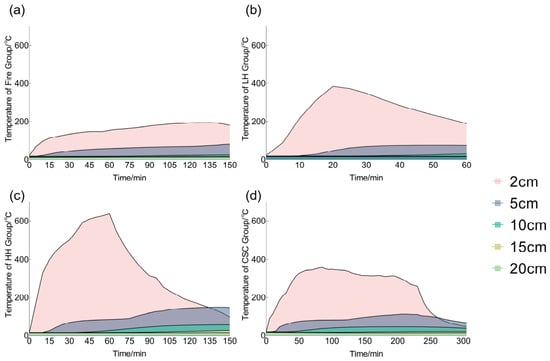
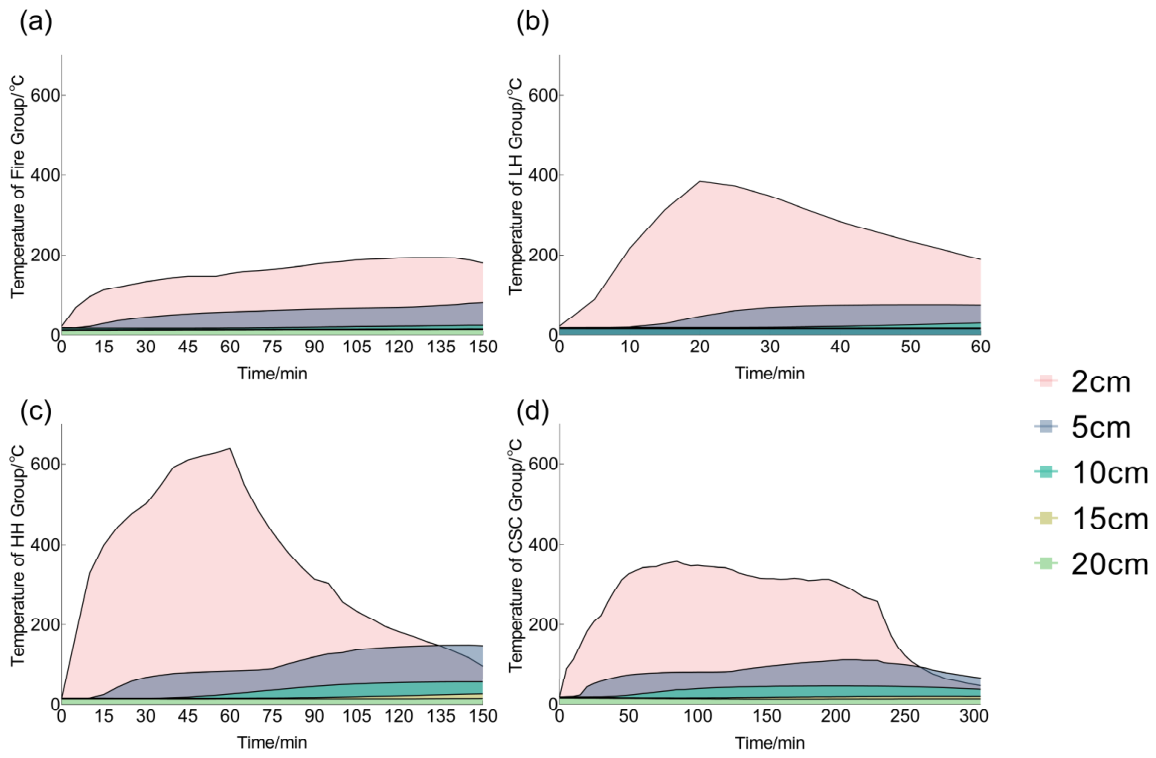
The temperature data for each group and soil layer were plotted as area diagrams; the peak temperatures in the top 2 cm of soil, from highest to lowest, are HH, LH, CSC and Fire. The area under the temperature curve represents the total heat released during the heating phase; calculations show that the total heat released in each soil layer, from highest to lowest, are CSC, HH, Fire and LH (Figure 2).
Figure 2.
Temporal dynamics of soil temperature in different treatment groups. (a) Temperature monitoring results of Fire group. (b) Temperature monitoring results of LH group. (c) Temperature monitoring results of HH group. (d) Temperature monitoring results of CSC group.
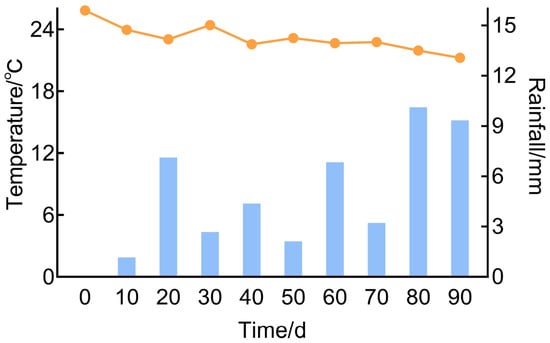
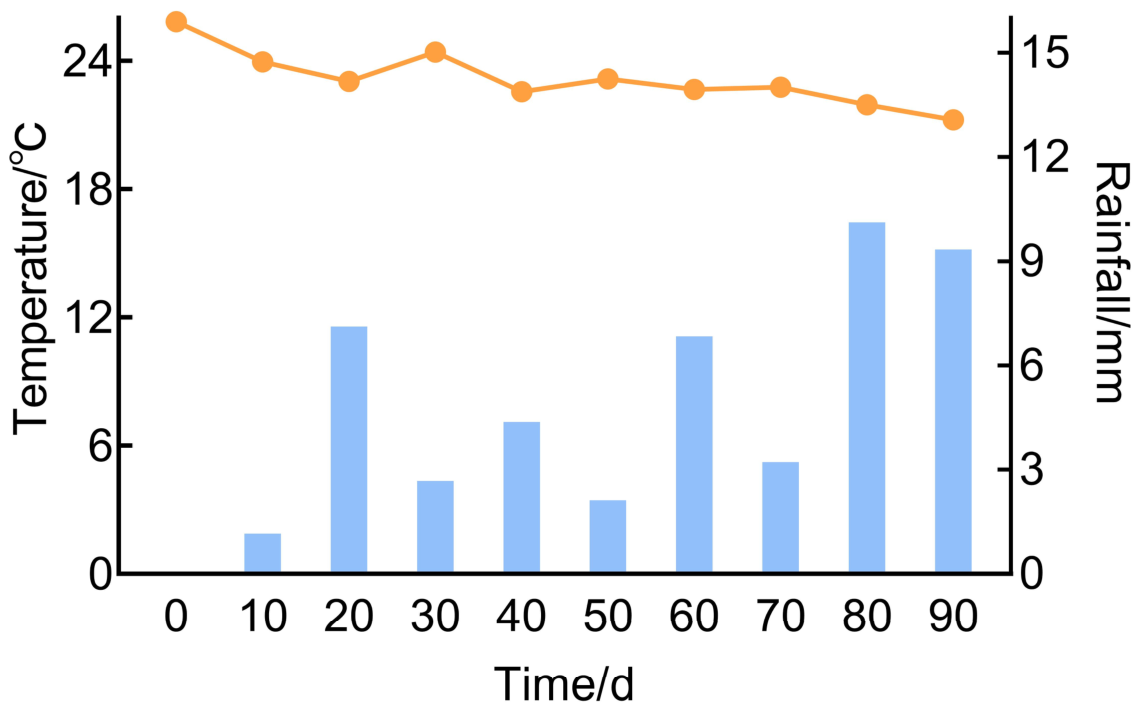
The temperature and rainfall data show that during the experiment, the air temperature mainly ranged between 21 and 26 °C, with heavy rainfall occurring on day 10, day 60, and between days 80 and 90 (Figure 3).
Figure 3.
Time series of air temperature (line, left Y-axis) and precipitation (bars, right Y-axis).
3.2. Bacterial α Diversity Under Different Treatments
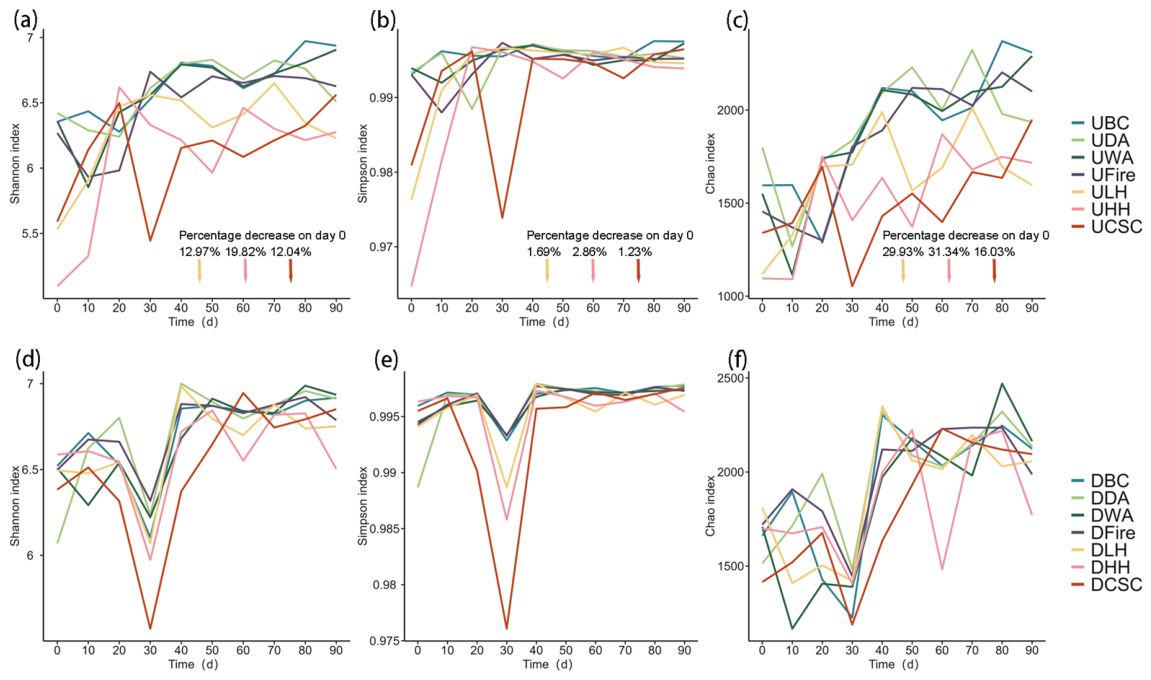
In topsoil, bacterial α diversity was particularly sensitive to heat treatments. Following heat exposure (ULH, UHH, UCSC), α diversity declined immediately: specifically, the Shannon, Simpson, and Chao indices decreased by 12.04–19.82%, 1.23–2.86%, and 16.03–31.34%, respectively, right after the fire disturbance, and remained consistently lower than those in the BC throughout the entire subsequent experimental period. By day 90, the Shannon, Simpson, and Chao indices were still 5.42–10.43%, 0.10–0.36%, and 15.61–30.87% lower than the BC group, respectively. Among all heat treatments, the UHH group exhibited the most dramatic reduction in α diversity, with the Shannon, Simpson, and Chao indices decreasing by 19.82%, 2.86%, and 31.34%, respectively, immediately post-fire. In contrast, the UDA and UWA treatments induced only slight fluctuations or short-term increases in α diversity, which subsequently returned gradually to levels comparable to the UBC (Figure 4a–c, Appendix A Table A1).
Figure 4.
α diversity indices of bacterial communities in topsoil (a–c) and subsoil (d–f). (a) Shannon index of topsoil bacteria. (b) Simpson index of topsoil bacteria. (c) Chao index of topsoil bacteria. (d) Shannon index of subsoil bacteria. (e) Simpson index of subsoil bacteria. (f) Chao index of subsoil bacteria. Biological replicates were not included in this study; therefore, no error bars or statistical tests are presented.
In the subsoil, inter-group differences among all treatments narrowed significantly. Only the DCSC treatment showed a relatively sustained downward trend in α diversity, with the Shannon, Simpson, and Chao indices decreasing by 2.21%, 0.05%, and 14.8%, respectively (Figure 4d–f, Appendix A Table A1).
3.3. Taxonomic Composition of Bacterial Communities
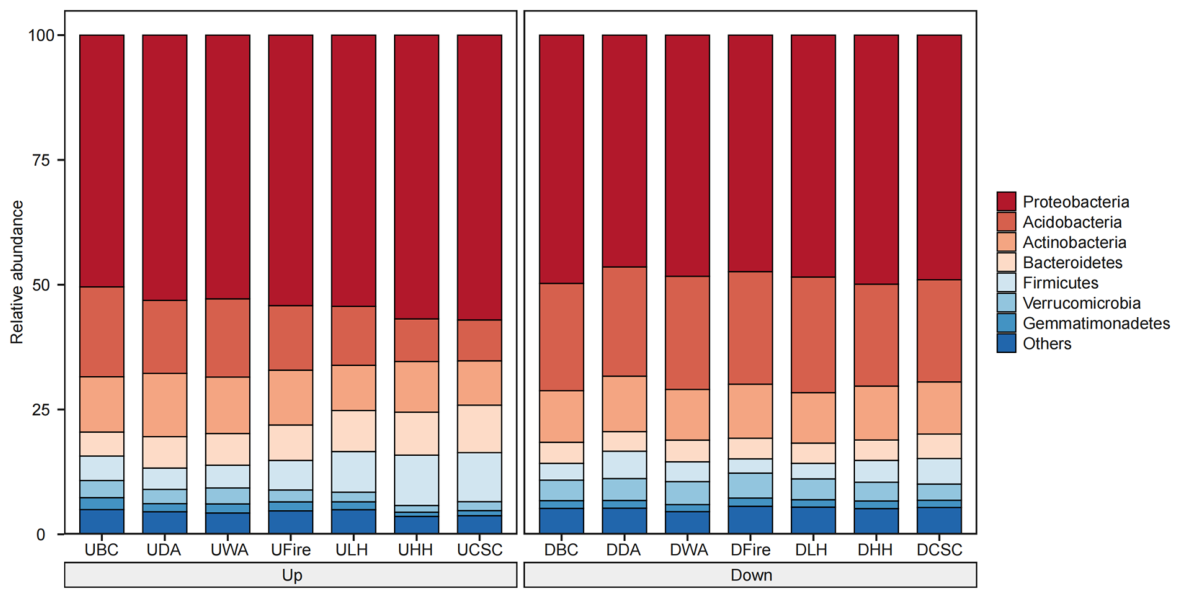
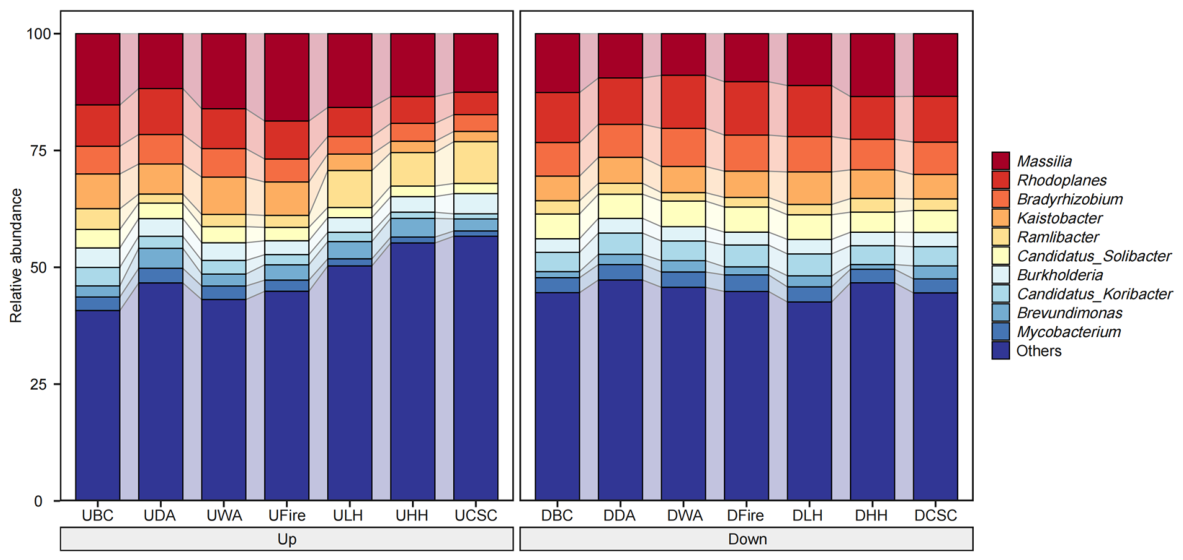
A total of 47 bacterial phyla were identified across all samples. Proteobacteria, Acidobacteria, Actinobacteria, and Bacteroidetes constituted the dominant bacterial phyla throughout all treatment groups (Figure 5). At the genus level, heat treatment induced pronounced enrichment of thermotolerant, xerotolerant, and oligotrophic taxa (e.g., Ramlibacter) in topsoil, and this enrichment pattern intensified continuously over time (Figure 6, Appendix A Figure A1).
Figure 5.
Phylum-level taxonomic composition of bacterial communities.
Figure 6.
Genus-level taxonomic composition of bacterial communities.
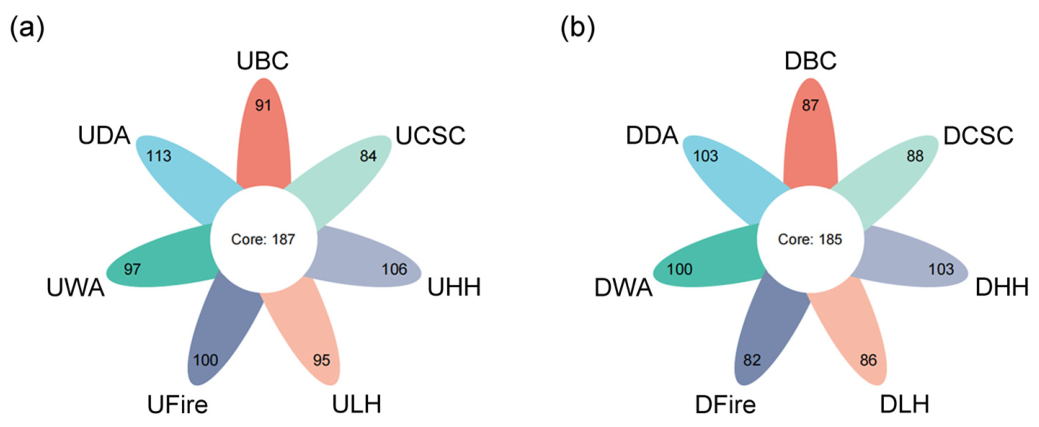
Topsoil under ash treatments (UDA, UWA) and heat treatments (UFire, ULH, UHH, UCSC) harbored higher abundances of rare (relative abundance < 0.1%) and endemic genera compared with the UBC group (Figure 6 and Figure 7). In comparison, subsoil microbial community composition at both phylum and genus levels remained largely stable and less susceptible to experimental treatments.
Figure 7.
Shared and unique genera among treatment groups in topsoil and subsoil bacterial communities. (a) Shared and unique genera among groups in topsoil bacteria. (b) Shared and unique genera among groups in subsoil bacteria.
3.4. β Diversity of Bacterial Communities
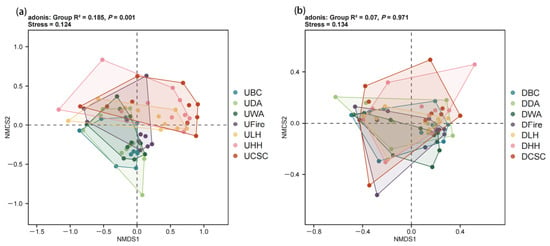
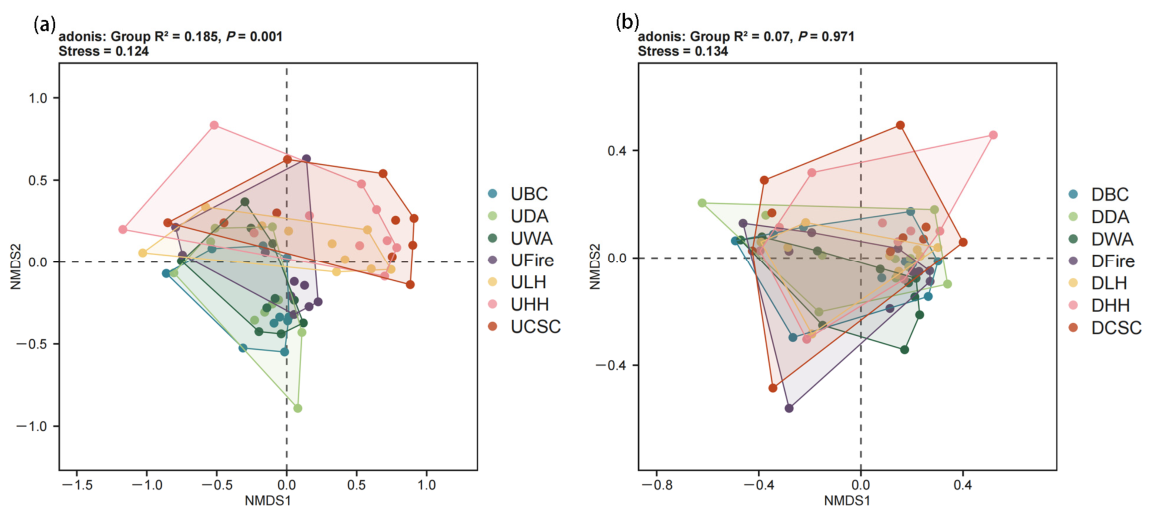
Non-metric Multidimensional Scaling (NMDS) results were consistent with those of Principal Coordinates Analysis (PCoA) (Figure 8; Appendix A Figure A2). Fire disturbance exerted a pronounced impact on microbial community structure primarily in topsoil. In this horizon, samples from the UDA, UWA and UBC groups showed substantial overlap, whereas heat-treated samples were clearly differentiated along the principal coordinate axes (Adonis: R2 = 0.185, p ≤ 0.001, Stress = 0.124). Among all treatments, UHH and UCSC exhibited the greatest divergence from UBC, demonstrating that enhanced heat input profoundly reshapes the succession trajectory of soil microbial communities. In contrast, subsoil samples showed tighter overall clustering (Adonis: R2 = 0.07, p > 0.05, Stress = 0.134), with negligible differentiation among treatments.
Figure 8.
Non-metric multidimensional scaling (NMDS) ordination of bacterial community structure based on Bray–Curtis dissimilarity. (a) Non-metric multidimensional scaling (NMDS) of topsoil bacterial communities based on Bray–Curtis distance. (b) Non-metric multidimensional scaling (NMDS) of subsoil bacterial communities based on Bray–Curtis distance.
3.5. Soil Physicochemical Properties and Redundancy Analysis
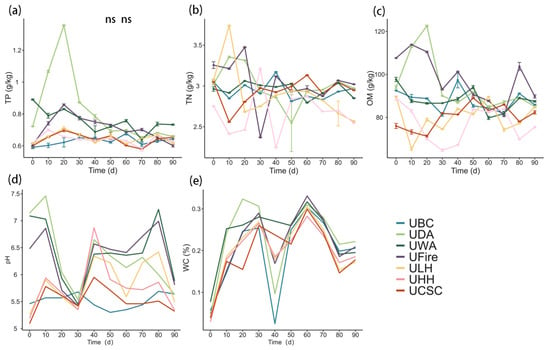
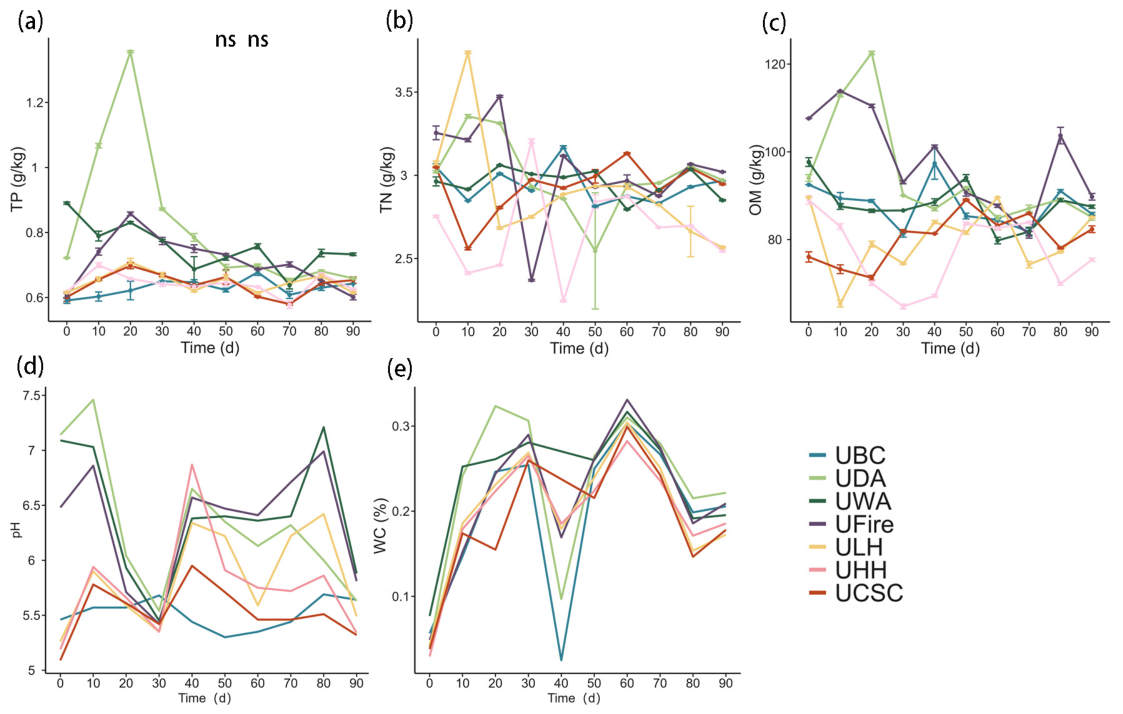
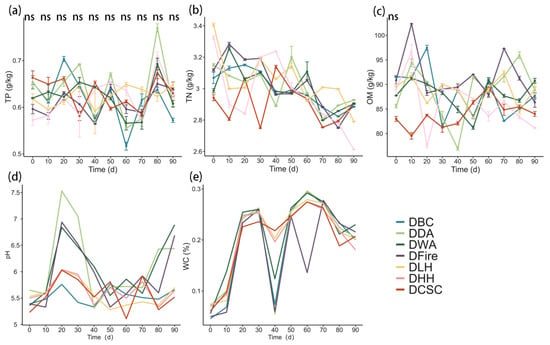
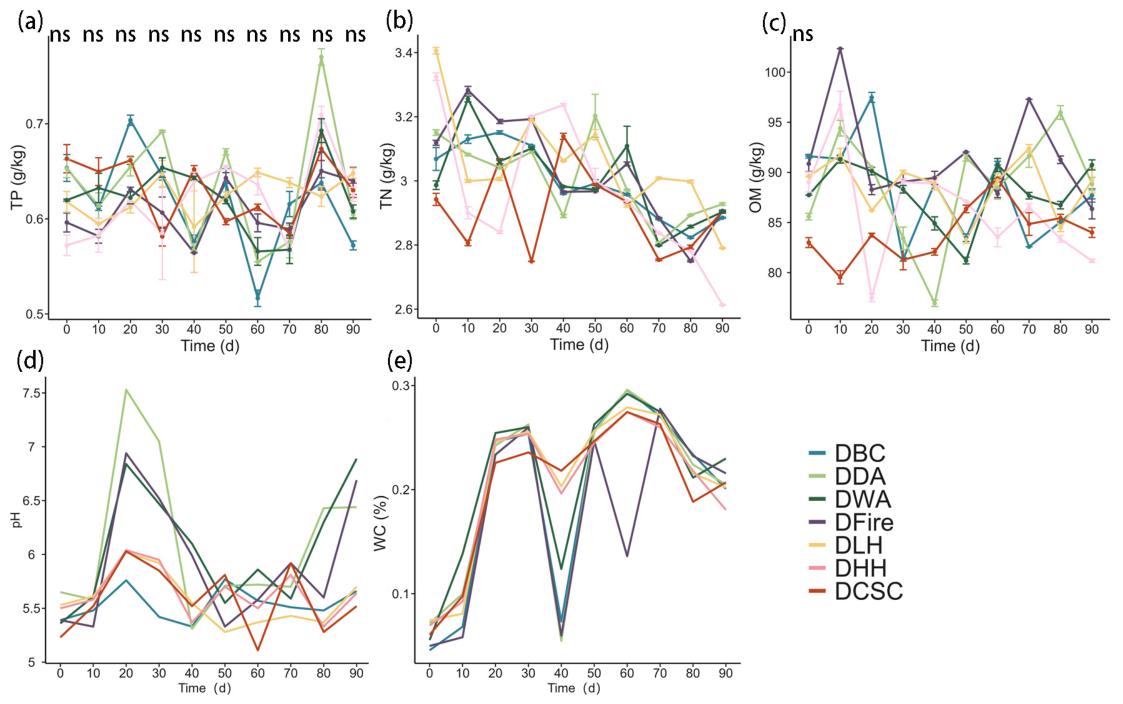
Soil physicochemical properties exhibited distinct stratification variations, with more pronounced changes in the topsoil than in the subsoil. In the topsoil, soil pH was markedly elevated in the UDA, UWA and fire treatments relative to the UBC, showing an overall trend of an initial rise followed by a gradual decline. Water content across all groups presented M-shaped fluctuations, which were strongly regulated by rainfall. Notably, at the rainfall peak on Day 20, the UDA treatment showed concurrent increases in soil TP, OM and pH. Meanwhile, soil OM and TN declined significantly under ULH, UHH and UCSC treatments. By comparison, pH, TN and TP increased periodically in the UWA, UDA and UFire treatments (Figure 9 and Figure 10).
Figure 9.
Temporal changes in topsoil physicochemical properties across treatment groups. (a) TP of topsoil. (b) TN of topsoil. (c) OM of topsoil. (d) pH of topsoil. (e) WC of topsoil. “ns” indicates that there are no significant differences between the groups at this point in time (p > 0.05).
Figure 10.
Temporal changes in subsoil physicochemical properties across treatment groups. (a) TP of subsoil. (b) TN of subsoil. (c) OM of subsoil. (d) pH of subsoil. (e) WC of subsoil. “ns” indicates that there are no significant differences between the groups at this point in time (p > 0.05).
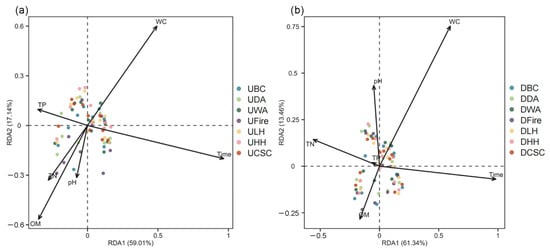
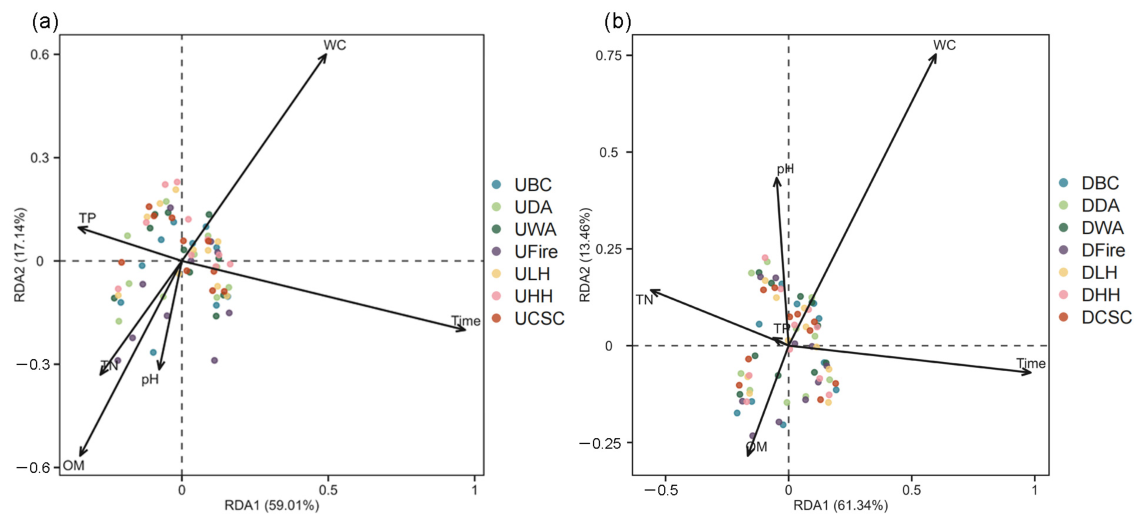
RDA indicated that pH, WC, OM, and TN were associated with variation in topsoil bacterial composition, whereas TN, pH, and WC were more closely aligned with subsoil community variation. The selected variables explained 74% of the constrained variation over total variation. Redundancy analysis (RDA) revealed that the selected physicochemical variables collectively explained more than 74% of the total variation in bacterial community composition, indicating a robust model interpretation. Topsoil bacterial communities were primarily governed by pH, WC, OM and TN, whereas subsoil communities were mainly driven by TN, pH and WC. In particular, pH and WC acted as shared and crucial explanatory factors across both soil layers. Additionally, sampling time served as a key positive driver shaping bacterial communities in both topsoil and subsoil. This implies that post-fire recovery of soil bacterial communities follows a predictable temporal succession pattern, which is co-regulated by multiple edaphic variables, including pH, OM, WC and TN (Figure 11).
Figure 11.
Redundancy analysis (RDA) relating bacterial communities to soil physicochemical factors. (a) Redundancy analysis (RDA) of bacterial communities and soil physicochemical factors in topsoil. (b) Redundancy analysis (RDA) of bacterial communities and soil physicochemical factors in subsoil.
3.6. Predicted Functional Potential of Bacterial Communities
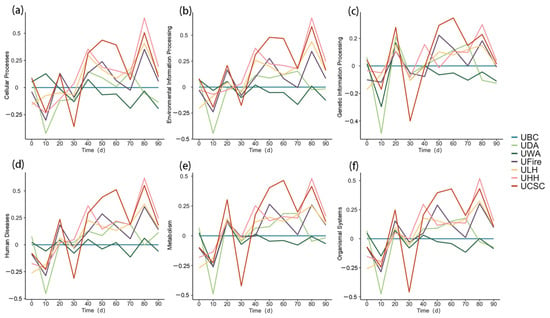
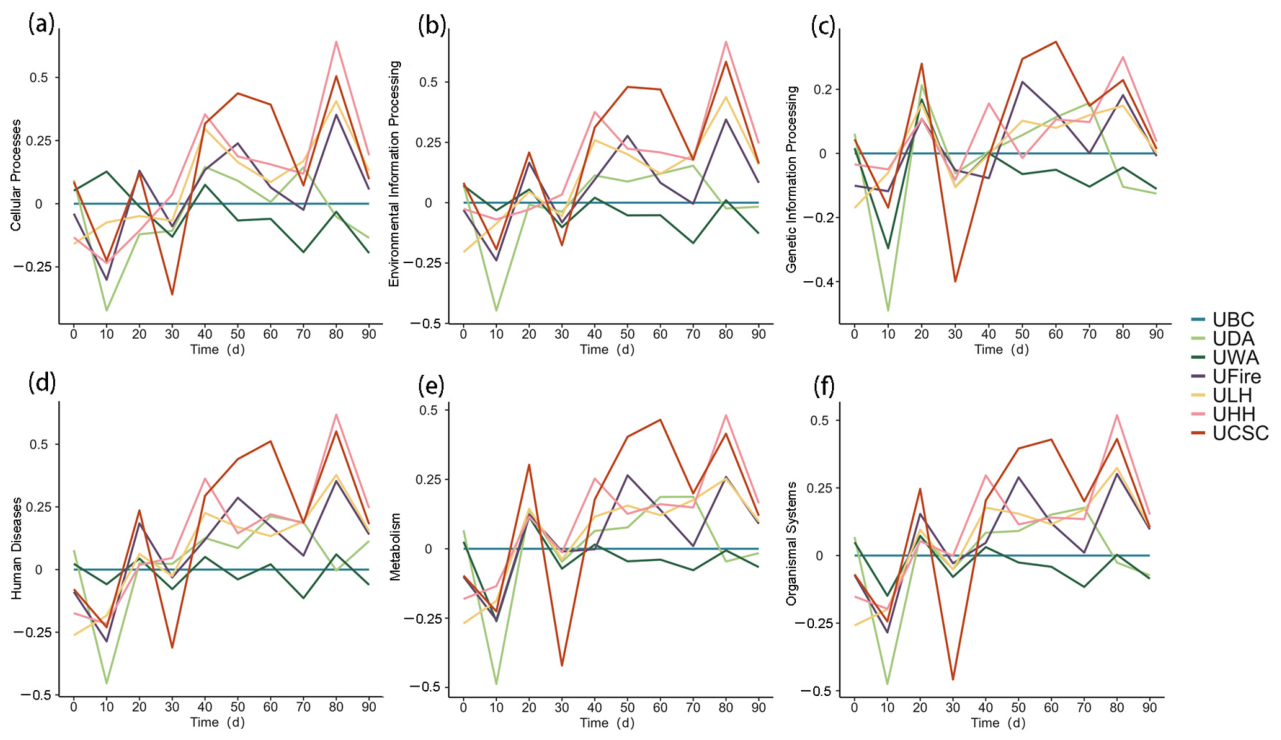
PICRUSt2-based functional prediction analysis detected substantial temporal fluctuations in the UBC group across sampling dates. To eliminate background interference and accurately quantify treatment effects, log2 fold change (log2FC) was calculated for each treatment relative to the time-matched UBC Standardized results showed that treatment-induced functional alterations were predominantly confined to the topsoil.
In topsoil, functional groups in ULH, UHH, UCSC and DA treatments were generally inhibited in the early stage (0–20 days), gradually recovered in the middle stage (30–60 days), and were significantly enhanced in the late stage (70–90 days). Of these treatments, UHH and UCSC displayed the strongest functional upregulation during the mid-to-late recovery phases. By contrast, the UWA treatment showed sustained functional inhibition or only weak promotion throughout the experimental period. In the subsoil, predicted functional profiles remained relatively stable, with negligible treatment-induced variation (Figure 12, Appendix A Table A2).
Figure 12.
Predicted functional potential of topsoil bacterial communities based on PICRUSt2 analysis. (a) log2FC of predicted Cellular Processes in topsoil bacteria. (b) log2FC of predicted Environmental Information Processing in topsoil bacteria. (c) log2FC of predicted Genetic Information Processing in topsoil bacteria. (d) log2FC of predicted Human Diseases in topsoil bacteria. (e) log2FC of predicted Metabolism in topsoil bacteria. (f) log2FC of predicted Organismal systems in topsoil bacteria. Biological replicates were not included in this study; therefore, no error bars or statistical tests are presented.
4. Discussion
4.1. Heat Input and Ash Deposition Cause Post-Fire Bacterial Communities to Follow Different Recovery Trajectories
The impact of wildfires on soil microorganisms is not solely driven by heat stress; instead, it is a complex process jointly mediated by heat input, ash deposition, and the subsequent modifications to the soil environment induced by these two factors. Previous studies have demonstrated that post-fire shifts in soil microbial communities are regulated by a combination of fire intensity, heat exposure duration, inherent soil properties, and post-disturbance recovery stage. As such, the observed patterns of diversity decline, localized recovery, or even diversity enhancement across different studies are not contradictory; rather, they reflect variations in subsurface ecological processes under distinct combinations of fire-related factors [30]. Consistent with this understanding, our results showed clear separation of bacterial communities (ULH, UHH, UCSC, UDA, UWA, and UBC) in unconstrained ordination analyses of topsoil samples. This finding indicates that heat input and ash deposition do not represent a gradient of disturbance intensity along a single axis but rather function as two distinct environmental filtering mechanisms with divergent modes of action.
In essence, heat input primarily acts as a “survival filter” that determines which taxa can persist immediately after fire, while ash deposition functions as a “dominance filter” that further modulates which taxa thrive during the subsequent recovery process by altering soil pH, water content, and nutrient availability. Thus, the primary contribution of this study is to propose an integrated heat–ash filtering model to explain post-fire bacterial community reorganization. The detailed roles of these two filters are elaborated in the following sections.
4.2. Heat Input Mainly Determines the Magnitude of Early Loss and the Depth of Vertical Disturbance
This study demonstrates that bacterial α diversity in topsoil is particularly sensitive to heat treatments, with the magnitude of the response positively correlated with increasing heat input. Following ULH, UHH, and UCSC treatments, the Shannon, Simpson, and Chao indices of topsoil bacteria declined immediately by 12.04–19.82%, 1.23–2.86%, and 16.03–31.34%, respectively, and remained consistently lower than the control throughout the 90-day experimental period. These declines can be contextualized within the global meta-analysis by Pressler [7], which reported that the overall effect of fire on bacterial richness (p = 0.45) and diversity (p = 0.09) was not statistically significant. The pronounced responses observed in our study likely reflect the experimental focus on high heat input levels and the shallow 0–5 cm sampling depth, conditions under which fire-induced diversity loss may be most pronounced. In contrast to the global synthesis, which integrates studies spanning wide gradients of fire severity and soil depth, our controlled approach isolates a specific high-intensity, near-surface scenario.
In contrast, only the UCSC treatment exerted a relatively sustained effect on subsoil α diversity, where the Shannon, Simpson, and Chao indices decreased by 2.21%, 0.05%, and 14.8%, respectively. These microbial community responses corresponded well with soil temperature monitoring data, in which the 0–5 cm topsoil layer was identified as the primary heat-affected zone, with the UHH and UCSC treatments exhibiting the highest peak temperatures and total heat accumulation. Integrated with these thermal observations, these findings indicate that heat exposure duration plays a critical role in determining the extent to which fire disturbances propagate to the subsoil, whereas short-term high temperatures primarily affect the topsoil. This depth-dependent pattern is consistent with the observation by Pressler [7] that fire effects on bacterial biomass were significantly greater in surface than subsoils (effect size: −2.34 ± 1.21 versus 0.07 ± 1.60; p = 0.02). Our results further indicate that cumulative heat input, rather than peak temperature alone, is the primary fire behavior variable driving this vertical divergence.
In addition, Pressler [7] reported substantially larger negative effects of fire on bacterial abundance (−96%) and biomass (−90%) than the α diversity declines observed here. This difference in magnitude suggests that although high heat input causes considerable microbial mortality, the surviving community may retain relatively high phylogenetic diversity, a pattern consistent with the hypothesis that functional redundancy contributes to post-disturbance community stability. With regard to temporal dynamics, Pressler [7] found no clear relationship between the magnitude of fire effects and time since disturbance, whereas our longitudinal sampling detected no recovery trend in α diversity over the 90-day study period. The absence of detectable temporal patterns in cross-study syntheses may arise from high variability in post-fire sampling times, whereas the persistent suppression in our experiment suggests that bacterial recovery in high-heat scenarios can be markedly delayed.
Previous studies have also emphasized that the effects of fire on soil microorganisms depend not only on maximum temperature but also on heating duration, soil water content, and the process of heat conduction through the soil profile [9]. In this context, the phenomenon observed in this study—where short-term heating primarily affects the topsoil, while prolonged heating extends to the subsoil—holds clear ecological significance. In natural fire events, the vertical extent of microbial disturbance is not truly determined by the instantaneous high surface temperature, but rather by the cumulative heat input into the soil and its sustained effects. This indicates that heat input not only influences the magnitude of initial microbial losses but also determines whether disturbances can penetrate the topsoil buffer and propagate into the subsoil. Thus, the extent to which forest fires affect soil ecosystems is clearly shaped by the combined effects of peak temperature, heating duration, and heat conduction depth.
4.3. The Ash Effect Functions Mainly by Reshaping the Post-Fire Habitat, with Soil Water Content as a Critical Modulator
In contrast to heat treatments, ash treatments did not induce a similarly significant and immediate decline in topsoil α diversity. Instead, their primary characteristic was shifts in the abundance of rare and endemic taxa. This indicates that the main effect of ash is to exert a secondary filtering role on post-fire bacterial communities by modifying the soil physicochemical environment. Previous studies have demonstrated that increased soil pH following ash deposition is one of the most common and stable post-fire changes [14], and pH is frequently identified as a key factor explaining alterations in bacterial community composition [31,32]. Furthermore, changes in soil water content and nutrient availability can drive bacterial community restructuring by regulating resource accessibility and environmental permeability [33].
In this study, soil pH in the UDA, UWA, and UFire treatments was generally higher than that in the UBC treatment, showing a trend of initial increase followed by gradual decline. Redundancy analysis (RDA) further revealed that pH and WC were significant explanatory variables for community differentiation in both topsoil and subsoil. This indicates that ash plays a pivotal role in community reassembly by reshaping the post-fire habitat. More specifically, heat input modulates early post-fire survival patterns, while ash-and the pH and water content formed by its interaction with rainfall-further determine the subsequent trajectory of community differentiation.
Notably, dry and wet ash treatments exhibited divergent responses. Under UDA treatment, most predicted functional groups showed a trend of early-stage suppression, mid-stage recovery, and late-stage enhancement. In contrast, UWA treatment tended to result in sustained suppression or weak promotion of functional potential. These contrasting patterns highlight soil water content as a key driver of microbial recovery after fire disturbance [34]. We speculate that high rainfall and the resulting high soil water content (as observed during the rainy period on Day 20) could trigger rapid ion leaching from wet ash, potentially leading to intensified local saline-alkaline stress and a more persistent constraint on topsoil microbiota. By contrast, dry ash-rich in alkaline substances-may reshape the soil environment in a more moderate and gradual manner under moderate soil water content (i.e., within water-holding capacity) [35], allowing progressive functional restoration. It is therefore plausible that rapid ion leaching is more probable under high rainfall and high soil water content, but less likely under moderate soil water content conditions. However, we acknowledge that this interpretation remains speculative, as soil salinity, electrical conductivity, or soluble ion content were not measured in the present study. Future investigations should incorporate these measurements to directly test the proposed mechanism.
Thus, the divergent trajectories observed under UDA and UWA directly support the notion that post-fire community reassembly is strongly modulated by water availability [36]. The period during which UDA treatment caused drastic changes in soil physicochemical properties coincided with the rainy season, indicating that dry ash, when wetted gradually, promotes a mild but sustained environmental shift. Conversely, we hypothesize that wet ash may induce more intense leaching and osmotic stress over a shorter period, imposing longer-lasting constraints. Future studies are required to validate the specific mechanisms by which wet ash-derived osmotic and ionic stress shape microbial functional potential, and to further disentangle the interactive effects of fire residues and soil water content.
4.4. The Surface Layer Is the Core Interface for Post-Fire Response, While the Subsoil Shows a Marked Buffering Effect
The most pronounced post-fire responses-including changes in α diversity, shifts in taxonomic composition, community ordination patterns, and alterations in predicted functional potential-were predominantly observed in the topsoil, whereas the subsoil generally exhibited greater stability. This distinct stratification pattern across soil layers is consistent with the findings of previous studies [35,36,37,38]. Typically, the most significant post-fire physicochemical changes occur first in the topsoil [39], as this layer is subjected to the strongest heat shock and serves as the direct interface for ash and combustion product deposition. As soil depth increases, heat dissipates rapidly, and fluctuations in the physicochemical environment attenuate, resulting in the subsoil displaying a more robust buffering capacity following fire disturbance.
From an ecological recovery perspective, the significance of the subsoil extends beyond its relative resistance to disturbance; it should be recognized as a potential buffer layer and microbial seed bank during post-fire recovery. Previous pure culture studies on the same platform have demonstrated that deep soil plays a crucial role in the rapid recovery of soil microorganisms following fire [20]. The high-throughput sequencing results of this study further support this conclusion: subsoil bacterial communities exhibited limited overall differentiation, relatively stable taxonomic composition, and minimal shifts in predicted functional potential. This indicates that subsoil bacterial communities are more resilient to fire disturbance and possess a stronger buffering capacity, and the subsoil may retain more intact residual microbial communities following fire, and during the gradual recovery of the topsoil, it serves as a potential source of re-colonization and functional compensation for topsoil community reassembly—an observation that has also been corroborated by other studies [20,40]. Consequently, excessive disturbance of deep soil structure should be minimized during the restoration of fire-affected sites, as mechanical disturbance of the subsoil may compromise the core microbial gene pool essential for post-fire natural recovery.
4.5. Community Reassembly Is Mainly Reflected in Relative Abundance Reordering Rather than Changing Dominant Phyla
At the phylum level, the dominant bacterial phyla exhibited a generally stable composition across all treatment groups in this study. This observation suggests that fire disturbance did not fundamentally alter the phylum-level structure of the dominant bacterial communities; instead, it primarily drove community restructuring by modifying the relative abundances and niche occupancy of various taxa. This phenomenon is consistent with the prevailing consensus in post-fire microbial research: post-fire community changes typically manifest first as a decline in sensitive taxa, accompanied by the relative enrichment of tolerant taxa, rather than a fundamental replacement of the overall phylum-level community structure [41,42].
At the genus level, this study found that heat treatment induced pronounced enrichment of thermotolerant, xerotolerant, and oligotrophic taxa (e.g., Ramlibacter) in topsoil, with this enrichment trend gradually intensifying over time. This finding holds significant ecological implications. Ramlibacter is well-documented for its strong stress tolerance and is commonly detected in arid, oligotrophic habitats or environments with significant environmental fluctuations [43,44], enabling its continuous accumulation in post-heating soil. This suggests that following forest fire, the combined effects of soil resource availability, pH, water content, and stress conditions in topsoil collectively create a niche that favors the expansion of such ecologically adaptive taxa.
In contrast, ash treatment promoted the proliferation of rare and endemic taxa, indicating that ash deposition is more likely to influence subsequent community differentiation by enhancing habitat heterogeneity, rather than simply replicating the enrichment patterns induced by heat treatment. Thus, from a taxonomic composition perspective, the results of this study support the conclusion that post-fire bacterial community reassembly is manifested more as a directed reordering of relative abundances than a comprehensive replacement of the core bacterial community framework.
4.6. Changes in Predicted Functional Potential Should Be Interpreted as Shifts in the Community’s Potential Ecological Strategies
PICRUSt2-based functional prediction results suggested that treatment-induced functional shifts were predominantly concentrated in the topsoil. Specifically, treatments involving heat input and dry ash exhibited a pattern of initial suppression, followed by mid-stage recovery and late-stage enhancement. In contrast, WA treatment was primarily characterized by sustained suppression or weak promotion of functional potential. This trend is consistent with the results of taxonomic reassembly, suggesting that different fire-related factors not only alter community composition but also modify the underlying ecological strategies represented by the bacterial community. Notably, the pronounced positive functional shifts observed in the mid-to-late stages of HH and CSC treatments indicate that, following an initial screening phase, high heat input may provide subsequent expansion opportunities for specific bacterial groups that possess stress tolerance and resource utilization advantages.
It is critical to emphasize that results inferred by PICRUSt2, based on 16S rRNA gene amplicon data, essentially reflect predicted functional potential rather than actual functional expression or real metabolic activity [45]. Therefore, the functional results of this study should be interpreted as shifts in the community’s potential functional composition, rather than being directly equated with significant enhancement or suppression of specific ecological processes. Nevertheless, comparing the results of this study with existing metagenomic research remains valuable. Previous studies have demonstrated that functional genes associated with pyrolytic organic matter utilization, nitrogen cycling, and rapid growth strategies may increase in post-fire soils during the recovery phase [46]. From this perspective, the positive predictive shifts observed in the heated and dry ash groups in topsoil during the mid-to-late stages of this study are consistent with the general direction of post-fire functional reorganization; whereas the persistent suppression exhibited by the WA group further suggests that ash morphology and water content may significantly modulate the trajectory of potential functional recovery in post-fire microorganisms. In future research, if conditions permit, these predictive results should be further validated by integrating metagenomic, metatranscriptomic, or enzyme activity analyses.
4.7. Study Limitations
Although this study successfully distinguished between heat input and ash input via controlled-variable simulated fire experiments, and integrated perspectives of soil profiles and continuous time series, caution is still warranted when interpreting the results. First, the sampling adopted a mixed-sample design without biological replicates, which precludes rigorous statistical inference; thus, the results only reflect exploratory trends of treatment effects. Second, functional predictions based on 16S rRNA gene amplicon sequencing (PICRUSt2) merely indicate the potential functional gene composition of community members, rather than the actual expression levels or activity of functional genes. Third, the observation period of this study was 90 days post-fire, which is relatively short and limits the ability to comprehensively capture the long-term recovery trajectory of post-fire microbial community structure and function. Fourth, our study used only one soil type and one vegetation cover, which may limit the generalisability of the findings to other ecosystems. Future studies across a broader range of soil and vegetation types are needed to validate the observed patterns.
To address these limitations, in future research we will incorporate additional biological replicates and combine multi-omics techniques such as metagenomics and metatranscriptomics. We will also extend the monitoring period and include study sites with different forest stands and soil types, in order to further quantify the actual response processes of post-fire microbial functions and their recovery mechanisms.
5. Conclusions
The reorganization of post-fire soil bacterial communities cannot be attributed solely to heat input; instead, both heat input and ash deposition represent two sequential types of environmental filtering, each with distinct mechanisms of action. Heat input primarily dictates the extent of early community loss and the vertical depth of disturbance, with prolonged heating likely to penetrate the topsoil buffer and impact the subsoil. Conversely, ash deposition predominantly influences subsequent community differentiation by modifying pH, water content, and related nutrient conditions. The topsoil acts as a crucial interface for post-fire community responses and predicted functional potential, while the subsoil demonstrates greater stability and may serve as a significant source of seeds.
Author Contributions
Investigation, Y.-Q.Y.; Resources, Z.-H.D.; Data Curation, Y.S.; Writing—Original Draft Preparation, Y.S.; Writing—Review and Editing, Y.S.; Visualization, L.-W.L. and X.-C.P.; Supervision, R.S.; Project Administration, X.-Y.Y.; Funding Acquisition, X.-Y.Y. All authors have read and agreed to the published version of the manuscript.
Funding
This research was funded by the National Natural Science Foundation of China, Grant No. 32360002, and the Project for Talent and Platform of Science and Technology in Yunnan Province Science and Technology Department (202105AM070008).
Data Availability Statement
The raw data supporting the conclusions of this article will be made available by the authors on request.
Acknowledgments
The authors wish to express their gratitude to the members of their laboratory for their invaluable support and assistance in data collection. We extend our thanks to Mingshuang Liu, Kunyan Zhang, and Yuhan Zhou for their contributions to the soil physicochemical measurements. Additionally, we are grateful to the anonymous reviewers for their insightful comments, which significantly enhanced the quality of this manuscript.
Conflicts of Interest
The authors declare no conflicts of interest.
Appendix A
Table A1.
Percentage difference (%) of soil bacterial alpha diversity indices relative to the control group under different treatments.
Figure A1.
Ramlibacter line chart.
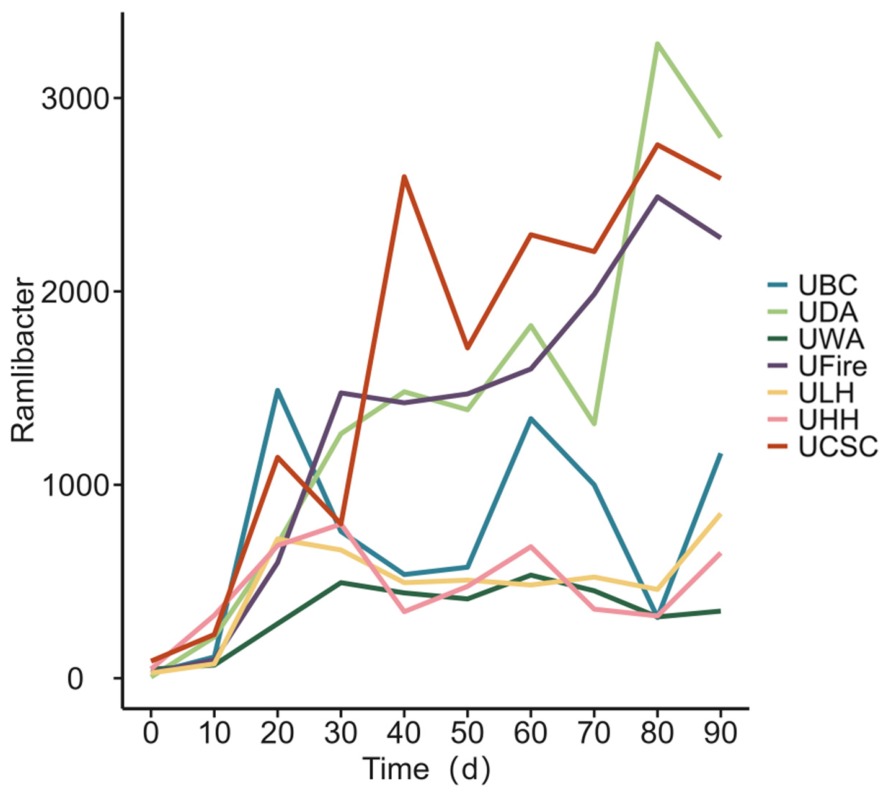
Figure A2.
(a) Principal Coordinate Analysis (PCoA) of topsoil bacterial communities based on Bray–Curtis distance. (b) Principal Coordinate Analysis (PCoA) of subsoil bacterial communities based on Bray–Curtis distance.
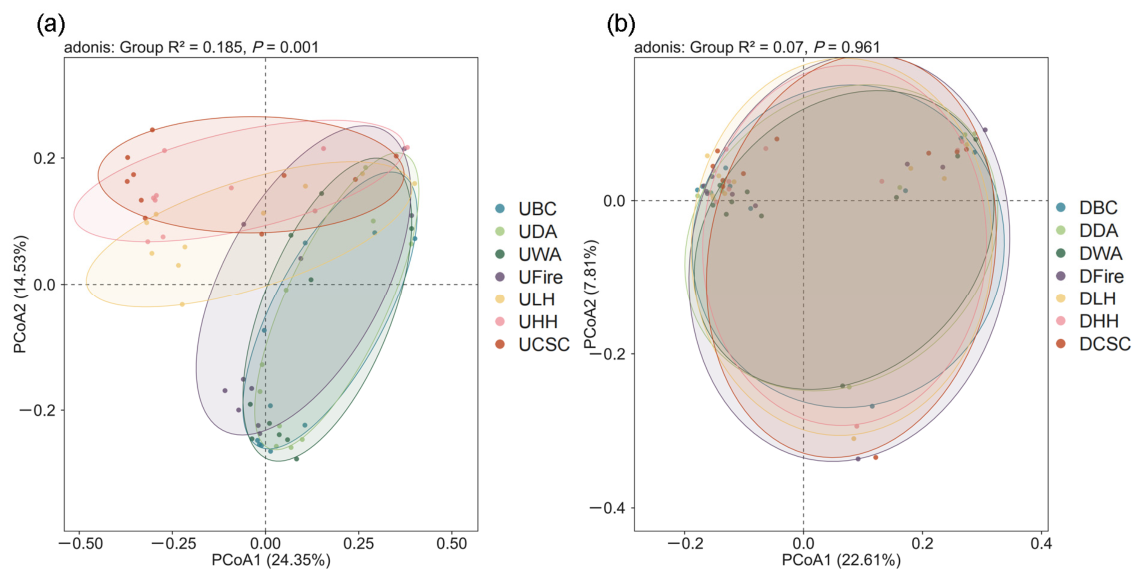
Table A2.
Percentage difference (%) of predict predicted functional potential relative to the control group under different treatments.
References
- Porter, T.M.; Smenderovac, E.; Morris, D.; Venier, L. All boreal forest successional stages needed to maintain the full suite of soil biodiversity, community composition, and function following wildfire. Sci. Rep. 2023, 13, 7978. [Google Scholar] [CrossRef] [Scilit] [PubMed]
- Thom, D. Natural disturbances as drivers of tipping points in forest ecosystems under climate change—implications for adaptive management. Forestry 2023, 96, 305–315. [Google Scholar] [CrossRef] [Scilit]
- Pérez-Valera, E.; Verdú, M.; Navarro-Cano, J.A.; Goberna, M. Soil microbiome drives the recovery of ecosystem functions after fire. Soil Biol. Biochem. 2020, 149, 107948. [Google Scholar] [CrossRef] [Scilit]
- Baldrian, P. Forest microbiome: Diversity, complexity and dynamics. FEMS Microbiol. Rev. 2016, 41, 109–130. [Google Scholar] [CrossRef] [Scilit] [PubMed]
- Adkins, J.; Docherty, K.M.; Miesel, J.R. Copiotrophic Bacterial Traits Increase with Burn Severity One Year After a Wildfire. Front. For. Glob. Change 2022, 5, 873527. [Google Scholar] [CrossRef] [Scilit]
- Hopkins, J.R.; Bennett, A.E.; McKenna, T.P. Fire frequency driven increases in burn heterogeneity promote microbial beta diversity: A test of the pyrodiversity-biodiversity hypothesis. Mol. Ecol. 2025, 34, e17756. [Google Scholar] [CrossRef] [Scilit] [PubMed]
- Pressler, Y.; Moore, J.C.; Cotrufo, M.F. Belowground community responses to fire: Meta-analysis reveals contrasting responses of soil microorganisms and mesofauna. Oikos 2018, 128, 309–327. [Google Scholar] [CrossRef]
- Snyder, M.D.; Coates, T.A.; Possinger, A.R.; Haak, D.C.; Oishi, A.C.; Caldwell, P.V.; Aylward, F.O.; Barrett, J.E. Taxonomic and multifunctional response of soil microbial communities to wildfire, prescribed fire, and partial harvesting in the Southern Appalachian Mountains, United States. Front. For. Glob. Change 2026, 9, 1694825. [Google Scholar] [CrossRef] [Scilit]
- Barreiro, A.; Lombao, A.; Martín, A.; Cancelo-González, J.; Carballas, T.; Díaz-Raviña, M. Soil heating at high temperatures and different water content: Effects on the soil microorganisms. Geosciences 2020, 10, 355. [Google Scholar] [CrossRef] [Scilit]
- Pingree, M.R.A.; Kobziar, L.N. The myth of the biological threshold: A review of biological responses to soil heating associated with wildland fire. For. Ecol. Manag. 2019, 432, 1022–1029. [Google Scholar] [CrossRef] [Scilit]
- Valette, J.; Gomendy, V.; Marechal, J.; Houssard, C.; Gillon, D. Heat-transfer in the soil during very low-intensity experimental fires—the role of duff and soil-moisture content. Int. J. Wildland Fire 1994, 4, 225–237. [Google Scholar] [CrossRef] [Scilit]
- Rhoades, C.C.; Fegel, T.S.; Fowler, J.A.; Starr, B.; Wilkins, M.J. Rapid changes in the chemistry of ash and underlying soil layers after pile burning in a subalpine forest. Trees For. People 2025, 22, 101035. [Google Scholar] [CrossRef] [Scilit]
- Quigley, K.M.; Wildt, R.E.; Sturtevant, B.R.; Kolka, R.K.; Dickinson, M.B.; Kern, C.C.; Donner, D.M.; Miesel, J.R. Fuels, vegetation, and prescribed fire dynamics influence ash production and characteristics in a diverse landscape under active pine barrens restoration. Fire Ecol. 2019, 15, 5. [Google Scholar] [CrossRef] [Scilit]
- Molina, M.; Fuentes, R.; Calderón, R.; Escudey, M.; Avendaño, K.; Gutiérrez, M.; Chang, A.C. Impact of forest fire ash on surface charge characteristics of Andisols. Soil Sci. 2007, 172, 820–834. [Google Scholar] [CrossRef] [Scilit]
- Bodí, M.B.; Martin, D.A.; Balfour, V.N.; Santín, C.; Doerr, S.H.; Pereira, P.; Cerdà, A.; Mataix-Solera, J. Wildland fire ash: Production, composition and eco-hydro-geomorphic effects. Earth-Sci. Rev. 2014, 130, 103–127. [Google Scholar] [CrossRef] [Scilit]
- Arunrat, N.; Sereenonchai, S.; Sansupa, C.; Kongsurakan, P.; Hatano, R. Effect of rice straw and stubble burning on soil physicochemical properties and bacterial communities in central Thailand. Biology 2023, 12, 501. [Google Scholar] [CrossRef] [Scilit] [PubMed]
- Haas, O.; Keeping, T.; Gomez-Dans, J.; Prentice, I.C.; Harrison, S.P. The global drivers of wildfire. Front. Environ. Sci. 2024, 12, 1438262. [Google Scholar] [CrossRef] [Scilit]
- Campbell-Lochrie, Z.; Walker-Ravena, C.; Gallagher, M.; Skowronski, N.; Mueller, E.V.; Hadden, R.M. Effects of fuel bed structure on heat transfer mechanisms within and above porous fuel beds in quiescent flame spread scenarios. Int. J. Wildland Fire 2023, 32, 913–926. [Google Scholar] [CrossRef] [Scilit]
- Dillon, G.K.; Holden, Z.A.; Morgan, P.; Crimmins, M.A.; Heyerdahl, E.K.; Luce, C.H. Both topography and climate affected forest and woodland burn severity in two regions of the western US, 1984 to 2006. Ecosphere 2011, 2, 130. [Google Scholar] [CrossRef] [Scilit]
- She, R.; Li, J.-C.; Zhang, X.; Yang, Y.-Q.; Zhou, F.-P.; Fornacca, D.; Yang, X.-Y.; Xiao, W. Heat input determines the response and rapid recovery of post-fire soil microbial biomass. Int. J. Wildland Fire 2024, 33, WF23095. [Google Scholar] [CrossRef] [Scilit]
- Dai, Z.; Lv, X.; Ma, B.; Chen, N.; Chang, S.X.; Lin, J.; Wang, X.; Su, W.; Liu, H.; Huang, Y.; et al. Concurrent and rapid recovery of bacteria and protist communities in Canadian boreal forest ecosystems following wildfire. Soil Biol. Biochem. 2021, 163, 108452. [Google Scholar] [CrossRef] [Scilit]
- Fowler, J.A.; Nelson, A.R.; Bechtold, E.K.; Paul, R.; Wettengel, A.M.; McNorvell, M.A.; Stevens-Rumann, C.S.; Fegel, T.S.; Anderson, E.; Rhoades, C.C. Pile burns as a proxy for high severity wildfire impacts on soil microbiomes. Geoderma 2024, 448, 116982. [Google Scholar] [CrossRef] [Scilit]
- Zhou, H.; Yang, M.; Luo, X.; Yang, Z.; Wang, L.; Liu, S.; Zhang, Q.; Luo, M.; Ou, J.; Xiong, S.; et al. Short-term impacts of fire and post-fire restoration methods on soil properties and microbial characteristics in southern China. Fire 2024, 7, 474. [Google Scholar] [CrossRef] [Scilit]
- Dineen, S.M.; Aranda, R., IV; Anders, D.L.; Robertson, J.M. An evaluation of commercial DNA extraction kits for the isolation of bacterial spore DNA from soil. J. Appl. Microbiol. 2010, 109, 1886–1896. [Google Scholar] [CrossRef] [Scilit] [PubMed]
- Lane, D.J. 16S/23S rRNA sequencing. In Nucleic Acid Techniques in Bacterial Systematics; John Wiley & Sons Ltd.: New York, NY, USA, 1991. [Google Scholar]
- Caporaso, J.G.; Lauber, C.L.; Walters, W.A.; Berg-Lyons, D.; Lozupone, C.A.; Turnbaugh, P.J.; Fierer, N.; Knight, R. Global patterns of 16S rRNA diversity at a depth of millions of sequences per sample. Proc. Natl. Acad. Sci. USA 2011, 108, 4516–4522. [Google Scholar] [CrossRef] [Scilit] [PubMed]
- Caiafa, M.V.; Nelson, A.R.; Borch, T.; Roth, H.K.; Fegel, T.S.; Rhoades, C.C.; Wilkins, M.; Glassman, S.I. Distinct fungal and bacterial responses to fire severity and soil depth across a ten-year wildfire chronosequence in beetle-killed lodgepole pine forests. For. Ecol. Manag. 2023, 544, 121160. [Google Scholar] [CrossRef] [Scilit]
- Caporaso, J.G.; Kuczynski, J.; Stombaugh, J.; Bittinger, K.; Bushman, F.D.; Costello, E.K.; Fierer, N.; Gonzalez Peña, A.; Goodrich, J.K.; Gordon, J.I.; et al. QIIME allows analysis of high-throughput community sequencing data. Nat. Methods 2010, 7, 335–336. [Google Scholar] [CrossRef] [Scilit] [PubMed]
- Whitman, T.; Woolet, J.; Sikora, M.; Johnson, D.B.; Whitman, E. Resilience in soil bacterial communities of the boreal forest from one to five years after wildfire across a severity gradient. Soil Biol. Biochem. 2022, 172, 108755. [Google Scholar] [CrossRef] [Scilit]
- Barreiro, A.; Díaz-Raviña, M. Fire impacts on soil microorganisms: Mass, activity, and diversity. Curr. Opin. Environ. Sci. Health 2021, 22, 100264. [Google Scholar] [CrossRef] [Scilit]
- Liu, G.; Gu, Z.; Liu, X.; Li, B. Microenvironment heterogeneity affected by anthropogenic wildfire-perturbed soil mediates bacterial community in Pinus tabulaeformis forests. Front. Microbiol. 2024, 15, 1415726. [Google Scholar] [CrossRef] [Scilit] [PubMed]
- Rubiolo, J.A.; García-Oliva, F.; Vega, J.A.; Tapia-Torres, Y.; Fernández-Alonso, J.M.; Martínez, P.; Fontúrbel, M.T. Early response of soil bacterial communities to soil burn severity in pine and shrub vegetation after wildfire in temperate-humid climate. Sci. Total Environ. 2025, 1002, 180621. [Google Scholar] [CrossRef] [Scilit] [PubMed]
- Li, H.; Shu, Y.; Wei, J.; Zhao, P.; Zhou, M.; Jia, W. Changes in the soil microbial community structure and driving factors during post-fire recovery of the Larix gmelinii Rupr. forest in northern China. Forests 2024, 15, 664. [Google Scholar] [CrossRef] [Scilit]
- Sánchez-García, C.; Santín, C.; Neris, J.; Sigmund, G.; Otero, X.L.; Manley, J.; González-Rodríguez, G.; Belcher, C.M.; Cerdà, A.; Marcotte, A.L.; et al. Chemical characteristics of wildfire ash across the globe and their environmental and socio-economic implications. Environ. Int. 2023, 178, 108065. [Google Scholar] [CrossRef] [Scilit] [PubMed]
- Barbour, K.M.; Weihe, C.; Allison, S.D.; Martiny, J.B.H. Bacterial community response to environmental change varies with depth in the surface soil. Soil Biol. Biochem. 2022, 172, 108761. [Google Scholar] [CrossRef] [Scilit]
- Hu, M.; Wang, J.; Lu, L.; Gui, H.; Wan, S. Global recovery patterns of soil microbes after fire. Soil Biol. Biochem. 2023, 183, 109057. [Google Scholar] [CrossRef] [Scilit]
- Fairbanks, D.; Shepard, C.; Murphy, M.; Rasmussen, C.; Chorover, J.; Rich, V.; Gallery, R. Depth and topographic controls on microbial activity in a recently burned sub-alpine catchment. Soil Biol. Biochem. 2020, 148, 107844. [Google Scholar] [CrossRef] [Scilit]
- Doerr, S.H.; Girona-García, A.; Sanchez-Garcia, C.; Badía-Villas, D.; Bryant, R.; Dickinson, M.; Hsieh, R.; Mataix-Solera, J.; Miesel, J.; Robichaud, P. Soil heating during wildfires and prescribed burns: A global evaluation. Int. J. Wildland Fire 2025, 34, WF25103. [Google Scholar] [CrossRef] [Scilit]
- Escuer-Arregui, M.; Alfaro-Leranoz, A.; Badía-Villas, D.; Conte-Domínguez, A.P.; Martí-Dalmau, C.; Ortiz-Perpiñá, O. A burning intensity gradient modifies sensitive soil properties depending on sampled soil depth and the time since fire. Fire 2025, 8, 351. [Google Scholar] [CrossRef] [Scilit]
- Palmer, B.; Pietrasiak, N.; Cobb, P.; Lipson, D. Using simulated wildland fire to assess microbial survival at multiple depths from biocrust and bare soils. Front. Microbiol. 2023, 14, 1123790. [Google Scholar] [CrossRef] [Scilit] [PubMed]
- Soria, R.; Tortosa, A.; Rodríguez-Berbel, N.; Esteban, M.; Ortega, R.; Miralles, I. Short-term response of soil bacterial communities after prescribed fires in semi-arid Mediterranean forests. Fire 2023, 6, 145. [Google Scholar] [CrossRef] [Scilit]
- Kranz, C.; Whitman, T. Short communication: Surface charring from prescribed burning has minimal effects on soil bacterial community composition two weeks post-fire in jack pine barrens. Appl. Soil Ecol. 2019, 144, 134–138. [Google Scholar] [CrossRef] [Scilit]
- De Luca, G.; Barakat, M.; Verméglio, A.; Achouak, W.; Heulin, T. The bacterial genus Ramlibacter Betaproteobacteria capable of surviving in oligotrophic environments thanks to several shared genetic adaptation traits. Environ. Microbiol. 2025, 27, e70059. [Google Scholar] [CrossRef] [Scilit] [PubMed]
- De Luca, G.; Barakat, M.; Ortet, P.; Fochesato, S.; Jourlin-Castelli, C.; Ansaldi, M.; Py, B.; Fichant, G.; Coutinho, P.M.; Voulhoux, R. The cyst-dividing bacterium Ramlibacter tataouinensis TTB310 genome reveals a well-stocked toolbox for adaptation to a desert environment. PLoS ONE 2011, 6, e23784. [Google Scholar] [CrossRef] [Scilit] [PubMed]
- Douglas, G.M.; Maffei, V.J.; Zaneveld, J.R.; Yurgel, S.N.; Brown, J.R.; Taylor, C.M.; Huttenhower, C.; Langille, M.G.I. PICRUSt2 for prediction of metagenome functions. Nat. Biotechnol. 2020, 38, 685–688. [Google Scholar] [CrossRef] [Scilit] [PubMed]
- Nelson, A.R.; Narrowe, A.B.; Rhoades, C.C.; Fegel, T.S.; Daly, R.A.; Roth, H.K.; Chu, R.K.; Amundson, K.K.; Young, R.B.; Steindorff, A.S. Wildfire-dependent changes in soil microbiome diversity and function. Nat. Microbiol. 2022, 7, 1419–1430. [Google Scholar] [CrossRef] [Scilit] [PubMed]
Disclaimer/Publisher’s Note: The statements, opinions and data contained in all publications are solely those of the individual author(s) and contributor(s) and not of MDPI and/or the editor(s). MDPI and/or the editor(s) disclaim responsibility for any injury to people or property resulting from any ideas, methods, instructions or products referred to in the content. |
© 2026 by the authors. Licensee MDPI, Basel, Switzerland. This article is an open access article distributed under the terms and conditions of the Creative Commons Attribution (CC BY) license.