


Abstract
The rapid growth of Distributed Energy Resources (DERs) has intensified operational challenges in modern distribution networks, especially with respect to observability, bidirectional power flow, feeder model accuracy, and fast event detection. This review critically examines the role of Distribution Phasor Measurement Units (D-PMUs) in this transition. Rather than only listing reported applications, the paper evaluates the technical and practical conditions under which D-PMUs provide meaningful value beyond conventional monitoring technologies. Particular attention is given to state estimation, event detection, ancillary operation, communication latency, synchronization vulnerability, economic viability, and the limited evidence from field deployment. The review shows that D-PMUs are especially attractive at feeder heads, DER interconnection points, switching locations, and microgrid boundaries, where synchronized phase-angle measurements improve visibility of dynamic and unbalanced phenomena. However, widespread deployment is still constrained by cost, communication infrastructure, interoperability, timing security, and the scarcity of publicly documented utility-scale results. The paper concludes by identifying the most promising research directions, including physics-aware learning, graph-based analytics, edge processing, and application-driven placement strategies for DER-rich distribution systems.
1. Introduction
The management of electricity supply has become a central issue due to its impact on the social and economic development of regions and nations. Technological advances and the growing demand for electricity require end-users to take an active role in energy production management through the integration of Distributed Energy Resources (DERs) [1]. DERs encompass Distributed Generation (DG), energy storage systems, Electric Vehicles (EVs), and demand response programs, among others.
DER technologies rely on a variety of energy sources, such as photovoltaic, wind, and geothermal generators, among others. This diversity underscores the need to integrate Distributed Generation with conventional electrical distribution networks [2]. This integration has led to the emergence of the Smart Grid concept, which combines local generation, advanced metering, communication technologies, information systems, and control techniques to enable improved network supervision and control. The goal is to increase the reliability, security, resilience, and flexibility of conventional power systems [3].
Proper monitoring of distribution-network voltages, currents, and power flows is essential for implementing control actions that optimize the use of network resources. Moreover, it improves protection coordination, thereby reducing service unavailability. A promising technology in this context is the Phasor Measurement Unit (PMU), which provides real-time measurements of electrical magnitudes and phase angles, together with Global Positioning System (GPS) data, with a higher sampling resolution than conventional devices [4,5].
PMUs have been successfully deployed in transmission systems, referred to as Transmission Phasor Measurement Units (T-PMUs), where they enable real-time monitoring and allow operators to respond effectively to unexpected events. However, their application at the distribution level, known as Distribution Phasor Measurement Units (D-PMUs), presents significant challenges to achieving optimal integration. Understanding their operating principles is essential for identifying their potential applications and ensuring interoperability with other network elements. As an advanced measurement device, the D-PMU is a complementary component for the modernization of distribution networks, which increasingly demand accurate knowledge of system states to ensure both reliability and security [6].
Early field deployments and pilot studies indicate that D-PMUs can improve situational awareness, event characterization, and feeder-level model validation, particularly at feeder heads, DER interconnection points, and microgrid boundaries. However, these benefits have been documented in a limited number of pilots and cannot yet be generalized to all distribution systems. For this reason, the present review examines not only the technical opportunities of D-PMUs but also the practical barriers related to cost, communication, interoperability, and deployment density [4,7]. Recent deployment-oriented studies help make this point more concrete. Wang et al. [8] reported -PMU field deployment and data analysis in a utility distribution grid with high penetration of Distributed Energy Resources, showing the practical value of synchronized feeder measurements for operational visibility under real network conditions. In addition, Vasapollo et al. [9] presented a deployed D-PMU-based situational awareness system in a medium-voltage microgrid at the EPFL university campus, illustrating how distribution-level synchrophasors can support real-time monitoring in an actual operational environment. These studies help ground the discussion in field experience rather than in simulation-only evidence.
The increasing penetration of DERs into conventional distribution networks has created new operational challenges that D-PMUs are expected to help overcome. Despite the growing interest in D-PMUs, the literature still lacks a decision-oriented synthesis that distinguishes between demonstrated utility, promising concepts, and still-speculative applications. In particular, recent studies suggest that the value of D-PMUs is strongly application dependent, since these devices are most informative at feeder heads, DER interconnection points, switching locations, and microgrid boundaries, whereas dense deployment across an entire feeder is rarely justified economically. Accordingly, this review goes beyond summarizing reported applications and examines four unresolved dimensions: methodological trade-offs in D-PMU-enabled applications, economic and operational marginal utility, communication and synchronization constraints, and the maturity gap between simulation-based results and field deployment [4,10].
Recent contributions reinforce the need to analyze DER integration from a broader operational perspective. Adham et al. [1] showed through a systematic review that DER deployment is increasingly associated with coordination, visibility, and management challenges that extend beyond simple technical interconnection. Tavalaei et al. [11] demonstrated that modern smart distribution networks require the joint consideration of storage, Electric Vehicles, and network reconfiguration, which confirms that future operation must rely on stronger monitoring and control capabilities. Lankeshwara et al. [12] emphasized that network-aware control under dynamic operating envelopes depends on reliable information about the real operating condition of distribution feeders, particularly under high DER penetration. From an economic and regulatory perspective, Azim et al. [13] argued that tariffs, management frameworks, and market structures are becoming decisive for the successful integration of distributed resources. In a more operational direction, Shan et al. [14] proposed an improved DER management system for active distribution networks, illustrating that coordination between grid-edge assets and distribution operators is becoming a central requirement. These recent studies suggest that D-PMUs should be analyzed not only as measurement devices, but also as enabling technologies for more adaptive, coordinated, and information-rich distribution system operation.
Compared with earlier review articles, the present paper places greater emphasis on five aspects that are often treated only briefly in prior surveys: evidence from field deployment and real-feeder validation, the marginal utility of D-PMUs under application-driven placement, communication and timing-security constraints, economic and regulatory interpretation, and the integration of D-PMUs with edge processing and physics-aware or graph-based analytics.
To operationalize the decision-oriented perspective, the remainder of this review is structured around four engineering questions: where D-PMUs should be deployed, which applications benefit most from synchronized phase-angle measurements, under which operational and data constraints each methodological family is appropriate, and which barriers still prevent broader utility adoption.
2. General Background
2.1. Conceptual Foundations for Distribution Synchrophasor Monitoring
Phasor measurement technology emerged in the 1980s as a means to obtain time-aligned measurements of electrical variables with greater temporal precision than conventional supervisory monitoring [15]. A phasor represents the magnitude and phase angle of a sinusoidal electrical waveform, such as voltage or current, and constitutes the fundamental quantity reported by PMUs [5]. When this phasor is calculated with respect to a common time reference, typically provided by GPS, it becomes a synchrophasor, which allows direct comparison of measurements collected at different locations in the network [5,16]. This synchronization capability has made PMUs attractive for monitoring, estimation, and dynamic analysis in modern power systems [17,18]. Figure 1 illustrates the graphical representation of phasors, showing their sinusoidal time-domain behavior and their corresponding representation in the complex plane [19].
Figure 1.
Phasor representation: (a) sinusoidal signal; (b) phasor diagram.
At the distribution level, these measurements are obtained through D-PMUs, which are tailored to feeder conditions such as unbalance, reverse power flow, and high variability caused by Distributed Energy Resources. Their growing interest has also been supported by the development of lower-cost and research-oriented designs, including embedded and open-platform implementations [20,21,22,23]. In this context, D-PMUs can offer better suitability for medium- and low-voltage applications than transmission-oriented PMUs, particularly when high-speed phase-angle visibility is required for feeder monitoring, disturbance interpretation, and model validation [24,25,26]. However, this advantage should be interpreted in an application-specific sense rather than as a universal superiority in performance or cost.
From a decision-oriented perspective, the main issue is not the phasor concept itself, which is already well established, but the practical conditions under which synchronized distribution measurements provide enough additional value to justify deployment. In DER-rich feeders, the dominant bottlenecks are rarely the sensing hardware alone; rather, they involve communication infrastructure, synchronization quality, interoperability, cybersecurity, data management, maintenance requirements, limited observability, heterogeneous data quality, and the mismatch between measurement density and the operational objective to be supported [4,7]. These constraints become more severe when model uncertainty and variable operating conditions are present. For this reason, the following section shifts from concept definition to application fit, placement strategy, and engineering constraints.
2.2. Phasor Measurement Units (PMUs)
PMUs acquire instantaneous voltage and current values and calculate their corresponding phasors, together with other relevant parameters such as frequency, Rate Of Change Of Frequency (ROCOF), and phase angle. These phasors are then reported to a data concentrator and synchronized using GPS, producing synchrophasors [5], the equipment is presente in Figure 2. This synchronization allows phasor measurements from multiple PMUs, located at different points in the system, to be precisely aligned in time, resulting in more accurate system-wide monitoring and state estimation [7,19].
Figure 2.
Phasor Measurement Unit (PMU) device. Source: adapted from [5].
PMUs have revealed unexpected behaviors in generation and transmission systems while confirming long-suspected patterns. For instance, PMUs have revealed oscillatory phenomena that were previously difficult to characterize with conventional monitoring, enabling more accurate analysis of dynamic behavior in power systems [27]. In this context, the oscillatory modes most commonly discussed in synchrophasor-based monitoring correspond to low-frequency electromechanical oscillations, typically around 0.1–0.7 Hz for inter-area modes and about 0.7–2 Hz for local modes.
A PMU typically consists of three main components:
- (a)
- Measurement systems.
- (b)
- Phasor Data Concentrator (PDC).
- (c)
- Communication channel.
2.2.1. Synchrophasor Measurement Systems
Voltage and current phasor profiles across the electrical network, together with frequency, ROCOF, and derived active and reactive power indicators, represent some of the most critical data available to operators for secure system operation. Real-time knowledge of these variables increases situational awareness and supports faster identification of abnormal operating conditions, event propagation, and control needs. Consequently, researchers advocate for the integration of new technologies for real-time monitoring, control, and protection within Wide Area Measurement Systems (WAMSs) [10,28].
WAMSs are distributed measurement systems that rely primarily on synchrophasors (PMUs), advanced digital signal processing algorithms, and communication infrastructures to provide dynamic system information. These systems are also known as Synchronous Phasor Measurement Systems (SPMSs) [10]. Network architecture is a key consideration, as some applications require extremely short response times, while others tolerate moderate delays. A centralized and coordinated architecture [29], where all PMU data are transmitted to a concentrator for use in applications, is illustrated in Figure 3.
Figure 3.
General scheme of a centralized synchrophasor measurement system with a Phasor Data Concentrator (PDC).
2.2.2. Phasor Data Concentrator
The Phasor Data Concentrator (PDC) is responsible for organizing the data reported by PMUs within a predefined control area. Its function is to receive, align, and consolidate phasor data, making them available for a wide range of applications [29,30].
2.2.3. Communication Channels
Communication channels enable the efficient and reliable transmission of data between PMUs, PDCs, and higher-level control centers. These channels may rely on physical media such as optical fiber, telephone-based links, or power-line communication, and on wireless media such as radio, cellular, or satellite communication. In contrast, GPS is primarily used to provide time synchronization rather than telemetry transport [5,29].
2.3. Distributed Energy Resources (DERs)
DERs are small-scale assets that can be managed either automatically or manually and are typically installed near consumption centers and connected to the distribution grid. Depending on their technology and operating mode, they may inject power, absorb power, or provide ancillary services. This category includes Distributed Generation, energy storage systems, demand response resources, and, in some cases, bidirectional Electric Vehicles with vehicle-to-grid capability. Accordingly, not all Electric Vehicles should be interpreted as DERs in the strict sense, since most of them behave primarily as controllable loads rather than as dispatchable energy resources.
DERs have steadily increased in deployment over recent decades, encompassing technologies such as Electric Vehicles, energy storage systems, and demand response programs. These resources are complementary but can also operate independently. A brief description of each type of DER is provided below [31]. Figure 4 illustrates the main components of DERs.
Figure 4.
Main components of distributed energy resources (DERs), including demand response, electric vehicles, energy storage systems, and distributed generation units.
The rapid growth of DERs, particularly renewable-based systems, has highlighted the inadequacy of conventional grid infrastructures. The emergence of bidirectional power flows, combined with the increasing requirements for reliability, resilience, and power quality, presents major challenges for modern distribution networks.
2.3.1. Energy Storage
Energy storage plays a fundamental role in the transformation of the electric power sector, as it provides flexibility to address emerging challenges, improves stability, and mitigates asset degradation. Within this scenario, storage technologies are expected to hold a pivotal position due to their technical and economic benefits, including reductions in operational costs in energy transmission [32,33].
2.3.2. Demand Response Programs
The steady increase in global electricity demand necessitates grid architectures capable of meeting these needs while ensuring infrastructure safety and minimizing risks to consumers. Demand response programs address these challenges by implementing intelligent load management strategies, reducing the negative impacts of demand fluctuations on the grid [34,35].
2.3.3. Distributed Generation (DG)
DG has been driven by changes in electricity production and delivery, along with the gradual replacement of conventional energy sources by renewable technologies. Although there is no universally accepted definition of DG, the common element is its decentralized placement within the distribution grid. This approach enables users to inject locally generated power into the system, shifting from the traditional centralized model, where large power plants supply distant demand centers, to a bidirectional framework, in which energy is produced directly at consumption points through small, primarily renewable installations [3].
2.3.4. Electric Vehicles
Pilot projects worldwide are testing the use of Electric Vehicles (EVs) as mobile and flexible energy resources. By combining smart meters, coordinated charging strategies, and Machine Learning techniques, EVs can be charged during periods of low electricity prices and, when bidirectional infrastructure is available, may also discharge energy back into the grid or disconnect during peak demand conditions, thereby contributing to system flexibility [36]. However, in most practical cases EVs still behave mainly as flexible loads, and only vehicle-to-grid configurations can be considered true storage-like DERs [37,38].
3. D-PMUs in DER-Rich Distribution Systems
The transition of conventional electrical networks toward smart grids is reshaping the operational paradigm of distribution systems. The integration of DERs, such as Electric Vehicles, energy storage systems, and controllable loads, introduces intermittency and uncertainty into the grid. These changes present new challenges for Distribution System Operators (DSOs), engineers, and prosumers. Unfortunately, distribution networks have lagged behind transmission systems in terms of monitoring, measurement accuracy, and data management. This growing complexity increases the demand for devices capable of improving monitoring and control of distribution systems [10].
3.1. Planning and Modeling of D-PMUs with DER Integration
Planning is a critical element in ensuring the safe, reliable, and economical operation of distribution systems. Traditionally, planning has been relatively straightforward because power flows were unidirectional and active resources within distribution networks were absent. The integration of DERs, however, fundamentally alters this paradigm, creating new challenges for DSOs. Advanced monitoring tools, simulation, and the deployment of Distribution D-PMUs are needed to update and validate distribution planning models. Figure 5 illustrates the deployment of D-PMUs in a distribution network with DER integration.
Figure 5.
Distribution network with D-PMU placement under DER integration.
This figure outlines the main challenges of integrating DERs into distribution networks, namely renewable energy interconnection, high penetration of renewables in low-voltage grids, and microgrid interconnection. It also highlights possible solutions such as advanced protection schemes, islanding detection and restoration, power quality assessment, improved modeling, and integration cost evaluation. In this context, D-PMUs provide synchronized, high-resolution measurements that enhance state estimation, facilitate the detection of reverse power flows and voltage events, and strengthen protection coordination, thereby offering practical means to address the issues depicted here.
DERs can be installed in different sizes depending on geographic location and local demand requirements, ranging from a few kilowatts (kW) to tens of megawatts (MW) [39]. Even the injection of several MW can significantly affect distribution flows, creating uncertainty and potential feeder overloads beyond nominal capacity. Moreover, inverter-based DERs often rely on proprietary control schemes that may not align with the models used by DSOs, increasing the difficulty of system optimization [40].
Automation technologies are therefore essential to complement D-PMU monitoring and ensure efficient DER integration. Errors in distribution modeling often arise from:
- Limited SCADA data and insufficient monitoring, preventing operators from observing how distribution systems respond as DER penetration increases.
- Lack of detailed information on installed DERs, which hinders estimation of hosting capacity without risking voltage instability, protection miscoordination, or reverse-power-flow-related operational violations.
Without accurate knowledge of DER behavior during variable generation peaks, DSOs must assume worst-case scenarios to keep uncertainties within tolerable operational limits. This conservative approach prevents reliability issues but may result in overly restrictive planning strategies [41].
Recent studies have made the planning and modeling of D-PMU deployment more rigorous and application oriented. Lin et al. [42] proposed a multi-stage D-PMU placement methodology based on node metrics, showing that deployment should evolve progressively according to observability needs and node importance rather than by uniform instrumentation of the whole feeder. Wu et al. [43] addressed the joint optimal placement of PMUs and dual-use line relays, demonstrating that instrumentation planning can be improved when state estimation requirements are coordinated with fault reconstruction objectives. Khanam et al. [44] analyzed PMU-based voltage estimation under Distributed Generation effects, highlighting that PMU placement has direct implications for voltage assessment and feeder performance when active resources are connected. Yu et al. [45] developed a robust state estimation framework that explicitly considers multiple Distributed Generation output modes and measurement loss, which is especially relevant for realistic planning studies under uncertain operating conditions. Tian et al. [46] extended this perspective by proposing distributed state estimation with mixed-frequency measurements and hierarchical encryption, showing that planning and modeling must also consider measurement heterogeneity and cyber-secure data exchange. Taken together, these works indicate that D-PMU planning should be approached as a staged, multi-objective, and operationally contextualized problem.
3.1.1. Current State of DER Data Acquisition
Distribution networks continue to lag behind transmission systems in data acquisition and modeling accuracy [47]. To improve planning, it is essential to guarantee access to reliable data from simulation models and field measurements. Today, data sources in distribution systems include:
- Supervisory Control and Data Acquisition (SCADA).
- Distribution line sensors.
- Advanced Metering Infrastructure (AMI) and smart meters.
- Meteorological data.
Historically, planning models have changed little. DSOs validate feeder states through manual field inspections or aggregated customer data at substations, often relying on outdated or imprecise records. While this approach sufficed when distribution networks behaved as predictable loads, modern DER penetration demands higher-resolution data.
Recent efforts include validating planning models with new measurement sources such as AMI and smart meters, enabling improved estimation of load magnitudes, feeder performance, and network model consistency [48]. Studies now also cover steady-state, fault current, dynamic, and transient analyses to ensure DG integration. However, modeling errors, such as inaccurate line impedance, can lead to misleading operational assessments and potentially unnecessary investments, which has motivated recent work on line-parameter estimation from smart meter data [49].
The radial structure of distribution networks and their historical unidirectional flows once made simple validation sufficient [50]. Yet, with DER penetration expected to exceed the minimum daytime load and even the peak load, new dynamics are emerging. The literature reports cases in Hawaii and California where high photovoltaic penetration can create voltage-control problems, reverse power flow conditions, and protection-coordination challenges at the feeder level [50,51].
Key barriers to accurate dynamic planning include:
- Poor coordination among multiple DERs on the same circuit.
- Physical infrastructure issues such as line impedance errors and phase imbalances.
- Load models based on long timescales only.
- Lack of integrated commercial software for steady-state, dynamic, and transient studies.
- Data formats that are incompatible across different platforms.
3.1.2. D-PMUs as a Solution for DER Integration
Emerging distribution networks require high-speed measurement devices. D-PMUs meet this requirement by acquiring real-time data, which improves planning accuracy and enhances operational models. Their synchrophasor data provide critical insights into variability in load and renewable generation, particularly solar photovoltaic [52].
From the planning viewpoint, the main contribution of D-PMUs is improved feeder model validation, parameter identification, and observability under DER variability. The specific operational applications enabled by these measurements are discussed separately in Section 3.2.
3.1.3. Comparison Between D-PMUs and Alternative Technologies
While smart meters and line sensors contribute valuable data, they lack the resolution of D-PMUs for distribution-level planning. The unique capability of D-PMUs to measure phase angles at high speed offers unmatched benefits for reverse power flow estimation, feeder impedance validation, and monitoring of DER integration [6].
Specifically, D-PMU measurements can be used to characterize:
- The physical network.
- Relationships between generation, load, and feeder voltage profiles.
- Time-varying behaviors of DERs under both steady-state and dynamic conditions.
The practical value of D-PMUs should be interpreted through marginal utility rather than through simple technological superiority. While smart meters and line sensors contribute valuable data, D-PMUs are especially useful where synchronized phase-angle information materially changes feeder observability, such as at feeder heads, DER interconnection points, switching locations, and microgrid boundaries. Therefore, the literature tends to support application-driven placement rather than uniform densification across the feeder [4,6,7].
Table 1 should be interpreted as a literature-based synthesis rather than as the result of a new simulation or experimental campaign. The comparison criteria summarize recurring attributes reported in the reviewed studies, particularly temporal resolution, synchronization, phase-angle availability, observability of dynamic phenomena, and suitability for DER-related applications.
Table 1.
Literature-based comparison of monitoring technologies for DER-rich distribution networks.
3.2. Applications of D-PMUs with DER Integration
Phasor Measurement Units specifically designed for distribution systems are generally referred to as Distribution PMUs (D-PMUs). This section outlines a set of applications within distribution systems, classified as follows: system state estimation, event detection, and ancillary operation [5,10,28]. These applications are illustrated in Figure 6.
Figure 6.
Applications of D-PMUs in distribution systems with DER integration.
Figure 7 presents the literature as an evolutionary road map. The progression begins with classical model-based estimation and supervisory monitoring, where D-PMUs primarily improve observability and measurement accuracy. It then advances toward hybrid multi-source paradigms, in which D-PMU data are fused with SCADA, AMI, line sensors, and pseudo-measurements. The next stage corresponds to learning-assisted analytics, where graph-based estimation, event classification, and adaptive monitoring use D-PMU streams together with data-driven models. The most recent stage consists of physics-aware and edge-oriented intelligence, in which synchronized measurements are processed through topology-aware learning, cyber-secure edge architectures, and digital-twin-supported analytics. This road map is useful because it shows that the field has evolved from improving visibility to supporting increasingly autonomous and context-aware operational decisions.
Figure 7.
Evolutionary road map and taxonomy of D-PMU-enabled methods for DER-rich distribution networks, showing the progression from classical model-based monitoring to hybrid data fusion, learning-assisted analytics, and physics-aware edge intelligence.
A decision-oriented reading of the literature requires more than identifying what each method can do; it must also clarify the engineering context in which each method is preferable. Table 2 summarizes the main methodological families enabled or strengthened by D-PMU data and compares them according to five dimensions: expected accuracy, robustness against noisy or incomplete measurements, computational burden, adaptability to non-ideal feeder conditions, and practical suitability for specific operational constraints. The objective is to help the reader move from a technology-centered view to a selection-oriented view.
Table 2.
Decision-oriented evaluation matrix for D-PMU-enabled methods in DER-rich distribution networks.
The most recent literature also shows that D-PMU applications are evolving from conventional monitoring tasks toward more advanced estimation, protection, and operational decision support. Yue et al. [53] proposed a graph-learning-assisted state estimation framework using sparse heterogeneous measurements, showing that D-PMU information can be integrated with modern learning architectures to improve observability under limited sensing conditions. Zhang et al. [54] developed a real-time voltage estimation method based on joint PMU and AMI data, demonstrating that D-PMUs can support accurate state reconstruction when combined with other data sources. In protection applications, Dua et al. [55] evaluated synchrophasor-enabled angle-based differential protection in distribution systems and showed that D-PMU measurements can strengthen fault discrimination under DER-rich conditions. For power quality applications, Shuai et al. [56] proposed a dynamic graph-based method for harmonic source localization, indicating that D-PMUs may also contribute to more advanced harmonic monitoring tasks in networks with uncertainty. In the field of operational support, Su et al. [57] designed a two-stage dispatch framework for active distribution networks with hybrid energy storage, illustrating that high-quality system information can be embedded into real-time operational strategies. These contributions suggest that D-PMU applications are becoming more diverse and methodologically stronger, particularly when synchronized measurements are combined with estimation, learning, and optimization frameworks.
3.2.1. System State Estimation
Distribution systems generate significantly more data than transmission systems due to the large number of loads served. State estimation allows DSOs to continuously monitor distribution networks [30], adjusting observed physical measurements with data from D-PMUs and mathematical models [5]. D-PMUs enhance real-time situational awareness by enabling continuous state monitoring [6,7]. From a methodological viewpoint, D-PMU-based DSSE has evolved mainly along two families: filtering-based methods, such as Kalman and extended Kalman formulations, and optimization-based methods, such as weighted least squares, convex relaxations, and hybrid data-model estimators. Filtering-based approaches are attractive when high-rate sequential updates are needed because they exploit temporal continuity and can react quickly to disturbances. However, their performance depends strongly on noise modeling, initialization, and linearization assumptions. Optimization-based approaches are usually more robust against heterogeneous data sources and network constraints, and they are better suited to unbalanced feeders and bad-data rejection, although they may require greater computational effort under limited observability. Under highly unbalanced networks and high-impedance conditions, hybrid formulations combining D-PMU measurements with feeder physics and pseudo-measurements tend to provide more reliable estimates [10,24,58].
Harmonic State Estimation (HSE)
The increasing use of electronic devices, particularly inverters for renewable DERs, introduces harmonic noise into distribution networks. This reduces power quality, damages equipment, and overloads feeders. D-PMUs provide synchronized harmonic phasor measurements, enabling Harmonic State Estimation. Recent studies discuss the role of time-synchronized measurements for harmonic analysis in distribution networks [59] and propose improved harmonic phasor estimation methods to mitigate interharmonic interference and enhance estimation accuracy [60].
HSE involves identifying dominant harmonic sources and evaluating harmonic voltage and current distributions across the network [56]. Recent prototype HSE methods based on synchronized broadband phasor measurements have been reported for grid-wide harmonic state reconstruction and source localization [61]. Traditional monitoring devices, however, often lack the resolution, synchronization capability, or signal-processing robustness required for accurate harmonic assessment, particularly under interharmonic and higher-order harmonic conditions, which can lead to significant estimation errors [62,63].
Dynamic Feeder Rating
Dynamic line rating methods improve operational reliability and economic efficiency by adjusting feeder capacity based on real-time conditions [64]. High-precision voltage and current synchrophasors from D-PMUs provide valuable input for feeder dynamic classification, supporting congestion management in distribution systems [65].
Monitoring DER Output and Power Flows
D-PMUs located at DER interconnection nodes must provide high-resolution measurements to support real-time operation monitoring. Their role includes:
- Monitoring reverse power flows from DERs: With increasing DER penetration, the traditional assumption of unidirectional power flow becomes inadequate. Bidirectional flows and voltage rise must be addressed to avoid protection miscoordination and voltage control issues [66,67]. D-PMU phase angle data are crucial to determine the direction of power flows.
3.2.2. Event Detection
Events of interest in distribution networks include sinusoidal and non-sinusoidal transients in voltage and current waveforms caused by faults, topology changes, load behaviors, and source dynamics. Examples include voltage sags, voltage rises, fault currents, and oscillations in voltage and frequency. D-PMUs enable rapid detection and characterization of these events, supporting corrective action and impact assessment [28].
Traditional detection methods can identify certain disturbances but fail to capture all event types. By contrast, D-PMUs provide more detailed information for both fault detection and classification [68,69]. Recent approaches also combine model-based localization and data-driven classification to improve event analysis in distribution systems. For example, -PMU-based methods have been proposed to locate the source of events in power distribution systems, while graph-neural-network-based classifiers have been developed for event classification and region identification in active distribution grids [70,71].
The modernization of distribution systems also requires automated analysis of large data volumes produced by sensors to enhance operator responsiveness. In this context, -PMU-based event categorization frameworks and learning-based classifiers have been reported for frequency events and other distribution-grid disturbances [69,71,72].
Voltage Fluctuation Detection
Voltage fluctuations correspond to sudden, noticeable variations in RMS voltage levels, often due to motor starting events or DER output variability. High penetration of DERs, particularly in weak rural or residential networks, introduces unpredictable voltage variations in both steady-state and dynamic conditions. Such fluctuations may cause voltage instability, requiring reactive compensation or energy storage support. D-PMUs enable real-time monitoring of system performance, especially under high DER penetration [73,74].
3.2.3. Ancillary Operation
The high resolution of D-PMU measurements allows for detailed observation of transient dynamics in distribution operations, such as microgrid reconnection, load switching, and capacitor bank integration [38].
Economic Dispatch
Real-time Optimal Power Flow (OPF) and economic dispatch determine the output of DERs to minimize operational cost or achieve other objectives. However, OPF in distribution systems must consider asymmetries, requiring nonlinear and non-convex AC OPF models that are computationally difficult to solve. Recent advances in semidefinite programming and second-order models show promise for radial networks, though they become invalid in meshed topologies [75].
An alternative approach involves data-driven linearization methods that directly access sensitivities between decision variables [76]. With D-PMU data, including real-time DER outputs, voltage stability indices, and line ratings, robust OPF and dispatch-oriented operational strategies can be developed. Recent work has shown that distribution-level PMU measurements can support online management of active and reactive power sources in smart distribution systems; however, this research area is still relatively limited within the broader distribution-level literature [77]. Table 3 present a comparison of traditional and emerging distribution networks with D-PMUs.
Table 3.
Comparison of traditional and emerging distribution networks with D-PMUs.
3.2.4. Cross-Study Quantitative Synthesis
Although the reviewed studies are heterogeneous in feeder size, objective function, deployment density, and evaluation metric, the reported numerical evidence still reveals several recurring trends. First, sparse but strategically placed uPMUs can produce measurable reliability gains. Agudo et al. reported that the installation of only two uPMUs reduced annual energy not supplied by 13.84% in a 39-bus system and by 24.96% in a real 962-bus feeder, while also reducing SAIDI by 20.36% in the real feeder [78]. Second, D-PMU-informed monitoring and estimation can materially improve feeder performance when Distributed Generation is integrated strategically. Khanam et al. reported power-loss reductions of 81.044% in a 33-bus feeder and 79.256% in a 69-bus feeder [44]. Third, D-PMU-supported fault analytics can achieve very high predictive performance under DER-rich conditions. Siddique et al. obtained 99.46% accuracy for fault classification, 99.39% accuracy for fault-section identification, and a fault-location error of only 0.9% [79]. These results do not justify universal deployment, but they consistently indicate that the strongest gains appear when D-PMUs are linked to clearly defined objectives such as reliability improvement, model validation, voltage supervision, and disturbance diagnosis. Table 4 briefly summarize recent D-PMU-related results.
Table 4.
Cross-study quantitative synthesis of recent D-PMU-related results.
4. Emerging Perspectives on D-PMUs in Distribution Networks
The rapid evolution of distribution networks requires not only technological advances in monitoring and control but also consideration of cybersecurity, interoperability, regulatory frameworks, advanced analytics, and resilience. This part expands the discussion toward broader perspectives that are shaping the adoption of D-PMUs. Recent publications have expanded the discussion of D-PMUs beyond measurement accuracy alone and have connected them with broader issues of cybersecurity, resilience, interoperability, and data intelligence. Jimada-Ojuolape et al. [80] analyzed cybersecurity challenges in PMU-based cyber-physical power networks, making it clear that synchrophasor infrastructures must now be evaluated against attack-resilience and monitoring-performance criteria. Mejia-Ruiz et al. [81] extended this line of discussion to DER-rich power systems, showing that cybersecurity concerns become even more complex when large numbers of distributed resources are integrated into operational and communication layers. Sun et al. [82] studied virtual-power-plant-based DER monitoring using protocol-level communication design, which is relevant for understanding how D-PMUs may fit into interoperable and distributed monitoring architectures. Tang et al. [83] reviewed resilience enhancement in active distribution networks and highlighted the value of high-quality synchronized measurements for fault location and restoration under extreme conditions. Finally, Al Khafaf et al. [84] showed that modern distribution operations are increasingly moving toward data intelligence, in which high-resolution measurements, Machine Learning, and digital representations of the grid are combined to support low-carbon and adaptive operations. These studies indicate that future D-PMU research should be framed within a broader context encompassing secure communication, resilient operation, and intelligent data use.
4.1. Cybersecurity and Data Privacy
High-rate synchrophasor streams from D-PMUs expand the attack surface in distribution domains, where False-Data Injection (FDI) and availability attacks can corrupt state estimates, mislead protection, or blind operators during disturbances. Recent reviews and testbed studies show that coordinated, temporally consistent FDI can bypass naive residual tests and Machine Learning (ML) detectors, especially when attacks exploit spatial–temporal correlations among feeders [85,86].
Countermeasures include secure encapsulation of IEEE Std C37.118.2-2024 frames [87] or IEC/TR 61850-90-5:2012 messages [88], keyed time-synchronization integrity, and telemetry whitelisting; however, latency budgets at D-PMU rates constrain heavyweight cryptography and motivate edge analytics co-located with measurement devices [26]. Standards and guidance adopt layered defenses: IEEE Std C37.118.1-2011 defines synchrophasor measurement requirements [89], IEEE Std C37.118.2-2024 specifies synchrophasor data transfer formats [87], while IEC 62351-3:2023 and IEC 62351-6:2020 provide security profiles for TCP/IP-based protocols and IEC 61850-based communications [90,91]. These mechanisms are typically implemented through IEC 61850-based substation communication stacks [92]; practical deployments still report gaps in scalable key management and secure time distribution [93].
The recent literature also shows that the cybersecurity discussion for D-PMUs must explicitly include GPS/GNSS synchronization threats. Jimada-Ojuolape et al. [80] identified time synchronization manipulation as a major attack class in PMU-based cyber-physical power networks and argued that PMU-specific security studies must distinguish these threats from broader SCADA-oriented cyber risks. Bhattacharya et al. [94] further showed that Time Synchronization Attacks (TSAs) can alter voltage and current phasor information by spoofing GPS-based time stamps, and they proposed a two-stage defense based on LSTM detection and spline-interpolation correction validated on IEEE 9-, 14-, and 57-bus systems together with a real-time testbed. In a more estimation-oriented direction, Hua et al. [95] formulated GPS spoofing as a PMU phase-angle falsification problem and proposed a joint maximum a posteriori and maximum likelihood method that detects attacked PMUs while improving secure state estimation under mixed measurements.
These recent studies suggest that the most immediate progress in research is occurring in time-stamp-aware detection, correction, and robust estimation rather than in widely adopted time-authentication protocols since formal time-authentication protocols remain less mature or less widely adopted in the distribution PMU context. Thus, a realistic conclusion is that PMU cybersecurity for DER-rich distribution systems still needs stronger work on trusted time distribution, GNSS-spoofing-resistant synchronization architectures, and bad-data detection methods designed specifically for timing inconsistencies rather than amplitude anomalies only. Emerging research priorities therefore include real-time anomaly detection with low false alarms under nonstationary DER regimes, attack-robust DSSE formulations using physics-aware priors, and privacy-preserving collaborative detection across utilities with minimal raw data sharing.
4.2. Standardization and Interoperability
Interoperable D-PMU ecosystems hinge on aligning measurement, transport, and interconnection standards with distribution realities (unbalance, frequent topology changes, single/dual-phase laterals). IEEE Std C37.118.1 defines synchrophasor, frequency, and rate-of-change-of-frequency measurement requirements, whereas IEEE Std C37.118.2 specifies the real-time transfer of synchrophasor data between PMUs, PDCs, and related applications. In parallel, IEEE Std 1547-2018 [96] establishes technical and interoperability requirements for DER interconnection with electric power systems, and IEC/TR 61850-90-5 [88] provides routable IEC 61850 profiles for synchrophasor communication in monitoring, protection, and control applications [87,89]. Multi-vendor field experience highlights incompatibilities in time tagging, rate adaptation, and data quality flags that degrade analytics when M-class and P-class devices coexist; interoperability testbeds recommend vendor-neutral configuration and harmonized quality codes across PDC layers [4]. Time synchronization remains a dominant source of error in heterogeneous environments: GPS vulnerabilities and variable PTP (IEEE 1588-2019) [97] performance over packet networks can yield tens-to-hundreds of microseconds of skew, materially biasing angle-based applications unless monitored and bounded in the data quality pipeline [93]. Although IEEE C37.118 and related communication frameworks remain the main reference standards for synchrophasor measurement and transfer, their direct use in distribution systems is not trivial. Distribution feeders present stronger phase unbalance, higher harmonic distortion, frequent topology changes, and converter-dominated dynamics that may deviate from the quasi-sinusoidal assumptions used in standard synchrophasor reporting. For this reason, future work should not only pursue wider adoption of existing standards, but also clarify whether distribution-oriented performance classes, reporting rates, and data-quality descriptors are needed for D-PMU applications in DER-rich feeders.
4.3. Economic and Regulatory Perspectives
Cost–benefit for D-PMU deployment must account for device and installation costs, communications (often the largest line item), data platforms, cybersecurity, and analytics staffing, against benefits that accrue via faster fault location, improved hosting-capacity assessment, reduced SAIDI/SAIFI, and deferred capital through tighter operational limits. Reviews of PMU planning show that value concentrates at feeder heads, DER interties, and switching points where phasor angles most improve observability; optimization that co-designs placement with target applications yields better returns than uniform densification [4]. Regulators increasingly evaluate grid-modernization proposals with structured benefit–cost frameworks; documentation of verified operational gains from pilots, together with performance metrics (restoration time reduction, voltage complaint rates), strengthens filings and aligns with performance-based regulation incentives. Remaining barriers include small-utility capital constraints and challenges monetizing cross-functional data value; shared cloud/edge platforms and regional data collaboratives are emerging to reduce fixed costs [98].
From an economic perspective, Mohamed et al. [99] showed that -PMU placement can be formulated jointly with customer interruption costs, power losses, and communication infrastructure costs. This is relevant for regulatory evaluation because it suggests that the value of D-PMUs should be assessed through operational and reliability gains, not only through device cost. Agudo et al. [78] showed that the installation of only two uPMUs reduced the annual energy not supplied by 13.84% in a 39-bus system and by 24.96% in a real 962-bus feeder, while also reducing SAIDI by 20.36% in the real feeder. These results indicate that the economic value of D-PMUs can be linked directly to reliability improvement rather than only to observability gains. In a broader instrumentation context, Wu et al. [43] demonstrated that joint optimization of PMUs and dual-use line relays can reduce overall configuration cost while preserving state-estimation accuracy and lowering load-loss rates after faults, which supports the argument that measurement deployment should be co-designed with operational objectives.
Recent work on distribution-grid digitalization also strengthens the regulatory and cost-benefit perspective. Monaco et al. [100] identified barriers to distribution-grid digitalization through interviews with 21 DSO experts and showed that economic, regulatory, organizational, and technical constraints still prevent large-scale rollout of advanced digital infrastructure. Vilaplana et al. [101] proposed a dynamic cost-benefit analysis framework and showed that static methods can incorrectly produce negative net present values, whereas dynamic modeling that includes reinvestment and operational feedback can lead to positive net present values for digitalization projects. In a companion Applied Energy study, Vilaplana et al. [102] used Portuguese DSO and NRA data from 2012 to 2021 and found that digital investments improved reliability by about 1.7%, compared with about 0.18% for conventional grid investments, while the impact on end-user tariffs remained limited at about 0.07% for digitalization compared with about 0.24% for grid investments. These findings are directly relevant for regulatory filings because they show that digital monitoring investments may produce measurable quality-of-supply benefits with modest tariff effects.
A complementary regulatory perspective is provided by Rodriguez-Perez et al. [103], who proposed a set of digitalization indicators for European distribution systems and argued that regulators need measurable indicators of sensors, connectivity, data processing, and digital culture in order to evaluate whether grid digitalization is progressing effectively. Taken together, these studies support a more quantitative formulation of the economic argument: the value of D-PMUs is strongest when deployment is linked to identifiable reliability or operational improvements, when instrumentation is optimized jointly with protection and estimation needs, and when regulators assess digital investments with dynamic and transparent benefit-cost frameworks instead of purely static capital comparisons.
From a practical deployment perspective, the relevant question is not whether installing more D-PMUs is inherently advantageous, but whether a specific instrumentation arrangement reduces uncertainty at the locations that govern operational performance. In most distribution feeders, the first justifiable deployment stage is a targeted configuration, typically located at the feeder head, major DER interconnection points, switching locations, and microgrid boundaries. This arrangement is particularly suitable when the main objective is to support state estimation, supervise reverse power flow, characterize events, or validate feeder models. A second stage corresponds to intermediate feeder coverage, in which additional devices are installed near voltage control equipment, critical laterals, or energy storage interfaces, especially when the feeder is subject to frequent topology changes or pronounced DER variability. By contrast, dense deployment across the entire feeder is generally more appropriate for research platforms, high-value industrial microgrids, or highly digitalized systems in which the expected operational benefits justify the added burden associated with communications, cybersecurity, data management, and maintenance. Under this interpretation, deployment scale, sensor configuration, and cost benefit assessment should be conceived jointly with the intended application, rather than treated as separate design decisions.
To make this practical interpretation explicit, Figure 8 summarizes a decision-oriented framework.
Figure 8.
Decision-oriented framework for selecting D-PMU deployment scale and analytical approach in DER-rich distribution networks, based on application context, synchronized measurement needs, infrastructure readiness, and economic justification.
4.4. Integration with Advanced Data Analytics and AI
D-PMU data enable AI across the distribution life cycle: physics-informed learning and graph neural models improve DSSE under unbalance and sparse metering; spatio–temporal deep detectors (CNN–LSTM, transformers) flag anomalies and cyberattacks with millisecond latency; and short-term forecasting fuses phasors with weather/AMI for DER and load anticipation [58,86,104]. Reviews indicate that robust performance depends on curated, labeled datasets capturing topology changes, inverter dynamics, and event ground truth; synthetic augmentation from co-simulators and digital twins can mitigate data scarcity and class imbalance [98]. Edge deployment of compact models on D-PMU platforms reduces bandwidth and latency, while cloud backends support model retraining and fleetwide drift monitoring [26]. Future research should move beyond generic references to Artificial Intelligence and focus on architectures that explicitly exploit feeder topology and physical constraints. Graph-based learning methods are well suited to D-PMU applications because distribution systems are naturally graph-structured and spatial correlations across buses are central to DSSE, anomaly localization, and topology verification. In parallel, physics-informed neural networks offer a promising route to combine sparse measurements with Kirchhoff-based consistency, which is especially valuable in unbalanced feeders with limited instrumentation. The most promising direction is therefore not purely black-box learning, but hybrid physics-aware models trained with D-PMU, AMI, and SCADA data under topology changes and DER variability.
From an engineering standpoint, two distinct AI paradigms should be separated. In data-replacing-model approaches, the learning model attempts to estimate feeder states, classify events, or infer control actions directly from measurement patterns, with reduced reliance on explicit network equations. These methods are attractive when models are incomplete or when inference speed is a priority, but they are more vulnerable to domain shift, topology changes, and limited extrapolation beyond the training data. In data-enhancing-model approaches, Artificial Intelligence supports a physics-based core by improving pseudo-measurements, estimating missing variables, accelerating optimization, or screening anomalies before a model-based estimator is executed. This second family is generally more compatible with power-system requirements because Kirchhoff-based consistency, voltage limits, current limits, phase coupling, and topology dependence remain rigid constraints that cannot be ignored. For D-PMU applications, the most promising direction is therefore not unrestricted black-box prediction, but constrained and hybrid architectures in which data-driven components improve speed and robustness while the physical model preserves feasibility and interpretability.
4.5. Resilience and Blackout Prevention
During extreme events, high-rate, time-aligned D-PMUs provide early instability indicators, validate switching and DER dispatch, and support controlled islanding with microgrids. Case syntheses show improvements in fault location accuracy and restoration sequencing when phasor angles guide feeder reconfiguration and reconnection checks, reducing customer minutes of interruption and avoiding inadvertent trips [4]. Edge-processed synchrophasors sustain situational awareness under partial communications loss, while anomaly detection hardens operations against concurrent cyber disturbances; resilient architectures pair local screening with central confirmation to maintain observability even under degraded links [85]. Recent resilience-oriented studies have also explored restoration resources beyond conventional feeder automation. For instance, Sui et al. [105] proposed a scheduling strategy for mobile rail generators that ensures an uninterrupted power supply during transit, using the traction power system as an energy-transfer channel between post-disaster islanded distribution systems. Although this work is not centered on D-PMUs, it is relevant to the broader resilience context by illustrating the growing need for high-quality situational awareness and coordinated control in restoration-oriented distribution operations.
4.6. Field Deployments and Case Studies
Recent deployments report hundreds of distribution-level synchrophasors integrated with ADMS/PDC stacks, with a focus on feeder-head installations, DER interconnections, and microgrid tie points. Reported lessons include prioritizing time-sync monitoring, quality code harmonization, communication backhaul design, and application-driven placement; quantitative studies document faster fault localization and improved power-quality analytics when D-PMU data are fused with AMI and line sensors [4,8]. Open hardware/software prototypes demonstrate the feasibility of edge processing, secure streaming, and local analytics for resilience and cost control in real feeders [26].
Other case studies indicate that the most credible progress in distribution-level synchrophasor deployment is being achieved through a combination of real-feeder validation, field experience, and deployment-oriented testing platforms rather than through purely conceptual studies. For example, Agudo et al. reported a utility-oriented placement study validated on a real 962-bus feeder from an Ecuadorian distribution company, showing that the deployment of only two uPMUs reduced annual energy not supplied by 24.96% on the real feeder and by 13.84% on a 39-bus system. These results are relevant because they connect synchrophasor placement directly with a utility reliability index instead of limiting the analysis to observability only [78].
Additional evidence from field operation is provided by Vanin et al., who evaluated DSSE-based parameter estimation and network model validation on three real Belgian low-voltage feeders using actual smart-meter measurements and DSO data. In their case, the studied network had 100% smart-meter coverage, which allowed the authors to show that DSSE-based procedures can effectively operate under real-life conditions and provide practical lessons for model validation in distribution systems [48].
From a deployment and commissioning perspective, Bai et al. described the case of the Lingang New City Grid in Shanghai and developed a portable multifunctional uM-PMU test master capable of evaluating 15 different test items, including voltage magnitude accuracy, phase-angle accuracy, frequency accuracy, active power accuracy, reactive power accuracy, and dynamic step responses. Their study is particularly relevant because it addresses the practical testing and maintenance layer required for broader utility adoption, and it explicitly considers installation scenarios such as 35 kV substations, 10 kV switching stations, overhead lines, renewable access points, and EV charging stations [106].
Case studies oriented toward operational analytics also report strong quantitative gains. Siddique et al. proposed a PMU-equipped fault-diagnosis framework for active distribution networks with Distributed Generation and obtained 99.46% accuracy for fault classification, 99.39% accuracy for fault-section identification, and a fault-location error of only 0.9%. Although this study was carried out in a real-time digital simulator environment, its results are relevant for distribution applications because they explicitly incorporate Distributed Generation uncertainty and PMU-based measurements [79].
Likewise, Khanam et al. analyzed PMU-based voltage estimation and distributed-generation effects in active distribution networks using 12-bus, 33-bus, and 69-bus case studies. Their results showed power-loss reductions of 81.044% in the 33-bus system and 79.256% in the 69-bus system relative to the base case, illustrating that PMU-informed planning and monitoring can materially improve network performance when Distributed Generation is integrated strategically [44].
Taken together, these recent studies suggest three practical lessons. First, public evidence from real utility deployments is still limited, but real-feeder and field-experience papers are beginning to appear. Second, deployment value is strongest when D-PMUs are tied to concrete operational objectives such as reliability improvement, model validation, fault diagnosis, and renewable integration. Third, testing infrastructure, calibration capability, and data-quality assurance are emerging as prerequisites for moving from pilot studies to broader utility-scale implementation.
4.7. Emerging Trends in Edge and Cloud Integration
Architectures are converging on hybrid edge and cloud designs, where edge PMU platforms perform encryption, compression, time-synchronization, and first-stage event or FDI screening, while cloud or utility data centers host scalable storage, fleet analytics, and digital twins for planning and operations [26,98].
This trend is especially relevant for D-PMU deployment because the practical limitation is not only the sensing device itself, but also the communication required to move synchronized data with bounded latency and jitter. For high-speed applications such as islanding detection, dynamic protection logic, and transient event characterization, hybrid edge and cloud coordination can reduce bandwidth stress and improve resilience under partial communication loss [4].
5. Conclusions
This review examined the role of D-PMUs in DER-rich distribution networks from a decision-oriented perspective. The strongest present value of D-PMUs does not arise from universal deployment, but from targeted use cases in which synchronized phase-angle measurements materially improve feeder observability, such as DSSE enhancement, reverse-power-flow supervision, disturbance characterization, feeder model validation, and microgrid coordination. The literature consistently suggests that D-PMUs are most justified when placement is tied to a clearly defined operational objective and when the benefits of improved visibility can be connected to reliability, voltage supervision, protection, or control performance.
A critical list of challenges emerges from the reviewed studies. The first challenge is the persistence of data silos across SCADA, AMI, IEDs, and D-PMU infrastructures. The second is heterogeneous multi-rate data fusion, which complicates real-time estimation and validation. The third is synchronization integrity, especially under GPS or GNSS vulnerability and communication uncertainty. The fourth is the limited number of publicly documented field deployments and open benchmark datasets, which restricts fair comparison across methods. The fifth is weak interoperability across platforms, vendors, and communication layers. The sixth is the difficulty of economically justifying dense deployment in conventional feeders. The seventh is the gap between algorithmic accuracy reported in the literature and measurable value for operators and regulators in daily practice. These challenges define the main research gaps.
Future work should prioritize application-driven placement methods that explicitly incorporate reliability and economic criteria; hybrid estimation architectures that combine D-PMUs with AMI and SCADA under missing or delayed data; physics-aware learning methods that preserve electrical feasibility; cyber-secure synchronization and edge-processing schemes; and real-feeder validation protocols that connect technical metrics with operational outcomes. In the short term, the priority should be selective deployment at feeder heads, DER interconnection points, switching locations, and microgrid boundaries. In the medium term, attention should shift toward hybrid edge-and-cloud analytics, interoperable data architectures, and robust benchmark datasets. In the longer term, the field should advance toward utility-grade digital twins and standardized evaluation frameworks that allow D-PMU investments to be judged by demonstrable engineering value rather than by device novelty alone.
Author Contributions
All authors contributed equally to the conceptualization, methodology, investigation, resources, data curation, writing—original draft preparation, writing—review and editing, and visualization. All authors have read and agreed to the published version of the manuscript.
Funding
This research received no external funding.
Data Availability Statement
No new data were created in this study. Data sharing is not applicable to this article because this manuscript is a review.
Conflicts of Interest
The authors declare no conflicts of interest.
Acronyms
The following acronyms are used in this manuscript:
| Acronym | Meaning |
| AC | Alternating Current |
| ADMS | Advanced Distribution Management System |
| AI | Artificial Intelligence |
| AMI | Advanced Metering Infrastructure |
| CNN | Convolutional Neural Network |
| DER | Distributed Energy Resource |
| DG | Distributed Generation |
| D-PMU | Distribution Phasor Measurement Unit |
| DSO | Distribution System Operator |
| DSSE | Distribution System State Estimation |
| EV | Electric Vehicle |
| FDI | False-Data Injection |
| GNSS | Global Navigation Satellite System |
| GPS | Global Positioning System |
| HSE | Harmonic State Estimation |
| IED | Intelligent Electronic Device |
| IEC | International Electrotechnical Commission |
| IEEE | Institute of Electrical and Electronics Engineers |
| ML | Machine Learning |
| OPF | Optimal Power Flow |
| PDC | Phasor Data Concentrator |
| PMU | Phasor Measurement Unit |
| PTP | Precision Time Protocol |
| ROCOF | Rate of Change of Frequency |
| SAIDI | System Average Interruption Duration Index |
| SAIFI | System Average Interruption Frequency Index |
| SCADA | Supervisory Control and Data Acquisition |
| SPMS | Synchronous Phasor Measurement System |
| T-PMU | Transmission Phasor Measurement Unit |
| WAMS | Wide Area Measurement System |
References
- Adham, M.; Keene, S.; Bass, R.B. Distributed energy resources: A systematic literature review. Energy Rep. 2025, 13, 1980–1999. [Google Scholar] [CrossRef] [Scilit]
- Grisales-Noreña, L.F.; Vega, H.P.; Montoya, O.D.; Botero-Gómez, V.; Sanin-Villa, D. Cost optimization of AC microgrids in grid-connected and isolated modes using a population-based genetic algorithm for energy management of distributed wind turbines. Mathematics 2025, 13, 704. [Google Scholar] [CrossRef] [Scilit]
- Gungor, V.C.; Sahin, D.; Kocak, T.; Ergut, S.; Buccella, C.; Cecati, C.; Hancke, G.P. Smart grid technologies: Communication technologies and standards. IEEE Trans. Ind. Inform. 2011, 7, 529–539. [Google Scholar] [CrossRef] [Scilit]
- Pattanaik, V.; Malika, B.K.; Panda, S.; Rout, P.K.; Sahu, B.K.; Samanta, I.S.; Bajaj, M.; Blazek, V.; Prokop, L. A critical review on phasor measurement units installation planning and application in smart grid environment. Results Eng. 2024, 24, 103559. [Google Scholar] [CrossRef] [Scilit]
- Phadke, A.G.; Thorp, J.S. Synchronized Phasor Measurements and Their Applications, Updated ed.; Springer: Berlin/Heidelberg, Germany, 2022. [Google Scholar]
- Liu, X.; Nair, N.K.C. Review on D-PMU-based applications for active electricity distribution systems. In Proceedings of the 2020 IEEE International Conference on Power Systems Technology (POWERCON); IEEE: New York, NY, USA, 2020. [Google Scholar] [CrossRef] [Scilit]
- Meier, A.V.; Stewart, E.; McEachern, A.; Andersen, M.; Mehrmanesh, L. Precision micro-synchrophasors for distribution systems: A summary of applications. IEEE Trans. Smart Grid 2017, 8, 2926–2936. [Google Scholar] [CrossRef] [Scilit]
- Wang, D.; Qiu, S.; Wang, Z.; Kimber, A. Micro-PMU Field Deployment and Data Analysis in Utility Distribution Grid with High Penetration of Distributed Energy Resources. In Proceedings of the 2024 IEEE Power & Energy Society General Meeting (PESGM); IEEE: New York, NY, USA, 2024. [Google Scholar] [CrossRef] [Scilit]
- Vasapollo, R.; Romano, P.; Gygax, F.; Paolone, M. Distribution-PMU Deployment and Applications in Microgrids: The EPFL University Campus Case. In Proceedings of the IET Conference Proceedings 2025; The Institution of Engineering and Technology: Stevenage, UK, 2025. [Google Scholar] [CrossRef] [Scilit]
- Liu, Y.; Wu, L.; Li, J. D-PMU-based applications for emerging active distribution systems: A review. Electr. Power Syst. Res. 2020, 179, 106063. [Google Scholar] [CrossRef] [Scilit]
- Tavalaei, H.; Moghaddam, M.S.; Vahedi, M.; Salehi, N.; Abardeh, M.H. Energy management in smart distribution networks: Synergizing network reconfiguration, energy storage, and electric vehicles with disjunctive convex hull relaxation. Energy Rep. 2024, 12, 5999–6015. [Google Scholar] [CrossRef] [Scilit]
- Lankeshwara, G.; Sharma, R.; Yan, R.; Tushar, W.; Saha, T.K. A review on network-aware control of distributed energy resources under the dynamic operating envelopes framework. Renew. Sustain. Energy Rev. 2025, 217, 115696. [Google Scholar] [CrossRef] [Scilit]
- Azim, M.I.; Khafaf, N.A.; Khorasany, M.; Razzaghi, R.; Jalili, M. Tariffs, management, and markets for distributed energy resources: A review and industry insights. Energy 2025, 341, 139574. [Google Scholar] [CrossRef] [Scilit]
- Shan, L.Z.; Yamane, K.; Ono, T.; Kawamura, T.; Wu, W.C.; Hu, Z.C.; Wang, Q.; Wen, Y.L. Distributed energy resource management system with improved convergence. Appl. Energy 2024, 371, 123566. [Google Scholar] [CrossRef] [Scilit]
- Phadke, A.G. Synchronized phasor measurements: A historical overview. In Proceedings of the IEEE Power Engineering Society Transmission and Distribution Conference; IEEE: New York, NY, USA, 2002; Volume 1, pp. 476–479. [Google Scholar] [CrossRef] [Scilit]
- Pazderin, A.; Zicmane, I.; Senyuk, M.; Gubin, P.; Polyakov, I.; Mukhlynin, N.; Safaraliev, M.; Kamalov, F. Directions of Application of Phasor Measurement Units for Control and Monitoring of Modern Power Systems: A State-of-the-Art Review. Energies 2023, 16, 6203. [Google Scholar] [CrossRef] [Scilit]
- Usman, M.U.; Faruque, M.O. Applications of synchrophasor technologies in power systems. J. Mod. Power Syst. Clean Energy 2019, 7, 211–226. [Google Scholar] [CrossRef] [Scilit]
- Biswal, C.; Sahu, B.K.; Mishra, M.; Rout, P.K. Real-Time Grid Monitoring and Protection: A Comprehensive Survey on the Advantages of Phasor Measurement Units. Energies 2023, 16, 4054. [Google Scholar] [CrossRef] [Scilit]
- Ledwich, G.; Vahidnia, A. Phasors for Measurement and Control; Springer: Berlin/Heidelberg, Germany, 2021. [Google Scholar]
- Angioni, A.; Lipari, G.; Pau, M.; Ponci, F.; Monti, A. A Low Cost PMU to Monitor Distribution Grids. In Proceedings of the 2017 IEEE International Workshop on Applied Measurements for Power Systems (AMPS); IEEE: New York, NY, USA, 2017; pp. 1–6. [Google Scholar] [CrossRef] [Scilit]
- Femine, A.D.; Gallo, D.; Landi, C.; Luiso, M. The Design of a Low Cost Phasor Measurement Unit. Energies 2019, 12, 2648. [Google Scholar] [CrossRef] [Scilit]
- Sudha, R.; Murali, D. Low-cost real-time design and implementation of phasor measurement unit using analog discovery. Microprocess. Microsyst. 2020, 76, 103102. [Google Scholar] [CrossRef] [Scilit]
- Robson, S.; Tan, G.; Haddad, A. Low-cost monitoring of synchrophasors using frequency modulation. Energies 2019, 12, 611. [Google Scholar] [CrossRef] [Scilit]
- Richter, M.; Komarnicki, P.; Hauer, I. Improving state estimation in smart distribution grid using synchrophasor technology: A comparison study. Arch. Electr. Eng. 2018, 67, 469–483. [Google Scholar] [CrossRef] [Scilit]
- Sua, G.E.G.; Plata, G.O.; Pérez, J.G.B.; Gualdrón, C.A.D.; de Jesús Bautista Morantes, A. Medición de las magnitudes de potencia y energía eléctrica bajo las nuevas condiciones de los sistemas eléctricos. Rev. UIS Ing. 2009, 8, 1–11. [Google Scholar]
- Livanos, N.A.I.; Hammal, S.; Giamarelos, N.; Alifragkis, V.; Psomopoulos, C.S.; Zois, E.N. OpenEdgePMU: An open PMU architecture with edge processing for future resilient smart grids. Energies 2023, 16, 2756. [Google Scholar] [CrossRef] [Scilit]
- Eto, J.H.; Stewart, E.; Smith, T.; Buckner, M.; Kirkham, H.; Tuffner, F.; Schoenwald, D. Scoping Study on Research and Development Priorities for Distribution-System Phasor Measurement Units; Technical Report; Berkeley National Laboratory: Berkeley, CA, USA, 2015. [Google Scholar]
- Aminifar, F.; Fotuhi-Firuzabad, M.; Safdarian, A.; Davoudi, A.; Shahidehpour, M. Synchrophasor measurement technology in power systems: Panorama and state-of-the-art. IEEE Access 2014, 2, 1607–1628. [Google Scholar] [CrossRef] [Scilit]
- Tholomier, D.; Kang, H.; Cvorovic, B. Phasor measurement units: Functionality and applications. In Proceedings of the 2009 Power Systems Conference: Advance Metering, Protection, Control, Communication, and Distributed Resources (PSC 2009); IEEE: New York, NY, USA, 2009; pp. 24–35. [Google Scholar] [CrossRef] [Scilit]
- Phadke, A.G.; Thorp, J.S. History and applications of phasor measurements. In Proceedings of the 2006 IEEE PES Power Systems Conference and Exposition (PSCE); IEEE: New York, NY, USA, 2006; pp. 331–335. [Google Scholar] [CrossRef] [Scilit]
- Gönen, T.; Ten, C.W.; Mehrizi-Sani, A. Electric Power Distribution Engineering; CRC Press: Boca Raton, FL, USA, 2024. [Google Scholar]
- Llanos-Pino, M.A.; Grisales-Noreña, L.F.; Sanin-Villa, D.; Montoya, O.D.; Hernández, J.C. Optimizing economic and operational performance in AC microgrids: An intelligent energy management strategy for BESS using the Generalized Normal Distribution Optimizer. Results Eng. 2025, 27, 106005. [Google Scholar] [CrossRef] [Scilit]
- Sanin-Villa, D.; Grisales-Noreña, L.F.; Montoya, O.D. Operational Cost Minimization in AC Microgrids via Active and Reactive Power Control of BESS: A Case Study from Colombia. Appl. Syst. Innov. 2025, 8, 180. [Google Scholar] [CrossRef] [Scilit]
- Rao, C.K.; Sahoo, S.K.; Yanine, F.F. Intelligent power management system for optimizing load strategies in renewable generation. Electr. Eng. 2025, 107, 3039–3061. [Google Scholar] [CrossRef] [Scilit]
- Praveen, R.; Alsalami, Z.; Varshney, N.; Rajalakshmi, B.; Prasad, K.S.; Boob, N.S. AI-Integrated Demand Response with Dynamic Pricing in Prosumer-Driven Renewable Microgrids. In Proceedings of the 2025 International Conference on Computing and Communications (COMPUTINGCON); IEEE: New York, NY, USA, 2025; pp. 1–6. [Google Scholar]
- Ministerio de Minas y Energía. Lineamientos de Política de Recursos Energéticos Distribuidos y Areneras Regulatorias: Anexo Técnico de la Memoria Justificativa; Ministerio de Minas y Energía: Bogota, Colombia, 2021. [Google Scholar]
- Seyedi, Y.; Karimi, H.; Grijalva, S. Irregularity detection in output power of distributed energy resources using PMU data analytics in smart grids. IEEE Trans. Ind. Inform. 2019, 15, 2222–2232. [Google Scholar] [CrossRef] [Scilit]
- Saldaña-González, A.E.; Sumper, A.; Aragüés-Peñalba, M.; Smolnikar, M. Advanced distribution measurement technologies and data applications for smart grids: A review. Energies 2020, 13, 3730. [Google Scholar] [CrossRef] [Scilit]
- Singh, S.; Thakur, A.K.; Singh, S.P. Energy savings in distribution network with smart-grid-enabled CVR and distributed generation. In Proceedings of the 2016 National Power Systems Conference (NPSC); IEEE: New York, NY, USA, 2017. [Google Scholar] [CrossRef] [Scilit]
- Taylor, G.A.; Irving, M.R.; Nusrat, N.; Liao, R.; Panchadcharam, S. Smart distribution network operation: Emerging techniques and standards. In Proceedings of the IEEE Power and Energy Society General Meeting; IEEE: New York, NY, USA, 2011. [Google Scholar] [CrossRef] [Scilit]
- Davis, M.W.; Broadwater, R.; Hambrick, J. Modeling and Verification of Distributed Generation and Voltage Regulation Equipment for Unbalanced Distribution Power Systems: Annual subcontract Report; Technical Report; U.S. DOE: Washington, DC, USA, 2007. [Google Scholar]
- Lin, J.; Chen, H.; Jiang, C.; Han, K.; Wei, X.; Fang, C. Multi-stage optimization placement of DPMUs based on node metric indices. Sustain. Energy Grids Netw. 2024, 39, 101488. [Google Scholar] [CrossRef] [Scilit]
- Wu, Z.; Jiang, J.; Zheng, S.; Zhao, J.; Gu, W. Joint optimal PMU and DULR placement in distribution network considering fault reconstruction and state estimation accuracy. Int. J. Electr. Power Energy Syst. 2024, 162, 110320. [Google Scholar] [CrossRef] [Scilit]
- Khanam, N.; Rihan, M.; Hameed, S. PMU-based voltage estimation and distributed generation effects in active distribution networks. Meas. Energy 2024, 4, 100022. [Google Scholar] [CrossRef] [Scilit]
- Yu, Y.; Jin, Z.; Ćetenović, D.; Ding, L.; Levi, V.; Terzija, V. A robust distribution network state estimation method based on enhanced clustering algorithm: Accounting for multiple DG output modes and data loss. Int. J. Electr. Power Energy Syst. 2024, 157, 109797. [Google Scholar] [CrossRef] [Scilit]
- Tian, S.; Zhu, F.; Shen, J.; Yang, X.; Fu, Y.; Mi, Y.; Ling, P. Distributed state estimation of active distribution network considering mixed-frequency measurement data hierarchical encryption. Appl. Energy 2025, 388, 125661. [Google Scholar] [CrossRef] [Scilit]
- McMorran, A.W.; Stewart, E.M.; Shand, C.M.; Rudd, S.E.; Taylor, G.A. Addressing the challenge of data interoperability for off-line analysis of distribution networks in the smart grid. In Proceedings of the IEEE Power Engineering Society Transmission and Distribution Conference; IEEE: New York, NY, USA, 2012. [Google Scholar] [CrossRef] [Scilit]
- Vanin, M.; D’hulst, R.; Hertem, D.V. Distribution system state estimation for system identification and network model validation: An experience on a real low-voltage network. Sustain. Energy Grids Netw. 2025, 42, 101710. [Google Scholar] [CrossRef] [Scilit]
- Kapoor, S.; Wills, A.G.; Hendriks, J.; Blackhall, L. Estimation of Distribution Grid Line Parameters Using Smart Meter Data with Missing Measurements. Int. J. Electr. Power Energy Syst. 2025, 168, 110634. [Google Scholar] [CrossRef] [Scilit]
- Nguyen, H.D.; Turitsyn, K. Voltage multistability and pulse emergency control for distribution system with power flow reversal. IEEE Trans. Smart Grid 2015, 6, 2985–2996. [Google Scholar] [CrossRef] [Scilit]
- Hoke, A.; Miner, J.G.; Palmintier, B.; Symko-Davies, M.; Ifuku, E.; Asano, M.; Ueda, R. Setting the smart solar standard: Collaborations between Hawaiian Electric and the National Renewable Energy Laboratory. IEEE Power Energy Mag. 2018, 16, 18–29. [Google Scholar] [CrossRef] [Scilit]
- Meier, A.V.; Culler, D.; McEachern, A.; Arghandeh, R. Micro-synchrophasors for distribution systems. In Proceedings of the 2014 IEEE PES Innovative Smart Grid Technologies Conference (ISGT); IEEE: New York, NY, USA, 2014. [Google Scholar] [CrossRef] [Scilit]
- Yue, H.; Zhang, W.; Yilmaz, U.C.; Yildiz, T.; Huang, H.; Liu, H.; Lin, Y.; Abur, A. Graph-learning-assisted state estimation using sparse heterogeneous measurements. Electr. Power Syst. Res. 2024, 235, 110644. [Google Scholar] [CrossRef] [Scilit]
- Zhang, Z.; Zhao, J.; Wang, X. AM-HNN-based real-time voltage estimation method of distribution network using joint PMU and AMI data. Electr. Power Syst. Res. 2024, 233, 110520. [Google Scholar] [CrossRef] [Scilit]
- Dua, G.S.; Sattar, F.; Sadanandan, S.K.; Ghaoud, T. Evaluating synchrophasor-enabled angle-based differential protection in distribution networks. Electr. Power Syst. Res. 2025, 241, 111261. [Google Scholar] [CrossRef] [Scilit]
- Shuai, W.; Bai, H.; Peng, Y.; Yao, R.; Liu, Y.; Shuai, Z. A DGCRN-based harmonic source localization method for distribution systems with network uncertainty. Int. J. Electr. Power Energy Syst. 2025, 170, 111404. [Google Scholar] [CrossRef] [Scilit]
- Su, Y.; Teh, J.; Fang, S.; Dai, Z.; Wang, P. Two-stage optimal dispatch framework of active distribution networks with hybrid energy storage systems via deep reinforcement learning and real-time feedback dispatch. J. Energy Storage 2025, 108, 115169. [Google Scholar] [CrossRef] [Scilit]
- Vijaychandra, J.; Prasad, B.R.V.; Darapureddi, V.K.; Rao, B.V.; Knypiński, Ł. A review of distribution system state estimation methods and their applications in power systems. Electronics 2023, 12, 603. [Google Scholar] [CrossRef] [Scilit]
- Laverty, D.M.; Saba, D.; Rusch, M.; Meier, A.V. Time Synchronized Harmonic Analysis of Distribution Networks. In Proceedings of the IEEE Power and Energy Society General Meeting, PESGM 2022; IEEE: New York, NY, USA, 2022. [Google Scholar] [CrossRef] [Scilit]
- Xiao, X.; Zhou, R.; Ma, X.; Xu, R. Harmonic Phasor Estimation Method Considering Dense Interharmonic Interference. Entropy 2023, 25, 236. [Google Scholar] [CrossRef] [Scilit]
- Wu, W.; Zeng, D.; Li, J.; Lu, J.; Li, C.; Liu, S. Harmonic State Estimation and Localization Based on Broad-Band Measurement. Front. Energy Res. 2023, 11, 1320433. [Google Scholar] [CrossRef] [Scilit]
- Melo, I.D.; Antunes, M.P. Bad Data Correction in Harmonic State Estimation for Power Distribution Systems: An Approach Based on Generalised Pattern Search Algorithm. Electr. Power Syst. Res. 2022, 204, 107684. [Google Scholar] [CrossRef] [Scilit]
- Arranz-Gimon, A.; Zorita-Lamadrid, A.; Morinigo-Sotelo, D.; Fernandez-Cavero, V.; Duque-Perez, O. Harmonic Measurement and Analysis System for Characterization of Adjustable Speed Drives. Int. J. Electr. Power Energy Syst. 2024, 162, 110217. [Google Scholar] [CrossRef] [Scilit]
- Safdarian, A.; Degefa, M.Z.; Fotuhi-Firuzabad, M.; Lehtonen, M. Benefits of real-time monitoring to distribution systems: Dynamic thermal rating. IEEE Trans. Smart Grid 2015, 6, 2023–2031. [Google Scholar] [CrossRef] [Scilit]
- Bilibin, I.; Capitanescu, F. Contributions to thermal constraints management in radial active distribution systems. Electr. Power Syst. Res. 2014, 111, 169–176. [Google Scholar] [CrossRef] [Scilit]
- Mortazavi, H.; Mehrjerdi, H.; Saad, M.; Lefebvre, S.; Asber, D.; Lenoir, L. A monitoring technique for reversed power flow detection with high PV penetration level. IEEE Trans. Smart Grid 2015, 6, 2221–2232. [Google Scholar] [CrossRef] [Scilit]
- Hasheminamin, M.; Agelidis, V.G.; Salehi, V.; Teodorescu, R.; Hredzak, B. Index-based assessment of voltage rise and reverse power flow phenomena in a distribution feeder under high PV penetration. IEEE J. Photovolt. 2015, 5, 1158–1168. [Google Scholar] [CrossRef] [Scilit]
- Seyedi, Y.; Karimi, H.; Guerrero, J.M. Centralized disturbance detection in smart microgrids with noisy and intermittent synchrophasor data. IEEE Trans. Smart Grid 2017, 8, 2775–2783. [Google Scholar] [CrossRef] [Scilit]
- Jamei, A.; Roberts, C.; Stewart, E.; Peisert, S.; McParland, C.; McEachern, A. Anomaly detection using optimally placed μPMU sensors in distribution grids. IEEE Trans. Power Syst. 2018, 33, 3611–3623. [Google Scholar] [CrossRef] [Scilit]
- Farajollahi, M.; Shahsavari, A.; Stewart, E.M.; Mohsenian-Rad, H. Locating the Source of Events in Power Distribution Systems Using Micro-PMU Data. IEEE Trans. Power Syst. 2018, 33, 6343–6354. [Google Scholar] [CrossRef] [Scilit]
- MansourLakouraj, M.; Gautam, M.; Livani, H.; Benidris, M. A Multi-Rate Sampling PMU-Based Event Classification in Active Distribution Grids with Spectral Graph Neural Network. Electr. Power Syst. Res. 2022, 211, 108145. [Google Scholar] [CrossRef] [Scilit]
- Duan, N.; Stewart, E.M. Frequency Event Categorization in Power Distribution Systems Using Micro PMU Measurements. IEEE Trans. Smart Grid 2020, 11, 3043–3053. [Google Scholar] [CrossRef] [Scilit]
- Sanin-Villa, D.; Figueroa-Saavedra, H.A.; Grisales-Noreña, L.F. Efficient bess scheduling in ac microgrids via multiverse optimizer: A grid-dependent and self-powered strategy to minimize power losses and co2 footprint. Appl. Syst. Innov. 2025, 8, 85. [Google Scholar] [CrossRef] [Scilit]
- Parchure, A.; Tyler, S.J.; Peskin, M.A.; Rahimi, K.; Broadwater, R.P.; Dilek, M. Investigating PV generation induced voltage volatility for customers sharing a distribution service transformer. IEEE Trans. Ind. Appl. 2017, 53, 71–79. [Google Scholar] [CrossRef] [Scilit]
- Liu, Y.; Li, J.; Wu, L.; Ortmeyer, T. Chordal relaxation based ACOPF for unbalanced distribution systems with DERs and voltage regulation devices. IEEE Trans. Power Syst. 2018, 33, 970–984. [Google Scholar] [CrossRef] [Scilit]
- Liu, Y.; Zhang, N.; Wang, Y.; Yang, J.; Kang, C. Data-driven power flow linearization: A regression approach. IEEE Trans. Smart Grid 2019, 10, 2569–2580. [Google Scholar] [CrossRef] [Scilit]
- Bayat, A.; Bagheri, A.; Navesi, R.B. A Real-Time PMU-Based Optimal Operation Strategy for Active and Reactive Power Sources in Smart Distribution Systems. Electr. Power Syst. Res. 2023, 225, 109842. [Google Scholar] [CrossRef] [Scilit]
- Agudo, M.P.; Franco, J.F.; Tenesaca-Caldas, M.; Zambrano-Asanza, S.; Leite, J.B. Optimal placement of uPMUs to improve the reliability of distribution systems through genetic algorithm and variable neighborhood search. Electr. Power Syst. Res. 2024, 236, 110910. [Google Scholar] [CrossRef] [Scilit]
- Siddique, M.N.I.; Shafiullah, M.; Mekhilef, S.; Pota, H.; Abido, M.A. Fault classification and location of a PMU-equipped active distribution network using deep convolution neural network (CNN). Electr. Power Syst. Res. 2024, 229, 110093. [Google Scholar] [CrossRef] [Scilit]
- Jimada-Ojuolape, B.; Teh, J.; Lai, C.M. Securing the grid: An analysis of cybersecurity challenges in PMU-based cyber-physical power networks. Electr. Power Syst. Res. 2024, 233, 110509. [Google Scholar] [CrossRef] [Scilit]
- Mejia-Ruiz, G.E.; Marasini, G.; Qu, Z.; Kundu, S.; Pushpak, S. Cybersecurity challenges in power networks with distributed energy resources: A survey. Renew. Sustain. Energy Rev. 2025, 224, 116100. [Google Scholar] [CrossRef] [Scilit]
- Sun, L.; Chen, Y.; Du, Q.; Cheng, Q.; Ding, R.; Liu, Z. Virtual power plant for monitoring of distributed energy resources using extensible messaging and presence protocol. Sustain. Energy Grids Netw. 2024, 38, 101365. [Google Scholar] [CrossRef] [Scilit]
- Tang, L.; Han, Y.; Zalhaf, A.S.; Zhou, S.; Yang, P.; Wang, C.; Huang, T. Resilience enhancement of active distribution networks under extreme disaster scenarios: An overview of fault location strategies. Renew. Sustain. Energy Rev. 2024, 189, 113898. [Google Scholar] [CrossRef] [Scilit]
- Khafaf, N.A.; Song, H.; Kamoona, A.; Sabar, N.; McGrath, B.; Yu, X.; Jalili, M. Smart meter data intelligence for sustainable distribution network operations: State-of-the-art applications and pathways toward net-zero. Renew. Sustain. Energy Rev. 2026, 231, 116723. [Google Scholar] [CrossRef] [Scilit]
- Kummerow, A.; Schäfer, K.; Gupta, P.; Nicolai, S.; Bretschneider, P. Combined network intrusion and phasor data anomaly detection for secure dynamic control centers. Energies 2022, 15, 3455. [Google Scholar] [CrossRef] [Scilit]
- Radhoush, S.; Shabaninia, F.; Lin, J. Distribution system state estimation and false data injection attacks: A critical review. Energies 2023, 16, 2288. [Google Scholar] [CrossRef] [Scilit]
- IEEE Std C37.118.2-2024; IEEE Standard for Synchrophasor Data Transfer for Power Systems. IEEE: New York, NY, USA, 2024.
- IEC/TR 61850-90-5:2012; Communication Networks and Systems for Power Utility Automation, Part 90-5: Use of IEC 61850 to Transmit Synchrophasor Information According to IEEE C37.118. International Electrotechnical Commission: Geneva, Switzerland, 2012.
- IEEE Std C37.118.1-2011; IEEE Standard for Synchrophasor Measurements for Power Systems. IEEE: New York, NY, USA, 2011.
- IEC 62351-3:2023; Power Systems Management and Associated Information Exchange, Data and Communications Security, Part 3: Communication Network and System Security, Profiles Including TCP/IP. International Electrotechnical Commission: Geneva, Switzerland, 2023.
- IEC 62351-6:2020; Power Systems Management and Associated Information Exchange, Data and Communications Security, Part 6: Security for IEC 61850. International Electrotechnical Commission: Geneva, Switzerland, 2020.
- IEC 61850:2026 SER; Communication Networks and Systems for Power Utility Automation, All Parts. International Electrotechnical Commission: Geneva, Switzerland, 2026.
- Hasan, M.K.; Habib, A.K.M.A.; Shukur, Z.; Ibrahim, F.; Islam, S.; Razzaque, M.A. Review on cyber-physical and cyber-security systems in smart grid: Standards, protocols, constraints, and recommendations. J. Netw. Comput. Appl. 2023, 209, 103540. [Google Scholar] [CrossRef] [Scilit]
- Bhattacharya, S.; Bhattacharya, P.; Gupta, N.; Pal, B.C. Improving resilience of cyber-physical power networks against time synchronization attacks (TSAs) using deep learning and spline interpolation with real-time validation. Chaos Solitons Fractals 2024, 189, 115647. [Google Scholar] [CrossRef] [Scilit]
- Hua, F.; Gao, W.; Li, Y.; Guo, X.; Hu, P. Joint detection and state estimation based on GPS spoofing attack in smart grids. Int. J. Electr. Power Energy Syst. 2024, 161, 110151. [Google Scholar] [CrossRef] [Scilit]
- IEEE Std 1547-2018; IEEE Standard for Interconnection and Interoperability of Distributed Energy Resources with Associated Electric Power Systems Interfaces. IEEE: New York, NY, USA, 2018.
- IEEE Std 1588-2019; IEEE Standard for a Precision Clock Synchronization Protocol for Networked Measurement and Control Systems. IEEE: New York, NY, USA, 2020.
- Deakin, M.; Deng, Y.; Grivell, A.; Lai, C.Y.; Smith, B.; Pantelous, A.; Beck, E.; Burton, A.; Kurylo, P.; Long, A.; et al. Smart energy network digital twins: Findings from a UK-based demonstrator project. Int. J. Electr. Power Energy Syst. 2024, 158, 110302. [Google Scholar] [CrossRef] [Scilit]
- Mohamed, M.A.; Al-Sumaiti, A.S.; Krid, M.; Awwad, E.M.; Kavousi-Fard, A. A reliability-oriented fuzzy stochastic framework in automated distribution grids to allocate μ-PMUs. IEEE Access 2019, 7, 33393–33404. [Google Scholar] [CrossRef] [Scilit]
- Monaco, R.; Bergaentzlé, C.; Vilaplana, J.A.L.; Ackom, E.; Nielsen, P.S. Digitalization of power distribution grids: Barrier analysis, ranking and policy recommendations. Energy Policy 2024, 188, 114083. [Google Scholar] [CrossRef] [Scilit]
- Vilaplana, J.A.L.; Yang, G.; Ackom, E.; Monaco, R.; Xue, Y. Dynamic cost-benefit analysis of digitalization in the energy industry. Engineering 2025, 45, 174–187. [Google Scholar] [CrossRef] [Scilit]
- Vilaplana, J.A.L.; Yang, G.; Monaco, R.; Bergaentzlé, C.; Ackom, E.; Morais, H. Digital versus grid investments in electricity distribution grids: Informed decision-making through system dynamics. Appl. Energy 2025, 386, 125536. [Google Scholar] [CrossRef] [Scilit]
- Rodriguez-Perez, N.; Matanza, J.; Lopez, G.; Cossent, R.; Avila, J.P.C.; Mateo, C.; Roman, T.G.S.; Fornie, M.A.S. Measuring the digitalisation of electricity distribution systems in Europe: Towards the smart grid. Int. J. Electr. Power Energy Syst. 2024, 159, 110009. [Google Scholar] [CrossRef] [Scilit]
- Mahi-al-rashid, A.; Hossain, F.; Anwar, A.; Azam, S. False data injection attack detection in smart grid using energy consumption forecasting. Energies 2022, 15, 4877. [Google Scholar] [CrossRef] [Scilit]
- Sui, Q.; Sun, L.; Yao, S.; Liang, J.; Li, Z.; Liu, C. Scheduling of mobile rail generators capable of uninterrupted power supply for load rescue. IEEE Trans. Power Syst. 2025, 4, 3993–4005. [Google Scholar] [CrossRef] [Scilit]
- Bai, J.; Zheng, Y.; Wang, J.; Shi, S.; Liu, S. Design, development and multi-scenario application of portable multifunctional test master based on μM-PMU: The case study of Lingang New City Grid, Shanghai. Measurement 2025, 241, 115750. [Google Scholar] [CrossRef] [Scilit]
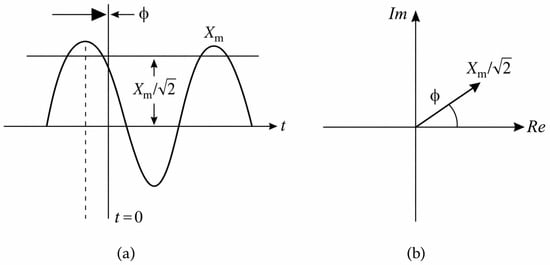
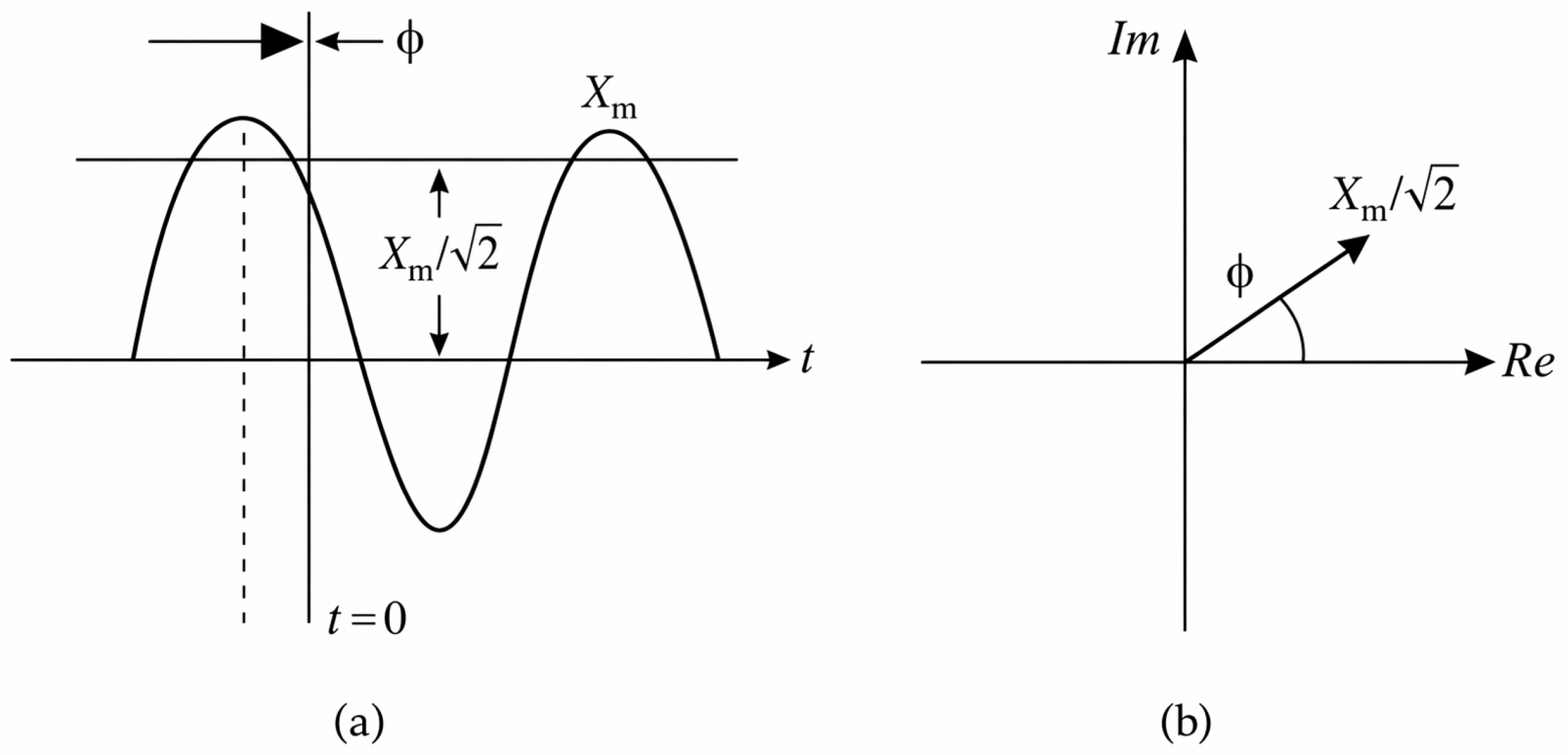
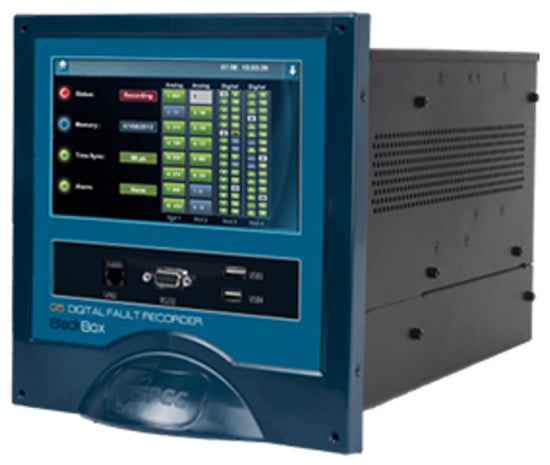
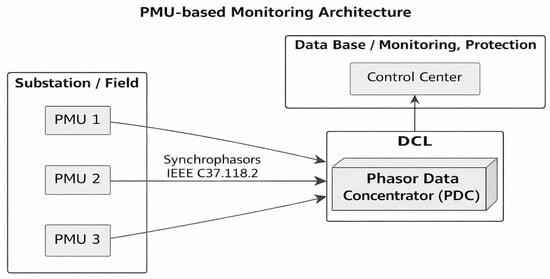
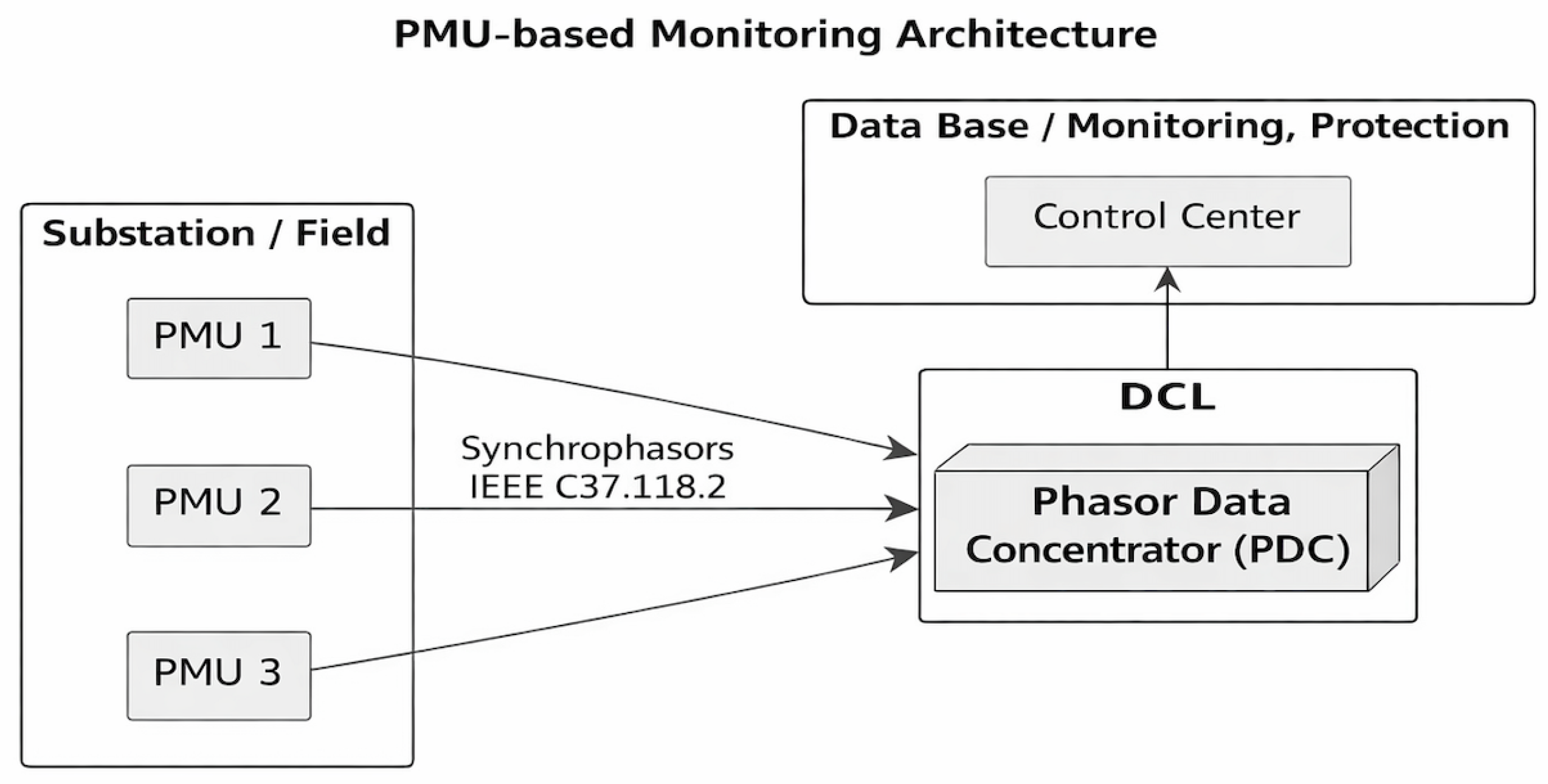
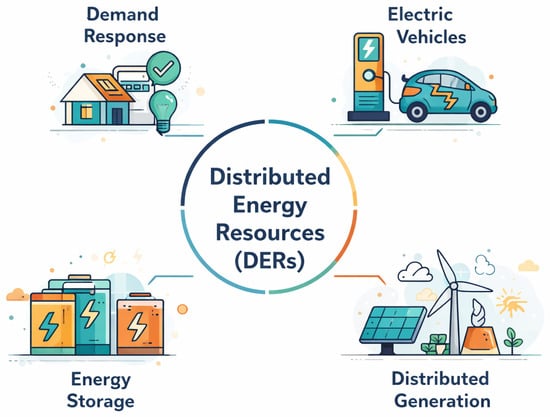
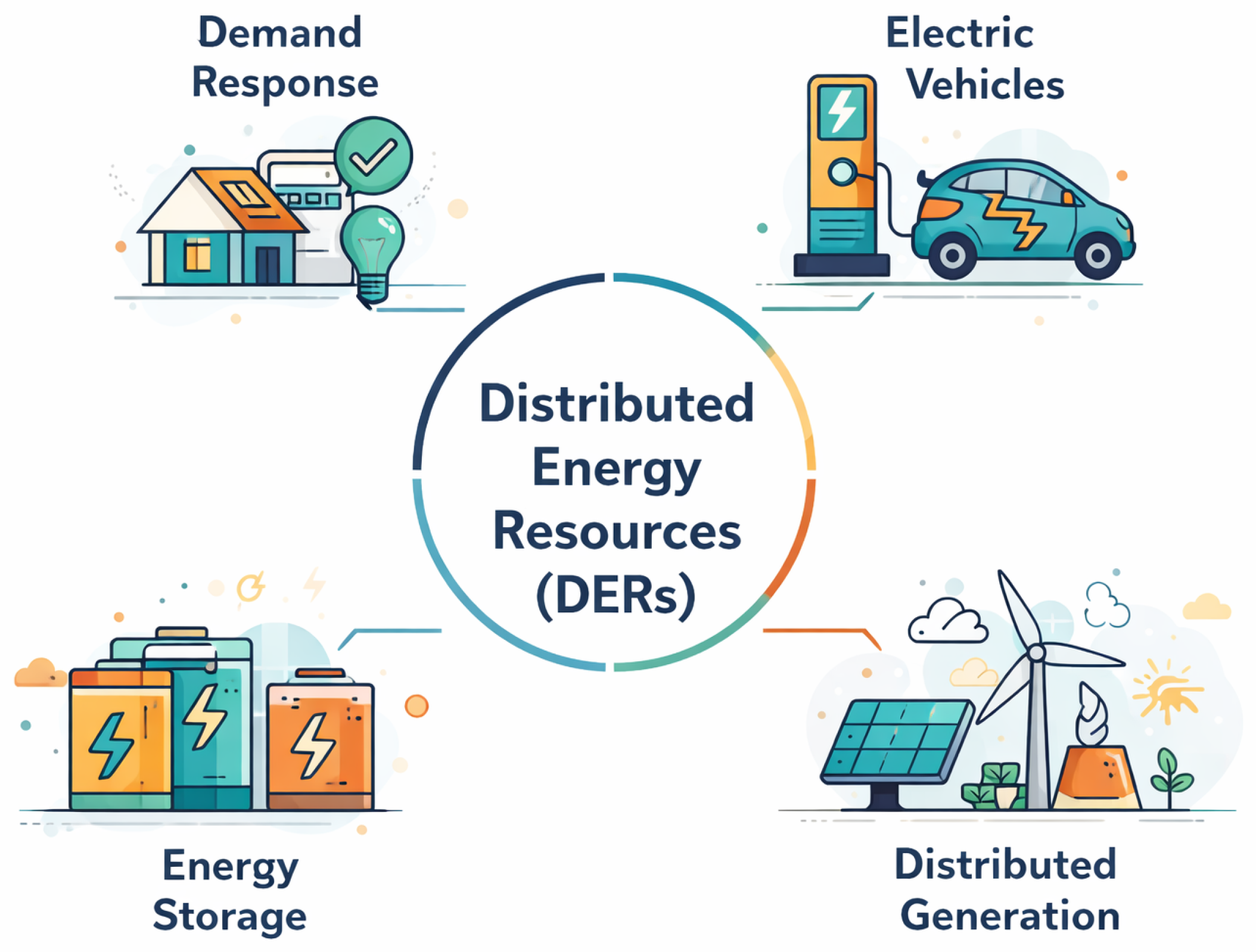
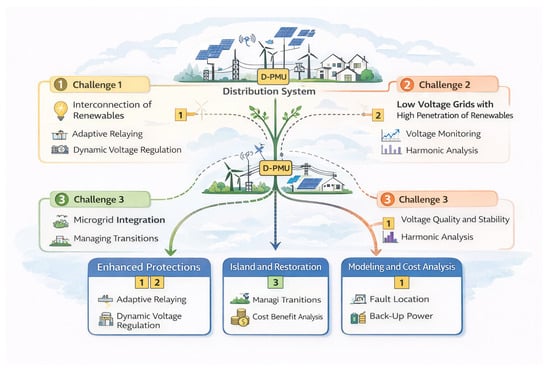
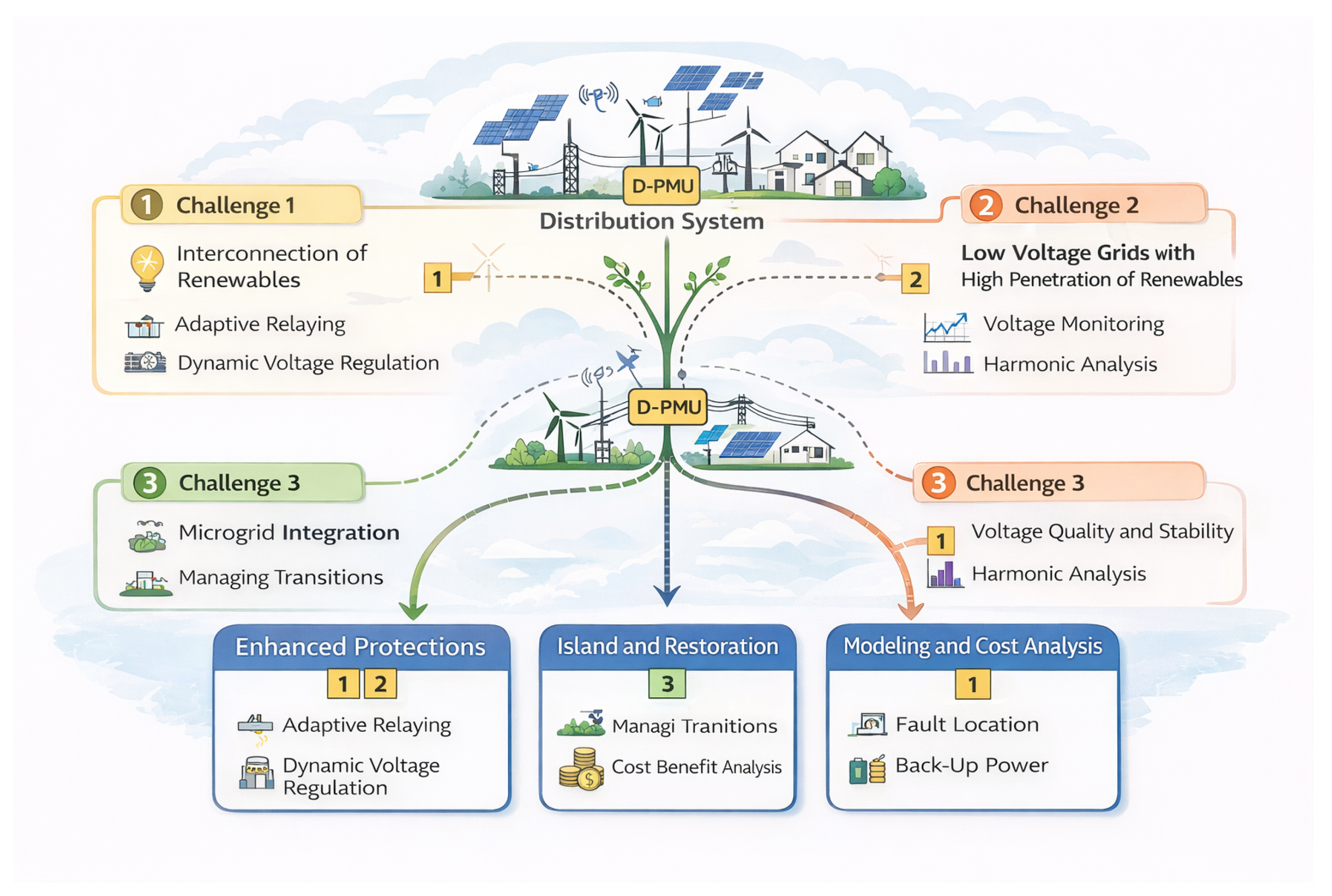
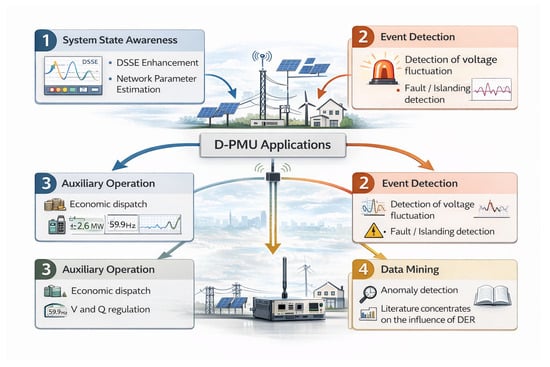
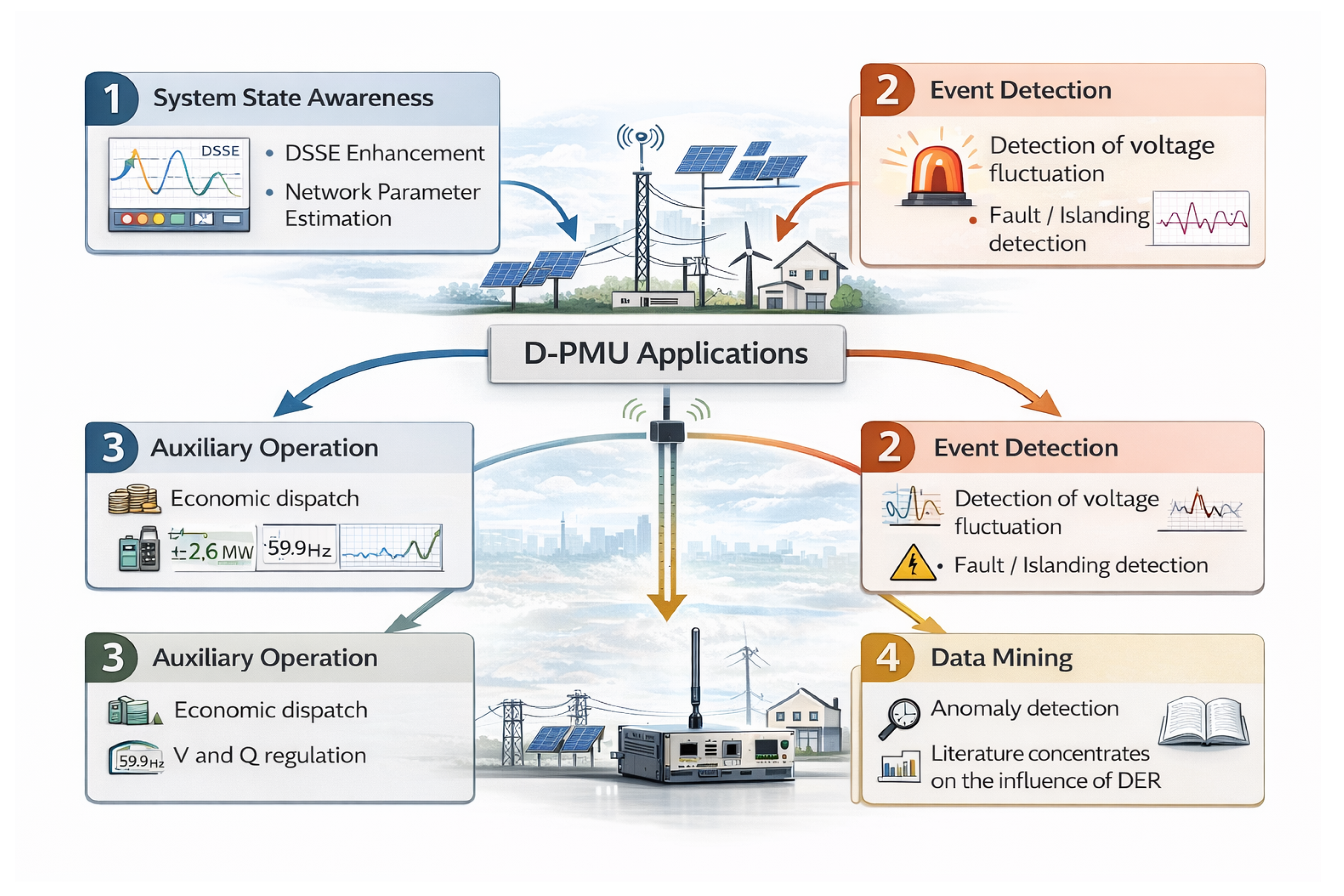
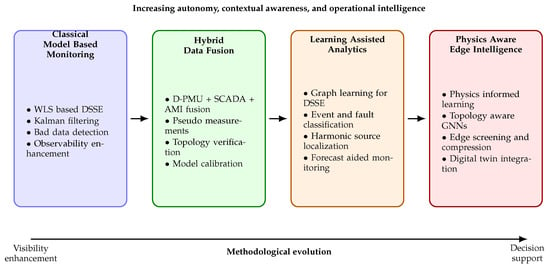
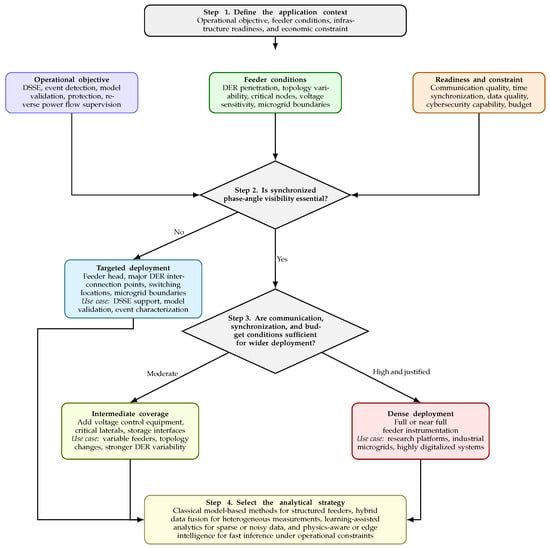

Disclaimer/Publisher’s Note: The statements, opinions and data contained in all publications are solely those of the individual author(s) and contributor(s) and not of MDPI and/or the editor(s). MDPI and/or the editor(s) disclaim responsibility for any injury to people or property resulting from any ideas, methods, instructions or products referred to in the content. |
© 2026 by the authors. Published by MDPI on behalf of the International Institute of Knowledge Innovation and Invention. Licensee MDPI, Basel, Switzerland. This article is an open access article distributed under the terms and conditions of the Creative Commons Attribution (CC BY) license.