


Abstract
Polyethylene terephthalate is a prominent polymer known for its mechanical properties, chemical resistance, and recyclability, and it is widely utilized across various industries. Enhancing the properties of polyethylene terephthalate (PET) through nanocomposite technology, particularly with the inclusion of nanoscale fillers, has garnered significant attention. This study investigates synthetic layered double hydroxides (LDHs), specifically MgAl LDH modified with calcium dodecylbenzene sulphonate in n-butyl alcohol (CDS) organic surfactant, as an alternative to natural clays for PET nanocomposites. Additionally, modified LDH serves a dual role as both a catalyst and a dispersive agent, promoting effective exfoliation within the PET matrix. A polymerization process was employed to ensure proportional and effective dispersion of the nanofillers, addressing the critical challenge of achieving uniform distribution. The resulting nanocomposites demonstrated superior mechanical strength, thermal stability, and barrier properties compared to traditional intercalated counterparts. Moreover, synthetic LDHs present a more sustainable solution, reducing the environmental footprint associated with natural clay mining, which includes land degradation, water pollution, energy consumption, and biodiversity loss. This research provides a promising pathway for developing high-performance, environmentally friendly PET nanocomposites, with significant implications for various industrial applications, from packaging to automotive and electronics. The findings highlight the potential of synthetic LDHs to advance material science while aligning sustainable development goals.
1. Introduction
Polyethylene terephthalate (PET) is a widely used polymer in various industries, prized for its excellent mechanical properties [1,2,3,4], chemical resistance [5,6,7], and recyclability [8,9,10]. However, researchers continue to focus on enhancing its performance by incorporating nanofillers into PET, particularly through nanocomposite technology. These nanocomposites, typically containing nanoscale fillers dispersed within the polymer matrix [11,12], demonstrate improved strength, thermal stability, and light-blocking capabilities compared to pure PET [3,13,14,15]. A significant challenge in this field, however, lies in achieving a uniform distribution of nanofillers, especially in the case of clays, which often suffer from incomplete exfoliation due to poor dispersion [16,17]. One of the primary concerns with natural clays as nanofillers is their tendency to intercalate rather than exfoliate within the polymer matrix, limiting the enhancement of material properties [18]. Even after purification, natural clays often contain impurities that hinder their effective dispersion. Moreover, the environmental impact of clay mining such as land degradation, water pollution, energy consumption, and biodiversity loss further underscore the need for sustainable alternatives [19,20,21,22]. In this context, synthetic nanofillers like LDHs have emerged as promising substitutes. LDHs are environmentally friendly, can be synthetically produced with controlled properties, and offer better compatibility with polymers than natural clays [23,24,25,26]. Although synthetic LDHs provide benefits such as higher purity, customizable composition, and enhanced polymer compatibility, their production is not entirely free of environmental drawbacks. For instance, conventional co-precipitation methods often require high pH conditions, leading to alkaline wastewater and energy-intensive processes. Nevertheless, when compared to the significant ecological damage caused by clay extraction including soil degradation, water contamination, and ecosystem disruption synthetic LDHs present a more sustainable alternative. Furthermore, ongoing research in green chemistry aims to refine LDH synthesis techniques, further minimizing their environmental impact. As a result, synthetic LDHs continue to be a practical and progressively eco-friendlier choice for advanced nanocomposite applications [27,28]. In addition to improving the properties of the nanocomposites, using synthetic LDHs also addresses the environmental concerns linked to clay mining. Clay extraction has serious ecological consequences, including soil erosion, water contamination, and biodiversity loss [29,30,31,32,33]. By switching to synthetic LDHs, researchers can mitigate these environmental impacts, making the production of high-performance nanocomposites more sustainable [34,35,36]. The controlled synthesis of synthetic LDHs allows for consistent quality and eliminates the contaminants often found in natural clays. Furthermore, the ability to modify their composition and structure enhances the compatibility of LDHs with various polymer matrices, making them a versatile and sustainable option for nanocomposite manufacturing.
Unlike traditional polymerization techniques for PET nanocomposites, which often fail to provide adequate driving forces for monomer diffusion into clay layers, synthetic LDHs, particularly when modified with organic surfactants, facilitate better exfoliation and dispersion within the polymer matrix [37,38]. This work specifically investigates the use of calcium dodecylbenzene sulphonate in n-butyl alcohol (CDS) modified MgAl LDH as a catalyst and nanofiller in PET system. By acting both as a dispersing agent and a catalyst, CDS-modified LDH promotes the exfoliation of the layered structure inside the PET matrix, ensuring a more uniform distribution of nanofillers and overcoming the challenges associated with monomer diffusion. In this study, the term “exfoliation” refers to the process of dispersing individual layers of modified LDHs within the PET matrix. Typically used in materials science, exfoliation involves the delamination of layers in a bulk material to form single or few-layer structures. This is achieved through the intercalation of CDS that forces the layers apart, facilitating their individual dispersion in a PET matrix. In the context of our research, the CDS-modified LDH acts as both a catalyst and a dispersing agent, promoting the exfoliation of the layered structure of LDH. This leads to a more uniform distribution of the nanofillers within the PET matrix, enhancing the properties of the composite material by overcoming the challenges associated with monomer diffusion, unlike traditional exfoliation (e.g., in graphene or clay systems), where layers are physically or chemically separated before incorporation, here the LDH exfoliation occurs in situ during PET processing, facilitated by CDS’s dual role. This unique approach aims to develop fully exfoliated PET nanocomposites with significantly improved mechanical, thermal, and barrier properties. LDHs, particularly MgAl LDH, offer several advantages due to their highly tunable structural and functional properties. The general formula for LDHs is [MII1–x MIIIx (OH)2]x+(An−)x/n·yH2O, where MII and MIII represent divalent and trivalent metal cations, and An− denotes the charge-balancing anions in the interlayer galleries. This layered structure allows for the exchange of interlayer anions, enabling functionalization with a variety of molecules [39,40,41,42]. The functionalization of MgAl LDH with organic surfactants like CDS improves its hydrophobicity, making it more compatible with hydrophobic polymers such as PET. The surfactant intercalates between the layers of the LDH, expanding the interlayer spacing and decreasing the cohesive forces between the layers. This expansion facilitates the growth of the PET monomer in the expanded gallery of the LDH, enabling the exfoliation of the LDH layers during the polymerization process. This promotes better dispersion and enhances the properties of the resulting nanocomposites [43,44]. Exfoliated nanocomposites typically exhibit superior mechanical properties, thermal stability, and barrier characteristics. The uniform distribution of exfoliated LDH layers within the polymer matrix improves the wide range of applications, increasing the modulus and tensile strength. Additionally, the uniform distribution of nanofillers acts as a thermal barrier, improving the high-temperature stability of the composite. Exfoliated nanofillers also enhance the barrier properties of the composite, which is particularly valuable in packaging applications where improved resistance to gas and moisture permeability is required [45,46].
This research investigates the use of CDS-modified MgAl LDH as a sustainable and effective substitute for natural clays in PET nanocomposites, exploring innovative methods to form exfoliated structures through advanced catalyst-driven polymerization. By addressing the challenges associated with nanofiller dispersion and exfoliation, this work seeks to develop high-performance nanocomposites with superior mechanical, thermal, and barrier properties. Furthermore, by replacing natural clays with synthetic LDHs, this research aligns with the growing emphasis on sustainability in materials science, reducing the environmental impact of nanocomposite production. The environmental concerns associated with clay mining are significant, with land degradation, water contamination, energy consumption, and biodiversity loss all contributing to the ecological footprint of clay-based nanocomposites. The shift towards synthetic LDHs not only provides a more sustainable alternative but also ensures a more controlled, reproducible, and efficient production process. Moreover, current research is increasingly focused on developing greener LDH synthesis pathways, such as low-waste precipitation methods and bio-assisted syntheses, which aim to minimize their environmental footprint. Therefore, while not entirely impact-free, synthetic LDHs represent a more responsible and adaptable solution for future nanocomposite technologies. This approach to nanocomposite manufacturing offers the dual benefits of improved material properties and reduced environmental impact, making it an important step toward the development of next-generation polymer nanocomposites.
2. Materials and Methods
2.1. Materials
All chemicals used were of the highest purity or analytical level available. Aluminum nitrate nonahydrate (Al(NO3)3·9H2O) and sodium hydroxide (NaOH) were sourced from SHOWA, Taipei, Taiwan. Magnesium nitrate hexahydrate (Mg(NO3)2·6H2O) and bis(2-hydroxyethyl) terephthalate (BHET) for premixing catalysts were obtained from Sigma Aldrich, St. Louis, MO, USA. BHET for raw PET material was purchased from Nan Ya Plastics Corporation, Kaohsiung City, Taiwan. The surfactant calcium dodecylbenzene sulphonate in the chemical n-butyl alcohol, collectively referred as CDS, were acquired from Taiwan Surfactant Corporation (Taipei, Taiwan). Ultrapure water (double-distilled) was produced by Cheer-Hsun Engineering Technology Co., Ltd. (Hsinchu, Taiwan).
2.2. Preparation of MgAl-LDH-CDS
The preparation of MgAl LDH begins by dissolving 43.38 g of magnesium nitrate hexahydrate and 31.56 g of aluminum nitrate nonahydrate in 300 mL of deionized water to form a clear solution. To this solution, 27.06 g of sodium hydroxide from a 30 mL solution is added, carefully maintaining the pH at 10 ± 0.1. The mixture is then stirred vigorously using a magnetic stirrer at room temperature for 2 min. The stirred solution is subsequently transferred to a high-pressure autoclave and heated at 150 °C for 24 h to precipitate the layered double hydroxide (LDH). Following this, the LDH is subjected to multiple centrifugations, washed with deionized water, and freeze-dried, resulting in the synthesized samples labeled as MgAl LDH. These samples are then calcined at 600 °C for 1 h. After calcination, the LDHs transform into a mixed metal oxide (LDO), where the original layered structure collapses, leading to the formation of a highly reactive and amorphous metal oxide phase. For further modification, CDS is dissolved in 50 mL of distilled water at twice the anion exchange capacity (AEC) of the LDH, and 5 g of LDO is slowly added. This mixture is heated at 110 °C for 24 h with agitation in a high-pressure autoclave to precipitate the MgAl LDH-CDS. After centrifugation and thorough washing with deionized water until neutral, the product is freeze-dried, resulting in the modified samples designated as MgAl LDH-CDS. Although the dominant interlayer anions originate from the synthesis-modifying agent, potential carbonate (CO32−) contamination from atmopheric CO2 absorption during alkaline precipitation remains possible, as decarbonated water was not used in the process. This systematic process combines chemical reactions and physical separations to synthesize and modify the catalyst effectively.
2.3. Condensation Polymerization of MgAl LDH-CDS Nanocomposites
A predetermined amount of Bis(2-hydroxyethyl) terephthalate (BHET) was placed into a condensation reactor. This was allowed to melt at 245 °C under a nitrogen atmosphere to prevent oxidation and assist in the removal of moisture and ethylene glycol produced during the polycondensation process. No carbon dioxide (CO2) was introduced or evolved in this reaction setup. Following this, a catalyst named MgAl LDH-CDS was added in varying amounts of 500 ppm, 800 ppm, and 1000 ppm for separate experiments. To optimize the catalyst’s performance and prevent degradation due to hydrolysis, all catalyst samples were pre-treated by calcining at 200 °C for 2 h before the polymerization process. This step is critical, as LDH inherently has a high affinity for moisture absorption, which could otherwise compromise the catalyst’s activity. After ensuring thorough mixing of the catalyst with the molten BHET, the temperature increased to 280 °C. This temperature is the initial polymerization point for PET. Concurrently, the pressure in the reactor was reduced to less than 0 torr to initiate polymerization. This polymerization process was sustained for an additional 3 h. Upon completion of the polymerization, the molten PET was extruded and immediately cooled in chilled water to solidify. The resulting materials were designated as PET-MgAl LDH--CDS-500 ppm, PET-MgAl LDH--CDS-800 ppm, and PET-MgAl LDH--CDS-1000 ppm, respectively.
2.4. Characterization
The investigation of various physicochemical properties of PET-MgAl LDH-DBSNBA nanocomposites was conducted using several analytical techniques. X-ray diffraction analysis was performed on a PANalytical PW3040/60 X’Pert Pro, Malvern Panalytical, Worcestershire, UK, using Cu Kα radiation (40 kV, 25 mA) with a wavelength of 1.5406 Å, scanning from 2° to 80° at increments of 0.0515812 degrees. Infrared spectra were obtained using a JASCO FTIR-4200 Type A spectrometer (JASCO Inc., Tokyo, Japan) using KBr pellets (wavenumber range 400–4000 cm−1). The morphology of the nanocomposites was examined through scanning electron microscopy (SEM) on a JEOL JSM 6500F (JEOL Ltd., Tokyo, Japan). Thermogravimetric analysis (TGA) was conducted with a 10 mg sample under a nitrogen flow from 30 °C to 900 °C at a rate of 10 °C/min, using an SII TG/DT analyzer (Nano Technology Inc., Tokyo, Japan). Gas permeability analysis (GPA) was assessed using a Yanco GTR-31 (GTR Tec Corporation, Kyoto, Japan). Optical properties were measured using a VARIAN Cary 100 UV-Vis spectrophotometer (Agilent Technologies, Santa Clara, CA, USA) in the wavelength range of 200–800 nm using free-standing films of uniform thickness. The mechanical properties were evaluated by dynamic mechanical analysis (DMA) on a TA-Q800 from 30 to 100 °C with a heating rate of 3 °C/min with a film size of 1 cm x 4 cm (width and length) and a thickness of 80–100 mm (TA Instruments, New Castle, DE, USA). Finally, the molecular weight of the PET was determined via gel permeation chromatography (GPC) on an ALLIANCE-GPCV 2000 (Waters Company, Parsippany, NJ, USA) dissolving the PET in 1,1,1,3,3,3-hexafluoro-2-propanol at a concentration of 0.5 mg/mL. These diverse techniques provided a comprehensive understanding of the material properties essential for further applications.
3. Results
3.1. Structural Characterization of Modified MgAl-LDH and MgAl-LDH-CDS Nanocomposites
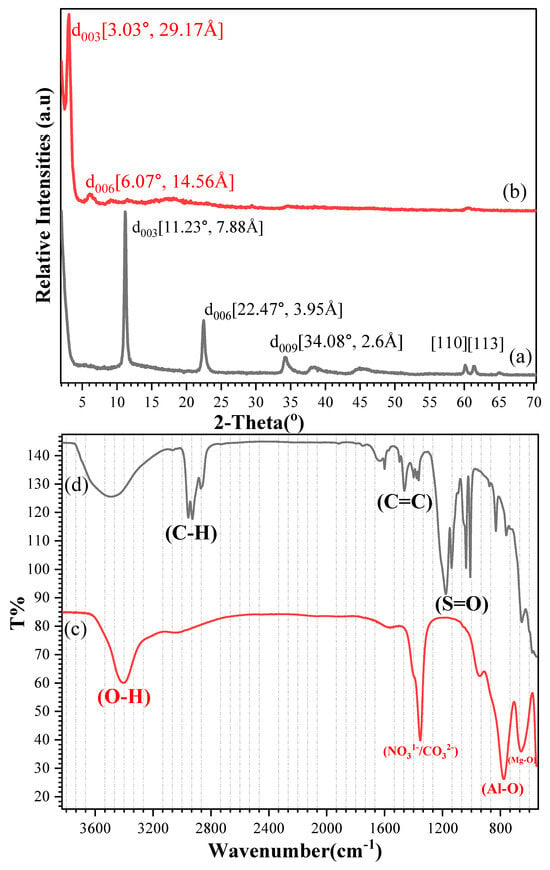
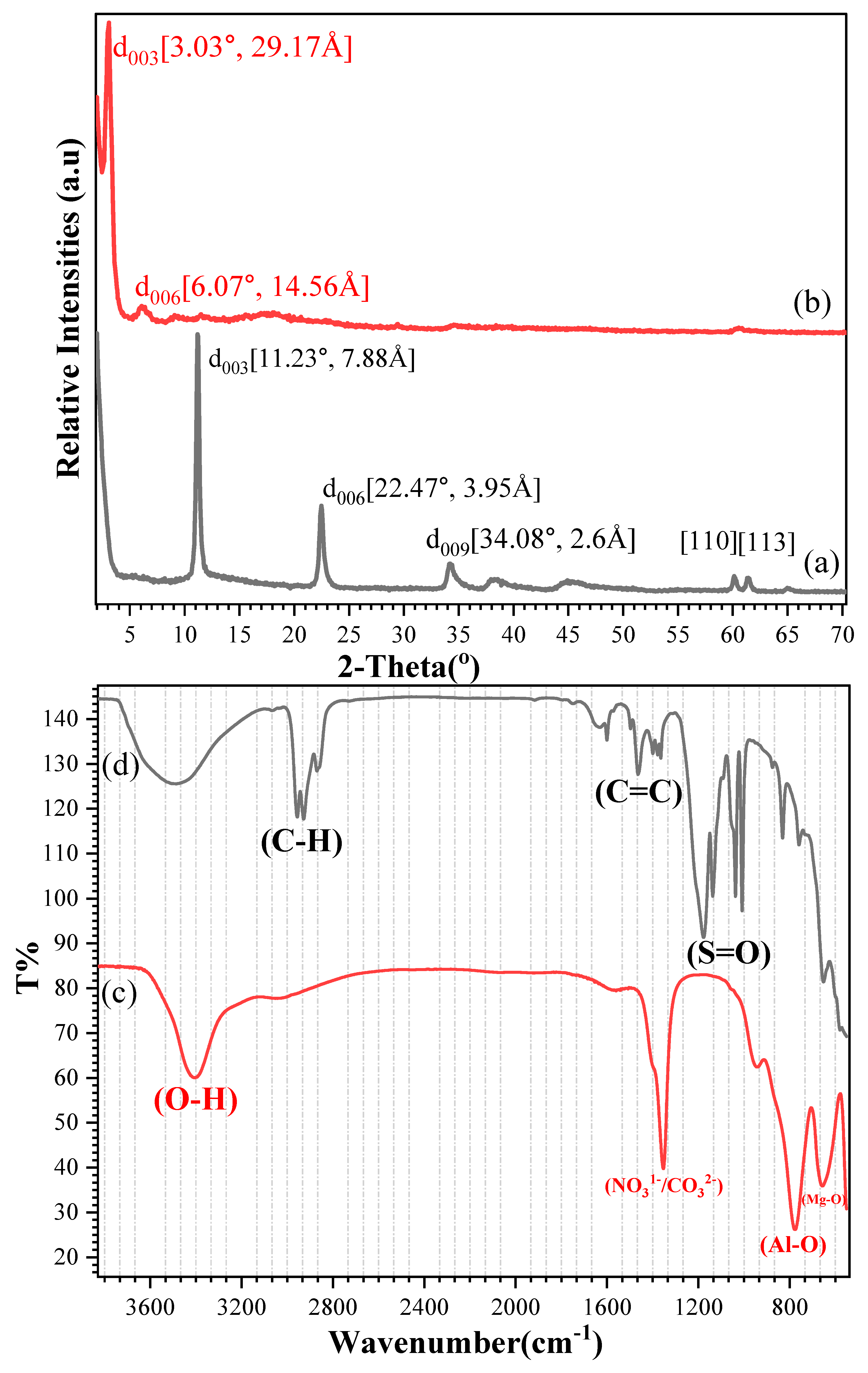
XRD is a pivotal technique for the structural analysis of LDHs and their nanocomposites with PET, particularly those modified to act as dual nature catalysts in PET polymerization. The XRD patterns of both unmodified and organo-modified LDHs are presented in Figure 1a,b. These patterns of MgAl LDHs exhibit a series of narrow, symmetric diffraction lines at low angles, indicative of the basal spacing within the LDHs structures. Specifically, sharp peaks observed in the XRD profiles correspond to the (003), (006), (009), and (012) crystal planes. Additionally, a less intense peak is detected between 2θ = 60° and 65°, which is attributed to the (110) and (113) planes according to JCPDS card No. 35-0965 [47,48,49,50,51]. A notable shift in the (003) diffraction peak towards a lower angle in the modified LDHs suggests successful intercalation of CDS anions into the gallery of MgAl LDHs layers. This shift results in an expansion of the interlayer spacing from 7.9 Å in the unmodified LDH to 29.2 Å in the MgAl LDH-CDS, modified LDHs, confirming the intercalation process. This modification facilitates increased spacing within the nanolayers, improving the intercalation capacity for monomers and enhancing compatibility with PET molecules [52,53,54,55] in between the LDHs gallery.
Figure 1.
XRD pattern (a) MgAl LDH, (b) MgAl LDH-DBSNBA and FT-IR spectra (c) MgAl LDH, (d) MgAl LDH-CDS.
FTIR spectroscopy, along with powder X-ray diffraction, provides confirmation of the synthesis and modification of LDHs. In the FTIR spectra of both synthesized MgAl-LDH and DBSNBA-modified LDHs, as illustrated in Figure 1c,d, distinct features corresponding to various structural and intercalation modifications are evident. The broad peak at 3500 cm−1 is attributed to the stretching vibrations of hydroxyl groups (OH) associated with Al and Mg in the LDH layers, indicative of the hydrated nature of these materials. The broad bands at 1604 cm−1 reflected bending vibration of interlayer H2O. The strong band observed at approximately 1360 cm−1 corresponds to the antisymmetric vibrations of interlayer ions of carbonate () and nitrate ions () present in MgAl LDHs. The absorption band at 655 cm−1 corresponds to Al-O stretching, while the band at 554 cm−1 is associated with Mg-O vibrations, confirming the preserved structural framework of the LDH matrix [56,57,58]. This feature is typical of LDHs incorporating nitrate and carbonate as the interlayer anion, confirming the preservation of nitrate and carbonate in these structures, after modification, the reduced intensity of this peak represents the successful replacement of CDS into the LDHs gallery. Between 2956 cm−1, 2928 cm−1, and 2869 cm−1, the absorption peak indicates the presence of C-H stretching vibration bands, these are characteristic of the organic surfactants, specifically the alkyl chains in CDS. The successful incorporation of CDS is further confirmed by strong absorption peaks at 1465 cm−1, related to the aromatic stretching (–C=C-) of aryl. Moreover, the peaks at 1430 cm−1 and 1365 cm−1 are characteristic of bending vibration (C-H), reflecting the benzene rings inherent to the CDS structure. The prominent vibrations observed at 1000 cm−1, 1037 cm−1, 1134 cm−1, and 1177 cm−1 are assigned to the S=O vibration from the SO3−1 group, specifically Vas () and Vs (), thus providing the existence of dodecylbenzene sulfonate as a counter ion for CDS. Additionally, the peak at 655 cm−1 is indicative of Al-O stretching and the peak at 554 cm−1 correlates with Mg-O stretching vibrations, both underscoring the structural integrity of the LDH matrix. Additional bands observed at 947 cm−1 and 790 cm−1, are assigned to further Al-O stretching vibrations, these peaks becoming more pronounced due to changes in the electronic environment surrounding the Al centers induced by the intercalation of CDS [59,60,61]. For surfactant-modified CDS, bands attributed to surfactant anions including alky C–H, aromatic C–H and sulfate groups S=O were evident in the spectra, demonstrating the occurrence of surfactant anions intercalation into LDHs interlayer. These results not only demonstrate the successful modification of MgAl-LDH with CDS but also provide a comprehensive understanding of the chemical environment within the modified LDH structure. The assignment of all observed IR spectral features confirms the extensive intercalation and modification of the LDH, which is consistent with structural and compositional changes as anticipated from the incorporation of organic CDS anions.
3.2. Morphological Transformation and Thermal Behavior of MgAl LDH and MgAl LDH-CDS
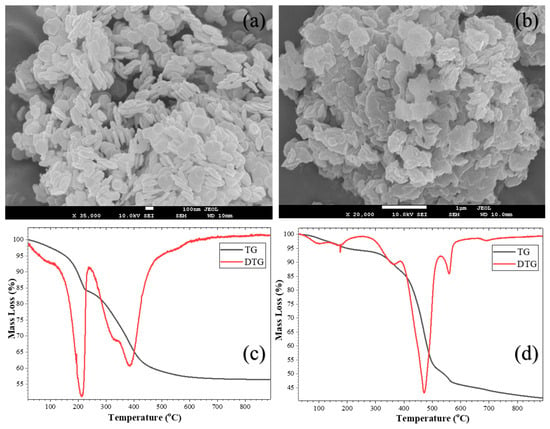
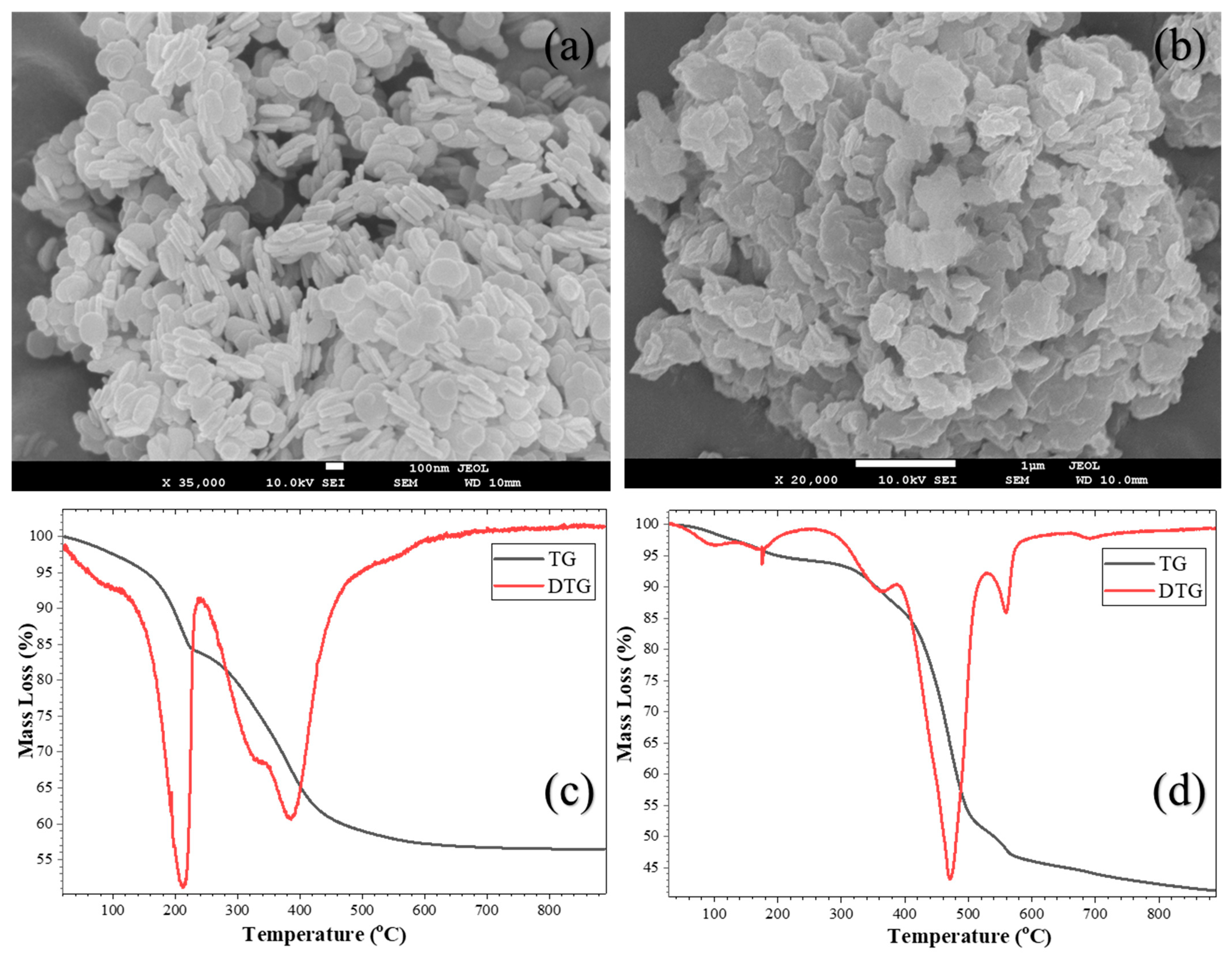
SEM studies reveal distinct differences in the morphology and particle size of LDHs and their organically modified counterparts. Figure 2a,b illustrates the FESEM images of pristine MgAl LDHs and MgAl LDH- CDS, respectively. The pristine MgAl LDHs particles typically exhibit a well-defined hexagonal plate-like morphology. In contrast, after modification with CDS, the layer structure appears to collapse, and the brucite-like layers of LDHs are visibly disrupted. This change matches the XRD results, showing that the organic modifier causes structural and morphological changes. Initially, MgAl LDHs shows a particle size distribution ranging from 50 to 80 nm. Post-modification, the LDHs demonstrate extensive aggregation due to strong electrostatic interactions between the LDH layers and CDS anions, resulting in larger particle sizes compared to the unmodified LDH. This aggregation is attributed to strong electrostatic interactions between the LDH layers and the CDS anions, leading to larger particle sizes compared to the unmodified LDH. While this might initially appear to contradict the objective of achieving well-dispersed nanofillers as described in the introduction, it is important to discuss the implications of this observation for the synthesis and properties of the HDL-PET composite. The aggregation of LDH particles post-modification can potentially impact the mechanical and thermal properties of the HDL-PET composite. Larger, aggregated particles may affect the uniformity of the filler distribution within the polymer matrix and could influence the interface adhesion between the filler and the polymer. However, this aggregation might also contribute positively by enhancing certain properties such as barrier resistance and flame retardancy, depending on the extent and nature of the aggregation. Further analysis and optimization of the synthesis process are necessary to control the degree of aggregation and achieve a balance between improved functional properties and dispersion quality. Understanding the behavior of these aggregates within the PET matrix will be crucial in tailoring the properties of the final composite material to meet specific application needs.
Figure 2.
SEM images of (a) MgAl LDH (b) MgAl LDH-CDS. TGA and DTG curves of (c) MgAl LDH, (d) MgAl LDH-CDS.
Further, surface analysis indicates a portion of CDS anions that were not only intercalated into the LDH interlayer but also physically adsorbed onto the outer surface of LDH particles exhibit significant surface interactions, effectively coating the LDH surface alongside the intercalated species. TGA supports these observations, showing enhanced thermal stability in LDHs treated with CDS. The electrostatic orientation of the substituted sulphonate anion of DBSNBA towards the cationic surface of the LDH’s brucite-like sheet results in a bi-layer or pseud CDS o-trilayer structure within the intercalated regions. This structural arrangement not only facilitates oligomer formation but also significantly enhances the compatibility of modified LDHs with PET molecules. Consequently, the flocculation of nanolayers within the polymer matrix leads to the formation of well-dispersed PET nanocomposites. The study underscores the pivotal role of the organic modifier in driving the morphological and structural transformations observed in the LDH nanocomposites.
The electrostatic orientation of the substituted sulfonate anion of CDS towards the cationic surface of the LDH’s brucite-like sheet typically results in a bi-layer or pseudo-trilayer structure within the intercalated regions. This structural arrangement is theorized to facilitate oligomer formation and significantly enhances the compatibility of modified LDHs with PET molecules, potentially leading to the formation of well-dispersed PET nanocomposites. The study underscores the pivotal role of the organic modifier in driving the morphological and structural transformations observed in the LDH nanocomposites [62,63].
Thermogravimetric analysis (TGA) and derivative thermogravimetric (DTG) profiles for MgAl LDH and MgAl LDH- CDS are depicted in Figure 2c and Figure 2d, respectively. The thermal decomposition of MgAl-LDH occurs in three distinct phases. The initial phase, occurring up to 240 °C, accounts for a mass loss of approximately 16.30%, primarily due to the loss of absorbed and interlayer water molecules. The second phase, from 240 °C to 520 °C, results in a further loss of around 25.16% attributable to the decomposition of nitrate ions and interlayer hydroxide groups. The final degradation phase, from 520 °C to 800 °C, sees a mass loss of about 5.1%, associated with the dehydroxylation of the metal oxide layers. In contrast, the TGA curve for MgAl LDH- CDS shows a modified thermal degradation profile. The initial stage mirrors that of unmodified LDH but with a reduced mass loss of about 7.1% from 100 °C to 250 °C. The second stage, crossing from 250 °C to 530 °C, demonstrates a significant mass loss of 43.42%, indicating the decomposition of the CDS -modified hydrocarbon chains intercalated within the LDHs layers. This stage not only shows a greater mass loss but also a shift to higher temperatures compared to unmodified LDH, reflecting enhanced thermal stability. The final degradation stage, from 530 °C to 800 °C, accounts for an 8.59% mass loss, primarily from the breakdown of the benzene rings and the surfactant head of the CDS modifier. These findings suggest that the CDS intercalation reduces the interaction between interlayer water molecules and the hydroxide layers, contributing to the thermal stability of the modified LDH. This enhanced stability is particularly beneficial for applications in PET polymerization, where higher thermal resistance is required. The shift in the major decomposition stage to higher temperatures further supports the potential of MgAl LDH-CDS in advanced composite materials. The amount of modified agent incorporated into the interlayer of MgAl LDH was determined for the MgAl LDH-CDS sample and found to be 17.53%, with the anion exchange capacity (AEC) of the modified LDH determined as 420 meq/100 g for the pure MgAl LDH.
3.3. Morphological and Thermal Stability Analysis of PET/Organomodified LDH Nanocomposites
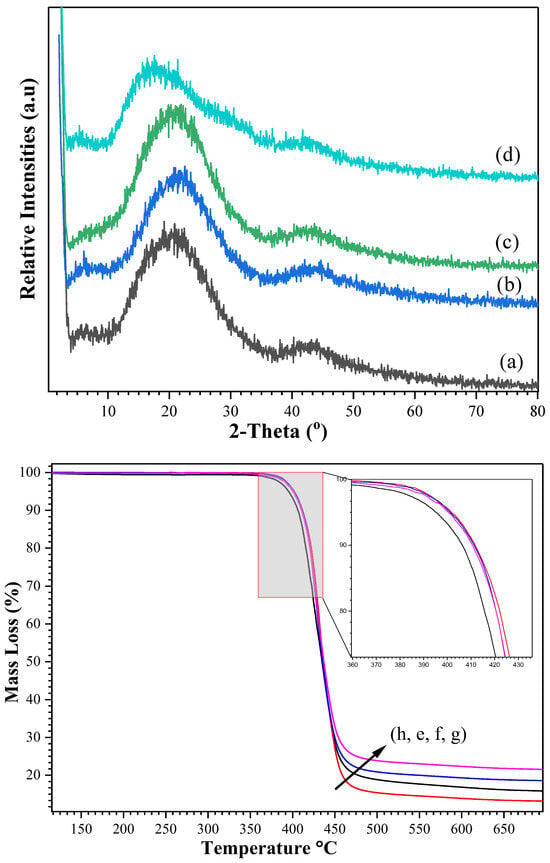
The XRD patterns of PET and its nanocomposites are shown in Figure 3a–d of pristine PET and modified LDHs nanocomposites at 500, 800, and 1000 ppm, respectively. The organic modifier CDS makes the LDHs hydrophobic after successful modification. This hydrophobic behavior enhances the compatibility of modified LDHs with the PET polymer, reducing electrostatic interactions between the LDH layers and facilitating the intercalation of PET molecules into the LDH galleries. The XRD patterns depicted in the figure primarily show a broad diffraction peak characteristic of PET, while the (d003) peaks of the modified LDHs are absent. This absence suggests a loss of crystalline order within the LDH structure in PET nanocomposites, likely leading to the disordered, exfoliated layers that penetrate the polymer matrix, resulting in well-dispersed PET nanocomposites. The assumption is that the increased hydrophobicity and expanded basal spacing due to DBSNBA intercalation promote the exfoliation of LDH layers during polymerization, facilitating the creation of well-dispersed nanocomposites.
Figure 3.
XRD patterns of (a) Pristine PET (b) PET-MgAlLDH- CDS 500 ppm (c) PET-MgAl LDH- CDS 800 ppm (d) PET-MgAl LDH- CDS 1000 ppm nanocomposites, and TGA curves of (e) Pure PET (f) PET-MgAl LDH- CDS 500 ppm (g) PET-MgAl LDH- CDS 800 ppm (h) PET-MgAl LDH- CDS 1000 ppm nanocomposites.
Thermogravimetric analysis (TGA) provides insight into the thermal behavior of PET and its nanocomposites with 500 ppm, 800 ppm, and 1000 ppm, as depicted in Figure 3e–h, respectively. Both PET and its nanocomposites demonstrate major thermal degradation within the temperature range of 350–470 °C. Notably, pure PET begins to exhibit significant mass loss within this range. However, the insertion of organically modified LDH by CDS significantly elevates the thermal degradation temperature compared to pure PET. The temperature at which a 5% mass loss occurs (T5d) is notably higher in the PET composites containing MgAl LDH modified with CDS, with increments of 2.17 °C, 3.14 °C, and 1.2 °C for composites containing 500, 800, and 1000 ppm of LDH, respectively. The enhanced thermal stability in PET nanocomposites can be attributed to the substantial interfacial contact area provided by the evenly distributed LDH nanoplates within the matrix. These nanoplates not only act as barriers to heat transfer but also leverage their insulating properties to enhance the thermal stability of the composites. By forming a protective barrier against volatile gases released during thermal decomposition, the modified LDHs contribute to the overall thermal integrity of the PET matrix.
Moreover, the CDS organic modifier increases the interlayer spacing within the LDHs, facilitating the integration of monomers of PET into these expanded spaces, and resulting in a well-dispersed nanocomposite. The dispersed LDH layers within the matrix function as a thermal barrier, absorbing and dissipating heat during thermal events. This characteristic prevents excessive heat from penetrating the polymer matrix, thereby mitigating the rate of thermal degradation of PET. Notably, the composites with an 800 ppm concentration of organically modified LDHs demonstrate a pronounced interaction with the polymer matrix, reflected in a superior T5d value relative to other concentrations. This study underscores the critical role of organically modified LDHs in enhancing the thermal properties of PET nanocomposites, pointing to a promising approach for improving the material’s resistance to high temperatures.
3.4. Mechanical Properties of the PET/Organomodified LDH Nanocomposites
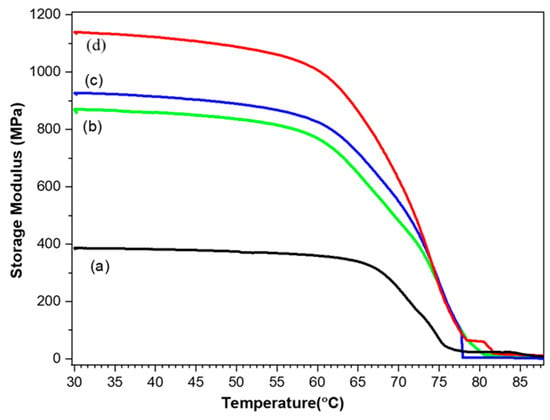
Figure 4 illustrates the effect of temperature on the storage moduli of pure PET and PET nanocomposites, examining their thermal stability within the 40–145 °C range. The analysis reveals that the storage modulus of nanocomposites decreases as the temperature increases. Among the tested samples, PET nanocomposites exhibit the highest storage modulus, followed by MgAl LDHs modified with DBSNBA. Figure 4a–d specifically displays the storage modulus (Eʹ) of pure PET and PET-MgAl LDH-DBSNBA nanocomposites with 500 ppm, 800 ppm, and 1000 ppm of modified LDHs, respectively, as functions of temperature. A significant decrease in storage moduli is observed between 55 °C (glassy state) and 85 °C (rubbery state) across all nanocomposites, attributed to the increased molecular mobility of polymer chains. However, beyond 85 °C, the storage modulus exhibits a recovery typically linked to cold crystallization [64,65,66]. Notably, pure PET shows an earlier decline in its storage modulus compared to PET nanocomposites, highlighting the enhanced thermal performance imparted by the nanofillers.
Figure 4.
Storage module of (a) Pure PET (b) PET-MgAl LDH-CDS 500 ppm (c) PET-MgAl LDH CDS 800 ppm (d) PET-MgAl LDH-CDS 1000 ppm nanocomposites.
The transition from the glass state to the rubbery state occurs when the temperature exceeds the glass transition temperature (Tg). In the glassy state, the tightly packed composite components exhibit reduced mobility and robust intermolecular forces, resulting in a higher storage modulus. As the temperature rises, molecular relaxation occurs, leading to increased movement, diminished stiffness, and a reduction in the storage modulus. A higher storage modulus in this region signifies greater elasticity, which is a result of the reinforcing effect of the modified LDHs. The measured storage modulus values of the PET nanocomposites with varying CDS-modified MgAl LDH contents (1000 ppm, 800 ppm, and 500 ppm) were found to be 753.94 MPa, 540.35 MPa, and 394.81 MPa higher than that of pure PET, respectively. Among the composites investigated, PET-MgAl- CDS with 1000 ppm achieved the highest maximum storage modulus. This improvement is attributed to the enhanced interfacial adhesion between the modified LDHs and the PET matrix, which restricts molecular movement and promotes efficient stress transfer across the interface. The reinforcing effect of MgAl LDH- CDS is evident in both the glassy and rubbery states, where the storage modulus of the PET nanocomposites surpasses that of pristine PET. The observed trend indicates that increasing the CDS content leads to a higher storage modulus. In the rubbery region, this behavior can be linked to factors such as the crystallinity, aspect ratio of the reinforcement, and the strong interaction between the modified LDHs and the PET phase [67]. These findings are consistent with FTIR results, confirming that CDS modification enhances the compatibility of the LDHs with the PET matrix, thereby improving the overall mechanical performance of the nanocomposites.
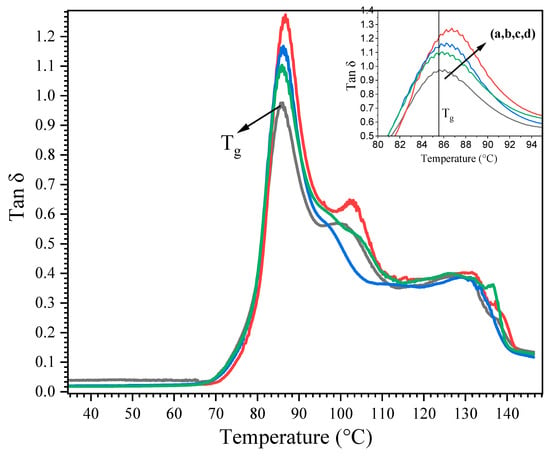
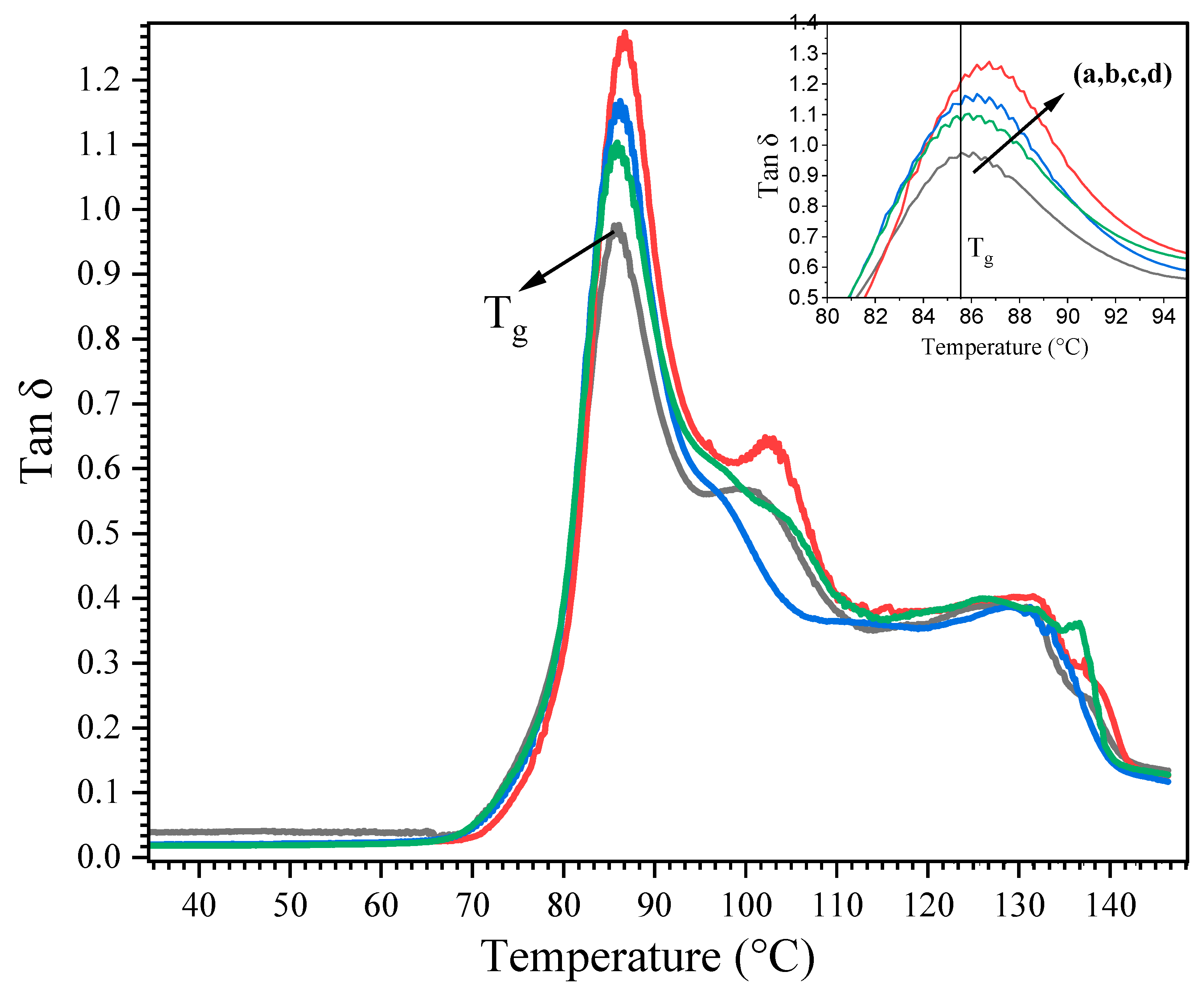
Figure 5 shows tanδ versus temperature for PET-MgAl LDH- CDS nanocomposites system and Table 1 summarize values of Tg and tanδ obtained from this figure. It can be certainly seen that the intensity of the tanδ peaks decreases for the nanocomposites compared to pure PET. The tanδ values reduced from ∼1.27 to 0.97 for pure PET to PET-MgAl LDH- CDS nanocomposites containing 1000 ppm, which was attributed to an increase in the degree of crystallinity from 22.2% (pure PET) to 30.3% for the PET nanocomposites [67,68]. Moreover, the area under the tanδ peaks decreased with increasing MgAl LDH- CDS loading amount, which is attributed to MgAl LDH-CDS structure which hinders the transition from the glass to the rubbery state [68]. However, the Tg of MgAl LDH- CDS nanocomposites indicate no appreciable change (Table 1). It has been reported that the area under tanδ peaks, usually decreases with increasing MgAl LDH-CDS loading [59], which is attributed to the structure MgAl LDH-CDS which hindered the segmental transition from the glass to the rubbery state. The DMA results show the enhancement of storage modulus and reduction in tanδ values upon incorporation of MgAl LDH-CDS within PET polymer matrices [69].
Figure 5.
DMA tanδ versus temperature data for (a) PET-MgAl LDH-CDS 1000 ppm (b) PET-MgAl LDH-CDS 800 ppm (c) PET-MgAl LDH-CDS 500 ppm (d) Pure PET.
Table 1.
DMA result of LDHs and Modified LDHs at different MgAL LDH-CDS contents.
3.5. Crystallization Behavior of PET Nanocomposites with Organomodified LDH
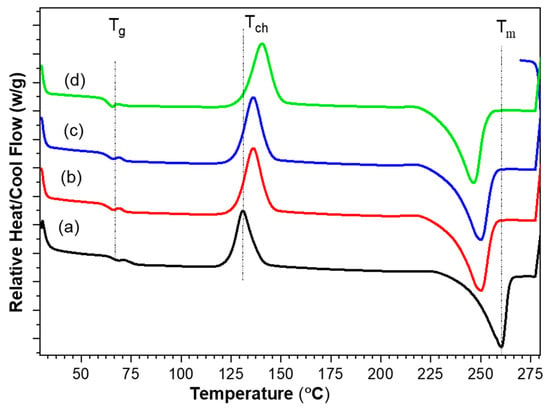
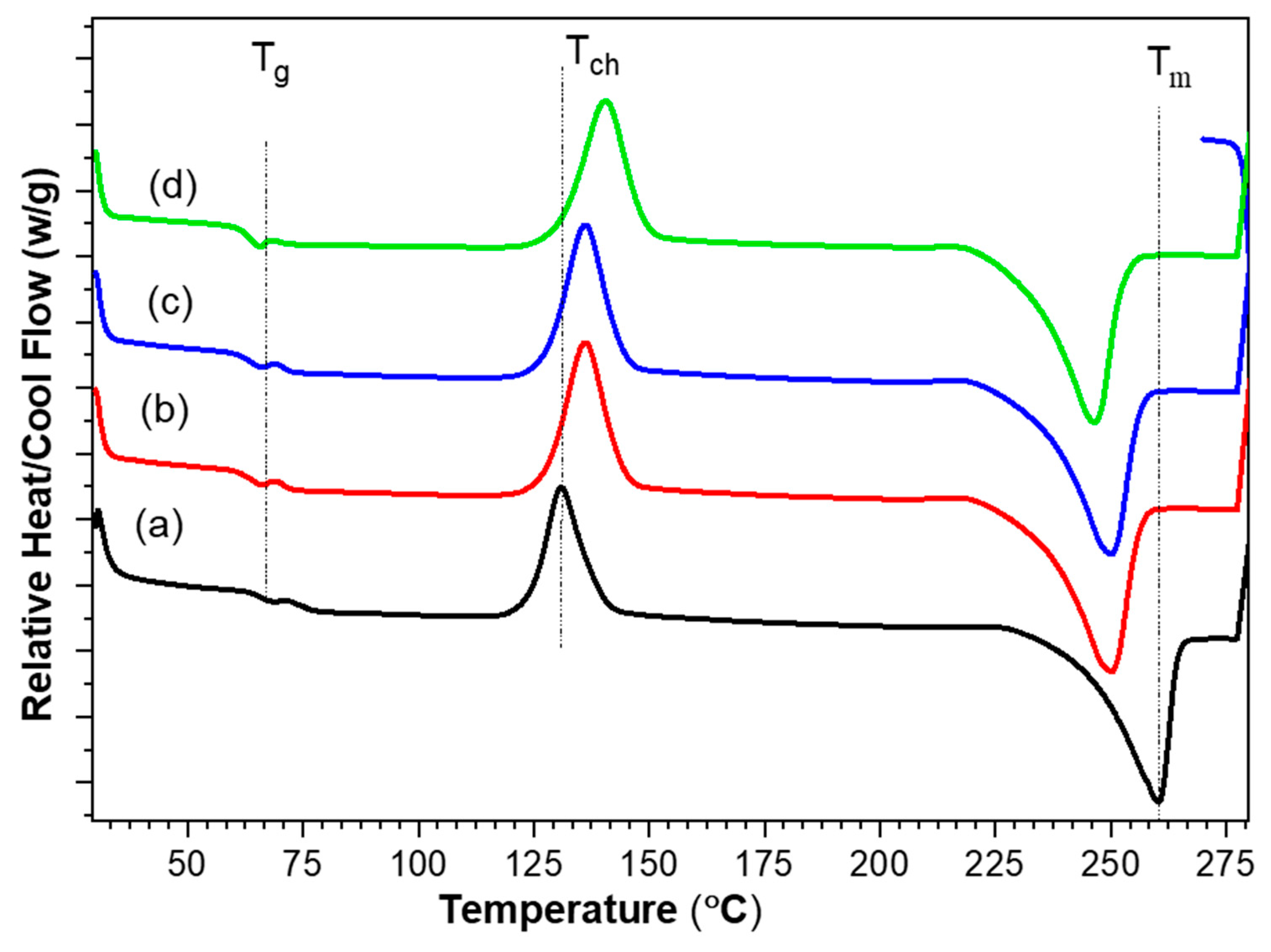
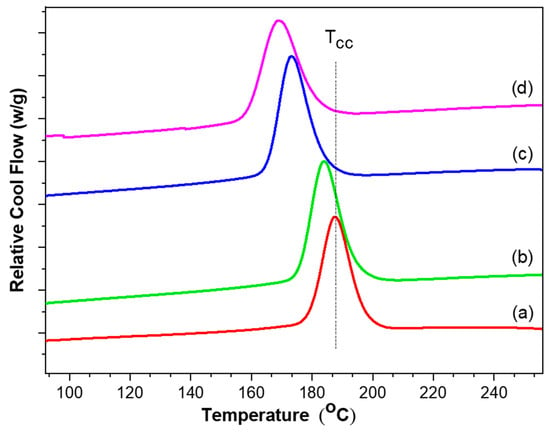
The crystallization behavior of pristine PET and PET nanocomposites with organomodified LDHs was investigated by applying heat through DSC. The thermograms in Figure 6a–d depict the thermal transitions of pure PET and PET nanocomposites containing varying concentrations of MgAl LDH- CDS (500 ppm, 800 ppm, and 1000 ppm), respectively. Key thermal parameters such as the glass transition temperature (Tg), crystallization temperature upon heating (Tch), melting temperature (Tm), crystallization temperature during cooling (Tcc), and the percentage of crystallinity (Xch%) were analyzed, with the data summarized in Table 2. The percent crystallinity (Xch) of each sample was determined using the following Equation (1) derived from the DSC isothermal events:
where Xch represents the percent crystallinity, ΔHm is the sample’s melting enthalpy, H°m is the melting enthalpy of 100% crystalline PET (140 J/g), and Wf is the weight percent modified LDHs nanocomposites.
Xch = (∆Hm)/((1 − Wf)H°m)
Figure 6.
DSC thermogram of pure PET and Pet nanocomposites (a) pure PET (b) PET-MgAl LDH-CDS 500 ppm (c) PET-MgAl LDH-CDS 800 ppm (d) PET-MgAl LDH-CDS 1000 ppm.
Table 2.
DSC results of LDHs and Modified LDHs at different MgAL LDH-DBSNBA contents.
The data in Table 2 indicate that the glass transition temperature (Tg) of PET nanocomposites is consistently higher than that of pristine PET. The Tg values for pristine PET, PET-MgAl LDH-CDS at 500 ppm, 800 ppm, and 1000 ppm are 65.01 °C, 65.96 °C, 65.98 °C, and 66.23 °C, respectively. This increase in Tg is attributed to the presence of organomodified LDHs, which impose restrictions on polymer chain mobility. The elevated Tg is consistent with the theoretical understanding that the polymer’s glassy state becomes more stable when the polymer chains are constrained by strong interactions at the matrix-filler interface. These interactions limit chain mobility, thereby requiring greater energy to overcome the constraints and transitioning to the rubbery state. The restricted mobility of the polymer chains in the presence of modified LDHs leads to an increase in Tg. This phenomenon is further enhanced with higher concentrations of MgAl LDH-CDS as observed in the DSC results. Consequently, the elastic behavior of the PET matrix is enhanced due to the combined effects of filler-polymer interactions and the reduced chain mobility. These findings demonstrate the influence of organomodified LDHs on the thermal behavior of PET nanocomposites, with implications for their mechanical and thermal stability.
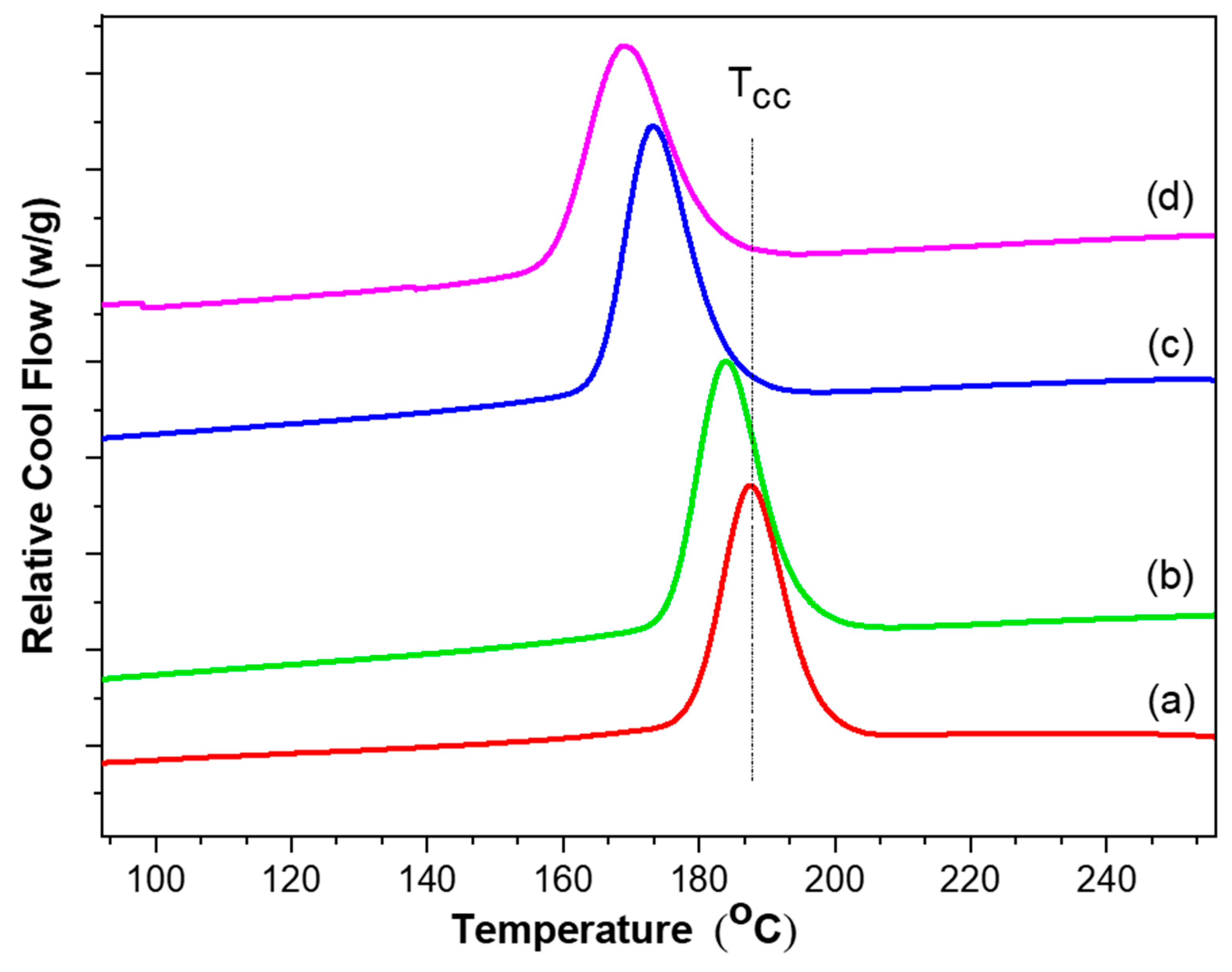
Based on the analysis in Table 1, the heating crystallization temperature (Tch) of PET nanocomposites is notably higher than that of pristine PET, with the increase being directly proportional to the content of modified LDHs during the heating process. Conversely, the crystallization temperature on cooling (Tcc) as shown in Figure 7, exhibits an inverse relationship with the modified LDHs content. This trend strongly indicates that the presence of modified LDHs acts as a nucleating agent, promoting crystallization and accelerating the crystallization rate of the PET polymer matrix [32]. Specifically, the nanocomposite containing 1000 ppm of modified LDHs with CDS shows a more significant increase in Tch compared to samples with 800 ppm and 500 ppm of the modified LDHs. This observation reinforces the conclusion that MgAl-CDS plays a critical role as a nucleating agent in PET-MgAl LDH-CDS nanocomposites. The nucleating effect of the MgAl LDH-CDS is attributed to the growth of crystallization nuclei, which enhances the crystallization process through heterogeneous nucleation. The impact of modified LDHs on crystallization is further illustrated in Figure 6, where the crystallization peak shifts toward a higher temperature range. This shift corresponds to the increased Tch value, which indicates a reduced energy requirement for cold crystallization. Additionally, the DSC thermograms in Figure 6 reveal that the melting temperature (Tm) of PET nanocomposites is lower compared to that of pure PET. The reduction in Tm signifies that the incorporation of modified LDHs creates nucleation sites for PET crystals, thereby facilitating the melting process at a lower temperature.
Figure 7.
DSC thermogram of crystallization temperature on cooling (Tcc) pure PET and Pet nanocomposites (a) pure PET (b) PET-MgAl LDH-DBSNBA 500 ppm (c) PET-MgAl LDH-DBSNBA 800 ppm (d) PET-MgAl LDH-DBSNBA 1000 ppm.
The half-crystallization time (T1/2), a parameter that provides insights into the catalytic properties of the nanocomposites, can be expressed by Equation (2):
where Ton is the crystallization onset temperature at which the thermograph first departs from baseline, the exothermal exhibits a peak at a temperature known as Tcc, and X is the cooling rate (°C min−1).
T1⁄2 = (Ton − Tcc)/X
These results underscore the critical role of MgAl LDH-CDS in promoting crystallization through heterogeneous nucleation. The modified LDHs not only increase the Tch but also improve the overall crystallization kinetics of PET nanocomposites, contributing to a higher rate of crystallization and enhanced thermal properties. The observed reduction in Tm and alterations in crystallization behavior affirm the effectiveness of MgAl-DBSNBA as a nucleating agent, paving the way for advanced applications of PET nanocomposites with tailored thermal and mechanical properties.
Table 2 presents the crystallization properties of pristine PET and PET nanocomposites containing LDHs modified with CDS. The cooling crystallization temperature (Tcc) and onset crystallization temperature (Ton) of the PET nanocomposites are observed to be lower than those of unmodified PET. Among the samples, the PET-LDH-CDS 1000 ppm composition exhibits the lowest cooling crystallization temperature (Tcc = 146.39 °C) and the highest half-crystallization time (T1/2 = 2.27 min). This indicates a slower polymer chain formation rate and an increase in the polymer matrix particle size, leading to delayed crystallization. These results highlight the influence of organically modified layered materials in slowing the crystallization process by limiting the crystallization velocity, thereby extending the crystallization period.
The degree of crystallinity (Xch) for PET and PET nanocomposites was determined, with the results detailed in Table 2. The degrees of crystallinity (Xch) for pristine PET, MgAl LDH-CDS 500 ppm, MgAl LDH-CDS 800 ppm, and MgAl LDH-CDS 1000 ppm were calculated as 22.2%, 26.7%, 28.8%, and 30.3%, respectively. These findings reveal that the degree of crystallinity (Xch) is higher for the LDH-modified samples compared to pristine PET. This increase in crystallinity indicates that MgAl LDH-CDS acts as a nucleating agent, enhancing crystallization. The shift in the crystallization temperature (Tch) to a lower temperature range with increasing modified LDH content further supports this observation, as it implies a reduction in the activation energy for crystallization [32]. Moreover, the results demonstrate that a higher concentration of modified LDHs provides more nucleation sites, facilitating the formation of crystalline domains and thereby increasing the degree of crystalline. The organic modifier CDS, with its numerous nucleating sites, plays a critical role in this process by promoting nucleation. Consequently, the introduction of modified LDHs not only alters the crystallization dynamics of PET but also enhances its crystallinity, underscoring their effectiveness as nucleating agents in the polymer matrix.
3.6. Gas Barrier Properties of Nanocomposites
Nanocomposites with impermeable nanolayers enhance gas barrier properties by obstructing gas diffusion through the polymer matrix, forcing gases to navigate a more tortuous path. This improvement is attributed to the successful modification of Layered Double Hydroxides (LDHs), which increases the interlayer spacing within LDHs galleries. As polymer chains partially infiltrate these expanded basal spaces, they create elongated diffusion pathways for gas molecules. The incorporation of large quantities of CDS organic modifiers into the LDH layers, coupled with the resultant flocculation and exfoliation morphologies, significantly enhances the gas barrier properties. Furthermore, the presence of modified LDHs promotes an increase in the crystalline content of PET nanocomposite films. Crystallinity plays a vital role in gas permeability. As the crystalline phase of the nanocomposite increases, the polymer molecules pack more efficiently into crystallites, thereby reducing the free volume in the polymer matrix. This reduction in unoccupied volume diminishes the ease of gas transport. Table 3 highlights the oxygen and nitrogen permeability values of PET nanocomposite films with varying contents of modified LDHs. The addition of modified LDHs results in the formation of a multiphase system within the PET matrix, with each phase exhibiting distinct permeability characteristics. In such systems, the gas transport mechanism is governed by the permeable phase, especially when one phase significantly dominates in permeability compared to the others. The morphology and microstructure of these multiphase systems are critical in influencing transport phenomena. PET nanocomposites exhibit significantly improved gas barrier performance compared to pristine PET. Among the samples tested, PET-MgAl-CDS nanocomposites with 1000 ppm LDH content displayed the highest gas barrier efficiency. This superior performance is linked to a higher degree of crystalline, as confirmed by DSC. The degree of crystallinity (Xch) for PET-MgAl LDH-CDS at 1000 ppm, 800 ppm, and 500 ppm was measured as 30.3%, 28.8%, and 26.7%, respectively. The enhanced crystallinity in the 1000 ppm sample correlates with its lower gas permeability, underscoring the role of crystallinity in gas barrier enhancement.
Table 3.
Gas barrier properties of PET nanocomposites.
The gas permeability of PET nanocomposites was calculated using Equation (3):
where q is the permeation amount, k′ is the coefficient, l is the thickness, p is the pressure, a is the permeation area and t is the measurement time.
To further evaluate the gas barrier effect, the Barrier Improvement Factor (BIF) was introduced, BIF is defined as the ratio of the gas barrier of pure PET to that of the PET nanocomposite in Equation (4):
BIF provides an accurate measure of the gas barrier enhancement. A BIF value of 1 indicates no change in barrier properties, while a BIF less than 1 suggests decreased barrier performance with increased gas permeation. Conversely, a BIF greater than 1 signifies enhanced barrier properties with reduced gas permeation.
The data presented in Table 3 highlight the direct relationship between LDH content and gas barrier performance. PET-MgAl LDH-CDS at 1000 ppm exhibited the highest BIF, aligning with its superior degree of crystallinity and lower permeability. These results emphasize the critical role of modified LDHs and their content in achieving optimal gas barrier properties in PET nanocomposites. The multiphase morphology and microstructure play a pivotal role in shaping the transport phenomena, offering a deeper understanding of how nanocomposite design impacts gas barrier performance.
3.7. Optical Properties of Nanocomposites
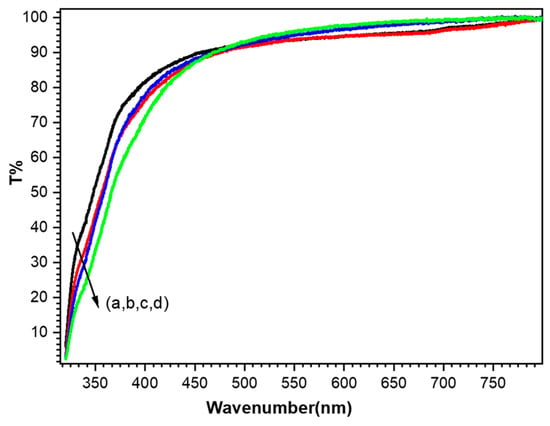
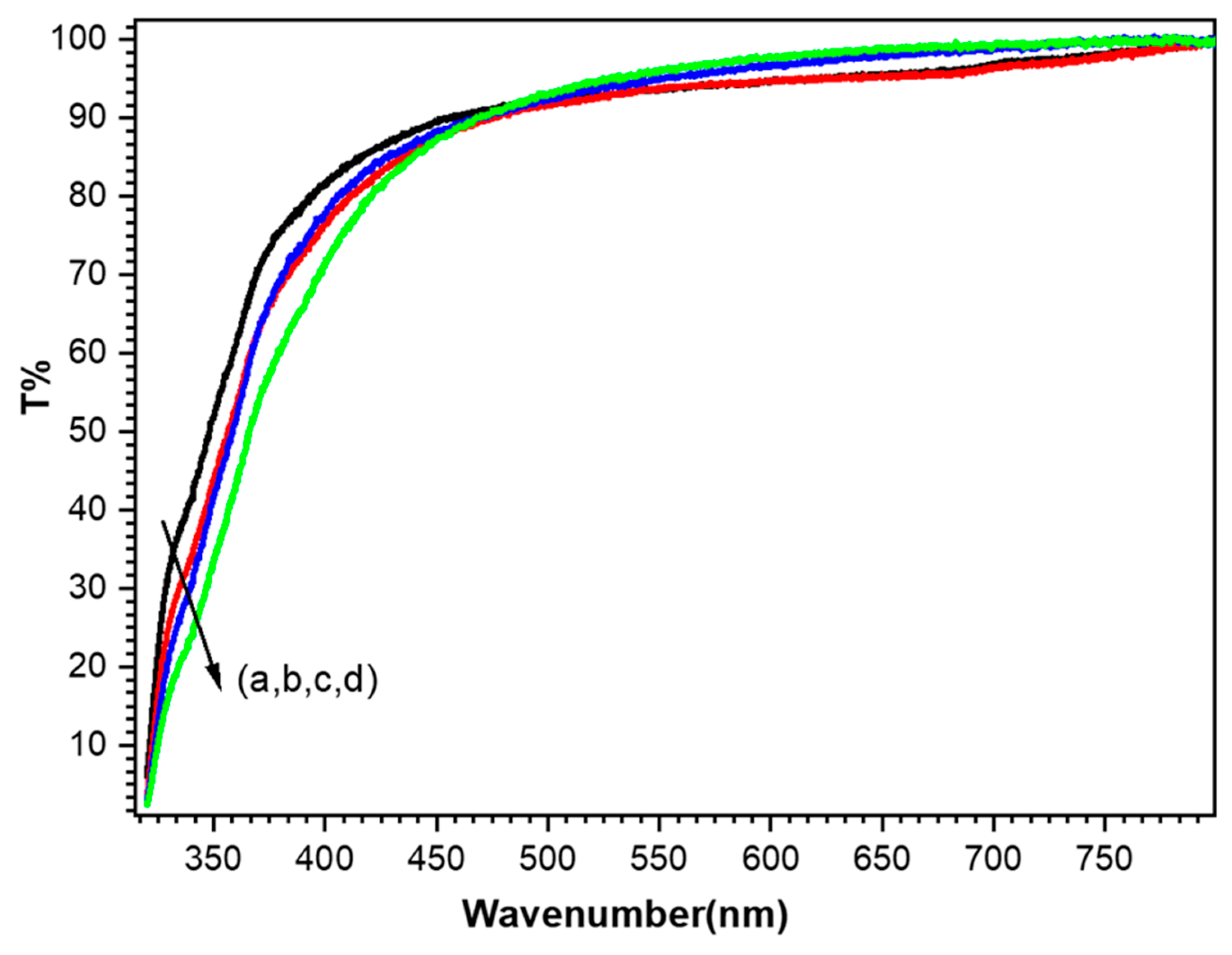
Polyethylene terephthalate (PET) nanocomposites, comprising a PET matrix with dispersed modified layered double hydroxide (LDHs) nanoparticles, exhibit distinctive optical properties that depend on factors such as nanoparticle type, size, concentration, and distribution. These nanocomposites offer remarkable optical performance combined with stability and ease of processing, making them suitable for advanced applications. As previously discussed, inorganic nanoparticles in the PET matrix diffuse ultraviolet (UV) light and increase the light path length, resulting in reduced UV transmission. The presence of these nanoparticles within the polymer matrix significantly influences the transparency of the material. PET is inherently known for its excellent optical transparency, and the incorporation of nanoparticles can alter this property. At low nanoparticle concentrations, with uniform dispersion throughout the PET matrix, the transparency is largely retained. However, higher concentrations or nanoparticle agglomeration can reduce transparency due to increased light scattering. Figure 8 and Table 4 present data on the percent transmission (%T) of PET and PET nanocomposite films with varying LDH content. For pristine PET, a high optical transmission of 93% was observed at a wavelength of 550 nm, spanning the entire visible spectrum (400–800 nm).
Figure 8.
UV-Vis properties of (a) pure PET (b) PET-MgAl LDH-CDS 500 ppm (c) PET-MgAl LDH-CDS 800 ppm (d) PET-MgAl LDH-CDS 1000 ppm.
Table 4.
Optical properties of PET nanocomposites.
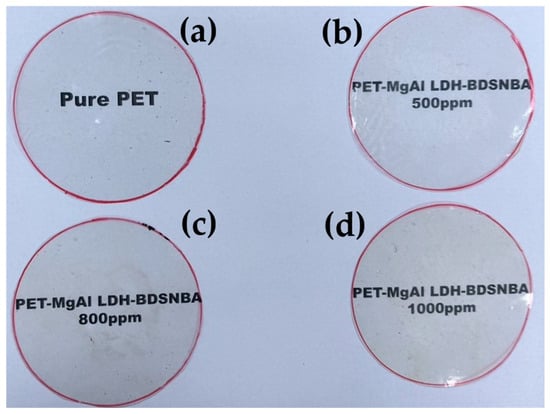
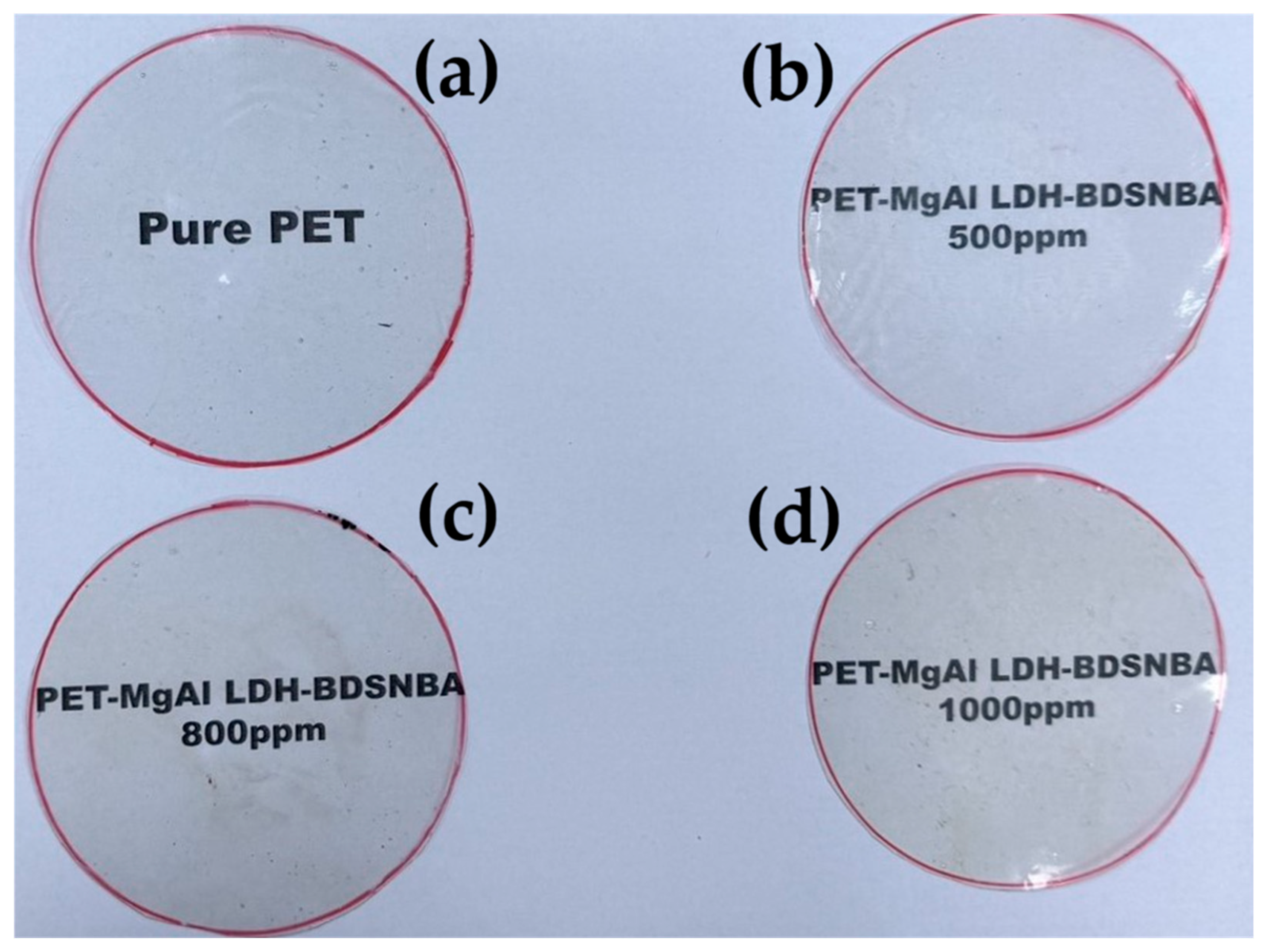
When modified LDHs were introduced into the PET matrix, a slight decrease in optical transmission was observed in the wavelength range of 220–550 nm as the LDHs content increased from Figure 8a–d had shown. Despite this, the nanocomposites maintained a high transmission of approximately 89%, attributed to the amorphous nature of their structure. Analysis using XRD that the exfoliated structure of LDHs layers and their effective dispersion in the PET matrix were critical factors contributing to the exceptional optical clarity of the nanocomposites. These findings suggest that even with the addition of CDS modified LDHs, the transparency of the PET nanocomposites was only minimally affected. The high optical clarity observed in these materials highlights their potential for use in applications requiring transparency, such as packaging, displays, and optical components. UV-Vis spectroscopy Figure 8 revealed that all PET and PET-MgAl LDH-CDS nanocomposites retained high optical clarity, with transmittance levels comparable to pure PET across the visible spectrum (400–700 nm), even at MgAl LDH-CDS loadings up to 1000 ppm. This exceptional transparency uncommon in nanocomposites with conductive fillers confirms the homogeneous dispersion of MgAl LDH-CDSs at the nanoscale, avoiding light-scattering aggregates. Such behavior is critical for applications requiring both transparency and functionality, such as flexible packaging, display coatings, or optical components. To further validate this, Figure 9 presents optical photographs of the samples, demonstrating their macroscopic uniformity and glass-like clarity, which aligns with the UV-Vis data. The retention of transparency, combined with earlier enhancements in thermal, mechanical, and barrier properties discussed in the above sections, positions these nanocomposites as promising candidates for high-performance transparent materials. The results of this study demonstrate that the development of PET nanocomposites expands the functionality of PET-based materials, offering enhanced optical properties while retaining their intrinsic clarity.
Figure 9.
Optical photographs of (a) pure PET (b) PET-MgAl LDH-CDS 500 ppm (c) PET-MgAl LDH-CDS 800 ppm (d) PET-MgAl LDH-CDS 1000 ppm.
3.8. Intrinsic Viscosity (IV) and Molecular Weight Determination of In Situ Synthesized PET/MgAl-CDS Nanocomposite
Table 5 presents the intrinsic viscosity (IV), number-average molecular weight (Mn), mass-average molecular weight (Mw), and polydispersity index (PDI) for each sample. The results reveal a significant increase in IV, Mn, and Mw for PET nanocomposites compared to pristine PET as varying amounts of LDH-CDS are introduced into the polymerization process. This increase suggests a linear relationship between the molecular weight of the PET nanocomposite and the concentration of LDH-CDS. These findings indicate that the presence of modified LDH layers during in situ polymerization facilitates the formation of longer polymer chains, thereby enhancing the molecular weight of the resulting PET nanocomposites. The observed trend can be attributed to the enhanced thermal stability of PET in the presence of MgAl LDH-CDS, which likely suppresses thermal degradation during polymerization. Additionally, the improved thermal conductivity of the polymerization mixture, imparted by the MgAl LDH-CDS, contribute to the increased molecular weight by promoting more efficient polymer growth. These factors collectively suggest that the MgAl LDH-CDS acts as a catalytic agent and stabilizer, driving the synthesis of high-molecular-weight polymer chains. However, a notable exception is observed in the sample with 500 ppm LDH-CDS, where both IV and Mw are lower compared to the 800 ppm and 1000 ppm samples. This deviation may result from reduced polymer chain growth and partial decomposition of the MgAl LDH-CDS at higher concentrations. These findings underscore the importance of optimizing the concentration of LDH-CDS to balance its catalytic benefits with its stability during the polymerization process.
Table 5.
Number of Average molecular weight (Mn), Mass Average molecular weight (Mw), Intrinsic Viscosity (IV), and Polydispersity Index (PDI) of PET and PET/MgAl LDH-CDS nanocomposites.
4. Discussion
This study highlights the potential of synthetic Layered Double Hydroxides (LDHs), specifically MgAl LDH modified with calcium dodecylbenzene sulphonate and n-butyl alcohol (CDS), as a sustainable alternative to natural clays in polyethylene terephthalate (PET) nanocomposites which play the dual role in PET nanocomposites. The modified LDH functions as both a catalyst and dispersive agent, significantly improving nanofiller exfoliation and dispersion within the PET matrix. This enhancement leads to superior mechanical, thermal, and barrier properties, addressing industrial demands for sustainable materials while reducing the environmental impact of traditional clay-based nanocomposites.
The superior performance of CDS-modified MgAl LDH PET nanocomposites stems from the improved exfoliation and dispersion of nanofillers. Unlike natural clays, which often suffer from incomplete exfoliation, synthetic LDHs modified with organic surfactants exhibit better compatibility with hydrophobic polymers like PET, enhancing overall material properties. A key contribution of this research is demonstrating the dual role of modified LDHs as both catalysts and dispersive agents, facilitating polymerization and ensuring uniform nanofiller distribution—an essential factor in nanocomposite fabrication. By expanding interlayer spacing and reducing cohesive forces, the surfactant allows PET monomers to polymerize within the expanded galleries, achieving full exfoliation.
Beyond PET nanocomposites, this study underscores the broader sustainability benefits of synthetic LDHs. Replacing natural clays with synthetic alternatives mitigates environmental issues related to clay mining, such as land degradation and pollution, aligning with global sustainability goals. The improved properties of these nanocomposites also hold industrial significance, particularly in packaging, automotive, and electronics, where enhanced barrier properties and mechanical strength can extend product lifespan and improve efficiency.
Future research should focus on scaling up the polymerization process for industrial production, optimizing LDH synthesis for cost-effectiveness, and assessing long-term stability and recyclability. Additionally, the applicability of this approach to other polymer matrices should be explored, potentially leading to a new class of high-performance, sustainable nanocomposites. Further investigation into the catalytic mechanisms of modified LDHs could also optimize exfoliation and dispersion processes.
5. Conclusions
In conclusion, this study marks a pivotal advancement in the field of polymer engineering by employing advanced catalyst-driven polymerization techniques to enhance the structural and functional properties of PET nanocomposites. Utilizing CDS-modified MgAl LDH as a catalyst and nanofiller not only optimizes the exfoliation and dispersion within the PET matrix but also significantly improves the material’s mechanical strength, thermal stability, and barrier effectiveness against gases and moisture. This method surpasses traditional techniques by ensuring a more uniform distribution of nanofillers, which is critical for achieving the desired enhancement in properties. Moreover, the shift from natural clay to synthetic LDHs addresses key environmental issues such as land degradation and water contamination associated with clay extraction. By focusing on sustainable material sources and advanced manufacturing processes, this research not only meets industrial needs for higher-performance materials but also contributes to the broader goal of reducing the environmental footprint of material production. This study expands the applications of PET nanocomposites in industries like packaging and automotive, while also promoting a paradigm shift towards more environmentally responsible manufacturing practices.
Author Contributions
Conceptualization, T.-Y.T. and B.H.; methodology, T.-Y.T. and B.H.; software, B.H.; validation, T.-Y.T., B.H. and N.B.; formal analysis, B.H.; investigation, T.-Y.T., N.B. and B.H.; resources, T.-Y.T.; data curation, B.H. and N.B.; writing—original draft preparation, B.H.; writing—review and editing, T.-Y.T., B.H. and N.B.; visualization, T.-Y.T. and B.H.; supervision, T.-Y.T.; project administration, T.-Y.T.; funding acquisition, T.-Y.T. All authors have read and agreed to the published version of the manuscript.
Funding
We are grateful to the National Science & Technology Council on the Project “Study on the mechanism of preparation of polyester nanocomposites and recycling by chemical degradation using new catalysts” (NSTC 114-2635-M-033-001-MY3) for providing financial support for this research.
Data Availability Statement
The data supporting this study’s findings are available upon request from the authors.
Acknowledgments
We are grateful to Chung Yuan Christian University, Department of Chemistry, Center for Nano-Technology and R&D Centre for Membrane Technology for providing all facility support for this work.
Conflicts of Interest
The authors declare no conflicts of interest.
Abbreviations
The following abbreviations are used in this manuscript:
| LDH | Layered Double Hydroxide |
| CDS | calcium dodecylbenzene sulphonate, n-butyl alcohol |
| BHET | Bis(2-hydroxyethyl) terephthalate (BHET) |
| PET | Polyethylene terephthalate |
| XRD | X-ray diffraction |
| FTIR | Fourier transform infrared spectroscopy |
| SEM | scanning electron microscope |
| DLS | dynamic light scattering |
| TEM | Transmission electron microscopy |
| TGA | Thermogravimetric analysis |
References
- Velásquez, E.; Garrido, L.; Valenzuela, X.; Galotto, M.J.; Guarda, A.; de Dicastillo, C.L. Physical Properties and Safety of 100% Post-Consumer PET Bottle-Organoclay Nanocomposites Towards a Circular Economy. Sustain. Chem. Pharm. 2020, 17, 100285. [Google Scholar] [CrossRef] [Scilit]
- Tejaswini, M.S.S.R.; Pathak, P. In-Situ Photocatalytic Degradation of Low-Density Polyethylene: A Pathway Towards Eco-Sustainability and Circular Economy. Sustain. Chem. Pharm. 2023, 36, 101320. [Google Scholar] [CrossRef] [Scilit]
- Usman, I.U.; Ma, K. Influence of Polyethylene Terephthalate (PET) Utilization on the Engineering Properties of Asphalt Mixtures: A Review. Constr. Build. Mater. 2024, 411, 134439. [Google Scholar] [CrossRef] [Scilit]
- Wang, X.; Yang, S.; Wang, Q. The Experiment and Simulation of Enhanced Mechanical Performance for Polyethylene Terephthalate/High-Density Polyethylene Composites via Domain Size Control. Polym. Adv. Technol. 2023, 34, 3356–3369. [Google Scholar] [CrossRef] [Scilit]
- Ghamarpoor, R.; Jamshidi, M.; Sayyadian, M.; Razavizadeh, M. Chemical/Photochemical Functionalization of Polyethylene Terephthalate Fabric: Effects on Mechanical Properties and Bonding to Nitrile Rubber. Sci. Rep. 2023, 13, 14533. [Google Scholar] [CrossRef] [Scilit]
- Ghosal, K.; Nayak, C. Recent Advances in Chemical Recycling of Polyethylene Terephthalate Waste into Value Added Products for Sustainable Coating Solutions–Hope vs. Hype. Mater. Adv. 2022, 3, 1974–1992. [Google Scholar] [CrossRef] [Scilit]
- Benosman, A.S.; Mouli, M.; Taibi, H.; Belbachir, M.; Senhadji, Y.; Bahlouli, I.; Houivet, D. Studies on Chemical Resistance of PET-Mortar Composites: Microstructure and Phase Composition Changes. Engineering 2013, 5, 349–357. [Google Scholar] [CrossRef]
- Cruz, S.A.; Zanin, M.; Nerin, C.; De Moraes, M.A.B. Study of Barrier Properties and Chemical Resistance of Recycled PET Coated with Amorphous Carbon Through a Plasma Enhanced Chemical Vapour Deposition (PECVD) Process. Food Addit. Contam. 2006, 23, 100–106. [Google Scholar] [CrossRef] [Scilit]
- Joseph, T.M.; Azat, S.; Ahmadi, Z.; Jazani, O.M.; Esmaeili, A.; Kianfar, E.; Thomas, S. Polyethylene Terephthalate (PET) Recycling: A Review. Case Stud. Chem. Environ. Eng. 2024, 9, 100673. [Google Scholar] [CrossRef] [Scilit]
- Soong, Y.H.V.; Sobkowicz, M.J.; Xie, D. Recent Advances in Biological Recycling of Polyethylene Terephthalate (PET) Plastic Wastes. Bioengineering 2022, 9, 98. [Google Scholar] [CrossRef] [Scilit]
- Lee, Y.; Park, S.; Kim, D.; Seo, J. Development of PET Bottle to Bottle Recycle in Japan. Korean J. Packag. Sci. Technol. 2024, 30, 31–42. [Google Scholar] [CrossRef] [Scilit]
- Raza, A.; Khan, W.U.H.; Khoja, A.H.; Khan, A.; Hassan, M.; Liaquat, R.; Al-Anazi, A. Thermokinetic Investigation of Polyethylene Terephthalate (PET) Plastic Over Biomass Fly Ash (BFA) Catalyst Using Pyrolysis Process Through Non-Isothermal Thermogravimetric Analysis. Sustain. Chem. Pharm. 2024, 42, 101856. [Google Scholar] [CrossRef] [Scilit]
- Kostenko, M.; Stetsyshyn, Y.; Harhay, K.; Melnyk, Y.; Donchak, V.; Gubriy, Z.; Kracalik, M. Impact of the Functionalized Clay Nanofillers on the Properties of the Recycled Polyethylene Terephthalate Nanocomposites. J. Appl. Polym. Sci. 2024, 141, e55543. [Google Scholar] [CrossRef] [Scilit]
- Dorigato, A.; Fredi, G. Effect of Nanofillers Addition on the Compatibilization of Polymer Blends. Adv. Ind. Eng. Polym. Res. 2024, 7, 405–427. [Google Scholar] [CrossRef] [Scilit]
- Jawad, D.S.; Nassir, N.A.; Alzuhairi, M. Synthesis of Polymethyl Methacrylate/Depolymerized Polyethylene Terephthalate Blend Reinforced by Titanium Dioxide Nanoparticles for Dental Fillings Applications. J. Thermoplast. Compos. Mater. 2024, 37, 2944–2962. [Google Scholar] [CrossRef] [Scilit]
- Owen, M.M.; Achukwu, E.O.; Shuib, S.B.; Ahmad, Z.R.; Abdullah, A.H.; Ishiaku, U.S. Effects of High-Temperature Optimization and Resin Coating Treatment on the Mechanical, Thermal, and Morphological Properties of Natural Kenaf Fiber-Filled Engineering Plastic Composites. Polym. Compos. 2023, 4, 2512–2529. [Google Scholar] [CrossRef] [Scilit]
- Aslam, M.; Rani, A.; Khan, J.; Sharma, R.; Pant, B.N.; Singh, P.; Pandey, G. Advances in Metallopolymers: Synthesis Strategies, Catalytic Insights, and Environmental Remediation Applications. Sustain. Chem. Pharm. 2024, 40, 101630. [Google Scholar] [CrossRef] [Scilit]
- Wang, R.; Li, S.; Huang, H. Preparation of Carbon Dots from PET Waste by One-Step Hydrothermal Method and Its Application in Light Blocking Films and LEDs. J. Fluoresc. 2023, 33, 1305–1315. [Google Scholar] [CrossRef] [Scilit]
- Wu, Y.; Wang, R.; Xie, W. Solvent-Thermal Preparation of Sulfur and Nitrogen-Doped Carbon Dots with PET Waste as Precursor and Application in Light-Blocking Film. J. Nanopart. Res. 2023, 25, 18. [Google Scholar] [CrossRef] [Scilit]
- Paszkiewicz, S.; Pawelec, I.; Szymczyk, A.; Špitalský, Z.; Mosnáček, J.; Kochmańska, A.; Rosłaniec, Z. Effect of Exfoliated Graphite Nanoplatelets’ Size on the Phase Structure, Electrical, and Barrier Properties of Poly (Trimethylene Terephthalate)-Based Nanocomposites. Polym. Eng. Sci. 2015, 55, 2222–2230. [Google Scholar] [CrossRef] [Scilit]
- Xie, Y.; Xu, Y.; Du, Y.; Zhou, Z.; Zou, L.; Li, W. Chelated Titanate Modified Multilayer Graphene-Butylpyridine Latex/Polyethylene Terephthalate Composites with Enhanced Thermal Conductivity. Diamond Relat. Mater. 2024, 143, 110867. [Google Scholar] [CrossRef] [Scilit]
- Fahmy, E.A.; Youssef, A.M.; Ali, E.E. Evaluation of Asphalt Mixtures Modified with Polyethylene Terephthalate (PET). Innov. Infrastruct. Solut. 2024, 9, 434. [Google Scholar] [CrossRef] [Scilit]
- Worasith, N.; Goodman, B.A. Clay Mineral Products for Improving Environmental Quality. Appl. Clay Sci. 2023, 242, 106980. [Google Scholar] [CrossRef] [Scilit]
- Qi, J.; Yu, J.; Shah, K.J.; Shah, D.D.; You, Z. Applicability of Clay/Organic Clay to Environmental Pollutants: Green Way—An Overview. Appl. Sci. 2023, 13, 9395. [Google Scholar] [CrossRef] [Scilit]
- Zhao, P.; Gao, D.; Zhang, H.; Lyu, B.; Ma, J.; Younis, S.A.; Kim, K.H. Potential Applicability of Mg/Al-Layered Double Hydroxide (LDH) for Environmentally Friendly Chromium-Based Leather Tanning. ACS Sustain. Chem. Eng. 2023, 11, 11110–11122. [Google Scholar] [CrossRef] [Scilit]
- Vakili, A.H.; Salimi, M.; Keskin, İ.; Jamalimoghadam, M. A Systematic Review of Strategies for Identifying and Stabilizing Dispersive Clay Soils for Sustainable Infrastructure. Soil Tillage Res. 2024, 239, 106036. [Google Scholar] [CrossRef] [Scilit]
- Da Silva, A.F.; da Silva Duarte, J.L.; Selvasembian, R. Life cycle assessment of LDH-MgFe production for nitrate removal: Impacts of synthesis methods. J. Nanopart Res. 2023, 25, 16. [Google Scholar] [CrossRef] [Scilit]
- Latip, A.; Sivakumar, M.; Mohd Suah, F.B.; Hussin, M.H.; Hussein, Z. A facile green synthesis of LDH nanosheets using sugar molecules. J. Turk. Chem. Soc. Sect. A Chem. 2024, 11, 967–980. [Google Scholar] [CrossRef] [Scilit]
- Wu, S.; Liang, H.; Xu, B. A Co-Precipitation Route for the Preparation of Eco-Friendly Cu-Al-Layered Double Hydroxides with Efficient Tetracycline Degradation. Environ. Sci. Pollut. Res. 2023, 30, 99412–99426. [Google Scholar] [CrossRef] [Scilit]
- Haraźna, K.; Grzela, K.; Stępień-Hołubczat, K.; Beneš, H.; Hodan, J.; Nevoralová, M.; Guzik, M. Novel, Eco-Friendly α-Tocopherol/Layered Double Hydroxides/Poly (3-Hydroxyoctanoate)-Based Active Packaging Materials with Enhanced Antimicrobial, Barrier and Antioxidant Activities. Chem. Eng. J. 2024, 500, 156959. [Google Scholar] [CrossRef] [Scilit]
- Tsai, T.Y.; Li, C.H.; Chang, C.H.; Cheng, W.H.; Hwang, C.L.; Wu, R.J. Preparation of Exfoliated Polyester/Clay Nanocomposites. Adv. Mater. 2005, 17, 1769–1773. [Google Scholar] [CrossRef] [Scilit]
- Izah, S.C.; Ogwu, M.C. Sustainable Utilization and Conservation of Africa’s Biological Resources and Environment; Springer Nature: Berlin/Heidelberg, Germany, 2023; Volume 32. [Google Scholar] [CrossRef] [Scilit]
- Dehkordi, M.M.; Nodeh, Z.P.; Dehkordi, K.S.; Khorjestan, R.R.; Ghaffarzadeh, M. Soil, Air, and Water Pollution from Mining and Industrial Activities: Sources of Pollution, Environmental Impacts, and Prevention and Control Methods. Results Eng. 2024, 23, 102729. [Google Scholar] [CrossRef] [Scilit]
- Timko, M.T.; Woodard, T.M.; Graham, A.E.; Bennett, J.A.; Krueger, R.; Panahi, A.; Dunn, D. Thinking Globally, Acting Locally in the 21st Century: Bamboo to Bioproducts and Cleaned Mine Sites. iScience 2024, 27, 110763. [Google Scholar] [CrossRef] [Scilit] [PubMed]
- Mishra, G.; Praharaj, P.; Pandey, S.; Parida, S. Biodegradable Layered Double Hydroxide Based Polymeric Films for Sustainable Food Packaging Applications. Appl. Clay Sci. 2023, 240, 106978. [Google Scholar] [CrossRef] [Scilit]
- Oosthuizen, H.; Jones, L.; Naseem, S.; Labuschagne, F.J.W.J.; Leuteritz, A. Tailoring Materials for Their Need: Sustainable Layered Double Hydroxide Polymer Composites. J. Polym. Sci. 2023, 61, 1749–1777. [Google Scholar] [CrossRef] [Scilit]
- Sharma, A.; Kumari, S.; Sharma, S.; Singh, T.; Kumar, S.; Thakur, A.; Sharma, A.K. Layered Double Hydroxides: An Insight into the Role of Hydrotalcite-Type Anionic Clays in Energy and Environmental Applications with Current Progress and Recent Prospects. Mater. Today Sustain. 2023, 22, 100399. [Google Scholar] [CrossRef] [Scilit]
- Pathak, J.; Singh, P. Layered Double Hydroxides–Polymer Matrix Composites: Nexus Materials for Energy Storage Applications. Chem. Pap. 2024, 78, 7375–7393. [Google Scholar] [CrossRef] [Scilit]
- Li, F.; Duan, X. Applications of Layered Double Hydroxides. In Layered Double Hydroxides; Springer: Berlin/Heidelberg, Germany, 2006; pp. 193–223. [Google Scholar] [CrossRef] [Scilit]
- Singha Roy, A.; Kesavan Pillai, S.; Ray, S.S. Layered Double Hydroxides for Sustainable Agriculture and Environment: An Overview. ACS Omega 2022, 7, 20428–20440. [Google Scholar] [CrossRef] [Scilit]
- Pálinkó, I.; Sipos, P.; Berkesi, O.; Varga, G. Distinguishing Anionic Species That Are Intercalated in Layered Double Hydroxides from Those Bound to Their Surface: A Comparative IR Study. J. Phys. Chem. C 2022, 126, 15254–15262. [Google Scholar] [CrossRef] [Scilit]
- Cho, D.K.; Lim, H.W.; Haryanto, A.; Yan, B.; Lee, C.W.; Kim, J.Y. Intercalation-Induced Irreversible Lattice Distortion in Layered Double Hydroxides. ACS Nano 2024, 18, 20459–20467. [Google Scholar] [CrossRef] [Scilit] [PubMed]
- Kumari, S.; Soni, S.; Sharma, A.; Sharma, V.; Sharma, A.K. MAl-CO3 Based Layered Double Hydroxides for Catalytic Depolymerization of Poly (Ethylene Terephthalate) and Poly (Bisphenol A Carbonate) Waste Materials. Appl. Catal. O Open 2024, 189, 206922. [Google Scholar] [CrossRef] [Scilit]
- Jilili, Y.; Luo, D.; Zhen, W. Design and Evaluation of Natural Degradation Behavior of Poly (Lactic Acid)/Organo-Modified-Ni-Zn-Al-Layered Double Hydroxides Nanocomposites Film. J. Polym. Environ. 2024, 32, 1515–1530. [Google Scholar] [CrossRef] [Scilit]
- Li, Z.; Zhao, M.; Tian, R.; Shi, Y.; Tian, W.; Bai, Y.; Feng, Y. An Efficient Synthesis and Organic-Modification Coupling Strategy to Produce Highly Dispersed Ultrathin Antioxidant Intercalated Layered Double Hydroxides for Enhancing Performance of Polypropylene Composites. Chem. Eng. J. 2024, 483, 149247. [Google Scholar] [CrossRef] [Scilit]
- Shi, X.H.; Li, X.L.; Shi, H.; Liu, Q.Y.; Xie, W.M.; Wu, S.J.; Wang, D.Y. Insight into the Flame-Retardant Mechanism of Different Organic-Modified Layered Double Hydroxide for Epoxy Resin. Appl. Clay Sci. 2024, 248, 107233. [Google Scholar] [CrossRef] [Scilit]
- Cao, X.; Kong, L.; Gu, Z.; Xu, X. Ce and P123 modified layered double hydroxide (LDH) composite for the synthesis of polypropylene glycol monomethyl ether. RSC Adv. 2022, 12, 23183–23192. [Google Scholar] [CrossRef] [Scilit]
- Kumari, S.; Soni, S.; Sharma, A.; Kumar, S.; Sharma, V.; Jaswal, V.S.; Sharma, A.K. Layered Double Hydroxides Based Composite Materials and Their Applications in Food Packaging. Appl. Clay Sci. 2024, 247, 107216. [Google Scholar] [CrossRef] [Scilit]
- Shen, Z.; Ma, T.; Fei, L.; Li, A.; Liu, J.; Xu, Z.; Sun, Y. MgAl-LDH/LDO-Catalyzed Hydrothermal Deoxygenation of Microalgae for Low-Oxygen Biofuel Production. ACS EST Eng. 2021, 1, 989–999. [Google Scholar] [CrossRef] [Scilit]
- Silva Neto, L.D.; Anchieta, C.G.; Duarte, J.L.; Meili, L.; Freire, J.T. Effect of Drying on the Fabrication of MgAl Layered Double Hydroxides. ACS Omega 2021, 6, 21819–21829. [Google Scholar] [CrossRef] [Scilit]
- Almeida, A.A.; Santos, R.M.; Alves Rosa, M.A.; Pulcinelli, S.H.; John, V.M.; Santilli, C.V. MgAl-Layered Double Hydroxide Nanoparticles as Smart Nanofillers to Control the Rheological Properties and the Residual Porosity of Cement-Based Materials. ACS Appl. Nano Mater. 2022, 5, 7896–7907. [Google Scholar] [CrossRef] [Scilit]
- Tammaro, L.; Vittoria, V.; Bugatti, V. Dispersion of Modified Layered Double Hydroxides in Poly (Ethylene Terephthalate) by High Energy Ball Milling for Food Packaging Applications. Eur. Polym. J. 2014, 52, 172–180. [Google Scholar] [CrossRef] [Scilit]
- Tsai, T.Y.; Bunekar, N. The Effect of Organomodified ZnAl LDH for In Situ Synthesis and the Properties of Poly (Ethylene Terephthalate) Nanocomposites. RSC Adv. 2016, 6, 65291–65298. [Google Scholar] [CrossRef] [Scilit]
- Bunekar, N.; Tsai, T.Y.; Yu, Y.Z. Synthesis and Characterization of Poly (Ethylene Terephthalate)/Bio Inorganic Modified LiAl LDH Nanocomposites. Mater. Today Proc. 2016, 3, 1415–1422. [Google Scholar] [CrossRef] [Scilit]
- Jijoe, P.S.; Yashas, S.R.; Shivaraju, H.P. Fundamentals: Synthesis, Characterization and Environmental Applications of Layered Double Hydroxides: A Review. Environ. Chem. Lett. 2021, 19, 2643–2661. [Google Scholar] [CrossRef] [Scilit]
- Yang, Z.; Li, S.; Xia, X.; Liu, Y. Hexagonal MgAl-LDH Simultaneously Facilitated Active Facet Exposure and Holes Storage Over ZnIn2S4/MgAl-LDH Heterojunction for Boosting Photocatalytic Activities and Anti-Photocorrosion. Sep. Purif. Technol. 2022, 300, 121819. [Google Scholar] [CrossRef] [Scilit]
- Wang, L.; Song, J.; Yu, C. MgAl-LDH Nanoflowers as a Novel Sensing Material for High-Performance Humidity Sensing. RSC Adv. 2024, 14, 21991–21998. [Google Scholar] [CrossRef] [Scilit]
- Khandeparkar, A.S.; Paul, R.; Sridhar, A.; Lakshmaiah, V.V.; Nagella, P. Eco-Friendly Innovations in Food Packaging: A Sustainable Revolution. Sustain. Chem. Pharm. 2024, 39, 101579. [Google Scholar] [CrossRef] [Scilit]
- Yadav, D.K.; Uma, S.; Nagarajan, R. Surfactant intercalation in Li-Al-based binary and ternary layered double hydroxides by the microwave-assisted rapid ion-exchange process and its application in iodine adsorption. Minerals 2023, 13, 303. [Google Scholar] [CrossRef] [Scilit]
- Costa, F.R.; Leuteritz, A.; Wagenknecht, U.; Jehnichen, D.; Haeussler, L.; Heinrich, G. Intercalation of Mg–Al layered double hydroxide by anionic surfactants: Preparation and characterization. Appl. Clay Sci. 2008, 38, 153–164. [Google Scholar] [CrossRef] [Scilit]
- Bouraada, M.; Ouali, M.S.; de Menorval, L.C. Dodecylsulfate and dodecybenzenesulfonate intercalated hydrotalcites as adsorbent materials for the removal of BBR acid dye from aqueous solutions. J. Saudi Chem. Soc. 2016, 20, 397–404. [Google Scholar] [CrossRef] [Scilit]
- Gao, M.; Jiao, Q.; Cui, W.; Feng, C.; Zhao, Y.; Xiang, A.; Ma, L. Preparation of PET/LDH Composite Materials and Their Mechanical Properties and Permeability for O2. Polym. Eng. Sci. 2019, 59, E366–E371. [Google Scholar] [CrossRef] [Scilit]
- Zhang, M.; Li, D.J.; Wu, D.F.; Yan, C.H.; Lu, P.; Qiu, G.M. Poly (ethylene terephthalate)/expanded graphite conductive composites: Structure, properties, and transport behavior. J. Appl. Polym. Sci. 2008, 108, 1482–1489. [Google Scholar] [CrossRef] [Scilit]
- Martínez-Vila, S.; Riera-Malgosa, L.; Prieto-Fuentes, R.; Duran-Serra, A.; Carrillo-Navarrete, F. Chemical Recycling of Polyester Fabrics by Alkaline Hydrolysis Using Alcohols as Cosolvents. Sustain. Chem. Pharm. 2025, 43, 101891. [Google Scholar] [CrossRef] [Scilit]
- Slezák, E.; Ronkay, F.; Bocz, K. Development of an Engineering Material with Increased Impact Strength and Heat Resistance from Recycled PET. J. Polym. Environ. 2023, 31, 5296–5308. [Google Scholar] [CrossRef] [Scilit]
- Fiorillo, C.; Trossaert, L.; Bezeraj, E.; Debrie, S.; Ohnmacht, H.; Van Steenberge, P.H.; Edeleva, M. Molecular and Material Property Variations During the Ideal Degradation and Mechanical Recycling of PET. RSC Sustain. 2024, 2, 3596–3637. [Google Scholar] [CrossRef] [Scilit]
- Alshammari, B.A.; Wilkinson, A.N.; Alotaibi, B.M.; Alotibi, M.F. Influence of Carbon Micro- and Nano-Fillers on the Viscoelastic Properties of Polyethylene Terephthalate. Polymers 2022, 14, 2440. [Google Scholar] [CrossRef] [Scilit]
- Debnath, S.; Parit, M.; Brown APPearson, J.; Saha, B.; Boudouris, B.W. Renewable PET from Recovered Plastic Waste. Chem. Mater. 2024, 36, 10259–10266. [Google Scholar] [CrossRef] [Scilit]
- Alshammari, B.A.; Hossain, M.; Alenad, A.M.; Alharbi, A.G.; AlOtaibi, B.M. Experimental and Theoretical Analysis of Mechanical Properties of Graphite/Polyethylene Terephthalate Nanocomposites. Polymers 2022, 14, 1718. [Google Scholar] [CrossRef] [Scilit]

Disclaimer/Publisher’s Note: The statements, opinions and data contained in all publications are solely those of the individual author(s) and contributor(s) and not of MDPI and/or the editor(s). MDPI and/or the editor(s) disclaim responsibility for any injury to people or property resulting from any ideas, methods, instructions or products referred to in the content. |
© 2026 by the authors. Licensee MDPI, Basel, Switzerland. This article is an open access article distributed under the terms and conditions of the Creative Commons Attribution (CC BY) license.