1. Introduction
The growing demand for sustainable construction materials has intensified interest in the utilization of agricultural and industrial by-products as alternative raw materials for building composites. In recent years, particular attention has been paid to lignocellulosic plant residues and mineral wastes because of their wide availability, low cost, and potential to reduce the environmental burden associated with conventional construction materials [
1,
2,
3,
4,
5,
6,
7,
8,
9,
10,
11,
12]. The use of such secondary resources is especially relevant for regions where agricultural production and energy generation are accompanied by the formation of significant amounts of waste requiring disposal or valorization.
Rice husk is one of the most abundant agricultural residues in rice-producing countries and regions. It is generated in large quantities during rice milling and is often disposed of by uncontrolled burning or landfilling, which leads to environmental pollution and inefficient resource use [
7,
8,
9]. At the same time, rice husk exhibits several favorable characteristics that make it attractive for the production of building materials. As an organic filler, it is lightweight and exhibits low thermal conductivity, while after controlled combustion it yields rice husk ash (RHA), a highly siliceous material with considerable pozzolanic activity [
10,
11,
12]. Because of these properties, both rice husk and rice husk ash have been investigated in cementitious composites, lightweight concretes, insulation materials, and other sustainable construction systems [
1,
2,
8,
10,
11,
12].
A number of studies have confirmed that rice-husk-based materials can provide useful combinations of low density, thermal efficiency, and acceptable mechanical performance. Rice husk has been used as a natural aggregate in lightweight insulating concretes, while rice husk ash has been applied as a supplementary cementitious material to improve matrix densification, reduce portlandite content, and enhance durability-related performance [
12,
13,
14,
15,
16,
17,
18,
19,
20,
21]. Recent studies have further expanded this field by demonstrating the suitability of rice-husk-based materials for thermal-insulation applications in buildings, autoclaved lightweight composites, and modular building systems [
15,
16,
17,
22,
23,
24,
25,
26,
27,
28,
29,
30,
31,
32,
33,
34,
35,
36]. In parallel, current research has shown that RHA can positively affect the strength development, microstructure, chloride resistance, carbonation resistance, and freeze–thaw durability of cement-based materials and recycled aggregate concretes [
37,
38,
39,
40,
41,
42].
In addition to agricultural waste, ash from thermal power plants is another widely available secondary resource with significant potential for use in composite binders. Thermal power plant ash contains reactive silica and alumina and can be used to partially replace Portland cement in low-clinker systems, thereby reducing both cost and the environmental footprint of binder production. When combined with highly dispersed siliceous additives such as rice husk ash, such multicomponent systems may exhibit improved hydration, enhanced pozzolanic interaction, and favorable structure formation. However, the efficiency of these systems strongly depends on the chemical and mineralogical characteristics of the local raw materials and on the correct proportioning of the binder components.
This issue is particularly relevant for the Kyzylorda region of Kazakhstan, where rice processing generates large amounts of rice husk and rice straw, while ash from the local thermal power plant accumulates as an industrial waste. Despite the availability of these resources, their integrated use in the production of composite building materials remains insufficiently studied. Earlier works have reported the possibility of employing regional agricultural and industrial waste for production of building materials, but the combined use of rice husk as an organic filler, rice husk ash as a reactive mineral additive, and thermal power plant ash as a component of a low-clinker binder still requires further investigation. This is especially important in the context of developing structural–thermal-insulation materials adapted to local raw materials and climatic operating conditions.
Therefore, the present study focuses on the development of a rice-husk-based composite material produced from agricultural waste in Southern Kazakhstan using a multicomponent ash–cement binder. The scientific novelty of the work lies in the integrated use of regional agricultural and industrial waste streams and in the optimization of the binder composition by mathematical modeling. In contrast to many published studies that examine either rice husk ash as a cement replacement or rice husk as a lightweight filler separately, this work considers their combined action within a single composite system based on locally available raw materials.
The aim of this study was to develop and optimize a structural–thermal-insulation composite material based on rice husk and a multicomponent ash–cement binder containing Portland cement, thermal power plant ash, and rice husk ash. To achieve this aim, the following objectives were formulated: (i) to characterize the main raw materials available in the Kyzylorda region; (ii) to optimize the composition of the multicomponent binder using mathematical experiment planning; (iii) to investigate the phase composition of the ash–cement stone by X-ray diffraction analysis; and (iv) to determine the key physical, mechanical, and thermal properties of the developed composite material. The results of this study may contribute to the wider use of local waste-based resources for the production of sustainable building materials with practical engineering applications.
Therefore, the development of composite materials based on rice husk and ash–cement binders represents an important scientific and practical task. The present study focuses on the mathematical modeling of the raw-material composition and the investigation of the physical and mechanical properties of composite materials produced from agricultural plant waste in the Kyzylorda region.
Although previous studies have demonstrated the potential of rice husk as a lightweight organic filler and rice husk ash as a supplementary cementitious material, most published works have investigated these components separately or in systems not specifically designed for the raw-material conditions of Southern Kazakhstan. The originality of the present study lies in the integrated use of locally available agricultural and industrial waste streams within one composite system and in the optimization of the binder composition by mathematical experiment planning.
2. Materials and Methods
The Portland cement, the ash of Kyzylorda thermal power plant, an organic filler of plant origin, and Kazakhstan rice husk were used as raw materials to conduct experiments.
Portland cement of grade 400, from Shymkent cement plant, was used in the work. Cement testing and defining of its properties were carried out in accordance with (State Standard) GOST 10178-85, GOST 310.1-85, 310.2-85, 310.3-85 [
43,
44,
45,
46].
The chemical composition of cements produced by Shymkent plant and their physical and mechanical characteristics are represented in
Table 1 and
Table 2.
The mineralogical composition of cements is presented in
Table 3.
2.1. The Ash of Thermal Power Plants
The hydro-removal ash from Kyzylorda thermal power plant was used as a mineral additive. The ash from ash dumps of Kyzylorda thermal power plant has the following characteristics:
Fly ash obtained from the ash disposal system of the Kyzylorda Thermal Power Plant was used as a mineral additive. The ash collected from the ash dumps of the Kyzylorda Thermal Power Plant has the following characteristics:
- -
Specific surface area according to PSKh-8AK (GOST 310-92) [
47]—2550 cm
2/g;
- -
CaO absorption activity (GOST 6269-93) [
48]—32 mg/g;
- -
Real density—2.0 g/cm3;
- -
Bulk density—955 kg/m3.
The properties of ash from ash dumps of Kyzylorda thermal power plant were studied for experimental work. The chemical compositions of the studied ash are represented in
Table 4.
The chemical and mineralogical compositions of the ash and slag are mainly determined by the original fuel composition and the complex chemical and phase transformations that occur during its combustion. The particle size distribution of Kyzylorda TPP ash is represented in
Table 5.
As can be seen from
Table 6, the residue on sieve No. 008 of sample I is 63.76%; sample II is 72.64%; sample III is 74.08%. The specific surface area of sample I of the ash from Kyzylorda TPP hydro-removal ash is 1483 cm
2/g; sample II is 1406 cm
2/g; sample III is 1395 cm
2/g. According to the residue on sieve No. 008 and the specific surface area, the ash from Kyzylorda TPP hydro-removal meets the requirements as a fine aggregate for the concrete production. A general view of the samples from the Kyzylorda pit is displayed in the following figure.
The binder property is significantly affected by the ash granule metric composition. In accordance with the petrographic and microscopic studies, four groups of substances can be distinguished in the ash and slag composition: glassy, amorphized clay, crystalline and organic. The glassy substance is mainly represented by spherical formations subjected to hydration. The organic part of the ash is represented in the form of coke and semi-coke. The crystalline phase of the ash consists of quartz grains, mullite, hematite, kaolinite and feldspar. In terms of the chemical composition, the ash samples are practically homogeneous, i.e., they have a small range of scatter area (
Table 6). As can be seen from the table, losses at ignition are from 4.67 to 7.59%. A high level of losses during ignition is approximately taken as unburned fuel, and it testifies a violation of the normal operating mode of the boiler units.
The ash from Kyzylorda thermal power plant mainly consists of silica oxides (45.45–56.37%) and alumina (16.62–17.70%), and also contains calcium oxides (1.66–2.20%), magnesium (0.86–1.12%), iron (2.98–3.41%) and alkali metals (0.80–1.04%). In terms of the content of calcium oxide, magnesium oxide, sulfur and sulfuric acid compounds in terms of SO3, and alkaline oxides of sodium and potassium in terms of Na
2O, the ash component of the ash and slag mixture and the fine-grained mixture samples of Kyzylorda TPP ash meet the requirements of GOST(SS) 25592-91 [
49], “Ash and slag mixtures of thermal power plants for the concrete. Technical conditions.”
The ash component of the ash and slag mixture and the fine-grained mixture of Kyzylorda thermal power plant ash mixed with Portland cement at a ratio of 1:1 (cement:ash) meet the requirements for volume change uniformity when samples are boiled in water. The bulk density of ash sample I of Kyzylorda TPP is 688 kg/m3; sample II is 623 kg/m3; sample III is 511 kg/m3. The ash density for samples I, II and III is 1.72 g/cm3, 1.58 g/cm3 and 1.32 g/cm3, respectively.
The hydraulic activity of the ash is defined by the lime absorption from the solution and the compressive strength of the composition of mortar samples at a ratio of 1:1:1 (cement:ash:sand). The lime absorption activity is 15–18 mg/g; the limit of the compressive strength is within 2.4–3.1 MPa.
2.2. The Rice Husk
The rice husk was used as a filler from waste of Kyzylorda rice-processing plants produced during technological processing of raw rice, and as a filler for the composite material production, meets all the requirements. The fractional composition of the used rice husk is represented in
Table 6.
The rice husk density is 737 kg/m3 and the bulk density is in the range from 80 to 150 kg/m3; this indicator reaches 400 kg/m3 when it is compacted. The thermal conductivity coefficient is about 0.151 W/m·°C.
Rice husks contain a high content of inorganic substances and protein compounds in comparison to wood. There are only pentozans from hemicelluloses in the husks. There is about the same amount of them in it as in deciduous wood, 16–24%. Silicon oxide dominates in the composition of the husk ash. The husk contains metabolically active acids such as acetic, citric, malic, and oxalic acid. Phenolic acids are found in the aqueous solution of its extract. The surface of the scales is covered with a thin film of cutin, a waxy substance that protects the plant from excessive water evaporation.
The thermal conductivity of the samples was determined using an ITP-MG4 thermal conductivity meter (Stroypribor LLC, Chelyabinsk, Russia). The measurement range of the temperature interval is 173–423 °K. The permissible error limit is ±10%.
The phase composition of the activated cement–ash binder was determined using X-ray diffraction (XRD). Measurements were conducted using a DRON-3 diffractometer (AO “Innovation Center Burevestnik”, Saint Petersburg, Russia). Measurement conditions are as follows: anode current of the X-ray tube is 20 Ma, tube voltage is 36 kV, angular movement speed of the counter is 2 degrees/min recording time constant is 1 sec., and intensity recording range is 3 × 10³ imp/s. Preparation of the studied sample was conducted in the form of fine powders of optimal mass with subsequent application in a thin layer onto the surface of the matte glass. The interval of diffraction angles was chosen from 2° to 32° during the shooting.
The interpretation of the X-ray diffraction patterns was carried out on the basis of reference X-ray diffraction patterns of constituent minerals. These works were carried out in the laboratory of physical and chemical analysis of binders at the Scientific Research Institute of Building Materials in Almaty.
To ensure the adequacy and reliability of the developed regression models, a comprehensive statistical analysis was performed within the framework of response surface methodology (RSM).
In addition to the Fisher F-test, the following statistical indicators were evaluated:
The coefficient of determination (R
2) was calculated as
which reflects the proportion of variance explained by the model.
The adjusted coefficient of determination (R
2_adj) was determined as
where n is the number of experiments and p is the number of model parameters.
To assess model adequacy, a lack-of-fit test was performed by decomposing the residual sum of squares:
where SS_lof represents lack of fit and SS_pe corresponds to pure experimental error estimated from replicated center points.
The center-point experiments were repeated three times (n = 3) to evaluate experimental variance and ensure repeatability.
For each composition, the dry components were first homogenized, after which a rice husk filler was added and additionally mixed to ensure uniform distribution. Then water was gradually added, continuing mixing until a homogeneous mixture was obtained. The ratio of water to binder (i/c) used in the experiments was 0.45. The prepared mixture was placed in molds and compacted, and after 7 days it was disassembled and cured under artificial conditions. A total of 12 samples were prepared for each composition and each test age, and the indicated values correspond to an average of 3 repetitions.
3. Results
3.1. Mathematical Planning of Experiments on the Selection of Ash–Cement Binder Compositions for the Composite Material
It is known that the ash–cement binder activity is influenced by the composition of the added components, the type of mineral and chemical additives. Therefore, the influence of the ash consumption, Portland cement and Kazakhstan rice husk ash was tested to define the cement stone strength. The selection of the ash–cement binder optimal composition was implemented using a mathematical planning method; in particular, a second-order rotatable compositional method was realized for three variables. The limit of the compressive strength of the cement ash stone was adopted as an optimization parameter. The following variable factors were adopted to conduct the experiment and to assess the influence of the ash–cement binder composition on its output parameter, i.e., under compression.
X1—Portland cement, %;
X2—Hydro-removal of the ash, %;
X3—Kazakhstan rice husk ash, %.
The experimental plan for coded and natural variables is presented in
Table 7.
It was possible to obtain a mathematical model of the dependence on the compressive strength limit from the ash–cement binder composition in the form of a complete quadratic equation due to the realization of the second-order schedule for three variables:
Diagrams of the strength dependence on the rice husk composite material from the binder composition are displayed in the following figures.
The center point of the experimental design was repeated three times. These repetitions were used to estimate the pure error of the experiment and to evaluate the repeatability of the measured response.
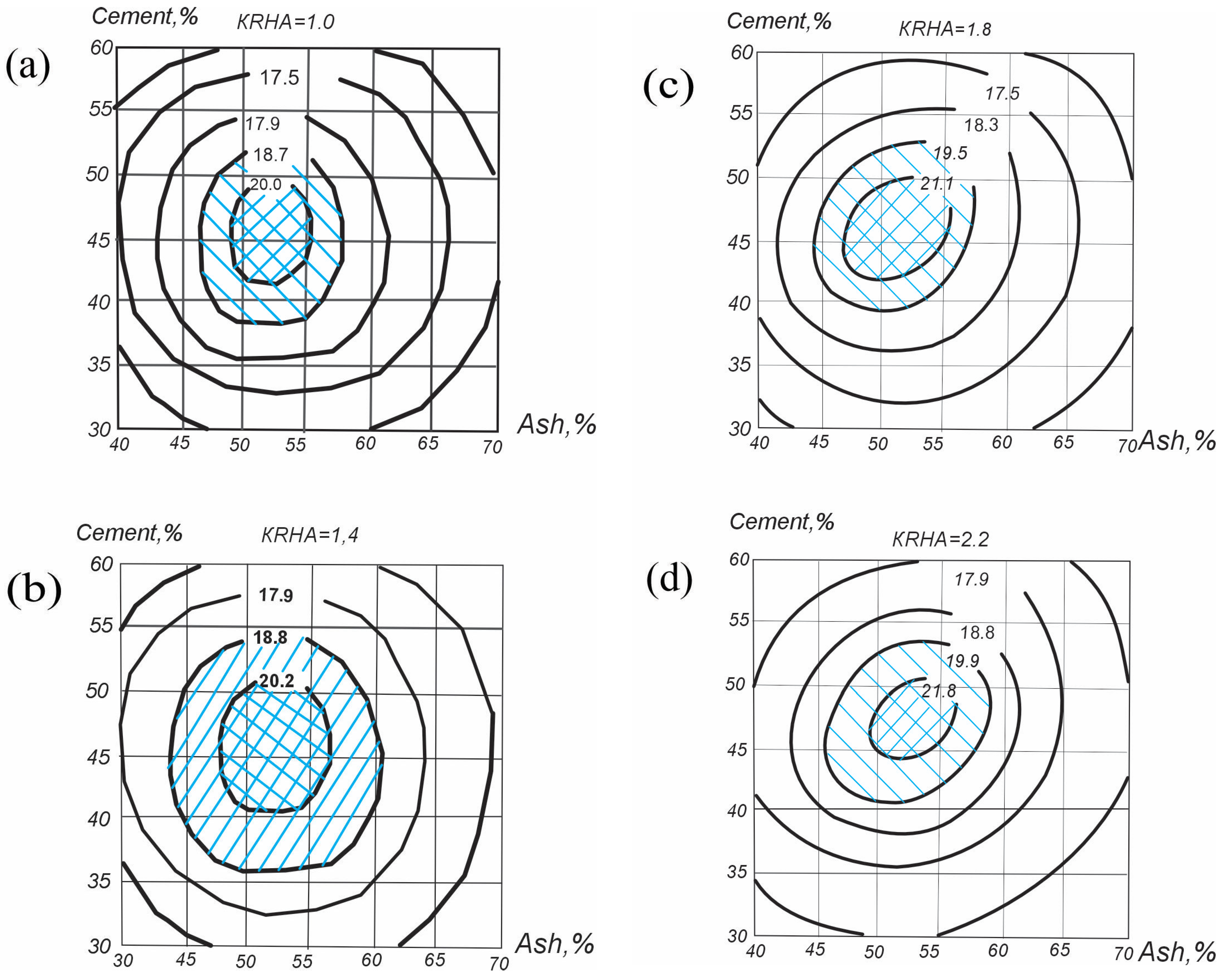
The factor space points are connected by solid lines characterizing the same strength in this figure. The optimal compositions of the ash–cement binder for the composite material on the rice husk production are characterized by the rounded and shaded area of the factor space. An analysis of the ash–cement binder strength diagram from the composition of the added components suggests that the highest strength can be achieved with the following ash–cement binder composition: Portland cement—40–50%, TPP ash—47–56%, and Kazakhstan rice husk ash—2.2–2.6%.
It is known that the strength of the composite material based on rice husk is influenced by the ratio of the organic filler and binder components. Emphasis was placed on studying and defining the optimal composition of the composite material based on rice husk with an organic filler—the rice husk in these experimental works.
Figure 1 presents the relationship between the compressive strength of the ash–cement binder and its composition at different levels of added components.
The selection of the optimal composition of the composite material based on rice husk (“organic filler–complex binder”) was realized using a mathematical planning method; in particular, a second-order rotatable compositional plan was implemented for two variables. The compressive strength of the rice husk composite material and water absorption were adopted as an optimization parameters. The rice husk content (X
1) and ash (X
2) were taken as variable factors to conduct the experiment and assess the influence of the composition of the composite material based on rice husk on its output parameter, i.e., during the compression (
Table 8).
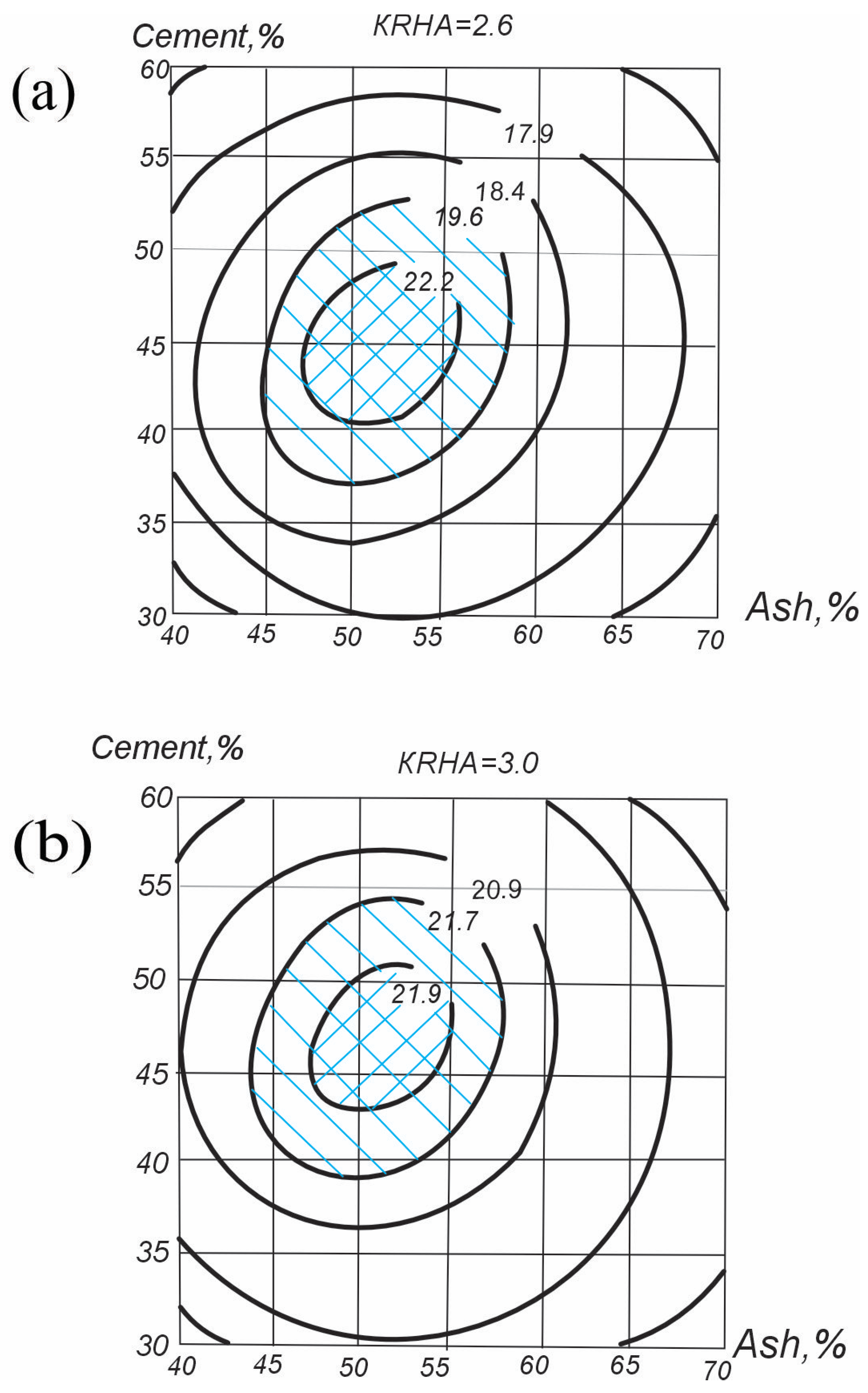
Figure 2a presents the composition with 2.6% KRHA, whereas
Figure 2b corresponds to a KRHA content of 3.0%. These results demonstrate the influence of ash content on the strength of the rice husk-based composite material.
It was possible to obtain a mathematical model of the strength dependence of the composite material based on rice husk on the ratio of the organic filler and the ash–cement binder in accordance with the implementation of a second-order rotatable plan for two variables. The adequacy of the obtained model was checked using F-criterion, which is equal to 3.13 for the model.
The tabulated value at 3 degrees of numerator freedom and 2 degrees of denominator freedom for the 5% significance level is 3.69. The model adequately describes the strength dependence of the composite material based on rice husk on the studied factors since F fact < F table.
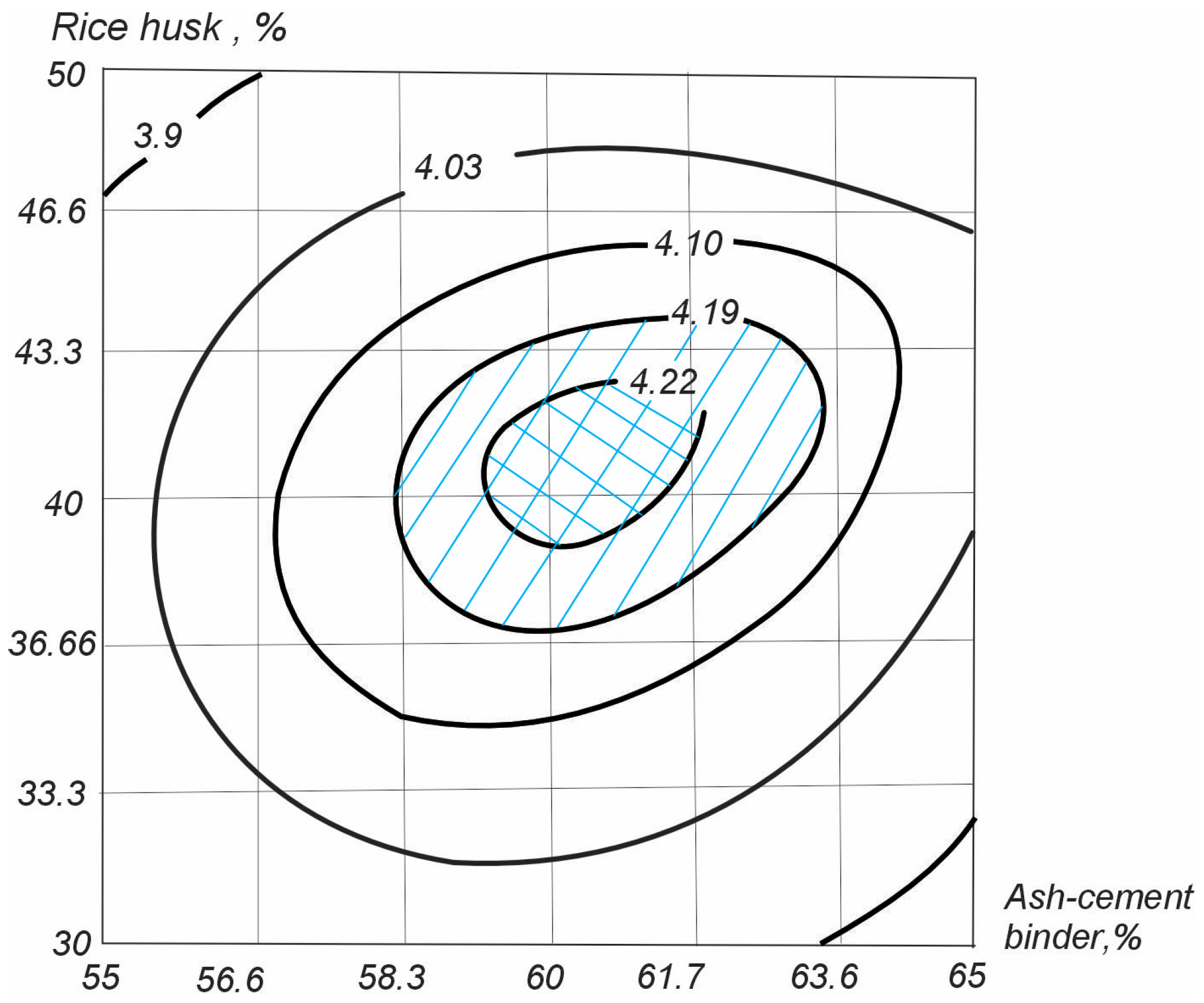
The strength dependence of the composite material based on rice husk on its composition, characterized by organic filler and ash–cement binder consumption, is illustrated in
Figure 3.
The regression coefficients should be interpreted as empirical indicators of the direction and intensity of the factors’ influence on strength. Negative interaction terms indicate an antagonistic effect, meaning that the simultaneous increase in the corresponding components reduces the response compared with their isolated contributions.
The shaded region in
Figure 3 represents the range in which the rice husk-based composite material exhibits its maximum strength.
Points of the factor space are connected by solid lines characterizing the same strength in this figure.
The final regression model was obtained in terms of coded variables to ensure comparability of factor effects:
The use of coded variables allows direct comparison of coefficient magnitudes and reveals that Portland cement content (X1) has the most significant influence on compressive strength.
The ANOVA results for the quadratic model are summarized in
Table 9. The model is statistically significant (F = 18.72,
p < 0.0001), confirming the adequacy of the model. Additionally, the lack of fit is not significant (p = 0.12), indicating a good agreement between the experimental and predicted results.
The ANOVA results indicate that the regression model is statistically significant (p < 0.05), while the lack of fit is insignificant (p > 0.05), confirming the adequacy of the model. The high F-value further supports the reliability of the developed model.
The model is statistically significant (p < 0.0001), while the lack of fit is not significant (p = 0.12), confirming model adequacy.
The obtained values (R2 > 0.9, adj-R2 close to R2, and insignificant lack of fit at p > 0.05) confirm the high predictive ability and adequacy of the model.
Negative coefficients represent deterioration of the microstructure when two factors increase simultaneously beyond optimal proportions.
In addition to the F-test, the adequacy of the regression model was evaluated using the coefficient of determination (R2), adjusted R2, and lack-of-fit analysis. These indicators confirmed that the proposed response surface model provides an acceptable description of the experimental data within the investigated factor domain.
3.2. X-Ray Phase Analysis of the Ash–Cement Stone with the Addition of the Rice Husk Ash
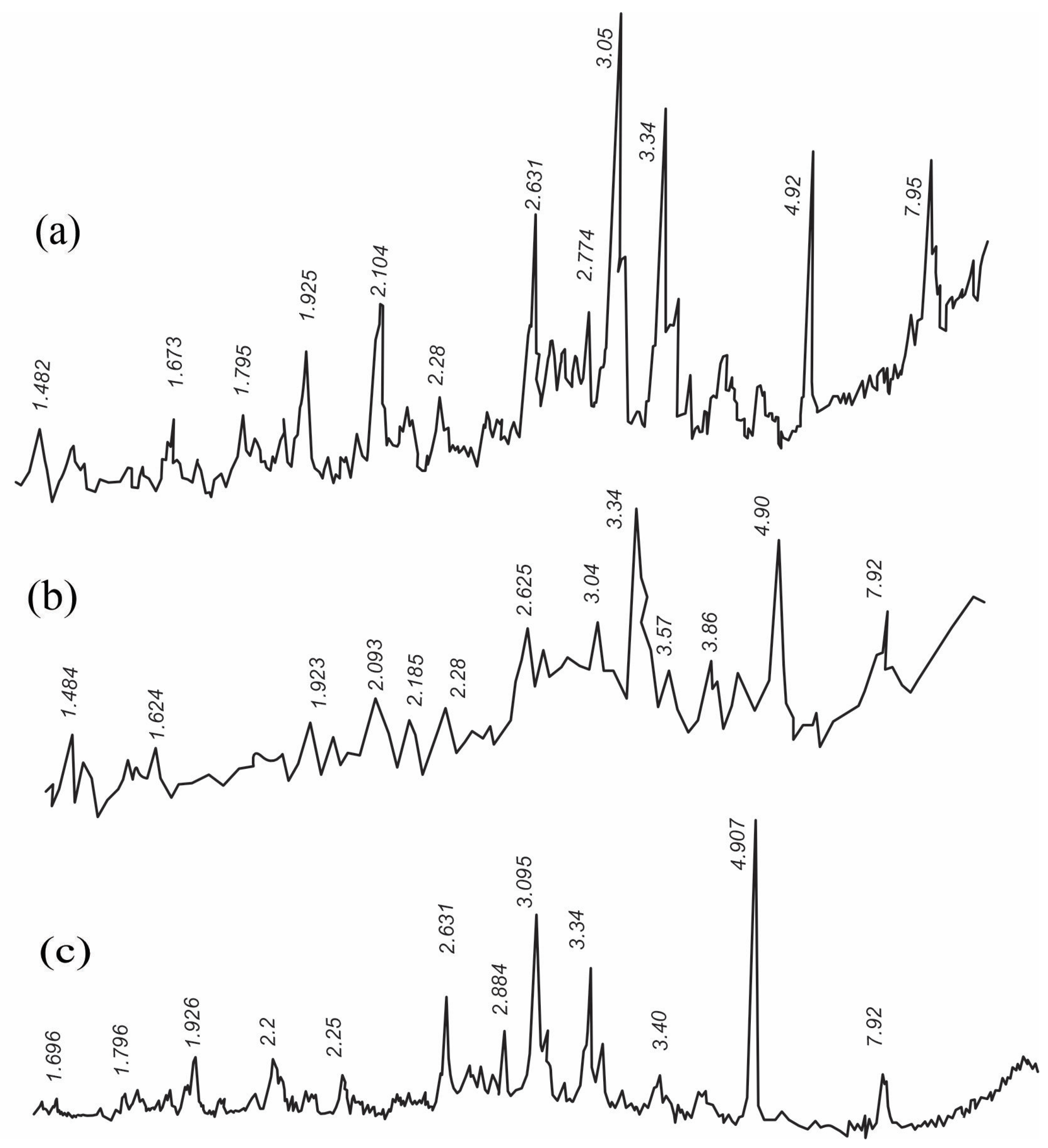
A diffractometric study of the ash–cement stone samples of the composite material based on rice husk was conducted. The phase composition of new formations in the binder was defined (
Figure 4). X-ray diffraction patterns of 28-day-hardened samples were taken using a DRON-3 device to study their hydration kinetics. The studied material was thoroughly ground in an agate mortar. A ground glass with the studied material, coated in the fine powder, was fixed on a table at the chamber center and exposed to X-rays. The diffraction pattern was recorded on the punch card. The principle of X-ray phase analysis (XPA) is based on the fact that the X-ray diffraction pattern of a heterogeneous powder sample is the sum of X-ray diffraction patterns of individual phases. Each phase is characterized by its own set of inter-planar distance lines (d), indices, reflecting planes (h, k, l), and diffraction line intensities (I). Qualitative analysis was performed by comparison with reference radiographs from reference books. X-ray phase analysis (XRD) (
Figure 4), obtained using the DRON-3 with monochromatic cobalt radiation, showed that the cement–ash stone samples contain the following: hydroaluminate C4AN13 (lines d = 7.95 × 10
−10 m), portalandite (lines d = 4.9 − 2.673 − 1.925 − 1.482 × 10
−10 m), calcite (lines d = 3.88 − 3.04 − 2.28 − 2.093 − 1.876 × 10
−10 m), hydrosilicate C
2SH (A) (lines d = 3.34 − 2.625 × 10
−10 m), hydrosilicate C
2SH (C) (lines d = 3.04 − 2.89 × 10
−10 m), and quartz (lines d = 3.34 − 2.104 − 4.25 × 10
−10 m). The partial carbonization of samples and the calcite formation were caused by the atmospheric carbon dioxide exposure.
The presence of new phases in the samples, which could form in them when exposed to an electric field during the grinding, was revealed according to the resulting X-ray diffraction pattern (
Figure 4). A distinctive feature was that the portlandite lines d = 4.92 − 2.628 − 1.926 − 1.484 × 10
−10 m on the X-ray diffraction patterns of the ash–cement stone activated by the electro-mechanical chemical method turned out to be narrower, and the height of the diffraction peak was two times lower compared to the sample without activation. The hydration degree of elite in the sample, produced from the activated binder by the electro-mechanical chemical method, is higher compared to the intensity of similar lines without activation in the sample, evidenced by the decrease in the elite diffraction peak d = 2.185 × 10
−10 m.
The phase composition of the ash–cement stone with the addition of a complex mineral additive to the composite mixture (
Figure 4) consists of hydroaluminate C
4AH
13 (line d = 7.92 × 10
−10 m), portlandite (lines 4.907 − 2.631 − 1.926 × 10
−10 m), calcite (lines d = 3.88 − 3.03 − 2.285 × 10
−10 m), hydrosilicate C
2SH (A) (line d = 3.34 × 10
−10 m), hydrosilicate C
2SH (C) (line d = 3.037 × 10
−10 m), hydroaluminate (C
4AH
13) lines 2.884 and 7.92 × 10
−10 m, and quartz (lines d = 4.25 − 3.34 − 1.817 × 10
−10 m).
X-ray photographs of the ash–cement stone of the composite material based on rice husk with normal moisture hardening are presented in
Figure 4. If we compare with the previous samples, a decrease in the portlandite diffraction peak, an increase in the content of hydroaluminate line d = 7.92 × 10
−10 m and a decrease in calcite in
Figure 4 (b) lines d = 3.87 − 3.03 − 2.28 − 2.093 − 1.873 × 10
−10 m can be observed; they may indicate an acceleration of the crystallization processes of hydrosilicates. Minerals are also available. They are plombierite (C
5S
6H
n) line 5.53 × 10
−10 m and gyro lite lines 9.62 and 3.86 × 10
−10 m. Analyzing the differences between these phases, it can be concluded that the emerging rice husk ash has a significant effect on the formation of the strength properties of the ash–cement stone, and, ultimately, increases the strength of the composite material based on rice husk and its straw.
The hydration products were identified as C-S-H-type phases, based on the broad and low-intensity diffraction features typical of poorly crystalline calcium silicate hydrates. Due to the limitations of XRD in resolving structural variations within C-S-H, no further distinction between specific C-S-H types was made.
The XRD analysis in the present study was used mainly for qualitative and semi-qualitative phase identification. Quantitative phase analysis, including the determination of the amorphous fraction by Rietveld refinement, was beyond the scope of the current work and should be addressed in future studies.
The observed reduction in portlandite-related reflections should be interpreted as qualitative evidence of increased pozzolanic interaction rather than as a fully quantitative determination of portlandite consumption.
In the modified compositions containing rice husk ash, a reduction in the relative intensity of portlandite-related reflections and a concurrent increase in reflections associated with hydration products were observed in comparison with the control compositions. Since no full quantitative phase analysis was performed, the present results should be regarded as qualitative evidence of phase evolution rather than exact quantification of phase contents.
3.3. Thermal Conductivity
The thermal conductivity of the material, temperature deformations, hygroscopicity, water absorption, and shrinkage deformations were defined by studying the influence of preparing methods of raw components on the thermal and operational properties of the composite material based on rice husk. The determination was implemented by samples 4 × 4 × 16 cm and samples specified in the relevant methods. The thermal conductivity coefficient was determined using the steady-state heat flow method.
where λ is the thermal conductivity coefficient, Bt/(
M°C); Pp is the heater power, Bt; Pn is the power loss, Bt; ΔT is the temperature difference on the sample surfaces, °C; h is the sample thickness, mm; S is the area of the heating plate, 100 cm
2.
The thermal conductivity was defined using a ITP MG4 device. This device is designed to determine the thermal conductivity of building materials in samples by measuring the stationary heat flow density according to GOST 7076-87 [
50] using the thermal probe method in samples and products. Samples measuring 100 × 100 × 30 mm with an average density from 600 to 900 kg/m
3 were made to determine the thermal conductivity.
After conducting tests, samples measuring 100 × 100 × 30 mm containing complex mineral additives from 10 to 30% and with thermal conductivity values λ = 0.18…0.19 W/(m∙K) were obtained (
Table 4). The thermal conductivity of the control sample was λ = 0.15 BI/(M°C).
A study of the influence of methods for preparing raw materials of rice-husk-based composite materials of different densities on the thermal conductivity showed that an increase in ash content of the composite mixture leads to a slight thermal conductivity decrease of the rice-husk-based composite material, and this can be explained by the increased content of the amorphous phase. Thus, an increase in the ash content at C:3 ratio to 50:50 causes a decrease in the thermal conductivity from 0.15 to 0.11 W/(m∙K). However, a study of the change in the thermal conductivity showed that over time, as the content of the crystalline phase increases, the thermal conductivity increases slightly over time.
Thus, at C:3 = 70:30, a comparison of the thermal conductivity of the rice-husk-based composite material with an average density of 700 kg/m3 at 3 and 28 days demonstrated that the thermal conductivity increased from 0.14 to 0.18 W/(m∙K).
The obtained thermal conductivity values of 0.11–0.19 W/(m∙K) are within the range expected for lightweight plant-based cement composites and are consistent with comparative literature data. A clear relationship can be observed between thermal conductivity and density: compositions with lower density tend to exhibit lower thermal conductivity because of the greater volume of air-filled pores and the lower continuity of the solid heat-conducting phase. Since total porosity and pore size distribution were not measured directly, this interpretation should be regarded as physically justified but indirect.
3.4. Frost Resistance
The durability of the composite material based on rice husk is largely defined by its frost resistance. Filling the pore structure of the composite material based on rice husk with an ash–cement binder with the addition of the rice husk significantly reduces the water absorption capacity of the material, which explains its resistance increase to alternate freezing and thawing in a water-saturated state. The main reason for causing the rice husk composite material’s destruction under conditions of alternating freezing and thawing is the pressure of pores on the walls and mouths of micro cracks created by freezing water; “thermal incompatibility” is the difference in linear expansion coefficients of the components of the rice husk composite material and the ice formation. It is known that water increases in volume by more than 9% when frozen. Its expansion is prevented by the solid frame of the composite material based on rice husk; as a result, a stress–strain state is created in its body.
The repeatability of freezing and thawing processes leads to a constant disruption of structural bonds in the structure of the composite material based on rice husk. The magnitude of the arising stresses and the intensity of the weakening process of structural bonds in arbolite are defined by the frost resistance of the rice-husk-based composite material, which depends on many factors, including its structure, and especially its porosity, since the volume and distribution of the ice formed in the body of the composite material based on rice husk during the cooling process affect its performance. Results of mechanical tests, as well as the values of parameters of the composite material based on rice husk, characterizing changes in its structure after the exposure to alternate freezing and thawing are illustrated in
Table 10.
According to (State Standard) GOST 19222-84 [
51], the strength loss of samples tested for the frost resistance should not exceed 15% of the strength of control samples; the mass loss of the samples not subjected to frost resistance testing should not exceed 5%. A decrease in strength and visually observable peeling of the surface of the composite material samples based on rice husk were recorded only after 35 test cycles. Arbolite made from rice husks withstood 35 test cycles at a frost resistance coefficient of 0.80.
A high frost resistance of the obtained composite material based on rice husk is explained by the good quality of the pore structure and the mineralogical composition of new cementing formations.
Thus, test results confirm that the obtained arbolite is characterized by high frost resistance, which allows us to assume satisfactory operational reliability and durability of structures and products based on it.
As a result, the combination of these properties increases both the load-bearing capacity and the durability of structures manufactured on the proposed technology. In accordance with the obtained results, a technology for the production of the composite material based on rice husks was developed on the basis of effective methods for preparing raw materials.
The freeze–thaw assessment in the present study should be interpreted as a preliminary durability evaluation rather than as a full long-term durability qualification. Additional testing at higher cycle numbers, together with detailed pore-structure characterization, would be necessary to fully generalize the frost resistance behavior of the developed material.
4. Discussion
The obtained regression models demonstrated high predictive capability, with R2 values exceeding 0.90 and adjusted R2 values in close agreement, indicating model robustness and absence of overfitting.
The lack-of-fit test showed statistically insignificant results (p > 0.05), confirming that the models adequately describe the experimental data.
The regression coefficients provide insight into the physico-mechanical behavior of the composite system.
Positive coefficients indicate synergistic effects, associated with improved hydration, densification of the structure, and enhanced pozzolanic reactions.
Negative interaction coefficients (βij < 0) reflect antagonistic interactions between components. From a structural standpoint, this corresponds to the following:
Disruption of optimal packing density;
Increased porosity of the matrix;
Competition between hydration and pozzolanic reactions;
Excess ash or silica phases leading to weaker interfacial bonding.
Thus, negative interaction terms indicate deterioration of the composite microstructure when factors deviate from optimal proportions.
The results obtained in this study demonstrate that the combined use of rice husk, rice husk ash, and thermal power plant ash makes it possible to produce lightweight structural–thermal-insulation composites with satisfactory mechanical and thermal properties. The compressive strength of the developed material ranged from 3.03 to 4.10 MPa, depending on the composition of the ash–cement binder and the structure of the composite matrix. These values correspond to the strength range typical for lightweight plant-based cement composites and insulating structural materials reported in previous studies.
The developed composite is more appropriately considered a lightweight structural–thermal-insulation material for non-heavy-duty building elements rather than a substitute for conventional structural concrete.
Similar strength levels have been reported by other researchers investigating cement-based materials containing rice husk ash. For example, studies have shown that the incorporation of rice husk ash can improve the microstructure and compressive strength of cementitious composites due to its pozzolanic activity and the formation of additional hydration products [
24,
25,
26]. The pozzolanic reaction between amorphous silica in rice husk ash and calcium hydroxide released during cement hydration leads to the formation of additional calcium silicate hydrate phases, which contribute to the densification of the cement matrix and improvement of mechanical properties.
The X-ray diffraction analysis carried out in this work confirms these mechanisms. A reduction in the intensity of portlandite peaks was observed in samples containing rice husk ash, indicating the consumption of calcium hydroxide during pozzolanic reactions. At the same time, the formation of hydroaluminate phases and calcium hydrosilicates suggests the development of a more stable and compact microstructure. Similar microstructural changes have been reported in studies on cement composites containing rice husk ash and other highly siliceous mineral additives [
27,
28,
29,
30,
31].
The thermal conductivity values obtained in this study (0.11 to 0.19 W/(m·K)) are consistent with those reported for other lightweight composite materials containing agricultural waste. Previous research has shown that the introduction of rice husk or rice-husk-based fillers significantly reduces the density and thermal conductivity of cementitious composites due to the porous structure of the organic particles and the presence of entrapped air within the matrix [
32,
33,
34,
35,
36]. These properties make such materials particularly attractive for structural–thermal-insulation applications in building envelopes and energy-efficient construction systems.
Another important factor influencing the performance of the developed composite material is the use of thermal power plant ash as a component of the multicomponent binder. Fly ash particles are known to improve particle packing, enhance workability, and participate in secondary hydration reactions, which can contribute to long-term strength development and improved durability of cement-based materials. Similar beneficial effects of fly ash incorporation have been widely reported in the literature on sustainable cementitious composites [
24,
28,
30].
Durability characteristics also play an important role in assessing the practical applicability of lightweight composite materials. The developed material demonstrated frost resistance up to 35 freeze–thaw cycles, which indicates a relatively stable microstructure capable of withstanding cyclic temperature effects. Previous studies have demonstrated that the incorporation of reactive mineral additives, such as rice husk ash, enhances the resistance of cement-based materials to aggressive environmental factors, including chloride ingress, carbonation, and freeze–thaw cycles [
37,
38,
39,
40]. The freeze–thaw results should be interpreted as a preliminary durability assessment within the adopted standard framework. A more extensive durability program, including higher cycle numbers and pore-structure analysis, is required for broader generalization.
From an environmental perspective, the results of this study support the potential of integrated waste utilization for the production of sustainable building materials. The use of rice husk waste and thermal power plant ash contributes to reducing the accumulation of agricultural and industrial residues while simultaneously lowering the consumption of Portland cement. Since cement production is associated with high energy consumption and significant carbon dioxide emissions, the partial replacement of cement with industrial by-products can substantially improve the environmental sustainability of construction materials.
Despite the promising results obtained in this study, further research is required to evaluate the long-term performance of the developed composite material. Future investigations should focus on durability under different climatic conditions, moisture resistance, biological stability of plant-based fillers, and large-scale production technologies. In addition, further optimization of particle size distribution and surface treatment of plant aggregates may improve the interfacial bonding between the organic filler and the mineral binder.
Overall, the results confirm that the integrated use of rice husk waste, rice husk ash, and thermal power plant ash represents a promising approach for the development of environmentally friendly lightweight composite materials suitable for structural–thermal-insulation applications.
The physical and mechanical properties of the developed rice husk composite were compared with existing literature data to evaluate its performance. As shown in
Table 11, the compressive strength and thermal conductivity of the current material are competitive with other rice-husk-based insulation solutions and significantly more efficient in terms of thermal insulation than standard ash-concrete mixes.
In this study, compressive strength was selected as the primary optimization criterion due to its key role in determining structural performance.
However, parameters such as density and thermal conductivity are also important for practical applications. These properties are indirectly governed by the same compositional variables through their influence on porosity and microstructure.
A comprehensive multi-objective optimization approach (e.g., desirability function or Pareto optimization) will be considered in future work to simultaneously optimize mechanical and thermo-physical properties.
A quantitative analysis of water absorption kinetics, surface energy, and ITZ characteristics was not carried out in this study. Nevertheless, these factors are likely to influence the matrix–filler interaction and should be investigated in future work.
The use of rice husk waste and thermal power plant ash may offer potential environmental advantages through waste valorization and partial reduction in clinker content. However, no life cycle assessment (LCA) was performed in the present study; therefore, the environmental impact is not quantified and should be interpreted qualitatively. A comprehensive sustainability evaluation requires dedicated LCA analysis.