


Abstract
Continuous carbon fiber-reinforced thermoplastics (cCFRTP) are among the most promising lightweight materials. For their use in structural components, reproducible and comparable material properties are essential. Determining a material’s tensile properties faces experimental hurdles when testing unidirectional (UD) reinforced laminates because of their high tensile strength and stiffness. To avoid these hurdles, UD properties may be derived from more reliable and robust test results of cross-ply laminates using the back-out factor procedure. This study investigates the back-out factor procedure, already validated for thermoset matrix composites, for cCFRTP. Comparing experimentally determined UD tensile strengths with strengths calculated using the back-out factor shows a very good agreement for several composite materials. This confirms the applicability of the back-out procedure for the cCFRTP. Additionally, the back-out factor formulas show very low sensitivity to input parameters, confirming their robustness. Therefore, this approach offers a promising technique for deriving reliable UD tensile properties of cCFRTP while avoiding the hurdles of UD testing.
1. Introduction
Lightweight construction is a key technology in the development of efficient and environmentally sustainable products. Continuous carbon fiber-reinforced thermoplastics (cCFRTP) play a key role here, due to their excellent density-specific stiffness and strength properties, as well as their high specific energy absorption capacity. Additional advantages, such as short cycle times, recyclability, and welding capability, make them suitable for the large-scale production of safety-relevant structural components [1,2]. For the design of these components, reproducible and comparable composite material properties have to be determined. Following international testing standards, the basic parameters for a quasi-static load case are tensile properties (Young’s modulus in longitudinal (E∥) and transverse (E⊥) directions, strength R∥ and R⊥, strain at break ε∥ and ε⊥, and Poisson’s ratio ν∥⊥), and shear properties (modulus G∥⊥, strength R∥⊥, distortion at break γ∥⊥). Because structural components consist of multidirectional laminate layups, evaluating material properties on cross-ply (CP) layups better represents the component behavior than testing unidirectional (UD) laminates. Therefore, shear properties are mainly measured on ±45° cross-ply laminates according to ISO 14129 [3] or ASTM D3518 [4]. Tensile (ISO 527-5 [5] or ASTM D3039 [6]) and compression properties (ISO 14126 [7] or ASTM D6641 [8]) are still measured on cross-ply, as well as UD-reinforced laminates in classic material characterization. Standardized testing of single UD layers and tapes that are used for manufacturing composite plates is still under development.
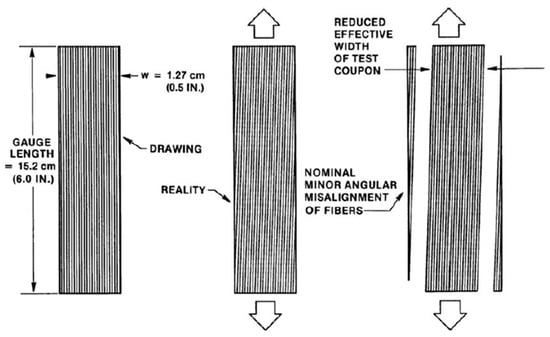
The UD carbon fiber laminates’ high tensile strength R∥ and stiffness E∥, as well as the multiaxial stress state in the transition region of the specimen’s load introduction and its free clamping length, often lead to invalid clamping failures. Furthermore, because thermoplastic matrices are often difficult to bond, the load-introduction elements (end tabs) are prone to debonding, leading to invalid failures and preventing measurement of the ultimate material properties at failure [9]. Additionally, external influences such as specimen manufacturing (e.g., notches in the composite matrix [10]) or laminate manufacturing (e.g., voids or poor consolidation) can cause early inter-fiber failure before final fiber failure, reducing the measured ultimate strength. During manufacturing, UD fibers may be dislocated unconstrained, forming wavy structures while the matrix is in a liquid state. An additional problem in measuring UD values is the pronounced influence of fiber misalignment in testing (see Figure 1). This misalignment leads to early inter-fiber failure at the cutting edges of the specimen, reducing its effective width before fiber failure and lowering the measured tensile strength.
Figure 1.
Challenges in UD testing due to fiber misalignment, reducing the effective cross-section and falsifying the measured strengths by partial premature failure, according to [11].
As a result, measured properties of pure UD laminates are often lower than those of UD layers in multi-directional laminates. Apart from tensile testing, these phenomena are also especially pronounced in compression testing [12,13].
These problems can be mitigated or even avoided with comprehensive testing expertise and highly specific experience from the testing institute, company, or individual. But without this experience, the discussed errors can go unnoticed and wrongfully reduce trust in the materials because of seemingly poor results/performance and high scatter.
For transverse tensile strength R⊥, high sensitivity to manufacturing, external influences, and clamping often leads to invalid failures at the edges of the end tabs, resulting in an underestimation of R⊥ and high scatter [10].
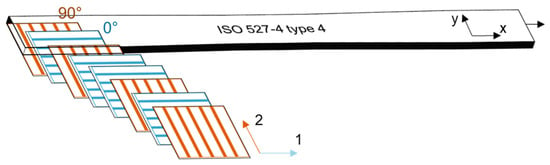
Tensile testing of symmetric and balanced cross-ply layups according to ISO 527-4 is more robust against the UD testing phenomena mentioned above [14]. The main reason is the presence of layers with a fiber direction transverse to the load direction (90°-layers). These layers, functioning as supporting layers in manufacturing and testing, hold fibers at 0° and prevent early inter-fiber failures in the layers parallel to the load direction (0°-layers). For testing efficiency and failure robustness, especially for specimen type 4 in ISO 527-4 (Figure 2), the tapered section is beneficial because it eliminates the need for applied end tabs.
Figure 2.
Tensile specimen according to ISO 527-4 with balanced cross-ply laminate layup.
Therefore, UD strength properties may be derived from cross-ply tests using the classic laminate theory by calculating a back-out factor. The back-out factor calculates the stress in the 0°-layers of the biaxial laminate using the stiffness ratios of all layers. This procedure is intended to provide a more efficient characterization approach and more reliable UD laminate properties [15,16,17], and it has already been validated for thermoset-based composites in tension [11,18,19,20] and compression [20,21,22,23,24,25,26]. These studies confirm the accuracy of the back-out calculated UD strength, showing either comparable results or the theoretical potential of the material when experimental testing was challenging due to the hurdles discussed above. Apart from thermoset matrices, thermoplastic matrices were merely tested so far. Because thermoplastics show higher ductility, this study investigates the applicability of the back-out method.
2. Theoretical Background of the Back-Out Factor
When testing cross-ply laminates, it is necessary to distinguish between global mechanical properties in the laminate coordinate system (x,y) and the properties of each ply in the UD-layer coordinate system (1,2; Figure 2). In experimental cross-ply tensile testing, the laminate properties (modulus Ex, strength Rx, and fracture strain εx) are measured. The common tool for mechanical calculations on laminates consisting of several UD layers is the classic laminate theory. The prerequisites for classic laminate theory relate to geometry (e.g., thin and constant thickness), kinematics (e.g., small deformations), material properties (e.g., linear elastic behavior) and stress state (e.g., plane stress state). For tensile testing, these prerequisites are reasonably valid for cCFRTP, although the transversal layers show limited linear elasticity (see discussion above). Based on the classic laminate theory, the UD-layer properties can be derived from the cross-ply laminate properties by calculating a back-out factor (BF). BF is defined as the ratio of the UD-layer strength in the fiber direction (R1) to the cross-ply laminate strength in the load direction (Rx). BF can be calculated from the UD layer’s Young’s moduli in the longitudinal and transversal directions (E1, E2), the fraction f0 of 0°-layers in the cross-ply laminate, and the Poisson ratio ν12 according to Formula (1). While Formula (1) represents a rather complex calculation procedure, Formula (2) shows an approximation of R1 without considering Poisson’s ratio. The advantage is that R1 is calculated using only robust experimental material properties: the tensile strength of the cross-ply laminate Rx (initiated by failure of the 0°-layers) and the stiffnesses E1 and E2. Since E1 and E2 are not ultimate values at tensile failure, they can easily be measured according to the standards. Potentially, E1 might also be tested on tape material without manufacturing a UD laminate.
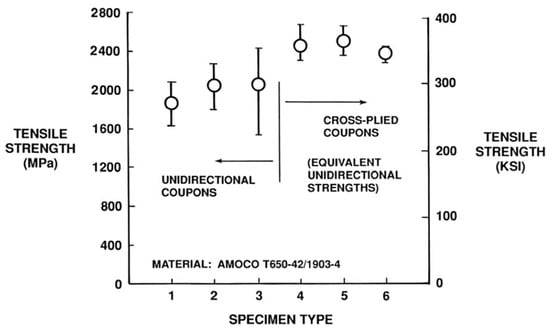
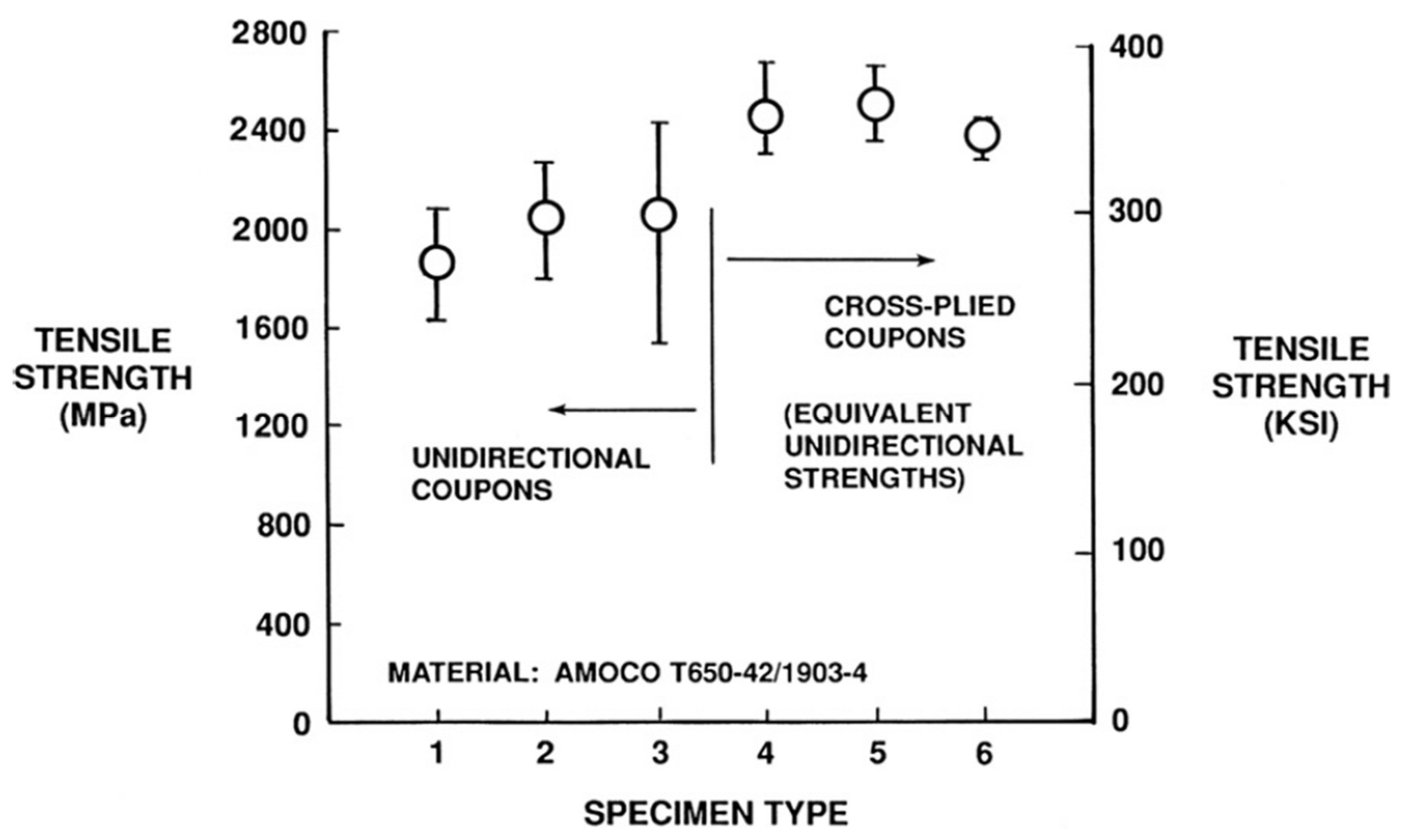
Therefore, using stiffness ratios, the BF calculates stress in the 0°-layers at the moment the cross-ply laminate fails due to failure of the 0 ° layers. These BF definitions (complex: Formula (1), simple: Formula (2)) are already validated for continuous carbon fiber-reinforced thermoset composites in tensile and compression testing (see Introduction). Figure 3 shows the investigation results according to Hart-Smith [11] for the back-out factor calculation of a carbon fiber-reinforced thermoset material. It becomes clear that the BF calculation, based on cross-ply laminates, leads to higher tensile strength values than the experimental UD laminate values. The cross-ply values using BF not only represent ultimate UD values, but also show less scattering in tensile strength mean values, indicating a robust evaluation procedure.
Figure 3.
Comparison of experimentally measured UD tensile strengths R1 and back-out calculated values based on continuous fiber-reinforced thermoset cross-ply laminates [11], changed illustration.
Analogous to Formula (2), Formula (3) for calculating the transverse strength R2 can be derived from laminate theory. The input parameters are swapped accordingly to calculate the stress in the 90 ° layers from the cross-ply stress. In this case, the cross-ply strength Rx cannot be used because the failure of the cross-ply laminate and the failure of the 90°-layers do not necessarily coincide. Due to the much lower failure strain of the 90°-layers, their failure is expected to occur before failure of the whole CP. Rx needs to be replaced by σx_f90, the cross-ply’s stress at the failure of the 90°-layers.
In the following work, this promising evaluation procedure is analyzed and discussed for thermoplastic cCFRTP materials.
3. Materials and Methods
In this research, four industrially relevant cCFRTP materials, partially in a pre-series state, are investigated for back-out factor calculation and tensile characterization. All composites are based on UD tape materials with carbon fibers (CF). The matrix polymers polycarbonate (PC), polypropylene (PP), and polyamide (PA) 6 and 66 are used. Table 1 summarizes the four composite materials.
Table 1.
CFRTP materials used in this study and manufacturer specifications for their tape ply thickness and fiber volume content.
For all materials, suppliers guarantee a void content of <2%. The tapes are stacked to CP and UD layups and pressed to laminates in an industry-relevant hot-press process. To reach sufficient laminate thicknesses for standard conform testing (1 mm and 2 mm thickness according to ISO 527-5 and -4 [5,14]), different numbers of layers are used, shown in Table 2. For a symmetric, angle-balanced CP laminate (2 mm thickness), twelve tape layers are used (6 × 0°-layers and 6 × 90°-layers in alternating order with central symmetry), resulting in a 0°-layer fraction f0 of 0.5. This is the standard CP laminate for all investigated materials. For CF/PC only, an angle-unbalanced symmetric CP laminate (1 mm thickness) with six layers (4 × 0°-layers and 2 × 90°-layers) is investigated in addition, leading to a 0°-layer fraction f0 of 0.667. The standard UD laminate (1 mm thickness) consists of six tape layers for all investigated materials.
Table 2.
Investigated laminate layups and resulting fraction of 0°-layers for back-out factor calculation.
All tensile test specimens are manufactured to rectangular geometries according to ISO 527-4 [14] (CP laminates) and ISO 527-5 [5] (UD laminates with glued glass fiber composite end tabs). A diamond saw was used for cutting.
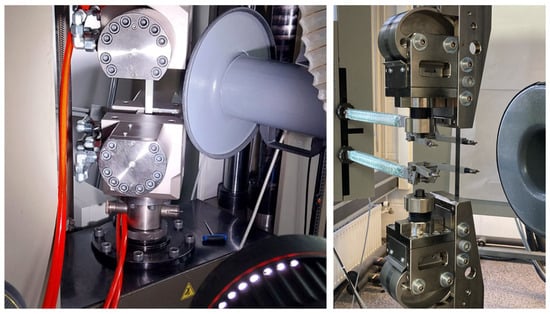
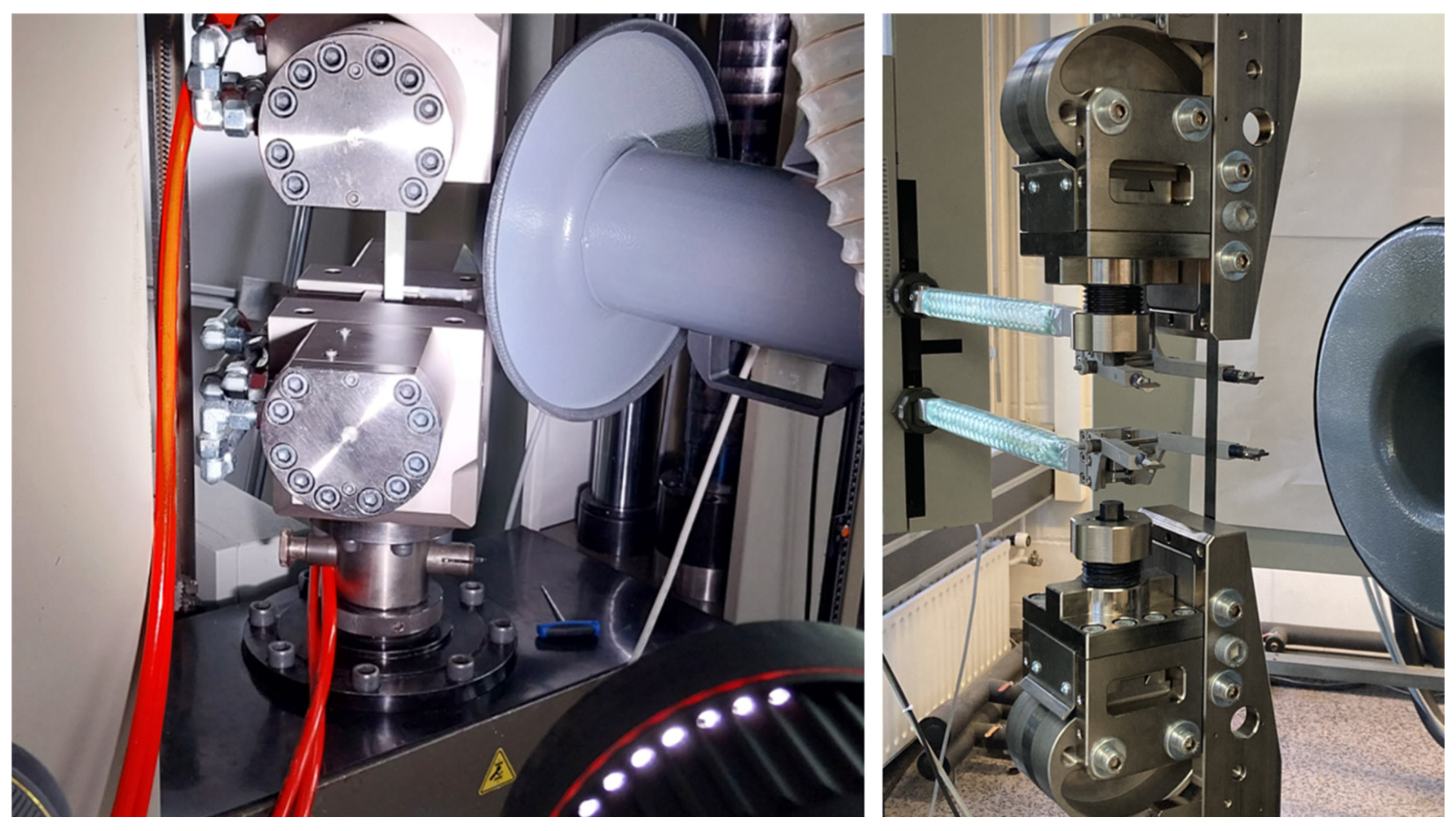
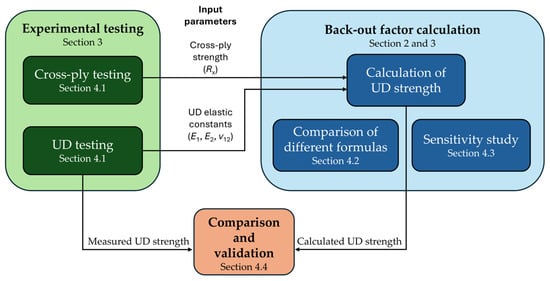
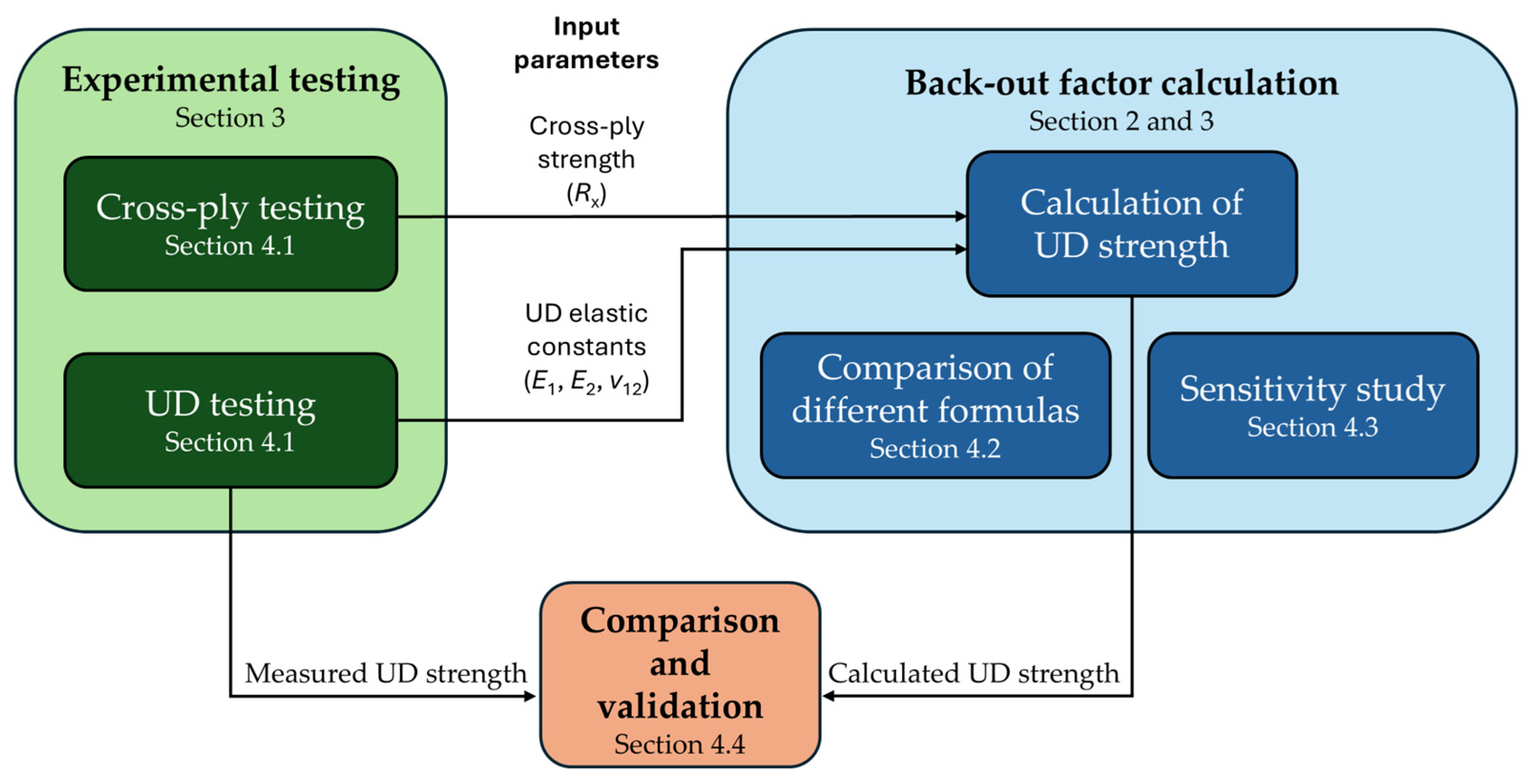
Tensile testing on UD and CP laminates was performed on an electro-mechanical universal test machine with a hydraulic clamping fixture (ZwickRoell, Ulm, Germany, Figure 4 left). Each test batch includes at least five valid specimens to evaluate the material’s mean tensile properties. A standard load cell with a capacity of 100 kN was used to measure the force. The specimen’s elongation is analyzed optically using digital image correlation (DIC) with GOMCorrelate software (Carl Zeiss IQS Deutschland GmbH, Oberkochen, Germany). The UD and CP strengths R1 and Rx and the UD elastic constants E1, E2 and ν12 were determined according to ISO 527-4 (CP specimens) and 527-5 (UD specimens). These mechanical properties were used as input parameters to calculate the back-out factors (see Figure 5) for each material using Formula (1) (complex calculation) and Formula (2) (simple calculation); see Section 2 (Theoretical background).
Figure 4.
Tensile test setup for plate specimens (left) and tapes (right).
Figure 5.
Schematic of this study’s procedure.
Furthermore, to compare the resulting E1, tensile tests on tapes (1 UD layer) were performed in accordance with the upcoming standard ISO 13071 for CF/PP and CF/PC. The same testing machine and load cell were used with a special tape-testing device. Strain was measured using a mechanical extensometer (Figure 4, right).
4. Results and Discussion
4.1. Tensile Tests and Mechanical Properties
Table 3 summarizes the tensile test results for UD and CP plates and UD tapes.
Table 3.
Mechanical properties of the tested materials, mean ± standard deviation.
4.2. Comparing Different Back-Out Factor Formulas
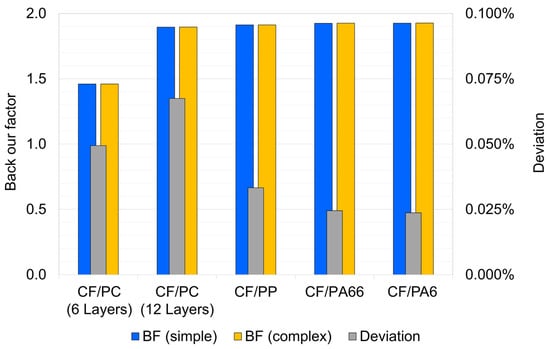
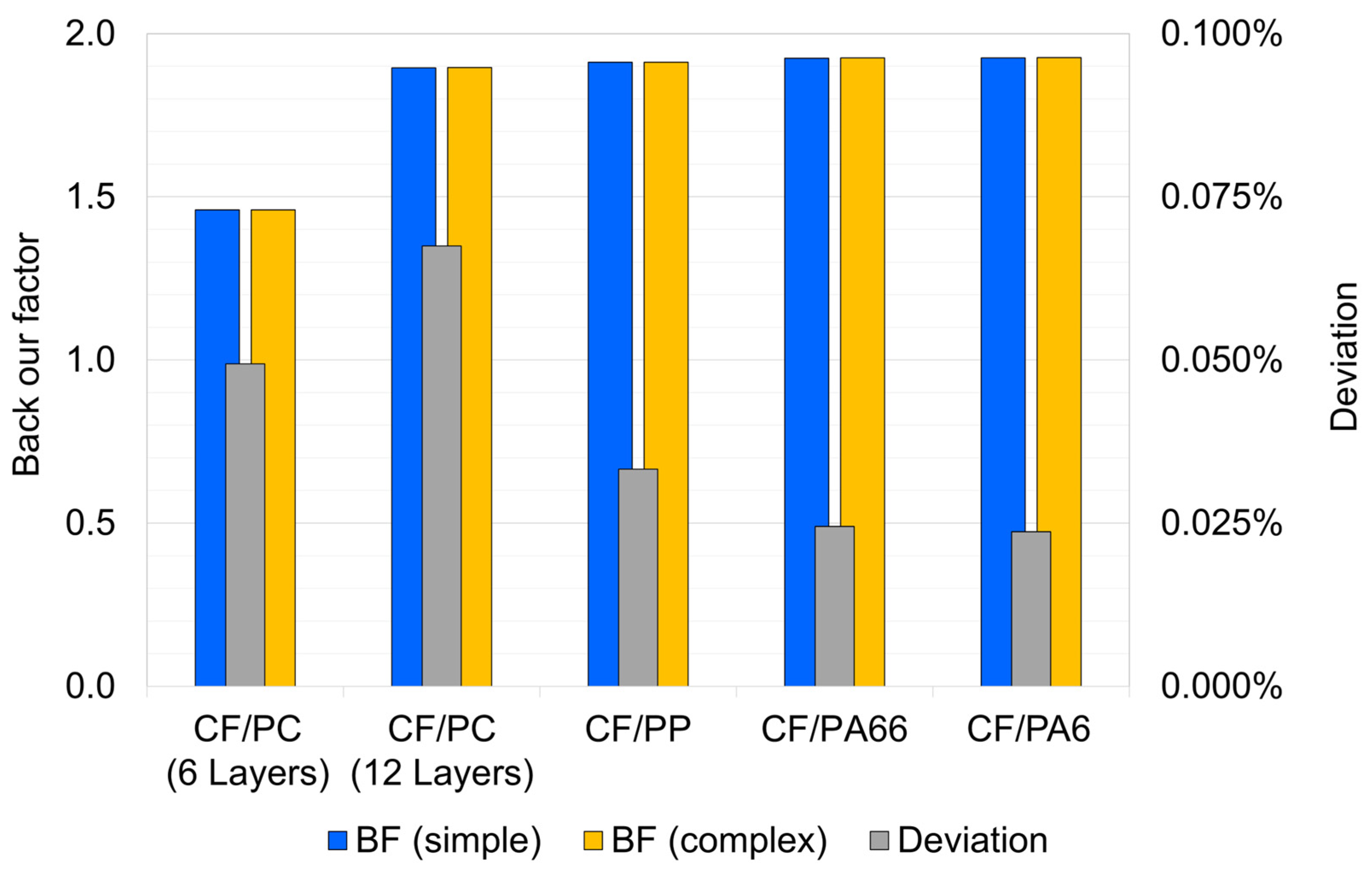
The different back-out factor formulas, stated and shown in the Theoretical Background (Section 2), are compared based on their results with the tested input parameters to check if the assumptions leading to the different formulas have an influence on the resulting BF and, consequently, if one formula might be superior to the other. The back-out factors (BF) are calculated for the investigated materials (CF/PC, CF/PP, CF/PA66, and CF/PA6) with the corresponding mean values of Young’s Moduli E1, E2, and Poisson ratio ν12, determined in the experimental testing (see Table 3). Figure 6 shows the BF values from the simple (Formula (2)) and complex (Formula (1)) calculation procedures, as well as the difference between these values for each material. The simple BF value for the symmetric, angle-balanced CP laminates has a mean value of 1.916 ± 0.012. The complex calculation yields only 0.028 ± 0.010% higher BF values for the angle-balanced CP materials.
Figure 6.
Back-out factor calculated by Formula (1) (complex) and (2) (simple) for cCFRTP and the deviation between their results.
The BF value of around 1.9 is plausible because half of the symmetric, angle-balanced CP laminate layers are loaded transverse to their fiber direction (90°). Therefore, their contribution to the laminate’s overall tensile strength is minor.
For the unbalanced CF/PC laminate, the BF value is reduced to 1.458 (simple calculation) and 1.459 (complex calculation) because the laminate has more 0° than 90°-layers (Table 2). These results show that the simple calculation procedure using Formula (2) agrees very well with the complex formula.
4.3. Influence of Input Parameters on Back-Out Factor
To investigate the influence of material properties (input parameters) on the BF formulas, back-out factors are calculated using fictitiously deviating input values of Young’s Moduli E1, E2 and Poisson’s ratios ν12. This deviation is intended to analyze the formula’s robustness and the impact of the investigated parameters on the back-out factor; their applicability towards thermoplastic composites is investigated in Section 4.4.
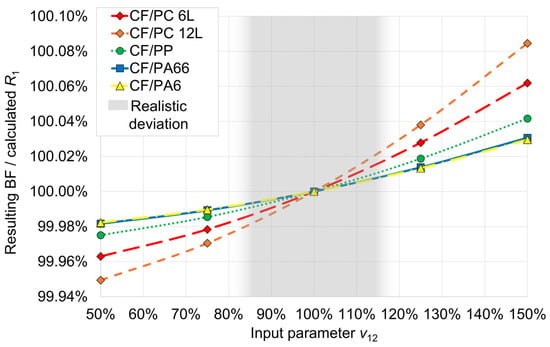
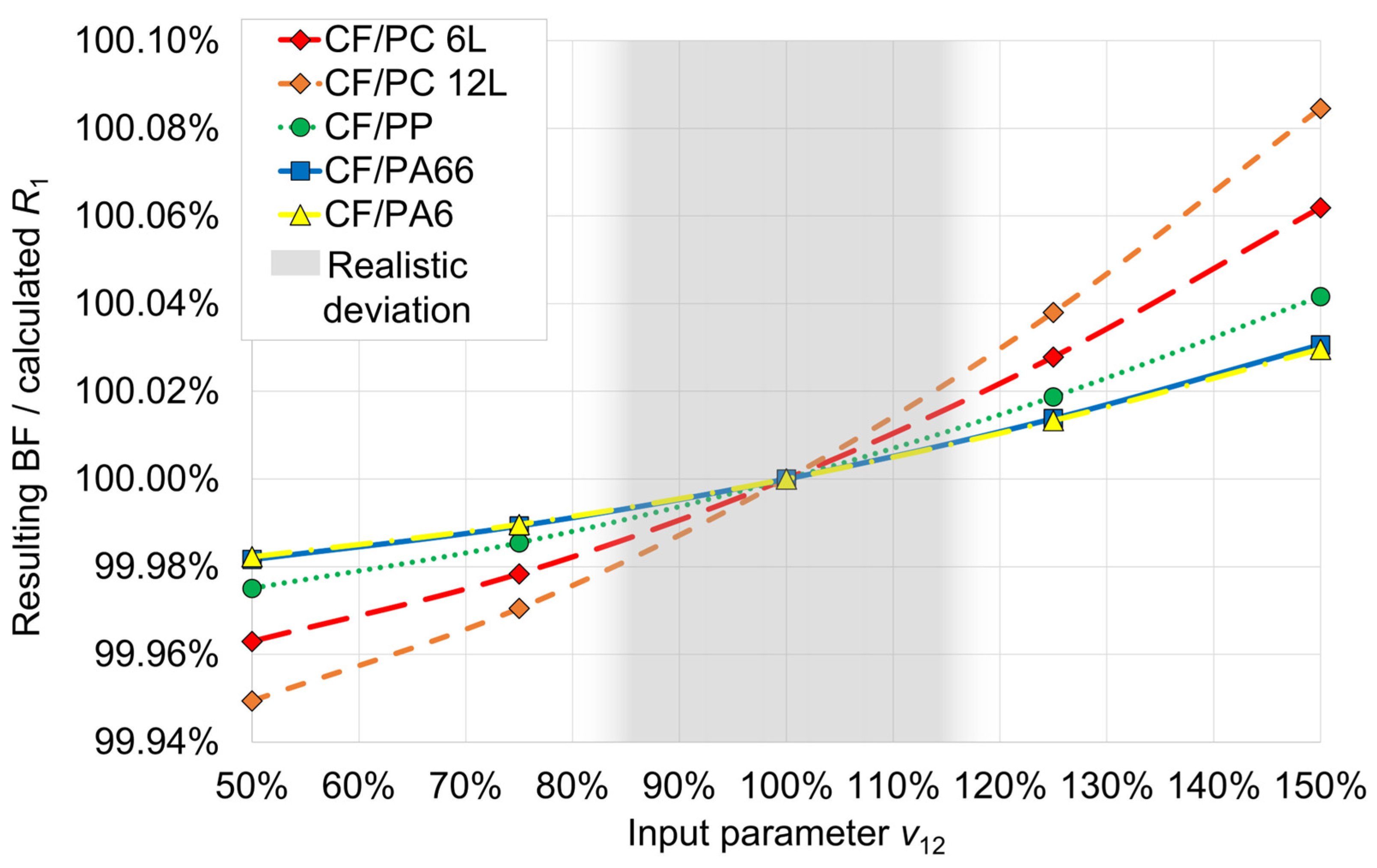
By fictitiously drastically reducing the Poisson ratio ν12 input parameter to 50% of the actual value (measured in UD testing, see Table 3), the resulting BF (complex Formula (2)) is reduced to approx. 99.94–99.98% (Figure 7). Drastically increasing ν12 to 150% of the actual value increases BF to approx. 100.03–100.09%. In absolute numbers, for the most sensitive material (CF/PC 12L), the correct ν12 of 0.36 yields a BF of 1.8964. Values for ν12 of 0.18/0.54 would result in a BF of 1.8954/1.8980, respectively. Accordingly, a more realistic deviation of ν12 of ±10–20% (possible due to strain-measuring errors, manufacturing influence, natural material or batch scatter, etc.) yields a negligible influence.
Figure 7.
Influence of Poisson’s ratio input parameter (in % of the actual value) on tensile strength prediction by back-out technique from complex Formula (1) (in % of the value at actual Poisson’s ratio).
Because ν12 has almost no influence on the BF value, even at extremely unrealistic deviations, applying the simple BF calculation formula without considering ν12 is considered to be validated for cCFRTP.
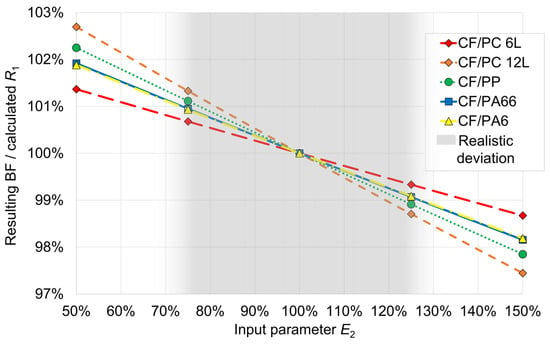
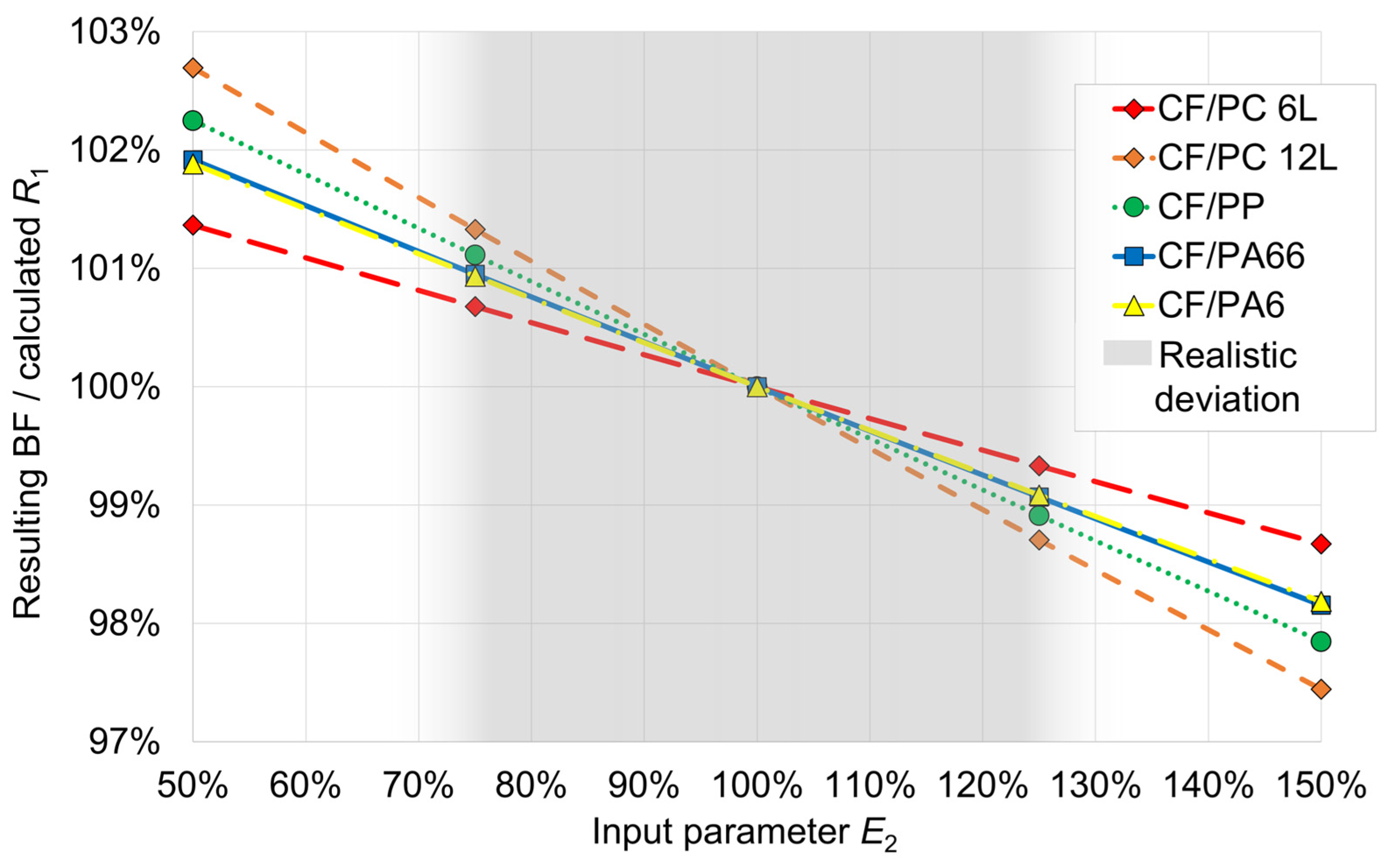
Figure 8 shows the influence of the transversal modulus E2 on the simple BF value (Formula (2)). By fictitiously drastically reducing E2 to 50% of the actual value (measured in UD testing, see Table 3), the resulting BF is increased to approx. 101–103%. Drastically increasing E2 to 150% of the actual value decreases BF to approx. 97–99%. In absolute numbers, for the most sensitive material (CF/PC 12L), the correct E2 of 5473 MPa yields a BF of 1.8951. Theoretical E2 values of 2737/8210 would result in a BF of 1.9461/1.8467, respectively. Accordingly, a more realistic deviation of E2 of ±10–30% (possible due to measuring errors, manufacturing influence, natural material scatter, etc.) keeps the influence on BF < 2%.
Figure 8.
Influence of transverse UD Young’s modulus E2 (in % of the actual value) on tensile strength prediction by back-out technique from simple Formula (2) (in % of the value at actual E2).
Therefore, E2 deviation has a stronger influence on the BF value than ν12 deviation, and both influences are extremely low, making the BF very insensitive and robust. Therefore, estimating E2 within plausible boundaries seems possible for the BF calculation, potentially reducing the testing effort.
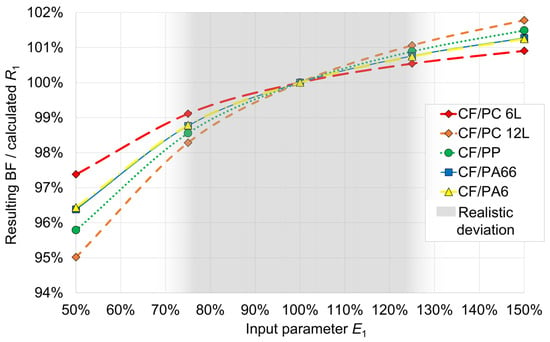
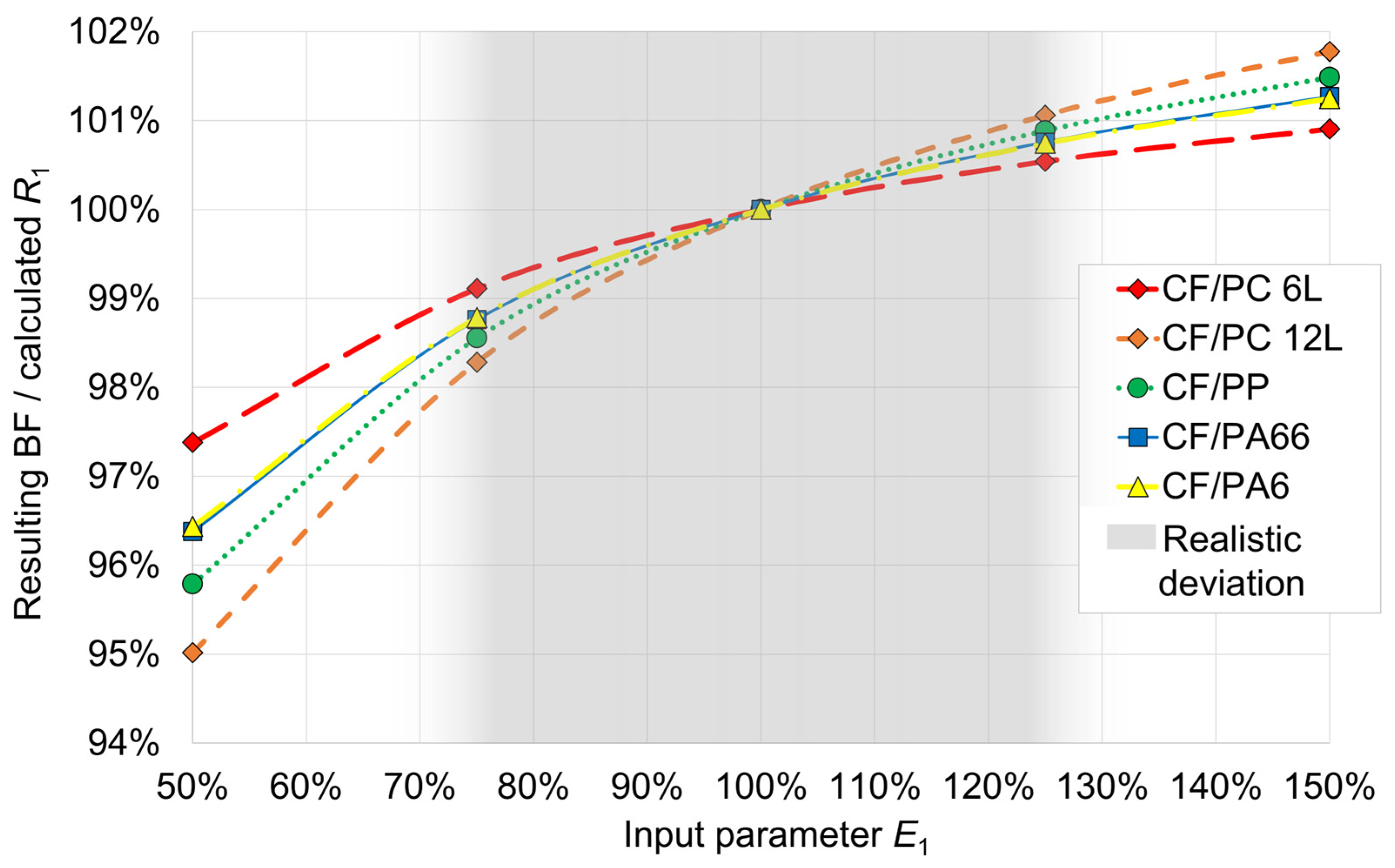
Figure 9 shows the influence of the longitudinal modulus E1 on the simple BF value (Formula (2)). By fictitiously reducing E1 to 50% of the actual value (measured in UD testing, see Table 3), the resulting BF is reduced to approx. 95–98%. Increasing E1 to 150% of the actual value increases BF to approx. 101–102%. In absolute numbers, for the most sensitive material (CF/PC 12L), the correct E1 of 98,867 MPa yields a BF of 1.8951. E1 values of 49,434/148,301 would result in a BF of 1.8006/1.9288, respectively. Similar to E2, a more realistic, assumed deviation of E1 of ±10–30% (possible due to measuring errors, manufacturing influence, natural material scatter, etc.) keeps the influence on BF, and consequently the calculated strength, ≤2%. This confirms the robustness of the back-out factor formula.
Figure 9.
Influence of transverse UD Young’s modulus E1 (in % of the actual value) on tensile strength prediction by back-out technique from simple Formula (2) (in % of the value at actual E1).
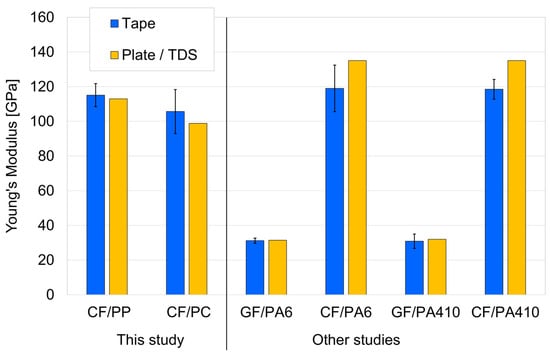
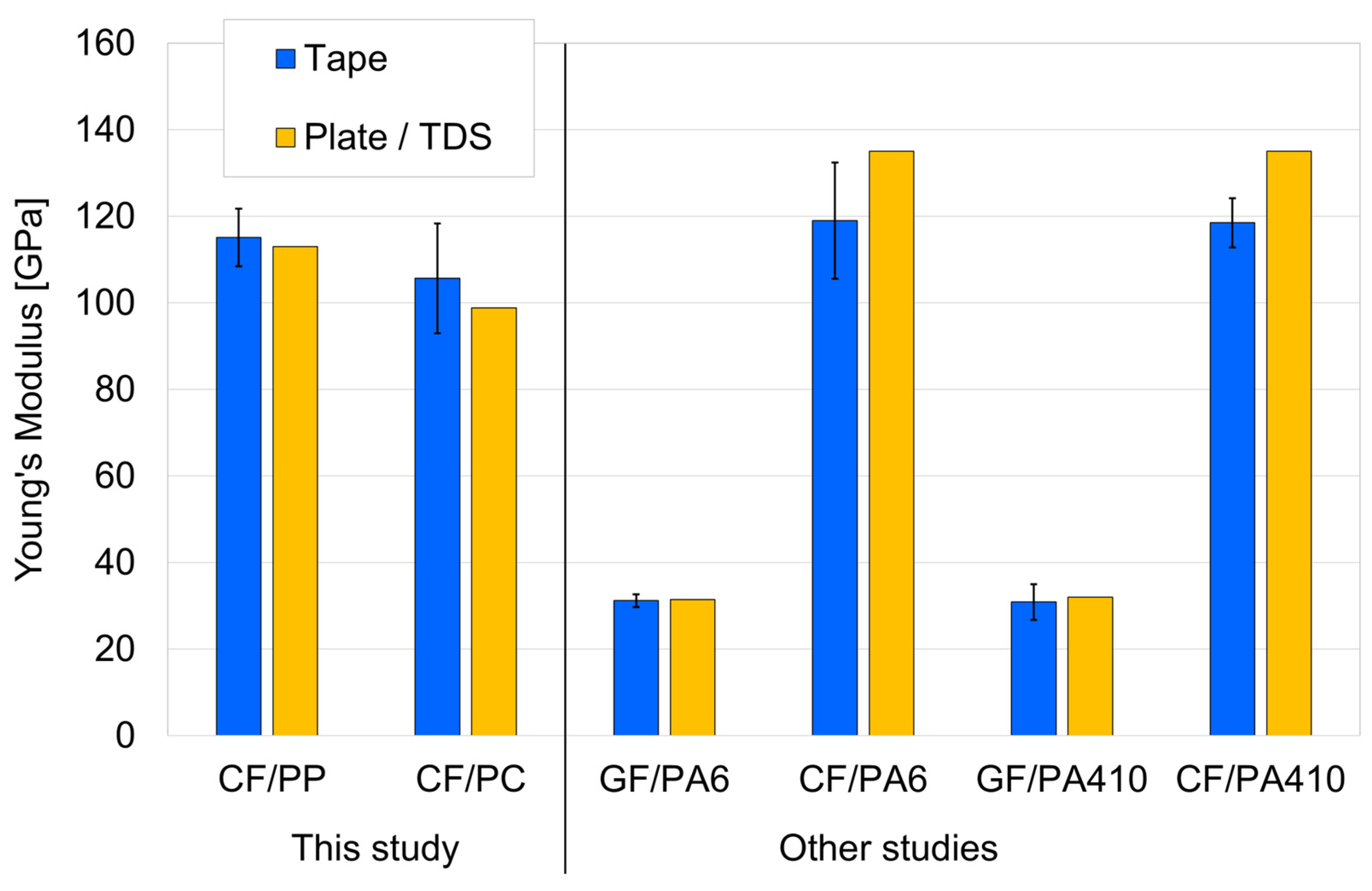
Figure 10 shows the Young’s Modulus E1 values, comparing tape tests and plate tests/technical data sheet (TDS). Tapes tested for the CF/PP and CF/PC materials resulted in a Young’s Modulus E1 of 2–7% higher than the corresponding E1 of the UD laminate/technical data sheet. This is plausible because the tape has better orientation and less undulation than a plate manufactured from several tapes in a hot-press process (see Introduction). Further internal tape tests on different materials beyond this study resulted in a deviation of approx. −12 to −1% compared to the UD laminate/TDS. Slight differences may also result from different material batches. However, according to Figure 9, this deviation in E1 can result in a BF deviation of <1%. Therefore, the modulus from tapes can be used with no significant change in the calculated BF. This way, combined with the estimation of E2 discussed above, the complex manufacturing and testing of UD laminate specimens might be avoided completely for proper BF calculation.
Figure 10.
Comparison of E1 tested on tape specimens and plate specimens/technical data sheet (TDS) value for several materials in this and other internal unpublished studies.
4.4. Experimental UD Strength vs. Back-Out Factor Calculated Strength
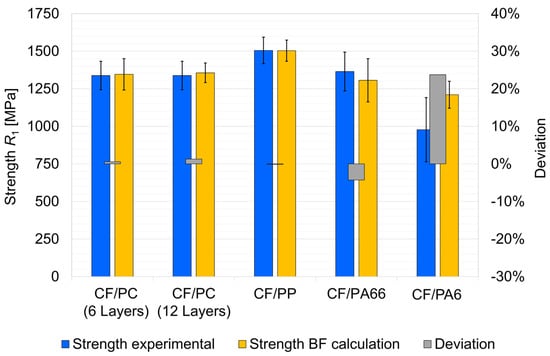
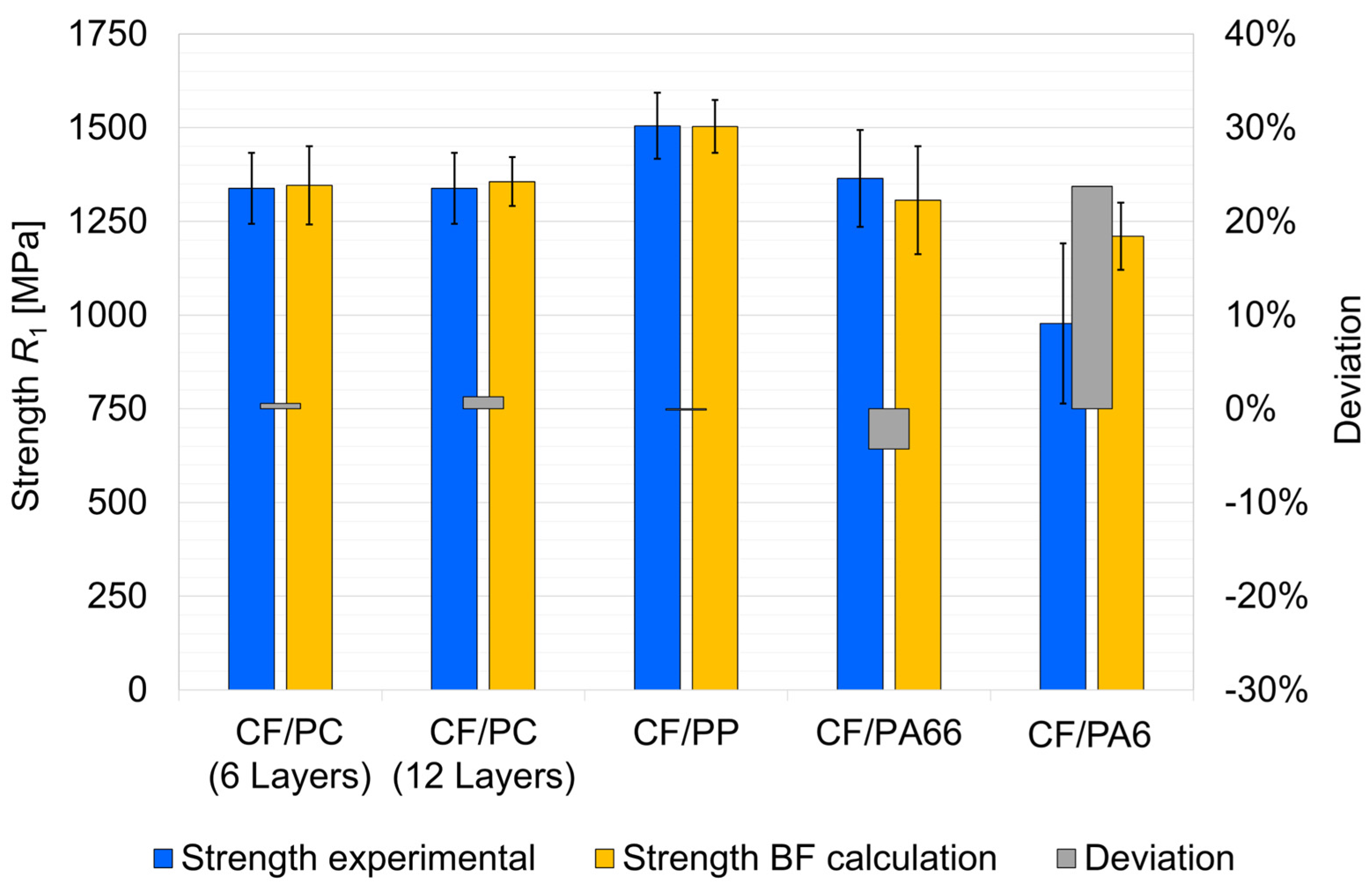
After analyzing the robustness of the back-out factor formula, its applicability to thermoplastic composites needs to be evaluated. Figure 11 shows the UD mean tensile strength values (R1) of the materials, measured in experimental testing (see 3. Materials and Methods) and the calculated tensile strength value using the BF (simple BF calculation according to Formula (2)), with their deviation (see Figure 5). The theoretical, calculated R1 value correlates with the experimental values for four of the five investigated laminates (CF/PC (6 layers), CF/PC (12 layers), CF/PP and CF/PA66) with a mean deviation of −1.4 to ±2.6 %. These deviations of calculated strength (back-out factor) to experimental strength are comparable to the literature for thermoset composites [19,24,25]. This indicates a successful back-out factor calculation for cCFRTP; the back-out factor formula predicted the tensile strength correctly. Only the CF/PA6 laminate shows a 23.7% lower experimental R1 value than the BF-calculated strength. However, this higher theoretical value is plausible because of the challenges in experimental UD testing mentioned above, which are also reported in the literature [21,22]. The calculated value shows the theoretical mechanical potential of the UD laminate according to the classical laminate theory, based on perfect testing, which was not achieved experimentally in this case.
Figure 11.
Measured UD tensile strengths (experimental) versus calculated values based on cross-ply laminates (BF calculation).
Therefore, the applicability of the back-out procedure is confirmed for the used cCFRTP materials, despite the discussed limitations of classical laminate theory and the ductility of thermoplastics (see Theoretical background). Since no glass fiber composites were investigated, this confirmation is limited towards cCFRTP.
Based on these results, the presented simple BF calculation procedure of R1 is successfully validated for the investigated cCFRTPs.
4.5. Back-Out Factor for Transversal Strength R2
For back-out calculation of R2, a back-out factor can be calculated using Formula (3), analogous to Formula (2). For that, the cross-ply’s stress at failure of 90°-layers needs to be known. Theoretically, failure of the 90 ° layers before final failure should reduce the cross-ply’s stiffness, indicating the sought-for stress [27]. However, this stiffness reduction is too small to detect because of the high anisotropy of cCFRTP (E1/E2 ≈ 17–26). Using theoretical mixture rules, the cross-ply stiffness is reduced by about 3–5% when the 90°-layers fail. By testing cross-ply specimens, a reduced slope of the curve cannot be measured. Therefore, the cross-ply’s stress at 90°-failure cannot be detected, and the back-out factor and the strength R2 cannot be calculated this way. Theoretically, a cross-ply specimen could be observed during testing using high-resolution digital image correlation or thermography, revealing the 90°-layer failure point through strain inhomogeneity or heating, respectively. These thermography studies were already performed on thermoset composites [28]. Further thermography investigations on thermoplastics are currently ongoing to extend this study to 90°-failure. That way, the cross-ply’s stress at 90°-failure could be determined for back-out calculation of R2.
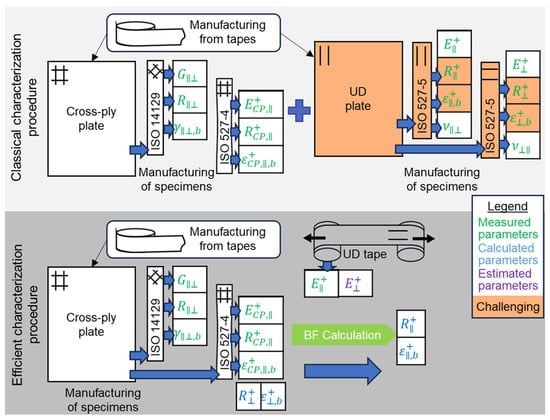
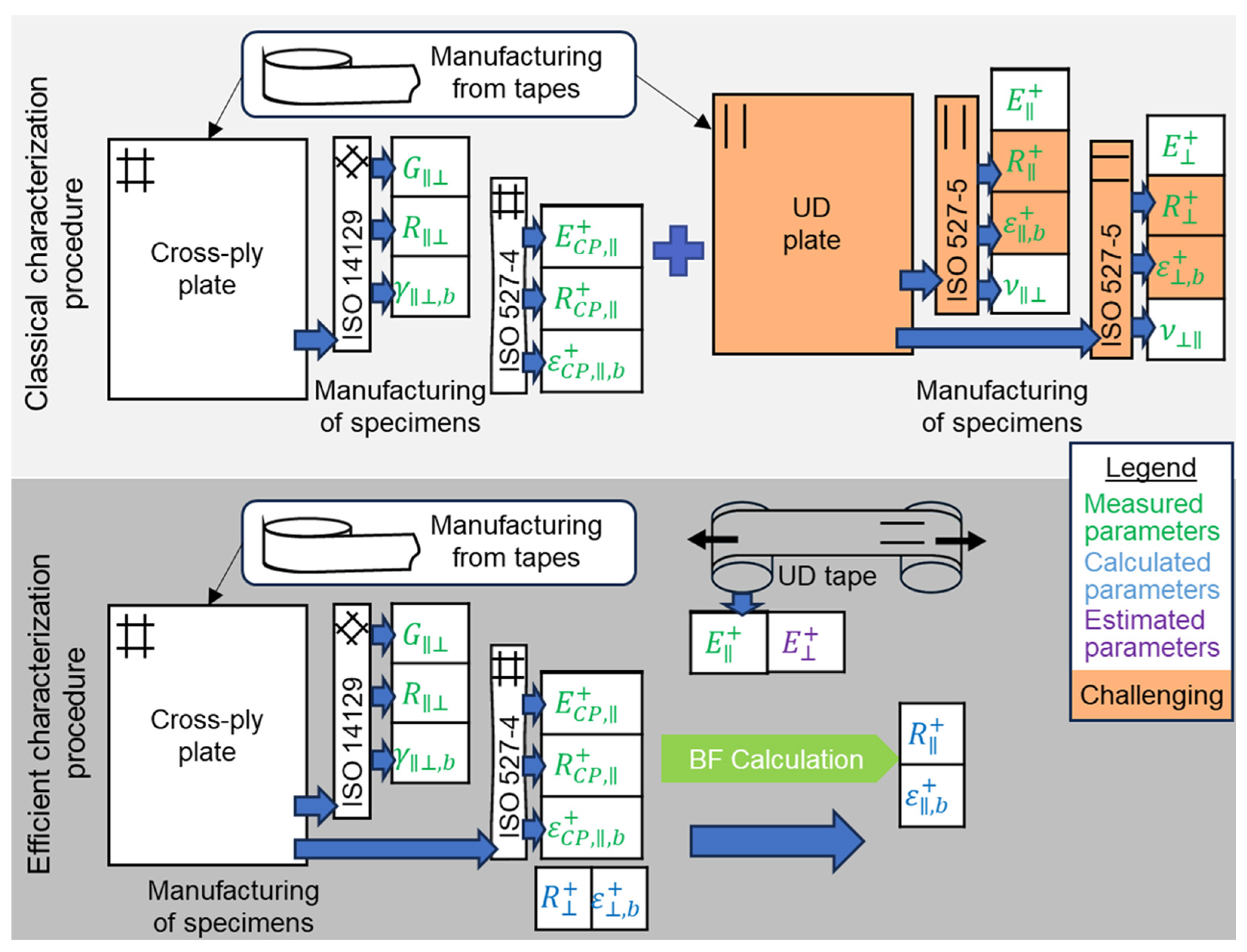
With these findings, it is possible to overcome the challenging tensile testing of cCFRTP UD laminates by efficiently testing cross-ply laminates and calculating the cCFRTP back-out factor for R1, in contrast to classical characterization using cross-ply and UD plates/tests (Figure 12).
Figure 12.
Confrontation of classical (manufacturing and testing of UD and CP plates and specimens) vs. efficient characterization (manufacturing and testing of CP plates and specimens plus BF calculation).
5. Conclusions
In this study, the applicability of the back-out procedure (calculating UD tensile strength from more robust cross-ply tests)—already validated for thermoset-based composites—was investigated for cCFRTP with the following outcomes:
- The different formulas for the back-out factor were found to result in the same back-out factor for all investigated materials, meaning a simple calculation without consideration of Poisson’s ratio is sufficient;
- Furthermore, the formulas show high robustness due to the minor influence of slight variations in input parameters such as UD Young’s Modulus in the longitudinal and transverse directions;
- Main outcome: The applicability of the back-out procedure was confirmed for the given cCFRTP materials since the experimentally determined UD strength and the calculated UD strength were comparable;
- Additionally, it was shown that direct testing of tapes could be used to obtain the input parameter E1 with negligible deviation, potentially avoiding the manufacturing of a UD laminate completely.
The validity of the back-out procedure for glass fiber-reinforced composites and the calculation of R2 are pending.
Combining these outcomes, it is possible to overcome the challenging tensile testing of cCFRTP UD laminates by the robust tensile testing of cross-ply laminates and tapes and calculation of the cCFRTP back-out factor for R1, in contrast to classical characterization using cross-ply and UD plates/tests.
Author Contributions
Conceptualization, S.S. (Stefan Schmidt), F.M. and S.S. (Sebastian Schmeer); methodology, S.S. (Stefan Schmidt) and F.M.; validation, S.S. (Stefan Schmidt); formal analysis, S.S. (Stefan Schmidt); investigation, S.S. (Stefan Schmidt) and F.M.; resources, S.S. (Sebastian Schmeer); data curation, S.S. (Stefan Schmidt); writing—original draft preparation, S.S. (Stefan Schmidt) and F.M.; writing—review and editing, S.S. (Stefan Schmidt), F.M. and S.S. (Sebastian Schmeer); visualization, S.S. (Stefan Schmidt); supervision, S.S. (Sebastian Schmeer); project administration, S.S. (Sebastian Schmeer); funding acquisition, S.S. (Sebastian Schmeer). All authors have read and agreed to the published version of the manuscript.
Funding
These investigations were conducted for the working group “Continuous fiber reinforced thermoplastics” under the umbrella of the AVK (Federation of reinforced plastics e.V.) and led by IVW. The work has been supported by the participating companies Arkema, Envalior, Mitsui Chemicals Europe GmbH and Syensqo.
Data Availability Statement
The raw data supporting the conclusions of this article will be made available by the authors on request.
Conflicts of Interest
Author Florian Mischo was employed by Geislinger GmbH. The remaining authors declare that the research was conducted in the absence of any commercial or financial relationships that could be construed as a potential conflict of interest.
Abbreviations
The following abbreviations are used in this manuscript:
| BF | Back-out factor |
| cCFRTP | Continuous carbon fiber-reinforced thermoplastics |
| CF | Carbon fiber |
| CP | Cross-ply |
| PA | Polyamide |
| PC | Polycarbonate |
| PP | Polypropylene |
| TDS | Technical data sheet |
| UD | Unidirectional |
References
- Schürmann, H. Konstruieren mit Faser-Kunststoff-Verbunden; Springer: Berlin/Heidelberg, Germany, 2007. [Google Scholar]
- Friedrich, H.E. Leichtbau in der Fahrzeugtechnik, 2nd ed; Springer Vieweg: Wiesbaden, Germany, 2017. [Google Scholar]
- DIN EN ISO 14129; Faserverstärkte Kunststoffe—Zugversuch an 45°—Laminaten zur Bestimmung der Schubspannungs/Schubverformungs-Kurve des Schubmoduls in der Lagenebene. Deutsches Institut für Normung e.V.: Berlin, Germany, 1998.
- ASTM D3518/D3518M; Standard Test Method for In-Plane Shear Response of Polymer Matrix Composite Materials by Tensile Test of a ±45° Laminate. ASTM International: West Conshohocken, PA, USA, 2025.
- DIN EN ISO 527-5; Kunststoffe—Bestimmung der Zugeigenschaften—Teil 5: Prüfbedingungen für Unidirektional Faserverstärkte Kunststiffverbundwerkstoffe. Deutsches Institut für Normung e.V.: Berlin, Germany, 2022.
- ASTM D3039/D3039M; Standard Test Method for Tensile Properties of Polymer Matrix Composite Materials. ASTM International: West Conshohocken, PA, USA, 2017.
- DIN EN ISO 14126; Faserverstärkte Kunststoffe—Bestimmung der Druckeigenschaften in der Laminatebene. Deutsches Institut für Normung e.V.: Berlin, Germany, 2024.
- ASTM D6641/D6641M-23; Standard Test Method for Compressive Properties of Polymer Matrix Composite Materials Using a Combined Loading Compression (CLC) Test Fixture. ASTM International: West Conshohocken, PA, USA, 2023.
- Belingardi, G.; Paolino, D.S.; Koricho, E.G. Investigation of influence of tab types on tensile strength of E-glass/epoxy fiber reinforced composite materials. Proc. Eng. 2011, 10, 3279–3284. [Google Scholar] [CrossRef] [Scilit]
- Mischo, F. Entwicklung Einer Prüfmethodik für die Bestimmung Kurzzeit-Dynamischer Materialkennwerte von Endlosfaserverstärkten Thermoplasten. Ph.D. Thesis, Rheinland-Pfälzischen Technischen Universität Kaiserslautern-Landau, Kaiserslautern, Germany, 5 April 2024. [Google Scholar]
- Hart-Smith, L.J.; Troiani, E. Backing-Out Composite Lamina Strengths from Cross-Ply Testing. In Comprehensive Composite Materials II; Beaumont, P.W.R., Zweben, C.H., Eds.; Elsevier: Amsterdam, The Netherlands, 2018; pp. 119–130. [Google Scholar]
- Thomson, D.; Cui, H.; Erice, B.; Petrinic, N. A study on the longitudinal compression strength of fibre reinforced composites under uniaxial and off-axis loads using cross-ply laminate specimens. Compos. Part A 2019, 121, 213–222. [Google Scholar] [CrossRef] [Scilit]
- Thomson, T.; Quino, G.; Cui, H.; Pellegrino, A.; Erice, B.; Petrinic, N. Strain-rate and off-axis loading effects on the fibre compression strength of CFRP laminates: Experiments and constitutive modelling. Compos. Sci. Technol. 2020, 195, 108210. [Google Scholar] [CrossRef] [Scilit]
- DIN EN ISO 527-4; Kunststoffe—Bestimmung der Zugeigenschaften—Teil 4: Prüfbedingungen für Isotrop und Anisotrop Faserverstärkte Kunststoffverbundwerkstoffe. Deutsches Institut für Normung e.V.: Berlin, Germany, 2022.
- Welsh, J.S.; Adams, D.F. Testing of angle-ply laminates to obtain unidirectional composite compression strengths. Compos. Part A 1997, 28, 387–396. [Google Scholar] [CrossRef] [Scilit]
- Yeow-Cheong, N.G. Deriving Composite Lamina Properties from Laminate Properties Using Classical Lamination Theory and Failure Criteria. J. Compos. Mater. 2005, 39, 1295–1306. [Google Scholar] [CrossRef] [Scilit]
- Wang, B.; Uda, N.; Ono, K.; Nagai, H. Effect of micro in-plane fiber waviness on compressive properties of unidirectional fabric composites. J. Compos. Mater. 2018, 52, 2065–2074. [Google Scholar] [CrossRef] [Scilit]
- U.S. Department of Defense. Composite Materials Handbook: Volume 1. Polymer Matrix Composites Guidlines for Characterization of Structural Materials; SAE International: Warrendale, PA, USA, 2022. [Google Scholar]
- Ataabadi, P.B.; Karagiozova, D.; Shaterzadeh, M.H.; Alves, M. Deriving unidirectional lamina properties from testing on cylindrical laminated specimens. Compos. Struct. 2020, 245, 112382. [Google Scholar] [CrossRef] [Scilit]
- Taheri, F.; Chowdhury, S.A.; Ghiaskar, A. Comparison of the Performance of Basalt Fiber-Reinforced Composites Incorporating a Recyclable and a Conventional Epoxy Resin. Polymers 2025, 17, 1348. [Google Scholar] [CrossRef] [Scilit] [PubMed]
- Scafè, M.; Labanti, M.; Coglitore, A.; Raiteri, G.; Dlacic, R.; Troiani, E.; Besseghini, E.; Falaschetti, M.P. Experimental determination of compressive strength of an unidirectional composite lamina: Indirect estimate by Using Back-out Factor (BF). In Proceedings of the 22nd IGF National Conference, Rome, Italy, 1–3 July 2013. [Google Scholar]
- Scafè, M.; Raiteri, G.; Brentari, A.; Dlacic, R.; Troiani, E.; Falaschetti, M.P.; Besseghini, E. Estimate of compressive strength of an unidirectional composite lamina using cross-ply and angle-ply laminates. Fract. Struct. Integr. 2014, 29, 399–409. [Google Scholar] [CrossRef] [Scilit]
- Ploeckl, M.; Kuhn, P.; Grosser, J.; Wohlfahrt, M.; Koerber, H. A dynamic test methodology for analyzing the strain-rate effect on the longitudinal compressive behavior of fiber-reinforced composites. Compos. Struct. 2017, 180, 429–438. [Google Scholar] [CrossRef] [Scilit]
- Li, X.; Song, G.; Xie, J.; Li, L.; Huang, G. Testing of Cross-Ply Laminates to Obtain Unidirectional Composite Compression Strengths. In Proceedings of the 2nd Aerospace Frontiers Conference, Beijing, China, 14 April 2025; pp. 140–152. [Google Scholar]
- Li, X.; Duan, M.; Xie, J.; Li, L.; Huang, G.; Song, G. Compression Testing of High-Performance Carbon Fiber Composites Using Cross-Ply Laminates: A Multi-Scale Investigation of the In Situ Effect. Materials 2026, 19, 2114. [Google Scholar] [CrossRef] [Scilit] [PubMed]
- Yap, T.; Heathman, N.; Bidabadi, B.S.; Castro, E.M.D.; Tamijani, A.; Asadi, A.; Tehrani, M. In-plane properties of an in-situ consolidated automated fiber Placement thermoplastic composite. Compos. Part A 2025, 188, 108525. [Google Scholar] [CrossRef] [Scilit]
- Puck, A. Festigkeitsanalyse von Faser-Matrix-Laminaten; Carl Hanser Verlag: München, Germany, 1996. [Google Scholar]
- Kelkel, B.; Popow, V.; Gurka, M. Inline quantification and localization of transverse matrix cracking in cross-ply CFRP during quasi-static tensile testing by a joint event-based evaluation of acoustic emission and passive IR thermography. Compos. Sci. Technol. 2020, 190, 108013. [Google Scholar] [CrossRef] [Scilit]

Disclaimer/Publisher’s Note: The statements, opinions and data contained in all publications are solely those of the individual author(s) and contributor(s) and not of MDPI and/or the editor(s). MDPI and/or the editor(s) disclaim responsibility for any injury to people or property resulting from any ideas, methods, instructions or products referred to in the content. |
© 2026 by the authors. Licensee MDPI, Basel, Switzerland. This article is an open access article distributed under the terms and conditions of the Creative Commons Attribution (CC BY) license.