


Abstract
In this work, the necessity of synthesis of 1,3-di(hetero)aryl-7-substituted pyrenes is presented based on the results of theoretical calculations by using density functional theory (DFT) and time-dependent density functional theory (TD-DFT) by using Gaussian 09 program with B3LYP exchange-correlation functional and 6-31G** basis set. What is more, the synthetic routes with feasible reagents and conditions are presented. The subject of theoretical considerations are two pyrene derivatives which contain at position 1 and 3 pyrazolyl substituents and at position 7 amine (1) or boron (2) derivative. The theoretical calculations were also performed for the osmium complexes with mentioned ligands (3 and 4). The influence of electron-donating/accepting character of the substituent at position 7 of pyrene on the properties of molecules has been established.
1. Introduction
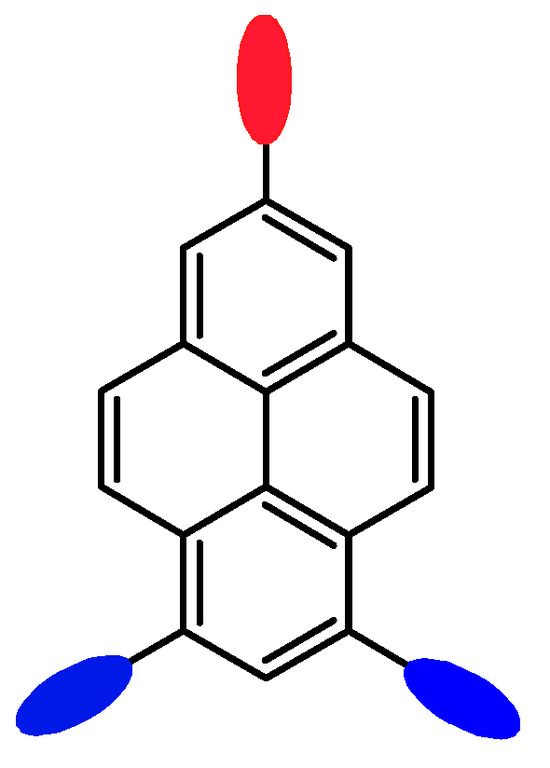
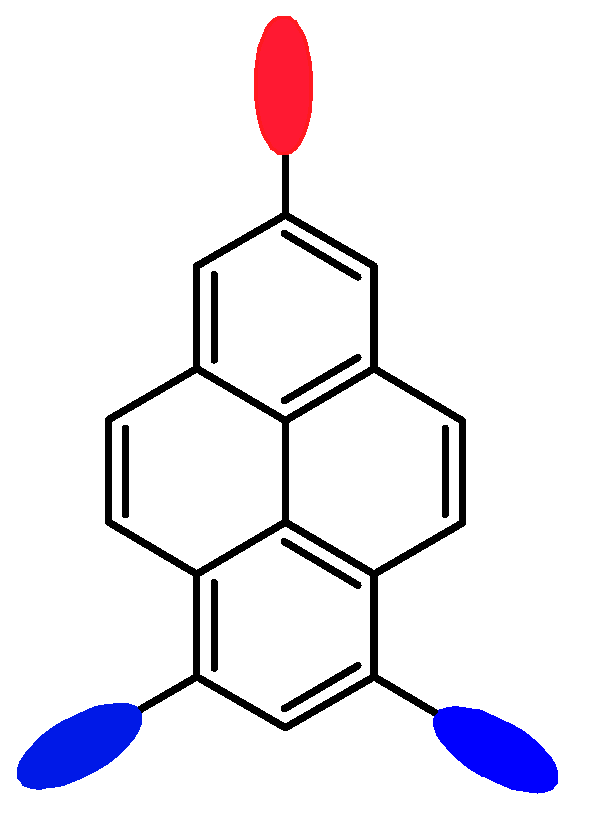
Despite the pyrene derivatives have been covered extensively by scientists during the last years, many interesting properties and applications of pyrene derivatives have been presented, nowadays there are still areas of chemistry of pyrene that need to be fulfilled [1]. Most of the described in literature pyrenes are 1,3,6,8-tetrasubstituted followed by 4,5,9,10-tetrasubstituted, 2,7-, and 1,6-, and 1,8-disubstituted pyrene derivatives [2,3,4,5]. In the case of 1,3-di(hetero)aryl-7-substituted (Figure 1), there are only a few examples of derivatives containing at position 7-tert-butyl group [6,7,8,9]. These compounds exhibit interesting optical properties what caused that they were studied for use in the area of organic electronics.
Figure 1.
The general structure of target compounds.
In this work, the necessity of synthesis of 1,3-di(hetero)aryl-7-substituted pyrenes was presented based on the results of theoretical calculations by using density functional theory (DFT) and time-dependent density functional theory (TD-DFT). What is more, compounds with the suitable substituents at position 1 and 3 were determined as the NCN-cyclometalating ligands with various d-block metals.
2. Results and Discussion
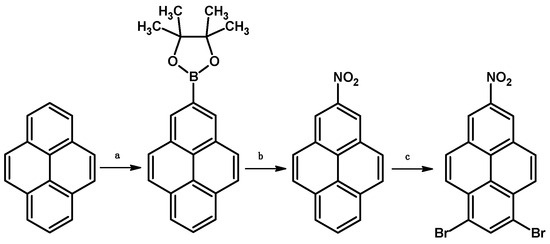
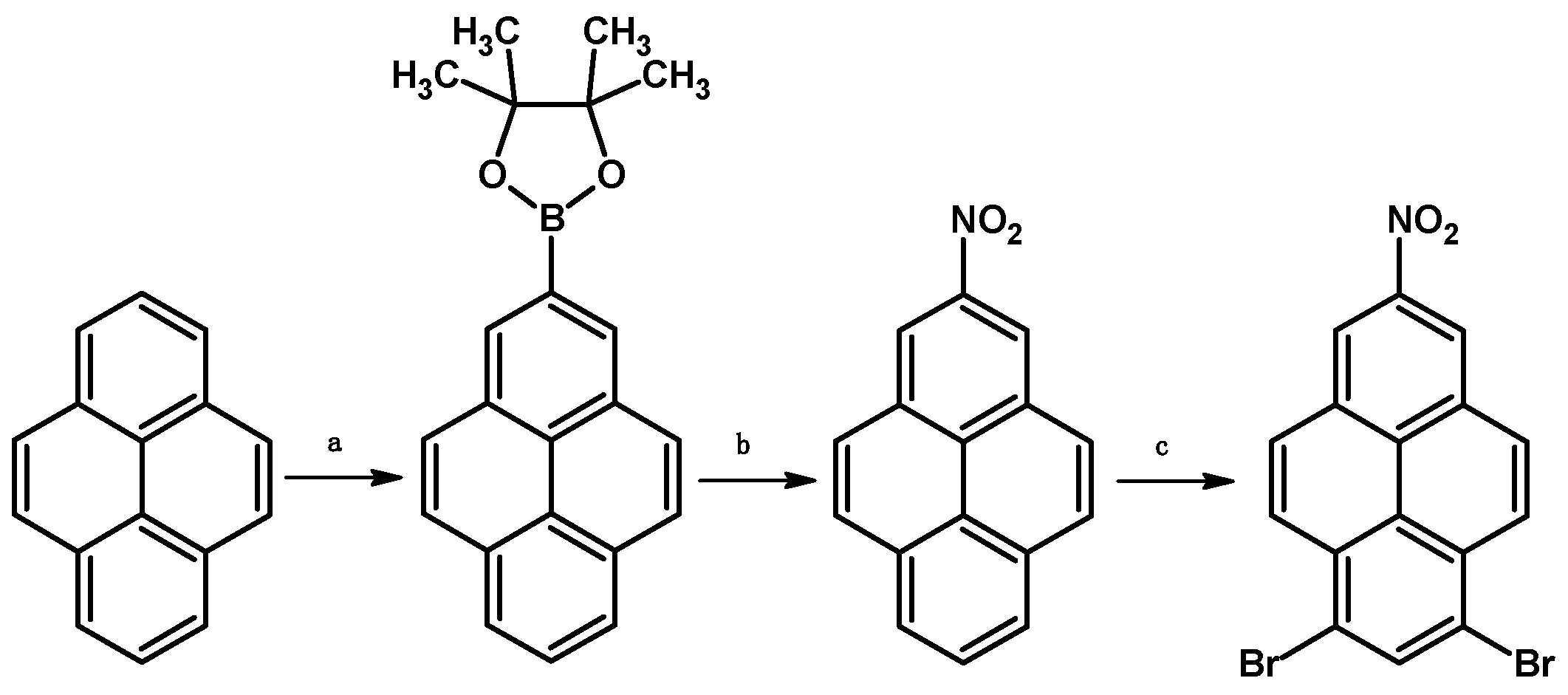
The theoretical approach to the studied subject of pyrene derivatives substituted at positions 1 and 3 by (hetero)aryl groups and at position 7 by various groups such as (hetero)aryl groups, halogens, and also by functional groups such as amine, carboxyl, aldehyde, dicyanovinyl and many others, has merit in the possibility of the synthesis of target molecules. The possible synthetic routes with feasible reagents and conditions based on literature data are presented in Scheme 1 and Scheme 2. As the starting material, commercially available pyrene will be used, which allows obtaining of 1,3-dibromo-7-nitropyrene based on the literature method (Scheme 1) [10,11].
Scheme 1.
Synthetic route for obtaining of 1,3-dibromo-7-nitropyrene. Feasible reagents and reaction conditions: (a) bis(pinacolato)diboron, [{Ir(μ-OMe)COD}2], 4,4′-di-tert-butyl-2,2′-dipyridyl, hexane, 80 °C, 16 h; (b) Cu(CH3COO)2, NaNO2, NEt3, acetonitrile, 80 °C, 24 h, air; (c) Br2, nitrobenzene, 120 °C, 3 h.
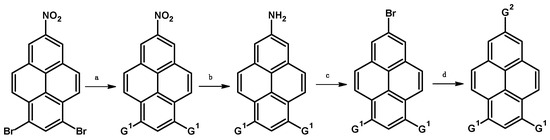
Scheme 2.
Synthetic route for obtaining 1,3,7-trisubstitutedpyrenes. Feasible reagents and reaction conditions: (a) coupling/condensation reaction; (b) NH2NH2, Pd/C, ethanol, rfx, 2h; (c) (i) NaNO2, HBr, 0 °C, 45 min., (ii) CuBr, HBr, 0 °C → r.t., 1.5 h; (d) coupling/condensation reaction.
Obtained 1,3-dibromo-7-nitropyrene will be used in the next steps in the synthesis of 1,3-disubstituted by (hetero)aryl groups pyrene derivatives which will be also substituted at position 7 by various groups, as it was mentioned before. It will be possible by exchange nitro group at position 7 on the amine group followed by the exchange on bromine (Scheme 2) [12,13].
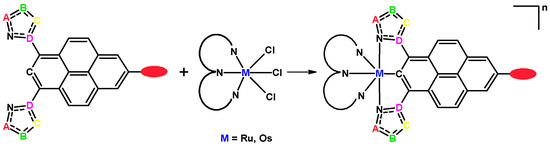
The part of target molecules containing at positions 1 and 3 heteroaryl groups suitable for the coordination of metal ions will be used as the ligands in synthesis of complexes according to the described procedures (Scheme 3) [14].
Scheme 3.
Synthetic route for obtaining complexes. Feasible reagents and reaction conditions: (1) M = Ru – (i) Ru-TPY, AgOTf, acetone, 65 °C, 3 h; (ii) NCN-cyclometalating pyrene ligand, DMF: t-BuOH (1:1), 130 °C, 48 h; (2) M = Os –Os-TPY, NCN-cyclometalating pyrene ligand, ethylene glycol, 200 °C, 24 h.
It is also worth emphasizing that the part of proposed synthetic strategy is based on the general methods developed by methodology researchers but each step of a synthesis, every chemical reaction which will be conducted, reagents, conditions, purification for each of these reactions must be designed to give an adequate product with satisfying yield what is only possible during the laboratory work.
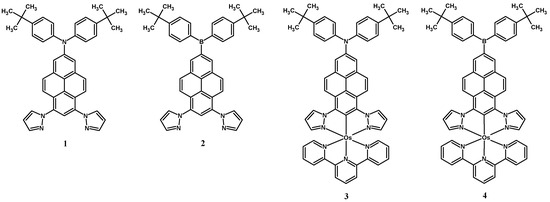
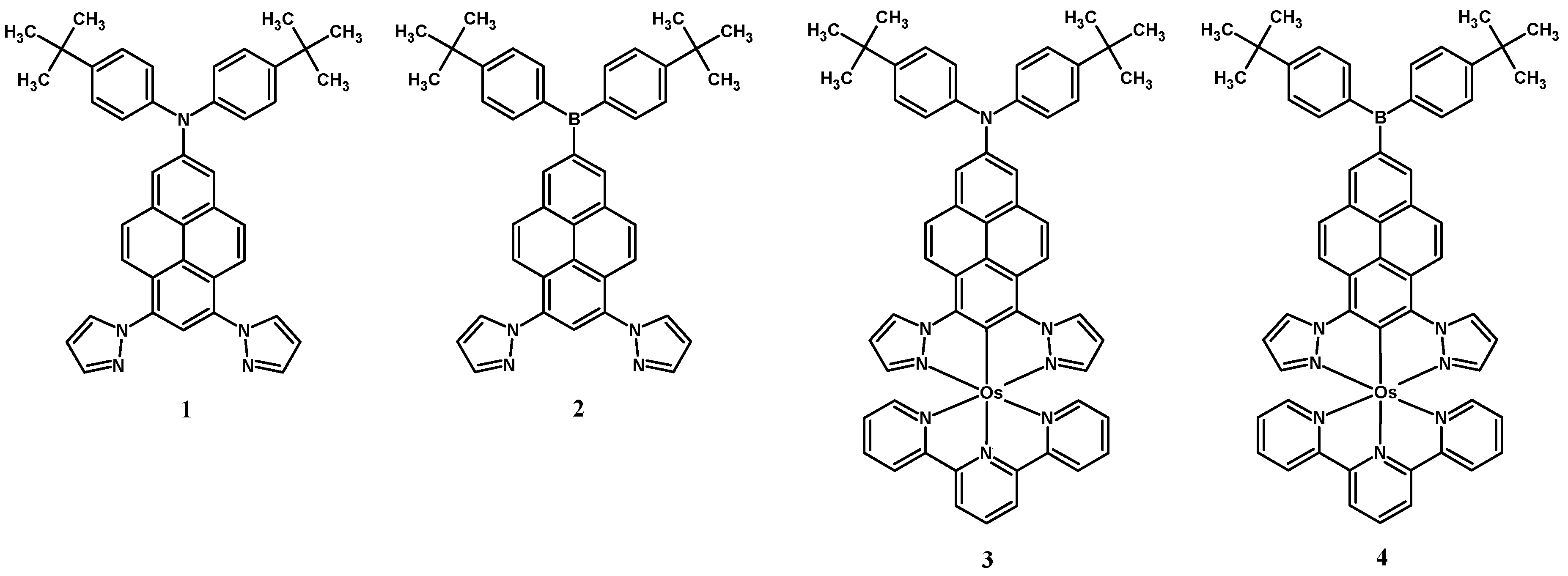
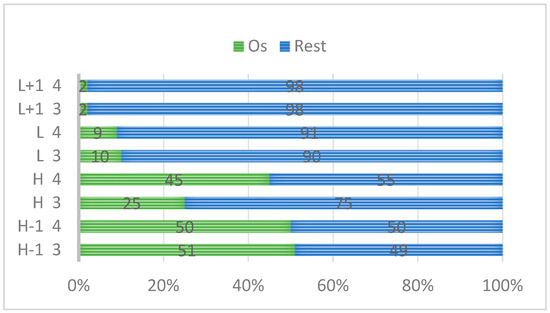
To theoretical considerations, two pyrenes were selected which contain at position 1 and 3 pyrazolyl substituents and at position 7 amine (1) or boron (2) derivative (Figure 2).
Figure 2.
Target molecules of theoretical considerations.
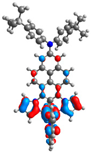
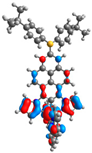
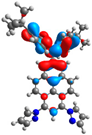
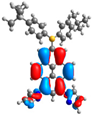
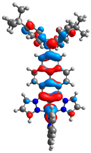
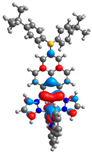
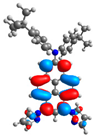
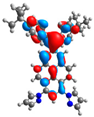
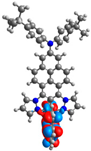
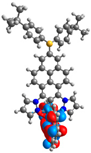
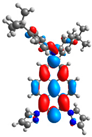
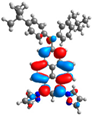
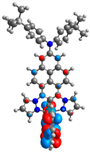
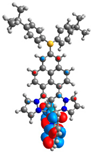
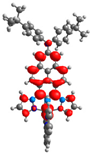
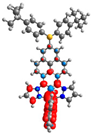
In the preliminary studies, density functional theory (DFT) calculations were performed. The B3LYP exchange-correlation functional with Def2-TZVP/6-31G** basis set, as implemented in the Gaussian 09 program was used. All calculations were done in PCM model in the chloroform (1 and 2) or acetonitrile (3 and 4) solution. The optimized structures of molecules 1–4 with the contours of orbitals: HOMO-1, HOMO, LUMO, LUMO+1 and their energies, and values of energy gaps are presented in Table 1.
Table 1.
The contours of selected orbitals of compounds 1–4 with their energies and values of energy gaps (ΔE) [eV] (the isosurface contour value 0.025 e/bohr3).
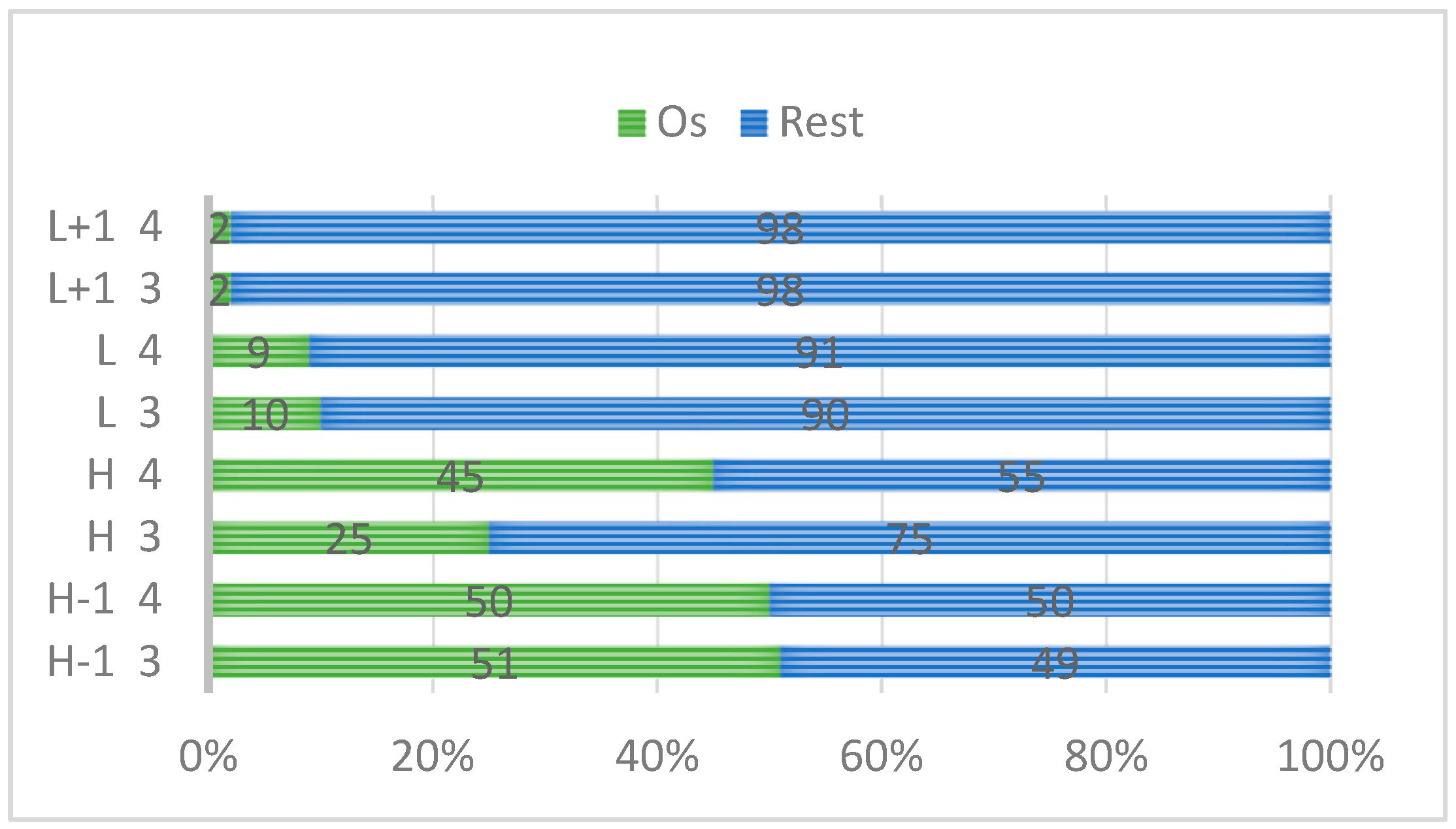
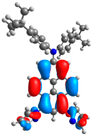
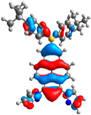
The significant differences in the localization of the orbitals were observed. In the case of pyrene ligands 1 and 2, the electronic character of the substituent at position 7 has a meaningful influence on the localization of orbitals. Due to this fact, the localization of orbitals of complexes is also various what has a direct effect on the contribution of metal ion (in described examples osmium (Figure 3)) in the creation of orbitals and photophysical properties.
Figure 3.
The contribution of osmium in the creation of selected orbitals for molecules 3 and 4.
Moreover, the spin-density of the lower energy triplet state for complexes 3 and 4, presented in Table 2, showed the significant differences between mentioned compounds what has a direct effect on the affinity of metallic centres in the oxidation processes [15].
Table 2.
The spin-density distribution of the lowest energy triplet state (the isosurface contour value 0.002 e/bohr3). Spin density distribution of Os for 3 = 0.591, for 4 = 0.836.
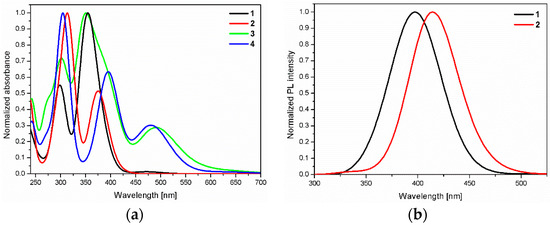
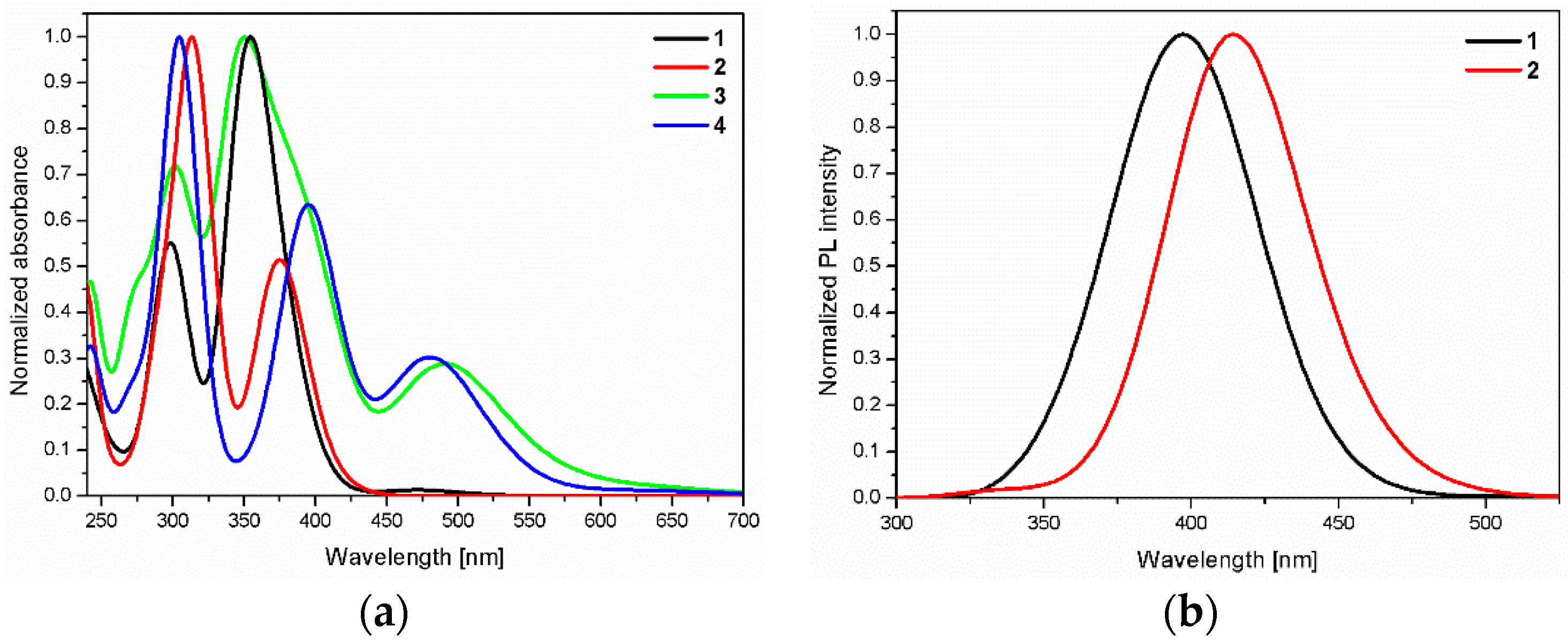
The next part of in silico studies concerns the prediction of absorption (for compounds 1–4), and emission (for 1 and 2) spectra by using TD-DFT calculations which were also carried out at the same level of theory. Obtained theoretical spectra are presented in Figure 4, whereas obtained data are listed in Table 3. It can be noticed that there are significant differences between the particular absorption bands in the case of ligands and complexes which is strongly connected to the nature of transitions.
Figure 4.
TD-DFT (Def2-TZVP/6-31G**/B3LYP) (a) absorption spectra of molecules 1–4, (b) emission spectra of compounds 1 and 2.
Table 3.
Theoretical calculated optical data for molecules 1–4.
3. Conclusions
The presented results of the theoretical calculations based on the DFT method of the selected examples in the area of 1,3-di(hetero)aryl-7-substituted pyrenes showed the advisability of the synthesis and further studies in this part of the chemistry of pyrenes. The obtained results proofed that electron-donating/accepting character of the substituent at position 7 of pyrene has a significant influence on the localization of orbitals which has a direct influence on the photophysical properties of compounds. Moreover, the theoretical investigations have merit in the possibility of the synthesis of target molecules what was also proofed by the synthetic routes’ proposal. It will be the subject of my further experimental research; I also believe that the presented results point out the importance of their further investigation by other scientists.
4. Methods
The DFT and TD-DFT calculations were performed with the B3LYP exchange-correlation functional implemented in the Gaussian 09 program [16]. In the case of pyrene derivatives, 6-31G(d,p) basis set was used, whereas in the case of complexes, Def2-TZVP basis set was used for osmium, and 6-31G(d) was employed for others atoms. All of the calculations were performed in the Polarizable Continuum Model (PCM) (chloroform for pyrenes, acetonitrile for complexes). All orbitals were computed at an isovalue of 0.025 e/bohr3 (spin-density - the isosurface contour value 0.002 e/bohr3).
Acknowledgments
The author was financed by the National Science Centre of Poland ETIUDA 6 2018/28/T/ST5/00005. Calculations have been carried out using resources provided by Wroclaw Centre for Networking and Supercomputing (http://wcss.pl), grant No.18.
References
- Figueira-Duarte, T.M.; Müllen, K. Pyrene-Based Materials for Organic Electronics. Chem. Rev. 2011, 111, 7260–7314. [Google Scholar] [CrossRef] [Scilit] [PubMed]
- Feng, X.; Hu, J.-Y.; Redshaw, C.; Yamato, T. Functionalization of Pyrene To Prepare Luminescent Materials-Typical Examples of Synthetic Methodology. Chem.-Eur. J. 2016, 22, 11898–11916. [Google Scholar] [CrossRef] [Scilit] [PubMed]
- Casas-Solvas, J.M.; Howgego, J.D.; Davis, A.P. Synthesis of substituted pyrenes by indirect methods. Org. Biomol. Chem. 2014, 12, 212–232. [Google Scholar] [CrossRef] [Scilit] [PubMed]
- Zych, D. Non-K Region Disubstituted Pyrenes (1,3-, 1,6- and 1,8-) by (Hetero)Aryl Groups—Review. Molecules 2019, 24, 2551. [Google Scholar] [CrossRef] [Scilit] [PubMed]
- Zych, D.; Kurpanik, A.; Slodek, A.; Maroń, A.; Pająk, M.; Szafraniec-Gorol, G.; Matussek, M.; Krompiec, S.; Schab-Balcerzak, E.; Kotowicz, S.; et al. NCN-Coordinating Ligands based on Pyrene Structure with Potential Application in Organic Electronics. Chem.-Eur. J. 2017, 23, 15746–15758. [Google Scholar] [CrossRef] [Scilit] [PubMed]
- Takemoto, K.; Kimura, M. Low band gap disk-shaped donors for solution-processed organic solar cells. RSC Adv. 2014, 4, 64589–64595. [Google Scholar] [CrossRef] [Scilit]
- Lorbach, D.; Keerthi, A.; Figueira-Duarte, T.M.; Baumgarten, M.; Wagner, M.; Müllen, K. Cyclization of Pyrene Oligomers: Cyclohexa-1,3-pyrenylene. Angew. Chemie Int. Ed. 2016, 55, 418–421. [Google Scholar] [CrossRef] [Scilit] [PubMed]
- Feng, X.; Hu, J.-Y.; Tomiyasu, H.; Tao, Z.; Redshaw, C.; Elsegood, M.R.J.; Horsburgh, L.; Teat, S.J.; Wei, X.-F.; Yamato, T. Iron( iii ) bromide catalyzed bromination of 2-tert-butylpyrene and corresponding position-dependent aryl-functionalized pyrene derivatives. RSC Adv. 2015, 5, 8835–8848. [Google Scholar] [CrossRef] [Scilit]
- Gong, X.; Pan, Y.; Xie, X.; Tong, T.; Chen, R.; Gao, D. Synthesis, characterization and electroluminescence of two highly-twisted non-doped blue light-emitting materials. Opt. Mater. (Amst.) 2018, 78, 94–101. [Google Scholar] [CrossRef] [Scilit]
- Li, X.; Deng, X.; Coyne, A.G.; Srinivasan, R. meta -Nitration of Arenes Bearing ortho / para Directing Group(s) Using C−H Borylation. Chem.-Eur. J. 2019, 25, 8018–8023. [Google Scholar] [CrossRef] [Scilit] [PubMed]
- Suzuki, S.; Takeda, T.; Kuratsu, M.; Kozaki, M.; Sato, K.; Shiomi, D.; Takui, T.; Okada, K. Pyrene-Dihydrophenazine Bis(Radical Cation) in a Singlet Ground State. Org. Lett. 2009, 11, 2816–2818. [Google Scholar] [CrossRef] [Scilit] [PubMed]
- Crawford, A.G.; Liu, Z.; Mkhalid, I.A.I.; Thibault, M.; Schwarz, N.; Alcaraz, G.; Steffen, A.; Collings, J.C.; Batsanov, A.S.; Howard, J.A.K.; et al. Synthesis of 2- and 2,7-Functionalized Pyrene Derivatives: An Application of Selective C-H Borylation. Chem.-Eur. J. 2012, 18, 5022–5035. [Google Scholar] [CrossRef] [Scilit] [PubMed]
- Ji, L.; Lorbach, A.; Edkins, R.M.; Marder, T.B. Synthesis and Photophysics of a 2,7-Disubstituted Donor–Acceptor Pyrene Derivative: An Example of the Application of Sequential Ir-Catalyzed C–H Borylation and Substitution Chemistry. J. Org. Chem. 2015, 80, 5658–5665. [Google Scholar] [CrossRef] [Scilit] [PubMed]
- Zych, D.; Slodek, A.; Golba, S.; Krompiec, S. Cyclometalated Ruthenium, Osmium, and Iridium Complexes Bridged by an NCN-Pyrene-NCN Derivative—Synthesis and Comparison of Optical, Thermal, and Electrochemical Properties. Eur. J. Inorg. Chem. 2018, 2018, 1581–1588. [Google Scholar] [CrossRef] [Scilit]
- Zych, D.; Slodek, A.; Matuszczyk, D.; Golba, S. Comprehensive Study of Mononuclear Osmium Complexes with Various Pyrene Ligands. Eur. J. Inorg. Chem. 2018, 2018, 5117–5128. [Google Scholar] [CrossRef] [Scilit]
- Frisch; Trucks, G.; Schlegel, H.; Scuseria, G.; Robb, M.; Cheeseman, J.; Scalmani, G.; Barone, V.; Mennucci, B.; Petersson, G.; et al. Gaussian 09, Revis. B.01; Gaussian, Inc.: Wallingford, CT, USA, 2009. [Google Scholar]

Publisher’s Note: MDPI stays neutral with regard to jurisdictional claims in published maps and institutional affiliations. |
© 2019 by the author. Licensee MDPI, Basel, Switzerland. This article is an open access article distributed under the terms and conditions of the Creative Commons Attribution (CC BY) license (https://creativecommons.org/licenses/by/4.0/).