


Abstract
Nitrate accumulation is a critical quality and safety parameter in leafy vegetables produced under intensive hydroponic conditions. Passive resonant-circuit devices that generate calibrated radio-frequency fields without external power input represent a potentially residue-free biostimulation approach, yet their frequency-specific effects on lettuce remain incompletely characterised. This study evaluated eight single-frequency (5–30 MHz) and eight dual-frequency (paired with a 5 MHz carrier) treatments against an untreated control on Lollo Bionda lettuce grown under uniform NFT conditions across two crop cycles. Morphological traits (height, rosette diameter, leaf number, shoot and root biomass, root length and volume) and biochemical parameters (nitrate concentration, soluble solids, chlorophyll distribution) were quantified. Single-frequency exposure significantly reduced leaf nitrate, with the strongest reduction at 10 MHz (786.7 mg kg−1 FW; −61.0% relative to the control). Dual-frequency treatments produced smaller, non-significant reductions (block mean 1731.7 mg kg−1 FW). Single-frequency regimes increased plant height and rosette diameter, whereas dual-frequency regimes elevated leaf number (up to 34.3) and root length (up to 36.7 cm) while yielding comparable total shoot biomass. Fresh biomass peaked at 160.3 g under 25 MHz versus 99.9 g in the control. Nitrate showed a strong negative correlation with apical chlorophyll (r = −0.747), plant height (r = −0.825) and rosette diameter (r = −0.843). The physiological optima did not coincide: 10 MHz was most effective for nitrate reduction and 25 MHz for biomass production. These frequency-specific responses identify selected single-frequency bands as a promising zero-input tool for hydroponic lettuce. However, the absence of a sham-device control, lack of in situ field-strength measurement, use of an unvalidated portable nitrate meter, and pooling of crop cycles mean that the observed effects cannot yet be attributed exclusively to electromagnetic resonance. Future studies incorporating sham controls, direct field quantification, enzymatic assays of nitrate assimilation, and multi-cycle validation are required to confirm mechanisms and refine commercial application.
1. Introduction
Hydroponic systems, particularly the Nutrient Film Technique (NFT), have transformed controlled-environment agriculture by enabling efficient, soilless production of leafy greens such as lettuce (Lactuca sativa L.). These systems optimize water and nutrient use, reduce land requirements, and minimize environmental impacts compared with conventional soil-based cultivation [1,2]. In NFT systems, precise control of environmental parameters—including temperature, relative humidity, electrical conductivity (EC), pH, and light—supports rapid growth and high productivity while allowing the production of high-quality, nutritionally valuable produce [3,4].
Modern horticulture faces increasing pressure to deliver high-quality vegetables with improved nutritional attributes while simultaneously reducing chemical inputs and resource consumption. Physical biostimulation offers a promising non-chemical strategy to modulate plant physiological processes. Magnetic and electromagnetic fields have been shown to influence germination, growth, biomass accumulation, photosynthetic efficiency, nutrient uptake, and antioxidant systems in a range of species [5,6]. These effects are attributed to alterations in membrane permeability, ion fluxes (particularly Ca2+ and K+), redox homeostasis, and enzyme activities, including those involved in nitrogen metabolism [6,7].
Numerous studies have demonstrated positive responses of lettuce to magnetic treatments. Static magnetic fields applied to seeds or irrigation water have increased shoot and root growth, fresh and dry biomass, chlorophyll content, nutrient accumulation, and overall yield [8,9,10,11]. Magnetized nutrient solutions in hydroponic and aeroponic systems have similarly enhanced biometric parameters, water-use efficiency, and leaf mineral composition [12,13,14]. Extremely low-frequency and radio-frequency electromagnetic fields have also been reported to affect photosynthetic performance, stomatal behavior, and stress-related gene expression in lettuce, although responses depend strongly on field intensity, frequency, duration, and cultivar [15,16].
Despite these advances, most investigations have relied on active electromagnetic systems that require continuous external power or permanent magnets applied to water. Passive resonant circuits—devices that generate low-intensity electromagnetic fields through inductive and capacitive coupling without external energy input during operation—remain largely unexplored in controlled hydroponic environments. Recent work with resonant-circuit rings operating at selected frequencies has indicated frequency- and genotype-dependent stimulation of vegetative growth in red-leaf lettuce cultivars grown under NFT conditions [17]. However, comprehensive evaluations of a wider range of discrete and combined radio-frequency bands (particularly in the 5–30 MHz range), their effects on both morphological traits and quality attributes (including nitrate content, soluble carbohydrates, and chlorophyll distribution), and their performance under tightly controlled NFT conditions are still limited.
Because plant responses to electromagnetic fields are strongly frequency-dependent, the present study first applied eight discrete single-frequency treatments (5, 7, 10, 14, 21, 25, 28 and 30 MHz) to identify the most bioactive bands and to establish clear frequency–response relationship. Selected frequencies were then combined with a fixed 5 MHz carrier to explore possible synergistic or additive effects that may arise from multi-frequency exposure, an approach that allows isolation of primary frequency effects before examining interactive outcomes under identical NFT conditions [5,6,7].
Lettuce is a model leafy vegetable for such studies because of its short production cycle, high sensitivity to environmental stimuli, and importance as a dietary source of vitamins, minerals, and bioactive compounds. At the same time, leafy vegetables are prone to elevated nitrate accumulation under intensive hydroponic fertilization, raising food-safety concerns. Physical interventions that simultaneously promote biomass accumulation and favor nitrate assimilation could therefore contribute to both yield improvement and nutritional quality.
The present study evaluates the effects of passive electromagnetic devices generating calibrated resonance frequencies between 5 and 30 MHz (single frequencies and selected combinations with a 5 MHz carrier) on the growth performance and quality attributes of butterhead lettuce (Lactuca sativa L. cv. Lollo Bionda) cultivated in an NFT hydroponic system. Morphological traits (plant height, rosette diameter, leaf number, shoot and root biomass, root length and volume) and biochemical parameters (leaf nitrate concentration, soluble carbohydrate content, and chlorophyll distribution) were assessed under identical environmental conditions across two crop cycles. The work aims to identify frequency-specific responses, quantify potential improvements relative to an untreated control, and provide data supporting the integration of passive electromagnetic biostimulation into sustainable, energy-efficient hydroponic production protocols.
2. Materials and Methods
2.1. The Experimental Site, Plant Material, and Cultivation Methods
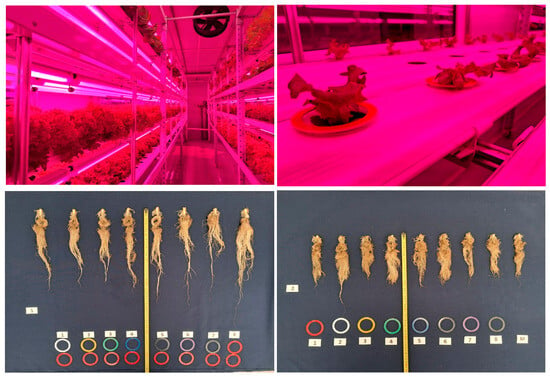
This study was conducted over two independent crop cycles, January–February 2024 and January–February 2025, in a recirculating nutrient-film technique (NFT) hydroponic system at the China–Romania Agricultural Science and Technology Demonstration Park, a collaboration between the Chinese Academy of Agricultural Sciences and the University of Agronomic Sciences and Veterinary Medicine of Bucharest (USAMV Bucharest) (Figure 1). The same environmental set-points were applied during both cycles: air temperature of 20 °C during the day and 18 °C at night, relative humidity of 60–70%, CO2 concentration of 625–650 µmol mol−1, and a 16 h light/8 h dark photoperiod. The lettuce cultivar Lactuca sativa L. cv. Lollo Bionda was used as the experimental plant material. Seeds were germinated under controlled conditions and transplanted at the two-to-three true-leaf stage into the NFT system. Each plant was established individually in a small basket (mini-pot) inserted into a designated opening in the NFT channel. The shoot remained above the channel, while the roots extended freely into the circulating nutrient solution. Plants remained at their assigned positions throughout each experimental cycle. Treatment positions were spatially randomized within the NFT system, and treatment assignment was randomized among available plant positions. NFT channel was included as the blocking factor to account for potential spatial variation among channels. Individual plants receiving a defined treatment constituted the experimental units, whereas plants measured at the same treatment position were not treated as additional independent replicates. Three plants per treatment were sampled for morphological and biochemical measurements in each crop cycle. The nutrient solution had an initial electrical conductivity (EC) of 1.2 dS m−1 during the first 7 days and was subsequently maintained at 2.5 dS m−1 until harvest. Tank A contained calcium nitrate (675 mg L−1), potassium nitrate (225 mg L−1), and iron chelate (50 mg L−1). Tank B contained monopotassium phosphate (185 mg L−1), magnesium sulfate (380 mg L−1), and potassium sulfate (77.5 mg L−1). Micronutrients included boric acid (2.05 mg L−1), manganese sulfate (2.32 mg L−1), zinc sulfate (0.12 mg L−1), copper sulfate (0.39 mg L−1), and molybdenum (0.11 mg L−1). The fully enclosed experimental facility was equipped with controlled LED illumination, cooling, irrigation, and active ventilation. Sole-source illumination was provided by 100 W Kathay IP67-rated waterproof LED arrays (220 V AC, 50/60 Hz) (Kathay Technology Industrial, Hong Kong, China) emitting a full spectrum from 380 to 840 nm with an approximately 1:1 blue:red photon ratio and emission peaks near 450 and 660 nm. PPFD was maintained at 236.9 µmol m−2 s−1 across treatments.
Figure 1.
Growth and Development of Red-Pigmented Lactuca sativa L. Cultivars under Varying LED Light Intensities in a Continuous-Flow NFT Hydroponic System.
2.2. Electromagnetic-Frequency Treatments and Experimental Devices
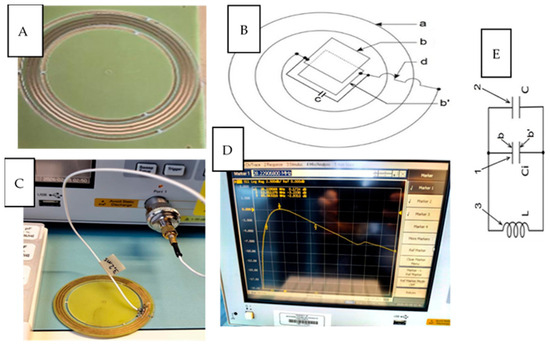
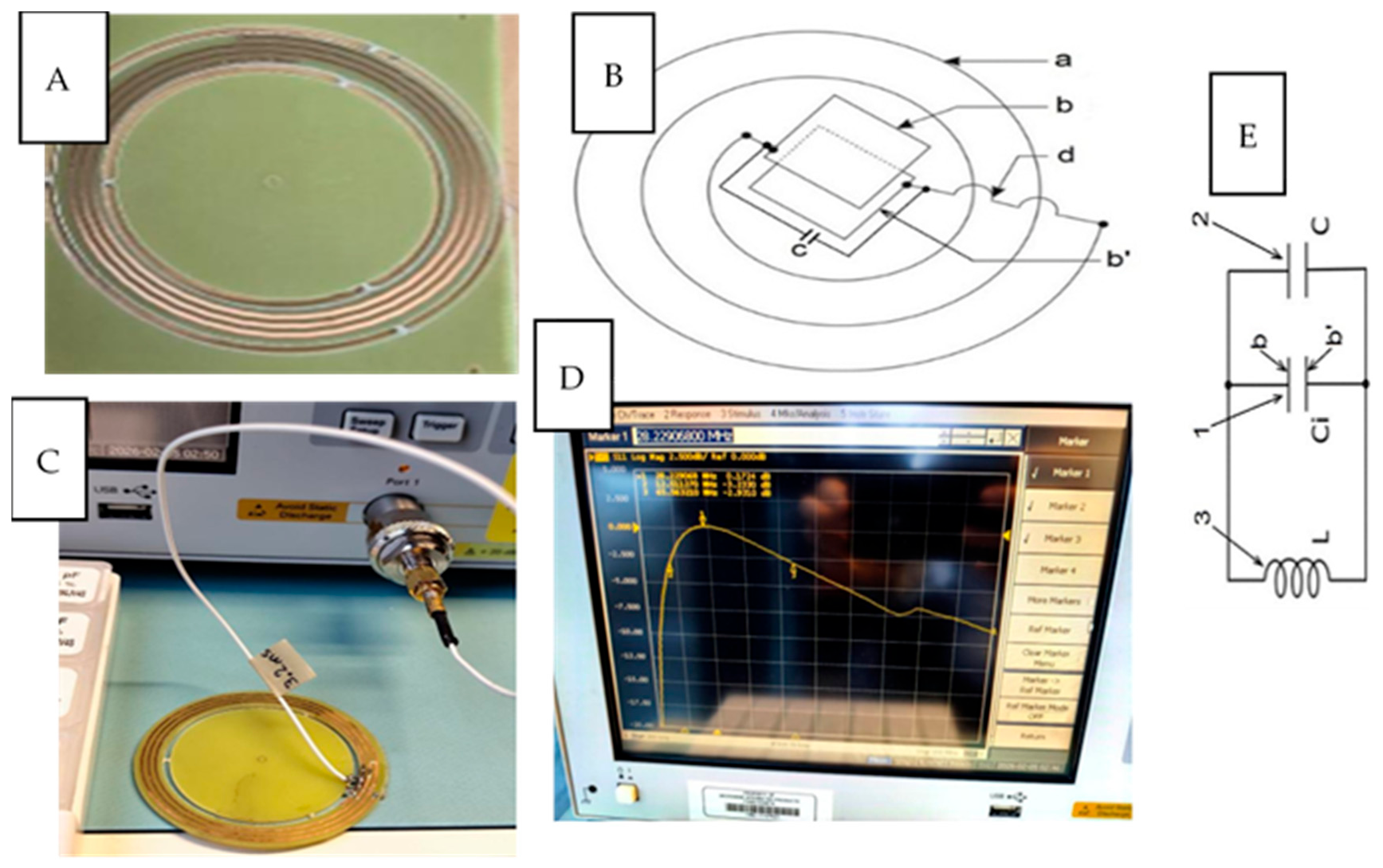
The electromagnetic treatments consisted of passive annular LC resonant circuits. For clarity and consistency, treatments are designated throughout the manuscript as single-frequency treatments (V1–V8) and dual-frequency treatments (V9–V16). The resonant circuits were fabricated on 2.0 mm thick glass-textolite substrates, an electrically insulating material. Flat copper coils were produced on the substrate by photolithography and etching and connected in parallel with capacitors to form LC resonant circuits (Figure 2A–E). The inductance and capacitance of the circuits were measured using dedicated laboratory equipment. Resonance frequencies were calculated from the measured electrical parameters and experimentally verified using a WOBLER radio-frequency spectrometer available in the laboratory. The resulting circuits provided calibrated resonance frequencies within the 5–30 MHz range. Each resonant ring had an outer diameter of 57.5 mm, an inner diameter of 44.5 mm, and a thickness of 1.5 mm. During exposure, the ring was positioned horizontally on the upper flange of the mini-pot, with the plant stem centred within the ring and oriented perpendicular to its plane (Figure 1). The ring therefore surrounded the basal portion of the plant without direct contact with plant tissues. The roots remained within the circulating nutrient solution below the mini-pot. The same ring geometry, orientation, and placement configuration were maintained for plants assigned to the corresponding treatment.
Figure 2.
Passive ring resonant circuit device. (A) Physical passive resonant ring (WO/2018/037379). (B) Schematic representation of the device. (C) Measurement setup with vector network analyzer. (D) Frequency response (300 kHz–150 MHz) and electronic LC circuit. (E) Electronic diagram of the passive ring resonant.
The resonant rings were passive LC circuits and contained no internal power source. Their response was determined by the electrical characteristics of the coil–capacitor circuit, with the target resonance frequency verified experimentally before use. Thus, the electromagnetic treatment was defined by the calibrated resonance frequency and physical exposure configuration rather than by direct electrical powering of the plant or nutrient solution. The ambient magnetic field at the experimental site was measured as 48.3 µT. This value represents the background magnetic field and is not considered a measure of the treatment field generated by the resonant rings. Ring-induced electromagnetic-field changes were modelled rather than directly measured at the plant or root-zone position. Consequently, the present experiment provides the nominal resonance frequencies, resonant-device geometry, orientation, and plant-level exposure configuration, but does not provide direct in situ measurements of the electric- or magnetic-field strength, spatial field distribution, or temporal stability of the ring-induced field at the plant/root-zone level.
2.3. Treatment Structure and Plant Exposure
Eight single-frequency treatments (V1–V8) covering the 5–30 MHz range were initially evaluated (Table 1). This first stage was used to examine frequency-dependent responses and identify frequencies associated with measurable plant responses. In the second stage, selected frequencies were paired with a fixed 5 MHz carrier to generate dual-frequency treatments (V9–V16). Two resonant rings were positioned together at the same planting site for the dual-frequency treatments. The study therefore followed a sequential, two-stage screening design rather than a complete factorial frequency × frequency experiment.
Table 1.
Seventeen experimental variants incorporating Resonance Frequency Treatment (RFT) at different frequencies (MHz) were established as follows.
The single-frequency treatments were evaluated first, followed by the selected dual-frequency combinations. The dual-frequency treatments were intended to examine whether simultaneous exposure to two resonance frequencies produced responses that differed from those observed under the corresponding single-frequency treatments. The untreated control was established using the same NFT cultivation conditions but without a resonant ring. No sham ring having the same physical dimensions and construction as the treatment rings but lacking the target resonance was used. Therefore, the design does not completely distinguish effects attributable specifically to electromagnetic resonance from potential effects associated with the physical presence of the resonant apparatus.
2.4. Experimental Design, Replication, and Crop Cycles
The experiment was conducted in two independent crop cycles (January–February 2024 and January–February 2025) using the same treatment structure and environmental set-points. Two crop cycles were adopted in order to authenticate the experimental data and to verify the repeatability of the observed treatment effects. Ten plants of each treatment variant were established per cycle, and three plants per treatment were selected for morphological and biochemical measurements. Treatment allocation was randomized among plant positions within the NFT system, while NFT channel was incorporated as a blocking factor. Because electromagnetic exposure was applied locally to individual plants through the resonant rings, the individual treated plant was considered the experimental unit for treatment comparisons, with channel position accounted for through the blocking structure. Plants within the same treatment and cycle were therefore treated as biological replicates only when they represented independently assigned treatment positions. For the principal statistical comparisons, measurements from the two crop cycles were combined after averaging corresponding biological replicates across cycles. Cycle means were calculated and then averaged to obtain a more stable estimate of treatment responses across independent experimental runs. Crop cycle was not retained as a fixed factor and treatment × cycle interactions were not tested. This pooling approach improves the robustness of the mean estimates but limits the formal assessment of cycle-to-cycle reproducibility and the generalizability of the observed treatment effects. This limitation is acknowledged.
2.5. Data Collection
2.5.1. Morphological Traits
Plant growth was monitored during cultivation, with measurements recorded at seven-day intervals until harvest at approximately 20 days after transplantation. At harvest, plant height (cm), rosette diameter (cm), leaf number, shoot fresh biomass (g), root length (cm), root fresh mass (g), and root volume (cm3) were determined. Plant height was measured from the base of the shoot to the highest point of the plant, while rosette diameter was determined across the widest portion of the canopy. Shoot and root fresh masses were measured separately after harvest. Root volume was determined by water displacement.
2.5.2. Nitrate Content, and Other Biochemical Assessments
Leaf nitrate concentration was measured in fully expanded leaves using a Greentest ECO 6 portable digital nitrate tester (Greentest, Shenzhen, China). Measurements were performed with the probe positioned on the mid-lamina of intact leaves according to the manufacturer’s procedure for leafy vegetables. Three biological replicates were measured for each treatment per crop cycle. Nitrate concentration is reported throughout the manuscript as mg kg−1 fresh weight. The device was calibrated daily with supplied standards and used per manufacturer instructions for leafy vegetables. Repeatability was good (CV typically < 8% from triplicate readings on the same leaf), but accuracy against laboratory reference methods was not validated. The same biological-replicate structure was used for chlorophyll determinations. Environmental and physiological measurements were recorded using specific instruments: an Apogee Instruments MQ-500 full-spectrum quantum meter (Apogee Instruments, Logan, UT, USA) for photosynthetic photon flux density (PPFD, µmol·m−2·s−1); a Greentest ECO 6 portable digital nitrate tester (Greentest, Shenzhen, China) for quantifying nitrate in hydroponic solutions and plant tissues; a Vee Gee Scientific BX-1 handheld Brix refractometer (VEE GEE Scientific, Vernon Hills, IL, USA) for determining soluble solids (°Brix) in leaf extracts; and a Hanna Instruments Checktemp 1 digital thermometer (Hanna Instruments, Woonsocket, RI, USA) for monitoring ambient temperature. Measurements were conducted after seven days of growth and at harvest as appropriate.
2.6. Statistical Analysis
Statistical analyses were performed using jamovi version 2.5.5. The single-frequency treatment block (V1–V8) and the dual-frequency treatment block (V9–V16) were analysed separately, with the untreated control included in each comparison. For each treatment block, a two-way ANOVA was used with Treatment as the main factor and Replicate/Block as the second factor, where applicable to the randomized experimental structure. Pearson correlation coefficients were also calculated between nitrate concentration and the measured morphological and biochemical traits using the 17 treatment-level means (n = 17). NFT channel was treated as the blocking factor rather than as an additional biological replicate. Individual plants assigned independently to treatment positions constituted the biological experimental units, whereas repeated measurements within the same plant were averaged before analysis. Where a significant treatment effect was detected, Fisher’s least-significant-difference (LSD) test was used for post hoc mean separation at p < 0.05, p < 0.01, and p < 0.001. The overall responses of the single- and dual-frequency treatment groups were additionally compared using Welch’s t-test applied to the corresponding aggregated treatment means. Pearson correlation coefficients were calculated between nitrate concentration and the measured morphological and biochemical traits using treatment-level means. Nitrate concentration was consistently expressed as mg kg−1 fresh weight throughout the manuscript; the term “ppm” was not used for plant nitrate concentration. Because the two crop cycles were averaged before the principal treatment analysis, cycle was not included as a separate factor in the ANOVA and treatment × cycle interactions were not tested. This approach was adopted to summarize responses across the two experimental cycles but limits the ability to quantify cycle-specific effects.
3. Results
3.1. Environmental Conditions and Treatment Context
Environmental set-points were identical in both crop cycles (20 °C Day/18 °C night, 60–70% RH, 625–650 µmol mol−1 CO2, 16 h photoperiod, PPFD 236.9 µmol m−2 s−1), and ambient temperature recorded with the digital thermometer showed no appreciable difference between treated and untreated positions. The resonant rings were passive, unpowered LC circuits, and the background magnetic field at the site was 48.3 µT. Because ring-induced field changes were modelled rather than measured in situ (Section 2.2), treatments are described throughout by their verified resonance frequency and exposure geometry, not by an exposure dose. Two features of the analysis should be noted before the results are presented. First, the untreated control (V17) was included in both the single-frequency and the dual-frequency ANOVA; the two block analyses are therefore not statistically independent, and no formal test compares a single-frequency treatment directly with a dual-frequency treatment. Second, because no sham ring was used (Section 2.3), the responses reported below cannot be attributed exclusively to electromagnetic resonance as distinct from the physical presence of the ring assembly.
3.2. Nitrate Accumulation
Leaf nitrate concentration was highest in the untreated control (2016.7 mg kg−1 FW) and lower in every one of the sixteen frequency treatments (Table 2). Within the single-frequency block, nitrate ranged from 786.7 mg kg−1 under 10 MHz (V3) to 1453.3 mg kg−1 under 21 MHz (V5), corresponding to reductions of 61.0% and 27.9% relative to the control (portable-meter determinations). The 5 MHz treatment (V1) gave the second-lowest value (843.3 mg kg−1; −58.2%), while the remaining single-frequency treatments fell between 1213.3 and 1300.0 mg kg−1 (−39.8% to −35.5%). Two-way ANOVA confirmed a significant treatment effect within this block (p = 0.0035), with no significant replicate/block effect (p = 0.7008). Within the dual-frequency block, nitrate ranged from 1463.3 mg kg−1 (5 + 10 MHz; −27.4%) to 1956.7 mg kg−1 (5 + 21 MHz; −3.0%). No statistically significant differences among treatments were detected in this block (p = 0.3939). The numerical reductions observed under dual-frequency exposure are therefore not statistically distinguishable from the control, and no frequency-specific conclusion is drawn within the dual-frequency block. Averaged across their respective blocks, single-frequency treatments carried 42.3% less nitrate than the control and dual-frequency treatments 14.1% less. The direction of response was consistent—all sixteen treatments reduced nitrate—but the magnitude and the statistical support differed markedly between the two exposure structures.
Table 2.
Nitrate content (mean values ± SD) and percentage change relative to the control group in Lactuca sativa L. cv. Lollo Bionda under single-frequency and dual-frequency passive resonant field treatments.
3.3. Soluble Solids and Chlorophyll Distribution
Soluble solids content varied between 2.1 °Brix (V3, 10 MHz) and 4.0 °Brix (V6, 25 MHz), with a control value of 2.6 °Brix (Table 3). Block means were effectively identical (single-frequency 3.01 °Brix; dual-frequency 3.04 °Brix), and the narrow overall range indicates limited sensitivity of soluble solids to the applied frequencies. Chlorophyll readings declined from the basal to the apical leaf positions in most variants. In the single-frequency block, basal values ranged from 1.9 (V7, 28 MHz) to 3.8 (V6, 25 MHz) and apical values from 1.6 (V7) to 3.2 (V1, 5 MHz). In the dual-frequency block, apical chlorophyll was consistently low (1.27–1.57) and close to the control value (1.40), while basal values ranged from 1.47 to 2.87. Two-way ANOVA detected significant treatment effects in the single-frequency block for basal (p = 0.0236), middle (p = 0.0010) and apical chlorophyll (p < 0.0001), and in the dual-frequency block for middle (p < 0.0001) and apical chlorophyll (p = 0.0484) but not basal chlorophyll (p = 0.7746). Replicate/block effects were non-significant throughout except for basal (p = 0.0064) and middle chlorophyll (p = 0.0311) in the dual-frequency block, indicating residual spatial variation among NFT channels for those two traits.
Table 3.
Biochemical parameters of Lactuca sativa L. cv. Lollo Bionda under single-frequency and dual-frequency passive resonant field treatments.
3.4. Growth and Morphological Responses
Plant height, diameter, leaf number, fresh biomass and root traits were strongly modulated by both single- and dual-frequency regimes (Table 4). Single-frequency treatments (V1–V8) consistently produced taller plants (23.2–25.7 cm) and greater stem diameters (35.7–40.8 cm) than dual-frequency combinations (16.7–22.7 cm height; 25.3–30.3 cm diameter). Leaf number, however, was higher under dual-frequency exposure (31.0–34.3 leaves) than under single-frequency exposure (25.3–30.3 leaves). Fresh biomass peaked at 160.3 g under 25 MHz (V6) within the single-frequency block and at 150.9 ± 3.6 g under 5 + 28 MHz (V14) within the dual-frequency block; the untreated control recorded the lowest biomass (99.9 g).
Table 4.
Growth and morphological parameters of Lactuca sativa L. cv. Lollo Bionda under single-frequency and dual-frequency passive resonant field treatments.
Root length and root biomass responded differently. Dual-frequency treatments generally elongated roots (up to 36.7 cm under V14) and increased root weight (up to 9.7 g), whereas single-frequency root lengths remained shorter (20.3–29.9 cm) and root weights lower (5.5–7.7 g). Root volume showed smaller absolute differences but still tended to be greater under certain dual-frequency combinations. Two-way ANOVA revealed highly significant effects of electromagnetic frequency treatments on the majority of morphological parameters in both the single-frequency and dual-frequency experimental blocks. In the single-frequency block (V1–V8 + Control), treatment effects were highly significant (p < 0.0001) for plant height, plant diameter, fresh weight and root length, and highly significant (p = 0.0002) for root weight. Number of leaves also showed a significant treatment response (p = 0.0051), whereas root volume did not reach statistical significance (p = 0.0845). Replicate effects were non-significant for all measured traits in this block.
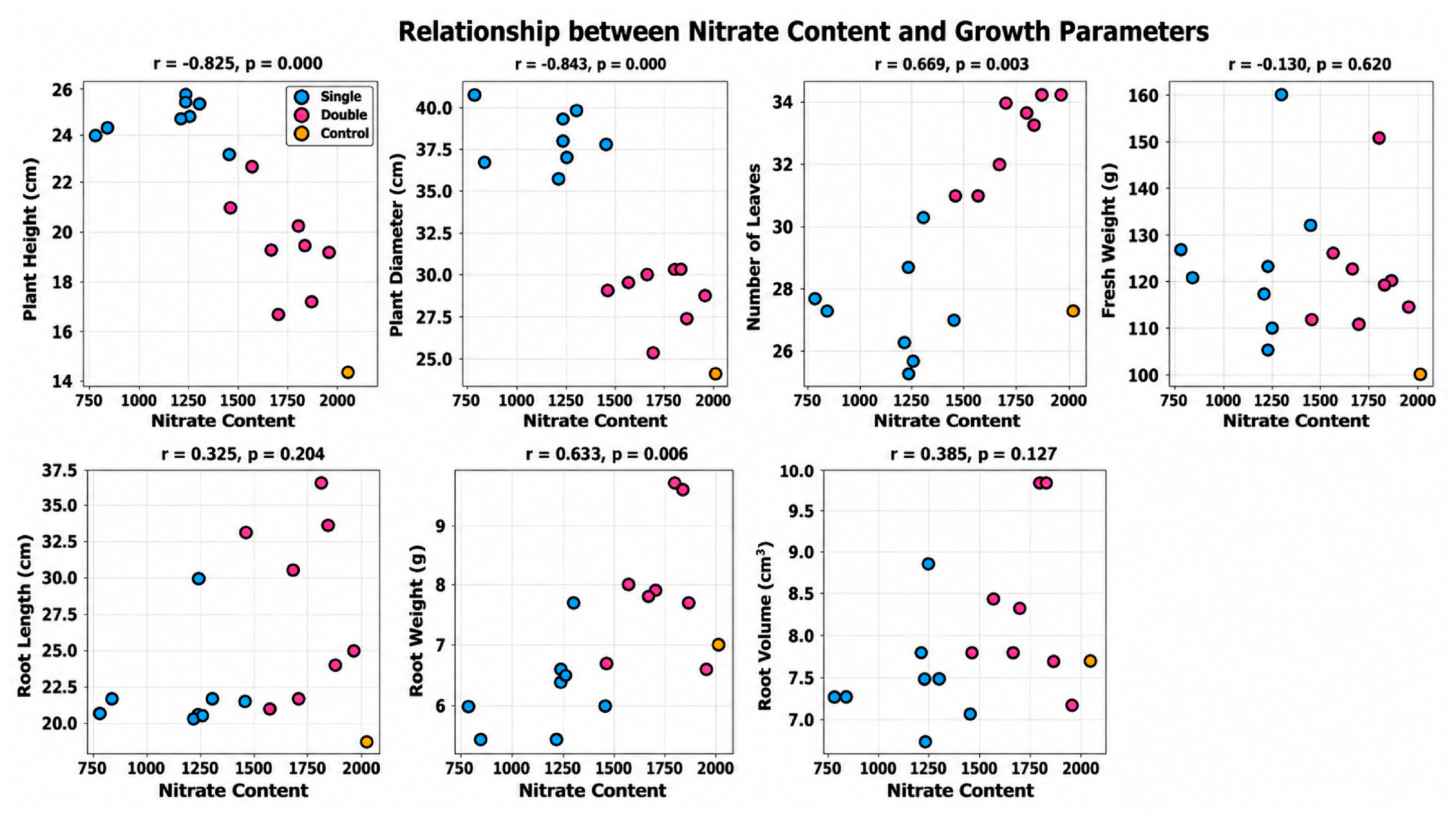
In the dual-frequency block (V9–V16 + Control), treatment effects remained highly significant (p < 0.0001) for plant height, plant diameter, fresh weight, root length and root weight, and highly significant (p = 0.0001) for root volume. In contrast to the single-frequency block, the number of leaves did not differ significantly among dual-frequency treatments (p = 0.4294). Replicate effects reached significance for plant height (p = 0.0405), plant diameter (p = 0.0036) and root length (p = 0.0432), while remaining non-significant for the remaining traits. Collectively, these results demonstrate that both single- and dual-frequency regimes exerted strong control over vegetative growth and root development. Single-frequency exposure significantly influenced leaf number in addition to the core growth parameters, whereas dual-frequency exposure uniquely affected root volume and showed greater sensitivity to replicate variation in selected traits. The consistently high significance levels for plant height, diameter, fresh weight and root length across both blocks underscore the robustness of the frequency-driven morphological responses (Figure 3).
Figure 3.
Scatter plots illustrating the relationships between nitrate content and plant growth parameters under different treatment.
3.5. Relationship Between Nitrate Content and Other Biochemical Parameters
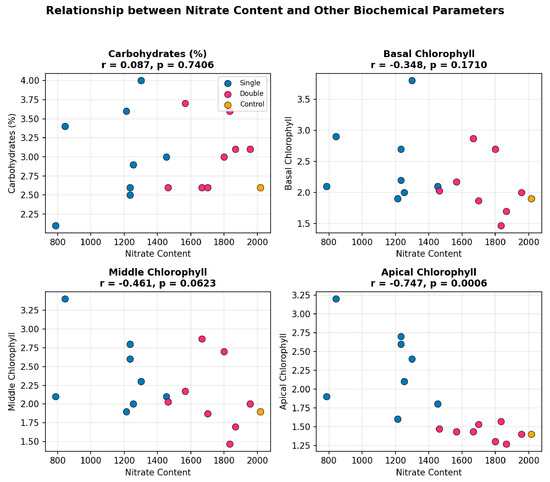
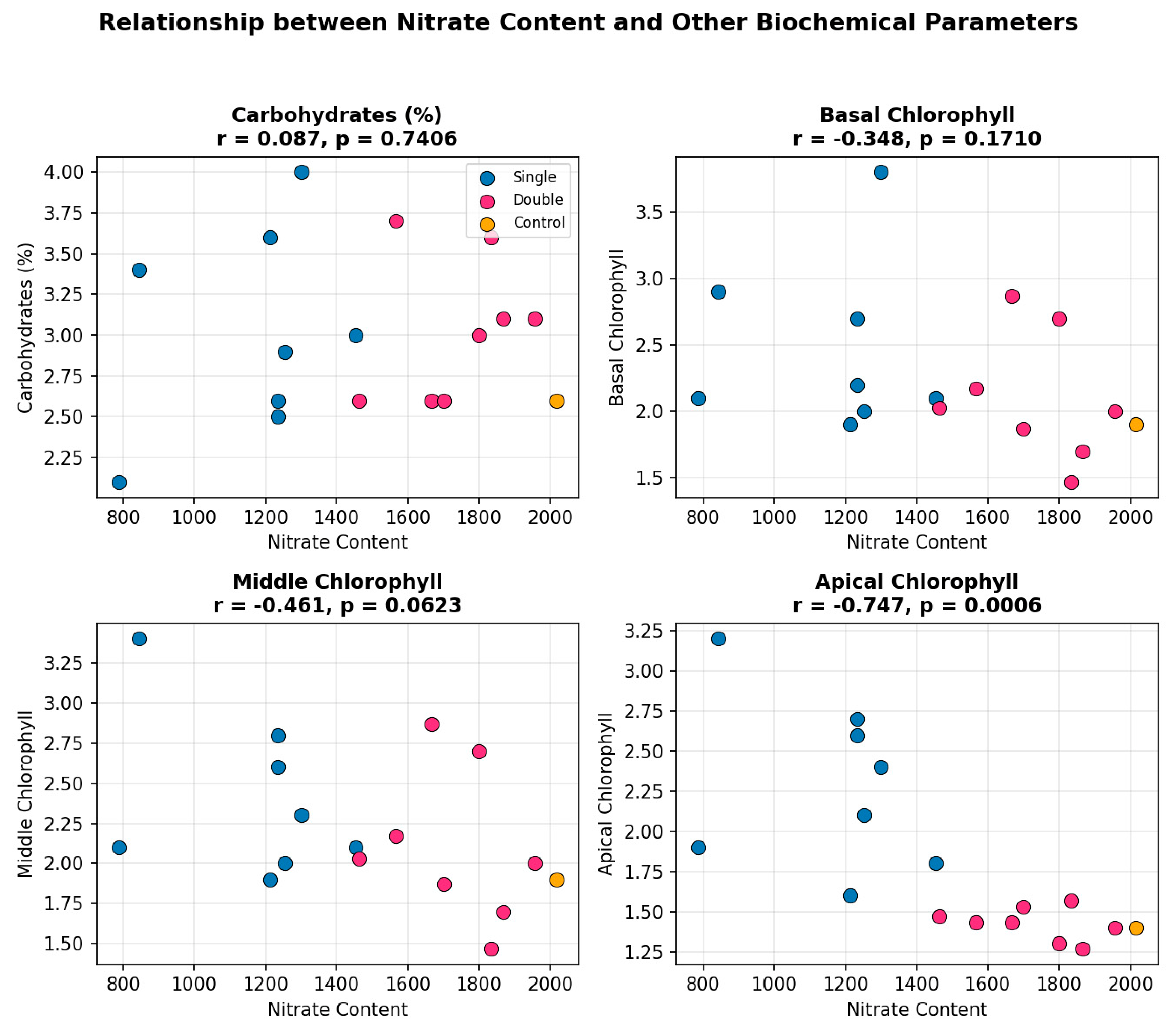
Correlation analysis revealed differing degrees of association between nitrate content and the biochemical parameters examined (Figure 3). Carbohydrate content showed a very weak positive correlation with nitrate (r = 0.087, p = 0.7406), which did not approach statistical significance, indicating that soluble carbohydrate levels were essentially independent of tissue nitrate accumulation across treatments. Basal chlorophyll displayed a moderate negative correlation (r = −0.348, p = 0.1710) that remained non-significant, suggesting only a limited and unreliable tendency for higher basal chlorophyll readings at lower nitrate concentrations. Middle chlorophyll showed a moderate negative correlation (r = −0.461, p = 0.0623) that approached but did not reach the conventional significance threshold, pointing to a possible trend that would require a larger sample to confirm.
In contrast, apical chlorophyll exhibited a strong negative correlation with nitrate content (r = −0.747, p = 0.0006), the only biochemical relationship in this analysis to be statistically robust. Plants that accumulated higher nitrate levels consistently displayed lower chlorophyll concentrations in their youngest, apical leaves. Overall, of the four biochemical parameters tested, only the nitrate–apical chlorophyll relationship represents a statistically defensible correlation, while the associations with carbohydrates, basal chlorophyll and middle chlorophyll remain weak or only marginally suggestive and are not supported by the present data.
3.6. Relationship Between Nitrate (mg/kg) Content and Growth Parameters
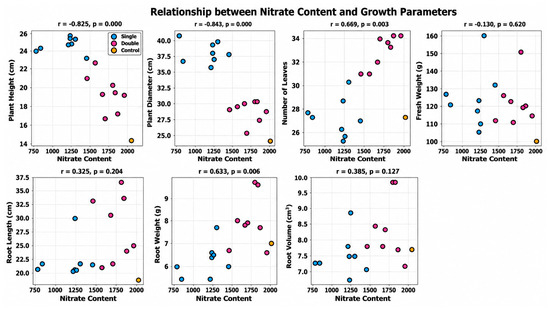
Correlation analysis showed that nitrate content was significantly associated with several morphological growth parameters (Figure 4). Plant height (r = −0.825) and plant diameter (r = −0.843, p < 0.001) both showed strong, highly significant negative correlations with nitrate content, suggesting an association between lower residual nitrate and greater shoot elongation and stem thickness. Number of leaves (r = 0.669) and root weight (r = 0.633) showed moderate-to-strong positive correlations with nitrate content, indicating an association between higher nitrate accumulation and greater leaf production and root mass. By contrast, fresh weight (r = −0.130), root length (r = 0.325), and root volume (r = 0.385) all showed weak correlations with p-values above 0.05. Taken together, these correlations reveal a consistent statistical pattern of association: lower nitrate was associated with greater plant height and diameter, while higher nitrate was associated with greater leaf number and root weight. These associations do not imply physiological causality.
Figure 4.
Scatter plots illustrating the relationships between nitrate content and biochemical parameters under different treatments.
Higher plant height and stem diameter under single-frequency exposure co-occurred with lower nitrate and higher apical chlorophyll, consistent with a light- or growth-dilution effect on residual nitrate. Conversely, the elevated leaf number and root biomass under dual-frequency exposure were accompanied by higher nitrate ac-cumulation, suggesting that the additional morphological investment did not fully translate into improved nitrate assimilation. Fresh biomass remained statistically equivalent between blocks, indicating that the contrasting allocation strategies (above-ground structural expansion versus leaf and root proliferation) ultimately yielded similar total green mass. These relationships underscore the importance of frequency regime in directing resource partitioning between morphological development and bio-chemical quality.
3.7. Interrelationships Among Morphological and Biochemical Traits
Although formal Pearson correlation matrices were not supplied for the present dataset, the pattern of means and the statistical contrasts imply coordinated responses. Higher plant height and stem diameter under single-frequency exposure co-occurred with lower nitrate and higher apical chlorophyll, consistent with a light- or growth-dilution effect on residual nitrate. Conversely, the elevated leaf number and root biomass under dual-frequency exposure were accompanied by higher nitrate accumulation, suggesting that the additional morphological investment did not fully translate into improved nitrate assimilation. Fresh biomass remained statistically equivalent between blocks, indicating that the contrasting allocation strategies (aboveground structural expansion versus leaf and root proliferation) ultimately yielded similar total green mass. These relationships underscore the importance of frequency regime in directing resource partitioning between morphological development and biochemical quality.
4. Discussion
This study indicates that passive resonant-circuit devices generating discrete radio-frequency fields in the 5–30 MHz range exert clear, frequency-dependent effects on nitrate dynamics, chlorophyll distribution and morphological development of butterhead lettuce grown under uniform NFT conditions, consistent with previous work highlighting the sensitivity of lettuce performance to precise environmental control in NFT systems [18,19]. A consistent dichotomy emerged between single-frequency and dual-frequency regimes that can be interpreted in light of previously reported biophysical interactions between plants and electromagnetic fields [20,21]. Nitrate accumulation was substantially lower under most single-frequency treatments than under dual-frequency combinations or the untreated control. The strongest reductions reached approximately 61% (to 786.7 mg kg−1 under 10 MHz; portable-meter determination, not independently validated against a laboratory reference method), while dual-frequency treatments produced only modest and statistically non-significant reductions. These findings align with recent reports that carefully managed environmental factors in NFT systems can significantly reduce nitrate accumulation in lettuce [22].
Soluble solids content remained comparatively stable across all treatments, suggesting that the applied fields primarily influenced nitrogen rather than carbon metabolism. These patterns are consistent with earlier reports that magnetic and electromagnetic fields can enhance nitrate reductase activity and nitrogen assimilation in crop plants [23,24,25]. At the cellular level, low-intensity electromagnetic fields have been proposed to interact with charged membrane components and ion channels, potentially elevating cytosolic calcium and activating downstream signalling cascades that may stimulate nitrate reduction and incorporation into organic nitrogen [26,27]. These cellular mechanisms remain hypothetical in the present study, as neither enzyme activities nor related transcripts were measured.
The strong negative correlations between nitrate content and both plant height and rosette diameter are consistent with a possible growth-dilution effect under the more vigorous single-frequency regimes. Conversely, the higher residual nitrate observed under dual-frequency exposure may reflect multi-frequency interference that partially disrupts optimal ion-channel kinetics or generates mild oxidative stress, resulting in less efficient assimilation despite increased leaf and root proliferation [21]. These interpretations remain provisional, as neither enzyme activities nor oxidative-stress markers were quantified. Chlorophyll distribution provided additional evidence of a spatially differentiated metabolic response. Basal chlorophyll remained relatively high across treatments, whereas apical chlorophyll declined under dual-frequency regimes and showed a robust negative correlation with nitrate content. This pattern suggests that residual nitrate or associated metabolic intermediates may interfere with chlorophyll synthesis or stability preferentially in the youngest leaves, possibly through competition for reducing power or localized ROS signalling [27]. Single-frequency treatments, particularly those in the mid-to-upper portion of the tested range, better preserved apical chlorophyll, which is consistent with a possible improvement in photosynthetic efficiency and carbon-skeleton supply for nitrogen assimilation. Direct measurements of ROS or chlorophyll-biosynthetic enzymes would be required to confirm these putative links.
Morphological traits exhibited a complementary trade-off. Single-frequency exposure produced significantly taller plants and wider rosettes, whereas dual-frequency exposure increased leaf number, root length and root biomass while yielding statistically equivalent shoot fresh mass. These contrasting allocation strategies are characteristic of frequency-specific biostimulation. Higher single frequencies appear to favour cell elongation and shoot meristematic activity; one possible mechanism is auxin redistribution and enhanced plasma-membrane H+-ATPase activity driven by Ca2+ influx [26,28]. Dual-frequency combinations, by contrast, preferentially stimulated lateral meristems and root elongation, a response that may reflect altered polar auxin transport or mild stress-induced root foraging [29]. Similar environment-dependent shifts in biomass allocation have been observed in other controlled-environment vegetable crops [30]. The overall increase in root mass under dual frequencies suggests improved nutrient-foraging capacity that did not, however, translate into lower leaf nitrate—reinforcing the notion that assimilation efficiency rather than uptake capacity may have been the limiting factor under multi-frequency exposure. None of these hormonal or membrane-transport processes were measured in the present study; they are therefore presented only as plausible hypotheses. The pronounced frequency specificity observed in both biochemical and morphological datasets underscore the resonance-driven nature of the biostimulation [20,21,31]. Within the single-frequency series, the lowest nitrate and the highest biomass occurred under different frequencies, indicating that nitrate reduction and biomass accumulation respond to distinct frequency windows. Dual-frequency combinations consistently elevated residual nitrate while promoting leaf and root proliferation, suggesting that simultaneous exposure to a 5 MHz carrier plus a second band may favour organ number and root foraging at the expense of tissue nitrate quality.
Collectively, these patterns imply that passive resonant circuits operating in the 5–30 MHz band can be tuned to achieve specific production goals in NFT systems. When the primary objective is minimising residual nitrate while maintaining acceptable canopy quality, single-frequency exposure near 10 MHz produced the lowest nitrate values among the treatments examined. When the priority is maximising fresh biomass, the 25 MHz single-frequency treatment yielded the highest shoot mass. No single frequency simultaneously optimised both traits. Dual-frequency combinations were associated with higher leaf number and root development, but also with higher residual nitrate under the conditions tested. The untreated control, which recorded the lowest biomass, indicates that the observed stimulations are likely biophysical effects rather than artefacts of the controlled environment [20]. A key limitation remains the absence of a sham-device control; the reported responses cannot therefore be attributed exclusively to electromagnetic resonance as distinct from the physical presence of the ring assembly [21].
Overall, the results support the integration of calibrated passive resonant devices into energy-efficient NFT systems as a complementary zero-input approach alongside other environmental optimisation strategies previously shown to improve lettuce quality and yield [18,22]. Growers may select single-frequency bands near 10 MHz when low-nitrate produce is the priority, or 25 MHz when maximum biomass is desired. Future work quantifying nitrate-reductase activity, cytosolic calcium dynamics and oxidative-stress markers under the same calibrated frequencies, together with appropriate sham controls, will be essential to confirm the proposed mechanisms and to translate these empirical optima into predictive models for commercial hydroponic production of nutritionally improved lettuce [23,25].
5. Conclusions
This study evaluated the effects of passive resonant-circuit devices generating calibrated radio-frequency fields (5–30 MHz) on ‘Lollo Bionda’ lettuce grown in an NFT system. Frequency treatments significantly influenced nitrate accumulation, chlorophyll distribution, and morphology, with single- and dual-frequency regimes showing distinct patterns. Among the single-frequency treatments, 10 MHz was associated with the lowest nitrate concentration (786.7 mg kg−1, −61.0%), while 25 MHz was associated with the highest fresh biomass (160.3 g). These two optima did not coincide, indicating that nitrate reduction and biomass accumulation respond to different frequency windows. Dual-frequency treatments did not significantly reduce nitrate (p = 0.3939) relative to the control but were associated with higher leaf number and root development. Fresh biomass remained statistically equivalent between the two treatment blocks. Correlation analysis revealed associations between nitrate and morphological traits, though causality cannot be established. Several limitations should be considered. The two crop cycles were averaged before the principal statistical analysis, so cycle-specific effects and treatment × cycle interactions could not be formally evaluated. The untreated control lacked a geometrically identical non-resonant sham ring, and ring-induced field strength, spatial uniformity and temporal stability were not measured in situ at the plant or root-zone level. Consequently, the observed responses cannot be attributed solely to electromagnetic resonance; they may also reflect effects associated with the physical presence of the resonant apparatus. Nitrate measurements were calibrated with manufacturer’s standards and showed good repeatability but were not independently validated against a laboratory reference method. Mechanistic explanations involving nitrate reductase, calcium signalling and membrane transport remain hypotheses requiring direct verification. Practical recommendations should therefore be regarded as preliminary and frequency-specific according to the production goal: 10 MHz when low nitrate is the priority, or 25 MHz when maximum biomass is desired.
Author Contributions
Conceptualization, M.V., I.O.J., F.S. and E.M.D.; methodology, E.M.D., M.V. and A.A.; software, A.A. and N.I.; validation, E.M.D., A.A., Y.T., N.I. and I.O.J.; formal analysis, E.M.D., M.V. and A.A.; investigation, I.O.J. and F.S.; resources, E.M.D., Y.T., F.S. and I.O.J.; data curation, A.A.; writing—original draft preparation, I.O.J. and A.A.; writing—review and editing, E.M.D., A.A. and N.I.; visualization, A.A. and N.I.; supervision, E.M.D., F.S. and I.O.J.; project administration, F.S.; funding acquisition, M.V., F.S., E.M.D. and I.O.J. All authors have read and agreed to the published version of the manuscript.
Funding
This research did not receive external funding.
Data Availability Statement
The original contributions presented in this study are included in the article. Further inquiries can be directed to the corresponding author.
Acknowledgments
The authors gratefully acknowledge the collaborative contributions of the University of Agronomic Sciences and Veterinary Medicine, 011464 Bucharest, Romania; the Institute of Environment and Sustainable Development in Agriculture, the Chinese Academy of Agricultural Sciences (CAAS), Beijing, China; and the Faculty of Horticulture for their institutional support and resources that facilitated this research.
Conflicts of Interest
The authors declare no conflicts of interest.
References
- Sambo, P.; Nicoletto, C.; Giro, A.; Pii, Y.; Valentinuzzi, F.; Mimmo, T.; Lugli, P.; Orzes, G.; Mazzetto, F.; Astolfi, S.; et al. Hydroponic solutions for soilless production systems: Issues and opportunities in a smart agriculture perspective. Front. Plant Sci. 2019, 10, 923. [Google Scholar] [CrossRef] [Scilit] [PubMed]
- Gruda, N.; Bisbis, M.; Tanny, J. Influence of climate change on protected cultivation: Impacts and sustainable adaptation strategies—A review. J. Clean. Prod. 2019, 225, 481–495. [Google Scholar] [CrossRef] [Scilit]
- Palmitessa, O.D.; Signore, A.; Santamaria, P. Advancements and future perspectives in nutrient film technique hydroponic system: A comprehensive review and bibliometric analysis. Front. Plant Sci. 2024, 15, 1504792. [Google Scholar] [CrossRef] [Scilit] [PubMed]
- Voutsinos, O.; Mastoraki, M.; Ntatsi, G.; Liakopoulos, G.; Savvas, D. Comparative assessment of hydroponic lettuce production either under artificial lighting, or in a Mediterranean greenhouse during wintertime. Agriculture 2021, 11, 503. [Google Scholar] [CrossRef] [Scilit]
- Maffei, M.E. Magnetic field effects on plant growth, development, and evolution. Front. Plant Sci. 2014, 5, 445. [Google Scholar] [CrossRef] [Scilit] [PubMed]
- Sarraf, M.; Kataria, S.; Taimourya, H.; Santos, L.O.; Menegatti, R.D.; Jain, M.; Ihtisham, M.; Liu, S. Magnetic Field (MF) Applications in Plants: An Overview. Plants 2020, 9, 1139. [Google Scholar] [CrossRef] [Scilit] [PubMed]
- Galland, P.; Pazur, A. Magnetoreception in plants. J. Plant Res. 2005, 118, 371–389. [Google Scholar] [CrossRef] [Scilit] [PubMed]
- Latef, A.A.H.A.; Dawood, M.F.A.; Hassanpour, H.; Rezayian, M.; Younes, N.A. Impact of the static magnetic field on growth, pigments, osmolytes, nitric oxide, hydrogen sulfide, phenylalanine ammonia-lyase activity, antioxidant defense system, and yield in lettuce. Biology 2020, 9, 172. [Google Scholar] [CrossRef] [Scilit] [PubMed]
- El-Ssawy, W.; Abuarab, M.; El-Mogy, M.; Kassem, M.; Wasef, E.; Sultan, W.; Rady, M.M. The Impact of Advanced Static Magnetic Units on Water Properties and the Performance of Aeroponic and NFT Systems for Lettuce. Pol. J. Environ. Stud. 2020, 29, 2641–2652. [Google Scholar] [CrossRef] [Scilit] [PubMed]
- Agcaoili, S.O. Enhancing the growth and yield of lettuce (Lactuca sativa L.) in hydroponic system using magnetized irrigation water. Recoletos Multidiscip. Res. J. 2019, 7, 15–28. [Google Scholar] [CrossRef] [Scilit]
- Téllez, H.O.; Putti, F.F.; Bôas, R.L.V. Effects of magnetic and electromagnetic treatment of the nutrient solution on hydroponic lettuce production. Rev. Cienc. Agron. 2026, 57, e202492924. [Google Scholar] [CrossRef] [Scilit]
- Yao, L.; Gao, J. Effects of Nutrient Solution Electromagnetic Properties, Droplet Size, and Spray Control Methods on the Growth Characteristics of Aeroponic Lettuce. Horticulturae 2026, 12, 588. [Google Scholar] [CrossRef] [Scilit]
- Yao, X.; Wang, X.; Qu, M.; Wei, Y.; Shan, F.; Li, Y. Combined effects of magnetized irrigation and water source on Italian lettuce (Lactuca sativa L. var. ramosa Hort.) growth and gene expression. Agronomy 2024, 14, 2621. [Google Scholar] [CrossRef] [Scilit]
- Putti, F.F.; Vicente, E.F.; Chaves, P.P.N.; Mantoan, L.P.B.; Cremasco, C.P.; Arruda, B.; Forti, J.C.; Junior, J.F.S.; Campos, M.; dos Reis, A.R.; et al. Effect of magnetic water treatment on the growth, nutritional status, and yield of lettuce plants with irrigation rate. Horticulturae 2023, 9, 504. [Google Scholar] [CrossRef] [Scilit]
- Tran, N.T.; Jokic, L.; Keller, J.; Geier, J.U.; Kaldenhoff, R. Impacts of Radio-Frequency Electromagnetic Field (RF-EMF) on Lettuce (Lactuca sativa)—Evidence for RF-EMF Interference with Plant Stress Responses. Plants 2023, 12, 1082. [Google Scholar] [CrossRef] [Scilit] [PubMed]
- Maulana, A.; Budisanjaya, I.P.G.; Madrini, I.A.G.B. Aplikasi Medan Elektromagnetik Solenoida terhadap Pertumbuhan Selada dalam Sistem Hidroponik Rakit Apung. J. BETA (Biosistem Tek. Pertanian) 2023, 12, 187–196. [Google Scholar] [CrossRef] [Scilit]
- Iliescu, R.I.G.; Velcea, M.; Tong, Y.; Arshad, A.; Maria, D.E. Impact of using a passive electromagnetic device on lettuce growth. Int. J. Adv. Multidiscip. Res. Stud. 2025, 5, 1142–1146. [Google Scholar] [CrossRef] [Scilit]
- Nitu, O.A.; Ivan, E.Ş.; Tronac, A.S.; Arshad, A. Optimizing lettuce growth in nutrient film technique hydroponics: Evaluating the impact of elevated oxygen concentrations in the root zone under LED illumination. Agronomy 2024, 14, 1896. [Google Scholar] [CrossRef] [Scilit]
- Nitu, O.A.; Ivan, E.S.; Arshad, A. Optimizing microclimatic conditions for lettuce, tomatoes, carrots, and beets: Impacts on growth, physiology, and biochemistry across greenhouse types and climatic zones. Int. J. Plant Biol. 2025, 16, 100. [Google Scholar] [CrossRef] [Scilit]
- Vian, A.; Davies, E.; Gendraud, M.; Bonnet, P. Plant Responses to High Frequency Electromagnetic Fields. BioMed Res. Int. 2016, 2016, 1830262. [Google Scholar] [CrossRef] [Scilit] [PubMed]
- Kaur, S.; Vian, A.; Chandel, S.; Singh, H.P.; Batish, D.R.; Kohli, R.K. Sensitivity of plants to high frequency electromagnetic radiation: Cellular mechanisms and morphological changes. Rev. Environ. Sci. Bio/Technol. 2021, 20, 55–74. [Google Scholar] [CrossRef] [Scilit]
- Jerca, E.C.; Arshad, A.; Jerca, I.O.; Tong, Y.; Fîntîneru, G.; Cela, F.; Drăghici, E.M. Evaluating LED Light Intensity as a Low-Cost Strategy to Minimize Nitrate Accumulation and Improve Biomass in NFT-Grown Lettuce Cultivars. Nitrogen 2026, 7, 46. [Google Scholar] [CrossRef] [Scilit]
- Liu, X.; Wang, L.; Ma, F.; Guo, J.; Zhu, H.; Meng, S.; Bi, S.; Wang, H. Magnetic treatment improves the seedling growth, nitrogen metabolism, and mineral nutrient contents in Populus × euramericana ‘Neva’ under cadmium stress. Forests 2022, 13, 947. [Google Scholar] [CrossRef] [Scilit]
- Joshi-Paneri, J.; Sharma, S.; Guruprasad, K.N.; Kataria, S. Enhancing the yield potential of soybean after magneto-priming: Detailed study on its relation to underlying physiological processes. Seeds 2023, 2, 60–84. [Google Scholar] [CrossRef] [Scilit]
- Shabrangi, A.; Hassanpour, H.; Majd, A.; Sheidai, M. Induction of genetic variation by electromagnetic fields in Zea mays L. and Brassica napus L. Caryologia 2015, 68, 272–279. [Google Scholar] [CrossRef] [Scilit][Green Version]
- He, W.; Jin, Q.; Zhang, F. The signal mechanisms and research progress of calcium in crop stress resistance. Adv. Resour. Res. 2025, 5, 1611–1634. [Google Scholar] [CrossRef] [PubMed]
- Liang, X.; Zhou, Y.; Xu, W.; Liang, J. An intracellular CPK-ECA1 phosphoregulatory circuit couples calcium signatures to ABA homeostasis for plant osmosensivity. Sci. Adv. 2025, 11, eadz2428. [Google Scholar] [CrossRef] [Scilit] [PubMed]
- Shabrangi, A.; Majd, A. Effect of magnetic fields on growth and antioxidant systems in agricultural plants. In Proceedings of the PIERS Proceedings, Beijing, China, 23–27 March 2009. [Google Scholar]
- Mshenskaya, N.S.; Grinberg, M.A.; Kalyasova, E.A.; Vodeneev, V.A.; Ilin, N.V.; Slyunyaev, N.N.; Mareev, E.A.; Sinitsyna, Y.V. The effect of an extremely low-frequency electromagnetic field on the drought sensitivity of wheat plants. Plants 2023, 12, 826. [Google Scholar] [CrossRef] [Scilit] [PubMed]
- Arshad, A.; Cîmpeanu, S.M.; Jerca, I.O.; Sovorn, C.; Ali, B.; Badulescu, L.A.; Drăghici, E.M. Assessing the growth, yield, and biochemical composition of greenhouse cherry tomatoes with special emphasis on the progressive growth report. BMC Plant Biol. 2024, 24, 1002. [Google Scholar] [CrossRef] [Scilit] [PubMed]
- Razek, A. Analysis and control of ornamental plant responses to exposure to electromagnetic fields. Ornam. Plant Res. 2024, 4, e009. [Google Scholar] [CrossRef] [Scilit]

Disclaimer/Publisher’s Note: The statements, opinions and data contained in all publications are solely those of the individual author(s) and contributor(s) and not of MDPI and/or the editor(s). MDPI and/or the editor(s) disclaim responsibility for any injury to people or property resulting from any ideas, methods, instructions or products referred to in the content. |
© 2026 by the authors. Licensee MDPI, Basel, Switzerland. This article is an open access article distributed under the terms and conditions of the Creative Commons Attribution (CC BY) license.