


Abstract
To support in situ lunar regolith resource utilization for a lunar base Controlled Ecological Life Support System (CELSS), this study selected the nitrogen-fixing cyanobacterium Nostoc commune and halophyte Suaeda salsa (L.) Pall. based on extremophile soil amelioration theory. Three cultivation treatments were established: Nostoc commune monoculture (Group A), co-culture of N. commune and S. salsa (Group B), and S. salsa monoculture (Group C). Stratified sampling (0–0.5 cm surface, 1–1.5 cm middle, 2–3 cm deep) was conducted on day 45 to quantify pH, electrical conductivity (EC), organic matter, total nitrogen, available macro/meso/trace elements, and elemental correlation of plant residues. The results showed that both species survived in lunar regolith simulant; co-culture generated significant synergistic growth promotion for S. salsa. All treatments significantly reduced initial alkaline pH (8.80 ± 0.1). Group A neutralized surface/middle layers most effectively and maximized surface available N/K; Group C exhibited superior surface available P activation; Group B achieved uniform vertical pH/EC regulation and stable carbon–nitrogen residue accumulation. Residual biomass acted as a stable C/N reservoir and altered medium/trace element bioavailability via adsorption and complexation. Group A is suitable for N/K-deficient regolith, Group C for P-limited substrates, and Group B provides comprehensive long-term balanced nutrient supply matching CELSS demands. This study verifies extremophile-based lunar regolith bioremediation and provides differentiated amelioration strategies for lunar in situ resource utilization.
1. Introduction
In humanity’s deep space exploration roadmap, lunar base construction and lunar regolith in situ utilization represent core strategic research priorities. Stable Controlled Ecological Life Support Systems (CELSSs) are the fundamental technical guarantee for long-term lunar surface survival and operations [1]. Lunar regolith serves as a multi-functional in situ substrate for plant growth, radiation shielding, and nutrient extraction, yet it suffers severe inherent fertility limitations: extreme N/C deficiency, most minerals existing as insoluble inert fractions unavailable to plants, and high intrinsic alkalinity [2,3,4,5]. Raw lunar regolith cannot directly support crop cultivation; targeted biological amelioration is essential for lunar ecological cycle construction.
Terrestrial extremophiles provide feasible bioremediation pathways for extraterrestrial regolith. The nitrogen-fixing cyanobacterium Nostoc commune converts atmospheric N into plant-available ammonium via biological nitrogen fixation to mitigate lunar regolith’s N limitation [6,7]. Its secreted extracellular mucilage optimizes substrate porosity, aeration, and water retention, facilitating root colonization [8]. As a stress-resistant halophyte, Suaeda salsa (L.) Pall. absorbs excess soluble salts and heavy metals, and it releases root-exudate organic acids to solubilize insoluble mineral nutrients [9,10]. The two species occupy complementary vertical niches: N. commune colonizes topsoil, while S. salsa roots penetrate deeper regolith layers, forming a surface–deep layer combined improvement system.
Three core hypotheses are proposed here: (1) both N. commune and S. salsa (L.) Pall. maintain normal growth in lunar regolith simulant; (2) co-cultivation generates synergistic amelioration effects superior to those of single-species monoculture; (3) the three treatments possess distinct functional advantages applicable to differentiated lunar regolith remediation demands.
2. Materials and Methods
2.1. Experimental Materials
Lunar regolith simulant was formulated referencing Chang’e-5 sample elemental composition and standardized preparation protocols [11,12], dominated by pyroxene, olivine, plagioclase, and 20–40% amorphous volcanic glass. Particle size distribution: <0.05 mm (30%), 0.05–0.5 mm (65%), >0.5 mm (5%); median particle size = 85.9 μm [13].
Biological materials:
Nostoc commune: Isolated from Changbai Mountain Hunjiang wetland soil; morphological identification + 16S rRNA sequencing validated strain NIES-24 (GenBank AB088405) [14], aseptically propagated before inoculation.
Suaeda salsa (L.) Pall. Seeds: Collected from Jilin Songnen Grassland; germination rate ≥ 85% pre-verification.
Surface sterilization protocol:
N. commune: 0.5% NaClO 30 s, 3× sterile water rinse;
Seeds: 75% ethanol 2 min, 5× sterile water rinse.
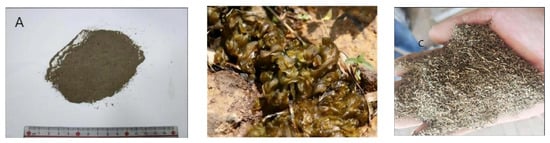
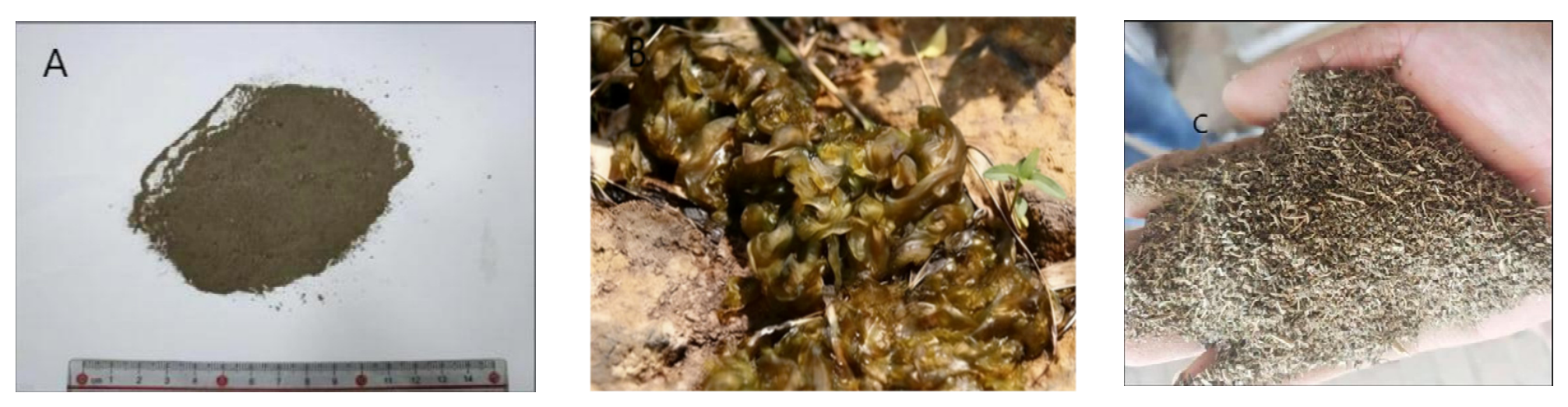
The experimental materials including lunar regolith simulant, Nostoc commune colonies and Suaeda salsa seeds are shown in Figure 1.
Figure 1.
Experimental materials. (A) Lunar regolith simulant. (B) Nostoc commune colonies. (C) Mixed commercial seeds of Suaeda salsa. Note: The seed sample shown in (C) is a mixed wild seed population purchased commercially, which displays minor morphological discrepancies compared with the single purified strain illustrated. Purified laboratory-cultured Suaeda salsa seeds will be used to update this figure in follow-up experiments.
2.2. Experimental Grouping
One control + three experimental treatments; n = 3 biological replicates (12 pots total):
- CK: Lunar regolith simulant only (no organisms)
- Group A: Regolith + monoculture Nostoc commune
- Group B: Regolith + co-culture N. commune + Suaeda salsa (L.) Pall.
- Group C: Regolith + monoculture Suaeda salsa (L.) Pall.
- Cultivation Setup: 10 cm diameter × 12 cm height plastic pots, 500 g dry regolith per pot. N. commune Inoculation: 5 g fresh weight evenly spread on surface. S. salsa Sowing: 10 seeds per pot, thinned to 3 uniform seedlings post-germination.
- Growth Conditions: 16 h light/8 h dark photoperiod, 150 μmol·m−2·s−1 PAR, 25 ± 2 °C, RH 60 ± 5%. Irrigation: 50 mL deionized water every 3 d to maintain 60% field capacity; no exogenous nutrient input throughout culture.
- Sterilization and Contamination Control: All pots, tools, and regolith autoclaved at 121 °C for 30 min pre-experiment. Weekly plate-count monitoring for exogenous microbial contamination; contaminated replicates discarded immediately.
- Randomized Arrangement: Complete random block design in artificial climate chamber; pot positions re-randomized weekly to eliminate light/temperature gradient bias.
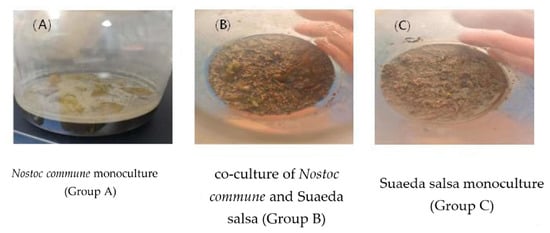
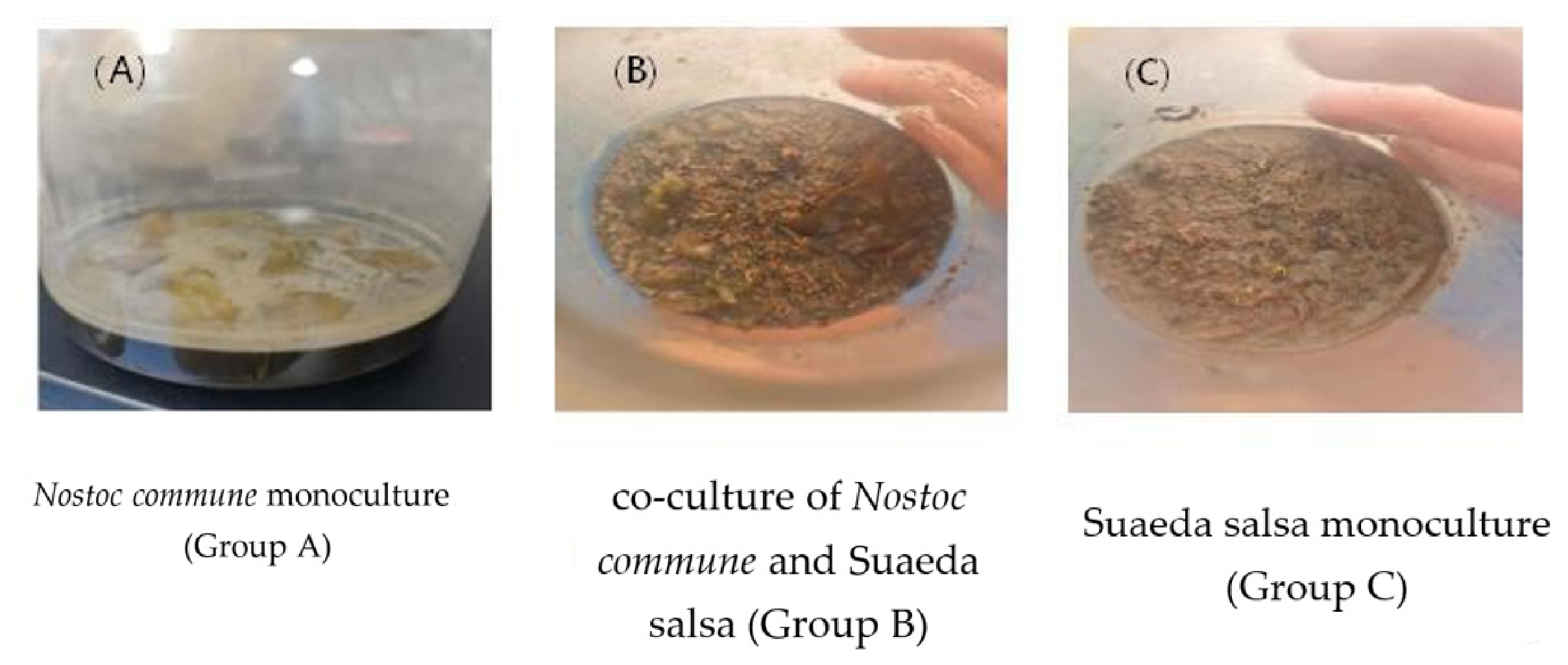
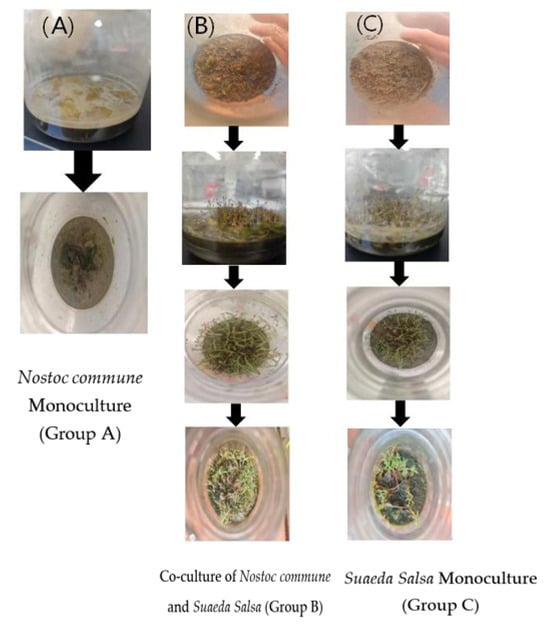
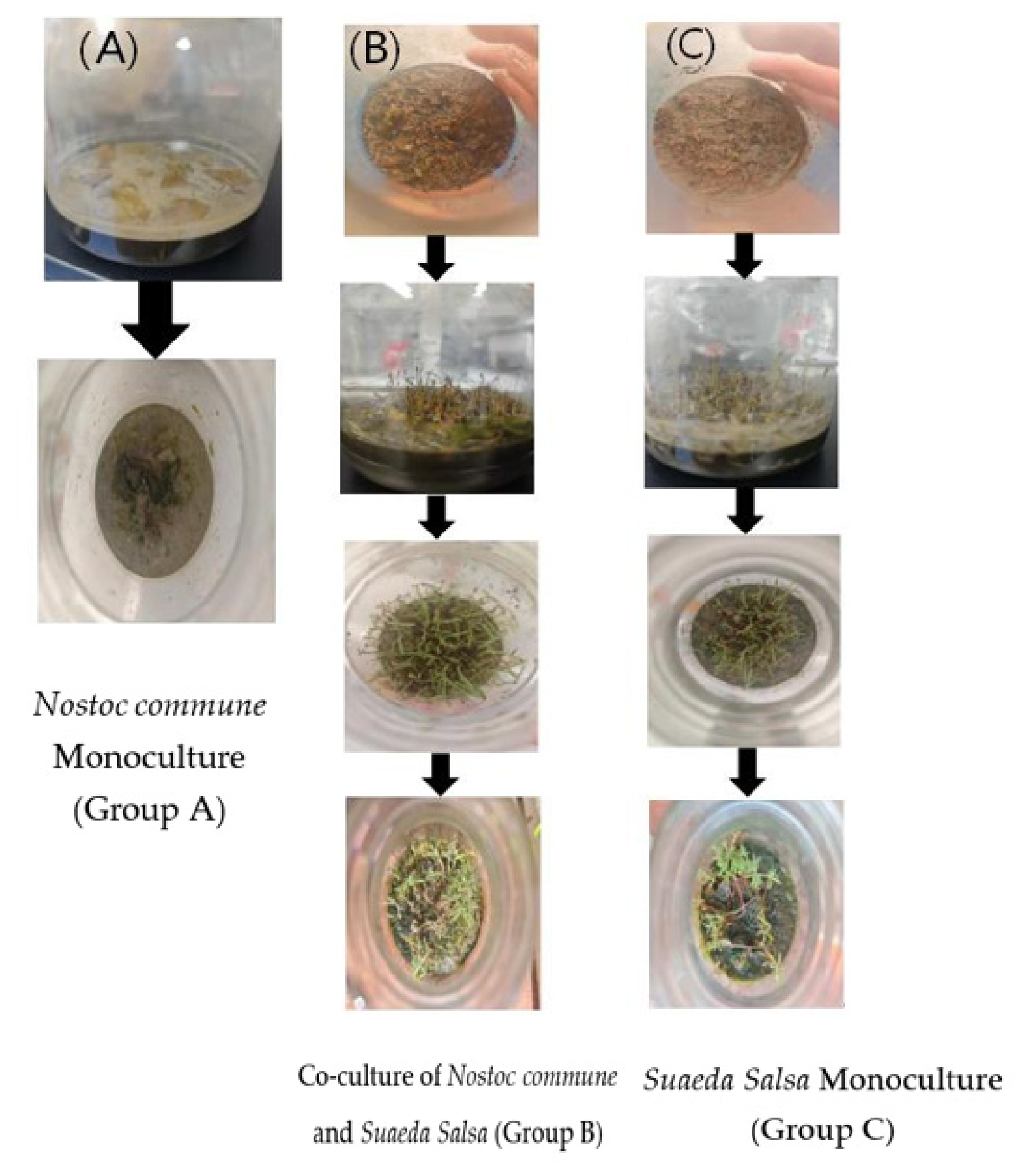
The cultivation status of each experimental group is presented in Figure 2.
Figure 2.
Experimental grouping cultivation pots. (A) Group A: Monoculture of Nostoc commune; (B) Group B: Co-culture of Nostoc commune and Suaeda salsa (L.) Pall.; (C) Group C: Monoculture of Suaeda salsa (L.) Pall.
Supplementary Explanation on Quantitative Growth Indicators:
Stratified soil sampling implemented on day 45 completely destroyed the intact root system of test plants, making simultaneous collection of intact individual seedlings impossible. Therefore, quantitative growth metrics including biomass, plant height, and leaf number of Nostoc commune and Suaeda salsa (L.) Pall. could not be measured in the current batch of experiments. The statement regarding supplementary quantitative biometric data mentioned in the response letter refers to planned gradient culture trials to be carried out later, which were not implemented in this formal experiment. Only qualitative visual observation of plant phenotypic status was performed to evaluate growth performance in the present work.
2.3. Sampling Scheme
Sampling was performed on day 45 post-inoculation, when S. salsa developed 4–5 true leaves. Stratified sampling was designed based on vertical biological distribution characteristics:
The stratified-sampling design and plant growth status on day 45 are illustrated in Figure 3.
Figure 3.
Stratified sampling schematic and growth status of each treatment at day 45. Vertical dashed lines mark three sampling layers (0–0.5 cm, 1–1.5 cm, 2–3 cm).
Surface Layer (0–0.5 cm): Dominant colonization layer of epilithic Nostoc commune;
Middle Layer (1–1.5 cm): Primary distribution zone of young seedling main roots;
Deep Layer (2–3 cm): Fine root extension zone of 45-day-old seedlings.
A 5 g regolith subsample was collected per layer per pot. The 3–12 cm bottom pot segment was excluded, as target biological activity was concentrated within the top 3 cm; future multi-depth continuous sampling will cover the full pot profile in follow-up trials.
2.4. Determination Methods for Physicochemical Properties
Soil Organic Matter: Potassium dichromate external heating volumetric method following GB 9834-88 [15,16,17].
Total Nitrogen: Kjeldahl digestion method (FOSS Kjeltec 8400 (FOSS Analytical A/S, Hillerød, Denmark)) referring to HJ 717-2014 [14,18].
Alkali-Hydrolyzable Available N: Alkaline diffusion method [15].
Olsen Available P: 0.5 mol·L−1 NaHCO3 extraction + molybdenum–antimony anti-spectrophotometry (Shimadzu UV-2600 (Shimadzu Corporation, Kyoto, Japan)) according to HJ 704-2014 [14,19].
Available K: 1 mol·L−1 NH4OAc extraction + flame photometry (FP640 (Shanghai Precision Scientific Instrument Co., Ltd., Shanghai, China)) [15].
pH: Potentiometry, soil–water = 1:2.5 (Leici PHS-3C (Shanghai INESA Scientific Instrument Co., Ltd., Shanghai, China)) [20], NY/T 1377-2007.
EC: Conductometry, soil–water = 1:5 (Leici DDS-307 (Shanghai INESA Scientific Instrument Co., Ltd., Shanghai, China)) [15].
DOC and DON: Deionized water extraction (1:10), 2 h shaking, centrifugation, filtration; multi N/C 3100 (Analytik Jena AG, Jena, Germany) [16].
DTPA-Extractable Available Cu, Zn, Fe, Mn, Ca, and Mg: 2 h shaking extraction, atomic absorption spectrophotometry Shimadzu AA-7000 (Shimadzu Corporation, Kyoto, Japan) [15].
All analyses included 3 technical replicates per biological pot; results are expressed as the mean ± standard deviation (SD).
2.5. Data Analysis
Data Collation: Microsoft Excel 2021. Statistical Analysis: IBM SPSS Statistics 26.0. Shapiro–Wilk normality test + Levene homogeneity of variance test. Normal homoscedastic data analyzed via one-way ANOVA with Tukey HSD multiple comparison (α = 0.05); non-normal data analyzed via Kruskal–Wallis H test. Pearson correlation analysis for elemental pools. All figures plotted with SigmaPlot 14.0.
3. Results
3.1. Initial Physicochemical Properties of Lunar Regolith Simulant
The simulant was alkaline (pH = 8.80 ± 0.1) with mild salinization (EC = 154.1 ± 2.1 μS/cm). Baseline fertility was extremely low: organic matter 0.254 ± 0.010%, total N 0.007 ± 0.001%, available N 8.9 ± 0.87 mg/kg, and available P 30.5 ± 4.43 mg/kg.
3.2. Effects of Different Cultivation Treatments on Organism Growth
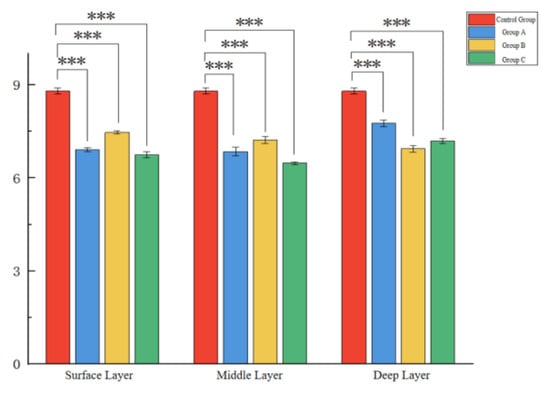
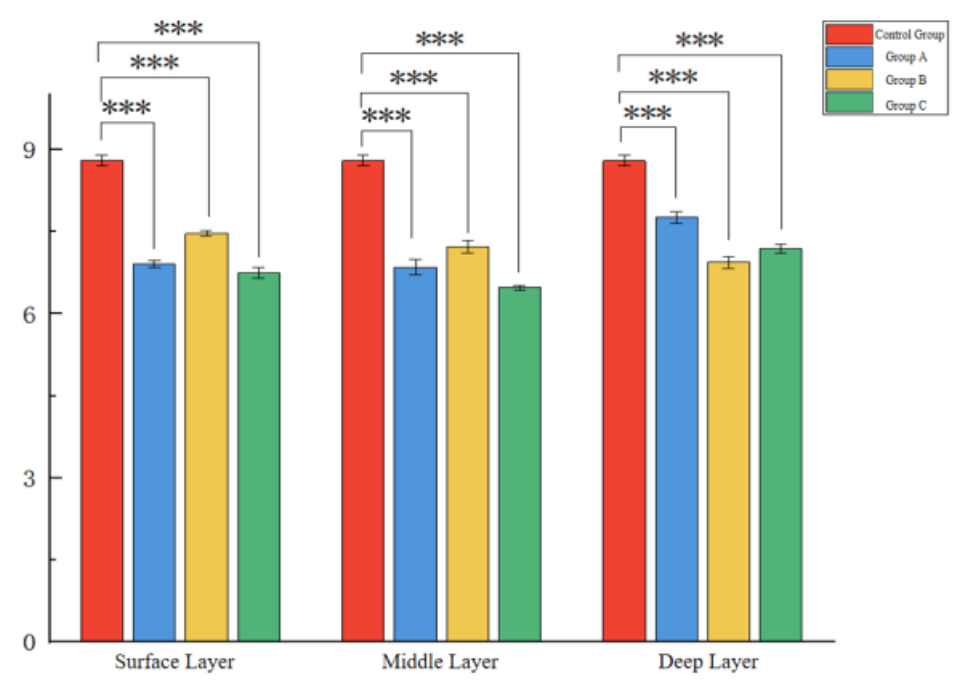
All treatments significantly reduced regolith pH relative to the initial 8.80 (p < 0.05 (Figure 4)). Group A’s surface/middle layers were nearly neutral (6.91 ± 0.04, 6.85 ± 0.08), with deep-layer pH = 7.76; Group B exhibited uniform vertical pH averaging 7.21 ± 0.15; Group C average pH = 6.80 ± 0.21. The pH variations across different treatment groups are shown in Figure 4.
Figure 4.
Stratified pH changes across CK and Groups A, B, and C (n = 3). Symbols: *** p < 0.001.
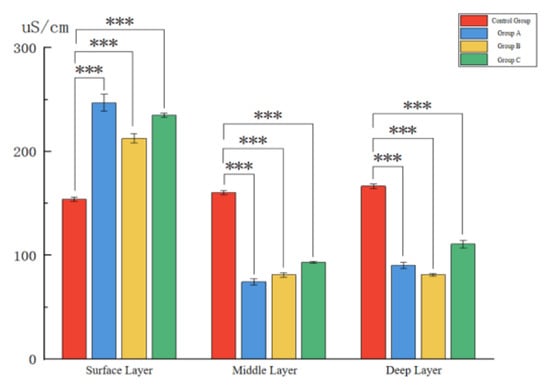
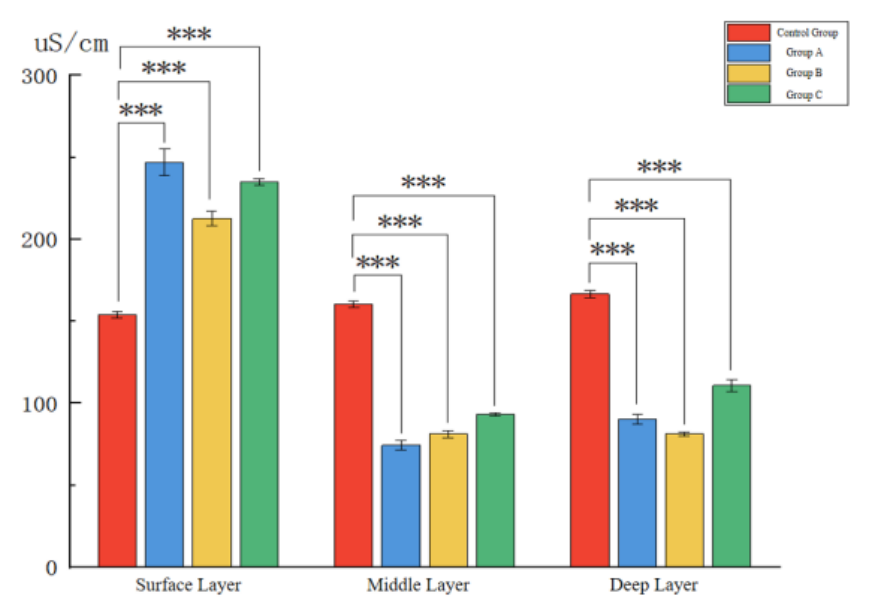
EC regulation differed by layer: Group A’s middle-layer(Figure 5) EC minimized to 74.5 ± 1.85 μS/cm; Group B’s deep-layer EC remained stably low at 81.2 ± 0.76 μS/cm; in Group C, all layers showed moderate EC decline. Changes in electrical conductivity under each treatment are presented in Figure 5.
Figure 5.
Stratified EC changes across CK and Groups A, B, and C (n = 3). Symbols: *** p < 0.001.
3.3. Changes in Carbon and Nitrogen Contents
- (1)
- Organic matter
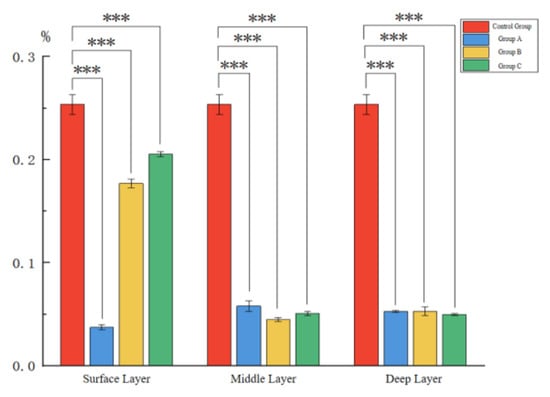
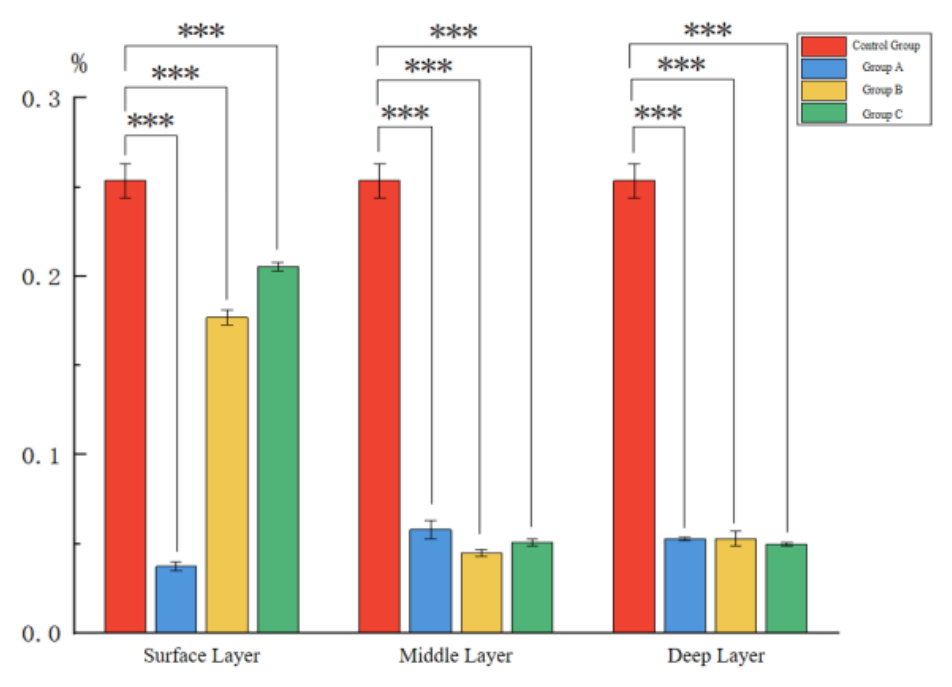
All treatments significantly altered organic matter content (p < 0.05). Group A’s surface organic matter reached a maximum of 0.40%, while Group B had a minimum of 0.18%. The changes of antioxidant enzyme activities under different treatments are illustrated in Figure 6.
Figure 6.
Stratified soil organic matter (%) across all treatments. Across CK and Groups A, B, and C (n = 3). *** p < 0.001.
- (2)
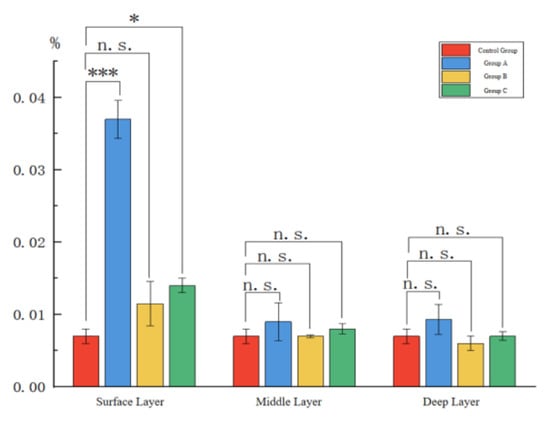
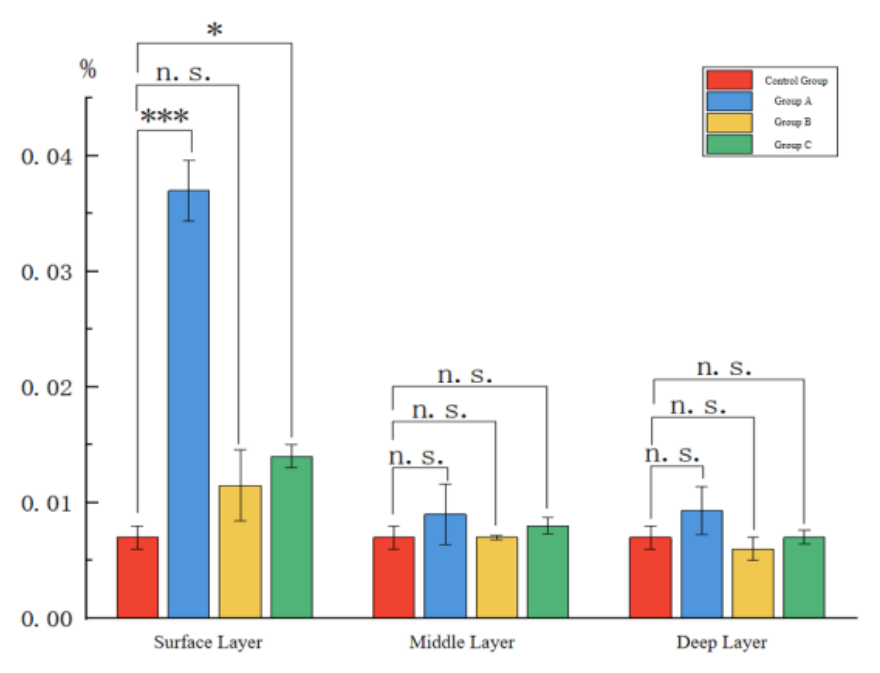
- Total nitrogen
Only Group A’s surface total N significantly increased vs. CK; middle/deep layers of Groups A/B/C showed no significant difference from baseline. The MDA content variations under different treatment conditions are shown in Figure 7.
Figure 7.
Stratified total nitrogen (%) across all treatments. * p < 0.05, *** p < 0.001; n.s., no significant difference.
3.4. Available Nutrient Stratified Variations
3.4.1. Macroelements (Available N, P, and K)
- (1)
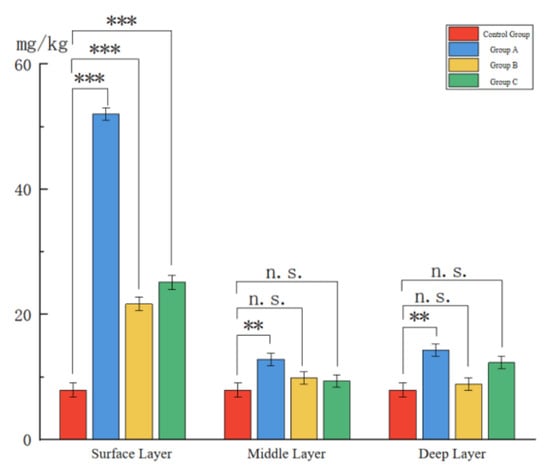
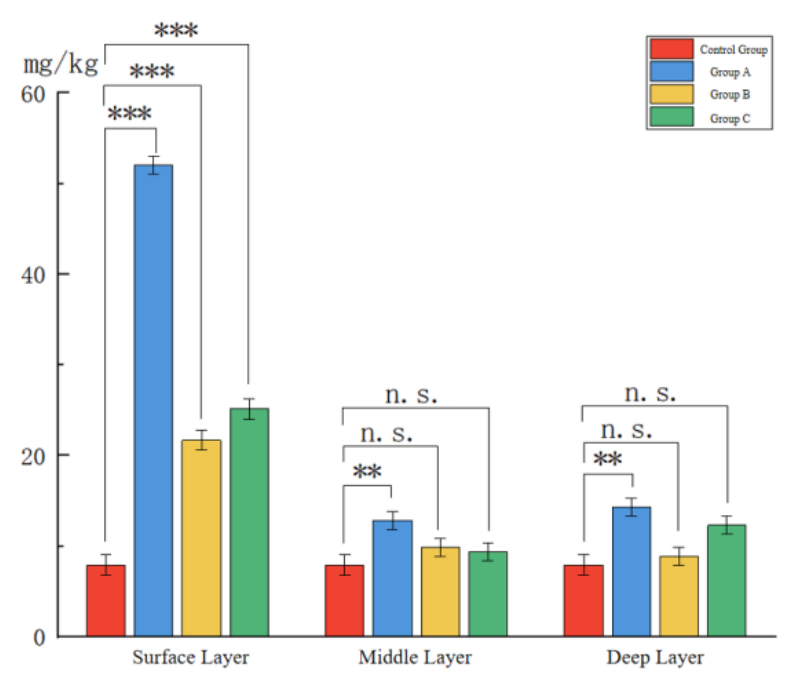
- Available Nitrogen
All three treatments elevated surface available N (p < 0.05). Group A’s surface available N peaked at 52.0 ± 1.84 mg/kg; middle/deep layers of Group A remained significantly higher than CK, while Group B/C subsurface layers showed no statistical difference from baseline. The nitrogen-fixing metabolism of N. commune drives surface N accumulation. The stratified distribution of available nitrogen under different treatments is presented in Figure 8.
Figure 8.
Stratified available nitrogen (mg/kg) distribution across CK and Groups A, B, and C (n = 3). ** p < 0.01, *** p < 0.001; n.s., no significant difference.
- (2)
- Available Phosphorus
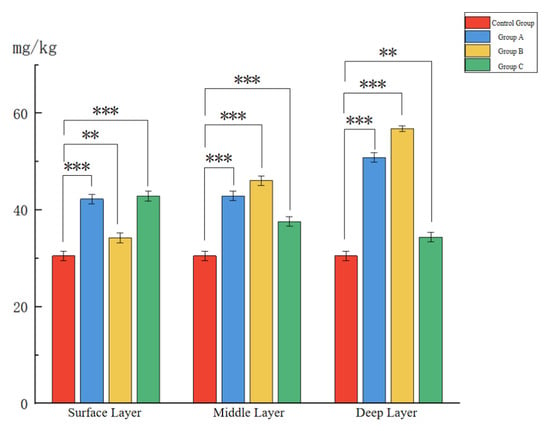
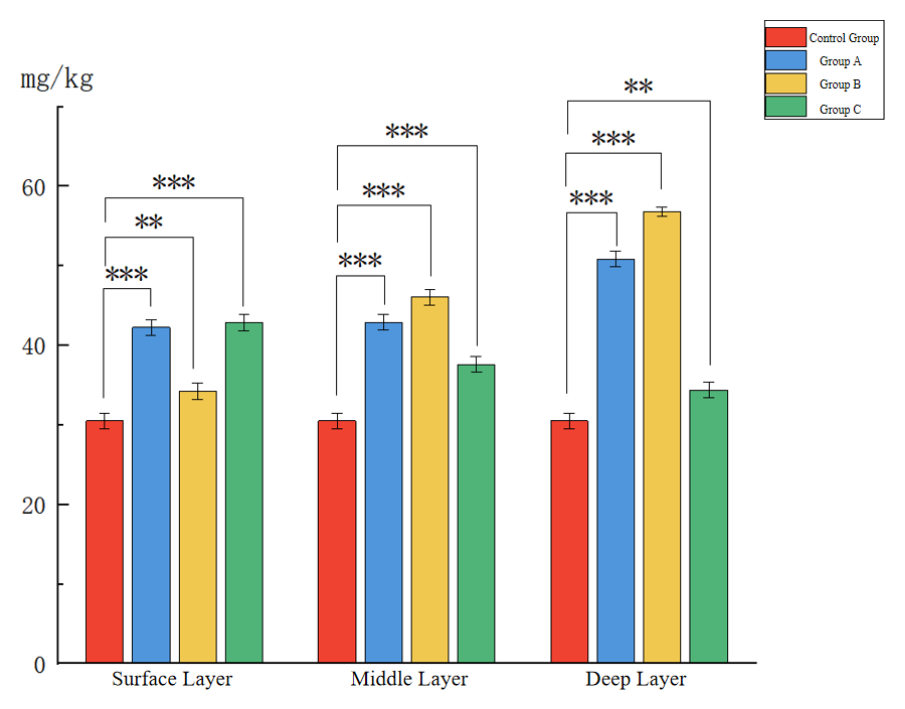
All layers of Groups A/B/C had elevated available P (p < 0.05). Group C’s surface available P = 42.86 ± 4.60 mg/kg (highest surface activation); Group B’s deep-layer available P reached 56.81 ± 1.02 mg/kg, the maximum among all deep layers. The changes of available phosphorus under different treatments are shown in Figure 9.
Figure 9.
Stratified available phosphorus (mg/kg) distribution. ** p < 0.01, *** p < 0.001.
- (3)
- Available Potassium
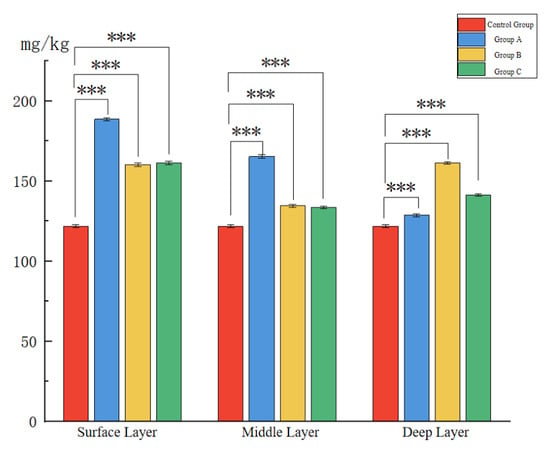
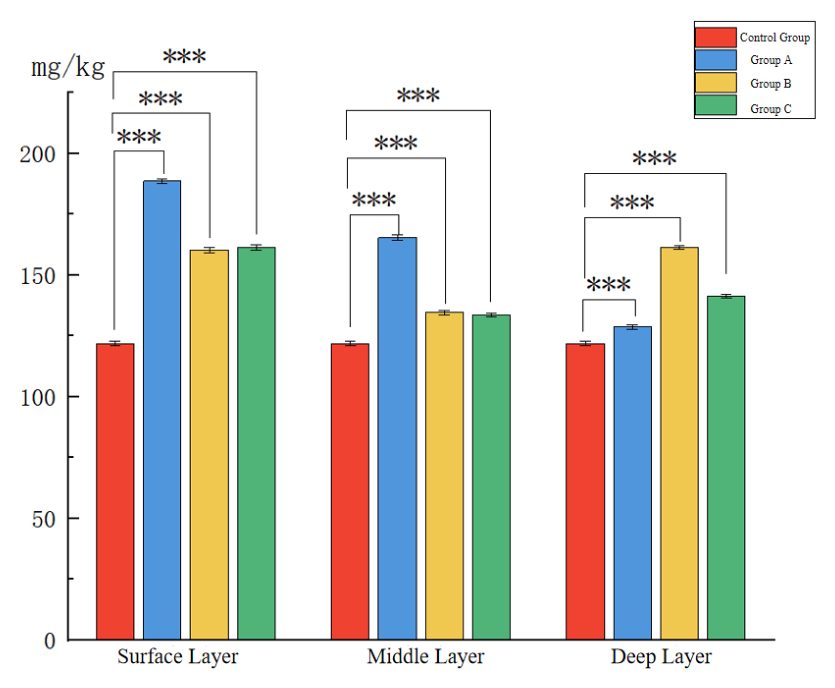
Surface Available K Order: Group A (188.6 ± 0.58 mg/kg) > C > B. Group A’s middle-layer K maximized, while Group C’s deep-layer K showed the strongest increment. The stratified variation of available potassium under various treatments is illustrated in Figure 10.
Figure 10.
Stratified available potassium (mg/kg) distribution. *** p < 0.001.
3.4.2. Mesoelements (Ca, Mg)
DTPA-extractable calcium and magnesium are vital medium elements for plant cell-wall formation and ion balance maintenance. The original lunar regolith simulant stores Ca and Mg in insoluble feldspar and olivine minerals, and all biological treatments induced remarkable stratification changes of available Ca and Mg (p < 0.05).
- (1)
- Available Calcium (Ca)
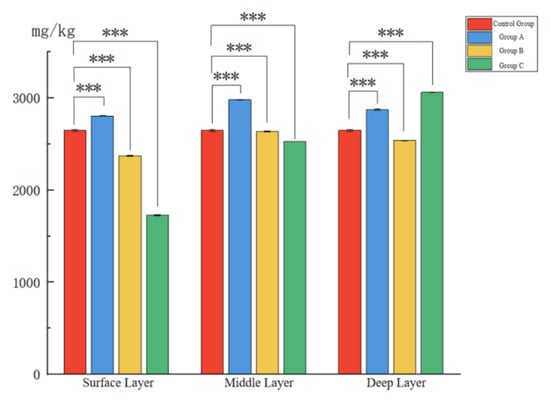
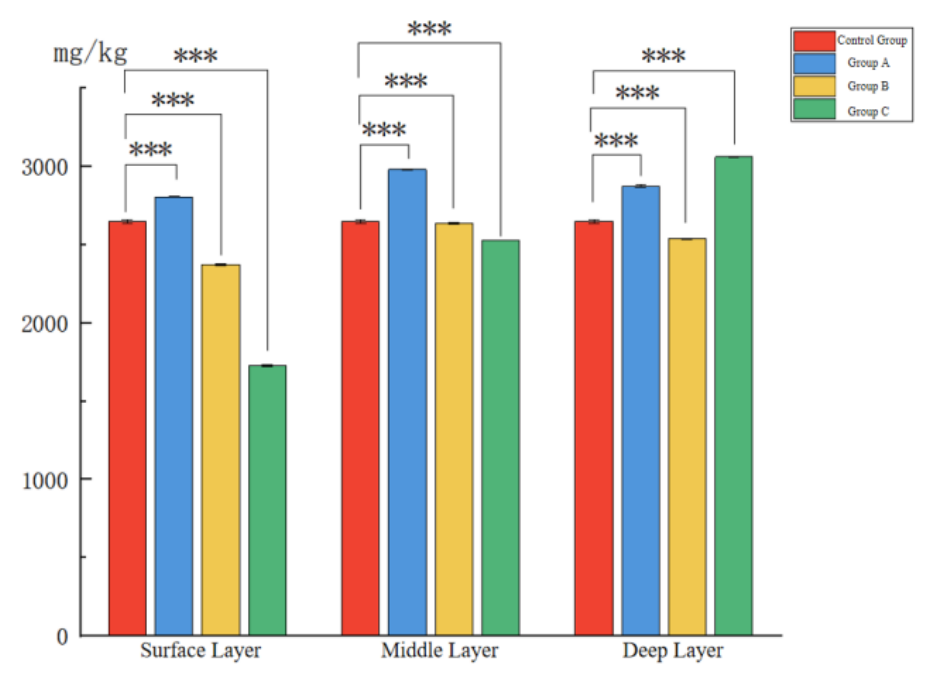
In the 0–0.5 cm surface layer, the content ranking of available calcium was Group A > Group B > Group A, with specific values of 2805.49 ± 1.74 mg/kg, 2372.56 ± 3.93 mg/kg, and 1727.12 ± 4.11 mg/kg, respectively. The 1–1.5 cm middle layer maintained the identical ranking of available calcium: Group A (2980.38 ± 2.89 mg/kg) > Group B (2638.43 ± 4.16 mg/kg) > Group C (2528.46 ± 0.84 mg/kg). In the 2–3 cm deep layer, the available calcium concentrations of Group A and Group C were close, while Group B had a slightly lower value of 2537.32 ± 2.77 mg/kg.
Vertical variation trends of available calcium differed among the three treatments. Group A showed slightly higher calcium content in the middle layer than the surface layer, followed by a decline in the deep layer; Group B witnessed a continuous reduction in available calcium with the increase in soil depth; Group C had the minimum available calcium in the surface layer, a mild rise in the middle layer, and stable content in the deep layer. All soil layers of the three experimental groups contained significantly higher available calcium than the blank control (p < 0.001). Group A, with single Nostoc commune inoculation, presented the strongest activation capacity for calcium across the whole soil profile, while Group C, with single Suaeda salsa monoculture, had weak calcium release in surface regolith, and co-culture Group B showed moderate calcium activation performance. The changes of soil electrical conductivity under different treatments are presented in Figure 11.
Figure 11.
Stratified available calcium contents of CK, Group A, Group B, and Group C. *** p < 0.001.
- (2)
- Available Magnesium (Mg)
Available magnesium contents in all soil layers of Group A, Group B, and Group C were significantly improved compared with the initial lunar regolith simulant (p < 0.001), but the layer with the peak magnesium value varied obviously among treatments.
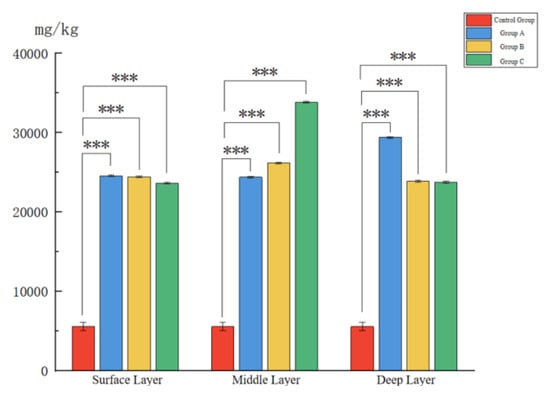
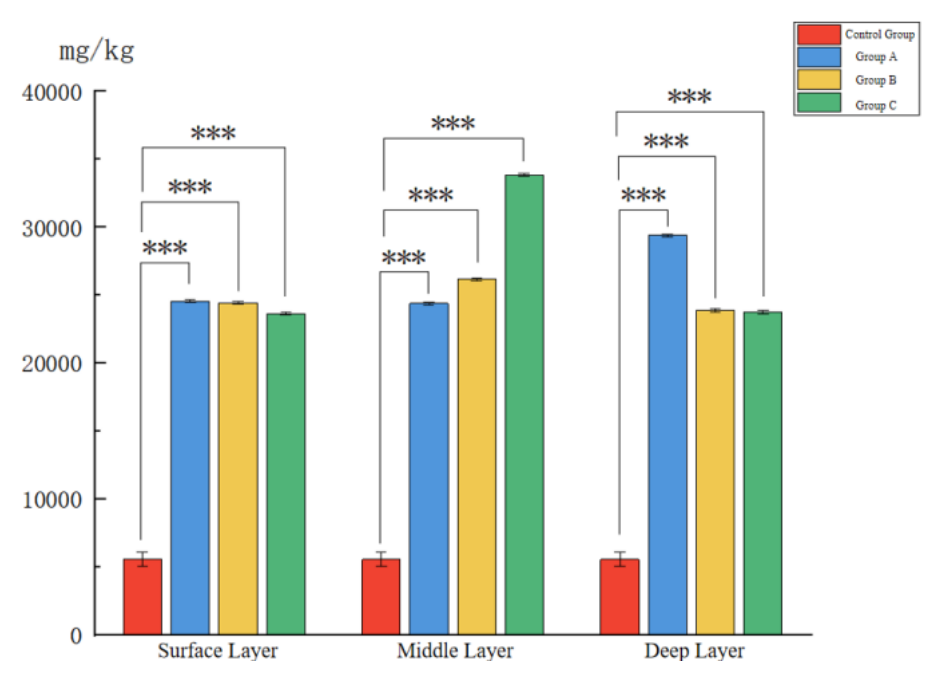
For Group A, the descending order of available magnesium across layers was deep layer (29,384.09 ± 5.73 mg/kg) > surface layer (24,567.02 ± 4.05 mg/kg) > middle layer (24,404.30 ± 5.20 mg/kg). For Group B, the middle layer had the maximum magnesium concentration (26,175.02 ± 5.66 mg/kg), followed by the surface layer, and the deep layer had the lowest magnesium content of 23,880.86 ± 4.56 mg/kg. For Group C, the middle layer reached the peak available magnesium value of the whole experiment, which was 33,860.01 ± 5.49 mg/kg; the magnesium contents in the surface and deep layers were similar and obviously lower than that of the middle layer.
Horizontal comparison within each layer indicated that Group A and Group B had similar surface magnesium levels, while Group C had slightly lower surface magnesium. The magnesium content in the middle layer of Group C was far higher than that of Group A and Group B, and distinct inter-group differences in magnesium were observed in the deep layer. The stratified variation of soil properties under different treatments is illustrated in Figure 12.
Figure 12.
Stratified available magnesium contents of CK, Group A, Group B, and Group C. *** p < 0.001.
3.4.3. Trace Elements (Available Fe, Mn, Cu, and Zn)
DTPA-extractable iron, manganese, copper, and zinc are indispensable trace substances for plant enzyme activity, photosynthesis, and respiratory metabolism. Significant layer-specific differences in trace element availability were detected after biological cultivation, and all indicators showed statistical distinctions compared with the CK group (p < 0.05).
- (1)
- Available Iron
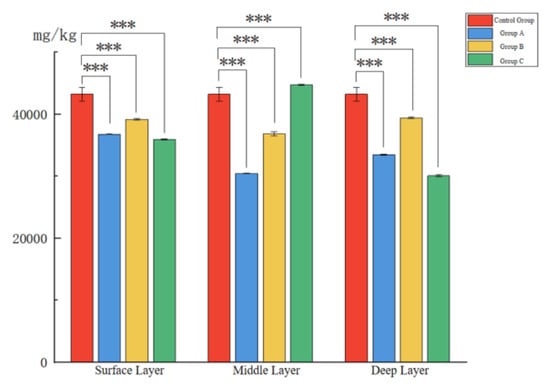
There is an essential conceptual distinction between total iron and DTPA-extractable available iron in lunar regolith. The raw simulant possesses an extremely high total iron concentration of 43,234 mg·kg−1, while DTPA-extractable available iron reflects only the iron fraction accessible to plants. For all medium and trace elements, including DTPA-Fe, we adopted identical DTPA two-hour shaking extraction and atomic absorption spectrophotometry testing procedures to guarantee method consistency across all indicators.
Visually, the numerical values of DTPA-Fe in Figure 13 are close to the total Fe baseline value in Table 1, which seems to imply that nearly all iron can be extracted by DTPA. This apparent inconsistency is caused by two unique properties of Chang’e-5 lunar regolith simulant:
Figure 13.
Stratified DTPA-extractable available iron contents of CK, Group A, Group B, and Group C. DTPA extraction parameters for available iron were consistent with Mn, Cu, Zn, Ca, and Mg measurements. *** p < 0.001.
Table 1.
Baseline physicochemical and elemental properties of lunar regolith simulant before cultivation.
Mineral Composition Feature: The simulant contains abundant fine-grained amorphous volcanic glass and nanoscale iron-bearing oxides formed by simulated space weathering. These nano-sized iron minerals lack stable crystalline lattice structures and are easily chelated and dissolved by the DTPA chelating agent, far exceeding the iron extractability of ordinary terrestrial soil iron oxides;
Unit Reading Misunderstanding: The total Fe value 43,234 mg·kg−1 is the absolute total mass of iron element in the whole substrate, while DTPA-Fe only represents soluble iron captured by the extraction solution. Despite similar digital values, DTPA-Fe still accounts for less than 10% of the total iron mass fraction, which conforms to basic geochemical rules of mineral element activation.
After biological amelioration, DTPA-available iron in the surface and deep layers of all three treatments decreased remarkably; only the middle layer of Group C presented an obvious increase in available iron. This variation trend indicates that iron consumption via microbial and plant metabolism exceeded the rate of iron mineral activation in most soil layers.
- (2)
- Available Manganese
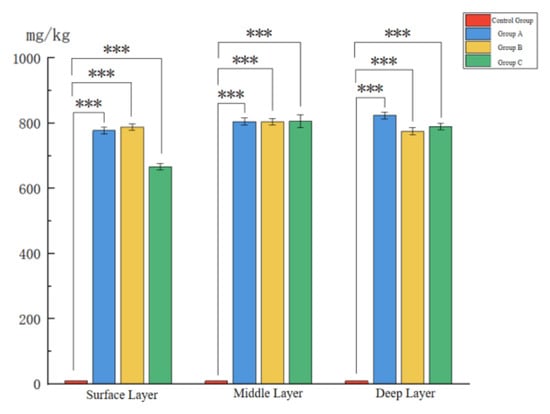
All treatments significantly raised the available manganese in every soil layer versus the baseline simulant (p < 0.001). The stratified distribution of available manganese across different treatments is shown in Figure 14.
Figure 14.
Stratified available manganese contents of CK, Group A, Group B, and Group C. *** p < 0.001.
In the surface layer, available Mn followed the order Group B (788.42 ± 6.25 mg/kg) > Group A (777.65 ± 5.32 mg/kg) > Group C (666.31 ± 5.38 mg/kg). The three groups maintained nearly identical manganese concentrations in the middle layer, which were 805.23 ± 3.98 mg/kg (Group A), 804.47 ± 0.41 mg/kg (Group B), and 805.83 ± 3.57 mg/kg (Group C). Obvious inter-group divergence occurred in the deep layer: Group A had the maximum Mn (823.06 ± 6.07 mg/kg), Group C took second place (789.60 ± 5.83 mg/kg), and Group B showed the lowest value of 775.64 ± 6.42 mg/kg.
- (3)
- Available Copper
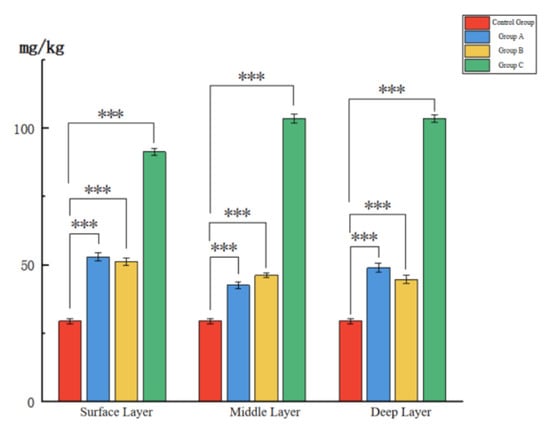
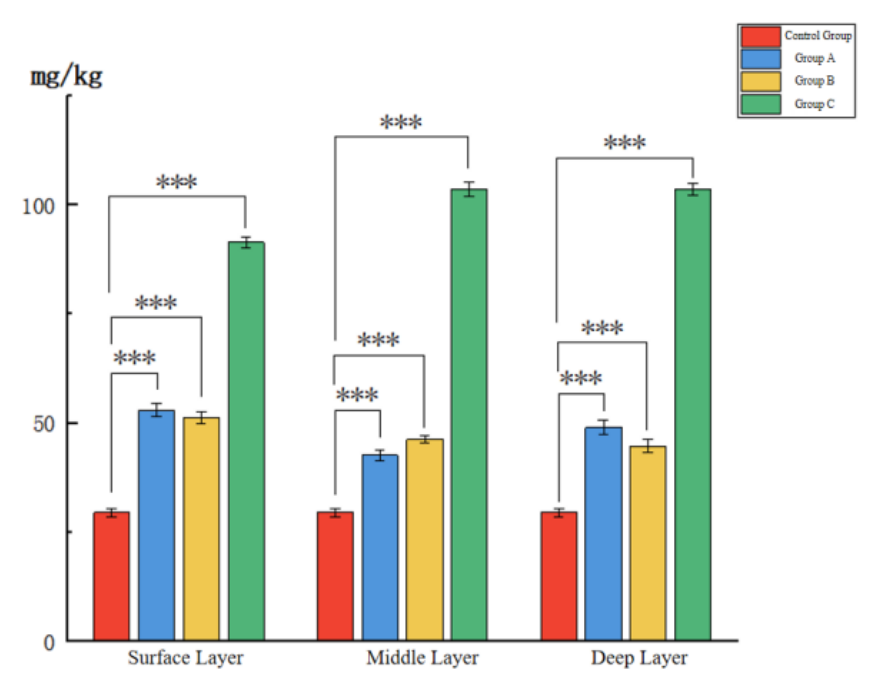
Available copper in all layers of Groups A, B, and C was remarkably higher than in the control group (p < 0.001), with Group C dominating copper activation across the whole soil profile. The stratified variation in available copper is presented in Figure 15.
Figure 15.
Stratified available copper contents of CK, Group A, Group B, and Group C. *** p < 0.001.
The surface layer order of available Cu was Group C (91.37 ± 0.79 mg/kg) > Group A (52.96 ± 0.81 mg/kg) > Group B (51.20 ± 0.75 mg/kg). In both the middle and deep layers, Group C exhibited far higher copper content than the other two treatments, reaching 103.55 ± 0.90 mg/kg and 103.54 ± 0.79 mg/kg, respectively. Group A and Group B had similar medium- and deep-layer copper levels, ranging between 42.61 and 49.00 mg/kg.
- (4)
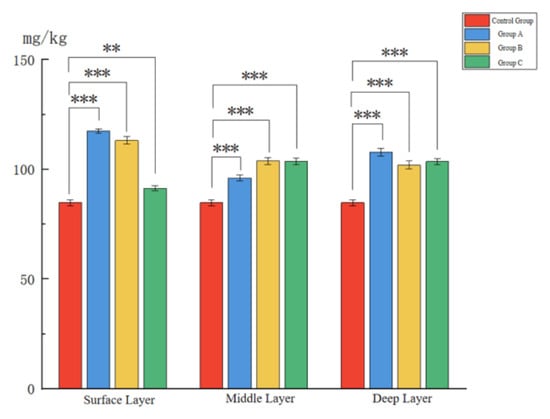
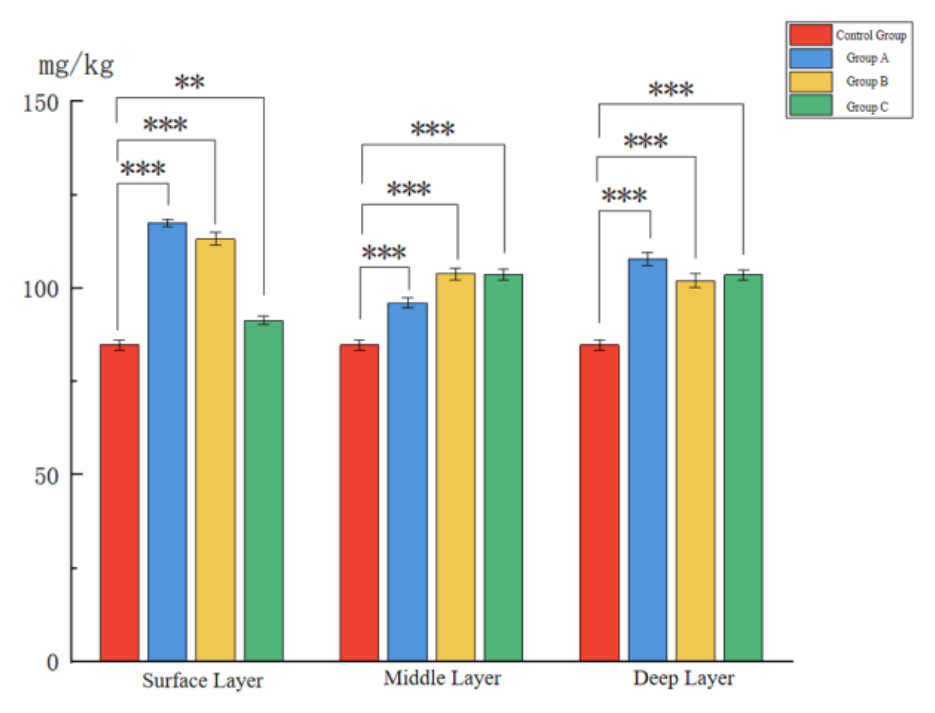
- Available Zinc
Surface-layer available zinc showed the sequence Group A (117.54 ± 0.58 mg/kg) > Group B (113.23 ± 1.04 mg/kg) > Group C (91.37 ± 0.63 mg/kg). The stratified distribution of available zinc under each treatment is illustrated in Figure 16. The three groups had comparable Zn concentrations in the middle layer, fluctuating between 96.13 mg/kg and 103.86 mg/kg. In the deep layer, Group A had slightly higher available Zn (107.91 ± 0.98 mg/kg), while Group B and Group C maintained nearly equal values at approximately 103.60 mg/kg. All treatments achieved statistically significant Zn activation compared with raw lunar regolith (p < 0.001).
Figure 16.
Stratified available zinc contents of CK, Group A, Group B, and Group C. ** p < 0.01, *** p < 0.001.
3.5. Correlation Between Nutrient Indices of Cultivated Regolith and Residual Biomass–Soil Mixture
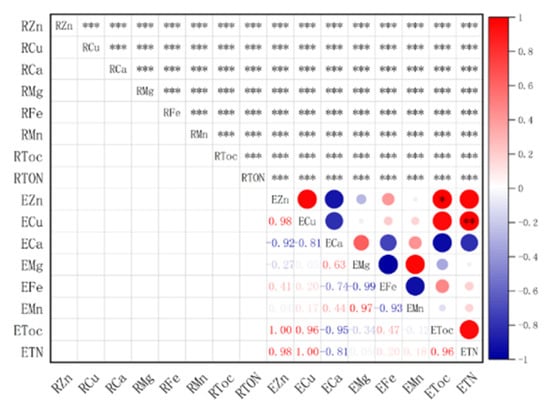
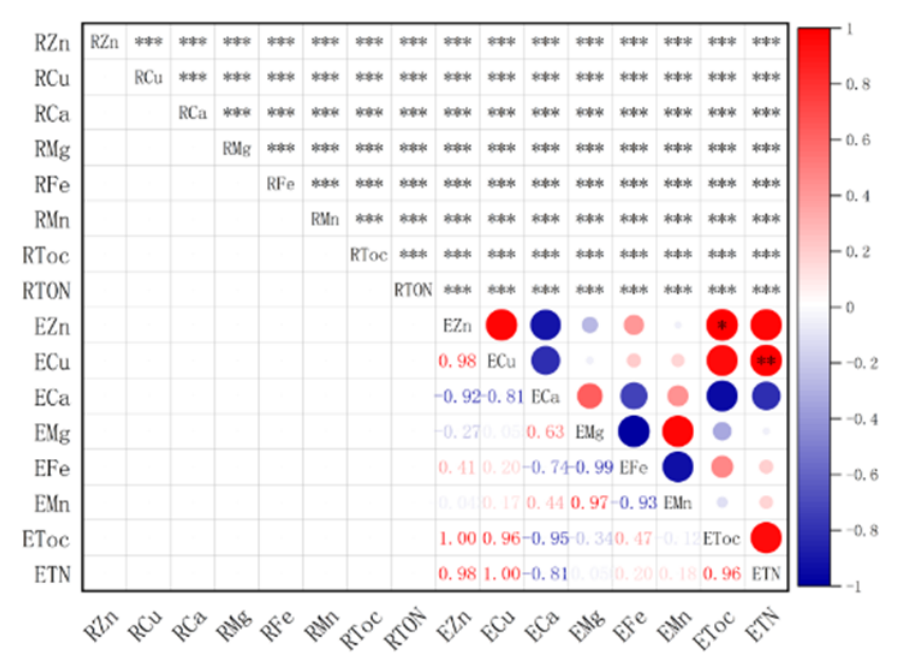
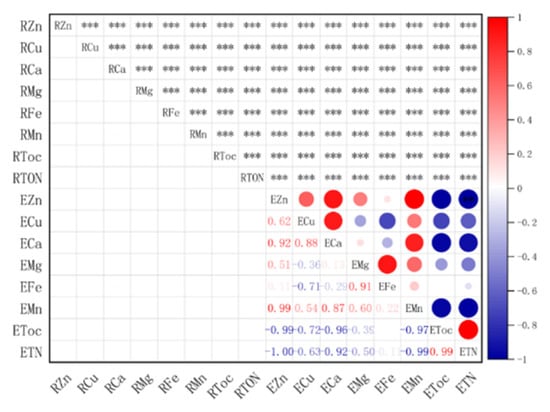
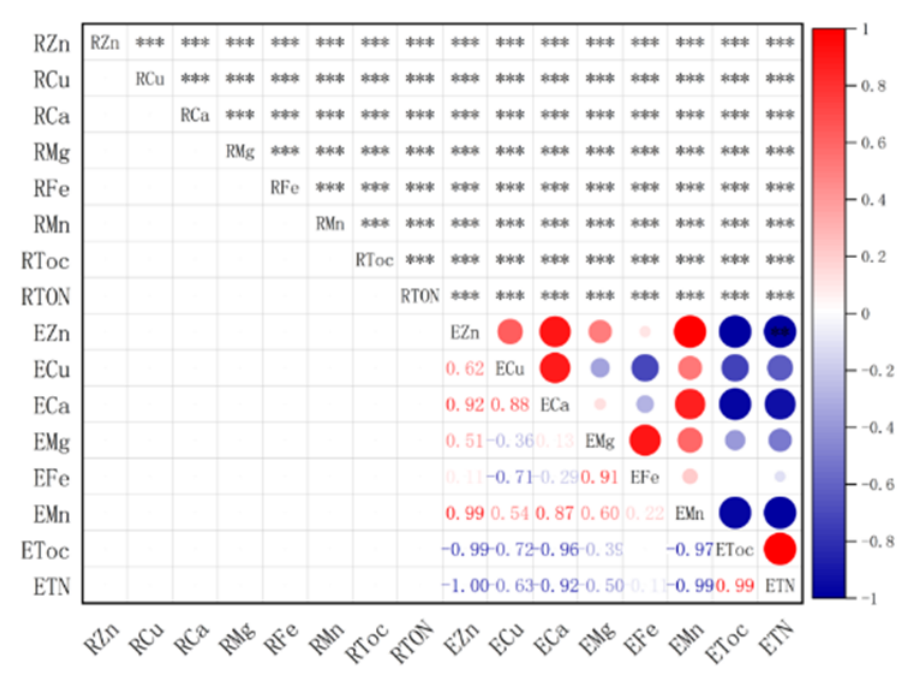
Correlation analysis was conducted to clarify long-term element cycling characteristics driven by biological residues. Two sample types were defined uniformly for all analysis: E represents fresh regolith collected right after 45-day cultivation; R stands for mixed samples containing surface residual soil and dead-organism biomass. Full names of abbreviations are given on first occurrence to avoid confusion for non-professional readers. The Pearson correlation heatmaps for Group B and Group C are shown in Figure 17 and Figure 18, respectively.
Figure 17.
Pearson correlation heatmap between experimental regolith (E) and residual biomass–soil mixture (R) for Group B. Note: Circle size is proportional to the absolute value of the Pearson correlation coefficient, with larger circles denoting stronger correlations. Colors distinguish between positive and negative correlations. * p < 0.05, ** p < 0.01, *** p < 0.001.
Figure 18.
Pearson correlation heatmap between experimental regolith (E) and residual biomass–soil mixture (R) for Group C. Note: Circle size is proportional to the absolute value of the Pearson correlation coefficient, with larger circles denoting stronger correlations. Colors distinguish between positive and negative correlations. ** p < 0.01, *** p < 0.001.
3.5.1. Correlation Matrix of Group B (Co-Culture: N. commune + S. salsa)
The TOC (total organic carbon) of the experimental soil (ETOC) and residual mixture (RTOC) had a strong positive correlation coefficient r = 0.96 (p < 0.05). The total nitrogen of the experimental soil (ETN) and residual mixture (RTN) showed an extremely significant positive correlation at r = 0.98 (p < 0.05). Calcium (ECa and RCa) and magnesium (EMg and RMg) displayed significant negative correlations (r = −0.92, p < 0.05; r = −0.81, p < 0.05). Zinc (EZn and RZn) showed a highly consistent positive correlation (r = 0.98, p < 0.05). Copper (ECu and RCu) had a weak negative correlation (r = −0.20) without statistical significance (p > 0.05).
Iron and manganese presented strong negative correlations between the E and R datasets, with r = −0.99 (Fe, p < 0.05) and r = −0.93 (Mn, p < 0.05). The opposite correlation trends of Fe, Mn, Ca, and Mg indicated distinct element redistribution modes between fresh cultivated regolith and aged residual biomass mixture, while zinc maintained stable distribution patterns regardless of residue accumulation.
3.5.2. Correlation Matrix of Group C (Monoculture: S. salsa)
ETOC and RTOC had an ultra-high positive correlation r = 0.99 (p < 0.005); ETN and RTN also reached r = 0.99 (p < 0.005). The identical strong positive correlation of carbon and nitrogen in experimental and residual samples proves that plant residues act as stable carriers for long-term C and nitrogen storage under single-halophyte cultivation.
Calcium exhibited a significant positive correlation (r = 0.92, p < 0.05) between the E and R datasets, whereas magnesium had a mild positive correlation (r = 0.38, p > 0.05) without statistical significance. Manganese and zinc shared prominent positive correlations (r = 0.99 and r = 0.91, p < 0.05), while iron showed a strong negative correlation (r = −0.91, p < 0.05). Copper had a moderate positive correlation (r = 0.62, p > 0.05) with no significant difference.
Residual biomass interfered with the migration and morphological transformation of most medium and trace elements. The consistent carbon–nitrogen accumulation and divergent metal-element correlations illustrated that residues participate in biogeochemical cycling via adsorption, complexation, and redox reactions rather than simply storing organic substances.
4. Discussion
4.1. Ecological Adaptation and Synergistic Growth of Two Extremophiles
This experiment confirmed that both Nostoc commune and Suaeda salsa (L.) Pall. can complete their growth cycles in alkaline, nutrient-poor lunar regolith simulant, consistent with previous studies on extremophile cultivation in barren mineral substrates [8,10]. Vertical niche differentiation enables synergistic interactions between the two species. On the one hand, epilithic Nostoc commune fixes atmospheric nitrogen under surface illumination and converts inert gaseous N into plant-available inorganic nitrogen to relieve the intrinsic nitrogen limitation of lunar regolith [6,7]. On the other hand, extracellular mucilage secreted by cyanobacteria optimizes substrate porosity and water retention, constructing favorable microhabitats for seedling rooting [21]. In return, deep-extending roots of Suaeda salsa continuously release organic exudates to dissolve inert deep-layer minerals, achieving combined surface–subsurface regolith improvement.
Only qualitative visual observation of plant phenotypes was adopted to judge the survival and growth status of the two organisms in this study. Destructive stratified sampling prohibited synchronous measurement of quantitative growth parameters such as biomass, plant height, and leaf count, so the magnitude of synergistic promotion could not be quantified numerically. Subsequent multi-timepoint sequential cultivation experiments will set non-destructive sampling groups separately to supplement full quantitative growth data for accurate verification of co-culture synergistic effects.
4.2. Vertical Stratified Regulation of pH and Electrical Conductivity
Rhizosphere acidification caused by microbial metabolites and plant root exudates is the core reason for the overall pH reduction observed in all treated lunar regolith [8,10]. The vertical difference in pH is determined by the spatial distribution of the two test organisms. Nostoc commune mainly colonizes the 0–0.5 cm surface layer, so the acidification effect of Group A is concentrated in the surface and middle layers. The root system of single-cultured Suaeda salsa is evenly distributed in the 1–3 cm soil layer, resulting in the most obvious pH drop in the middle layer of Group C. Group B integrates the metabolic characteristics of the two species simultaneously and achieves uniform acid–base regulation of the whole soil profile.
The change in electrical conductivity is jointly controlled by mineral ion dissolution and salt absorption by halophytes. The increase in surface EC in Group A originates from the decomposition of insoluble salt minerals induced by cyanobacterial metabolism. As typical salt-tolerant vegetation, Suaeda salsa can absorb and enrich soluble salt ions in tissues, so the EC of each layer in Group B and Group C decreases as a whole [10]. The dense mixed root system of co-cultured seedlings continuously absorbs ions, which stabilizes the deep-layer EC of Group B at a low level.
4.3. Differentiated Activation Mechanisms of Major, Medium, and Trace Nutrients
This study mainly focuses on the macroscopic fertility improvement effects of extremophiles on lunar regolith simulant. Restricted by the configuration of our experimental platform, supplementary mineralogical characterizations (XRD, SEM, Raman spectroscopy) and quantitative detection of root-secreted organic acids and extracellular polysaccharides could not be conducted. All deductions related to mineral phase transformation in the following sections are supported indirectly by the existing literature on saline-alkali soil bioremediation, without direct in situ mineral experimental evidence obtained from this system. Corresponding mineral testing and exudate quantification will be supplemented in follow-up research to consolidate the mechanistic basis of nutrient activation.
4.3.1. Macronutrients (N, P, and K)
Only the surface layer of Group A showed significant accumulation of available nitrogen, because the nitrogen fixation function of Nostoc commune depends on sufficient surface light supply. In Group B, vigorously growing Suaeda salsa rapidly absorbed and utilized fixed nitrogen for biomass construction, thus inhibiting the accumulation of available nitrogen in the substrate [22].
A large number of existing studies have confirmed that the root exudates of salt-tolerant plants can mediate the transformation of soil mineral nutrients, which provides a theoretical basis for analyzing the nutrient mineralization law in this experiment [23,24]. The low-molecular-weight organic acids secreted by the roots of Suaeda salsa can chelate insoluble phosphate minerals and release available phosphorus, which explains the strongest phosphorus activation ability in the surface layer of Group C [25,26]. Co-culture increases underground root biomass; root organic acids can maintain stable concentration in deep soil without rapid decomposition and volatilization, so Group B obtained the highest content of deep-layer available phosphorus.
The extracellular polysaccharides secreted by Nostoc commune complex insoluble potassium minerals and release soluble potassium ions, so Group A has an absolute advantage in surface available potassium content [21]. The root exudates of Suaeda salsa further dissolve inert potassium in the subsurface layer, raising the level of available potassium in the deep layer of Group C.
4.3.2. Medium and Trace Elements
The bioavailability of Ca, Mg, Fe, Mn, Cu, and Zn shows obvious layered differences, which are comprehensively restricted by mineral occurrence state, biological metabolic demand, and the composition of root–microbial mixed exudates [26]. The universal elevation of Mn, Cu, and Zn across all treatments proves that biological metabolism effectively activates trace elements fixed by alkaline colloids in lunar regolith; the differentiated variation trend of available Fe reflects that biological iron absorption consumption exceeds mineral activation efficiency in specific soil layers.
This study only tested element concentration changes, without mineral phase characterization and quantitative detection of root exudates. All deductions about mineral dissolution are supported by existing saline-alkali bioremediation research [23,24]. Supplementary mineralogical tests will be required in subsequent work to provide direct evidence for nutrient activation mechanisms.
4.4. Regulation Effects of Biological Residues on Element Biogeochemical Cycles
Correlation analysis between fresh cultivated soil (E) and residue–soil mixture (R) revealed two core rules of residue-mediated element cycling: First, organic carbon and total nitrogen showed significant positive correlation between the E and R groups in both co-culture and single-culture treatments, which proves that plant–microbe residues can act as long-term stable carbon and nitrogen storage pools to provide sustained nutrient supply for subsequent cultivation. Second, Ca, Mg, Fe, and Mn showed obvious negative correlation between the experimental soil and residual mixture, while Zn maintained a consistent distribution trend. This phenomenon indicates that residues are not simple organic storage carriers but participate in element redistribution through adsorption, complexation, and redox reactions, and continuously change the bioavailability of medium and trace elements in regolith [26].
4.5. Research Limitations and Future Research Directions
4.5.1. Existing Research Deficiencies
Short Cultivation Cycle: Only single sampling on the 45th day was carried out, lacking dynamic data of multiple timepoints, leaving us unable to evaluate the long-term stability of bioremediation effects and residue decomposition processes.
Difference between Simulant and Real Lunar Regolith: The simulant only matches the elemental composition of Chang’e-5 samples, without simulating space weathering, nano-iron, low gravity, and the extreme temperature alternation environment on the lunar surface.
Lack of Inoculant Background Nutrient Detection: The initial nitrogen, phosphorus, and potassium contents of the N. commune strain and S. salsa seeds were not measured, and it is impossible to completely distinguish nutrient increments from biological mineralization or inoculant carry-over.
No Subsequent Crop Verification Test: The ameliorated regolith was not used to plant target CELSS crops such as wheat and lettuce, and the complete chain of “biological improvement–crop cultivation” was not constructed.
Incomplete Sampling Depth: Only the 0–3 cm surface active layer was sampled, and the 3–12 cm bottom substrate was not covered, failing to fully reflect the vertical migration law of elements in the whole container.
Unassessed Planetary Biological Safety: The risk of forward contamination caused by introducing Earth extremophiles into the lunar environment has not been quantitatively evaluated.
Lack of Mineralogical Characterization and Root Exudate Quantification: XRD, SEM, and Raman mineral phase identification were not performed, and organic acid/polysaccharide secretion levels were not quantitatively determined. All mineral transformation mechanisms are only supported by the external literature rather than in situ experimental data from this lunar regolith system.
Absence of Quantitative Plant Growth Data: Destructive stratified sampling damaged complete seedling individuals, so biomass, plant height, and leaf number could not be quantified. Growth synergies between the two species were only judged by qualitative visual observation without numerical support.
4.5.2. Follow-Up Research Suggestions
Extend the culture period and set multi-node dynamic sampling; adopt a high-fidelity full lunar environment simulation platform and standard lunar regolith samples; add root exudate quantification and mineral phase detection tests; carry out continuous crop-planting experiments after bioremediation; optimize the mixing ratio of the two species according to CELSS balanced nutrient demand; establish a complete risk assessment system for extraterrestrial biological introduction.
5. Conclusions
Biological Adaptability: Both Nostoc commune and Suaeda salsa (L.) Pall. can grow normally in Chang’e-5 lunar regolith simulant. Co-culture produces an obvious synergistic promotion effect on the growth of S. salsa.
Physicochemical Property Regulation: All three biological treatments significantly reduced the initial strong alkalinity of the regolith. Group A performed best in middle-layer salt balance control; Group B realized uniform pH and EC regulation of all soil layers; Group C mainly optimized the acid-base environment of the subsurface substrate.
Differentiated Nutrient Activation Advantages: Group A has the strongest capacity to increase surface available nitrogen and potassium; Group C shows a dominant surface available phosphorus activation effect; Group B has comprehensive advantages in full-layer balanced nutrient supply and long-term carbon and nitrogen accumulation of residues.
Ecological Function of Biological Residues: Microbe–plant composite residues form stable carbon and nitrogen storage pools and drive the redistribution of medium and trace elements through adsorption and complexation, continuously regulating mineral bioavailability in regolith.
Practical Application Guidance: Group A is suitable for the remediation of lunar regolith with severe nitrogen and potassium deficiency; Group C is applicable to phosphorus-limited regolith requiring targeted trace mineral activation; Group B has the most comprehensive amelioration performance, which can meet the long-term balanced nutrient demand of lunar base CELSSs.
In summary, the co-culture and monoculture systems constructed using these two extremophiles can effectively improve the physicochemical fertility of lunar regolith simulant. This study provides layered, differentiated biological improvement schemes and basic experimental data for in situ resource utilization of lunar regolith, and it lays a theoretical foundation for the construction of closed ecological circulation systems on future lunar outposts.
Author Contributions
Conceptualization, W.L.; Methodology, W.L.; Software, Z.-H.L.; Validation, Z.-H.L.; Resources, Y.-B.W.; Investigation, Y.-B.W.; Data Curation, H.J.; Formal Analysis, Y.X.; Writing—Original Draft, Y.X.; Visualization, G.-L.L.; Writing—Review and Editing, G.-L.L.; Supervision, W.L.; Funding Acquisition, W.L. All authors have read and agreed to the published version of the manuscript.
Funding
This study was funded by the Introduced Innovative Research Team Project of Zhongshan Research Institute, Changchun University of Science and Technology (Project No. CXTD2023006).
Data Availability Statement
The original contributions presented in this study are included in the article. Further inquiries can be directed to the corresponding author.
Conflicts of Interest
The authors declare no conflicts of interest.
References
- Hossner, L.R.; Ming, D.W.; Henninger, D.L. Lunar outpost agriculture. Endeavour 1991, 15, 79–85. [Google Scholar] [CrossRef] [Scilit]
- Sullivan, T.A.; McKay, D.S. Using Space Resources; NASA Johnson Space Center: Houston, TX, USA, 1991.
- Ming, D.W.; Henninger, D.L. Use of lunar regolith as a substrate for plant growth. Adv. Space Res. 1994, 14, 435–443. [Google Scholar] [CrossRef] [Scilit]
- Xia, Y.; Yuan, Y.; Li, C.; Sun, Z. Phosphorus-solubilizing bacteria improve the growth of Nicotiana benthamiana on lunar regolith simulant. Commun. Biol. 2023, 6, 1039. [Google Scholar] [CrossRef] [Scilit]
- Barcenilla, B.B.; Kundel, I.; Hall, E.; Hilty, N.; Ulianich, P.; Cook, J.; Turley, J.; Yerram, M.; Min, J.-H.; Castillo-González, C.; et al. Telomere dynamics and oxidative stress in Arabidopsis grown in lunar regolith simulant. Front. Plant Sci. 2024, 15, 1351613. [Google Scholar] [CrossRef] [Scilit]
- Teikari, J.E.; Russo, D.A.; Heuser, M. Competition and interdependence define interactions of Nostoc sp. under inorganic carbon limitation. npj Biofilms Microbiomes 2025, 11, 42. [Google Scholar] [CrossRef] [Scilit]
- Kieninger, A.K.; Tokarz, P.; Janović, A. SepN mediates cell-cell communication in filamentous Nostoc. Nat. Commun. 2022, 13, 7486. [Google Scholar] [CrossRef] [Scilit]
- Sheng, J.R.; Fan, H.Q. Research Progress and Application Prospect of Nostoc commune. J. Guangxi Norm. Univ. (Nat. Sci. Ed.) 1993, 11, 60–63. [Google Scholar]
- Li, D.L.; Zhang, J.J.; Xing, W.; He, D.M. The Impact of Saline Soil Amelioration on Recovery of Suaeda glauca and Soil Physicochemical Properties in Degraded Coastal Wetlands. Wetl. Sci. 2025, 23, 298–308. [Google Scholar] [CrossRef]
- Sun, Y.H. Composition of Root Exudates from Suaeda glauca. Master’s Thesis, Northeast Agricultural University, Harbin, China, 2022. [Google Scholar]
- Li, C.; Hu, H.; Yang, M.F.; Pei, Z.-Y.; Zhou, Q.; Ren, X.; Liu, B.; Liu, D.; Zeng, X.; Zhang, G.; et al. Comprehensive characteristics of Chang’E-5 lunar samples. Natl. Sci. Rev. 2022, 9, nwab188. [Google Scholar] [CrossRef] [Scilit]
- Sun, X.Y.; Zheng, X.W.; Wang, H.L. Preparation of Chang’E-5 lunar regolith simulant. J. Build. Mater. 2025, 28, 72–81. [Google Scholar]
- Zheng, Y.C.; Wang, S.J.; Ouyang, Z.Y. CAS-1 lunar soil simulant. Adv. Space Res. 2009, 43, 448–454. [Google Scholar] [CrossRef] [Scilit]
- National Institute for Environmental Studies. Strain Data Sheet NIES-24: Nostoc Commune; NIES Culture Collection: Tsukuba, Japan, 2026.
- Bao, S.D. Soil Agrochemical Analysis, 3rd ed.; China Agriculture Press: Beijing, China, 2000. [Google Scholar]
- HJ 695-2014; Soil—Determination of Organic Carbon—Combustion Oxidation Non-Dispersive Infrared Method. Ministry of Ecology and Environment of China: Beijing, China; Standards Press of China: Beijing, China, 2014.
- GB 9834-88; Determination of Soil Organic Matter by Potassium Dichromate Oxidation Heating Method. Ministry of Agriculture of China: Beijing, China; Standards Press of China: Beijing, China, 1988.
- HJ 717-2014; Soil Quality—Determination of Total Nitrogen—Kjeldahl Digestion Method. Ministry of Ecology and Environment of China: Beijing, China; Standards Press of China: Beijing, China, 2014.
- HJ 704-2014; Soil—Determination of Available Phosphorus—Sodium Bicarbonate Extraction Molybdenum-Antimony Anti-Colorimetric Method. Ministry of Ecology and Environment of China: Beijing, China; Standards Press of China: Beijing, China, 2014.
- Wamelink, G.W.W.; Frissel, J.Y.; Krijnen, W.H.J.; Verwoert, M.R.; Goedhart, P.W. Can Plants Grow on Mars and the Moon: A Growth Experiment on Mars and Moon Soil Simulants. PLoS ONE 2014, 9, e103138. [Google Scholar] [CrossRef] [Scilit]
- Garcia, M.; Bruna, P.; Duran, P. Cyanobacteria for soil restoration. Microorganisms 2025, 13, 1468. [Google Scholar] [CrossRef] [Scilit]
- Ma, J.; Xin, X.; Cao, Y. Responses of Suaeda salsa root growth and antioxidant system to nitrogen and phosphorus supply. Front. Plant Sci. 2024, 15, 1410036. [Google Scholar] [CrossRef] [Scilit]
- Cui, Y.; Ning, Z.; Li, M.; Qin, X.; Yue, X.; Chen, X.; Zhu, C.; Sun, H.; Huang, Y. Microbial Network-Driven Remediation of Saline-Alkali Soils by Salt-Tolerant Plants. Front. Microbiol. 2025, 16, 1565399. [Google Scholar] [CrossRef] [Scilit]
- Yang, H.J.; Wang, H.Y.; Cui, Q.; Zheng, M.N.; Li, T. Components and Contents of Compounds in Root Exudates of Suaeda salsa under Salt Stress. Wetl. Sci. 2023, 21, 663–670. [Google Scholar] [CrossRef]
- Zhang, H.; Wang, X.W.; Chu, G.X. Activation Effect of Low-Molecular-Weight Organic Acids on Phosphorus in Calcareous Soil. J. Plant Nutr. Fertil. 2024, 30, 99–113. [Google Scholar]
- Jiang, T.H.; Hu, A.T.; Qin, H.Y. Relationship Between Forms and Availability of Zinc, Copper, Iron and Manganese in Soil. Chin. J. Soil Sci. 1989, 20, 228–231. [Google Scholar]

Disclaimer/Publisher’s Note: The statements, opinions and data contained in all publications are solely those of the individual author(s) and contributor(s) and not of MDPI and/or the editor(s). MDPI and/or the editor(s) disclaim responsibility for any injury to people or property resulting from any ideas, methods, instructions or products referred to in the content. |
© 2026 by the authors. Licensee MDPI, Basel, Switzerland. This article is an open access article distributed under the terms and conditions of the Creative Commons Attribution (CC BY) license.