


Abstract
Basic Vocational Training (FPB) students face substantial learning difficulties in electronics, which leads to a high dependency on the instructor and creates bottlenecks in practical workshops. This study aims to evaluate the effectiveness of generative artificial intelligence (AI) as a support tutor in practical electronics workshops by comparing its effects on conceptual learning, technical performance, motivation, and learner autonomy against a traditional instructional approach. To this end, a quasi-experimental design was implemented with a pilot group of eight Basic Vocational Training students, divided into an AI-assisted group (n = 4) and a traditional control group (n = 4), using pre-test and post-test assessments to measure cognitive progress. The results reveal that the use of AI allows for maintaining performance in conceptual learning despite tasks of increasing difficulty, while significantly increasing students’ motivation and perceived autonomy. Although a drastic reduction in the frequency of technical assembly errors was not recorded, AI proved to be an effective support for resolving procedural questions in real time. It is concluded that the integration of generative AI offers positive implications for Vocational Training, functioning as a supplementary tutor that fosters student independence and optimizes technical classroom dynamics.
1. Introduction
1.1. Challenges in Vocational Electronics Education
Learning basic electronics in first- and second-year Basic Vocational Education and Training (Basic VET) faces substantial obstacles, as students often struggle to grasp theoretical concepts and their real-world applications. Fundamental topics such as Ohm’s Law, resistor calculations, and the behavior of series and parallel circuits require a level of abstraction and comprehension that many students in this stage have not yet developed. This lack of understanding often acts as an “impossible wall” filled with disconnected formulas, leading to rapid frustration. Furthermore, these students frequently have academic histories marked by failure and struggle with low self-esteem and concentration, necessitating immediate positive results to maintain engagement.
1.2. Teacher Dependency in Practical Workshops
One of the most critical issues in electronics education occurs during practical workshop activities, such as those involving protoboards. When a student’s circuit fails to function, they often stop working immediately, resulting in high levels of teacher dependency. Since typically only one instructor is available per classroom, “instructional bottlenecks” are created as multiple students wait at their desks for the teacher to identify minor technical errors, such as an inverted LED or a loose wire. This constant reliance on the teacher disrupts the rhythm of the entire class and prevents students from developing the autonomy required in technical fields.
1.3. Generative AI as Real-Time Learning Support
Generative artificial intelligence (AI) tools, such as ChatGPT-5.6 Luna and Gemini-3.6 Flash, can serve as personalized technical assistants to mitigate these workshop bottlenecks. Instead of waiting for the instructor, students can ask the AI for step-by-step guidance on component polarity, color codes, or circuit troubleshooting. By providing immediate, adaptive feedback in real time, these AI tutors allow students to resolve technical doubts independently, thereby reducing anxiety and the impulse to abandon the task due to frustration.
1.4. Research Gap
While a substantial body of research explores the application of AI in Higher Education and broader STEM contexts, there is a notable gap regarding its use in Vocational Education and Training (VET), particularly in Basic VET. Most studies focus on adaptive learning or data analysis in university settings, but few address the impact of AI as a real-time troubleshooting assistant during practical electronics assembly. This study addresses this gap by providing empirical evidence from a real-world Basic VET workshop environment [1].
1.5. Research Questions
To evaluate the impact of this technology, the study addresses the following research questions:
- RQ1: Does generative AI improve learning outcomes in practical electronics education?
- RQ2: Does generative AI reduce technical errors during circuit assembly?
- RQ3: Does generative AI increase learner autonomy and motivation?
To address these research questions, the following hypotheses were formulated:
Hypothesis H1.
The use of generative AI as a troubleshooting assistant improves conceptual learning outcomes compared to traditional methods.
Hypothesis H2.
The use of generative AI significantly reduces technical assembly errors during practical workshop activities.
Hypothesis H3.
Real-time AI support increases student motivation and engagement.
Hypothesis H4.
Access to generative AI tools enhances students’ perceived learner autonomy.
2. Related Work
2.1. AI in Education
Current research on emerging technologies emphasizes the necessity of adapting teaching processes to increasingly practical and personalized contexts. A seminal systematic review by Zawacki-Richter et al. (2019) [2] analyzed over a hundred studies, identifying that the primary applications of artificial intelligence (AI) in education are concentrated in intelligent tutoring systems, adaptive learning, and learning analytics. These systems provide personalized support by adapting content to the student’s learning pace and providing immediate feedback. Crucially, the literature highlights that AI functions as a supportive resource for teachers—facilitating error detection and progress monitoring—rather than a substitute for human instruction.
The recent literature from 2023 and 2024 has further solidified the role of generative AI as a transformative tool for personalized instruction. Baidoo-Anu and Ansah (2023) [3] highlight that these tools provide essential formative feedback that allows students to bridge conceptual gaps independently. Similarly, Kasneci et al. (2023) [4] argue that Large Language Models (LLMs) function as on-demand tutors capable of reducing the cognitive load during complex tasks—a phenomenon observed in this study’s practical workshop. Finally, recent systematic reviews by Lo (2023) [5] emphasize that while GenAI is highly effective for procedural support, its integration requires a shift toward fostering learner autonomy, aligning with the motivational gains reported in this research.
2.2. AI-Supported Learning
The integration of AI in learning environments focuses on personalization and the provision of instant feedback. In technical settings, generative AI tools like ChatGPT or Gemini act as personalized technical assistants that can explain complex problems step-by-step in a manner adapted to the student’s specific level. By offering immediate answers to procedural doubts—such as component polarity or color codes—AI helps break the cycle of frustration and dependency. Research indicates that when students have access to resources that allow them to solve problems independently, their motivation and overall performance increase significantly.
2.3. Practical Electronics Education
Practical electronics education relies heavily on Project-Based Learning (PBL) to bridge the gap between theory and application. Studies by Mohd-Yasin (2021) [6] and Sababha et al. (2016) [7] demonstrate that hands-on assembly tasks using protoboards in workshops significantly improve the comprehension of abstract concepts and technical skills. Working with real circuits allows students to establish a direct connection between theoretical formulas and physical components, which is essential for fostering deeper learning and practical problem-solving capabilities.
2.4. Vocational Education Contexts
Despite the growth of AI in Higher Education and general STEM fields, there is a prominent research gap regarding its application in Vocational Education and Training (VET), particularly within Basic VET. While university-level adaptive learning is well-documented, empirical evidence concerning AI as a real-time troubleshooting assistant in basic technical workshops is scarce. This context is vital because Basic VET students often face high rates of academic failure and dropout—reaching nearly 30% in technical cycles—due to frustration with abstract concepts [8,9,10]. Identifying how AI can support these specific learners is critical for modernizing Vocational Training and meeting the digital competency requirements of the modern labor market.
3. Materials and Methods
3.1. Research Design
This study utilized a quantitative, quasi-experimental research design. A non-probabilistic convenience sampling method was employed, as the research was conducted within an existing classroom setting where students were not randomly assigned but belonged to a pre-established educational group.
3.2. Educational Context
The research took place at a public secondary school located in Parla (Madrid). The intervention was carried out during the second year of Basic Vocational Education and Training (Basic VET) in Informatics and Communications. Specifically, the study was integrated into the module titled Electrical and Electronic Equipment.
3.3. Participants
The sample consisted of 8 students, all male, aged 18 years old. In the context of the Spanish educational system, this age profile is common in Basic Vocational Education and Training (Basic VET). These students often have a history of academic struggle and grade repetition in Compulsory Secondary Education (ESO), leading them to enter professional training tracks at a later age than the standard academic cohort. For the experiment, the class was divided into two balanced groups of four students each (experimental and control) to allow for a comparative analysis of the results.
The initial study cohort consisted of 14 students. However, the final analysis was conducted with a sample of 8 students who successfully completed all phases of the research (pre-test, intervention, and post-test) with full data consistency. The participants were divided into two balanced groups: an experimental group (n = 4) and a control group (n = 4). While 14 students were present, six participants were excluded from the final results: student A01 withdrew after the pre-test, and students A09–A11 and A13–A14 were excluded due to incomplete questionnaire responses or absence during the final assessment session, which prevented a complete longitudinal comparison of their progress.
3.4. Intervention
The intervention focused on the practical assembly of electronic circuits and was divided as follows:
- Experimental group: Students were permitted to use generative AI tools (ChatGPT-5.6 Luna [11] and Gemini-3.6 Flash [12]) on their personal devices as real-time troubleshooting assistants to solve technical doubts and assembly errors (see Appendix B, Figure A2, Figure A3, Figure A4 and Figure A5).
- Control group: Students followed traditional instructional methods, relying exclusively on textbooks, handwritten theory notes, and direct assistance from the teacher (see Appendix B, Figure A1).
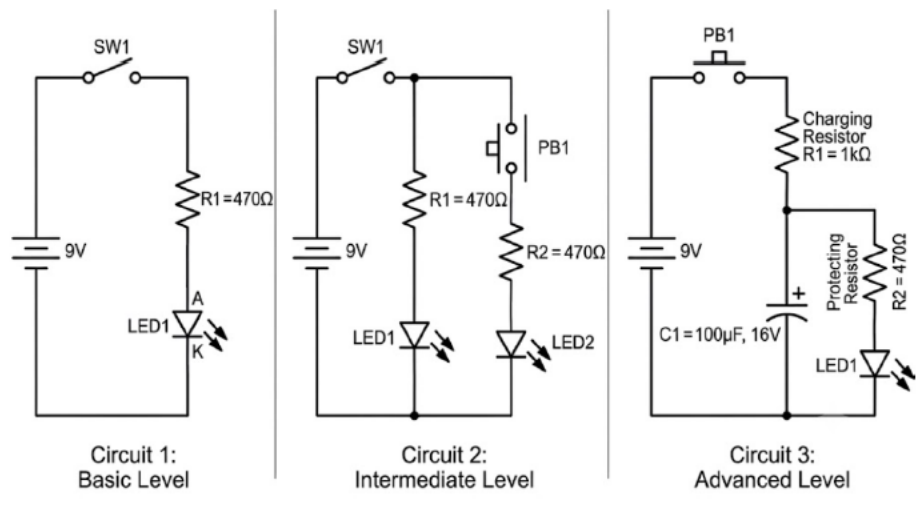
- Activity: Both groups performed an identical task of assembling three circuits on a protoboard, ranging from basic to advanced levels (e.g., LED circuits with switches and capacitors) (see Appendix B, Figure A6).
- Duration: The practical session was organized into timed intervals, with approximately 20 min allocated for the assembly of each circuit.
To ensure the integrity of the quasi-experimental design and prevent information contamination between groups within the same classroom (as shown in Appendix B, Figure A1), several control measures were implemented. First, the experimental and control groups were physically separated on opposite sides of the workshop, creating a clear buffer zone. Second, the instructor maintained strict supervision throughout the session to ensure that students in the control group relied exclusively on traditional materials (textbooks and notes) while those in the experimental group used AI tools individually. Furthermore, the 20 min timed intervals for each assembly task ensured that students remained focused on their own circuits, leaving minimal opportunity for inter-group communication. These procedures were designed to minimize the risk of peer-to-peer influence on the learning outcomes.
3.5. Instruments
Four main instruments were self-developed for this study and implemented using Microsoft Forms [13] to collect data anonymously. To ensure the replicability of the study, the complete set of questions for each instrument and the individual responses are provided in Appendix A. The instruments are described as follows:
- Pre-test: An 11-question multiple-choice assessment to measure initial foundational knowledge of electronics before the intervention (Table A1).
- Post-test: An 11-question multiple-choice test administered after the workshop to evaluate final learning outcomes and concept retention (Table A2).
- Error checklist: A 10-item observational tool used to record specific assembly errors (e.g., inverted LED polarity, loose wires, or incorrect resistor placement) (Table A3).
- Motivation and autonomy scales: A 10-item questionnaire using a 5-point Likert scale to measure students’ self-perceived motivation and their degree of independence from the teacher during the tasks (Table A4).
3.6. Data Analysis
The collected data were processed quantitatively using Microsoft Excel. The analysis involved calculating means (averages) for test scores and Likert scales, identifying differences in performance between the pre-test and post-test, and determining the percentages of technical errors and engagement levels for both the experimental and control groups.
3.7. Ethical Considerations
The study was conducted in accordance with the Declaration of Helsinki and received formal approval from the Ethics Committee of the Universidad Rey Juan Carlos (protocol code 100220261452026, approved on 23 March 2026). Participation was entirely voluntary, and written informed consent was obtained from all students prior to the intervention. To ensure confidentiality and anonymity, all data were collected using assigned alphanumeric codes (e.g., A01–A08), ensuring that no individual responses could be linked back to the participants’ identities.
3.8. AI Tool Usage Declaration
During the preparation of this study, the authors used Gemini (Google), version 1.5 Pro, for the purposes of generating technical graphics (circuit schematics and classroom layout), providing iterative feedback on the manuscript’s clarity, and translating the abstract into English. The prompts used included: “Generate a professional classroom layout for a technical workshop with two separated groups”; “Create a schematic symbol for an IEC standard resistor and LED”; “Review the clarity of the methodology section”; and “Translate the following abstract into professional academic English”. The authors have reviewed and edited the output and take full responsibility for the content of this publication.
4. Results
This section presents a concise and precise description of the experimental results obtained from the comparison between the AI-assisted experimental group and the traditional control group.
4.1. Learning Outcomes
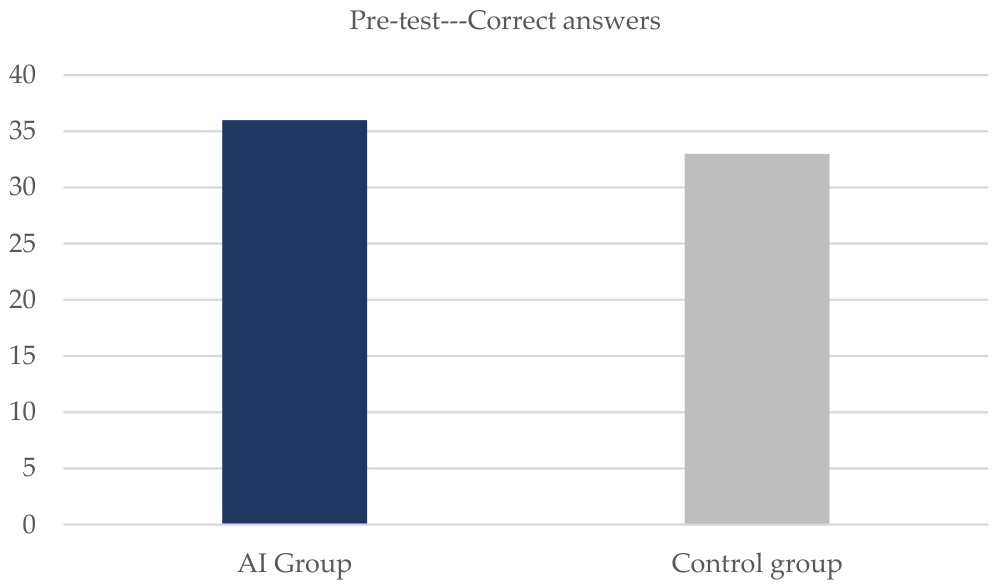
The primary objective was to evaluate whether real-time generative AI support could improve or sustain the understanding of complex electronic concepts compared to traditional methods. The results from the pre-test indicated a homogeneous starting point for both groups, with the AI-assisted group achieving a mean score of 9.00/10 and the control group 8.25/10. This high initial performance suggests that the introductory theoretical explanations provided by the instructor were well-understood by nearly all participants (Figure 1, Table A1 and Table A5).
Figure 1.
Total correct answers obtained by the AI-assisted and control groups in the pre-test assessment.
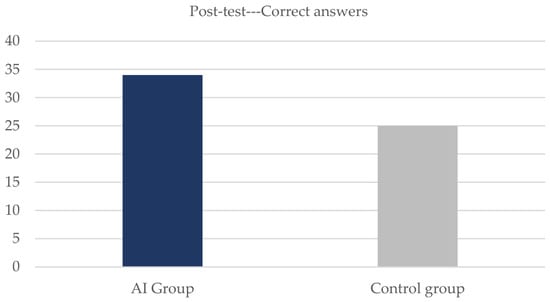
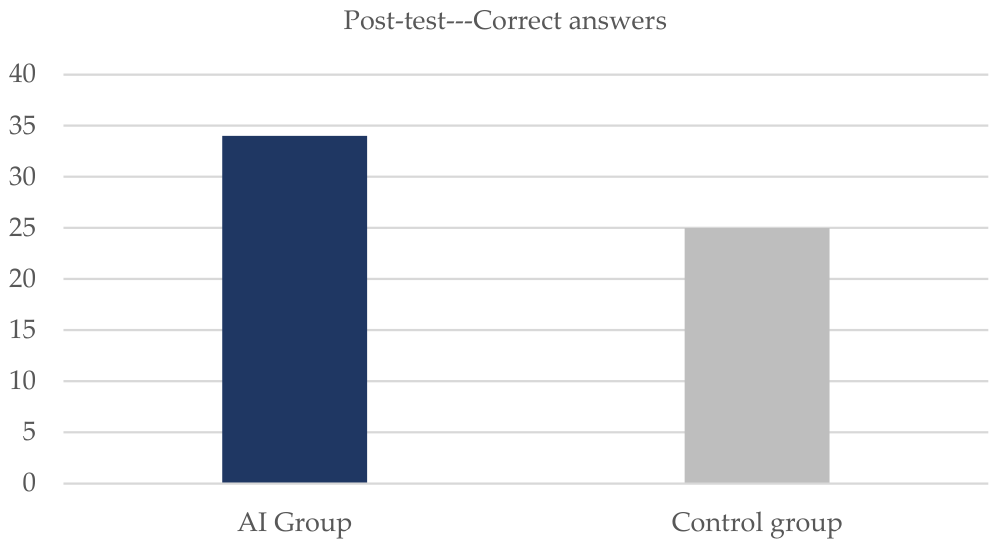
However, a substantial divergence emerged during the post-test as the pedagogical focus shifted from basic definitions to practical application and troubleshooting. While the AI group maintained a high level of performance (8.50/10), the control group’s average dropped sharply to 6.25/10. This two-point decline in the traditional group highlights the “instructional bottlenecks” and frustration that occur when students encounter advanced conceptual challenges—such as circuit analysis or component polarity—without immediate feedback (Figure 2, Table A1 and Table A5).
Figure 2.
Total correct answers obtained by the AI-assisted and control groups in the post-test assessment.
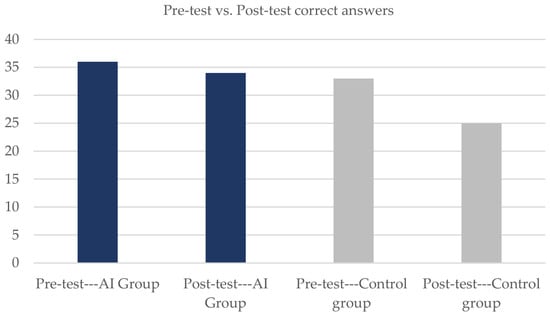
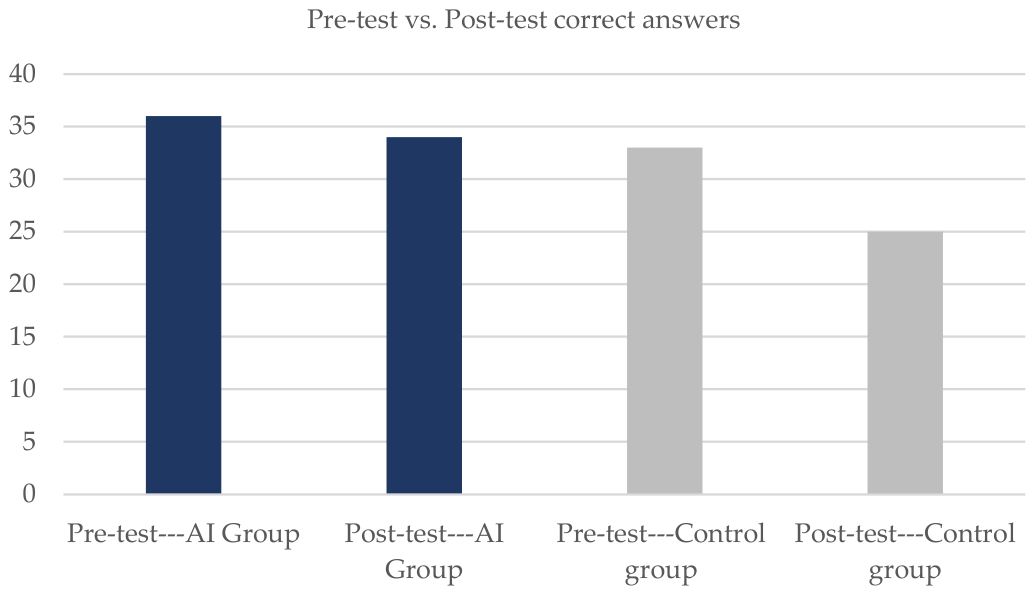
The stability of the experimental group’s scores indicates that AI support effectively functioned as a cognitive scaffold. By providing “just-in-time” explanations, tools like ChatGPT and Gemini allowed students to bridge the gap between abstract formulas (e.g., Ohm’s Law) and physical assembly. For instance, while students in the control group often stopped working when a circuit failed, those with AI access could ask the tool for step-by-step troubleshooting, thereby avoiding the cycle of frustration common in Basic VET (Figure 3).
Figure 3.
Comparison of pre-test and post-test correct answers between groups.
A clear example of this phenomenon was observed in student A05 from the control group, whose score plummeted from a high pre-test result to just 1/10 in the post-test. Relying solely on static resources like textbooks and limited teacher intervention led to a complete disconnection from the task once complexity increased. In contrast, the AI group participants (such as A04, A06, and A02) consistently scored 9/10, demonstrating that the technology acted as a “personal tutor” that sustained engagement and concept retention throughout the workshop (Table A1, Table A2, Table A5 and Table A6).
Ultimately, these findings suggest that while traditional instruction is sufficient for baseline theory, generative AI is superior for supporting autonomous learning during the transition to complex practical application.
4.2. Technical Errors
This variable assessed the impact of generative AI on physical assembly accuracy during the practical sessions. The evaluation focused on common technical faults such as inverted LED polarity, incorrect resistor placement, and loose or incorrect wiring. To ensure objective measurement, a 10-item observational error checklist was employed by the instructor to record performance in real time, focusing on the physical integrity of the circuits.
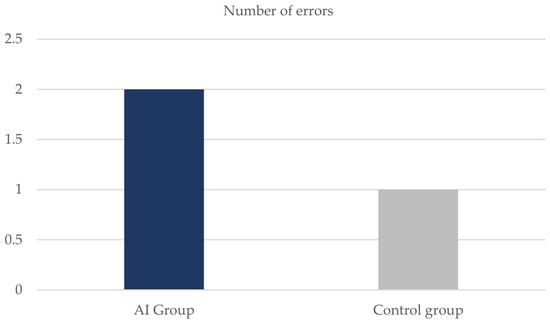
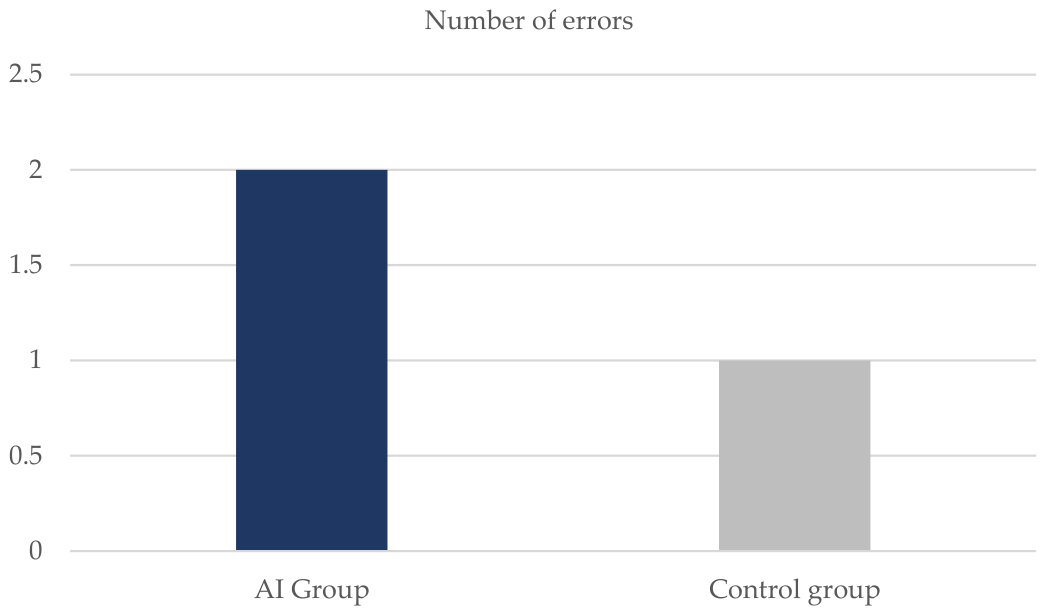
Quantitative analysis revealed negligible differences between the two groups. The traditional control group achieved a mean score of 9.75/10 in assembly correctness, whereas the AI-assisted group scored 9.50/10. Based on these results, Hypothesis 2 (H2)—which predicted that AI would significantly reduce technical assembly errors—was rejected (Table A3 and Table A7, Figure 4).
Figure 4.
Technical errors recorded during circuit assembly.
The findings suggest that for purely mechanical and visual–spatial tasks, current text-based AI support does not provide a substantial advantage over traditional instructional methods. While AI tools like ChatGPT and Gemini are excellent at providing theoretical and procedural explanations, the physical act of component placement on a breadboard relies more on manual dexterity and direct visual verification than on conceptual guidance.
Specific cases illustrate this limitation:
- In the control group, student A05 achieved a near-perfect score, committing only a single error related to battery polarity (Table A7).
- Conversely, student A04 in the AI group scored an 8/10 after committing two errors: a faulty switch connection and a failure to match the physical assembly to the proposed schematic.
Because the AI lacked “vision” regarding the student’s physical setup, it could not proactively identify these manual mistakes or the student’s misinterpretation of the physical layout. These results indicate that while AI acts effectively as a “conceptual tutor,” it does not yet serve as a “physical supervisor” for technical assembly. Consequently, for Basic Vocational Education and Training (Basic VET), where manual precision is a critical learning outcome, the integration of multimodal vision models—capable of analyzing real-time images of students’ breadboards—presents a necessary future research direction to address this specific instructional gap.
4.3. Motivation
To evaluate the affective impact of the intervention, student engagement and interest were measured using a 10-item questionnaire based on a five-point Likert scale (ranging from 1: “Strongly Disagree” to 5: “Strongly Agree”). This variable is particularly critical for the Basic VET student profile, as these learners often possess academic histories marked by failure and require immediate positive reinforcement to sustain focus [14].
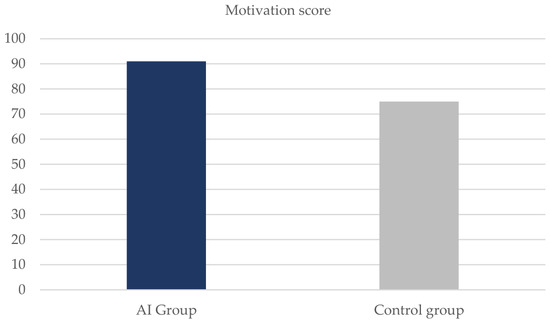
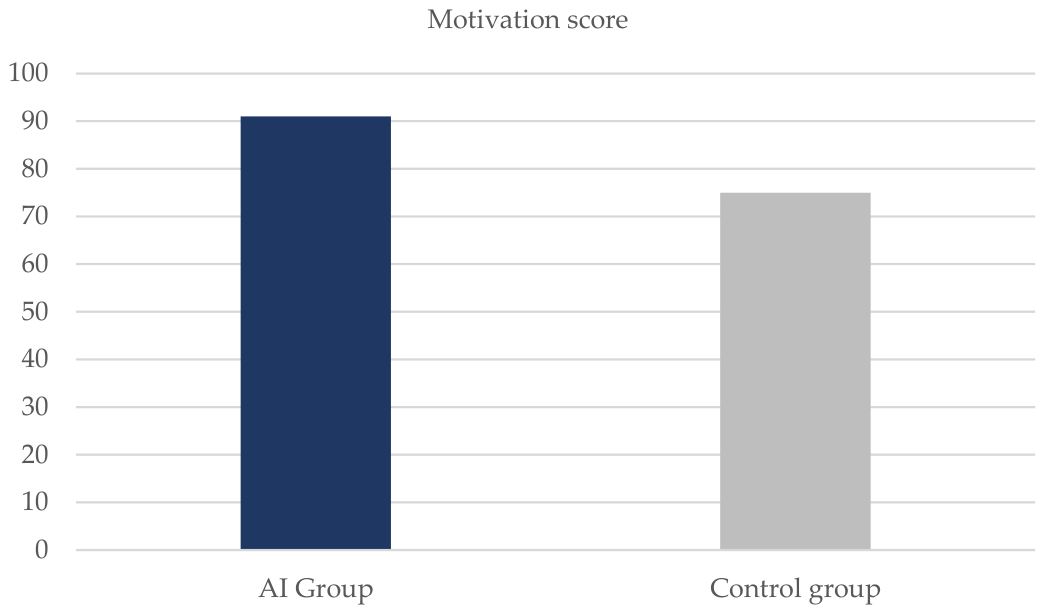
The quantitative results revealed a substantial disparity in engagement levels between the two groups. The AI-assisted group reported a markedly higher level of motivation, with a mean score of 4.55/5, whereas the control group achieved a significantly lower mean of 3.50/5. These findings confirm the validation of Hypothesis 3 (H3), which posited that immediate AI support would foster a more positive attitude toward technical learning (Table A4 and Table A8 and Figure 5).
Figure 5.
Student motivation levels during practical workshops.
The qualitative observations during the workshop further explain this one-point difference on the Likert scale. Participants in the experimental group expressed greater interest and excitement when using tools like Gemini and ChatGPT to resolve their technical queries. The AI functioned as a “personalized technical assistant,” providing an immediate feedback loop that transformed the laboratory into a dynamic and interactive environment. By receiving answers in real time, these students avoided the “instructional bottlenecks” that typically lead to disengagement.
In stark contrast, students in the traditional control group exhibited signs of boredom, despondency, and a clear rejection of static resources. Relying solely on textbooks and waiting for the instructor to become available created periods of inactivity that mirrored their previous negative academic experiences. While the experimental group viewed the workshop as a modern, technology-driven challenge, the control group perceived it through the lens of traditional, teacher-dependent instruction, which struggled to maintain their attention as the circuit complexity increased.
Ultimately, the data suggests that integrating generative AI does not merely provide technical answers; it acts as a catalyst for engagement, reducing the typical frustration associated with abstract electronics concepts and fostering a more resilient learning attitude among students at risk of academic dropout.
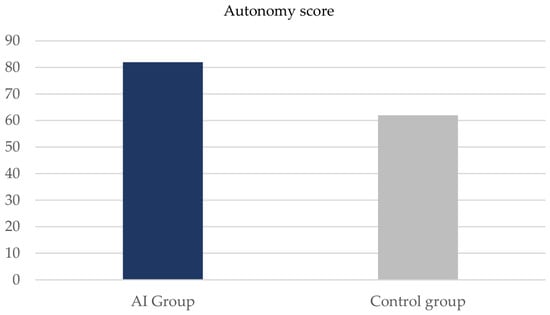
4.4. Learner Autonomy
The degree of independence from the instructor was a critical variable in this study, as technical workshops in Basic VET are traditionally characterized by high teacher dependency. To assess this, students responded to a Likert-scale questionnaire focused on their ability to identify faults and solve errors before seeking external help. The results demonstrated a significantly higher level of perceived autonomy in the AI-assisted group, which achieved a mean score of 4.10/5, compared to 3.35/5 for the traditional control group. These findings led to the formal validation of Hypothesis 4 (H4) (Table A4 and Table A8 and Figure 6).
Figure 6.
Perceived learner autonomy levels.
The nearly one-point difference on the scale reflects a profound shift in the students’ approach to problem-solving. Participants using AI viewed the technology as a “personal digital tutor”. This real-time assistance reduced the anxiety typically associated with technical failure—where a non-functional circuit often leads to a total halt in work. Instead of immediately stopping to wait for the instructor, students in the experimental group engaged in a dialog with the AI to troubleshoot specific issues, such as identifying resistor color codes or component symbols.
This shift in behavior directly addressed the problem of “instructional bottlenecks”. In a traditional setting, a single instructor must often rotate between several frustrated students to resolve minor, repetitive errors like loose wires or inverted LEDs. As the AI “absorbed” these simple procedural queries, students felt more secure in their capacity to progress independently.
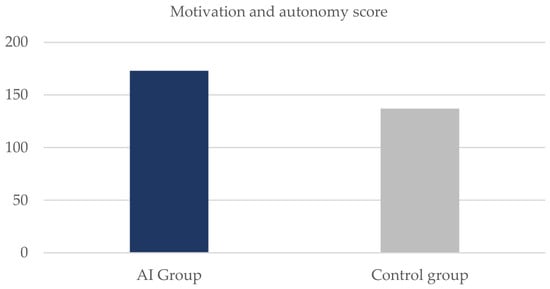
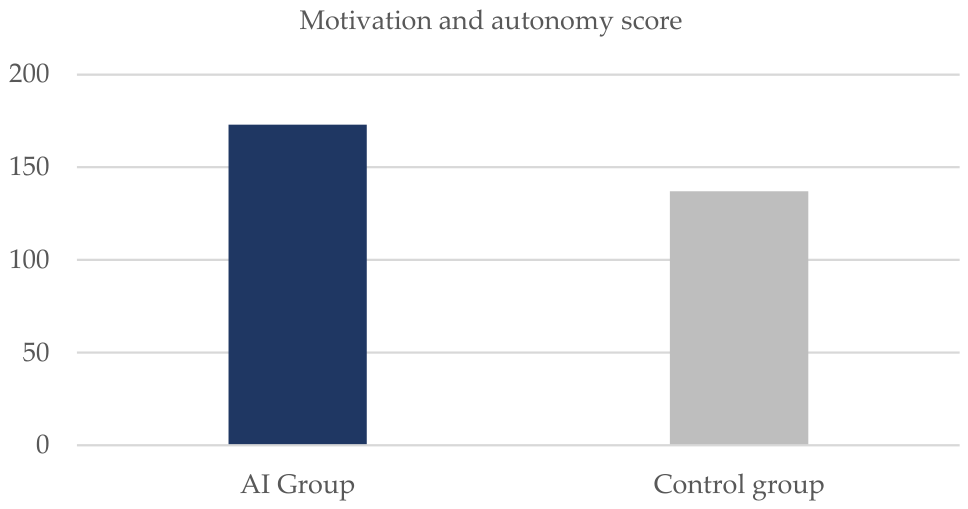
Ultimately, the data suggests that generative AI acts as a cognitive scaffold that fosters a more resilient and self-reliant learning routine [15]. By providing an immediate feedback loop, the technology allows students to transform a moment of potential failure into an autonomous learning opportunity, thereby increasing their confidence in handling technical tasks without constant teacher intervention (Figure 7).
Figure 7.
Comparison of motivation and autonomy between groups.
4.5. Summary of Findings
The overall impact of the intervention across the studied variables is summarized in the table below, showing a positive trend in learning, motivation, and autonomy (Table 1).
Table 1.
Comparative summary of mean results between the experimental (AI) and control groups.
5. Discussion
This study provides empirical evidence on how generative AI can be integrated into technical workshops to address specific instructional challenges. The results are discussed below in the context of the existing literature and the educational reality of Vocational Education and Training (VET).
5.1. Learning Support and Cognitive Scaffolding
The results confirm that generative AI serves as an effective cognitive scaffold, particularly when task complexity increases. While both groups started with a homogeneous understanding of basic theory, the experimental group maintained a high academic performance (8.50/10) in the post-test, whereas the control group’s performance significantly declined to 6.25/10. This divergence suggests that AI provides the “just-in-time” support necessary for students to bridge the gap between abstract concepts—such as Ohm’s Law or circuit analysis—and their practical application. These findings align with Zawacki-Richter et al. (2019) [2], who identified personalized feedback and adaptive support as primary educational strengths of AI. Without this immediate feedback, students in the control group, like student A05 (who scored 1/10), experienced a complete disconnection from the learning process when faced with advanced challenges (Table 1, Table A5 and Table A6).
The stability of the experimental group’s scores, even when faced with tasks of increasing complexity, suggests that generative AI functioned as an effective cognitive scaffold. This observation aligns with the findings of Baidoo-Anu and Ansah (2023) [3], who argue that generative AI tools provide essential formative feedback that allows students to bridge conceptual gaps independently. By offering “just-in-time” support, the AI enabled participants to overcome technical “stuck points”—such as understanding component polarity or circuit logic—without the cycle of frustration typically observed in traditional Vocational Training settings.
5.2. AI as a Troubleshooting Tool vs. Physical Supervisor
A principal contribution of this work is the validation of AI as a real-time troubleshooting assistant for conceptual and procedural doubts. In the workshop, the AI functioned as a supplementary tutor that resolved technical queries instantly, such as identifying component symbols or explaining the function of a capacitor. However, the rejection of Hypothesis 2 (H2)—as scores for assembly correctness were nearly identical (9.50 vs. 9.75)—indicates that text-based AI is not yet an effective “physical supervisor”. For purely mechanical and visual–spatial tasks, such as inserting a wire into a specific breadboard hole, manual dexterity and direct teacher oversight remain superior. This highlights a research gap: while AI excels at explaining the “why,” it still requires multimodal vision models to assist in the “how” of physical assembly (Table 1 and Table A7).
5.3. Mitigation of Instructional Bottlenecks
A substantial scientific interest of this study is the observed reduction in “instructional bottlenecks”. In traditional VET workshops, a single instructor often faces multiple students who stop working simultaneously when a circuit fails, creating a dependency loop that halts the rhythm of the class. Generative AI effectively “absorbed” these simple procedural queries—such as resistor color codes or LED polarity—allowing students to progress independently. Consequently, the teacher is freed from repetitive troubleshooting and can focus on higher-quality pedagogical interventions and complex conceptual problems. This confirms the role of AI as a supportive resource rather than a teacher substitute, as suggested in the current educational technology literature (Table 1 and Table A8).
This validates the perspective of Kasneci et al. (2023) [4], who describe Large Language Models (LLMs) as sophisticated on-demand tutors capable of reducing the cognitive load for both students and instructors in technical learning environments. Consequently, the technology acts as a catalyst for a more resilient and autonomous learning routine.
5.4. Implications for the VET Student Profile
The integration of AI has profound implications for addressing academic failure and dropout rates, which reach nearly 30% in technical VET cycles in Spain. Students in Basic VET often possess histories of school failure and low self-esteem, requiring immediate positive reinforcement to maintain engagement. The AI-assisted group reported markedly higher motivation (4.55/5 vs. 3.50/5) and perceived autonomy (4.10/5 vs. 3.35/5). By reducing the frustration associated with waiting for teacher assistance, AI transforms the workshop into a more resilient learning environment. This supports the government’s push for modernizing VET through advanced digital competencies that prepare students for a digitized labor market (Table 1 and Table A8).
5.5. Limitations
Despite the positive findings, this study has several limitations that should be acknowledged:
- Single center and subject: Research was restricted to one educational center and a single module (Electrical and Electronic Equipment).
- Occasional use: The intervention was specific to a single practical session rather than a longitudinal study, meaning the “novelty effect” of using AI might have influenced the high motivation scores.
- Sample size: The final analysis was conducted with a small group of eight students, which limits the generalizability of the results to larger or different educational cohorts.
- Instrument validation: The four main instruments used for data collection (pre-test, post-test, error checklist, and Likert scales) were self-developed specifically for this study and have not undergone external psychometric validation. While they were designed based on the module’s curriculum, this represents a limitation regarding the standardization of the results.
- Gender imbalance: The sample consisted exclusively of male students. This gender imbalance is common in technical Vocational Training tracks like “Electrical and Electronic Equipment” but limits the ability to assess potential gender-based differences in AI tool adoption or motivation.
6. Conclusions
6.1. Main Findings
This research evaluated the impact of generative AI as a digital tutor in a Basic Vocational Education and Training (VET) electronics workshop. The results validated three of the four primary hypotheses, leading to the following key findings:
- Improved learning outcomes: The AI-assisted group maintained high academic performance (8.5/10) as task complexity increased, whereas the traditional group’s performance declined to 6.25/10.
- Reduced troubleshooting errors: While physical assembly precision showed minimal differences, the AI effectively reduced conceptual and procedural errors by acting as a real-time troubleshooting assistant.
- Increased learner autonomy: Students using AI reported a significantly higher degree of independence (4.10 vs. 3.35), successfully resolving technical doubts without constant teacher intervention.
- Enhanced motivation: The integration of AI tools transformed the workshop into a more engaging environment, resulting in higher student motivation scores (4.55 vs. 3.50).
The results of this pilot study show promising trends. However, given the small sample size (n = 8), these findings should be considered preliminary evidence. Future research with larger cohorts is essential to validate these results across broader educational contexts.
6.2. Educational Implications
The study highlights that generative AI should be integrated into technical education as a support tool rather than a replacement for human instruction. By functioning as a personalized technical assistant, AI helps manage the diverse learning paces within a classroom and provides immediate feedback during “instructional bottlenecks”. This allows the teacher to move away from resolving repetitive, minor technical faults and focus on more complex pedagogical guidance and higher-level conceptual problems.
6.3. Future Work
To build upon these results, several future research directions are proposed:
- Multimodal AI and vision models: Future studies should explore the use of multimodal models capable of analyzing photos of protoboards to provide automatic diagnostics of physical assembly errors.
- Longitudinal studies: Extending the research period to a full academic course would determine if the positive impacts on motivation and autonomy are sustained over time or are subject to a “novelty effect”.
- RAG electronics tutor: Development of specialized RAG (Retrieval-Augmented Generation) systems, trained specifically on technical electronics documentation and curricula, could provide more reliable and localized support than general-purpose AI models.
Author Contributions
Conceptualization, C.T. and R.H.-N.; methodology, C.T.; software, C.T.; validation, C.T. and R.H.-N.; formal analysis, C.T.; investigation, C.T.; resources, C.T.; data curation, C.T.; writing—original draft preparation, C.T.; writing—review and editing, C.T. and R.H.-N.; visualization, C.T.; supervision, R.H.-N.; project administration, C.T. All authors have read and agreed to the published version of the manuscript.
Funding
This research received no external funding.
Institutional Review Board Statement
The study was conducted in accordance with the Declaration of Helsinki, and approved by the Ethics Committee of the Universidad Rey Juan Carlos (protocol code 100220261452026 and date of approval: 23 March 2026).
Informed Consent Statement
Informed consent was obtained from all subjects involved in the study. As documented in the research methodology, participation was voluntary; students were specifically asked who wished to take part in the experiment before it began. Furthermore, to ensure the protection of the participants, all data collection was conducted anonymously using assigned alphanumeric codes to guarantee that no responses could be associated with individual identities. This protocol was reviewed and approved by the Ethics Committee of the Universidad Rey Juan Carlos.
Data Availability Statement
The data presented in this study are available within the article. The raw datasets generated during the workshop were anonymized using alphanumeric codes (A01–A14) to protect the privacy of the participants, in accordance with the protocol approved by the Ethics Committee of the Universidad Rey Juan Carlos (protocol code 100220261452026). Cleaned quantitative results, including pre-test/post-test scores and motivation/autonomy scales, are provided.
Acknowledgments
The authors thank the participants’ families and the staff of the Universidad Rey Juan Carlos for their support. They especially thank the students who participated. During the preparation of this study, the authors used Gemini (Google), version 1.5 Pro, for the purposes of generating technical graphics (circuit schematics and class-room layout), providing iterative feedback on the manuscript’s clarity, and translating the abstract into English. The prompts used included: “Generate a professional class-room layout for a technical workshop with two separated groups”; “Create a schematic symbol for an IEC standard resistor and LED”; “Review the clarity of the methodology section”; and “Translate the following abstract into professional academic English”. The authors have reviewed and edited the output and take full responsibility for the con-tent of this publication.
Conflicts of Interest
The authors declare no conflicts of interest.
Abbreviations
The following abbreviations are used in this manuscript:
| AI | Artificial Intelligence |
| VET | Vocational Education and Training |
| Basic VET | Basic Vocational Education and Training |
| STEM | Science, Technology, Engineering, and Mathematics |
| RQ | Research Question |
| RAG | Retrieval-Augmented Generation |
| PBL | Project-Based Learning |
| LED | Light-Emitting Diode |
| URJC | Universidad Rey Juan Carlos |
| INE | National Statistics Institute |
| ESO | Compulsory Secondary Education |
Appendix A
Table A1.
Pre-test electronics questions.
Table A2.
Post-test electronics questions.
Table A3.
Technical assembly error checklist.
Table A4.
Motivation and autonomy scale items.
Table A5.
Detailed student responses and scores in the Pre-test assessment.
Table A6.
Detailed student responses and scores in the Post-test assessment.
Table A7.
Detailed results of the technical assembly error checklist.
Table A8.
Detailed student scores for the Motivation and Autonomy Likert scale.
Appendix B
Figure A1.
Classroom layout and experimental organization of the groups. (Generated using Gemini 1.5 Pro; Prompt: “Create a top-down diagram of a classroom workshop showing two groups of 4 students separated by an aisle”).
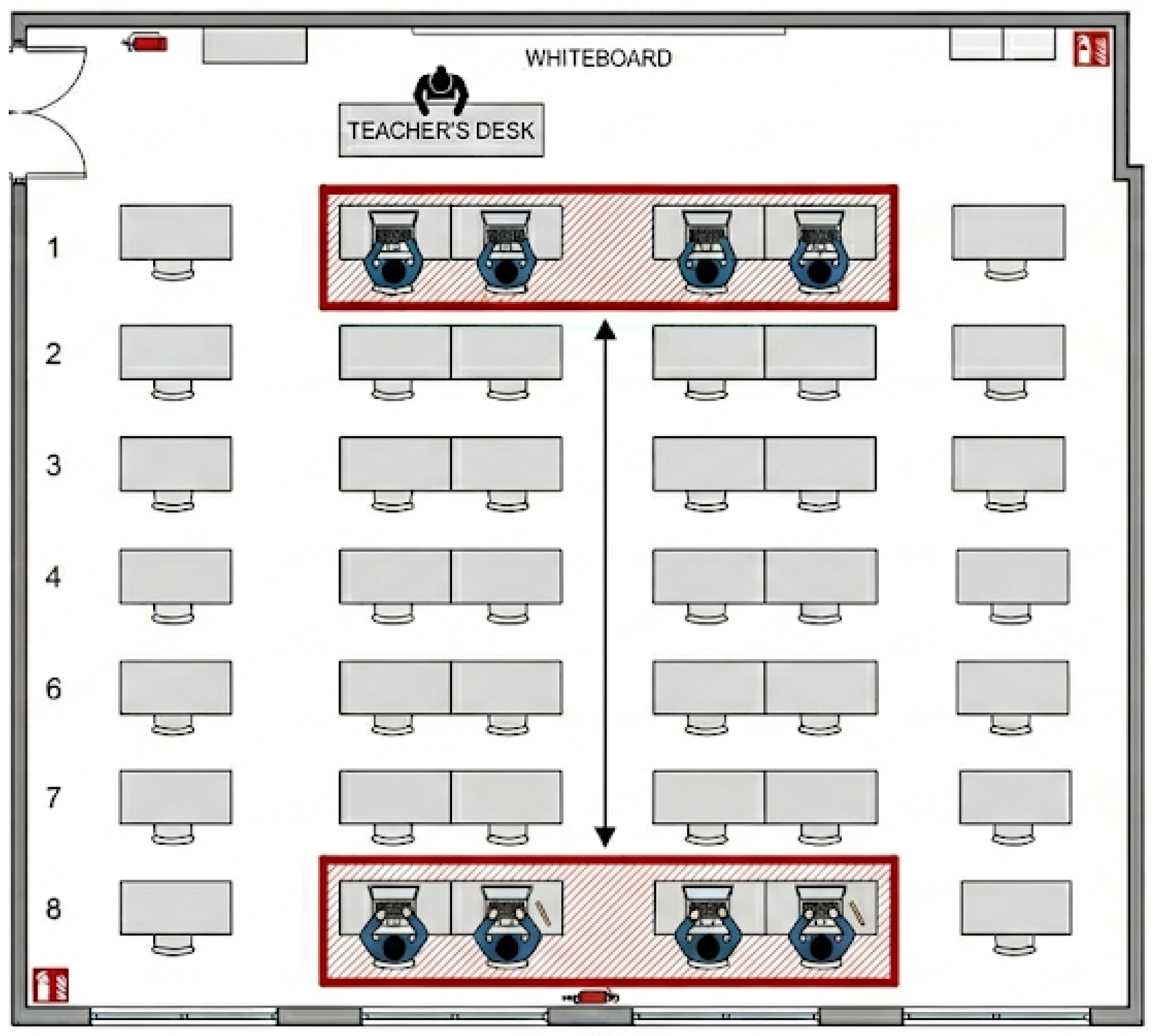
Figure A2.
AI response detailing schematic symbols for resistors according to ANSI and IEC standards. (Generated using Gemini 1.5 Pro; Prompt: “Explain schematic symbols for resistors according to ANSI and IEC standards”).
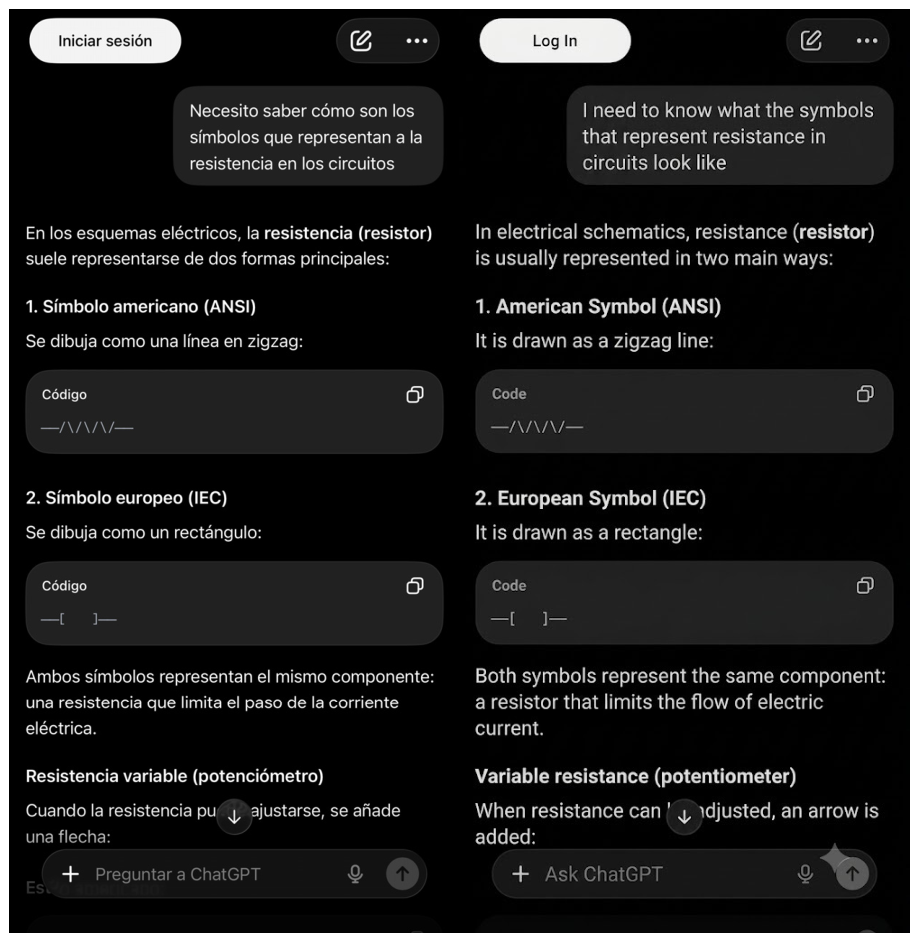
Figure A3.
Student query regarding the technical purpose of a capacitor. (Generated using Gemini 1.5 Pro; Prompt: “Explain the technical purpose and physical function of a capacitor in an electronic circuit”).
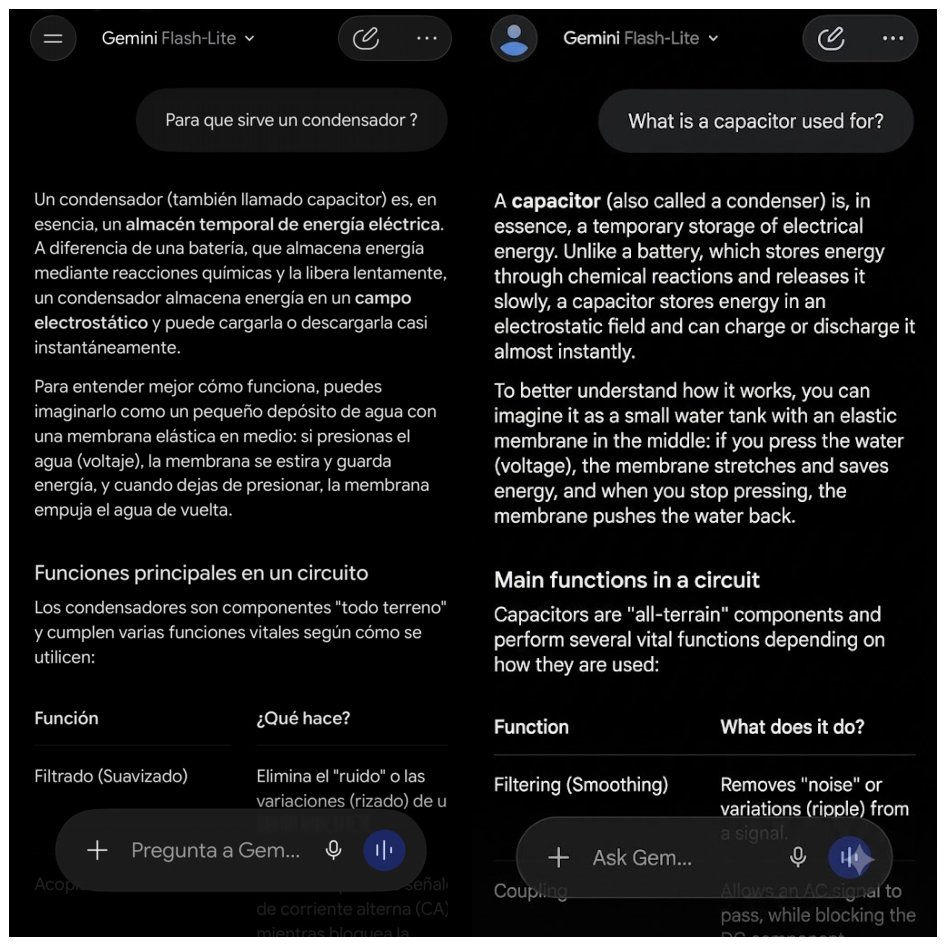
Figure A4.
AI explanation of electronic symbology for a light-emitting diode (LED). (Generated using Gemini 1.5 Pro; Prompt: “Explain electronic symbology focusing on the arrows in a Light Emitting Diode (LED) schematic”).
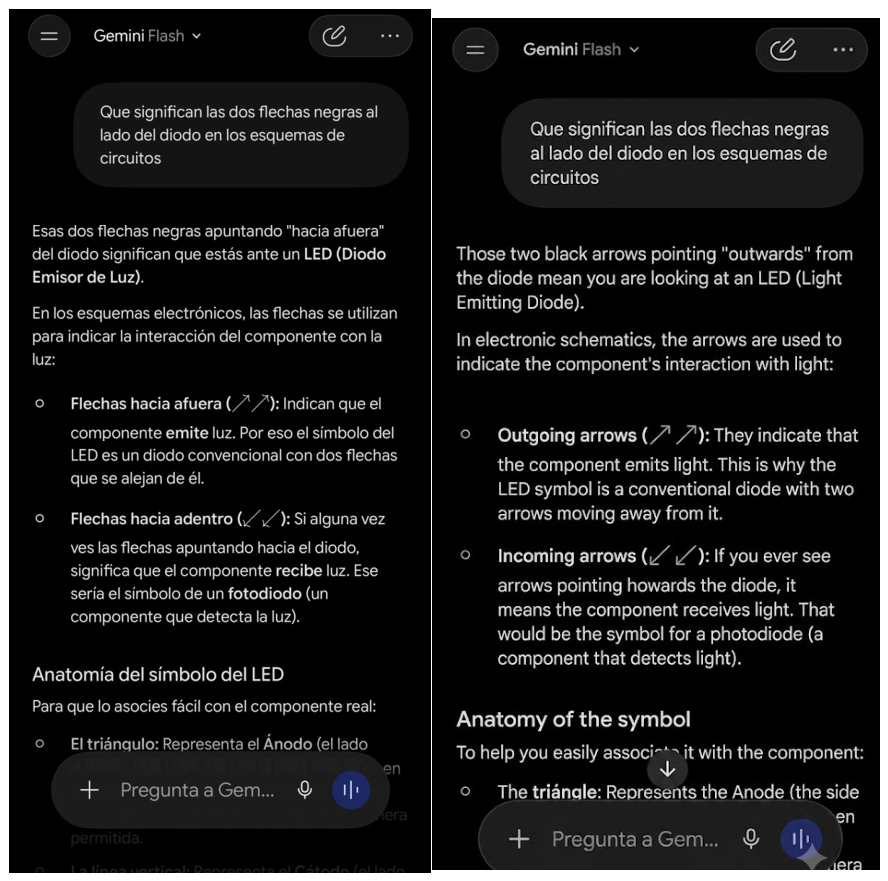
Figure A5.
Student query regarding the distinction between a push button and a switch. (Generated using Gemini 1.5 Pro; Prompt: “Explain the technical distinction between a push button and a switch”).
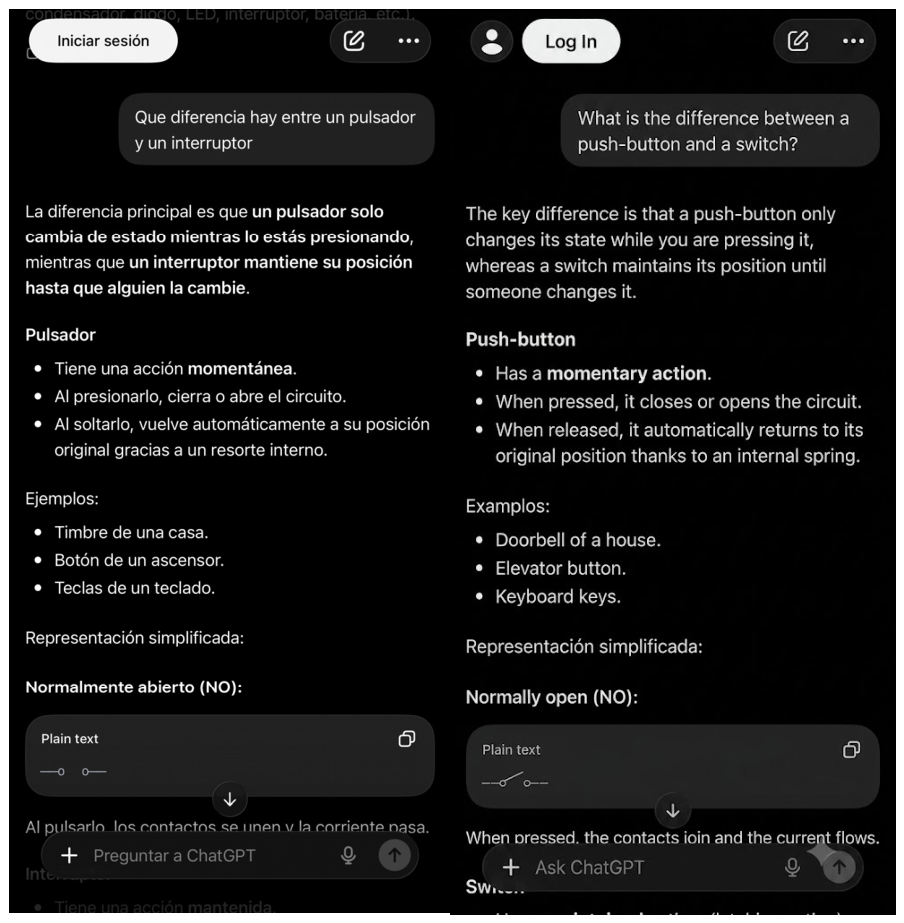
Figure A6.
Technical schematics of the electronic circuits designed for the practical intervention (Basic, Intermediate, and Advanced levels).
References
- Tamaral Martin, C. Impacto Del Uso de la Inteligencia Artificial Como Apoyo en el Aprendizaje Práctico de Circuitos Electrónicos en Formación Profesional Básica. Master’s Thesis, Universidad Rey Juan Carlos, Madrid, Spain, 2026. [Google Scholar]
- Zawacki-Richter, O.; Marín, V.I.; Bond, M.; Gouverneur, F. Systematic review of research on artificial intelligence applications in higher education—Where are the educators? Int. J. Educ. Technol. High. Educ. 2019, 16, 39. [Google Scholar] [CrossRef] [Scilit]
- Baidoo-anu, D.; Owusu Ansah, L. Education in the Era of Generative Artificial Intelligence (AI): Understanding the Potential Benefits of ChatGPT in Promoting Teaching and Learning. J. AI 2023, 7, 52–62. [Google Scholar] [CrossRef] [Scilit]
- Kasneci, E.; Sesagiri Raamkumar, A.; Engele, K.; Kasneci, G. ChatGPT for good? On opportunities and challenges of large language models for education. Learn. Individ. Differ. 2023, 103, 102274. [Google Scholar] [CrossRef] [Scilit]
- Lo, C.K. What Is the Impact of ChatGPT on Education? A Rapid Review of the Literature. Educ. Sci. 2023, 13, 410. [Google Scholar] [CrossRef] [Scilit]
- Mohd-Yasin, F. Effective Strategies for Project-Based Learning of Practical Electronics. Electronics 2021, 10, 2245. [Google Scholar] [CrossRef] [Scilit]
- Sababha, B.; Alqudah, Y.; Abualbasal, A.; AlQaralleh, E. Project-Based Learning to Enhance Teaching Embedded Systems. Eurasia J. Math. Sci. Technol. Educ. 2016, 12, 2575–2585. [Google Scholar] [CrossRef] [Scilit]
- Ministerio de Educación, Formación Profesional y Deportes. Datos y Cifras. Curso Escolar 2023/2024. Available online: https://www.educacionfpydeportes.gob.es/servicios-al-ciudadano/estadisticas/indicadores/datos-cifras.html (accessed on 9 June 2026).
- National Statistics Institute. Education and Labor Market Transition Statistics. Available online: https://www.ine.es/dyngs/INEbase/en/operacion.htm?c=Estadistica_C&cid=1254736056996&menu=resultados&secc=1254736058554&idp=1254735976597 (accessed on 9 June 2026).
- OECD. Education at a Glance 2023: OECD Indicators; OECD Publishing: Paris, France, 2023. [Google Scholar]
- OpenAI. ChatGPT. Available online: https://openai.com/es-ES/index/chatgpt/ (accessed on 9 June 2026).
- Google. About Gemini. Available online: https://gemini.google/ (accessed on 9 June 2026).
- Microsoft. What is Microsoft Forms? Available online: https://support.microsoft.com/en-us/forms (accessed on 9 June 2026).
- Bandura, A. Social Learning Theory; Prentice-Hall: Englewood Cliffs, NJ, USA, 1977. [Google Scholar]
- Novak, J.D.; Gowin, D.B. Learning How to Learn; Cambridge University Press: New York, NY, USA, 1984. [Google Scholar]

Disclaimer/Publisher’s Note: The statements, opinions and data contained in all publications are solely those of the individual author(s) and contributor(s) and not of MDPI and/or the editor(s). MDPI and/or the editor(s) disclaim responsibility for any injury to people or property resulting from any ideas, methods, instructions or products referred to in the content. |
© 2026 by the authors. Licensee MDPI, Basel, Switzerland. This article is an open access article distributed under the terms and conditions of the Creative Commons Attribution (CC BY) license.