


Abstract
Sodium–glucose cotransporter-2 inhibitors (SGLT2i) improve outcomes across the heart failure (HF) spectrum, but genitourinary (GU) adverse events may complicate their use in older adults with frailty, multimorbidity, lower urinary tract dysfunction, and concomitant diuretic therapy. This review evaluates GU safety, prevention, and management during SGLT2i therapy in older adults with HF. A targeted narrative review of the literature was conducted using PubMed, supplemented by clinical guidelines, multidisciplinary consensus documents, and evidence syntheses, with the literature search updated through 20 September 2026. Priority was given to clinically relevant studies involving older adults with HF; evidence from broader populations was considered when direct evidence was unavailable. Genital mycotic infections are a consistent class-associated adverse event, whereas evidence regarding bacterial urinary tract infections (UTIs) remains mixed, and a consistent increase in severe UTI or urosepsis has not been established. In older adults with HF, frailty, urinary dysfunction, impaired mobility or cognition, and caregiver dependence may increase the clinical burden of GU symptoms and complicate their recognition and management. Osmotic diuresis, congestion, and concomitant loop-diuretic therapy may cause urinary symptoms that are mistaken for infection, contributing to unnecessary investigations or treatment. Evidence supporting non-antibiotic prophylaxis is predominantly indirect and does not justify routine preventive treatment. Most uncomplicated GU events can be managed without discontinuing SGLT2i therapy. A frailty-informed approach integrating symptom-driven assessment, antimicrobial stewardship, individualized volume management, and clinically appropriate temporary interruption and reinitiation may help preserve treatment persistence while maintaining patient safety. Further studies in frail older adults with HF are needed to define effective preventive and management strategies.
1. Introduction
Sodium–glucose cotransporter-2 inhibitors (SGLT2i) have become a foundational component of treatment for heart failure (HF), reducing worsening HF events across the spectrum of left ventricular ejection fraction and irrespective of the presence of type 2 diabetes mellitus (T2DM) [1,2,3,4]. Current guidelines therefore recommend SGLT2i as part of disease-modifying therapy across a broad spectrum of HF phenotypes [5]. Because HF predominantly affects older adults, the clinical challenge is no longer simply whether to initiate these agents, but how to preserve their established clinical benefits in patients with multimorbidity, polypharmacy, functional impairment, and reduced physiological reserve.
Advanced age alone should not be considered a reason to withhold SGLT2i. Age-stratified analyses of major HF trials have shown that their cardiovascular and symptomatic benefits are maintained in older age groups, including patients aged ≥75 or ≥80 years, without clinically meaningful age-related reductions in tolerability [6,7]. Similarly, analyses based on frailty status have demonstrated consistent efficacy across the range of frailty studied, with potentially greater absolute benefit among patients at higher baseline risk [8]. However, these findings should be interpreted cautiously in patients with advanced frailty, substantial functional dependence, or severe cognitive impairment, for whom direct trial evidence remains limited. Importantly, chronological age and frailty are not interchangeable. Frailty may magnify the clinical consequences of otherwise mild adverse effects: increased urinary frequency or nocturia may contribute to sleep disruption, urgency, incontinence, falls, caregiver burden, and treatment non-adherence. These outcomes may be particularly relevant in patients with impaired mobility, cognitive decline, or limited access to assistance with personal hygiene and toileting.
Genitourinary (GU) adverse events are among the most frequent concerns surrounding SGLT2i use. Pharmacological glycosuria provides a biologically plausible mechanism for genital mycotic infection (GMI), whereas evidence for a comparable increase in bacterial urinary tract infection (UTI) is less consistent. In a population-based cohort of adults aged ≥66 years, initiation of SGLT2i was associated with an increased risk of GMI but not UTI when compared with dipeptidyl peptidase-4 inhibitors [9]. However, the absence of a consistent population-level association does not exclude clinically relevant infection risk in specific high-risk subgroups, particularly patients with complex urological conditions. This distinction is clinically important because urinary frequency, nocturia, lower urinary tract symptoms (LUTS), asymptomatic bacteriuria, GMI, uncomplicated cystitis, pyelonephritis, and Fournier gangrene are separate clinical entities with different diagnostic and therapeutic implications [10,11].
Older adults may be especially susceptible to diagnostic uncertainty. Pre-existing LUTS related to overactive bladder, urinary incontinence, impaired bladder emptying, or prostatic disease may be exacerbated or unmasked after treatment initiation. Postmenopausal changes, recurrent infections, constipation, catheter use, impaired mobility, cognitive impairment, and dependence on caregivers may further increase the complexity of GU symptom assessment and management. Moreover, asymptomatic bacteriuria is common in older populations and should not be interpreted as symptomatic UTI in the absence of compatible clinical findings [12]. Failure to distinguish these conditions can trigger a diagnostic and therapeutic cascade involving inappropriate microbiological testing, unnecessary antimicrobial treatment, and premature discontinuation of SGLT2i.
Management is particularly complex in patients with HF. Osmotic diuresis may overlap with the effects of loop diuretics and may be incorrectly interpreted as evidence of infection or drug intolerance. Conversely, generic advice to increase fluid intake may conflict with congestion management and predispose susceptible patients to clinical deterioration. Decisions regarding continuation or temporary interruption should therefore consider volume status, renal function, orthostatic symptoms, functional capacity, and the severity of the GU event. Temporary interruption may be warranted during severe systemic infection, haemodynamic instability, or acute illness associated with dehydration or reduced oral intake, with reinitiation considered after clinical stabilization. Permanent discontinuation should be avoided whenever a manageable adverse event can be treated without compromising patient safety, given the potential loss of cardiorenal protection following treatment withdrawal [13].
This narrative clinical review examines GU adverse events associated with SGLT2i therapy specifically in older adults with HF. It integrates infection risk with frailty, LUTS, continence, cognition, mobility, concomitant diuretic therapy, and caregiver support. Direct evidence from older adults with HF is distinguished from findings extrapolated from broader populations, with attention to their clinical applicability and limitations. Particular attention is given to practical prevention, diagnostic stewardship, appropriate antimicrobial use, non-antibiotic strategies, and criteria for temporary interruption, reinitiation, or permanent withdrawal, with the overarching aim of preserving treatment persistence whenever clinically appropriate.
2. Methods
A targeted narrative review of the literature was conducted using PubMed, supplemented by relevant clinical guidelines, multidisciplinary consensus documents, and evidence syntheses, with the search updated through 20 September 2026. The search strategy combined terms related to SGLT2 inhibitors, heart failure, older adults, frailty, multimorbidity, functional impairment, genitourinary adverse events, genital mycotic infection, urinary tract infection, lower urinary tract symptoms, asymptomatic bacteriuria, urinary frequency, nocturia, treatment discontinuation and persistence, antimicrobial stewardship, and non-antibiotic prevention. Literature identification was conducted through targeted, topic-based searches rather than a predefined systematic search protocol.
Priority was given to randomized clinical trials, prespecified age- or frailty-based analyses, systematic reviews, meta-analyses, large comparative cohort studies, clinical guidelines, and multidisciplinary consensus documents. Studies specifically evaluating older adults with HF were prioritized as the most directly applicable evidence. When such evidence was unavailable, data from broader populations receiving SGLT2i or from studies of recurrent UTI prevention were included when relevant to the clinical question, with their applicability assessed in relation to age, frailty, comorbidity burden, and clinical setting; the indirect nature of such evidence was considered when interpreting the findings.
Evidence was evaluated separately for GMI, bacterial UTI, asymptomatic bacteriuria, LUTS, and severe or complicated GU infections. Studies combining clinically distinct outcomes into a single composite endpoint were interpreted cautiously, particularly when infection-related events were grouped with non-infectious urinary symptoms or when differences in outcome definitions limited comparisons across studies. Particular attention was given to age, frailty, functional and cognitive status, urinary continence, concomitant diuretic therapy, renal function, caregiver support, and the consequences of temporary interruption, reinitiation, or permanent withdrawal.
Given the narrative design of this review and the heterogeneity of study populations, outcome definitions, follow-up duration, and preventive interventions, no formal meta-analysis was undertaken. No formal study-level risk-of-bias assessment or certainty-of-evidence grading was performed. Conclusions were based on a qualitative consideration of study design, consistency of findings, directness, and clinical applicability of the available evidence, with a specific focus on preserving safe treatment persistence in older adults with HF. The findings should be interpreted in light of the potential selection bias and limited reproducibility associated with a targeted narrative approach.
3. Pharmacological Rationale and Clinical Importance of Genitourinary Tolerability in Older Adults with Heart Failure
SGLT2i act primarily by inhibiting sodium and glucose reabsorption in the early renal proximal tubule, resulting in glycosuria, osmotic diuresis, and an initial natriuretic response. Beyond glucose lowering, their cardiorenal effects involve changes in renal haemodynamics, tubuloglomerular feedback, and plasma volume regulation, while additional mechanisms involving erythropoiesis, metabolic adaptations, and inflammatory signalling have been proposed [14]. The relative contribution of these pathways to clinical benefit remains incompletely established. Importantly, the renal pharmacological actions of SGLT2i also provide the basis for their principal genitourinary effects, linking the mechanisms underlying cardiorenal protection to clinically relevant tolerability concerns.
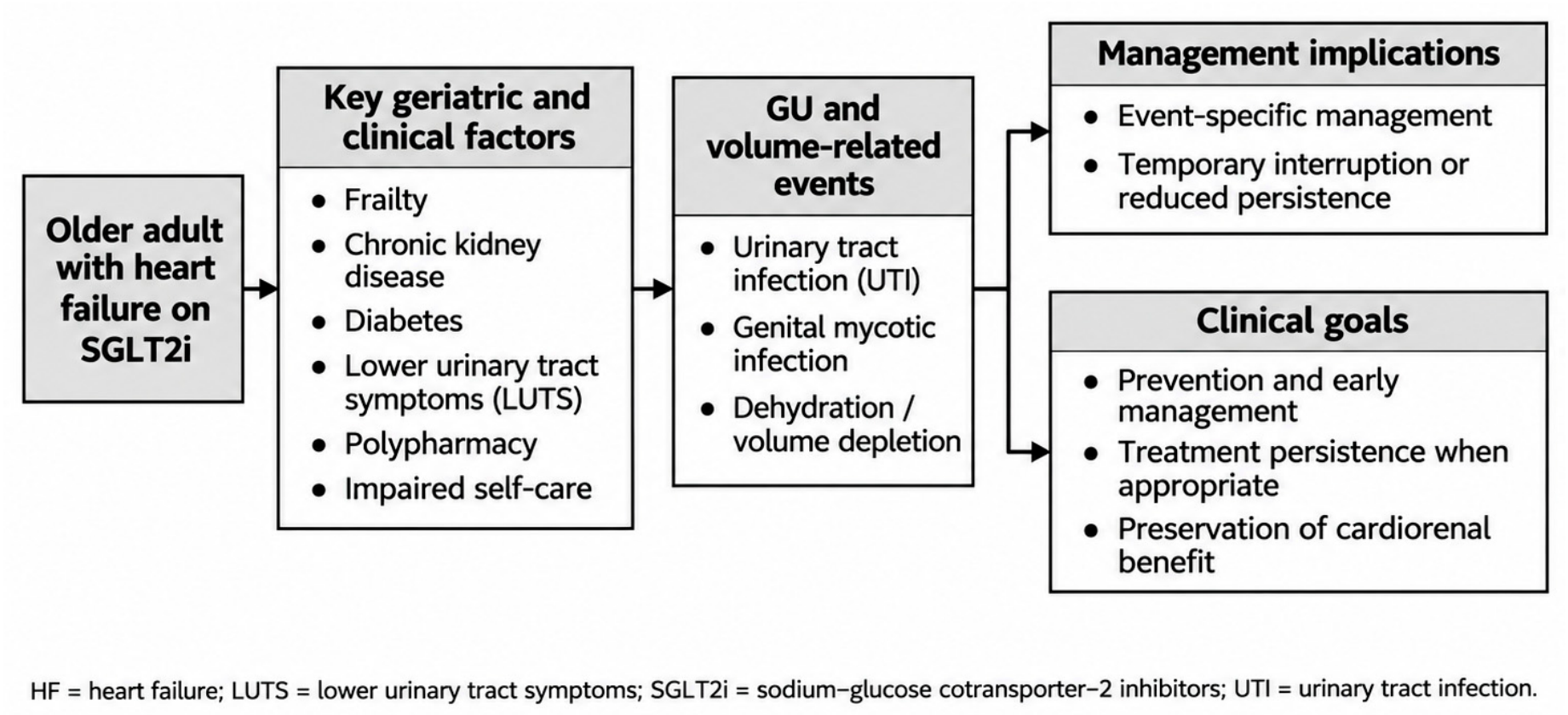
The clinical benefits of SGLT2i depend on continued treatment exposure. Their effects on HF outcomes emerge early, whereas withdrawal of long-term therapy may compromise sustained cardiorenal protection [13]. Consequently, a mild or moderate GU adverse event can follow two markedly different trajectories: timely recognition and treatment with preserved SGLT2i use, or escalating concern leading to interruption, failure to restart therapy, and potential loss of therapeutic benefit (Figure 1).
Figure 1.
Conceptual framework linking geriatric vulnerability, genitourinary adverse events, and SGLT2 inhibitor treatment persistence in older adults with heart failure.
This distinction is especially important in older adults. Although SGLT2i benefits are maintained across older age groups and the frailty strata evaluated in clinical trials [6,7,8], reduced physiological reserve may amplify the consequences of otherwise modest adverse effects. Urinary frequency, nocturia, genital discomfort, or transient volume depletion may contribute to sleep disruption, orthostatic symptoms, falls, reduced mobility, functional decline, and loss of confidence in treatment.
The interpretation of urinary symptoms is also more complex in this population. T2DM, chronic kidney disease (CKD), urinary incontinence, overactive bladder, prostatic obstruction, incomplete bladder emptying, constipation, autonomic dysfunction, and previous antimicrobial exposure frequently coexist. Mobility limitations or cognitive impairment may delay toileting, compromise personal hygiene, or prevent accurate symptom reporting. Concomitant loop-diuretic therapy may further increase frequency, urgency, and nocturia. Urinary symptoms may reflect treatment-related or pre-existing lower urinary tract dysfunction rather than infection; therefore, baseline assessment should document urinary symptoms and relevant functional limitations before SGLT2i initiation [15].
GU symptoms may affect functional status, treatment adherence, and caregiver burden in ways that are not captured by conventional safety endpoints. Diagnostic uncertainty may lead either to unnecessary antimicrobial treatment, particularly in the presence of asymptomatic bacteriuria [12], or to delayed recognition of clinically relevant infection. Careful clinical assessment is therefore essential to distinguish non-infectious urinary symptoms from GMI, uncomplicated UTI, and severe GU infections, while considering both treatment-related and pre-existing causes.
A persistence-centred strategy does not minimize infection risk. Instead, it identifies events requiring urgent investigation or temporary interruption while allowing mild and treatable conditions to be managed without permanent withdrawal. When interruption is clinically necessary, reassessment and timely reinitiation after stabilization should be considered. In older adults, this approach should include assessment of volume status, renal function, cognition, mobility, continence, toileting autonomy, caregiver support, and concomitant diuretic therapy. The objective is to preserve the established clinical benefits of SGLT2i without overlooking clinically important infection, functional deterioration, or treatment burden.
4. Epidemiology and Clinical Spectrum in Older Adults
Available evidence regarding genitourinary adverse events associated with SGLT2 inhibitor therapy varies considerably across study populations, designs, and outcome definitions (Table 1).
Table 1.
Key clinical evidence on genitourinary safety of SGLT2 inhibitors.
4.1. Genital Mycotic Infection
GMI is the most consistent GU adverse effect associated with SGLT2i. In a network meta-analysis of 113 randomized trials involving 105,293 patients with T2DM, reproductive tract infections were reported in 79 trials (70,850 participants), affecting 4.5% of SGLT2i-treated patients vs. 1.0% of those receiving placebo [22]. An earlier meta-analysis similarly demonstrated a clear increase in genital infection, whereas the effect on bacterial UTI was neutral [16]. Comparative real-world studies have confirmed this association [17]. Importantly, a population-based study specifically involving adults aged ≥66 years found an increased risk of GMI shortly after treatment initiation but no corresponding increase in UTI [9]. However, these findings derive predominantly from populations with T2DM or broader older-adult cohorts and should not be interpreted as providing precise estimates of GMI incidence in frail older adults with HF.
Most episodes are mild or moderate and respond to standard antifungal therapy. Risk is greatest during the first months of treatment and is higher in women, patients with previous genital infection, and uncircumcised men. Obesity, poor glycaemic control, urinary leakage, and difficulties maintaining genital hygiene may contribute to susceptibility, although their independent contribution to SGLT2i-associated GMI risk is less consistently established. In older women, vulvovaginal atrophy and the genitourinary syndrome of menopause may modify symptoms and complicate the recognition and management of recurrent genital infections. In older men, phimosis, impaired foreskin retraction, urinary dribbling, and dependence on caregivers may complicate prevention and treatment. Cognitive impairment or embarrassment may delay reporting until inflammation is more advanced.
4.2. Bacterial Urinary Tract Infection
The relationship between SGLT2i and bacterial UTI is substantially weaker than that observed for GMI. Meta-analyses of randomized trials have generally not demonstrated a consistent class-wide increase in bacterial UTI compared with placebo or active treatment [16,22]. A large population-based cohort did not identify an increased risk of severe UTI, including hospitalization for UTI, pyelonephritis, or urinary sepsis, compared with other commonly used glucose-lowering therapies [18]. A multisite cohort similarly reported no significant increase in urosepsis [23]. Among patients with HF and preserved ejection fraction, comparative data did not identify significant differences in UTI or genital infection risk among canagliflozin, dapagliflozin, and empagliflozin [19]. However, these comparative findings should not be interpreted as establishing equivalent GU safety across individual agents.
A recent systematic review and meta-analysis including 10 studies and 20,844 adults aged ≥65 years with HF reported a modest but statistically significant increase in UTI risk during SGLT2i therapy (risk ratio [RR] 1.19, 95% confidence interval [CI] 1.03–1.38), alongside an increased risk of genital infections (RR 3.07, 95% CI 2.03–4.64) [20]. These findings suggest that a small increase in UTI risk cannot be excluded in older HF populations. However, the combination of randomized and observational evidence warrants cautious interpretation, and these results do not establish an increased risk of severe UTI or urosepsis.
Older adults commonly have pre-existing susceptibility related to female sex, previous UTI, urinary retention, prostatic obstruction, neurogenic bladder, incontinence, instrumentation, or structural urinary disease. However, the temporal occurrence of UTI after SGLT2i initiation does not establish a causal relationship with treatment. This distinction is particularly important because asymptomatic bacteriuria is common in older populations and may be incorrectly treated when urine testing is performed in response to non-specific symptoms [12].
4.3. Lower Urinary Tract Symptoms
Glycosuria-induced osmotic diuresis may increase urine volume and urinary frequency and exacerbate urgency and nocturia, particularly in patients with underlying bladder dysfunction. These symptoms may contribute to treatment dissatisfaction, especially in older adults with pre-existing LUTS, incontinence, impaired bladder emptying, prostatic obstruction, or mobility limitations. Baseline LUTS should therefore be actively assessed before treatment initiation and during early follow-up [15].
The increase in urine volume after SGLT2i initiation is generally modest and transient. In a pharmacodynamic study of canagliflozin, urine volume and urinary sodium excretion increased on the first treatment day and subsequently returned towards baseline despite continued glycosuria [24]. However, the magnitude and duration of this response may differ in older adults with HF receiving concomitant diuretic therapy. Persistent marked polyuria should therefore prompt evaluation for uncontrolled hyperglycaemia, excessive diuretic effect, high fluid intake, urinary obstruction, or another osmotic contributor.
In older adults with HF, urinary frequency and nocturia may also result from congestion, nocturnal redistribution of peripheral oedema, or the timing of loop-diuretic administration. These symptoms should not, in isolation, be considered sufficient evidence of UTI without additional compatible urinary or systemic findings. Their consequences—including interrupted sleep, urgency-related falls, worsening incontinence, social restriction, and caregiver burden—should nevertheless be addressed because they may lead to unreported non-adherence or self-discontinuation.
4.4. Severe and Rare Events
Pyelonephritis, urinary sepsis, fungal pyelonephritis, and Fournier gangrene represent severe GU complications of differing rarity and require prompt recognition and management. Clinical vulnerability may be greater in patients with urinary obstruction, incomplete bladder emptying, indwelling catheters, recent instrumentation, severe immunosuppression, or delayed treatment. Fever, flank pain, haemodynamic instability, acute kidney injury, urinary retention, altered mental status accompanied by systemic findings, or rapidly progressive perineal pain and swelling should prompt urgent evaluation.
Fournier gangrene is an exceptionally rare necrotizing infection and should not be grouped with uncomplicated GMI. Suspected cases require immediate SGLT2i interruption, broad-spectrum antimicrobial treatment, urgent surgical assessment, and haemodynamic support as clinically indicated, without delaying treatment for microbiological confirmation [10,11]. The rarity of severe events does not justify routine antimicrobial prophylaxis but supports a lower threshold for clinical evaluation in frail or high-risk patients.
An uncomplicated UTI does not generally warrant permanent SGLT2i discontinuation [21]. Temporary interruption during severe illness should be distinguished from permanent withdrawal, with treatment reinitiation reassessed after clinical stabilization.
4.5. Genitourinary Safety in Younger vs. Older Patients with Heart Failure
Direct evidence comparing SGLT2i-associated GU adverse events across age groups in patients with HF remains limited. In an age-stratified analysis of EMPEROR-Preserved, urinary tract and genital infections were relatively infrequent, with no significant treatment-by-age interaction for either outcome. However, the limited number of events, particularly genital infections, restricts definitive conclusions regarding age-related differences in susceptibility [7].
More recently, an EMPEROR-Pooled analysis including 9718 patients with HF reported lower UTI in 7.8%, mycotic genital infections in 0.6%, and pyelonephritis or urosepsis in 0.4% during follow-up. Patients experiencing pyelonephritis or urosepsis were generally older and had a greater comorbidity burden, whereas those developing mycotic genital infections tended to be younger and more frequently had diabetes and obesity [25]. These descriptive differences should not be interpreted as demonstrating an age-dependent treatment effect. In this analysis, empagliflozin was associated with an increased risk of lower UTI and mycotic genital infections compared with placebo, but not of pyelonephritis or urosepsis [25].
A meta-analysis specifically involving adults aged ≥65 years with HF reported increased risks of genital infections and a modest increase in UTI during SGLT2i treatment [20]. However, these estimates do not establish whether the drug-attributable risk differs from that observed in younger patients. In older adults, the principal additional concern may therefore lie in the functional consequences of GU symptoms, particularly in the presence of frailty, impaired mobility, urinary dysfunction, or caregiver dependence. Chronological age alone should not be considered a sufficient predictor of GU intolerance.
5. Mechanisms and Geriatric Risk Modifiers
5.1. Pharmacological Glycosuria and Osmotic Diuresis
SGLT2 inhibition lowers the renal threshold for glucose and increases urinary glucose excretion. The resulting glucose-rich genital and perineal environment favours Candida growth and provides a biologically plausible explanation for the consistent increase in GMI [10,11,16,22]. The relationship with bacterial UTI is less direct. Urinary glucose may theoretically facilitate bacterial growth, although the clinical relevance of this mechanism remains uncertain. Host anatomy, bladder emptying, previous infection, instrumentation, local immunity, and functional status may also influence susceptibility to bacterial UTI, irrespective of the presence of pharmacological glycosuria.
Glycosuria also produces an osmotic diuretic effect that may increase urine volume and urinary frequency, particularly soon after treatment initiation. However, even a limited increase may become clinically relevant in an older patient with pre-existing urgency, nocturia, incontinence, impaired mobility, or difficulty accessing a toilet.
5.2. Age-Related Genitourinary Vulnerability
Ageing is associated with anatomical and functional changes that may modify the clinical expression of GU adverse events. In women, postmenopausal oestrogen deficiency may contribute to vulvovaginal atrophy, reduced mucosal protection, changes in the vaginal microbiota, and susceptibility to recurrent urinary symptoms or infections [26]. In men, prostatic obstruction, reduced urinary flow, phimosis, and incomplete bladder emptying may increase susceptibility to infection or genital inflammation. In both sexes, detrusor dysfunction, urinary incontinence, constipation, pelvic floor disorders, previous instrumentation, and catheter exposure may contribute to urinary dysfunction, increase infection susceptibility in selected patients, or complicate symptom recognition and management.
The most reproducible predictors of GMI during SGLT2i therapy are female sex and previous genital infection [10,11]. In a retrospective cohort of patients with T2DM receiving SGLT2i, lower estimated glomerular filtration rate (eGFR) was associated with GU infection, while an exploratory post hoc analysis suggested increased susceptibility among patients with previous GU infection [27]. Previous UTI, urinary obstruction, incomplete bladder emptying, neurogenic bladder, and urinary tract instrumentation are clinically relevant predisposing factors for bacterial UTI, although their specific contribution to SGLT2i-associated infection risk remains uncertain. Older age and CKD frequently coexist with these factors but should not be interpreted as independent contraindications to treatment. A history of uncomplicated UTI alone does not justify withholding SGLT2i.
5.3. Frailty, Cognition, Mobility, and Continence
Frailty may amplify the functional and clinical consequences of GU symptoms. Reduced mobility may delay toileting and increase urinary leakage, whereas impaired manual dexterity may make genital hygiene or changing absorbent products more difficult. Visual impairment, cognitive decline, or communication difficulties may delay symptom recognition and reporting. Patients dependent on caregivers may also experience embarrassment or loss of privacy, potentially contributing to unreported symptoms or treatment non-adherence.
The relationship between frailty and urinary dysfunction is supported by a systematic review and meta-analysis reporting a higher prevalence of urinary incontinence among frail older adults compared with non-frail individuals (39.1% vs. 19.4%; odds ratio [OR] 2.28, 95% CI 1.35–3.86) [28].
Nocturia is associated with an increased risk of falls in older adults, although the available observational evidence does not establish causality [29]. Nocturia and urgency may also contribute to sleep fragmentation, fatigue, and reduced daytime function. Recurrent genital discomfort or incontinence may restrict social activities and increase caregiver workload. These outcomes may not meet conventional definitions of serious adverse events but may nevertheless influence treatment adherence and persistence. Baseline LUTS, continence, toileting autonomy, and caregiver support should therefore be assessed explicitly (Table 2) [15].
Table 2.
Geriatric factors influencing genitourinary tolerability of SGLT2 inhibitors in older adults with heart failure.
Frailty should not be used as a surrogate for treatment intolerance. Given the benefits observed across the frailty strata evaluated in clinical trials [8], the appropriate response to frailty is individualized education, early clinical reassessment, and prompt management of adverse effects rather than systematic therapeutic exclusion.
5.4. Heart Failure, Volume Status, and Diuretic Interaction
In HF, urinary symptoms may reflect the combined effects of congestion, loop-diuretic therapy, and SGLT2i-related diuresis, making attribution to a single cause difficult. Conversely, inappropriately restrictive fluid intake, particularly in patients without persistent congestion, may contribute to concentrated urine, constipation, hypotension, or worsening renal function.
The objective should be to maintain euvolaemia rather than to apply a universal fluid target. Patients who are clinically euvolaemic and not subject to fluid restriction should avoid dehydration, but those with persistent congestion should not be advised to increase fluid intake solely because an SGLT2i has been prescribed. Assessment should include body weight, blood pressure, orthostatic symptoms, signs of congestion, renal function, fluid intake, and the dose and timing of concomitant diuretics.
Persistent marked polyuria or nocturia should prompt individualized evaluation for potential contributors, including uncontrolled hyperglycaemia, excessive diuretic exposure, high evening fluid intake, urinary retention with overflow, sleep-disordered breathing, or underlying urological disease. Adjustment of loop-diuretic timing or dose may improve tolerability, but changes should be guided by clinical congestion, volume status, and renal function. Premature discontinuation of SGLT2i without evaluating these potentially reversible factors may unnecessarily deprive an older patient of effective HF therapy.
6. Diagnosis and Management in Older Adults
6.1. Genital Mycotic Infection
Vulvovaginal candidiasis commonly presents with pruritus, soreness, erythema, external dysuria, and abnormal discharge. Candida balanitis or balanoposthitis may cause pruritus, erythema, tenderness, fissuring, discharge, or difficulty retracting the foreskin. In older adults, the differential diagnosis should include genitourinary syndrome of menopause, irritant or contact dermatitis, bacterial vaginosis, inflammatory dermatoses, and sexually transmitted infections.
Microbiological confirmation is not required for every typical first episode. Clinical examination and genital sampling for culture are appropriate in recurrent, severe, atypical, or treatment-resistant disease, particularly when non-albicans species or an alternative diagnosis is suspected [31,32]. In patients with cognitive impairment or limited self-care, direct examination may be more reliable than symptom reporting alone.
Most uncomplicated episodes respond to a topical azole or an appropriate oral fluconazole regimen, selected according to clinical severity, previous response, renal and hepatic function, and local guidance [31,32]. In older adults with polypharmacy, potential interactions with anticoagulants, antiarrhythmic drugs, statins, and other concomitant therapies should be reviewed before systemic treatment. Topical treatment may reduce systemic interaction risk when clinically appropriate.
Most uncomplicated GMI episodes can be managed without interrupting SGLT2i therapy. Temporary interruption may be considered in severe or clinically complicated presentations, particularly when systemic illness, inability to maintain oral intake or hygiene, or significant clinical deterioration is present.
Recurrent GMI requires confirmation of the diagnosis, species identification when feasible, evaluation of glycaemic control and predisposing local factors, and assessment for alternative vulvar or penile disease. The potential role of suppressive antifungal treatment in selected patients and the decision to continue SGLT2i therapy should be evaluated individually, considering recurrence frequency, symptom burden, treatment interactions, HF benefit, and patient preference.
6.2. Suspected Urinary Tract Infection
Symptoms compatible with lower UTI include dysuria, new urinary pain, new or worsening urgency, new or worsening frequency, and suprapubic discomfort. Frequency or nocturia alone is non-specific in patients with HF and may reflect osmotic diuresis, loop-diuretic therapy, hyperglycaemia, congestion, or baseline LUTS. Fever, flank pain, rigors, vomiting, hypotension, or systemic deterioration should raise suspicion of upper urinary tract or systemic infection and prompt clinical evaluation.
Urine culture should be obtained before antibiotic treatment whenever clinically feasible, particularly in men and in patients with recurrent symptomatic UTI, CKD, recent antimicrobial exposure, urinary obstruction, recent instrumentation, or suspected complicated infection [33]. Culture results should be interpreted alongside symptoms and clinical findings rather than in isolation.
Empirical antibiotic treatment should reflect infection site and severity, renal function, allergies, previous microbiological results, recent antimicrobial exposure, potential drug interactions, and local resistance patterns. Therapy should subsequently be narrowed or modified according to susceptibility results. Lack of improvement should prompt reassessment for resistant organisms, urinary obstruction, retention, abscess, an alternative diagnosis, or inadequate antimicrobial exposure.
An uncomplicated lower UTI does not routinely require SGLT2i interruption [21]. Temporary interruption should be considered in patients with severe or complicated infection accompanied by systemic illness, haemodynamic instability, clinically relevant volume depletion, worsening renal function, or inability to maintain oral intake.
6.3. Asymptomatic Findings
Glycosuria is an expected pharmacological effect and does not require treatment. Asymptomatic bacteriuria should not be screened for or treated in most older women or men, including those living in long-term care facilities [12,33]. Established exceptions include selected invasive urological procedures associated with mucosal trauma.
Pyuria, isolated nitrite positivity, cloudy or malodorous urine, candiduria, or a positive culture without compatible symptoms should not be labelled as treatment failure. These findings should not trigger antibiotics, antifungal treatment, or SGLT2i interruption in the absence of an established clinical indication.
New confusion, functional decline, weakness, or a fall should prompt careful assessment but should not automatically be attributed to UTI solely because bacteriuria or pyuria is present. Antibiotic treatment based only on non-specific symptoms and a positive culture risks adverse drug effects, antimicrobial resistance, and diagnostic delay.
6.4. Lower Urinary Tract Symptoms Without Infection
When frequency, urgency, incontinence, or nocturia persists without clinical evidence of infection, assessment should include symptom onset relative to SGLT2i initiation, loop-diuretic timing, glycaemic control, fluid intake, congestion, orthostatic symptoms, constipation, post-void residual volume when indicated, prostatic symptoms, overactive bladder, sleep-disordered breathing, and mobility limitations [15,24].
Practical interventions may include adjusting loop-diuretic timing, moderating evening fluid intake within the HF plan, treating constipation, improving toilet access, using night lighting or a bedside commode, and addressing urinary obstruction or overactive bladder. Continence products should be changed frequently to limit prolonged genital moisture and skin irritation.
Persistent symptoms may justify urological or geriatric assessment when urinary retention, recurrent infection, pelvic organ prolapse, prostatic obstruction, or unexplained incontinence is suspected. Haematuria warrants appropriate diagnostic evaluation. Persistent symptoms despite correction of reversible causes may require individualized reassessment of treatment tolerability.
6.5. Severe Infection and Fournier Gangrene
Suspected severe urinary infection, particularly when accompanied by systemic toxicity, flank pain, persistent vomiting, or hypotension, requires urgent hospital evaluation. Rapidly progressive perineal pain, oedema, crepitus, bullae, skin discoloration, or necrosis should raise immediate concern for Fournier gangrene. SGLT2i should be interrupted immediately when pyelonephritis, urinary sepsis, fungal upper urinary infection, or Fournier gangrene is suspected [10,11,18,23].
Management should include prompt microbiological sampling when feasible, appropriate antimicrobial therapy, evaluation for urinary obstruction, and early surgical assessment when necrotizing infection is possible. Fluid resuscitation in HF requires frequent reassessment of perfusion and congestion, with individualized fluid administration, but concern about volume overload should not delay treatment of sepsis or shock.
Reinitiation after severe urinary infection should be individualized after resolution of the acute infection and clinical stabilization, with reassessment of haemodynamic, renal, and volume status. Permanent discontinuation is generally appropriate after Fournier gangrene, whereas reinitiation after invasive fungal urinary infection should be individualized.
7. Prevention
7.1. Universal Preventive Measures
Prevention should begin before the first dose with a brief individualized assessment of genitourinary and functional risk factors. Relevant factors include previous GMI or UTI, recurrent urinary symptoms, LUTS, incontinence, urinary retention, prostatic disease, catheter use, recent urological instrumentation, glycaemic control, renal function, mobility, cognition, and ability to perform personal hygiene. In frail patients, the availability of caregiver support and safe access to a toilet should also be considered [10,11,15].
Patients and caregivers should be informed that genital itching, erythema, soreness, abnormal discharge, dysuria, fever, flank pain, and perineal swelling represent different clinical problems. They should receive clear instructions regarding whom to contact and which symptoms require urgent evaluation. Written information may be particularly helpful for older patients, caregivers, and individuals receiving multiple medications. Education should emphasize that early reporting and treatment often permit SGLT2i continuation in patients with uncomplicated GU events [10,11,31].
Daily genital hygiene should involve water and, when required, a mild non-irritating cleanser, followed by careful drying. Perfumed products, aggressive washing, and routine antiseptic use should be avoided because they may damage the local barrier. Uncircumcised men should gently retract the foreskin when retractable without discomfort and clean and dry the glans. Wet clothing and absorbent continence products should be changed promptly. In patients dependent on caregivers, these measures should be incorporated respectfully into the care plan [10,31].
Fluid advice should be individualized according to congestion and volume status. Regular bladder emptying, prevention of constipation, appropriate continence care, and review of loop-diuretic timing may improve tolerability while maintaining appropriate HF management [10,15].
7.2. Screening and Surveillance
In older adults, non-specific symptoms or abnormal urine findings should not be interpreted as UTI in the absence of compatible urinary or systemic features [12,33]. Alternative causes—including dehydration, medication effects, metabolic disturbance, constipation, pain, and other infections—should be investigated. This approach is central to antimicrobial stewardship and helps prevent a positive culture from becoming the sole basis for antibiotic treatment or SGLT2i withdrawal.
Glycosuria is an expected pharmacological finding and should not be interpreted as evidence of infection or inadequate glycaemic control.
Microbiological testing should be symptom driven. Urine culture is appropriate in patients with dysuria, new urinary pain, urgency or frequency accompanied by other compatible symptoms, fever, flank pain, symptomatic recurrent UTI, suspected complicated disease, or systemic deterioration. Testing is also appropriate before selected endoscopic urological procedures associated with mucosal trauma. Whenever clinically feasible, urine should be collected before antibiotic treatment.
A planned early clinical follow-up, including telephone assessment when appropriate, after treatment initiation may be useful for patients with frailty, previous GU events, significant LUTS, or limited caregiver support. Follow-up should assess symptoms, continence, falls, volume status, adherence, and any unplanned treatment interruption.
7.3. Non-Antibiotic Prevention
Non-antibiotic strategies may reduce antimicrobial exposure in selected patients with recurrent UTI, but most available evidence comes from women with recurrent uncomplicated infections who were not receiving SGLT2i. Direct evidence in frail older adults with HF receiving SGLT2i remains limited. Current guidance supports individualized, shared decision-making rather than universal prophylaxis [30]. No pharmacological or nutraceutical intervention has established efficacy as routine primary prophylaxis for all patients starting SGLT2i.
Before initiating long-term prophylaxis, a history of recurrent symptomatic UTI should be established and potential structural or functional causes—including obstruction, incomplete emptying, stones, prolapse, or catheter-related infection—should be evaluated. The intervention should then be selected according to phenotype, renal function, treatment burden, patient preference, and the quality of supporting evidence.
7.3.1. Cranberry Products
Cranberry proanthocyanidins may reduce the adherence of uropathogenic Escherichia coli to urothelial cells. A Cochrane review reported a reduction in symptomatic, culture-verified UTI among women with recurrent infections (RR 0.74, 95% CI 0.55–0.99), whereas no clear benefit was demonstrated in institutionalized older adults (RR 0.93, 95% CI 0.67–1.30) [34]. These findings highlight the limited applicability of evidence from selected recurrent UTI populations to frail older adults with HF.
Cranberry may be discussed with selected patients with recurrent uncomplicated UTI, but benefit cannot be assumed in the broader SGLT2i-treated population. Product standardization is important, and sugar-containing juices or large beverage volumes may be unsuitable in patients with T2DM or HF. Standardized capsule formulations may reduce fluid and sugar exposure, although the optimal formulation remains uncertain.
7.3.2. D-Mannose
D-mannose may interfere with bacterial adhesion through binding to bacterial type 1 fimbriae. However, a placebo-controlled randomized trial involving 598 women with recurrent UTI found no significant reduction in subsequent clinically suspected UTI requiring medical attention (51.0% vs. 55.7%; p = 0.26) [35]. D-mannose alone should therefore not be recommended as established prophylaxis.
Combination products containing D-mannose and other compounds cannot be assumed to be effective solely on the basis of mechanistic plausibility. Their use should be considered on an individual basis, with preventive efficacy regarded as unproven in the absence of product-specific clinical evidence.
7.3.3. Methenamine Hippurate
Methenamine hippurate generates formaldehyde in acidic urine and represents an antibiotic-sparing option for selected patients with recurrent UTI. In the ALTAR trial, involving 240 women, methenamine hippurate was non-inferior to daily low-dose antibiotic prophylaxis, with 1.38 vs. 0.89 symptomatic, antibiotic-treated UTI episodes per person-year, respectively [36]. Non-inferiority was established within the prespecified margin, although the absolute infection rate was numerically higher with methenamine.
These findings do not establish efficacy specifically during SGLT2i therapy, and methenamine should not be prescribed routinely at treatment initiation. Its use requires assessment of renal and hepatic function, including relevant contraindications, urinary tract abnormalities, concomitant medications, treatment adherence, and the ability to maintain an appropriate administration schedule. Specialist input may be useful in older adults with CKD, polypharmacy, or complicated urinary disease.
7.3.4. N-Acetylcysteine and Urothelial Barrier Strategies
N-acetylcysteine (NAC) has demonstrated anti-biofilm activity and effects on bacterial invasion of bladder epithelial cells in preclinical models [37]. Hyaluronic acid, chondroitin sulphate, and related glycosaminoglycan-replenishment strategies aim to restore the urothelial barrier. Clinical evidence for these strategies has primarily concerned intravesical administration in selected recurrent UTI populations [38].
Clinical evidence supporting oral NAC, hyaluronic acid, or multi-ingredient combinations remains limited and heterogeneous. These agents should therefore be considered investigational for UTI prevention rather than recommended as routine prophylaxis for patients receiving SGLT2i.
7.3.5. Vaginal Oestrogen
Local low-dose vaginal oestrogen is supported for postmenopausal women with recurrent UTI, particularly when genitourinary syndrome of menopause is present, provided no contraindication exists [30]. This is a phenotype-directed intervention and not an SGLT2i-specific preventive strategy.
Treatment should be individualized according to symptoms, patient preference, prior response, and relevant oncological history. Coordination with gynaecology or oncology is appropriate when previous hormone-sensitive malignancy or uncertainty regarding treatment suitability is present.
8. Protecting SGLT2i Persistence in Older Adults
8.1. Continuation as the Default Strategy
The default response to a GU adverse event should be accurate diagnosis and appropriate treatment rather than permanent SGLT2i withdrawal. Switching between individual SGLT2 inhibitors should not be assumed to eliminate risk, particularly when the event reflects a class-related mechanism or an underlying patient vulnerability [19].
Mild or moderate uncomplicated GU events generally do not require treatment interruption. Dose reduction has no established role in preventing recurrence; instead, management should target the specific condition, correct modifiable risk factors, and preserve SGLT2i exposure whenever clinically safe.
This principle is particularly relevant in older adults, in whom discontinuation may occur after a relatively minor event because of fear of recurrence, caregiver concern, diagnostic uncertainty, or fragmented care.
8.2. Temporary Interruption
Temporary interruption is appropriate when continuation could aggravate acute illness or interfere with safe management. Relevant situations include pyelonephritis, urinary sepsis, haemodynamic instability, clinically important volume depletion, acute deterioration in renal function, inability to maintain oral intake, severe genital inflammation, and suspected invasive fungal infection. Suspected Fournier gangrene requires immediate SGLT2i discontinuation and urgent treatment, with permanent withdrawal generally appropriate.
The decision should be documented explicitly as a temporary interruption. The clinical record and discharge instructions should identify the reason for withdrawal, the conditions required for reinitiation, and the clinician responsible for reassessment. This is particularly important after emergency department visits or hospital admission, because medications suspended during acute illness may not be restarted without a structured reassessment.
Uncomplicated GU events or asymptomatic urinary findings should not trigger automatic SGLT2i interruption in the absence of systemic illness or another clinically relevant indication.
8.3. Permanent Discontinuation
Permanent discontinuation should be reserved for exceptional circumstances. These may include Fournier gangrene, severe or recurrent invasive fungal urinary infection when the risk of reinitiation is considered unacceptable, recurrent life-threatening pyelonephritis or urinary sepsis despite correction of predisposing factors, persistent severe GU intolerance despite appropriate treatment, or a patient-informed decision that symptom burden outweighs the expected benefit.
Recurrent uncomplicated GMI or UTI should first prompt confirmation of the diagnosis and evaluation for modifiable causes. These include poor glycaemic control, urinary obstruction, incomplete bladder emptying, incontinence, genital dermatosis, inappropriate hygiene practices, and catheter exposure. Unnecessary antimicrobial treatment of asymptomatic findings should also be avoided. Permanent withdrawal should not substitute for urological, gynaecological, infectious-disease, or geriatric assessment when a treatable underlying condition is suspected.
The decision should consider HF severity, renal risk, frailty, functional status, life expectancy, treatment goals, recurrence severity, and patient preference, within an individualized assessment of the expected cardiorenal benefit and treatment burden.
In clinical practice, recurrent uncomplicated GMI may be managed without discontinuing SGLT2i therapy if symptoms respond to treatment and adequate monitoring is feasible. By contrast, in patients with advanced frailty, irreversible urinary dysfunction, and recurrent complicated UTI requiring hospitalization, permanent discontinuation may be considered when the clinical burden outweighs the expected cardiorenal benefits, following multidisciplinary assessment.
8.4. Reinitiation After an Acute Event
Whenever SGLT2i therapy is temporarily interrupted, reinitiation should be considered once the acute condition prompting interruption has resolved or sufficiently improved, haemodynamic stability and oral intake have been restored, volume status is appropriate, and renal function has been reassessed. A negative follow-up urine culture is not routinely required after successful treatment of an uncomplicated infection.
Withdrawal is not clinically neutral. In the EMPEROR programme, discontinuation of long-term empagliflozin was followed by early deterioration in HF status and reversal of several physiological benefits [13]. In a separate observational target-trial emulation, discontinuation after UTI was associated with less favourable cardiovascular and renal outcomes, whereas the analysis of UTI recurrence was inconclusive because of imprecise estimates [21]. These observational associations do not establish causality. Although these findings do not eliminate the need for interruption during severe illness, they support consideration of timely reinitiation after recovery.
For older adults, the restart plan should be communicated to the patient, caregiver when appropriate, primary-care physician, and other clinicians involved in medication management. A short follow-up contact may identify persistent symptoms, recurrent infection, hypotension, or uncertainty about whether treatment should be resumed.
8.5. A Geriatric Persistence Pathway
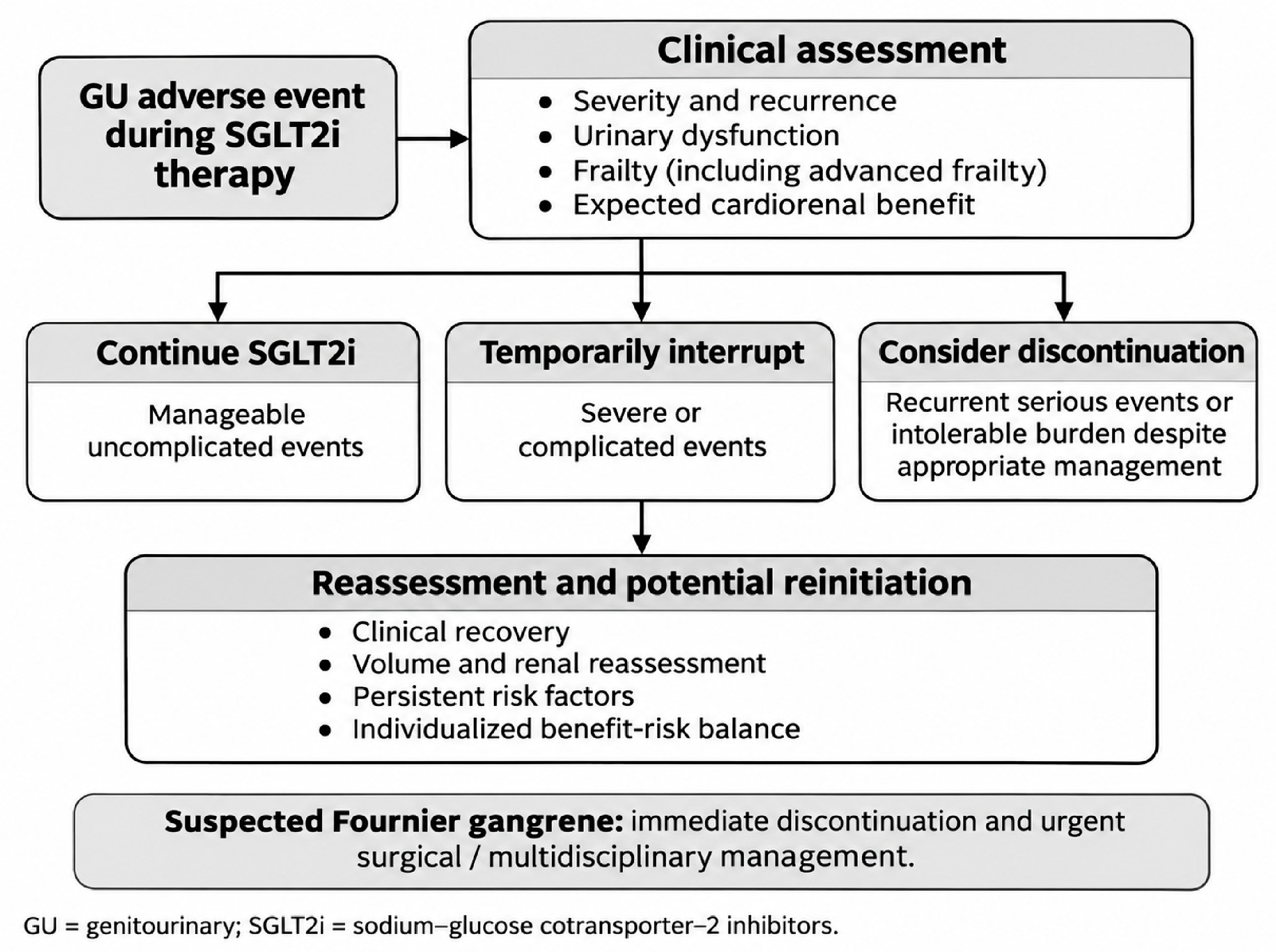
A practical care pathway should combine baseline risk assessment, written education, rapid access to clinical advice, symptom-driven microbiological testing, and an individualized plan for treatment interruption and reinitiation when clinically indicated. The pathway should include the following elements (Figure 2):
Figure 2.
Proposed clinical pathway for managing genitourinary adverse events during SGLT2 inhibitor therapy in older adults with heart failure.
- Document baseline LUTS, continence, previous GU events, functional status, and caregiver support;
- Differentiate genital, urinary, and systemic symptoms, using microbiological testing only when clinically indicated;
- Avoid routine urine testing and antimicrobial treatment in asymptomatic patients;
- Reassess volume status, renal function, glycaemic control, and concomitant diuretics;
- Document the decision to continue, temporarily interrupt, or permanently discontinue SGLT2i therapy;
- After temporary interruption, reconcile medications and define the criteria and responsibility for reinitiation.
This pathway aims to prevent avoidable SGLT2i discontinuation while ensuring symptom resolution, preserving function, and minimizing unnecessary antimicrobial use in older adults with HF (Table 3).
Table 3.
Practical management of genitourinary adverse events during SGLT2 inhibitor therapy.
9. Evidence Gaps and Research Priorities
9.1. Representation of Older and Frail Adults
Evidence regarding GU safety in older adults with HF remains limited. Major cardiovascular trials included substantial numbers of older patients, but individuals with advanced frailty, severe cognitive impairment, major functional dependence, indwelling catheters, recurrent complicated UTI, or limited life expectancy were underrepresented or insufficiently characterized in published subgroup analyses. Chronological age alone is insufficient to describe this population.
Future studies should prespecify analyses in patients aged ≥75 and ≥80 years and incorporate validated assessments of frailty, cognition, mobility, and continence, together with standardized documentation of polypharmacy and caregiver dependence. Community-dwelling and institutionalized older adults should be evaluated separately because their baseline GU risk, treatment burden, and access to clinical assessment differ substantially.
9.2. Standardization of Genitourinary Outcomes
Available studies use heterogeneous definitions of GU adverse events and may combine GMI, bacterial UTI, urinary symptoms, asymptomatic bacteriuria, and severe infections into broad GU composite endpoints. This approach may obscure clinically important differences in pathophysiology, severity, treatment, and implications for SGLT2i continuation.
Future investigations should use standardized definitions and report distinct GU outcomes separately. Symptomatic UTI should be distinguished from asymptomatic bacteriuria and, whenever feasible, supported by microbiological findings. GMI should be recorded separately according to site, severity, recurrence, and microbiological confirmation. LUTS should be assessed using validated symptom measures and should include nocturia, urgency, incontinence, urinary retention, and their functional consequences.
Studies should also report severe infections separately, including pyelonephritis, urinary sepsis, fungal upper urinary infection, and Fournier gangrene. Associated urinary obstruction should be documented separately. Treatment interruption should be classified as temporary or permanent, with documentation of subsequent reinitiation.
9.3. Non-Antibiotic Prevention
Evidence supporting non-antibiotic prevention during SGLT2i therapy is largely indirect. Most trials have enrolled women with recurrent uncomplicated UTI rather than older adults with HF, CKD, multimorbidity, or concomitant diuretic therapy. Findings from these populations cannot automatically be extrapolated to routine prophylaxis at SGLT2i initiation.
Future randomized trials should evaluate standardized formulations and clearly define the dose, duration, composition, and quality control of each intervention. Multi-ingredient products may benefit from component-specific comparisons or factorial designs to investigate whether benefit is attributable to an individual substance, an interaction between components, or non-pharmacological co-interventions.
Endpoints should include symptomatic culture-confirmed UTI, GMI, antimicrobial exposure, adverse effects, treatment burden, emergency care, SGLT2i interruption, and reinitiation after temporary interruption. Adherence to prophylaxis should be assessed objectively whenever possible. Studies should also evaluate whether the intervention remains feasible in patients with dysphagia, cognitive impairment, polypharmacy, fluid restriction, or dependence on caregivers.
9.4. Functional and Patient-Centred Outcomes
Traditional safety analyses may underestimate the geriatric consequences of GU symptoms. Nocturia, urgency, urinary leakage, genital discomfort, and fear of recurrence can affect sleep, mobility, falls, social participation, dignity, caregiver workload, and adherence even when they do not result in hospitalization.
Future studies should include patient-reported symptom burden, quality of life, continence, falls, sleep disruption, functional decline, caregiver burden, and treatment satisfaction. These outcomes may identify clinically meaningful differences that are not captured by infection rates alone.
9.5. Treatment Persistence and Implementation
Treatment persistence should be considered a core outcome rather than an incidental safety measure. In a Danish population-based matched cohort of SGLT2i users with T2DM, treatment discontinuation was more frequent after UTI than among matched patients without UTI (21.9% vs. 14.3% at the first expected refill) [39]. Although not specific to older adults with HF, these observational findings highlight the relevance of GU events to treatment persistence. Studies should report the reason for interruption, duration of withdrawal, proportion of patients who restart treatment, time to reinitiation, and clinical outcomes associated with permanent discontinuation.
Pragmatic trials should test whether structured counselling, caregiver education, rapid-access assessment, symptom-driven culture, medication reconciliation, and structured reassessment and reinitiation pathways reduce unnecessary antimicrobial treatment and permanent SGLT2i withdrawal. Comparative studies should assess the effectiveness and feasibility of these interventions relative to usual care.
Risk-prediction tools also require development and external validation. A clinically useful model could evaluate candidate predictors including previous GU events, sex, glycaemic control, renal function, urinary obstruction, continence, frailty, mobility, cognition, diuretic exposure, and caregiver support. The objective should be to identify patients who may benefit from more intensive prevention and follow-up without denying effective HF therapy to older adults solely because of age or perceived vulnerability.
10. Conclusions
SGLT2i provide substantial cardiorenal benefit across the spectrum of HF, including in older and frail adults. GU adverse events should not be treated as a single form of drug intolerance. GMI is a consistently observed and usually manageable class-related adverse event, whereas evidence regarding bacterial UTI risk remains mixed, with a modest increase reported in a recent meta-analysis of older adults with HF. A consistent increase in severe UTI or urosepsis has not been established. LUTS may have particular relevance in older adults because even modest changes in urinary frequency or nocturia can affect continence, sleep, mobility, falls, independence, and caregiver burden.
A geriatric approach should integrate previous GU events, frailty, cognition, mobility, continence, bladder emptying, renal function, glycaemic control, volume status, concomitant diuretic therapy, and caregiver support. Prevention should be based on education, appropriate genital hygiene, individualized fluid and diuretic management, symptom-driven microbiological testing, and avoidance of unnecessary antimicrobial treatment. Non-antibiotic prophylaxis may be considered in selected patients with documented recurrent symptomatic UTI, but current evidence is largely indirect and does not support its universal use at SGLT2i initiation.
Most mild or moderate uncomplicated GMI, uncomplicated lower UTI, and manageable LUTS can be treated without interrupting therapy. Temporary withdrawal should be considered in the setting of severe or complicated infection, haemodynamic instability, clinically relevant volume depletion, or inability to maintain oral intake, with a documented plan for timely reinitiation. Permanent discontinuation should remain exceptional and follow assessment of reversible causes and the individual cardiorenal trade-off.
The principal clinical objective is not simply to prevent GU symptoms, but to preserve function, avoid diagnostic and antimicrobial overtreatment, and maintain appropriate SGLT2i exposure. In older adults with HF, treatment persistence should be considered an integral component of both safety and therapeutic effectiveness.
Author Contributions
Conceptualization, F.C. and I.C.; methodology, F.C. and F.L.R.; investigation and literature search, F.C., I.C., R.N., F.L.R. and O.C.; writing—original draft preparation, F.C.; writing—review and editing, F.C., I.C., R.N., F.L.R., O.C. and C.M.; visualization, R.N. and O.C.; supervision, C.M.; project administration, F.C. All authors have read and agreed to the published version of the manuscript.
Funding
This research received no external funding.
Institutional Review Board Statement
Not applicable, as this narrative review did not involve human participants or animals.
Informed Consent Statement
Not applicable.
Data Availability Statement
No new datasets were generated for this narrative review. The evidence discussed in this manuscript is derived from previously published studies and publicly available sources cited in the reference list.
Acknowledgments
During the preparation of this manuscript, the authors used ChatGPT (OpenAI; GPT-6) for the purposes of language editing and structural refinement. The authors have reviewed and edited the output and take full responsibility for the content of this publication.
Conflicts of Interest
F.C. reports receiving speaker honoraria from Boehringer Ingelheim and Novo Nordisk and advisory fees from Novo Nordisk, all unrelated to the submitted manuscript. The remaining authors declare no conflicts of interest.:
Abbreviations
| aHR | adjusted hazard ratio |
| CI | confidence interval |
| CKD | chronic kidney disease |
| DPP-4i | dipeptidyl peptidase-4 inhibitors |
| eGFR | estimated glomerular filtration rate |
| GLP-1 | glucagon-like peptide-1 |
| GMI | genital mycotic infection |
| GU | genitourinary |
| HF | heart failure |
| HFpEF | heart failure with preserved ejection fraction |
| HR | hazard ratio |
| LUTS | lower urinary tract symptoms |
| NAC | N-acetylcysteine |
| OR | odds ratio |
| RCT | randomized controlled trial |
| RR | risk ratio |
| SGLT2i | sodium–glucose cotransporter-2 inhibitors |
| T2DM | type 2 diabetes mellitus |
| UTI | urinary tract infection |
References
- McMurray, J.J.V.; Solomon, S.D.; Inzucchi, S.E.; Køber, L.; Kosiborod, M.N.; Martinez, F.A.; Ponikowski, P.; Sabatine, M.S.; Anand, I.S.; Bělohlávek, J.; et al. Dapagliflozin in Patients with Heart Failure and Reduced Ejection Fraction. N. Engl. J. Med. 2019, 381, 1995–2008. [Google Scholar] [CrossRef] [Scilit] [PubMed]
- Packer, M.; Anker, S.D.; Butler, J.; Filippatos, G.; Pocock, S.J.; Carson, P.; Januzzi, J.; Verma, S.; Tsutsui, H.; Brueckmann, M.; et al. Cardiovascular and Renal Outcomes with Empagliflozin in Heart Failure. N. Engl. J. Med. 2020, 383, 1413–1424. [Google Scholar] [CrossRef] [Scilit] [PubMed]
- Anker, S.D.; Butler, J.; Filippatos, G.; Ferreira, J.P.; Bocchi, E.; Böhm, M.; Brunner-La Rocca, H.P.; Choi, D.J.; Chopra, V.; Chuquiure-Valenzuela, E.; et al. Empagliflozin in Heart Failure with a Preserved Ejection Fraction. N. Engl. J. Med. 2021, 385, 1451–1461. [Google Scholar] [CrossRef] [Scilit] [PubMed]
- Solomon, S.D.; McMurray, J.J.V.; Claggett, B.; de Boer, R.A.; DeMets, D.; Hernandez, A.F.; Inzucchi, S.E.; Kosiborod, M.N.; Lam, C.S.P.; Martinez, F.; et al. Dapagliflozin in Heart Failure with Mildly Reduced or Preserved Ejection Fraction. N. Engl. J. Med. 2022, 387, 1089–1098. [Google Scholar] [CrossRef] [Scilit] [PubMed]
- Heidenreich, P.A.; Bozkurt, B.; Aguilar, D.; Allen, L.A.; Byun, J.J.; Colvin, M.M.; Deswal, A.; Drazner, M.H.; Dunlay, S.M.; Evers, L.R.; et al. 2022 AHA/ACC/HFSA Guideline for the Management of Heart Failure: A Report of the American College of Cardiology/American Heart Association Joint Committee on Clinical Practice Guidelines. Circulation 2022, 145, e895–e1032. [Google Scholar] [CrossRef] [Scilit] [PubMed]
- Martinez, F.A.; Serenelli, M.; Nicolau, J.C.; Petrie, M.C.; Chiang, C.E.; Tereshchenko, S.; Solomon, S.D.; Inzucchi, S.E.; Køber, L.; Kosiborod, M.N.; et al. Efficacy and Safety of Dapagliflozin in Heart Failure with Reduced Ejection Fraction According to Age: Insights from DAPA-HF. Circulation 2020, 141, 100–111. [Google Scholar] [CrossRef] [Scilit] [PubMed]
- Böhm, M.; Butler, J.; Filippatos, G.; Ferreira, J.P.; Pocock, S.J.; Abdin, A.; Mahfoud, F.; Brueckmann, M.; Gollop, N.D.; Iwata, T.; et al. Empagliflozin Improves Outcomes in Patients with Heart Failure and Preserved Ejection Fraction Irrespective of Age. J. Am. Coll. Cardiol. 2022, 80, 1–18. [Google Scholar] [CrossRef] [Scilit] [PubMed]
- Butt, J.H.; Jhund, P.S.; Belohlávek, J.; de Boer, R.A.; Chiang, C.E.; Desai, A.S.; Drożdż, J.; Hernandez, A.F.; Inzucchi, S.E.; Katova, T.; et al. Efficacy and Safety of Dapagliflozin According to Frailty in Patients with Heart Failure: A Prespecified Analysis of the DELIVER Trial. Circulation 2022, 146, 1210–1224. [Google Scholar] [CrossRef] [Scilit] [PubMed]
- Lega, I.C.; Bronskill, S.E.; Campitelli, M.A.; Guan, J.; Stall, N.M.; Lam, K.; McCarthy, L.M.; Gruneir, A.; Rochon, P.A. Sodium Glucose Cotransporter 2 Inhibitors and Risk of Genital Mycotic and Urinary Tract Infection: A Population-Based Study of Older Women and Men with Diabetes. Diabetes Obes. Metab. 2019, 21, 2394–2404. [Google Scholar] [CrossRef] [Scilit] [PubMed]
- Gorgojo-Martínez, J.J.; Górriz, J.L.; Cebrián-Cuenca, A.; Castro Conde, A.; Velasco Arribas, M. Clinical Recommendations for Managing Genitourinary Adverse Effects in Patients Treated with SGLT-2 Inhibitors: A Multidisciplinary Expert Consensus. J. Clin. Med. 2024, 13, 6509. [Google Scholar] [CrossRef] [Scilit] [PubMed]
- Kittipibul, V.; Cox, Z.L.; Chesdachai, S.; Fiuzat, M.; Lindenfeld, J.; Mentz, R.J. Genitourinary Tract Infections in Patients Taking SGLT2 Inhibitors: JACC Review Topic of the Week. J. Am. Coll. Cardiol. 2024, 83, 1568–1578. [Google Scholar] [CrossRef] [Scilit] [PubMed]
- Nicolle, L.E.; Gupta, K.; Bradley, S.F.; Colgan, R.; DeMuri, G.P.; Drekonja, D.; Eckert, L.O.; Geerlings, S.E.; Köves, B.; Hooton, T.M.; et al. Clinical Practice Guideline for the Management of Asymptomatic Bacteriuria: 2019 Update by the Infectious Diseases Society of America. Clin. Infect. Dis. 2019, 68, e83–e110. [Google Scholar] [CrossRef] [Scilit] [PubMed]
- Packer, M.; Butler, J.; Zeller, C.; Pocock, S.J.; Brueckmann, M.; Ferreira, J.P.; Filippatos, G.; Usman, M.S.; Zannad, F.; Anker, S.D. Blinded Withdrawal of Long-Term Randomized Treatment with Empagliflozin or Placebo in Patients with Heart Failure. Circulation 2023, 148, 1011–1022. [Google Scholar] [CrossRef] [Scilit] [PubMed]
- Vallon, V. State-of-the-Art-Review: Mechanisms of Action of SGLT2 Inhibitors and Clinical Implications. Am. J. Hypertens. 2024, 37, 841–852. [Google Scholar] [CrossRef] [Scilit] [PubMed]
- Krepostman, N.; Kramer, H. Lower Urinary Tract Symptoms Should Be Queried When Initiating Sodium Glucose Co-Transporter 2 Inhibitors. Kidney360 2021, 2, 751–754. [Google Scholar] [CrossRef] [Scilit] [PubMed]
- Puckrin, R.; Saltiel, M.P.; Reynier, P.; Azoulay, L.; Yu, O.H.Y.; Filion, K.B. SGLT-2 Inhibitors and the Risk of Infections: A Systematic Review and Meta-Analysis of Randomized Controlled Trials. Acta Diabetol. 2018, 55, 503–514. [Google Scholar] [CrossRef] [Scilit] [PubMed]
- Dave, C.V.; Schneeweiss, S.; Patorno, E. Comparative Risk of Genital Infections Associated with Sodium-Glucose Co-Transporter-2 Inhibitors. Diabetes Obes. Metab. 2019, 21, 434–438. [Google Scholar] [CrossRef] [Scilit] [PubMed]
- Dave, C.V.; Schneeweiss, S.; Kim, D.; Fralick, M.; Tong, A.; Patorno, E. Sodium-Glucose Cotransporter-2 Inhibitors and the Risk for Severe Urinary Tract Infections: A Population-Based Cohort Study. Ann. Intern. Med. 2019, 171, 248–256. [Google Scholar] [CrossRef] [Scilit] [PubMed]
- Riaz, M.; Guo, J.; Smith, S.M.; Dietrich, E.A.; Winchester, D.E.; Park, H. Comparative Genitourinary Safety of In-Class Sodium-Glucose Cotransporter-2 Inhibitors among Patients with Heart Failure with Preserved Ejection Fraction: A Cohort Study. Am. J. Cardiovasc. Drugs 2024, 24, 455–464. [Google Scholar] [CrossRef] [Scilit] [PubMed]
- Khalid, A.; Balach, R.; Rasool, A.; Daniyal, S.M.; Nizami, M.T.; Gul, I.; Naqvi, A.; Fonarow, G.C.; Waqas, S.A. Clinical Outcomes and Safety of SGLT2 Inhibitors in the Older Population with Heart Failure: A Systematic Review and Meta-Analysis. Arch. Gerontol. Geriatr. 2026, 143, 106138. [Google Scholar] [CrossRef] [Scilit] [PubMed]
- Wu, M.Z.; Guo, R.; Chandramouli, C.; Liu, L.; Tung, A.M.O.; Tsang, C.T.W.; Tse, Y.K.; Chan, Y.H.; Lee, C.H.; Huang, J.Y.; et al. Urinary Tract Infection and Continuation of Sodium-Glucose Cotransporter-2 Inhibitors in Diabetic Patients. Eur. Heart J. 2025, ehaf788. [Google Scholar] [CrossRef] [Scilit] [PubMed]
- Li, C.X.; Liu, L.Y.; Zhang, C.X.; Geng, X.H.; Gu, S.M.; Wang, Y.Q.; Liu, H.; Xie, Q.; Liang, S. Comparative Safety of Different Sodium-Glucose Transporter 2 Inhibitors in Patients with Type 2 Diabetes: A Systematic Review and Network Meta-Analysis of Randomized Controlled Trials. Front. Endocrinol. 2023, 14, 1238399. [Google Scholar] [CrossRef] [Scilit] [PubMed]
- Fisher, A.; Fralick, M.; Filion, K.B.; Dell’Aniello, S.; Douros, A.; Tremblay, É.; Shah, B.R.; Ronksley, P.E.; Alessi-Severini, S.; Hu, N.; et al. Sodium-Glucose Co-Transporter-2 Inhibitors and the Risk of Urosepsis: A Multi-Site, Prevalent New-User Cohort Study. Diabetes Obes. Metab. 2020, 22, 1648–1658. [Google Scholar] [CrossRef] [Scilit] [PubMed]
- Tanaka, H.; Takano, K.; Iijima, H.; Kubo, H.; Maruyama, N.; Hashimoto, T.; Arakawa, K.; Togo, M.; Inagaki, N.; Kaku, K. Factors Affecting Canagliflozin-Induced Transient Urine Volume Increase in Patients with Type 2 Diabetes Mellitus. Adv. Ther. 2017, 34, 436–451. [Google Scholar] [CrossRef] [Scilit] [PubMed]
- Ferreira, J.P.; Zannad, F.; Butler, J.; Filippatos, G.; Vasques-Nóvoa, F.; Marques, P.; Neves, J.S.; Anker, S.D.; Packer, M. Genitourinary Tract Infections and SGLT2 Inhibitors in Heart Failure: An EMPEROR-Pooled Analysis. Eur. J. Heart Fail. 2026, 28, 448–457. [Google Scholar] [CrossRef] [Scilit] [PubMed]
- Kaufman, M.R.; Ackerman, A.L.; Amin, K.A.; Coffey, M.; Danan, E.; Faubion, S.S.; Hardart, A.; Goldstein, I.; Ippolito, G.M.; Northington, G.M.; et al. The AUA/SUFU/AUGS Guideline on Genitourinary Syndrome of Menopause. J. Urol. 2025, 214, 242–250. [Google Scholar] [CrossRef] [Scilit] [PubMed]
- Benjamin, T.; Schumacher, C. Characterization of Risk Factors for Genitourinary Infections with Sodium-Glucose Cotransporter-2 Inhibitors. Pharmacotherapy 2020, 40, 1002–1011. [Google Scholar] [CrossRef] [Scilit] [PubMed]
- Veronese, N.; Soysal, P.; Stubbs, B.; Marengoni, A.; Demurtas, J.; Maggi, S.; Petrovic, M.; Verdejo-Bravo, C.; Special Interest Group on Urinary Incontinence; Special Interest Group of Systematic Reviews and Meta-Analysis for Healthy Aging, European Geriatric Medicine Society. Association between Urinary Incontinence and Frailty: A Systematic Review and Meta-Analysis. Eur. Geriatr. Med. 2018, 9, 571–578. [Google Scholar] [CrossRef] [Scilit] [PubMed]
- Pesonen, J.S.; Vernooij, R.W.M.; Cartwright, R.; Aoki, Y.; Agarwal, A.; Mangera, A.; Markland, A.D.; Tsui, J.F.; Santti, H.; Griebling, T.L.; et al. The Impact of Nocturia on Falls and Fractures: A Systematic Review and Meta-Analysis. J. Urol. 2020, 203, 674–683. [Google Scholar] [CrossRef] [Scilit] [PubMed]
- Ackerman, A.L.; Bradley, M.; D’Anci, K.E.; Hickling, D.; Kim, S.K.; Kirkby, E. Updates to Recurrent Uncomplicated Urinary Tract Infections in Women: AUA/CUA/SUFU Guideline (2025). J. Urol. 2026, 215, 3–12. [Google Scholar] [CrossRef] [Scilit] [PubMed]
- Engelhardt, K.; Ferguson, M.; Rosselli, J.L. Prevention and Management of Genital Mycotic Infections in the Setting of Sodium-Glucose Cotransporter 2 Inhibitors. Ann. Pharmacother. 2021, 55, 543–548. [Google Scholar] [CrossRef] [Scilit] [PubMed]
- Workowski, K.A.; Bachmann, L.H.; Chan, P.A.; Johnston, C.M.; Muzny, C.A.; Park, I.; Reno, H.; Zenilman, J.M.; Bolan, G.A. Sexually Transmitted Infections Treatment Guidelines, 2021. MMWR Recomm. Rep. 2021, 70, 1–187. [Google Scholar] [CrossRef] [Scilit] [PubMed]
- Nelson, Z.; Aslan, A.T.; Beahm, N.P.; Blyth, M.; Cappiello, M.; Casaus, D.; Dominguez, F.; Egbert, S.; Hanretty, A.; Khadem, T.; et al. Guidelines for the Prevention, Diagnosis, and Management of Urinary Tract Infections in Pediatrics and Adults: A WikiGuidelines Group Consensus Statement. JAMA Netw. Open 2024, 7, e2444495. [Google Scholar] [CrossRef] [Scilit] [PubMed]
- Williams, G.; Stothart, C.I.; Hahn, D.; Stephens, J.H.; Craig, J.C.; Hodson, E.M. Cranberries for Preventing Urinary Tract Infections. Cochrane Database Syst. Rev. 2023, 11, CD001321. [Google Scholar] [CrossRef] [Scilit] [PubMed]
- Hayward, G.; Mort, S.; Hay, A.D.; Moore, M.; Thomas, N.P.B.; Cook, J.; Robinson, J.; Williams, N.; Maeder, N.; Edeson, R.; et al. D-Mannose for Prevention of Recurrent Urinary Tract Infection Among Women: A Randomized Clinical Trial. JAMA Intern. Med. 2024, 184, 619–628. [Google Scholar] [CrossRef] [Scilit] [PubMed]
- Harding, C.; Mossop, H.; Homer, T.; Chadwick, T.; King, W.; Carnell, S.; Lecouturier, J.; Abouhajar, A.; Vale, L.; Watson, G.; et al. Alternative to Prophylactic Antibiotics for the Treatment of Recurrent Urinary Tract Infections in Women: Multicentre, Open Label, Randomised, Non-Inferiority Trial. BMJ 2022, 376, e068229. [Google Scholar] [CrossRef] [Scilit] [PubMed]
- Manoharan, A.; Ognenovska, S.; Paino, D.; Whiteley, G.; Glasbey, T.; Kriel, F.H.; Farrell, J.; Moore, K.H.; Manos, J.; Das, T. N-Acetylcysteine Protects Bladder Epithelial Cells from Bacterial Invasion and Displays Antibiofilm Activity against Urinary Tract Bacterial Pathogens. Antibiotics 2021, 10, 900. [Google Scholar] [CrossRef] [Scilit] [PubMed]
- Crocetto, F.; Balsamo, R.; Amicuzi, U.; De Luca, L.; Falcone, A.; Mirto, B.F.; Giampaglia, G.; Ferretti, G.; Capone, F.; Machiella, F.; et al. Novel Key Ingredients in Urinary Tract Health—The Role of D-Mannose, Chondroitin Sulphate, Hyaluronic Acid, and N-Acetylcysteine in Urinary Tract Infections (Uroial PLUS®). Nutrients 2023, 15, 3573. [Google Scholar] [CrossRef] [Scilit] [PubMed]
- Ljungberg, C.; Nørgaard, M.; Vandenbroucke-Grauls, C.; Dalager-Pedersen, M.; Sørensen, H.T.; Thomsen, R.W. Discontinuation of SGLT2i after a Urogenital Infection: A Population-Based Matched Cohort Study of Patients with Type 2 Diabetes. Diabetes Obes. Metab. 2026, 28, 5740–5750. [Google Scholar] [CrossRef] [Scilit] [PubMed]

Disclaimer/Publisher’s Note: The statements, opinions and data contained in all publications are solely those of the individual author(s) and contributor(s) and not of MDPI and/or the editor(s). MDPI and/or the editor(s) disclaim responsibility for any injury to people or property resulting from any ideas, methods, instructions or products referred to in the content. |
© 2026 by the authors. Published by MDPI on behalf of the Italian Society of Gerontology and Geriatrics. Licensee MDPI, Basel, Switzerland. This article is an open access article distributed under the terms and conditions of the Creative Commons Attribution (CC BY) license.