


Abstract
Influenza infection is increasingly recognized as an important cardiovascular risk factor beyond its traditional role as a respiratory illness. Influenza infection may precipitate myocardial infarction, stroke, heart failure exacerbation, and arrhythmias through systemic inflammation, endothelial dysfunction, thrombosis, and plaque destabilization. Growing evidence suggests that influenza vaccination may reduce cardiovascular events and hospitalization in both primary and secondary prevention settings, particularly among older adults and high-risk cardiovascular populations. Contemporary American and European guidelines increasingly recognize influenza vaccination as part of preventive cardiology and secondary cardiovascular prevention. This narrative review summarizes current evidence regarding influenza vaccination in primary and secondary cardiovascular prevention, with emphasis on mechanistic pathways, clinical outcomes, and future preventive strategies.
1. Introduction
Seasonal influenza causes an estimated 290,000–650,000 respiratory deaths worldwide annually [1]. While influenza is traditionally considered a respiratory illness, growing evidence suggests that a substantial proportion of influenza-associated morbidity and mortality may be attributable to cardiovascular complications, particularly in high-risk and elderly populations [2,3]. Influenza infection may precipitate acute cardiovascular events, including myocardial infarction (MI), stroke, heart failure (HF) exacerbation, and arrhythmias, through mechanisms involving systemic inflammation, endothelial dysfunction, thrombosis, and plaque destabilization [3,4]. These interactions are especially relevant given that cardiovascular disease (CVD) remains the leading cause of death globally, accounting for approximately 20.5 million deaths annually, including more than 3 million deaths each year in Europe alone [5,6]. Consequently, growing attention has focused on influenza vaccination not only as a strategy to prevent respiratory infection, but also as a potential measure to reduce cardiovascular risk in vulnerable populations [3,7].
Recognition of the close relationship between influenza infection and cardiovascular complications has led contemporary American and European cardiovascular guidelines to increasingly recognize influenza vaccination as part of preventive cardiology and secondary cardiovascular prevention [3,7]. Seasonal influenza vaccines may help reduce cardiovascular events and hospitalizations, particularly in older adults and patients with cardiovascular disease [3,8,9]. Both standard-dose and enhanced-dose vaccines have been studied for these potential benefits, including whether enhanced-dose vaccines offer greater cardiovascular protection than standard-dose vaccines [8,9]. This narrative review evaluates current evidence regarding influenza vaccination as a strategy for primary and secondary cardiovascular prevention, with emphasis on mechanistic insights, clinical outcomes, and future directions.
2. Methods
This narrative review was conducted using PubMed/MEDLINE, Embase and Google Scholar to identify studies and guidelines evaluating the relationship between influenza vaccination and cardiovascular outcomes. Search terms included combinations of “influenza vaccination,” “cardiovascular disease,” “atherosclerotic cardiovascular disease,” “myocardial infarction,” “stroke,” “heart failure,” “older adults,” and “high-dose influenza vaccine.” The review focused on studies and guidance relevant to the clinical questions addressed in Section 1, Section 2, Section 3, Section 4, Section 5, Section 6 and Section 7: (1) biological and epidemiological links between influenza and cardiovascular events; (2) primary prevention; (3) secondary prevention, including vaccination after acute coronary syndrome; (4) comparisons of standard-dose and enhanced vaccine formulations; (5) guideline recommendations; (6) implementation and uptake; and (7) evidence gaps and future research. We prioritized randomized clinical trials, prespecified secondary and subgroup analyses, pooled analyses, major observational studies, and contemporary guidelines or consensus statements because these designs and documents provide complementary evidence on efficacy, real-world associations, implementation, and clinical recommendations. Observational studies were interpreted cautiously because of potential healthy-user bias, residual confounding, and differences in healthcare-seeking behavior. The search was conducted according to the authors’ clinical and academic expertise and was not designed as a systematic review.
3. Epidemiological and Biological Mechanisms Linking Influenza Infection and Cardiovascular Events
Population-based studies have demonstrated higher rates of cardiovascular hospitalization and cardiovascular mortality during peak influenza seasons, particularly among older adults and patients with preexisting cardiovascular disease [2,3]. These observations have increased interest in whether prevention of influenza infection through vaccination could reduce cardiovascular events in high-risk populations. Influenza infection may precipitate acute cardiovascular events through several interrelated pathophysiological mechanisms involving systemic inflammation, endothelial dysfunction, thrombosis, sympathetic activation, and hemodynamic stress [3,10]. Viral infection induces a marked inflammatory response characterized by increased circulating cytokines, including interleukin-6, tumor necrosis factor-α, and C-reactive protein, which may contribute to destabilization of vulnerable atherosclerotic plaques and trigger plaque rupture [3,10]. Influenza infection also promotes a prothrombotic state through increased platelet activation, enhanced coagulation activity, and impaired fibrinolysis, potentially increasing the risk of coronary thrombosis and ischemic stroke [3,4]. In addition, tachycardia, hypoxemia, and increased metabolic demand during acute infection may result in myocardial oxygen supply–demand mismatch and precipitate ischemia in patients with underlying coronary artery disease [10].
Respiratory viral infections may further exacerbate heart failure through systemic inflammation, pulmonary injury, increased pulmonary vascular permeability leading to pulmonary edema, and increased cardiac workload, thereby promoting decompensation in susceptible patients. Influenza-associated myocarditis and arrhythmogenic effects have also been reported, likely related to inflammatory myocardial injury and autonomic imbalance [3]. Influenza vaccination may attenuate these mechanisms by preventing infection-triggered inflammatory and thrombotic cascades, thereby potentially reducing plaque destabilization, cardiovascular hospitalization, and recurrent cardiovascular events in susceptible individuals [3,7].
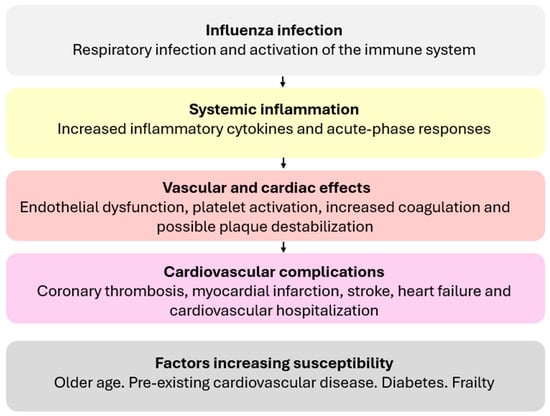
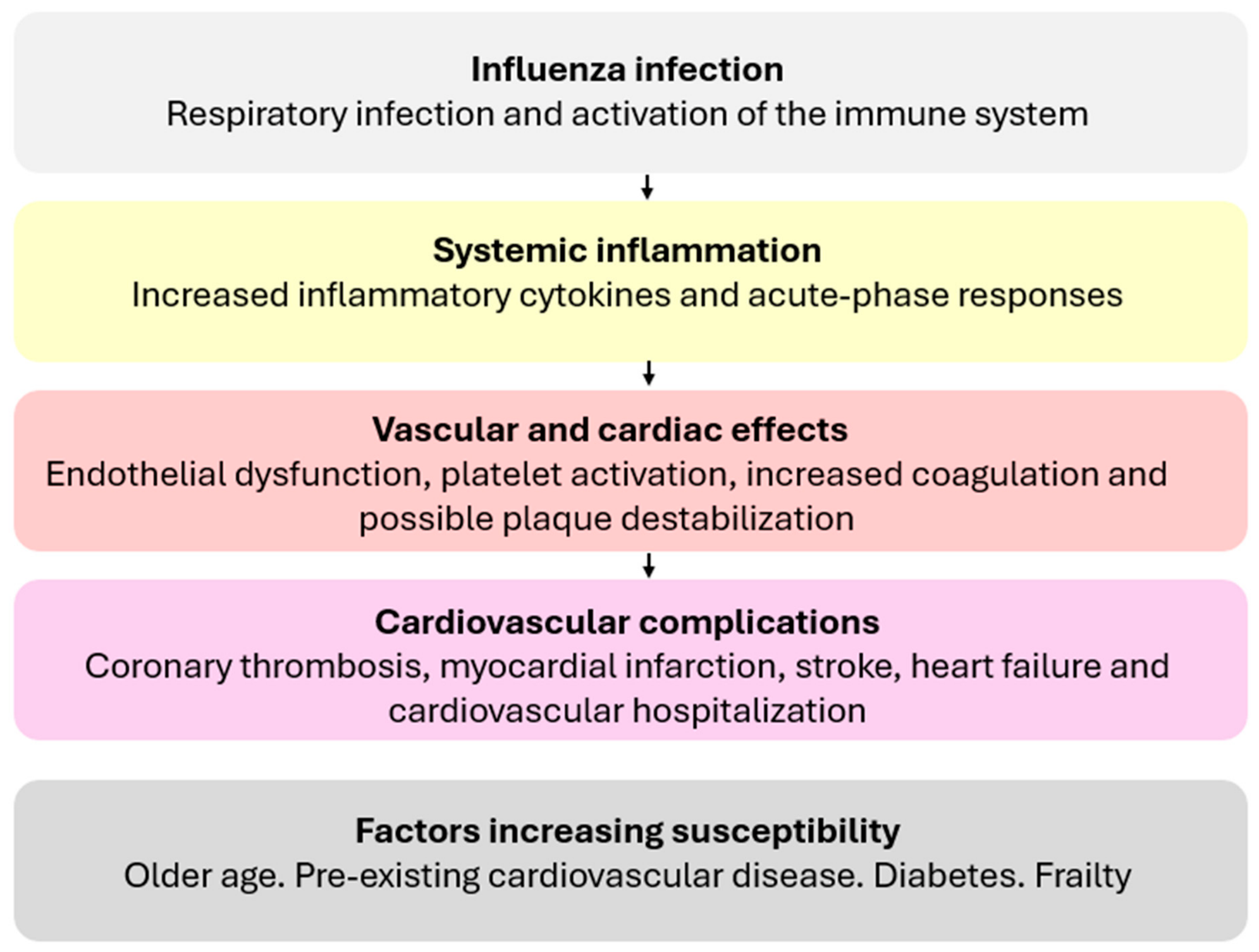
Influenza vaccines can cause mild, temporary inflammation, such as pain, redness, or swelling at the injection site. Fever and myalgia may also occur and generally resolve within a few days [11]. These short-lived reactions differ from the systemic inflammatory response associated with influenza infection. Serious cardiac complications following vaccination are rare, and current evidence does not suggest an overall increase in cardiovascular risk after influenza vaccination [12]. The proposed pathways linking influenza infection to cardiovascular complications, together with factors that may increase susceptibility, are summarized in Figure 1.
Figure 1.
Proposed mechanisms linking influenza infection to cardiovascular complications. Influenza infection activates the immune system and triggers systemic inflammation, which may contribute to endothelial dysfunction, platelet activation, increased coagulation, and atherosclerotic plaque destabilization. These processes may increase the risk of cardiovascular complications, including myocardial infarction, stroke, heart failure, and cardiovascular hospitalization. Older age, pre-existing cardiovascular disease, diabetes, and frailty may increase susceptibility to these complications. The pathways shown represent proposed mechanisms and should not be interpreted as establishing causality in every patient.
4. Influenza Vaccination for Primary Prevention of Cardiovascular Disease
Emerging evidence suggests that influenza vaccination may contribute to a reduction in incident cardiovascular events even among individuals without established atherosclerotic cardiovascular disease (ASCVD), supporting a potential role in primary cardiovascular prevention [3,13]. These protective effects are thought to result partly from attenuating systemic inflammation and infection-triggered endothelial dysfunction, mechanisms that may reduce progression of atherosclerosis and lower the risk of first cardiovascular events in susceptible individuals [3]. Consistent with these observations, population-based studies have demonstrated lower rates of cardiovascular hospitalization and all-cause mortality among vaccinated adults compared with unvaccinated populations, even in the absence of known cardiovascular disease [3,13]. More recent randomized evidence has strengthened this concept. In a prespecified secondary analysis of the DANFLU-2 randomized clinical trial, high-dose influenza vaccination reduced cardiovascular and cardiorespiratory hospitalization among older adults, supporting the role of influenza prevention in reducing downstream cardiovascular complications [8].
In parallel, the nationwide NUDGE-FLU implementation trials demonstrated that increasing influenza vaccination uptake through simple electronic behavioral interventions was associated with improvements in clinical outcomes, including reductions in heart failure and cardiorespiratory events among high-risk populations, further supporting influenza vaccination as a scalable population-level cardiovascular prevention strategy [14,15,16].
Collectively, these findings suggest that influenza vaccination may represent a scalable and low-cost preventive strategy that could complement traditional cardiovascular risk reduction measures in aging populations (Table 1) [3,7].
Table 1.
Influenza vaccination in primary and secondary cardiovascular prevention.
5. Influenza Vaccination for Secondary Prevention of Cardiovascular Disease
Patients with baseline CVD are especially vulnerable to influenza-related complications because viral infection promotes systemic inflammation, plaque destabilization, thrombosis, and increased myocardial oxygen demand [3]. This heightened inflammatory and prothrombotic state may precipitate recurrent cardiovascular events, heart failure decompensation, and cardiovascular hospitalization in high-risk patients [3]. Accordingly, growing evidence supports influenza vaccination as an important component of secondary cardiovascular prevention (Table 1).
The DANFLU-2 trial and the FLUNITY-HD pooled analysis demonstrated that high-dose influenza vaccination reduced cardiovascular and cardiorespiratory hospitalization among older adults compared with standard-dose vaccination, supporting the role of enhanced influenza vaccination in reducing cardiovascular complications in high-risk populations [8,9]. Consistent with these findings, prespecified subgroup analyses demonstrated low numbers needed to vaccinate across multiple high-risk cardiovascular subgroups, including patients with ASCVD, heart failure, atrial fibrillation, diabetes mellitus, and chronic kidney disease, reflecting the greater absolute benefit achieved in these vulnerable populations [9,17,19,20,21]. The IAMI trial further strengthened evidence for influenza vaccination in secondary prevention by demonstrating reductions in major adverse cardiovascular events and cardiovascular mortality among patients vaccinated shortly after myocardial infarction [18].
In parallel, the nationwide NUDGE-FLU implementation trials demonstrated that increasing influenza vaccination uptake through simple electronic reminders was associated with improved clinical outcomes, including reductions in heart failure and cardiorespiratory events among high-risk populations, highlighting the potential of vaccination programs to improve cardiovascular outcomes at the population level [14,15,16]. Together, these findings support incorporation of influenza vaccination into comprehensive cardiovascular prevention pathways, including post-myocardial infarction care, heart failure clinics, and outpatient cardiology practice (Table 2) [3,7].
Table 2.
Summary of key studies evaluating influenza vaccination and cardiovascular outcomes.
Respiratory viral infections frequently trigger HF decompensation through inflammatory activation and increased metabolic demand [3]. Contemporary studies demonstrated significant reductions in HF hospitalization among vaccinated patients, suggesting that influenza vaccination may serve as an important adjunctive therapy within comprehensive HF management and secondary prevention pathways [8,9].
Frailty and immunosenescence complicate vaccine decisions in older adults with established CVD. Age-related changes in innate and adaptive immunity may attenuate immune responses to vaccination, while frailty and multimorbidity increase vulnerability to influenza-related complications and adverse cardiovascular outcomes [22,23]. Enhanced vaccine formulations are designed to improve immunogenicity in older adults; however, higher antibody titers do not necessarily translate into proportionally greater reductions in cardiovascular events [24,25].
6. Guideline Evolution of Influenza Vaccination in Cardiovascular Disease Prevention
Historically, influenza vaccination recommendations were primarily framed within infectious disease prevention strategies, with emphasis on reducing influenza-related respiratory complications, hospitalization, and mortality among older adults and immunocompromised individuals. Early recommendations from the Centers for Disease Control and Prevention (CDC) and World Health Organization (WHO) during the 1990s and early 2000s identified adults aged ≥65 years and patients with chronic diseases, including CVD, as priority groups mainly because of their increased risk of severe influenza infection and secondary complications rather than direct cardiovascular protection [26].
During the 2000s and early 2010s, accumulating epidemiological evidence linking influenza infection with acute myocardial infarction, heart failure decompensation, and stroke gradually shifted the perception of influenza vaccination beyond respiratory disease prevention [10]. Early observational studies reported associations between influenza vaccination and reduced cardiovascular hospitalization among older adults [27]. In 2006, the American Heart Association (AHA) and American College of Cardiology (ACC) explicitly recommended annual influenza vaccination as part of secondary prevention in patients with coronary and other atherosclerotic vascular disease [28]. This recommendation was reaffirmed in the 2011 AHA/ACC secondary prevention guideline [29]. Subsequent observational research reported an association between influenza vaccination and lower cardiovascular mortality among adults with diabetes [13]. In 2021, the randomized IAMI trial provided further evidence of potential cardiovascular benefit, demonstrating a reduction in the composite of all-cause death, myocardial infarction, or stent thrombosis among patients vaccinated shortly after myocardial infarction [18]. The 2021 European Society of Cardiology (ESC) guidelines also recommended influenza vaccination for patients with established cardiovascular disease as part of preventive care [30]. Together, these developments reflect the growing recognition of influenza vaccination as a component of cardiovascular prevention.
The conceptual transition accelerated further following publication of contemporary randomized trials and meta-analyses demonstrating reductions in cardiovascular mortality and hospitalization among high-risk patients [18]. Consequently, recent guidelines have adopted a more proactive cardiovascular prevention perspective. The 2025 American College of Cardiology (ACC) Expert Decision Pathway explicitly recognized influenza vaccination as part of comprehensive cardiovascular preventive care and encouraged implementation within cardiology clinics and secondary prevention programs [7]. Similarly, the 2025 European Society of Cardiology (ESC) Clinical Consensus Statement described vaccination as a “new form of cardiovascular prevention,” positioning influenza vaccination alongside established preventive interventions such as lipid lowering therapy, blood pressure control, smoking cessation, and diabetes management [3].
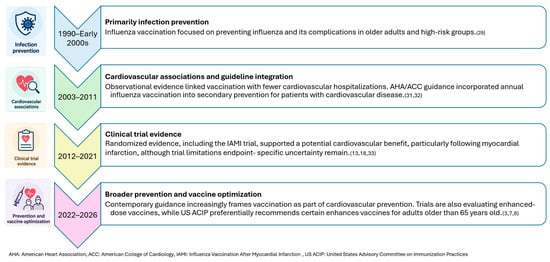
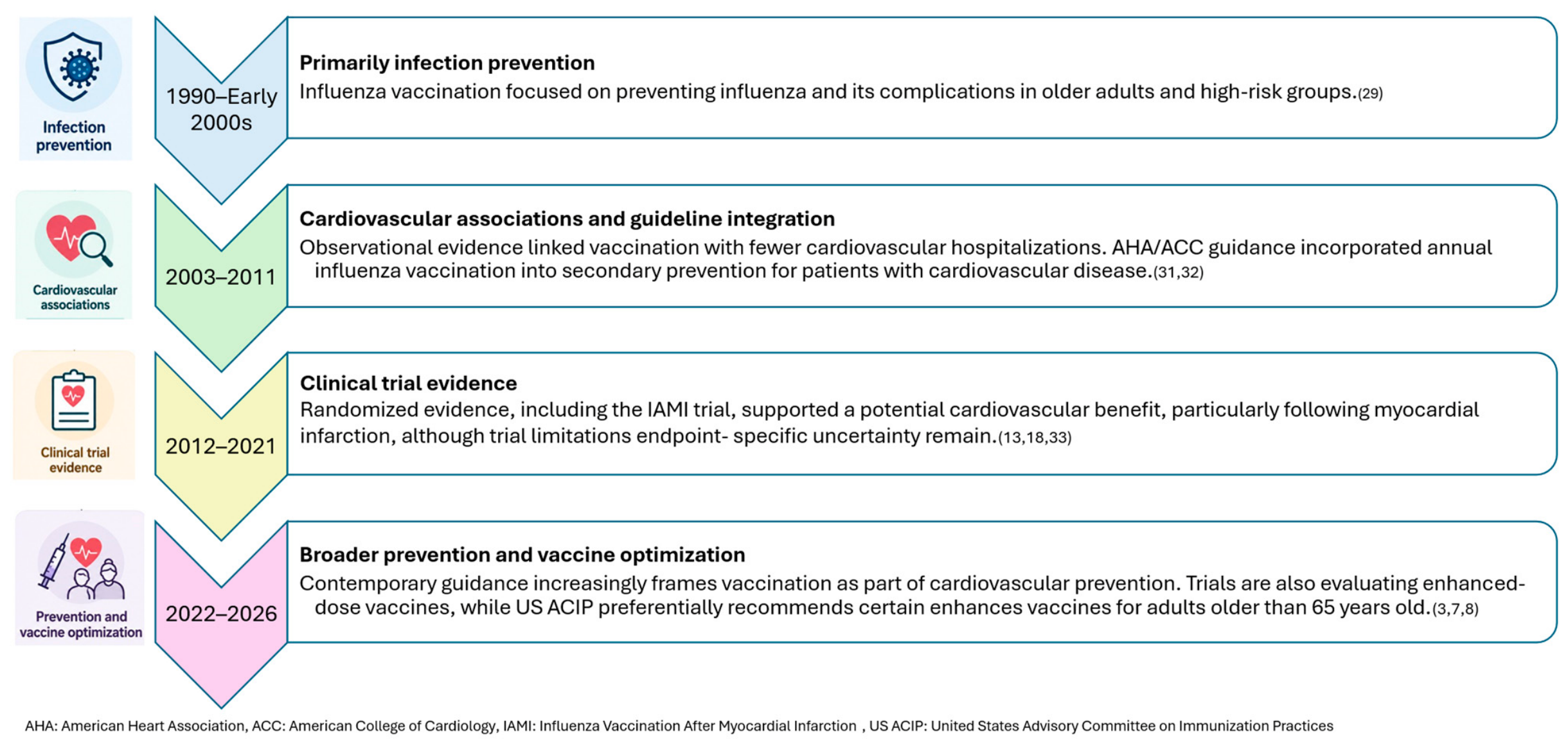
In parallel, guideline recommendations regarding vaccine formulation have also evolved. Earlier guidelines generally recommended any age-appropriate influenza vaccine without preference among formulations. High-dose influenza vaccines contain four times the amount of haemagglutinin antigen per strain compared with standard-dose vaccines (60 µg vs. 15 µg). In adults aged 65 years and older, high-dose vaccines have been shown to produce higher antibody titers than standard-dose vaccines. In a randomized trial involving 31,989 older adults, antibody titers and seroprotection rates were significantly higher with high-dose vaccination. However, stronger antibody responses do not necessarily translate into proportionally greater protection against cardiovascular events [24,31]. However, following studies demonstrating improved immunogenicity and potential cardiovascular and cardiorespiratory benefits with enhanced formulations in older adults, more recent recommendations increasingly favor high-dose or adjuvanted influenza vaccines for adults aged ≥65 years and other high-risk populations [8,9]. The Centers for Disease Control and Prevention’s (CDC) 2022–2023 and subsequent 2024–2025 recommendations strengthened this preferential recommendation, reflecting a shift from universal vaccination alone toward optimization of vaccine efficacy in vulnerable cardiovascular populations (Figure 2) [32].
Figure 2.
Evolution of influenza vaccination in cardiovascular prevention. The timeline illustrates the progression from a primary focus on preventing influenza and its complications in older adults and high-risk populations to recognition of cardiovascular associations, integration of influenza vaccination into cardiovascular prevention guidelines, and evaluation of its potential cardiovascular benefits in clinical trials. More recent developments include broader recognition of vaccination as a component of cardiovascular prevention and the evaluation of enhanced-dose influenza vaccines in older adults. The cited evidence reflects evolving recommendations and research; the magnitude of cardiovascular benefit and the comparative effectiveness of vaccine formulations vary by population and clinical outcome.
7. Real-World Implementation and Future Perspectives for Influenza Vaccination in Cardiovascular Prevention
Despite growing evidence and contemporary guideline recommendations, vaccination uptake among patients with cardiovascular disease remains suboptimal in many healthcare systems [3,7]. Barriers include limited awareness of cardiovascular benefits, fragmented implementation between cardiology and primary care services, vaccine hesitancy, and inconsistent incorporation of vaccination into routine cardiovascular care pathways [7].
Contemporary cardiovascular societies increasingly encourage integration of influenza vaccination into preventive cardiology practice. The 2025 ACC Expert Consensus Statement emphasized that vaccination should be considered part of comprehensive cardiovascular preventive care and encouraged implementation within cardiology clinics, cardiac rehabilitation programs, and post–myocardial infarction pathways [7]. Similarly, the 2025 ESC Clinical Consensus Statement described vaccination as an emerging component of cardiovascular prevention and highlighted the role of cardiologists in improving vaccine uptake among high-risk patients [3].
Hospitalization for acute cardiovascular events may provide an important opportunity for vaccination. The IAMI trial demonstrated the feasibility and clinical benefit of administering influenza vaccination early after myocardial infarction, supporting in-hospital vaccination strategies in high-risk patients [18]. Integration of vaccination reminders into electronic health records, multidisciplinary care pathways, heart failure clinics, cardiac rehabilitation programs, and outpatient cardiovascular services may further improve adherence and long-term cardiovascular outcomes [3,7].
Unlike many conventional cardiovascular therapies, influenza vaccination is inexpensive, widely available, and generally administered once annually, with a well-established safety profile [3]. Importantly, the absolute cardiovascular benefit appears greatest among high-risk populations, including older adults, patients with ASCVD, heart failure, diabetes mellitus, chronic kidney disease, and recent acute coronary syndromes [8,9,18,19].
Although influenza vaccination should not be viewed as a replacement for guideline-directed medical therapy, its potential cardiovascular benefit may complement established preventive measures such as lipid-lowering therapy, blood pressure control, smoking cessation, and cardiac rehabilitation. This broader preventive framework has led recent cardiovascular guidelines to increasingly position vaccination alongside traditional cardiovascular risk reduction strategies [3,7].
Future research should focus on the development of personalized influenza vaccination strategies tailored to cardiovascular risk profile, frailty, chronic kidney disease, diabetes mellitus, and heart failure. Older adults with multimorbidity may particularly benefit from individualized vaccine selection and timing strategies rather than uniform age-based approaches alone [3]. Future studies should also evaluate newer vaccine technologies including messenger ribonucleic acid (mRNA) influenza vaccines, universal influenza vaccines, and combination respiratory vaccines targeting influenza, Coronavirus Disease-19 (COVID-19), and respiratory syncytial virus.
As preventive cardiology continues to evolve toward multimodal risk reduction approaches, influenza vaccination may represent a practical and scalable adjunctive intervention capable of reducing cardiovascular morbidity and hospitalization in vulnerable populations [3]. Despite increasing recognition of influenza vaccination as a component of cardiovascular prevention, important uncertainties remain regarding the populations most likely to benefit, the comparative effectiveness of different vaccine formulations, and the optimal strategies for implementation. Table 3 summarizes the current evidence, major knowledge gaps, and priorities for future research.
Table 3.
Evidence gaps and priorities for future research.
8. Controversies and Limitations
Despite growing evidence supporting influenza vaccination as a cardiovascular prevention strategy, several important limitations remain. Contemporary studies exhibit substantial heterogeneity in vaccine formulations, including standard-dose, high-dose, recombinant, and adjuvanted vaccines, making direct comparison between trials difficult [8,9]. Much of the earlier evidence supporting cardiovascular benefit originated from observational studies vulnerable to healthy-user bias and residual confounding, whereas randomized trials sometimes demonstrated more modest effect sizes [3].
Most contemporary trials were conducted in high-income healthcare systems, limiting generalizability to low- and middle-income countries where influenza burden and healthcare access differ substantially [26]. Additionally, several cardiovascular subgroup analyses were exploratory and not primarily powered for hard cardiovascular endpoints such as MI, stroke, or cardiovascular mortality [8,9].
Although seasonal influenza vaccines generally have a favorable safety profile, individual trials may be underpowered to detect very rare adverse events [11,12]. Future research should prioritize adequately powered randomized trials, standardized cardiovascular endpoints and prespecified subgroup analyses. Reporting both relative and absolute treatment effects, alongside continued post-marketing safety surveillance, will be important to clarify which populations derive the greatest benefit and whether particular vaccine formulations offer meaningful additional cardiovascular protection.
9. Conclusions
Influenza vaccination is increasingly recognized as a practical adjunctive strategy for cardiovascular prevention, particularly among older adults and high-risk patients with established cardiovascular disease. Accumulating mechanistic, epidemiologic, and clinical evidence suggests that prevention of influenza infection may reduce cardiovascular hospitalization and adverse cardiovascular events in both primary and secondary prevention settings. Integration of influenza vaccination into routine cardiovascular care pathways may therefore represent a scalable and cost-effective component of contemporary preventive cardiology.
Author Contributions
Drafting of the manuscript: K.N. Critical review of the manuscript for important intellectual content: K.N.; K.H. and T.B.-S. All authors have read and agreed to the published version of the manuscript.
Funding
This research received no external funding.
Data Availability Statement
No new data were generated or analyzed in support of this research.
Acknowledgments
Artificial intelligence–based tools, including Copilot Microsoft 365 and Grammarly GO, were utilized exclusively for language enhancement and stylistic editing. All scientific content was independently reviewed and validated by the authors, who assume full responsibility for the accuracy and integrity of the final manuscript. Figures and graphical abstract were created using BioRender (BioRender.com) and Microsoft PowerPoint. All scientific content, interpretation, and final editing were performed and verified by the authors.
Conflicts of Interest
Dr. Biering-Sørensen reported receiving grants from Sanofi during the conduct of the study and grants from AstraZeneca, Bayer, Boston Scientific, GE Healthcare, GSK, Novartis, Novo Nordisk Pfizer, and Sanofi-Pasteur and personal fees from Amgen, AstraZeneca, Bayer, CSL Seqirus, GE Healthcare, GSK, IQVIA, Novartis, Parexel, and Sanofi outside the submitted work.
References
- Iuliano, A.D.; Roguski, K.M.; Chang, H.H.; Muscatello, D.J.; Palekar, R.; Tempia, S.; Cohen, C.; Gran, J.M.; Schanzer, D.; Cowling, B.J.; et al. Estimates of global seasonal influenza-associated respiratory mortality: A modelling study. Lancet 2018, 391, 1285–1300. [Google Scholar] [CrossRef] [Scilit] [PubMed]
- Chow, E.J.; Rolfes, M.A.; O’Halloran, A.; Anderson, E.J.; Bennett, N.M.; Billing, L.; Chai, S.; Dufort, E.; Herlihy, R.; Kim, S.; et al. Acute Cardiovascular Events Associated With Influenza in Hospitalized Adults. Ann. Intern. Med. 2020, 173, 605–613. [Google Scholar] [CrossRef] [Scilit] [PubMed]
- Heidecker, B.; Libby, P.; Vassiliou, V.S.; Roubille, F.; Vardeny, O.; Hassager, C.; Gatzoulis, M.A.; A Mamas, M.; Cooper, L.T.; Schoenrath, F.; et al. Vaccination as a new form of cardiovascular prevention: A European Society of Cardiology clinical consensus statement. Eur. Heart J. 2025, 46, 3518–3531. [Google Scholar] [CrossRef] [Scilit] [PubMed]
- Kwong, J.C.; Schwartz, K.L.; Campitelli, M.A.; Chung, H.; Crowcroft, N.S.; Karnauchow, T.; Katz, K.; Ko, D.T.; McGeer, A.J.; McNally, D.; et al. Acute Myocardial Infarction after Laboratory-Confirmed Influenza Infection. N. Engl. J. Med. 2018, 378, 345–353. [Google Scholar] [CrossRef] [Scilit] [PubMed]
- Timmis, A.; Aboyans, V.; Vardas, P.; Townsend, N.; Torbica, A.; Kavousi, M.; Boriani, G.; Huculeci, R.; Kazakiewicz, D.; Scherr, D.; et al. European Society of Cardiology: The 2023 Atlas of Cardiovascular Disease Statistics. Eur. Heart J. 2024, 45, 4019–4062. [Google Scholar] [CrossRef] [Scilit] [PubMed]
- World Heart Federation. World Heart Report 2023: Confronting the World’s Number One Killer; World Heart Federation: Geneva, Switzerland, 2023; Available online: https://world-heart-federation.org/wp-content/uploads/World-Heart-Report-2023.pdf (accessed on 21 October 2026).
- Heidenreich, P.A.; Bhatt, A.; Nazir, N.T.; Schaffner, W.; Vardeny, O. 2025 Concise Clinical Guidance: An ACC Expert Consensus Statement on Adult Immunizations as Part of Cardiovascular Care. J. Am. Coll. Cardiol. 2025, 86, 2085–2098. [Google Scholar] [CrossRef] [Scilit] [PubMed]
- Johansen, N.D.; Modin, D.; Loiacono, M.M.; Harris, R.C.; Dufournet, M.; Larsen, C.S.; Larsen, L.; Wiese, L.; Dalager-Pedersen, M.; Claggett, B.L.; et al. High-Dose vs. Standard-Dose Influenza Vaccine and Cardiovascular Outcomes in Older Adults. JAMA Cardiol. 2025, 10, 1186. [Google Scholar] [CrossRef] [Scilit] [PubMed]
- Johansen, N.D.; Modin, D.; Pardo-Seco, J.; Rodriguez-Tenreiro-Sánchez, C.; Loiacono, M.M.; Harris, R.C.; Dufournet, M.; van Aalst, R.; Chit, A.; Larsen, C.S.; et al. High-Dose Versus Standard-Dose Influenza Vaccine and Cardiovascular Outcomes in Older Adults: The FLUNITY-HD Prespecified Pooled Analysis. Circulation 2026, 153, 798–806. [Google Scholar] [CrossRef] [Scilit] [PubMed]
- Warren-Gash, C.; Smeeth, L.; Hayward, A.C. Influenza as a trigger for acute myocardial infarction or death from cardiovascular disease: A systematic review. Lancet Infect. Dis. 2009, 9, 601–610. [Google Scholar] [CrossRef] [Scilit] [PubMed]
- Centers for Disease Control and Prevention. Clinical Guidance for Seasonal Influenza Vaccine Safety. 2026. Available online: https://www.cdc.gov/flu/hcp/vax-summary/vaccine-safety.html (accessed on 21 October 2026).
- Behrouzi, B.; Bhatt, D.L.; Cannon, C.P.; Vardeny, O.; Lee, D.S.; Solomon, S.D.; Udell, J.A. Association of Influenza Vaccination With Cardiovascular Risk. JAMA Netw. Open. 2022, 5, e228873. [Google Scholar] [CrossRef] [Scilit] [PubMed]
- Modin, D.; Claggett, B.; Køber, L.; Schou, M.; Jensen, J.U.S.; Solomon, S.D.; Vardeny, O.; Knop, F.K.; Nielsen, S.D.; Fralick, M.; et al. Influenza Vaccination Is Associated With Reduced Cardiovascular Mortality in Adults With Diabetes: A Nationwide Cohort Study. Diabetes Care 2020, 43, 2226–2233. [Google Scholar] [CrossRef] [Scilit] [PubMed]
- Johansen, N.D.; Vaduganathan, M.; Bhatt, A.S.; Lee, S.G.; Modin, D.; Claggett, B.L.; Dueger, E.L.; Samson, S.; Loiacono, M.M.; Harris, R.C.; et al. Clinical Outcomes With Electronic Nudges to Increase Influenza Vaccination. Ann. Intern. Med. 2024, 177, 476–483. [Google Scholar] [CrossRef] [Scilit] [PubMed]
- Johansen, N.D.; Vaduganathan, M.; Bhatt, A.S.; Modin, D.; Chatur, S.; Claggett, B.L.; Janstrup, K.H.; Larsen, C.S.; Larsen, L.; Wiese, L.; et al. Electronic Nudges to Increase Influenza Vaccination in Patients With Chronic Diseases. JAMA 2024, 332, 1900. [Google Scholar] [CrossRef] [Scilit] [PubMed]
- Johansen, N.D.; Vaduganathan, M.; Bhatt, A.S.; Lee, S.G.; Modin, D.; Claggett, B.L.; Dueger, E.L.; I Samson, S.; Loiacono, M.M.; Køber, L.; et al. Electronic nudges to increase influenza vaccination uptake in Denmark: A nationwide, pragmatic, registry-based, randomised implementation trial. Lancet 2023, 401, 1103–1114. [Google Scholar] [CrossRef] [Scilit] [PubMed]
- Nielsen, A.B.; Johansen, N.D.; Modin, D.; Loiacono, M.M.; Harris, R.C.; Dufournet, M.; Larsen, C.S.; Larsen, L.; Wiese, L.; Dalager-Pedersen, M.; et al. High-Dose vs. Standard-Dose Influenza Vaccine in Older Adults With Diabetes. JAMA Intern. Med. 2026, 186, 311. [Google Scholar] [CrossRef] [Scilit] [PubMed]
- Fröbert, O.; Götberg, M.; Erlinge, D.; Akhtar, Z.; Christiansen, E.H.; MacIntyre, C.R.; Oldroyd, K.G.; Motovska, Z.; Erglis, A.; Moer, R.; et al. Influenza Vaccination After Myocardial Infarction: A Randomized, Double-Blind, Placebo-Controlled, Multicenter Trial. Circulation 2021, 144, 1476–1484. [Google Scholar] [CrossRef] [Scilit] [PubMed]
- Pareek, M.; Johansen, N.D.; Modin, D.; Pardo-Seco, J.; Rodriguez-Tenreiro-Sánchez, C.; Loiacono, M.M.; Harris, R.C.; Dufournet, M.; van Aalst, R.; Chit, A.; et al. High-Dose Influenza Vaccination in Atherosclerotic Cardiovascular Disease. J. Am. Coll. Cardiol. 2026, 87, 1374–1380. [Google Scholar] [CrossRef] [Scilit] [PubMed]
- Espersen, C.; Johansen, N.D.; Modin, D.; Loiacono, M.M.; Harris, R.C.; Dufournet, M.; Larsen, C.S.; Larsen, L.; Wiese, L.; Dalager-Pedersen, M.; et al. High-Dose vs. Standard-Dose Influenza Vaccine in Older Adults With Atrial Fibrillation. J. Am. Coll. Cardiol. 2025, 86, 2651–2655. [Google Scholar] [CrossRef] [Scilit] [PubMed]
- Bartholdy, K.V.; Johansen, N.D.; Modin, D.; Loiacono, M.M.; Harris, R.C.; Dufournet, M.; Larsen, C.S.; Larsen, L.; Wiese, L.; Dalager-Pedersen, M.; et al. High-Dose vs. Standard-Dose Influenza Vaccine in Chronic Kidney Disease. J. Am. Coll. Cardiol. 2025, 86, 2636–2647. [Google Scholar] [CrossRef] [Scilit] [PubMed]
- Ptaschinski, C.; Lukacs, N.W. Early Life Respiratory Syncytial Virus Infection and Asthmatic Responses. Immunol. Allergy Clin. N. Am. 2019, 39, 309–319. [Google Scholar] [CrossRef] [Scilit] [PubMed]
- McElhaney, J.E.; Kuchel, G.A.; Zhou, X.; Swain, S.L.; Haynes, L. T-Cell Immunity to Influenza in Older Adults: A Pathophysiological Framework for Development of More Effective Vaccines. Front. Immunol. 2016, 7, 41. [Google Scholar] [CrossRef] [Scilit] [PubMed]
- DiazGranados, C.A.; Dunning, A.J.; Kimmel, M.; Kirby, D.; Treanor, J.; Collins, A.; Pollak, R.; Christoff, J.; Earl, J.; Landolfi, V.; et al. Efficacy of High-Dose versus Standard-Dose Influenza Vaccine in Older Adults. N. Engl. J. Med. 2014, 371, 635–645. [Google Scholar] [CrossRef] [Scilit] [PubMed]
- Pott, H.; McNeil, S.A.; Andrew, M.K. Influenza vaccine effectiveness according to frailty status in adults aged ≥ 50 years: A systematic review and meta-analysis. BMC Infect. Dis. 2026, 26, 1778. [Google Scholar] [CrossRef] [Scilit] [PubMed]
- WHO. Vaccines against influenza WHO position paper—November 2012. Wkly. Epidemiol. Rec. 2012, 87, 461–476. [Google Scholar] [PubMed]
- Nichol, K.L.; Nordin, J.; Mullooly, J.; Lask, R.; Fillbrandt, K.; Iwane, M. Influenza Vaccination and Reduction in Hospitalizations for Cardiac Disease and Stroke among the Elderly. N. Engl. J. Med. 2003, 348, 1322–1332. [Google Scholar] [CrossRef] [Scilit] [PubMed]
- Smith, S.C.; Allen, J.; Blair, S.N.; Bonow, R.O.; Brass, L.M.; Fonarow, G.C.; Grundy, S.M.; Hiratzka, L.; Jones, D.; Krumholz, H.M.; et al. AHA/ACC Guidelines for Secondary Prevention for Patients With Coronary and Other Atherosclerotic Vascular Disease: 2006 Update. Circulation 2006, 113, 2363–2372. [Google Scholar] [CrossRef] [Scilit] [PubMed]
- Smith, S.C.; Benjamin, E.J.; Bonow, R.O.; Braun, L.T.; Creager, M.A.; Franklin, B.A.; Gibbons, R.J.; Grundy, S.M.; Hiratzka, L.F.; Jones, D.W.; et al. AHA/ACCF Secondary Prevention and Risk Reduction Therapy for Patients With Coronary and Other Atherosclerotic Vascular Disease: 2011 Update. Circulation 2011, 124, 2458–2473. [Google Scholar] [CrossRef] [Scilit] [PubMed]
- Visseren, F.L.J.; Mach, F.; Smulders, Y.M.; Carballo, D.; Koskinas, K.C.; Bäck, M.; Benetos, A.; Biffi, A.; Boavida, J.-M.; Capodanno, D.; et al. 2021 ESC Guidelines on cardiovascular disease prevention in clinical practice. Eur. Heart J. 2021, 42, 3227–3337. [Google Scholar] [CrossRef] [Scilit] [PubMed]
- Ng, T.W.Y.; Cowling, B.J.; Gao, H.Z.; Thompson, M.G. Comparative immunogenicity of enhanced seasonal influenza vaccines in older adults: A systematic review and meta-analysis. J. Infect. Dis. 2018, 219, 1525–1535. [Google Scholar] [CrossRef] [Scilit] [PubMed]
- Grohskopf, L.A.; Blanton, L.H.; Ferdinands, J.M.; Reed, C.; Dugan, V.G.; Daskalakis, D.C. Prevention and Control of Seasonal Influenza with Vaccines: Recommendations of the Advisory Committee on Immunization Practices—United States, 2025–2026 Influenza Season. MMWR Morb. Mortal. Wkly. Rep. 2025, 74, 500–507. [Google Scholar] [CrossRef] [Scilit] [PubMed]

Disclaimer/Publisher’s Note: The statements, opinions and data contained in all publications are solely those of the individual author(s) and contributor(s) and not of MDPI and/or the editor(s). MDPI and/or the editor(s) disclaim responsibility for any injury to people or property resulting from any ideas, methods, instructions or products referred to in the content. |
© 2026 by the authors. Published by MDPI on behalf of the Italian Society of Gerontology and Geriatrics. Licensee MDPI, Basel, Switzerland. This article is an open access article distributed under the terms and conditions of the Creative Commons Attribution (CC BY) license.