


Abstract
This study investigated the prevalence of burnout and the level of work engagement, as well as their associated factors, among care workers (CWs) in Japanese long-term care (LTC) hospitals. This Cross-sectional questionnaire survey was conducted in LTC wards in hospitals across Japan. Participants included nursing managers and one representative CW (licensed and non-licensed CWs) in each LTC ward. Based on the Job Demands–Resources model, we hypothesized that burnout and work engagement levels of CWs in Japanese LTC hospitals are influenced by job demands and job resources such as organizational support. Further, to develop a new support strategy, CWs’ perspectives on care quality in the ward and its effect on burnout and work engagement were examined. Multiple regression analyses were conducted to examine the factors influencing these variables. The mean burnout subscale scores were 2.9 and 1.9 in emotional exhaustion and depersonalization, respectively. Conversely, the average work engagement score was 3.0. Multiple regression analysis revealed that higher burnout subscale scores were associated with higher quantitative workload and a lack of cooperation between nurses and CWs. Higher work engagement scores were linked with the administrators’ understanding of the burden of CWs and CWs’ perception of high-quality care in their wards. Promoting cooperation between nurses and CWs may be associated with a reduced risk of burnout. To improve work engagement among CWs, this may be a potential target for support, in which other clinical professionals and administrators acknowledge their burden and adopt approaches that may strengthen CWs’ perceptions of their contribution to care quality—such as structured reflection through case conferences.
1. Introduction
Aging populations are a global phenomenon. In Japan, the proportion of people aged ≥65 years is expected to increase in the coming years, while the working-age population (15–64 years) has continued to decline [1]. As the population ages, the number of older adults who need medical care and assistance with activities of daily living is increasing, including those who require extensive medical care, such as ventilatory support and total parenteral nutrition after treatment in acute care settings. Consequently, demand for long-term care (LTC) hospitals for older adults continues to grow [2,3], while shortages of care staff have become a major challenge.
LTC hospitals provide LTC for older adults with severe physical and cognitive problems who require highly technical medical care under the national health care insurance system [3]. Despite patients’ increasing medical needs and deteriorating physical condition, the patient-to-nursing ratios in LTC hospitals are regulated by medical law, which has not changed since the 1970s. Current ratios are 20:1 or 25:1 in LTC hospitals and 7:1 or 10:1 in acute care hospitals [4]. These legally prescribed low staffing ratios hinder efforts to maintain high-quality care in LTC hospitals.
Previous studies have reported that staff shortages impact falls, physical restraint use, contractures, pressure ulcers, aggressive behaviors, depression, cognitive decline, pressure sores, incontinence, urinary tract infections, and psychoactive drug use, among other adverse outcomes, and compromise the quality of care provided to older adults [5,6]. Although patient needs have become more complex and diverse, efforts to ensure a sustainable care workforce have not kept pace.
Owing to the limited number of nurses, care workers (CWs) are responsible for direct patient care, including toileting assistance, bathing, dressing, feeding, transfers, and recreation in Japanese LTC hospitals [7]. CWs working in LTC hospitals are regarded as nursing assistants and do not necessarily require national certification (such as ‘kaigo fu-kushi shi’, professionals in geriatric care), and the legally prescribed staffing requirements for CWs are set at insufficiently low levels [3].
CWs mix qualified and unqualified people from different educational backgrounds. Even among qualified CWs, some systematically learned to care for older adults at universities and vocational schools, and some obtained certification after three years of work experience at hospitals and facilities. Moreover, many choose to work in LTC hospitals as a second career, so some have prior experience caring for older people, and others have no experience due to changing jobs from other industries [8]. Despite this, there are fewer training and learning opportunities for CWs in LTC hospitals, and it is difficult to standardize the individuals’ knowledge and skills in caring for older adults.
Such educational and experiential heterogeneity can hinder effective collaboration within this occupational group, and—combined with the overall scarcity of structured training and learning opportunities—may constitute a significant source of stress for CWs. In this context, staff shortages have continued to intensify, and the resulting increase in CWs’ workload can adversely affect their physical and psychological well-being. Therefore, it is important to assess CWs’ mental health and to consider ways to empower them and provide educational opportunities that may help improve care quality in LTC hospitals.
Burnout is defined as a syndrome caused by extreme mental fatigue [9]. The high level of burnout has been shown to cause job dissatisfaction among staff [10], which leads to a shortage of human resources in LTC settings [11,12]. Meanwhile, work engagement, which is defined as a positive, fulfilling, work-related state of mind, is associated with high job satisfaction and intention to stay [13]. Previous research has suggested that the mental health of care staff in nursing homes, including burnout and work engagement, is associated with care quality for older people [14,15]. Therefore, preventing burnout and enhancing work engagement is critical to ensure care quality. However, few studies have focused on CWs in Japanese LTC hospitals; the prevalence of burnout and work engagement levels, as well as effective strategies for improving staff outcomes, remain unclear.
The conceptual structures of burnout and work engagement were explained using the Job Demands–Resources (JD-R) model. This model focuses on the effects of ‘job demands’ and ‘job resources’ on preventing burnout and enhancing work engagement [16]. The model suggests that even in an environment with higher job demands (i.e., workload, role conflict, and stress), providing sufficient job resources can reduce the risk of burnout and foster work engagement [17]. Although workload is one of the most significant antecedents of burnout for staff in the LTC setting [18], the increasing number of older patients with higher medical and care needs makes it difficult to reduce CWs’ workload in Japanese LTC hospitals. Therefore, identifying potential job resource factors is of critical importance to reduce burnout and improve work engagement among CWs.
Organizational support, such as supervisor feedback and support and good relationships with colleagues, is considered an important ‘job resource’ in the JD-R model [19]. Positive self-evaluation, which refers to an individual’s ability to control and influence their environment, is also a significant personal job resource [20]. We, therefore, considered the CWs’ perception of care quality in the ward as a personal resource in the JD-R model when developing a support strategy for CWs.
This study determined the prevalence of burnout and work engagement levels among CWs working in Japanese LTC hospitals. The effect of related factors, including quantitative workload, job demands, job resources, and perspectives on the care quality in the ward, on these variables was also investigated.
In conducting this study, we intentionally relied on data collected 10 years earlier. The 2015 pre-pandemic data retain substantial academic value, as subsequent studies—including those conducted during and after the coronavirus disease pandemic—have consistently reported ongoing workforce shortages and persistent mental health challenges among CWs in LTC settings [21,22]. These post-pandemic findings further underscore the importance of examining the earlier dataset as a foundational source for understanding structural issues that have endured and, in many cases, intensified over time.
Beyond chronic staff shortages, turnover rates remain high, no national support system has been established, and CWs’ working conditions have not substantially improved in Japanese LTC hospitals. We originally collected the data for another research project on support strategies for nurses working in LTC hospitals [23] and used them as supplementary material at the time. Although nurses were the primary target group, we explained to CWs that the research purpose and procedures were the same as those for nurses. Accordingly, we considered that using these existing data would help minimize the burden on CWs, who continue to face significant pressure in the post-pandemic period.
In Japan, ensuring a sustainable care workforce is essential, and supporting CWs has become increasingly important for maintaining high-quality care in LTC hospitals. We believe that these findings warrant reporting.
2. Methods
2.1. Study Design and Participants
This study was a cross-sectional questionnaire survey of CWs working in LTC wards in hospitals across Japan between September and November 2015. Participants included nursing managers and one representative CW (licensed or non-licensed CW) in each LTC ward.
2.2. Procedure
Overall, 2000 hospitals were randomly selected from a hospital database containing all 3767 LTC hospitals across Japan. A letter requesting study participation was mailed to the nursing directors of the selected hospitals, and 268 nursing directors agreed to participate in the study (response rate 13.4%). Self-administered, anonymous questionnaires were distributed to both nursing managers (i.e., LTC ward manager) and one representative CW in each participating LTC ward. We included only one representative CW to reduce their burden and to avoid disrupting routine duties under limited staffing conditions in LTC hospitals. The LTC ward manager distributed the questionnaires to CWs in envelopes. After completing the questionnaires, CWs sealed them in their own envelopes to maintain anonymity. The LTC ward manager then collected the sealed envelopes and returned them to us. We requested that the LTC ward manager in each hospital answer the questions concerning the hospital/ward and mail a different questionnaire to the ward’s CW representative. Finally, completed questionnaires were returned to the ward managers, who returned them to the researchers by mail.
2.3. Ethical Considerations
This study was approved by the internal review board of the authors’ affiliated university (approval code: 10925; date of approval: 31 July 2015). In the questionnaire, participants were informed of (a) the study aim, (b) that participation in the study was voluntary, and (c) that all responses and participant identities would remain anonymous. We explained that completing and returning the questionnaire would be considered as written informed consent. The researchers’ contact information was also included in the questionnaire.
2.4. Measures
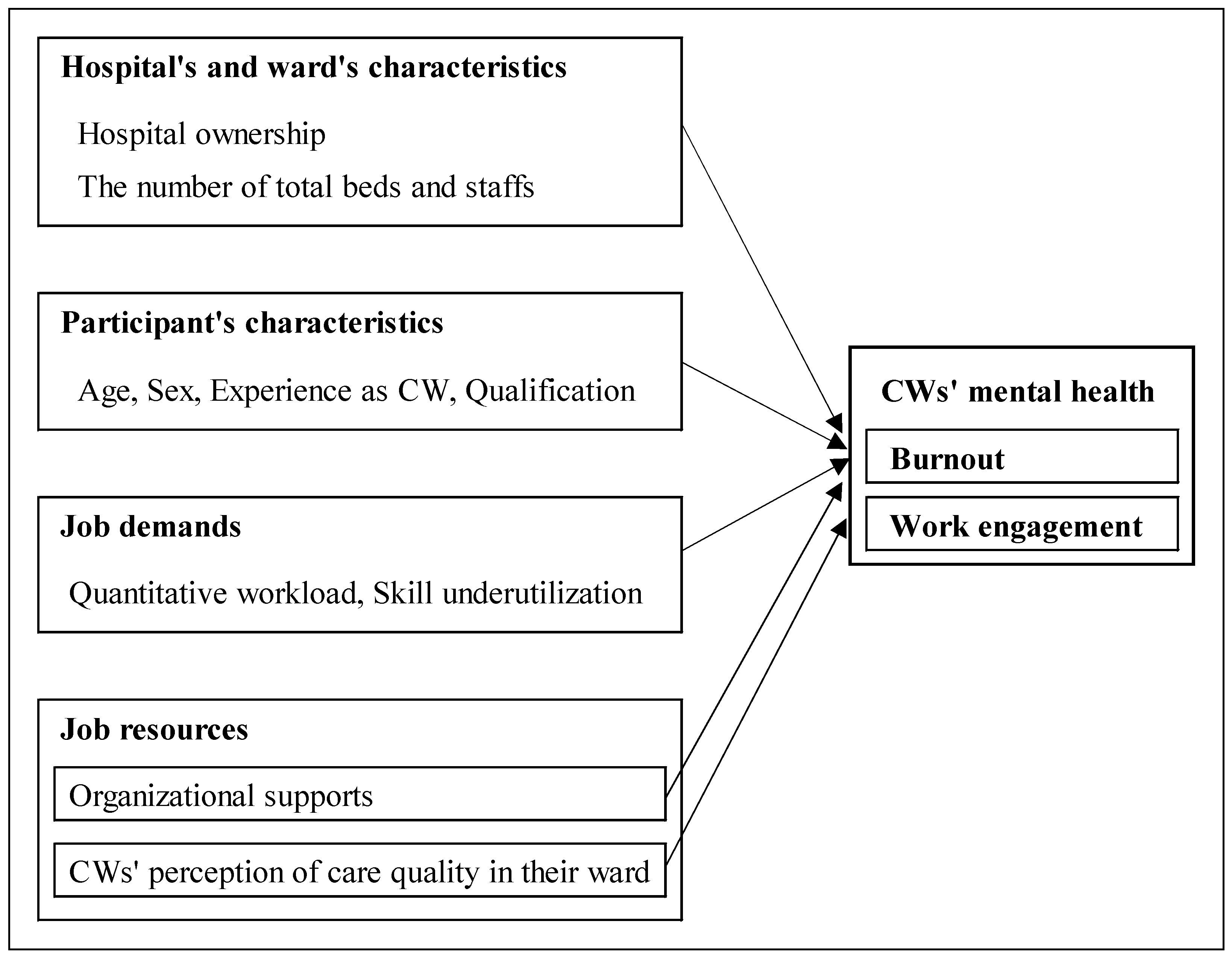
This study adopted the Job Demands–Resources (JD-R) model [16] as the conceptual framework to guide the selection of variables (Figure 1).
Figure 1.
Conceptual framework. CW, care worker.
2.4.1. Burnout
Burnout was assessed using the seventeen-item Japanese Burnout Scale, developed as the Japanese version based on the Maslach Burnout Inventory, and the scale has proven valid and reliable [24]. This instrument comprised three subscales with different items: emotional exhaustion (five items), depersonalization (six items), and personal accomplishment (six items). Each item is rated on a five-point Likert scale ranging from 1 (never experienced) to 5 (always experienced). This instrument is scored by calculating the total score for each subscale rather than by summing all items. Schaufeli et al. (2020) noted that emotional exhaustion and depersonalization are core dimensions of burnout, whereas reduced personal accomplishment—which was added later to the construct—is not considered a central dimension [25]. Furthermore, the reduced personal accomplishment subscale consists of positively worded items that are reverse-scored, which may limit its ability to capture the burnout phenomenon [25,26]. In the present study, we considered that these items were similar to those used to assess work engagement, as both scales aim to capture non-negative attitudes toward one’s work; therefore, the reduced personal accomplishment subscale was excluded. Cronbach’s alphas of the emotional exhaustion and depersonalization subscales were 0.86 and 0.87, respectively. The mean score of each subscale item was calculated and entered into the subsequent analysis.
2.4.2. Work Engagement
Work engagement was assessed using the nine-item Japanese version of the Utrecht Work Engagement Scale [27]. This instrument comprises three subscales of three items: vigor, dedication, and absorption. All items were rated on a seven-point scale ranging from 0 (never) to 6 (always). Here, Cronbach’s alpha was 0.92. Therefore, the mean of all item scores was used to measure work engagement.
2.4.3. Job Demands
Job demands included quantitative workload (four items), variance in workload (three items), and skill underutilization (three items) measures from the Japanese version of the National Institute for Occupational Safety and Health (NIOSH) Generic Job Stress Questionnaire [28]. All items were rated on a five-point Likert scale ranging from 1 (never experienced) to 5 (always experienced). Here, Cronbach’s alphas were 0.83, 0.88, and 0.77 for quantitative workload, variance in workload, and skill underutilization, respectively. The mean item scores for each subscale were calculated.
2.4.4. Job Resources
Organizational Support
Based on a previous study [2], the following five items of organizational support were assessed: (a) appropriate feedback from nursing managers, (b) appropriate support from nursing managers, (c) cooperation between nurses and CWs, (d) recognition of organizational philosophy, and (e) whether other professionals and administrators understand the burden of CWs. To assess (a) and (b), participants were asked whether they could obtain appropriate feedback or support from nursing managers (which they answered with “yes” or “no”). They were asked to answer the following three questions using a 4-point Likert scale (1 = “I do not think so” to 4 = “I think so”). First, (c) was assessed using a single question: “Is there cooperation between nurses and CWs in your ward?” Second, (d) was evaluated using the question, “Do you and your colleagues understand an organizational philosophy?” Third, (e) was assessed using the following question: “Do you think other professionals and administrators understand your burden?” The mean item scores for each subscale were calculated.
CWs’ Perspectives on the Care Quality in the Ward
Care quality was assessed using four items previously described in an interview study on LTC hospitals [2]. These items included (a) providing appropriate support for food intake, including tube feeding, (b) providing appropriate support for cleanliness, (c) providing care that meets the needs of individual patients, and (d) providing adequate programs for recreation. Each item was prefaced with the question, “How do you feel about the quality of care for patients in your ward?”. Participants responded on a four-point Likert scale ranging from 1 (not at all well) to 4 (very well). The mean score for each item was calculated.
2.4.5. Hospital/Ward Characteristics
Hospital/ward characteristics included hospital ownership, number of beds in the hospital or ward, and number of nurses and CWs in the ward.
2.4.6. Participant Characteristics
Participants’ demographic characteristics included age and sex. Work-related characteristics included years of experience as CWs, years of working in their current workplace, and qualifications.
2.5. Statistical Analysis
First, all variables were subjected to descriptive analysis. Second, to identify the factors associated with burnout and work engagement, bivariate analyses were conducted using Spearman’s rank correlation coefficients, t-tests, and one-way analysis of variance using the characteristics of the independent variables. Subsequently, multiple regression analyses using the forced entry method were employed to determine the association of each factor with burnout and work engagement. We used the mean scores of the two burnout subscales (i.e., emotional exhaustion and depersonalization) and the mean score for work engagement as outcome variables. The independent variables included hospital/ward and participant characteristics with p < 0.1 in the bivariate analyses. Before the multivariate analysis, we examined multicollinearity among potential explanatory variables using Spearman’s rank correlation coefficients (r), with a cutoff of r < 0.7. Therefore, a high correlation was observed between quantitative workload and workload variance, reflecting job demands. Consequently, quantitative workload was selected as a more critical variable for CWs based on discussions among research members. All explanatory variables had variance inflation factors ranging from 1.00 to 2.10, indicating no multicollinearity issues. After performing listwise deletion, we also confirmed no significant differences in participant characteristics and the levels of burnout and work engagement between included participants and those excluded for missing data. Additionally, when all JD–R variables were entered simultaneously without pre-filtering, the same predictors remained significant despite minor variations in coefficient magnitudes, a pattern that was likewise observed in the hierarchical multiple regression analysis. All statistical analyses were performed using the IBM SPSS software version 28 for Windows. The significance level was set at p < 0.05 (two-tailed).
3. Results
3.1. Characteristics of Hospital/Ward and Participants
Of the 268 questionnaires distributed to CWs, 257 were collected (response rate = 95.8%). Five CWs were excluded due to incomplete questionnaires. Finally, 252 participant questionnaires (valid response rate = 94.0%) were analyzed. Hospital/ward and participant characteristics are presented in Table 1 and Table 2. The mean participant age (±standard deviation) was 44.8 ± 9.6 years; female participants (81%). Many of them held a national certification (78.6%). Their average overall experience was 13.0 years, and their average tenure at the same hospital was 11.0 years. The mean scores of the burnout subscales were 2.9 ± 1.0 in emotional exhaustion and 1.9 ± 0.8 in depersonalization. The mean score of work engagement was 3.0 ± 1.2.
Table 1.
Hospital’s and ward’s characteristics (n = 257).
Table 2.
Participants’ characteristics (n = 252).
3.1.1. Factors Related to Burnout
Multiple regression analysis revealed that higher emotional exhaustion and depersonalization were significantly associated with higher quantitative workload (β = 0.485, p < 0.001; β = 0.309, p < 0.001) and a lack of cooperation between nurses and CWs (β = −0.150, p = 0.032; β = −0.167, p = 0.024). However, variables related to CWs’ perceptions of care quality were not significantly associated with the burnout subscale. These data are presented in Table 3.
Table 3.
Factors related to burnout and work engagement according to multiple regression analyses (n = 252).
3.1.2. Factors Related to Work Engagement
The score for skill underutilization (β = −0.242, p < 0.001) was significantly associated with lower work engagement, whereas the understanding among clinical professionals and administrators on the burden of CWs (β = 0.170, p = 0.008) was significantly associated with higher work engagement. Regarding CWs’ perspectives on care quality in the ward, the following items were positively and significantly associated with higher work engagement: providing adequate programs for recreation (β = 0.133, p = 0.034) and providing care that meets the needs of individual patients (β = 0.167, p = 0.012). These findings are presented in Table 3.
4. Discussion
4.1. Prevalence of Burnout and Level of Work Engagement
Compared with previous studies for nurses in LTC hospitals, CWs in this study were at a lower risk of burnout and at a higher level of work engagement (emotional exhaustion, 2.9 vs. 3.2; depersonalization, 1.9 vs. 2.1; work engagement, 3.0 vs. 2.4; in this and the previous study, respectively) [23]. The mental health of CWs in LTC hospitals was not good, although the risk of burnout and the level of work engagement were better than those of nurses working in the same setting. Therefore, appropriate assistance is necessary.
Burnout level prevalence among study participants is comparable with a previous study on CWs working in facilities and home care areas for older people based in the community; using the same scale, the mean burnout subscale scores among CWs in this study were almost the same as those among CWs (emotional exhaustion, 2.9 vs. 2.8; depersonalization, 1.9 vs. 1.7, in this and the previous study, respectively) [29]. Previous studies also reported that CWs have a high risk of burnout in the LTC field, both domestically and internationally [10,29,30]. Due to Japan’s rapidly aging population, the chronic labor shortage of CWs in all LTC fields, including LTC hospitals, residential facilities, and home care areas, is concerning. The burden on CWs in providing quality care for older patients is expected to significantly increase in all care facilities for older adults.
Meanwhile, the mean work engagement score (3.0) was lower in this study than among CWs working in community-based care settings, who primarily provide daily care for relatively independent older adults (3.4) [29]. Our results may reflect the differences in the physical condition of the older individuals living in each setting and the role of CWs in home-based facilities and LTC hospitals. Older patients in LTC hospitals who are often bedridden require more medical treatment and nursing care [31]. CWs provide daily care to patients under the guidance and control of nurses. CWs legally positioned as nursing assistants may find it difficult to identify meaning in their care. Meaningful work is recognized as an influencing factor in work engagement [32], and in a situation with continued routine tasks, some CWs may find it challenging to maintain work engagement. These findings highlight the need for adequate support for CWs in Japanese LTC hospitals to prevent burnout and enhance work engagement.
4.2. Factors Associated with Burnout and Work Engagement
Conflicting trends were observed among factors associated with burnout and work engagement in multiple regression analysis. Quantitative workload (job demand) was associated with higher burnout but not lower work engagement. Meanwhile, skill underutilization (job demand) was associated with lower work engagement but was not related to burnout. In a survey of nurses in Japanese LTC hospitals, subscale items reflecting job demands were related to both burnout and work engagement [23], with different trends observed among nurses and CWs. Therefore, developing a support strategy to improve burnout and work engagement based on the occupational characteristics of nurses and CWs in LTC hospitals is necessary. It might be adequate support for other professionals, including administrators and researchers, to show their appreciation for CWs’ efforts.
Organizational support (job resources), such as cooperation between nurses and CWs, was negatively associated with emotional exhaustion and depersonalization on the burnout subscales. Additionally, acknowledgments and understanding of the burden faced by CWs among other professionals and administrators were positively associated with work engagement. Social support from colleagues and other professionals is a protective factor against high burnout and low work engagement, consistent with previous reports [17,33]. However, individuals with good mental health, characterized by lower burnout risk and higher work engagement, may be more likely to perceive their workplace relationships as positive. Although the cross-sectional design precludes determining the direction of causality, the results suggest that supporting good working relationships, particularly between nurses and CWs during care delivery, may be important for creating a desirable work environment for CWs in LTC hospitals. It is also important to implement strategies to raise awareness of available social resources among CWs in LTC hospitals, both within and outside the ward.
CWs’ perspectives on providing quality care (job resource) that included adequate recreation programs and met individual patient needs were positively associated with work engagement, while not significantly related to the burnout subscales. A previous study reported that care aides working in nursing homes were at a high risk of burnout but maintained high professional efficacy [10]. To preserve CWs’ motivation and maintain work engagement, it may be essential to create an environment in which they can provide high-quality care to older adults by fully using their experience and skills.
4.3. Clinical Implications
Factors related to burnout and work engagement can be used to support and educate CWs in LTC hospitals. Promoting collaborative care between nurses and CWs and enhancing CWs’ awareness of available social resources may help maintain their mental health and contribute to healthier working conditions. Hierarchical relationships may hinder collaboration between nurses and CWs, making it essential to strengthen nurses’ recognition of CWs’ roles, expertise, and workload burden to support effective teamwork [21]. Structured interprofessional training, with shared pathways for nurses and CWs, may help reduce historical hierarchical barriers and promote smoother collaboration on the wards. Concurrently, it is important to ensure equitable access to structured continuing education that supports their competence and retention [34,35].
Future intervention models should encourage effective collaboration for the care provider team of older patients. For instance, sharing reflections on care practices that resulted in positive changes in older patients and their families, such as case conferences, would allow nurses and CWs to acknowledge each other’s importance. When interprofessional groups engage in discussions on an equal footing, maintaining a shared focus on the needs of the older adults receiving care is essential to ensure psychological safety among professionals [36]. Therefore, administrators and researchers should facilitate case conferences that focus on the needs and responses of the older patients and their families.
Such interventions might enable the understanding and compassion of different professionals and administrators regarding the burden of CWs. This shared understanding would further allow CWs to enhance their perception of their contribution to care quality and may improve their overall work engagement. Moreover, it is also important to foster a cultural environment in which nurses and CWs acknowledge each other through greetings and everyday communication. With limited human resources, administrators and researchers should collaborate so that CWs can cultivate a sense of pride in their excellent practices.
However, recent evidence further supports the continued relevance of our concern and findings. Qualitative research conducted during the coronavirus disease 2019 pandemic showed that CWs experienced profound emotional strain, moral distress, and intensified workload pressures in LTC settings, revealing deep structural vulnerabilities in the care system [22]. Furthermore, a repeated cross-sectional study comparing pre-pandemic data from February 2020 with data from December 2021 demonstrated significant increases in short-staffed work conditions and small but significant declines in CWs’ professional efficacy and mental health [37]. Together, these studies indicate that the workforce challenges captured in our 2015 dataset have not only persisted but have intensified in the post-pandemic context.
Given population aging and a shrinking working-age population, raising the staffing ratio in LTC hospitals is unlikely to be feasible. Therefore, amid persistent workforce shortages, relying solely on hospital-level initiatives is insufficient; a nationally coordinated system is needed to assess CWs’ mental health, including mandatory, standardized periodic psychosocial screenings—such as the Japanese national Stress Check program [38]—which may help strengthen active health surveillance of psychosocial risk among CWs working in LTC hospitals.
Furthermore, it is important to demonstrate understanding of and respect for CWs’ practices [39], which are often overshadowed by negative public perceptions—CWs are viewed as physically demanding, dirty, and dangerous—and therefore to disseminate the profession’s attractiveness more broadly. Lastly, to advance the field, it is also necessary to accumulate empirical evidence on care workers in LTC hospitals.
4.4. Limitations
This study had some limitations. First, because of the cross-sectional design, the current study provides evidence only of associations between independent variables and burnout and work engagement; causal relationships cannot be inferred. Future longitudinal studies are required to track the factors that contribute to mental health and changes in mental health status over time. Second, the results were derived from data collected as the supplementary material for another research project. This study was based on self-reports by participants who were representatives of their wards (i.e., leaders of CWs). The participants might have had relatively good mental health. Further studies are needed to confirm burnout and work engagement levels among all CWs in LTC wards. Third, the multiple regression models did not yield high R2 values. Although the findings of this study appear acceptable, approximately 65% of the variance remained unexplained. We did not include several variables, such as participants’ demographic characteristics (e.g., marital status, household responsibilities, and education level) and work-related factors (e.g., salary, employment status, and work schedules). Future studies should therefore investigate additional variables associated with burnout and work engagement for CWs, including those that could not be examined in the present study. Fourth, during data collection, ward managers collected and mailed the questionnaires to the researcher. Although anonymity was ensured, this procedure may have discouraged candor, so social desirability bias may still have been present. Fifth, despite the random sampling, large sample size, and nationwide distribution of participating hospitals, the low hospital response rate should be considered when interpreting and generalizing the results. Furthermore, because the data were collected in 2015, the findings do not capture changes in CWs’ working conditions after the coronavirus disease pandemic, limiting their generalizability to the current context. Additionally, differences in measurement formats may have affected the scales’ sensitivity and the comparability of the results. Lastly, the scales’ psychometric properties may not have been fully evaluated because reliability was assessed using only Cronbach’s alpha. In particular, because job resources were assessed using single-item indicators, they may not have adequately captured the underlying constructs, highlighting the need for further research.
5. Conclusions
Promoting cooperation between nurses and CWs may be associated with a reduced risk of burnout. To improve work engagement among CWs, this may be a potential target for support, in which other clinical professionals and administrators acknowledge their burden and adopt approaches that may strengthen CWs’ perceptions of their contribution to care quality—such as structured reflection through case conferences. Given population aging and a shrinking working-age population, increasing staffing ratios in LTC hospitals is unlikely to be feasible. Sustainable workforce development therefore requires a nationally coordinated system that monitors CWs’ mental health and ensures equitable access to structured continuing education.
Author Contributions
Study concept and design: Y.S., A.I. and N.Y.-M. Acquisition of data: Y.S. Analysis and interpretation of data: Y.S. and A.I. Drafting of the manuscript: Y.S., A.I. and N.Y.-M. Critical revision of the manuscript for important intellectual content: all authors. All authors have read and agreed to the published version of the manuscript.
Funding
This study was supported by JSPS KAKENHI Grant Number 25293462.
Institutional Review Board Statement
This study was approved by the ethics committee of the University of Tokyo (approval code: 10925; date of approval: 31 July 2015) and was conducted in accordance with the principles of the Declaration of Helsinki.
Informed Consent Statement
Informed consent was obtained from all subjects involved in the study.
Data Availability Statement
The data that support the findings of this study are available on request from the corresponding author. The data are not publicly available due to privacy or ethical restrictions.
Acknowledgments
We would like to express our gratitude to the care workers who responded to the questionnaire.
Conflicts of Interest
The authors declare no conflicts of interest.
Abbreviations
The following abbreviations are used in this manuscript:
| CW | Care worker |
| LTC | Long-term care |
| JD-R | Job Demands-Resource |
References
- Statistics Bureau of Japan. Japan’s Elderly from the Viewpoint of Statistics—Respect-for-the-Aged Day. Elderly Population. Available online: https://www.stat.go.jp/data/topics/topi1321.html (accessed on 10 March 2023).
- Yamamoto-Mitani, N.; Saito, Y.; Takaoka, M.; Takai, Y.; Igarashi, A. Nurses’ and care workers’ perceptions of care quality in Japanese long-term care wards: A qualitative descriptive study. Glob. Qual. Nurs. Res. 2018, 5, 2333393618812189. [Google Scholar] [CrossRef] [Scilit]
- Ministry of Health, Labour and Welfare. The Designation of Long-Term Care Hospitals on Medical Care Act. Available online: http://www.mhlw.go.jp/bunya/shakaihosho/iryouseido01/pdf/ryouyou01e.pdf (accessed on 10 March 2023).
- Konuma, A. Ryohobyosyono saihen [Re-organizing long-term care wards]. Chosato Joho 2007, 590, 1–11. [Google Scholar]
- Castle, N.G.; Engberg, J. Staff turnover and quality of care in nursing homes. Med. Care 2005, 43, 616–626. [Google Scholar] [CrossRef] [Scilit]
- Shin, J.H.; Hyun, T.K. Nurse staffing and quality of care of nursing home residents in Korea. J. Nurs. Scholarsh. 2015, 47, 555–564. [Google Scholar] [CrossRef] [Scilit]
- Yoshioka, N. Contemporary inter-professional collaboration between nurses and care-workers: Through subjective evaluation by nurses and care-workers about inter-professional collaboration at a long-term care medical facility for the elderly. Proceedings 2011, 16, 53–62. [Google Scholar]
- Nogami, M. Efforts to develop nursing care professionals: How can nurse managers support the development of care workers? Kango NO Chika 2018, 42–50. [Google Scholar]
- Maslach, C.; Schaufeli, W.B. Historical and conceptual development of burnout. In Professional Burnout: Recent Developments in Theory and Research; Taylor & Francis: Abingdon, UK, 1993; Available online: https://www.wilmarschaufeli.nl/publications/Schaufeli/043.pdf (accessed on 10 March 2023).
- Chamberlain, S.A.; Gruneir, A.; Hoben, M.; Squires, J.E.; Cummings, G.G.; Estabrooks, C.A. Influence of organizational context on nursing home staff burnout: A cross-sectional survey of care aides in Western Canada. Int. J. Nurs. Stud. 2017, 71, 60–69. [Google Scholar] [CrossRef] [Scilit]
- Chao, S.F.; Lu, P.C. Differences in determinants of intention to stay and retention between younger and older nursing assistants in long-term care facilities: A longitudinal perspective. J. Nurs. Manag. 2020, 28, 522–531. [Google Scholar] [CrossRef] [Scilit]
- Eltaybani, S.; Noguchi-watanabe, M.; Igarashi, A.; Saito, Y.; Yamamoto-Mitani, N. Factors related to intention to stay in the current workplace among long- term care nurses: A nationwide survey. Int. J. Nurs. Stud. 2018, 80, 118–127. [Google Scholar] [CrossRef] [Scilit]
- Schaufeli, W.B.; Salanova, M.; González-romá, V.; Bakker, A.B. The measurement of engagement and burnout: A two sample confirmatory factor analytic approach. J. Happiness Stud. 2002, 3, 71–92. [Google Scholar] [CrossRef] [Scilit]
- Spence Laschinger, H.K.; Leiter, M.P. The impact of nursing work environments on patient safety outcomes: The mediating role of burnout/engagement. J. Nurs. Adm. 2006, 36, 259–267. [Google Scholar] [CrossRef] [Scilit]
- Willemse, B.M.; De Jonge, J.; Smit, D.; Visser, Q.; Depla, M.F.; Pot, A.M. Staff’s person-centredness in dementia care in relation to job characteristics and job-related well-being: A cross-sectional survey in nursing homes. J. Adv. Nurs. 2015, 71, 404–416. [Google Scholar] [CrossRef] [Scilit]
- Bakker, A.B.; Demerouti, E. The job demands-resources model: State of the art. J. Manag. Psychol. 2007, 22, 309–328. [Google Scholar] [CrossRef] [Scilit]
- Bakker, A.B.; Demerouti, E.; Sanz-Vergel, A.I. Burnout and work engagement: The JD–R approach. Annu. Rev. Organ. Psychol. Organ. Behav. 2014, 1, 389–411. [Google Scholar] [CrossRef] [Scilit]
- Costello, H.; Walsh, S.; Cooper, C.; Livingston, G. A systematic review and meta-analysis of the prevalence and associations of stress and burnout among staff in long-term care facilities for people with dementia. Int. Psychogeriatr. 2019, 31, 1203–1216. [Google Scholar] [CrossRef] [Scilit]
- Dhaini, S.R.; Zúñiga, F.; Ausserhofer, D.; Simon, M.; Kunz, R.; De Geest, S.; Schwendimann, R. Care workers health in Swiss nursing homes and its association with psychosocial work environment: A cross-sectional study. Int. J. Nurs. Stud. 2016, 53, 105–115. [Google Scholar] [CrossRef] [Scilit]
- Hobfoll, S.E.; Johnson, R.J.; Ennis, N.; Jackson, A.P. Resource loss, resource gain, and emotional outcomes among inner city women. J. Pers. Soc. Psychol. 2003, 84, 632–643. [Google Scholar] [CrossRef] [Scilit]
- Beynon, C.; Siegel, E.O.; Supiano, K.; Edelman, L.S. Working dynamics of licensed nurses and nurse aides in nursing homes: A scoping review. J. Gerontol. Nurs. 2022, 48, 27–34. [Google Scholar] [CrossRef] [Scilit]
- Titley, H.K.; Young, S.; Savage, A.; Thorne, T.; Spiers, J.; Estabrooks, C.A. Cracks in the foundation: The experience of care aides in long-term care homes during the COVID-19 pandemic. J. Am. Geriatr. Soc. 2023, 71, 198–205. [Google Scholar] [CrossRef] [Scilit]
- Saito, Y.; Igarashi, A.; Noguchi-Watanabe, M.; Takai, Y.; Yamamoto-Mitani, N. Work values and their association with burnout/work engagement among nurses in long-term care hospitals. J. Nurs. Manag. 2018, 26, 393–402. [Google Scholar] [CrossRef] [Scilit]
- Kubo, M.; Tao, M. Burnout measurement. Psychol. Rev. 1992, 35, 361–376. [Google Scholar]
- Schaufeli, W.B.; Desart, S.; De Witte, H. Burnout Assessment Tool (BAT)-Development, Validity, and Reliability. Int. J. Environ. Res. Public Health 2020, 17, 9495. [Google Scholar] [CrossRef] [Scilit]
- Schaufeli, W.B.; Salanova, M. Efficacy or inefficacy, that’s the question: Burnout and work engagement, and their relationships with efficacy beliefs. Anxiety Stress Coping 2007, 20, 177–196. [Google Scholar] [CrossRef] [Scilit]
- Shimazu, A.; Schaufeli, W.B.; Kosugi, S.; Suzuki, A.; Nashiwa, H.; Kato, A.; Sakamoto, M.; Irimajiri, H.; Amano, S.; Hirohata, K.; et al. Work engagement in Japan: Validation of the Japanese version of the Utrecht Work Engagement Scale. Appl. Psychol. 2019, 57, 510–523. [Google Scholar]
- Haratani, T. Practical application of the NIOSH generic job stress questionnaire. Occup. Ment. Health 2004, 12, 12–19. [Google Scholar]
- Azuchi, R.; Kitamura, S.; Naito, K. The relationship between burnout and work engagement among care workers. An examination using the Job demands-resources (JDR) model. JSGS 2020, 42, 188–199. [Google Scholar] [CrossRef]
- Dhaini, S.R.; Zúñiga, F.; Ausserhofer, D.; Simon, M.; Kunz, R.; De Geest, S.; Schwendimann, R. Are nursing home care workers’ health and presenteeism associated with implicit rationing of care? A cross-sectional multi-site study. Geriatr. Nurs. 2017, 38, 33–38. [Google Scholar] [CrossRef] [Scilit]
- Yasaka, T.; Igarashi, A.; Ninomiya, A.; Takaoka, M.; Anezaki, S.; Yamamoto-Mitani, N. Classification of inpatients admitted to long-term care wards in Japan: A survey-based cluster analysis to determine patient acuity levels. J. Jpn. Soc. Healthc. Adm. 2021, 58, 131–138. [Google Scholar]
- Midje, H.H.; Torp, S.; Øvergård, K.I. The role of working environment and employee engagement in person-centred processes for older adults in long-term care services. Int. Pract. Dev. J. 2022, 12, 58. [Google Scholar] [CrossRef] [Scilit]
- Abdelhadi, N.; Drach-Zahavy, A. Promoting patient care: Work engagement as a mediator between ward service climate and patient-centred care. J. Adv. Nurs. 2012, 68, 1276–1287. [Google Scholar] [CrossRef]
- Gorga, A.; Barbati, C.; Airapetian, M.; Briganti, G.L.; Carnevali, E.D.; Cervellera, F.; Granvillano, G.; Grieco, V.; Leonforte, F.; Peretti, D.; et al. Mapping digital public health training: Are we preparing the European workforce? Front. Public Health 2026, 14, 1778953. [Google Scholar] [CrossRef] [Scilit]
- Aleo, G.; Pagnucci, N.; Walsh, N.; Watson, R.; Lang, D.; Kearns, T.; White, M.; Fitzgerald, C. The effectiveness of continuing professional development for the residential long-term care workforce: A systematic review. Nurse Educ. Today 2024, 137, 106161. [Google Scholar] [CrossRef] [Scilit]
- van Diggele, C.; Roberts, C.; Burgess, A.; Mellis, C. Interprofessional education: Tips for design and implementation. BMC Med. Educ. 2020, 20, 455. [Google Scholar] [CrossRef] [Scilit]
- Song, Y.; Keefe, J.M.; Squires, J.; DeGraves, B.; Duan, Y.; Cummings, G.; Doupe, M.B.; Hoben, M.; Duynisveld, A.; Norton, P.; et al. Changes in health and well-being of care aides in nursing homes from a pre-pandemic baseline in February 2020 to December 2021. J. Appl. Gerontol. 2024, 43, 3–12. [Google Scholar] [CrossRef] [Scilit]
- Kawakami, N.; Tsutsumi, A. The Stress Check Program: A new national policy for monitoring and screening psychosocial stress in the workplace in Japan. J. Occup. Health 2016, 58, 1–6. [Google Scholar] [CrossRef] [Scilit]
- Kagan, S.H. International Nurses Day: Celebrating our care worker colleagues. Int. J. Older People Nurs. 2025, 20, e70029. [Google Scholar] [CrossRef] [Scilit]

Disclaimer/Publisher’s Note: The statements, opinions and data contained in all publications are solely those of the individual author(s) and contributor(s) and not of MDPI and/or the editor(s). MDPI and/or the editor(s) disclaim responsibility for any injury to people or property resulting from any ideas, methods, instructions or products referred to in the content. |
© 2026 by the authors. Published by MDPI on behalf of the Italian Society of Gerontology and Geriatrics. Licensee MDPI, Basel, Switzerland. This article is an open access article distributed under the terms and conditions of the Creative Commons Attribution (CC BY) license.