


Abstract
Older adults with type 2 diabetes (T2D) in long-term care face dietary self-management challenges arising from standardized routines, sensory and cognitive variability, and reliance on caregivers. This study used participatory co-design to develop and preliminarily evaluate an equity-oriented digital dietary management prototype. From June 2024 to December 2025, a four-phase study was conducted at a long-term care facility in Beijing, China. Semi-structured interviews with 20 stakeholders (12 residents, 5 family caregivers, and 3 nurses) and a one-day shadowing observation of one of these residents informed a 90 min co-creation workshop with 20 stakeholders (12 residents, 4 family caregivers, and 4 nurses) and iterative prototyping. All 12 residents in the workshop had participated in the interviews, including the resident involved in the shadowing observation. The resulting high-fidelity prototype integrated a consolidated reminder dashboard, an adaptive portion-control slider, and glucose–meal feedback visualization. Task-based usability testing with an independent sample of 12 participants (6 residents, 3 family caregivers, and 3 nurses) who had not participated in the preceding phases yielded a mean task-success rate of 94.44% (SD 0.43), a mean task-completion time of 1.9 min (SD 0.40), a mean error count of 0.33 per session (SD 0.47), a mean System Usability Scale score of 81.0 (SD 5.23), and satisfaction of 4.5/5 (SD 0.50). Qualitative feedback indicated that participants perceived the prototype as easy to navigate and potentially supportive of resident autonomy and coordinated record-keeping. These findings provide preliminary support for its usability and acceptability in the evaluated tasks. Field studies are needed to assess implementation, workflow effects, and behavioral or clinical outcomes.
1. Introduction
Chronic management of type 2 diabetes (T2D) in older adults presents significant and multifaceted challenges, particularly within institutional care settings such as nursing homes. Recent evidence indicates that the prevalence of diabetes among older adults in China is approximately 18.67%, highlighting the substantial need for effective and individualized dietary management in this population [1]. These challenges are further complicated by recent advances in T2D treatment, including DPP-4 inhibitors, SGLT2 inhibitors, and GLP-1 receptor agonists or other incretin-based therapies. In particular, GLP-1 receptor agonists have been increasingly used to improve glycemic control by enhancing insulin secretion, slowing gastric emptying, and reducing appetite, which may influence residents’ hunger, meal intake, and dietary decision-making [2,3]. Nursing homes typically operate under tight staffing ratios, meaning that meal service times may not align with residents’ personal schedules or glycemic cycles. Communal dining halls can further limit residents’ ability to manage portion sizes or receive one-on-one assistance, particularly for those who require closer monitoring of post-meal glucose responses [4]. Age-related physiological changes, such as presbyopia and reduced contrast sensitivity, can impede residents’ ability to read meal labels or distinguish on-screen text [5]. Cognitive decline, characterized by reduced executive function, working memory, and attentional capacity, may create additional challenges for meal logging, interpretation of visual feedback, and adherence to multi-step instructions, often resulting in skipped entries, delayed medication intake, or inconsistent blood glucose monitoring [6,7]. Emotional and psychological factors, including fear of hypoglycemia, may further limit engagement with self-management practices [8]. Taken together, these institutional, pharmacological, physiological, cognitive, and psychosocial factors increase the complexity of dietary self-management for older adults with T2D in nursing homes and highlight the need for interventions that accommodate individual needs while fitting within care workflows.
Despite these challenges, current dietary management in nursing homes generally follows standardized meal plans and fixed service times [9], offering limited flexibility to tailor meals according to individual residents’ preferences and nutritional requirements. Variations in staff support and communal dining practices can further limit residents’ autonomy and adherence to recommended dietary regimens. While digital health solutions, including smartphone apps and wearable trackers, have been proposed to support self-management [10], their accessibility and integration into existing workflows remain limited [11,12], emphasizing the need for tailored and inclusive interventions that consider residents’ abilities, preferences, and institutional constraints. Therefore, a gap remains in the development of tailored and inclusive digital interventions that accommodate residents’ abilities and preferences while aligning with institutional care workflows.
To address these gaps in dietary management and support individualized needs, we employed a participatory co-creation approach involving residents, caregivers, and nursing staff. Our methods combined contextual inquiry, semi-structured interviews, and shadowing observation to capture residents’ routines, preferences, and barriers, followed by iterative prototyping guided by age-friendly design principles such as simplified information hierarchies and high-contrast interfaces. Accordingly, this study aimed to translate stakeholder insights into an equity-oriented digital dietary management prototype and to preliminarily evaluate its usability and acceptability in the long-term care context. In this study, “equity-oriented” refers to a design principle that seeks to accommodate differences in residents’ sensory, cognitive, physical, and digital capabilities, as well as variations in caregiver support and institutional workflows. The study is structured around three research questions:
- RQ 1: What challenges and workflow constraints shape dietary self-management for older adults with T2D in long-term care, from the perspectives of residents, family caregivers, and nursing staff?
- RQ 2: How can participatory co-creation translate stakeholder insights into prioritized design requirements and a prototype workflow for a digital dietary management system in long-term care?
- RQ 3: To what extent does the resulting prototype system demonstrate usability and acceptability for key tasks (e.g., glucose logging, portion adjustment, and medication reminders) in the long-term care context?
The remainder of this paper is structured as follows. Section 2 reviews the challenges associated with dietary self-management among older adults with T2D and examines the role of participatory co-creation in designing digital health tools for this population. Section 3 describes the study setting, ethical considerations, and four-phase participatory co-design process, comprising semi-structured interviews, ethnographic observation, a co-creation workshop with iterative prototype development, and task-based usability testing. Section 4 presents findings from each phase, including identified dietary self-management needs and contextual barriers, the user journey map and Interpretive Structural Model, stakeholder-generated design priorities, the resulting interactive prototype, and the quantitative and qualitative usability outcomes. Section 5 discusses the principal findings, usability outcomes, implications for equity and institutional workflows, the translation of contextual insights into actionable design features, as well as the study limitations and directions for future research. Finally, Section 6 summarizes the main conclusions and contributions of the study.
2. Related Work
2.1. Challenges in Self-Management of T2D Among Older Adults
Older adults with T2D confront deeply intertwined self-management challenges due to cognitive, sensory, physiological, and psychosocial decline. Memory, attention, fine motor control, and visual acuity often deteriorate, undermining glucose monitoring, dietary self-regulation, and medication adherence [13]. For example, nearly 40% of people over 65 with T2D experience mild cognitive impairment, which increases the risk of dosing errors and missed checks [14]. Comorbidities like hypertension and arthritis, together with polypharmacy and low perceived self-efficacy, further complicate daily routines [15,16]. Psychological stress, such as anxiety and low perceived control, can erode motivation for self-care [17]. Empirical evidence from structured care settings reinforces these concerns: Peimani et al. found lower health literacy and poor communication with clinicians were strongly associated with worse glycemic control in long-term care [18], and Hartley et al. [19] reported that rigid institutional meal plans and limited individualized support in nursing homes significantly hampered dietary adherence. Traditional interventions, such as dietitian-led counseling or structured meal adjustments, have shown some benefit but often struggle to accommodate individual preferences or daily blood glucose variability [20]. Collectively, these findings underscore the need for interventions that support older adults’ abilities while enhancing self-efficacy and perceived behavioral control.
2.2. Co-Creation in Digital Health Tool Design for Older Adults with T2D
Co-creation actively engages patients, caregivers, and healthcare professionals in the design process, ensuring that digital health interventions reflect real-world contexts and are tailored to users’ capabilities and preferences [21]. This approach emphasizes iterative prototyping, collaborative decision-making, and continuous feedback, which are particularly important for older adults with T2D who may face cognitive, sensory, and technological challenges. Empirical studies demonstrate the value of co-creation in healthcare. For example, Craig et al. [22] used structured interviews and co-design workshops for diabetes management, finding early patient involvement enhanced confidence, self-efficacy, and adherence. Naranjo-Rojas et al. [23] co-created a remote support platform for chronic obstructive pulmonary disease, showing improvements in self-monitoring and perceived competence despite older participants’ digital literacy challenges. Similarly, Gali et al. [24] developed a digital mental health intervention through low-fidelity prototyping and focus groups, which reduced cognitive load and improved usability. In diabetes contexts, Dening et al. [25] conducted iterative co-design and usability testing with adults with T2D, enhancing satisfaction and performance, while Chen et al. [26] highlighted that older patients require simplified visuals and ongoing support to effectively use digital tools. These studies collectively highlight that co-creation can accommodate diverse user needs, capture contextual realities, and guide the development of interventions that are both usable and clinically relevant.
2.3. Study Contributions
Despite these advances, co-creation research rarely addresses older adults in residential care, who often encounter unique barriers such as fixed institutional routines, reduced working memory, limited dexterity, and low digital literacy. To address these gaps, our study integrates three established methods within a sequential participatory co-design process: (1) shadowing to capture lived routines and dietary challenges of older adults with T2D in nursing homes; (2) Interpretive Structural Modeling (ISM) to organize insights into actionable design principles; and (3) iterative prototyping of a dietary management platform validated with residents, caregivers, and staff. Accordingly, the principal contribution lies in the combined and context-specific application of these methods to long-term care residents with T2D. This integrated process generated contextually grounded design knowledge concerning reminders, portion adjustment, glucose–meal feedback, and stakeholder coordination, which was translated into and preliminarily evaluated through an interactive prototype. Together, these approaches aim to deliver a holistic, contextually embedded digital health solution that optimizes usability, learnability, and self-management efficacy specifically for older adults in long-term care.
3. Methods
3.1. Study Overview and Setting
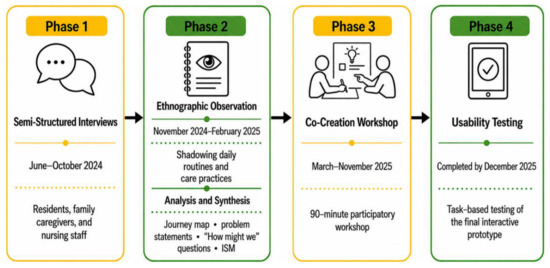
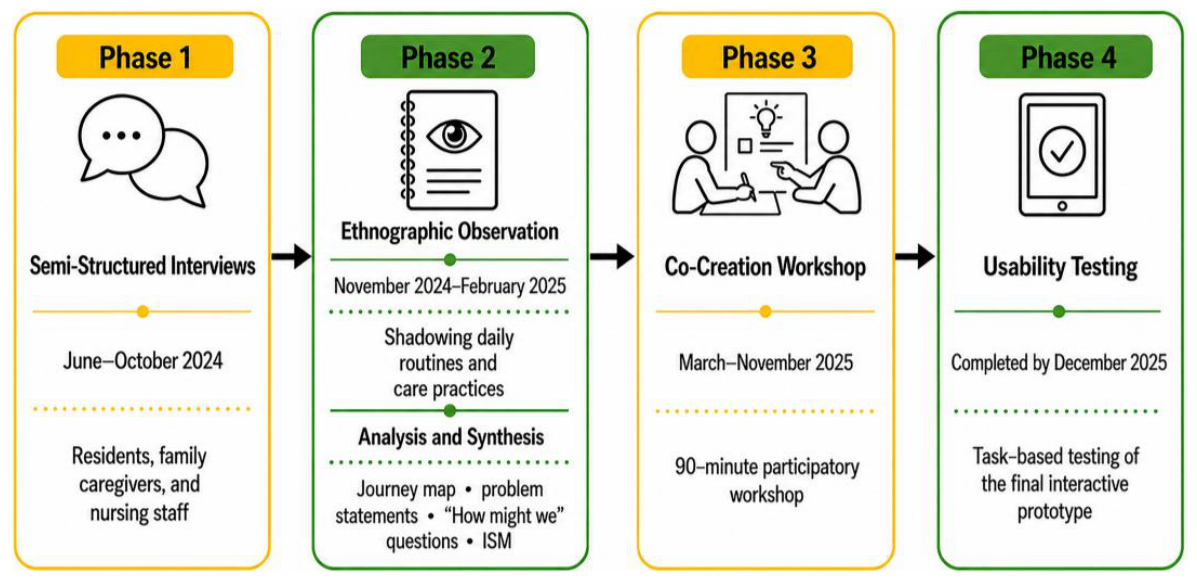
As summarized in Figure 1, this study adopted a four-phase sequential participatory co-design approach to inform the equity-oriented design of dietary self-management support for older adults with type 2 diabetes (T2D) living in long-term care. The four phases comprised: (1) semi-structured interviews, (2) ethnographic shadowing observation, (3) a co-creation workshop and iterative prototype development, and (4) task-based usability testing. The study was conducted at the Hexihui Senior Living Facility in Haidian District, Beijing, China, between June 2024 and December 2025. Phase 1 involved semi-structured interviews with residents, family caregivers, and nursing staff conducted between June and October 2024 to identify dietary self-management needs and institutional workflow constraints. Phase 2 comprised a one-day ethnographic shadowing observation conducted during the same period to examine how the issues identified in the interviews manifested in daily care practices. Between November 2024 and February 2025, the interview and observational findings were then synthesized into a user journey map, stakeholder problem statements, “How might we” questions, and an Interpretive Structural Model to prepare materials for Phase 3. Phase 3 consisted of a 90 min co-creation workshop followed by iterative low- to high-fidelity prototype development conducted between March and November 2025. Phase 4 involved task-based usability testing of the final interactive prototype, which was completed by the end of December 2025. The analytic outputs from each phase informed the procedures and design decisions of the subsequent phase. Participant numbers and stakeholder categories varied across the four study phases, and some participants contributed to more than one formative phase. Table 1 summarizes participation and overlap across phases.
Figure 1.
Timeline of the four-phase participatory co-design study.
Table 1.
Participant involvement and overlap across study phases.
At the time of the study, residents did not independently purchase or prepare their meals; food was prepared centrally in the facility kitchen and served at fixed breakfast, lunch, and dinner times. Residents generally ate in a communal dining area, although meals could be served in their rooms when required by their physical condition or care needs. Residents could indicate their meal preferences in advance, but their choices remained subject to the standardized menu and institutional catering arrangements. Nursing staff supported meal supervision, reminders, and routine glucose monitoring. Dietary support for residents with T2D was incorporated into routine care workflows, with input from relevant medical or ancillary care staff when needed. Residents’ meal requests and food choices were reviewed through the facility’s care procedures to ensure consistency with their documented dietary requirements.
3.2. Ethical Considerations
All participants provided written informed consent after receiving detailed information about the study purpose, procedures, potential risks, confidentiality protections, and their right to withdraw at any time without penalty. All participating residents were able to provide informed consent independently. Given that some participants were older adults residing in a long-term care facility, additional safeguards were implemented to support informed and voluntary participation, including the use of plain-language study information, comprehension checks using the teach-back method, and the option to pause or discontinue participation at any time. Interview transcripts, observational field notes, workshop materials, and usability-testing datasets were de-identified before analysis. Audio and video recordings were securely stored and accessible only to authorized members of the research team. Participant confidentiality was maintained throughout the study.
3.3. Phase 1: Semi-Structured Interviews
3.3.1. Sampling and Recruitment
We used purposive sampling to recruit key stakeholders involved in dietary management in long-term care, including nursing home residents with T2D, family caregivers, and nursing staff. Recruitment was conducted through the participating nursing home with support from staff who identified potentially eligible residents and caregivers; nursing staff were recruited from the same facility. Inclusion criteria for residents were as follows: (1) a documented diagnosis of T2D, (2) residence in the nursing home, (3) age 60 years or older, and (4) ability to provide informed consent and participate in an interview. Family caregivers were eligible if they were the primary informal caregiver (e.g., spouse or adult child) involved in dietary support or visits, and nursing staff were eligible if they were directly involved in residents’ daily care and diabetes-related tasks (e.g., meal supervision, reminders, and glucose monitoring).
The Phase 1 sample comprised 20 participants: twelve elderly T2D nursing home residents (6 males and 6 females; age 62–80, M = 70.3, SD = 5.4; length of time since T2D diagnosis: 3–10 years, M = 6.3, SD = 2.2), five family caregivers (age 40–65), and three registered nursing staff (Table 2). According to the facility’s medical and care records, participants were independent in basic activities of daily living and had no documented major diabetes-related complications requiring intensive management. Most received oral glucose-lowering medication, primarily metformin, and none received insulin or GLP-1 receptor agonists during the study. The cohort varied in age (62–80 years) and time since T2D diagnosis (3–10 years). No prespecified fasting blood glucose or HbA1c threshold was used to classify disease severity, and no formal classification of T2D severity or clinical subtype was performed. Blood glucose was monitored periodically during ongoing treatment as part of the facility’s routine care procedures, with nursing staff assisting residents with glucose checks and coordinating monitoring with meal times and medication schedules when needed. These routinely collected glucose values were not used to characterize underlying disease severity or analyzed as study outcomes.
Table 2.
Participant demographics for semi-structured interviews.
3.3.2. Data Collection
Twenty face-to-face semi-structured interviews were conducted with the Phase 1 participants. Semi-structured interviews were chosen for their balance of structure and flexibility, enabling exploration of participants’ lived experiences while allowing unexpected insights [27]. An interview guide with ten open-ended questions was developed based on prior research [20] and piloted with two individuals sharing similar demographics. Interviews lasted 45–60 min, were conducted face-to-face in private nursing home rooms, and emphasized rapport and voluntary participation. With informed consent, all interviews were audio-recorded and supplemented with field notes documenting nonverbal cues and contextual details.
3.3.3. Data Analysis
Transcriptions were anonymized and analyzed in NVivo 12 using inductive thematic analysis. Two researchers independently coded the first five transcripts to develop a codebook (κ = 0.82), after which the remaining transcripts were double-coded and discrepancies resolved through discussion. Data saturation was reached by the eighteenth interview. The resulting thematic framework informed the focus of the Phase 2 shadowing observation, including meal routines, glucose monitoring, medication timing, staff support, and record-keeping practices.
3.4. Phase 2: Ethnographic Observation
3.4.1. Sampling and Recruitment
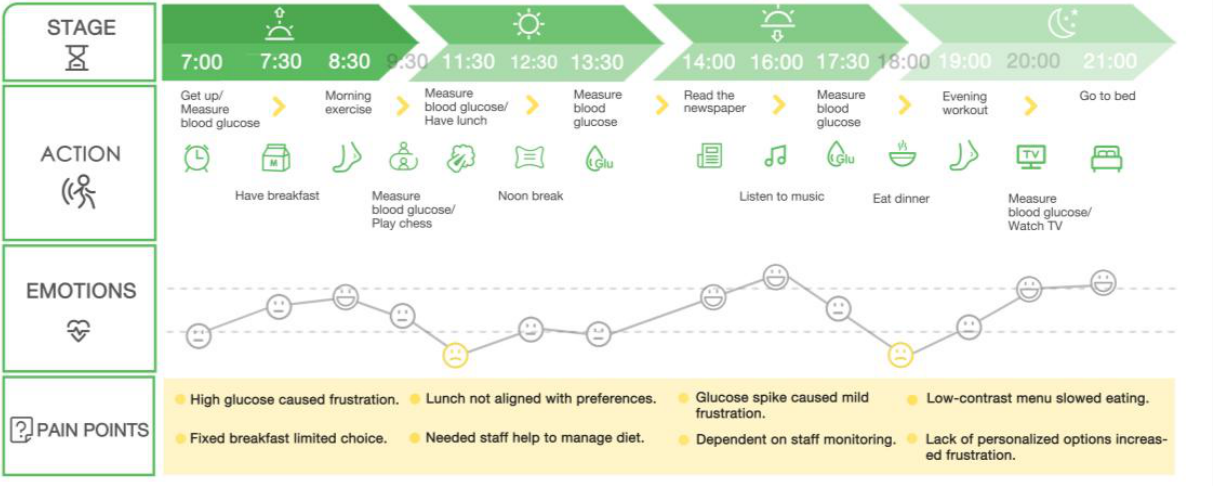
To triangulate interview findings with in situ practices, a one-day shadowing observation was conducted with one representative resident with T2D (pseudonym “Ms. Chen”) from 07:00 to 21:00 (Figure 1). Ms. Chen was a female resident in her early 70s with T2D. She received routine oral hypoglycemic medication, mainly metformin, and did not require insulin injections. Her blood glucose was monitored periodically with support from nursing staff. She followed the nursing home’s fixed meal schedule but reported occasional appetite fluctuations and a preference for smaller portions, particularly when meal options did not match her personal taste or physical comfort. She was moderately active in daily routines and maintained regular interactions with nursing staff and other residents, making her a suitable case for observing how meal schedules, medication routines, glucose monitoring, and social interactions shaped dietary self-management in the nursing home setting. This observation was designed as an in-depth ethnographic case to complement interview data by capturing routine behaviors and contextual constraints, rather than to generate statistically generalizable estimates. Prior to the observation, written informed consent was obtained, and the resident’s typical daily schedule was reviewed with facility staff to minimize disruption to routine care.
3.4.2. Data Collection
Two researchers accompanied the resident throughout the day. One researcher recorded timestamped field notes documenting temporal markers, spatial arrangements, and interaction dynamics (e.g., prompts or assistance from staff and peers), while the second researcher captured contextual photographs (with permission) and additional timestamps to support reconstruction of events and environments. To reduce observer effects, researchers remained non-intrusive and did not intervene in care activities except when ethically or safety-wise necessary. All materials were de-identified, and any identifiable images were excluded prior to analysis.
3.4.3. Data Analysis
Observational data were analyzed in NVivo 12 following the inductive thematic analysis procedure described in Phase 1 and were used to corroborate and refine the themes derived from interviews. The observation codes were compared with the Phase 1 interview themes, and the combined findings were organized into a user journey map. Identified barriers were then translated into stakeholder problem statements and reframed as “How might we” questions.
To systematically explore the hierarchical relationships among design elements and provide actionable insights for service design, the design team applied the Interpretative Structural Model (ISM). ISM is particularly useful for complex systems where multiple factors interact in non-linear ways, as it transforms discrete, unordered elements into a structured, multi-level model that clarifies dependencies and influence paths [28]. In our context, ISM helped map critical points in dietary and glucose management for older adults with T2D.
The design team first identified key demand points from the combined interview and observation findings, such as “medication reminders,” “personalized meal suggestions,” and “caregiver communication.” Each pair of elements was analyzed to determine whether a direct or recursive relationship exists. The design team reviewed the relationships and resolved disagreements through discussion. These relationships were represented as unidirectional edges in the adjacency matrix:
Next, the reachable matrix M was computed to identify indirect influence paths between elements, using
Reachable sets R and antecedent sets Q were derived for each element, and layers L2, L3…, Ln were identified according to R ∩ Q = R. These findings informed the Phase 3 co-creation workshop by highlighting the need for legible automated reminders (e.g., high-contrast, large-font presentation), low-effort interaction for portion adjustment, and integrated logging and feedback linking glucose data with meal-related guidance. The resulting user journey map, problem statements, “How might we” questions, and ISM structure were used as stimulus materials and prioritization prompts in the Phase 3 co-creation workshop.
3.5. Phase 3: Co-Creation Workshop
3.5.1. Sampling and Recruitment
Purposive sampling was used to recruit twelve elderly T2D residents (62–80 years), four family caregivers, and four nurses through the participating nursing home. These stakeholder groups were included to represent residents’ experiences, family support, and institutional care workflows. Three researchers served as workshop facilitators and were not included in the participant sample. Written informed consent was obtained from all stakeholder participants. The twelve resident participants in Phase 3 included residents who had participated in the Phase 1 interviews, allowing insights from the initial needs exploration to be revisited and refined during co-creation. Ms. Chen, the resident observed in Phase 2, was also selected from the Phase 1 interview participants and contributed to Phase 3.
3.5.2. Data Collection
To harness diverse insights and foster shared ownership, we conducted a ninety-minute co-creation workshop.
- Problem Reframing (20 min)
Residents first reviewed five plain-language problem statements derived from interviews, journey mapping, and ISM analysis, rating them by priority. Insights were converted into “How might we” questions and organized on Miro.
- Affinity Diagramming (30 min)
Mixed teams clustered these prompts into themes. The resulting clusters were then prioritized for sketching.
- Low-Fidelity Sketching (20 min)
Teams illustrated layouts on A3 sheets, with residents drawing screen elements, caregivers annotating timing suggestions, and nurses ensuring readability and safety. Prototypes were then presented and refined via dot-voting on three criteria: intuitiveness, caregiver workload reduction, and clinical safety.
- Presentation and Dot-Voting (20 min)
Teams presented their paper prototypes and explained their design rationales. Residents suggested refinements, caregivers commented on workflow implications, and nurses verified clinical validity. Each participant received five dot stickers to vote on three criteria: intuitiveness, caregiver workload reduction, and clinical safety (12 voting participants, 5 votes each, 60 votes in total).
3.5.3. Data Analysis
Researchers documented the workshop through audio recordings, sketch photographs, exported Miro boards, facilitator notes, and voting results. Following the workshop, the research team reviewed the recorded materials, grouped related design suggestions, and calculated voting totals for each concept and evaluation criterion. Comments and sketch annotations were compared with the voting results to identify areas of agreement and resolve conflicting design suggestions through discussion. Post-workshop, the team synthesized the findings into preliminary storyboards and user flows, ensuring that subsequent prototyping remained grounded in participants’ real-world needs. The storyboards and user flows were iteratively refined into a high-fidelity prototype. The research team reviewed each iteration according to the three workshop criteria of intuitiveness, caregiver workload reduction, and clinical safety. The prioritized interaction flows informed the final prototype and the task scenarios used in Phase 4 usability testing.
3.5.4. Final Prototype Used for Testing
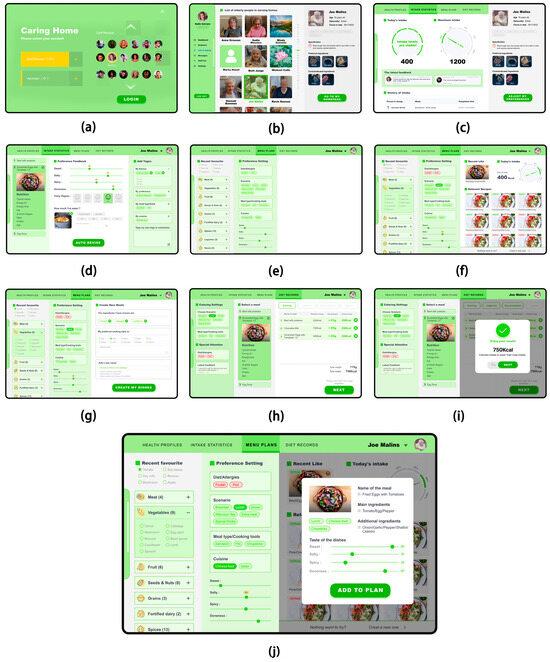
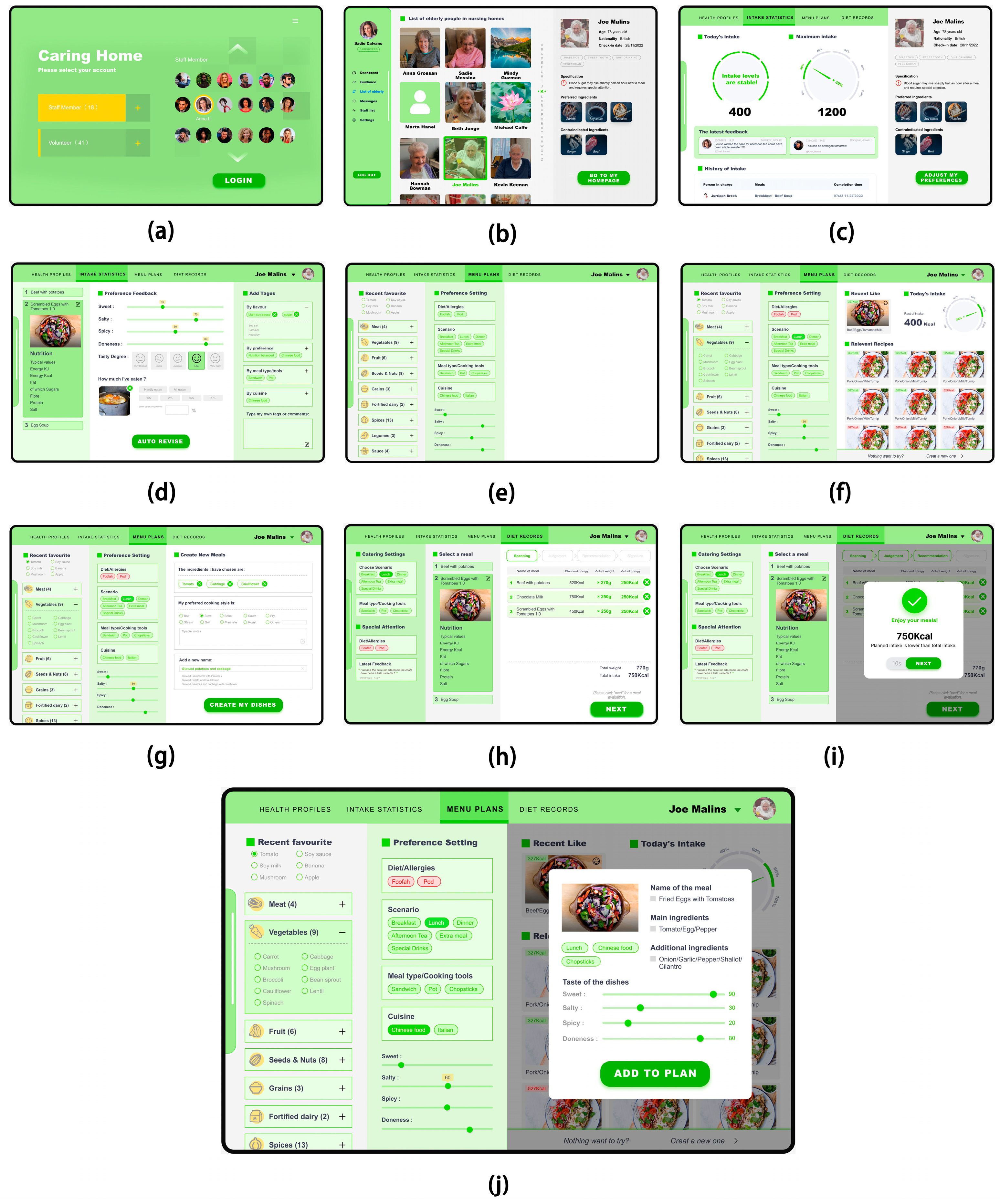
An interactive prototype system was developed based on the prioritized concept from the co-creation workshop, namely a consolidated reminder dashboard, and it integrated key functions identified by stakeholders. As illustrated in Figure 2, the representative screens show the main interaction sequence, including user login and resident selection (a–b), intake monitoring and reminder overview (c), preference setting and feedback (d–f), meal-plan creation and meal selection (g–h), meal confirmation (i), and detailed meal customization using portion and taste controls (j). Together, these screens demonstrate how the prototype connects resident information, dietary preferences, meal planning, and feedback within a consistent workflow. The prototype supported four core dietary management tasks: meal logging, portion adjustment, blood glucose monitoring, and reminders for meals and medication. The consolidated reminder dashboard served as the primary entry point by aggregating time-sensitive prompts (e.g., medication, glucose checks, and meal-related actions) into a single view to reduce navigation demands. Reminders were organized by time of day and status (e.g., upcoming vs. completed), enabling users to acknowledge a prompt and transition directly to the corresponding action (e.g., logging a glucose value or confirming a meal entry). For portion management, the prototype included an adaptive portion-control slider designed for single-motion adjustment, allowing residents to select portion sizes without repeated tapping or fine-grained button presses. To support self-monitoring and interpretation, glucose-related functions provided input and review flows for glucose values alongside an integrated glucose-meal feedback visualization that aligned dietary records with glucose information to facilitate rapid review.
Figure 2.
Representative interfaces and interaction sequence of the high-fidelity prototype: (a) user login; (b) resident selection and profile overview; (c) intake monitoring and reminder overview; (d–f) dietary preference setting and feedback; (g) meal-plan creation; (h) meal selection; (i) meal confirmation; and (j) detailed meal customization using portion and taste controls.
The interface used a hierarchical navigation structure with tabbed modules for dietary, glucose, and reminder management, providing consistent access paths across tasks while retaining the dashboard as a central hub for routine actions. Consistent with age-friendly and universal design principles, the prototype incorporated large typography, high-contrast labels, simplified icons paired with short text, and multimodal feedback (visual, tactile, and auditory cues) to support users with varying sensory and motor abilities and to facilitate efficient task completion [14,23]. Interaction patterns were kept consistent across modules (e.g., predictable placement of primary actions and confirmation steps) to support learnability in a long-term care context. Together, these features operationalized stakeholder priorities for accessible interaction, workflow fit, and safety-relevant reminders and formed the basis for the subsequent task-based usability evaluation. The system was implemented as a high-fidelity interactive prototype using Sketch and Figma. The prototype included clickable screens and transitions covering the task flows evaluated in the usability study (glucose logging, portion adjustment, and medication reminder scheduling). Data entry and feedback values were simulated for testing purposes rather than stored in a back-end database.
3.6. Phase 4: Usability Testing
3.6.1. Sampling and Recruitment
Purposive sampling was used to recruit 12 participants through the participating nursing home, including 6 residents, 3 family caregivers, and 3 registered nurses. These participants were recruited as an independent sample and had not participated in Phases 1–3. The sample included primary users and stakeholders directly involved in dietary support and institutional care workflows. Resident participants were eligible if they had documented T2D, were aged 60 years or older, resided in the nursing home, and were able to provide informed consent and complete the usability-testing session. The eligibility criteria for each stakeholder group followed those described in Phase 1.
3.6.2. Data Collection
System usability was assessed using the System Usability Scale (SUS), a widely used and validated instrument for measuring perceived usability. Usability testing was conducted in 45 min sessions with 12 participants (6 residents, 3 family caregivers, and 3 registered nurses) using three task-based scenarios that reflected core functions of the prototype system: logging a glucose measurement, adjusting meal portions, and scheduling a medication reminder. The order of the three tasks was counterbalanced across participants. During usability sessions, the prototype was accessed on an iPad, and participant interactions and task completion were video-recorded for analysis.
The collected measures included task success, completion time, error count, SUS score, and satisfaction rating. Task success was defined as completion of the intended task outcome. Completion time was measured from the presentation of each task scenario to task completion, and errors were recorded as incorrect actions requiring correction. After completing the tasks, participants completed the SUS and a 5-point satisfaction rating and provided brief qualitative feedback on usability, accessibility, and workflow fit.
3.6.3. Data Analysis
Task success rates were calculated as the proportion of successfully completed tasks. Completion times, error counts, SUS scores, and satisfaction ratings were summarized using means and SDs. SUS responses were calculated using the standard 0–100 scoring procedure. Video-recorded observations and qualitative feedback were analyzed using the inductive thematic approach described in Phase 1. The qualitative findings were compared with the quantitative usability measures to identify consistent usability issues and potential prototype refinements.
4. Results
The results are organized according to the four sequential phases of the study: interview themes concerning dietary self-management, contextual findings from ethnographic observation, design priorities generated through the co-creation workshop, and usability outcomes from prototype testing. This organization reflects the sequential co-design process, in which findings from each phase informed the activities and outputs of the subsequent phase.
4.1. Phase 1: Semi-Structured Interviews
Thematic analysis identified six recurring themes (Table 2) reflecting key factors influencing dietary self-management among elderly T2D residents. The themes indicated that structured meal routines, glucose monitoring, and staff support facilitated adherence, whereas standardized menus, comorbidities, and emotional responses posed barriers. Participants’ attitudes toward technology highlighted the need for simple, intuitive digital tools. The six themes and representative quotations are presented in Table 3.
Table 3.
Key themes from semi-structured interviews.
4.2. Phase 2: Ethnographic Observation
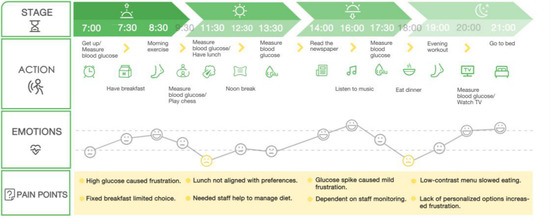
The observation captured routines and constraints that were less salient in interviews, including unscheduled snacking, reliance on peer prompts for glucose checks, occasional mismatches between medication timing and meals, and dependence on paper logs and manual cues (Figure 3). Environmental factors (e.g., low-contrast printed menus, limited meal options, and lighting conditions) were also observed to shape residents’ decision-making and effort during mealtimes. These findings highlighted the need for legible reminders, low-effort portion adjustment, and integrated glucose and meal-related information.
Figure 3.
User journey map of resident “Ms. Chen”.
The shadowing identified several systemic issues. The absence of automated and readable reminders often led to missed medication and glucose checks; low-contrast, small-font interfaces and printed menus hindered readability; and the separation of health data from dietary guidance required residents to mentally translate glucose readings into appropriate food choices. Fixed portion sizes and non-adjustable flavors failed to meet individual preferences, reducing satisfaction and adherence. For nursing staff and family caregivers, parallel paper and digital records increased administrative workload and limited real-time data sharing. The resulting problem statements and “How might we” questions are presented in Table 4.
Table 4.
Stakeholders’ problem statements and “How might we…” questions.
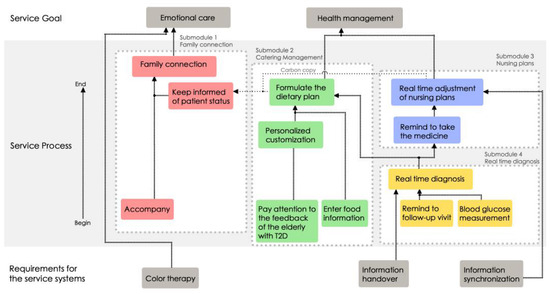
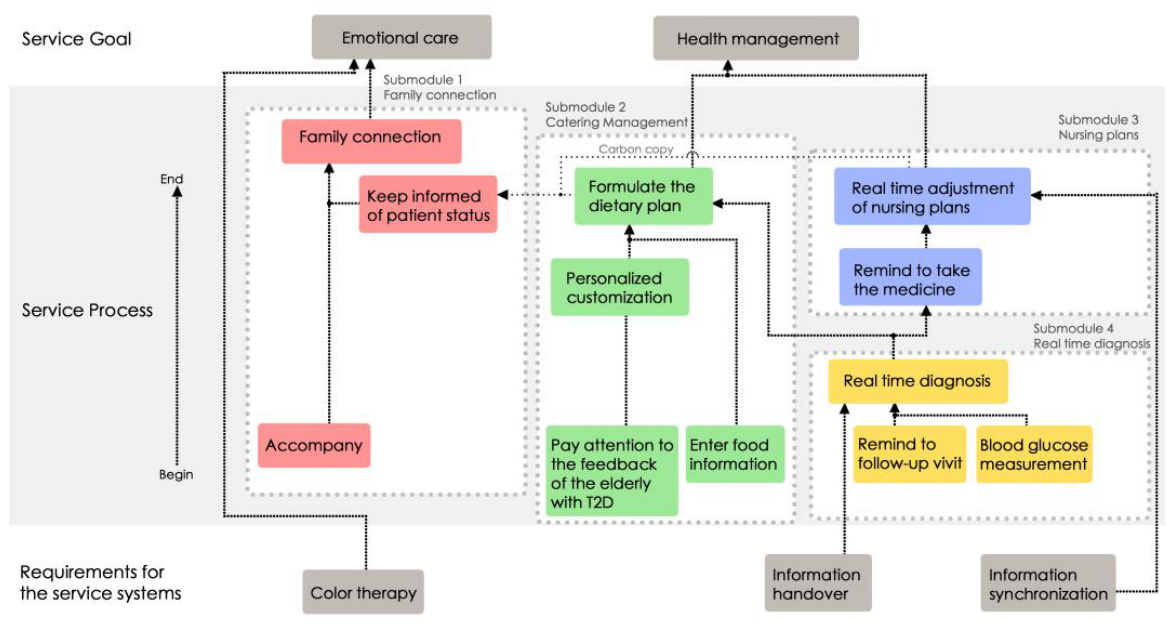
The ISM analysis placed personalized meal suggestions at a higher level because they depended on glucose-monitoring data, while data recording formed part of the foundational level. The analysis produced a directed flowchart containing four primary service processes: (1) data acquisition and logging, (2) individualized recommendation generation, (3) caregiver communication, and (4) feedback-driven adjustment (Figure 4). More specifically, Figure 4 organizes the identified elements into three levels—service-system requirements, service processes, and service goals—and groups the service processes into four interconnected modules: family connection, catering management, nursing plans, and real-time health monitoring. Within these modules, resident feedback and food information support personalized meal customization and dietary-plan formulation; blood glucose measurement and follow-up reminders inform medication reminders and adjustments to nursing plans; and status updates and companionship facilitate communication with family caregivers. The directed links therefore indicate how foundational requirements, including information handover and synchronization, enable coordinated dietary, nursing, and communication functions that ultimately contribute to the higher-level goals of emotional care and health management. The model clarified the dependencies among these processes and the resulting service pathways.
Figure 4.
The directed graph based on ISM.
4.3. Phase 3: Co-Creation Workshop
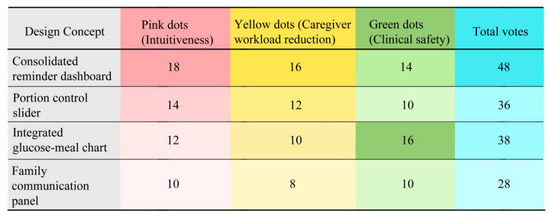
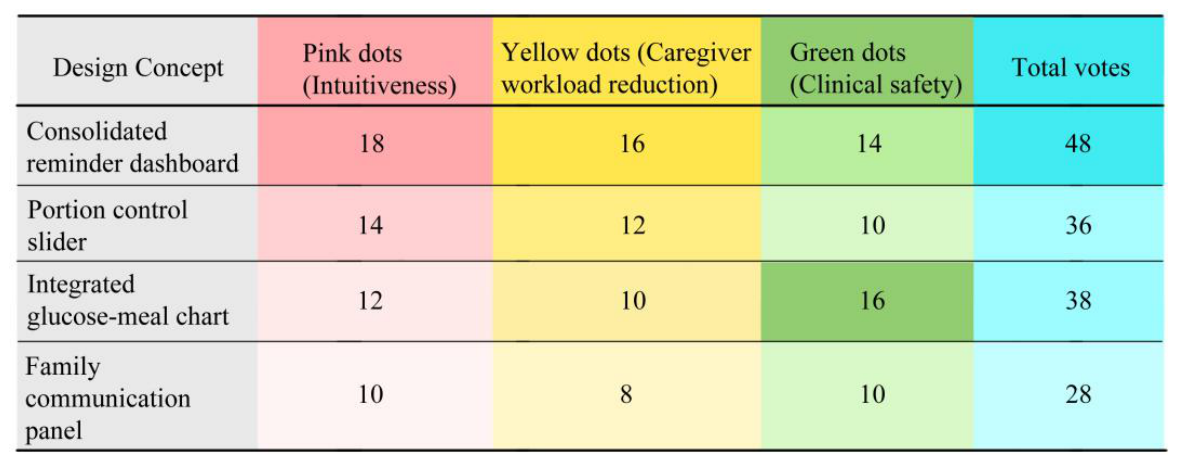
Priority ratings indicated that timely medication and glucose reminders were rated as high priority, portion flexibility and meal customization as medium priority, and caregiver communication as low priority. Mixed teams clustered the prompts into reminder systems, portion control, and feedback integration. Residents suggested combining medication and snack reminders, caregivers recommended grouping by time of day, and nurses flagged safety-critical areas. Three clusters were prioritized for sketching: unified reminders, adaptive portion sliders, and integrated feedback visuals. Voting results indicated that the consolidated reminder dashboard received the highest priority for intuitiveness and caregiver workload reduction, while the integrated glucose-meal chart ranked highest for clinical safety. The adaptive portion slider and feedback visualization board were also endorsed, providing a foundation for subsequent prototype development (Figure 5). Given the relative interface complexity of the glucose-meal chart, the research team selected the consolidated reminder dashboard as the basis for the initial low-fidelity prototype.
Figure 5.
Stakeholder voting results on design concepts by evaluation criteria. Note: Darker colors indicate higher values, while lighter colors indicate lower values.
4.4. Phase 4: Usability Testing
4.4.1. Quantitative Usability Outcomes
Overall usability was high. The mean SUS score was 81.0 (SD 5.2), exceeding the commonly cited benchmark score of 68 and corresponding to an “excellent” usability rating in established interpretation guidance. Objective task performance results were consistent with perceived usability. Participants achieved a high mean task success rate of 94.44%, indicating strong task effectiveness, and completed the tasks efficiently (mean 1.9 min, SD 0.4), reflecting good interaction efficiency. Interaction breakdowns were infrequent, with a mean error count of 0.3 errors per session, suggesting few recoverable mistakes during task execution. Satisfaction ratings were also high (mean 4.5/5, SD 0.5), supporting overall acceptability of the prototype system in the testing context. Participant-group-specific descriptive results were generally consistent with the overall findings. Residents, family caregivers, and nurses achieved mean task success rates of 94.68% (SD 3.09), 94.79% (SD 3.69), and 93.61% (SD 3.67), respectively. Their mean completion times were 2.04 min (SD 0.37), 1.93 min (SD 0.28), and 1.61 min (SD 0.39), respectively, while all three groups averaged 0.33 errors per session. Residents had a mean SUS score of 80.33 (SD 5.06), compared with 79.33 (SD 4.99) among family caregivers and 84.00 (SD 4.55) among nurses. Mean satisfaction ratings were 4.42/5 (SD 0.45), 4.33/5 (SD 0.62), and 4.83/5 (SD 0.24), respectively. Given the small and unequal group sizes, particularly for family caregivers and nurses (n = 3 each), these subgroup findings are descriptive and should not be interpreted as evidence of differences between participant groups. Taken together, the findings indicate high effectiveness, efficiency, and satisfaction across the evaluated tasks and participant groups (Table 5).
Table 5.
Usability test results overall and by participant group.
4.4.2. Qualitative Feedback
Qualitative feedback indicated several practical considerations related to usability, accessibility, and equity-oriented self-management design in long-term care. Residents reported that portion adjustment was easy to perform and that the slider supported smooth, single-motion changes without requiring fine-motor control. One resident explained, “I can move it a little bit and choose a smaller portion. It is easier than typing or asking someone to change it for me” (female resident, 72 years). Residents also reported that the consolidated reminder function helped them complete routine tasks (e.g., glucose checks) in a more timely manner and reduced reliance on staff for prompts. Another resident noted, “When the reminder comes together, I know it is time to check my sugar and prepare for the meal” (male resident, 69 years). Family caregivers reported that notifications supported monitoring while maintaining residents’ autonomy, and they emphasized the importance of balancing oversight with independence. As one caregiver commented, “I can know whether she has checked her glucose, but she still feels that she is managing it herself” (female caregiver, adult child).
Caregivers further indicated that presenting glucose readings alongside meal-related information reduced confusion and improved efficiency during support activities. Nursing staff reported that notification clarity and visual accessibility (e.g., large fonts and high-contrast presentation) were important for safety and routine completion, particularly for residents who might forget scheduled checks or have sensory limitations. One nurse stated, “Large text and clear reminders are important because some residents forget the timing, especially before meals” (female nurse, registered nursing staff). Across stakeholder groups, participants reported valuing personalization options (e.g., flexible portion sizes and meal preferences) to accommodate fluctuating appetite and individual needs. Participants also indicated that the integrated feedback visualization supported quick interpretation of progress. Caregivers and nurses noted that consolidating reminders and logging functions reduced double-recording, which may lower workload and reduce the likelihood of documentation errors. Overall, these reported experiences were consistent with the quantitative usability findings and indicated that participants perceived the prototype as accessible for core dietary management tasks and compatible with institutional workflows.
5. Discussion
5.1. Principal Findings
The central finding of this study is that dietary self-management among older adults with T2D in long-term care is shaped not only by individual knowledge or motivation but also by the interaction between residents’ changing needs and the standardized routines of institutional care [28]. Interviews and shadowing showed that fixed meal schedules, limited portion flexibility, fragmented glucose and dietary information, and dependence on manual reminders constrained residents’ ability to make timely and personally meaningful dietary decisions. At the same time, family caregivers and nursing staff needed sufficient oversight to maintain safety without unnecessarily reducing residents’ autonomy. The resulting prototype responded to this tension by combining accessible reminders, low-effort portion adjustment, and integrated glucose-meal information within a shared dietary management workflow. Rather than replacing caregiver involvement, these features were designed to redistribute routine management tasks in a way that supported residents’ participation while retaining appropriate caregiver and staff support.
The usability findings provide preliminary evidence that this design approach was acceptable and manageable within the evaluated task-based context. The mean SUS score of 81.00, together with the high task-success rate, relatively short completion times, and positive qualitative feedback, suggests that participants were generally able to understand and operate the prototype’s core functions. More importantly, the convergence of quantitative and qualitative findings indicates why the prototype was perceived as usable: residents valued simple portion adjustment and consolidated reminders, caregivers valued accessible progress information, and nursing staff emphasized clear presentation and compatibility with existing care routines. These findings extend previous participatory digital health research by demonstrating that usability in long-term care depends not only on simplifying an interface but also on aligning the distribution of information, responsibility, and decision-making across residents, family caregivers, and nursing staff [29]. The contribution of this study therefore lies in connecting age-friendly interaction design with the organizational realities of dietary self-management in institutional care.
5.2. Usability Outcomes
The co-creation workshop identified design priorities related to reminders, portion adjustment, and the integration of glucose and meal-related information. Although residents, family caregivers, and nursing staff emphasized different aspects of the proposed system, their priorities were complementary: residents focused on ease of interaction, caregivers emphasized access to relevant information and workflow coordination, and nursing staff highlighted clarity and safety-related considerations. The dot-voting results and subsequent progression from low- to high-fidelity prototypes suggest that the consolidated reminder dashboard provided a reasonable means of bringing these priorities together within a single interaction flow. This interpretation is consistent with previous research indicating that participatory design can help align user needs, care processes, and usability requirements in complex healthcare settings [30]. The SUS results, task-performance measures, and qualitative feedback provide preliminary evidence that participants were generally able to understand and use the prototype’s core functions during the short-term, task-based evaluation. Because cognitive load was not measured directly, these findings should not be interpreted as demonstrating a reduction in cognitive load. Instead, the relatively short task-completion times, low error frequency, and participants’ comments suggest that features such as consolidated reminders, consistent navigation, and single-motion portion adjustment may have reduced interaction effort and the need to navigate between separate sources of information. Residents particularly valued the adaptive portion slider and integrated reminders, which they perceived as supporting meal adjustment and routine glucose logging with less reliance on repeated assistance. These observations are consistent with studies suggesting that large typography, high-contrast presentation, simplified icons, and multimodal feedback can improve the accessibility of digital interfaces for older adults with diverse sensory, cognitive, and motor capabilities [31,32].
Participants also responded positively to the presentation of glucose information alongside meal-related records. Previous digital self-management research indicates that linking health information with relevant behavioral feedback may support interpretation, adherence, and self-efficacy among older adults with chronic conditions [33,34]. However, the present study did not measure changes in dietary adherence, self-efficacy, glycemic control, or sustained system use. Accordingly, the findings support only the preliminary usability and acceptability of the prototype’s interaction design within the evaluated tasks. Nevertheless, they illustrate how participatory co-creation can translate the differing priorities of residents, family caregivers, and nursing staff into testable interface features for dietary self-management in long-term care.
5.3. Equity and Workflow
In this study, equity was approached as the need to accommodate variation in residents’ sensory, cognitive, motor, and self-management capabilities rather than assuming a uniform level of ability or digital literacy. Features such as large typography, high-contrast presentation, simplified interaction steps, consolidated reminders, and adjustable portion controls were incorporated to make the prototype more accessible to residents with differing needs. During usability testing, participants generally perceived these features as supporting residents’ involvement in routine dietary management while preserving access to assistance from family caregivers and nursing staff. These findings are consistent with previous studies suggesting that digital self-management interventions for older adults should account for diverse functional abilities and the constraints imposed by standardized institutional routines [35,36]. However, because the study did not directly measure equity, autonomy, or changes in residents’ dependence on caregivers, the findings should be interpreted as indicating the accessibility-oriented potential of the design rather than demonstrating equitable outcomes.
The prototype also brought glucose logging, meal-related information, and reminders into a more consolidated interaction flow. Family caregivers and nursing staff reported that this organization could reduce the need to consult separate records and might support more coordinated access to relevant information. Nevertheless, the prototype was not integrated into the facility’s operational systems, and its effects on documentation time, staff workload, information sharing, and clinical safety were not evaluated under routine care conditions. The findings therefore do not establish improvements in workflow efficiency, but they identify areas in which an integrated system may reduce fragmentation and support coordination among residents, family caregivers, and nursing staff. This interpretation is consistent with the co-management model of chronic care, in which responsibility for health-related activities is shared among patients and their formal and informal caregivers [37]. Overall, the results suggest that equity-oriented digital health design in long-term care requires attention not only to interface accessibility but also to how information, assistance, and responsibility are distributed across stakeholders [38]. Accordingly, equity was treated as a design orientation rather than an evaluated outcome in this study. The findings should therefore be interpreted as evidence that equity-related considerations were incorporated into the design process, rather than evidence that the prototype reduced inequities.
5.4. Design Translation
A methodological contribution of this study lies in the structured translation of qualitative findings into progressively more concrete design outputs. Interview and shadowing data were first synthesized into a user journey map and stakeholder problem statements, which were then reframed as “How might we” questions. Interpretive Structural Modeling was used to organize the relationships among the identified needs, while the co-creation workshop and dot-voting process supported the prioritization of potential design responses. This sequence provided a traceable pathway from contextual findings to interaction flows and prototype features, including consolidated reminders, adjustable portion controls, and integrated glucose-meal information. The shadowing observation contributed to this process by identifying aspects of everyday dietary management that were less prominent in the interviews, such as reliance on peer prompts, occasional mismatches between medication and meal timing, and environmental barriers to accessing meal-related information. These observations helped the research team consider not only what functions the prototype should include but also when, where, and with whose support those functions might be used. This is consistent with previous participatory design research suggesting that engagement with users in their everyday environments can reveal contextual needs that may be difficult to identify through interviews or laboratory-based evaluation alone [39,40,41,42]. Similarly, prior co-design research with older adults emphasizes the importance of trust-building, inclusive facilitation, and appropriate support for different levels of digital literacy [43].
The resulting prototype should not, however, be considered evidence that the identified design features have been successfully integrated into routine care. The study evaluated a high-fidelity interactive prototype through short-term tasks, rather than a fully implemented system under everyday conditions. Accordingly, the design process primarily demonstrates the feasibility of translating multi-stakeholder insights into testable interface features. Longer-term field deployment would be required to determine whether these features remain usable, compatible with institutional workflows, and sustainable in practice. Nevertheless, the structured progression from contextual inquiry to collaborative prioritization and prototype evaluation offers a potentially transferable approach for developing digital health tools in long-term care settings.
5.5. Limitations and Future Work
This study has several limitations. First, the study was conducted in a single long-term care facility with a small sample, which may limit transferability to other institutional settings, staffing models, or cultural contexts. In addition, the resident sample primarily comprised individuals who were independent in basic activities of daily living, used oral glucose-lowering medication, and had no documented major diabetes-related complications requiring intensive management. Furthermore, participants were recruited with the assistance of facility staff, which may have introduced recruitment or selection bias. Staff may have been more likely to identify residents who were healthier, more active, more communicative, or more willing to participate, potentially resulting in the underrepresentation of residents with greater physical, cognitive, or diabetes-management difficulties. Because disease severity and clinical subtype were not formally classified, the findings may not fully reflect the needs of residents with more complex diabetes management requirements. The small and unequal Phase 4 groups also precluded inferential comparisons; therefore, the group-specific findings should be interpreted descriptively. Second, usability evaluation was based on short-term, task-based testing of an interactive prototype system. As a result, findings primarily reflect perceived usability and performance under controlled sessions rather than sustained use, long-term adoption, or integration into routine care. Therefore, the high usability results should be interpreted as preliminary evidence concerning the prototype’s interface and representative task flows, rather than evidence of the usability or effectiveness of a fully functional system. Because the prototype used simulated data and did not include back-end data storage or real-time system integration, the evaluation may not fully capture technical reliability, workflow disruptions, or sustained engagement in routine practice. Third, the study did not evaluate clinical or behavioral outcomes (e.g., dietary adherence or glycemic indicators) or implementation outcomes (e.g., adoption by staff, workflow impact over time, and feasibility of data governance), which are necessary to determine real-world effectiveness. In addition, equity was incorporated as a guiding design principle rather than evaluated as an outcome; therefore, the study cannot determine whether the prototype reduced disparities in access, usability, or benefits among residents with different functional abilities, levels of digital literacy, care needs, or socioeconomic backgrounds. Although resident participants’ routine diabetes management, including oral medication use and periodic blood glucose monitoring, was described in Section 3, medication use was not a primary focus of this investigation. In particular, this study did not systematically examine how different diabetes medication regimens or medication-related changes in appetite might influence residents’ meal timing, portion choices, or dietary self-management behaviors.
Future work should include multisite studies with larger and more clinically diverse samples, including residents with different functional abilities, treatment regimens, and diabetes management needs, and should use broader and more systematic recruitment strategies that are not solely dependent on staff referral, to examine how institutional routines and user characteristics influence usability and acceptability. Future studies should directly evaluate equity-related outcomes by comparing system access, usability, adoption, and benefits across diverse resident groups. A fully functional system should also be implemented and evaluated longitudinally in routine long-term care to determine whether the observed usability outcomes are maintained under real-world technical and organizational conditions. Future studies should also further investigate how medication routines, glucose-monitoring schedules, and institutional meal-service arrangements interact to shape dietary self-management in long-term care settings. Future iterations could explore integration with existing documentation practices and, where feasible, electronic health record workflows, alongside clearer governance for data access and sharing among residents, caregivers, and nursing staff [44]. Finally, more scalable approaches to participatory design may be considered to support broader adoption while maintaining inclusivity in long-term care settings [45].
6. Conclusions
This study applied a participatory co-design approach to develop and preliminarily evaluate an accessibility- and equity-oriented dietary self-management prototype for older adults with T2D in long-term care. Interviews, a shadowing observation, and a co-creation workshop involving residents, family caregivers, and nursing staff identified design priorities related to reminders, portion adjustment, and the integration of glucose and meal-related information. These priorities informed a high-fidelity interactive prototype featuring a consolidated reminder dashboard, an adaptive portion-control slider, and an integrated glucose–meal feedback visualization. The task-based usability evaluation indicated high perceived usability and generally strong task performance within the short-term testing context. These findings provide preliminary support for the usability and acceptability of the prototype’s core interaction features, but do not establish its effectiveness or operational feasibility under routine care conditions. More broadly, the study suggests that dietary self-management technologies for long-term care should accommodate variation in residents’ sensory, cognitive, motor, and self-management capabilities while considering institutional routines and caregiver workflows. The structured progression from contextual inquiry and stakeholder prioritization to prototype development and usability evaluation offers a practical approach for translating multi-stakeholder insights into testable design features. Future field studies are needed to evaluate longer-term use, workflow integration, and behavioral or clinical outcomes.
Supplementary Materials
The following supporting information can be downloaded at: https://www.mdpi.com/article/10.3390/mti10090094/s1. Data S1: Records supporting the Interpretive Structural Modeling (ISM) analysis, including the identified factors, pairwise relationship judgments, adjacency matrix, reachability matrix, and hierarchical partitioning results.
Author Contributions
Conceptualization, X.L. and Y.W.; methodology, X.L. and Y.W.; validation, X.L. and Y.L.; formal analysis, X.L. and Y.W.; writing—original draft preparation, X.L. and Y.W.; writing—review and editing, X.L. and Y.L.; visualization, X.L. and Y.W.; supervision, Y.L.; funding acquisition, Y.L. All authors have read and agreed to the published version of the manuscript.
Funding
This research was funded by the Project of Lushan Laboratory at Yuelushan Center for Industrial Innovation of China (grant number 2026YCII0302) and the Key Research and Development Program of Hunan Province of China (grant number 2024JK2025).
Institutional Review Board Statement
The study was conducted in accordance with the Declaration of Helsinki and was approved by the Ethics Committee of Hunan University (Ref. No. P92531). The study was conducted with the authorization and cooperation of the participating long-term care facility.
Informed Consent Statement
Written informed consent was obtained from all participants before their participation in the study. Where applicable, participants also consented to audio recording for research documentation and analysis. All research materials were de-identified, and no identifiable participant information or images are included in this publication.
Data Availability Statement
Records supporting the Interpretive Structural Modeling (ISM) analysis are available in the Supplementary Materials (Data S1). Other de-identified data supporting the findings of this study are not publicly available because of participant privacy and confidentiality considerations in the long-term care setting. Additional de-identified data may be made available by the corresponding author upon reasonable request, subject to applicable ethical and institutional requirements.
Acknowledgments
The authors thank the participating long-term care facility in Haidian District, Beijing, China, for its authorization, coordination, and logistical support. The authors also thank all residents, family caregivers, and nursing staff who participated in the interviews, shadowing observation, co-creation workshop, and usability testing. No generative artificial intelligence tools were used at any stage in preparation of this manuscript.
Conflicts of Interest
The authors declare that they have no known competing financial interests or personal relationships that could have appeared to influence the work reported in this paper.
References
- Wang, R.; Luo, S.; Yang, L.; Wang, P.; Zhao, Y.; Wang, Q.; Zhou, Z. Diabetes prevalence among older adults in China: A systematic review and meta-analysis. Chin. Gen. Pract. 2026, 29, 3500–3508. [Google Scholar] [CrossRef]
- Sinclair, A.J.; Waseem, F.; Abdelhafiz, A.H. Demographic mix of care homes and personalised use of SGLT-2 inhibitors and GLP-1RAs in residents with type 2 diabetes mellitus. J. Pers. Med. 2026, 16, 62. [Google Scholar] [CrossRef] [Scilit]
- Gigliotti, L.; Warshaw, H.; Evert, A.; Dawkins, C.; Schwartz, J.; Susie, C.; Kushner, R.; Subramanian, S.; Handu, D.; Rozga, M. Incretin-based therapies and lifestyle interventions: The evolving role of registered dietitian nutritionists in obesity care. J. Acad. Nutr. Diet. 2025, 125, 408–421. [Google Scholar] [CrossRef] [Scilit]
- Poppitt, S.D.; Jennifer, M.; Marta, P. Prediabetes phenotypes: Can aetiology and risk profile guide lifestyle strategies for diabetes prevention? Expert Rev. Endocrinol. Metab. 2025, 20, 361–371. [Google Scholar] [CrossRef] [Scilit]
- Patrick, J.H.; Hayslip, B., Jr.; Hollis-Sawyer, L. Adult Development and Aging: Growth, Longevity, and Challenges; SAGE Publications: Thousand Oaks, CA, USA, 2025. [Google Scholar]
- Quiñones-Gómez, J.C.; Mor, E.; Chacón, J. Data-driven design in the design process: A systematic literature review on challenges and opportunities. Int. J. Hum.-Comput. Interact. 2025, 41, 2227–2252. [Google Scholar] [CrossRef] [Scilit]
- Ling, S.; Zaccardi, F.; Vlacho, B.; Li, P.; Real Gatius, J.; Mata-Cases, M.; Franch-Nadal, J.; Kosiborod, M.N.; Gillies, C.; Fenici, P.; et al. All-cause and cardiorenal mortality in 6 million adults with and without type 2 diabetes: A comparative, trend analysis in Canada, Spain, and the UK. Diabetes Obes. Metab. 2023, 25, 132–143. [Google Scholar] [CrossRef] [Scilit]
- Brennan, M.C.; Brown, J.A.; Leslie, G.D.; Ntoumanis, N. Acceptability of self-management group education to reduce fear of hypoglycemia as a barrier to physical activity in adults with type 1 diabetes: A mixed methods approach. Can. J. Diabetes 2022, 46, 16–25. [Google Scholar] [CrossRef] [Scilit]
- Keller, H.H.; Syed, S.; Dakkak, H.; Wu, S.A.; Volkert, D. Reimagining nutrition care and mealtimes in long-term care. J. Am. Med. Dir. Assoc. 2022, 23, 253–260. [Google Scholar] [CrossRef] [Scilit]
- Bally, E.L.; Cheng, D.; van Grieken, A.; Ferri Sanz, M.; Zanutto, O.; Carroll, A.; Darley, A.; Roozenbeek, B.; Dippel, D.W.J.; Raat, H. Patients’ perspectives regarding digital health technology to support self-management and improve integrated stroke care: Qualitative interview study. J. Med. Internet Res. 2023, 25, e42556. [Google Scholar] [CrossRef] [Scilit]
- Woods, L.; Dendere, R.; Eden, R.; Grantham, B.; Krivit, J.; Pearce, A.; McNeil, K.; Green, D.; Sullivan, C. Perceived impact of digital health maturity on patient experience, population health, health care costs, and provider experience: Mixed methods case study. J. Med. Internet Res. 2023, 25, e45868. [Google Scholar] [CrossRef] [Scilit]
- Wang, C.; Sun, Y.; Lin, Q.; Cao, R.; Che, Y. Online teaching platform of design thinking workshop. Ergon. Des. 2022, 47, 22–29. [Google Scholar] [CrossRef] [Scilit]
- Świątoniowska-Lonc, N.; Polański, J.; Tański, W.; Jankowska-Polańska, B. Impact of cognitive impairment on adherence to treatment and self-care in patients with type 2 diabetes mellitus. Diabetes Metab. Syndr. Obes. 2021, 14, 193–203. [Google Scholar] [CrossRef] [Scilit]
- Al-Musawe, L. Patterns of Polypharmacy and Potential Overtreatment in Elderly People with Type 2 Diabetes Mellitus Using Real-World Data. Ph.D. Thesis, Universidade de Lisboa, Lisbon, Portugal, 2021. [Google Scholar]
- Zhou, Y.; Lu, H.H.; Sun, X.; Dai, Y.W.; Gu, C.Y.; Gu, Z.J. Influencing factors of exercise behavior in older patients with type 2 diabetes mellitus combined with frailty: A qualitative study. Geriatr. Nurs. 2025, 62, 138–144. [Google Scholar] [CrossRef] [Scilit]
- Jin, R.; Liu, C.; Chen, J.; Cui, M.; Xu, B.; Yuan, P.; Chen, L. Exploring medication self-management in polypharmacy: A qualitative systematic review of patients and healthcare providers perspectives. Front. Pharmacol. 2024, 15, 1426777. [Google Scholar] [CrossRef] [Scilit]
- Wilson, J.B.; Epstein, M.A.; Lopez, B.; Brown, A.K.; Lutfy, K.; Friedman, T.C. The role of neurochemicals, stress hormones and immune system in the positive feedback loops between diabetes, obesity and depression. Front. Endocrinol. 2023, 14, 1224612. [Google Scholar] [CrossRef] [Scilit]
- Peimani, M.; Stewart, A.L.; Ghodssi-Ghassemabadi, R.; Nasli-Esfahani, E.; Ostovar, A. The moderating role of e-health literacy and patient-physician communication in the relationship between online diabetes information-seeking behavior and self-care practices among individuals with type 2 diabetes. BMC Prim. Care 2024, 25, 442. [Google Scholar] [CrossRef] [Scilit]
- Hartley, B.J. Co-Curating as Caring: An Exploratory Study Within a Cancer Hospital. Ph.D. Thesis, University of Southampton, Southampton, UK, 2025. [Google Scholar]
- Alaofè, H.; Okechukwu, A.; Yeo, S.; Magrath, P.; Amoussa Hounkpatin, W.; Ehiri, J.; Rosales, C. Formative qualitative research: Design considerations for a self-directed lifestyle intervention for type-2 diabetes patients using human-centered design principles in Benin. Int. J. Environ. Res. Public Health 2022, 19, 11552. [Google Scholar] [CrossRef] [Scilit]
- Lin, Z.; Wu, Y. Future newspapers as a participatory design tool for Chinese rural service innovation. Des. J. 2024, 27, 206–225. [Google Scholar] [CrossRef] [Scilit]
- Craig, S.; Anderson, T.; Stark, P.; Brown Wilson, C.; Carter, G.; McEvoy, C.T.; Creighton, L.; Henderson, E.; Porter, S.; Alhalaiqa, F.; et al. Co-design and mixed-methods evaluation of a digital diabetes education intervention for nursing homes: Study protocol. Nurs. Rep. 2025, 15, 188. [Google Scholar] [CrossRef] [Scilit]
- Naranjo-Rojas, A.; Luis, Á.; Guillermo, M. Patients, caregivers, and healthcare professionals’ needs when designing the content of a mobile application for the clinical monitoring of patients with chronic obstructive pulmonary disease and home oxygen therapy: A user-centered design. Internet Interv. 2022, 30, 100552. [Google Scholar] [CrossRef] [Scilit]
- Gali, O.; Tüter, G.; Ercan, S.B.; Delgado, Ó.; Atherton, G.; Cross, L.; Pares, N. Participatory design of an embodied mixed reality experience aimed to assessing individual and collaborative behaviors of children. Proc. ACM Hum.-Comput. Interact. 2024, 8, 1–27. [Google Scholar] [CrossRef] [Scilit]
- Dening, J.; George, E.S.; Ball, K.; Islam, S.M.S. User-centered development of a digitally-delivered dietary intervention for adults with type 2 diabetes: The T2Diet study. Internet Interv. 2022, 28, 100505. [Google Scholar] [CrossRef] [Scilit]
- Chen, A.T.; Teng, A.K.; Zhao, J.; Asirot, M.G.; Turner, A.M. The use of visual methods to support communication with older adults with cognitive impairment: A scoping review. Geriatr. Nurs. 2022, 46, 52–60. [Google Scholar] [CrossRef] [Scilit]
- Hwang, E.; Kirkham, R.; Marshall, K.; Kharrufa, A.; Olivier, P. Sketching dialogue: Incorporating sketching in empathetic semi-structured interviews for human-computer interaction research. Behav. Inf. Technol. 2023, 42, 2226–2254. [Google Scholar] [CrossRef] [Scilit]
- Liu, Y.; Chen, R.; Zhou, F.; Zhang, S.; Wang, J. Analysis of the influencing factors of organizational resilience in the ISM framework: An exploratory study based on multiple cases. Sustainability 2021, 13, 13492. [Google Scholar] [CrossRef] [Scilit]
- Hashmi, F.A.; Burger, O.; Goldwater, M.B.; Johnson, T.; Mondal, S.; Singh, P.; Legare, C.H. Integrating human-centered design and social science research to improve service-delivery and empower community health workers: Lessons from project rise. She Ji 2023, 9, 489–517. [Google Scholar] [CrossRef] [Scilit]
- Ștefan, A.M.; Rusu, N.R.; Ovreiu, E.; Ciuc, M. Empowering healthcare: A comprehensive guide to implementing a robust medical information system—Components, benefits, objectives, evaluation criteria, and seamless deployment strategies. Appl. Syst. Innov. 2024, 7, 51. [Google Scholar] [CrossRef] [Scilit]
- Bu, L.; Zhang, W.; Chen, H.; Pan, W.; Li, H. Advancing digital cognitive rehabilitation: The role of adaptive serious games in enhancing elderly cognitive health. Ergonomics 2025, 69, 808–827. [Google Scholar] [CrossRef] [Scilit]
- Lu, Y.; Zhou, L.; Zhang, A.; Wang, M.; Zhang, S.; Wang, M. Research on designing context-aware interactive experiences for sustainable aging-friendly smart homes. Electronics 2024, 13, 3507. [Google Scholar] [CrossRef] [Scilit]
- Hwang, M.; Lee, S.; Park, G.E.; Park, Y.H. Effectiveness of a digital health coaching self-management program for older adults living alone with multiple chronic conditions: A randomized controlled trial. Geriatr. Nurs. 2025, 65, 103509. [Google Scholar] [CrossRef] [Scilit]
- Moody, L.; Wood, E.; Needham, A.; Booth, A.; Jimenez-Aranda, A.; Tindale, W. Identifying individual enablers and barriers to the use of digital technology for the self-management of long-term conditions by older adults. J. Med. Eng. Technol. 2022, 46, 448–461. [Google Scholar] [CrossRef] [Scilit]
- Haghnia, S.; Olfat, M. The impact of the physical environment on the autonomy of older adults in residential care: A systematic review. J. Aging Environ. 2025, 1–25. [Google Scholar] [CrossRef] [Scilit]
- Audulv, Å.; Hutchinson, S.; Warner, G.; Kephart, G.; Versnel, J.; Packer, T.L. Managing everyday life: Self-management strategies people use to live well with neurological conditions. Patient Educ. Couns. 2021, 104, 413–421. [Google Scholar] [CrossRef] [Scilit]
- Travison, T.; Pham, E.; Donelan, K.; Bartels, S.; Carter, J.; Corelli, K.; Counsell, S.R.; Crean, M.; Flaherty, E.; Michael, C.; et al. Assessing the feasibility, acceptability, and efficacy of a pragmatic pilot and full-scale trial to improve care for older adults with complex care needs: The SPIRE study. Contemp. Clin. Trials 2025, 159, 108072. [Google Scholar] [CrossRef] [Scilit]
- Nohra, R.G.; Rothan-Tondeur, M. A novel empowerment system for patients living with a chronic disease in a precarious context. Int. J. Environ. Res. Public Health 2022, 20, 601. [Google Scholar] [CrossRef] [Scilit]
- Black, A.S.; Naicker, S.; Tariq, A.; Le, P.; Donovan, R.; Jones, M.; Canaris, S.; Warne, R.; Ballantine, C.; McPhail, S.M. Applying experienced-based co-design principles to improve digital health demand management processes in a large metropolitan multi-hospital health system. Health Policy Technol. 2024, 13, 100905. [Google Scholar] [CrossRef] [Scilit]
- Mimoso, I.; Figueiredo, T.; Midão, L.; Carrilho, J.; Henriques, D.V.; Alves, S.; Duarte, N.; Bessa, M.J.; Facal, D.; Felpete, A.; et al. Co-creation in the development of digital therapeutics: A narrative review. Int. J. Environ. Res. Public Health 2024, 21, 1589. [Google Scholar] [CrossRef] [Scilit]
- Mair, J.L.; Castro, O.; Hashim, J. Co-producing mobile health interventions for physical activity behaviour change. In Using Co-Production for Physical Activity for Health Research; Routledge: London, UK, 2025; pp. 73–89. [Google Scholar] [CrossRef] [Scilit]
- Carter, A.R. Cocreation InContext: An Evaluation of Interactive Technology Design for Enhancing Community Engagement with Public Spaces. Ph.D. Thesis, Swansea University, Swansea, UK, 2024. [Google Scholar] [CrossRef] [Scilit]
- Tim, Y.; Brooks, J.; Zeng, D.; Huynh, J. Towards socially inclusive design: An action design research project supporting social inclusion of senior citizens. Eur. J. Inf. Syst. 2025, 35, 109–133. [Google Scholar] [CrossRef] [Scilit]
- Shea, B.; Bakre, S.; Carano, K.; Scharen, J.; Langheier, J.; Hu, E.A. Changes in glycemic control among individuals with diabetes who used a personalized digital nutrition platform: Longitudinal study. JMIR Diabetes 2021, 6, e32298. [Google Scholar] [CrossRef] [Scilit]
- Fakhimi, M.M.; Hughes, A.; Gustavson, A.M. Evaluating smart home usability and accessibility in early detection and intervention of mental health challenges among older adults: A narrative review and framework. J. Ageing Longev. 2025, 5, 3. [Google Scholar] [CrossRef] [Scilit]

Disclaimer/Publisher’s Note: The statements, opinions and data contained in all publications are solely those of the individual author(s) and contributor(s) and not of MDPI and/or the editor(s). MDPI and/or the editor(s) disclaim responsibility for any injury to people or property resulting from any ideas, methods, instructions or products referred to in the content. |
© 2026 by the authors. Licensee MDPI, Basel, Switzerland. This article is an open access article distributed under the terms and conditions of the Creative Commons Attribution (CC BY) license.