



Multimodal Technol. Interact., Volume 10, Issue 9 (September 2026) – 12 articles
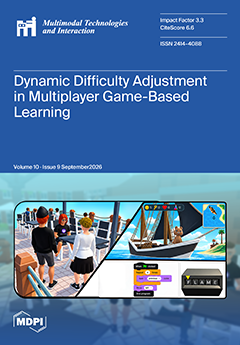
Cover Story (view full-size image):
Game-based learning environments offer engaging and interactive ways to support learning. However, accommodating players with different skill levels remains a challenge. Static difficulty settings do not sufficiently address individual differences in performance and progress. Dynamic difficulty adjustment (DDA) adapts challenges to the player to support a balanced learning experience. The study explores DDA in a cooperative multiplayer environment that teaches programming through block-based puzzles. A rating-based system adapts task difficulty to player performance and was compared with a static version using a fixed medium difficulty. The largest observed differences concerned perceived competence and gameplay progression. The findings highlight the potential of adaptive game mechanics for supporting diverse skill levels. View this paper
- Issues are regarded as officially published after their release is announced to the table of contents alert mailing list.
- You may sign up for e-mail alerts to receive table of contents of newly released issues.
- PDF is the official format for papers published in both, html and pdf forms. To view the papers in pdf format, click on the "PDF Full-text" link, and use the free Adobe Reader to open them.
Previous Issue
Next Issue
