


Abstract
Angola’s cultural mosaic and ethnolinguistic diversity reflect the multilocational traditional customs and power, which are key to the country’s social organisation. A Soba, a traditional leader whose status is recognised by the Angolan Constitution, exerts political influence, shapes the collective life, and helps to preserve cultural identity. Customary law, entrenched after independence, became central to the political and administrative restructuring of the country, which had an impact on decentralisation efforts and legal pluralism. This study analyses the traditional leadership of Sobas in Angola in the context of placemaking and territorial co-management. Backed by the theory of Afrocentricity, a multidisciplinary approach is adopted towards setting Africans as the subjects of their own history. It is based on a literature review and critical analysis of the interaction between administrative law and customary law, which imply a hybrid model for territorial governance. The results indicate that the influence of Sobas on decision-making directly affects the use of the territory and cultural development, highlighting the importance of institutionalising traditional power. This paper suggests that recognising and strengthening such hybrid models is key to promoting territorial cohesion and fostering community engagement, whilst integrating traditional practices can result in more inclusive and effective public policies.
1. Introduction—State and Traditional Leadership in Angola’s Legal Framework
Angola is a democratic unitary state in which the local government is exercised by regional bodies whose heads are appointed by the President of the Republic. According to the Constitution of the Republic of Angola [1,2], the local government aims to ensure that State’s duties and interests are taken into account at a local level, and this is to be done without compromising the autonomy of local tiers. However, in the light of factual power centralisation the effective autonomy of local governments remains a challenge, affecting local governance and citizen participation in territorial management. The lack of powerful local authorities jeopardises the effective autonomy of local government and poses many challenges, such as undermining local autonomy and competence issues. On the other hand, the Constitution provides for local governance, ensuring Sobas traditional leadership role and citizen participation in the design of public policies [3].
Particularly, this research sought to examine the situational issues underlying the traditional leaderships, called Sobas, which represent in planning tasks a particular share of power in Angola. Tradition entails ambivalences and tensions as it is not a frozen concept merely inherited from the past, but it is rather a dynamic issue, subject to constant disputes and reinventions. Tradition, in the African, post-colonial context, takes an analytical role for understanding contemporary social and political dynamics. The figure of traditional authorities—the Soba—stands out as a symbolic and political core, around which different local, community, and government actors are articulated. They all dispute different forms of legitimacy and exercise of power. It is important to emphasise that a Soba is not merely a remnant of an ancestral order, but rather an active institution whose role is continually reinterpreted, both by elites and by the population. A Soba is thus a person who embodies and exercises power within a community, has influence over framing customary law, and thus also over land use and territorial identity building. He is recognised by the population as a legitimate territorial manager [4,5,6,7] and directly financed with a mensal salary paid by the ministry (currently the Ministry of Territorial Administration).
To achieve the research goals, key concepts, such as Afrocentricity [8], placemaking [9], decentralisation, co-management of the public realm, and customary law, are integrated to help us better understand the relationship between tradition, territory, and society. Collaborative and inclusive planning helps to preserve traditions by involving local communities and local authorities in decisions about land use [10]. Integrating ancestral and cultural knowledge ensures that traditional practices are respected in urban development. In this way, collaborative planning embraces both modernity and tradition, strengthening the communities’ identity and promoting solutions that meet contemporary needs without disrespecting traditional values. The issue with traditional power exerted by Sobas in Angola provides unique lessons in the strike of a balance between unity and the incipient power distribution through local governance, which calls for the recognition of local diversities.
1.1. Political and Administrative Decentralisation
In Angola, besides the central state three tiers of governance were established, namely, provinces, municipalities, and communes in a vertical power sharing system, with the central government on its top. In the first tier are the 21 provinces, subdivided into 326 municipalities, and these are further subdivided into 378 communes.
The presidential system foresees that the President of the Republic is the head of state and government and holds the executive power. This implies the subordination of regional and local government to the central government. According to Law 15/17 [3], the president shall decide about the delegation of power to the local authorities. In Angola, political and administrative decentralisation is still underway, and already two main phases towards its implementation have been enacted. The first was taken through Decree-Law no. 17/99, and followed later by the approval in 2001 of the Strategic Plan for Deconcentrating and Decentralisation [11]. The transfer of power from the central government to local self-governments seeks to promote greater autonomy, participation, and efficiency in the management of public affairs. However, under the guise of decentralisation, it seems that local authorities (municipalities) are the focus and not the provinces. On the other hand, these municipalities are a key element in enhancing democracy and ensuring the autonomy of local government. Owing to providing a better service to citizens through shared autonomy and power, the administrative decentralisation process seems to be slow and complex. This has been mitigated by the process of power deconcentration that has been taking place, at least with greater intensity since 2018, with the approval of Presidential Decree no. 20/18 which establishes the Regime for the Delimitation and Deconcentration of Powers and Coordination of Territorial Action by the State’s Central Administration and Local Administration [11]. The current legislation establishes specific duties and responsibilities for the provincial and local levels, particularly with regard to (urban) land management. However, the lack of clear and consistent power sharing between the different levels has led to conflicts between ministries and provincial and local government departments, hindering in practice their implementation.
The current local governance structure in Angola is characterised by a hierarchical relationship between the three levels of governance. In this framework, the provincial governors are appointed by the president. The provincial governors appoint the municipal governors, who in turn appoint communal governors. In between this formal structure, there are several informal entities, whose activity is particularly visible in peri-urban areas. The informal entities include the Sobas, who perform local administration and land management functions based on customary rights but are also party coordinators, responsible for social mobilisation actions; and, in the specific context of Luanda, neighbourhood leaders who through residents’ committees also exercise land use management. Despite lacking legal backing, these informal institutions play this role on a recurring basis, especially during and after the period of armed conflict.
This highlights an institutional duality in which formal structures and customary practices coexist and, at times, overlap in a conflicting manner.
1.2. Local Power vs. Traditional Power
Power is a central concept in Political Science. Building further on Weber [12,13,14], Mangala [15] calls it political domination, where obedience results from accepting an authority. Weber [12,13,14] distinguishes its between power (imposition) and domination (legitimate authority), and identifies the following three types of legitimate domination: rational-legal, based on legal norms; traditional, sustained by belief in traditions; and charismatic. In the African context, Afrocentricity highlights the importance of traditional leadership structures which, far from being mere remnants of the past, represent local forms of governance rooted in community culture and values. Traditional domination, in this sense, not only maintains social cohesion but also strengthens the collective identity and resilience of communities [1,16,17].
The Angolan Constitution provides for the division of powers, which consists of central and local government, institutions of traditional power, and other forms of citizen participation. However, the government of several communes have not been fully implemented yet, leaving local governance fragmented between different entities. Although a local government calls for increasing citizen engagement with local government, a model for an effective participation has not been implemented yet, which results in a weak civil society confined within a social and political space [12,13]. The power of Sobas should be understood under the premise that while exercising political power within their respective community it must comply with customary values and norms, while it is also expected that the Constitution [2] and the legislation in force are respected. For Weber [13] (p. 174) traditional power […] rests on the everyday belief in the sanctity of traditions that have existed since ancient times and in the legitimacy of those appointed by that tradition to exercise authority. In this vein, the Constitution in its Article 223 [2] establishes that the power of Sobas is recognised by the State. This article also defines Soba’s legal status, functions, and roles, as well as the required respect to the customary law and Constitution. Such traditional authorities play an important role in solving community problems. Their performance is directly related to the need of such a kind of power in communities, so that public bodies are obliged to respect their rights and duties. Furthermore, the Constitution in its Article 224 emphasises that Sobas act as intermediaries between communities and the central government, contributing to the share of power [2] this way, Sobas may strengthen social cohesion and help to integrate traditional practices into the country’s administrative and political structure [18].
The articulation of the concepts of political power, traditional authorities, decentralisation, and local power allows for a broader understanding of governance and public administration, and enables one to analyse the distribution and exercise of authority in different contexts in Angola [15]. Guedes [18] points out that the ruling party has exercised significant influence over the traditional leaders since 1975, as it considers them to be a “politically backward” and a target of eradication. Pacheco [19] also mentions other factors, such as the colonial heritage and the increase in literacy, that result in the loss of power of traditional leaders, whose symbolism and rituals have come to be seen as a sign of backwardness. However, the power of such local authorities is also restricted by law, which makes them dependent on the regional government representatives appointed by the central government.
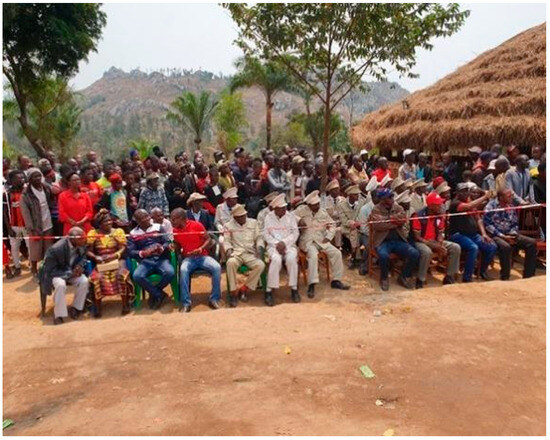
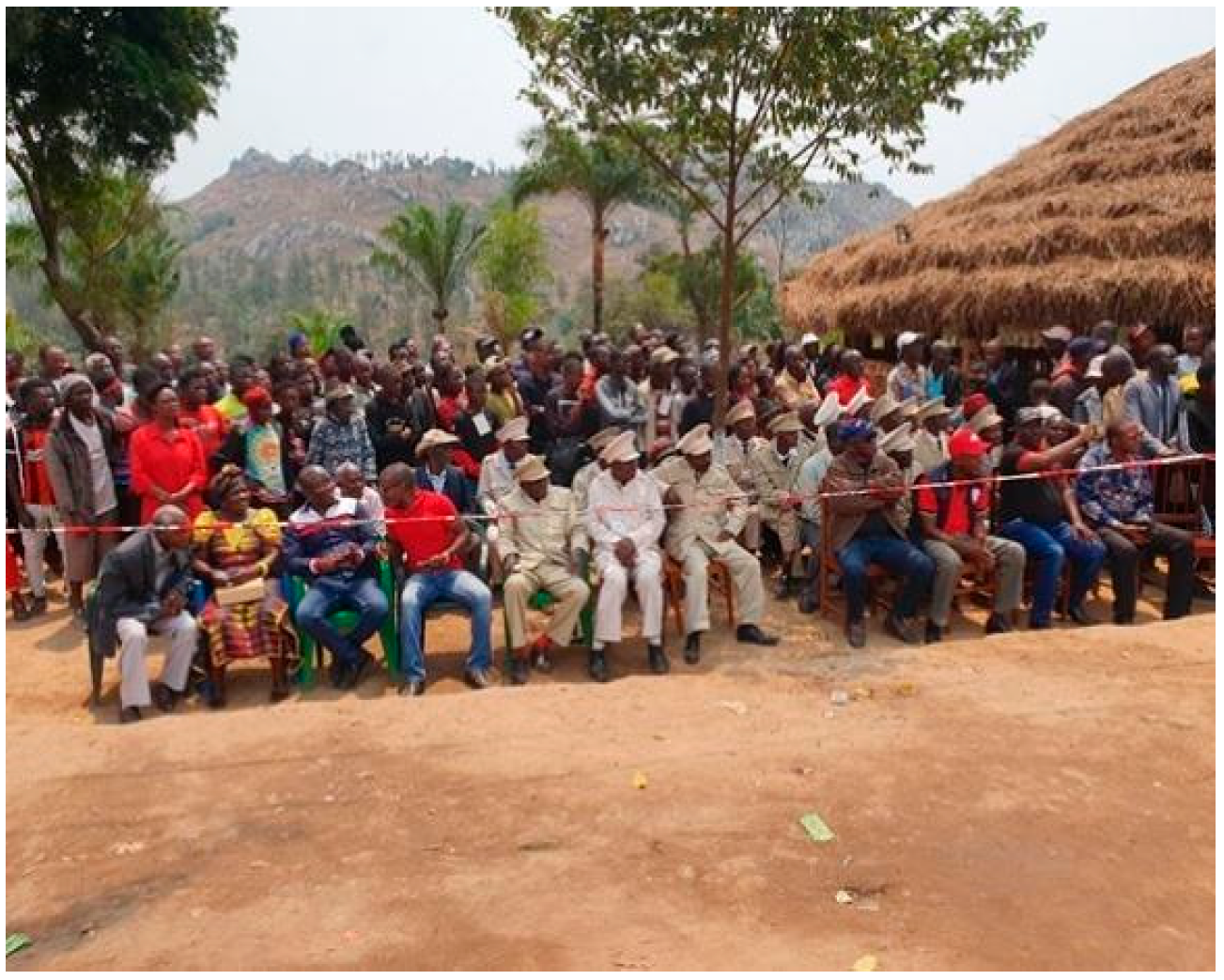
Once the Angolan state acknowledges Soba’s power as it legitimises their place, functions, and social role, it must also recognise the power they hold to influence local government actions. This illustrates an intrinsic connection between the legitimacy of pluralism and the different non-formalised normative systems and shows that the State does not respond to local and community demands with its long-established standards and rules. Thus, such power games in the public arena become also relevant for placemaking [9] as it has to value the political power and forms of domination closely linked to space and the way communities appropriate and manage their territories. In the case of Sobas, their influence overcomes the mere exercise of power as they also become guardians of cultural and historical knowledge, and thus play a fundamental key role in local social organisation. The cases of the King of Bailundo, leader of the ethnolinguistic group of Umbundu, and King Ngana Alunga IX (Figure 1), leader of the ethnolinguistic group of Kimbundo, are representative for this purpose [10,16,20,21,22,23]. Both Sobas (king is a common translation to English) not only embodied traditional political power but also played a fundamental role in preserving the collective memory, cultural identity, and community governance. These issues are crucial for a socio-political restructuring of Angola. The influence of these Kings goes beyond the mere exercise of official authority, making them central agents in safeguarding cultural heritage and local history and promoting social balance within their communities. The Kings of Bailundo played a central role against Portuguese colonialism, in particular, in the settlement of the local population. In turn, King Ngana Alunga IX exerts significant influence in the northern and central-northern regions of Angola, embodying a deeply rooted cultural and political tradition established when his ancestors were engaged in the formation of the Kingdom of Ndongo (1518–1683).
Figure 1.
Enthronement ceremony of King Ngana Alunga IX in 2019, with the presence of representatives from public administration, civil society organisations, community members, and other traditional authorities. The enthronement ceremony reiterates the territorial legitimacy of the lineage in its symbolic and practical dimension [20] (pp. 107).
Within such social dynamics, territorial planning takes place in a context of hybrid governance, which is where the modern state and traditional authorities share the management of the territory—often indirectly and informally. The enthronement of Sobas is not only a cultural rite but also reiterates the traditional power over physical and symbolic spaces, with direct implications for local governance, preservation of cultural identity, and territorial planning issues. In a context of globalisation and social change, keeping these ceremonies strengthens community cohesion and shows respect for inherited practices [4,7]. This shows how traditional authorities represent the legitimation of an autonomous and ancestral power, rooted in Angolan cultural values that date as far back as the pre-colonial period, which continued to exist during the formation of Angola’s State and after its independence from Portugal.
In the context of traditional communities, land management and conflict prevention and resolution are often based on traditional knowledge and practice, transmitted orally in discussions or group gatherings. Customary law applies for instance to matters such as the following:
- (a)
- The division of family or community land following uncodified rules that are yet widely recognised by community members.
- (b)
- Claims and disputes relating to marriage, inheritance, or intra-community boundaries.
These issues are often resolved on the basis of precedents and established practices, often resumed by the expression “the way things have always been done”. The decision is generally taken in public ceremonies of judgement or reconciliation, chaired by a Soba, elders, or councils of wisdom, whose deliberations have social legitimacy and community recognition even without a formal legal framework. However, despite their power, traditional leaders are not formally involved in the (urban) planning processes. In fact, in the context of spatial planning the Constitution [2] reveals by omission that it does not consider in planning issues the influence exercised by traditional leaders on the use of the territory. It is noteworthy that the term “urban/territorial planning” is not used throughout the Constitution, which highlights, on the one hand, the call for a legislative update and, on the other hand, the lack of clear regulation. The latter poses a challenge for Angolan scholars given the scarcity of scientific evidence related to traditional authorities and urban/territorial planning. In addition, it is also necessary to consider the multiplicity of issues that surround traditional leaders, such as the way they are selected (by election or appointment due to the family line, or even because of party politics) and their influence and authority over geographical spaces.
According to Mafra and Silva [22] the concept of space, if not ambiguous, is at least conceptually broad, in that it accommodates various geographical, historical, economic, physical, social, administrative, political, etc., definitions. This ambiguity becomes more evident when social inequalities are analysed, particularly in accessing public services responsible for defining public policies, such as urban planning. As Guerra [24] aptly points out, cities have been undergoing socio-economic transformations and these transformations generate urban inequalities [25,26,27,28] which result in spatial segregation and prevent the participation of the most disadvantaged groups, such as the poor or those with no formal schooling, in collective decision-making and in governance processes. This means at the end that these groups are not engaged in policy outcomes, and thus their needs are not taken into consideration. This, in turn, does not curb Angola’s democratic development. In line with this context, the rural exodus has increased, being driven by the disparities in living conditions between urban and rural areas and by the expropriation of communal land. Despite being illegal, selling communal land is a common practice, especially spurred on because of the lack of control, no opposition by the traditional leaders, and the agreement or at least the acquiescence of administrative authorities.
The modern state poses distinctive challenges to the position and status of traditional leadership, whose succession was originally determined by descent and is now influenced by political factors which weaken their authority and participation in decision-making. This is a result of an asymmetrical clash between modernity, Eurocentrism, and capitalist production on one side, and the traditional Angolan power sharing on the other. The impact of external forces, from the colonial period to the present, has not contributed to a strengthening of the traditional leadership system, not even after Angola’s independence. One reason for this could be that during the colonial period many Sobas became mediators for the Portuguese government and were responsible for collecting taxes and enforcing colonial authority. The centralised colonial governance model reduced the traditional leaders’ influence, curbing their usual role and turning them into mere symbolic figures with no real power. The formation of the modern Angolan State has further accentuated the loss of the traditional political structures, completely disregarding the role of ancient African kingdoms, such as the beforementioned Kingdom of Kongo and the Kingdom of Ndongo.
By analysing the institutionalisation of traditional power in Angola, co-management, and the construction of territorial identity, some significant barriers can be identified that hinder the participation of traditional leaders in planning tasks. These barriers will be further discussed in the forthcoming sections, as well as, how the power of the traditional leaders can be a benefit if the legal framework is correspondingly updated.
2. Materials and Methods
The methodology of this research adopts a multidisciplinary approach, combining areas of knowledge such as law, sociology, anthropology, and political and planning sciences to provide a better understanding of the dynamics between traditional power and political and administrative structures in Angola. Afrocentricity [8] will be the main theoretical foundation as it enables us to reflect the traditional African culture and practices, considering Africans as active subjects in their history and development. The research is based on a comprehensive literature review, focused on the operationalisation of traditional power, customary law, and decentralisation in Angola for planning issues, and includes the review of legal documents and scientific papers and reports on governance and community rights. To note is that very little scientific literature has been published in English, and very few even in Portuguese are directly related to the research topics.
The analysis is centred on interactions between public administrative law and customary law and aims to explore how the amalgamation of both impacts the political–administrative reshaping of the country, particularly with regard to decentralisation, legal pluralism, and territorial co-management. We focus on the question about the Sobas’ role in the design of public policies, land use practices, and cultural preservation. This research shows how a hybrid model that considers both modern state power and traditional leaderships can contribute to territorial cohesion and boost community participation.
3. Results
Modernity imposes significant challenges on traditional power sharing in Angola, especially with regard to the participation of traditional leaders in local governance. The typical conflict between the two different approaches of land management—the formal and the traditional—is additionally exacerbated by widespread population movements during the long periods of civil war. With this the traditional role of Sobas has been undermined due to social and economic pressures and political changes, and also due to social instability caused by migration movements, including by the Sobas themselves who lose their acting land [29].
The role of Sobas has historically been important in the country’s social organisation as they have authority over the collective life [16,23,27]. In 2023, it was estimated that there are around 40,000 Sobas in Angola [30], but their exact number is unknown. However, the political interference on the choice of traditional leaders has greatly weakened their legitimacy, often turning them into mere symbolic figures with no direct effect on crafting public policies and with no instruments for consolidating their political power. Although the traditional leaders have been complaining over time about their maladjustment to the dynamics imposed by modernity, they still have an enormous influence on matters related to conflict mediation, community justice, preservation of customs and cultural values, and land management. This sphere of influence is provided by law (Law No. 15/17) [3], which recognises their role as assistants to the local government who are able to act as a bridgebuilder between the State and communities.
3.1. Custom and Traditional Authority and the Relationship to Regulatory Law
In particular in rural communities, Sobas are recognised for their ability to influence community decisions. According to Pacheco [19], traditional leaders are often autocratic, invested with mystical and symbolic power, and able to make discretionary decisions on various issues, including matters of life and death. This shows that communities had strong trust in such a traditional leadership system, as similarly reported by Mvenene [31]. In addition, traditional leaders also act as representatives of the State in areas where public administration is absent, acting as a link between the traditional and cultural values (customs) of the communities. Custom assumes a normative and obligatory importance, especially in rural areas where Sobas and elders play a fundamental role in the transmission of cultural and behavioural practices [32].
Customary law being based on practices, customs, and uncodified norms often transmitted orally between generations emerges from the collective experience and authority of traditional figures, such as Sobas, playing a central role in social regulation in several Angolan communities. In contexts where little to no presence of the State or the government is perceived as illegitimate, customary law proves to be an acceptable legal source, guiding territorial management, conflict mediation, and preserving community order. However, the traditional leaderships face significant challenges in terms of recognition in society and participation in decision-making processes, especially with regard to territorial and urban land use questions. According to the Constitution [1,2] and relevant legislation, such as Art. 6 of Law No. 3/04, the State is responsible for urban planning, thus the Sobas should assume a consultative role. Yet, the low education level of many traditional leaders has been pointed out as a significant barrier to their engagement in decision-making processes. They are often replaced by external participants, who often lack a deep knowledge of local dynamics [18]. Despite this, the State recognises customary law as a way to preserve indigenous (territorial) knowledge, thus it seeks to establish mechanisms to integrate formal political power and traditional power. This is fundamental to protect ancestral practices and knowledge. The Ministry of Justice and Human Rights [32] defines customary law as a set of rules spontaneously created by communities that should be recognised by the State. Such legitimation of power allows, for example, traditional leaders to take part in actions concerning the ownership of land, as specified in Article 18 of Decree 58/07 [33].
The relationship between the central government, local authorities, and traditional leaders is a clear example of legal pluralism, where different legal systems, local norms, and rules coexist, valuing cultural and local diversities. Legal pluralism, as a fundamental principle, allows the rights and values of different communities to be respected and integrated into political and administrative decisions. Although the Constitution [2] and the Organic Law of Local Power [3] recognise traditional authorities, the central government still significantly controls the autonomy of these entities, preventing their greater freedom of action and thus in participating in territorial decisions. Therefore, the institutionalisation of traditional power in Angola, despite being ensured by law, faces substantial challenges related to an effective participation in urban planning processes. Without a doubt, the integration of customary law and the promotion of legal pluralism opens up space for a greater integration of traditional practices in land management, thus preserving the territorial identity and communities’ ancestral knowledge.
3.2. Challenges and Opportunities for Integrating Traditional Power into Urban Planning in Angola
Sobas play a crucial role in their communities, mediating conflicts, managing the territory, and helping in tapping local knowledge [15,34]. In practice, however, Sobas are often relegated to a secondary role [19] with limited power in crafting public policy and influencing territorial planning. Recent studies [27,34] point to a gradual diminishing of their status and rights, mainly by political power and market agents, which reinforces their marginalisation in the decision-making process. The ban of Sobas from local governance, and thus from planning issues and processes, also reflects a conflict between traditional and modern power sharing. This is often associated with the adoption and adaption of European administrative models since the colonial period and the ensuing weakness of traditional structures after Angola’s independence [27].
The Angolan society is directly shaped by colonial processes, and any study of the current context must encompass an historic review. A quick glance at Angola’s history identifies the following five distinctive phases [35,36,37,38]:
- Pre-colonial period (before 1482) with an ancestral organisation of communities before the arrival of the Portuguese conquerors [39,40]. Sobas played a central role in governing, acting as political and religious leaders and territory managers. A Soba was a respected and recognised leader whose legitimacy was derived directly from the community and its matrilineal kinship structures [41].
- Colonial period (until 1975), when alien rules and administrative structures were imposed. Due to the enforced division of Angola based on ethnolinguistic groups, the Sobas lost power [40,41,42], although Portugal granted the traditional leaderships. These were though subjugated by the colonial authorities, who significantly restricted their autonomy. A Soba’s official recognition was conditional on their subordination to the interests of the Portuguese administration. The territorial administration based on colonial criteria disrupted local socio-political organisations, fragmenting legitimate jurisdictions and weakening the legitimacy of Sobas within their communities [43]. The consolidation of the colonial government system at the end of the 19th century established citizenship premised on race and a legal order marked by ambivalent dichotomies. This colonial legacy persists until today in the form of legal pluralism, expressed in hybrid regulatory arrangements amalgamating the traditional and the modern governance systems.
- Liberation struggle and independence (1961–1975), with several conflicts between different independence movements, struggles for power, and territorial disputes. This culminated with the independence of Angola in 1975 [44,45]. Inherited from the colonial period, the social differentiation was characterised by power mechanisms, which resulted in the formation of two distinct societies, one central and the other in peripheral regions [44]. This resulted in the Sobas assuming an ambivalent role. They were the target of distrust by nationalist movements due to their relationships to the colonial regime, while in rural areas remained as figures of authority and cultural identity. Despite the difficulties in asserting political legitimacy in the context of war and territorial fragmentation, Sobas continued to exercise local influence, especially in social mediation and in preserving community cohesion.
- Civil war and political transition (1975–2002). The collapse of the State due to the war, during which it was unable to perform basic functions, was followed by post-war instability with a single party ruling the country. This had an impact on the democratisation efforts and territorial organisation [40,46]. Colonial legacies still persisted, exacerbating the social divide and limiting the voices of local power. In a context marked by instability, Sobas took on roles of community mediation and preserving local order. However, their actions were sometimes exploited by political parties for social control and popular mobilisation.
- Post-war period (since 2002) and the restoration of peace and territorial integrity. This period poses contemporary challenges for governance and the role of traditional leaderships [19,44]. Sobas are assuming a more relevant role in local government; however, the inconsistencies remain still open regarding their role and competences [29].
This historical context describes an uninterrupted track guided by a classicist principle, which hinders the integration of endogenous culture and restricts an active participation of certain social groups in decision-making processes. The process of forming the Angolan State highlights how modernity, being motivated by economic interests and centralised state administration, is undermining local practices and customs and threatening the traditional leadership structures, compromising the diversity in political power sharing that coexisted for centuries.
Nowadays, although traditional authorities enjoy some autonomy in their communities, modernity continues to generate conflicts, especially when indigenous knowledge is confronted with scientific knowledge. In the light of the weak situation for Sobas, it calls for reviewing the current planning framework and updating it in the light of new approaches that ensure a more equitable and sustainable community engagement. Four planning contexts—territorial identity, placemaking, Afrocentricity, and gender equity—serve as a foundation to our arguments. These approaches are also considered regarding their relevance on the political–economic dimensions and the issues of social justice, as well as in creating place and territorial attachment and mobilising community participation.
Territorial identity, understood here as the relationships between communities and the spaces they live and act [32], boosts the sense of belonging and loyalty to a community and its territory. Building territorial identity is central for increasing citizens’ engagement with local governance.
Placemaking, as an approach focused on creating culturally significant urban spaces, reinforces the need to integrate traditional practices in the design and management of territories. In this context, community participation becomes a key element in ensuring that (urban) planning efforts incorporate the cultural and historical specificities of local communities.
Afrocentricity offers an essential perspective for understanding and strengthening the participation of traditional leaders, recognising indigenous governance structures as legitimate and functional within the African context. This approach emphasises the need to empower traditional leaderships, ensuring that they can interact effectively with modern governance structures without losing their roots in the communities. Modernising traditional structures through training and the use of technology makes it easier for them to adapt to the urban context. In addition, strengthening the dialogue between traditional power, government institutions, and civil society helps to mediate conflicts and build a more inclusive and participatory model.
4. Discussion
The analysis of the influence and power of traditional leaders in urban planning in Angola requires an approach that integrates the historical background of land use from the colonial period to the country’s independence and later development. The link between customary law and urban configuration is a key to understanding the influence of traditional leaderships on the territorial organisation. Once Sobas play a relevant role in land use issues, and in order to mitigate the social and spatial inequalities, it is our recommendation that Sobas’ role and status should be institutionally strengthened through training in public management. This would result in a formal role in local governance, which would provide a sense of continuity and cultural identity.
The urbanisation in Angola, and in Africa in general, is shaped by two dynamics, the institutional and the traditional. These seeming contradictions are complementary. Although often relegated to a marginal role in formal urban planning, Sobas maintain significant influence over land use practices and this makes them key actors in the processes of informal urbanisation and in shaping of urban spaces [5,29,47]. In the city of Huambo, Sobas play a central role in territorial management, extending their traditional function of land allocation, previously restricted to rural areas, to peri-urban areas [29]. To that extension, decentralisation and co-management, involving the active participation of Sobas in policy design and implementation, can contribute to a hybrid model of governance that combines tradition with modernity [27]. Such a model would enable the integration of traditional power structures while overcoming obstacles to the participation of traditional leaderships in urban planning.
While the literature [1,16,19] often treats the inclusion of traditional leaders in a generic or merely symbolic way, the proposed approach is built on a logical and operational sequence which respects the interdependencies between legal recognition, institutional capacity building, multilateral dialogue, and social inclusion. It is backed by integrating customary knowledge, promoting the modernisation of traditional structures, and valuing cultural identities as strategic elements for more inclusive, participatory, and socially legitimised urban governance.
Building such a hybrid governance model, the key features of which are depicted in Table 1, which amalgamates tradition and modernity requires the formalisation of existing traditional powers. This will ensure continuity, enabling traditional leaders to have an active participation in urban planning efforts. In order to consolidate their role and status, the aim is to recast the existing legal framework to strengthen the role of traditional leaders in their communities. Such recasting has to provide also a clear statement of their competences and responsibilities in the urban planning context. Taking real initiatives aimed at balancing the share of state power emerged also as key strategies for decentralisation and co-management of the territory.
Table 1.
Proposed hybrid governance model. A balance between tradition and modernity, and power sharing between central power and local government.
An effective integration of traditional leaders into urban planning processes requires a phased approach supported by different criteria, such as legal coherence, institutional capacity, and socio-cultural legitimacy. The initial milestone should be based on the legal recognition and formal institutionalisation of these leaders through a review of the legal framework that would establish, unequivocally, their roles and limits of action in the areas of spatial planning and land management. Table 2 shows the organisational challenges for an integration of the traditional power in planning tasks.
Table 2.
Challenges for integrating traditional power in planning tasks.
Another planning challenge in Angola results from the colonial cultural and economic domination, which caused deep transformations in the organisation and development of territories. This means that in Angola the search for an alternative model for territorial development is still an issue. Such a model has also to cope with the dual influence of native and foreign cultures. The “imported” models involve other stakeholders, such as corporations and private agents, directly shaping and impacting territorial development. As they do not value both traditional leaderships and local knowledge, they have failed to serve either as a major policy to guide spatial planning (i.e., urban planning), or as an actionable strategy to steer a sustainable social, environmental, and economic transformation of territory. An endeavour to base territorial development on African standards must necessarily consider the strong influence of colonial heritage, with its wide range of features such as political, religious, and economic enculturation and acculturation [16,33,48,49]. These features are closely linked to current management tools used in most African countries as they expose old processes of exclusion, especially in urban areas [50]. In such a context of duality, Afrocentricity emerges as a critique of Eurocentrism as it proposes valuing more African ideas and endogenous knowledge. According to Asante [8], it seeks to challenge cultural and economic supremacy. Tackling such duality calls for analysing methodologies for a decolonisation and (re)Africanisation, such as one that considers material and immaterial aspects in planning tasks.
The Angolan customary land tenure, all land being originally property of the State, ensures equal access and use of land for the communities. However, the possibility of expropriation of land for public interest establishes a significant limitation to the engagement of traditional leaders in territorial management as they are not able to protect the interests and rights of their communities. In practice, the disposal of land assets does not always respect the criteria of public interest and is often geared towards private purposes, thereby creating tensions between the State and communities. The selling of land for private projects without adequate compensation and without the involvement of local communities is understood to be a sign of the marginalisation of traditional leaders and vulnerable groups, hindering inclusive and sustainable territorial development. Diminishing the status and role of Sobas demonstrates how power circulates and is distributed unequally through public policy.
The advent of New Public Management [51,52] and the establishment of the Angolan Forum of Traditional Authorities [30] in 2017, propelled by the information society, have brought about significant changes in public governance towards promoting efficiency and accountability. Nevertheless, such approaches, by emphasising technocratic and capitalist models, have often neglected endogenous knowledge and traditional territorial management practices. In this context, placemaking is emerging as an alternative to ensure greater citizen participation in territorial management. However, in Angola, due to economic interests, its use is still incipient, limiting in fact the development of integrated and co-management strategies for the territory.
Despite these difficulties, there is a growing awareness among local communities of their rights and the importance of participatory democracy. In particular, the provinces with higher literacy rates, i.e., Luanda, show greater civic engagement, highlighting a strong relationship between education and citizen participation in territorial management [9,21,22,23,28,32,49]. Such signs of progress can push for policy changes, and can advance transformative, community-driven policymaking.
Against this background, further research is required to mobilise more stakeholders in the discussion about the role of traditional leadership in planning tasks, as well as for defining policies and measures with regard to the engagement of communities and a more efficient use of territorial resources. Such initiatives could contribute to advancing a body of knowledge that helps decision-makers and academics to design more inclusive policies and promote territorial education that values both technical and traditional knowledge.
5. Conclusions
The reflections discussed throughout this paper evidence the importance of traditional leaders in solving social problems and in community management. Such a role has an impact on territorial management and thereby on planning tasks. Traditional leaders can thus be among the key stakeholders, whereas their contribution, among others, can be providing a sense of continuity and supporting cultural identity. This can boost the quality of planning and enhance confidence in participatory processes. In spite of this, the influence of Sobas has been reduced over time by an asymmetrical relationship with political power, often masked under the rhetoric of partnership which in practice has neutralised their power, showing a sidelined position. This is aggravated by party political issues that negatively affect their image and their role in local decision-making processes.
Collaborative planning approaches emerged as a viable solution for reversing this scenario as they open different opportunities for local communities, including traditional leaderships, to engage in project design and implementation processes. Such approaches value cultural assets and enable their integration in territorial development, ensuring the continuity of local practices and customs and that decisions taken reflect the needs of concerned communities. This leads to improved democracy, greater legitimacy, and more equitable, sustainable public decisions. Linking modernity and tradition through collaborative planning contributes to a more balanced urban and territorial development. Collaborative planning with the engagement of Sobas contributes to a new governance model that respects both customary law and positive law and fosters a new tactic for urban planning which moves away from conventional technical management by experts to a more pragmatic and open planning effort. Incorporating traditional leadership and local knowledge in decision-making processes help to make the decision-making and policy implementation better informed and more able to meet community needs, thus guiding an awaited societal change.
The novelty of this approach is in its understanding of the role of Sobas in spatial issues, as in research their role is mainly analysed from a legal [1,16,19] or sociological [4,6,7] view. Establishing a hybrid model for territorial governance in Angola requires the deliberate integration of traditional leaders in both informal and formal territorial processes—this would result in a process that is cultural rooted. Systematically integrating cultural values, local practices, and traditional knowledge into land use planning and management instruments would ensure their social relevance and sustainability.
To better understand the Angolan context, new and deeper studies are needed to provide a holistic view of the interaction between the several institutions involved in territorial development and the local power configuration. Moreover, boosting the cooperation between traditional leaders, non-governmental organisations, and government bodies could be an important step in promoting more integrated and effective territorial management. The inclusion of Sobas in participatory governance structures seems to be promising, although it depends on political will, institutional innovation, and effective community participation. Valuing traditional knowledge combined with democratic mechanisms for citizen participation will contribute to a more balanced governance model in line with the country’s socio-cultural requirements.
Author Contributions
Conceptualization, C.S.C. and N.A.; methodology, C.S.C. and N.A.; formal analysis, N.A., R.D., and J.F.; investigation, N.A., R.D., and J.F.; writing—original draft preparation, N.A., R.D., and J.F.; writing—review and editing, C.S.C.; supervision, C.S.C.; project administration, C.S.C.; funding acquisition, C.S.C. All authors have read and agreed to the published version of the manuscript.
Funding
This research was funded by the Horizon Europe Framework Programmes for Research and Innovation under grant agreement No. 101058509 (ECS project).
Data Availability Statement
The original contributions presented in this study are included in the article. Further inquiries can be directed to the corresponding author(s).
Acknowledgments
This research is based on the project ECS | European Citizen Science funded by the Horizon Europe Framework Programme for Research and Innovation (contract no. 101058509), and on the preparatory work for the PhD theses of the authors on related topics to be defended at the Universidade Lusófona, Department of Architecture and Urban Planning, Lisbon (Portugal).
Conflicts of Interest
The authors declare no conflicts of interest.
References
- Gouveia, J.B. Direito Constitucional de Angola; IDILP—Instituto do Direito de Língua Portuguesa: Lisbon, Portugal, 2014; Available online: https://run.unl.pt/bitstream/10362/121497/1/Direito_Constitucional_de_Angola_2014.pdf (accessed on 1 March 2025).
- Diário da República. Lei de Revisão Constitucional. Primeira Revisão/2021. 2021. Available online: https://plataformacipra.gov.ao/public/ficheiros/arquivos/Gov_AngolaConstitui%C3%A7%C3%A3o190102230948141675284494.pdf (accessed on 3 March 2025).
- Diário da República. Lei Orgânica do Poder Local. 2017. Available online: https://mpla.ao/wp-content/uploads/2024/03/015-LEI-15-17-LEI-Organica-do-poder-local.pdf (accessed on 1 March 2025).
- Meneses, M.P. Poderes, Direitos e Cidadania: O ‘Retorno’ Das Autoridades Tradicionais Em Moçambique. Rev. Crít. Ciênc. Sociais 2009, 87, 9–42. [Google Scholar] [CrossRef] [Scilit]
- Mingas, A.C.D.B.L. Cidades em Angola: Entre o Conflito de Urbanidades e a Necessária Mudança de Paradigma. Laje 2023, 1, 174–205. [Google Scholar] [CrossRef] [Scilit]
- Sousa Santos, B. O Estado heterogéneo e o pluralismo jurídico em Moçambique. In Boaventura de Sousa Santos: Construindo as Epistemologias do Sul Para um Pensamento Alternativo de Alternativas; CLACSO: Buenos Aires, Argentina, 2019; Volume II, pp. 65–110. Available online: https://www.jstor.org/stable/j.ctvt6rkm6.8 (accessed on 3 March 2025).
- Sousa Santos, B. O pluralismo jurídico e as escalas do direito: O local, o nacional e o global. In Boaventura de Sousa Santos: Construindo as Epistemologias do Sul Para um Pensamento Alternativo de Alternativas; CLACSO: Buenos Aires, Argentina, 2019; Volume II, pp. 197–210. Available online: https://www.jstor.org/stable/j.ctvt6rkm6.11 (accessed on 29 March 2025).
- Asante, M.K. Afrocentricity: The Theory of Social Changes; African American Images: Chicago, IL, USA, 2003. [Google Scholar]
- Menezes, M.; Smaniotto Costa, C. The Role of Collaborative Ethnography in Placemaking. Humans 2024, 4, 284–297. [Google Scholar] [CrossRef] [Scilit]
- de Matos Fernandes, T. O Poder Local em Moçambique: Descentralização, Pluralismo Jurídico e Legitimação; Colecção Textos; Edições Afrontamento: Porto, Portugal, 2008. [Google Scholar]
- República de Angola. Decreto Presidencial n.o 20/18 de 29 de Janeiro. 2018. Available online: https://lex.ao/docs/presidente-da-republica/2018/decreto-presidencial-n-o-20-18-de-29-de-janeiro/ (accessed on 29 March 2025).
- Weber, M. O Político e o Cientista; Presença: Lisbon, Portugal, 1973. [Google Scholar]
- Weber, M. Economía y Sociedad: Esbozo de Sociología Compresiva; Fundo de Cultura Económica: Mexico City, Mexico, 2002; Available online: https://zoonpolitikonmx.wordpress.com/wp-content/uploads/2014/08/max-weber-economia-y-sociedad.pdf (accessed on 3 March 2025).
- Weber, M.; Mourão, A. Três Tipos de Poder e Outros Escritos; Tribuna da História: Lisbon, Portugal, 2005. [Google Scholar]
- Mangala, A.N.G. O contributo das Autoridades Tradicionais na Afirmação Como Poder Local em Angola. Master’s Thesis, Instituto Superior de Ciências Sociais e Políticas, Lisbon, Portugal, 2018. Available online: https://repositorio.ulisboa.pt/handle/10400.5/16204?mode=full (accessed on 3 March 2025).
- Feijó, C.M. A Coexistência Normativa Entre o Estado e as Autoridades Tradicionais na Ordem Jurídica Plural de Angola; Almedina: Lisbon, Portugal, 2012. [Google Scholar]
- de Novais Reis, M.; de Oliveira Fernandes, A. AFROCENTRICIDADE: Identidade e centralidade africana. ODEERE 2018, 3, 102–119. Available online: https://periodicos2.uesb.br/index.php/odeere/article/view/4302 (accessed on 9 July 2024).
- Guedes, A. Uma Articulação Entre o Estado e as ‘Autoridades Tradicionais’? Limites na Congruência entre o Direito do Estado e os Direitos ‘Tradicionais’ em Angola. In Estudos Comemorativos dos 10 anos da Faculdade de Direito da Universidade Nova de Lisboa; do Amaral, D.F., de Almeida, C.F., de Almeida, M.T., Eds.; Almedina: Coimbra, Portugal, 2008. [Google Scholar]
- Pacheco, F. Autoridades Tradicionais e Estruturas Locais de Poder em Angola: Aspectos Essenciais a ter em Conta na Futura Administração Autárquica. Available online: https://library.fes.de/pdf-files/bueros/angola/hosting/pacheco.pdf (accessed on 5 March 2025).
- Catala, V.; Francisco, J. Amboim: Identidade Cultural, Resistência à Ocupação Colonial e a Guerra de 1961; Unimater: Luanda, Angola, 2022. [Google Scholar]
- Isaksen, J.; Amundsen, I.; Wiig, A.; Abreu, C. Orçamento, Estado e Povo. Processo de Orçamento, Sociedade Civil e Transparência em Angola; Chr. Michelsen Institute: Bergen, Norway, 2007. [Google Scholar]
- Mafra, F.; Siva, J.A. Planeamento e Gestão do Território; Sociedade Portuguesa de Inovação Consultadoria Empresarial e Fomento da Inovação, S.A.: Porto, Portugal, 2004; 96p, Available online: https://www.spi.pt/documents/books/inovacao_autarquia/docs/Manual_X.pdf (accessed on 5 March 2025).
- Santin, J.R.; Teixeira, C.M.D.S. Poder Local e Autoridades Tradicionais em Angola: Desafios e Oportunidades. Seq. Est. Jur. Pol. 2020, 41, 135–172. [Google Scholar] [CrossRef] [Scilit]
- Guerra, I. O Planeamento Estratégico das Cidades: Organização do Espaço e Acção Colectiva; CIDADES, Comunidades e Territórios: Lisbon, Portugal, 2000; pp. 37–55. Available online: https://repositorio.iscte-iul.pt/bitstream/10071/3288/1/Cidades2000-1_Guerra.pdf (accessed on 9 July 2024).
- Bourdieu, P.; Bourdieu, P. Distinction: A Social Critique of the Judgement of Taste; Harvard University Press: Cambridge, MA, USA, 2002. [Google Scholar]
- Harvey, D.A. Brief History of Neoliberalism; Oxford University Press: Oxford, UK, 2005. [Google Scholar] [CrossRef] [Scilit]
- Nascimento, A.; Rodrigues, E.; Fernandes, P.J. Municípios e Poderes Locais em África: Heranças e Metamorfoses em Tempos de Incerteza. Cad. Estud. Afr. 2015, 30, 7–24. [Google Scholar] [CrossRef] [Scilit]
- Sassen, S. The Global City: New York, London, Tokyo; Princeton University Press: Princeton, NJ, USA, 2013. [Google Scholar] [CrossRef] [Scilit]
- DW—Development Workshop. TERRA Urban Land Reform in Post-War Angola: Research, Advocacy & Policy Development; Occasional Paper No 5, 2005. Available online: https://dw.angonet.org/wp-content/uploads/Terra_English.pdf (accessed on 23 March 2024).
- Novo Jornal. Fórum Angolano das Autoridades Tradicionais Pede Advocacia ao Parlamento e a Provedoria de Justiça para Aprovação Urgente da Lei que Defina o Exercício da sua Actividade. 24 October 2023. Available online: https://www.novojornal.co.ao/politica/detalhe/forum-angolano-das-autoridades-tradicionais-pede-advocacia-ao-parlamento-e-a-provedoria-de-justica-para-aprovacao-urgente-da-lei-que-defina-o-exercicio-da-sua-actividade-34118.html (accessed on 9 July 2024).
- Mvenene, J. The waning fortunes of traditional leadership in South Africa: From pre-colonial to apartheid periods. New Contree 2023, 90, a248. [Google Scholar] [CrossRef] [Scilit]
- Ministério da Justiça e dos Direitos Humanos. Manual da 3.a Conferência Nacional sobre os Direitos Humanos «Cultura Com Justiça, Direitos Para Todos»; Ministério da Justiça e dos Direitos Humanos: Luanda, Angola, 2013. Available online: http://www.servicos.minjusdh.gov.ao/files/global/manualiiiconferenciadh_1480331457.pdf (accessed on 6 March 2025).
- Diário da República. Regulamento Geral de Concessão de Terrenos. 2007. Available online: https://www.ucm.minfin.gov.ao/cs/groups/public/documents/document/zmlu/mdmy/~edisp/minfin032540.pdf (accessed on 6 March 2025).
- Valeriano, J. A Institucionalização do Poder Tradicional em Angola. Ph.D. Thesis, Universidade de Lisboa, Lisbon, Portugal, 2019. Available online: https://repositorio.ulisboa.pt/handle/10451/38357 (accessed on 5 March 2025).
- Heimer, F.-W. Estrutura Social e Descolonização em Angola. Anál. Soc. 1973, 10, 621–655. [Google Scholar]
- Heimer, F.-W. Reflexões acerca de uma abordagem interdisciplinar das sociedades africanas. Cad. Estud. Afr. 2002, 3, 153–159. [Google Scholar] [CrossRef] [Scilit]
- Heimer, F.-W. Aspectos estruturais e subjectivos dos espaços políticos em África: Introdução a um debate. Cad. Estud. Afr. 2004, 9–14. [Google Scholar] [CrossRef] [Scilit]
- Heimer, F.-W.; da Silva, E.M. Culturas Políticas em Angola e Moçambique. Elementos para uma agenda de investigação. Cad. Estud. Afr. 2002, 27–37. [Google Scholar] [CrossRef] [Scilit]
- de Carvalho, F.M. Poderes locais angolanos: Ngolas, sobas, tandalas e macotas na dinâmica dos governos ilustrados portugueses da segunda metade do século XVIII. In XIV Encontro Regional de História—Rio: Memória e Patrimônio; Numem: Rio de Janeiro, Brazil, 2010; Available online: https://encontro2010.rj.anpuh.org/resources/anais/8/1276735352_ARQUIVO_TextoAnpuh2010.pdf (accessed on 6 March 2025).
- de Carvalho, F.M. Diáspora africana: Travessia atlântica e identidades recriadas nos espaços coloniais. Mneme—Rev. Humanidades 2010, 11, 14–24. Available online: https://periodicos.ufrn.br/mneme/article/view/835/773 (accessed on 6 March 2025).
- Miller, J.C. Kings and Kinsmen: Early Mbundu States in Angola; Oxford studies in African affairs; Clarendon Press: Oxford, UK, 1976. [Google Scholar]
- Andrade, M.; Ollivier, M. A Guerra em Angola; Seara Nova: Lisbon, Portugal, 1974. [Google Scholar]
- Birmingham, D. Empire in Africa: Angola and Its Neighbors; Research in International Studies, Africa Ser; Ohio University Press: Athens, OH, USA, 2006. [Google Scholar]
- Alfagali, C. Conflito de Terras nos Sertões de Angola: Estudo de Caso da Disputa pelas Terras de Ilamba, Século XVIII. Rev. Hist. 2019, 178, a03718. [Google Scholar] [CrossRef] [Scilit]
- Carvalho, F. Sobas Rebeldes de Angola. Impressões Rebeldes. Available online: https://www.historia.uff.br/impressoesrebeldes/revista/sobas-rebeldes-de-angola/ (accessed on 6 March 2025).
- Filho, S. Fronteiras Sociais: Negros e Brancos na Angola de Pepetela (1961–1975). In História: Fronteiras. Anais do XX Simpósio da Associação Nacional de História; Nodari, E., Pedro, J., Lokoi, Z., Eds.; Humanitas: Florianópolis, Brazil, 1999; pp. 739–751. [Google Scholar]
- Pieterse, E. Rethinking African Urbanism from the Slum. Urban Age. Available online: https://urbanage.lsecities.net/essays/rethinking-african-urbanism-from-the-slum (accessed on 24 April 2025).
- Capello, R. Interpreting and understanding territorial identity. Reg. Sci. Policy Pract. 2019, 1, 141–159. [Google Scholar] [CrossRef] [Scilit]
- Castells, M. The Rise of the Network Society, 1st ed.; Wiley: Hoboken, NJ, USA, 2009. [Google Scholar] [CrossRef] [Scilit]
- Fanon, F. Os Condenados da Terra; Letra Livre: Lisbon, Portugal, 2021. [Google Scholar]
- Krogh, A.H.; Triantafillou, P. Developing New Public Governance as a public management reform model. Public Manag. Rev. 2024, 26, 3040–3056. [Google Scholar] [CrossRef] [Scilit]
- Promberger, K.; Rauskala, I. New Public Management—An Introduction from the UK Perspective; Working Paper 6; Universität Innsbruck: Innsbruck, Austria, 2003; pp. 1–22. Available online: https://core.ac.uk/download/71732143.pdf (accessed on 30 March 2025).

Disclaimer/Publisher’s Note: The statements, opinions and data contained in all publications are solely those of the individual author(s) and contributor(s) and not of MDPI and/or the editor(s). MDPI and/or the editor(s) disclaim responsibility for any injury to people or property resulting from any ideas, methods, instructions or products referred to in the content. |
© 2025 by the authors. Licensee MDPI, Basel, Switzerland. This article is an open access article distributed under the terms and conditions of the Creative Commons Attribution (CC BY) license (https://creativecommons.org/licenses/by/4.0/).