


Abstract
Although research on cross-laminated timber (CLT) has been extensively investigated, its sound absorption characteristics in relation to CLT’s structure are still sparse in the literature. This study examined the influence of wood species, density, and edge gaps on the sound absorption performance of single or hybrid species of CLT. Six three-layer CLT configurations were fabricated using rubberwood (600–700 kg/m3) and coconut wood of two density ranges (600–700 kg/m3 and 700–800 kg/m3). Three types of edge gaps were introduced—between major laminations, between cross laminations, and a combination of both—at widths of approximately 6, 12, and 18 mm. Sound absorption was strongly affected by wood density, species, and their placement within the CLT structure. Panels incorporating high-density coconut wood showed improved low-frequency absorption, while low-density coconut layers enhanced high-frequency absorption due to their parenchyma-rich microstructure. In addition, performance varied according to gap type and frequency. Core gaps reduced sound absorption across most frequencies, whereas gaps between major laminations improved absorption at low and high frequencies through diffraction and increased surface area. Smaller gap widths further enhanced performance. Panels with combined gap types demonstrated superior absorption compared with those containing a single gap type or no gaps.
1. Introduction
Cross-laminated timber (CLT) is one of the engineered wood products that has recently gained significant attention in the construction sector worldwide. CLT is made of dimensional lumber glued together with adhesive to achieve large panels that can be used as load-bearing wall/floor panels in building structures [1,2]. Previously, the CLT panel was mainly made of softwood species [1]. Nowadays, various wood species (i.e., softwood, hardwood, and monocotyledon species) have been used for CLT production, either using a single wood species [3,4,5,6], mixed species [7,8,9], or mixed densities of the same wood species [9], depending on the wood resources available in each country.
To utilize those CLT panels in real building construction, their fundamental material properties must be established in order to design the building to meet the specific requirements [10]. The sound absorption coefficient of a material is one of the important properties that needs to be established to evaluate and design building acoustic performance, preventing outdoor noise pollution and indoor noise transmission to the outdoor environment [11,12,13,14,15]. This property determines a material’s ability to convert the sound energy into heat through a friction mechanism within the material’s structure. It is defined as a ratio of absorbed energy to the total incident energy [16].
Many attempts have been made to explore and model the sound absorption of various wood species. It was reported that the sound absorption coefficient was affected by various factors such as the internal structure of wood materials, density, porosity, perforation or grooving of the panel, surface treatment, etc. [17,18,19,20,21,22,23,24,25,26,27]. For CLT panels, however, the study of sound absorption characteristics considering potential parameters related to CLT structures is still limited. In particular, for hybrid-species/density CLT panels, the literature on their sound absorption characteristics across different wood species or the density of individual layers is still sparse. In addition, the edge gap, which is generally created during the manufacturing process of non-edge glue CLT panels, could also be one of the CLT structure-related potential parameters affecting its sound absorption characteristics due to the presence of air spaces within the CLT structure.
In this study, the sound absorption coefficient characteristics of hybrid-species/density CLT made of monocotyledon (coconut wood) and hardwood (rubberwood) species recently developed by Srivaro et al. [9] were focused on. The influence of wood species and individual-layer density, as well as edge-gap type (edge gap between major laminations, edge gap between minor laminations, or combined edge gaps), and size (6 mm, 12 mm, or 18 mm), on the sound absorption coefficient was explored.
2. Materials and Methods
2.1. Preparation of Coconut Wood and Rubberwood Raw Materials
2.1.1. Coconut Wood
Fifty-year-old coconut trees planted in the Thasala district, Nakhon Si Thammarat province, Thailand, were used to manufacture the CLT specimens. The trunks were converted into lumber pieces with dimensions of 35 mm (thickness) × 100 mm (width) × 500 mm (length) and processed at the Research Center of Excellence in Wood and Biomaterials, Walailak University. The green lumber was oven-dried at 55 °C for 10 days and then stored in a conditioning room at 20 °C and 65% relative humidity for approximately 1 month. After that, wood samples with a density of 600–700 kg/m3 (LCW) and 700–800 kg/m3 (HCW) were collected, and subsequently cut and sanded to the final dimensions of 16 mm thickness × 40 mm width × 40 mm length or 16 mm thickness × 80 mm width × 80 mm length for CLT production. The measured average densities of LCW and HCW were 647 ± 23 kg/m3 and 749 ± 16 kg/m3, respectively.
2.1.2. Rubberwood
Kiln-dried rubberwood lumber measuring 23 mm (thick) × 80 mm (width) × 1000 mm (length) from local rubberwood industries was used for this work. The lumber was kept in a conditioning room at a temperature of 20 °C and relative humidity of 65% for about two weeks, and then cut and sanded to the final dimensions of 16 mm (thick) × 40 mm (width) × 40 mm or 16 mm (thick) × 80 mm (width) × 80 mm (length) for CLT production. The measured average density of the rubberwood specimen was 688 ± 17 kg/m3.
2.2. Preparation of CLT Specimens for Sound Absorption Coefficient Testing
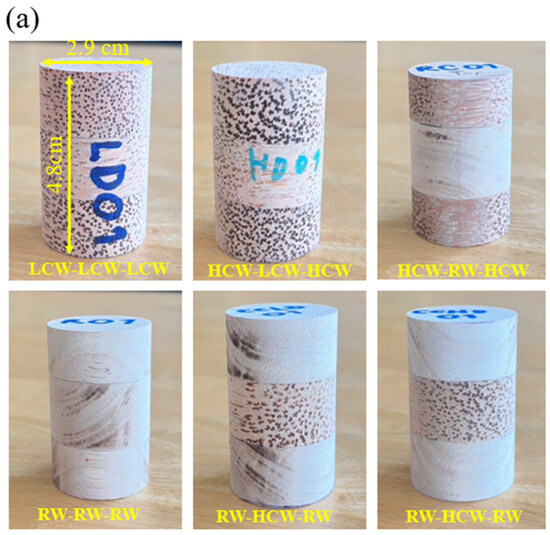
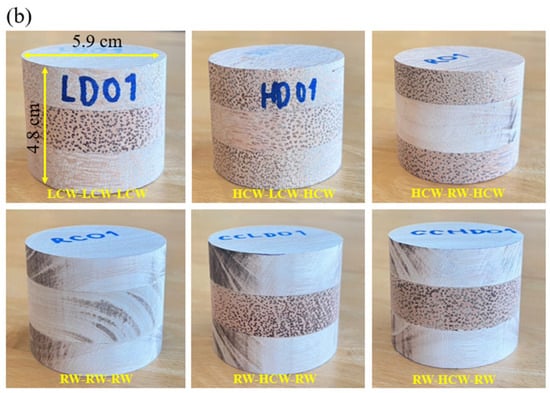
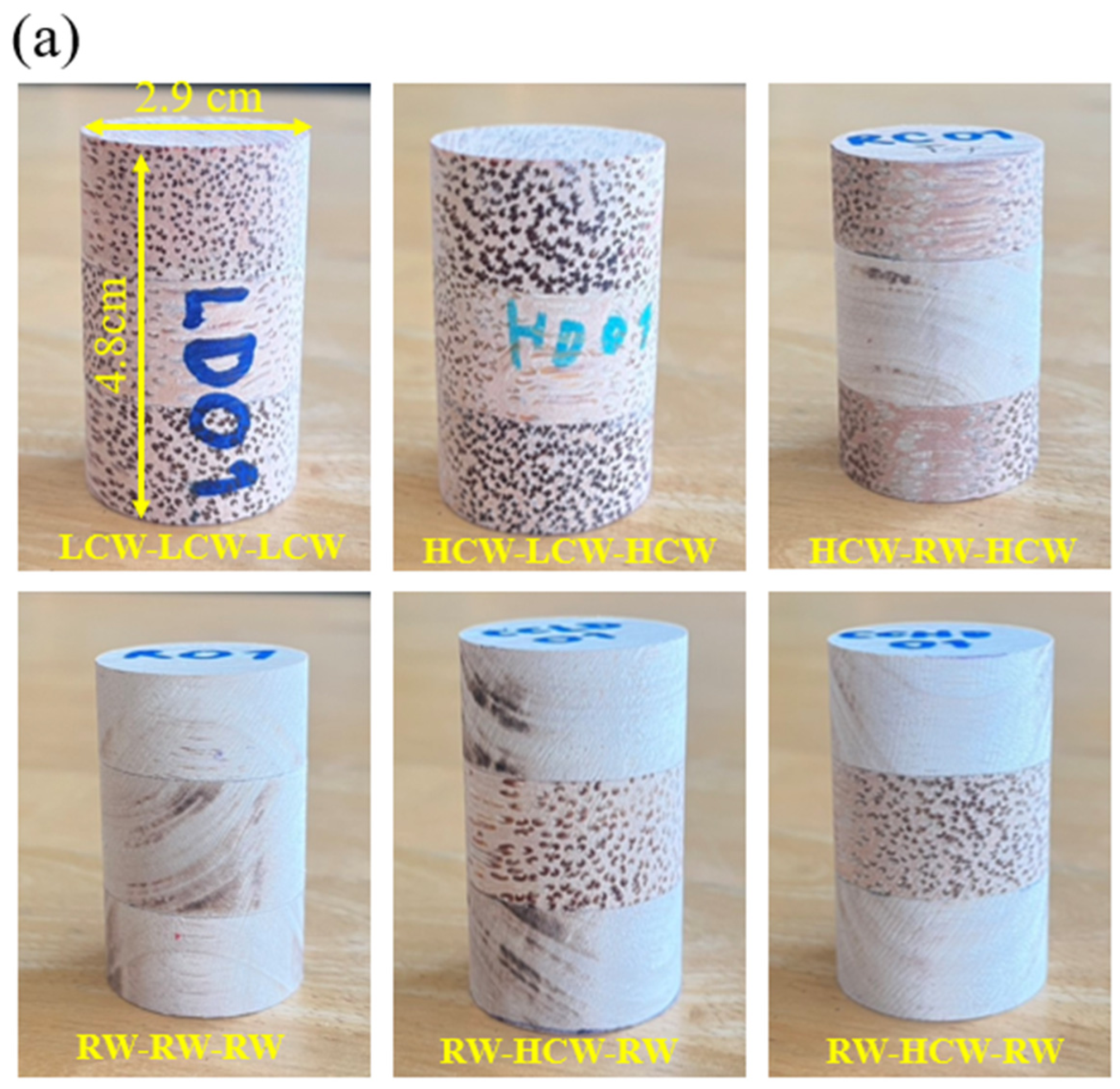
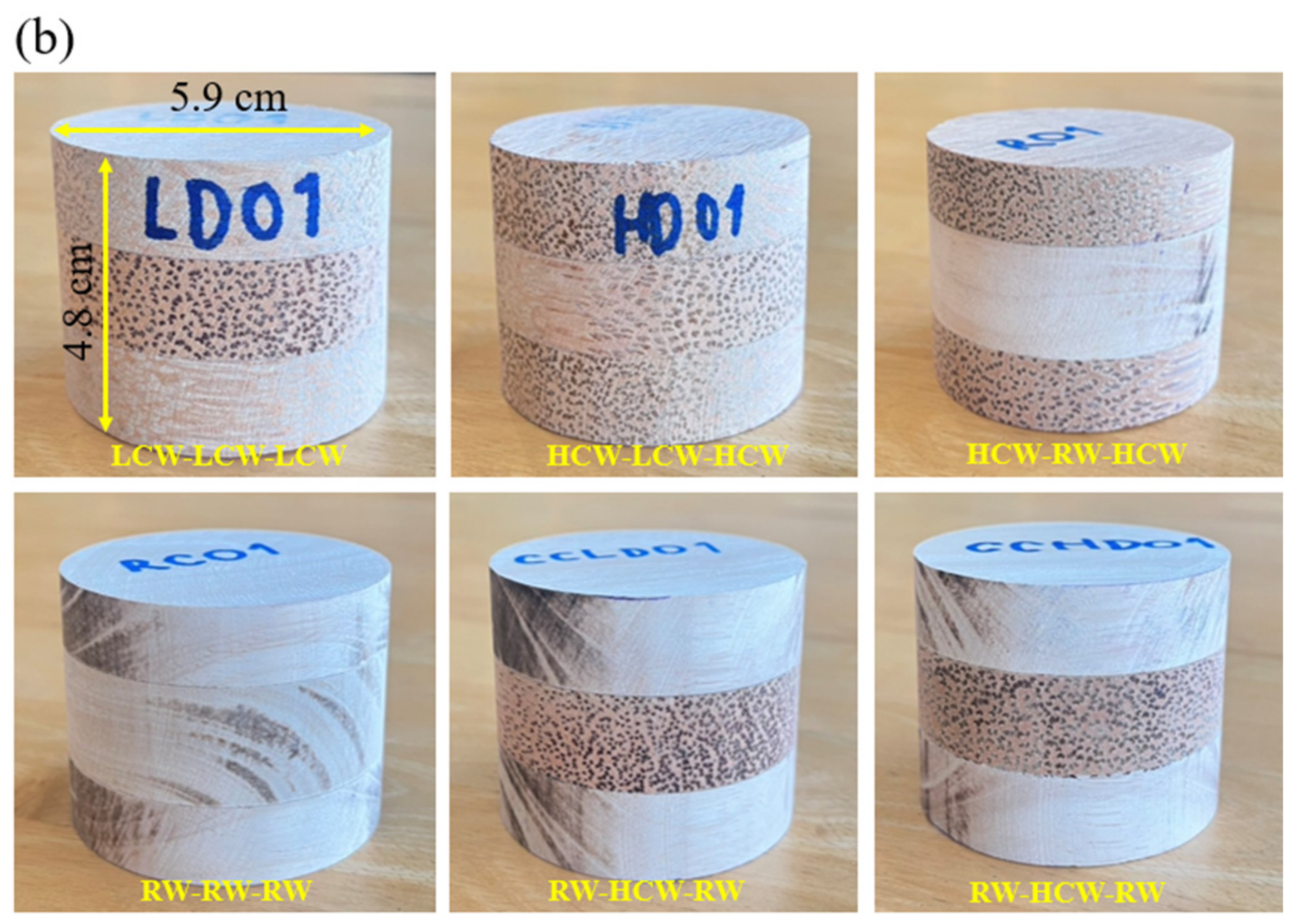
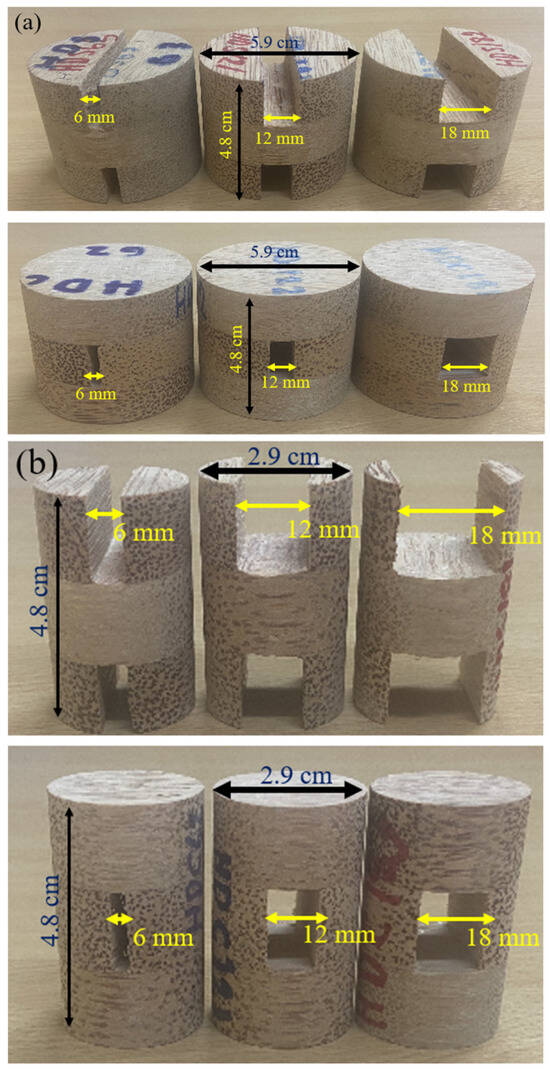
Six combinations of species and density for 3-ply CLT explored in the work of Srivaro et al. [9] were adopted in this research (See Table 1). The dimensions of the CLT specimens produced were 40 mm (length) × 40 mm (width) × 48 mm (thickness) or 80 mm (length) × 80 mm (width) × 48 mm (thickness). One-component polyurethane was used with a spreading rate of 250 g/m2 and a clamping pressure of 1 MPa [9]. These specimens were then processed into cylindrical-shaped specimens with a diameter of 2.9 cm or 5.9 cm, respectively, for sound absorption testing at frequency range of 2500–6000 Hz and 450–2500 Hz in accordance with ASTM E 1050 [16] as shown in Figure 1. In total, 3 specimens were produced for each type; thus, a total of 36 specimens were produced for all six configurations of the produced CLT panels.
Table 1.
Six combinations of species and density for a 3-ply CLT panel.
Figure 1.
Cylindrical-shaped specimens for sound absorption test at the frequency range of (a) 2500–6000 Hz and (b) 450–2500 Hz.
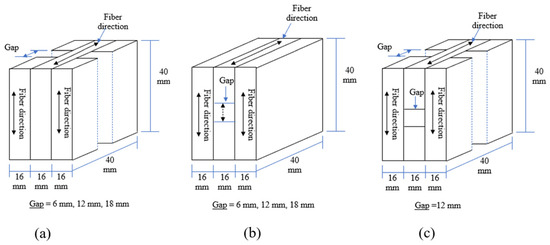
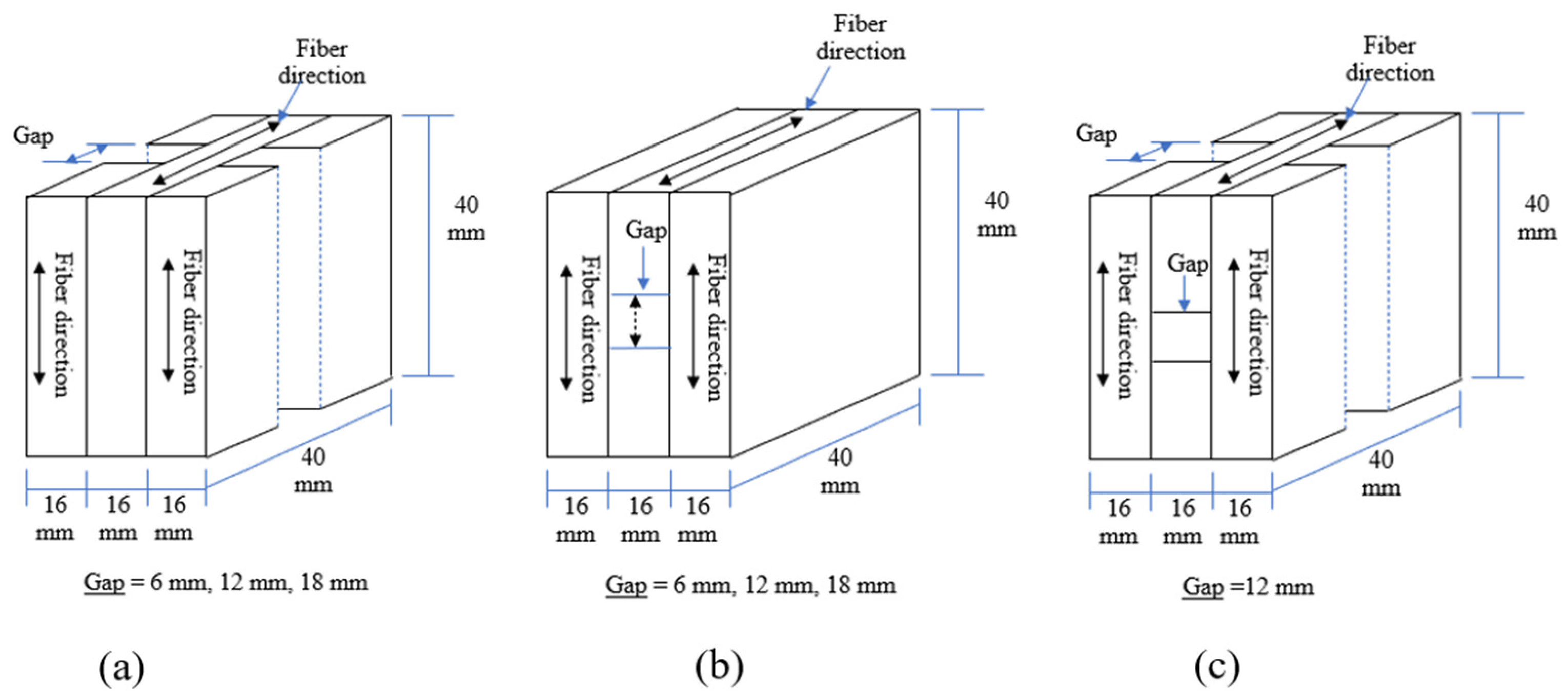
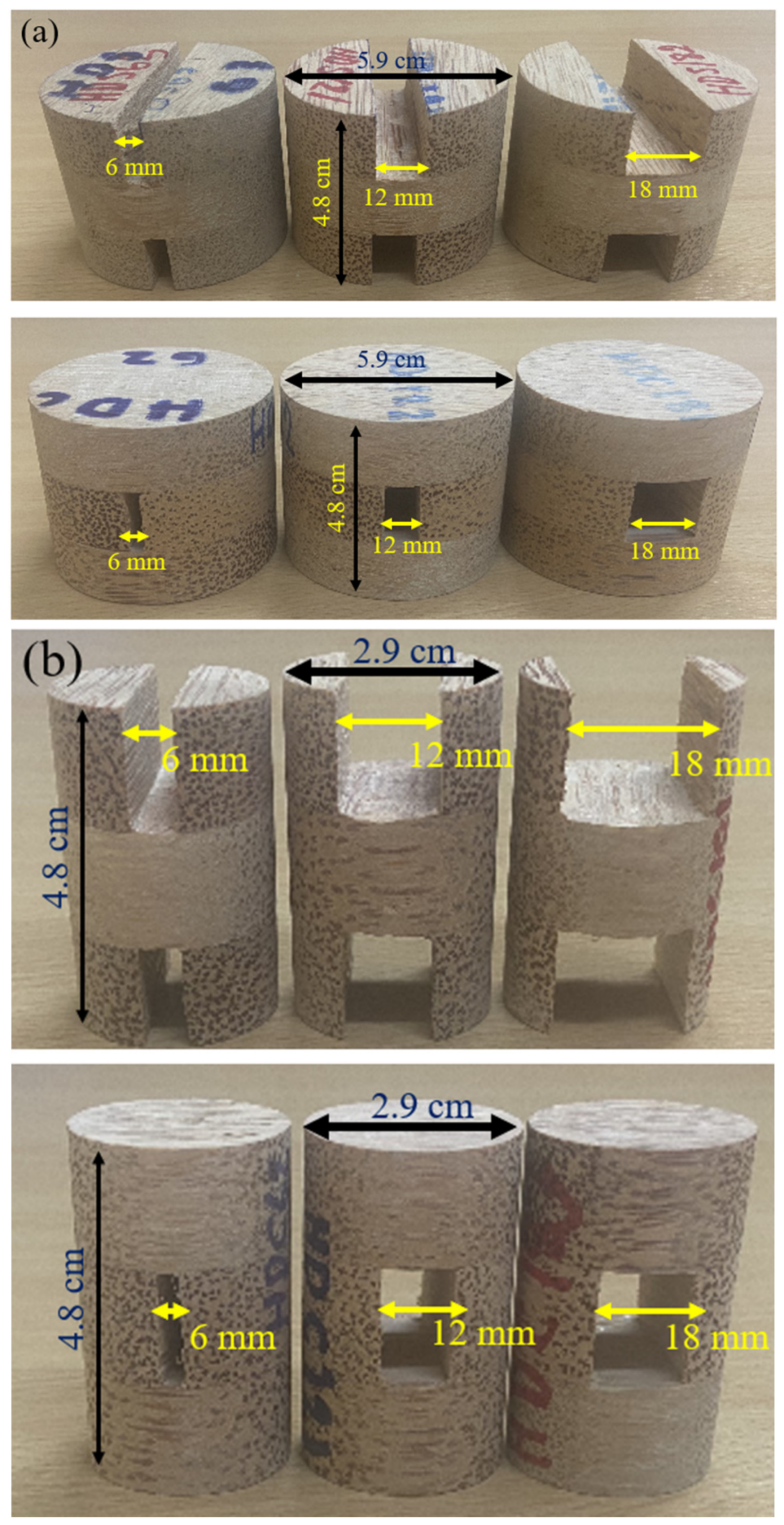
To explore the influence of edge gap on sound absorption coefficient, two types of coconut-based CLT panel (LCW-LCW-LCW and HCW-LCW-HCW) were selected for this purpose. Three-layer CLT specimens containing edge gaps of various sizes (6 mm, 12 mm, and 18 mm) between the major or minor laminations were produced (See Figure 2). For brevity in this section, LCW-LCW-LCW and HCW-LCW-HCW are designated as CLT Type I and CLT Type II, respectively. CLT specimens containing edge gaps in the major and minor lamination were also produced to examine the combined effect of the gap types on CLT’s properties. Here, only edge gaps that were 12 mm in size were selected for producing such CLT specimens (See Figure 2c). These specimens were then processed into cylindrical-shaped specimens with a diameter of 2.9 cm or 5.9 cm for sound absorption testing in accordance with ASTM E 150 [16], as shown in Figure 3, and kept in the conditioning room at a temperature of 20 °C and relative humidity of 65% for about 2 weeks before the property test.
Figure 2.
CLT specimens with dimensions of 40 mm (length) × 40 mm (width) × 48 mm (thickness) used for preparing the cylindrical-shaped specimen with a diameter of 2.9 cm, showing (a) the gap between the major laminations, (b) the gap between the minor laminations, and (c) the gap between the major and minor laminations in the piece.
Figure 3.
Cylindrical-shaped CLT type II specimens with diameters of (a) 5.9 cm and (b) 2.9 cm and with edge gaps between the major or minor laminations used for the sound absorption test at frequencies of 400–2000 Hz and 2500–6000 Hz, respectively.
2.3. Property Test
2.3.1. Apparent Density
Since the sound absorption coefficient of wood material is generally dependent on its density [21,28], the apparent density of CLT specimens made from different wood species/density, as well as that of CLT specimens containing an edge gap, were explored for further characterization of the sound absorption coefficient of CLT panel. The test was conducted on a specimen measuring 48 mm (thickness) × 40 mm (width) × 40 mm (length), using the test method described in EN 323 [29]. The mass and volume of the CLT specimen were measured, and the apparent density of CLT (CLT) was then calculated using Equation (1).
where m is the mass of the CLT sample, and V is the volume of the CLT sample. Six samples were used for each CLT configuration.
2.3.2. Sound Absorption Coefficient
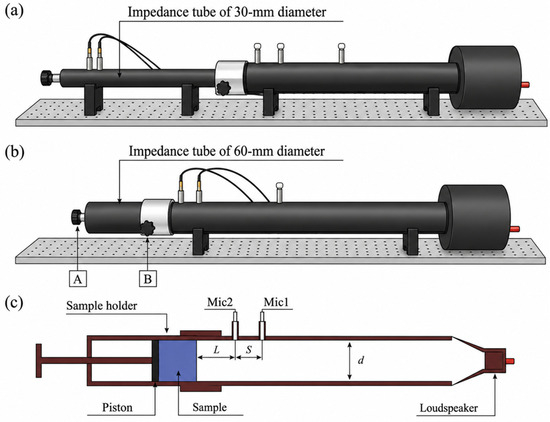
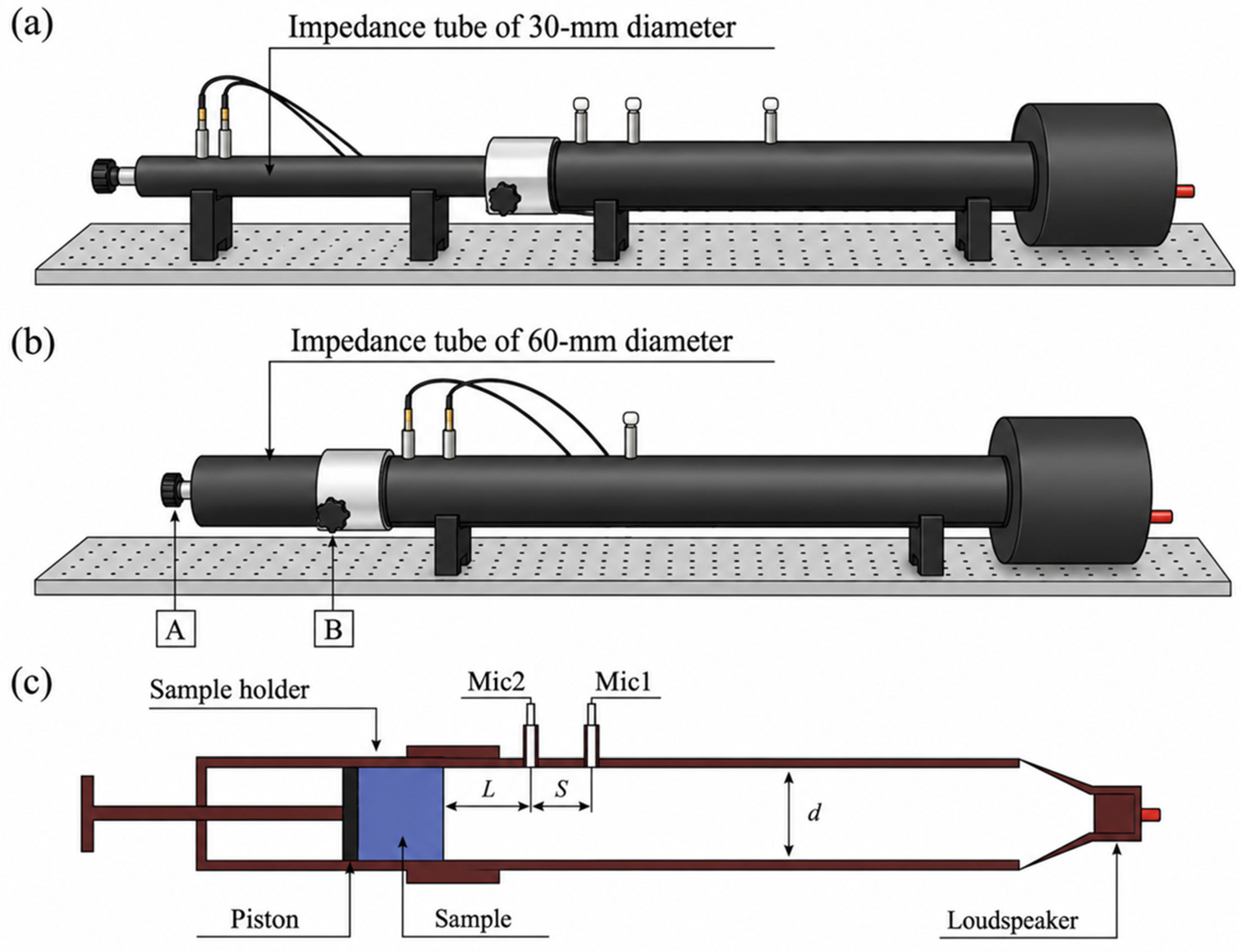
The sound absorption test was conducted using an impedance tube system (model SW466, BSWA, Beijing, China) as described in ASTM E 1050 (See Figure 4). The cylindrical CLT specimens prepared from Section 2.2 were carefully machined to match the inner diameters (2.9 cm and 5.9 cm) of the corresponding impedance tubes shown in Figure 4, providing a snug fit inside the sample holder. Therefore, no additional sealant, adhesive tape, or gasket was used to seal around the edge of the sample, as the close mechanical fit minimized peripheral air leakage during the measurements. Two microphones, referred to as Mic1 and Mic2, were positioned 4.5 cm apart (S) on the impedance tube; the distance from Mic2 to the sample surface was set at 4.0 cm, as illustrated in Figure 5. The transfer function method described by Chu [30] was used to calculate the transfer function , where p1 and p2 represent the sound pressures measured at two locations. The reflection coefficient (R) was then determined using Equation (2):
Figure 4.
Illustration of the impedance tube systems, (a) 30 mm-diameter tube, (b) 60 mm-diameter tube, and (c) schematic of the two-microphone impedance tube used for sound absorption measurements. A and B are fastening nuts.
Figure 5.
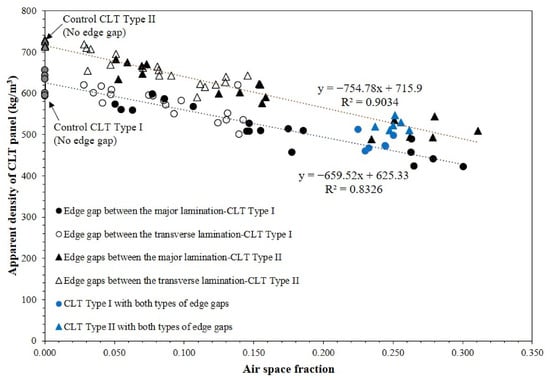
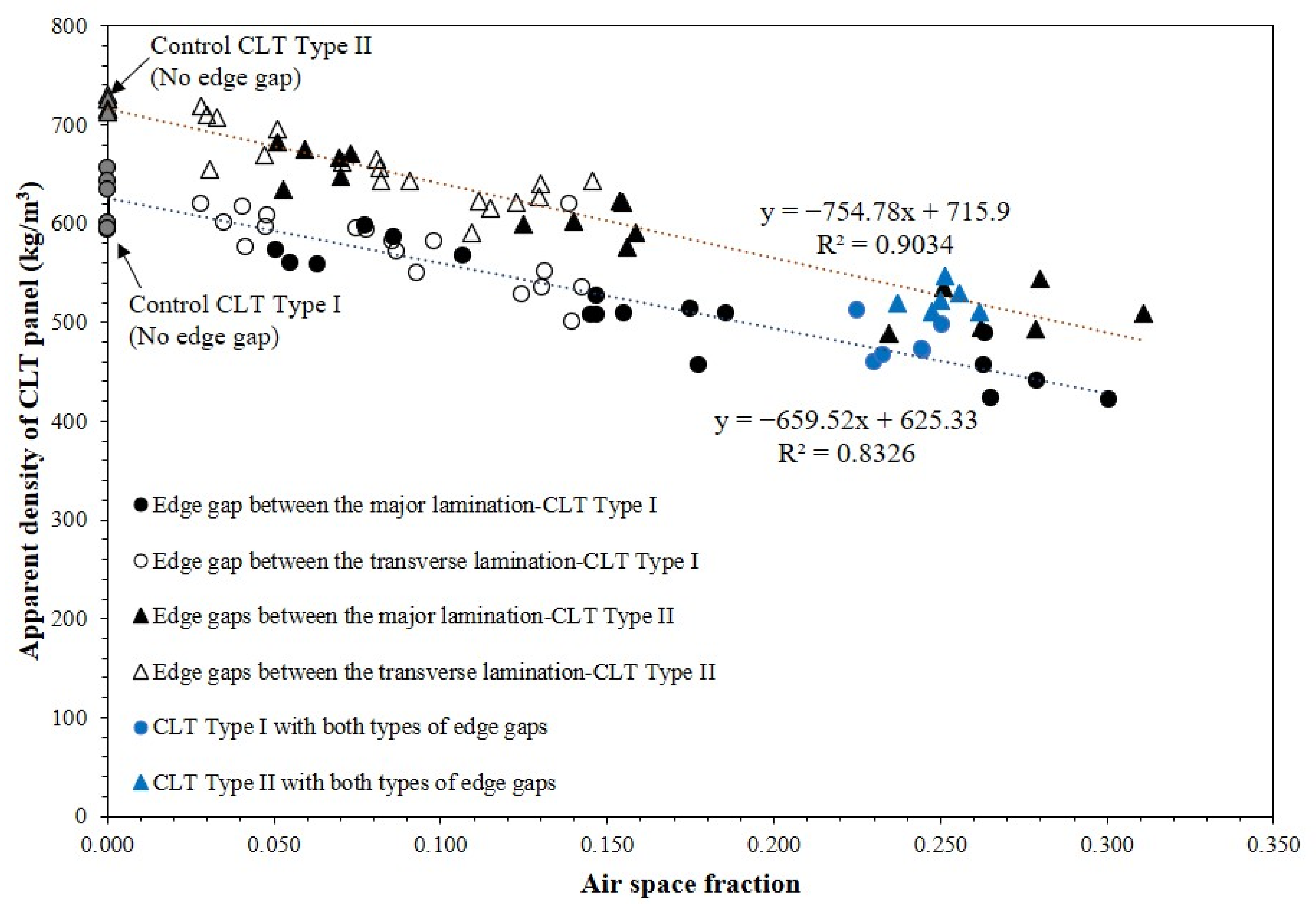
Apparent densities of CLT panels plotted against air space fraction in the CLT structure.
Here, i represents the imaginary unit, and k is the wave number (m−1). Finally, the sound absorption coefficient (α) was obtained using Equation (3) as described by Chung and Blaser [31]:
where |R|2 corresponds to the squared magnitude of the reflection coefficient. Three samples were tested for each configuration.
A =1 − |R|2
2.3.3. Statistical Analysis
To statistically evaluate the influence of edge gap type on sound absorption coefficient of each CLT type, the mean value of sound absorption coefficient (calculated from the sound absorption coefficient at frequencies of 500 Hz (α500), 1000 Hz (α1000), 2000 Hz (α2000), and 4000 Hz (α4000), see Equation (4)) of each CLT type containing different type of edge gap was determined, and one-way ANOVA at 0.05 level of significance was then used to determine the statistical difference between the mean values.
3. Results and Discussion
3.1. Apparent Density of CLT Specimen
The average apparent densities of all types of CLT panels without edge gaps are compared in Table 1. As expected, the edge gaps resulted in a decrease in CLT’s apparent density for both types of CLT panels (CLT type I and type II) with respect to the control (no edge gaps). Their apparent densities tended to decrease with increasing gap size due to the increased air space volume created by edge gaps in the CLT panel. The apparent densities of CLT panel Type I and Type II containing a single type of edge gap of 6 mm, 12 mm and 18 mm in size were 574 ± 15 kg/m3, 512 ± 7 kg/m3, 448 ± 25 kg/m3 and 663 ± 19 kg/m3, 602 ± 18 kg/m3, 511 ± 23 kg/m3, respectively, for edge gaps between the major laminations, and 603 ± 25 kg/m3, 579 ± 17 kg/m3, 545 ± 40 kg/m3 and 693 ± 25 kg/m3, 644 ± 28 kg/m3, 628 ± 11 kg/m3, respectively, for edge gaps between the cross laminations. When both types of edge gap were combined in the piece, its apparent density was lower than that of pieces with a single type of edge gap in the piece. In Figure 5, the apparent density and fraction of air space within the CLT panel had a linear relationship according to the rule of mixtures, quantified by Equations (5) and (6):
- -
- For the apparent density of CLT Type I (CLT-I)
ρCLT-I = −659.52fv + 625.33
- -
- For apparent density of CLT Type II (CLT-II)
ρCLT-II = −754.78fv + 715.90
3.2. Effect of Wood Species and Density on the Sound Absorption Coefficient of CLT Specimen
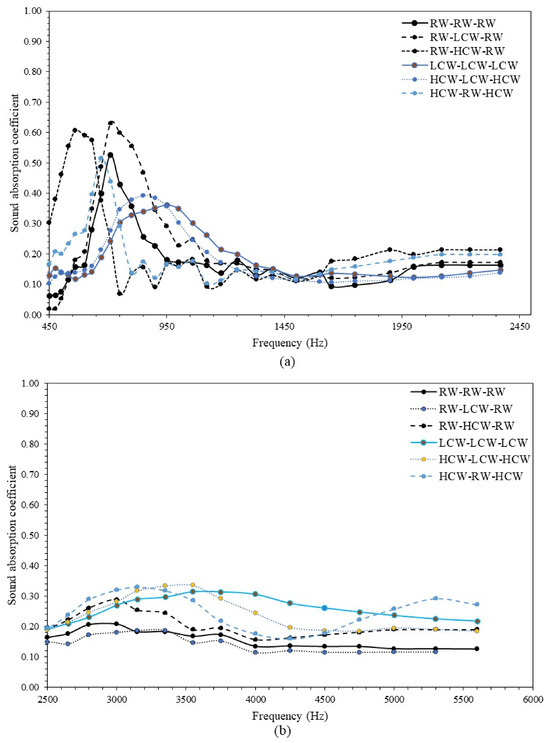
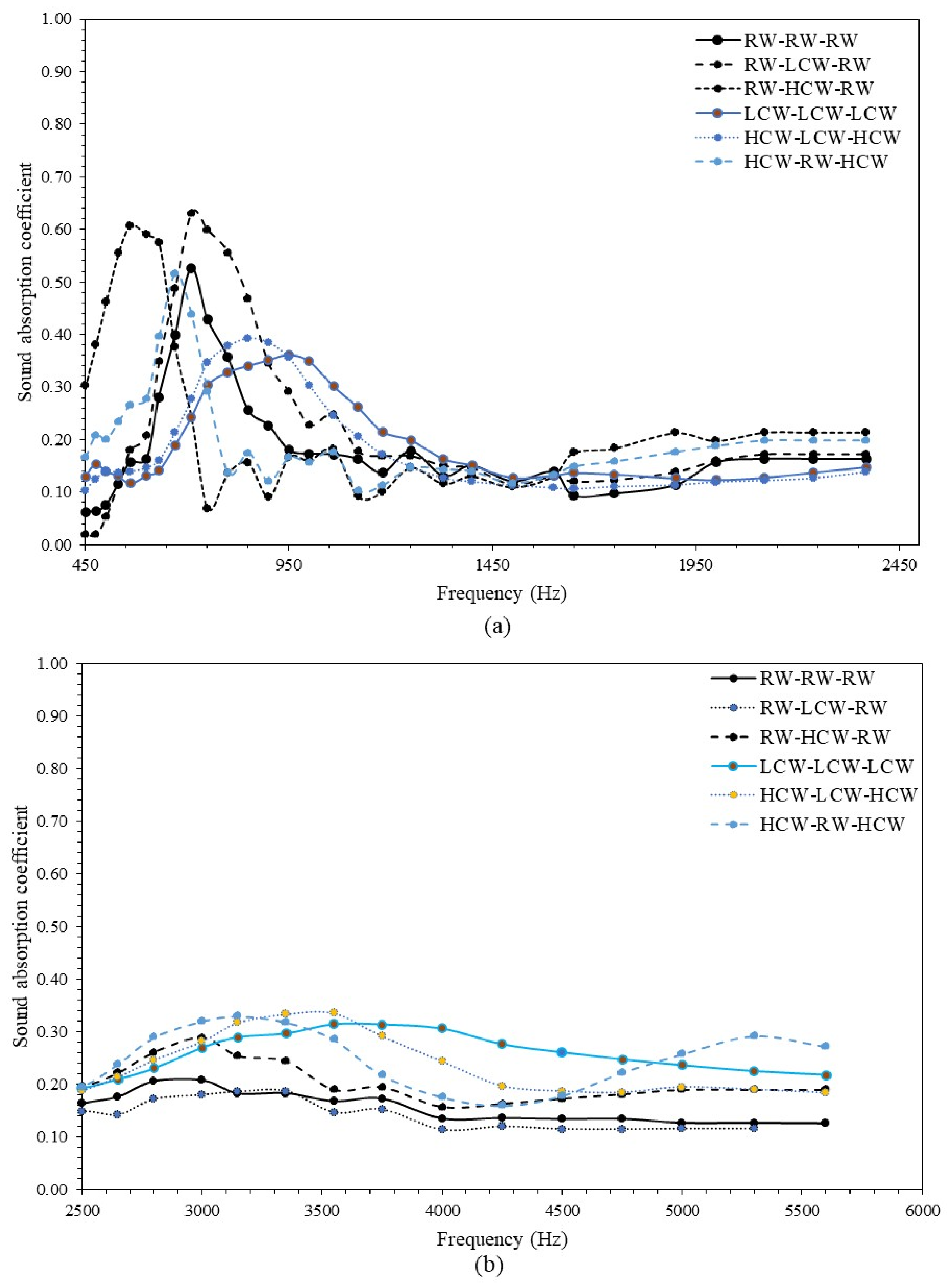
Figure 6 shows the sound absorption coefficient characteristics of all CLT panel types with no edge gap. It was found that the sound absorption characteristic of the produced CLT specimen seemed to be dependent on the wood type and density, and its position within the CLT structure. This result aligns with the findings of Rusli et al. [32] concerning various natural fiber composites, where increasing thickness and density shifted absorption peaks to lower frequencies. Lin et al. [33] also reported that structure of the CLT panel strongly affects sound absorption. For CLT panels with a coconut surface layer, the surface density appeared to affect their sound absorption characteristics. At a relatively low frequency, sound absorption characteristic of the coconut-based CLT specimen with high-density surfaces (HCW) seemed to be slightly higher, and its absorption peak was shifted toward the lower-frequency range compared with that of the low-density-surface (LCW) CLT specimen. Here, it might be possible that the discontinuities of wood structures, which are a result of the presence of two main types of cells, high-density vascular bundles (density range: 0.94–1.40 g/cm3) and low-density parenchyma cells (density range: 0.94–1.40 g/cm3) in wood tissue [34], might contribute to the sound absorption characteristic at this frequency range (long-wavelength). In high-density coconut wood, the space between the adjacent vascular bundles is narrower than that of lower-density coconut wood due to the higher number of vascular bundles. This discontinuity might help to trap the sound wave as it passes through the wood structure. At the high-frequency range (>3500 Hz), where the wavelength becomes shorter (Figure 6b), however, the sound absorption characteristics of this type of CLT showed the opposite trend to that at the low-frequency range. The sound absorption characteristics of the coconut-based CLT specimen with a lower-density surface tended to be higher than that of the high-density surface CLT specimen. Here, the friction mechanism of sound waves within the wood cell cavities may play a significant role in determining the sound absorption characteristics of coconut-wood-based CLT. Thus, the higher amount of parenchyma cells in lower-density coconut wood should help promote this mechanism due to its relatively high porosity. Additionally, Kolya and Kang [35] suggested that modifications in the microstructure of coconut wood further influence absorption efficiency, particularly at mid-to-high frequencies.
Figure 6.
Sound absorption coefficient of CLT panel made of rubberwood and coconut wood with no edge gap, at a frequency range of (a) 450–2500 Hz and (b) 2500–6000 Hz.
For CLT with rubberwood surfaces, it was observed that at relatively low frequencies, the presence of coconut wood in the cross layer (RW-HCW-RW) improved the sound absorption coefficient, even though the high-density coconut wood increased its apparent density. This observation supports that the discontinuity in the wood structure of coconut wood may help improve the sound absorption of this type of CLT panel in this frequency range. At the high-frequency range (Figure 6b), it was found that the sound absorption efficiency of rubberwood-based CLT was inferior to that of coconut-based CLT due to the presence of parenchyma cells in coconut wood, which helped promote the friction mechanism of the sound wave in the cell cavities, as mentioned earlier.
3.3. Effect of Edge Gap on Sound Absorption Coefficient of CLT Specimen
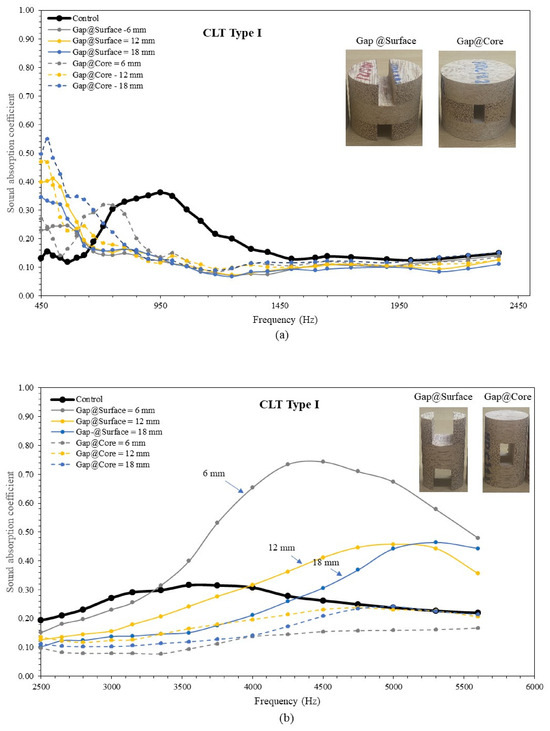
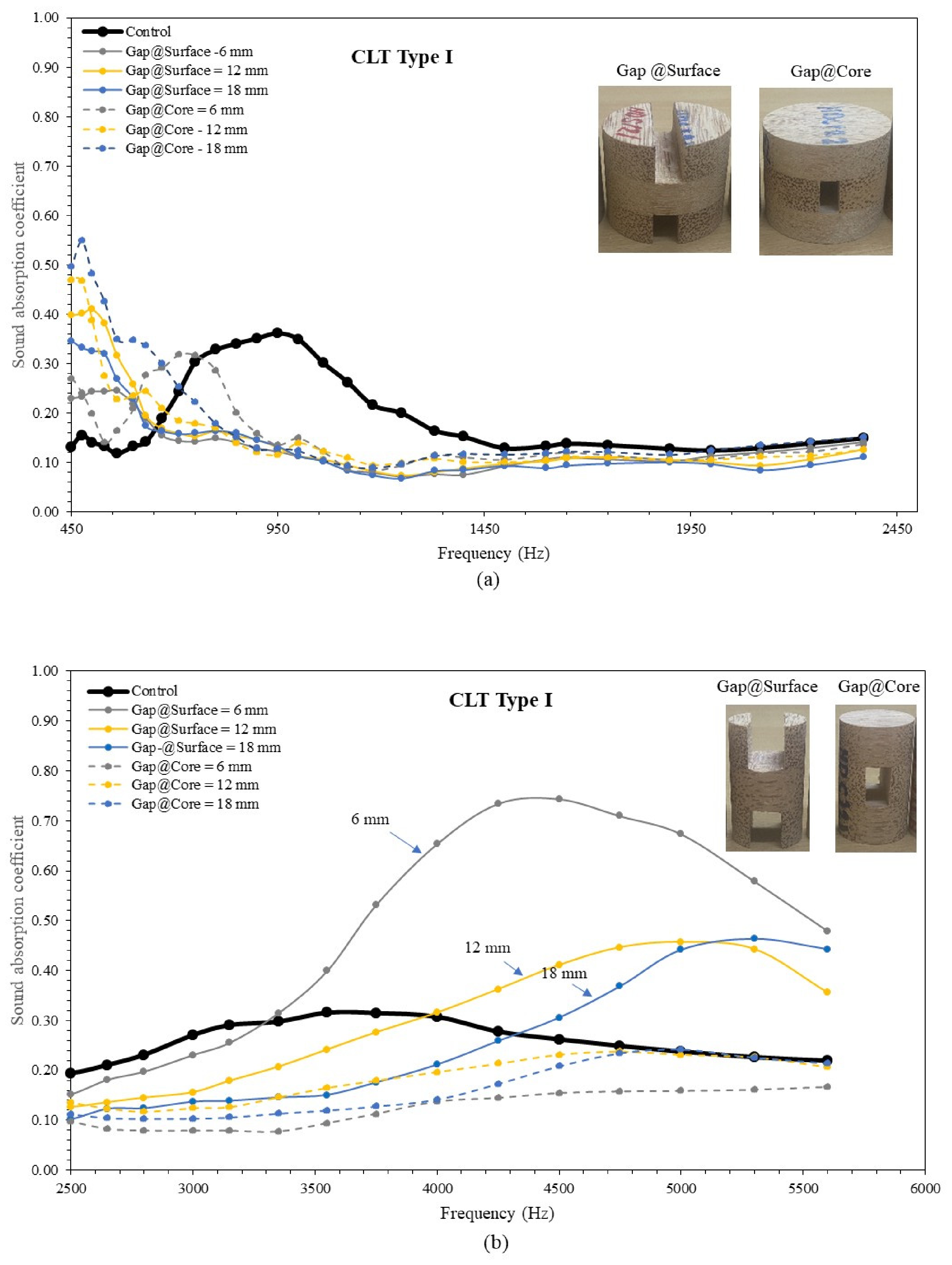
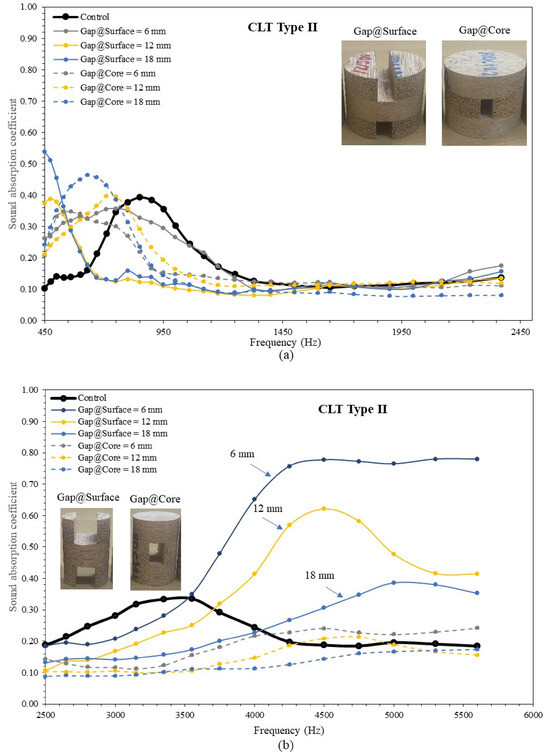
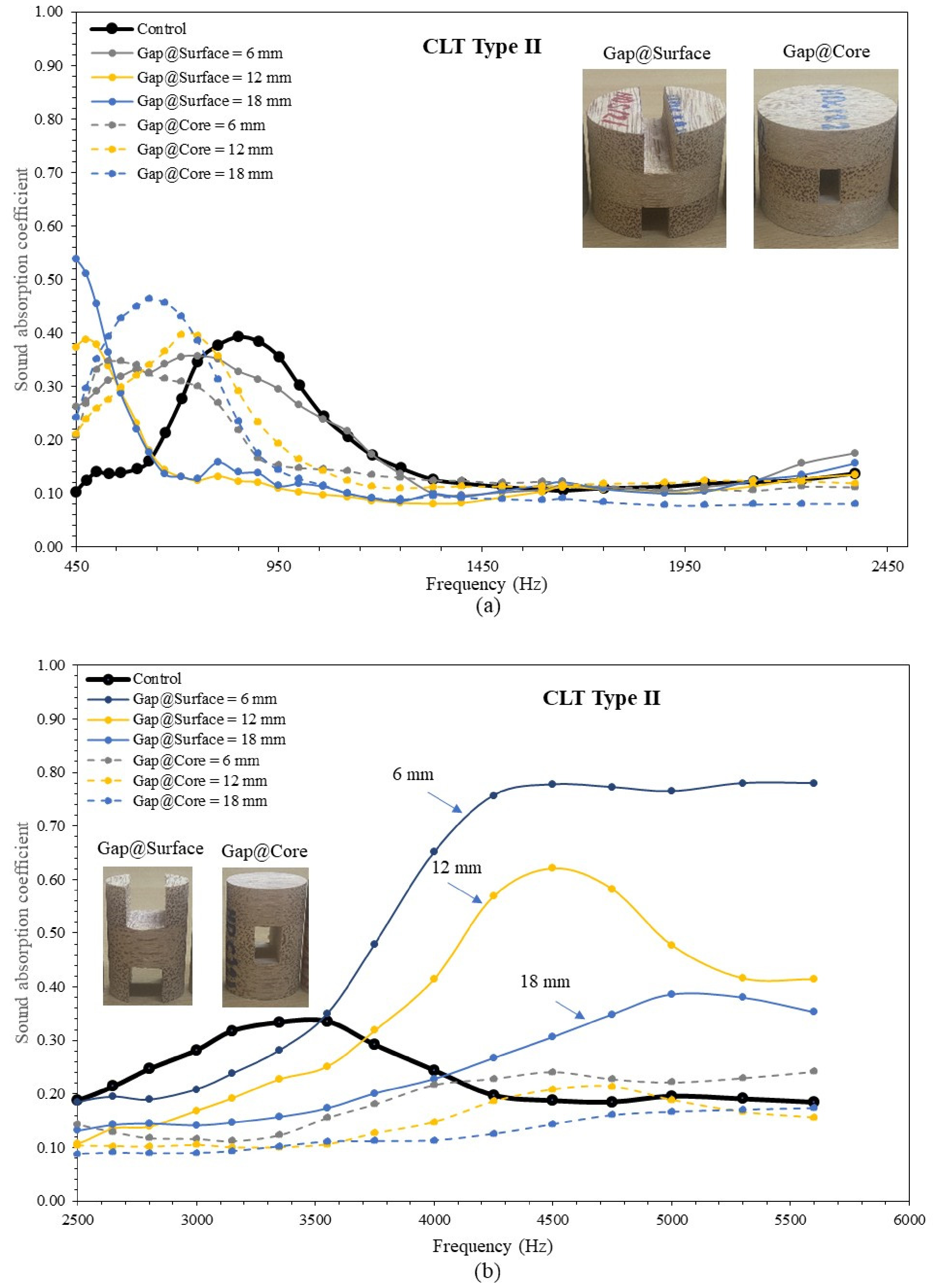
The sound absorption coefficients of coconut-based CLT Type I and II specimens with an edge gap at various frequencies are shown in Figure 7 and Figure 8, respectively. While low-density or more-porous surfaces often enhance sound absorption [36], it was found that the change in CLT’s apparent densities due to the presence of the edge gap did not greatly influence its sound absorption characteristics. Instead, the type and size of the edge gap play a vital role in the sound absorption characteristics of this type of CLT panel. Interestingly, the study on non-woven fabrics with air gaps by Mvubu et al. [37] demonstrated that the type and position of the gap shift peak frequencies and affect sound absorption via diffraction and resonance.
Figure 7.
Sound absorption coefficient of CLT type I specimen containing edge gaps, at a frequency range of (a) 450–2500 Hz and (b) 2500–6000 Hz, compared with that of the control. Each curve was averaged from three samples.
Figure 8.
Sound absorption coefficient of CLT type II specimen containing edge gaps, at a frequency range of (a) 450–2500 Hz and (b) 2500–6000 Hz, compared with that of the control. Each curve was averaged from three samples.
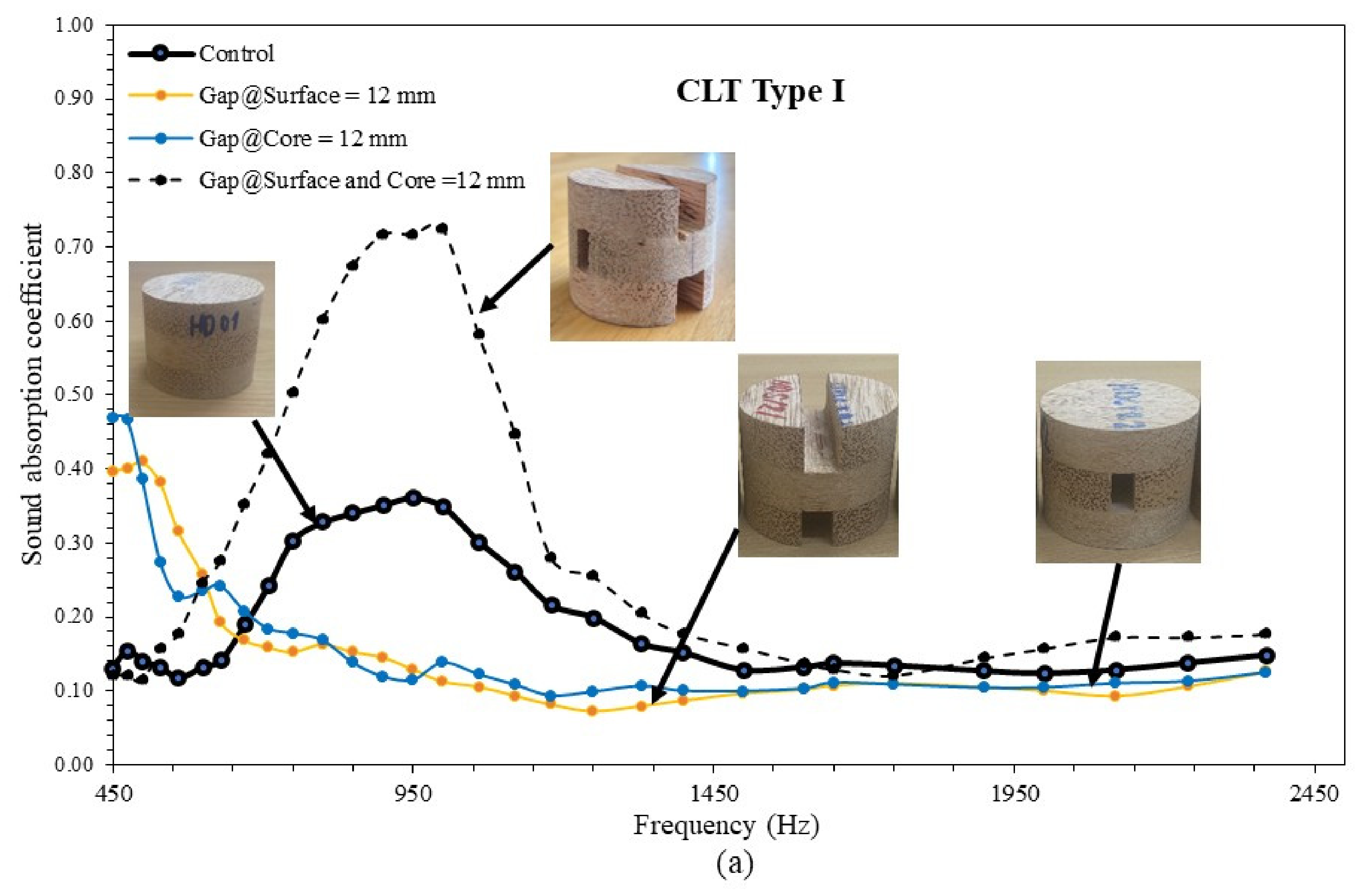
At the frequency range of 450 Hz to 3300 Hz, the sound absorption characteristics of both types of CLT panels containing an edge gap showed a similar trend. The presence of grooves on the surfaces or air spaces in the core shifted the absorption peak toward lower frequencies compared to the control, resulting in a higher sound absorption coefficient at relatively low frequencies (less than 650 Hz). At low frequencies, the longer wavelengths can propagate through the wood material more easily. Thus, the presence of grooves on both sides of the surfaces or the air space in the core resulted in extending the sound path, enabling greater energy dissipation. Also, the grooves on the surface or air space in the core functioned as Helmholtz resonators, increasing the tortuosity for sound propagation. Additionally, the air gap on the reverse side provides a secondary acoustic layer, that can enhance absorption by shifting quarter-wavelength resonances. When the frequency was between 1500 Hz and 3300 Hz, however, no strong resonance was observed in the CLT specimen with an edge gap, either on the surface or in the core, indicating that the absence of wood material at the surface or in the core negatively impacted sound absorption efficiency. Thus, the sound absorption coefficient of the control within this frequency range was found to be higher than that of the CLT specimen containing an edge gap, due to the higher amount of wood material that absorbs sound energy.
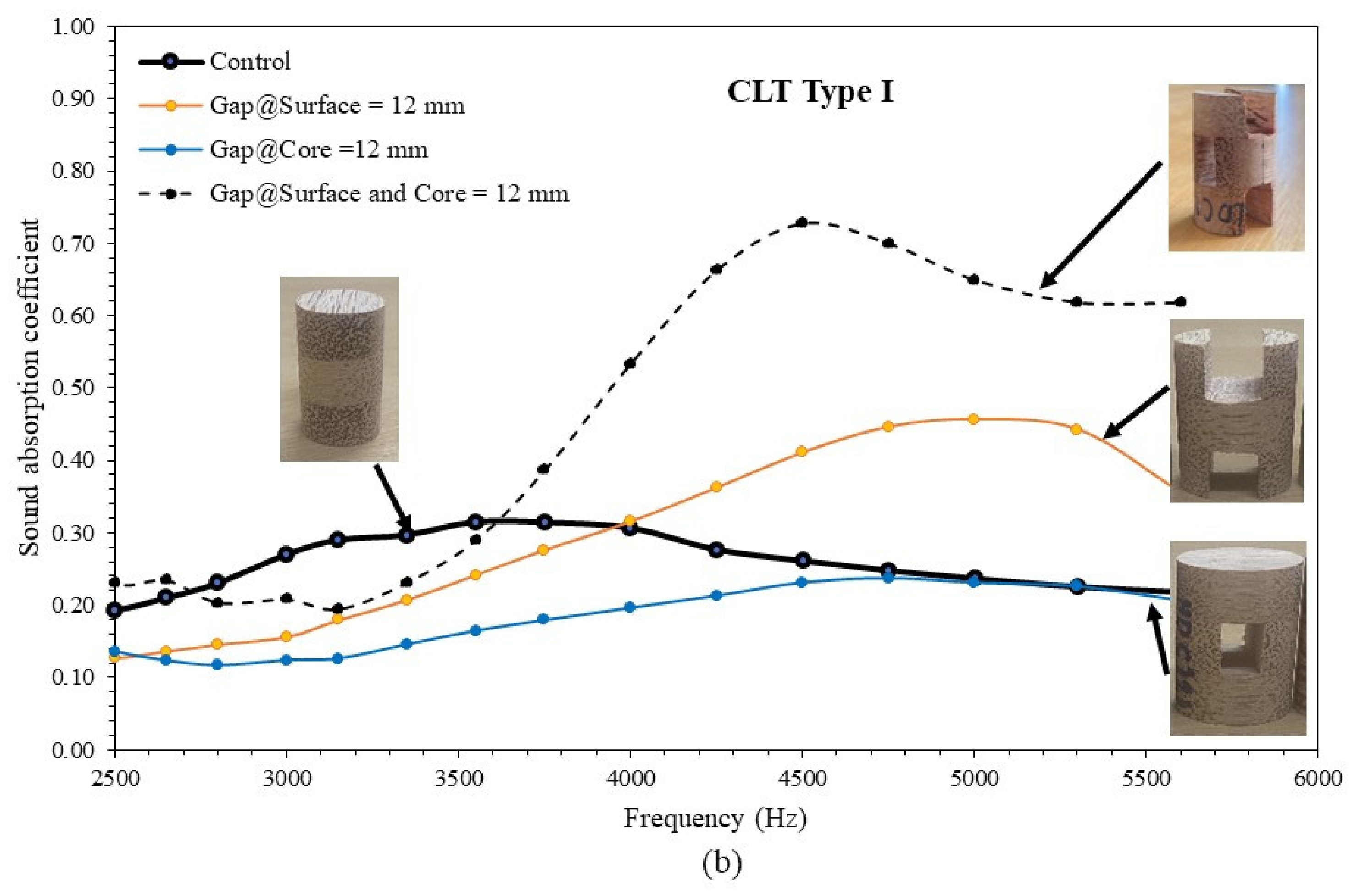
When the frequency was higher than 3300 Hz, the edge gap still had a negative impact on the sound absorption coefficient of the CLT panel, which contained an edge gap between the transverse laminations across the rest of the frequency range, similar to what was observed in the 1500–3300 Hz frequency range. However, the sound absorption coefficient of the specimen with a surface gap was higher than that of the control, and the gap size significantly affected its sound absorption efficiency. Here, the grooves act as neck-cavity systems that trap and dissipate sound energy, consistent with Helmholtz resonance [38,39]. A smaller gap size promoted stronger resonance, and therefore a higher loss of sound energy.
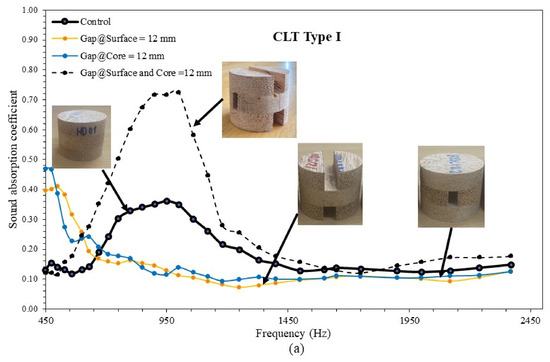
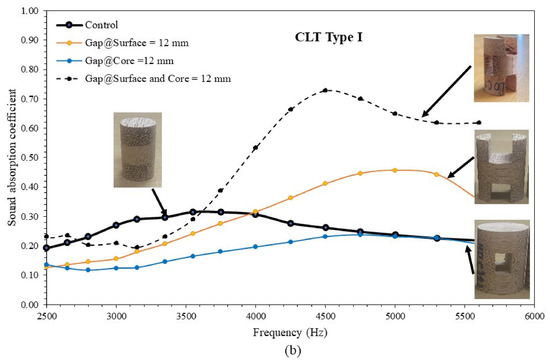
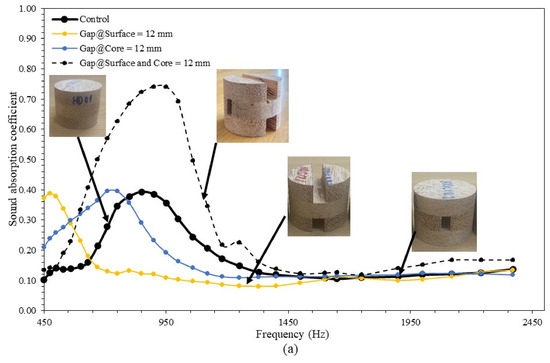
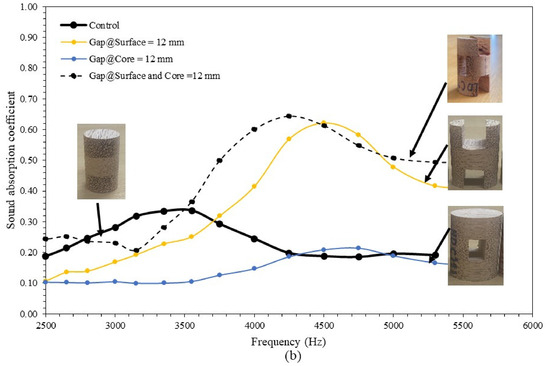
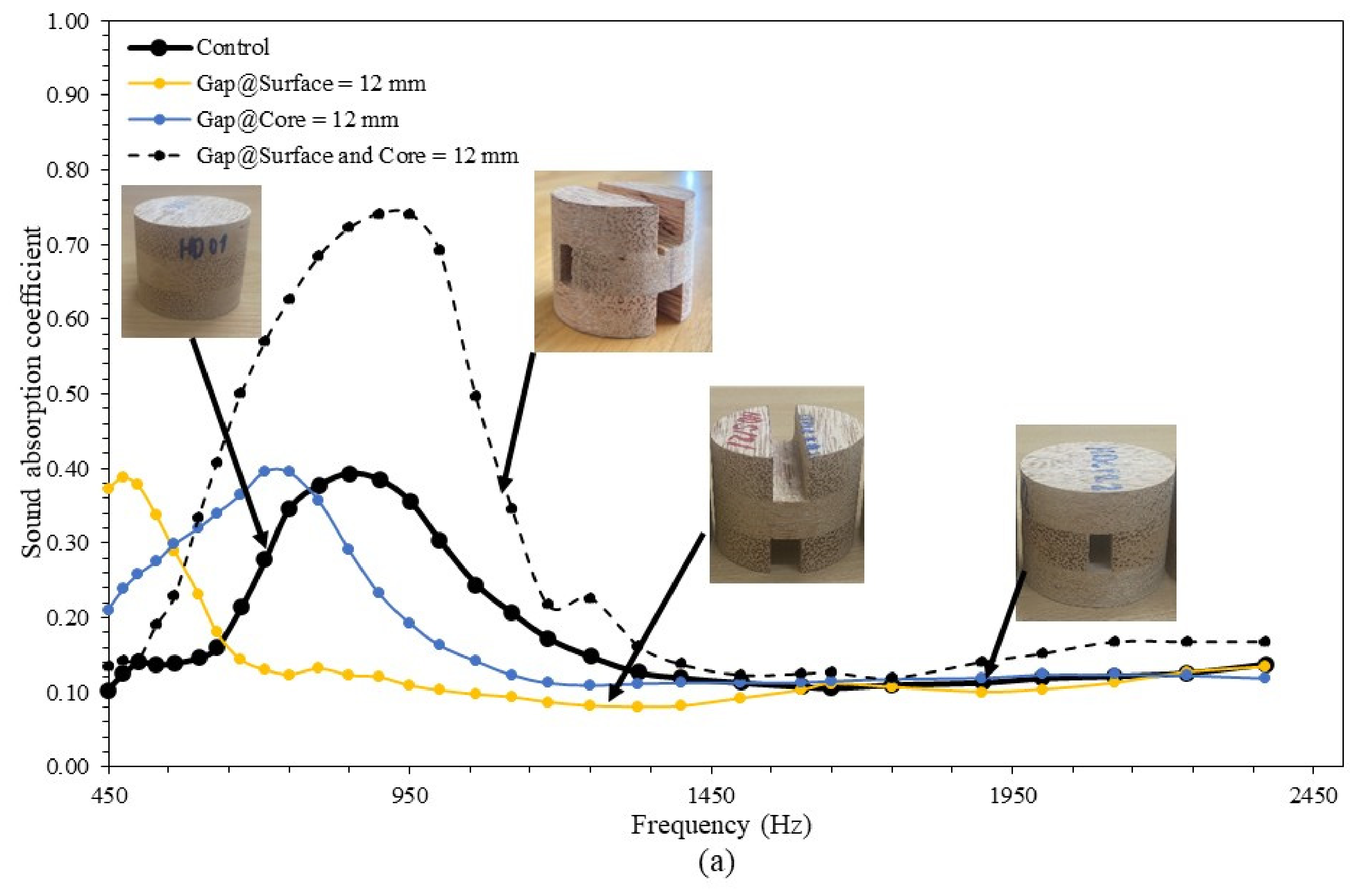
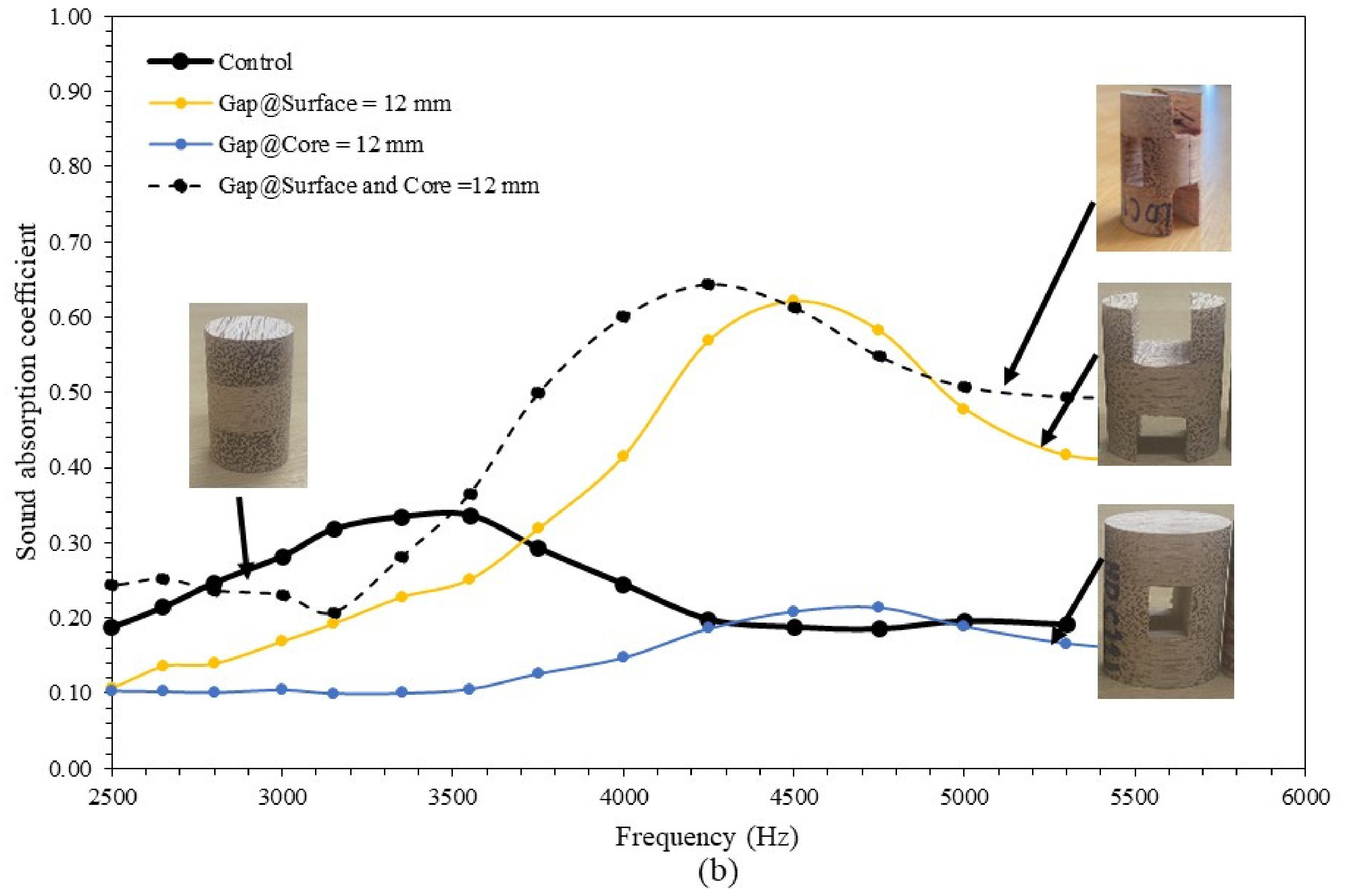
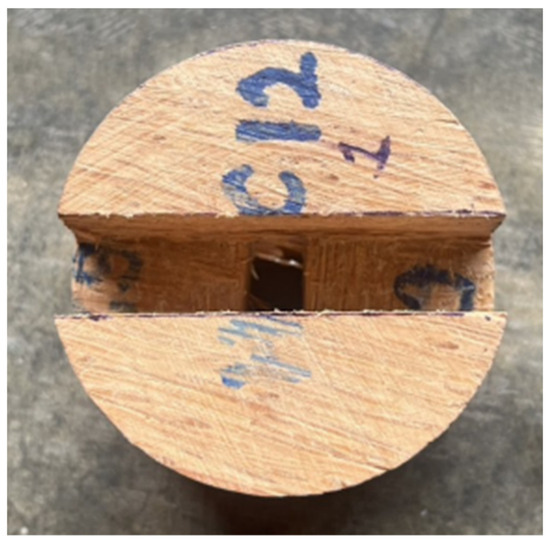
Figure 9 and Figure 10 show the comparison of the sound absorption coefficient of CLT specimens with all edge gap types (edge gaps between the major lamination or between the cross lamination or between the major and cross lamination in the same piece) at the same gap size of 12 mm. The trends of the results obtained from CLT type I and type II were similar. At the frequency of 950 Hz, where the maximum peak of sound absorption coefficient of the control was observed, it was found that the sound absorption coefficient of the CLT panel containing both types of edge gaps in the piece was higher than that of the control. In contrast, those of the CLT specimens containing a single type of edge gap in the piece were lower. It should be noted that for specimens containing both types of edge gaps in the piece, sound waves traveled through two different channels of air space, passing through the air space on the surface and, consequently, passing through air space in the core (See Figure 11). Thus, the propagation of sound waves through different channels of air space might have caused the higher loss of sound energy via friction mechanisms, leading to improvements in the sound absorption coefficient of this specimen type. In addition, the loss of sound waves was also due to some sound waves passing through the channel to the other side of the wood material. At the high-frequency range (Figure 9b and Figure 10b), a similar result was also observed. The presence of both types of edge gaps in the piece also improved the sound absorption coefficient of the CLT panel with respect to those containing a single type of edge gap in the piece.
Figure 9.
Comparison of sound absorption coefficient of CLT type I specimen with three types of edge gaps at the same gap size (12 mm), at a frequency range of (a) 450–2500 Hz and (b) 2500–6000 Hz. Each curve was averaged from three samples.
Figure 10.
Comparison of sound absorption coefficient of CLT type II specimen with three types of edge gaps at the same gap size (12 mm), at a frequency range of (a) 450–2500 Hz and (b) 2500–6000 Hz. Each curve was averaged from three samples.
Figure 11.
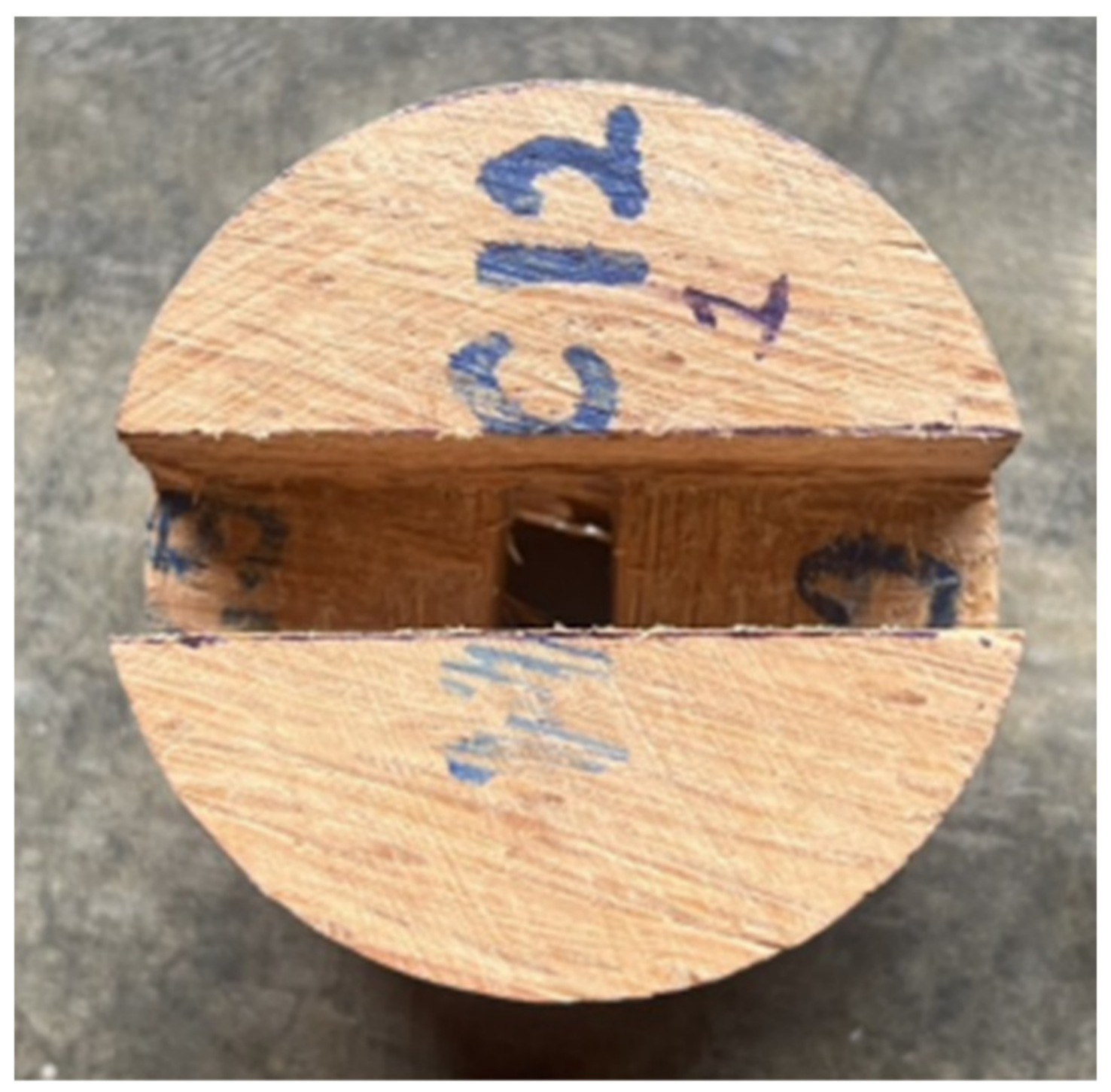
Air space on the surface and in the core of the CLT specimen containing both types of edge gaps in the piece.
Table 2 shows the calculated average sound absorption coefficient of each CLT panel type. On average, CLT panels containing both types of edge gaps in the piece had a significantly higher sound absorption performance than CLT panels with a single type of edge gap and the control. CLT panels with edge gaps between the cross layers had lower sound absorption performance than the control, while those with edge gaps between the major laminations were comparable or higher. This information suggests that the edge gap can be retained in the CLT structure while still achieving a sound absorption performance above that of the control. By doing so, the production cost of the CLT panels could decrease due to reduced wood use in CLT production.
Table 2.
Average sound absorption coefficient of each CLT panel type with different sizes of edge gaps. The differences in the mean values for each CLT panel type were statistically evaluated using one-way ANOVA at the 0.05 level of significance. The same superscript letter in the same row indicates that there is no statistical difference between the mean values, determined by Duncan’s range test. The value in parentheses represents the standard deviation.
4. Conclusions
In this study, the influence of wood species, type of edge gap (edge gaps between the major laminations only, edge gaps between the cross laminations only, and combined edge gaps) and size (6 mm, 12 mm, and 18 mm) on the sound absorption coefficient of CLT made from rubberwood and coconut wood (with two density ranges; low and high density) either with a single or hybrid-species was investigated. Conclusions are drawn as follows:
- (1)
- The wood species and density, as well as its location in the CLT structure, affected its sound absorption characteristics. For a coconut-based CLT panel, a high-density coconut wood surface layer exhibited higher sound absorption in the low-frequency range. However, the opposite trend was observed at high frequencies due to different sound-absorption mechanisms. The presence of coconut wood in rubberwood-based CLT has improved its sound absorption characteristics only in the low-frequency range. At the high frequency range, however, rubberwood-based CLT showed an inferior sound absorption characteristic than that of coconut-based CLT.
- (2)
- Edge gaps between the cross laminations had a negative impact on the sound absorption coefficient for almost the entire frequency range, and the effect of edge gap sizes was not pronounced. Edge gaps between the major laminations, however, resulted in higher sound absorption coefficients at relatively high or low frequencies due to the diffraction of sound waves across the edges of the gaps and the increased surface areas (created by the gaps) for sound absorption. At a relatively high frequency, the edge gap size effect was pronounced; smaller edge gaps improved sound absorption. The presence of both types of edge gaps in the piece improved the sound absorption coefficient of the CLT panel with respect to those containing a single type of edge gap in the piece. On average, most CLT panels with edge gaps had comparable or higher sound absorption performance to the control, except for those with edge gaps between cross layers, which were found to be inferior.
Based on the results obtained, it is suggested that the sound absorption performance of CLT panels can be easily improved by introducing an air space within their structure during manufacturing. This information is very useful for both manufacturers and designers to reduce raw material production costs while still achieving the desired sound absorption performance.
Author Contributions
Conceptualization, S.S.; methodology, S.S., T.E., A.D., P.K. and C.S.; formal analysis, S.S., T.E., A.D., P.K. and C.S.; investigation, S.S., T.E., A.D. and P.K.; writing—original draft preparation, S.S., T.E. and C.S.; writing—review and editing, S.S., T.E., A.D., P.K. and C.S.; visualization, S.S., T.E. and C.S.; project administration, S.S.; funding acquisition, S.S. All authors have read and agreed to the published version of the manuscript.
Funding
This work was supported by Walailak University through the Center of Excellence in Wood and Biomaterials (Contract Number WU-COE-69-06).
Data Availability Statement
The original contributions presented in this study are included in the article. Further inquiries can be directed to the corresponding author.
Acknowledgments
We acknowledge the Center of Excellence in Wood and Biomaterials, Walailak University, for providing the facilities for this experimental work.
Conflicts of Interest
The authors declare no conflicts of interest.
References
- Brandner, R.; Flatscher, G.; Ringhofer, A.; Schickhofer, G.; Thiel, A. Cross laminated timber (CLT): Overview and development. Eur. J. Wood Wood Prod. 2016, 74, 331–351. [Google Scholar] [CrossRef] [Scilit]
- Kurzinski, S.; Crovella, P.; Kremer, P. Overview of cross-laminated timber (CLT) and timber structure standards across the world. Mass Timber Constr. J. 2022, 5, 1–13. [Google Scholar]
- Li, H.; Wang, B.J.; Wei, P.; Wang, L. Cross-laminated timber (CLT) in China: A state-of-the-art. J. Bioresour. Bioprod. 2019, 4, 22–30. [Google Scholar] [CrossRef] [Scilit]
- He, M.; Sun, X.; Li, Z.; Feng, W. Bending, shear, and compressive properties of three-and five-layer cross-laminated timber fabricated with black spruce. J. Wood Sci. 2020, 66, 38. [Google Scholar] [CrossRef] [Scilit]
- Navaratnam, S.; Christopher, P.B.; Ngo, T.; Le, T.V. Bending and shear performance of Australian Radiata pine cross-laminated timber. Constr. Build. Mater. 2020, 232, 117215. [Google Scholar] [CrossRef] [Scilit]
- Srivaro, S.; Pasztory, Z.; Le Duong, H.A.; Lim, H.; Jantawee, S.; Tomad, J. Physical, mechanical and thermal properties of cross laminated timber made with coconut wood. Eur. J. Wood Wood Prod. 2021, 79, 1519–1529. [Google Scholar] [CrossRef] [Scilit]
- Das, S.; Gašparík, M.; Sethy, A.K.; Kytka, T.; Kamboj, G.; Rezaei, F. Bonding performance of mixed species cross laminated timber from poplar (Populus nigra L.) and maple (Acer platanoides L.) glued with melamine and PUR adhesive. J. Build. Eng. 2023, 68, 106159. [Google Scholar] [CrossRef] [Scilit]
- Ma, Y.; Si, R.; Musah, M.; Dai, Q.; Xie, X.; Wang, X.; Ross, R.J. Mechanical property evaluation of hybrid mixed-species CLT panels with sugar maple and white spruce. J. Mater. Civ. Eng. 2021, 33, 04021171. [Google Scholar] [CrossRef] [Scilit]
- Srivaro, S.; Lim, H.; Li, M.; Pasztory, Z. Properties of mixed species/density cross laminated timber made of rubberwood and coconut wood. Structures 2022, 40, 237–246. [Google Scholar] [CrossRef] [Scilit]
- Karacabeyli, E.; Gagnon, S. Canadian CLT Handbook; FPInnovations: Pointe-Claire, QC, Canada, 2019. [Google Scholar]
- Di Bella, A.; Mitrovic, M. Acoustic characteristics of cross-laminated timber systems. Sustainability 2020, 12, 5612. [Google Scholar] [CrossRef] [Scilit]
- Ha, Y.S.; Lee, H.J.; Lee, S.J.; Shin, J.; Song, D.B. A study on floor impact sound insulation performance of cross-laminated timber (CLT): Focused on joint types, species and thicknesses. J. Korean Wood Sci. Technol. 2023, 51, 419–430. [Google Scholar] [CrossRef] [Scilit]
- Hoeller, C.; Mahn, J.; Quirt, D.; Schoenwald, S.; Zeitler, B. Apparent sound insulation in cross-laminated timber buildings. J. Acoust. Soc. Am. 2017, 141, 3479. [Google Scholar] [CrossRef]
- Kang, C.W.; Jang, S.S.; Kang, H.Y.; Li, C. Sound absorption rate and sound transmission loss of CLT wall panels composed of larch square timber core and plywood cross band. J. Korean Wood Sci. Technol. 2019, 47, 33–39. [Google Scholar] [CrossRef] [Scilit]
- Yang, X.; Tang, X.; Ma, L.; Sun, Y. Sound insulation performance of structural wood wall integrated with wood plastic composite. J. Bioresour. Bioprod. 2019, 4, 111–118. [Google Scholar] [CrossRef] [Scilit]
- ASTM E1050; Standard Test Method for Impedance and Absorption of Acoustical Materials Using a Tube, Two Microphones and a Digital Frequency Analysis System. ASTM Annual Book of Standards. ASTM International: West Conshohoken, PA, USA, 2019.
- Devi, A.; Gautam, C.; Garg, N. Experimental and analytical evaluation of models for predicting sound absorption characteristics of acoustical materials. Mapan 2025, 40, 557–585. [Google Scholar] [CrossRef] [Scilit]
- Dunne, R.; Desai, D.; Sadiku, R. A review of the factors that influence sound absorption and the available empirical models for fibrous materials. Acoust. Aust. 2017, 45, 453–469. [Google Scholar] [CrossRef] [Scilit]
- Guiman, M.V.; Stanciu, M.D.; Roșca, I.C.; Georgescu, S.V.; Năstac, S.M.; Câmpean, M. Influence of the grain orientation of wood upon its sound absorption properties. Materials 2023, 16, 5998. [Google Scholar] [CrossRef] [Scilit] [PubMed]
- Kang, C.W.; Li, C.; Hashitsume, K.; Kolya, H. Effects of surface perforation on the drying characteristics and sound absorption coefficients of Russian poplar board. Eur. J. Wood Wood Prod. 2023, 81, 1239–1248. [Google Scholar] [CrossRef] [Scilit]
- Lee, H.M.; Luo, W.; Xie, J.; Wen, G.; Lee, H.P. Studies on the sound absorption and transmission loss performances of wood-based, natural and waste materials. Acta Mech. Sin. 2021, 37, 861–873. [Google Scholar] [CrossRef] [Scilit]
- Na, B.; Wang, H.; Ding, T.; Lu, X. Study on factors affecting the sound absorption property of magnesia—Bonded wood-wool panel. Wood Res. 2018, 63, 617–624. [Google Scholar]
- Smardzewski, J.; Batko, W.; Kamisiński, T.; Flach, A.; Pilch, A.; Dziurka, D.; Mirski, R.; Roszyk, E.; Majewski, A. Experimental study of wood acoustic absorption characteristics. Holzforschung 2014, 68, 467–476. [Google Scholar] [CrossRef] [Scilit]
- Zhao, X.; Liu, Y.; Zhao, L.; Yazdkhasti, A.; Mao, Y.; Siciliano, A.P.; Dai, J.; Jing, S.; Xie, H.; Li, Z.; et al. A scalable high-porosity wood for sound absorption and thermal insulation. Nat. Sustain. 2023, 6, 306–315. [Google Scholar] [CrossRef] [Scilit]
- Kerdtongmee, P.; Saleh, A.; Eadkhong, T.; Danworaphong, S. Investigating sound absorption of oil palm trunk panels using one-microphone impedance tube. BioResources 2016, 11, 8409–8418. [Google Scholar] [CrossRef] [Scilit]
- Fan, Z.; Peng, L.; Liu, M.; Feng, Y.; He, J.; Wu, S. Analysis of influencing factors on sound absorption capacity in microwave-treated Pinus radiata wood. Eur. J. Wood Wood Prod. 2022, 80, 985–995. [Google Scholar] [CrossRef] [Scilit]
- Xu, W.; Fang, X.; Han, J.; Wu, Z.; Zhang, J. Effect of coating thickness on sound absorption property of four wood species commonly used for piano soundboards. Wood Fiber Sci. 2020, 52, 28–43. [Google Scholar] [CrossRef] [Scilit]
- Jang, E.S.; Kang, C.W. Sound absorption characteristics of three species (binuang, balsa and paulownia) of low density hardwood. Holzforschung 2021, 75, 1115–1124. [Google Scholar] [CrossRef] [Scilit]
- EN 323; Wood-Based Panels: Determination of Density. European Committee for Standardization (CEN): Brussel, Belgium, 1993.
- Chu, W.T. Transfer function technique for impedance and absorption measurements in an impedance tube using a single microphone. J. Acoust. Soc. Am. 1986, 80, 555–560. [Google Scholar] [CrossRef] [Scilit]
- Chung, J.Y.; Blaser, D.A. Transfer function method of measuring in-duct acoustic properties. II. Experiment. J. Acoust. Soc. Am. 1980, 68, 914–921. [Google Scholar] [CrossRef] [Scilit]
- Rusli, M.; Irsyad, M.; Dahlan, H.; Gusriwandi Bur, M. Sound absorption characteristics of the natural fibrous material from coconut coir, oil palm fruit bunches, and pineapple leaf. IOP Conf. Ser. Mater. Sci. Eng. 2019, 602, 012067. [Google Scholar] [CrossRef] [Scilit]
- Lin, J.Y.; Yang, C.T.; Tsay, Y.S. A study on the sound insulation performance of cross-laminated timber. Materials 2021, 14, 4144. [Google Scholar] [CrossRef] [Scilit] [PubMed]
- Fathi, L. Structural and Mechanical Properties of the Wood from Coconut Palms, Oil Palms and Date Palms. Doctoral Dissertation, University of Hamburg, Hamburg, Germany, 12 May 2014. [Google Scholar]
- Kolya, H.; Kang, C.W. Unveiling enhanced sound absorption in coconut wood through hemicellulose and lignin modification. Int. J. Biol. Macromol. 2024, 276, 134083. [Google Scholar] [CrossRef] [Scilit] [PubMed]
- Tudor, E.M.; Dettendorfer, A.; Kain, G.; Barbu, M.C.; Réh, R.; Krišťák, L. Sound-absorption coefficient of bark-based insulation panels. Polymers 2020, 12, 1012. [Google Scholar] [CrossRef] [Scilit] [PubMed]
- Mvubu, M.B.; Anandjiwala, R.; Patnaik, A. Effects of air gap, fibre type and blend ratio on sound absorption performance of needle-punched non-woven fabrics. J. Eng. Fiber Fabr. 2019, 14, 1–8. [Google Scholar] [CrossRef] [Scilit]
- Munjal, M.L. Acoustics of Ducts and Mufflers; Wiley: New York, NY, USA, 1987. [Google Scholar]
- Beranek, L.L.; Mellow, T.J. Acoustics: Sound Fields and Transducers; Academic Press: San Diego, CA, USA, 2012. [Google Scholar]

Disclaimer/Publisher’s Note: The statements, opinions and data contained in all publications are solely those of the individual author(s) and contributor(s) and not of MDPI and/or the editor(s). MDPI and/or the editor(s) disclaim responsibility for any injury to people or property resulting from any ideas, methods, instructions or products referred to in the content. |
© 2026 by the authors. Licensee MDPI, Basel, Switzerland. This article is an open access article distributed under the terms and conditions of the Creative Commons Attribution (CC BY) license.