


Abstract
Cancer stem cells (CSCs) drive therapeutic resistance and tumor relapse by exploiting redundant regulatory networks that integrate Wnt/β-catenin, Notch, and Hedgehog signaling with metabolic reprogramming, epigenetic plasticity, and tumor microenvironment crosstalk, a network architecture that renders single-pathway inhibition strategies insufficient. This review systematically examines evidence that natural compounds (curcumin, sulforaphane, resveratrol, EGCG, berberine, and quercetin) act as multitarget modulators of CSC plasticity, analyzing their molecular mechanisms of action in specific cancer models. Each compound engages distinct regulatory nodes: curcumin suppresses β-catenin nuclear translocation and STAT3 phosphorylation in lung cancer CSC models; sulforaphane represses ΔNp63α-driven stemness transcription in colorectal cancer and reduces CSC self-renewal in prostate and head and neck models; resveratrol dissociates the β-catenin–GLI-1 interaction in oral and lung CSC populations and induces Wnt/β-catenin-dependent autophagy in breast CSCs; EGCG inhibits DNMT and HDAC activity in glioblastoma and colorectal models; berberine activates AMPK-mediated suppression of mTORC1 in colorectal cancer; and quercetin suppresses PI3K/AKT/mTOR signaling while downregulating EMT transcription factors in breast and colorectal systems. We critically assess persistent methodological limitations, including bulk cell-line models, supraphysiological concentrations, and the absence of functional tumor-initiating validation, that currently prevent stronger translational conclusions. Natural compounds from Latin American biodiversity are identified as an underexplored source of CSC-active molecules. We conclude by defining the experimental standards required to reposition natural compounds as clinically relevant network-level modulators of CSC plasticity.
1. Introduction
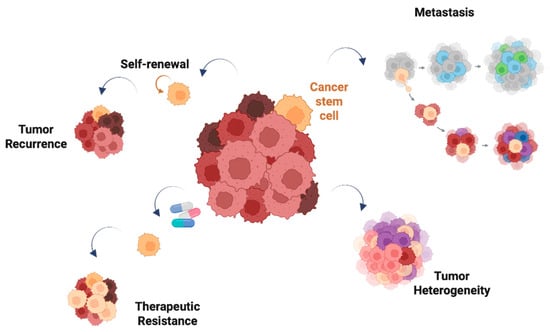
Durable remission remains elusive in many cancers not only because of drug resistance in the bulk tumor, but because of a functionally distinct subpopulation, cancer stem cells (CSCs), that exploits developmental plasticity, metabolic flexibility, and epigenetic reprogramming to survive cytotoxic pressure and regenerate tumor heterogeneity after apparent clinical response [1,2]. Through self-renewal, differentiation, and long-term tumor propagation, CSCs drive tumor maintenance, metastasis, and relapse (Figure 1) [3,4]. Importantly, the traditional view of CSCs as a fixed, hierarchically organized population has given way to a dynamic model in which stemness is a context-dependent, reversible state: tumor cells move between stem-like and non-stem-like phenotypes in response to intrinsic and microenvironmental cues, sustaining the plasticity that lets CSCs persist under treatment and drive recurrence [5,6,7].
Figure 1.
Cancer stem cell dynamics and functional role in tumor progression. Schematic representation of cancer stem cell (CSC) dynamics and their contribution to tumor progression. CSCs exhibit self-renewal and differentiation capacity, generating heterogeneous tumor cell populations through transitions between stem-like and non-stem-like phenotypes. These features are associated with metastasis, therapeutic resistance, and tumor recurrence, highlighting CSCs as dynamic regulators of tumor persistence. Created in BioRender. Alarcón, S. (2026) (Accessed on 18 May 2026).
This conceptual shift carries a direct therapeutic consequence. If stemness is maintained not by a fixed cell population but by a regulatory network, integrating Wnt/β-catenin, Notch, and Hedgehog signaling with metabolic, epigenetic, and microenviron- mental inputs through redundant, feedback-coupled circuits, then blocking any singlenode, permits adaptive re-routing through parallel pathways, which explains the limited durability of most CSC-targeted monotherapies [7,8,9]. Consistent with this, single-agent Wnt inhibitors, Notch γ-secretase blockers, and Hedgehog antagonists have repeatedly failed to prevent CSC-driven relapse across tumor types, as CSCs bypass them through pathway re-routing, phenotypic switching, or microenvironmental rescue [10]. This has shifted the therapeutic paradigm toward multitarget, network-disruptive strategies that engage several nodes of the CSC regulatory architecture at once.
Natural compounds occupy an underappreciated yet mechanistically compelling po- sition within this paradigm. Curcumin, resveratrol, sulforaphane, EGCG, berberine, and quercetin are not merely antioxidants or non-specific cytotoxic agents; at the molecular level, they engage distinct targets across several regulatory layers at once, a polypharmacological profile well matched to the redundancy that defines CSC networks [11,12]. This breadth is what makes them attractive against adaptive networks, but it is also a liability: such effects are typically shown in particular experimental systems and cannot be assumed to transfer across tumor types, whose CSC networks differ substantially—for example, between colorectal cancer and glioblastoma [7,13]. The same pleiotropy therefore demands careful appraisal, since many studies report correlative marker changes without demonstrating functional CSC elimination, rely on bulk cell-line models, or make pathway-level claims without resolving target engagement. In this review, we provide an integrative, critically evaluated analysis of how these compounds interact with CSC regulatory networks, focusing on their molecular mechanisms of action, the quality and limitations of the available human-model evidence, the emerging relevance of Latin American biodiversity as an underexplored source of CSC-active molecules, and the translational barriers that must be overcome before they can be integrated into CSC-targeted therapies.
Literature Search Strategy
A systematic search of the literature was conducted using PubMed/MEDLINE, Scopus, and Web of Science databases, covering publications from January 2015 to April 2026, with selective inclusion of seminal earlier works where mechanistically relevant. Search terms combined controlled vocabulary and free-text keywords including: “cancer stem cells”, “CSC”, “stemness”, “tumor-initiating cells”, “cancer stem cell plasticity”, and “therapeutic resistance”, paired with “natural compounds”, “phytochemicals”, “curcumin”, “resveratrol”, “sulforaphane”, “epigallocatechin-3-gallate”, “berberine”, “quercetin”, “Latin American plants”, “boldine”, “lapachone”, “leptocarpin”, and “Ilex paraguariensis”. Additional terms included “Wnt/β-catenin”, “Notch signaling”, “Hedgehog signaling”, “metabolic reprogramming”, “epigenetic regulation”, and “tumor microenvironment”. Studies were included if they reported mechanistic data in human-derived cancer cell models, patient-derived organoids, or CSC-enriched populations; review articles, meta-analyses, and preclinical studies with functional CSC endpoints were prioritized. Studies using exclusively animal models without human cell line validation, or reporting only in silico predictions without experimental corroboration, were excluded. Because the literature is methodologically heterogeneous, studies were further classified by the strength of their CSC evidence into three tiers, consistent with the framework applied in Table 1: (i) studies using functionally validated CSC populations, defined by tumor-initiating capacity or serial self-renewal; (ii) studies using marker-sorted populations (e.g., CD44+, CD133+, ALDHhigh, CD44+/CD24−) as CSC surrogates; and (iii) studies in bulk or unsorted cultures without CSC-specific endpoints. Tier (iii) studies—including those reporting only antiproliferative, pro-apoptotic, or anti-migratory effects, and notably most of the Latin American literature discussed in Section 7—were retained only where the reported mechanism was biologically compatible with known CSC regulatory vulnerabilities, and were identified throughout as a mechanistically plausible rather than as evidence of CSC-specific activity. Findings from such studies are therefore interpreted as hypotheses requiring confirmation in CSC-validated systems, not as demonstrations of stemness targeting. No language restriction was applied, though the final selection is predominantly in English. This review does not follow a formal systematic review protocol (e.g., PRISMA) and should be considered a critical narrative review; the literature selection reflects the authors’ expert judgment with explicit emphasis on mechanistic quality and experimental rigor rather than exhaustive coverage. Accordingly, studies were not excluded for being numerous or recent: this review prioritizes reports anchored to a named molecular mechanism or to functionally defined CSC endpoints, and treats lower-tier studies as mechanistically plausible, in order to illustrate the methodological gradient that is its central concern.
2. Conceptual Framework: Targeting CSC Adaptive Networks
In recent years, there has been a shift in how CSCs are conceptualized, moving away from static hierarchical models toward a more dynamic view in which stemness is considered a context-dependent cellular state influenced by environmental signals and intrinsic molecular cues [14,15].
At the molecular level, CSC phenotypes are maintained by multilayered regulatory networks rather than isolated signaling pathways. Core developmental pathways, including Wnt/β-catenin, Notch, and Hedgehog, remain essential for self-renewal and fate determination; however, their activity is tightly integrated with metabolic reprogramming, epigenetic regulation, and microenvironmental signaling [16,17,18,19]. This network architecture is characterized by redundancy, feedback loops, and compensatory mechanisms that enable CSCs to maintain functional stability even when individual pathways are inhibited, thereby contributing to therapeutic resistance.
Metabolic plasticity is a critical component of this adaptive system. CSCs can dynamically shift between glycolysis and oxidative phosphorylation depending on environmental constraints, supporting survival under metabolic stress and therapeutic challenge. Importantly, this flexibility is not merely a survival strategy but is closely linked to the maintenance of stemness through interactions with redox balance and mitochondrial function [17,20,21].
In parallel, epigenetic mechanisms provide an additional layer of adaptability, enabling rapid and reversible changes in gene expression through DNA methylation, histone modifications, and chromatin remodeling. These processes are essential for regulating CSC state transitions and phenotypic diversity [22,23]. The tumor microenvironment further reinforces CSC plasticity by providing contextual signals that sustain and reprogram stem-like states. Interactions with stromal and immune cells, extracellular matrix components, and hypoxic niches create a dynamic ecosystem that supports CSC survival. Notably, this relationship is bidirectional, as CSCs actively remodel their microenvironment, establishing feedback loops that promote tumor progression and resistance to therapy [24,25]. Collectively, these interconnected layers form a robust and adaptable regulatory system that underlies CSC persistence under therapeutic pressure and contributes to tumor recurrence and metastasis [17].
This adaptive, redundant architecture highlights the need for therapeutic strategies capable of simultaneously disrupting multiple regulatory nodes within CSC networks. In this context, natural compounds have become especially important candidates. Unlike traditional targeted therapies, many natural compounds have pleiotropic effects, allowing them to influence multiple signaling pathways and cellular processes at the same time. This multitarget activity is especially advantageous in CSC biology, where redundancy and adaptability are defining features [11,26,27,28].
When considered within a systems-level framework, the therapeutic value of natural compounds appears to extend beyond individual target inhibition, as their simultaneous effects on multiple regulatory processes may contribute to destabilizing CSC-associated networks. Within this paradigm, natural compounds can be conceptualized as multitarget modulators capable of interfering with the integrated regulatory systems that sustain CSC plasticity, thereby opening new avenues for more effective and durable anticancer interventions [17,21,28,29]. This distinction is critical, as it shifts therapeutic strategies from targeting specific cell populations to disrupting the dynamic regulatory systems that enable phenotypic plasticity and treatment resistance.
3. Molecular Mechanisms of Natural Compounds in CSC Regulation
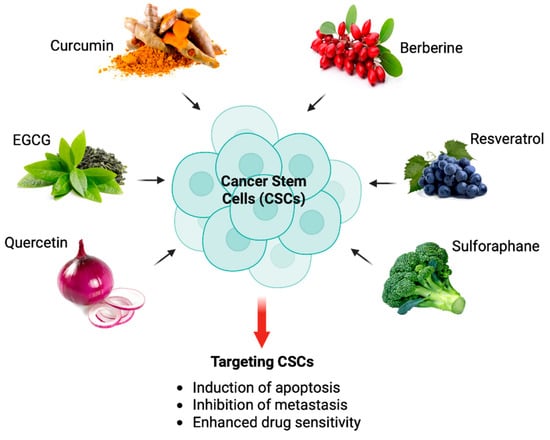
Building on the network architecture described in Section 2, the distinguishing feature of the compounds reviewed here is not that they universally engage multiple nodes across all CSC types, but that, in specific tumor models, they interact simultaneously with several regulatory layers through structurally distinct molecular mechanisms. This polypharmacological profile is mechanistically coherent with the redundancy that defines CSC biology, and is precisely where the natural-compound literature has historically overpromised, even if its generalizability across tumor contexts remains to be established (Figure 2) [10,11,12,29].
Figure 2.
Natural compounds associated with modulation of cancer stem cell-related phenotypes. Overview of selected natural compounds investigated for their effects on CSC-associated processes. Curcumin, resveratrol, sulforaphane, EGCG, berberine, and quercetin are represented as bioactive molecules with reported activity on signaling networks, metabolic processes, and cellular stress responses linked to stemness, plasticity, and resistance. These compounds are highlighted as multitarget modulators within complex tumor regulatory systems. Created in BioRender. Alarcón, S. (2026) (accessed on 18 May 2026).
3.1. Convergent Regulation of Stemness Signaling Pathways
The Wnt/β-catenin, Notch, Hedgehog, and PI3K/AKT/mTOR pathways are key players in the self-renewal and fate decisions of CSCs across different tumor types. However, the way these pathways are balanced and interact can vary substantially depending on the specific cancer context [8,16,18]. Within this landscape, different natural compounds have been shown to engage the same regulatory axis through mechanistically distinct interactions, each in specific experimental systems. Within the Wnt/β-catenin pathway, curcumin promotes β-catenin proteasomal degradation and suppresses its nuclear transcriptional activity through interference with TCF/LEF co-activator recruitment, as demonstrated in hepatocellular carcinoma and related models [13,30]; sulforaphane reduces β-catenin nuclear translocation through the ZO-1/β-catenin interaction at cell-junction complexes, primarily in colorectal cancer systems [31,32]; berberine suppresses β-catenin levels post-transcriptionally via the lincROR/Wnt regulatory axis in colorectal cancer models [33,34]; and resveratrol simultaneously disrupts Wnt- and Hedgehog-driven programs by interfering with the β-catenin–GLI-1 interaction in oral and lung CSC-enriched populations [35,36]. It is fascinating that these four structurally different compounds all connect to the same node through different pathways. This highlights the node’s importance as a potential therapeutic target. However, it is important to remember that this does not necessarily mean all four will act the same way across different tumor types [7,29]. EGCG modulates Notch pathway activity through epigenetic mechanisms that reduce Notch1 expression upstream of the receptor cleavage step targeted by γ-secretase inhibitors, with evidence drawn primarily from digestive tract and breast cancer models [37,38]. The PI3K/AKT/mTOR axis is suppressed by quercetin through upstream PI3K inhibition in breast and colorectal cancer systems [39,40], and by berberine through AMPK-mediated mTORC1 disruption, two complementary mechanisms that operate through distinct metabolic entry points and have been characterized in different cellular contexts [41,42].
3.2. Metabolic Reprogramming and Redox Regulation
The dynamic shift between glycolytic and OXPHOS programs is mechanistically coupled to stemness maintenance: the OXPHOS state supports the low ROS levels, high mitochondrial membrane potential, and elevated ALDH activity that characterize the therapy-resistant CSC phenotype. However, the degree to which individual tumor types rely on this metabolic configuration varies and is not uniform across CSC populations [21,42]. Several natural compounds have been shown to interfere with this metabolic infrastructure, each in specific experimental contexts. Berberine directly impairs mitochondrial electron transport chain function in colorectal cancer models, triggering compensatory AMPK activation that suppresses the anabolic programs CSCs depend on for self-renewal [41,43]. Curcumin has been shown to disrupt mitochondrial function and elevate intracellular ROS in CSC-like populations derived from lung and liver cancer systems, though whether this pro-oxidant effect extends to CSC populations in other tumor types has not been systematically established [13]. EGCG induces selective pro-oxidant effects in glioblastoma and colorectal CSC-enriched populations, exploiting the tight redox control that distinguishes stem-like cells from bulk tumor cells in those systems [44,45]. Quercetin and resveratrol promote mitochondrial depolarization and modulate the Bax/Bcl-2 balance in breast and colorectal cancer models, thereby increasing chemosensitivity in CSC-like populations, an effect that may not generalize beyond the contexts in which it was characterized [46,47]. Critically, most studies reporting these effects use bulk or unsorted sphere cultures rather than prospectively isolated CSC fractions, which means we are often measuring metabolic changes in a heterogeneous population and attributing them to the stem-like compartment without having directly confirmed that is where the effect resides [29,48].
3.3. Epigenetic Modulation of Stemness Transcriptional Programs
The reversible nature of DNA methylation, histone modification, and chromatin remodeling allows tumor cells to acquire or lose stem-like properties without genomic alteration, making epigenetic regulation a critical layer of CSC plasticity to target [22,23]. Several natural compounds can affect this layer, although the evidence for each one is based on specific tumor models and has not been confirmed more broadly across different CSC types. For example, EGCG inhibits DNMT and HDAC activity in colorectal and breast cancer systems. This reduces the abnormal methylation of gene promoters related to differentiation and increases histone acetylation at sites regulating stemness. These effects are scientifically plausible, but it is not yet clear whether they are specific to the CSCs themselves, versus other dividing cancer cells [37,49]. Sulforaphane inhibits HDAC activity through its isothiocyanate moiety in colorectal and breast cancer models, promoting expression of differentiation-associated genes and reducing self-renewal capacity in tumorsphere systems. Although evidence spans multiple tumor types, the mechanistic chain has not been confirmed with equal resolution across all of them [32,50,51]. Berberine modulates microRNA expression (including miR-21 and miR-155) affecting post-transcriptional regulation of stemness-associated transcripts in breast cancer models, a mechanism that operates at the intersection of epigenetic and post-transcriptional control but whose functional significance in other CSC contexts remains unexplored [52,53]. The broader point deserves emphasis: epigenetic interference is conceptually appealing because chromatin changes propagate through cell division in a way that transient pathway suppression cannot, potentially producing more durable loss of CSC identity. But that theoretical advantage has not yet been converted into functional evidence in prospectively isolated CSC fractions across tumor types, and the gap between mechanistic plausibility and experimental confirmation remains wide [54,55].
3.4. Tumor Microenvironment and CSC-Niche Disruption
The tumor microenvironment actively sustains CSC plasticity through paracrine signals (including IL-6, CXCL12, and TGF-β) from CAFs, tumor-associated macrophages, and hypoxic niches [14,24,25]. Resveratrol illustrates this dimension by targeting CAF-derived stromal inputs that maintain self-renewal independently of CSC-intrinsic pathway activity (detailed in Section 4.2) [56,57]. Curcumin suppresses NF-κB-driven inflammatory cytokine production in both tumor and stromal cells, attenuating the inflammatory niche that promotes CSC maintenance and EMT [12,13]. Quercetin and berberine further reduce tumor–stroma interactions that support stemness maintenance, adding a microenvironmental dimension not captured by isolated cell culture models [40,58].
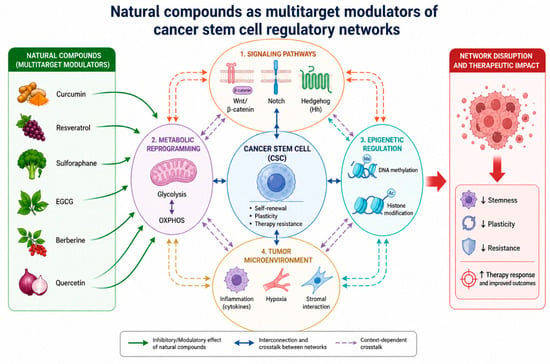
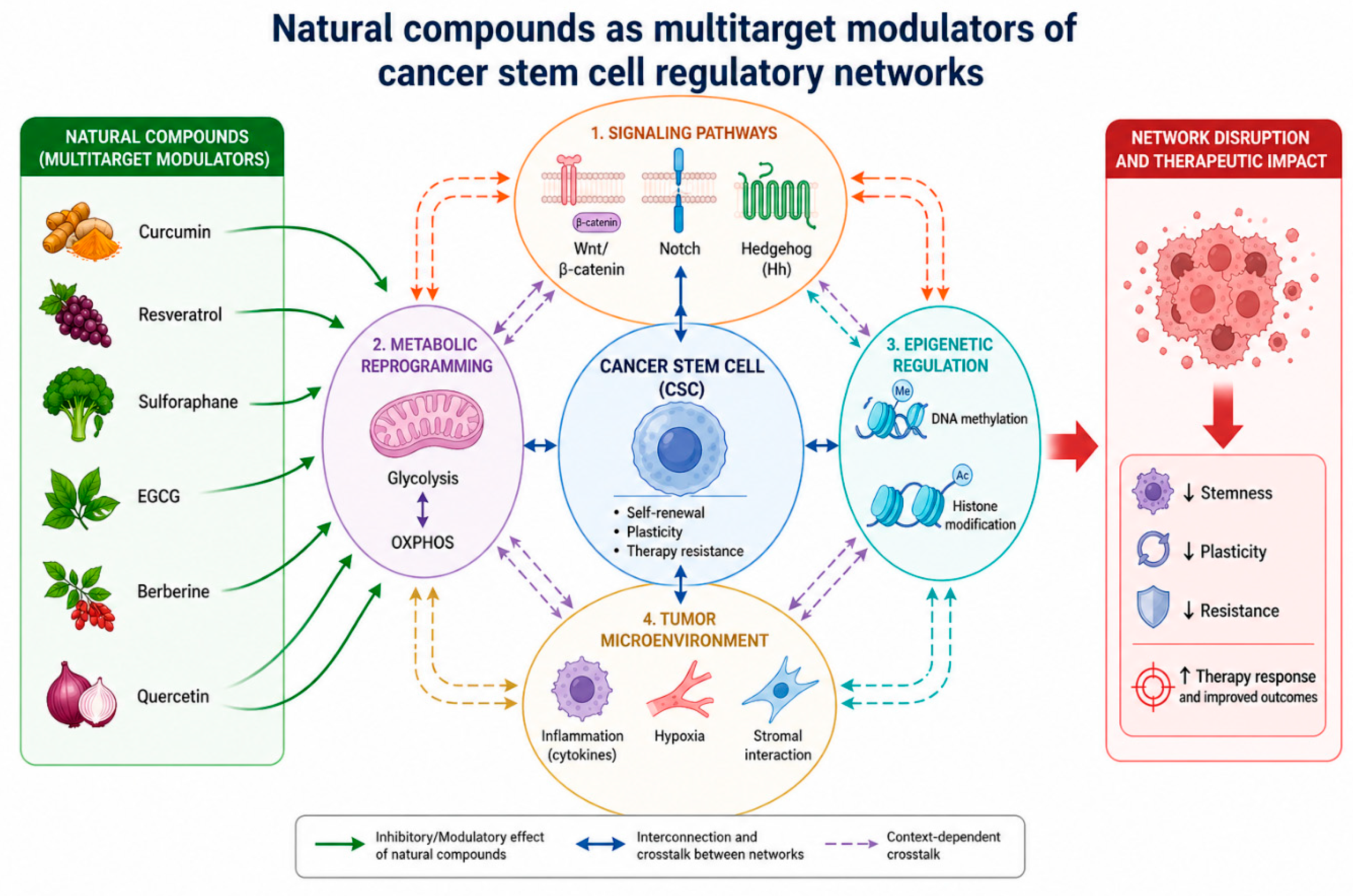
Taken together, the simultaneous engagement of stemness signaling, metabolic reprogramming, epigenetic regulation, and microenvironmental remodeling (each through structurally distinct molecular interactions) defines the network-level mode of action that distinguishes natural compounds from selective inhibitors and provides the mechanistic rationale for the compound-specific evidence reviewed in Section 4 [12,17,28] (Figure 3).
Figure 3.
Natural compounds as multitarget modulators of cancer stem cell regulatory networks. Conceptual framework illustrating the multitarget modulatory activity of curcumin, resveratrol, sulforaphane, EGCG, berberine, and quercetin on CSC regulatory networks. These compounds influence four interconnected axes sustaining CSC phenotypes: signaling pathways (Wnt/β-catenin, Notch, Hedgehog), metabolic reprogramming, epigenetic regulation, and tumor microenvironment interactions. Rather than acting as direct CSC inhibitors, these molecules modulate system-level regulatory robustness, contributing to decreased stemness, reduced plasticity, and improved therapeutic responsiveness. Created in BioRender. Alarcón, S. (2026) (accessed on 18 May 2026).
4. Key Natural Compounds Targeting CSCs: Evidence from Human Models
Not all evidence in the CSC field carries the same weight, and the natural compound literature is particularly prone to conflating three methodologically distinct categories: studies using bulk tumor cell cultures, studies using marker-sorted populations as CSC surrogates, and studies using functionally validated CSC populations defined by tumor-initiating capacity or self-renewal. Throughout this section, we aim to make that distinction explicit, not to dismiss the available evidence, but to be honest about what it actually supports.
4.1. Curcumin
Some of the curcumin studies in the CSC field are genuinely good. Mao et al. specifically targeted LGR5-positive colorectal CSCs and demonstrated that curcumin suppressed tumorsphere formation through autophagy induction and transcriptional repression of the TFAP2A pathway, a regulator of CSC niche maintenance rather than a generic cytotoxicity target [59]. The organoid data from Elbadawy et al. add translational weight by showing activity in patient-derived models that preserve tumor architecture. Although this study was not designed to characterize the stem-like compartment or measure functional stemness endpoints, it tells us that curcumin works in a physiologically relevant context, but not that it specifically eliminates the subpopulation responsible for relapse [60]. Mechanistically, curcumin engages the CSC regulatory network through at least three structurally distinct interactions: β-catenin degradation via TCF/LEF interference, STAT3 suppression at Tyr705, and mitochondrial disruption with ROS accumulation. This polypharmacological combination is genuinely difficult to compensate for through adaptive rewiring [13,30]. The central unresolved problem is whether these effects operate at concentrations achievable clinically, given curcumin’s notoriously poor bioavailability.
4.2. Resveratrol
What distinguishes resveratrol mechanistically from the other Wnt-targeting compounds reviewed here is the specificity of one particular molecular event: disruption of the β-catenin–GLI-1 protein–protein interaction, which simultaneously weakens both Wnt and Hedgehog-driven stemness programs [36]. The same study demonstrated p53-independent p21 activation in oral CSCs, which is relevant because p53 dysfunction is common in tumors where CSC persistence is most problematic. The Pradhan et al. studies add an underappreciated dimension: resveratrol disrupts CAF-mediated CSC support by suppressing the CXCL12/IL-6 axis and inhibits PD-L1 via IL-6/JAK2/STAT3 signaling, addressing both CSC-intrinsic programs and the niche signals that sustain them after intracellular pathway inhibition [35,56,57]. An independent line of evidence reinforces this Wnt dependence: in breast cancer stem-like cells isolated from MCF-7 and SUM159, free resveratrol reduced the ALDH-positive fraction and mammosphere formation while inducing autophagy, and a constitutively active β-catenin construct abolished these effects, directly linking Wnt/β-catenin suppression to depletion of the stem-like compartment [61].
The limitation that needs stating plainly is that several of the key mechanistic studies, notably the β-catenin–GLI-1 and CAF work, used nanoformulated resveratrol. Nanoencapsulation alters pharmacokinetic behavior and intracellular distribution in ways that make it inappropriate to extrapolate these results to free resveratrol. The mechanistic findings are worth building on, but the clinical pathway depends on formulation development that does not yet have a clear translational roadmap.
4.3. Sulforaphane
Sulforaphane is the compound in this review closest to what good mechanistic evidence in this field looks like. It offers something the others largely do not: a specific, named molecular effector. ΔNp63α is elevated in CSC-enriched, sphere-forming colorectal cancer cells, where it directly activates transcription of the core pluripotency factors Nanog, Oct4, and Sox2; sulforaphane suppresses CSC properties by downregulating ΔNp63α, thereby reducing the expression of these stemness genes [31]. This is a testable mechanistic chain, not a correlative observation. A second, structurally independent route into Wnt suppression acts at the cell-junction level via the ZO-1/β-catenin axis. Beyond mechanism, the head and neck squamous cell carcinoma (HNSCC) work addresses a question most natural-compound studies avoid: rather than testing the compound alone, Elkashty and Tran showed that sulforaphane-rich broccoli extract increased the cytotoxicity of cisplatin and 5-fluorouracil specifically against the CSC-enriched subpopulation, reducing the chemoresistant stem-like fraction that usually survives these drugs [32,51,62].
Two gaps should not be glossed over. The ΔNp63α mechanism was characterized in colorectal models, but sulforaphane’s activity against functionally defined CSCs is not confined to a single tumor type: it has also reduced tumorsphere formation in isolated prostate cancer stem cells, and further studies have documented effects on stemness assays in additional systems [63]. And despite this preclinical depth, we found no clinical trials evaluating sulforaphane with CSC-specific endpoints. The distance from a well-executed cell culture experiment to a clinical readout remains as large for sulforaphane as for any compound reviewed here.
4.4. Epigallocatechin-3-gallate (EGCG)
EGCG’s distinguishing feature is its dual activity against both DNMT and HDAC, two epigenetic enzyme families with mechanistically distinct chromatin-level functions [37,49]. Most compounds reviewed here act on signaling pathways; EGCG acts on the molecular machinery that determines which genes are accessible for transcription. The biological consequence of reactivating silenced differentiation-associated promoters, coupled with increased histone acetylation at stemness-regulatory loci, may result in a more persistent loss of cancer stem cell (CSC) identity than pathway inhibition alone, as epigenetic modifications propagate through cell division in a manner that transient pathway suppression cannot achieve. Evidence from CSC-enriched populations across colorectal, breast, and lung cancer models consistently shows reduced tumorsphere formation and downregulation of NANOG, SOX2, and OCT4, with selective pro-oxidant effects that exploit the tight redox control characteristic of therapy-resistant CSCs [21,44,45].
The critical limitation is that the dual DNMT/HDAC inhibitory activity has not been confirmed in prospectively isolated CSC fractions. Whether EGCG preferentially remodels CSC chromatin or affects any dividing cancer cell equally is an open question that the available data cannot resolve.
4.5. Berberine
Berberine targets the metabolic infrastructure that sustains CSC biology rather than competing with growth or transcription factors. Complex I inhibition triggers AMPK activation, suppressing mTORC1-dependent anabolic programs that CSCs rely on for self-renewal under nutrient-limited conditions, a mechanistic logic consistent with the metabolic vulnerabilities described in Section 3.2 [41,43]. The lincROR-mediated post-transcriptional regulation of β-catenin represents an unusual mechanistic claim that operates at the intersection of epigenetic and post-transcriptional control, and microRNA modulation of miR-21 and miR-155 adds further epigenetic depth [33,52,53].
The most compelling mechanistic findings arise from bulk cancer cell-line studies. While reductions in populations high in CD44+ and ALDH suggest anti-CSC activity, these surrogate markers do not confirm whether eliminated cells were truly tumor-initiating. Losing surface marker positivity is not equivalent to losing tumor-initiating capacity.
4.6. Quercetin
Quercetin’s upstream PI3K inhibition reaches mTORC1 suppression through the growth factor signaling cascade, a different entry point than berberine’s AMPK-mediated route to the same destination, illustrating mechanistic complementarity that tends to be lost in compound-by-compound reviews [39,40]. The downregulation of Snail, Twist, and ZEB1 represents direct transcription factor-level intervention in EMT plasticity, which is mechanistically more specific than indirect pathway modulation, and the mitochondrial depolarization data support a metabolic contribution to quercetin’s activity in CSC-like populations [47,64,65].
The limitation is the same one running through the berberine evidence: CD44+/CD24− as a CSC surrogate without functional tumor-initiating validation. Enriching for this phenotype identifies cells with stem-like properties, but reducing their surface marker expression does not prove that their functional stemness has been eliminated.
4.7. Comparative Assessment: What the Evidence Actually Supports
Across these six compounds, three trends emerge that constitute the central take-home of this review. First, evidentiary strength tracks mechanistic specificity: claims anchored to a named molecular effector or a functionally validated CSC population are the most secure, with sulforaphane’s transcriptional repression of ΔNp63α and its downstream pluripotency targets (Nanog, Oct4, Sox2) the clearest example, followed by curcumin’s LGR5+ colorectal CSC data and resveratrol’s β-catenin-dependent depletion of the ALDH-positive, mammosphere-forming breast CSC fraction. Second, the evidence is weakest, and most uniform in its weakness, where it rests on bulk or sphere cultures and surrogate surface markers without functional validation; much of the berberine and quercetin literature sits here, not because the underlying biology is implausible, but because the experiments were not designed to test tumor-initiating capacity, the property that actually defines a CSC. Third, mechanistic coverage is uneven across the four regulatory layers: signaling-pathway and metabolic effects are comparatively well documented, whereas epigenetic and microenvironmental mechanisms, conceptually the most promising for a durable loss of stemness, remain the least validated in prospectively isolated CSC fractions. These distinctions are summarized in Table 1.
Table 1.
Comparative assessment of natural compounds targeting cancer stem cells: experimental models, CSC endpoints, and level of evidence.
The unifying limitation is therefore not a scarcity of mechanistic data but a recurrent mismatch between the experimental unit studied and the cell population the claims are about. Consequently, the single most important gap is clinical evidence using CSC-specific endpoints, serial tumorsphere-forming efficiency, ALDH activity in circulating tumor cells, or single-cell tracking of stem-like dynamics before and after treatment, few of which have been generated, and none in a clinical setting, for the compounds reviewed here. This gap should be read not as evidence that these compounds lack CSC activity, but as a precise specification of the experiments the field has yet to perform [28,55].
5. Methodological Standards Required to Advance Natural Compounds Toward CSC-Relevant Clinical Evidence
Translating the mechanistic evidence reviewed above into clinically meaningful conclusions requires more deliberate experimental design. Five standards, in particular, need broader adoption.
The first standard that needs broader adoption is the use of functionally defined CSC populations rather than surrogate marker-sorted cells as the primary experimental unit. CD44+, CD133+, ALDH high, and CD44+/CD24− are useful enrichment strategies, but they are proxies. A cell that loses CD44 expression after treatment has not necessarily lost its capacity to seed a new tumor. The field needs to move toward serial tumorsphere formation assays that test self-renewal capacity across passages, limiting dilution transplantation assays that directly measure tumor-initiating frequency, and paired pre- and post-treatment comparisons that ask whether the compound reduced the functional stem-like compartment or merely the marker-positive fraction. These methodological standards exist and are used in the best CSC biology laboratories; they simply have not been consistently applied in the natural compound literature [4,66].
The second standard concerns pharmacological relevance. A compound that suppresses CSC self-renewal at 50–200 μM in cell culture is not necessarily viable therapeutically if those concentrations cannot be achieved in tumor tissue after oral administration. This is a genuine problem for curcumin and quercetin in particular. Future work needs to either establish that relevant concentrations are achievable in vivo (through nanoformulation, structural modification, or combinatorial delivery) or explicitly frame mechanistic findings as hypothesis-generating rather than therapeutically conclusive [67,68].
The third standard is the systematic incorporation of patient-derived models with CSC-specific readouts. Patient-derived organoids are the current preclinical gold standard, but their value depends on how they are used. An organoid experiment that measures bulk viability after treatment tells us something useful; one that simultaneously characterizes the CSC subpopulation before and after treatment (through ALDH activity, shape re-forming efficiency, or single-cell transcriptomic profiling) tells us something actually translatable. The difference in experimental design is modest; the difference in interpretive value is substantial [18,55].
The fourth standard addresses the tumor microenvironment. Most in vitro CSC studies treat cells as if they exist in isolation, stripped of the stromal signals and hypoxic gradients that sustain CSC identity in vivo. As noted for resveratrol (Section 4.2), explicit treatment of CAF-mediated CSC support remains rare in the natural-compound literature. Co-culture systems incorporating cancer-associated fibroblasts or tumor-associated macrophages are not technically prohibitive, and their inclusion would substantially strengthen the translational relevance of mechanistic findings [14,24,25].
Finally, the field needs clinical trials with CSC-specific endpoints as primary or co-primary outcomes. Window-of-opportunity trial designs (which administer the investigational compound between diagnosis and surgery) offer a practical framework for obtaining mechanistic clinical data through paired biopsies without requiring long-term follow-up [3]. We are not aware of any compound reviewed here having been evaluated in such a design with CSC-specific readouts. That is the most significant gap in the field, and closing it is the most important next step.
6. Combinatorial and Synergistic Potential: A Mechanistically Coherent but Underexplored Frontier
If the central argument of this review is that CSC regulatory networks are defined by redundancy and compensatory re-wiring, then single-compound strategies (however polypharmacological) remain conceptually incomplete. The mechanistic profiles reviewed in the preceding sections point toward combinatorial opportunities that have not been systematically explored. Berberine’s AMPK-mediated suppression of mTORC1 and quercetin’s upstream PI3K inhibition converge on the same anabolic axis through complementary entry points, making their combination mechanistically rational as a strategy for more durable mTOR pathway blockade in CSC populations. Similarly, sulforaphane’s HDAC inhibition and EGCG’s dual DNMT/HDAC activity could, in principle, produce additive or synergistic epigenetic reprogramming if their chromatin-level effects are non-overlapping, a hypothesis supported by the general logic of epigenetic priming but not yet tested in CSC-specific experimental systems. The most clinically relevant combinatorial question, however, concerns pairing these compounds with conventional cytotoxics: sulforaphane has shown the most direct evidence in this direction, with documented activity against cisplatin- and 5-fluorouracil-resistant CSC-enriched subpopulations in head and neck cancer models [62], and curcumin has been shown to sensitize bulk tumor populations to gemcitabine and oxaliplatin in several systems, though whether the sensitizing effect is specifically exerted on the CSC compartment remains unconfirmed. What is missing from the field is not mechanistic rationale for combinations, but the experimental infrastructure to test them rigorously: factorial designs in CSC-enriched models, Chou-Talalay combination index analyses applied to functional stemness endpoints rather than bulk viability, and in vivo validation in patient-derived xenograft systems capable of measuring tumor-initiating frequency before and after treatment. Until those experiments exist, the synergistic potential of natural compound combinations against CSCs remains a mechanistically compelling hypothesis in search of systematic evidence.
7. Latin American Natural Compounds with Potential Relevance Against Cancer Stem Cells: Promising Biology, Honest Limitations
The preceding sections have established something important: that natural compounds can engage CSC regulatory networks through mechanistically distinct interactions, and that the value of this polypharmacological profile depends entirely on whether it has been tested in the tumor context where it matters. That standard, however, has been applied almost exclusively to compounds derived from plants native to Asia, Europe, or broadly distributed temperate regions. Curcumin, resveratrol, sulforaphane, EGCG, berberine, and quercetin have accumulated decades of research precisely because they were available, studied, and integrated into international research pipelines early. Latin American species, by contrast, are conspicuously absent from the mainstream CSC literature not because their phytochemistry is less active, but because they have not been studied using CSC-specific experimental designs [69,70]. Latin America harbors one of the planet’s richest reservoirs of plant biodiversity, and the pharmacological potential of its native species remains largely untapped in cancer research, representing not a gap in biology but a gap in scientific attention that this section begins to address.
Before reviewing the individual compounds, it is important to note that none of the Latin American natural products discussed in this section has been evaluated in tumorsphere assays. None has ALDH activity data in cancer cell populations. None has been tested in prospectively isolated CSC fractions or in patient-derived organoids. The available evidence describes antiproliferative, cytotoxic, pro-apoptotic, and anti-migratory effects in conventional cancer cell models, which is a legitimate starting point but a distant one from the CSC-specific evidence needed to make meaningful claims about targeting stemness. We include these compounds here not because the evidence supports placing them alongside sulforaphane or curcumin based on CSC-relevant data, but because their mechanisms are biologically compatible with CSC regulatory vulnerabilities and because the gap between what is known and what needs to be studied represents a genuine research opportunity, particularly for Latin American scientific communities working with locally relevant biodiversity (Table 2).
7.1. β-Lapachone and Lapachol
β-Lapachone and lapachol are naphthoquinone derivatives found in species of the genus Tabebuia (Handroanthus), trees native to tropical and subtropical Latin America with deep roots in regional ethnomedicine [71]. The available evidence from human cancer models is mechanistically interesting. In breast cancer, β-lapachone reduced 3D spheroid viability and inhibited cell migration and EMT in tumor spheroid cultures, which is worth noting because spheroid models are commonly used as CSC-enriched systems even when they are not specifically designed as such [72]. In cervical cancer models, it suppressed PI3K/AKT/mTOR signaling, downregulated glycolytic proteins including PKM2 and G6PC, and impaired EMT-associated phenotypes [73].
These are mechanisms with direct relevance to CSC biology: PI3K/AKT/mTOR drives self-renewal, PKM2 supports the metabolic flexibility that characterizes therapy-resistant CSCs, and EMT is mechanistically coupled to stemness acquisition. The biological logic for CSC activity is there, but no study asked the question directly: Coelho et al. observed shrinking spheroids without characterizing their CSC content, so whether the stem-like subpopulation was preferentially affected remains unknown.
7.2. Boldine
Boldine is an aporphine alkaloid isolated from Peumus boldus, the boldo tree native to Chile, and one of the most pharmacologically characterized native Chilean compounds [74,75]. Its anticancer profile is genuinely interesting from a CSC perspective—but for reasons that are mechanistic rather than empirical. In human oral carcinoma models, boldine disrupted mitochondrial membrane potential, increased oxidative stress, activated caspase-dependent apoptosis, and inhibited Notch pathway components including Notch1, Hes1, Hey1, and Jagged1 [76]. Notch is one of the three canonical CSC self-renewal pathways reviewed in Section 3.1, and its inhibition by boldine at the receptor and ligand level represents a mechanistically specific claim that connects directly to stemness maintenance biology.
In glioblastoma-related systems, boldine reduced neurosphere diameter and BrdU incorporation in neural progenitor cells (the closest any Latin American compound reviewed here comes to a sphere-based readout). However, this was observed in neural progenitor cells rather than in cancer stem cells, and the effect was attributed at least in part to hemichannel blockade rather than to suppression of canonical stemness pathways [74]. The available data, however, come from oral carcinoma bulk cultures (Notch inhibition) and a non-cancerous neural progenitor model (neurosphere), not from cancer CSCs. The mechanistic rationale for studying boldine in CSC models is therefore solid; the CSC evidence itself is not yet available.
Table 2.
Latin American natural compounds with potential relevance against cancer stem cells: species, models, mechanistic profile, and research gaps.
7.3. Yerba Mate
Yerba mate (Ilex paraguariensis) is consumed daily by millions of people across South America and has a complex phytochemical profile rich in chlorogenic acids, flavonoids, methylxanthines, and saponins [77,78]. Its inclusion in a review on CSC biology requires the most candid framing of all of the compounds discussed in this section. The available evidence describes cytotoxic and antiproliferative effects in conventional human cancer cell models, based largely on whole extracts or formulations rather than isolated compounds [79]. Of all of the compounds in this section, yerba mate has the least CSC-relevant evidence, with no stemness-specific data reported to date.
Why include it then? Because its phytochemical constituents, particularly chlorogenic acids and certain flavonoid subclasses, share structural and mechanistic features with compounds that have demonstrated CSC-relevant activity in other contexts, and because its widespread consumption and cultural significance in Latin America make it a pharmacologically relevant subject that deserves properly designed investigation. But the current evidence does not support any specific claim about CSC biology. Yerba mate belongs here as an open question, not as a candidate with existing support.
7.4. Leptocarpin
Leptocarpin is a sesquiterpene lactone isolated from Leptocarpha rivularis, a plant native to Chile whose anticancer properties have been characterized primarily by Chilean research groups [80,81,82]. In gastric cancer cell lines, which are directly relevant to one of the highest-burden malignancies in Chile and Latin America, leptocarpin induces apoptosis through mitochondrial membrane depolarization, ROS production, caspase activation, and NF-κB inhibition. The NF-κB connection is particularly relevant to CSC biology: NF-κB is a major driver of the inflammatory niche that sustains CSC self-renewal and survival under therapeutic pressure, and its inhibition by a gastric cancer-active compound from a native Chilean species represents a mechanistic hypothesis worth pursuing experimentally.
But pursuing it experimentally is exactly what has not yet been done in the CSC context. As with the other compounds in this section, the existing leptocarpin data are conventional gastric-cancer anticancer studies, with mechanistic features (redox disruption, mitochondrial dysfunction, and NF-κB suppression) compatible with, but not demonstrative of, CSC targeting. That is a foundation for future work, not evidence of present activity against CSCs [12,80,83].
7.5. A Note on What This Section Represents
Taken together, the Latin American compounds reviewed here share a common profile: mechanistically interesting, pharmacologically active in conventional cancer models, and entirely unstudied in the CSC-specific experimental frameworks that would be needed to make meaningful claims about stemness targeting. This is not a criticism of the existing research, foundational cytotoxicity and mechanistic work in conventional models is a necessary first step. But the field needs to take the next step deliberately, designing studies that ask CSC-specific questions from the outset: tumorsphere formation assays, ALDH activity measurements, serial transplantation in xenograft models, and single-cell characterization of stemness marker dynamics under treatment.
There is something additionally worth saying here. The compounds reviewed in Section 4.1, Section 4.2, Section 4.3, Section 4.4, Section 4.5 and Section 4.6, curcumin, sulforaphane, and the rest, have accumulated decades of research and hundreds of publications. The Latin American compounds discussed here are, in most cases, the subject of a handful of studies, many of them from small research groups working with limited resources. The absence of CSC data is not evidence of absence of CSC activity. It is evidence of an absence of studies—and that is a gap that the Latin American scientific community is particularly well positioned to close, working with species that are geographically, culturally, and ecologically theirs.
8. Conclusions
The six compounds reviewed here (curcumin, resveratrol, sulforaphane, EGCG, berberine, and quercetin) demonstrably interfere with the molecular machinery that sustains cancer stem cell identity, and their convergence on shared regulatory nodes (Wnt/β-catenin, mitochondrial metabolism, epigenetic reprogramming, and microenvironmental signaling) is a meaningful observation. It indicates that CSC plasticity is not infinitely malleable but rests on regulatory vulnerabilities that can be engaged from several molecular angles at once, the property that makes polypharmacological natural compounds conceptually better suited to disrupting redundant networks than single-target inhibitors. This is the principal conceptual contribution of the present review.
The central challenge is that this insight rests almost entirely on cell lines, spheroid cultures, and organoids. These systems have illuminated how stemness is regulated, but a spheroid that disintegrates in a dish is not a tumor responding in a patient, and no organoid reproduces the immune, stromal, vascular, and adaptive context in which CSCs operate in vivo. Across the literature, the recurring weakness is the same: effects measured in bulk or marker-defined populations are attributed to a stem-like compartment whose functional elimination was never directly tested. Closing this gap requires the experimental standards detailed in Section 5—chiefly, functionally validated CSC populations and CSC-specific endpoints in place of surrogate-marker readouts, few of which have yet been applied to any compound discussed here, and none in a clinical setting.
Finally, the near-absence of Latin American species from this field reflects limited scientific attention and resource asymmetry rather than limited biological potential. β-Lapachone, boldine, leptocarpin, and the constituents of yerba mate carry mechanistic profiles compatible with CSC vulnerabilities and derive from species ecologically and culturally embedded in a region that bears some of the world’s highest burdens of cancers such as gastric cancer. Latin American research groups are uniquely positioned to lead CSC-specific investigation of these compounds, with privileged access to the biological material, clinical populations, and contextual knowledge required. Whether any natural compound will ultimately earn a place in the clinic remains genuinely open; defining and executing the experiments that could answer that question is, in our view, the most important challenge ahead.
Author Contributions
Conceptualization, S.V. and S.A.; methodology, S.V. and C.R.; software, S.V.; validation, S.V., C.R. and S.A.; formal analysis, S.V.; investigation, S.V., I.B., O.G. and Á.T.-A.; resources, S.A.; data curation, S.V.; writing—original draft preparation, S.V. and I.B.; writing—review and editing, S.V., C.R., Á.T.-A., I.B., O.G. and S.A.; visualization, S.V.; supervision, S.A.; project administration, S.A.; funding acquisition, S.A. All authors have read and agreed to the published version of the manuscript.
Funding
This study was supported in part by funding from the Faculty of Medicine of Universidad San Sebastián.
Institutional Review Board Statement
Not applicable.
Informed Consent Statement
Not applicable.
Data Availability Statement
No new data were created or analyzed in this study. Data sharing is not applicable to this article.
Acknowledgments
To San Sebastián and the School of Medicine, Tres Pascualas Campus, Concepcion, USS. To improve the English of this work, the Grammarly tool was used.
Conflicts of Interest
The authors declare no conflicts of interest.
Abbreviations
The following abbreviations are used in this manuscript:
| ALDH | Aldehyde dehydrogenase |
| AMPK | AMP-activated protein kinase |
| BrdU | Bromodeoxyuridine |
| CAF | Cancer-associated fibroblast |
| CSC | Cancer stem cell |
| CXCL12 | C-X-C motif chemokine ligand 12 |
| DNMT | DNA methyltransferase |
| EGCG | Epigallocatechin-3-gallate |
| EMT | Epithelial–mesenchymal transition |
| G6PC | Glucose-6-phosphatase catalytic subunit |
| GBM | Glioblastoma |
| GLI-1 | Glioma-associated oncogene homolog 1 |
| HDAC | Histone deacetylase |
| IL-6 | Interleukin-6 |
| JAK | Janus kinase |
| LGR5 | Leucine-rich repeat-containing G-protein-coupled receptor 5 |
| mTOR | Mechanistic target of rapamycin |
| NF-κB | Nuclear factor kappa B |
| OCT4 | Octamer-binding transcription factor 4 |
| PD-L1 | Programmed death-ligand 1 |
| PI3K | Phosphoinositide 3-kinase |
| PKM2 | Pyruvate kinase M2 |
| ROS | Reactive oxygen species |
| SOX2 | SRY-box transcription factor 2 |
| STAT3 | Signal transducer and activator of transcription 3 |
| TFG-β | Transforming Growth Factor beta-1 |
| TFAP2A | Transcription factor AP-2 alpha |
| Wnt | Wingless-related integration site |
| ZEB1 | Zinc finger E-box-binding homeobox 1 |
References
- Bray, F.; Laversanne, M.; Sung, H.; Ferlay, J.; Siegel, R.L.; Soerjomataram, I.; Jemal, A. Global cancer statistics 2022: GLOBOCAN estimates of incidence and mortality worldwide for 36 cancers in 185 countries. CA Cancer J. Clin. 2024, 74, 229–263. [Google Scholar] [CrossRef] [Scilit] [PubMed]
- Sung, H.; Ferlay, J.; Siegel, R.L.; Laversanne, M.; Soerjomataram, I.; Jemal, A.; Bray, F. Global Cancer Statistics 2020: GLOBOCAN Estimates of Incidence and Mortality Worldwide for 36 Cancers in 185 Countries. CA Cancer J. Clin. 2021, 71, 209–249. [Google Scholar] [CrossRef] [Scilit] [PubMed]
- Clara, J.A.; Monge, C.; Yang, Y.; Takebe, N. Targeting signalling pathways and the immune microenvironment of cancer stem cells—A clinical update. Nat. Rev. Clin. Oncol. 2019, 17, 204–232. [Google Scholar] [CrossRef] [Scilit] [PubMed]
- Nwokolo, G.C.; Ganesan, T.S.; Pors, K.; Falconer, R.A.; Smarakan, S. Cancer stem cells in focus: Deciphering the dynamic functional landscape of stemness in cancer. Biochim. Biophys. Acta (BBA) Rev. Cancer 2025, 1880, 189440. [Google Scholar] [CrossRef] [Scilit] [PubMed]
- Kapoor-Narula, U.; Lenka, N. Cancer stem cells and tumor heterogeneity: Deciphering the role in tumor progression and metastasis. Cytokine 2022, 157, 155968. [Google Scholar] [CrossRef] [Scilit] [PubMed]
- Pérez-González, C.; Brückner, D.B.; Di-Luoffo, M.; Richon, S.; Goswami, R.; Baghdadi, M.; Piastra-Facon, F.; Felsenthal, N.; Bouras, R.; Fumagalli, A.; et al. Self-organization of tumor heterogeneity and plasticity. bioRxiv 2025. in preprint. [Google Scholar] [CrossRef] [Scilit]
- Zhou, H.-M.; Zhang, J.-G.; Zhang, X.; Li, Q. Targeting cancer stem cells for reversing therapy resistance: Mechanism, signaling, and prospective agents. Signal Transduct. Target. Ther. 2021, 6, 62. [Google Scholar] [CrossRef] [Scilit] [PubMed]
- Talukdar, J.; Talukdar, J.; Srivastava, T.P.; Sahoo, O.S.; Karmakar, A.; Rai, A.K.; Sarma, A.; Gogoi, G.; Alqahtani, M.S.; Abbas, M.; et al. Cancer stem cells: Signaling pathways and therapeutic targeting. MedComm Oncol. 2023, 2, e62. [Google Scholar] [CrossRef] [Scilit]
- Sung, J.; Hwang, K. The Nexus of Stemness, Telomere Stability, and Metabolic Reprogramming in Glioblastoma: Foundations of Tumor Persistence and Targets for Intervention. MedComm 2026, 7, e70693. [Google Scholar] [CrossRef] [Scilit] [PubMed]
- Tu, S.-M.; Zhang, M.; Wood, C.G.; Pisters, L.L. Stem Cell Theory of Cancer: Origin of Tumor Heterogeneity and Plasticity. Cancers 2021, 13, 4006. [Google Scholar] [CrossRef] [Scilit] [PubMed]
- Opara, J.K.; Sanchez, S.; Thomas, S.M.; Anant, S. Natural products targeting cancer stem cells: A promising therapeutic approach. Explor. Drug Sci. 2025, 3, 1008106. [Google Scholar] [CrossRef] [Scilit]
- Naujokat, C.; McKee, D.L. The ‘Big Five’ Phytochemicals Targeting Cancer Stem Cells: Curcumin, EGCG, Sulforaphane, Resveratrol and Genistein. Curr. Med. Chem. 2021, 28, 4321–4342. [Google Scholar] [CrossRef] [Scilit] [PubMed]
- Ameer, S.F.; Mohamed, M.Y.; Elzubair, Q.A.; Sharif, E.A.M.; Ibrahim, W.N. Curcumin as a novel therapeutic candidate for cancer: Can this natural compound revolutionize cancer treatment? Front. Oncol. 2024, 14, 1438040. [Google Scholar] [CrossRef] [Scilit] [PubMed]
- Esmaeli, M.; Dehabadi, M.D.; Ghanbari, A. Molecular targets and therapeutic implications of curcumin in hepatocellular carcinoma: A comprehensive literature review. Cancer Cell Int. 2025, 25, 335. [Google Scholar] [CrossRef] [Scilit] [PubMed]
- Niu, X.; Liu, W.; Zhang, Y.; Liu, J.; Zhang, J.; Li, B.; Qiu, Y.; Zhao, P.; Wang, Z.; Wang, Z. Cancer plasticity in therapy resistance: Mechanisms and novel strategies. Drug Resist. Updat. 2024, 76, 101114. [Google Scholar] [CrossRef] [Scilit] [PubMed]
- Al-khreisat, M.J.; Abdulsahib, W.K.; Jasim, I.K.; Malathi, H.; Nayak, P.P.; Anand, D.A.; Mukherjee, G.; Sinha, A.; Ruziyev, O. Targeting cancer stem cell plasticity and tumor microenvironment crosstalk: A comprehensive review. Discov. Oncol. 2025, 17, 145. [Google Scholar] [CrossRef] [Scilit] [PubMed]
- Chu, X.; Tian, W.; Ning, J.; Xiao, G.; Zhou, Y.; Wang, Z.; Zhai, Z.; Tanzhu, G.; Yang, J.; Zhou, R. Cancer stem cells: Advances in knowledge and implications for cancer therapy. Signal Transduct. Target. Ther. 2024, 9, 170. [Google Scholar] [CrossRef] [Scilit] [PubMed]
- Borlongan, M.C.; Wang, H. Profiling and targeting cancer stem cell signaling pathways for cancer therapeutics. Front. Cell Dev. Biol. 2023, 11, 1125174. [Google Scholar] [CrossRef] [Scilit] [PubMed]
- Zeng, Z.; Fu, M.; Hu, Y.; Wei, Y.; Wei, X.; Luo, M. Regulation and signaling pathways in cancer stem cells: Implications for targeted therapy for cancer. Mol. Cancer 2023, 22, 172. [Google Scholar] [CrossRef] [Scilit] [PubMed]
- Lee, H.; Kim, B.; Park, J.; Park, S.; Yoo, G.; Yum, S.; Kang, W.; Lee, J.-M.; Youn, H.; Youn, B. Cancer stem cells: Landscape, challenges and emerging therapeutic innovations. Signal Transduct. Target. Ther. 2025, 10, 248. [Google Scholar] [CrossRef] [Scilit] [PubMed]
- Yin, L.; Zhou, S.; Zhang, H.; Shang, Y.; Wu, S.; Jin, T. Cancer stem cells in personalized therapy: Mechanisms, microenvironment crosstalk, and therapeutic vulnerabilities. Front. Cell Dev. Biol. 2025, 13, 1619597. [Google Scholar] [CrossRef] [Scilit] [PubMed]
- Xie, Y.; Ma, S.; Tong, M. Metabolic Plasticity of Cancer Stem Cells in Response to Microenvironmental Cues. Cancers 2022, 14, 5345. [Google Scholar] [CrossRef] [Scilit] [PubMed]
- Du, M.; Zhang, J.; Wicha, M.S.; Luo, M. Redox regulation of cancer stem cells: Biology and therapeutic implications. MedComm Oncol. 2024, 3, e70005. [Google Scholar] [CrossRef] [Scilit]
- Tao, L.; Zhou, Y.; Luo, Y.; Qiu, J.; Xiao, Y.; Zou, J.; Zhang, Y.; Liu, X.; Yang, X.; Gou, K.; et al. Epigenetic regulation in cancer therapy: From mechanisms to clinical advances. MedComm Oncol. 2024, 3, e59. [Google Scholar] [CrossRef] [Scilit]
- Galassi, C.; Manic, G.; Esteller, M.; Galluzzi, L.; Vitale, I. Epigenetic regulation of cancer stemness. Signal Transduct. Target. Ther. 2025, 10, 243. [Google Scholar] [CrossRef] [Scilit] [PubMed]
- Li, Y.-R.; Fang, Y.; Lyu, Z.; Zhu, Y.; Yang, L. Exploring the dynamic interplay between cancer stem cells and the tumor microenvironment: Implications for novel therapeutic strategies. J. Transl. Med. 2023, 21, 686. [Google Scholar] [CrossRef] [Scilit] [PubMed]
- Zhong, H.; Zhou, S.; Yin, S.; Qiu, Y.; Liu, B.; Yu, H. Tumor microenvironment as niche constructed by cancer stem cells: Breaking the ecosystem to combat cancer. J. Adv. Res. 2025, 71, 279–296. [Google Scholar] [CrossRef] [Scilit] [PubMed]
- Valdivia, S.; Añazco, C.; Riquelme, C.; Carrasco, M.C.; Alarcón, A.; Alarcón, S. Extracellular Adenosine in Gastric Cancer: The Role of GCSCs. Int. J. Mol. Sci. 2025, 26, 7594. [Google Scholar] [CrossRef] [Scilit] [PubMed]
- Steltar, B.L.V.; Jagadeeshan, S.; Sebastian, D.; Livneh, E. Dietary Phytochemicals and Cancer Stem Cells: Molecular Targets and Therapeutic Potential. In Plant Based Foods—Global Perspective of Their Role in Human Nutrition and Health [Working Title]; IntechOpen: London, UK, 2026. [Google Scholar] [CrossRef] [Scilit]
- Debnath, I.; Kundu, M. Therapeutic potential of natural compounds in targeting cancer stem cells: A promising approach for cancer treatment. Discov. Oncol. 2025, 16, 1433. [Google Scholar] [CrossRef] [Scilit] [PubMed]
- Chen, Y.; Wang, M.; Wu, J.; Zhu, J.; Xie, C.; Li, X.; Wu, J.; Geng, S.; Li, Y.; Han, H.; et al. ΔNp63α mediates sulforaphane suppressed colorectal cancer stem cell properties through transcriptional regulation of Nanog/Oct4/Sox2. J. Nutr. Biochem. 2022, 107, 109067. [Google Scholar] [CrossRef] [Scilit] [PubMed]
- Dabre, S.; Zoure, A.A.; Barro, L.; Kabre Jd’Arc, W.; Savadogo, M.; Traore, A.D.; Djigma, F.; Simpore, J. Sulforaphane from broccoli, an epigenetic modulator in cancer cells. Discov. Oncol. 2025, 16, 1830. [Google Scholar] [CrossRef] [Scilit] [PubMed]
- Li, S.-Y.; Shi, C.-J.; Fu, W.-M.; Zhang, J.-F. Berberine inhibits tumour growth in vivo and in vitro through suppressing the lincRORWnt/β-catenin regulatory axis in colorectal cancer. J. Pharm. Pharmacol. 2023, 75, 129–138. [Google Scholar] [CrossRef] [Scilit] [PubMed]
- Wu, X.; Que, H.; Li, Q.; Wei, X. Wnt/β-catenin mediated signaling pathways in cancer: Recent advances, and applications in cancer therapy. Mol. Cancer 2025, 24, 171. [Google Scholar] [CrossRef] [Scilit] [PubMed]
- Xie, C.; Liang, C.; Wang, R.; Yi, K.; Zhou, X.; Li, X.; Chen, Y.; Miao, D.; Zhong, C.; Zhu, J. Resveratrol suppresses lung cancer by targeting cancer stem-like cells and regulating tumor microenvironment. J. Nutr. Biochem. 2023, 112, 109211. [Google Scholar] [CrossRef] [Scilit] [PubMed]
- Bhal, S.; Das, B.; Sinha, S.; Das, C.; Acharya, S.S.; Maji, J.; Kundu, C.N. Resveratrol nanoparticles induce apoptosis in oral cancer stem cells by disrupting the interaction between β-catenin and GLI-1 through p53-independent activation of p21. Med. Oncol. 2024, 41, 167. [Google Scholar] [CrossRef] [Scilit] [PubMed]
- Mondal, P.; Jayaprakash, G.; Meeran, S.M. The translational potential of epigenetic modulatory bioactive phytochemicals as adjuvant therapy against cancer. Int. Rev. Cell Mol. Biol. 2025, 390, 140–185. [Google Scholar] [CrossRef] [Scilit] [PubMed]
- Cao, X.; Geng, X.; Zhang, C.; Li, L. Decoding the role of cancer stem cells in digestive tract tumors: Mechanisms and therapeutic implications (Review). Int. J. Oncol. 2025, 67, 61. [Google Scholar] [CrossRef] [Scilit] [PubMed]
- Ezzati, M.; Yousefi, B.; Velaei, K.; Safa, A. A review on anti-cancer properties of Quercetin in breast cancer. Life Sci. 2020, 248, 117463. [Google Scholar] [CrossRef] [Scilit] [PubMed]
- Silva-Pinto, P.A.; de Pontes, J.T.C.; Aguilar-Morón, B.; Canales, C.S.C.; Pavan, F.R.; Roque-Borda, C.A. Phytochemical insights into flavonoids in cancer: Mechanisms, therapeutic potential, and the case of quercetin. Heliyon 2025, 11, e42682. [Google Scholar] [CrossRef] [Scilit] [PubMed]
- Fan, K.-Q.; Zhang, L.; Song, F.; Zhang, Y.-H.; Chen, T.; Cheng, X.; Su, N.; Zou, Y.; Yu, T.; Tan, F.; et al. Pharmacological properties and therapeutic potential of berberine: A comprehensive review. Front. Pharmacol. 2025, 16, 1604071. [Google Scholar] [CrossRef] [Scilit] [PubMed]
- Keoh, L.Q.; Chiu, C.-F.; Ramasamy, T.S. Metabolic Plasticity and Cancer Stem Cell Metabolism: Exploring the Glycolysis-OXPHOS Switch as a Mechanism for Resistance and Tumorigenesis. Stem Cell Rev. Rep. 2025, 21, 2446–2468. [Google Scholar] [CrossRef] [Scilit] [PubMed]
- Sah, A.K.; Das, J.; Umarovich, A.I.; Agarwal, S.; Prabhakar, P.K.; Vashishtha, A.; Elshaikh, R.H.; Choudhary, R.K.; Alfeel, A.H. Targeting Cancer Stem Cells with Phytochemicals: Molecular Mechanisms and Therapeutic Potential. Biomedicines 2026, 14, 215. [Google Scholar] [CrossRef] [Scilit] [PubMed]
- Fallah, A.; Payet-Desruisseaux, M.; Zgheib, A.; Danalache, B.A.; Eliopoulos, N.; Annabi, B. Chemopreventive Targeting of Oncogenic Stemness: EGCG-Mediated Suppression of the HIF-1α-PPARγ-Cancer Stem Cells Transcriptional Signature in 3D Glioblastoma Spheroids. J. Cancer 2025, 16, 4302–4315. [Google Scholar] [CrossRef] [Scilit] [PubMed]
- Ghafghazi, D.M.; Sze, N.S.K.; Tsiani, E. Effects of Epigallocatechin Gallate Against Lung Cancer: Mechanisms of Action and Therapeutic Potential. Nutrients 2026, 18, 378. [Google Scholar] [CrossRef] [Scilit] [PubMed]
- Kursvietiene, L.; Kopustinskiene, D.M.; Staneviciene, I.; Mongirdiene, A.; Kubová, K.; Masteikova, R.; Bernatoniene, J. Anti-Cancer Properties of Resveratrol: A Focus on Its Impact on Mitochondrial Functions. Antioxidants 2023, 12, 2056. [Google Scholar] [CrossRef] [Scilit] [PubMed]
- Maugeri, A.; Calderaro, A.; Patanè, G.T.; Navarra, M.; Barreca, D.; Cirmi, S.; Felice, M.R. Targets Involved in the Anti-Cancer Activity of Quercetin in Breast, Colorectal and Liver Neoplasms. Int. J. Mol. Sci. 2023, 24, 2952. [Google Scholar] [CrossRef] [Scilit] [PubMed]
- Masoudi, M.; Moti, D.; Masoudi, R.; Auwal, A.; Hossain, M.M.; Pronoy, T.U.H.; Rashel, K.M.; Gopalan, V.; Islam, F. Metabolic adaptations in cancer stem cells: A key to therapy resistance. Biochim. Biophys. Acta (BBA) Mol. Basis Dis. 2024, 1870, 167164. [Google Scholar] [CrossRef] [Scilit] [PubMed]
- Singaravelan, N.; Tollefsbol, T.O. Polyphenol-Based Prevention and Treatment of Cancer Through Epigenetic and Combinatorial Mechanisms. Nutrients 2025, 17, 616. [Google Scholar] [CrossRef] [Scilit] [PubMed]
- Simões, B.M.; Santiago-Gómez, A.; Chiodo, C.; Moreira, T.; Conole, D.; Lovell, S.; Alferez, D.; Eyre, R.; Spence, K.; Sarmiento-Castro, A.; et al. Targeting STAT3 signaling using stabilised sulforaphane (SFX-01) inhibits endocrine resistant stem like cells in ER-positive breast cancer. Oncogene 2020, 39, 4896–4908. [Google Scholar] [CrossRef] [Scilit] [PubMed]
- Zhao, Z.; Chen, Q.; Qiao, X.; Wang, J.; Ali, Z.T.A.; Li, J.; Yin, L. Sulforaphane in cancer precision medicine: From biosynthetic origins to multiscale mechanisms and clinical translation. Front. Immunol. 2025, 16, 1702860. [Google Scholar] [CrossRef] [Scilit] [PubMed]
- Ali, M.; Mishra, D.; Singh, R.P. Cancer Pathways Targeted by Berberine: Role of microRNAs. Curr. Med. Chem. 2024, 31, 5178–5198. [Google Scholar] [CrossRef] [Scilit] [PubMed]
- Ibrahim, N.; Alsadi, N.; Yasavoli-Sharahi, H.; Shahbazi, R.; Hebbo, M.J.; Kambli, D.; Balcells, F.; Matar, C. (Berberine Inhibits Breast Cancer Stem Cell Development and Decreases Inflammation: Involvement of miRNAs and IL-6. Curr. Dev. Nutr. 2025, 9, 104532. [Google Scholar] [CrossRef] [Scilit] [PubMed]
- Bouyahya, A.; Mechchate, H.; Oumeslakht, L.; Zeouk, I.; Aboulaghras, S.; Balahbib, A.; Zengin, G.; Kamal, M.A.; Gallo, M.; Montesano, D.; et al. The Role of Epigenetic Modifications in Human Cancers and the Use of Natural Compounds as Epidrugs: Mechanistic Pathways and Pharmacodynamic Actions. Biomolecules 2022, 12, 367. [Google Scholar] [CrossRef] [Scilit] [PubMed]
- Guo, S.; Zheng, S.; Liu, M.; Wang, G. Novel Anti-Cancer Stem Cell Compounds: A Comprehensive Review. Pharmaceutics 2024, 16, 1024. [Google Scholar] [CrossRef] [Scilit] [PubMed]
- Pradhan, R.; Paul, S.; Das, B.; Sinha, S.; Dash, S.R.; Mandal, M.; Kundu, C.N. Resveratrol nanoparticle attenuates metastasis and angiogenesis by deregulating inflammatory cytokines through inhibition of CAFs in oral cancer by CXCL-12/IL-6-dependent pathway. J. Nutr. Biochem. 2023, 113, 109257. [Google Scholar] [CrossRef] [Scilit] [PubMed]
- Pradhan, R.; Paul, S.; Acharya, S.S.; Sinha, S.; Dash, S.R.; Kundu, C.N. Nano formulated Resveratrol inhibits PD-L1 in oral cancer cells by deregulating the association between tumor associated macrophages and cancer associated fibroblasts through IL-6/JAK2/STAT3 signaling axis. J. Nutr. Biochem. 2024, 125, 109568. [Google Scholar] [CrossRef] [Scilit] [PubMed]
- Reytor-González, C.; Jiménez-Flores, E.; González, N.; Simancas-Racines, D. Redefining Chemoresistance: Natural Bioactives as Molecular Modulators at the Cancer–Tumor Microenvironment Interface. Int. J. Mol. Sci. 2025, 26, 8037. [Google Scholar] [CrossRef] [Scilit] [PubMed]
- Mao, X.; Zhang, X.; Zheng, X.; Chen, Y.; Xuan, Z.; Huang, P. Curcumin suppresses LGR5(+) colorectal cancer stem cells by inducing autophagy and via repressing TFAP2A-mediated ECM pathway. J. Nat. Med. 2021, 75, 590–601. [Google Scholar] [CrossRef] [Scilit] [PubMed]
- Elbadawy, M.; Hayashi, K.; Ayame, H.; Ishihara, Y.; Abugomaa, A.; Shibutani, M.; Hayashi, S.-M.; Hazama, S.; Takenouchi, H.; Nakajima, M.; et al. Anti-cancer activity of amorphous curcumin preparation in patient-derived colorectal cancer organoids. Biomed. Pharmacother. 2021, 142, 112043. [Google Scholar] [CrossRef] [Scilit] [PubMed]
- Fu, Y.; Chang, H.; Peng, X.; Bai, Q.; Yi, L.; Zhou, Y.; Zhu, J.; Mi, M. Resveratrol Inhibits Breast Cancer Stem-Like Cells and Induces Autophagy via Suppressing Wnt/β-Catenin Signaling Pathway. PLoS ONE 2014, 9, e102535. [Google Scholar] [CrossRef] [Scilit] [PubMed]
- Elkashty, O.A.; Tran, S.D. Broccoli extract increases drug-mediated cytotoxicity towards cancer stem cells of head and neck squamous cell carcinoma. Br. J. Cancer 2020, 123, 1395–1403. [Google Scholar] [CrossRef] [Scilit] [PubMed]
- Xuan, Y.; Xu, J.; Que, H.; Zhu, J. Effects of sulforaphane on prostate cancer stem cells-like properties: In vitro and molecular docking studies. Arch. Biochem. Biophys. 2024, 762, 110216. [Google Scholar] [CrossRef] [Scilit] [PubMed]
- Filippi, A.; Deculescu-Ioniță, T.; Hudiță, A.; Baldasici, O.; Gălățeanu, B.; Mocanu, M.-M. Molecular Mechanisms of Dietary Compounds in Cancer Stem Cells from Solid Tumors: Insights into Colorectal, Breast, and Prostate Cancer. Int. J. Mol. Sci. 2025, 26, 631. [Google Scholar] [CrossRef] [Scilit] [PubMed]
- Wu, Z.-Y.; Qiu, K.-Y.; Gai, Y.-J.; Wu, J.-H.; Zhou, B.-X.; Shi, Q.-F. Quercetin: A Natural Ally in Combating Breast Cancer. Int. J. Nanomed. 2025, 20, 9155–9177. [Google Scholar] [CrossRef] [Scilit] [PubMed]
- Loh, J.-J.; Ma, S. Hallmarks of cancer stemness. Cell Stem Cell 2024, 31, 617–639. [Google Scholar] [CrossRef] [Scilit] [PubMed]
- Atanasov, A.G.; Zotchev, S.B.; Dirsch, V.M.; Orhan, I.E.; Banach, M.; Rollinger, J.M.; Barreca, D.; Weckwerth, W.; Bauer, R.; Bayer, E.A.; et al. Natural products in drug discovery: Advances and opportunities. Nat. Rev. Drug Discov. 2021, 20, 200–216. [Google Scholar] [CrossRef] [Scilit] [PubMed]
- Yap, K.M.; Sekar, M.; Fuloria, S.; Wu, Y.S.; Gan, S.H.; Mat Rani, N.N.I.; Subramaniyan, V.; Kokare, C.; Lum, P.T.; Begum, M.Y.; et al. Drug Delivery of Natural Products Through Nanocarriers for Effective Breast Cancer Therapy: A Comprehensive Review of Literature. Int. J. Nanomed. 2021, 16, 7891–7941. [Google Scholar] [CrossRef] [Scilit] [PubMed]
- Gómez-García, A.; Acuña Jiménez, D.A.; Zamora, W.J.; Barazorda-Ccahuana, H.L.; Chávez-Fumagalli, M.Á.; Valli, M.; Andricop-ulo, A.D.; Bolzani Vda, S.; Olmedo, D.A.; Solís, P.N.; et al. Latin American Natural Product Database (LANaPDB): An update. J. Chem. Inf. Model. 2024, 64, 8495–8509. [Google Scholar] [CrossRef] [Scilit]
- Koning, T.; Calaf, G.M. Natural Compounds Derived from Chilean Species and Their Cytotoxic Potential Against Cancer. Cancers 2026, 18, 656. [Google Scholar] [CrossRef] [Scilit] [PubMed]
- Mosquera-Morales, L.; Orozco, L.M.; Veloza, L.A.; Sepúlveda-Arias, J.C. In Vitro Antiproliferative Activity in Plants of the Genus Tabebuia: A Systematic Review. Molecules 2025, 30, 2315. [Google Scholar] [CrossRef] [Scilit] [PubMed]
- Coelho, L.L.; Vianna, M.M.; da Silva, D.M.; Gonzaga BMde, S.; Ferreira, R.R.; Coutinho, C.M.L.M.; Magalhães, F.C.M.; Maria, E.J.; de Oliveira, R.R.; Manso, P.P.; et al. β-lapachone impairs viability, migration, and epithelial–mesenchymal transition in mammary tumor spheroids. BMC Cancer 2025, 25, 1826. [Google Scholar] [CrossRef] [Scilit] [PubMed]
- Du, P.; Li, Y.; Han, A.; Wang, M.; Liu, J.; Piao, Y.; Chen, L. β-lapachone suppresses carcinogenesis of cervical cancer via interaction with AKT1. Front. Pharmacol. 2025, 16, 1509568. [Google Scholar] [CrossRef] [Scilit] [PubMed]
- Jiménez-Madrona, E.; Morado-Díaz, C.J.; Talaverón, R.; Tabernero, A.; Pastor, A.M.; Sáez, J.C.; Matarredona, E.R. Antiproliferative effect of boldine on neural progenitor cells and on glioblastoma cells. Front. Neurosci. 2023, 17, 1211467. [Google Scholar] [CrossRef] [Scilit] [PubMed]
- Sáez, J.C.; Burrell, J.C.; Cahill, C.M.; Cullen, D.K.; Devi, L.A.; Gilbert, R.J.; Graham, Z.A.; Gurvich, V.J.; Havton, L.A.; Iyengar, R.; et al. Pharmacology of boldine: Summary of the field and update on recent advances. Front. Pharmacol. 2024, 15, 1427147. [Google Scholar] [CrossRef] [Scilit] [PubMed]
- Jaganathan, M.; Kathiresan, S.; Muthusamy, R.; Azhamuthu, T.; Asath, N.A.A.; Ravichandran, P.; Vasu, R.; Veerapandiyan, P. Boldine as a Potent Anticancer Agent: Induction of Oxidative Stress, Mitochondrial Dysfunction, and Apoptosis via Inhibition of Notch Signaling in Human Oral Carcinoma Cells. J. Biochem. Mol. Toxicol. 2025, 39, e704274. [Google Scholar] [CrossRef] [Scilit] [PubMed]
- Alves, F.E.d.S.B.; Scheer, A.d.P. Yerba mate (Ilex paraguariensis), science, technology and health: A systematic review on research, recent advances and possible paths for future studies. S. Afr. J. Bot. 2024, 168, 573–587. [Google Scholar] [CrossRef] [Scilit]
- Palavicini, S.M.S.; Puton, B.M.S.; Jacques, R.A.; Valduga, E.; Backes, G.T.; Paroul, N.; Steffens, C.; Cansian, R.L. Bioactive Compounds of Ilex paraguariensis: A Critical Update on Extraction, Gastrointestinal Stability, and Technological Applications. J. Food Sci. 2025, 90, e70679. [Google Scholar] [CrossRef] [Scilit] [PubMed]
- Silva, E.D.V.; da Silva, M.P.R.; Düsman, E.; de Oliveira, N.M.; Camara, O.P.; Lucchetta, L. Bioactive potential of functional mate tea (Ilex paraguariensis) formulations with Brazilian fruits: Cytotoxicity in human liver tumor cells. J. Toxicol. Environ. Health Part A 2025, 89, 465–475. [Google Scholar] [CrossRef] [Scilit] [PubMed]
- Bosio, C.; Tomasoni, G.; Martínez, R.; Olea, A.F.; Carrasco, H.; Villena, J. Cytotoxic and apoptotic effects of leptocarpin, a plant-derived sesquiterpene lactone, on human cancer cell lines. Chem. Biol. Interact. 2015, 242, 415–421. [Google Scholar] [CrossRef] [Scilit] [PubMed]
- Carrasco, N.; Garrido, M.; Montenegro, I.; Madrid, A.; Hartley, R.; González, I.; Rubilar, M.; Villena, J.; Valenzuela-Valderrama, M. Antitumoral Activity of Leptocarpha rivularis Flower Extracts against Gastric Cancer Cells. Int. J. Mol. Sci. 2023, 24, 1439. [Google Scholar] [CrossRef] [Scilit] [PubMed]
- Montenegro, I.; Moreira, J.; Ramírez, I.; Dorta, F.; Sánchez, E.; Alfaro, J.F.; Valenzuela, M.; Jara-Gutiérrez, C.; Muñoz, O.; Al-vear, M.; et al. Chemical Composition, Antioxidant and Anticancer Activities of Leptocarpha rivularis DC Flower Extracts. Molecules 2020, 26, 67. [Google Scholar] [CrossRef] [Scilit] [PubMed]
- Rubio, J.; Arias, G.; Robles-Kelly, C.; Silva-Moreno, E.; Espinoza, L.; Carrasco, H.; Olea, A.F. Phytochemical Profiling and Assessment of Anticancer Activity of Leptocarpha rivularis Extracts Obtained from In Vitro Cultures. Plants 2022, 11, 546. [Google Scholar] [CrossRef] [Scilit] [PubMed]
Disclaimer/Publisher’s Note: The statements, opinions and data contained in all publications are solely those of the individual author(s) and contributor(s) and not of MDPI and/or the editor(s). MDPI and/or the editor(s) disclaim responsibility for any injury to people or property resulting from any ideas, methods, instructions or products referred to in the content. |
© 2026 by the authors. Licensee MDPI, Basel, Switzerland. This article is an open access article distributed under the terms and conditions of the Creative Commons Attribution (CC BY) license.