


Abstract
Escalating climate change and the increasing frequency of weather extremes pose a threat to the resilience of urban environments and human health, highlighting the urgent need for implementing energy-efficient interventions and reducing building cooling loads. This study investigates the passive building envelope retrofit technologies of external shading, electrochromic windows, and thermochromic windows through a multi-criteria evaluation analysis based on energy savings, economic performance, and indoor thermal comfort improvement. Thermochromic windows are discerned by a mean colour transition temperature of 34 °C and operate throughout the entire year, while electrochromic windows are activated only during cooling periods. Both technologies present total solar transmittance indices of 72.6% and 8.4% in the bleached and tinted state, respectively. External shading devices are either static or movable, applied with an inclination angle, and are either standalone interventions or combined with chromogenic glazing. Eight retrofit scenarios are investigated for a single-story, fully electrified residential building in Athens, Greece. The building features south- and east-oriented windows, which is an appropriate case to assess the effectiveness of these passive envelope cooling technologies in regulating solar heat gains. Thermal comfort is assessed using Fanger’s PMV (predicted mean vote) and PPD (Predicted Percentage of Dissatisfied) indices. The combination of electrochromic windows and movable external shading yields the highest annual electricity savings at 22.2% and reduces the PPD by 15.8%. Local static shading, on the other hand, ranks as the optimal retrofit solution in terms of economic performance, with a life-cycle cost of €6378, a 9.3% improvement in thermal comfort, and a corresponding reduction of 626 thermal discomfort hours. While the proposed multi-criteria framework can be applied to other buildings and climates, the quantitative results reported here are linked to the specific case examined: a residential building with south- and east-facing glazing in Athens, Greece, representing Mediterranean climatic conditions.
1. Introduction
Accelerated urban growth and escalating climate change put increasing pressure on cities [1], in which higher air temperatures and a greater frequency of hot extremes are reported than rural regions. According to statistical data, southern Europe is characterized by the highest mortality rates associated with extreme heat within Europe [2]. Integrating highly absorptive construction materials in the urban environment, combined with the limited greenery in public spaces [3], contributes to the localized phenomenon of the urban heat island effect, urban overheating, and the escalating demand for cooling energy [4]. Heat waves and the associated mortality rates highlight the alarming need to upgrade the building sector with cooling-efficient passive building envelope technologies [5], enhancing buildings’ thermal and optical properties and inertia to weather conditions. The implementation of building envelope technologies with adaptive behaviour to exterior conditions [6] is of primary importance for mitigating thermal loads during hot extremes. An additional benefit is the aversion of indoor health risks and protection of elderly and vulnerable populations, on top of energy efficiency and improved thermal comfort conditions.
Based on the latest available statistical data for 2011–2021 [7], 44.7% of residential buildings in Greece are located in multi-story buildings. Additionally, 40% of these buildings lack any form of thermal insulation [7]. The implementation of energy retrofit technologies in multi-story buildings is often challenging [8], as the condominium’s building regulations restrict modifications to the external envelope and require consensus among the occupants. Therefore, transparent building elements, such as windows and glazed surfaces, represent a more practical and feasible option for implementing energy upgrade strategies.
The selective and seasonal regulation of window spectral transmittance and solar heat gains through glazing effectively enhances a building’s yearly thermal performance. Electrochromic windows are a cooling passive envelope technology that reversibly adjust their solar transmittance in response to electrical current or voltage [9]. Electrochromic windows (ECs) can be stimulated either automatically, through a smart-building control-actuator system that is sensitive to an external stimulus, for instance, temperature or incident solar irradiation, or they can be manually triggered [10]. ECs can reversibly switch between a bleached and coloured/tinted state via redox reactions that affect their coloration [11]. The colour transition from the bleached to the tinted state is achieved promptly with a low voltage supply at a time scale of half a minute [12] and requires an electricity consumption of only a few μWh per glazing area in m2 per switch [13]. When the current supply is reversed, the windows return to their bleached state, and the colour transition can be repeated multiple times [11].
Electrochromic windows (ECs) are the most commercially available technology among chromogenic systems for building applications [14] and have undergone substantial development since their initial introduction in 1984, with several commercially available products in the European and American markets [15]. The application of electrochromic windows was investigated by Lashgari and Jahangir [16], who calculated a 47.8% reduction in yearly energy consumption for a school building. Recent advancements in EC regulation concern the development of dual-band control that allows for separate adjustment of visible-spectrum transmittance based on indoor thermal conditions and incident radiation. Integrating electrochromic windows driven by photovoltaics is a concept that was investigated by Xie et al. [17], who reported an 18.1% decrease in cumulative energy consumption, and a path towards a zero-energy building.
On the other hand, thermochromic windows (TCs) spontaneously transition between low- and high-transparency states in response to ambient air temperature, without requiring electricity input. The most usual thermochromic materials include liquid crystals [18], organic dyes [19], metal oxides [20], and hydrogels [21]. Among these, hydrogels are the most widely used in thermochromic windows due to their high transmittance ratio in the bleached state, adjustable low-phase transition temperature between 30 °C and 40 °C [22], and cost-effectiveness [23]. Due to their spontaneous colour transition, thermochromic windows are reported to result in moderate total energy savings in contrast to user-activated ECs. According to a study by Jahangir and Aboutorabi [24], the addition of thermochromic windows results in a 2% yearly improvement in energy consumption, against 8% for ECs. In a study by Yang et al. [25], in which a daylight and energy performance optimization study is performed, the optimum energy savings induced by thermochromic windows are calculated at 13%, while thermal comfort is improved by 40%.
Solar shading elements are crucial for efficient building energy performance, aiding in regulating solar heat gains, mitigating energy demand, and ensuring high-quality thermal and visual condition. For this reason, shading devices need to be an undivided action of energy retrofit approaches and, in the case of new constructions, especially highly glazed ones, to be investigated in the early design process [26]. The typical materials of shading elements include textiles, concrete, timber, steel, and aluminum [27]. The main division of external shading devices is static and dynamic. Static shading is the most widespread commercially available technology [28] because of its low maintenance cost and construction simplicity.
According to Alajmi et al. [29], overhangs, which are the simplest form of fixed shading, are found to result in up to a 22% reduction in cooling energy demand in hot climatic conditions. Fixed horizontal shading devices with a 30° angle tilt are reported to achieve greater energy savings, up to 0.6%, than fixed vertical shading components, due to greater solar heat gains during winter [30]. Gaber et al. [31] developed a multi-criteria process that considers energy savings due to solar heat gains and daylight independence to optimize fixed shading parameters. In other studies of the existing literature, shading design and performance evaluation consider the comfort and well-being of building users [26].
Dynamic shading components are divided into manually retractable shading devices and smart systems with automatic operation for maintaining the desired indoor conditions and reducing energy demand in response to external stimuli [32]. However, design complexity and high maintenance costs are the main drawbacks of smart shading systems, explaining why they are not widely applied [33]. According to a study by Humaidan et al. [34], automated external venetian blinds are the most energy-efficient solution, achieving a 32% reduction in cooling energy consumption and securing adequate daylight levels for 68% of occupied hours. Retractable shading devices, on the other hand, allow the seasonal adaptation to regulate solar heat gains and dynamically adapt to daylight levels, reducing lighting electricity consumption. Appropriate control strategies are necessary for balancing cooling energy savings and lighting electricity savings and therefore maximizing primary energy savings. This is highly important for buildings in which a large share of total energy demand is attributed to lighting purposes [35].
This analysis investigates the impact of various passive building envelope cooling technologies on building thermal performance and indoor thermal comfort and parallelly considers cost-performance indices. This multi-lateral approach is the novelty of this work because this analysis includes energy, thermal comfort and cost investigation. An apartment is studied for the climatic conditions of Athens, a representative climate analogue for rapidly warming Mediterranean cities. The examined cooling retrofit technologies regard two chromogenic window technologies, namely electrochromic and thermochromic windows, and the technologies of static and retractable shading elements. Technological solutions are investigated individually or in combination to identify potential synergies. This study simultaneously evaluates energy efficiency savings and thermal comfort enhancements and aims to identify the most efficient cooling energy building renovation strategy. A cost-performance analysis is performed to ensure economic feasibility and the immediate applicability of the investigated retrofit strategies. The importance of the present analysis lies in its simultaneous, multi-faceted evaluation of cooling-oriented technologies for apartment-type residences in climates with hot, dry summers and mild, wet winters, highlighting the advantages and drawbacks of each solution and providing a well-established methodology for selecting the optimum option based on economic and thermal comfort criteria. The conclusions of this work can serve as guidance for future energy renovation strategies, improve building resilience against hot-extreme events, and support sustainable urban design and climate-responsive buildings.
2. Materials and Methods
2.1. Description of the Building
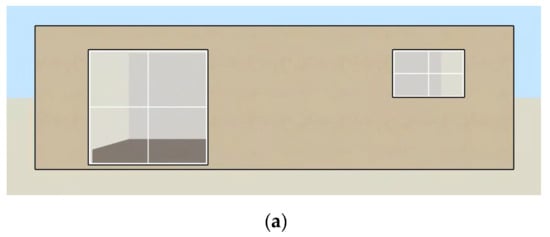
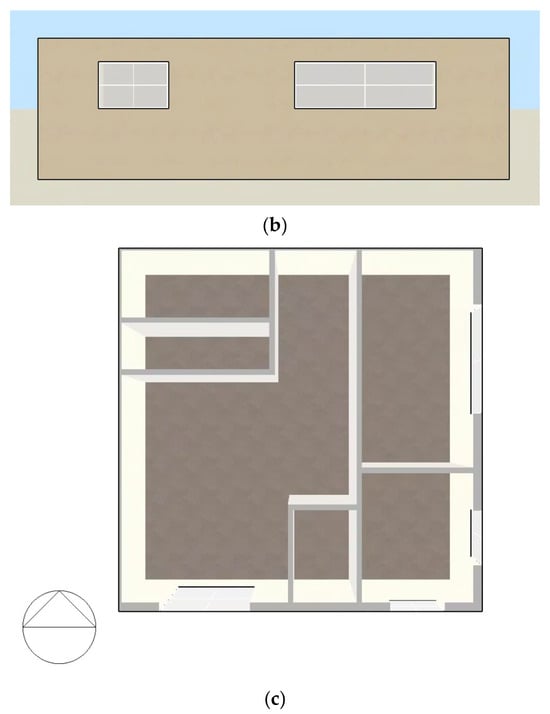
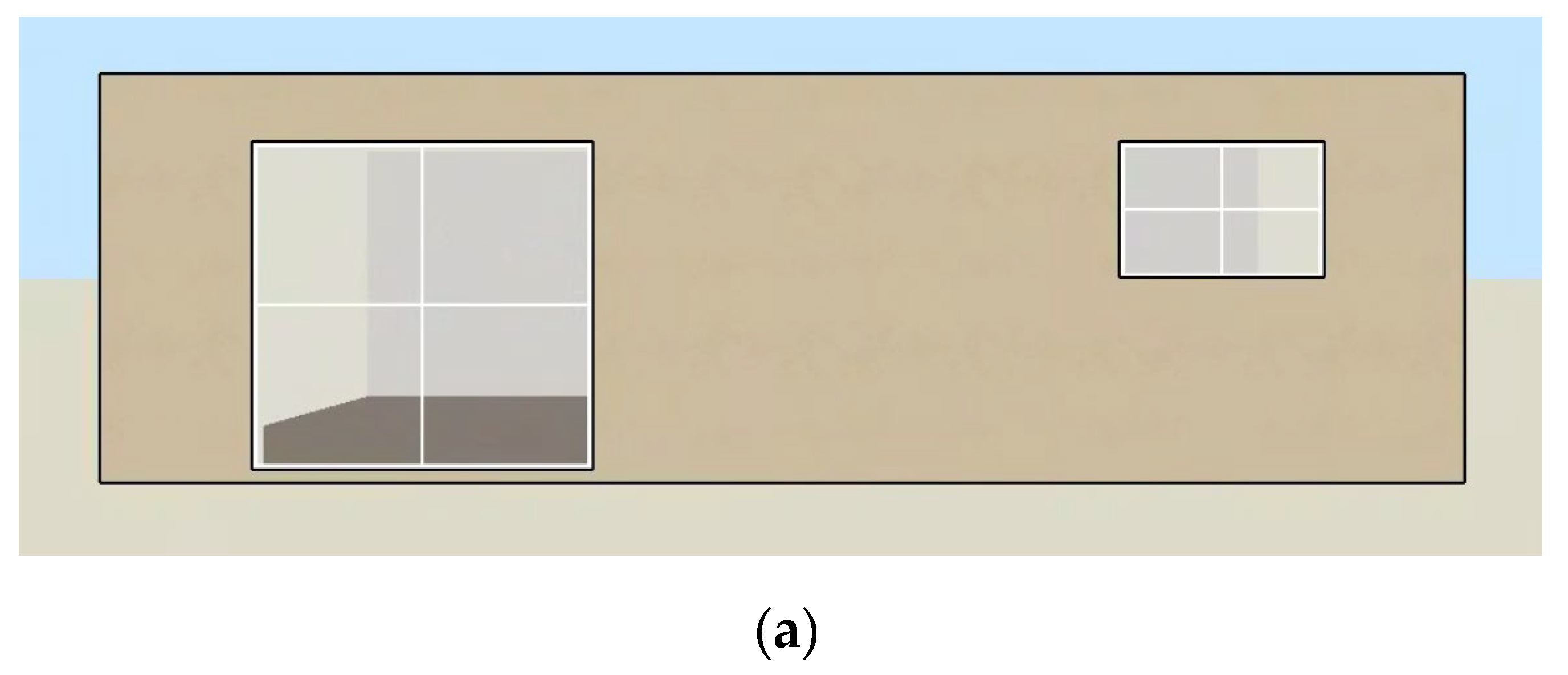
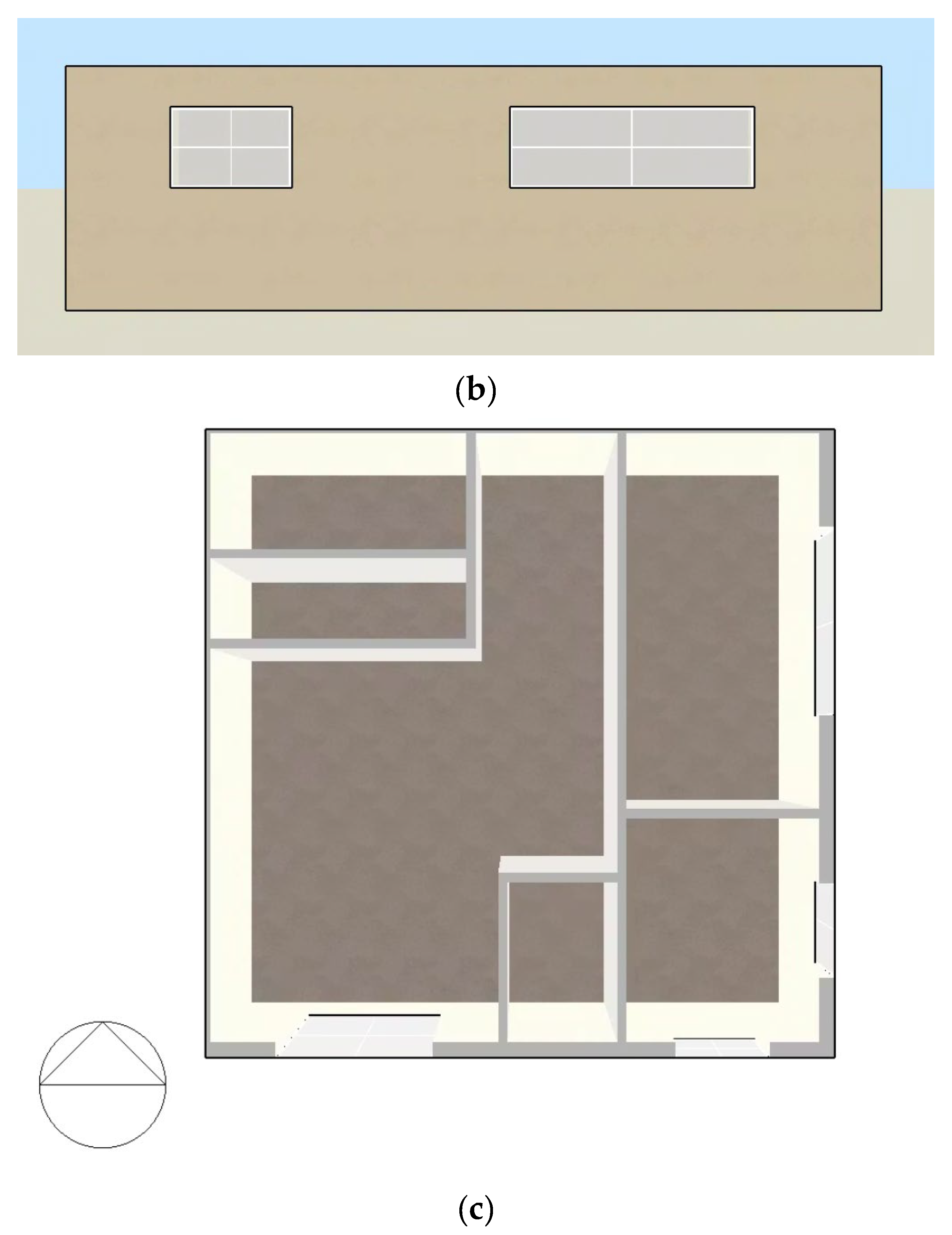
The investigated residence is an apartment with a 100 m2 gross area in Athens, Greece. The building typology is a typical brick wall and concrete construction, with openings on the south and east façades and a window-to-wall ratio of 25% and 15%. The rooftop and south and east walls are adjacent to ambient air, while the floor and west and north walls are adjacent to neighbouring, thermally treated apartments. The U-value of the building construction is set equal to the maximum allowed value as suggested by the Technical Chamber of Greece for the climatic category of Athens [36]. The U-value of the external walls is 0.45 W/(m2·K), 0.40 W/(m2·K) for the rooftop, and 2.60 W/(m2·K) for the windows. The solar heat gain coefficient of the building’s transparent elements, referred to as the g-value, is set to 0.762 [37].
The residence houses a family of four, with a mean presence rate of occupants of 75% and a specific occupancy load of 80 W [38]. The building’s lighting and appliance daily average factors are 48% and 39%, respectively, with specific loads of 3.125 W/m2 and 1.25 W/m2 [38]. The general lighting level for a residence is set to 200 lux, and the typical, non-maximum luminous efficiency of LED lighting is equal to 160 lumens [38]. The total optical properties of absorbance and emittance of the outer surface of the building envelope are set to 0.6 and 0.8, according to the technical guidelines of Greece [38]. The infiltration rate is selected to be 0.4 air changes per hour (ach) [39]. The residence is fully electrified and equipped with reversible air-to-air heat pump units with a seasonal coefficient of performance of 5.0 and a seasonal energy efficiency ratio of 4.6 [40]. Figure 1 illustrates the examined residence, including the external south and east sides, as well as the plan view with north orientation. Additionally, Table 1 gives the geometric and operational characteristics of the examined apartment.
Figure 1.
(a) South side, (b) east side, and (c) plan view of the examined residence.
Table 1.
Geometrical and operative characteristics of the investigated residence.
2.2. Cooling Retrofit Scenarios
Three cooling passive envelope technologies are investigated to develop energy renovation scenarios that regard the transparent elements of the building envelope. These technologies involve two categories of chromogenic windows, electrochromic and thermochromic windows, and the installation of an external shading element on each window. Specifically, the characteristics of the investigated retrofit technologies and their control strategy are described below:
- Electrochromic windows (ECs) with a total transmittance ratio of 72.6% and 8.4% in the bleached and tinted state, respectively [13]. ECs are activated only when there is a cooling load and instantly transition to a tinted state, blocking the incident solar irradiation [41].
- Thermochromic windows (TCs) have a total transmittance ratio of 72.6% and 8.4% in bleached and tinted states. The stimulus that activates the colour transition of the thermochromic windows is the temperature of their external surface. The mean colour transition temperature is 34 °C, and the temperature transition range is set to 4 °C [42].
- Local static or movable shading elements on each window. These external shading (ES) elements are installed with an inclination angle of 15° [43] and a vertical offset from the window top of 20 cm, in accordance with common local practice, and have a total length of 1.2 m [44]. The width of each shading element equals the window’s width to which it is installed. The static shading element offers shading throughout the entire year. On the other hand, the movable shading element (ES–Summer) can be retracted during the winter period and extended during the summer months, offering solar heat gain management possibilities [45].
Combining the above cooling retrofit techniques results in the formulation of eight different energy renovation scenarios, which are given in Table 2. It is important to note that the control strategy adopted for the ES–Summer case is intentionally kept as simple as possible, to represent an intermediate operation between fixed shading, typically deployed for most of the year, and EC windows, which are activated only when a cooling load is present. In urban environments, external shading is often used not only for solar control but also for privacy.
Table 2.
Description of examined retrofit scenarios.
2.3. Simulation Strategy
The dynamic energy and thermal comfort calculations are performed using the DesignBuilder software [46] and the EnergyPlus simulation engine [47]. The timestep is set to 5 min according to the sensitivity analysis for optimal accuracy and computational cost. Compared to a 1 min timestep, deviations in annual electricity use and hours with PPD > 10% were below 0.8%, while computation time increased by 18%. Based on these findings, a 5 min timestep is selected to balance numerical accuracy and computational cost. The selection of timestep is also validated by previous studies with references [48,49]. Additionally, the TARP (Thermal Analysis Research Program) algorithm [50] is selected to calculate the indoor and outdoor convective heat transfer coefficients. The TARP algorithm is an analytical model for exterior convection that combines correlations from ASHRAE [51]. The comparative simulation analysis is performed for the climatic conditions of Athens, Greece, retrieved from the Photovoltaic Geographical Information System [52]. The ambient air temperature for Athens varies from approximately 2 °C to 37 °C, while the average yearly air temperature is around 18 °C. The heating period lasts from November to the middle of April, while the cooling period is between the last days of May and the middle of September. Extra information regarding the climatic data of the examined city can be found in Appendix A. Every retrofit scenario is compared to the baseline scenario regarding electricity savings and a decrease in yearly thermal discomfort. The simple payback period is also calculated to evaluate each retrofit strategy economically. The validity of the selected simulation strategy is supported by previous studies by the same authors [42,48,49].
2.4. Basic Mathematical Formulation Part
The total electricity consumption regards the electricity consumption of the heat pump systems for heating and cooling and the electricity consumption for lighting, according to the following equation:
The electricity savings percentage (ES) achieved by each energy retrofit scenario in comparison to the baseline scenario is defined as
The predicted mean vote (PMV) is calculated as a deviation of occupants’ total specific energy dissipation (L) from their particular rate of metabolism (M), according to the following equation [53]:
The equation for defining the thermal comfort conditions is based on a steady-state regression analysis of experimental data. Fanger’s model gives a measure to thermal sensation and the deviation from the theoretically ideal comfort conditions. The index of the Predicted Percentage of Dissatisfied (PPD) is calculated as [53]
The occupancy metabolic rate is 58.2 W/m2, while the insulation of occupants’ clothes varies between 1.0 clo for the colder winter months and 0.5 clo for the warmer summer months [49]. A metric for thermal comfort enhancement is a reduction in the PPD index exceeding the value of 10%, expressed in hours. The following equation shows the decrease in discomfort hours:
Life-cycle cost (LCC) is used as the financial criterion for evaluating the renovation scenarios. LCC accounts for the initial investment cost as well as the operating and maintenance costs over the project’s lifetime. Using an initial investment cost , a yearly operating and maintenance cash flow , a discount rate , and a project lifespan , the life-cycle cost (LCC) is defined as [54]
The project’s lifetime is set to N = 25 years, and the discount rate is r = 3% [37]. The electricity price for residential use is considered equal to 0.24 €/kWh [55].
Finally, a multi-objective assessment of the different retrofit strategies is carried out, accounting for life-cycle costs and thermal comfort enhancement. This analysis aims at the simultaneous minimization of the LCC and the PPD index. For this reason, the dimensionless geometric distance from the ideal solution, F, is defined and calculated for every retrofit strategy, according to the following equation:
The global optimum solution is the one that minimizes F. The ideal point corresponds to the minimum life-cycle cost and minimum PPD index (LCCmin and PPDmin). Any examined scenario is represented by a point (LCC and PPD). Each term in Equation (7) is normalized by the corresponding maximum range observed among the investigated scenarios, enabling a dimensionless analysis that assigns equal weight to both indices (LCC and PPD). Therefore, each normalized term ranges between 0 and 1, and F varies between 0 and .
3. Results
3.1. Energy Performance and Thermal Comfort Results
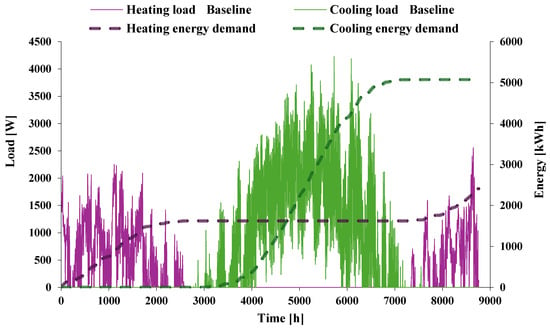
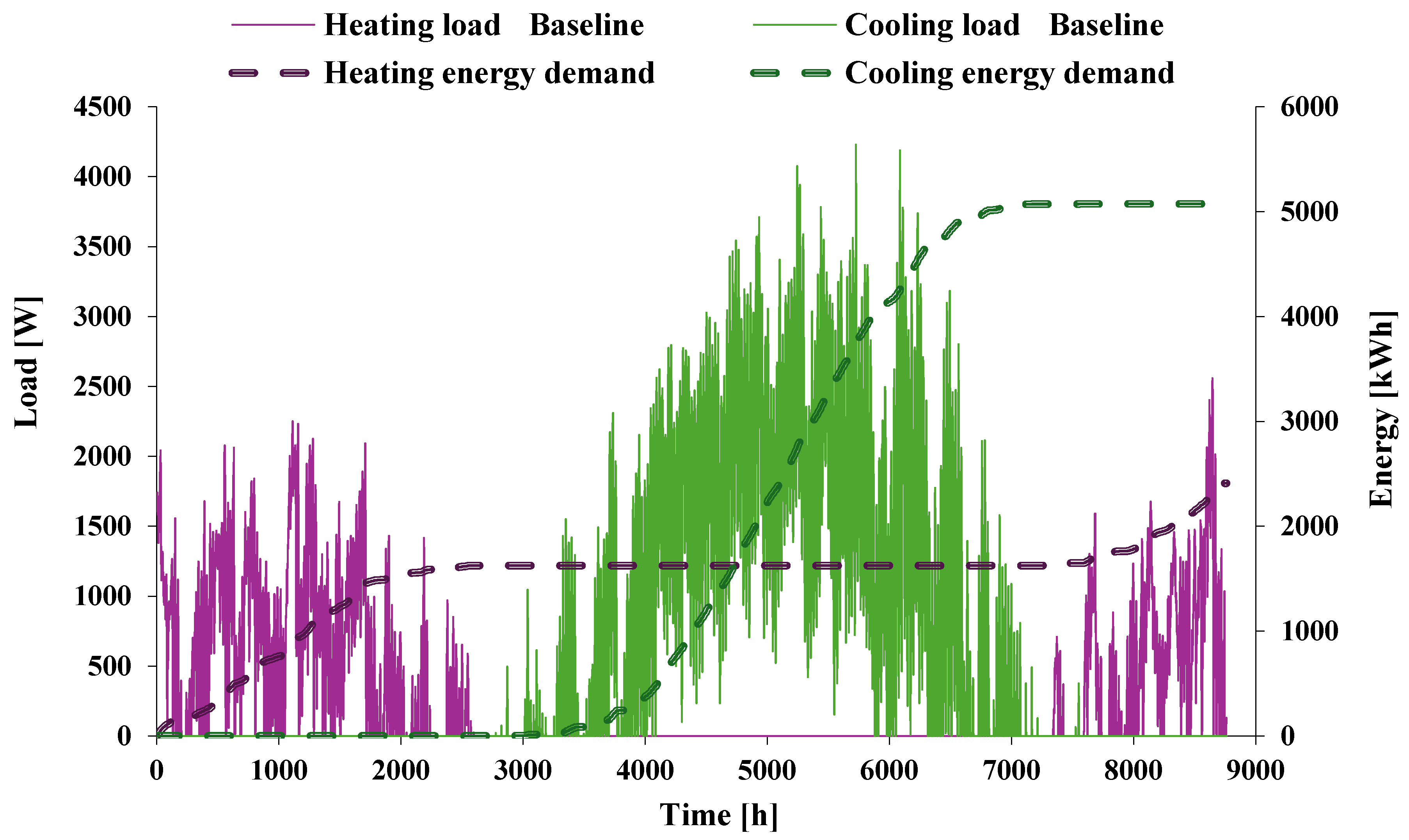
Firstly, the baseline is analyzed concerning the hourly heating and cooling thermal building loads and the cumulative heating and cooling energy demand, as illustrated in Figure 2. According to the energy calculations, the yearly heating energy demand is 2409 kWh, while the yearly energy demand for cooling is 5073 kWh. The cooling loads are more than twice the heating loads, which classifies the building as cooling-intensive. The maximum cooling load is 4230 W, and it was observed on August 3rd at 15:00. Regarding the thermal comfort environment, the average PPD index is calculated as 10.73%.
Figure 2.
Hourly heating and cooling loads and yearly heating and cooling energy demand for the baseline scenario.
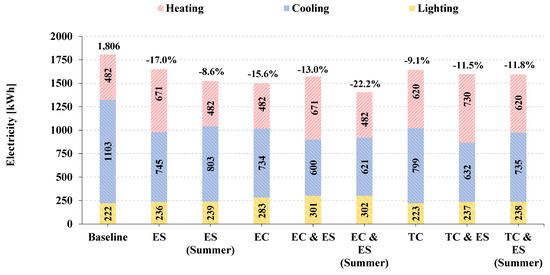
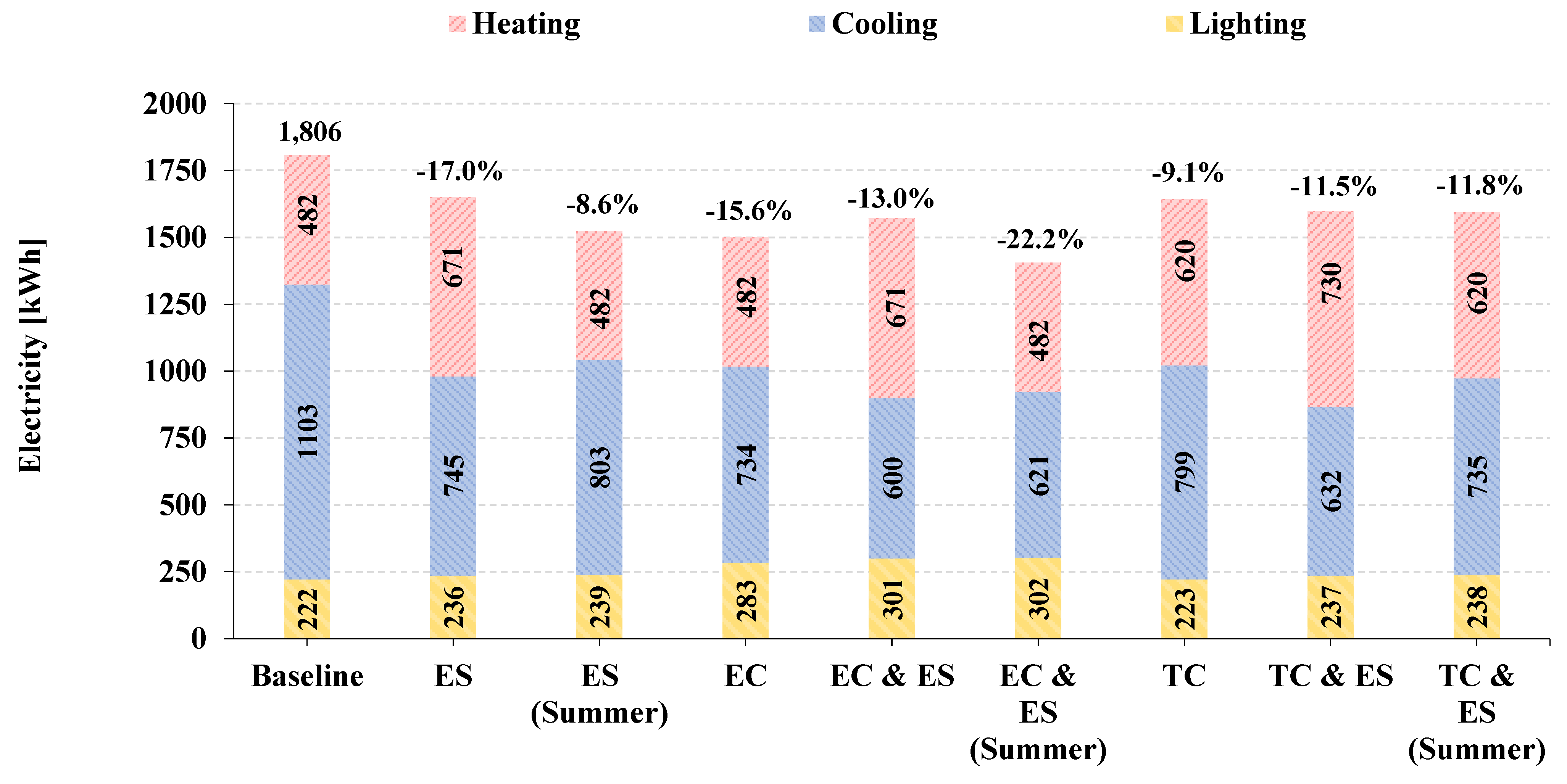
The eight retrofit scenarios regarding yearly electricity savings and average PPD reduction are investigated. More specifically, Figure 3 illustrates the cumulative electrical energy demand for heating, cooling, and lighting purposes for the baseline scenario and the eight cooling retrofit scenarios. The combination of electrochromic windows and retractable local window shading is identified as the optimum cooling renovation strategy, with an electricity consumption of 482 kWh for heating, 621 kWh for cooling, and 302 kWh for lighting. Lighting energy use increases by 80 kWh, which is attributed to the reduced transmission of solar radiation, including visible light, into the indoor environment. In contrast, for the thermochromic window scenario, lighting electricity consumption increases slightly compared to the baseline, while heating demand is increased significantly by 28.6%. The materials’ properties explain this difference since the thermochromic windows’ transition to a tinted state occurs at a mean outer surface temperature of 34 °C. Because this colour transition can occur throughout the year, reduced solar heat gains are also observed in winter, when the TC external surface temperature exceeds the transition threshold. On the other hand, ECs are activated when there is a cooling demand, enabling dynamic light and heat control that responses to external conditions.
Figure 3.
Electricity consumption for heating, cooling, and lighting per scenario and total electricity savings.
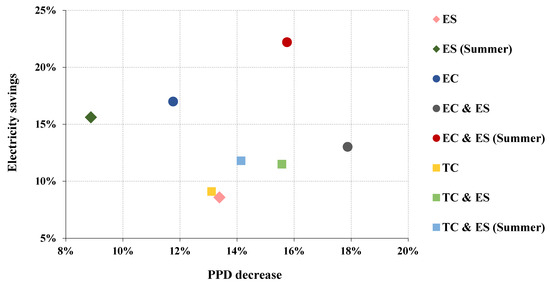
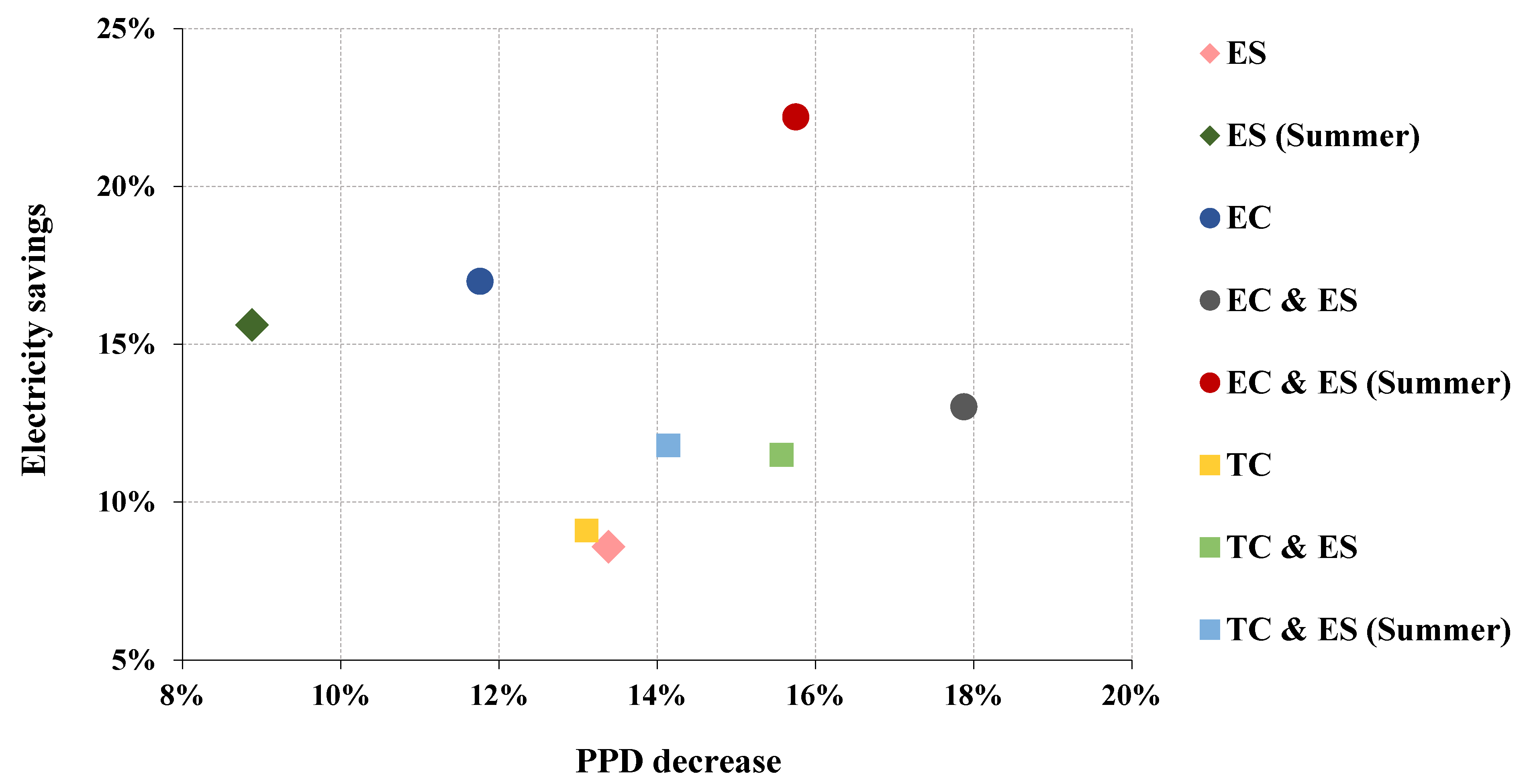
According to Figure 4, the cooling retrofit strategy that combines ECs and retractable local window shading results in the maximum yearly electricity savings of 401 kWh or 22.2%. The annual average PPD index for the EC & ES (Summer) retrofit scenario is 9.04%, representing a 15.8% reduction compared to the baseline scenario. The retrofit scenario that results in the greatest improvement in thermal comfort combines ECs with static local window shading. In this case, the PPD reduction reaches 17.9%, with corresponding electricity savings of 13.0%. The greater decrease in the PPD index is attributed to improved winter thermal conditions, since during this period, occupants tend to feel slightly warm, and the shading elements help provide a more neutral thermal environment.
Figure 4.
Yearly electricity savings and PPD decrease for every scenario.
The employment of static local window shading results in the lowest annual electricity savings at 8.6%, while retractable local window shading alone yields the least improvement in thermal comfort, with a PPD reduction of only 8.9%. When applied individually, thermochromic windows achieve electricity savings of 9.1% and a PPD decrease of 13.1%. Combined with local window shading, they achieve electricity savings of 11.8% and a PPD decrease of 14.1% with retractable shading, and electricity savings of 11.5% and a PPD decrease of 15.6% with static shading.
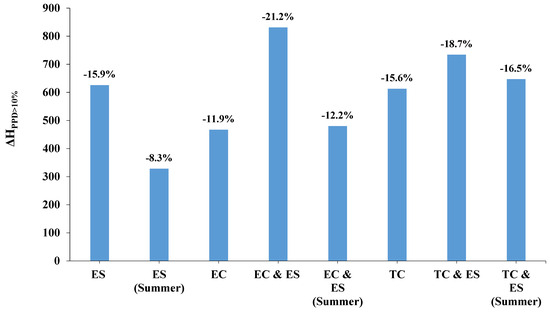
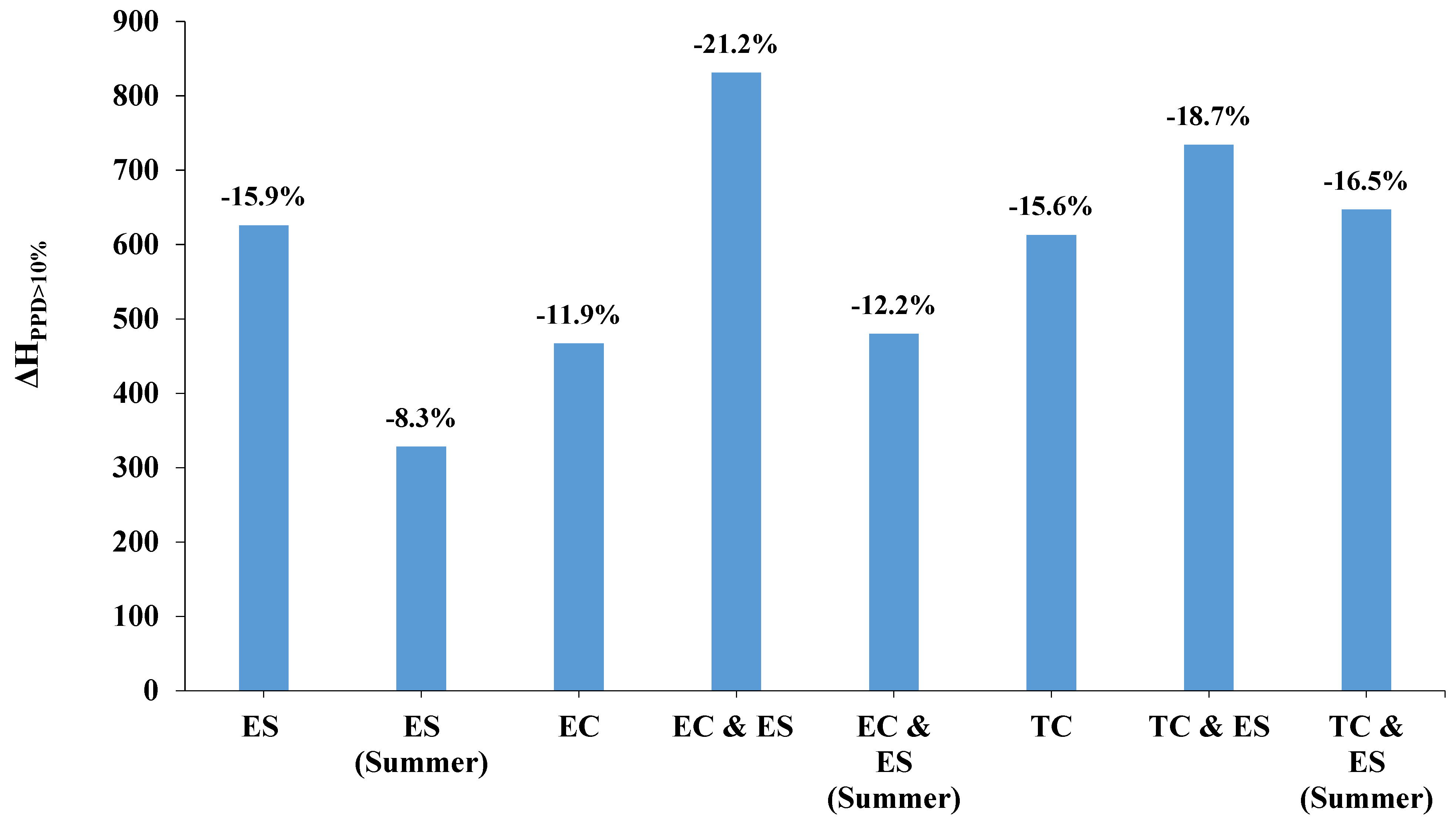
The reduction in discomfort hours, defined as hours with PPD > 10%, is calculated for all retrofit scenarios and presented in Figure 5. For reference, the baseline scenario results in 3929 h with PPD > 10%. In the case of ECs combined with local fixed shading elements, the total number of hours during which the mean PPD index of the residence exceeds 10% is reduced by 831 h, corresponding to a 21.2% decrease. Thermochromic windows combined with local fixed shading results in the second-largest reduction in discomfort hours, equal to 734 h. Retractable shading (ES–Summer) leads to a reduction of 328 discomfort hours, exhibiting the poorest performance among all examined scenarios.
Figure 5.
Decrease in discomfort time per retrofit scenario.
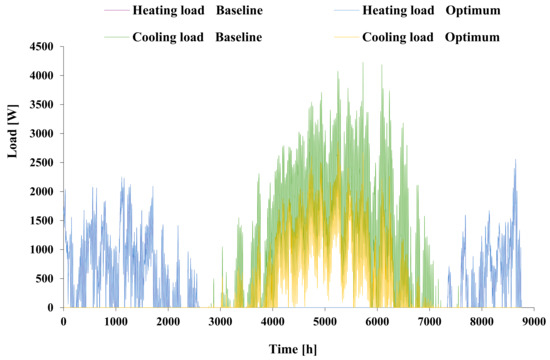
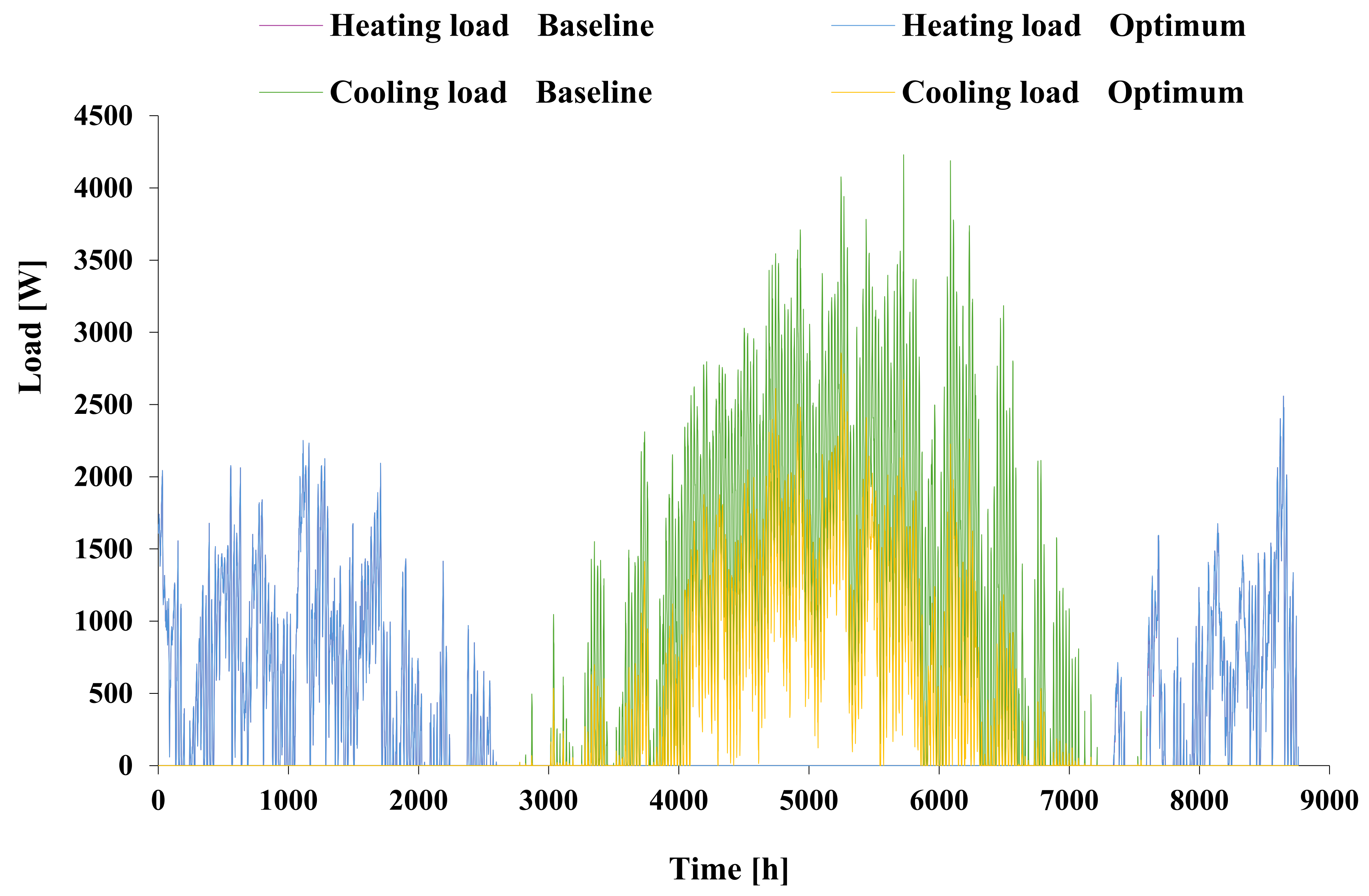
The baseline and energetically optimum cooling retrofit scenarios are thoroughly compared. Figure 6 illustrates the building’s hourly heating and cooling thermal loads. In the heating period, the thermal loads for heating remain constant, because both electrochromic windows and retractable local window shading are activated only during the summer months. The maximum cooling load for the EC & ES (Summer) scenario is calculated at 2857 W. This occurred on the 1st of August at 14:00, representing a 32.4% reduction in comparison to the baseline.
Figure 6.
Heating and cooling thermal loads for the baseline and energy optimum retrofit scenario.
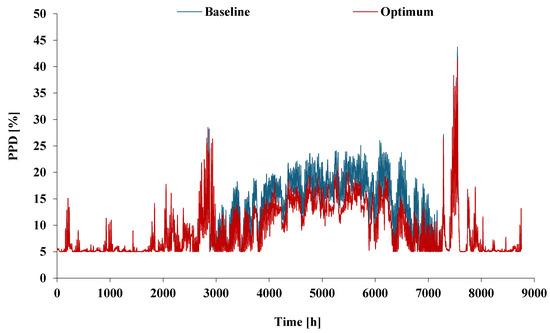
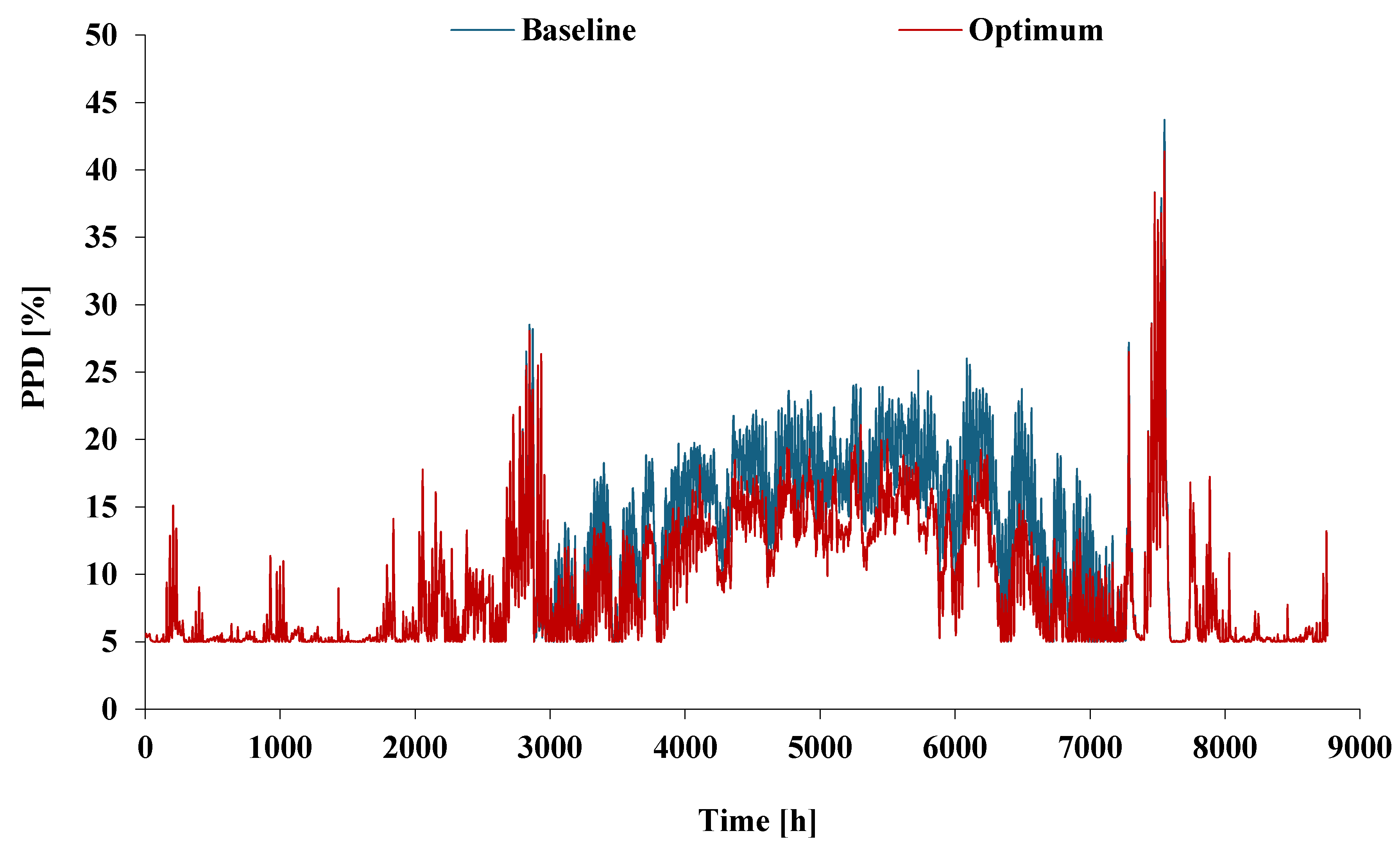
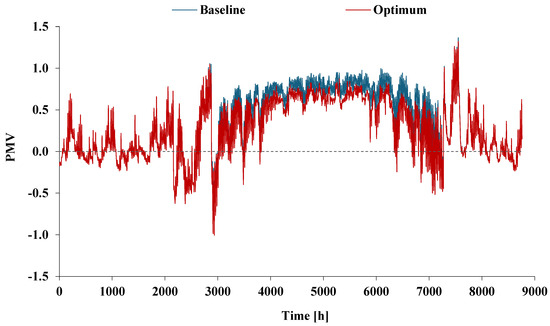
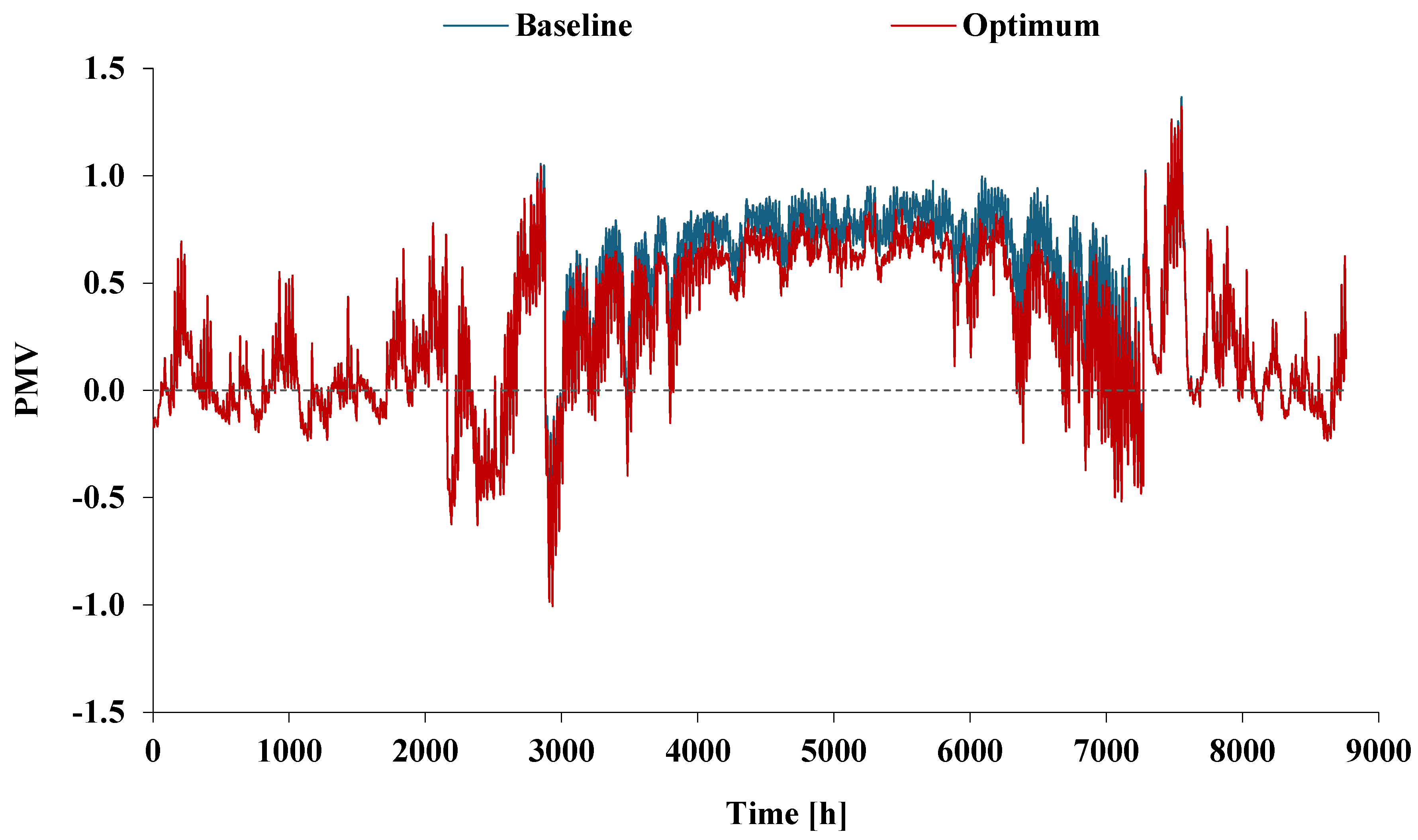
Finally, Figure 7 and Figure 8 illustrate the hourly calculated PPD and PMV thermal comfort metrics for the baseline and the optimum cooling retrofit strategy. For the summer period, the seasonal average decrease in the PPD index is found to be 20.5%, explained by the reduced solar irradiation transmitted indoors through the ECs and shading elements. Figure 8 illustrates further results regarding indoor thermal comfort conditions. In general, PMV ranges from −3 to 3, where 0 represents thermal neutrality, the theoretically ideal comfort level. According to Figure 8, during winter, both scenarios are characterized by PMV values that fluctuate slightly above and below zero, with absolute values generally below 0.5, indicating mild thermal deviations and discomfort. In summer, PMV values remain consistently above 0, specifically between 0.4 and 0.9, indicating slightly warm conditions. During the transitional seasons of spring and autumn, PPD and PMV display the most extreme values. This can be explained by the fluctuating daily heating and cooling demands and the fact that clothing insulation levels might be found inappropriate on certain days. The annual average absolute PMV index of the optimum scenario is reduced by 17.4% in comparison to the baseline scenario.
Figure 7.
PMV for the baseline and optimum retrofit scenario.
Figure 8.
PPD for the baseline and optimum retrofit scenario.
3.2. Life-Cycle Cost Results
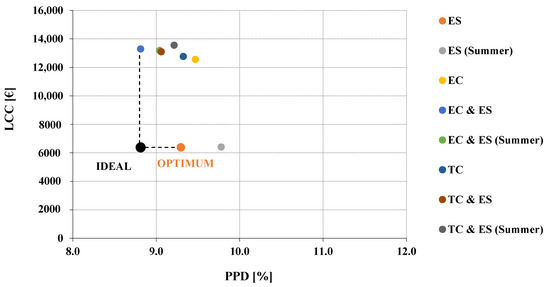
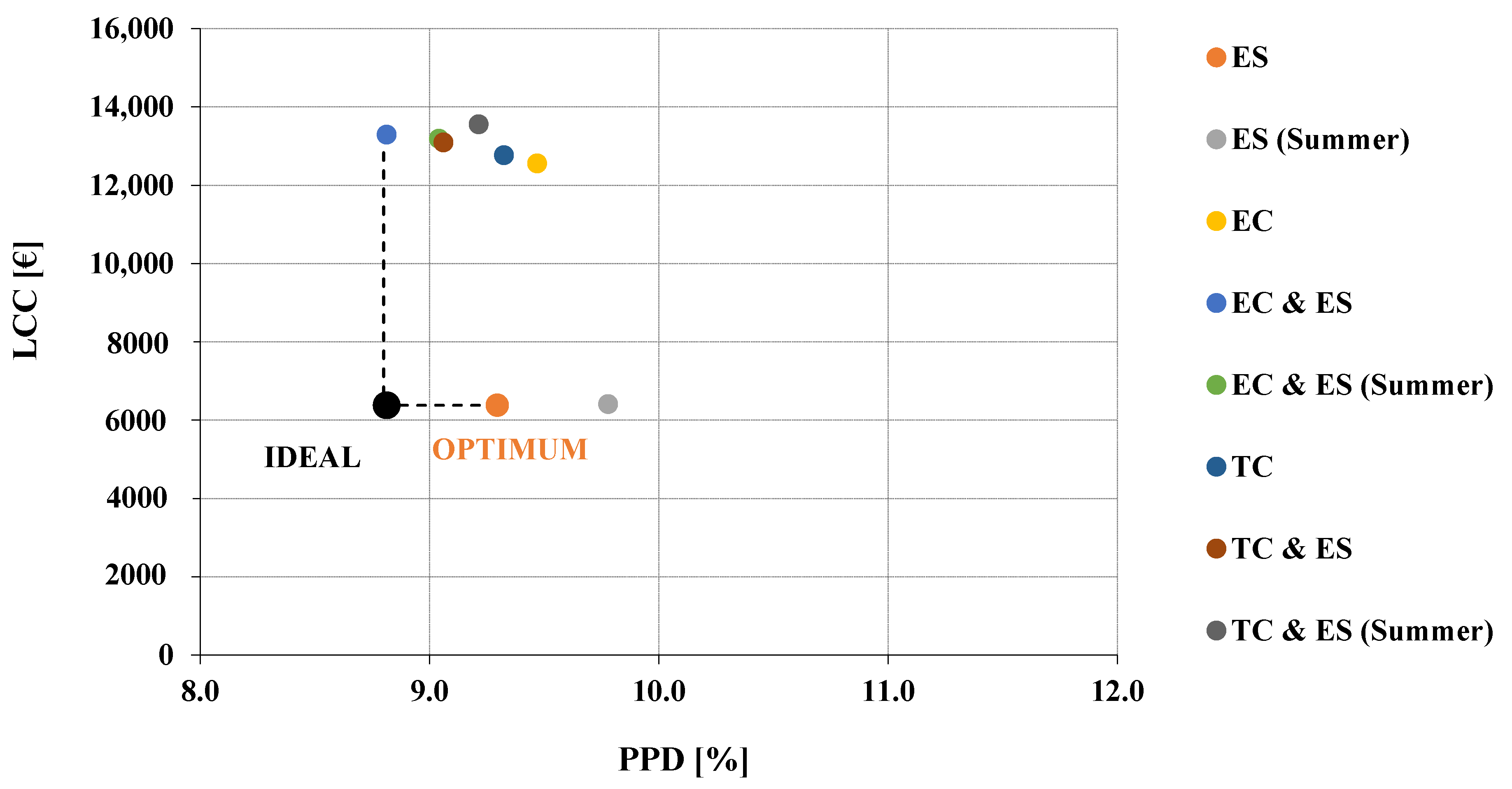
The economic evaluation of the retrofit scenarios is important to determine the feasibility and applicability of a retrofit strategy. The cost of external static horizontal shading elements (ES) is 35 €/m2 [56]. For the retractable shading device (ES–Summer) with an electrical mechanism, the specific investment cost, considering the cost of installation, is 70 €/m2, according to the local market. The yearly maintenance cost is estimated as 1% of the respective initial cost. For thermochromic glazing, the specific investment cost is 575 €/m2 [54] and for electrochromic windows it is 600 €/m2 [57]. The multi-criteria evaluation is depicted in Figure 9. According to the results, the implementation of external shading elements results in an LLC of €6378 and a yearly PPD of 9.3%, ranking as the optimal retrofit option regarding economic and thermal comfort criteria. Retractable external shading devices with summer operation (ES–Summer) rank as the second-best solution, with an LCC of €6406.9 and an annual PPD index of 9.8%. The combination of thermochromic windows and retractable external shading (TC & ES–Summer) has the highest LCC, at €13,553.2. Regarding the energetically optimal solution combining ECs and retractable external shading (EC & ES–Summer), the calculated life-cycle cost (LCC) amounts to €13,182.2. However, the high energy efficiency and high capital cost of ECs rank this option as the sixth-best alternative in the multi-criteria analysis. This result reveals the main drawback of EC technology that despite the supreme performance in terms of electricity savings in contrast to the technologies of TCs and external shading, EC’s mediocre performance in terms of thermal comfort and LCC diminishes the electability of the solution for residence application.
Figure 9.
Multi-criteria evaluation of the examined retrofit strategies.
The rankings and calculated indices for the examined retrofit strategies are also presented in Table 3. Additionally, the specific savings expressed in euros per saved electrical kilowatt-hour are reported for each retrofit solution. This index is useful for interpreting synergies in electricity savings relative to capital cost across the examined technologies. Specifically, combining TCs with fixed or retractable external shading decreases the specific electrical savings from 3.9 to 3.2 €/kWhel,saved. By contrast, combining ECs with ES–Summer reduces the specific electrical savings by 20%, whereas combining ECs with fixed external shading does not improve the standalone performance of ECs but increases the specific electrical savings index by 40%.
Table 3.
Ranking of retrofit strategies according to multi-criteria evaluation.
4. Discussion
The examined solutions in this study concern the retrofit of the transparent elements of a building envelope. The investigated solutions include optically adjustable technologies for thermochromic and electrochromic windows, as well as the installation of external static or retractable shading elements. These solutions affect the solar heat gains and daylight illuminance of the residence and, therefore, the electricity demand for heating, cooling, and lighting. A comprehensive investigation is conducted to evaluate the energetic and economic performance and the improvement in the indoor thermal environment across the various retrofit scenarios.
According to the calculations, the energetically optimal scenario combines ECs with retractable local window shading, resulting in a 22.2% annual decrease in electricity demand and a 15.8% decrease in indoor thermal discomfort. Both retrofit technologies are seasonally activated during winter without causing any heating energy penalty. Electricity savings for cooling are found to be 43.7%, but there is also an increase in lighting electricity use, due to reduced visible light transmission, which is calculated to be 80 kWh. For the summer period, the combination of ECs and seasonal external shading reduces the mean seasonal PPD by 20.5%. The annual absolute PMV is reduced by 17.4% in comparison to the baseline scenario.
Electrochromic windows allow greater flexibility and a wider range of control options and therefore can adapt more effectively to user needs and behaviour. Compared to thermochromic windows, ECs result in annual electricity savings of 8.7%. This finding is consistent with the conclusions of Jahangir and Aboutorabi [24], who calculated a 6.3% energy performance advantage for electrochromic systems. On the other hand, thermochromic windows secure better thermal comfort conditions due to their uninterrupted activation and their ability to regulate transmitted solar heat gains, even during winter. This property results in a 2.1% reduction in thermal discomfort compared to EC. Both chromogenic technologies are characterized by high initial investment costs and, consequently, high life-cycle costs. However, for the most energy-efficient solution that combines ECs and retractable shading, the specific economic savings are calculated at 1.6 €/kWhel, which is the second-lowest value after the retractable shading solution alone (1.1 €/kWhel).
It is important to highlight that although retractable shading operates continuously during summer, static shading is found to result in lower annual energy consumption for cooling. The difference lies in the fact that static shading reduces solar heat gains during shoulder seasons, spring and early autumn, when solar radiation can still result in indoor overheating and cooling demand, even when outdoor temperatures are moderate. Because retractable shading is inactive during these periods, additional solar gains enter the building. On the other hand, static shading provides continuous solar control throughout the year, leading to lower cumulative heat gains and, consequently, a 7.22% reduction in cooling electricity consumption and a 5.1% improvement in annual thermal comfort conditions.
5. Conclusions
The present study investigates the impact of three passive cooling building envelope technologies on regulating solar heat gains and enhancing building resilience during summer. To this end, the yearly electricity demand for heating, cooling, and lighting and the thermal comfort indices, PPD and PMV, are calculated for a residence in Athens, Greece, under baseline conditions and for each of the eight examined cooling renovation strategies. Additionally, a multi-criteria evaluation is performed to determine the optimal cooling retrofit strategy according to economic performance and thermal comfort improvement.
According to the calculations, the energetically optimal scenario combines electrochromic windows with retractable external shading, achieving a 22.2% decrease in annual electricity demand and a 15.8% improvement in indoor yearly thermal comfort. However, because of the high investment and therefore the high life-cycle cost of €13,182, this solution ranks as sixth best in the multi-criteria analysis. In contrast, local static shading elements have a life-cycle cost of €6378 and provide an annual thermal comfort improvement of 9.3%, corresponding to 626 fewer thermal discomfort hours, ranking as the globally optimal solution in the multi-objective evaluation of economic and thermal comfort criteria. In terms of savings in euros per electrical kilowatt-hour, retractable shading scores the lowest value of 1.6 €/kWhel.
These results should be interpreted under the case-study assumptions. Variations in building form, glazing ratio, façade orientation, occupancy and operating patterns, and climatic severity can meaningfully change both the energy and comfort impacts and may also affect the relative ranking of the retrofit options. The same evaluation procedure can be used to reassess performance for other building types and locations using appropriate local weather data and boundary conditions.
The conclusions of this study provide valuable insights into cooling-oriented building renovation strategies, with a primary focus on window retrofitting. Future work will extend the study to include a parametric analysis of the colour transition temperature setpoint of thermochromic windows, aiming to identify optimal building thermal performance across varying climatic conditions, building typologies, and occupants’ thermal comfort levels.
Author Contributions
Conceptualization, A.K. and E.B.; methodology, A.K. and E.B.; software, A.K. and E.V.; validation, E.V. and G.M.; formal analysis, G.M.; investigation, A.K.; writing—original draft preparation, A.K., E.B., E.V., G.M. and C.T.; writing—review and editing, A.K., E.B., E.V., G.M. and C.T.; visualization, E.V.; supervision, C.T.; All authors have read and agreed to the published version of the manuscript.
Funding
This work was carried out in the framework of the following projects: the European Union’s Horizon Europe programme under grant agreement No 101147412 (SIRCULAR: “Sustainable and integrated people centric solutions for building decarbonisation and circularity”); the project NEW-EPOCH (eNErgy Waste solutions through development of POsitive sChool buildings as sustainable, innovative Hubs for community engagement) co-funded by the European Urban Initiative (Project Number: EUI03-242), https://www.urban-initiative.eu/ia-cities/kifissia/home (accessed on 30 December 2025).
Data Availability Statement
The data supporting the findings of this study will be made available upon reasonable request. Interested researchers are encouraged to contact the authors.
Conflicts of Interest
The authors declare no conflict of interest.
Nomenclature
| Ach | Air changes per hour |
| CC | Capital cost, € |
| CF | Yearly total cash flow, € |
| E | Electricity consumption, kWh |
| ES | Electricity savings percentage, % |
| F | Dimensionless geometrical distance from the ideal solution |
| H | Discomfort time, hours |
| L | Human-specific thermal losses, W/m2 |
| LCC | Life-cycle cost, € |
| M | Specific metabolic rate, W/m2 |
| N | Project lifetime, years |
| r | Discount factor, % |
| U-value | Thermal transmittance, W/(m2·K) |
| Greek Symbols | |
| ΔH | Decrease in discomfort time, hours |
| Subscripts and superscripts | |
| Tot | Total |
| Baseline | Baseline scenario |
| Max | Maximum |
| Min | Minimum |
| Retrofit | Retrofit scenario |
| Abbreviations | |
| EC | Electrochromic windows |
| ES | External shading |
| PMV | Predicted mean vote |
| PPD | Predicted percentage of dissatisfied |
| TC | Thermochromic windows |
Appendix A. Weather Data
In this appendix, the main weather data of the investigated city of Athens, Greece, are presented. Specifically, the daily air dry-bulb temperature is depicted in Figure A1 and the total specific irradiation is illustrated in Figure A2, while the daily average wind speed and relative humidity are given in Figure A3, and Figure A4, respectively. The monthly average weather data of Athens, Greece, are summarized in Table A1 [52].
Figure A1.
Daily average air dry-bulb temperature for Athens.
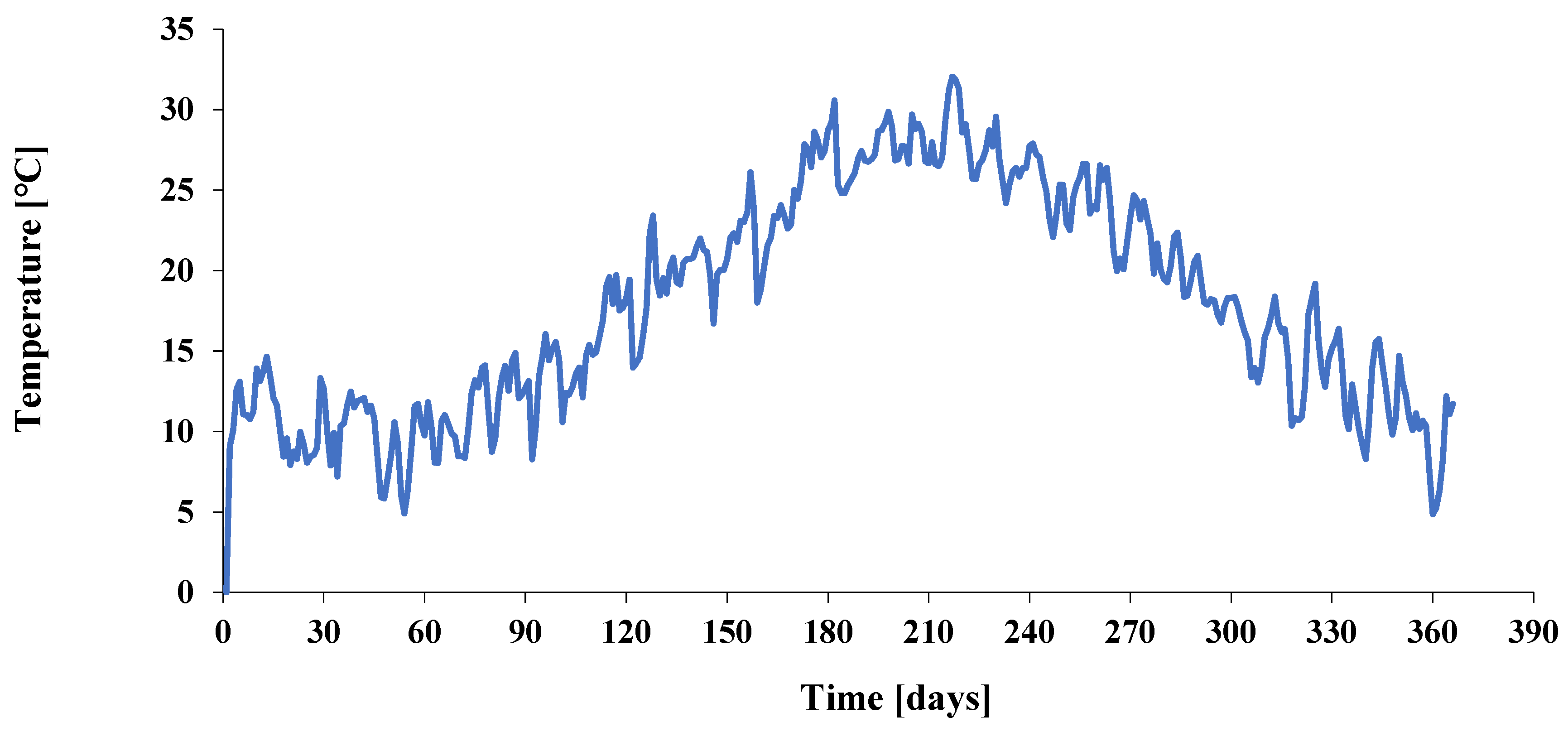
Figure A2.
Daily average total specific irradiation for Athens.
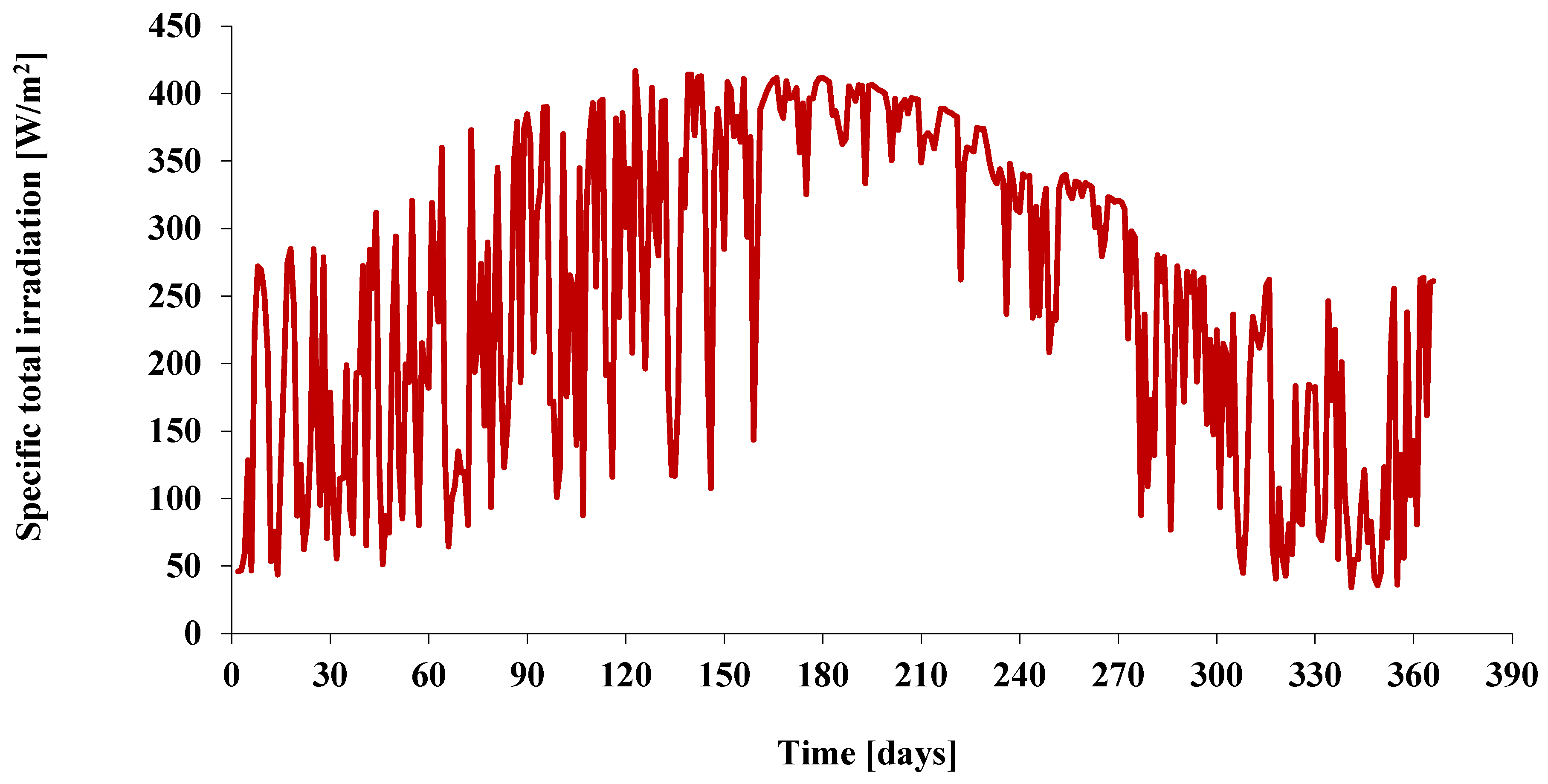
Figure A3.
Daily average wind speed for Athens.
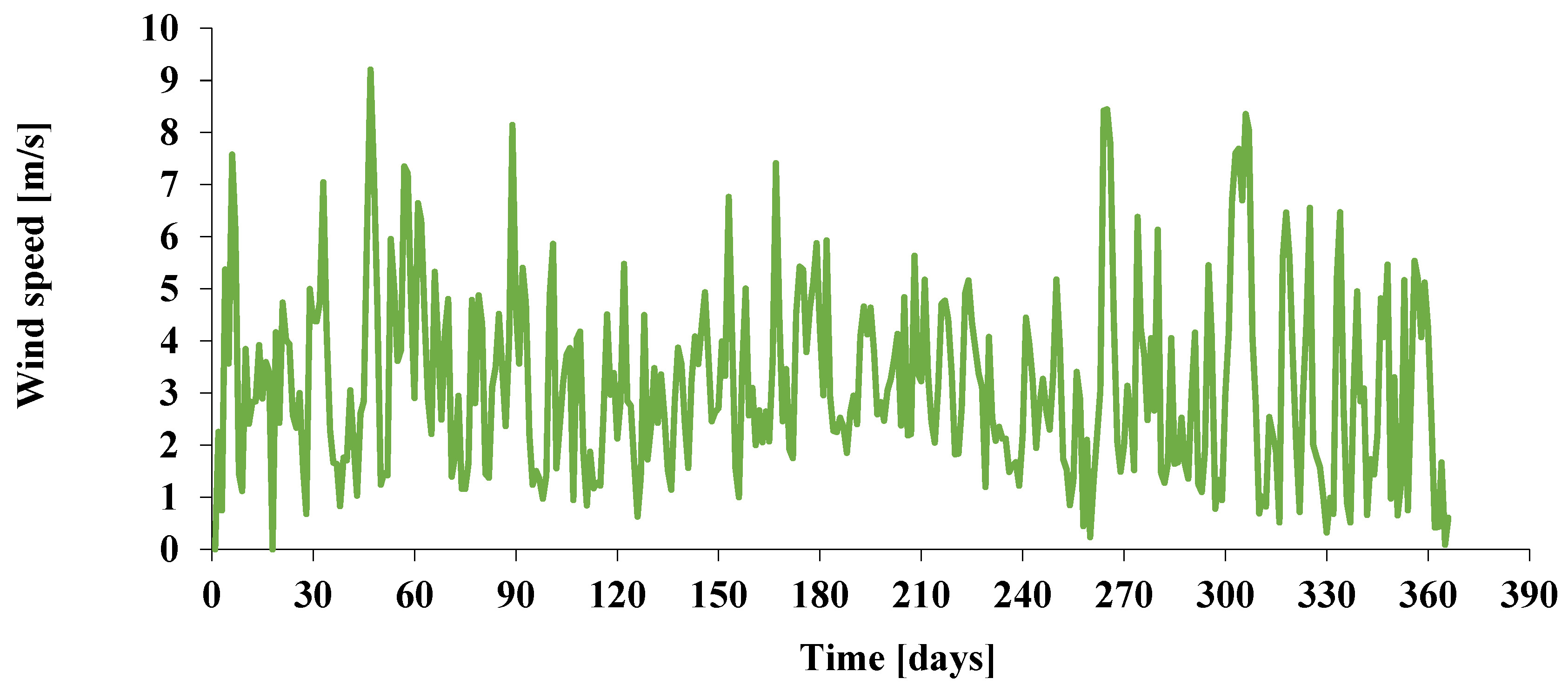
Figure A4.
Daily average relative humidity for Athens.
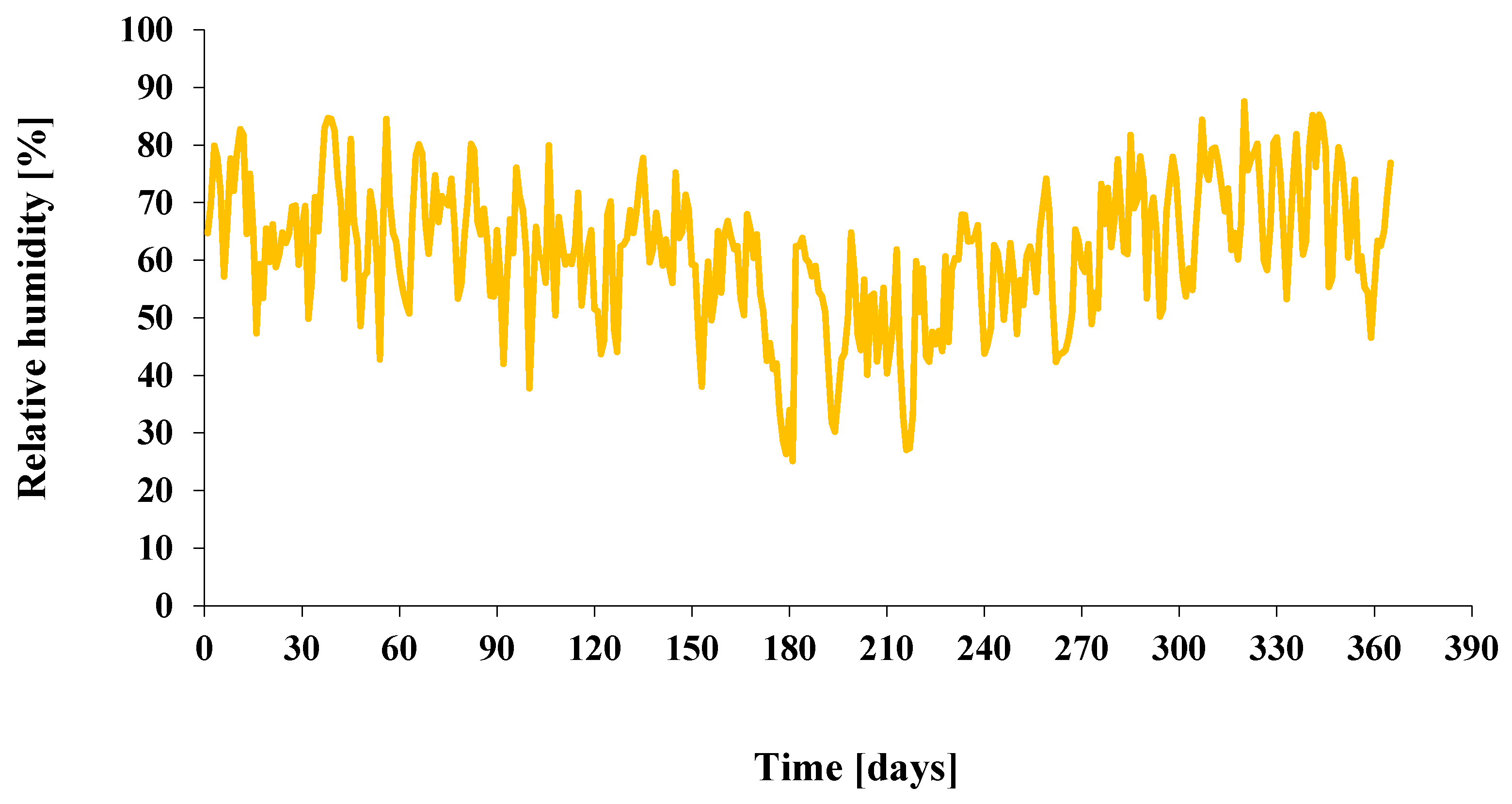
Table A1.
Monthly average climatic data of Athens, Greece.
References
- Battista, G.; Evangelisti, L.; Guattari, C.; Roncone, M.; Balaras, C.A. Space-Time Estimation of the Urban Heat Island in Rome (Italy): Overall Assessment and Effects on the Energy Performance of Buildings. Build. Environ. 2023, 228, 109878. [Google Scholar] [CrossRef] [Scilit]
- Ballester, J.; Quijal-Zamorano, M.; Méndez Turrubiates, R.F.; Pegenaute, F.; Herrmann, F.R.; Robine, J.M.; Basagaña, X.; Tonne, C.; Antó, J.M.; Achebak, H. Heat-Related Mortality in Europe during the Summer of 2022. Nat. Med. 2023, 29, 1857–1866. [Google Scholar] [CrossRef] [Scilit] [PubMed]
- Zhu, Z.; Zhou, D.; Wang, Y.; Ma, D.; Meng, X. Assessment of Urban Surface and Canopy Cooling Strategies in High-Rise Residential Communities. J. Clean. Prod. 2021, 288, 125599. [Google Scholar] [CrossRef] [Scilit]
- Yang, X.; Yao, L.; Li, M.; Cao, J.; Zhong, Q.; Peng, W.; Wu, W.; Zhou, J. How Heat Waves and Urban Microclimates Affect Building Cooling Energy Demand? Insights from Fifteen Eastern Chinese Cities. Appl. Energy 2025, 384, 125424. [Google Scholar] [CrossRef] [Scilit]
- Fathalizadeh, A.; Sharifi, E.; Bartesaghi-Koc, C. Challenges of the Transition to High-Performance Passive Cool Envelopes: A Systematic Literature Review. Energy Build. 2025, 336, 115557. [Google Scholar] [CrossRef] [Scilit]
- Kitsopoulou, A.; Bellos, E.; Lykas, P.; Sammoutos, C.; Vrachopoulos, M.G.; Tzivanidis, C. A Systematic Analysis of Phase Change Material and Optically Advanced Roof Coatings Integration for Athenian Climatic Conditions. Energies 2023, 16, 7521. [Google Scholar] [CrossRef] [Scilit]
- Hellenic Statistical Authority (ELSTAT). Energy Inspections of Buildings, Statistical Analysis for the Year 2021 and the Period 2011–2019; Hellenic Statistical Authority: Piraeus, Greece, 2022. [Google Scholar]
- Kitsopoulou, A.; Pallantzas, D.; Bellos, E.; Tzivanidis, C. Mapping the Potential of Zero-Energy Building in Greece Using Roof Photovoltaics. Designs 2024, 8, 68. [Google Scholar] [CrossRef] [Scilit]
- Granqvist, C.G. Handbook of Inorganic Electrochromic Materials; Elsevier: Amsterdam, The Netherlands, 1995; ISBN 978-0-08-053290-5. [Google Scholar]
- Granqvist, C.G.; Arvizu, M.A.; Bayrak Pehlivan, İ.; Qu, H.-Y.; Wen, R.-T.; Niklasson, G.A. Electrochromic Materials and Devices for Energy Efficiency and Human Comfort in Buildings: A Critical Review. Electrochim. Acta 2018, 259, 1170–1182. [Google Scholar] [CrossRef] [Scilit]
- Carlucci, F.; Cannavale, A.; Campagna, L.M.; Fiorito, F. Evaluation of Optimal Thermo-Optical Properties for Electrochromic Windows in Current and Future Climate Scenarios: A Multi-Locations Optimization. Energy Build. 2025, 343, 115913. [Google Scholar] [CrossRef] [Scilit]
- Huang, R.; Xie, Y.; Cao, N.; Jia, X.; Chao, D. Self-Powered Electrochromic Smart Window Helps Net-Zero Energy Buildings. Nano Energy 2024, 129, 109989. [Google Scholar] [CrossRef] [Scilit]
- Xie, Y.; Li, M.; Chen, J.; Cao, N.; Gu, G.; Liu, X.; Chao, D. Electrochromic Smart Window Supercapacitor Based on a Hyperbranched Electroactive Polyamide for Sustainable Buildings. J. Colloid Interface Sci. 2025, 693, 137592. [Google Scholar] [CrossRef] [Scilit] [PubMed]
- Casini, M. Active Dynamic Windows for Buildings: A Review. Renew. Energy 2018, 119, 923–934. [Google Scholar] [CrossRef] [Scilit]
- Lampert, C.M. Electrochromic Materials and Devices for Energy Efficient Windows. Sol. Energy Mater. 1984, 11, 1–27. [Google Scholar] [CrossRef] [Scilit]
- Lashgari, S.; Jahangir, M.H. A Comparative Analysis of Thermal Comfort, Energy Consumption, Pollutant Emissions, and Visual Comfort in a School Building Utilizing Electrochromic and Thermochromic Windows. Energy Strategy Rev. 2025, 60, 101772. [Google Scholar] [CrossRef] [Scilit]
- Xie, Y.; Li, M.; Liu, J.; Cao, N.; Gu, G.; Chao, D. Photovoltaic-Driven Electrochromic Smart Windows for Net-Zero Energy Buildings. Chem. Eng. J. 2025, 524, 169847. [Google Scholar] [CrossRef] [Scilit]
- Shen, W.; Li, G. Recent Progress in Liquid Crystal-Based Smart Windows: Materials, Structures, and Design. Laser Photonics Rev. 2023, 17, 2200207. [Google Scholar] [CrossRef] [Scilit]
- Moon, H.; Reddy, T.S.; Choi, M.-S. Synthesis and Reversible Thermochromic Behavior of Diketopyrrolopyrrole Dyes. Dye. Pigment. 2025, 239, 112753. [Google Scholar] [CrossRef] [Scilit]
- Byun, J.S.; Song, Y.; Montero, J.; Yoon, J.-H.; Österlund, L.; Kim, S.; Song, P. Thermochromic Properties and Surface Chemical States of Reactive Magnetron Sputtered Vanadium Oxide Thin Films at Various Deposition Pressures. Vacuum 2024, 230, 113679. [Google Scholar] [CrossRef] [Scilit]
- Jung, D.; Choi, W.; Park, J.-Y.; Kim, K.B.; Lee, N.; Seo, Y.; Kim, H.S.; Kong, N.K. Inorganic Gel and Liquid Crystal Based Smart Window Using Silica Sol-Gel Process. Sol. Energy Mater. Sol. Cells 2017, 159, 488–495. [Google Scholar] [CrossRef] [Scilit]
- Wang, H.; Wu, Y.; Lu, X. A Dual-Responsive Smart Window with Excellent Anti-Freezing Property Based on Poly (N-Isopropbylacrylamide-Co-Acrylic Acid) Nanogels. Chem. Eng. J. 2025, 511, 162286. [Google Scholar] [CrossRef] [Scilit]
- Wu, R.; Wang, Z.; Chang, J.; Wang, S.; Mao, J. Fast Thermochromic Hydrogel Smart Windows Based on Physical Chain Entanglement. Energy Build. 2025, 343, 115941. [Google Scholar] [CrossRef] [Scilit]
- Jahangir, M.H.; Aboutorabi, R. Comparison of Energy Consumption and Life Cycle Assessment in a Building Equipped with Smart Windows (Electrochromic, Thermochromic and Photochromic): Case Study in Tehran. Results Eng. 2025, 29, 108878. [Google Scholar] [CrossRef] [Scilit]
- Yang, C.; He, Y.; Liu, S.; Li, N.; Na, E.; Jia, Y. Daylight and Energy Performance Optimization of Thermochromic Windows Based on Solar-Related Thermal Comfort. J. Build. Eng. 2025, 112, 113655. [Google Scholar] [CrossRef] [Scilit]
- Kirimtat, A. Shading Devices in Buildings: A Systematic up-to-Date Review across Performance Evaluation-Based Methods. Energy Build. 2026, 353, 116822. [Google Scholar] [CrossRef] [Scilit]
- Shah, I.; Su, X.; Talami, R.; Ghahramani, A. Enhancing Building Envelopes: Parametric Analysis of Shading Systems for Opaque Facades and Their Comparison with Cool Paints. Energy Built Environ. 2024, 6, 904–919. [Google Scholar] [CrossRef] [Scilit]
- Alhuwayil, W.K.; Abdul Mujeebu, M.; Algarny, A.M.M. Impact of External Shading Strategy on Energy Performance of Multi-Story Hotel Building in Hot-Humid Climate. Energy 2019, 169, 1166–1174. [Google Scholar] [CrossRef] [Scilit]
- Alajmi, A.; Aba-alkhail, F.; ALAnzi, A. Determining the Optimum Fixed Solar-Shading Device for Minimizing the Energy Consumption of a Side-Lit Office Building in a Scorching Climate. J. Eng. Res. 2021, 9, 320–335. [Google Scholar] [CrossRef] [Scilit]
- Yang, F.; Zhou, H.; Chen, J.; Sun, Y.; Wang, D.; Sun, F.; Zhang, L. Energy-Saving Performance and Optimization Study of Adaptive Shading System—A Case Study. Buildings 2025, 15, 1961. [Google Scholar] [CrossRef] [Scilit]
- Gaber, B.; Zhan, C.; Han, X.; Omar, M.; Li, G. A Novel Decision Support System for Designing Fixed Shading Systems in the Early Design Stage: A Case Study in Egypt. J. Build. Eng. 2024, 96, 110453. [Google Scholar] [CrossRef] [Scilit]
- Vazquez, E.; Correa, D.; Poppinga, S. A Review of and Taxonomy for Elastic Kinetic Building Envelopes. J. Build. Eng. 2024, 82, 108227. [Google Scholar] [CrossRef] [Scilit]
- Kader, A. Climate Adapted Façades in Zero-Waste and Cradle to Cradle Buildings—Comparison, Evaluation and Future Recommendations, e.g., in Regard to U-Values, G-Values, Photovoltaic Integration, Thermal Performance and Solar Orientation. IOP Conf. Ser. Mater. Sci. Eng. 2020, 960, 032105. [Google Scholar] [CrossRef] [Scilit]
- Humaidan, O.; Almazam, K.; Bashir, F.M.; Alshayeb, M.J.; Al-Tamimi, N.; Dodo, Y.A. Comprehensive Assessment of Dynamic Shading Devices for Daylighting and Energy Management in Saudi Arabian Hot-Arid Buildings. Energy Build. 2025, 346, 116180. [Google Scholar] [CrossRef] [Scilit]
- Plörer, D.; Hammes, S.; Hauer, M.; van Karsbergen, V.; Pfluger, R. Control Strategies for Daylight and Artificial Lighting in Office Buildings—A Bibliometrically Assisted Review. Energies 2021, 14, 3852. [Google Scholar] [CrossRef] [Scilit]
- Technical Chamber of Greece (TEE). Technical Directive of the Technical Chamber of Greece (TOTEE): Energy Performance of Buildings Regulation (KENAK); Technical Chamber of Greece: Athens, Greece, 2021.
- Bellos, E.; Lykas, P.; Tsimpoukis, D.; Korres, D.N.; Kitsopoulou, A.; Vrachopoulos, M.G.; Tzivanidis, C. Multicriteria Analysis of a Solar-Assisted Space Heating Unit with a High-Temperature Heat Pump for the Greek Climate Conditions. Appl. Sci. 2023, 13, 4066. [Google Scholar] [CrossRef] [Scilit]
- Technical Chamber of Greece (TEE). Technical Guidelines of Technical Chamber of Greece (ΤΕΕ); Technical Chamber of Greece: Athens, Greece, 2020.
- Kitsopoulou, A.; Ziozas, N.; Iliadis, P.; Bellos, E.; Tzivanidis, C.; Nikolopoulos, N. Energy Performance Analysis of Alternative Building Retrofit Interventions for the Four Climatic Zones of Greece. J. Build. Eng. 2024, 87, 109015. [Google Scholar] [CrossRef] [Scilit]
- RXM-M|Daikin. Available online: https://www.daikin.gr/el_gr/products/product.html/RXM-M.html (accessed on 8 November 2024).
- Carlucci, F.; Fiorito, F. Simulation of Responsive Envelopes in Current and Future Climate Scenarios: A New Interactive Computational Platform for Energy Analyses. Energies 2024, 17, 5270. [Google Scholar] [CrossRef] [Scilit]
- Kitsopoulou, A.; Bellos, E.; Sammoutos, C.; Lykas, P.; Vrachopoulos, M.G.; Tzivanidis, C. A Detailed Investigation of Thermochromic Dye-Based Roof Coatings for Greek Climatic Conditions. J. Build. Eng. 2024, 84, 108570. [Google Scholar] [CrossRef] [Scilit]
- Energy and Thermal Comfort Performance of Integrated Retrofit Strategies for Apartment Residential Buildings in Mediterranean Climates. Available online: https://www.mdpi.com/1996-1073/19/3/582 (accessed on 9 February 2026).
- Lee, K.S.; Han, K.J.; Lee, J.W. The Impact of Shading Type and Azimuth Orientation on the Daylighting in a Classroom–Focusing on Effectiveness of Façade Shading, Comparing the Results of DA and UDI. Energies 2017, 10, 635. [Google Scholar] [CrossRef] [Scilit]
- Ponechal, R.; Chabada, M. The Impact of Ventilation and Shading Control on the Result of Summer Overheating Simulation. Civ. Environ. Eng. 2021, 17, 327–334. [Google Scholar] [CrossRef] [Scilit]
- DesignBuilder Software Ltd. Available online: https://designbuilder.co.uk/ (accessed on 28 November 2024).
- EnergyPlus. Available online: https://energyplus.net (accessed on 6 October 2023).
- Kitsopoulou, A.; Bellos, E.; Lykas, P.; Vrachopoulos, M.G.; Tzivanidis, C. Multi-Objective Evaluation of Different Retrofitting Scenarios for a Typical Greek Building. Sustain. Energy Technol. Assess. 2023, 57, 103156. [Google Scholar] [CrossRef] [Scilit]
- Kitsopoulou, A.; Pallantzas, D.; Sammoutos, C.; Lykas, P.; Bellos, E.; Vrachopoulos, M.; Tzivanidis, C. A Comparative Investigation of Building Rooftop Retrofit Actions Using an Energy and Computer Fluid Dynamics Approach. Energy Build. 2024, 315, 114326. [Google Scholar] [CrossRef] [Scilit]
- Mirsadeghi, M.; Cóstola, D.; Blocken, B.; Hensen, J.L.M. Review of External Convective Heat Transfer Coefficient Models in Building Energy Simulation Programs: Implementation and Uncertainty. Appl. Therm. Eng. 2013, 56, 134–151. [Google Scholar] [CrossRef] [Scilit]
- Ito, N. Field Experiment Study on the Convective Heat Transfer Coefficient on Exterior Surface of a Building. ASHRAE Trans. 1972, 78, 184–191. [Google Scholar]
- JRC. Photovoltaic Geographical Information System (PVGIS)—European Commission. Available online: https://re.jrc.ec.europa.eu/pvg_tools/en/#api_5.1 (accessed on 5 January 2026).
- Engineering Reference. Available online: https://bigladdersoftware.com/epx/docs/22-1/engineering-reference/ (accessed on 31 January 2024).
- Bellos, E.; Tsimpoukis, D.; Lykas, P.; Kitsopoulou, A.; Korres, D.N.; Vrachopoulos, M.G.; Tzivanidis, C. Investigation of a High-Temperature Heat Pump for Heating Purposes. Appl. Sci. 2023, 13, 2072. [Google Scholar] [CrossRef] [Scilit]
- Greece Electricity Prices. March 2025. Available online: https://www.globalpetrolprices.com/Greece/electricity_prices/ (accessed on 19 December 2025).
- MED-Dialogue. Your Guide to Building Envelop Retrofits for Optimising Energy Efficiency and Thermal Comfort in Jordan; GIZ: Bonn, Germany; Eschborn, Germany, 2018. [Google Scholar]
- Rabbani, M.; Tahti, O.; Essel Arthur, S.A.; Hopping, M.; Barile, C.J.; Hassan Karim, M.; Fahimi, A.; Vahidi, E. Assessing the Environmental Footprint of Electrochromic Windows: A Comparative LCA with AI-Based Forecasting. RSC Sustain. 2025, 3, 5653–5664. [Google Scholar] [CrossRef] [Scilit]

Disclaimer/Publisher’s Note: The statements, opinions and data contained in all publications are solely those of the individual author(s) and contributor(s) and not of MDPI and/or the editor(s). MDPI and/or the editor(s) disclaim responsibility for any injury to people or property resulting from any ideas, methods, instructions or products referred to in the content. |
© 2026 by the authors. Licensee MDPI, Basel, Switzerland. This article is an open access article distributed under the terms and conditions of the Creative Commons Attribution (CC BY) license.