


Abstract
The rapid increase in non-biodegradable polyethylene terephthalate (PET) usage has resulted in serious environmental problems due to excessive plastic waste accumulation. Sustainable recycling, upcycling and conversion of value-added products is an effective and eco-friendly method to reduce plastic waste in the environment. In this work, hydrothermally synthesized crednerite-type CuMnO2 was investigated as a catalyst for the hydrothermal catalytic depolymerization (HTCD) of post-consumer PET. HTCD experiments were performed at 200 °C for 6 h by using ethylene glycol (EG), NaOH and water as co-reactants and only 0.1 wt% CuMnO2 catalyst. Depending on the reaction pathway, the process enabled the selective recovery of the valuable monomers bis(2-hydroxyethyl) terephthalate (BHET) through glycolysis and terephthalic acid (TPA) through alkaline hydrolysis followed by acidification. The obtained results from this study indicate that crednerite-type CuMnO2 is an effective catalyst for enhancing the depolymerization reaction rate, and the remaining catalysts can be easily recovered from the reaction mixture by simple filtration, highlighting its practical advantages for catalyst recycling and reuse. Moreover, the recovered BHET and TPA can be further used as organic linkers for MOF synthesis in energy storage applications; this is an aspect that has already been reported in our previous work. The HTCD method using crednerite-type CuMnO2 could therefore represent a promising approach for reducing plastic waste in solid waste streams, while extending this method to other types of plastic waste may provide a new roadmap for addressing environmental challenges and improving waste management systems in society.
1. Introduction
Polymers are macromolecules that are made up of long chains of monomer units, mainly composed of hydrocarbons (H, C) and heteroatoms (N, O, S, etc.), and can be classified into different types based on origin and structure [1]. PET is a non-biodegradable polyester polymer that plays a vital role in engineering plastics, including bottles. Recent reports say that around 170 million tons of plastics are being used worldwide only in the form of packaging materials. Nevertheless, post-consumed PET plastic bottles lead to a major environmental issue because of their non-biodegradable nature, and dumping this solid waste in the earth pollutes the land, soil, and water, which badly affects all living organisms [2,3]. Recycling or upcycling of post-consumed plastics is a complex and highly challenging process to break down ester linkages in the polymer backbone [4,5]. To solve these issues, different types of recycling methods have been utilized and reported in the literature, such as mechanical, physical, and chemical recycling [6,7].
Previous studies show that different types of depolymerization of waste PET have been performed, such as glycolysis, hydrolysis, methanolysis, and aminolysis. Among these methods, glycolysis with EG is one of the most important effective approaches because it operates under relatively mild conditions and selectively produces BHET. Reported BHET yields in previous studies generally range from about 35% to 76%, which could depend on the catalytic activity of the catalysts and reaction conditions, with several optimized parameters reported for the systems [8]. Suitable catalysts play a crucial role in enhancing the efficiency of the depolymerization process by significantly increasing the reaction rate and reducing the required energy consumption. In addition, catalysts can also be used to steer the product composition and to favor the formation of high-value end products for product yield. In this context, the selection of appropriate catalysts is crucial for producing high-quality end products from the depolymerization process.
Recently, various types of metal oxide-based catalysts and Lewis acid catalysts have been reported for the depolymerization of PET waste into BHET via glycolysis (EG) and alcoholysis (alcohol), such as zinc oxide (ZnO), titanium dioxide (TiO2), zirconium dioxide (ZrO2), aluminium oxide (Al2O3), magnesium oxide (MgO) and zinc acetate [Zn(OAc)2] [9]. Alkali and salt catalysts, including lithium hydroxide, sodium sulfate, potassium sulfate, sodium bicarbonate and sodium carbonate, have been used for the depolymerization of PET waste into BHET via glycolysis (EG) [10]. Moreover, heterogeneous catalysts derived from biowaste, such as sulfate acetates, orange peel ash, (Mg-Zn)-Al LDH, or orange peel ash [11] and tropine-zinc acetate [12], enhance the rate of the depolymerization process. Sodium hydroxide (NaOH) acts as a strong alkaline catalyst that breaks the ester bonds of PET through alkaline hydrolysis, leading to TPA formation [13]. Lewis acid catalysts have been reported for the depolymerization of PET waste into TPA via hydrolysis (H2O) using Nickel chloride (NiCl2) [14], while polyoxometalate catalysts have been reported for the same process using heteropolyacids (HPAs) [15]. Previous works on the thermocatalytic depolymerization of PET report interesting results on the effective recycling of polymer waste by using Y2O3 materials [16] and spinelle compounds AFe2O4 (with A = Zn, Co, Ni or Cu) [17].
In this context, the ABO2 materials class has attracted our attention, as they possess a large range of interesting properties and multiple envisaged applications as multiferroics [18], p-type dye-sensitized solar cells [19] or effective photocatalysts for the degradation of organic contaminants from water [20]. These materials present the delafossite structure within the R-3m space group, a 2D anisotropic one, characterized by stacking along the c axis of BO6 octahedra layers and layers of Cu without oxygen. Among them, crednerite CuMnO2 presents a “distorted” structure (space group C2/m) due to the Jahn Teller effect of Mn3+ ions [21]. Notable results regarding their use as potential candidates for applications in environmental protection are documented [22,23]. Regarding the synthesis of the CuMnO2 crednerite compound, several preparation methods are possible both in solid-state and hydrothermal [24,25,26,27]; however, the hydrothermal is reported as the one suitable for obtaining the stoichiometric crednerite compounds, as Cu/Mn non-stoichiometry is also possible in these materials [28]. The crednerite-type CuMnO2 catalyst can provide advantages over other catalysts for performing the depolymerization reactions, such as high catalytic efficiency and faster reaction rate, and because of this it can increase the conversion rate of polymers into valuable organic molecules in a relatively short reaction time.
In the present work, HTCD is considered an effective and sustainable method for converting post-consumer PET into valuable products under relatively mild reaction conditions by using an ABO2-type compound, i.e., CuMnO2, as the first material in this class that has been tested as an efficient catalyst for the depolymerization of PET. In the HTCD process, co-reactants such as EG, water and NaOH facilitate the cleavage of ester bonds in the PET backbone, in the presence of a small quantity of CuMnO2 catalyst (0.1 wt%), leading to the formation of useful monomers such as BHET and TPA at 200 °C for 6 h. Under these conditions, PET was successfully depolymerized into BHET, achieving a yield of 87%. Furthermore, the presence of NaOH promoted the conversion of PET into disodium terephthalate, which was subsequently acidified using HCl to obtain highly pure TPA, achieving an 85% yield. It should be mentioned that the reactions performed without the catalyst mainly produced PET oligomers, thus confirming the activity of the crednerite catalyst. By using the CuMnO2 catalyst and depending on the choice of co-reactant, different products were recovered and characterized by X-ray diffraction (XRD), Fourier transform infrared spectroscopy (FT-IR), nuclear magnetic resonance (1H NMR) and differential scanning calorimetry (DSC).
2. Materials and Methods
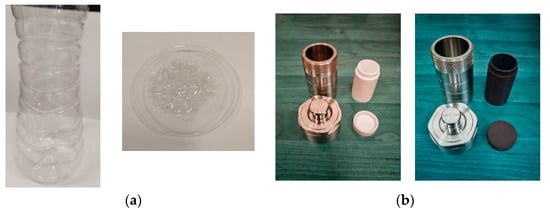
Used PET bottles were collected for this study and cut into small flakes (Figure 1a) to increase the available surface area and thereby enhance the depolymerization reaction rate. Bisleri PET used in this study typically has a molecular weight ranging from 30,000 to 60,000 g/mol. The materials were EG (99.8% Sigma Aldrich, St. Louis, MO, USA), NaOH (≥99%, pellets, Sigma Aldrich), HCl (37.0–38.0%, Sigma Aldrich); the reactants CuSO4 (≥99.99%, Merck, Darmstadt, Germany) and MnSO4 (≥98.5%, Merck, Darmstadt, Germany) for the synthesis of catalyst were purchased and used without any other treatment.
Figure 1.
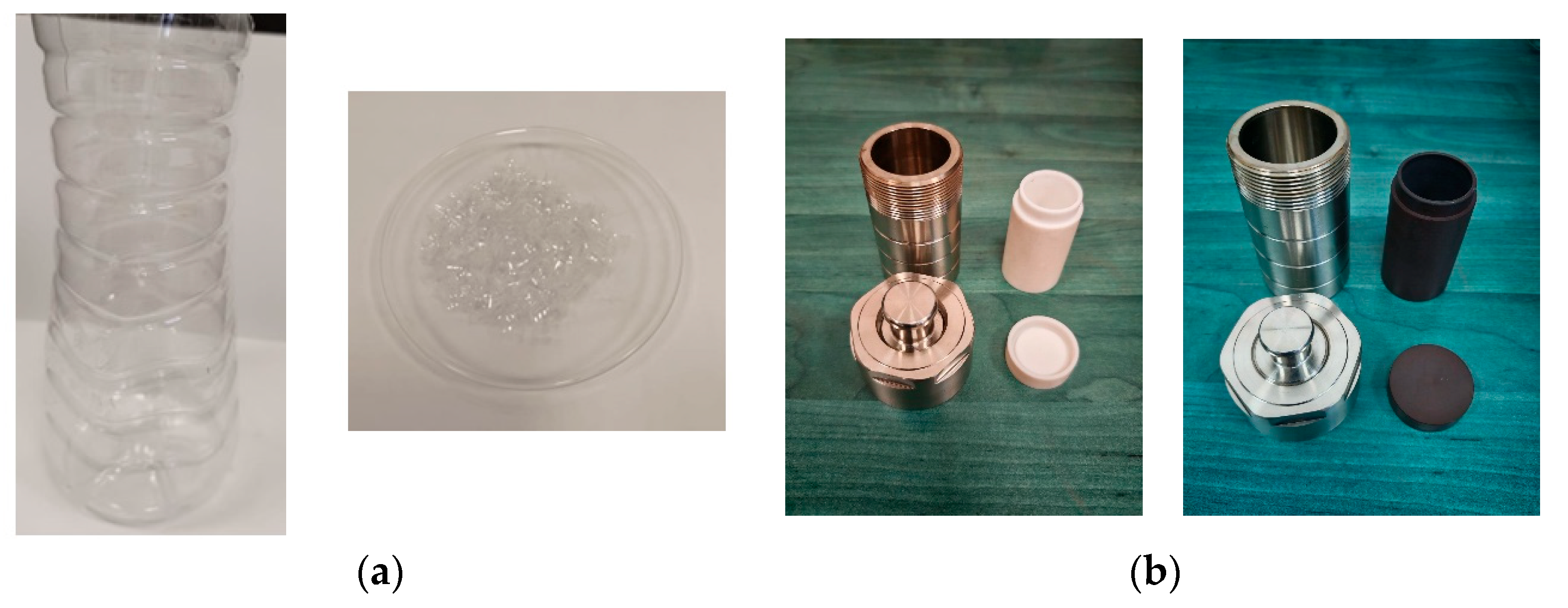
(a) PET flakes used for the thermocatalytic depolymerization process and (b) Teflon line autoclaves used for HTCD and catalyst hydrothermal synthesis.
For the synthesis of CuMnO2 materials, 0.3192 g CuSO4 was dissolved in 12 mL of distilled water with a quantity of 0.3389 g MnSO4. In the next step, 3 mL of EG was added, followed by 5 mL of NaOH solution, and it was stirred well at 500 rpm. A homogeneous dark green-colored solution was formed and transferred into an autoclave (Figure 1b). The hydrothermal treatment was performed in an oven at 150 °C for 24 h and an autogenous pressure of 15–16 bar [28]. After the treatment, a precipitate was formed, and it was washed several times with distilled water using filter papers. The collected brown compound was dried in an oven on Petri glass at 90 °C for 3 h, and 0.303 g of CuMnO2 product as a polycrystalline sample was obtained.
For each HTCD experiment, 1.0 g of PET flakes, 10 mL of EG or water, and 10 mg of CuMnO2 catalyst were loaded into a Teflon-lined stainless-steel autoclave. For alkaline hydrolysis, 0.5 g of NaOH was additionally added. The sealed autoclave was heated to 200 °C and maintained for 6 h under autogenous pressure. After cooling, the catalyst was separated by filtration. For BHET recovery, the filtrate was poured into ice-cold water under stirring at 450 rpm, and the precipitate was filtered and dried at 50 °C for 6 h. For TPA recovery, the alkaline filtrate was neutralized with HCl, and the resulting precipitate was collected by filtration.
The physico-chemical characterization of the synthesized CuMnO2 catalyst and PET flakes was carried out using X-Ray diffraction (XRD), FT-IR spectroscopy and SEM. The XRD patterns at room temperature were collected with a Bruker D8 Advance system (Bruker, Karlsruhe, Germany) using Ni-filtered CuK radiation (λ = 1.5405980 Å) between 2θ = 20–80° on crushed materials and on PET flakes mounted on the sample holder without any other supplementary processing. For the crednerite CuMnO2 compound, the Rietveld refinement was performed in the FullProf program from FullProf Suite (version 5.10) [29]. A Schimadzu Prestige-21 FT-IR Spectrometer (Shimadzu, Kyoto, Japan) was used to carry out FT-IR spectrometry investigations in the 450 to 4000 cm−1 range at Room Temperature. The surface morphology characterization of the samples was performed using a scanning electron microscope, FEI Inspect S type, on samples deposited on the carbon tape. The crystal structure of the crednerite compound was simulated using the Vesta software (Ver. 3.5.8) [30]. Moreover, characterizations by 1H NMR Bruker, 400 MHz (Bruker, MA, USA) and DSC using DSC 550 (RESMENT, India) were performed.
The recovered depolymerization products were characterized using XRD, FT-IR, 1H NMR, and DSC. XRD patterns were collected at room temperature using a Bruker D8 Advanced diffractometer with Ni-filtered Cu Kα radiation (λ = 1.5405980 Å). FT-IR spectra were recorded using a Shimadzu Prestige-21 spectrometer (Shimadzu, Kyoto, Japan) in the range of 450–4000 cm−1. 1H NMR spectra were recorded using a Bruker 400 MHz spectrometer, and DSC measurements were performed using a DSC 550 RESMENT instrument.
3. Results
3.1. The Structural and Morphological Characterization of CuMnO2 Materials
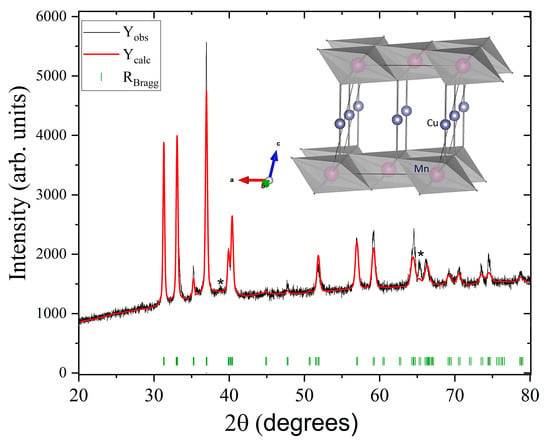
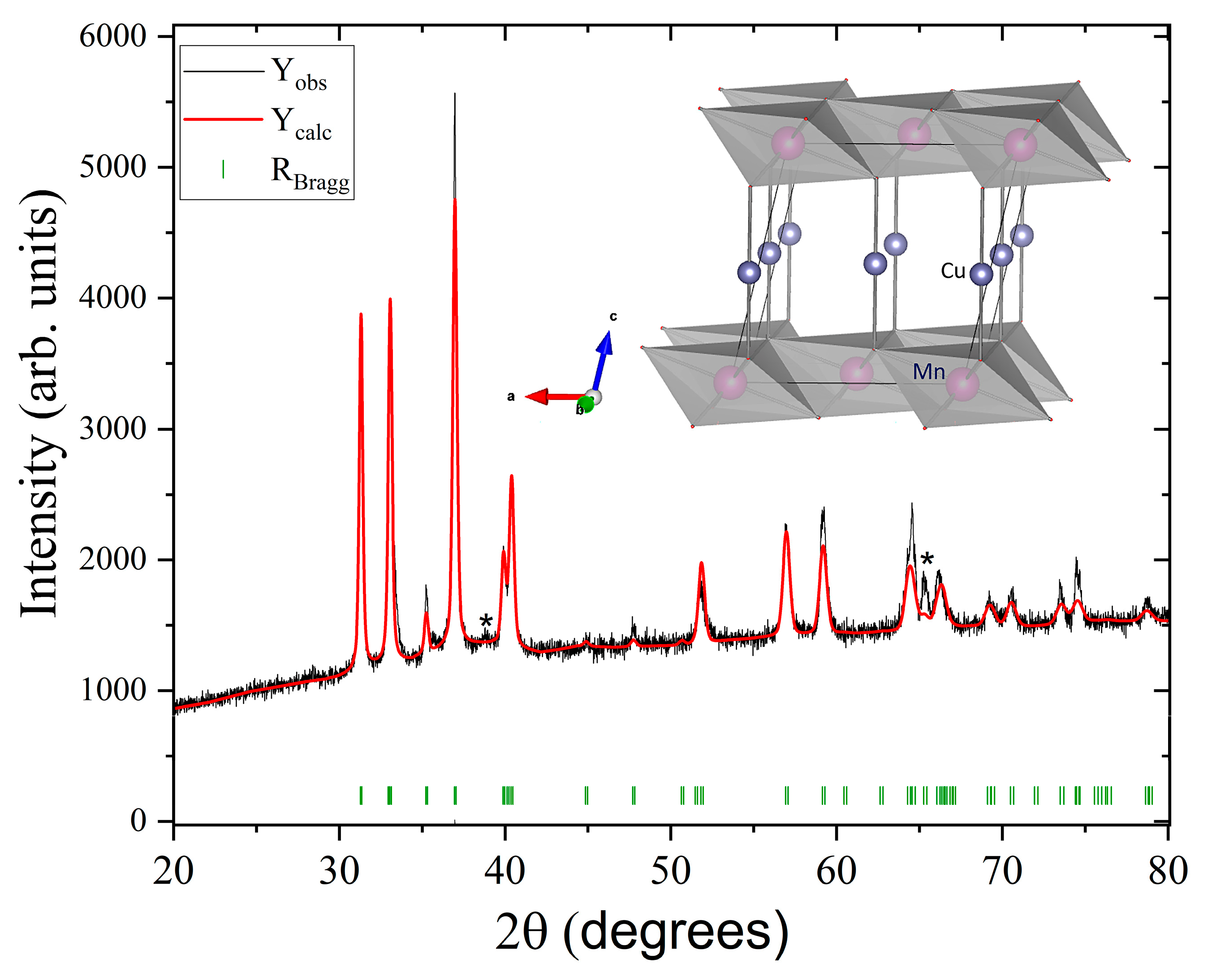
The X-Ray diffraction of CuMnO2 was performed at Room Temperature before the HTCD process. The unit cell parameters calculated for the compound are as follows: a = 5.58378 (3) Å, b = 2.88441 (2) Å, c= 5.89072 (4) Å, β = 104.07272 (3)° in the C2/m space group; these are values that are close to those of other CuMnO2 materials obtained by either hydrothermal or solid-state synthesis [31]. Very small extra peaks were also detected and indexed to the Cu2O phase [32] (they are marked by a star in Figure 2). The crednerite structure (Figure 2 insert) is a 2D layered structure formed by Cu layers arranged in a “dumbbell” configuration, i.e., O-Cu-O along the c axis, and layers of MnO6 octahedra which are not regulated but deformed due to not equal Mn-O distances that are determined by the Jahn–Teller effect of Mn3+ ions.
Figure 2.
Rietveld refinement for the XRD pattern of CuMnO2 material (experimental data: continuous black line; calculated profile: continuous red line; and allowed Bragg reflections: vertical green marks). The peaks with a * are indexed with Cu2O phase. Inset: crednerite structure.
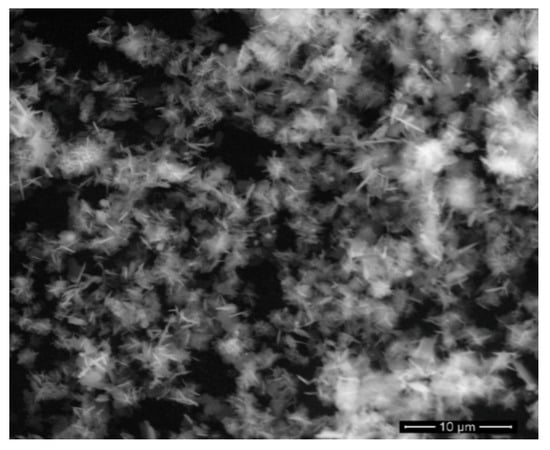
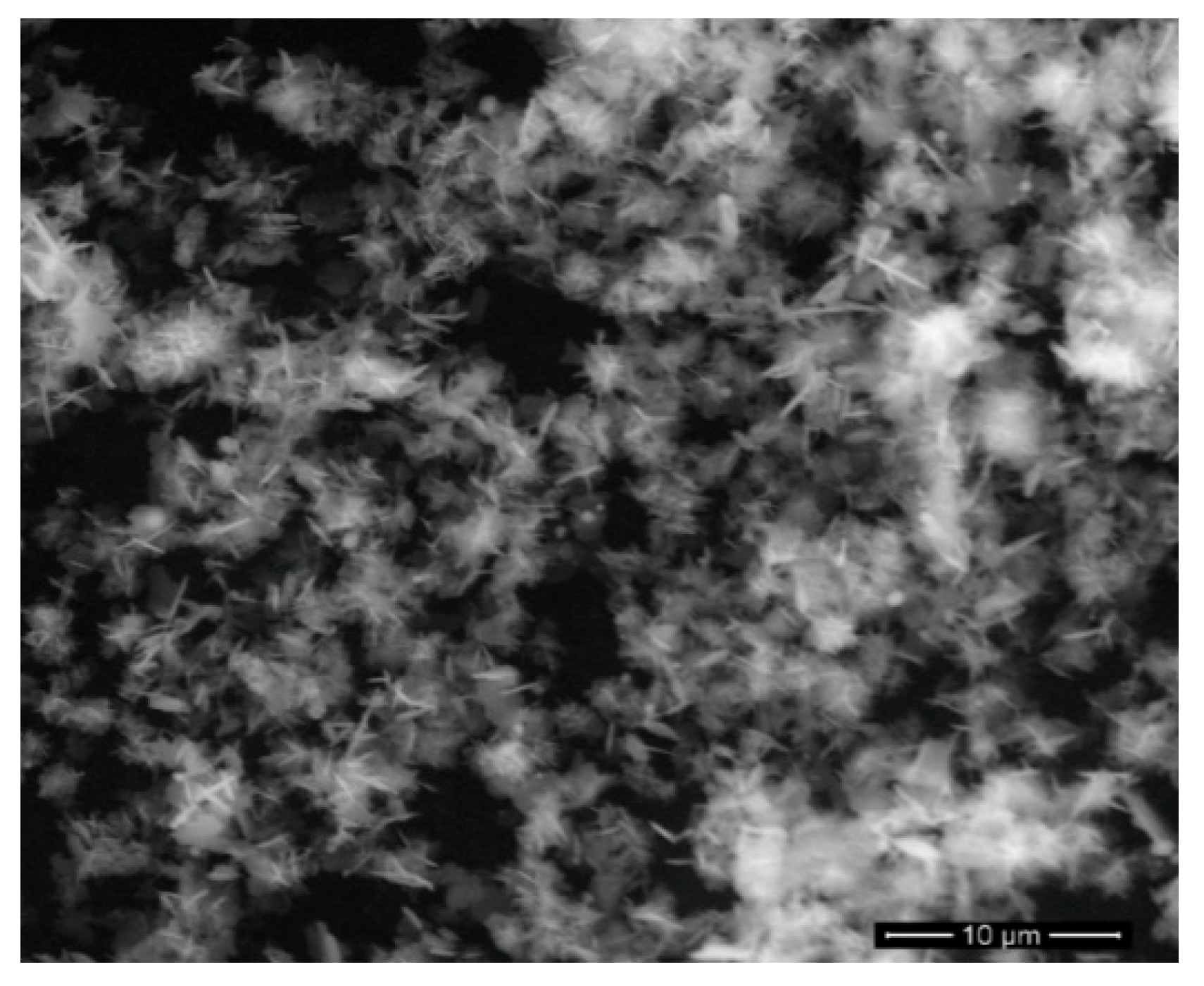
SEM images of the crednerite CuMnO2 sample prepared by the low-temperature hydrothermal method exhibit uniform surface morphology with well-defined features. The morphology of the crednerite CuMnO2 sample shows that it is homogeneous and composed of 2D platelet-like particles with dimensions ranging between 1 and 2 µm (Figure 3). The plate-like shape morphology and porous configuration of the particles is advantageous for increasing the surface area and enhancing mass transport properties. The formation of the interconnected layout of the platelets may enhance structural stability and the effective active surface sites. SEM analysis demonstrates that well-defined morphology and well-spread crystalline catalysts were successfully synthesized through a low-temperature hydrothermal method.
Figure 3.
SEM images of the CuMnO2 obtained by low-temperature hydrothermal method.
3.2. Hydrothermal Catalytic Depolymerization of PET Waste
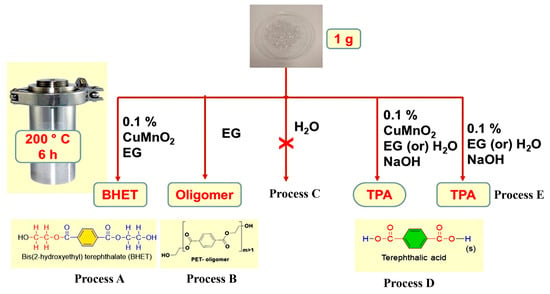
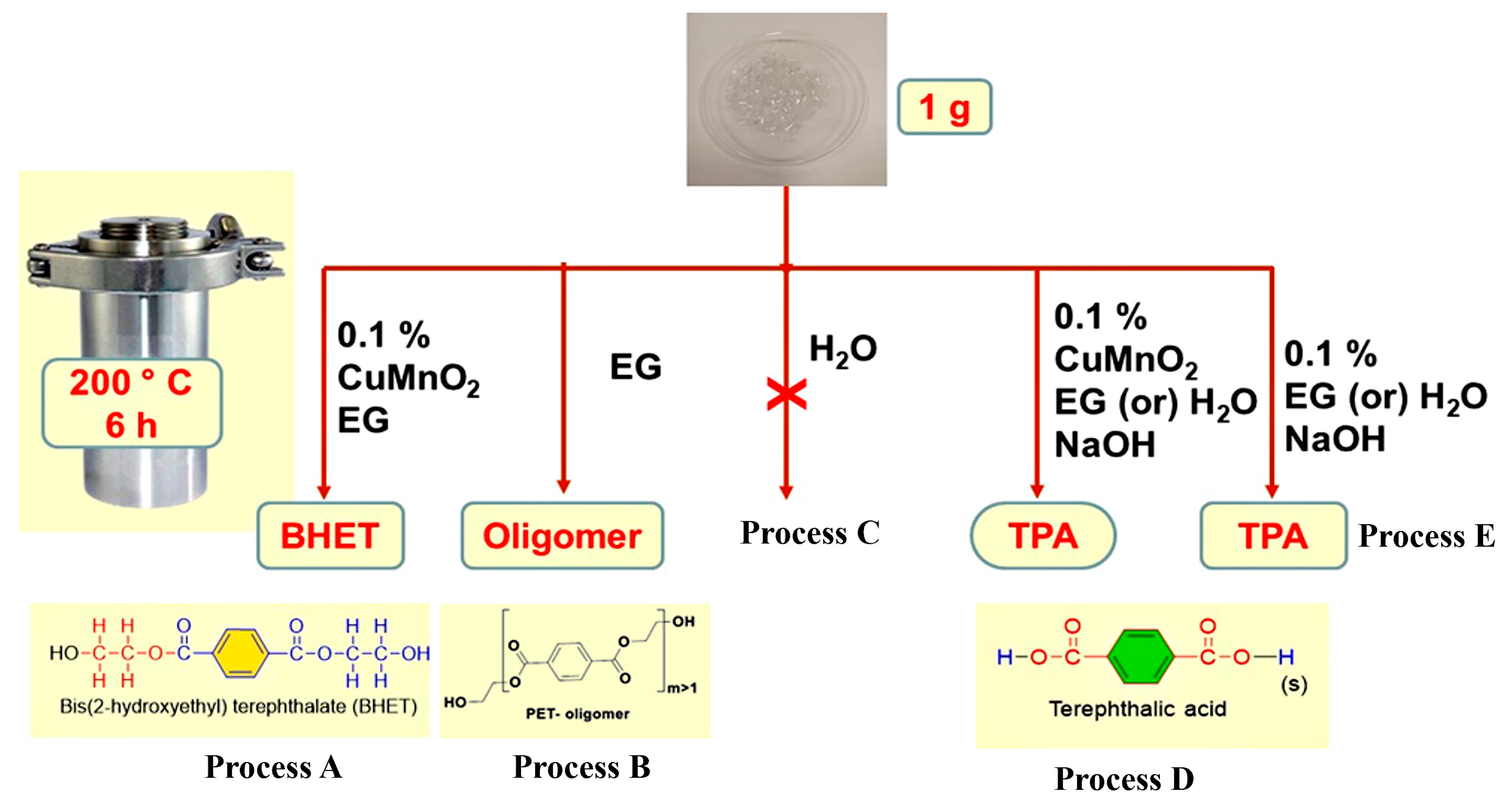
The catalytic activity of CuMnO2 and the type of reactions could be determined by changing the reaction parameters and co-reactants. In this work, the HTCD of PET waste was performed by the following five different processes schematized in Figure 4, with details given in Table 1.
Figure 4.
Overall visual representation of HTCD of PET waste into BHET, TPA and oligomers.
Table 1.
Reaction conditions and product yields for PET depolymerization in Processes A–E.
The observation of the depolymerization reactions is as follows: In Process A, co-reactant EG reacted with PET waste in the presence of the CuMnO2 catalysts to convert into BHET via a transesterification reaction. The solution obtained without the catalyst was slowly poured into ice-cold water under continuous stirring at 450 rpm, leading to the formation of a white precipitate. This precipitate was collected by filtration, dried at 50 °C for 6 h, and subsequently characterized. In Process B, the same depolymerization reaction was performed in the absence of the CuMnO2 catalyst; a white insoluble substance was observed in the reaction mixture after completing the process. However, analytical characterization confirmed that this material consisted of PET oligomers formed due to incomplete depolymerization. This observation confirms the importance of the catalytic activity of CuMnO2. The HTCD reaction of PET in Process C was carried out with water and, as expected, no reaction occurred during depolymerization because the water acts as a neutral solvent and is much less reactive with the ester group of the PET. The addition of NaOH in Process D with EG or water as a co-reactant, as well as solvent, induces changes in the depolymerization route. It is a two-step process; in the first step, BHET was formed through a transesterification process in the presence of the CuMnO2 catalysts. Hydrolysis was involved in the second step in the presence of base (NaOH) to form a soluble disodium TPA. At the end of the experiment, the catalysts remaining in the reaction mixture were removed by filtration, as in Process A. The clear solution was neutralized with HCl to give a white precipitate (TPA, ~85% yield) as a final product with the highest yield percentage, which was isolated by filtration. Finally, the HTCD of PET in Process E was performed with EG in the presence of NaOH. In the process, the same reaction as in Process D was observed, but a very low yield percentage (55%) was obtained. The apparent TOF values calculated from the experimental conditions are approximately 11.35 h−1 for BHET formation (Process A) and 11.09 h−1 for TPA formation (Process D). When EG or water is used as the depolymerization medium, the reaction does not reach complete depolymerization within the initial reaction period. Under these conditions, only a limited number of covalent bonds are cleaved, resulting in the formation of partially depolymerized products. Complete cleavage of the polymer backbone requires a longer reaction time to allow sufficient interaction between the depolymerization agent and the polymer chains. Therefore, the reaction time was optimized to obtain oligomeric products rather than achieving complete depolymerization. The formation of oligomers within the appropriate reaction time indicates that partial cleavage of the polymer chains has occurred while retaining sufficient molecular structure for further analysis or subsequent applications.
The conditions were optimized by varying catalyst loading and temperature. The highest BHET yield (87%) was obtained at 10 mg catalyst and 200 °C, which was selected as the optimum condition (Table 2). At the same time, the highest TPA yield (85%) was obtained at 10 mg catalyst and 200 °C, which was selected as the optimum condition (Table 3).
Table 2.
Effect of catalyst loading and reaction temperature on BHET yield during PET depolymerization.
Table 3.
Effect of catalyst loading and reaction temperature on TPA yield during PET depolymerization.
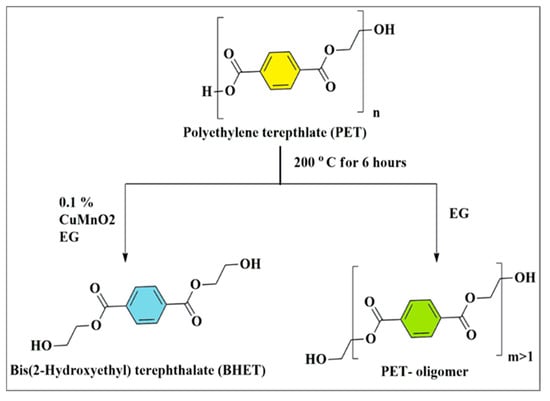
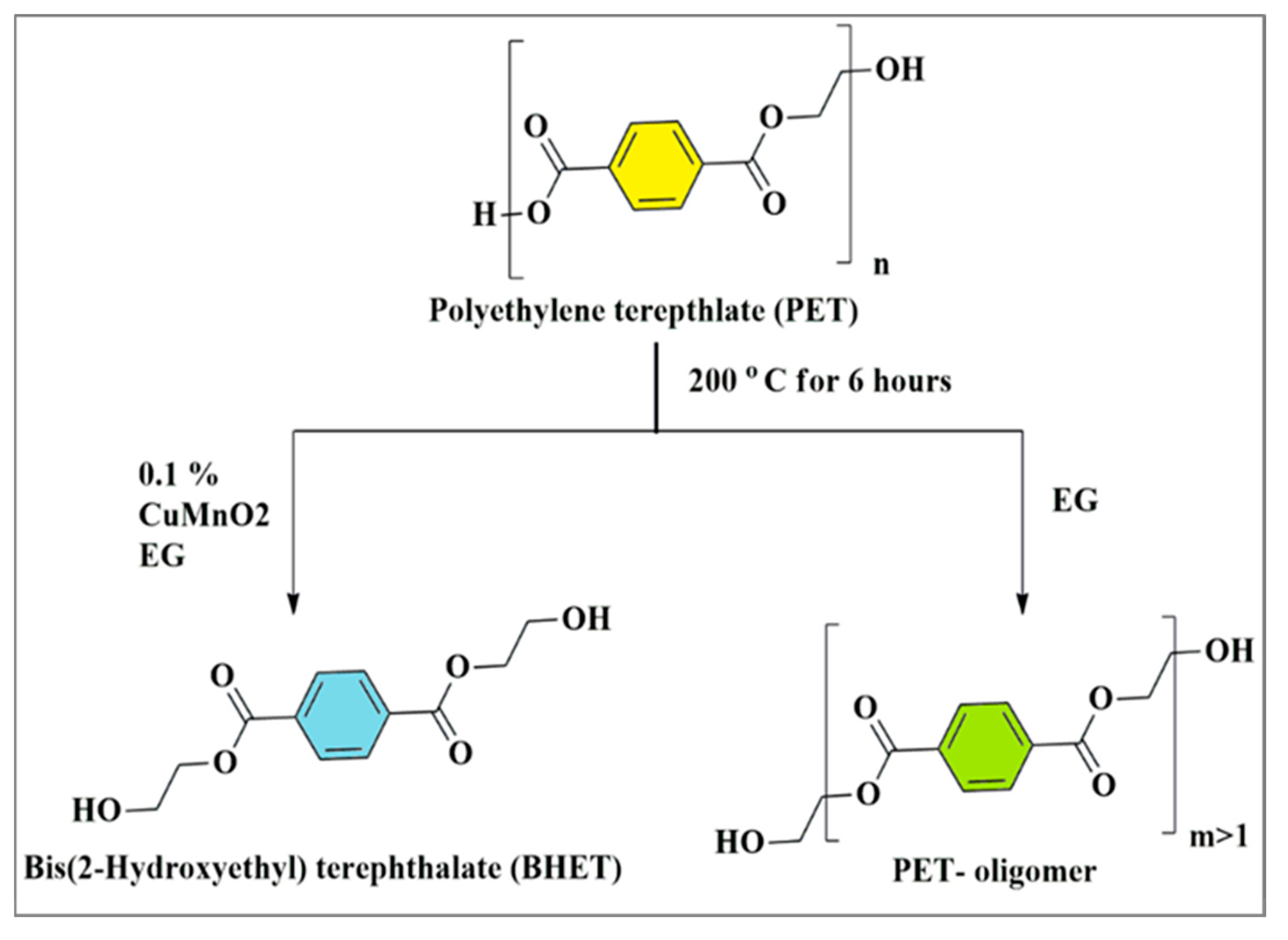
The HTCD reaction of PET waste with EG was carried out in the presence and absence of CuMnO2 at 200 °C for 6 h, and its depolymerization reaction route is shown in Scheme 1 (Process A and Process B). In the presence of CuMnO2 catalysts, PET was completely converted into BHET (87%) via an esterification reaction. In the absence of CuMnO2 catalysts, PET-oligomers were formed, suggesting that only a few ester bonds were broken down during the process, even at 200 °C. These results reveal that the catalytic activity of CuMnO2 influences the depolymerization process. The detailed reaction mechanism is discussed in the upcoming section.
Scheme 1.
Hydrothermal catalytic depolymerization of PET using EG in the presence and absence of CuMnO2 catalyst.
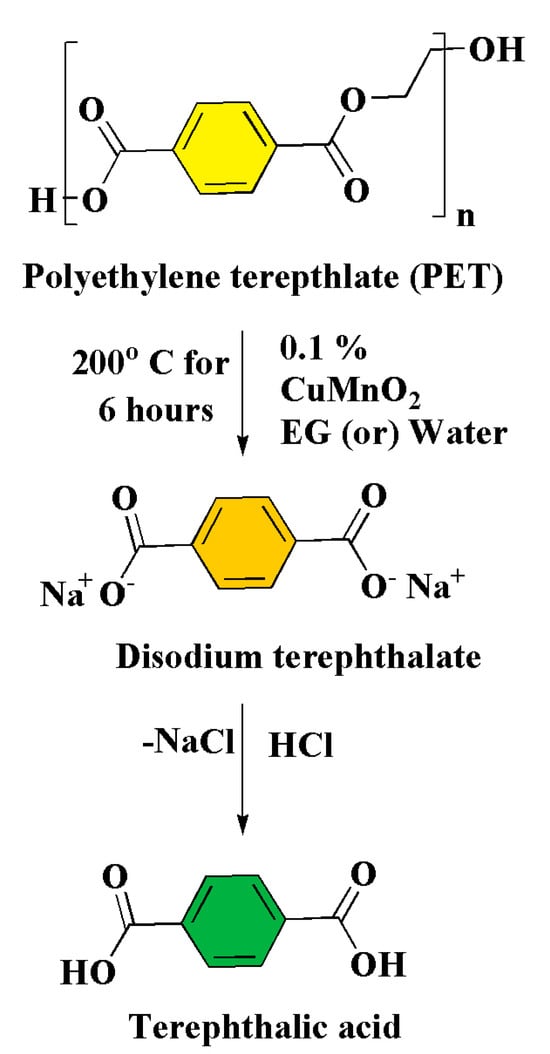
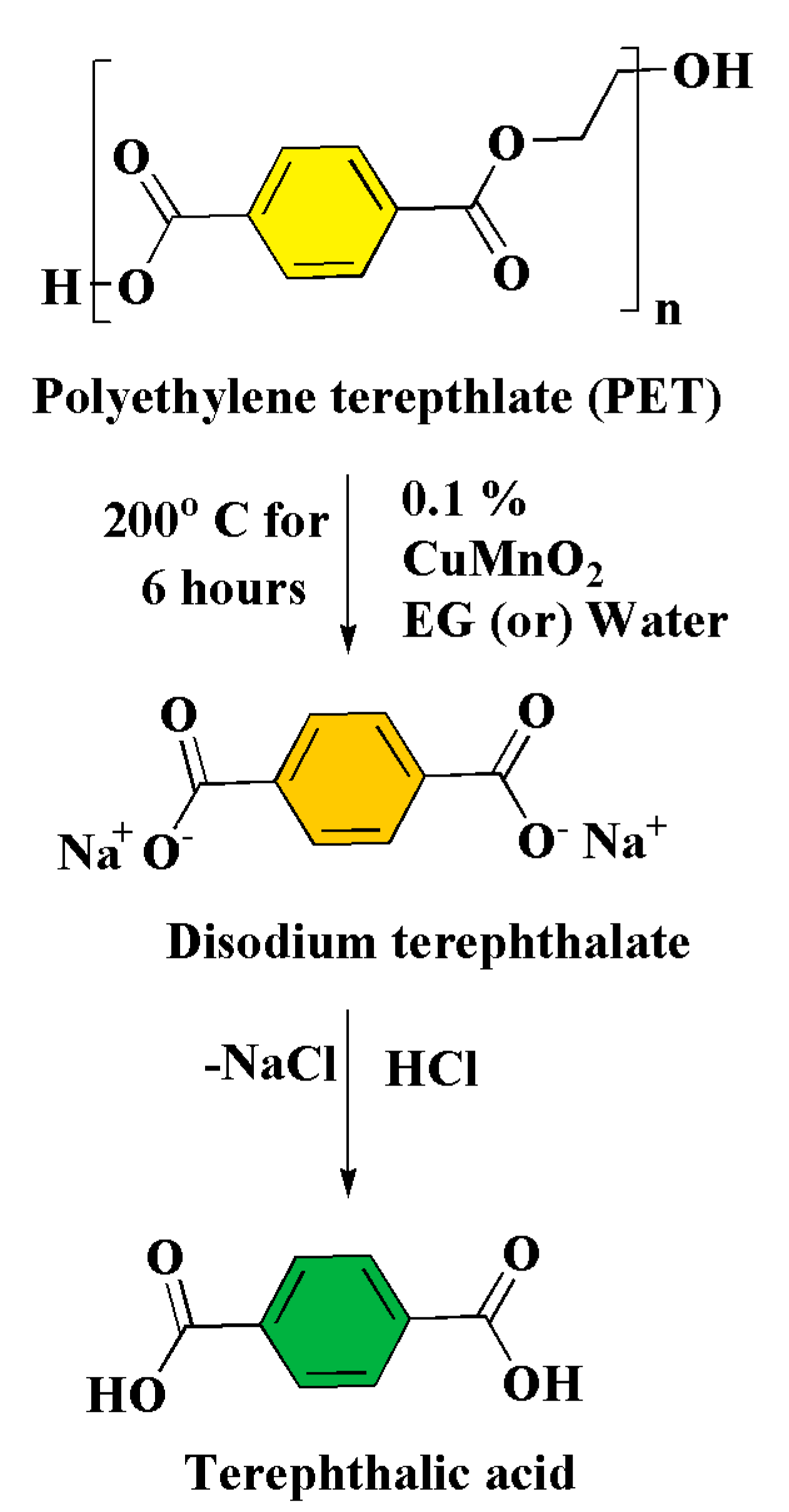
Similarly, hydrolysis of PET into TPA was performed via HTCD reaction of PET waste with EG or water in the presence of NaOH and CuMnO2 catalysts (Process D) in the two-step process, and the reaction pathway is shown in Scheme 2. In the first step, the ester bond is broken in the presence of alkali to disodium salts of TPA (soluble substances). After that, it was neutralized with HCl to form TPA (insoluble substances) as an end product. In this process, EG and water act as solvent substrates, which facilitate the reaction pathway, and CuMnO2 catalysts enhance the rate of reaction.
Scheme 2.
Hydrothermal catalytic depolymerization of PET using EG or water in the presence of CuMnO2 catalyst and NaOH.
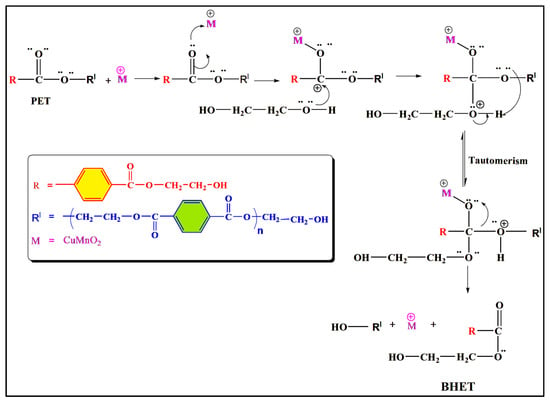
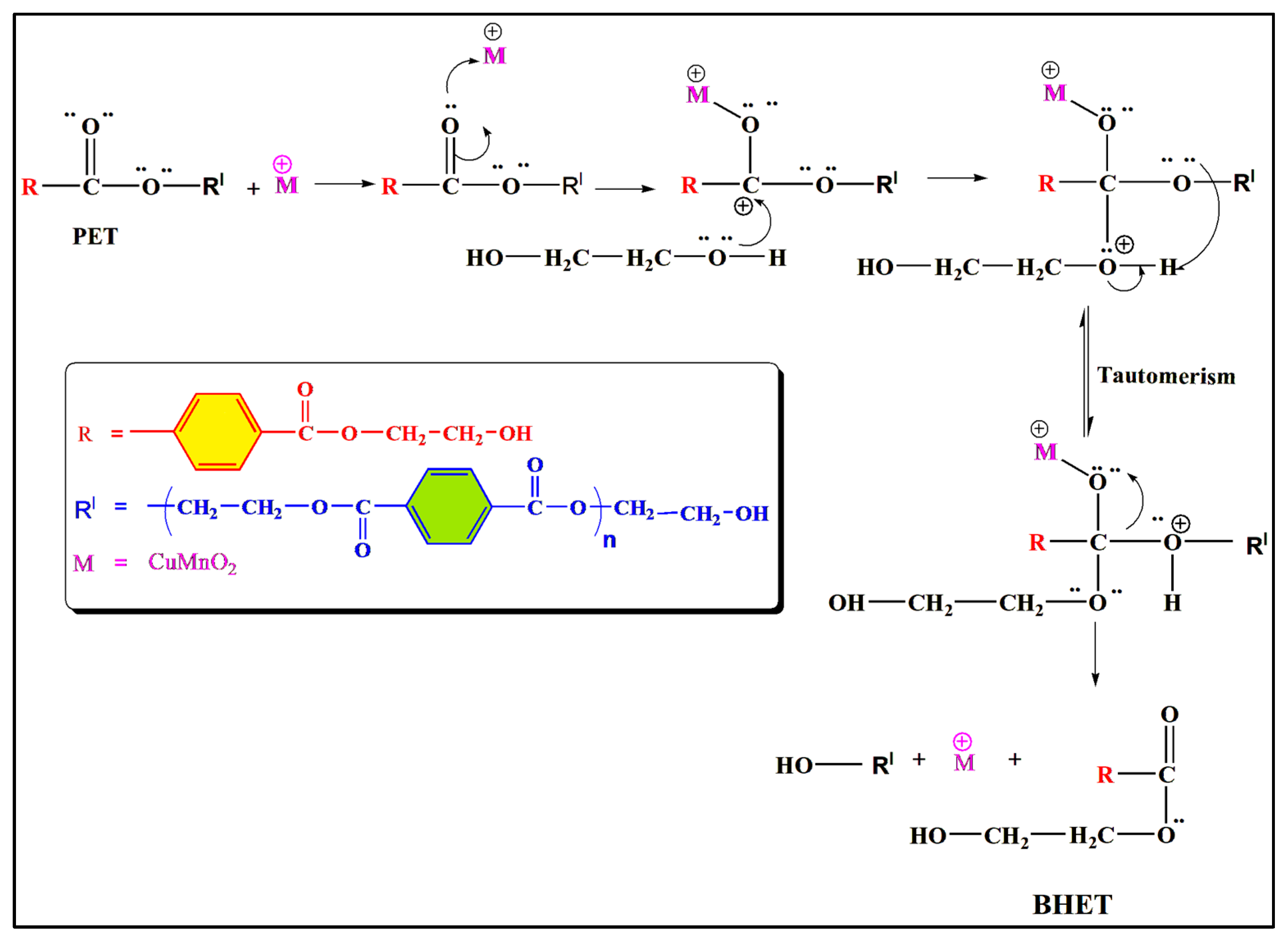
In the mechanism of Process A (Scheme 3), the electropositive metal catalyst (CuMnO2) coordinates with the electronegative carbonyl oxygen of the PET ester group, increasing the electrophilicity of the carbonyl carbon and activating the ester toward nucleophilic attack. The nucleophilic hydroxy group of EG attacks the carbonyl carbon, which forms a tetrahedral intermediate. Proton transfer of the intermediate undergoes a tautomeric rearrangement, which activates it further and brings about the subsequent ester bond cleavage. The carbonyl group is reformed, leaving a hydroxyl-terminated oligomer (HO–R’). The same sequence of activation, nucleophilic attack, proton transfer, and ester bond cleavage occurs in the polymer chain. Finally, the depolymerization process produces BHET as the major product, while the metal catalyst is regenerated and reused in the catalytic cycle.
Scheme 3.
Proposed mechanism for the glycolytic transesterification reaction of hydrothermal depolymerization of PET using CuMnO2 catalyst.
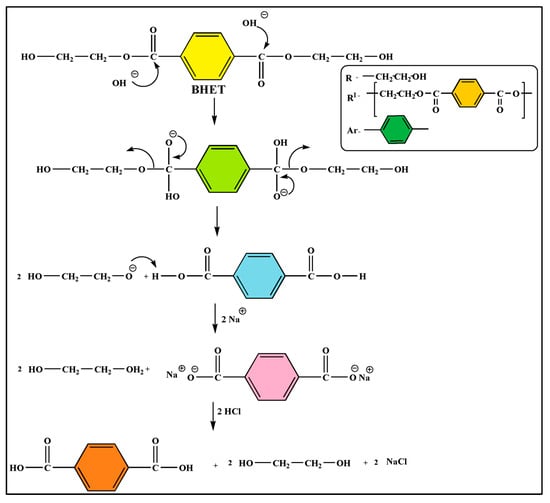
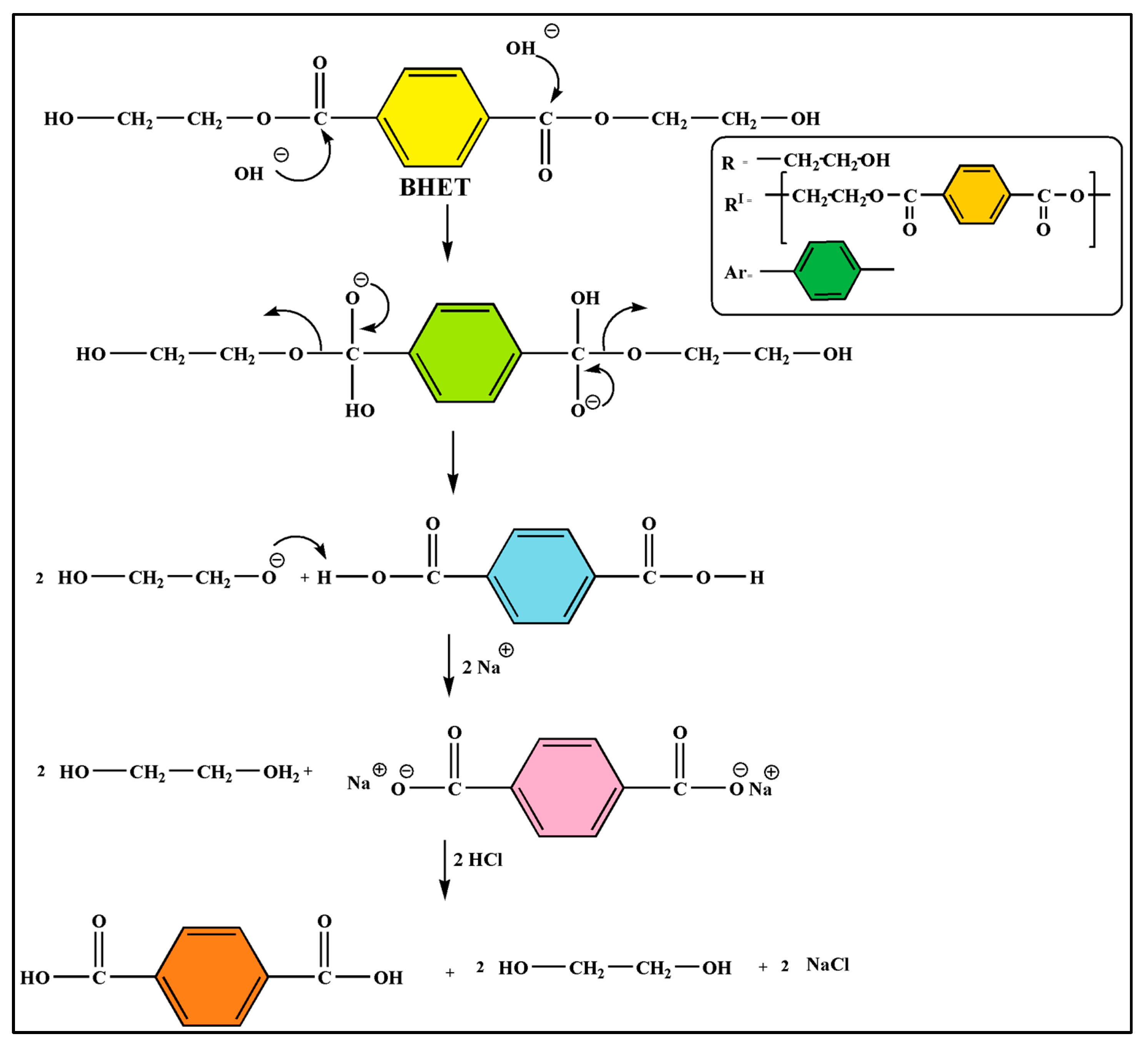
The HTCD reaction with NaOH (Process D) provides a new direction to predict the reaction mechanism and the proposed mechanism, as shown in Scheme 4. Initially, PET undergoes glycolysis of esterification into BHET as a product; its reaction pathway is proposed in Scheme 3. BHET then enters the subsequent alkaline hydrolysis step, where two hydroxides (OH−) from the alkaline hydrolysis undergo nucleophilic attack on two ester carbonyl carbons to form tetrahedral intermediates. When the tetrahedral intermediates are stabilized by the negatively charged oxygen, these unstable intermediates collapse, resulting in complete cleavage of the ester bonds and two molecules of ethylene glycol. In the alkaline hydrolysis process, disodium terephthalate is produced, which upon acidification with HCl yields TPA as the main product and NaCl and EG as byproducts. Therefore, the overall depolymerization process occurs through two consecutive steps: glycolysis of esterification of PET to form BHET, followed by alkaline hydrolysis of BHET to form TPA.
Scheme 4.
Proposed mechanism for the alkaline hydrolysis of HTCD of PET using CuMnO2 catalyst.
3.3. Characterization of PET and Recovered Products
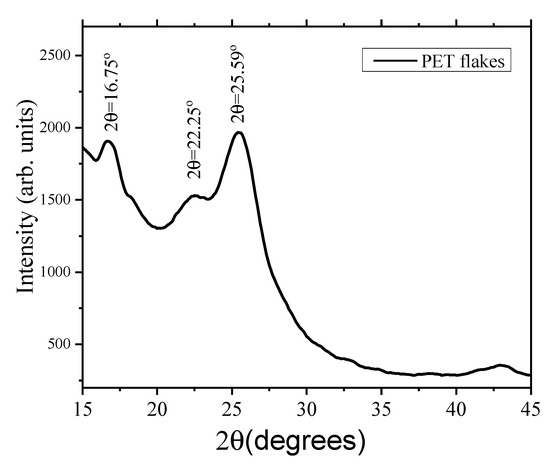
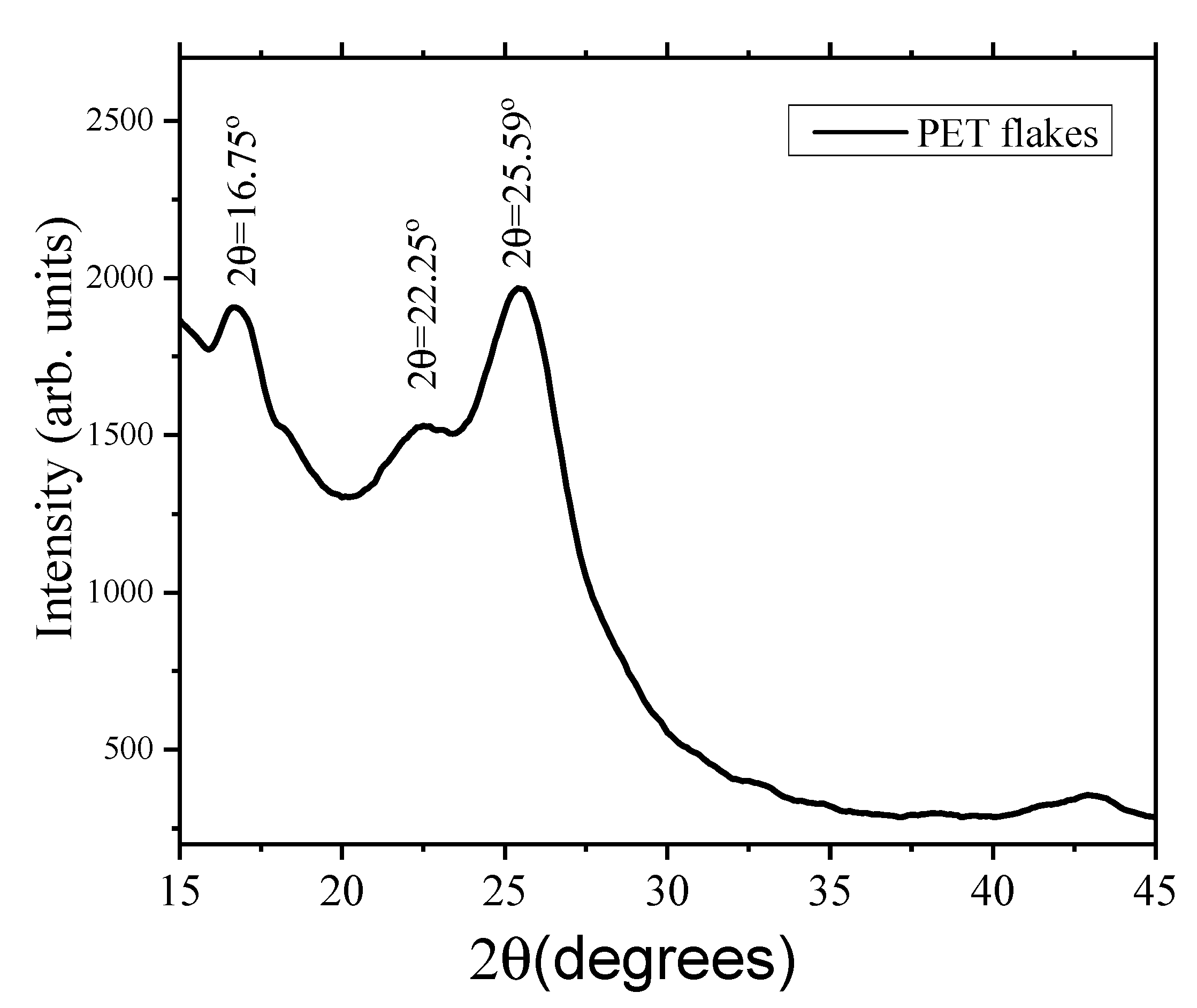
PET is a thermoplastic polyester synthesized via condensation polymerization of TPA and EG. The proportion of amorphous and crystalline regions in PET depends on the processing conditions employed during its manufacture, and the possibility to quantify these has been proposed by X-Ray diffraction by resolving the crystalline and amorphous scattering effects [33,34]. The crystalline state of PET, the O−CH2−CH2−O part, presents a crystal structure within the triclinic space group [35]. The partially crystalline PET flakes present in the three peaks at 16.75°, 22.25° and 25.59° correspond to (111), (110) and (010) crystallographic planes, which are situated on top of an elevated background due to the amorphous phase contribution to the pattern (Figure 5).
Figure 5.
X-ray diffraction at Room Temperature for PET in the 2θ = 15–45 ° range.
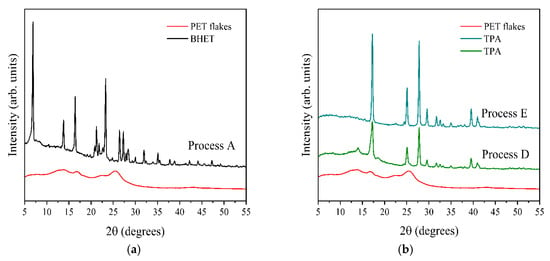
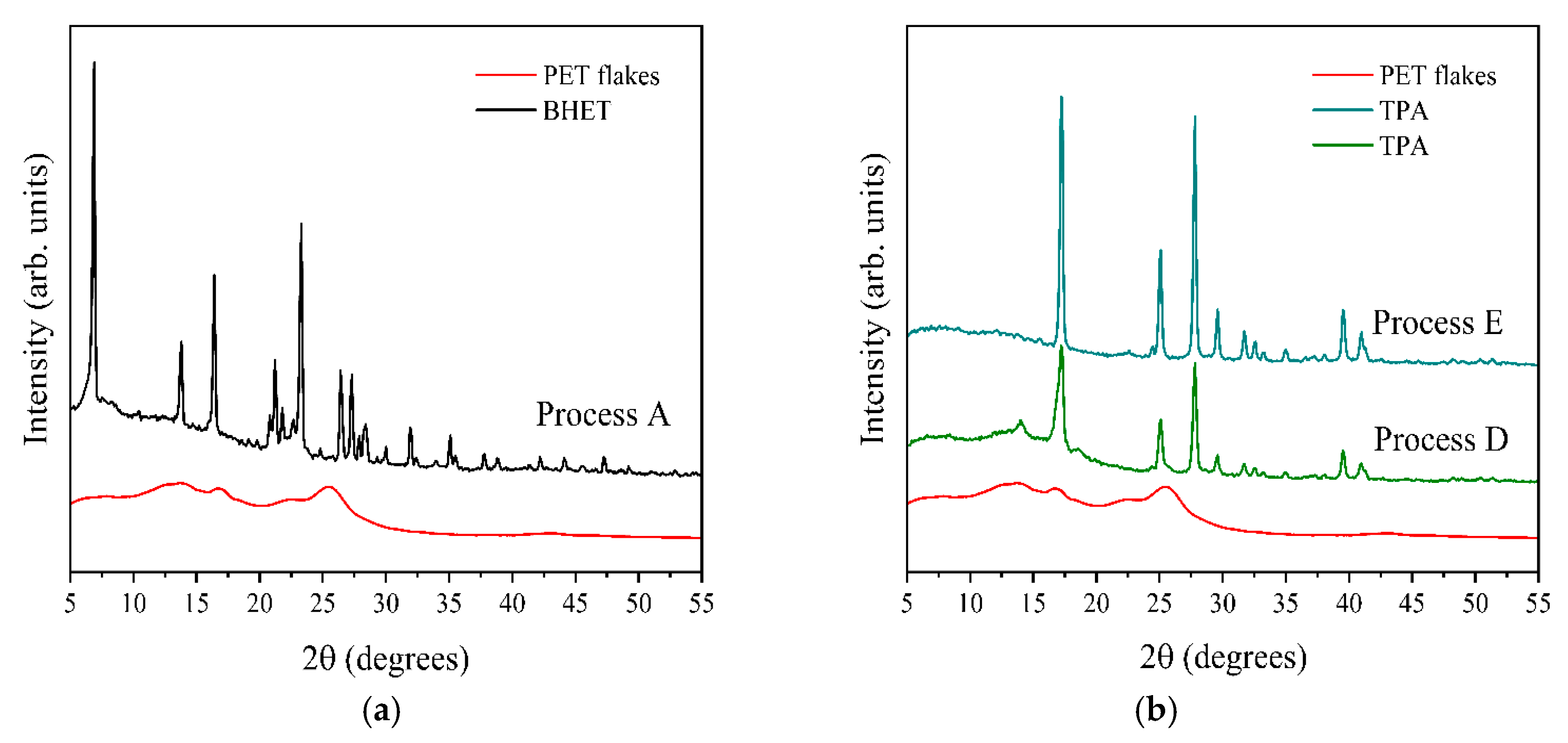
XRD patterns for the recovered white precipitate are shown in Figure 6. In Scheme 1, Figure 6a, the recovered product corresponds to BHET (C12H14O6) [36]. As can be seen, the BHET phase presents well-defined peaks, indicating that the sample is well crystallized and confirming the successful depolymerization of PET. In the case of Process D and Process E, the recovered sample corresponds to TPA phase-TPA C8H6O4 (JCPDS Card No. 00-021-1919), which presents very well-defined peaks; thus, it is a crystallized product—Figure 6b. The peaks are more defined in the case of the product obtained in Process E compared to those of product from Process D, where lower intensity and larger peaks are observed. The recovered product after all these processes, i.e., Processes A, D and E, are crystallized white-colored samples, contrary to the semicrystalline initial PET sample (Figure 1a).
Figure 6.
X-ray diffraction analysis of (a) PET and BHET (Process A) and (b) PET and TPA (Process D and Process E).
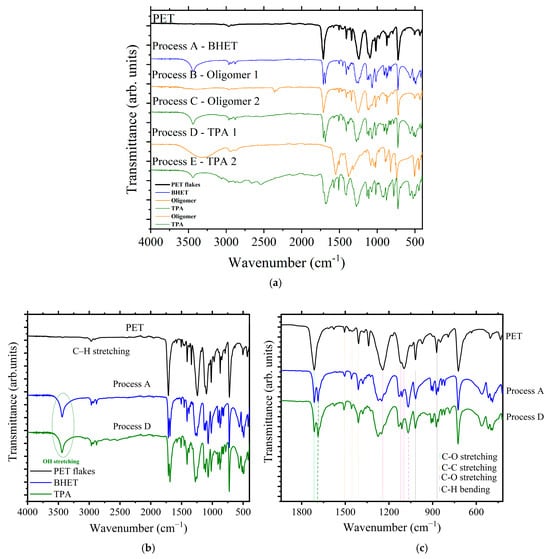
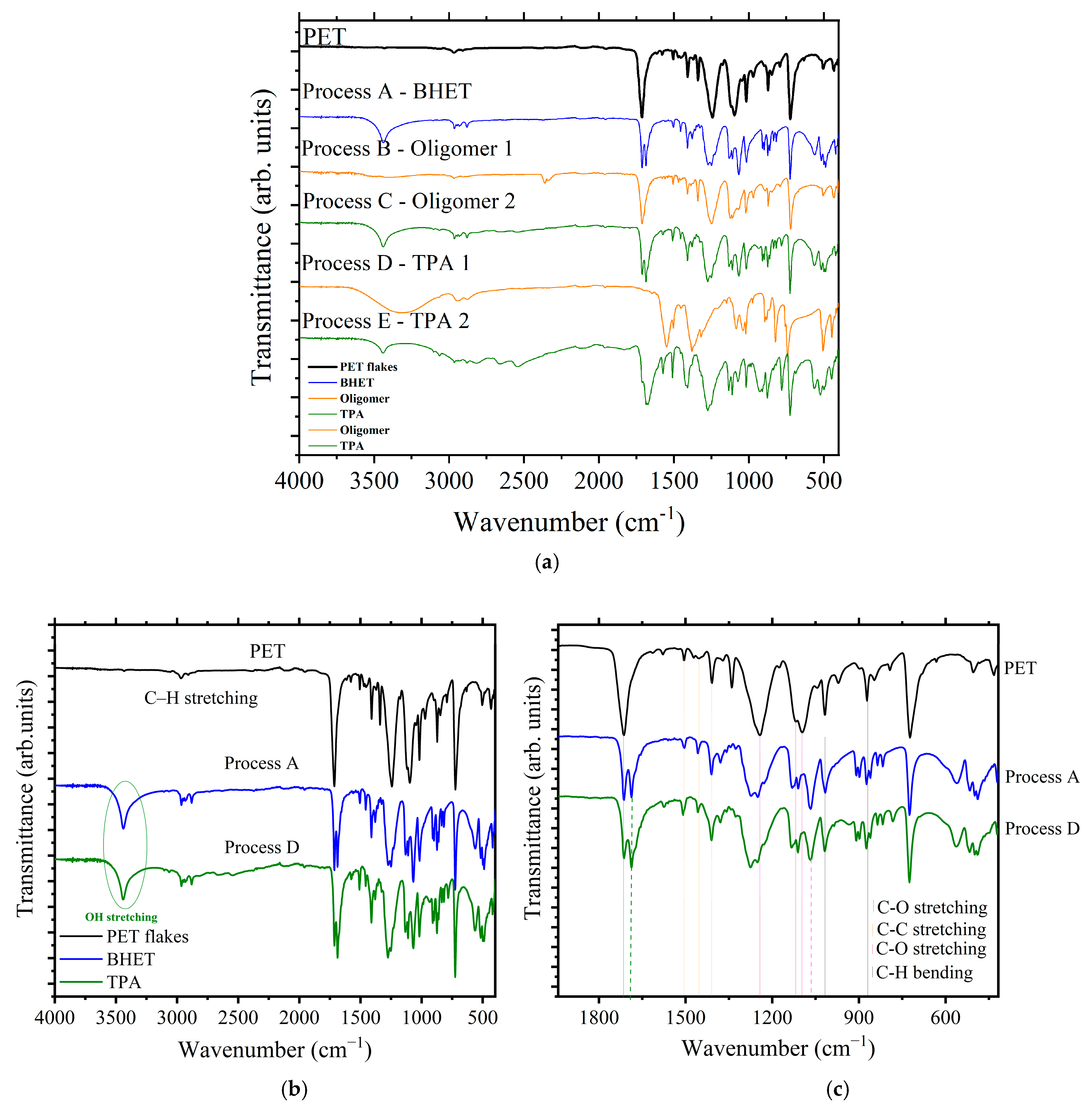
The FT-IR spectra of the depolymerization products—Process A: BHET, Process B: Oligomer 1, Process C: Oligomer 2, Process D: TPA 1, and Process E: TPA 2—are presented in Figure 7a. The main vibrational bands at ~1715–1730 cm−1 are linked to the C=O stretching vibration of ester groups, and this confirms the presence of a polyester structure. The characteristic functional groups corresponding to each compound were clearly identified [37], supporting the successful formation of the recovered products. Figure 7b shows the FT-IR spectra of PET flakes with the recovered products of Process A and Process D. The band at ~1715–1730 cm−1 corresponds to the C=O stretching vibration of the ester group, whereas the bands at around ~2950–3100 cm−1 are caused by C-H stretching vibrations of aliphatic groups. The bands in the ~1240–1100 cm−1 region are also associated with C-O stretching. The BHET product from Process A shows a broad absorption band around at ~3300–3500 cm−1 that is the OH stretching vibration, suggesting hydroxyl groups formed during PET glycolysis. However, the carbonyl stretch at ~1715 cm−1 still exists, indicating the formation of an ester group. Figure 7c shows that the TPA product spectrum from Process D contains a wide OH stretching band between ~2500 and 3300 cm−1, which is typical of carboxylic acid groups. Moreover, a very intense band at ~1680–1700 cm−1 is due to the C=O stretching vibration of the carboxylic acid group. The FT-IR spectrum confirms the typical functional groups of the compounds BHET and TPA.
Figure 7.
FT-IR spectra of PET flakes and the products recovered following (a) Process A—BHET, Process B—Oligomer 1, Process C—Oligomer 2, Process D—TPA 1 and Process E—TPA 2; (b) Process A and Process D and (c) enlarged FT-IR spectral region for PET, Process A and Process D.
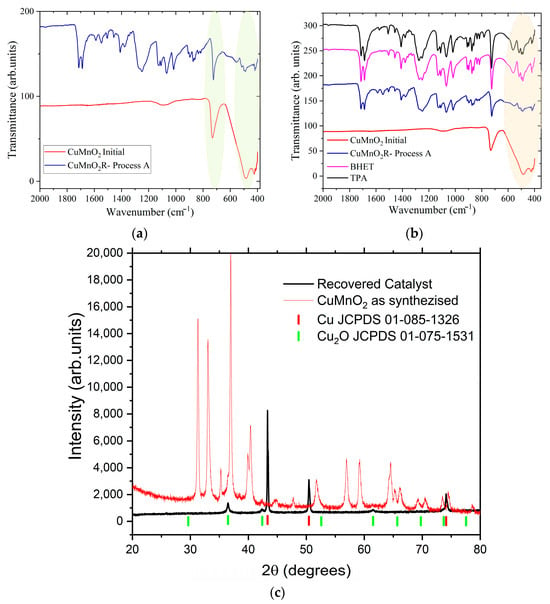
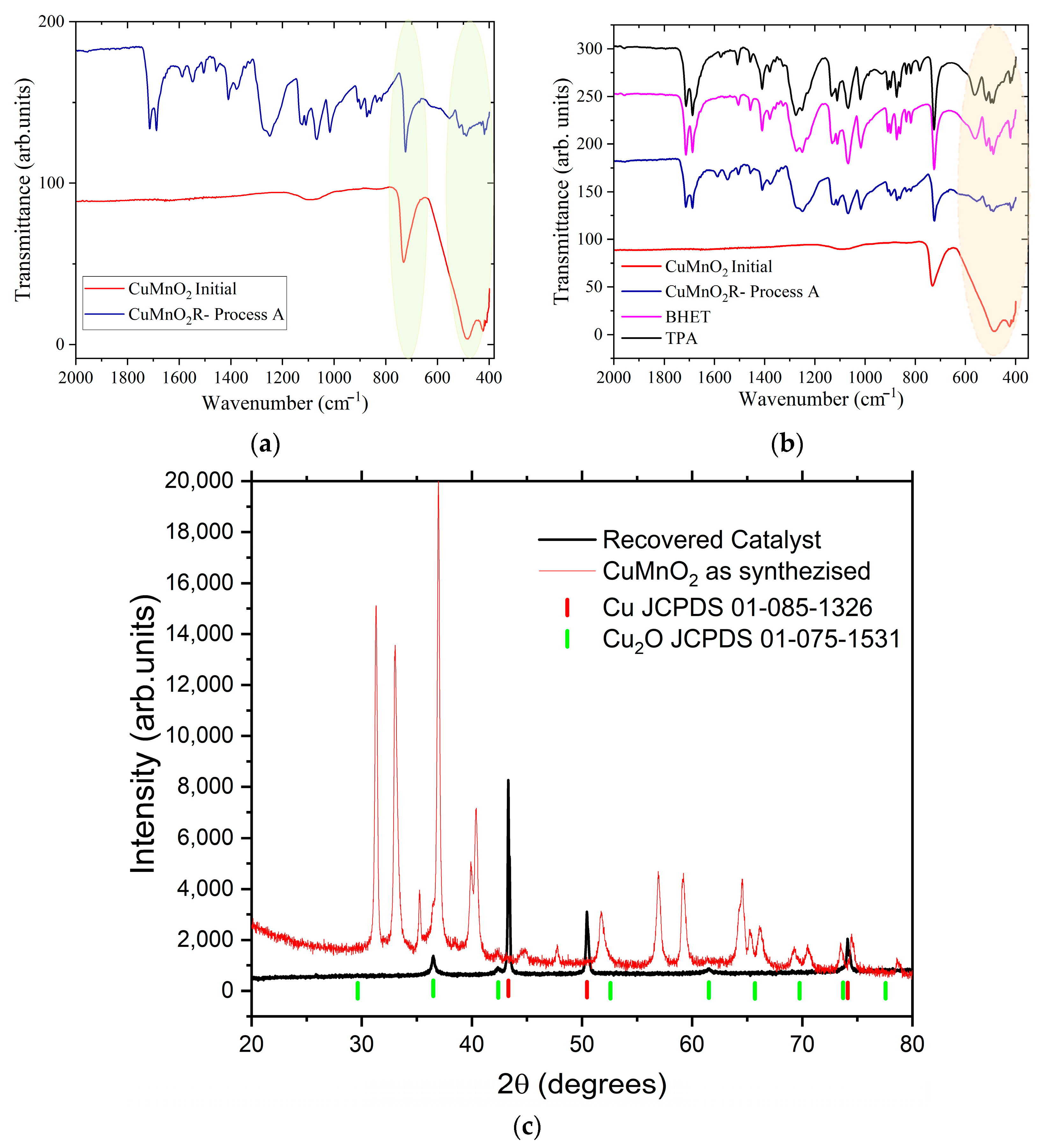
The FT-IR spectra for delafossite compounds contain bands in two ranges: ~400–500 cm−1, assigned to the Mn-O vibrations, and ~600–700 cm−1, associated with the Mn-O-Mn stretching vibration [38]. It can be observed that the bands in the 400–500 cm−1 range for the catalyst recovered from Process A present smaller intensity bands in this region (Figure 8a). The FT-IR spectra of the recovered catalysts were compared with those of BHET and TPA—see Figure 8b. For the band at 730 cm−1, it is difficult to interpret, as it is superimposed on that of BHET or TPA, respectively (Figure 8b). The observed changes in the C=O and C–O regions indicate the presence of residual oxygen-containing species on the catalyst surface. The characteristic O–H and C–O bands of EG were also considered for assigning glycol-derived residues. These spectral changes suggest surface adsorption and possible metal–oxygen interactions with ester/carboxyl groups, providing supporting evidence for the proposed reaction mechanism. Nevertheless, the XRD pattern for the recovered catalyst presents the majority phase indexed as Cu (JCPDS Card No. 01-085-1326) and a small amount of Cu2O phase is in the pattern (JCPDS Card No. 01-075-1531)— see Figure 8c. Therefore, the catalyst undergoes transformations following the HDCD decomposition process.
Figure 8.
FT-IR spectra of (a) CuMnO2 sample as synthesized and the catalysts recovered from Process A (CuMnO2R—Process A); (b) CuMnO2 sample as synthesized and the catalysts recovered from Process A (CuMnO2R—Process A) and the recovered product from Process A (BHET) and Process D (TPA); (c) XRD of the recovered catalyst and as synthesized crednerite sample.
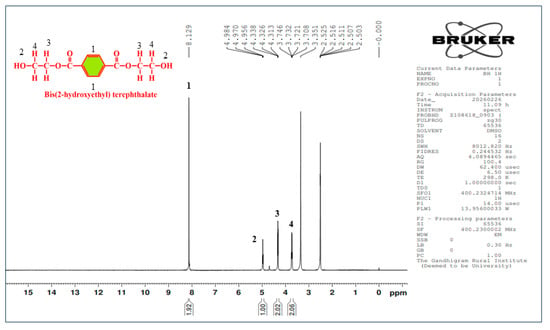
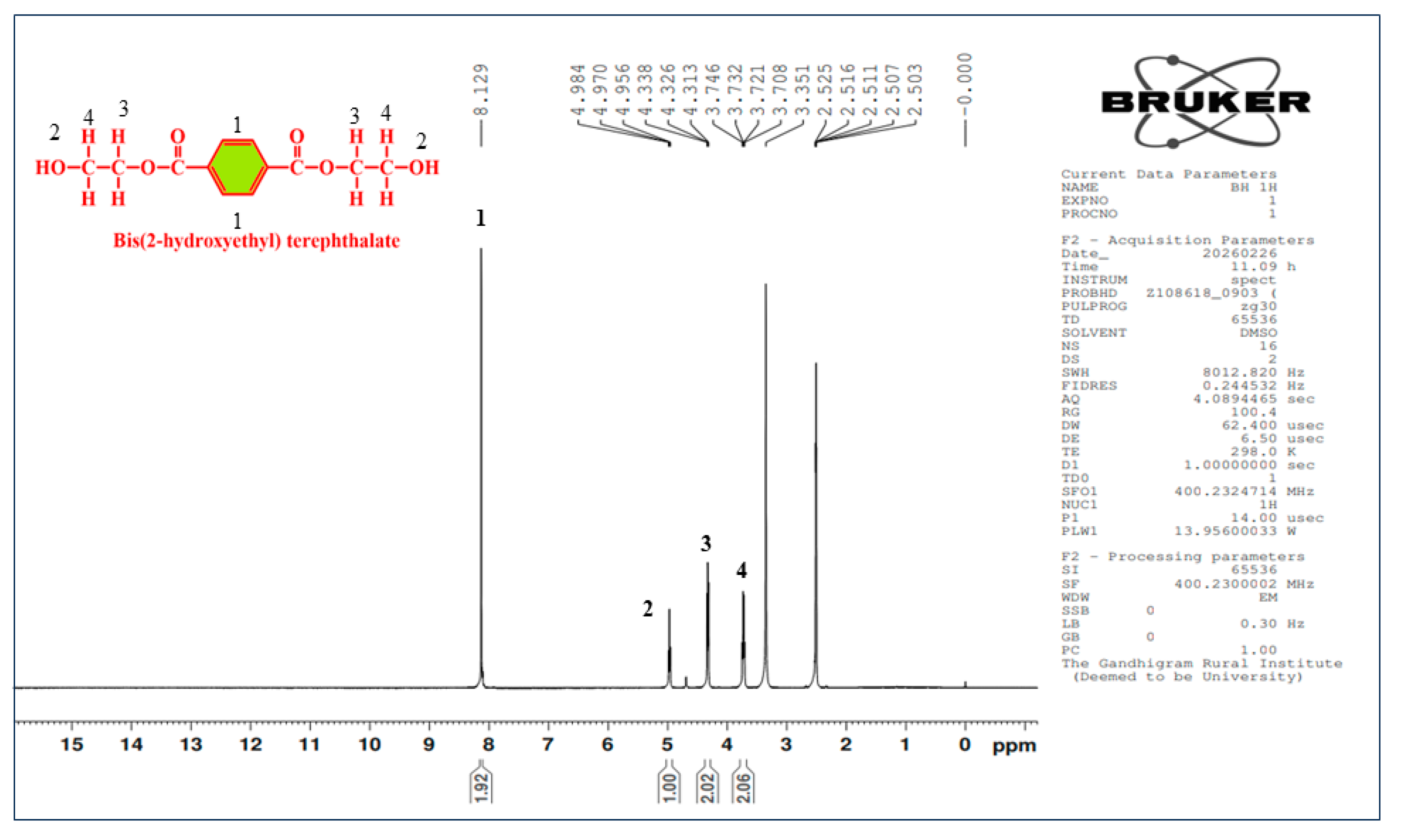
The proton 1 H NMR spectrum of BHET (Process A) in d-DMSO exhibits the characteristic peaks of different proton groups in the molecule (Figure 9). The 8.129 ppm peak (s, 4H) has been attributed to the four aromatic protons on the terephthalate ring (CH). Since the ring of para-disubstituted is symmetrical and the protons are chemically equivalent, these protons appear as a singlet. The 4.98 ppm peak (t, J = 5.16 Hz, 2H) has been assigned to the two hydroxy (OH) protons of the hydroxyethyl groups, which are coupled with the CH2 protons adjacent to them. The 4.38 ppm peak (t, J = 4.8 Hz, 4H) corresponds to the methylene protons (OCH2) attached to the oxygen of the ester. So, the protons of these groups, because of the electron-withdrawing nature of the ester functionality, are deshielded and shifted downfield. The 3.708 ppm peak (q, J = 4.8 Hz, 4H) is due to the methylene protons (CHOH) adjacent to the hydroxyl group. Altogether, these peaks demonstrate different proton environments and the symmetrical structure of BHET composed of an aromatic terephthalate core and two hydroxyethyl side groups.
Figure 9.
1H NMR spectrum of BHET—Process A.
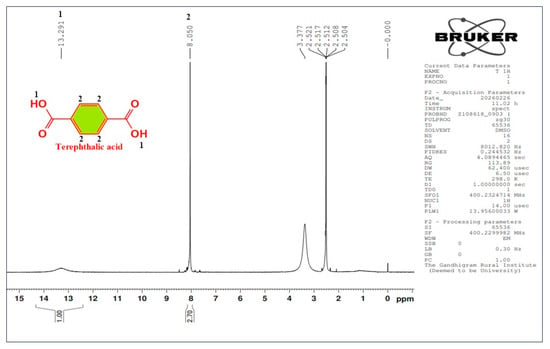
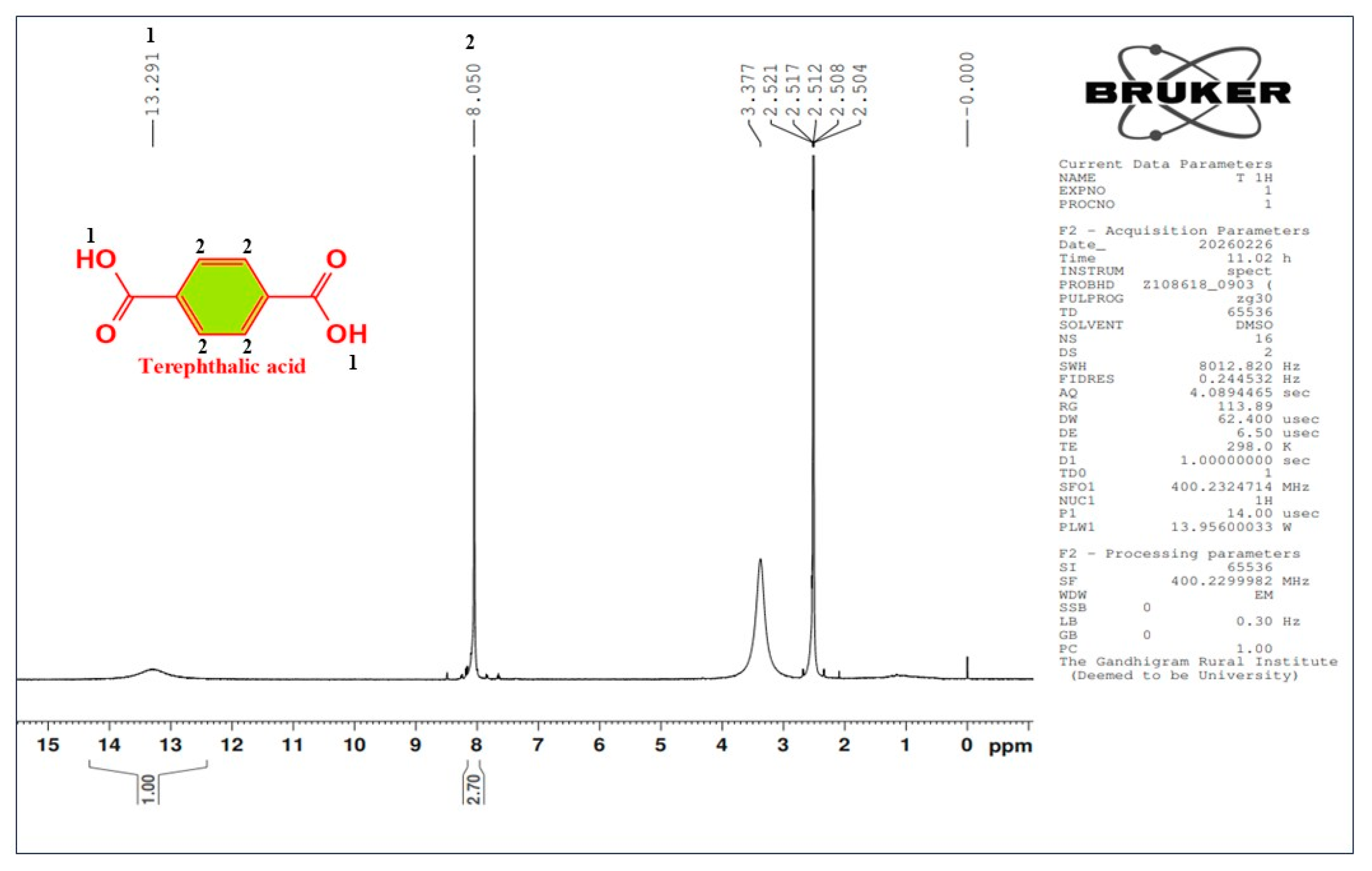
The 1H NMR spectrum of TPA—Process D in DMSO-d shows two separate signals in total, which reveal the composition of the sample. The first is a singlet peak at 13.29 ppm, which integrates for two protons and is consistent with the COOH protons. The deshielding of these protons is a typical characteristic of strongly hydrogen-bonded acidic protons that also undergo electron withdrawal from the adjacent carbonyl groups. Moreover, a singlet at 8.05 ppm (4H) is due to the aromatic protons of the benzene ring. Indeed, given that the TPA molecule comprises a symmetrical para-disubstituted benzene ring, all four aromatic protons are chemically equivalent and hence, a single strong peak is observed. Similarly, the substitution of the benzene ring with carboxylic acid groups at para positions, which are electron-withdrawing, is another factor affecting the chemical shift of the aromatic protons. All in all, these 1H NMR results reflect the formation of TPA, as well as its structural confirmation (Figure 10).
Figure 10.
1H NMR spectrum of TPA—Process D.
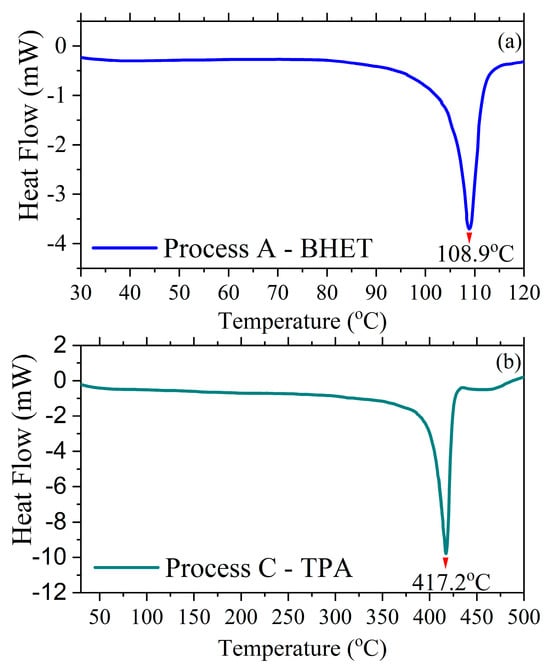
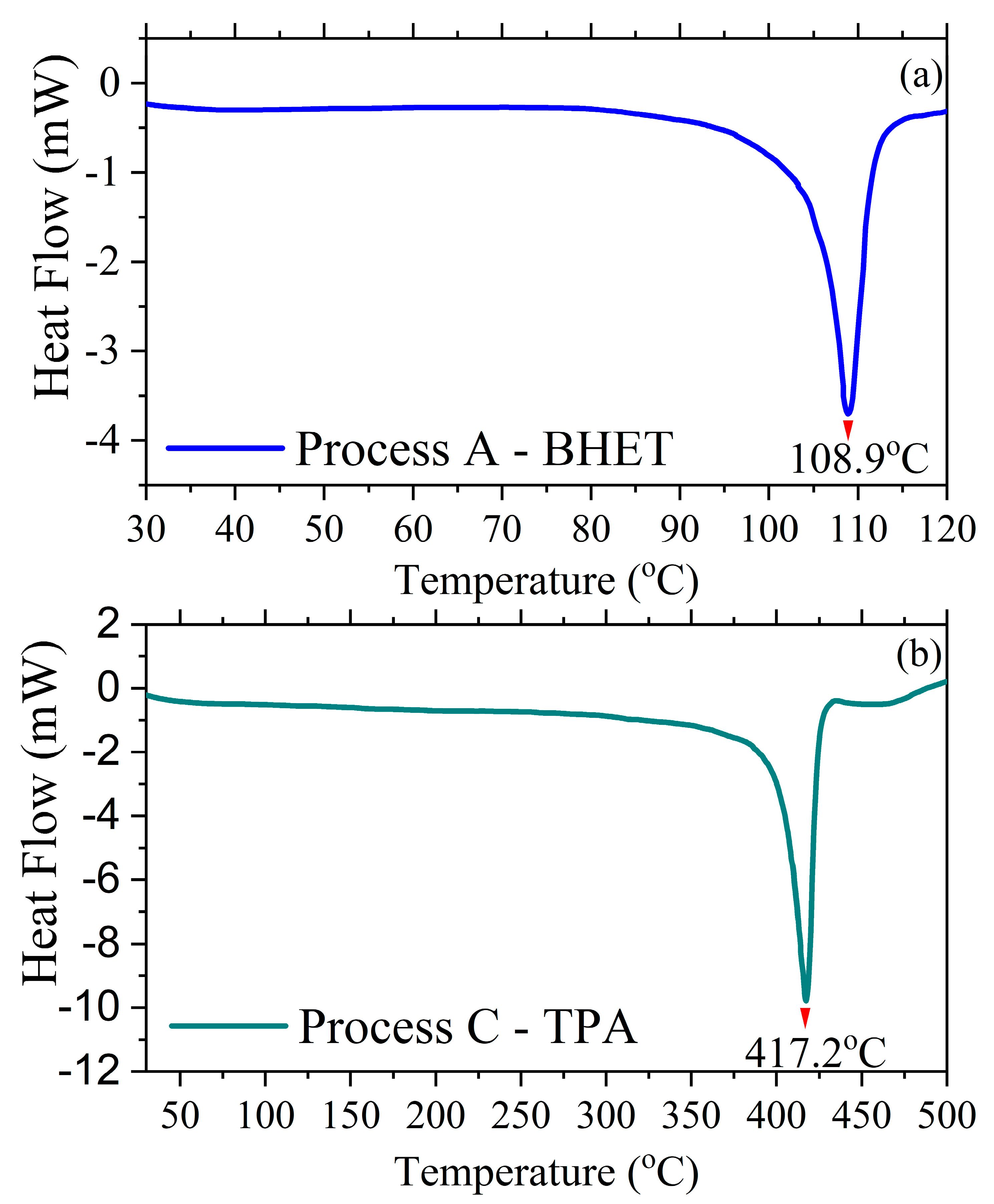
Differential Scanning Calorimetry (DSC) is a technique used to analyze how a material responds to heat, particularly to determine properties such as melting point and their behavior in response to temperature changes. A BHET-recovered sample (Process A) was analyzed in this research, and its thermal plot revealed that the melting point was 109 °C (Figure 11a). The DSC analysis of recovered monomers was recorded, and its thermal analysis curve is shown in Figure 11a. This value is in excellent agreement with the melting point of pure BHET published in the literature [39] (106–109 °C), which is strong evidence that BHET is the obtained material. The verification of the standard melting temperature by experimental measurement validates the effectiveness of the recovery method and the high level of sample purity.
Figure 11.
DSC curve of the depolymerization product. (a) BHET—Process A and (b) TPA—Process D.
In our work, the recovered TPA sample (Process D) reveals its melting point at 417 °C (Figure 11b), which is very close to the characteristic melting point of pure TPA, which also confirms that the recovered substance is TPA [40]. The DSC analysis of recovered monomers was recorded and is shown in Figure 11b. The recovery process was effective, and the sample is highly pure, as demonstrated by the nearest match between the observed and standard melting temperatures.
In this study, for the first time, a ABO2-class material was used in a depolymerization technique of PET by two processes: the first one with EG used as a co-reactant, as well as a polymer bond-cleaving agent, in which the end product is BHET, and the second process when water and NaOH are used as reactants, with TPA obtained as the end product. The use of crednerite-type CuMnO2 materials present the advantage of easy catalyst recovery after the reaction, and these recovered materials can find further applications in high-end technologies such as batteries, supercapacitors and other energy storage devices. This method reflects the principles of green chemistry and circular economy by giving plastic waste a new life as beneficial materials in an environmentally friendly manner. In the case of zinc compounds, it has been shown that the coordination environment and electronic properties of Zn2+ play a role in the efficiency of PET degradation. In these zinc compounds, a correlation between the catalytic activity, the crystal structure and induced defects has been shown. In this context, as crednerite compounds present the possibility of substituting the Mn ions with Cu species up to 6%, our future work will consist of analyzing the induced changes determined by substitution in the compounds on the catalytic efficiency, keeping in mind that higher substitution levels in these samples have been shown to be 6% Cu, i.e., Cu1.06Mn0.94O2 [41]. Moreover, the stability issues will be addressed for the crednerite compounds from the series: Cu1+xMn1−xO2 and CuMn1−xM(M = Mg, Al)xO2. Moreover, based on the experimental results presented in this work, it is reasonable to assume that the process could be scaled up to an industrial level using an appropriately designed high-pressure and high-temperature reactor. The process could potentially be operated continuously, which may contribute significantly to reducing plastic waste. For successful scale-up and industrial implementation, important factors such as heat and mass transfer, mixing efficiency, autogenous pressure, solid–liquid contact, and catalyst recovery should be carefully considered and optimized.
3.4. Comparison with Reported Depolymerization Methods
This study reports the catalytic activity for pristine CuMnO2 compound, and a comparative analysis with representative studies reported in the literature is presented in Table 4. The comparison indicates that the crednerite-type CuMnO2 catalyst exhibits competitive PET depolymerization performance, achieving enhanced depolymerization efficiency and high monomer recovery yields under the investigated experimental conditions. CuMnO2 achieved higher yields of 87% for BHET and 85% for TPA within 6 h at 200 °C. Compared with previously reported catalysts, CuMnO2 showed improved catalytic efficiency and shorter reaction time, demonstrating its potential as an effective catalyst for the process.
Table 4.
The results from representative studies reported in the literature and this work.
4. Conclusions
The HTCD of post-consumer PET using crednerite-type CuMnO2 proved to be an efficient and selective strategy for converting plastic waste into high-value monomers under relatively mild reaction conditions (200 °C, 6 h). A systematic comparison of Processes A–E demonstrated the important role of CuMnO2 in promoting PET depolymerization by enhancing transesterification while suppressing undesirable oligomerization reactions. The catalyst enabled a BHET yield of 87% in the presence of ethylene glycol and a TPA yield of 85% through a one-pot sequential transesterification–alkaline hydrolysis process using ethylene glycol, water, and NaOH. In contrast, reactions performed in the absence of either CuMnO2 or NaOH exhibited lower depolymerization efficiencies and product yields, highlighting the synergistic effect of the catalyst and alkaline reaction medium. A comparative evaluation with previously reported catalytic systems further demonstrates the excellent performance of the developed catalyst. The recovered BHET and TPA constitute valuable chemical feedstocks for the synthesis of MOFs and other advanced functional materials, thereby increasing the overall value of the recycling process. Overall, this study demonstrates that crednerite-type CuMnO2 is a promising and efficient catalyst for PET depolymerization, providing a sustainable route for transforming plastic waste into value-added products and contributing to the development of circular economy strategies for polymer waste management.
Author Contributions
A.M.: Review and editing, Formal analysis, Supervision, Investigation, Conceptualization, Visualization. G.B.: Methodology Investigation, Visualization, Conceptualization. R.K.: Conceptualization, Writing—Original draft, Investigation. M.P.: Writing—original draft, Methodology, Writing—review and editing, Formal analysis, Investigation, Conceptualization, Visualization. All authors have read and agreed to the published version of the manuscript.
Funding
This work was supported by the visiting@WUT Grant within the Faculty of Physics and Mathematics, Department of Physics, West University of Timisoara.
Data Availability Statement
Data can be provided upon reasonable request.
Acknowledgments
The authors are very thankful to SSN Trust and the WUT Visiting Researcher Grant Program, which provided financial support.
Conflicts of Interest
The authors declare no conflicts of interest.
References
- Benyathiar, P.; Kumar, P.; Carpenter, G.; Brace, J.; Mishra, D.K. Polyethylene terephthalate (PET) bottle-to-bottle recycling for the beverage industry: A review. Polymers 2022, 14, 2366. [Google Scholar] [CrossRef] [Scilit] [PubMed]
- Enache, A.-C.; Grecu, I.; Samoila, P. Polyethylene Terephthalate (PET) Recycled by Catalytic Glycolysis: A Bridge toward Circular Economy Principles. Materials 2024, 17, 2991. [Google Scholar] [CrossRef] [Scilit] [PubMed]
- Joseph, T.M.; Azat, S.; Ahmadi, Z.; Jazani, O.M.; Esmaeili, A.; Kianfar, E.; Thomas, S. Polyethylene terephthalate (PET) recycling: A review. Case Stud. Chem. Environ. Eng. 2024, 9, 100673. [Google Scholar] [CrossRef] [Scilit]
- Kubisa, P. Application of ionic liquids as solvents for polymerization processes. Prog. Polym. Sci. 2004, 29, 3–12. [Google Scholar] [CrossRef] [Scilit]
- Al-Salem, S.M.; Lettieri, P.; Baeyens, J. Recycling and recovery routes of plastic solid waste (PSW): A review. Waste Manag. 2009, 29, 2625–2643. [Google Scholar] [CrossRef] [Scilit] [PubMed]
- Guadie, A.; Mulat, A.; Kokeb, A.; Gabbiye, N. Synthesis and Characterization of Eucalyptus Pulp by Kraft Process for Paper Sheet Formation. Int. J. Environ. Sci. Technol. 2015, 1, 20–26. [Google Scholar]
- Santomasi, G.; Todaro, F.; Petrella, A.; Notarnicola, M.; van Velzen, E.U.T. Mechanical Recycling of PET Multi-Layer Post-Consumer Packaging: Effects of Impurity Content. Recycling 2024, 9, 93. [Google Scholar] [CrossRef] [Scilit]
- Capeletti, M.R.; Passamonti, F.J. Optimization of reaction parameters in the conversion of PET to produce BHET. Polym. Eng. Sci. 2018, 58, 1500–1507. [Google Scholar] [CrossRef] [Scilit]
- Akinsemolu, A.A.; Idowu, A.M.; Onyeaka, H.N. Recycling Technologies for Biopolymers: Current Challenges and Future Directions. Polymers 2024, 16, 2770. [Google Scholar] [CrossRef] [Scilit] [PubMed]
- Sheel, A.; Pant, D. Chemical depolymerization of PET bottles via glycolysis. In Recycling of Polyethylene Terephthalate Bottles; William Andrew Publishing: Norwich, NY, USA, 2019; pp. 61–84. [Google Scholar]
- Lalhmangaihzuala, S.; Laldinpuii, Z.; Lalmuanpuia, C.; Vanlaldinpuia, K. Glycolysis of Poly (Ethylene Terephthalate) Using Biomass-Waste Derived Recyclable Heterogeneous Catalyst. Polymers 2020, 13, 37. [Google Scholar] [CrossRef] [Scilit] [PubMed]
- Deng, L.; Li, R.; Chen, Y.; Wang, J.; Song, H. New effective catalysts for glycolysis of polyethylene terephthalate waste: Tropine and tropine-zinc acetate complex. J. Mol. Liq. 2021, 334, 116419. [Google Scholar] [CrossRef] [Scilit]
- Li, J.; Zhang, S.; Hua, Y.; Lin, Y.; Wen, X.; Mijowska, E.; Tang, T.; Chen, X.; Ruoff, R.S. Facile synthesis of accordion-like porous carbon from waste PET bottles-based MIL-53(Al) and its application for high-performance Zn-ion capacitor. Green Energy Env. 2024, 9, 1138–1150. [Google Scholar] [CrossRef] [Scilit]
- Liu, J.; Yi, S.; Cheng, J.; Liu, S. Catalytic reductive conversion of polyethylene terephthalate (PET) plastic waste into fuels, valuable chemicals and degradable polymers. Green Chem. 2025, 27, 11312–11342. [Google Scholar] [CrossRef] [Scilit]
- Carniel, A.; Santos, N.F.D.; Buarque, F.S.; Resende, J.V.M.; Ribeiro, B.D.; Marrucho, I.M.; Coelho, M.A.Z.; Castro, A.M. From trash to cash: Current strategies for bio-upcycling of recaptured monomeric building blocks from poly(ethylene terephthalate) (PET) waste. Green Chem. 2024, 26, 5708–5743. [Google Scholar] [CrossRef] [Scilit]
- Loganathan, M.; Rajendraprasad, M.; Murugesan, A.; Lee, J.Y.; Manjappa, K.B. Sustainable recovery of monomers from PET and PC waste via Thermocatalytic depolymerization for synthesis of polycarbonates and co-polycarbonates. Eur. Polym. J. 2024, 221, 113516. [Google Scholar] [CrossRef] [Scilit]
- Krisbiantoro, P.A.; Chiao, Y.-W.; Liao, W.; Sun, J.; Tsutsumi, D.; Yamamoto, H.; Kamiya, Y.; Wu, K.C.-W. Catalytic glycolysis of polyethylene terephthalate (PET) by solvent-free mechanochemically synthesized MFe2O4 (M = Co, Ni, Cu and Zn) spinel. Chem. Eng. J. 2022, 450, 137926. [Google Scholar] [CrossRef] [Scilit]
- Seki, S.; Onose, Y. Spin-Driven Ferroelectricity in Triangular Lattice Antiferromagnets ACrO2 (A = Cu, Ag, Li, or Na). Phys. Rev. Lett. 2008, 101, 067204. [Google Scholar] [CrossRef] [Scilit] [PubMed]
- Yu, M.; Draskovic, T.I.; Wu, Y. Cu(I)-based delafossite compounds asphotocathodes in p-type dye-sensitized solar cells. Phys. Chem. Chem. Phys. 2014, 16, 5026. [Google Scholar] [CrossRef] [Scilit] [PubMed]
- Ahmad, T.; Phul, R.; Alam, P.; Lone, I.H.; Shahazad, M.; Ahmed, J.; Ahamad, T.; Alshehri, S.M. Dielectric, optical and enhanced photocatalytic properties of CuCrO2 nanoparticles. RSC Adv. 2017, 7, 27549. [Google Scholar] [CrossRef] [Scilit]
- Kondrashev, I.D. The crystal structure and composition of crednerite, CuMnO2. Sov. Phys. Crystallogr. 1959, 3, 703–706. [Google Scholar]
- Sui, C.; Nie, Z.; Liu, H.; Boczkaj, G.; Liu, W.; Kong, L.; Zhan, J. Singlet oxygen-dominated peroxymonosulfate activation by layered crednerite for organic pollutants degradation in high salinity wastewater. J. Environ. Sci. 2024, 135, 86–96. [Google Scholar] [CrossRef] [Scilit] [PubMed]
- Dai, C.; Tian, X.; Nie, Y.; Fu, W.; Wang, J. Effect of the interaction mode of H2O2 over CuMnO2 surface on OH generation for efficient degradation of ofloxacin: Activity and mechanism. Chem. Eng. J. 2023, 451, 138749. [Google Scholar] [CrossRef] [Scilit]
- Amrute, A.P.; Łodziana, Z.; Mondelli, C.; Krumeich, F.; Perez-Ramirez, J. Solid-state chemistry of cuprous delafossites: Synthesis and stability aspects. Chem. Mater. 2013, 25, 4423–4435. [Google Scholar] [CrossRef] [Scilit]
- Xiong, D.; Gao, H.; Deng, Y.; Qi, Y.; Du, Z.; Zeng, X.; Li, H. Impact of Mg doping on the optical and electrical properties of p-type CuMnO2 ultrathin nanosheets. J. Mat. Sci. Mater. Electron. 2020, 31, 5452–5461. [Google Scholar] [CrossRef] [Scilit]
- Bessekhouad, Y.; Gabes, Y.; Bouguelia, A.; Trari, M. The physical and photo electrochemical characterization of the crednerite CuMnO2. J. Mater. Sci. 2007, 42, 6469–6476. [Google Scholar] [CrossRef] [Scilit]
- Trari, M.; Topfer, J.; Dordor, P.; Grenier, J.C.; Pouchard, M.; Doumerc, J.P. Preparation and physical properties of the solid solutions Cu1+xMn1−xO2 (0 ≤ x ≤ 0.2). J. Solid State Chem. 2005, 178, 2751–2758. [Google Scholar]
- Poienar, M.; Martin, C.; Lebedev, O.I.; Maignan, A. Advantage of low-temperature hydrothermal synthesis to grow stoichiometric crednerite crystals. Solid State Sci. 2018, 80, 39–45. [Google Scholar] [CrossRef] [Scilit]
- Rodríguez-Carvajal, J. Recent advances in magnetic structure determination by neutron powder diffraction. Phys. B Condens. Matter 1993, 192, 55–69. [Google Scholar] [CrossRef] [Scilit]
- Momma, K.; Izumi, F. VESTA: A three-dimensional visualization system for electronic and structural analysis. J. Appl. Crystallogr. 2008, 41, 653–658. [Google Scholar] [CrossRef] [Scilit]
- Kotai, L.; Petruševski, V.M.; Bereczki, L.; Beres, K.A. Catalytic Properties of the Spinel-Like CuxMn3−xO4 Copper Manganese Oxides-An Overview. Catalysts 2023, 13, 129. [Google Scholar] [CrossRef] [Scilit]
- Restori, R.; Schwarzenbach, D. Charge density in cuprite, Cu2O. Acta Crystallogr. Sect. B Struct. Sci. 1986, 42, 201. [Google Scholar] [CrossRef] [Scilit]
- Johnson, J. X-Ray Diffraction Studies of the Crystallinity in Polyethylene Terephthalate. J. Appl. Polym. Sci. 1959, 11, 205–209. [Google Scholar] [CrossRef] [Scilit]
- Thomsen, T.B.; Almdal, K.; Meyer, A.S. Significance of poly (ethylene terephthalate) (PET) substrate crystallinity on enzymatic degradation. New Biotechnol. 2023, 78, 162–172. [Google Scholar] [CrossRef] [Scilit] [PubMed]
- Murthy, N.S.; Correale, S.T.; Minor, H. Structure of the amorphous phase in crystallizable polymers: Poly (ethylene terephthalate). Macromolecules 1991, 24, 1185–1189. [Google Scholar] [CrossRef] [Scilit]
- Scé, F.; Cano, I.; Martin, C.; Beobide, G.; Castilloc, Ó.; Pedro, I.D. Comparing conventional and microwave-assisted heating in PET degradation mediated by imidazolium-based halometallate complexes. New J. Chem. 2019, 43, 3476–3485. [Google Scholar] [CrossRef] [Scilit]
- Bahl, S.K.; Cornell, D.D.; Boerio, F.J.; McGraw, G.E. Interpretation of the Vibrational Spectra of Poly (Ethylene Terephthalate). J. Polym. Sci. Polym. Lett. Ed. 1974, 12, 13–19. [Google Scholar] [CrossRef] [Scilit]
- Julien, C.M.; Massot, M.; Poinsignon, C. Lattice vibrations of manganese oxides. Part I. Periodic structures. Spectrochim. Acta Part A 2004, 60, 689–700. [Google Scholar]
- Ferdous, A.R.; Shah, S.S.; Shah, S.N.A.; Johan, M.A.B.A.; Bari, A.; Aziz, M.A. Transforming waste into wealth: Advanced carbon-based electrodes derived from refinery and coal by-products for next-generation energy storage. Molecules 2024, 29, 2081. [Google Scholar] [CrossRef] [Scilit] [PubMed]
- Walzberg, J.; Sethuraman, S.; Ghosh, T.; Uekert, T.; Carpenter, A. Think before you throw! An analysis of behavioural interventions targeting PET bottle recycling in the United States. Energy Res. Soc. Sci. 2023, 100, 103116. [Google Scholar] [CrossRef] [Scilit]
- Poienar, M.; Vecchini, C.; Andre, G.; Daoud-Aladine, A.; Margiolaki, I.; Maignan, A.; Lappas, A.; Chapon, L.; Hervieu, M.; Damay, F.; et al. Substitution effect on the interplane coupling in crednerite: The Cu1.04Mn0.96O2 case. Chem. Mater. 2011, 23, 85–94. [Google Scholar]
- Westover, C.C.; Long, T.E. Envisioning a BHET economy: Adding value to PET waste. Sustain. Chem. 2023, 4, 363–393. [Google Scholar] [CrossRef] [Scilit]
- Van-Pham, D.T.; Le, Q.H.; Lam, T.N.; Nguyen, C.N.; Sakai, W. Four-factor optimization for PET glycolysis with consideration of the effect of sodium bicarbonate catalyst using response surface methodology. Polym. Degrad. Stab. 2020, 179, 109257. [Google Scholar] [CrossRef] [Scilit]
- Shukla, S.R.; Harad, A.M. Glycolysis of polyethylene terephthalate waste fibers. J. Appl. Polym. Sci. 2005, 97, 513–517. [Google Scholar] [CrossRef] [Scilit]
- Raj, B.; Kumar, J.; Rao, V.V. Plastic/packaging waste separation from MSW and its conversion and used as value—Added products in different applications: An eco-sustainable approach. Indian J. Eng. Mater. Sci. 2020, 27, 193–208. [Google Scholar] [CrossRef] [Scilit]
- Lalhmangaihzuala, S.; Laldinpuii, Z.T.; Khiangte, V.; Lallawmzuali, G.; Vanlaldinpuia, K. Orange peel ash coated Fe3O4 nanoparticles as a magnetically retrievable catalyst for glycolysis and methanolysis of PET waste. Adv. Powder Technol. 2023, 34, 104076. [Google Scholar] [CrossRef] [Scilit]
- Li, Y.; Shen, J.; Liu, Q.; Zhu, Y.; Pang, Z.; Ge, M. Zinc-doped ferrite nanoparticles as bi-functional catalysts for decolorization of disperse dyes in glycolysis of colored poly (ethylene terephthalate) fabrics. J. Environ. Chem. Eng. 2023, 11, 109816. [Google Scholar] [CrossRef] [Scilit]
- Lee, J.; Park, C.; Fai Tsang, Y.; Andrew Lin, K.Y. Towards sustainable production of polybutylene adipate terephthalate: Non-biological catalytic syntheses of biomass-derived constituents. ChemSusChem 2024, 17, e202401070. [Google Scholar] [CrossRef] [Scilit] [PubMed]
- Guo, Z.; Wu, J.; Wang, J. Chemical degradation and recycling of polyethylene terephthalate (PET): A review. RSC Sustain. 2025, 3, 2111–2133. [Google Scholar] [CrossRef] [Scilit]
- Wang, X.; Liu, P.; Wang, H.; Liu, Z.; Qu, W.; Huang, J. Efficient glycolysis of PET waste with Zn-mediated ionic liquid catalyst: Uncovering the mechanism of dimolecular activation and kinetic acceleration. J. Environ. Chem. Eng. 2026, 14, 122115. [Google Scholar] [CrossRef] [Scilit]

Disclaimer/Publisher’s Note: The statements, opinions and data contained in all publications are solely those of the individual author(s) and contributor(s) and not of MDPI and/or the editor(s). MDPI and/or the editor(s) disclaim responsibility for any injury to people or property resulting from any ideas, methods, instructions or products referred to in the content. |
© 2026 by the authors. Licensee MDPI, Basel, Switzerland. This article is an open access article distributed under the terms and conditions of the Creative Commons Attribution (CC BY) license.