


Abstract
3D printing is evolving at a fast pace in both the manufacturing and construction sectors. These advancements can greatly benefit these industries. However, the 3D printing of concrete structures presents some challenges due to defects in the 3D concrete printed elements. Hence, this study systematically reviews Artificial Intelligence (AI)-driven techniques, such as Computer Vision and Machine Learning, to identify surface defects that can occur in 3D-printed cementitious material structures. The adopted methodology was the PRISMA statement with the aim of reporting the systematic review and meta-analysis. Two well-known databases, Web of Science and Scopus, were utilised for data extraction of articles published during the past 10 years, between 2014 and May 2025. The initial search provided 110 articles, both conference and journal papers; after screening, only 11 were left for the final review assessment. The smaller number of the final articles shows that much work is still needed in this area. It has been observed that various computer vision and machine learning-based methodologies were employed to classify defects in 3D concrete printed structures. Deep learning algorithms, such as YOLO and RT-DETR, were featured as the most efficient in real-time defect detection and quality monitoring. It was also observed that real-time monitoring systems attached to 3D printers help in reducing the material wastage, which is essential to meet the sustainable goals. However, more work is still required to underline the defects of 3D-printed cementitious material, probably with the involvement of AI image processing tools and techniques. This can help to automate the defects in 3D-printed structures, and by this, the productivity could be enhanced.
1. Introduction
3D printing, also known as additive manufacturing, has transformed several sectors by providing complex products and projects with remarkable efficiency. This technology creates three-dimensional objects layer by layer from computer models, utilising materials such as plastics, metals, ceramics, and even several building material composites [1]. The major industries that have taken a lead in 3D printing utilisation for prototyping, tooling, and creating final products are aerospace, healthcare, and automotive [2]. For instance, the aerospace industry utilises 3D printing to make lightweight components that could be used in aircraft or associated forums, while the medical industry uses it to create patient-specific implants and prosthetics, helping them save time with more proficient output [3]. 3D printing has become a foundation of modern engineering due to its adaptability and cost-effectiveness, which drives innovation and reduces delays that bring this technology to the top over the traditional ways of manufacturing [4,5].
3D printing is also an emerging technology in the construction industry, providing solutions to labour shortages, high costs, safety concerns, and environmental problems, while ensuring efficient productivity [6,7]. The technology enables rapid construction of building components and structures using cement, mortar, concrete, polymers, and even recycled materials. This also supports reducing the depletion of natural resources by minimising waste usage and recycling the available materials, ultimately helping to reduce the carbon footprint in comparison to traditional methods of construction. Several researchers have demonstrated potential savings in construction time, labour, and cost of 3D-printed homes compared to traditional construction [8,9]. To illustrate, in 2021, a 3D-printed locality was created in Texas, demonstrating the feasibility of cost-effective housing solutions. The use of 3D printing has also proved attractive for architects to experiment with complex designs that are challenging or impossible to realise using traditional construction methods [10,11].
Despite the various benefits for the construction industry, 3D printing does not come without its problems [12]. One of the key concerns is the structural integrity of 3D-printed structures, as layer-by-layer deposition can create relatively porous and weak interphases, rendering them vulnerable to delamination, cracking, ingress of water and deleterious materials, and creating a higher risk of structural failure [13]. The properties of 3D-printed materials can change based on the mixture design of the ink material, open time, printing rate, and ambient and curing conditions. Moreover, changes in water-to-cement ratio (w/c) in the concrete mixture can reduce strength and durability. All these factors influence the void formation and porosity in the 3D-printed concrete [14,15]. While recycled or alternative materials are environmentally helpful, their performance can be unpredictable. This irregularity in the mixture and materials’ properties makes it difficult to achieve architectural and structural standards [15,16].
The processing of a 3D-printed structure faces two key challenges: sustaining anticipated performance, including surface quality, and upholding accurate set dimensions. To meet the standards and eliminate the irregularities in the 3D-printed concrete, it is essential to perform the surface finishing after the layer-by-layer extrusion [17,18]. The long-term performance of 3D-printed objects under environmental conditions is another concern. Variations in temperature, moisture exposure, and seismic activity are all significant factors that 3D-printed structures must survive, but the long-term behaviour of printed materials in such settings is still unidentified and requires the foremost attention [19]. For instance, 3D-printed concrete may have different thermal expansion properties in comparison to regular concrete, which leads to cracks or deformations over time [20]. The durability of printed structures in harsh environments or seismic regions is an unresolved subject, demanding further training and testing [21,22,23]. Moreover, these flaws emphasise the need for continued research to optimise printing materials and procedures as well as quality control methods to monitor the performance of 3D printing construction [24,25].
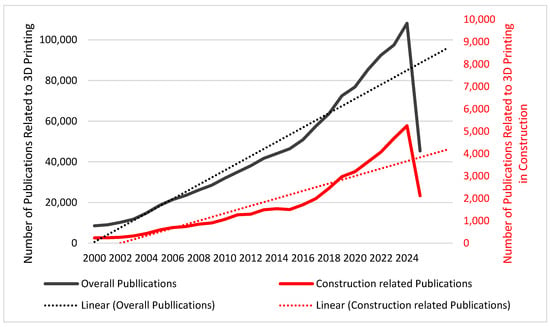
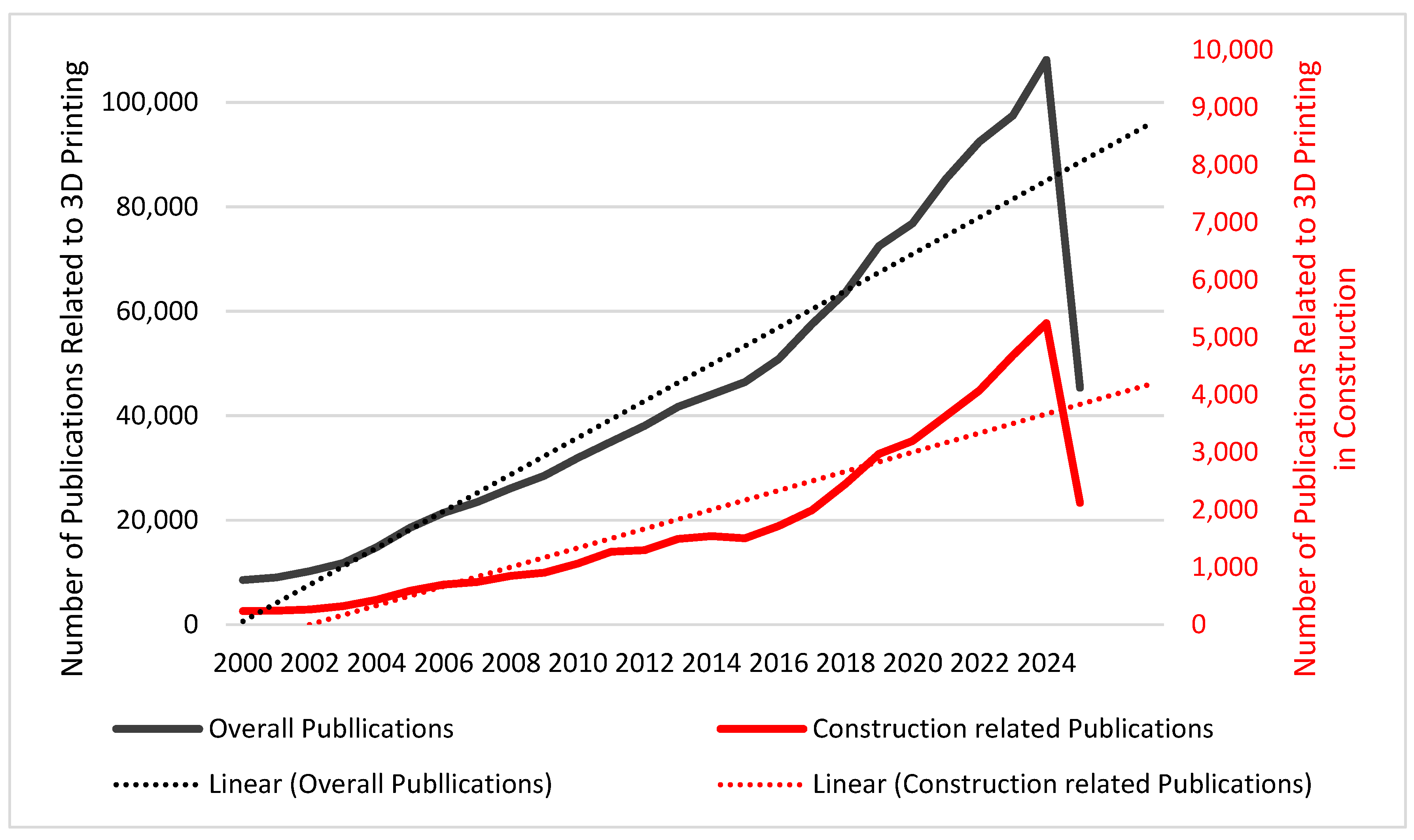
One of the main hindrances that restricts 3D printing in construction is its regulation and standardisation. The current building laws and regulations mostly rely on traditional building methods and materials, making it a hurdle to authenticate 3D-printed structures. The lack of standardised testing techniques for 3D-printed materials and components obstructs achieving safety and quality standards [26]. Addressing these complications will require collaboration among industrial players, researchers, and regulatory government agencies to develop new norms and frameworks specific to additive manufacturing. The research on 3D-printed structures is not new; however, it has been enormously heightened over time. As per the information gathered from the Scopus database [27,28], the first publication related to 3D printing appeared in 1931; however, there were not much more studies until the 1950s. Afterwards, the idea was immersed, and the publication trends also boosted. Figure 1 shows the number of published articles from the year 2000 to May 2025. It can be seen that currently researchers are highly focused on conducting a thorough investigation into the work related to 3D printing. Over time, a linear increase can be observed, showing the interest and potential in this field.
Figure 1.
3D printing-related publications as per Scopus database (2000–May 2025).
The identification of damage in concrete is of primary importance, and different techniques have been developed for the non-invasive assessment of elements and structures. For 3DCP, it is important to use real-time monitoring capability for in situ quality assurance during construction. A range of traditional non-destructive testing techniques has been developed to detect defects in conventional concrete structures, as summarised in Table 1. The principles, detection capabilities, limitations, and suitability of representative methods for 3DCP were also compared. For example, conventional techniques, such as Ultrasonic Pulse Velocity (UPV), Impact-Echo (IE), and Ground Penetrating Radar (GPR), are primarily designed to detect internal defects, including voids. GPR has a strong potential to identify interlayer debonding and internal voids in 3DCP due to its sensitivity to dielectric discontinuities. However, UPV and IE are often compromised by strong wave scattering and the complex geometries of printed components, which reduce measurement reliability. Infrared Thermography (IT) can serve as a useful preliminary mapping tool for near-surface defects, but it is highly sensitive to environmental conditions and surface emissivity. Simple hardness-based approaches, such as the Rebound Hammer (RH), are not recommended due to their limited accuracy on rough and heterogeneous printed surfaces.
Table 1.
Traditional techniques to detect defects in concrete elements.
For surface assessment and deformation tracking, Laser Scanning and Digital Image Correlation (LS/DIC) offer high-resolution measurement of layer geometry and crack evolution. These optical methods are especially suitable for 3DCP since they can be deployed during or immediately after printing to quantify surface defects and dimensional deviations. For real-time monitoring, a limited subset of techniques can provide continuous measurement capabilities. Fibre Optic Sensors (FOS), if integrated within the printing process, can enable direct monitoring of strain, temperature, and early-age cracking evolution with high sensitivity and temporal resolution. Similarly, Acoustic Emission (AE) can detect active cracking events but requires additional localisation methods to accurately characterise damage zones. LS/DIC can also be implemented in near-real-time modes to track surface deformation continuously, provided that line-of-sight access is maintained.
Overall, the comparison of the various techniques highlights that the majority of the well-established methods that are effective for post-process inspection lack inherent real-time monitoring capability that is critical for insitu quality assurance during 3DCP. This underscores the need for further integration of embedded sensing technologies and advanced surface measurement systems to enhance defect detection and ensure structural integrity throughout the printing and curing process.
While 3D printing holds a massive potential for the construction industry, resolving these defects and challenges is crucial for its successful implementation. Advances in material science, printer technology, and quality control processes, along with the development of industry standards, play a significant role in unlocking the full potential of 3D printing in construction. It is apparent that 3D printing is the future and a need for the construction industry; however, with a massive volume of construction, there is a high possibility of getting defects in the structural elements. Hence, this review intends to focus on the studies that are related to the surface defects detection in 3D-printed structures, mainly AI-driven defects analysis in 3D-printed cementitious materials or 3D concrete printing (3DCP). The scope of the review covers the 3D printing structures constructed using cementitious materials. While related themes such as quality monitoring, process optimisation, repair, and visualisation, etc., are discussed within the reviewed literature, this review primarily focuses on AI-driven computer vision and machine learning approaches for surface defect detection in 3DCP. The aforementioned themes are discussed only to the extent that they directly relate to the defect detection objective. It is worth mentioning that several review studies are available discussing the parameters, characteristics, and workability of the 3D printing structures in construction [43,44,45,46]; no such review is available discussing or highlighting the surface defects in 3DCP that require utmost attention. The outcome of this review paper is beneficial for additive manufacturing processing in construction to detect and minimise surface defects, which can significantly enhance 3D printing productivity and performance.
2. Methodology
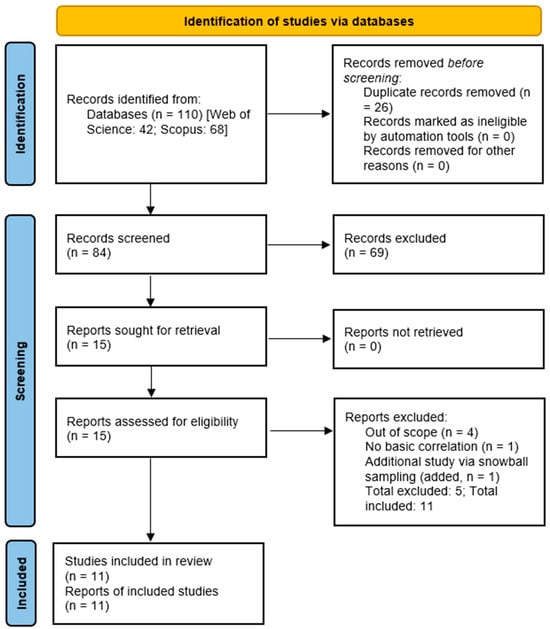
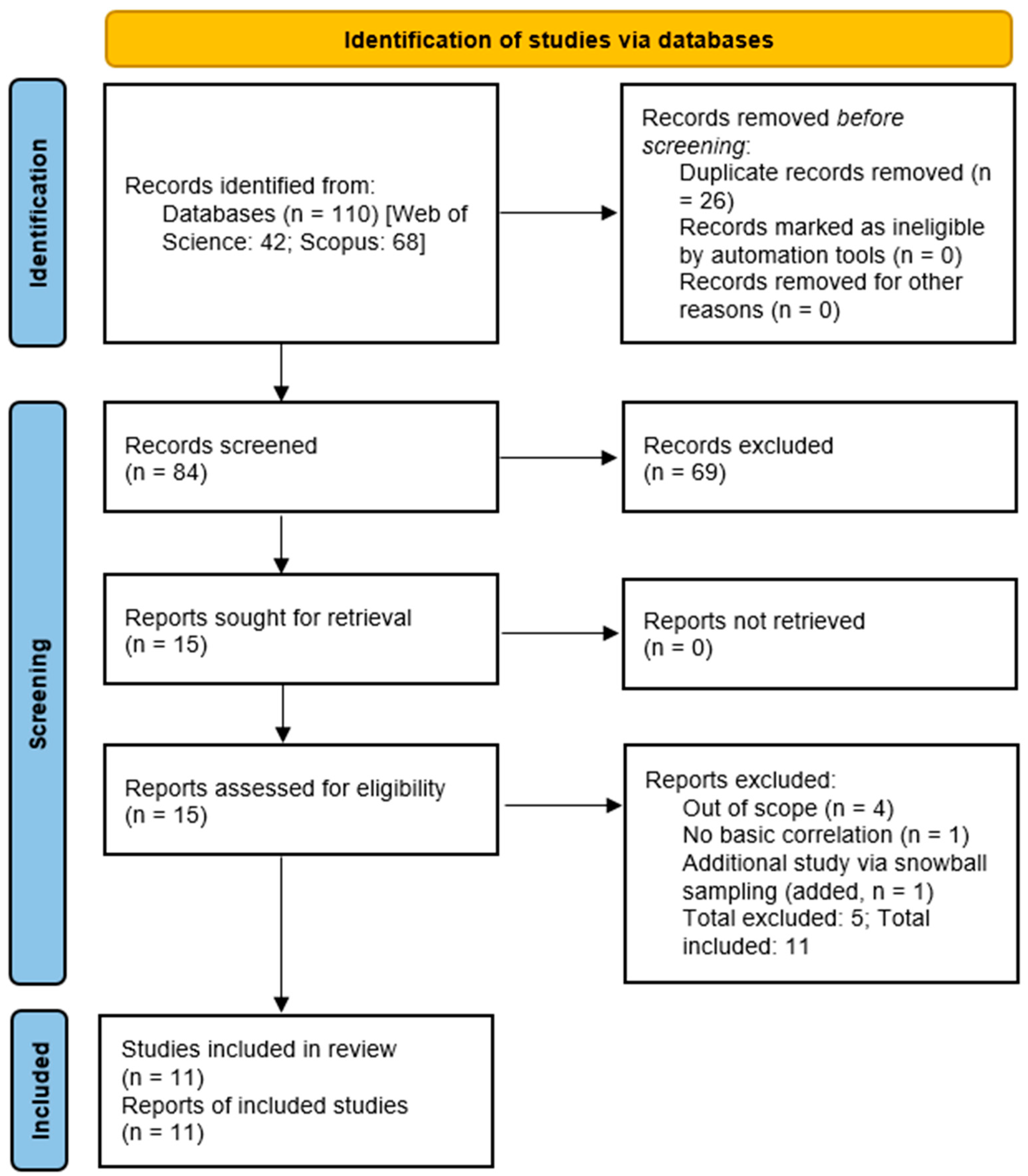
The methodology of this review is based on the Preferred Reporting Items for Systematic Reviews and Meta-Analyses (PRISMA) 2020 guidelines, which follows the four phases and is recommended by several researchers for review processing [47]. This review was not prospectively registered. In the first phase, the articles are gathered based on a keyword combination and applied limitations from selective databases. In the second phase, three types of screening of the articles are made (i.e., duplication checks within and among the databases, and relevancy of the articles), first based on the title, and then the abstract. The process follows a set flow so that irrelevant articles get eliminated by the screening at each stage. In the third phase, the eligibility of the articles is evaluated by performing a full article screening. In this process, any article which is not relevant to the scope of review gets eliminated. In the final phase (i.e., the inclusion of the articles), a detailed assessment of the final extracted articles is made to get useful information and highlight the future gaps. The detailed PRISMA flow diagram followed in this review can be seen in Figure 2, while further details are discussed below.
Figure 2.
PRISMA flow diagram.
2.1. Research Strategy
This review, based on the PRISMA statement, used the designed method to retrieve the information from the databases based on the defined scope of this study. The Web of Science (WoS) and Scopus databases were selected to extract the articles. The scope of the review was focused on the identification of defects through AI-driven techniques in cementitious 3D printing structures.
2.1.1. Selection Criteria
The data mining aimed at selecting technical papers in journals and conference proceedings from the last 10 years (2014 to 23 May 2025) that are published in English. The keyword arrangement in both WoS and Scopus databases was the same, giving an initial 42 and 68 articles, a total of 110. The following combinations were chosen to extract the most relevant articles: (“3D printing” OR “3D-printing” OR “3D” OR “Additive Manufacturing”) AND “Defects” AND (“Artificial Intelligence” OR “Machine Learning” OR “Computer Vision” OR “Photogrammetry” OR “Image Processing”) AND (“Concrete” OR “Cement” OR “Mortar”). The focus of this review was to retrieve the information from the technical studies; hence, the review papers were not considered.
2.1.2. Quality Assessment
The quality assessment was directed by predefined inclusion and exclusion criteria. Only those articles were considered which specifically addressed 3D-printed cementitious materials or 3DCP and employed AI-driven techniques for defect detection. The 110 articles were further assessed for quality and relevance. Initially, 26 duplicated articles were eliminated from the database. The articles common to both WoS and Scopus were retained under the WoS category and removed from Scopus. After this assessment, a title-based screening was performed, eliminating 23 articles from WoS and 22 from Scopus. The third screening was based on the abstracts, where 8 articles from WoS and 16 articles from Scopus were eliminated, leaving a total of 15 articles combined for further processing. These 15 articles were further assessed based on the full text reading, where 5 articles were eliminated as they did not fulfil the review’s scope. This gives the final 10 articles for further assessment. However, before proceeding further, a snowball technique was applied to the reference lists of these 10 articles that passed the full-text screening process. This process identified one additional article that had not been retrieved through the original WoS and Scopus database searches but fulfilled the inclusion criteria upon assessment. Hence, the article was included in the final review, bringing the total number of articles for final review assessment to 11. The detailed quality assessment processing of the data mining can be seen in Table 2.
Table 2.
Screening for quality assessment.
2.2. Outline of Extracted Articles
2.2.1. Distribution of Articles
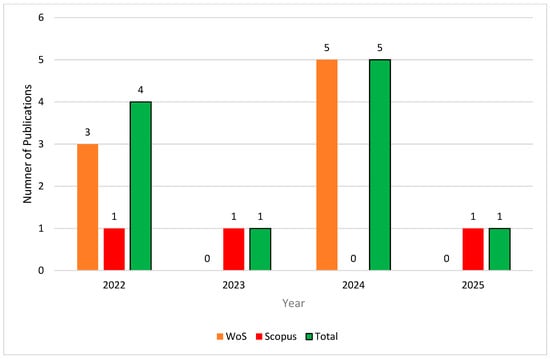
Following the PRISMA protocol, there were a total of 11 articles left for the final review assessment. Table 3 shows the distribution of the collected conference papers and journal papers against each year in both databases, while Figure 3 shows the total number of publications in each year with the trend over time. In 2024, a gradual increase can be seen in the publication trend, which indicates further potential in the studied area.
Table 3.
Details of publication in each database.
Figure 3.
Publication trend over time.
2.2.2. Keyword Co-Occurrence
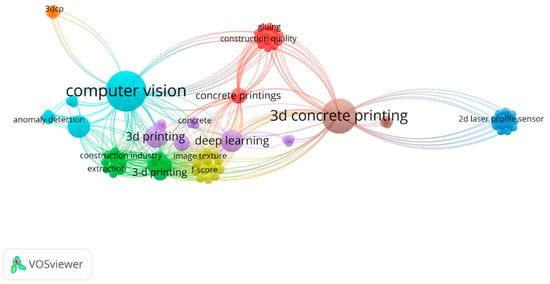
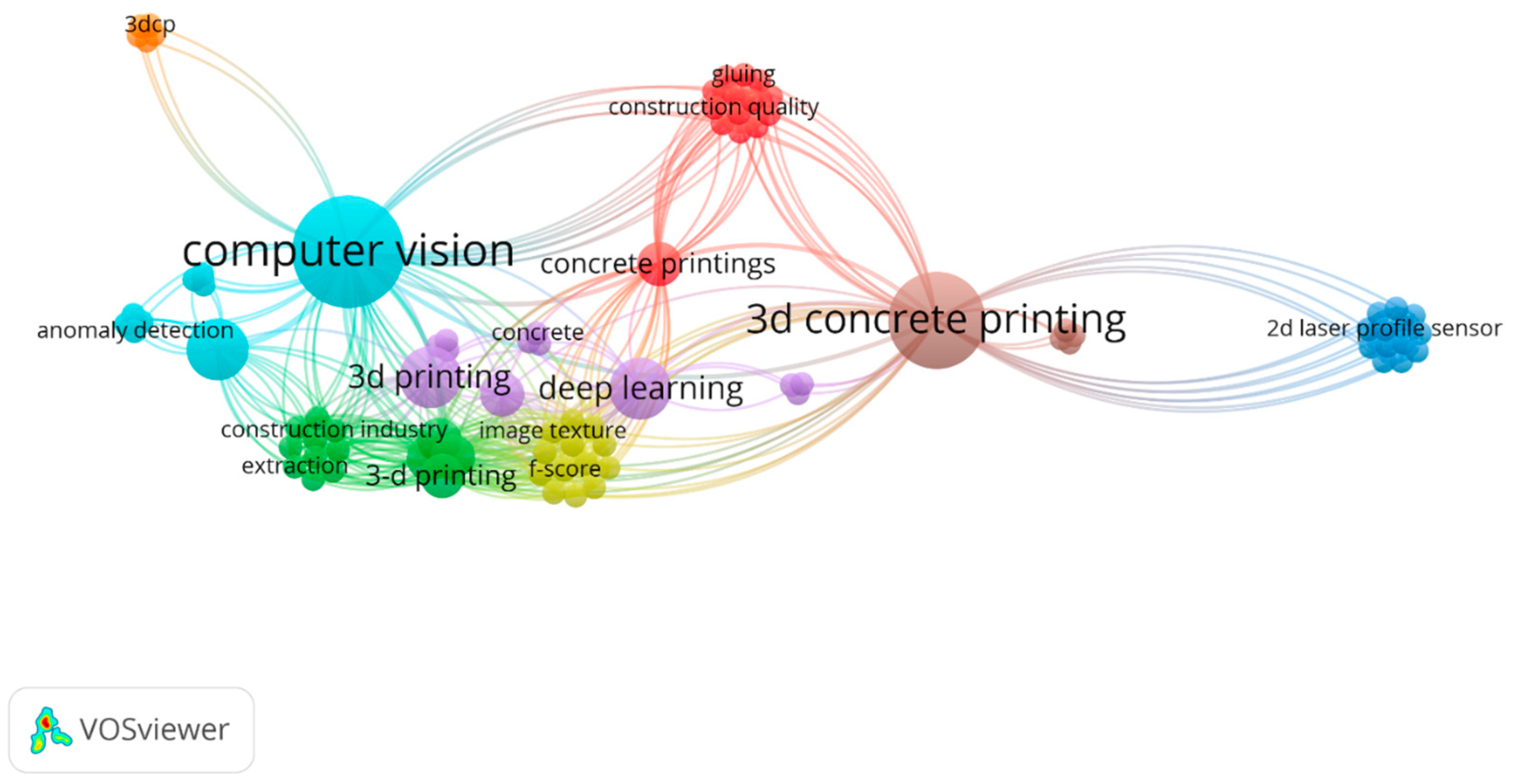
In a systematic review, the keyword analysis is essential as it demonstrates the interconnectivity of the work conducted by the researchers. In this case, VOSviewer (version 1.6.20) was utilised to perform the keyword analysis, showing the connectivity of the keywords in the gathered 11 articles. Figure 4 shows the network visualisation of keyword co-occurrence, where the minimum occurrence of keywords was considered as 1 for 85 keywords. The significant clusters reported were “computer vision” and “3d concrete printing”. Table 4 shows the top five keyword co-occurrences, where it can be observed that the highest occurrence was for “computer vision” with a total link strength of 66, followed by “3d concrete printing” with a total link strength of 57, and finally followed by “3-d printing”, “3d-printing”, and “concretes”, where each were reported as having link strengths of 37.
Figure 4.
Network visualisation of keywords.
Table 4.
Top 5 keyword co-occurrences with link strength.
3. Interpretation of Article
The final 11 articles were evaluated and divided into a couple of categories to better understand the importance of 3D printing and its associated defects in construction. Table 5 shows the overall summary of these articles, focusing on the identified defect type, along with the method/technology, key findings, and focused area. The articles were distributed into two focused areas, mainly: “Defect Detection, Repair, and Quality Monitoring” and “Process Optimisation and Visualisation”.
Table 5.
Summary of final extracted articles.
3.1. Defect Detection, Repair, and Quality Monitoring-Related Studies
The identification of damage in concrete is of primary importance, and different techniques have been developed for the non-invasive assessment of elements and structures. 3D printing requires improved attention to both quality management and structural reliability due to observed time constraints and unreliable material dispersion during printing operations. Table 6 summarises the articles related to the “Defect Detection, Repair, and Quality Monitoring” categories under the headings of Objective, Key Challenges, Testing Methods, Quality Control Methods, Structural Considerations, and Way Forward. Further discussion has been provided below.
Table 6.
Summary of defect detection, repair, and quality monitoring-related studies.
Senthilnathan and Raphael [48] developed a computer vision method to track 3D-printed concrete structure defects that occur during manufacturing by identifying printing process-related deformities. A textural analysis based on a two-bin Linear Binary Pattern (LBP) was adopted. This technique enables the measurement of surface texture variations in the extruded layers. Furthermore, the printed layer images were captured by a 2D camera that enables entropy calculation to evaluate texture patterns. The real-time monitoring enables users to amend extrusion speeds, which leads to better print quality and less material waste. Rill-García, Dokladalova [49] developed a computer vision-based method for the detection of anomalies of 3DCP. With the help of a fixed camera at the nozzle, image acquisition was performed. With a F-score (harmonic mean of precision and recall) of 91%, the developed strategy traces and identifies the printed layers distinctly.
Liu, Yang [50] demonstrated a technical approach for automated pavement crack sealing through a modified 3D printing method. The utilised system incorporates a precision-adjusted Anycubic Prusa I3 MK2 printer, computer vision, and path planning algorithms within its structure. The study identified important factors for sustaining high-quality standards of 3D-printed construction structures by emphasising both material placement accuracy and structural system stability. It was observed that the same difficulties with splashing, inconsistent material flow patterns, and the problem of overfilling exist at both construction and 3D printing at scale. The water level sensors and calibration systems used in the study were found to enable automated quality controls that deliver vital knowledge about preventing defects in 3D-printed construction structures. Hence, the construction-scale 3D printing requires improved attention to both quality management and structural reliability due to observed time constraints and unreliable material dispersion [50].
In another study conducted by Senthilnathan and Raphael [51], a visionary approach was adopted for automated 3DCP structure quality inspection through visual defect identification of voids and cracks. For this purpose, a modified Histogram of Oriented Gradients (HOG) algorithm with the capability to detect minor and major texture variations across horizontal, vertical, and diagonal directions was utilised. The results showed that the normalised weighted texture values effectively detect defective layers within the printed sections as they inversely relate to workability changes throughout time. The study also highlights real-time computer vision feedback control systems that can operate printing parameters, including extrusion speed, to enhance print results and lower material consumption.
The repair of concrete structures can be done with a robotic system based on computer vision and 3D printing methods. The system operates through a combination of LiDAR and depth cameras, along with the YOLOv7 convolutional neural network, to automatically identify concrete defects and perform repairs. Through simultaneous localisation and mapping (SLAM) functionality, the system achieves the ability to produce models of cylindrical surfaces while obtaining exact geometric parameters. Through coordinate system transformation, the robotic arm obtains precise movements to position itself at the repair site [52]. Jhun, Lee [53] also studied the real-time geometric quality monitoring system and focused on the problems caused by inconsistent concrete properties and high expenses that lead to printing failure. The 2D laser profile sensing system and a rotatable nozzle were utilised with the involvement of image processing algorithms. It was observed that the developed sensor provides affordability, along with precise design elements for 3DCP, in addition to being lightweight, surpassing commercial sensors. The analysis proved that the system can implement real-time monitoring in construction sites to ensure safe and high-quality construction of 3D-printed structures.
Zhao, Wang [54] employed deep learning and computer vision techniques to identify the defects in 3DCP. The deep learning-based data augmentation enables the system to create accurate virtual data that substitutes training dataset information for better measurements. The study showed the importance of real-time monitoring as it helps in defect prevention that can occur due to breakpoints, voids, and cracks in the 3DCP structure. In addition, the study also evaluates the defect rates corresponding to printer control parameters to help operators gain better printer management abilities. In another study, Zhao, Sun [55] worked on a real-time high-accuracy defect detection system for 3DCP through the application of the RT-DETR transformer-based detector. The study utilised deep learning data enhancement and image management techniques. It was evident that the superior performance and optimised computation speed of 72 Frames Per Second (FPS) became possible for the enhanced RT-DETR algorithm through different strategic approaches, including transfer learning and loss function optimisation, which produced results with mAP50 of 98.1% and mAP50–95 of 68.0%. In addition, it was revealed that the system provides operators with real-time defect detection along with measurement of breakpoints and pits with voids, which allows for adjustments to printer settings to lower waste losses and decrease structural hazards.
3.2. Process Optimisation and Visualisation-Related Studies
For better structural integrity and scalability, researchers have adopted the process optimisation and visualisation in 3DCP. Table 7 shows the summary of the articles related to process optimisation and visualisation, which provides the information under the categories of Objective, Key Challenges, Testing Methods, Quality Control Methods, Structural Considerations, and Way Forward for each relevant study.
Table 7.
Summary of process optimisation and visualisation-related studies.
The additive manufacturing of 3DCP results in a layered structure compared to conventional concrete casting methods because of increased component anisotropy and inhomogeneity. Such properties require adjustments to established quality control methods. The assessment methods for printed concrete quality include strength measurements through compression tests and flexural tests, together with interlayer bond tests and shrinkage studies. The Digital Image Correlation (DIC), combined with photogrammetry and 3D laser scanning, can be used for in situ quality assessment. The defects within 3DCP occur naturally because of the additive nature of layers, where quality control measures, combining advanced monitoring systems, controlled materials, and printing parameters, can help in reducing defects affecting structural integrity and long-term performance [56].
Zimmermann, Griego and Flatt [57] established an innovative solution to manage 3DCP quality control problems by utilising augmented reality and machine learning approaches. The process consists of three steps, where the cameras are placed on nozzles to track printing operations while implementing convolutional neural networks to analyse collected data until these findings become digital twins. The system identifies and analyses filament-tearing defects as they affect structural integrity, mainly in places with reinforcing steel bars. The proposed solution offers Microsoft HoloLens 2 as an augmented reality interface that displays defect details directly on top of physical structures. The initial trials proved that the digital twin projection onto concrete structures is possible, yet more enhancements should focus on self-placement methods and user-friendly interfaces.
Silva, Wagner [58] optimised 3DCP through machine learning and real-time monitoring systems integration. The primary objective was to automate the control of printed layer width by predicting the necessary motion speed of the extruder based on various printing parameters. The study also employed numerical simulations to generate a synthetic dataset, which was then employed to train an XGBoost model. The model achieved an accuracy of 87% in predicting robot speed. The application of computer vision was shown to allow real-time monitoring and alterations during the printing process, which ensures high-quality outcomes [46]. Based on the findings, it was suggested that further research should emphasise expanding the dataset to accommodate different concrete mixes and evaluate the framework’s effectiveness in harsh environments.
3.3. Discussion
From the 11 extracted relevant articles, various aspects concerning defect identification, quality control, and maintenance of 3DCP were carefully examined. Defect identification was a critical part of this investigation. Many studies involved robotic solutions, along with computer vision and machine learning techniques for automated structural integration. Researchers tend to examine automated solutions for defect repair by modifying 3D printers to conduct crack sealing operations and maintenance. These efforts aim to improve durability with limited physical involvement.
Several studies employ quality monitoring systems that utilise deep learning techniques along with real-time sensing and profile scanning equipment to uncover the defects. It was observed that the combination of augmented reality with digital twins can deliver high-quality visual inspection. In terms of process control investigation, it was observed that the real-time changes in printer settings (extrusion rate, nozzle height, print speed, temperature, vibration or compaction controls, etc.) can lead to improved layer placement and decreased degree of defects.
While comparing the reviewed studies, a clear methodological progression is evident, from classical texture-based algorithms such as LBP and HOG towards transformer-based deep learning models, with a corresponding improvement in detection accuracy and processing speed. In terms of defect categories, surface voids, cracks, and breakpoints were the most commonly addressed, while filament irregularities and layer inconsistencies received comparatively less attention. Regarding reported metrics, performance varied considerably, from an F-score of 91% in camera-based segmentation approaches to mAP50 of 98.1% in transformer-based models, reflecting the influence of both algorithm sophistication and dataset quality on detection reliability. On the other hand, active sensing technologies such as LiDAR and laser profiling offer richer geometric data but introduce higher system complexity, whereas passive RGB camera-based approaches remain more accessible and deployable in real construction environments. It is worth mentioning that across both thematic groups, real-time monitoring capability emerges as the most critical performance differentiator, with deep learning-based systems demonstrating clear advantages. However, a shared limitation across nearly all studies is the reliance on small, context-specific datasets, which constrains model generalisation and cross-environment applicability.
Various studies examined dynamic monitoring systems that control both extruder velocity and printing outlet position, while detecting defects in the structure. The implementation of automated response loops is shown to lead to better print reliability, which minimises material waste and strengthens structural integrity. The implementation of robotics, SLAM technology, and LiDAR sensors in 3DCP processes can lead to more accurate defect identification and maintenance without human involvement, which can ultimately enhance productivity.
The work on defect identification of 3DCP is still limited, and there is a lot of potential for further development to resolve challenges in 3DCP. Most challenges persist because developers have to deal with real-time performance issues along with scalability problems and construction environmental conditions. Hence, at present, there is a need for larger defective material databases while developing an automatic defect system for enhancing 3DCP quality monitoring capabilities.
Regardless of the promising results demonstrated in the reviewed studies, several barriers hinder the field adoption of AI-driven defect detection systems in 3DCP. One such barrier is limited dataset availability, as most studies relied on small, project-specific datasets that restrict model generalisation to different concrete mixes and printing conditions. Another barrier is the varying light conditions on construction sites that pose difficulties for camera-based systems, as inconsistent illumination directly affects image quality and detection reliability. Moreover, the material variability in cementitious mixtures further complicates defect classification, since changes in mix composition alter surface texture and appearance, making it difficult for trained models to maintain consistent performance. Another important barrier is the sensor placement, as the mounting of cameras or laser sensors on moving nozzles introduces vibration, causing occlusion and alignment issues during printing. Furthermore, the absence of standardised benchmark datasets and evaluation protocols across studies makes direct performance comparison difficult, limiting the ability to objectively assess and validate detection systems for broader industry deployment.
Based on the overall assessment of the final studies, a few loopholes were identified that could lead to a new research direction for the improvement of 3D-printed structures in construction:
- The dataset for 3DCP defects remains limited. Development of standardised benchmark datasets with diverse defect categories, concrete mixes, and environmental conditions is essential for better model training, testing, and cross-study performance comparison.
- The research on AI-based defect detection technology for 3DCP requires the development of multimodal sensing frameworks that integrate camera-based, LiDAR, and laser profiling systems to improve detection robustness across varying site conditions.
- A crucial advancement would involve the development of closed-loop control systems that combine real-time AI defect detection with automated printer parameter adjustment, enabling immediate corrective action during printing.
- Real-time AI systems can minimise printing defects by detecting them in advance, thus allowing immediate corrective measures that stop structure degradation. However, standardised validation procedures and benchmark protocols must be established to enable objective evaluation and broader industry deployment of such systems.
4. Conclusions
The purpose of this systematic review of AI-driven defect assessment was to evaluate the defects in 3D-printed cementitious material structures. In this case, the PRISMA statement was adopted to extract the technical articles (Journals and Conferences) from the Web of Science and Scopus databases by considering the papers from 2014 to 23 May 2025. The initial search provided 110 articles, and after the final screening, it was reduced to 11 studies. Although the final screening provided a smaller number of articles, it was still worth reviewing, as there is a need to work further in this area to avoid the defects in 3DCP. As per reviewed studies, the modern quality assessment of 3D concrete printing occurs through the integration of computer vision, deep learning, and automated systems. A deep learning system confirmed its position as a robust solution since it enables both quantitative evaluations and instant detection of defects. In addition, it was observed that the execution of real-time monitoring systems with automated corrective actions can provide 3DCP with more reliability because material waste can decrease while the construction processes can produce improved results. However, before executing a large-scale implementation of 3DCP, the industry must address existing implementation limitations, which include high computational requirements along with restricted data access and system adaptation in real-time. This review provides an insight into the 3DCP and gives a way forward to the researchers to address the challenges for its better implementation.
Author Contributions
Conceptualization, R.P.B.; methodology, R.P.B., M.A.M.; software, R.P.B., M.A.M.; validation, R.P.B.; formal analysis, R.P.B., M.A.M.; investigation, R.P.B., M.A.M.; resources, R.P.B., K.K.; data curation, R.P.B., M.A.M.; writing—original draft preparation, R.P.B., M.A.M., J.W.; writing—review and editing, R.P.B., M.A.M., J.W., C.J.D., K.K.; visualization, R.P.B., M.A.M.; supervision, R.P.B.; project administration, R.P.B., K.K.; funding acquisition, R.P.B. All authors have read and agreed to the published version of the manuscript.
Funding
This research was funded by the FULBRIGHT Programme and the Xjenza Malta MCST-TUBITAK 2023 programme.
Data Availability Statement
The original contributions presented in this study are included in the article.
Acknowledgments
The FULBRIGHT Programme is acknowledged for supporting the research of the corresponding author Ruben Paul Borg, Fulbright Scholar at Missouri University of Science and Technology USA and leading this research. The SMACORT Project funded by Xjenza Malta MCST-TUBITAK 2023 programme, at the Faculty for the Built Environment, University of Malta is acknowledged.
Conflicts of Interest
The authors declare no conflict of interest.
References
- Shahrubudin, N.; Lee, T.C.; Ramlan, R. An overview on 3D printing technology: Technological, materials, and applications. Procedia Manuf. 2019, 35, 1286–1296. [Google Scholar] [CrossRef] [Scilit]
- Lee, J.-Y.; An, J.; Chua, C.K. Fundamentals and applications of 3D printing for novel materials. Appl. Mater. Today 2017, 7, 120–133. [Google Scholar] [CrossRef] [Scilit]
- Karkun, M.S.; Dharmalingam, S. 3D printing technology in aerospace industry—A review. Int. J. Aviat. Aeronaut. Aerosp. 2022, 9, 4. [Google Scholar] [CrossRef] [Scilit]
- Han, Y.; He, J.; Ma, Z.; Song, L.; Liu, C. Two types of delay-dependent stability analysis and stabilization design conditions: Application to 3D printing control systems with time-varying delay. Int. J. Electr. Power Energy Syst. 2024, 160, 110140. [Google Scholar] [CrossRef] [Scilit]
- Zhang, X. Application of Queuing Theory: A Decision Support Model for Construction Companies in the Implementation of 3D Printing; University of Florida: Gainesville, FL, USA, 2019. [Google Scholar]
- Olsson, N.O.; Arica, E.; Woods, R.; Madrid, J.A. Industry 4.0 in a project context: Introducing 3D printing in construction projects. Proj. Leadersh. Soc. 2021, 2, 100033. [Google Scholar] [CrossRef] [Scilit]
- Ning, X.; Liu, T.; Wu, C.; Wang, C. 3D printing in construction: Current status, implementation hindrances, and development agenda. Adv. Civ. Eng. 2021, 2021, 6665333. [Google Scholar] [CrossRef] [Scilit]
- Alotaibi, B.S.; Shema, A.I.; Ibrahim, A.U.; Abuhussain, M.A.; Abdulmalik, H.; Dodo, Y.A.; Atakara, C. Assimilation of 3D printing, Artificial Intelligence (AI) and Internet of Things (IoT) for the construction of eco-friendly intelligent homes: An explorative review. Heliyon 2024, 10, e36846. [Google Scholar] [CrossRef] [Scilit]
- Subramanya, K.; Kermanshachi, S. Exploring Utilization of the 3D Printed Housing as Post-Disaster Temporary Shelter for Displaced People. In Proceedings of the Construction Research Congress 2022, Arlington, VA, USA, 9–12 March 2022. [Google Scholar]
- Puppos, A. Printing Clay: Design Optimization for 3D Printing Sustainable and High-Performance Housing; The University of Arizona: Tucson, AZ, USA, 2021. [Google Scholar]
- Prasittisopin, L. How 3D printing technology makes cities smarter: A review, thematic analysis, and perspectives. Smart Cities 2024, 7, 3458–3488. [Google Scholar] [CrossRef] [Scilit]
- Zhou, Y. Research on development and problems of 3D printing technology under intelligent background. In 2019 12th International Conference on Intelligent Computation Technology and Automation (ICICTA); IEEE: Piscataway, NJ, USA, 2019. [Google Scholar]
- Buchanan, C.; Gardner, L. Metal 3D printing in construction: A review of methods, research, applications, opportunities and challenges. Eng. Struct. 2019, 180, 332–348. [Google Scholar] [CrossRef] [Scilit]
- Sovetova, M.; Calautit, J.K. Influence of printing parameters on the thermal properties of 3D-printed construction structures. Energy 2024, 305, 132265. [Google Scholar] [CrossRef] [Scilit]
- Khan, S.A.; Jassim, M.; Ilcan, H.; Sahin, O.; Bayer, İ.R.; Sahmaran, M.; Koc, M. 3D printing of circular materials: Comparative environmental analysis of materials and construction techniques. Case Stud. Constr. Mater. 2023, 18, e02059. [Google Scholar] [CrossRef] [Scilit]
- Olawumi, M.A.; Oladapo, B.I.; Ikumapayi, O.M.; Akinyoola, J.O. Waste to wonder to explore possibilities with recycled materials in 3D printing. Sci. Total Environ. 2023, 905, 167109. [Google Scholar] [CrossRef] [Scilit]
- Guamán-Rivera, R.; Martínez-Rocamora, A.; García-Alvarado, R.; Muñoz-Sanguinetti, C.; González-Böhme, L.F.; Auat-Cheein, F. Recent developments and challenges of 3D-printed construction: A review of research fronts. Buildings 2022, 12, 229. [Google Scholar] [CrossRef] [Scilit]
- Ji, Y.; Luan, C.; Yao, X.; Fu, J.; He, Y. Recent progress in 3D printing of smart structures: Classification, challenges, and trends. Adv. Intell. Syst. 2021, 3, 2000271. [Google Scholar] [CrossRef] [Scilit]
- Daher, R.; Ardu, S.; di Bella, E.; Krejci, I.; Duc, O. Efficiency of 3D printed composite resin restorations compared with subtractive materials: Evaluation of fatigue behavior, cost, and time of production. J. Prosthet. Dent. 2024, 131, 943–950. [Google Scholar] [CrossRef] [Scilit]
- Alanazi, N.; Kolawole, J.; Buswell, R.; Susmel, L. The Theory of Critical Distances to assess the effect of cracks/manufacturing defects on the static strength of 3D-printed concrete. Eng. Fract. Mech. 2022, 269, 108563. [Google Scholar] [CrossRef] [Scilit]
- Hassan, A.; Alomayri, T.; Noaman, M.F.; Zhang, C. 3D Printed Concrete for Sustainable Construction: A Review of Mechanical Properties and Environmental Impact. Arch. Comput. Methods Eng. 2025, 32, 2713–2743. [Google Scholar] [CrossRef] [Scilit]
- El Inaty, F.; Baz, B.; Aouad, G. Long-term durability assessment of 3D printed concrete. J. Adhes. Sci. Technol. 2023, 37, 1921–1936. [Google Scholar] [CrossRef] [Scilit]
- Zhang, R.-C.; Wang, L.; Xue, X.; Ma, G.-W. Environmental profile of 3D concrete printing technology in desert areas via life cycle assessment. J. Clean. Prod. 2023, 396, 136412. [Google Scholar] [CrossRef] [Scilit]
- Wu, P.; Wang, J.; Wang, X. A critical review of the use of 3-D printing in the construction industry. Autom. Constr. 2016, 68, 21–31. [Google Scholar] [CrossRef] [Scilit]
- Ko, C.-H. Constraints and limitations of concrete 3D printing in architecture. J. Eng. Des. Technol. 2022, 20, 1334–1348. [Google Scholar] [CrossRef] [Scilit]
- Wang, B.T.; Rimmer, M. 3D printing and housing: Intellectual property and construction law. In Automating Cities: Design, Construction, Operation and Future Impact; Springer: Singapore, 2021; pp. 113–140. [Google Scholar]
- Scopus. 3D Printing Publications. Available online: https://www.scopus.com/results/results.uri?st1=%223D+printing%22+OR+%223D-printing%22+OR+%223D%22+OR+%22Additive+Manufacturing%22&st2=&s=TITLE-ABS-KEY%28%223D+printing%22+OR+%223D-printing%22+OR+%223D%22+OR+%22Additive+Manufacturing%22%29&limit=10&origin=searchbasic&sort=plf-f&src=s&sot=b&sdt=b&sessionSearchId=a144d4cde13dd82d48b985bb573b6958 (accessed on 23 May 2025).
- Scopus. 3D Printing Construction Related Publications. Available online: https://www.scopus.com/results/results.uri?st1=%223D+printing%22+OR+%223D-printing%22+OR+%223D%22+OR+%22Additive+Manufacturing%22&st2=&s=TITLE-ABS-KEY%28%223D+printing%22+OR+%223D-printing%22+OR+%223D%22+OR+%22Additive+Manufacturing%22+AND+%22Construction%22%29&limit=10&origin=searchbasic&sort=plf-f&src=s&sot=b&sdt=b&sessionSearchId=a144d4cde13dd82d48b985bb573b6958 (accessed on 23 May 2025).
- Liu, B.; Liu, X.; Li, G.; Geng, S.; Li, Z.; Weng, Y.; Qian, K. Study on anisotropy of 3D printing PVA fiber reinforced concrete using destructive and non-destructive testing methods. Case Stud. Constr. Mater. 2022, 17, e01519. [Google Scholar] [CrossRef] [Scilit]
- Ramakrishnan, S.; Kanagasuntharam, S.; Sanjayan, J. In-line activation of cementitious materials for 3D concrete printing. Cem. Concr. Compos. 2022, 131, 104598. [Google Scholar] [CrossRef] [Scilit]
- Thurnherr, C.; Muller, A.; Algernon, D. Drone-based impact-echo inspection system for non-destructive testing of concrete structures. Constr. Build. Mater. 2025, 477, 141147. [Google Scholar] [CrossRef] [Scilit]
- Kuchipudi, S.T.; Ghosh, D.; Gupta, H. Automated assessment of reinforced concrete elements using ground penetrating radar. Autom. Constr. 2022, 140, 104378. [Google Scholar] [CrossRef] [Scilit]
- Zuo, Z.; Tao, Y.; De Corte, W. Experimental research of concrete temperature distribution during large-scale on-site 3D printing based on infrared thermal imaging. Mater. Lett. 2025, 382, 137902. [Google Scholar] [CrossRef] [Scilit]
- Liu, J.; Kanwal, H.; Tang, C.; Hao, W. Study on flexural properties of 3D printed lattice-reinforced concrete structures using acoustic emission and digital image correlation. Constr. Build. Mater. 2022, 333, 127418. [Google Scholar] [CrossRef] [Scilit]
- Yue, J.; Beskos, D.; Feng, C.; Wu, K. Hardened fracture characteristics of printed concrete using acoustic emission monitoring technique. Constr. Build. Mater. 2022, 361, 129684. [Google Scholar] [CrossRef] [Scilit]
- Mengistu, G.M.; Nemes, R. Evaluating the performance of recycled aggregate concrete incorporating 3D-Printed concrete waste as aggregate using the rebound hammer test. Heliyon 2025, 11, e42745. [Google Scholar] [CrossRef] [Scilit]
- Rodulfo, P.; Wang, B.; Gupta, R.; Sharma, L.; Mukhopadhyaya, P. Relationship between electrical Conductivity, Half cell Potential, Linear polarization resistance and Macrocell current of cementitious repair materials. Constr. Build. Mater. 2023, 401, 132733. [Google Scholar] [CrossRef] [Scilit]
- Schröfl, C.; Nerella, V.N.; Mechtcherine, V. Capillary water intake by 3D-printed concrete visualised and quantified by neutron radiography. In RILEM International Conference on Concrete and Digital Fabrication; Springer: Berlin/Heidelberg, Germany, 2018. [Google Scholar]
- Van Der Putten, J.; Azima, M.; Van den Heede, P.; Van Mullem, T.; Snoeck, D.; Carminati, C.; Hovind, J.; Trtik, P.; De Schutter, G.; Van Tittelboom, K. Neutron radiography to study the water ingress via the interlayer of 3D printed cementitious materials for continuous layering. Constr. Build. Mater. 2020, 258, 119587. [Google Scholar] [CrossRef] [Scilit]
- Li, Z.; Aslani, F. Performance of 3D-printed beams and slabs using self-sensing cementitious composites and DIC method. Sensors 2023, 23, 8486. [Google Scholar] [CrossRef] [Scilit] [PubMed]
- Jin, A.-B.; Wang, S.-L.; Wang, B.-X.; Sun, H.; Zhao, Y.-Q. Study on the fracture mechanism of 3D-printed-joint specimens based on DIC technology. Rock Soil Mech. 2021, 41, 2. [Google Scholar]
- Zhang, H.; Hao, L.; Zhang, S.; Xiao, J.; Poon, C.S. Advanced measurement techniques for plastic shrinkage and cracking in 3D-printed concrete utilising distributed optical fiber sensor. Addit. Manuf. 2023, 74, 103722. [Google Scholar] [CrossRef] [Scilit]
- Zhang, J.; Wang, J.; Dong, S.; Yu, X.; Han, B. A review of the current progress and application of 3D printed concrete. Compos. Part A Appl. Sci. Manuf. 2019, 125, 105533. [Google Scholar] [CrossRef] [Scilit]
- Khan, S.A.; Koç, M.; Al-Ghamdi, S.G. Sustainability assessment, potentials and challenges of 3D printed concrete structures: A systematic review for built environmental applications. J. Clean. Prod. 2021, 303, 127027. [Google Scholar] [CrossRef] [Scilit]
- Zhang, Y.; Zhu, X.; Li, M.; Zhang, C.; Zhang, Y.; Du, X.; Banthia, N.; Mechtcherine, V.; Carstensen, J.V.; Monteiro, P.J. 3D printing technology in concrete construction. Nat. Rev. Clean Technol. 2025, 1, 288–303. [Google Scholar] [CrossRef] [Scilit]
- Raphael, B.; Senthilnathan, S.; Patel, A.; Bhat, S. A review of concrete 3D printed structural members. Front. Built Environ. 2023, 8, 1034020. [Google Scholar] [CrossRef] [Scilit]
- Kahale, L.A.; Piechotta, V.; McKenzie, J.E.; Dorando, E.; Iannizzi, C.; Barker, J.M.; Page, M.J.; Skoetz, N.; Akl, E.A. Extension of the PRISMA 2020 statement for living systematic reviews (LSRs): Protocol. F1000Research 2022, 11, 109. [Google Scholar] [CrossRef] [Scilit]
- Senthilnathan, S.; Raphael, B. Using computer vision for monitoring the quality of 3d-printed concrete structures. Sustainability 2022, 14, 15682. [Google Scholar] [CrossRef] [Scilit]
- Rill-García, R.; Dokladalova, E.; Dokládal, P.; Caron, J.-F.; Mesnil, R.; Margerit, P.; Charrier, M. Inline monitoring of 3D concrete printing using computer vision. Addit. Manuf. 2022, 60, 103175. [Google Scholar] [CrossRef] [Scilit]
- Liu, J.; Yang, X.; Wang, X.; Yam, J.W. A laboratory prototype of automatic pavement crack sealing based on a modified 3D printer. Int. J. Pavement Eng. 2022, 23, 2969–2980. [Google Scholar] [CrossRef] [Scilit]
- Senthilnathan, S.; Raphael, B. Quality monitoring of Concrete 3D Printed elements using computer vision-based texture extraction technique. In Proceedings of the 40th Proceedings of the International Symposium on Automation and Robotics in Construction (ISARC 2023), Chennai, India, 5–7 July 2023. [Google Scholar]
- Gu, Y.; Li, W.; Yao, X.; Liu, G. Research on concrete structure defect repair based on three-dimensional printing. Front. Struct. Civ. Eng. 2024, 18, 731–742. [Google Scholar] [CrossRef] [Scilit]
- Jhun, J.; Lee, D.-H.; Rehman, A.U.; Kang, S.; Kim, J.-H. Development of a Real-time Geometric Quality Monitoring System for Extruded Filaments of 3D Concrete Printing Construction. IEEE Access 2024, 12, 69981–69999. [Google Scholar] [CrossRef] [Scilit]
- Zhao, H.; Wang, X.; Sun, J.; Wang, Y.; Chen, Z.; Wang, J.; Xu, X. Artificial intelligence powered real-time quality monitoring for additive manufacturing in construction. Constr. Build. Mater. 2024, 429, 135894. [Google Scholar] [CrossRef] [Scilit]
- Zhao, H.; Sun, J.; Wang, X.; Wang, Y.; Su, Y.; Wang, J.; Wang, L. Real-time and high-accuracy defect monitoring for 3D concrete printing using transformer networks. Autom. Constr. 2025, 170, 105925. [Google Scholar] [CrossRef] [Scilit]
- Mechtcherine, V.; Van Tittelboom, K.; Kazemian, A.; Kreiger, E.; Nematollahi, B.; Nerella, V.N.; Santhanam, M.; De Schutter, G.; Van Zijl, G.; Lowke, D. A roadmap for quality control of hardening and hardened printed concrete. Cem. Concr. Res. 2022, 157, 106800. [Google Scholar] [CrossRef] [Scilit]
- Zimmermann, S.; Griego, D.; Flatt, R.J. Visualizing Defects of Concrete 3D Printed Structures with Augmented Reality Based on Machine Learning-Driven Image Analysis. In RILEM International Conference on Concrete and Digital Fabrication; Springer: Berlin/Heidelberg, Germany, 2024. [Google Scholar]
- Silva, J.M.; Wagner, G.; Silva, R.; Morais, A.; Ribeiro, J.; Mould, S.; Figueiredo, B.; Nóbrega, J.M.; Cruz, P.J. Real-time precision in 3D concrete printing: Controlling layer morphology via machine vision and learning algorithms. Inventions 2024, 9, 80. [Google Scholar] [CrossRef] [Scilit]

Disclaimer/Publisher’s Note: The statements, opinions and data contained in all publications are solely those of the individual author(s) and contributor(s) and not of MDPI and/or the editor(s). MDPI and/or the editor(s) disclaim responsibility for any injury to people or property resulting from any ideas, methods, instructions or products referred to in the content. |
© 2026 by the authors. Licensee MDPI, Basel, Switzerland. This article is an open access article distributed under the terms and conditions of the Creative Commons Attribution (CC BY) license.