


Abstract
Cement-based construction in cold regions faces severe challenges due to the dramatic retardation of hydration and strength development under sub-zero temperatures. Joule curing as a novel curing method showed certain advantages in solving this problem, while the curing efficiency was low for Joule curing under severely cold temperatures. This study systematically investigates the performance of graphene nanoplatelet (GNP)-modified electrically conductive cementitious composites under sub-zero temperature curing conditions. Joule curing method was employed to ensure a high-quality curing at ambient temperatures of −20 °C, −40 °C, and −60 °C. The results demonstrate that GNP incorporation significantly enhances electro-thermal performance. For the electrical conductivity of the specimens, the specimens containing 0.5 wt% GNP showed a much stable electric resistance development under severely cold environment, illustrating the value of 1169 Ω after 1 day Joule curing at the environmental temperature of −60 °C, which was 36% lower than the Ref. group. As for the curing temperature, the specimen with 0.5 wt% GNP effectively maintained the internal temperature within 50–60 °C during the 24 h curing period, even under extreme conditions. Mechanical tests reveal that the GNP-modified specimens exhibit remarkable strength retention, with the 0.5% GNP composite maintaining 86.3% of its compressive strength and 95.9% of its flexural strength at −60 °C compared to standard curing values. Microstructural characterization through XRD and TG analyses confirms that while the crystalline phase composition remains unchanged across different curing regimes, the hydration degree directly correlates with the mechanical performance, explaining the observed strength variations. MIP analysis further proved the advantage of Joule curing on refining the microstructure for the specimens. The findings establish that GNP modification, combined with Joule curing, presents an effective strategy for winter concrete construction, ensuring adequate strength development through enhanced electrical conductivity and controlled internal curing temperature, without altering the fundamental hydration chemistry.
1. Introduction
Cement-based materials are the most widely used construction materials globally [1,2]. However, the construction of cement-based materials in cold regions or during winter seasons face significant challenges due to the sub-zero temperatures [3,4,5]. Specifically, the hydration or the chemical reaction of supplementary cementitious materials is severely retarded at temperatures below 0 °C, leading to a substantial delay in strength development, potential microstructural damage from freezing pore water, and consequently, compromised long-term durability and structural integrity [6,7]. Traditional winter construction methods, such as external heating and insulation, are often energy-intensive, costly, and logistically complex. To be specific, these methods are energy-inefficient, as a significant portion of the heat is lost to the environment rather than being utilized for increasing the curing temperature for the structure. Moreover, the heating is often non-uniform, creating temperature gradients within the structural elements that can lead to uneven strength development and even thermal cracking [8,9]. Based on this situation, there is a pressing need for a more efficient, uniform, and integrated approach to ensure the quality and durability of concrete structures built under sub-zero conditions.
An innovative approach to address this issue is volumetric curing and heating through electrically conductive cement-based composites, known as Joule curing, which offers an improved method, from external protection to intrinsic active heating. This strategy involves incorporating conductive fillers into the cement matrix [10,11]. When an electric current is applied, these fillers can generate heat uniformly throughout the material via the Joule effect. This internal heating mechanism can directly elevate the concrete’s temperature above the freezing point, thereby preventing the pore water from freezing in its critical early stages [12,13,14]. A variety of conductive fillers, including carbon fibers, carbon nanotubes, and graphene, have been explored for this purpose [15,16,17]. Carbon fibers, being micro-sized, are effective at forming conductive networks at relatively low loadings but may face issues with dispersion and bonding [18,19,20]. Carbon nanotubes (CNTs), with their high aspect ratio and excellent conductivity, are highly efficient, yet their tendency to agglomerate poses a significant challenge for uniform dispersion in the cement matrix [21,22,23]. Tian et al. [24] proposed a novel insight in their work, suggesting that the synergistical utilization of macroscopic and micro conductive fillers (such as nanomaterials) significantly promoted the electrical conductivity of Joule-cured specimens.
Among these candidates, graphene, a two-dimensional carbon allotrope, stands out as a particularly promising nanomaterial due to its unique combination of properties. Its exceptional electrical conductivity ensures efficient Joule heat generation, often at lower volumetric fractions compared to other fillers [25,26]. The ultra-high specific surface area, far exceeding that of CNTs or fibers, provides an extensive interface for interaction with cement hydrates, which can act as a nucleation site and potentially enhance the microstructure. Furthermore, the remarkable mechanical properties of graphene, including its high tensile strength and modulus, are expected to confer not only electrical functionality but also simultaneous mechanical reinforcement at the nanoscale, addressing the potential brittleness introduced by other fillers. This multifunctionality makes graphene an ideal modifier for developing high-performance, cold-weather cement composite.
For now, the enhancements in mechanical strength and electrical conductivity of cement composites by graphene at room temperature have been extensively investigated, Wang et al. [27] found that the inclusion of GNP improved compressive strength by 11% and flexural strength by 27.8% in cement-based composites at a lower content. However, the role and efficiency of GNPs in a sub-zero temperature environment remain largely unexplored. However, the distinct advantages of graphene under sub-zero temperature conditions have not been sufficiently highlighted or systematically studied. Specifically, it is unclear how graphene influences the critical early-age hydration kinetics and microstructural evolution of cement paste under freezing conditions, regardless of whether an electric field is applied. The unique synergistic effect between graphene’s nanoscale reinforcing action, its nucleation effect for hydration products, and its exceptional Joule heating capability has not been adequately addressed. Understanding this synergy is a complex yet critical step for innovating cold-region construction technologies.
Furthermore, as for the concrete used in harsh environments, the high-performance characteristic of the structure becomes essential, as it can prevent the damage caused by the hostile environmental conditions. Under this circumstance, this study aims to bridge this knowledge gap by systematically investigating the performance of GNP-reinforced high-performance concrete (GNP-HPC) cured at sub-zero temperatures. The specific objectives are (1) to monitor the real-time temperature evolution of GNP-HPC during the Joule curing process under different sub-zero temperatures; (2) to evaluate the corresponding compressive strength development; and (3) to characterize the hydration degree and microstructural evolution of selected mixtures using Thermogravimetric (TG) Analysis and Mercury Intrusion Porosimetry (MIP). The findings are expected to provide fundamental insights and a practical framework for developing a novel, energy-efficient strategy for winter concrete construction.
2. Materials and Methods
2.1. Materials
The primary binder used in this study was Portland cement with a strength grade of 42.5 MPa. Silica fume was incorporated as a supplementary cementitious material. The fine aggregate consisted of natural sand with a maximum particle size of 1.18 mm. Graphene nanoplatelets (GNPs) were further incorporated into the mixtures, which had an average diameter of 2–5 μm, a thickness of 5–10 nm, and an electrical resistance of 9.2 mΩ·cm. In addition, steel fibers (SFs) with a length of 13 mm were employed in the composite mixtures, and the electrical resistance of SFs was 1.8 × 10⁻⁵ Ω·cm.
2.2. Mix Proportion and Specimen Preparation
The mix proportions were designed with a water-to-binder ratio of 0.2 and a binder-to-sand ratio of 1:1.1. The mass ratio of silica fume to cement was fixed at 0.2, as detailed in Table 1. The volumetric ratio of SFs was 2.0 vol%, and the content of GNPs was set at 0.1, 0.3, and 0.5 wt% of the binder materials. GNPs were first dispersed in the mixing water via ultrasonication for 3 min to form a homogeneous suspension. Subsequently, cement, silica fume, and silica sand were dry-mixed for 3 min. The GNP suspension, along with the polycarboxylate superplasticizer (PCE-SP), was then added to the dry ingredients and mixed for an additional 3 min. Finally, steel fibers (SFs) were gradually incorporated during a final 3 min slow mixing process to ensure uniform dispersion. The fresh mixture was cast into 40 mm × 40 mm × 160 mm molds. For in situ electric resistance monitoring, a pair of electrode plates (38 mm × 50 mm) were embedded into the fresh mixture with a spacing of 150 mm. All specimens were subsequently subjected to the different curing regimes.
Table 1.
Mix proportion of UHPC specimen (kg/m3).
2.3. Joule Curing Illustration
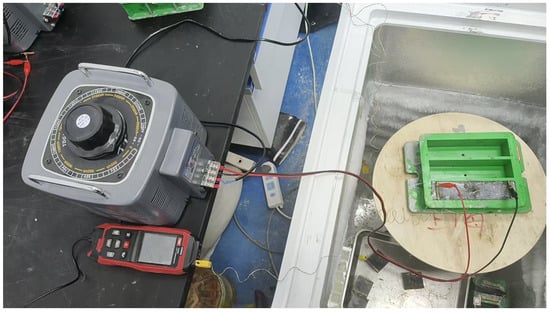
A controlled Joule curing method was applied to promote the performance of GNP-HPC under freezing conditions. Specimens were placed in a freezer at set temperatures of −20 °C, −40 °C, and −60 °C, respectivley. An alternating current power supply was connected to the embedded electrodes for cosntant curing, and a constant power of 30 W was applied to generate internal heat, and the sample temperature was maintained between 50 °C and 60 °C for 24 h under freezing conditions. Furthermore, standard curing method was used to cure the specimens at a room temperature of 20 ± 2 °C and a humidity above 95% as the comparison, and the curing duration of standard curing was also set as 1 day.
2.4. Measurement of Electric Resistance
A two-electrode method was employed to measure the electrical resistance using a Tonghui TH2832 LCR Meter (Changzhou Tonghui Electronic Co., Ltd., Changzhou, China) at a test frequency of 10 kHz; six specimens were used for the electric resistance measurement and the electric resistance.
2.5. Curing Temperature
The internal temperature of the specimens subjected to Joule curing was continuously recorded throughout the curing process. A K-type thermocouple was positioned at the geometric center of each specimen and connected to a multi-channel data acquisition unit as depicted in Figure 1. To prevent electrical interference from the applied alternating current, the thermocouple wires were insulated with PTFE tape. The system was programmed to capture temperature readings at 1 min intervals, providing detailed thermal profiles of the specimens under different curing conditions.
Figure 1.
Illustration of Joule curing process.
2.6. Mechanical Strength Test
The mechanical properties of the specimens were evaluated with the size of 40 mm × 40 mm × 160 mm after 1 day Joule curing under low tempearutre or 1 day standard curing. The compressive strength was tested at a constant loading rate of 2400 ± 200 N/s. The flexural strength was determined by the three-point bending method with a controlled loading rate of 50 ± 10 N/s. For each mix proportion, six specimens were tested, and the average value was reported as the final result.
2.7. Microstructural Characterization
The performance evolution of the specimens subjected to different curing conditions was systematically studied through multiple microstructural characterization methods. Specimens at target ages were first tested for mechanical properties, then crushed into fragments. To arrest further hydration, these fragments were immersed in absolute ethanol for 48 h, followed by drying in a constant-temperature oven at 60 °C for an additional 48 h. The dried material was subsequently ground into powder and passed through a 200-mesh sieve for subsequent analyses. For phase analysis, X-ray diffraction (XRD) patterns were obtained using an X’Pert Pro diffractometer equipped (Siemens D5000 diffractometer, Munich, Germany) with Cu-Kα radiation (λ = 0.15419 nm), and the scanning rate was 0.02°/s. The XRD scans were performed in Bragg–Brentano geometry over a 2θ range of 5–50°, TG-DTG curve was collected by a TG 449F3 Jupiter thermal analyzer (STA449F3, Netzsch Company, Selb, Germany). The temperature range and heating rate are 20–1000 °C and 10 °C/min, respectively. Mercury intrusion porosimetry (MIP) measurements were carried out on the hydrated and dried fragments using an AutoPore IV 9510 porosimeter (AutoPore Iv 9510, Norcross, GA, USA), with an applied pressure ranging from 0 to 60,000 psi.
3. Results and Discussions
3.1. Electric Resistance Changing Regularity
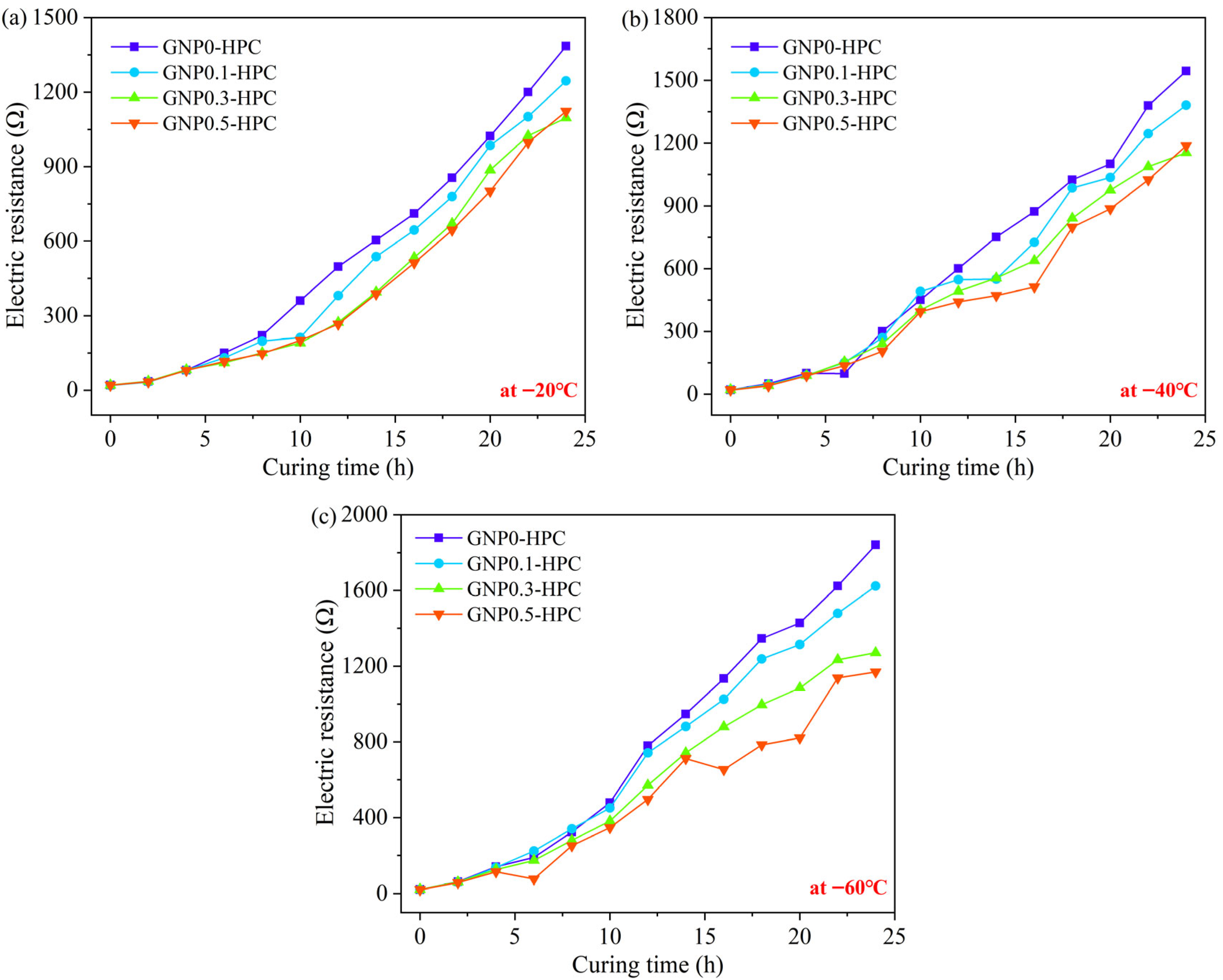
The evolution of electric resistance during Joule curing under sub-zero conditions is illustrated in Figure 2. It can be found that the resistance increased with curing time across all mixtures and ambient temperatures, which was primarily attributed to the consumption of free water and the precipitation of insulating hydration products during the hydration process. However, the incorporation of GNPs significantly enhanced and stabilized the electrical conductivity, particularly under extreme cold. At −20 °C, specimens containing GNPs, especially at 0.3% and 0.5% content, exhibited consistently lower resistance throughout the 24 h period compared to the plain mixture (with the respective values of 1096 Ω and 1123 Ω), with the 0.5% GNP specimen showing approximately 19% lower final resistance. This beneficial effect became more pronounced at −40 °C, where the GNP-modified specimens not only started with improved conductivity but also demonstrated a slower rate of resistance increase, culminating in a final resistance about 23% lower than that of the control. To be specific, the electric resistance values of the specimens containing 0%, 0.1%, 0.3%, and 0.5% GNPs became 1544.2 Ω, 1381 Ω, 1154 Ω, and 1187 Ω, respectively, after 1 day of Joule curing at −40 °C. The most notable impact is observed under the extremely harsh condition of −60 °C. While the plain mixture underwent a rapid and substantial rise in resistance, exceeding 1800 Ω, indicating severely hindered ionic conduction, the specimens with 0.3% and 0.5% GNPs still displayed dramatically stabilized resistance development. The 0.5% GNP composite maintained a final resistance of only about 1169 Ω, which was 36% lower than that of the plain mixture. This underscores the crucial role of GNPs in establishing efficient and persistent electron transport pathways that are less sensitive to the freezing environment and the ongoing microstructural densification. The percolated GNP network effectively compensates for the loss of ionic conductivity, ensuring a more stable and reliable Joule curing process. This enhanced electrical stability confirms that GNP modification is a pivotal factor in enabling reliable performance of cement-based composites cured under ultra-low-temperature conditions.
Figure 2.
Electric resistance changes in GNP-HPC at various environmental temperatures: (a) −20 °C, (b) −40 °C, and (c) −60 °C.
3.2. Curing Temperature Development
Curing temperature is a very significant indicator for the specimens subjected to Joule curing, especially under freezing conditions, to ensure the strength formation of the specimens. Figure 1, Figure 2 and Figure 3 depict the temperature development situation of GNP-HPC with different GNP contents under different environmental temperatures. It can be found that the curing temperature was affected by both the external temperature and the content of GNPs.
Figure 3.
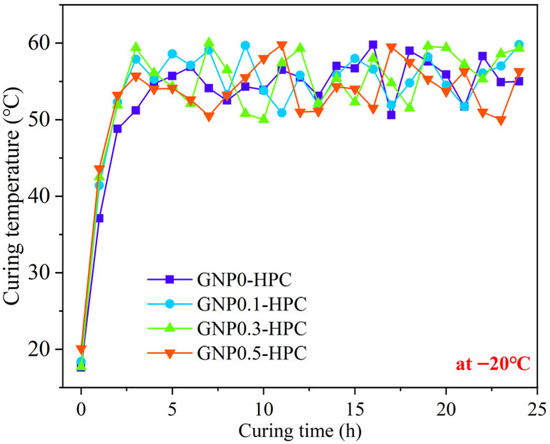
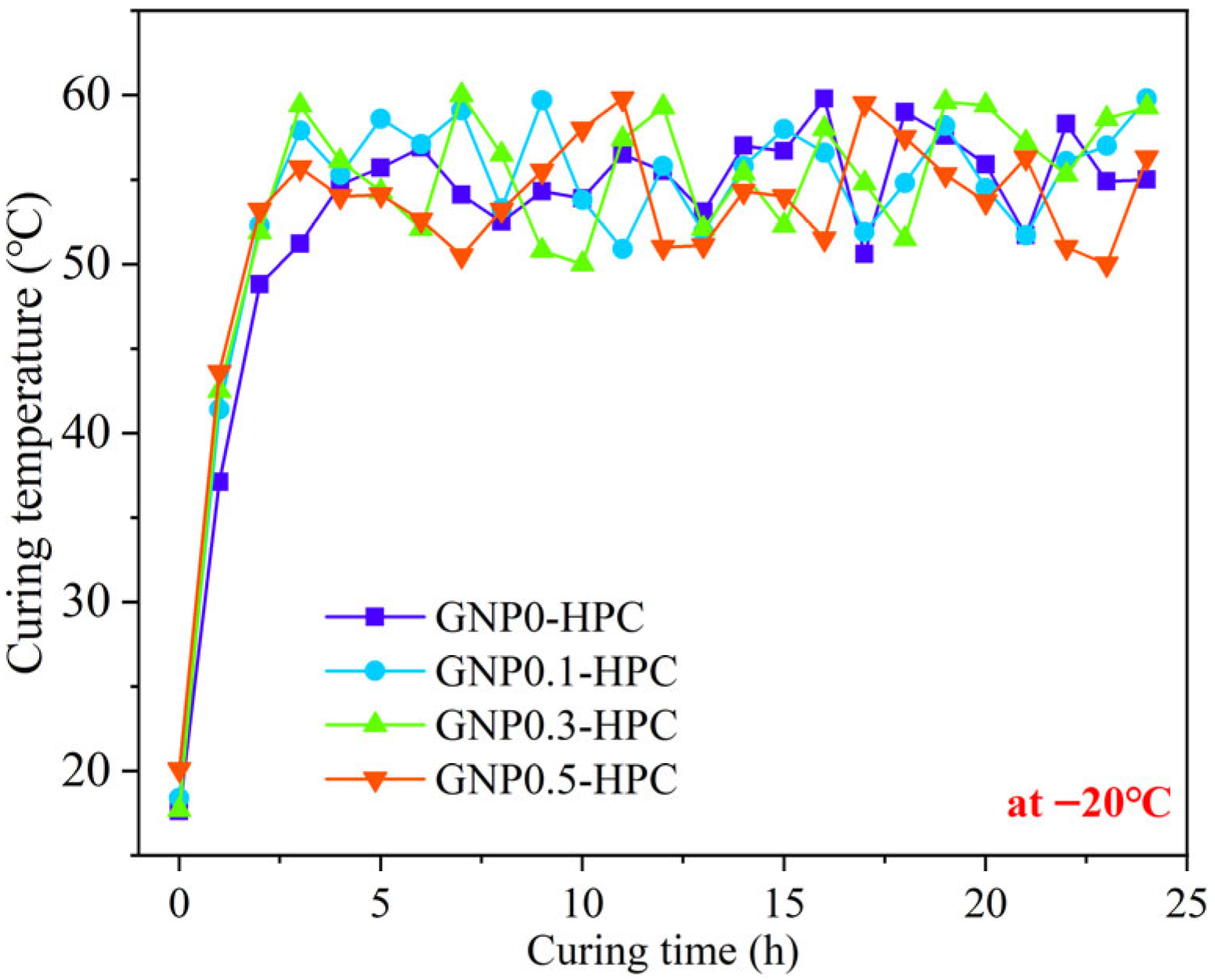
Curing temperature development situation of GNP-HPC with different GNP contents at −20 °C.
Figure 3 shows the curing temperature development of GNP-HPC under −20 °C, it can be noticed that all of the specimens demonstrated a rapid temperature increase during the initial hours. The control group with 0% GNP reached a peak temperature of 59.8 °C, while the specimen containing GNPs achieved comparable peak temperatures. This indicated that at this moderately low temperature, the implementation of constant power Joule curing was sufficient to increase the temperatures into the target range of 50–60 °C. However, it should be noted that the temperature for the specimens modified by GNPs, particularly at 0.3% and 0.5% contents, generally exhibited less fluctuation after the initial increasing stage. This stability can be attributed to the more uniform and continuous conductive network formed by the GNPs, which promoted homogeneous heat generation throughout the matrix, thereby mitigating localized hot spots and thermal gradients that can lead to larger temperature fluctuations.
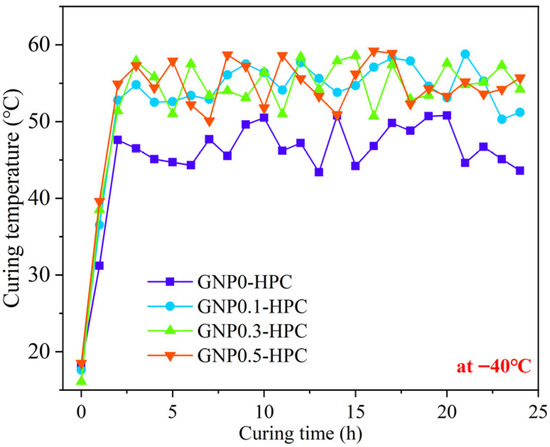
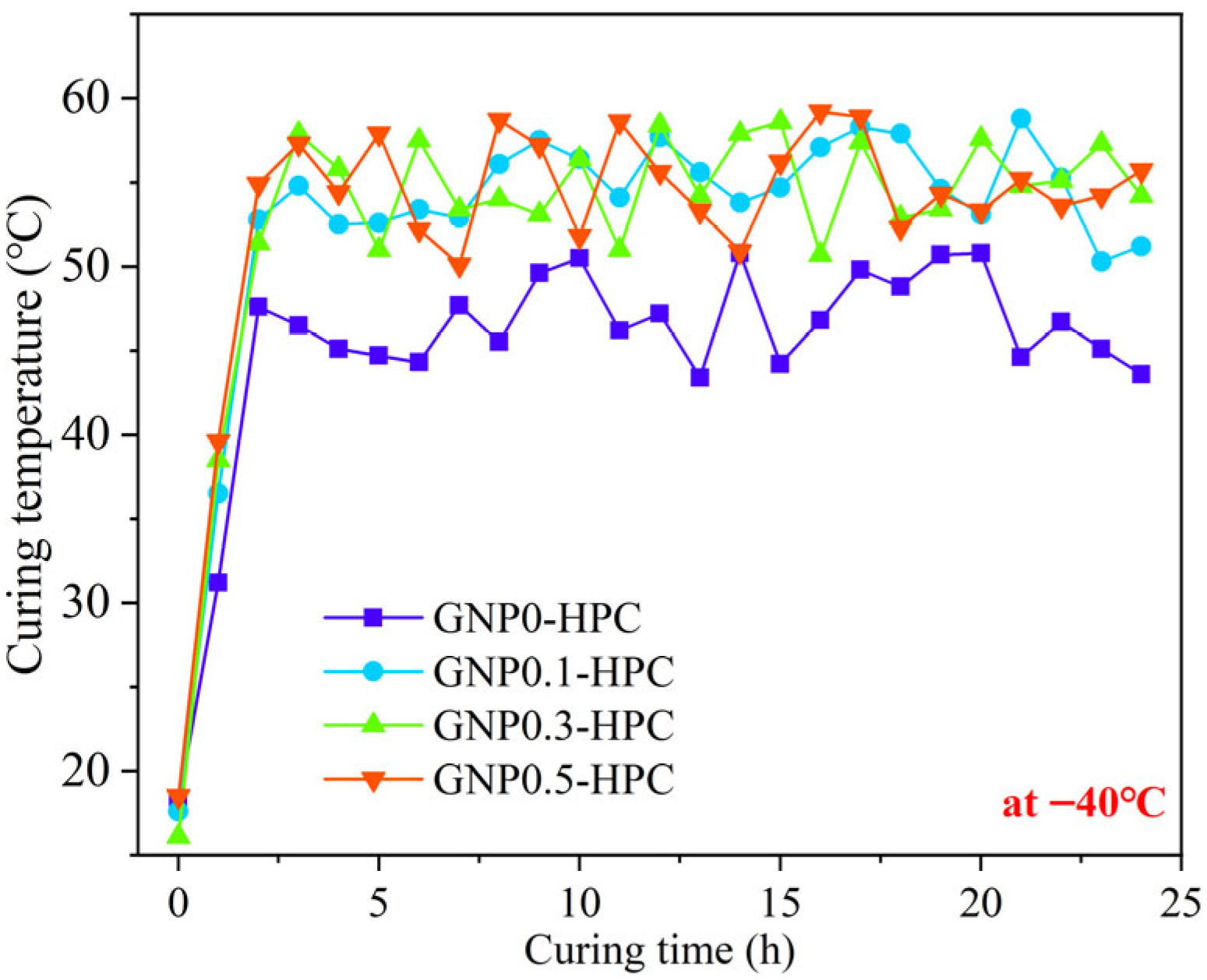
Moreover, for the specimens cured at −40 °C (see Figure 4), the challenge of maintaining the target temperature became more pronounced, and the benefit of GNP incorporation became more significant. The increasing rate of curing temperature in all specimens slowed, and the peak temperatures were marginally lower. The control group showed the most significant reduction, with its temperature frequently dipping below 45 °C. However, the specimens modified by GNPs maintained higher temperatures. To be precise, the curing temperature in GNP0.1-HPC specimen remained above 50 °C for most of the curing period. This is a direct consequence of the enhanced electrical conductivity imparted by the GNPs. A higher electrical conductivity leads to a higher current flow under a constant applied power, according to Joule’s law, resulting in greater power dissipation as heat.
Figure 4.
Curing temperature development situation of GNP-HPC with different GNP contents at −40 °C.
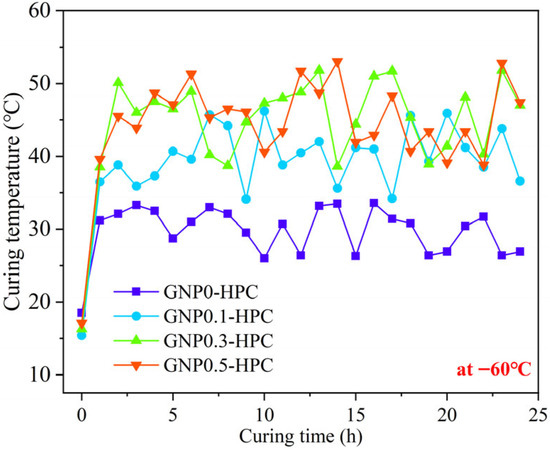
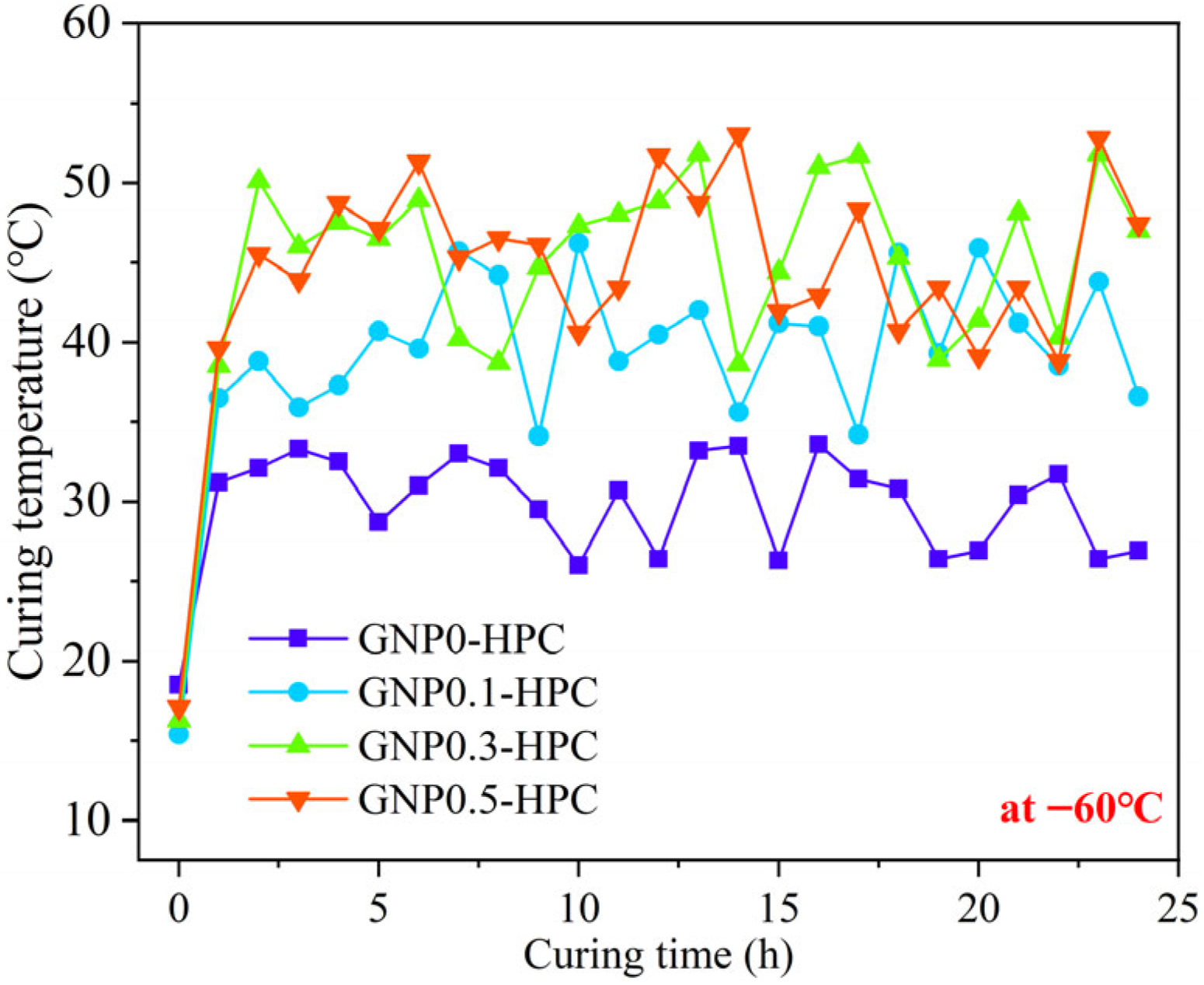
Furthermore, the most striking results were observed under the extremely harsh condition of −60 °C as depicted in Figure 5. Under this circumstance, the limitations of the system and the relative advantage of GNPs were both significantly restricted. The control group failed to reach the target curing temperature range, with its temperature concentrating mostly in the high 20–30 °C after the initial increase stage. This signifies that the heat loss to the environment far exceeded the heat generation capacity of the plain cement matrix. The specimens modified by GNPs, particularly for the 0.3% and 0.5% groups, performed notably better. They managed to periodically reach temperatures into 45–52 °C. This demonstrated the crucial role of GNPs in boosting the heating efficiency. However, it is critical to note that even with GNPs, the temperatures were often outside the ideal 50–60 °C range and exhibited considerable instability. This underscores a fundamental physical constraint: at such extreme ambient temperatures, the rate of heat loss is immense that even the enhanced heat generation from the conductive network is insufficient to maintain a stable, high internal temperature without optimizing other parameters.
Figure 5.
Curing temperature development situation of GNP-HPC with different GNP contents at −60 °C.
In conclusion, the curing temperature development situation illustrated that while the target curing temperature of 50–60 °C was achievable at −20 °C, it became progressively more challenging to maintain as the ambient temperature decreased to −40 °C and −60 °C. The incorporation of GNPs served as a highly effective strategy to mitigate this challenge by enhancing the electrical conductivity and electro-thermal conversion efficiency of the specimens, thereby raising the internal curing temperature and improving thermal stability across all sub-zero conditions tested. However, experimental results also presented a clear boundary condition for this technology at profoundly low temperatures like −60 °C.
3.3. Mechanical Strength Development
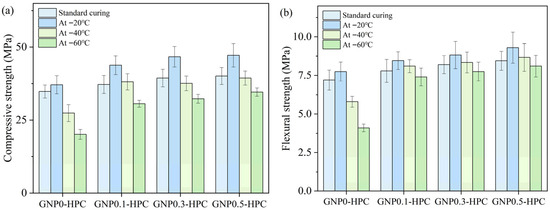
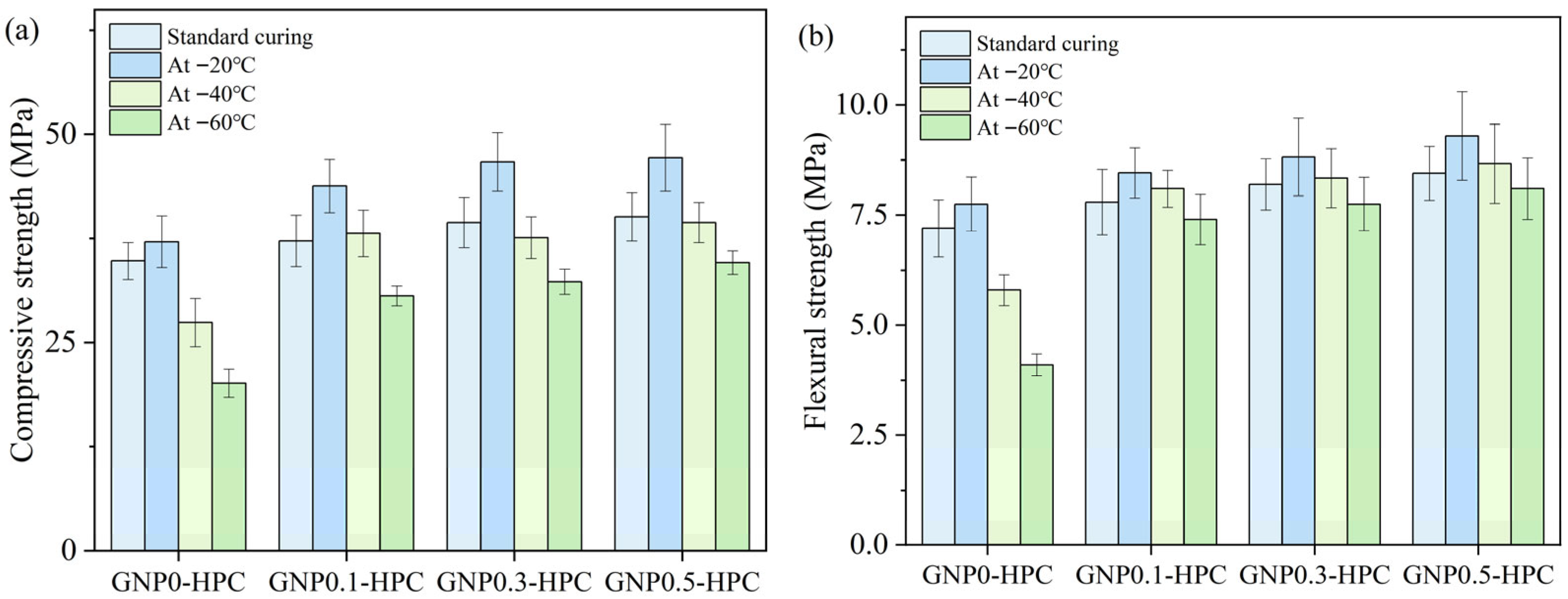
Figure 6 illustrates the mechanical strength of GNP-HPC cured by different conditions. For the specimens cured by standard curing, the addition of GNPs produced a consistent improvement in mechanical properties. The compressive strength increased from 34.8 MPa for the plain mixture to 40.1 MPa with 0.5% GNP addition, representing a 15.2% enhancement. Similarly, flexural strength showed an increase from 7.2 MPa to 8.45 MPa with rising GNP content. This improvement confirms the effective role of GNPs as nanoscale reinforcement in cement composites under normal curing conditions, where their high specific surface area and exceptional mechanical properties contribute to enhanced load transfer and microcrack restriction within the matrix. Under −20 °C, all of the specimens exhibited higher compressive strengths compared to standard curing, the plain mixture reached 37.1 MPa, while the GNP-modified specimens achieved even more substantial improvements, with GNP0.5-HPC attaining 47.2 MPa. This represents a 17.7% increase over the standard curing value for the same mixture. The flexural strength followed a similar trend, with the 0.5% GNP specimen reaching 9.3 MPa compared to 8.45 MPa under standard curing. This strength enhancement can be attributed to the optimized curing temperature created by the combined effect of Joule heating and GNP modification. The maintained temperature range of 50–60 °C, as demonstrated in Figure 3, promoted the hydration process in the specimen.
Figure 6.
Mechanical strength development of GNP-HPC cured by different conditions: (a) Compressive strength and (b) flexural strength.
Furthermore, the beneficial effects of GNP modification became more crucial as the curing temperature decreased to more extreme conditions. At −40 °C, the plain mixture suffered a substantial strength reduction, with compressive strength dropping to 27.4 MPa, representing a 21.3% decrease from standard-cured specimens. In contrast, the GNP-modified specimens demonstrated significantly better performance retention. GNP0.5-HPC maintained a compressive strength of 39.4 MPa, only 1.7% lower than the standard-cured specimen. This trend was even more pronounced in flexural strength results, where GNP0.5-HPC achieved 8.67 MPa, actually exceeding its standard curing value. This demonstrates the exceptional effectiveness of GNP in preserving flexural toughness under moderate sub-zero conditions. The most challenging condition of −60 °C revealed the limitations of this curing condition while simultaneously highlighting the value of GNP incorporation. The plain mixture experienced severe strength deterioration, with compressive and flexural strengths reduced to 20.1 MPa and 4.1 MPa, respectively. These values represent only 57.8% and 56.9% of the standard-cured specimens. However, GNP-modified specimens showed remarkable resilience under these extreme conditions. GNP0.5-HPC maintained compressive and flexural strengths of 34.6 MPa and 8.1 MPa, respectively, representing 86.3% and 95.9% retention compared to standard curing values. This outstanding performance preservation, particularly in flexural strength, underscores the crucial role of GNPs in bridging microcracks and maintaining matrix integrity even when the curing temperature conditions are significantly harsh.
3.4. Hydration Products Analysis
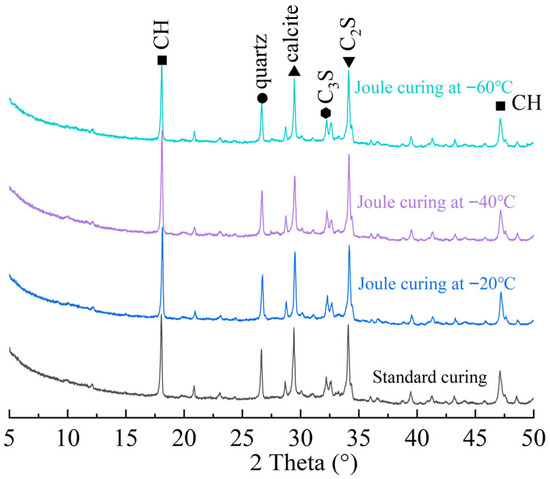
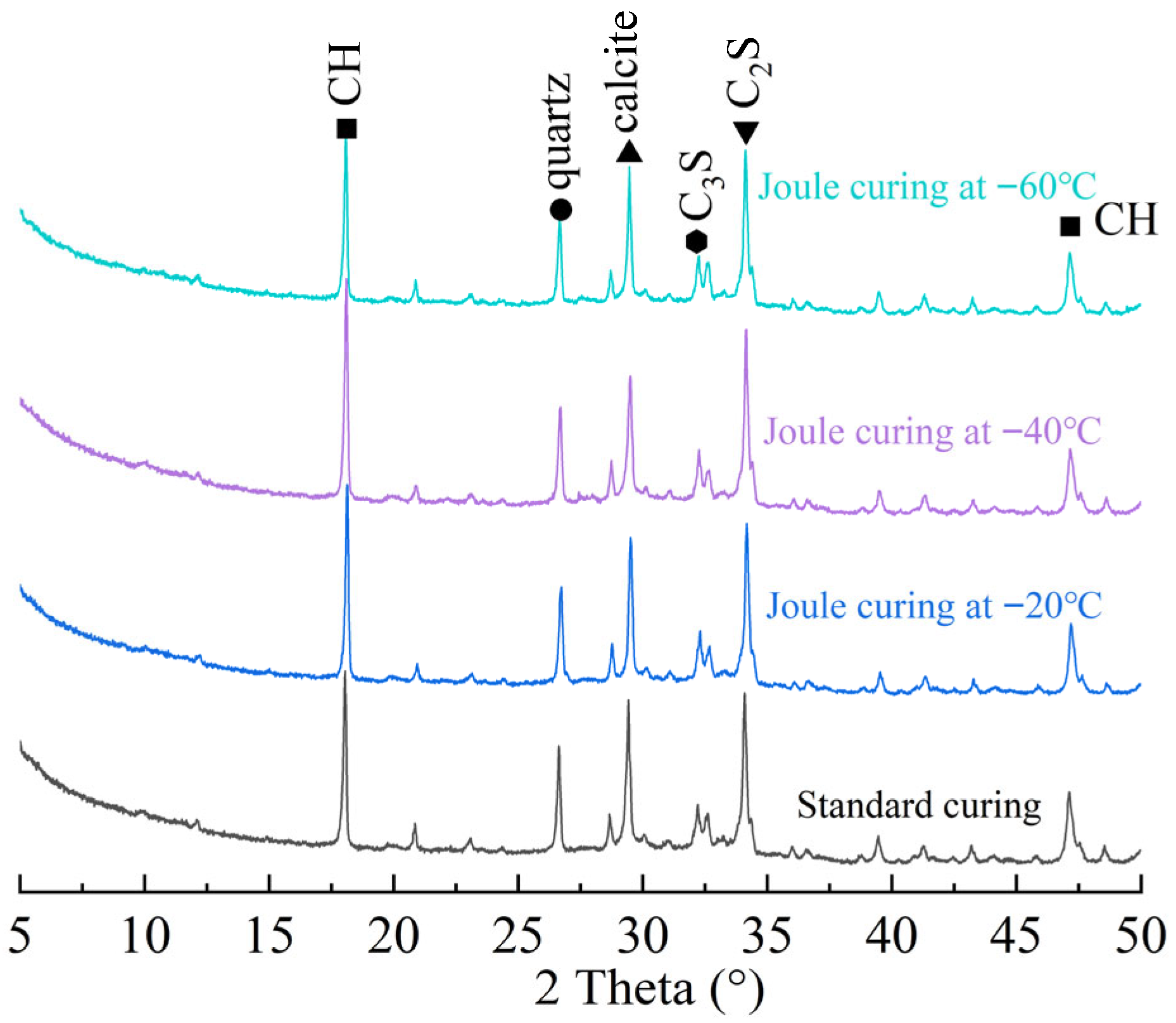
X-ray diffraction (XRD) analysis was conducted to identify the crystalline phase composition of the GNP0.5-HPC subjected to different curing regimes, including standard curing and Joule curing at various sub-zero temperatures, as depicted in Figure 7. The XRD patterns consistently revealed the presence of primary crystalline phases characteristic of hydrated Portland cement, notably portlandite (Ca(OH)2), ettringite, and calcium silicate hydrate (C-S-H) with poor crystallinity [28,29]. A critical observation was that the identified phases and their characteristic diffraction peaks remained essentially identical across all curing conditions. No new crystalline phases were detected in the specimens cured under sub-zero temperatures with Joule heating compared to the standard-cured specimens. This finding strongly indicates that the fundamental hydration chemistry and the final chemical nature of the hydration products were not altered by the sub-zero curing environment when supplemented with the internal Joule heating provided by the conductive network. Therefore, it can be concluded that the Joule curing method, while crucial for providing the necessary thermal energy to drive the hydration reaction in freezing conditions, does not fundamentally change the pathway or the ultimate chemical outcome of the cement hydration process. The primary mechanism of strength development under these adverse conditions thus appears to be physical and microstructural, rather than chemical, as the final phase assemblage remains consistent.
Figure 7.
XRD patterns of GNP0.5-HPC cured by different methods.
3.5. Hydration Degree Analysis
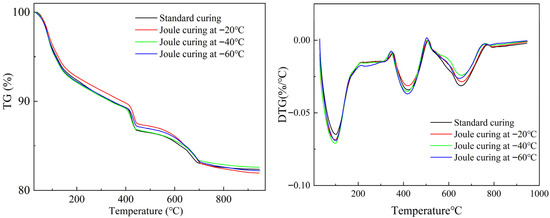
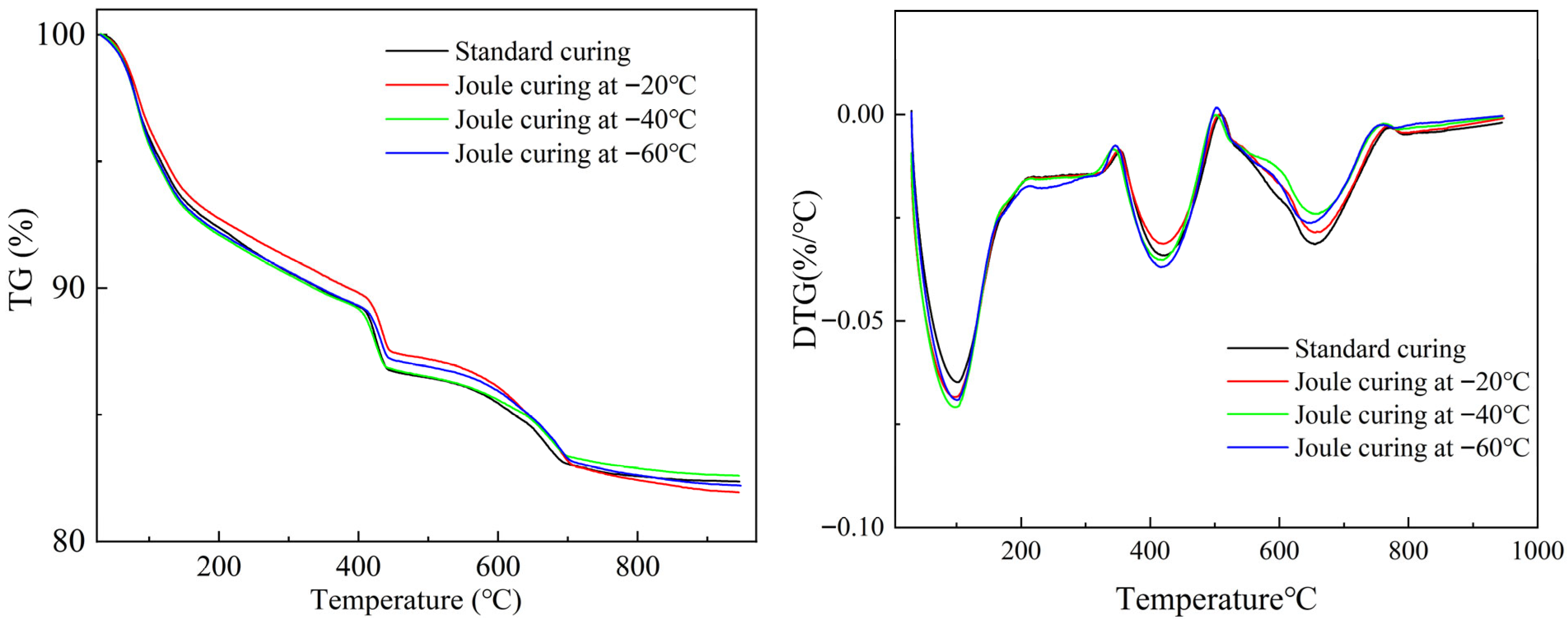
TG-DTG analysis was performed on GNP0.5-HPC to quantitatively evaluate the hydration degree under different curing conditions. Figure 8 demonstrates the TG and DTG curves of the specimens. The TG curves show distinct mass loss features between 60 °C and 200 °C, 400 °C and 500 °C, and 600 °C and 800 °C. The first mass loss peak corresponds to the dehydration of C-S-H gel and ettringite, the second peak is attributed to the dehydroxylation of portlandite (Ca(OH)2), and the third peak corresponds to the thermal decomposition of Calcite [30,31,32]. A primary observation is the high degree of similarity among all four curves across the entire temperature range. This overall similarity indicates that the fundamental nature and the gross quantity of the major hydration products formed are not drastically altered by the sub-zero Joule curing process. The presence of a well-defined portlandite decomposition step in all curves confirms that the cement hydration reaction was successfully initiated and progressed substantially, even under the −60 °C environment, due to the internal heating provided by the Joule effect. To be more specific, minimal variations in the magnitude of the portlandite decomposition step can be observed. These subtle differences can be attributed not to the internal curing temperature—which was actively controlled to be equivalent—but to the influence of the severe external ambient conditions on the system’s thermal dynamics and local kinetics. The extreme temperature gradient between the specimen’s warm interior and the cold surrounding environment may have influenced the uniformity of heat distribution and the precise local reaction rates at the microscale, particularly in regions nearer to the formwork. Additionally, the efficiency of the pozzolanic reaction between silica fume and portlandite, while still active under the sustained internal heat, could be modulated by these external conditions, subtly affecting the net amount of detectable portlandite. Importantly, the observed minimal variance in the TG profiles aligns with the mechanical strength results. The well-preserved strength in specimens from the −20 °C and −40 °C environments corresponds to TG curves nearly indistinguishable from the standard-cured reference. The more discernible, yet still limited, reduction in strength for the −60 °C specimen is correlated with the slightly attenuated portlandite decomposition signal. Therefore, the TG analysis conclusively supports that Joule curing effectively decouples the material’s volumetric curing condition from the external ambient temperature, enabling a near-standard hydration product formation. The residual minor variations in the TG data provide a sensitive chemical fingerprint that correlates with and helps explain the graded mechanical performance across the different sub-zero exposure conditions.
Figure 8.
TG and DTG curves of GNP0.5-HPC cured at different conditions.
3.6. Pore Structure Analysis
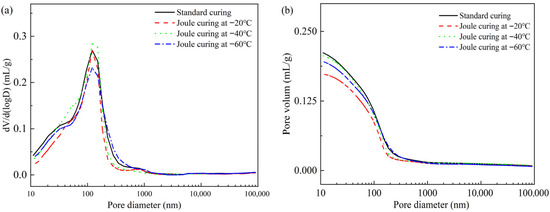
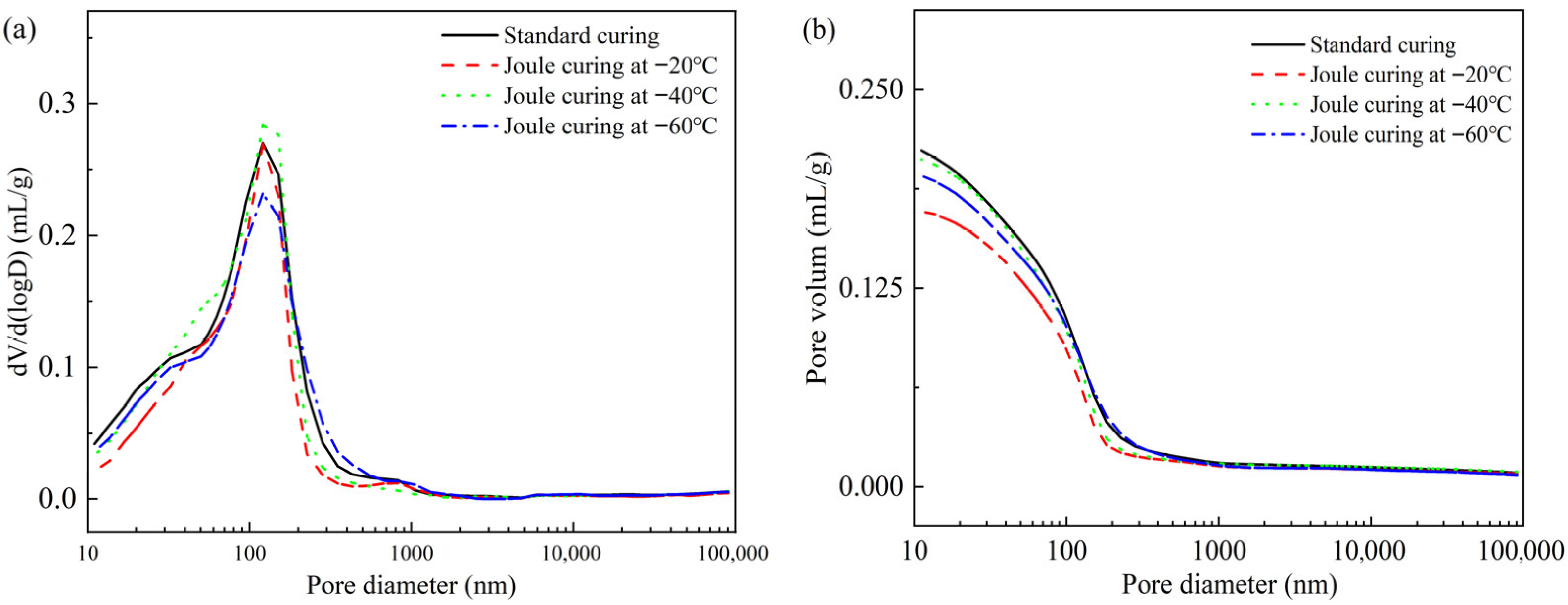
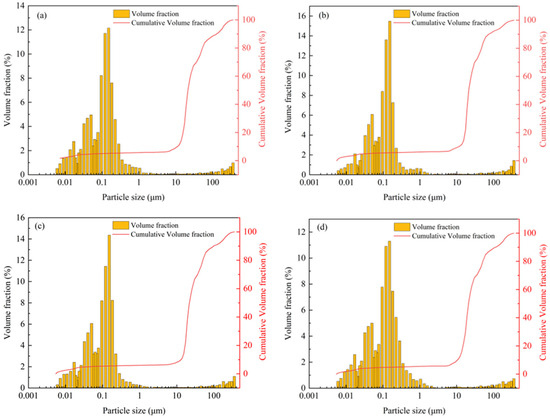
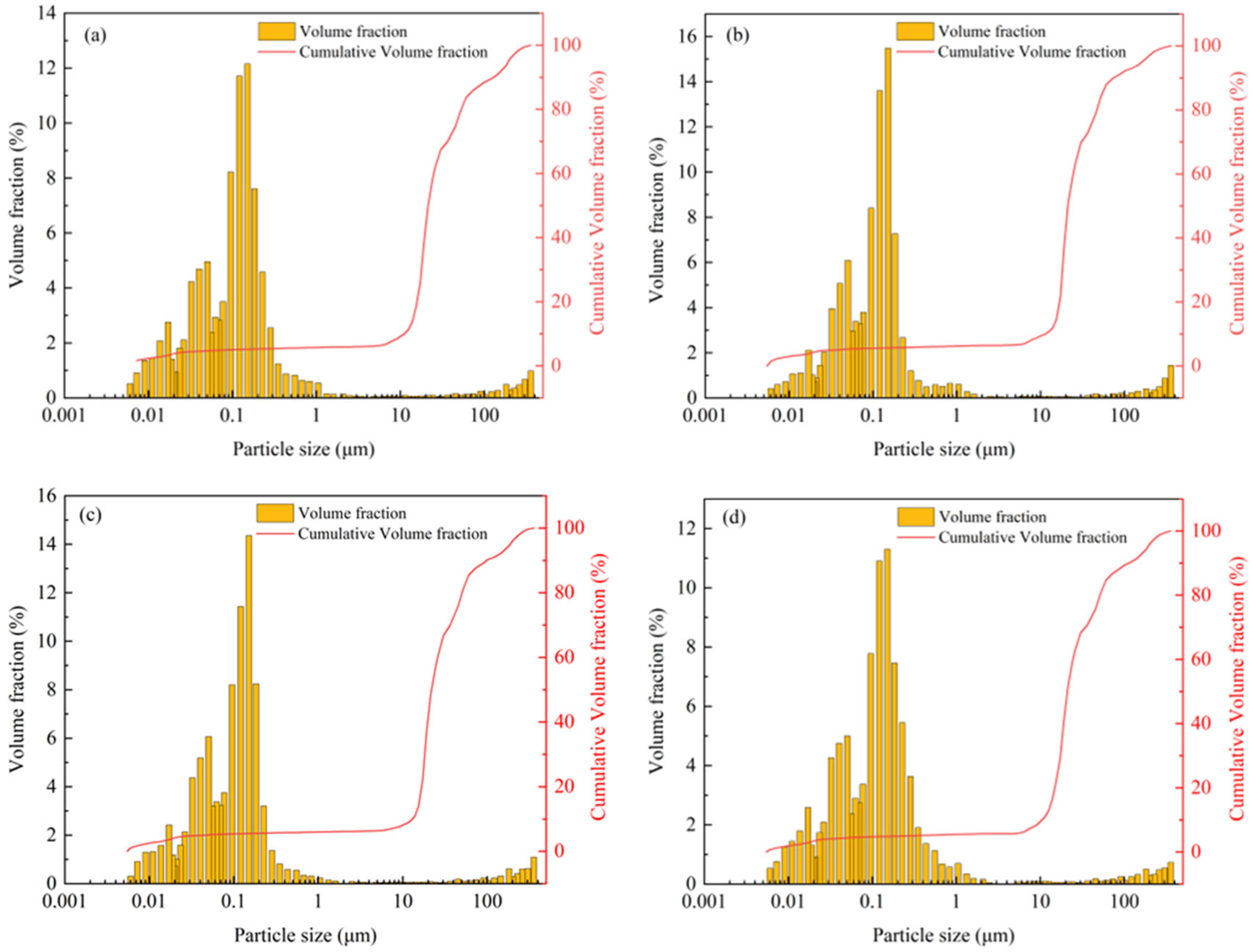
Pore structure is also a significant indicator of the internal structural performance of cement-based materials. The pore size distribution and cumulative pore volume obtained from Joule curing and conventional curing under different sub-zero temperatures are shown in Figure 9. Moreover, a detailed depiction of the pore volume fraction distribution of the specimens is depicted in Figure 10. As shown in the results, the pore structure of the specimens subjected to Joule curing exhibited a distinct and advantageous evolution compared to standard curing. The pore size distribution demonstrated that the majority of pores in specimens subjected to Joule curing were concentrated within the range of 100 nm to 200 nm. Notably, at an ambient temperature of −20 °C, the pore distribution of Joule-cured specimens closely resembles that of the standard-cured specimen, indicating that the internal heating effectively compensated for the external cold environment, facilitating a similar microstructure formation process. This observation aligns with the mechanical strength and high hydration degree previously identified for the Joule-cured specimens at −20 °C.
Figure 9.
Pore structure information of GNP0.5-HPC specimens subjected to different curing conditions: (a) Pore size distribution and (b) cumulative pore volume.
Figure 10.
Detailed pore volume fraction of the GNP0.5-HPC specimens subjected to different conditions: (a) Standard curing, (b) Joule curing at −20 °C, (c) Joule curing at −40 °C, and (d) Joule curing at −60 °C.
However, as the ambient condition became more severe, a clear trend emerged. At −40 °C, the Joule-cured specimen showed a higher concentration of pores in this dominant range. This phenomenon can be linked to the thermal gradient and curing kinetics under more challenging conditions. While Joule heating maintained the internal temperature, the large temperature gradient between the specimen interior and the environment may have influenced the local precipitation and growth of hydration products, leading to a slightly different pore network arrangement. Crucially, the cumulative pore volume data reveals the fundamental benefit of Joule curing. The proportion of large, harmful pores larger than 1000 nm in Joule-cured specimens was measured at 7.08%, 6.68%, and 6.42% for −20 °C, −40 °C, and −60 °C, respectively. Concurrently, the volume of small, gel pores smaller than 50 nm increased to 27.24%, 30.1%, and 29.3% across the same temperature gradient. This data signifies a consistent optimization of the pore structure where Joule curing reduces the volume of large, interconnected capillary pores that are detrimental to strength and permeability, while increasing the volume of small, innocuous gel pores. This trend becomes more pronounced with decreasing ambient temperature, underscoring the increasing relative importance of internal heating for microstructural development under extreme cold. The overall pore structure of the Joule-cured specimen at −60 °C, with a harmful pore proportion of 6.42%, even marginally surpassed the optimization achieved under standard curing, which had a proportion of 6.62%. This finding provides a direct microstructural explanation for the retained mechanical strength, particularly the flexural strength, observed at −60 °C. Collectively, MIP analysis demonstrated that Joule curing did not merely sustain hydration but actively improves the microstructure by promoting a refined pore structure.
4. Conclusions and Future Prospects
This study systematically investigated the performance of GNP-HPC cured by the specific Joule curing method under sub-zero temperatures. The results demonstrate that the integration of GNP’s multifunctionality with Joule curing effectively overcomes the challenges of concrete construction in cold climates. The main findings are summarized as follows:
- (1)
- The incorporation of GNPs significantly enhanced and stabilized the electrical conductivity, particularly under extreme cold. Specifically, the specimen containing 0.5% GNP maintained a final resistance of only about 1169 Ω after 1 day of Joule curing at an environmental temperature of −60 °C, which was 36% lower than that of the plain mixture, underscoring the crucial role of GNPs in establishing efficient and persistent electron transport pathways.
- (2)
- Joule curing ensured early-age hydration and strength development under sub-zero conditions. Temperature monitoring confirmed that the internal temperature of specimens can be maintained within the target range of 50–60 °C at ambient temperatures of −20 °C and −40 °C.
- (3)
- Mechanical tests revealed that the GNP-HPC exhibited excellent strength retention. Remarkably, at −20 °C, the compressive and flexural strengths can surpass those of standard-cured specimens. Even under the extreme condition of −60 °C, the specimen with 0.5% GNP retained approximately 86% of its compressive strength and 96% of its flexural strength relative to the standard curing values.
- (4)
- GNP played a crucial synergistic role in enhancing composite performance. XRD analysis indicated that the types of hydration products were consistent across different curing regimes, ensuring chemical stability. TG and MIP analyses further revealed that GNP addition promoted the degree of hydration and refined the pore structure.
In summary, the strategy of combining GNP modification with Joule curing not only effectively addresses the core issue of hydration inhibition in sub-zero temperatures but also actively enhances the material’s microstructure and final performance. This approach holds significant theoretical value and promising potential for engineering applications in cold-region construction. However, it should be noted that this work focused on the availability of Joule curing on the on-site construction of GNP-HPC, so the early-age performance includes mechanical properties and microstructural characteristics. In future work, the long-term strength development regularity of Joule-cured GNP-HPC under different conditions should be disclosed, and the specific durability properties need to be further clarified. Moreover, the development of automatic equipment for Joule curing is also significant.
Author Contributions
Conceptualization, M.L. and P.S.; methodology, M.L., P.S. and A.A.; software, P.S.; formal analysis, M.L. and P.S.; investigation, Y.X.; resources, P.S.; data curation, M.L., Y.X. and P.S.; writing—original draft preparation, M.L.; writing—review and editing, P.S.; funding acquisition, M.L. All authors have read and agreed to the published version of the manuscript.
Funding
This work was supported by Research on the Application of Intelligent Management Evaluation Technology in Engineering Quality, Safety and Environmental Protection (No. 29024266).
Data Availability Statement
Data are contained within the article.
Conflicts of Interest
The authors declare no conflicts of interest.
References
- Richard, P.; Cheyrezy, M. Composition of Reactive Powder Concretes. Cem. Concr. Res. 1995, 25, 1501–1511. [Google Scholar] [CrossRef] [Scilit]
- Wang, L.; Zeng, X.; Yang, H.; Lv, X.; Guo, F.; Shi, Y.; Hanif, A. Investigation and Application of Fractal Theory in Cement-Based Materials: A Review. Fractal Fract. 2021, 5, 247. [Google Scholar] [CrossRef] [Scilit]
- Barna, L.A.; Seman, P.M.; Korhonen, C.J. Energy-Efficient Approach to Cold-Weather Concreting. J. Mater. Civ. Eng. 2011, 23, 1544–1551. [Google Scholar] [CrossRef] [Scilit]
- Nmai, C.K. Cold Weather Concreting. Cem. Concr. Compos. 1998, 20, 121–128. [Google Scholar] [CrossRef] [Scilit]
- ACI Committee 306 Cold Weather Concreting. In Proceedings of the American Concrete Institute; Elsevier Ltd.: Amsterdam, The Netherlands, 2010.
- Qin, X.C.; Meng, S.P.; Cao, D.F.; Tu, Y.M.; Sabourova, N.; Grip, N.; Ohlsson, U.; Blanksvärd, T.; Sas, G.; Elfgren, L. Evaluation of Freeze-Thaw Damage on Concrete Material and Prestressed Concrete Specimens. Constr. Build. Mater. 2016, 125, 892–904. [Google Scholar] [CrossRef] [Scilit]
- Wei, Y.; Guo, W.; Wu, Z.; Gao, X. Computed Permeability for Cement Paste Subject to Freeze-Thaw Cycles at Early Ages. Constr. Build. Mater. 2020, 244, 118298. [Google Scholar] [CrossRef] [Scilit]
- Parrott, L.J.; Peng, G.F.; Ma, Q.; Hu, H.M.; Gao, R.; Yao, Q.F.; Liu, Y.F.Y.; Bamforth, P.B.; Zhang, G.; Yu, H.; et al. Experimental Study of Deformation of Early Age Concrete Suffering from Frost Damage. Constr. Build. Mater. 2017, 17, 181–188. [Google Scholar] [CrossRef] [Scilit]
- Demirboǧa, R.; Karagöl, F.; Polat, R.R.; Kaygusuz, M.A.; Akif, M.; Demirbog, R. The Effects of Urea on Strength Gaining of Fresh Concrete under the Cold Weather Conditions. Constr. Build. Mater. 2014, 64, 114–120. [Google Scholar] [CrossRef] [Scilit]
- Tian, W.; Liu, Y.; Qi, B.; Wang, W. Enhanced Effect of Carbon Nanofibers on Heating Efficiency of Conductive Cementitious Composites under Ohmic Heating Curing. Cem. Concr. Compos. 2021, 117, 103904. [Google Scholar] [CrossRef] [Scilit]
- Ouyang, M.; Tian, W.; Liu, Y.; Wang, W. Gradient Power Modified Ohmic Heating Curing to Prepare Hybrid Carbon Fibers/High Performance Concrete under Deep-Freeze Low Temperature. Constr. Build. Mater. 2022, 330, 127279. [Google Scholar] [CrossRef] [Scilit]
- Tian, W.; Liu, Y.; Wang, W. Enhanced Ohmic Heating and Chloride Adsorption Efficiency of Conductive Seawater Cementitious Composite: Effect of Non-Conductive Nano-Silica. Compos. B Eng. 2022, 236, 109854. [Google Scholar] [CrossRef] [Scilit]
- Tian, W.; Li, R.; Zhang, Z.; Wang, M.; Liu, Y.; Lu, J.X.; Jia, Y.; Wang, W. Curing Parameters Development and Long-Term Performance of Ohmic Heating Cured Conductive Cementitious Composites: A Comparative Study on Fiber Fraction. J. Build. Eng. 2024, 91, 109566. [Google Scholar] [CrossRef] [Scilit]
- Tian, W.; Wang, M.; Liu, Y.; Wang, W. Ohmic Heating Curing of High Content Fly Ash Blended Cement-Based Composites towards Sustainable Green Construction Materials Used in Severe Cold Region. J. Clean. Prod. 2020, 276, 123300. [Google Scholar] [CrossRef] [Scilit]
- Tian, W.; Qi, B.; Liu, Y.; Liu, K.; Wang, W. Early Frost Resistance and Permeability Properties of Carbon Fiber/Cement-Based Composite Cured by Ohmic Heating under Ultra-Low Temperature. Constr. Build. Mater. 2021, 282, 122729. [Google Scholar] [CrossRef] [Scilit]
- Jia, M.; Chen, X.; Xu, Z.; Wen, J.; Yang, Y.; Yu, K.; Liu, Y. A New Approach for Constructing UHPC Conductive Pathways: Oriented Deposition of Conductive Hydration Products. Cem. Concr. Res. 2025, 191, 107827. [Google Scholar] [CrossRef] [Scilit]
- Wu, J.; Liu, J.; Yang, F. Three-Phase Composite Conductive Concrete for Pavement Deicing. Constr. Build. Mater. 2015, 75, 129–135. [Google Scholar] [CrossRef] [Scilit]
- Wu, T.; Huang, R.; Chi, M.; Weng, T. A Study on Electrical and Thermal Properties of Conductive Concrete. Comput. Concr. 2013, 12, 337–349. [Google Scholar] [CrossRef] [Scilit]
- Kim, G.M.; Park, S.M.; Ryu, G.U.; Lee, H.K. Electrical Characteristics of Hierarchical Conductive Pathways in Cementitious Composites Incorporating CNT and Carbon Fiber. Cem. Concr. Compos. 2017, 82, 165–175. [Google Scholar] [CrossRef] [Scilit]
- Samadian, H.; Mobasheri, H.; Hasanpour, S.; Ai, J.; Azamie, M.; Faridi-Majidi, R. Electro-Conductive Carbon Nanofibers as the Promising Interfacial Biomaterials for Bone Tissue Engineering. J. Mol. Liq. 2020, 298, 112021. [Google Scholar] [CrossRef] [Scilit]
- Wang, L.; Aslani, F. A Review on Material Design, Performance, and Practical Application of Electrically Conductive Cementitious Composites. Constr. Build. Mater. 2019, 229, 116892. [Google Scholar] [CrossRef] [Scilit]
- Tian, W.; Liu, X.; Wang, X.; Zou, F.; Xu, Y.; Liu, Y.; Lu, J.X.; Xu, L.; Wang, W. Improving Electrical-Thermal-Mechanical Functional Performance of Intelligent Conductive Cementitious Composites: Through Fiber Orientation by Magnetic Field. J. Build. Eng. 2025, 104, 112374. [Google Scholar] [CrossRef] [Scilit]
- Kim, G.M.; Yang, B.J.; Cho, K.J.; Kim, E.M.; Lee, H.K. Influences of CNT Dispersion and Pore Characteristics on the Electrical Performance of Cementitious Composites. Compos. Struct. 2017, 164, 32–42. [Google Scholar] [CrossRef] [Scilit]
- Tian, W.; Zhang, Z.; Qiu, R.; Lu, J.X.; Li, R.; Liu, Y.; Wang, W. Electrical Performance of Conductive Cementitious Composites under Different Curing Regimes: Enhanced Conduction by Carbon Fibers towards Self-Sensing Function. Constr. Build. Mater. 2024, 421, 135771. [Google Scholar] [CrossRef] [Scilit]
- Sun, S.; Ding, S.; Han, B.; Dong, S.; Yu, X.; Zhou, D.; Ou, J. Multi-Layer Graphene-Engineered Cementitious Composites with Multifunctionality/Intelligence. Compos. B Eng. 2017, 129, 221–232. [Google Scholar] [CrossRef] [Scilit]
- Liu, Y.; Wang, M.; Wang, W. Electric Induced Curing of Graphene/Cement-Based Composites for Structural Strength Formation in Deep-Freeze Low Temperature. Mater. Des. 2018, 160, 783–793. [Google Scholar] [CrossRef] [Scilit]
- Tian, W.; Ph, D.; Liu, Y.; Ph, D.; Liu, H.; Wang, W.; Ph, D. Performance Evolution and Chloride Adsorption Efficiency of Seawater Mixed Cement-Based Materials Subjected to Ohmic Heating Curing under a Severely Cold Environment. J. Mater. Civ. Eng. 2023, 35, 04023459. [Google Scholar] [CrossRef] [Scilit]
- Tian, W.; Liu, Y.; Wang, M.; Liu, H.; Yu, K.; Xia, Y.; Wang, W.; Li, R. Improved Chloride Binding Capacity in Sustainable Metakaolin Blended Seawater Cement Mortar: Effect of External Alternative Electric Field. J. Build. Eng. 2024, 98, 111454. [Google Scholar] [CrossRef] [Scilit]
- Yu, K.; Liu, Y.; Yang, Y. Enhanced Thermal Properties of Polyethylene Glycol/Modified Rice Husk Ash Eco-Friendly Form-Stable Phase Change Material via Optimizing Support Pore Structure. J. Energy Storage 2021, 43, 103172. [Google Scholar] [CrossRef] [Scilit]
- Yu, K.; Liu, Y.; Jia, M.; Wang, C.; Yang, Y. Thermal Energy Storage Cement Mortar Containing Encapsulated Hydrated Salt/Fly Ash Cenosphere Phase Change Material: Thermo-Mechanical Properties and Energy Saving Analysis. J. Energy Storage 2022, 51, 104388. [Google Scholar] [CrossRef] [Scilit]
- Ren, M.; Shen, P.; Tao, Y.; Poon, C. sun Development of Highly Carbonation-Effective Calcium Silicates (β-C2S): Phase Evolution, Microstructure, and Carbonation Mechanisms. Cem. Concr. Res. 2024, 181, 107542. [Google Scholar] [CrossRef] [Scilit]
- Bilal, H.; Chen, T.; Ren, M.; Gao, X.; Su, A. Influence of Silica Fume, Metakaolin & SBR Latex on Strength and Durability Performance of Pervious Concrete. Constr. Build. Mater. 2021, 275, 122124. [Google Scholar] [CrossRef] [Scilit]

Disclaimer/Publisher’s Note: The statements, opinions and data contained in all publications are solely those of the individual author(s) and contributor(s) and not of MDPI and/or the editor(s). MDPI and/or the editor(s) disclaim responsibility for any injury to people or property resulting from any ideas, methods, instructions or products referred to in the content. |
© 2026 by the authors. Licensee MDPI, Basel, Switzerland. This article is an open access article distributed under the terms and conditions of the Creative Commons Attribution (CC BY) license.