


Abstract
The aging process affects the mechanical properties of steel used in oil and gas pipelines worldwide, causing them to decline the more they are used. The mechanical properties of pipelines that have been in service for more than 20 years are particularly affected. This paper presents a comparison of the mechanical properties of tensile strength, Charpy (CVN) values, hardness, and microstructure under isothermal heat treatment at 500 °C for API 5L grade B and X52 low-carbon steels at different times—0 h, 500 h, 1000 h, and 1500 h—simulating the natural aging process. It is important to note that the literature reviewed indicates that the corrosion rate of API 5L steels can be influenced by the aging condition of the material. The microstructure of the steels was observed using scanning electron microscopy (SEM). The mechanical properties of yield stress (σY), ultimate tensile stress (σUTS), Charpy energy, and hardness decrease as the aging time increases. Charpy specimens show a decrease in toughness because low-carbon steels become embrittled as the aging time increases. The microstructure of Gr B steel remained constant across all times, at approximately 75% ferrite and 25% pearlite, whereas X52 steel was 77% ferrite and 23% pearlite. Finally, the literature data further indicate that aging can influence the corrosion behavior of API 5L steels.
1. Introduction
In oil-producing countries, pipelines are the primary means of meeting global demand for oil and gas [1]. However, many of the pipelines currently in use are several years old and are generally made of low-carbon steel. Organizations such as the Interstate Natural Gas Association of America (INGAA) in the United States indicate that there are pipelines that have been in operation since the 1950s, 1960s, and 1970s [2]. According to Terán et al. [3], pipelines are designed to last 20 years of service, but studies report that they can last 20–30 years [4,5]. Therefore, many pipelines worldwide have already exceeded their original design life, and through techniques such as maintenance, inspection, repair, and safety measures, their design life can be extended [4]. During this period, the steel used in pipeline manufacturing can undergo a natural aging process, which can modify its metallurgical properties, such as mechanical properties and microstructures [5].
ANSI/API 5L specifies different types of steel used in hydrocarbon transportation. These steels are named according to their mechanical and yield strength [1] and include Gr B and X52 steels. Pipelines made of these metals were among the first used in the industry and may exhibit signs of aging.
Although API 5L steels are among the most frequently studied materials due to their importance in the transportation of hydrocarbons worldwide, few studies focus on natural or artificial aging under the same conditions in which their mechanical properties are reported. For example, Benjamin et al. [6,7,8,9,10,11] report yield strength, tensile strength, hardness, and other values for X52 steel at 250 °C for various time intervals. Velázquez et al. [12,13,14] report excellent mechanical and electrochemical properties for Gr B Steel. However, no studies have compared API 5L grade steels under the same aging conditions, such as aging time and temperature. In accordance with the ANSI/API 5L standards, various types of pipelines are used in the petroleum industry. Many of these will soon experience natural aging, making it important to understand this phenomenon, particularly in pipelines that have been in service worldwide for several decades. It is important to highlight the relationships between artificial aging, mechanical properties, corrosion behavior, and microstructure.
The degradation of the mechanical properties of low-carbon pipeline steels due to thermal aging is well established in the literature; therefore, the novelty of the present study does not rely on demonstrating this phenomenon. Rather, the main contribution of this work lies in the systematic and direct comparison of API 5L Grade B and X52 pipeline steels subjected to identical artificial aging conditions, an approach that remains insufficiently addressed in previous studies. Both steels were artificially aged at 500 °C for 0, 500, 1000, and 1500 h and evaluated using the same experimental methodology to directly compare their mechanical and microstructural responses to aging. Tensile and Charpy impact (CVN) tests were conducted according to ASTM standards, Brinell hardness (HB) was measured, and the microstructural evolution was examined by scanning electron microscopy (SEM). This consistent experimental framework enables a direct assessment of the relative response of both steel grades to aging-induced degradation in terms of mechanical properties, microstructural characteristics, and fracture behavior. In addition, the corrosion behavior of aged API 5L steels reported in the literature was reviewed to provide complementary context, as previous studies indicate that aging-induced microstructural changes can influence corrosion performance, although the magnitude and direction of this effect depend on the steel grade and exposure conditions.
2. Materials and Methods
2.1. API 5L Steels
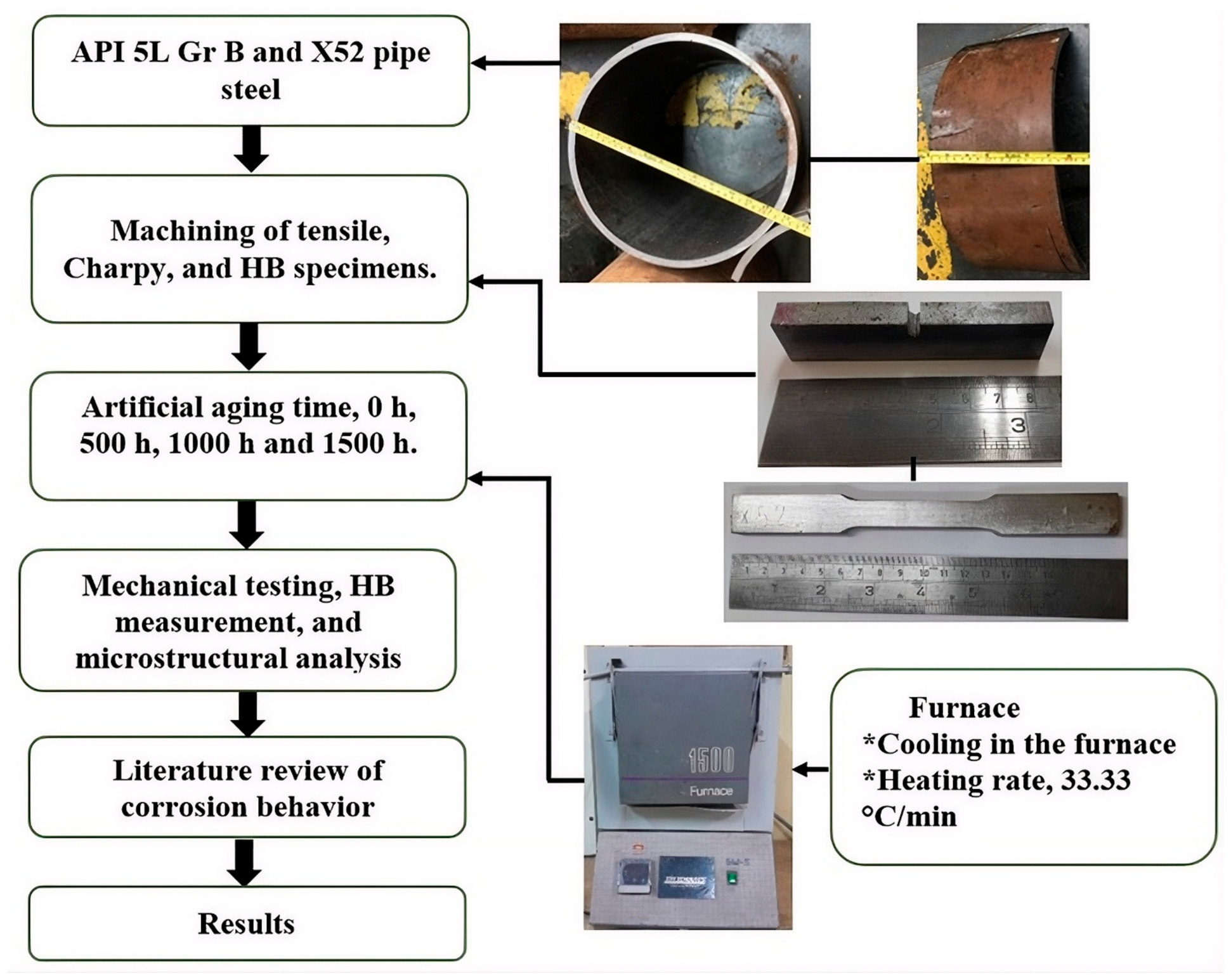
The wall thickness of the API 5L X52 EWR pipe was 25.4 mm, and the outside diameter was 914.4 mm. This pipeline is a PSL 2. The API 5L Gr B seamless hot-rolled pipe had a wall thickness of 15.1 mm and an outside diameter of 273.1 mm. This steel is a PSL grade 1. Table 1 and Table 2 show the chemical composition and mechanical properties of both steels, respectively. The mechanical specimens were obtained in the longitudinal direction. Figure 1 shows the experimental development in this work.
Table 1.
Chemical composition requirements for API 5L Grade B and X52 pipeline steels according to API 5L [1].
Table 2.
Minimum mechanical property requirements for API 5L Grade B and X52 pipeline steels according to API 5L [1].
Figure 1.
Experimental diagram used in this study.
2.2. Mechanical Tests and Microstructural Analysis
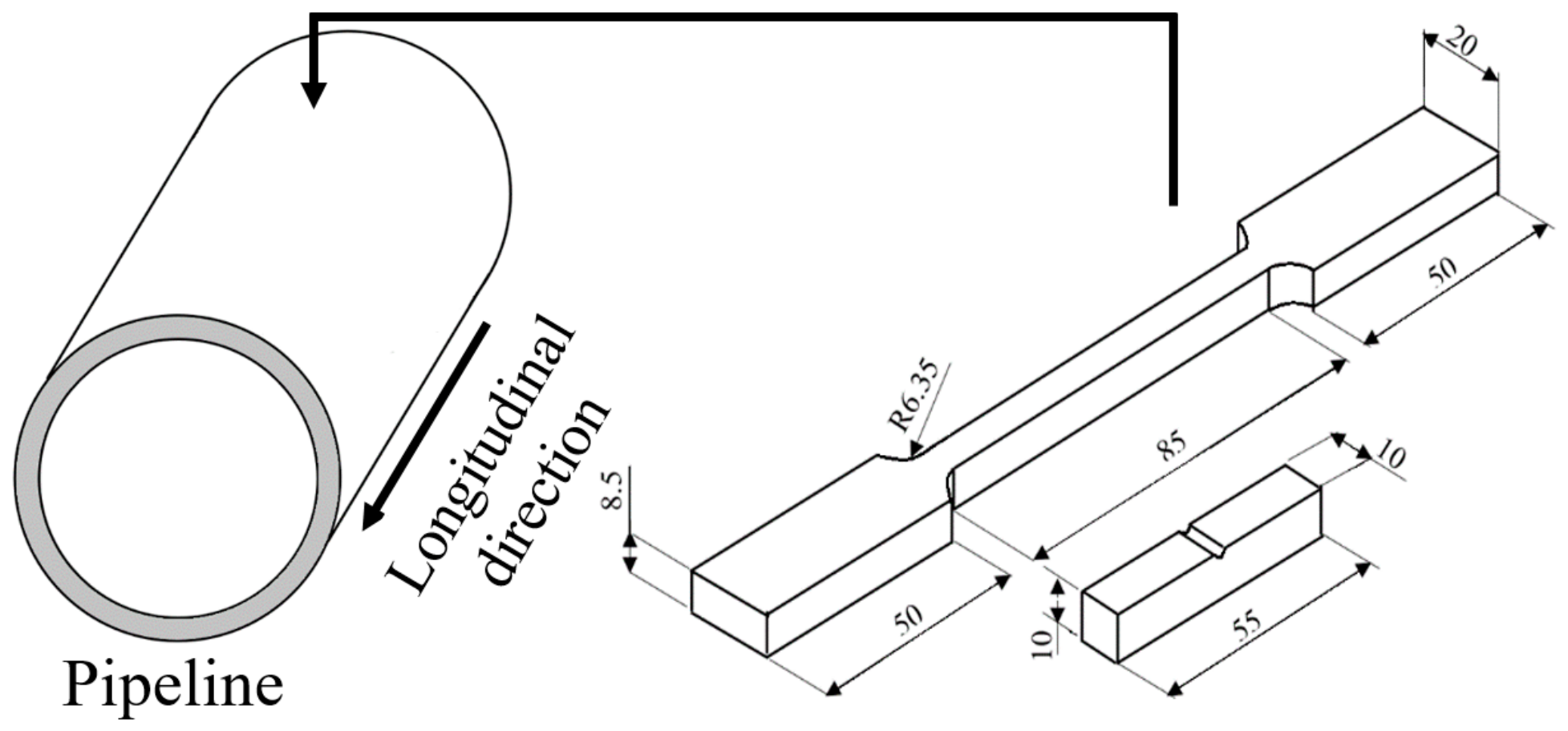
Three specimens were prepared for the tensile and Charpy impact tests (CVN), and three HB measurements were taken. The tension specimens were machined from the center of the pipe wall to avoid residual stress. This is because, given the wall thickness of both pipes, it is possible to obtain flat tensile specimens with a width of 8 mm. The tensile test was performed according to the ASTM E-8 standard [15]. The Charpy impact tests were performed according to the ASTM E-23 standard [16] using a Charpy model 74 machine with a capacity of 0.0-274 N ft-lb. Charpy tests were conducted at room temperature under laboratory conditions. Figure 1 shows the dimensions of the tensile and Charpy impact test specimens. Hardness measurements (HB) were performed according to ASTM E-10 [17]. A tungsten carbide ball of 10 mm was used as the indenter, with a load of 1500 kgf and a duration of 10 s. These measurements were taken at the ends of the tensile test specimens before testing.
The microstructures were obtained from additional specimens along the pipeline’s longitudinal direction. The microstructure analysis followed ASTM E-3 [18], which involves cutting, grinding, and polishing. Sandpaper was used for polishing, along with alumina and etching reagents, and 2% HNO3 in ethanol (nital). To reveal the microstructures, the chemical etching duration was approximately 3 s. The specimens were then immersed in an ultrasonic bath. They were placed in a container with alcohol and cleaned with acetone. A scanning electron microscope (SEM) was used to analyze the microstructures of both steels and to obtain fracture surfaces from Charpy specimens. To determine the microstructure percentages, Image Pro-Plus 6.2 software was used, and three photographs were obtained for each aging condition.
2.3. Artificial Aging
Once the test specimens were obtained, the artificial aging process was initiated. According to the work reported by [12,13,14], the artificial aging process can be used to estimate the service life of steels under working conditions. According to the literature [19,20], many pipelines have been in operation for more than 40 years. In the present study, an artificial aging process of 0, 500, 1000, and 1500 h was implemented, which, in the case of API 5L Grade B steel, simulates up to approximately 42 years of service [12]. According to reference [3], the Arrhenius equation can be used to estimate the natural aging time and the equivalent aging time:
where θ1 is the natural aging time for the steel, T1 is the natural aging operational temperature, T2 is the artificial aging temperature, θ2 is the artificial aging time, Q is the activation energy constant and has a value of 22,835 J/mol for API 5L Gr B steel, and R is the universal gas constant. Pipelines typically work at temperatures of approximately 30 °C, and the isothermal artificial aging temperature was 500 °C. Table 3 presents the natural and artificial aging equivalencies for Gr B steel. According to Vargas et al. [11], a temperature of 250 °C is used, although temperatures ranging from 100 °C to 350 °C can be employed for artificial aging [6]. It is difficult to establish a single aging temperature for both steels due to the changes in microstructure and mechanical properties, as well as the degradation that the steel may undergo within these temperature ranges [8]. Based on these factors, and to ensure a comparison under identical aging conditions, an aging temperature of 500 °C was selected for both steels. This temperature was also employed in other artificial aging studies [12,13,14]. This approach was intended to accelerate the natural aging effect in the Gr B and X52 pipelines.
Table 3.
The natural aging time and its equivalent isothermal artificial aging time for API 5L Gr.
It should be emphasized that 500 °C does not represent the operating temperature of hydrocarbon pipelines; rather, it was selected as an accelerated artificial aging temperature to promote aging-related microstructural and mechanical changes within experimentally feasible exposure times. Consequently, the Arrhenius-based time equivalence presented below should be interpreted as an approximate accelerated-aging relationship rather than as an exact reproduction of service conditions. The furnace temperature was maintained at 500 ± 2 °C throughout the aging treatment.
A conventional muffle furnace was used to simulate the aging processes. Artificial aging was carried out under normal air conditions for all hours. No atmospheric control was used during the aging process, as the muffle furnace lacks an atmospheric control mechanism. Once the specimens had undergone aging, the furnace was turned off, and the specimens were left inside to cool. Throughout the aging process, the furnace was monitored at 100 °C intervals, and the time was monitored every 6 h.
For each steel grade, four aging conditions were evaluated: 0, 500, 1000, and 1500 h at 500 °C. For each aging condition, three specimens were evaluated by tensile testing, three specimens by Charpy impact testing, and three Brinell hardness measurements were performed. Microstructural characterization was conducted by SEM using three micrographs for each aging condition. Therefore, all mechanical and microstructural comparisons between API 5L Grade B and X52 steels were performed using identical aging conditions and the same characterization procedures. The overall experimental sequence is summarized in Figure 1 and Figure 2 shows the dimensions of the tensile test specimens.
Figure 2.
Dimensions of the tensile and Charpy specimens.
3. Results and Discussion
3.1. Tensile, Charpy (CVN) Impact, and HB Values
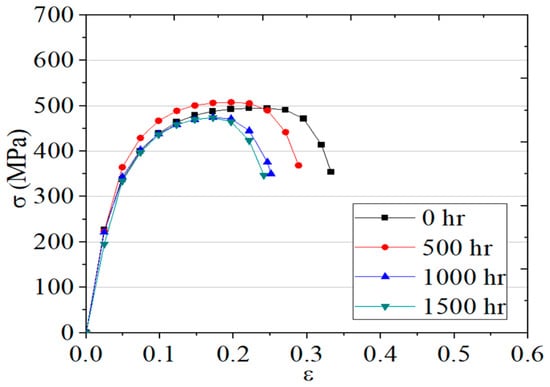
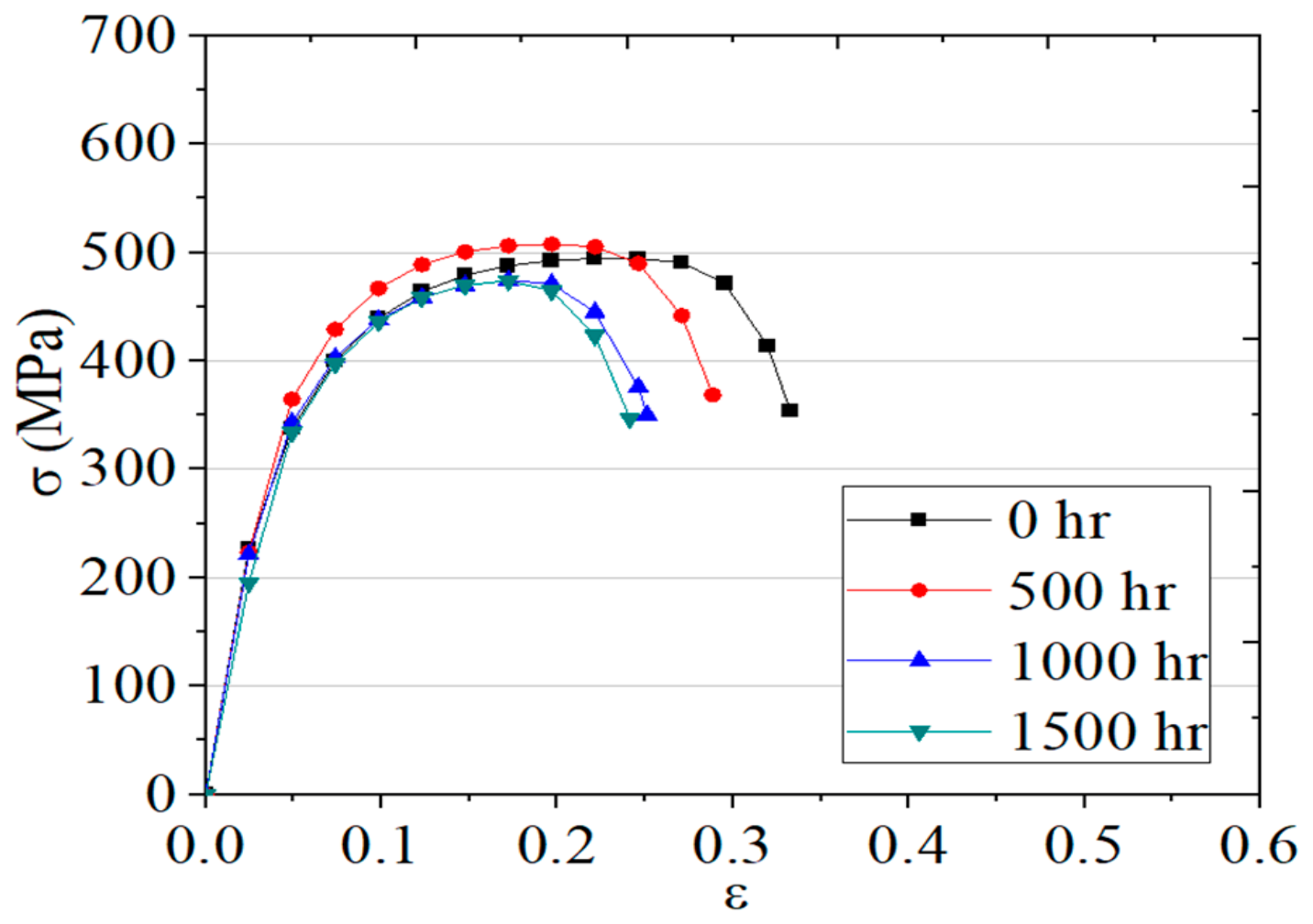
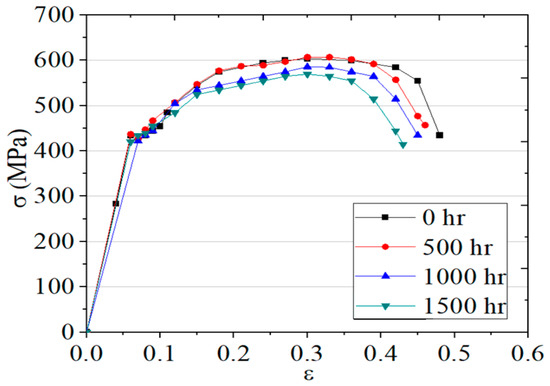
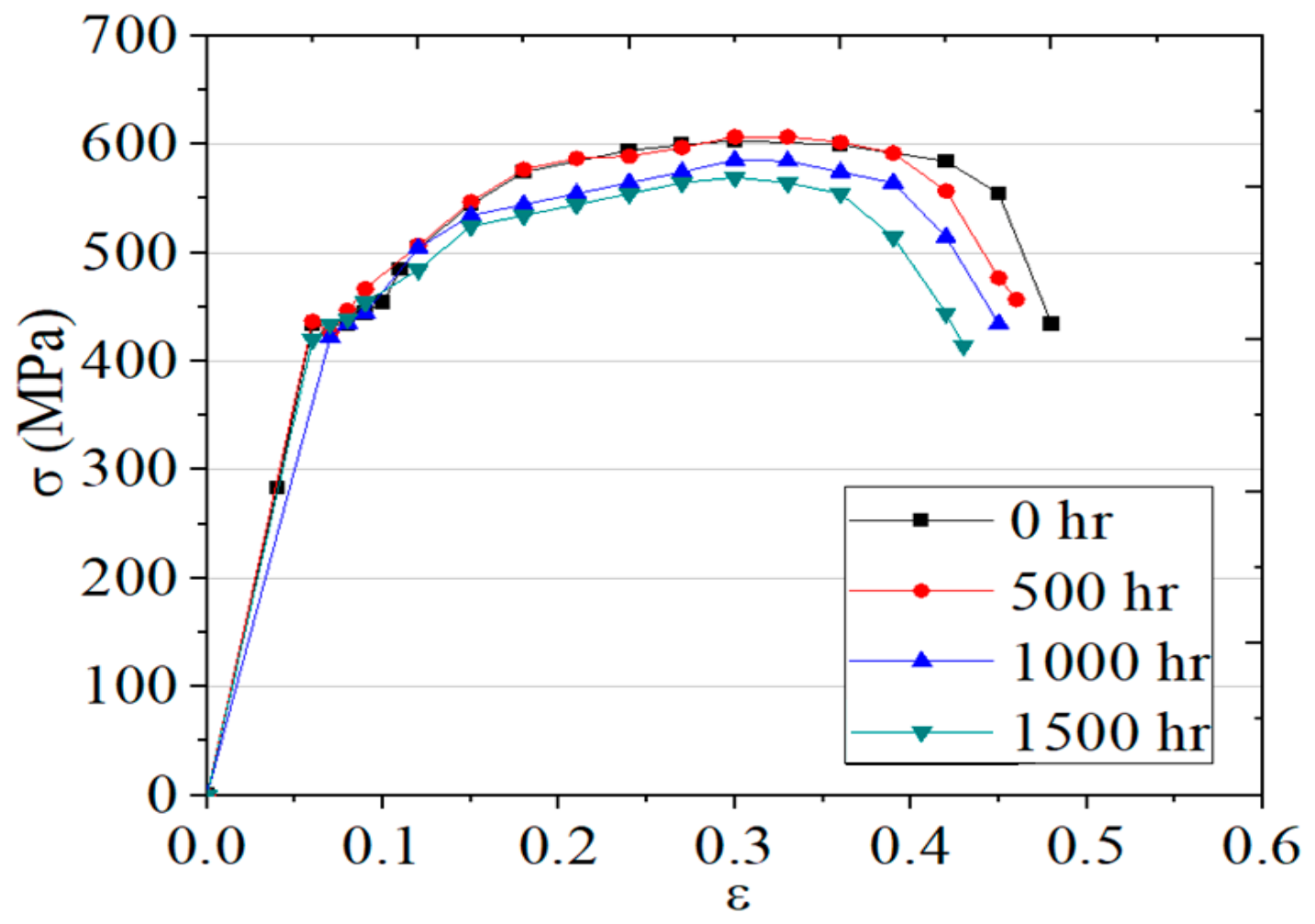
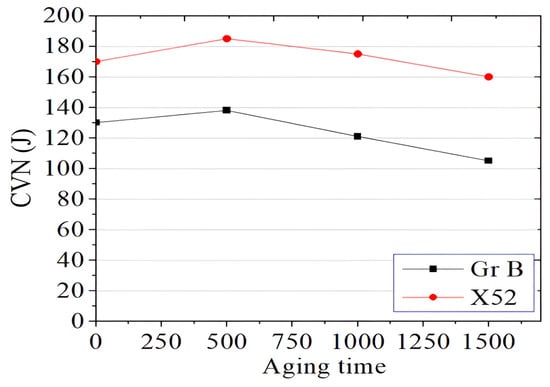
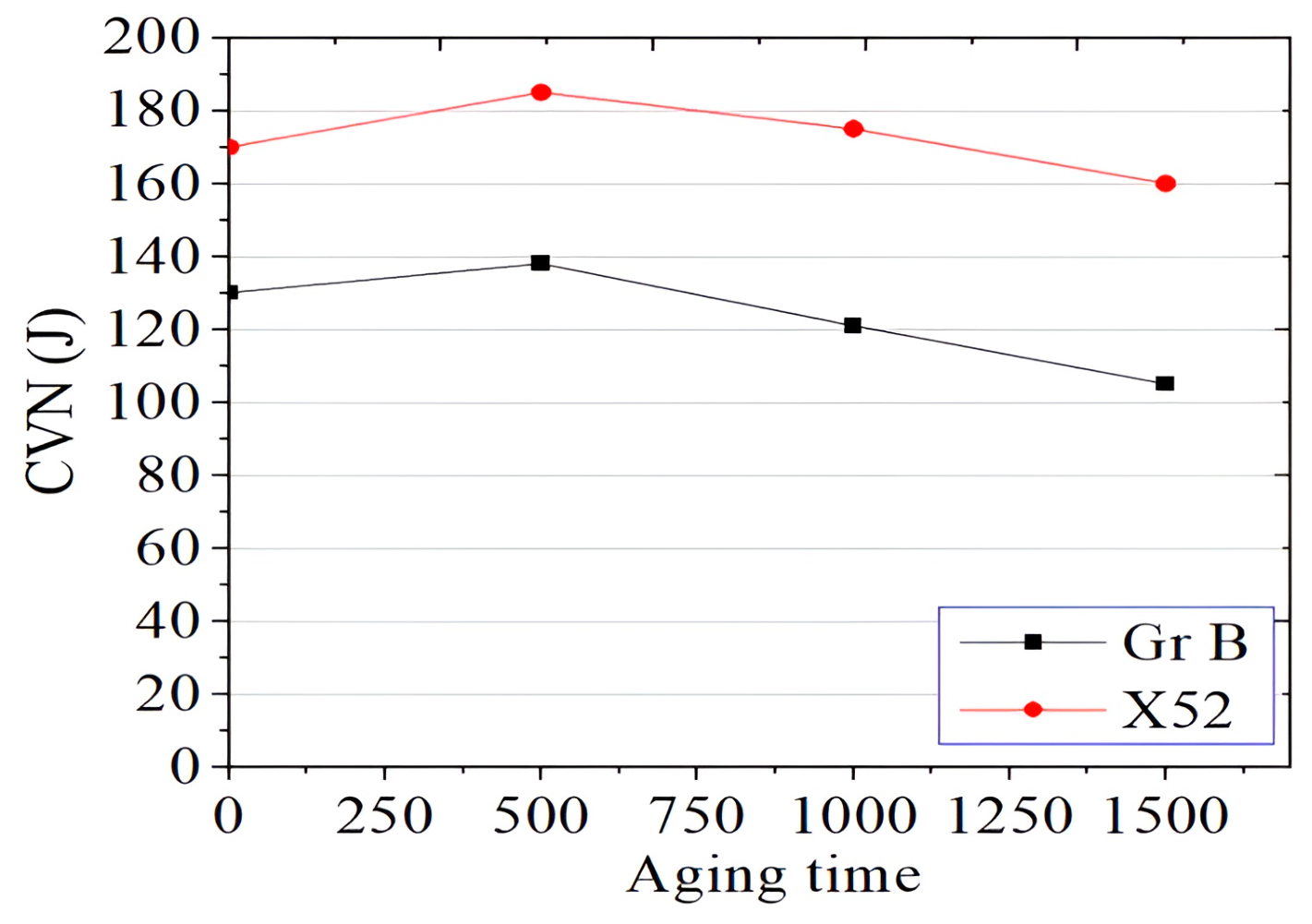
Table 4 shows the tensile values, CVN values, and HB values for the two pipeline steels, respectively. Figure 3, Figure 4, Figure 5 and Figure 6 show the mechanical properties, tensile, CVN, and HB values for the two pipeline steels versus aging time. As shown in Figure 3 and Figure 4, the yield strength (σYS) for API 5L Gr B steel is 307 MPa, while for X52 steel, it is 433 MPa. These values are within the range specified by API 5L. However, after over 500 h of aging, the σYS for both steels increased slightly compared to the initial aging condition at 0 h. As the aging time increased, the σYS decreased. This behavior was also observed for the ultimate tensile strength (σUTS) values, where the σYS for Gr B steel was 494 MPa, and for X52 steel, 603 MPa. As aging time increases, σUTS decreases. This behavior has also been reported by other authors [5], who found that tensile strength is affected by the natural aging process. As mentioned, the σYS and σUTS values increase after 500 h of aging and decrease as aging time increases. Once 500 h of aging is exceeded, σYS and σUTS decrease. Similar behavior has been associated in previous studies with aging-related microstructural processes such as grain growth and carbide coarsening [4,6,8,21]. However, because carbide size and distribution were not quantitatively characterized in the present study, these mechanisms are considered possible explanations rather than experimentally demonstrated causes of the observed mechanical-property changes. Bold numbers represent the mean values of the three groups.
Table 4.
Mechanical properties for API 5L Gr B and X52 pipeline steel artificial aging.
Figure 3.
Stress–strain engineering curves for artificially aged Gr B steel.
Figure 4.
Stress–strain engineering curves for artificially aged X52 steel.
Figure 5.
CVN values versus aging time for API 5L Gr B and X52 pipelines.
Figure 6.
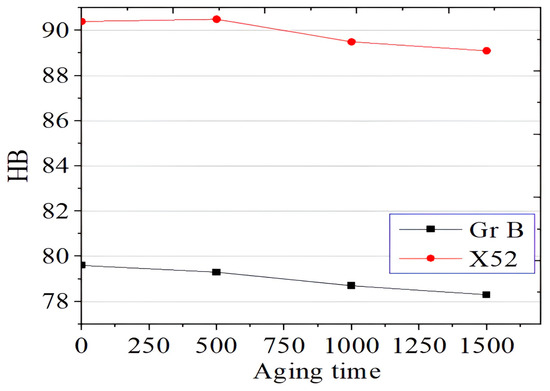
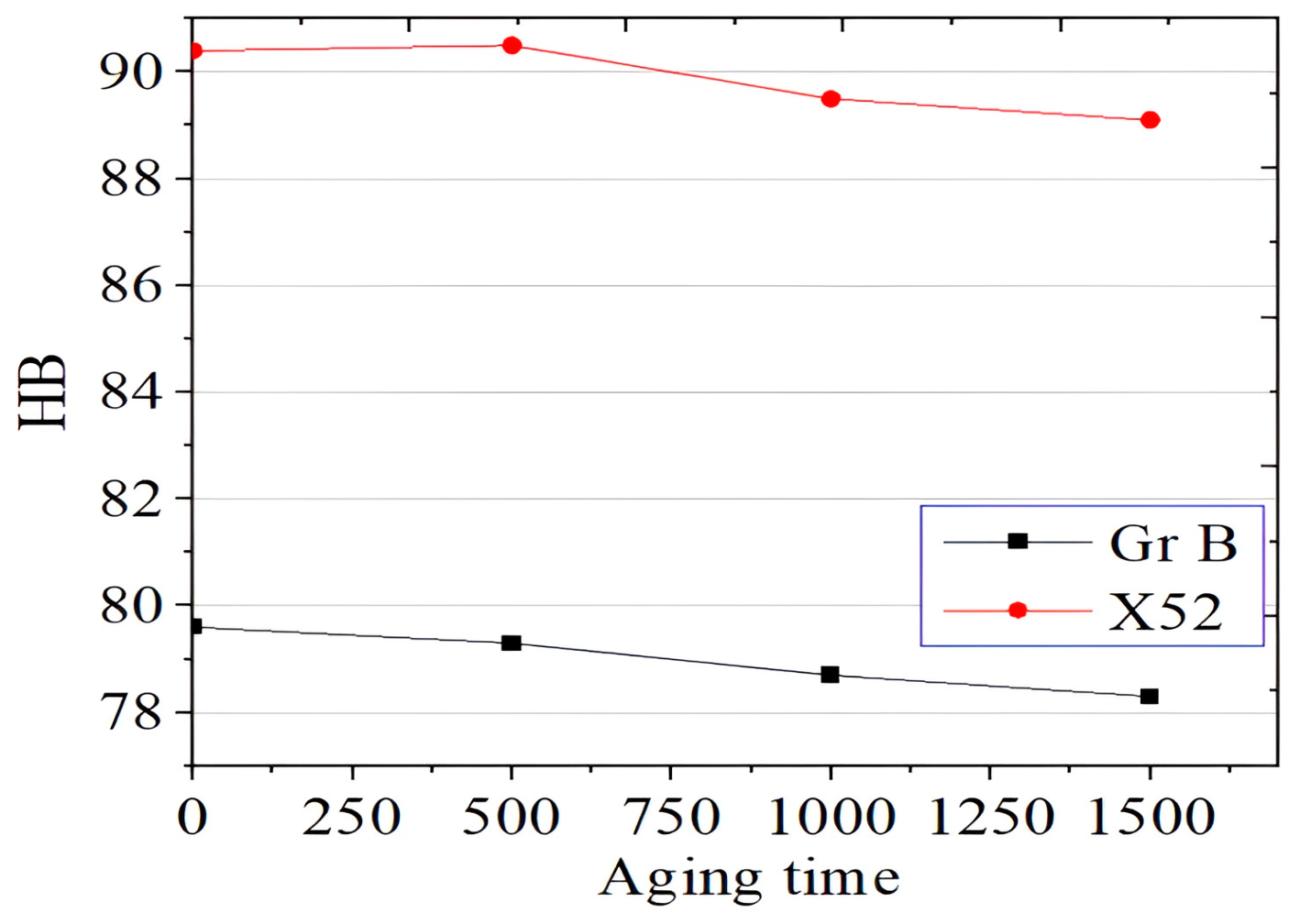
HB values versus aging time for API 5L Gr B and X52 pipelines.
For the Charpy energy values (CVN), a similar behavior to the σYS and σUTS values is observed; at 500 h of aging, the CVN values increase slightly compared to those at 0 h of aging, and after 1000 h of aging, they decrease (see Figure 5). It is clear that the changes in the mechanical properties of σYS and σUTS are directly similar to the behavior of the Charpy specimens. This is because this type of test exhibits plastic behavior. CVN values for all conditions are similar to each other. According to Capula et al. [22], the steel is 100% ductile at 0 h of aging, while as the aging time increases, it becomes more brittle. This embrittlement compromises the mechanical integrity and reduces the mechanical capacity of the pipeline steel. According to Beltrán et al. [5], low ductility is observed for naturally aged steels.
The HB values for Gr B steel are 79.6 under the initial aging condition of 0 h, and decrease slightly with increasing aging time, as illustrated in Figure 6. The HB values for 500 h, 1000 h, and 1500 h are 79.3 HB, 78.7 HB, and 78.3 HB, respectively. The HB values for X52 steel for 0 h, 500 h, 1000 h, and 1500 h are 90.4 HB, 90.5 HB, 89.5 HB, and 89.1 HB, respectively. It is important to note that HB values are very similar across steel types. Although HB decreases with increasing aging time, the decrease is not significant, indicating that steels lose hardness over time. This may be because the tensile and Charpy impact tests show a considerable decrease in mechanical properties and are considered destructive mechanical tests.
The complete specimens are subjected to tensile loads during the tensile test, while in the Charpy impact test, a sudden load is applied. These tests evaluate the specimen’s elastic–plastic behavior. The HB test, on the other hand, only measures surface hardness in areas where the indenter makes contact and is considered a non-destructive test. The HB test is commonly used in conjunction with the tensile and Charpy impact tests to determine whether a steel is affected by aging. Large cross-sectional areas are used due to the number of measurements required to measure HB values. This confirms that the values are homogeneous and similar throughout the steel. Therefore, it is expected that, for non-destructive tests such as HB testing, no marked decrease in the aging effect will be observed for either steel. Destructive mechanical tests, such as tensile and Charpy impact tests, measure absolute mechanical properties, including strength. This assumes that the steel ages uniformly throughout the specimen. Samples of engineering materials are subjected to a wide variety of mechanical tests to measure their strength or other properties of interest [23].
The direct comparison indicates that both steels follow a similar aging trend, characterized by an initial increase in mechanical properties at 500 h followed by degradation at longer exposure times. Nevertheless, X52 retained systematically higher yield strength, ultimate tensile strength, and Charpy impact energy than Grade B throughout the aging sequence. Therefore, the identical aging conditions used in this study demonstrate that, although the two steels exhibit qualitatively similar aging trends, their remaining mechanical capacity after prolonged aging is substantially different.
A quantitative comparison of the initial and final aging conditions reveals different sensitivities of the two steels to prolonged thermal exposure. Between 0 and 1500 h, Grade B exhibited reductions of approximately 10.1% in yield strength, 7.9% in ultimate tensile strength, and 19.2% in Charpy impact energy, whereas X52 exhibited reductions of approximately 3.0%, 5.6%, and 5.9%, respectively. Therefore, although both steels exhibit qualitatively similar aging trends, Grade B shows a greater relative degradation of mechanical performance, particularly in impact toughness. These mechanical changes occur together with the aging-related microstructural evolution observed by SEM; however, the present characterization does not allow a definitive causal relationship with specific carbide or pearlite evolution mechanisms to be established.
3.2. Microstructures Obtained
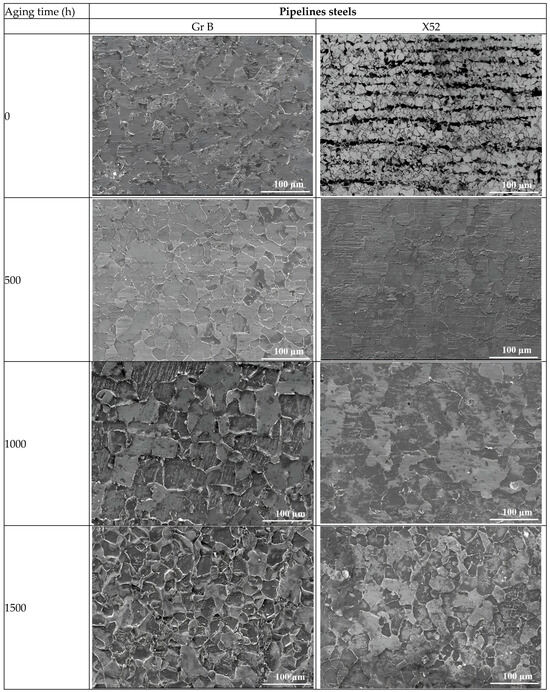
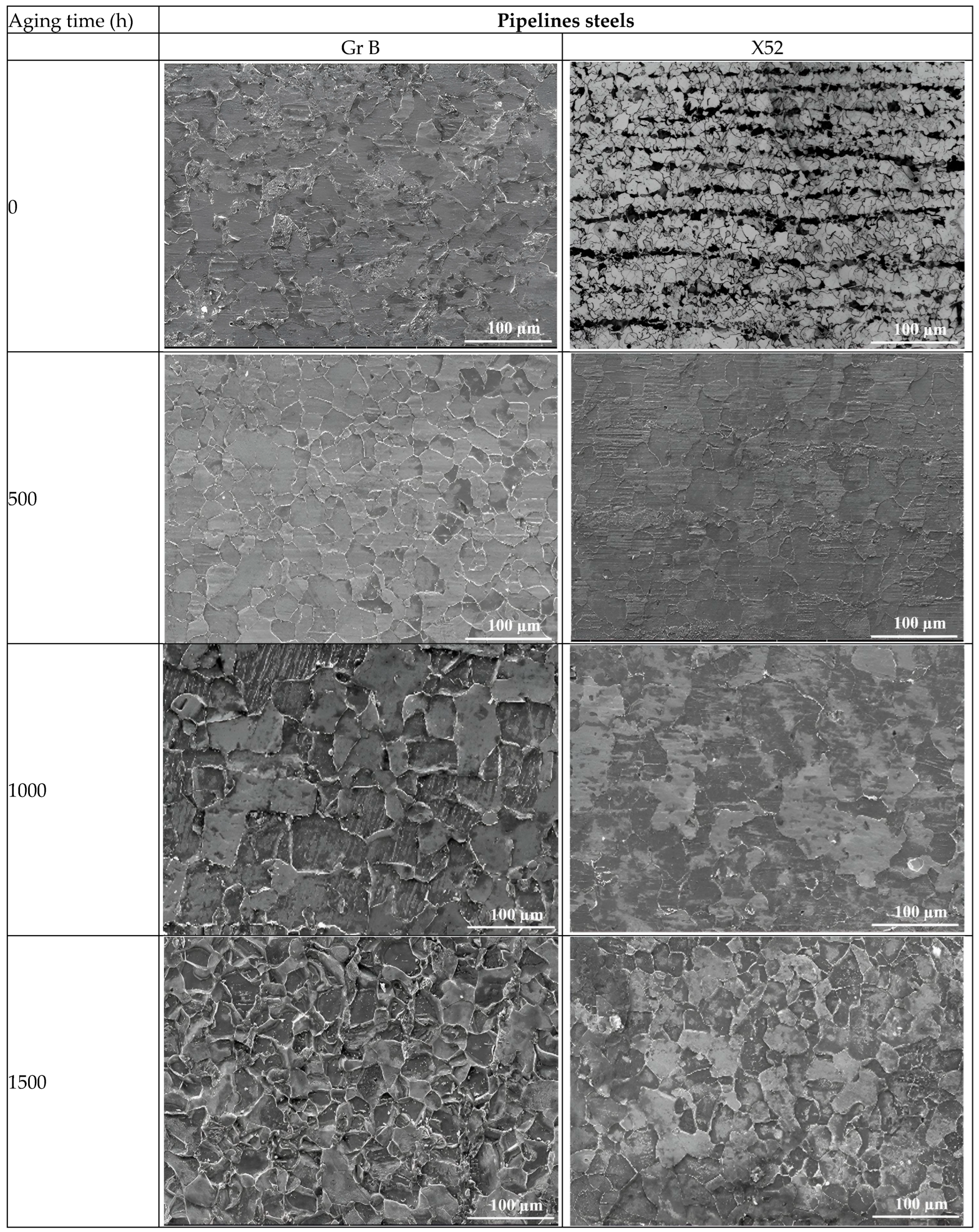
Figure 7 shows the SEM micrographs obtained for both steels. Ferrite and pearlite are present at 0 h of aging. These two microstructures are characteristic of low-carbon steels. Ferrite and pearlite percentages of 75% and 25%, respectively, were observed for the Gr B steel, while for an X52 steel, the percentages were 77% and 23%, respectively. These values are close to those reported in the literature [6,12,21,24] and were constant for all aging time conditions.
Figure 7.
Microstructures obtained by SEM for API 5L Gr B and X52 at different aging times.
However, steel with a ferrite–pearlite microstructure is affected by aging [5]. According to Chamorro et al. [4], API 5L steels retired from long-term service can exhibit pearlite aging and microstructural degradation. Both steels exhibited pearlite fragmentation, fine precipitate particles, and spheroidized cementite at grain boundaries, indicative of microstructural degradation due to natural aging [5].
3.3. Fracture Surfaces of Charpy Specimens and Tensile Specimens
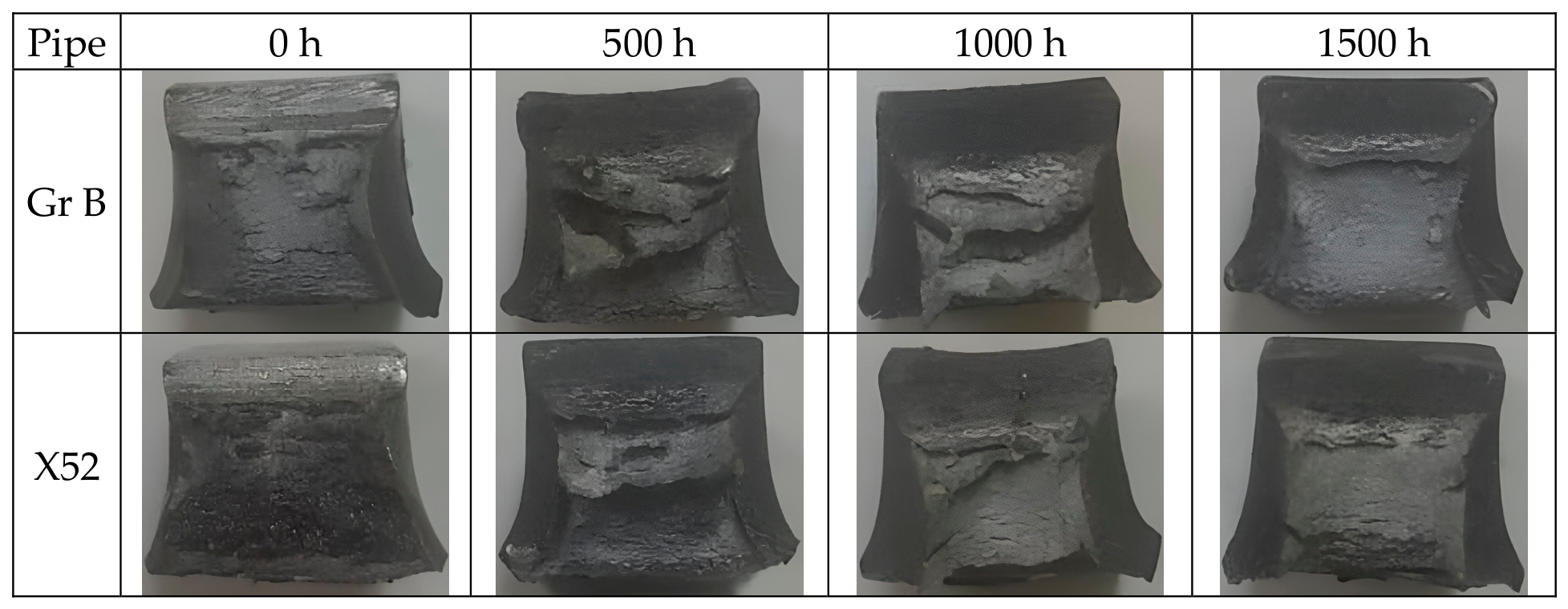
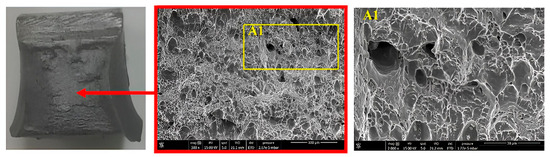
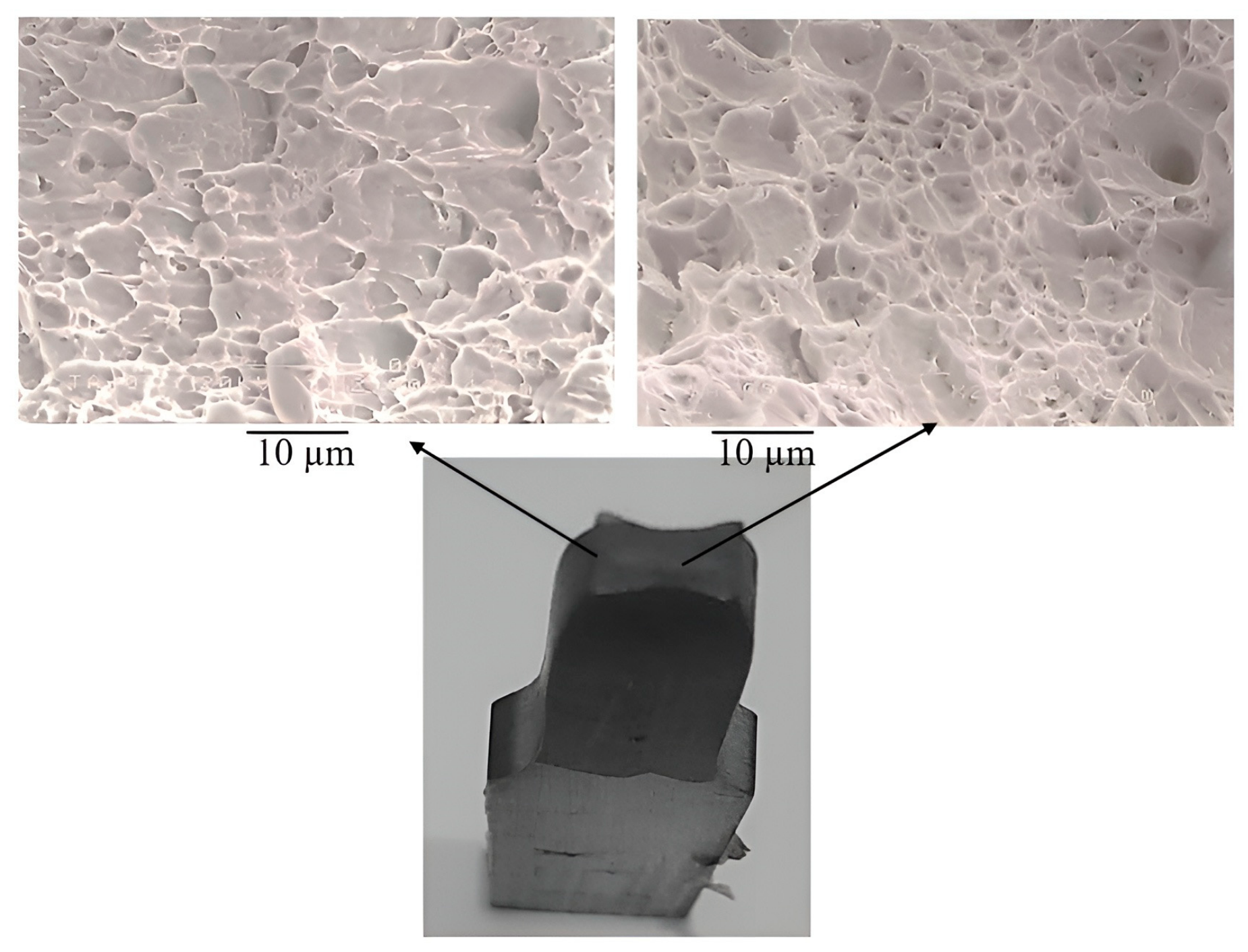
Figure 8 shows the fracture surfaces of both API 5L steels subjected to different artificial aging times. At 0 h and 500 h, both steels exhibit pronounced plastic deformation, indicative of predominantly ductile behavior. It is important to note that the Charpy impact tests were conducted at room temperature, approximately 25 °C. At this temperature, the majority of the fractured specimens exhibited ductile behavior, characterized by plastic deformation on the fracture surfaces. Plastic behavior on the fracture surfaces is characterized by dimples and limited cleavage areas, as illustrated in Figure 9. Fibrous fractures can be detected on the fracture surfaces of Charpy specimens, indicating a transition from ductile to brittle behavior. Specimens exhibiting ductile behavior present shear lips, indicating void coalescence, which is characteristic of high energy values. As aging time exceeds 1000 h, a gradual reduction in ductility is observed, accompanied by an increased tendency toward brittle fracture. This is reflected in the cleaved areas, indicating little brittle behavior. Although this transition is relatively subtle for both steels, the results indicate that prolonged aging promotes a slight embrittlement of API 5L Grade B and X52 steels.
Figure 8.
Fracture surfaces for Charpy specimens at different artificial aging times for API 5L steels.
Figure 9.
Images obtained by SEM on the fracture surfaces for API 5L Gr B at 0 h of aging.
Based on the results regarding microstructures, mechanical properties, and fracture modes, it can be noted that the microstructural proportions in artificially aged low-carbon steels remain constant and consistent with findings reported by other authors. The mechanical properties exhibit a slight decline after exceeding 1000 h of aging. This is confirmed by the Charpy specimens, which show brittle behavior on the fracture surfaces of samples aged for 1000 and 1500 h.
Considering the mechanical and microstructural results together, both steels exhibit a progressive reduction in yield strength, ultimate tensile strength, hardness, and Charpy impact energy with increasing aging time, accompanied by the microstructural changes observed by SEM. The reduction in Charpy impact energy is particularly relevant, as it indicates a progressive loss of the material’s ability to absorb energy before fracture. Although the SEM observations allow the mechanical degradation to be qualitatively correlated with the microstructural evolution produced by prolonged thermal exposure, the specific mechanisms responsible for these changes cannot be conclusively identified from the present characterization alone. Therefore, the microstructure–property relationships discussed in this study should be interpreted as correlations supported by the present experimental observations and the available literature, rather than as a definitive identification of the underlying aging mechanisms.
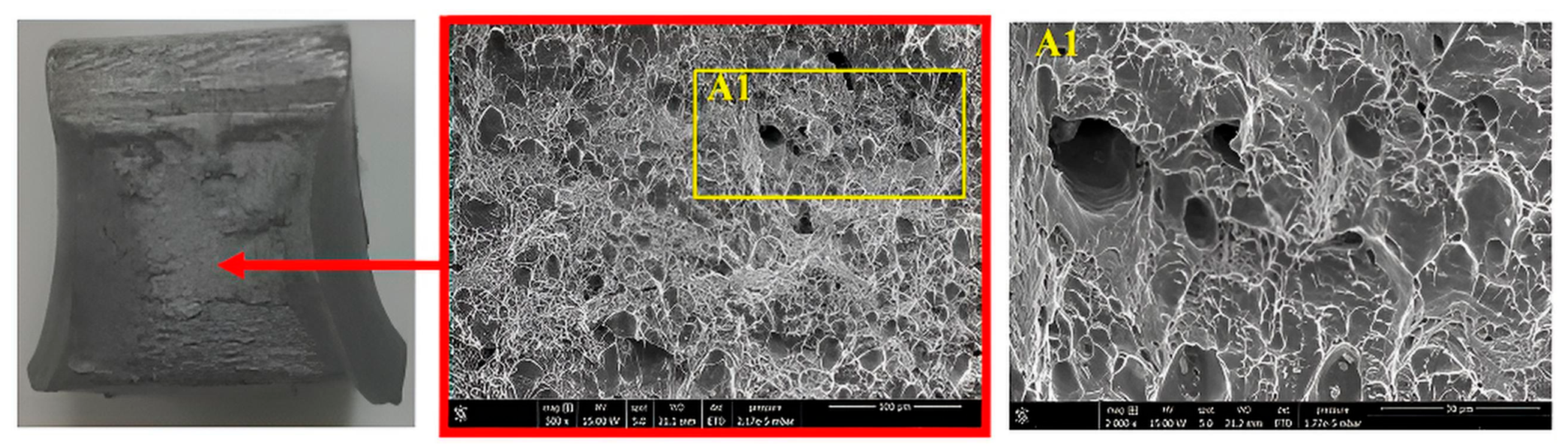
The fracture surfaces of the tensile specimens exhibit ductile behavior under most aging conditions. It is well known that these surfaces present a micro-void morphology, characterized by the presence of carbides and non-metallic inclusions. This micro-void behavior is defined by the mechanism of micro-void nucleation, growth, and coalescence typical of ductile steels [6,9]. A density of voids is observed on the fracture surfaces across all aging conditions; see Figure 10. As previously mentioned, aging slightly embrittles the steel as the aging time increases, resulting in reduced mechanical properties. Consequently, the fracture surfaces for the 500 h, 1000 h, and 1500 h aging conditions show small regions of brittle fracture characterized by cleavage zones.
Figure 10.
Images on the fracture surfaces for API 5L X52 at 0 h of aging.
3.4. Corrosion Behavior for Aged Steels Reported in the Literature
This subsection provides a literature-based analysis that is intended to place the mechanical and microstructural findings of the present investigation within the broader context of aging-related degradation of pipeline steels. The reported corrosion data are therefore used exclusively as complementary information to discuss how aging-induced microstructural changes may influence the corrosion performance of API 5L steels.
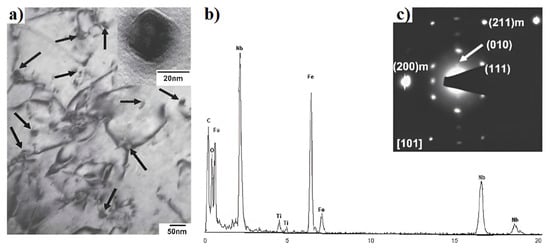
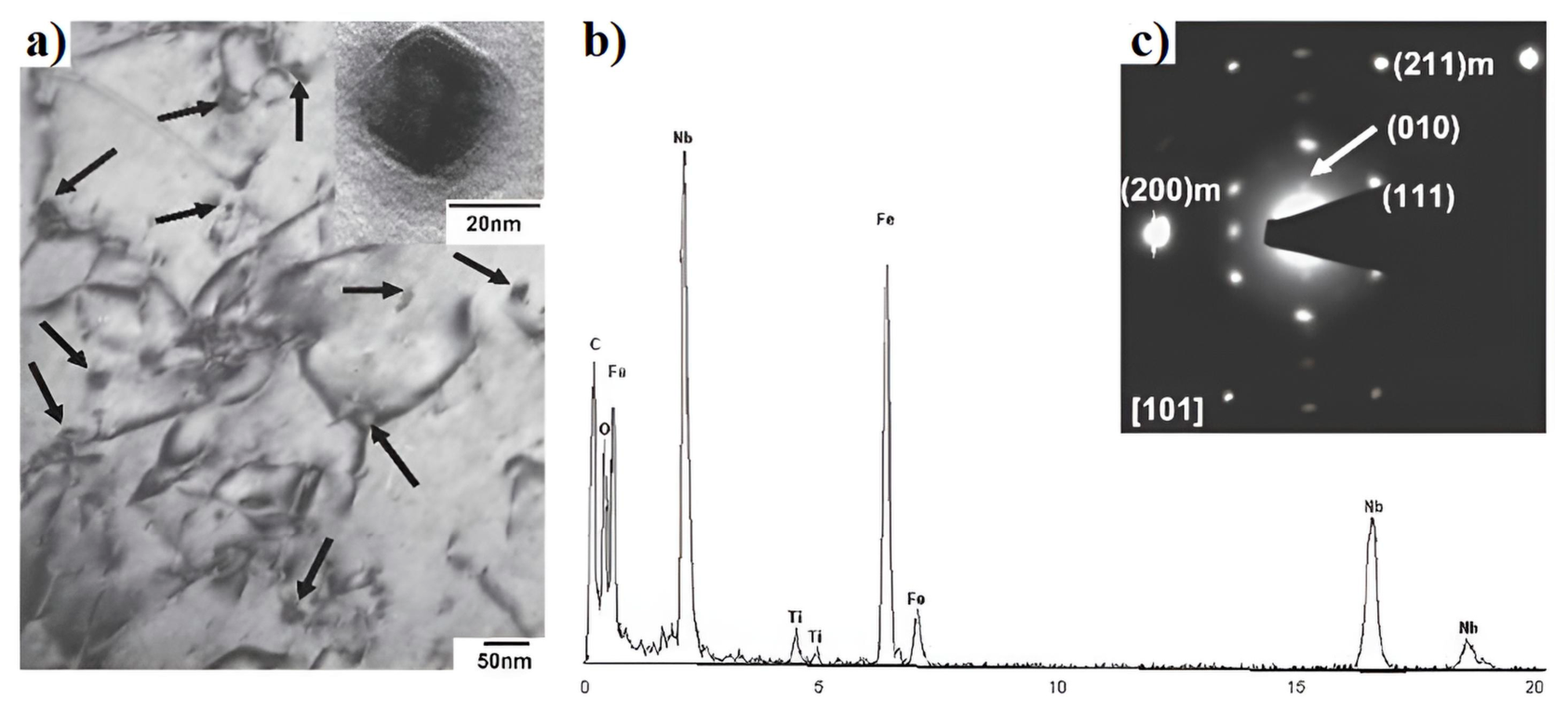
Currently, there are few studies on the corrosion of API 5L steels used for hydrocarbon transport as a result of natural or artificial aging. Although corrosion tests are not performed in this study, it is important to mention that many variables can affect the results of corrosion tests on aged steels, such as the type of solution and corrosion test. For example, Vargas et al. [9,10] performed corrosion rate tests on the weld bead (WB), heat-affected zone (HAZ), and base metal (BM) of an artificially aged API 5L X52 using an aqueous NACE ID-182 solution. They concluded that there is a slight increase in the corrosion rate, with the WB showing the greatest increase (35%), followed by the HAZ, and finally the BM (15%) when compared to unaged steel. This is because the BM is affected by the over-aging of nano-carbides and porous corroding products that promote the corrosion process. Figure 11 shows Nb-C nanoparticles found at dislocations within ferrite grains in an X52 steel aged at 250 °C for 500 h. Morales et al. [25] used artificially aged API 5L X52 and X70 steel in various aqueous solutions; they concluded that the corrosion rate increases with the aging time. Díaz at al [13] conducted corrosion rate tests on artificially aged API 5L Gr B steel immersed in chloride solutions. The Gr B steel exhibited a lower corrosion rate compared to unaged steel in these aqueous solutions. This is because the grain size increases with aging time, reducing active zones.
Figure 11.
TEM bright-field (BF) images of X52 steel aged at 250 °C for 500 h: (a) dislocation interactions, (b) microanalysis by EDX at Nb-C-rich nanoparticles, and (c) electron diffraction pattern for niobium carbide identified [6].
Table 5 summarizes the complete dataset compiled from the literature regarding the corrosion behavior of aged API 5L pipeline steels under a wide range of environmental and operational conditions. The dataset includes information on steel grade, aging conditions, corrosive environments, testing methodologies, and the corresponding corrosion rates reported by various authors. The objective of this compilation is to provide a comprehensive reference database that supports the comparative assessment of aging-induced degradation mechanisms and their influence on corrosion performance. Owing to the diversity of experimental conditions, the reported corrosion rates should be interpreted within the context of the specific environments, exposure times, and electrochemical or gravimetric techniques employed in each study.
Table 5.
Literature dataset of corrosion rates reported for aged API 5L pipeline steels under different environmental and aging conditions.
The literature database mentioned in Table 5 reveals that the influence of aging on the corrosion behavior of API 5L steels is highly dependent on both the exposure environment and the steel grade. Although several studies reported increasing corrosion rates with prolonged aging, particularly in chloride-containing environments and at elevated temperatures, other investigations observed only minor variations or even slight reductions in corrosion rate after aging. The microstructural observations obtained in the present study, including aging-related pearlite degradation and changes in cementite morphology, provide a qualitative microstructural context for interpreting the corrosion trends reported in the literature. Such microstructural evolution may modify the distribution of electrochemically heterogeneous regions within ferrite–pearlite steels and consequently influence their corrosion response. Nevertheless, because corrosion experiments were not conducted on the specimens examined in the present work and carbide evolution was not quantitatively characterized, a direct causal relationship between the observed microstructural changes and the corrosion rates compiled in Table 5 cannot be established. The comparison should therefore be regarded as a literature-supported qualitative interpretation rather than an experimentally demonstrated microstructure–corrosion correlation.
4. Conclusions
- Although the two steels analyzed in this study are low-carbon steels classified under API 5L as PSL Grade 1 (Gr B) and PSL Grade 2 (X52), and differ in alloying content and mechanical properties, artificial aging was found to influence their elastic–plastic behavior, as evidenced by the tensile and Charpy impact tests.
- For destructive mechanical tests, the effects of aging are more noticeable and pronounced for both steels, as confirmed by the progressive degradation of mechanical properties with increasing aging time. In contrast, Brinell hardness (HB) measurements did not exhibit a comparable decrease, indicating a lower sensitivity of bulk hardness to aging-induced microstructural changes.
- For both steels (Gr B and X52), the microstructures consist of ferrite and pearlite, which are characteristic of low-carbon steels. Evidence of microstructural degradation associated with aging was observed; however, the volumetric fractions of ferrite and pearlite remained essentially constant across all aging time intervals.
- The fracture surfaces exhibited a gradual tendency toward more brittle behavior as aging time increased. Although this embrittlement was only slightly perceptible in the specimens analyzed, it indicates that prolonged aging promotes a subtle transition in fracture mode for both API 5L steels.
- Based exclusively on the literature reviewed in Section 3.4, the influence of aging on the corrosion behavior of API 5L steels depends strongly on the steel grade, aging condition, and corrosive environment. Published studies generally report increased corrosion rates for aged X52 under several investigated conditions, whereas Grade B may exhibit either increased or decreased corrosion rates depending on the exposure environment.
- This study has technical limitations regarding the use of analysis methods, such as corrosion testing, optical emission spectroscopy, EDS, TEM, and XRD, and so it is recommended that future work employ these techniques on both steels aged at the same temperature.
- The direct comparison under identical aging conditions showed that Grade B and X52 exhibit qualitatively similar aging trends but substantially different remaining mechanical capacities. X52 retained a consistently higher yield strength, ultimate tensile strength, and Charpy impact energy throughout the aging sequence, whereas Grade B exhibited a greater reduction in its absolute mechanical capacity after prolonged aging. Therefore, steel grade significantly influences the remaining mechanical performance of aged API 5L pipelines, even when the materials are subjected to the same accelerated-aging history.
Author Contributions
Conceptualization, G.T.M. and S.C.-C.; methodology, J.C.V.; formal analysis, J.C.V. and M.A.Z.-H.; investigation, G.T.M., F.C., and E.T.-S.; resources, M.V.S.; writing—original draft preparation, G.T.M., S.C.-C., and J.C.V.; writing—review and editing, M.A.Z.-H. and E.T.-S.; visualization, F.C.; supervision, M.V.S.; project administration, S.C.-C. All authors have read and agreed to the published version of the manuscript.
Funding
This research received no external funding.
Data Availability Statement
Data underlying the results presented in this paper are not publicly available at this time but may be obtained from the authors upon reasonable request.
Acknowledgments
The authors thank Instituto Politécnico Nacional (IPN) and SECIHTI for the facilities to perform this research.
Conflicts of Interest
The authors declare no conflicts of interest.
Nomenclature
| BM | Base metal |
| CVN | Charpy values |
| HAZ | Heat-affected zone |
| HB | Brinell hardness |
| SEM | Scanning electron microscopy |
| TEM | Transmission electron microscopy |
| WB | Weld bead |
| σY | Yield stress |
| σUTS | Ultimate tensile stress |
References
- ANSI/API 5L; Specification for Line Pipe. American Petroleum Institute: Washington, DC, USA, 2010.
- Kiefner, J.F.; Rosenfeld, M.J. The Role of Pipe Age in Pipeline Safety; INGAA Foundation: Washington, DC, USA, 2012. [Google Scholar]
- Terán, G.; Capula-Colindres, S.; Velázquez, J.C.; González-Arévalo, N.E.; Torres-Santillán, E.; Angeles-Herrera, D.; Cervantes-Tobón, A. Effect of the aging process in the failure pressure estimation in an API 5L Gr. B cracked pipeline using finite element modeling. Coating 2025, 15, 29. [Google Scholar] [CrossRef] [Scilit]
- Chamorro, I.; Vite, D.K.; Beltrán, M.A.; Rivas, D.I.; González, J.L.; Dorantes, H.J. Image processing methodology to quantify natural aging in low carbon steels exposed to long-term service. Metallogr. Microstruct. Anal. 2025, 14, 388–403. [Google Scholar] [CrossRef] [Scilit]
- Beltrán-Zúñiga, M.A.; Rivas-López, D.I.; Dorantes-Rosales, H.J.; González-Zapatero, W.; Ferreira-Palma, C.; López-Hirata, V.M.; Hernández-Santiago, F. Fatigue life assessment of low carbon API 5L X52 pipeline steels retired from long-term service. Eng. Fail. Anal. 2023, 143, 106769. [Google Scholar] [CrossRef] [Scilit]
- Vargas-Arista, B.; Albiter, A.; Angeles-Chaves, C.; Hallen, J.M. Effect of artificial aging time on the mechanical properties of weldment on API 5L X52 line pipe steel. Metall. Mater. Trans. A. 2006, 37, 2683–2690. [Google Scholar] [CrossRef] [Scilit]
- Vargas-Arista, B.; Hallen, J.M.; Albiter, A. Effect of the artificial aging on the microstructure on weldment on API 5L X52 steel pipe. Mater. Charact. 2007, 58, 721–729. [Google Scholar] [CrossRef] [Scilit]
- Vargas-Arista, A.; Balvantin, A.; Baltazar, A.; García-Vázquez, F. On the use of ultrasonic spectral analysis for the characterization of artificially degraded API 5L X52 steel pipeline welded joints. Mater. Sci. Eng. A 2012, 550, 227–234. [Google Scholar] [CrossRef] [Scilit]
- Vargas-Arista, A.; Albiter, A.; García-Vázquez, F.; Mendoza-Camargo, O.; Hallen, J.M. Effect of natural aging on the microstructural regions, mechanical properties, corrosion resistance and fracture in welded joints on API 5L X52 steel pipeline. Rev. Metal. 2014, 50, e024. [Google Scholar] [CrossRef] [Scilit]
- Vargas-Arista, A.; Solis-Romero, J.; Angeles-Chavez, C.; Albiter, A.; Hallen, J.M. Deterioration of the corrosion resistance of welded joints in API 5L X52 steel isothermally aged. Int. J. Electrochem. Sci. 2011, 6, 367–378. [Google Scholar] [CrossRef] [Scilit]
- Vargas-Arista, B.; Hallen, J.M.; Albiter, A.; Angeles-Chavez, C. Degradation of impact fracture during accelerated ageing of weld metal on microalloyed steel. Weld. Int. 2010, 24, 315–320. [Google Scholar] [CrossRef] [Scilit]
- González-Arévalo, N.E.; Velázquez, J.C.; Díaz-Cruz, M.; Cervantes-Tobón, A.; Terán, G.; Hernández-Sánchez, E.; Capula-Colindres, S. Influence of aging Steel on pipeline burst pressure prediction and its impact on failure probability estimation. Eng. Fail. Anal. 2021, 120, 104950. [Google Scholar] [CrossRef] [Scilit]
- Díaz-Cruz, M.; Velázquez, J.C.; González-Arévalo, N.E.; Mandujano-Ruiz, A.; Herrera-Hernández, H.; Cervantes-Tobón, A.; Hernández-Sánchez, E. Study of the effect of isothermal aging on API 5L Grade B steel through Charpy energy testing and electrochemical evaluation. Arab. J. Sci. Eng. 2023, 48, 16607–16622. [Google Scholar] [CrossRef] [Scilit]
- Velázquez, J.C.; González-Arévalo, N.E.; Díaz-Cruz, M.; Cervantes-Tobón, C.; Herrera-Hernández, H.; Hernández-Sánchez, E. Failure pressure estimation for an aged corroded oil and gas pipeline: A finite element study. J. Nat. Gas Sci. Eng. 2022, 101, 104532. [Google Scholar] [CrossRef] [Scilit]
- ASTM E8; Test Methods for Tension Testing of Metallic Materials. ASTM International: West Conshohocken, PA, USA, 2001.
- ASTM E23; Test Methods for Notched Bar Impact Testing of Metallic Materials. ASTM International: West Conshohocken, PA, USA, 2018.
- ASTM E10; Test Methods for Brinell Hardness of Metallic Materials. ASTM International: West Conshohocken, PA, USA, 2023.
- ASTM E3; Standard Practice for Preparation of Metallographic Specimens. ASTM International: West Conshohocken, PA, USA, 2001.
- Velázquez, J.C.; Caleyo, F.; Valor, A.; Hallen, J.M. Field study-Pitting corrosion of underground pipelines related to local soil and pipe characteristics. Corrosion 2010, 66, 016001-1–016001-5. [Google Scholar] [CrossRef] [Scilit]
- Velázquez, J.C.; Valor, A.; Caleyo, F. Statistical study of localized internal corrosion defects in oil and gas pipelines through sampling inspection. Process Saf. Environ. Prot. 2024, 186, 566–576. [Google Scholar] [CrossRef] [Scilit]
- Vargas, B.; Angeles-Chavez, C.; Albiter, A.; Hallen, J.M. Metallurgical investigation of the aging process. Mater. Charact. 2009, 60, 1561–1568. [Google Scholar] [CrossRef] [Scilit]
- Capula-Colindres, S.; Terán, G.; Velázquez, J.C.; Zuñiga-Hinojosa, M.A. Estimation of fracture toughness KIC from Charpy impact test data on aging pipelines steel. Strength Mater. 2026; Under review.
- Horwitz, H. Soldadura, Aplicaciones y Práctica; Alfaomega: Tokyo, Japan, 1990. [Google Scholar]
- Wu, Q.; Zhang, Z.; Liu, Y. Strain aging behavior of microalloyed low pipeline Steel. ISIJ Int. 2016, 56, 126–131. [Google Scholar] [CrossRef] [Scilit]
- Morales, P.; Palomar-Pardave, M.; Montes de Oca, M.; Ramirez-Silva, M.; Angeles-Chávez, C.; Romero-Romo, M. Effect of carbonate on chloride ions on the corrosion susceptibility of pipeline steel samples artificially aged. Int. J. Electrochem. Sci. 2018, 13, 1844–1858. [Google Scholar] [CrossRef] [Scilit]

Disclaimer/Publisher’s Note: The statements, opinions and data contained in all publications are solely those of the individual author(s) and contributor(s) and not of MDPI and/or the editor(s). MDPI and/or the editor(s) disclaim responsibility for any injury to people or property resulting from any ideas, methods, instructions or products referred to in the content. |
© 2026 by the authors. Licensee MDPI, Basel, Switzerland. This article is an open access article distributed under the terms and conditions of the Creative Commons Attribution (CC BY) license.