


Abstract
Artificial intelligence has attracted increasing attention in the construction industry; however, automated time scheduling remains limited in practical applications. Schedule development remains manual, requiring planners to analyze project documents, define activities, estimate durations, and identify relationships based on logical sequence. This process primarily depends on individual experience and skills, making it both time-consuming and prone to human error. From an engineering design perspective, delayed or inconsistent schedule development weakens design-to-construction feedback, limiting the ability to evaluate constructability and time implications of alternative design decisions during early-stage planning. This study proposes an integrated BIM–Natural Language Processing (NLP) framework to automate activity identification, duration estimation, and logical sequencing for construction scheduling. The framework extracts project data from Revit, organizes it into a bill of quantities format, and then generates an activity list, each activity with a unique ID. Using Sentence-BERT (SBERT) embeddings, the framework estimates activity durations based on semantic similarity. The same semantic process is combined with rule-based reasoning to identify logical relationships, including sequences, supported by an Excel-based reference dictionary that includes logical relationships, productivity, and ID structure. Finally, the framework incorporates a crashing module that proportionally adjusts the duration of activities on the longest path to target the project’s completion time without violating relationships. The proposed framework was validated using real construction project data and produced reliable results. By producing a tool-ready schedule directly from design-model information, the proposed workflow enables earlier schedule feedback loops and supports design-informed planning by allowing designers and planners to assess the time consequences of model-driven scope changes. The results demonstrate that integrating BIM and NLP can transform conventional schedules into faster, more consistent processes, thereby supporting the construction industry.
1. Introduction
Developing construction schedules remains a time-consuming and subjective process despite significant advances in BIM and digital planning technologies. An automated, intelligent system that integrates both geometric and textual data is increasingly needed, particularly as manual methods often lead to inconsistency and inefficiencies. Although substantial progress has been made in digital project information management and planning tools, developing construction schedules remains a technically demanding, labor-intensive task. While the use of artificial intelligence in the construction sector has attracted scholarly attention, the industry still lacks widespread adoption of practical solutions that can generate reliable schedules in a fully automated manner. Consequently, schedule preparation continues to depend heavily on manual inputs and the planner’s professional experience. This reliance increases the time required for schedule development and raises the likelihood of inconsistencies and errors. Practically, the planner must review and interpret project drawings, specifications, and bills of quantities to identify activities, define their scopes, estimate durations, and establish logical relationships and sequencing. Many of these decisions are shaped by subjective judgment and project-specific assumptions, which can lead to variation in outcomes and create risks of delay or rework during planning and execution [1].
Within the scope of automated construction scheduling, it has been shown in numerous studies that BIM, which features the integration of the geometric, semantic, and parametric characteristics of the structural, architectural, and MEP components and consolidates the data of the entire project, is the primary source of data [2,3]. Thus, many BIM-based scheduling techniques concentrate on data extraction, quantity take-off, and other forms of spatial or geometric optimization; however, these methods typically require construction planners to manually define the activities and specify logical relationships of activities [4,5,6]. Advances in artificial intelligence and optimization techniques have focused on improving the responsiveness of the methods [7,8]. However, they continue to lack an explicit semantic understanding of project information, limiting their value in real construction projects. Also, the studies on the language-based models show the possibilities of NLP in activity interpretation and schedule validation, but the scope of their work remains not fully automated for schedule generation [9,10,11]. Accordingly, present BIM-NLP automation projects [3,12] remain more conceptual than empirical, lacking a thorough examination of real construction data [12]. Furthermore, the degree of interoperability of BIM software with NLP models remains unaddressed. Consequently, the construction schedule automation frameworks that focus on the semantic analysis of textual data from construction projects, BIM elements, and construction scheduling optimization remain underdeveloped.
Despite sustained progress in BIM-enabled schedule automation, the literature still exhibits several persistent limitations that motivate this study. First, many BIM-based approaches remain predominantly quantity- and geometry-driven and consequently require substantial expert intervention to define the breakdown and/or precedence relations at an actionable level. Second, while recent transformer-based and large language model (LLM) research has advanced construction text mining and knowledge extraction, these methods typically operate as assistive or component-level solutions (e.g., classification, entity extraction, or mapping) and seldom yield an auditable, end-to-end pipeline that converts BIM-derived quantities into a fully specified, tool-ready schedule. Third, interoperability with industry scheduling environments, particularly Primavera P6, remains inconsistently addressed, limiting practical adoption and replication. Finally, the methodological transparency required for reproducibility (e.g., explicit linking logic, thresholding criteria, and data interface specification) is often insufficiently reported, which complicates comparative evaluation and real-world deployment.
In summary, the research gap addressed in this paper is the absence of a reproducible framework that simultaneously:
- automates the derivation of schedule activities from BIM-based quantities at a practical level of granularity.
- estimates activity durations using semantic matching while maintaining interpretability.
- generates precedence relations through an auditable hybrid of semantic and rule-based reasoning; and
- exports the resulting schedule in a Primavera P6-compatible structure suitable for immediate use and scenario evaluation.
Recent advances in Artificial Intelligence and Machine Learning have fundamentally changed how complex engineering and planning tasks can be automated in the construction industry. Artificial intelligence has already demonstrated its value in design optimization, visual recognition, and predictive maintenance [13,14]. One particularly promising subfield of AI and NLP concerns transforming free text into structured, machine-readable data [15]. Construction projects generate large narrative documents, including method statements, specifications, and progress reports, which encode critical procedural knowledge, such as execution logic and on-site sequencing practices. This textual knowledge can be extracted and interpreted by NLP, linked to BIM data via model information extraction, thereby forming an essential bridge between project narrative descriptions and digital models. Although recent studies have explored BIM–NLP integration for schedule-related tasks, existing approaches remain limited in scope, often addressing fragmented applications rather than providing a comprehensive, end-to-end framework for automated schedule generation.
Prior studies indicate that automation in BIM has primarily been developed around geometric models and quantity take-off data, with limited integration of textual semantics that capture essential execution knowledge, including site constraints and construction methods [12,16,17]. This separation between textual and geometric information represents a significant research gap and an opportunity to enhance automated planning systems. Advances in contextual language models, particularly Sentence-BERT (SBERT), enable deeper semantic understanding of complex construction narratives and facilitate meaningful linkage between textual descriptions and process stages.
Recent studies indicate that semantic models can extract significant information from natural processes in narrative descriptions. Nonetheless, a fully developed model capable of extracting activities and generating logic from construction is lacking. Semantic models were explored in 2024 through recent endeavors. Al-Sinan et al. [3] proposed a model for automatically generating schedules based on BIM and machine learning. Optimization models such as genetic algorithms [7,18] are promising, but they rely on structured inputs and do not provide the level of linguistic flexibility necessary to generate free-form interpretations. The problem lies in a gap that represents a tremendous opportunity: building a framework that integrates a structured Revit model with natural language processing (NLP). By using contextual embeddings such as Sentence-BERT (SBERT), natural language processing (NLP) models can grasp the semantics of complex constructs and link them to the appropriate process stages and activities. In such a system, the BIM model provides a quantitative and spatial representation, while NLP provides a qualitative explanation of the procedures and semantics, enabling more consistent, intelligent, and automated planning. Recent research has sought to enhance the integration of BIM and NLP, moving from theoretical discussion to practical application.
To address the gap, this research designs and validates an integrated BIM-NLP framework for automated construction schedule generation. The proposed framework automatically transforms unstructured data into structured contextual data types to construct a project schedule. The study focuses on automating residential concrete-skeleton projects to achieve a standardized construction process. The novelty of the framework lies in its hybrid semantic and rule-based mechanism, which employs SBERT embeddings to enable bidirectional transfer between BIM data and unstructured textual descriptions. The framework generates Primavera-compatible Excel sheets directly from the Revit model and reference data, creating a connected digital thread between design and planning. This study demonstrates how AI can transform construction into a scalable, intelligent, and data-driven planning process that improves efficiency and quality across projects.
Accordingly, this study makes the following contributions:
- A BIM-to-schedule workflow that converts BIM-derived quantities into uniquely identified schedule activities suitable for automated downstream processing.
- A semantic duration estimation mechanism that leverages sentence-level embedding similarity to map BIM-derived activities to reference productivity and historical knowledge transparently.
- A hybrid logic-generation approach that integrates semantic similarity with rule-based constraints to infer both horizontal and vertical precedence relations while preserving traceability.
- A reproducible data interface that exports activities, resources, and dependencies in a Primavera P6-compatible format to support direct adoption in practice.
- A schedule compression module for scenario-based time reduction that operates on the critical/longest-path activities to evaluate time feasibility under stated assumptions.
The core NLP modules for semantic matching, activity identification, and relationship generation are expected to be more transferable than the BIM-dependent components. In contrast, the BIM side is sensitive to model structure and the available level of detail (LOD) (classification, naming conventions, and parameter completeness). Consequently, applying the framework to non-repetitive and multi-discipline projects primarily requires calibrating the BIM to work package mapping rules to the target model’s LOD and extending the domain dictionaries (terms, logic, and production-rate). Broader empirical validation across diverse project types is identified as future work.
2. Literature Review
2.1. Schedule Generation in Construction
Chua et al. [19] introduced a functional needs-based modeling and an automated planning framework that translated functional requirements into temporal constraints using Constraint Logic Programming (CLP). Their work demonstrated how the proposed (Functional Requirement Model for Automatic Sequencing) FReMAS model automatically infers construction sequences from functional requirements using constraint-based logic, enabling the generation of multiple actionable alternatives to the schedule. However, the approach was not integrated into a comprehensive scheduling workflow and remained limited in practical applicability. Liu et al. [6] developed an effective BIM-oriented integrated framework for detailed construction scheduling, considering resource constraints. Their research sought to overcome the limitations of previous BIM-based scheduling approaches that treat the model as a static database, providing only a rough take-off. The proposed framework tightly couples BIM product models, work package data, process simulations, and particle swarm optimization (PSO)-based optimization algorithms. This integration enabled the automatic generation of activity-level schedules that also account for technical precedence and resource constraints. A prototype Revit plug-in was developed and tested on panelized light-gauge steel projects, demonstrating that rich data exchange between BIM and simulation models is a key enabler for real-time automated scheduling. Senouci & Mubarak [20] proposed a multi-objective optimization framework for construction scheduling under extreme weather. Their study incorporated climatic factors such as high temperature and humidity, as well as regulatory constraints on working hours, which significantly affect productivity, project duration, and cost. The model generated optimal schedules that minimize time and cost for construction projects in extreme-weather regions: The model computations are organized into three main modules: (1) a scheduling module for developing practical construction schedules and modifying activity durations using productivity multipliers to account for weather effects; (2) a cost-estimating module for direct and indirect costs adjusted based on past conditions; and (3) a module for generating optimal trade-offs between project duration and total cost. The model was proven through test cases to have the potential to solve the problem of finding the best crew composition and start time that results in minimum cost, while keeping all feasible schedule durations. The findings revealed that the project start date and crew configuration are important factors in alleviating weather-related risks and improving performance in extreme environments. Milat et al. [8] presented a proactive and robust scheduling approach for construction projects by implementing an adaptive version of the Non-dominated Genetic Algorithm II (NSGA-II). Their research proposed that the uncertainty in the execution of projects, delays, disruptions, and cost fluctuations can be addressed by inserting the ability to cope with stress in a straightforward schedule. A trade-off between project duration, profit, and schedule stability was sought, with the schedule minimizing a surrogate resilience measure that depends on activity float and resource use. Applying the model to a real construction case, it was evidenced that more robust schedules, in fact, resulted in much lower deviations between planned and actual performance for time duration and profit. Their study demonstrated the capability of metaheuristic algorithms to improve reliability in construction planning by facilitating proactive decisions made under uncertainty. Wang et al. [4] developed an automated planning technique that integrates BIM and spatial resource constraints to generate useful construction schedules. Their framework developed the construction data from the BIM model, and manual input is imported into the reasoning system to establish the logical relationships of the construction process, using Dynamo and Revit, and a MySQL database. An argument system was created to cover planning for multi-dimensional problems, such as the workpiece, material storage space, and transit space. Their case study showed that the method performed more efficiently than traditional approaches, reducing spatial conflicts and improving schedule accuracy. However, the framework still requires significant manual effort, relies heavily on software integration, and does not use NLP-based logic extraction. Wefki et al. [18] introduced a comprehensive BIM-based planning and optimization framework that integrates a genetic algorithm (GAS), 5D simulation, and Business Intelligence (BI) to enhance project planning and control. The framework was designed to address frequent challenges in the construction industry, such as low productivity, cost overruns, and schedule delays, which often stem from fragmented management practices and reliance on unnecessary data. The proposed feature includes several steps: extracting data from BIM models, generating activities, connecting resources, setting up logical sequences, and then using genetic algorithms to optimize the project program with a balanced time-cost trade-off. In addition, integration with 5D simulation enabled an uninterrupted view of construction progress, while the BI dashboard provided interactive, real-time updates to support decision-making. A prototype of the system was tested in the study using a real-world case and demonstrated its efficiency in reducing planning time, generating several alternative scenarios, and supporting project interests through dynamic reporting. Further, it emphasized adaptation and visualization but did not include semantic activity recognition. Alternatively, NLP-based logic generation highlights a significant difference between this research and the study in question.
2.2. NLP Applications in Construction Scheduling
S. Wu et al. [21] proposed extracting “target keywords” and “restriction sequences” from user-natural sentences using NLP, forming a final query that incorporates these concepts. The query is expanded through semantic relationships in the ontology, and the results are presented after they are mapped and ranked in the BIM object database. Amer [22] proposed the Part-of-Activity (POA) Tagging model, a pioneering NLP -oriented model for understanding and categorizing the semantics of construction activity names. The model was trained on over 7000 manually annotated activities using a Bidirectional Long Short-Term Memory (BI-LSTM) recurrent neural network and achieved a token accuracy of around 92%. It automatically recognizes the key elements of activity, action, object, location, and responsible party, enabling machines to understand schedules beyond simple string manipulation. This development fills an important gap in automated schedule reading, enabling knowledge extraction from raw historical project schedules and supporting higher-level applications such as automated forecast planning and master schedule comparison. In another attempt, Zhao et al. [10] proposed an Automatic Project Schedule Checking system designed to enhance the accuracy and completeness of construction project schedules. The primary objective is to leverage NLP to extract construction methods from project schedules. The system comprises three key modules to achieve this goal: an accuracy check focuses on ensuring the correctness of the project schedule; the Construction Method Extraction module to extract construction methods from the project schedule by analyzing both syntactic and semantic features; and a web-based ontology development to represent the properties and hierarchical structure inherent in construction schedules. Jafari et al. [15] developed a system for automatically recovering and temporarily connecting innovative reporting requirements across the construction sector using NLP and simulation. The problem addressed is the manual review of extensive agreements to identify reporting requirements, an effort that is both time-consuming and costly. Using NLP and ML, the approach determines whether reporting is required, while stochastic simulation estimates the time and overhead costs associated with each report. Results showed that the framework could identify demand with more than 95% accuracy. It has also been shown to make workback reporting easier, support contract negotiations, and reduce administrative functions. The study suggests that there were numerous contracts about both the limits and the dataset. Amer et al. [9] proposed an NLP application for scheduling using a deep learning framework to identify and critique pairwise activity relationships, achieving an F1-score of 88.3%. The model effectively detected illogical or missing dependencies, thereby improving schedule quality control. Nevertheless, the research remained oriented towards validation and critique rather than end-to-end generation.
2.3. AI and Machine Learning in Construction Scheduling
Amer & Golparvar-Fard [23] introduced Dynamic Process Templates (DPTs) to automate learning from historical records. Using vector representation and generative neural networks (LSTM-RNNS), DPTs were tested on 32 real-world schedules. Their study seeks to facilitate recall of construction sequencing and planning knowledge by autonomously assimilating the most effective construction practices from past projects. J. Singh & Anumba [1] proposed an installed structure for an installation plan and adaptation for a real-time pipe system. The approach integrates the BIM model with machine learning (K-Nearest Neighbors, KNN), Graph Neural Networks (GNNs), and heuristic optimization techniques (simulated annealing) to automate component mapping for installation activities while optimizing sequencing in the presence of visual and resource barriers. The framework used a hybrid knowledge-based system that combines historical data with website information to adapt to real-time conditions dynamically. The case study of their research revealed that the method effectively reduced overlapping activities, reduced delays, and improved the practicality of the schedule compared to traditional methods. Despite these contributions, research emphasizes that scalability and the real world must be considered, especially when integrating uncertainty, which requires additional procedures and ensures easy adaptation to industry standards. Bassir et al. [24] conducted an extensive study of the role of AI and ML in BIM workflows. This study highlighted the growing importance of AI and ML for managing and working with large volumes of complex data generated by digital construction methods. Integration of these technologies will facilitate automation across key areas, including scheduling, estimation, and control for safety and quality management. The study emphasized that AI methods, such as neural networks, expert systems, and semantic networks, can imitate human reasoning and increase planning precision by reducing information loss among AEC actors. It highlighted that integrating NLP with BIM could help interpret knowledge in textual format and promote collaborative decision-making in a digital twin environment. Al-Sinan et al. [3] proposed a conceptual blueprint to generate construction programs through the integration of BIM and ML. Their structure emphasizes the learning activity, duration, and resource requirements directly from the previous BIM model and expert-developed plan, leading to traditional rule-based or adaptation-exclusion beyond the approach. The system architecture consists of several modules, including a project analyst, an ETL and data warehouse, which will reconcile the engines for structured and unstructured data, an ML training and activity identification, sequencing, cost, and duration estimates. Their study highlighted the potential role of the Large Language Model (LLM) to create activity dictionaries and extract semantic knowledge from text project data. While the framework presents a comprehensive vision for automatic planning, it remains primarily theoretical and has not yet been validated on real-world projects. The authors also recognize challenges such as a lack of data standardization, resistance to adoption in the construction industry, and the risk of producing very detailed programs. As a result, their research serves as a forward-looking blueprint, outlining a gap addressed by the current study.
2.4. BIM–NLP Integration Frameworks
Chen et al. [25] proposed an automation modeling approach and a large-scale BIM-based process recording framework aimed at facilitating Automatic Facility Maintenance Work Order (MWO) scheduling, attempting to solve the problems existing in manual data entry and 2D drawing-heavy FM legacy systems. It linked BIM to CMMS and FMS via IFC extensions and COBie standards, improving interoperability between systems without issues. Failed components are automatically detected and visualized in the BIM, and a slightly modified Dijkstra algorithm is used to produce optimal maintenance schedules that account for several criteria, including emergency level, problem type, and spatial distance. Case studies indicated that this method effectively reduced service time and enhanced maintenance efficiency. Their research demonstrates that integrating computational BIM with the BIM-enabled model-tracking approach has the potential to automate real-time decision-making in facility maintenance management and to guide future research, such as elevating the automation idea into the construction industry. Aljebory & Qais Issam [17] proposed a knowledge-based expert system integrating Revit with Primavera P6. The framework used a rule-based knowledge base to automatically transfer BIM data into project schedules, reducing manual input and bridging BIM–Primavera interoperability. The approach was limited to direct data mapping and did not incorporate NLP or learning from historical records, thereby limiting its ability to generalize across diverse projects. Z. Wu & Ma [7] proposed automating construction schedules by integrating BIM, ontology-based constraint rules, and genetic algorithms. This research indicates that integrating BIM, ontology rules, and optimization algorithms enables rapid generation of logical, constrained construction schedules. The case study exemplifies the effectiveness of these hybrid approaches in extracting meaningful data from BIM, establishing component relationships and constraints through ontologies, and efficiently navigating solution spaces. Importantly, these techniques significantly reduce manual scheduling effort and improve result accuracy compared to conventional methods. A. K. Singh et al. [12] BIM and NLP have shown strong potential for automating construction planning by linking model-based information with textual project documents. Their study evaluated existing approaches that benefit from BIM data, a historical project register, and textual documentation to improve planning automation. The authors proposed a generalized workflow for NLP-based construction plan management, encompassing data cleaning, NLP preparation (tokenization, lemmatization, and named-entity recognition), functional recovery, model training, plan generation, and verification. While the paper highlighted the ability of model-based (BIM/IFC) and learning-based (e.g., LSTM, transformer, GCN) methods, it also emphasized several limitations in the current research body, including reliance on manual work templates, difficulties with generalization across projects, and a one-size-fits-all BIM-NLP approach. Nevertheless, the study was primarily conceptual and emphasized the requirement for valid, practical contours—a gap addressed directly by current research. Torres et al. [26] conducted a bibliometric analysis of the evolution and knowledge structure of BIM adoption in construction scheduling from 2008 to 2024. The study systematically analyzed 489 Scopus-indexed journal articles using a combination of performance indicators, science mapping, and trend analysis to identify key research clusters. Based on the results of their paper, five main themes were identified: BIM-supported construction scheduling, data-driven monitoring and integration, sustainable supply chain management, project productivity and management, and smart construction systems. The findings showed that the application of BIM with AI and automation is growing steadily, suggesting its effectiveness in improving planning precision, real-time control, and decision-making in complex projects. Furthermore, regional and institutional patterns were analyzed, with China, the USA, and South Korea identified as the top three countries contributing to BIM scheduling research. Their bibliometric review identifies research gaps and future directions for the described subject by portraying BIM as a core technology for making construction scheduling management increasingly data-driven and collaborative. Recent authors have studied the combination of BIM and AI for improving automation in construction management. The convergence of BIM and natural language processing has attracted increased attention, as NLP systems enable the extraction of semantic knowledge from unstructured project documentation, such as method statements, specifications, and reports. At the same time, BIM provides geometric and parametric structured information for digital modelling. ElSaadany et al. [16] proposed a comprehensive thematic synthesis of BIM–NLP research and found that whilst there has been much progress in the utilization of NLP for compliance checking and information retrieval, few studies have focused on using this technique in support of 4D BIM scheduling. Current methods are often rule- or template-based and do not capture the variability and contextual meanings of construction language. As a result, existing research reveals a significant gap in a unified BIM–NLP framework for automatically extracting activities, establishing logical relations, and generating feasible construction plans from natural language text.
This review shows that while significant progress has been made at the intersection of BIM, NLP, and AI in construction scheduling, most approaches still center on geometric and quantitative data or, in the case of rule-based systems, lack any actual understanding of the problem at hand. Many of the proposed NLP-BIM integrations are still theoretical and remain to be validated against real datasets. Moreover, a critically small number of works provide a fully automated, end-to-end scheduling system that understands natural language, constructs schedules, and is directly integrated with BIM systems. A consequence of this is a particular lack of research aimed at developing a cohesive, semantically intelligent BIM-NLP system that achieves fully automated activity extraction, logic construction, and schedule optimization. This study aims to fill the gap with the proposed system, focusing specifically on residential concrete-skeleton projects.
2.5. LLM and Transformer Research in Scheduling Automation
Recent advances in transformer-based language models and large language models (LLMs) have accelerated construction informatics research across planning, design, compliance, and project controls. A prominent stream has focused on transformer-based mapping and standardization of construction information. For example, transformer architectures have been used to align heterogeneous planning artifacts (e.g., long-term schedules and short-term look-ahead plans) by ranking and matching task descriptions to master activities, thereby improving information consistency across planning horizons [27]. Other transformer-based methods have operationalized schedule-related text classification by automatically assigning standard classifications (e.g., Uniformat) to schedule activities, supporting downstream integration across schedule, cost, and payment structures [28]. In parallel, fine-tuned transformer models have been integrated with BIM workflows to translate client-authored requirement texts into BIM-retrievable assemblies, strengthening traceability between narrative intent and model content in early design automation [29].
A second stream has emphasized generative and multimodal capabilities. Recent reviews synthesize the growing body of work on multimodal LLMs and their use cases in construction (e.g., safety, compliance, planning, and robotics), while also highlighting the lack of standardized evaluation and robust workflow integration practices [30]. Complementary BIM-focused reviews discuss the feasibility of embedding LLMs within BIM processes to enhance usability and interoperability across lifecycle tasks [31]. Beyond reviews, emerging agentic LLM frameworks have been proposed to generate editable BIM models directly from natural language instructions via API-driven authoring workflows [32].
Notwithstanding these advances, most transformer/LLM contributions remain either (i) component-level solutions (e.g., classification, mapping, alignment, or generation) or (ii) tool-agnostic prototypes that do not necessarily produce a fully specified and directly deployable construction schedule. Accordingly, this study positions its contribution at the intersection of BIM automation and semantic NLP by targeting an end-to-end, reproducible workflow that transforms BIM-derived quantities into schedule activities, infers precedent relations through an auditable hybrid mechanism, and exports the resulting schedule in a Primavera P6-compatible structure suitable for practical adoption and scenario testing.
Positions the proposed framework against representative BIM-based schedule automation and recent transformer/LLM-driven construction-informatics studies using consistent, capability-oriented criteria. It compares input modalities, automation coverage (activity, duration, and logic generation), and interoperability with industry scheduling tools (e.g., Primavera P6). This comparison makes the research gap and the novelty of the proposed end-to-end, tool-ready pipeline explicit.
Table 1 highlights a clear pattern in the literature on construction scheduling automation. Most earlier studies concentrated on specific stages of the process rather than addressing scheduling as a complete workflow. Their contributions were often centered on tasks such as extracting information from BIM models, linking textual descriptions to model elements, classifying activities, or applying rules to establish sequencing. Although these efforts advanced the field in important ways, they generally remained confined to narrow functions. As a result, the broader challenge of transforming project information into a complete, usable schedule was left only partially addressed.
Table 1.
Positioning of the proposed framework against related work.
A closer reading of the comparison also shows that studies offering a fully reproducible pipeline are still limited. Only a small portion of the reviewed work appears to cover the full sequence from activity generation to duration estimation, logic definition, and final schedule output in a format suitable for direct implementation in Primavera P6. The table also points to uneven validation practices across prior research, with several studies providing only restricted testing or limited evidence of applicability in real project settings. Viewed in this light, the contribution of the present study lies in proposing a single integrated workflow that brings these functions together in a coherent and traceable manner. Its value is strengthened by validation through an actual case study, which demonstrates not only technical feasibility but also practical relevance.
3. Materials and Methods
This study proposes a framework to automate construction schedules using BIM and NLP. The research follows a multistep methodology, as summarized in Figure 1.
Figure 1.
Research Methodology Stages.
3.1. Methods Overview
The development of an integrated NLP-BIM framework that automatically generates construction schedules is a key element of this research. It supports the interpretation of unstructured data from BIM tools and the generation of construction scheduling logic using rule-based approaches and semantic machine learning. The framework is designed to achieve complete automation while remaining modular, enabling reuse and customization across different projects.
This study used a BIM model created in Revit (2024), Dynamo for Revit for model data extraction, a Python environment (Version 3.13.1) developed in Visual Studio Code (Version 1.109.5), Microsoft Excel, and Primavera P6 (Version 25) for schedule generation. These tools constitute the integrated workflow environment and are reported here to support reproducibility. In the semantic matching stages, the pre-trained Sentence-BERT model paraphrase multilingual-MiniLM-L12-v2 was implemented using the sentence-transformers library to generate 384-dimensional sentence embeddings for multilingual similarity comparison. The model was used without additional fine-tuning. For clarity, the main steps of the proposed BIM–NLP scheduling workflow are summarized in Algorithm 1.
| Algorithm 1. Stepwise summary of the proposed BIM–NLP workflow. |
| Input: BIM model data extracted from Revit, reference dictionaries for cost, productivity, logic, and activity ID structure, and user-defined planning parameters. |
| Output: A Primavera P6-compatible schedule including activities, durations, and dependencies. |
| Step 1: Extract structural element data from the BIM model using Dynamo. |
| Step 2: Transform the extracted data into a structured BOQ format. |
| Step 3: Match BOQ items with the reference cost database. |
| Step 4: Generate a construction activities list from BOQ items. |
| Step 5: Assign structured activity IDs using reference dictionaries. |
| Step 6: Estimate activity durations using productivity rates and SBERT-based semantic matching. |
| Step 7: Generate horizontal dependencies using semantic matching and rule-based sequencing logic. |
| Step 8: Validate candidate links by rejecting self-loops, reverse duplicate links, and cycle-forming relations. |
| Step 9: Generate vertical inter-floor dependencies using predefined construction workflow rules. |
| Step 10: Export the resulting activity network to Primavera P6-compatible sheets. |
| Step 11: Apply heuristic crashing to the identified longest path for first-pass schedule compression. |
3.2. Data Extraction
Visual programming scripts were built using Revit Dynamo to extract elements from Autodesk Revit 3D models. Structural elements (slabs, columns, beams, and foundations) were filtered to analyze their levels, areas, volumes, perimeters, and material types. The basic Dynamo nodes for category selection and data retrieval were combined with Python nodes to handle computations beyond Dynamo’s normal range. The data were formatted into a table and exported to an Excel workbook, with each element category filtered into separate sheets for ease of further processing.
3.3. BOQ Transformation
A Python script was developed to automate the extraction of model information into a structured Bill of Quantities format. For each Revit category (columns, slabs, beams, foundations, etc.), information is scrubbed, summed, and consolidated to the building/level granularity. Dataset integrity is preserved by simply substituting missing values with defaults. An accurate BIM-based cost take-off is performed by summarizing areas, volumes, and element counts by floor. There is no manual input required for this process, and it is very effective at delivering a physical scope for scheduling and cost analysis.
3.4. Cost Mapping
By using SBERT and a reference cost database, each quantity value is aligned with its corresponding unit value based on SBERT’s results. As such, irrelevant elements are stripped away, and pricing units are homogenized. In this case, the closest match is established based on unit similarity, such as floor level and item type, by comparing item descriptions with entries in the pricing database. Thereafter, the determined unit price is applied to calculate the cost of each item based on the area and volume.
3.5. Activity Generation
A Python code was designed to generate the activity list from the BOQ. The code automatically divided items when reinforced concrete was observed into four stages of execution: shuttering, steel fixing, pouring, and deshuttering. Furthermore, there is an optional interface that allows planners to allocate the total cost across these stages using percentage allocations.
3.6. Activity ID Structuring
A reference dictionary that maps floor and phase codes to each task facilitates the generation of a structured activity ID for each task. For example, a Python code generates activity IDs such as CON-4F-SHU-210, which represents Construction, 4th Floor (4F), and SHU (shuttering). Having such a standardized format streamlines the integration of various planning, tracking, and reporting systems.
3.7. Activity Duration Estimation
The estimation of activity duration is conducted using a hybrid approach that integrates semantic similarity and productivity. Each activity is linked to a value in the production rate reference dictionary using SBERT embeddings, then refined with feature-aware scoring. Quantities are chosen based on the measurement unit that has been parsed (e.g., m2, m3, kg), and steel quantities are either directly read or estimates are made through presumed intensity factors. Steel intensity values were treated as adjustable user-defined project inputs rather than universal constants and can be modified through the developed user interface for each structural element type. Durations are calculated by dividing quantities by production rates and are then adjusted according to the available number of crews and user-defined maximum duration limits. The outputs include parsed units, quantity basis, similarity scores, duration calculations and suggested crew adjustments, all of which are retained in a transparent and auditable format.
3.8. Logical Sequencing (Horizontal & Vertical)
The logical dependencies between construction activities are established through a two-stage process that combines semantic inference and rule-based logic in the first stage. Horizontal (same floor) relationships are created by semantic matching between activity names and a dictionary of activity sequence flows using multilingual SBERT embeddings. This method allows the automated generation of relationships with realistic lags and a way to circumvent invalid and cyclic dependencies.
To maintain a valid and logically consistent schedule network, each candidate predecessor and successor link was checked before being added. Self-loop relations were removed, and reverse duplicate links were avoided to prevent contradictory dependencies. A graph-based cycle check was also applied, so any candidate link that would create a cycle in the precedence network was rejected. Only links that passed these checks and agreed with the predefined rule-based sequencing logic were kept. As a result, the final dependency structure remained feasible, acyclic, and easy to trace.
In the second stage, vertical (inter-floor) relationships are generated through rule-based logic by joining the structural components of different levels of the building using standard construction workflows (e.g., columns to slabs to columns of the subsequent floor). These processes generate a dependency network that can be scheduled using the Primavera P6 Software and is coherent and auditable.
3.9. Schedule Export and Compression Using Heuristic Crashing
To align the project schedule with a target completion, a proportional crashing method is applied to the Longest Path (LP) using exported Primavera data. The tool determines the LP activities as a function of driving path flags, and all activities will have their durations uniformly reduced by a calculated scaling factor. Activities identified as non-critical will not have their durations altered. Each crashed duration is rounded to a whole day, along with the durations that were initially entered. In the current implementation, the longest path is identified once before crashing and is not recalculated after each crashing adjustment. This simplified approach was adopted to provide a transparent first-pass compression scenario rather than a full iterative optimization process. The revised durations can then be re-imported into Primavera P6 for further schedule evaluation.
3.10. User-Defined Input Parameters
The user-defined planning inputs required by the developed framework, including activity ID settings, duration-control parameters, steel intensity values, and the target project duration used for schedule compression, are summarized in Table 2.
Table 2.
User-defined input parameters adopted in the proposed BIM–NLP scheduling framework.
4. Results
The designed BIM-NLP Framework was validated through a real case study involving a multi-story concrete building, comprising structural components such as slabs, columns, and foundations. This type of project was selected because of its high degree of repetition across levels, as the same components are worked on sequentially in each. This type of repetition presents the best case for measuring the framework’s ability to automate the extraction of quantities, construction sequencing, and construction activity scheduling. The methods outlined in Section 3 helped test each framework component in an orderly fashion, enabling the capture of its real and high degree of usefulness.
4.1. Data Extraction
Following Step 1 of the methodology, the Dynamo script was executed in Revit to extract element categories, geometric attributes, and level assignments.
This 3D model represents the structural design of the selected case study building, including repetitive floors, which serves as the basis for automated scheduling, as shown in Figure 2.
Figure 2.
3D Building Model.
The Dynamo visual programming script includes Python code used to extract geometric, level, and category data for elements (columns) from the Revit model, as shown in Figure 3.
Figure 3.
Dynamo Script—Columns Extract.
The output shows the extracted floors data, including floor level, area, and volume, automatically exported from Revit via Dynamo as shown in Figure 4.
Figure 4.
Dynamo Script—Floor Extract.
Dynamo Script logic was applied to extract slab geometry and location data from the BIM model, ensuring accuracy in floor segmentation for BOQ generation, as shown in Figure 5.
Figure 5.
Dynamo Script output—Floors Extract.
Structured output data representing the area and volume of columns at each floor level, ensuring accuracy in floor segmentation for BOQ generation, as shown in Figure 6.
Figure 6.
Dynamo Script output—Columns Extract.
4.2. BOQ Transformation
Following Step 2 of the methodology, the BOQ transformation step produced a structured BOQ table; Figure 7 presents the resulting output in which BIM element data extracted, such as type, name, area, volume, and count, have been automatically structured. The generated BOQ covered five floors, and summaries of these data represent the quantities of Foundation, columns and slabs forming the basis for subsequent cost estimation and activity generation steps.
Figure 7.
Data Extraction in BOQ format.
4.3. Cost Mapping
Following Step 3 of the methodology, the extracted BIM elements quantities (area/volume) were semantically matched with the corresponding elements in the pricing sheet during the cost mapping step. Using SBERT embeddings, the system identified the closest BOQ descriptions and retrieved the unit price rates accordingly. This ensures consistency between model-derived quantities and real-world pricing data, enabling automated and accurate cost assignment across all building components, as shown in Figure 8.
Figure 8.
Priced BOQ Item.
4.4. Activity Generation
Following Step 4 of the methodology, the core section of the Python automation script responsible for decomposing structural concrete elements into executable construction activities is summarized in Table 2. Based on the item description and type, the script classified each entry into four sequential stages: shuttering, steel fixing, pouring, and deshuttering. The script used conditional logic and string matching to dynamically identify reinforced concrete elements and assign activity types accordingly. This structured breakdown enables better traceability and sets the foundation for duration estimation and cost allocation in subsequent stages.
The output represented a sample of the structured activity list generated by the automation process. Each activity was defined as a description, quantity, execution type, and floor level. The transformation from raw BOQ items into a multi-stage schedule-ready format is fully automated and free of manual intervention, as shown in Figure 9.
Figure 9.
Output Activity List Generated from the Script.
4.5. Activity ID Structuring
Following Step 5 of the methodology, a standardized activity ID dictionary was prepared and used to automate the generation of uniform activity identifiers based on floor level and construction phase, as shown in Figure 10.
Figure 10.
Activity ID Dictionary.
To ensure structured and traceable scheduling data, a user input interface was generated after running the Python code, and it allowed users to define the starting number and increment step for activity ID generation, as summarized in Table 2.
A structured activity list was generated with unique Activity IDs, derived by combining floor and phase codes. Each row represents a construction activity with its quantities, total cost, and cost breakdown by percentage, as shown in Figure 11.
Figure 11.
Activity ID Structure Generation.
4.6. Activity Duration Estimation
Following Step 6 of the methodology, the production rate dictionary shown in Figure 12 was used as a reference for automated activity duration estimation and can be updated according to the specific conditions of each project. In the current implementation, productivity rates are fixed deterministic values to estimate activity durations from BIM quantities. In practice, productivity varies due to crew performance, site constraints, weather, equipment availability, and rework. Accordingly, the computed durations should be interpreted as baseline planning estimates rather than probabilistic or uncertainty-aware predictions.
Figure 12.
Production Rate Dictionary.
For the duration calculation process, the planner specifies the maximum allowable activity duration and the number of available work crews, as summarized in Table 2.
The user also specifies the steel-intensity values for foundations, columns, and slabs, which are used by the automated duration calculation model to estimate reinforcement quantities from element volume, as summarized in Table 2.
The activity durations were generated automatically using the productivity rate reference dictionary shown in Figure 12, while semantic matching was performed using SBERT. The same procedure was applied to concrete pouring and formwork as well. For steel reinforcement activities, the duration was estimated using steel-intensity assumptions based on element volume and the user-defined parameters summarized in Table 2. In addition, the code considered the maximum allowable duration and the number of available work crews, and the resulting adjusted durations are presented in Figure 13.
Figure 13.
Automated Duration Generation—Code Output.
4.7. Logical Sequencing (Horizontal & Vertical)
4.7.1. Horizontal Logical Sequencing
Following Step 7 of the methodology, the relationships dictionary was used as a reference for automated activity sequence and logic. And it can be updated according to the conditions of each project, as shown in Figure 14.
Figure 14.
Relationship dictionary.
The output of the SBERT-based logical relationship generation process is demonstrated as shown in Figure 15. The model searched for the reference dictionary (Figure 14) for semantically similar activity names and identified suitable predecessor tasks to generate realistic scheduling logic.
Figure 15.
Activities relationships generation—output.
4.7.2. Vertical Logical Sequencing
After horizontal logical relationships were finalized using the reference dictionary, the vertical relationships were generated using rule-based code. These vertical links are necessary to connect the construction sequence between floors, as shown in Figure 16.
Figure 16.
Rule-based Vertical Logic—Output.
4.8. Schedule Import, Export, and Compression Using Heuristic Crashing
4.8.1. Schedule Import, Export
Following Step 8 of the methodology, most of the schedule components, including activities, resources, and durations, were generated and compiled in a structured dataset that was ready for Primavera P6 integration to create the CPM network and visualize the initial schedule output.
The essential scheduling fields, including activity IDs, activity names, durations, and activity codes, were already available. Using Primavera P6 (Version 25), specific schedule components could be exported into Excel, and three key data groups were selected. Primavera P6 exported Activities into a sheet named TASK, Activity Relationships into a sheet named TASKPRED, and Resource Assignments into a sheet named TASKRSRC, as shown in Figure 17.
Figure 17.
Primavera P6 export interface.
Based on the exported spreadsheet shown in Figure 18, the necessary scheduling data was available in Excel format directly from Primavera P6. This export ensures that all required fields, including activity ID, names and durations, are aligned with standard scheduling formats. After reviewing and preparing these data sheets, they were then imported back into Primavera P6 to continue the logic generation stages of the workflow.
Figure 18.
Import data to Primavera P6 using xlsx sheet.
The exported data is fully displayed in Primavera P6, where all activities appear with their assigned IDs, durations, and activity codes. The activities were organized in a hierarchical structure that reflects the building floors, ensuring clear traceability and alignment with the BIM model, as shown in Figure 19.
Figure 19.
Primavera P6 Layout contains imported data.
After successfully importing the generated activities and durations into Primavera P6, the next step in the proposed methodology was the automatic generation of logical relationships between activities.
Based on the exported spreadsheet, the required dependency information was included in Excel format using the TASKPRED sheet generated from Primavera P6. The Excel sheet included all predecessor–successor pairs along with their relationship types and lag values, organized in a structured form that follows P6 standards to ensure that the schedule accurately reflects the intended construction sequence, as shown in Figure 20.
Figure 20.
Imported Relationships to Primavera P6 using xlsx sheet.
Similarly, the relationship data exported into the TASKPRED sheet is also reflected in Primavera P6, where predecessor and successor links were listed with their relationship types and lags. These relationships form the initial structure of the CPM network and ensure that core sequencing logic is maintained between activities, as shown in Figure 21.
Figure 21.
Generated Schedule in Primavera P6.
Based on the automatically generated schedule on Primavera P6, the project was planned to commence on 27 October 2025 and finish on 16 January 2029, resulting in a total project duration of approximately 842 working days. The schedule follows a sequential construction strategy that begins with the foundations, progresses through each structural floor level, and concludes with the completion of the fifth floor, as shown in Figure 22.
Figure 22.
Generated Schedule in P6.
In the final step of the workflow, the generated schedule is assigned with project cost data inside Primavera P6. Since the activity costs were already generated earlier through the automated cost-mapping stage, the next step was to import this cost data into Primavera P6 Figure 23. Once integrated, the software automatically calculated the project’s cost baseline and generated the corresponding S-Curve for monitoring planned spending over time.
Figure 23.
Imported Cost in P6.
The structured output enabled planned cost S-curve generation and earned value analysis without any additional manual data transformation. After cost data were imported through the TASKRSRC sheet, Primavera P6 automatically calculated the budgeted cost for each activity and distributed the planned spending across the project timeline. Figure 24 illustrates the cost-loaded activity breakdown for the building’s structural works, where each floor contributes to the cumulative budget. The corresponding cost graph displayed at the bottom reflects the planned cost S-Curve, enabling early visibility of expenditure trends and improved financial planning. With the cost and time data now fully integrated, the schedule is ready for performance analysis once actual progress data becomes available.
Figure 24.
Import Cost in P6 using xlsx sheet.
4.8.2. Schedule Compression Using Heuristic Crashing
To further enhance the generated baseline schedule, a schedule compression step was applied to reduce the overall project duration. The crashing process focused on the activities along the Longest Path exported from Primavera P6. Their original durations were proportionally reduced according to a target duration specified by the planner while keeping all non-critical activities unchanged. This method preserves the logical structure of the CPM network and maintains constructability, as schedule compression only affects the longest path that dictates the project finish date. The adjusted durations were then imported back into Primavera P6 to update the path and evaluate the resulting improvement in the project completion time.
To align the generated schedule with a defined target completion time, a proportional crashing method is applied, a proportional heuristic focused on the Longest Path activities extracted from Primavera P6. Let denote the baseline project duration and the target duration. A scaling factor is computed, and the baseline durations of activities on the Longest Path set are updated to , while non-Longest Path activities retain their original durations. The updated values are exported as a “Crashed Duration” column and re-imported into Primavera P6 for scenario testing. This procedure is intentionally framed as a single-pass heuristic; it does not iteratively recompute the longest path after each update, and it does not model time–cost trade-offs. Therefore, it is not presented as an optimization approach, but as a transparent and practical compression rule suitable for early-stage what-if analysis.
Upon execution, the automated crashing script first extracts the current project duration from the Longest Path. The planner then specifies the target project duration, summarized in Table 2, to guide the proportional reduction in critical activity durations, and the resulting adjusted durations are presented in Figure 25.
Figure 25.
Output of crashing stage.
The updated dataset generated by the crashing script introduced a new “Crashed Duration” column that replaces the original durations only for activities along the Longest Path. This preserves the overall network logic while directly targeting the critical operations that control the final completion date. The values shown demonstrate a proportional reduction applied to each structural activity, allowing the updated file to be re-imported into Primavera P6 to reflect the compressed project duration and updated CPM network as shown in Figure 25.
The compressed schedule was obtained by proportionally reducing the duration. of activities along the Longest Path. The project finish date was improved to 17 September 2027, indicating a significant reduction in the overall timeline while maintaining logical sequencing and cost consistency. The activities remain organized at structural levels, demonstrating that the crashing routine preserved constructability and scheduling hierarchy as shown in Figure 26.
Figure 26.
Schedule after compression.
5. Discussion
To evaluate the time efficiency of the proposed framework, the conventional time-intensive manual planning process was compared with the automated SBERT-based schedule generation pipeline. It took approximately 28 working hours to manually develop the case study schedule, which included generating activities, sequencing, and assigning basic attributes.
In contrast, after the required input sheets were set up, the automated pipeline generated a fully structured schedule in approximately 20 min any repeated manual work. which shows significant practical benefits of using semantic intelligence for construction planning workflows. Reducing the reliance on human input, this system allows planners not only to complete the preparation of project schedules quickly but also permits them to develop analysis and decision-making rather than spending their time continually entering data, as shown in Figure 27.
Figure 27.
Time Efficiency Manual vs. Automated.
5.1. Experimental Setup and Execution Performance
The generated code for relationships automatically analyzed 57 construction activities against 13 dictionary entries to identify and create logical dependencies. After processing and network generation, the final CPM network comprised 56 activities and 55 precedence relationships. The process of relationships started at 12:09:41 p.m. and finished at 12:10:50 p.m. with a total execution time of roughly 69 s.
This sub-minute execution speed reflects the efficiency of the semantic rule-based relationship inference module regarding computation, which deals with the most time-consuming phase of the manual scheduling process. Compared with the conventional manual process of activity relationship creation within scheduling software like Primavera P6, where several hours are often spent, the new method significantly reduces the planner’s workload while still maintaining logical consistency.
The integration of SBERT and logical rules enables fast and scalable relationship generation, which improves the practicability of construction scheduling. The time savings demonstrated by this study show the potential of the proposed framework to help fast-track projects, such as mega projects and design and build projects.
5.2. Integrated Multi-Layer Validation Framework
5.2.1. SBERT Semantic Matching Validation and Threshold Sensitivity
To evaluate the accuracy of the SBERT-based semantic matching module, validation was carried out using a project schedule logic dataset. The dataset includes 57 activity pairs in total, 43 matching pairs (positive cases) and 14 non-matching pairs (negative cases). For each pair, cosine similarity was computed between the corresponding Sentence-BERT embeddings. A pair was classified as a match when its similarity score met or exceeded the selected similarity threshold. Performance was then assessed using precision, recall, and F1-score, based on TP/FP/FN/TN counts.
The Similarity threshold was determined quantitatively through sensitivity analysis across multiple candidate threshold values. Since the similarity threshold controls the strictness of matching, a sensitivity test was performed by checking several threshold values and documenting the outcomes in Table 3, Figure 28. At a threshold of 0.40, all true matches were captured, TP = 43, FN = 0, yet the number of false positives was high, FP = 13, which produced Precision = 0.77 and F1 = 0.87. After increasing the threshold to 0.50, false positives dropped, FP = 9, while recall remained perfect, FN = 0, giving Precision = 0.83 and F1 = 0.91. The most stable region appeared around 0.50–0.55. A threshold of 0.51 was selected because it preserved full recall while reducing false positives and maintaining the best practical trade-off between precision and recall, since it kept full recall, FN = 0, and reduced false positives further, FP = 8, achieving Precision = 0.84 and F1 = 0.91. A threshold of 0.55 reduced false positives slightly, FP = 7, but it introduced a missed true match, FN = 1, without improving F1. Beyond this region, recall decreased noticeably, which confirms the trade-off and supports the selected threshold.
Table 3.
Similarity threshold analysis.
Figure 28.
Threshold Sensitivity Analysis.
Semantic similarity alone is not adequate to guarantee valid schedule logic. Accordingly, a loop prevention rule was applied during relationship generation, such that candidate links are rejected if they introduce a cycle in the precedence network. In the validation dataset, the 14 non-matching pairs represent cases where a semantic match is not expected, either because the referenced activity concepts are outside the activity dictionary coverage or because accepting the candidate relation would violate the network’s acyclic structure. This conservative post-processing step prioritizes feasibility and schedule ability of the resulting logic over accepting all high-similarity candidates.
5.2.2. Schedule Network Validation I: Ground-Truth (GT) Logic Comparison
To evaluate the accuracy of the proposed rule-based dependency generation framework, a Ground Truth (GT) dataset was developed from the expert-defined baseline schedule in Primavera P6. Each dependency was uniquely identified using a structured edge key composed of the predecessor ID, successor ID, and relationship type, enabling direct comparison with predicted edges.
The validation was conducted at three levels. First, pair-level validation assessed whether the predicted predecessor–successor pair exists in the expert model. Second, relation-level validation compared to the dependency type. Third, lag-level validation examined temporal consistency.
A confusion matrix, as shown in Figure 29, was constructed based on pair existence. The results yielded 53 true positives, 2 false positives, and 2 false negatives, resulting in a Precision of 0.96, Recall of 0.964, and F1-score of 0.964. Relation and lag accuracy were also approximately 96%.
Figure 29.
Confusion matrix.
The observed differences are primarily due to variations in the predefined dictionary rules, not to any shortcomings in the matching mechanism itself. Because the framework establishes relationships based on a structured logical dictionary, any change in the dictionary’s composition directly affects the resulting relationships.
It is important to note that construction sequencing may vary depending on the engineer’s execution strategy and project-specific considerations. Therefore, minor deviations from the expert schedule reflect differences in planning perspectives rather than errors in the automated methodology.
Overall, the framework’s extension mechanism remains logically consistent, while the dependency outcomes are inherently sensitive to the selected rule set.
5.2.3. Schedule Network Validation II: Rule-Based/Constraint-Based Sequencing Validation
Constraint-based sequencing validation was performed to verify that the generated precedence network remains consistent with typical reinforced-concrete execution logic at the component–floor group level (Group Key). The assessment covered three practical cases: (1) same-floor, same-component sequencing using the mandatory RC chain shuttering → steel fixing → pouring → deshuttering (SHU → STF, STF → POU, POU → DSH), (2) same-floor, different-component handover captured by the admissible deshuttering → shuttering transition (DSH → SHU) for column-to-slab progression (COL → SLAB), and (3) next-floor progression captured by deshuttering → shuttering (DSH → SHU) links under next-floor conditions. Satisfaction and violation counts were used to summarize compliance with the case constraints, and a logic-quality indicator was reported to reflect overall consistency.
The results presented in the tables (Table 4, Table 5 and Table 6) show strong network-level coherence across the evaluated component–floor groups. The required within-component RC production chain was satisfied for most groups, and admissible handover relations were captured where expected for both same-floor and next-floor progression. Deviations were limited and mainly concentrated around early foundation boundary conditions, which are typically more sensitive to modeling assumptions and stage interfaces. Overall, the findings indicate that the rule-based constraints produce a precedence network that is logically consistent and schedulable at the group level, while isolating only a small set of boundary-condition links that warrant targeted engineering review.
Table 4.
Constraint-based sequencing validation (case 1).
Table 5.
Constraint-based sequencing validation (case 2).
Table 6.
Constraint-based sequencing validation (case 3).
5.2.4. Schedule Health Check
To complement the ground truth and rule-based validations layers, the automatically generated schedule was also evaluated using Primavera P6’s built-in Schedule Health diagnostics, which provides an industry-standard assessment of CPM logic integrity. The results confirm a structurally sound schedule, as shown in Figure 30: only 2 activities out of 56 (3.57%) were reported as having missing predecessors or successors, which is fully expected and acceptable, as these correspond to the logical start and end points of the building sequence rather than actual logic gaps. No negative lags, long lags, float issues, or constraint violations were detected, indicating a clean and coherent activity network.
Figure 30.
Primavera P6 schedule health check report.
In addition, 14 activities (25.45%) contain positive lags; however, these are not spurious logic errors but intentional time offsets introduced to represent the curing period of concrete prior to formwork removal. The magnitude of these lags is derived from the reference dictionary and can be adjusted to reflect project specifications. All relationships met the required Finish-to-Start structure (100% compliance), and all activities were fully resourced and cost-loaded. Overall, Primavera’s diagnostic confirms that the generated schedule adheres to accepted CPM quality criteria and demonstrates strong logic consistency.
5.3. Limitations and Future Research
Although the proposed framework shows positive results, several limitations should be acknowledged. The automation process relies on predefined reference dictionaries that store ID structures and the related productivity and logical relationships; these dictionaries require expert input and can reduce adaptability when applied to different project types. The semantic similarity assessment relied on a small expert-curated dataset, which provides preliminary validation but does not support broad statistical generalization.
The framework was evaluated on a repetitive reinforced concrete building project, selected because it is well suited for automation. Its applicability to more complex, non-repetitive, or MEP-intensive projects remains to be explored. The schedule compression step applies a heuristic crashing method and does not recalculate the longest path in repeated cycles or run a full cost–time trade-off analysis. Finally, the model does not include uncertainty from changes in productivity, weather variation, or implementation risk, which remains an open issue for future research.
6. Conclusions
Since AI is increasingly utilized to generate schedules within the construction industry, this research has proposed a BIM-based integrated approach for detailed construction scheduling, resulting in an integrated framework combining Building Information Modeling (BIM) and Natural Language Processing (NLP) to automate the scheduling process. This framework utilizes BIM processing and NLP semantics.
The case study demonstrated the practical feasibility of generating a schedule structure suitable for import into Primavera P6. First, the framework extracts information from a 3D model, creates a list of activities, assigns a unit rate for each item, and calculates the total price for each activity to produce a priced estimate. It then generates a unique ID for each activity to facilitate tracking. SBERT creates and defines the duration and number of crew members required for each activity. Furthermore, logical relationships are established using a dictionary containing information from previous projects. The framework goes beyond this initial step by further developing the logic to support schedule compression through the implemented crashing procedure. All its functionality is achieved through Excel sheets that can be imported to Primavera P6.
One of the framework’s advantages is the reduction in manual scheduling during the planning phase. This framework succeeded in lowering dependency on humans. As a result, it may reduce manual effort and improve the consistency and efficiency of the process within the studied workflow.
The framework still depends on project-specific input assumptions, including production rate references, dictionary calibration, and BIM model quality. Accordingly, broader empirical validation across other project types and disciplines remains an important direction for future work.
Author Contributions
Conceptualization, M.D. and H.W.; methodology, M.D. and H.W.; software, M.D.; validation, M.D. and H.W.; formal analysis, M.D.; investigation, M.D.; resources, M.D.; data curation, M.D.; writing—original draft preparation, M.D.; writing—review and editing, M.D. and H.W.; visualization, M.D.; supervision, E.E. and A.E.; project administration, E.E. and A.E. All authors have read and agreed to the published version of the manuscript.
Funding
This research received no external funding.
Data Availability Statement
The Python automation scripts and Dynamo workflows developed for this study have been published in a public GitHub repository to support transparency and reproducibility. Project-specific BIM models cannot be released due to confidentiality restrictions. The sanitized codebase, including duration estimation, semantic matching, rule-based logic generation, and schedule compression modules, is available at: https://github.com/mahmoudaraafat1-netizen/BIM-NLP-Scheduling (accessed on 29 March 2026).
Acknowledgments
During the preparation of this manuscript, the authors used tools of Generative Artificial Intelligence, including ChatGPT (GPT-5.4 Thinking model) by OpenAI, to assist in refining the language and formatting, and in drafting the sections. However, these tools were not employed for original scientific content, data analysis, and interpretation. The independent author conducted the data processing, and the results were obtained using tools and programming in the field. The authors would also like to express sincere appreciation and gratitude to Emad Elbeltagi, whose guidance, support, and academic supervision during the early stages of this research had a valuable impact on shaping its direction. May his soul rest in peace.
Conflicts of Interest
Author Mahmoud Donia was employed by the company Hassan Allam Holding. The remaining author declare that the research was conducted in the absence of any commercial or financial relationships that could be construed as a potential conflict of interest.
References
- Singh, J.; Anumba, C.J. Real-Time Pipe System Installation Schedule Generation and Optimization Using Artificial Intelligence and Heuristic Techniques. J. Inf. Technol. Constr. 2022, 27, 173–190. [Google Scholar] [CrossRef] [Scilit]
- Lin, Y.C.; Hsu, Y.T.; Hu, H.T. BIM Model Management for BIM-Based Facility Management in Buildings. Adv. Civ. Eng. 2022, 2022, 1901201. [Google Scholar] [CrossRef] [Scilit]
- Al-Sinan, M.A.; Bubshait, A.A.; Aljaroudi, Z. Generation of Construction Scheduling through Machine Learning and BIM: A Blueprint. Buildings 2024, 14, 934. [Google Scholar] [CrossRef] [Scilit]
- Wang, L.; Li, J.; Ye, Q.; Li, Y.; Feng, A. Automatic Planning Method of Construction Schedule under Multi-Dimensional Spatial Resource Constraints. Buildings 2024, 14, 3231. [Google Scholar] [CrossRef] [Scilit]
- ElMenshawy, M.; Marzouk, M. Automated BIM schedule generation approach for solving time–cost trade-off problems. Eng. Constr. Archit. Manag. 2021, 28, 3346–3367. [Google Scholar] [CrossRef] [Scilit]
- Liu, H.; Al-Hussein, M.; Lu, M. BIM-based integrated approach for detailed construction scheduling under resource constraints. Autom. Constr. 2015, 53, 29–43. [Google Scholar] [CrossRef] [Scilit]
- Wu, Z.; Ma, G. Automatic generation of BIM-based construction schedule: Combining an ontology constraint rule and a genetic algorithm. Eng. Constr. Archit. Manag. 2022, 30, 5253–5279. [Google Scholar] [CrossRef] [Scilit]
- Milat, M.; Knezić, S.; Sedlar, J. Application of a Genetic Algorithm for Proactive Resilient Scheduling in Construction Projects. Designs 2022, 6, 16. [Google Scholar] [CrossRef] [Scilit]
- Amer, F.; Hockenmaier, J.; Golparvar-Fard, M. Learning and critiquing pairwise activity relationships for schedule quality control via deep learning-based natural language processing. Autom. Constr. 2022, 134, 104036. [Google Scholar] [CrossRef] [Scilit]
- Zhao, X.; Yeoh, K.W.; Chua, D.K.H. Extracting Construction Knowledge from Project Schedules Using Natural Language Processing. In Lecture Notes in Mechanical Engineering; Springer Science and Business Media Deutschland GmbH: New York, NY, USA, 2020; pp. 197–211. [Google Scholar] [CrossRef] [Scilit]
- Amer, F.; Asce, S.M.; Golparvar-Fard, M.; Asce, A.M. Formalizing Construction Sequencing Knowledge and Mining Company-Specific Best Practices from Past Project Schedules. In Computing in Civil Engineering 2019: Visualization, Information Modeling, and Simulati; American Society of Civil Engineers (ASCE): Reston, VA, USA, 2019. [Google Scholar]
- Singh, A.K.; Pal, A.; Kumar, P.; Lin, J.J.; Hsieh, S.-H. Prospects of Integrating BIM and NLP for Automatic Construction Schedule Management. In Proceedings of the 40th International Symposium on Automation and Robotics in Construction (ISARC 2023), Chennai, India, 2023; The International Association for Automation and Robotics in Construction: Cambridge, UK, 2023; pp. 238–245. [Google Scholar] [CrossRef] [Scilit]
- Pan, Y.; Zhang, L. Roles of artificial intelligence in construction engineering and management: A critical review and future trends. Autom. Constr. 2021, 122, 103517. [Google Scholar] [CrossRef] [Scilit]
- Darko, A.; Chan, A.P.C.; Adabre, M.A.; Edwards, D.J.; Hosseini, M.R.; Ameyaw, E.E. Artificial intelligence in the AEC industry: Scientometric analysis and visualization of research activities. Autom. Constr 2020, 112, 103081. [Google Scholar] [CrossRef] [Scilit]
- Jafari, P.; Al Hattab, M.; Mohamed, E.; Abourizk, S. Automated extraction and time-cost prediction of contractual reporting requirements in construction using natural language processing and simulation. Appl. Sci. 2021, 11, 6188. [Google Scholar] [CrossRef] [Scilit]
- ElSaadany, M.; Motawa, I.; El Sheikh, A. Integrating Natural Language Processing with 4D BIM: A Review and Thematic Synthesis. Information 2025, 16, 457. [Google Scholar] [CrossRef] [Scilit]
- Aljebory, K.M.; QaisIssam, M. Developing AI Based Scheme for Project Planning by Expert Merging Revit and Primavera Software. In 16th International Multi-Conference on Systems, Signals and Devices, SSD 2019; Institute of Electrical and Electronics Engineers Inc.: New York, NY, USA, 2019; pp. 404–412. [Google Scholar] [CrossRef] [Scilit]
- Wefki, H.; Elnahla, M.; Elbeltagi, E. BIM-based schedule generation and optimization using genetic algorithms. Autom. Constr. 2024, 164, 105476. [Google Scholar] [CrossRef] [Scilit]
- Chua, D.K.H.; Nguyen, T.Q.; Yeoh, K.W. Automated construction sequencing and scheduling from functional requirements. Autom. Constr. 2013, 35, 79–88. [Google Scholar] [CrossRef] [Scilit]
- Senouci, A.B.; Mubarak, S.A. Multiobjective optimization model for scheduling of construction projects under extreme weather. J. Civ. Eng. Manag. 2016, 22, 373–381. [Google Scholar] [CrossRef] [Scilit]
- Wu, S.; Shen, Q.; Deng, Y.; Cheng, J. Natural-language-based intelligent retrieval engine for BIM object database. Comput. Ind. 2019, 108, 73–88. [Google Scholar] [CrossRef] [Scilit]
- Amer, F. Automated Understanding of Construction Schedules: Part-of-Activity. In Proceedings of the European Conference on Computing in Construction; European Council on Computing in Construction (EC3): Sint-Niklaas, Belgium, 2019; pp. 190–197. [Google Scholar] [CrossRef] [Scilit]
- Amer, F.; Golparvar-Fard, M. Modeling dynamic construction work template from existing scheduling records via sequential machine learning. Adv. Eng. Inform. 2021, 47, 101198. [Google Scholar] [CrossRef] [Scilit]
- Bassir, D.; Lodge, H.; Chang, H.; Majak, J.; Chen, G. Application of artificial intelligence and machine learning for BIM: Review. Int. J. Simul. Multidisci. Des. Optim. 2023, 14, 5. [Google Scholar] [CrossRef] [Scilit]
- Chen, W.; Chen, K.; Cheng, J.C.P.; Wang, Q.; Gan, V.J.L. BIM-based framework for automatic scheduling of facility maintenance work orders. Autom. Constr. 2018, 91, 15–30. [Google Scholar] [CrossRef] [Scilit]
- Torres, K.; Sánchez, O.; Castañeda, K.; Noguera, M.; Carrasco-Beltrán, D.; Vidal-Méndez, S.; Lozano-Ramírez, N.E. Exploring the knowledge structure of building information modeling (BIM) adoption in construction scheduling: A bibliometric analysis from 2008 to 2024. Ain Shams Eng. J. 2025, 16, 103446. [Google Scholar] [CrossRef] [Scilit]
- Amer, F.; Jung, Y.; Golparvar-Fard, M. Transformer machine learning language model for auto-alignment of long-term and short-term plans in construction. Autom. Constr. 2021, 132, 103929. [Google Scholar] [CrossRef] [Scilit]
- Jung, Y.; Hockenmaier, J.; Golparvar-Fard, M. A Transformer Language Model for Mapping Construction Schedule Activities to Uniformat Categories. Autom. Constr. 2023, 157, 105183. [Google Scholar] [CrossRef] [Scilit]
- Shah, S.H.; Rehman, S.U.; Kim, I.; Hwang, K.-E. Transformer-based framework for mapping client requirements to BIM. Autom. Constr. 2026, 181, 106601. [Google Scholar] [CrossRef] [Scilit]
- Erfani, A.; Mansouri, A. Applications of multimodal large language models in construction industry. Adv. Eng. Inform. 2026, 69, 103909. [Google Scholar] [CrossRef] [Scilit]
- Paramesha, M.; Rane, N.L.; Rane, J. Integration of Large Language Model (LLM) and Building Information Modeling (BIM) for Enhanced Construction Project Lifecycle Management: A Review. In Large Language Models for Sustainable Urban Development; Rane, N.L., Mallick, S.K., Rane, J., Pande, C.B., Eds.; Springer Nature: Cham, Switzerland, 2025; pp. 235–269. [Google Scholar] [CrossRef] [Scilit]
- Du, C.; Esser, S.; Nousias, S.; Borrmann, A. Text2BIM: Generating Building Models Using a Large Language Model-Based Multiagent Framework. J. Comput. Civ. Eng. 2026, 40, 04025142. [Google Scholar] [CrossRef] [Scilit]
- Dong, N.; Fischer, M.; Haddad, Z.; Levitt, R. A method to automate look-ahead schedule (LAS) generation for the finishing phase of construction projects. Autom. Constr. 2013, 35, 157–173. [Google Scholar] [CrossRef] [Scilit]
- Kim, H.; Anderson, K.; Lee, S.; Hildreth, J. Generating construction schedules through automatic data extraction using open BIM (building information modeling) technology. Autom. Constr. 2013, 35, 285–295. [Google Scholar] [CrossRef] [Scilit]
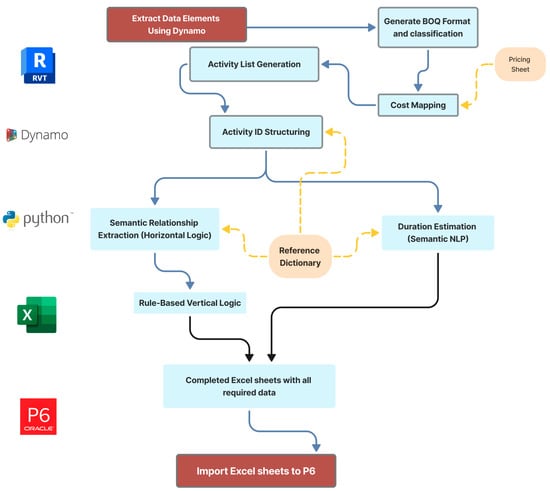
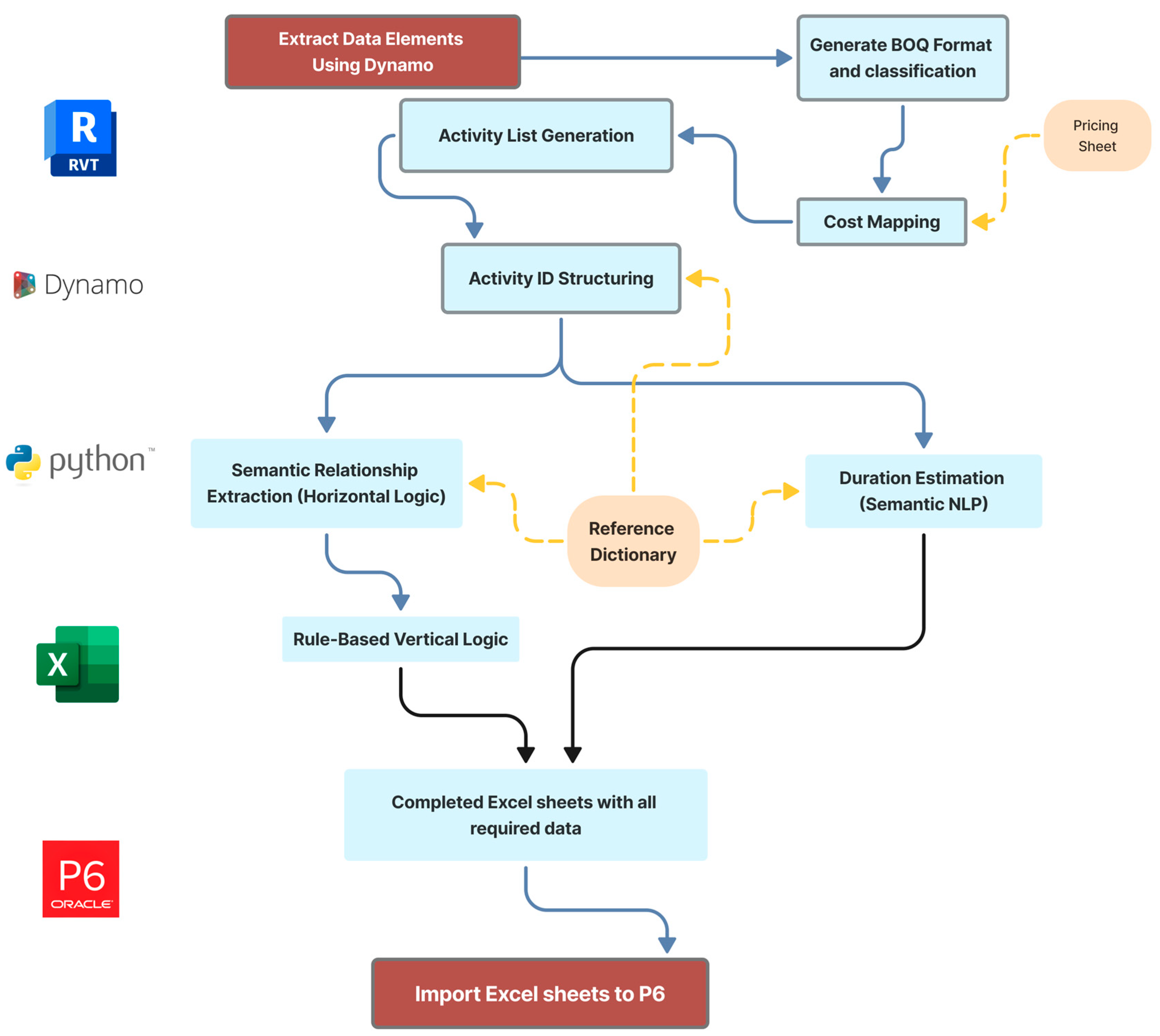
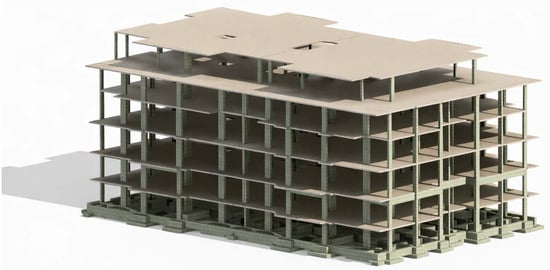
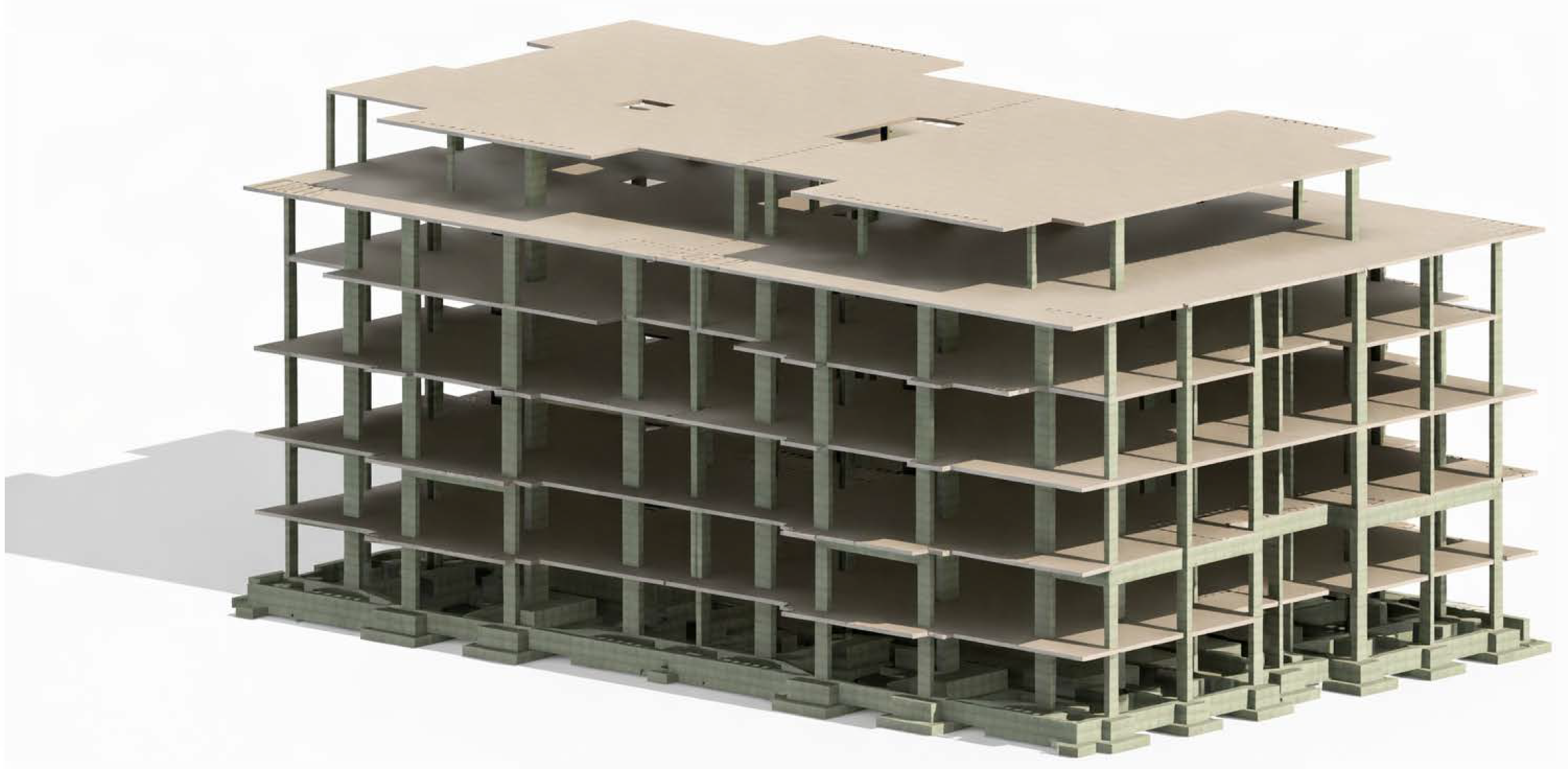
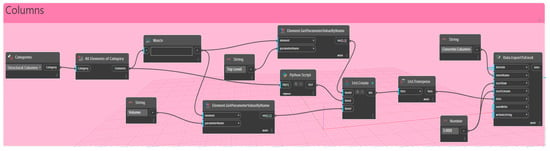
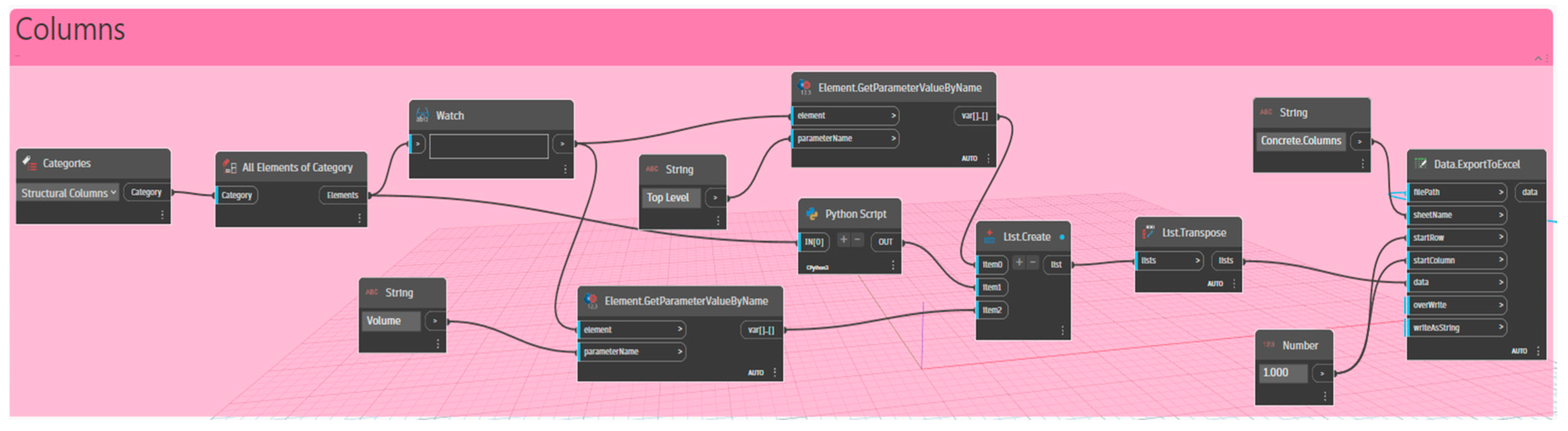
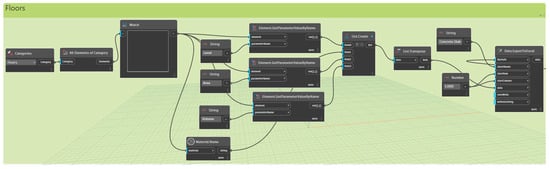
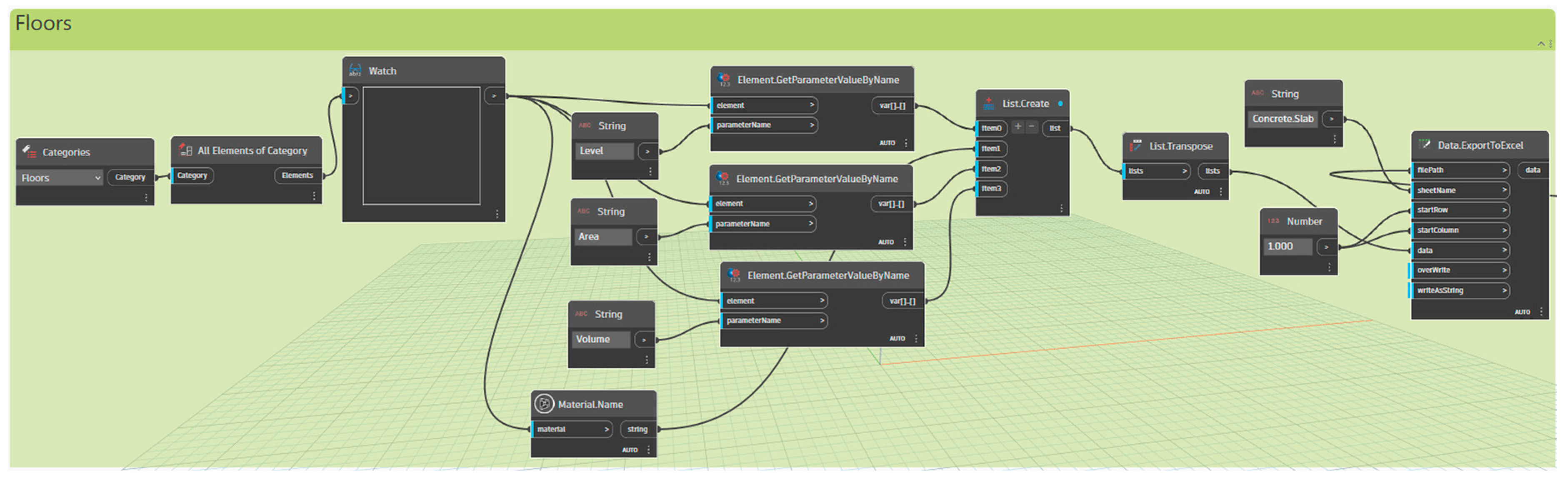
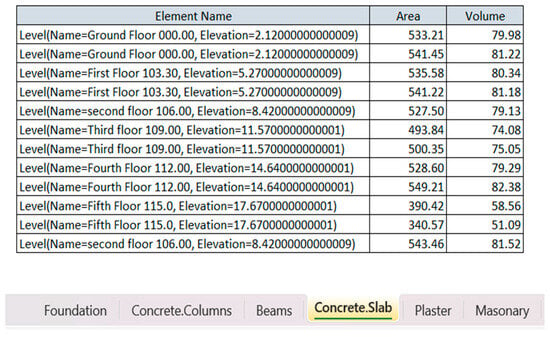
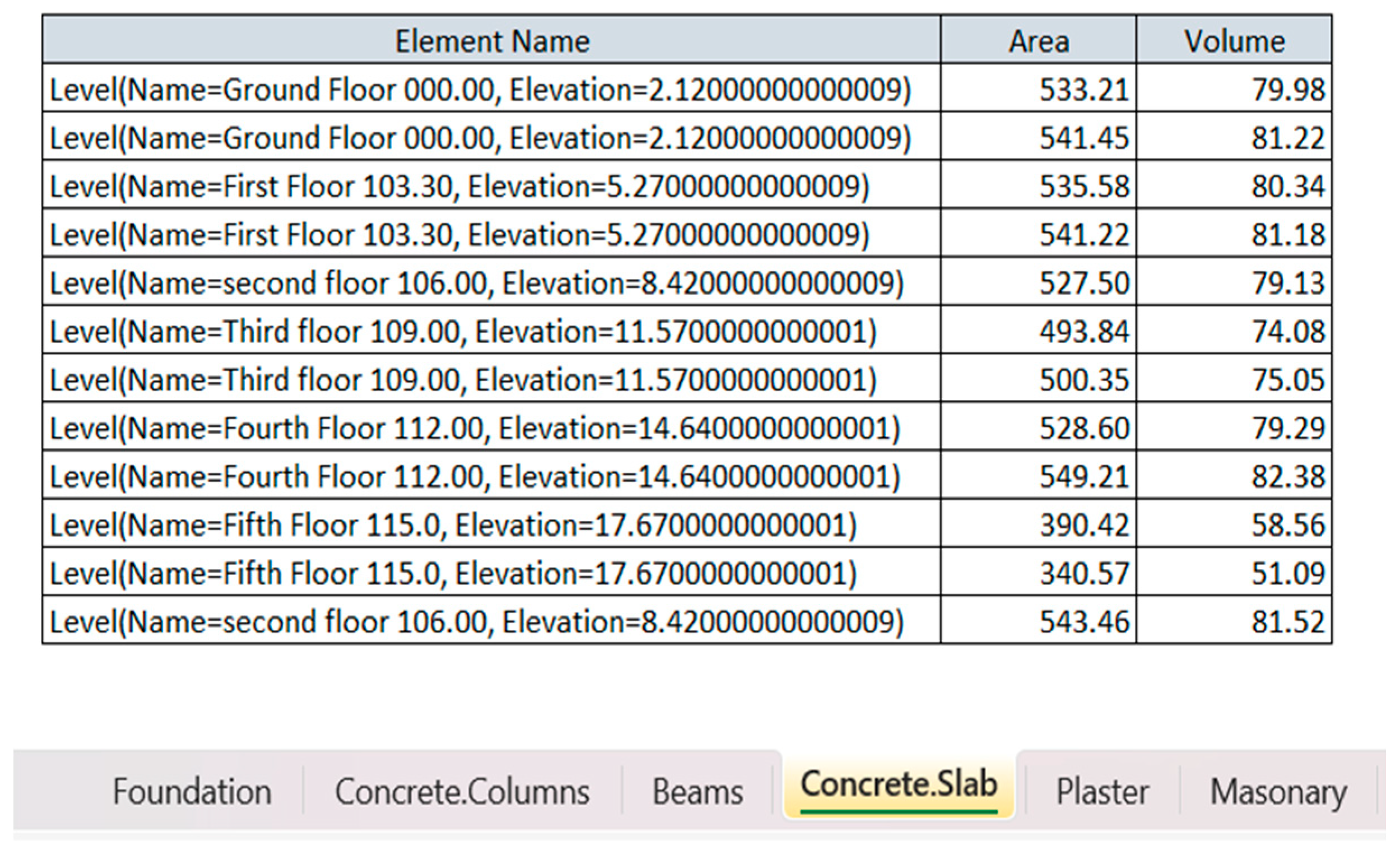
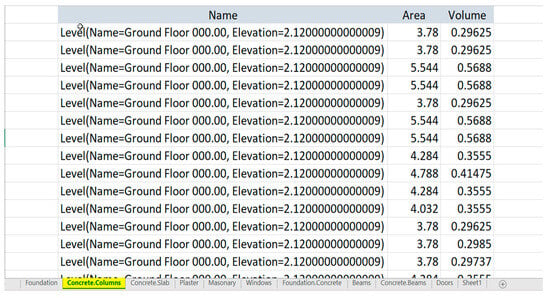
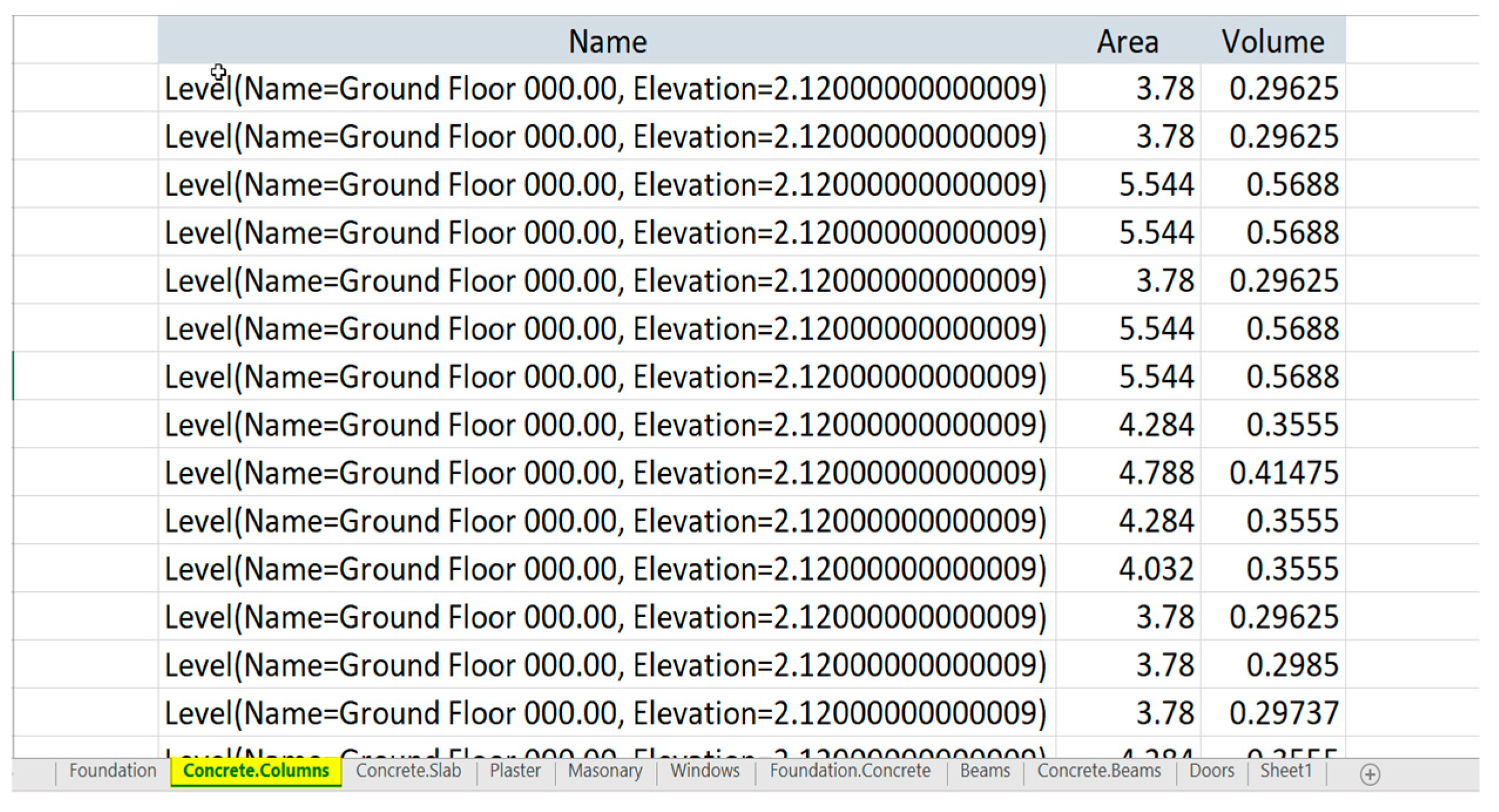
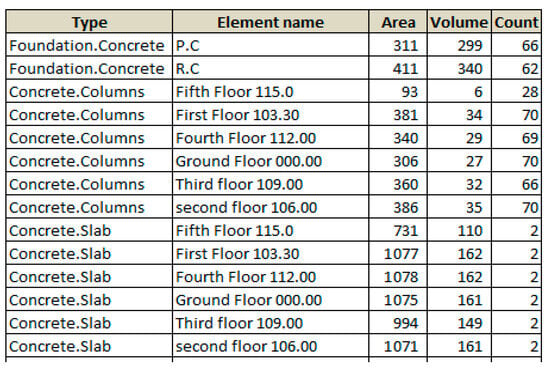
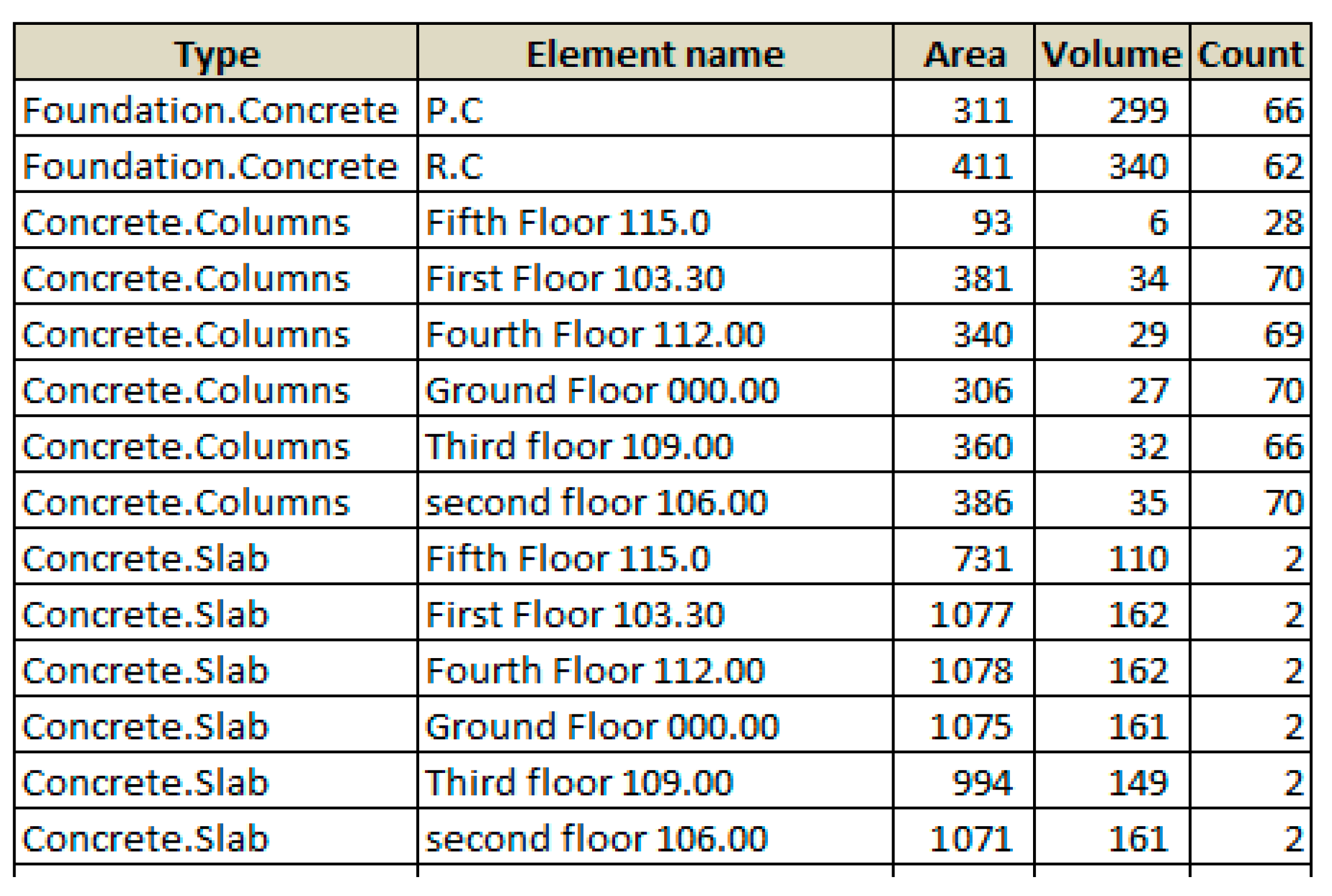
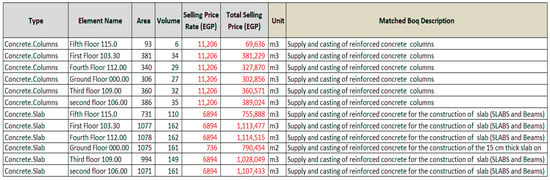
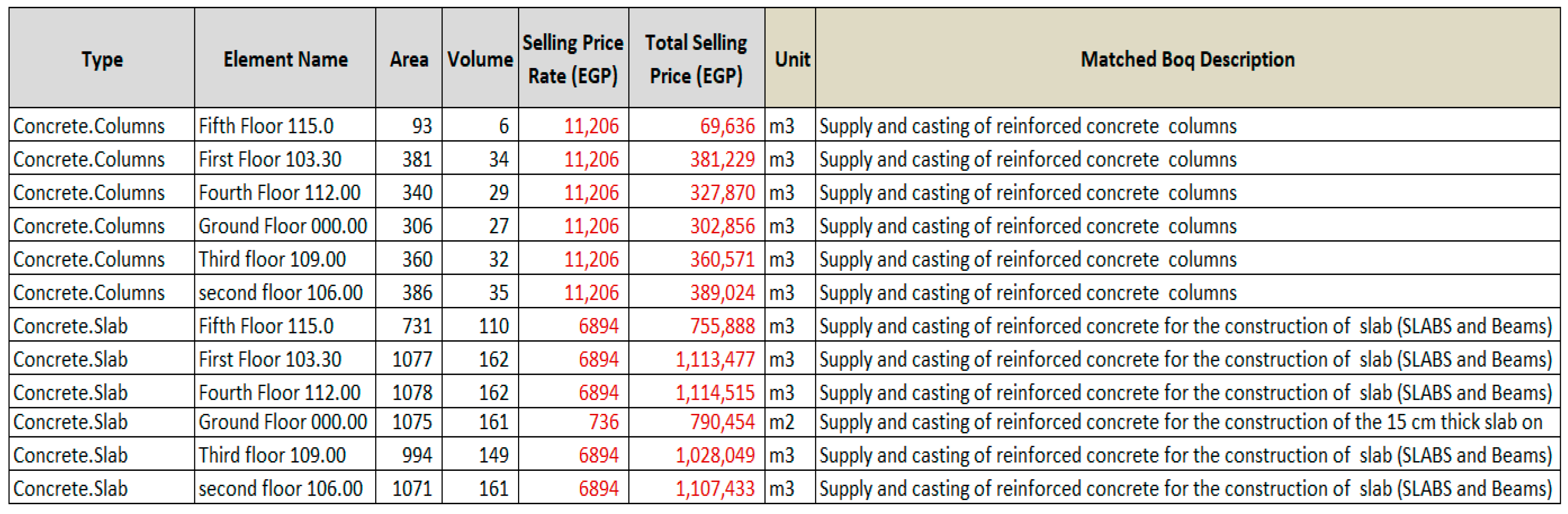
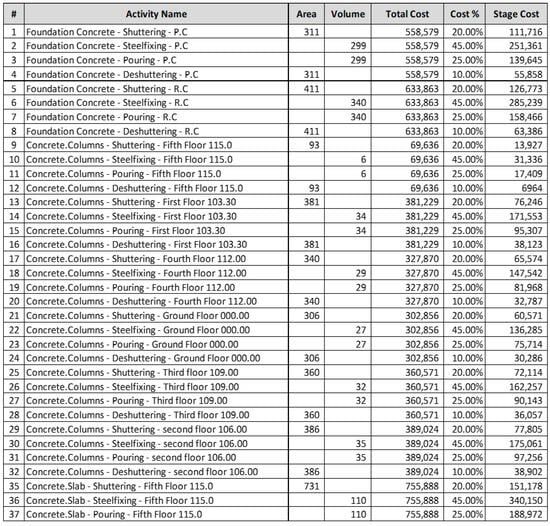
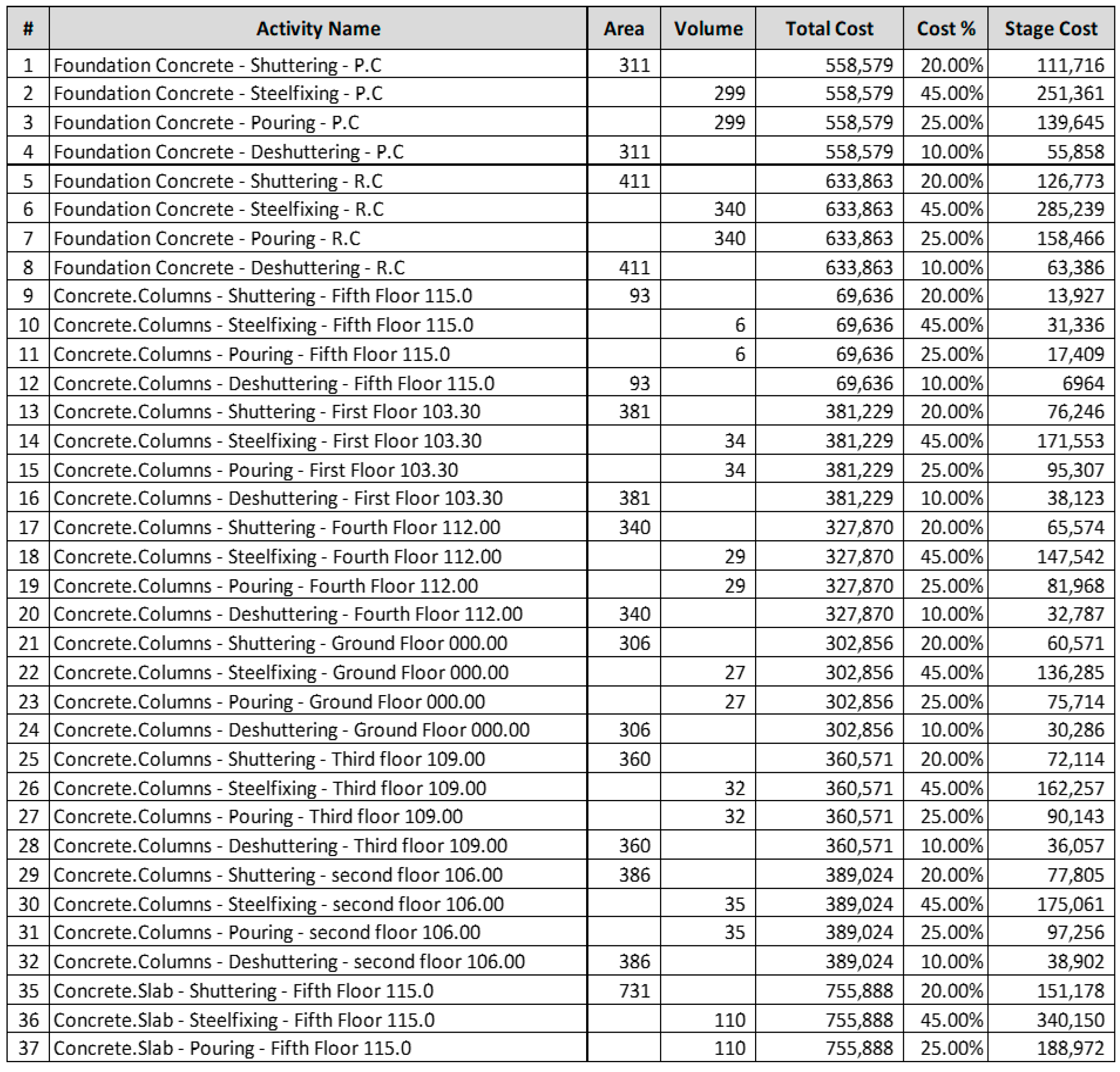
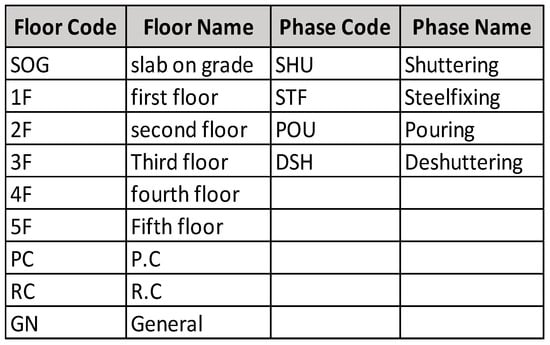
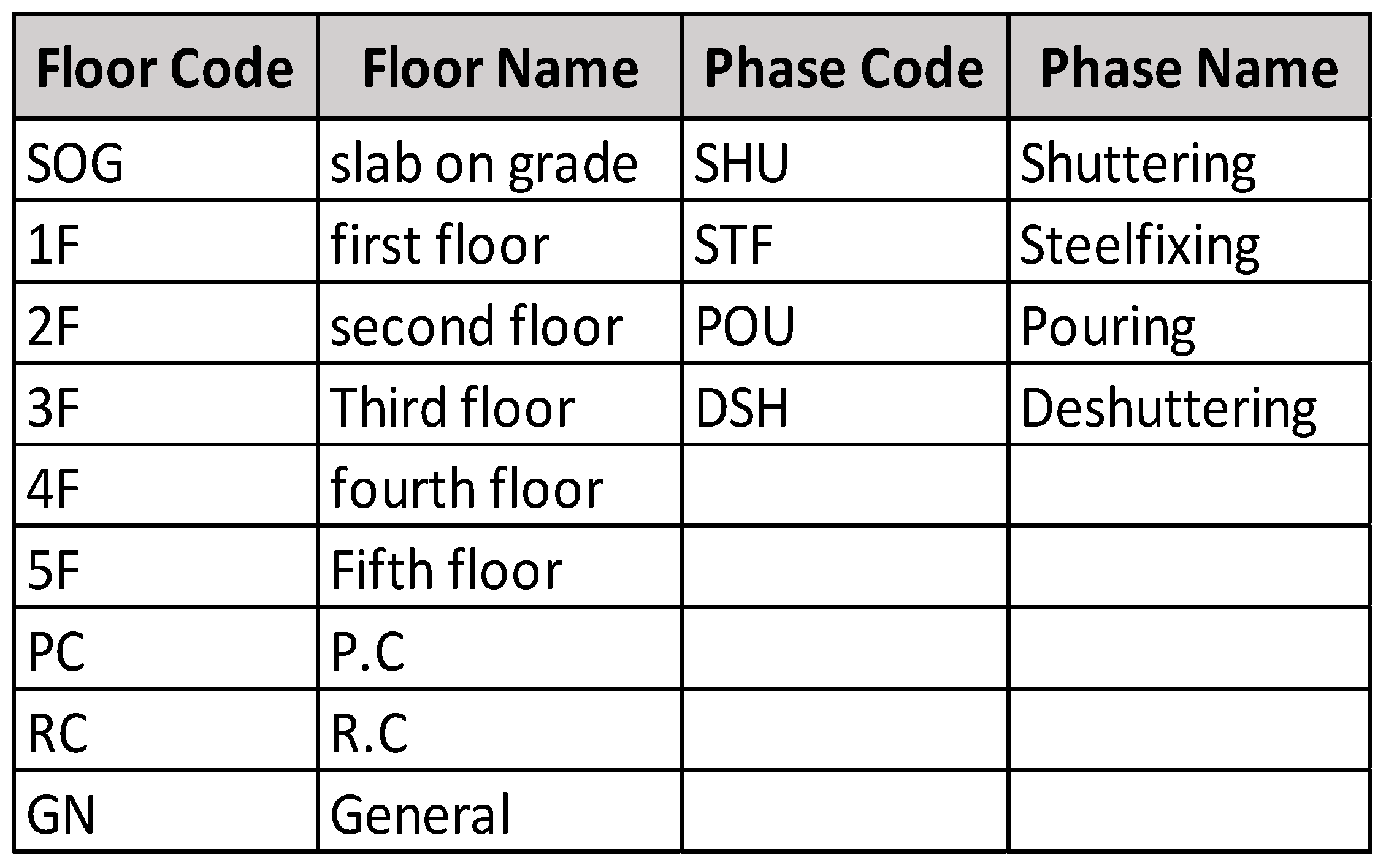
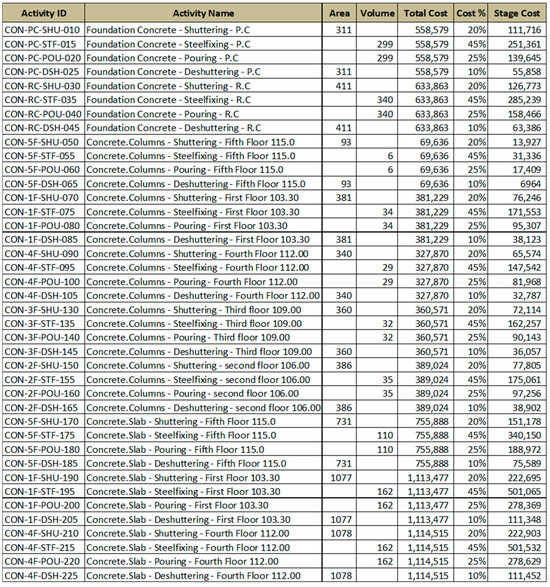
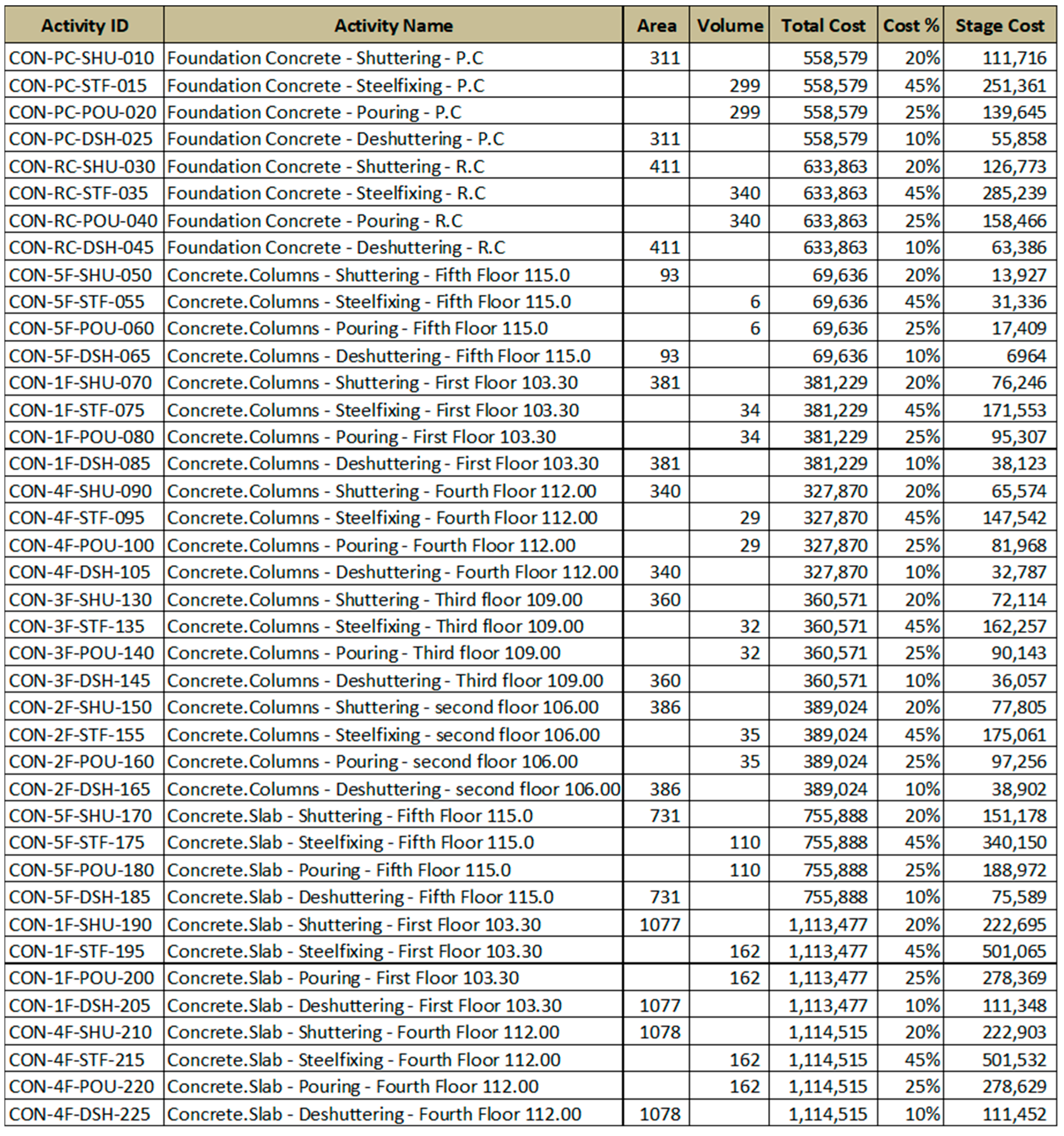
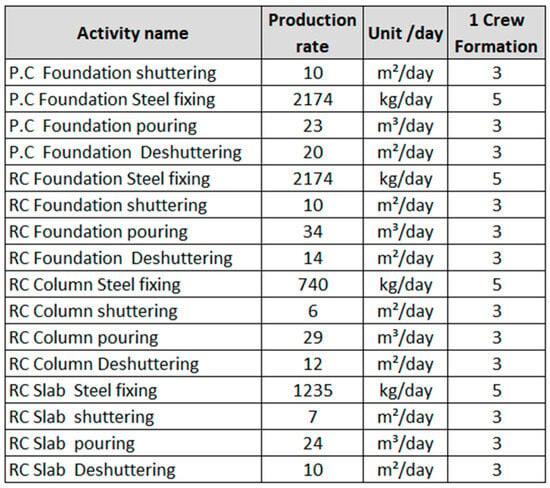
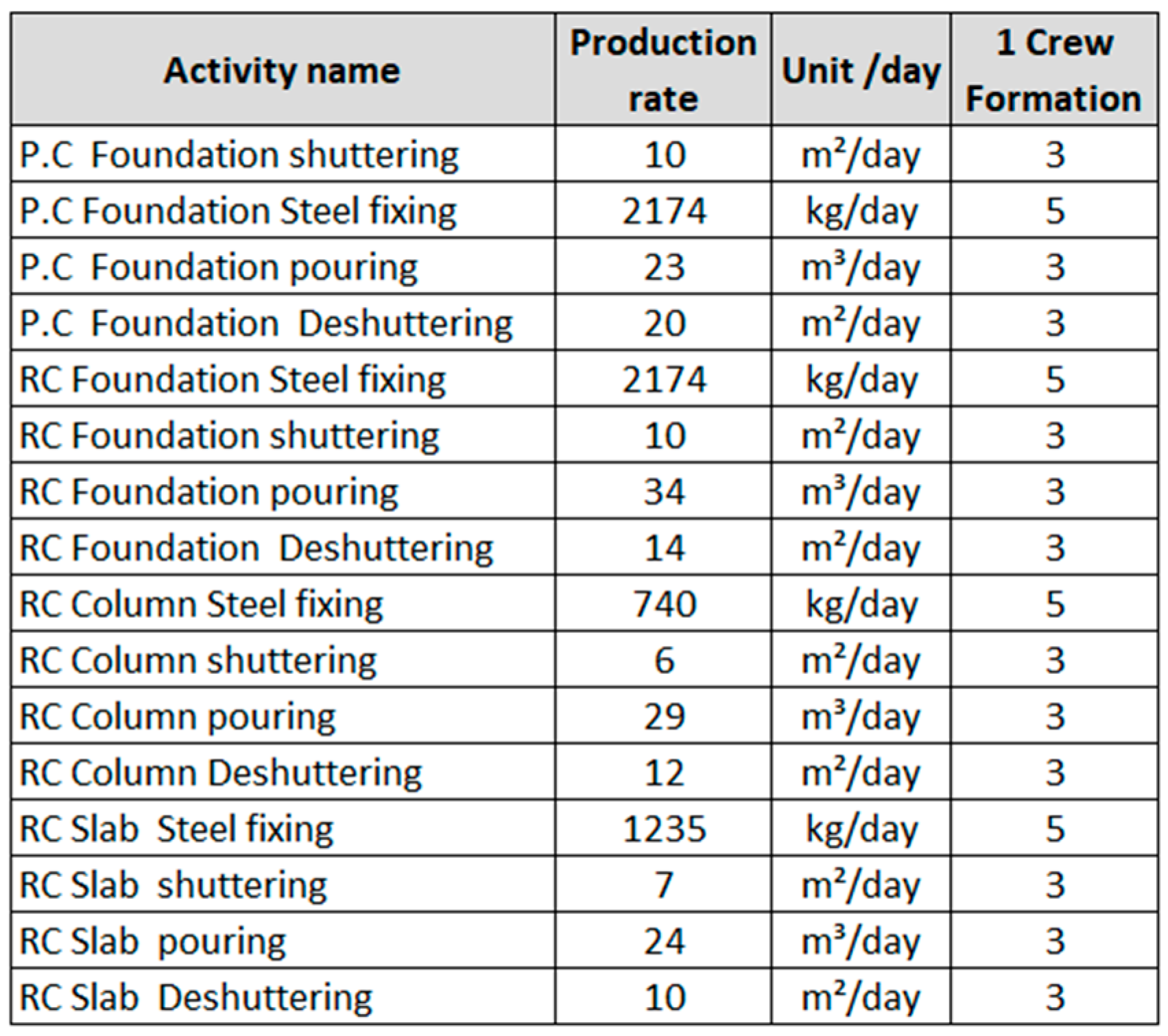
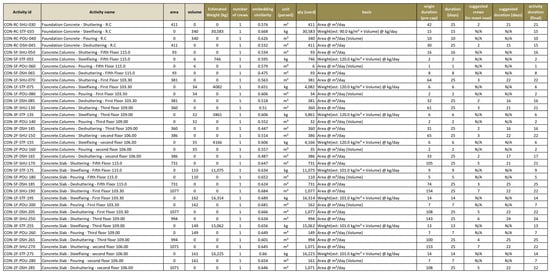
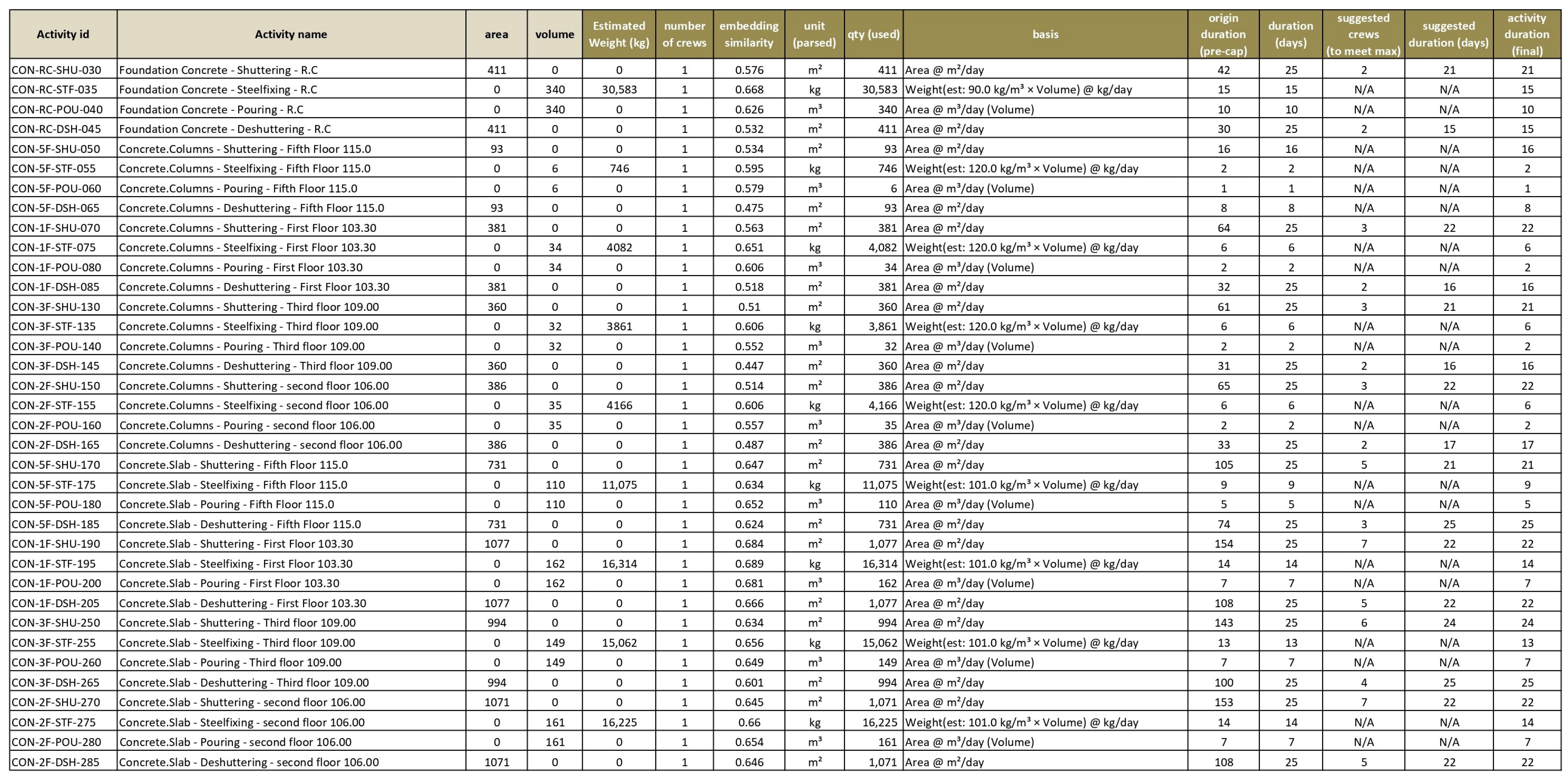
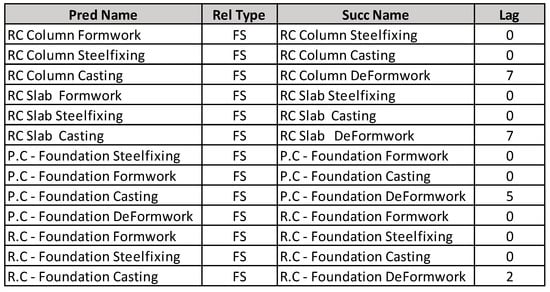
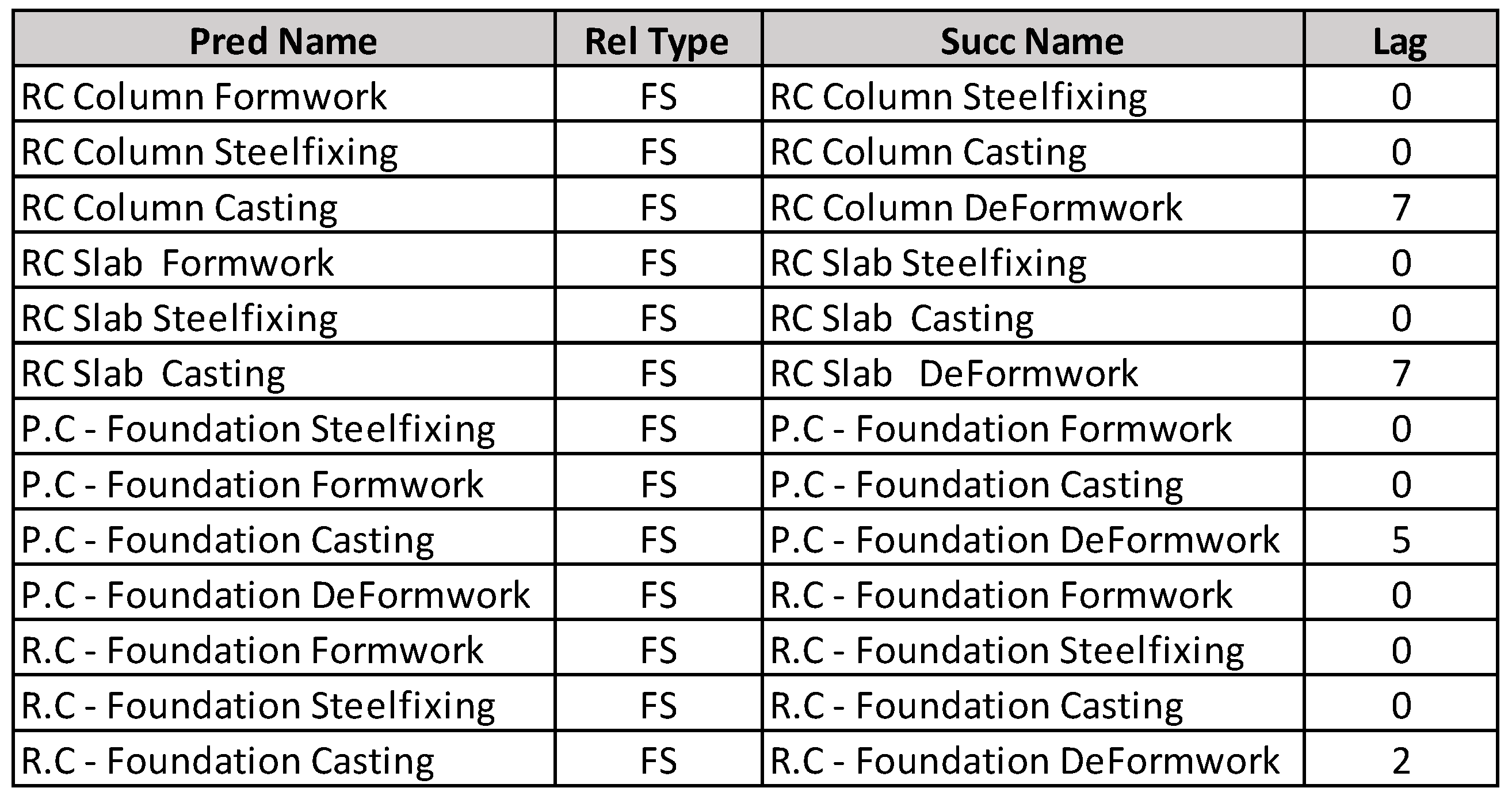
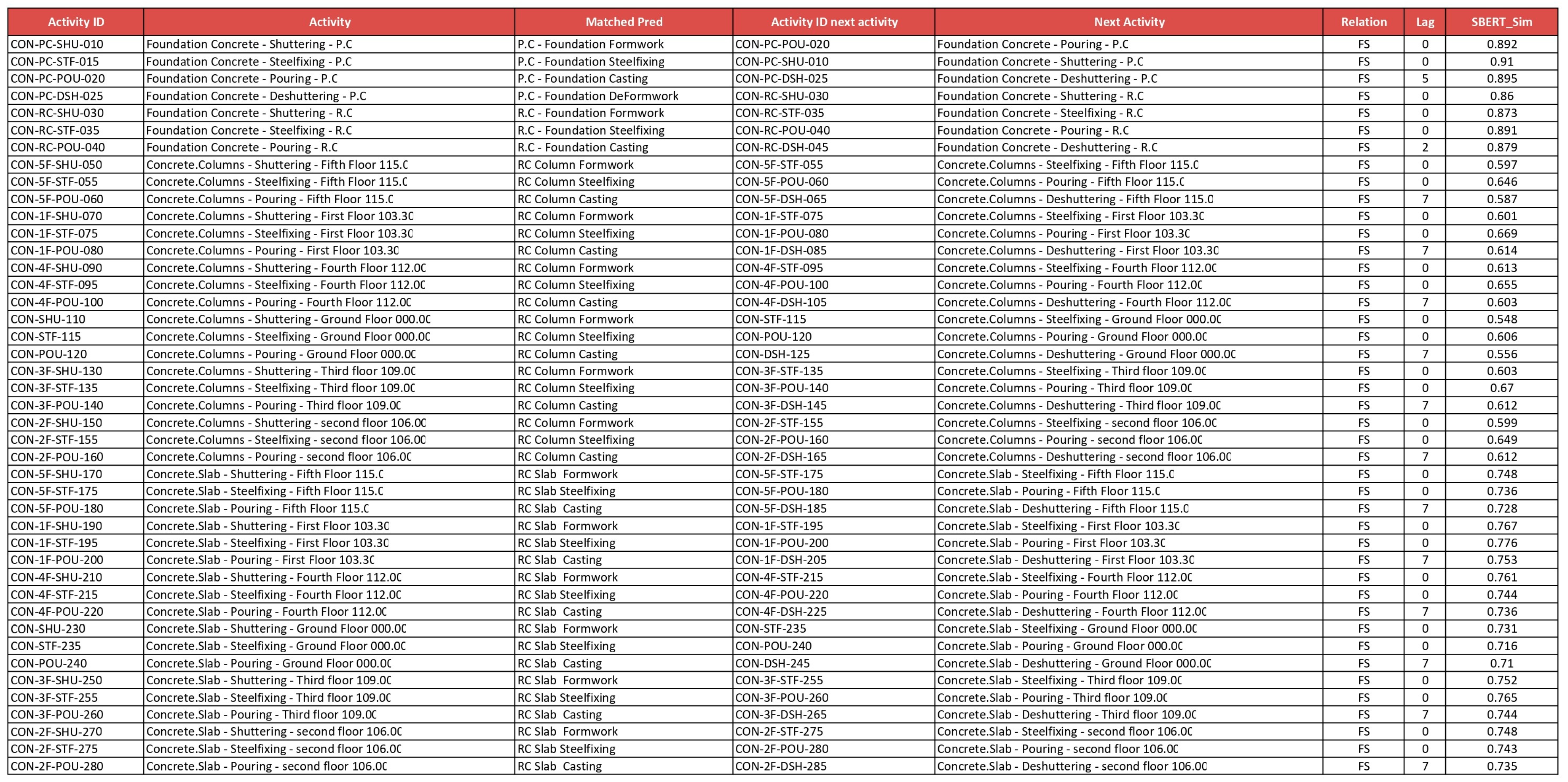
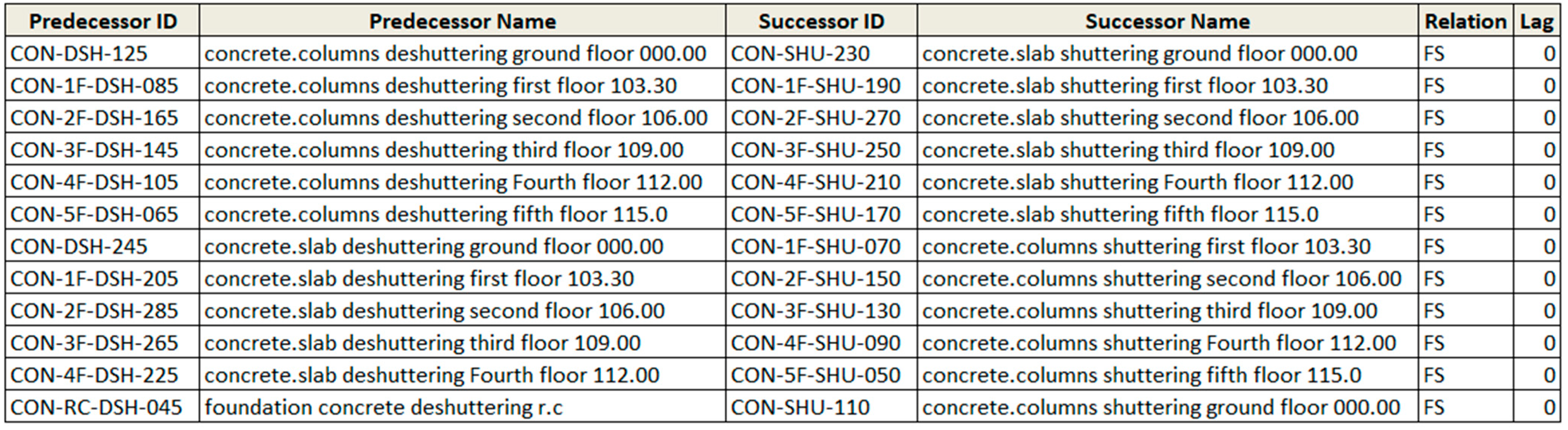
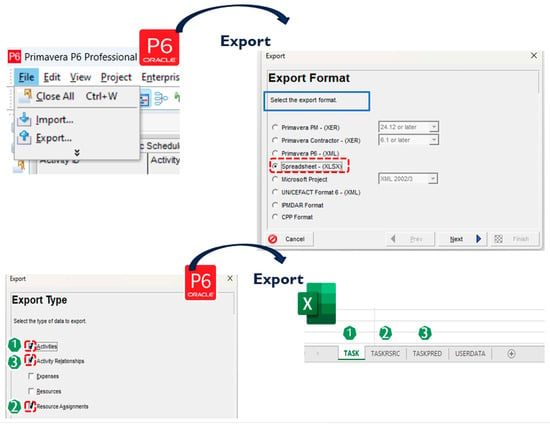
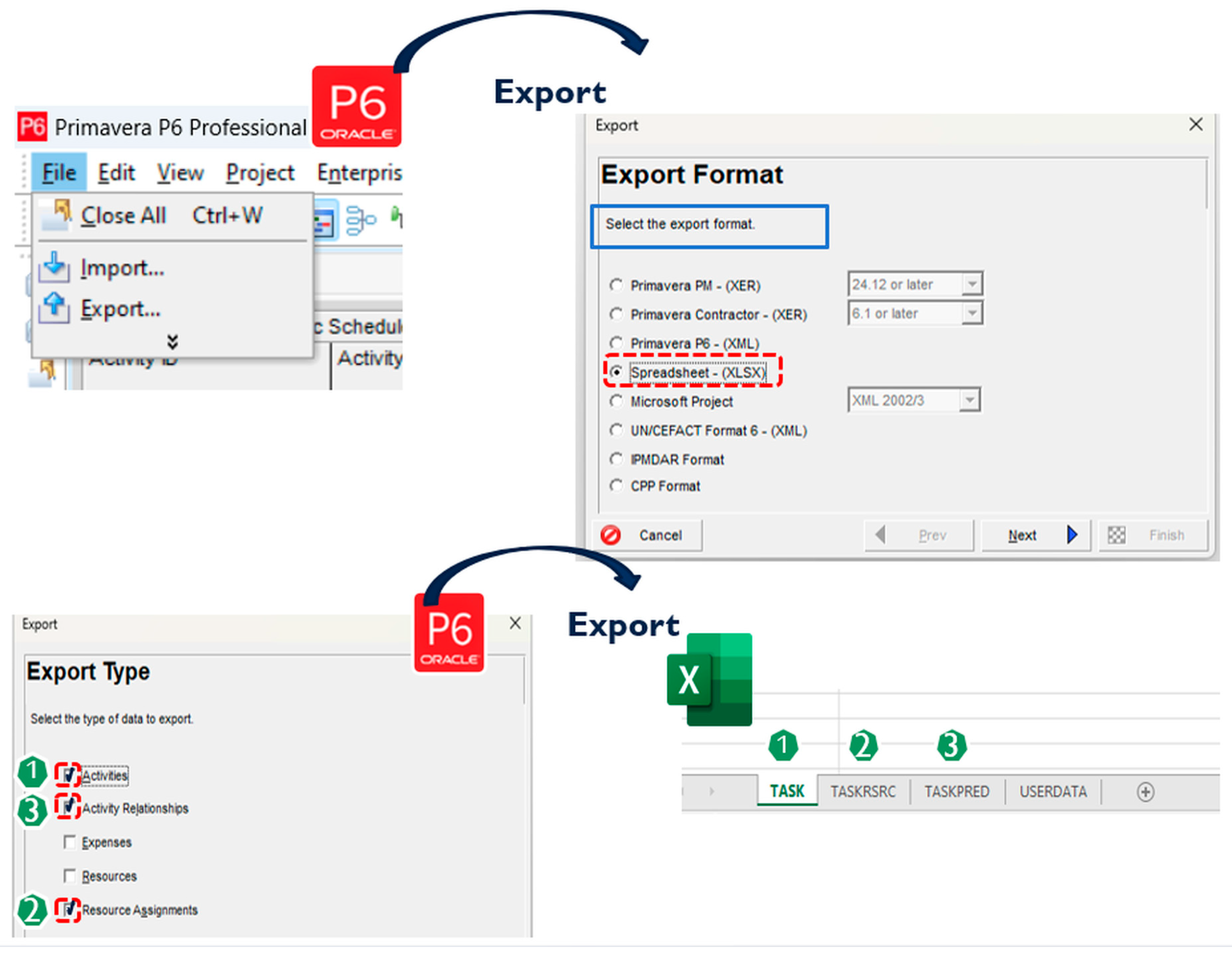
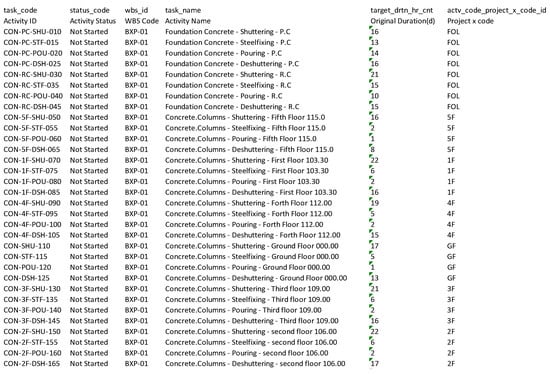
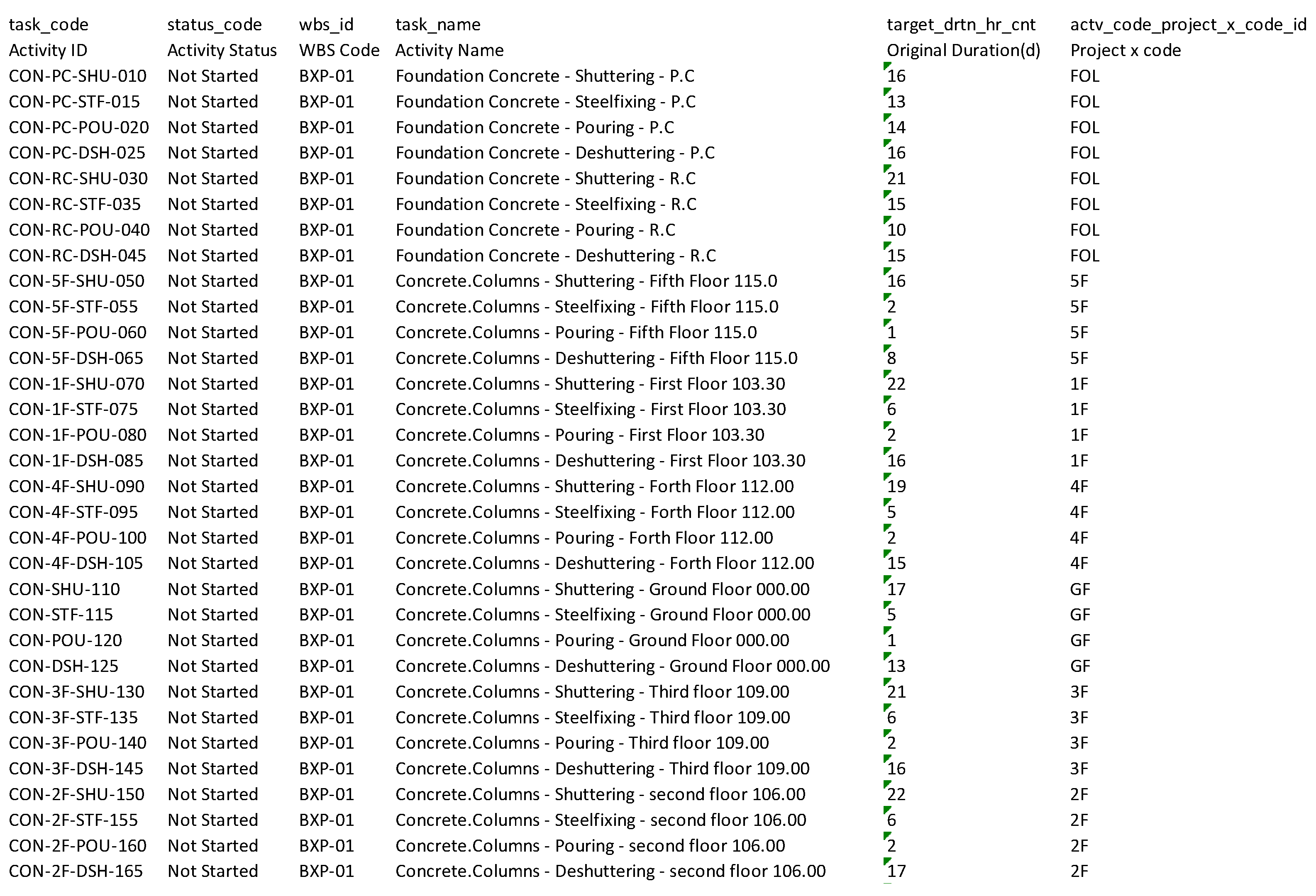
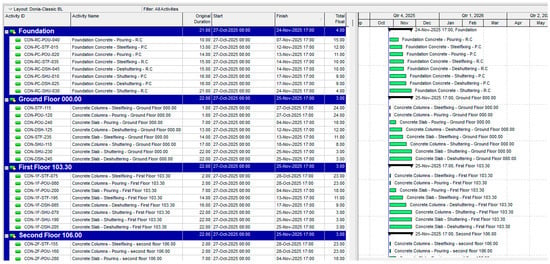
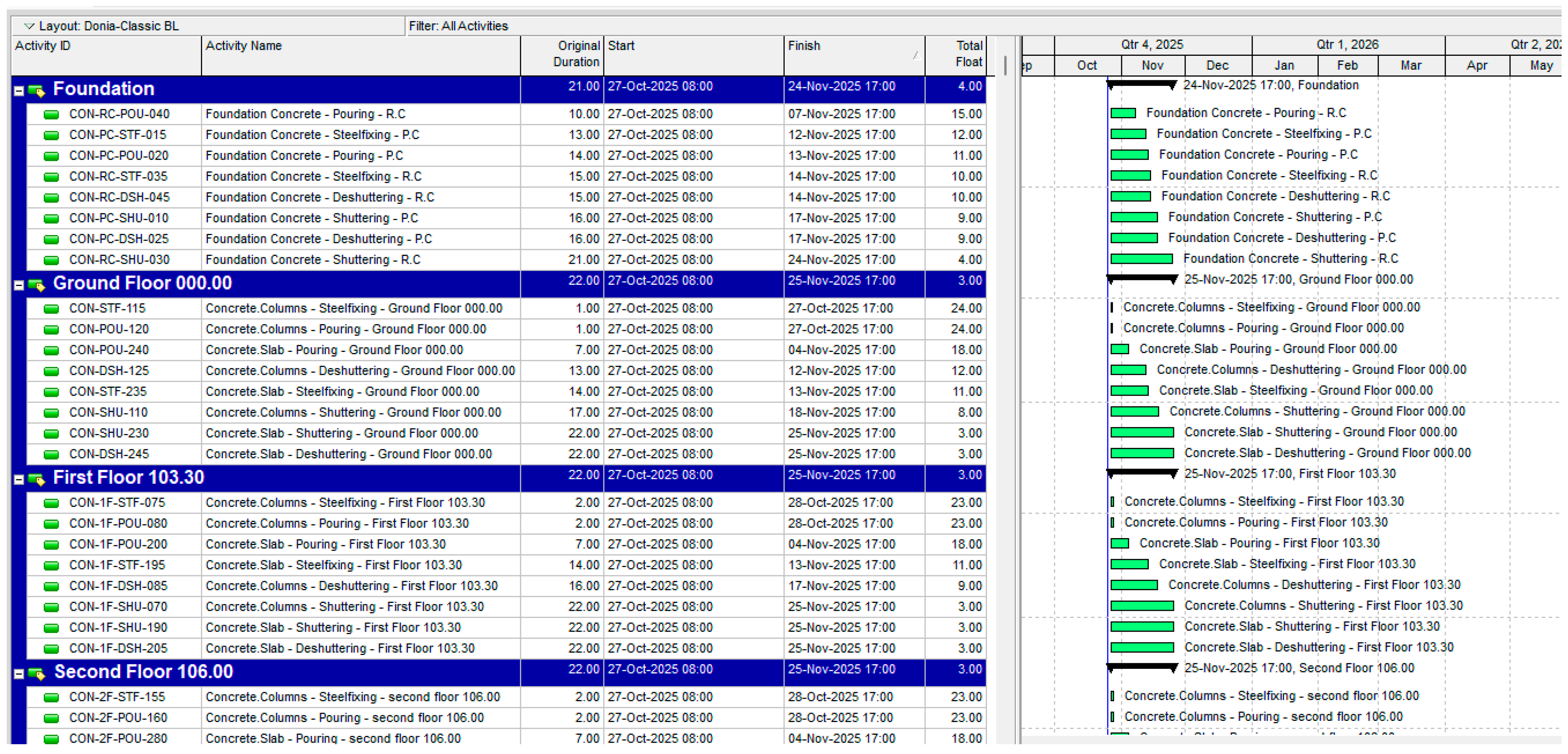
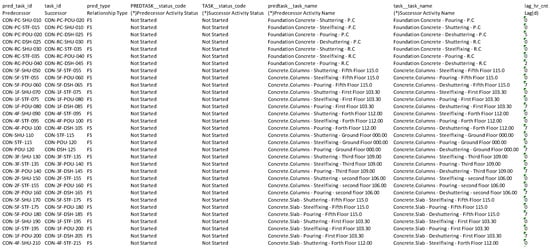
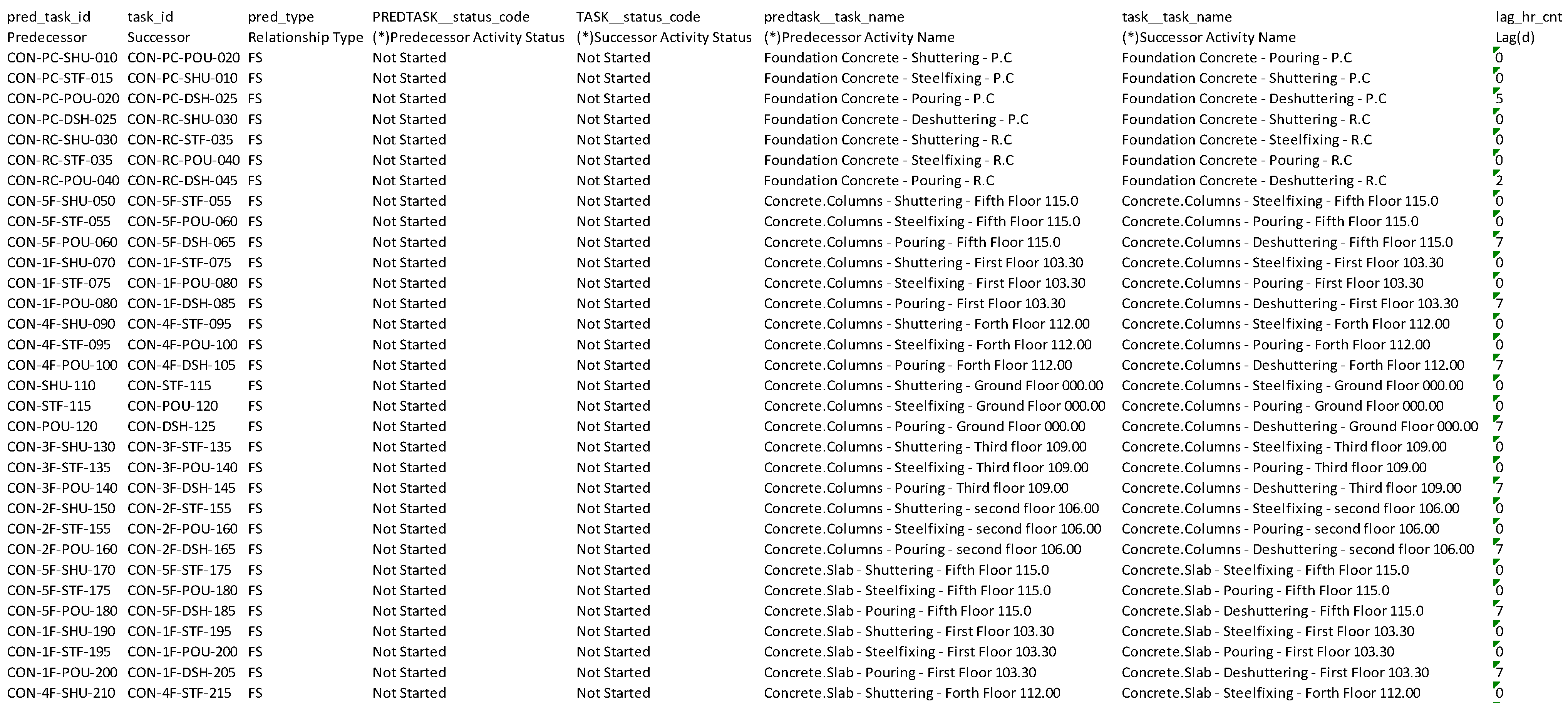
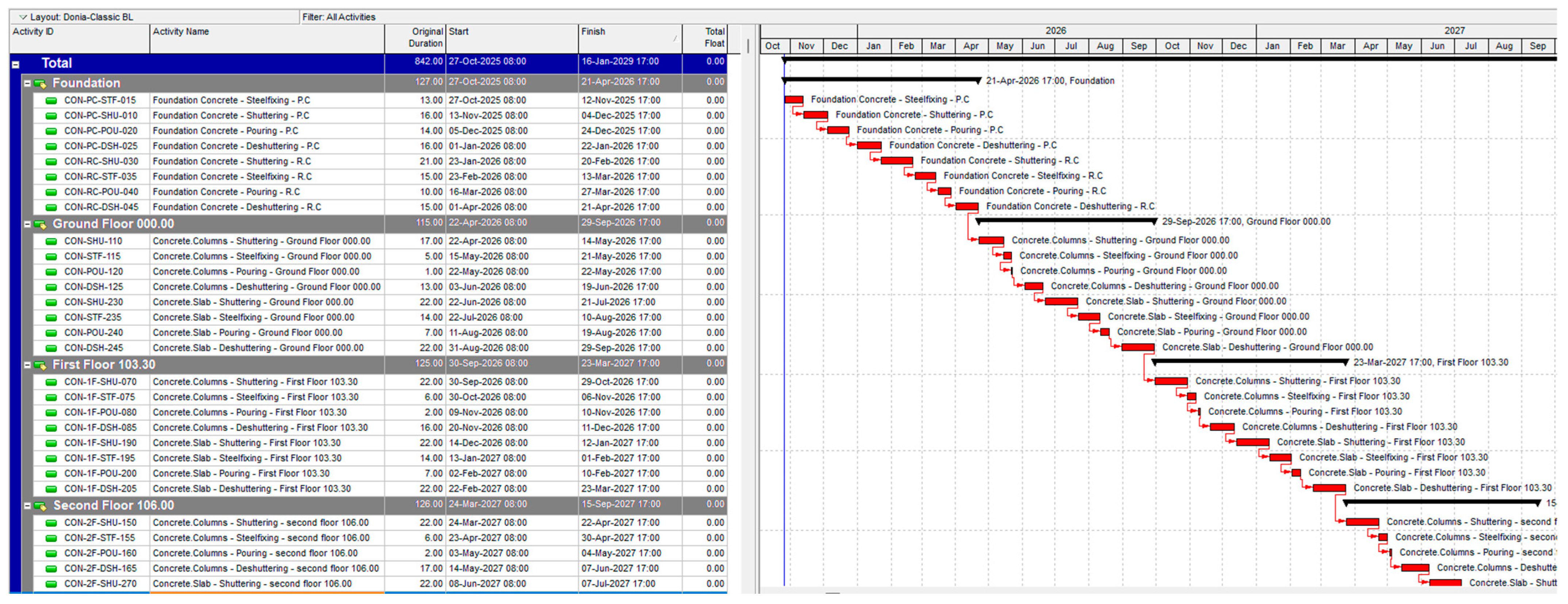
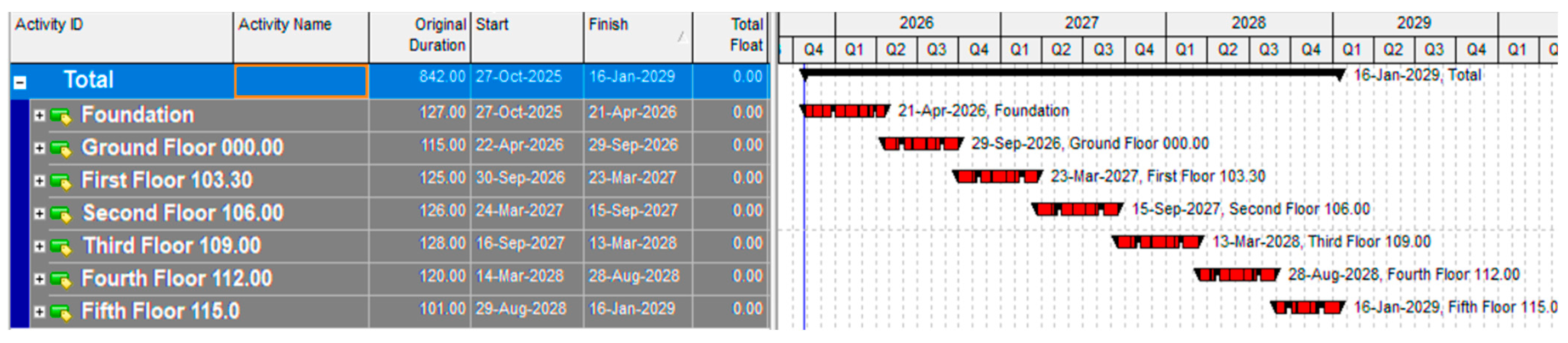
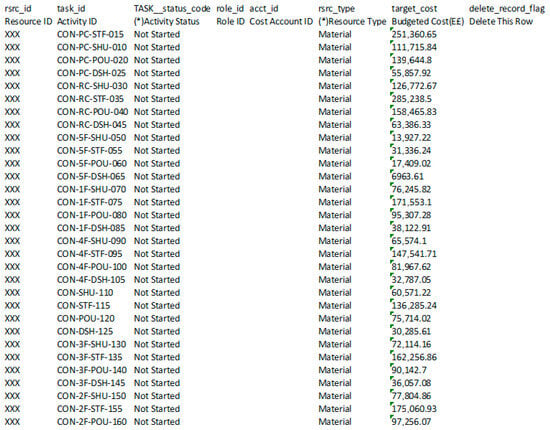
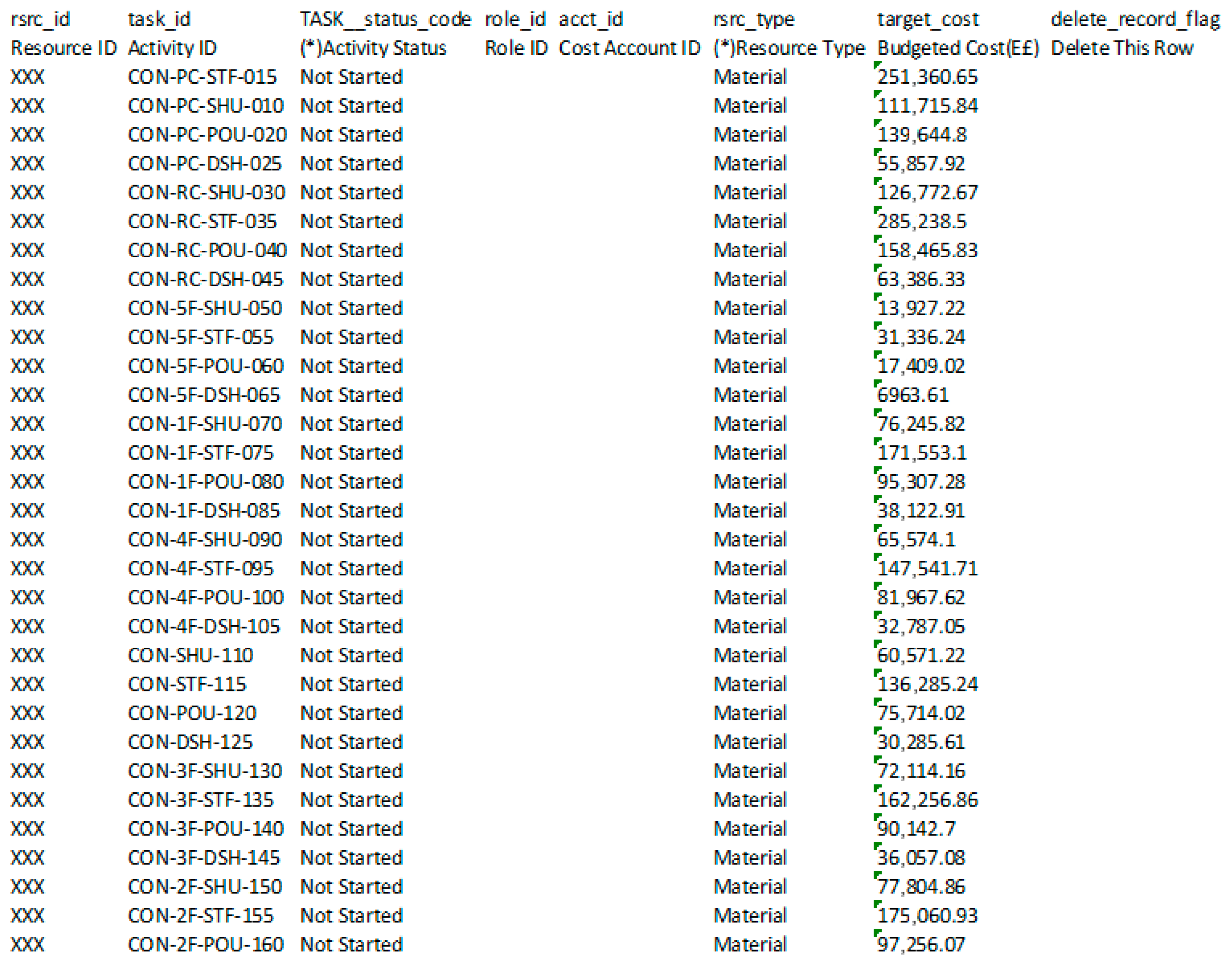
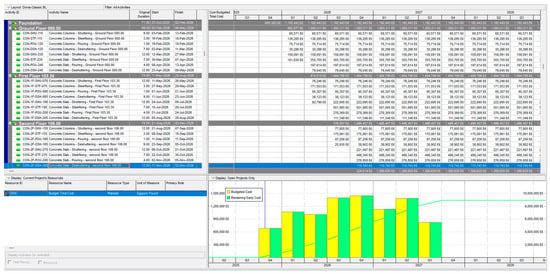
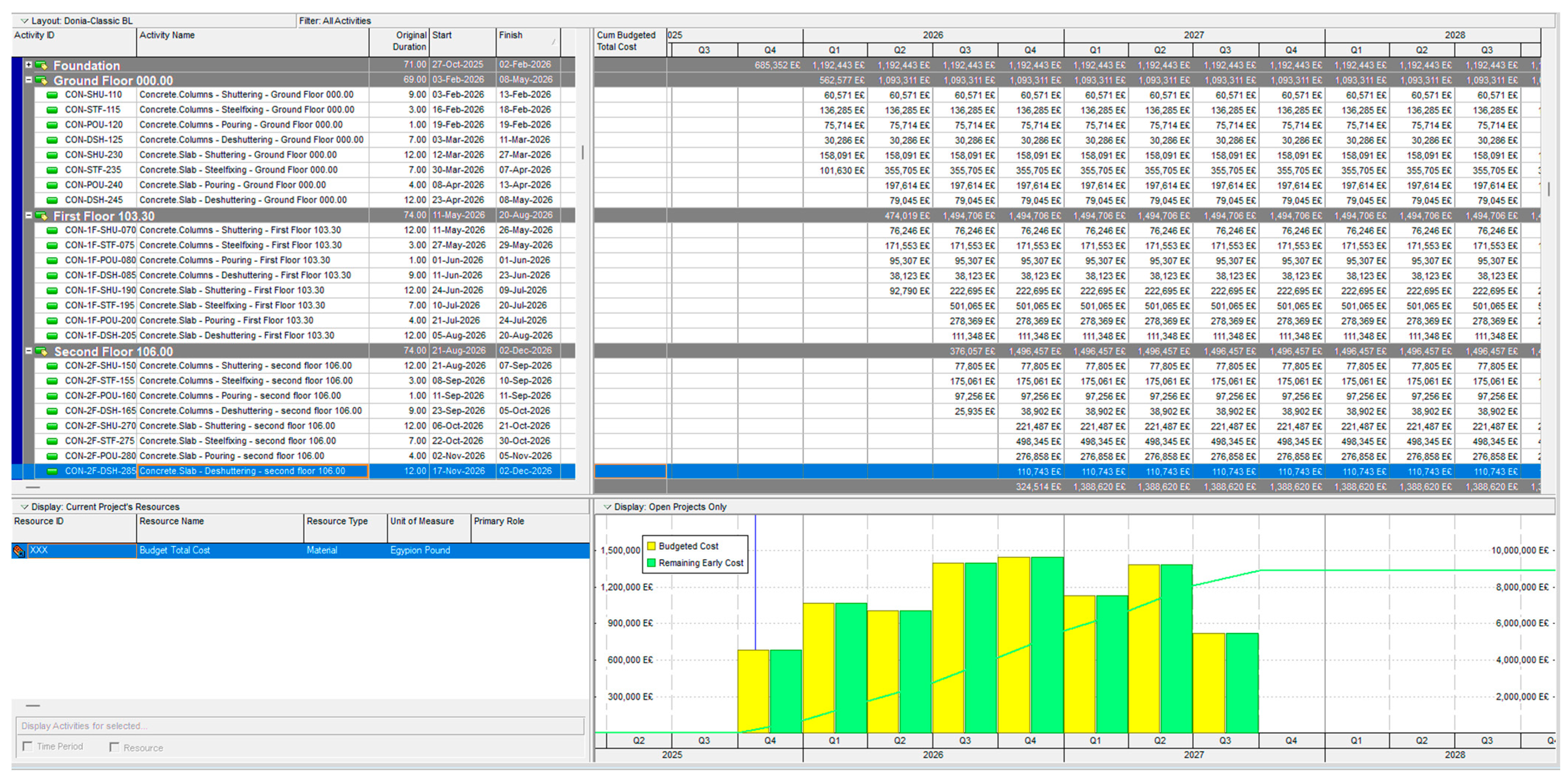
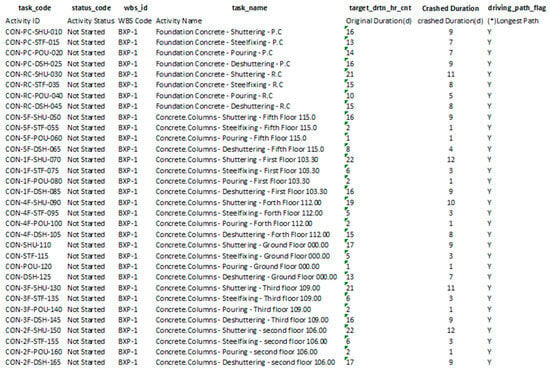
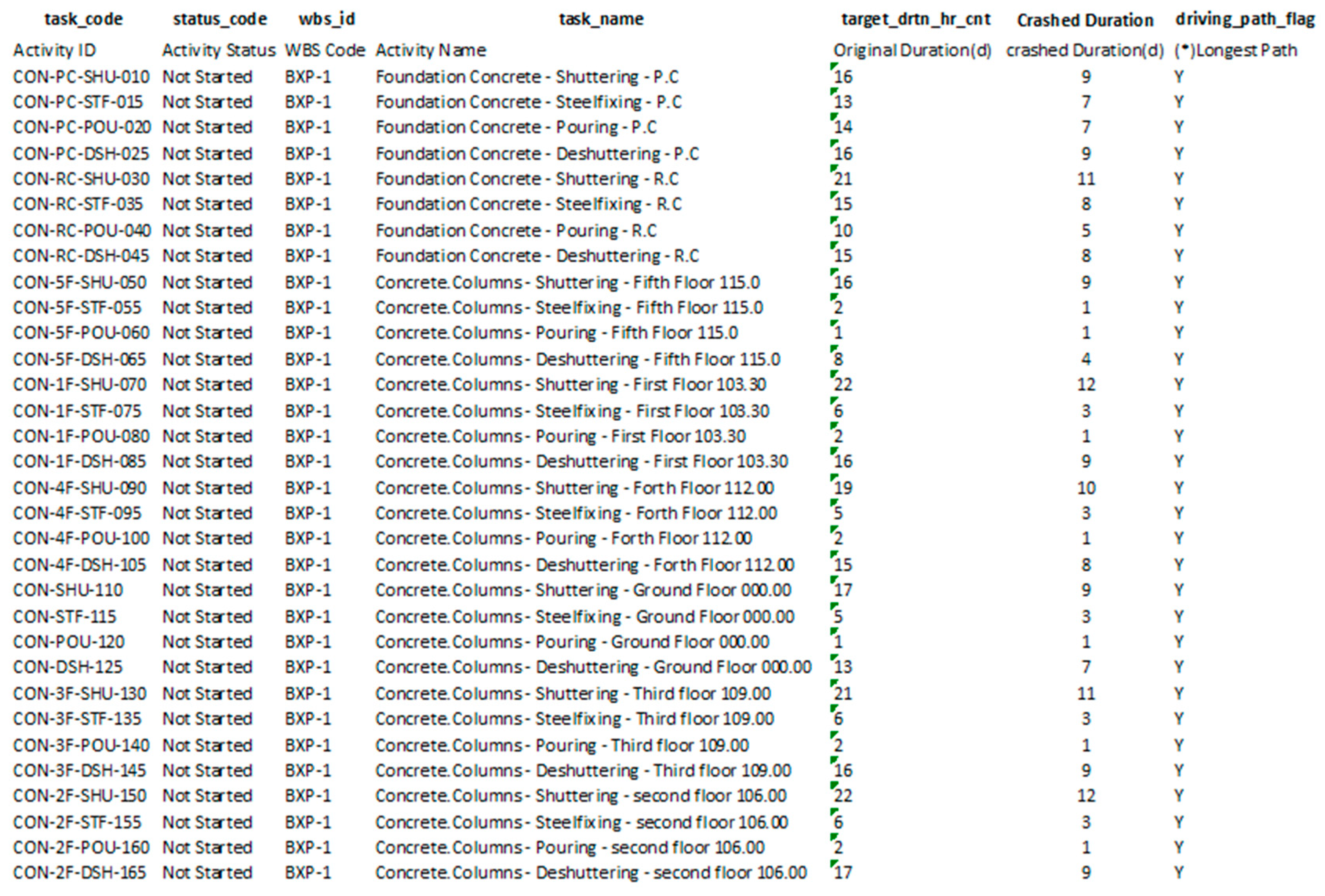
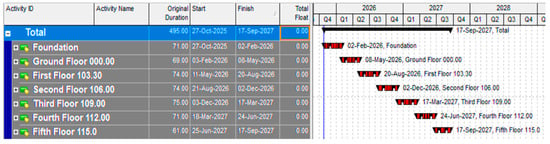
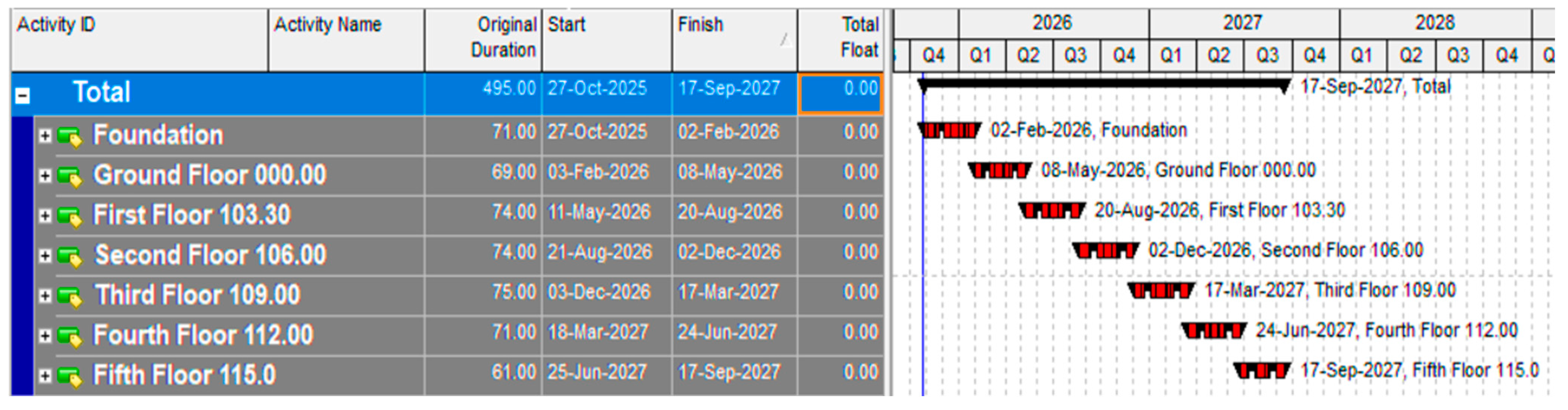
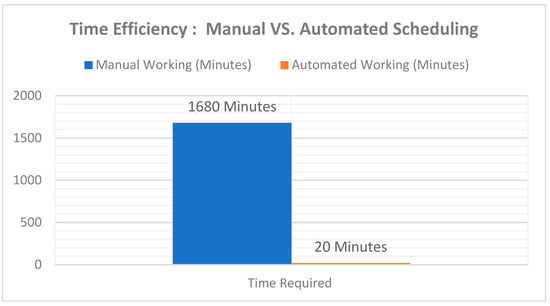
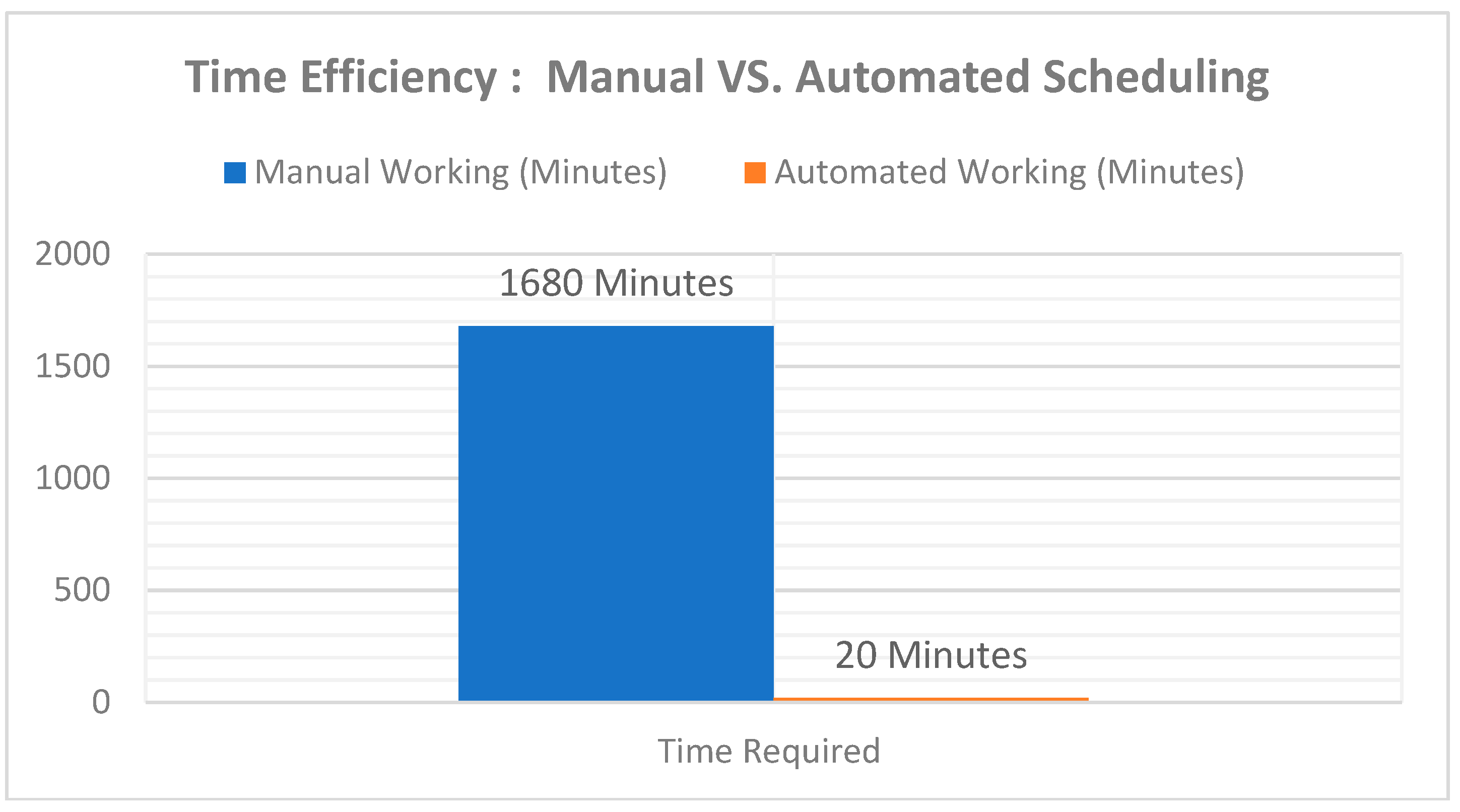
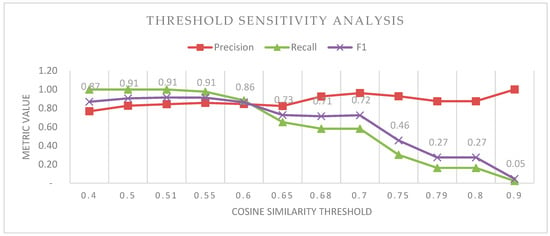
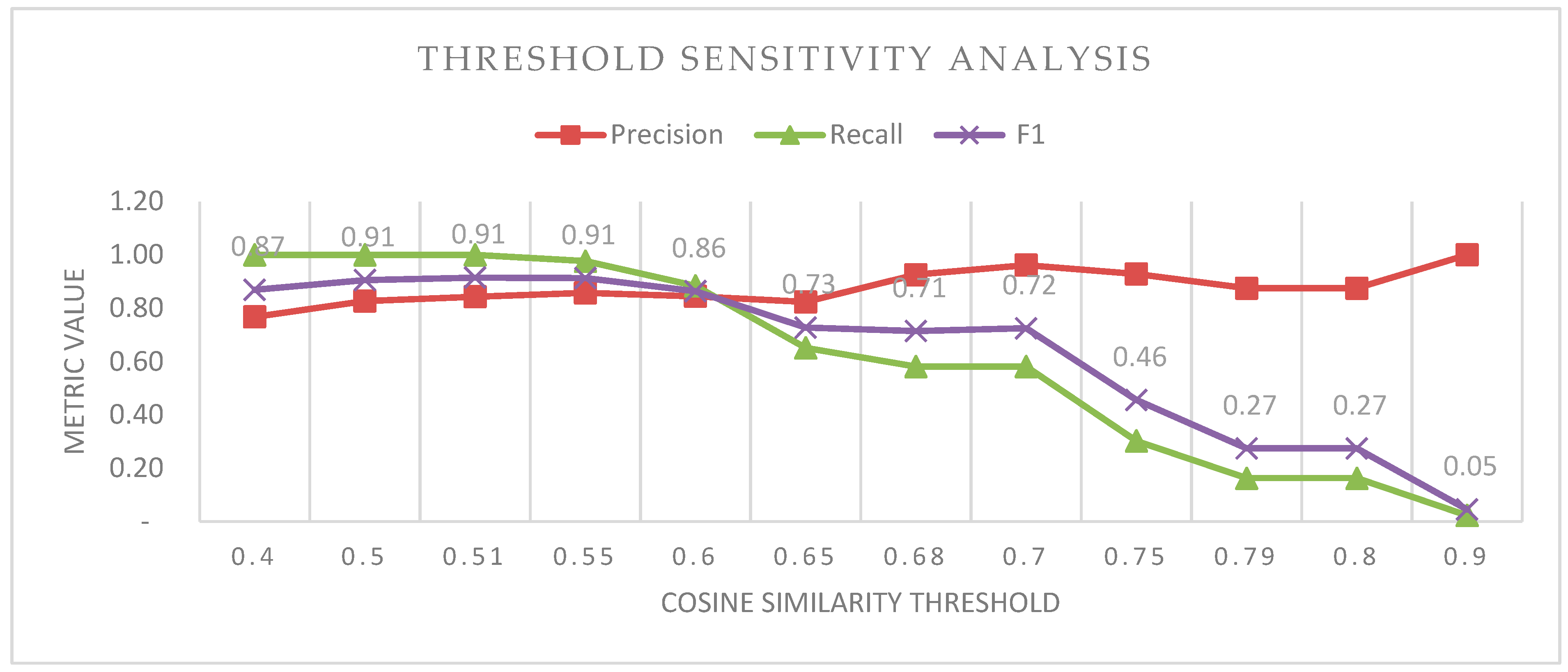
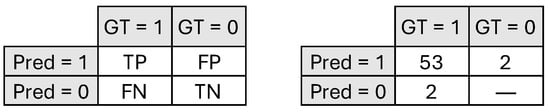
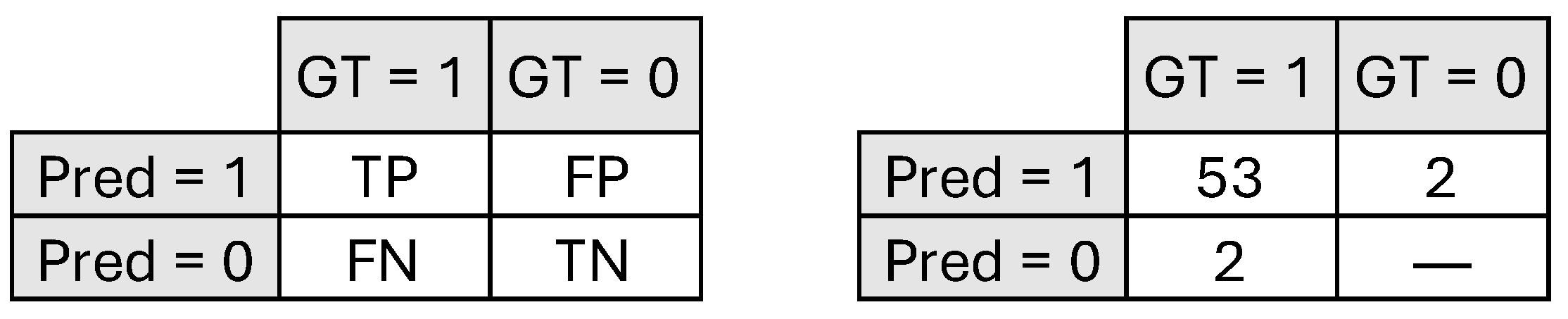
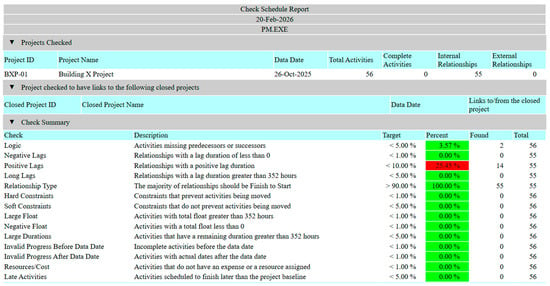
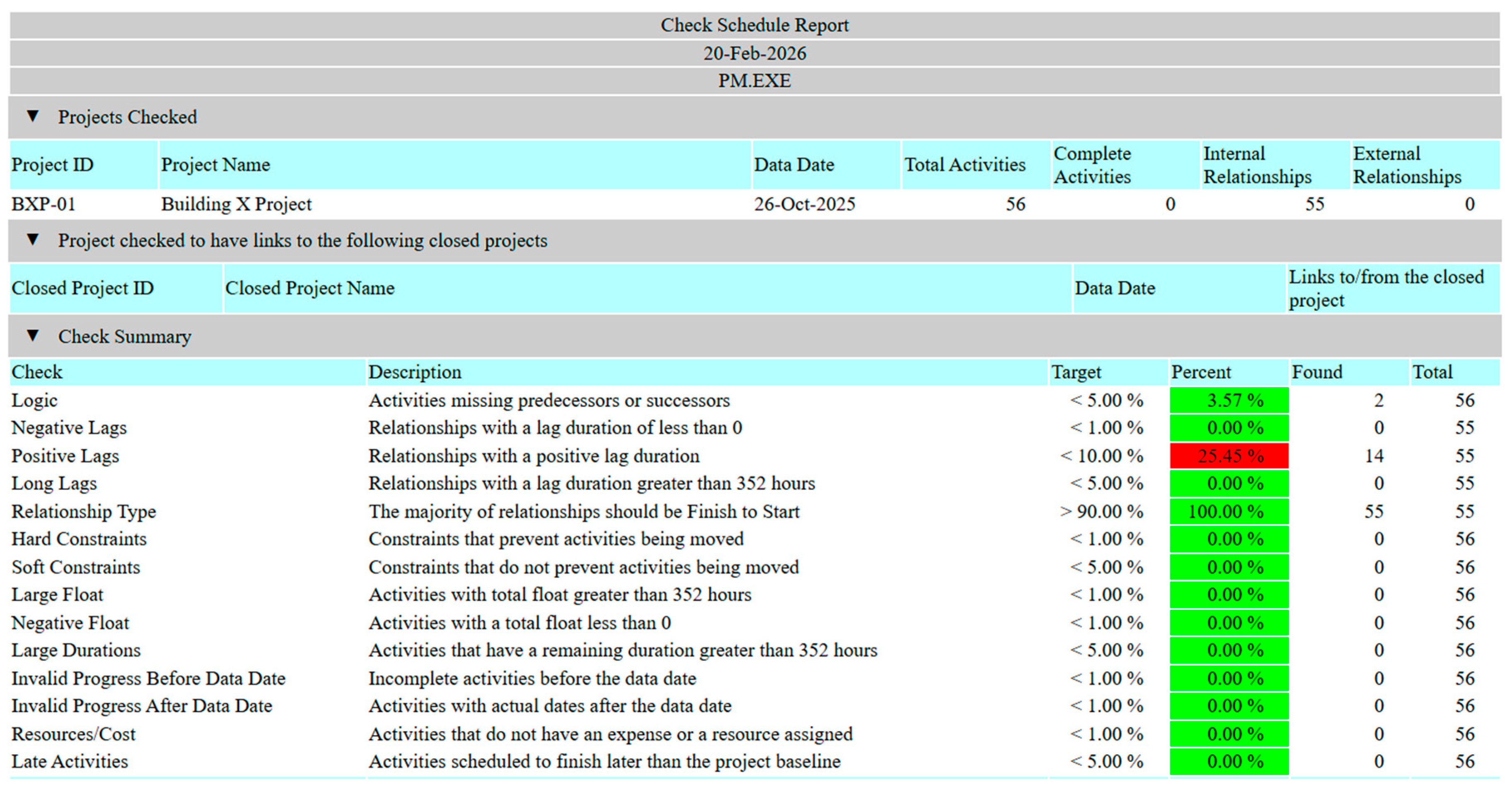

Disclaimer/Publisher’s Note: The statements, opinions and data contained in all publications are solely those of the individual author(s) and contributor(s) and not of MDPI and/or the editor(s). MDPI and/or the editor(s) disclaim responsibility for any injury to people or property resulting from any ideas, methods, instructions or products referred to in the content. |
© 2026 by the authors. Licensee MDPI, Basel, Switzerland. This article is an open access article distributed under the terms and conditions of the Creative Commons Attribution (CC BY) license.