


Abstract
Idiopathic scoliosis (IS) is a three-dimensional spinal deformity often associated with secondary postural deviations (pelvic asymmetry, altered kyphosis/lordosis, and postural imbalance), which may negatively affect psychological well-being and quality of life (QoL). Physiotherapy interventions designed specifically for scoliosis, known as Physiotherapy scoliosis-specific exercises (PSSE), have shown effectiveness in improving primary structural outcomes such as Cobb angle (CA) and angle of trunk rotation (ATR); however, their influence on secondary postural deviations is still unclear. This scoping review aimed to summarize current evidence of PSSE on secondary postural deviations in children, adolescents, and young adults with mild to moderate IS: Following PRISMA-ScR guidelines, searches were conducted in PEDro, PubMed, Scopus and Google Scholar for studies published in the last 10 years. Eligible studies were appraised using study design-specific quality assessment tools. Randomized controlled trials (RCT) were evaluated using the Physiotherapy Evidence Database Scale (PEDro), the retrospective cohort study was assessed using the Newcastle–Ottawa Scale (NOS), and the prospective observational study was evaluated using the Joanna Briggs Institute (JBI) Critical Appraisal Checklist. Outcomes included pelvic asymmetry, spinal deviations, mobility, trunk symmetry/morphology, balance, proprioception, sensorimotor control, and QoL. Six studies involving 230 participants with mild-to-moderate IS were included. PSSE was associated with improvements in CA, ATR, postural alignment, spinal mobility, and QoL. Adjunctive interventions, including manual therapy (MT), proprioceptive neuromuscular facilitation (PNF), and hippotherapy, generally produced greater improvements in postural symmetry, pelvic alignment, proprioception, and sensorimotor control than PSSE alone. PSSE appears to improve structural, postural, and functional outcomes in individuals with IS, with adjunctive interventions potentially enhancing these effects. However, current evidence is limited by heterogeneity, highlighting the need for high-quality RCTs with standardized protocols and long-term follow-up.
1. Introduction
Idiopathic scoliosis (IS) is a complex three-dimensional deformity of the spine with an unknown etiology [1,2,3]. This scoliotic deformity is characterized by a lateral deviation of the spine, which is measured by the Cobb angle (CA) [4,5]. It is also accompanied by vertebral rotation, which becomes clinically evident through the Angle of Trunk Rotation (ATR) assessed during Adam’s forward bend test [5,6]. These structural changes constitute the primary structural deformity or primary deviations. They represent the fundamental and fixed deformity of the spinal column.
Progression of the curve during growth can result in cosmetic deformity, pain, and long-term functional impairment. Because of these structural deviations, postural imbalance, spinal muscle weakness, and, in some cases, chronic pain may also occur [7,8,9,10]. The structural spinal changes may prompt the body to develop a series of compensatory or adaptive adjustments to preserve postural equilibrium and maintain an upright standing position. These adaptations may include pelvic asymmetry, trunk imbalance (frontal imbalance), trunk inclination (forward or backward), alterations in sagittal spinal curvatures (hyperkyphosis or hyperlordosis), shoulder asymmetry, and head or neck deviation. These features are commonly considered secondary postural deviations or asymmetries and are often interpreted as compensatory adaptations to the primary structural deformity. However, current evidence suggests that neuromuscular and sensorimotor alterations may also contribute to the development and progression of IS. Therefore, secondary postural deviations likely reflect a combination of compensatory adaptations and underlying neuromuscular mechanisms rather than being solely consequences of the primary structural deformity [11]. Secondary postural deviations can further affect psychological well-being and quality of life (QoL). Poor postural aesthetics may diminish self-esteem, limit social participation, and interfere with daily functioning [1,9,12,13,14].
IS affects both the structure and the function of the spine and pelvis [15]. Early and effective management is therefore essential. Conservative approaches represent the first-line treatment for mild to moderate IS cases. These include bracing and Physiotherapy Scoliosis-Specific Exercises (PSSE), both of which aim to prevent further progression of spinal deformity [16,17,18]. Scoliosis Orthopaedic and Rehabilitation Treatment (SOSORT) uses the term PSSE to encompass all exercise schools developed for treating scoliosis. Recent research has demonstrated the effectiveness of PSSE in managing children and adolescents with IS [19]. Multiple standardized exercise approaches, including the Scientific Exercise Approach to Scoliosis (SEAS), Schroth exercise (SE), Dobomed, Pilates, Side-Shift, Lyon, and Functional Individual Therapy for Scoliosis (FITS), are classified under PSSE. Their benefit in treating IS had been widely documented in the scientific literature [6,9,20,21,22,23,24,25,26,27,28]. PSSE should therefore be performed in accordance with the SOSORT Consensus. A comprehensive program includes 3D autocorrection exercises, postural correction and stabilization, training in activities of daily living (ADLs), and patient education [29,30,31]. PSSE has shown effectiveness in improving primary structural deviation parameters, particularly CA and ATR, and it has also shown positive effects on QoL [22,32,33,34].
Although the effectiveness of PSSE in improving primary structural deviation parameters and QoL is well established, its influence on secondary postural deviations remains insufficiently explored. To the best of our knowledge, our literature search identified only a limited number of studies that specifically investigated the effects of PSSE on secondary postural deviations or compared multimodal PSSE-based interventions targeting these parameters. Furthermore, no previous review was found that systematically evaluated the evidence of PSSE on secondary postural deviations. This scoping review addresses this gap by synthesizing the existing evidence on the effects of PSSE on secondary postural deviations, including pelvic parameters (torsion, rotation, and tilt), trunk inclination and imbalance, and sagittal plane curvatures (kyphosis and lordosis), in children, adolescents, and young adults with mild to moderate IS. Accordingly, the aim of this review was to map and summarize the available evidence on these outcomes and to identify knowledge gaps that may inform future research.
2. Materials and Methods
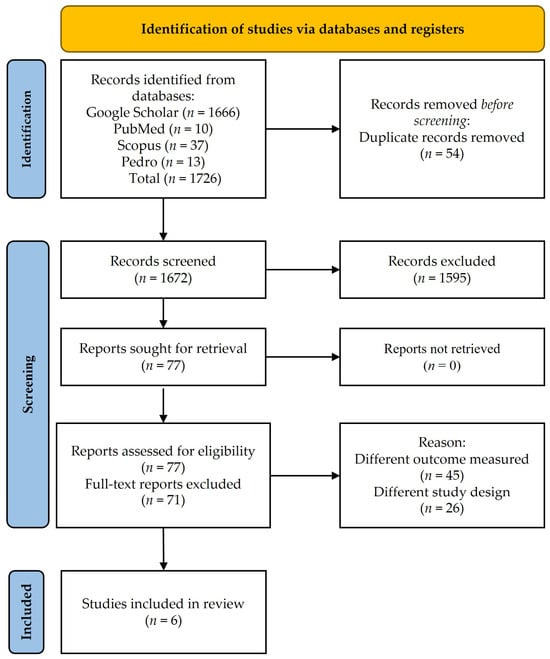
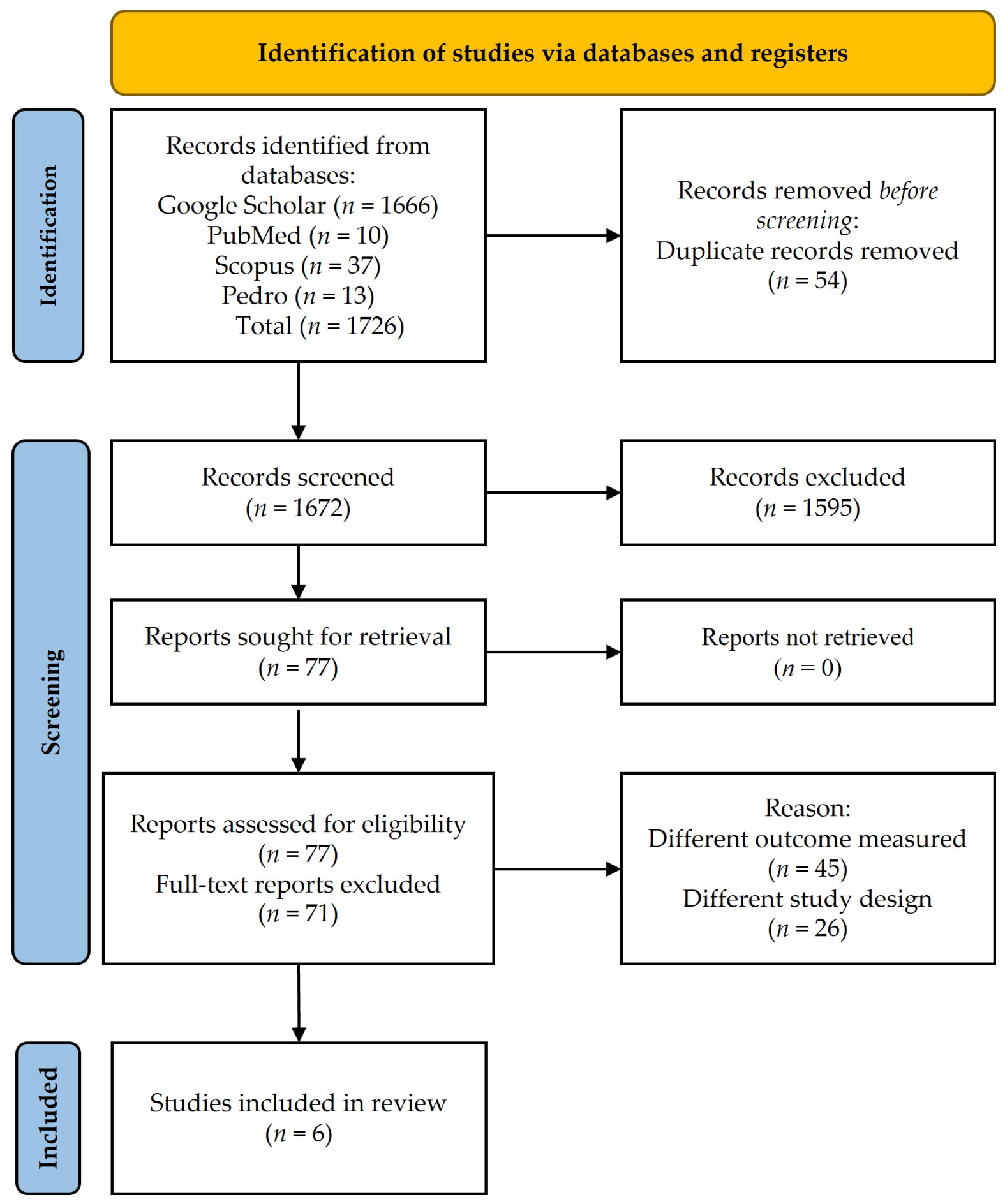
This scoping review was conducted and reported in accordance with the methodological frameworks originally developed by Arksey and O’Malley [35] and later refined by Levac et al. [36], as well as the updated methodological guidance of the Joanna Briggs Institute (JBI) [37]. This scoping review was conducted and reported in accordance with the Preferred Reporting Items for Systematic Reviews and Meta-Analyses Extension for Scoping Reviews (PRISMA-ScR) statement. The study selection process is presented in the PRISMA-ScR flow diagram (Figure 1). The review protocol was prospectively registered in PROSPERO (CRD420251244609; registered on 3 December 2025).
Figure 1.
PRISMA-ScR flow diagram illustrating the identification, screening, eligibility assessment, and inclusion of studies in the scoping review.
This methodological approach is particularly well suited for mapping the existing literature on the effectiveness of PSSE as either a standalone intervention or in combination with other physiotherapeutic treatment methods, with a focus on both primary structural deviations and secondary postural deviations associated with IS. The methodology consisted of several key steps, including formulating the research question, conducting a comprehensive literature search, selecting relevant studies, extracting and organizing data, and synthesizing and presenting the findings.
2.1. Identifying the Research Question
As noted in the introduction, IS is often accompanied by secondary postural deviations that extend beyond the primary structural parameters (CA and ATR), including pelvic asymmetry, trunk asymmetry and imbalance, and sagittal plane curvatures such as kyphosis and lordosis, together with reduced spinal mobility, decreased balance, and impaired postural control. Clinical experience indicates that optimal therapeutic outcomes require improvements not only in radiographic correction but also in visible postural alignment. This is particularly relevant for the pelvis, trunk, and sagittal balance. Addressing secondary postural deviations remains essential because these deviations can significantly affect psychological well-being and overall QoL. With these considerations in mind, the following research question guided this scoping review: “What is the evidence of PSSE treatment on the correction of secondary postural deviations in children, adolescents, and young adults with mild to moderate IS?” This question establishes a clear aim and scope and ensures a comprehensive and systematic exploration of the existing literature.
2.2. Information Sources and Search Strategy
A comprehensive literature search was conducted using the Physiotherapy Evidence Database (PEDro), Scopus, PubMed, and Google Scholar. The search strategy and eligibility criteria were created through a structured approach that combined controlled vocabulary and keywords to capture all relevant studies. The following search terms were used: (“Adolescent Idiopathic Scoliosis” OR AIS OR “idiopathic scoliosis” OR “mild and moderate idiopathic scoliosis”) AND (“PSSE” OR “physiotherapy scoliosis-specific exercises” OR “physiotherapeutic exercises”) AND (“child” OR “adolescent” OR “adult”) AND (“pelvic asymmetry” OR “pelvic position”) AND (“trunk asymmetry” OR “trunk imbalance” OR “postural deviation”) AND (“posture correction” OR “asymmetry correction”) AND (“sagittal curvature” OR “secondary postural deviation”). The complete database-specific search strategies and retrieved results are detailed in Supplementary Material File S1.
2.3. Eligibility Criteria
The eligibility criteria were structured according to the Population, Concept, and Context (PCC) framework commonly used in reviews. The Population consisted of children, adolescents, and young adults diagnosed with mild to moderate IS [38]. The Concept consisted of PSSE used either as a standalone intervention or in combination with other physiotherapeutic methods. The Context required that studies report outcomes related to secondary postural deviations in addition to primary structural deviations of the spine. These criteria ensured the inclusion of studies relevant to the research question. Studies were included if they: (1) investigated the effects of PSSE, either as a standalone intervention, in combination with other physiotherapeutic methods, or in comparison with them, in children, adolescents, and young adults with mild to moderate IS; (2) reported outcomes not only on primary structural deviations of the spine (e.g., CA, ATR), and QoL but also on secondary postural deviations. At least one of the following parameters had to be reported: pelvic parameters (torsion, rotation, tilt), trunk inclination, trunk imbalance, or sagittal spinal deviations (e.g., kyphosis and lordosis), spinal mobility, trunk symmetry or morphology, balance, and proprioception; (3) were published in English; and (4) employed RCTs, clinical trials, or clinical studies as their study design. Studies were excluded if they: (1) were case reports, case series, review articles, letters to the editor, or conference abstracts; (2) were animal or in vitro studies; or (3) were published more than 10 years ago. The study selection proceeded through a three-stage screening approach, in which titles were screened first, followed by abstract screening, and finally full-text assessment of potentially eligible articles, following the method outlined by Khalil et al. [39]. All included studies were evaluated based on the pre-established inclusion and exclusion criteria. Two independent reviewers carried out the study selection and data extraction processes separately. Any discrepancies between the reviewers were resolved through discussion until consensus was reached.
2.4. Charting the Data
A data extraction form was developed to systematically collect and organize key information from each included study. The extracted data included the author (s), year of publication, study design, methodological quality, participant characteristics (age, sex, scoliosis severity), and sample size. It also captured the intervention dosage, including frequency, duration, and delivery format of PSSE. Additional extracted variables included the specific postural parameters evaluated (e.g., pelvic parameters, trunk inclination, trunk imbalance, and sagittal deviations, spinal mobility, trunk symmetry or morphology, balance, proprioception, outcomes related to primary structural deviations (e.g., CA and ATR), outcomes associated with secondary postural asymmetries, and the main findings regarding the effects of PSSE on both primary structural deviations and secondary postural deviations of the spine and body. The methodological quality of the included studies was assessed using study design-specific appraisal tools according to study design. Quasi-experimental studies were evaluated using the revised Joanna Briggs Institute (JBI) Critical Appraisal Checklist [40], retrospective cohort studies were assessed using the Newcastle–Ottawa Scale (NOS) [41], and RCTs were evaluated using the Physiotherapy Evidence Database (PEDro) Scale [42]. The database search was conducted between September and December 2025, and the final search was completed on 2 December 2025.
2.5. Collating, Summarizing, and Reporting the Results
In the final stage of the review process, the data extracted from the included studies were collated, synthesized, and summarized. The results were organized thematically to align with the research question. The organization focused on key outcome domains related to the effects of PSSE, both as a standalone intervention and in comparison with other physiotherapeutic methods, as well as when combined with other physiotherapeutic methods, on secondary postural deviations in children, adolescents, and young adults with mild to moderate IS. The main themes included at least one of the following parameters: pelvic parameters (torsion, rotation, tilt), trunk inclination and imbalance, sagittal plane deviations (e.g., kyphosis, lordosis), spinal mobility, trunk symmetry, trunk morphology, balance, and proprioception, combined changes in primary structural spinal deviation parameters (e.g., CA, ATR), and QoL when reported alongside postural outcomes. Given the scoping review design, no quantitative meta-analysis was performed. Findings were synthesized descriptively and thematically.
2.6. Ethical Considerations
This study followed all ethical guidelines applicable to research that does not involve direct interaction with human or animal participants.
3. Results
The database search identified 1726 records. After the removal of 54 duplicate records, 1672 records remained for title and abstract screening. Following screening, 1595 records were excluded, and 77 full-text articles were assessed for eligibility. Of these, 71 articles were excluded, including 45 studies that did not report relevant outcome measures and 26 studies that did not meet the predefined study design criteria. Ultimately, six studies met the inclusion criteria and were included in this scoping review. The study selection process is presented in the PRISMA-ScR flow diagram (Figure 1).
3.1. Quality of the Studies
Methodological quality was assessed using study-design-specific appraisal tools. The quasi-experimental study was evaluated using the Joanna Briggs Institute (JBI) Critical Appraisal Checklist, the retrospective cohort study was assessed using the Newcastle–Ottawa Scale (NOS), and RCT were evaluated using the PEDro Scale (Table 1) [40,41,42]. Overall, the included studies demonstrated moderate-to-good methodological quality, with scores ranging from 6/9 on the JBI checklist, 7/9 on the NOS, and from 6/10 to 8/10 on the PEDro Scale (Table 2, Table 3 and Table 4).
Table 1.
Quality assessment summary.
Table 2.
Quality assessment using the JBI critical appraisal checklist.
Table 3.
Quality assessment using the NOS.
Table 4.
Quality assessment using the PEDro scale.
3.2. Characteristics of the Studies Included
The findings of the six included studies are comprehensively summarized, and their characteristics are presented in Table 5. Most of the scientific articles subjected to in-depth analysis consisted of one experimental group (EG) and one control group (CG). The table outlines the key features of each study, including the author and year of publication, baseline participant characteristics, study design, participant details, intervention protocol, treatment length, outcome measures, and principal findings.
Table 5.
Summary of included studies in the review.
4. Discussion
This review synthesizes findings from six studies evaluating PSSE as a standalone treatment, in comparison with other physiotherapeutic approaches, and in combination with adjunct therapies in adolescents and young adults with IS [18,43,44,45,46,47]. The analysis considers participant characteristics, study design, methodological quality, intervention duration, treatment protocols, and structural and postural outcomes, with attention to methodological strengths and limitations.
The studies included a total of 230 participants with mild-to-moderate IS (CA ≤ 40–45°), predominantly female. Samples were generally comparable in age and curve magnitude. Wenxia et al. [18] included 31 participants comparing PSSE with and without MT, Arsovski et al. [43] evaluated PSSE alone in 16 patients, Zhang et al. [45] randomized 42 patients to SE vs. SE + PNF, Abdel-Aziem et al. [47] included 52 patients aged 10–18, Lu et al. [44] assessed 61 patients across SE, SPS, and CSE groups, and Kocaman et al. [46] studied 28 adolescents comparing SE and CSE.
Female participants predominated across studies, consistent with AIS epidemiology. Age range and curve magnitude were similar, indicating representative AIS samples and clinical relevance. Four studies were RCTs [18,45,46,47]. Arsovski et al. [43] conducted an OPSC study without a CG, while Lu et al. [44] used an RCS design with three intervention groups. RCTs provided stronger internal validity, whereas the observational design used by Arsovski et al. [43] was more susceptible to bias due to the absence of a CG. Overall, the included studies demonstrated variable methodological quality, with generally acceptable methodological characteristics but important limitations affecting the certainty of the evidence. RCTs achieved PEDro scores between 6 and 8 out of 10, whereas the retrospective cohort and prospective observational studies scored 7/9 on the NOS and 6/9 on the JBI checklist, respectively. However, the interpretation of these quality assessments should consider the limitations related to small sample sizes, lack of blinding, absence of allocation concealment, and heterogeneity in interventions and outcome measures. Key limitations included small sample sizes, lack of blinding and allocation concealment, and variability in interventions and outcome measures, reducing overall certainty of evidence. Overall, four studies were classified as Level II evidence (RCTs) [18,45,46,47], whereas the remaining studies were classified as Level III evidence according to the National Health and Medical Research Council (NHMRC) and Oxford Centre for Evidence-Based Medicine (OCEBM) criteria [48,49].
Intervention lengths varied considerably across the included studies, limiting direct comparison of outcomes. Wenxia et al. [18], and Abdel-Aziem et al. [47] employed relatively short-term interventions (4 and 10 weeks, respectively), primarily reflecting immediate postural and mobility adaptations. In contrast, Arsovski et al. [43] implemented a longer 3–6-month prospective program, while Zhang et al. [45] delivered 20 supervised sessions over 24 weeks. Similarly, Kocaman et al. [46] applied for 10-week interventions, and Lu et al. [44] conducted a shorter protocol consisting of 10 sessions delivered twice weekly.
All studies used SE-based PSSE as the primary therapeutic approach, while adjunctive interventions varied considerably. Arsovski et al. [43] applied individualized PSSE based on curve type without additional modalities. Zhang et al. [45] added 30 min of PNF-based pelvic rotation correction to each SE session. Wenxia et al. [18] combined 50 min of supervised PSSE with 10 min of MT, three times weekly. However, the contribution of MT to the observed improvements remains uncertain, as evidence is currently limited to a single study and does not allow definitive conclusions regarding whether MT provides additional benefits or influences the long-term effects of exercise-based interventions. Abdel-Aziem et al. [47] combined scoliosis exercises with hippotherapy in the EG. Lu et al. [44] compared SE with SPS exercises and CSE across three groups, while Kocaman et al. [46] directly compared SE and CSE protocols delivered in 45–60-min sessions. Overall, adjunctive interventions targeted specific impairments or functional aspects related to pelvic alignment (PNF), soft-tissue mobility (MT), trunk stabilization (CSE), proprioception and balance (hippotherapy), as well as sensorimotor control with bracing. However, because these modalities were applied in combination with PSSE, their independent effects and specific contribution to the observed outcomes cannot be determined. Therefore, the potential added value of adjunctive interventions requires further investigation through well-designed comparative studies.
The effects of PSSE-based interventions on CA varied across the included studies, depending on the specific intervention protocols, comparison groups, and outcome measures. Wenxia et al. [18] observed a significant CA reduction in the PSSE + MT group (p < 0.002), whereas the PSSE-only group showed a slight increase. Abdel-Aziem et al. [47] reported greater reductions in CA and trunk asymmetry when hippotherapy was combined with scoliosis exercises. In contrast, Zhang et al. [45] found only a small, non-significant additional CA reduction (≈1.6°) with PSSE + PNF compared with PSSE alone (p = 0.14). Because these adjunctive modalities were applied in combination with PSSE, their independent contribution to the observed changes cannot be determined. Therefore, these findings should be interpreted cautiously, as the limited number and heterogeneity of studies prevent definitive conclusions regarding the superiority of combined or comparative exercise approaches.
Comparative studies evaluating different exercise approaches demonstrated variable findings. Lu et al. [44] reported significant within-group improvements across all interventions (p < 0.05). SE and SPS showed greater improvements than CSE in CA and ATR; however, differences were also observed across other postural outcomes, with SE showing greater improvement in C7 plumbline alignment, whereas SPS provided greater benefits for clavicle angle and dynamic postural control. Similarly, Kocaman et al. [46] reported greater improvements with SE than CSE in CA, thoracic ATR, cosmetic trunk deformity, spinal mobility, and QoL (p < 0.05), while CSE produced greater gains in peripheral muscle strength, particularly in the knees and upper extremities. These findings suggest potential differences between exercise approaches however, they should be interpreted cautiously due to the limited number of comparative studies, methodological heterogeneity, and differences in intervention protocols and outcome measures. Furthermore, although some studies reported statistically significant reductions in CA, the clinical relevance of these changes remains uncertain, as small variations in CA may fall within the range of measurement error and may not necessarily represent meaningful changes in spinal deformity. Therefore, radiographic findings should be interpreted alongside functional, postural, and patient-centred outcomes.
Beyond radiographic outcomes, several studies reported important sensorimotor and functional benefits of PSSE-based interventions. Zhang et al. [45] reported additional improvements in ATR (p = 0.01) with pelvic PNF, while Abdel-Aziem et al. [47] observed better trunk symmetry following hippotherapy. Arsovski et al. [43] also noted improvements in trunk symmetry and rotational deformity, although ATR values were not provided. Overall, adjunctive PSSE interventions appeared to have a greater impact on rotational, proprioceptive, and postural-control outcomes than on CA reduction alone in these short-term studies. Postural and alignment outcomes consistently favoured multimodal physiotherapeutic exercise interventions. All studies reported improvements in pelvic balance, trunk imbalance, and overall posture, with adjunctive interventions generally producing greater effects. Arsovski et al. [43] observed improved pelvic symmetry and trunk balance following individualized PSSE-SE treatment. Zhang et al. [45] reported significantly greater improvements in pelvic obliquity and AVR with PSSE + PNF, while Wenxia et al. [18] found larger reductions in pelvic asymmetry, trunk inclination, and kyphosis with PSSE + MT (p < 0.05). Similarly, Abdel-Aziem et al. [47] demonstrated greater decreases in pelvic obliquity, pelvic torsion, and thoracic kyphosis when hippotherapy was combined with SE (p < 0.001).
Comparative studies also supported SE-based interventions. Lu et al. [44] showed that SE and SPS were more effective than CSE in reducing CA and ATR (p < 0.05), SE significantly improved C7 plumbline alignment, whereas SPS yielded greater improvements in clavicle angle and dynamic postural control. Likewise, Kocaman et al. [46] reported superior outcomes with SE vs. CSE for CA, thoracic ATR, trunk deformity, spinal mobility, and QoL (p < 0.05), although CSE was more effective for peripheral muscle strength.
Several methodological strengths enhance the credibility of the included studies. The use of objective and validated instruments including standardized radiographs, Formetric 4D surface topography, inclinometry, Spinal Mouse, Biodex balance system, and validated QoL questionnaires improved measurement accuracy and reduced assessor subjectivity. Four studies employed RCT designs [18,45,46,47], strengthening internal validity and enabling controlled comparisons between PSSE alone, PSSE with adjunctive modalities, and alternative interventions such as CSE and SPS. Additionally, the inclusion of diverse outcome domains structural parameters (CA, ATR, AVR), mobility, balance, postural assessment, QoL, pain, daily functioning, and proprioception provided a comprehensive evaluation of treatment effects. Although two studies used non-RCT or retrospective designs [43,44], they applied the same validated assessment tools and included sensorimotor and postural measures, allowing detailed evaluation of neuromuscular adaptations following PSSE, particularly in balance, postural control, range of motion, trunk endurance, and proprioceptive function.
Clinicians may consider combining PSSE with adjunctive physiotherapeutic approaches to enhance pelvic alignment and neuromuscular control, reflecting the favourable postural outcomes reported in current evidence. However, these findings should be interpreted cautiously until high-quality RCTs with long-term follow-up confirm sustained curve reduction. Schroth-based PSSE may have potential effects on proprioception and sensorimotor control; however, the current evidence is insufficient to establish sensorimotor training as a standard component of scoliosis rehabilitation. Future studies should further investigate the role of sensorimotor approaches in improving postural control, balance, and functional outcomes in individuals with idiopathic scoliosis.
Future research should focus on large, multicentre RCTs using standardized PSSE protocols and clearly defined adjunctive interventions to improve external validity and facilitate comparisons across studies. Longer follow-up periods are needed to assess the durability of treatment effects and clinically relevant outcomes. Dose-response studies should identify the optimal frequency, duration, and intensity of PSSE and adjunct therapies to establish evidence-based treatment guidelines. Additionally, future trials should incorporate blinded outcome assessment, preregistered protocols, and rigorous methodological controls to reduce bias and enhance the reliability and reproducibility of findings. Moreover, future investigations should seek to determine which subgroups of patients with IS are most likely to benefit from specific combinations of PSSE and adjunctive interventions, thereby supporting a more individualized and precision-based rehabilitation approach.
Despite positive trends, the evidence has important limitations that affect the generalizability and interpretation of the findings. One of the major limitations of this review is the considerable heterogeneity among the included studies with respect to participants’ age, scoliosis severity, intervention protocols, treatment duration, adjunctive interventions, and outcome measures. Most studies had small sample sizes (n = 16–61), reducing statistical power and increasing the risk of Type II error, particularly when detecting modest changes in CA. Limited blinding, non-randomized designs [43,44], and the absence of assessor blinding in several studies further increased the risk of selection, performance, and detection bias. Furthermore, the inclusion of multimodal interventions combining PSSE with MT, PNF, hippotherapy, or other therapeutic approaches limits the ability to determine whether the reported improvements are attributable primarily to PSSE or to the combined treatment effects. Comparative studies also varied in the type and structure of alternative interventions (e.g., CSE, SPS), making it difficult to determine whether the superiority of SE-based approaches resulted from specific exercise principles, treatment intensity, therapist supervision, or adherence. The lack of standardized comparative protocols further restricts cross-study comparisons. Furthermore, PSSE should not be interpreted as a single homogeneous intervention, as it represents a group of exercise approaches based on different theoretical principles and therapeutic strategies. Therefore, variations in exercise concepts, treatment dosage, therapist expertise, and adjunctive components may have influenced the observed outcomes. Direct comparisons between different PSSE approaches are needed to determine whether specific methods provide superior effects on structural and secondary postural outcomes.
Follow-up periods were generally short (≤6 months), limiting conclusions regarding long-term curve progression and clinically important outcomes such as bracing or surgery. Wenxia et al. [18] highlighted the need for rigorous RCTs with standardized PSSE protocols, adequate sample sizes, and long-term (≥1 year) follow-up to confirm these preliminary findings. Current evidence suggests that adding targeted modalities such as pelvic PNF, MT, and hippotherapy to SE-based PSSE may enhance short-term improvements in ATR and posture, although changes in CA remain modest. Comparative studies further indicate that SE-based PSSE may be more effective than CSE and SPS in improving primary and secondary postural and functional outcomes. The inclusion of sensorimotor measures also expands the understanding of PSSE effects beyond radiographic correction, demonstrating potential benefits in neuromuscular organization, balance, and proprioception. Collectively, these findings support the need for integrative biomechanical and neurophysiological models to better explain how secondary postural adaptations respond to targeted physiotherapeutic interventions. Consequently, the mechanisms through which PSSE influences secondary postural adaptations remain incompletely understood, and further research integrating biomechanical, neuromuscular, and sensorimotor frameworks is warranted.
Furthermore, PSSE should not be interpreted as a single homogeneous intervention, as it represents a group of exercise approaches based on different theoretical principles and therapeutic strategies. Therefore, variations in exercise concepts, treatment dosage, therapist expertise, and adjunctive components may have influenced the observed outcomes. Direct comparisons between different PSSE approaches are needed to determine whether specific methods provide superior effects on structural and secondary postural outcomes. Moreover, the sustainability of treatment effects remains unclear, as most included studies assessed short-term outcomes with follow-up periods of six months or less. Future research should include longer follow-up periods to determine whether improvements in spinal parameters, posture, and functional outcomes are maintained over time.
Practical Implications
The findings have important clinical implications for healthcare professionals, particularly physiotherapists managing IS. A structured, conservative approach incorporating PSSE, especially when combined with adjunctive therapies, may be considered for children, adolescents, and young adults with mild to moderate IS. Treatment should include individualized exercise programs, appropriate adjunctive interventions, and regular monitoring, while recognizing the limited high-quality evidence on long-term outcomes. Comparative evidence suggests that SE-based PSSE may be more effective than CSE in improving spinal alignment, trunk rotation, postural symmetry, spinal mobility, and QoL. However, SPS may offer greater benefits in dynamic postural control and functional performance, suggesting that different exercise modalities target distinct functional domains. Therefore, exercise selection should be individualized based on postural deficits, sensorimotor impairments, and rehabilitation goals. The findings also support integrating sensorimotor and postural-control training into scoliosis rehabilitation, as improvements in balance, proprioception, and neuromuscular control may enhance functional and postural adaptation beyond structural correction alone. Accordingly, rehabilitation goals should extend beyond radiographic correction and incorporate patient-reported outcomes, movement quality, functional performance, and participation in everyday life.
5. Conclusions
This scoping review suggests that PSSE may contribute to improvements in structural parameters and secondary postural deviations in individuals with IS. Although PSSE alone demonstrated potential benefits, some studies reported greater improvements when PSSE was combined with adjunctive physiotherapeutic interventions targeting postural alignment, sensorimotor control, and functional outcomes. Comparative evidence suggests potential differences between SE-based PSSE and CSE for selected structural and postural outcomes; however, these findings remain limited by the heterogeneity and small number of comparative studies. Overall, current evidence highlights the importance of considering biomechanical, functional, and patient-centred outcomes alongside structural parameters. Sensorimotor aspects may represent a promising area for future rehabilitation research; however, further high-quality studies are required before specific recommendations can be established. The available evidence suggests that PSSE may have beneficial effects beyond radiographic parameters, particularly regarding postural control and functional outcomes. However, further high-quality RCTs with standardized protocols and longer follow-up periods are required to clarify the independent and combined effects of PSSE and adjunctive interventions.
Supplementary Materials
The following supporting information can be downloaded at: https://www.mdpi.com/article/10.3390/jfmk11030288/s1, Supplementary File S1: Complete search strategies and retrieved search results.
Author Contributions
S.R.M. developed the study concept and drafted the initial manuscript. S.R.M. and M.A. contributed to data collection, analysis, and critical revision of the manuscript. T.K. provided supervision and methodological guidance throughout the study and critically revised the manuscript. T.K. and A.M. contributed to the preparation of the final version of the manuscript. All authors contributed to refining the methodological approach and approved the final version of the article. All authors have read and agreed to the published version of the manuscript.
Funding
No external funding was received for this study.
Institutional Review Board Statement
Not applicable.
Informed Consent Statement
Not applicable.
Data Availability Statement
The original data and materials presented in this study are included within the article and its Supplementary Materials. Additional inquiries may be directed to the corresponding author.
Acknowledgments
The authors would like to declare that there are no acknowledgments.
Conflicts of Interest
The authors declare no additional conflicts of interest.
Abbreviations
The following abbreviations are used in this manuscript:
| ADLs | Activities of daily living |
| ATR | Angle of trunk rotation |
| AVR | Apical vertebral rotation |
| AVT | Apical vertebral translation |
| C7PL—C7 | Plumb line alignment |
| CCT | Controlled clinical trial |
| CG | Control group |
| CA | Cobb angle |
| CSE | Core stabilization exercises |
| EG | Experimental group |
| FMS | Functional Movement Screen |
| FITS | Functional Individual Therapy for Scoliosis |
| IS | Idiopathic scoliosis |
| JBI | Joanna Briggs Institute |
| MT | Manual therapy |
| NHMRC | National Health and Medical Research Council |
| NOS | Newcastle–Ottawa Scale |
| OPSC | Observational prospective single-centre study |
| OCEBM | Oxford Centre for Evidence-Based Medicine |
| PEDro | Physiotherapy Evidence Database Scale |
| PSSE | Physiotherapy Scoliosis-Specific Exercises |
| PCC | Population, Concept, and Context framework |
| PRISMA-ScR | Preferred Reporting Items for Systematic Reviews and Meta-Analyses Extension for Systematic Reviews |
| PNF | Proprioceptive Neuromuscular Facilitation |
| QoL | Quality of life |
| RCT | Randomized controlled trials |
| RCS | Retrospective cohort study; |
| ROM | Range of motion |
| SE | Schroth exercise |
| SEAS | Scientific Exercise Approach to Scoliosis |
| SOSORT | Scoliosis Orthopaedic and Rehabilitation Treatment |
| SPS | Spiral stabilization |
| TRACE | Trunk Aesthetic Clinical Evaluation |
| VAS | Visual Analog Scale |
| WRVAS | Walter Reed Visual Assessment Scale |
References
- Fazalbhoy, A.; McAviney, J.; Mirenzi, R. Compliance of Physiotherapeutic Scoliosis-Specific Exercise in Adolescent Idiopathic Scoliosis: A Scoping Review. J. Clin. Med. 2025, 14, 2950. [Google Scholar] [CrossRef] [Scilit] [PubMed]
- Konieczny, M.R.; Senyurt, H.; Krauspe, R. Epidemiology of adolescent idiopathic scoliosis. J. Child Orthop. 2013, 7, 3–9. [Google Scholar] [CrossRef] [Scilit] [PubMed]
- Thomas, J.J.; Stans, A.A.; Milbrandt, T.A.; Kremers, H.M.; Shaughnessy, W.J.; Larson, A.N. Trends in Incidence of Adolescent Idiopathic Scoliosis: A Modern US Population-based Study. J. Pediatr. Orthop. 2021, 41, 327–332. [Google Scholar] [CrossRef] [Scilit] [PubMed]
- Kastrinis, A.; Strimpakos, N.; Koumantakis, G.A.; Tzatzaliaris, D.; Oikonomaki, M.; Dimitriadis, Z. Evaluating the effect of the Schroth method on sensorimotor control in adolescents with idiopathic scoliosis: A controlled clinical trial. J. Funct. Morphol. Kinesiol. 2026, 11, 127. [Google Scholar] [CrossRef] [Scilit] [PubMed]
- Seleviciene, V.; Cesnaviciute, A.; Strukcinskiene, B.; Marcinowicz, L.; Strazdiene, N.; Genowska, A. Physiotherapeutic scoliosis-specific exercise methodologies used for conservative treatment of adolescent idiopathic scoliosis, and their effectiveness: An extended literature review of current research and practice. Int. J. Environ. Res. Public Health 2022, 19, 9240. [Google Scholar] [CrossRef] [Scilit] [PubMed]
- Negrini, A.; Parzini, S.; Negrini, M.G.; Romano, M.; Atanasio, S.; Zaina, F.; Negrini, S. Adult scoliosis can be reduced through SEAS exercises: A case report. Scoliosis 2008, 3, 20. [Google Scholar] [CrossRef] [Scilit] [PubMed]
- Sapienza, M.; Vaccalluzzo, M.S.; Perricone, E.; Giannone, C.; Caldaci, A.; Musumeci, G.; Vescio, A.; Testa, G.; Pavone, V. Clinical, Psychological, and Social Determinants of Brace Compliance in Adolescent Idiopathic Scoliosis: A Systematic Review and Meta-Analysis. J. Funct. Morphol. Kinesiol. 2026, 11, 68. [Google Scholar] [CrossRef] [Scilit] [PubMed]
- Fan, Y.; Ren, Q.; To, M.K.T.; Cheung, J.P.Y. Effectiveness of scoliosis-specific exercises for alleviating adolescent idiopathic scoliosis: A systematic review. BMC Musculoskelet. Disord. 2020, 21, 495. [Google Scholar] [CrossRef] [Scilit] [PubMed]
- Kim, K.; Ahn, S.; Jeon, K. Asymmetry Improvement on Core Training for Adolescent Idiopathic Scoliosis. Iran. J. Public Health 2020, 49, 2219–2221. [Google Scholar] [CrossRef] [Scilit] [PubMed]
- Porto, A.B.; Nascimento Guimarães, A.; Alves Okazaki, V.H. The effect of exercise on postural alignment: A systematic review. J. Bodyw. Mov. Ther. 2024, 40, 99–108. [Google Scholar] [CrossRef] [Scilit] [PubMed]
- Yagci, G.; Ayhan, C.; Yakut, Y. Effectiveness of basic body awareness therapy in adolescents with idiopathic scoliosis: A randomized controlled study. J. Back Musculoskelet. Rehabil. 2018, 31, 693–701. [Google Scholar] [CrossRef] [Scilit] [PubMed]
- Jung, J.Y.; Cha, E.J.; Kim, K.A.; Won, Y.; Bok, S.K.; Kim, B.O.; Kim, J.J. Influence of pelvic asymmetry and idiopathic scoliosis in adolescents on postural balance during sitting. Biomed. Mater. Eng. 2015, 26, S601–S610. [Google Scholar] [CrossRef] [Scilit] [PubMed]
- Kumar, T.; Kumar, S.; Nezamuddin, M.; Sharma, V.P. Efficacy of core muscle strengthening exercise in chronic low back pain patients. J. Back Musculoskelet. Rehabil. 2015, 28, 699–707. [Google Scholar] [CrossRef] [Scilit] [PubMed]
- Weinstein, S.L.; Dolan, L.A.; Wright, J.G.; Dobbs, M.B. Effects of bracing in adolescents with idiopathic scoliosis. N. Engl. J. Med. 2013, 369, 1512–1521. [Google Scholar] [CrossRef] [Scilit] [PubMed]
- Dericioğlu, B.İ.; Özgören, A.Ö.; Angın, S. Adolescent idiopathic scoliosis causes pelvic floor dysfunction: A cross-sectional study. J. Back Musculoskelet. Rehabil. 2025, 38, 314–323. [Google Scholar] [CrossRef] [Scilit] [PubMed]
- Aulisa, A.G.; Guzzanti, V.; Falciglia, F.; Giordano, M.; Galli, M.; Aulisa, L. Brace treatment of idiopathic scoliosis is effective for curves over 40 degrees. Eur. J. Phys. Rehabil. Med. 2019, 55, 231–240. [Google Scholar] [CrossRef] [Scilit] [PubMed]
- Negrini, S.; De Mauroy, J.C.; Grivas, T.B.; Knott, P.; Kotwicki, T.; Maruyama, T.; O’Brien, J.P.; Rigo, M.; Zaina, F. Actual evidence in the medical approach to adolescents with idiopathic scoliosis. Eur. J. Phys. Rehabil. Med. 2014, 50, 87–92. [Google Scholar] [PubMed]
- Wenxia, Z.; Yuelong, L.; Zhou, Z.; Guoqing, J.; Huanjie, H.; Guifang, Z.; Chuhuai, W.; Wai Leung Ambrose, L.; Peng, L. The efficacy of combined physiotherapeutic scoliosis-specific exercises and manual therapy in adolescent idiopathic scoliosis. BMC Musculoskelet. Disord. 2024, 25, 874. [Google Scholar] [CrossRef] [Scilit] [PubMed]
- Berdishevsky, H.; Lebel, V.A.; Bettany-Saltikov, J.; Rigo, M.; Lebel, A.; Hennes, A.; Romano, M.; Białek, M.; M’hango, A.; Betts, T.; et al. Physiotherapy scoliosis-specific exercises—A comprehensive review of seven major schools. Scoliosis Spinal Disord. 2016, 11, 20. [Google Scholar] [CrossRef] [Scilit] [PubMed]
- Alves de Araújo, M.E.; Bezerra da Silva, E.; Bragade Mello, D.; Cader, S.A.; Shiguemi Inoue Salgado, A.; Dantas, E.H. The effectiveness of the Pilates method in scoliosis. J. Bodyw. Mov. Ther. 2012, 16, 191–198. [Google Scholar] [CrossRef] [Scilit] [PubMed]
- Kwan, K.Y.H.; Cheng, A.C.S.; Koh, H.Y.; Chiu, A.Y.Y.; Cheung, K.M.C. Effectiveness of Schroth exercises during bracing in AIS. Scoliosis Spinal Disord. 2017, 12, 32. [Google Scholar] [CrossRef] [Scilit] [PubMed]
- Ma, K.; Wang, C.; Huang, Y.; Wang, Y.; Li, D.; He, G. The effects of physiotherapeutic scoliosis-specific exercise on idiopathic scoliosis in children and adolescents: A systematic review and meta-analysis. Physiotherapy 2023, 121, 46–57. [Google Scholar] [CrossRef] [Scilit] [PubMed]
- Park, J.H.; Jeon, H.S.; Park, H.W. Effects of the Schroth exercise on idiopathic scoliosis: A meta-analysis. Eur. J. Phys. Rehabil. Med. 2018, 54, 440–449. [Google Scholar] [CrossRef] [Scilit] [PubMed]
- Rrecaj-Malaj, S.; Beqaj, S.; Krasniqi, V.; Qorolli, M.; Tufekcievski, A. Outcome of 24 Weeks of Combined Schroth and Pilates Exercises on Cobb Angle, Angle of Trunk Rotation, Chest Expansion, Flexibility and Quality of Life in Adolescents with Idiopathic Scoliosis. Med. Sci. Monit. Basic Res. 2020, 26, e920449. [Google Scholar] [CrossRef] [Scilit] [PubMed]
- Schreiber, S.; Parent, E.C.; Moez, E.K.; Hedden, D.M.; Hill, D.L.; Moreau, M.; Lou, E.; Watkins, E.M.; Southon, S.C. Schroth Physiotherapeutic Scoliosis-Specific Exercises Added to the Standard of Care Lead to Better Cobb Angle Outcomes in Adolescents with Idiopathic Scoliosis—An Assessor and Statistician Blinded Randomized Controlled Trial. PLoS ONE 2016, 11, e0168746. [Google Scholar] [CrossRef] [Scilit] [PubMed]
- Trzcińska, S.; Koszela, K.; Kuszewski, M. Effectiveness of the FED Method in the Treatment of Idiopathic Scoliosis of Girls Aged 11–15 Years. Int. J. Environ. Res. Public Health 2021, 19, 65. [Google Scholar] [CrossRef] [Scilit] [PubMed]
- Burger, M.; Coetzee, W.; du Plessis, L.Z.; Geldenhuys, L.; Joubert, F.; Myburgh, E.; van Rooyen, C.; Vermeulen, N. The effectiveness of Schroth exercises in adolescents with idiopathic scoliosis: A systematic review and meta-analysis. S. Afr. J. Physiother. 2019, 75, 904. [Google Scholar] [CrossRef] [Scilit] [PubMed]
- Yang, J.M.; Lee, J.H.; Lee, D.H. Effects of consecutive application of stretching, Schroth, and strengthening exercises on Cobb’s angle and the rib hump in an adult with idiopathic scoliosis. J. Phys. Ther. Sci. 2015, 27, 2667–2669. [Google Scholar] [CrossRef] [Scilit] [PubMed]
- Negrini, S.; Donzelli, S.; Lusini, M.; Minnella, S.; Zaina, F. The effectiveness of combined bracing and exercise in adolescent idiopathic scoliosis based on SRS and SOSORT criteria: A prospective study. BMC Musculoskelet. Disord. 2014, 15, 263. [Google Scholar] [CrossRef] [Scilit] [PubMed]
- Negrini, S.; Hresko, T.M.; O’Brien, J.P.; Price, N.; SOSORT Boards; SRS Non-Operative Committee. Recommendations for research studies on treatment of idiopathic scoliosis: Consensus 2014 between SOSORT and SRS non-operative management committee. Scoliosis 2015, 10, 8. [Google Scholar] [CrossRef] [Scilit] [PubMed]
- Negrini, S.; Donzelli, S.; Aulisa, A.G.; Czaprowski, D.; Schreiber, S.; de Mauroy, J.C.; Diers, H.; Grivas, T.B.; Knott, P.; Kotwicki, T.; et al. 2016 SOSORT guidelines: Orthopaedic and rehabilitation treatment of idiopathic scoliosis during growth. Scoliosis Spinal Disord. 2018, 13, 3. [Google Scholar] [CrossRef] [Scilit] [PubMed]
- Karavidas, N.; Iakovidis, P.; Chatziprodromidou, I.; Lytras, D.; Kasimis, K.; Kyrkousis, A.; Apostolou, T. Physiotherapeutic Scoliosis-Specific Exercises (PSSE-Schroth) can reduce the risk for progression during early growth in curves below 25°: Prospective control study. Eur. J. Phys. Rehabil. Med. 2024, 60, 331–339. [Google Scholar] [CrossRef] [Scilit] [PubMed]
- Park, J.; So, W.Y. The effect of the Schroth rehabilitation exercise program on spinal and feet alignment in adolescent patients with idiopathic scoliosis: A pilot study. Healthcare 2022, 10, 398. [Google Scholar] [CrossRef] [Scilit] [PubMed]
- Rrecaj-Malaj, S.; Hykolli, A.; Lumi, S.; Murtezani, A. Quality of life in adolescent idiopathic scoliosis before and after physical therapy: A preliminary study. Sport Mont 2018, 16, 69–72. [Google Scholar] [CrossRef] [Scilit]
- Arksey, H.; O’Malley, L. Scoping studies: Towards a methodological framework. Int. J. Soc. Res. Methodol. 2005, 8, 19–32. [Google Scholar] [CrossRef] [Scilit]
- Levac, D.; Colquhoun, H.; O’Brien, K.K. Scoping studies: Advancing methodology. Implement. Sci. 2010, 5, 69. [Google Scholar] [CrossRef] [Scilit] [PubMed]
- Peters, M.D.J.; McInerney, P.; Munn, Z.; Tricco, A.C.; Khalil, H. Chapter 11: Scoping reviews (2020 version). In JBI Manual for Evidence Synthesis; JBI: North Adelaide, Australia, 2020. [Google Scholar]
- Viroli, G.; Ruffilli, A.; Traversari, M.; Mazzotti, A.; Manzetti, M.; Zielli, S.O.; Arceri, A.; Faldini, C. Adolescent Idiopathic Scoliosis in the Adult Patient: New Classification with a Treatment-Oriented Guideline. Healthcare 2025, 13, 2418. [Google Scholar] [CrossRef] [Scilit] [PubMed]
- Khalil, H.; Campbell, F.; Danial, K.; Pollock, D.; Munn, Z.; Welsh, V.; Saran, A.; Hoppe, D.; Tricco, A.C. Advancing the methodology of mapping reviews: A scoping review. Res. Synth. Methods 2024, 15, 384–397. [Google Scholar] [CrossRef] [Scilit] [PubMed]
- Barker, T.H.; Habibi, N.; Aromataris, E.; Stone, J.C.; Leonardi-Bee, J.; Sears, K.; Hasanoff, S.; Klugar, M.; Tufanaru, C.; Moola, S.; et al. The revised JBI critical appraisal tool for the assessment of risk of bias for quasi-experimental studies. JBI Evid. Synth. 2024, 22, 378–388. [Google Scholar] [CrossRef] [Scilit] [PubMed]
- Gualdi-Russo, E.; Zaccagni, L. The Newcastle–Ottawa Scale for Assessing the Quality of Studies in Systematic Reviews. Publications 2026, 14, 4. [Google Scholar] [CrossRef] [Scilit]
- Yamato, T.P.; Maher, C.; Koes, B.; Moseley, A. The PEDro scale had acceptably high convergent validity, construct validity, and interrater reliability in evaluating methodological quality of pharmaceutical trials. J. Clin. Epidemiol. 2017, 86, 176–181. [Google Scholar] [CrossRef] [Scilit] [PubMed]
- Arsovski, D.; Petreska, B.; Stojchevska-Prodanovska, V. Three-dimensional postural correction in idiopathic scoliosis with clinical outcomes of PSSE-Schroth exercises. Rom. J. Phys. Ther. 2025, 31, 30–42. [Google Scholar] [CrossRef] [Scilit]
- Lu, H.; Li, M.; Wang, N.; Ye, G.; Zhu, F.; Guo, M.; Zeng, C. Effects of different physical therapy training protocols on patients with idiopathic scoliosis: Short-term results. PLoS ONE 2025, 20, e0334713. [Google Scholar] [CrossRef] [Scilit] [PubMed]
- Zhang, Y.; Chai, T.; Weng, H.; Liu, Y. Pelvic rotation correction combined with Schroth exercises for pelvic and spinal deformities in mild adolescent idiopathic scoliosis: A randomized controlled trial. PLoS ONE 2024, 19, e0307955. [Google Scholar] [CrossRef] [Scilit] [PubMed]
- Kocaman, H.; Bek, N.; Kaya, M.H.; Büyükturan, B.; Yetiş, M.; Büyükturan, Ö. The effectiveness of two different exercise approaches in adolescent idiopathic scoliosis: A single-blind, randomized-controlled trial. PLoS ONE 2021, 16, e0249492. [Google Scholar] [CrossRef] [Scilit] [PubMed]
- Abdel-Aziem, A.A.; El-Sayed, W.H.; Abdelraouf, O.R. A 10-week program of combined hippotherapy and Schroth’s exercises improves balance and postural asymmetries in adolescent idiopathic scoliosis: A randomized controlled study. Children 2021, 8, 1207. [Google Scholar]
- OCEBM Levels of Evidence Working Group. Oxford Centre for Evidence-Based Medicine: The Oxford 2011 Levels of Evidence. 2011. Available online: https://www.cebm.ox.ac.uk/resources/levels-of-evidence/ocebm-levels-of-evidence (accessed on 10 December 2025).
- Coleman, K.; Norris, S.; Weston, A. NHMRC Additional Levels of Evidence and Grades for Recommendations for Developers of Guidelines: Stage 2 Consultation; Early 2008–End Jun 2009; National Health and Medical Research Council: Canberra, Australia, 2009.

Disclaimer/Publisher’s Note: The statements, opinions and data contained in all publications are solely those of the individual author(s) and contributor(s) and not of MDPI and/or the editor(s). MDPI and/or the editor(s) disclaim responsibility for any injury to people or property resulting from any ideas, methods, instructions or products referred to in the content. |
© 2026 by the authors. Licensee MDPI, Basel, Switzerland. This article is an open access article distributed under the terms and conditions of the Creative Commons Attribution (CC BY) license.