


Abstract
This study evaluated the effects of partial replacement of fishmeal with 11% defatted Hermetia illucens meal (corresponding to approximately 35% replacement of the fishmeal-derived animal protein fraction) on growth performance, fillet proximate composition, and instrumental sensory responses of gilthead seabream (Sparus aurata) reared under commercial offshore farming conditions. A total of 60,000 fish were distributed into four sea cages and fed either a control diet (FM) or an insect-based diet (HIM) for 181 days. No significant differences were observed between dietary treatments in final body weight, weight gain, specific growth rate, feed conversion ratio, protein efficiency ratio, or somatic indices, indicating that insect meal inclusion did not impair productive performance under farm-scale conditions. Fillet proximate composition was largely preserved. Fillet sensory characteristics were assessed using an integrated artificial sensing platform including an electronic eye (E-eye), electronic nose (E-nose), and electronic tongue (E-tongue) coupled with multivariate analysis. E-eye and E-nose analyses showed no clear discrimination between dietary groups, indicating that dietary insect meal inclusion had limited effects on fillet visual appearance and volatile compound profiles. In contrast, E-tongue analysis revealed a clear separation between treatments, suggesting selective modulation of taste-related attributes associated with dietary inclusion of insect meal. Overall, the results demonstrate that defatted H. illucens meal can be incorporated into practical seabream diets under commercial farming conditions without compromising productive performance or major fillet quality traits. Furthermore, this study provides farm-scale evidence that artificial sensing technologies can effectively detect subtle diet-related changes in sensory characteristics, particularly those associated with taste perception.
Keywords:
Hermetia illucens; Sparus aurata; fishmeal replacement; growth performance; sensory quality; artificial sensing technologies; commercial offshore aquaculture Key Contribution:
This study provides the farm-scale evaluation integrating growth performances and instrumental sensory characterization of gilthead seabream fed a diet containing 11% defatted Hermetia illucens meal under commercial offshore farming conditions. The results demonstrate that partial fishmeal replacement can be achieved without compromising productive performance while revealing selective modulation of taste sensory attributes through artificial sensing technologies.
1. Introduction
The rapid expansion of global aquaculture production has increased the demand for sustainable and nutritionally efficient feed ingredients capable of reducing reliance on marine-derived resources while maintaining fish performance and product quality. Fishmeal (FM) and fish oil (FO) remain key components of aquafeeds due to their balanced amino acid composition, high digestibility, and content of long-chain n-3 polyunsaturated fatty acids. However, their limited availability, price volatility, and environmental implications associated with forage fish exploitation have stimulated the search for alternative protein sources [1,2].
Among emerging alternatives, insect meals, particularly those derived from the black soldier fly (Hermetia illucens, HI), have attracted increasing attention as sustainable aquafeed ingredients. HI larvae can be efficiently reared on organic side streams and agro-industrial by-products, contributing to circular nutrient recycling while providing high-quality protein with a favorable amino acid profile. As a result, insect-derived ingredients are increasingly considered promising candidates for partial replacement of marine protein sources in aquaculture diets [3,4,5].
Several studies have demonstrated that partial substitution of FM with Hermetia illucens meal (HIM) can support satisfactory growth performance, feed utilization efficiency, and physiological responses in both freshwater and marine fish species, including gilthead seabream (Sparus aurata) [6,7].
Nevertheless, most available evidence derives from laboratory- or pilot-scale trials conducted under controlled experimental conditions, whereas validation under full-scale commercial marine cage farming environments remains comparatively limited. Farm-scale studies are particularly important because environmental variability and operational conditions in commercial cage systems may influence fish performance and product quality compared with controlled experimental settings.
The inclusion level tested in the present study was selected based on previous farm-scale validation trials, demonstrating its nutritional suitability and practical applicability under commercial production conditions. Recent investigations conducted under commercial cage farming conditions showed that dietary inclusion of 11% defatted HIM in S. aurata did not impair growth performance and was associated with beneficial modulation of intestinal microbiota composition and gut health indicators [8].
Complementary evidence from the same commercial-scale feeding trial further demonstrated that inclusion of Hermetia illucens meal preserved fillet nutritional quality and microbiological stability during refrigerated storage under offshore farming conditions [9]. Together, these findings support the feasibility of incorporating insect-derived proteins into seabream diets at the farm scale.
However, the effects of insect-based diets on fillet sensory characteristics remain insufficiently explored, particularly under commercial farming conditions. Sensory attributes such as color, aroma, and taste play a central role in consumer acceptance and market value of farmed fish products and therefore represent essential parameters when evaluating the suitability of alternative feed ingredients in practical aquaculture production systems.
In recent years, artificial sensing technologies, including an electronic eye (E-eye), electronic nose (E-nose), and electronic tongue (E-tongue), have emerged as reliable and objective tools for the characterization of sensory attributes in fish products. These systems enable reproducible detection of subtle variations in visual appearance, volatile compound profiles, and taste-related components, providing complementary information to conventional sensory panel evaluations [10]. However, their application for evaluating the sensory effects of insect-based aquafeeds in marine cage-farmed seabream remains limited [11,12,13,14,15,16].
Therefore, the present study aimed to evaluate the effects of partial replacement of fishmeal with 11% defatted Hermetia illucens meal (corresponding to approximately 35% replacement of the fishmeal-derived animal protein fraction) on growth performance, fillet proximate composition, and instrumental sensory characteristics of gilthead seabream reared under commercial offshore farming conditions.
2. Materials and Methods
2.1. Ethics
All experimental procedures involving animals were conducted in accordance with institutional and national guidelines for the care and use of experimental animals and were approved by the Ethics Committee of the Department of Veterinary Sciences, University of Messina (Authorization No. 082/2022).
2.2. Experimental Diets
The experimental design adopted in the present study was derived from a commercial-scale feeding trial previously described in related publications [8,9]. However, the analytical focus and datasets presented here are original and specifically address growth performance and instrumental sensory characterization of seabream fillets.
Two experimental diets were formulated to be iso-nitrogenous (42 g/100 g crude protein) and iso-lipidic (~18 g/100 g crude lipid) to meet the nutritional requirements of gilthead seabream (Sparus aurata). Diets were produced as 4 mm extruded pellets by Veronesi S.p.A. (Verona, Italy).
The experimental diet (HIM) included 11% partially defatted black soldier fly (Hermetia illucens) larvae meal (ProteinX®, Protix Ingredients, Bergen op Zoom, The Netherlands), obtained through mechanical oil extraction, corresponding to approximately 35% replacement of the fishmeal-derived animal protein fraction. The control diet (FM) contained fishmeal as the sole animal-derived protein source (250 g/kg).
Diet formulation was consistent with previous studies conducted within the same commercial-scale feeding trial [8,9] and is summarized in Table 1. Detailed information on amino acid composition, fatty acid profile, and mineral content of the experimental diets has already been reported in those studies and is therefore not repeated here.
Table 1.
Ingredients and proximate chemical composition of insect meal (HI) and of the experimental diets (FM and HIM).
2.3. Experimental Site and Farming System
The feeding trial was conducted at the Maricolture Sarde Srl commercial fish farm (Sant’Antioco, Sardinia, Italy) which covers an area of approximately 23 hectares. The farming infrastructure includes an onshore facility and five offshore cage batteries (12 × 12 × 1.5 m), constructed with nylon netting of mesh size adjusted according to fish size. Each cage was equipped with anti-bird protection netting and polyethylene walkways to allow safe manual feeding and routine inspection.
2.4. Experimental Design and Fish Husbandry
The experimental design and animal husbandry conditions described herein have been partially reported in previous publications derived from the same commercial-scale feeding trial [8,9]. However, the datasets and analytical endpoints presented in the present study are original and refer specifically to growth performance and instrumental sensory characterization of seabream fillets.
The feeding trial lasted 181 days (2 November 2021–2 May 2022) and involved approximately 60,000 gilthead seabreams with an initial average body weight of 131 ± 1.4 g.
Fish were randomly distributed into four commercial cages (two replicate cages per dietary treatment), with approximately 15,000 fish per cage and an initial biomass of approximately 2000 kg per cage.
Fish were hand-fed once daily between 08:00 and 10:00 h, six days per week, with one scheduled fasting day each Sunday. The weekly fasting day reflected the routine feeding management practices adopted by the commercial farm and is commonly applied in Mediterranean seabream production to optimize feed management, facilitate husbandry operations, and minimize feed waste. The same feeding schedule was applied to all experimental groups throughout the trial. During the first two weeks, fish were fed ad libitum to facilitate acclimation to the experimental diets. Thereafter, feeding rates were adjusted according to cage biomass, fish physiological condition, and seasonal water temperature. Biomass estimates were obtained monthly by bulk weighing a subsample of 100 fish per cage. Feeding management followed standard commercial farm protocols to meet nutritional requirements while preventing overfeeding.
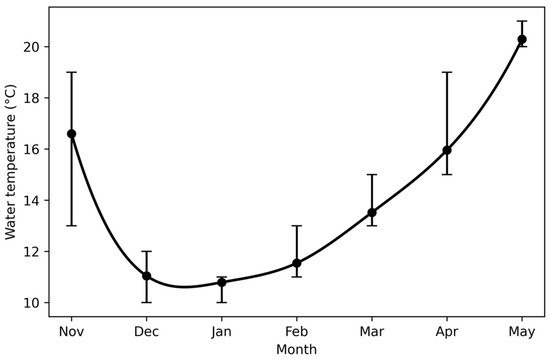
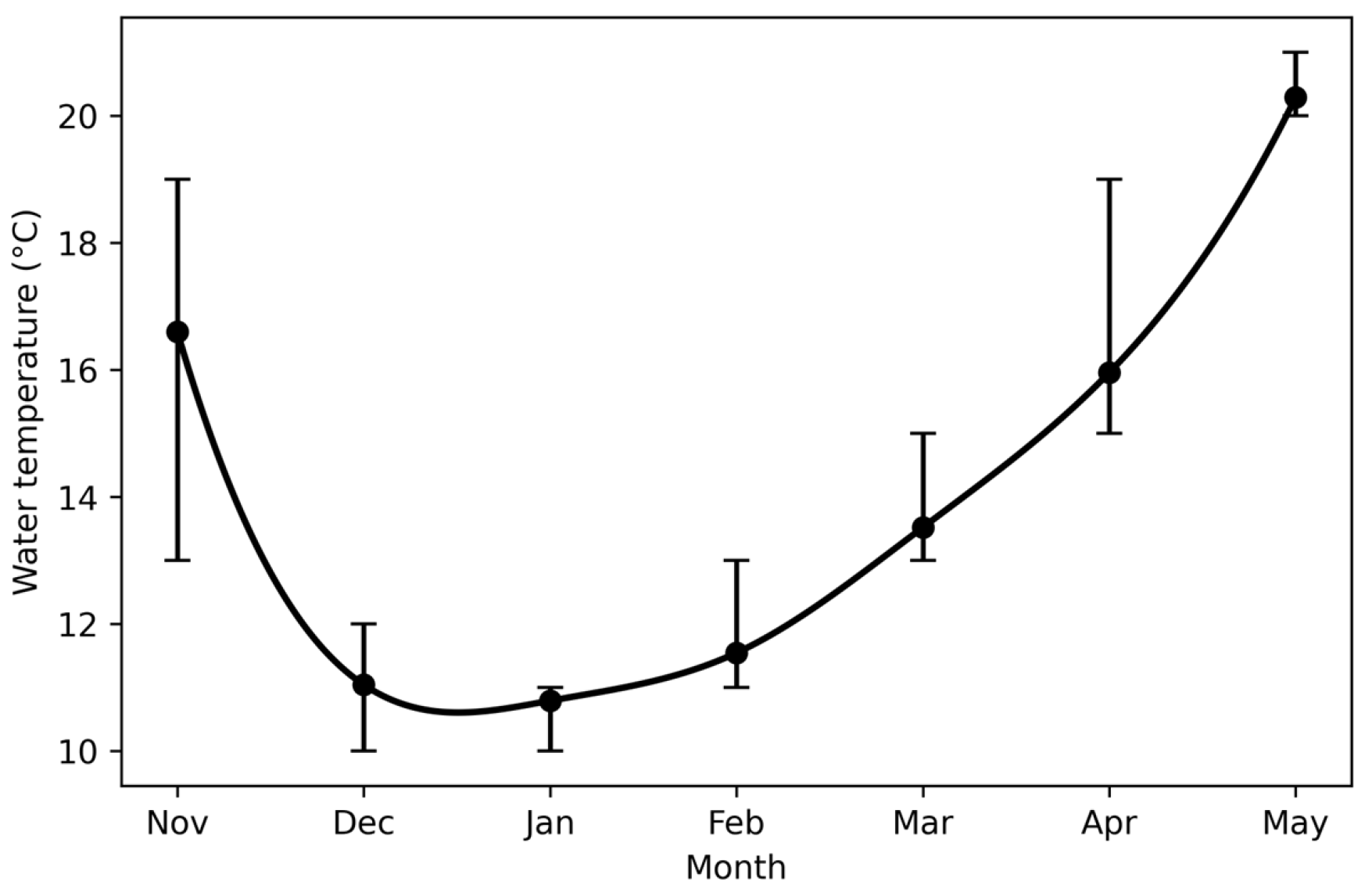
Water temperature was recorded daily using a multiparameter probe (IKA® ETS-D5, Merck KGaA, Damstadt, Germany) and followed seasonal trends typical of Mediterranean marine cage farming conditions (Figure 1).
Figure 1.
Water temperature recorded during the experimental period (2 November 2021–2 May 2022) under commercial offshore farming conditions.
Routine farm management included periodic net cleaning and removal of mortalities by divers every 2–3 weeks. Overall mortality during the experimental period was approximately 10%.
2.5. Growth Performance and Biometric Measurements
Growth performance was monitored monthly by sampling 100 fish per cage for biomass estimation. Growth performance parameters were subsequently calculated at cage level, as feed administration and feed intake were managed on a cage basis throughout the experimental period. At the end of the trial, 88 fish were sampled for biometric measurements, including fork length and total length. Morphometric measurements were performed on individual fish, which were considered the experimental units for the analysis of biometric parameters. Fork length and total length were measured using a measuring board according to standard fish morphometric procedures described by the FAO—Food and Agriculture Organization [17].
Weight gain (WG, g):
Specific growth rate (SGR, % day−1):
Feed conversion ratio (FCR):
Daily intake rate (DIR, %):
Protein efficiency ratio (PER):
Fulton’s condition factor (K):
The economic conversion ratio (ECR) was calculated as reported by Marchi et al., [18]:
The cost of the FM and HIM diets was €1.36 kg−1 and €1.76 kg−1 feed, respectively, based on the commercial formulation costs provided by the feed manufacturer at the time of diet production.
At the end of the feeding trial, 12 fish were humanely euthanized by thermal shock using an ice–water slurry and sampled for viscerosomatic and hepatosomatic index calculation. Individual fish were considered the experimental units for the analysis of somatic indices.
Viscerosomatic index (VSI, %):
Hepatosomatic index (HSI, %):
2.6. Sampling Procedure
At the end of the feeding trial, 64 fish were randomly sampled, euthanized by thermal shock using an ice–water slurry and transported on dry ice to the laboratory of Animal Production Unit of the Department of Veterinary Sciences, University of Messina for fillet proximate composition and sensory analyses.
A subsample of 40 fish (10 fish per cage) was used for proximate composition analysis. Individual fish were considered the experimental units for proximate composition analyses.
The remaining 24 fish (12 per dietary treatment) were randomly selected for instrumental sensory analysis.
2.7. Proximate Composition Analysis of Fillets
Upon arrival to the laboratory, specimens were gutted, filleted, and skinned. Fillets were vacuum-packed and freeze-dried prior to the analyses.
Fillet were homogenized prior to analysis using a laboratory knife mill (Grindomix GM 200; Retsch GmbH, Haan, Germany). The proximate composition was determined according to AOAC standard procedures [19]: methods for moisture (method 950.46), crude protein (method 981.10), and ash (method 920.153).
Total lipid extraction was performed using a chloroform: methanol solution (2:1 v/v) according to Folch et al. [20].
All analyses were performed in triplicate and results expressed as g/100 g wet fillet muscles. For statistical purposes, analytical replicates were averaged, and each fish represented a single biological observation.
2.8. Artificial Sensing Analysis
Instrumental sensory analyses were performed using an integrated system consisting of an electronic eye (E-eye), an electronic nose (E-nose), and an electronic tongue (E-tongue). These systems were used to evaluate visual appearance, volatile compounds, and taste-related attributes, respectively.
A total of 24 fish (6 per cage/12 per diet) were sampled immediately after slaughter; fish were then gutted, filleted and subsequently skinned prior to analysis. All analyses were carried out under standardized laboratory conditions to ensure repeatability and minimize environmental variability.
2.8.1. Electronic Eye (E-Eye) Analysis of Fish
The E-eye system (Iris Visual Analyzer 400, Alpha MOS, Toulouse, France) was used to assess fillet color and surface appearance in fish samples. For each specimen, fillets were placed on a uniform white background inside a standardized lighting chamber, and two high-resolution images (dorsal and ventral sides) were acquired. Prior to image acquisition, fillets were gently blotted with absorbent paper to remove excess surface moisture. Image acquisition was performed under controlled and reproducible illumination conditions to ensure consistency among samples. Subsequent image processing involved the application of RGB threshold filters (R: 80–199, G: 64–168, B: 72–165) to accurately isolate the fillet area and minimize background interference. The resulting processed images were then analyzed to extract quantitative colorimetric features.
2.8.2. Electronic Nose (E-Nose) Analysis of Fish
Volatile compound analysis was carried out using a FOX 4000 E-nose (Alpha MOS, Toulouse, France), equipped with an array of 18 metal oxide sensors (LY, P-type, and T-type) to characterize the volatile profile of fish fillets. For each sample, 2 g of minced fillet, obtained by finely chopping the fillets with a knife immediately prior to analysis, were sealed in 10 mL vials. The vials were incubated in the autosampler for 600 s at 60 °C, to allow headspace equilibration. Subsequently, 3.5 mL was injected into the sensor chamber at a flow rate of 2.5 mL/s. Analyses were conducted in quadruplicate for each sample. The system operated with a syringe temperature set at 50 °C and continuous agitation at 500 rpm. Total acquisition time for each run was 1080 s. Sensor responses were recorded and processed to evaluate the volatile profile of the fillets.
2.8.3. Electronic Tongue (E-Tongue) Analysis of Fish
To assess taste-related attributes, 5 g of minced fish fillet were homogenized in 50 mL of double-distilled water using an Ultra-Turrax T25 homogenizer (IKA-Werke GmbH and Co. KG, Staufen, Germany) for 60 s. The resulting homogenate was centrifuged at 3000 rpm for 10 min at 4 °C, and the supernatant was subsequently filtered. The filtrate was analyzed using a potentiometric E-tongue (Alpha MOS, Toulouse, France) equipped with seven sensors (ANS, PKS, CTS, NMS, CPS, SCS). Each sample was measured ten times; however, only the final 10 s of the last five measurements were retained for data analysis to ensure signal stability. Between successive analyses, sensors were thoroughly rinsed with double-distilled water to minimize cross-contamination and signal drift. All extraction and preparation steps were performed under controlled temperature conditions to preserve taste-active compounds. This extraction procedure was designed to recover primarily water-soluble taste-active compounds, including free amino acids, peptides, nucleotides, salts, and other low-molecular-weight metabolites. Consequently, the E-tongue analysis mainly reflects the aqueous fraction of the sensory profile and is not intended to specifically assess fat-soluble flavor compounds.
2.9. Statistical Analysis
Growth performance, somatic indices, and proximate composition were analysed using one-way analysis of variance (ANOVA) performed with XLSTAT software (Addinsoft, New York, NY, USA—Version 2021.2.2) [21]. For growth performance parameters (WG, SGR, FCR, PER, DIR, and ECR), the cage was considered the experimental unit because feed administration, feed intake, and production data were recorded and managed at the cage level under commercial farming conditions. In contrast, individual fish were considered the experimental units for morphometric parameters (fork length and total length), somatic indices (VSI and HSI), and proximate composition analyses, as these measurements were obtained directly from sampled fish. Differences between dietary treatments were evaluated using Tukey’s post hoc test with significance set at p < 0.05. Results are expressed as mean ± standard deviation (SD).
Multivariate statistical analysis was applied to datasets generated by artificial sensing technologies.
Sample size for instrumental sensory analyses was defined according to instrument-specific analytical requirements and previous studies applying electronic sensing technologies to fish quality assessment.
Principal Component Analysis (PCA) was first conducted independently on datasets generated by the electronic eye (E-eye), electronic nose (E-nose), and electronic tongue (E-tongue), to explore clustering patterns and identify key discriminant variables. For both E-nose and E-tongue analyses, repeated measurements obtained from the same biological sample were averaged prior to multivariate analysis. Consequently, each fish contributed a single observation to the PCA dataset, thereby avoiding pseudoreplication and artificial inflation of sample size. Accordingly, the PCA models were constructed using 24 biological observations in total (12 fish per dietary treatment), rather than the individual instrumental replicates. For the E-nose, four replicate measurements were performed for each fillet sample, and the average sensor response was used for subsequent analyses. For the E-tongue, ten measurements were acquired per sample; according to the analytical protocol, only the final 10 s of the last five stabilized measurements were considered and averaged to obtain a single representative value for each fish.
Subsequently, an integrative analysis was performed using a multiblock medium-level data fusion approach as described by Moroni et al. [22]. The most informative sensors from each device were selected based on exploratory PCA and variable loadings and combined into a unified dataset for integrated multivariate analysis. These included E-eye sensors 2456, 2713, 1638, and 1878; E-nose sensors LY2/LG, LY2/AA, T40/2, P30/1, and P30/2; and E-tongue sensors AHS, CTS, NMS, and SCS. The selected variables were combined into a unified dataset and subjected to a second PCA, allowing for integrated assessment of sensory differences across visual, olfactory, and gustatory dimensions. This multivariate approach enabled a comprehensive evaluation of the fillet organoleptic profile and complemented the results obtained from individual instrument analyses.
All multivariate analyses were performed using Alpha MOS software (V12.4) [23].
3. Results
3.1. Growth Performance, Feeding Rate and Biometric Indices
After 181 days of feeding under commercial cage-farming conditions, growth performance parameters calculated at cage level showed no significant differences between dietary treatments in final body weight (FBW), weight gain (WG), specific growth rate (SGR), feed conversion ratio (FCR), daily intake rate (DIR), protein efficiency ratio (PER), or Fulton’s condition factor (K) (p > 0.05; Table 2). Growth performance in both groups was within the expected range for gilthead seabream reared under Mediterranean commercial production conditions.
Table 2.
Growth performance of Sparus aurata specimens fed two experimental diets.
In contrast, the economic conversion ratio (ECR) was significantly higher in fish fed the HIM diet compared with the FM group (p < 0.05; Table 2), reflecting the higher cost of the insect-based feed formulation rather than differences in feed utilization efficiency.
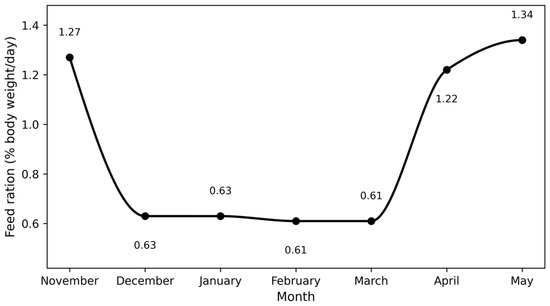
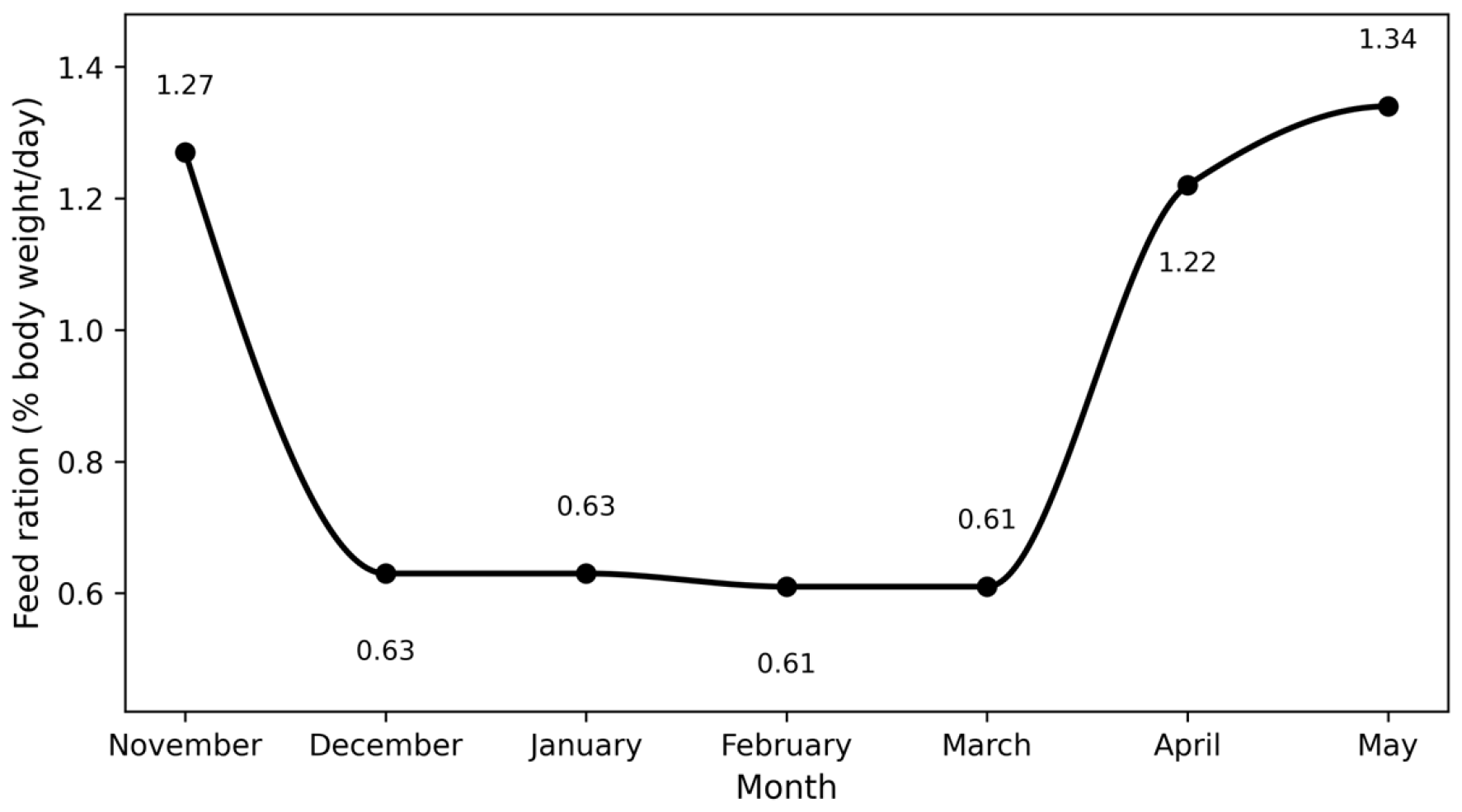
Feeding rates were progressively adjusted throughout the trial according to fish growth and environmental conditions (Figure 2), ranging from 0.61% to 1.34% of total biomass. The feeding pattern followed standard commercial practices for gilthead seabream production.
Figure 2.
Monthly feeding rate (% body weight/day) applied to gilthead seabream during the experimental period. Feeding rates were adjusted according to biomass and seasonal environmental conditions.
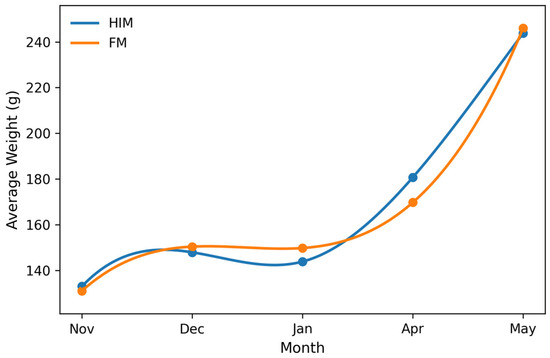
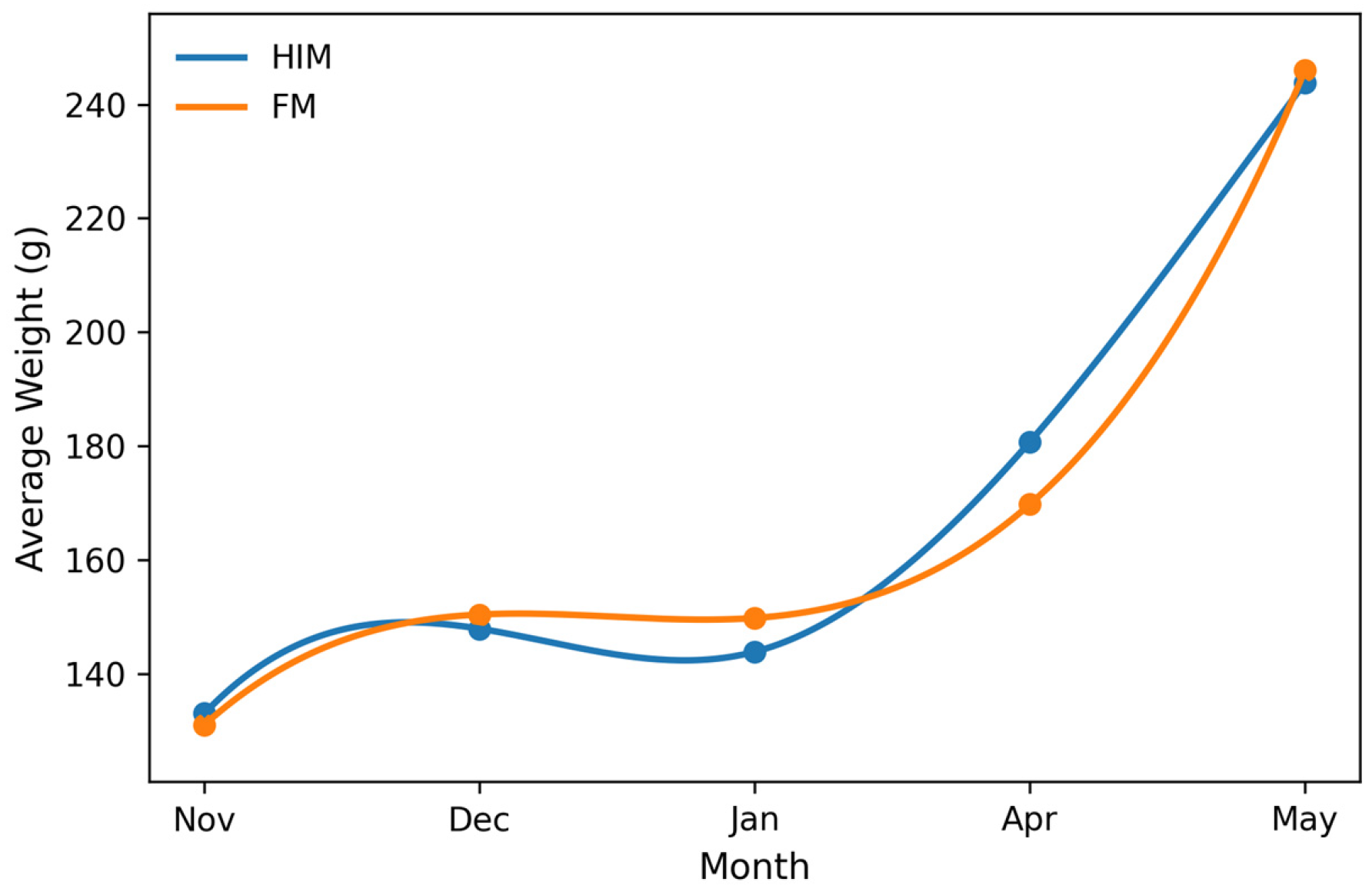
The growth curve of average body weight (Figure 3) showed a similar trajectory between dietary groups throughout the experimental period, with no significant differences between treatments.
Figure 3.
Growth curve of gilthead seabream fed the experimental diets (FM, blue; HIM, red) over the 181-day feeding trial.
Morphometric measurements performed on individual fish revealed a slight but significant reduction in fork length in fish fed the HIM diet (p < 0.05), whereas total length did not differ between groups (Table 3).
Table 3.
Morphometric parameters of Sparus aurata specimens fed with the experimental diets.
Similarly, somatic indices measured on individual fish, including viscerosomatic index (VSI) and hepatosomatic index (HSI), were not affected by dietary treatment (p > 0.05; Table 4).
Table 4.
Somatic indices of Sparus aurata specimens fed with the experimental diets.
3.2. Proximate Composition of Fillets
The proximate composition of seabream fillets showed limited variation between dietary treatments (Table 5).
Table 5.
Chemical composition (g/100 g, as fed) of fillets of Sparus aurata fed with the experimental diets.
Moisture content was slightly but significantly lower in fillets from fish fed the HIM diet compared with the FM group (p < 0.05). In contrast, crude protein, lipid, and ash contents were not significantly affected by dietary treatment (p > 0.05).
Overall, the inclusion of defatted Hermetia illucens meal did not markedly influence the proximate composition of seabream fillets under commercial farming conditions.
3.3. Instrumental Sensory Analysis by Artificial Sensing Technologies
Instrumental sensory characterization of seabream fillets was performed using three complementary artificial sensing systems: electronic eye (E-eye), electronic nose (E-nose), and electronic tongue (E-tongue). Principal Component Analysis (PCA) was performed using fish-level averaged data (n = 12 biological samples per dietary treatment) to identify potential diet-related differences in visual, volatile, and taste-related attributes.
3.3.1. Electronic Eye (E-Eye) Color of Fish
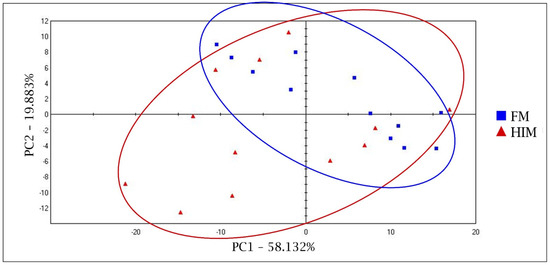
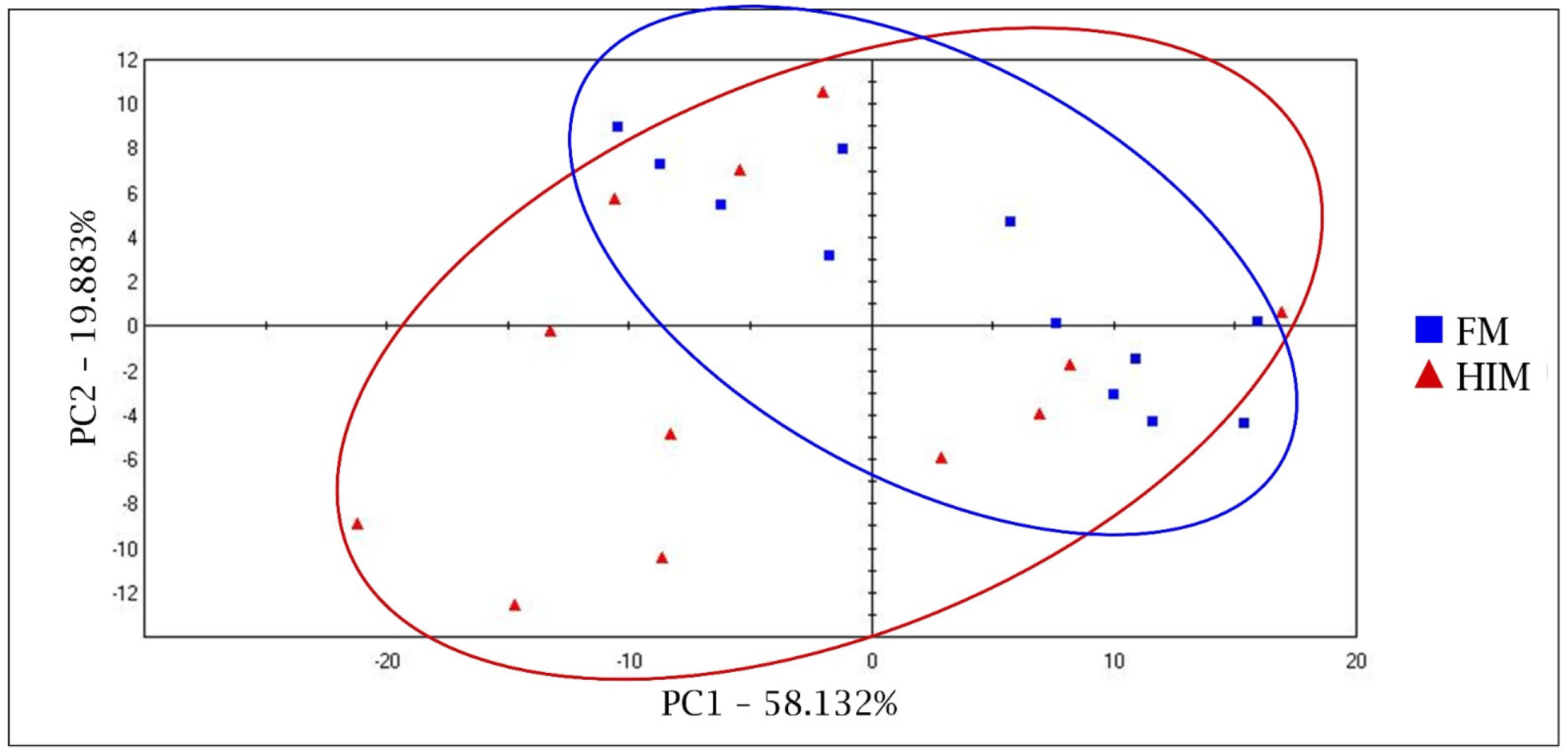
The PCA model obtained from E-eye data explained a substantial proportion of total variance (PC1 = 58.13%; PC2 = 19.88%; Figure 4). No clear separation between dietary treatments was observed along the first two principal components.
Figure 4.
Principal Component Analysis (PCA) score plot of electronic eye (E-eye) data obtained from seabream fillets (FM, blue; HIM, red; n = 12 samples per treatment).
However, FM samples showed slightly lower dispersion compared with HIM samples, suggesting marginally higher variability in color-related descriptors in fillets from fish fed the insect-based diet.
3.3.2. Electronic Nose (E-Nose) Volatile Profile of Fish
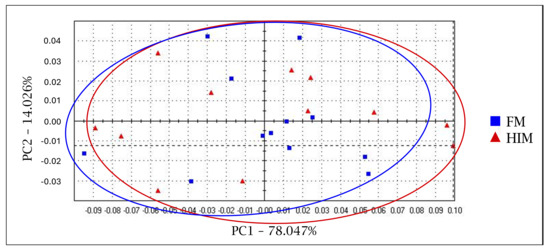
PCA of E-nose data revealed substantial overlap between dietary treatments (Figure 5). The first two principal components explained 92.07% of total variance (PC1 = 78.05%; PC2 = 14.03%). These results indicate that dietary inclusion of Hermetia illucens meal did not markedly affect the volatile compound profile of seabream fillets.
Figure 5.
Principal Component Analysis (PCA) score plot of electronic nose (E-nose) data obtained from seabream fillets (FM, blue; HIM, red; n = 12 samples per treatment).
3.3.3. Electronic Tongue (E-Tongue) Taste Attributes of Fish
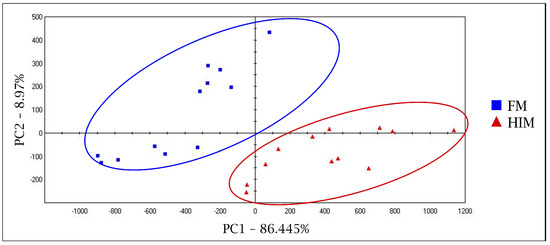
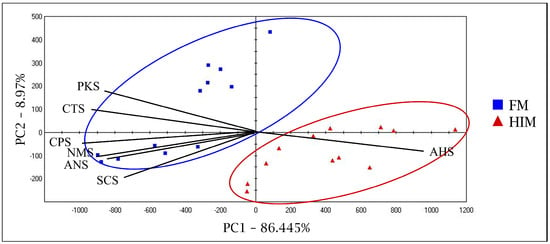
In contrast, PCA of E-tongue data revealed a clear separation between dietary treatments (Figure 6).
Figure 6.
Principal Component Analysis (PCA) score plot of electronic tongue (E-tongue) data obtained from seabream fillets (FM, blue; HIM, red; n = 12 samples per treatment).
The first principal component explained 86.44% of total variance, indicating strong discrimination between FM and HIM samples. Fillets from fish fed the HIM diet were distributed along the positive axis of PC1, whereas FM samples were located on the negative axis.
The loading plot (Figure 7) indicated that sensors such as NMS and ANS contributed strongly to group discrimination, suggesting diet-related differences in taste-associated compounds detected by the E-tongue system.
Figure 7.
PCA loading plot of E-tongue variables showing sensor contribution to discrimination between dietary treatments (FM, blue; HIM, red).
3.3.4. Integrated Medium-Fusion Analysis
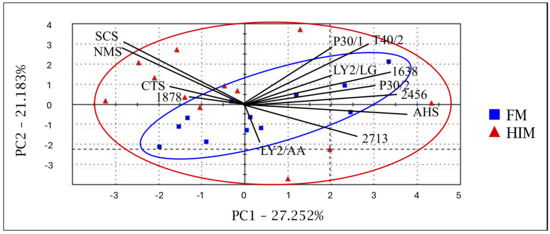
Integration of selected variables from E-eye, E-nose, and E-tongue datasets using a medium-level data fusion PCA approach resulted in moderate discrimination between dietary treatments (Figure 8).
Figure 8.
PCA score and loading plot obtained from integrated medium-level data fusion of E-eye, E-nose, and E-tongue datasets (FM, blue; HIM, red).
The first two principal components explained 48.43% of total variance (PC1 = 27.25%; PC2 = 21.18%). Although partial overlap between groups was observed, HIM samples showed a greater dispersion along PC2.
The loading plot indicated that group separation was driven by the combined contribution of selected descriptors from all three sensing platforms, particularly E-tongue sensors (NMS, SCS, CTS), E-eye image descriptors (1638, 2456, 2713), and E-nose sensors (T40/2, P30/1, P30/2, LY2/LG). Although variables from all three systems contributed to sample distribution, the strongest discriminatory contribution was associated with E-tongue sensors, supporting the greater sensitivity of taste-related measurements to dietary inclusion of Hermetia illucens meal.
Overall, these results indicate that dietary inclusion of defatted Hermetia illucens meal did not uniformly affect all sensory attributes. Rather, the main diet-related differences were associated with taste-related characteristics detected by the E-tongue system, whereas visual appearance and volatile profiles remained largely unchanged.
4. Discussion
Environmental temperature plays a key role in regulating fish metabolism, feeding behavior, and growth performance in marine aquaculture systems. In the present study, seasonal temperature fluctuations followed the typical pattern of Mediterranean offshore conditions and likely contributed to the temporary reduction in feed intake observed during the winter period. Similar temperature-dependent responses have been reported in gilthead seabream and other marine species, indicating the strong influence of environmental factors on growth dynamics under commercial farming conditions [24,25,26].
Despite these environmental constraints, dietary inclusion of 11% defatted Hermetia illucens meal did not significantly affect growth performance, as indicated by comparable final body weight, weight gain, specific growth rate, feed conversion ratio, and protein efficiency ratio between treatments. These findings confirm that partial replacement of fishmeal with insect meal can be applied under full-scale commercial conditions without impairing productive performance. The results are consistent with previous evidence obtained from the same commercial-scale feeding trial, which showed that dietary insect meal maintained physiological status and supported intestinal health in gilthead seabream [8]. Comparable outcomes have also been reported in experimental studies evaluating insect meal inclusion in marine fish diets [27,28,29,30].
The slight reduction observed in fork length in fish fed the insect-based diet, although statistically significant, was not associated with differences in overall growth performance and is therefore unlikely to be biologically relevant. Similarly, the absence of differences in somatic indices indicates comparable physiological status between dietary groups at the end of the feeding trial.
In contrast, the higher economic conversion ratio observed in the insect-fed group reflected the higher formulation cost of the insect-based diet (€1.76 kg−1 feed) compared with the control diet (€1.36 kg−1 feed), rather than differences in feed utilization efficiency, since no significant differences in feed conversion ratio were detected between treatments. Consequently, the ECR increased from €1.469 kg−1 fish in the FM group to €2.024 kg−1 fish in the HIM group. These results indicate that the economic sustainability of insect-based aquafeeds is currently constrained by ingredient and production costs [31], although increasing industrial-scale insect farming and improvements in production efficiency may enhance the cost competitiveness of insect-derived ingredients in the future.
Fillet proximate composition was only marginally affected by dietary treatment. The slight reduction in moisture content observed in the HIM group was not associated with changes in protein, lipid, or ash content, indicating that the overall nutritional quality of the fillet was preserved. These results are consistent with previous findings obtained under comparable conditions and confirm that insect meal inclusion does not compromise the compositional quality of the edible portion [32].
Beyond growth performance and proximate composition, the present study provides additional insight into the sensory characteristics of seabream fillets through the application of artificial sensing technologies. These tools allow objective and reproducible evaluation of visual, olfactory, and taste-related attributes and are particularly suitable for detecting subtle variations associated with dietary treatments [10,11,13,15,33,34,35,36]. The results obtained from the electronic eye and electronic nose analyses indicate that dietary inclusion of H. illucens meal did not significantly affect fillet color or volatile compound profiles. This finding is particularly relevant because visual appearance and aroma are primary determinants of consumer acceptance and market value. The absence of discrimination observed in the E-eye analysis is consistent with the limited changes detected in fillet proximate composition and with the relatively moderate inclusion level of H. illucens meal used in the present study. Similar results have been reported in previous studies on insect-based feeds in marine fish species, where color parameters remained largely unaffected by dietary treatments [37]. Likewise, the substantial overlap observed in E-nose profiles suggests that dietary substitution did not markedly modify aroma-related volatile patterns, in agreement with the use of electronic nose systems for monitoring volatile compounds and freshness-related changes in fish products [12,13,16]. This finding is also consistent with previous results obtained from the same commercial-scale feeding trial, which demonstrated preservation of fillet quality and microbiological stability during refrigerated storage [9]. Although diet-induced modifications in fatty acid composition were previously reported, these changes were relatively moderate and apparently insufficient to generate detectable differences in volatile compound profiles under the conditions tested. Overall, the results suggest that the inclusion level adopted in the present study was sufficient to modulate specific taste-related compounds, as detected by the electronic tongue, but not high enough to induce major changes in fillet appearance or aroma-related volatile compounds.
In contrast, electronic tongue analysis revealed a clear discrimination between dietary treatments, indicating that insect meal inclusion selectively influenced taste-related attributes. This suggests that diet-dependent modulation of soluble compounds, low-molecular-weight metabolites, free amino acids, peptides, or other taste-active compounds may have occurred, affecting gustatory perception without altering other sensory domains. Such compounds are not captured by conventional proximate analyses but may substantially contribute to flavor perception, as also suggested in studies applying potentiometric sensors and electronic tongue systems to fish quality assessment [22]. It should also be considered that the extraction protocol used for E-tongue analysis was specifically designed to recover primarily water-soluble taste-active compounds. Therefore, the observed discrimination mainly reflects differences in the aqueous fraction of the fillet, including free amino acids, peptides, nucleotides, and other soluble metabolites, rather than in lipid-soluble flavor compounds, which may contribute to sensory perception through different mechanisms.
A plausible explanation for the observed differences in taste-related responses may be found in the compositional modifications previously reported for fillets obtained from the same commercial-scale feeding trial [9]. Fish fed the insect-based diet showed significantly higher concentrations of several amino acids known to contribute to flavor perception, including aspartic acid/asparagine, alanine, glycine, proline, serine, methionine, threonine, and leucine. Among these, aspartate is recognized as an important contributor to umami perception, whereas alanine, glycine, and serine are commonly associated with sweet taste attributes. Therefore, the discrimination detected by the electronic tongue may reflect changes in the abundance and balance of taste-active compounds rather than differences in proximate composition.
In addition, the same study reported diet-induced modifications in muscle fatty acid composition, including increased levels of lauric, myristic, and linoleic acids together with reduced EPA and DHA concentrations [9]. Although fatty acids do not directly generate taste sensations, they may influence flavor release, mouthfeel, and the overall sensory profile of fish products. Furthermore, previous investigations conducted on the same feeding trial demonstrated that dietary Hermetia illucens inclusion modulated intestinal microbiota composition and gut physiological responses [8], suggesting that alterations in nutrient digestion and metabolism may have contributed to the observed differences in muscle composition and sensory perception. Collectively, these findings provide a plausible biochemical basis for the taste-related discrimination observed by the electronic tongue. Nevertheless, targeted metabolomic analyses and quantification of free amino acid fractions would be required to fully elucidate the mechanisms underlying these sensory responses.
The integrated medium-level data fusion approach further supported these findings, showing moderate separation between treatments driven by the combined contribution of variables from all sensing platforms. Although discrimination was not complete, the broader dispersion observed in the insect-fed group suggests increased variability in the overall sensory response. This confirms the usefulness of integrated artificial sensing approaches for detecting complex and multidimensional diet-related effects on fish fillet quality [22,38,39].
Overall, these results indicate that insect meal inclusion does not induce uniform changes across all sensory dimensions but rather selectively affects taste-related characteristics while preserving visual appearance and volatile profiles. From an applied perspective, this is particularly relevant, as it suggests that sustainable feed formulations can be implemented without compromising major quality traits perceived by consumers.
Such selective modulation is consistent with the compositional characteristics of insect-based ingredients and may reflect differences in amino acid profiles, peptides, lipids, or other soluble compounds involved in flavor perception [3].
Importantly, while previous studies derived from the same commercial-scale feeding trial focused on intestinal responses and microbiota modulation [8] and on fillet nutritional composition and microbiological stability under offshore farming conditions [9], the present work extends the evaluation to instrumental sensory characterization under real commercial farming conditions. Although the present study did not include a trained human sensory panel, the combined use of electronic eye, electronic nose, and electronic tongue technologies provided an objective and reproducible assessment of sensory-related attributes. Future studies should integrate instrumental analyses with trained sensory panel evaluations to validate the sensory relevance of the observed diet-related differences and their potential impact on consumer perception. This contributes to bridging the gap between controlled experimental studies and practical aquaculture production systems, supporting the development of sustainable aquafeeds based on a more judicious use of marine resources [1,2].
5. Study Limitations
Although the present study provides valuable insights into the effects of partial replacement of fishmeal with defatted Hermetia illucens meal under commercial farming conditions, some limitations should be acknowledged.
First, sensory characterization was performed using artificial sensing technologies rather than trained sensory panels. While these systems provide objective and reproducible measurements and are particularly effective in detecting subtle variations associated with dietary treatments, they cannot fully reflect human sensory perception and consumer acceptance. Consequently, the sensory differences detected instrumentally should be interpreted as indicators of potential modifications in fillet organoleptic properties rather than direct evidence of perceptible differences for consumers.
Second, only a single inclusion level of insect meal was tested, which does not allow evaluation of dose-dependent responses.
Finally, although the study was conducted under real commercial cage-farming conditions, environmental variability inherent to large-scale production systems may have contributed to additional sources of variation compared with controlled experimental trials.
Future studies integrating instrumental analyses with trained sensory panels and evaluating multiple inclusion levels would further improve understanding of the relationship between insect-based diets and fillet sensory quality.
6. Conclusions
The present study demonstrates that partial replacement of fishmeal with 11% defatted Hermetia illucens meal is feasible under commercial offshore farming conditions without compromising growth performance, feed efficiency, or fillet nutritional quality.
Instrumental sensory analysis showed that dietary inclusion of insect meal did not affect fillet visual appearance or volatile compound profiles, while selectively modulating taste-related attributes, as revealed by electronic tongue analysis.
These findings confirm the potential of insect-based ingredients as sustainable alternatives to marine-derived proteins in practical aquafeeds and highlight the value of artificial sensing technologies for detecting subtle diet-related variations in product quality.
Overall, this study provides farm-scale evidence supporting the integration of Hermetia illucens meal into seabream diets and contributes to bridging the gap between experimental research and commercial aquaculture production. Future studies combining artificial sensing technologies with trained sensory panel evaluations will help to further elucidate the relationship between instrumentally detected sensory changes and consumer perception.
Author Contributions
Conceptualization, A.R.D.R. and B.C.; methodology, A.R.D.R. and B.C.; software, A.R.D.R.; formal analysis, A.R.D.R., M.O., F.A. and R.A.; investigation, B.C.; resources, B.C.; data curation, A.R.D.R., M.O. and B.C.; writing—original draft preparation, A.R.D.R., M.O., F.A. and B.C.; writing—review and editing, M.O. and B.C.; supervision, B.C.; funding acquisition, M.O. and B.C. All authors have read and agreed to the published version of the manuscript.
Funding
This research was funded by the European Maritime and Fisheries Fund (EMFF/FEAMP) 2014–2020, Measure 2.47 “Innovation” project codex 03/INA/17, co-funded by the European Union, the Italian Government, and the Sicilian Region. The title of the project is “FIFA—Feed Insects for Aquaculture”, Scientific Responsible Biagina Chiofalo.
Institutional Review Board Statement
The study was conducted in accordance with the Declaration of Helsinki and approved by the Ethics Committee of the University of Messina, Department of Veterinary Sciences (protocol code 082/2022; approval date: 1 June 2022).
Informed Consent Statement
Not applicable.
Data Availability Statement
The data presented in this study are available on reasonable request from the corresponding author. The data are not publicly available due to ongoing research activities and institutional restrictions.
Acknowledgments
The authors gratefully acknowledge Maricolture Sarde Srl (Sant’Antioco, Sardinia, Italy) for providing access to their facilities and for their logistical support during the experimental trial. The authors also sincerely thank Sara Barbieri for her valuable assistance and support during the on-farm activities.
Conflicts of Interest
The authors declare no conflicts of interest. The funders had no role in the design of the study; in the collection, analyses, or interpretation of data; in the writing of the manuscript; or in the decision to publish the results.
References
- Naylor, R.L.; Hardy, R.W.; Buschmann, A.H.; Bush, S.R.; Cao, L.; Klinger, D.H.; Little, D.C.; Lubchenco, J.; Shumway, S.E.; Troell, M. A 20-year retrospective review of global aquaculture. Nature 2021, 591, 551–563. [Google Scholar] [CrossRef] [Scilit] [PubMed]
- FAO—Food and Agriculture Organization. The State of World Fisheries and Aquaculture 2024: Blue Transformation in Action; Food and Agriculture Organization of the United Nations: Rome, Italy, 2024. [Google Scholar]
- Mohan, K.; Rajan, D.K.; Muralisankar, T.; Ganesan, A.R.; Sathishkumar, P.; Revathi, N. Use of black soldier fly (Hermetia illucens L.) larvae meal in aquafeeds for a sustainable aquaculture industry: A review of past and future needs. Aquaculture 2022, 553, 738095. [Google Scholar] [CrossRef] [Scilit]
- Hasan, I.; Gai, F.; Cirrincione, S.; Rimoldi, S.; Saroglia, G.; Terova, G. Chitinase and insect meal in aquaculture nutrition: A comprehensive overview of the latest achievements. Fishes 2023, 8, 607. [Google Scholar] [CrossRef] [Scilit]
- Zulkifli, N.F.N.M.; Seok-Kian, A.Y.; Seng, L.L.; Mustafa, S.; Kim, Y.-S.; Shapawi, R. Nutritional value of black soldier fly (Hermetia illucens) larvae processed by different methods. PLoS ONE 2022, 17, e0263924. [Google Scholar] [CrossRef] [Scilit] [PubMed]
- Copelotti, E.; Sogari, G.; Andreani, G.; Fronte, B.; Moruzzo, R.; Sangiacomo, C.; Zanzot, A.; Serra, A.; Parisi, G.; Tucciarone, I.; et al. InsectFish—The use of insect meal in the fish sector in creating farm-to-fork value: Chemical and quality characteristics of Sparus aurata fillets fed Hermetia illucens larvae-based feed. Foods 2025, 14, 3107. [Google Scholar] [CrossRef] [Scilit] [PubMed]
- Moutinho, S.; Oliva-Teles, A.; Pulido-Rodríguez, L.; Parisi, G.; Magalhães, R.; Monroig, Ó.; Peres, H. Effects of black soldier fly (Hermetia illucens) larvae oil on fillet quality and nutritional traits of gilthead seabream. Aquaculture 2024, 579, 740219. [Google Scholar] [CrossRef] [Scilit]
- Rimoldi, S.; Di Rosa, A.R.; Oteri, M.; Chiofalo, B.; Hasan, I.; Saroglia, M.; Terova, G. The impact of diets containing Hermetia illucens meal on the growth, intestinal health, and microbiota of gilthead seabream (Sparus aurata). Fish. Physiol. Biochem. 2024, 50, 1003–1024. [Google Scholar] [CrossRef] [Scilit] [PubMed]
- Oteri, M.; Di Rosa, A.R.; Lo Presti, V.; Toscano, G.; Giarratana, F.; Chiofalo, B. Partial fishmeal replacement with defatted Hermetia illucens meal in offshore-farmed gilthead seabream (Sparus aurata): Effects on fillet quality and microbiological stability. Fishes 2026, 11, 211. [Google Scholar] [CrossRef] [Scilit]
- Di Rosa, A.R.; Leone, F. Application of electronic nose systems on animal-source food: An overview. In Electronic Nose Technologies and Advances in Machine Olfaction; Albastaki, Y., Albalooshi, F.A., Eds.; IGI Global: Hershey, PA, USA, 2018; pp. 151–174. [Google Scholar] [CrossRef] [Scilit]
- Gil, M.; Rudy, M.; Duma-Kocan, P.; Stanisławczyk, R. Electronic sensing technologies in food quality assessment: A comprehensive literature review. Appl. Sci. 2025, 15, 1530. [Google Scholar] [CrossRef] [Scilit]
- Cho, S.; Moazzem, M.S. Recent applications of potentiometric electronic tongue and electronic nose in sensory evaluation. Prev. Nutr. Food Sci. 2022, 27, 354–364. [Google Scholar] [CrossRef] [Scilit] [PubMed]
- Di Rosa, A.R.; Leone, F.; Chiofalo, V. Electronic noses and tongues. In Chemical Analysis of Food, 2nd ed.; Academic Press: Cambridge, MA, USA, 2020; pp. 353–389. [Google Scholar] [CrossRef] [Scilit]
- Grassi, S.; Benedetti, S.; Casiraghi, E.; Buratti, S. E-sensing systems for shelf life evaluation: A review on applications to fresh food of animal origin. Food Packag. Shelf Life 2023, 40, 101221. [Google Scholar] [CrossRef] [Scilit]
- Wang, B.; Liu, K.; Wei, G.; He, A.; Kong, W.; Zhang, X. A review of advanced sensor technologies for aquatic products freshness assessment in cold chain logistics. Biosensors 2024, 14, 468. [Google Scholar] [CrossRef] [Scilit] [PubMed]
- Vanaraj, R.; I.P., B.; Mayakrishnan, G.; Kim, I.S.; Kim, S.-C. A systematic review of the applications of electronic nose and electronic tongue in food quality assessment and safety. Chemosensors 2025, 13, 161. [Google Scholar] [CrossRef] [Scilit]
- FAO—Food and Agriculture Organization. Handling Live Fish on the Farm; FAO Training Series: Simple Methods for Aquaculture; FAO: Rome, Italy, 1998; Available online: https://www.fao.org/fishery/static/FAO_Training/FAO_Training/General/x6709e/x6709e08.htm (accessed on 14 May 2026).
- Marchi, A.; Bonaldo, A.; Scicchitano, D.; Candela, M.; De Marco, A.; Falciglia, S.; Mazzoni, M.; Lattanzio, G.; Clavenzani, P.; Dondi, F.; et al. Feeding gilthead sea bream with increasing dietary bacterial single cell protein level: Implication on growth, plasma biochemistry, gut histology, and gut microbiota. Aquaculture 2023, 565, 739132. [Google Scholar] [CrossRef] [Scilit]
- AOAC International. Official Methods of Analysis of AOAC International, 21st ed.; Association of Official Analytical Chemists: Gaithersburg, MD, USA, 2019. [Google Scholar]
- Folch, J.; Lees, M.; Stanley, G.H.S. A simple method for the isolation and purification of total lipids from animal tissues. J. Biol. Chem. 1957, 226, 497–509. [Google Scholar] [CrossRef] [Scilit] [PubMed]
- Addinsoft. XLSTAT Statistical and Data Analysis Solution, version 2021.2.2; Addinsoft: New York, NY, USA, 2026. [Google Scholar]
- Moroni, F.; Carvalho, M.; Di Rosa, A.R.; Torrecillas, S.; Fontanillas, R.; Haffray, P.; Gisbert, E.; Montero, D. Genetic selection and novel feeds containing single cell protein as a substitute for fishmeal in European sea bass: Effects on growth, fatty acid profile and e-sensing analysis. Aquac. Rep. 2024, 35, 102021. [Google Scholar] [CrossRef] [Scilit]
- Alpha MOS. AlphaSoft V12.4 User Manual Guide; Alpha MOS France: Toulouse, France, 2010. [Google Scholar]
- Nadermann, N.; Seward, R.K.; Volkoff, H. Effects of potential climate change-induced environmental modifications on food intake and the expression of appetite regulators in goldfish. Comp. Biochem. Physiol. A Mol. Integr. Physiol. 2019, 235, 138–147. [Google Scholar] [CrossRef] [Scilit]
- Volkoff, H.; Rønnestad, I. Effects of temperature on feeding and digestive processes in fish. Temperature 2020, 7, 307–320. [Google Scholar] [CrossRef] [Scilit] [PubMed]
- Pelusio, N.F.; Scicchitano, D.; Parma, L.; Dondi, F.; Brini, E.; D’Amico, F.; Candela, M.; Yúfera, M.; Gilannejad, N.; Moyano, F.J.; et al. Interaction between dietary lipid level and seasonal temperature changes in gilthead sea bream (Sparus aurata): Effects on growth, fat deposition, plasma biochemistry, digestive enzyme activity, and gut bacterial community. Front. Mar. Sci. 2021, 8, 664701. [Google Scholar] [CrossRef] [Scilit]
- Belghit, I.; Liland, N.S.; Waagbø, R.; Biancarosa, I.; Pelusio, N.; Li, Y.; Krogdahl, Å.; Lock, E.J. Black soldier fly larvae meal can replace fish meal in diets of sea-water phase Atlantic salmon (Salmo salar). Aquaculture 2019, 503, 609–619. [Google Scholar] [CrossRef] [Scilit]
- Magalhães, R.; Sánchez-López, A.; Leal, R.S.; Martínez-Llorens, S.; Oliva-Teles, A.; Peres, H. Black soldier fly (Hermetia illucens) pre-pupae meal as a fish meal replacement in diets for European seabass (Dicentrarchus labrax). Aquaculture 2017, 476, 79–85. [Google Scholar] [CrossRef] [Scilit]
- Cardinaletti, G.; Randazzo, B.; Messina, M.; Zarantoniello, M.; Giorgini, E.; Zimbelli, A.; Tulli, F. Effects of graded dietary inclusion of Hermetia illucens meal in rainbow trout (Oncorhynchus mykiss). Animals 2019, 9, 251. [Google Scholar] [CrossRef] [Scilit] [PubMed]
- Di Rosa, A.R.; Caccamo, L.; Pansera, L.; Oteri, M.; Chiofalo, B.; Maricchiolo, G. Influence of Hermetia illucens larvae meal on growth performance and gut traits in gilthead seabream (Sparus aurata). Animals 2023, 13, 339. [Google Scholar] [CrossRef] [Scilit] [PubMed]
- Gasco, L.; Biasato, I.; Dabbou, S.; Schiavone, A.; Gai, F. Animals fed insect-based diets: State-of-the-art on digestibility, performance and product quality. Animals 2019, 9, 170. [Google Scholar] [CrossRef] [Scilit] [PubMed]
- Oteri, M.; Chiofalo, B.; Maricchiolo, G.; Toscano, G.; Nalbone, L.; Lo Presti, V.; Di Rosa, A.R. Black soldier fly larvae meal in the diet of gilthead seabream: Effects on chemical and microbiological quality of fillets. Front. Nutr. 2022, 9, 896552. [Google Scholar] [CrossRef] [Scilit] [PubMed]
- Yu, Q.; Zhang, M.; Wang, D.; Mujumdar, A.S.; Huang, M. Intelligent freshness assessment of aquatic products through multimodal sensing and Machine learning. Comput. Electron. Agric. 2026, 245, 111571. [Google Scholar] [CrossRef] [Scilit]
- Franceschelli, L.; Berardinelli, A.; Dabbou, S.; Ragni, L.; Tartagni, M. Sensing technology for fish freshness and safety: A review. Sensors 2021, 21, 1373. [Google Scholar] [CrossRef] [Scilit] [PubMed]
- Shi, H.; Zhang, M.; Adhikari, B. Advances of electronic nose and its application in fresh foods: A review. Crit. Rev. Food Sci. Nutr. 2018, 58, 2700–2710. [Google Scholar] [CrossRef] [Scilit] [PubMed]
- Madhubhashini, M.N.; Liyanage, C.P.; Alahakoon, A.U.; Liyanage, R.P. Current applications and future trends of artificial senses in fish freshness determination: A review. J. Food Sci. 2023, 88, 33–50. [Google Scholar] [CrossRef] [Scilit] [PubMed]
- Basto, A.; Marques, A.; Silva, A.; Sá, T.; Sousa, V.; Oliveira, M.B.P.P.; Valente, L.M. Nutritional, organoleptic and sensory quality of market-sized European sea bass (Dicentrarchus labrax) fed defatted Tenebrio molitor larvae meal as main protein source. Aquaculture 2023, 566, 739210. [Google Scholar] [CrossRef] [Scilit]
- Loutfi, A.; Coradeschi, S.; Mani, G.K.; Shankar, P.; Rayappan, J.B.B. Electronic noses for food quality: A review. J. Food Eng. 2015, 144, 103–111. [Google Scholar] [CrossRef] [Scilit]
- Wojnowski, W.; Majchrzak, T.; Dymerski, T.; Gębicki, J.; Namieśnik, J. Electronic noses: Powerful tools in meat quality assessment. Meat Sci. 2017, 131, 119–131. [Google Scholar] [CrossRef] [Scilit] [PubMed]

Disclaimer/Publisher’s Note: The statements, opinions and data contained in all publications are solely those of the individual author(s) and contributor(s) and not of MDPI and/or the editor(s). MDPI and/or the editor(s) disclaim responsibility for any injury to people or property resulting from any ideas, methods, instructions or products referred to in the content. |
© 2026 by the authors. Licensee MDPI, Basel, Switzerland. This article is an open access article distributed under the terms and conditions of the Creative Commons Attribution (CC BY) license.