


Abstract
The intensification of largemouth bass (Micropterus salmoides) aquaculture has increased the incidence of infectious diseases and metabolic disorders, raising concerns about antimicrobial resistance. Nutritional immunology offers a sustainable preventive strategy, with intestinal health playing a central role. Phospholipid (PL) additives—including soybean lecithin (SBL), lysophospholipids (LPLs), and marine phospholipids (MPLs)—have emerged as promising functional feed additives due to their roles in nutrition, lipid metabolism, and intestinal homeostasis. This review systematically summarizes current knowledge on the effects of these three PL types on growth performance, nutrient utilization, lipid metabolism, and intestinal health in largemouth bass. We discuss the underlying molecular mechanisms, including the regulation of intestinal barrier function, mucosal immunity, and gut microbiota composition. We also compare the efficacy of different PL types, revealing that their benefits are often context-dependent, especially when facing nutritional challenges. Finally, we identify critical knowledge gaps and propose future research directions while also acknowledging that most evidence originates from a limited number of research groups in China, underscoring the need for independent validation across diverse production systems to strengthen generalizability.
Keywords:
Micropterus salmoides; lecithin; lipid metabolism; intestinal health; nutritional immunology Key Contribution:
This review systematically compares the differential effects of soybean lecithin, lysophospholipids, and marine phospholipids on growth performance, lipid metabolism, and intestinal health in largemouth bass, and reveals the underlying molecular mechanisms involving intestinal barrier integrity, p38 MAPK/NF-κB-mediated mucosal immunity, and gut microbiota modulation.
1. Introduction
Largemouth bass (Micropterus salmoides) is one of the most economically important carnivorous freshwater fish species worldwide, with production exceeding 800,000 tons in China alone in 2023 [1]. The rapid expansion of intensive largemouth bass aquaculture has been accompanied by several challenges, including high feed costs, increased incidence of infectious diseases, and metabolic disorders such as fatty liver disease [2,3,4]. These issues not only cause significant economic losses but also raise concerns about the overuse of antibiotics and the development of antimicrobial resistance [5,6].
Nutritional immunology offers a sustainable, preventive approach to enhance host resistance and resilience by optimizing dietary composition and incorporating functional feed additives [7,8]. The intestine, as the primary organ for nutrient digestion and absorption, also serves as the largest immune organ and a critical barrier against pathogens and harmful substances [9,10,11]. Accumulating evidence highlights the central role of intestinal health in mediating the effects of nutritional interventions on overall fish health and performance [7,9].
Phospholipids (PLs) are a class of lipids that serve as essential structural components of cell membranes and play critical roles in lipid transport, metabolism, and signal transduction [12,13,14,15,16]. Based on their origin and modification, three types of phospholipid-related products are commonly used in aquafeeds. Lecithin is a generic term for a complex mixture containing phospholipids, primarily phosphatidylcholine (PC), phosphatidyl-ethanolamine (PE), and phosphatidylinositol (PI), along with neutral lipids and glycolipids; soybean lecithin (SBL) is the most common plant-derived form [17,18]. Lysophospholipids (LPLs) are hydrolyzed derivatives of phospholipids, produced by enzymatic removal of one fatty acid chain, which confers superior emulsifying properties and water solubility [19]. Marine phospholipids (MPLs) are distinguished by their high content of n-3 polyunsaturated fatty acids esterified to the phospholipid backbone. In recent years, there has been growing interest in the immunomodulatory and intestinal health-promoting effects of these phospholipid additives in aquaculture [19,20,21].
This review provides a comprehensive overview of the current state of knowledge on the role of phospholipid additives in nutrition and intestinal health of largemouth bass. We will first discuss the effects of different types of phospholipid additives on growth performance and nutrient utilization. Then, we will focus on their impacts on intestinal health, including intestinal morphology, barrier function, mucosal immunity, and gut microbiota. We will also explore the underlying molecular mechanisms and compare the efficacy of different phospholipid additives. Finally, we will identify knowledge gaps and propose future research directions to advance the application of phospholipid additives in sustainable largemouth bass aquaculture.
2. Types and Properties of Phospholipid Additives Used in Aquaculture
In aquaculture, phospholipid-based feed additives include native lecithin products derived from plant and marine sources, as well as their enzymatically modified derivatives. The most commonly used phospholipid products in aquafeeds are:
2.1. Soybean Lecithin
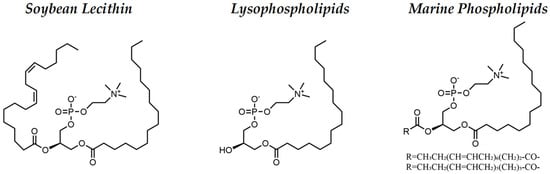
SBL is the most widely used and cost-effective source of lecithin in aquafeeds [12]. The phospholipid fraction of SBL typically consists of approximately 20–22% PC, 16–22% PE, and 13–16% PI, along with smaller amounts of phosphatidic acid (PA) and other LPs [22]. The fatty acid composition of lecithin varies depending on the source, with SBL being rich in linoleic acid (C18:2n-6) and other polyunsaturated fatty acids [23] (Figure 1 and Table 1).
Figure 1.
Chemical structures of major phospholipid additives commonly used in aquafeeds.
Table 1.
Key characteristics of different phospholipid additives commonly used in aquafeeds.
2.2. Lysophospholipids
LPLs are formed by the hydrolysis of lecithin by phospholipase A2, which removes one fatty acid molecule from the sn-2 position of the glycerol backbone [24,25]. This modification makes LPLs more hydrophilic than native lecithin, resulting in superior emulsifying properties [26,27]. The most common LPL used in aquaculture is lysophosphatidylcholine, which accounts for the majority of commercial LPL products [28,29] (Figure 1 and Table 1).
2.3. Marine Phospholipids
MPLs are extracted from marine sources such as fish roe, krill, and squid [12,30,31]. They are rich in omega-3 polyunsaturated fatty acids (PUFAs), particularly eicosapentaenoic acid (EPA) and docosahexaenoic acid (DHA), which are esterified to the phospholipid backbone [32,33]. MPLs exhibit unique biological activities compared to plant-derived lecithin, including anti-inflammatory and neuroprotective effects [34,35] (Figure 1 and Table 1).
3. Effects of Phospholipid Additives on Growth Performance, Nutrient Utilization, and Broodstock Reproductive Performance in Largemouth Bass
Many fish species, particularly during the early life stages, have a limited capacity for de novo phospholipid synthesis due to the low activity of key enzymes such as CTP:phosphocholine cytidylyltransferase [31,36]. Therefore, carnivorous fish like largemouth bass rely heavily on dietary sources of PLs to meet their requirements for cell membrane synthesis, lipoprotein assembly, and lipid transport. Numerous studies have demonstrated that dietary supplementation with PLs can improve growth performance and feed utilization in largemouth bass, particularly in early life stages [37,38,39,40].
3.1. Soybean Lecithin
An 8-week feeding trial was conducted to evaluate the effects of dietary SBL levels (0, 2, 4, and 8%) on juvenile largemouth bass (initial weight: 9.33 ± 0.06 g). The results showed that fish fed diets containing 4% and 8% SBL had significantly higher weight gain and specific growth rate compared to the control group (0% SBL). The optimal growth performance was observed in the 4% SBL group, which also had the lowest feed conversion ratio. Similarly, another study found that 4% dietary SBL significantly increased the activities of digestive enzymes (protease, lipase, and amylase) in the intestine and liver of juvenile largemouth bass [37]. A similar study demonstrated that dietary supplementation with 4% or 8% SBL significantly increased lipase and amylase activities in both the liver and intestine of juvenile largemouth bass. The activities of these enzymes were significantly higher in the SBL-supplemented groups compared with the control group [38]. This improvement in digestive function was associated with enhanced nutrient absorption and utilization, leading to better growth performance. The study also revealed that 4% SBL upregulated the mRNA expression of genes involved in glycolysis, glycogen synthesis, and lipid transport in the liver, indicating improved metabolic efficiency [37] (Table 2).
Table 2.
Beneficial Effects of Dietary Phospholipid Additives Inclusion on Largemouth Bass.
3.2. Lysophospholipids
LPLs have shown even more promising effects on growth performance and feed utilization in largemouth bass, especially when used in low-protein or low-lipid diets [41,43]. Lu et al. [19] investigated the effects of supplementing 1 g/kg LPLs in low-protein (52.46% vs. 54.52% crude protein) or low-lipid (10.19% vs. 11.45% crude lipid) diets for largemouth bass (initial weight: 12.3 ± 0.2 g). After 64 days of feeding, the growth performance of fish in both LPL-supplemented groups was not significantly different from that of the control group fed the standard diet. However, the LPL-supplemented groups had significantly higher condition factor and whole-body crude protein content compared to the control. In a more recent study, Bao et al. [20] compared the effects of 300 mg/kg LPLs on the growth performance of largemouth bass (initial weight: 21.1 ± 1.2 g) fed a high-fat diet (14% crude lipid). LPL supplementation showed a trend towards higher weight gain compared to the control group. Notably, LPL supplementation significantly increased the protein deposition rate by 8.7% compared to the control, indicating improved protein utilization (Table 1).
3.3. Marine Phospholipids
Chen et al. [42] evaluated the effects of dietary supplementation with DHA-rich marine phosphatidylcholine (DHA-PC) at levels of 0%, 3%, and 6% on largemouth bass (initial weight: 4.31 ± 0.038 g). The results showed that DHA-PC supplementation had no significant effect on growth performance but significantly reduced the viscerosomatic index and whole-body crude fat content. The study also found that DHA-PC supplementation altered the fatty acid composition of fish tissues, increasing the DHA content in the liver and muscle (Table 1).
3.4. Effects on Larval Stages
Multiple studies have demonstrated that dietary SBL supplementation significantly enhances body weight gain and specific growth rate of largemouth bass larvae (11.97 ± 0.11 mg) [39]. In another comprehensive study on larval largemouth bass (initial weight: 9.61 ± 0.02 mg), five isonitrogenous and isolipidic micro-diets containing graded phospholipid levels (1.69, 3.11, 5.23, 7.43, and 9.29%) were formulated. Results showed that dietary SBL supplementation linearly improved growth performance, with optimal growth achieved at the 7.43% SBL level, which also resulted in significantly higher survival rate and lower deformity rate compared with the control group [40] (Table 1).
3.5. Impact on Broodstock Reproductive Performance
Although most studies have focused on the growth stages, emerging evidence suggests that PLs are critical for broodstock nutrition. Largemouth bass, like other teleosts, rely on maternal deposition of PLs to ensure oocyte quality and larval viability [44,45].
PLs play a pivotal role in lipid transport during vitellogenesis [46]. They facilitate the transport of lipids from the liver to the developing oocytes via lipoproteins [47]. Inadequate dietary PLs intake can lead to poor ovarian development and reduced fecundity of aquatic animals [46]. Studies on largemouth bass indicate that an optimal dietary lipid source is necessary to maximize gonadosomatic index and ovarian maturation, while also preserving liver health and function [48]. Furthermore, the emulsifying properties of LPLs may enhance the absorption of fat-soluble vitamins (e.g., Vitamin E) and sterols, which are essential for hormone synthesis and reproductive maturation for largemouth bass [49,50].
3.6. Critical Considerations for Cross-Study Comparison
It should be noted, however, that direct comparison among these studies is complicated by substantial differences in experimental design. For instance, the initial body weight of fish varied from 11.97 mg (larval stage) to 9.33 g (juvenile stage), which inevitably affects baseline phospholipid requirements due to ontogenetic changes in endogenous synthetic capacity [37,38,39]. Moreover, the dietary inclusion levels of SBL ranged from 2% to 12% [37,38,39,40], whereas LPLs were effective at much lower levels (0.03–0.1%) [19,20,41], reflecting their superior emulsifying and membrane-permeabilizing properties. Importantly, the positive effects of LPLs on growth were more pronounced under nutritionally challenged conditions (e.g., low-protein or high-fat diets) than under standard feeding regimes, suggesting that the benefit of PLs supplementation is largely context-dependent [19,20]. These contextual factors must be carefully considered when extrapolating research findings to commercial feed formulations.
4. Effects of Phospholipid Additives on Lipid Metabolism in Largemouth Bass
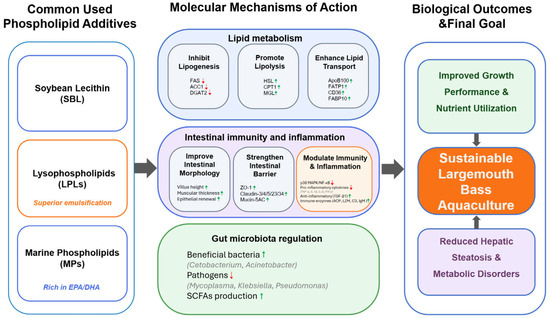
One of the most important benefits of PLs supplementation in carnivorous fish like largemouth bass is its ability to regulate lipid metabolism and prevent excessive lipid accumulation in the liver and other tissues [37,51] (Figure 2).
Figure 2.
Core Molecular Mechanisms of Phospholipid Additives on Intestinal Homeostasis and Metabolic Health in Largemouth Bass. FAS, Fatty Acid Synthase; ACC1, Acetyl-CoA Carboxylase 1; DGAT2, Diacylglycerol Acyltransferase 2; HSL, Hormone-Sensitive Lipase; CPT1, Carnitine Palmitoyltransferase 1; MGL, Monoacylglycerol Lipase; ApoB100, Apolipoprotein B100; FATP1, Fatty Acid Transport Protein 1; CD36, Cluster of Differentiation 36; FABP10, Liver-Type Fatty Acid Binding Protein 10; ZO-1, Zonula Occludens-1; p38 MAPK, p38 Mitogen-Activated Protein Kinase; NF-κB, Nuclear Factor Kappa B; TNF-α, Tumor Necrosis Factor Alpha; IL-1β, Interleukin-1 Beta; IL-8, Interleukin-8; IFN-γ, Interferon Gamma; TGF-β1, Transforming Growth Factor Beta 1; ACP, Acid Phosphatase; LZM, Lysozyme; C3, Complement Component 3; IgM, Immunoglobulin M; SCFAs, Short-Chain Fatty Acids; EPA, Eicosapentaenoic Acid; DHA, Docosahexaenoic Acid.
4.1. Regulation of Hepatic Lipid Deposition
High-fat diets are commonly used in intensive largemouth bass aquaculture to spare protein and improve growth performance [52]. However, excessive dietary fat often leads to hepatic steatosis (fatty liver disease), which impairs liver function and reduces fish health and productivity [53,54].
Wang et al. [39] demonstrated that graded phospholipid replacement (up to 100%) at the 6% lipid level optimized growth, reduced fat deposition, and alleviated the metabolic burden induced by a high-fat diet (12% lipids), thereby enhancing the health of largemouth bass larvae. Wu et al. [37] found that 4% dietary SBL significantly reduced serum triglyceride and total cholesterol (TC) levels in juvenile largemouth bass. Similarly, Lu et al. [19] found that LPL supplementation in low-lipid diets significantly decreased serum TC levels and alanine aminotransferase activity, indicating improved liver function. Bao et al. [20] demonstrated that LPL supplementation (300 mg/kg) significantly reduced the mesenteric fat index and liver lipid content in largemouth bass fed a high-fat diet. Mechanistically, SBL inhibits the expression of lipogenesis-related genes such as fatty acid synthase (fas), acetyl-CoA carboxylase 1 (acc1), and diacylglycerol O-acyltransferase 2 (dgat2) [38,55], thereby suppressing de novo lipogenesis. Concurrently, it upregulates lipolytic genes, including hormone-Sensitive Lipase and monoglyceride lipase [55], and MPLs further inhibit fat synthesis and promote fatty acid oxidation and lipolysis [42]. This coordinated regulation of lipid synthesis and oxidation effectively prevents hepatic steatosis and improves overall metabolic health in both larval and juvenile largemouth bass.
4.2. Improvement of Lipid Transport
Lecithin is an essential component of lipoproteins, which are responsible for transporting lipids from the intestine to other tissues. Phosphatidylcholine, the major component of lecithin, is required for the assembly and secretion of very-low-density lipoproteins from the liver [56,57].
Wu et al. [37] reported that 4% dietary SBL significantly upregulated the mRNA expression of genes involved in lipid transport, including fatty acid transport protein 1, cluster of differentiation 36, apolipoprotein B100, and fatty acid-binding protein 10 in the liver of largemouth bass. This upregulation enhances the transport of lipids from the liver to peripheral tissues, reducing the risk of hepatic steatosis.
5. Effects of Phospholipid Additives on Intestinal Health in Largemouth Bass
Researchers have increasingly recognized the critical role of intestinal health in overall fish health and performance in recent years [10]. The intestine serves as a selective barrier that allows the absorption of nutrients while preventing the entry of pathogens and harmful substances [58,59]. It also houses a complex microbial community that plays essential roles in digestion, immunity, and metabolism [60,61].
5.1. Improvement of Intestinal Morphology
Intestinal morphology, particularly villus height and muscular thickness, is a key indicator of intestinal health and absorptive capacity [62]. Several studies have shown that PLs supplementation can improve intestinal morphology in largemouth bass.
Wu et al. [37] found that 4% and 8% dietary SBL significantly increased intestinal villus height and muscular thickness in juvenile largemouth bass. Histological examination revealed that fish in the 0% and 2% SBL groups showed detached villi and villous atrophy, while the 4% and 8% SBL groups had well-developed intestinal morphology with intact villi. Yang et al. [38] also demonstrated that dietary supplementation with 4% SBL significantly improved intestinal morphology and increased the activity of digestive enzymes in juvenile largemouth bass. Similarly, Bao et al. [20] reported that LPL supplementation (300 mg/kg) significantly increased intestinal villus length in largemouth bass fed a high-fat diet. The study also found that LPL supplementation was more effective than bile acids in improving intestinal morphology, suggesting that LPLs have unique beneficial effects on intestinal structure. Wang et al. [40] further demonstrated that dietary SBL significantly increased the mucosal fold height and muscular thickness in the intestine of larval largemouth bass. The study also found that SBL supplementation alleviated the accumulation of intestinal triacylglycerols, which is often associated with intestinal dysfunction in early life stages. The mechanisms underlying the improvement of intestinal morphology by PLs are likely related to their role as a structural component of cell membranes. Exogenous PLs provide building blocks for the rapid turnover and renewal of intestinal epithelial cells, which have a high rate of proliferation. Moreover, by improving lipid digestibility and nutrient absorption, PLs may indirectly provide more energy and nutrients to support intestinal tissue growth and development.
5.2. Enhancement of Intestinal Barrier Function
The intestinal barrier is composed of a single layer of epithelial cells connected by tight junctions, which regulate the paracellular transport of molecules [63]. Impairment of the intestinal barrier (leaky gut) can lead to the translocation of bacteria and their toxins into the bloodstream, triggering systemic inflammation and disease [64,65].
Wu et al. [39] reported that 4% dietary SBL significantly upregulated the mRNA expression of several tight junction proteins, including zonula occludens-1 (ZO-1), claudin-3, claudin-4, claudin-5, claudin-23, and claudin-34, in the intestine of largemouth bass. The study also found that SBL supplementation increased the expression of mucin-5AC, a major component of the intestinal mucus layer that provides an additional physical barrier against pathogens. Bao et al. [20] confirmed these findings, showing that LPLs supplementation (300 mg/kg) significantly increased the mRNA expression of ZO-1 in the intestine of largemouth bass. Wang et al. [40] also reported that dietary SBL promoted the expression of tight junction proteins including ZO-1, claudin-4 and claudin-5 in larval largemouth bass. These findings are particularly relevant for carnivorous fish like largemouth bass, which are highly sensitive to the intestinal barrier-damaging effects of anti-nutritional factors present in plant-protein ingredients.
5.3. Modulation of Intestinal Immunity and Inflammation
The intestine is the largest immune organ in the body, containing approximately 70% of the total immune cells [62,63]. Studies have shown that PLs modulate intestinal immunity and reduce inflammation in largemouth bass.
The immunomodulatory effects of phospholipid additives are intricately linked to their ability to suppress the activation of the mitogen-activated protein kinase (MAPK) and nuclear factor-kappa B (NF-κB) signaling cascades in largemouth bass [37,40]. Under physiological conditions, lecithin-derived metabolites can stabilize the intestinal microenvironment, reducing the release of reactive oxygen species that act as secondary messengers for MAPK activation. Mechanistically, PLs supplementation downregulates the phosphorylation of p38 MAPK and extracellular signal-regulated kinase, which in turn inhibits the degradation of IκB-α, the inhibitory protein that sequesters NF-κB in the cytoplasm. Consequently, the nuclear translocation of the NF-κB p65 subunit is prevented, leading to suppressed transcription of pro-inflammatory cytokines (tnf-α, il-1β, il-8, and ifn-γ) and enhanced expression of the anti-inflammatory cytokine tgf-β1 [37]. This shift in the inflammatory tone not only protects intestinal epithelial cells from apoptosis but also facilitates the repair of tight junctions.
Beyond these canonical inflammatory pathways, PLs supplementation consistently enhances the activity of key mucosal immune effectors. For instance, dietary SBL at 4% inclusion significantly elevated the activities of acid phosphatase, lysozyme, complement component 3, and immunoglobulin M in the intestinal mucosa of juvenile largemouth bass, indicating a broad enhancement of both innate and adaptive humoral immunity [37]. These findings were further corroborated in larval stages, where dietary SBL not only elevated lysozyme activity [40]. Collectively, these modifications underscore that PLs orchestrate a balanced immune response—dampening excessive pro-inflammatory signals while bolstering the local antimicrobial arsenal in largemouth bass.
5.4. Regulation of Intestinal Microbiota
The intestinal microbiota plays a crucial role in maintaining intestinal homeostasis by modulating nutrient digestion, immune development, and pathogen resistance [66,67]. Emerging evidence suggests that PLs can modulate the composition and diversity of the intestinal microbiota in largemouth bass.
Lu et al. [19] investigated the effects of LPL supplementation on the intestinal microbiota of largemouth bass using 16S rRNA gene sequencing. The results showed that LPL supplementation increased the abundance of beneficial bacteria such as Cetobacterium and Acinetobacter, while decreasing the abundance of potentially harmful bacteria such as Mycoplasma. Cetobacterium is known to produce short-chain fatty acids (SCFAs), which are important energy sources for intestinal epithelial cells and have anti-inflammatory effects. Bao et al. [20] further demonstrated that LPL supplementation increased the alpha diversity of the intestinal microbiota and the abundance of Proteobacteria, which was positively correlated with the concentration of SCFAs in the gut. Wang et al. [40] also found that dietary SBL significantly altered the intestinal microbiota profile of larval largemouth bass at the genus level, including a decreased richness of pathogenic bacterial genus Klebsiella in the larval intestine. More recently, Zhang et al. [57] found that dietary lysolecithin increased the relative abundance of Cetobacterium and reduced potential opportunistic taxa Pseudomonas in largemouth bass intestines. In summary, the mechanism by which PLs improve intestinal health in largemouth bass can be characterized as a synergistic, bidirectional modulation of the gut microbiota. On one hand, LPLs significantly increase the abundance of beneficial bacteria (e.g., Cetobacterium and Acinetobacter), enhance alpha diversity and the proportion of Proteobacteria, and thereby promote the production of SCFAs in the gut, which serve as energy sources for intestinal epithelial cells and exert anti-inflammatory effects, supporting intestinal barrier and immune homeostasis. On the other hand, PLs effectively suppress the colonization of opportunistic pathogens such as Mycoplasma, Klebsiella, and Pseudomonas, reducing the risk of infection and inflammation. In essence, this mechanism reshapes the microbial community by enriching beneficial taxa while suppressing detrimental ones, shifting the intestinal microenvironment from a potentially pro-inflammatory state to an anti-inflammatory, high-energy state dominated by SCFA production, thereby maintaining the intestinal health of largemouth bass.
While the above studies consistently support the beneficial effects of PLs on intestinal health, several inconsistencies warrant discussion. For example, Wu et al. [37] reported that 4% SBL significantly upregulated the mRNA expression of multiple claudin family members (claudin-3, -4, -5, -23, -34), whereas Bao et al. [20] found that LPLs mainly affected ZO-1. This discrepancy may reflect differences in PLs type (native vs. hydrolyzed), inclusion level, or fish size, but it also raises the possibility that different PLs modulate intestinal barrier function through partially distinct molecular pathways. Additionally, most studies reported increased villus height after PLs supplementation, likely due to differences in basal diet composition, rearing conditions, and the baseline intestinal health status of the experimental fish. These observations underscore the need for standardized experimental protocols and direct head-to-head comparisons of different phospholipid additives under identical conditions.
6. Comparison of Different Phospholipid Additive Types
While all types of phospholipid additives have beneficial effects on largemouth bass nutrition and intestinal health, there are some differences in their efficacy and mechanisms of action.
6.1. Native Lecithin vs. Lysophospholipids
LPLs have several advantages over native lecithin in aquafeeds. First, due to their higher hydrophilicity, LPLs have superior emulsifying properties, which improve the digestion and absorption of dietary lipids [68,69]. Second, LPLs can increase the fluidity and permeability of cell membranes, facilitating the absorption of other nutrients such as proteins and carbohydrates [70]. Third, LPLs exhibit more potent immunomodulatory and intestinal health-promoting effects compared to native lecithin [20,57,71]. However, LPLs are more expensive than native lecithin, which limits their widespread use in commercial aquafeeds. The optimal inclusion level of LPLs is also much lower (300–1000 mg/kg) compared to native lecithin (2–4%).
6.2. Plant-Derived vs. Marine-Derived Lecithin
Plant-derived lecithin (primarily SBL) is the most commonly used type in aquaculture due to its low cost and wide availability. Studies have shown that it effectively improves growth performance, lipid metabolism, and intestinal health in largemouth bass [37,38].
Marine-derived phospholipids, on the other hand, are rich in n-3 PUFAs, which have unique anti-inflammatory and immunomodulatory effects. While MPLs have not been extensively studied in largemouth bass [42], studies in other fish species have shown that they can improve growth performance, stress resistance, and reproductive performance [72,73,74,75]. However, the high cost of MPLs limits their use to high-value aquaculture species and specific life stages.
7. Practical Applications and Recommendations
Based on the current research findings, the following practical recommendations can be made for the use of phospholipid additives in largemouth bass feed formulations:
Optimal inclusion levels: For SBL, the optimal inclusion level in juvenile largemouth bass diets is 4%. For LPLs, the recommended inclusion level is 300–1000 mg/kg, depending on the diet composition. For larval stages, higher phospholipid levels (5–7%) are recommended to support rapid growth and development.
Application in low-nutrient diets: LPs, particularly LPLs, can be used to reduce the protein and lipid levels in largemouth bass diets without compromising growth performance. This can significantly reduce feed costs and minimize the environmental impact of aquaculture.
Application in high-fat diets: Phospholipid supplementation is highly recommended in high-fat diets to prevent excessive lipid accumulation in the liver and improve intestinal health.
Effects on disease resistance: While phospholipid additives have been shown to enhance intestinal immunity, few studies have directly evaluated their effects on disease resistance against specific pathogens in largemouth bass.
8. Limitations and Considerations for Generalization
It is important to acknowledge that a significant proportion of the experimental evidence reviewed in this article originates from a relatively small number of research groups, primarily based in China. While these studies have been rigorously conducted and provide valuable mechanistic insights, the concentration of evidence within limited institutional and geographical contexts raises important considerations for the generalizability of the conclusions.
Several factors may influence the reproducibility and applicability of these findings across different largemouth bass production systems. First, experimental conditions, including water temperature, rearing density, feeding regimes, and basal diet composition, vary considerably among facilities and regions, and these environmental factors can modulate the physiological responses to PLs supplementation. Second, the genetic backgrounds of cultured largemouth bass populations may differ, potentially affecting their baseline phospholipid requirements and metabolic responses. Third, most studies have been conducted under controlled laboratory or experimental pond conditions, which may not fully reflect the complexities of commercial-scale production systems, where variables such as fluctuating water quality, co-occurring stressors, and subclinical pathogen challenges are common.
Moreover, the limited geographic and institutional diversity of the available evidence underscores the need for multi-center collaborative studies and independent validation trials in diverse production settings. Such efforts would strengthen the external validity of current recommendations and help identify potential sources of heterogeneity in treatment effects. We encourage future research from a broader range of institutions and geographic locations to confirm and extend the findings summarized here, thereby providing a more robust evidence base for the practical application of PLs in largemouth bass aquaculture.
Despite these limitations, it is worth noting that the consistency of the observed beneficial effects across multiple studies, life stages, and experimental designs—even when conducted by overlapping research groups—provides reasonable confidence in the overall direction and magnitude of the reported responses.
9. Knowledge Gaps and Future Research Directions
Despite significant progress in understanding the role of PLs in largemouth bass nutrition and intestinal health, several important knowledge gaps remain:
Long-term effects: Most studies have focused on the short-term effects of lecithin supplementation (28–64 days). Long-term studies are needed to evaluate the effects of lecithin on fish health, growth, and reproduction throughout the entire production cycle.
Effects on different life stages: While some studies have been conducted on larval and juvenile stages, more research is needed to determine the optimal PLs requirements for grow-out and broodstock stages.
Molecular mechanisms: While some studies have explored the molecular mechanisms underlying the effects of PLs, our understanding is still limited. Future studies should use omics technologies (transcriptomics, proteomics, metabolomics) to comprehensively investigate the molecular pathways involved.
Interaction with other nutrients: The interactions between PLs and other nutrients, such as proteins, lipids, carbohydrates, vitamins, and minerals, need to be further investigated to optimize feed formulations.
Development of novel phospholipid additives: There is a need to develop more cost-effective and efficient phospholipid additives, such as modified lecithins with specific fatty acid compositions and functional properties.
10. Conclusions
Phospholipid additives, including native soybean lecithin, enzymatically modified lysophospholipids and marine phospholipids, have emerged as promising functional feed additives for largemouth bass aquaculture. They not only improve growth performance and nutrient utilization but also regulate lipid metabolism and enhance intestinal health. The beneficial effects of Phospholipids on intestinal health are mediated through multiple mechanisms, including improvement of intestinal morphology, enhancement of intestinal barrier function, modulation of mucosal immunity and inflammation, and regulation of gut microbiota composition. By integrating basic immunonutritional science with practical intestinal health management, the strategic application of lecithin supports the global transition toward sustainable, responsible, and antibiotic-free aquaculture. With continued research and technological innovation, phospholipid-based precision nutrition strategies will play an increasingly important role in the sustainable development of largemouth bass aquaculture.
Author Contributions
Writing—Original draft, Y.F., C.L. and C.N.; Writing—Review and Editing, M.H. and S.Y.; Conceptualization, H.F.; Supervision, H.F.; Funding acquisition, H.F. All authors have read and agreed to the published version of the manuscript.
Funding
This study was supported by Zhejiang Province Leading Geese Plan (No. 2024C02012).
Institutional Review Board Statement
Not applicable.
Informed Consent Statement
Not applicable.
Data Availability Statement
No new data were created or analyzed in this study. Data sharing is not applicable to this article.
Conflicts of Interest
Chenhua Ni was employed by the company Kemin (China) Technologies Co., Ltd. The remaining authors declare that the research was conducted in the absence of any commercial or financial relationships that could be construed as potential conflicts of interest.
References
- Fishery Bureau, Ministry of Agriculture. China Fishery Statistical Yearbook; Agriculture Press: Beijing, China, 2024.
- Yang, S.; Zhao, J.; An, N.; Li, D.-C.; Huang, M.-M.; Fei, H. Updates on Infectious Diseases of Largemouth Bass: A Major Review. Fish Shellfish Immunol. 2024, 154, 109976. [Google Scholar] [CrossRef] [Scilit] [PubMed]
- Yan, X.; Tang, Y.; Yan, Y.; Chen, X.; Feng, D.; Li, M. Effects of Sodium Acetate Added to High-Fat Diets on the Growth Performance, Liver Lipid Metabolism and Injury in Micropterus salmoides. J. Fish. China 2025, 49, 099617. (In Chinese) [Google Scholar]
- Wang, L.; Cui, Z.H.; Ren, X.; Li, P.; Wang, Y. Growth performance, feed cost and environmental impact of largemouth bass Micropterus salmoides fed low fish meal diets. Aquac. Rep. 2021, 20, 100757. [Google Scholar] [CrossRef] [Scilit]
- Chen, Q.K.; Xing, Y.F.; Lei, Y.; Tong, G.X.; Lin, X.B.; He, P.C.; Tang, S.L.; Zheng, F.F.; Zeng, H.; Wei, X.X. Genetic diversity, antibiotic resistance, and pathogenicity of Aeromonas veronii isolated from farmed largemouth bass (Micropterus salmoides) in the main aquaculture regions of China. Aquaculture 2024, 592, 741150. [Google Scholar] [CrossRef] [Scilit]
- Huang, W.M.; Lin, C.Y.; Wen, C.Y.; Jiang, B.; Su, Y.L. Analysis of the prevalence of bacterial pathogens and antimicrobial resistance patterns of Edwardsiella piscicida in largemouth bass (Micropterus salmoides) from Guangdong, China. Pathogens 2024, 13, 987. [Google Scholar] [CrossRef] [Scilit] [PubMed]
- Abdul Kari, Z. Nutritional Immunomodulation in Aquaculture: Functional Nutrients, Stress Resilience, and Sustainable Health Strategies. Aquac. Int. 2025, 33, 441. [Google Scholar] [CrossRef] [Scilit]
- Shija, V.M.; Tran, N.T.; Shehata, A.I.; Zheng, X.Y.; Zhang, M.; Bakky, M.A.H.; Cai, J.; Li, S.K. Synergistic impacts of probiotics and prebiotics (synbiotics) in fish farming. Fish Shellfish Immunol. 2026, 174, 111358. [Google Scholar] [CrossRef] [Scilit] [PubMed]
- Yu, X.-Z.; Yu, Y.; Liu, Z.-Y. Crosstalk Between Intestinal Microbiota and Host Defense Peptides in Fish. Biology 2025, 14, 1243. [Google Scholar] [CrossRef] [Scilit] [PubMed]
- Zhang, B.; Yang, H.; Cai, G.; Nie, Q.; Sun, Y. The Interactions between the Host Immunity and Intestinal Microorganisms in Fish. Appl. Microbiol. Biotechnol. 2024, 108, 30. [Google Scholar] [CrossRef] [Scilit] [PubMed]
- Zhao, Q.; Shao, J.; Chen, Y.; Zhang, H. The Role of Gut Microbiota in Fish Viral Infection: Mechanisms and Microbiota-Targeted Interventions. Aquac. Nutr. 2026, 2026, 9336162. [Google Scholar] [CrossRef] [Scilit] [PubMed]
- Patil, V.V.; Galge, R.V.; Thorat, B.N. Extraction and purification of phosphatidylcholine from soyabean lecithin. Sep. Purif. Technol. 2010, 75, 138–144. [Google Scholar] [CrossRef] [Scilit]
- Fernandes, G.D.; Alberici, R.M.; Pereira, G.G.; Cabral, E.C.; Eberlin, M.N.; Barrera-Arellano, D. Direct characterization of commercial lecithins by easy ambient sonic-spray ionization mass spectrometry. Food Chem. 2012, 135, 1855–1860. [Google Scholar] [CrossRef] [Scilit] [PubMed]
- Wee, W.; Téllez-Isaías, G.; Abdul Kari, Z.; Cheadoloh, R.; Kabir, M.A.; Mat, K.; Mohamad Sukri, S.A.; Rahman, M.M. The roles of soybean lecithin in aquafeed: A crucial need and update. Front. Vet. Sci. 2023, 10, 1188659. [Google Scholar] [CrossRef] [Scilit] [PubMed]
- Batista, R.O.; Richter, B.L.; Banze, J.F.; Schleder, D.D.; Salhi, M.; Nobrega, R.O.; Silva, M.F.O.d.; Mattioni, B.; Pettigrew, J.E.; Fracalossi, D.M. Soy Lecithin Supplementation Promotes Growth and Increases Lipid Digestibility in GIFT Nile Tilapia Raised at Suboptimal Temperature. Fishes 2023, 8, 404. [Google Scholar] [CrossRef] [Scilit]
- Zhang, Y.; Gong, Q.; Chen, J.; Liu, M. Appropriate Dietary Levels of Soybean Lecithin and Krill Oil Phospholipids Promote Growth, Antioxidant Capacity, and Lipid Metabolism While Reducing Lipid Deposition in Atlantic Salmon (Salmo salar) Fry. Animals 2026, 16, 1393. [Google Scholar] [CrossRef] [Scilit] [PubMed]
- Lin, X.; Cao, Y.; Wang, X.; Meng, X.; Huang, H.; Zhou, H.; Deng, J.; Tan, B. Suitable dietary phospholipids improve lipid deposition, but excessive dietary phospholipids disorder lipid metabolism in juvenile leopard coral grouper (Plectropomus leopardus). Aquac. Rep. 2024, 37, 102265. [Google Scholar] [CrossRef] [Scilit]
- El-Naggar, K.; Mohamed, R.; El-katcha, M.I.; Abdo, S.E.; Soltan, M.A. Plant Ingredient diet supplemented with lecithin as fish meal and fish oil alternative affects growth performance, serum biochemical, lipid metabolism and growth-related gene expression in Nile tilapia. Aqua Res. 2021, 52, 6308–6321. [Google Scholar] [CrossRef] [Scilit]
- Lu, Z.; Yao, C.; Tan, B.; Dong, X.; Yang, Q.; Liu, H.; Zhang, S.; Chi, S. Effects of Lysophospholipid Supplementation in Feed with Low Protein or Lipid on Growth Performance, Lipid Metabolism, and Intestinal Flora of Largemouth Bass (Micropterus salmoides). Aquac. Nutr. 2022, 2022, 4347466. [Google Scholar] [CrossRef] [Scilit] [PubMed]
- Bao, M.-Y.; Wang, Z.; Nuez-Ortín, W.G.; Zhao, G.; Dehasque, M.; Du, Z.-Y.; Zhang, M.-L. Comparison of Lysophospholipids and Bile Acids on the Growth Performance, Lipid Deposition, and Intestinal Health of Largemouth Bass (Micropterus salmoides). Aquac. Nutr. 2024, 2024, 1518809. [Google Scholar] [CrossRef] [Scilit] [PubMed]
- Szuhaj, B.F. Lecithins: Sources, Manufacture, and Uses; American Oil Chemists’ Society: Champaign, IL, USA, 1989; pp. 1–320. [Google Scholar]
- Drescher, S.; van Hoogevest, P. The Phospholipid Research Center: Current Research in Phospholipids and Their Use in Drug Delivery. Pharmaceutics 2020, 12, 1235. [Google Scholar] [CrossRef] [Scilit] [PubMed]
- Taladrid, D.; Marín, D.; Alemán, A.; Álvarez-Acero, I.; Montero, P.; Gómez-Guillén, M.C. Effect of chemical composition and sonication procedure on properties of food-grade soy lecithin liposomes with added glycerol. Food Res. Int. 2017, 100, 541–550. [Google Scholar] [CrossRef] [Scilit] [PubMed]
- Sæle, Ø.; Nordgreen, A.; Olsvik, P.A.; Hamre, K. Characterisation and expression of secretory phospholipase A2 group IB during ontogeny of Atlantic cod (Gadus morhua). Br. J. Nutr. 2011, 105, 228–237. [Google Scholar] [PubMed]
- Smichi, N.; Othman, H.; Achouri, N.; Noiriel, A.; Arondel, V.; Srairi-Abid, N.; Abousalham, A.; Gargouri, Y.; Miled, N.; Fendri, A. Functional and structural characterization of a thermostable phospholipase A2 from a Sparidae fish (Diplodus annularis). J. Agric. Food Chem. 2017, 65, 2468–2480. [Google Scholar] [CrossRef] [Scilit] [PubMed]
- Dong, Z.Y.; Ke, T.H.; Li, N.; Zhang, B.P.; Wang, B.; Kang, J.M.; Zhang, Y.; Qian, T.; Liu, L.; Cai, W.J. Dietary lysolecithin enhances the value of high-lipid diet supplemented with fish stearin oil in post-juvenile largemouth bass Micropterus salmoides. Aquac. Rep. 2024, 39, 102365. [Google Scholar] [CrossRef] [Scilit]
- Liu, G.X.; Ma, S.L.; Chen, F.Y.; Gao, W.H.; Zhang, W.B.; Mai, K.S. Effects of dietary lysolecithin on growth performance, feed utilization, intestinal morphology and metabolic responses of channel catfish (Ictalurus punctatus). Aquac. Nutr. 2020, 26, 456–465. [Google Scholar]
- Xu, H.G.; Luo, X.; Wei, Y.L.; Liang, M.Q. Dietary lysophosphatidylcholine regulates diacylglycerol, cardiolipin and free fatty acid contents in the fillet of turbot. Food Chem. X 2022, 14, 100293. [Google Scholar] [CrossRef] [Scilit] [PubMed]
- Qiu, Z.S.; Xu, Q.Y.; Chong, C.M.; Cruz, C.R.D. Lecithin-enriched diet improves growth performance, lipid metabolism and disease resistance in giant river prawn (Macrobrachium rosenbergii). Aquaculture 2026, 611, 743016. [Google Scholar] [CrossRef] [Scilit]
- Xu, C.; Yang, X.L.; Liang, Z.Y.; Jiang, Z.Z.; Chen, H.; Han, F.L.; Jia, Y.Y.; Li, E.C. Evaluation of the Role of Soybean Lecithin, Egg Yolk Lecithin, and Krill Oil in Promoting Ovarian Development in the Female Redclaw Crayfish Cherax quadricarinatus. Aquac. Nutr. 2023, 2023, 6925320. [Google Scholar] [CrossRef] [Scilit] [PubMed]
- Tocher, D.R.; Bendiksen, E.Å.; Campbell, P.J.; Bell, J.G. The role of phospholipids in nutrition and metabolism of teleost fish. Aquaculture 2008, 280, 21–34. [Google Scholar] [CrossRef] [Scilit]
- Sun, N.; Chen, J.; Wang, D.; Lin, S.Y. Advance in food-derived phospholipids: Sources, molecular species and structure as well as their biological activities. Trends Food Sci. Technol. 2018, 80, 199–211. [Google Scholar] [CrossRef] [Scilit]
- Zhang, T.T.; Xu, J.; Wang, Y.M.; Xue, C.H. Health benefits of dietary marine DHA/EPA-enriched glycerophospholipids. Prog. Lipid Res. 2019, 75, 100997. [Google Scholar] [CrossRef] [Scilit] [PubMed]
- Zhang, J.; Tao, N.P.; Wang, M.F.; Shi, W.Z.; Ye, B.Q.; Wang, X.C.; Zhu, Q.C.; Hua, C.X. Characterization of phospholipids from Pacific saury (Cololabis saira) viscera and their neuroprotective activity. Food Biosci. 2018, 24, 120–126. [Google Scholar] [CrossRef] [Scilit]
- Jang, A.Y.; Rod-in, W.; Monmai, C.; Choi, G.S.; Park, W.J. Anti-inflammatory effects of neutral lipids, glycolipids, phospholipids from Halocynthia aurantium tunic by suppressing the activation of NF-κB and MAPKs in LPS-stimulated RAW264.7 macrophages. PLoS ONE 2022, 17, e0270794. [Google Scholar] [CrossRef] [Scilit] [PubMed]
- Feng, S.H.; Cai, Z.N.; Mai, K.S.; Ai, Q.H. Molecular cloning and genetic ontogeny of CCT during the development of large yellow croaker larvae (Larimichthys crocea). Acta Hydrobiol. Sin. 2016, 40, 752–757. [Google Scholar]
- Wu, J.; Yang, W.; Song, R.; Li, Z.; Jia, X.; Zhang, H.; Zhang, P.; Xue, X.; Li, S.; Xie, Y.; et al. Dietary soybean lecithin improves growth, immunity, antioxidant capability and intestinal barrier functions in largemouth bass Micropterus salmoides juveniles. Metabolites 2023, 13, 512. [Google Scholar] [CrossRef] [Scilit] [PubMed]
- Yang, W.; Wu, J.; Song, R.; Li, Z.; Jia, X.; Qian, P.; Wu, C. Effects of dietary soybean lecithin on growth performances, body composition, serum biochemical parameters, digestive and metabolic abilities in largemouth bass Micropterus salmoides. Aquac. Rep. 2023, 29, 101503. [Google Scholar] [CrossRef] [Scilit]
- Wang, Y.H.; Li, R.Y.; Zong, J.; Cheng, X.Y.; Zhang, Y.B.; Cao, X.J.; Gao, J. Effects of dietary lipid and phospholipid levels on growth performance, lipid metabolism, and antioxidant capacity of largemouth bass (Micropterus salmoides) larvae. Fish Physiol. Biochem. 2025, 51, 179. [Google Scholar] [CrossRef] [Scilit] [PubMed]
- Wang, S.; Han, Z.; Turchini, G.M.; Wang, X.; Fang, Z.; Chen, N.; Xie, R.; Zhang, H.; Li, S. Effects of dietary phospholipids on growth performance, digestive enzymes activity and intestinal health of largemouth bass (Micropterus salmoides) larvae. Front. Immunol. 2022, 12, 827946. [Google Scholar] [CrossRef] [Scilit] [PubMed]
- Fan, X.; Wei, Y.; Zhao, J.; Wang, Y.; Zhao, J.; Xu, Q. Effects of Dietary Lysophospholipids on Growth Performance, Hepatic Lipid Metabolism, Intestinal Health and Dietary Lipid Levels of Largemouth Bass (Micropterus salmoides). Fishes 2026, 11, 204. [Google Scholar] [CrossRef] [Scilit]
- Chen, Q.; Zhang, R.; Ren, T.; Qian, Y.; Tang, Y.; Dong, F.; Wang, J.; Han, T. Inhibitory effect of DHA-rich marine phosphatidylcholine on fat deposition and regulation of phospholipid metabolism in largemouth bass. J. Fish. China 2025, 49, 109610. (In Chinese) [Google Scholar]
- Che, M.X.; Lu, Z.Y.; Liu, L.; Li, N.; Ren, L.A.; Chi, S.Y. Dietary lysophospholipids improves growth performance and hepatic lipid metabolism of largemouth bass (Micropterus salmoides). Anim. Nutr. 2023, 13, 426–434. [Google Scholar] [CrossRef] [Scilit] [PubMed]
- Zhu, J.; Hu, N.-J.; Chi, Y.-J.; Lai, X.-H.; Song, Y.-F. Dietary phospholipid promotes growth, intestinal health, and muscle and ovarian development in largemouth bronze gudgeon (Coreius guichenoti). Aquac. Int. 2025, 33, 545. [Google Scholar] [CrossRef] [Scilit]
- Rakhi, S.F.; Reza, A.H.M.M.; Hossen, M.S.; Hossain, Z. Embryonic development and growth performances of an endangered fish species Nandus nandus: Effects of dietary polyunsaturated fatty acids supplementation. Iran. J. Fish. Sci. 2015, 14, 1029–1052. [Google Scholar]
- Liang, X.; Zhang, L.; Chang, T.; Wang, B.; Zhang, C.; Xu, C.; Li, E. Evaluation of the synergistic effects of cholesterol and phospholipid on ovarian lipid accumulation, steroidogenesis and vitellogenesis in female broodstock in the Pacific whiteleg shrimp, Litopenaeus vannamei. Aquaculture 2026, 613, 743351. [Google Scholar] [CrossRef] [Scilit]
- Barua, H.; Acharjee, M.R.; Giteru, S.G.; Chowdhury, M.; Wu, H.; Kumar, L.; Ahmmed, M.K. Dietary Phospholipids and Their Impact on Crustacean Physiology: Growth, Metabolism, Immunity, and Beyond. Aquac. Nutr. 2025, 2025, 8180797. [Google Scholar] [CrossRef] [Scilit] [PubMed]
- Liu, J.; Jian, Y.H.; Hu, H.M.; Li, S.Q.; Wang, Y.; Kong, Y.Q.; Xu, Q.Y.; Liu, Y.J.; Ding, Z.L. Effects of different lipid sources on ovarian maturation in female broodstock of largemouth bass (Micropterus salmoides). Aquac. Rep. 2026, 48, 103495. [Google Scholar] [CrossRef] [Scilit]
- Li, Y.; Li, X.H.; Ye, D.; Zhang, R.; Liu, C.J.; He, M.D.; Wang, H.P.; Hu, W.; Sun, Y.H. Endogenous biosynthesis of docosahexaenoic acid (DHA) regulates fish oocyte maturation by promoting pregnenolone production. Zool. Res. 2024, 45, 176–188. [Google Scholar] [CrossRef] [Scilit] [PubMed]
- Gao, Q.; Feng, Q.; Zhou, D.; Ding, Z.; Qi, C.; Kong, Y.; Xu, Q. Optimal dietary vitamin E level facilitates ovarian development of female largemouth bass (Micropterus salmoides) broodstock. Aquac. Rep. 2025, 41, 102663. [Google Scholar] [CrossRef] [Scilit]
- Wang, B.; Zheng, H.; Xiong, J.; Yang, H.J.; Li, Q.L.; Luo, Z. Lecithin supplementation to HFD improves largemouth bass liver health: Implications for regulating lipid homeostasis, antioxidant responses and endoplasmic reticulum stress. Fish Physiol. Biochem. 2026, 52, 32. [Google Scholar] [CrossRef] [Scilit] [PubMed]
- Yin, P.; Xie, S.W.; Zhuang, Z.X.; Fang, H.H.; Tian, L.X.; Liu, Y.J.; Niu, J. Chlorogenic acid improves health in juvenile largemouth bass (Micropterus salmoides) fed high-fat diets: Involvement of lipid metabolism, antioxidant ability, inflammatory response, and intestinal integrity. Aquaculture 2021, 545, 737169. [Google Scholar] [CrossRef] [Scilit]
- Romano, N.; Fischer, H.; Rubio-Benito, M.M.; Overtuf, K.; Sinha, A.K.; Kumar, V. Different dietary combinations of high/low starch and fat with or without bile acid supplementation on growth, liver histopathology, gene expression and fatty acid composition of largemouth bass, Micropterus salmoides. Comp. Biochem. Physiol. A Mol. Integr. Physiol. 2022, 266, 111157. [Google Scholar] [CrossRef] [Scilit] [PubMed]
- Qin, D.G.; Chen, J.L.; Li, J.X.; Liu, Z.Y.; Huang, W.B.; Yang, Y.Z.; Zhang, J.; Tan, B.P.; Dong, X.H. Growth, fat metabolism and hepatic health in largemouth bass fed varying fat-level diets. Aquac. Rep. 2025, 40, 102535. [Google Scholar] [CrossRef] [Scilit]
- Wang, S.L.; Zhang, Y.; Xie, R.T.; Zhang, N.H.; Zhang, H.T.; Chen, N.S.; Li, S.L. Effects of dietary phospholipids on growth performance, fatty acid composition and lipid metabolism of early juvenile largemouth bass (Micropterus salmoides). Aquac. Res. 2022, 53, 5628–5637. [Google Scholar] [CrossRef] [Scilit]
- Ko, C.W.; Qu, J.; Black, D.D.; Tso, P. Regulation of intestinal lipid metabolism: Current concepts and relevance to disease. Nat. Rev. Gastroenterol. Hepatol. 2020, 17, 169–183. [Google Scholar] [CrossRef] [Scilit] [PubMed]
- Zhang, Y.X.; Feng, T.Y.; Dong, Z.Y.; Ke, T.H.; Storebakken, T.; Cai, W.J.; Shi, B.; Huang, L.Y. Lysolecithin improves lipid metabolism and gut microbiota: An integrated transcriptome and microbiome analysis in largemouth bass (Micropterus salmoides) fed stearin-based high-lipid diets. Metabolites 2026, 16, 297. [Google Scholar] [CrossRef] [Scilit] [PubMed]
- Turner, J.R. Intestinal mucosal barrier function in health and disease. Nat. Rev. Immunol. 2009, 9, 799–809. [Google Scholar] [CrossRef] [Scilit] [PubMed]
- Tolas, I.; Zhou, Z.G.; Zhang, Z.; Teame, T.; Olsen, R.E.; Ringo, E.; Ronnestad, I. A fishy gut feeling—Current knowledge on gut microbiota in teleosts. Front. Mar. Sci. 2025, 11, 1495373. [Google Scholar] [CrossRef] [Scilit]
- Rai, N.; Kachore, A.; Julka, J.M.; Panigrahi, A.; Das, S.P.; Nan, F.H. Symbiotic strategies: Deciphering the role of gut microbiota in the nutrition and metabolism of fish and shellfish. Front. Cell Infect. Microbiol. 2025, 15, 1639426. [Google Scholar] [CrossRef] [Scilit] [PubMed]
- Diwan, A.D.; Harke, S.N.; Panche, A.N. Host-microbiome interaction in fish and shellfish: An overview. Fish Shellfish Immunol. Rep. 2023, 4, 100091. [Google Scholar] [CrossRef] [Scilit]
- De Marco, G.; Cappello, T.; Maisano, M. Histomorphological changes in fish gut in response to prebiotics and probiotics treatment to improve their health status: A review. Animals 2023, 13, 2860. [Google Scholar] [CrossRef] [Scilit] [PubMed]
- Alizadeh, A.; Akbari, P.; Garssen, J.; Fink-Gremmels, J.; Braber, S. Epithelial integrity, junctional complexes, and biomarkers associated with intestinal functions. Tissue Barriers 2022, 10, 1996830. [Google Scholar] [PubMed]
- Kuo, W.T.; Odenwald, M.A.; Turner, J.R.; Zuo, L. Tight junction proteins occludin and ZO-1 as regulators of epithelial proliferation and survival. Ann. N. Y. Acad. Sci. 2022, 1514, 21–33. [Google Scholar] [CrossRef] [Scilit]
- Yan, H.; Hu, Y.; Liang, J.; He, K.; Kuang, X.; Liu, Q.; Zhao, L.; Yang, S. Yinchenhao Decoction mitigates intestinal impairment induced by high carbohydrate diet in largemouth bass (Micropterus salmoides): Insights from inflammation, apoptosis, oxidative stress, tight junctions, and microbiota homeostasis. Fish Physiol. Biochem. 2024, 50, 2207–2223. [Google Scholar] [CrossRef] [Scilit] [PubMed]
- Chase, C.C.L. Enteric immunity happy gut, healthy animal. Vet. Clin. N. Am. Food Anim. Pract. 2018, 34, 1–18. [Google Scholar] [CrossRef] [Scilit]
- Thomasi, B.; Valdetaro, L.; Gulbransen, B.; Tavares-Gomes, A.L. Neuroimmune connectomes in the gut and their implications in Parkinson’s disease. Mol. Neurobiol. 2024, 61, 2081–2098. [Google Scholar] [PubMed]
- Yan, H.L.; Wang, Y.; Liang, H.; Duan, Y.F.; Wang, J.; Zhou, C.P.; Huang, Z. Effects of lysophospholipids on the antioxidant capacity, digestive performance, and intestinal microbiota of Litopenaeus vannamei. Biology 2025, 14, 90. [Google Scholar] [CrossRef] [Scilit] [PubMed]
- Ibarz, A.; Sanahuja, I.; Nuez-Ortín, W.G.G.; Martínez-Rubio, L.; Fernández-Alacid, L. Physiological benefits of dietary lysophospholipid supplementation in a marine fish model: Deep analyses of modes of action. Animals 2023, 13, 1381. [Google Scholar] [CrossRef] [Scilit] [PubMed]
- Robles-Arozarena, R.; Martos-Sitcha, J.A.; Bermudez, L.; Nuez-Ortín, W.; Fuentes, J. Electrogenic amino acid transport in the intestine of sea bream (Sparus aurata): From functional characterization to physiological effects of lysophospholipids in aquafeeds. Aquac. Rep. 2025, 40, 102539. [Google Scholar] [CrossRef] [Scilit]
- Cao, J.; Li, N.; Rajalekshmi, M.; Cai, C.F.; Liu, L.; Ren, L.A. Effect of high plant protein diet supplemented with lysophospholipids-butyrate on the growth performance, liver health and intestinal morphology of largemouth bass (Micropterus salmoides). Aquac. Rep. 2024, 36, 102161. [Google Scholar] [CrossRef] [Scilit]
- Jaxion-Harm, J. Effects of dietary phospholipids on early stage Atlantic salmon (Salmo salar) performance: A comparison among phospholipid sources. Aquaculture 2021, 544, 737055. [Google Scholar] [CrossRef] [Scilit]
- Trushenski, J.; Schwarz, M.; Pessoa, W.V.; Mulligan, B.; Crouse, C.; Gause, B.; Yamamoto, F.; Delbos, B. Amending reduced fish-meal feeds with marine lecithin, but not soy lecithin, improves the growth of juvenile cobia and may attenuate heightened responses to stress challenge. J. Anim. Physiol. Anim. Nutr. 2013, 97, 170–180. [Google Scholar]
- Saleh, R.; Betancor, M.; Mohamed, A.H.; Ali, T.E.; Izquierdo, M. Different phosphatidylcholine and n-3 HUFA contents in microdiets for gilthead seabream (Sparus aurata) larvae: Effects on histological changes in intestine and liver. Aquac. Int. 2022, 30, 2885–2900. [Google Scholar] [CrossRef] [Scilit]
- Martins, G.; Diogo, P.; Santos, T.; Cabrita, E.; Pinto, W.; Dias, J.; Gavaia, P.J. Microdiet formulation with phospholipid modulate zebrafish skeletal development and reproduction. Zebrafish 2020, 17, 27–37. [Google Scholar] [CrossRef] [Scilit] [PubMed]

Disclaimer/Publisher’s Note: The statements, opinions and data contained in all publications are solely those of the individual author(s) and contributor(s) and not of MDPI and/or the editor(s). MDPI and/or the editor(s) disclaim responsibility for any injury to people or property resulting from any ideas, methods, instructions or products referred to in the content. |
© 2026 by the authors. Licensee MDPI, Basel, Switzerland. This article is an open access article distributed under the terms and conditions of the Creative Commons Attribution (CC BY) license.