


Abstract
This paper integrates Adaptive Information Processing (AIP), the Window of Tolerance (WoT), and Hobfoll’s Conservation of Resources (COR) theory into a unified framework for understanding trauma and therapeutic change. We propose that COR, which we conceptualize clinically as a Reservoir of Adaptive Resources (RoAR), predicts and explains whether experiences fall within or outside the WoT, and is therefore a decisive factor determining whether they are processed adaptively or maladaptively. Clinically, this framework reframes resourcing as a core mechanism of change across all phases of treatment, rather than as preparatory work alone, one that operates within and beyond Eye Movement Desensitization and Reprocessing (EMDR). The framework further proposes that resource sufficiency, relational containment, and safe access to maladaptive material may operate as shared contributing mechanisms of change across therapeutic modalities.
1. Introduction
What makes an event traumatic? At first glance, the question seems redundant; the event itself appears inherently traumatic. Yet clinicians know this is not the whole story: people exposed to the same objective event often respond very differently. Some process the experience adaptively, integrate it into their life narrative, and return to baseline functioning; others suffer persistent distress that impairs daily functioning.
Consider two adult clients, Steven and John, who both come for treatment years after facing a new, highly arousing life crisis. During their intake sessions, their presentations are radically different. Steven reflects on his history with a palpable sense of resilience, describing a childhood where he felt welcome, valued, and loved. In the face of his current crisis, he actively engages in treatment, processes the experience, and steadily recovers. John, on the other hand, presents with a profound sense of loneliness, deep-seated feelings of inadequacy, and a pervasive belief that he is “good for nothing”. In the wake of the same crisis, John remains “stuck,” showing prolonged symptoms and functional impairment.
When we explore their developmental histories, we find a striking parallel: both men vividly remember a specific childhood event where they fell from their bicycles on a wet park path, scraped themselves, and ran home crying. However, the aftermath of this high-arousal event was handled in divergent ways. Steven was met with hot chocolate, parental empathy, and family stories about similar falls and recoveries, validating his distress, restoring his sense of safety, and leaving him with the sense that he could recover from hardship. John was harshly scolded for his dirty clothes, blamed for damaging the bicycle, and told he was a “loser”. Today, these two men present entirely different profiles of capability in the world, illustrating how the response to distress, more than the event itself, can shape an individual’s later capacity for resilience.
We suggest that this divergence can be understood by integrating three complementary frameworks. Eye Movement Desensitization and Reprocessing (EMDR) is grounded in the Adaptive Information Processing (AIP) theoretical model, which posits that traumatic experiences become maladaptively encoded and therefore require reprocessing to reach adaptive resolution [1]. Siegel’s Window of Tolerance (WoT) posits that adaptive processing occurs only when an individual remains within a manageable range of arousal; hypo- or hyperarousal pushes memory systems into states that impede integration [2]. This theory describes what expands or contracts the window but does not identify a single mechanism underlying those factors. We propose that Hobfoll’s Conservation of Resources (COR) theory may supply that mechanism [3].
This paper offers a conceptual integration of these three frameworks rather than a systematic review. Our starting point was clinical. In EMDR practice the WoT is used alongside AIP to describe the arousal conditions under which disturbing material can be processed rather than merely re-experienced, and clinicians work to keep clients within it during reprocessing [2,4]. The literature on WoT has described its determinants in some detail, identifying developmental history, attachment, and a range of state factors such as sleep, social connection, and accumulated stress that expand or contract it [2,5]. What this account offers is a catalogue of correlates rather than a unifying mechanism: it names the conditions associated with a larger or smaller window without specifying what those conditions share. Examining that gap led us to Hobfoll’s Conservation of Resources theory [3]. We propose that COR can supply this principle. Many of the factors the WoT literature lists, such as developmental history, attachment, sleep, social connection, and accumulated stress, can be understood as resources in Hobfoll’s sense, so that their gain or loss is part of what moves a person toward or past the edge of the window. Considered together, the three frameworks are more explanatory than any single one alone. AIP describes how experience is encoded and reprocessed, the WoT describes the arousal conditions that make adaptive processing possible, and COR, reconceived clinically as the Reservoir of Adaptive Resources (RoAR), describes what determines whether those conditions hold. We outline each framework in turn, develop the RoAR as their point of integration, and consider the implications for therapeutic change within EMDR and across modalities.
2. Adaptive Information Processing (AIP)
The Adaptive Information Processing (AIP) theoretical model is the theoretical foundation of EMDR therapy and offers a framework for understanding how memory is stored and how change occurs [1,6]. AIP proposes that the human mind has an inherent capacity to process and integrate new experiences into adaptive memory networks, much as the body’s natural healing capacity. When functioning optimally, information is linked to adaptive networks that provide accurate, flexible, and useful responses to current circumstances [7].
However, when a disturbing experience overwhelms the individual’s coping capacity, the memory may be stored in a maladaptive form. It becomes frozen with the original perceptions, emotions, cognitions, and body sensations. Such memories are then functionally isolated from adaptive networks. When triggered, they can produce intrusive symptoms, distorted beliefs, and maladaptive emotional, physiological, and behavioral responses [7].
Within the AIP framework, psychological distress is understood as the result of maladaptively stored information continuing to influence present functioning. Psychotherapy, therefore, is not only about reducing symptomatology but also about facilitating the linking of maladaptive memory networks to adaptive ones, allowing integration, transformation, or reconsolidation. While initially developed to explain EMDR’s clinical effects, AIP may offer a broader lens for viewing therapeutic change across modalities [6,8].
3. The Adaptive and Maladaptive Nature of Traumatic Experience Storage
When a threat is detected, our system may respond more rapidly than conscious cognition allows. If an event is appraised as unlikely to recur, or if existing learning is deemed sufficient to handle future challenges, the information is typically processed and stored adaptively in explicit or episodic memory systems [9]. Conversely, if our system anticipates similar threats, sensitization occurs, and stimuli reminiscent of the original danger can rapidly trigger responses without conscious appraisal [10,11].
This sensitization may be adaptive, facilitating quicker survival responses, but it also underlies the persistence of traumatic memory. Triggered experiences are often felt as if occurring “in the present,” reflecting implicit memory systems [12,13]. For John, a sudden sensory trigger reminiscent of his fall instantly bypasses conscious cognitive appraisal, reactivating the raw physical distress as an active, present-day threat, whereas Steven’s system can evaluate the same trigger while remaining able to respond deliberately. While such storage may initially serve protective functions, over time it can become maladaptive, producing false alarms and chronic dysregulation [14,15]. Trauma therapy aims to transform maladaptive implicit memories into forms that are integrated and no longer overwhelming in daily life. This maps onto Siegel’s concept of the WoT [2,16], which describes the arousal conditions under which such integration is possible.
4. The Window of Tolerance
The Window of Tolerance (WoT), coined by Siegel [2], describes the optimal arousal zone in which individuals can process information, regulate emotions, and engage socially. Within this window, the nervous system maintains a dynamic balance between sympathetic and parasympathetic activity, supporting adaptive responses to stress [5,16].
When arousal exceeds the WoT, hyperarousal may occur, such as anxiety, panic, or anger. This reflects fight-or-flight activation. When arousal falls below this level, hypo-arousal may ensue, leading to numbness, disconnection, or dissociation. This reflects a state of shutdown [5,17]. Both patterns are nonvolitional and disrupt emotional regulation and cognitive processing. Experiences within WoT are manageable and open to adaptive processing. Those outside it overwhelm the regulatory system and are encoded as traumatic [13].
Trauma-focused and trauma-informed therapies note that repeated overwhelming stress can narrow the WoT, increasing vulnerability to dysregulation [16]. Clinical goals often include helping clients recognize and expand their WoT through mindfulness, somatic awareness, and regulation skills [13,18].
Clinical evidence has suggested that early developmental and attachment history establishes a person’s baseline capacity, and this baseline is modulated by state factors including sleep, physical health, social connection, a sense of mastery, and the accumulation or relief of stress [2,5]. Because Steven’s early childhood arousal was met with immediate, relational regulation, his baseline WoT remains robustly wide. John’s WoT, conversely, has been severely constricted by early invalidation, so that even minor arousal can push him into overwhelm or dissociation, or lead him to avoid such arousal altogether. These determinants are well described, but they are presented as a list of influences rather than as expressions of a single underlying variable. We return to this point below, where we suggest that COR supplies that variable and that the factors known to expand or contract the window are resources in Hobfoll’s sense.
5. Conservation of Resources and the Reservoir of Adaptive Resources
Hobfoll’s Conservation of Resources (COR) theory is a foundational framework in stress research, proposing that individuals are motivated to acquire, retain, protect, and expand valued resources, including objects, personal characteristics, conditions, and energies [19]. Resources form interconnected networks, with some serving as pathways to others, thereby enhancing resilience. The theory emphasizes that stress arises primarily from resource loss, the threat of loss, or failed attempts to gain resources. He further notes that resource loss may have a stronger psychological impact than resource gain [19].
COR also introduces the concept of resource caravans, in which resources cluster and mutually reinforce one another, creating positive spirals that promote well-being. Conversely, initial losses may trigger loss spirals [20] that heighten vulnerability, particularly under trauma or chronic stress conditions. Empirical studies on therapeutic interventions support this framework; for example, Hobfoll and colleagues [21] highlight the role of resources in trauma processing and emotional regulation, with direct implications for maintaining clients within their WoT during therapy.
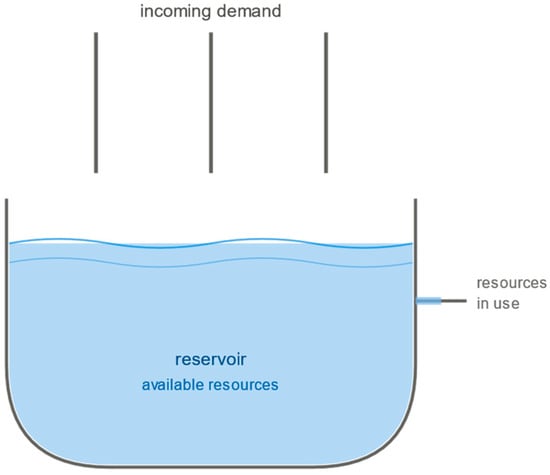
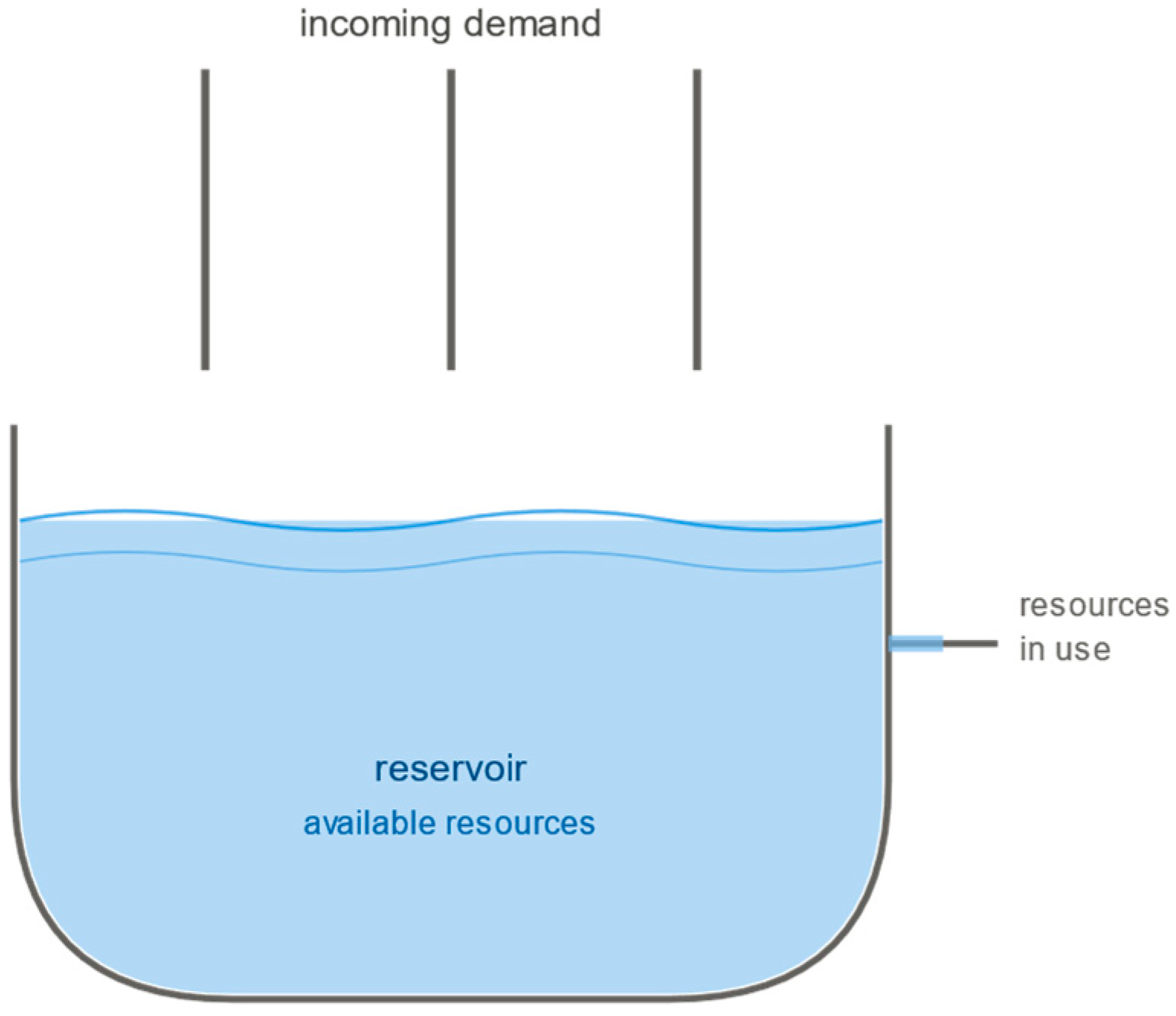
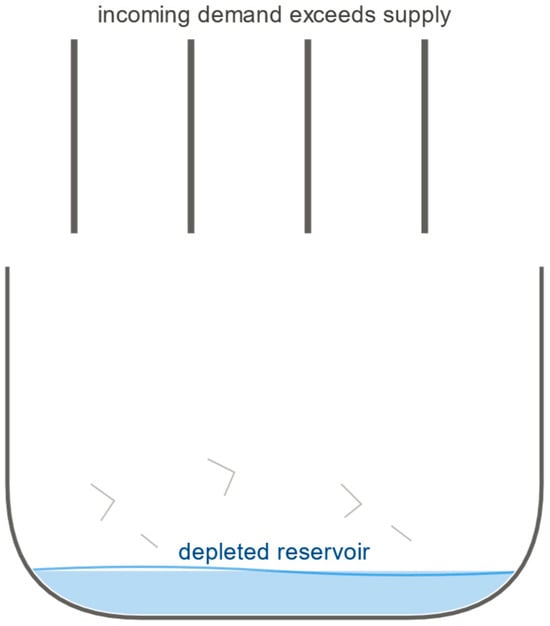
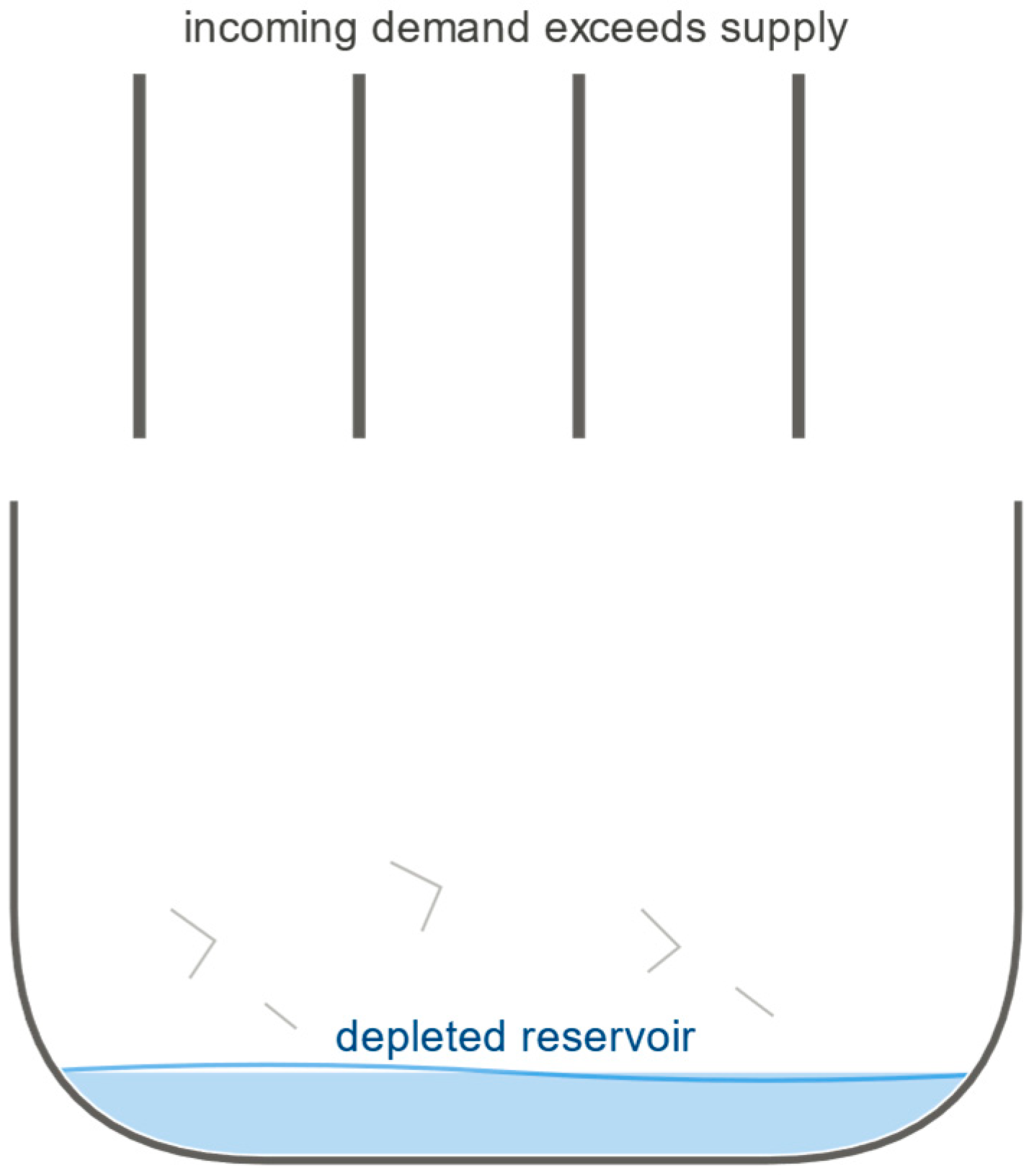
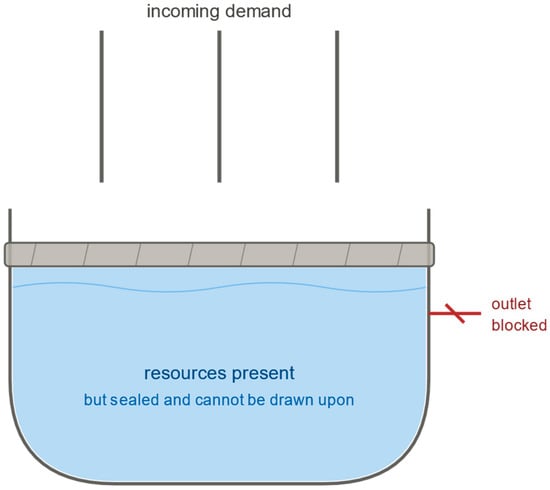
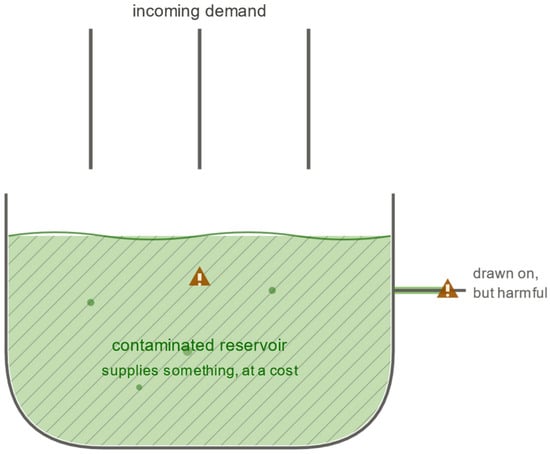
Building on COR, we develop the RoAR to distinguish this construct from other uses of “resources” or “resourcing.” RoAR denotes the conserved pool of assets that can be drawn upon in times of stress and mobilized for growth. The reservoir metaphor underscores several critical aspects: (1) resources may be enduring and replenishable (Figure 1); (2) levels can rise and fall, fluctuating in response to internal and external factors, and may become depleted (Figure 2); (3) resources can be present yet unreachable, frozen or blocked, so that they cannot be drawn upon when needed (Figure 3); and (4) resources can be present yet harmful, contaminated so that drawing on them causes damage (Figure 4).
Figure 1.
A full and healthy reservoir—resources are replenishable and available.
Figure 2.
A depleted reservoir—insufficient resources to meet incoming demands.
Figure 3.
A blocked reservoir—resources are present but sealed off and cannot be drawn upon.
Figure 4.
A contaminated reservoir—resources that are drawn upon but cause harm.
Contamination is a distinct case (Figure 4). Here the resource is neither absent nor sealed off but actively drawn upon, while the drawing causes harm. Such resources often develop out of traumatic experience and come to be felt as a person’s greatest strength, sometimes as the only thing they have. Contamination takes different forms, each harmful in its own way: addiction, chronic anger, self-harm, dissociation, and compulsive self-erasure all function as contaminated resources. They regulate distress and appear to work, at least in the short term, which is what makes them so difficult to relinquish and so costly over time. Some are praised for the very strategy that is dissolving them; the self-erasing caretaker, for instance, is valued for the self-abandonment that is emptying their reservoir, which is part of what makes contamination so hard to see. A contaminated reservoir is therefore neither empty nor merely blocked. It supplies something the person relies on, at a price.
Just as water in a reservoir can be replenished, resources can be restored in a trauma survivor’s life: emergency response teams arrive, the primary caregiver helps the client, or other resources step in.
We hypothesize that, in response to a perceived threat, an organism will draw upon an (often unconscious) assessment. If perceived resources, both at the time of the event and in its aftermath, exceed the threat posed by the event, the event is more likely to be adaptively stored within the person’s currently available pool of resources. If the perceived estimate is that the event exceeds their currently available pool of resources, both during and in the aftermath of the event, the likelihood increases that the event will be stored maladaptively. A process of registering it as a traumatic event may then begin and perhaps can lead to full trauma-based symptomatology.
Conceptualizing this as the RoAR, we suggest that it predicts and explains the WoT:
- If the reservoir holds, experiences remain within the window and can be processed adaptively.
- If the reservoir fails, experiences exceed containment, fall outside the window, and may be stored in a maladaptive manner.
- Traumatic memory tends to persist and can even be strengthened because it continues to be experienced as exceeding or threatening to exceed the reservoir’s capacity, potentially retraumatizing or strengthening avoidance of access for fear of leaving the window.
- Across therapeutic modalities, some interventions can be understood as strategies to help clients access, expand, and mobilize their RoAR. Framing resources in this way clarifies their central role in resilience, adaptation, and therapeutic change throughout all stages of any therapy modality.
6. The Reservoir Across the Post-Event Window
The account so far treats the moment of the event as decisive, but encoding is not instantaneous. A memory is stabilized over a period of hours and days following an experience, and the conditions present during that period shape how the experience is finally stored [22]. The state of the reservoir in the aftermath is therefore not only a matter of recovery. It is part of what determines the encoding itself. The relationship runs in both directions. The reservoir conditions how an experience is encoded, and the encoded experience becomes, in turn, part of what the reservoir holds. A memory stored adaptively adds to the pool that will meet the next event, while a memory stored as traumatic draws on that pool whenever it is triggered. Reservoir and memory are not separate systems, one acting on the other, but two aspects of a single system that shapes and is shaped by experience over time.
This has a direct clinical consequence. A person who meets an overwhelming event with a depleted reservoir, and whose reservoir stays depleted or is further drained in the aftermath through isolation, invalidation, or the cascading losses that COR describes [19], encounters this stabilization period under conditions of continued insufficiency, and the experience is more likely to consolidate as traumatic. A person whose reservoir is supported in the aftermath, through relational presence, restored efficacy, and the provision of safety, meets the same period with the reservoir closer to sufficiency. The finding that lack of social support following trauma is among the strongest predictors of post-traumatic stress can be understood in these terms, as support acting on the encoding itself rather than only on recovery from an encoding already fixed [23].
The same reasoning accounts for cases that a strictly event-bound model handles poorly. Some experiences are registered as traumatic only later, when their meaning is reconstructed against a reservoir that has since changed. An event survived at the time with a sense of sufficiency can acquire traumatic weight when later reappraisal, the loss of a protective relationship, or the arrival of new information reframes it as having exceeded one’s resources. Delayed presentations of this kind are difficult to explain if the traumatic quality of a memory is set at the instant of exposure. They are coherent if the reservoir continues to condition how the experience is held [24].
This temporal view also reframes what happens when a stored memory is reactivated. Reactivation returns the memory to an unstable state in which it must be stored again, and the conditions present at that moment shape the form in which it is restabilized. This is the mechanism of reconsolidation that AIP-based treatment engages [1,7]: the memory is not simply retrieved and returned unchanged, but stored again in a form that reflects the resources then available. The mechanism is indifferent to direction. When the reservoir is sufficient, the experience can be integrated and contribute to the scaffold of the self, so that the person emerges with a reservoir altered by having processed the event rather than restored to what it was before. When material is revisited while the reservoir is insufficient or its access compromised, the same reactivation re-encodes the experience as once more exceeding what was available, and its traumatic quality is reinforced rather than revised.
7. Components of the Reservoir
Hobfoll’s primary thesis is grounded in the supposition that people strive to retain, protect, and build resources, and that what threatens them is the potential or actual loss of these valued resources [19]. Crucially, he notes that resource loss carries greater psychological weight than resource gain, which means that depletion of the reservoir is clinically more urgent than its abundance, and that even a well-resourced individual remains vulnerable to rapid destabilization under conditions of loss.
This has a further implication for the assessment described above, in which an event is weighed against currently available resources. That the reservoir is well filled in general does not guarantee that it is sufficient at a given moment, for a given event. Because the reservoir vacillates with circumstance, a person who is broadly well-resourced may still meet a particular event at a moment of depletion, or meet an event of a magnitude that would overwhelm any reservoir. The internal comparison still runs in these cases; what has changed is the balance between demand and availability, not the presence of the comparison. This accounts for the well-resourced person who is nonetheless overwhelmed by assault, betrayal, or sudden catastrophic loss. Such events can impose demand that exceeds even a substantial reservoir, and they often strike at the core beliefs that form its scaffolding [25], so that the reservoir is not merely outmatched but momentarily compromised in its capacity to hold. Resource insufficiency, in this framework, is not only a matter of how much a person has, but of the relationship between what is available and what is demanded, at the moment the demand is experienced, even if that moment may be many years later.
From a psychological and therapeutic perspective, Hobfoll’s framework can be expanded far beyond “doing” to the core of “being”, not just what we do in the world, but who we are in the world. Understood this way, the reservoir of resources is not a static inventory but a dynamic container that adjusts in both size and contents in response to internal and external contexts. This perspective illuminates human personality as having both structural consistency and genuine malleability, shaped by experience, yet retaining coherence across time. This understanding of the reservoir as simultaneously stable and responsive finds its clinical counterpart in Shapiro’s AIP [1].
AIP theory [1] recognizes that trauma disrupts not only functional coping capacities but the foundational self-referencing beliefs–“I am worthy,” “I am lovable,” “I belong”–that organize the individual’s relationship to self, others, and the world. These core beliefs of being are not referenced by Hobfoll, but they may be the scaffolding upon which the entire reservoir of resources is built. When this scaffolding is intact, the individual has the internal structure to acquire, hold, and invest in the coping, relational, and energetic resources that Hobfoll described. When trauma fractures it, the reservoir cannot hold; resources drain regardless of how abundantly they are supplied from outside.
This is the clinical phenomenon that the WoT framework [2,5] makes visible: the individual whose core self-beliefs have been shattered by trauma operates in a constricted window, unable to access or retain resources even when they are objectively available. From this integrated perspective, EMDR’s targeting of negative cognitions at the level of identity and self-worth can be understood as repairing the scaffolding itself, restoring the structural foundation that allows the resource reservoir to function as Hobfoll envisioned. The empathy and narrative validation Steven experienced functioned as robust scaffolding, keeping his reservoir secure. John’s core self-beliefs, however, were fractured by early blame, leaving him with compromised scaffolding that causes his reservoir to leak.
The reservoir thus includes, but is not limited to, the following components:
- Core resources: safety, sense of control, and connection [26], the foundational conditions without which other resources cannot be reliably held or accessed.
- Supplementary resources: self-worth, belief systems, physical or emotional strength, financial stability, and other individually valued elements that extend the reservoir’s capacity and specificity.
- Connection and attachment resources: the ability to maintain connection with others, form secure relationships, and sustain connection with the sublime [20]. The intrasubjective experience of a cohesive felt-sense of self with coherent relational bonds can itself constitute an abundant reservoir.
- Intrapersonal, interpersonal, and transpersonal dimensions: the reservoir is not bound by the individual. By conceptualizing resources as a reservoir, we recognize that it has many inlets and outlets, spanning the intrapersonal, interpersonal, and transpersonal [20], a point developed further below.
- Recovery capital: resources that accumulate and are stored adaptively can become recovery capital, defined by Cloud and Granfield [27] (p. 1971) as “the breadth and depth of internal and external resources that can be drawn upon to initiate and sustain recovery.” When the reservoir functions adaptively, it does not merely support coping; it compounds, becoming the foundation from which future resilience is built.
- The reverse is equally true. The reservoir can be depleted, exhausted, or structurally compromised. In the most extreme cases—early relational trauma, chronic adversity, or catastrophic loss—it may never have been adequately formed in the first place. Under these conditions, the threshold for overwhelm is low, the WoT is narrow, and future experiences are more likely to exceed whatever capacity remains.
8. Factors Determining Accessibility and Availability of Resources
The reservoir’s availability and accessibility determine whether its intrapersonal, interpersonal, and transpersonal assets can be drawn upon for adaptive processing. Developmental and trauma history shapes both the inventory and the expectancies about healing; entrenched blocking cognitions (e.g., “I’m broken,” “help won’t work”) function like EMDR negative cognitions or CBT cognitive distortions, closing access to otherwise present resources. Bodily and mental states (sleep, pain, anxiety, dissociation, substance effects) constrict cognitive bandwidth and resource recruitment, while stable health and symptom management expand it. External conditions (financial strain, housing, safety, transportation) and a pervasive sense of threat likewise gate access, as do imminent stressors (exams, surgery, childbirth) that raise demand and expose gaps unless anticipated and scaffolded.
Another important factor is recovery capital, the sum of accumulated resources that, in abundance, make us more capable of dealing with incoming threats. Part of recovery capital would also include more experiences of successfully leaving and returning to the WoT. Therefore, richer and more diverse recovery capital typically predicts greater availability and more reliable access, even in the aftermath of overwhelming experiences, though coordination across multiple supports may be required.
Notably, accessibility, in all its forms, predicts the ability to process information. This, of course, includes the ability to access resources in the face of threats. But no less importantly, this may predict the ability to access difficult material while remaining sufficiently regulated to support some form of reprocessing. In EMDR, this plays out in the desensitization and reprocessing of maladaptively stored trauma material. When Steven faces a new crisis, his secure attachment resources are more readily accessible, improving his ability to process his distress. For John, his core blocking belief (‘I am a loser’) acts as a psychological barrier, closing off access to his reservoir when he needs it most. This conceptualization also recognizes the bidirectional nature of access: accessible resources facilitate safe, adaptive reprocessing consistent with AIP, whereas unavailable or inaccessible resources increase the risk that bringing up difficult material will overwhelm capacity and further entrench maladaptive memory storage.
9. The Relational Joint Reservoir
Stolorow and Atwood [28] argue that “the psychological field is formed by the intersection of two subjectivities” and that therapeutic change occurs within this co-constituted relational container. Safran & Muran [29] add that the therapeutic relationship predicts outcomes when it involves shared goals, agreed methods, and a strong interpersonal bond, suggesting that the relational container is not merely supportive but structurally generative. The proposition that the therapeutic relationship is itself a mechanism of change, not merely a backdrop to technique, is well established. The working alliance, which Bordin defined in terms of agreement on goals, agreement on tasks, and the bond between client and therapist [30], has come to be understood as central to how therapy works across modalities, as in Wampold’s contextual model [31]. Meta-analytic evidence establishes the alliance as among the most robust predictors of outcome [32], and subsequent syntheses have codified the broader set of relationship factors that carry therapeutic weight [33]. Our contribution is not to restate this, but to specify what the relationship makes available: a shared pool of resources the client can draw upon during the activation of difficult material, when their own reservoir alone would be insufficient.
Building on this, we propose that in therapy, the reservoir of resources is not only individual but relational, co-constructed within the bond between client and therapist. This joint reservoir enables effective reprocessing by allowing the client to access difficult material while remaining within a WoT that the relational space itself helps sustain and expand. This container enables safe access to otherwise overwhelming un- or under-processed memories, allowing them to be reprocessed in a well-resourced manner.
One of the most challenging clinical presentations is the client’s utter despair, that particular collapse that results from the joining of powerlessness and helplessness [34]. As Flint and Eytan [35] note, only when people accept that they are truly powerless are they capable of reaching out for help. The joint reservoir is what makes this possible: it safeguards the client from descending into helplessness even when confronting feelings of powerlessness, because within the relational container, they are not alone with what exceeds them. While Steven readily enters a relational joint reservoir with a therapist, John’s treatment requires the therapist to deliberately co-construct this shared space, safeguarding him from descending into panic. In this way, the very trauma that has deprived a person of access to their resources can begin to transform into recovery capital [20].
We therefore hypothesize that recovery and reprocessing occur within the felt sense of the joint reservoir. In EMDR, many components of established protocols, and bilateral stimulation itself, can be understood as enhancing this co-constructed resource space. Other therapeutic modalities may be operating on the same underlying mechanism through different means.
And in any effective therapy, the felt sense of connection does not end with the final session. Part of what therapy works toward is the restoration of the person to a connected world beyond the consulting room, one in which they are both nourished and nourishing, drawing on and contributing to a system larger than themselves. The container built within the therapeutic relationship can become an enduring internal capacity that the person carries forward, opening onto a wider network of connection that sustains them once the work is complete. Health in this sense is connection that is also regulated: the person can take in what others offer without being overwhelmed and can give without being drained or flooding others. Boundaries meter the flow, the way a reservoir receives, holds and releases its water. Figure 5 offers this endpoint as an image rather than a diagram: a connected life, fed and feeding, where giving and receiving come more effortlessly, sustained by a world larger than any single relationship.
Figure 5.
A connected reservoir within a living watershed: fed by many tributaries, regulated so that its flow sustains rather than floods the valley below, and nourishing a connected world downstream.
10. Transformation Through Access
When traumatic material is accessed within an intact or expanded and populated reservoir, it can be reprocessed adaptively. This principle explains why therapeutic methods that balance exposure to difficult material with safety and regulation produce change [1,36].
The mechanism underlying this transformation can be understood as follows: reprocessing requires the simultaneous activation of maladaptive material and access to adaptive networks. This simultaneity is what the reservoir makes possible. When the reservoir holds, the individual can touch the past without being swallowed by it, remaining present enough to allow the nervous system to do what it could not do at the time of the original event: stay connected, stay regulated, and stay in contact with what is larger than the threat. This is the condition under which memory can be updated rather than merely reactivated. Without it, access to traumatic material does not transform; it re-encodes. Flooding, premature exposure, or therapy that moves faster than the reservoir can contain does not heal the wound; it reopens it under conditions that are only marginally better than the original.
Consider Steven and John from the opening of this paper. Ten years after they fell from their bicycles, both were present for treatment following a new traumatic event. Steven enters therapy with a reservoir that was built and maintained across years of relational attunement, successful coping, and internalized experiences of being helped and held. When his therapist helps him access the disturbing material, the reservoir holds; he can touch it, feel it, and remain within the window. The reprocessing moves. John arrives with a reservoir that was structurally compromised long before the new event occurred. The scaffolding—his core beliefs about being worthy of help, about others being trustworthy, about the world being navigable—was damaged in the very moment he was scolded and blamed after his fall. When the therapist attempts to access the material, the reservoir cannot contain it. The window narrows. Access without sufficient resources does not heal; it overwhelms.
We suggest that the integration between all three theories, AIP, WoT, and COR, brings a new understanding of the role of resources in trauma therapy. We propose that as an experience is processed and stored, its intensity and threat are weighed, implicitly and not necessarily through deliberate appraisal, against the resources available in the reservoir. On this view, when resources are inadequate, the event is more likely to be experienced as a threat; if the perceived threat is “too much,” it will likely be stored in “trauma space,” where reactivation of the material will be experienced outside the WoT and, when maladaptive, may lead to pathology. Table 1 sets out how each framework describes resilience, pathology, and healing, and how the RoAR integrates them.
Table 1.
How Adaptive Information Processing, the Window of Tolerance, and Conservation of Resources each frame resilience, pathology, and healing, and how the RoAR framework integrates them.
11. Practical Implications of the RoAR
The missing link between the threat and its experience, whether within or outside the WoT, is the individual’s or a family/group’s access to their reservoir of resources. Hence, the therapist should ensure that the resources remain accessible throughout the therapy process, including between sessions. The therapist should be mindful of the need to build and maintain a “Joint Reservoir of Resources” that remains accessible throughout the therapy process.
To discuss the practical implications, we approach them primarily from the perspective of EMDR and its 8-phase treatment protocol. However, we believe the concepts that we are discussing may be equally applicable to many other therapeutic modalities.
11.1. Assessing Resource Availability and Presence
We begin treatment with a structured assessment of the client’s RoAR: external (social support, housing, financial stability, service access), internal (emotion-regulation skills, identity beliefs, coping history), and relational (attachment security, trusted others). We draw on brief standardized measures and clinical observation of regulation (sleep, dissociation, arousal) and, crucially, we assess accessibility, not merely presence, under stress and during memory activation. This assessment drives an immediate clinical decision: whether to proceed to reprocessing, first expand the WoT, or deploy parallel resource interventions (within EMDR, this tracks Phases 1 and 2).
11.2. Targeted Restoration and Mobilization of Resources
We prioritize interventions that restore, strengthen, and mobilize resources prior to and alongside trauma reprocessing. Within EMDR, this includes established resourcing procedures such as safe-place work and installation exercises. Across other modalities, the same aim is served by social-network activation, psychoeducation, somatic regulation training, and identity-focused cognitive work. These interventions are staged and titrated so that exposure or reprocessing occurs within an expanded, stable WoT, and they are supported between sessions through practical linkage to community resources and behavioral homework, which help prevent resource loss and encourage resource building between meetings.
11.3. Enhancing Resource Accessibility (Accessibility as Treatment Target)
We work to make resources reliably accessible upon activation of maladaptive material, through either a more directive or less directive approach. The more directive approach includes in-session retrieval of resources under graded arousal, the reduction in blocking beliefs (e.g., “help won’t work”), and the co-construction of practical crisis plans (contacts, calming routines, environmental supports). A less directive approach may accomplish similar goals through the relational nature of the therapeutic milieu. These interventions may foster a durable joint reservoir by scaffolding the therapeutic relationship and, where possible, engaging key external supports, so that clients can activate resources in real time without exiting the WoT. Throughout, we measure progress by simulated stress tasks or real-world activation success rather than by presence alone.
12. Clinical Implications Within EMDR and in Other Modalities
12.1. Within EMDR
EMDR therapy already emphasizes the importance of resourcing, regulation, and dual awareness, but reframing these through the lens of the RoAR clarifies their role in change processes.
Resourcing. Standard interventions such as the safe place exercise, Resource Development and Installation (RDI), future templates, and the installation of positive affect via bilateral stimulation [6] can be understood as strengthening, expanding, and improving access to the client’s reservoir. This expands the WoT, enabling clients to approach traumatic memories without being overwhelmed.
Careful choice of Initial Targets. Indeed, many of the adaptations within EMDR when treating more compromised clients do not follow the standard protocol of starting with the first or worst. For instance, we may choose to start reprocessing recent events or focus on power/control first, before going to more central issues. These interventions require many adaptations to keep reprocessing progressing and to avoid entering areas prematurely through the use of constricted reprocessing (EMD/EMDr). We propose that these interventions use phases 3–6 of reprocessing, in part, in the service of Phase 2. When access to resources is limited, adaptations will strengthen access, allowing a gradual return to the standard protocol. While EMDR is phase-based, other forms of therapy may also employ titration principles to help a client safely work on the most difficult issues in their life (Phase 2, moving into the reprocessing phases—Phases 3–6).
Memory assessment (prior to reprocessing): During Phase 3, there is an interplay between accessing the disturbing material and potential resources (in the form of identifying the positive cognition). Additionally, the constant focus on the current experience, rather than reliving it, helps initiate reprocessing from a present focus, rather than drowning in the past.
Reprocessing. During desensitization, bilateral stimulation facilitates the simultaneous activation of maladaptive and adaptive memory networks. From the reservoir perspective, reprocessing occurs within a co-constructed reservoir created by the client and therapist, in which adaptive networks can be accessed without dysregulation [8]. One can argue that the procedural demand of paying attention to outside stimuli (such as the fingers guiding eye movement) while accessing disturbing material maintains the resource of present focus, rather than drowning in the experience as it was at the time of the event, where it was too large for the reservoir of resources. Additionally, the dual awareness orients the client to the present reality where they are not alone, but in the presence of a caring therapist who was not there at the time of the event. This process accelerates the movement toward resolution.
Integration. Reconsolidation and adaptive re-encoding, the hallmarks of EMDR, are most likely when the reservoir remains intact throughout reprocessing. In this way, what once triggered dysregulation is transformed into adaptive memory, restoring coherence and reducing symptoms [6]. Interventions such as a safe place, future templates, and bilateral stimulation can be reframed as measures that strengthen access to the reservoir.
12.2. Across Modalities
Situating EMDR within a broader framework highlights that many therapies implicitly or explicitly rely on the sufficiency of resource reservoirs to facilitate change.
Exposure therapies. In prolonged exposure, the client remains with difficult stimuli until habituation occurs. The effectiveness of exposure depends on whether the client’s reservoir, strengthened through therapeutic support and preparation, can contain the powerful activation without avoidance or shutdown [36].
Somatic therapies. Approaches such as Somatic Experiencing [37] explicitly focus on expanding regulation through bodily awareness and controlled activation of autonomic states. These practices enlarge the reservoir and access to it by increasing physiological flexibility.
Psychodynamic therapies. Insight and interpretation are not inherently curative; they become transformative when the therapeutic relationship provides a relational reservoir strong enough to contain the activation of early traumatic material without re-traumatization [29].
Mindfulness-based and ACT interventions. By fostering acceptance, self-awareness, and values-driven orientation, mindfulness and Acceptance and Commitment Therapy (ACT) strengthen the reservoir and access to it, allowing individuals to hold distress without avoidance or collapse [38].
13. Implications for Training and Supervision
This framework suggests directions for both practice and study. For practice, clinicians should be trained to assess both the individual’s and the therapeutic dyad’s reservoirs and to strengthen them through preparation, resourcing, and relational safety. Understanding therapy through the lens of resource sufficiency and access may also enhance cross-modality work between schools of thought. The directions the framework suggests for study are taken up in the following section.
14. Toward Empirical Evaluation
The framework proposed here is conceptual, but it is stated in terms that can be operationalized and tested, and it makes predictions that could fail. We outline the central constructs in measurable form and identify three predictions that distinguish the framework from the theories it integrates.
The central constructs can be defined operationally. Reservoir capacity refers to the resources a person holds across the external, internal, and relational dimensions described above, and can be indexed through existing resource inventories and standardized measures of social support, emotion regulation, and attachment security. Reservoir depletion refers to a reduction in those resources, whether gradual or sudden, and can be tracked longitudinally or through naturalistic loss events. Reservoir accessibility refers to whether held resources can be retrieved and mobilized under activation, and can be assessed through performance under graded arousal, such as retrieval latency or success during a stress-induction or memory-activation task, rather than through inventory alone. The distinction between capacity and accessibility is central to the framework and grounds its first prediction.
A discriminant prediction. Conservation of Resources predicts outcomes from the possession of resources, and the WoT describes the arousal state without specifying its antecedent. The present framework predicts that neither possession nor momentary state is the operative variable, but accessibility under activation. This yields a testable claim: among individuals matched on resource inventory, those with lower accessibility under activation will show poorer processing outcomes than those with higher accessibility. If outcome tracked resource inventory rather than accessibility, the framework would be disconfirmed and a possession-based account would suffice. The prediction holds across modalities, since it concerns a variable rather than a technique, with EMDR offering one setting in which accessibility under memory activation can be measured directly.
An interventional prediction. In standard EMDR practice, resourcing is concentrated in the preparatory phase of treatment. The framework implies that access to the reservoir during activation is what conditions reprocessing, which predicts that reservoir access delivered during reprocessing, and not only before it, will improve outcomes. A protocol developed from this framework, and presented at the annual EMDR Europe conference in Oslo in 2026, front-loads access to the reservoir, including the joint reservoir where relevant, before trauma material is approached, and re-instates it at intervals during reprocessing. The prediction is that this arrangement will produce more effective reprocessing than matched resourcing delivered only in preparation, measurable as faster reduction in disturbance, fewer episodes of blocked reprocessing or looping, and fewer exits from the WoT during a session. The protocol departs from standard sequencing and awaits controlled evaluation; if scaffolded access during reprocessing did not outperform equivalent preparatory resourcing, this specific claim would be disconfirmed.
A mediation prediction. If resource sufficiency and access contribute to change across modalities, as the framework proposes, then changes in reservoir accessibility should account for some of the improvement observed across multiple modalities, adding to rather than replacing the factors specific to each. Studies across exposure, somatic, psychodynamic, and mindfulness-based treatments could test whether part of the improvement is attributable to gains in measured access to resources, particularly safety and connection. A finding that outcomes were unrelated to change in accessibility, or that accessibility added nothing beyond modality-specific factors, would weigh against the framework’s claim to describe a shared contributing mechanism.
These predictions do not require the framework to be accepted in advance. They can be tested directly against the parent theories, and their failure would count against the framework rather than for it. This is the sense in which the integration is offered as more than a reorganization of existing ideas: it specifies a variable, accessibility under activation, whose predictive value can be established or refuted independently.
15. Limitations
Several boundaries of the framework should be stated. It is a conceptual integration and has not yet been tested; the predictions above indicate how it could be evaluated, but the framework’s value rests on that evaluation being carried out. The reservoir is a metaphor, and like any metaphor it organizes some features of a complex process while obscuring others; the operational definitions offered here are one attempt to hold it to measurable claims, but they do not exhaust what the metaphor is taken to describe. Resource sufficiency is also not the only pathway to traumatization. Events can exceed any reservoir, and some derive their traumatic force from the meanings they impose rather than from the resources they deplete, a distinction the framework accommodates but does not fully resolve. Finally, the account draws on constructs, including COR and the WoT, that each carry their own measurement difficulties; integrating them does not eliminate those difficulties.
The framework also leaves one dimension deliberately underdeveloped. It treats the boundaries of the WoT as given, without theorizing what governs the tolerability of arousal itself, why a given level of activation is manageable for one person or in one moment and overwhelming in another, beyond the sufficiency of resources. A fuller account of the arousal dimension, and of what determines the felt boundaries of the window, is beyond the scope of the present integration and is developed in a separate work now in preparation.
16. Conclusions
By situating AIP within COR theory and the WoT, we propose an integrated framework that accounts for both the disruption of trauma and the process of therapeutic change across modalities. The metaphor of the RoAR provides a rich image with deep implications for understanding psychological growth, healing, development, and well-being. At its foundation, the reservoir is scaffolded by core beliefs about self and world, the ontological ground of being that Hobfoll’s instrumental framework presupposes but does not directly address. From this foundation, the reservoir extends across intrapersonal, interpersonal, and transpersonal dimensions, forming a joint, interconnected resource system.
This reconceptualization sheds light on a central clinical phenomenon: that trauma is most fully (re)processed when it is held within a reservoir with the structural integrity to contain it, when the scaffolding is sound, the window is wide enough, and the resource system is sufficiently connected to generate and sustain transformational work. Understood in this light, AIP need not be read solely as EMDR’s explanatory model. The framework developed here suggests it may offer a broader account of therapeutic change, one that specifies the conditions under which any effective modality enables the natural movement toward adaptive resolution. This remains a proposition to be developed, but the convergence of AIP, WoT, and COR around a common underlying mechanism makes it a proposition worth taking seriously.
Author Contributions
Conceptualization, T.F., D.K., and R.M.S.; writing—original draft preparation, T.F. and D.K.; writing—review and editing, T.F., D.K. and R.M.S.; visualization, D.K. All authors have read and agreed to the published version of the manuscript.
Funding
This research received no external funding.
Data Availability Statement
No new data were created or analyzed in this study. Data sharing is not applicable to this article.
Conflicts of Interest
The authors declare no conflicts of interest.
Abbreviations
AIP—Adaptive Information Processing; COR—Conservation of Resources; EMDR—Eye Movement Desensitization and Reprocessing; PTSD—Post-Traumatic Stress Disorder; RoAR—Reservoir of Adaptive Resources; WoT—Window of Tolerance.
References
- Shapiro, F. Eye Movement Desensitization and Reprocessing: Basic Principles, Protocols, and Procedures, 2nd ed.; Guilford Press: New York, NY, USA, 2001. [Google Scholar]
- Siegel, D.J. The Developing Mind: Toward a Neurobiology of Interpersonal Experience; Guilford Press: New York, NY, USA, 1999. [Google Scholar]
- Hobfoll, S.E. The influence of culture, community, and the nested-self in the stress process: Advancing conservation of resources theory. Appl. Psychol. 2001, 50, 337–421. [Google Scholar] [CrossRef] [Scilit]
- Solomon, R.M.; Rando, T.A. Utilization of EMDR in the treatment of grief and mourning. J. EMDR Pract. Res. 2007, 1, 109–117. [Google Scholar] [CrossRef] [Scilit]
- Ogden, P.; Minton, K.; Pain, C. Trauma and the Body: A Sensorimotor Approach to Psychotherapy; W. W. Norton & Company: New York, NY, USA, 2006. [Google Scholar]
- Shapiro, F. Eye Movement Desensitization and Reprocessing (EMDR) Therapy: Basic Principles, Protocols, and Procedures, 3rd ed.; Guilford Press: New York, NY, USA, 2018. [Google Scholar]
- Solomon, R.M.; Shapiro, F. EMDR and the adaptive information processing model: Potential mechanisms of change. J. EMDR Pract. Res. 2008, 2, 315–325. [Google Scholar] [CrossRef] [Scilit]
- Hase, M. The Structure of EMDR Therapy: A Guide for the Therapist; Springer: Cham, Switzerland, 2021. [Google Scholar]
- Squire, L.R. Memory systems of the brain: A brief history and current perspective. Neurobiol. Learn. Mem. 2004, 82, 171–177. [Google Scholar] [CrossRef] [Scilit] [PubMed]
- Fanselow, M.S. Pavlovian conditioning, negative feedback, and blocking: Mechanisms that regulate association formation. J. Exp. Psychol. Anim. Behav. Process. 1998, 24, 231–239. [Google Scholar]
- Rescorla, R.A.; Wagner, A.R. A theory of Pavlovian conditioning: Variations in the effectiveness of reinforcement and nonreinforcement. In Classical Conditioning II: Current Research and Theory; Black, A.H., Prokasy, W.F., Eds.; Appleton-Century-Crofts: New York, NY, USA, 1972; pp. 64–99. [Google Scholar]
- Schacter, D.L. Implicit memory: History and current status. J. Exp. Psychol. Learn. Mem. Cogn. 1987, 13, 501–518. [Google Scholar] [CrossRef]
- van der Kolk, B.A. The Body Keeps the Score: Brain, Mind, and Body in the Healing of Trauma; Viking: New York, NY, USA, 2014. [Google Scholar]
- Brewin, C.R. Episodic memory, perceptual memory, and their interaction: Foundations for a theory of posttraumatic stress disorder. Psychol. Bull. 2014, 140, 69–97. [Google Scholar] [CrossRef] [Scilit] [PubMed]
- Ehlers, A.; Clark, D.M. A cognitive model of posttraumatic stress disorder. Behav. Res. Ther. 2000, 38, 319–345. [Google Scholar] [CrossRef] [Scilit] [PubMed]
- Siegel, D.J. The Mindful Therapist: A Clinician’s Guide to Mindsight and Neural Integration; W. W. Norton & Company: New York, NY, USA, 2010. [Google Scholar]
- Porges, S.W. The Polyvagal Theory: Neurophysiological Foundations of Emotions, Attachment, Communication, and Self-Regulation; W. W. Norton & Company: New York, NY, USA, 2011. [Google Scholar]
- Fisher, J. Healing the Fragmented Selves of Trauma Survivors: Overcoming Internal Self-Alienation; Routledge: New York, NY, USA, 2017. [Google Scholar]
- Hobfoll, S.E.; Tirone, V.; Holmgreen, L.; Gerhart, J. Conservation of resources theory applied to major stress. In Stress: Concepts, Cognition, Emotion, and Behavior; Academic Press: Cambridge, MA, USA, 2016; pp. 65–71. [Google Scholar]
- Flint, T.; Ronel, N. From deprivation to capital-spirituality and spiritual yearning as recovery capital from PTSD. J. Aggress. Maltreat. Trauma 2023, 32, 325–345. [Google Scholar]
- Hobfoll, S.E.; Watson, P.; Bell, C.C.; Bryant, R.A.; Brymer, M.J.; Friedman, M.J.; Gersons, B.P.R.; de Jong, J.T.V.M.; Layne, C.M.; Maguen, S.; et al. Five essential elements of immediate and mid-term mass trauma intervention: Empirical evidence. Psychiatry 2007, 70, 283–315. [Google Scholar] [CrossRef] [Scilit] [PubMed]
- McGaugh, J.L. Memory—A century of consolidation. Science 2000, 287, 248–251. [Google Scholar] [CrossRef] [Scilit] [PubMed]
- Brewin, C.R.; Andrews, B.; Valentine, J.D. Meta-analysis of risk factors for posttraumatic stress disorder in trauma-exposed adults. J. Consult. Clin. Psychol. 2000, 68, 748–766. [Google Scholar] [CrossRef] [PubMed]
- Andrews, B.; Brewin, C.R.; Philpott, R.; Stewart, L. Delayed-onset posttraumatic stress disorder: A systematic review of the evidence. Am. J. Psychiatry 2007, 164, 1319–1326. [Google Scholar] [CrossRef] [Scilit] [PubMed]
- Janoff-Bulman, R. Shattered Assumptions: Towards a New Psychology of Trauma; Free Press: New York, NY, USA, 1992. [Google Scholar]
- Deci, E.L.; Ryan, R.M. Self-determination theory and the facilitation of intrinsic motivation, social development, and well-being. Am. Psychol. 2000, 55, 68–78. [Google Scholar] [CrossRef] [Scilit] [PubMed]
- Cloud, W.; Granfield, R. Conceptualizing recovery capital: Expansion of a theoretical construct. Subst. Use Misuse 2008, 43, 1971–1986. [Google Scholar] [CrossRef] [Scilit] [PubMed]
- Stolorow, R.D.; Atwood, G.E. Contexts of Being: The Intersubjective Foundations of Psychological Life; Analytic Press: Hillsdale, NJ, USA, 1992. [Google Scholar]
- Safran, J.D.; Muran, J.C. Negotiating the Therapeutic Alliance: A Relational Treatment Guide; Guilford Press: New York, NY, USA, 2000. [Google Scholar]
- Bordin, E.S. The generalizability of the psychoanalytic concept of the working alliance. Psychother. Theory Res. Pract. 1979, 16, 252–260. [Google Scholar] [CrossRef] [Scilit]
- Wampold, B.E.; Imel, Z.E. The Great Psychotherapy Debate: The Evidence for What Makes Psychotherapy Work, 2nd ed.; Routledge: New York, NY, USA, 2015. [Google Scholar]
- Flückiger, C.; Del Re, A.C.; Wampold, B.E.; Horvath, A.O. The alliance in adult psychotherapy: A meta-analytic synthesis. Psychotherapy 2018, 55, 316–340. [Google Scholar] [CrossRef] [Scilit] [PubMed]
- Norcross, J.C.; Lambert, M.J. (Eds.) Psychotherapy Relationships That Work: Volume 1. Evidence-Based Therapist Contributions, 3rd ed.; Oxford University Press: New York, NY, USA, 2019. [Google Scholar]
- Milberg, A.; Strang, P.; Jakobsson, M. Next of kin’s experience of powerlessness and helplessness in palliative home care. Support. Care Cancer 2004, 12, 120–128. [Google Scholar] [CrossRef] [Scilit] [PubMed]
- Flint, T.; Eytan, S. Transformative powerlessness: The role of powerlessness in recovery from interpersonal trauma. Med. Res. Arch. 2024, 12, 12. [Google Scholar] [CrossRef] [Scilit]
- Foa, E.B.; Hembree, E.A.; Rothbaum, B.O. Prolonged Exposure Therapy for PTSD: Emotional Processing of Traumatic Experiences; Oxford University Press: New York, NY, USA, 2007. [Google Scholar]
- Levine, P.A. Waking the Tiger: Healing Trauma; North Atlantic Books: Berkeley, CA, USA, 1997. [Google Scholar]
- Hayes, S.C.; Strosahl, K.D.; Wilson, K.G. Acceptance and Commitment Therapy: The Process and Practice of Mindful Change, 2nd ed.; Guilford Press: New York, NY, USA, 2012. [Google Scholar]



Disclaimer/Publisher’s Note: The statements, opinions and data contained in all publications are solely those of the individual author(s) and contributor(s) and not of MDPI and/or the editor(s). MDPI and/or the editor(s) disclaim responsibility for any injury to people or property resulting from any ideas, methods, instructions or products referred to in the content. |
© 2026 by the authors. Published by MDPI on behalf of the JMMS. Licensee MDPI, Basel, Switzerland. This article is an open access article distributed under the terms and conditions of the Creative Commons Attribution (CC BY) license.