


Abstract
Allergic contact dermatitis (ACD) is an increasingly common condition among athletes due to repeated exposure to sport-specific equipment, environmental allergens, and topical products. Sweating and repetitive cutaneous trauma facilitate allergen penetration. Rubber accelerators, metals, textile dyes, adhesives, synthetic resins, and topical medications represent the principal allergen categories implicated in sports-related ACD. This narrative review synthesizes the current literature on the epidemiology, pathophysiology, allergen profiles, and sport-specific exposure patterns of ACD in athletes, while outlining the essential principles of clinical recognition and targeted allergen avoidance.
1. Introduction
The skin is the body’s first line of defense against environmental allergens. Unfortunately, when the skin’s immunological defenses misfire, allergic contact dermatitis (ACD) may ensue. ACD is an inflammatory condition characterized by pruritic, eczematous eruptions and is mediated by a delayed, type IV hypersensitivity reaction, with presentation often hours to days after exposure [1,2]. In athletes, the skin barrier is subjected to both physical and chemical stresses that can lead to high rates of dermatologic conditions, including significantly higher rates of ACD [1,3,4]. Prolonged and repetitive contact with equipment and environmental exposures may lead to higher rates of ACD in athletes [1,3,5]. In athletes, frequent contact with sports equipment can be considered a form of occupational exposure, with ACD being the most prevalent occupational skin disease [5,6]. Herein, we offer a comprehensive overview of ACD in athletes which builds upon existing literature by providing an updated synthesis of current sports-related allergens up to 2026, accounting for any shifts in sportswear materials.
2. Methodology
This narrative review was conducted across two databases, Pubmed and Embase, for articles published through May 2026. Searches were conducted using keywords such as “allergic contact dermatitis”, athletes, athletics, sport, and names of individual sports (e.g., cycling, swimming, soccer). The search was limited to English-language, peer-reviewed articles. Abstracts were screened for relevance to sports-related ACD. Articles were then included if they contained relevant epidemiological details and/or confirmed patch-test results in athletic populations. Generative artificial intelligence tools were used to assist with the generation of figures, including ChatGPT (GPT-5.5) for figure development support. All AI-generated outputs were reviewed, verified, and edited by the authors.
3. Pathophysiology and Risk Factors
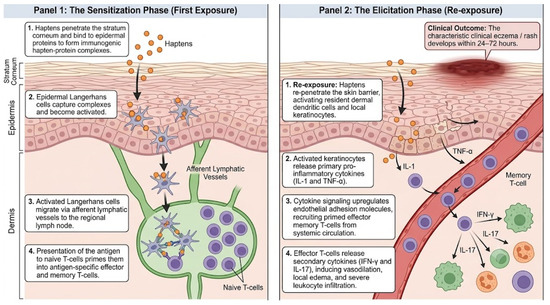
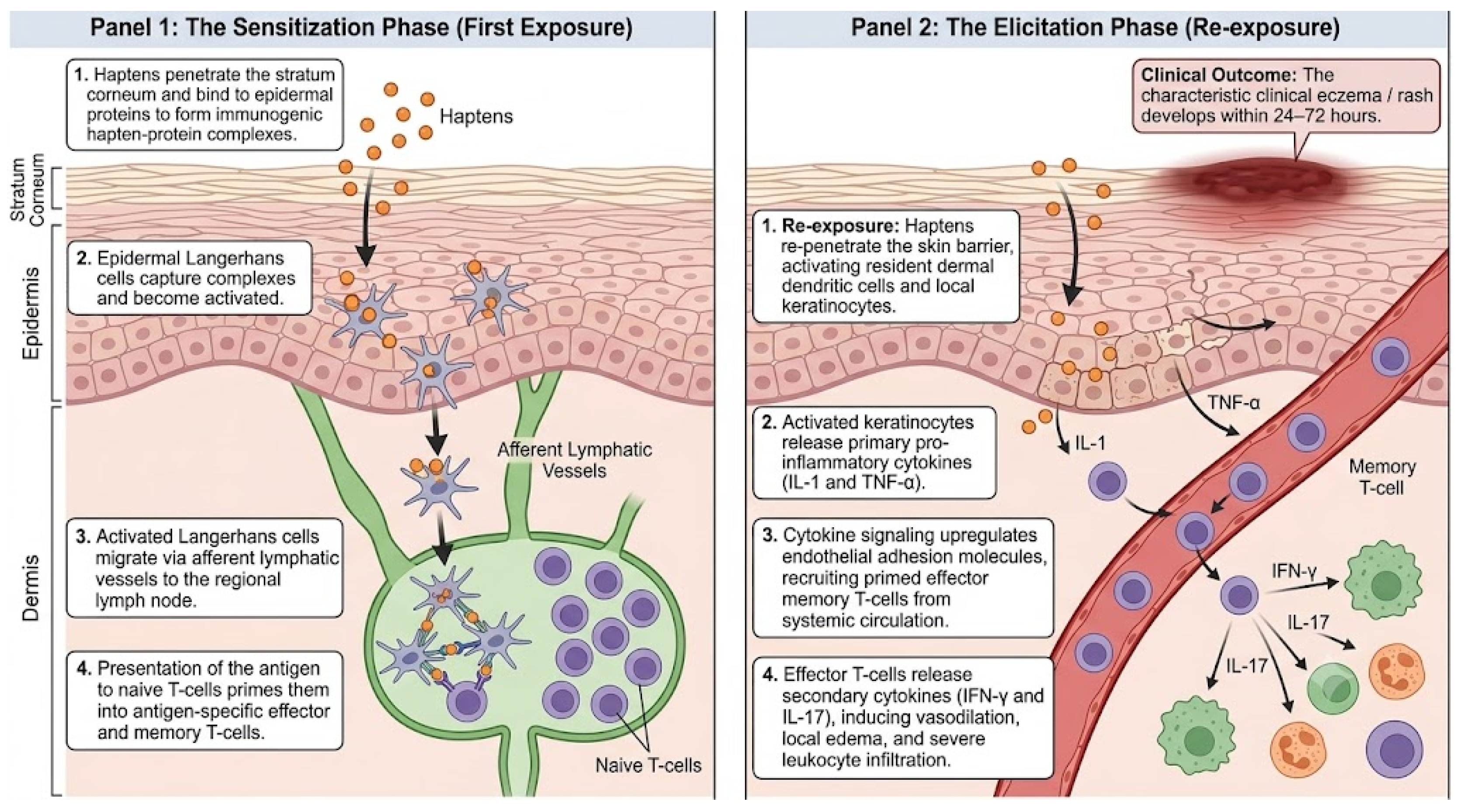
ACD develops through a two-phase immunologic process. In the sensitization phase, a hapten, a chemically reactive molecule, comes into contact with the epidermis [7,8]. Dendritic cells present the hapten to T lymphocytes in regional lymph nodes, generating allergen-specific memory T cells [7,8]. In the elicitation phase, the memory T cells initiate an inflammatory response at the site of contact, where dermatitis begins to form roughly 24–72 h after the next exposure event [7,8,9]. The molecular events involved in the sensitization and elicitation phases are shown in Figure 1.
Figure 1.
The Pathophysiology of Allergic Contact Dermatitis (ACD). The condition progresses through two distinct immunological stages. (1) Sensitization Phase: Upon initial exposure, haptens penetrate the stratum corneum barrier and bind covalently to epidermal proteins to form highly immunogenic hapten-protein complexes. These complexes are internalized by epidermal Langerhans cells (antigen-presenting cells), which undergo activation and migrate via afferent lymphatic vessels to regional lymph nodes. Here, they present the processed antigen to naive T-cells, priming them into antigen-specific effector and memory T-cells that enter systemic circulation. (2) Elicitation Phase: Upon subsequent re-exposure to the identical hapten, resident dermal dendritic cells and keratinocytes are rapidly activated. Keratinocytes release primary pro-inflammatory cytokines, including Interleukin-1 (IL-1) and Tumor Necrosis Factor-alpha (TNF-a). Local inflammatory signaling upregulates endothelial adhesion molecules, recruiting the circulating antigen-specific effector memory T-cells to the site of exposure. Upon infiltration, these activated T-cells secrete secondary effector cytokines, including Interferon-gamma (INF-y) and Interleukin-17 (IL-17). These downstream signals induce localized vasodilation, dermal edema, and heavy cellular infiltration of neutrophils and macrophages, culminating in the classic clinical presentation of an eczematous, pruritic rash. This figure was generated with assistance from ChatGPT (GPT-5.5) for figure development.
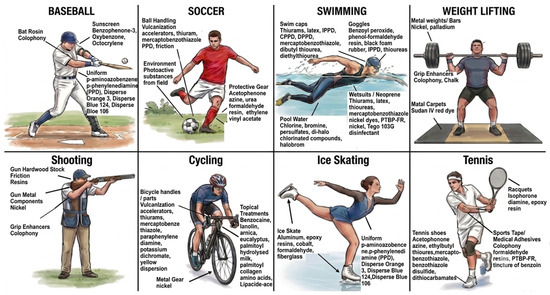
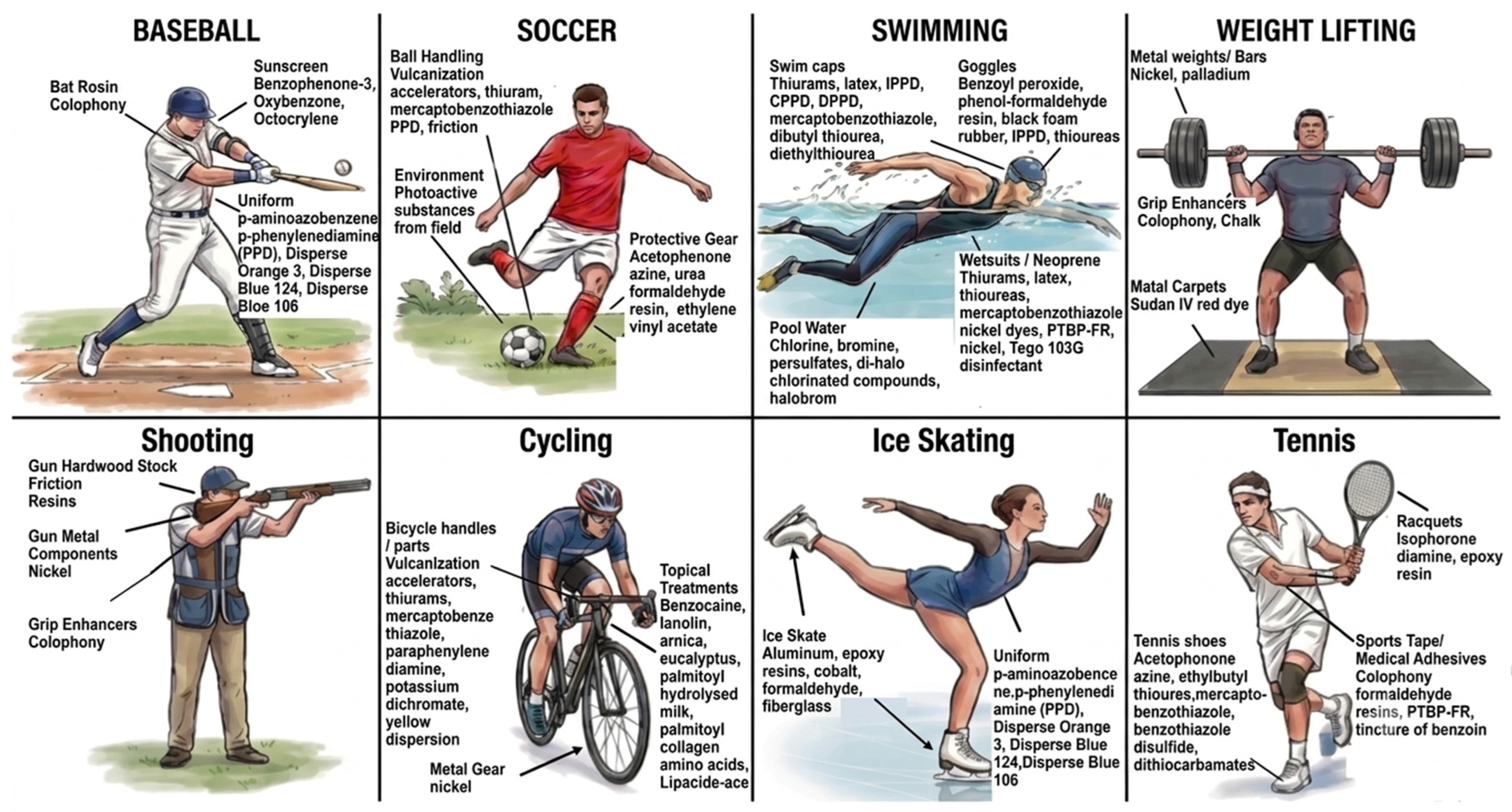
Athletes may face an increased risk of sensitization due to multiple factors that can impair the skin barrier. These factors include sports equipment, topical medications the athletes may use, and both indoor and outdoor environmental exposures [6,9,10,11,12]. Exercise can lead to pH changes in the skin and increased sweat production, both of which can disrupt the normal skin barrier function and leach additional allergens onto the skin [5]. Additionally, tighter-fitting uniforms can lead to barrier disruption as well as increased time in contact with allergens [5]. Different sports present distinct allergen exposure patterns that influence both the type and distribution of ACD lesions. Common allergen exposures based on sport type are listed in Table 1, described below, and visually represented in Figure 2.
Table 1.
Sport-specific allergens.
Figure 2.
This infographic maps specific athletic gear to its typical location of skin contact and its underlying chemical allergens. For example, footwear and shin guards track to the lower extremities (releasing acetophenone azine and rubber accelerators), while racquet and bat handles track to the hands (releasing colophony rosins and epoxy resins). General crossover allergens, such as sunscreen ingredients and textile dyes in uniforms, present a potential exposure risk across all featured indoor and outdoor sports. The featured sports and allergens are illustrative examples; common allergens (e.g., sunscreens, metals, grip enhancers, adhesives, and rubber accelerators) frequently overlap across various sports. CPPD: N-cyclohexyl-N′-phenyl-p-phenylenediamine, DPPD: N,N′-diphenyl-p-phenylenediamine, IPPD: N-isopropyl-N′-phenyl-p-phenylenediamine, PPD: p-phenylenediamine, PTBP-FR: p-tert-butylphenol-formaldehyde resin. This figure was generated with assistance from ChatGPT (GPT-5.5) for figure development.
4. Sport-Specific Allergens
4.1. Bowling, Trapshooting and Billiards
Bowling balls and billiard cues often contain sensitizing epoxy resins, while athletes using shotguns may be sensitized from wood stock, wood resins, and various metals which may include nickel, chromium, cobalt, copper, and lead [3,13,14].
4.2. Cycling
Cyclists endure repeated contact with rubber and metal components on their bikes, as well as friction from their gear. Bicycle handlebars and grips are a major source of exposure to various allergens such as vulcanization accelerators, e.g., thiurams, mercaptobenzothiazole and carbamates, paraphenylenediamine, potassium dichromate, and dyes [3,5,13]. Metal gear components can also lead to nickel sensitization [5]. Additionally, cyclists may manage muscle fatigue with anti-inflammatory creams containing benzocaine, arnica, or eucalyptus, which frequently trigger ACD on the legs or trunk [3,5].
4.3. Gym Sports, Weightlifting, Judo and Fencing
Athletes in these indoor sports face unique exposures based on the equipment they handle. Weightlifters may be exposed to nickel and palladium through repeated contact with metal weight bars and dumbbells [3,13,15]. Grip enhancers such as rosins and chalk are widely used in fencing and weightlifting, and can contain sensitizers such as colophony [3,5,15]. Other unique indoor exposures include Sudan IV red dye found in judo carpets and mats [3,15]. Some mat cleaners may have isothiazolinone derivatives which can lead to ACD [1].
4.4. Winter Sports (Ice Skaters, Hockey Players, Speed Skaters, Skiing and Others)
Ice sport participants can be exposed to various allergens from skates, costumes/uniforms, or protective padding. The boot of the ice skates can include leather, leather dyes, and various adhesives which are common allergens [28]. Hockey masks and pads can expose athletes to epoxy resins, acetophenone azine and neoprene, which can also lead to ACD, all of which can lead to lesions appearing on the face, foot and lower legs [16,17,28]. Some ski boots have also been found to contain 1,6-hexanediol diacrylate (1,6 HDDA), which can lead to ACD on the feet [18].
4.5. Racquet Sports, Golf, and Equestrian Sports
Grips, racquets, and specialized gloves can lead to ACD in these athletes. The resins found in the racquets and golf clubs are often found to cause ACD [3]. Golfers and horseback riders frequently wear tanned leather gloves or boots that can contain chromium and cobalt which can also lead to ACD [13]. Equestrian athletes are also exposed to metal components (e.g., stirrups, bits), which may contain nickel.
4.6. Running and Track Sports
Runners and track athletes are primarily affected by their footwear, clothing, and topical treatments. Athletic shoes are a common source of ACD due to the glues and foams that may be used in the shoe, as well as rubber accelerators such as acetophenone azine, ethylbutyl thiourea, mercaptobenzothiazole, and disulfide [3,5]. Like many athletes, runners frequently use topical treatments containing benzocaine and lanolin that can lead to skin sensitization [5].
4.7. Team and Field Sports (Football, Soccer, Basketball, Baseball, Softball, Cricket, Volleyball)
Athletes in field and team sports face primary exposures from their footwear, protective padding, adhesives, and the playing environment. Shin guards, sports socks, and athletic shoes frequently contain different resins, including rubber accelerators and adhesives such as acetophenone azine, ethylene vinyl acetate and urea-formaldehyde resins [3,13,19]. Athletic apparel and equipment can then lead to ACD in sports such as baseball, softball, and cricket [12]. Ball handlers in basketball and baseball are uniquely exposed to other allergens on the balls and/or gloves, such as vulcanization accelerators, e.g., thiurams, para-tert-butylphenol formaldehyde resin (PTBP-FR) and mercaptobenzothiazole [3,13,20,21]. Additionally, the use of sports tape and medical adhesives in these high-impact sports expose athletes to rosin, benzoin, and formaldehyde resins [3,5,15]. Finally, outdoor athletes are likely exposed to additional environmental allergens dependent on where they play their sports. Turf may contain mercaptobenzothiazole and benzothiazole, rubber accelerators that can lead to sensitization [5]. Basketball courts can have various stains and sealants that can lead to ACD, including isocyanates, phenol-formaldehyde resins, colophonium rosin, balsam of Peru, and epoxy resins [29,30,31,32]. Sports such as volleyball can prompt exposure to the same allergens seen in shoes and metal, such as acetophenone azine, ethylbutyl thiourea, mercaptobenzothiazole, dibenzothiazole, and nickel [3,5,13].
4.8. Water Sports (Swimmers, Divers, Sailors, Windsurfers)
Aquatic athletes are exposed to allergens through their protective gear, accessories, and the water environment itself. Wetsuits, earplugs, fins, and swim caps may cause ACD due to prolonged skin contact with neoprene and rubber additives [13,15,28]. Goggles and diving masks may include benzoyl peroxide, phenol-formaldehyde resin, and black foam rubber [3,15,22,23]. Additionally, the water environment can act as a chemical trigger; swimming pools and spas contain disinfectants such as chlorine, bromine, persulfates, and others which can lead to ACD [3,15,24]. Sailors and windsurfers may also react to environmental biological toxins from seaweed or coral, as well as friction from salt water and sand [3].
4.9. General Exposures
In addition to sports-related allergens, some exposure risks are common across sports, such as lawn greens, grip enhancers, sports tape, and sunscreens. Grip enhancers/rosins frequently expose athletes to colophony (rosin) and tetramethylthiuram disulfide (TMTD) [3,13]. Frequent applications of sports tape and medical adhesives bring athletes into contact with colophony, formaldehyde resins, PTBP-FR, and tincture of benzoin [3,5,13,15]. Glues and polymers found in athletic pads and shoes commonly contain PTBP-FR and ethylene vinyl acetate [13]. Outdoor athletes frequently utilize sunscreens containing allergens such as benzophenone-3/oxybenzone and Octocrylene [25,26]. These can lead to photoallergic contact dermatitis [25,26].
Uniforms may also lead to ACD, commonly elicited from blue or black textiles with tight skin contact, such as compression shorts, sports bras, cycling jerseys, and dark-colored team uniforms [27]. These may contain specific textile allergens including p-aminoazobenzene, p-phenylenediamine (PPD), Disperse Orange 3, Disperse Blue 124, and Disperse Blue 106 [27].
5. Clinical Presentation
ACD in athletes can present as acute or chronic dermatitis. Acute ACD often presents as pruritic, erythematous, oozing and/or crusted plaques, possibly with vesiculation or bullae [33]. Chronic ACD can present with psoriasiform changes and lichenification [33]. ACD in athletes with pre-existing atopic dermatitis (AD) may present with a phenotype similar to AD, but occur in distinct patterns and distributions that may not map to typical AD distribution [34]. Examining the distribution patterns of the lesions and knowing the sport the athlete plays may provide insight about what allergen is causing the ACD.
6. Diagnosis, Management, and Prevention
ACD must be distinguished from several conditions that may present similarly in athletes. These include irritant contact dermatitis, atopic dermatitis (AD), psoriasis, tinea pedis, and others [35]. The diagnosis is often made based on a meticulous, sport-specific history of possible exposures and the physical examination findings, which can include a geometric or well-demarcated eczematous pattern corresponding to the site of gear or product contact [35,36]. If the allergen is unknown, then patch testing may be indicated to confirm both the diagnosis and the source of the ACD [35]. A standard screening series (e.g., American Contact Dermatitis Society core series) should be supplemented with sport-specific materials and the patient’s own products, as some relevant allergens may be missed by screening series alone [37].
For management, adjustments can be made to equipment, education on allergen avoidance should be provided, and return-to-sport protocols should be discussed with the athlete. For allergen avoidance, the primary strategy is substituting gear with alternative equipment that does not contain sensitizing materials. This method of proactive substitution significantly reduces the likelihood of developing or exacerbating ACD in the future. However, if the athlete is unable to avoid the sensitizing agent entirely (e.g., due to specialized or mandated regulatory equipment), they may be able to use personal protective equipment or physical barriers (such as specialized clothing, liners, or barrier creams) against the agent-containing equipment.
When avoidance and barriers fail, pharmacological intervention may become necessary. Topical or oral corticosteroids may be used for symptomatic relief dependent on the severity of the reaction [38]. Additionally, medications such as antihistamines, topical calcineurin inhibitors, methotrexate, azathioprine, mycophenolate mofetil, and phosphodiesterase 4 inhibitors have been used in the treatment of ACD [38]. However, when managing competitive athletes, the clinician must cross-reference all systemic and immunomodulatory medications with the World Anti-Doping Agency (WADA) Prohibited List to ensure compliance or arrange for a Therapeutic Use Exemption (TUE) [39]. Finally, a structured return-to-sport protocol should dictate that the athlete only returns to full training intensity once inflammation and barrier disruption have completely resolved, as active sweating and friction may delay healing.
7. Conclusions
Allergic contact dermatitis is a common skin condition in athletes, driven by repeated exposure to sport-specific equipment, environmental substances, and topical products. While the precise incidence and prevalence of ACD in athletes remains largely unquantified due to a lack of large-scale epidemiological cohorts, available data suggest a heightened risk due to the athletic environment. Since symptoms of ACD may impair comfort, performance, and participation, early recognition and treatment are essential. Careful history-taking, attention to lesion distribution, and patch testing when indicated can help identify relevant allergens. Management should focus on allergen avoidance, treatment of inflammation, and modification of equipment or exposures. Greater awareness among clinicians, trainers, and athletes can improve prevention strategies and allow safer continuation of sporting activities.
Author Contributions
Conceptualization, G.B. and D.C.; methodology, G.B.; validation G.B., C.H., A.N. and D.C.; formal analysis, G.B., C.H., A.N. and D.C.; investigation, G.B.; resources, G.B.; data curation, G.B.; writing—original draft preparation, G.B.; writing—review and editing, G.B., C.H., A.N. and D.C.; supervision, D.C.; project administration, D.C. All authors have read and agreed to the published version of the manuscript.
Funding
This research received no external funding.
Institutional Review Board Statement
Not applicable.
Informed Consent Statement
Not applicable.
Data Availability Statement
These data were derived from the following resources available in the public domain: PubMed, https://pubmed.ncbi.gov (accessed on 14 April 2026) and Embase, https://www.embase.com (accessed on 14 April 2026).
Acknowledgments
The authors acknowledge the use of ChatGPT (GPT-5.5) for assistance with figure generation. The authors reviewed and edited all AI-assisted content and take full responsibility for the final manuscript.
Conflicts of Interest
The authors declare no conflicts of interest.
References
- Emer, J.; Sivek, R.; Marciniak, B. Sports dermatology: Part 1 of 2—Traumatic or mechanical injuries, inflammatory conditions, and exacerbations of pre-existing conditions. J. Clin. Aesthet. Dermatol. 2015, 8, 31–43. [Google Scholar] [PubMed]
- Scheinman, P.L.; Vocanson, M.; Thyssen, J.P.; Johansen, J.D.; Nixon, R.L.; Dear, K.; Botto, N.C.; Morot, J.; Goldminz, A.M. Contact dermatitis (Primer). Nat. Rev. Dis. Primers 2021, 7, 38. [Google Scholar] [CrossRef] [Scilit] [PubMed]
- Kockentiet, B.; Adams, B.B. Contact dermatitis in athletes. J. Am. Acad. Dermatol. 2007, 56, 1048–1055. [Google Scholar] [CrossRef] [Scilit] [PubMed]
- Eriksson, T.B.J.; Isaksson, M.; Engfeldt, M.; Dahlin, J.; Tegner, Y.; Ofenloch, R.; Bruze, M. Contact allergy in Swedish professional ice hockey players. Contact Dermat. 2024, 90, 574–584. [Google Scholar] [CrossRef] [Scilit] [PubMed]
- Ventura, M.T.; Dagnello, M.; Matino, M.G.; Di Corato, R.; Giuliano, G.; Tursi, A. Contact dermatitis in students practicing sports: Incidence of rubber sensitisation. Br. J. Sports Med. 2001, 35, 100. [Google Scholar] [CrossRef] [Scilit] [PubMed]
- Brites, G.S.; Ferreira, I.; Sebastião, A.I.; Silva, A.; Carrascal, M.; Neves, B.M.; Cruz, M.T. Allergic contact dermatitis: From pathophysiology to development of new preventive strategies. Pharmacol. Res. 2020, 162, 105282. [Google Scholar] [CrossRef] [Scilit] [PubMed]
- Dhingra, N.; Shemer, A.; Correa da Rosa, J.; Rozenblit, M.; Fuentes-Duculan, J.; Gittler, J.K.; Finney, R.; Czarnowicki, T.; Zheng, X.; Xu, H.; et al. Molecular profiling of contact dermatitis skin identifies allergen-dependent differences in immune response. J. Allergy Clin. Immunol. 2014, 134, 362–372. [Google Scholar] [CrossRef] [Scilit] [PubMed]
- Fonacier, L.; Noor, I. Contact dermatitis and patch testing for the allergist. Ann. Allergy Asthma Immunol. 2018, 120, 592–598. [Google Scholar] [CrossRef] [Scilit] [PubMed]
- Brar, K.K. A review of contact dermatitis. Ann. Allergy Asthma Immunol. 2021, 126, 32–39. [Google Scholar] [CrossRef] [Scilit] [PubMed]
- Adams, B.B. Dermatologic disorders of the athlete. Sports Med. 2002, 32, 309–321. [Google Scholar] [CrossRef] [Scilit] [PubMed]
- Aerts, O.; Goossens, A.; Lambert, J.; Lepoittevin, J.P. Contact allergy caused by isothiazolinone derivatives: An overview of non-cosmetic and unusual cosmetic sources. Eur. J. Dermatol. 2017, 27, 115–122. [Google Scholar] [CrossRef] [Scilit] [PubMed]
- Farhadian, J.A.; Tlougan, B.E.; Adams, B.B.; Leventhal, J.S.; Sanchez, M.R. Skin conditions of baseball, cricket, and softball players. Sports Med. 2013, 43, 575–589. [Google Scholar] [CrossRef] [Scilit] [PubMed]
- Goossens, A.; Raison-Peyron, N. Sports and Allergic Contact Dermatitis. Curr. Treat. Options Allergy 2025, 12, 8. [Google Scholar] [CrossRef] [Scilit]
- Cai, S.C.S.; Chong, T.Y.R.; Goon, A.T.; Leow, Y.H.; Cheng, S.W.N. Taking aim at the wood: Allergic contact dermatitis in a rifle shooting athlete. Contact Dermat. 2024, 90, 433–435. [Google Scholar] [CrossRef] [Scilit] [PubMed]
- Holtzhausen, L.J. Allergic skin conditions in athletes. Curr. Allergy Clin. Immunol. 2010, 23, 72–76. [Google Scholar]
- Koumaki, D.; Bergendorff, O.; Bruze, M.; Orton, D. Allergic Contact Dermatitis to Shin Pads in a Hockey Player: Acetophenone Is an Emerging Allergen. Dermatitis 2019, 30, 162–163. [Google Scholar] [CrossRef] [Scilit] [PubMed]
- Fisher, A.A. Sports-related allergic dermatitis. Cutis 1992, 50, 95–97. [Google Scholar] [PubMed]
- Raison-Peyron, N.; Poncy, A.; Dahlin, J.; Svedman, C. Allergic Contact Dermatitis to 1.6-Hexanediol Diacrylate in Ski Boots. Contact Dermat. 2025, 93, 527–529. [Google Scholar] [CrossRef] [Scilit] [PubMed]
- Raison-Peyron, N.; Bergendorff, O.; Bourrain, J.L.; Bruze, M. Acetophenone azine: A new allergen responsible for severe contact dermatitis from shin pads. Contact Dermat. 2016, 75, 106–110. [Google Scholar] [CrossRef] [Scilit] [PubMed]
- Corazza, M.; Bencivelli, D.; Catani, M.; Cavazzini, A.; Mantovani, L.; Borghi, A. Occupational allergic contact dermatitis in a basket player due to phenolic resins. Contact Dermat. 2021, 85, 246–249. [Google Scholar] [CrossRef] [Scilit] [PubMed]
- Aizawa, A.; Ito, A.; Masui, Y.; Sasaki, K.; Ishimura, Y.; Numata, M.; Abe, R. A case of allergic contact dermatitis caused by goalkeeper gloves. Contact Dermat. 2018, 79, 113–115. [Google Scholar] [CrossRef] [Scilit] [PubMed]
- Azurdia, R.M.; King, C.M. Allergic contact dermatitis due to phenol-formaldehyde resin and benzoyl peroxide in swimming goggles. Contact Dermat. 1998, 38, 234–235. [Google Scholar] [CrossRef] [Scilit] [PubMed]
- Vaswani, S.K.; Collins, D.D.; Pass, C.J. Severe allergic contact eyelid dermatitis caused by swimming goggles. Ann. Allergy Asthma Immunol. 2003, 90, 672–673. [Google Scholar] [CrossRef] [Scilit] [PubMed]
- Sasseville, D.; Geoffrion, G.; Lowry, R.N. Allergic contact dermatitis from chlorinated swimming pool water. Contact Dermat. 1999, 41, 347–348. [Google Scholar] [CrossRef] [Scilit] [PubMed]
- DeLeo, V.A.; Adler, B.L.; Belsito, D.V.; Pratt, M.D.; Sasseville, D.; Reeder, M.J.; Warshaw, E.M.; Atwater, A.R.; Taylor, J.S.; Storrs, F.; et al. Photopatch testing: Clinical characteristics, test results, and final diagnoses from the North American Contact Dermatitis Group, 2009–2020. Contact Dermat. 2024, 91, 465–473. [Google Scholar] [CrossRef] [Scilit] [PubMed]
- European Multicentre Photopatch Test Study (EMCPPTS) Taskforce. A European multicentre photopatch test study. Br. J. Dermatol. 2012, 166, 1002–1009. [CrossRef] [Scilit] [PubMed]
- Heratizadeh, A.; Geier, J.; Molin, S.; Werfel, T. Contact sensitization in patients with suspected textile allergy. Data of the Information Network of Departments of Dermatology (IVDK) 2007–2014. Contact Dermat. 2017, 77, 143–150. [Google Scholar] [CrossRef] [Scilit] [PubMed]
- Tlougan, B.E.; Mancini, A.J.; Mandell, J.A.; Cohen, D.E.; Sanchez, M.R. Skin Conditions in Figure Skaters, Ice-Hockey Players and Speed Skaters: Part I—Mechanical Dermatoses. Sports Med. 2011, 41, 709–719. [Google Scholar] [CrossRef] [Scilit] [PubMed]
- Aalto-Korte, K.; Pesonen, M.; Suomela, S.; Suuronen, K. Nine years of patch testing with isocyanates in a clinic of occupational dermatology. Contact Dermat. 2024, 91, 212–221. [Google Scholar] [CrossRef] [Scilit] [PubMed]
- Aalto-Korte, K.; Pesonen, M.; Kuuliala, O.; Alanko, K.; Jolanki, R. Contact allergy to aliphatic polyisocyanates based on hexamethylene-1,6-diisocyanate (HDI). Contact Dermat. 2010, 63, 357–363. [Google Scholar] [CrossRef] [Scilit] [PubMed]
- Dear, K.; Palmer, A.; Nixon, R.L. Allergic contact dermatitis to phenol-formaldehyde resin at a single tertiary dermatology centre. Contact Dermat. 2021, 85, 26–31. [Google Scholar] [CrossRef] [Scilit] [PubMed]
- Heizmann, L.; Schubert, S.; Bauer, A.; Becker, D.; Brockow, K.; Dickel, H.; Kränke, B.; Lang, C.; Oppel, E.; Wagner, N.; et al. Epidemiological Comparative Study on Contact Sensitisations in Woodworkers With Occupational Dermatitis: Patch Test Data of the Information Network of Departments of Dermatology, 1999 to 2023. Contact Dermat. 2026, 94, 125–136. [Google Scholar] [CrossRef] [Scilit] [PubMed]
- Pujalte, G.G.A.; Costa, L.M.C.; Clapp, A.D.; Presutti, R.J.; Sluzevich, J.C. More Than Skin Deep: Dermatologic Conditions in Athletes. Sports Health 2023, 15, 74–85. [Google Scholar] [CrossRef] [Scilit] [PubMed]
- Sidbury, R.; Tom, W.L.; Bergman, J.N.; Cooper, K.D.; Silverman, R.A.; Berger, T.G.; Chamlin, S.L.; Cohen, D.E.; Cordoro, K.M.; Davis, D.M.; et al. Guidelines of care for the management of atopic dermatitis: Section 4. Prevention of disease flares and use of adjunctive therapies and approaches. J. Am. Acad. Dermatol. 2014, 71, 1218–1233. [Google Scholar] [CrossRef] [Scilit] [PubMed]
- Usatine, R.P.; Riojas, M. Diagnosis and Management of Contact Dermatitis. Am. Fam. Physician 2010, 82, 249–255. [Google Scholar] [PubMed]
- Pesqué, D.; Aerts, O.; Bizjak, M.; Gonçalo, M.; Dugonik, A.; Simon, D.; Ljubojević-Hadzavdić, S.; Malinauskiene, L.; Wilkinson, M.; Czarnecka-Operacz, M.; et al. Differential diagnosis of contact dermatitis: A practical-approach review by the EADV Task Force on contact dermatitis. J. Eur. Acad. Dermatol. Venereol. 2024, 38, 1704–1722. [Google Scholar] [CrossRef] [Scilit] [PubMed]
- Warshaw, E.M.; Buonomo, M.; DeKoven, J.G.; Pratt, M.D.; Reeder, M.J.; Silverberg, J.I.; Belsito, D.V.; Maibach, H.I.; Atwater, A.R.; Houle, M.-C.; et al. Importance of Supplemental Patch Testing Beyond a Screening Series for Patients With Dermatitis: The North American Contact Dermatitis Group Experience. JAMA Dermatol. 2021, 157, 1456–1465. [Google Scholar] [CrossRef] [Scilit] [PubMed]
- Aristizabal-Torres, M.A.; Bruce, C.J.; Caruso, M.A.; Wieczorek, M.A.; Pacheco-Spann, L.M.; Carter, R.E.; Bruce, A.J.; Hall, M.R. Allergic contact dermatitis revisited: A comprehensive review. JAAD Rev. 2025, 4, 92–103. [Google Scholar] [CrossRef] [Scilit]
- World Anti-Doping Code International Standard Prohibited List 2026. Available online: https://www.wada-ama.org/sites/default/files/2025-09/2026list_en_final_clean_september_2025.pdf (accessed on 1 July 2026).

Disclaimer/Publisher’s Note: The statements, opinions and data contained in all publications are solely those of the individual author(s) and contributor(s) and not of MDPI and/or the editor(s). MDPI and/or the editor(s) disclaim responsibility for any injury to people or property resulting from any ideas, methods, instructions or products referred to in the content. |
© 2026 by the authors. Licensee MDPI, Basel, Switzerland. This article is an open access article distributed under the terms and conditions of the Creative Commons Attribution (CC BY) license.