


Abstract
Based on three years of sustained personal observations and extensive on-site interviews, this study is the first to investigate the bird totem worship customs of the Dong ethnic minority in southeast Guizhou, China. The Dong-inhabited regions of southeast Guizhou possess a long-standing tradition of bird totem worship, which has permeated every aspect of local people’s daily life, serving as a living museum where ancient bird totem worship continues to thrive in the present day. Through investigation and research, we can clearly perceive that bird totem worship here is no longer merely evidence of primitive thinking as previously discussed in academic circles, nor is it an endangered intangible cultural heritage. Instead, it represents emotional resonance with a more modern spirit and open-ended identity construction. Faced with the era of the internet and new media, they have broken free from the constraints of totem concepts and taboos, instead embracing creative totem will, totem activities, totem behaviors, and intelligent totems, thereby endowing totems with new belief content and forms of expression. They have transcended the preconceived concepts and fixed thinking about totems in academic discourse, making it an important vehicle for maintaining community relations, strengthening ethnic solidarity, inheriting ethnic culture, and continuing local civilization. Through the contemporary reconstruction of collective behavior, the traffic empowerment of internet short videos, and complex functional transformations, they have constructed a brand-new totem value system in the context of the internet and new media era, organizing a multi-dimensional, comprehensive social ecological view and civilizational value system. It is precisely through this continuous evolution, expansion, and activation in response to changing times that totems have acquired sustained vitality and creativity, providing a vivid case study for the contemporary transformation and creative development of ancient totemic beliefs. This is also the significant importance of field investigation—it enables us to gain entirely new value cognition and different theoretical perspectives from the living site of totem practices.
1. Introduction
The Qiandongnan Miao and Dong Autonomous Prefecture 黔東南苗族侗族自治州 (黔東南 Southeast Guizhou) represents the primary settlement area of the Dong ethnic minority侗族 in China. This land has nurtured the profound, unadorned, and enduring cultural traditions of the Dong people. The region is home to approximately 1.5 million Dong residents. Within Guizhou Province, the Dong population is concentrated in Liping 黎平, Congjiang 從江, Rongjiang 榕江, Jinping 錦屏, and Tianzhu 天柱 counties. Dong settlements are typically built along mountains and rivers, with village layouts emphasizing feng shui principles and ecological equilibrium, reflecting a cosmology of harmonious coexistence between humans and nature. The villages are picturesque and unadorned, resembling an earthly paradise (see Figure 1).
Figure 1.
Natural environment of Dali Dong Village, Rongjiang County, southeast Guizhou (photographed by PeiManyi Pei, 5 January 2025).
The Dong language belongs to the Kam-Sui branch of the Kra-Dai language family within the Sino-Tibetan phylum. The majority of Dong people possess bilingual competence in Dong and Mandarin Chinese. Dong culture is most renowned for its vocal arts, particularly the “Grand Song of the Dong” (Dongzu Dage 侗族大歌), a polyphonic, conductorless, unaccompanied choral form celebrated in academic discourse as the sound of nature. This musical morphology challenges the long-standing Western musicological assumption regarding the absence of polyphonic traditions in Chinese music, offering a non-Eurocentric epistemological paradigm for understanding the essence of human music. Through the master-apprentice transmission mechanism of song masters (geshi 歌師), the tradition achieves natural harmonic coordination among vocal parts, regarded as a significant living vestige of early human polyphonic musical forms. In 2009, the Grand Song of the Dong was inscribed on UNESCO’s Representative List of the Intangible Cultural Heritage of Humanity.
Beyond the Grand Song, the Dong possess abundant intangible cultural heritage resources encompassing mythological narratives, ritual calendars (such as the Dong New Year Festival, the Sa Ma Festival, the Wrestling Festival, and matrimonial song customs), and traditional handicrafts (including Dong cloth weaving and Dong embroidery). These cultural phenomena all embody distinctive folk belief systems and profound cultural sedimentation.
Among the diverse cultural heritage of the Dong, bird totem worship customs constitute a unique cultural formation.
The term totem is derived from the Ojibwe language (Lévi-Strauss 2005, p. 25) and originally referred to “kinship relations”, “spiritual protectors” or “clan symbols”. It denotes a natural object, phenomenon, or living being that is regarded by a particular social group as possessing spiritual significance and serving as a symbolic emblem of the group. In this study, totemism is defined as a belief system in which a specific natural entity—among the Dong ethnic group discussed in this paper, the bird—functions both as an ancestral origin and as a clan symbol.
Within this belief system, the totem serves not only as a marker of group identity but is also revered as an ancestral deity and protective spirit. Believers attribute supernatural power and sacred qualities to the totem. As Émile Durkheim (1858–1917) observed in The Elementary Forms of Religious Life: “In fact, the totem is bound up with the distinction between the sacred and the profane; it is a quintessential sacred object” (Durkheim 2016, p. 153).
Totemism is commonly associated with rituals, sacrificial ceremonies, festivals, and other collective practices. These activities help clans affirm membership, strengthen group identity, and enhance social cohesion.
For example, He Xingliang 何星亮 and Yin Weibin 殷衛濱 argue in The History of Chinese Image Culture: Totem Volume that:
Although totemism emerged at a very early stage of human history, it was not supplanted by later indigenous or imported religious traditions. Instead, it continuously accumulated and integrated with other belief systems. Totemism was frequently incorporated into sacrificial rituals and customary practices, resulting in the coexistence of multiple forms of religious belief.(He and Yin 2022, p. 398)
Compared with the Han Chinese in the Central Plains, many ethnic minority groups inhabiting China’s frontier regions have preserved totemic traditions for a much longer period and in more distinctive forms. This phenomenon can be understood from several interrelated perspectives.
First, many ethnic minority communities have historically lived in remote mountainous and forested regions characterized by geographical isolation. Limited transportation and relatively underdeveloped agricultural production meant that these communities depended heavily upon the surrounding flora and fauna for subsistence. Animals and plants therefore assumed not only economic significance but also profound spiritual and emotional value. Such ecological conditions reinforced inherited beliefs that regarded particular animals or plants as clan ancestors or sacred protectors, enabling traditional forms of totemism to be transmitted across generations with remarkable continuity.
Second, throughout much of Chinese history, Han culture has occupied a culturally dominant position, exerting continuous influence upon minority cultures. In response to the pressures of cultural assimilation, some ethnic groups consciously maintained and revitalized their traditional totemic beliefs and associated religious practices as important markers of ethnic identity. The preservation of totemism thus became not merely a continuation of inherited religious traditions but also a cultural strategy for safeguarding collective identity, maintaining historical memory, and resisting cultural homogenization.
Third, totems function as ancestral deities and symbolic representations of clans or lineages. Consequently, totemism possesses a powerful integrative and cohesive social function. As He Xingliang and Yin Weibin observe:
Among those ethnic groups that have retained totemic beliefs, totemism performs an important function of integration and social cohesion. Like an adhesive, the totem binds members of the community closely together. In order to consolidate their authority, leaders of some ethnic minority societies have consciously emphasized totemic concepts and organized large-scale totemic rituals, thereby employing totemic consciousness to unify the thoughts of community members.(He and Yin 2022, p. 401)
This cohesive function also helps explain the persistence of various rituals, festivals, and customary practices associated with totemism. For instance:
Among the Bouyei (布依族) people of southeastern Guizhou, cattle constitute an important totemic symbol. It is common to find dried ox skulls mounted beside the entrances of Bouyei houses and decorated with red cloth, symbolizing the suppression of evil spirits and the protection of the household. In some communities, the “Ox King Festival” (Niuwang Jie 牛王節), celebrated on the eighth day of the fourth lunar month, is dedicated to the worship of the Ox Deity. This festival not only expresses reverence toward the sacred animal but also strengthens intra-ethnic solidarity and facilitates the transmission of cultural traditions.(Y. Huang 1987, p. 123)
Similarly, among certain Yi (彜族) communities, the tiger occupies the position of a clan totem. During the annual “Tiger Festival,” held between the eighth and fifteenth days of the first lunar month, ritual specialists preside over a series of ceremonies, including masquerading as tigers, performing tiger dances, visiting households to expel malevolent spirits, and ceremonially returning the tiger to the mountains. These ritual performances are intended to invoke abundant harvests, ensure communal well-being, and reinforce social cohesion. The festival exemplifies how totemic beliefs continue to shape ritual practice and collective identity in contemporary minority societies.
Furthermore, totemism also performs an important cognitive function by satisfying humanity’s desire to understand the origins of the cosmos and of the community itself. In prehistoric and early historic societies, scientific explanations concerning the formation of the universe and the emergence of humankind were unavailable. Consequently, many communities interpreted the origins of the world, their ancestors, and their own ethnic groups through mythical narratives centered upon totemic ancestors. Totemic deities and the myths surrounding them therefore provided coherent cosmological frameworks through which people explained the creation of the universe, the ancestry of the clan, and the relationship between humans and the natural world. In this sense, totemism functioned not only as a religious belief system but also as an indigenous epistemology that organized collective understandings of history, nature, and social identity.
The term bird totem worship customs, as used in this paper, may refer specifically to the Dong people’s belief in birds as ancestral progenitors or guardian deities, together with the comprehensive system of culturally regulated folk beliefs and practices derived from this tradition. This system may encompass mythological narratives, ancestral legends, ritual ceremonies, festival activities, folk arts, and taboo regulations. Characterized by religious, symbolic, social, and cultural-transmissive dimensions, these customs may constitute an important mechanism for sustaining Dong social organization, spiritual beliefs, and collective cultural memory.
In addition to examining the cultural and artistic dimensions of the ancient bird totem worship customs of the Dong ethnic group, this study also investigates how diverse and multifaceted totemic practices have endowed totems with new forms of religious significance, ritual content, and modes of expression. Furthermore, it extends the theoretical framework of totem studies by introducing and exploring new concepts, including Totem Will 圖騰意志, Totem Behaviors 圖騰行爲, and Intelligent Totems 智能圖騰.
Totem Will refers to the spiritual force and value-orienting mechanism attributed to a totem within the belief system of a particular ethnic or social group, transcending the consciousness of any individual member. It is manifested in the collective identification of group members with the cosmological order, ancestral spirit, natural laws, and moral principles symbolized by the totem. Through mythological narratives, ritual practices, and the transmission of cultural memory, this symbolic force continues to exert influence at the level of collective spiritual consciousness and social behavior.
Importantly, Totem Will does not imply that the totem itself possesses subjective consciousness or agency. Rather, it denotes a spiritual–intentional structure projected onto the totemic object by the collective mind of the community. As a culturally constructed symbolic force, it functions as an internal source of cohesion and meaning, motivating the group to preserve its cultural identity and maintain resilience in the face of social, environmental, or historical crises. In this sense, Totem Will may be understood as the collective spiritual orientation through which a community interprets its relationship with ancestry, nature, and the broader social world.
Totemic Behaviors, by contrast, refer to the symbolically meaningful individual or collective practices that emerge under the influence of totemic beliefs and that serve important functions in maintaining cultural norms and social order. Such behaviors are manifested in a variety of forms, including ritual worship, ceremonial performances, the creation of totemic imagery, and festival celebrations.
Totem Behaviors constitute the externalized expression of Totem Will while simultaneously functioning as a crucial mechanism for the intergenerational transmission of ethnic culture. Through embodied practice, they transform abstract beliefs into tangible and communicable forms of social action. In this process, totemic beliefs are not merely preserved as symbolic ideas but are enacted, experienced, and reproduced within everyday and ritual contexts. As such, totemic behaviors serve as a key medium through which individuals are integrated into the collective community and through which perceived natural principles are translated into culturally sanctioned forms of social order.
The term Intelligent Totems refers to the transformation of totemic symbols within the contexts of digital technology, artificial intelligence, and virtual media. No longer confined to static material representations, totems evolve into dynamic digital entities endowed with capacities for interaction, participatory decision-making, algorithmic generation, collaborative creation, and adaptive response. As living digital forms, they are capable of continuously generating new networks of meaning related to Totem Will, Totemic Behaviors, and other dimensions of totemic culture.
Intelligent Totems not only embody and preserve collective histories, mythological narratives, and cultural identities within virtual environments, but also facilitate the storage, dissemination, reinterpretation, and creative reproduction of totemic cultural heritage and artistic expression. In this sense, they represent an emerging developmental trajectory through which traditional totemic culture adapts to the age of digital civilization. By integrating ancestral symbolic systems with contemporary technological infrastructures, Intelligent Totems reconstruct new modes of existence and continuity for ancient totemic traditions in the technological era.
Moreover, the concept of Intelligent Totems aligns closely with the logic of digital visibility, platform-based circulation, and cultural branding characteristic of the Internet age, enabling totemic symbols to function as influential cultural IPs (Intellectual Properties) capable of attracting sustained public engagement and generating new forms of cultural value in networked societies.
This belief system is not merely preserved as an ancient religious relic but has become deeply embedded in the quotidian practices of local inhabitants, forming a living museum where ancient totemic worship continues to thrive in contemporary contexts. Based on three years of ethnographic fieldwork, this paper provides a systematic ethnographic description and analysis of this cultural phenomenon. The full text is structured as follows.
2. The Origins of Bird Totem Worship Customs Among the Dong in Southeast Guizhou: Multivocal Accounts Based on Personal Fieldwork
The central research question addressed in this field investigation concerns the mechanisms underlying the pervasiveness and continuity of bird totem worship customs among the Dong ethnic group in southeast Guizhou. Throughout the survey, local informants universally identified themselves as descendants of the bird spirit. Yang Xianming 楊顯明, a resident of Dali Dong Village in Rongjiang County, articulated in an interview: “We are the posterity of the bird spirit. It is nuo 儺. We must not merely worship but revere the bird spirit. It constitutes an ancient faith.”1 The local term bird spirit (niaoling 鳥靈) corresponds to nuo, derived from the Dong pronunciation nuo, denoting the ancient mythical phoenix (luanfeng 鸞鳳) or solar bird (yangniao 陽鳥). This claim is not isolated. Lin He’s History of Chinese Wu-Nuo (《中國巫儺史》) documents:
This ethnic group employs nuo to designate birds, human beings, the ethnic community itself, and rice (i.e., the glutinous rice staple consumed by southern ethnic minorities today), while terming the rice deity sacrifice nuo—which may correspond to the Chinese character 儺 (nuó). Since the Shang Dynasty, nuo may have constituted the core form of primitive religion. To the present day, the nuo sacrifice (nuoji 儺祭) prevalent among dozens of ethnic groups in Chinese folk religion might be essentially bird spirit sacrifice (niaolingji, 鳥靈祭).(Lin 2001, p. 103)
This semantic polysemy stems from the tonal complexity of the Zhuang-Dong language family. Whereas Mandarin Chinese possesses four tones (level, rising, departing, entering), Zhuang-Dong languages feature eight to ten or more tones. Tonal variation engenders semantic differentiation, enabling nuo to carry multiple significations contingent upon tonal modulation.
Beyond ethnic identity construction, the genesis of bird totem worship correlates with regional historical geography. Conventional historiography generally categorizes the southeast Guizhou Dong as a branch of the ancient Baiyue (百越) confederation. However, Lin He’s research challenges this classification:
The designation Baiyue originated from the Yue state established by this ethnic group, which gained prominence after conquering Chu and defeating Wu. Prior to this appellation, the group was not termed Yue but nuo (ancient variant transcriptions include Luomin 雒民, Luoyue 駱越, Ouluo 甌駱, Ouju 甌窶, Oulou 甌樓, Lairen 来人, Liaozi 僚子, etc.) translatable into Chinese as the character for bird, signifying a bird-worshipping people. The earliest bird spirit worship may have belonged to natural spirit worship, a form of pantheistic belief; by the agricultural era, bird spirit sacrifice (nuo sacrifice) might have evolved into totem worship.(Lin 2001, p. 103)
The Dong constitute one branch of the ancient Luomin (雒民).
A further inquiry arises: within the animistic worldview, why did ancestral communities specifically select the bird as their totemic object? One explanatory framework points to solar worship. The jinwu (金烏, golden crow or solar bird) serves as the avatar of the sun, symbolizing light and warmth, the essential energy source for the growth of all terrestrial life. Solar bird worship constitutes a cross-culturally universal phenomenon, exemplified by the Garuda in ancient India, the falcon-headed Ra in ancient Egypt, and the Thunderbird in indigenous North American cultures.
The solar bird hypothesis, widely accepted in academic discourse as a primary source of bird totem worship, diverges significantly from local explanatory frameworks encountered during fieldwork. Yang Shengqiu 楊勝秋, a villager, articulated in an interview: “Whether it constitutes solar bird worship, we cannot ascertain. Its antiquity exceeds memory. Our veneration of birds derives from practical considerations: it is intimately bound to agricultural production. The Dong ancient song ‘The Wild Goose and the Grain’ (Yan’engu 雁鵝谷) narrates that rice was originally the food of celestial deities. The wild goose (yan’e 雁鵝, a bird species, possibly the wild swan goose) served as the divine messenger. Carrying grain ears in flight from heaven, the goose dropped one ear to earth, thereby bestowing grain seeds upon humanity. Moreover, without birds, our ancestors could not have cultivated the land. The bird was our instructor in agriculture. Our forebears arranged farming activities according to the bird’s behavioral rhythms. The bird guided our cultivation, protected crops from pestilence, granted abundance and prosperity, and ensured the continuation of our posterity.”2 While the bird’s role in transmitting grain seeds and eliminating pests is readily comprehensible, the notion that birds guided cultivation initially proved perplexing.
This phenomenon was initially hypothesized as a metaphorical reference to bird totem ritual activities. However, the local feng shui master You Ansheng 尤安盛 offered clarification: “This has no connection with sacrifice; it originates from the ancient practice of bird-tillage (niaogeng 鳥耕). Birds once assisted us in plowing the fields. It is normal that you young people are unaware, for this cultivation method no longer exists. Nevertheless, the Dong still maintain the custom of raising poultry in the fields; our chickens, ducks, and even pigs are all kept in mountain fields, a vestige of ancient tradition.”3
To elucidate the connotation of bird-tillage, extensive documentary research revealed that this method was not unique to the Dong but represented a cultivation technique once universally employed by ancient ancestors, later superseded by more advanced ox-plowing, plow-tillage, and modern agricultural implements, hence its gradual obscurity.
The Eastern Han text Yuejueshu (Book of the Extinct Yue), compiled by Yuan Kang and Wu Ping, records:
The people of Great Yue, dwelling along the coast, relied exclusively upon bird-fields.
大越濱海之民,獨以鳥田(Yuan and Wu 1985, p. 57)
Here bird-fields denotes bird-tillage. The Eastern Han work Wuyue Chunqiu (Spring and Autumn Annals of Wu and Yue) by Zhao Ye states:
Heaven, admiring Yu’s virtue, commanded the hundred birds to return and till fields for the people.
天美禹德,使百鳥還為民田。(Zhao 1986, p. 85)
This explicitly indicates that land tilled by the hundred birds could serve as cultivated fields (mintian 民田). The Northern Wei geographer Li Daoyuan’s Commentary on the Water Classic (Shuijing Zhu), in its section on the Zhe River, notes:
Birds come to weed the fields: uprooting grass roots in spring and pecking out weeds in autumn. Therefore the magistrate strictly forbade the people from wantonly harming these birds; offenders were punished without clemency.
有鳥來為之耘,春拔草根,秋啄其穢,是以縣官禁民不得妄害此鳥,犯者有刑無赦。(D. Li 1988, p. 196)
This demonstrates that bird-tillage possessed the function of uprooting grass roots in spring and pecking out weeds in autumn. The Jin dynasty scholar Zhang Hua’s Bowuzhi (Records of Natural History) provides even clearer exposition:
Hailing County borders the river and sea, abounding in elk and deer that congregate in thousands, digging up grass roots and turning the ground into mud, called elk fields (mitian). The people planted rice in these fields, harvesting without plowing, with yields a hundredfold the ordinary.
海陵縣扶江接海,多糜獸,千千為群,掘食草根,其處成泥,名曰糜田,民人隨此田種稻,不耕而獲,其所收百倍。(H. Zhang 1986, p. 73)
This indicates that during the Wei-Jin period, this ancient bird-and-beast cultivation method still survived. Its primary purpose was to utilize the trampling and root-digging activities of birds and animals to pulverize soil into fine mud, thereby achieving intensive cultivation and increased harvests. Bumper harvests ensured that common people did not starve—of paramount importance for ethnic proliferation and civilizational continuity. Thus, birds made substantial contributions to matters of survival and ethnic reproduction.
Furthermore, You Ansheng 尤安盛, during the interview, provided additional explanatory dimensions, supplementing: “Birds possess spirit, divinity, and soul. They can fly. The bird is our soul, guiding us in flight, transcending humanity to become celestial beings and immortals (tianren 天人, shenxian 神仙). They are employed to deliver the deceased souls. In ancient burial rites, flying divine birds were invariably carved upon coffins. Nowadays such practices are no longer observed. The old traditions have perished.”4
Through You Ansheng’s articulation, we may comprehend another crucial reason why the people of the Dong regions so venerate birds and adopt them as their totem: they believe that the bird constitutes the human soul. The bird’s capacity for flight enables it to carry the soul aloft beyond the celestial sphere, achieving transcendence, reaching the heavenly realm, and ultimately attaining the sublime goal of the soul’s immortality. At this juncture the bird is not merely a divine bird but functions analogously to religious clergy, capable of guiding souls to heaven, transcending life and death, imbued with dense religious significance.
Bird totem worship in Dong ethnic communities differs substantially from the appreciation of birds and their associated cultural symbolism in mainstream Han Chinese culture. In the Han cultural tradition, birds—especially the phoenix (fenghuang 鳳凰)—are regarded as a counterpart to the dragon totem. The dragon symbolizes yang (陽), masculinity, and masculine beauty, serving as an emblem of imperial authority and the supreme power of the emperor. In contrast, the phoenix represents yin (陰), embodying feminine grace and beauty, and is traditionally associated with the authority, virtue, and moral conduct of the empress. As such, its symbolism is often closely linked to state ideology, ethical values, and social order. This understanding differs markedly from the Dong conception of the bird totem, which is regarded as an ancestral deity and a symbol of the human soul.
Other birds also occupy important symbolic positions within Han Chinese culture. For example, the crane (xianhe 仙鶴) is widely recognized as a symbol of longevity. In particular, during celebrations of elders’ birthdays, artists frequently present paintings featuring cranes as a means of conveying blessings and wishes for a long and healthy life. Similarly, the mandarin duck (yuanyang 鴛鴦), a type of waterfowl, symbolizes love, marital harmony, and fidelity. These symbolic associations differ considerably from the meanings attached to bird totem worship among the Dong people.
Nevertheless, it must also be acknowledged that the Dong, as one of China’s fifty-six officially recognized ethnic groups, have not developed their cultural traditions in complete isolation from Han culture. Rather, the two traditions have continuously interacted, influenced one another, and undergone processes of cultural integration. Consequently, while the Dong interpretation of bird totems possesses distinctive characteristics, there are also areas of convergence with Han cultural understandings of birds and their symbolic meanings. For instance, both traditions commonly regard birds as auspicious beings that embody blessings, good fortune, and the Chinese people’s aspirations for a prosperous and fulfilling life.
3. Religious Activities and Folk Art Forms Associated with Bird Totemic Customs in Southeast Guizhou
In Dong cultural tradition, the central religious ceremony is the Sa sacrifice (ji sa 祭薩), also known as the Sama Festival 薩瑪節 (see Figure 2).
Figure 2.
Scene from the 2025 Sama Festival sacrificial ritual in Rongjiang County, southeast Guizhou (photographed by Rongjiang Release New Media, 28 March 2025).
Sa (sax 薩) constitutes the cornerstone of Dong religious belief and the center of their spiritual world. This appellation carries multiple connotations: it serves as a general designation for ancestral spirits, while also functioning as a synthetic symbol of the village-protecting deity, the female primordial ancestor, and the local guardian god. The folk honorific Sama Tianzi 薩瑪天子 (Dong: sax mags jinl siip) combines sax (grandmother), mags (great), and jinl siip (Son of Heaven), thus meaning Great Grandmother of the Son of Heaven.
Regarding the spiritual prototype of this supreme goddess, academic opinion remains divided:
The Xingni Hypothesis: According to the Dong oral narrative Sasui 薩歲, Xingni 杏妮, meaning fairy or goddess, was originally surnamed Wu 吳and later became a leader of the Dong people (Yang et al. 1982, p. 5).
The Nüwa Hypothesis: The Dong scholar Wu Wenzhi 吳文誌 argues in A Study of Sasui as the Nüwa Deity that Sasui (i.e., Sama Tianzi) is neither the Xingni deity nor the solar, spider, or Lady Xian deities of legend, but rather “a more primordial and ancient Dong designation for Nüwa, or rather, a Dong-ified form of the Nüwa deity” (Wu 1990, p. 33).
The Luozhu Hypothesis: Shi Wenchang 石文昌, a primary school teacher in Dali Dong Village drawing upon local knowledge, proposes a new interpretation: “This matter is too remote in time. According to elder generations, she was actually a female Nuo deity, namely “Luozhu” (雒朱 luozhu), the King of All Birds. The present confusion of competing legends stems from general unfamiliarity with the Dong language.”5
The term luo 雒 in colloquial Dong means bird (this usage is not isolated to the Dong; the Zhuang of Guangxi and the Yao of Jianghua, Hunan, employ the same term). Zhu 朱 carries dual semantic loads: first, the color red; second, chieftain deity or king. Thus Luozhu signifies the divine bird who is king of all birds, also translatable as Zhu Bird 朱鳥 (Vermilion Bird). This divine bird also requires sacrificial veneration, a tradition preserved among the Tujia people of southeast Guizhou, who, when sacrificing to the Five Grains Deity, fashion a divine bird from glutinous rice and paint it red to symbolize the Zhu Bird, offering it together with the Five Grains Deity.
The absence of this custom among the Dong may be attributed to two primary factors: first, the antiquity of the practice led to its gradual disappearance through historical development; second, and more significantly, the “King of All Birds” divine bird likely became integrated with Dong ancestral deity worship, thereby acquiring the supreme status of “Great Grandmother of the Son of Heaven.” Sacrificing to the Great Grandmother of the Son of Heaven thus became equivalent to sacrificing to the “King of All Birds” divine bird, rendering separate rituals superfluous. This integration produced a religious system synthesizing nature spirit worship and ancestor veneration into a unified polysemous structure.
The sacred ritual space for sacrificing to Sama Tianzi is termed the Sa Altar (sax taanc 薩壇). When constructed in open-air settings, it is locally designated Teng Sa (daengc sax 滕薩), wherein teng (daengc) denotes altar. Indoor configurations bear various appellations: Ting Sa (dinc sax 亭薩), Tang Sa (dangc sax 堂薩), and Ran Sa (yanc sax 然薩, i.e., household Sa).
Investigation of Sa altar morphologies in southeast Guizhou reveals intrinsic connections to the “she sacrifice” (sheji 社祭) traditions of China’s Central Plains. Regarding the semantic connotation of she 社, classical texts record:
The Eastern Han text Baihutong (Comprehensive Discussions in the White Tiger Hall) states:
Mounding earth to form the she altar signifies possession of the land.
封土為社,示有土也(Chen 1994, p. 89)
The Book of Rites: Jiao Te Sheng (Liji·Jiaotesheng) notes:
The she constitutes the means by which the way of the earth is divinized.
社所以神地之道(Zheng 1980, p. 1449)
From these sources, the essence of “she” as the earth deity becomes evident. Thus “she sacrifice” denotes sacrificial veneration of the earth god. The primordial morphological types of she may be taxonomized into four categories: earthen she (tushe 土社), stone she (shishe 石社), tree she (shushe 樹社), and thicket she (congshe 叢社). The morphological repertoire of Dong Sa altars in southeast Guizhou encompasses all four types: earthen altars, tree altars, stone altars, and composite forms combining earthen and tree altars. The Sa altar of Dali Dong Village in Rongjiang County, for instance, exhibits characteristics of a combined earthen-stone altar configuration (see Figure 3).
Figure 3.
Sa Altar, Dali Dong Village, Rongjiang County, approximately 260 cm in diameter and 240 cm in height (photographed by Manyi Pei, 20 August 2025).
This altar displays numerous stone blocks, upon which weeds and saplings grow—a distinctive morphology reflecting the historical characteristic of Sama belief in southeast Guizhou: mutual borrowing and integration with Central Plains sacrificial methods and ritual institutions through processes of historical evolution. The scholar Huang Caigui 黃才貴, in his essay “The Religious Nature of Dong Tang Sa”, observes: “The Dong tang sa and Han Chinese earth god altars possess similar divine natures.” (C. Huang 1990, p. 29).
Nevertheless, field investigation reveals that the Dong of southeast Guizhou simultaneously maintain an independent earth god belief system. Particularly in Sanbao Dong Village, Rongjiang County, numerous earth god shrines (tudici 土地祠, i.e., earth god temples) are distributed along the riverine areas (see Figure 4).
Figure 4.
Earth God Shrine, Sanbao Dong Village, Rongjiang County, Guizhou (貴州榕江縣三寶侗寨), 170 cm in height and 150 cm in width (photographed by Manyi Pei, 4 January 2025).
The architectural configuration and couplet inscriptions of the Sanbao Dong Village earth god shrine reveal a typical Central Plains Han Chinese style, established as an independent structure without attachment to the Sa altar. This demonstrates that despite the connection between Dong Sa altar sacrifices and Han earth god shrine rituals, the two morphological systems remain distinct and non-interchangeable. A conclusion substantiated by the separate sacrificial practices observed at the earth god shrine and Sa altar in Sanbao Dong Village, Rongjiang County.
Sa sacrificial rituals in Dong regions exhibit typological variations. Based on scale and periodicity, they may be classified into minor sacrifices and major sacrifices: minor sacrifices include daily new- and full-moon observances (the 1st and 15th of each lunar month) as well as annual village-wide ceremonies in the first and second lunar months; major sacrifices occur at multi-year intervals, featuring more elaborate proceedings, sometimes accompanied by “carrying Sa” (tai sa 擡薩) processions involving the portable effigy of the Sa deity. According to sacrificial purpose, rituals may further be categorized as ordinary sacrifices, travel sacrifices, wartime sacrifices, and other types.
Regardless of classification, all Sa rituals share a common procedural element. Prior to formal commencement, all participants must first pay homage to the Sa altar, petitioning for Sa’s protection. This procedural arrangement underscores the supreme status of “Sama Tianzi 薩瑪天子” as village guardian deity.
Among the numerous ritual implements employed in Sa altar sacrifices, the “Bird Spirit Pole” (niaoling gan 鳥靈桿) stands out for its distinctive morphology and profound religious significance, serving as the symbolic residence of the “Sama Tianzi” soul. The so-called “Bird Spirit Pole” refers to a pole erected upon or adjacent to the Sa altar, its summit adorned with bird shapes woven from woodcarving, bamboo strips, or grass leaves. In some regions, it is also termed “Bird Staff” (niao gan 鳥竿). This implement plays a special role in Dong Sa altar rituals, constituting one of the central totemic symbols for understanding the Dong religious symbolic system.
Beyond the “Bird Spirit Pole”, certain Dong village Sa rituals additionally require a “Yage Troupe” (yage dui 耶歌隊), composed of a lusheng (reed pipe) ensemble in bird costumes and young women to welcome and escort the Sa deity. Yage represents a characteristic Dong collective song-and-dance form, performed on important ritual occasions. However, with temporal development, sacrificial rituals have increasingly tended toward simplification: for instance, bird costumes may be reduced to golden pheasant tail feathers inserted in the hair (symbolizing plumage) for participation in sacrifices and military expeditions. Likewise, the towering “Bird Spirit Pole” may be replaced by diminutive bird-shaped woven objects. Yet regardless of such morphological changes, these implements and decorations associated with bird totemism all serve to establish a unique correspondence with the divine bird Sa, the “King of All Birds”. They constitute avatars of this divine bird, representing its spiritual power and divinity.
To provide an intuitive understanding of Sa altar practices, the following section presents an analysis of the 2024 Sama Festival Sa sacrificial ritual held in Sanbao Dong Village, Rongjiang County.
As Figure 5 indicates, the ritual site was densely populated with participants, demonstrating the grand and solemn scale of the ceremony.
Figure 5.
Panoramic view of the 2024 Sama Festival Sa sacrificial ritual site, Sanbao Dong Village, Rongjiang County (photographed by Qu Honglun 瞿宏倫, 18 March 2024).
Figure 6 presents a partial view of the Sa altar at the 2024 Sama Festival sacrificial ritual site in Sanbao Dong Village, Rongjiang County. At the center of the plaza stands a simplified Sa altar: at its base and outer perimeter, a row of flower pots contains small green saplings symbolizing trees, representing the she-tree sacrifice. From the top to the middle section, a large circular mound constructed of stones and tiles forms a typical earthen she configuration. This Sa altar, enclosed by trees and stones, exemplifies the combined earthen-she and tree-she morphology discussed previously. Above the saplings, a ring of bamboo-woven bird-shaped implements encircles the altar, assuming the function of the Bird Spirit Pole, an essential medium in Sa altar sacrifices that connects the four dimensions of heaven, earth, humanity, and spirits. The participants’ headdresses adorned with golden pheasant tail feathers (symbolizing avian plumage) may be understood as incarnations of the “King of All Birds” divine bird, serving simultaneously as ornament and protective symbol.
Figure 6.
Partial view of the 2024 Sama Festival Sa sacrificial ritual site, Sanbao Dong Village, Rongjiang County (榕江縣三寶侗寨) (photographed by Qu Honglun, 18 March 2024).
Regarding the significance of the Bird Spirit Pole in sacrificial rituals, participant Yang Kaisheng 楊開勝 articulated in an interview: “Whether it is Sama Tianzi, the Bird Spirit Pole, or the bird feathers, they are all markers of our ethnic identity, our protective deity. At this moment, the Sa deity must be personally present. The Sa deity is inviolable. We all harbor affection for it. We believe in it because it connects heaven, earth, humanity, and spirits. We come from different villages, but at the moment of sacrifice, all hearts and spirits are united, joined together. We are deeply moved, overjoyed, experiencing a collective honor. We are all children of the Sa deity. The Sa deity resides in all our hearts, she will surely bless us with prosperous posterity and abundant harvests.”6
Through Yang Kaisheng’s candid and emotionally resonant expression, we may comprehend that in Dong cognition, all elements and symbols associated with the Sa deity in sacrificial rituals are interconnected, indivisible, and constitute a sacred unity. This sacred unity serves as a conduit connecting heaven and earth, the human realm and the spirit world, the present and the ancestors, what the Dong designate as “Totem Will”.
Totemic Will may not imply that the totem itself possesses subjective consciousness; rather, it can be regarded as a spiritual–intentional structure projected by the collective psyche of the ethnic group onto the totemic object. It could serve as the inner driving force that enables the group to sustain cultural resilience in times of crisis, thereby might effect a paradigm shift from “object of belief” to “subjectival will.” It may help address the question of why the totem’s value is believed in. This totem possesses formidable cohesive and mobilizing power, capable of integrating dispersed Dong villages into a spiritual community transcending geographical boundaries. The religious belief shaped by this spiritual community further reinforces Dong cultural identity and ethnic solidarity.
The mediumistic function of the Bird Spirit Pole extends beyond the sacrificial ritual site into other domains. For instance, according to tradition in certain Dong regions, establishing a new Sa altar requires “receiving Sa” (jie sa 接薩) from an old Sa altar, namely, transporting a handful of soil from the old Sa altar site to the new location. In this process, the Bird Spirit Pole serves as the medium guiding the migration of the Sa spirit, facilitating trans-spatiotemporal communication.
From a comparative religious studies perspective, the Bird Spirit Pole likely constitutes a synthetic formation resulting from the fusion of she-tree sacrifice and bird totem worship. The so-called she-tree refers to the tree representing the she deity. The Japanese scholar Sekino Takeshi, in The Concept of Trees in Ancient China, argues that the original grapheme for “she” (社) already encoded the meaning of tree sacrifice, deriving from tree worship (Sekino 1949, p. 156). Regarding the significance of the “she-tree”, the Baihutong: Sheji states:
Why do she and ji have trees? To honor and identify them, causing the people to behold them with reverence, and also to manifest their merit. 社稷所以有樹,何也?尊而識之也,使民人望見師敬之,又所以表功也。(Chen 1994, p. 89)
Accordingly, the paramount significance of the “she-tree” lies in arousing a sense of awe among the common people. This custom of she-tree sacrifice is also prevalent in southeast Guizhou. As shown in Figure 7, the New Year sacrificial ceremony in Benli Village, Leli Town, Rongjiang County, was held around a single tree, surrounded by meticulously prepared offerings from villagers to honor the deity.
Figure 7.
New Year sacrificial ceremony site in Benli Village, Leli Town, Rongjiang County, southeast Guizhou (photographed by Rongjiang Release Integrated Media Platform, 23 February 2026).
The selection of she-tree species varied according to region and dynasty: pine for the Xia, cypress for the Shang, and chestnut for the Zhou. This adaptation to local conditions aimed to manifest both the state symbolism of different dynasties and the indigenous vitality and regional identity of diverse areas. However, the Bird Spirit Pole in Sa altar sacrifices not only assumes the symbolic function of the she-tree but also carries cosmological significance as an “axis mundi” (通天樹,通天柱) at the mythological level.
In ancient China, whether in the Central Plains or southeast Guizhou, the prototype of the pole can be traced to the shadow-measuring pole (ceying gan 測影桿), a tool for measuring the length of shadows cast by solar movement. Hence the ancient tradition of erecting poles to measure shadows, whose paramount significance lay in “observing celestial phenomena to grant the seasons”. This held crucial importance for the development of ancient Chinese civilization. The scholar Feng Shi 馮時, in Observing Celestial Phenomena to Grant the Seasons and the Origins of Chinese Civilization, observes:
The purpose of ancient astronomical observation was to determine time. The correspondence between certain standard celestial phenomena and standard time remained stable over considerable periods, providing excellent service for their agricultural production.(Feng 2021, p. 31)
That is, “observing celestial phenomena to grant the seasons” represented ancient mastery of astronomical calendrics, possessing critical significance for grain production, ethnic proliferation, and civilizational continuity.
Field investigation revealed that the Sa altar of Dali Dong Village was severely damaged during the Cultural Revolution of the 1960s–1970s, with its subterranean buried offerings (yiwu 瘞物) also destroyed. However, according to villagers who witnessed the excavation, the unearthed objects included “12 hollow small silver figurines, called Twelve Earths (shi’er di 十二地), representing the symbolic objects of the twelve earthly branches” (G. Li 2021, p. 110). This further corroborates the close connection between Sa altar sacrifices and astronomical calendrics.
Subsequently, with temporal development, the she-tree function in Sa altar sacrifices was gradually supplanted by the Bird Spirit Pole. The bird perched atop the pole may be understood as the sublimation and concretization of she-tree sacrifice and bird totem worship. The bird was no longer merely a creature dwelling in trees but was elevated to an independent symbolic signifier, becoming a more direct vehicle for the Sa spirit capable of “guiding souls to ascend to heaven” (yin hun sheng tian 引魂升天).
Through the above analysis, we may conclude that the Bird Spirit Pole in the Sa altar possesses multiple functions: it inherits the ancient meanings of establishing the she, measuring shadows, and granting the seasons, while simultaneously encompassing religious significations of communicating with heaven and guiding souls to ascend to heaven. Throughout its historical evolution, it has continuously undergone fusion, permeation, reconstruction, and sublimation.
4. The Secularized Expression and Folk Art Forms of Bird Totem Worship Customs
The long-standing bird totem worship belief of the Dong ethnic group has engendered a wealth of folk activities and folk art forms. These activities and artistic manifestations exhibit characteristics of entertainment, quotidian life, and daily practice, permeating bird totem culture into every dimension of everyday existence.
4.1. From Ritual to Performance: The Functional Evolution of Lusheng Dance and Golden Pheasant Dance
The Lusheng Dance (lusheng wu 蘆笙舞), a traditional dance of the Miao and Dong ethnic groups in southeast Guizhou accompanied by the lusheng reed pipe instrument, is performed with bird banners as vanguards. Dancers wear either ethnic costumes or bird costumes. Men insert bird feathers in their hair, while women don bird crowns. A branch of the Lusheng Dance, the “Golden Pheasant Dance” (jinji wu 錦雞舞), specifically imitates the movements of the divine bird, the golden pheasant.
According to local villagers’ oral accounts, the Golden Pheasant Dance was historically performed exclusively on religious sacrificial occasions, as it was more solemn and dignified than other Lusheng dances. Its purpose was to express reverence and worship for the ancestral deity, the “King of All Birds” divine bird discussed previously, constituting a sacrificial dance specifically designed for honoring and entertaining the deity. However, with temporal development, the dance has gradually become secularized, acquiring greater accessibility, performativity, and entertainment value.
The kinetic characteristics of the Golden Pheasant Dance feature restrained upper body movements, while lower body movements are flexible and varied, particularly emphasizing joint articulation and diverse footwork. The overall structure, commencement, development, transition, and conclusion demonstrate measured tension and relaxation, cyclical repetition, and graceful fluidity. During performance, female dancers particularly emphasize the fluttering of rear skirt ribbons and the natural swaying of silver ornaments shaped like soaring golden pheasants atop their heads. These movements symbolize the divine bird, the golden pheasant, foraging and frolicking, while simultaneously rendering the dancers themselves more enchanting and graceful (see Figure 8).
Figure 8.
Detail of bird totem headdress in Golden Pheasant Dance, Qiandongnan Miao and Dong Autonomous Prefecture, Guizhou (photographed by Manyi Pei, 6 January 2025).
4.2. Soundscape Mimesis: From the Grand Song of the Dong to the Acoustic Wisdom of Drum Towers
Beyond dances imitating divine bird movements, Dong culture encompasses vocal forms that mimic avian sounds. The most representative example in this regard is the aforementioned UNESCO World Heritage, the Grand Song of the Dong. Although the background and genesis of the Grand Song are exceedingly complex, the simulation of bird calls constitutes an important component. Yang Xiuxing 楊秀興, a villager from Dali Dong Village in Rongjiang County, articulated in an interview: “Bird calls possess emotional content; the listener is moved by them. Only through earnest listening, careful attention, and heartfelt contemplation can one comprehend their joys and sorrows. With prolonged listening, one discovers their connection to individual life and even to dreams.”7
Indeed, the polyphony of the Grand Song largely derives from the mimesis of natural sounds, among which the simulation of cicada chirping and bird calling forms a crucial element. Through natural division of labor and coordination among different vocal parts, it creates a complex yet harmonious polyphonic texture, regarded by academia as a significant living vestige of early human polyphonic musical forms.
Field investigation reveals that the Dong deployment of avian sounds demonstrates considerable sophistication. Beyond the Grand Song, their architecture is also conceived as a divine instrument that simulates bird calls to communicate with nature. According to tradition, when Dong ancestors constructed their iconic public edifice, the Drum Tower (gulou 鼓樓) was used for assemblies, entertainment, and deliberation. They ingeniously applied acoustic principles: the unique architectural structure of the Drum Tower functions like an enormous resonance chamber, enabling drum sounds to propagate farther and more distinctly. The frequency of drums beaten at specific rhythms may resonate with certain avian perceptual systems, causing birds to mistake the signal as coming from their own kind and thus be attracted.
Such structures are now rare, yet in Dong villages of Guizhou (such as Zhaoxing Dong Village 肇興侗寨 and Xiaohuang Dong Village 小黃侗寨), visitors still have opportunities to witness this miraculous scene. Whenever folk activities or important festivals occur, Dong drummers ascend the Drum Tower to strike its mysterious drums. The “dong-dong” reverberations echo through the valleys. Shortly thereafter, bird calls emerge from the distance, followed by flocks of birds flying in from all directions, gathering in hundreds to dance gracefully around the Drum Tower. The entire scene resembles a symphonic movement of resonance between nature and human wisdom.
4.3. Fighting Hwamei: The Secularized Practice of Bird Totem Worship Customs
Furthermore, a folk custom related to bird totem worship customs popular in the Dong regions of southeast Guizhou is “fighting hwamei” (dou huamei niao, 鬥畫眉鳥), also known as bird fighting in some areas. This activity serves not merely as a pastime during agricultural off-seasons but also as an important vehicle for consolidating community sentiment and transmitting ethnic culture.
Given the abundance of bird species in southeast Guizhou, why do the Dong people specifically favor the rearing and competitive fighting of huamei (畫眉鳥), Garrulax canorus, the Chinese thrush? Lin Zemin 林澤民, a villager from Dali Dong Village in Rongjiang County, explained in an interview: “The huamei is our local auspicious bird, also known as the Civil-Military Bird (wenwu niao 文武鳥) or Golden Hwamei (jin huamei 金畫眉). Regarding its civil (wen 文) qualities: its song is exceptionally melodious, earning it the title singer of the forest. We Dong people are renowned for singing and dancing, hence we feel affinity with this songful bird. Moreover, the hwamei’s call is regarded as a signal of fortune’s arrival, the hwamei thus embodies auspiciousness and happiness. Regarding its military (wu 武) qualities: the hwamei possesses a fierce temperament, revered as a divine bird messenger. It is exceptionally combative and spirited, a fierce general among birds. Bird fighting offers tremendous spectacle, intense and splendid. Thus the hwamei is a divine bird possessing both civil and military excellence. We take pride in owning such a bird. Should one win a bird fight and receive the title Bird King, one becomes enormously proud and spirited, envied by the entire village.”8
This conception of the huamei as a divine bird thus manifests the bird totem worship belief of taking birds as spirit and taking birds as honor. Furthermore, the outcome of bird fighting represents not merely competition between birds but also metaphorically signifies the owner’s courage and capability, bearing the owner’s moral honor and spiritual value. At this juncture, bird totem worship belief becomes highly concrete and quotidian.
Yet obtaining the honorific title Bird King is no easy feat: it requires finding a superior bird and, more importantly, the owner’s meticulous care and devoted nurturing. During fieldwork, the research team lodged at “Langshangxi” (廊上溪), a guesthouse in Dali Dong Village, where the household’s huamei was kept in the first-floor hall. The male host’s first task each dawn was to carry the birdcage to the nearby mountains to forage for the bird’s food (see Figure 9).
Figure 9.
A Dali Dong Village (大利侗寨) villager foraging for hwamei food at dawn (photographed by Manyi Pei, 25 August 2025).
4.4. The Social Structure, Ritual Procedures, and Contemporary Transformations of Bird Fighting Customs
Field investigation reveals that Dong women occupy relatively high social status, possibly attributable to the female gender of Dong ancestral deities and the vestiges of matrilineal clan systems. The female household head is not only accomplished in singing and dancing and diligent in labor but also assumes the responsibility of supporting the family. The male household head manages domestic affairs, among which the important duty is caring for the hwamei. The hwamei’s status in the household is no less than that of children. Its diet sometimes even surpasses that of the owners. Some bird-loving villagers even feed beef to their hwamei to enhance the bird’s physique and combat capability. Thus, the hwamei is not merely a pet but rather an important family member, jointly with its owner determining the family’s honor and status in the village.
According to investigations, bird fighting activities mostly concentrate during agricultural off-seasons or traditional festivals, such as the Eighth Day of the Fourth Month, Dragon Boat Festival, and Sixth Day of the Sixth Month. Sometimes they are also held on “Gan’ao Day” (gan’ao ri 趕坳日), which can be understood as the Dong Valentine’s Day, a folk activity centered on antiphonal singing for friendship-making, simultaneously possessing social, entertainment, and material exchange functions. There are over one hundred bird fighting venues in the southeast Guizhou region (see Figure 10).
Figure 10.
Bird fighting scene in Leishan County, southeast Guizhou (photographed by Youran Leishan, a local network media platform in Leishan County, 15 November 2020).
Dong bird fighting activities fully embody the characteristics of “using birds as medium, making friends through birds”, following rituals and prohibiting bird abuse, fully manifesting the totemic ethic of “revering birds as divine”. From the divine bird sacrifice of “Sama Tianzi” and the “King of All Birds” to the bird fighting folk custom, this reflects the internal transformation of bird totem belief in the southeast Guizhou region: from revering and entertaining the divine to entertaining humans. Sacrifice is a solemn religious activity serving the divine, while bird fighting is an entertainment activity serving humans. The divine and human, the sacred and mundane, achieve internal circulation and unity through a series of bird totem activities. This also demonstrates that Dong bird totem worship in southeast Guizhou has completed the transformation from sacred belief to secular entertainment through historical evolution.
Furthermore, in the process of bird-fighting, one may clearly discern the remarkable prescience of the concept of communitas advanced by the British anthropologist Victor Turner (1920–1983) in The Ritual Process: Structure and Anti-Structure. Communitas, in simple terms, may refer to a community of equal wills, one in which social norms and hierarchical boundaries might be temporarily suspended. Members who participate in it may exhibit solidarity and mutual support, undergo profound spiritual or emotional experiences, and thereby may attain a sense of belonging and renewal. In the course of bird-fighting, regardless of wealth, status, or rank, all participants may stand on an equal footing; within this egalitarian game and ritual, interpersonal bonds may be rapidly strengthened, trust-based relationships may be forged, and shared memories of a felicitous kind may be created. As Victor Turner himself observed:
Communitas may not merely be the product of a genetically inherited ‘primitive’ drive liberated from cultural constraints; it may rather be the product of distinctly human faculties, which may include rationality, volition, and memory, and which may develop with life experience in society.(Turner 2024, p. 173)
4.5. Materialized Representations of Bird Totem: Dong Cloth, Batik, and Dong Embroidery
Within the unique Dong folk craft system, batik and Dong embroidery constitute two of the most distinctive varieties and techniques.
Batik, as one of Guizhou’s important cultural calling cards, is a manual resist-dyeing technique employing wax as the resist agent. Wax is applied as a resist material to those areas of the fabric where patterns are to be revealed. After dyeing, the wax-coated sections resist the dye liquor, thereby enabling the fabric to display various exquisite patterns and designs. Skilled local artisans generally require no preliminary sketching, relying solely on conceptualization to paint elaborate patterns onto the cloth, a feat commanding admiration. Pattern motifs encompass mythological legends, folk tales, love stories, and other themes; bird totems also constitute an important pattern motif.
As shown in Figure 11, in this Dong batik work from Dali Dong Village, Rongjiang County, southeast Guizhou, two prominent phoenixes appear, accompanied by four large Chinese characters “Dali Dong Village 大利侗寨”. This may indicate that the bird totem serves as the ethnic marker of Dali Dong Village.
Figure 11.
Dong ethnic batik folk art from Dali Dong Village, Rongjiang County (榕江縣大利侗寨), featuring phoenix bird totem patterns (photographed by Manyi Pei, 21 August 2025).
Dong embroidery is a handicraft passed down through Dong generations, demonstrating the profound cultural heritage of the Dong people through exquisite needlework, rich colors, and unique patterns. Dong women employ various techniques including flat stitch (pingxiu 平繡), lock stitch (suoxiu 鎖繡), and counted-thread work (tiaohua 挑花) to render patterns vividly. The ingenious combination of vivid colors, red, green, blue, and purple, creates sharp contrasts and distinctive visual effects. Dong embroidery possesses not only high artistic value but also carries rich cultural connotations and historical information, representing the crystallization of Dong people’s wisdom and a treasure of traditional Chinese folk art.
Between the bridge corridors of Dali Dong Village, one can observe elderly Dong women producing Dong embroidery (see Figure 12). Despite advanced age, they remain mentally alert. The continuous manual labor enables them to maintain flexible physical and mental states. The warmth of each stitch and thread permeates the entire village. Though located in a remote area, they weave the most beautiful pictures with their industrious hands. Such folk art is so colorful and vibrant, innocent and unadorned, full of childlike fantasy, revealing an inner contentment and self-sufficiency. Perhaps this is the power of belief.
Figure 12.
Dong elderly women weaving Dong embroidery on the bridge corridor of Dali Dong Village, Rongjiang County (photographed by Manyi Pei, 24 August 2025).
Dong embroidery techniques can be employed to produce various products, as shown in Figure 13: face-washing towels, backpacks, belts, mobile phone cases, lusheng costumes, etc. Field investigation revealed that Dong embroidery contains numerous bird patterns related to bird totem worship. Several examples are presented below.
Figure 13.
Dong embroidery produced by Dong elderly women, including face-washing towels, backpacks, belts, mobile phone cases, lusheng costumes, etc. (photographed by Manyi Pei, 22 August 2025).
In the decorative patterns of these two cloth bags, bird totems are clearly visible, with concise, abstract, lively, and interesting forms, fully demonstrating the outstanding artistic modeling capabilities of Dong women (see Figure 14).
Figure 14.
Bird-patterned Dong embroidered cloth bags from Dali Dong Village, Rongjiang County (photographed by Manyi Pei, 23 August 2025).
In Qingyun Town 慶雲鎮, Congjiang County, Guizhou Province, an interesting child-carrying belt was discovered (see Figure 15). This is a tool for newborn infants, worn on the adult torso to secure the baby, designed to distribute the infant’s weight evenly and reduce pressure on the adult’s back and waist. The belt is embroidered with various beautiful patterns: the sun symbolizing life energy, immortal grass implying wealth and longevity, and three circles of bird totems surrounding them, signifying protection by bird spirits from all directions. Parents wear it in the hope that their child may share the same qi with heaven and earth, embody the same substance as the divine, and receive divine protection.
Figure 15.
Child-carrying belt from Qingyun Town, Congjiang County, embroidered with the characters “Wealth, Honor, Long Life 富貴長命” and “Innocent and Lively 天真活潑” (photographed by Manyi Pei, 28 August 2025).
Furthermore, bird totems are extensively present in Dong costumes. Dong costumes have a long history, distinctive characteristics, and profound cultural depth. The cultural scholar Zhang Boru 張柏如, through decades of effort, authored the book Exploring the Art of Dong Costume (侗族服飾藝術探秘), which not only elucidates the origins and evolution of Dong culture but also resolves many archeological puzzles, such as identifying the origins of numerous mysterious patterns on the Han Dynasty Mawangdui coffins. Upon publication, this book immediately attracted tremendous attention from the international ethnological community and became a bestseller domestically and internationally. In the book, Zhang Boru systematically examines Dong costume patterns, among which the bird pattern generated by bird totem worship constitutes a representative motif (B. Zhang 1994, p. 106).
Beyond costumes, traditional Dong architecture also extensively employs bird totem decoration.
Figure 16 shows the Gaoqian Drum Tower in Xiajiang Town, Congjiang County. The numerous upward-soaring bird totem decorations on the building’s wing corners are exceptionally elegant. Local residents interpret this as a spirit of growing toward heaven. Thus it can be seen that Dong bird totem worship has permeated every aspect of Dong life.
Figure 16.
Gaoqian Drum Tower of the Dong ethnic group, Xiajiang Town, Congjiang County, southeast Guizhou, with bird totem decorations on the building's wing corners, constructed during the Kangxi reign of the Qing Dynasty (1723–1735) (photographed by Manyi Pei, 28 August 2025).
5. Bird Totem Worship Customs Gaining New Vitality in the Internet and New Media Era
Although the Dong ethnic group in the southeast Guizhou region is located in a remote area with an underdeveloped economy, the natural environment, religious beliefs, and cultural customs of the entire region have been exceptionally well inherited and preserved, thus providing an excellent natural foundation for modern tourism development and cultural revitalization. With the deepening of China’s Reform and Opening Up and the enhancement of social prosperity, cultural heritage protection and freedom of religious belief have increasingly become a consensus among the government and all sectors of society. In this process, traditional culture and ancient religion have been restored and revitalized through new forms and modalities.
5.1. The “Village Super League” Model: Cultural Empowerment and Internet Communication Mechanisms
The most representative strategic initiative in the southeast Guizhou region is the “Village Super League”, a mass entertainment and sports project launched by the Rongjiang County government. “Village Super” is the abbreviation for “Village Football Super League”. It gives full play to the people’s spirit of initiative, emphasizing mass participation. The tournament is organized by villagers, with villagers as the main participants. The competition scene is passionate and heated, with fierce competition on the field and enthusiastic spectators off the field. The prizes are highly grounded in local culture, possibly a ham or agricultural products from a certain village, full of rural flavor, hence vividly dubbed “Village Super” by Chinese netizens.
Since its launch in 2023, by the end of 2025, this large-scale football event has created records of over 48 billion views across the entire network and over 13 billion video plays on Douyin, with various data reaching historical highs, making it the IP with the greatest traffic and activity on the Chinese internet. The popularity of “Village Super” has even attracted football teams or representatives from France, Liberia, Argentina, the United States, Cambodia, Brazil, Algeria, Malaysia, Ethiopia, and other countries to exchange visits. International football superstars such as Italian football legend Roberto Baggio, Brazilian former FIFA World Player of the Year and Ballon d’Or winner Kaká, and Brazilian “Golden Left Foot” Roberto Carlos have also come here to exchange and coach. This tremendous influence has been dubbed “football diplomacy” by Chinese netizens.
The success of “Village Super” has not only brought enormous traffic and influence but has also greatly driven local economic development. According to statistics from the Rongjiang County government, from January to November 2025, Rongjiang County received 9.8947 million tourist visits, a year-on-year increase of 10.93%; comprehensive tourism revenue was 11.395 billion yuan, a year-on-year increase of 10.44% (Colorful Guizhou Network 2026).
Furthermore, the popularity of “Village Super” has also become a main driver and important force for the development and revitalization of ethnic minority cultures (including Dong and Miao) in southeast Guizhou. How can a football event become a main driver for local cultural development and revitalization? How did they achieve this transformation?
First, at the top-level design stage, the “Village Super” organizers achieved a deep integration of sports events and cultural art performances, forming a win-win effect of mutual support and mutual empowerment among culture, tourism, and sports. General football tournaments have three segments: opening, halftime, and closing, all with program performances. Village Super fully utilized these three important time nodes for vigorous publicity. However, they did not follow past conventions, such as having a group of pretty girls perform as a cheerleading squad, which they considered too vulgar, formalistic, and lacking vitality. Instead, they fully utilized the resource advantages of numerous local ethnic minorities, rich cultural and artistic styles, and unique folk customs, moving traditional religious festival activities and artistic performances of ethnic minorities to the large-scale football scene (see Figure 17).
Figure 17.
Opening ceremony of the 2025 Guizhou Village Super and Village Super Village Evening song and dance performance (photographed by Yang Wenbin 楊文斌, 4 January 2025).
5.2. The Village Super Model: Cultural Empowerment and Internet Communication Mechanisms
Almost every village autonomously organizes large-scale song-and-dance performances and utilizes internet new media for global livestreaming. Consequently, program performances during the football tournament have become the largest and most active frontier for cultural and artistic promotion in southeast Guizhou.
To enhance the cultural and artistic atmosphere and create the scale effect of an art festival, Village Super has collaborated with various villages to jointly hold cultural and artistic activities during the football tournament, forming a village-to-village linkage effect. The 2024 Sama Festival sacrificial activities in Rongjiang County and folk arts related to bird totem worship discussed previously were introduced and widely promoted through this mechanism.
Secondly, Village Super organizers attach great importance to unleashing the people’s spirit of initiative, encouraging mass participation, with government and villagers working together to follow a mass line integrating online and offline approaches. They have proposed a transformation strategy for the internet new media era: “turn mobile phones into new agricultural tools, data into new agricultural capital, and livestreaming into new agricultural work”. Additionally, slogans such as “new quality productive forces of happiness” and “everyone participates” have been put forward, advocating that everyone becomes a live streamer and everyone a promoter, vigorously employing new media digital technologies to empower economic development and cultural promotion during the tournament.
During this process, Dong culture, and especially Dong religious and sacrificial activities, may have undergone considerable development. Practices that had been condemned as feudal superstitions during the Cultural Revolution might be revived and further elaborated.
Through these activities, it may become evident that the bird totem worship customs discussed here can no longer be understood merely as evidence of the “primitive mentality” emphasized in earlier scholarship. Rather than being primarily characterized by conventional elements such as totemic concepts, totemic rituals, or totemic taboos, these customs may have evolved into a dynamic cultural system in which Totem Will, Totem Behaviors, and various forms of totemic practices could endow the totem with new religious meanings and modes of expression. In this context, the totem may function not simply as an object of veneration but as an active symbolic framework through which cultural values, collective identity, and spiritual beliefs could be continually reinterpreted and reproduced.
Furthermore, this process may reveal that, within the context of contemporary social and technological transformations, totems may have become increasingly modernized and technologically mediated, giving rise to what may be termed the phenomenon of “Intelligent Totems.” the concept of Intelligent Totems may align closely with the logic of digital visibility, platform-based circulation, and cultural branding characteristic of the Internet age, enabling totemic symbols to function as influential cultural IPs (Intellectual Properties) capable of attracting sustained public engagement and generating new forms of cultural value in networked societies.
Dong folk arts related to bird totem worship, including the Lusheng Dance, Golden Pheasant Dance, Dong cloth, and Dong embroidery, have also moved out of remote villages and into thousands of households through the internet and China’s developed and efficient logistics system. Numerous Dong cloth handicraft artisans have become new media bloggers and internet celebrities, achieving win-win results in cultural promotion and economic benefits.
In this process, we may deeply sense the immense role played by individual force, as theorized by Émile Durkheim (1858–1917) in The Elementary Forms of Religious Life. As Durkheim himself may observe:
The totem, as the emblem of the clan, may be, like the clan itself, actualized only in and through individuals. In this sense, the religious force may be immanent in individuals, and they may be necessarily led to represent it in this way. They may feel this force present and active within them, for it may be this force that raises them to a life superior to their own volition. It may be precisely for this reason that they believe they contain within themselves a principle comparable to the totemic principle, and they may therefore attribute a sacred character to themselves, even though this sacredness is less marked than that of the totemic emblem. The totemic emblem may be the pre-eminent source of religious life; individuals may share in it only indirectly.(Durkheim 2016, p. 304)
Furthermore, “Village Super” organizers place strong emphasis on continuously attracting talents from all sectors of society to empower Village Super. In January 2025, the Rongjiang County government, where Village Super is based, hosted the “Guizhou Village Super Football Development Consultation and Global Football Talent Recruitment Conference”. The author was also invited to participate in this conference and was appointed by the Rongjiang County People’s Government as “Cultural Industry Development Consultant of Rongjiang County People’s Government” at this talent conference.
At this conference, the author proposed that Village Super could leverage international contemporary art to continuously empower itself, promoting the contemporary transformation and international expression of ethnic culture and folk art throughout the southeast Guizhou region. Through internationalized contemporary art exhibitions, more countries and regions could be enabled to recognize and understand the mysterious ethnic culture and folk art of southeast Guizhou. The author suggested exhibiting authentic local folk art alongside avant-garde international contemporary art in ancient villages with distinctive Dong architectural features; the juxtaposition of the most rustic and the most international would create a dramatic effect, and the entire ancient village would be transformed into a wall-less art museum. This innovative mechanism, breaking the “white cube” exhibition format, resembles the experience of viewing exhibitions in traditional Chinese garden and landscape spaces, offering greater interest, experiential quality, entertainment value, and everyday accessibility than metropolitan art museums, better grounding itself while maximizing the natural environment and custom advantages of southeast Guizhou’s ethnic minority villages.
This proposal was adopted by the local government. After more than seven months of meticulous preparation, the “Tracing the Mountains, Visiting the Peaks—First Oriental Contemporary International Art Exhibition” was successfully held on 23 August 2025, in Dali Dong Village, the settlement most characteristic of Dong ethnic culture (see Figure 18).
Figure 18.
Group photo of guests at the opening ceremony of the “Tracing the Mountains, Visiting the Peaks—First Oriental Contemporary International Art Exhibition” (尋脈造山——首屆東方當代國際藝術展) (photographed by Hou Jin 侯錦, 23 August 2025).
5.3. Bird Totem in Contemporary Art Exhibitions: From Sacred Belief to Emotional Resonance
The First Oriental Contemporary International Art Exhibition gathered 83 representative contemporary artists from three generations (elder, middle-aged, and young) from China (including Hong Kong, Macao, and Taiwan), Japan, South Korea, Vietnam, Myanmar, and other countries, with approximately 150 works on display. The participating artists included internationally renowned artists, avant-garde and experimental young artists, as well as artists from Dali Dong Village working in architecture, music, design, folk customs, intangible cultural heritage, and other fields. Together, they engaged in open cross-boundary cultural dialogue and artistic practice around topics such as “autonomous creation of Oriental culture and art”, “Dong ethnic religious beliefs”, “bird totem worship”, and “contemporary innovation of ethnic minority culture and art”.
The author served as both academic director and participating artist for this exhibition, placing all contemporary artworks appropriately within the natural environment of Dali Dong Village, truly realizing the original vision of viewing the exhibition as strolling through a garden.
As visitors wander through, they may shift their steps to change scenes, experiencing both the unique aesthetic conception of Oriental gardens and the avant-garde and pioneering qualities of contemporary art, a perfect fusion of tradition and contemporaneity (see Figure 19).
Figure 19.
Exhibition site of “Tracing the Mountains, Visiting the Peaks—First Oriental Contemporary International Art Exhibition” with artworks placed in landscape gardens, creating an experience akin to touring classical gardens (photographed by Hou Jin, 23 August 2025).
In this exhibition, Dong sacrificial rituals to the Sa deity, the Golden Pheasant Dance with bird totem worship connotations, and the blocking-the-road wine ceremony (Lanlu jiu 攔路酒) were all displayed. Lanlu jiu is a traditional Dong ethnic welcoming ceremony performed at village entrances. Villagers form a human barrier with wine bowls, requiring guests to drink successive bowls of rice wine to pass, symbolizing hospitality, respect, and the forging of social bonds (see Figure 20).
Figure 20.
At the “Tracing the Mountains, Visiting the Peaks—First Oriental Contemporary International Art Exhibition” (尋脈造山——首屆東方當代國際藝術展) in Dali Dong Village, Dong girls in ethnic costumes participate in sacrificial ritual activities (photographed by Manyi Pei, 23 August 2025).
Furthermore, artworks related to bird totems were highlighted.
Professor Zhilong Yan’s titanium gold-plated Spring and Autumn Bird sculpture is a representative work among them (see Figure 21). The piece features brilliant colors, with the bird in a soaring posture, vivid and beautiful, demonstrating prominent contemporary aesthetic consciousness.
Figure 21.
Zhilong Yan’s work Spring and Autumn Bird No. 12, material: titanium gold plating, dimensions: 82 cm × 76 cm × 40 cm, creation date: 2023 (photographed by Zhilong Yan).
At this moment, bird totem worship is no longer an exotic object of curiosity for anthropologists and historians, nor a stale and dead primitive relic, nor an endangered intangible cultural heritage, but rather emotional resonance with a more modern spirit and more open-ended identity construction. What matters is no longer the specific form of the totem, but the very act of employing the totem. This act itself possesses tremendous activating significance, for it can be reactivated and reconstructed in entirely new contemporary art, thereby reviving and transforming spiritual connections and aesthetic consciousness more suitable for the present era.
Furthermore, the works of the highly esteemed and senior participating artist Mr. Xia Yang, for instance, may employ the traditional Chinese art of paper-cutting to shape bird totemic imagery (Figure 22). The overall composition may appear refreshingly elegant and refined, and may embody both traditional aesthetic sensibilities and a modern design sensibility.
Figure 22.
Xia Yang’s work Bird Eating a Mantis: oil on canvas, dimensions: 55 × 75 cm, creation date: 2025 (Photographer: Manyi Pei).
Moreover, this exhibition received an enthusiastic welcome and high recognition from local residents of Dali Dong Village, who also participated deeply, fully utilizing internet new media such as short videos to transmit totem culture.
Through this exhibition, the author deeply perceived that transmitting totem culture through internet new media is highly effective. Such two-way interaction between domestic and international, online and offline cooperation possesses significance transcending time and space, and can further activate the traditional vitality of ancient villages. The continuation of this traditional vitality is also the mission of the present era, as Li Guanghan 李光涵 states in The Vitality of Tradition—Changes in Heritage Value of a Dong Village in Southeast Guizhou:
Villagers not only recognize that natural heritage is shared across generations, but also belongs to non-humans coexisting in the environment, including animals and plants in the natural world as well as spiritual species in the spiritual world… The human-land relationship is not limited to functional relationships of production, but also contains rich spiritual, cultural, and emotional connections.(G. Li 2021, p. 152)
5.4. An International Comparative Perspective on Bird Totem Cultural Practices
Totemism is one of the most widespread forms of religious and cultural phenomena across the world and has long been a central topic in anthropological scholarship. Since the pioneering studies of scholars such as James George Frazer, Émile Durkheim, A. R. Radcliffe-Brown, Maurice Besson, Claude Lévi-Strauss, Alexander A. Goldenweiser, A. E. Khaitun, and Sergei Aleksandrovich Tokarev, the international academic community has generally recognized that totemism is far more than the worship of a particular animal or plant. Rather, it constitutes a complex symbolic system that interweaves nature, society, ancestry, religion, and collective identity, thereby embodying rich and multifaceted socio-cultural significance.
The tradition of regarding birds as clan totems is by no means unique to China. Among Aboriginal Australians, although there is no single nationwide clan system based upon bird ancestors, different language groups and clans have developed their own distinctive totemic traditions. Across many regions of Australia, birds constitute some of the most important ancestral totems, including the Wedge-tailed Eagle, Crow (or Raven), Emu, Brolga, and Mopoke (Boobook Owl). These birds are regarded not only as clan ancestors but also as creators associated with the Dreaming (or Dreamtime) and as powerful symbols of territorial rights and spiritual belonging. Consequently, bird totems continue to occupy a central place in many Aboriginal communities today. Ritual practices associated with these totems include sacred song cycles, ceremonial dances, body painting, initiation ceremonies, and seasonal gatherings. Through these ritual activities, the spiritual relationship between people and their avian ancestors is continually reaffirmed, while ecological knowledge, ancestral traditions, and cultural values are transmitted across generations.
Comparable bird-centered totemic traditions can also be found elsewhere in the world. Along the Northwest Coast of North America, Indigenous peoples such as the Haida, Tlingit, and Kwakwaka’wakw have developed one of the world’s most celebrated totemic cultures. Within these societies, certain clans recognize Raven or Eagle as their ancestral totems and express their clan identity and ancestral genealogy through totem poles, ceremonial masks, ritual dances, and the renowned Potlatch ceremony. Likewise, among the Bororo people of northern Brazil, the parrot occupies a prominent position within their totemic system. According to A. E. Khaitun, the Bororo identify themselves so completely with the parrot that they confidently declare, “We are parrots” (Khaitun 1958, p. 65).
A comparable example can be found among the Wodaabe people of the Sahel region in West Africa, who celebrate the renowned Gerewol Festival. During this ceremonial event, young men compete by displaying their physique, facial beauty, white teeth, elaborate hairstyles, and traditional attire through ritualized dance performances, while unmarried women select the most attractive participants. Women are likewise distinguished by their characteristic crest-shaped hairstyles and frequently participate in collective dances (China.com.cn 2013).
In certain respects, this cultural tradition bears notable similarities to the bird totem worship customs of the Dong people in Guizhou Province. In both traditions, birds are closely associated with clan identity and spiritual protection, while collective dance functions as an important mechanism for strengthening social cohesion and reinforcing communal relationships.
Nevertheless, significant differences also exist among these traditions. Among Aboriginal Australians, bird totems are fundamentally rooted in the cosmology of the Dreaming (Dreamtime), emphasizing the creative acts of ancestral beings and the sacred responsibility of caring for ancestral lands. In contrast, among many Indigenous societies of the Northwest Coast of North America, totemic systems have also served an important social function by regulating marriage and preventing incestuous unions. Individuals belonging to the same totemic clan are traditionally prohibited from marrying one another. As Maurice Besson observed in Totemism:
violations of clan exogamy—particularly sexual relations between members of the same matrilineal clan—were regarded as extremely serious offenses and could incur severe punishment, including death.(Besson 1990, p. 35)
Among the Bororo, totemic customs also reflect an aesthetic appreciation of beauty and relatively flexible courtship practices that are less constrained by rigid marital conventions. By comparison, the bird totem worship customs of the Dong people integrate agricultural rituals, prayers for abundant harvests, reverence for female ancestral figures, and collective historical memory, thereby exemplifying the distinctive characteristics of China’s agrarian civilization.
Likewise, the famous Potlatch ceremonies of the Indigenous peoples of the Northwest Coast provide another important point of comparison. During these ceremonies, clan members publicly affirm their hereditary rights, social status, and political legitimacy through ceremonial gift-giving, ritual performances, songs, dances, and the narration of ancestral histories. Totem poles in these societies are not objects of worship in themselves; rather, they function as visual representations of clan history, ancestral narratives, lineage, and political authority. Compared with these traditions, the bird totem worship customs of the Dong people place considerably greater emphasis on ancestral bird veneration as well as prayers for agricultural prosperity and communal well-being.
Furthermore, although the Dong communities of Guizhou are located in relatively remote mountainous areas, they are by no means isolated from contemporary society. Supported by China’s highly developed transportation and logistics networks, widespread digital infrastructure, and rapidly expanding new media technologies, local communities have become active participants in modern information society rather than remaining in an isolated or “primitive” tribal state. They have readily embraced the Internet, social media, and other digital platforms to promote their ethnic culture and traditional festivals, often integrating these with large-scale sporting, cultural, and entertainment events. Compared with Aboriginal Australian communities, the Dong bird totem tradition demonstrates a particularly high level of community participation and exhibits a stronger public cultural character. Compared with the totemic traditions of the Northwest Coast of North America, it also displays a more contemporary, flexible, dynamic, and diversified mode of cultural expression.
These comparisons demonstrate that totemism should not be understood merely as a religious survival from early human societies. Rather, under new historical circumstances and with the support of modern technologies, ancient totemic traditions can be continuously revitalized, reconstructed, and reinterpreted, thereby enhancing the vitality, adaptability, and continuing relevance of traditional cultural heritage in the contemporary world.
The foregoing discussion demonstrates that any scholarly interpretation of totemism must ultimately be grounded in the specific historical experiences and social organization of particular ethnic communities, rather than relying solely on abstract philosophical speculation. This emphasis on local ethnography, indigenous historical experience, and culturally specific customs has become one of the defining characteristics of totemism studies. It also explains why conducting in-depth fieldwork in Dong communities constitutes an indispensable component of the present research.
Furthermore, the bird totem worship customs of the Dong people not only embody many of the universal characteristics shared by totemic cultures around the world, but also illustrate how China’s agrarian society has successfully transformed ancient traditions—including totem worship, totemic beliefs, and ritual practices—into vibrant forms of cultural heritage that have acquired new vitality and a distinctive cultural ecology in the age of the Internet and digital media. As a result, the Dong experience provides an important contemporary case study for international scholarship on totemism, demonstrating how traditional totemic culture can be preserved, revitalized, and creatively reinterpreted under the conditions of modern society while continuing to reinforce cultural identity and community cohesion.
6. Conclusions
Based on three years of sustained personal observations and extensive on-site interviews, this study is the first to investigate the bird totem worship customs of the Dong ethnic minority in southeast Guizhou, China. The research may reveal that bird totem worship here may no longer be an exotic object of curiosity for anthropologists and historians, nor a stale and dead primitive relic, nor an endangered intangible cultural heritage. It may no longer merely be evidence of primitive thinking as previously discussed in academic circles.
This study argues that research on contemporary totem theory should extend beyond the classical approach of examining totemism as a category of ancient religion, exemplified by the French sociologist Émile Durkheim. It should also engage directly with living totemic practices and critically examine the diverse totemic narratives and modes of expression that have emerged in the context of the Internet and new media.
The Dong communities of Southeast Guizhou may provide a compelling example of how diverse and dynamic totemic activities could generate new religious values, customary practices, and modes of cultural expression. This transformation may be particularly evident in the expansion of the concepts of “Totem Will”, “Totem Behaviors” and “Intelligent Totems”. These concepts may challenge the pre-established definitions and fixed theoretical frameworks that have long dominated totem studies. Rather than treating the totem as a static object of classification, they may emphasize the actions, interactions, and social processes generated through totemic practices themselves. In doing so, the totem may become an important medium for sustaining community relationships, strengthening ethnic cohesion, and transmitting cultural traditions.
Furthermore, the totem may emerge as a crucial vehicle through which human beings could negotiate survival, extend their physical and spiritual capacities, and perpetuate civilizational knowledge across generations. Through the contemporary reconstruction of collective rituals and practices, the empowerment of digital traffic and visibility through short-video platforms, and the transformation of totemic functions within modern society, the Dong people may have developed a new form of intelligent totemic value system in the context of internet-based new media. This system may organize a multidimensional and comprehensive social ecology as well as a renewed vision of civilizational values.
It may be precisely through this continuous process of adaptation, transformation, expansion, and activation in response to changing historical conditions that totems could acquire enduring vitality and creative potential. The case of the Dong communities may offer a vivid example of the contemporary transformation and creative revitalization of ancient totemic traditions. More importantly, it may demonstrate the significance of fieldwork itself: only through engagement with living totemic sites and practices may researchers gain new forms of understanding, discover previously overlooked cultural values, and develop theoretical perspectives that can transcend established paradigms in totem studies.
Author Contributions
Conceptualization, Z.Y. and M.P.; methodology, Z.Y.; software, M.P.; validation, M.P.; formal analysis, M.P.; investigation, M.P.; resources, M.P.; data curation, M.P.; writing—original draft preparation, M.P.; writing—review and editing, M.P.; visualization, M.P.; supervision, Z.Y.; project administration, Z.Y.; funding acquisition, M.P. All authors have read and agreed to the published version of the manuscript.
Funding
This research received no external funding.
Institutional Review Board Statement
Not applicable.
Informed Consent Statement
Not applicable.
Data Availability Statement
The original contributions presented in this study are included in the article. Further inquiries can be directed to the corresponding author.
Conflicts of Interest
The authors declare no conflict of interest.
Notes
| 1 | Yang Xianming 楊顯明 (male, villager), Dali Dong Village, Rongjiang County. Topic: Bird spirit worship and “nuo” belief. |
| 2 | Yang Shengqiu 楊勝秋 (male, villager), Congjiang County. Topic: Practical aspects of bird worship and agricultural guidance. |
| 3 | You Ansheng 尤安盛 (male, feng shui master), Dali Dong Village, Rongjiang County. Topic: Bird-tillage tradition and soul belief. |
| 4 | You Ansheng 尤安盛 (male, feng shui master), Dali Dong Village, Rongjiang County. Topic: Bird as soul and funeral customs. |
| 5 | Shi Wenchang 石文昌 (male, primary school teacher), Dali Dong Village. Topic: Origin of “Sama” as female Nuo deity and “King of All Birds”. |
| 6 | Yang Kaisheng 楊開勝 (male, ritual participant), [location], 18 March 2024. Topic: Significance of Bird Spirit Pole in sacrificial rituals. |
| 7 | Yang Xiuxing 楊秀興 (male, villager), Dali Dong Village, Rongjiang County. Topic: Bird calls in Dong Grand Songs. |
| 8 | Lin Zemin 林澤民 (male, villager), Dali Dong Village. Topic: Hwamei bird fighting and cultural significance. |
References
- Besson, Maurice. 1990. Totemism. Translated by Yuzhi Hu 胡愈之. Shanghai: Shanghai Literature and Art Publishing House, p. 35. [Google Scholar]
- Chen, Li 陳立. 1994. Comprehensive Discussions in the White Tiger Hall 白虎通疏證. Collated by Shuyu Wu 吳則虞. Beijing: Zhonghua Book Company, p. 89. [Google Scholar]
- China.com.cn. 2013. Niger’s Gerewol Festival: The Bororo People’s Male Beauty Contest in Africa. Available online: http://www.china.com.cn/ (accessed on 6 May 2013).
- Colorful Guizhou Network 多彩貴州網. 2026. How Guizhou Does It: From Village Super to Village Evening, Seeing How Ethnic Culture Empowers Comprehensive Rural Revitalization 何以貴州|從「村超」到「村晚」,看民族文化賦能鄉村全面振興. Available online: https://baijiahao.baidu.com/s?id=1858826280418869990 (accessed on 5 March 2026).
- Durkheim, Émile. 2016. The Elementary Forms of Religious Life. Beijing: The Commercial Press, p. 304. [Google Scholar]
- Feng, Shi 馮時. 2021. Observing Celestial Phenomena to Grant the Seasons and the Origins of Chinese Civilization 觀象授時與中華文明起源. Panorama 萬象 9: 31. [Google Scholar]
- He, Xingliang 何星亮, and Weibin Yin 殷衛濱. 2022. The History of Chinese Image Culture: Totem Volume 中華圖像文化史:圖騰卷. Beijing: China Photography Publishing House, pp. 398, 401. [Google Scholar]
- Huang, Caigui 黃才貴. 1990. The Religious Nature of Dong Tang Sa 侗族堂薩的宗教性質. Guizhou Ethnic Studies 貴州民族研究 42: 29. [Google Scholar]
- Huang, Yiren 黃義仁. 1987. Totem Worship among the Bouyei 布依族的圖騰崇拜. Guizhou Ethnic Studies 32: 123. [Google Scholar] [CrossRef] [Scilit]
- Khaitun, David Efimovich. 1958. Totemism: Its Essence and Origin. Stalinabad: Stalinabad Publishing House, p. 65. [Google Scholar]
- Lévi-Strauss, Claude. 2005. Totemism. Shanghai: Shanghai People’s Publishing House, p. 25. [Google Scholar]
- Li, Daoyuan 酈道元. 1988. Commentary on the Water Classic 水經註. In Selected Materials on the History of the Baiyue Peoples 百越民族史資料選編. Nanning: Guangxi People’s Publishing House, p. 196. [Google Scholar]
- Li, Guanghan 李光涵. 2021. The Vitality of Tradition: Changes in Heritage Value of a Dong Village in Southeast Guizhou 傳統的生命力——一個黔東南侗寨的遺產價值變遷. Chengdu: Bashu Publishing House, pp. 110, 152. [Google Scholar]
- Lin, He 林河. 2001. History of Chinese Wu-Nuo 中國巫儺史. Guangzhou: Huacheng Publishing House, p. 103. [Google Scholar]
- Sekino, Takeshi 關野雄. 1949. The Concept of Trees in Ancient China 中國古代的樹木思想. Ethnological Studies 民族學研究 2: 159. [Google Scholar]
- Turner, Victor. 2024. The Ritual Process: Structure and Anti-Structure. Beijing: Renmin University of China Press, p. 173. [Google Scholar]
- Wu, Wenzhi 吳文誌. 1990. A Study of Sasui as the Nüwa Deity 薩歲為女媧神考略. Guizhou Ethnic Studies 貴州民族研究 42: 33. [Google Scholar]
- Yang, Tongshan 楊通山, Guangchao Meng 蒙光朝, Wei Guo 过伟, Guangsong Zheng 郑光松, and Yucheng Long 龙玉成, eds. 1982. Selected Dong Ethnic Folk Tales 侗族民間故事選. Shanghai: Shanghai Literature and Art Publishing House, p. 5. [Google Scholar]
- Yuan, Kang 袁康, and Ping Wu 吴平, eds. 1985. Yuejueshu 越絕書. Shanghai: Shanghai Ancient Books Publishing House, p. 57. [Google Scholar]
- Zhang, Boru 張柏如. 1994. Exploring the Art of Dong Costume 侗族服飾藝術探秘. Taipei: Echo Magazine Publishing House, p. 106. [Google Scholar]
- Zhang, Hua 張華. 1986. Records of Natural History 博物誌. In Treatise on Administrative Geography, Book of the Later Han 後漢書·郡國誌. Shanghai: Shanghai Ancient Books Publishing House, p. 73. [Google Scholar]
- Zhao, Ye 趙曄. 1986. Spring and Autumn Annals of Wu and Yue 吳越春秋. Nanjing: Jiangsu Ancient Books Publishing House, p. 85. [Google Scholar]
- Zheng, Xuan 鄭玄, annot. 1980. Correct Meaning of the Book of Rites 禮記正義 (Thirteen Classics with Commentaries). Beijing: Zhonghua Book Company, p. 1449. [Google Scholar]
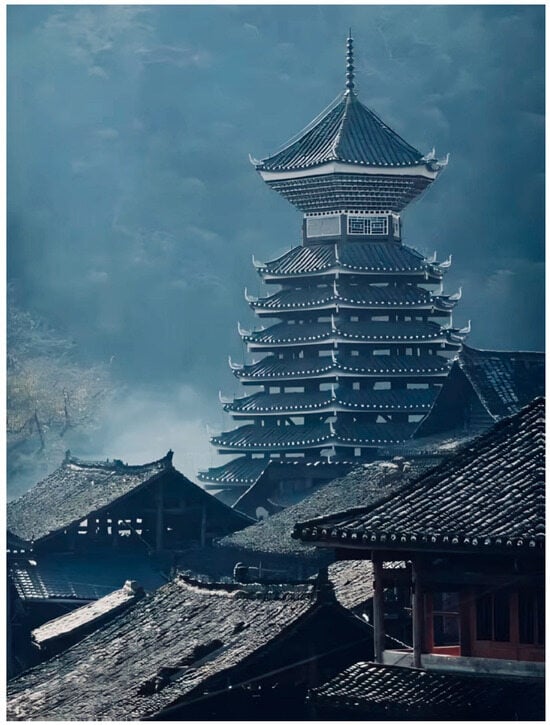
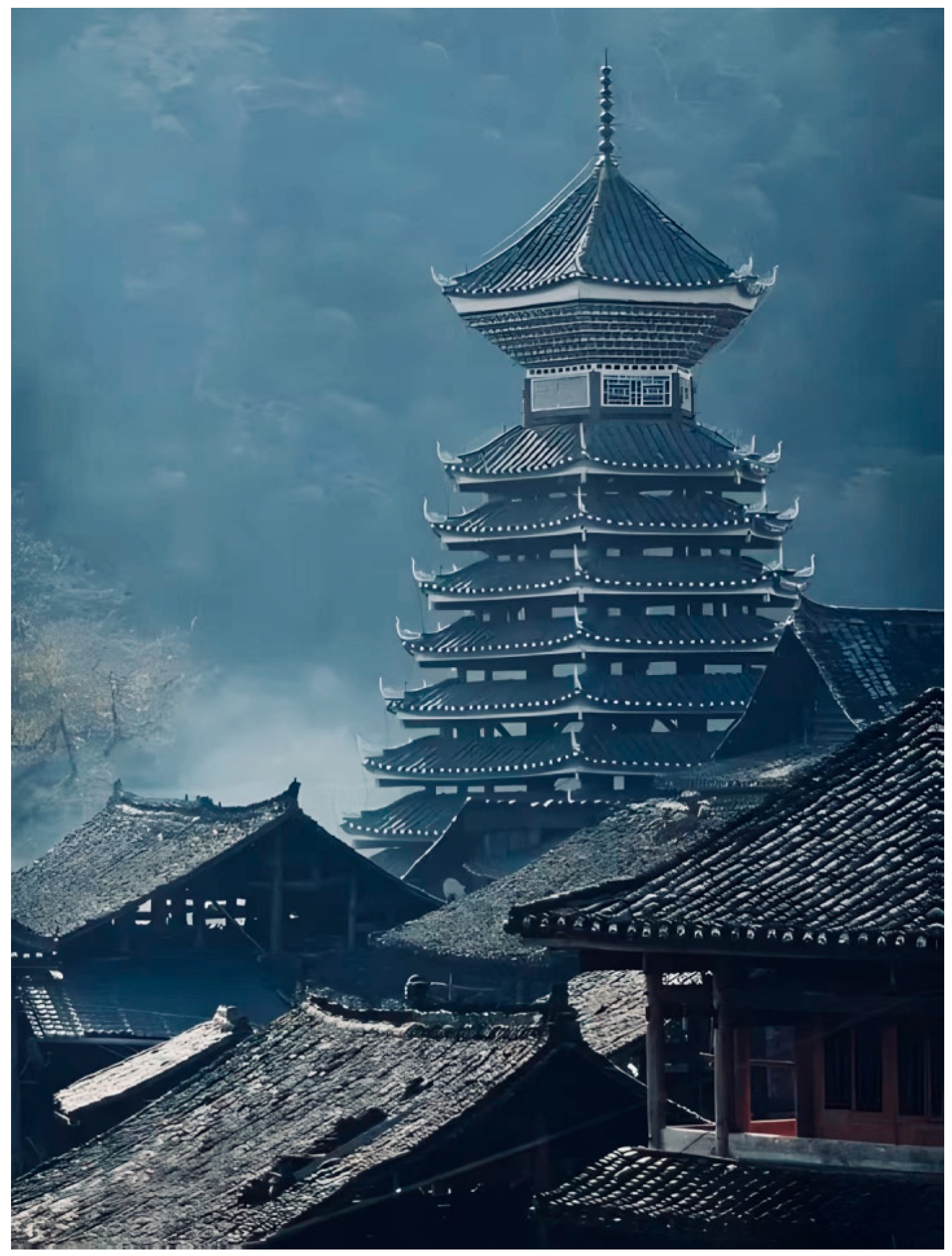
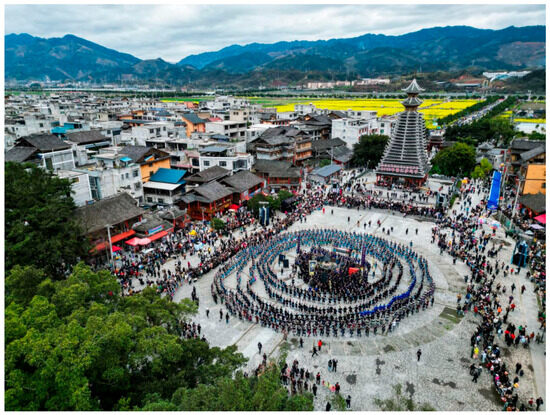
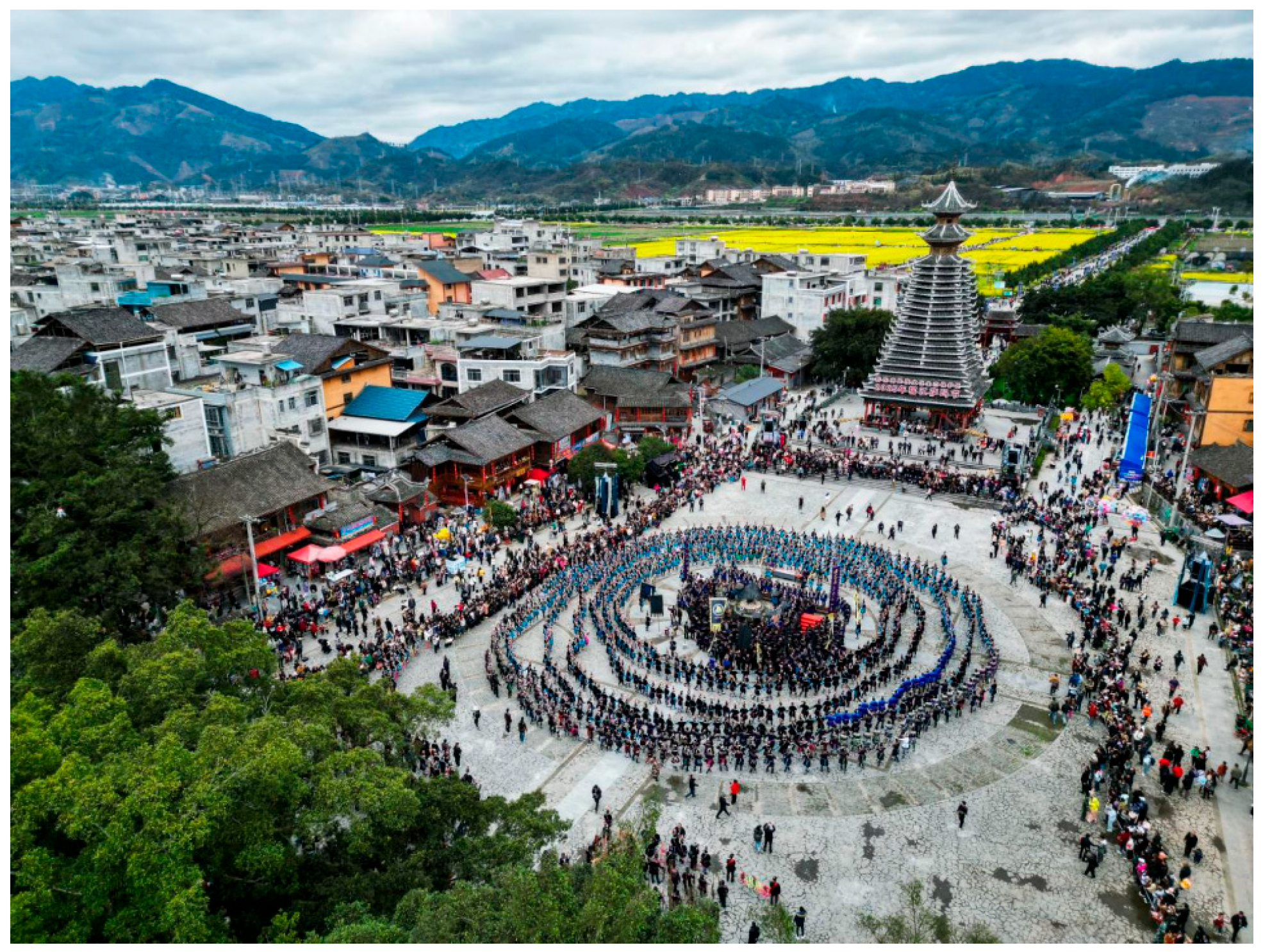
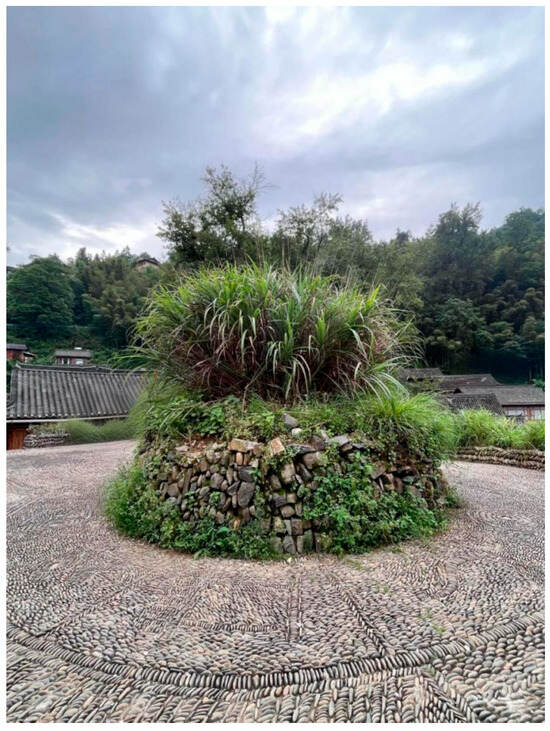
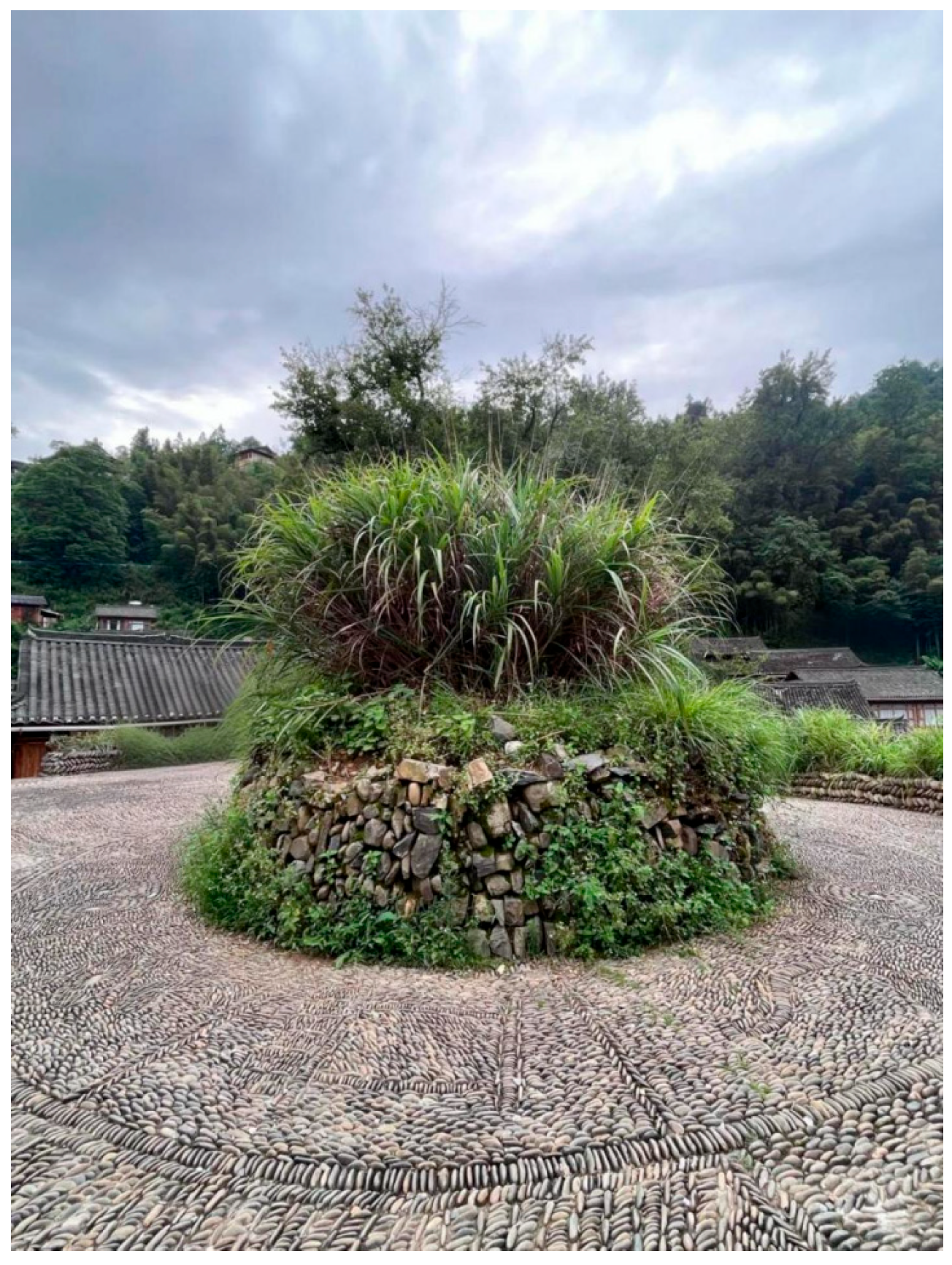
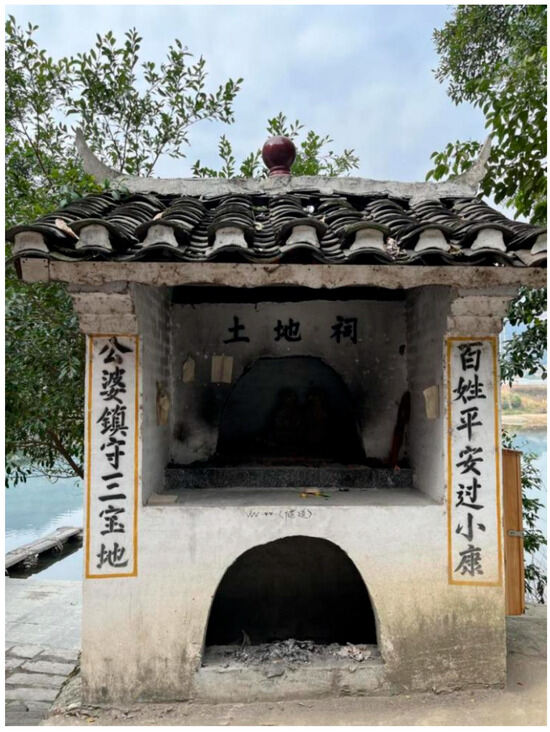
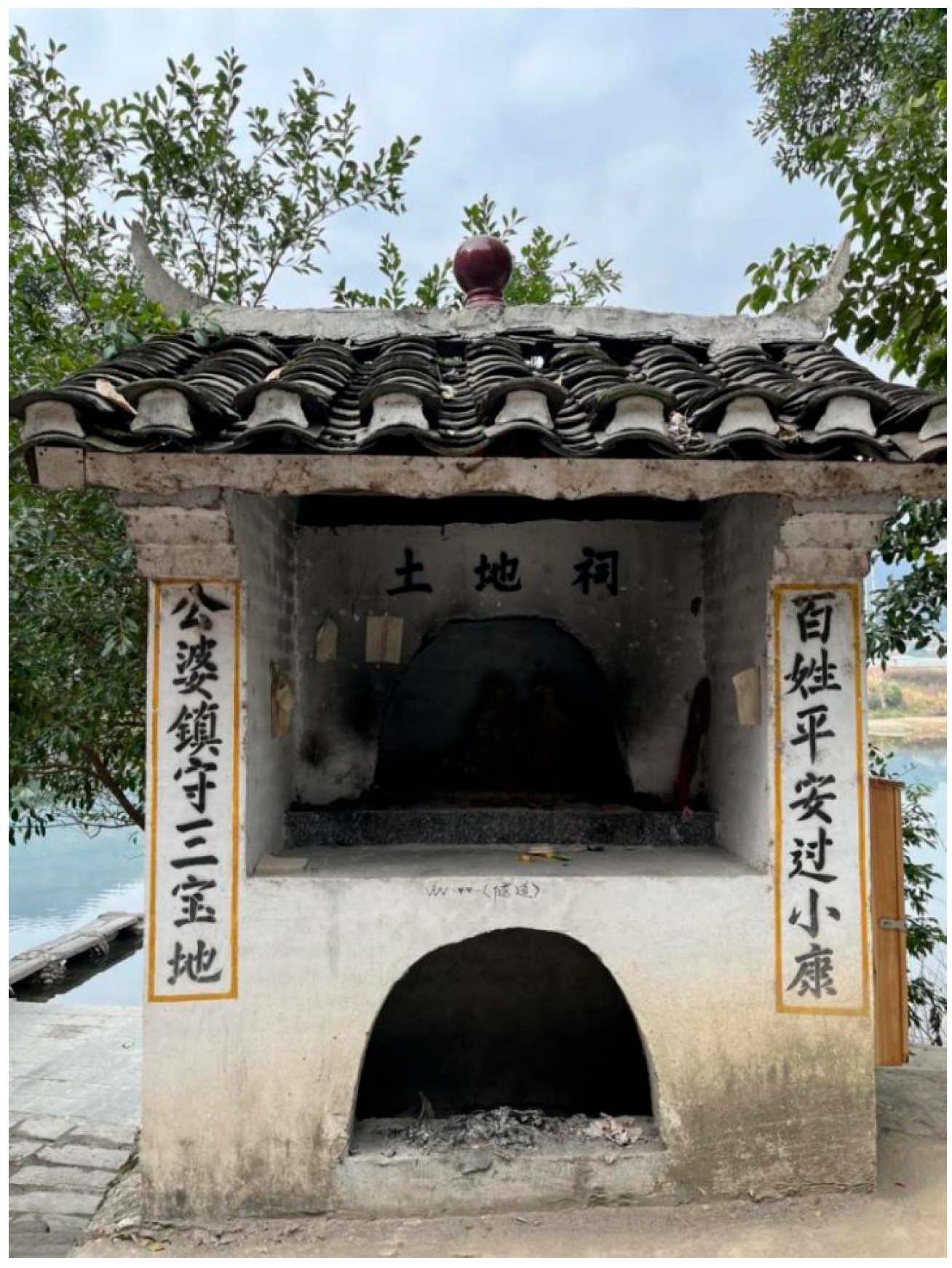
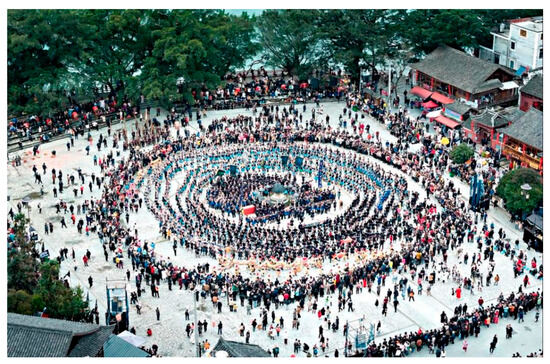
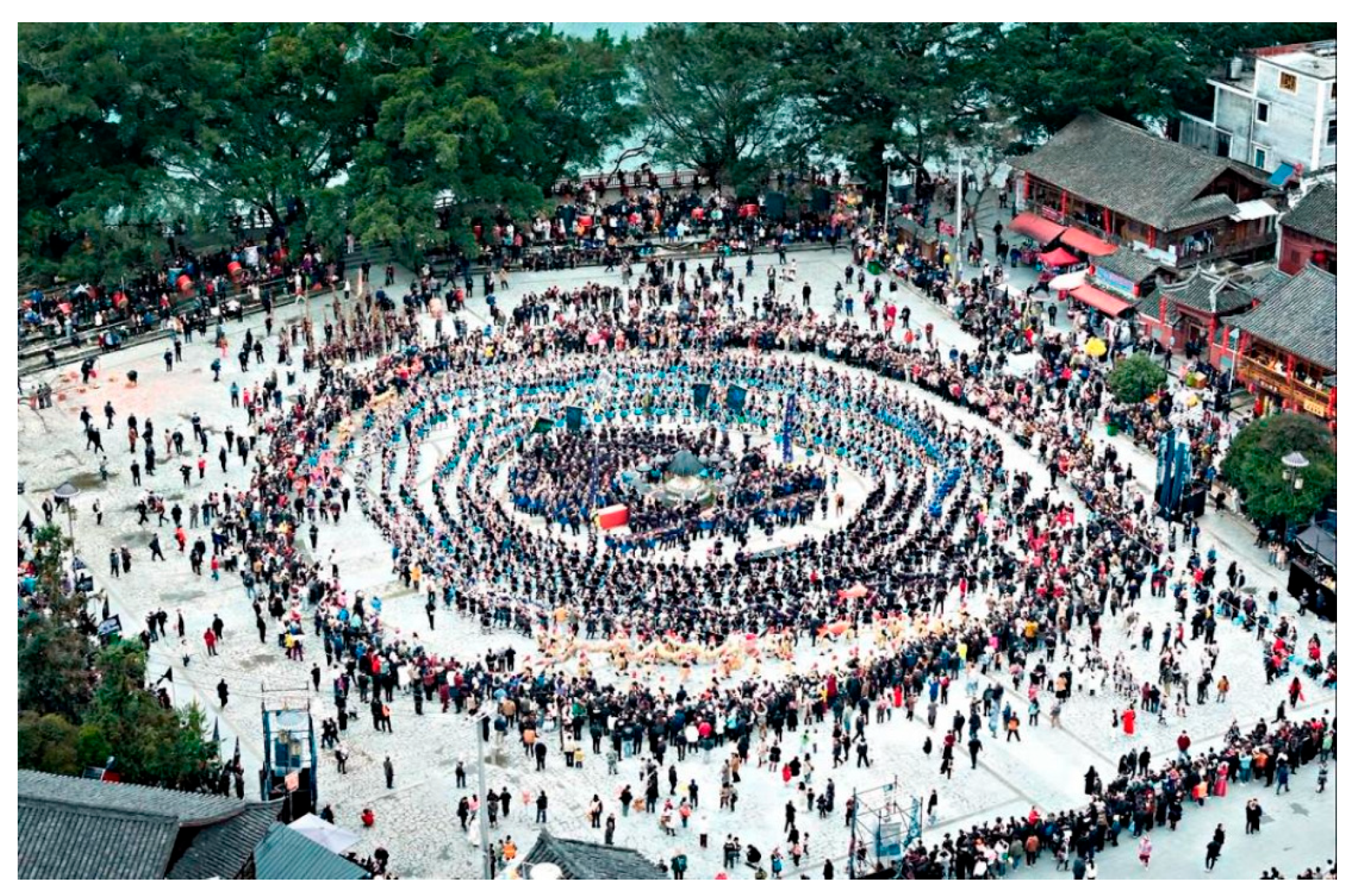
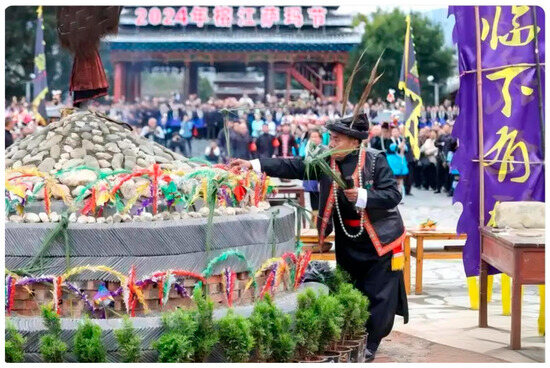
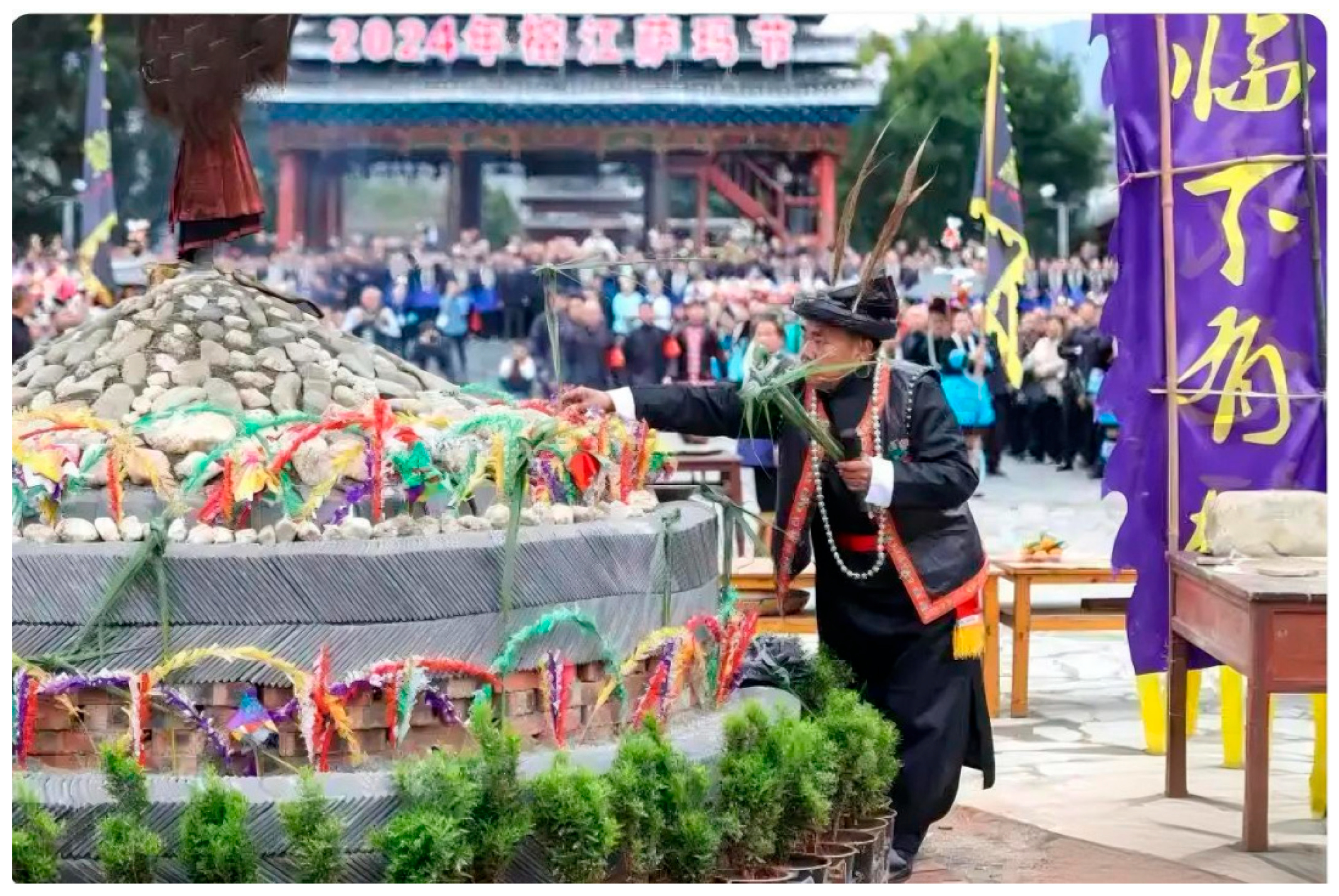
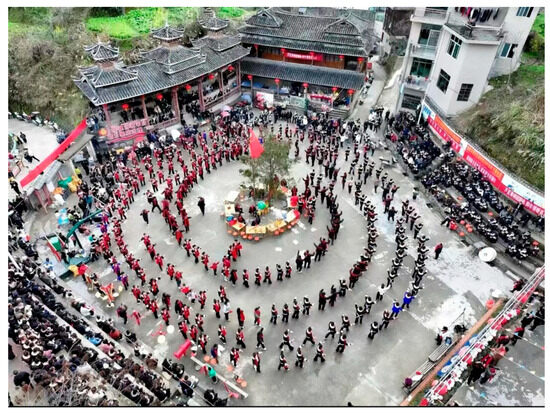
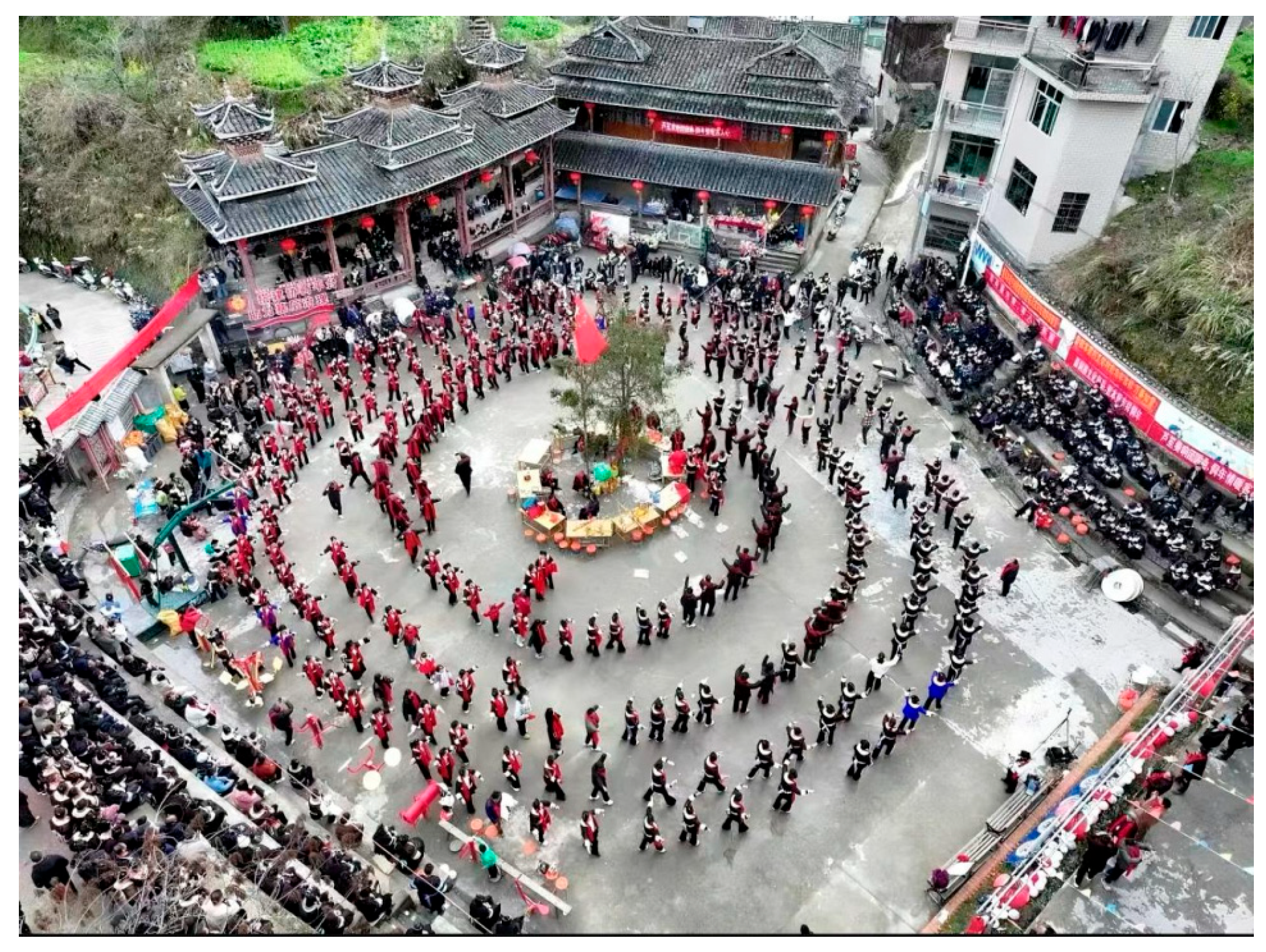
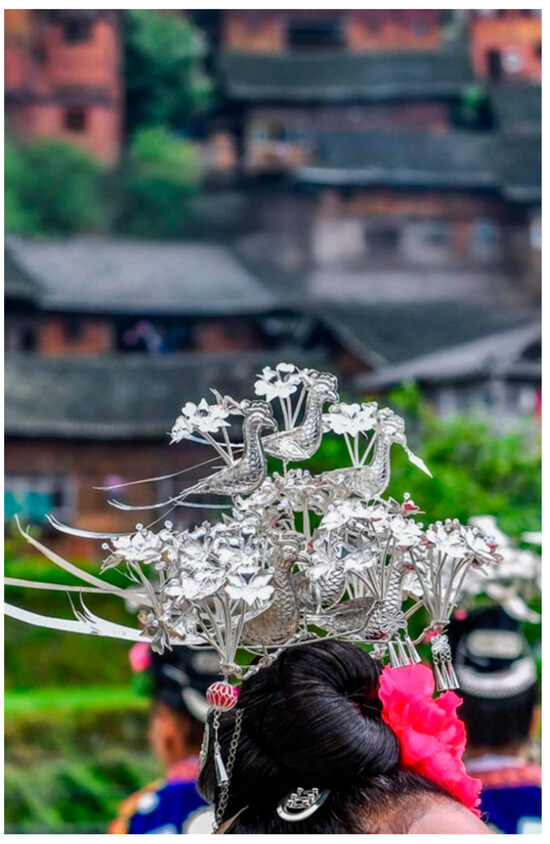
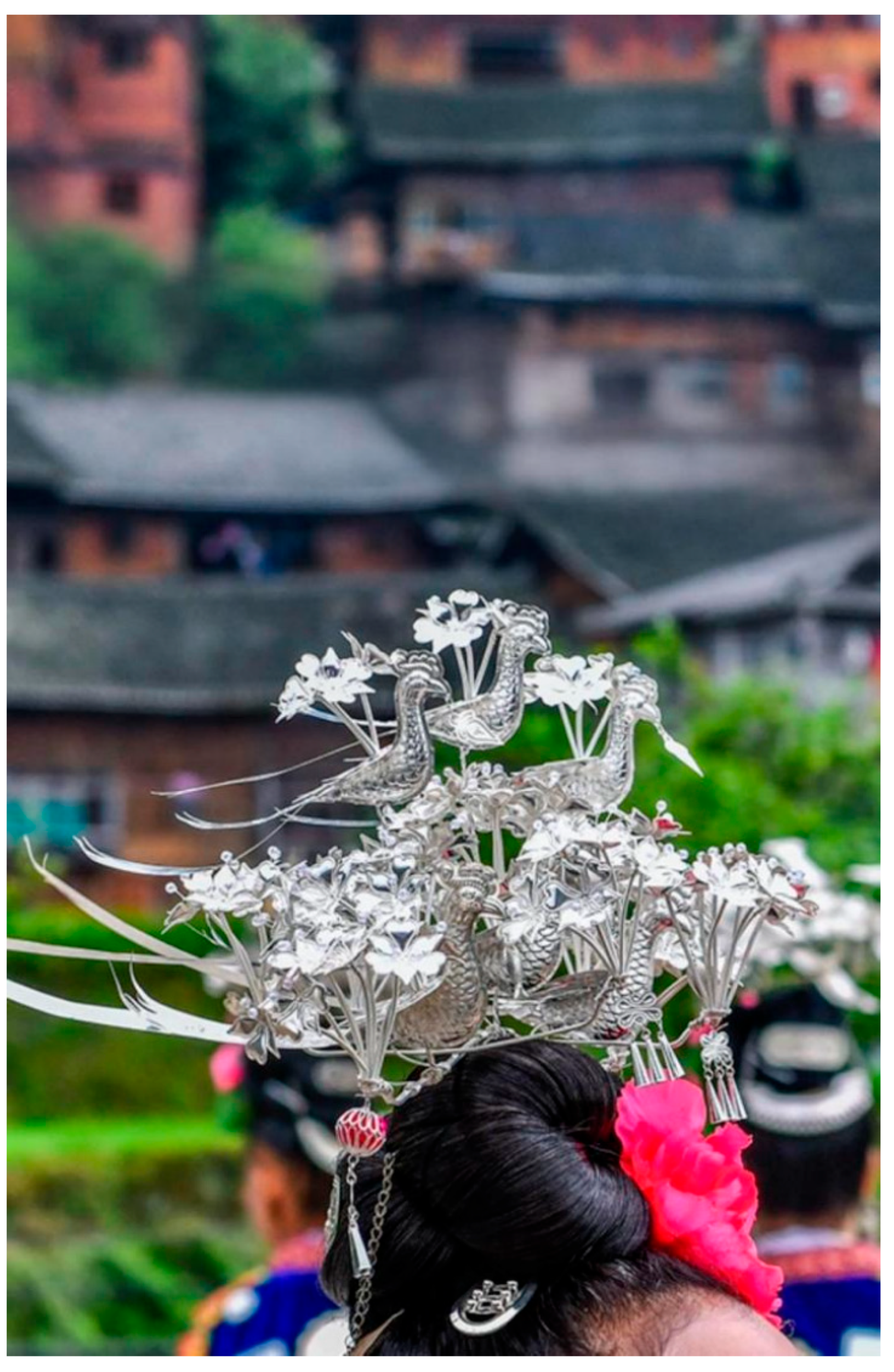


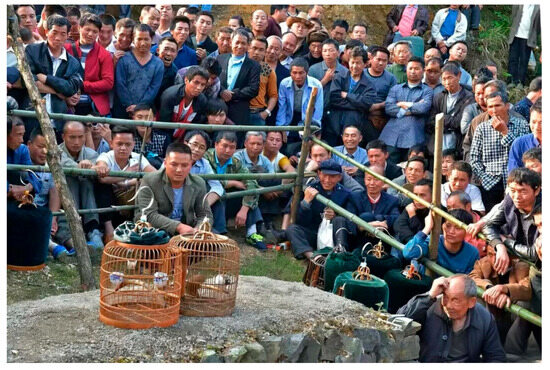
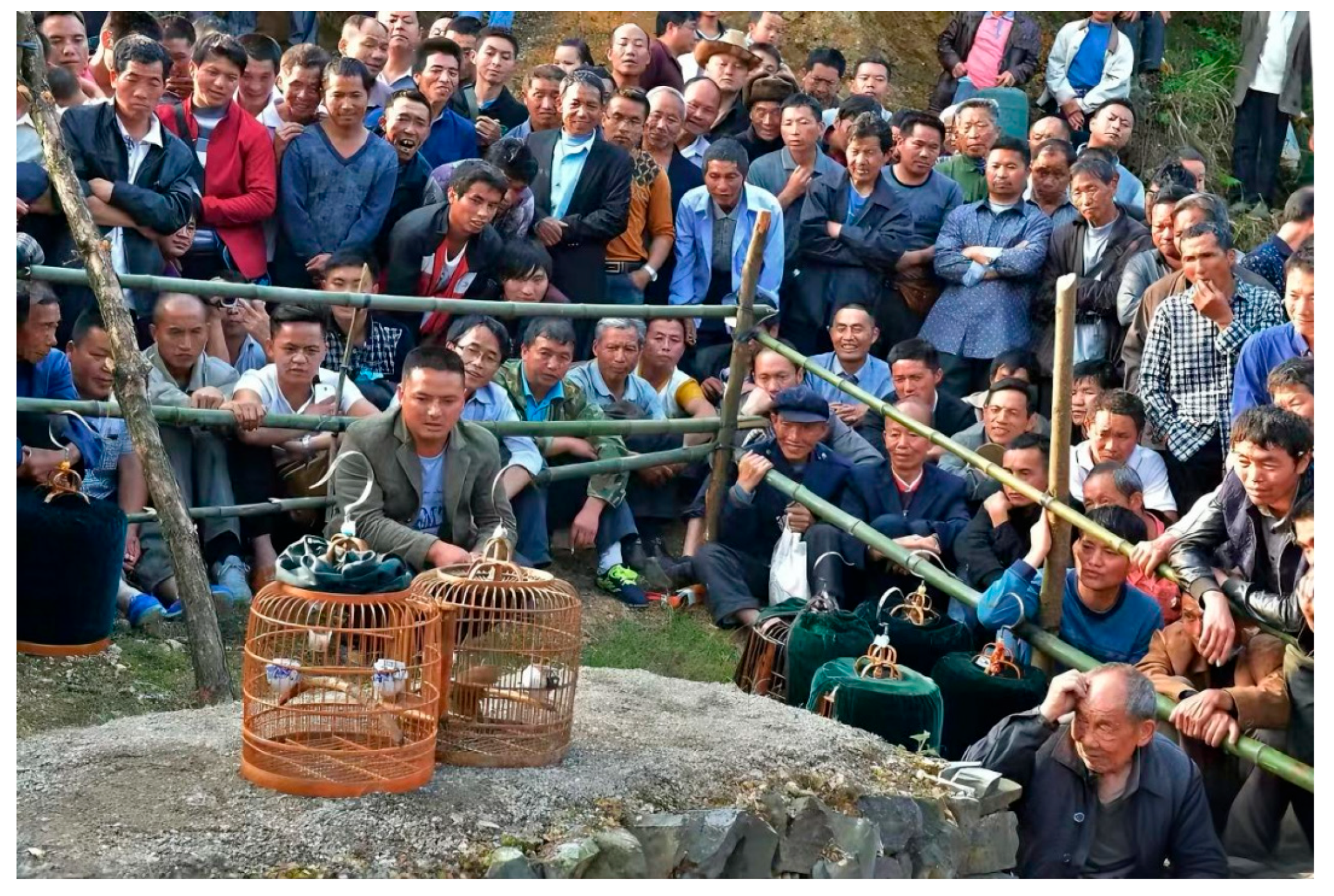
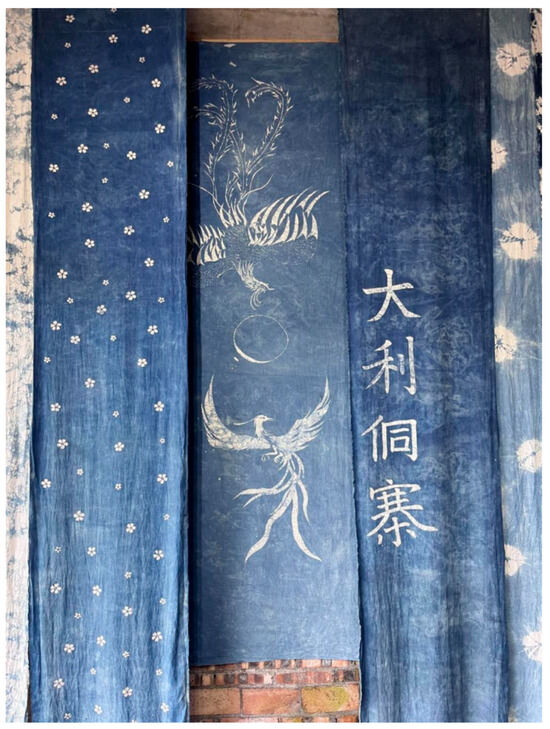
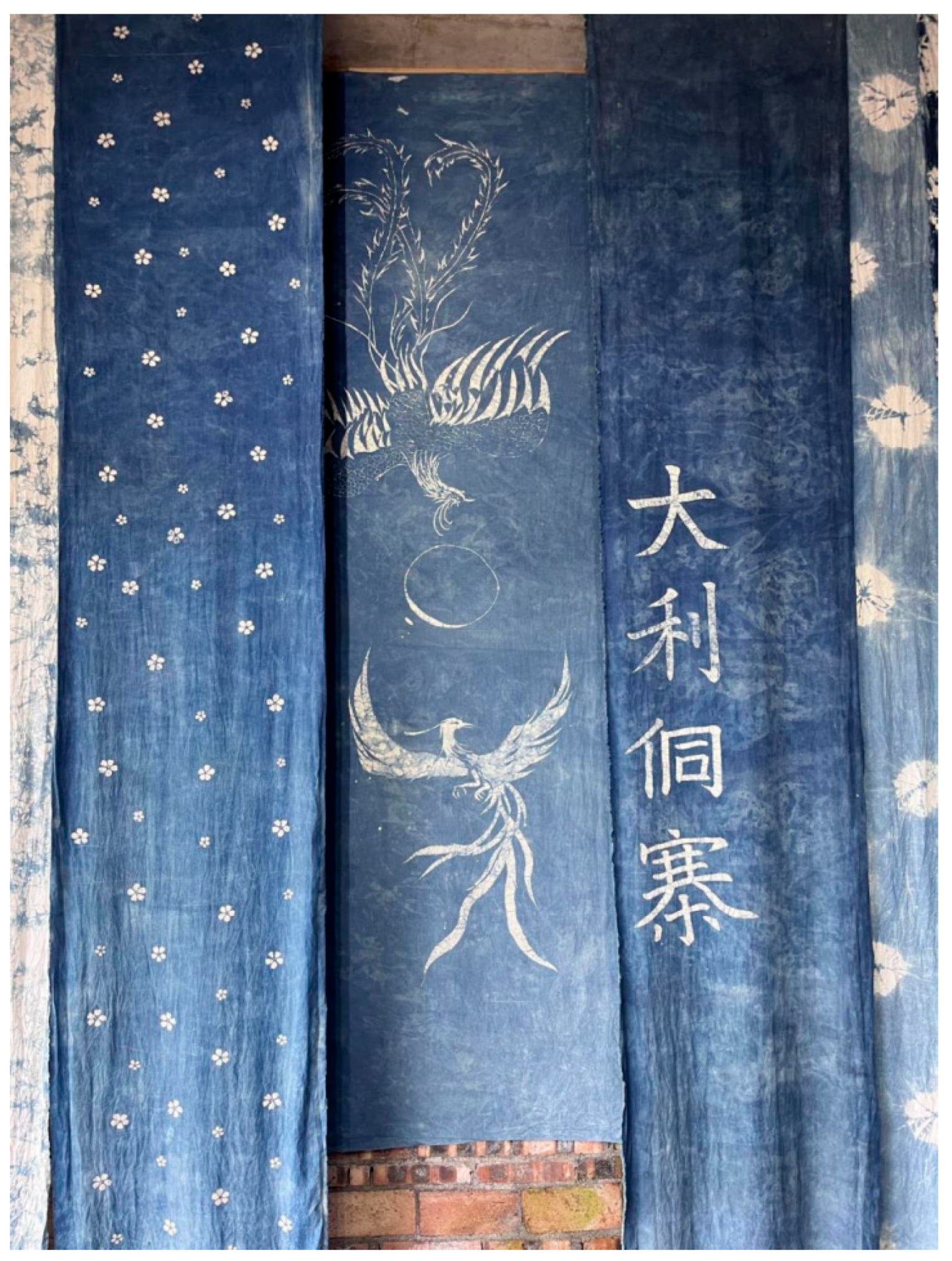
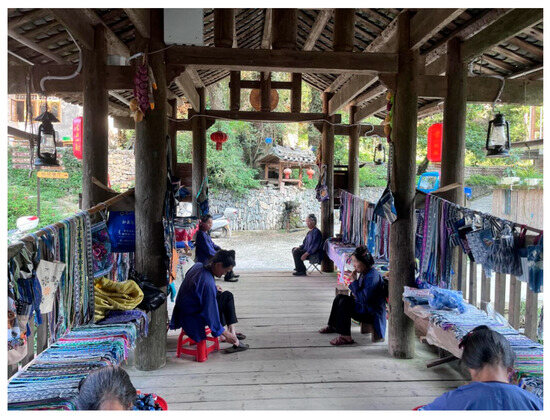
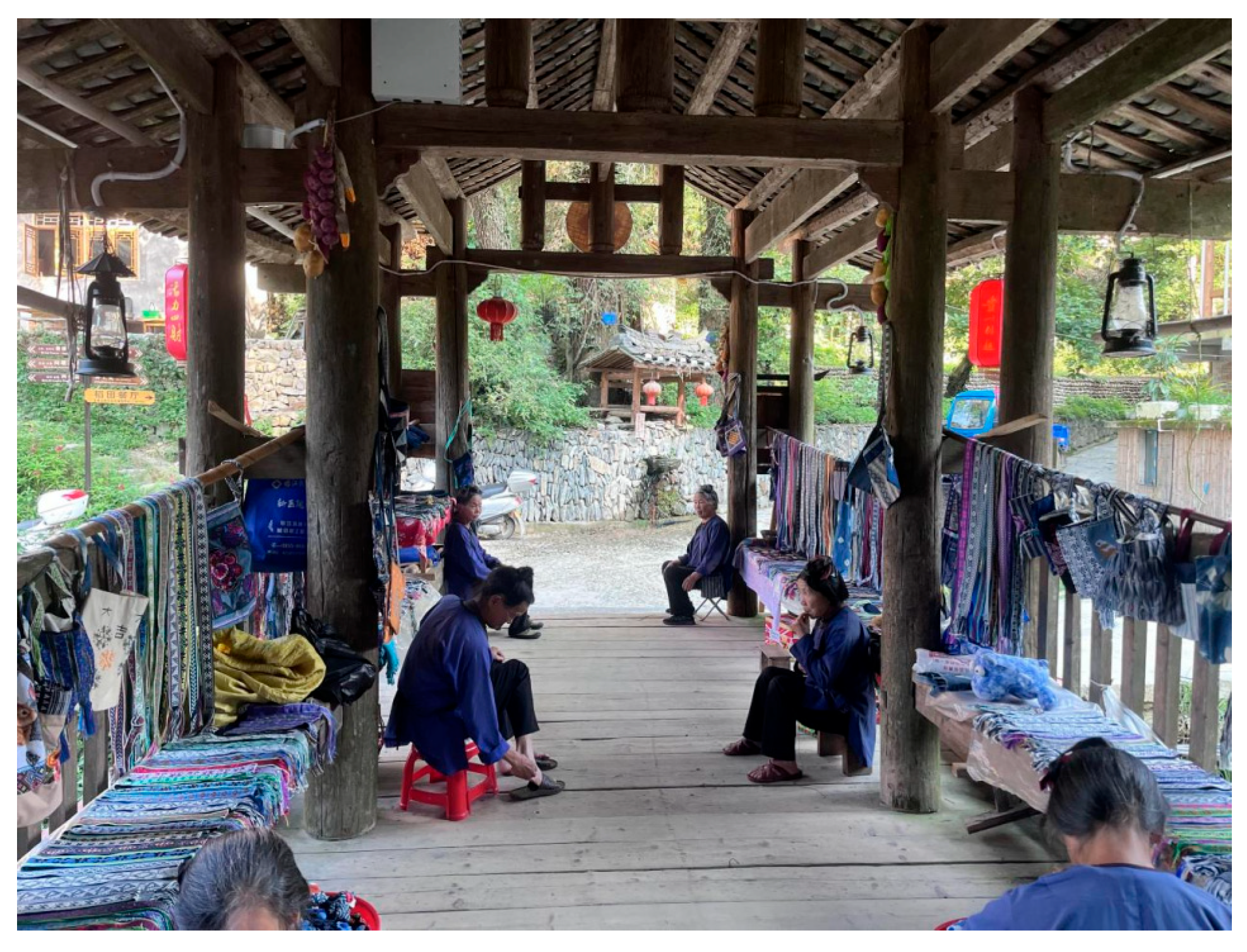
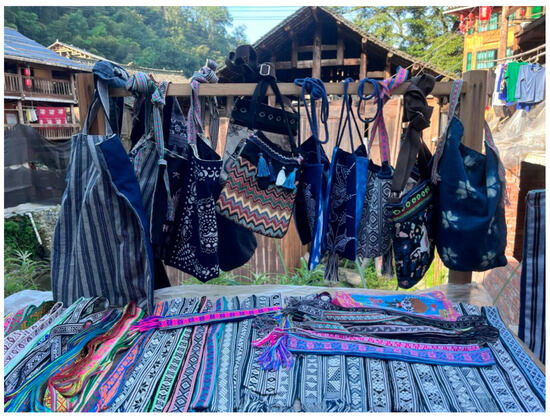
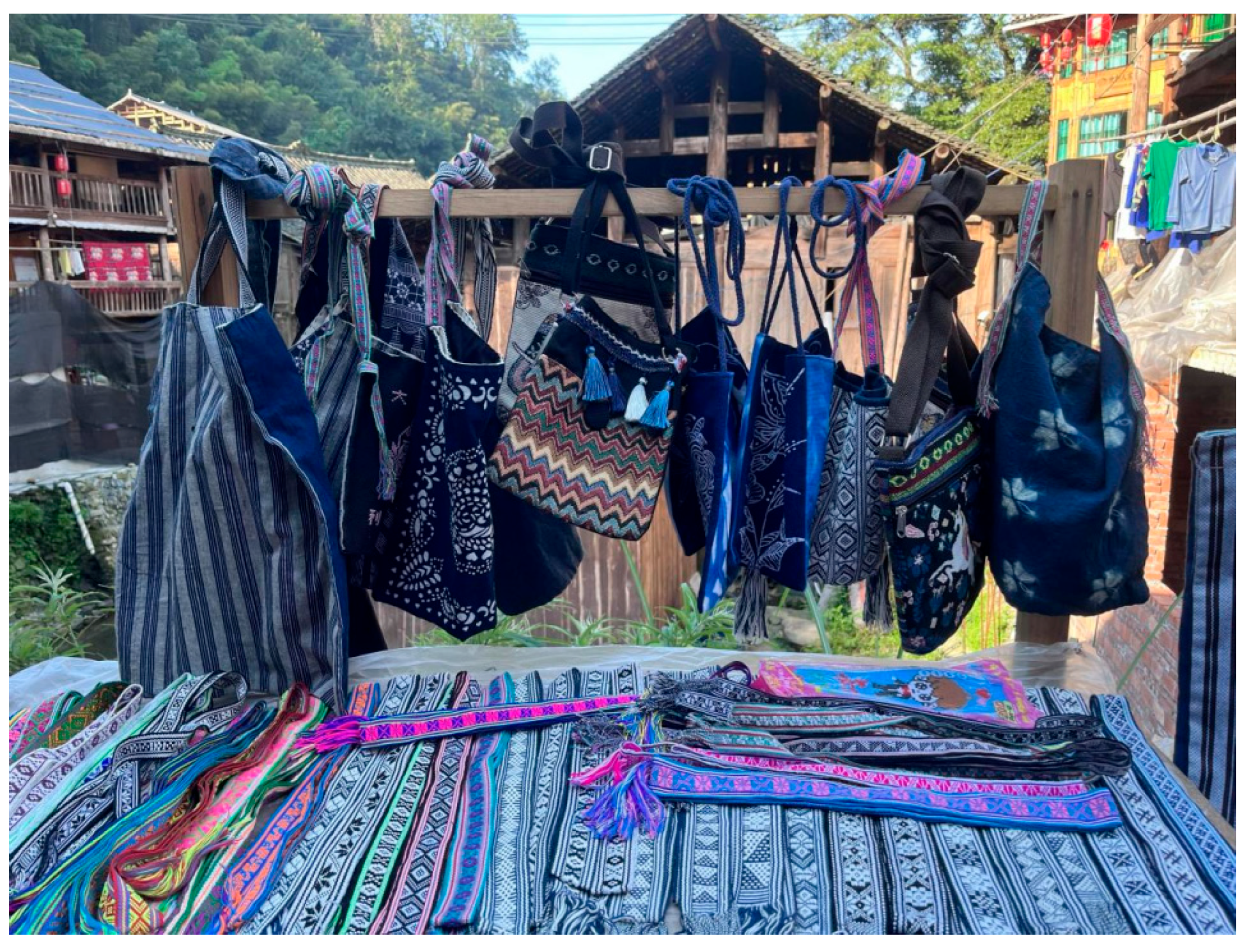
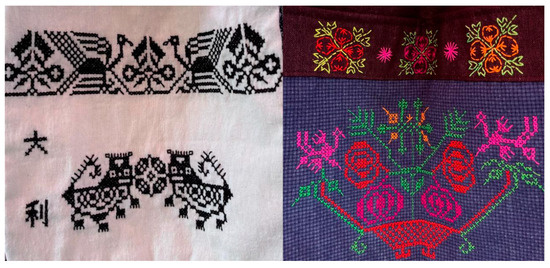
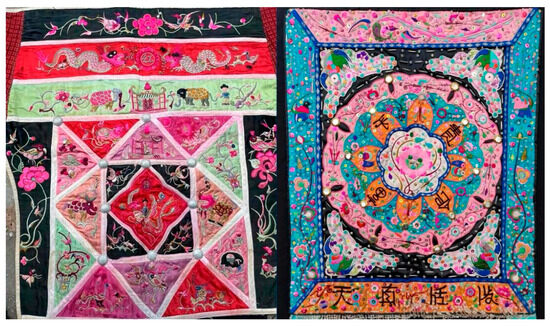
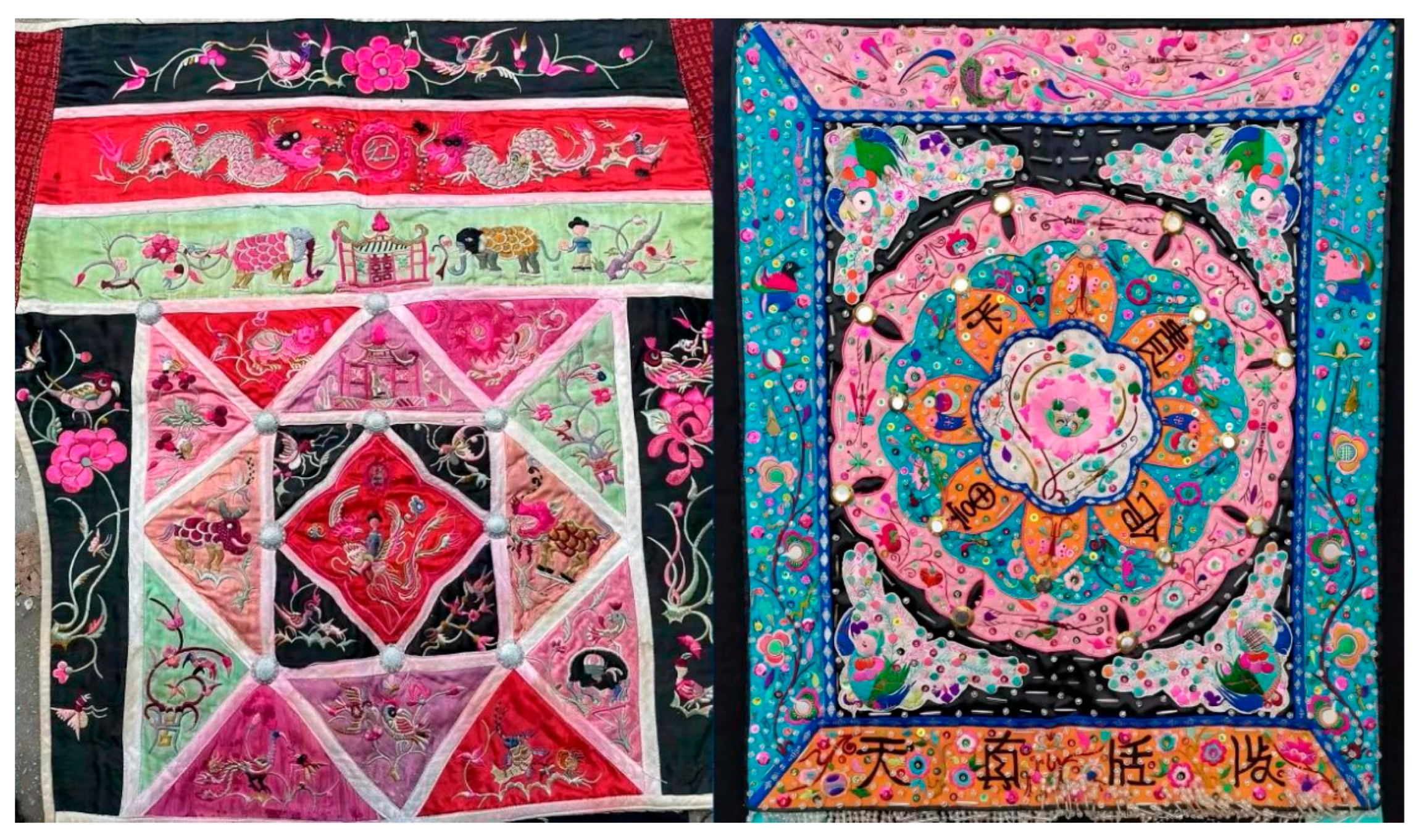
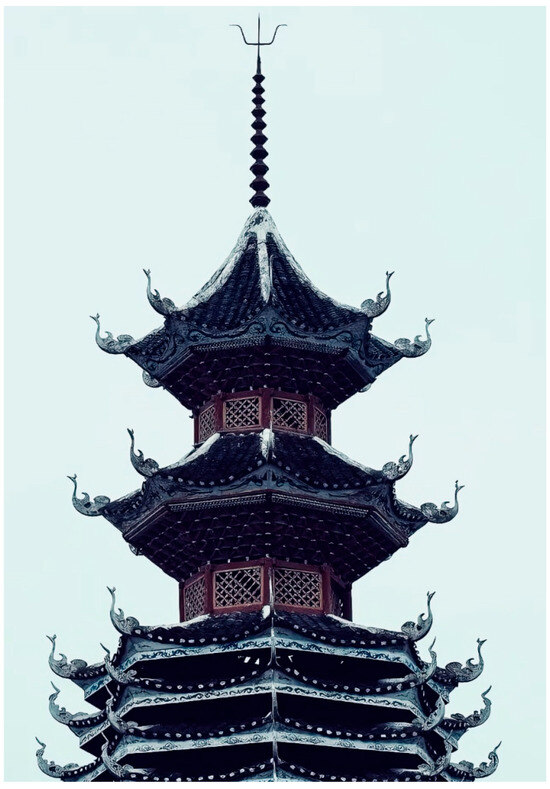
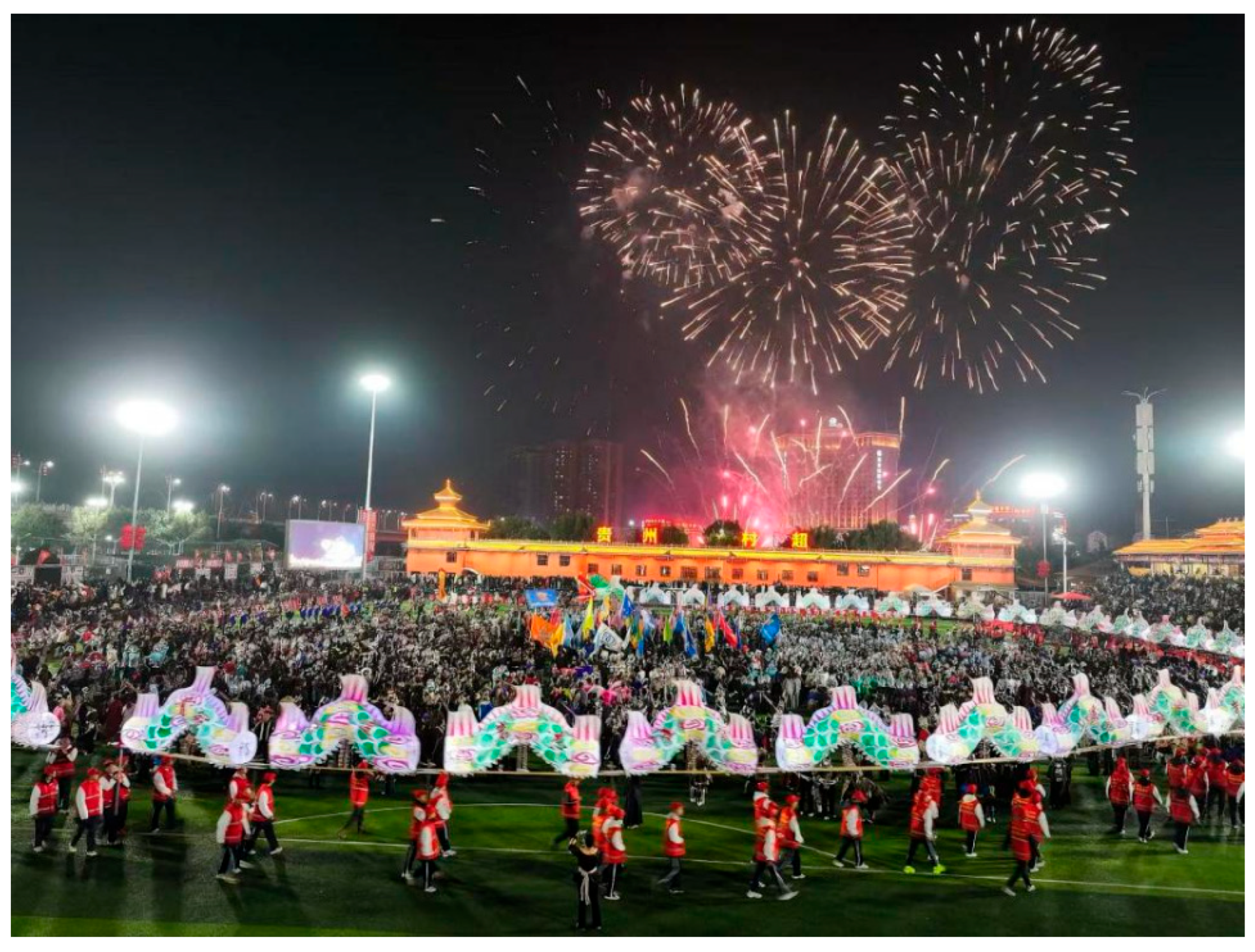
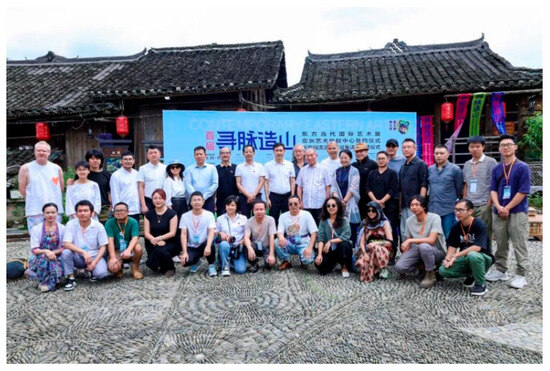
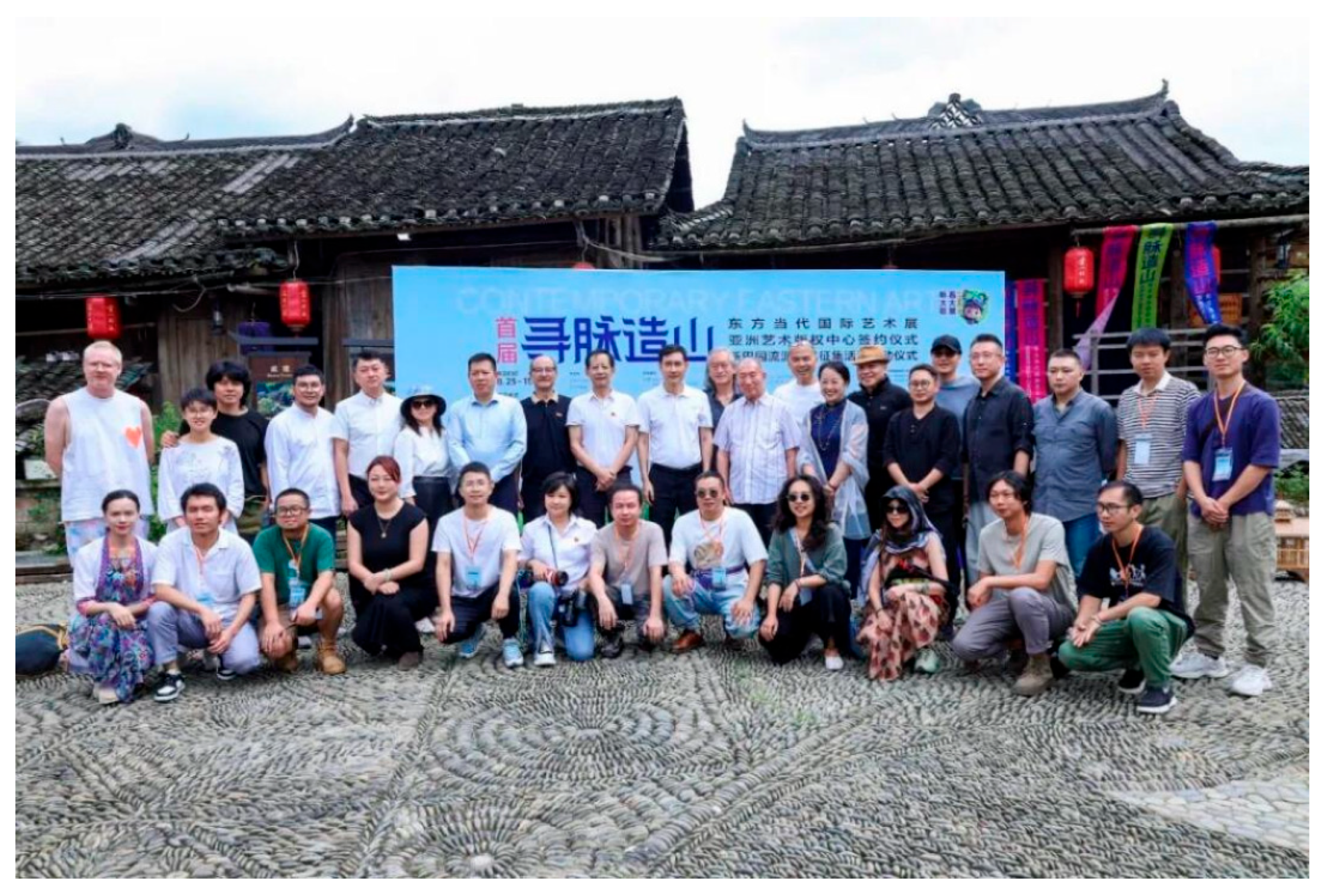


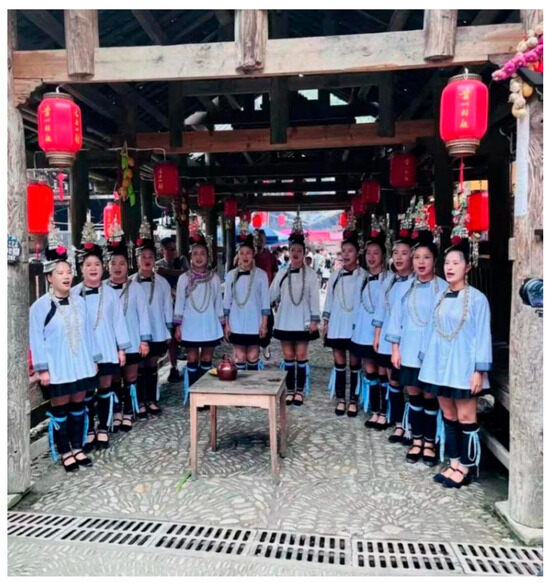
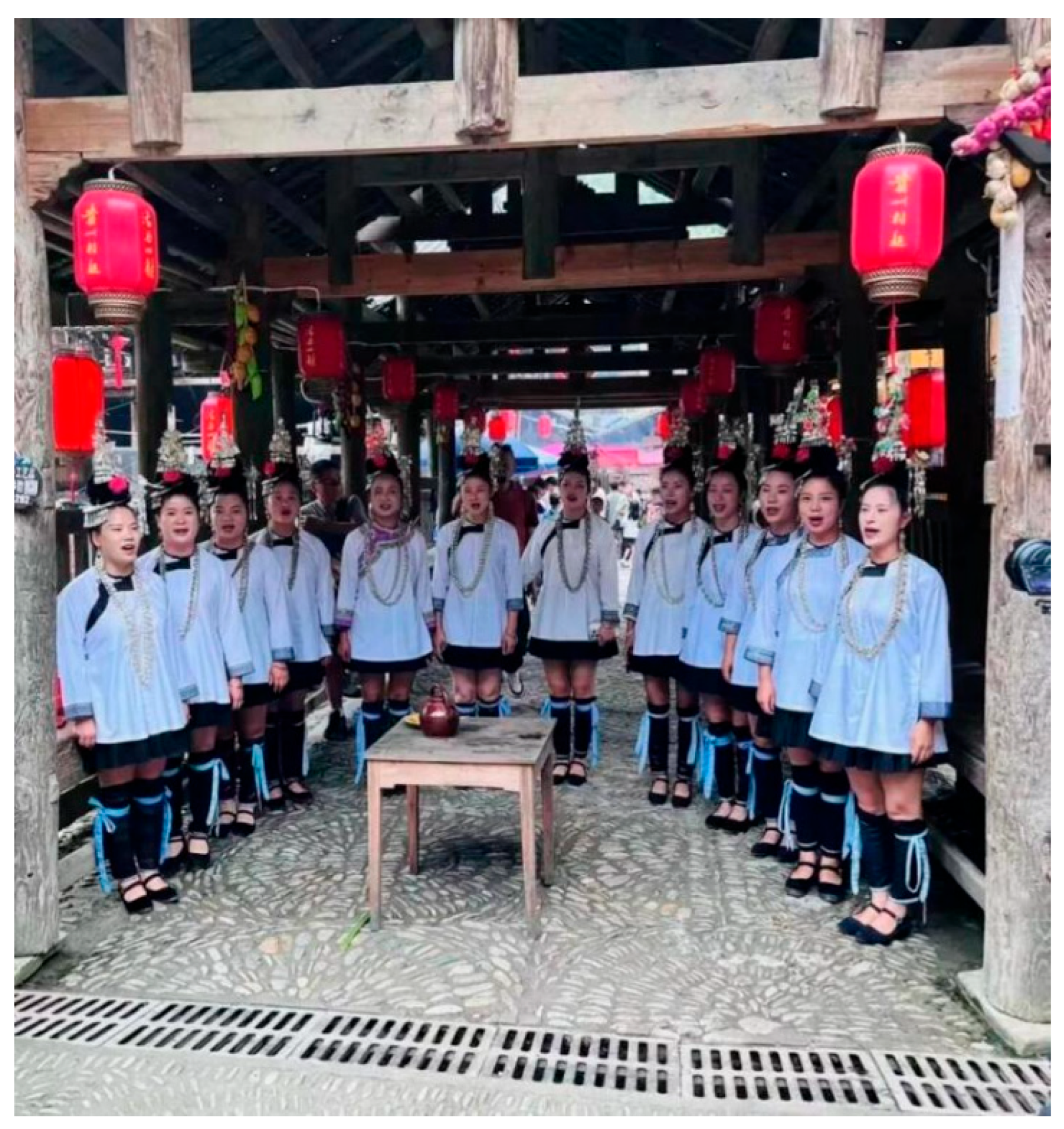
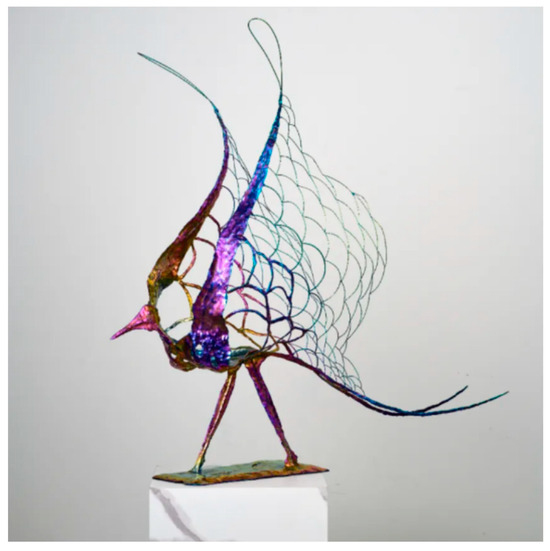
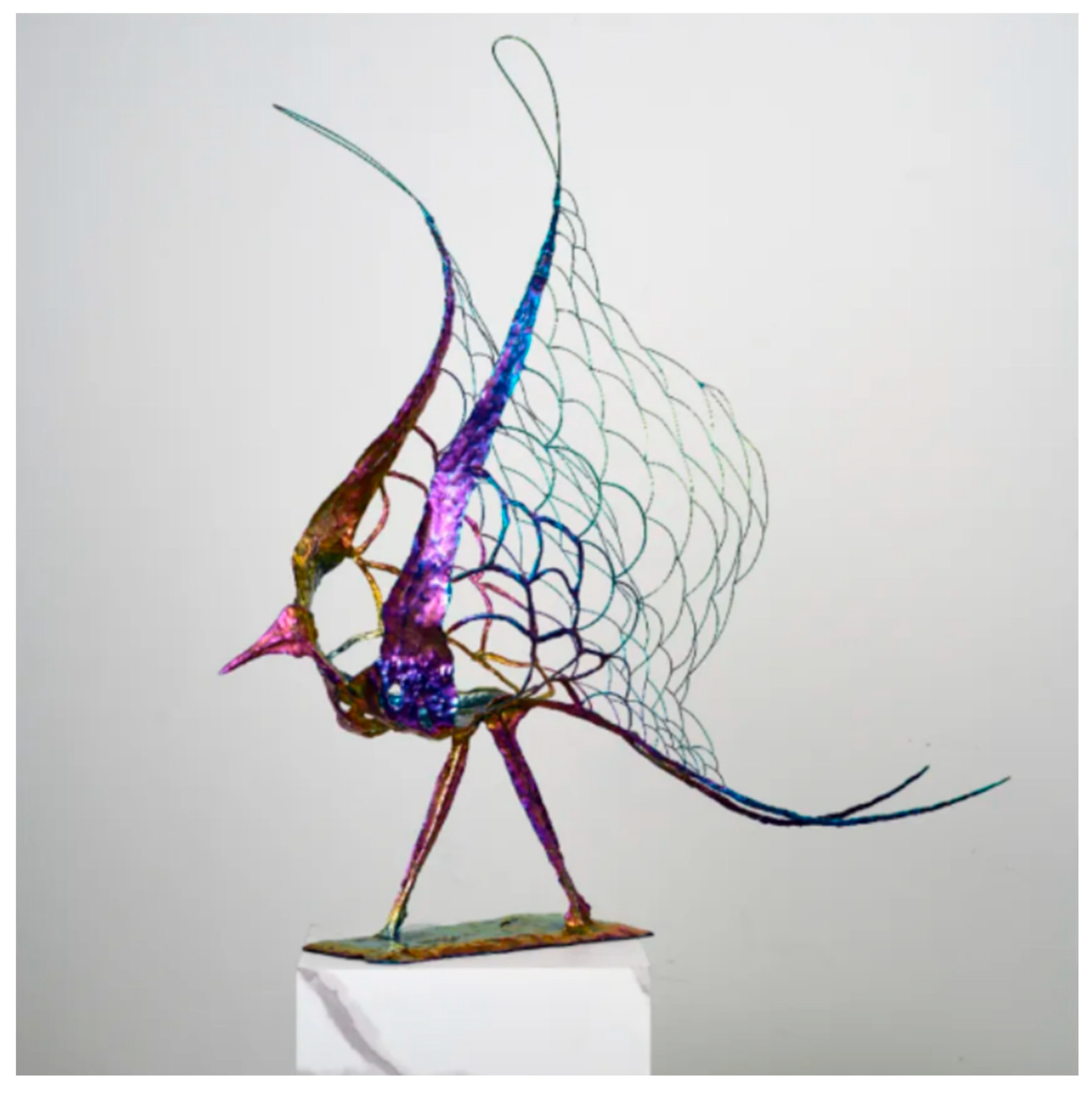
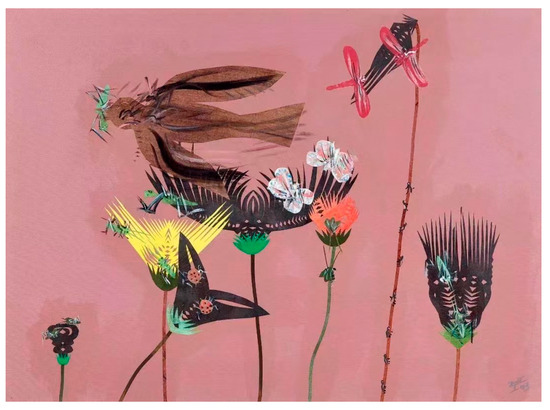
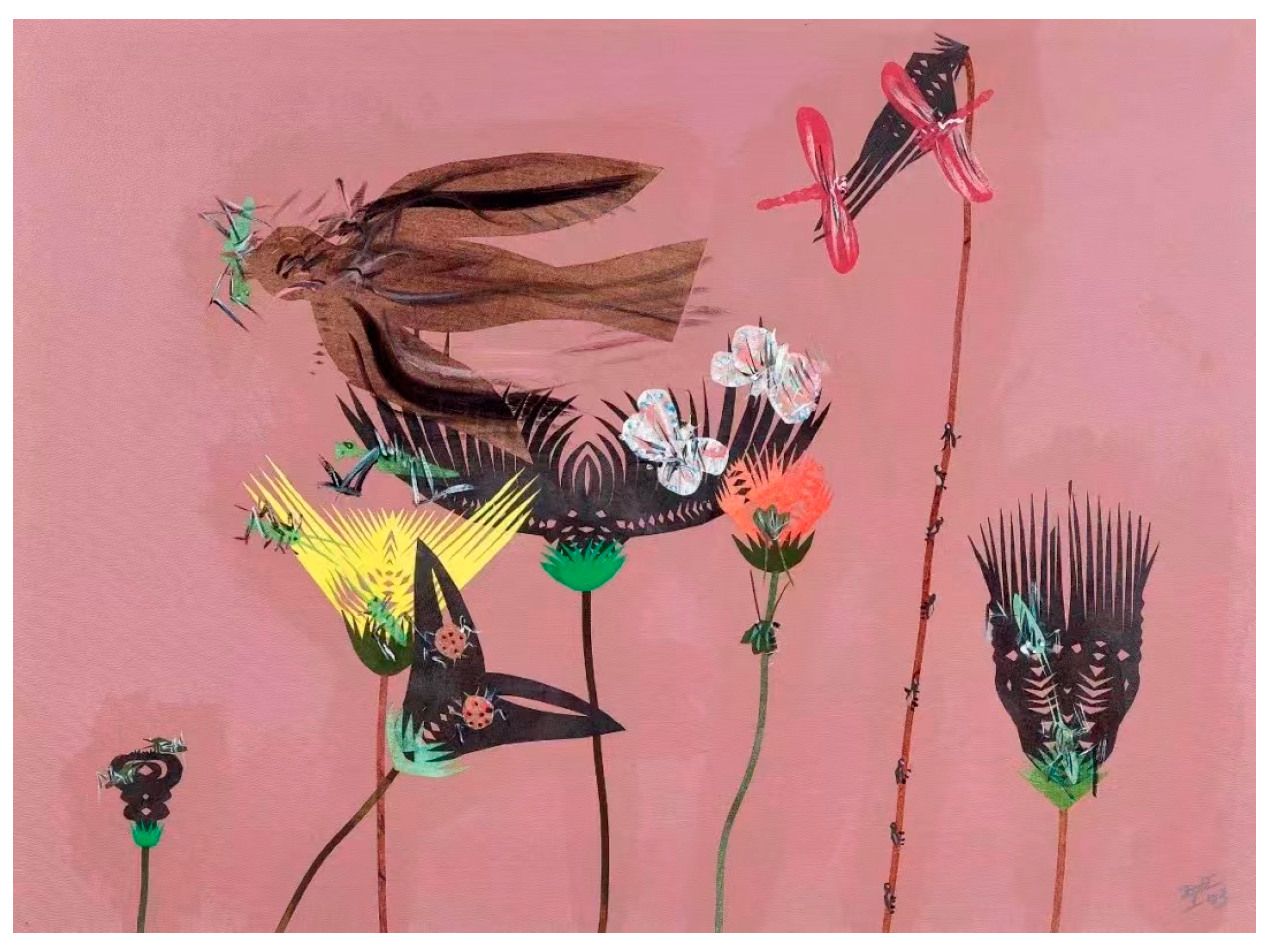
Disclaimer/Publisher’s Note: The statements, opinions and data contained in all publications are solely those of the individual author(s) and contributor(s) and not of MDPI and/or the editor(s). MDPI and/or the editor(s) disclaim responsibility for any injury to people or property resulting from any ideas, methods, instructions or products referred to in the content. |
© 2026 by the authors. Licensee MDPI, Basel, Switzerland. This article is an open access article distributed under the terms and conditions of the Creative Commons Attribution (CC BY) license.