


Abstract
Since the beginning of the second industrial revolution, the use of tanks for the storage of petroleum products ensured the permanent supply of equipment that depended on fossil fuel derived from petroleum, either for direct consumption or as an element for power generation. For correct operation, periodic cleaning of these confined spaces was required, being a common practice for the direct exposure of operators to explosive atmospheres. Currently, there are many industries that keep this kind of deposit, and cleaning works are considered of high occupational risk. In this context, the question arises as to whether human–machine collaboration thanks to the technologies that compose Industry 5.0 can mitigate these risks while generating a sustainable balance by optimizing costs and protecting the environment. In the present work, the analytic hierarchy process (AHP) method is used to prioritize the requirements that should be compiled to establish safe protocols in tank cleaning works, solving the multi-criteria problem. Results prove that a couple of alternatives improve the working conditions of the people involved in this process: the chemical cleaning and the robotic cleaning, which approximately accounts for two thirds of the decision. These requirements are aligned with the Industry 5.0 paradigm, encouraging the use of robots for high-risk processes, and influencing human behavior. In addition, cost reduction is achieved without compromising on quality of service or delivery schedule, thus enabling a circular economy that promotes occupational safety in company policies.
1. Introduction
The Technological Revolution, as the Second Industrial Revolution was called, introduced new technological systems, the most significant of which was electric power [1]. However, advances in manufacturing and production technology allowed the widespread adoption of technological systems, even in the petroleum industry [2]. These developments necessitated the use of storage tanks that, either for direct consumption or for power generation, ensured the supply of petroleum products for equipment that depended on them [3].
For proper operation, periodic cleaning of these confined spaces is required [4], either due to production needs or maintenance work. In this context, direct exposure of operators to explosive atmospheres is a common and risky practice [5]. Currently, many industries maintain this type of tank, which leads to considering these cleaning works as a high occupational hazard [6]. Since these spaces are not designed for the permanent occupation of workers, it is necessary to consider the special measures to be taken in the case of specific tasks, because of they are characterized by a lack of oxygen [7], as well as by the presence of flammable substances and chemical contaminants [8]. Statistical data on fatal accidents in this sector in the period between 1980 and 1990 indicated a ratio of 0.69 deaths per 100,000 workers per year in the United States [9]. By 2011, these data had not improved, with four out of five incidents involving multiple fatalities [10]. This was due to the fact that, on most occasions, the rescue personnel involved were not trained in the risks associated with entering these spaces [11], given that, for each person requiring rescue, up to three rescuers are required [12]. The high occupational hazard involving industrial cleaning is present in different project stages: in the study phase, during execution and commissioning, and also in the facilities that are in service (maintenance, repair, and periodic inspections, among others), affecting different sectors such as the industrial [13], petrochemical [14], and naval [15].
Integration of enabling technologies reduces risks and increases safety and production levels [16]. However, the singularity of many industrial cleaning processes requires a combination of the resourcefulness of human expertise in collaboration with efficient, intelligent, and accurate machines, to obtain reliable solutions [17,18]. In this context, the new paradigm of Industry 5.0 becomes essential [19] to consider safety, environmental, quality, and cost-optimal issues, placing the wellbeing of the industrial worker at the center of the production process [20]. These new concerns have been taken into account in other industrial cleaning processes, such as in food production [21], manufacturing [22], or coating and painting [23].
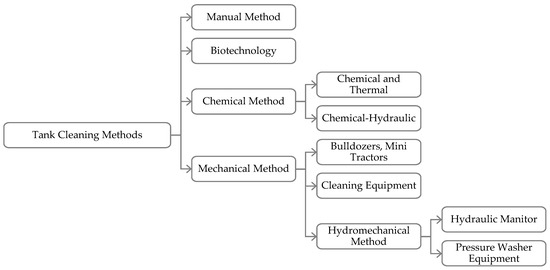
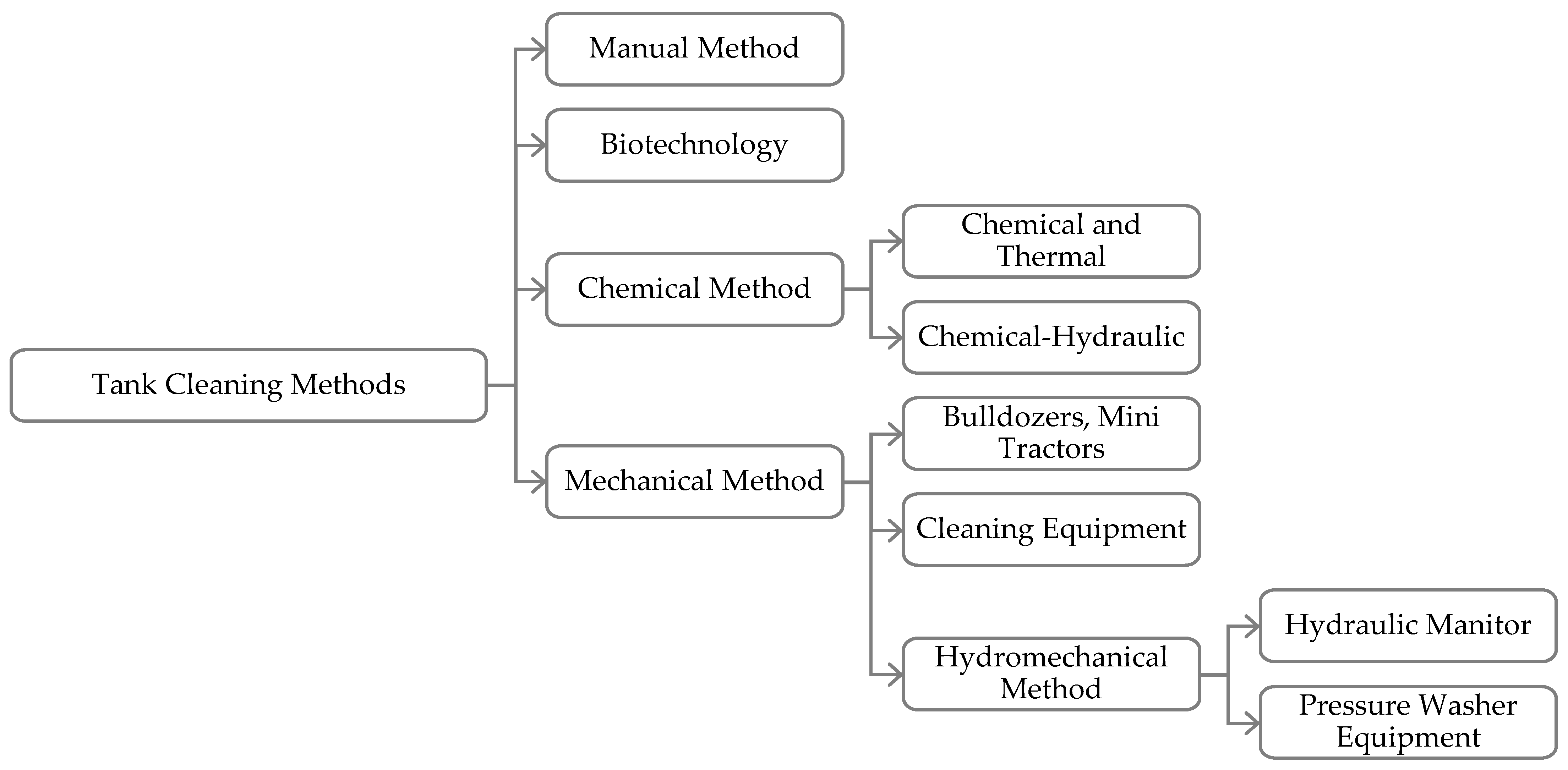
Tank cleaning includes the association of hazardous work, as stated in Spain in Annex I of Royal Decree 39/97 [24]. These activities include work in explosive risk environments, work with fuel transfers, work in confined spaces and work with chemical substances, and work with machines and electrical and/or mechanical tools, among other jobs. These cleaning tasks consist of the removal of residues formed by the storage of oil over time. Therefore, cleaning must be carried out inside the tank, once the tank is free of gas and ensuring the entry of the operators [25]. The removal of these sludges and sediments can be performed using manual methods or various technologies, with the help of chemicals, mechanical devices, and/or water [26]. Figure 1 shows a classification of the different methodologies that can be used.
Figure 1.
Tank cleaning methods. Adapted from [26].
First, manual cleaning, which consists of an intervention methodology based on the manual removal of the residues removed with hand tools (usually shovels), once specialized technicians have certified the absence of gas and the fluids have been removed by means of vacuum trucks or pneumatic or volumetric pumps, electrically or hydraulically operated but with explosion protection. This procedure requires access to the tank by qualified personnel with appropriate protection and the use of tools and equipment that are not capable of producing sparks. Fortunately, this type of cleaning is being used today in more and more specific cases where the characteristics of the tank or other external conditions do not allow the use of another methodology, due to the time needed to complete the entire procedure and the exposure of the operators to carry it out [27,28].
Next, the cleaning of deposits by biotechnological methods, based on the use of microorganisms fed by hydrocarbons, which decompose the oil. In this way, it is also possible to use these oil wastes as food for the plant world [29], while at the same time controlling pollution [30]. However, these are very time-consuming (although environmentally friendly) processes, so their applicability is very limited.
Then, chemical cleaning, which consists of adding chemical reagents to the waste to be removed, with the intention of oxidizing the organic compounds present in the waste [28]. However, these can deteriorate the tank coating, reducing its useful life or adding (costly) activities to recover its functionality. In addition, they generate enormous amounts of noxious water. Therefore, most current studies focus on optimizing the cleaning parameters to increase their efficiency [31], while improving their sustainability [32], reducing water consumption and/or using more innocuous products.
Finally, mechanical cleaning, which can be performed with purely mechanical equipment or using hydromechanical solutions, which in turn can include chemical products [33] or not [34]. These processes have evolved with technological advances up to the incorporation of robotic systems [35,36,37]. It should be noted that these methods manage to eliminate the entry of people into the tanks to be cleaned, making these cleaning operations safer tasks.
Based on these methods that can be applied to the cleaning of petroleum tanks, this article aims to:
- Define and prioritize the requirements that should be used to establish (safer) protocols for cleaning petroleum product tanks.
- Select a case study (defining the type of substance to be stored, the type of storage tank, etc.), in which to perform the methods selected.
- Assess two types of alternative cleaning procedures to conventional (manual) tank cleaning, with the potential to minimize worker exposure to rarefied and/or explosive atmospheres: chemical cleaning and mechanical (robotic) cleaning.
The case study begins with the sizing of an integral system for degassing, degreasing, and cleaning of such storage tanks. For the efficient storage of products such as crude oil and its derivatives, different types of storage tanks, usually metallic, are required. In addition, if large volumes are stored, cylindrical tanks with a vertical axis at atmospheric pressure are usually used. In addition, these tanks require a self-supporting fixed roof that can absorb the loads generated by the live loads plus their weight, in accordance with API 650 standard [38] and the complementary technical instruction MI IP-02 [39].
The evaluation of alternative cleaning procedures is realized using the multi-criteria decision method analytic hierarchy process (AHP). In this way, it will be possible to reflect by applying structured reasoning until a reliable result is reached for the establishment of the cleaning protocol. Both alternatives perform the cleaning of vertical shaft tanks for the storage of petroleum products with the purpose of minimizing the risks inherent to the activity, from the entry into confined spaces [40] to the projection of particles [41] and even musculoskeletal disorders [42], increasing the safety and health of the workers in the different actions involved with respect to manual cleaning.
2. Materials and Methods
2.1. Case Study
This research has opted for a case study because it enables the selection of the object of the study and the real scenario [43]. The case study is a research method that has been used by many authors [44,45,46,47]. When only limited theoretical knowledge exists, an inductive research strategy leading to emerging theory from a case study constitutes a good starting point [48]. This is based on multiple sources of evidence to study contemporary events in their real context when the phenomenon and the context are difficult to separate [49], which can replace experiments and analysis of archival information [50]. Building theory from a case study is a research strategy that involves using the case to create theoretical constructs, propositions, and/or midrange theory empirical evidence [51]. A theoretical sampling of single cases is straightforward. Cases are chosen because they are unusually revelatory, extremely exemplary, or because they represent unique opportunities for gaining research insights [52]. For the interested reader, Eisenhardt and Graebner provided the keys to building a solid case study [53].
The study will focus on the cleaning of a vertical shaft tank, with the dimensions compiled in Table 1.
Table 1.
Tank characteristics.
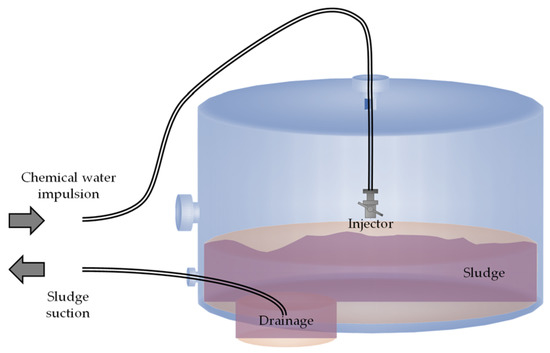
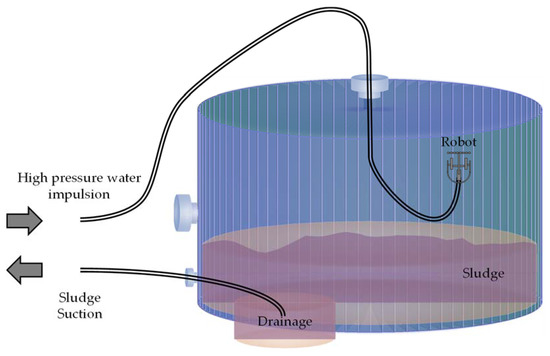
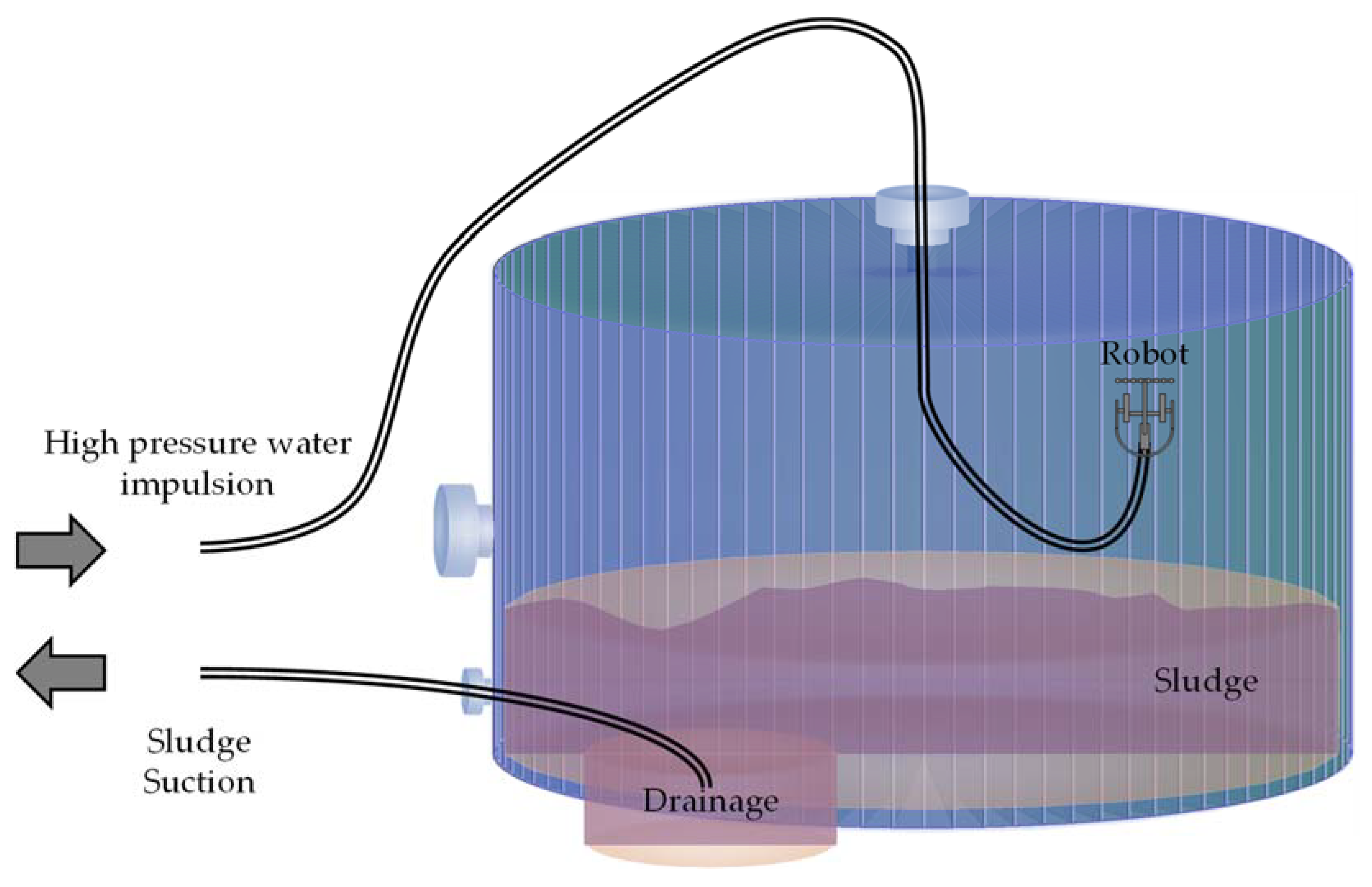
The type of cleaning taken as a reference is manual cleaning. The first alternative to be analyzed is chemical cleaning. This procedure is based on the recirculation of preheated chemical solutions, which accelerates and improves their chemical attack which, added to the mechanical attack produced by the physical impact caused by the projected solution, irrigates, and falls down the surface (walls) of the tank to the drainage well, from where it is collected by pumping it to the decantation tank, as shown in Figure 2.
Figure 2.
Chemical cleaning process.
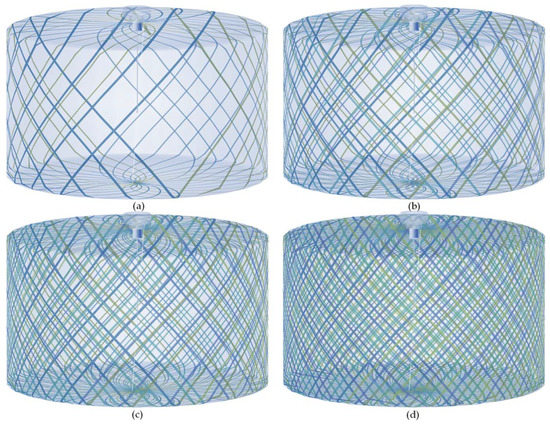
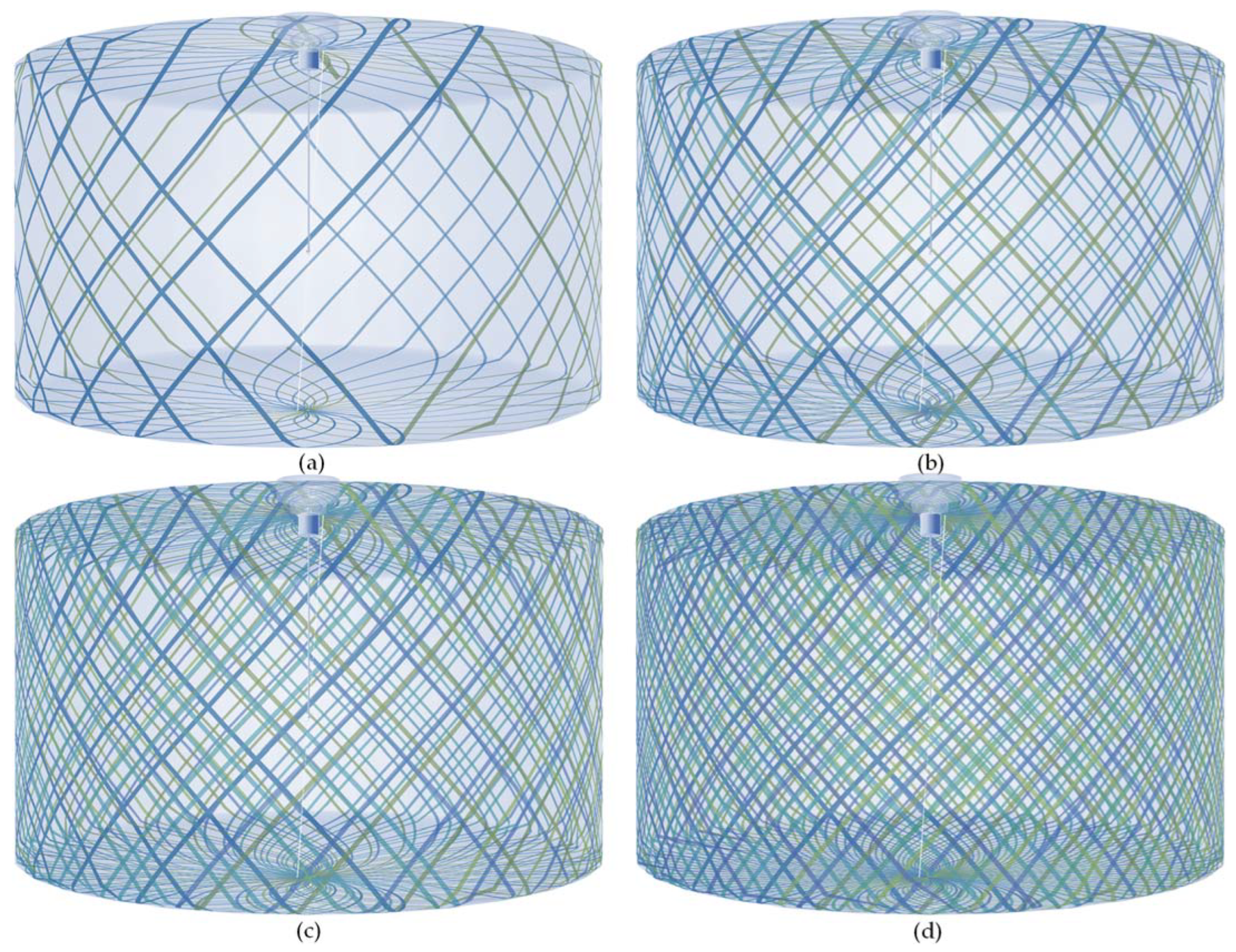
In detail, the aim is to eliminate the remains of fuel oil/gas oil, degreasing and cleaning the walls, floor, and roof of the storage tank. This is achieved by recirculation of water solution with marine dispersant [54], through impact with hot water at low pressure (10 bar), and high flow (42 m3/h), projected by a rotating head with 360° impact coverage [55], whose movement is shown in Figure 3, as a result of a simulation performed with Scanjet Tank Cleaning Simulator software.
Figure 3.
Rotary head: (a) after 8 min, (b) after 16 min, (c) after 24 min, (d) after 32 min.
This type of cleaning method differs significantly from the manual method in several respects. Firstly, with respect to the use of a marine dispersant instead of the usual chemical products. Products such as caustic soda, sodium carbonate or trisodium phosphate have been replaced by a marine dispersant, composed of aliphatic solvents and surfactants. In this way, toxicity is reduced by providing bio-degradability [54]. Moreover, the use of the injector eliminates the entry of operators into the confined space, while considerably reducing cleaning time, reducing energy costs, and simplifying the wastewater treatment process.
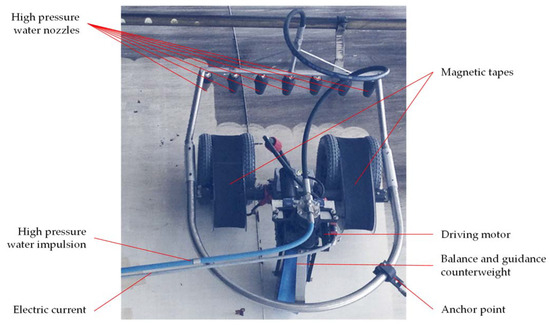
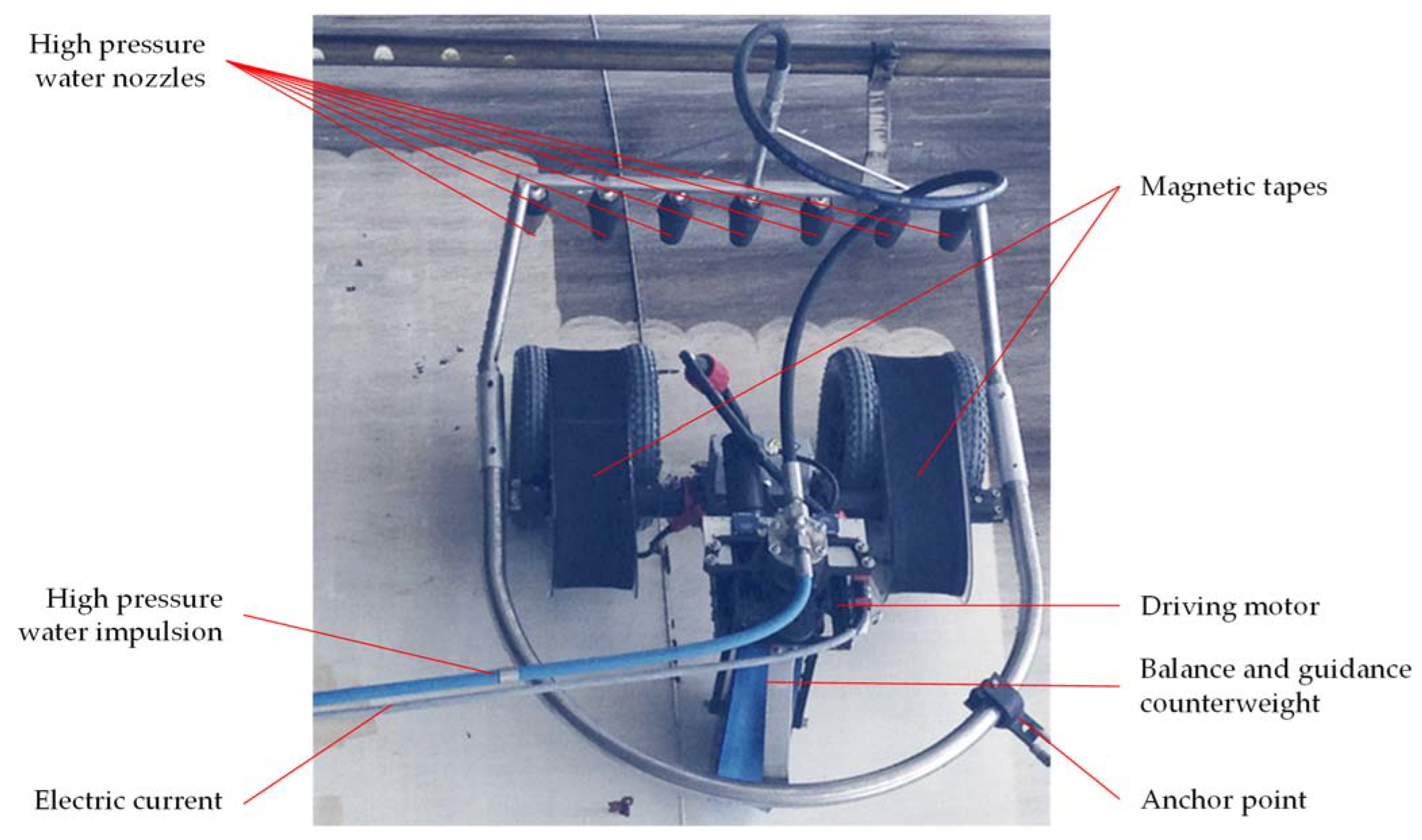
The second cleaning alternative to consider is to apply a solution of water plus degreasing product by means of a magnetic robot directed from the outside, as shown in Figure 4. This robot, like the one shown in Figure 5, operates at high pressure, between 120–140 kg/cm2, and projects at 1 cm from the nets, forming 1 m sweeping columns, as shown in Figure 5. In this way, both chemical (described above) and mechanical cleaning is achieved, thanks to the impact of the jet of aqueous solution at a short distance, so that the tank can be emptied from the tank’s drainage well.
Figure 4.
Robotic cleaning process.
Figure 5.
Detail of magnetic robot in operation.
In this case, the daily work output using this process can be estimated at 200 m2/day. In addition, to this competitive advantage, together with those previously mentioned related to mechanical cleaning, must be added the possibility of being able to carry out occasional reworking, as opposed to the need to repeat a complete washing cycle in the case of chemical cleaning.
2.2. Multicriteria Decision
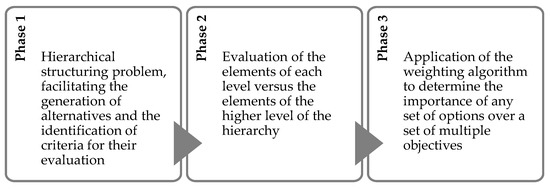
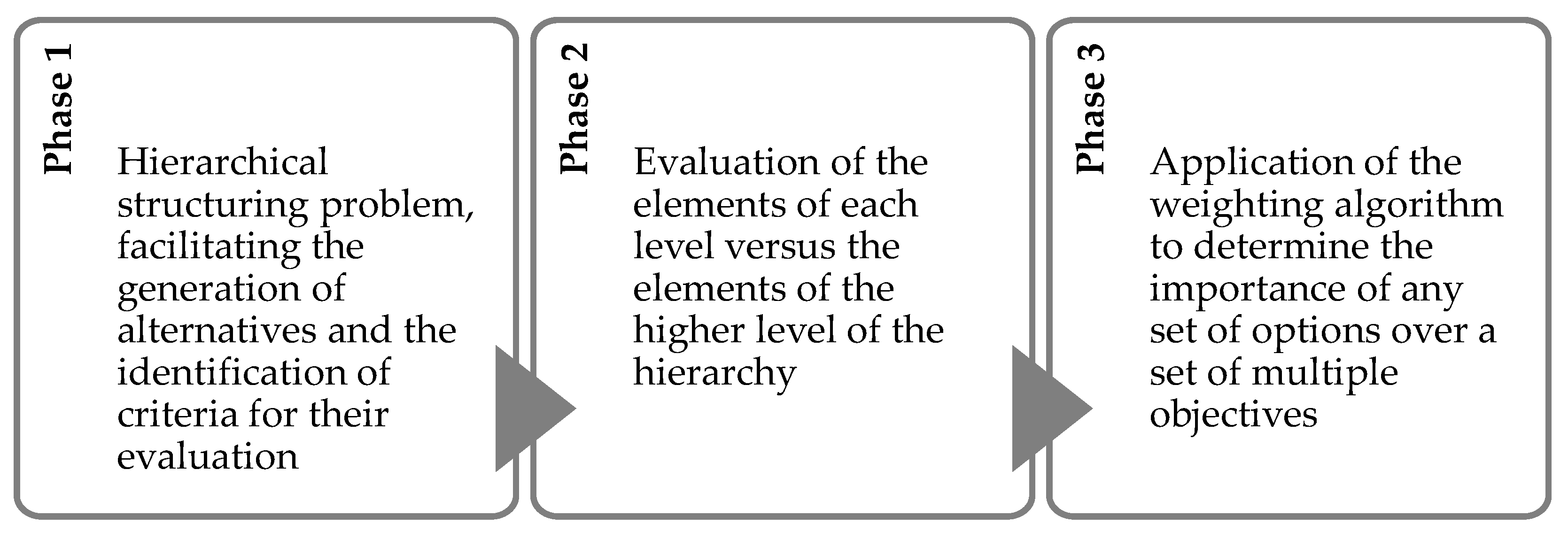
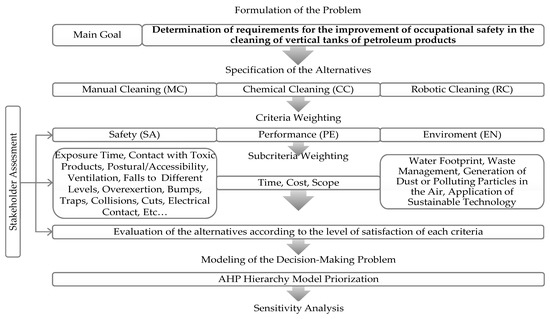
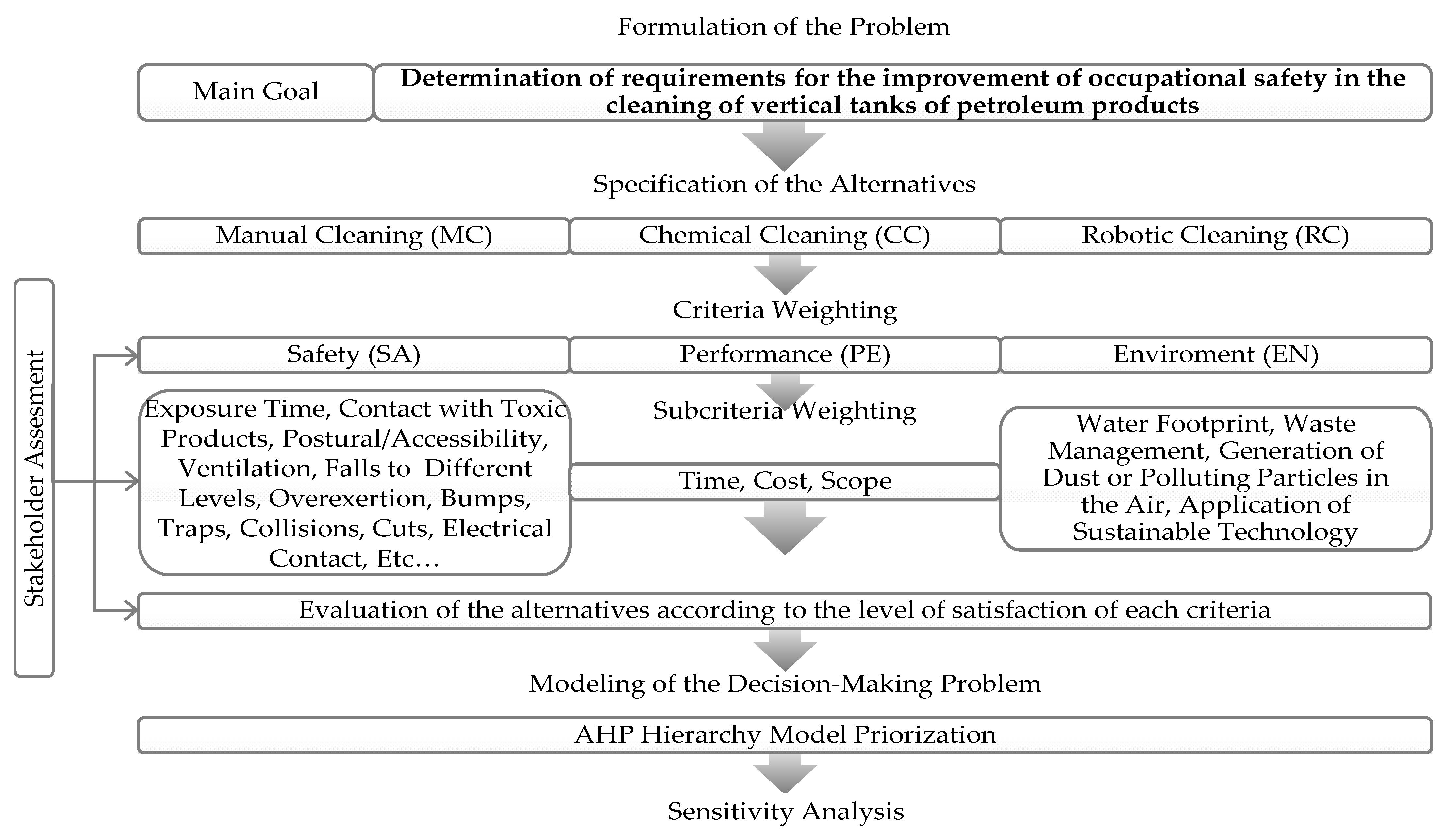
The choice of a safe protocol that meets the proposed objectives is made by analyzing two alternatives (chemical cleaning and robotic cleaning) to manual cleaning. To make an informed decision, a multi-criteria decision tool is selected. In this context, the analytical hierarchy process (AHP) method is a very popular discrete multi-criteria decision tool [56,57]. The AHP is applied through the construction of hierarchical structures, in which the first hierarchical level consists of the problem goal, the next hierarchical levels encompass the decision criteria and subcriteria, and, finally, the last level contains the alternatives. For allocating weights to the decision criteria and subcriteria, paired comparisons are made (criterion vs. criterion) by knowledgeable members of a panel. In addition, the method allows measuring the degree of inconsistency, thus providing confidence in the resolution of the method [58,59]. Therefore, the AHP tool will be used to prioritize decision making in which there may be multiple objectives, criteria, participants, and different alternatives of any kind. This method has been successfully tested to resolve and prioritize issues related to worker safety and health in different sectors [60,61]. Figure 6 shows the phases into which this process is divided.
Figure 6.
Phases of the AHP method.
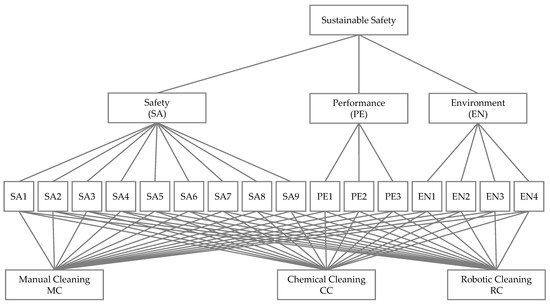
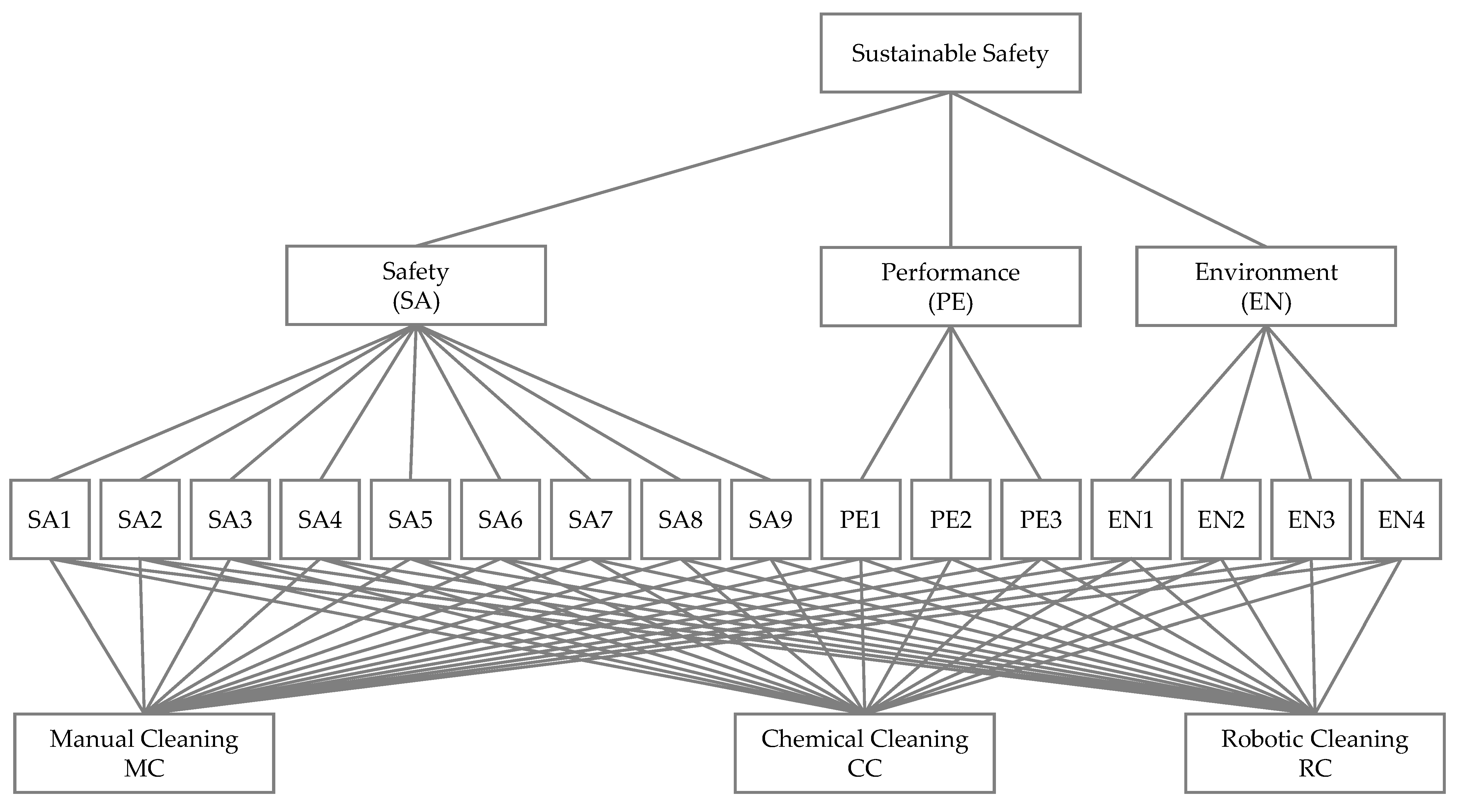
The process for applying the AHP method begins with the definition of the problem to be addressed. In this research, the goal is to determine the requirements to improve safety in the cleaning of (vertical) storage tanks for petroleum products. Once the problem has been defined, and to apply the AHP method, it is necessary to disaggregate the problem into multiple and different criteria to help explore the decisions that matter and to discover when there may be conflict between criteria or between stakeholders on these criteria, until a hierarchical order is established, as shown in Figure 7.
Figure 7.
Decision-making process.
To do this, the first step is to apply the principle of hierarchical construction, establishing the different levels required. In this way, level 1 will focus on the objective, level 2 will be composed of the criteria and subcriteria necessary for the evaluation of the problem, and level 3 will present the possible alternatives. Levels 1 and 2 are composed of the criteria and subcriteria listed in Table 2. In this regard, although the AHP method can accept an unlimited number of entries at the criteria and subcriteria levels, only a limited number of analyzed criteria and alternatives can assure an appropriate precision of obtained results [62,63]. This number can be defined as 7 +/− 2 (which means 9 maximum) [64], commonly referred to as Miller’s law. If a higher number of items are compiled, an analytical method (eliminating less important criteria based on expert evaluations) or a deductive one (eliminating less important criteria accordingly to the particularity of the analyzed subject and the evaluation of criteria variability in time) can be applied [65].
Table 2.
Identification of criteria and subcriteria.
When establishing the criteria, in accordance with the purpose of the study, safety appears as the first criterion, broken down into nine subcriteria ranging from exposure (focus) to the associated risks to which the worker is exposed when working in confined spaces. However, although safety is the main criterion for the definition of a tank cleaning protocol that improves the safety of the people involved, the consideration of factors such as collaboration between people and machines, the delegation of mechanical, dangerous, and routine tasks, speed and quality or environmental respect, typical of applying the principles of Industry 5.0, means that the decision must consider other points of view.
Therefore, the second criterion is performance (of the cleanup operation), supported by the subcriteria associated with the most basic constraints of an undertaking, such as cost, time, and scope [66], defined as the tasks necessary to perform each of the alternatives. As a third criterion, the environment is included, evaluating different sub-criteria associated with the development of the objective of the study. Water footprint is considered necessary to be included because it has an important weight in the development of the three alternatives to be evaluated, as well as regulatory waste management, which includes both the amount of waste and the ease of its removal (recycling, treatment, etc.), the generation of dust or particles in the air, which goes beyond that which the workers themselves could be affected, and, finally, the application of sustainable technology. In this sense, both the EMAS regulation [67] and the international standard UNE-EN ISO 14001 [68], encourage the use of the most advanced existing technology that is appropriate for the objective of organizations to establish a correct environmental policy, thus demonstrating a commitment to the continuous improvement of environmental performance, provided that it is feasible and economically viable.
Once the criteria have been defined, these criteria and their corresponding subcriteria can be weighted to determine how they will influence the interest of each of the alternatives. These subcriteria are the requirements that the selected protocol must incorporate. For this purpose, the role of decision-maker corresponds to a panel of experts. This panel is represented by a multidisciplinary team composed of experts from each area involved. Prioritization begins with pairwise comparisons of elements at the same level. Each criterion, subcriteria, or alternative i is compared with each criterion, subcriteria, or alternative j following a decision scale called the Saaty scale [69], shown in Table 3, although a national scale can also be used if a quantitative variable is being assessed. The assessments are made by taking a value of the decision-making team reached by consensus.
Table 3.
Saaty Scale for AHP method.
The consensus values compose the pairwise matrix shown in Equation (1). They must meet three conditions: homogeneity (the elements of the main diagonal are equal to 1), reciprocity (aij × aji = 1), and transitivity (aij × ajk = aik).
Once the pairwise matrices for criteria, subcriteria and alternatives have been compiled, the columns of each matrix are summed, and their values normalized. Then, the average of the rows is calculated to obtain the eigenvector representing the relative importance of the criteria compared in each of the pairwise comparison matrices, resulting in the best approach [70]. However, the principle of logical consistency must be applied to validate these results. The AHP method measures the consistency of each judgment by means of the consistency ratio (CR), which is the ratio between the consistency index (CI) shown in Equation (2) and the consistency index of a random matrix (RI) shown in Table 4.
where λ represents the average of the eigenvector values of each matrix and n the dimension of the matrix.
Table 4.
Index ratio values based on the order of the comparison matrix.
Once this value is obtained, it is related with respect to the random consistency index shown in Table 4, resulting in the consistency ratio, as shown in Equation (3).
Based on the results obtained, it will be assessed whether or not to accept them, according to the maximum percentages shown in Table 5. If CR exceeds these threshold values then the judgments should be reviewed [71].
Table 5.
Maximum percentages of the consistency ratio CR.
Where n represents the dimension of the matrix. Once the consistency has been verified, the weights are then calculated. These weights represent the relative importance of each criterion (also defined as the priorities of the different alternatives with respect to a given criterion), which is calculated by solving Equation (4).
where w represents the criteria weights (eigenvectors) and λmax the principal eigenvector. The weights of each level are then calculated using the geometric mean. In order to unify the priorities to achieve a global calculation of them, all the answers of the respondents are synthesized after agreement, according to Equation (5) where G represents the geometric mean of each factor in the hierarchy, a represents the weight achieved by the expert panel and n the order of each pairwise comparison matrix.
Finally, all that remains is to calculate the global priority weight of each parameter (Wp) by applying Equation (6), where i indicates the level of the hierarchy, Wf indicates the local priority weighting of the factor and Wc of the category.
3. Results and Discussion
In order to validate what was stated in the previous section, the first step is the selection of experts, which will be made up of people with extensive experience in the field of industrial cleaning from different perspectives. Therefore, a group of experts has been considered, made up of six people from different disciplines: mechanical engineer, chemical engineer, environmentalist, site manager, site contractor, and technician in occupational risk prevention, with the condition that they have at least a master’s degree in occupational risk prevention and experience in industrial tank cleaning of more than ten years. As stated before, agreements are reached by consensus, for which a meeting is organized, in which the researchers have no voice or vote but lead the session.
This panel of experts receives the problem by the researchers, as shown in Figure 8: a summary of the structure followed in the method composed of the criteria, subcriteria, and alternatives that will be evaluated below. They will be responsible for making decisions based on the value judgments made on the pairwise comparisons of the problem shown. To do so, the six experts meet, moderated by the researchers. At the meeting, the researchers explain the process and the experts discuss each of the comparisons until a consensus is reached, at all three levels.
Figure 8.
Structure of the problem to be solved by AHP.
The criteria are then compared in pairs. Table 6 shows the results obtained by consensus after one round of discussion for this comparison, which also reflects the scale chosen, as well as the consistency of the comparison. Further details are provided in Appendix A (Table A1). This table shows how, among the three criteria established, safety stands out above the others (72%), due to the fact that the weighting given by the experts considers safety as a key factor to be considered in relation to the type of work researched [60,61]. The second order of weighting established by the experts is the environment (19%), with performance in last place (9%), broken down into time, cost, and scope. As expected, waste disposal, the water footprint, and the generation of dust and/or particles polluting the environment are issues on which society is working to improve every day, as reflected in the opinion of the experts [29,72].
Table 6.
Criteria comparison matrix (dimensions).
Likewise, all the results of the pairwise comparisons between the subcriteria (set of potential requirements into which each criterion is broken down), together with the scale chosen and the corresponding consistency, are shown in Appendix A (Table A2, Table A3 and Table A4). Consensus for subcriteria comparisons is reached after two rounds of discussion. As a summary, Table 7 shows the weights of these two levels decided by the panel of experts.
Table 7.
Criteria and subcriteria local weighting summary.
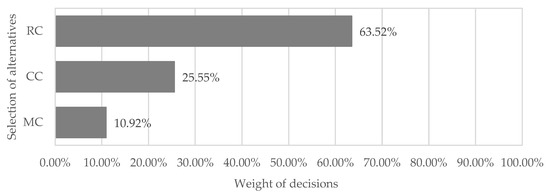
Finally, after the expert pairwise comparison of the alternatives for each of the subcriteria by the panel of experts, the final decision is made. These comparisons are also shown in Appendix A (Table A5, Table A6, Table A7, Table A8, Table A9, Table A10, Table A11, Table A12, Table A13, Table A14, Table A15, Table A16, Table A17, Table A18, Table A19 and Table A20). Consensus for alternative comparisons is reached after four rounds of discussion. As a result, Figure 9 shows the degree of adequacy of each alternative to the set of subcriteria and criteria (requirements), based on the objective set.
Figure 9.
Hierarchical alternatives.
Regarding the alternatives to choose from, robotic cleaning was the best rated by the panel, according to the result obtained (approximately 63% of the decision). Therefore, it is the first option in the hierarchical decision. Among the advantages of robotic cleaning, the reduction in personnel, equipment, and water consumption must be stressed. On the contrary, although it takes longer to perform the tasks than chemical cleaning, spot repairs can be undertaken if any areas are not properly cleaned, whereas chemical cleaning would have to be repeated in full. However, the advantages outweigh the disadvantages, ranking it as the best option [35,36,37]. Furthermore, these advantages are aligned with the environmental criterion. In fact, it is the alternative that best reflects the common objective of international environmental standards regarding the promotion of the most advanced technology as long as it is appropriate, feasible, and economically viable for the implementing organization [67,68].
The alternative of chemical cleaning was the second rated (approximately 26%), quite distant from the previous one, but it also greatly reduces the hazard [73], and the total cleaning work time, although it requires a greater supply of water, generates a greater amount of residues, and requires repeating the entire process if it is not perfectly clean at first instance (which cannot be determined until the work is completed). However, these parameters are still under study, in order to achieve greater efficiency [31,32]. Finally, manual cleaning was the worst rated by the panel (approximately 11%), endorsing the current trend that reserves it for certain jobs when it is not possible to use any of the previous procedures [27]. These results add to those that advocate Industry 5.0 as a solution to reduce occupational hazards in industrial processes, replacing routine, monotonous, and dangerous jobs by other more skilled ones [74].
According to the weighting of criteria and subcriteria compiled in Table 6, the use of robotic cleaning completely eliminates worker exposure time. This subcriterion is the one with the highest weighting (approximately 25% of the global weight). It also directly affects others, such as falls to different levels (approximately 14% of the global weight), which is the second most important one, contact with toxic products (approximately 9% of the global weight), and contact with electric current (approximately 8% of the global weight), among others. On the other hand, waste management is another subcriterion to be considered (approximately 10% of the global weight), which is the most important environmental issue. Regarding the performance criterion, the scope is the most important factor (approximately 7% of the global weight), over and above time and cost, given the importance of properly performing the task, so as not to have to repeat the process, not to reduce the quality of the stored product and not to shorten the useful life of the tanks.
4. Conclusions
The industrial cleaning of petroleum tanks is placed in the group of dangerous activities, which can endanger the safety and health of the workers involved, including potential rescuers. Therefore, it is necessary to study the risks involved in such industrial cleaning operations and to evaluate the different alternatives available on the market that enables the hazard (exposure to occurrence, consequence of occurrence, and probability of occurrence) to be reduced to a minimum, while also providing compliance with environmental regulations without losing sight of the performance (in terms of cost, time, quality, and/or scope) that the activity entails.
In order to deal with this demanding situation, the intervention of experts in the field who can contribute from each area involved (promoters, contractors, clients, prevention services, labor inspectors, etc.), is unavoidable. Because they have different interests, their viewpoints may conflict. In this context, resorting to the methodology of analytical hierarchies means that these conflicts can be resolved on the basis of the procedures required to perform them. The AHP method provides the weighted selection of the alternatives proposed to improve the occupational safety of those involved without undermining the paradigm that Industry 5.0 represents.
In addition, based on a bibliographic search of different potential alternatives, three of them stand out: manual cleaning, which is taken as a base reference for comparison, chemical cleaning with marine dispersant, and mechanical cleaning with magnetic robots. These alternatives have been studied from three criteria: the safety of the parties involved, the performance of the operation, and the degree of environmental impact. From the result of the application of the multi-criteria decision process, it has been concluded that mechanical cleaning using robots is the best option, standing out from the others in all the criteria and subcriteria established to improve the health and safety of workers, rescuers, and other people involved. This is followed by chemical cleaning as the second choice, leaving manual cleaning in last place, which, as has been shown, would only be used in cases where the other two options are impossible to be applied.
It can be noted that the proposed approach faces each requirement independently, so it does not consider the different interrelations among activity needs. In addition, although this research provides several inputs to define safer protocols that take into account performance goals and environmental affairs, future research faces several challenges and constraints because of the heterogeneity of the tanks to be cleaned and the regulatory framework to be applied. Although the proposed framework was designed for the case of the model and methods of vertical shaft tank cleaning, future research should focus on the development and study of autonomous technology for operations in other areas, such as ship tank cleaning, using the study carried out in this article as a basis.
Author Contributions
Conceptualization, M.R.-P. and A.C.-N.; methodology, M.R.-P., A.P.-F. and A.C.-N.; validation, M.O.-M. and P.B.-P.; formal analysis, A.P.-F. and A.C.-N.; investigation, M.R.-P., A.P.-F. and A.C.-N.; resources, A.P.-F., M.O.-M. and P.B.-P.; data curation, M.R.-P. and A.C.-N.; writing M.R.-P. and A.C.-N.; original draft preparation, M.R.-P.; writing—review and editing, A.C.-N.; supervision, M.O.-M. and P.B.-P.; funding acquisition, A.P.-F., M.O.-M. and P.B.-P. All authors have read and agreed to the published version of the manuscript.
Funding
This research received no external funding.
Institutional Review Board Statement
The study has been conducted in accordance with the Declaration of Helsinki and approved by the Non-Biomedical Experimentation Ethics Committee of the University of Cadiz (protocol code 012/2022 signed on 12 December 2022).
Informed Consent Statement
Not applicable.
Data Availability Statement
Not applicable.
Acknowledgments
All authors acknowledge the help received by the research group TEP-955 from the PAIDI (Junta de Andalucía, Spain).
Conflicts of Interest
The authors declare no conflict of interest.
Appendix A
Table A1.
Criteria comparison matrix.
Table A2.
Safety subcriteria comparison matrix.
Table A3.
Performance subcriteria comparison matrix.
Table A4.
Environment subcriteria comparison matrix.
Table A5.
Comparison of alternatives matrix for subcriterion SA1.
Table A6.
Comparison of alternatives matrix for subcriterion SA2.
Table A7.
Comparison of alternatives matrix for subcriterion SA3.
Table A8.
Comparison of alternatives matrix for subcriterion SA4.
Table A9.
Comparison of alternatives matrix for subcriterion SA5.
Table A10.
Comparison of alternatives matrix for subcriterion SA6.
Table A11.
Comparison of alternatives matrix for subcriterion SA7.
Table A12.
Comparison of alternatives matrix for subcriterion SA8.
Table A13.
Comparison of alternatives matrix for subcriterion SA9.
Table A14.
Comparison of alternatives matrix for subcriterion PE1.
Table A15.
Comparison of alternatives matrix for subcriterion PE2.
Table A16.
Comparison of alternatives matrix for subcriterion PE3.
Table A17.
Comparison of alternatives matrix for subcriterion EN1.
Table A18.
Comparison of alternatives matrix for subcriterion EN2.
Table A19.
Comparison of alternatives matrix for subcriterion EN3.
Table A20.
Comparison of alternatives matrix for subcriterion EN4.
References
- Zhang, C.; Yang, J. Second Industrial Revolution. In A History of Mechanical Engineering; Springer: Singapore, 2020; pp. 137–195. ISBN 978-9811508332. [Google Scholar]
- Yuan, Z.; Qin, W.; Zhao, J. Smart Manufacturing for the Oil Refining and Petrochemical Industry. Engineering 2017, 3, 179–182. [Google Scholar] [CrossRef] [Scilit]
- Jacobs, J.C.; Zimmermann, E.W. Conservation in the Production of Petroleum: A Study in Industrial Control. Yale Law J. 1959, 68, 1517. [Google Scholar] [CrossRef] [Scilit]
- Chang, J.I.; Lin, C.-C. A Study of Storage Tank Accidents. J. Loss Prev. Process Ind. 2006, 19, 51–59. [Google Scholar] [CrossRef] [Scilit]
- Lillienberg, L.; Högstedt, B.; Järvholm, B.; Nilson, L. Health Effects of Tank Cleaners. Am. Ind. Hyg. Assoc. J. 1992, 53, 375–380. [Google Scholar] [CrossRef]
- Kikuchi, Y.; Hirao, M. Practical Method of Assessing Local and Global Impacts for Risk-Based Decision Making: A Case Study of Metal Degreasing Processes. Environ. Sci. Technol. 2008, 42, 4527–4533. [Google Scholar] [CrossRef] [Scilit]
- Durand, K.T.H.; Lees, P.S.J.; Kern, D.G. Exposure Assessment and Respirator Selection in the Cleaning of Crude Oil Process Vessels. Appl. Occup. Environ. Hyg. 1995, 10, 120–124. [Google Scholar] [CrossRef] [Scilit]
- Berlana Llorente, T. Identification and Risk Prevention in Confined Spaces; National Institute for Safety and Health at Work: Madrid, Spain, 2016. [Google Scholar]
- NIOSH Worker Deaths in Confined Spaces. A Summary of NIOSH Surveillance and Investigative Findings; National Institute for Occupational Safety and Health: Cincinnati, OH, USA, 1994. [Google Scholar]
- Wilkinson, T.; Burns, K.; Simpson, A.; Walker, K.; Hunter, M. Improving the Control of Confined-Space Entry through the Implementation of an Operational Standard and Competence-Based Training. In Proceedings of the Society of Petroleum Engineers—SPE/APPEA Int. Conference on Health, Safety and Environment in Oil and Gas Exploration and Production 2012: Protecting People and the Environment—Evolving Challenges, Perth, Australia, 11–13 September 2012; Volume 3, pp. 2401–2408. [Google Scholar]
- Case, G.; Davis, G.; Daher, E. Setting Training Standards For Emergency Response: A Case Study of Training Rescue Teams In Remote Areas. In Proceedings of the SPE Latin American and Caribbean Health, Safety, Environment and Sustainability Conference, Santa Cruz, Bolivia, 14–15 September 2017; SPE: Bogotá, Colombia, 2015; p. 174107. [Google Scholar]
- Selman, J.; Spickett, J.; Jansz, J.; Mullins, B. Confined Space Rescue: A Proposed Procedure to Reduce the Risks. Saf. Sci. 2019, 113, 78–90. [Google Scholar] [CrossRef] [Scilit]
- Durkee, J. Control of Industrial Cleaning Processes. In Management of Industrial Cleaning Technology and Processes; Elsevier: Oxford, UK, 2006; pp. 191–256. ISBN 978-0080448886. [Google Scholar]
- Xu, X.; Meng, Z.; Lv, H. Exploration on Application of High Pressure Water Jet Cleaning Technology. In Proceedings of the 4th International Conference on Advances in Materials, Machinery, Electronics, Barcelona, Spain, 20–22 October 2021; p. 01006. [Google Scholar]
- Al Shibli, F.S.Z.S.; Bose, S.; Kumar, P.S.; Rajasimman, M.; Rajamohan, N.; Vo, D.-V.N. Green Technology for Sustainable Surface Protection of Steel from Corrosion: A Review. Environ. Chem. Lett. 2022, 20, 929–947. [Google Scholar] [CrossRef] [Scilit]
- Rogach, O.; Pidchosa, O.; Dziuba, P. Geographic Information and Cyber-Physical Systems in Oil and Gas Industry: Benefits, Problems and Integration Prospects. In Proceedings of the Geoinformatics: Theoretical and Applied Aspects 2020, Kyiv, Ukraine, 11–14 May 2020; European Association of Geoscientists & Engineers: Kyiv, Ukraine, 2020; pp. 1–5. [Google Scholar]
- Maddikunta, P.K.R.; Pham, Q.-V.; Prabadevi, B.; Deepa, N.; Dev, K.; Gadekallu, T.R.; Ruby, R.; Liyanage, M. Industry 5.0: A Survey on Enabling Technologies and Potential Applications. J. Ind. Inf. Integr. 2022, 26, 100257. [Google Scholar] [CrossRef] [Scilit]
- Nahavandi, S. Industry 5.0—A Human-Centric Solution. Sustainability 2019, 11, 4371. [Google Scholar] [CrossRef] [Scilit]
- Xu, X.; Lu, Y.; Vogel-Heuser, B.; Wang, L. Industry 4.0 and Industry 5.0—Inception, Conception and Perception. J. Manuf. Syst. 2021, 61, 530–535. [Google Scholar] [CrossRef] [Scilit]
- Directorate-General for Research and Innovation; Breque, M.; De Nul, L.; Petridis, A. Industry 5.0. Towards a Sustainable, Human-Centric and Resilient European Industry; Publications Office of the European Union: Brussels, Belgium, 2021; ISBN 978-9276253082. [Google Scholar]
- Simeone, A.; Woolley, E.; Escrig, J.; Watson, N.J. Intelligent Industrial Cleaning: A Multi-Sensor Approach Utilising Machine Learning-Based Regression. Sensors 2020, 20, 3642. [Google Scholar] [CrossRef] [Scilit]
- Lindahl, M.; Svensson, N.; Svensson, B.H.; Sundin, E. Industrial Cleaning with Qlean Water—A Case Study of Printed Circuit Boards. J. Clean. Prod. 2013, 47, 19–25. [Google Scholar] [CrossRef] [Scilit]
- Dahlstrom, R.; Hindmarsh, M. Industrial Cleaning Coating Drones. J. Prot. Coat. Linings 2021, 38, 29–35. [Google Scholar]
- Spanish Ministry of Labour and Social Affairs Royal Decree 39/1997 Approving the Prevention Services Regulations. Off. State Gaz. 1997, 27, 3031–3045.
- American Petroleum Institute. ANSI/API Standard 7th Ed. Requirements for Safe Entry and Cleaning of Petroleum Storage Tanks; American Petroleum Institute: Washington, DC, USA, 2015. [Google Scholar]
- Nekrasov, V. Modern Efficient Methods of Steel Vertical Oil Tanks Clean-Up. MATEC Web Conf. 2016, 86, 04050. [Google Scholar] [CrossRef] [Scilit]
- Nuova Saimar Storage Tank Cleaning-Traditional Tank Cleaning Method. Available online: https://www.nuovasaimar.it/en/our-services/bonifica_serbatoi/ (accessed on 28 October 2022).
- Johnson, O.A.; Affam, A.C. Petroleum Sludge Treatment and Disposal: A Review. Environ. Eng. Res. 2019, 24, 191–201. [Google Scholar] [CrossRef] [Scilit]
- Hamroyev, O.; Ravshanova, N.; Jovliyev, V.; Komiljonov, S. A Method for Cleaning Tanks from Oil Product Residues Based on Biotechnology. E3S Web Conf. 2021, 264, 1–8. [Google Scholar] [CrossRef] [Scilit]
- Mostafa, N.A.; Tayeb, A.M.; Mohamed, O.A.; Farouq, R. Biodegradation of Petroleum Oil Effluents and Production of Biosurfactants: Effect of Initial Oil Concentration. J. Surfactants Deterg. 2019, 22, 385–394. [Google Scholar] [CrossRef] [Scilit]
- Markus, J.S.; Perri, A.E.; Schick, R.J. Measurements of The Throw Width and Impact Pressure of Industrial Tank Cleaning Nozzles Measurements of the Throw Width and Impact Pressure of Industrial Tank Cleaning Nozzles—Part I. In Proceedings of the ICLASS 2018, 14th Triennial International Conference on Liquid Atomization and Spray Systems, Chicago, IL, USA, 22–26 July 2018. [Google Scholar]
- Longting, W.; Liping, S.; Jichuan, K.; Yanfu, W. Experimental Study on the Chemical Cleaning Technology of Oil Sludge in Offshore Oil Tank. Fresenius Environ. Bull. 2020, 29, 544–550. [Google Scholar]
- Mi Swaco. ATC Automatic Tank-Cleaning Technology; Schlumberger: Houston, TX, USA, 2021. [Google Scholar]
- Massam, K.; Hunter, M.; Eriksen, F.; Stolen, G. Automatic Tank Cleaning: A Shining Example. Soc. Pet. Eng.—SPE Am. E P Health Safety, Secur. Environ. Conf. 2013, 2013, 393–401. [Google Scholar] [CrossRef] [Scilit]
- Bitonneau, D.; Moulières-Seban, T.; Dumora, J.; Ly, O.; Thibault, J.F.; Salotti, J.M.; Claverie, B. Design of an Industrial Human-Robot System through Participative Simulations—Tank Cleaning Case Study. In Proceedings of the 2017 IEEE/SICE International Symposium on System Integration (SII), Taipei, Taiwan, 11–14 December 2017; pp. 1059–1066. [Google Scholar] [CrossRef] [Scilit]
- Haugalokken, B.O.A.; Nissen, O.; Amundsen, H.B.; Fore, M.; Kelasidi, E. Modelling and Control of a 6 DOF Robot Manipulator for Underwater Applications—Aquaculture Related Case Studies. In Proceedings of the OCEANS 2021: San Diego—Porto, San Diego, CA, USA, 20–23 September 2021. [Google Scholar] [CrossRef] [Scilit]
- Sanpeng, D.; Xiaoli, X.; Chongning, L.; Xinghui, Z. Research on the Oil Tank Sludge Cleaning Robot System. In Proceedings of the 2010 International Conference on Mechanic Automation and Control Engineering, Wuhan, China, 26–28 June 2010; IEEE: New York, NY, USA, 2010; pp. 5938–5942. [Google Scholar]
- American Petroleum Institute. API 650. Welded Tanks for Oil Storage, 13th ed.; API: Washington, DC, USA, 2020. [Google Scholar]
- Ministry of Industry and Energy Royal Decree 1562/1998, Modifying the Complementary Technical Instruction MI-IP02 for Petroleum Liquid Storage Facilities. Off. State Gaz. 1998, 189, 27124–27150.
- Burlet-Vienney, D.; Chinniah, Y.; Bahloul, A. The Need for a Comprehensive Approach to Managing Confined Space Entry: Summary of the Literature and Recommendations for Next Steps. J. Occup. Environ. Hyg. 2014, 11, 485–498. [Google Scholar] [CrossRef] [Scilit] [PubMed]
- Kuttan, R.; Liju, V.B. Safety Evaluation of Essential Oils. In Essential Oils in Food Processing; Hashemi, S.M.B., Khaneghah, A.M., de Souza Sant’Ana, A., Eds.; Wiley: Hoboken, NJ, USA, 2017; pp. 339–358. ISBN 978-1119149392. [Google Scholar]
- Charles, L.E.; Loomis, D.; Demissie, Z. Occupational Hazards Experienced by Cleaning Workers and Janitors: A Review of the Epidemiologic Literature. Work 2009, 34, 105–116. [Google Scholar] [CrossRef] [Scilit] [PubMed]
- Mariotto, F.L.; Zanni, P.P.; De Moraes, G.H.S.M. What Is the Use of a Single-Case Study in Management Research? Rev. Amin. Empres. 2014, 54, 358–369. [Google Scholar] [CrossRef] [Scilit]
- Choudhry, R.M. Behavior-Based Safety on Construction Sites: A Case Study. Accid. Anal. Prev. 2014, 70, 14–23. [Google Scholar] [CrossRef] [Scilit]
- Kożuch, B.; Sienkiewicz-Małyjurek, K. Information Sharing in Complex Systems: A Case Study on Public Safety Management. Procedia Soc. Behav. Sci. 2015, 213, 722–727. [Google Scholar] [CrossRef] [Scilit]
- Ricci, A.; Guglielmi, D.; Mariani, M.G.; Vignoli, M.; Violante, F.S. The Improvement of Safety Rules by a Participatory Method. A Case Study in a Chemical Company. Chem. Eng. Trans. 2016, 53, 175–180. [Google Scholar] [CrossRef] [Scilit]
- Karwot, J.; Ober, J. Safety Management of Water Economy. Case Study of the Water and Sewerage Company. Manag. Syst. Prod. Eng. 2019, 27, 189–196. [Google Scholar] [CrossRef] [Scilit]
- Siggelkow, N. Persuasion with Case Studies. Acad. Manag. J. 2007, 50, 20–24. [Google Scholar] [CrossRef] [Scilit]
- Stoecker, R. Evaluating and Rethinking the Case Study. Sociol. Rev. 1991, 39, 88–112. [Google Scholar] [CrossRef] [Scilit]
- Johansson, R. On Case Study Methodology. Open House Int. 2007, 32, 48–54. [Google Scholar] [CrossRef] [Scilit]
- Eisenhardt, K.M. Building Theories from Case Study Research. Acad. Manag. Rev. 1989, 14, 532–550. [Google Scholar] [CrossRef] [Scilit]
- Yin, R.K. Case Study Research: Design and Methods, 5th ed.; SAGE Publications: Thousand Oaks, CA, USA, 2013; ISBN 978-1483322247. [Google Scholar]
- Eisenhardt, K.M.; Graebner, M.E. Theory Building from Cases: Opportunities and Challenges. Acad. Manag. J. 2007, 50, 25–32. [Google Scholar] [CrossRef] [Scilit]
- CEPSA. Marine Dispersant Number 3; CEPSA Lubricantes: Madrid, Spain, 2010. [Google Scholar]
- Butterworth.Com. Available online: https://www.butterworth.com/product/k-sk-tank-cleaning-machines/ (accessed on 20 October 2022).
- Saaty, T.L. Making and Validating Complex Decisions with the AHP/ANP. J. Syst. Sci. Syst. Eng. 2005, 14, 1–36. [Google Scholar] [CrossRef] [Scilit]
- Saaty, T.L. Decision Making with the Analytic Hierarchy Process. Int. J. Serv. Sci. 2008, 1, 83. [Google Scholar] [CrossRef] [Scilit]
- Saaty, T.L. The Analytic Hierarchy and Analytic Network Processes for the Measurement of Intangible Criteria and for Decision-Making. In Multiple Criteria Decision Analysis: State of the Art Surveys; Figueira, J., Greco, S., Ehrogott, M., Eds.; Springer-Verlag: New York, NY, USA, 2008; pp. 345–405. [Google Scholar]
- Dong, Q.; Saaty, T.L. An Analytic Hierarchy Process Model of Group Consensus. J. Syst. Sci. Syst. Eng. 2014, 23, 362–374. [Google Scholar] [CrossRef] [Scilit]
- Abbasinia, M.; Mohammadfam, I. Identifying, Evaluating and Prioritizing the Causes of Occupational Accidents in the Construction Industry Using Fuzzy AHP and Fuzzy TOPSIS. Work 2022, 72, 933–940. [Google Scholar] [CrossRef] [Scilit]
- Abdul Aziz, F.; Ghazalli, Z.; Mohd Jamil, M.J.; Romli, A.; Nik Mohamed, N.M.Z. A Knowledge-Based Ergonomics Assessment System for WMSD Prevention Using AHP Methodology. In Intelligent Manufacturing & Mechatronics; Lecture Notes in Mechanical Engineering; Springer: Singapore, 2018; pp. 161–173. ISBN 9783319666969. [Google Scholar]
- Saaty, T.L. Rank, Normalization and Idealization in the Analytic Hierarchy Process. In Proceedings of the 7th International Symposium on Analytic Hierarchy Process, Bali, Indonesia, 7–9 August 2003. [Google Scholar] [CrossRef] [Scilit]
- Saaty, T.L. Rank from Comparisons and from Ratings in the Analytic Hierarchy/Network Processes. Eur. J. Oper. Res. 2006, 168, 557–570. [Google Scholar] [CrossRef] [Scilit]
- Miller, G.A. The Magical Number Seven, plus or Minus Two: Some Limits on Our Capacity for Processing Information. Psychol. Rev. 1956, 63, 81–97. [Google Scholar] [CrossRef] [Scilit]
- Gawlik, R. Preliminary Criteria Reduction for the Application of Analytic Hierarchy Process Method. In Evolution and Revolution in the Global Economy: Enhancing Innovation and Competitiveness Worldwide; Fuxman, L., Delener, N., Lu, F.V., Rivera-Solis, L.E., Eds.; Global Business and Technology Association: New York, NY, USA, 2008; pp. 366–374. ISBN 1-932917-04-7. [Google Scholar]
- Cerezo-Narváez, A.; Otero-Mateo, M.; Pastor-Fernández, A. Influence of Scope Management in Construction Industry Projects. DYNA Manag. 2016, 4, 1–15. [Google Scholar] [CrossRef] [Scilit]
- European Parliament; Council of the European Union Regulation (EC) No 761/2001 of the European Parliament and of the Council of 19 March 2001 Allowing Voluntary Participation by Organisations in a Community Eco-Management and Audit Scheme (EMAS). Off. J. Eur. Communities 2001, L114, 1–29.
- UNE-EN ISO 14001:2015; Environmental Management System: Requirements with Guidance for Use. UNE—Spanish Association for Standardization: Madrid, Spain, 2015.
- Saaty, T.L. The Analytic Hierarchy Process: Decision Making in Complex Environments. In Quantitative Assessment in Arms Control; Springer: Boston, MA, USA, 1984; pp. 285–308. [Google Scholar]
- Saaty, T.L. How to Make a Decision: The Analytic Hierarchy Process. Eur. J. Oper. Res. 1990, 48, 9–26. [Google Scholar] [CrossRef] [Scilit]
- Saaty, T. Fundamentals of Decision Making and Priority Theory with the AHP, 1st ed.; Analytic Hierarchy Process; RWS Publications: Pittsburgh, PA, USA, 1994; Volume 6, ISBN 978-0962031762. [Google Scholar]
- Wu, L. Industrial Practice of a Pre-Treatment Technology for Mechanical Tank Cleaning Oil in Refinery. Pet. Refin. Eng. 2022, 52, 29–33. [Google Scholar]
- Senol, Y.E.; Yasli, F. A Risk Analysis Study for Chemical Cargo Tank Cleaning Process Using Fuzzy Bayesian Network. Ocean Eng. 2021, 235, 109360. [Google Scholar] [CrossRef] [Scilit]
- Lemos, J.; Gaspar, P.D.; Lima, T.M. Individual Environmental Risk Assessment and Management in Industry 4.0: An IoT-Based Model. Appl. Syst. Innov. 2022, 5, 88. [Google Scholar] [CrossRef] [Scilit]

Disclaimer/Publisher’s Note: The statements, opinions and data contained in all publications are solely those of the individual author(s) and contributor(s) and not of MDPI and/or the editor(s). MDPI and/or the editor(s) disclaim responsibility for any injury to people or property resulting from any ideas, methods, instructions or products referred to in the content. |
© 2023 by the authors. Licensee MDPI, Basel, Switzerland. This article is an open access article distributed under the terms and conditions of the Creative Commons Attribution (CC BY) license (https://creativecommons.org/licenses/by/4.0/).