


Abstract
This systematic review examines caught-in/between accidents in construction, revealing complex safety challenges involving machinery errors, vehicle incidents, loading mistakes, and structural collapses. The analysis highlights significant risks, including heavy equipment rollovers, trench cave-ins, and material shifts, with injuries ranging from minor to fatal. Despite the critical nature of these accidents, existing research demonstrates notable gaps, particularly in understanding long-term worker health impacts, economic consequences, and nuanced risk factors. Most studies insufficiently explore correlations between worker experience, age, and accident susceptibility, while gender-specific risks remain poorly documented. Training inadequacies and safety protocol non-adherence emerge as primary contributors to these incidents. This review identifies a pressing need for standardized, comprehensive safety interventions that address technological, human, and organizational factors. Recommendations include stricter safety regulations, enhanced training programs, advanced safety technologies, and robust support systems for workers. By fostering a holistic safety culture and addressing research gaps, the construction industry can potentially mitigate caught-in/between accidents, ultimately protecting worker well-being and improving overall productivity.
1. Introduction
Numerous factors contribute to injuries sustained in the construction industry, which is dynamic and intricate. Construction accidents are frequent and can result in permanent disability and a high rate of fatality [1]. It is precarious due to the regular movement, assembly, disassembly, and modification of work surfaces, equipment, machinery, trenching, and scaffolding [2,3]. The danger of fatality is five times greater in the construction industry than in the manufacturing sector, while the probability of serious injury is two and a half times greater [4]. Except for the construction industry, every other sector has a lower rate of fatal injuries than the national average [2]. However, the level of risk varies according to the type of accident, location, and other relevant variables.
The construction industry is known for its high-risk environment, where ‘caught-in’ and ‘caught-between’ accidents pose serious threats to workers’ safety. According to Occupational Safety and Health Administration (OSHA) guidelines, ‘caught-in’ accidents involve crushing injuries due to entrapment between two objects, while ’caught-between’ accidents occur when a worker is caught or compressed between moving and stationary objects [5]. This distinction was a foundational aspect of the methodology, influencing search terms, inclusion criteria, and analysis. These types of incidents are significant contributors to injuries and fatalities on construction sites. They account for a notable percentage of construction-related deaths each year. Tackling these safety issues is essential not only for protecting the lives and health of workers but also for maintaining the efficiency and success of construction projects. By prioritizing safety, we can create a safer and more productive industry for everyone involved.
Caught-in/between accidents is among the four fatal accidents that occur on construction sites and is ranked third in terms of construction worker fatalities, behind struck-by incidents. It was ranked third in 1980 (16%), 1985 (13.3%), and 1990 (9.3%) in the US [6]. It was also ranked third at 11.9% between 1997 and 2000 [7]. It is a mishap where the operator is caught between moving and stationary objects or components of the machine or between moving machine elements and the material [8,9]. It is also described as being most frequently related to equipment, trench cave-in, and materials accidents [10]. Addressing caught-in/between accidents is crucial for safeguarding worker safety, minimizing legal and financial risks, maintaining productivity, enhancing reputation, complying with regulations, and fulfilling ethical responsibilities within the construction industry.
Construction workers face life-threatening risks every day, with caught-in/between accidents representing one of the most dangerous yet often overlooked workplace hazards. This systematic review digs deep into the complex world of these accidents, aiming to unravel the hidden patterns and root causes that continue to put workers’ lives at risk. By meticulously examining existing research, we hope to shed light on critical insights that could ultimately save lives and make construction sites safer. Our goal is not just to analyze the data but to understand the human stories behind these accidents and develop meaningful strategies that can prevent future tragedies.
The approach blends academic rigor with a genuine concern for worker safety, transforming cold statistics into a compelling narrative about protecting those who build our world. Through this comprehensive review, we strive to transform academic knowledge into practical solutions that can make an immediate difference in construction workplace safety. This paper aims to use a systematic review to identify the fundamental causes, trade workers involved, and associated construction activities of caught-in/between accidents in different countries. The findings are compared with 54 cases of fatal caught-in/between accidents in Malaysia between 2010 and 2019. Cross-sectoral literature pertaining to caught-in/between accidents in the construction industry was systematically retrieved from Scopus and Web of Science (WoS) databases.
2. Methodology
This section presents the step-by-step procedure employed in this study for the systematic review. In the complex and high-stakes world of construction safety, systematic literature reviews serve as critical navigational tools for researchers and safety professionals. These comprehensive studies are like detailed maps that guide us through the vast landscape of existing research, cutting through the noise and bias to reveal the most reliable and meaningful insights. By meticulously examining multiple studies with a structured and transparent approach, we can uncover hidden patterns, expose critical knowledge gaps, and draw more robust conclusions about workplace safety. This methodical process is not just about collecting data; it is about creating a clearer, more accurate picture of the challenges workers face and identifying meaningful strategies to protect those who put their lives on the line every day in the construction industry. However, the probability of bias in the selection of publications is a limitation of the systematic review methodology [11]. Various inclusion and exclusion criteria will be used to determine the reports to be included in the review, and the findings will be synthesized after thoroughly examining all published publications on the topic. Using inclusion and exclusion criteria, on the other hand, may result in omitting relevant papers that do not meet these criteria.
In the challenging realm of construction safety, our systematic review sets out to unravel the complex narrative of caught-in/between accidents. The review aims to go beyond surface-level statistics, diving deep into the human stories behind these workplace incidents. The research question is a carefully crafted lens, focusing on understanding not just the raw numbers, but the intricate details that define these dangerous workplace events. By examining the methodological approaches, case analyses, occurrence rates, primary sources, trade workers at risk, and the specific construction activities where these accidents frequently occur, this review seeks to paint a comprehensive and nuanced picture of a critical safety issue that directly impacts workers’ lives and well-being.
2.1. Data Search
Scopus and Web of Science (WoS), two of the most extensive repositories of academic publications, were selected for their substantial scientific impact, facilitating the identification of relevant peer-reviewed journals and conference papers. [12]. To investigate caught-in/between accidents, the Scopus and Web of Science (WoS) databases were systematically explored, with the search encompassing records from their inception up to 25 December 2024. The search was conducted with precision and purpose, guided by carefully constructed Boolean operators that served as fine-meshed nets, capturing relevant research while filtering out extraneous information.
A comprehensive search strategy was developed using the following key search terms and Boolean operators: (“caught-in-between”) AND (“caught between”) AND (“construction” OR “construction industry”) AND (“accident” OR “safety” OR “risk”). Each term was a key, designed to unlock the most relevant and meaningful research in our quest to understand and ultimately prevent these potentially fatal workplace incidents.
2.2. Inclusion and Exclusion Criteria
To understand caught-in/between accidents comprehensively, a rigorous framework was established to ensure the quality and relevance of the research. Inclusion criteria were meticulously designed to focus on the most impactful and meaningful studies, targeting peer-reviewed articles that specifically addressed construction safety and caught-in/between accidents.
English-language publications were prioritized to provide a clear window into critical research, focusing on empirical studies, compelling case reports, and thorough safety analyses. The aim was not to delve into abstract theories or speculative discussions but to gather actionable, real-world insights with the potential to enhance safety and save lives on construction sites.
The selection process was highly selective and precise. Publications were thoroughly screened, with emphasis placed on the engineering domain, particularly the construction industry. Priority was given to original research in peer-reviewed journals and conference papers that offered clear objectives and tangible methodologies. Non-English publications, theoretical works lacking practical data, and studies outside of the construction field were excluded to maintain focus and relevance. This targeted approach ensured the review’s practical applicability, aligning it with the ultimate goal of protecting workers and preventing future incidents.
2.3. Search Results and Data Extraction
In line with Moher et al. [13], this study adopted the PRISMA approach to guide the systematic review process rather than the full PRISMA protocol, which requires a formal checklist and registration. The methodology followed the key principles of PRISMA, including defining review characteristics, applying search and eligibility criteria, screening relevant literature, and performing a structured data synthesis. This approach aligns with previous studies on occupational safety in the construction industry [14], ensuring a transparent and replicable selection of relevant literature.
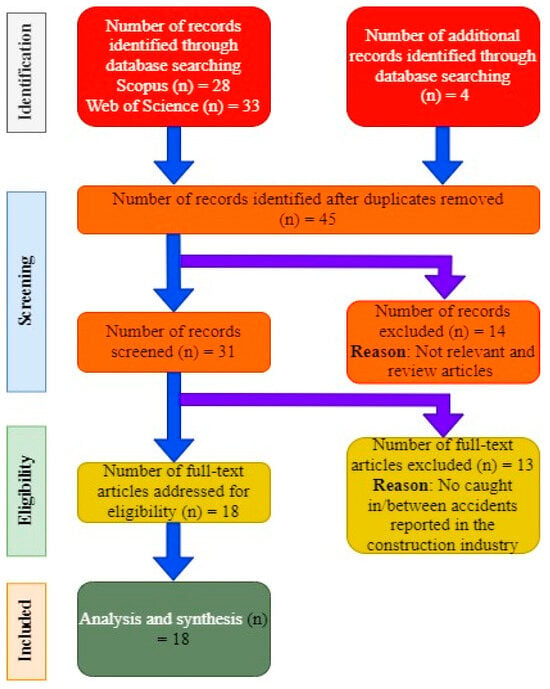
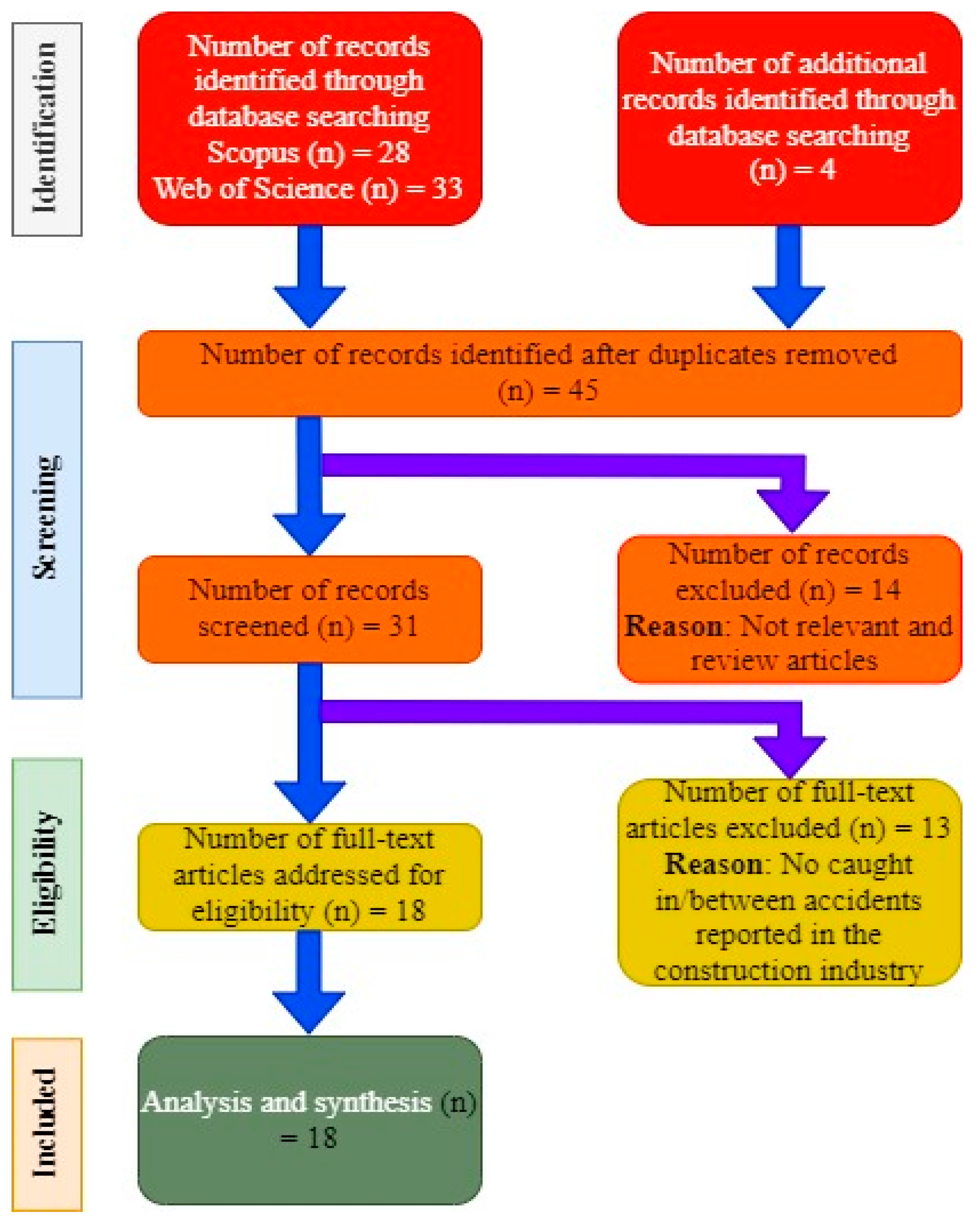
The initial literature search yielded 28 potentially relevant studies from the Scopus database and 33 from the Web of Science (WoS) database. In addition, a manual search of references from published studies, relevant reviews, and prior meta-analyses identified four additional studies. Combining the results from both databases and additional searches resulted in a total of 45 unique peer-reviewed journal articles and conference papers. Out of these, 31 studies were screened. Following the screening of abstracts and conclusions, the full-text versions of 31 studies were retrieved and evaluated for eligibility. Of these, 18 studies satisfied the inclusion criteria and were subsequently incorporated into the systematic review (see Figure 1). The other 13 studies were excluded as they were either irrelevant or did not report on caught-in/between accidents in the construction industry.
Figure 1.
Scheme of the proposed systematic literature review approach [14] (modified and adopted).
This review is a call to action. It highlights the urgent need for contemporary studies that not only reflect the realities of today’s construction environment but also drive the development of updated safety protocols. Our limited dataset is not a limitation; it is a compelling argument for immediate and focused research. Each of the 18 studies provides a fragment of insight, but together, they underscore the critical need to prioritize construction worker safety with the seriousness it deserves.
The story of caught-in/between accidents remains incomplete, awaiting deeper exploration. This review is only the beginning; it is a challenge to the research community to renew its focus and commit to meaningful action that safeguards the lives of construction workers.
2.4. Study Selection Process, Eligibility, and Quality Assessment
Our approach to study selection in systematic research was a meticulous, collaborative process, carefully designed to ensure precision and reliability. This three-stage method served as a rigorous filter, allowing us to identify studies with meaningful insights into caught-in/between accidents.
The first stage resembled panning for gold: an initial database search focused on eliminating duplicate studies to ensure each remaining record was unique and valuable. The second stage involved a focused review of titles and abstracts, quickly identifying studies aligned with our objectives. This step was crucial for narrowing the scope to research most relevant to construction safety and caught-in/between accidents.
The final stage was the most exacting: a comprehensive full-text review conducted with the care of forensic investigation. In our assessment of methodological rigor, two independent reviewers carefully evaluated each study using an adapted version of the Newcastle–Ottawa Scale (NOS). When disagreements arose between reviewers, they engaged in collaborative dialog to reach a consensus. In particularly challenging cases, a third reviewer served as an impartial arbiter to resolve remaining differences. This meticulous evaluation process strengthened the foundation of our research, contributing to a robust knowledge base for preventing workplace accidents and improving construction site safety.
The NOS framework encompasses three primary domains of evaluation: selection (4 points), comparability (2 points), and outcome (3 points). Studies could achieve a maximum score of 9 points, reflecting the highest methodological quality. Within our star-based classification system, studies garnering 7–9 stars were designated as high quality, those with 4–6 stars as moderate quality, and those receiving 0–3 stars as low quality.
The selection domain examined several critical elements: how well the exposed cohort represented the target population, the appropriateness of the non-exposed cohort selection, the reliability of exposure assessment methods, and evidence that the outcome was absent when the study commenced. Comparability focused on how effectively studies controlled for crucial variables in their design and analysis. The outcome domain assessed three key aspects: the rigor of outcome measurement, whether the follow-up period was sufficient, and the completeness of participant follow-up.
Our quality assessment revealed that one-third of studies (33.33%) achieved high-quality status, as detailed in Table 1. These exemplary studies demonstrated several strengths: they drew from multiple official data sources, incorporated sophisticated statistical analyses, provided international comparisons, employed trained inspectors for standardized data collection, accounted for multiple control variables, maintained secure mandatory reporting systems, and implemented reliable outcome assessment protocols.
Table 1.
Quality assessment of the selected papers using Newcastle–Ottawa Scale (NOS).
Most studies (61.11%) achieved moderate quality ratings, distinguished by their use of large, representative datasets from credible sources, adequate follow-up periods, sound statistical approaches, and appropriate methodological frameworks. However, our analysis revealed that nearly all studies (88.89%) faced notable limitations. These included potential underreporting of incidents, insufficient non-exposed cohort comparisons, and inadequate controls for confounding variables.
The absence of comprehensive follow-up data emerged as a significant methodological weakness, compromising our ability to track outcomes definitively. Additional limitations included reliance on a restricted set of court cases, insufficient baseline data, and the absence of prospective data collection methods. The studies’ analytical depth and methodological sophistication were constrained by the absence of control groups and inadequate confounding variable adjustments—elements crucial for establishing generalizability and ensuring robust findings. These limitations informed our careful interpretation of the results.
2.5. Analytical Approach
In the complex landscape of research, our narrative synthesis approach was like weaving a rich tapestry from diverse threads of knowledge. Faced with studies that varied widely in methodology and focus, we did not see complexity as a challenge but as an opportunity for deeper understanding.
Our analysis was a journey of discovery, moving beyond simple data compilation to uncover the nuanced stories hidden within each study. We approached the research like detectives, looking for meaningful connections and underlying themes that might have been overlooked in more rigid analytical frameworks. By employing thematic analysis, we transformed seemingly disconnected pieces of research into a coherent narrative about caught-in/between accidents in the construction industry.
We carefully mapped out patterns and trends, tracing the subtle threads that connected different studies. Each research paper was not just a standalone document, but part of a larger conversation about workplace safety. Our goal was not just to summarize findings, but to create a comprehensive, holistic interpretation that could provide meaningful insights into these critical incidents.
This approach allowed us to see beyond the numbers and statistics to understand the human stories and systemic challenges that lie at the heart of caught-in/between accidents. By synthesizing these diverse perspectives, we aimed to create a more nuanced, comprehensive understanding that could ultimately contribute to improved safety practices in the construction industry.
2.6. Justification for Methodological Choice
In the realm of construction safety research, our decision to undertake a systematic literature review transcended mere methodology—it was a deliberate effort to uncover and address critical truths about caught-in/between accidents. This approach reflected our dual role as researchers and advocates, committed to building a comprehensive and unbiased understanding of these workplace hazards.
Our systematic review served as a meticulously crafted map, charting the diverse terrain of existing knowledge. By synthesizing insights from multiple sources, we created a panoramic perspective that extended beyond the limitations of individual studies. This process was not simply about compiling data; it was about constructing a cohesive narrative to uncover hidden patterns and extract critical insights.
Guided by a steadfast commitment to objectivity, we designed our methodology to mitigate biases that might influence conclusions. Each study was rigorously analyzed through a critical yet empathetic lens, recognizing that behind every data point lies the lived experiences and safety of real workers.
Ultimately, our approach aimed to illuminate gaps, not only within the research, but also in the broader understanding of workplace safety. By identifying these critical voids, we sought to inspire future investigations capable of bridging them, preventing accidents, and saving lives. This systematic review was not merely an academic exercise; it was a purposeful exploration, driven by a profound commitment to enhancing construction workplace safety.
2.7. Ethical Statement
This study adhered to the PRISMA approach for systematic reviews. The approval of an ethics committee or institutional review board is not required for systematic reviews and meta-analyses.
3. Findings
3.1. Publication Bias Assessment: Funnel Plot and Egger’s Test
Publication bias is a significant threat to the validity of systematic reviews. To evaluate its presence, we utilized a combination of graphical (funnel plot) and statistical (Egger’s regression test) methods, ensuring a comprehensive assessment of potential bias in the included studies. Analyses were performed using Origin and SPSS, respectively, with results being interpreted at a significance level of 0.05. The effect size and standard error were calculated using the formulas outlined in Equations (1) and (2). The results obtained are presented in Table 2.
where p is the proportion of death in each group and n is the sample size.
Table 2.
Data showing effect size and standard error.
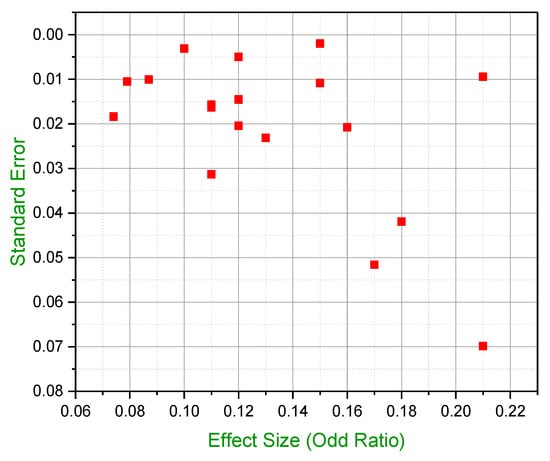
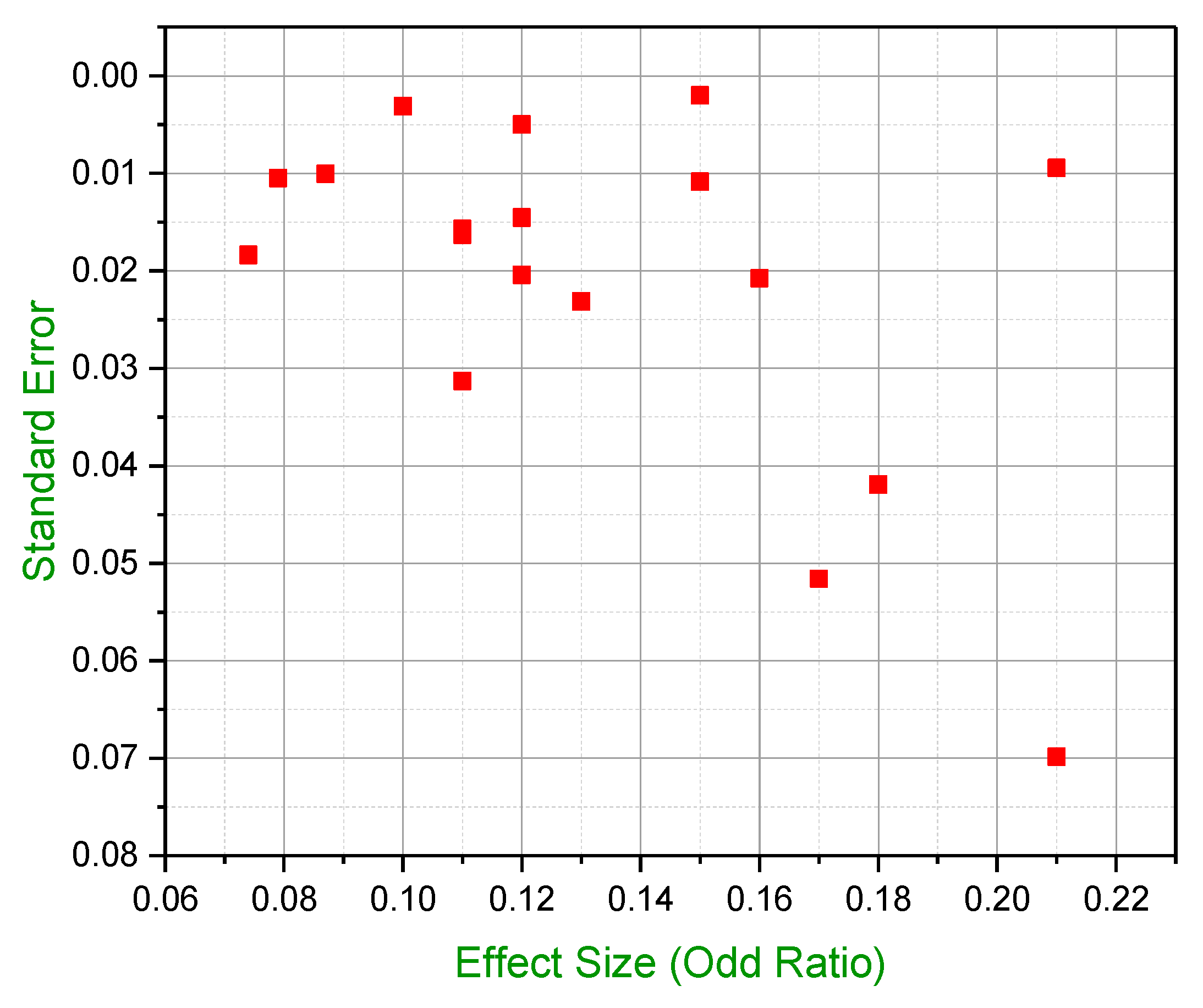
Using the data in Table 2, a funnel plot was generated to visually assess publication bias (see Figure 2). The funnel plot demonstrated a symmetrical distribution of studies, suggesting no significant publication bias. However, the limitations of these methods are acknowledged, particularly in the context of a small number of included studies. Symmetry in the distribution of study results around the pooled effect size suggests minimal bias. Asymmetry in the plot can arise due to reasons other than publication bias, such as differences in study quality or methodology.
Figure 2.
Funnel plot.
To statistically evaluate publication bias, we conducted Egger’s test, which examines asymmetry in the funnel plot. A p-value greater than 0.05 indicates no significant evidence of publication bias. The necessary data for the test was calculated using Equations (3) and (4), with the results being summarized in Table 3. Equation (5) shows the linear model of the relationship between standardized effect size and precision.
where (intercept) is tested for significance to determine asymmetry.
Table 3.
Data showing the standardized effect size and precision.
The standardized effect size represents the effect sizes of the studies, adjusted to facilitate direct comparison across different studies. Precision, defined as the inverse of the standard error of the effect sizes, reflects the reliability of these estimates, with higher precision indicating more robust results.
In Egger’s regression test, the intercept, which represents bias, is -0.88 with a p-value of 0.540. As the p-value is greater than 0.05, the intercept is not statistically significant, indicating no evidence of publication bias in the data. This suggests that the effect sizes do not systematically deviate from zero when precision is high. In contrast, the slope of the regression line is 0.14 with a p-value of 0.000. Because the p-value is less than 0.05, the slope is statistically significant, demonstrating a relationship between the standardized effect size and precision. Specifically, the results indicate that as precision increases, the effect size also tends to increase.
3.2. Definition and Classification of Caught-In/Between Accidents
Caught-in/between accidents often result in serious injuries, including fractures, amputations, crush injuries, and in severe cases, fatalities [22]. Prevention measures typically focus on engineering controls (e.g., machine guarding, safety barriers), administrative controls (e.g., training, safe work procedures), and personal protective equipment (PPE) to reduce the risk of such accidents.
A caught-in/between accident, also referred to as a caught-in or caught-between accident, is a workplace incident where a person is caught, trapped, or crushed between two or more objects [22]. These accidents typically occur in industrial settings, including construction sites, manufacturing facilities, agricultural operations, and warehouses.
Workers can be caught between moving machinery parts, such as gears, rollers, belts, or hydraulic systems [22]. For instance, a worker’s clothing or body part might get pulled into a conveyor belt or become caught between gears during operation. Accidents can also happen when workers are trapped between heavy objects, such as building materials (e.g., concrete slabs, steel beams), collapsed structures, or vehicles (e.g., forklifts, trucks) [31]. Additionally, workers can become trapped in trenches or excavations due to cave-ins, soil collapses, or falling debris [32]. Objects falling from heights or improperly stored materials can also trap or strike workers below, leading to caught-in/between injuries [22]. Furthermore, workers can be caught between collapsing walls, roofs, or scaffolding structures [33]. Working in confined spaces with limited exit points can result in workers being trapped or caught if an accident occurs [34].
Caught-in/between accidents often result in serious injuries, including fractures, amputations, crush injuries, and in severe cases, fatalities [22]. Prevention measures typically focus on engineering controls (e.g., machine guarding, safety barriers), administrative controls (e.g., training, safe work procedures), and personal protective equipment (PPE) to reduce the risk of such accidents. Regular inspections, hazard assessments, and adherence to safety protocols are critical to minimizing the occurrence of caught-in/between accidents in workplaces.
3.3. Statistical Trends in Caught-In/Between Accidents over the Years
Caught-in/between accidents remain a persistent and significant cause of injuries and fatalities in the construction industry [22]. Despite technological advancements and safety measures, these incidents continue to occur due to complex factors including human error, equipment malfunctions, and inadequate worker training.
Regulatory bodies like the Occupational Safety and Health Administration (OSHA) track these accidents through annual reports, documenting detailed statistics on incident rates, circumstances, and underlying causes. The prevalence of caught-in/between accidents varies across different construction sectors, influenced by work nature, equipment types, and specific workplace hazards.
Regional variations in these accidents reflect differences in local regulations, economic conditions, and safety culture. Comparative and longitudinal studies provide critical insights into evolving safety practices, helping to identify effective intervention strategies and inform policy decisions.
A comprehensive analysis of research reveals multiple dimensions of caught-in/between accidents (see Table 4). Studies from diverse locations, including Taiwan, the USA, Spain, South Korea, Malaysia, Hong Kong, Qatar, Gaza Strip, and Japan, employed both quantitative and qualitative methodologies to examine these incidents. Key findings consistently highlight critical risk factors:
Table 4.
Summary of the reviewed articles.
- ▪
- High percentage of accidents related to equipment failures.
- ▪
- Significant risks from trench cave-ins.
- ▪
- Prevalence of poor safety practices.
Workers most frequently impacted include heavy machinery operators, machine operators, and general construction workers. The most common injury sources involve machinery, structures, and construction facilities, with high-risk activities such as crane maintenance, excavation, and earthmoving presenting notable challenges.
These findings underscore the urgent need for comprehensive safety improvements, including enhanced training programs, stringent regulatory compliance, and proactive risk management strategies to mitigate caught-in/between accident risks in the construction sector.
3.4. Number of Cases Analyzed
Studies on caught-in/between accidents across various countries and years reveal diverse methodologies and a wide range of analyzed cases, both fatal and non-fatal. The primary analysis method identified is the mixed-method approach, which combines quantitative and qualitative techniques and accounts for nearly 44.44% of all papers reviewed. In contrast, all other research methods collectively represent 55.56%. This indicates the need to encourage the use of additional tools and methods beyond just quantitative and qualitative approaches to better determine the ultimate predictors of caught-in/between accidents in the construction industry. Quality assessments revealed that the absence of comprehensive follow-up data emerged as a significant methodological weakness, compromising our ability to track outcomes definitively. The studies’ analytical depth and methodological sophistication were constrained by the absence of control groups and inadequate adjustments for confounding variables—elements crucial for establishing generalizability and ensuring robust findings.
Numerous studies have highlighted the significant prevalence of occupational fatalities in the construction industry. An analysis of 1230 occupational fatality reports from 1989, 1990, and 1992 revealed that 53.82% of these fatalities occurred in the construction sector, with caught-in/between and clamped accidents accounting for 7.9% of fatal incidents. Similarly, from 1997 to 2004, 4333 out of 10,276 occupational fatalities occurred in the construction industry. Of these, 122 deaths (2.8%) were due to machinery-related caught-in accidents, while 417 deaths (9.6%) were caused by structural collapses.
Studies focusing on heavy equipment and machinery also underscore their contribution to construction fatalities. Between 1992 and 2002, 253 heavy equipment-related deaths within the excavation work industry were analyzed, with 12% being attributed to caught-in/between accidents involving vehicles. Another study on dump truck-related incidents from 1992 to 2007 recorded 829 construction worker deaths, with 56 fatalities being specifically linked to caught-in/between accidents.
In the U.S., a study examining 9358 construction industry accidents from 2002 to 2011 identified 10% (934 accidents) as caught-in/between incidents. Similarly, data from Malaysia between 2005 and 2009 showed that 1855 out of 19,195 occupational accidents occurred within the construction industry, with caught-in/between accidents being reported at an average annual rate of 371 cases. In Spain, a review of 1,630,452 construction accidents from 1990 to 2000 revealed that 98% were minor, while serious accidents and fatalities accounted for 1.8% (28,658 cases) and 0.2% (3029 cases), respectively.
Studies of specific projects further emphasize the risks associated with construction. An analysis of 378 accidents from the Hong Kong–Zhuhai–Macao Bridge project (2012–2017) found that falling from heights was the most common lethal accident, followed by caught-in/between incidents, which accounted for one of nine fatal accidents. In Qatar, 84 non-fatal occupational accidents from a ready-mixed concrete company revealed that 71% were caused by unsafe behavior, such as improper use of personal protective equipment (PPE).
Larger datasets provide a broader view of construction accident patterns. OSHA’s fatality database for truss work, spanning 1990–2009, recorded 214 fatalities caused by catastrophic incidents, highlighting risks related to bracing techniques and material hoisting. Additionally, a review of 763 accidents from the Construction Safety Management Integrated Information (CSI) system in South Korea identified 203 cases of significant risk, primarily due to vehicle-based construction equipment and defective protective devices.
Accident causation studies provide critical insights into fatalities. An analysis of 100 case files using social network analysis (SNA) attributed many caught-in/between hazards to human errors, including poor equipment handling, lack of competency, and neglect of PPE usage. Similarly, a review of 4899 autopsies in Japan identified 136 occupational accidental injury deaths (OAIDs), with 53 of these occurring in the construction industry, primarily due to transportation machinery such as cranes and conveyor belts.
Small firms and specific worker roles also show distinct trends in construction accidents. A study of 784 single-fatality incidents from 1999 to 2000 indicated that firms with fewer than 30 employees were less likely to experience caught-in/between accidents. Meanwhile, concreters faced elevated risks during activities such as structural collapses and earthwork, as demonstrated by an analysis of 34 fatal accidents in the U.S. concrete sector between 2018 and 2019.
3.5. Percentage of Occurrence
The proportion of caught-in/between accidents varies markedly across studies, reflecting disparities in regional safety standards, reporting practices, and industry conditions. These regional differences underscore the influence of local industry practices, regulatory frameworks, and safety cultures on the prevalence of these accidents.
3.6. Primary Source/Agent
Caught-in/between accidents in the construction industry arise from a complex interplay of equipment use, site conditions, and workplace environments. These incidents can occur through various mechanisms:
Equipment-related risks are prominent, with insufficient guarding on machinery playing a critical role. Conveyor belts, gears, rollers, and rotating equipment can trap workers in their moving parts [35]. Incorrect operation, maintenance failures, and equipment malfunctions—such as scaffolding or crane collapses—increase the potential for workers to become entrapped [36].
Spatial and environmental hazards further contribute to these accidents [37]. Trench and excavation cave-ins can trap workers, while overhead materials, falling debris, and hoisted equipment pose additional entanglement risks [7]. Structural collapses involving walls or roofs can pin workers between building components [31]. Confined workspaces with limited entry and exit points compound these dangers, especially in high-density work areas where multiple workers and equipment operate simultaneously [34].
Human factors significantly influence the occurrence of these accidents. Worker behaviors, perceptions, and organizational safety cultures play crucial roles. Common contributing elements include:
- ▪
- Hazard misperception: workers often fail to recognize or underestimate task-specific risks, leading to potentially dangerous interactions with equipment and environments [38].
- ▪
- Attentional challenges: workplace distractions such as noise, conversations, and multitasking can divert attention from critical safety protocols [39].
- ▪
- Communication breakdowns: poor communication between workers, supervisors, and equipment operators can result in misunderstandings and unsafe practices [40].
Training deficiencies represent another critical factor [41]. Insufficient preparation in equipment operation, hazard recognition, and emergency procedures leaves workers vulnerable. The lack of ongoing training and infrequent safety refresher courses further exacerbate risks [42].
Statistical evidence underscores the severity of these incidents. In the United States, equipment-related caught-in/between accidents account for 59% of such incidents, with trench cave-ins comprising 33% and material shifts causing 8% [43]. Specific causes include machinery errors (25.45%), vehicle errors (5.45%), loading and unloading mistakes (5.45%), and building structure collapses (5.45%) [8].
Regional variations exist. In Malaysia, for instance, between 2010 and 2019, serious injuries or fatalities resulted from workers being caught between working platforms and structures (46%), construction machinery or equipment (42%), and trench cave-ins (12%).
Behavioral analysis reveals that approximately 69.5% of fatalities stem from unsafe worker actions, including [22]:
- ▪
- Working near running machinery (21.2%).
- ▪
- Unintended tool or machine activation (14%).
- ▪
- Adopting unsafe postures (13.3%).
- ▪
- Operational errors (6.1%).
- ▪
- Failing to properly secure equipment (5.2%).
Preventative strategies are crucial [28]. Recommended measures include implementing rollover protective structures, mandating seat belts for heavy equipment operators, establishing lock-out/tagout procedures, creating restricted access zones around machinery, and assigning spotters near equipment and trucks.
3.7. Trade Workers Involved
The types of trade workers involved in caught-in/between accidents vary significantly across different studies, with some studies omitting specific details about the workers involved. Machine operators were frequently mentioned in several reports, alongside heavy equipment operators (including backhoe and truck operators) and construction laborers. Additionally, specific analyses highlighted heavy truck drivers, construction operators, construction machinery fitters, operators, and mechanics, as well as plumbers and pipefitters. Studies focusing on vehicles indicated the participation of dump truck operators, maintenance workers, helpers, and other vehicle drivers. Crane and tower crane operators, heavy machinery operators, and various general construction workers were also documented in incidents involving caught-in/between accidents. Certain projects specifically noted Handypersons and crane operators. In Malaysia, analyses revealed that construction laborers were most commonly involved, followed by machine operators, bricklayers, scaffolders, carpentry workers, non-construction workers or civilians, and others such as painters, drillers for installing explosives, tillers, welders, and iron benders.
Among the 56 fatalities analyzed, 12.5% were dump truck operators, 37.5% were construction laborers (including spotters, flaggers, and other workers on foot), 41.1% were workers maintaining dump trucks, and 15.15% were other workers (including other vehicle drivers and passengers and workers and passengers on dump trucks) [20]. Heavy equipment operators and construction laborers collectively accounted for 63% of all fatalities related to heavy equipment and trucks, with backhoes and trucks being responsible for half of these fatalities [17].
Crafts associated with the use and operation of large machinery, such as crane maintenance, equipment mechanics, equipment operators, and plumbers/pipe fitters, are particularly susceptible to accidents where workers are struck by or caught in equipment [10]. Structural collapse incidents were significant for plumbers/pipefitters, while incidents involving being caught in machinery were notable for construction machinery fitters, operators, and mechanics [19]. Ensuring the safety of heavy equipment operators is crucial, especially in excavation operations [17]. The highest risk of caught-in/between accidents was observed among welders and flame cutters, heavy truck drivers, construction operators, plumbers and pipefitters, and construction machinery fitters, operators, and mechanics [19].
Construction laborers were found to be the primary trade workers affected by caught-in/between accidents, primarily due to trench cave-ins, followed by machine operators who failed to adhere to safe operating procedures and masons who were affected by structural collapses (see Table 5). According to Im et al. [19], heavy truck drivers, construction operators, construction machinery fitters, operators and mechanics, and plumbers and pipefitters were among the most affected trade workers in Korea due to caught-in/between accidents. Crafts linked to heavy equipment operations are consistently involved in caught-in/between accidents [44]. It is imperative that these identified trade workers receive adequate safety training to prevent or reduce caught-in/between accidents on construction sites.
Table 5.
Trade workers suffered from caught-in/between accidents in Malaysia (2010–2019).
3.8. Construction Activities Associated with Caught-In/Between Accidents
Caught-in/between accidents occur during various construction activities, many of which involve heavy machinery, unstable structures, or complex operations. Excavation and deep foundation work are frequently cited as high-risk activities due to the inherent instability of trenches and the potential for soil collapses. Similarly, tasks such as demolition, earthmoving, drilling, perforation, and lifting materials involve significant hazards, particularly when operating heavy machinery or handling construction equipment.
In specific cases, heavy equipment operations, including crane maintenance and lifting of construction materials, are highlighted as contributing factors. Truss work in building construction projects and general construction processes also pose notable risks. Manual handling and walking around construction sites, particularly in activities involving concrete mixers, are additional sources of potential injury.
While some studies provided detailed insights into specific activities, others generalized their findings without specifying essential construction tasks associated with caught-in/between incidents. For example, one study noted that 19.3% of such fatalities could be prevented through better management and worker judgment, but it did not identify the underlying activities. The lack of specificity in certain cases underscores the need for more precise reporting on activity-related risks to improve safety interventions.
The construction activities where caught-in/between accidents occurred were meticulously identified, coded, and analyzed, as detailed in Table 6 from the Malaysian construction accidents database (DOSH). Management’s focus should be on the trade workers engaged in these activities, ensuring they receive comprehensive safety training to prevent or mitigate caught-in/between accidents on construction sites. It is crucial to enforce rigorous supervision and monitoring across all activities. Skilled workers should be specifically hired or assigned to handle these tasks, with management ensuring the availability of adequate PPE, tools, machinery, equipment, and necessary supplies. Adequate lighting for night shifts and continuous checks to monitor worker behaviors and prevent unsafe acts are essential. Implementing primary safety measures such as safety nets, warning signs, and regular housekeeping, along with secondary measures like protective helmets, clothing, and boots, should be prioritized as necessary safeguards. The identified activities often result from a combination of management practices, unsafe site conditions, and workers’ behaviors that require ongoing attention and mitigation strategies.
Table 6.
Construction activities during which caught-in/between accidents occurred.
3.9. Physical and Psychological Effects on Workers
Workers involved in caught-in/between accidents often sustain severe injuries such as fractures, amputations, crush injuries, and internal organ damage [45]. These injuries can result in permanent disabilities, affecting mobility, dexterity, and overall physical function. Some injuries may lead to chronic pain, nerve damage, or musculoskeletal disorders that persist long after the accident.
Additionally, workers may experience post-traumatic stress disorder (PTSD) or anxiety disorders due to the traumatic nature of the accident [46]. Coping with severe injuries, disability, or the fear of returning to work can lead to depression and psychological distress. These psychological effects can significantly diminish quality of life, impacting personal relationships, social interactions, and overall well-being.
3.10. Economic Impact on Companies and the Construction Industry
Companies face immediate expenses for medical treatment, hospitalization, surgeries, and rehabilitation for injured workers. Additionally, financial compensation, including wage replacement benefits and disability payments, increases company expenses [47]. Legal costs for defending against lawsuits, settlements, or fines from regulatory authorities also add significantly to the financial burden.
Accidents disrupt workflow, causing downtime, project delays, and reduced productivity until replacement workers are trained or hired [48]. Recruitment and training of new employees, along with retraining existing staff, further strain company resources. Moreover, increased insurance premiums following accidents and claims can severely impact company finances.
Public perception of safety practices and workplace conditions can significantly affect a company’s reputation and brand image [49]. Clients and partners may reconsider contracts or business relationships with companies known for poor safety records. Non-compliance with safety regulations can lead to fines, penalties, or restrictions on future contracts or project bids, further affecting the company’s prospects [50].
High accident rates can result in increased insurance premiums across the construction industry, reducing profitability for all stakeholders [51]. The cumulative economic impact of accidents raises the costs of construction projects and infrastructure development, influencing overall industry growth and competitiveness. Addressing the physical and psychological effects on workers and mitigating the economic impact on companies requires proactive safety measures, robust training programs, strict adherence to safety protocols, and a commitment to fostering a culture of safety within the construction industry.
3.11. Knowledge Gap
Most of the studies reviewed in this systematic analysis did not include an explanation of worker compensation schemes for caught-in/between accidents. Future research directions should focus on exploring the current practices and adequacy of worker compensation schemes across various regions and regulatory frameworks, as recommended by previous studies [52]. Additionally, researchers should conduct an analysis of the types and severity of injuries sustained in caught-in/between accidents, along with their impact on worker health and productivity, a factor largely overlooked in the existing literature [22]. Evaluating the economic and productivity impacts of caught-in/between accidents on construction workers should also be prioritized, involving an assessment of the number of working days lost per incident and per worker [53].
Furthermore, there is a need to investigate the correlation between workers’ years of experience, age demographics, and their susceptibility to caught-in/between accidents, a crucial aspect that has not been thoroughly examined in most studies [16]. Identifying and evaluating the effectiveness of training programs designed to mitigate caught-in/between accidents, taking into consideration variations in skill levels and job roles, is essential for enhancing workplace safety measures [54,55]. Moreover, examining participation rates and gender-specific risks associated with caught-in/between accidents among the construction workforce can provide valuable insights into disparities and targeted intervention strategies [56]. Finally, scholars should analyze how the nature and scale of construction projects influence the frequency and severity of caught-in/between accidents, including differences observed between residential, commercial, and industrial projects [57]. Addressing these research gaps will contribute to developing more effective policies and practices aimed at reducing the occurrence and impact of caught-in/between accidents in the construction industry.
3.12. Practical Implications
Our analysis of caught-in/between accidents in the construction sector reveals compelling evidence for the necessity of enhanced safety protocols. The data particularly emphasize the hazards associated with heavy equipment operations, including excavation, deep foundation work, and crane and truck operations. These findings suggest that employers must implement more stringent safety measures, with particular emphasis on equipment maintenance protocols, proper deployment of safety mechanisms, and strict adherence to lockout/tagout procedures during both operation and maintenance activities.
The research identifies human factors, specifically worker misjudgment and non-compliant safety behaviors, as persistent contributors to caught-in/between incidents. This observation underscores the imperative for enhanced safety training initiatives designed to elevate risk awareness and decision-making capabilities during high-risk operations. Such programs should emphasize proper PPE utilization, correct material handling protocols, and systematic adherence to safety procedures, particularly in contexts involving manual manipulation, lifting operations, and navigation through active construction environments.
Our findings further indicate that spatial constraints and unstable working environments, particularly in trenching and deep excavation operations, significantly amplify the risk of caught-in/between incidents. This suggests the need for more sophisticated site planning approaches and robust hazard mitigation strategies, including appropriate implementation of shoring, shielding, and sloping techniques for excavation stability. The research supports the implementation of clearly defined work zones and stringent access control measures to minimize exposure to hazardous conditions.
Certain construction activities, including demolition, truss work, and earthmoving operations, emerge as requiring specialized safety protocols. The evidence suggests that enhanced structural bracing methodologies should be developed to prevent structural failures, while crane operations and lifting procedures should be governed by comprehensive lift plans and precise load calculations. Regular safety audits during these high-risk activities emerge as a crucial component of risk mitigation strategies.
The findings indicate a pressing need for enhanced collaboration between regulatory bodies and industry stakeholders to establish and enforce more rigorous safety standards, particularly in sectors demonstrating elevated risk profiles. Our analysis suggests that the implementation of mandatory inspection regimes, sophisticated reporting mechanisms, and robust accountability frameworks could significantly improve regulatory compliance. Moreover, the research identifies smaller enterprises as particularly vulnerable to safety oversights, suggesting the potential benefit of targeted support mechanisms, including subsidies or enhanced access to safety resources.
4. Conclusions
This systematic review comprehensively examined caught-in/between accidents in the construction industry, uncovering critical insights into their underlying causes, injury patterns, and research limitations. The analysis revealed significant accident triggers, including machinery and equipment errors, vehicle incidents, loading and unloading mishaps, and building structure collapses. Heavy equipment rollovers, trench cave-ins, and material shifts emerged as particularly prevalent hazards, underscoring the inherent risks in construction work involving complex machinery and excavation processes.
The injury spectrum ranged from minor to fatal, yet existing research demonstrated substantial gaps in understanding long-term impacts on worker health and productivity. Economic consequences were profound, with considerable working days lost, though few studies quantified these losses comprehensively. An underexplored dimension was the correlation between workers’ experience, age, and accident susceptibility, suggesting vulnerability among both inexperienced and older workers.
Training emerged as a critical intervention point. Inadequate safety protocols and insufficient training significantly contributed to accident rates, while gender-specific risks remained poorly documented. This review also highlighted a notable absence of detailed comparative analyses examining how construction project characteristics influence accident frequency and severity.
Recommendations for mitigating caught-in/between accidents centered on multifaceted strategies: implementing stricter safety regulations, developing robust training programs, advancing safety technologies, cultivating a comprehensive safety culture, and establishing comprehensive support systems for injured workers.
Acknowledging the dynamic nature of safety research, this review emphasized the importance of adaptive methodological approaches. Future systematic reviews should prioritize frequent literature searches, establish continuous monitoring mechanisms, and embrace living review methodologies to ensure that insights remain current and relevant.
The study’s limitations—including geographical constraints and potential publication biases—underscore the need for more inclusive, comprehensive research. By addressing these gaps and maintaining a proactive, iterative approach to safety investigation, researchers and industry stakeholders can work collaboratively to minimize caught-in/between accidents and fundamentally improve workplace safety standards in the construction industry.
Our systematic literature review, while yielding valuable insights, encountered several methodological constraints that warrant consideration. The geographical limitations of our dataset and potential publication biases suggest the need for more expansive and methodologically robust research initiatives. These identified limitations underscore the importance of developing more sophisticated investigative approaches to workplace safety—approaches that facilitate meaningful collaboration between researchers and industry practitioners in their shared goal of reducing caught-in/between incidents and elevating construction industry safety standards.
The trajectory of future research in this domain should prioritize granular analysis of causative factors, with particular attention to trade-specific risk profiles and activity-associated hazards. Such investigations should also incorporate rigorous evaluation of existing safety protocols’ effectiveness. The emerging technological landscape presents compelling opportunities for advancing workplace safety practices. Specifically, the integration of machine learning algorithms for predictive risk assessment and the deployment of wearable safety monitoring systems offers promising avenues for enhancing safety outcomes in the construction sector.
These methodological considerations and future research directions reflect our commitment to advancing the empirical foundation necessary for meaningful improvements in construction workplace safety. By acknowledging current limitations while identifying promising areas for future investigation, we contribute to the ongoing dialog surrounding construction safety enhancement and risk mitigation strategies.
Author Contributions
Conceptualization, A.D.R. and Y.E.I.; methodology, A.D.R., B.K., A.M.G., S.I.H., I.B.D. and O.A.S.; formal analysis, A.D.R.; resources, A.D.R. and S.I.H.; data curation, A.D.R.; writing—original draft preparation, A.D.R. and A.M.G.; writing—review and editing, A.D.R., B.K., A.M.G., S.I.H., I.B.D. and O.A.S.; visualization, A.D.R., B.K., A.M.G. and S.I.H.; supervision, B.K., Y.E.I., O.A.S. and S.I.H.; funding acquisition, Y.E.I., O.A.S. and S.I.H. All authors have read and agreed to the published version of the manuscript.
Funding
This research was funded by Bayero University Kano. The remaining APC was funded by the Structures and Materials Laboratory (S&M Lab) of the College of Engineering, Prince Sultan University, Riyadh, Saudi Arabia.
Data Availability Statement
The data supporting and used in this study’s findings are available from the corresponding author upon request.
Conflicts of Interest
The authors declare no conflicts of interest.
References
- Chan, A.P.; Wong, F.K.; Chan, D.W.; Yam, M.C.; Kwok, A.W.; Lam, E.W.; Cheung, E. Work at height fatalities in the repair, maintenance, alteration, and addition works. J. Constr. Eng. Manag. 2008, 134, 527–535. [Google Scholar] [CrossRef] [Scilit]
- Reese, C.D.; Eidson, J.V. Handbook of OSHA Construction Safety and Health; CRC Press: Boca Raton, FL, USA, 2006. [Google Scholar]
- Auwalu, A.S.; Noor, N.M.; Ahmad Shah, M.S.; Umar, S.; Amran, M.; Adamu, M.; Vatin, N.I.; Fediuk, R. Performance of Steel-Bolt-Connected Industrialized Building System Frame Subjected to Hydrodynamic Force. Appl. Sci. 2022, 12, 5093. [Google Scholar] [CrossRef] [Scilit]
- Davis, V.; Tomasin, K. Construction Site Safety; Telford, T., Ed.; Internal Publication: London, UK, 1990. [Google Scholar]
- Albert, A.; Pandit, B.; Patil, Y. Focus on the fatal-four: Implications for construction hazard recognition. Saf. Sci. 2020, 128, 104774. [Google Scholar] [CrossRef] [Scilit]
- Hinze, J.; Russell, D.B. Analysis of fatalities recorded by OSHA. J. Constr. Eng. Manag. 1995, 121, 209–214. [Google Scholar] [CrossRef] [Scilit]
- Hinze, J.; Huang, X.; Terry, L. The nature of struck-by accidents. J. Constr. Eng. Manag. 2005, 131, 262–268. [Google Scholar] [CrossRef] [Scilit]
- Chong, H.Y.; Low, T.S. Accidents in Malaysian construction industry: Statistical data and court cases. Int. J. Occup. Saf. Ergon. 2014, 20, 503–513. [Google Scholar] [CrossRef] [Scilit]
- Hamid, A.; Azmi, M.N.; Aminudin, E.; Jaya, R.; Zakaria, R.; Zawawi, A.; Yahya, K.; Haron, Z.; Yunus, R.; Saar, C. Causes of fatal construction accidents in Malaysia. In IOP Conference Series: Earth and Environmental Science; IOP Publishing: Bristol, UK, 2019; Volume 220, p. 012044. [Google Scholar]
- Hinze, J.; Pedersen, C.; Fredley, J. Identifying root causes of construction injuries. J. Constr. Eng. Manag. 1998, 124, 67–71. [Google Scholar] [CrossRef] [Scilit]
- Saieg, P.; Sotelino, E.D.; Nascimento, D.; Caiado, R.G.G. Interactions of building information modeling, lean and sustainability on the architectural, engineering and construction industry: A systematic review. J. Clean. Prod. 2018, 174, 788–806. [Google Scholar] [CrossRef] [Scilit]
- Martín-Martín, A.; Orduna-Malea, E.; Thelwall, M.; López-Cózar, E.D. Google Scholar, Web of Science, and Scopus: A systematic comparison of citations in 252 subject categories. J. Informetr. 2018, 12, 1160–1177. [Google Scholar] [CrossRef] [Scilit]
- Moher, D.; Shamseer, L.; Clarke, M.; Ghersi, D.; Liberati, A.; Petticrew, M.; Shekelle, P.; Stewart, L.A. Preferred reporting items for systematic review and meta-analysis protocols (PRISMA-P) 2015 statement. Syst. Rev. 2015, 4, 1–9. [Google Scholar] [CrossRef] [PubMed]
- Fargnoli, M.; Lombardi, M. Building information modelling (BIM) to enhance occupational safety in construction activities: Research trends emerging from one decade of studies. Buildings 2020, 10, 98. [Google Scholar] [CrossRef] [Scilit]
- Chi, C.-F.; Wu, M.-L. Fatal occupational injuries in Taiwan—Relationship between fatality rate and age. Saf. Sci. 1997, 27, 1–17. [Google Scholar] [CrossRef] [Scilit]
- Chi, C.-F.; Chang, T.-C.; Hung, K.-H. Significant industry–source of injury–accident type for occupational fatalities in Taiwan. Int. J. Ind. Ergon. 2004, 34, 77–91. [Google Scholar] [CrossRef] [Scilit]
- McCann, M. Heavy equipment and truck-related deaths on excavation work sites. J. Saf. Res. 2006, 37, 511–517. [Google Scholar] [CrossRef] [Scilit] [PubMed]
- López, M.A.C.; Ritzel, D.O.; Fontaneda, I.; Alcantara, O.J.G. Construction industry accidents in Spain. J. Saf. Res. 2008, 39, 497–507. [Google Scholar] [CrossRef] [Scilit]
- Im, H.-J.; Kwon, Y.-J.; Kim, S.-G.; Kim, Y.-K.; Ju, Y.-S.; Lee, H.-P. The characteristics of fatal occupational injuries in Korea’s construction industry, 1997–2004. Saf. Sci. 2009, 47, 1159–1162. [Google Scholar] [CrossRef] [Scilit]
- McCann, M.; Cheng, M.T. Dump truck-related deaths in construction, 1992–2007. Am. J. Ind. Med. 2012, 55, 450–457. [Google Scholar] [CrossRef] [Scilit] [PubMed]
- Chi, S.; Han, S.; Kim, D.Y. The relationship between unsafe working conditions and workers’ behavior and their impacts on injury severity in the US Construction Industry. J. Constr. Eng. Manag. ASCE 2013, 139, 826–838. [Google Scholar] [CrossRef] [Scilit]
- Chi, C.-F.; Lin, S.-Z. Classification scheme and prevention measures for caught-in-between occupational fatalities. Appl. Ergon. 2018, 68, 338–348. [Google Scholar] [CrossRef] [Scilit] [PubMed]
- Chan, A.P.C.; Yang, Y.; Darko, A. Construction accidents in a large-scale public infrastructure project: Severity and prevention. J. Constr. Eng. Manag. 2018, 144, 05018010. [Google Scholar] [CrossRef] [Scilit]
- Prasetyo, Y.T.; Sario, M.C.; Chuenyindee, T.; Nadlifatin, R.; Persada, S.F.; Sittiwatethanasiri, T. Analysis of Non-fatal Occupational Accidents in a Ready-mixed Concrete Company. In Proceedings of the 2022 IEEE International Conference on Industrial Engineering and Engineering Management (IEEM), Kuala Lumpur, Malaysia, 7–10 December 2022; IEEE: Piscataway, NJ, USA, 2022; pp. 0001–0005. [Google Scholar]
- Grant, A.; Hinze, J. Construction worker fatalities related to trusses: An analysis of the OSHA fatality and catastrophic incident database. Saf. Sci. 2014, 65, 54–62. [Google Scholar] [CrossRef] [Scilit]
- Yoon, Y.-G.; Ahn, C.R.; Yum, S.-G.; Oh, T.K. Establishment of safety management measures for major construction workers through the association rule mining analysis of the data on construction accidents in Korea. Buildings 2024, 14, 998. [Google Scholar] [CrossRef] [Scilit]
- Hatipkarasulu, Y. Safety as a Part of Construction Means and Methods: A Complimentary Teaching and Learning Approach for Occupational Safety. In Proceedings of the 2022 ASEE Annual Conference & Exposition, Minneapolis, MN, USA, 26–29 June 2022. [Google Scholar]
- Eteifa, S.O.; El-adaway, I.H. Using social network analysis to model the interaction between root causes of fatalities in the construction industry. J. Manag. Eng. 2018, 34, 04017045. [Google Scholar] [CrossRef] [Scilit]
- Enshassi, A.; Smallwood, J.; Hassouna, A. An overview of construction injuries and fatalities in the Gaza Strip. Int. J. Constr. Manag. 2007, 7, 71–81. [Google Scholar] [CrossRef] [Scilit]
- Yamaguchi, R.; Makino, Y.; Torimitsu, S.; Inokuchi, G.; Chiba, F.; Yoshida, M.; Tsuneya, S.; Oya, Y.; Yajima, D.; Iwase, H. Occupational accidental injury deaths in Tokyo and Chiba prefectures, Japan: A 10-year study (2011–2020) of forensic institute evaluations. J. Forensic Sci. 2023, 68, 185–197. [Google Scholar] [CrossRef] [Scilit]
- Bhole, S. Safety problems and injuries on construction site: A review. Int. J. Eng. Tech. 2016, 2, 24–35. [Google Scholar]
- Hayslip, M.W. Excavation and Trenching. Handbook of Loss Prevention Engineering; John Wiley & Sons: Hoboken, NJ, USA, 2013; Volume 1, pp. 159–199. [Google Scholar]
- Hoła, B.; Nowobilski, T.; Rudy, J.; Błazik, E.B. Dangerous events related to the use of scaffolding. Tech. Trans. 2017, 114, 31–39. [Google Scholar]
- Veasey, D.A.; McCormick, L.C.; Hilyer, B.M.; Oldfield, K.W.; Hansen, S.; Krayer, T.H. Confined Space Entry and Emergency Response; John Wiley & Sons: Hoboken, NJ, USA, 2005. [Google Scholar]
- McConnell, S.M. Improving Safety Around Machine Tools and Mechanized Equipment: Building A Successful Program. In Proceedings of the ASSE Professional Development Conference and Exposition, New Orleans, LA, USA, 12–15 June 2005; p. ASSE–05-651. [Google Scholar]
- Chinniah, Y. Analysis and prevention of serious and fatal accidents related to moving parts of machinery. Saf. Sci. 2015, 75, 163–173. [Google Scholar] [CrossRef] [Scilit]
- Saha, S.; Zarika, Z.; Zekavat, P. Scaffold and crane work health safety failure incidents and case studies in Australia. In Proceedings of the International Symposium on Advancement of Construction Management and Real Estate, Chongqing, China, 29 November–2 December 2019; Springer: Singapore, 2019; pp. 2239–2252. [Google Scholar]
- Albert, A.; Pandit, B.; Patil, Y.; Louis, J. Does the potential safety risk affect whether particular construction hazards are recognized or not? J. Saf. Res. 2020, 75, 241–250. [Google Scholar] [CrossRef] [Scilit]
- Cohen, J.; LaRue, C.; Cohen, H.H. Attention interrupted: Cognitive distraction & workplace safety. Prof. Saf. 2017, 62, 28–34. [Google Scholar]
- Gambatese, J.A.; Pestana, C.; Lee, H.W. Alignment between lean principles and practices and worker safety behavior. J. Constr. Eng. Manag. 2017, 143, 04016083. [Google Scholar] [CrossRef] [Scilit]
- Fass, S.; Yousef, R.; Liginlal, D.; Vyas, P. Understanding causes of fall and struck-by incidents: What differentiates construction safety in the Arabian Gulf region? Appl. Ergon. 2017, 58, 515–526. [Google Scholar] [CrossRef] [Scilit] [PubMed]
- Leveson, N. A new accident model for engineering safer systems. Saf. Sci. 2004, 42, 237–270. [Google Scholar] [CrossRef] [Scilit]
- Haslam, R.A.; Hide, S.A.; Gibb, A.G.; Gyi, D.E.; Pavitt, T.; Atkinson, S.; Duff, A.R. Contributing factors in construction accidents. Appl. Ergon. 2005, 36, 401–415. [Google Scholar] [CrossRef] [Scilit] [PubMed]
- Aksorn, T.; Hadikusumo, B. The unsafe acts and the decision-to-err factors of Thai construction workers. J. Constr. Dev. Ctries. 2007, 12, 1–25. [Google Scholar]
- Alsharef, A.; Albert, A.; Awolusi, I.; Jaselskis, E. Severe injuries among construction workers: Insights from OSHA’s new severe injury reporting program. Saf. Sci. 2023, 163, 106126. [Google Scholar] [CrossRef] [Scilit]
- Skogstad, M.; Skorstad, M.; Lie, A.; Conradi, H.S.; Heir, T.; Weisæth, L. Work-related post-traumatic stress disorder. Occup. Med. 2013, 63, 175–182. [Google Scholar] [CrossRef] [Scilit] [PubMed]
- Butler, R.J.; Worrall, J.D. Workers’ compensation: Benefit and injury claims rates in the seventies. Rev. Econ. Stat. 1983, 65, 580–589. [Google Scholar] [CrossRef] [Scilit]
- Zhang, J. Analysis of Accidents and Malfunctions. Doctoral Dissertation, Politecnico di Torino, Turin, Italy, 2022. [Google Scholar]
- Gray, E.R.; Balmer, J.M. Managing corporate image and corporate reputation. Long Range Plan. 1998, 31, 695–702. [Google Scholar] [CrossRef] [Scilit]
- Windapo, A.O. Relationship between degree of risk, cost and level of compliance to occupational health and safety regulations in construction. Australas. J. Constr. Econ. Build. 2013, 13, 67–82. [Google Scholar] [CrossRef] [Scilit]
- Asanka, W.; Ranasinghe, M. Study on the impact of accidents on construction projects. In Proceedings of the 6th International Conference on Structural Engineering and Construction Management, Kandy, Sri Lanka, 11–13 December 2015; Volume 4, pp. 58–67. [Google Scholar]
- Bronstein, J.L. Caught in the Machinery: Workplace Accidents and Injured Workers in Nineteenth-Century Britain; Stanford University Press: Redwood City, CA, USA, 2008. [Google Scholar]
- Pillay, K.R. The Costs of Construction Accidents; LAP LAMBERT Academic Publishing: Saarbrucken, Germany, 2014. [Google Scholar]
- Mollo, L.; Emuze, F.; Smallwood, J. Training-Within-Industry Job Programs for Improved Construction Safety; Taylor & Francis: Abingdon, UK, 2023. [Google Scholar]
- Nasri, M.T.; Abbassi, F.; Ahmad, F.; Makhloufi, W.; Ayadi, M.; Mehboob, H.; Choi, H.S. Experimental and numerical investigation of sheet metal failure based on Johnson-Cook model and Erichsen test over a wide range of temperatures. Mech. Adv. Mater. Struct. 2023, 30, 2087–2100. [Google Scholar] [CrossRef] [Scilit]
- Lin, Y.-H.; Chen, C.-Y.; Luo, J.-L. Gender and age distribution of occupational fatalities in Taiwan. Accid. Anal. Prev. 2008, 40, 1604–1610. [Google Scholar] [CrossRef] [Scilit]
- Halabi, Y.; Xu, H.; Long, D.; Chen, Y.; Yu, Z.; Alhaek, F.; Alhaddad, W. Causal factors and risk assessment of fall accidents in the US construction industry: A comprehensive data analysis (2000–2020). Saf. Sci. 2022, 146, 105537. [Google Scholar] [CrossRef] [Scilit]

Disclaimer/Publisher’s Note: The statements, opinions and data contained in all publications are solely those of the individual author(s) and contributor(s) and not of MDPI and/or the editor(s). MDPI and/or the editor(s) disclaim responsibility for any injury to people or property resulting from any ideas, methods, instructions or products referred to in the content. |
© 2025 by the authors. Licensee MDPI, Basel, Switzerland. This article is an open access article distributed under the terms and conditions of the Creative Commons Attribution (CC BY) license (https://creativecommons.org/licenses/by/4.0/).