
Article

Recycled Lignocellulosic Resources for Circular Bioeconomy Applications: Heat-Treated Eucalyptus Fibers in Polyester Composites

by
Douglas Lamounier Faria
1,*,
Tamires Galvão Tavares Pereira
1,
Danillo Wisky Silva
2,
Mário Vanoli Scatolino
3,
Julio Soriano
4,
Thiago de Paula Protásio
1 and
Lourival Marin Mendes
1
1
Department of Forest Science, Federal University of Lavras—UFLA, Perimetral Av., POB 3037, Lavras 37200-900, MG, Brazil
2
Klabin Technology Center, Industrial R&D+I, Fazenda Monte Alegre, St. Harmonia, Telêmaco Borba 84275-000, PR, Brazil
3
Colegiate of Forest Science, State University of Amapá—UEAP, Av. Pres. Vargas, 650, Macapá 68900-030, AP, Brazil
4
School of Agricultural Engineering, University of Campinas—UNICAMP, Candido Rondon Av, Campinas 13083-875, SP, Brazil
*
Author to whom correspondence should be addressed.
Recycling 2026, 11(2), 34; https://doi.org/10.3390/recycling11020034
Submission received: 2 January 2026 / Revised: 27 January 2026 / Accepted: 29 January 2026 / Published: 3 February 2026

Abstract

The pursuit of alternatives to nonrenewable materials has stimulated the development of sustainable materials with improved performance, particularly polymer composites reinforced with plant-based fibers. In this study, eucalyptus fibers were thermally treated and evaluated as eco-friendly reinforcements for polyester composites, aiming to enhance their physical and mechanical properties. The fibers were subjected to heat treatments between 140 and 230 °C in a Macro-ATG oven, followed by analyses of anatomical characteristics and chemical composition. Composites containing 25% fiber reinforcement were produced using an orthophthalic unsaturated polyester matrix catalyzed with methyl ethyl ketone peroxide, with untreated fibers used as references. Thermal treatment induced significant modifications in fiber morphology and composition, including increases in cell wall fraction at 170 and 200 °C and higher cellulose contents at 140 and 170 °C. Mechanical performance was assessed through tensile, flexural (modulus of rupture—MOR), modulus of elasticity (EB), and impact tests. Composites reinforced with heat-treated fibers exhibited lower apparent density and, notably, those treated at 230 °C showed markedly reduced water absorption and enhanced tensile strength compared with the control. Overall, treatment at 230 °C proved most effective, highlighting the potential of thermally modified eucalyptus fibers as viable reinforcements for high-performance, bio-based polymer composites.

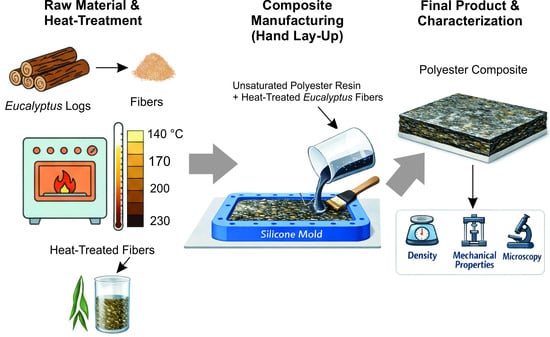
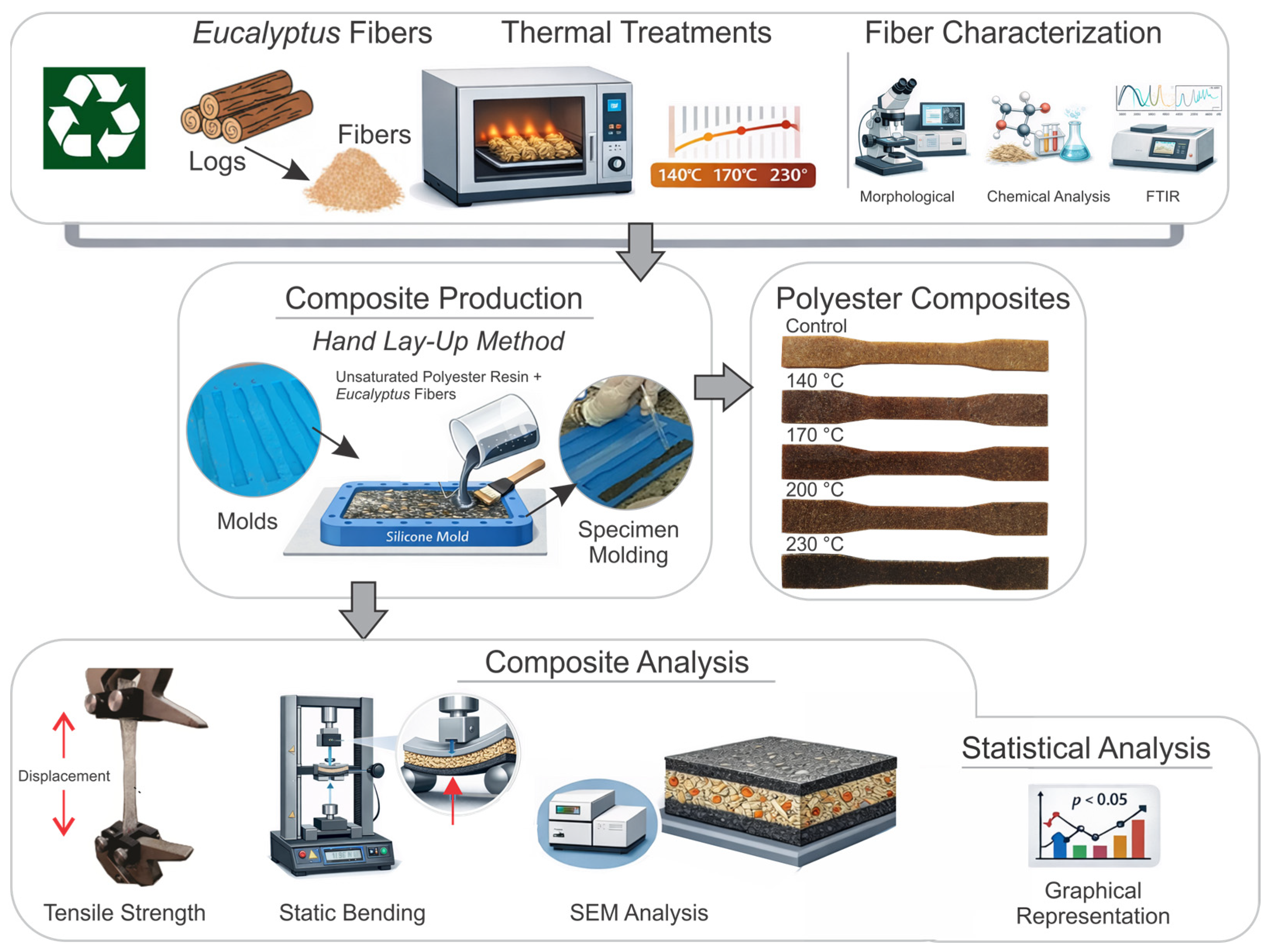
Graphical Abstract

1. Introduction

Composite materials using lignocellulosic fibers as reinforcements in polymer matrices have been extensively studied and are becoming more common in the polymer industry [1]. Produced with a continuous phase, referred to as the matrix, and a discontinuous phase, referred to as reinforcement, composites can exhibit excellent properties [2]. Composite materials not only maintain the advantages of the properties of each component but can also improve or overcome the weakness of a single material. Fiber-reinforced materials are the most widely used materials and constitute the largest amount produced; however, the type of reinforcement can vary [3]. The mechanical properties of composites reinforced with glass fibers [4,5], carbon fibers [6], aramids [7], polyethylene [8], basalt [9], polypropylene fibers [10], and quartzite wastes [11,12] have been evaluated, and good results have been obtained. However, these materials have some drawbacks: they are nonbiodegradable, nonrecyclable, nonrenewable, have high energy consumption in the manufacturing process and pose health risks when inhaled [13].
Biobased fibers present some advantages over their synthetic counterparts. From an environmental perspective, they contribute to sustainability by being derived from renewable resources, exhibiting natural biodegradability, and demanding lower energy inputs during production. Economically, they offer potential for cost reduction, the generation of additional revenue streams, and the promotion of employment opportunities [14]. It can not only reduce the material cost but also improve the toughness and ductility of the material. The types of vegetal fibers used vary as follows: saltbush [15], bamboo [16,17,18], jute fibers [19], sisal [20,21], coconut fiber [22,23], date palm [24], and wood fibers [25,26,27]. Wood fibers are used in composites when extracted from sawdust, woodchips, and agroindustry and forest wastes [28,29,30].
Brazil is the second largest producer of eucalyptus fibers in the world, with technical and scientific knowledge of the exploitation of this forest species. With a planted area of 7.83 million hectares, the average productivity of eucalyptus plantations in Brazil, reported by forest-based companies, is on average 33.7 m3 hectares per year [31]. In 2023, Brazil’s eucalyptus fiber production reached 23.8 million tons, positioning the country as the world’s largest exporter of cellulose [31,32]. Although a large volume of eucalyptus fibers is directed toward the production of pulp and paper, an environmentally sustainable alternative for their application lies in their use as a reinforcement material in polymer matrices. Nevertheless, when plant-based fibers are used as reinforcements in composite materials, one of the major challenges lies in their moisture sensitivity and limited thermal stability, which limits their broader industrial application [33]. This is due to the polar and hydrophilic nature of natural fibers, which contrast with the nonpolar characteristics of most commercial thermoset polymers, such as unsaturated polyesters, thereby hindering effective adhesion between composite components [34,35]. The main limitation of using natural fibers as reinforcements in polymer composites is the low interfacial compatibility between the fibers and the matrix [1]. To overcome these limitations, various surface modification techniques such as mercerization, benzoylation, thermochemical treatments, silane coupling, and acetylation have been extensively investigated [33].
Although alkaline treatment is commonly employed to enhance the interfacial adhesion and surface properties of plant-based fibers, it may also introduce several drawbacks. These include reductions in tensile strength and Young’s modulus, potentially associated with the formation of voids within the fiber microstructure. Additionally, high alkali concentrations can induce fiber degradation, resulting in embrittlement and diminished impact resistance. Overexposure to alkaline conditions may also reduce cellulose crystallinity, thereby increasing the susceptibility of fibers to thermal and mechanical degradation [36]. Heat treatment has emerged as an alternative method for modifying vegetal fibers without compromising the mechanical properties of the resulting composites.
This process involves heating the fibers at high temperatures but is not enough to cause fiber degradation [37]. Subjecting fibers or wood to temperatures typically ranging from 100 °C to 250 °C can induce partial thermal degradation, with the goal of modifying their physical, chemical, and mechanical properties [38]. Specific chemical modifications involve polymer chain scission, the generation of free radicals, and the formation of functional groups such as carbonyl, carboxyl, and peroxide groups [39]. Several studies have investigated the effects of thermal treatment on plant-based fibers with respect to the physical and mechanical properties of polymer composites, including coconut fibers [37], açaí fibers [40], agave fibers [41], jute fibers [42,43], Melia dubia wood flour [44], rice straw and banana fibers [45], and cotton fibers [46]. Despite the innovative nature of these studies, literature lacks comprehensive data on the influence of heat treatment temperature on the performance of eucalyptus fibers as reinforcements in unsaturated polyester matrix composites.
Although natural fiber-reinforced composites have been extensively investigated, the thermal treatment of eucalyptus fibers remains insufficiently explored, particularly with respect to its effects on the performance of unsaturated polyester-based composites. This study is original in that it systematically evaluates the influence of different heat-treatment temperatures on eucalyptus fibers and correlates the physicochemical modifications induced by this process with the resulting properties of the produced composites. In addition to filling a relevant gap in the literature, the findings are aligned with the principles of recycling and the circular economy, as they demonstrate the potential for valorizing lignocellulosic fibers derived from industrial and agro-forestry wastes of the wood and pulp sectors. The incorporation of heat-treated fibers into commercial polymer matrices enables the conversion of low-value by-products into higher-performance composite materials with enhanced technological applicability, thereby extending the life cycle of natural resources and reducing reliance on non-renewable synthetic reinforcements. In this context, the recycling and reuse of eucalyptus fibers in advanced polymer composites contribute to mitigating the environmental impacts associated with industrial waste disposal, promote the efficient use of renewable raw materials, and reinforce sustainable production strategies in line with contemporary principles of sustainable development and circular economy applied to materials engineering.

2. Materials and Methods

2.1. Materials

Fibers from the hybrid Eucalyptus grandis × Eucalyptus urophylla (5 years) were used for composite preparation. The fibers were provided by the Eucatex Company (Salto, São Paulo, Brazil) and were obtained after the thermomechanical pulping process, which initially aimed to produce a medium density fiberboard (MDF).
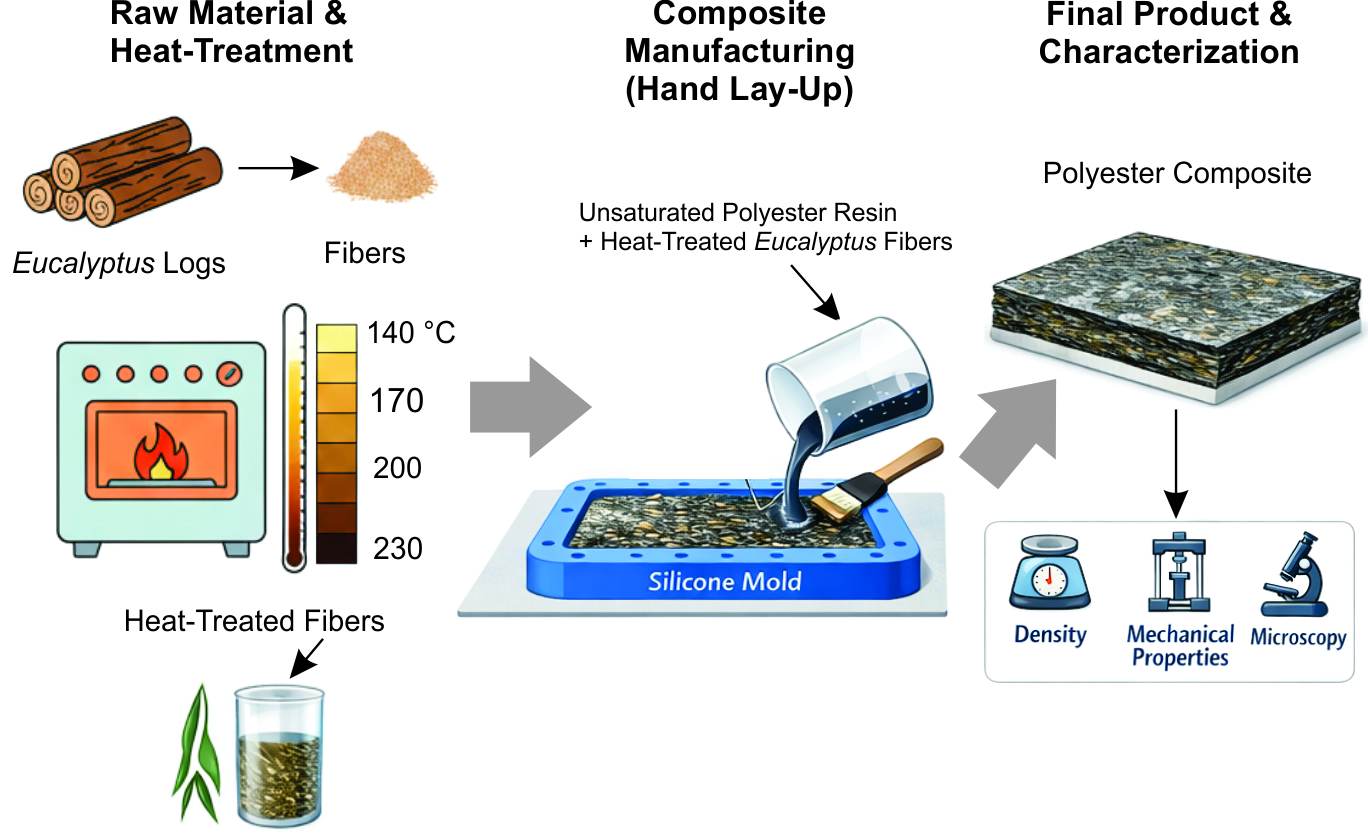
The bicomponent resin used as the composite matrix was an orthophthalic unsaturated polyester supplied by Redelease (São Paulo, Brazil). The thermosetting polymer was formed through the addition of 2% (wt.%) methyl ethyl ketone peroxide catalyst, initiating the polymerization and curing process. The resin presented an apparent viscosity of 227.77 mPa·s at 25 °C, a solids content of 52.3%, a gel time of 13 min at 25 °C, a density of 1110 kg/m3, an acid value of 30 mg KOH/g, and a pH of 8.3. The process for producing the composites is shown in Figure 1.

2.2. Heat Treatment of the Fibers

The heat treatment of fibers was performed in a “Macro-ATG” oven developed by the Center for International Cooperation in Agronomic Research for Development (CIRAD) from France in partnership with Federal University of Lavras (UFLA).
A total of 600 g of eucalyptus fibers were preconditioned at a temperature of 22 ± 2 °C and a relative humidity of 65 ± 5%, corresponding to an equilibrium moisture content of approximately 12%. The fibers were then placed in a metal tube equipped with five thermocouples for internal temperature monitoring. These thermocouples, connected to a computer, recorded temperature data by converting standardized electrical signals, which were subsequently processed via Macro Thermogravimetric software.
The thermal treatment chamber was initially heated from ambient temperature (~20 °C) to 100 °C at a rate of 10 °C/min, requiring approximately 8 min. Upon reaching 100 °C, the heating rate was reduced to 1 °C min−1 until the target temperatures (140, 170, 200, and 230 °C) were reached. Each thermal treatment was maintained for 60 min, beginning when the target temperature was reached.
Throughout the entire thermal process, nitrogen gas was continuously injected into the chamber at a flow rate of 40 mL/min to create an inert atmosphere and minimize the risk of combustion at elevated temperatures. Following the completion of each treatment, the heating system was turned off, and the fibers were removed and subsequently stored in a climate-controlled room at 22 ± 2 °C and 65 ± 5% relative humidity.

2.3. Characterization of the Fibers

2.3.1. Morphological

Treated and untreated eucalyptus fibers were characterized morphologically and chemically. Fiber length, lumen diameter, and cell wall thickness were measured via an Olympus BX41 optical microscope (Olympus, Tokyo, Japan) in conjunction with Wincel Regent PRO software. While automated analyzers are primarily employed as operational tools for process control and rapid pulp classification, optical microscopy plays a complementary and fundamental role by providing essential anatomical parameters, thereby elucidating how cellular and tissue-level variations translate into the physical properties and technological performance of fibers. Moreover, the microscopic analysis was carried out on fibers as received, without any prior classification or processing. For each anatomical parameter, approximately 60 measurements were performed to ensure statistical reliability. The flexibility coefficient and aspect ratio were subsequently calculated via the equations proposed by Paula et al. [47] (Equations (1) and (2)).
FC = (LD/d) × 100
AR = (L)/d
where FC is the flexibility coefficient; LD is the lumen diameter (μm); d is the fiber diameter (μm); AR is the aspect ratio (dimensionless); and L is the fiber length (μm).
Similarly, the wall fraction (WF, %) was obtained by dividing the wall thickness (WT, multiplied by 2) by the fiber diameter (d), according to Equation (3).
WF = (2WT)/d × 100
where d is the diameter.

2.3.2. Chemical Constituents

Chemical analyses were conducted on both treated and untreated eucalyptus fibers to identify compositional changes induced by heat treatment and to correlate these alterations with the resulting composite properties. Before chemical analyses, eucalyptus fibers were oven-dried at 105 ± 2 °C for 24 h and subsequently sieved. The chemical constituents were determined via the fiber fraction that passed through a 40-mesh sieve (0.420 mm) and was retained on a 60-mesh sieve (0.250 mm). The total extractive content was determined following the procedures outlined in NBR 14853 [48], whereas the insoluble lignin and ash contents were quantified in accordance with NBR 7989 [49] and NBR 13999 [50], respectively. The holocellulose content (cellulose + hemicelluloses) was determined according to the methodology proposed by Browning [51], and the cellulose content was quantified following the protocol described by Kennedy, Phillips, and Williams [52]. The hemicellulose content was estimated by subtracting the cellulose content from the holocellulose value. Detailed information on the analytical procedures is provided by Furtini et al. [53].

2.3.3. FTIR

Infrared spectra were obtained via a PerkinElmer Frontier FTIR spectrometer equipped with a MIRacle™ Single Reflection Horizontal ATR accessory (Pike Technologies, Madison, WI, USA). The characteristic spectra of the fibers revealed the presence and variation in chemical functional groups resulting from the different surface modifications applied to the fibers for composite fabrication [54]. During analysis, the FTIR spectrometer was continuously purged with nitrogen to ensure spectral accuracy. The fibers subjected to the different heat treatments were analyzed within a spectral range of 4000–400 cm−1, using 32 scans and a resolution of 2 cm−1.

2.4. Composite Production

The liquid unsaturated polyester resin (control), REDELEASE® LA80300 (Redelease, São Paulo, Brazil), was synthesized by incorporating 2% (wt.%) methyl ethyl ketone peroxide catalyst (REDELEASE® BUTANOX M-50) in accordance with the manufacturer’s recommendations. The components were manually mixed in a glass beaker using a glass rod for 2 min. The resin was subsequently poured into a silicone mold with standardized dimensions for specimen fabrication, following ASTM guidelines.
The composites were produced with 25% (wt.%) oven-dried eucalyptus fibers, either untreated or heat-treated at temperatures of 140, 170, 200, and 230 °C. This reinforcement content was selected on the basis of prior findings by Pereira et al. [55], who demonstrated superior mechanical performance at this fiber concentration. Nevertheless, the present study focuses exclusively on the effect of thermal treatment rather than on the fiber loading. For composite production, eucalyptus fibers were manually blended into the synthesized unsaturated polyester resin via a glass rod, and the resulting mixture was poured into a silicone mold with standardized dimensions for sample fabrication, in accordance with ASTM guidelines. The composites were processed via the hand lay-up technique and cured at ambient temperature (~22 °C) for 3 h under atmospheric pressure. It should be emphasized that this technique has limitations that may result in high porosity, the presence of voids, and poor fiber distribution, which adversely affect the structural performance of the materials produced. The experimental design is shown in Table 1.
After the initial curing stage, the composites were transferred to a climate-controlled chamber maintained at 20 ± 3 °C and 65 ± 5% relative humidity and kept for seven days until complete polymerization was achieved, following the manufacturer’s recommendations. The composite fabrication procedure was based on the methodologies established by Assis et al. [56] and Faria et al. [54].
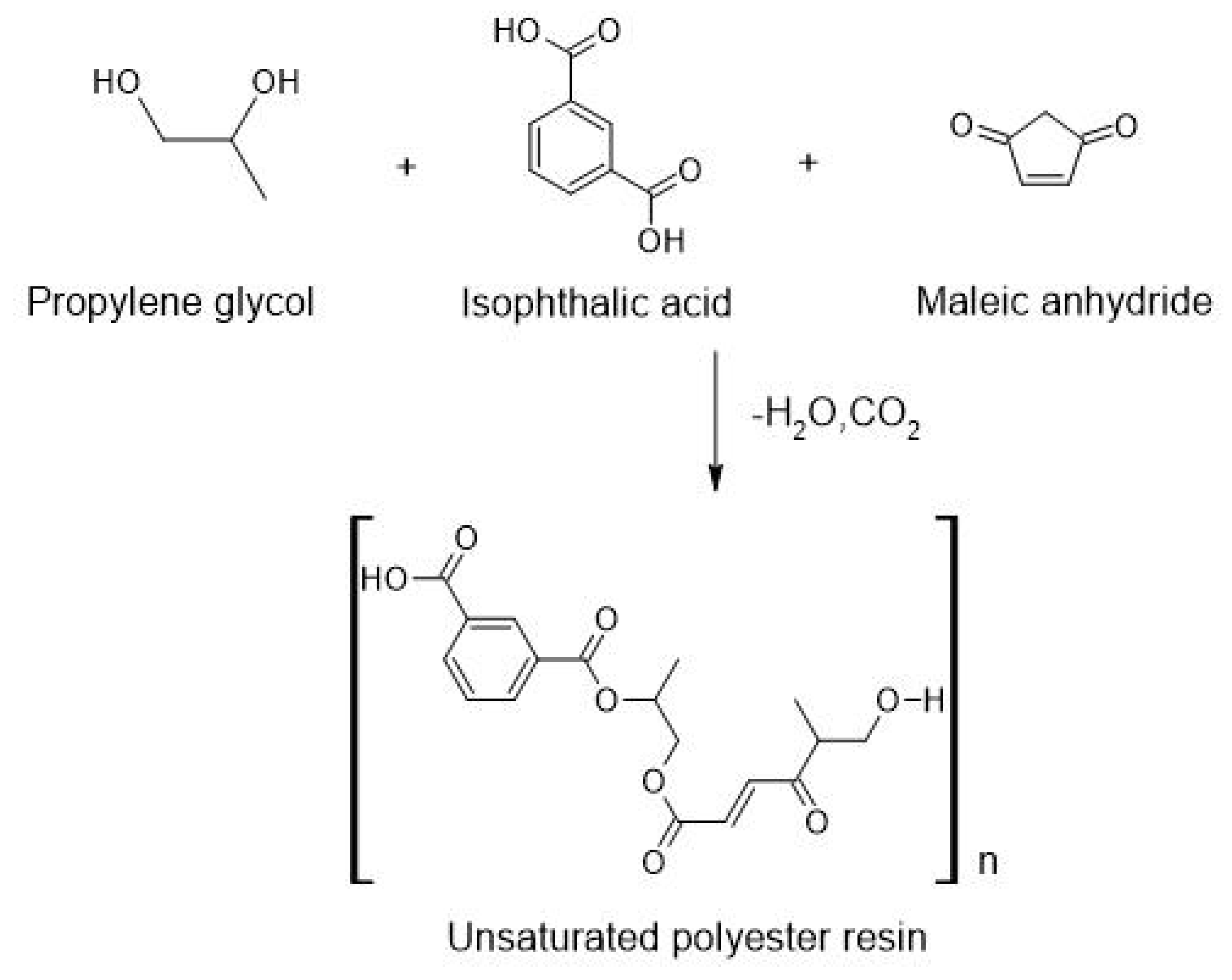
Figure 2 shows the polymerization mechanism of unsaturated polyesters. Initially, through condensation reactions, esterification reactions occur between propylene glycol, isophthalic acid, and maleic anhydride, generating the byproducts CO2 and H2O. Subsequently, lignocellulosic fibers are added. Fibers have numerous hydroxyl groups (-OH) in cellulose and hemicelluloses; unsaturated polyester resin (UPR) contains carbonyl/ester groups (C=O, -COO-) and other polar regions. When the UPR is still viscous during impregnation, physical interactions occur: hydrogen bonds between the -OH groups of the fibers and the electronegative atoms of the matrix and dipole–dipole interactions between the polar groups of the two phases. These interactions increase the initial adhesion of the interface but are relatively weak and sensitive to humidity and temperature, which limits charge transfer and durability without additional chemical treatments [57]. Effective adhesion strongly depends on the physical attachment of the matrix to the fiber surface, that is, the roughness, porosity, and surface topography of the fibers. During infiltration and curing, the resin fills microcavities and irregularities, hardens, and mechanically “locks” the fibers together. This physical interlocking improves the delamination resistance and contributes significantly to the tensile and shear strengths of the composite, especially when chemical bonding is limited [1].

2.5. Characterization of Composites

2.5.1. Apparent Density

The apparent densities of the composites and pure polymer were calculated from the ratio between the mass and volume of the samples. The sample dimensions were measured via a digital caliper, whereas the mass was measured via an analytical balance. Ten samples from each composition were evaluated to determine the mean apparent density.

2.5.2. Water Absorption

The water absorption content after 24 h of immersion of the pure polymer and composites was obtained on the basis of the D570-22 standard [59]. A total of 36 samples with dimensions of 30.0 × 12.0 mm were used, with six samples for each composition.

2.5.3. Tensile Strength

The tensile tests of the resin and composites were performed according to standard D638-14 [60]. The composites were evaluated with a universal testing machine (Arotec, São Paulo, Brazil) equipped with a 20 kN load cell, a test speed of 2 mm/min and an initial distance between the supports equal to 9.7.6 mm. Six samples of each composition were used to obtain the tensile strength (Equation (4)).
LRT (MPa) = Qmáx/A0
where LRT is the tensile strength, Qmáx is the maximum load (kN), and A0 is the initial cross-sectional area of the sample (mm2).

2.5.4. Static Bending

The modulus of rupture (MOR) and modulus of elasticity (EB) under static bending were determined according to the ASTM D790 [61] standard. The resin and composites were evaluated via a universal testing machine (Arotec, São Paulo, Brazil) equipped with a 5 kN load cell, with a test speed of 2 mm/min, a three-point static bending test, and a support span (L) of 75 mm. The mentioned properties were calculated via Equations (5) and (6). Five samples were used for the tests.
MOR (MPa) = (3 × Qmáx × L)/(2 × b × h2)
EB (MPa) = (ΔQ × L3)/(4 × b × h3 ×ΔD)
where Qmáx is the maximum load (N), L is the support span (in mm), b and h are the width and thickness of the sample, respectively (in mm), ΔQ is the variation in the load (20 and 40%) at the straight-line portion of the load–deflection curve (N), and ΔD is the variation in the respective midspan deflection (mm).

2.5.5. Impact Strength

The impact strength was determined via composites measuring 61 mm long and 12 m wide, following the guidelines of the D256 standard [62]. Tinius Olsen was used as the model Impact 104 equipment (Horsham, PA, USA) with a hammer of 2.82 J by the IZOD method. To determine the composite impact strength, five samples of each composition were analyzed.

2.5.6. Surface Morphology

After the tensile strength tests, the fracture regions of the samples were observed by scanning electron microscopy (SEM) via a JEOL JSM 6510 (JEOL, Tokyo, Japan) scanning electron microscope operating at 20 kV. The analysis aimed to identify the agglomerations, pull-outs, bubbles and voids between the fibers/matrix, as well as the anchor at the composite interface.

2.6. Statistical Analysis

The data were analyzed with a completely randomized design to evaluate the properties of the composites and subjected to ANOVA with least significant difference (LSD) at 5% significance to evaluate the effects of surface modifications on the properties of the composites. The normality of the data was assessed via the Shapiro–Wilk test. The data were processed via the software Sisvar 5.6.

3. Results and Discussion

3.1. Characterization of the Fibers

3.1.1. Morphological

The diameter of the fibers subjected to heat treatment significantly decreased as the treatment temperature increased (Table 2). The outflow of water caused by temperature application decreased the cell lumen, resulting in an increase in the wall fraction. A higher wall fraction indicates more efficient reinforcement in composites since the structure of the cellular wall is closely linked to the mechanical strength.
Fibers treated at 170 and 200 °C resulted in higher percentages of wall fraction. On the other hand, the treatment at 230 °C resulted in a decrease in this parameter. This may be due to the initial degradation of cell wall components, such as hemicelluloses and some extractives. The decomposition of hemicelluloses in woody biomass occurs more intensively in the temperature range of 220 to 300 °C [63]. In addition, the decrease in fiber diameter was attributed to the shrinkage of cellulose chains, which caused an approximation among them. The use of high temperatures results in the evaporation of water molecules linked to the hygroscopic zones of glucose molecules. Other consequences include a decrease in the external surface area, pore closure, shrinkage, and finally the formation of new internal hydrogen bonds [64]. Heat treatment also induces cell wall curvature, which results from ruptures among the connections of microfibrils, which in turn reduce the lumen diameter [65].
The aspect ratio of the fibers did not change significantly with increasing heat treatment. The heat-treated fibers showed no significant differences in relation to the flexibility coefficient. The flexibility coefficient is the percentage of lumen width over fiber width. It expresses the potential for fiber collapse during heating or drying. Collapsed fibers provide more bonding areas, which are strong points for the paper industry, for example [66]. In this study, the values of the flexibility coefficient ranged from 31.59 (200 °C) to 47.81% (control). Coefficients between 30 and 50% refer to rigid fibers [67] that have undergone little collapse, resulting in small fiber–fiber contact surfaces [68]. Thus, despite the statistical differences, the plant fiber class was maintained even after heat treatment. Lima et al. [69] evaluated the effects of wood position on the anatomical properties of Eucalyptus camaldulensis Dehnh. (10 years) and obtained a flexibility coefficient ranging from 39.75 to 56.27%, which is a similar range for the flexibility coefficient found in the present study.

3.1.2. Chemical Characterization

Chemical characterization of the eucalyptus fibers was performed (Table 3).
Compared with those of the control, a significant increase in lignin content and a significant decrease in extractives content were observed in the eucalyptus fibers treated at 200 °C and 230 °C. These variations occurred because extractives and hemicelluloses have lower initial degradation temperatures than lignin and cellulose [63]. During the heat-treatment process, the relative percentage of lignin slightly increased due to the degradation of hemicelluloses and cellulose. Lignin condensation reactions contribute to this increase, particularly at temperatures above 185 °C [70], which was also observed in the present study. At higher temperatures, more stable products, such as acetic acid, formic acid, methanol, CO and CO2, are formed. Fiber dehydration also occurs as a consequence of a decrease in the concentration of hydroxyl groups [71].
The cellulose amount increased at temperatures of 140 °C and 170 °C. In this range, the amorphous fraction is degraded, which causes a domain of the crystalline part. Hemicelluloses are the first wood carbohydrates to degrade due to their heterogeneous nature, noncrystalline structure and low molecular weight in relation to other wood components [72]. Hemicelluloses are characterized as more hydrophilic components in lignocellulosic materials. Since they reduce the affinity for water when degraded by heating, their dimensional stability is increased [73]. Hemicelluloses are the first component affected by heat treatment because of the reduction in xylose, arabinose, galactose and mannose contents through acid hydrolysis. The access of water molecules to hydroxy groups is hindered, thus contributing to the reduction in equilibrium moisture in addition to the main effects caused by hemicellulose degradation [74]. Degradation starts with the deacetylation of hemicelluloses, followed by the depolymerization of polysaccharides, which is catalyzed by the release of acetic acid [75]. High water absorption by plant fibers is the factor that limits their use as a composite reinforcement. The effect of cellulose degradation starts to be relevant at approximately 220 °C [70], with progressive degradation that includes depolymerization and dehydration [76]. The hydroxy groups of cellulose degrade in the following order of regions: amorphous, semicrystalline and crystalline [77]. Lignin is thermally more resistant than the carbohydrates that compose wood. Its degradation occurs between 200 °C and 500 °C through exothermic reactions [78].
Singh and Rout [79] reported a cellulose concentration in Borassus flabellifer L. leaf fiber samples subjected to treatments that degrade hemicelluloses. The same trend was observed in the results of the chemical analysis of the fibers (Table 3). The heat treatment may have promoted the crystallization of amorphous cellulose, increasing its relative amount [80]. In the present study, the fibers were treated at a high temperature of 230 °C. The amount of cellulose decreased, especially at temperatures close to 200 °C. Similar results were also observed for hemicelluloses. The condensation reactions result in the formation of a lignin–cellulose complex [81]. This condensation reduces the hydrogen and oxygen contents [70]. In addition, dehydration and oxidation of cellulose occur, increasing the lignin content. The low thermal stability of hemicellulose in relation to cellulose is due to a lack of crystallinity [82].

3.1.3. FTIR

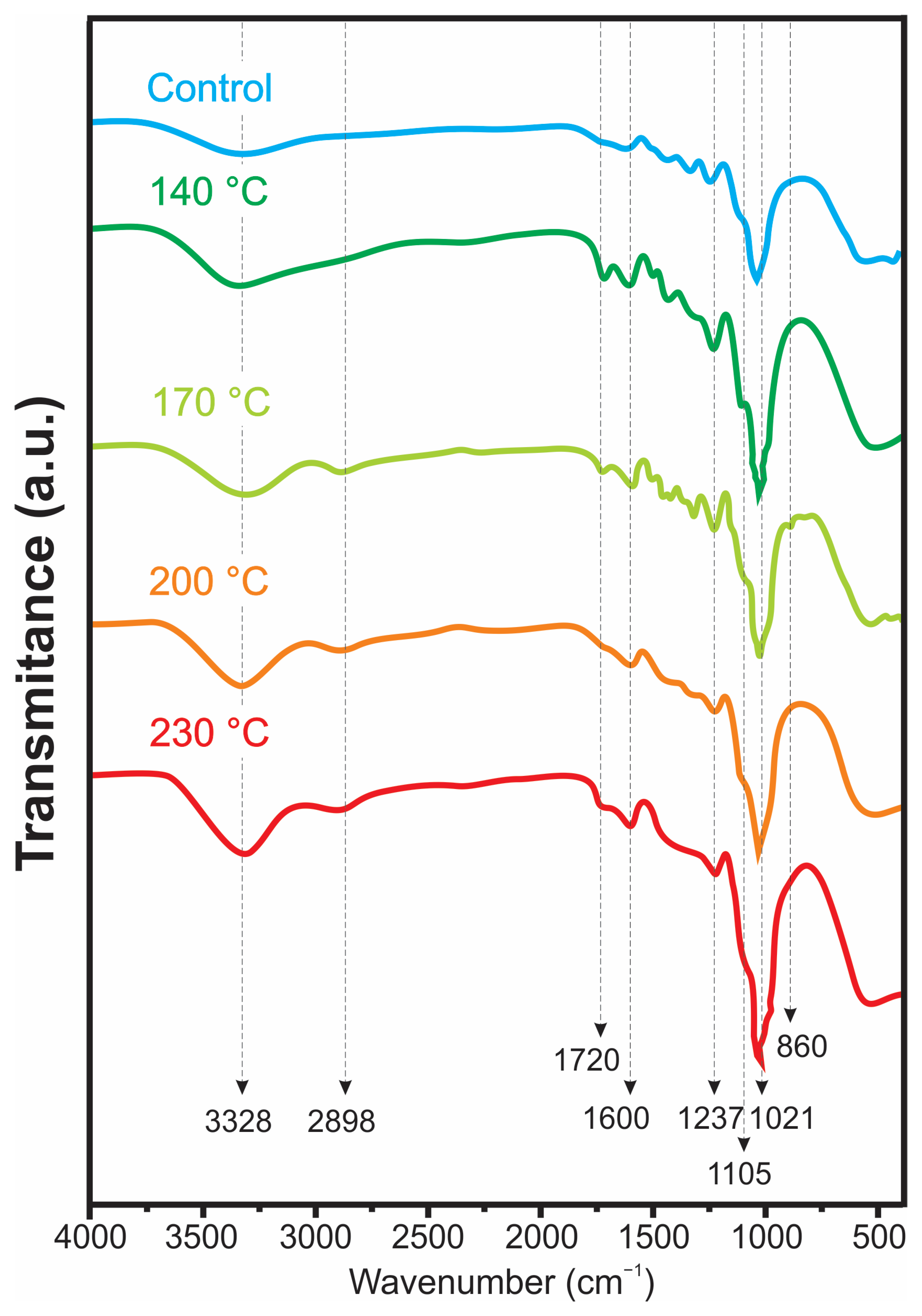
The FTIR spectra revealed a small increase in the intensity of the peaks associated with heat-treated lignin (1600 cm−1). This indicates an increase in the lignin concentration and a slight reduction in the hemicellulose content with increasing temperature (Figure 3).
As shown in Figure 3, the heat treatments performed on eucalyptus fibers promoted some significant changes in the bands, such as a reduction at 2898 cm−1, attributed to the C-H elongation of the CH2-CH3 groups and to the polymers found in the vegetal fibers and extractives [83]. In addition, significant reductions were observed in the band at 3328 cm−1 for eucalyptus fibers treated thermally at different temperatures, which was attributed to the elongation of the O-H functional groups of cellulose [84]. In heat-treated wood, these changes are related mainly to the removal of accidental wood components (extractives), substances that are easily removed with heat treatments at low temperatures, as shown in Table 3. This reduction in extractive content promoted an increase in lignin content (Table 3), which consequently resulted in a higher intensity of the band at 1600 cm−1, attributed to the aromatic skeleton of lignin [85].
Furthermore, other characteristic cellulose bands were observed, such as the one at 1720 cm−1 attributed to the C=O group in xylans (hemicelluloses); the one at 1237 cm−1 attributed to the C-O bond in hemicelluloses; and the band at approximately 1105 cm−1, which refers to the C-O vibration; and the one at 1021 cm−1, which corresponds to the C-O valence vibration at C6 [86], which is also attributed to the intensity of C-O-C bond transmission, which is typical of samples containing cellulose with hydroxyl, carbonyl, and methyl functional groups [87]. Finally, a slight change in intensity is observed in the band at 860 cm−1, corresponding to C1, the carbon in hemicelluloses and cellulose (pyranoid ring) [85].
Changes in the band intensities observed in the FTIR spectra of eucalyptus wood under different heat treatment temperatures were also reported by Jayamani et al. [88], who reported that as the temperature used in heat treatment increased, there was a consequent reduction in the intensity of characteristic bands related to chemical groups belonging to cellulose and hemicellulose, as well as the absence of C-O-C and C-C bands for kenaf fibers treated at temperatures ranging from 120 to 180 °C.

3.2. Characterization of Composites

3.2.1. Apparent Density

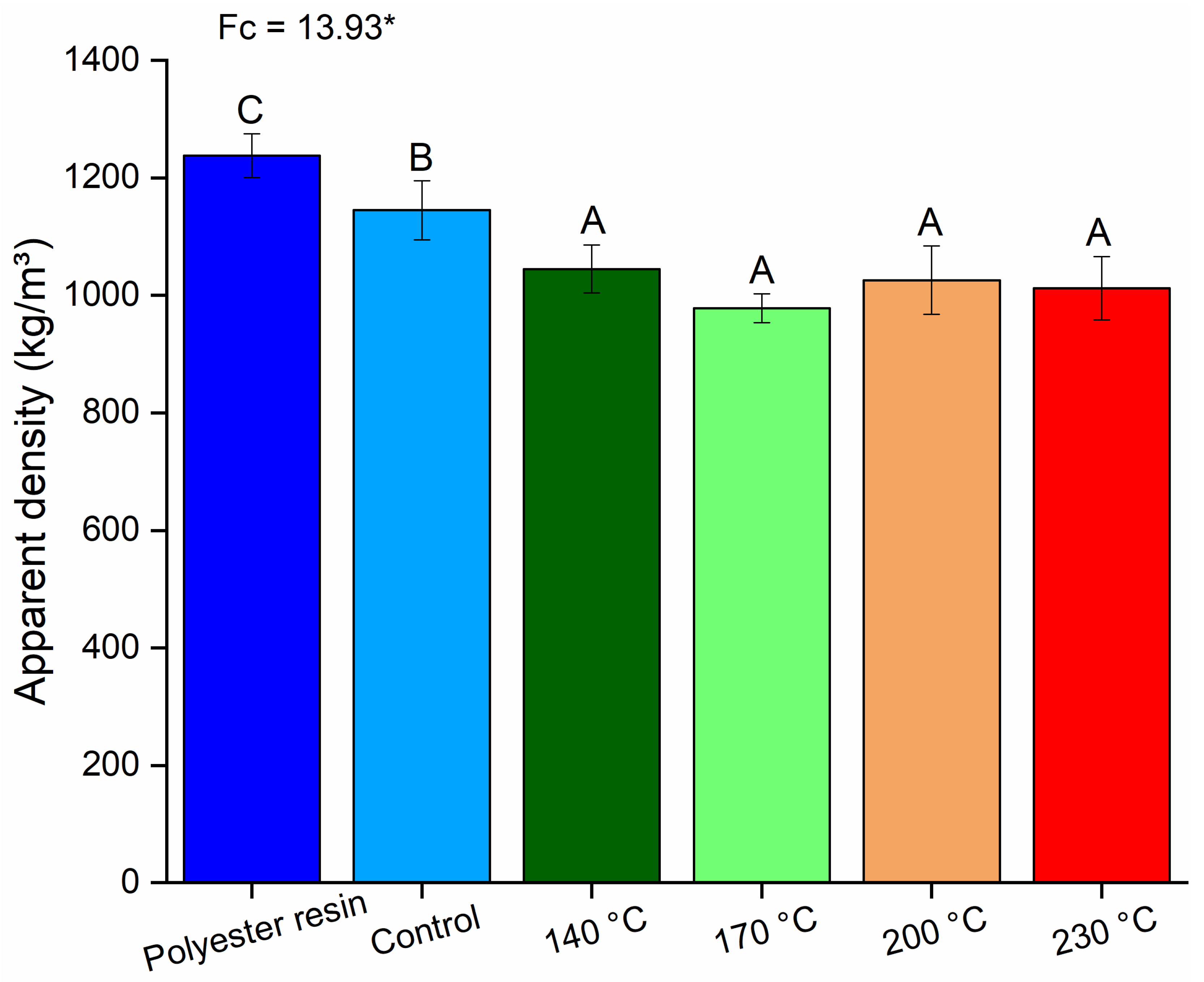
As illustrated in Figure 4, statistically significant differences in apparent density were detected between the neat resin and the reinforced composites. The neat polyester resin exhibited the highest mean density (1238 kg/m3), differing statistically from all other compositions. The composites reinforced with untreated eucalyptus fibers subsequently presented higher mean values than those produced with thermally treated fibers. This effect is attributed to the thermal treatments conducted at different temperatures, which promoted a reduction in the chemical constituents of eucalyptus fibers (Table 3), particularly extractives, due to thermal degradation. Such degradation decreased the material density and consequently increased the fiber volume required to reach 25% of the matrix mass. The relationship between increasing temperature and the corresponding mass loss during the thermal treatment of lignocellulosic materials has also been reported by other authors [37,40,89].
The reduction in the apparent density of the composites containing eucalyptus fibers, compared with that of the neat resin (without fibers), is also attributed to the lower density of the lignocellulosic fibers employed as reinforcement material. Eucalyptus fibers exhibit a basic density of 186 kg/m3 [89], which is substantially lower than that of the polymeric matrix (1238 kg/m3), thereby contributing to the reduction in the density of the fiber-reinforced composites. A comparable trend was observed by Karagöz [90] in epoxy matrix composites reinforced with walnut shells, which was consistent with the reduction in the composite density as increasing fiber content replaced the polymer.
Another factor contributing to the reduction in the apparent density of the composites is the volumetric shrinkage of the lignocellulosic material after thermal treatment. This occurs because the decrease in available hydroxyl (-OH) groups for water adsorption favors the closer packing of cellulose microfibrils [91]. Combined with the inherently low density of the fibers, their incorporation as reinforcements into the polymeric matrix can promote fiber agglomeration, generating voids within the composites and consequently reducing their apparent density.

3.2.2. Water Absorption

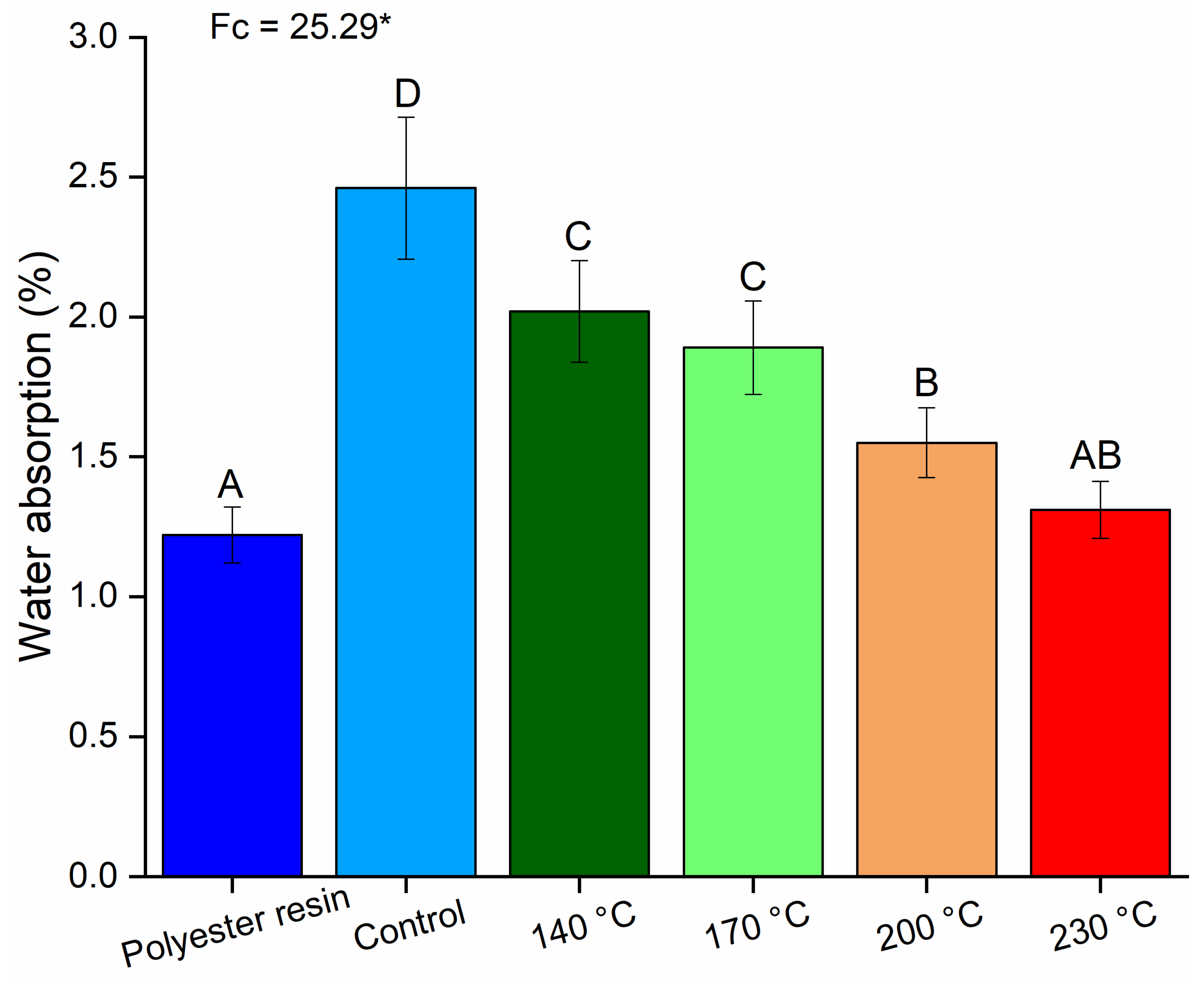
The heat treatment applied to the eucalyptus fibers significantly influenced the water absorption behavior of the polymer composites (Figure 5). Compared with the control samples, the composites reinforced with thermally treated fibers exhibited statistically significant differences (composites containing untreated fibers). The unsaturated polyester resin presented the lowest mean water absorption value (1.22%), which was statistically similar to that of the composites produced with fibers treated at 230 °C.
Water absorption (WA) in fiber-reinforced composites occurs primarily through hydrogen bonding between water molecules and the free hydroxyl groups present in the cell wall components, as well as through the diffusion of water molecules along the fiber–matrix interface [92,93]. The lower WA observed in the composites reinforced with fibers treated at 230 °C can be attributed, in part, to the extensive degradation of hemicelluloses at this temperature, as indicated by the chemical analysis (Table 3). This degradation may promote an increase in cellulose crystallinity due to the removal of amorphous regions within the cellulose microfibrils [94].
Compared with untreated wood, heat treatments conducted at temperatures above 200 °C partially render the wood surface hydrophobic, thereby reducing its water absorption rate. This effect is associated with a decrease in the surface free energy of the material as the temperature increases, which consequently reduces its wettability [95]. The hydrophilic nature of the lignocellulosic materials used as reinforcements in polymer matrices poses a major challenge to the technological performance of these composites [96], particularly owing to their susceptibility to swelling upon moisture exposure, which can lead to severe damage to the polymer matrix [97].
Previous studies have reported that thermal treatment of Japanese cedar fibers at 180 °C significantly improved the dimensional stability of polylactic acid (PLA)-based composites [98]. A reduction in water absorption from 3.9% to 3.2% was observed for the composites reinforced with untreated and heat-treated fibers, respectively, whereas the thickness swelling of the wood−PLA composite decreased from 0.52% to 0.10%. Compared with the other formulations evaluated, the composites reinforced with untreated eucalyptus fibers presented higher water absorption (WA) values. The control fibers (untreated) presented higher hemicellulose contents, as indicated by their chemical composition (Table 3). A higher hemicellulose content implies a greater number of free hydroxyl groups; owing to their highly hydrophilic nature, amorphous structure, and branched configuration, hemicelluloses tend to absorb moisture and swell considerably upon exposure to water [99].
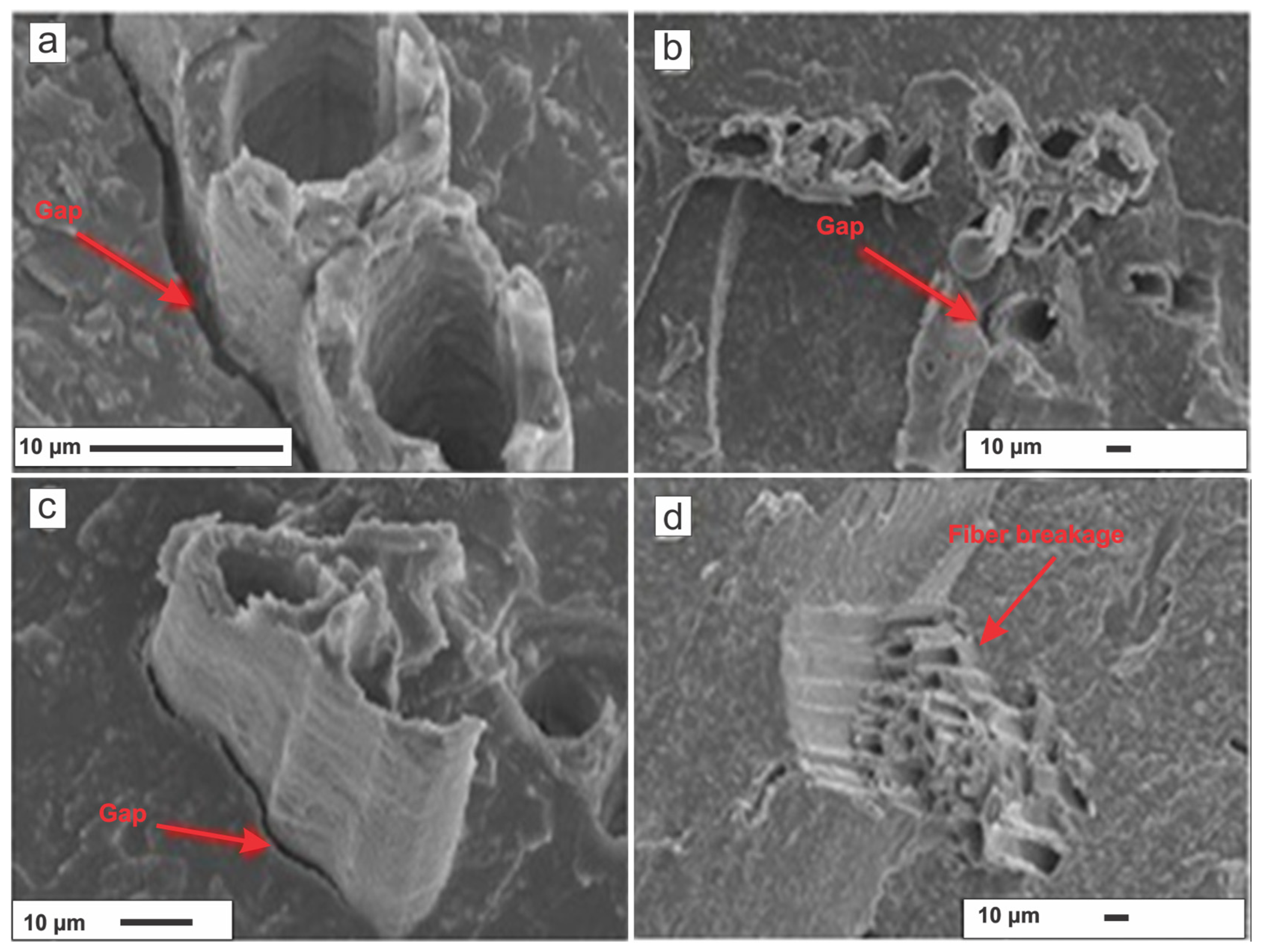
The improvement in the fiber–matrix interfacial bonding also influenced the water absorption (WA) behavior of the composites. The SEM micrographs highlight the enhanced anchorage of the fibers within the matrix at 230 °C (Figure 6) compared with the other treatment temperatures, which contributed to the lower WA observed in the composite.
The enhanced fiber–matrix interfacial bonding may be attributed to the increased nonpolar surface energy of the fibers, which promotes better adhesion with the polymer matrix [14] and reduces moisture retention. These effects strengthen the interfacial interaction between the fibers and the matrix, as the presence of water on the fiber surface acts as a physical barrier at the interface [100]. Compared with the control, the combined decrease in fiber hygroscopicity and improvement in interfacial bonding resulted in a 47% reduction in the water absorption of the composites.
Compared with the control formulation (composites reinforced with untreated fibers), the fibers thermally modified at 230 °C produced the greatest and most significant reduction in the water absorption (WA) values of the composites. The higher water absorption values observed in the composites reinforced with fibers treated at temperatures between 140 and 200 °C can be attributed to the opening of the anatomical structure caused by the disruption of microfibril bonds at lower thermal treatment temperatures [65]. This process increases the porosity of the material because of the degradation of hemicelluloses and extractives [101] while also exposing a greater number of hydroxyl groups. Conversely, at 230 °C, despite the partial opening of the anatomical structure, more extensive degradation of the hydroxyl groups and an improvement in the fiber–matrix interface were observed (see Figure 6).

3.2.3. Tensile Strength

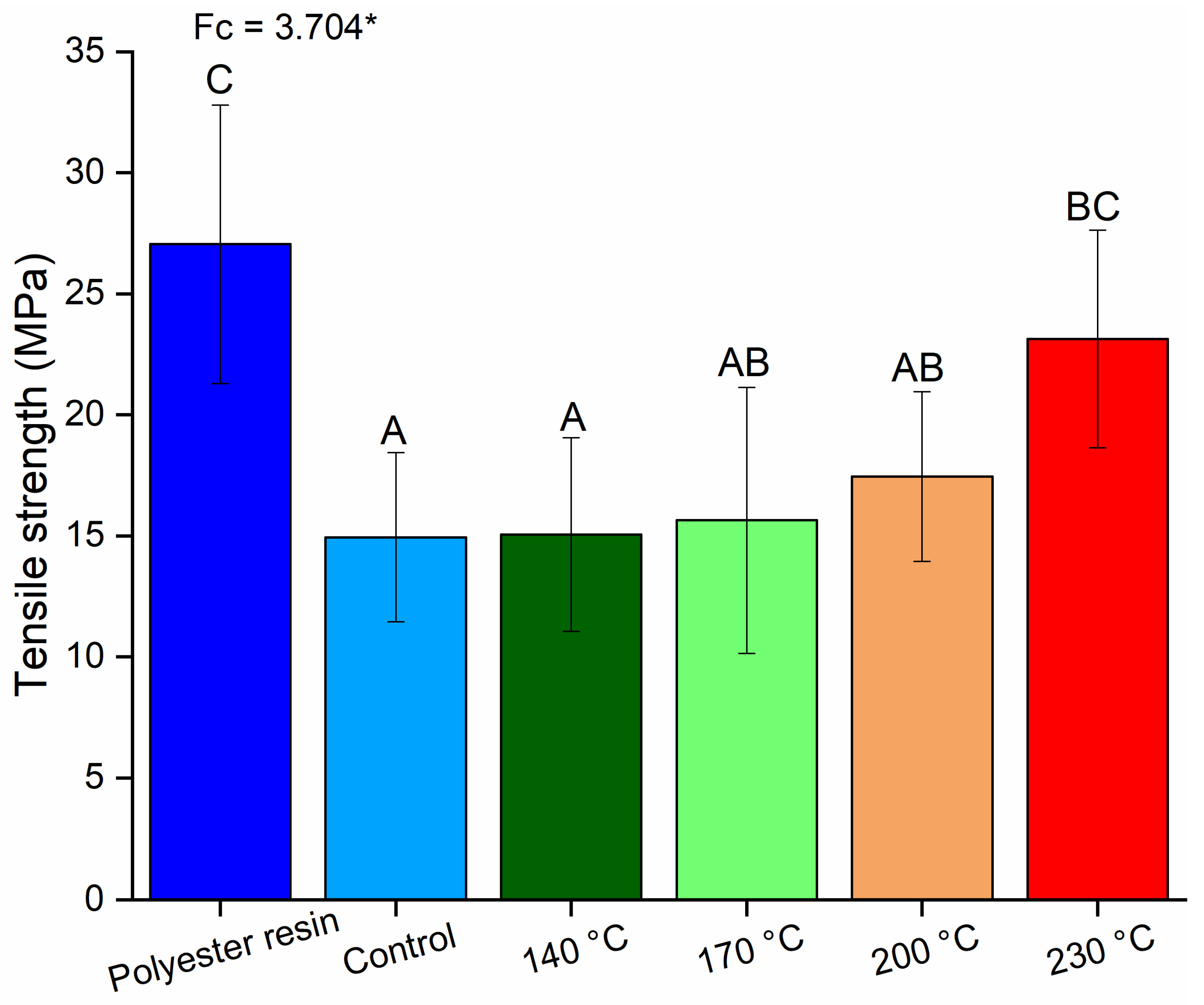
The different levels of thermal treatment applied to the eucalyptus fibers significantly affected the tensile strength of the composites (Figure 7). The unsaturated polyester resin without fiber reinforcement presented the highest average tensile strength, which was statistically equal to that of the composites reinforced with fibers treated at 230 °C. In contrast, the composites produced with untreated fibers and those treated at 140 °C presented the lowest average tensile strength values.
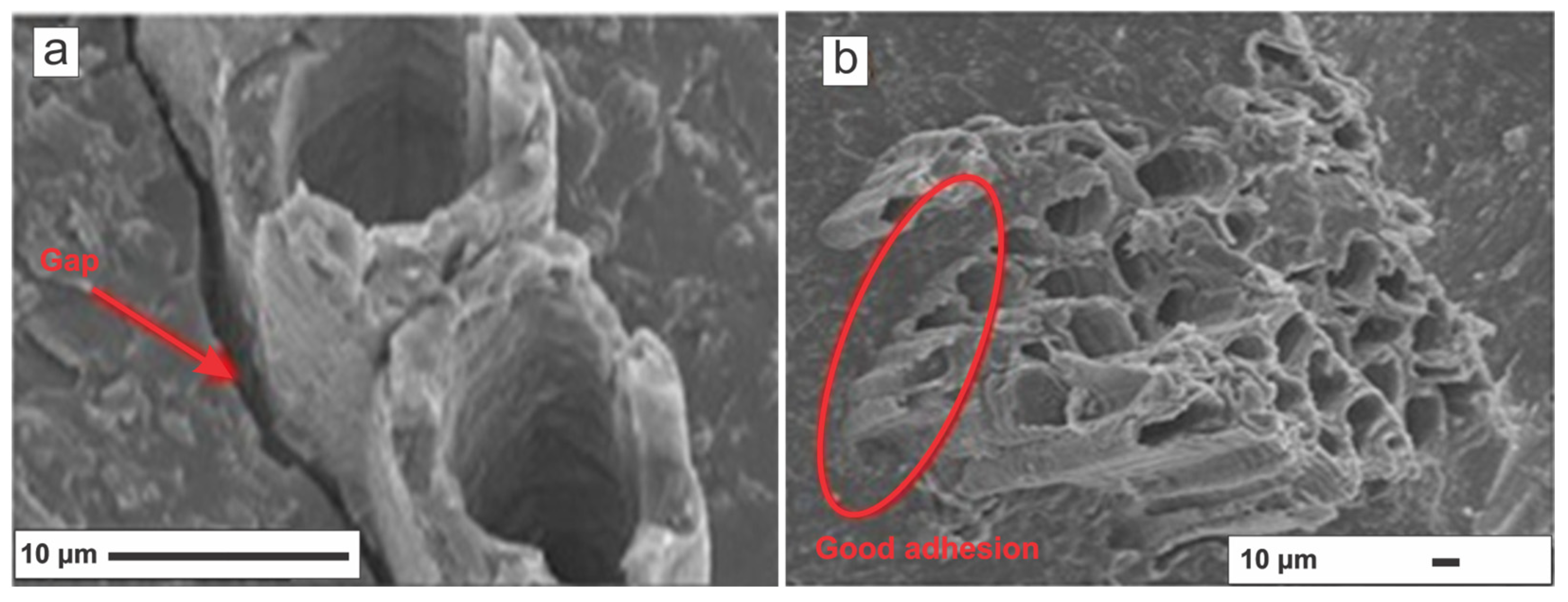
There is a significant increase in the tensile strength of the composites as eucalyptus fibers subjected to heat treatment replace those that are not treated (Control). The mechanical properties of the composites produced with fibers treated at 170 °C significantly increased, which was also observed for the composites with fibers treated at higher temperatures (200 and 230 °C). This increase in tensile strength occurred because of the improved fiber–matrix interface bonding due to moisture removal and an increase in the surface energy of fibers treated at 230 °C, as previously discussed. This result is associated with better anchoring of the resin with the eucalyptus fiber (see Figure 6) due to modification of the surface energy and a decrease in the moisture content, which favors fiber rupture (see Figure 6d) rather than detachment. The fiber–matrix interfaces of the composites produced with untreated and treated fibers at 230 °C are shown in Figure 8.
The heat treatment at 230 °C caused a decrease in the extractive content of eucalyptus fibers. This reduction may have contributed to improved adhesion between the fibers and the polyester resin. The exposure to heat may be related to the movement of the extractives from the surface of the particles, which causes inactivation of the surface at the time of bonding, creating “glazing” or physically blocking the pores and reducing the wettability/penetration of the adhesive [102]. Kačík et al. [103] reported that, within the temperature range of 100–160 °C, fats and waxes migrate through axial parenchyma cells toward the sapwood surface of pine during thermal treatment. At higher temperatures (above 180 °C), these lipophilic components are no longer detectable on the sapwood surface.
Another factor that may have resulted in the improved properties of the composites produced with fibers thermally treated at 230 °C was the crystallinity of the material. Effect of heat treatment on the chemical composition and microstructure of Cupressus funebris Endl. The wood was evaluated in the literature, and the results revealed an increase in the crystallinity of thermally treated fibers in relation to that of untreated fibers [104]. This increase is generally attributed to the selective degradation of amorphous fractions (e.g., hemicelluloses) and the partial recrystallization of cellulose chains, although very harsh treatments (higher temperatures or longer times) may, in some cases, reduce crystallinity by degrading cellulose [101,104].
The properties of the biocomposites produced with coir fibers treated at 120 °C in a castor-oil-based polyurethane matrix were evaluated, and the results revealed that heat treatment increased the crystallinity of the fibers compared with the crystallinity of the untreated fibers [105]. This fact may have increased the mechanical properties of the composites, similar to the results obtained in this study for the tensile strength of the fibers treated at 230 °C.

3.2.4. Static Bending

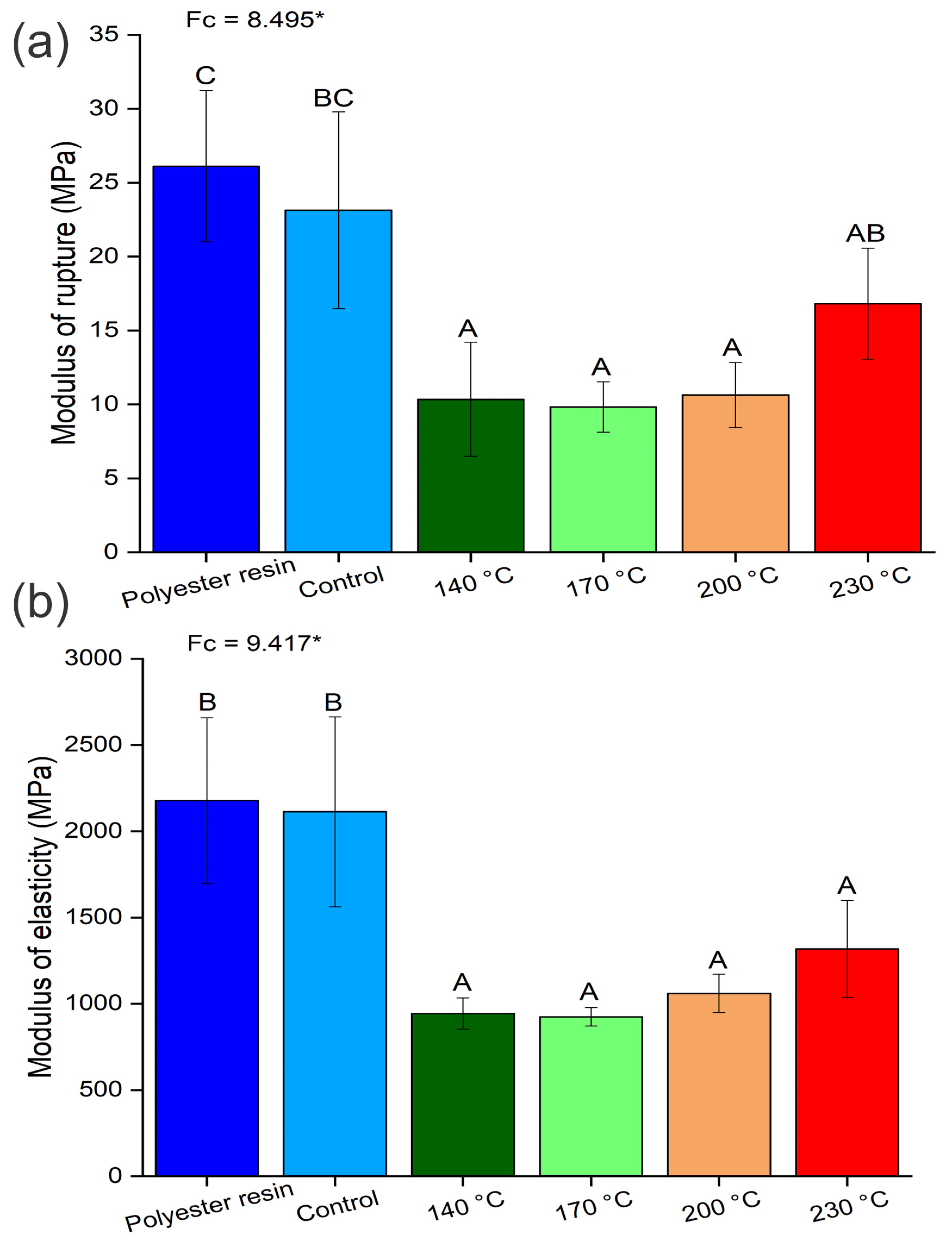
A significant effect of heat treatment on eucalyptus fibers was observed in the modulus of rupture (MOR) and modulus of elasticity (EB) properties in the static bending test (Figure 9). The MOR and EB values were significantly equal for the pure polyester resin and for the composites produced with fibers without surface treatment. However, with the insertion of treated fibers, a significant reduction in these properties was observed.
A significant reduction in MOR values from 23.13 to 10.34 MPa is observed in the composites produced with fibers without heat treatment and those treated at 140 °C, corresponding to a decrease of 55%. This downward trend is also verified in composites reinforced with fibers treated at 170 and 200 °C. However, for fibers treated at 230 °C, there was a significant improvement in mechanical performance, resulting in values statistically equal to those obtained for composites produced with non-heat-treated fibers. Similar behavior was observed for EB, where both pure polyester resin and composites reinforced with eucalyptus fibers without surface treatment presented the highest average values, differing statistically from those produced with fibers subjected to heat treatment. Similar observations were reported by Kaboorani et al. [106] in high-density polyethylene matrix composites reinforced with wood flour subjected to heat treatments between 175 and 205 °C. The authors reported a reduction in the values of MOR from 120 to 110 MPa and of EB from 1500 to 1450 MPa for composites containing 25% fibers heat treated at 175 °C and without treatment, respectively, a reduction of 8% for MOR and 3% for EB; however, beneficial effects on the mechanical performance can be achieved depending on the specific heat treatment temperature applied to the fibers.
Several studies have evaluated the mechanical performance of polymer matrix composites reinforced with vegetable fibers subjected to heat treatment and reported reductions in the EB and MOR values of modules compared with those of composites containing untreated fibers. This behavior is generally associated with the degradation of amorphous fractions (mainly hemicelluloses) and the consequent loss of structural integrity of the cell wall during heating, which reduces the efficiency of load transfer to the reinforcement. The magnitude of this effect depends on the lignocellulosic fiber species, the severity of the treatment (temperature and time), and the characteristics of the matrix-processing system [101,107,108].
Chemical and anatomical modifications of wood and its fibers by heat treatment may lead to degradation of its mechanical properties [109,110]. The gradual degradation of certain fiber components begins at 150 °C, involving depolymerization reactions and the degradation of amorphous fractions, especially hemicelluloses, accompanied by hydrolysis, dehydration, oxidation processes, and the release of CO2, acetic acid, and alcohols. With increasing severity up to approximately 240 °C, these mechanisms intensify, resulting in structural rupture of the cell walls [101,111].
Despite the significant reductions observed in MOR and EB values in the static bending tests, which may imply limitations for structural applications of the composites, such as increased deformation under load or the occurrence of premature failures due to bending or warping, satisfactory performance was nevertheless observed in terms of dimensional stability upon water contact and tensile strength. These results are associated with improvements in the fiber–matrix interface, which promoted more efficient stress transfer and reduced the environmental sensitivity of the material. Accordingly, the gains in tensile strength and environmental durability compensate for the reduction in MOR and EB, since these properties are prioritized for the proposed application and are directly enhanced by the thermal treatment of the fibers, which minimizes premature failures due to interfacial slippage, exerting a more positive impact on tensile performance than on flexural behavior.

3.2.5. Impact Strength

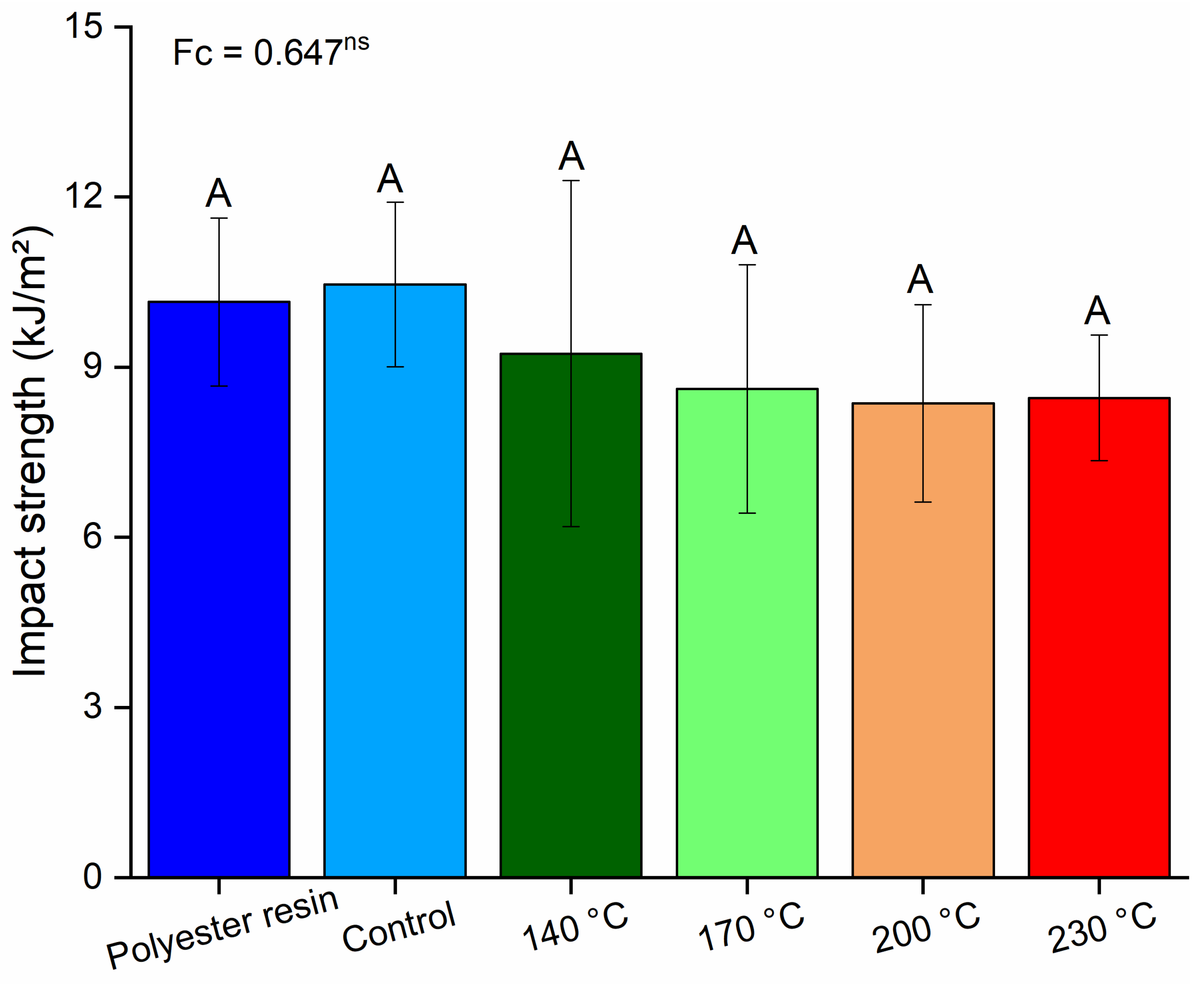
No significant difference was observed in the impact strength of the polymer composites with eucalyptus fibers (Figure 10).
The insertion of eucalyptus fibers, with or without heat treatment, did not result in a significant improvement in impact resistance for the compositions studied (Figure 10). The impact strength of fiber-reinforced composites is attributed to energy dissipation mechanisms associated with fiber rupture or pull-out from the matrix under load application [112]. The uniformity of the average impact strength indicates that energy dissipation mechanisms, such as fiber pullout or frictional sliding, which are processes that absorb energy through interfacial shear work and friction during the extraction of fibers from the matrix, probably do not occur [113]. Although composites reinforced with eucalyptus fibers presented a decrease in MOR and EB flexural properties, these failure mechanisms did not significantly affect the impact performance. This can be explained as shown in Figure 9, in which the fibers were not pulled out of the polymeric matrix and only detached between the matrix and the fibers. Therefore, these small gaps may have blocked the path of the crack and thus slowed the growth of the crack.
The results obtained in this research are slightly lower than those reported by Balaji et al. [114], in which an impact strength of 11.5 kJ/m2 was observed for unsaturated polyester matrix composites reinforced with Agave vera-cruz fibers. This difference can be explained by the fact that the authors used woven fabric from the fibers of Agave vera-cruz instead of the individual fibers used in this research. Kusmono et al. [115] reported an impact strength of 18.30 kJ/m2 in unsaturated polyester matrix composites reinforced with fibers without surface treatment of fan palm in vacuum-produced composites, which may have provided increased mechanical strength by removing porosity.

4. Conclusions

Composites reinforced with thermally modified eucalyptus fibers were produced, and their properties were evaluated. Heat treatment of eucalyptus fibers significantly changed their chemical and anatomical compositions, which resulted in changes in the physical and mechanical properties of the composites. The heat treatment significantly increased the wall fraction of the fibers. The treatments at 140 and 170 °C were differentiated by the resulting cellulose concentration. The water absorption of the composites produced with fibers treated at 230 °C was lower than that of the untreated fibers. This level of temperature also promoted good results for the tensile properties. The impact strength of the composites was not significantly affected by heat treatment. The modules EB and MOR significantly decreased from those of the control to those of the composites with treated fibers. The SEM images indicated enhanced fiber–matrix interfacial anchoring for composites reinforced with thermally treated eucalyptus fibers, particularly at higher treatment temperatures. Overall, thermal modification contributed to improved interfacial adhesion and a significant increase in tensile strength, with gains of up to 55% observed for composites reinforced with treated fibers compared to those containing untreated fibers. These results demonstrate that heat treatment is an effective strategy to enhance the mechanical performance and applicability of eucalyptus fiber-reinforced unsaturated polyester composites, although the influence of treatment temperature must be balanced with the requirements of different mechanical properties, especially flexural behavior.

Author Contributions

Conceptualization, Investigation, Data Curation and Writing—original draft, D.L.F. and T.G.T.P.; Investigation; Methodology; Validation; Writing—original draft, D.W.S., M.V.S., J.S. and T.d.P.P.; Funding acquisition, Supervision, Resources, Project administration, L.M.M. All authors have read and agreed to the published version of the manuscript.

Funding

This research received no external funding.

Data Availability Statement

The original contributions presented in this study are included in the article. Further inquiries can be directed to the corresponding author.

Acknowledgments

The authors are also grateful to the National Council for Scientific and Technological Development (CNPq) for postdoctoral scholarships (Process: 152102/2024-8) and the Coordination of Superior Level Staff Improvement (CAPES). We also thank the Fundação de Amparo à Pesquisa do Estado de Minas Gerais (FAPEMIG) for postdoctoral scholarships (financial code: APD-00296-25).

Conflicts of Interest

Danillo Wisky Silva was employed by Klabin Technology Center. The remaining authors declare that the research was conducted in the absence of any commercial or financial relationships that could be construed as a potential conflict of interest.

References

  1. Elfaleh, I.; Abbassi, F.; Habibi, M.; Ahmad, F.; Guedri, M.; Nasri, M.; Garnier, C. A comprehensive review of natural fibers and their composites: An eco-friendly alternative to conventional materials. Results Eng. 2023, 19, 101271. [Google Scholar] [CrossRef]
  2. Callister, W.J.; Rethwisch, D. Ciência e Engenharia de Materiais-Uma Introdução, 9th ed.; LTC: São Paulo, Brazil, 2020; pp. 581–623. [Google Scholar]
  3. Hamzat, A.K.; Murad, M.S.; Adediran, I.A.; Asmatulu, E.; Asmatulu, R. Fiber-reinforced composites for aerospace, energy, and marine applications: An insight into failure mechanisms under chemical, thermal, oxidative, and mechanical load conditions. Adv. Compos. Hybrid Mater. 2025, 8, 152. [Google Scholar] [CrossRef]
  4. Hamdi, A.; Farhan, K.Z. Influence of glass fiber and waste ground glass fiber powder on thermal resistance properties of alkali activated composites. Innov. Infrastruct. Solut. 2025, 10, 94. [Google Scholar]
  5. Akbari, S.; Joseph, J.T.; Skrifvars, M.; Ramamoorthy, S.K.; Åkesson, D. Glass Fiber Reinforced Composite Produced with a Novel Matrix of Bio-based Unsaturated Polyester Resin made from 2,5-Furan Dicarboxylic Acid and Isosorbide. J. Polym. Environ. 2025, 33, 2798–2812. [Google Scholar] [CrossRef]
  6. Jeon, S.; Kim, J.; Park, S.J.; Kim, J.Y.; Moon, S.K.; Yang, D. Temperature Dependent Mechanical Properties of End-of-Life Carbon Fiber Reinforced Plastics. Int. J. Precis. Eng. Manuf.-Green Technol. 2025. [Google Scholar]
  7. Zhang, Y.; Hu, Y.; Chen, K.; Jin, Z.; Lei, Q.; Li, Y.; Cong, C.; Zhou, Q.; Wang, Y. Continuous aramid fiber/unsaturated polyester resin composites with excellent interfacial and mechanical properties. Front. Mater. Sci. 2025, 19, 250728. [Google Scholar] [CrossRef]
  8. Karadağ, G.; Erdal, B. The Effect of Polyethylene Fiber and Flowable Resin Composite on Fracture Resistance in the Restoration of Large MOD Cavities. J. Esthet. Restor. Dent. 2025, 37, 1515–1521. [Google Scholar] [CrossRef] [PubMed]
  9. Sharma, K.K.; Kushwaha, J.; Kumar, K.; Singh, H.; Shrivastava, Y. Fabrication and testing of hybrid fibre reinforced composite: A comprehensive review. Aust. J. Mech. Eng. 2023, 21, 1547–1563. [Google Scholar] [CrossRef]
  10. Eryildiz, M.; Kosa, E.; Akgun, I.C.; Yavuzer, B. Enhancing the Mechanical Performance of Fused Deposition Modeling-Printed Recycled Polypropylene through Annealing Temperature, Duration, and Cooling Method. J. Mater. Eng. Perform. 2025, 34, 16032–16048. [Google Scholar] [CrossRef]
  11. Terra, I.C.C.; Batista, F.G.; Silva, D.W.; Scatolino, M.V.; Alves Júnior, F.T.; Martins, M.A.; Mendes, L.M. Mining waste and coconut fibers as an eco-friendly reinforcement for the production of concrete blocks. Environ. Sci. Pollut. Res. 2023, 30, 62641–62652. [Google Scholar] [CrossRef]
  12. Pereira, T.G.T.; Faria, D.L.; Silva, D.W.; Arantes, L.S.; Soriano, J.; Batista, F.G.; Hostalácio, J.M.P.; Mendes, L.M.; Tonoli, G.H.D. Improved performance of coconut fiber and quartzite waste cement composites using accelerated carbonation. Environ. Sci. Pollut. Res. 2025, 32, 11562–11580. [Google Scholar] [CrossRef] [PubMed]
  13. Taghavi, N.; Udugama, I.A.; Zhuang, W.-Q.; Baroutian, S. Challenges in biodegradation of non-degradable thermoplastic waste: From environmental impact to operational readiness. Biotechnol. Adv. 2021, 49, 107731. [Google Scholar] [CrossRef]
  14. Mohammadi, M.; Ishak, M.R.; Sultan, M.T.H. Exploring Chemical and Physical Advancements in Surface Modification Techniques of Natural Fiber Reinforced Composite: A Comprehensive Review. J. Nat. Fibers 2024, 21, 2408633. [Google Scholar] [CrossRef]
  15. Aberkane, A.; Bendaikha, H.; Benzidane, R.; Jouenne, J.B.; Alshaikh, I.M.H.; Belaadi, A.; Ghernaout, D. Mechanical, Thermal, and Morphological Properties of Recycled PP and HDPE Green Composites Reinforced with Atriplex halimus Fibers. J. Nat. Fibers 2025, 22, 2507157. [Google Scholar] [CrossRef]
  16. Mousavi, S.R.; Zamani, M.H.; Estaji, S.; Tayouri, M.I.; Arjmand, M.; Jafari, S.H.; Nouranian, S.; Khonakdar, H.A. Mechanical properties of bamboo fiber-reinforced polymer composites: A review of recent case studies. J. Mater. Sci. 2022, 57, 3143–3167. [Google Scholar] [CrossRef]
  17. Mohammed, K.; Zulkifli, R.; Tahir, M.F.M.; Gaaz, T.S. A study of mechanical properties and performance of bamboo fiber/polymer composites. Results Eng. 2024, 23, 102396. [Google Scholar] [CrossRef]
  18. Jiyas, N.; Sasidharan, I.; Bindu, K.K.; Senthamaraikannan, P.; Kumar, R. Characterization of Potassium Permanganate Treated Natural Fibers and Its Eco-Friendly Friction Composites. J. Nat. Fibers 2025, 22, 2502647. [Google Scholar] [CrossRef]
  19. Iqbal, R.M.; Ahammad, R.; Arifuzzaman, M.; Islam, M.S.; Islam, M.M. Manufacturing and Properties of Jute Fiber-Reinforced Polymer Composites—A Comprehensive Review. Materials 2025, 18, 1016. [Google Scholar] [CrossRef]
  20. Appadurai, M.; Raj, E.F.I.; LurthuPushparaj, T. Sisal fiber-reinforced polymer composite-based small horizontal axis wind turbine suited for urban applications—A numerical study. Emergent Mater. 2022, 5, 565–578. [Google Scholar] [CrossRef]
  21. Erana, L.A. Mechanical Characterization of Sisal Fiber Reinforced PP Composite Panels. J. Nat. Fibers 2024, 21, 2385563. [Google Scholar] [CrossRef]
  22. Faria, D.L.; Mendes, L.M.; Guimarães Junior, J.B. Effect of surface treatment on the technological properties of coconut fiber–reinforced plant polyurethane composites. Environ. Sci. Pollut. Res. 2023, 30, 52124–52140. [Google Scholar] [CrossRef] [PubMed]
  23. Martins, G.O.; Carvalho, S.A.D.; Castro, K.C.; Cesarino, I.; Leão, A.L. Evaluation of the Mechanical Properties of Polypropylene and Coir Fiber Composites: Contributions to the Circular Economy. J. Nat. Fibers 2025, 22, 2502650. [Google Scholar] [CrossRef]
  24. Maou, K.; Belloufi, A.; Abdelkrim, M.; Maior, I.; Romero, C.S.; Moumeni, A.; Opran, C.G.; Kriker, A. Optimization of machining parameters for a novel eco-friendly biocomposite reinforced with date palm fibers: Reducing delamination to meet industrial demands. Int. J. Adv. Manuf. Technol. 2025, 137, 6003–6027. [Google Scholar] [CrossRef]
  25. Liu, Y.; Chen, F.; Ni, X.; Xia, X. The effect of reinforcement on the mechanical properties of veneered wood fiber/polypropylene composites assembled with chlorinated polypropylene. Sci. Rep. 2022, 12, 14007. [Google Scholar] [CrossRef]
  26. Siddiqui, V.U.; Yusuf, J.; Sapuan, S.M.; Hasan, M.Z.; Bistari, M.M.M.; Mohammadsalih, Z.G. Mechanical Properties and Flammability Analysis of Wood Fiber Filled Polylactic Acid (PLA) Composites Using Additive Manufacturing. J. Nat. Fibers 2024, 21, 2409868. [Google Scholar] [CrossRef]
  27. Chomachayi, M.D.; Blanchet, P.; Pepin, S. Fully Bio-Based Composites Based on PHA and Cellulose Filaments: Investigating the Impact of Fiber Modification on Composite Properties. J. Polym. Environ. 2025, 33, 3644–3662. [Google Scholar] [CrossRef]
  28. Amiandamhen, S.O.; Adamopoulos, S.; Adl-Zarrabi, B.; Yin, H.; Norén, J. Recycling sawmilling wood chips, biomass combustion residues, and tyre fibres into cement-bonded composites: Properties of composites and life cycle analysis. Constr. Build. Mater. 2021, 297, 123781. [Google Scholar] [CrossRef]
  29. Olaiya, B.C.; Lawan, M.M.; Olonade, K.A. Utilization of sawdust composites in construction—A review. SN Appl. Sci. 2023, 5, 140. [Google Scholar] [CrossRef]
  30. Amarasinghe, I.T.; Qian, Y.; Gunawardena, T.; Mendis, P.; Belleville, B. Composite Panels from Wood Waste: A Detailed Review of Processes, Standards, and Applications. J. Compos. Sci. 2024, 8, 417. [Google Scholar] [CrossRef]
  31. IBA. Brazilian Tree Industry; Annual Report; IBA: Brasília, Brazil, 2024. (In Portuguese) [Google Scholar]
  32. FAO. Forestry Production and Trade; Food and Agriculture Organization of the United Nations: Rome, Italy, 2025. [Google Scholar]
  33. Islam, T.; Chaion, M.H.; Jalil, M.A.; Rafi, A.S.; Mushtari, F.; Dhar, A.K.; Hossain, S. Advancements and challenges in natural fiber-reinforced hybrid composites: A comprehensive review. SPE Polym. 2024, 5, 481–506. [Google Scholar] [CrossRef]
  34. Ezekiel, N.; Ndazi, B.; Nyahumwa, C.; Karlsson, S. Effect of temperature and durations of heating on coir fibers. Ind. Crops Prod. 2011, 33, 638–643. [Google Scholar] [CrossRef]
  35. Dejene, B.K. Exploring the Potential of ZnO Nanoparticle-Treated Fibers in Advancing Natural Fiber Reinforced Composites: A Review. J. Nat. Fibers 2024, 21, 2311304. [Google Scholar]
  36. Elmoudnia, H.; Faria, P.; Jalal, R.; Waqif, M.; Saadi, L. Effectiveness of alkaline and hydrothermal treatments on cellulosic fibers extracted from the Moroccan Pennisetum Alopecuroides plant: Chemical and morphological characterization. Carbohydr. Polym. Technol. Appl. 2023, 5, 100276. [Google Scholar]
  37. Martinelli, F.R.B.; Pariz, M.G.; Andrade, R.; Ferreira, S.R.; Marques, F.A.; Monteiro, S.N.; Azevedo, A.R.G. Influence of drying temperature on coconut-fibers. Sci. Rep. 2024, 14, 6421. [Google Scholar] [CrossRef] [PubMed]
  38. Pickering, K.L.; Efendy, M.G.A.; Le, T.M. A review of recent developments in natural fibre composites and their mechanical performance. Compos. Part A Appl. Sci. Manuf. 2016, 83, 98–112. [Google Scholar] [CrossRef]
  39. Pickering, K. Properties and Performance of Natural-Fibre Composites, 1st ed.; Woodhead Publishing: Cambridge, UK, 2008. [Google Scholar]
  40. Tavares, F.F.C.; Almeida, M.D.C.; Silva, J.A.P.; Araújo, L.L.; Cardozo, N.S.M.; Santana, R.M.C. Thermal treatment of açaí (Euterpe oleracea) fiber for composite reinforcement. Polímeros 2020, 30, e2020003. [Google Scholar] [CrossRef]
  41. Langhorst, A.; Ravandi, M.; Mielewski, D.; Banu, M. Technical agave fiber tensile performance: The effects of fiber heat-treatment. Ind. Crops Prod. 2021, 171, 113832. [Google Scholar] [CrossRef]
  42. Jirawattanasomkul, T.; Likitlersuang, S.; Wuttiwannasak, N.; Ueda, T.; Zhang, D.; Voravutvityaruk, T. Effects of Heat Treatment on Mechanical Properties of Jute Fiber–Reinforced Polymer Composites for Concrete Confinement. J. Mater. Civil Eng. 2020, 32, 04020363. [Google Scholar] [CrossRef]
  43. Smail, Y.B.; Moumen, A.E.; Imad, A.; Lmai, F.; Ezahri, M. Effect of heat treatment on the mechanical properties of jute yarns. J. Compos. Mater. 2021, 55, 2777–2792. [Google Scholar] [CrossRef]
  44. Gunjal, J.; Aggarwal, P.; Chauhan, S. Changes in colour and mechanical properties of wood polypropylene composites on natural weathering. Maderas Cienc. Tecnol. 2020, 22, 325–334. [Google Scholar] [CrossRef]
  45. Kanok, M.M.H.; Shifa, S.S.; Haque, M.S. Implications on heat treatment of natural fiber-reinforced hybrid composites for eco-conscious building materials. Biomass Convers. Biorefin. 2024, 15, 18231–18246. [Google Scholar] [CrossRef]
  46. Shifa, S.S.; Kanok, M.M.H.; Haque, M.S.; Sultan, T.; Pritha, K.F.; Mubasshira; Al Yeamin, M.; Dipta, S.D. Influence of heat treatment and water absorption on mechanical properties of cotton-glass fiber reinforced epoxy hybrid composites: An eco-friendly approach for industrial materials. Hybrid Adv. 2024, 5, 100181. [Google Scholar] [CrossRef]
  47. Paula, J.E. Caatinga wood useful for energy production. Pesqui. Agropecu. Bras. 1993, 28, 153–165. [Google Scholar]
  48. NBR 14853; Wood-Determination of Soluble Matter in Ethanol-Toluene and in Dichloromethane and in Acetone. Associação Brasileira de Normas Técnicas—ABNT: Rio de Janeiro, Brazil, 2010.
  49. NBR 7989; Pulp and Wood-Determination of Acid-Insoluble Lignin. Associação Brasileira de Normas Técnicas—ABNT: Rio de Janeiro, Brazil, 2010.
  50. NBR 13999; Paper, Board, Pulps, and Wood-Determination of Residue (Ash) on Ignition at 525 °C. Associação Brasileira de Normas Técnicas—ABNT: Rio de Janeiro, Brazil, 2017.
  51. Browning, B.L. The Chemistry of Wood; Interscience: New York, NY, USA, 1963. [Google Scholar]
  52. Kennedy, F.; Phillips, G.O.; Williams, E.P.A. Wood and Cellulosics: Industrial Utilization, Biotechnology, Structure and Properties; Chichester: New York, NY, USA, 1987. [Google Scholar]
  53. Furtini, A.C.C.; Brito, F.M.S.; Guimarães Junior, M.; Furtini, J.A.O.; Pinto, L.M.; Protásio, T.P.; Mendes, L.M.; Guimarães Junior, J.B. Substitution of urea–formaldehyde by renewable phenolic compound for environmentally appropriate production of particleboards. Environ. Sci. Pollut. Res. 2022, 29, 66562–66577. [Google Scholar] [CrossRef]
  54. Faria, D.L.; Mesquita Junior, L.; Lago, R.C.; Soriano, J.; Guimarães Junior, M.; Pires, N.J.; Bezerra, A.C.d.S.; Oliveira, J.E.d.; Protásio, T.d.P.; Martins, M.A.; et al. Valorization of cardboard waste in the production of polyurethane biocomposites: A new and environmentally friendly material for civil construction. Constr. Build. Mater. 2025, 462, 139902. [Google Scholar] [CrossRef]
  55. Pereira, T.G.T.; Mendes, J.F.; Oliveira, J.E.; Marconcini, J.M.; Mendes, R.F. Effect of reinforcement percentage of eucalyptus fibers on physic-mechanical properties of composite hand lay-up with polyester thermosetting matrix. J. Nat. Fibers 2018, 16, 806–816. [Google Scholar]
  56. Assis, P.V.; Silva, R.J.; Braga, G.G.; Ancelloti Junior, A.C.; Silveira, M.E.; Panzera, T.H.; Scarpa, F. Mechanical and statistical analysis of hand-woven jute fibre composite laminates with bio-based and synthetic matrices. Compos. Struct. 2025, 358, 118982. [Google Scholar] [CrossRef]
  57. Santos, C.M.; Santos, T.F.; Rao, H.J.; Silva, F.H.V.A.; Rangappa, S.M.; Boonyasopon, P.; Siengchin, S.; Souza, D.F.S.; Nascimento, J.H.O. A bibliometric review on applications of lignocellulosic fibers in polymeric and hybrid composites: Trends and perspectives. Heliyon 2024, 10, e38264. [Google Scholar] [CrossRef] [PubMed]
  58. Dholakiya, B. Unsaturated Polyester Resin for Specialty Applications; InTech: London, UK, 2012. [Google Scholar]
  59. ASTM D570-22; Standard Test Method for Water Absorption of Plastics. ASTM International: West Conshohocken, PA, USA, 2022.
  60. ASTM D638-14; Standard Test Method for Tensile Properties of Plastics. ASTM International: West Conshohocken, PA, USA, 2014.
  61. ASTM D790; Standard Test Method for Flexural Properties of Unreinforced and Reinforced Plastics and Electrical Insulating Materials. ASTM International: West Conshohocken, PA, USA, 2000.
  62. ASTM D256-23e1; Standard Test Methods for Determining the Izod Pendulum Impact Resistance of Plastics. ASTM International: West Conshohocken, PA, USA, 2023.
  63. El-Sayed, S.A.; Khass, T.M.; Mostafa, M.E. Thermal degradation behaviour and chemical kinetic characteristics of biomass pyrolysis using TG/DTG/DTA techniques. Biomass Convers. Biorefin. 2024, 14, 17779–17803. [Google Scholar] [CrossRef]
  64. Beaumont, M.; König, J.; Opietnik, M.; Potthast, A.; Rosenau, T. Drying of a cellulose II gel: Effect of physical modification and redispersibility in water. Cellulose 2017, 24, 1199–1209. [Google Scholar] [CrossRef]
  65. Cerqueira, E.F.; Baptista, C.A.R.P.; Mulinari, D.R. Mechanical Behaviour of Polypropylene Reinforced Sugarcane Bagasse Fibers Composites. Procedia Eng. 2011, 10, 2046–2051. [Google Scholar] [CrossRef]
  66. Pego, M.F.F.; Bianchi, M.L. Blended paper: Physical, optical, structural, and interfiber bonding analysis. Cerne 2021, 27, e-102944. [Google Scholar] [CrossRef]
  67. Bektas, I.; Tutus, A.; Eroglu, H. A study of the suitability of Calabrian pine (Pinus brutia Ten.) for pulp and paper manufacture. Turk. J. Agric. For. 1999, 23, 589–599. [Google Scholar]
  68. Silva, M.R.; Machado, G.O.; Deiner, J.; Junior, C.C. Permeability measurements of Brazilian Eucalyptus. Mater. Res. 2005, 13, 281–286. [Google Scholar]
  69. Lima, B.M.; Amorim, E.P.; Yamaji, F.M.; Freitas, M.L.M.; Barbosa, J.A.; Cambuim, J.; Zaruma, D.U.G.; Moraes, M.L.T.; Longui, E.L. Some Wood Properties of 10-Year-Old Eucalyptus Camaldulensis Dehnh. in Three Diametric Classes. Rev. Virtual Quim. 2021, 14, 93–100. [Google Scholar] [CrossRef]
  70. Boonstra, M.J.; Tjeerdsma, B. Chemical analysis of heat treated softwoods. Holz Roh Werkst. 2006, 64, 204–211. [Google Scholar] [CrossRef]
  71. Liu, Q.; Wang, J.; Zhan, L.; Wu, C.; Liu, W.; Yao, S.; Ma, Y. Removal of hydroxyl groups and its influence on the microstructures evolution of alumina-mullite fibers fabricated by sol-gel process. Ceram. Int. 2023, 49, 18397–18411. [Google Scholar] [CrossRef]
  72. Araujo, R.O.; Santos, J.L.; Colpani, D.; Pereira, B.R.S.; Falcão, N.P.S.; Souza, L.K.C. Introduction to Biomass and Features. In Encyclopedia of Renewable Energy, Sustainability and the Environment, 1st ed.; Rahimpour, M.R., Ed.; Elsevier: Amsterdam, The Netherlands, 2024; Volume 1, pp. 509–518. [Google Scholar]
  73. Esteves, B.; Ferreira, H.; Viana, H.; Ferreira, J.; Domingos, I.; Cruz-Lopes, L.; Jones, D.; Nunes, L. Termite Resistance, Chemical and Mechanical Characterization of Paulownia tomentosa Wood before and after Heat Treatment. Forests 2021, 12, 1114. [Google Scholar] [CrossRef]
  74. Inari, G.N.; Pétrissans, M.; Petrissans, A.; Gérardin, P. Elemental composition of wood as a potential marker to evaluate heat treatment intensity. Polym. Degrad. Stab. 2009, 94, 365–368. [Google Scholar] [CrossRef]
  75. Świątek, K.; Gaag, S.; Klier, A.; Kruse, A.; Sauer, J.; Steinbach, D. Acid Hydrolysis of Lignocellulosic Biomass: Sugars and Furfurals Formation. Catalysts 2020, 10, 437. [Google Scholar] [CrossRef]
  76. Paajanen, A.; Rinta-Paavola, A.; Vaari, J. High-temperature decomposition of amorphous and crystalline cellulose: Reactive molecular simulations. Cellulose 2021, 28, 8987–9005. [Google Scholar] [CrossRef]
  77. Mitsui, K.; Inagaki, T.; Tsuchikawa, S. Monitoring of hydroxyl groups in wood during heat treatment using NIR spectroscopy. Biomacromolecules 2008, 9, 286–288. [Google Scholar] [PubMed]
  78. Brebu, M.; Vasile, C. Thermal degradation of lignin—A review. Cellul. Chem. Technol. 2010, 44, 353–363. [Google Scholar]
  79. Singh, J.K.; Rout, A.K. Characterization of raw and alkali-treated cellulosic fibers extracted from Borassus flabellifer L. Biomass Convers. Biorefin. 2024, 14, 11633–11646. [Google Scholar]
  80. Nam, S.; Hillyer, M.B.; Condon, B.D. Method for identifying the triple transition (glass transition-dehydration-crystallization) of amorphous cellulose in cotton. Carbohydr. Polym. 2020, 228, 115374. [Google Scholar]
  81. Košíková, B.; Hricovíni, M.; Cosentino, C. Interaction of lignin and polysaccharides in beech wood (Fagus sylvatica) during drying processes. Wood Sci. Technol. 1999, 33, 373–380. [Google Scholar] [CrossRef]
  82. Agustin, M.B.; Nakatsubo, F.; Yano, H. Improving the thermal stability of wood-based cellulose by esterification. Carbohydr. Polym. 2018, 192, 28–36. [Google Scholar] [CrossRef]
  83. Sayılkan, H.; Erdemoğlu, S.; Şener, Ş.; Sayılkan, F.; Akarsu, M.; Erdemoğlu, M. Surface modification of pyrophyllite with amino silane coupling agent for the removal of 4-nitrophenol from aqueous solutions. J. Colloid Interface Sci. 2004, 275, 530–538. [Google Scholar] [CrossRef]
  84. Orji, B.O.; Thie, C.; Baker, K.; Maughan, M.R.; Mcdonald, A.G. Wood fiber-sodium silicate mixtures for additive manufacturing of composite materials. Eur. J. Wood Wood Prod. 2023, 81, 45–58. [Google Scholar] [CrossRef]
  85. Carneiro, A.C.O.; Carvalho, A.M.M.L.; Freitas, T.P.; Demuner, I.A.; Carvalho, A.L.; Guimarães, D.P.S.; Araujo, S.d.O.; Castro, V.R.d. FTIR spectroscopy and technological characterization of heat treated Fraxinus excelsior wood. Cerne 2023, 29, e-103264. [Google Scholar]
  86. Tonoli, G.H.D.; Holtman, K.M.; Glenn, G.; Fonseca, A.S.; Wood, D.; Williams, T.; Sa, V.A.; Torres, L.; Klamczynski, A.; Orts, W.J. Properties of cellulose micro/nanofibers obtained from eucalyptus pulp fiber treated with anaerobic digestate and high shear mixing. Cellulose 2016, 23, 1239–1256. [Google Scholar] [CrossRef]
  87. Hospodarova, V.; Singovszka, E.; Stevulova, N. Characterization of cellulosic fibers by FTIR spectroscopy for their further implementation to building materials. Am. J. Anal. Chem. 2018, 9, 303–310. [Google Scholar] [CrossRef]
  88. Jayamani, E.; Loong, T.G.; Bakri, M.K.B. Comparative study of Fourier transform infraredspectroscopy (FTIR) analysis of natural fibres treated with chemical, physical and biological methods. Polym. Bull. 2020, 77, 1605–1629. [Google Scholar] [CrossRef]
  89. Silva, D.W.; Scatolino, M.V.; Pereira, T.G.T.; Vilela, A.P.; Eugenio, T.M.; Martins, M.A.; Mendes, R.F.; Bufalino, L.; Tonoli, G.H.D.; Mendes, L.M. Influence of thermal treatment of eucalyptus fibers on the physical-mechanical properties of extruded fiber-cement composites. Mater. Today Proc. 2020, 31, 5348–5352. [Google Scholar] [CrossRef]
  90. Karagöz, İ. Production and characterization of sustainable biocompatible PLA/walnut shell composite materials. Polym. Bull. 2024, 81, 11517–11537. [Google Scholar] [CrossRef]
  91. Vital, B.R.; Trugilho, P.F. Variação dimensional e uso da madeira de Eucalyptus. Inf. Agropecu. 1997, 18, 57–61. [Google Scholar]
  92. Winandy, J.E.; Krzysik, A.M. Thermal degradation of wood fibres during hot pressing of MDF composites: Part I. Relative effects and benefits of thermal exposure. Wood Fiber Sci. 2007, 39, 450–461. [Google Scholar]
  93. Ashori, A.; Sheshmani, S. Hybrid composites made from recycled materials: Moisture absorption and thickness swelling behavior. Bioresour. Technol. 2010, 101, 4717–4720. [Google Scholar] [CrossRef]
  94. Tjeerdsma, B.F.; Militz, H. Chemical changes in hydrothermal treated wood: FTIR analysis of combined hydrothermal and dry heat-treated wood. Holz Roh Werkst. 2005, 63, 102–111. [Google Scholar] [CrossRef]
  95. Vernois, M. Heat treatment of wood in France: State of the art. In Special Seminar: Environmental Optimisation of Wood Protection; COST: Antibes, France, 2001; pp. 39–46. [Google Scholar]
  96. Blasi, A.; Verardi, A.; Lopresto, C.G.; Siciliano, S.; Sangiorgio, P. Lignocellulosic Agricultural Waste Valorization to Obtain Valuable Products: An Overview. Recycling 2023, 8, 61. [Google Scholar] [CrossRef]
  97. Vinod, A.; Sanjay, M.R.; Suchart, S.; Jyotishkumar, P. Renewable and sustainable biobased materials: An assessment on biofibers, biofilms, biopolymers and biocomposites. J. Clean. Prod. 2020, 258, 120978. [Google Scholar] [CrossRef]
  98. Chien, Y.-C.; Yang, T.-C. Properties of Heat-Treated Wood Fiber–Polylactic Acid Composite Filaments and 3D-Printed Parts Using Fused Filament Fabrication. Polymers 2024, 16, 302. [Google Scholar] [CrossRef]
  99. Kulasinski, K.; Salme, L.; Derome, D.; Carmeliet, J. Moisture adsorption of glucomannan and xylan hemicelluloses. Cellulose 2016, 23, 1629–1637. [Google Scholar] [CrossRef]
  100. Bledzki, A.K.; Gassan, J. Composites reinforced with cellulose based fibers. Prog. Polym. Sci. 1999, 24, 221–274. [Google Scholar]
  101. Hill, C.; Altgen, M.; Rautkari, L. Thermal modification of wood—A review: Chemical changes and hygroscopicity. J. Mater. Sci. 2021, 56, 6581–6614. [Google Scholar] [CrossRef]
  102. Frihart, C.R.; Hunt, C.G. Chapter 10: Wood adhesives: Bond formation and performance. In Wood Handbook—Wood as an Engineering Material, 1st ed.; Publisher Department of Agriculture: Madison, WI, USA, 2023; 23p. [Google Scholar]
  103. Kačík, F.; Kúdela, J.; Výbohová, E.; Jurczyková, T.; Čabalová, I.; Adamčík, L.; Kmeťová, E.; Kačíková, D. Impact of Thermal Treatment and Accelerated Aging on the Chemical Composition, Morphology, and Properties of Spruce Wood. Forests 2025, 16, 180. [Google Scholar] [CrossRef]
  104. Lyu, J.; Wang, J.; Chen, M. Effects of Heat Treatment on the Chemical Composition and Microstructure of Cupressus funebris Endl. Wood. Forests 2024, 15, 1370. [Google Scholar] [CrossRef]
  105. Camillo, M.d.O.; Gonçalves, B.M.M.; Candido, V.S.; Dias, L.D.C.; Moulin, J.C.; Monteiro, S.N.; Oliveira, M.P. Assessment of Hydrothermal Treatment Effects on Coir Fibers for Incorporation into Polyurethane Matrix Biocomposites Derived from Castor Oil. Polymers 2023, 15, 4614. [Google Scholar] [CrossRef] [PubMed]
  106. Kaboorani, A.; Faezipour, M.; Ebrahimi, G. Feasibility of Using Heat Treated Wood in Wood/Thermoplastic Composites. J. Reinf. Plast. Compos. 2008, 27, 1689–1699. [Google Scholar] [CrossRef]
  107. Kuzman, M.K.; Kutnar, A.; Ayrilmis, N.; Kariz, M. Effect of heat treatment on mechanical properties of selected wood joints. Eur. J. Wood Prod. 2015, 73, 689–691. [Google Scholar] [CrossRef]
  108. Poletto, M. Thermal degradation and morphological aspects of four wood species used in lumber industry. Rev. Árvore 2016, 40, 941–948. [Google Scholar] [CrossRef]
  109. Xie, J.; Chen, L.; Shao, H.; He, L.; Jiang, Y.; Lu, D.; Xiao, H.; Chen, Y.; Huang, X.; Hao, J.; et al. Changes in physical-mechanical properties and chemical compositions of Toona sinensis wood before and after thermal treatment. Wood Res. 2020, 65, 877–884. [Google Scholar] [CrossRef]
  110. Sikora, A.; Hájková, K.; Jurczyková, T. Degradation of Chemical Components of Thermally Modified Robinia pseudoacacia L. Wood and Its Effect on the Change in Mechanical Properties. Int. J. Mol. Sci. 2022, 23, 15652. [Google Scholar] [CrossRef]
  111. Shen, D.K.; Gu, S.; Jin, B.; Fang, M.X. Thermal degradation mechanisms of wood under inert and oxidative environments using DAEM methods. Bioresour. Technol. 2011, 102, 2047–2052. [Google Scholar] [CrossRef]
  112. Mazur, K.E.; Borucka, A.; Kaczor, P.; Gądek, S.; Bogucki, R.; Mirzewiński, D.; Kuciel, S. Thermal and microstructural characteristic of 3D printed Polylactide composites with natural fibers: Wood, Bamboo and Cork. J. Polym. Environ. 2022, 30, 2341–2354. [Google Scholar]
  113. Andrew, J.J.; Srinivasan, S.M.; Arockiarajan, A. Influence of patch lay-up configuration and hybridization on low velocity impact and post-impact tensile response of repaired glass fiber reinforced plastic composites. J. Compos. Mater. 2018, 53, 3–17. [Google Scholar]
  114. Balaji, A.N.; Karthikeyan, M.K.V.; Vignesh, V.; Madhavan, A.B.; Ayrilmis, N.; Ryu, K.-H.; Kim, H.-J. Properties and prototype applications of polyester composites reinforced with woven fabric of Agave vera-cruz fiber. J. Wood Sci. 2025, 71, 30. [Google Scholar] [CrossRef]
  115. Kusmono; Hestiawan, H.; Jamasri. The water absorption, mechanical and thermal properties of chemically treated woven fan palm reinforced polyester composites. J. Mater. Res. Technol. 2020, 9, 4410–4420. [Google Scholar] [CrossRef]
Figure 1. Composite production steps.
Recycling 11 00034 g001
Figure 2. Polymerization mechanism of unsaturated polyester resin. Adapted from Dholakiya [58].
Recycling 11 00034 g002
Figure 3. FTIR spectra of untreated and thermally treated eucalyptus fibers.
Recycling 11 00034 g003
Figure 4. Effect of heat treatment on the density of polymer composites with eucalyptus fibers. Different letters indicate no significant difference according to the LSD test (p > 0.05); * significant p-value at 5% significance. Vertical bars represent standard deviation of the mean values.
Recycling 11 00034 g004
Figure 5. Water absorption of the polyester resin and composites after 24 h. Different letters indicate no significant difference according to the LSD test (p > 0.05); * significant p-value at 5% significance. Vertical bars represent standard deviation of the mean values.
Recycling 11 00034 g005
Figure 6. Fracture surfaces of the composites reinforced with 25% thermally treated eucalyptus fibers: (a) 140 °C, (b) 170 °C, (c) 200 °C, and (d) 230 °C.
Recycling 11 00034 g006
Figure 7. Tensile strength of the polyester resin and composites. Different letters indicate no significant difference according to the LSD test (p > 0.05); * significant p-value at 5% significance. Vertical bars represent standard deviation of the mean values.
Recycling 11 00034 g007
Figure 8. Composite fiber–matrix interface; (a) composite produced with untreated fibers; (b) composite produced with fibers treated at 230 °C.
Recycling 11 00034 g008
Figure 9. Modulus of rupture (a) and modulus of elasticity (b) properties obtained in the static bending test for the resin and composites with eucalyptus fibers. Different letters indicate no significant difference according to the LSD test (p > 0.05); * significant p-value at 5% significance. Vertical bars represent standard deviation of the mean values.
Recycling 11 00034 g009
Figure 10. Effect of heat treatment on the impact strength of polymer composites with eucalyptus fibers. Different letters indicate no significant difference according to the LSD test (p > 0.05); ns non-significant p-value at the 5% level. Vertical bars represent standard deviation of the mean values.
Recycling 11 00034 g010
Table 1. Experimental design of the composites produced.
SampleCompositionFiber Treatment Temperatures (°C)Resin (%)Eucalyptus Fibers (Mass%) *
1Polyester resin (Matrix)-1000
2Matrix + Untreated Fibers (Control)-7525
3Matrix + Heat-treated Fibers (140 °C)1407525
4Matrix + Heat-treated Fibers (170 °C)1707525
5Matrix + Heat-treated Fibers (200 °C)2007525
6Matrix + Heat-treated Fibers (230 °C)2307525
* Mass fractions are based on the work of Pereira et al. [55].
Table 2. Anatomical properties of untreated (Control) and heat-treated eucalyptus fibers.
Anatomical PropertiesControl140 °C170 °C200 °C230 °C
L (µm)979.11 ± 193.29712.25 ± 212.85754.73 ± 308801.35 ± 229.4772.86 ± 187.7
d (µm)19.24 ± 3.1216.79 ± 4.4218.21 ± 5.3216.82 ± 5.0516.03 ± 3.89
LD (µm)9.11 ± 3.087.05 ± 3.295.95 ± 3.695.31 ± 3.225.82 ± 1.69
WT (µm)4.98 ± 1.254.96 ± 1.285.95 ± 1.655.83 ± 2.224.89 ± 1.38
WF (%)51.77 ± 1.2559.08 ± 1.2865.35 ± 1.6569.32 ± 2.2261.01 ± 1.38
AR51.34 ± 10.0242.41 ± 10.1341.43 ± 10.9847.63 ± 10.0148.19 ± 10.04
FC (%)47.81 ± 6.1442.00 ± 6.2832.70 ± 6.8631.59 ± 6.5636.33 ± 6.58
L—fiber length, d—fiber diameter, LD—lumen diameter, WT—cell wall thickness, WF—wall fraction, AR—aspect ratio, FC—flexibility coefficient.
Table 3. Chemical components of eucalyptus fibers before and after heat treatment.
Chemical PropertiesControl140 °C170 °C200 °C230 °C
Lignin (%)20.50 ± 0.0122.08 ± 0.2020.35 ± 0.7723.87 ± 0.3124.30 ± 0.45
Extractives (%)10.92 ± 0.3310.29 ± 0.3410.99 ± 0.259.10 ± 0.358.03 ± 0.29
Ash (%)0.47 ± 0.020.45 ± 0.010.64 ± 0.010.42 ± 0.010.60 ± 0.02
Cellulose (%)45.35 ± 0.1846.25 ± 0.2647.20 ± 0.2444.13 ± 0.1744.62 ± 0.33
Hemicelluloses (%)22.71 ± 0.5320.49 ± 0.1719.53 ± 0.2022.03 ± 0.1621.01 ± 0.52
Disclaimer/Publisher’s Note: The statements, opinions and data contained in all publications are solely those of the individual author(s) and contributor(s) and not of MDPI and/or the editor(s). MDPI and/or the editor(s) disclaim responsibility for any injury to people or property resulting from any ideas, methods, instructions or products referred to in the content.