


Abstract
Microbe-derived elicitors can trigger plant immune responses, but elicitors from endophytic Bacillus species remain largely unexplored. Based on preliminary findings that endophytic Bacillus subtilis K1 can elicit grape immune responses, this study aimed to investigate the elicitor proteins produced by K1 and the effect on the control of gray mold in grapes. A novel elicitor protein PeBs1 screened from the genome of K1 could induce a strong hypersensitive response in Nicotiana benthamiana by Agrobacterium-mediated transformation, accompanied by significant reactive oxygen species accumulation and callose deposition. The PeBs1 gene encodes a 15.9 kDa protein consisting of 181 amino acids, which is evolutionarily conserved within the genus Bacillus. Exogenous infiltration with 10 μM purified PeBs1 protein also triggered typical hypersensitive response symptoms in N. benthamiana. Application of the purified PeBs1 to grape berries significantly reduced the incidence of gray mold and boosted the activities of defense enzymes, including peroxidase (POD), polyphenol oxidase (PPO), catalase (CAT), and phenylalanine ammonia-lyase (PAL), while also lowering the malondialdehyde (MDA) content. Meanwhile, PeBs1 treatment markedly increased the contents of total phenols and total flavonoids in grape berries, and significantly up-regulated the transcriptional levels of defense-related genes (VvPAL, VvPPO, VvPR1, VvPR2). This study suggests that PeBs1 from endophytic Bacillus may act as an immune activator to enhance grape resistance against gray mold. The findings provide a basis for exploring potential strategies to manage grape postharvest diseases.
1. Introduction
As a vital global economic crop, grapes are rich in vitamins, minerals, and phenolic compounds, and are consumed both as fresh fruit and processed into beverages, dried fruits, and other products. According to the Food and Agriculture Organization (FAO), global grape production reached 75.91 million tons in 2024 [1], supporting a multi-billion dollar market spanning fresh consumption, wine, juice, and dried fruit industries. However, their thin skins make them highly susceptible to microbial infection, leading to postharvest decay which causes substantial economic losses to the grape industry [2]. Gray mold caused by B. cinerea affects a wide range of fruits, including grapes, strawberries, tomatoes, and stone fruit. Owing to its extensive host range, B. cinerea is one of the most prevalent and damaging pathogens worldwide [3]. For grapes, in particular, gray mold can cause 20–50% yield losses in severe cases, both in the field and during postharvest storage, severely undermining the crop’s economic value [4]. While chemical control may lead to persistent issues such as pathogen resistance, pesticide residues, and food safety concerns, biological control has garnered increasing attention due to its environmentally friendly approach, offering a promising alternative for plant disease management [5,6,7].
Biological control agents (BCAs) have emerged as a promising strategy for controlling postharvest diseases of fruits and vegetables caused by phytopathogens [8,9]. Postharvest BCAs developed in recent years comprise several major categories, notably yeasts, Bacillus spp., and Trichoderma spp. [10,11,12]. Recently, several Bacillus strains have demonstrated significant biocontrol potential. The biocontrol efficacy of various Bacillus strains operates through a multi-faceted mechanism, encompassing direct inhibitory effects against fungi, the induction of systemic resistance (ISR) in plants, and competition of nutrition and space [13,14,15,16]. In addition, Bacillus spp. are well known for their capability to synthesize diverse groups of bioactive secondary metabolites, which hold considerable promise for agricultural applications. It has been established that Bacillus strains produce a range of bioactive compounds, such as fengycin, iturins, surfactins, macrolactins, bacillomycin-D, and bacillibactin, with demonstrated efficacy against a wide array of plant pathogenic fungi [17,18].
Microorganisms can produce a class of secreted proteins known as “elicitors” that enhance plant resistance by activating the plant immune system and regulating plant physiological pathways. These elicitor proteins are widely distributed among microorganisms [19,20]. PeFOC1, a protein elicitor from Fusarium oxysporum, triggered systemic defense responses in tobacco seedlings, and strengthened plant-mediated resistance against tobacco mosaic virus and Pseudomonas syringae pv. tabaci [21]. The JM79 strain of Bacillus pumilus can induce systemic resistance in wheat against Fusarium graminearum, as demonstrated in a study using the Fusarium crown rot pathosystem [22]. The elicitor protein MoHrip2, derived from Magnaporthe oryzae, confers protection to Nicotiana benthamiana against the tobacco aphid (Myzus nicotianae) [23]. Secreted proteins of Bacillus licheniformis BL06 demonstrated strong antimicrobial activity against Magnaporthe oryzae, via suppression of conidial germination and disruption of cell-wall integrity [24]. The elicitor peptide FV7, delivered by endotherapy, effectively reduced both Xylella fastidiosa levels and associated symptoms in almond plants [25].
Bacillus subtilis K1 is an endophyte isolated from wild grape plant (Vitis heyneana) that exerts control of phytopathogens via a combination of competitive exclusion, antibiosis, and the induction of host plant resistance [2,26]. Notably, K1 has demonstrated high efficacy against B. cinerea on grapes in both in vitro and in vivo assays [2]. BCAs produce secretory proteins that are involved in inducting plant defense response. Genomic analysis indicated that strain K1 harbors numerous genes encoding putative secreted proteins. However, the functions of these genes are still unknown and warrant further exploration.
Given the ability of Bacillus subtilis K1 (GenBank accession: CP093546) to trigger plant resistance, we speculated that putative secreted proteins in its genome might function as elicitors that could enhance plant disease resistance. Through sequence alignment, conserved domain prediction and genome functional annotation, we identified PeBs1, which exhibited structural features commonly found in microbial elicitors. Accordingly, we hypothesized that PeBs1 could function as resistance inducers to boost plant disease resistance. Therefore, the present study aims inducing resistance against gray mold caused by B. cinerea in grape berries.
2. Materials and Methods
2.1. Plant Materials
Victoria grape (Vitis vinifera L. cv. Victoria) fruits were purchased from a regular-chain supermarket in Yuncheng City, Shanxi Province, and the cultivar was morphologically identified by Prof. Baozhen Feng (Department of Life Sciences, Yuncheng University). After purchase, fruits were stored at 4 °C, and healthy, uniformly mature fruits free of diseases and pests were selected for experiments within 24 h. The grape berries were disinfected by immersion in 2% sodium hypochlorite 2 min, followed by three times with sterile water. Subsequently, samples were soaked in 75% ethanol for 1 min, rinsed three times with sterile water, and finally air-dried [26]. Following disinfection, a wound was created at the equatorial region of the fruit using a sterile borer, as previously described [2]. Two experimental groups were established in this study: a control group and a PeBs1 treatment group. Each group included three independent biological replicates, and each biological replicate consisted of 10 uniform grape berries. All physiological and biochemical indicators were detected in flesh samples taken from the equatorial zone of fruits. Measurements from individual berries within each biological replicate were averaged to reduce variation among fruits before statistical analysis.
Nicotiana benthamiana plants used in this study were maintained in our laboratory. The germplasm was morphologically identified and authenticated by Prof. Baozhen Feng (Department of Life Sciences, Yuncheng University). N. benthamiana grew at 25 °C in an incubator with a photoperiod of 14 h day/10 h night cycle at 70% relative humidity. Agrobacterium-infiltration-based transient expression was performed on 4- to 6-week-old tobacco materials.
2.2. Strains
B. cinerea strain LK-7 was used in this study. The strain was isolated from diseased grape berries and has been previously described by our laboratory [26]. Strain LK-7 of B. cinerea was incubated on potato dextrose agar (PDA) medium at 24 °C, and its conidial suspension was adjusted to a density of 1 × 10⁴ mL−1 spores per mL for subsequent.
Escherichia coli strains DH5α and BL21(DE3) were grown in Luria–Bertani (LB) liquid medium at 37 °C with shaking at 220 rpm. Agrobacterium tumefaciens GV3101 was cultured in LB medium supplemented with 50 µg/mL rifampicin at 28 °C with shaking at 220 rpm.
Bacillus subtilis K1 (GenBank accession number: CP093546) was preserved as glycerol stocks at −20 °C in the Laboratory of Plant Disease and Prevention, Yuncheng University. For routine purposes, the strain was incubated in a liquid LB medium at 28 °C with shaking at 150 rpm, and nutrient broth (NB) and nutrient agar (NA) media were used for strain purification and subculture [26].
2.3. Bioinformatic Analysis of PeBs1
To systematically identify potential secreted proteins in Bacillus subtilis K1, we performed a genome-wide bioinformatics screening using a multi-step workflow. A candidate gene was selected for further analysis only if it sequentially satisfied all of the following criteria: (i) encoding a protein of 100–400 amino acids in length; (ii) possessing a cleavable signal peptide, as predicted by SignalP4.1; (iii) containing no transmembrane domains outside the signal peptide region, as determined by TMHMM 2.0 and ScanProsite; (iv) being classified as an exocrine protein by PSORT 3.0; (v) showing homologs known to be involved in bacterial physiology or plant–bacteria interactions by BLASTP. Gene PeBs1 fulfilled all the above criteria and was therefore selected as a candidate for further study.
Conserved domains of PeBs1 were identified using SMART (http://smart.embl.de, accessed on10 April 2025). Phyre2 was applied to forecast the tertiary structure of PeBs1 protein (http://www.sbg.bio.ic.ac.uk/phyre2, accessed on 23 May 2025). The presence of a signaling peptide was predicted using SignalP (https://services.healthtech.dtu.dk/services/SignalP-6.0/, accessed on 25 May 2025). Subsequently, the transmembrane structural domain was analyzed with TMHMM Server v. 2.0 (https://services.healthtech.dtu.dk/services/TMHMM-2.0/, accessed on 26 May 2025). Physicochemical properties, including amino acid composition, molecular weight, and theoretical isoelectric point (pI), were computed via the ExPASy ProtParam tool (http://web.expasy.org/protparam, accessed on 28 May 2025). For phylogenetic analysis, homologous sequences were identified using BLASTP. Multiple sequence alignment was performed, and a phylogenetic tree was generated using the neighbor-joining method in MEGA 11.
2.4. Cloning of the PeBs1 Gene
Bacillus subtilis K1 was grown in LB medium under 28 °C and 150 rpm shaking conditions until OD600 reached 0.8. Harvested bacterial precipitates were used to isolate genomic DNA by using the bacterial genomic DNA extraction kit from Sangon Biotech (Shanghai, China). The full-length cDNA of the PeBs1 gene was amplified by PCR using primers PeBs1-F and PeBs1-R (Table S1), with K1 genomic DNA as the template. The resulting PCR product was subsequently sequenced by Sunbiotech (Beijing, China) for verification.
2.5. Agrobacterium-Mediated Transient Expression
For Agrobacterium-mediated transient expression, the full-length PeBs1 containing its native signal peptide and the truncated variant PeBs1ΔSP were individually generated via PCR amplification, followed by purification of the products (primers used are list in Table S1). Then the purified products were ligated into the ClaI/SalI-digested potato virus X vector (PVX). Following verification by sequencing, the obtained recombinant plasmids were introduced into Agrobacterium tumefaciens GV3101 competent cells by electroporation. The transformed cells were plated on LB agar containing 25 μg/mL rifampicin and 50 μg/mL kanamycin, followed by incubation at 28 °C for 48 h to select positive clones.
Positive transformants were selected and cultured in the dual-antibiotic LB liquid medium at 28 °C with shaking at 200 rpm for 12 h. Bacterial cells were collected, washed once with infiltration buffer (10 mM MES, 10 mM MgCl2, 0.2 mM AS), and adjusted to an OD600 of 0.6–0.8. The resuspended cells were mixed at a 1:1 ratio with GV3101 (pSoup-p19) culture for co-infiltration.
The hypersensitive response was qualitatively assessed through the detection of two key histological markers: reactive oxygen species (ROS) accumulation and callose deposition. The combined Agrobacterium culture was infiltrated into N. benthamiana leaves to achieve target gene overexpression driven by the CaMV 35S promoter of the pGR106 (PVX) vector. Control treatments included infiltration buffer alone (blank control) and pGR106 empty vector (negative control). All experiments were performed with three independent biological replicates. Five days after agroinfiltration, the infiltrated leaves were harvested for HR observation, as well as for subsequent detection of ROS accumulation and callose deposition.
Accumulation of ROS was detected by 3,3′-diaminobenzidine (DAB) staining [27]. Leaf samples were incubated in 1 mg/mL DAB solution (pH 3.8) at room temperature for 14 h in the dark. After incubation, the leaves were rinsed with distilled water, blotted dry, and decolorized in 95% ethanol at 40 °C. ROS accumulation was assessed qualitatively based on the presence or absence of reddish-brown polymerization products, where positive leaves exhibited visible brown staining at the infiltration zone.
Callose deposition in N. benthamiana leaves was detected by aniline blue staining [28]. Leaf samples were decolorized in a 3:1 (v/v) mixture of ethanol and acetic, rinsed twice with anhydrous ethanol (1 min per wash), and equilibrated successively in 50% ethanol and 1× PBS (30 min each). Following incubation in aniline blue working solution for 1 h in the dark, the samples were mounted and examined under a UV fluorescence microscope. Callose deposition was assessed qualitatively based on the presence or absence of bright blue-white fluorescence under UV light, where positive leaves exhibited distinct fluorescent puncta at the infiltration site.
2.6. Prokaryotic Expression and Purification of PeBs1
The recombinant prokaryotic plasimd was generated through homologous recombination by using the In-Fusion Snap Assembly Master Mix kit from Takara Bio (Dalian, China). A signal peptide (SP)-deleted version of PeBs1 was cloned into the pET28a vector via the Hind III and EcoR I restriction sites, generating the pET28a: PeBs1-His construct. After sequence confirmation, the correct recombinant plasmid was extracted and introduced into E. coli BL21(DE3) competent cells to achieve heterologous protein production.
To screen suitable conditions for stable protein production, the recombinant strains were treated with 0.1 mmol/L IPTG in LB medium and incubated at 20 °C, 28 °C, and 37 °C under shaking at 180 rpm. E. coli BL21(DE3) carrying the empty pET28a vector was set as a negative control.
After induction, bacterial cells were harvested (6000× g, 15 min, 4 °C), washed with PBS buffer (0.1 mM, pH 7.4), and lysed by ultrasonication on ice to obtain crude protein. Subsequent purification of the His-tagged protein using a BeaverBeads® IDA-Nickel Kit-10 (Beaverbio, Suzhou Industrial Park, Suzhou, China) yielded the target protein. The initial protein concentration was measured with a Bradford assay kit on a microplate reader at 595 nm. The protein solution was concentrated at 4 °C and 4000× g using 3 kDa MWCO Amicon® Ultra-15 centrifugal filter units (BBI, Cat. NO.C310031-0001, Merck KGaA, Darmstadt, Germany) to prepare a high-concentration stock solution, which was serially diluted for subsequent treatments. Finally, purified protein was analyzed by SDS-PAGE.
Purified PeBs1 protein (10–80 µM) was infiltrated into N. benthamiana leaves, with heat-denatured PeBs1 as negative control. Hypersensitive response was recorded 3 days post-infiltration based on qualitative analysis of ROS accumulation and callose deposition. The detection methods for these two markers were the same as those described in Section 2.5.
2.7. Bioassay of PeBs1-Induced Disease Resistance in Grape Berries
The PeBs1 solution was adjusted to a concentration of 10 μM based on the minimum concentration required to induce a hypersensitive response in tobacco leaves. As described in Section 2.1, grape berries were selected and surface-disinfected properly. In this experiment, a completely randomized design was adopted, and each treatment was set up with three independent biological replicates, each consisting of 10 grapes per treatment. Sterilized grapes sprayed with PeBs1 and kept for 24 h prior to inoculation with B. cinerea spores (1 × 10⁴ spores/mL). All samples were then incubated in a constant humidity incubator at 24 °C and 90% relative humidity for subsequent disease assessment. The disease incidence and index of PeBs1-treated grape berries were calculated according to previous literature at 1–5 d after inoculation with B. cinerea [29]. Sterile water-sprayed fruits served as the control.
2.8. Assay of Defensive Enzyme Activities and Malondialdehyde Content
Grape berry samples were collected at 1–5 d post-inoculation for determination of disease incidence and disease index. All grape berries were treated with PeBs1 for 24 h prior to inoculation with B. cinerea. The activities of defense-related enzyme activities (POD, PPO, CAT, PAL) [26] and malondialdehyde (MDA) content [30] were determined following using grape berries samples collected at 0, 2, 4 and 6 days post-inoculation following the previously described methods. All experiments were performed with three biological replicates, each consisting of five grapes per treatment.
2.9. Detection of Total Phenols and Total Flavonoids
To investigate whether PeBs1 affects secondary metabolite levels in grape berries, control and treated grape berries were harvested at 0, 2, 4 and 6 d after B. cinerea inoculation. Total phenol and total flavonoid contents were measured, with three biological replicates for each treatment.
Total phenol content was quantified using the Folin–Ciocalteu assay with minor modifications according to Zhou et al. [31]. The absorbance value was determined at 765 nm using a spectrophotometer (Shanghai Yuanxi Instrument Co., Ltd., Shanghai, China).
Total flavonoid content was determined according to the method reported by Fu et al. [32]. Briefly, approximately 0.5 g of fresh grape tissue was extracted with 2 mL of a 70% (v/v) ethanol solution. Absorbance values were measured at 510 nm using a spectrophotometer, and the results were expressed as rutin equivalents (mg·g−1 FW).
2.10. Analysis of Fruit Quality Parameters
Grape berry samples collected at 4 d post inoculation were obtained from berries pretreated with PeBs1 for 24 h before inoculation with B. cinerea. Upon collection, fruit quality parameters including firmness, total soluble solids, reducing sugars, and titratable acidity were assessed. Three biological replicates were set for this experiment, and every replicate contained ten grape berries under each treatment condition.
Firmness, total soluble solids as well as reducing sugars were determined following the experimental procedures reported by Feng et al. [26]. Specifically, firmness was measured at the equator of each grape, total soluble solids content was determined, and reducing sugar content was quantified using the 3,5-dinitrosalicylic acid (DNS) method.
The titratable acidity of the grape berries was determined by titrating a homogenate of 10 g samples in 100 mL distilled water with 0.1 mol/L NaOH up to pH 8.3, and results were expressed as % tartaric acid [33].
Unless otherwise specified, enzyme activities were expressed as U/g fresh weight (FW). Metabolite contents were presented in units of mg·g−1 FW, percentage (%), depending on the corresponding detection indicators.
2.11. Quantitative Real-Time Polymerase Chain Reaction (qRT-PCR)
To investigate the molecular mechanism underlying PeBs1-mediated resistance against B. cinerea, we analyzed the transcriptional profiles of key defense-related genes in grape berries. Grape berries inoculated with purified PeBs1 protein were sampled at 0, 2, 4, and 6 days post-inoculation (dpi). Grape berry tissues were ground into a fine powder in liquid nitrogen. Total RNA was extracted using the FlaPure Plant Total RNA Extraction Plus Kit (Genesand Biotech Co., Ltd., Beijing, China, Cat. No. RE713). Reverse transcription was performed to synthesize cDNA following the manufacturer’s instructions for the UnionScript First-strand cDNA Synthesis Mix for qPCR (Genesand Biotech Co., Ltd., Beijing, China, Cat. No. SR511). The reaction mixture was prepared with cDNA as the template to detect the transcript levels of VvPAL, VvPPO, VvPR1, and VvPR2. These genes were selected as representative markers to evaluate the general defense response in grape berries [34,35,36]. The qRT-PCR amplification was carried out on a CFX Duet real-time quantitative PCR system (Bio-Rad, Hercules, CA, USA) with the following thermal cycling conditions: 95 °C for 30 s, followed by 45 cycles of 95 °C for 5 s and 60 °C for 30 s. Melting curve analysis was performed following amplification according to the default instrument protocol to confirm amplification specificity. Each cDNA sample was assayed with three technical replicates. VvActin was validated to exhibit stable expression across all treatments and the time points and was employed as the reference gene. VvActin was used as the reference gene, three biological replicates were included for each treatment. Relative gene expression levels were calculated using the 2(−ΔΔCT) method [31].
2.12. Statistical Analysis
Data are presented as means ± SD. Two-way ANOVA followed by Sidak’s multiple comparisons test was used to evaluate the significant effects of treatment, time and their interaction on enzyme activities, total phenolic content, total flavonoid content and gene relative expression levels determined by qRT-PCR. For the detection indicator with a single experimental factor, including total soluble solids, titratable acidity, reducing sugar content, and fruit firmness, one-way ANOVA combined with appropriate post hoc analysis was used for intergroup comparison difference evaluation. The threshold for statistical significance was set at p < 0.05. Graphical visualization was accomplished via GraphPad Prism 10.
3. Results
3.1. Bioinformatic Analysis of PeBs1 Protein
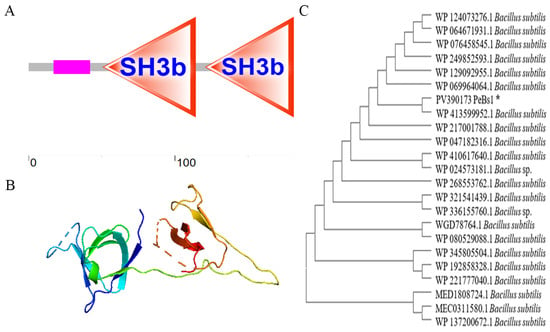
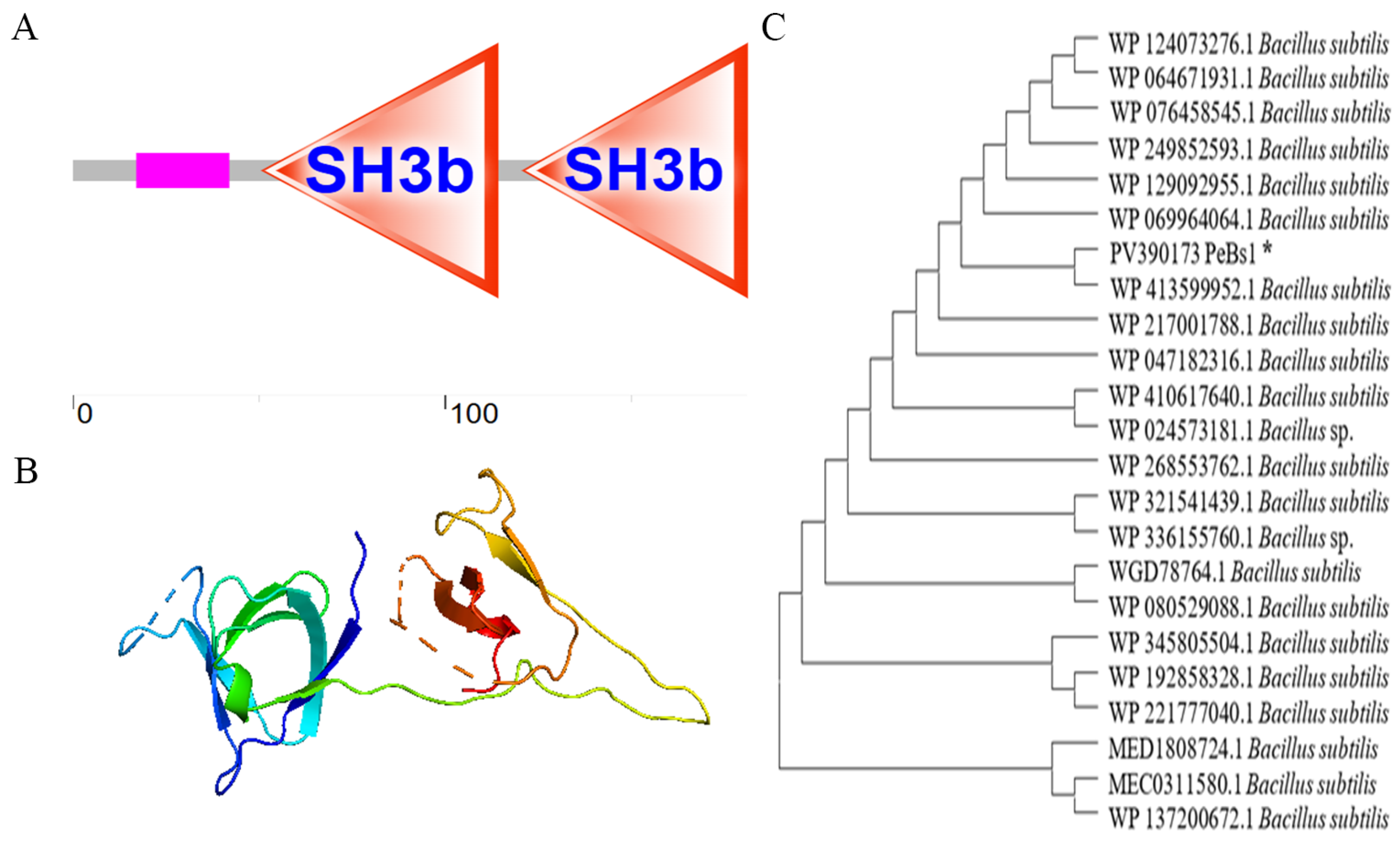
The PeBs1 sequence was deposited in the GenBank database under the accession number PV390173. The PeBs1 gene was 546 bp in length and encoded a protein of 181 amino acids. The mature form of PeBs1, excluding the signal peptide, was predicted by ExPASy to contain 144 amino acids, with a molecular weight of 15.9 kDa and a theoretical pI of 9.37. SMART analysis revealed the presence of two SH3b domains (Figure 1A), while TMHMM prediction confirmed the absence of transmembrane domains (Figure S1). As shown in Figure 1B, the tertiary structure of PeBs1 was formed by multiple secondary structure elements, with alpha-helices, beta-sheets, and random coils being the dominant types. A phylogenetic analysis demonstrated that PeBs1 shared high homology with hypothetical proteins from other Bacillus species (Figure 1C).
Figure 1.
Bioinformatic characterization of PeBs1 from Bacillus subtilis K1. (A) Predicted domain architecture of the PeBs1 protein. (B) PModel of the tertiary structure of PeBs1 protein. (C) Phylogenetic analysis of PeBs1 and its homologs.
3.2. Construction of the PVX-PeBs1 Recombinant Vector
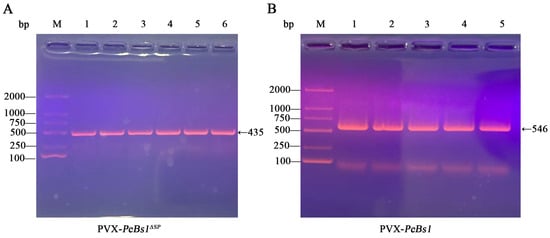
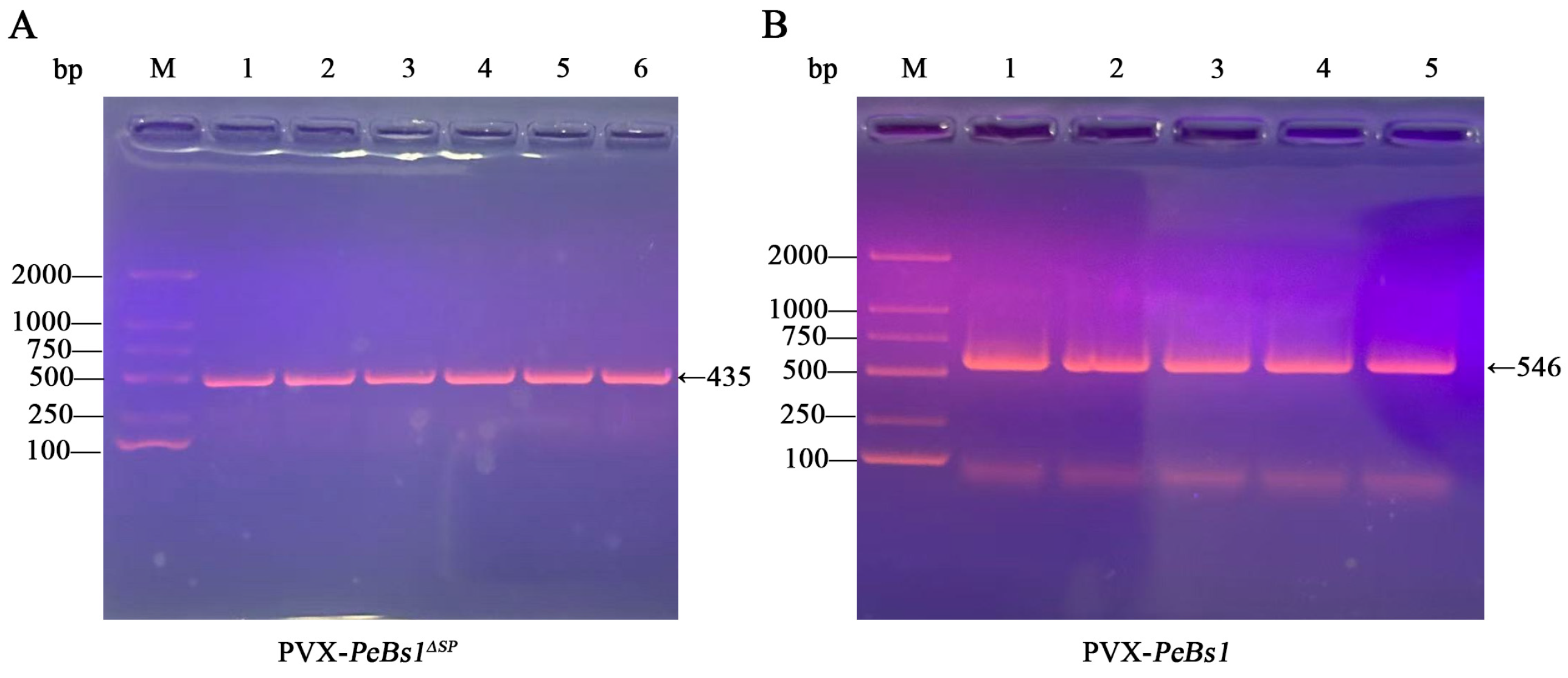
To facilitate Agrobacterium-mediated transient expression, two PVX-based expression vectors for PeBs1 were successfully constructed, including both the full-length (with signal peptide) PVX-PeBs1 and truncated (without signal peptide) forms of PVX-PeBs1ΔSP. As shown in Figure 2, PCR amplification and sequencing confirmed the successful construction of the expression vectors.
Figure 2.
Colony PCR screening of recombinant PVX-PeBs1 plasmids. (A) Screening for the PeBs1ΔSP insert. (B) Screening for the full-length PeBs1 insert. Lane M: DNA ladder. The expected PCR product sizes are 435 bp for PeBs1ΔSP and 546 bp for PeBs1.
3.3. PeBs1 Overexpression Triggered Hypersensitive Response (HR) in N. benthamiana
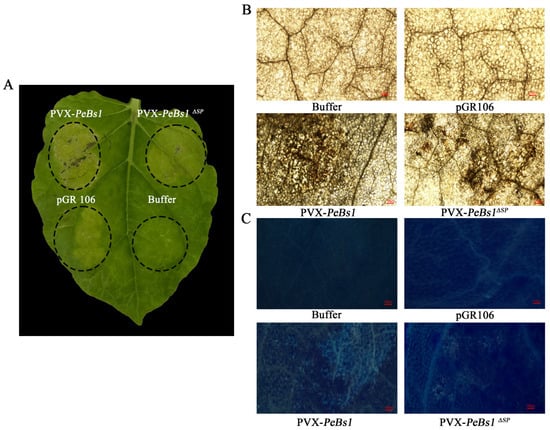
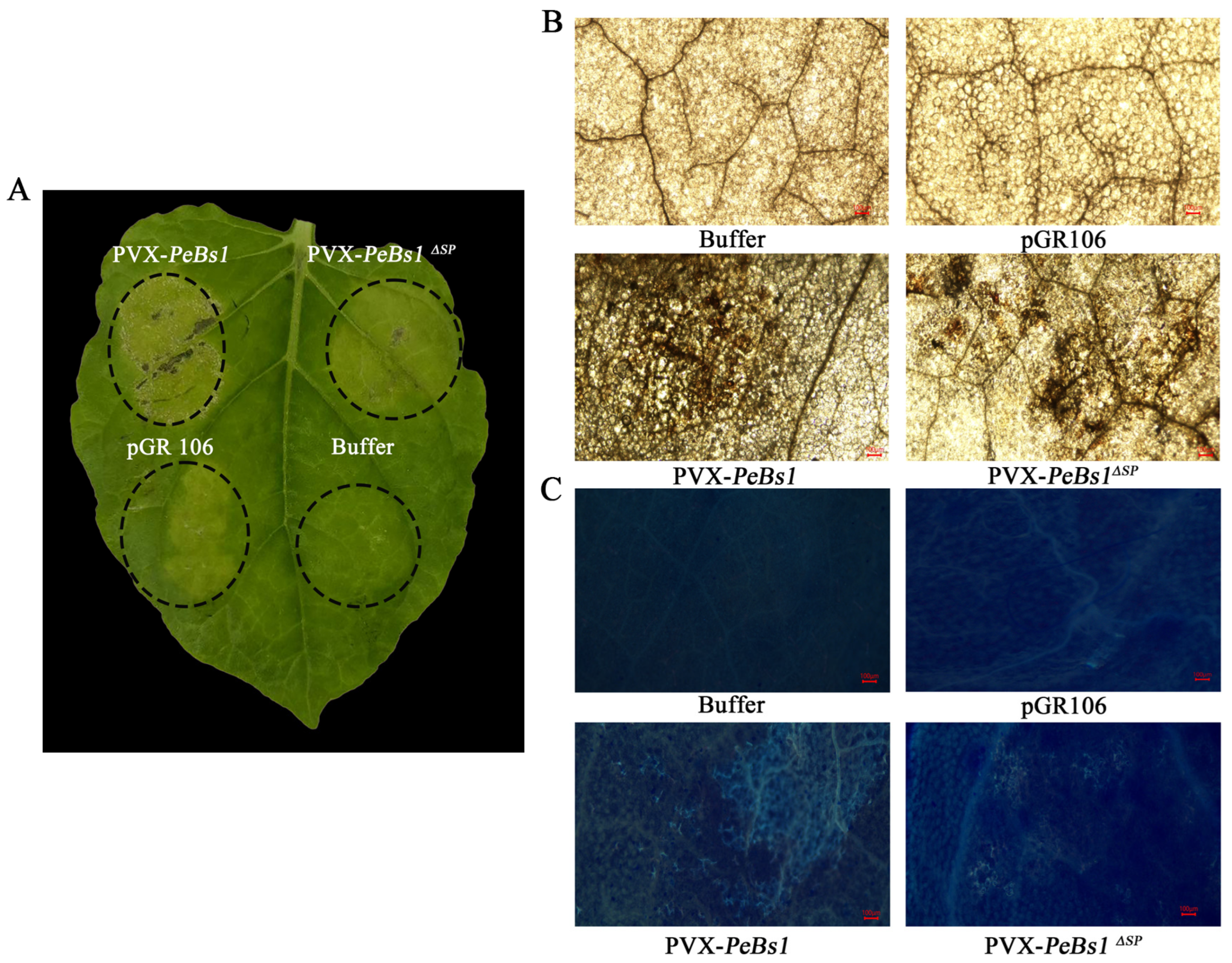
A hypersensitive response was observed in N. benthamiana leaves following Agrobacterium-mediated transient overexpression of PVX-PeBs1ΔSP or PVX-PeBs1, as shown in Figure 3A. To further investigate the early defense responses triggered by PeBs1, we detected ROS accumulation and callose deposition. DAB staining revealed substantial reddish-brown precipitation in leaves expressing PVX-PeBs1 and PVX-PeBs1ΔSP, but not in the buffer or pGR106 (empty vector controls), indicating ROS burst (Figure 3B). Consistently, aniline blue staining showed strong callose deposition in the same treatments, with PVX-PeBs1 inducing the strongest fluorescence (Figure 3C). These results demonstrate that PeBs1 activated early plant immune responses.
Figure 3.
PeBs1 overexpression-triggered hypersensitive response (HR) in Nicotiana benthamiana at 5 dpi. (A) Hypersensitive response (HR) in N. benthamiana leaves. (B) ROS burst in N. benthamiana leaves. (C) Callose deposition in N. benthamiana leaves.
3.4. Expression and Purification of PeBs1
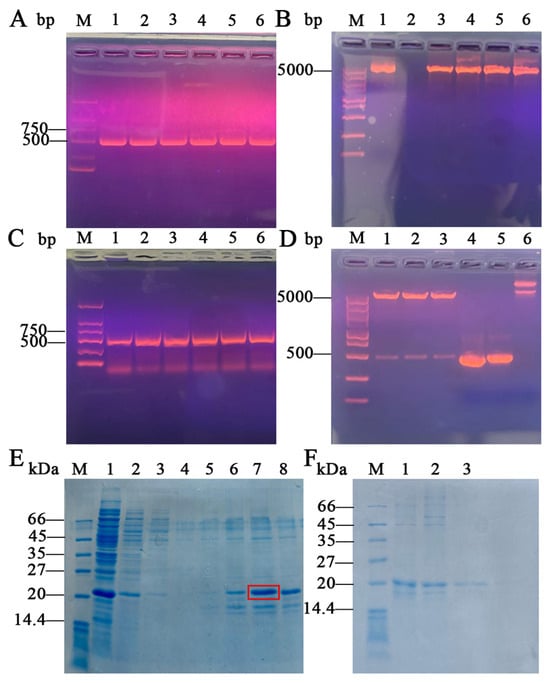
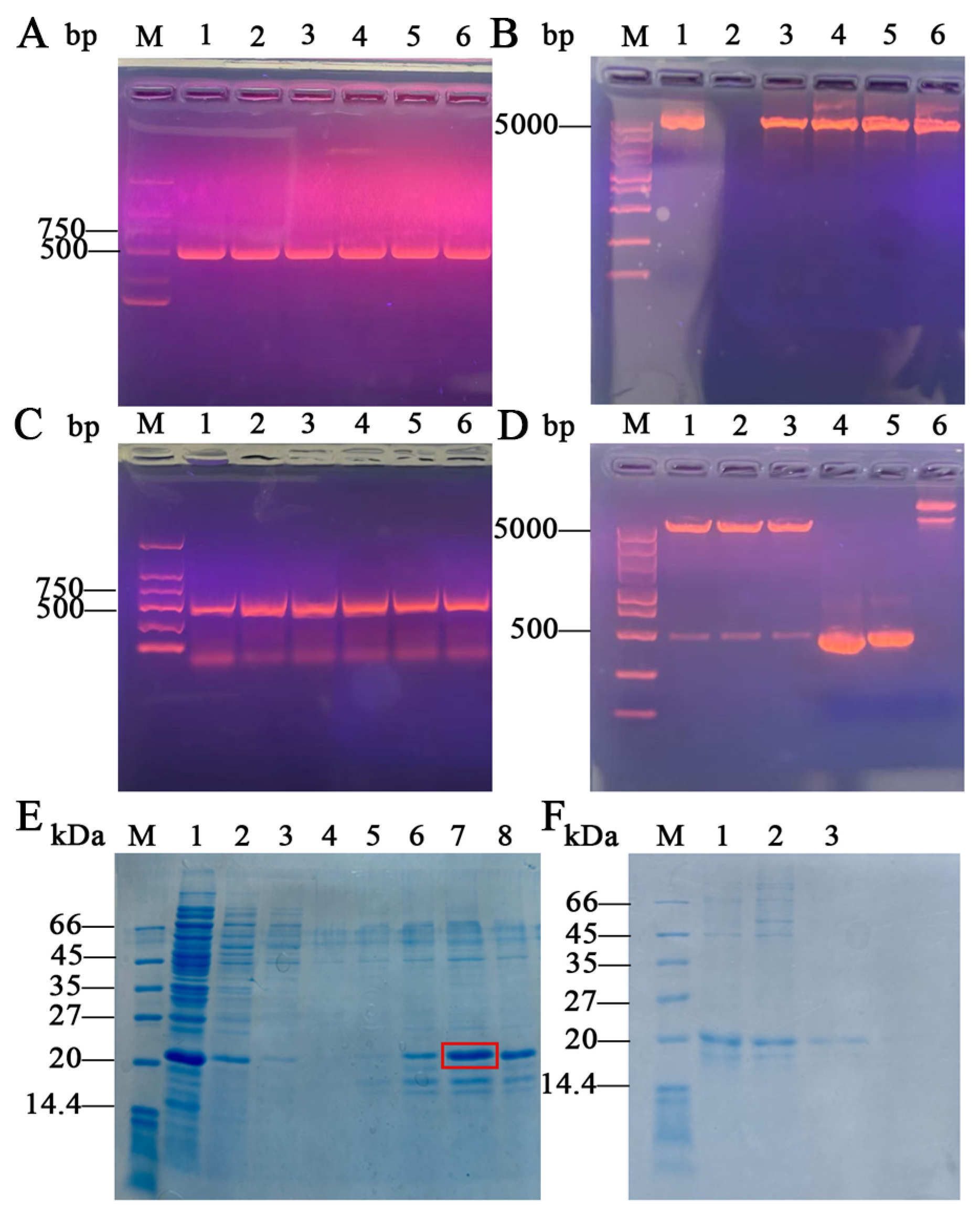
The pET-28a-PeBs1 expression vector was constructed and verified by sequencing, PCR, and restriction enzyme digestion (Figure 4A–D). Optimal protein expression was achieved by inducing the recombinant bacteria with 0.1 mmol/L IPTG at 28 °C for 5 h. Using His-Tag magnetic beads, the protein was efficiently eluted at 400 mM imidazole with high purity (Figure 4E,F).
Figure 4.
Expression and purification of recombinant PeBs1 protein from E. coli. (A) PCR amplification of the PeBs1 gene fragment with homologous arms. (B) Linearized pET-28a vector. Lanes 3–6: double-digested vector; Lane 1: circular pET-28a plasmid as control. (C) Colony PCR screening of recombinant clones. (D) Restriction enzyme digestion verification of recombinant plasmids. Lanes 1–3: digested recombinant plasmids; Lanes 4–5: PeBs1 gene fragment controls; Lane 6: undigested circular pET-28a plasmid control. (E) Purification of recombinant PeBs1 protein. Lane 1: crude protein extract; Lanes 2–3: flow-through; Lanes 4–8: elution fractions with 100–500 mM imidazole (in 100 mM increments). (F) Analysis of elution fractions. Lanes 1–3: fractions eluted with 400 mM imidazole.
3.5. PeBs1-Induced Immunity Response in N. benthamiana
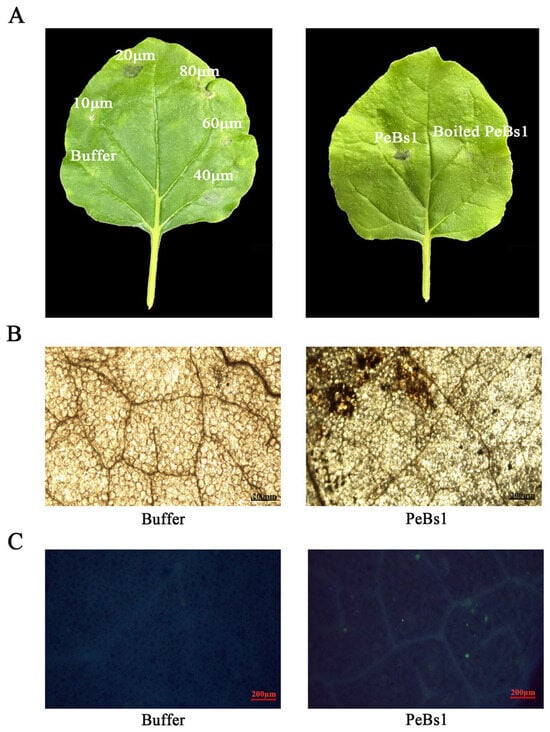
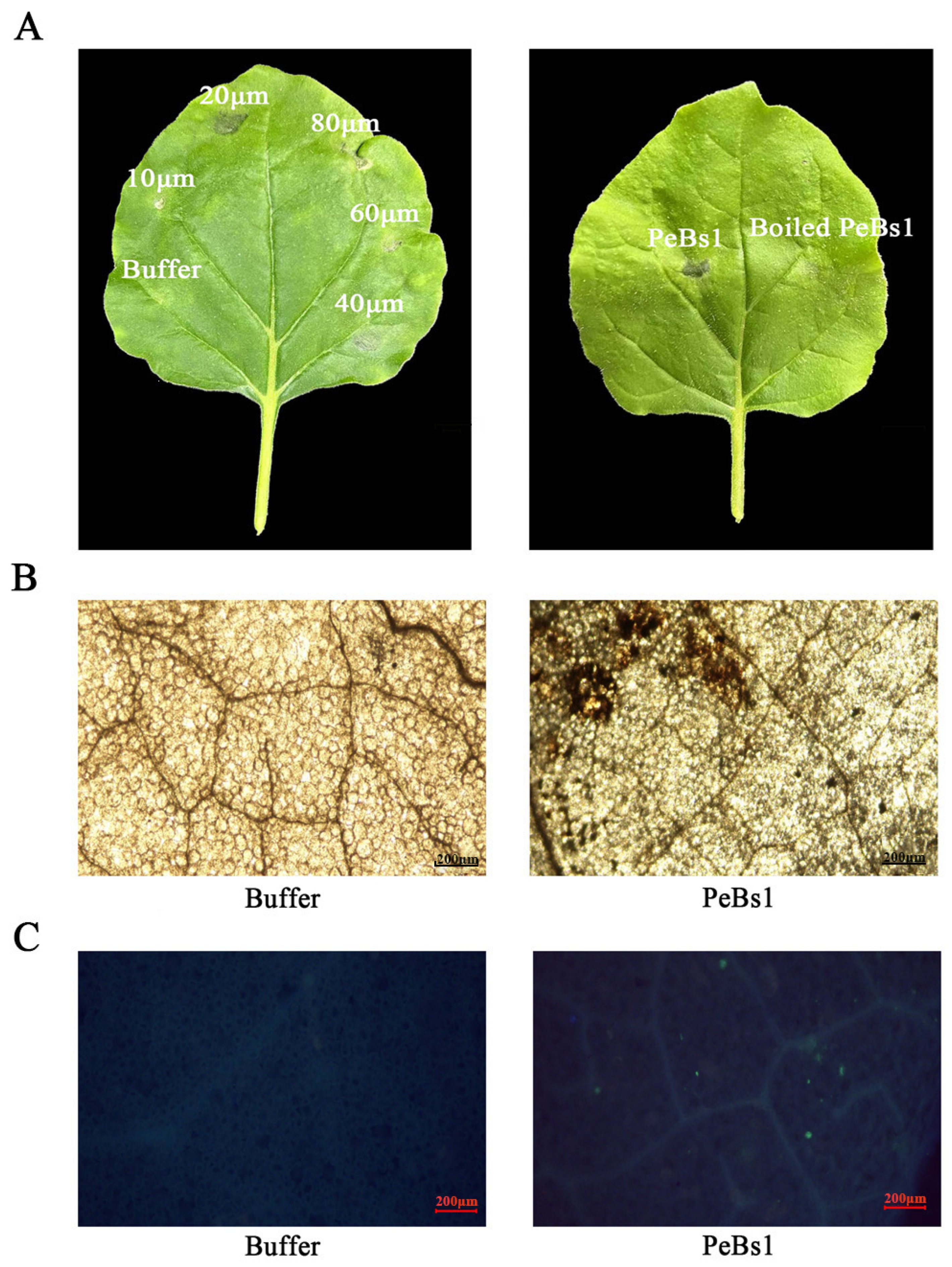
An HR was observed in N. benthamiana leaves 3 d after infiltration with purified PeBs1 protein (10–80 μM). The HR intensity increased with protein concentration but was absent in leaves treated with heat-denatured protein, confirming that the response is specific to native PeBs1 (Figure 5A). Consistent with this, DAB staining revealed ROS accumulation (Figure 5B), and aniline blue staining detected callose deposition (Figure 5C) specifically in PeBs1-treated areas, confirming the activation of early defense responses.
Figure 5.
PeBs1 protein triggered defense responses in Nicotiana benthamiana at 3 dpi. (A) Hypersensitive response (HR) triggered by the PeBs1 protein. Infiltration with heat-inactivated (boiled) PeBs1 protein served as a negative control. (B) Detection of reactive oxygen species (ROS) burst by DAB staining following PeBs1 protein treatment. (C) Detection of callose deposition by aniline blue staining following PeBs1 protein treatment.
3.6. PeBs1 Enhanced Resistance Against B. cinerea
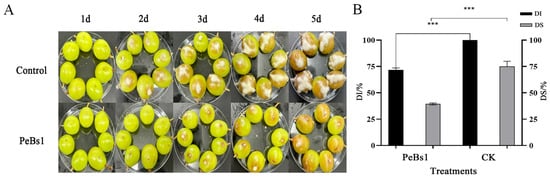
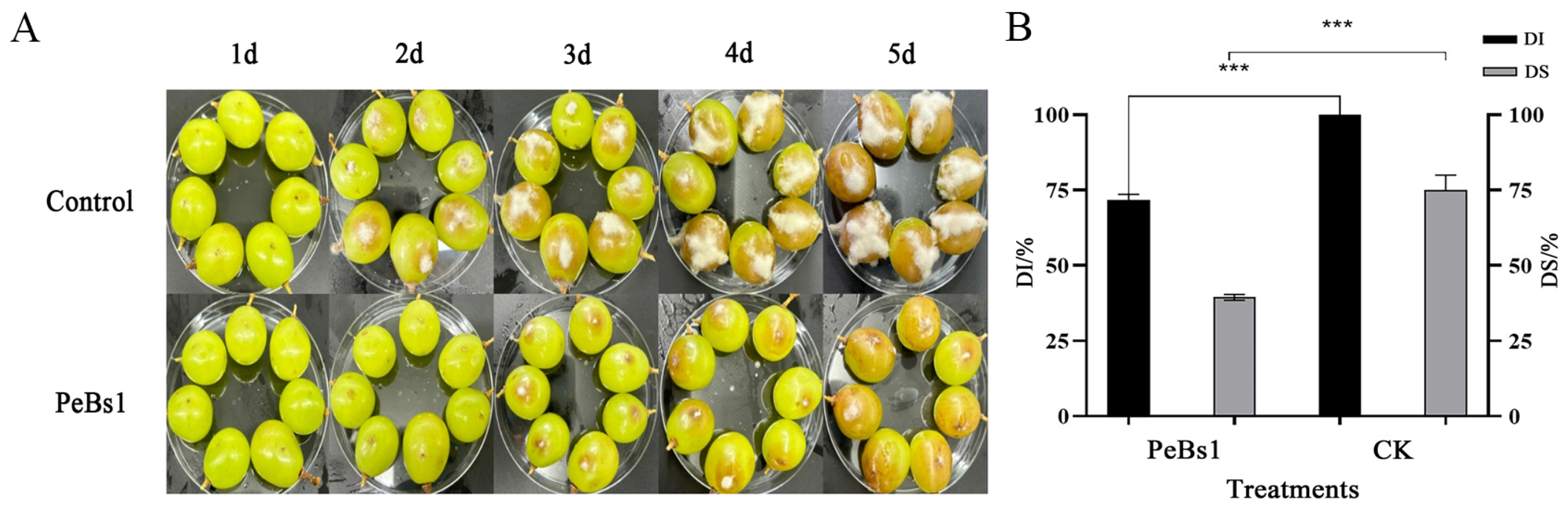
Grape berries treated with 10 μM purified PeBs1 protein for 24 h were inoculated with B. cinerea spores. In the control group, symptoms emerged on 2 d and rapidly progressed to vigorous mycelial growth, fruit browning, decay, and noticeable cracking (Figure 6A). Despite incubation at a relatively high temperature (24 °C), PeBs1-pretreated grape berries exhibited markedly delayed and less severe infection after B. cinerea challenge (Figure 6A). By 4 d post-treatment, the disease incidence and disease severity reached 100% and 75% in the control group, respectively. In contrast, the protein-treated group showed significantly lower values of 62.6% and 36.4%, respectively (p < 0.001; Figure 6B). These results demonstrate that the protein enhanced grape resistance to gray mold during storage.
Figure 6.
Enhanced gray mold resistance in grape berries by PeBs1 protein. (A) Representative disease symptoms of berries treated with PeBs1 protein or buffer control 24 h before pathogen challenge. (B) PeBs1 protein significantly reduces both disease incidence (DI) and severity (DS). Asterisks indicated a statistically significant difference (p < 0.001) compared to the control.
3.7. Defensive Enzyme Activities and Malondialdehyde Content in Grape Berries
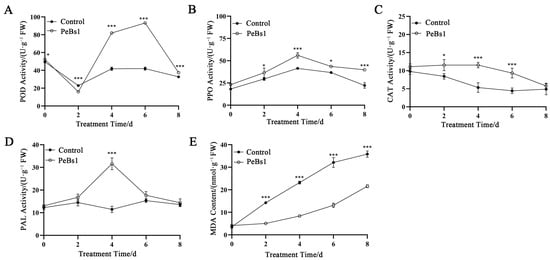
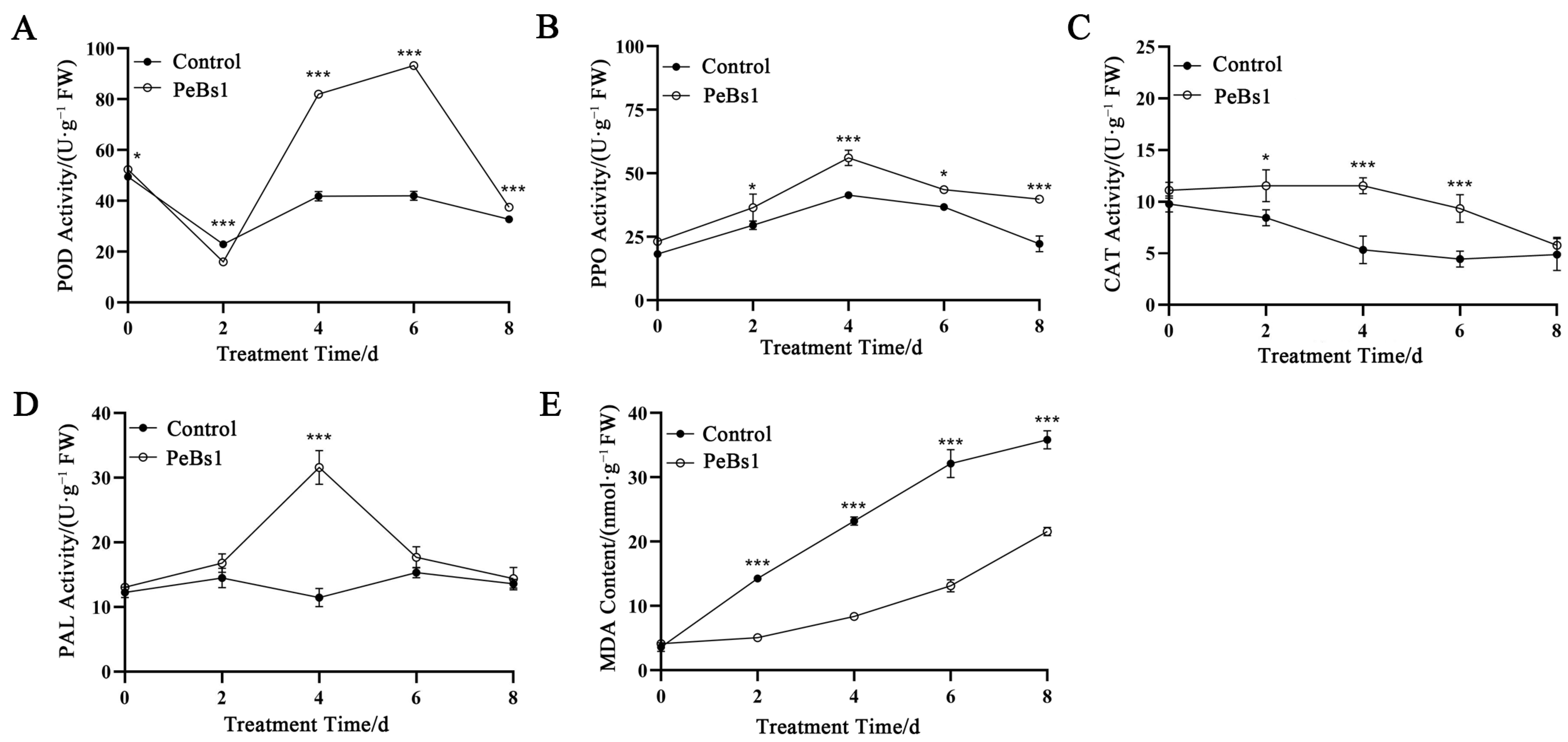
POD activity in PeBs1-treated fruit showed an initial decline followed by a steady rise from 2 d, culminating in a peak value of 93.2 U·g−1 FW on 6 d (Figure 7A). This was significantly greater than the peak in controls (41.96 U·g−1 FW) and the overall activity level was significantly elevated (p < 0.001).
Figure 7.
Effects of PeBs1 protein treatment on defense enzyme activities and malondialdehyde (MDA) content in grape berries. (A) Peroxidase (POD) activity. (B) Polyphenol oxidase (PPO) activity. (C) Catalase (CAT) activity. (D) Phenylalanine ammonia-lyase (PAL) activity. (E) Malondialdehyde (MDA) content. Asterisks denoted significant differences from the control group (* p < 0.05, *** p < 0.001).
PPO activity in both groups shared a similar trend of rising and then falling. However, the PeBs1 treatment maintained consistently significantly higher activity (p < 0.05), with both peaks occurring on 4 d (56.00 vs. 41.33 U·g−1 FW for treatment and control, respectively) (Figure 7B).
The PeBs1 treatment group, exhibiting an initial slow rise and subsequent decline in CAT activity, maintained a significantly higher overall level (p < 0.05) than the gradually declining control. Specific activities on days 2, 4, and 6 were 11.56, 11.56, 9.33 U·g−1 FW (treatment) versus 8.45, 5.33, 4.45 U·g−1 FW (control) (Figure 7C).
While both the treatment and control groups exhibited a similar rise-and-fall trend in PAL activity (Figure 7D), the treatment group reached a peak on 4 d that was markedly higher than the corresponding level in the controls (p < 0.001).
3.8. Contents of Total Phenol and Flavonoid in Grape Berries
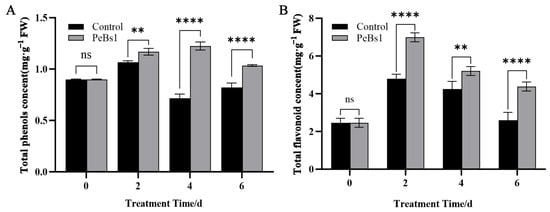
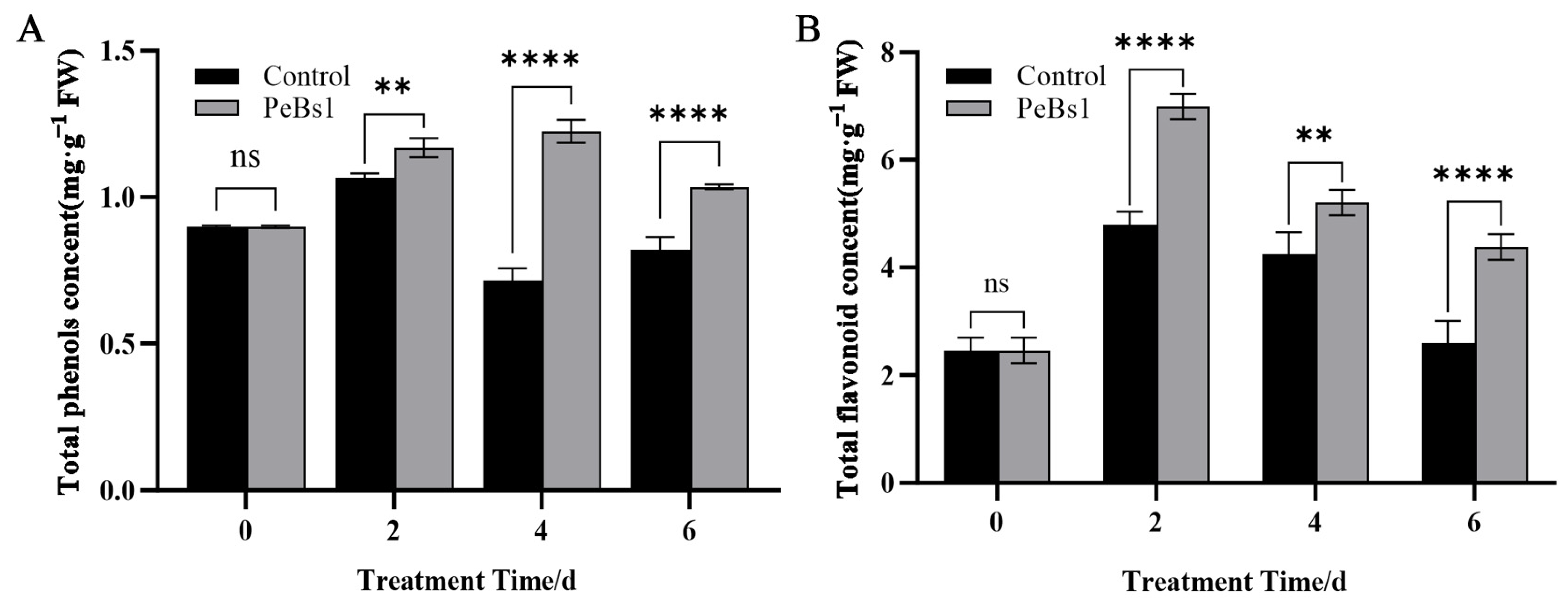
During storage, the total phenol content of grape berries in the treatment group first increased slowly and then decreased, reaching a peak of 1.22 mg·g−1 FW on 4 d (p < 0.01). In contrast, the maximum total phenol content of the control group appeared on 2 d and was significantly lower than that of treatment group (Figure 8A).
Figure 8.
Changes in total phenol and total flavonoid contents of grape berries treated with PeBs1 during postharvest storage. (A) Total phenol content. (B) Total flavonoid content. Total phenol content was expressed as gallic acid equivalents; total flavonoid content was expressed as rutin equivalents. Asterisks denoted significant differences from the control group (ns = not significant, ** p < 0.01, **** p < 0.0001).
As show in Figure 8B, total flavonoid levels in PeBs1-treated berries increased rapidly and peaked at 2 d before a gradual reduction. Although the control group shared the same fluctuation pattern, flavonoid concentrations in the treatment group were significantly higher at all sampling time points (p < 0.01).
3.9. Fruit Quality
Significant differences in quality parameters were observed among the treatments (Table 1). PeBs1 treatment significantly increased fruit firmness relative to the control (4.24 vs. 3.52 at 5 d). Furthermore, it significantly (p < 0.05) enhanced the total soluble solids, in turn reducing sugar content, and titratable acidity.
Table 1.
Effects of PeBs1 protein treatment on grape quality parameters at 5 d after treatment.
3.10. Expression Patterns of Disease Defense-Related Genes in Grape Berries
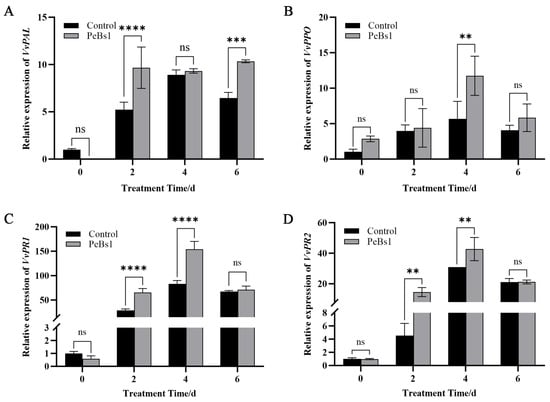
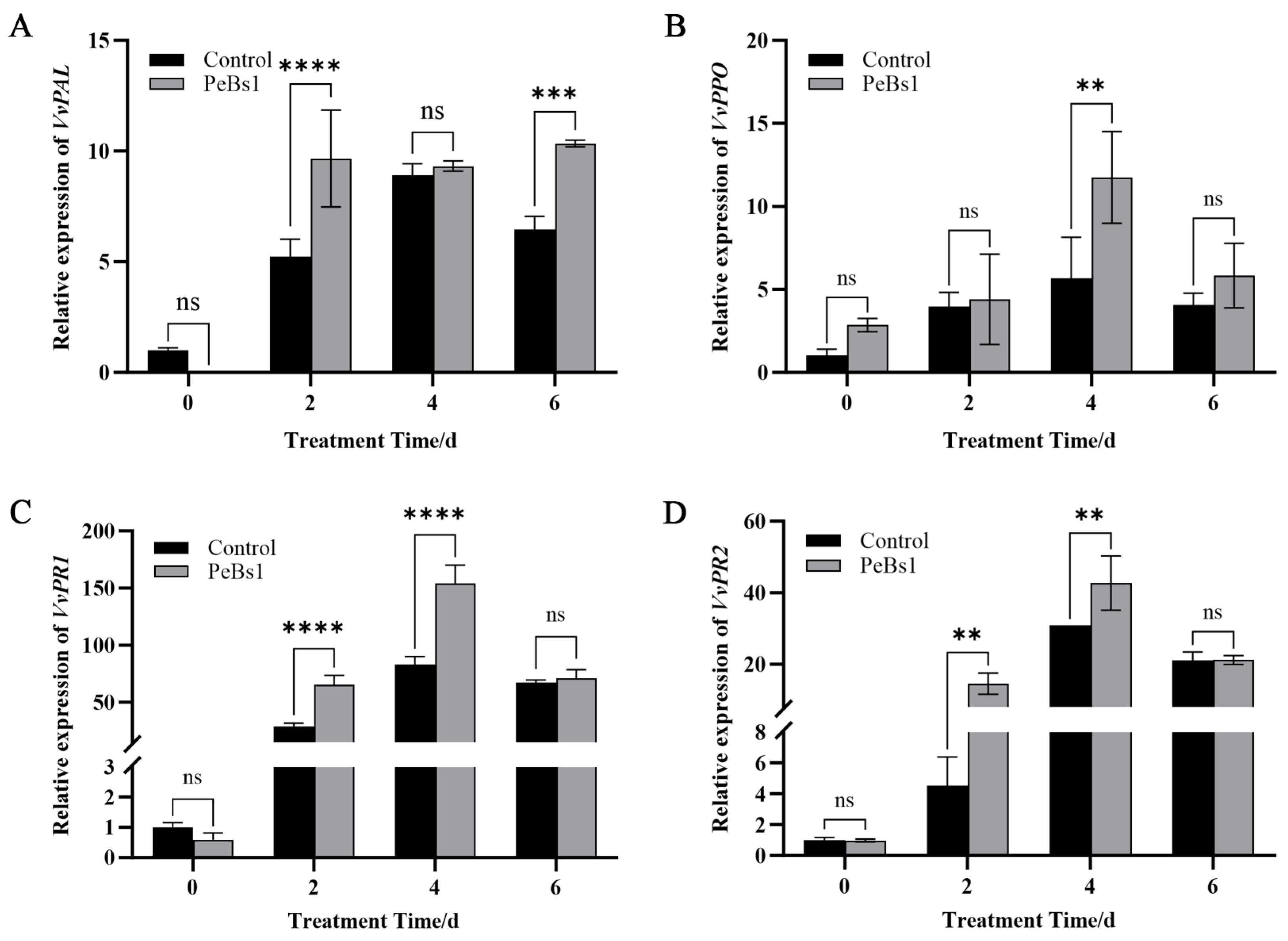
qRT-PCR analysis revealed that pretreatment with PeBs1 significantly upregulated the expression of defense-related genes in grape berries following pathogen infection. As illustrated in Figure 9A, the transcript level of VvPAL in the PeBs1-treated group remained consistently elevated throughout the entire storage period. In contrast, VvPAL expression in the control group was significantly lower than that in the treatment group at all time points examined (p < 0.001). The expression of VvPPO exhibited an overall trend of first increasing and then decreasing throughout the storage period; moreover, the expression abundance of VvPPO in the treatment group peaked at 4 d post-inoculation, with a significant difference relative to the control group (p < 0.01; Figure 9B). The expression of VvPPO in both groups exhibited an overall trend of first increasing and then decreasing throughout the storage period. Notably, the transcript level of VvPPO in the PeBs1-treated group remained consistently higher than that in the control group at all time points. In particular, at 4 d post-inoculation (dpi), VvPPO expression in the treatment group was markedly upregulated compared with the control (p < 0.01; Figure 9B). VvPR1 and VvPR2 exhibited similar expression patterns, initially increasing and peaking at 4 d post-inoculation before declining to control levels by 6 d (Figure 9C,D). Both genes were significantly upregulated in the treatment group at 2 d and 4 d post-inoculation (VvPR1, p < 0.0001; VvPR2, p < 0.01).
Figure 9.
Relative expression levels of different defense-related genes in grape berries during postharvest storage. (A) Relative expression of VvPAL. (B) Relative expression of VvPPO. (C) Relative expression of VvPR1. (D) Relative expression of VvPR2. Asterisks denoted significant differences from the control group (ns = not significant, ** p < 0.01, *** p < 0.001, **** p < 0.0001).
4. Discussion
Recently, secreted proteins from various microbes have shown efficacy in inhibiting pathogens on vegetables and fruits. The protein elicitor Pesy1 of actinomycetes Sacrothrix yanglingensis Hhs.015 induces a typical hypersensitive response in tobacco and confers resistance to Psedomonas syringae pv. tomato DC3000 in tomato seedlings [19]. In addition, the protein elicitor BAR11 from Hhs.015 stimulates defense responses in Arabidopsis thaliana, thereby enhancing its pathogen resistance [37]. The AMEP412 protein from Bacillus subtilis has been shown to confer rice blast resistance against Magnaporthe oryzae [38]. Pichia galeiformis secreted protein PgPKC caused cell death in citrus fruit and regulated its resistance to postharvest blue mold by activating valine biosynthesis [39]. Here, we identified a secreted protein, designated PeBs1, from an endophytic Bacillus strain. PeBs1 was found to induce a significant hypersensitive response in both tobacco and grape. Moreover, when applied to postharvest grapes, the purified PeBs1 protein alleviated postharvest gray mold.
Bioinformatics analysis revealed that PeBs1 contains two SH3b domains, which belong to a subtype of the SH3 domain. The characteristic fold of SH3 domains, comprising five antiparallel β-strands and a short α-helix, provides a stable platform for protein–protein interactions [40]. In studies of Methicillin-resistant Staphylococcus aureus (MRSA), the LYZ2-SH3b fusion protein exhibited potent, targeted disruption of bacterial structures, leveraging the superior cell wall-binding capacity of the SH3b domain [41]. Xie et al. [42] revealed that the SH3 domain protein SH3P2, which interacts with the NLR protein Pib in rice under normal conditions, is rapidly mobilized to perform a critical role in conferring blast resistance upon pathogen invasion. Moreover, The SH3b domain was essential for the antibacterial activity of a peptidoglycan hydrolase, ALE-1, enabling specific cell-wall binding and staphylolytic activity against Staphylococcus aureus [43]. Notably, the SH3 domain represents a highly versatile recognition module that can bind not only canonical proline-rich motifs but also non-classical ligands and target molecules through tertiary structural contacts [44]. Although B. cinerea has a distinct cell wall mainly composed of chitin, β-1,3-glucans, and mannoproteins rather than peptidoglycan, SH3-like domains have been reported to function as fungal cell wall-binding modules [45]. We therefore hypothesize that the SH3b domains of PeBs1 could potentially contribute to antifungal activity by either directly recognizing fungal cell wall components or acting as a PAMP-like molecule to modulate plant immune responses. Previous literature has reported that SH3b domains in other proteins can function in cell-wall modification or immune signaling; however, whether PeBs1 employs similar mechanisms remains to be determined. This functional precedent, combined with our observed disease resistance phenotype and defense gene induction, suggests that PeBs1 is a promising candidate protein elicitor worthy of further mechanistic investigation.
The signal peptide ensures extracellular delivery, enabling recognition by a broader array of immune receptors and a stronger hypersensitive response [46,47]. Agrobacterium-mediated transient expression revealed that PeBs1, with or without its signal peptide (SP), could elicit a hypersensitive response in tobacco. However, the full length (PVX-PeBs1) induced a stronger response than the SP-deletion strain (PVX-PeBs1ΔSP). The enhanced response conferred by the signal peptide is a phenomenon also observed in studies of the elicitors CcHE1 from a fungus as well as PeSy1 from an actinomycete when delivered via Agrobacterium [19,48]. Consistent with this, the immune response induced by purified PeBs1 protein is relatively weaker, likely because Agrobacterium-mediated expression supports sustained production, proper localization, and structural stability of PeBs1 in planta, whereas exogenous protein is prone to dilution or degradation in the apoplast [49,50]. The PeBs1 protein might possess intrinsic structural immunogenicity, allowing it to be specifically recognized by intracellular immune receptors in plants. Even without its signal peptide (ΔSP variant), PeBs1 could trigger HR in the cytoplasm, confirming its self-contained immunogenic nature. This recognition depends on the cytosolic stability of PeBs1, which preserves its conformation long enough for receptor binding and subsequent immune activation. The fact that boiling abolished the ability of purified PeBs1 (10 μM) to trigger hypersensitive response, ROS burst, and callose deposition confirms that its immunogenic function is critically dependent on its native structure.
The purified PeBs1 protein inhibited gray mold development on grapes. PeBs1 elicitor application significantly elevated the activities of defense enzymes (POD, PPO, CAT, PAL); concurrently, it curtailed MDA accumulation, disease incidence, and disease severity. In addition, PeBs1 treatment elevated the contents of total phenol and flavonoid, and upregulated the transcript levels of defense-related genes (VvPAL, VvPPO, VvPR1 and VvPR2). The accumulation of phenolics and flavonoids serves as a critical biochemical barrier against pathogen invasion. Recent studies have highlighted that these specific secondary metabolites function not only as direct antimicrobial phytoalexins but also as precursors for lignin biosynthesis, which reinforces the cell-wall structure to physically impede fungal penetration [51,52]. The significant increase in these metabolites observed in our study suggests that PeBs1 primes the grapevines to accumulate defensive compounds more rapidly. Collectively, the substantial accumulation of these bioactive compounds provides strong biochemical evidence that PeBs1 treatment effectively enhances the disease resistance of grapevines.
This metabolic shift appears to be associated with transcriptional reprogramming of the phenylpropanoid pathway. We observed concurrent upregulation of VvPAL and VvPPO. VvPAL encodes the rate-limiting enzyme in phenolic biosynthesis, while VvPPO catalyzes the oxidation of phenols into antimicrobial quinones [53,54]. The coordinated induction of these genes is consistent with an enhanced capacity for antimicrobial substrate production, supporting the notion that basal resistance mechanisms are activated. Furthermore, the upregulation of VvPR1 and VvPR2 suggests the involvement of SA-related defense signaling. PR1 is a canonical marker for the salicylic acid (SA) pathway, while PR2 (β-1,3-glucanase) has been reported to degrade fungal cell walls [55,56]. However, it should be noted that systemic resistance was not directly assessed in this study. Collectively, the simultaneous elevation of defense-related metabolites and transcriptional activation of key defense genes are consistent with PeBs1 treatment inducing a multilayered defense response, which may contribute to the observed enhancement of pathogen resistance.
Our findings demonstrated that PeBs1 boosted grape resistance to B. cinerea and suppressed disease progression. Plant resistance to pathogens can be effectively enhanced by elicitor proteins, as evidenced by several studies. For instance, BvEP from Bacillus velezensis was shown to activate defense enzymes and reduce gray mold infection in tomatoes [57]. Similarly, the protein PeVn1 was found to boost antioxidant capacity and decrease disease severity in both Nepenthes and strawberry plants, thereby strengthening their resistance against B. cinerea [58,59]. In addition, The CcEG1 protein from Cytospora chrysosperma, not only triggered cell death but also primed SA/JA/ET defense signaling in N. benthamiana [60]. Consistent with these previous findings, our physiological and molecular evidence indicated physiological and transcriptional changes in grape berries following PeBs1 treatment. PeBs1 induced coordinated increases in defense enzyme activities, elevated total phenol and flavonoid contents and reduced MDA accumulation. These alterations improved the antioxidant status of grape berries and alleviated damage inflicted by the necrotrophic pathogen B. cinerea. In addition, we detected significant transcriptional induction of VvPAL, VvPPO, VvPR1 and VvPR2. Collectively, these results suggest that PeBs1 can enhance the basal resistance of grape berries against B. cinerea. Our findings support PeBs1 as a candidate elicitor that improves disease resistance in grapes. However, its practical application hinges on two key avenues: deciphering the molecular mechanisms of PeBs1 perception and signaling, and validating its efficacy and optimal use strategies across diverse agricultural settings.
5. Conclusions
This study identified PeBs1, a novel and conserved protein elicitor from the endophytic Bacillus subtilis K1, which triggered classic immune responses including hypersensitive response, ROS burst, and callose deposition in N. benthamiana. The purified PeBs1 improved grape resistance against B. cinerea by elevating activities of defensive enzymes, reducing MDA content, promoting the production of total phenol and flavonoid, and up-regulating transcript levels of defense-related genes. This work unveiled a promising elicitor from an endophytic Bacillus and demonstrated its potential as a potential biocontrol agent for postharvest disease management in grapes.
Supplementary Materials
The following supporting information can be downloaded at: https://www.mdpi.com/article/10.3390/horticulturae12091069/s1. Table S1: Primer information; Figure S1: Prediction of protein transmembrane structure of PeBs1; Figure S2: Original uncropped agarose gels corresponding to Figure 2A; Figure S3: Original uncropped agarose gels corresponding to Figure 2B; Figure S4: Original uncropped agarose gels corresponding to Figure 4A; Figure S5: Original uncropped agarose gels corresponding to Figure 4B; Figure S6: Original uncropped agarose gels corresponding to Figure 4C; Figure S7: Original uncropped agarose gels corresponding to Figure 4D; Figure S8: Original uncropped agarose gels corresponding to Figure 4E; Figure S9: Original uncropped agarose gels corresponding to Figure 4F.
Author Contributions
M.Z.: Formal analysis, Writing—original draft. D.S.: Formal analysis, Methodology. H.L.: Formal analysis, Methodology. J.W.: Software, Data curation. Y.S.: Review. P.L.: Conceptualization, Data curation, Visualization, Writing—review and editing. B.F.: Formal analysis, Investigation, Methodology, Writing—review and editing, Resources. All authors have read and agreed to the published version of the manuscript.
Funding
This work was supported by the Shanxi Provincial Basic Research Program General Project (202403021221204), the Yuncheng Science and Technology Bureau Basic Research Program (YCKJ-2024023, YCKJ-2024031), Yuncheng University Research and Innovation Team (2026), and Shanxi Technology Innovation Center Base Project (202404010920021).
Data Availability Statement
The PeBs1 protein sequence generated in this study has been submitted to the NCBI GenBank database with the accession number PV390173 (and access link: https://static.pubmed.gov/portal/portal.fcgi/, accessed on 27 March 2025).
Conflicts of Interest
The authors declare no conflicts of interest.
Abbreviations
The following abbreviations are used in this manuscript:
| BCAs | Biological control agents |
| ISR | The induction of systemic resistance |
| PDA | Potato Dextrose Agar (Medium) |
| LB | Luria–Bertani (Medium) |
| MES | 2-Morpholinoethanesulphonic acid |
| AS | Acetosyringone |
| ROS | Reactive oxygen species |
| DAB | 3,3′-diaminobenzidine |
| IPTG | Isopropyl-beta-D-thiogalactopyranoside |
| DNS | 3,5-dinitrosalicylic acid |
| POD | Peroxidase |
| PPO | Polyphenol oxidase |
| CAT | Catalase |
| PAL | Phenylalanine ammonia-lyase |
| MDA | Malondialdehyde |
References
- FAO. FAOSTAT Database: Production of Grapes. 2024. Available online: http://www.fao.org/faostat/en/#data/QC (accessed on 18 May 2026).
- Li, P.; Feng, B.; Yao, Z.; Wei, B.; Zhao, Y.; Shi, S. Antifungal Activity of Endophytic Bacillus K1 against Botrytis cinerea. Front. Microbiol. 2022, 13, 935675. [Google Scholar] [CrossRef] [Scilit] [PubMed]
- Godana, E.A.; Yang, Q.; Zhang, X.; Zhao, L.; Wang, K.; Dhanasekaran, S.; Mehari, T.G.; Zhang, H. Biotechnological and Biocontrol Approaches for Mitigating Postharvest Diseases Caused by Fungal Pathogens and Their Mycotoxins in Fruits: A Review. J. Agric. Food Chem. 2023, 71, 17584–17596. [Google Scholar] [CrossRef] [Scilit] [PubMed]
- Maghradze, T.; Di Canito, A.; Bezerra, C.C.D.O.N.; Setati, M.E.; Foschino, R.C.; Fracassetti, D.; Vigentini, I. Grape-Associated Yeasts as Promising Antagonists against Fungal Pathogens. Microbiol. Res. 2026, 17, 32. [Google Scholar] [CrossRef] [Scilit]
- Li, P.; Feng, B.; Sun, Y.; Yang, Y. Biocontrol Potential of Rhizosphere Streptomyces LWT20 against Postharvest Decay on Grape Caused by Botrytis cinerea. LWT 2025, 232, 118444. [Google Scholar] [CrossRef] [Scilit]
- Chaouachi, M.; Marzouk, T.; Jallouli, S.; Elkahoui, S.; Gentzbittel, L.; Ben, C.; Djébali, N. Activity Assessment of Tomato Endophytic Bacteria Bioactive Compounds for the Postharvest Biocontrol of Botrytis Cinerea. Postharvest Biol. Technol. 2021, 172, 111389. [Google Scholar] [CrossRef] [Scilit]
- Wang, F.; Xiao, J.; Zhang, Y.; Li, R.; Liu, L.; Deng, J. Biocontrol Ability and Action Mechanism of Bacillus halotolerans against Botrytis Cinerea Causing Grey Mould in Postharvest Strawberry Fruit. Postharvest Biol. Technol. 2021, 174, 111456. [Google Scholar] [CrossRef] [Scilit]
- Fenta, L.; Mekonnen, H.; Kabtimer, N. The Exploitation of Microbial Antagonists against Postharvest Plant Pathogens. Microorganisms 2023, 11, 1044. [Google Scholar] [CrossRef] [Scilit] [PubMed]
- Lu, Y.; Liu, S.; Wang, Y.; Yang, F.; Tian, Z.; Long, C. Postharvest Biocontrol Ability and Antagonistic Mechanism of Bacillus altitudins H217 against Penicillium digitatum in Citrus. Postharvest Biol. Technol. 2024, 212, 112911. [Google Scholar] [CrossRef] [Scilit]
- Gulzar, A.B.M.; Hazarika, K.J.; Khataniar, G.K.; Yasmin, F.; Mazumder, P.B. Exploiting the Biocontrol Potential of Plant Growth Promoting Bacillus Species to Control Plant Pathogenic Fungi. Physiol. Mol. Plant Pathol. 2025, 140, 102859. [Google Scholar] [CrossRef] [Scilit]
- Li, X.; Zeng, S.; Wisniewski, M.; Droby, S.; Yu, L.; An, F.; Leng, Y.; Wang, C.; Li, X.; He, M.; et al. Current and Future Trends in the Biocontrol of Postharvest Diseases. Crit. Rev. Food Sci. Nutr. 2024, 64, 5672–5684. [Google Scholar] [CrossRef] [Scilit] [PubMed]
- Li, X.; Liao, Q.; Zeng, S.; Wang, Y.; Liu, J. The Use of Trichoderma Species for the Biocontrol of Postharvest Fungal Decay in Fruits and Vegetables: Challenges and Opportunities. Postharvest Biol. Technol. 2025, 219, 113236. [Google Scholar] [CrossRef] [Scilit]
- Geng, Q.; Wang, S.; Qin, Y.; Zhu, Z.; Ma, B.; Hu, B.; Hua, K.; Zhuo, Q.; Song, F.; Ma, D.; et al. Biocontrol Potential of Bacillus velezensis ATC-AL against Ceratocystis fimbriata and Its Application in Sweetpotato Postharvest Preservation. Postharvest Biol. Technol. 2026, 231, 113941. [Google Scholar] [CrossRef] [Scilit]
- Zhang, X.; Wang, J.; Xin, Y.; Godana, E.A.; Dhanasekaran, S.; Luo, R.; Li, J.; Zhao, L.; Zhang, H. Exploring the Biocontrol Performance of Bacillus velezensis against Postharvest Diseases of Eggplants and the Underlying Action Mechanisms in Soft Rot Management. Postharvest Biol. Technol. 2025, 227, 113556. [Google Scholar] [CrossRef] [Scilit]
- Feng, B.; Li, P.; Chen, D.; Ding, C. Inhibition Activity of Tomato Endophyte Bacillus velezensis FQ-G3 against Postharvest Botrytis cinerea. Folia Microbiol. 2024, 69, 361–371. [Google Scholar] [CrossRef] [Scilit] [PubMed]
- Feng, B.; Chen, D.; Jin, R.; Li, E.; Li, P. Bioactivities Evaluation of an Endophytic Bacterial Strain Bacillus velezensis JRX-YG39 Inhabiting Wild Grape. BMC Microbiol. 2022, 22, 170–178. [Google Scholar] [CrossRef] [Scilit] [PubMed]
- Zhang, D.; Yu, S.; Zhao, D.; Zhang, J.; Pan, Y.; Yang, Y.; Yang, Z.; Zhu, J.; Zhao, Y.; Li, R. Inhibitory Effects of Non-Volatiles Lipopeptides and Volatiles Ketones Metabolites Secreted by Bacillus velezensis C16 against Alternaria solani. Biol. Control 2021, 152, 104421. [Google Scholar] [CrossRef] [Scilit]
- Zhang, R.-S.; Wang, F.-G.; Qi, Z.-Q.; Qiao, J.-Q.; Du, Y.; Yu, J.-J.; Yu, M.-N.; Liang, D.; Song, T.-Q.; Yan, P.-X.; et al. Iturins Produced by Bacillus velezensis Jt84 Play a Key Role in the Biocontrol of Rice Blast Disease. Biol. Control 2022, 174, 105001. [Google Scholar] [CrossRef] [Scilit]
- Wang, J.; Liu, S.; Ren, P.; Jia, F.; Kang, F.; Wang, R.; Xue, R.; Yan, X.; Huang, L. A Novel Protein Elicitor (PeSy1) from Saccharothrix yanglingensis Induces Plant Resistance and Interacts with a Receptor-like Cytoplasmic Kinase in Nicotiana benthamiana. Mol. Plant Pathol. 2023, 24, 436–451. [Google Scholar] [CrossRef] [Scilit] [PubMed]
- Abdul Malik, N.A.; Kumar, I.S.; Nadarajah, K. Elicitor and Receptor Molecules: Orchestrators of Plant Defense and Immunity. Int. J. Mol. Sci. 2020, 21, 963. [Google Scholar] [CrossRef] [Scilit] [PubMed]
- Li, S.; Nie, H.; Qiu, D.; Shi, M.; Yuan, Q. A Novel Protein Elicitor PeFOC1 from Fusarium oxysporum Triggers Defense Response and Systemic Resistance in Tobacco. Biochem. Biophys. Res. Commun. 2019, 514, 1074–1080. [Google Scholar] [CrossRef] [Scilit] [PubMed]
- Ballot, A.; Gaucher, M.; Rey, M.; Brisset, M.-N.; Joly, P.; Dreux-Zigha, A.; Taïbi, A.; Langin, T.; Prigent-Combaret, C. Strong Elicitation of Plant Defense Pathways by Foliar and Collar Inoculations of Wheat with the Bacillus pumilus Strain JM79. Curr. Plant Biol. 2025, 43, 100524. [Google Scholar] [CrossRef] [Scilit]
- Javed, K.; Javed, H.; Dewen, Q.; Wang, Y. Unveiling Protein Elicitor MoHrip2: A Potent Biocontrol Agent Extracted from Magnaporthe oryzae Safeguards Australian Tobacco (Nicotiana benthamiana) against Tobacco Aphid (Myzus nicotianae). Crop Prot. 2024, 184, 106766. [Google Scholar] [CrossRef] [Scilit]
- Liu, X.; Bao, T.; Zheng, L.; Kgosi, V.T.; Liu, X.; Liu, H. Cell Wall Integrity in Magnaporthe oryzae Is Weakened by Proteins Secreted by Bacillus licheniformis BL06. Biol. Control 2021, 157, 104582. [Google Scholar] [CrossRef] [Scilit]
- Moll, L.; Giralt, N.; Planas, M.; Feliu, L.; Montesinos, E.; Bonaterra, A.; Badosa, E. Prunus Dulcis Response to Novel Defense Elicitor Peptides and Control of Xylella fastidiosa Infections. Plant Cell Rep. 2024, 43, 190–213. [Google Scholar] [CrossRef] [Scilit] [PubMed]
- Feng, B.; Ding, C.; Li, P.; Fu, L. Combined Application of the Endophyte Bacillus K1 and Sodium Dehydroacetate Alleviates Postharvest Gray Mold in Grapes. Food Microbiol. 2025, 125, 104637. [Google Scholar] [CrossRef] [Scilit] [PubMed]
- Kumar, P.; Singh, B.; Rajak, S.; Pandey, S.; Pati, P.K. Dynamics of Reactive Oxygen Species and Lignin Biosynthesis during Leaf Spot Disease of Withania somnifera (L.) Dunal. Plant Biol. 2023, 25, 757–770. [Google Scholar] [CrossRef] [Scilit] [PubMed]
- Chalfoun, N.R.; Grellet-Bournonville, C.F.; Martínez-Zamora, M.G.; Díaz-Perales, A.; Castagnaro, A.P.; Díaz-Ricci, J.C. Purification and Characterization of AsES Protein. J. Biol. Chem. 2013, 288, 14098–14113. [Google Scholar] [CrossRef] [Scilit] [PubMed]
- Parafati, L.; Vitale, A.; Restuccia, C.; Cirvilleri, G. Biocontrol Ability and Action Mechanism of Food-Isolated Yeast Strains against Botrytis cinerea Causing Post-Harvest Bunch Rot of Table Grape. Food Microbiol. 2015, 47, 85–92. [Google Scholar] [CrossRef] [Scilit] [PubMed]
- Ali, S.; Nawaz, A.; Naz, S.; Ali, M.; Ejaz, S.; Azam, M.; Razzaq, K. Exogenous Melatonin Mitigates Chilling Injury in Zucchini Fruit by Enhancing Antioxidant System Activity, Promoting Endogenous Proline and GABA Accumulation, and Preserving Cell Wall Stability. Postharvest Biol. Technol. 2023, 204, 112445. [Google Scholar] [CrossRef] [Scilit]
- Zhou, Y.; Cheng, Y.; Zhong, R.; Tang, J.; Pervaiz, T.; Zhou, S.; Liu, J.; Wang, B.; Jia, H. Brassinolide and Gibberellin Promote Grape Fruit Development and Quality. Sci. Hortic. 2024, 338, 113619. [Google Scholar] [CrossRef] [Scilit]
- Fu, X.; Li, J.; Min, D.; Zhao, X.; Liu, J.; Li, F.; Li, X.; Zhang, X. LncRNA4504 Involved in Methyl Jasmonate-Induced Resistance to Botrytis Cinerea in Postharvest Tomato Fruit. Sci. Hortic. 2022, 305, 111381. [Google Scholar] [CrossRef] [Scilit]
- Porat, R.; Pavoncello, D.; Peretz, J.; Ben-Yehoshua, S.; Lurie, S. Effects of Various Heat Treatments on the Induction of Cold Tolerance and on the Postharvest Qualities of ‘Star Ruby’ Grapefruit. Postharvest Biol. Technol. 2000, 18, 159–165. [Google Scholar] [CrossRef] [Scilit]
- Li, Q.; Li, C.; Li, P.; Zhang, H.; Zhang, X.; Zheng, X.; Yang, Q.; Apaliya, M.T.; Boateng, N.A.S.; Sun, Y. The Biocontrol Effect of Sporidiobolus pararoseus Y16 against Postharvest Diseases in Table Grapes Caused by Aspergillus Niger and the Possible Mechanisms Involved. Biol. Control 2017, 113, 18–28. [Google Scholar] [CrossRef] [Scilit]
- Li, C.; Cao, S.; Wang, K.; Lei, C.; Ji, N.; Xu, F.; Jiang, Y.; Qiu, L.; Zheng, Y. Heat Shock Protein HSP24 Is Involved in the BABA-Induced Resistance to Fungal Pathogen in Postharvest Grapes Underlying an NPR1-Dependent Manner. Front. Plant Sci. 2021, 12, 646147. [Google Scholar] [CrossRef] [Scilit] [PubMed]
- Wu, C.; Wang, Y.; Ai, D.; Li, Z.; Wang, Y. Biocontrol Yeast T-2 Improves the Postharvest Disease Resistance of Grape by Stimulation of the Antioxidant System. Food Sci. Nutr. 2022, 10, 3219–3229. [Google Scholar] [CrossRef] [Scilit] [PubMed]
- Wang, R.; Wang, Y.; He, D.; Shi, T.; Zhang, Y.; Liu, S.; Yan, X.; Huang, L. Responses of Plant Immune System and Rhizosphere Soil Microbiome to the Elicitor BAR11 in Arabidopsis Thaliana. Sci. Total Environ. 2024, 914, 169920. [Google Scholar] [CrossRef] [Scilit] [PubMed]
- Qin, Y.; Guo, M.; Yang, J.; Zheng, J.; Wang, Q.; Liu, Q. Protein Elicitor AMEP412 Suppressed Rice Blast Caused by Magnaporthe oryzae through Triggering Plant Immunity. Physiol. Mol. Plant Pathol. 2025, 140, 102968. [Google Scholar] [CrossRef] [Scilit]
- Qiu, Y.; Chen, O.; Chen, J.; Ming, J.; Zeng, K. Secreted Protein PgPKC Activates Valine Biosynthesis to Improve Disease Resistance in Citrus Fruit. Postharvest Biol. Technol. 2026, 232, 113952. [Google Scholar] [CrossRef] [Scilit]
- Taheri-Anganeh, M.; Khatami, S.H.; Jamali, Z.; Movahedpour, A.; Ghasemi, Y.; Savardashtaki, A.; Mostafavi-Pour, Z. LytU-SH3b Fusion Protein as a Novel and Efficient Enzybiotic against Methicillin-Resistant Staphylococcus aureus. Mol. Biol. Res. Commun. 2019, 8, 151. [Google Scholar] [CrossRef] [Scilit]
- Asadi, M.; Taheri-Anganeh, M.; Ranjbar, M.; Khatami, S.H.; Maleksabet, A.; Mostafavi-Pour, Z.; Ghasemi, Y.; Keshavarzi, A.; Savardashtaki, A. LYZ2-SH3b as a Novel and Efficient Enzybiotic against Methicillin-Resistant Staphylococcus aureus. BMC Microbiol. 2023, 23, 257–265. [Google Scholar] [CrossRef] [Scilit] [PubMed]
- Xie, Y.; Wang, Y.; Yu, X.; Lin, Y.; Zhu, Y.; Chen, J.; Xie, H.; Zhang, Q.; Wang, L.; Wei, Y.; et al. SH3P2, an SH3 Domain-Containing Protein That Interacts with Both Pib and AvrPib, Suppresses Effector-Triggered, Pib-Mediated Immunity in Rice. Mol. Plant 2022, 15, 1931–1946. [Google Scholar] [CrossRef] [Scilit] [PubMed]
- Lu, J.Z.; Fujiwara, T.; Komatsuzawa, H.; Sugai, M.; Sakon, J. Cell Wall-Targeting Domain of Glycylglycine Endopeptidase Distinguishes among Peptidoglycan Cross-Bridges. J. Biol. Chem. 2006, 281, 549–558. [Google Scholar] [CrossRef] [Scilit] [PubMed]
- Kaneko, T.; Li, L.; Li, S.S.-C. The SH3 Domain- a Family of Versatile Peptide- and Protein-Recognition Module. Front. Biosci. 2008, 13, 4938–4952. [Google Scholar] [CrossRef] [Scilit] [PubMed]
- Moroz, O.V.; Blagova, E.; Lebedev, A.A.; Skov, L.K.; Pache, R.A.; Schnorr, K.M.; Kiemer, L.; Friis, E.P.; Nymand-Grarup, S.; Ming, L.; et al. Module Walking Using an SH3-like Cell-Wall-Binding Domain Leads to a New GH184 Family of Muramidases. Acta Crystallogr. D Struct. Biol. 2023, 79, 706–720. [Google Scholar] [CrossRef] [Scilit] [PubMed]
- Owji, H.; Nezafat, N.; Negahdaripour, M.; Hajiebrahimi, A.; Ghasemi, Y. A Comprehensive Review of Signal Peptides: Structure, Roles, and Applications. Eur. J. Cell Biol. 2018, 97, 422–441. [Google Scholar] [CrossRef] [Scilit] [PubMed]
- Dickmeis, C.; Honickel, M.M.A.; Fischer, R.; Commandeur, U. Production of Hybrid Chimeric PVX Particles Using a Combination of TMV and PVX-Based Expression Vectors. Front. Bioeng. Biotechnol. 2015, 3, 1–12. [Google Scholar] [CrossRef] [Scilit] [PubMed]
- Liu, X.; Tian, C.; Xiong, D. A Putative Elicitor CcHE1 from Cytospora chrysosperma Enhances Plant Resistance to Phytopathogenic Fungi. Pest Manag. Sci. 2025, 81, 5470–5483. [Google Scholar] [CrossRef] [Scilit] [PubMed]
- Zhang, Y.; Chen, M.; Siemiatkowska, B.; Toleco, M.R.; Jing, Y.; Strotmann, V.; Zhang, J.; Stahl, Y.; Fernie, A.R. A Highly Efficient Agrobacterium-Mediated Method for Transient Gene Expression and Functional Studies in Multiple Plant Species. Plant Commun. 2020, 1, 100028. [Google Scholar] [CrossRef] [Scilit] [PubMed]
- Godson, A.; Van Der Hoorn, R.A.L. The Front Line of Defence: A Meta-Analysis of Apoplastic Proteases in Plant Immunity. J. Exp. Bot. 2021, 72, 3381–3394. [Google Scholar] [CrossRef] [Scilit] [PubMed]
- Sharma, A.; Shahzad, B.; Rehman, A.; Bhardwaj, R.; Landi, M.; Zheng, B. Role of phenylpropanoid pathway in lignin biosynthesis and cell wall reinforcement under stress. Int. J. Mol. Sci. 2022, 23, 8456. [Google Scholar] [CrossRef] [Scilit] [PubMed]
- Chen, L.; Wang, Y.; Liu, H.; Zhang, Q.; Xu, W. Metabolic reprogramming of phenolics and flavonoids enhances antifungal resistance in grapevine. J. Agric. Food Chem. 2024, 72, 2100–2112. [Google Scholar]
- Zhang, Y.; Li, X.; Wang, J.; Chen, S.; Zhao, M. Transcriptional regulation of PAL and PPO genes enhances resistance to fungal pathogens in grapevine. BMC Plant Biol. 2021, 21, 112. [Google Scholar] [CrossRef] [Scilit] [PubMed]
- Li, J.; Wu, H.; Xu, Y.; Guo, Z. Overexpression of VvPAL1 increases phenolic content and resistance to powdery mildew in grapevine. Plant Biotechnol. J. 2022, 20, 567–580. [Google Scholar] [CrossRef] [Scilit] [PubMed]
- Zhao, H.; Kim, J.H.; Park, S.W.; Hwang, B.K. Salicylic acid signaling triggers PR1 and PR2 expression to confer broad-spectrum resistance. Plant Cell Rep. 2022, 41, 1567–1580. [Google Scholar] [CrossRef] [Scilit] [PubMed]
- Wang, C.; Zhang, L.; Liu, Y.; Chen, X.; Li, H. PR1 and PR2 genes are essential for systemic acquired resistance and antifungal activity in plants. J. Exp. Bot. 2024, 75, 789–801. [Google Scholar] [CrossRef] [Scilit] [PubMed]
- Li, Z.; Hu, J.; Sun, Q.; Zhang, X.; Chang, R.; Wang, Y. A Novel Elicitor Protein Phosphopentomutase from Bacillus velezensis LJ02 Enhances Tomato Resistance to Botrytis Cinerea. Front. Plant Sci. 2022, 13, 1064589. [Google Scholar] [CrossRef] [Scilit] [PubMed]
- Zhang, Z.; Wang, D.; Dong, B.; Wang, Y.; Xu, J.; Hao, J.; Zhou, H. A Protein Elicitor PeVn1 from Verticillium nonalfalfae HW Recognized as a MAMP Triggers Plant Immunity Response. Front. Plant Sci. 2024, 15, 1468437. [Google Scholar] [CrossRef] [Scilit] [PubMed]
- Zhang, Z.; Wang, D.; Wang, Y.; Dong, B.; Hao, J.; Zhou, H. Protein Elicitor PeVn1 Induces Resistance to Botrytis Cinerea in Strawberry and Differential Transcriptomic Analysis. Front. Microbiol. 2025, 16, 1541448. [Google Scholar] [CrossRef] [Scilit] [PubMed]
- Xu, Z.; Luo, Z.; Xiong, D.; Gao, M.; Tian, C. A Glycoside Hydrolase 12 Protein from Cytospora chrysosperma Triggers Plant Immunity but Is Not Essential to Virulence. Phytopathol. Res. 2023, 5, 32–46. [Google Scholar] [CrossRef] [Scilit]

Disclaimer/Publisher’s Note: The statements, opinions and data contained in all publications are solely those of the individual author(s) and contributor(s) and not of MDPI and/or the editor(s). MDPI and/or the editor(s) disclaim responsibility for any injury to people or property resulting from any ideas, methods, instructions or products referred to in the content. |
© 2026 by the authors. Licensee MDPI, Basel, Switzerland. This article is an open access article distributed under the terms and conditions of the Creative Commons Attribution (CC BY) license.