


Abstract
Citron is a medicinal and edible plant. Terpenoids exhibit a wide range of biological activities. However, terpenoids in citron remain underexplored. In this study, a widely targeted metabolomics approach was employed to analyze the accumulation and variation patterns of terpenoid metabolites in citron flavedo at six developmental stages (50, 80, 110, 140, 170, and 210 d after flowering). The results showed that a total of 215 metabolites were detected, with monoterpenes (90) and triterpenes (51) being the major ones, accounting for 41.86% and 23.72% of the total, respectively. A total of 67 differential terpenoid metabolites were identified across different developmental stages. The number of up-regulated metabolites consistently exceeded that of down-regulated metabolites in each comparison group. Bitterness-related triterpenoid metabolites such as limonin, nomilin, obacunone, nomilinic acid, and obacunoic acid peaked at 170 d after flowering but exhibited an overall downward trend at 210 d. Most of the limonoid metabolites were significantly or extremely significantly positively correlated with one another; notably, nomilin displayed strong positive correlations with obacunone, deacetylnomilin, nomilinic acid, and obacunoic acid. This study delivers the first in-depth analysis of terpenoids in citron throughout development stages, laying a foundation for ongoing research and development of terpenoids in citron.
1. Introduction
Citrus is one of the most important fruit crops worldwide. Citron (Citrus medica L.) is recognized as one of the ancestor species of citrus, along with pomelo and loose-skin mandarin. Unlike the main citrus types, such as pomelo, loose-skin mandarin, and orange, citron was assigned as a neglected and underutilized plant species, presumably due to its limited commercial use [1,2]. Even FAO Statistics has no record on citron production. Recently, its new information of unique cultural, medical, and sacramental history, along with rapid developments in modern biotechnology, has renewed interest in citron [3]. It is an evergreen fruit tree and blooms and bears fruit in tropical countries throughout the year [4]. In China, its peak flowering and fruiting periods are in spring and autumn, respectively [5]. It is mainly cultivated in China, Greece, Italy, France, and India and is also distributed on small scales in countries such as Bangladesh, Yemen, Iran, Israel, Morocco, Haiti, Mexico, and the United States [6,7]. Different from main citrus types with greater commercial exploitation such as pomelo, loose-skin mandarin, and orange, citron, also as traditional Chinese medicine, was listed in Chinese Pharmacopoeia (2025 edition) issued by National Health Commission of the People’s Republic of China. As documented in Chinese Pharmacopoeia (2025 edition), a dried mature fruit slice has the medicinal properties of soothing the liver, regulating Qi, soothing the middle, and resolving phlegm [5]. Furthermore, in the traditional Indian medicine system, citron fruit is utilized to treat hyperacidity, heart ailments, gastric ulcers, hypertension, anorexia, dermatological ailments, and digestive ailments, while also acting as a carminative and alleviating inflammatory conditions [8,9]. In addition, citron can also be used in the fields of food and cosmetics.
Citron’s flavedo is a structure of citrus fruit and it is generally considered as by-product. The extracts of this by-product are enriched with many bioactive substances such as flavonoids [10], pectins [11], sugars [12], and terpenoids [13], which serve as potential ingredients for the food, pharmaceutical, cosmetic, and other industries [14,15,16]. Terpenoids are one of the most important secondary metabolites in plants with many biological activities such as anti-inflammatory, anti-infective, anti-allergic and anti-tumor effects [17]. They can be widely used in the fields of food, pharmaceuticals, and cosmetics [18]. Terpenoids are found in almost all organisms, but they are predominantly synthesized by plants as secondary metabolites. Terpenoids cannot be synthesized in the human body, and humans can only obtain them from dietary sources [17]. Investigating plant-derived terpenoids is crucial for humans to obtain terpenoids [17]. Terpenoids play an important role in defending against stress, signal transduction, and fruit quality in citrus [19,20]. Terpenoids in citrus have significant value for antioxidant, anti-inflammatory, antibacterial, and other activities. Terpenoids are also the core components of citrus essential oils [13,21]. Consequently, systematic investigations into terpenoids in citron flavedo are essential to improve its processing efficiency and overall utility. Extensive studies have been conducted on citrus terpenoids [22,23,24]. The study by Cai et al. [25,26] demonstrated that the bitter taste of citrus fruit pulp, peel, and capsule is caused by nomilin, and the content of limonin in seeds was higher than that of nomilin. Nevertheless, there is still limited research on terpenoids in citron.
Chemical methods and methods in enzymology have long been used for analyzing the metabolites of citrus flavedo [27,28]. However, these methods have poor stability and accuracy. To further study citron terpenoids in citron flavedo, advanced analytical strategies are required. Metabolomics have developed rapidly in recent years [29]. Widely targeted metabolomics is a methodology in metabolomics where levels of preselected metabolites are determined by using chromatography coupled to quadrupole (Q) or triple quadrupole (QqQ) mass spectrometry (MS) [30]. Combining the advantages of targeted and non-targeted metabolomics, it has been successfully applied in terpenoid studies on Eriobotrya japonica, Panax notoginseng, and red beet [31,32,33]. In this study, citron flavedo at six fruit developmental stages were used as materials to analyze the accumulation patterns of terpenoids, with a particular focus on the profiles of limonoids. The study is intended to provide a theoretical basis and scientific evidence for determining terpenoid peak periods, to promote the development and utilization of citron resources, and to provide guidance for the development of citron in various industries.
2. Materials and Methods
2.1. Materials
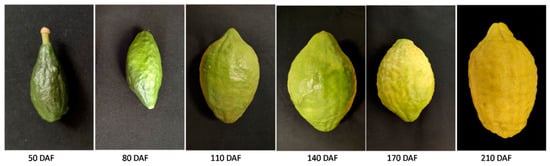
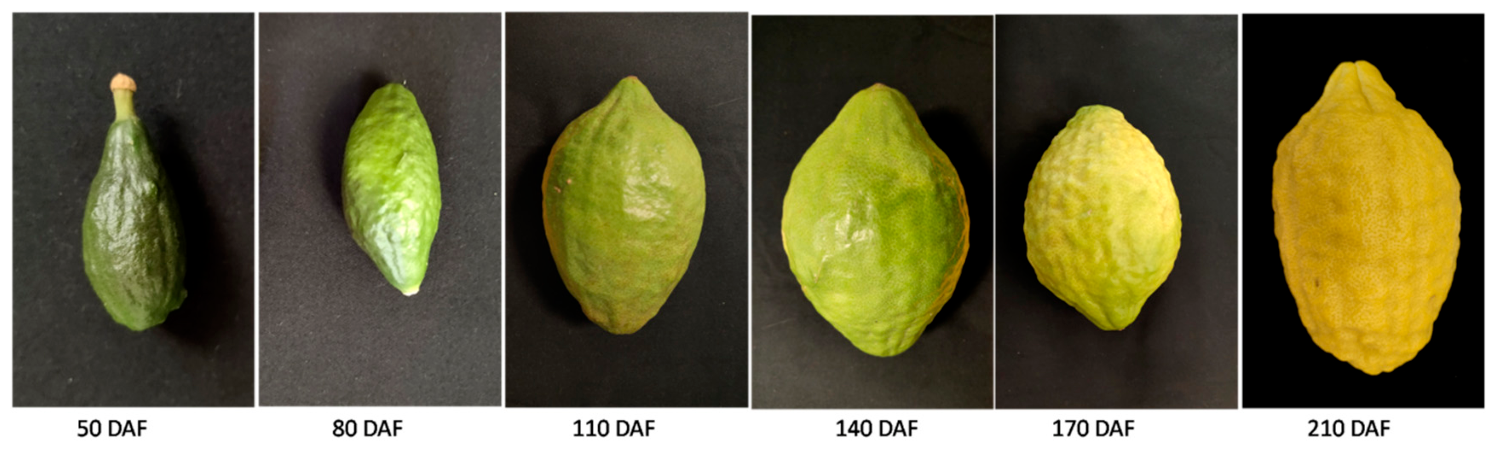
Citron ‘Xiaoxiangyuan’ plants with uniform tree vigor and without diseases and pests were grown in an open field in Puding Village, Fengzhou Town, Nan’an City, Fujian Province (25°19′14.62″ N, 118°10′52.14″ E) and received standard horticultural practice treatments such as irrigation, sod cultivation, bagging, and pathogen prevention. The site has a subtropical maritime monsoon climate, with an average annual temperature of between 20.4 °C and 20.9 °C, an average rainfall of approximately 1483 mm, and average annual sunshine hours of approximately 1785–1800 h. Utilizing non-destructive means, citron fruits were harvested at six fruit development stages on 20 May, 20 June, 20 July, 20 August, 20 September, and 20 October in 2024 (50 d, 80 d, 110 d, 140 d, 170 d and 210 d after flowering, Figure 1). After harvest, the citron fruits were immediately washed using sterile water. Flavedo samples were separated using a vegetable peeler and were immediately frozen in liquid nitrogen and stored at −80 °C until analysis. According to the fruit development stages, all flavedo samples were numbered as 1-F, 2-F, 3-F, 4-F, 5-F, and 6-F, where F meant flavedo. In all cases, there were three biological replicates for each sampling time, and each biological replicate was mixed from at least five fruits.
Figure 1.
Fruit of citron at six fruit developmental stages. DAF: days after flowering.
2.2. Widely Targeted Metabolomics Analysis
2.2.1. Sample Treatment
The flavedo samples were dried by a freeze dryer (Scientz-100F, Ningbo Scientz Biotechnology Co., Ltd., Ningbo, China) and ground into powder by a grinder (MM 400, Retsch GmnH, Haan, Germany; at 30 Hz for 1.5 min). The sample powder (50.00 mg) was mixed 1200.00 μL of a −20 °C pre-cooled 70% methanol aqueous solution and vortexed six times with intervals of 30 min. The vortex was conducted for 30 s each time. Then, the sample powder was centrifuged at 12,000 rpm for 3 min. The supernatant was collected, filtered using a 0.22 μm microporous filter membrane, and transferred to the injection vials for UPLC-MS/MS analysis [34].
2.2.2. UPLC Conditions and ESI-Q TRAP-MS/MS
All extracts were analyzed using an Agilent SB-C18 (1.8 μm, 2.1 mm × 100 mm) column using a UPLC system (ExionLC™ AD, SCIEX, Framingham, MA, USA). The analytical parameters were as follows [34]:
Mobile phases A: ultrapure water containing 0.1% formic acid;
Mobile phase B: acetonitrile containing 0.1% formic acid;
Gradient elution: 0.00 min A-phase proportion of 95%, B-phase proportion of 5%, within 9.00 min the proportion of A-phase linearly decreased to 5%, the B-phase proportion linearly increased to 95% in 9.00 min and maintained for 1 min and 10.00–11.10 min, the proportion of phase A increased to 95%, and the proportion of phase B decreased to 5% and equilibrated to 14 min;
Flow rate: 0.35 mL/min;
Column temperature: 40 °C; and
Injection volume: 2.00 μL.
2.2.3. ESI-Q TRAP-MS/MS
The triple quadrupole linear ion trap mass spectrometer (Q TRAP) API 4500 Q TRAPUHPLC/MS/MS System was equipped with an ESI Turbo ion-spray interface, which can be run in both positive and negative ion modes using Analyst 1.6.3 software (AB Sciex, Framingham, MA, USA). The ESI source operation parameters were as follows [34]:
Ion source: turbo spray;
Source temperature: 550 °C;
Ion spray voltage (IS): 5500 V (positive ion mode)/−4500 V (negative ion mode);
Ion source: gas I (GSI), gas II (GSII), and curtain gas (CUR), which were set at 50, 60, and 25 psi, respectively; and
The collision-activated dissociation (CAD): high.
QQQ scans were acquired as MRM experiments with collision gas (nitrogen) set to medium. DP (declustering potential) and CE (collision energy) for the individual MRM transitions were completed with further DP and CE optimization. A specific set of MRM transitions were monitored for each period according to the metabolites eluted within that period.
2.2.4. Qualitative and Quantitative Analysis of Metabolites
All metabolite data were based on the self-built database MWDB (MetWare Biological Science and Technology Co., Ltd., Wuhan, China). Primary and secondary mass spectrometry data were analyzed qualitatively. During the data analysis, repetitive signals made up of NH4+, Na+, and K+, as well as isotope signals and fragments of other compounds with a higher molecular weight, were eliminated [35]. Utilizing triple quadrupole mass spectrometry, metabolites were analyzed quantitatively using the multiple-reaction-monitoring (MRM) mode. In the MRM mode, QQQs were used to select single-fragment ions with the desired characteristics. All chromatographic peaks were submitted to area integration and correction by MultiQuantv 3.0.2 (AB Sciex, Concord, ON, Canada) after the metabolite mass spectrometry data were collected for each sample. Chromatographic peak area integrals were expressed the corresponding relative metabolite contents [36,37].
For metabolite identification, three confidence levels were applied according to spectral match scores and fragment numbers: Level 1 (score > 0.7, at least 3 matched fragment ions), Level 2 (score 0.5–0.7, at least 2 matched fragment ions), and Level 3 (consistent Q1, Q3, RT, DP, and CE with database entries). We compared all data on a certain feature in the sample (RT, MS1, and MS/MS) with the data of standard samples in the database. Only when all key parameters matched could it be confirmed that the metabolite had been validated to the true standard. The criteria used for accepting the identifications depended on the confidence levels. A metabolite identified as ‘Level 1’ meant that it had been confirmed as a genuine standard, a metabolite identified as ‘Level 2’ meant that it was a putatively annotated compound, and a metabolite identified as ‘Level 3’ meant that it was a putatively characterized compound class [38].
2.2.5. Multivariate Statistical Analysis
To gain a preliminary understanding of the overall metabolite differences between groups of samples, unsupervised PCA (principal component analysis) was performed by the statistics function prcomp within R (base package 3.5.1). PLS-DA and OPLS-DA models were performed on each comparative group to determine the differential metabolite model within R (MetaboAnalystR 1.0.1). Upset plots were used to analyze intersections of differential metabolites between the groups. For studying the accumulation trends of the metabolites, hierarchical cluster analysis was carried out by the R package ComplexHeatmap. Pearson correlation coefficients between differential metabolites were calculated by the cor function in R. Differential metabolites were annotated using the Kyoto Encyclopedia of Genes and Genomes (KEGG) compound database (http://www.kegg.jp/kegg/compound/; accessed on 14 May 2025). Annotated metabolites were then mapped to the KEGG Pathway database (http://www.kegg.jp/kegg/pathway.html, accessed on 14 May 2024).
3. Results
3.1. Composition and Classification of Terpenoid Metabolites in Citron Flavedo
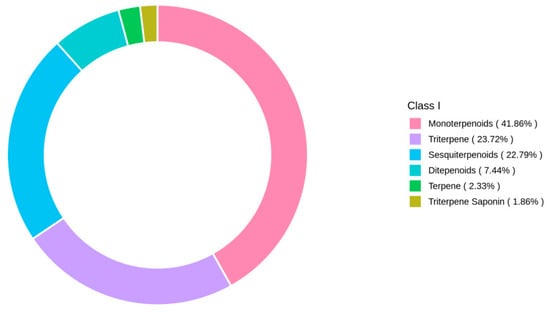
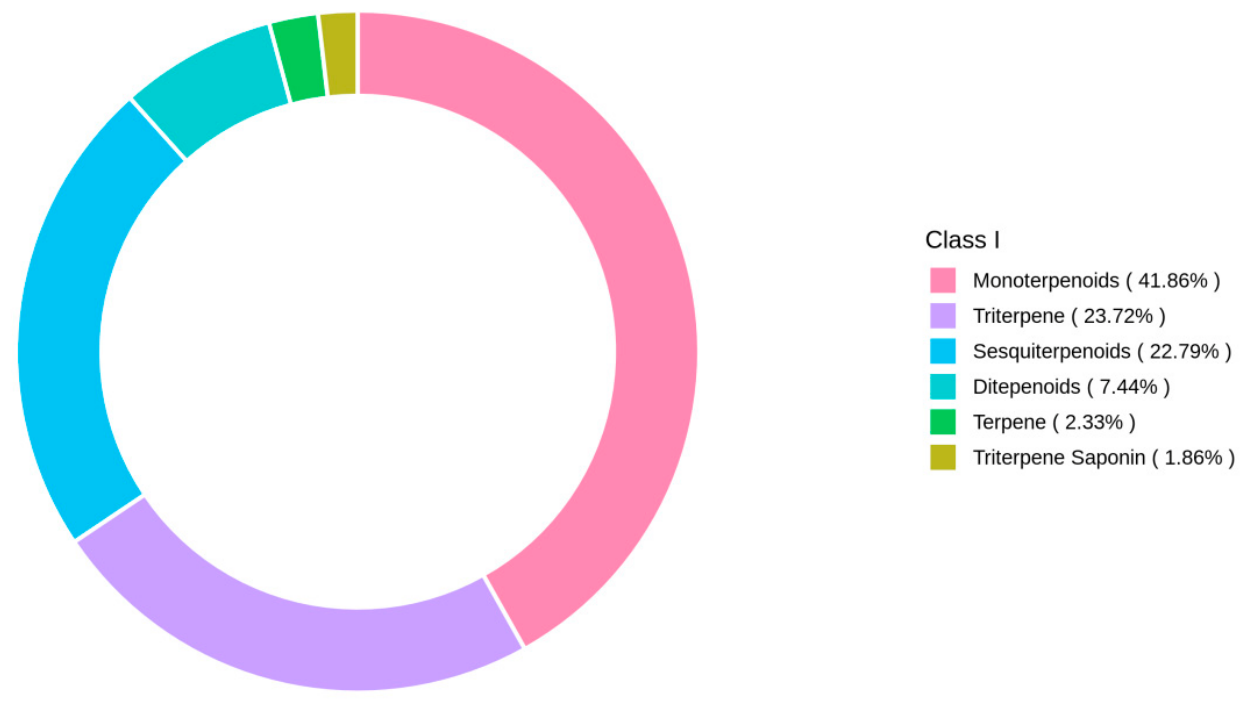
A total of 215 terpenoid metabolites were identified from citron flavedo at six fruit development stages, including 90 monoterpenes, 51 triterpenes, 49 sesquiterpenes, 16 diterpenes, 4 triterpenoid saponins, and 5 other terpenes. The results indicated that monoterpenes and triterpenes had the highest relative contents of 41.86% and 23.72%, respectively (Figure 2).
Figure 2.
Class and number of terpenoid metabolites in citron flavedo.
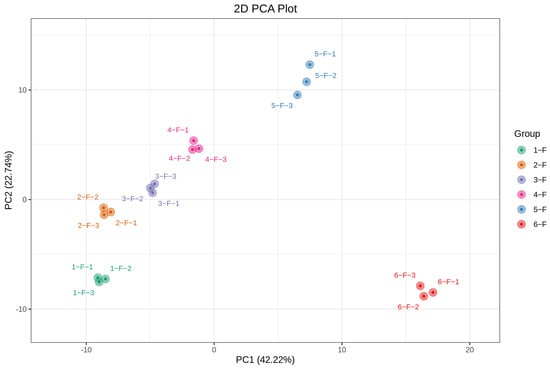
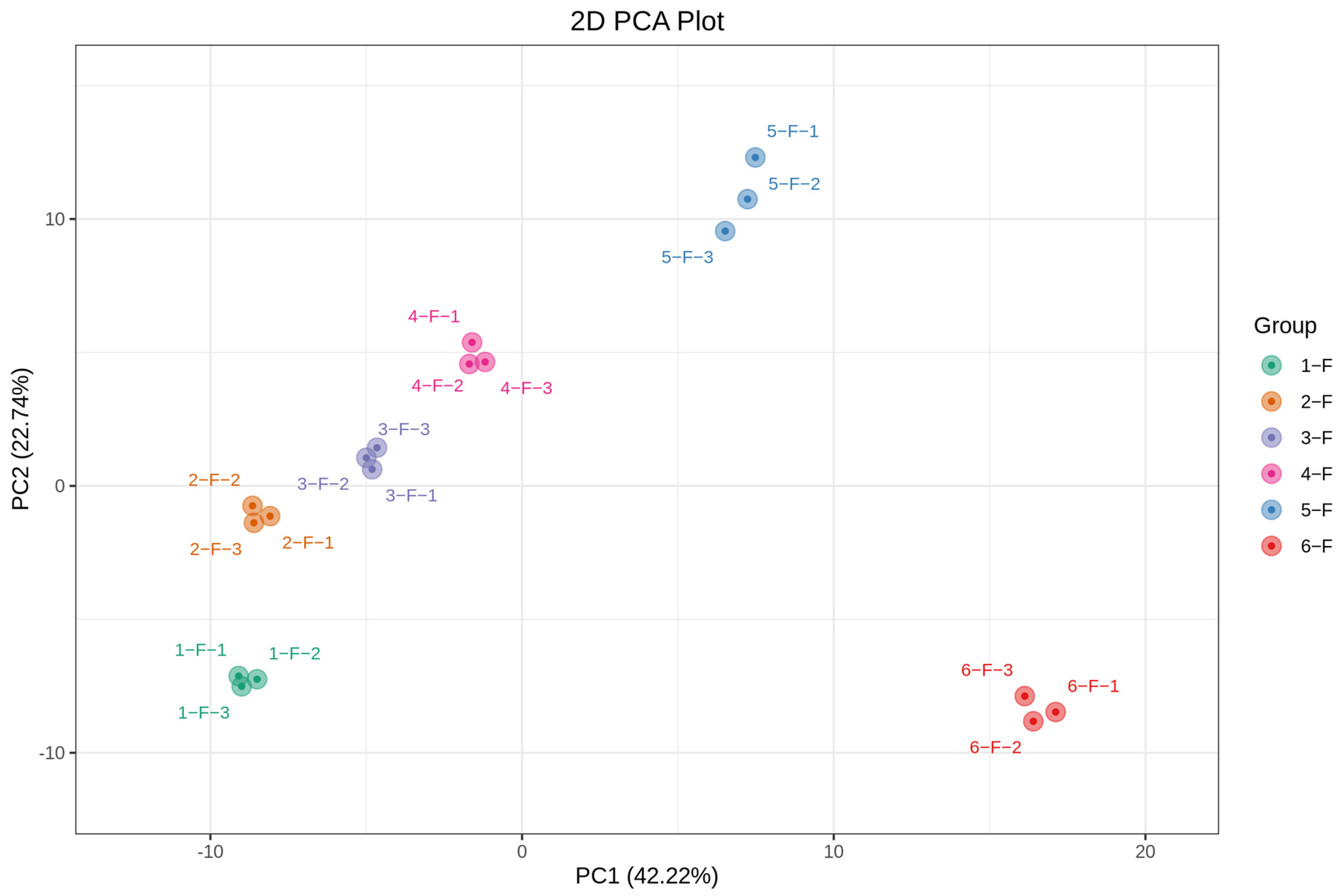
As shown in Figure 3, three biological replicates in each of the same development stages clustered closely, indicating high reproducibility. Six fruit development stages were obviously separated, indicating significant differences in their overall profiles.
Figure 3.
Principal component analysis (PCA) score plot of the samples.
3.2. Selection of Analysis Models for Differential Metabolites
To screen for differential terpenoid metabolites in citron flavedo at different developmental stages, PLS-DA and OPLS-DA models were applied to each sample group. The fitting and validation parameters of each comparison group model are shown in Table 1. The results indicated that all comparison groups had high R2X (cum), R2Y (cum), and Q2 (cum), demonstrating that the PLS-DA and OPLS-DA models could explain and predict metabolic differences between samples. Compared to the PLS-DA model, the OPLS-DA model had advantages in discriminating differences between groups and removing irrelevant variations. Therefore, subsequent screening of differential terpenoid metabolites was performed based on the OPLS-DA model, combined with VIP > 1, |Log 2(Fold Change)| ≥ 1, and p < 0.05 as the screen criteria.
Table 1.
Evaluation parameters of the PLS-DA and OPLS-DA models for each comparison group of citron flavedo at different developmental stages.
3.3. Screening of Differential Terpenoid Metabolites at Different Fruit Development Stages
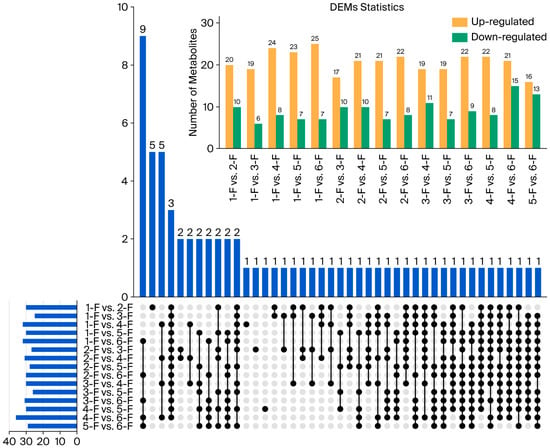
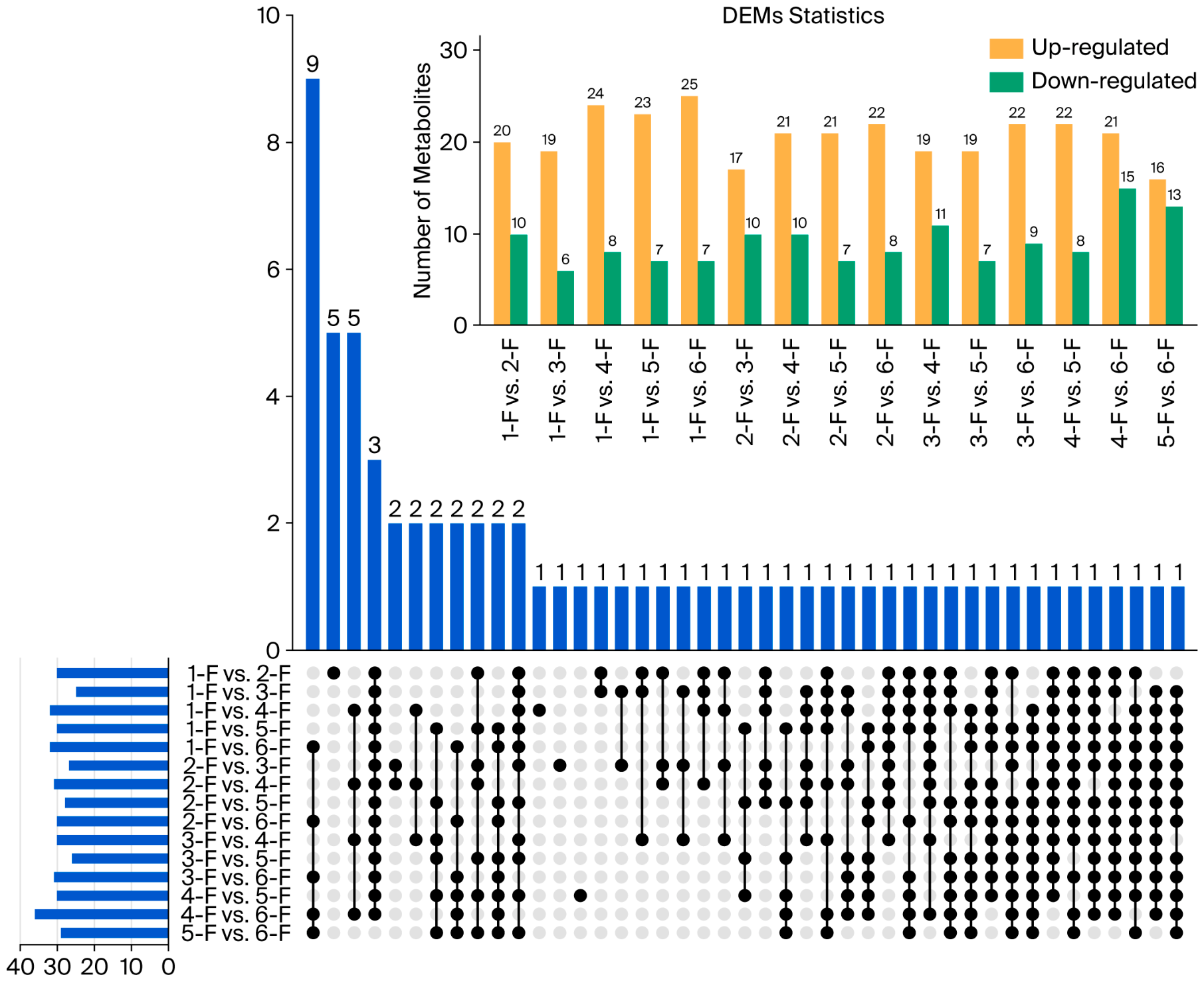
A total of 67 differential terpenoid metabolites were identified in citron flavedo across different developmental stages based on the OPLS-DA model. As shown in Figure 4, the number of upregulated terpenoid metabolites in each comparison group exceeded that of the downregulated metabolites, indicating that most of these terpenoid metabolites would accumulate in citron flavedo with the development of fruit. The largest number of differential terpenoid metabolites was 36 in the 4-F vs. 6-F comparison group, and the second largest was 32 in both the 1-F vs. 4-F and 1-F vs. 6-F comparison groups, suggesting that 4-F and 6-F were the stages when the most significant difference in terpenoid metabolism was present. Specific differential metabolites were also identified in certain comparison groups: five were unique to 1-F vs. 2-F, while one each was specific to 1-F vs. 4-F, 2-F vs. 3-F, and 4-F vs. 5-F. Furthermore, nine common differential terpenoid metabolites were detected across the comparison groups involving 6-F (1-F vs. 6-F, 2-F vs. 6-F, 3-F vs. 6-F, 4-F vs. 6-F, and 5-F vs. 6-F), indicating that the 6-F stage exhibited the greatest diversity in terpenoid types. No common differential terpenoid metabolites were found in all development stages, indicating that terpenoid metabolism in citron flavedo had obvious development stage differences.
Figure 4.
Statistics and intersections of differential terpenoid metabolites in citron flavedo at different developmental stages.
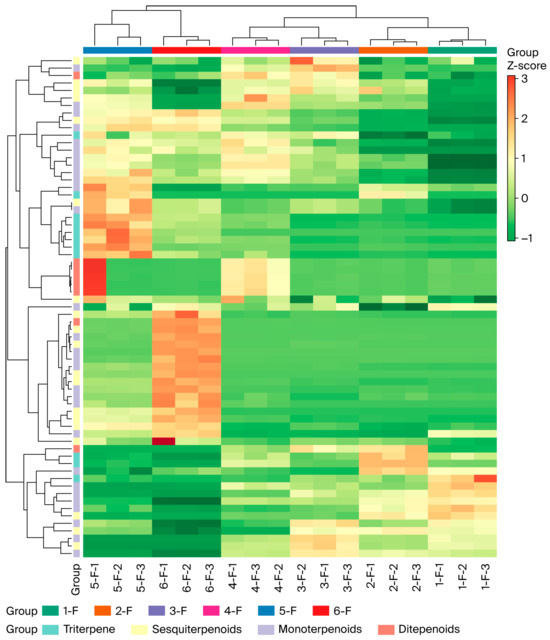
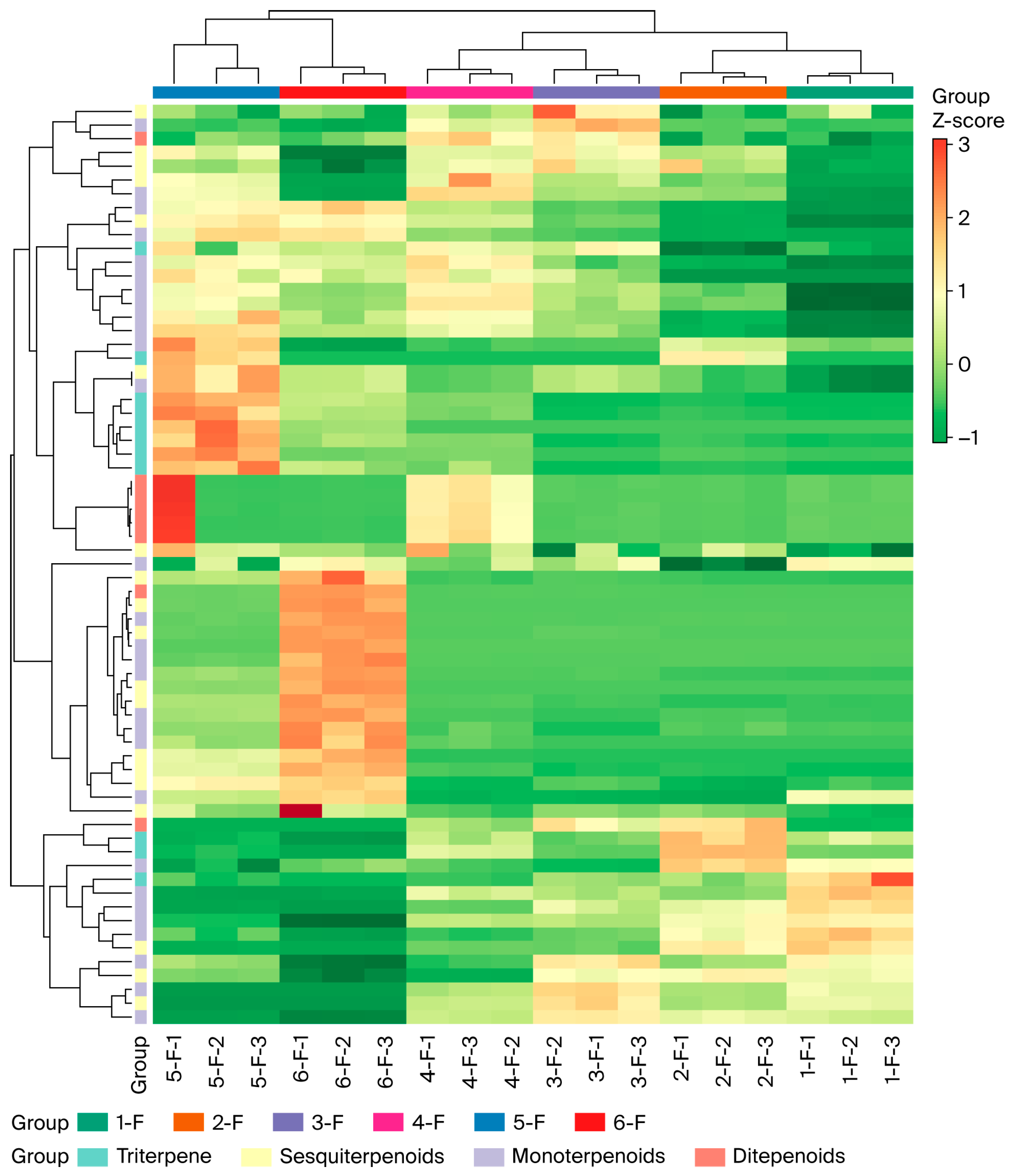
3.4. Cluster Analysis of Differential Terpenoid Metabolites of Citron Flavedo
The clustering heatmap of differential terpenoid metabolites in the citron flavedo at six development stages is presented in Figure 5. Samples were categorized into six groups corresponding to six fruit development stages. The differential terpenoid metabolites were primarily included in monoterpenes, diterpenes, triterpenes, and sesquiterpenes. Distinct metabolite classes exhibited significant stage-specific accumulation patterns during fruit development. The content of terpenoids at the 5-F stage was higher than that at other stages, with monoterpenes, diterpenes, and triterpenes being the major contributors. Citron flavedo at the 6-F stage had the second highest content of terpenoids, primarily consisting of monoterpenes and sesquiterpenes. As shown in Table 2 and Figure 5, the relative content of bitter-tasting triterpenoid metabolites such as limonin, nomilin, obacunone, nomilinic acid, and obacunonic acid were generally elevated at the 5-F stage. These metabolites were upregulated relative to the pre-5-F stages but downregulated at the 6-F stage, indicating that the 5-F stage represented a critical period for the accumulation of bitter triterpenoid metabolites in citron flavedo.
Figure 5.
Clustering heatmap of differential terpenoid metabolites in citron flavedo.
Table 2.
Log2 fold change values of differential triterpenoid metabolites among the comparison groups of citron flavedo.
3.5. Annotation and Enrichment Analysis of KEGG for Differential Terpenoid Metabolites
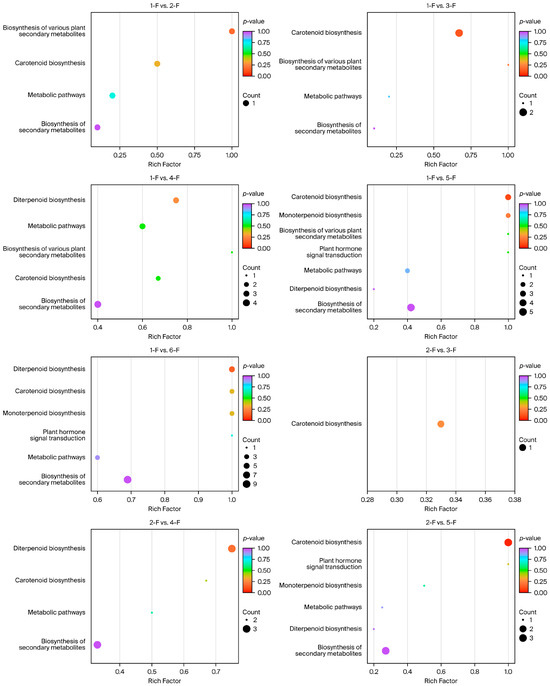
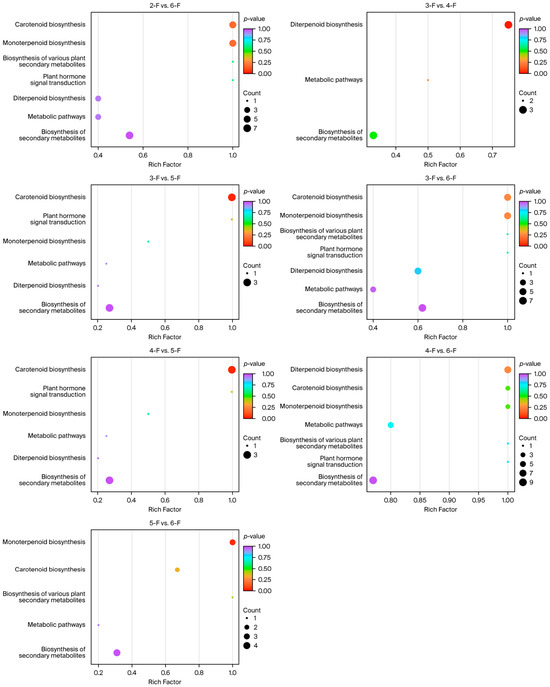
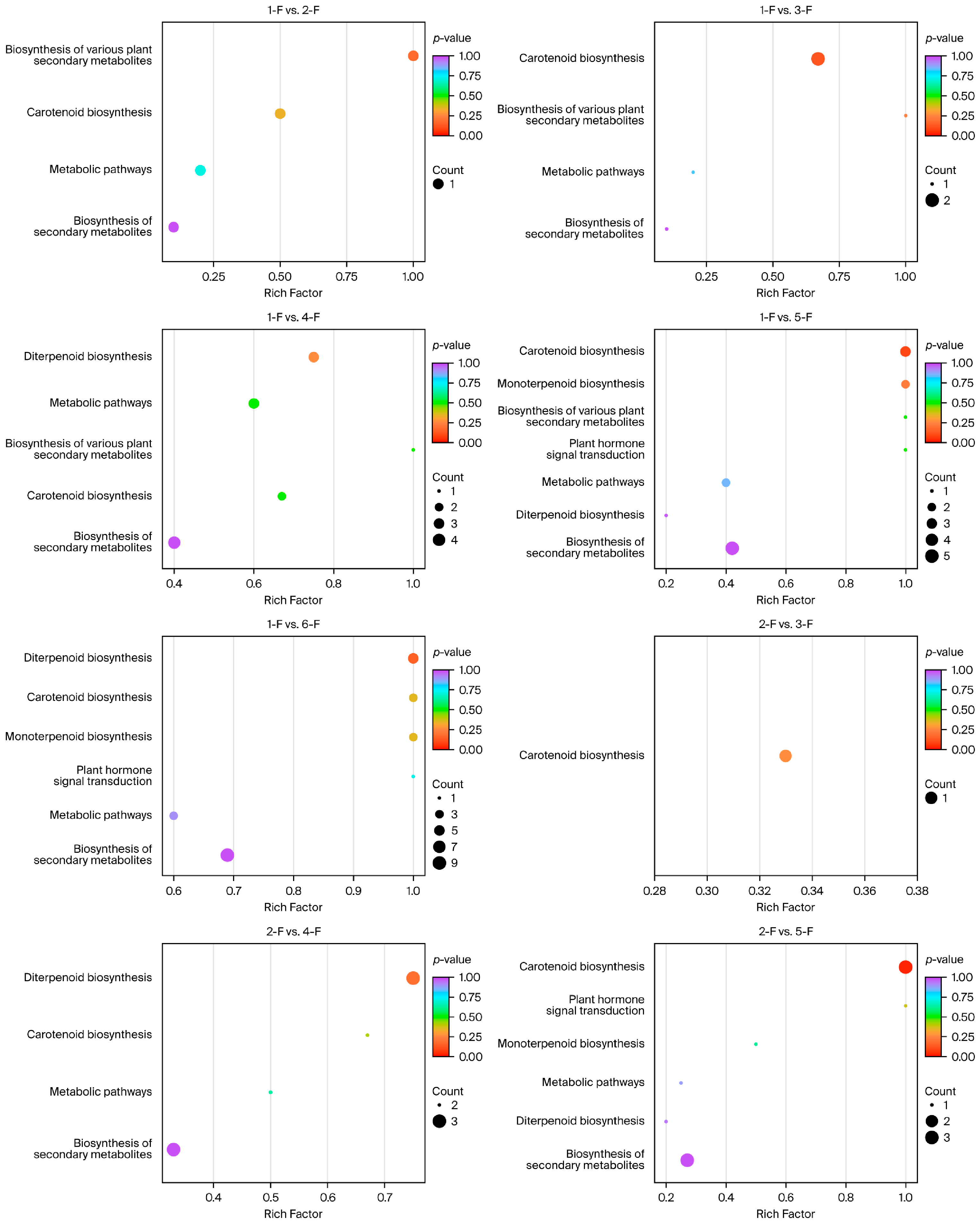
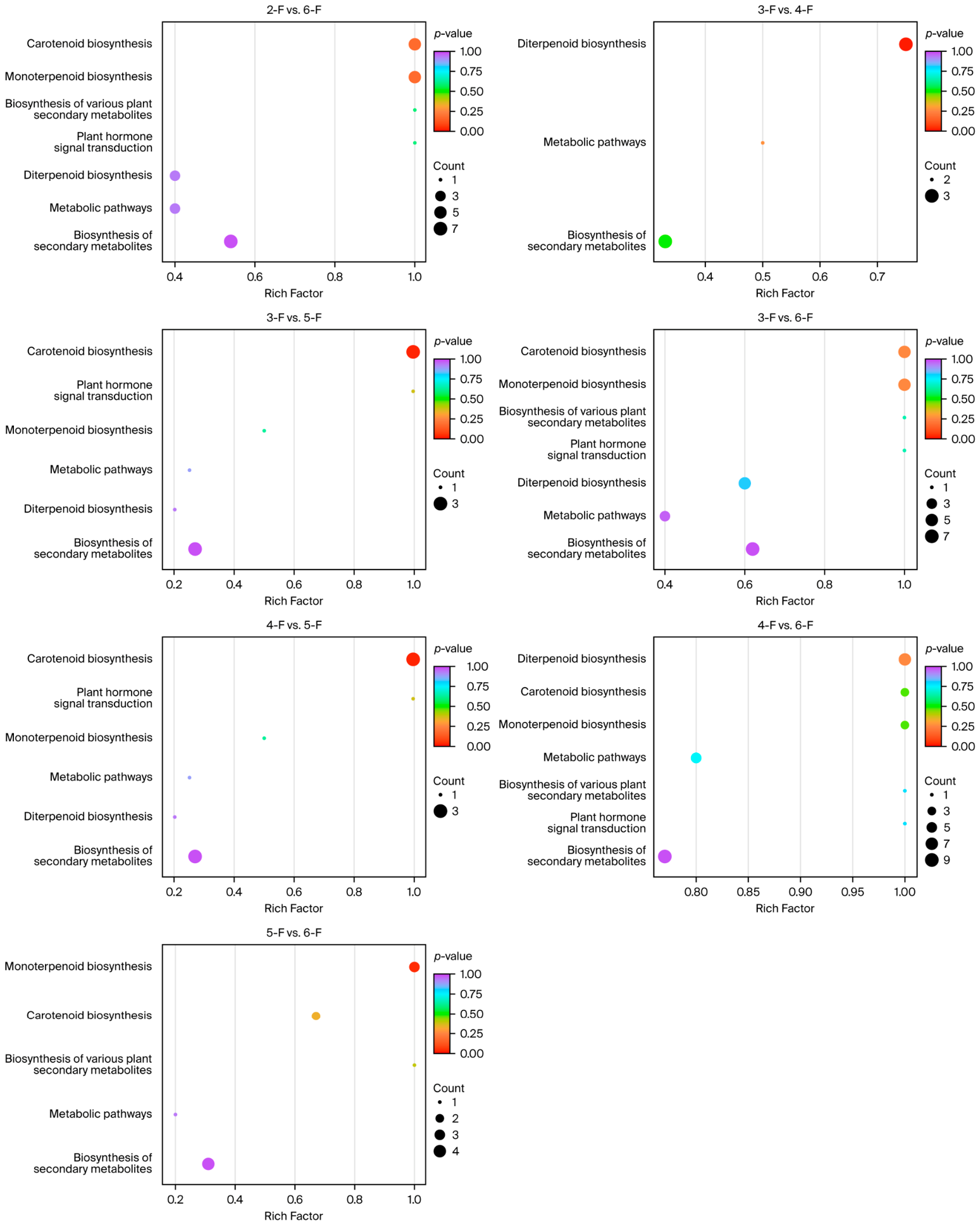
The KEGG pathway enrichment results are presented in Figure 6. The differential metabolites were involved in seven pathways. Based on the numbers of differential metabolites, these pathways were ranked as follows: biosynthesis of secondary metabolites (14), carotenoid biosynthesis (14), metabolic pathways (14), diterpenoid biosynthesis (11), biosynthesis of various plant secondary metabolites (8), and monoterpenoid biosynthesis (9), as well as plant hormone signal transduction (8). The pathways with p < 0.05 included the biosynthesis of secondary metabolites and metabolic pathways across multiple comparison groups, specifically, 1-F vs. 2F, 1-F vs. 4-F, 1-F vs. 6-F, 2-F vs. 4-F, 3-F vs. 5-F, 4-F vs. 5-F, and 5-F vs. 6-F. Collectively, these results indicated that the biosynthesis of secondary metabolites and metabolic pathways represented the most prominent KEGG pathways associated with the observed differential metabolites.
Figure 6.
KEGG enrichment of differential metabolites between the development stages of citron flavedo.
3.6. Limonoid Metabolites in Citron Flavedo
Based on the metabolic analysis, 11 limonoid metabolites were identified in the citron flavedo (Table 3). Among these metabolites, triterpenes were the main ones. Limonin, nomilin, obacunone, nomilinic acid, and obacunonic acid exhibited notable dynamic changes. Specifically, limonin and nomilin displayed significant upregulation from the 4-F stage, whereas obacunone, nomilinic acid, and obacunonic acid showed significant upregulation from the 5-F stage. These distinct changes demonstrated that the content of bitter triterpenoid metabolites peaked at the 5-F stage. Notably, no biosynthetic pathways associated with limonin, nomilin, obacunone, nomilinic acid, and obacunonic acid were retrieved within the KEGG database.
Table 3.
Differential change patterns of the limonoid metabolites among the comparison groups in citron flavedo.
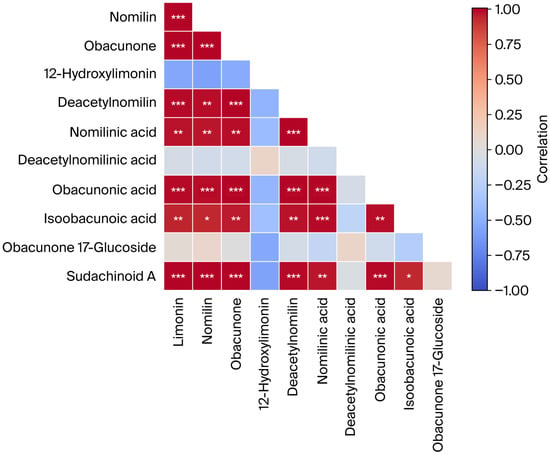
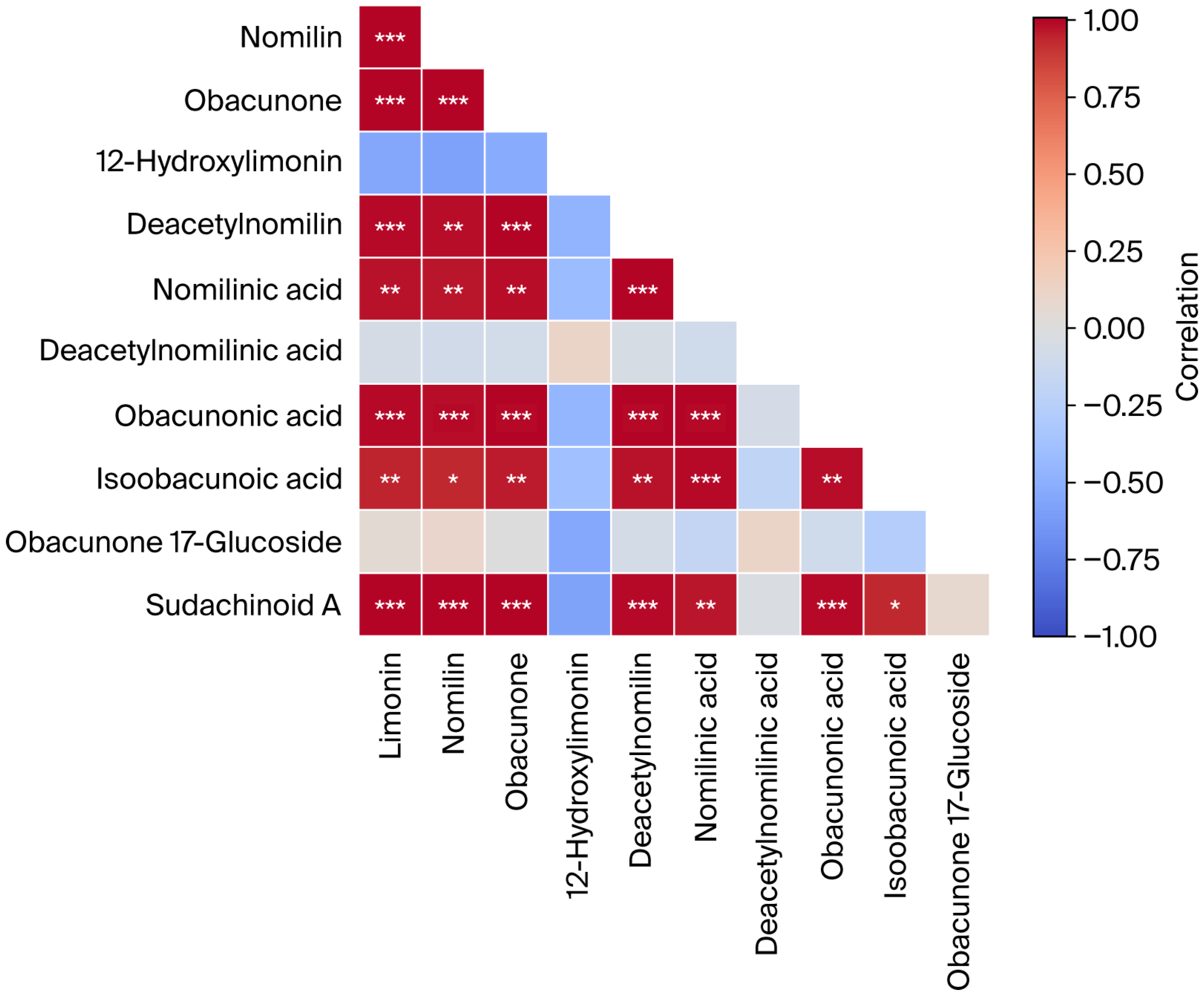
The Pearson correlation analysis revealed significant or highly significant correlations among most of limonoid metabolites (Figure 7). Nomilin exhibited strong positive correlations with obacunone, deacetylnomilin, nomilinic acid, and obacunonic acid, indicating that the changes in these metabolites followed a similar accumulation trend. Meanwhile, 12-Hydroxylimonin showed negative correlations with most of these metabolites. Notably, obacunone 17-Glucosideshowed only weak correlations with most of these metabolites.
Figure 7.
Heatmap of the Pearson correlation analysis among the limonoid metabolites in citron flavedo. Note: *, **, and *** indicate difference significance at p < 0.05, p < 0.01, and p < 0.001, respectively.
4. Discussion
To date, studies on citron terpenoids have primarily focused on volatile compounds [37,39,40,41]. Previous research has shown that the volatile components of citron comprise terpenoids, alcohols, aldehydes, esters, ketones, phenols, ethers, etc. However, systematic investigations into non-volatile citrus terpenoids remain limited. In this study, we conducted the first comprehensive analysis of terpenoids in citron flavedo using widely targeted metabolomics. The results showed that 215 terpenoids were identified, with monoterpenes and triterpenes emerging as the main components, accounting for 41.86% and 23.72% of the total terpenoids, respectively. These findings provide a foundation for future research on citron terpenoids and support the development and utilization of the medicinal properties of citron.
Our results demonstrated that most of these terpenoid metabolites accumulated in citron flavedo during fruit development and that terpenoid metabolism exhibited distinct stage-specific variations. This stage-dependent accumulation pattern is consistent with the findings of Nadi et al. [42] regarding citrus fruit metabolism. Specifically, the 4-F and 6-F stages represented stages with the most significant alterations in terpenoid metabolism, while the 6-F stage was characterized by a particularly rich diversity of terpenoid types, and the 5-F stage corresponded to the peak terpenoid content. As shown in Figure 1, fruit coloration commenced at the 4-F stage. Therefore, future studies on terpenoids in citron flavedo should focus closely on the onset of fruit coloration.
Limonoids are important triterpenoid compounds in citrus and are one of the main sources causing the bitterness of citrus fruits [43]. Using liquid chromatography, Cai et al. [25,26] analyzed citron fruits collected from Kagoshima, Japan, demonstrating that nomilin was the predominant limonoid in the flavedo, flesh, and segment membrane, followed by limonin. Based on silica gel liquid chromatography, Dong et al. [44] investigated the chemical composition of citron fruit in Yuxi, Yunnan and found four types of limonoid, and they identified four limonoids: limonin, nomilin, obacunone, and isoobacunoic acid. Zhao et al. [45] used thin-layer chromatography and high-performance liquid chromatography to analyze mature fruits of citron from Guangdong, Guangxi, and other regions, reporting that nomilin was the predominant terpenoid component. Lin et al. [46] investigated limonoids in the peel and pulp of 11 citrus varieties including Aishaju, Mantouhong, American tangerine, Changshanhuyou, Haruka, Cocktail Grapefruit, Tian tangelo, Himekoharu, Hongmeiren, Yura, and Ponkan, and they detected ferulic acid, b-cryptoxanthin, and limonin. However, these previous findings differed from the results of our study, in which 11 limonoid metabolites were identified in citron flavedo. The secondary metabolites were genetically controlled and tied to the genetic background [47]. Among these 11 metabolites, limonin, nomilin, nomilinic acid, obacunone, and obacunonic acid represented the major differential metabolites. Notably, this is the first report of nomilinic acid in citron. Furthermore, both the production area and the specific fruit parts analyzed likely influenced the limonoid profiles.
The relative contents of bitter triterpenoid metabolites—specifically, limonin, nomilin, obacunone, nomilinic acid, and obacunonic acid—peaked at the 5-F stage and subsequently declined at the 6-F stage. This accumulation pattern aligned with the limonoid accumulation trends observed by Kikuchi et al. [48] in Satsuma mandarin and navel oranges, as well as with the study by Liu et al. [49], who reported a decline in certain limonoids during the late ripening stages of pomelo fruits. Limonoid accumulation pattern was related to the physiology development of fruit [50]. In the 1-F stage to the 4-F stage, limonoid accumulation increased with the increase in citron fruit size, being related to self-defense and resistance of young fruit [51]. In the 5-F stage, limonoid accumulation peaked. In the 6-F stage, limonoid accumulation declined, being caused by squalene synthase (SQS), squalene epoxidase (SQE), and oxidosqualene cyclases (OSCs) [52]. These findings provide a scientific basis for selecting optimal fruit developmental stages for the study of limonoids with medicinal value. Furthermore, determining the absolute concentrations of limonoids is essential for mitigating fruit bitterness and for the development and utilization of the medicinal properties of citron limonoids.
Peña et al. [53] used systematic transcriptome and genome mining to identify 22 enzymes catalyzing 12 distinct reactions from Citrus sinensis and Melia azedarach. We observed that no biosynthetic pathways associated with limonin, nomilin, obacunone, nomilinic acid, and obacunonic acid were retrieved within the KEGG database. This absence is likely attributable to the fact that these compounds are classified as secondary metabolites, and the KEGG database currently exhibits incomplete coverage of such specialized metabolic pathways coupled with relatively slow updates. Consequently, we plan to deposit information regarding these limonoids into the KEGG database in future studies. We attempted to identify relevant metabolic pathways within the MetaCyc and PlantCyc databases; however, no corresponding entries were retrieved. The solutions for the future are proposed as follows: utilizing network pharmacology approaches to predict the potential targets of these metabolites and elucidate their pharmacological mechanisms via target protein interactions; and integrating transcriptomic and metabolomic data to correlate differentially expressed genes with metabolites, thereby constructing gene–metabolite co-expression networks.
The correlation analysis demonstrated that nomilin exhibited strongly positive correlations with obacunone, deacetylnomilin, nomilinic acid, obacunoic acid, and obacunonic acid. Hasegawa et al. [54] demonstrated that nomilin was considered an important precursor for limonoid biosynthesis in citrus, and it can further form related components such as limonin and obacunone through a series of enzymatic reactions. Our results confirmed the viewpoints of Hasegawa et al. [54].
Widely targeted metabolomics is a relatively targeted approach that may not cover all unknown or low-abundance metabolites. The analysis of data may also have been limited by the existing metabolic databases. In the future, target metabolomics should be applied in an accurate quantitative analysis of limonoids. The sensory evaluation of bitterness in citron should be further conducted to explain the relationship between limonoids and bitterness. A precursor biosynthesis mechanism for limonoids in citron needs to be studied. As tetraterpenoids, carotenoids act as crucial pigmentation agents in citrus. Future studies integrating carotenoid content with color difference parameters and chlorophyll content will be essential for elucidating the mechanisms underlying pericarp coloration in citron.
5. Conclusions
In this study, we conducted the first comprehensive analysis of terpenoid metabolite dynamics in citron flavedo at six fruit developmental stages based on a widely targeted metabolomics approach. A total of 215 terpenoid metabolites were detected, with monoterpenes and triterpenes constituting the predominant components. Samples from six fruit developmental stages exhibited distinct metabolic profiles. The number of upregulated metabolites consistently exceeded that of the downregulated ones at the six development stages, with the most pronounced metabolic divergence observed between 140 d and 210 d after flowering. The content of bitterness-related triterpenoid metabolites such as limonin, nomilin, obacunone, nomilinic acid, and obacunoic acid peaked at 170 d after flowering. This study elucidated the stage-specific variations in the terpenoid metabolites of citron flavedo, particularly regarding bitterness-associated limonoids, thereby providing theoretical insights for the regulation of bitterness in citron fruits.
Author Contributions
Conceptualization, Y.Z.; methodology, X.L. and J.H.; software, X.L. and C.W.; validation, H.H. and X.L.; formal analysis, X.L.; investigation, Y.Z., J.H. and S.W.; resources, Y.Z. and H.H.; data curation, C.W.; writing—original draft preparation, Y.Z. and C.W.; writing—review and editing, Y.Z. and C.W.; visualization, X.L.; supervision, H.H.; project administration, H.H.; funding acquisition, Y.Z. All authors have read and agreed to the published version of the manuscript.
Funding
This research was funded by the Fujian Provincial Natural Science Foundation of China, grant number 2022J01473.
Data Availability Statement
The original contributions presented in this study are included in the article. Further inquiries can be directed to the corresponding author.
Conflicts of Interest
The authors declare no conflicts of interest.
References
- Goldschmidt, E.E. New insights in citron (Citrus medica L.) genomics and fruit development. HortScience 2017, 52, 823–826. [Google Scholar] [CrossRef] [Scilit]
- Wei, W.; Qiu, L.J.; Zhang, Z.Y.; Zhou, H.F.; Li, Y.H. Neglected and underutilized plant species: First recommendation list for China. J. Plant Genet. Resour. 2008, 9, 406–410. [Google Scholar] [CrossRef]
- Kumar, V.; Kaur, R.; Aggarwal, P.; Singh, G. Underutilized citrus species: An insight of their nutraceutical potential and importance for the development of functional food. Sci. Hortic. 2022, 296, 110909. [Google Scholar] [CrossRef] [Scilit]
- Mabberley, D.J. The biology of the citron (Citrus medica L., Rutaceae-Aurantioideae-Aurantieae), its hybrids and their allies. In The Citron Compendium: The Citron (Etrog) Citrus medica L.: Science and Tradition; Springer International Publishing: Cham, Switzerland, 2023; pp. 3–40. [Google Scholar]
- Karp, D.; Hu, X.L. The citron (Citrus medica L.) in China. Hortic. Rev. 2018, 45, 143–196. [Google Scholar] [CrossRef] [Scilit]
- Guo, T. Citron in China. South China Fruits 1993, 22, 3–6. [Google Scholar] [CrossRef] [Scilit]
- Liu, H.; Feng, D.; Long, C.; Zhou, X.; Liu, H.; Yang, H.; Du, Y.; Guo, L.; Fu, X.; Ma, Z.; et al. Fruit variation and geographical distribution of citron. China J. Chin. Mater. Medica 2021, 46, 6289–6293. [Google Scholar] [CrossRef] [Scilit]
- Ramakrishna, S.; Nalawalad, H.B. A review on phytochemical characterization and therapeutic applications of Citrus medica. J. Pharma Insights Res. 2025, 3, 268–275. [Google Scholar] [CrossRef] [Scilit]
- Esakkimuthu, S.; Sylvester Darvin, S.; Mutheeswara, N.S.; Gabriel Paulraj, M.; Pandikumar, P.; Ignacimuthu, S.; Al-Dhabi, N.A. A study on food-medicine continuum among the non-institutionally trained siddha practitioners of Tiruvallur district, Tamil Nadu, India. J. Ethnobiol. Ethnomed. 2018, 14, 45. [Google Scholar] [CrossRef] [Scilit] [PubMed]
- Afifi, S.M.; Kabbash, E.M.; Berger, R.G.; Krings, U.; Esatbeyoglu, T. Comparative untargeted metabolic profiling of different parts of Citrus sinensis fruits via liquid chromatography–mass spectrometry coupled with multivariate data analyses to unravel authenticity. Foods 2023, 12, 579. [Google Scholar] [CrossRef] [Scilit] [PubMed]
- Hosseini, S.S.; Khodaiyan, F.; Yarmand, M.S. Optimization of microwave assisted extraction of pectin from sour orange peel and its physicochemical properties. Carbohydr. Polym. 2016, 140, 59–65. [Google Scholar] [CrossRef] [Scilit] [PubMed]
- Choi, I.S.; Kim, J.H.; Wi, S.G.; Kim, K.H.; Bae, H.J. Bioethanol production from mandarin (Citrus unshiu) peel waste using popping pretreatment. Appl. Energy 2013, 102, 204–210. [Google Scholar] [CrossRef] [Scilit]
- Saini, R.K.; Ranjit, A.; Sharma, K.; Prasad, P.; Shang, X.; Gowda, K.G.M.; Keum, Y.S. Bioactive compounds of citrus fruits: A review of composition and health benefits of carotenoids, flavonoids, limonoids, and terpenes. Antioxidants 2022, 11, 239. [Google Scholar] [CrossRef] [Scilit] [PubMed]
- Lu, D.; Yang, X.; Zhang, H.; Mo, Z.; Zhu, F.; Zhang, Z.; Peng, L. Application of Citri Fructus in food industry: Current status and prospect. Food Sci. Technol. 2025, 50, 62–68. [Google Scholar] [CrossRef]
- Luo, J.; Zhong, W.; Xiong, Y.; Wang, J. Analysis of non-polar low-molecular metabolites in citron (Citrus medica L.) peel essential oil at different developmental stages and a combined study of transcriptomics revealed genes related to the synthesis regulation of the monoterpenoid compound nerol. Int. J. Mol. Sci. 2025, 26, 9034. [Google Scholar] [CrossRef] [Scilit] [PubMed]
- Süfer, Ö.; Karabacak, A.Ö.; Güneşli, A. Investigation about the potential of citron, sweet lemon, and sweet orange peels as herbal tea. J. Food Compos. Anal. 2026, 149, 108826. [Google Scholar] [CrossRef] [Scilit]
- Zheng, X.; Ren, J.; Wu, Y.; Mu, J.; Ma, F.; Fu, J.; Fan, Y.; Meng, X. Advances in terpenoid research: Extraction, identification, biological activities, and molecular targets. Food Sci. 2025, 46, 387–400. [Google Scholar] [CrossRef]
- Sun, T.; Rao, S.; Zhou, X.; Li, L. Plant carotenoids: Recent advances and future perspectives. Mol. Hortic. 2022, 2, 3. [Google Scholar] [CrossRef] [Scilit] [PubMed]
- Wen, H.; Zhang, S.; Liu, Y.; Hu, Z.; Zhu, C.; Zeng, J.; Song, Z.; Chen, J.; Xu, J. Screening universal stress-response terpenoids and their biosynthetic genes via volatile and transcriptomic profiling in citrus. J. Agric. Food Chem. 2023, 72, 351–362. [Google Scholar] [CrossRef] [Scilit] [PubMed]
- Li, C.; Li, X.; Sun, H.; Liang, G.; Xiang, S.; Han, G. Research progress on biosynthesis of terpenoid pigments and volatile compounds in citrus fruits. Jiangsu Agric. Sci. 2021, 49, 20–28. [Google Scholar] [CrossRef]
- Dosoky, N.S.; Setzer, W.N. Biological Activities and Safety of Citrus spp. Essential Oils. Int. J. Mol. Sci. 2018, 19, 1966. [Google Scholar] [CrossRef] [Scilit] [PubMed]
- Mai, D.S.; Chen, C.X.; Cao, J.M.; Chen, Y.C.; Liang, T.T.; Zhao, Z.X.; Yang, W.Q. A new limonoid from the fruits of Citrus medica var. sarcodactylus (Siebold ex Hoola van Nooten) Swingle. Nat. Prod. Res. 2025, 39, 1–9. [Google Scholar] [CrossRef] [Scilit] [PubMed]
- Elshahat, A.; Gobena, A.A.; Marey, S.A.; Liu, H.; Luo, Y.; Elatafi, E.; Elhendawy, B.; Alam, S.M.; Tahir, R.; Abdelsalam, M.A.; et al. Green and red nets showed opposite influence on carotenoid accumulation in citrus by differential regulation of CitPSY and CitCCD4 gene expression. Plant Physiol. Biochem. 2026, 232, 111100. [Google Scholar] [CrossRef] [Scilit] [PubMed]
- Imahori, D.; Muraoka, T.; Ohta, T.; Yoshida, T.; Tanaka, H. Three new terpenoids from the fruit peels of Citrus Hassaku Yu. Tanaka. J. Nat. Med. 2026, 80, 230–239. [Google Scholar] [CrossRef] [Scilit] [PubMed]
- Cai, H.; Hashinaga, F. The prospect and current studies on the limonoids in citrus. Acta Bot. Sin. 1996, 38, 328–336. [Google Scholar]
- Cai, H.; Kharel, G.P.; Hashinaga, F. Changes in the limonoid content during development of citrus fruit (Citrus medica L.). J. Jpn. Soc. Hortic. Sci. 1993, 62, 215–220. [Google Scholar] [CrossRef] [Scilit]
- Wang, J.H.; Liao, L.M.; Wang, B.; Huang, D.M. Study on the extraction of the limonin in the navel orange peel by aqueous two-phase system and the color. Food Res. Dev. 2016, 37, 48–51. [Google Scholar]
- Yang, Q.M.; Li, J.Y.; Xiao, A.F.; Chen, J. Extraction and purification of naringin and limonoids from pomelo peel. J. Jimei Univ. (Nat. Sci.) 2015, 20, 414–420. [Google Scholar]
- Li, J.; Yan, G.; Duan, X.; Zhang, K.; Zhang, X.; Zhou, Y.; Wu, C.; Zhang, X.; Tan, S.; Hua, X.; et al. Research progress and trends in metabolomics of fruit trees. Front. Plant Sci. 2022, 13, 881856. [Google Scholar] [CrossRef] [Scilit] [PubMed]
- Tsugawa, H.; Arita, M.; Kanazawa, M.; Ogiwara, A.; Bamba, T.; Fukusaki, E. MRMPROBS: A data assessment and metabolite identification tool for large-scale multiple reaction monitoring based widely targeted metabolomics. Anal. Chem. 2013, 85, 5191–5199. [Google Scholar] [CrossRef] [Scilit] [PubMed]
- Chen, X.; Su, W.; Jiang, J.; Jiang, F.; Chen, Y. UPLC-MS/MS identification of terpenoid metabolites in different organs of Eriobotrya japonica. J. Fruit Sci. 2022, 39, 2099–2112. [Google Scholar] [CrossRef]
- Zhang, X.K.; Wu, Y.; Long, X.N.; You, X.X.; Chen, D.; Bi, Y.; He, S.; Cao, G.H. Widely Target-ed Metabolomic analysis reveals the improvement in Panax notoginseng triterpenoids triggered by Arbuscular mycorrhizal Fungi via UPLC–ESI–MS/MS. Molecules 2024, 29, 3235. [Google Scholar] [CrossRef] [Scilit] [PubMed]
- Li, J.; Liu, N.; Han, G. Comparative metabolomics analysis of terpenoid metabolites in root of red beet. Chin. Agric. Sci. Bull. 2024, 40, 137–142. [Google Scholar]
- Wang, M.; Chen, Y.; Li, S.; Yu, J.; Yang, L.; Hong, L. Widely targeted metabolomic analysis provides new insights into the effect of rootstocks on citrus fruit quality. Metabolites 2024, 14, 242. [Google Scholar] [CrossRef] [Scilit] [PubMed]
- Qu, X.J.; Hu, S.Q.; Li, T.; Zhang, J.Q.; Wang, B.S.; Liu, C.L. Metabolomics Analysis Reveals the Differences between Bupleurumchinense DC. and Bupleurum scorzonerifolium Willd. Front. Plant Sci. 2022, 13, 933849. [Google Scholar] [CrossRef] [Scilit]
- Huang, R.; Zhou, Y.; Jin, F.; Zhang, J.; Ji, F.; Bai, Y.; Pei, D. Metabolome and transcriptome profiling unveil the mechanismsof polyphenol synthesis in the developing endopleura of walnut (Juglans regia L.). Int. J. Mol. Sci. 2022, 23, 6623. [Google Scholar] [CrossRef] [Scilit] [PubMed]
- Zhang, Y.; Wang, C.; Zhao, Q.; Chen, A.; Cui, Y.; He, Y.; Li, J. Analysis of differences of physical and chemical quality and volatile components in 22 citron varieties. South China Fruits 2025, 54, 25–33. [Google Scholar] [CrossRef]
- Viant, M.R.; Kurland, I.J.; Jones, M.R.; Dunn, W.B. How close are we to complete annotation of metabolomes? Curr. Opin. Chem. Biol. 2017, 436, 64–69. [Google Scholar] [CrossRef] [Scilit] [PubMed]
- Zhong, W.; Yue, J.; Zhang, B.; Yan, S.; Duan, M.; Shi, W.; Luo, X.; Zhou, X. Analysis of volatile substances in peels of four citron varieties. J. Fruit Sci. 2024, 41, 266–281. [Google Scholar] [CrossRef]
- Zhou, X.Y. Study on the Aroma Evaluation of Citron Resources in Yunnan and Tibet Region of China and the Causes of Lemon Fruit Appearance Defects. Ph.D. Thesis, Huazhong Agricultural University, Wuhan, China, 2020. [Google Scholar] [CrossRef]
- Feng, D.; Liu, S.; Chen, M.; Wang, S.; Xu, M.; Liu, C.; Huang, W.; Wang, M.; Xie, P.; Chai, L.; et al. Volatile content and genetic variation of citron in Tibet and Yunnan. Plant Physiol. 2025, 197, kiae634. [Google Scholar] [CrossRef] [Scilit] [PubMed]
- Nadi, R.; Golein, B.; Gómez-Cadena, S.A.; Arbona, V. Developmental stage and genotype-dependent regulation of specialized metabolite accumulation in fruit tissues of different citrus varieties. Int. J. Mol. Sci. 2019, 20, 1245. [Google Scholar] [CrossRef] [Scilit] [PubMed]
- Zhao, X.; Guan, J.; Tian, X.; Ru, C.; Guo, Z.; Liang, Q.; Zhu, S.; Lu, Z. Research progress on bitter substances in citrus fruits. Food Sci. 2025, 46, 368–377. [Google Scholar] [CrossRef]
- Dong, L.; Liu, X.; Li, Z.; Yin, M.; Qiu, M. Studies on chemical constituents from fruits of Citrus medica L. Fine Chem. 2010, 27, 982–986+1003. [Google Scholar] [CrossRef]
- Zhao, P.; Duan, L.; Guo, L.; Dou, L.L.; Dong, X.; Zhou, P.; Li, P.; Liu, E.H. Chemical and biological comparison of the fruit extracts of Citrus wilsonii Tanaka and Citrus medica L. Food Chem. 2015, 173, 54–60. [Google Scholar] [CrossRef] [Scilit] [PubMed]
- Lin, M.; Xu, C.; Gao, X.; Zhang, W.; Yao, Z.; Wang, T.; Feng, X.; Wang, Y. Comparative study on secondary metabolites from different citrus varieties in the production area of Zhejiang. Front. Nutr. 2023, 10, 1159676. [Google Scholar] [CrossRef] [Scilit] [PubMed]
- Chen, Y.; Pan, H.; Hao, S.; Pan, D.; Wang, G.; Yu, W. Evaluation of phenolic composition and antioxidant properties of different varieties of Chinese citrus. Food Chem. 2021, 364, 130413. [Google Scholar] [CrossRef] [Scilit] [PubMed]
- Kikuchi, T.; Ueno, Y.; Hamada, Y.; Furukawa, C.; Fujimoto, T.; Yamada, T.; Tanaka, R. Five new limonoids from peels of satsuma orange (Citrus reticulata). Molecules 2017, 22, 907. [Google Scholar] [CrossRef] [Scilit] [PubMed]
- Liu, Y.; Zhao, F.; Zhang, Z.; Zhang, Z.; Li, T.; Zhang, H.; Xu, J.; Ye, J.; Deng, X. Structural diversity and distribution of limonoids in pummelo (Citrus grandis) fruit revealed by comprehensive UHPLC-MS/MS analysis. Sci. Hortic. 2021, 282, 109996. [Google Scholar] [CrossRef] [Scilit]
- Li, S.; Wang, Z.; Ding, F.; Sun, D.; Ma, Z.; Cheng, Y.; Xu, J. Content changes of bitter com-pounds in ‘Guoqing No.1’ Satsuma mandarin (Citrus unshiu Marc.) during fruit development of consecutive 3 seasons. Food Chem. 2014, 145, 963–969. [Google Scholar] [CrossRef] [Scilit] [PubMed]
- Li, C.; Zha, W.; Li, W.; Wang, J.; You, A. Advances in the biosynthesis of terpenoids and their ecological functions in plant resistance. Int. J. Mol. Sci. 2023, 24, 11561. [Google Scholar] [CrossRef] [Scilit] [PubMed]
- Zhang, P.; Liu, X.; Yu, X.; Wang, F.; Long, J.; Shen, W.; Jiang, D.; Zhao, X. The MYB transcription factor CiMYB42 regulates limonoids biosynthesis in citrus. BMC Plant Biol. 2020, 20, 254. [Google Scholar] [CrossRef] [Scilit] [PubMed]
- Peña, R.D.L.; Hodgson, H.; Liu, J.C.T.; Stephensond, M.J.; Martine, A.C.; Owenb, C.; Harkessf, A.; Leebens-Mackg, J.; Jimeneza, L.E.; Osbournb, A.; et al. Complex scaffold remodeling in plant triterpene biosynthesis. Science 2023, 379, 361–368. [Google Scholar] [CrossRef] [Scilit] [PubMed]
- Hasegawa, S.; Lam, L.; Miller, E.G. Citrus limonoids, biochemistry and possible importance to human nutrition. Phytochem. Phytopharm. 1999, 1, 79–94. [Google Scholar]

Disclaimer/Publisher’s Note: The statements, opinions and data contained in all publications are solely those of the individual author(s) and contributor(s) and not of MDPI and/or the editor(s). MDPI and/or the editor(s) disclaim responsibility for any injury to people or property resulting from any ideas, methods, instructions or products referred to in the content. |
© 2026 by the authors. Licensee MDPI, Basel, Switzerland. This article is an open access article distributed under the terms and conditions of the Creative Commons Attribution (CC BY) license.