


Abstract
To enrich the breeding resources of Xanthoceras sorbifolium and provide support for its industrialization, we conducted multi-trait comparisons and comprehensive evaluations of 48 elite X. sorbifolium clones with high oil contents and high comprehensive utilization values, based on germplasms preserved at Qiuxian Forest Farm, Handan, Hebei Province, China. The coefficients of variation for quantitative traits were 7.04–74.16%, with variability being greatest in shell and fruit weights. Cluster analysis categorized the 48 germplasms into four distinct groups, with marked inter-group trait differences. Soluble protein, soluble sugar, and starch contents varied significantly among accessions. The average kernel oil content was 60.30%, differences in oil content were validated at the cellular level through microscopic oil body observations. Correlation analysis demonstrated that comprehensive oil content was strongly significantly positively correlated with fruit- and seed-related traits, whereas oil content was strongly significantly negatively correlated with fruit shell thickness and seed coat thickness. Principal component analysis extracted five principal components with a cumulative contribution rate of 72.747%, encapsulating four core information dimensions: fruit and seed size, oil content, protein quality, and energy substances. Membership function analysis, selected germplasms G10, G2, G4, G7, G20, G24, G17, G1, G34, and G5 as optimal accessions. These clones are suitable core breeding materials due to their outstanding performance in terms of nutrient content, geometric characteristics, and fruit and seed weights. Notably, G24, G5, and G17 demonstrated significant advantages in oil quality with high linoleic acid (C18:2), oleic acid (C18:1), and nervonic acid (C24:1) contents, respectively, indicating the excellent potential of X. sorbifolium development for oil production.
1. Introduction
Xanthoceras sorbifolium Bunge is a rare, valuable woody oilseed tree species endemic to northern China, where it grows as a deciduous shrub or small tree and is naturally distributed in regions including Inner Mongolia and Hebei, Henan, Shanxi, Shaanxi, and Gansu provinces [1,2]. It has exceptional tolerance to cold, drought, and poor soil conditions [3], enabling normal growth and development even in harsh environments, and is highly resistant to diseases and insect pests, with significantly lower incidence rates than those of other woody species [4]. X. sorbifolium has a long history of cultivation for various uses [5,6,7]. For example, oil derived from its kernels can help to prevent diseases such as hypertension, hyperlipidemia, and arteriosclerosis, and is also used in biodiesel fuel and various other industrial products [8,9]. Kernel oil contents of up to 60%—and occasionally higher—have been reported [10,11], and it contains a variety of fatty acids, with unsaturated fatty acid (UFA) contents exceeding 95% [12,13,14]. The main fatty acid components of X. sorbifolium kernel oil are linoleic acid (C18:2), which promotes cholesterol metabolism and helps to reduce the risk of cardiovascular diseases such as atherosclerosis [15], and nervonic acid (C24:1), a long-chain monounsaturated fatty acid (MUFA) that plays critical roles in maintenance of brain function and the nervous system [16,17].
However, X. sorbifolium germplasm resources are scarce, particularly those for elite varieties with excellent performance [18,19]. As an outcrossing plant, the outcrossing-dominated breeding system facilitates frequent gene flow within the population. Concurrently, pronounced regional differences in growth environments, under long-term natural selection, have driven substantial geographic genetic variation in germplasm resources, thereby leading to significant inter-individual variation in traits such as phenotype and oil yield [20]. To enhance the economic benefits of X. sorbifolium germplasm resources and optimize the germplasm structure within its natural range, it is imperative to introduce new germplasms and conduct in-depth research on the breeding of elite varieties. This approach will improve the competitiveness of the X. sorbifolium industry and promote the green, low-carbon, sustainable development of agriculture in northern China [21,22]. Numerous domestic researchers have been conducting evaluations of oil characteristics and phenotypic traits in germplasm resources [23,24]. Their findings have confirmed that X. sorbifolium exhibits abundant phenotypic diversity in fruit and seed traits, as well as oil content. Nevertheless, the adoption of elite cultivars of X. sorbifolium in production across different regions of China remains limited, and high-quality germplasm resources are scarce. Based on this, the present study evaluated germplasm resources by assessing the adaptability and performance of X. sorbifolium introduced from different regions. Phenotypic traits, the internal components of kernels, and fatty acid compositions were determined, and microscopic observation of oil bodies was further integrated to dissect the differences in oil accumulation at the cellular level. A comprehensive evaluation system for regional X. sorbifolium germplasm was established, and the correlations among key traits and core breeding indicators were clarified. This study fills the research gap in the systematic assessment of X. sorbifolium germplasm in different regions of China and enriches the existing genetic resource bank of this species.
2. Materials and Methods
2.1. Study Site
The experimental site was located at Qiuxian Forest Farm, Handan, Hebei Province, China (36°38′ N, 115°03′ E). All experimental plants were clonally propagated by grafting. Fifteen plants per clone were grown in a randomized complete block design with three replicates. The experimental site was fully open and free from surrounding shade or obstructions. Standard irrigation and fertilization were applied, and natural open pollination was allowed throughout the flowering period.
2.2. Plant Materials
Scions of X. sorbifolium were collected in 2018 from various production regions across China. All scions were uniformly grafted onto rootstocks and transplanted, after which the resulting plants were managed under standardized irrigation and fertilization regimes. Stable fruit production commenced in 2020. Through five consecutive years of fixed-point field observations of phenotypic and fruiting traits, 48 clones (G1–G48) that exhibited superior fruiting performance and genetically stable behavior were ultimately selected (Table S1). In June 2025, the plants reached the stage of physiological fruit maturity, characterized by essentially fixed fruit morphology, stable seed development, steady fruit set, and substantial nutrient accumulation. Uniformly tagged fruits were sampled at this stage, and seeds were successively extracted, oven-dried, weighed, and ground for subsequent determination of seed quality traits.
2.3. Determination of Phenotypic Traits
After continuous observations from 2020 to 2025, the phenotypic traits of different clones remained largely stable. Based on the unique germplasm accession numbers, fifteen samples of leaves, fruits, and seeds were randomly collected from distinct clones for each germplasm. All measurements were performed in triplicate; consequently, a total sample size of n = 15 was obtained for the phenotypic assessment of each germplasm [25]. The phenotypic traits measured in this study included leaf size (cm), transverse and longitudinal fruit and seed diameters (mm), single-seed weight (g), seed coat thickness (mm), and fresh and dry kernel weights (g). Subsequently, mean values were calculated for transverse and longitudinal fruit and seed diameters, single-seed weight, seed coat thickness, and fresh and dry kernel weights. Compound leaf length, leaflet length, and leaflet width were measured using a mechanical vernier caliper with a precision of 0.02 mm. Transverse and longitudinal fruit and seed diameters, as well as fruit and seed coat thicknesses, were measured using a digital vernier caliper with a precision of 0.01 mm. Fruit weight, single-seed weight, and fresh and dry kernel weights were determined using an electronic balance with a precision of 0.01 g. The specific detection methods were implemented in accordance with the relevant requirements of GB/T 2772-1999, Rules for Forest Tree Seed Testing [26].The kernel percentage was calculated by dividing the fresh kernel weight by the single-seed weight and multiplying by 100, and comprehensive oil content was calculated as the product of dry kernel weight and oil content.
2.4. Determination of Soluble Protein, Soluble Sugar and Starch Contents
Soluble protein content was determined according to the National Food Safety Standard Determination of Protein in Foods protocol (GB 5009.5-2016) [27]. Briefly, 0.10 g of kernel powder was homogenized in 5 mL of 0.05 mol L−1 phosphate-buffered saline (pH 7.8; Solarbio, Beijing, China) in an ice bath. The homogenate was centrifuged at 12,000 revolutions min−1 for 10 min at 4 °C (Eppendorf 5804R, Hamburg, Germany), and the supernatant was collected. A 0.1 mL aliquot of the supernatant was mixed thoroughly with 5.0 mL Coomassie Brilliant Blue G-250 staining solution (Solarbio, Beijing, China) and reacted for 2 min at room temperature. Absorbance was measured at a wavelength of 595 nm using a spectrophotometer (Shimadzu UV-2600i, Kyoto, Japan). The protein concentration was quantified using a standard curve for bovine serum albumin (Solarbio, Beijing, China) within a concentration range of 0–100 μg mL−1. For each trial, seeds were randomly harvested from distinct clonal plants, pooled, thoroughly mixed, ground, and weighed, after which multiple internal component indicators were determined. Three biological replicates were established to ensure the reliability of the experimental results.
Soluble sugar and starch contents were determined according to the Inspection of Grain and Oils Determination of Soluble Sugar in Cereals and Legumes (GB/T 37493-2019) and National Food Safety Standard Determination of Starch in Foods (GB 5009.9-2023) protocols, respectively [28,29]. Briefly, kernel powder was passed through a 60-mesh sieve, a 0.10 g sample was weighed (Mettler Toledo XPR205, Greifensee, Switzerland), and soluble sugar was extracted twice with 80% ethanol (Sinopharm Chemical Reagent Co., Ltd., Shanghai, China) at 80 °C in a water bath (Yiheng, Shanghai, China). The supernatants were combined and made up to volume. Absorbance was measured at a wavelength of 620 nm using the anthrone–sulfuric acid colorimetric method, with anthrone (Aladdin, Shanghai, China) and sulfuric acid (Sinopharm Chemical Reagent Co., Ltd., Shanghai, China), on a spectrophotometer (Shimadzu UV-2600i, Kyoto, Japan). The residual residue was hydrolyzed with 9.2 mol L−1 perchloric acid (Sinopharm Chemical Reagent Co., Ltd., Shanghai, China) at 0 °C, and starch content was also determined using the anthrone colorimetric method. Soluble sugar and starch contents were quantified based on a glucose standard curve (glucose standard; Solarbio, Beijing, China) with a concentration range of 0–100 μg mL−1. Replicates were set as mentioned above.
2.5. Determination of Oil Content
Kernel oil content was determined using the Soxhlet extraction method according to the National Food Safety Standard Determination of Fat in Foods protocol (GB 5009.6-2016) [30]. Briefly, seeds collected from X. sorbifolium were dehulled, the kernels were ground into powder, and a quantified sample was weighed (Mettler Toledo XPR205, Greifensee, Switzerland) and placed into the extraction cylinder of a Soxtec 2050 extraction system (FOSS, Hillerød, Denmark). Using n-hexane (Aladdin, Shanghai, China) as the extraction solvent, the mixture was subjected to water bath heating (Yiheng, Shanghai, China) under reflux until the oil was completely extracted. The extracted oil was then transferred to an evaporating dish, and the solvent was removed by water bath evaporation under a fume hood. The solidified oil was collected and weighed, and oil content was calculated as the ratio of oil mass to sample mass.
2.6. Determination of Fatty Acid Composition
Fatty acid composition was determined by the hydrolysis–extraction method according to the National Food Safety Standard Determination of Fatty Acids in Foods protocol (GB 5009.168-2016) [31]. After adding an internal standard (triundecanoin; Sigma-Aldrich, St. Louis, MO, USA) to the sample, fat was extracted via hydrolysis–ether extraction (diethyl ether; Sinopharm Chemical Reagent Co., Ltd., Shanghai, China). Subsequently, saponification (using potassium hydroxide; Sinopharm Chemical Reagent Co., Ltd., Shanghai, China) and methyl esterification (with boron trifluoride–methanol solution; Sigma-Aldrich, St. Louis, MO, USA) were performed under alkaline conditions to prepare fatty acid methyl esters. Capillary column gas chromatography analysis was conducted on a gas chromatograph (Agilent 7890B, Santa Clara, CA, USA) equipped with a DB-23 capillary column (Agilent J&W, Santa Clara, CA, USA), according to the Animal and Vegetable Oils and Fats Gas Chromatographic Analysis of Fatty Acid Methyl Esters protocol (GB/T 17377-2008) [32]. Based on the peak profiles of the X. sorbifolium seed oil in the gas chromatogram, the relative contents of each fatty acid were calculated using the normalization method. For each trial, seeds were randomly harvested from distinct clonal plants, pooled, thoroughly mixed, ground, and weighed, after which multiple internal component indicators were determined. Three biological replicates were established to ensure the reliability of the experimental results.
2.7. Data Processing
Raw data were processed using Excel 2021 (Microsoft, Redmond, WA, USA). Statistical analyses were performed using SPSS v27.0 (SPSS Inc., Chicago, IL, USA) and the mean, standard deviation, and coefficient of variation (CV) were calculated for each trait. Cluster analysis of the quantitative traits of X. sorbifolium was conducted based on squared Euclidean distance, and a dendrogram was constructed. Box plots were generated using Origin 2024 (OriginLab, Northampton, MA, USA), and Mantel correlation heatmaps and fitted line scatter plots were plotted using R software v4.4.2 (R Core Team, Vienna, Austria). Mantel tests were performed using the linkET package (v0.1.0) in R to evaluate correlations between phenotypic and physiological indicators. A sample distance matrix was computed based on Euclidean distance, and the significance of correlation coefficients was assessed with 999 permutations [33]. Scatter plots with linear regression fitting for shell thickness versus oil content were visualized using the ggplot2 package (v3.5.2), and marginal density curves were incorporated via the ggExtra package (v0.11.0). Indicators exhibiting high redundancy were identified and removed according to correlation analysis. Following the screening criteria for redundant germplasm variables, ∣r∣ > 0.75 was defined as the threshold for strong correlation and variable redundancy [34]. The Shapiro–Wilk test was used to assess the conformity of the trait measurement data to a normal distribution within each group, and Levene’s test was employed to evaluate the homogeneity of variances among groups. Subsequent parametric statistical analyses were performed only when both the assumptions of normality and homoscedasticity were satisfied (p > 0.05). Principal component analysis (PCA) was performed using SPSS v27.0 to obtain factor scores. Comprehensive evaluation of X. sorbifolium germplasms was conducted using a combination of PCA and membership function analysis [35].
The normalization formula is as follows:
where Xi represents the score of the i-th principal component; Xmax and Xmin are the maximum and minimum values of the principal component scores obtained after PCA, respectively.
The weight of each comprehensive parameter was calculated as follows:
where Pi is the contribution rate of the i-th trait parameter of X. sorbifolium germplasm obtained by principal component analysis.
The comprehensive evaluation value was computed as follows:
3. Results
3.1. Overall Analysis of Quantitative Trait Variation
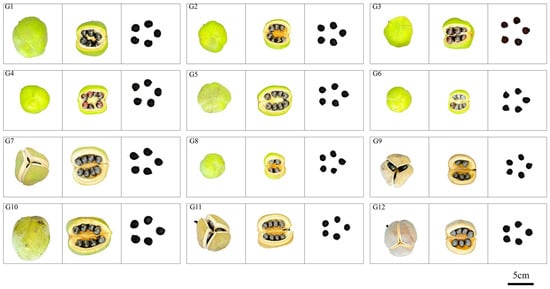
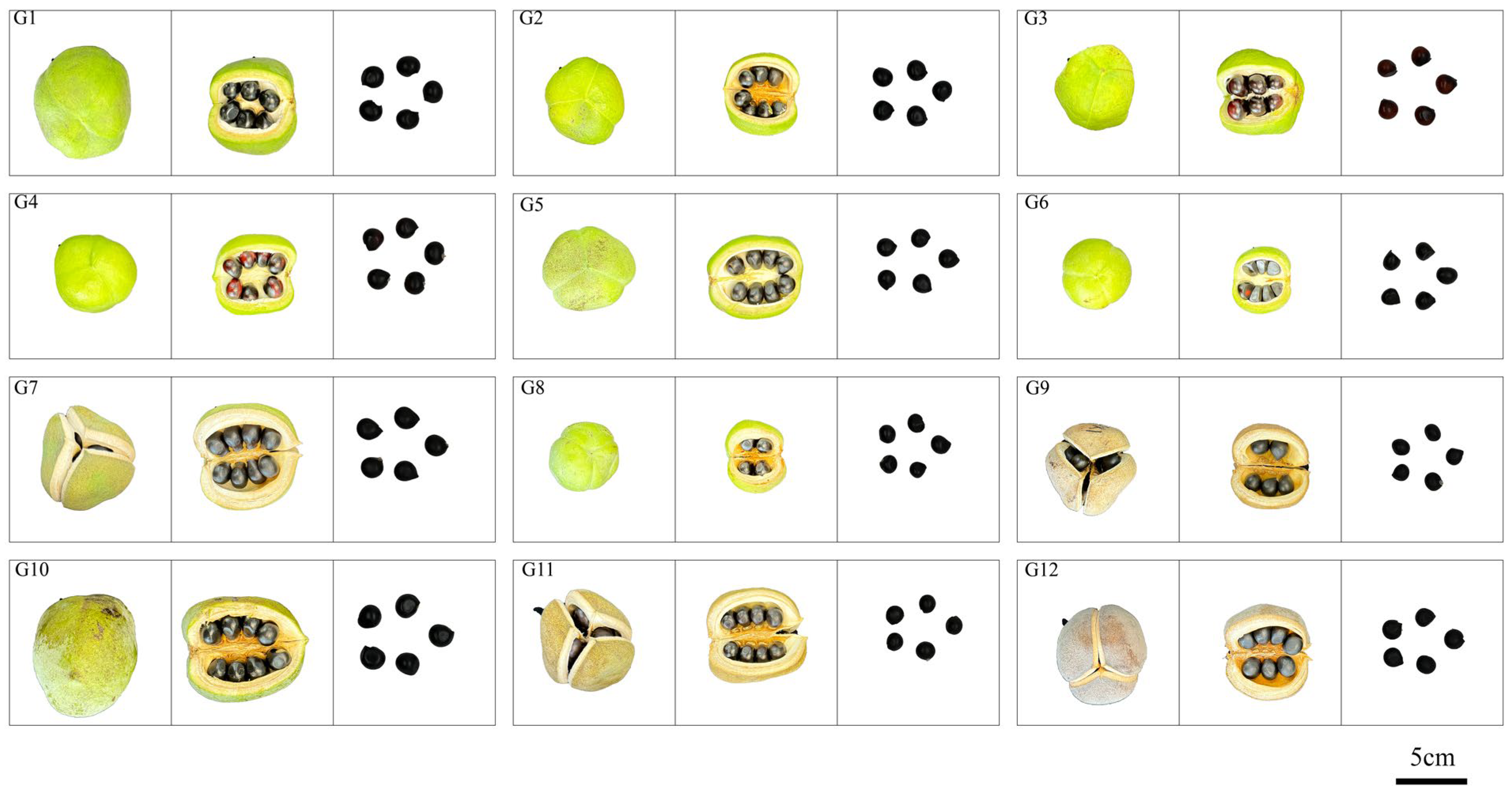
The physiological characteristics of the 48 X. sorbifolium germplasm resources, including compound leaf, leaflet, fruit, and seed traits, are provided in Table 1 and Figure 1. The CVs of the 21 quantitative traits tested were 7.04–74.16%, indicating significant variation among the different X. sorbifolium germplasms.
Table 1.
Variation analysis of phenotypic traits of X. sorbifolium.
Figure 1.
G1–G12 represent phenotypically representative fruits of X. sorbifolium.
Among leaf-related traits, the CVs for compound leaf length, leaflet length, and leaflet width were 10.92%, 16.32%, and 16.25%, respectively. The low degree of data dispersion implies relatively stable leaf morphology among the X. sorbifolium germplasms. The CV values were highest among fruit-related traits, with that of fruit shell weight reaching 74.16% (range, 9.12–105.82 g) and that of fruit weight reaching 58.24% (range, 15.54–166.47 g), implying significant potential for selective breeding. The maximum intra-individual variation ranges of fruit weight and shell weight were 23.45% and 24.19%, respectively, both in G7. The CVs for fruit transverse diameter, fruit longitudinal diameter, and fruit shell thickness were 15.37%, 18.37%, and 20.07%, respectively, indicating relatively stable fruit size and fruit shell thickness among germplasms. The CVs for seed transverse diameter, seed longitudinal diameter, and kernel percentage were 12.48%, 10.73%, and 13.48%, respectively. These relatively low values indicate good genetic stability and phenotypic consistency. The CV for oil content was low, at 7.04%. Among kernel physiological parameters, the CVs for soluble protein, soluble sugar, and starch contents were all lower than 20% (11.73%, 19.39%, and 19.37%, respectively), demonstrating stable levels across germplasms. The CVs for single-seed, fresh kernel, dry kernel, and seed coat weights, as well as comprehensive oil content, were moderately high at 39.24%, 43.21%, 35.70%, 36.25%, and 37.17%, respectively. The variability of fresh and dry kernel weights and oil-related parameters further reflect the scope for screening X. sorbifolium germplasm resources for the development of clones with high oil yield.
3.2. Cluster Analysis of Quantitative Traits
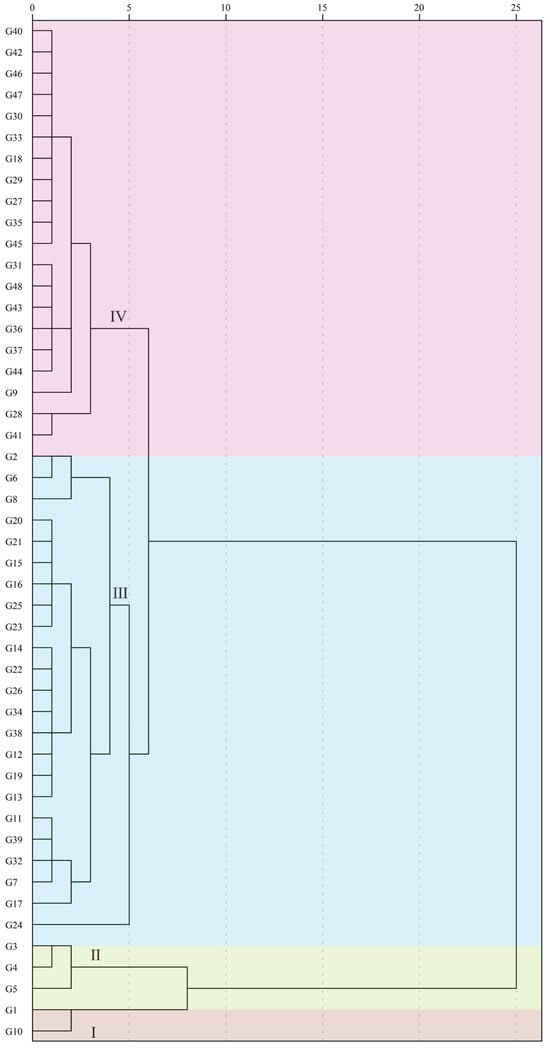
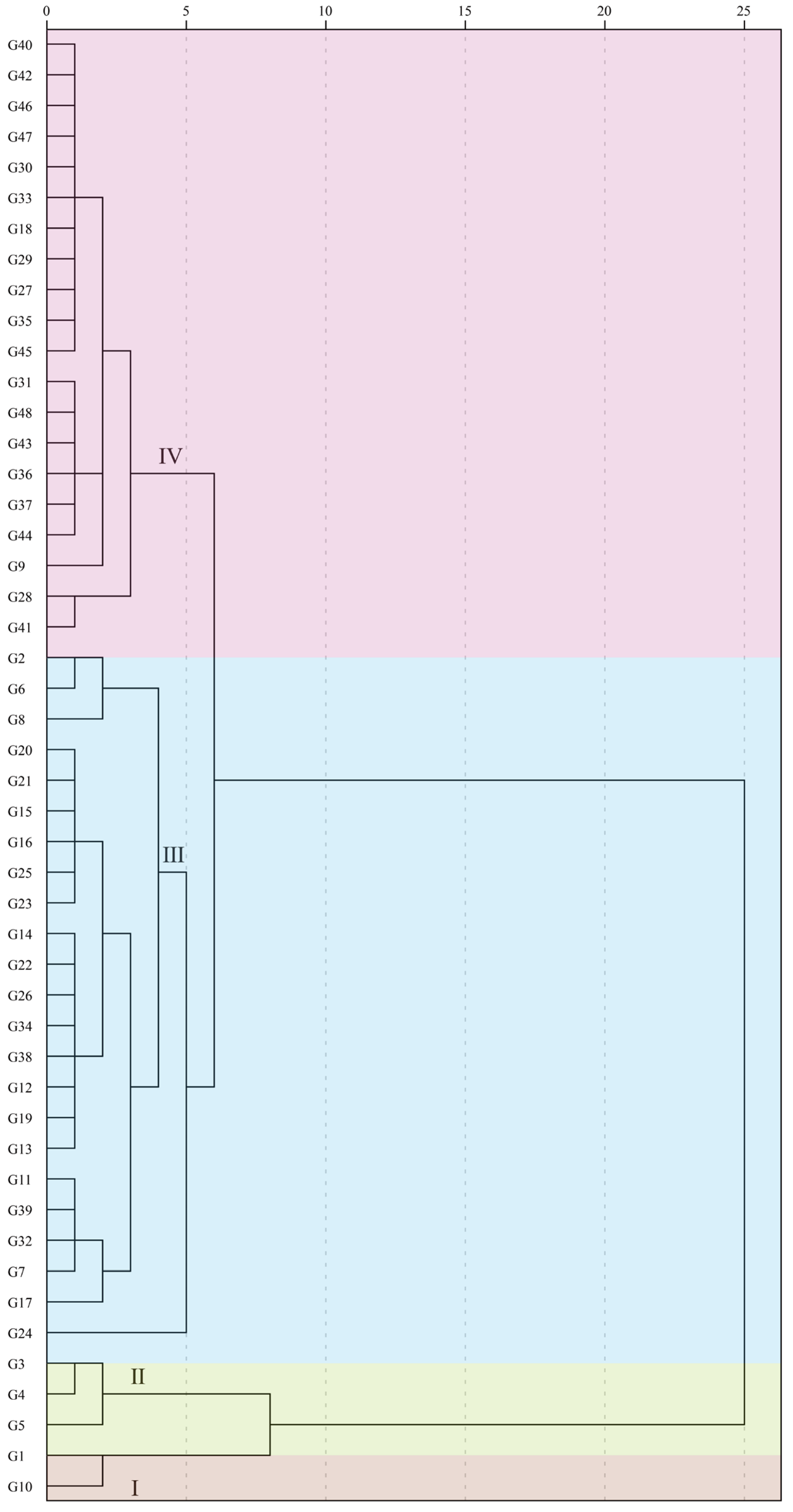
Across its wide distribution range, X. sorbifolium populations have undergone genetic differentiation due to long-term adaptation to local environments [36], resulting in variation in traits related to fruit quality. The results of our systematic cluster analysis of 21 quantitative traits of 48 X. sorbifolium germplasms are shown in Figure 2. These germplasm resources were divided into four groups: group I (G1 and G10), group II (G3–G5), group III (comprising 23 germplasms, including G2, G6, and G8), and group IV (comprising 20 germplasms, including G9, G18, and G27).
Figure 2.
Cluster analysis of X. sorbifolium germplasm resources. Note: Different colors are used to distinguish various germplasm groups.
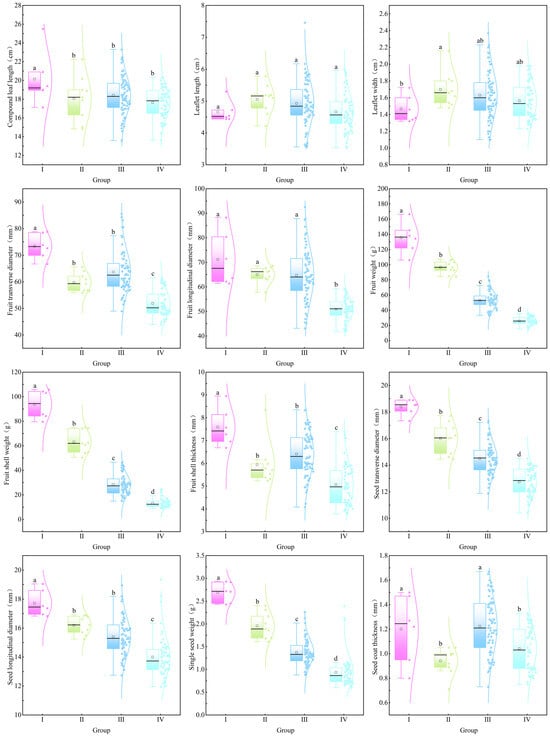
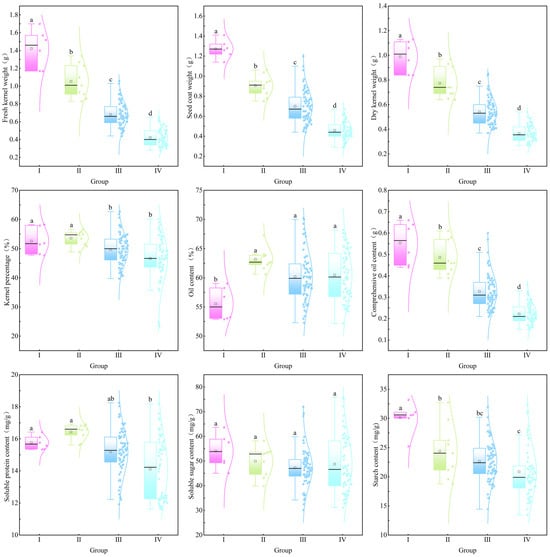
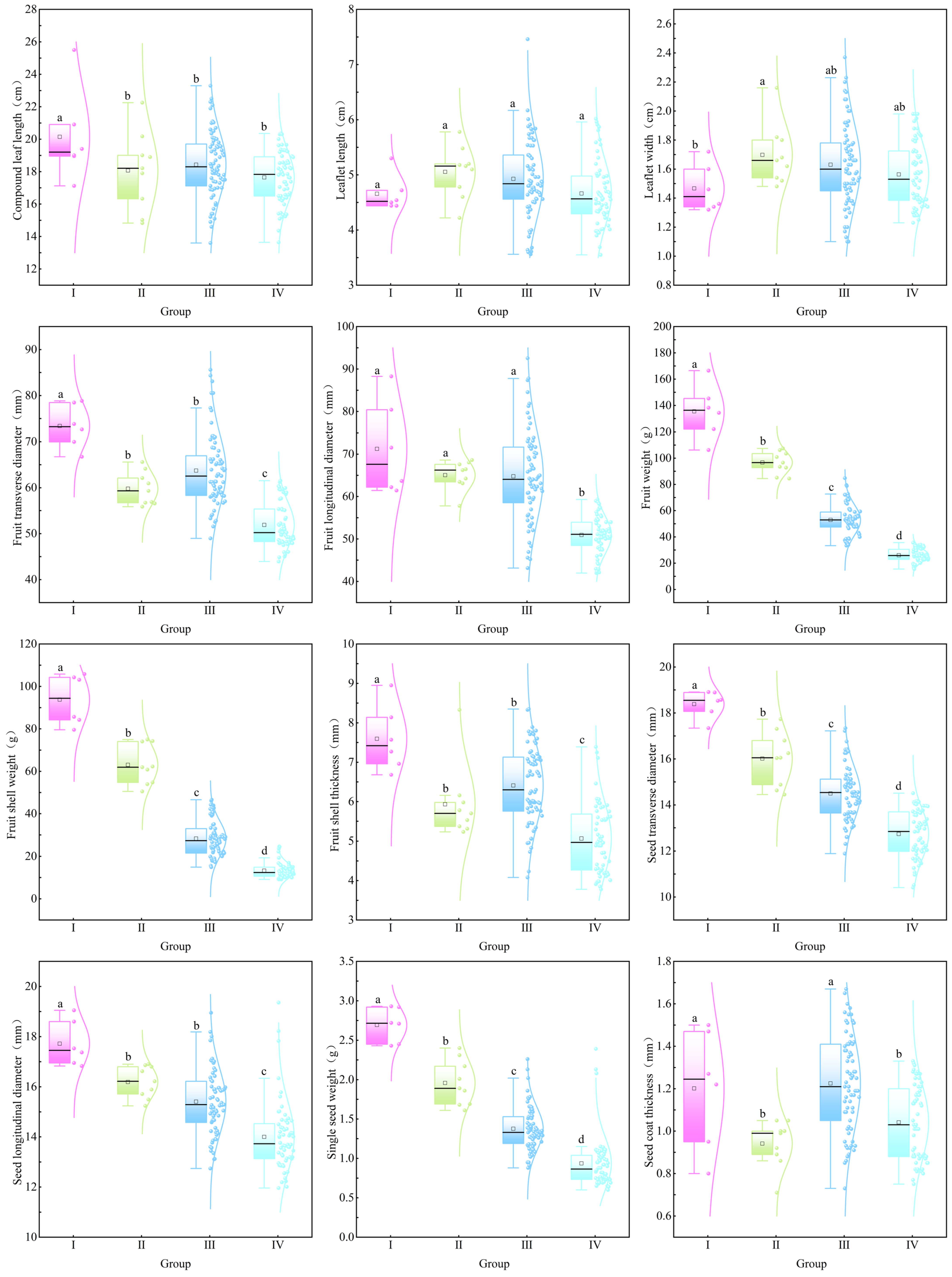
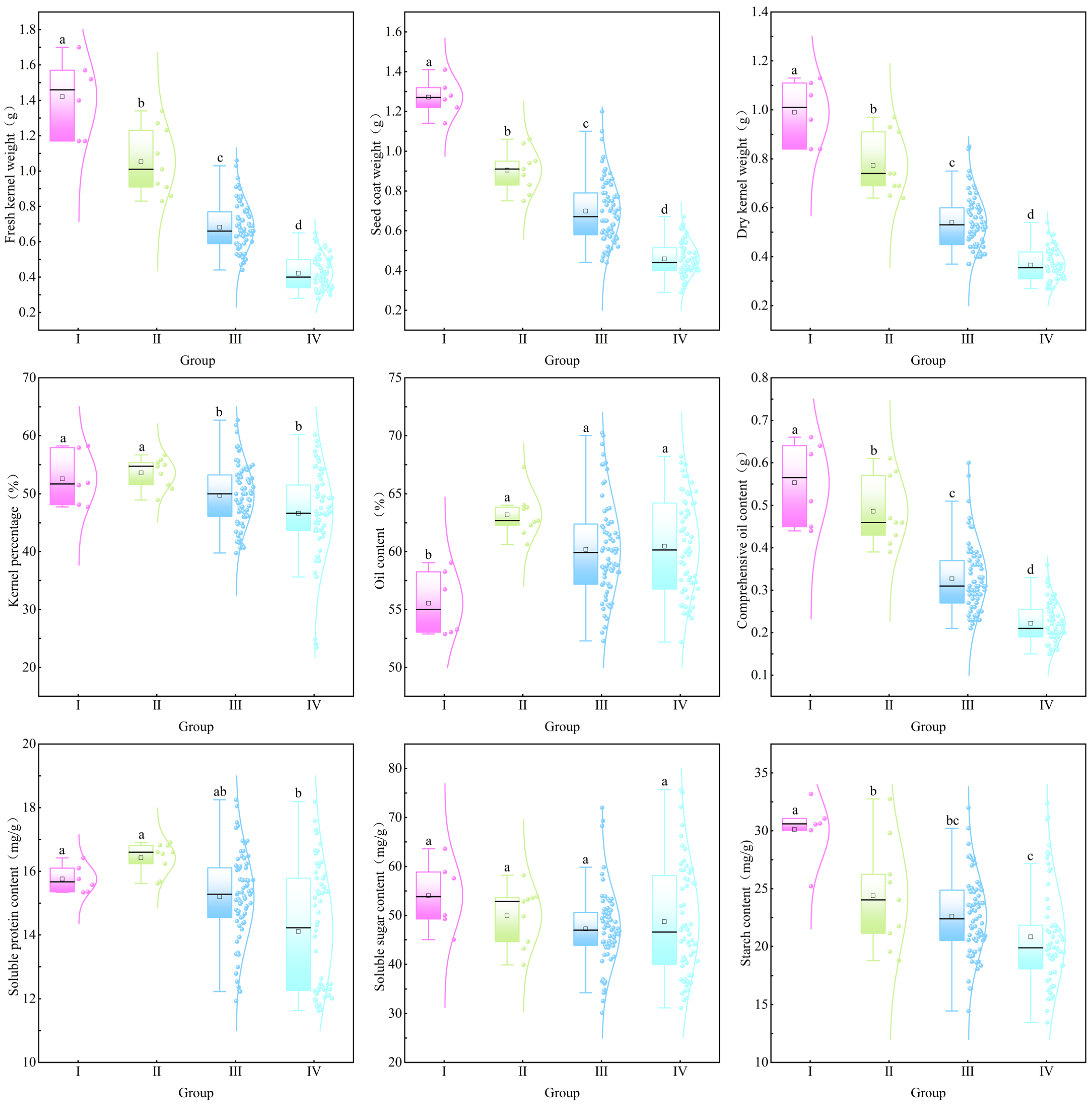
Differential analysis of the 21 quantitative traits among the germplasm resources in different clusters revealed that compound leaf length, fruit transverse diameter, fruit weight, fruit shell weight, fruit shell thickness, seed transverse and longitudinal diameters, single-seed weight, seed coat weight, fresh and dry kernel weights, and comprehensive oil content were significantly higher in group I than in groups II, III, and IV (Figure 3). The kernel percentage and soluble protein content were significantly higher in group II than in groups III and IV. Oil content was significantly higher in groups II, III, and IV than in group I.
Figure 3.
Box plots of quantitative traits among different groups of 48 X. sorbifolium germplasm resources. Note: Values followed by different letters indicate significant differences at the p < 0.05 level. Scatter points denote the mean of each replicate.
Combining our cluster and comparative analysis results revealed that each germplasm group had distinct characteristics. Mean fruit and seed trait values were highest among group I germplasms, which produced large fruits, plump seeds, and thick fruit shells, with relatively high comprehensive oil contents. Group II germplasms had the highest mean kernel percentage, oil content, and soluble protein content among all groups; these fruits generally had high oil and protein contents, a high kernel percentage, and substantial nutritional value. Germplasms within group III exhibited balanced performance in all traits. Germplasms within group IV had the lowest mean values for all fruit and seed traits except seed coat thickness.
3.3. Determination of Kernel Nutrients
In plants, soluble proteins play crucial roles in maintaining cell osmotic potential and storing nutrients [37]. The kernel nutrient contents of the 48 germplasm resources are shown in Table 2. Soluble protein contents were 11.71–17.89 mg/g, being significantly higher in G14 (17.89 mg/g) than in all other germplasms and lowest in G48 (11.71 mg/g). These results provide an important basis for subsequent germplasm resource breeding and nutrient enhancement.
Table 2.
Comparison of kernel nutrient contents among 48 X. sorbifolium clones.
Sugar supply is crucial for plant growth and development [38]. Plants maintain intracellular energy homeostasis through a precisely regulated metabolic network that ensures coordinated operation of various biochemical reactions [39]. The soluble sugar content of X. sorbifolium kernels was highest in G9 (74.35 mg/g) and lowest in G40 (32.66 mg/g), with significant differences among germplasms. As the main form of storage of carbohydrates in plants, starch metabolic dynamics respond to environmental changes and contribute to regulating plant growth and development [40]. Starch content was highest in G1 (31.27 mg/g) and lowest in G47 (15.26 mg/g), with significant differences among germplasms. These results indicate significant genetic variability in sugar and starch metabolism among X. sorbifolium germplasm resources that may affect their nutritional value and environmental adaptability.
The results of our analysis reveal that the kernel oil content of X. sorbifolium was generally high at 53.06–69.02% (mean, 60.30%), with significant differences among germplasms. Kernel oil contents exceeded 65% in seven clones (G7, G20, G39, G43, G44, G46, and G47), but were lower than 55% in G1, G17, and G26. Kernel oil content was highest in G7 (69.02%) and lowest in G1 (53.06%).
3.4. Differences in Oil Body Morphology in Germplasms with Extreme Oil Content Levels
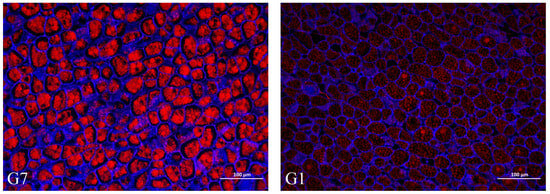
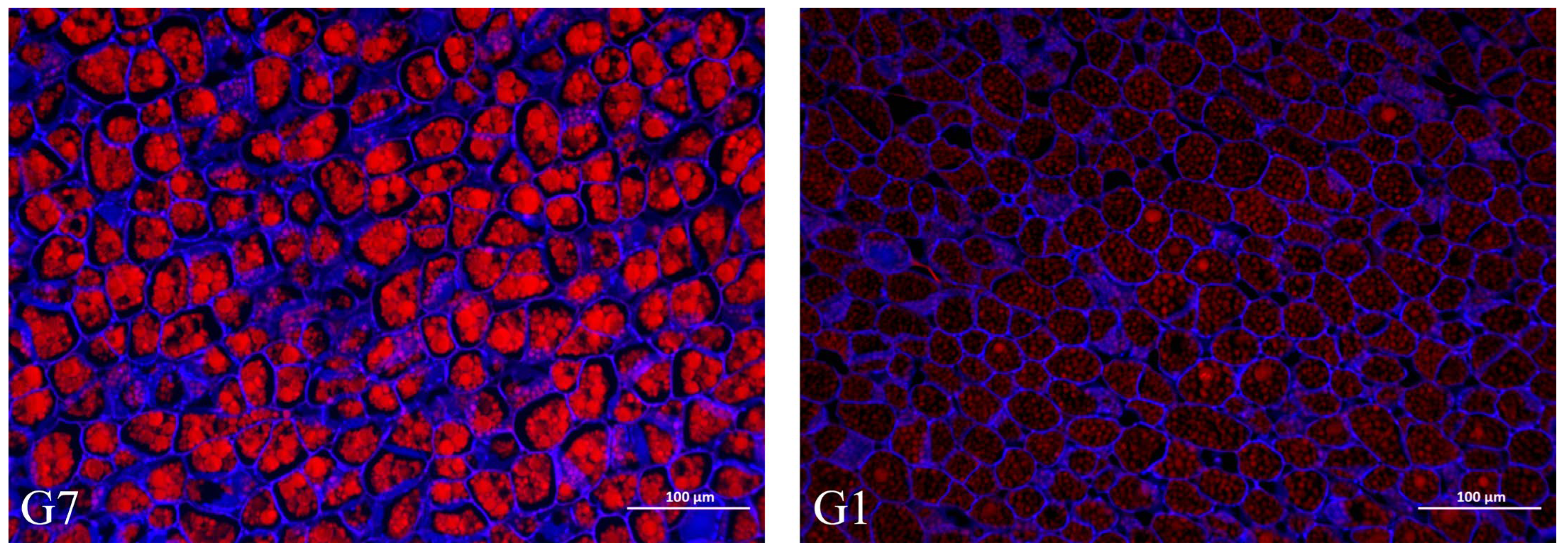
To clarify the cytological mechanism underlying the observed differences in oil contents, we used fluorescence microscopy to compare kernel oil bodies among germplasms with extreme oil content levels. In the high-oil-content germplasm G7, kernel cells showed strong red fluorescence, with dense oil bodies almost filling the intercellular spaces, indicating strong lipid accumulation capacity (Figure 4). In contrast, the low-oil-content germplasm G1 showed weak red fluorescence in kernel cells, with small, sparse oil bodies indicating weak lipid accumulation capacity.
Figure 4.
Cell and lipid distribution maps of kernels with extreme oil content.
Further statistical analysis indicated that oil body development was the main factor determining kernel oil content (Table 3). The key parameters related to cell morphology and oil density were significantly higher in kernels with high oil contents than in those with low oil contents. In terms of cell morphology, cell length, width, and area were significantly higher in G7 than in G1, with differences of 51.12%, 80.24%, and 73.91%, respectively. In terms of oil distribution, the oil area ratio, average oil optical density, and oil density were significantly higher in G7 than in G1, with differences of 225.71%, 72.22%, and 550%, respectively.
Table 3.
Measurement of size and density of oil cells in kernel.
3.5. Correlation Analysis Between Phenotypic Traits and Physiological Indices
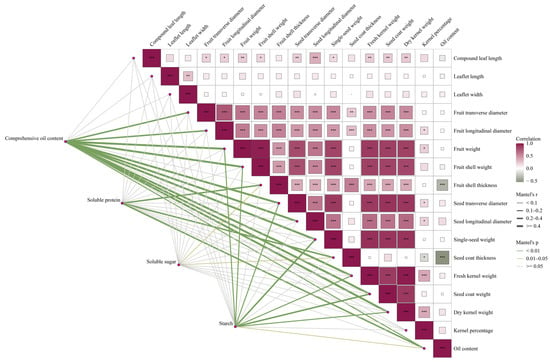
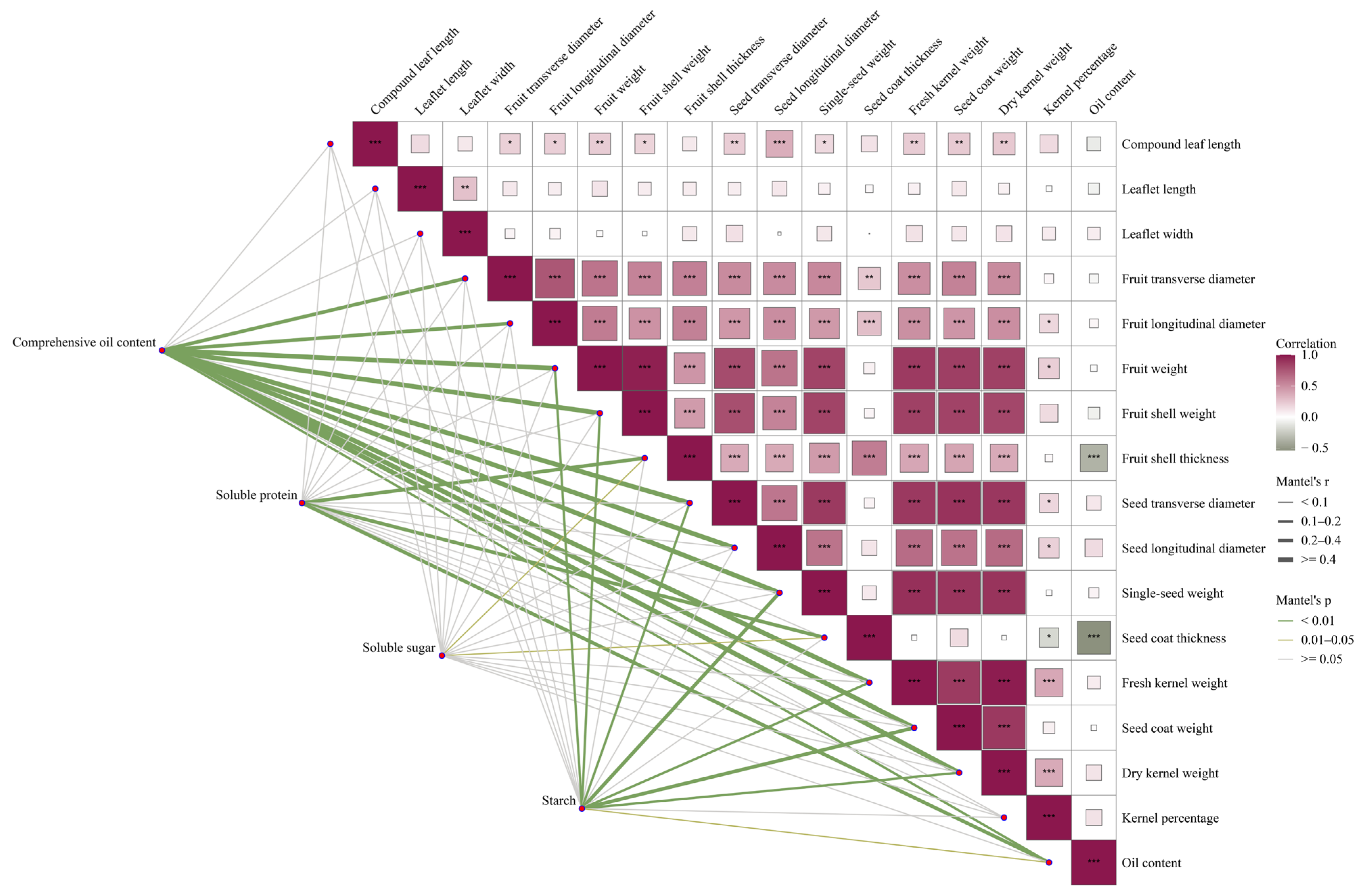
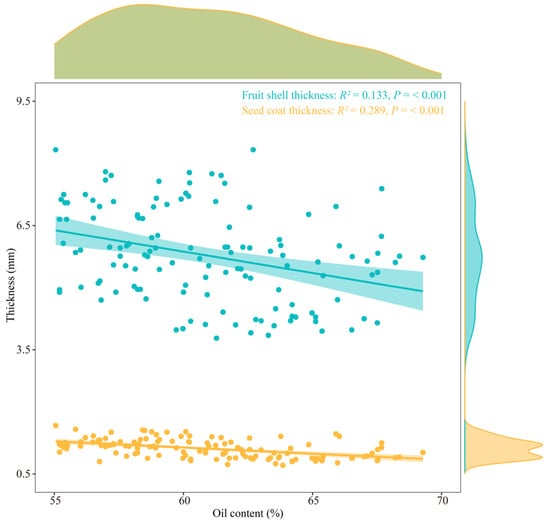
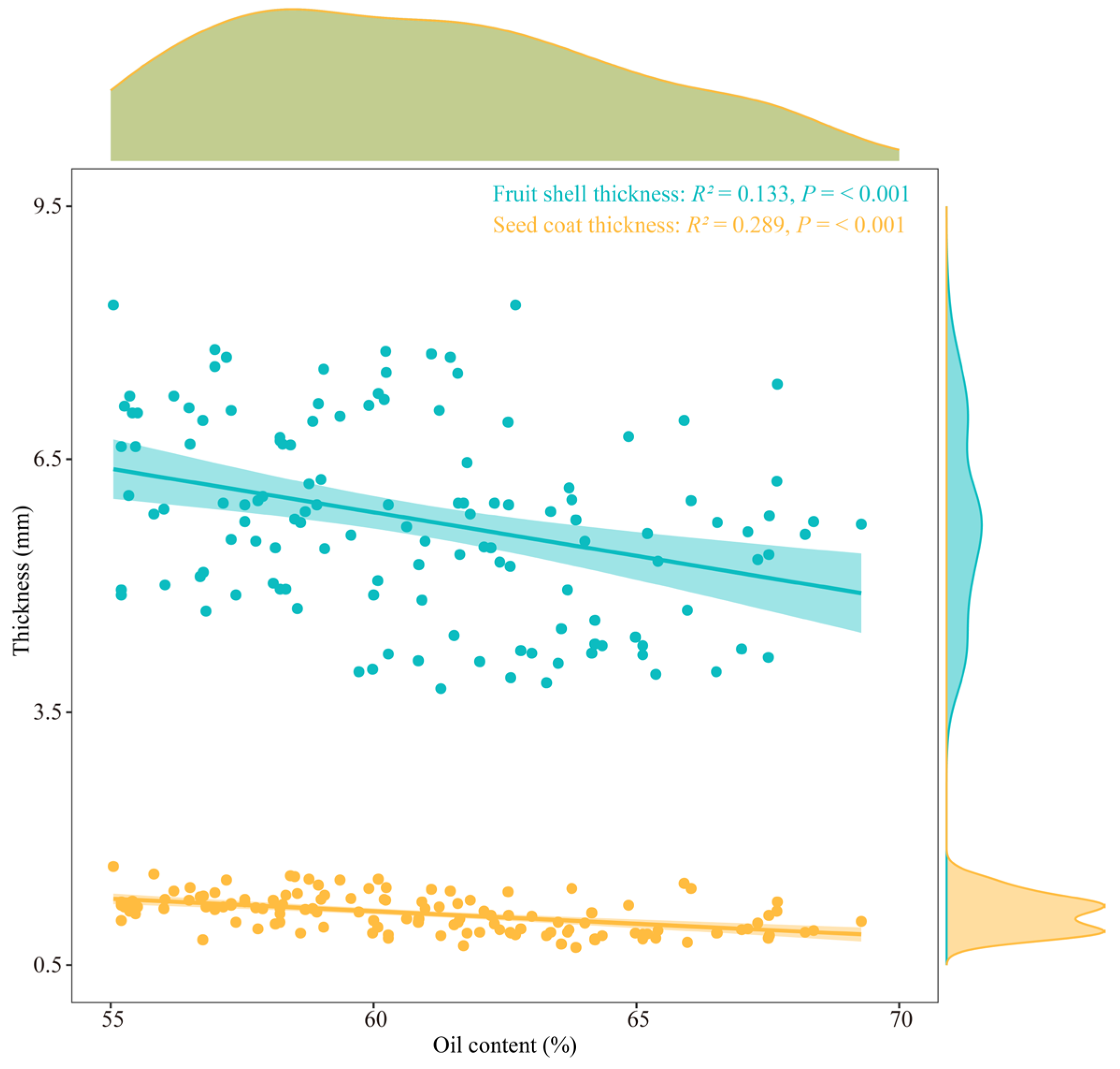
Our Pearson correlation analysis indicated that both fruit shell thickness (r = −0.36, p < 0.001) and seed coat thickness (r = −0.54, p < 0.001) were strongly significantly negatively correlated with oil content (Figure 5 and Figure 6). Thin fruit shells and thin seed coats are core selective breeding parameters for X. sorbifolium. Directional screening of germplasm resources with thinner shells is conducive to improving oil yields efficiently; therefore, this result provides technical support for large-scale X. sorbifolium oil production agriculture. The correlation between fruit shell weight and fruit weight was extremely strong (r = 0.97, p < 0.001), and fruit shell thickness was strongly significantly positively correlated with fruit weight (r = 0.47, p < 0.001). Compared with husk thickness, husk weight had a greater impact on fruit weight. There was a strongly significant positive correlation between seed longitudinal diameter and seed transverse diameter (r = 0.61, p < 0.001). Single-seed weight was strongly significantly positively correlated with both seed longitudinal diameter (r = 0.62, p < 0.001) and seed transverse diameter (r = 0.88, p < 0.001), indicating that seeds with good morphological development usually have greater volume and more robust cellular structures. Notably, leaf size was not significantly correlated with traits such as fruit and seed, revealing that the development of leaves and reproductive organs may be relatively independent in X. sorbifolium.
Figure 5.
Correlation analysis among various traits of X. sorbifolium germplasm resources. Note: * p < 0.05; ** p < 0.01; *** p < 0.001. The thickness of the connecting lines indicates the magnitude of the Mantel correlation coefficient; the color of the connecting lines represents the significance level; the size of the squares reflects the magnitude of the Pearson correlation coefficient.
Figure 6.
Correlation scatter plot between fruit shell thickness, seed coat thickness and oil content. Note: Marginal density plots at the top and right show distributions of oil content (x-axis), fruit shell thickness, and seed coat thickness (y-axis). Lines are linear regression fits indicating linear correlation trends between each variable pair, with shaded areas representing 95% confidence in-tervals.
Our Mantel correlation analysis indicated that fruit transverse diameter (r = 0.22, p < 0.01) and fruit longitudinal diameter (r = 0.23, p < 0.01) were both strongly significantly positively correlated with comprehensive oil content (Figure 5). Comprehensive oil content was strongly significantly positively correlated with dry kernel weight (r = 0.89, p < 0.01), fresh kernel weight (r = 0.83, p < 0.01), and single-seed weight (r = 0.71, p < 0.01). Kernel weight increased synchronously with lipid accumulation. Soluble protein was strongly significantly positively correlated with fruit shell thickness (r = 0.27, p < 0.01) and seed coat thickness (r = 0.22, p < 0.01). We speculate that this result may reflect sufficient nutritional nitrogen accumulation in these plants.
3.6. PCA of Quantitative Traits
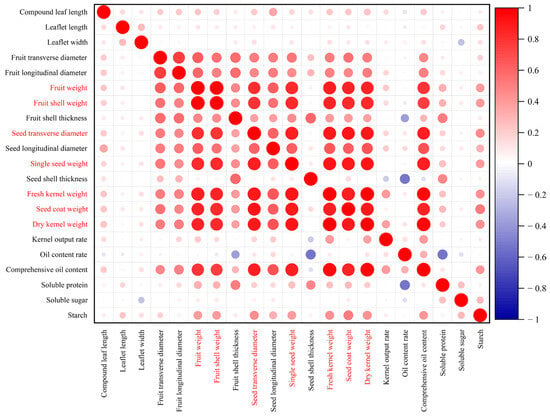
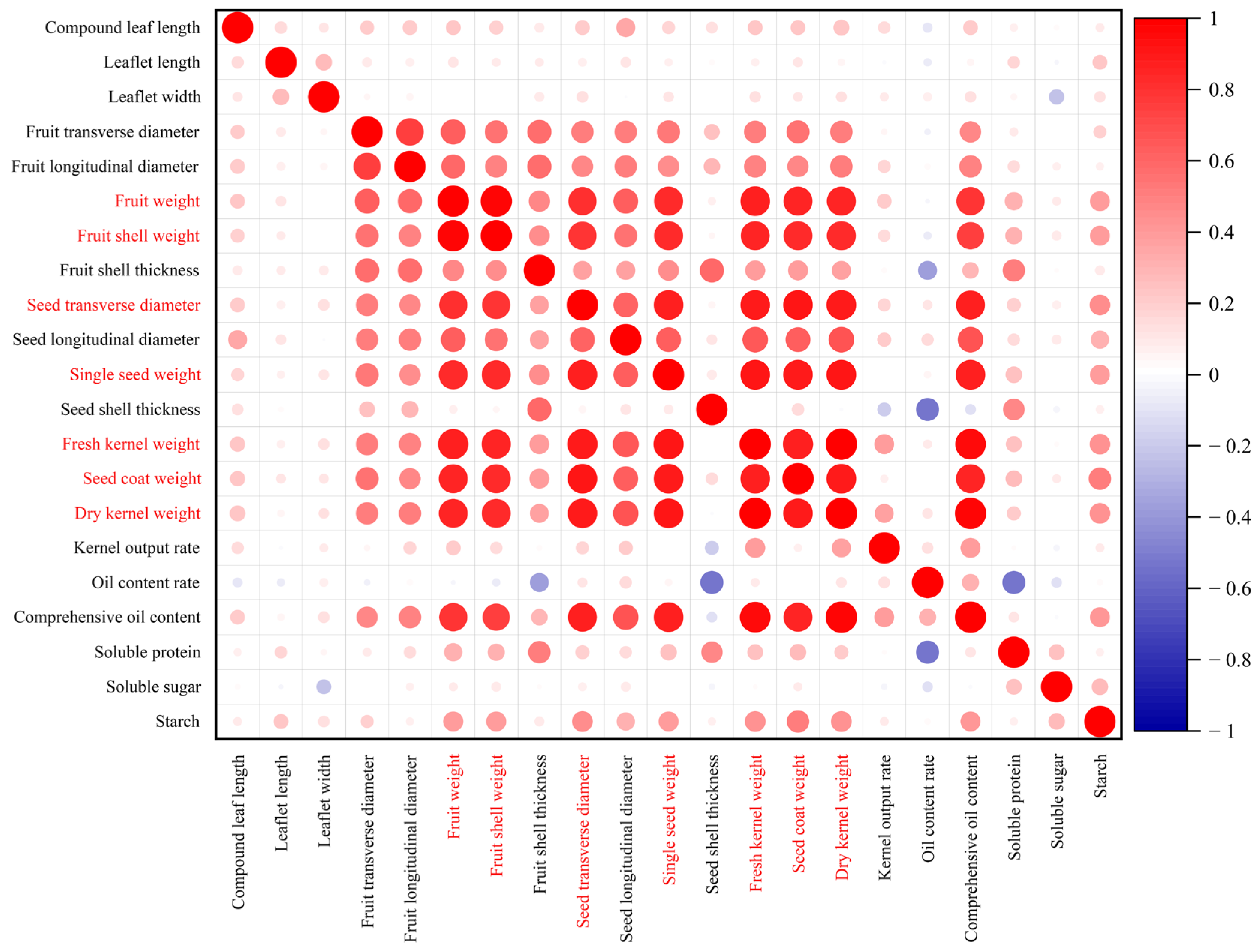
Following the elimination of highly redundant variables, PCA was conducted for the remaining 14 traits (Table 4, Figure 7). Based on an eigenvalue threshold of 1, five principal components (PCs) were extracted, with a cumulative contribution rate of 72.747%. Targeted screening based on the contribution rates of each PC and its corresponding variables will improve breeding selection efficiency through accurate retention of key trait information. The first PC had the highest eigenvalue (3.926), accounting for the highest variance contribution rate of 28.045%. It had relatively high eigenvector values for seed longitudinal diameter, fruit shell thickness, and fruit transverse and longitudinal diameters. The second PC had an eigenvalue of 2.523 and a variance contribution rate of 18.019%, with higher eigenvector values for kernel percentage, oil content, and comprehensive oil content. The third PC had an eigenvalue of 1.390 and a variance contribution rate of 9.926%, with higher eigenvector values for soluble sugar and starch contents. The fourth PC had an eigenvalue of 1.333, contributing 9.518% to the total variance, with higher eigenvector values for compound leaf length, leaflet length and leaflet width. The fifth PC had an eigenvalue of 1.013 and a variance contribution rate of 7.239%, with a higher eigenvector value for fruit transverse diameter and starch content. Thus, the first PC primarily contributed information related to fruit and seed size, and fruit shell thickness, the second PC informed kernel oil quality, and the remaining PCs mainly contributed information related to energy substances and leaf morphology, respectively.
Table 4.
Eigenvectors, eigenvalues, contribution rates and cumulative contribution rates of principal components.
Figure 7.
Correlation analysis of various traits in X. sorbifolium. Note: Variables in red font were removed as redundant. An absolute correlation coefficient |r| > 0.75 was set as the threshold for identifying strong correlations and variable redundancy. Different sizes represent the absolute values of correlation coefficients.
3.7. Comprehensive Evaluation of Quantitative Traits
Combining the variance contribution rates derived from PCA and the membership function model, we calculated and ranked the comprehensive evaluation values of 0.247–0.755 of the 48 X. sorbifolium germplasm resources (Table 5). Thus, the top 10 germplasm resources were ranked in descending order as G10, G2, G4, G7, G20, G34, G1, G24, G17, and G5. The comprehensive membership degrees of G10, G1 and G17 were 0.755, 0.580 and 0.581, respectively, exhibiting excellent comprehensive traits with marked advantages according to the first PC. The comprehensive membership degrees of G2, G4, G7 and G5 were 0.673, 0.657, 0.642 and 0.576, respectively, showing prominent advantages in oil content. G24 had a comprehensive membership degree of 0.583, with favorable performance in key traits such as soluble protein and soluble sugar contents. The comprehensive membership degrees of G20 and G34 were 0.597 and 0.577, respectively, and both displayed good performance in leaf traits. Thus, our comprehensive evaluation system identified that G10, G2, G4, G7, G20, G34, G1, G24, G17, and G5, which exhibited prominent advantages in comprehensive oil contents, traits related to fruit and seed size, nutrient contents and leaf morphology, should be prioritized as core X. sorbifolium breeding materials for further popularization.
Table 5.
Membership function analysis and ranking of X. sorbifolium clones.
3.8. Analysis of Seed Oil Fatty Acid Composition in the 10 Superior Germplasms
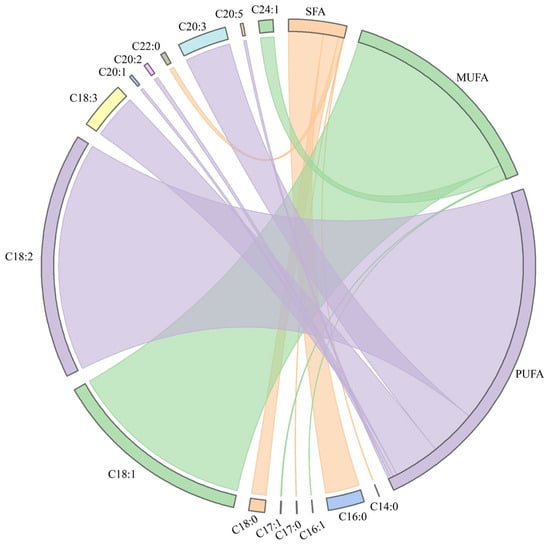
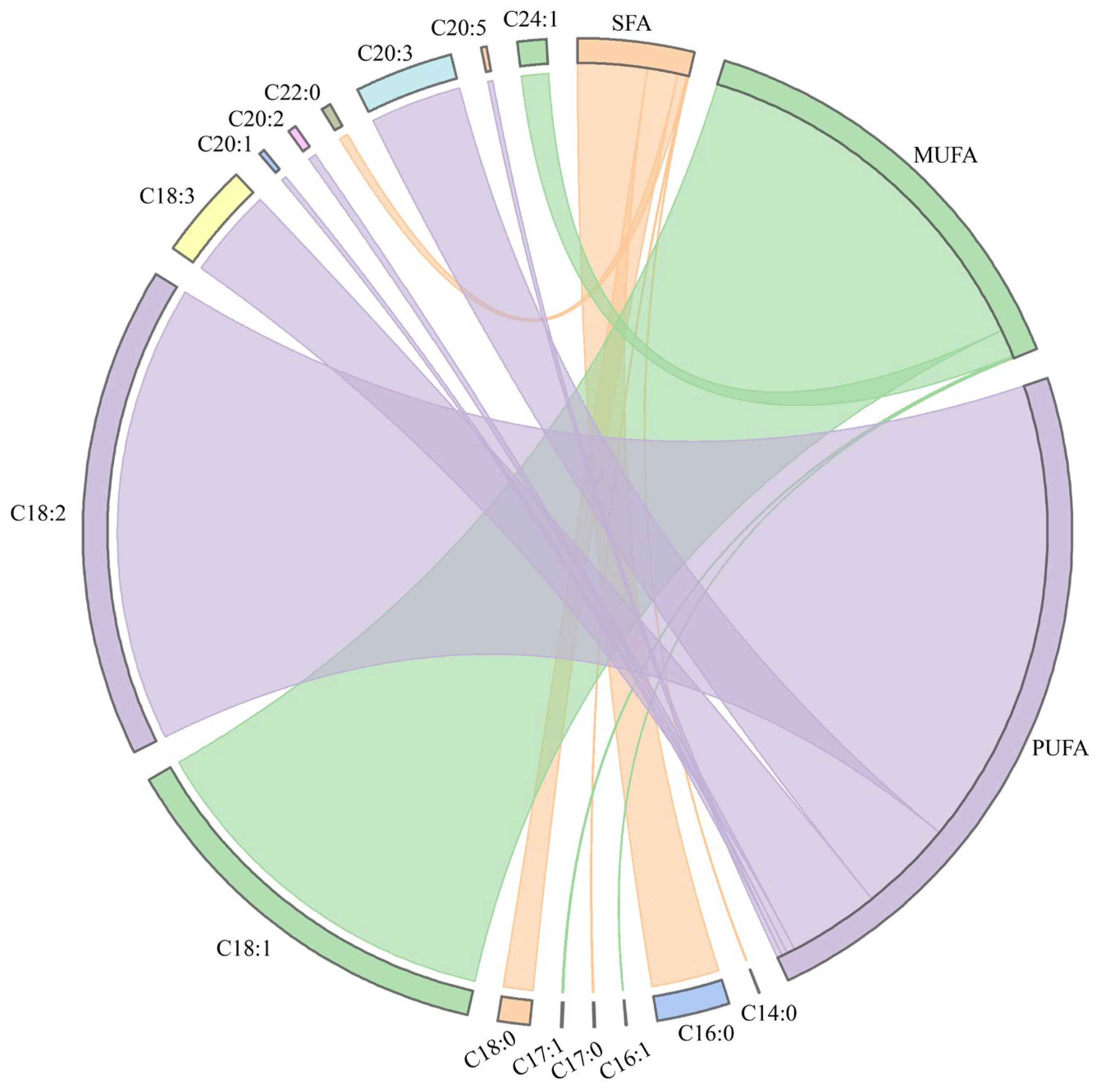
The 10 clones identified as having excellent development potential were selected for seed oil fatty acid content determination. Fatty acid composition is a critical indicator used to evaluate the nutritional value of vegetable oils. The fatty acid component analysis of X. sorbifolium seed oils showed that the fatty acids could be divided into UFAs (96.10%) and saturated fatty acids (SFAs; 3.90%) (Figure 8). The SFAs included myristic acid (C14:0), palmitic acid (C16:0), heptadecanoic acid (C17:0), stearic acid (C18:0), and docosanoic acid (C22:0). Among the UFAs, MUFAs accounted for 19.49% on average, mainly comprising oleic acid (C18:1) and nervonic acid (C24:1), whereas polyunsaturated fatty acids (PUFA) were predominant, with an average value of 76.61%, mainly comprising linoleic acid (C18:2), linolenic acid (C18:3), and eicosatrienoic acid (C20:3), with linoleic acid accounting for an exceptionally high average proportion of 39.21%.
Figure 8.
Fatty acid composition of X. sorbifolium kernel.
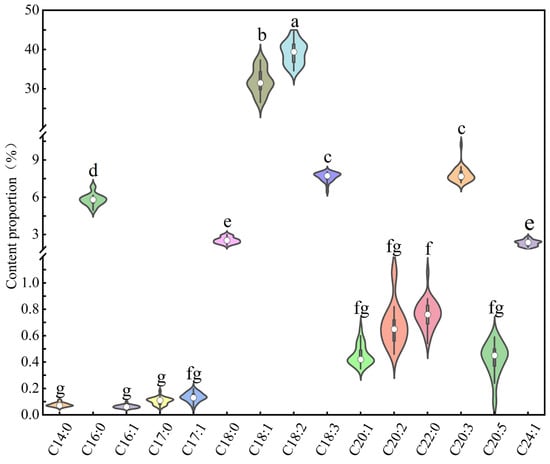
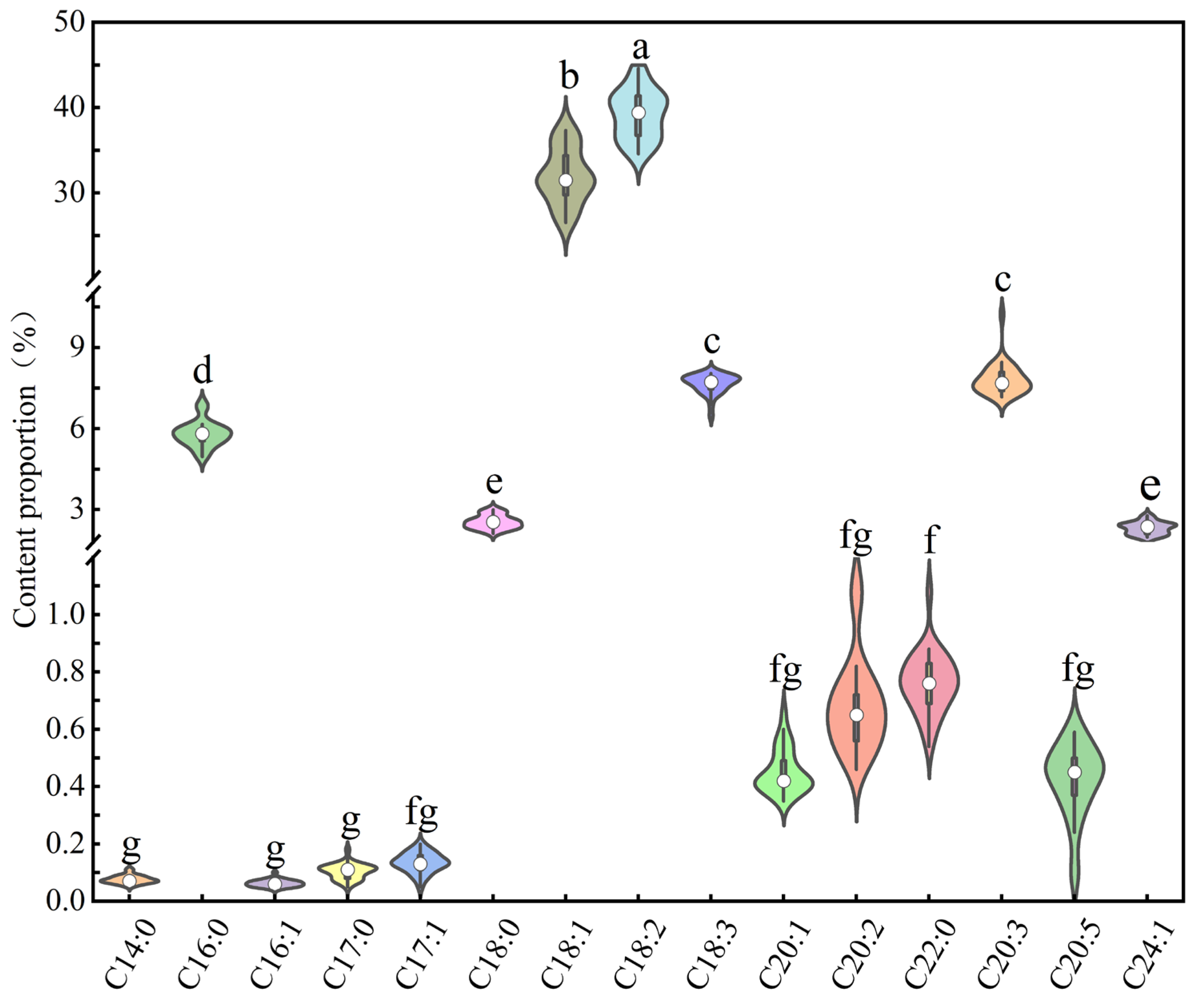
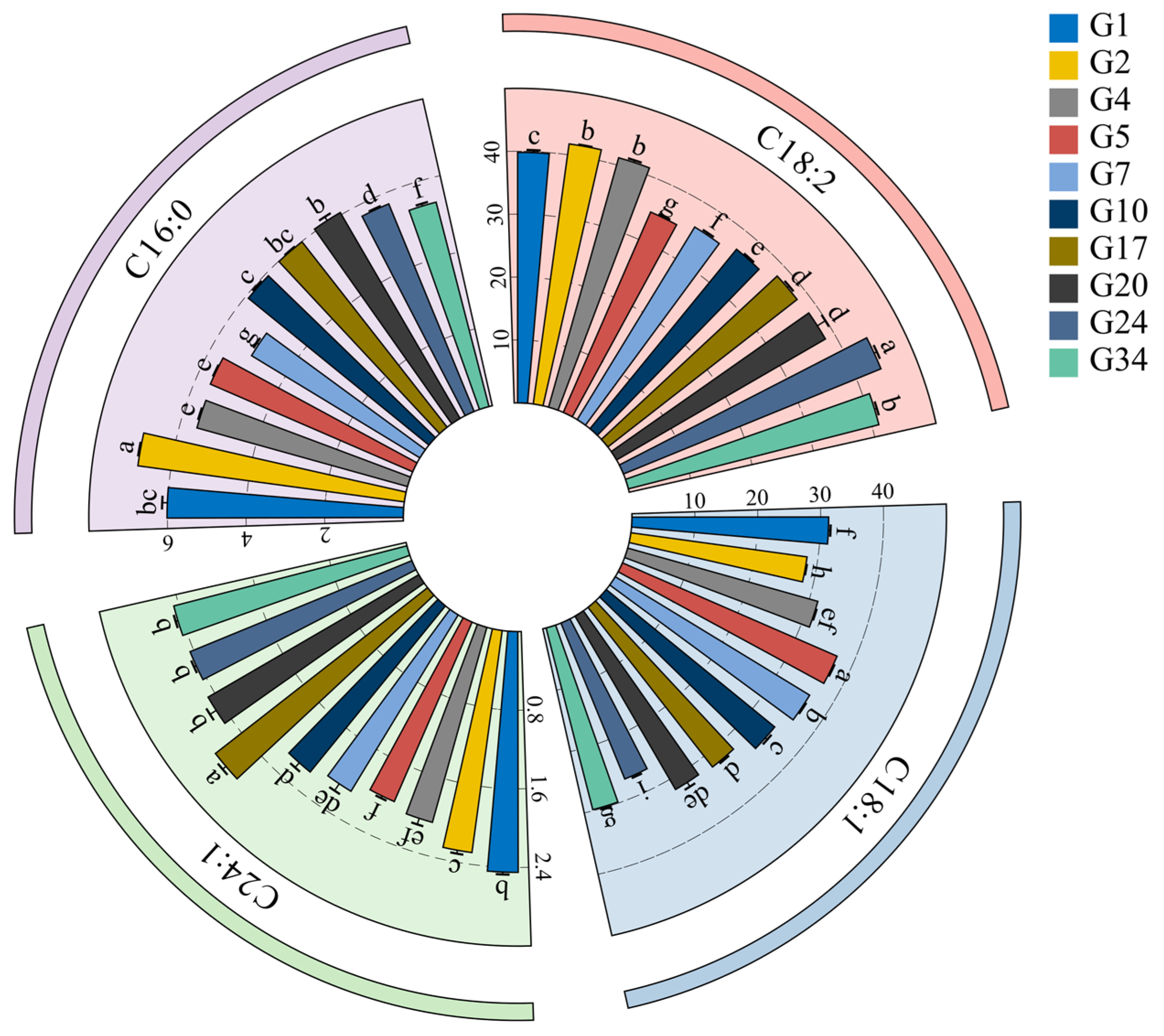
The seed oil fatty acid composition analysis results for the top 10 X. sorbifolium clones are presented in Figure 9. The proportions of linoleic acid (mean, 39.21%; maximum, 44.57%) and oleic acid (mean, 31.96%; maximum, 37.33%) were significantly higher than those of all other fatty acids. The mean proportion of palmitoleic acid was markedly lower than those of all other fatty acids.
Figure 9.
Fatty acid composition profile of X. sorbifolium seed oil. Note: Values followed by different letters indicate significant differences at the p < 0.05 level.
The proportions of the fatty acid categories in seed oil from different X. sorbifolium clones are listed in Table S2. The proportion of UFAs was high among all of the top 10 clones, ranging from a minimum of 95.65% to 96.41% in G7 and 96.48% in G4. The lowest and highest proportions of MUFAs were observed in G24 (16.33%) and G5 (22.49%), respectively, and those of PUFAs were observed in G5 (73.44%) and G24 (79.94%), respectively. The lowest and highest proportions of SFAs were observed in G4 (3.52%) and G2 (4.35%), respectively.
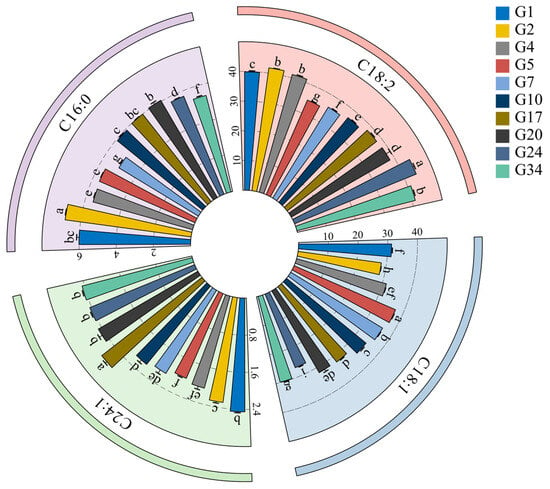
Nervonic acid, linoleic acid, oleic acid, and palmitic acid are fatty acid components that are essential for human health. As illustrated in Figure 10, a certain amount of SFA content is required to maintain oil stability and provide energy for the construction of human cell membranes. Among SFA components, palmitic acid was the most abundant at 5.01–6.84% across the 10 superiorclones, with a significantly higher proportion in G2 than in all other clones tested. Compared with SFAs, UFAs generally have higher seed oil quality and greater importance to human health. Among the 10 superior clones, the proportions of linoleic acid and oleic acid were 34.75–44.22% and 26.79–37.21%, respectively. The proportion of linoleic acid was significantly higher in G24 than in all other clones, whereas that of oleic acid was significantly higher in G5 than in all other clones. The proportions of long-chain UFA nervonic acid in seed oil were 1.99–2.74% among the 10 superior clones, which is a slightly higher range than has been reported for common oil crops; it was most abundant in G17. Thus, X. sorbifolium seed oil has great potential as a natural source of nervonic acid. In conclusion, clones G24, G5, and G17 exhibited prominent oil quality advantages in terms of linoleic acid, oleic acid, and nervonic acid contents, respectively, demonstrating their potential as excellent X. sorbifolium germplasm resources for oil production.
Figure 10.
Comparison chart of four important fatty acid components among 10 superior plants. Note: Values followed by different letters indicate significant differences at the p < 0.05 level.
3.9. Correlation Analysis of Seed Oil Quality and Seed and Fruit Phenotypic Traits in the 10 Superior Clones
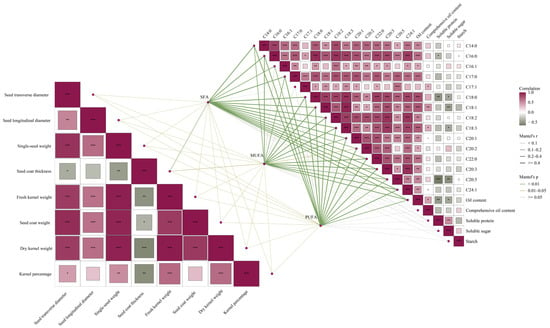
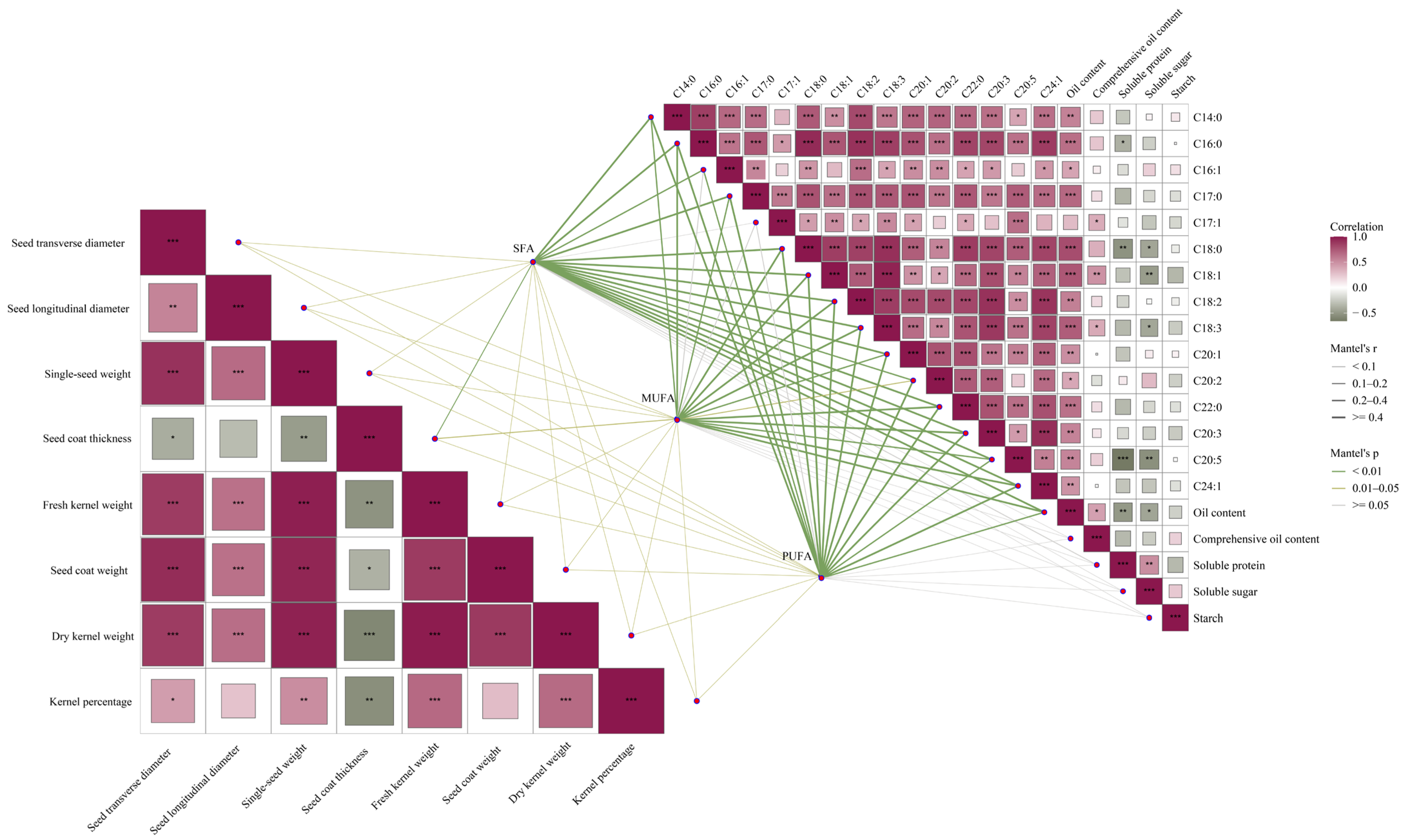
Mantel analysis showed that the proportions of SFAs, MUFAs, and PUFAs were significantly correlated with those of the vast majority of single fatty acid components (Figure 11), implying that these three fatty acid categories are closely associated with individual fatty acid components. Further analysis revealed that SFAs (r = 0.44, p < 0.01), MUFAs (r = 0.46, p < 0.01), and PUFAs (r = 0.29, p < 0.01) were strongly significantly positively correlated with oil contents. In contrast, these fatty acid categories were not significantly correlated with seed phenotypic traits, except for kernel fresh weight, indicating that seed phenotypic traits cannot directly predict the proportions of seed oil fatty acid categories, i.e., seed oil quality.
Figure 11.
Correlation analysis of fatty acid categories with seed phenotypic traits and oil quality of superior X. sorbifolium genotypes. Note: * p < 0.05; ** p < 0.01; *** p < 0.001. The thickness of the connecting lines indicates the magnitude of the Mantel correlation coefficient; the color of the connecting lines represents the significance level; the size of the squares reflects the magnitude of the Pearson correlation coefficient.
The Pearson correlation analysis revealed that most fatty acid components were strongly significantly positively correlated with each other (Figure 11). Oil content was also strongly significantly positively correlated with the vast majority of fatty acid components, whereas comprehensive oil content was strongly significantly positively correlated only with oleic acid. Soluble protein, soluble sugar, and starch contents were negatively correlated with the vast majority of fatty acid components. Among these, soluble protein content was strongly significantly negatively correlated with stearic acid content (r = −0.53, p < 0.01) and eicosapentaenoic acid content (r = −0.66, p < 0.001), while soluble sugar content was strongly significantly negatively correlated with oleic acid content (r = −0.48, p < 0.01) and eicosapentaenoic acid content (r = −0.54, p < 0.01). These results indicate that there may be a competitive relationship between the synthesis and accumulation of fatty acids, carbohydrates, and proteins, revealing physiological and metabolic trade-offs in the accumulation of nutrients in seeds.
The phenotypic traits of the 10 superior clones also had strong correlations, with dry kernel weight (r = −0.59, p < 0.001), fresh kernel weight (r = −0.53, p < 0.01), and kernel percentage (r = −0.55, p < 0.01) having strongly significant negative correlations with shell thickness, indicating that thicker X. sorbifolium seed shells may constrain kernel biomass accumulation.
4. Discussion
In this study, we systematically determined the phenotypic traits and nutritional quality of 48 X. sorbifolium germplasm resources and conducted a comprehensive evaluation based on multivariate statistical analysis to screen for elite germplasms with high oil contents and high comprehensive utilization values, thereby providing a scientific basis for the breeding and industrialization of X. sorbifolium. Overall, the CVs for the phenotypic traits of the 48 X. sorbifolium germplasm resources were 7.04–74.16%. Previous studies have reported that the variation ranges of related traits in X. sorbifolium were 8.77–82.98% [41] and 12.80–63.25% [42], respectively. These results were basically consistent with previous findings on the selection of oil-producing X. sorbifolium plants, confirming that X. sorbifolium germplasm resources possess sufficient genetic diversity in oil yield-related traits for the screening and genetic improvement of high-oil-content germplasms. Kernel soluble sugar and starch contents also varied significantly among germplasms, with ranges of 32.66–74.35 and 15.26–31.27 mg/g, respectively. These ranges were slightly lower than those reported in a previous study [43], perhaps due to differences in the sampling periods, germplasms, or detection methodologies between the two studies. Differences in genetic background and developmental stage may modulate key carbohydrate metabolic enzyme activities, inhibit photosynthate conversion and accumulation, and thus decrease soluble sugar and starch levels. Oil content is a key parameter for evaluating the quality and application value of oil-bearing plants, and is therefore an important criterion for screening X. sorbifolium germplasm resources [44]. The average kernel oil content was as high as 60.30%, which is in line with previously reported average kernel oil contents of 54.80% [45] and 63.04% [46]. Such minor discrepancies may stem from differences in cultivation management and genetic variation among germplasms. These findings demonstrate that X. sorbifolium possesses considerable advantages for oil crop breeding and industrial development.
Our correlation analysis indicated that oil content was strongly significantly negatively correlated with fruit shell thickness and seed coat thickness, which is consistent with previous findings [47]. This result clarifies the directional selection criteria for high-oil-content X. sorbifolium germplasms, which should prioritize the selection of clones with plump fruits and thin fruit shells to improve breeding efficiency significantly. The comprehensive oil content is used to evaluate the amount of oil yield per seed, compensating for inherent limitations of the simple oil content rate index, which reflects only the mass fraction of oil while neglecting absolute oil yield. Larger fruits may provide more space for lipid accumulation, thereby enhancing total oil content [48]. Fluorescence microscopy revealed that the kernel cells of the high-oil-content G7 had densely distributed oil bodies with high fluorescence intensity that were significantly superior to those of the low-oil-content G1. These cellular-level differences in oil content between germplasms confirm the hypothesis that intracellular oil body distribution is related to oil content, as was raised in a previous study [49]. Our observations revealed that kernel cells from high-oil-content germplasms contained more densely packed oil bodies than did those from low-oil-content germplasms. These results indicate a synergistic effect between cell morphology optimization and improvement of lipid accumulation efficiency during oil body development; together, these effects enhance kernel oil content. These findings provide a cytological basis for the breeding of X. sorbifolium crops for oil production. Cluster analysis classified the 48 germplasm resources into four groups. Group II, comprising clones G3–G5, exhibited high oil contents and high protein contents, making these high-quality germplasms suitable for both oil production and nutritional utilization. Group I, which contained G10, was characterized by large fruits and seeds as well as high total oil contents; these findings are consistent with previous studies [50,51]. PCA extracted five PCs with a cumulative contribution rate of 72.747%, encompassing four core information dimensions: fruit and seed sizes, oil content, protein quality, and energy substances. Consistent with previous comprehensive evaluations, these findings lay the theoretical foundation for systematic assessment of X. sorbifolium germplasm resources [52].
The predominant UFAs were linoleic acid (C18:2, 39.21%) and oleic acid (C18:1, 31.96%), which are essential fatty acids for humans. These content levels were consistent with those reported in a previous study, which used gas chromatography to determine the linoleic acid (C18:2, 43.08%) and oleic acid (C18:1, 30.60%) contents of X. sorbifolium samples collected from different regions [53]. A previous study determined that X. sorbifolium seed oil had a nervonic acid (C24:1) content of 3.77% based on gas chromatography–mass spectrometry, which was slightly higher than the content level measured in the present study [54]. This discrepancy likely stems from differences in growth conditions and fruit maturity. Within kernel tissues, a trade-off in carbon allocation creates substrate competition between carbohydrate biosynthesis and the accumulation of very-long-chain fatty acids (VLCFAs). Moreover, fatty acid elongase activity is jointly regulated by genetic and environmental factors, further contributing to the variation in nervonic acid observed across studies. Pearson correlation analysis revealed that soluble protein, soluble sugar, and starch contents were negatively correlated with the majority of fatty acid components. This finding is consistent with prior research, implying that metabolic competition may occur between the synthesis and accumulation of carbohydrates and those of fatty acids in X. sorbifolium kernels [55].
This study has certain limitations. The phenotypic observation and statistical analysis of the X. sorbifolium clones introduced to the Handan region were conducted over only five consecutive years. Whether their elite traits can be maintained stably over the long term requires monitoring over an extended time scale. In addition, the molecular mechanisms and regulatory factors underlying the significant differences among clones have not been validated in the present study. Nevertheless, the introduced lines were found to exhibit rich phenotypic and physiological variation, providing an important foundation for future elucidation of the relevant regulatory mechanisms and the identification of key genes.
5. Conclusions
This study systematically characterized the genetic diversity of 48 X. sorbifolium germplasm resources at the phenotypic, nutritional, and cellular levels, and revealed significant variation in phenotypic traits and nutrient contents among different accessions. Cluster analysis identified germplasm groups with common characteristics, and cytological observations confirmed that kernel cell morphological parameters and oil density were significantly superior in clones with high oil contents than in those with low oil contents, laying a solid theoretical foundation for the precise evaluation and efficient breeding of X. sorbifolium germplasm resources. Comprehensive evaluation using PCA and membership function analysis screened elite accessions including G10, G2, G4, G7, G20, and G34, as suitable parents for X. sorbifolium breeding. Our analysis of the fatty acid composition of seed oil from 10 elite accessions showed that the average proportion of UFAs was as high as 96.10%, highlighting the development and application potential of these germplasm resources as breeding materials for X. sorbifolium oil production.
Supplementary Materials
The following supporting information can be downloaded at: https://www.mdpi.com/article/10.3390/horticulturae12050624/s1, Table S1: Origins of 48 X. sorbifolium Germplasms. Table S2: Fatty acid composition of seed oil from elite X. sorbifolium clones.
Author Contributions
Conceptualization, S.L. and P.W.; data curation, S.L., P.W. and Y.B.; writing—original draft preparation, S.L. and L.Z.; writing—review and editing, Y.L., S.W. and P.W.; supervision, L.Z. and S.W.; funding acquisition, L.Z. and S.W. All authors have read and agreed to the published version of the manuscript.
Funding
This research was funded by the Project of Science and Technology Innovation Team for Modern Forest Tree Seed Industry, grant number 21326301D and the Key Technology Innovation and Demonstration Project of Hebei Provincial Forestry and Grassland, grant number 2307091.
Data Availability Statement
The raw data supporting the conclusions of this article will be made available by the authors on request.
Acknowledgments
The authors sincerely thank the academic editors and reviewers for their useful comments and constructive suggestions.
Conflicts of Interest
The authors declare no conflicts of interest.
References
- Yu, L.; Tang, X.; Chen, L.; Wang, M.; Jian, J.; Cao, S.; Wang, X.; Kang, N.; Qiu, F. Oleanane-type triterpenoid saponins from Xanthoceras sorbifolia Bunge. Fitoterapia 2012, 83, 1636–1642. [Google Scholar] [CrossRef] [Scilit]
- Chase, M.; Christenhusz, M.; Fay, M.; Byng, J.; Judd, W.; Soltis, D.; Mabberley, D.; Sennikov, A.; Soltis, P.; Stevens, P. An update of the Angiosperm Phylogeny Group classification for the orders and families of flowering plants: APG IV. Bot. J. Linn. Soc. 2016, 181, 1–20. [Google Scholar] [CrossRef] [Scilit]
- Shen, Z.; Duan, J.; Ma, L. Genetic diversity of Xanthoceras sorbifolium bunge germplasm using morphological traits and microsatellite molecular markers. PLoS ONE 2017, 12, e0177577. [Google Scholar] [CrossRef] [Scilit]
- Wang, Q.; Zhu, R.; Cheng, J.; Deng, Z.; Guan, W.; EI-Kassaby, Y. Species association in Xanthoceras sorbifolium Bunge communities and selec-tion for agroforestry establishment. Agrofor. Syst. 2019, 93, 1531–1543. [Google Scholar] [CrossRef] [Scilit]
- Wang, D.; Su, D.; Yu, B.; Chen, C.; Cheng, L.; Li, X.; Xi, R.; Gao, H.; Wang, X. Novel anti-tumour barringenol-like triterpenoids from the husks of Xanthoceras sorbifolia Bunge and their three dimensional quantitative structure activity relationships analysis. Fitoterapia 2017, 116, 51–60. [Google Scholar] [CrossRef] [Scilit]
- Jiang, Y.; Ou, L.; Chen, Y.; Luo, X.; Zhang, Z.; Zhu, F.; Liu, S.; Wang, K.; Ao, Y. Phenological growth stages of Xanthoceras sorbifolium Bunge: Codification and description according to the BBCH scale. Sci. Hortic. 2024, 329, 113011. [Google Scholar] [CrossRef] [Scilit]
- Yoon, J.; Han, B.; Choi, E.; Namgung, S.; Jeong, D.; Jin, S.; Lee, Y.; Kang, D.; Lee, H. Involvement of heme oxygenase-1 induction in anti-vascular inflammation effects of Xanthoceras sorbifolia in human umbilical vein endothelial cells. J. Tradit. Chin. Med. 2018, 38, 803–814. [Google Scholar] [CrossRef] [Scilit]
- Zhou, C.; Wu, H.; Sheng, Q.; Cao, F.; Zhu, Z. Study on the phenotypic diversity of 33 ornamental Xanthoceras sorbifolium cultivars. Plants 2023, 12, 2448. [Google Scholar] [CrossRef] [Scilit]
- Xiao, J.; Sun, L.; Pan, Y.; Bai, X.; Chen, G.; Zhang, X.; Chen, X.; Li, N. Multipurpose research from a native woody oil plant Xanthoceras sorbifolia in China. Forests 2023, 14, 86. [Google Scholar] [CrossRef] [Scilit]
- Tao, Y.; Yao, M.; He, Q.; Kang, X.; Shi, F.; Hu, X.; Meng, Z.; Gan, H.; Gu, R.; Sun, Y.; et al. Xanthoceras sorbifolium oil attenuates hyperlipidemia through dual modulation of gut microbiota and lipid metabolites: Mechanistic insights from lipidomics and 16S rRNA sequencing. Metabolites 2025, 15, 291. [Google Scholar] [CrossRef] [Scilit]
- Mou, H.X.; Hou, X.C.; Liu, Q.Z. Study on the Phenotype Diversity of Woody Energy Plant Xanthoceras sorbifolia Study on the Phenotype Diversity of Woody Energy Plant Xanthoceras sorbifolia. For. Res. 2007, 20, 350–355. [Google Scholar]
- Yao, Z.; Qi, J.; Yin, L. Biodiesel production from Xanthoceras sorbifolia in China: Opportunities and challenges. Renew. Sustain. Energy Rev. 2013, 24, 57–65. [Google Scholar] [CrossRef] [Scilit]
- Le, L.; Yang, X.; Xie, X.; Zhang, W.; Wang, G.; Cao, F. Construction of the core germplasm of yellowhorn (Xanthoceras sorbifolium Bunge) using physiological traits and SSR markers. Sci. Hortic. 2024, 323, 112556. [Google Scholar] [CrossRef] [Scilit]
- Wu, C.; Yin, Y.; Yang, X.; Feng, L.; Tang, H.; Wang, F.; Tao, J. Effects of fertilization based on soil microorganisms on the growth of Xanthoceras sorbifolia and soil enzyme activity. Rev. Fac. Agron. Univ. Zulia 2019, 36, 890–901. [Google Scholar]
- Gao, H.; Liu, M.; Zheng, L.; Zhang, T.; Chang, X.; Liu, H.; Zhou, S.; Zhang, Z.; Li, S.; Sun, J. Comparative Analysis of Key Odorants and Aroma Characteristics in Hot-Pressed Yellow Horn (Xanthoceras sorbifolia bunge) Seed Oil via Gas Chromatography-Ion Mobility Spectrometry and Gas Chromatography-Olfactory-Mass Spectrometry. Foods 2023, 12, 3174. [Google Scholar] [CrossRef] [Scilit] [PubMed]
- Venegas-Calerón, M.; Ruíz-Méndez, M.; Martínez-Force, E.; Garcés, R.; Salas, J. Characterization of Xanthoceras sorbifolium Bunge seeds: Lipids, proteins and saponins content. Ind. Crops Prod. 2017, 109, 192–198. [Google Scholar] [CrossRef] [Scilit]
- Song, W.; Zhang, K.; Xue, T.; Han, J.; Peng, F.; Ding, C.; Lin, F.; Li, J.; Sze, F.; Gan, J. Cognitive improvement effect of nervonic acid and essential fatty acids on rats ingesting Acer truncatum Bunge seed oil revealed by lipidomics approach. Food Funct. 2022, 13, 2475–2490. [Google Scholar] [CrossRef] [Scilit]
- Raza, M.; Jaskani, M.; Naqvi, S.; Awan, F. Exploitation of Phenotypic Diversity in Male Accessions of Date Palm (Phoenix dactylifera) and its Use in Germplasm Conservation. Int. J. Agric. Biol. 2020, 24, 133–144. [Google Scholar] [CrossRef] [Scilit]
- Jiang, X.; Gong, B.; Liu, Q.; Chen, X.; Wu, K.; Deng, Q.; Tang, D. Phenotypic diversity of important agronomic traits of local cultivars of chinese chestnut. Acta Hortic. Sin. 2014, 41, 641–652. [Google Scholar]
- Qi, X.; Li, X.; Ding, L.; Zhang, R.; Zhao, M.; Zhang, D.; Chen, S.; Qi, M. Research progress on Xanthoceras sorbifolia. J. Inn. Mong. For. Sci. Technol. 2013, 39, 37–38+41. [Google Scholar]
- Lang, Y.; Sun, Y.; Feng, Y.; Qi, Z.; Yu, M.; Song, K. Recent progress in the molecular investigations of yellow horn (Xanthoceras sorbifolia Bunge). Bot. Rev. 2020, 86, 136–148. [Google Scholar] [CrossRef] [Scilit]
- Dai, G.; Yang, J.; Lu, S.; Huang, C.; Jin, J.; Jiang, P.; Yan, P. The potential impact of invasive woody oil plants on protected areas in China under future climate conditions. Sci. Rep. 2018, 8, 1041. [Google Scholar] [CrossRef] [Scilit]
- Chai, C.; Lu, J.; Cai, G.; Wang, S.; Qi, J.; Wang, Z.; Xue, R. Fruit phenotypic diversity and variation of Xanthoceras sorbifolia artificial population. For. Res. 2013, 26, 181–191. [Google Scholar]
- Ao, Y.; Duan, J.; Yu, H.; Jiang, C.; Ma, L. Research progress on Xanthoceras sorbifolia Bunge. J. China Agric. Univ. 2012, 17, 197–203. [Google Scholar]
- Ao, Y. Establishment of comprehensive evaluation index system of Xanthoceras sorbifolia types. J. South China Agric. Univ. 2016, 37, 46–50. [Google Scholar]
- GB/T 2772-1999; Rules for Forest Tree Seed Testing. China Standards Press: Beijing, China, 1999.
- GB 5009.5–2016; National Food Safety Standard, Determination of Protein in Foods. China Standards Press: Beijing, China, 2016.
- GB/T 37493–2019; Inspection of Grain and Oils Determination of Soluble Sugar in Cereals and Legumes. China Standards Press: Beijing, China, 2019.
- GB 5009.9–2023; National Food Safety Standard, Determination of Starch in Foods. China Standards Press: Beijing, China, 2023.
- GB 5009.6–2016; National Food Safety Standard, Determination of Fat in Foods. China Standards Press: Beijing, China, 2016.
- GB 5009.168–2016; National Food Safety Standard, Determination of Fatty Acids in Foods. China Standards Press: Beijing, China, 2016.
- GB/T 17377–2008; Animal and Vegetable Oils and Fats Gas Chromatographic Analysis of Fatty Acid Methyl Esters. China Standards Press: Beijing, China, 2008.
- Mattelin, V.; VanLanduyt, J.; Kerkhof, F.; Minnebo, Y.; Boon, N. Integrating Taxonomic and Phenotypic Information Through FISH-Enhanced Flow Cytometry for Microbial Community Dynamics Analysis. Microbiol. Spectr. 2025, 13, e01973-24. [Google Scholar] [CrossRef] [Scilit] [PubMed]
- Mela, C.; Kopalle, P. The impact of collinearity on regression analysis: The asymmetric effect of negative and positive correlations. Appl. Econ. 2002, 34, 667–677. [Google Scholar] [CrossRef] [Scilit]
- Jiao, H.; Sang, Y.; He, Z.; Shui, Y.; Zhu, J.; Wang, Z.; Ma, P.; Wang, L. Comprehensive evaluation and adaptability screening of 19 Huayu series peanut germplasm resources introduced in Alar City, Xinjiang by membership function method. South-Cent. Agric. Sci. Technol. 2025, 46, 18–21. [Google Scholar]
- Alrababah, M.; Al-Horani, A.; Alhamad, M.; Migdadi, H. Genetic diversity of the easternmost fragmented mediterranean Pinus halepensis Mill. populations. Plant Ecol. 2011, 212, 843–851. [Google Scholar] [CrossRef] [Scilit]
- Cao, J.; Shi, T.; Wang, Y.; Wang, J.; Yu, P.; Cao, F.; Su, E. Unveiling Yellowhorn (Xanthoceras sorbifolia Bunge) kernels as a protein source: Physicochemical and functional properties of protein isolate and its major protein fraction. J. Food Meas. Charact. 2025, 19, 7514–7529. [Google Scholar] [CrossRef] [Scilit]
- Chen, J.; Cao, J.; Bian, Y.; Zhang, H.; Li, X.; Wu, Z.; Guo, G.; Lv, G. Identification of genetic variations and candidate genes responsible for stalk sugar content and agronomic traits in fresh corn via GWAS across multiple environments. Int. J. Mol. Sci. 2022, 23, 13490. [Google Scholar] [CrossRef] [Scilit] [PubMed]
- Ren, R.; Wan, Z.; Chen, H.; Zhang, Z. The effect of inter-varietal variation in sugar hydrolysis and transport on sugar content and photosynthesis in Vitis vinifera L. leaves. Plant Physiol. Biochem. 2022, 189, 1–13. [Google Scholar] [CrossRef] [Scilit]
- Zheng, Y.; Fu, D.; Yang, Z. OsDPE2 regulates rice panicle morphogenesis by modulating the content of starch. Rice 2023, 16, 5. [Google Scholar] [CrossRef] [Scilit] [PubMed]
- Bai, X.; Jin, H.; Zou, J.; Zhu, T.; Jin, C.; Cheng, W.; Li, X. Correlation analysis and principal component analysis on phenotypic characteristics in Xanthoceras sorbifolia. Non-Wood For. Res. 2019, 37, 68–73. [Google Scholar]
- Wang, Y.; Gu, Z.; Jia, Q. Genetic Variation Analysis of Phenotypic Traits of 37 Xanthoceras sorbifolium Elite Germplasm. For. Res. 2022, 35, 52–62. [Google Scholar]
- Su, N. Fruits and Seeds Development and Inclusions Especially Oil and Saponin Variation in Xanthoceras sorbifolium Bunge. Master’s Thesis, Beijing Forestry University, Beijing, China, 2020. [Google Scholar]
- Zhou, Y.; Zhao, W.; Lai, Y.; Zhang, B.; Zhang, D. Edible plant oil: Global status, health issues, and perspectives. Front. Plant Sci. 2020, 11, 1315. [Google Scholar] [CrossRef] [Scilit]
- Liang, Q.; Fang, H.; Liu, J.; Zhang, B.; Bao, Y.; Hou, W.; Yang, K. Analysis of the nutritional components in the kernels of yellowhorn (Xanthoceras sorbifolium Bunge) accessions. J. Food Compos. Anal. 2021, 100, 103925. [Google Scholar] [CrossRef] [Scilit]
- Chai, C.; Zhang, Y.; Zhao, J.; Li, D.; Xue, R.; Zhang, W.; Wei, Q. Fruit yield and phenotypic characteristics of introduced Xanthoceras sorbifolium varieties in Gansu. For. Res. 2025, 38, 59–72. [Google Scholar]
- Yu, H.; Fan, S.; Bi, Q.; Wang, S.; Hu, X.; Chen, M.; Wang, L. Seed morphology, oil content and fatty acid composition variability assessment in yellow horn (Xanthoceras sorbifolium Bunge) germplasm for optimum biodiesel production. Ind. Crops Prod. 2017, 97, 425–430. [Google Scholar] [CrossRef] [Scilit]
- Lee, F.; Yeap, W.; Fong, P.; Ong, A.; Teh, C. Eight weeks after anthesis: A critical fruit developmental stage for tissue-border establishment in oil palm tenera fruit. Protoplasma 2026, 263, 827–840. [Google Scholar] [CrossRef] [Scilit]
- Zhu, T.; Wu, C.; Zhang, X.; Yu, Y.; Li, L. Microstructure Characteristics Research of Xanthoceras sorbifolia Bunge in Different Oil Content. Tianjin Agric. Sci. 2016, 22, 1–3. [Google Scholar]
- Wang, Y.; Li, Y. Genetic diversity analysis of phenotypic traits among 37 Xanthoceras sorbifolium elite germplasms. J. For. Res. 2022, 27, 140–147. [Google Scholar] [CrossRef] [Scilit]
- Chen, T.; Liu, L.; Zhou, Y.; Zheng, Q.; Luo, S.; Xiang, T.; Zhou, L.; Feng, S.; Yang, H.; Ding, C. Characterization and comprehensive evaluation of phenotypic characters in wild Camellia oleifera germplasm for conservation and breeding. Front. Plant Sci. 2023, 14, 1052890. [Google Scholar] [CrossRef] [Scilit]
- Zhao, Y.; Zhao, M.; Wang, Y.; Wang, Y.; Cheng, C.; Zeng, W.; Lan, X.; Wu, L.; Fan, Q. Comprehensive evaluation of Xanthoceras sorbifolia new germplasm in arid and semi-arid area based on GRA. J. Cent. South Univ. For. Technol. 2025, 45, 28–36. [Google Scholar]
- Hao, C. Study on the Difference of Seed Traits and Kernel Nutrient Content of Xanthoceras sorbifolium Bunge in Different Regions. Master’s Thesis, Jilin Agricultural University, Changchun, China, 2022. [Google Scholar]
- Qiang, S. Evaluation of Excellent Germplasm of 8 Varieties of Xanthoceras sorbifolium Based on Oil-View Dual-Purpose. Master’s Thesis, Ningxia University, Yinchuan, China, 2024. [Google Scholar]
- Ge, Z.; Li, M.; Zhang, H.; Min, Z.; Lei, X.; Liu, X.; Li, W. Investigation and correlation analysis of primary nutritional components in seed kernels of Xanthoceras Germplasm. Spec. Wild Econ. Anim. Plant Res. 2023, 45, 30–37. [Google Scholar]

Disclaimer/Publisher’s Note: The statements, opinions and data contained in all publications are solely those of the individual author(s) and contributor(s) and not of MDPI and/or the editor(s). MDPI and/or the editor(s) disclaim responsibility for any injury to people or property resulting from any ideas, methods, instructions or products referred to in the content. |
© 2026 by the authors. Licensee MDPI, Basel, Switzerland. This article is an open access article distributed under the terms and conditions of the Creative Commons Attribution (CC BY) license.