


Abstract
The impact of potassium fertilization on disease resistance in Korla fragrant pear trees was evaluated under drip irrigation to determine the optimal application rate. Seven- to eight-year-old trees were subjected to four K treatments: the control (K0, 0 kg/hm) and applications of 75 (K75), 150 (K150), and 225 kg/hm2 (K225). Disease resistance indices in current-year shoots and old branches were assessed throughout growth stages, and correlations with branch mineral contents were analyzed. The K75 treatment significantly increased branch Ca and Mg contents and enhanced flavonoid and lignin contents and PAL activity relative to K0. The K150 treatment markedly raised N, P, K, Fe, Mn, and Cu contents, as well as flavonoid, lignin, soluble sugar, PPO, and PAL levels, with optimal effects on flavonoids and old branch PAL activity. The K225 treatment mildly reduced Ca and Mg but strongly elevated total phenols, flavonoids, lignin, soluble sugars, PPO, and PAL, exerting the greatest influence on total phenols, soluble sugars, PPO, and current-year shoot PAL. K rates were significantly correlated with disease resistance indices. Branch mineral contents showed highly significant correlations with resistance indices and yield, but resistance indices were not significantly associated with yield. Potassium directly modulated resistance indices, with mineral elements exerting more pronounced effects in current-year shoots. Application of 150 kg/hm K is proposed as the optimal rate to improve disease resistance, mineral nutrition, tree vigor, survival, and yield in 7–8-year-old Korla fragrant pear orchards.
1. Introduction
Korla fragrant pear (Pyrus sinkiangensis Yu), a premium fruit cultivar endemic to the Xinjiang region of China, is distinguished by its unique flavor profile, delicate texture, and superior nutritional quality, securing its prominent status in both domestic and international high-end fruit markets [1]. Compared with other major Chinese pear types (e.g., white pear, autumn pear, sand pear, and western pear), Korla fragrant pear exhibits thinner skin, higher juiciness, finer and more tender flesh, lower residue content, and superior eating quality. Moreover, its fruit fructose and glucose concentrations significantly exceed those of conventional pear varieties [2]. In commercial production, Korla fragrant pear trees are frequently affected by devastating diseases such as fruit rot and fire blight, which severely threaten industry sustainability and cause substantial economic losses. These diseases, caused by bacterial and fungal pathogens, typically initiate at flowers or natural wounds and subsequently spread to adjacent healthy tissues, inducing wilting, necrosis, and rot in main branches, lateral branches, and leaves. Progressive infection ultimately results in tree decline and death [3,4,5].
Mineral elements play critical roles in plant responses to abiotic and biotic stresses [6,7], with each element influencing stress tolerance through distinct mechanisms [8]. Potassium (K), the most abundant cation in plant cells and the second most abundant nutrient after nitrogen (N), is essential for numerous physiological processes, including enzyme activation, protein synthesis, photosynthesis, osmotic adjustment, stomatal regulation, energy transfer, phloem transport, cation–anion balance, and stress resistance [9,10]. A comprehensive review of 2449 publications revealed that potassium fertilization significantly reduced disease incidence, with decreases of 70% for fungal diseases, 69% for bacterial diseases, 63% for insect and mite pests, 41% for viral diseases, and 33% for nematodes [11]. Elevated potassium levels have been shown to limit pathogen access to nutrient resources, thereby enabling plants to redirect metabolic resources toward defense mechanisms and enhance resistance against sustained pathogen attack [12]. Sufficient potassium supply also increases the accumulation of defense-related compounds, particularly phenolic substances, whose concentrations are pivotal in determining plant disease resistance [13]. Despite its importance, potassium (K) fertilization is often neglected by farmers, who tend to prioritize nitrogen (N) application. Excessive N fertilization has been shown to contribute to air, soil, and water pollution; exacerbate global climate change; disrupt ecosystems; and negatively affect crop growth, yield, and quality [14]. Moreover, unbalanced N and K supply has been demonstrated to limit maximum fruit yield potential [15]. Appropriate increases in K application, when combined with N fertilization, have been reported to enhance antioxidant enzyme activities, reduce malondialdehyde (MDA) and hydrogen peroxide (H2O2) accumulation, and thereby protect cellular and organ integrity [16]. Sufficient K nutrition has also been shown to modulate plant metabolic processes, enabling more effective defense responses against sustained pathogen invasion [17]. Although the effects of K on plant disease resistance are generally classified as positive, negative, negligible, or variable [10], research specifically addressing the influence of K fertilization on disease resistance in Korla fragrant pear remains limited. Therefore, the present study was conducted using 7–8-year-old Korla fragrant pear trees under drip irrigation This study explores the effects of potassium fertilizer application on the contents of mineral elements, flavonoids, lignin, total phenols, and soluble sugars, as well as the activities of phenylalanine ammonia-lyase and polyphenol oxidase in the branches of Korla fragrant pear trees; clarifies the optimal potassium application rate for improving nutrient accumulation and strengthening disease resistance of Korla fragrant pear trees; and provides a scientific basis for optimizing fertilization measures for Korla fragrant pear cultivation.
2. Materials and Methods
2.1. Overview of the Experimental Site
This experiment was conducted in Awati Township, Korla City, located in the Xinjiang Uygur Autonomous Region of China. The site lies at the southern foothills of the Tianshan Mountains, on the northeastern edge of the Tarim Basin, bordering the northern edge of the Taklamakan Desert. The region is characterized by a warm continental arid climate, with annual sunshine duration of approximately 2800–3100 h, an average annual temperature of 11.0–12.0 °C, and annual precipitation of around 58 mm. Annual evaporation reaches 2700–3000 mm, and total solar radiation ranges from 5600 to 6400 MJ/cm2. Prior to the initiation of the experiment, the soil in the pear orchard exhibited the following properties: organic matter content of 18.46 g/kg; total nitrogen: 0.91 g/kg; alkaline hydrolyzable nitrogen: 36.09 mg/kg; available phosphorus: 59.67 mg/kg; available potassium: 186.67 mg/kg; and a pH of 7.75.
2.2. Experimental Design
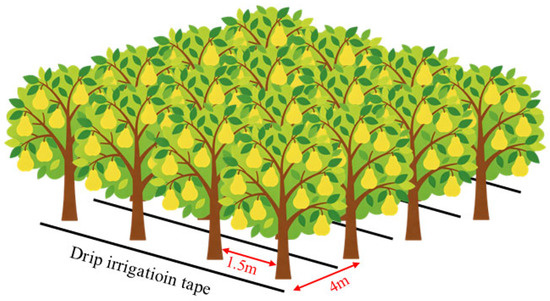
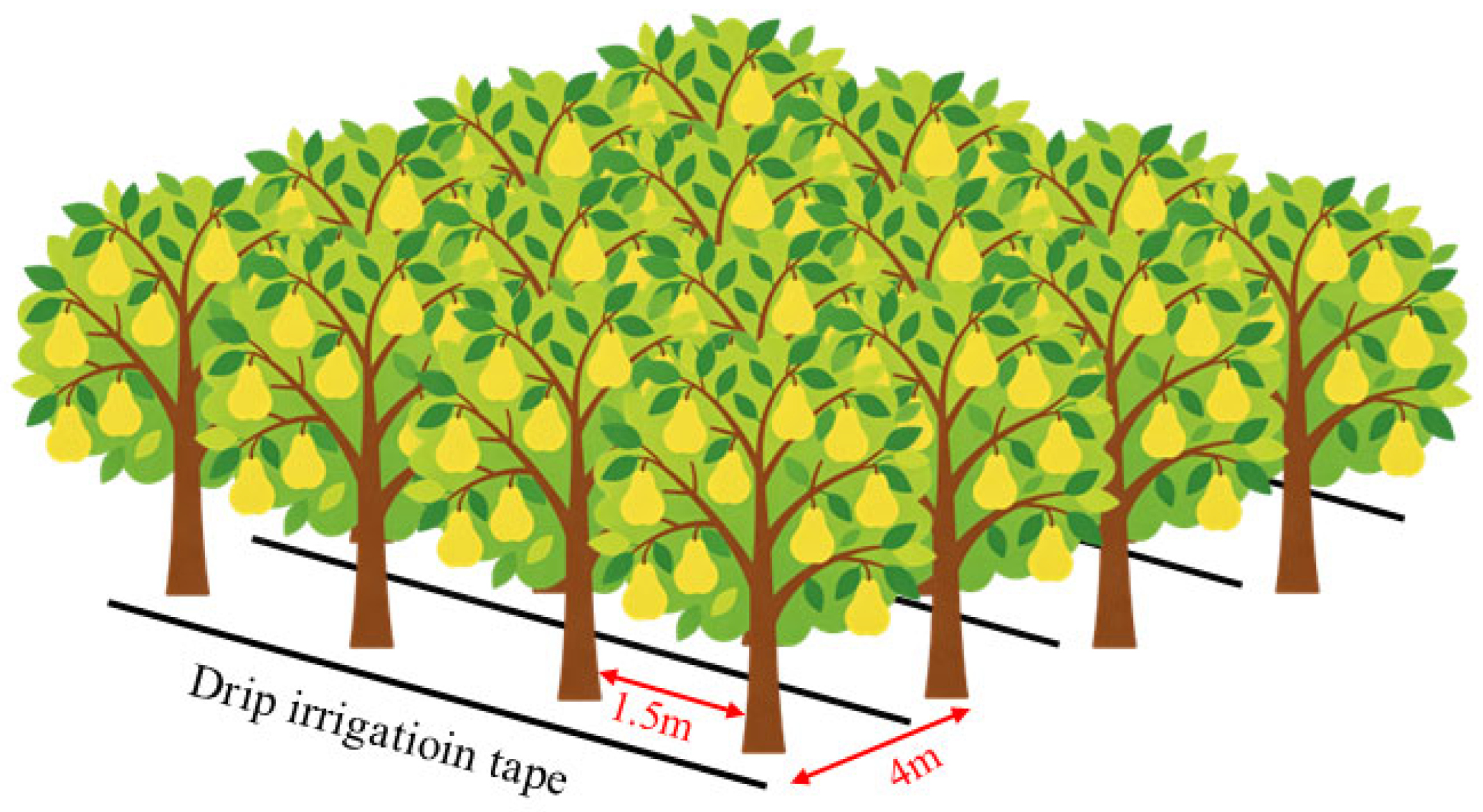
In this study, 7–8-year-old Korla balsam pear trees were selected as experimental material. A medium-fertility orchard was chosen, and field experiments involving different potassium fertilizer application rates were conducted under drip irrigation during the growing season. The trees were grafted onto Korla fragrant pear rootstock, with a row spacing of 1.5 m × 4 m and a planting density of 1500 trees/hm2 (As shown in Figure 1). Four potassium treatments were implemented; the specific irrigation and potassium levels are presented in Table 1 and Table 2. For each treatment, five trees were selected and arranged in a randomized design with three replications. Chemical fertilizers were applied as follows: nitrogen (urea, N 46%) was applied at 40% as basal before budbreak and 60% during subsequent growth stages; phosphorus (superphosphate, P2O5 46%) was fully applied before budbreak; potassium (potassium sulfate, K2O 51%) was split 40% as basal (except in K0 treatment) and 60% as follow-up. Basal fertilizers were applied via a circular furrow 50–80 cm from the trunk, 30 cm wide and 30–60 cm deep. The application method of organic fertilizer and drip irrigation regime can be found in Supplementary Material S1.
Figure 1.
The experimental area.
Table 1.
Design scheme of experimental treatments.
Table 2.
Irrigation and fertilization regime.
2.3. Sample Collection and Processing
Branch samples were collected on 6 June (fruit setting stage), 3 August (fruit expansion stage), 6 September (ripening stage), and 1 December (dormancy stage). For each treatment, three trees were randomly selected. From each tree, healthy old branches and current-year shoots of comparable length and diameter were randomly sampled from the east, west, south, and north aspects. Leaves were removed, and branches were cut into 10–20 cm segments using pruning shears, rinsed with deionized water, sealed at both ends with paraffin wax, wrapped in plastic film, placed in sealed bags, and transported on dry ice to Nanjing Aojing Biotechnology Co., Ltd., Nanjing, China, for determination of mineral element contents (N, P, K, Ca, Mg, Fe, Mn, Cu, Zn), total phenols, flavonoids, lignin, soluble sugars, and activities of polyphenol oxidase (PPO) and phenylalanine ammonia-lyase (PAL).
Fruit samples were collected at commercial ripening (6 September). Prior to harvest, yield was assessed. Three tagged trees per treatment were selected, and 20 fruits were randomly harvested from the upper to lower canopy positions in the east, south, west, and north directions of each tree. Fruits were transported to the laboratory, where individual fruit weight was measured and used to calculate yield.
2.4. Determination Methods
Mineral elements (N, P, K, Ca, Mg, Fe, Mn, Cu, Zn) in Korla fragrant pear branches were quantified using pressure vessel digestion followed by inductively coupled plasma mass spectrometry (ICP-MS) (Nanjing, Jiangsu, China) [18]. Briefly, 0.2–1.0 g of oven-dried sample or 1.0–2.0 g of fresh sample (weighed to 0.0001 g precision) was placed in a polytetrafluoroethylene digestion vessel, soaked overnight in 5 mL concentrated nitric acid, and then digested in a stainless steel-jacketed vessel at 80 °C for 1–2 h, 120 °C for 1–2 h, and 160 °C for 4 h. After cooling to room temperature, the digest was evaporated to near dryness to remove excess acid. The residue was transferred to a 25 mL volumetric flask, with the vessel and lid rinsed three times using 1% nitric acid. The rinses were combined, and the solution was brought to volume with 1% nitric acid. Reagent blanks were prepared and analyzed concurrently. The final solutions were analyzed by ICP-MS.
Soluble sugar content was determined using the anthrone colorimetric method [19]. Total phenolic content was measured by the Folin–Ciocalteu colorimetric method [20]. Flavonoid content was quantified using the aluminum chloride colorimetric method (NaNO2–Al(NO3)3–NaOH) [20]. Lignin content was determined by ultraviolet spectrophotometry [21]. The activity of phenylalanine ammonia-lyase (PAL) and polyphenol oxidase (PPO) was determined by spectrophotometry [22].
Yield per hectare was calculated from the mean yield per individual tree.
2.5. Data Analysis
Data for branch mineral element contents (N, P, K, Ca, Mg, Fe, Mn, Cu, Zn), total phenols, flavonoids, lignin, soluble sugars, phenylalanine ammonia-lyase (PAL) activity, polyphenol oxidase (PPO) activity, and fruit yield collected during the 2023–2024 growing seasons were initially compiled and organized using Microsoft Excel 2024. One-way analysis of variance (ANOVA) was performed using SPSS (version 27), followed by post hoc comparisons with the least significant difference (LSD) test at α = 0.05. All results are presented as mean ± standard error (SE). Pearson’s correlation analysis was conducted to evaluate relationships among potassium application rates, mineral element contents, total phenols, flavonoids, lignin, soluble sugars, PAL activity, and PPO activity. Figures were prepared using Origin 2021 and R software (version 4.4.1).
3. Results
3.1. Mineral Elements
As shown in Table 3, Table 4 and Table 5, application of potassium fertilizer significantly increased mineral element concentrations in current-year shoots at both ripening and dormant states. The K75 treatment significantly raised Ca and Mg contents by 52.7–84.1% and 34.2–56.4%, respectively. The K150 treatment markedly increased N by 44.3–60.2%, P by 39.1–73.7%, and Mn by 49.3–69.7%. The K225 treatment significantly elevated K content by 52.8–55.7%.
Table 3.
Effects of potassium fertilizer treatments on macronutrient contents in new shoots.
Table 4.
Effects of potassium fertilizer treatments on secondary nutrient contents in new shoots.
Table 5.
Effects of potassium fertilizer treatments on micronutrient contents in new shoots.
As shown in Table 6, Table 7 and Table 8, potassium fertilization significantly increased mineral element concentrations in old branches during both the ripening and dormant states. Compared with the control, the K75 treatment markedly elevated Ca and Mg contents by 100.74–119.75% and 28.93–60.56%, respectively. The K150 treatment significantly enhanced N content by 55.47–56.68%, P content by 84.35–177.3%, and Zn content by 41.35–52.12%. In the K225 treatment, K content was significantly increased by 71.01–86.58% across both stages.
Table 6.
Effects of potassium fertilizer treatments on macronutrient contents in old branches.
Table 7.
Effects of potassium fertilizer treatments on secondary nutrient contents in old branches.
Table 8.
Effects of potassium fertilizer treatments on micronutrient contents in old branches.
3.2. Disease Resistance Index
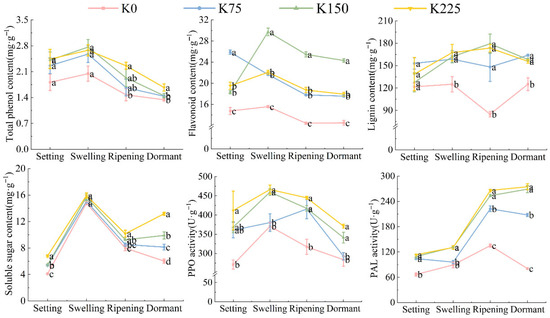
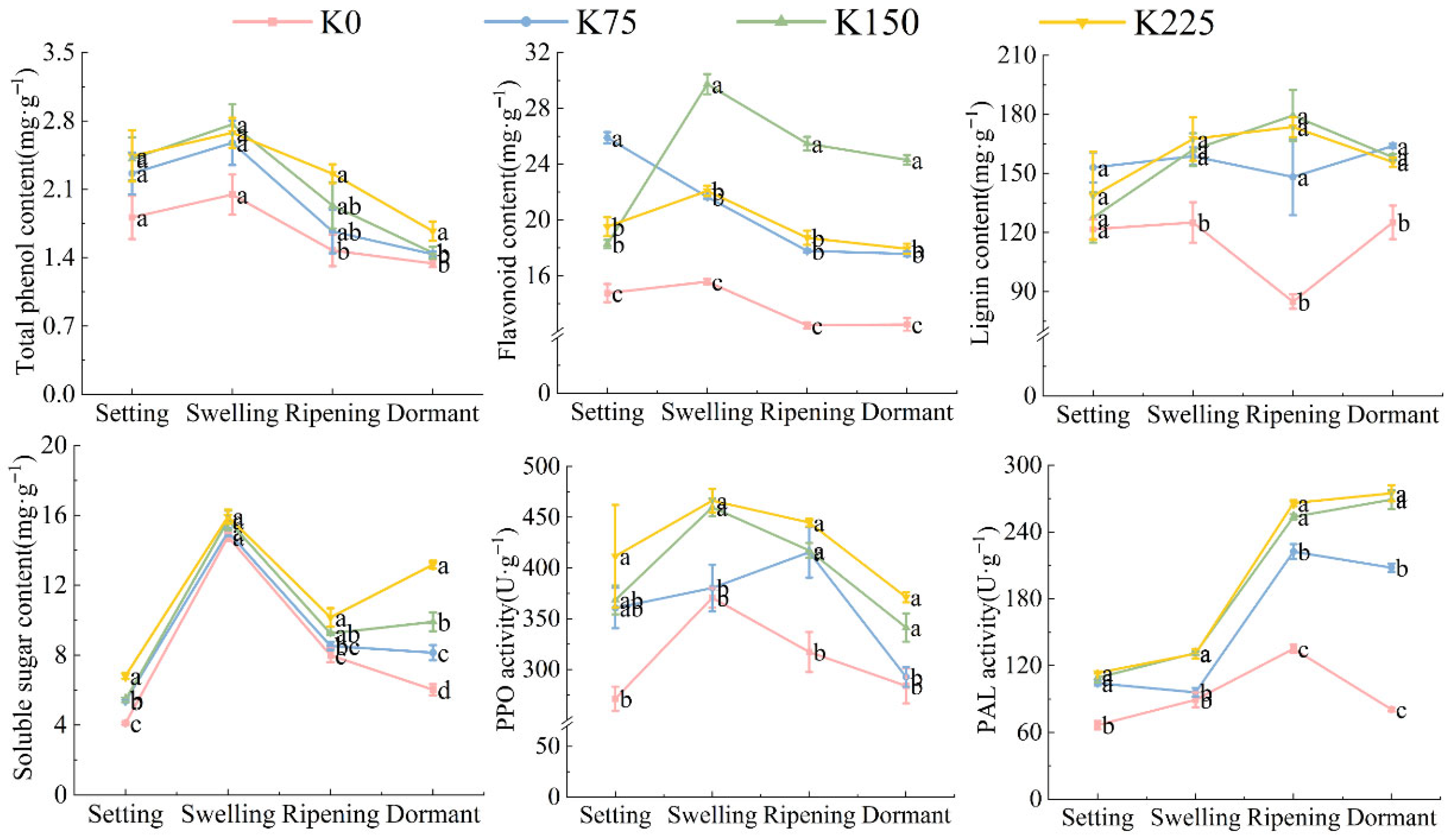
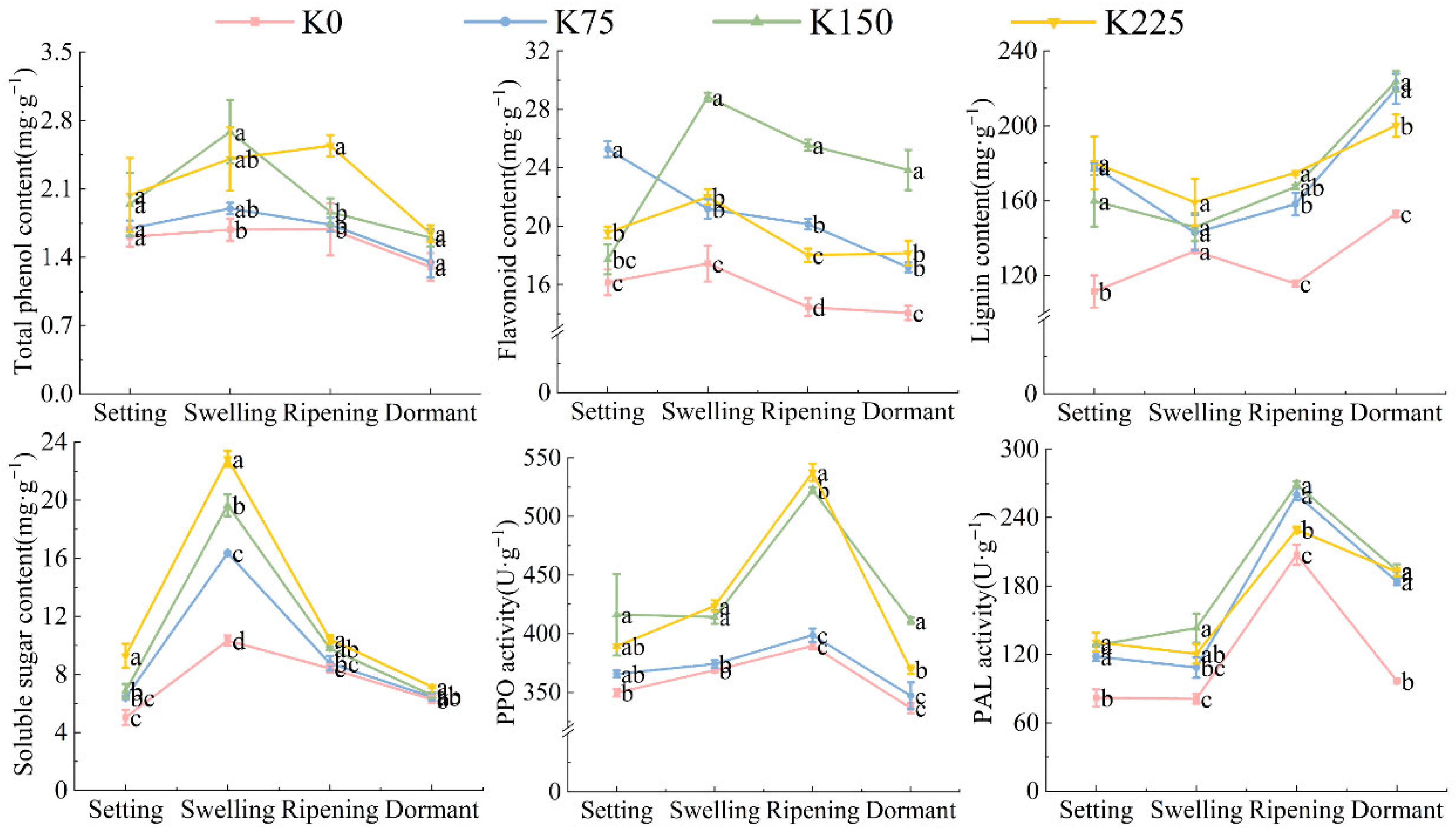
As illustrated in Figure 2, potassium fertilization improved disease resistance parameters in Korla fragrant pear shoots across the growth cycle. Under K150 treatment, flavonoid and lignin contents increased significantly by 23.82–104.76% and 26.39–111.34%, respectively, throughout the season. K225 treatment significantly elevated total phenolic content by 53.28% at ripening and 24.64% during dormancy; soluble sugar content by 27.1–118.73% during fruit setting, ripening, and dormancy; and PPO and PAL activities by 25.83–51.79% and 46.31–240.58%, respectively, over the entire growth period.
Figure 2.
Effects of potassium fertilizer treatments on disease resistance indices of new shoots. Note: Data are presented as mean ± standard deviation (n = 3), with a significance level of P = 0.05. Different lowercase letters in the same column indicate significant differences (P < 0.05).
As shown in Figure 3, the application of potassium fertilizer significantly improved multiple disease resistance indicators in old branches of Korla fragrant pear trees. K150 treatment significantly increased flavonoid content by 65.46–76.61% (fruit expansion, ripening, and dormancy) and elevated PPO and PAL activities by 12.26–34.09% and 29.67–100.21%, respectively, across the entire growth period. K225 treatment significantly enhanced total phenolic content by 43.01% (fruit expansion) and 50.62% (ripening), lignin content by 30.78–61.57% (fruit setting, ripening, and dormancy), and soluble sugar content by 14.08–121.08% throughout the growth cycle.
Figure 3.
Effects of potassium fertilizer treatments on disease resistance indices of old branches. Note: Data are presented as mean ± standard deviation (n = 3), with a significance level of P = 0.05. Different lowercase letters in the same column indicate significant differences (P < 0.05).
3.3. Correlation Analysis
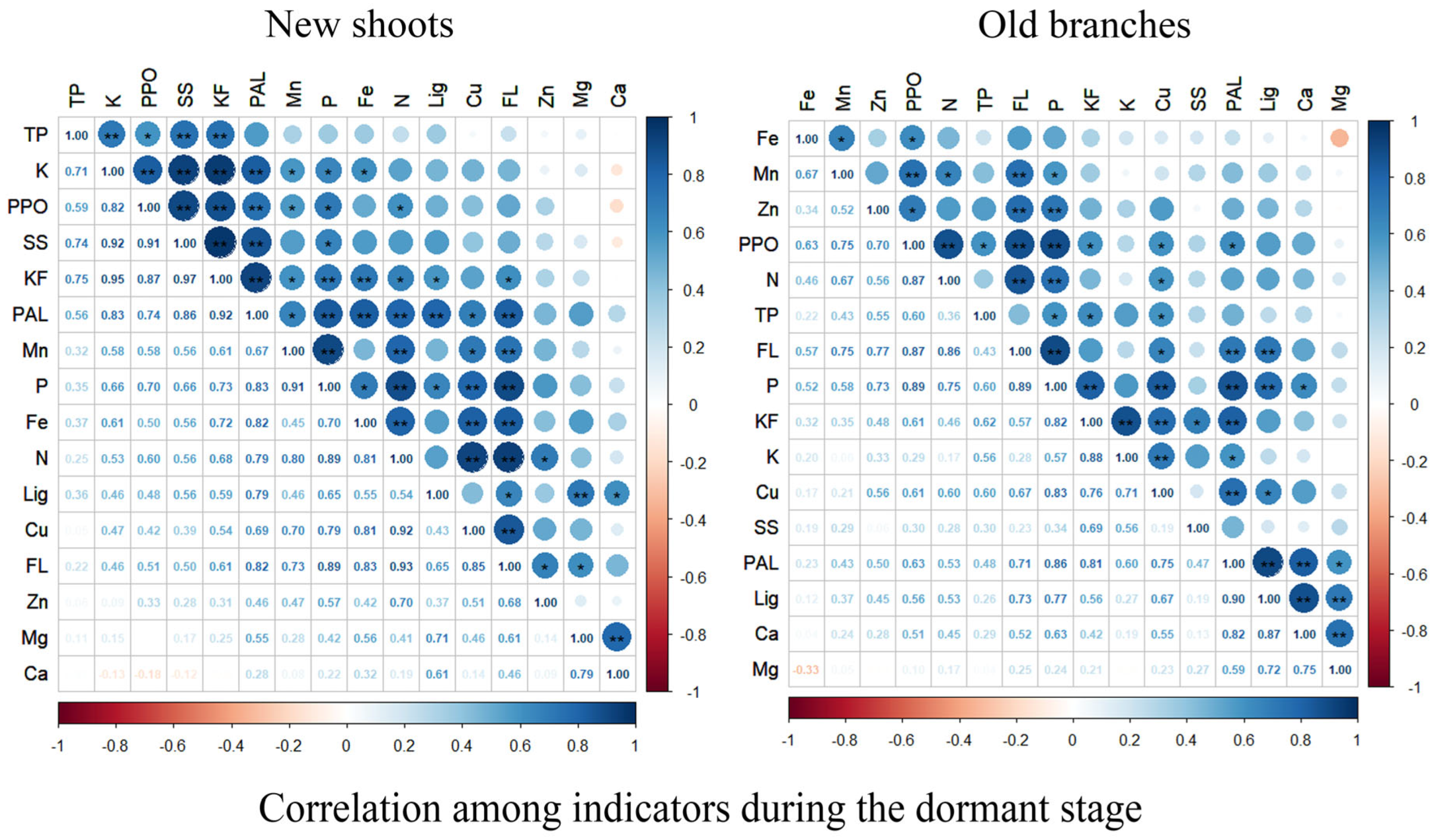
As illustrated in Figure 4, correlation heatmaps were constructed to evaluate relationships among potassium fertilizer application rates, mineral element concentrations, and disease resistance-related parameters during the dormancy period of Korla fragrant pear. In newly grown shoots (left heatmap), the potassium fertilizer application rate was significantly positively correlated with total phenolics (TP), flavonoids (FL), soluble sugars (SS), polyphenol oxidase (PPO), and phenylalanine ammonia-lyase (PAL) activities. Specifically, TP content exhibited a highly significant positive correlation with potassium (K) concentration. PPO activity was significantly positively correlated with N, P, K, and Mn contents. SS content showed significant positive correlations with P and K. PAL activity was significantly positively correlated with N, P, K, Fe, Mn, and Cu concentrations. Lignin (Lig) content was significantly positively correlated with P, Ca, and Mg. Flavonoid (FL) content displayed significant positive correlations with N, P, Mg, Fe, Mn, Cu, and Zn. In perennial branches (right heatmap), the potassium fertilizer application rate was highly significantly positively correlated with PAL activity and significantly positively correlated with SS content. PPO activity showed significant positive correlations with N, P, Fe, Mn, Cu, and Zn contents. TP content was significantly positively correlated with P and Cu. FL content exhibited highly significant positive correlations with N, P, Mn, and Zn. PAL activity was significantly positively correlated with P, K, Ca, Mg, and Cu concentrations. Lignin (Lig) content showed significant positive correlations with P, Ca, and Mg.
Figure 4.
Correlations among various indices during the dormant stage. Note: * indicates significant difference at (P < 0.05), and ** indicates extremely significant difference at (P < 0.01).
3.4. Principal Component Analysis
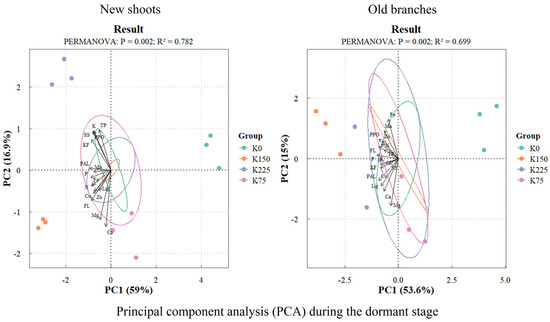
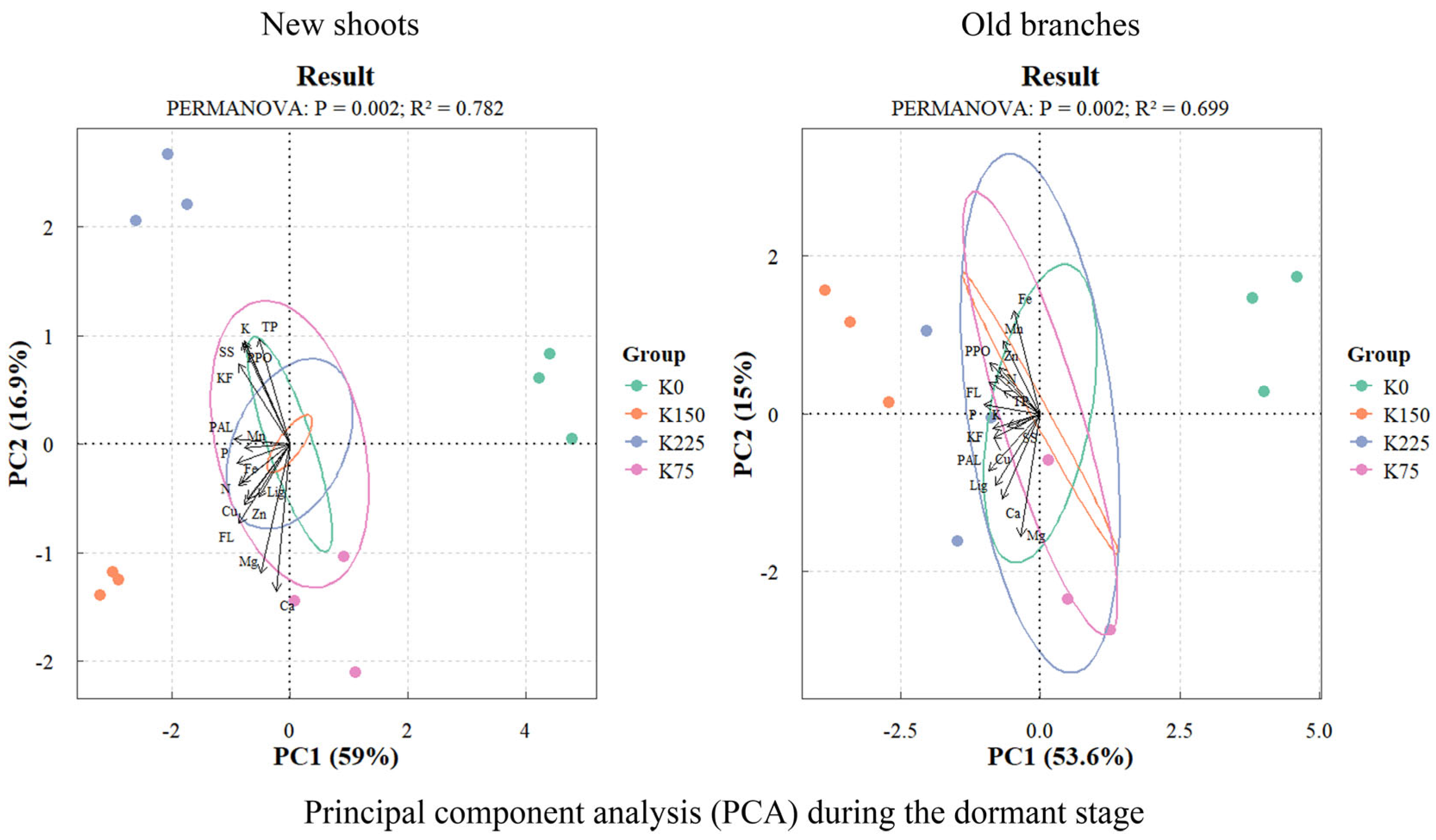
As illustrated in Figure 5, principal component analysis (PCA) was performed to explore the relationships among potassium fertilizer treatments, mineral nutrient concentrations, and disease resistance-related parameters. In dormant newly grown shoots (left panel), PC1 and PC2 accounted for 59% and 16.9% of the total variance, respectively. P and Mn exhibited strong positive loadings on PC1, whereas Ca and Mg showed strong positive loadings on PC2. Sample points representing the four potassium levels (K0, K75, K150, and K225) were clearly separated into four distinct quadrants, indicating significant differences among treatments. Vectors for Ca and Mg pointed toward the K75 cluster, reflecting elevated concentrations under this treatment. In contrast, N, Fe, Cu, Zn, flavonoid (FL), and lignin (Lig) vectors aligned with the K150 cluster, suggesting higher contents under K150 application. Vectors for K, total phenolics (TP), soluble sugars (SS), and polyphenol oxidase (PPO) activity were directed toward the K225 cluster, indicating stronger associations and significantly enhanced levels under K225 treatment. In mature perennial branches (right panel), PC1 and PC2 explained 53.6% and 15% of the variance, respectively. P displayed a strong positive loading on PC1, while Fe and Mg showed positive loadings on PC2. Sample points for K150 and K225 treatments clustered together in the second quadrant, suggesting relatively small differences between these two levels. In contrast, the K0 and K75 sample points were distinctly separated into the first and fourth quadrants, respectively, indicating significant inter-group differences. Vectors for flavonoids (FL), total phenolics (TP), lignin (Lig), and PPO activity were strongly aligned with the K150 cluster, demonstrating higher associations and significantly elevated contents under K150 treatment.
Figure 5.
Principal component analysis (PCA) of potassium fertilizer treatments, mineral elements and disease resistance indices during the dormant stage.
3.5. Yield and Path Analysis
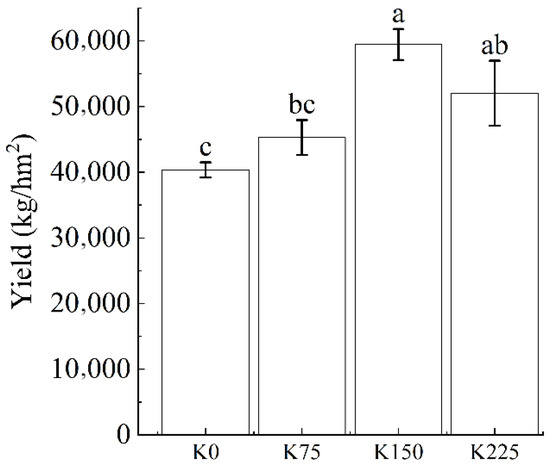
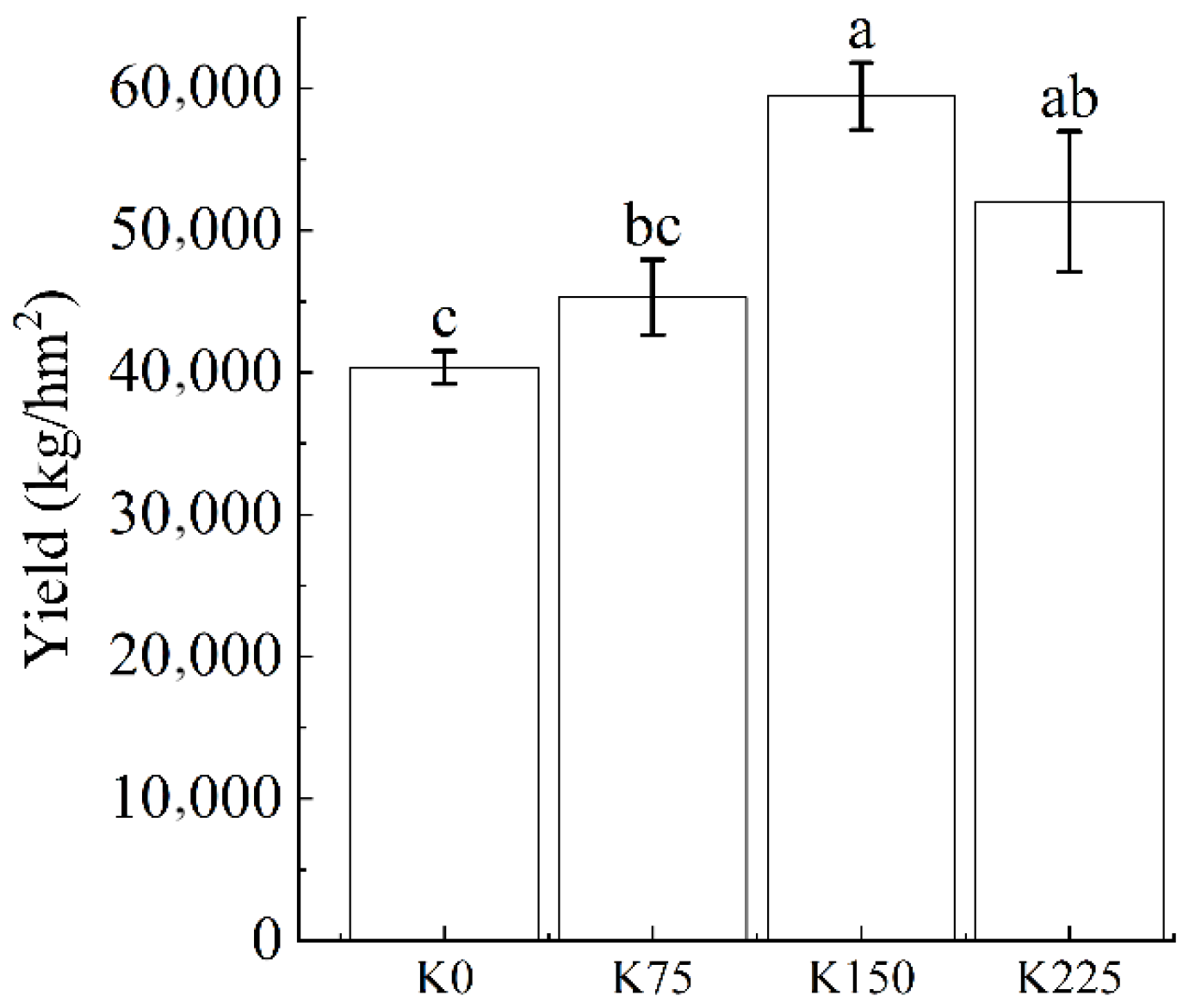
As illustrated in Figure 6, application of potassium fertilizer at rates of K75, K150, and K225 significantly enhanced the fruit yield of Korla fragrant pear compared with the control (K0). Yield increases of 47.36% and 28.93% were observed under the K150 and K225 treatments, respectively (P < 0.05). Yield showed a quadratic response to increasing potassium application rates, with the highest value recorded under K150, followed by K225, K75, and K0 (K150 > K225 > K75 > K0). These results indicate that moderate potassium supplementation markedly promotes yield, whereas excessive application (K225) results in diminished yield benefits compared with the optimal rate (K150), suggesting the existence of a threshold response to potassium in pear trees.
Figure 6.
Effects of potassium fertilizer treatments on the yield of Korla fragrant pears. Note: Data are presented as mean ± standard deviation (n = 3), with a significance level of P = 0.05. Different lowercase letters in the same column indicate significant differences (P < 0.05).
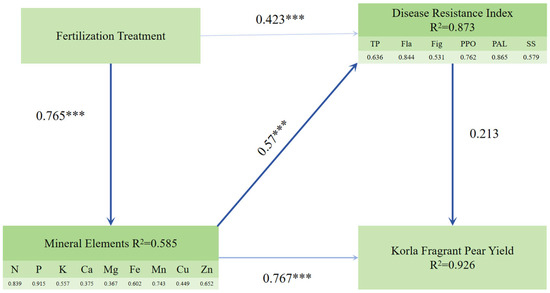
As illustrated in Figure 7 and Figure 8, structural equation modeling (SEM) was employed to elucidate the interrelationships among potassium fertilization, branch mineral nutrient concentrations, disease resistance-related parameters, and fruit yield in Korla fragrant pear. Potassium fertilization exerted highly significant direct effects on branch mineral element contents and disease resistance indices (P = 0.000 and P = 0.001, respectively), with standardized path coefficients of 0.765 and 0.423, indicating strong positive regulation of both mineral nutrition and disease resistance traits by potassium application. A highly significant positive relationship was observed between branch mineral element concentrations and disease resistance indices (P = 0.000; path coefficient = 0.57), suggesting that mineral nutrient status strongly influenced and regulated disease resistance parameters. Mineral element concentrations also exhibited a highly significant positive direct effect on fruit yield (P = 0.000; path coefficient = 0.767), demonstrating a robust contribution of mineral nutrition to yield formation. In contrast, the path from disease resistance indices to yield was not statistically significant (P = 0.066; path coefficient = 0.213), indicating that total phenolics, flavonoids, lignin, soluble sugars, and activities of PAL and PPO did not exert a significant positive regulatory effect on fruit yield.
Figure 7.
Path analysis of potassium fertilizer, mineral elements, disease resistance indices and yield. Note: *** indicates extremely high significant difference at (P < 0.001).
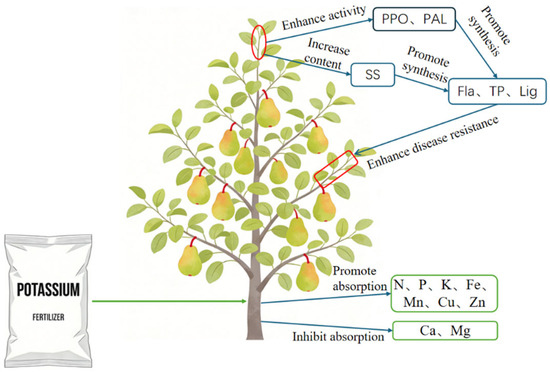
Figure 8.
Effects of potassium fertilizer application on mineral elements and disease resistance of Korla fragrant pear trees.
4. Discussion
4.1. The Effect of Potassium Fertilizer on Mineral Elements
In this study, mineral nutrient concentrations in pear trees were observed to be lower during the maturity stage and higher during dormancy. Previous research on fruit trees such as apple and peach has demonstrated seasonal variations in mineral nutrient levels, with increased uptake rates during summer leading to peak concentrations, followed by a decline to minimal levels at maturity. During dormancy, nutrient levels rise to enhance cold tolerance and facilitate overwintering [23].
Branch mineral nutrient concentrations exhibited a pattern of initial increase followed by a decrease along the potassium fertilizer gradient, with the K150 treatment showing optimal promotion of nutrient uptake in pear trees. Prior studies on navel orange have indicated that potassium application enhances N, P, and K concentrations in branches, attributing this to synergistic interactions between K and N/P elements; judicious application can thus modulate branch nutrient absorption [24]. Similarly, in cherry, low potassium levels were found to promote Ca and Mg uptake, whereas higher applications induced antagonistic interactions between K and Ca/Mg, reducing their concentrations [25]. Elevated soil potassium supply increases exchangeable K+ and CSR K+ content, disrupting exchangeable Ca2+, Mg2+, CSR Ca2+, and CSR Mg2+ levels and leading to ionic imbalances. Due to similar chemical properties among cations, membrane transporters favor K+ uptake, with high soil K+ availability impeding non-specific transporters for Ca2+ and Mg2+, thereby manifesting antagonism [26]. However, K+-Ca2+-Mg2+ antagonism extends beyond competition at cytoplasmic membrane sites, involving root system regulation. Increased potassium supply elevates Ca and Mg in fine roots while diminishing them in coarse roots, coupled with reduced overall uptake and translocation to shoots, suggesting active plant control to maintain internal ionic balance [27]. Trace elements such as Fe, Mn, Cu, and Zn were observed to increase in concentration at varying rates with escalating potassium fertilizer doses overall; however, at the highest dose, a marked reduction in these elements was evident [25]. High potassium treatments were found to exert negative effects on trace element uptake in trees, thereby impairing overall absorption. Moderate potassium levels, in contrast, demonstrate synergistic interactions with these trace elements. For example, K, Fe, Mn, Cu, and Zn serve as essential metal cofactors in antioxidant enzymes, with K playing a pivotal role in elevating enzyme activity. Upon activation, enzymes like SOD and CAT catalyze the dismutation of superoxide radicals into O2 and H2O while also degrading other reactive species; optimal catalysis of intermediates requires these cofactors [28,29]. Beyond antioxidant functions, K collaborates with Fe, Mn, Cu, and Zn to stimulate physiological processes such as photosynthesis, nutrient metabolism, and assimilation. Consequently, plants absorbing K+ ions selectively regulate exclusion and uptake based on elemental ratios to maintain operational homeostasis [30]. In fruit trees, potassium application has been shown to enhance mineral balance by elevating N, P, Ca, and Mg levels while modulating Na and Cl content. This regulation is attributed to increased cell membrane fluidity, which activates membrane-bound enzymes, enhances permeability, and bolsters ionic uptake [31]. Nutrient equilibrium thus underpins healthy plant physiological cycles, underscoring the value of judicious soil fertilization to optimize mineral absorption and regulation.
4.2. Effects of Different Potassium Fertilizer Treatments on Disease Resistance Indices of Shoots in Korla Fragrant Pear Trees
One of the primary diseases affecting pear trees is caused by the genus Botrytis, which is prevalent across all pear-producing regions in China. This pathogen damages branches, fruits, and even leaves, leading to premature tree senescence and substantial losses in leaves and fruits [32]. Upon infection by bacteria, fungi, or viruses, pear trees activate various defense mechanisms to prevent further pathogen invasion [33], including enhanced activities of antioxidant enzymes such as PAL and PPO, as well as increased contents of defensive compounds like phenolics, flavonoids, and soluble sugars. Phenolic compounds exhibit antioxidant properties that scavenge reactive oxygen species (ROS), thereby reducing oxidative damage in plants [34]. Flavonoids, a subclass of phenolics, possess strong antifungal activity and play a critical role in protecting plants from pathogen attack [35]. Their antioxidant capabilities neutralize ROS generated at infection sites [36], while rapid localization to infected cell walls reinforces structural defenses, triggers hypersensitive responses, and induces programmed cell death in surrounding tissues [37]. Numerous studies have demonstrated the importance of sugars in enhancing plant resistance and adaptation to abiotic stresses [38,39]. Sugars supply carbon nutrients and energy to drive defense responses; upon infection, sugar demand surges for processes including cell wall strengthening, phytoalexin biosynthesis, and defense-related protein induction [40]. Furthermore, soluble sugars accumulated within plants activate the expression of defense-related genes, such as pathogenesis-related (PR) genes, via sugar-mediated signaling pathways following infection [41,42]. In addition, phenylalanine ammonia-lyase (PAL) and polyphenol oxidase (PPO) enzymes are indispensable in plant defense mechanisms. Multiple defensive barriers are maintained in plants to counter pathogen invasion; upon induced systemic resistance (ISR) to pathogens, PAL and PPO activities are elevated, thereby promoting phenolic compound synthesis for antimicrobial effects [43]. PPO, as a catalytic enzyme, is closely linked to antioxidant compound production and redox homeostasis regulation [44]. Close associations exist among PAL, soluble sugars, and lignin biosynthesis [45]. Lignin, a complex aromatic heteropolymer, facilitates water transport, mechanical support, and responses to abiotic and biotic stresses [46]. Its biosynthesis is tied to the shikimate pathway and sugar metabolism [47,48], wherein erythrose-4-phosphate (E-4-P) and phosphoenolpyruvate (PEP) generated from sugar metabolism are channeled into the shikimate pathway for phenylalanine synthesis—a key lignin precursor [49]. Lignin is ultimately formed through catalysis by enzymes, including PAL and phenylalanine/tyrosine ammonia-lyase (PTAL) [50]. Elevated lignin levels reinforce cell walls, isolate infection sites, and impede or prevent pathogen dissemination [51]. Moreover, lignin serves as a physical barrier; its intricate, highly branched architecture resists pathogen degradation, thereby blocking cell wall penetration, limiting intra-plant spread, and diminishing disease potential [52].
Potassium plays a direct role in essential functions within plant organisms, with adequate potassium supply being critical for cell membrane stability, branch growth and development, and responses to abiotic stresses [53]. In this study, compared with the untreated control (no potassium fertilizer), potassium application significantly elevated total phenolic, flavonoid, lignin, and soluble sugar contents, as well as phenylalanine ammonia-lyase (PAL) and polyphenol oxidase (PPO) enzyme activities in Korla fragrant pear trees. Notably, flavonoid content under the K150 treatment and PAL activity in perennial branches were significantly higher than those under K75 and K225 treatments, whereas total phenolic and soluble sugar contents, PPO activity, and PAL activity in newly grown shoots were significantly higher under K225 compared with K75 and K150. Jin [54] demonstrated that exogenous potassium substantially increases total phenolic and lignin contents while enhancing antioxidant enzyme activities such as PAL and PPO, consistent with the present findings; moreover, exogenous potassium was found to upregulate phenylpropanoid biosynthesis genes, including CCoAOMT and PAL, thereby augmenting total phenolic and lignin levels. Previous research has indicated that exogenous potassium exerts a strong stimulatory effect on antioxidant enzyme activities like PAL and PPO [55], attributed to potassium’s ability to upregulate the expression of genes encoding enzymes such as PPO, resulting in heightened activity [56]. In their results, Jin [57] showed that potassium fertilization increases total phenolic and flavonoid contents in crops, enhances antioxidant activity, and promotes polysaccharide accumulation. Wu [58] found that potassium fertilizer application could upregulate the activities of enzymes involved in sugar decomposition and synthesis in fruit trees, improve the sugar metabolism processes and sink capacity in plants, and further promote the accumulation and concentration of polysaccharides in plants. Consequently, in practical orchard management, supplemental exogenous potassium can bolster pear tree defenses against pathogens, thereby mitigating economic losses from diseases during the growing season through proactive prevention.
4.3. Correlations Between Different Potassium Fertilizer Treatments and Disease Resistance Indices of Shoots in Korla Fragrant Pear Trees
Mineral nutrients, serving as structural components and metabolic regulators, exert critical direct or indirect effects on plant defense systems when health is compromised by abiotic stresses [59,60]. The abundance of these elements decisively modulates plant susceptibility or resistance to invading pathogens [61]. Mineral elements directly stimulate defense-related metabolic pathways by enhancing enzyme content and activity to bolster plant health while indirectly influencing it through alterations in microbial communities, rhizosphere exudates, and soil pH [62]. In the present study, strong positive correlations were observed between branch concentrations of N, P, K, Fe, Mn, and Zn and pear tree disease resistance indices; path analysis further revealed a highly significant positive effect of branch mineral elements on these indices. Mineral nutrients, including macronutrients (N, P, K), secondary elements (Ca, Mg), and micronutrients (Fe, Mn, Cu, Zn), have been implicated in plant growth and pathogen resistance [63]. Nitrogen, a pivotal element, profoundly impacts plant–pathogen interactions by restricting pathogen proliferation and eliciting active defense responses. Moreover, distinct nitrogen forms differentially affect disease resistance via assimilation and metabolic routes [64,65]. Phosphorus (P) ranks as the second most essential nutrient in crops after nitrogen (N), yet its effects on crop resistance exhibit considerable variability [66]. Primarily, P serves as a component of ATP, enabling direct activation of jasmonic acid (JA) signaling upon pathogen invasion, which in turn induces defensive responses and heightens crop sensitivity to pathogens [67,68]. Potassium (K) contributes substantially to plant adaptation under diverse abiotic stresses [69], regulating the activity of multiple defense enzymes while modulating metabolic pathways to facilitate adaptive survival strategies in varying stress conditions [70]. Studies have found that the total phenolic content in plants is significantly regulated by potassium. As a cofactor for PAL activity, potassium application can induce phenolic synthesis pathways such as the acetate–shikimate pathway and effectively enhance the biosynthesis of total phenolic compounds. This research finding has been reasonably verified in fruit trees such as pistachios and grapes [71]. Trace elements similarly exert critical influences on plant disease resistance. Iron (Fe) displays duality in biological systems, often contested between pathogens and hosts; upon infection, Fe is utilized by plants to amplify localized oxidative stress as a countermeasure against pathogen ingress [72]. Manganese (Mn) facilitates the biosynthesis of phenolic compounds and lignin, thereby markedly enhancing the efficacy of plant defenses [73]. Zinc (Zn) is pivotal in plant–pathogen interactions, primarily through enzyme activation and stabilization [74]; Zn deficiency renders plants highly vulnerable to fungal infections [75], whereas sufficient Zn levels not only augment host sensitivity but also mitigate symptom severity post-infection, thereby improving survival rates [76,77]. Copper (Cu), in addition to mediating electron transport and signal transduction in plants, is a key component for cell wall lignification and also functions as a cofactor regulating the activities of PAL and PPO. Copper deficiency causes excessive accumulation of hydrogen peroxide in plant tissues, which not only results in severe damage to cell membranes but also induces intense intracellular oxidative stress responses [78]. Collectively, these findings underscore the intimate linkage between plant mineral nutrition and disease resistance, wherein deficiencies in specific elements elevate infection risks, diminish defensive capabilities, and increase susceptibility to environmental stressors.
4.4. Effects of Different Potassium Fertilizer Treatments on the Yield of Korla Fragrant Pear
The results of this study demonstrate that Korla fragrant pear yields were enhanced under all potassium application treatments, with efficacy ranked as follows: K150 > K225 > K75 > K0. Although yields under K150 and K225 treatments were significantly elevated compared to K0, the K150 treatment proved superior to K225, indicating that moderate potassium fertilization optimally promotes yield, whereas excessive application may induce adverse factors that diminish overall benefits. Consistent with these findings, potassium fertilizer has been shown to significantly increase fruit yield while also regulating water uptake and utilization, as well as influencing assimilation, metabolism, and growth processes [79]. Exogenous potassium application has further been reported to enhance nitrogen absorption, thereby improving nitrogen use efficiency and boosting fruit yield [80]. Additionally, increased potassium fertilization has been observed to markedly improve canopy length and fresh weight, fostering vigorous tree growth that supplies greater nutrients to fruits, resulting in enhanced diameter and flesh development, and consequently higher total yields per hectare [81]. The present study also found that as fruits develop toward the mature stage, plant demand for potassium (K) gradually becomes intense. Increasing the frequency of potassium fertilizer topdressing during the fruit development period can significantly improve fruit yield [53]. Path analysis revealed a significant, strong positive influence of mineral element content on yield, whereas pear tree disease resistance indicators exerted no notable effect. Mineral elements such as N, P, K, Ca, and Mg have been documented to promote yield by elevating enzyme activity, strengthening root growth and development, and bolstering cellular stability. Studies have found that fruit yield is closely related to the mineral nutrient status of plants during actual growth. Appropriate mineral element contents assist fruit trees in improving the structural functions of leaves and branches, enhancing enzyme activities, and promoting photosynthesis in the early growth stage, thereby increasing fruit yield [82]. Moreover, synergistic interactions among trace elements regulate physiological functions, including photosynthetic efficiency, cell wall integrity, and antioxidant gene activation, thereby sustaining yields under diverse stresses [83]. Disease-resistant compounds such as PAL, PPO, and phenolics have primarily been associated with improvements in fruit quality attributes, including maturity, freshness, storage life, and coloration [84,85]. Although research on the impact of these compounds on fruit yield remains limited, the present experimental outcomes suggest that, in practical cultivation, bolstering fragrant pear tree resistance can prevent pathogen invasion or mitigate biotic and abiotic stresses, thereby stabilizing yields through elevated survival rates. Such effects may be augmented by the synergistic application of potassium with other fertilizers or by the regulatory interplay of K with additional mineral elements.
5. Conclusions
Potassium fertilization induces significant alterations in disease resistance indicators within fragrant pear tree branches. The K150 treatment (150 kg·hm−2) markedly elevates flavonoid, lignin, and soluble sugar contents while substantially enhancing PPO and PAL enzyme activities, with optimal improvements observed in flavonoid levels and PAL activity in perennial branches. Similarly, the K225 treatment (225 kg·hm−2) significantly increases total phenolic, flavonoid, lignin, and soluble sugar contents, alongside heightened PPO and PAL activities, demonstrating superior effects on total phenolics, soluble sugars, PPO activity, and PAL activity in new shoots. To safeguard tree health and minimize production costs while averting soil pollution from excessive fertilizer use, potassium application at 150 kg·hm−2 under drip irrigation—supplemented by judicious organic and N-P fertilizer regimes—is recommended as the optimal strategy for 7- to 8-year-old Korla fragrant pear cultivation.
Supplementary Materials
The following supporting information can be downloaded at: https://www.mdpi.com/article/10.3390/horticulturae12050532/s1. This information supplements the organic fertilizer application methods and drip irrigation practices. Experimental design: Prior to the experiment, 27,000 kg·hm−2 of semi-decomposed sheep manure was applied as a one-time basal fertilizer in autumn, using a broadcast and incorporation method. The manure contained 18.52% organic carbon, 0.76% nitrogen, 0.52% phosphorus, and 0.45% potassium. Basal fertilizers were applied via a circular furrow 50–80 cm from the trunk, 30 cm wide and 30–60 cm deep. Follow-up fertilization was carried out via differential pressure drip irrigation, using 15 L fertilization tanks. The irrigation schedule followed a 1/4–1/2–1/4 cycle: initial water pre-flush, middle fertilization phase, and final pipe flushing. Other agronomic practices followed local standards.
Author Contributions
L.Y.: Investigation, Data Curation, and Writing—Original Draft; M.W.: Conceptualization, Formal Analysis, and Visualization; C.Y.: Investigation, Data Curation, and Formal Analysis; P.J.: Methodology, Data Curation, and Resources; X.G.: Investigation and Data curation; E.L.: Investigation and Formal Analysis; Z.C.: Conceptualization, Methodology, Supervision, Funding Acquisition, and Writing—Review and Editing. All authors have read and agreed to the published version of the manuscript.
Funding
This work was supported by the Xinjiang Forest Fruit Industry Technology System—Soil Fertility and Cultivation (XJLGCYJSTX05-2024-03); the Xinjiang Uygur Autonomous Region “Agriculture, Rural Areas and Farmers” Backbone Talents Training Project (2022SNGGGCC017); and the National Natural Science Foundation of China (32360802, 31960639).
Data Availability Statement
The original contributions presented in this study are included in the article. Further inquiries can be directed at the corresponding authors.
Acknowledgments
The authors sincerely thank the College of Resources and Environment at Xinjiang Agricultural University for providing experimental facilities and technical support. We also acknowledge the field technicians and laboratory staff for their essential assistance in sample collection and analysis.
Conflicts of Interest
The authors declare that they have no known competing financial interests or personal relationships that could have appeared to influence the work reported in this paper.
References
- Yu, M.; Li, Y.; Wang, L.; Fan, W.; Wang, Z.; Wang, H.; Guo, K.; Fu, L.; Bao, J. Research on the Precise Regulation of Korla Fragrant Pear Quality Based on Sensitivity Analysis and Artificial Neural Network Model. Agronomy 2025, 15, 1236. [Google Scholar] [CrossRef] [Scilit]
- Wang, Y.; Deng, Y.; Jiang, W.; An, S.; Ma, L.; Wang, Z.; Zheng, Q.; Yan, P.; Chen, Q. Proteomic mechanism of sugar and organic acid metabolism during Korla fragrant pear (Pyrus sinkiangensis Yü) fruit development. Sci. Rep. 2025, 15, 26935. [Google Scholar] [CrossRef] [Scilit]
- Li, Y.; Ye, Y.; Huan, W.; Ji, J.; Ma, J.; Sheng, Q.; Lei, J. Comparative transcriptome analysis and candidate gene mining for fire blight of Pear resistance in Korla fragrant Pear (Pyrus sinkiangensis Yü). Sci. Rep. 2025, 15, 15073. [Google Scholar] [CrossRef] [Scilit] [PubMed]
- Lv, W.; Wang, R.; Ji, W.; Fu, B.; Luo, M.; Han, J. A Herpetosiphon llansteffanensis Strain from Forest Soil Exhibits Biocontrol Activity Against Pear Fire Blight. Plants 2025, 14, 1564. [Google Scholar] [CrossRef] [Scilit] [PubMed]
- Zhang, Y.; Wang, Z.; Zhang, Z.; Wang, L.; Feng, H. Study on Pathogenesis of Cytospora pyri in Korla Fragrant Pear Trees (Pyrus sinkiangensis). J. Fungi 2025, 11, 257. [Google Scholar] [CrossRef] [Scilit] [PubMed]
- Anthony, B.N.; Dawa, D.B.; Rajesh, K.S.; Savita, J.; Ankita, S.; Chamin, C.; Mariya, A.; Shrvan, K.; Anjani, K.P.; Basant, K.D. Mineral Nutrient Acquisition under Abiotic Stress Conditions. Plant Sci. Today 2026, 13, 13138. [Google Scholar] [CrossRef] [Scilit]
- Römheld, V.; Kirkby, E.A. Research on potassium in agriculture: Needs and prospects. Plant Soil 2010, 335, 155–180. [Google Scholar] [CrossRef] [Scilit]
- Broschat, T.K. Fertilization improves cold tolerance in coconut palm. HortTechnology 2010, 20, 852–855. [Google Scholar] [CrossRef] [Scilit]
- Sardans, J.; Peñuelas, J. Potassium: A neglected nutrient in global change. Glob. Ecol. Biogeogr. 2015, 24, 261–275. [Google Scholar] [CrossRef] [Scilit]
- Wang, M.; Zheng, Q.; Shen, Q.; Guo, S. The critical role of potassium in plant stress response. Int. J. Mol. Sci. 2013, 14, 7370–7390. [Google Scholar] [CrossRef] [Scilit]
- Harrewijn, P. Potassium and plant health. Neth. J. Plant Pathol. 1979, 85, 82. [Google Scholar] [CrossRef] [Scilit]
- Holzmueller, E.J.; Jose, S.; Jenkins, M.A. Influence of calcium, potassium, and magnesium on Cornus florida L. density and resistance to dogwood anthracnose. Plant Soil 2007, 290, 189–199. [Google Scholar] [CrossRef] [Scilit]
- Prasad, D.; Singh, R.; Singh, A. Management of sheath blight of rice with integrated nutrients. Indian Phytopathol. 2010, 63, 11–15. [Google Scholar]
- Liu, D.; Song, C.; Fang, C.; Xin, Z.; Xi, J.; Lu, Y. A recommended nitrogen application strategy for high crop yield and low environmental pollution at a basin scale. Sci. Total Environ. 2021, 792, 148464. [Google Scholar] [CrossRef] [Scilit]
- Bruns, H.A.; Ebelhar, M.W. Nutrient uptake of maize affected by nitrogen and potassium fertility in a humid subtropical environment. Commun. Soil Sci. Plant Anal. 2006, 37, 275–293. [Google Scholar] [CrossRef] [Scilit]
- Xu, X.; Zhang, X.; Liu, C.; Qin, H.; Sun, F.; Liu, J.; Lyu, M.; Xing, Y.; Tian, G.; Zhu, Z.; et al. Appropriate increasing potassium supply alleviates the inhibition of high nitrogen on root growth by regulating antioxidant system, hormone balance, carbon assimilation and transportation in apple. Sci. Hortic. 2023, 311, 111828. [Google Scholar] [CrossRef] [Scilit]
- Amtmann, A.; Troufflard, S.; Armengaud, P. The effect of potassium nutrition on pest and disease resistance in plants. Physiol. Plant. 2008, 133, 682–691. [Google Scholar] [CrossRef] [Scilit] [PubMed]
- Ali, M.M.; Anwar, R.; Shafique, M.W.; Yousef, A.F.; Chen, F. Exogenous Application of Mg, Zn and B Influences Phyto-Nutritional Composition of Leaves and Fruits of Loquat (Eriobotrya japonica Lindl.). Agronomy 2021, 11, 224. [Google Scholar] [CrossRef] [Scilit]
- Zhou, J.; Yang, S.; Ma, Y.; Liu, Z.; Tu, H.; Wang, H.; Zhang, J.; Chen, Q.; He, W.; Li, M.; et al. Soluble sugar and organic acid composition and flavor evaluation of Chinese cherry fruits. Food Chem. X 2023, 20, 100953. [Google Scholar] [CrossRef] [Scilit] [PubMed]
- Tapia, P.E.; Silva, A.M.; Delerue-Matos, C.; Moreira, M.; Rodrigues, F.; Torres Carro, R.; Santi, M.D.; Ortega, M.G.; Blázquez, M.A.; Arena, M.E.; et al. Exploring the Phytochemical Composition and the Bioactive Properties of Malbec and Torrontés Wine Pomaces from the Calchaquíes Valleys (Argentina) for Their Sustainable Exploitation. Foods 2024, 13, 1795. [Google Scholar] [CrossRef] [Scilit]
- Lu, F.; Wang, C.; Chen, M.; Yue, F.; Ralph, J. A facile spectroscopic method for measuring lignin content in lignocellulosic biomass. Green Chem. 2021, 23, 5106–5112. [Google Scholar] [CrossRef] [Scilit]
- Amri, R.; Forcada, C.F.i.; Giménez, R.; Pina, A.; Moreno, M. Biochemical characterization and differential expression of PAL genes associated with “translocated” peach/plum graft-incompatibility. Front. Plant Sci. 2021, 12, 622578. [Google Scholar] [CrossRef] [Scilit]
- Cruz, A.F.; Almeida, G.M.; Wadt, P.G.S.; de Carvalho, M.; Ramos, M.L.G. Seasonal variation of plant mineral nutrition in fruit trees. Braz. Arch. Biol. Technol. 2019, 62, e19180340. [Google Scholar] [CrossRef] [Scilit]
- Wen, M.; Zhang, J.; Zheng, Y.; Yi, S. Effects of Combined Potassium and Organic Fertilizer Application on Newhall Navel Orange Nutrient Uptake, Yield, and Quality. Agronomy 2021, 11, 1990. [Google Scholar] [CrossRef] [Scilit]
- Yener, H.; Altuntaş, Ö. Effects of potassium fertilization on leaf nutrient content and quality attributes of sweet cherry fruits (Prunus avium L.). J. Plant Nutr. 2021, 44, 946–957. [Google Scholar] [CrossRef] [Scilit]
- Yan, B.; Sun, Y.Y.; Wei, Y. Potassium–calcium antagonistic interaction under tomato magnesium deficiency and magnesium fertiliser regulation in solar greenhouse. Qual. Assur. Saf. Crops Foods 2020, 12, 76–86. [Google Scholar] [CrossRef] [Scilit]
- Diem, B.; Godbold, D.L. Potassium, calcium and magnesium antagonism in clones of Populus trichocarpa. Plant Soil 1993, 155, 411–414. [Google Scholar] [CrossRef] [Scilit]
- Saleem, A.; Zulfiqar, A.; Ali, B.; Naseeb, M.A.; Almasaudi, A.S.; Harakeh, S. Iron Sulfate (FeSO4) Improved Physiological Attributes and Antioxidant Capacity by Reducing Oxidative Stress of Oryza sativa L. Cultivars in Alkaline Soil. Sustainability 2022, 14, 16845. [Google Scholar] [CrossRef] [Scilit]
- Saleem, A.; Zulfiqar, A.; Saleem, M.Z.; Ali, B.; Saleem, M.H.; Ali, S.; Tufekci, E.D.; Tufekci, A.R.; Mostafa, R.M. Alkaline and acidic soil constraints on iron accumulation by Rice cultivars in relation to several physio-biochemical parameters. BMC Plant Biol. 2023, 23, 397. [Google Scholar] [CrossRef] [Scilit]
- Malvi, U.R. Interaction of micronutrients with major nutrients with special reference to potassium. Karnataka J. Agric. Sci. 2011, 24, 106–109. [Google Scholar]
- Lo’ay, A.A.; EL-Ezz, S.F.A.; Awadeen, A.A. Effect of different foliar potassium fertilization forms on vegetative growth, yield, and fruit quality of kaki trees grown in sandy soil. Sci. Hortic. 2021, 288, 110420. [Google Scholar] [CrossRef] [Scilit]
- Wang, C.; Zhang, Y.; Ou, C.; Wang, F.; Ma, L.; Wang, C.; Jiang, S. Isolation and Identification of Pear Ring Rot Fungus and Resistance Evaluation of Different Pear Varieties. Horticulturae 2024, 10, 1152. [Google Scholar] [CrossRef] [Scilit]
- Liu, Y.H.; Song, Y.H.; Ruan, Y.L. Sugar conundrum in plant–pathogen interactions: Roles of invertase and sugar transporters depend on pathosystems. J. Exp. Bot. 2022, 73, 1910–1925. [Google Scholar] [CrossRef] [Scilit]
- Wang, J.; Cai, J.; Zhao, J.; Guo, Z.; Pan, T.; Yu, Y.; She, W. Enzyme Activities in the Lignin Metabolism of Chinese Olive (Canarium album) with Different Flesh Characteristics. Horticulturae 2022, 8, 408. [Google Scholar] [CrossRef] [Scilit]
- Zheng, X.; Zhang, X.; Zeng, F. Biological Functions and Health Benefits of Flavonoids in Fruits and Vegetables: A Contemporary Review. Foods 2025, 14, 155. [Google Scholar] [CrossRef] [Scilit]
- Jin, Y.S. Recent advances in natural antifungal flavonoids and their derivatives. Bioorganic Med. Chem. Lett. 2019, 29, 126589. [Google Scholar] [CrossRef] [Scilit]
- Beckman, C.H. Phenolic-storing cells: Keys to programmed cell death and periderm formation in wilt disease resistance and in general defence responses in plants? Physiol. Mol. Plant Pathol. 2000, 57, 101–110. [Google Scholar] [CrossRef] [Scilit]
- Ruan, Y.L. Sucrose metabolism: Gateway to diverse carbon use and sugar signaling. Annu. Rev. Plant Biol. 2014, 65, 33–67. [Google Scholar] [CrossRef] [Scilit]
- Wang, L.; Ruan, Y.L. Shoot–root carbon allocation, sugar signalling and their coupling with nitrogen uptake and assimilation. Funct. Plant Biol. 2016, 43, 105–113. [Google Scholar] [CrossRef] [Scilit]
- Kumudini, B.S.; Jayamohan, N.S.; Patil, S.V.; Govardhana, M. Primary plant metabolism during plant–pathogen interactions and its role in defense. In Plant Metabolites and Regulation Under Environmental Stress; Academic Press: Cambridge, MA, USA, 2018; pp. 215–229. [Google Scholar] [CrossRef] [Scilit]
- Gebauer, P.; Korn, M.; Engelsdorf, T.; Sonnewald, U.; Koch, C.; Voll, L.M. Sugar accumulation in leaves of Arabidopsis sweet11/sweet12 double mutants enhances priming of the salicylic acid-mediated defense response. Front. Plant Sci. 2017, 8, 1378. [Google Scholar] [CrossRef] [Scilit]
- Ru, L.; Osorio, S.; Wang, L.; Fernie, A.; Patrick, J.; Ruan, Y. Transcriptomic and metabolomics responses to elevated cell wall invertase activity during tomato fruit set. J. Exp. Bot. 2017, 68, 4263–4279. [Google Scholar] [CrossRef] [Scilit]
- Konappa, N.M.; Maria, M.; Uzma, F.; Krishnamurthy, S.; Nayaka, S.C.; Niranjana, S.R.; Chowdappa, S. Lactic acid bacteria mediated induction of defense enzymes to enhance the resistance in tomato against Ralstonia solanacearum causing bacterial wilt. Sci. Hortic. 2016, 207, 183–192. [Google Scholar] [CrossRef] [Scilit]
- Tilley, A.; McHenry, M.P.; McHenry, J.A.; Solah, V.; Bayliss, K. Enzymatic browning: The role of substrates in polyphenol oxidase mediated browning. Curr. Res. Food Sci. 2023, 7, 100623. [Google Scholar] [CrossRef] [Scilit]
- Jiao, Y.; Gong, X.; Qi, K.; Xie, Z.; Wang, Y.; Yuan, K.; Pan, Q.; Zhang, S.; Shiratake, K.; Khanizadeh, S.; et al. Transcriptome analysis provides new ideas for studying the regulation of glucose-induced lignin biosynthesis in pear calli. BMC Plant Biol. 2022, 22, 310. [Google Scholar] [CrossRef] [Scilit]
- Cesarino, I. Structural features and regulation of lignin deposited upon biotic and abiotic stresses. Curr. Opin. Biotechnol. 2019, 56, 209–214. [Google Scholar] [CrossRef] [Scilit]
- Herrmann, K.M.; Weaver, L.M. The shikimate pathway. Annu. Rev. Plant Biol. 1999, 50, 473–503. [Google Scholar] [CrossRef] [Scilit] [PubMed]
- Liu, J.; Huang, Q.; Kang, P.; Liang, L.; Chen, J. Lignin Accumulation in Three Pumelo Cultivars in Association with Sucrose and Energy Depletion. Biomolecules 2019, 9, 701. [Google Scholar] [CrossRef] [Scilit]
- Huang, Y.; Liang, D.; Xia, H.; Lin, L.-J.; Wang, J.; Lv, X.-L. Lignin and Quercetin Synthesis Underlies Berry Russeting in ‘Sunshine Muscat’ Grape. Biomolecules 2020, 10, 690. [Google Scholar] [CrossRef] [Scilit] [PubMed]
- Choi, S.J.; Lee, Z.; Kim, S.; Jeong, E.; Shim, J.S. Modulation of lignin biosynthesis for drought tolerance in plant. Front. Plant Sci. 2023, 14, 1116426. [Google Scholar] [CrossRef] [Scilit] [PubMed]
- Riseh, R.S.; Fathi, F.; Lagzian, A.; Vatankhah, M.; Kennedy, J.F. Modifying lignin: A promising strategy for plant disease control. Int. J. Biol. Macromol. 2024, 271, 132696. [Google Scholar] [CrossRef] [Scilit]
- Chen, M.; Li, Y.; Liu, H.; Zhang, D.; Shi, Q.; Zhong, X.; Guo, Y.; Xie, X. High value valorization of lignin as environmental benign antimicrobial. Mater. Today Bio 2023, 18, 100520. [Google Scholar] [CrossRef] [Scilit]
- Kuzin, A.; Solovchenko, A. Essential Role of Potassium in Apple and Its Implications for Management of Orchard Fertilization. Plants 2021, 10, 2624. [Google Scholar] [CrossRef] [Scilit]
- Jin, Q.; Yang, K.; Zhang, Y.; Zhang, S.; Liu, Z.; Guan, Y.; Zhang, L.; Zhang, Y.; Wang, Q. Physiological and molecular mechanisms of silicon and potassium on mitigating iron-toxicity stress in Panax ginseng. Plant Physiol. Biochem. 2024, 215, 108975. [Google Scholar] [CrossRef] [Scilit]
- Rocha, I.; Silva, A.V.; Freire, F.J.; Oliveira, E.C.A.; Souza, E.R.; Enders, L. Biochemical differences in the initial growth of sugarcane varieties cultivated under different potassium doses and water conditions. Rev. Caatinga 2023, 36, 61–69. [Google Scholar] [CrossRef] [Scilit]
- Che, Y.; Yao, T.; Wang, H.; Wang, Z.; Zhang, H.; Sun, G.; Zhang, H. Potassium ion regulates hormone, Ca2+ and H2O2 signal transduction and antioxidant activities to improve salt stress resistance in tobacco. Plant Physiol. Biochem. 2022, 186, 40–51. [Google Scholar] [CrossRef] [Scilit] [PubMed]
- Jin, L.; Yuan, Q.; Bi, J.; Zhang, G.; Zhang, P. The Effects of Potassium Fertilizer on the Active Constituents and Metabolites of Bulbs from Lilium davidii var. unicolor. Horticulturae 2023, 9, 1216. [Google Scholar] [CrossRef] [Scilit]
- Wu, S.; Zhang, C.; Li, M.; Tan, Q.; Sun, X.; Pan, Z.; Deng, X.; Hu, C. Effects of potassium on fruit soluble sugar and citrate accumulations in Cara Cara navel orange (Citrus sinensis L. Osbeck). Sci. Hortic. 2021, 283, 110057. [Google Scholar] [CrossRef] [Scilit]
- Huber, D.M. Chapter 21-The role of mineral nutrition in defense. In How Plants Defend Themselves; Academic Press: Cambridge, MA, USA, 1980; pp. 381–406. [Google Scholar] [CrossRef] [Scilit]
- Velásquez, A.C.; Castroverde, C.D.M.; He, S.Y. Plant–pathogen warfare under changing climate conditions. Curr. Biol. 2018, 28, R619–R634. [Google Scholar] [CrossRef] [Scilit]
- Walters, D.R.; Bingham, I.J. Influence of nutrition on disease development caused by fungal pathogens: Implications for plant disease control. Ann. Appl. Biol. 2007, 151, 307–324. [Google Scholar] [CrossRef] [Scilit]
- Datnoff, L.E.; Elmer, W.H.; Huber, D.M. Mineral Nutrition and Plant Disease; APS Press: St. Paul, MN, USA, 2007. [Google Scholar] [CrossRef] [Scilit]
- Gupta, N.; Debnath, S.; Sharma, S.; Sharma, P.; Purohit, J. Role of nutrients in controlling the plant diseases in sustainable agriculture. In Agriculturally Important Microbes for Sustainable Agriculture; Meena, V., Mishra, P., Bisht, J., Pattanayak, A., Eds.; Springer: Singapore, 2017; pp. 217–262. [Google Scholar] [CrossRef] [Scilit]
- Bolton, M.D.; Thomma, B.P.H.J. The complexity of nitrogen metabolism and nitrogen-regulated gene expression in plant pathogenic fungi. Physiol. Mol. Plant Pathol. 2008, 72, 104–110. [Google Scholar] [CrossRef] [Scilit]
- Mur, L.A.J.; Simpson, C.; Kumari, A.; Gupta, A.K.; Gupta, K.J. Moving nitrogen to the centre of plant defence against pathogens. Ann. Bot. 2017, 119, 703–709. [Google Scholar] [CrossRef] [Scilit] [PubMed]
- Tripathi, R.; Tewari, R.; Singh, K.P.; Keswani, C.; Minkina, T.; Srivastava, A.P.; Corato, U.D.; Sansinenea, E. Plant mineral nutrition and disease resistance: A significant linkage for sustainable crop protection. Front. Plant Sci. 2022, 13, 883970. [Google Scholar] [CrossRef] [Scilit] [PubMed]
- Jewell, J.B.; Sowders, J.M.; He, R.; Wills, M.A.; Gang, D.R.; Tanaka, K. Extracellular ATP shapes a defense-related transcriptome both independently and along with other defense signaling pathways. Plant Physiol. 2019, 179, 1144–1158. [Google Scholar] [CrossRef] [Scilit]
- Tripathi, D.; Zhang, T.; Koo, A.J.; Stacey, G.; Tanaka, K. Extracellular ATP acts on jasmonate signaling to reinforce plant defense. Plant Physiol. 2018, 176, 511–523. [Google Scholar] [CrossRef] [Scilit] [PubMed]
- Pettigrew, W.T. Potassium influences on yield and quality production for maize, wheat, soybean and cotton. Physiol. Plant. 2008, 133, 670–681. [Google Scholar] [CrossRef] [Scilit]
- Kirkby, E. Principles of Plant Nutrition; Springer Science & Business Media: Berlin/Heidelberg, Germany, 2012. [Google Scholar] [CrossRef] [Scilit]
- Saadati, S.; Baninasab, B.; Mobli, M.; Gholami, M. Foliar application of potassium to improve the freezing tolerance of olive leaves by increasing some osmolite compounds and antioxidant activity. Sci. Hortic. 2021, 276, 109765. [Google Scholar] [CrossRef] [Scilit]
- Aznar, A.; Chen, N.W.G.; Thomine, S.; Dellagi, A. Immunity to plant pathogens and iron homeostasis. Plant Sci. 2015, 240, 90–97. [Google Scholar] [CrossRef] [Scilit]
- Broadley, M.; Brown, P.; Cakmak, I.; Rengel, Z.; Zhao, F. Chapter 7—Function of Nutrients: Micronutrients. In Marschner’s Mineral Nutrition of Higher Plants, 3rd ed.; Marschner, P., Ed.; Academic Press: San Diego, CA, USA, 2012; pp. 191–248. [Google Scholar] [CrossRef] [Scilit]
- Fones, H.; Preston, G.M. Reactive oxygen and oxidative stress tolerance in plant pathogenic Pseudomonas. FEMS Microbiol. Lett. 2012, 327, 1–8. [Google Scholar] [CrossRef] [Scilit]
- Streeter, T.C.; Rengel, Z.; Neate, S.M.; Graham, R.D. Zinc fertilisation increases tolerance to Rhizoctonia solani (AG 8) in Medicago truncatula. Plant Soil 2001, 228, 233–242. [Google Scholar] [CrossRef] [Scilit]
- Huber, D.M.; Haneklaus, S. Managing nutrition to control plant disease. Landbauforsch. Volkenrode 2007, 57, 313. [Google Scholar]
- Khoshgoftarmanesh, A.H.; Kabiri, S.; Shariatmadari, H.; Sharifnabi, B.; Schulin, R. Zinc nutrition effect on the tolerance of wheat genotypes to Fusarium root-rot disease in a solution culture experiment. Soil Sci. Plant Nutr. 2010, 56, 234–243. [Google Scholar] [CrossRef] [Scilit]
- Gupta, R.; Verma, N.; Tewari, R.K. Micronutrient deficiency-induced oxidative stress in plants. Plant Cell Rep. 2024, 43, 213. [Google Scholar] [CrossRef] [Scilit]
- He, D.; Li, R.; Feng, Z.; Li, D.; Yang, T.; Chen, J.; Qiu, L.; Zhang, Z. Effects of combined nitrogen and potassium application on cherry tomato production efficiency under deficit irrigation. Sci. Hortic. 2024, 328, 112958. [Google Scholar] [CrossRef] [Scilit]
- Brennan, R.F.; Bolland, M.D.A. Influence of potassium and nitrogen fertiliser on yield, oil and protein concentration of canola (Brassica napus L.) grain harvested in south-western Australia. Aust. J. Exp. Agric. 2007, 47, 976–983. [Google Scholar] [CrossRef] [Scilit]
- Cunha, J.M.; Freitas, M.S.M.; de Carvalho, A.J.C.; Caetano, L.C.S.; Vieira, M.E.; Peçanha, D.A.; Lima, T.C.; de Jesus, A.C.; Pinto, L.P. Pineapple yield and fruit quality in response to potassium fertilization. J. Plant Nutr. 2021, 44, 865–874. [Google Scholar] [CrossRef] [Scilit]
- Mészáros, M.; Hnátková, H.; Čonka, P.; Náměstek, J. Linking Mineral Nutrition and Fruit Quality to Growth Intensity and Crop Load in Apple. Agronomy 2021, 11, 506. [Google Scholar] [CrossRef] [Scilit]
- Khan, M.I.R.; Nazir, F.; Maheshwari, C.; Chopra, P.; Chhillar, H.; Sreenivasulu, N. Mineral nutrients in plants under changing environments: A road to future food and nutrition security. Plant Genome 2023, 16, e20362. [Google Scholar] [CrossRef] [Scilit]
- Cao, Q.; Yuan, X.; Zhang, C.; Deng, X.; Jiang, Y.; Wang, B. An opinion on the roles of phenylalanine ammonia-lyase in the browning of fresh-cut fruit and vegetables. Front. Nutr. 2025, 12, 1561620. [Google Scholar] [CrossRef] [Scilit]
- Oliveira, J.A.A.; Salomão, L.C.C.; Siqueira, D.L.; Cecon, P.R. Cold tolerance of banana fruits of different cultivars. Rev. Caatinga 2016, 29, 629–641. [Google Scholar] [CrossRef] [Scilit]

Disclaimer/Publisher’s Note: The statements, opinions and data contained in all publications are solely those of the individual author(s) and contributor(s) and not of MDPI and/or the editor(s). MDPI and/or the editor(s) disclaim responsibility for any injury to people or property resulting from any ideas, methods, instructions or products referred to in the content. |
© 2026 by the authors. Licensee MDPI, Basel, Switzerland. This article is an open access article distributed under the terms and conditions of the Creative Commons Attribution (CC BY) license.