


Abstract
Oil and gas drilling waste drilling fluid is a complex alkaline mixture that poses risks to plants and soil ecosystems during transportation and disposal due to potential leakage. This study investigates the effects of waste drilling fluid on the growth of Trifolium pratense (L.) and Astragalus sinicus (L.) and on the soil ecosystem, aiming to provide a theoretical reference for ecological restoration of oil and gas field sites. Four gradients of waste drilling fluid stress were established by mixing 0, 50, 100, and 150 mL of waste drilling fluid into the substrate, with 0 mL serving as the control. Seed germination, morphological development, physiological, and biochemical indices of the two leguminous plants, as well as soil nutrients and enzyme activities, were analyzed, followed by a comprehensive evaluation. Waste drilling fluid stress inhibited the growth of both leguminous plants. Their physiological and biochemical parameters, such as antioxidant enzyme activities and osmotic regulatory substances, exhibited a gradually increasing trend with increasing waste drilling fluid concentration. Concurrently, waste drilling fluid stress reduced soil nutrient availability and decreased soil enzyme activities. Notably, soil nutrient content increased after planting compared to the original soil without plants. Planting these two leguminous plants can effectively alleviate the negative impacts of waste drilling fluid stress, thereby indirectly contributing to soil remediation.
1. Introduction
Waste drilling fluid is a complex mixture generated during oil and gas drilling operations, primarily serving to carry cuttings to the surface, cool the drill bit, and stabilize the wellbore [1]. Its composition includes various polymers, heavy metal ions, salts, asphalts, and other substances, many of which are difficult to degrade and potentially toxic. Direct discharge or leakage without treatment can cause environmental pollution, threatening the health of animals, plants, and humans [2,3]. According to the China Oil and Gas Field Environmental Protection Technology Development Report and data from petroleum enterprise environmental reports, conventional oil and gas fields generate an average of 300 to 800 tons of waste drilling fluid per drilled well. Based on the national estimate of 20,000 to 40,000 new wells drilled annually, the total annual volume of waste drilling fluid generated by the oil and gas industry ranges from 15 to 30 million tons [4]. With increasing environmental awareness, significant attention has been paid globally to the treatment and utilization of waste drilling fluid [5,6]. Internationally, Norway’s petroleum industry leads in waste drilling fluid treatment, employing advanced physical separation technologies to recover valuable materials. The North Sea oil fields in the United Kingdom implement strict environmental management systems to ensure that treated drilling fluid does not harm the marine ecosystem [7]. Domestically, the Tuha Oilfield in Xinjiang has adopted solidification and harmless treatment methods, dewatering and solidifying waste drilling fluid to ensure both solid and liquid phases meet standards. The drilling fluid used in this study originates from the Fuling Shale Gas Field in China. It is a novel, environmentally friendly, highly lubricious water-based drilling fluid developed and improved between 2020 and 2023. Although the harmful substances in its waste are relatively reduced, its specific effects on plants remain unclear and require further investigation [8,9]. Previous studies have shown that heavy metals in waste drilling fluid can inhibit soil enzyme activity and reduce soil fertility, while the polymer components can damage soil structure [10]. Waste drilling fluid also significantly inhibits plant growth, reducing seed germination rates, damaging chloroplast structure, and affecting photosynthesis [11]. Current physicochemical treatment methods for conventional waste drilling fluid suffer from high costs and the risk of secondary pollution. The key to phytoremediation technology lies in screening plants with high pollution tolerance and high remediation efficiency [12].
Phytoremediation is a green remediation method that utilizes plants to purify polluted environments, offering advantages such as low cost, minimal environmental disturbance, and sustainability [13]. Leguminous green manures are particularly advantageous in phytoremediation. They can improve soil structure, enhance soil fertility, increase soil nutrient content and enzyme activity through nitrogen fixation, and serve multiple functions as forage and grassland components [14,15]. Compared to chemical remediation, this integrated “remediation-improvement-utilization” model not only addresses pollution but also restores soil ecological functions, demonstrating unique application value in farmland restoration and marginal land improvement [16,17]. Trifolium pratense (L.) and Astragalus sinicus (L.), as perennial leguminous herbs, are renowned for their developed root systems, trampling tolerance, and high nitrogen-fixing capacity. They are widely used in grassland construction and ecological restoration projects in China, effectively improving soil structure, increasing fertility, and providing significant ecological and economic benefits [18,19]. Given the severity of waste drilling fluid pollution, this study seeks to identify plants with both protective and indicator functions for practical soil remediation. These two leguminous plants meet these requirements.
Therefore, this experiment investigates the effects of waste drilling fluid on the growth physiology of Trifolium pratense (L.) and Astragalus sinicus (L.) and on the soil ecosystem, comparing their performance to provide a theoretical basis for ecological restoration in oil and gas fields and to promote green, sustainable development.
2. Materials and Methods
2.1. Test Materials
The test materials were Trifolium pratense (L.) and Astragalus sinicus (L.), both supplied by Harvest Premium Seeds, Wuhan, China. Uniform, plump seeds were disinfected with 0.2% potassium permanganate solution (KNUOX, Quanzhou, China) for 15 min, rinsed five times with distilled water, and air-dried for later use.
The ultra-lubricious water-based drilling waste drilling fluid used in the experiment was obtained from Chinese Company Limited, Jingzhou, China. Its composition is highly complex, including 67.3–66.4% fresh water + 22% base fluid + 8% potassium sulfate + 1% bentonite + 0.5–1.0% asphalt suspension + 1% starch + 0.1–0.5% polyanionic cellulose + 0.1% polyacrylamide, among others. Besides various residual chemical additives, it contains suspended fine drill cuttings, clay particles, and trace amounts of oil, exhibiting high complexity and viscosity.
2.2. Experimental Design
The experiment was conducted in March 2024 at the landscape greenhouse training base of Yangtze University in Hubei Province, China, located at approximately 30°35′ N, 112°14′ E, and at an elevation of 32 m a.s.l. A pot experiment was designed with four gradients of waste drilling fluid stress, established based on preliminary studies and pre-experimental screening [9]. Specifically, 0, 50, 100, and 150 mL of waste drilling fluid were thoroughly mixed with 1.5 kg of substrate (composed of loess, fine sand, and perlite at a volume ratio of 4:2:1), the field contamination levels were 0, 33.33, 66.67, and 100 mL·kg−1, respectively. The mixture was then placed into pots measuring 11.4 cm × 12.7 cm × 9.5 cm (height × top diameter × bottom diameter). Gauze was placed at the bottom to prevent substrate loss. Seeds of Trifolium pratense (L.) and Astragalus sinicus (L.), selected for uniform size and plumpness, were sown with 100 seeds per pot. Each treatment had eight replicates, resulting in a total of eight treatment combinations and 64 pots. During the experiment, a day/night cycle of 14 h light (25 °C) and 10 h dark (20 °C) was maintained, and 100 mL of distilled water was irrigated daily. After 90 days of treatment application, seedling growth, physiological parameters, and soil indicators were measured for all treatments.
2.3. Measurements and Methods
2.3.1. Environmental Impact Assessment of the Waste Drilling Fluid
The pH was measured using a LeiCi PHSJ-5T laboratory pH meter (Shanghai INESA Scientific Instrument Co., Ltd., Shanghai, China) [20]. Salinity was determined by the gravimetric method [20]. The petroleum content was measured using an OIL510C infrared oil meter (Beijing Huaxia Kechuang Instrument Co., Ltd., Beijing, China) [20]. Biodegradability was assessed using the BOD5/CODC ratio method to represent the biodegradability of the waste fluid [8]. Biotoxicity was evaluated using the brine shrimp method [21]. Heavy metal contents were determined by inductively coupled plasma mass spectrometry using an Agilent 7900 ICP-MS (Agilent Technologies, Inc., Santa Clara, CA, USA) [8].
2.3.2. Growth Parameters
The growth status of the two leguminous plants under different treatments was photographed and recorded. Thirty seedlings of each plant species were randomly selected for the following measurements. Plant height was measured from the base to the growing point. Root length was measured from the base to the tip of the root after straightening the root system. For fresh weight determination, fresh seedlings were cleaned, surface-dried, and weighed on a ME203E precision electronic balance (Mettler-Toledo, Greifensee, Switzerland) until constant weight was achieved. For dry weight determination, the seedlings were dried in a DHG-9240A electric thermostatic drying oven (Shanghai Yiheng Scientific Instrument Co., Ltd., Shanghai, China) at 65 °C for 48 h, and then repeatedly weighed until constant dry weight was achieved.
2.3.3. Physiological Parameters
All physiological indicators in this experiment were measured using a UV-5100B UV-Vis spectrophotometer (Shanghai Yuanxi Instrument Co., Ltd., Shanghai, China). Leaf catalase (CAT) activity was determined by spectrophotometry [22]. Superoxide dismutase (SOD) activity was determined by the nitroblue tetrazolium (NBT) method [22]. Peroxidase (POD) activity was determined by the guaiacol method [22]. Ascorbate peroxidase (APX) activity was determined by UV spectrophotometry [22]. Malondialdehyde (MDA) content was determined by the thiobarbituric acid (TBA) method [22]. Soluble sugar (WSS) content was determined by the anthrone colorimetric method [22]. Soluble protein (SP) content was determined by the Coomassie Brilliant Blue G-250 method [22]. Free proline (Pro) content was determined by the ninhydrin colorimetric method [22]. Superoxide anion radical (O2−) content was determined following the method of Wu et al. [22]. Hydrogen peroxide (H2O2) content was determined by the titanium sulfate colorimetric method [23]. Root activity was determined by the triphenyltetrazolium chloride method [24,25].
2.3.4. Soil Parameters
The “shaking root method” was used to remove loosely adhered soil from the rhizosphere surface. Soil adhering to plant roots within 0.4 mm was collected, impurities were removed, and the soil was mixed thoroughly. After air-drying, the soil was passed through a 0.15 mm sieve for physicochemical analysis [26]. Soil pH was measured using a laboratory pH meter. The contents of ammonium nitrogen, available phosphorus, and available potassium in the soil were determined using a high-precision HM-TYD soil nutrient tester (Shandong Hengmei Electronic Technology Co., Ltd., Weifang, China) [26]. Total nitrogen content was determined by the Kjeldahl method [27]. Total phosphorus content was determined by the NaOH fusion-molybdenum antimony anti-colorimetric method [27]. Organic matter content was determined by the potassium dichromate external heating method [28]. Urease activity was determined by the indophenol blue colorimetric method [29]. Sucrase activity was determined by the 3,5-dinitrosalicylic acid method [29]. Dehydrogenase activity was determined by the triphenyltetrazolium chloride colorimetric method [29].
2.3.5. Histochemical Staining: DAB and NBT
Twenty healthy leaves from each treatment were selected for DAB and NBT staining. Leaves were immersed in nitroblue tetrazolium chloride (NBT) solution (MACKLIN, Shanghai, China) and 3,3′-diaminobenzidine (DAB) solution (MACKLIN, Shanghai, China), respectively, and stained in the dark at room temperature for 24 h. After staining, leaves were decolorized in 95% ethanol and observed under a microscope (Yijingtong Optics Technology Co., Ltd., Guangzhou, China) [30].
2.4. Data Analysis
Data were statistically analyzed using Excel 2023 and IBM SPSS Statistics 20 software. Standardized data were subjected to principal component analysis and the membership function method for comprehensive evaluation. Graphs were generated using GraphPad Prism 9.0 and Origin 2021.
The membership function method was used to comprehensively evaluate the tolerance of different plants. The main steps and formulas are as follows:
(1) Membership function value for comprehensive index (U): U(Xj) = (Xj − Xmin)/(Xmax − Xmin)
(2) Weight (Wj): Wj = Pj/∑j = 1nP
(3) Comprehensive evaluation value of tolerance (D): D = ∑j = 1n[U(Xj) × Wj]
Where Wj is the jth comprehensive index, Xmin is the minimum value of the jth comprehensive index, Xmax is the maximum value of the jth comprehensive index; Pj is the contribution rate of the jth comprehensive index for each variety [31].
3. Results
3.1. Physicochemical Properties of Waste Drilling Fluid
The waste drilling fluid had a pH of 8.59–8.60, indicating alkalinity. Salinity was 24.16 g·L−1, a level that can inhibit plant growth. Petroleum content was 13.8 mg·L−1, exceeding the national first-level wastewater discharge standard (10 mg·L−1) but not exceeding the third-level standard (20 mg·L−1). Biotoxicity, assessed using the brine shrimp method, yielded a 96 h median lethal concentration (LC50) of 2 × 10³ mg·L−1. As the criterion is whether the upper limit of the 95% confidence interval of LC50 exceeds the toxicity tolerance value for first-level sea areas (3 × 10⁴ mg·L−1), this result indicates the waste drilling fluid is toxic. Biodegradability, represented by the BOD5/CODCr ratio, was calculated as 0.115% (BOD5 = 4.36 mg·L−1, CODCr = 37,662 mg·L−1), far below the 10% threshold, indicating that the waste drilling fluid is recalcitrant. Heavy metal contents were all below the minimum limits stipulated by environmental regulations. In summary, the waste drilling fluid is characterized by high pH, high salinity, high COD, recalcitrance, and certain biotoxicity (Table 1).
Table 1.
Performance evaluation indexes of waste drilling fluids.
3.2. Effects of Different Treatments on Growth Parameters
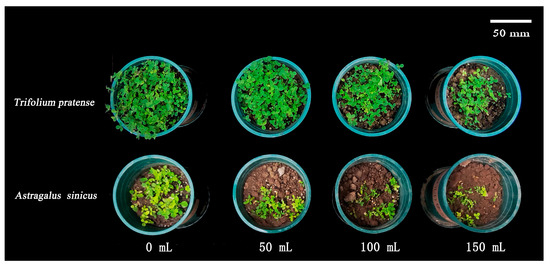
As shown in Figure 1, during the experimental period, Astragalus sinicus (L.) was visibly stressed by the waste drilling fluid, exhibiting clear signs of toxicity. With increasing stress intensity, the plants became smaller, accompanied by wilting and withering, with an increasing number of yellow, dry leaves. Trifolium pratense (L.) also displayed toxic symptoms under waste drilling fluid stress, with plant size decreasing progressively with higher waste drilling fluid volumes. Under 150 mL waste drilling fluid stress, leaves of Trifolium pratense (L.) showed yellowing, but the severity was lower than that observed in Astragalus sinicus (L.) Based on plant growth performance, Trifolium pratense (L.) demonstrated stronger adaptability and tolerance to the waste drilling fluid-contaminated soil.
Figure 1.
Effects of different volumes of waste drilling fluid on the growth of two leguminous herbaceous species. (scale bar = 50 mm).
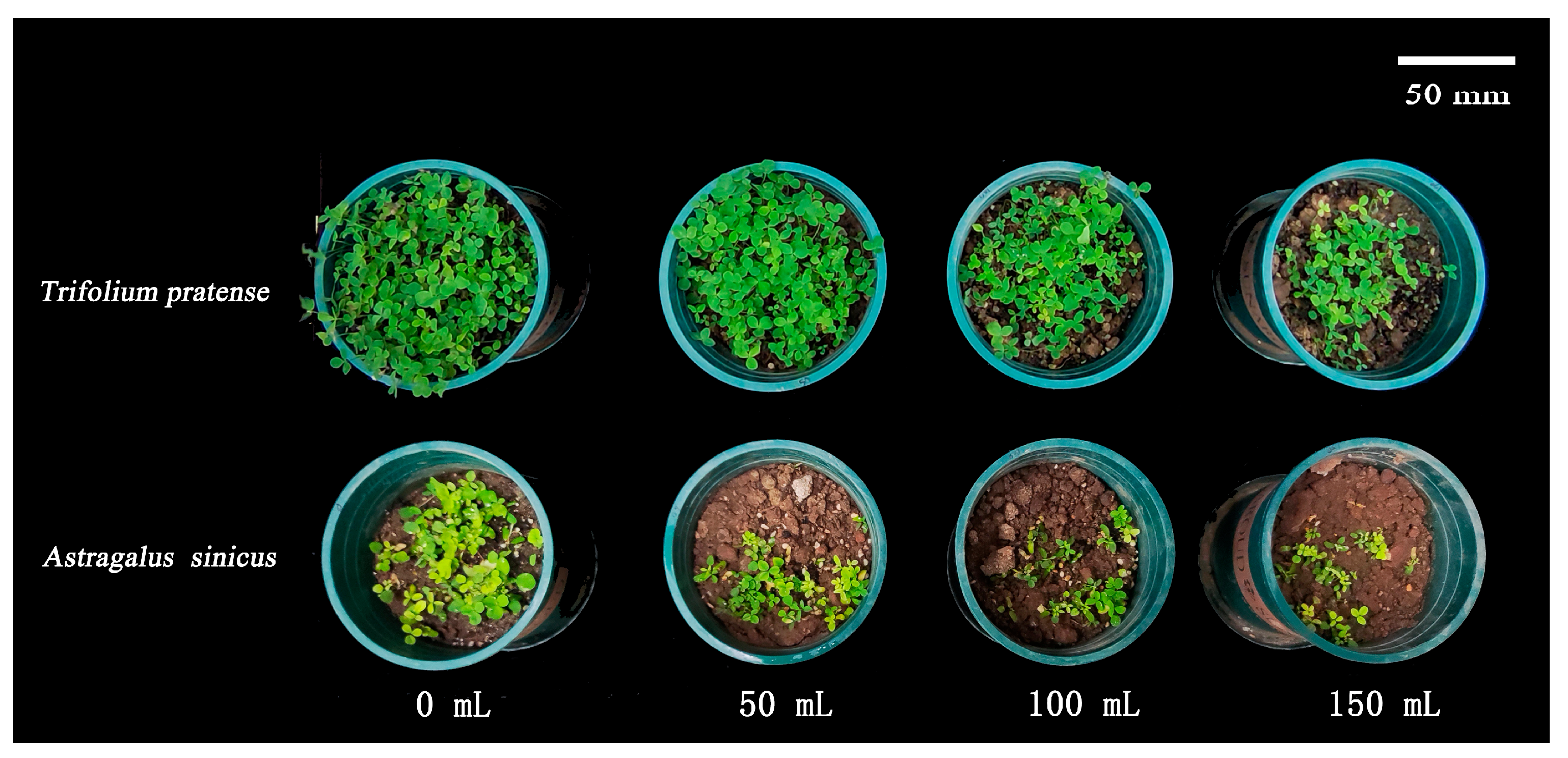
As shown in Figure 2A, plant height for both species decreased with increasing waste drilling fluid volume, reaching the lowest value at 150 mL. Compared to the control, plant height decreased by 80.18% for Trifolium pratense (L.) and 43.18% for Astragalus sinicus (L.) For root length (Figure 2B), a significant decrease was observed for Astragalus sinicus (L.) when waste drilling fluid volume exceeded 100 mL, with reductions of 24.89% and 25.32% at 150 mL compared to the control. Root length of Trifolium pratense (L.) showed a significant decrease only at 150 mL (p < 0.05), with a reduction of 33.77% compared to the control. As shown in Figure 2C,D, fresh and dry weights decreased with increasing waste drilling fluid volume, reaching the lowest values at 150 mL for both species. Compared to the control, fresh weight decreased by 82.17% (Trifolium pratense (L.)) and 62.29% (Astragalus sinicus (L.)), while dry weight decreased by 76.63% and 59.41%, respectively. Overall, waste drilling fluid stress affected plant height, root length, fresh weight, and dry weight of both leguminous plants, with Astragalus sinicus (L.) being more severely impacted.
Figure 2.
Effect of waste drilling fluid on growth indicators of two leguminous herbaceous plants. (A) plant height; (B) root length; (C) fresh weight; (D) dry weight. 0–150 mL are different volumes of waste drilling fluid. The error bars represent the standard deviation (SD) of the mean values, different lowercase letters indicate significant differences (p < 0.05).
3.3. Effects of Different Treatments on Physiological Parameters
3.3.1. Effects of Different Treatments on Antioxidant Enzyme Activities
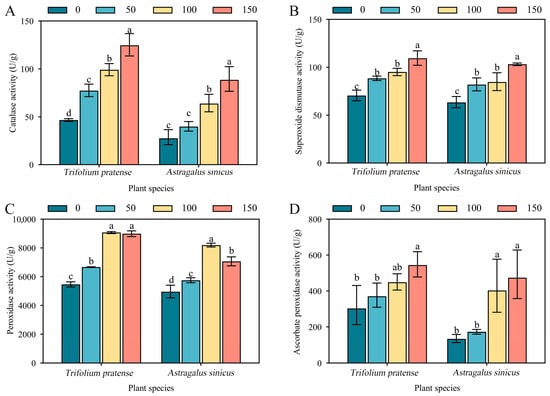
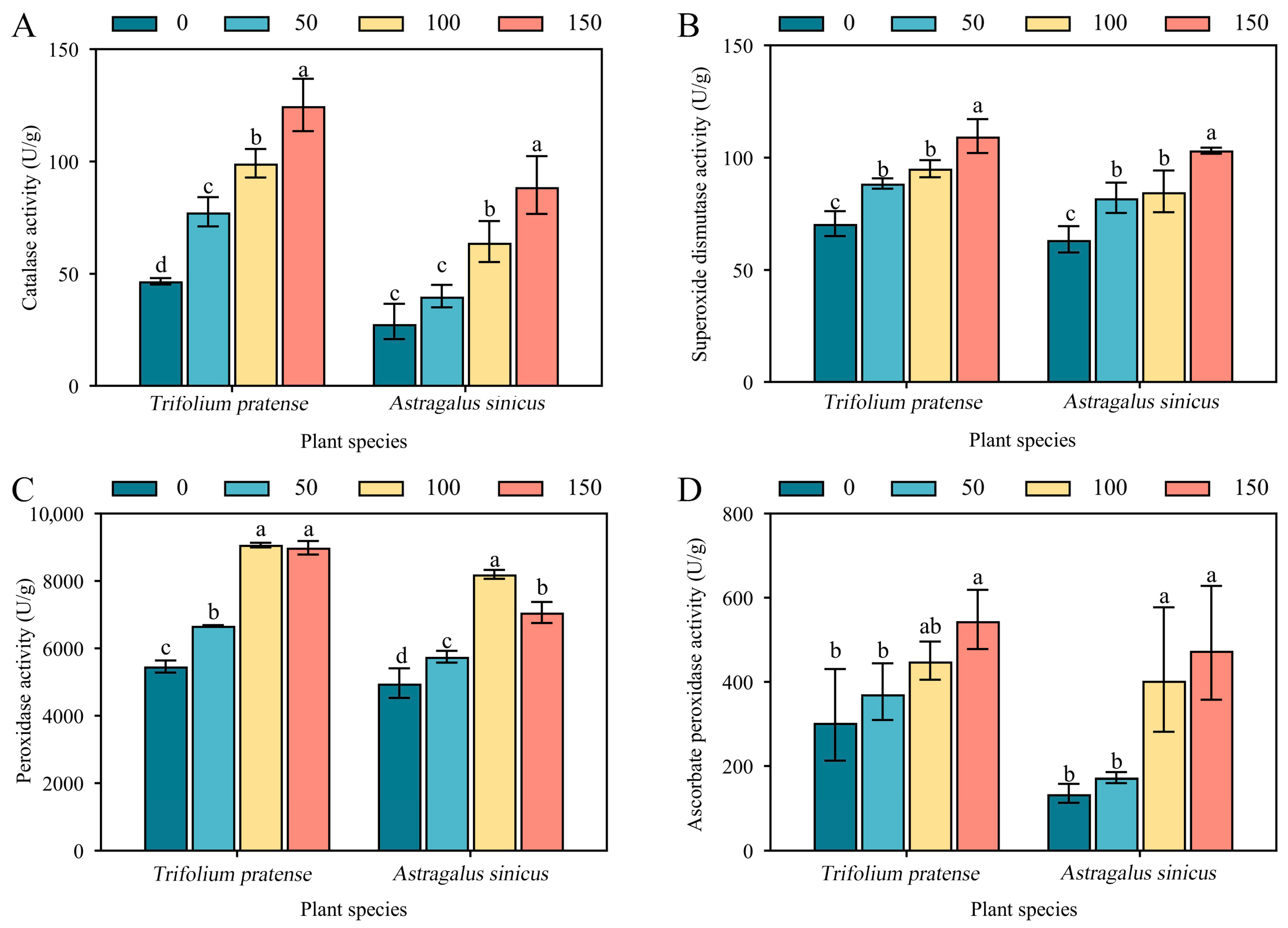
As shown in Figure 3, the antioxidant indicators of the two leguminous plants responded differently to waste drilling fluid stress. CAT activity in leaves of both species showed an increasing trend with higher waste drilling fluid volumes, peaking at 150 mL with increases of 167.85% for Trifolium pratense (L.) and 214.70% for Astragalus sinicus (L.) compared to the control. SOD activity also increased in both species, reaching the highest value at 150 mL with increases of 55.24% and 62.39%, respectively. APX activity significantly increased from 100 mL onwards, with increases of 42.85% and 73.80% for Trifolium pratense (L.) and 211.11% and 261.11% for Astragalus sinicus (L.) at 100 and 150 mL, respectively. POD activity initially increased and then decreased with increasing waste drilling fluid volume, peaking at 100 mL for both species, with increases of 66.12% for Trifolium pratense (L.) and 65.19% for Astragalus sinicus (L.) compared to the control. Overall, compared to Trifolium pratense (L.), Astragalus sinicus (L.) exhibited lower antioxidant enzyme activities.
Figure 3.
Effect of waste drilling fluids on antioxidant enzyme activity of two leguminous herbaceous plants. (A) CAT activity; (B) SOD activity; (C) POD activity; (D) APX activity. The error bars represent the standard deviation (SD) of the mean values, different lowercase letters indicate significant differences (p < 0.05).
3.3.2. Effects of Different Treatments on Reactive Oxygen Species Content
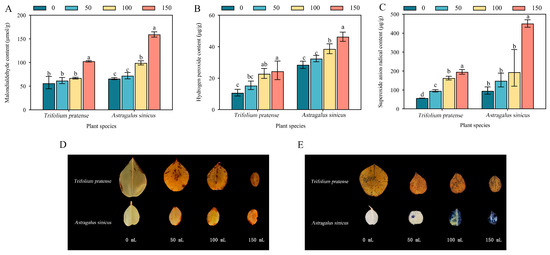
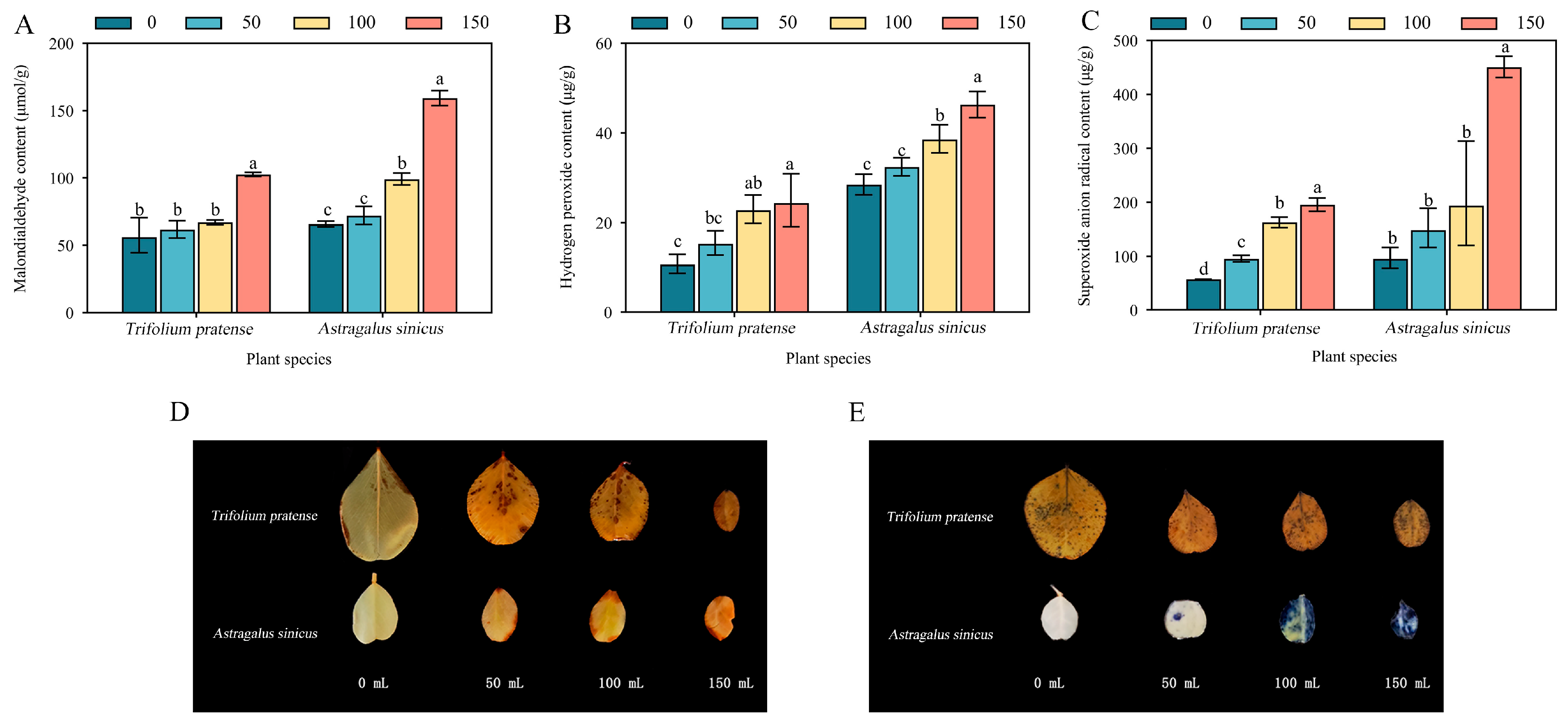
As shown in Figure 4A, MDA content in leaves of both species increased with higher waste drilling fluid volumes, peaking at 150 mL with increases of 80.02% for Trifolium pratense (L.) and 141.93% for Astragalus sinicus (L.) compared to the control. H2O2 content (Figure 4B) also showed an increasing trend. Significant increases (p < 0.05) were observed when waste drilling fluid volume exceeded 100 mL, with increases of 112.80% and 130.68% for Trifolium pratense (L.) and 35.62% and 62.73% for Astragalus sinicus (L.) at 100 and 150 mL, respectively. DAB staining (Figure 4D), which forms reddish-brown precipitates in the presence of and peroxidase, showed more and darker spots under waste drilling fluid stress compared to the CK, confirming H2O2 accumulation and reduced tolerance. This indicates that waste drilling fluid stress affected H2O2 content in both species, with Trifolium pratense (L.) showing a stronger response than Astragalus sinicus (L.).
Figure 4.
Effect of waste drilling fluid on reactive oxygen species content of two leguminous herbaceous plants. (A) MDA content; (B) H2O2 content; (C) O2− content; (D) DAB staining of the two leguminous plants; (E) NBT staining of the two leguminous plants. The error bars represent the standard deviation (SD) of the mean values, different lowercase letters indicate significant differences (p < 0.05).
As shown in Figure 4C, O2− content increased with higher waste drilling fluid volumes. For Trifolium pratense (L.), a significant increase (p < 0.05) occurred when waste drilling fluid volume exceeded 50 mL, with increases of 67.28%, 186.08%, and 243.82% at 50, 100, and 150 mL, respectively, peaking at 150 mL. For Astragalus sinicus (L.), a significant increase was only observed at 150 mL, with a 368.78% increase compared to the control. NBT staining (Figure 4E), which forms dark blue precipitates with O2−, showed more and darker spots under waste drilling fluid stress, confirming O2− accumulation. Compared to Trifolium pratense (L.), Astragalus sinicus (L.) appeared more severely stressed.
3.3.3. Effects of Different Treatments on Osmotic Adjustment Substances
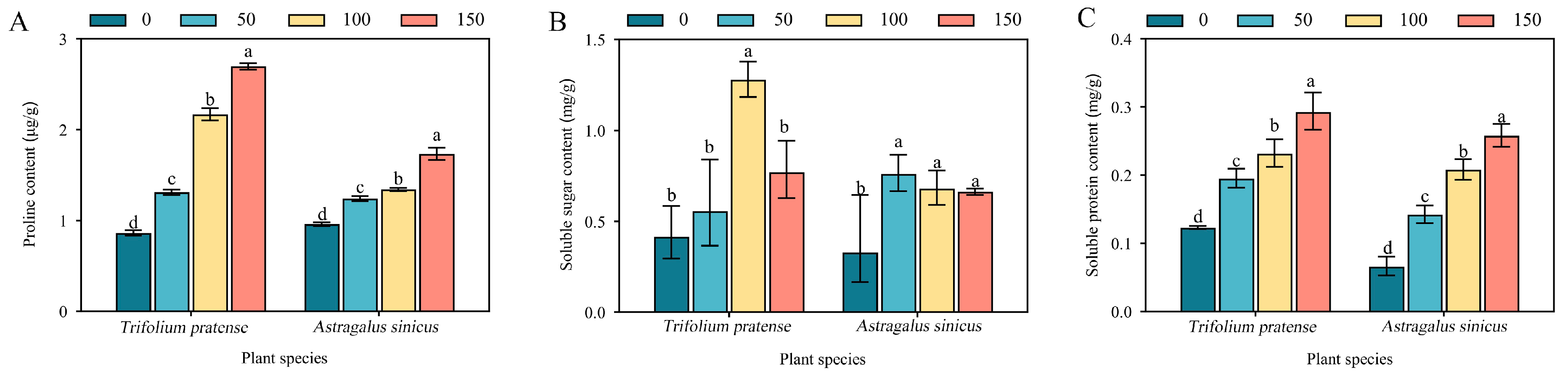
As shown in Figure 5, the responses of osmotic regulatory substances to waste drilling fluid stress differed between the two species. Pro content increased in both species, with increases of 51.59%, 150.95%, and 211.85% for Trifolium pratense (L.) and 28.27%, 39.73%, and 80.62% for Astragalus sinicus (L.) at 50, 100, and 150 mL, respectively, with the most significant increase at 150 mL. WSS content initially increased and then decreased in both species. Trifolium pratense (L.) peaked at 100 mL with a 195.49% increase compared to the control, while Astragalus sinicus (L.) peaked at 50 mL with a 104.16% increase. SP content significantly increased (p < 0.05) when waste drilling fluid volume exceeded 50 mL for both species, reaching the highest values at 150 mL with increases of 58.69%, 88.52%, and 138.39% for Trifolium pratense (L.) and 113.60%, 212.24%, and 287.09% for Astragalus sinicus (L.) at 50, 100, and 150 mL, respectively. Overall, the impact was greater on Astragalus sinicus (L.) compared to Trifolium pratense (L.).
Figure 5.
Effect of waste drilling fluid on osmotic adjustment substances of two leguminous herbaceous plants. (A) Pro content; (B) WSS content; (C) SP content. The error bars represent the standard deviation (SD) of the mean values, different lowercase letters indicate significant differences (p < 0.05).
3.4. Effects of Different Treatments on Soil Indicators
3.4.1. Effects of Different Treatments on pH and Root Activity
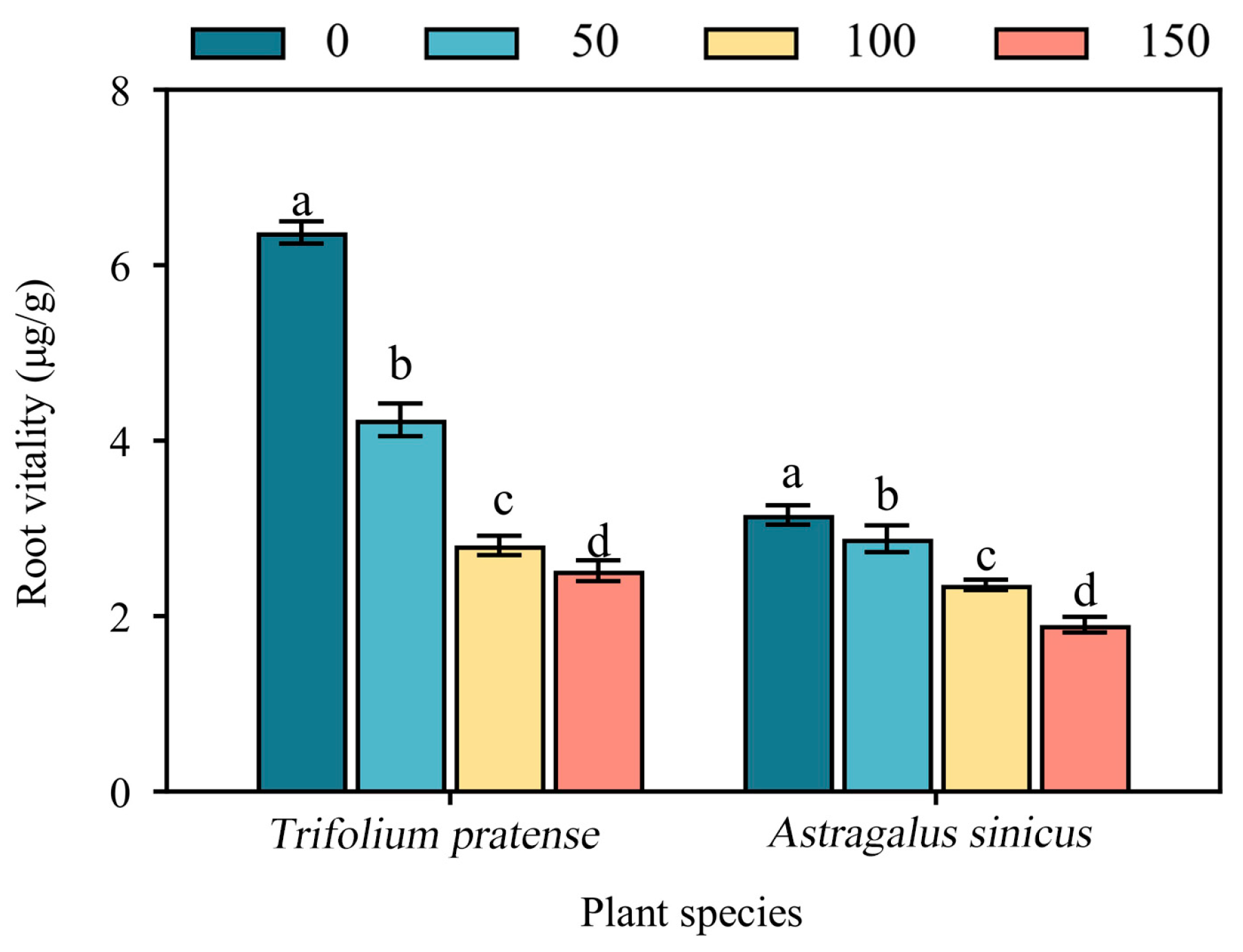
Soil pH is a crucial environmental factor affecting plant growth. This study found that soil pH significantly increased with higher waste drilling fluid volumes. Specifically, pH ranged from 6.60–6.74 in control treatments, rose to 7.34–7.60 at 50 mL, further increased to 8.01–8.10 at 100 mL, and reached 8.33–8.69 at 150 mL. Root activity (Figure 6) decreased in both species. Both Trifolium pratense (L.) and Astragalus sinicus (L.) were sensitive to waste drilling fluid stress, showing a significant decrease in root activity (p < 0.05) when the waste drilling fluid volume exceeded 50 mL. Overall, the tolerance to waste drilling fluid stress, as indicated by root activity, The Trifolium pratense (L.) proved to be more tolerant than Astragalus sinicus (L.).
Figure 6.
Effect of waste drilling fluid on root vigor of two leguminous herbaceous plants. The error bars represent the standard deviation (SD) of the mean values, different lowercase letters indicate significant differences (p < 0.05).
3.4.2. Effects of Different Treatments on Soil Nutrients
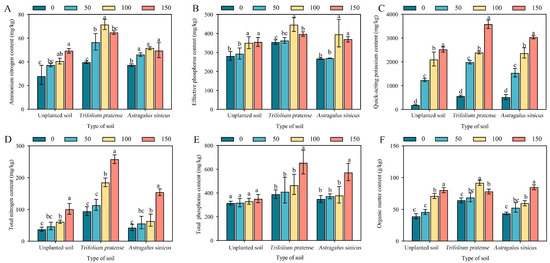
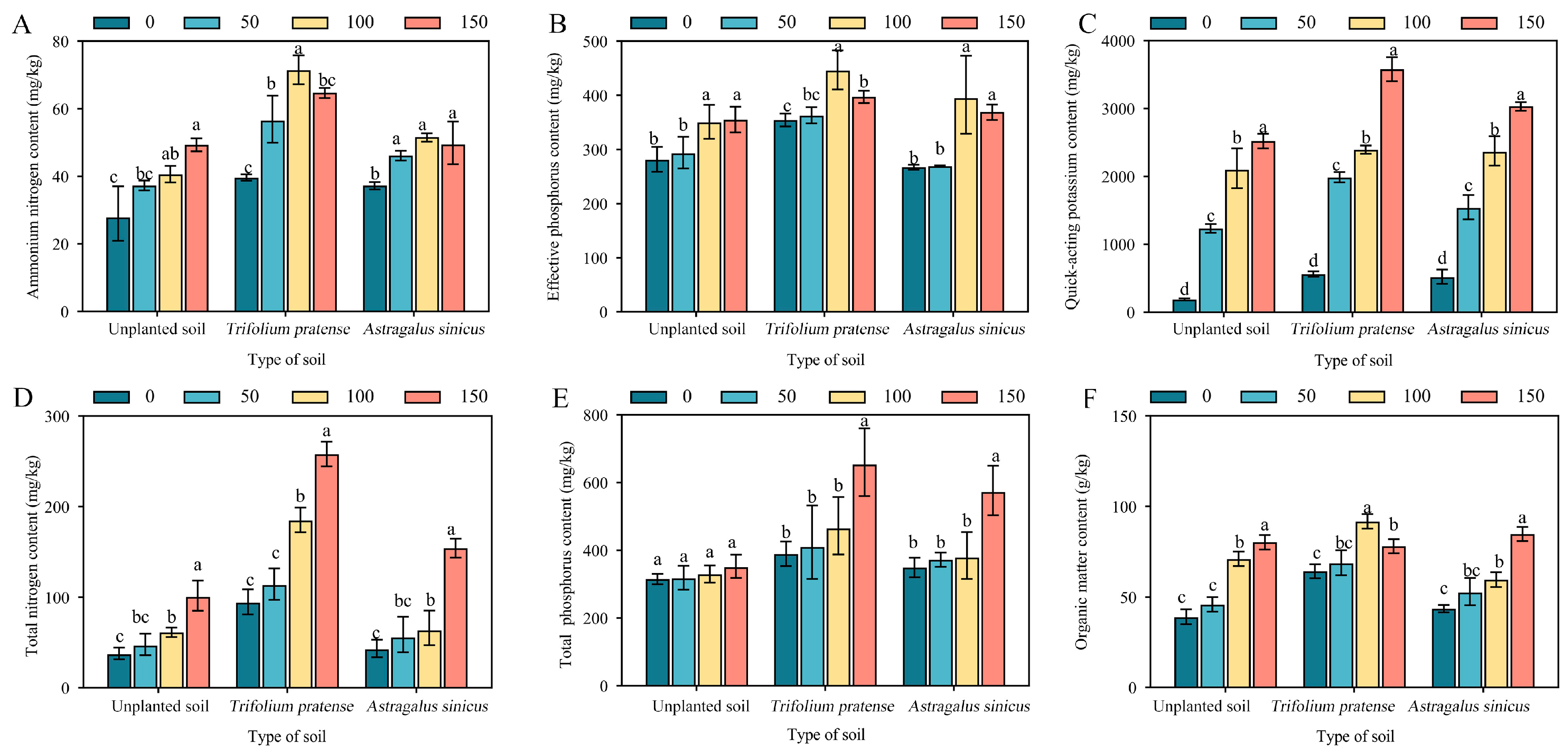
As shown in Figure 7A, ammonium nitrogen content in soils planted with Trifolium pratense (L.) and Astragalus sinicus (L.) initially increased and then decreased with increasing waste drilling fluid, peaking at 100 mL with increases of 80.31% and 38.40%, respectively, compared to the control. In unplanted soil, ammonium nitrogen content showed an increasing trend, rising by 72.32% at 150 mL compared to the control. Available phosphorus content (Figure 7B) in soils with plants also initially increased and then decreased, peaking at 100 mL with increases of 26.03% (Trifolium pratense L.) and 49.41% (Astragalus sinicus L.). In unplanted soil, available phosphorus increased with waste drilling fluid addition, showing increases of 4.32%, 24.59%, and 26.05% at 50, 100, and 150 mL, respectively, compared to the control, with the highest increase at 150 mL. Available potassium content (Figure 7C) increased with waste drilling fluid addition in all soils. Compared to the control, soils with Trifolium pratense (L.) showed increases of 252.60%, 324.61%, and 534.91% at 50, 100, and 150 mL, respectively. Soils with Astragalus sinicus (L.) showed increases of 195.90%, 354.71%, and 481.61%, while unplanted soil showed increases of 105.46%, 194.85%, and 280.68%, all peaking at 150 mL. Overall, waste drilling fluid stress affected soil ammonium nitrogen, available phosphorus, and available potassium contents, with the order being Trifolium pratense (L.) greater than Astragalus sinicus (L.) on unplanted soil.
Figure 7.
Effect of different waste drilling liquid treatments on soil nutrient contents. (A) ammonium nitrogen content; (B) available phosphorus content; (C) quick potassium content; (D) total nitrogen content; (E): total phosphorus content; (F): organic matter content. The error bars represent the standard deviation (SD) of the mean values, different lowercase letters indicate significant differences (p < 0.05).
As shown in Figure 7D, total nitrogen content in soils planted with both species increased with waste drilling fluid addition, peaking at 150 mL with increases of 172.01% (Trifolium pratense L.) and 256.47% (Astragalus sinicus L.) compared to the control. Unplanted soil also showed an increasing trend, with a 169.31% increase at 150 mL. For total phosphorus content (Figure 7E), increases of 69.23% (Trifolium pratense L.) and 64.62% (Astragalus sinicus L.) were observed at 150 mL compared to the control. While unplanted soil showed an increasing trend with waste drilling fluid, the differences were not significant. As shown in Figure 7F, organic matter content in soil planted with Astragalus sinicus (L.) increased with waste drilling fluid addition, showing a 94.73% increase at 150 mL. In soil planted with Trifolium pratense (L.) and unplanted soil, organic matter initially increased and then decreased, peaking at 100 mL. Specifically, waste drilling fluid stress affected total nitrogen, total phosphorus, and organic matter contents, with the order being Trifolium pratense (L.) greater than Astragalus sinicus (L.) on unplanted soil.
3.4.3. Effects of Different Treatments on Soil Enzyme Activities
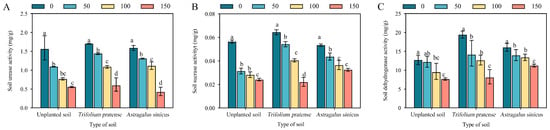
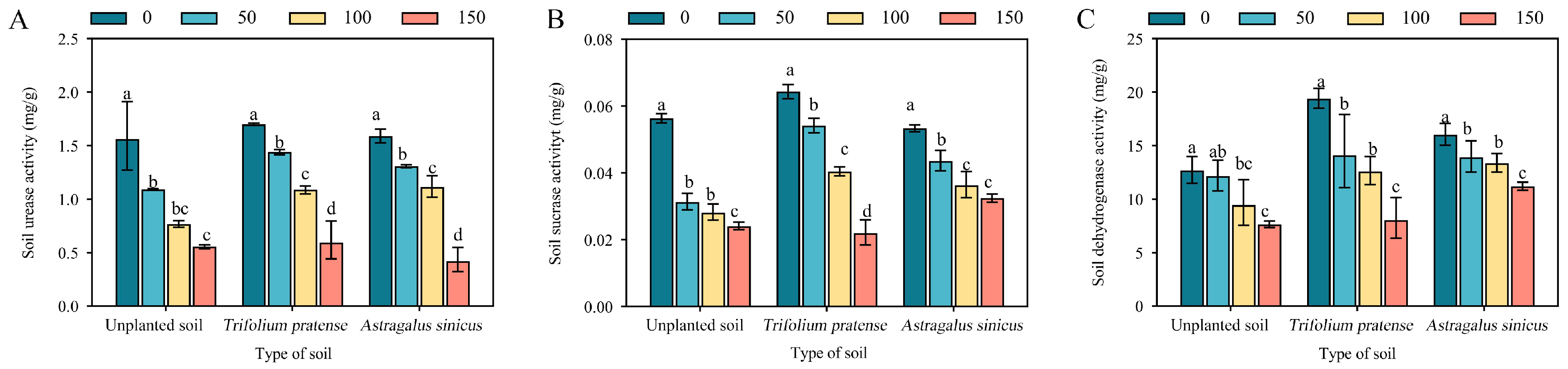
As shown in Figure 8A, soil enzyme activities responded differently to waste drilling fluid stress. Urease activity decreased with increasing waste drilling fluid in soils with plants and without plants. In soils with Trifolium pratense (L.) and Astragalus sinicus (L.), urease activity decreased by 64.16% and 72.92% at 100 mL, respectively, compared to the control. Unplanted soil showed a 64.95% decrease at 150 mL. Dehydrogenase activity (Figure 8B) decreased with increasing waste drilling fluid in all soils. At 150 mL, decreases of 57.90% for Trifolium pratense (L.), 30.18% for Astragalus sinicus (L.), and 39.81% for unplanted were observed. Sucrase activity (Figure 8C) also decreased with increasing waste drilling fluid. At 150 mL, decreases of 65.56% for Trifolium pratense (L.), 39.09% for Astragalus sinicus (L.), and 57.21% for unplanted were observed. Thus, compared to unplanted soil, soils planted with Trifolium pratense (L.) and Astragalus sinicus (L.) exhibited relatively higher enzyme activities, ranked as Trifolium pratense (L.) greater than Astragalus sinicus (L.) on unplanted soil.
Figure 8.
Effect of different waste drilling liquid treatments on soil enzyme activities (A) urease activity; (B) sucrose enzyme activity; (C) dehydrogenase activity. The error bars represent the standard deviation (SD) of the mean values, different lowercase letters indicate significant differences (p < 0.05).
3.5. Comprehensive Analysis
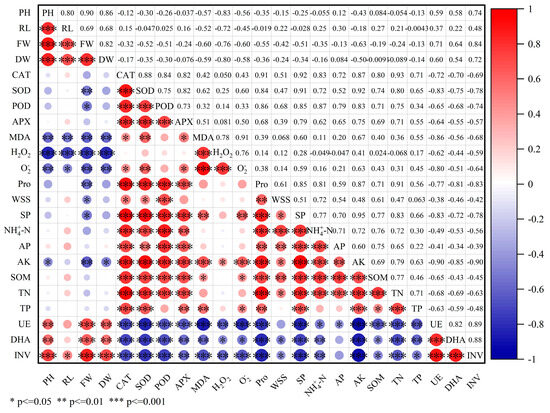
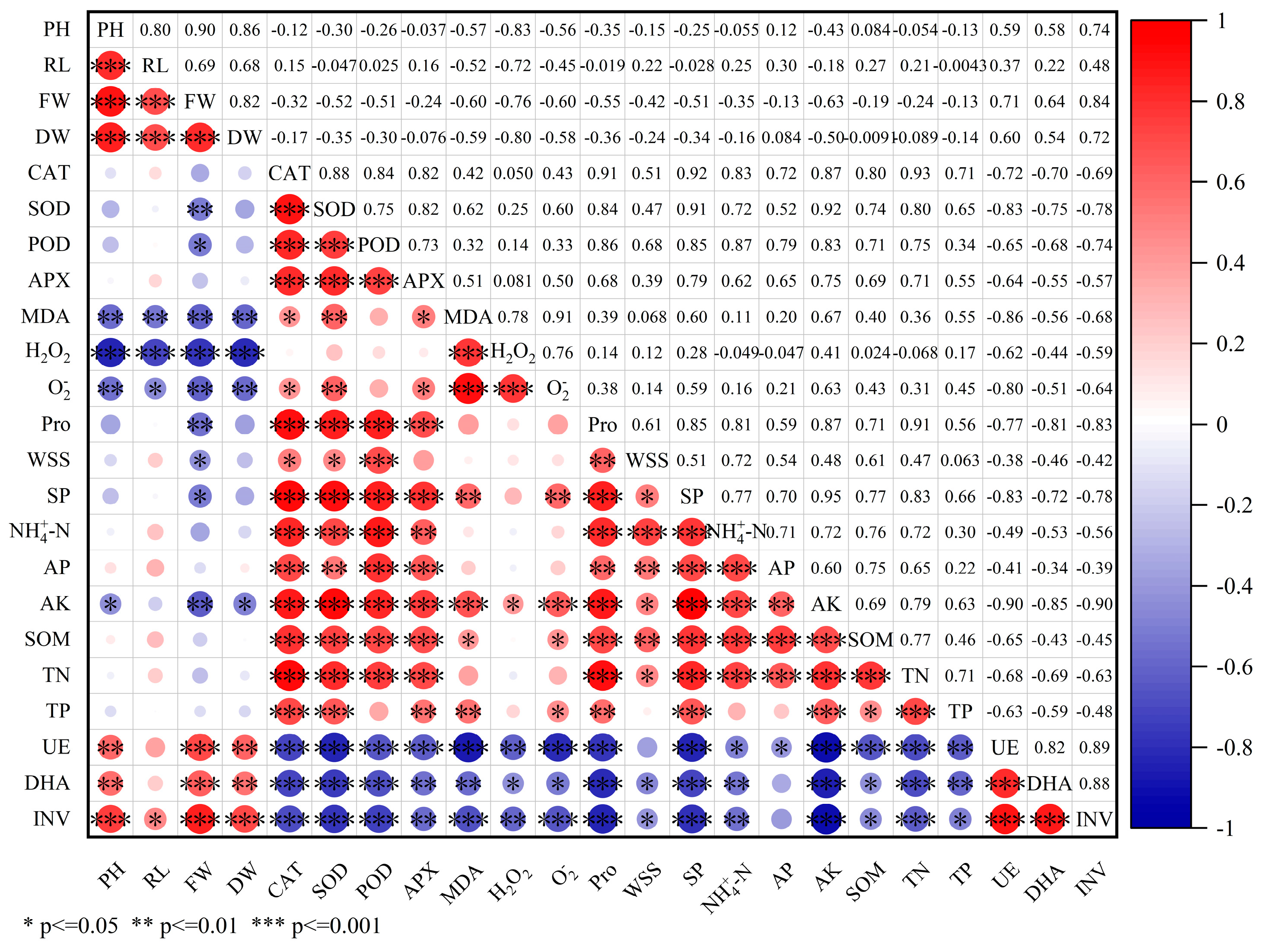
Relying on a single indicator to evaluate plant tolerance has limitations. Therefore, this study adopted a multi-indicator comprehensive analysis approach to fully reflect the tolerance characteristics of the plants. A correlation heatmap (Figure 9) was constructed to intuitively display the strength of correlations among the indicators. The heatmap results showed that under waste drilling fluid stress, plant growth indicators exhibited extremely significant positive correlations among themselves, while growth indicators showed extremely significant negative correlations with oxidative damage indicators. Antioxidant enzymes displayed extremely significant positive correlations with osmotic regulatory substances. Oxidative damage indicators showed significant positive correlations with osmotic regulatory substances. Soil nutrient indicators were significantly positively correlated with each other and also showed significant associations with plant tolerance physiological indicators. The activities of various soil enzymes exhibited consistent patterns of change and were extremely significantly positively correlated among themselves. Soil enzyme activities were positively correlated with plant growth indicators, negatively correlated with oxidative damage indicators, and overall exhibited extremely significant negative correlations with soil nutrients and physiological tolerance indicators.
Figure 9.
Correlation analysis of the effects of physiological and biochemical indicators of two leguminous herbaceous plants under waste drilling fluid stress. The color shades of the squares in the lower left area reflect the strength of the correlation; red indicates a positive correlation, while blue indicates a negative correlation. Abbreviations: PH—plant height, RL—root length, FW—fresh weight, DW—dry weight, CAT—catalase, SOD—superoxide dismutase, POD—peroxidase, APX—ascorbate peroxidase, MDA—malondialdehyde, H2O2—hydrogen peroxide, O2−—superoxide anion radical, Pro—proline, WSS—water-soluble sugars, SP—soluble proteins, NH4+-N—ammonium nitrogen, AP—available phosphorus, AK—available potassium, SOM—soil organic matter, TN—total nitrogen, TP—total phosphorus, UE—urease, DHA—dehydrogenase, INV—invertase. The size of dots represents the correlation strength; larger dots indicate higher correlation.
To further quantify the differences in tolerance between the two leguminous species, the measured indicators of Trifolium pratense (L.) and Astragalus sinicus (L.) were standardized, and principal component analysis (PCA) was employed for dimensionality reduction. The results (Table 2) showed that the variance contribution rates of the first three principal components were 54.461%, 21.783%, and 7.462%, respectively, with a cumulative contribution rate of 85.707%, indicating that these components effectively captured the information of the original variables.
Table 2.
Principal component contributions to the effects of physiological and biochemical indices of two leguminous herbaceous plants under waste drilling fluid stress.
Based on the principal component loading coefficients, clear biological meanings can be assigned to each principal component, allowing a physiological interpretation of the tolerance mechanisms of the two leguminous species to waste drilling fluid stress. As shown in Table 3, the first principal component is primarily composed of soil nutrient indicators, soil enzyme activities, plant antioxidant enzymes, and osmotic regulatory substances. This component represents the plant’s antioxidant defense and the response of the soil biochemical environment, serving as the core physiological regulatory pathway for plants to withstand waste drilling fluid stress. It reflects the plant’s ability to alleviate oxidative damage caused by the drilling fluid by enhancing antioxidant enzyme activities and accumulating osmotic regulatory substances, while simultaneously, changes in soil enzyme activities and nutrient characteristics characterize the response of the soil environment to stress. The second principal component mainly includes growth and oxidative damage indicators such as plant height (PH), root length (RL), fresh weight, dry weight, and H2O2 content. This component represents plant growth and development as well as the degree of stress-induced damage, directly reflecting the inhibitory effects of drilling fluid stress on morphogenesis and biomass accumulation. It can be used to evaluate differences in plant growth tolerance capacity. The third principal component, with total phosphorus (TP) and soluble sugar (WSS) as its main loading indicators, supplements the reflection of the synergistic changes between soil nutrient status and plant osmotic metabolism. Overall, the biological functions of each principal component are clearly delineated, moving beyond mere statistical analysis. By integrating physiological processes such as soil environmental changes, antioxidant metabolism, growth inhibition, and osmotic regulation, this approach effectively elucidates the multi-faceted tolerance response mechanisms of the two leguminous species under waste drilling fluid stress.
Table 3.
Component Matrix of Physiological and Biochemical Indicators of Two Leguminous Plants under Waste Drilling Fluid Stress.
Plant tolerance is a complex quantitative trait influenced by multiple factors. To comprehensively evaluate the tolerance of the two leguminous species, this study employed the membership function method for integrated analysis of multiple physiological indicators. This method quantifies plant tolerance by calculating the membership function value (μ), where a larger μ value indicates stronger tolerance. The comprehensive evaluation value D ranges from 0 to 1, with a larger D value representing stronger tolerance.
As shown in the principal component physiological indicator coefficients in Table 4, the absolute value of the coefficient for available potassium (AK) was the largest in the first principal component, the absolute value of the coefficient for root length (RL) was the largest in the second principal component, and the absolute value of the coefficient for total phosphorus (TP) was the largest in the third principal component. These three principal components can effectively replace the original 23 indicators, providing a more reliable quantitative basis for subsequent stress resistance evaluation.
Table 4.
Principal Component Physiological Indicator Coefficients for Two Leguminous Plants under Waste Drilling Fluid Stress.
As shown in Table 5, the membership function values of the two leguminous species on each principal component exhibited significant differences. For PC1, the μ(x1) value of Trifolium pratense (L.) was 0.0004, while that of Astragalus sinicus (L.) was 0.0003. The higher μ(x1) value of Trifolium pratense (L.) indicates that it exhibited stronger tolerance in the comprehensive indicators corresponding to PC1, whereas Astragalus sinicus (L.) showed relatively weaker tolerance in this dimension. For PC2, the μ(x2) value of Trifolium pratense (L.) was 0.8061, significantly higher than the 0.0730 of Astragalus sinicus (L.), indicating that the tolerance of Trifolium pratense (L.) in indicators related to PC2 was far superior to that of Astragalus sinicus (L.) For PC3, the μ(x3) value of Trifolium pratense (L.) was 0.4565, slightly higher than the 0.4404 of Astragalus sinicus (L.), suggesting that Trifolium pratense (L.) also exhibited slightly stronger tolerance than Astragalus sinicus (L.) in the indicator dimension corresponding to PC3. By calculating the weight coefficients of each principal component, this study ultimately obtained the comprehensive tolerance evaluation values of the two leguminous herbaceous plants by combining the membership function values and their weights. The results showed that the order of tolerance of the two plants was Trifolium pratense (L.) greater than Astragalus sinicus (L.).
Table 5.
Comprehensive evaluation of leaf physiological indexes of two leguminous herbaceous plants under Waste Drilling Fluid Stress.
4. Discussion
4.1. Hazards of Waste Drilling Fluid
Waste drilling fluid is an alkaline mixture formed during oil and gas drilling operations. its composition includes heavy metal ions, salts, asphaltenes, and other substances that are extremely difficult to degrade and are toxic. the results of this study indicate that waste drilling fluid can increase soil pH to alkaline levels. an alkaline environment with pH > 7.3 tends to induce soil salt accumulation and reduce organic matter content, leading to soil structural deterioration, decreased porosity, and hypoxic conditions, ultimately inhibiting aerobic respiration in crop roots [32]. simultaneously, the alkaline environment directly alters the survival conditions of microorganisms, thereby reducing the diversity and functional stability of microbial communities. furthermore, the salinity of the waste drilling fluid measured in this study was 24.16 g·L−1. high salt stress can inhibit plant growth by disrupting cellular metabolism, disturbing ion balance, and reducing photosynthetic capacity. it can also cause excessive accumulation of reactive oxygen species (ros), damaging cell membrane permeability and inducing lipid peroxidation [33]. at the same time, the high-salt environment inhibits soil microorganisms through osmotic stress and ion toxicity, thereby weakening the synergistic remediation capacity between plants and microorganisms. the brine shrimp assay revealed that the waste drilling fluid possesses biotoxicity. this biotoxicity may originate from polycyclic aromatic hydrocarbons (pahs) present in petroleum pollutants. their recalcitrant nature leads to long-term residues and cumulative toxicity, which is more harmful to aquatic organisms than to terrestrial organisms. they can interfere with biological metabolism, damage cell membranes, inhibit biological growth, and disrupt ecosystem stability [34,35]. in addition, toxic substances selectively enrich more tolerant microbial groups while reducing the abundance of functional degrading bacteria, leading to the degradation of soil ecological functions.
4.2. The Effects of Waste Drilling Fluid on the Growth of Two Legume Species
Waste drilling fluid is a highly polluting byproduct of oil and gas extraction, containing various hazardous chemicals. Leakage during transport or disposal poses a serious threat to plants and soil [3,36]. For plants, plant height, root length, and biomass accumulation are direct manifestations of plant health and are among the most direct and reliable evidence for evaluating tolerance [37]. Under adverse conditions, plant growth and development are often significantly inhibited. Their survival strategy typically involves dynamic adjustments in resource allocation, sometimes prioritizing energy and nutrients towards the root system to enhance underground tolerance, often at the expense of above-ground organs [37]. Studies have shown that salt stress significantly inhibits the germination, growth, and development of Elymus nutans (G.), leading to reduced biomass [38]; drought stress reduces above-ground biomass accumulation in Dactylis glomerata (L.) [39]; under stress, Medicago sativa (L.) exhibits significantly reduced plant height and above-ground biomass, while root length and root-to-shoot ratio increase [40]. In this study, waste drilling fluid stress significantly reduced fresh weight, dry weight, plant height, and root length of both leguminous species, consistent with findings by Jawaria Abdul Majeed et al. [41]. This may be due to stress affecting normal growth, leading the plants to reduce biomass to conserve energy and cope with the adverse effects.
4.3. Effects of Waste Drilling Fluid on the Physiology of Two Legume Species
Reactive oxygen species (ROS), including O2−, H2O2, OH, and 1O2−, are produced by various cells [42]. The presence of oxidoreductases on cell membranes, particularly NADPH oxidase, is the primary source of ROS production in plants [43]. Under normal conditions, ROS in plants are maintained in a dynamic balance between production and scavenging. In this study, the waste drilling fluid disrupted this balance, leading to substantial accumulation of ROS such as H2O2 and O2− in leaves. Excessive accumulation of ROS induces lipid peroxidation, with malondialdehyde (MDA) as a representative product. MDA triggers membrane lipid peroxidation, damages biofilm structures, and increases cell membrane permeability, leading to substance leakage [44]. This study found that under 100–150 mL waste drilling fluid stress, H2O2, O2−, and MDA accumulated sharply in the leaves of the two leguminous species, causing severe damage to the plants. In response to ROS toxicity, plants have evolved a complex antioxidant enzyme system, including key enzymes such as SOD, CAT, POD, and APX. Among these, SOD acts as the first line of defense, responsible for dismutating O2− to generate H2O2, while CAT, POD, and APX serve as the second line of defense, synergistically scavenging H2O2 [45]. This study found that within the 0–100 mL treatment range, the antioxidant enzyme activities of the two plants were significantly activated. However, when the waste drilling fluid volume exceeded 100 mL, ROS production surpassed the scavenging capacity of the antioxidant system, resulting in inhibited enzyme activity.
Imbalanced ROS metabolism alters cellular water potential, subsequently affecting the accumulation of osmotic regulatory substances [46]. Osmotic regulatory substances mainly include soluble sugars (WSS), proline (Pro), and soluble proteins (SP) [47]. WSS is involved in the synthesis and metabolism of reactive oxygen species (ROS). Specifically, the oxidative pentose phosphate pathway participates in ROS scavenging. Additionally, WSS can inhibit Na+ accumulation and promote K+ uptake, thereby maintaining ion homeostasis under abiotic stress [48]. In terms of membrane stability, Pro can directly scavenge ROS. Certain proteins can bind to the membrane surface, stabilize membrane structure, reduce MDA generation, and collectively regulate membrane fluidity and permeability [49]. Osmotic regulation is known to play roles in regulating leaf transpiration and respiration and maintaining normal photosynthesis. Plants accumulate osmotic regulators like WSS, Pro, and SP to maintain cell turgor pressure and resist stress [46]. This study found that WSS and Pro contents initially increased and then decreased with increasing waste drilling fluid stress, peaking at 100 mL, while SP content generally showed an increasing trend. This is consistent with the study by Gandonou CB on Saccharum sp. under salt stress [50]. This indicates that under moderate waste drilling fluid stress, these two leguminous plants can maintain cellular homeostasis by regulating osmotic substances, but when stress exceeds their tolerance threshold (100 mL), the osmotic regulation system becomes disrupted.
In summary, waste drilling fluid stress affects the physiological metabolism of these two leguminous plants through multiple pathways. First, ROS metabolic imbalance leads to changes in cellular water potential, affecting the accumulation of osmotic regulators. Ultimately, the responsiveness of the antioxidant enzyme system determines the plant’s tolerance to stress. In this study, the tolerance to membrane damage was ranked: Trifolium pratense (L.) greater than Astragalus sinicus (L.) This finding provides an important theoretical basis for understanding the response mechanisms of leguminous plants to waste drilling fluid stress.
4.4. Effects of Waste Drilling Fluid on Rhizosphere Soil of Two Legume Species
Root activity is a core indicator for assessing the physiological status of plant roots. It not only directly reflects root metabolic activity but also serves as an important parameter for predicting above-ground growth and development. The strength of root activity determines the efficiency of water and mineral nutrient uptake from the soil; roots with higher activity can acquire nutrient resources more effectively, thereby promoting above-ground growth and development and ultimately achieving overall plant health [51,52]. In this study, as waste drilling fluid stress intensified, soil pH significantly increased, reaching alkaline levels within the 100–150 mL treatment range. This change significantly inhibited root activity in both leguminous species, weakened their nutrient uptake capacity, and subsequently affected normal above-ground growth and development. This finding is consistent with the study by Jiu-ju et al. [51] on the effect of salt stress on root activity in Cucumis sativus (L.), confirming the inhibitory effect of soil salinization on plant root growth.
A complex interaction exists between plant roots and soil. Soil quality directly influences root development, which in turn affects above-ground growth [53]. Furthermore, the intricate network formed among soil nutrients, enzyme activities, and microbial communities plays a critical role in maintaining soil health and enhancing agricultural productivity [54]. As important indicators of soil fertility, the availability of soil nutrients directly affects crop growth and yield formation [55]. This study found that waste drilling fluid stress significantly inhibited the effective utilization of nutrients such as nitrogen, phosphorus, and potassium in the soil, whereas planting the two leguminous species effectively improved soil fertility. This finding is similar to previous reports on Sesbania cannabina exposed to salt stress [56]. This improvement may be attributed to changes in plant nutrient uptake capacity affecting soil nutrient residues, or alternatively, to the rapid mineralization of some organic matter (OM) from the waste drilling fluid after entering the soil under microbial action, during which organic nitrogen and phosphorus are converted into inorganic forms available for plant uptake [57]. More importantly, leguminous plants mitigate the adverse effects of waste drilling fluid on soil and consequently enhance soil fertility through mechanisms such as rhizoremediation and degradation of organic pollutants [56].
Soil enzymes are the most active biotic components in soil, playing a crucial role in soil nutrient cycling and the transformation of nutritional elements. They also serve as important biological indicators for evaluating soil fertility, reflecting integrated information on microbial activity [58]. Du [29] demonstrated that environmental stress significantly reduces soil urease and catalase activities, while high pH negatively affects soil protease activity. This study yielded similar conclusions. As waste drilling fluid volume increased, the activities of urease, dehydrogenase, and sucrase in the soil all exhibited decreasing trends. These changes affected the conversion of nitrogen, phosphorus, and potassium from insoluble forms to soluble forms, inhibited the hydrolysis of carbohydrates, and consequently disrupted soil nutrient cycling, leading to reduced soil nutrient availability. The planting of the two leguminous species provided some alleviation of these effects.
In summary, with increasing waste drilling fluid volume, soil pH rose to alkaline levels, severely affecting root activity. Contents of total nitrogen, total phosphorus, available nitrogen, phosphorus, and potassium, as well as organic matter, decreased with increasing waste drilling fluid volume, but were higher in planted soils compared to the original unplanted soil. Meanwhile, the activities of urease, dehydrogenase, and sucrase decreased with increasing waste drilling fluid volume, yet were higher in planted soils than in the original unplanted soil. These results indicate that while waste drilling fluid inhibits soil enzyme activities and interferes with soil nutrient transformation processes, planting the two leguminous species can effectively mitigate these negative effects, thereby achieving soil remediation.
5. Conclusions
In conclusion, waste drilling fluid inhibited the growth and physiology of both Trifolium pratense (L.) and Astragalus sinicus (L.), with Trifolium pratense (L.) exhibiting the strongest tolerance. The study revealed that the waste drilling fluid disrupts cellular osmotic regulation by inducing ROS metabolic imbalance, and the plant’s antioxidant capacity influences its tolerance. Soil analysis revealed that the waste drilling fluid caused an increase in pH and decreases in nutrient content and enzyme activity, while the leguminous plants exhibited tolerance potential and partially alleviated these negative effects. Principal component analysis and the membership function method confirmed that Trifolium pratense (L.) had the highest tolerance. This study elucidates the phytotoxic mechanisms of drilling waste drilling fluid and identifies Trifolium pratense (L.) as a potential candidate for remediation, providing theoretical support and a technical pathway for ecological restoration of oil and gas field sites, which is of great significance for promoting green and sustainable development.
Author Contributions
D.H. carried out the experimental plan and wrote the rough draft of the article. L.Y. reviewed the rough draft. Y.Z. and X.C. revised all versions of the manuscript. Y.F. planned the research, obtained financial support for the whole research project, and reviewed and revised the rough draft of the article. All authors have read and agreed to the published version of the manuscript.
Funding
This work was supported by the Central Finance Forestry Science and Technology Extension Demonstration Fund Project (Hubei [2025] TG 30), the Science and Technology Research Project of the Department of Education of Hubei Province (No. Q20191309) and the General Program of the Hubei Province Natural Science Foundation of China (No. 2017CFB390).
Data Availability Statement
The original contributions presented in this study are included in the article. Further inquiries can be directed to the corresponding author.
Conflicts of Interest
The authors declare that the research was conducted in the absence of any commercial or financial relationships that could be construed as potential conflicts of interest.
References
- Skadsem, J.H.; Leulseged, A.; Cayeux, E. Measurement of drilling fluid rheology and modeling of thixotropic behavior. Appl. Rheol. 2019, 29, 1–11. [Google Scholar] [CrossRef] [Scilit]
- He, J.; Ou, G.; Zhao, J.Z.; Chang, B.; Li, Q.; Zhou, H.Y.; Liu, Q. Environmental evaluation and curing treatment technology for petroleum drilling waste. J. Phys. Conf. Ser. 2025, 3048, 012087. [Google Scholar] [CrossRef] [Scilit]
- Yang, L.; Xin, Q.; Fei, Y.; Yang, Y.; Hu, D.; Cheng, Z. Physiological, biochemical, and soil microbial community responses of Trifolium repens L. to spent drilling fluid stress: Insights for e-nhanced vegetation restoration. J. Soil Sci. Plant Nutr. 2025, 1–15. [Google Scholar] [CrossRef] [Scilit]
- Zhou, Z. PetroChina releases 2021 environmental protection bulletin. China Petrochem. 2022, 12, 13. (In Chinese) [Google Scholar]
- James, N.; Shohel, S.; Bakah, L.K.; Siwat, P.; Kofi, A.-A.; Urenna, E.-A.; Gbenga, O.; Kyari, Y.; Ajay, K.M.; Leo, M. The fate of waste drilling fluids from oil & gas industry activit-ies in th-e exploration and production operations. Waste Manage 2022, 139, 362–380. [Google Scholar] [CrossRef] [Scilit]
- Yang, J.; Sun, J.; Wang, R.; Qu, Y. Treatment of drilling fluid waste during oil and gas drilling: A review. Environ. Sci. Pollut. Res. 2023, 30, 19662–19682. [Google Scholar] [CrossRef] [Scilit] [PubMed]
- Autun, P. A time series study of Lophelia pertusa and reef megafauna responses to drill c-uttings exposure on the Norwegian margin. PLoS ONE 2015, 10, e0134076. [Google Scholar] [CrossRef] [Scilit]
- Zhao, X.; Li, D.; Zhu, H.; Ma, J.; An, Y. Advanced developments in environmentally friendl-y lubricants for water-based drilling fluid: A review. RSC Adv. 2022, 12, 22853–22868. [Google Scholar] [CrossRef] [Scilit]
- Yang, L.; Zhu, Y.; Zhao, H.; Chen, X.; Cheng, Z.; Fei, Y. Exogenous bacillus subtilis can reduce the damage caused by waste drilling fluid to ryegrass (Lolium perenne). Plant Stress. 2024, 14, 100641. [Google Scholar] [CrossRef] [Scilit]
- Chen, L. Environmental issues and countermeasures in shale gas extraction. China Pet. Chem. Stand. Qual. 2019, 39, 80–81. (In Chinese) [Google Scholar]
- Yang, L.; Cheng, Z.; Fei, Y. Effects of Piriformospora indica on the morphology and physiology of Poa pratensis under salt–alkali stress. Pratacultural Sci. 2024, 41, 2833–2846. (In Chinese) [Google Scholar]
- Wang, J.; Aghajani, D.M. Techno-economic analysis of phytoremediation: A strategic rethinki-ng. Sci. Total Environ. 2023, 902, 165949. [Google Scholar] [CrossRef] [Scilit]
- Liang, Z.; Neményi, A.; Kovács, P.G.; Gyuricza, C. Incorporating functional traits into heavy metals phytoremediation: The future of field-based phytoremediation. Ecol. Indic. 2024, 166, 112262. [Google Scholar] [CrossRef] [Scilit]
- Feng, N.X.; Yu, J.; Zhao, H.M.; Cheng, Y.T.; Mo, C.H.; Cai, Q.Y.; Li, Y.W.; Li, H.; Wong, M.H. Efficient phytoremediation of organic contaminants in soils using plant-endophyte partnerships. Sci. Total Environ. 2017, 583, 352–368. [Google Scholar] [CrossRef] [Scilit] [PubMed]
- Huang, M.; Liu, Z.; Li, X. Phytoremediation of rare tailings-contaminated soil. J. Renewable Mater. 2022, 10, 3351–3372. [Google Scholar] [CrossRef] [Scilit]
- Xing, S.; Min, D.; Jiawei, Y.; Lin, S.; Xiao, T.; Changsheng, P.; Ali, I.; Iffat, N. A critical rev-iew on the phytoremediation of heavy metals from environment: Performance and challenges. Chemosphere 2021, 291, 132979. [Google Scholar] [CrossRef] [Scilit]
- Song, X.; Hu, X.; Ji, P.; Li, Y.; Chi, G.; Song, Y. Phytoremediation of cadmium-contaminated farmland soil by the hyperaccumulator beta vulgaris L. var. cicla. Bull. Environ. Contam. Toxicol. 2012, 88, 623–626. [Google Scholar] [CrossRef] [Scilit]
- Hellsten, A.; Danell, H.K. Interaction effects of nitrogen and phosphorus on nodulation in red clover (Trifolium pratense L.). Acta Agric. Scand. Sect. B Plant Soil Sci. 2010, 50, 135–142. [Google Scholar] [CrossRef] [Scilit]
- Wang, N.; Wang, Y.; Li, B.; Huang, F.; Wang, Y. Tolerance and environmental effects of chinese milk vetch (Astragalus sinicus L.) planted in cu-contaminated soil. J. Soil Sci. Plant Nutr. 2023, 23, 5862–5870. [Google Scholar] [CrossRef] [Scilit]
- Zheng, H. The Research on Technology of Waste Drilling Mud Treatment and Residue Ecological Remediation. Master’s Thesis, Xi’an Shiyou University, Xi’an, China, 2021. (In Chinese) [Google Scholar]
- Yu, X.; Jiang, P.; Zhang, H.; Cheng, W.; Xue, Y.; Zhang, W. Assessment of acute soil toxicity and ecological risk in microwave remediation of petroleum hydrocarbon contaminated sites. Environ. Chem. 2021, 40, 3413–3420. (In Chinese) [Google Scholar]
- Wu, Q. Experimental Guidance for Plant Physiology; China Agriculture Press: Beijing, China, 2018. (In Chinese) [Google Scholar]
- Li, X.; Xu, Q.; Liao, W.; Ma, Z.; Xu, X.; Wang, M.; Ren, P.; Niu, L.; Jin, X.; Zhu, Y. Hydrogen peroxide is involved in abscisic acid-induced adventitious rooting in cucumber (Cucumis sativus L.) under drought stress. J. Plant Biol. 2016, 59, 536–548. [Google Scholar] [CrossRef] [Scilit]
- Duncan, R.D.; Widholm, M.J. Osmotic induced stimulation of the reduction of the viability dye 2,3,5-triphenyltetrazolium chloride by maize roots and callus cultures. J. Plant Physiol. 2004, 161, 397–403. [Google Scholar] [CrossRef] [Scilit] [PubMed]
- Richter, A.K.; Frossard, E.; Brunner, I. Polyphenols in the woody roots of norway spruce and European beech reduce TTC. Tree Physiol. 2007, 27, 155–160. [Google Scholar] [CrossRef] [Scilit] [PubMed]
- Kusumavathi, K.; Sarkar, S.; Ali, A.M.; Bera, S.; Krishna, V.V.S.J.; Maity, S.; Devi, N.M.; Bandopadhyay, P. Effect of diverse crop establishment techniques and weed management approaches in rice-chickpea cropping systems on soil attributes. BMC Plant Biol. 2025, 25, 372. [Google Scholar] [CrossRef] [Scilit]
- Wang, N.; Gao, J.; Wan, X.F.; Zhang, Y.; Guo, L.P.; Tang, Z.S.; Xu, R.R.; Guan, S.J.; Song, Z.X.; Zhang, W. Ecological stoichiometric characteristics of soil and microbial biomass C, N, P in rhizosphere soil of Paris polyphylla and Panax japonicus cultivated understory. Chin. J. Chin. Mater. Med. 2020, 45, 4373–4381. [Google Scholar] [CrossRef]
- Liu, L.; Chen, Y.; Zhang, L.; Bi, X.; Meng, F.; Luo, Q. Effects of NaHCO3 stress on black locust (Robinia pseudoacacia L.) physiology, biochemistry, and rhizosphere bacterial communities. Microorganisms 2023, 11, 2941. [Google Scholar] [CrossRef] [Scilit]
- Du, Y. Diversity of Rhizosphere Microbial Community of Plants in Petroleum-Contaminated Saline-Alkali Region in Daqing. Master’s Thesis, Harbin Normal University, Harbin, China, 2014. (In Chinese) [Google Scholar]
- Liu, Z.; Lei, X.; Wang, P.; Wang, Y.; Lv, J.; Li, X.; Gao, C. Overexpression of ThSAP30BP fr-om Tamarix hispida improves salt tolerance. Plant Physiol. Biochem. 2020, 146, 124–132. [Google Scholar] [CrossRef] [Scilit]
- Song, R.; Shi, P.; Xiang, L.; He, Y.; Dong, Y.; Miao, Y.; Qi, J. Evaluation of barley genotypes for drought adaptability: Based on stress indices and comprehensive evaluation as criteria. Front. Plant Sci. 2024, 15, 1436872. [Google Scholar] [CrossRef] [Scilit]
- Song, F.; Li, D.; Song, L.; Cao, Z.; Cao, Z.; Sang, Y.; Kang, L. Effects and mechanisms of silicone fertilizer on salt ion activity in saline–alkaline soils. Polymers. 2026, 18, 231. [Google Scholar] [CrossRef] [Scilit] [PubMed]
- Cheng, Z.; He, X.; Tu, X.; Fang, H.; Liu, L.; Jiang, T.; Zhang, X. Functional characterization of PsnErf1b in regulating salt stress tolerance in poplar. Plant Cell Tiss. Organ Cult. 2025, 164, 15. [Google Scholar] [CrossRef] [Scilit]
- Wang, S.; Li, C.; Zhang, L.; Chen, Q.; Wang, S. Assessing the ecological impacts of polycyclic aromatic hydrocarbons petroleum pollutants using a network toxicity model. Environ. Res. 2024, 245, 117901. [Google Scholar] [CrossRef] [Scilit]
- Hedgpeth, B.M.; Redman, A.D.; Alyea, R.A.; Letinski, D.J.; Connelly, M.J.; Butler, J.D.; Zhou, H.; Lampi, M.A. Analysis of sublethal toxicity in developing zebrafish embryos exposed to a range of petroleum substances. Environ. Toxicol. Chem. 2019, 38, 1302–1312. [Google Scholar] [CrossRef] [Scilit]
- Zhe, W.; Mingde, H. Effects of spent drilling fluids from natural gas fields on seed germin-ation and root development of maize (Zea mays L.). Sustainability 2021, 13, 1510. [Google Scholar] [CrossRef] [Scilit]
- Dietz, K.J.; Zörb, C.; Geilfus, C.M. Drought and crop yield. Plant Biol. 2021, 23, 881–893. [Google Scholar] [CrossRef] [Scilit] [PubMed]
- Long, J.T.; Dong, M.J.; Wang, C.Q.; Miao, Y.J. Effects of drought and salt stress on see-d germination and seedling growth of Elymus nutans. PeerJ. 2023, 11, e15968. [Google Scholar] [CrossRef] [Scilit] [PubMed]
- Gaier, L.; Poetsch, M.E.; Graiss, W.; Klingler, A.; Herndl, M.; Krautzer, B. The Effect of drought on agronomic and plant physiological characteristics of cocksfoot (Dactylis glomerata L.) cultivars. Agriculture 2024, 14, 1116. [Google Scholar] [CrossRef] [Scilit]
- Zhang, C.M.; Shi, S.L.; Wang, B.W.; Zhao, J.F. Physiological and biochemical changes in different drought-tolerant alfalfa (Medicago sativa L.) varieties under PEG-induced drought stress. Acta Physiol. Plant. 2018, 40, 25. [Google Scholar] [CrossRef] [Scilit]
- Majeed, A.J.; Bibi, S.; Mahmood, A.; Ali, L.; Safdar, M.E.; Seleiman, M.F.; Abidin, Z.U.; Alhammad, B.A.; Asghar, M.A. Optimizing tomato (Lycopersicon esculentum) yield under salt stress: The physiological and biochemical effects of foliar thiourea application. Plants 2024, 13, 3318. [Google Scholar] [CrossRef] [Scilit]
- Andrés, J.C.; Pérez de la Lastra, J.M.; Plou, F.J.; Pérez-Lebeña, E. The chemistry of reactive oxygen species (ROS) revisited: Outlining their role in biological macromolecules (DNA, lipids and proteins) and induced pathologies. Int. J. Mol. Sci. 2021, 22, 4642. [Google Scholar] [CrossRef] [Scilit]
- Mansoor, S.; Ali, A.; Kour, N.; Bornhorst, J.; AlHarbi, K.; Rinklebe, J.; El Moneim, D.A.; Ahmad, P.; Chung, Y.S. Heavy metal induced oxidative stress mitigation and ROS scavenging in plants. Plants 2023, 12, 3003. [Google Scholar] [CrossRef] [Scilit]
- Sahu, P.K.; Jayalakshmi, K.; Tilgam, J.; Gupta, A.; Nagaraju, Y.; Kumar, A.; Hamid, S.; Singh, H.V.; Minkina, T.; Rajput, V.D.; et al. ROS generated from biotic stress: Effects on p-lants and alleviation by endophytic microbes. Front. Plant Sci. 2022, 13, 1042936. [Google Scholar] [CrossRef] [Scilit]
- Shigeru, S.; Takanori, M. Cellular redox regulation, signaling, and stress response in plants. Biosci. Biotechnol. Biochem. 2014, 78, 1457–1470. [Google Scholar] [CrossRef] [Scilit] [PubMed]
- Ozturk, M.; Turkyilmaz Unal, B.; García Caparrós, P.; Khursheed, A.; Gul, A.; Hasanuzzaman, M. Osmoregulation and its actions during the drought stress in plants. Physiol. Plant. 2020, 172, 1321–1335. [Google Scholar] [CrossRef] [Scilit] [PubMed]
- Guo, Z.; Cai, L.; Liu, C.; Chen, Z.; Guan, S.; Ma, W.; Pan, G. Low-temperature stress affects reactive oxygen species, osmotic adjustment substances, and antioxidants in rice (Oryza sativa L.) at the reproductive stage. Sci. Rep. 2022, 12, 6224. [Google Scholar] [CrossRef] [Scilit] [PubMed]
- Sami, F.; Yusuf, M.; Faizan, M.; Faraz, A.; Hayat, S. Role of sugars under abiotic stress. Plant Physiol. Biochem. 2016, 109, 54–61. [Google Scholar] [CrossRef] [Scilit]
- Schmidt, T.; Situ, A.J.; Ulmer, T.S. Structural and thermodynamic basis of proline-induced transmembrane complex stabilization. Sci. Rep. 2016, 6, 29809. [Google Scholar] [CrossRef] [Scilit]
- Gandonou, C.B.; Bada, F.; Abrini, J.; Skali Senhaji, N. Free proline, soluble sugars and soluble proteins concentration as affected by salt stress in two sugarcane (Saccharum sp.) cultivars differing in their salt tolerance. Int. J. Biol. Chem. Sci. 2012, 5, 2441–2453. [Google Scholar] [CrossRef] [Scilit]
- Duan, J.J.; Guo, S.R.; Kang, Y.Y.; Li, J.; Liu, X.E. [Effects of salt stress on cucumber see-dlings root growth and polyamine metabolism]. J. Appl. Ecol. 2008, 19, 57–64. [Google Scholar] [CrossRef]
- Ren, H.Y.; Wu, J.N.; Wang, W.B.; Li, S.; Wen, Y.H.; Lin, Z.X.; Zhang, X.W. Effects of silicon preparation on root physiological activity of rice under cadmium stress. J. Northeast Agric. Univ. 2024, 31, 54–65. [Google Scholar]
- Wu, Q.S.; Srivastava, A.K.; Cao, M.Q.; Wang, J. Mycorrhizal function on soil aggregate stability in root zone and root-free hyphae zone of trifoliate orange. Arch. Agron. Soil Sci. 2015, 61, 813–825. [Google Scholar] [CrossRef] [Scilit]
- Yang, X.; Zhang, Z.; Ding, H.; Wen, S.; Zhang, G.; Qin, F.; Dai, L. Comprehensive effects of salt stress and peanut cultivars on the rhizosphere bacterial community diversity of peanut. Arch. Microbiol. 2021, 204, 15. [Google Scholar] [CrossRef] [Scilit]
- Havlin, J.; Heiniger, R. Soil fertility management for better crop production. Agronomy 2020, 10, 1349. [Google Scholar] [CrossRef] [Scilit]
- Pu, Z.; Wang, Y.; Zhang, C.; Zhou, Y.; Wang, D.; Chen, Y.; Bi, W.; Wang, C.; Ma, R.; Xie, Z. Effect of co-inoculation with rhizosphere and endophytic bacteria on growth and soil microbial structure of Sesbania cannabina under salt stress. Physiol. Plant. 2026, 178, e70715. [Google Scholar] [CrossRef] [Scilit] [PubMed]
- Sdiri, W.; AlSalem, H.S.; Al Goul, S.T.; Binkadem, M.S.; Ben Mansour, H. Assessing the effects of treated wastewater irrigation on soil physico-chemical properties. Sustainability 2023, 15, 5793. [Google Scholar] [CrossRef] [Scilit]
- Sobucki, L.; Ramos, R.F.; Meireles, L.A.; Antoniolli, Z.I.; Jacques, R.J.S. Contribution of enzymes to soil quality and the evolution of research in Brazil. Rev. Bras. Cienc. Solo. 2021, 45, 18. [Google Scholar] [CrossRef] [Scilit]

Disclaimer/Publisher’s Note: The statements, opinions and data contained in all publications are solely those of the individual author(s) and contributor(s) and not of MDPI and/or the editor(s). MDPI and/or the editor(s) disclaim responsibility for any injury to people or property resulting from any ideas, methods, instructions or products referred to in the content. |
© 2026 by the authors. Licensee MDPI, Basel, Switzerland. This article is an open access article distributed under the terms and conditions of the Creative Commons Attribution (CC BY) license.