


Abstract
Kuerle Xiangli (Pyrus sinkiangensis Yu) is a high-quality, distinctive pear variety native to Xinjiang, China. The Xinjiang region has a short growing season and a long winter dormancy period. Consequently, traditional seedling propagation methods suffer from issues such as long cycles, low uniformity of seedlings, limited annual growth, and low transplant survival rates. This study utilized 2-year-old betulifolia pear (Pyrus betulifolia Bunge) as rootstock to investigate key technologies for the factory-based grafting and propagation of Kuerle Xiangli, aiming to establish an efficient and controllable technical system. The results indicate that side grafting demonstrated the best overall performance; the established industrialized grafting system achieved higher graft and transplant survival rates, with the seedling growth cycle extended to 9.5 months; 26 °C was the optimal healing temperature, ensuring graft survival while effectively preventing premature root exposure; a composite substrate of garden soil, yellow sand, and organic fertilizer (8:1:1) significantly promoted seedling growth; 30 cm × 35 cm non-woven fabric root-restricted containers strike a balance between seedling growth and production costs; pear rootstocks with a stem diameter of 20–25 mm offer the best overall performance. The integrated application of the aforementioned technical parameters can significantly improve the survival rate and quality of grafted seedlings, providing technical support for the standardized, large-scale, and factory-based production of high-quality large Kuerle Xiangli seedlings.
1. Introduction
Kuerle Xiangli is a high-quality pear variety unique to Xinjiang, China. It has thin skin, crisp texture, tender white flesh, is juicy and sweet, and has a rich aroma [1,2]. It is a distinctive and advantageous fruit product and an important cash crop in the Xinjiang region of China [3]. As market demands for consistent quality and commercial specifications of this cultivar continue to rise [4], and with the local industry accelerating its transition toward intensification and standardization [5], the shortcomings of traditional open-field seedling propagation—including long propagation cycles, low uniformity of seedlings, and susceptibility to seasonal stressors such as spring frosts and summer heatwaves and drought—are becoming increasingly apparent [6,7], making it difficult to consistently supply high-quality, uniformly sized, and well-rooted commercial seedlings that meet the requirements of modern, high-quality orchards. Therefore, the development of efficient, controllable, and standardized factory-based container seedling propagation technology has become a critical step in achieving the modernization of the Kuerle Xiangli industry.
In the technical framework of commercial nursery production, grafting serves as the key determinant of seedling quality [8]. It ensures the stable inheritance of desirable varietal traits, thereby guaranteeing fruit quality and flavor [9]. The selection of appropriate rootstocks can enhance plant adaptability to environmental stresses and improve overall stress tolerance [10]. Furthermore, grafted cultivars exhibit a considerably shorter juvenile phase than seed-propagated plants, allowing for earlier fruiting and higher yields [11]. Graft survival and union healing not only directly determine the early growth performance of grafted plants through its survival rate and callus quality but also impact the overall economic benefits of subsequent orchard establishment. As the core technology for vegetative propagation of fruit trees, the selection of grafting methods must comprehensively consider the anatomical characteristics of tree species, rootstock-scion compatibility, phenological phase matching, and production objectives [12,13]. Traditional open-field grafting is constrained by seasonal and climatic conditions, and the uncontrollable healing environment often leads to significant fluctuations in survival rates and inconsistent propagation cycles [14]. In recent years, factory-based grafting and healing technologies under controlled environmental conditions have been progressively applied to fruit tree propagation. By precisely controlling factors such as temperature, humidity, and light [15,16], these methods have significantly improved grafting survival rates and shortened propagation cycles, demonstrating promising application prospects.
Root-restriction cultivation in containers is a key practice for promoting grafted seedlings from survival to vigorous establishment. Container-based root-restricted cultivation is a key technical approach for producing high-quality, large-sized fruit tree seedlings [17]. By physically restricting root growth space and regulating nutrient allocation within the plant, this method effectively suppresses excessive vegetative growth and promotes flower bud differentiation, thereby significantly shortening the juvenile stage and enabling early fruiting and high yields in orchards [18]. Containers that are too small in volume can easily lead to root entanglement, poor aeration, and growth stagnation; conversely, containers that are too large reduce seedling production efficiency per unit area, which is detrimental to intensive production [19,20]. The physicochemical characteristics of the nursery substrate also exert a significant influence on root architecture and plant physiological status, thus serving as critical environmental factors that determine the success of container-based cultivation [21,22,23]. Meanwhile, as the physiological and structural foundation of grafted seedlings [24], rootstock quality parameters also critically regulate graft union healing and scion growth [25,26]. Container-based root-restricted cultivation not only addresses the bottlenecks of traditional fruit tree graft production—such as long cycles, inconsistent quality, and low transplant survival rates, but also provides a foundation of high-quality seedlings for modern orchards to achieve early fruiting, high yields, superior quality, and labor-saving management through a “root-shoot” synergistic regulation mechanism. With the development of protected agriculture and intelligent control technologies, container-based root-restricted propagation is becoming a core component of the modernization of the fruit tree seed industry.
In this study, Kuerle Xiangli was used as the scion and Pyrus betulifolia Bunge as the rootstock, conducts systematic research on key technologies for factory-scale container propagation, aiming to provide the local pear industry with a technical solution for producing high-quality large seedlings characterized by high grafting survival rates, uniform growth, controllable growth cycles, and suitability for multi-seasonal transplanting, thereby advancing the standardization and modernization of the industry.
2. Materials and Methods
2.1. Experimental Conditions and Plant Materials
The experiment was conducted from February to November 2025 at the experimental base in Boguqi Town, Tiemenguan City, Xinjiang. Two-year-old Pyrus betulaefolia Bunge seedlings with vigorous growth, free of pests and diseases, a stem diameter at ground level > 0.8 cm, a plant height > 100 cm, and a taproot length > 25 cm were used as rootstocks. Scions were prepared from Kuerle Xiangli branches characterized by vigorous growth, plump buds, and freedom from pests and diseases. Plant materials employed in this study were officially quarantined at the point of origin by the local plant quarantine service, and no quarantine organisms of regulatory concern in China were found. In the plant factory, the grafted seedlings were individually planted in non-woven fabric containers and placed in planting trenches (0.1 m deep, lined with root-restricting film) arranged in north–south oriented wide and narrow rows (1.2 m/0.9 m). Six plants were placed in each wide row and four in each narrow row, with micro-sprinkler irrigation. In the plant factory, temperature and humidity were continuously monitored using sensors. Daytime temperature was kept below 26 °C, while nighttime temperature was maintained above 10 °C. Substrate moisture content was monitored in real time with a moisture sensor and adjusted to approximately 30%. Both temperature and humidity data were logged at 30-min intervals. When the newly emerging shoots reached 15–20 cm in length, any rootstock suckers were removed. After April 20, the covering film was removed to harden the seedlings. The target for seedling cultivation was to achieve a current-season vertical central leader growth of more than 1.5 m. Irrigation and fertilization were integrated following a “promote early, control late” regime: 2–3 g/L nitrogen fertilizer was applied during the early phase, and 3–5 g/L NPK balanced fertilizer was supplied at 10-to-15-day intervals during the middle and late phases. From May to August, regular foliar applications of 3 g/L urea were performed. From September onwards, nitrogen supply was restricted, and 3 g/L KH2PO4 was foliar-sprayed 2–3 times to enhance shoot lignification and maturation [27].
2.2. Grafting Conditions for Kuerle Xiangli
The experiment employed four different grafting methods: tongue grafting, cleft grafting, side grafting, and bud grafting. A completely randomized design with three replicates per treatment was employed. For each replicate, the number of grafts completed by one skilled worker over 3 continuous hours was considered a statistical unit, and the grafting rate (plants/h) was calculated. After grafting, all plants were healed uniformly in a plant factory, then transplanted into root-restricted containers and subjected to routine management in the nursery. Grafting rates, and callus formation were assessed. After leaf fall, a tape measure and vernier caliper were used to measure the annual growth (length of new shoots emerging from the graft in the year of grafting) and stem diameter (stem diameter 10 cm above the graft union) of grafted shoots under different grafting methods. For each grafting method, 500 grafts were selected to count the survival rate of grafting, and three repetitions were set.
Grafting was conducted in three different environments: open fields, nurseries, and a factory-scale facility. For all treatments, two-year-old Pyrus betulaefolia Bunge seedlings with a stem diameter of ≥0.8 cm were selected as rootstocks. The experimental design followed the same protocol as described in the grafting methods. For field grafting, after the pear trees had shed their leaves in the previous autumn, the rootstocks were transplanted from the mother field to nursery (plant spacing 1.5 m × 4 m) and irrigated to overwinter; grafting was performed the following spring. Nursery grafting was conducted simultaneously at the original nursery site, and after the grafts had taken root, they were transplanted to the field the following spring. For factory-based grafting, rootstocks were dug up from the nursery in the previous autumn and temporarily planted in a greenhouse. Dormancy was broken in late December by raising the greenhouse temperature (for 7–8 days), followed by grafting in early January. The grafted plants were then transferred to a plant factory for 15 days of healing under controlled environmental conditions, after which they were transplanted into non-woven fabric bags for cultivation. In the following spring, the non-woven fabric bags were removed, and the plants were transplanted to the field. For each of the above treatments, “grafting volume per hour” was used as the statistical unit, with three replicates. The study investigated grafting rate, graft survival rate, field transplant survival rate, acclimatization period (the time from transplanting to re-adaptation to the new environment and resumption of normal growth), and post-grafting growth cycle (the total growth period from completion of grafting to the cessation of growth in the same year) under each grafting method.
Within the plant factory, four constant-temperature treatment gradients were established at 24 °C, 26 °C, 28 °C, and 30 °C, with humidity maintained above 75%. Using a completely randomized design, each temperature constituted a separate treatment. For each treatment, 500 grafts were selected and replicated three times. The formation of callus tissue and root sprouting were assessed every two days.
2.3. Nursery Substrates and Containers
After healing was completed in the plant factory, the seedlings were transplanted into different nursery substrates and containers of varying sizes. Fertilization, irrigation, and pest and disease control were standardized. After leaf fall in the fall, the annual growth and stem diameter of the grafted shoots under different treatments were assessed. Four nursery substrates were prepared according to Table 1, with each nursery substrate constituting one treatment. For each treatment, 10 grafts with consistent growth vigor were selected, and the experiment was repeated three times. Container bag specifications were set as follows: base × height = 15 cm × 20 cm (C1), 25 cm × 30 cm (C2), 30 cm × 35 cm (C3), and 40 cm × 30 cm (C4). For each treatment, 50 grafts with consistent growth vigor were selected, and the experiment was repeated three times.
Table 1.
Container Grafts Nursery Substrates and Ratios.
The physicochemical properties of the substrate were also determined (Table 2). Bulk density and field water capacity were measured using the cutting-ring method. Substrate samples were oven-dried in a G2X-9240MBE electric (Shanghai Boxun, Shanghai, China) forced-air drying oven. Particle density was determined by the 100 mL pycnometer method. Electrical conductivity (EC) was measured with a LeiCi DDSJ-308F (Shanghai Leici, Shanghai, China) conductivity meter, and pH was measured with a LeiCi PHS-3E pH meter (Shanghai Leici, Shanghai, China). Total porosity was calculated from bulk density and particle density; water-holding porosity was derived from mass-based field water capacity in conjunction with bulk density; and aeration porosity was obtained as the difference between total porosity and water-holding porosity.
Table 2.
Physicochemical properties of the substrate.
2.4. Grafting of Rootstocks of Different Diameter Classes
Two-year-old Pyrus betulaefolia Bunge seedlings were classified by stem diameter: those with a stem diameter of 10–15 mm were classified as Grade I rootstocks, those with a stem diameter of 15–20 mm were classified as Grade II rootstocks, those with a stem diameter of 20–25 mm were classified as Grade III rootstocks, and those with a stem diameter of >25 mm were classified as Grade IV rootstocks. Using a completely randomized design, for each grade, 50 seedlings with consistent growth were selected, and the experiment was repeated three times. Grafting was performed using the side grafting method. After the grafts had healed in the plant factory, the plants were transplanted into non-woven fabric containers measuring 30 cm × 35 cm, and uniform management of fertilization, irrigation, and pest and disease control was implemented. After leaf fall in the fall, the graft union diameter (maximum cross-sectional diameter at the callus site where the rootstock and scion join), annual growth, and diameter of the grafted shoots were measured.
2.5. Statistical Analysis
Data were organized and analyzed using Microsoft Excel 2016 and SPSS 19.0 software. Graphs were generated using GraphPad Prism 10.1 and PowerPoint 2016, and multiple comparisons were performed using Duncan’s modified multiple range test.
Perform membership function analysis on each indicator. The formulas for calculating membership functions are as follows: The formula for the membership function value of a positive indicator is: U(Xj) = (Xj − Xmin)/(Xmax − Xmin), where j = 1, 2, 3, …, n; The formula for the membership function value of a negative indicator is: U(Xj) = 1 − (Xj − Xmin)/(Xmax − Xmin), where j = 1, 2, 3, …, n; where Xj is the measured value of the jth indicator, and Xmin and Xmax represent the minimum and maximum measured values of the jth indicator, respectively. The coefficient of variation was calculated as CV (%) = (SD/mean) × 100.
Equal weights were assigned to all indicators in the comprehensive evaluation. The membership function values of each indicator were then summed and averaged to evaluate the multidimensional performance of grafts, where each indicator constituted an independent dimension for assessing seedling quality.
3. Results
3.1. Effect of Grafting Methods on the Healing of Kuerle Xiangli Grafts
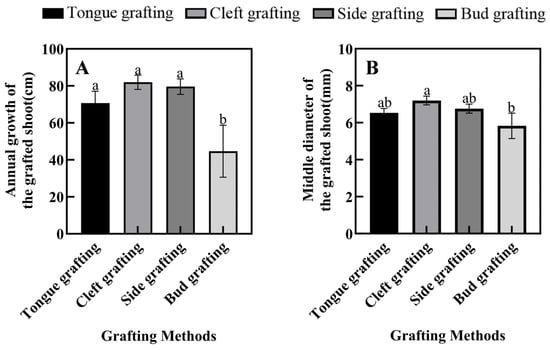
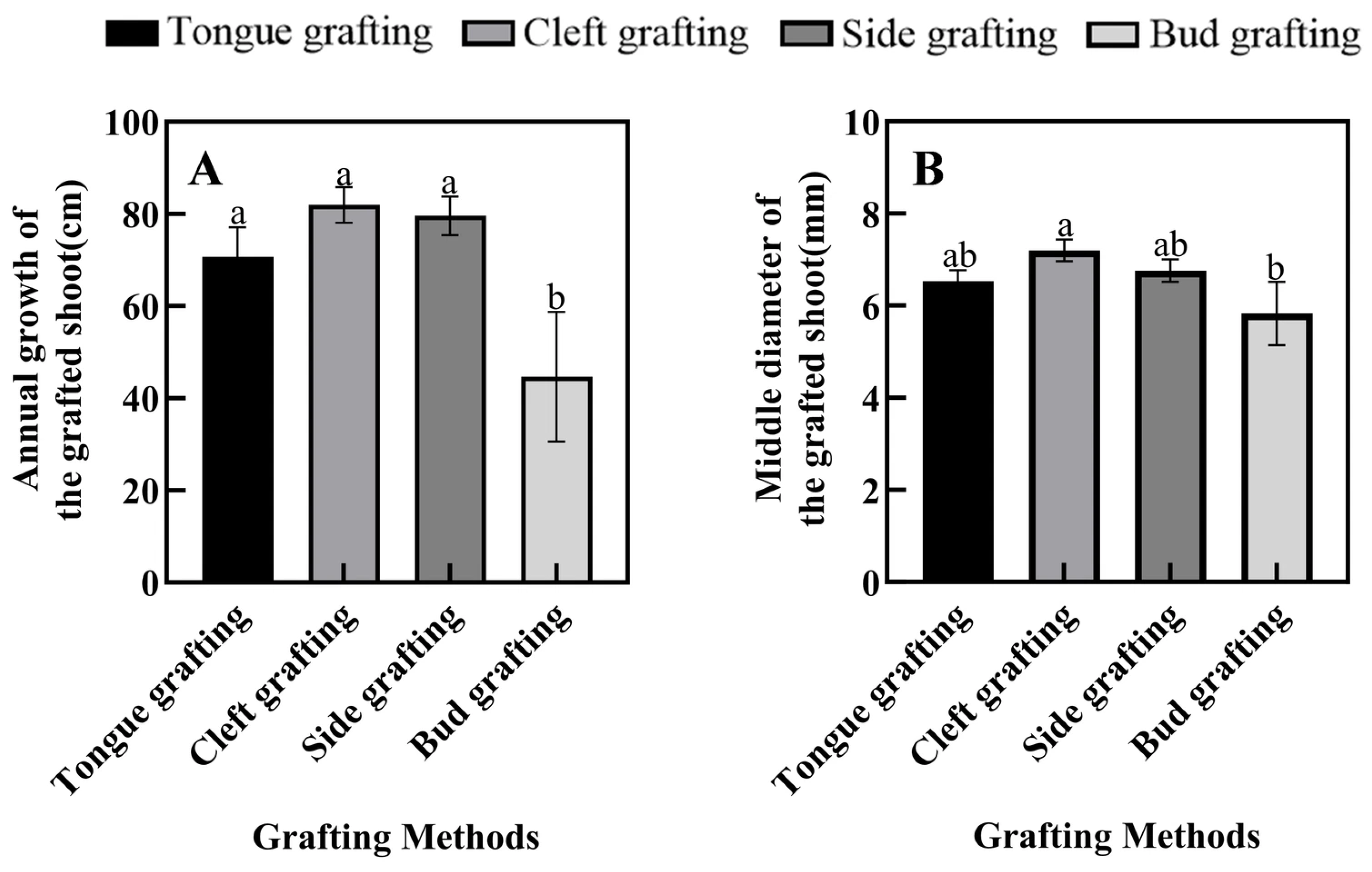
The grafting rates, from highest to lowest, are side grafting, cleft grafting, bud grafting and tongue grafting. Side grafting had the highest grafting rate at 142.13 grafts per hour, followed by cleft grafting (141.87 grafts per hour), while bud grafting and tongue grafting had lower rates. The tongue grafting method had the highest survival rate, reaching 98.93%, followed by cleft grafting and side grafting at 90.87% and 90.60%, respectively. The survival rate for bud grafting was the lowest, at only 22.60% (Table 3). In terms of seedling growth indicators, the annual growth of grafted shoots was highest for cleft grafting, side grafting, and tongue grafting, at 81.98 cm, 79.60 cm, and 70.65 cm, respectively, with no significant differences among them. The annual growth of bud grafting was the lowest, at only 44.67 cm, showing a significant difference compared to the other three grafting methods; The grafted shoots from cleft, side, and tongue grafting had larger diameters, at 7.20 mm, 6.76 mm, and 6.53 mm, respectively, with no significant differences among them. The grafted shoots from bud grafting had the smallest diameter, at 5.83 mm, showing a significant difference compared to cleft grafting but no obvious difference compared to side and tongue grafting (Figure 1). A comprehensive assessment of grafting healing quality was performed based on callus coverage area, callus compactness, and the integrity of the graft union. Among the grafting methods, side grafting and tongue grafting produced the highest healing quality, characterized by a callus coverage area of ≥75%, dense callus tissue that completely filled the union, and no visible separation when gently agitated. Cleft grafting ranked second, with a callus coverage area ranging from 50% to 75%, moderately compact callus, and slight loosening under gentle shaking. Bud grafting exhibited the poorest healing performance, with a callus coverage area of <50%, loose callus, and pronounced cracking or complete detachment even under slight disturbance. Based on the mean values of the membership functions, the growth indicators for different grafting methods were comprehensively ranked (Table 4). The overall growth performance of the seedlings, from highest to lowest, was as follows: side grafting > cleft grafting > tongue grafting > bud grafting.
Table 3.
Effects of Different Grafting Methods on Rootstock-Scion Union and Growth.
Figure 1.
Effects of different grafting methods on the growth of grafts. (A) Effect of different grafting methods on the annual growth of grafted shoots; (B) Effect of different grafting methods on the middle diameter of grafted shoots. Different lowercase letters indicate significant differences (p < 0.05); error bars represent SE.
Table 4.
Membership function values and comprehensive evaluation of each growth index under different grafting methods.
3.2. Effect of Grafting Location on the Healing of Kuerle Xiangli
The grafting rate was highest for nursery grafting, followed by factory-based grafting at the facility, while the grafting rate was lowest for field grafting. The survival rate was highest for factory-based grafting at the facility and lowest for field grafting. The transplant survival rate for nursery grafted trees was low, and the acclimatization period was long, lasting 25–45 days; the transplant survival rate for factory-grafted trees was high, with no acclimatization period after transplanting. The growth cycle for field grafted and nursery grafted trees was 7 months, while that for factory-grafted trees reached 9.5 months (Table 5). Based on the average values of the membership functions, growth indicators across different grafting locations were comprehensively ranked (Table 6). The overall growth performance of the seedlings, from highest to lowest, was as follows: factory-based grafting > nursery grafting > field grafting.
Table 5.
Grafting Efficiency and Effects on Healing and Growth in Different Grafting Settings.
Table 6.
Membership function values and comprehensive evaluation of growth indices under different grafting sites.
3.3. Effect of Grafting Temperature on the Healing of Kuerle Xiangli Grafts
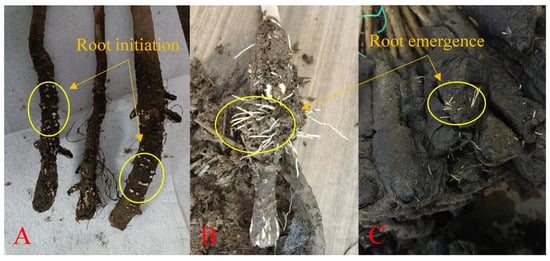
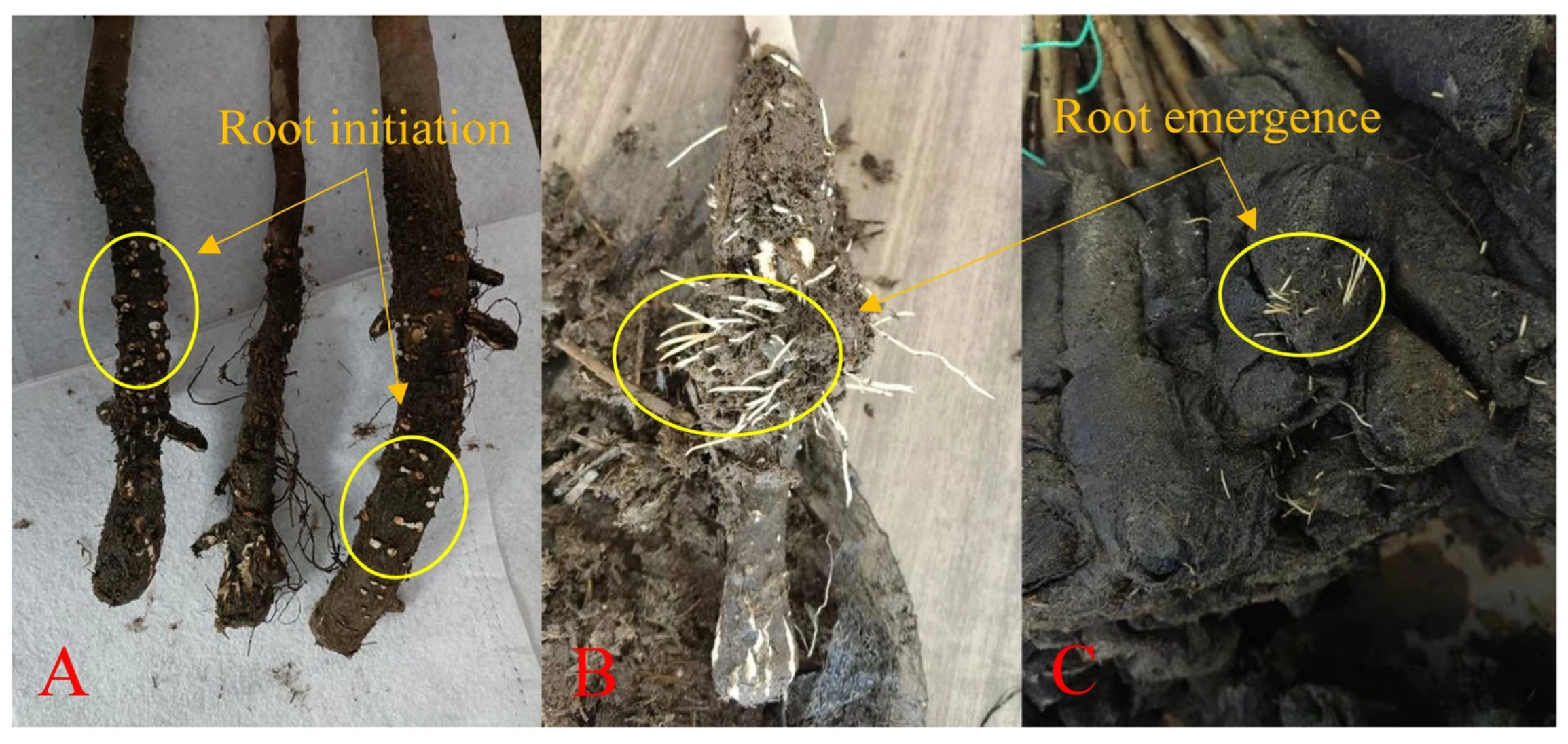
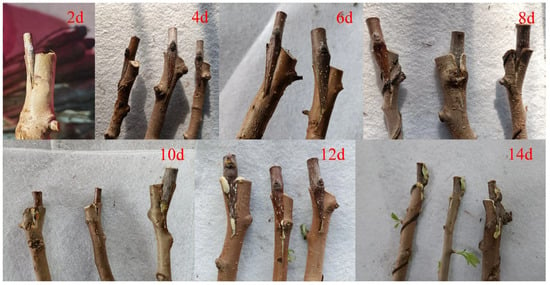
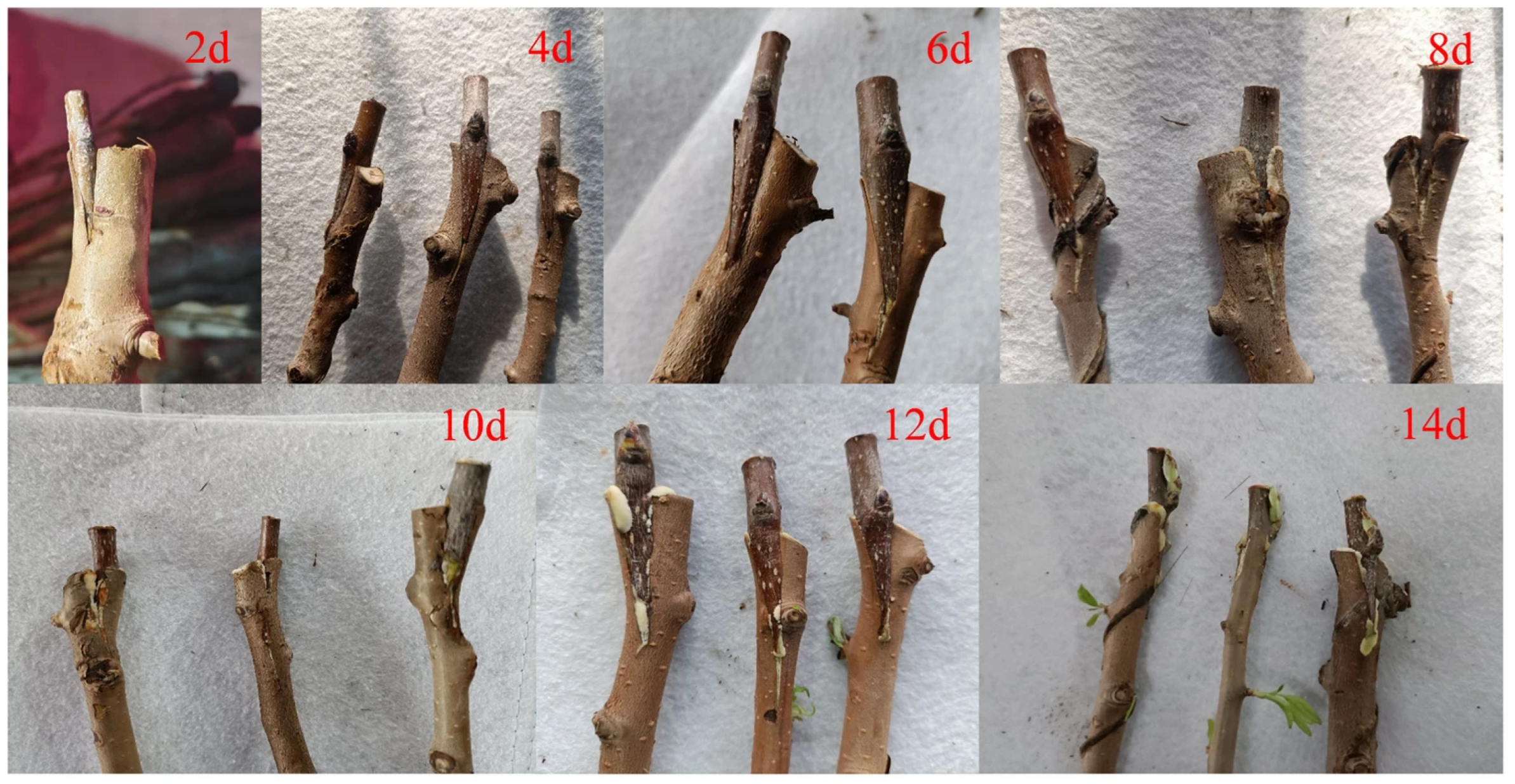
The number of days required for scion–rootstock union healing gradually decreased as the temperature increased; however, there was no significant difference in graft survival rates among the different temperature treatments (Table 7). At temperatures of 24 °C and 26 °C, the roots entered a dormant state by day 14 but did not grow. At 28 °C, root growth began on day 12, though the roots did not extend beyond the surrounding substrate. At 30 °C, the roots had already extended beyond the substrate by day 10. As temperature increases, the number of days required for graft union healing decreases, while root growth accelerates (Figure 2). Healing process of the rootstock and scion at 28 °C: a separation layer formed at the graft union 2–6 days post-grafting; callus tissue began to differentiate and grow at the graft union 8–10 days later; and the callus tissue connecting the rootstock and scion healed 12–14 days post-grafting (Figure 3); the number of days required for rootstock-scion healing was determined based on the state shown in Figure 3, where callus tissue completed the connection between the rootstock and scion by days 12–14, and 80% of the grafted seedlings were required to reach this state. Growth indicators at different grafting temperatures were comprehensively ranked based on the average values of the membership functions (Table 8). The comprehensive growth performance of the seedlings, from highest to lowest, was: 26 °C > 24 °C > 28 °C > 30 °C.
Table 7.
Effects of Different Temperatures on Scion–rootstock Union and Root System Development.
Figure 2.
Root Germination Status. (A) represents root bud break; (B) represents root emergence without protrusion from the medium; (C) represents root emergence with protrusion from the medium.
Figure 3.
Graft union healing.
Table 8.
Membership function values and comprehensive evaluation of growth indices at different temperatures.
3.4. Effect of Nursery Substrate on the Growth of Pears Grafts
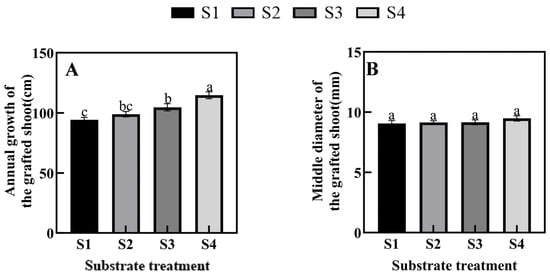
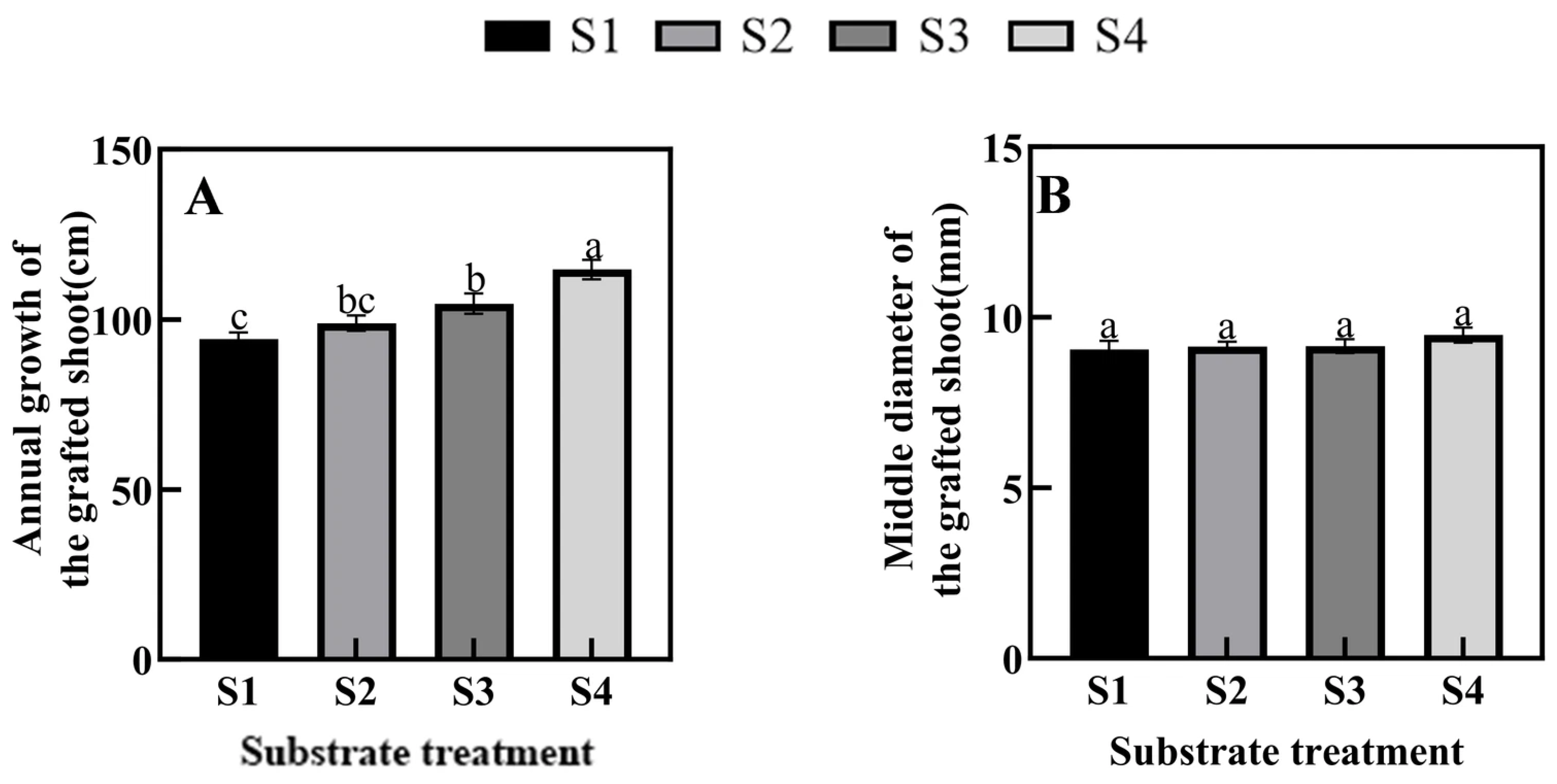
Compared to garden soil, mixtures of organic fertilizer and yellow sand with garden soil all promoted the growth of grafts, as evidenced by corresponding increases in both the annual growth of grafted shoots and the middle diameter of the grafted shoots. The annual growth of Kuerle Xiangli grafts was greatest in the S4 substrate mixture, at 114.65 cm, showing a significant difference compared to other treatments. This was followed by the S3 substrate mixture, with an annual growth of 104.60 cm, which differed significantly from S1. The annual growth of the S2 substrate mixture was slightly higher than that of S1, but the difference was not significant. The middle diameter of the grafted branches followed the order S4 > S3 > S2 > S1, but the differences among them were not significant (Figure 4). Based on the average values of the membership functions, the growth indicators under different nursery substrates were comprehensively ranked (Table 9). The comprehensive growth performance of the seedlings, from highest to lowest, was: S4 > S3 > S2 > S1.
Figure 4.
Effect of substrate composition on the growth of grafted seedlings. (A) Effect of different substrate ratios on the annual growth of grafted shoots; (B) effect of different substrate ratios on the mid-section diameter of grafted shoots. Different lowercase letters indicate significant differences (p < 0.05); error bars represent SE.
Table 9.
Membership function values and comprehensive evaluation of growth indicators under different seedling nursery substrates.
3.5. Effect of Container Size on the Growth of Kuerle Xiangli Grafts
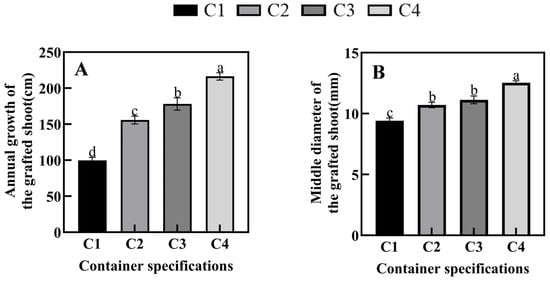
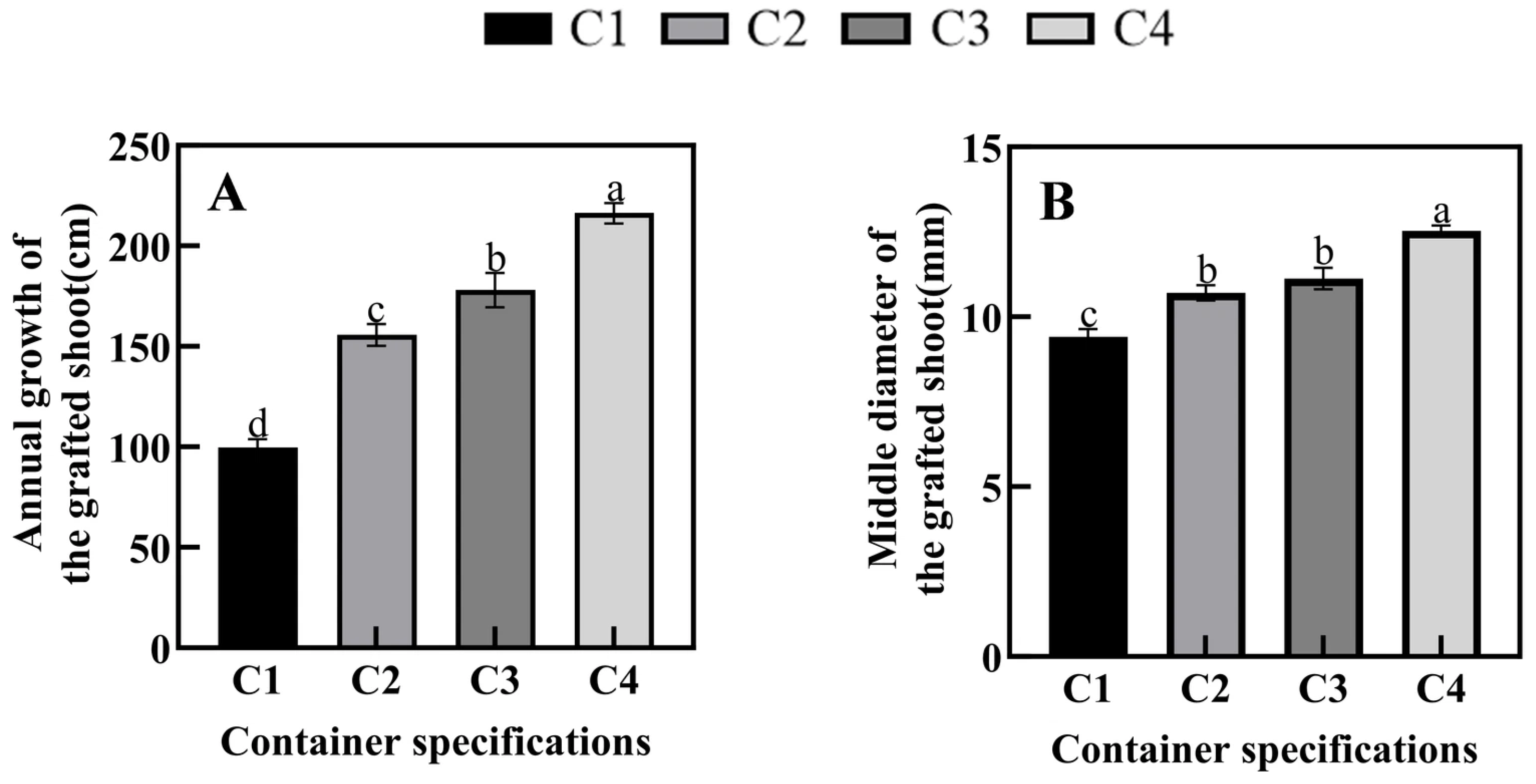
Container size also affects the growth of grafts. As container size increases, the growth of grafts gradually accelerates. When the container size was C1, the annual growth of the grafted shoot was 99.73 cm; when the container size was C4, the annual growth of the grafted shoot was 216.33 cm, an increase of 116.92%. There were significant differences in the growth of grafted seedlings among different container sizes. The grafted branch in the C4 container had the largest diameter at 12.53 cm, while the grafted shoot in the C1 container had the smallest diameter at 9.41 cm; there was no significant difference in the diameter of the grafted shoots in the C2 and C3 containers, but both differed significantly from those in C1 and C4 (Figure 5). Based on the mean values of the membership functions, the growth indicators for different container sizes were comprehensively ranked (Table 10). The comprehensive growth performance of the seedlings, from highest to lowest, was: C3 > C4 > C2 > C1.
Figure 5.
Effect of container size on the growth of grafted seedlings. (A) Effect of different container sizes on the annual growth of grafted shoots; (B) effect of different container sizes on the mid-stem diameter of grafted shoots. Different lowercase letters indicate significant differences (p < 0.05); error bars represent SE.
Table 10.
Membership function values and comprehensive evaluation of growth indices under different container sizes.
3.6. Effect of Rootstock Specifications on the Growth of Kuerle Xiangli Grafts
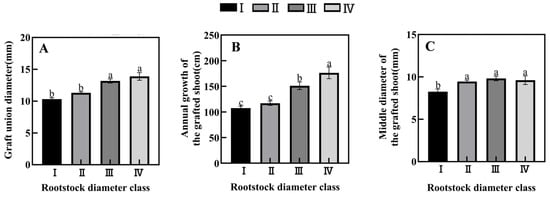
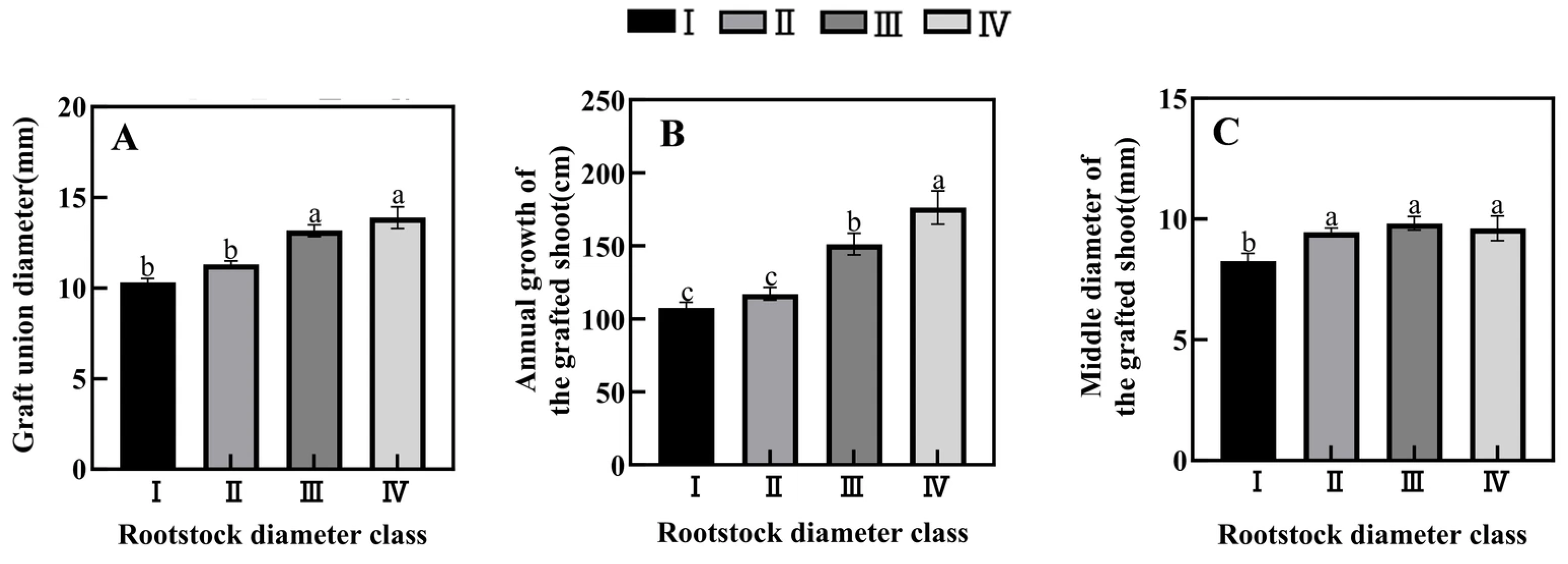
As the diameter of the Betulaefolia rootstock increases, the diameter of the graft union and the annual growth of the grafted shoot also increase; overall, the diameter of the grafted shoot also increases with the increase in the diameter of the Betulaefolia rootstock. For Grade I and Grade II rootstocks, there were no significant differences in graft union diameter or annual growth of the grafted shoot; for Grade III and Grade IV rootstocks, there were no significant differences in graft union diameter, but significant differences in the annual growth of the grafts; and for Grade III–IV rootstocks compared to Grade I–II rootstocks, both graft union diameter and annual growth of the grafted shoot showed significant differences. When the rootstock was Grade II or higher, there was no significant difference in the middle diameter of the grafted shoots, but a significant difference compared to Grade I rootstock (Figure 6). Based on the average values of the membership functions, growth indicators under different rootstock specifications were comprehensively ranked (Table 11). The comprehensive growth performance of the seedlings, from highest to lowest, was: III > IV > II > I.
Figure 6.
Effect of rootstock grade on the growth of grafted seedlings. (A) Effect of different rootstock specifications on graft union diameter; (B) effect of different rootstock specifications on the annual growth of grafted shoots; (C) effect of different rootstock specifications on the mid-stem diameter of grafted shoots. Different lowercase letters indicate significant differences (p < 0.05); error bars represent SE.
Table 11.
Membership function values and comprehensive evaluation of growth indicators under different rootstock specifications.
3.7. Establishment of a Factory-Based Root-Restricted Seedling Nursery System
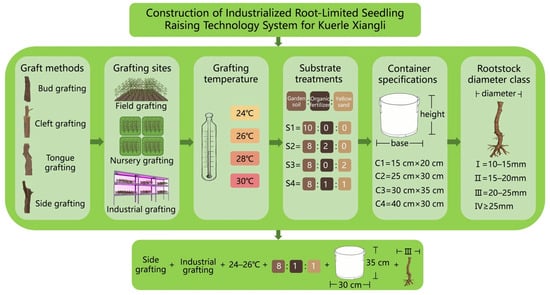
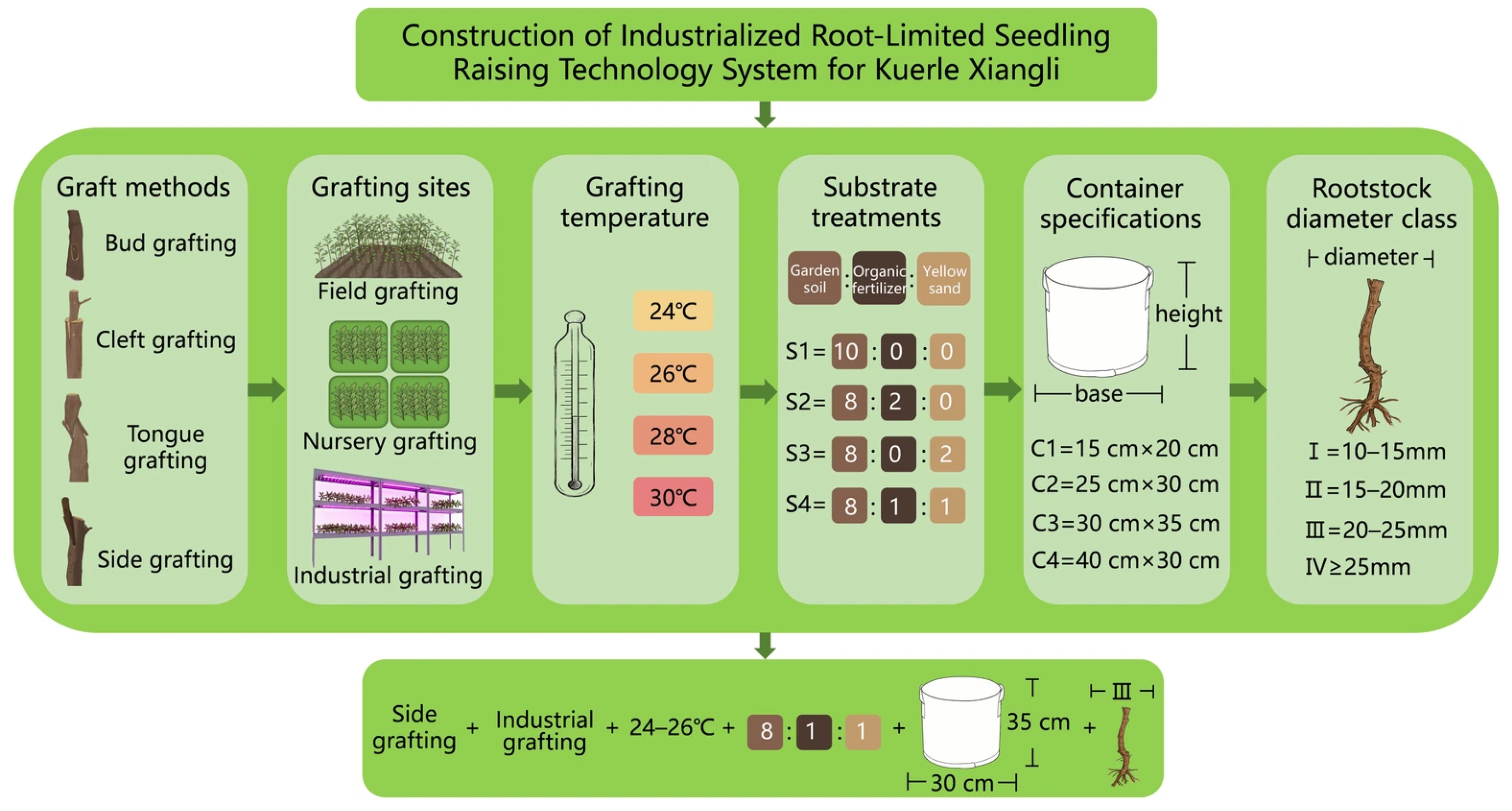
Figure 7 illustrates the technical approach for screening a factory-based root-restricted container seedling production system for Kuerle Xiangli. Experimental treatments were designed across six dimensions: grafting method, grafting site, healing temperature, nursery substrate, container size, and rootstock diameter class. The optimal seedling production scheme was selected through comprehensive evaluation of multiple indicators.
Figure 7.
Screening technical route for the seedling system of Kuerle Xiangli Root-Limited Container Chemical Factory.
4. Discussion
This study systematically evaluated key aspects of factory-scale Kuerle Xiangli graft production, including grafting techniques, healing environment, and root-restricted cultivation, providing a theoretical basis and technical parameters for establishing an efficient, standardized graft production system.
The vigor of the rootstock directly determines the growth status of grafts [28]. Selecting an appropriate rootstock is both the starting point and a critical step in obtaining vigorous grafts in container production. Due to its characteristics of drought tolerance, cold hardiness, salt-alkali tolerance, well-developed root system, rapid growth, and strong adaptability [29,30], and because of its good grafting compatibility with Kuerle Xiangli, Pyrus betulaefolia Bunge has long been widely used as a rootstock for Kuerle Xiangli. In this study, the side grafting method demonstrated the best overall performance in terms of grafting rate, survival rate, seedling growth, and healing quality. This result is consistent with the conclusion that different grafting methods significantly influence the scion–rootstock union healing process, and that good scion–rootstock union healing is key to improving graft survival rates and maintaining the quality of grafted plants [31]. Therefore, side grafting is recommended as a suitable grafting technique for industrial container seedling production of Kuerle Xiangli.
The root system of fruit trees is a critical organ for water and nutrient uptake, hormone synthesis, and plant growth; its structure and physiological activity directly regulate above-ground growth, yield formation, and environmental adaptability [32,33]. During the process of grafting and transplanting nursery seedlings, the exposed root system inevitably suffers mechanical damage. Post-transplant root reestablishment consumes a significant amount of assimilates, thereby delaying above-ground growth [34]; In factory-grafted trees, container-grown seedlings are transplanted with soil, effectively preserving root integrity. There is no noticeable acclimatization period after transplanting, which aligns with the mechanism by which container propagation reduces root disturbance and maintains root vitality [35]. The post-grafting nursery environment for fruit trees has a decisive influence on the healing process of the rootstock and scion, callus formation, vascular system reconstruction, and water balance of the scion [36,37]. Suitable environmental conditions can significantly improve graft survival rates and promote robust healing at the graft union [38]. Factory-based grafting, which precisely controls the healing environment, significantly outperforms field and nursery grafting in terms of graft survival rate, transplant survival rate, and seedling growth, representing an effective strategy for industrial seedling propagation of Kuerle Xiangli.
Temperature is a key environmental factor regulating the graft healing process. This study systematically compared the graft healing process and root sprouting dynamics of Kuerle Xiangli under four temperature conditions (24 °C, 26 °C, 28 °C, and 30 °C) and found that temperature significantly regulates the synchrony between scion–rootstock healing rates and root growth. As temperature increased, the time required for scion–rootstock union healing was significantly shortened. This is consistent with the physiological mechanisms by which high temperatures promote graft union healing [39], cellular dedifferentiation, accelerated callus proliferation, and vascular bundle reconstruction [40,41]. However, there was no significant difference in the final graft survival rate among different temperature treatments, indicating that within the range of 24–30 °C, temperature has a limited effect on the completion rate of healing, while its impact on healing rate and the timing of root emergence is more critical. This experiment found that at 24–26 °C, roots only began to emerge on day 14 but did not extend beyond the substrate; at 28 °C, growth began on day 12 but remained confined within the substrate; at 30 °C, roots were already exposed by day 10. Although high temperatures accelerate healing, they tend to cause premature root emergence [42], making the roots susceptible to damage during transplanting and reducing survival rates [43]; high temperatures increase environmental heat, while high humidity renders root structures fragile, making it difficult for them to adapt to field conditions [44]. Therefore, the grafting healing temperature should balance the coordination between healing and root development. Overall, 26 °C represents a favorable temperature that simultaneously promotes healing efficiency and root growth within the experimental temperature regime.
The key to successful container propagation lies in creating an optimal root zone environment within a limited volume [18]. This study found that garden soil alone is not suitable as a container medium, as its disadvantages—such as a tendency to compact and poor aeration—are magnified under root-restricted conditions [45,46]. Yellow sand improves soil drainage and aeration [47], while organic fertilizer provides slow-release nutrients and promotes the formation of soil aggregates [48]. Similar findings have been reported in Pyrus calleryana ‘Capital’, where mixed substrates with improved porosity and nutrient availability outperformed garden soil in container production [49]. The study indicates that the S4 substrate mixture significantly promotes seedling growth. Likewise, in a Pyrus betulifolia Budge container seedling study, substrate formulation significantly affected aboveground morphological traits, root traits and biomass [50]. The selection of container size reflects a balance between growth yield and economic benefits [51]. This study indicates that container volume is significantly positively correlated with seedling growth. Containers that are too small restrict root growth and development, leading to root circling and root crowding within the container to some extent, which in turn affects seedling growth. Conversely, containers that are too large result in a lower number of seedlings per unit area and increased cultivation costs. Considering factors such as seedling growth, seedling production per unit area, and production costs, container size C3 is most suitable for cultivating grafted Kuerle Xiangli seedlings.
The rootstock serves as the physiological foundation for the scion’s water and nutrient absorption and transport; its diameter directly influences the vascular tissue’s transport capacity and the formation of callus at the grafting site [52,53]. This study found that the diameter of the Betulaefolia pear rootstock is positively correlated with the annual growth of grafted seedlings and the diameter of the graft union. Due to insufficient development of the vascular tissue, Grade I rootstocks have limited capacity to supply nutrients and water to the scion, resulting in significantly lower seedling growth compared to Grade III and IV rootstocks. This is consistent with the findings of Yin et al. [54]. Selecting an appropriate rootstock diameter for grafting ensures both survival rates and the growth and development of the grafted plants [55]; however, when the rootstock diameter exceeds 25 mm, the promotion of growth in Kuerle Xiangli grafted seedlings tends to plateau. Taking into account annual growth, graft union quality, and production costs, Grade III betulaefolia rootstocks are the favorable choice for the industrial-scale production of high-quality Kuerle Xiangli grafted seedlings.
This experiment was conducted under specific protected cultivation conditions; therefore, the applicability of the technical parameters obtained still requires validation and localized optimization across different ecological production zones. Moreover, the experimental period was confined to the annual growth cycle of the grafts, and thus did not cover the long-term orchard performance after field transplanting; the long-term benefits of this system warrant subsequent follow-up evaluation. In addition, the parameter “grafts per hour” mainly reflects the operator’s working speed rather than graft union healing quality, and therefore cannot serve as a direct measure of grafting success. It should also be noted that industrial grafting was carried out in January, whereas field and nursery grafting are typically performed in spring, which introduces differences in phenology, physiology, and carbohydrate availability that may affect comparability. Although the post-grafting environment was standardized, further validation under synchronous phenological conditions or in controlled-environment growth chambers is still needed in future studies.
The integrated application of the aforementioned technical parameters has established a factory-based root-restricted rapid propagation system centered on lateral grafting, a healing temperature of 26 °C, a composite seedling substrate of garden soil:yellow sand:organic fertilizer (8:1:1), 30 cm × 35 cm containers, and 20.01–25.00 mm betulaefolia rootstocks. This system can complete graft union healing and root sprouting within 14 days, featuring high transplant survival rates, uniform seedling quality, and a controllable growth cycle. It overcomes the traditional cycle bottleneck of “one year for rootstock establishment, two years for grafting, and three years for shaping,” providing a replicable technical solution for the standardized, intensive, and efficient development of the Kuerle Xiangli industry.
5. Conclusions
This study identified the optimal technical parameters for factory-based grafting and graft propagation of Kuerle Xiangli suited to the Korla region: using Pyrus betulaefolia Bunge rootstocks with a stem diameter of 20–25 mm, planted in 30 cm × 35 cm non-woven fabric containers, and employing a seedling substrate composed of garden soil, yellow sand, and organic fertilizer (8:1:1); high-density grafting of fragrant pear scions was performed using the side grafting method in a greenhouse environment, with the scion–rootstock union healing temperature controlled at 26 °C. This propagation system effectively extends the seedling growth period, shortens the commercial seedling cultivation cycle, and improves the overall quality of the seedlings. This technical strategy has undergone preliminary validation in the Kuerle production region and has established a solid foundation for scaling up. Future work should include multi-year, multi-site demonstration experiments to further assess its long-term stability and regional adaptability across varying ecological environments.
Author Contributions
Conceptualization: Y.J., J.W. (Jie Wang), H.X., Y.L., X.L., C.Y. and J.W. (Jie Wei); Methodology: Y.J., J.W. (Jie Wang), H.X., Y.L., X.L., C.Y. and J.W. (Jie Wei); Investigation: Y.J., J.W. (Jie Wang), H.X., Y.L., X.L., C.Y. and J.W. (Jie Wei); Data curation: Y.J., J.W. (Jie Wang), H.X., Y.L., X.L., C.Y. and J.W. (Jie Wei); Statistical analysis and validation: Y.J., J.W. (Jie Wang), H.X., Y.L., X.L., C.Y. and J.W. (Jie Wei); Visualization: Y.J., J.W. (Jie Wang), H.X., Y.L., X.L., C.Y. and J.W. (Jie Wei); Writing—original draft: Y.J., J.W. (Jie Wang), H.X., Y.L., X.L., C.Y. and J.W. (Jie Wei); Writing—review and editing: Y.J., J.W. (Jie Wang), H.X., Y.L., X.L., C.Y. and J.W. (Jie Wei); Supervision and administration: C.Y. and J.W. (Jie Wei); Funding acquisition, J.W. (Jie Wei). All authors have read and agreed to the published version of the manuscript.
Funding
This research was funded by Science and Technology Program of XPCC, grant number 2024AB039.
Data Availability Statement
The raw data supporting the conclusions of this article will be made available by the authors on request.
Acknowledgments
We sincerely thank the staff of Tiemenguan Jiamu Horticultural Technology Development Co., Ltd. for their provision of experimental field sites, nursery management, and routine operational support throughout the entire trial period.
Conflicts of Interest
The authors declare no conflicts of interest.
References
- Li, Y.; Ye, Y.; Huan, W.; Ji, J.; Ma, J.; Sheng, Q.; Lei, J. Comparative transcriptome analysis and candidate gene mining for fire blight of Pear resistance in Korla fragrant Pear (Pyrus sinkiangensis Yü). Sci. Rep. 2025, 15, 15073. [Google Scholar] [CrossRef] [Scilit] [PubMed]
- Wang, Y.; Deng, Y.; Jiang, W.; An, S.; Ma, L.; Wang, Z.; Zheng, Q.; Yan, P.; Chen, Q. Proteomic mechanism of sugar and organic acid metabolism during Korla fragrant pear (Pyrus sinkiangensis Yü) fruit development. Sci. Rep. 2025, 15, 26935. [Google Scholar] [CrossRef] [Scilit] [PubMed]
- Li, W.; Wang, X.; Yan, L.; Liu, X.; He, Z.; Wang, K.; Shen, X.; Chai, Z. Influence of reduced nitrogen fertilizer combined with sheep manure on root-soil interaction in Korla fragrant pear orchards in Xinjiang, China. Sci. Rep. 2025, 15, 21646. [Google Scholar] [CrossRef] [Scilit] [PubMed]
- Liu, X.; Wang, Y.; Zhao, K.; Ke, Y.; Guo, Y.; Xue, Y.; Shen, X.; Chai, Z. Analysis of Soil Nutrient and Yield Differences in Korla Fragrant Pear Orchards Between the Core and Expansion Areas. Agriculture 2025, 15, 1873. [Google Scholar] [CrossRef] [Scilit]
- Han, S.; Zhao, J.; Liu, Y.; Xi, L.; Liao, J.; Liu, X.; Su, G. Effects of green manure planting mode on the quality of Korla fragrant pears (Pyrus sinkiangensis Yu). Front. Plant Sci. 2022, 13, 1027595. [Google Scholar] [CrossRef] [Scilit] [PubMed]
- Cabot, M.I.; Lado, J.; Manzi, M.; Sanjuán, N. Life cycle assessment of citrus tree nurseries in Uruguay: Are their environmental impacts relevant? Environ. Impact Assess. Rev. 2024, 106, 107488. [Google Scholar] [CrossRef] [Scilit]
- Sun, W.; Gong, P.; Zhao, Y.; Ming, L.; Zeng, Q.; Liu, F. Current Situation of Fire Blight in China. Phytopathology® 2023, 113, 2143–2151. [Google Scholar] [CrossRef] [Scilit] [PubMed]
- Ashrafzadeh, S. In vitro grafting—Twenty-first century’s technique for fruit tree propagation. Acta Agric. Scand. Sect. B Soil Plant Sci. 2020, 70, 404–405. [Google Scholar] [CrossRef] [Scilit]
- Sun, X.; Tian, L.; Xu, W.; Feng, L.; Jia, W.; Liu, Y.; Chen, Z.; Zhang, S.; Zhang, X.; Ru, G. Integrative Analysis of the Identified Transcriptome and Proteome Major Metabolism Pathways Involved in the Development of Grafted Apricot Hybrids. Forests 2023, 14, 417. [Google Scholar] [CrossRef] [Scilit]
- Xie, A.; Zhang, D.; Zhang, Z.; Zhu, C.; Liu, Z.; Zhao, B.; Sun, J. Grafting onto a Tolerant Rootstock Enhances Grapevine Tolerance to Combined Salt and Drought Stress. Physiol. Plant. 2026, 178, e71014. [Google Scholar] [CrossRef] [Scilit] [PubMed]
- Kwon, S.I.; Kim, M.J.; Paek, P.N.; Nam, J.C.; Kang, I.K.; Choi, C. Effect of Plant Growth Regulators and Graftings on Early Fruiting of Apple Seedlings. Korean J. Hortic. Sci. Technol. 2009, 27, 644–648. [Google Scholar]
- Habibi, F.; Liu, T.; Folta, K.; Sarkhosh, A. Physiological, biochemical, and molecular aspects of grafting in fruit trees. Hortic. Res. 2022, 9, uhac032. [Google Scholar] [CrossRef] [Scilit] [PubMed]
- Zhang, X.; Cheng, F.; Tao, X.; Zhang, L. Temperature effects on graft healing and survival in flare tree peony (Paeonia rockii). Sci. Hortic. 2025, 352, 114447. [Google Scholar] [CrossRef] [Scilit]
- Feng, M.; Augstein, F.; Kareem, A.; Melnyk, C.W. Plant grafting: Molecular mechanisms and applications. Mol. Plant 2024, 17, 75–91. [Google Scholar] [CrossRef] [Scilit] [PubMed]
- Li, B.; Wei, X.; Lu, H.; Chen, X.; Zhou, X.; Yang, F.; Zhao, J. The Impact of Light Intensities on the Phenotypic Parameters of Cucumber Seedlings at Three Developmental Stages. Agronomy 2024, 14, 627. [Google Scholar] [CrossRef] [Scilit]
- Wang, Y.; Wu, C.; Yan, Y.; Zhang, Y.; Shi, Y.; Chu, Y.; Li, Y.; Bao, E.; Zhou, X.; Wu, X.; et al. Additional far-red light promotes the healing and quality of double-root-cutting grafted watermelon seedlings. Sci. Hortic. 2024, 331, 113132. [Google Scholar] [CrossRef] [Scilit]
- Zahid, M.S.; Li, D.; Javed, H.U.; Sabir, I.A.; Wang, L.; Jiu, S.; Song, S.; Ma, C.; Wang, D.; Zhang, C.; et al. Comparative fungal diversity and dynamics in plant compartments at different developmental stages under root-zone restricted grapevines. BMC Microbiol. 2021, 21, 317. [Google Scholar] [CrossRef] [Scilit] [PubMed]
- Zahid, M.S.; Hussain, M.; Song, Y.; Li, J.; Guo, D.; Li, X.; Song, S.; Wang, L.; Xu, W.; Wang, S. Root-Zone Restriction Regulates Soil Factors and Bacterial Community Assembly of Grapevine. Int. J. Mol. Sci. 2022, 23, 15628. [Google Scholar] [CrossRef] [Scilit] [PubMed]
- Evlakov, P.; Tseplyaev, A.; Popova, A.; Zapletin, V.; Ryzhkova, V.; Repnikova, L.; Zhuzhukin, K. Influence of Container Volume and Cuttings Size on the Growth Parameters of Seedlings with a Closed Root System of Two Poplar Genotypes in the Voronezh Region. Int. J. Plant Biol. 2025, 16, 49. [Google Scholar] [CrossRef] [Scilit]
- Zakaria, N.I.; Ismail, M.R.; Awang, Y.; Megat Wahab, P.E.; Berahim, Z. Effect of Root Restriction on the Growth, Photosynthesis Rate, and Source and Sink Relationship of Chilli (Capsicum annuum L.) Grown in Soilless Culture. BioMed Res. Int. 2020, 2020, 2706937. [Google Scholar] [CrossRef] [Scilit] [PubMed]
- Farqani, A.A.; Fazio, G.; Cheng, L.; Robinson, T.L. Effects of soil pH on growth, early fruiting and mineral nutrient profile of ‘Honeycrisp’ apple trees grafted on eight rootstocks. Sci. Hortic. 2025, 342, 114029. [Google Scholar] [CrossRef] [Scilit]
- Khan, N.; Hamid, F.S.; Khan, M.A.; Ahmad, S.; Sumreen, S.; Ahmed, I.; Ahmad, F.; Islam, S.; Shah, B.H. Critical values of alternative organic amendments on kiwi seedling growth. Soil Sci. Plant Nutr. 2018, 64, 774–781. [Google Scholar] [CrossRef] [Scilit]
- Lanari, V.; Pallotti, L.; Lattanzi, T.; Silvestroni, O. Grapevine Root Distribution and Density in Deep Soil Layers Under Different Soil Management Practices. Plants 2025, 14, 1823. [Google Scholar] [CrossRef] [Scilit] [PubMed]
- Mao, Y.; Cui, X.; Wang, H.; Qin, X.; Liu, Y.; Hu, Y.; Chen, X.; Mao, Z.; Shen, X. Study of the grafting compatibility of the apple rootstock 12–2, resistant to apple replant diseases (ARD). BMC Plant Biol. 2022, 22, 468. [Google Scholar] [CrossRef] [Scilit] [PubMed]
- Ali, H.; Basit, A.; Ahmad, I.; Shah, S.T.; Khan, A.; Ullah, I.; Fahad, S.; Ali, H. Success of Rootstock-Scion Interaction in Grapevines Regulated by Various Kinetin Concentrations: A Signaling Molecule. J. Soil Sci. Plant Nutr. 2026, 26, 2101–2114. [Google Scholar] [CrossRef] [Scilit]
- Zhu, Y.; Li, J.; Wu, H.; Wang, J.; Wang, H.; Xu, C.; Li, T. CmHY5-CmWRKY23/69-CmGH9B3 module mediates red light promoted graft union healing of melon grafted onto squash. Hortic. Res. 2025, 13, uhaf251. [Google Scholar] [CrossRef] [Scilit] [PubMed]
- Ma, H.Y. Effects of Foliar Zinc Fertilizer Application on Fruit Yield and Quality of Korla Fragrant Pear. Xinjiang Agricultural University, Urumqi, China, 2024. [Google Scholar] [CrossRef]
- Huang, C.; Lu, H.; Zhang, W.; Wang, Y.; Smith, H.; Wang, X.; Wang, X.; Xi, Z. Spring Frost Stress Resistance Under the Effects of Different Rootstock–Scion Grafting Combinations and Own-Rooted Vines. Agronomy 2026, 16, 90. [Google Scholar] [CrossRef] [Scilit]
- Luo, S.; Xu, P.; Cheng, A.; Wang, X.; Xu, J.; Ma, H.; Zhang, Y.; Zhang, H. Comprehensive analysis of the bZIP gene family in ‘Duli’ pear (Pyrus betulifolia Bunge): Insights for research on abiotic stress, especially drought, in pear. Sci. Hortic. 2024, 334, 113302. [Google Scholar] [CrossRef] [Scilit]
- Yang, H.; Li, Y.; Jin, Y.; Kan, L.; Shen, C.; Malladi, A.; Nambeesan, S.; Xu, Y.; Dong, C. Transcriptome Analysis of Pyrus betulaefolia Seedling Root Responses to Short-Term Potassium Deficiency. Int. J. Mol. Sci. 2020, 21, 8857. [Google Scholar] [CrossRef] [Scilit] [PubMed]
- Fazio, G.; Adams, S.; Lordan, J.; Roberts, N.; Robinson, T.L.; Black, B. Rootstock, Scion, and Graft Type Influence Graft Union Flexural Strength of Apple Trees. J. Am. Pomol. Soc. 2020, 74, 24–44. [Google Scholar] [CrossRef] [Scilit]
- Zhang, H.; Yao, D.; Zhang, G.; Ali, H.S.M.; Li, X.; Li, Y.; Liang, T.; Zhao, F.; Yu, S.; Yu, K. Effect of grafted scion varieties on apple root growth, carbon and nitrogen metabolism and microbiome in roots and rhizosphere soil. Appl. Soil Ecol. 2025, 206, 105841. [Google Scholar] [CrossRef] [Scilit]
- Zou, Y.-N.; Wang, P.; Liu, C.-Y.; Ni, Q.-D.; Zhang, D.-J.; Wu, Q.-S. Mycorrhizal trifoliate orange has greater root adaptation of morphology and phytohormones in response to drought stress. Sci. Rep. 2017, 7, 41134. [Google Scholar] [CrossRef] [Scilit] [PubMed]
- Watson, G.W. The relationship of root growth and tree vigour following transplanting. Arboric. J. 1987, 11, 97–104. [Google Scholar] [CrossRef] [Scilit]
- Sung, S.J.S.; Dumroese, R.K.; Pinto, J.R.; Sayer, M.A.S. The Persistence of Container Nursery Treatments on the Field Performance and Root System Morphology of Longleaf Pine Seedlings. Forests 2019, 10, 807. [Google Scholar] [CrossRef] [Scilit]
- Dinesh, A. Seasonal Variations in Guava Grafts’ Physiological and Biochemical Reactions in Different Propagation Environments. Annu. Res. Rev. Biol. 2025, 40, 1–8. [Google Scholar] [CrossRef] [Scilit]
- Harris, Z.N.; Pratt, J.E.; Bhakta, N.; Frawley, E.; Klein, L.L.; Kwasniewski, M.T.; Migicovsky, Z.; Miller, A.J. Temporal and environmental factors interact with rootstock genotype to shape leaf elemental composition in grafted grapevines. Plant Direct 2022, 6, e440. [Google Scholar] [CrossRef] [Scilit] [PubMed]
- Beer, K.; Yadav, A.L.; Verma, A. Effect of Grafting Time and Environment on the Graft Success of Guava (Psidium guajava L.) under Wedge Grafting. Trends Biosci. 2013, 6, 770–772. [Google Scholar]
- Turnbull, C.G.N.; Booker, J.P.; Leyser, H.M.O. Micrografting techniques for testing long-distance signalling in Arabidopsis. Plant J. 2002, 32, 255–262. [Google Scholar] [CrossRef] [Scilit] [PubMed]
- Lee, K.; Seo, P.J. High-temperature promotion of callus formation requires the BIN2-ARF-LBD axis in Arabidopsis. Planta 2017, 246, 797–802. [Google Scholar] [CrossRef] [Scilit] [PubMed]
- Serivichyaswat, P.T.; Bartusch, K.; Leso, M.; Musseau, C.; Iwase, A.; Chen, Y.; Sugimoto, K.; Quint, M.; Melnyk, C.W. High temperature perception in leaves promotes vascular regeneration and graft formation in distant tissues. Development 2022, 149, dev200079. [Google Scholar] [CrossRef] [Scilit] [PubMed]
- Gur, A.; Hepner, J.; Mizrahi, Y. The Influence of Root Temperature on Apple Trees. I. Growth Responses Related to The Application of Potassium Fertilizer. J. Hortic. Sci. 1976, 51, 181–193. [Google Scholar] [CrossRef] [Scilit]
- Sakaigaichi, T.; Suematsu, K.; Kawata, Y.; Kobayashi, A.; Kamada, E.; Kai, Y. Comparison of root dry matter content and root dry matter weight in sweet potato genotypes cultivated by transplanting and direct planting. Plant Prod. Sci. 2023, 26, 440–447. [Google Scholar] [CrossRef] [Scilit]
- Maurel, C.; Nacry, P. Root architecture and hydraulics converge for acclimation to changing water availability. Nat. Plants 2020, 6, 744–749. [Google Scholar] [CrossRef] [Scilit] [PubMed]
- Chen, G.; Weil, R.R.; Hill, R.L. Effects of compaction and cover crops on soil least limiting water range and air permeability. Soil Tillage Res. 2014, 136, 61–69. [Google Scholar] [CrossRef] [Scilit]
- Sun, A.; Yu, N.; Han, Y.; An, J.; Zou, H. Tillage and straw return alleviate soil compaction in Northeast China: From pore structure to root development and crop productivity. Soil Tillage Res. 2026, 256, 106917. [Google Scholar] [CrossRef] [Scilit]
- Gebregiorgs, G.; Tekeste, N.; Mengesha, B. Germination and seedling growth response of mango (Mangifera indica L.) cultivars to different nursery potting media. Agric. Food Secur. 2021, 10, 62. [Google Scholar] [CrossRef] [Scilit]
- Kučera, A.; Vranová, V.; Hora, D.; Petrovic, B. Evaluating the role of sewage sludge in improving hydrophysics and tree growth in urban structural soils. J. Environ. Manag. 2026, 397, 128317. [Google Scholar] [CrossRef] [Scilit] [PubMed]
- Yang, Z.; Zhao, Q.; Qiu, Y.; Lin, Y.; Jiang, G. Effects of Different Substrate Formula on Growth and Development of Pyrus calleryana. Shandong Agric. Sci. 2015, 47, 33–36.1001–4942. Available online: https://link.oversea.cnki.net/doi/10.14083/j.issn.1001-4942.2015.03.009 (accessed on 27 October 2026). [CrossRef]
- Wang, Y.; Li, Z.; Deng, W.; Yu, X.; Lu, B.; Lu, B. Effect of different substrate formulation on growth and photosynthetic parameters of Pyrus betulifolia container seedlings. For. Ecol. Sci. 2023, 38, 500–506. [Google Scholar] [CrossRef]
- Sun, N.; Sun, Y.; Liao, S.; Ding, J.; Li, C.; Zhou, M.; Li, H. Root restriction and water deficit irrigation enhance tomato fruit quality via altered root morphology and nutrient allocation. Sci. Hortic. 2025, 353, 114491. [Google Scholar] [CrossRef] [Scilit]
- Rasool, A.; Mansoor, S.; Bhat, K.M.; Hassan, G.I.; Baba, T.R.; Alyemeni, M.N.; Alsahli, A.A.; El-Serehy, H.A.; Paray, B.A.; Ahmad, P. Mechanisms Underlying Graft Union Formation and Rootstock Scion Interaction in Horticultural Plants. Front. Plant Sci. 2020, 11, 590847. [Google Scholar] [CrossRef] [Scilit] [PubMed]
- Wang, J.; Zhang, W.; Han, P.; Liu, J.; Yang, Y.; Song, J.; Zhao, W.; Hou, Z.; Li, D.; Wang, R. Effect of salt stress tolerance of four pear rootstock clones on the salt resistance of their grafted and the involvement of possible mechanisms. Sci. Rep. 2026, 16, 1890. [Google Scholar] [CrossRef] [Scilit] [PubMed]
- Yin, Y.; Han, B.; Li, M.; Jia, N.; Liu, C.; Sun, Y.; Wang, Y.; Gao, Q.; Guo, Z. Multiplication, Phenological Period and Growth Vigor of Thirty-One Grapevine Rootstocks and the Role of Parentage in Vigor Heredity. Horticulturae 2023, 9, 241. [Google Scholar] [CrossRef] [Scilit]
- Jain, S.; Prakash, J.; Singh, S.K.; Kumar, C.; Srivastav, M.; Singh, K.; Pandey, R.; Sharma, S.; Singh, A.; Kumari, I. Influence of different rootstock-interstock-scion combinations on mango (Mangifera indica L.) traits. Front. Plant Sci. 2025, 16, 2025. [Google Scholar] [CrossRef] [Scilit] [PubMed]

Disclaimer/Publisher’s Note: The statements, opinions and data contained in all publications are solely those of the individual author(s) and contributor(s) and not of MDPI and/or the editor(s). MDPI and/or the editor(s) disclaim responsibility for any injury to people or property resulting from any ideas, methods, instructions or products referred to in the content. |
© 2026 by the authors. Licensee MDPI, Basel, Switzerland. This article is an open access article distributed under the terms and conditions of the Creative Commons Attribution (CC BY) license.