


Highlights
What are the main findings?
- •
- Chile pepper marketable yield, cilantro fresh and dry weight, and calendula flower dry weight are statistically comparable when grown under solar panels and in full sun control.
- •
- Chile peppers grown underneath solar panels had lower leaf temperature in the afternoon compared with those grown in full sun.
What are the implications of the main findings?
- •
- Containerized agrivoltaics is a productive and feasible option for communities and residential areas to produce food, pollinator resources, and energy in the same space.
- •
- Shade from the solar panels keeps plants cooler in the hotter parts of the day.
Abstract
New Mexico farmers face challenges from drought and pollution, while many residents experience food insecurity. Combining strategies to reduce natural resource consumption, increase income, and produce food for local communities is an important consideration. Agrivoltaics (AV), the co-location of agricultural production and photovoltaic (PV) panels, can be used to generate electricity and provide shade to crops. This is important in hot, arid climates that are adopting solar energy, since AV can increase soil moisture and moderate temperature peaks. Providing demonstrations to the community of the dual use of PV panels and agriculture will be helpful in integrating AV into residential use, therefore a containerized agrivoltaics (CAV) project was established in Farmington, NM. Four different solar panel treatments, ranging in price, were installed onto traditional garden boxes and compared with a full sun control. Cilantro (Coriandrum sativum) ‘Santo’, chile peppers (Capsicum anuum) ‘NuMex Primavera’, and calendula (Calendula officinalis) ‘Alpha’ were grown in the system. In addition to yield and other plant parameters, microclimates were monitored. Generally, plant yield, quality, and stomatal conductance were comparable in the PV treatments and the full sun control for all three crops. Continuing efforts to improve the livelihood of New Mexicans will require an interdisciplinary and applied scientific approach that considers the communities’ perspective and values.
1. Introduction
New Mexico contains diverse and expansive landscapes, primarily defined by aridity. As global temperatures and human populations continue increasing, there is expected to be significant strains on these already limited water resources [1]. Agriculture is an important sector in New Mexico’s economy and currently the largest user of water, approximately 80% [2]. Infrastructure to mitigate water loss and decrease irrigation needs, like shade cloth, has added benefits to protecting crops from extreme environmental conditions. Alternatively, solar or photovoltaic (PV) panels could be co-located in agricultural production to provide shade to crops and flowering plants using agrivoltaics (AV) [3,4,5,6,7,8]. Additionally, plants provide a reciprocal benefit to PV panels. Water released from plants during evapotranspiration cools their surrounding environment, including the panels, and therefore increases PV efficiency and power [9,10]. This is especially important in hot, arid climates that are planning to adopt solar energy. In AV systems, farmers and growers can provide additional protection to their crops and generate income through electricity to utilize for their operations or sell back to the grid.
AV is an emerging and interdisciplinary field, growing quickly in adoption and innovation. Strategies to allow for adequate ‘solar sharing’, energy and food production in the same place, are at the forefront of AV research [11]. For example, bifacial PV panels are recognized for their benefits in AV systems due to their ability to increase yield by up to 39% [12], but further modifications may be needed to increase their applicability in AV practices. Incorporating new solar technology into greenhouse AV designs is also a promising PV application [11]. Crops are grown in indoor structures with PV panels on the roof. AV greenhouses adopting solar cells with dynamic variable shading can allow acceptable radiation required for plant growth into the greenhouse while also generating adequate outputs of electricity [13]. Solar technology that creates adequate transparency for light infiltration will be important for adopting solar energy on land that is currently or historically agricultural [11]. This will be especially important in areas that have a surplus of sunlight and a history of energy and food insecurity, such as New Mexico.
Uranium is a non-renewable resource, mined for its use in nuclear energy/weapon production. Throughout the 20th century, Northwestern New Mexico became the largest producer of uranium in the United States [14]. Many of these mines and the residual pollution were located on tribal lands. Agriculture is an essential aspect of Dińe and other indigenous cultures, traditions, and livelihoods. Repercussions from uranium mining and other sources of pollution, such as fracking and the 2015 Gold King Mine spill, have disrupted their ability to grow food and practice traditional customs. Additionally, the Energy Transition Act implemented by the New Mexico government is reducing dependency on fossil fuels [15]. This includes coal plants, many of which are located on tribal lands. Navajo Nation residents have been provided with solar installations to address recent and past gaps in access to electricity through programs like Navajo Sun Power! funded by the United States (US) Department of Energy. Providing demonstrations to the community of the dual use of PV panels and agriculture will be helpful in integrating food production, and AV specifically, for residential use.
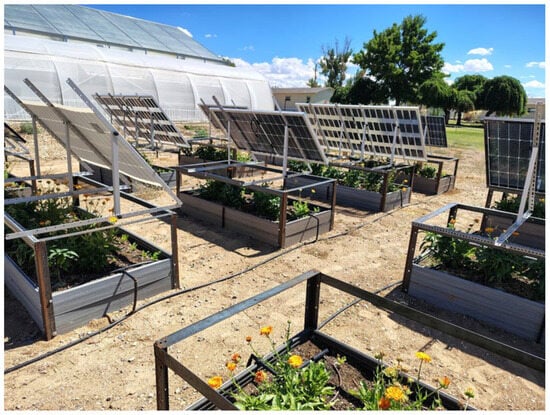
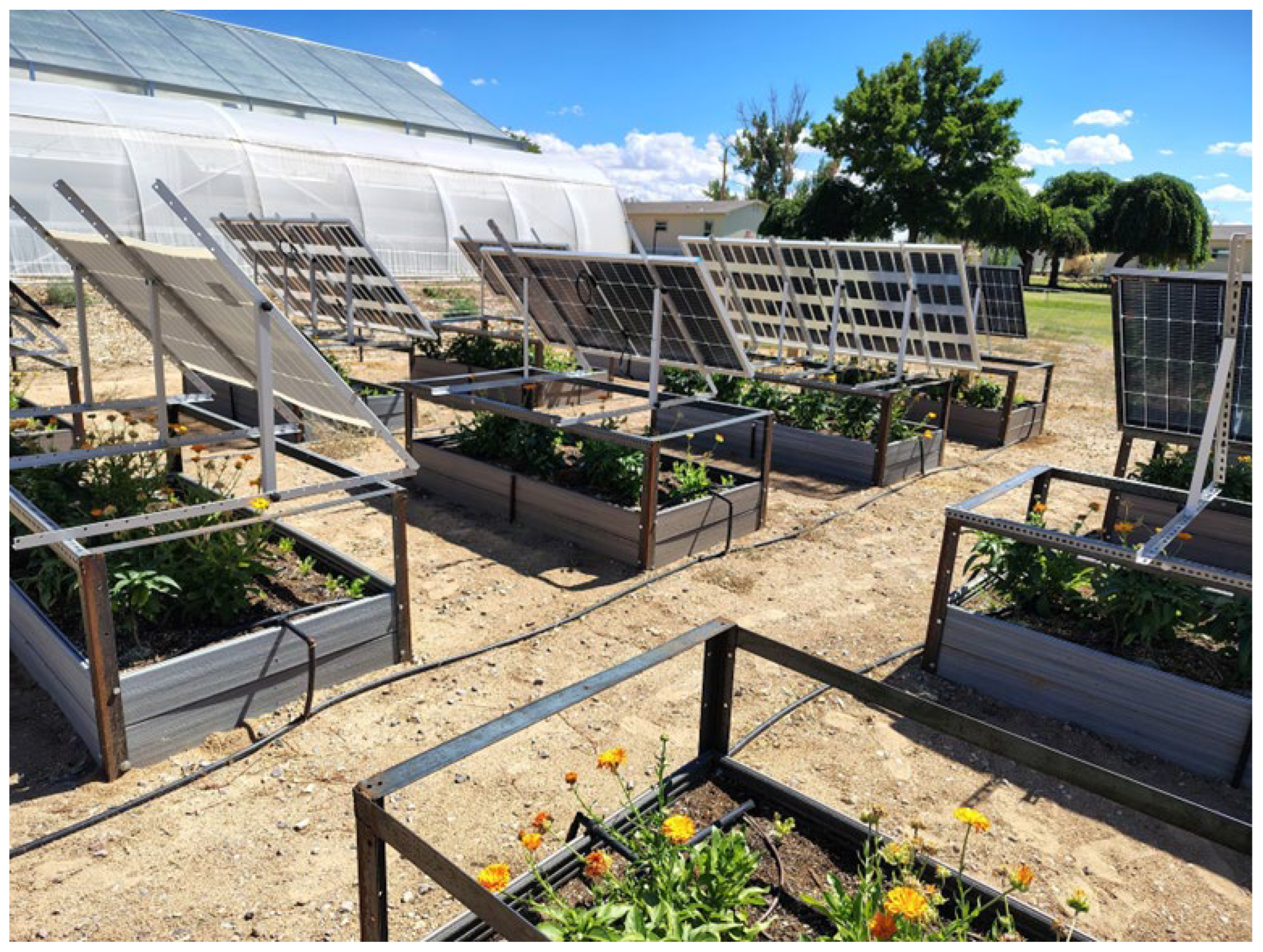
Survey work as part of the Indigenous Farmer’s Needs Assessment identified that 73% of respondents had an interest in placing renewable energy infrastructure on their property but only 12% understood how to implement these practices [16], indicating a need for more community outreach and demonstrations plots. Therefore, a containerized agrivoltaic (CAV) system of individual garden or grow boxes with and without solar panels attached (Figure 1) was established at the New Mexico State University Agricultural Science Center Farmington (NMSU ASC-F) in 2024. NMSU ASC-F resides on land leased from the Navajo Nation at their invitation. Radishes were grown during the first season and the full sun control plot produced significantly greater yield than the solar panel treatments [17].
Figure 1.
Containerized agrivoltaic plot. Cilantro, calendula, and chile peppers were grown in residential garden boxes with and without solar panels at NMSU ASC Farmington in Farmington, NM.
While the only other recorded CAV study occurred within the same system, research in other AV systems can provide results for comparison. Rooftop agrivoltaics (RAV) is the production of food crops and other plants under solar panels located on a green roof. Similar to garden boxes, green roofs are enclosed spaces filled with alternative growing media. Past studies show that leafy greens grown under semi-transparent solar panels in a simulated green roof produced higher yield than those grown in full sun [18]. However, chile pepper cultivars ‘Mosco’, ‘Hatch Sandia’, and ‘CSU Experimental’ grown under opaque and bifacial solar panels on a green roof produced a significantly lower yield and reduced flowering compared with those grown in the full sun control [19]. Native flowering plants, grown under RAV treatments, produced greater overwintering survival and comparable plant growth to those grown in a full sun control [7]. Additionally, water use or stomatal conductance generally decreases in RAV treatments, regardless of crop or location [18,19].
Greenhouse agrivoltaics also provides a system of comparison. Tomatoes grown in a simulated greenhouse system with cadmium telluride PV, silicon PV, and control greenhouse glass did not produce significant differences in fresh or dry biomass across treatments. However, lettuce grown in the same system produced lower fresh and dry biomass in the PV treatments compared with the greenhouse glass control during the late winter cycle [20]. It is possible that, for leafy crops, too much shade resulted in penalties to the yield. This has also been observed in RAV, where leafy greens grown under silicon panels with 80–90% shade produced significantly less yield [21].
Typically, cool season crops are good candidates for AV due to the decreased solar radiation and temperatures. Unless media temperatures are reduced to at least 32 °C, cilantro (Coriandrum sativum) will not grow well during hotter months and will likely bolt [22]. Therefore, cilantro is considered a shade-tolerant herb [23]. While cilantro has been evaluated for its suitability in AV production [24], no current studies report data on its performance under solar panels. Shade studies have also been conducted in cilantro production. A 75% shade cloth treatment reduced the mean afternoon soil temperature to 30 °C and the mean afternoon air temperature to 40 °C [25]. Additionally, cilantro leaf stalk number and shoot fresh weight increased when grown under red shade cloth compared with black or blue shade treatments [26].
To our knowledge, calendula (Calendula officinalis; also known as pot marigold) has not been grown under PV panels or in an AV system. However, other studies have explored the shade tolerance of calendula. Calendula chlorophyll concentrations were increased under shade cloth treatments compared with full sun, while chlorophyll fluorescence was comparable between both [27]. The color of the shade cloth can produce different results, as yellow shade cloth increased flower fresh weight and total chlorophyll in marigolds compared with red, green, and no shade cloth treatments [28].
Chile peppers (Capsicum annuum) of different varieties have been grown in ground beneath AV systems. ‘NuMex Odyssey’ produced a lower yield under solar panels but also produced lower rates of beet curly top virus and beet leaf hopper infestations [29]. Other studies revealed higher numbers of chile peppers produced when grown under PV panels [4]. It is well reported that peppers produced under 20–40%. Shade cloth treatments can increase or produce similar yields compared with those grown in full sun conditions [19,30,31,32].
Utilizing garden boxes with PV installed is an exciting opportunity to grow nutrient-dense food and medicinal crops locally while also producing off-grid solar energy. Additionally, aboveground CAV installations allow community members to grow food without the fear of contamination. The objective of this study was to determine the impact of shade provided by solar panels on a variety of crops—fruiting, flowering, and leafy—grown in residential garden boxes. We hypothesized that CAV treatments will reduce flowering and fruit production but will increase vegetative biomass and size. We also hypothesized that impacts on crop production will vary based on solar panel treatment due to size and material of the panel but will not be related to price.
2. Materials and Methods
The garden or grow boxes (182 cm × 93 cm × 30 cm) were built at NMSU ASC Farmington in 2024. These are located at 36°41′19.94″ N/108°18′29.05″ W. They were filled with 214 L of Berger BM6 (Berger, Saint-Modeste, QC, Canada), a peat and perlite mix, and 28 L of Garden-Time Mushroom compost (Queensbury, NY, USA). Four different types of solar panels were installed on top with one full sun control, three replicates of each, creating a total of 15 boxes (Table 1).
Table 1.
Solar panel treatment information. Four solar panel types and one full sun control were attached to residential garden boxes for crop production.
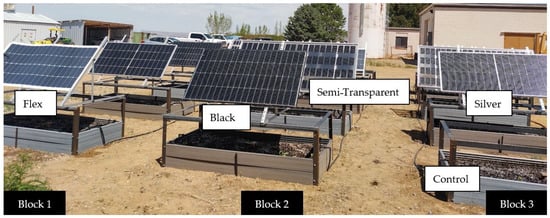
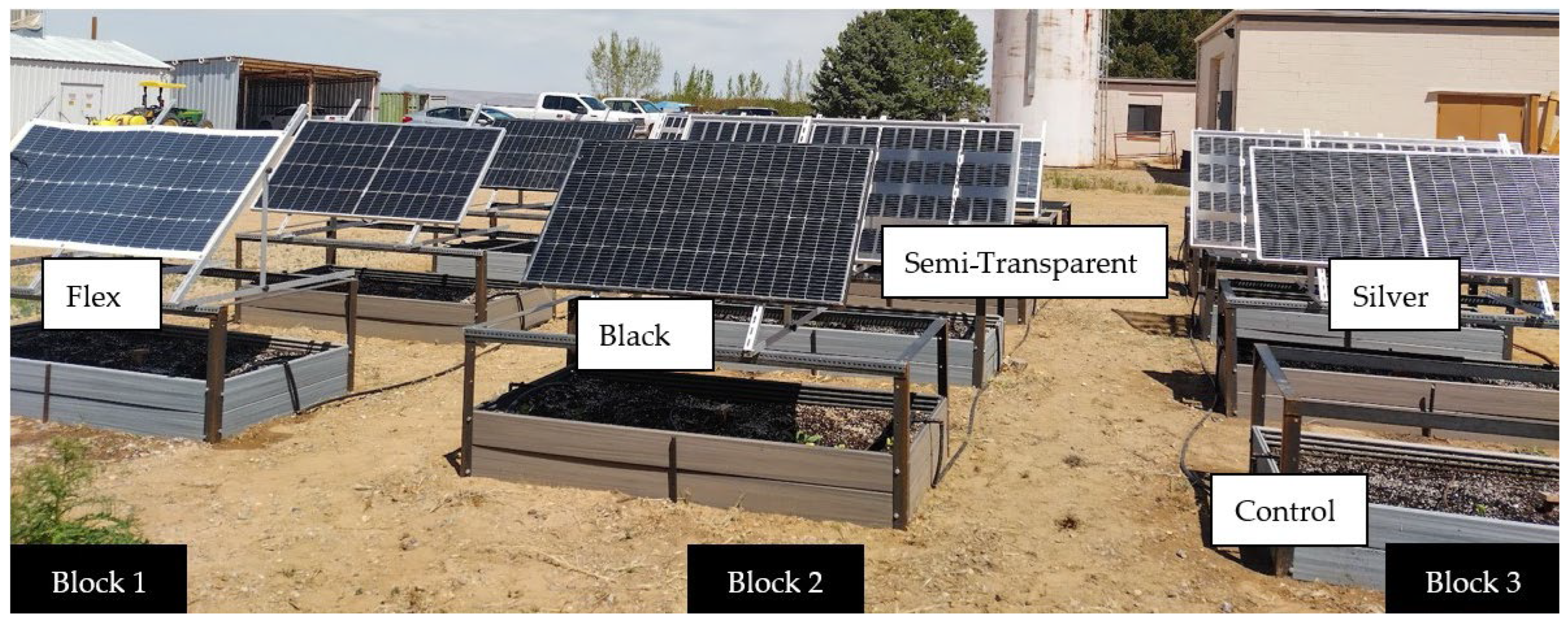
These were placed into a randomized complete block design. Blocks were rows of solar panels running north to south (Figure 2) to control for potential differences of sunlight intensity received by the boxes throughout the day. The panels were oriented over the garden boxes at a 90° angle. The lowest portion of the panel was 44–59 cm above the substrate, and the highest portion of the panel was 118–128 cm above the substrate, depending on the panel. All garden boxes, regardless of treatment, were watered with a drip irrigation system that was designed to evenly distribute water across each replicate. The replicates were watered once a day at 8 am for 20 min utilizing two 7.57 L per hour drip emitters, resulting in each box receiving 5.04 L of municipal water daily.
Figure 2.
Layout of solar panels treatments and control in a completely randomized block design. This system is ground-mounted and the fronts of the panels face south.
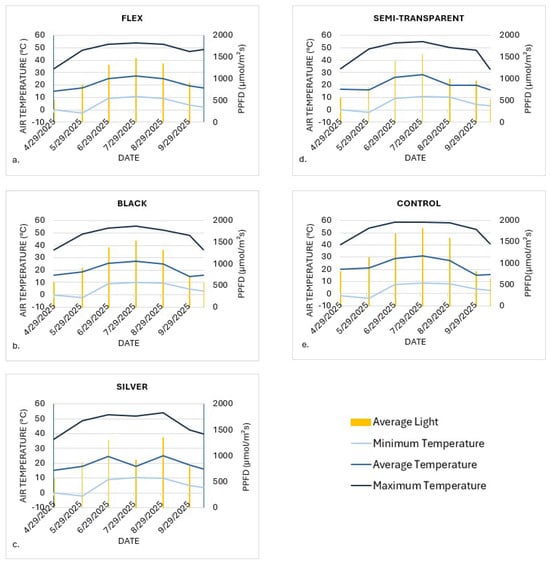
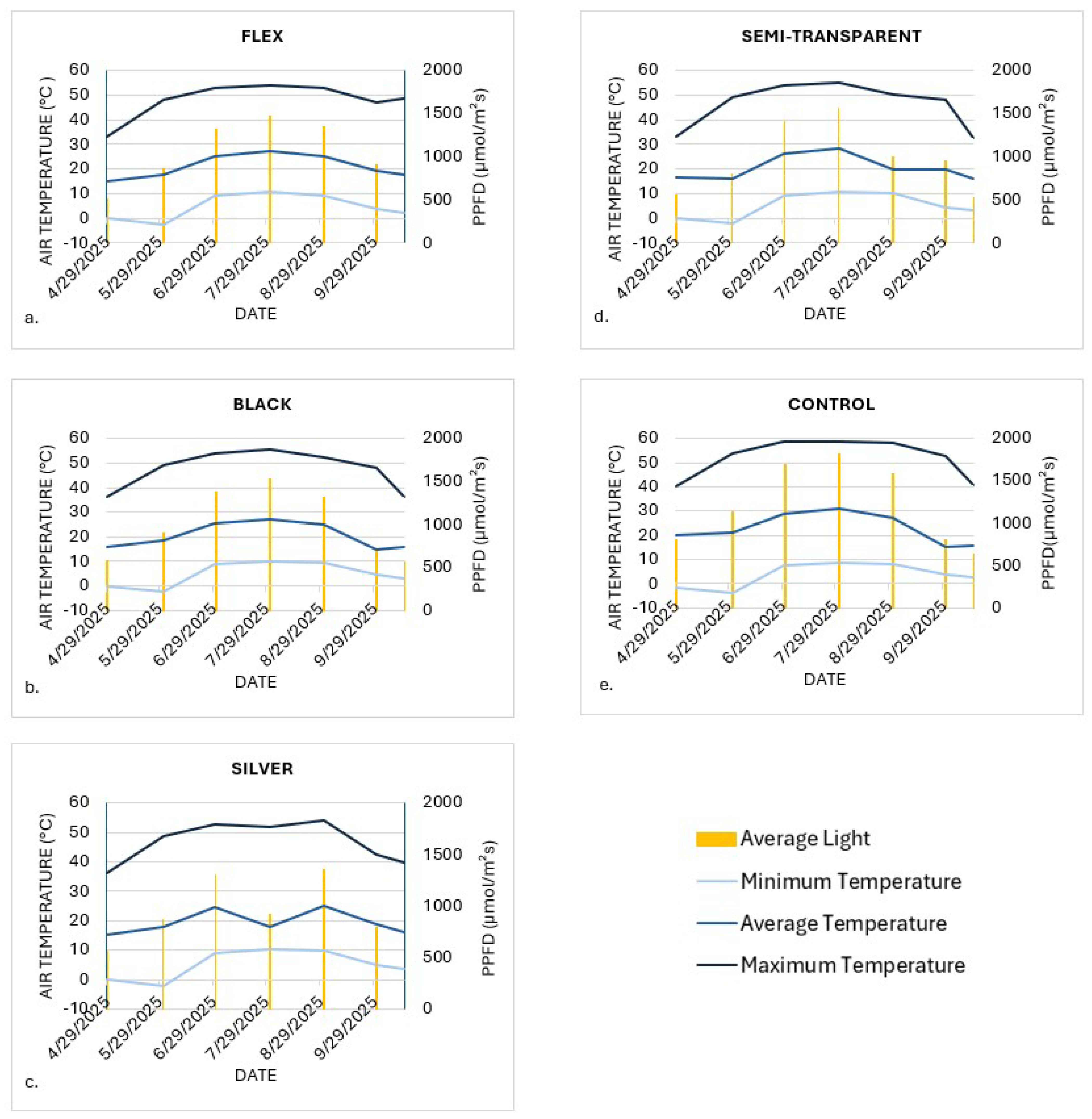
Onset HOBO Pendant light (lux) and temperature (°C) loggers (Li-Cor Environmental: Lincoln, NE, USA) were installed in each experimental unit. The HOBO data were continuously recorded every 15 min from April to October. Monthly maximum, minimum, and average temperature and average light were computed, and further averaged by treatment to graphically display the averages. Figure 3a–e show the information as a time series. Lux values were converted to PPFD (photosynthetic photon flux density) using the Apogee conversion factors (https://www.apogeeinstruments.com/conversion-ppfd-to-lux/, accessed on 28 September 2026).
Figure 3.
The 2025 seasonal weather data. Maximum, average, and minimum air temperature (°C) and average light (µmol/m2s) were recorded in each garden box or replicate. The monthly mean of each treatment is represented above: flex (a), black (b), silver (c), semi-transparent (d), and full sun control (e).
ZiaMet weather stations are located across New Mexico and NMSU research centers (https://www.ziamet.org/ziamet/station/sjfasc/, accessed on 28 September 2026). Daily weather data were also averaged across months and compiled into a table for additional site data (Table 2).
Table 2.
Mean daily weather data at NMSU ASC Farmington. ZiaMet weather station results were averaged for each month across different weather parameters throughout the duration of the experiment mid-May to mid-October.
Three different crops were grown in the system to characterize the effect of the type of solar panels on the plants’ growth. Cilantro (Coriandrum sativum) ‘Santo’ (Johnny’s Selected See Seeds: Fairfield, MA, USA), chile peppers (Capsicum annuum) ‘NuMex Primavera’ (NMSU Chile Pepper Institute: Las Cruces, NM, USA), and calendula (Calendula officinalis) ‘Alpha’ (Johnny’s) seedlings were grown in a containerized agrivoltaics system. Individual plants were treated as observational units in each garden box, while the garden boxes themselves were considered experimental units or replicates. Each treatment had three replicates. The number of observational units were dependent on crop and crop size. For cilantro, nine plants were planted in each box, while five individuals were planted for calendula and chile pepper.
Cilantro was started in the greenhouse as seeds on 17 March 2025, 30 April 2025, and 3 July 2025 and the seedlings were transplanted into the CAV grow boxes on 25 April 2025, 9 June 2025, and 13 August 2025, and destructively harvested during the vegetative stage on 23 May 2025, 8 July 2025, and 10 September 2025. Chile peppers were started in the greenhouse as seeds on 17 March 2025 and the seedlings were transplanted into the CAV grow boxes on 21 May 2025, and they were destructively harvested in the mature fruit-bearing stage on 14 October 2025. Calendula seeds were started in the greenhouse on 2/20/25, seedlings were transplanted into the CAV grow boxes on 19 June 2025, and mature flowering plants were destructively harvested on 14 October. At the end of the experiment, to determine dry biomass, plants and flowers were placed in the drying oven at 70 °C after harvest and removed and weighed 72 h later for plant dry weight and flower dry weight.
During transplanting, 400 mL of Garden-Time Mushroom compost was mixed into the substrate where each crop was planted. Calendula did not receive additional nutrient applications. Cilantro and chile peppers were fertilized once after initial planting with a slow-release pelletized fertilizer, Miracle-Gro Shake ‘N Feed All-Purpose Plant Food (The Scotts Company, Marysville, OH, USA). Cilantro was fertilized 2 weeks after planting and 2 weeks before harvest, on 9 May 2025, 23 June 2025, and 27 August 2025. We spread 4.93 mL of fertilizer within a 12 cm diameter of each plant. Chile peppers were fertilized once before flower initiation on 11 June 2025. We spread 22.18 mL of fertilizer within a 25 cm diameter of each plant.
Cilantro data were collected at each of the three harvests, while calendula and chile were grown throughout the season and data were collected at three time points from the same plants. Chile pepper yield was collected weekly from 12 August 2025 until destructive harvest, resulting in a cumulative total yield and total pepper number. The total product was split into two classes: marketable and non-marketable. Thus, four more metrics were determined: marketable yield, marketable number of peppers, unmarketable yield, and unmarketable number of peppers. Cilantro leaf number and calendula flower number were also counted at harvest.
Plant size was determined by measuring two widths (the widest point and the perpendicular width) and one height, in cm, of the cilantro plant before harvest and placed into Equation (1):
(Width 1 + Width 2 + Height)/3 = Plant Size
Plant leaves were measured for greenness or relative chlorophyll content using a SPAD (Konica Minolta: Ramsey, NJ, USA) meter. Stomatal conductance, chlorophyll fluorescence, and leaf temperature were measured with a LI 600 porometer/fluorometer (LICOR Environmental: Lincoln, NE, USA). Volumetric moisture was taken with a Field Scout TCR 100 m (Spectrum Technologies, Inc.: Aurora, IL, USA), placed in the substrate directly to the right of the plant.
Statistical Analysis
All statistical analyses were performed using PROC GLIMMIX in SAS version 9.4 (SAS Institute Inc.: Cary, NC, USA). Analyses were conducted separately for each metric. For most metrics, the model corresponded to a randomized complete block design, with the block included as a random effect, consistent with the experimental design used in this study. Mean comparisons were performed using PROC PLM, with Tukey’s method used to control for multiplicity at a 5% significance level. For the chile dry weight, total yield, and unmarketable yield metrics, the analyses were performed on the logarithmic scale to satisfy model assumptions; the same logarithmic transformation was applied to the average flower dry weight metric for calendula. For the cilantro data, because the harvest date was included as an additional factor, the analysis used a split-plot design with block as a random effect and a correlation structure to account for the lack of randomization associated with the date factor. A Toeplitz covariance structure with four bands was used to model the correlation among harvest dates. A similar split-plot model was used to analyze the Licor datasets.
3. Results
3.1. Cilantro
There were no significant differences or interactions of cilantro grown under different solar panel treatments observed in any of the parameters considered (Table 3). The date of data collection was significantly different in all parameters. Fresh weight, dry weight, plant size, and stomatal conductance was highest at the second time point in July. Chlorophyll florescence and leaf temperature were only taken in July and September, with higher values in July. Leaf number and SPAD were highest in May, while soil moisture was highest in September. Cilantro harvested in early September bolted right before the end of the experiment. The bolted material was removed and weighed separately. An ANOVA revealed no significant differences between treatments and control in total fresh weight and total dry weight.
Table 3.
Cilantro plant growth, quality, and physiology. Mean ± standard error of fresh weight, dry weight, plant size, leaf number, greenness, substrate moisture, stomatal conductance, chlorophyll florescence, and leaf temperature taken before each harvest date. Main effects are noted with letters a and b to indicate significant differences within columns.
3.2. Calendula
Calendula total plant fresh weight, average plant fresh weight, and average flower number were significantly higher in the control compared with the PV treatments (Table 4). However, total flower dry weight and average flower dry weight was comparable across all treatments and the control. In order to satisfy the assumptions for ANOVA, total flower dry weight and flower number were log-transformed to improve normality of distribution before analysis.
Table 4.
Calendula plant biomass and flower weight and number. Mean ± standard error of plant fresh weight, flower dry weight, and flower number taken at destructive harvest. Main effects are noted with letters a and b to indicate significant differences within columns.
There were no significant differences or interactions based on treatment in calendula growth, greenness, substrate moisture, or physiology (Table 5). The date was significant for all parameters except SPAD and stomatal conductance. Plant size and substrate moisture were highest at the latest date, October, while chlorophyll florescence and leaf temperature were highest at the earliest date in July.
Table 5.
Calendula growth and physiology. Mean ± standard error of plant size, greenness, substrate moisture, stomatal conductance, chlorophyll florescence, and leaf temperature taken in July, August, and October of calendula grown under different solar panel treatments. Main effects are noted with letters a–c to indicate significant differences within columns.
3.3. Chile Pepper
In order to satisfy the assumptions for ANOVA, unmarketable number and plant dry weight were log-transformed to improve normality of distribution before analysis. All other parameters were analyzed as is (Table 6). There were no significant differences observed between treatments and control in marketable yield, total number, and marketable number. According to ANOVA, total yield and plant dry weight were slightly below the 0.05 threshold for significance, 0.048. However, Tukey’s method was unable to identify pairwise differences during the multiple comparison test; therefore, we also considered them to be insignificant. The control was significantly higher than the flex treatment in unmarketable yield and unmarketable number, though both were statistically comparable to all other treatments.
Table 6.
Chile pepper yield and biomass. Mean ± standard error of yield, number, and plant dry weight data taken at destructive harvest. Main effects are noted with letters a and b to indicate significant differences within columns.
Chile pepper in the semi-transparent treatment produced significantly greater plant size than the control and other PV treatments (Table 7). The date was significantly different for all three parameters. Plant size, SPAD, and substrate moisture were highest in the latest month, October.
Table 7.
Chile pepper growth, greenness, and substrate moisture. Mean ± standard error of plant size, greenness, and substrate moisture taken at three different time points during the season. Main effects are noted with letters a–c to indicate significant differences within columns.
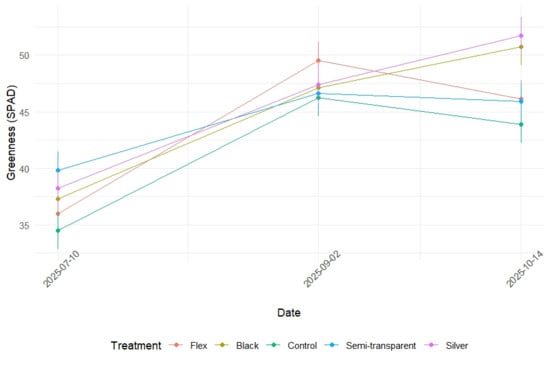
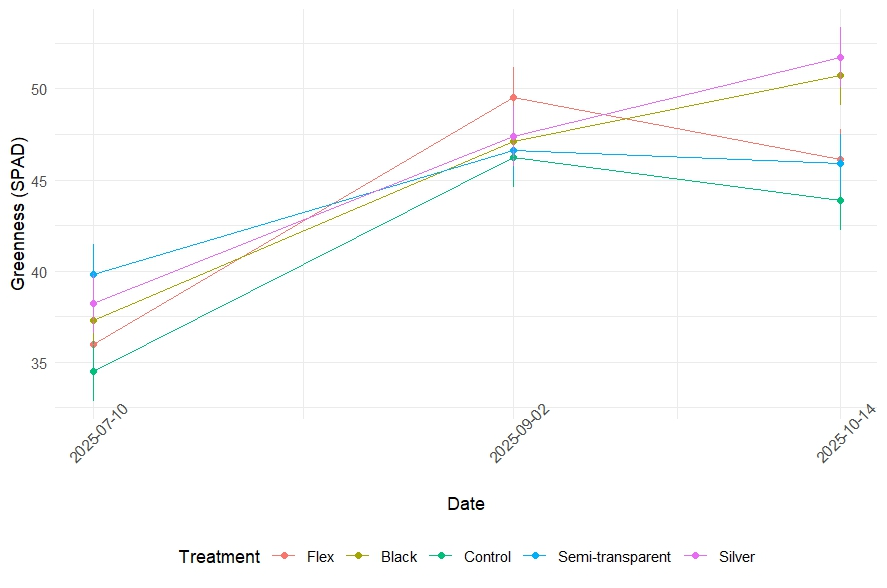
There were no significant differences based on treatment in SPAD or substrate moisture of chile peppers. There was, however, an interaction observed for treatment by date in chile pepper SPAD (Figure 4). In October, silver produced significantly greater SPAD than the control, though both were statistically comparable to all other treatments.
Figure 4.
Chile pepper greenness (SPAD). SPAD data were collected from the same chile plants in July, September, and October under four different solar panel treatments and a full sun control.
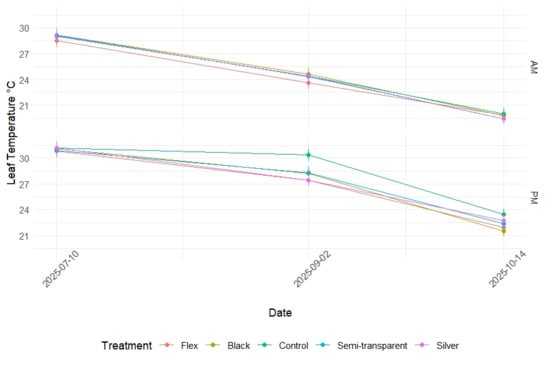
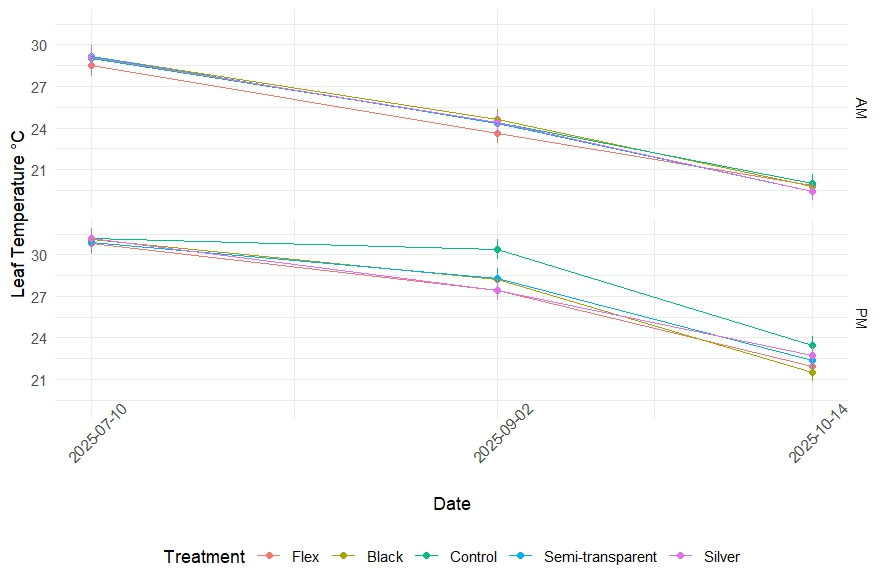
There were no significant differences based on treatment in chile physiology (Table 8). Date and time were significant main effects in leaf temperature. Plant leaves were hotter in July and in the afternoon. There was also a time by date interaction in leaf temperature.
Table 8.
Chile pepper physiology. Mean ± standard error of stomatal conductance, chlorophyll florescence, and leaf temperature taken on three dates, two times per date, and in five different treatments. Main effects are noted with letters a–c to indicate significant differences within columns.
There was an interaction observed in treatment by time of chile pepper leaf temperature (Figure 5). Leaf temperature was significantly higher in the afternoon in the control boxes compared with the black and flex treatments, though both were statistically comparable to all other treatments.
Figure 5.
Chile pepper leaf temperature (°C). Leaf temperature data were collected from the same chile plants in the morning (AM) and afternoon (PM) in July, September, and October.
4. Discussion
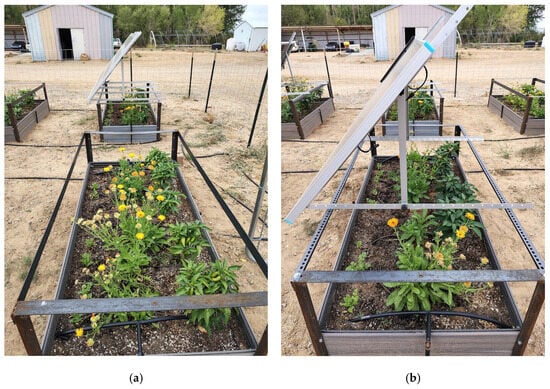
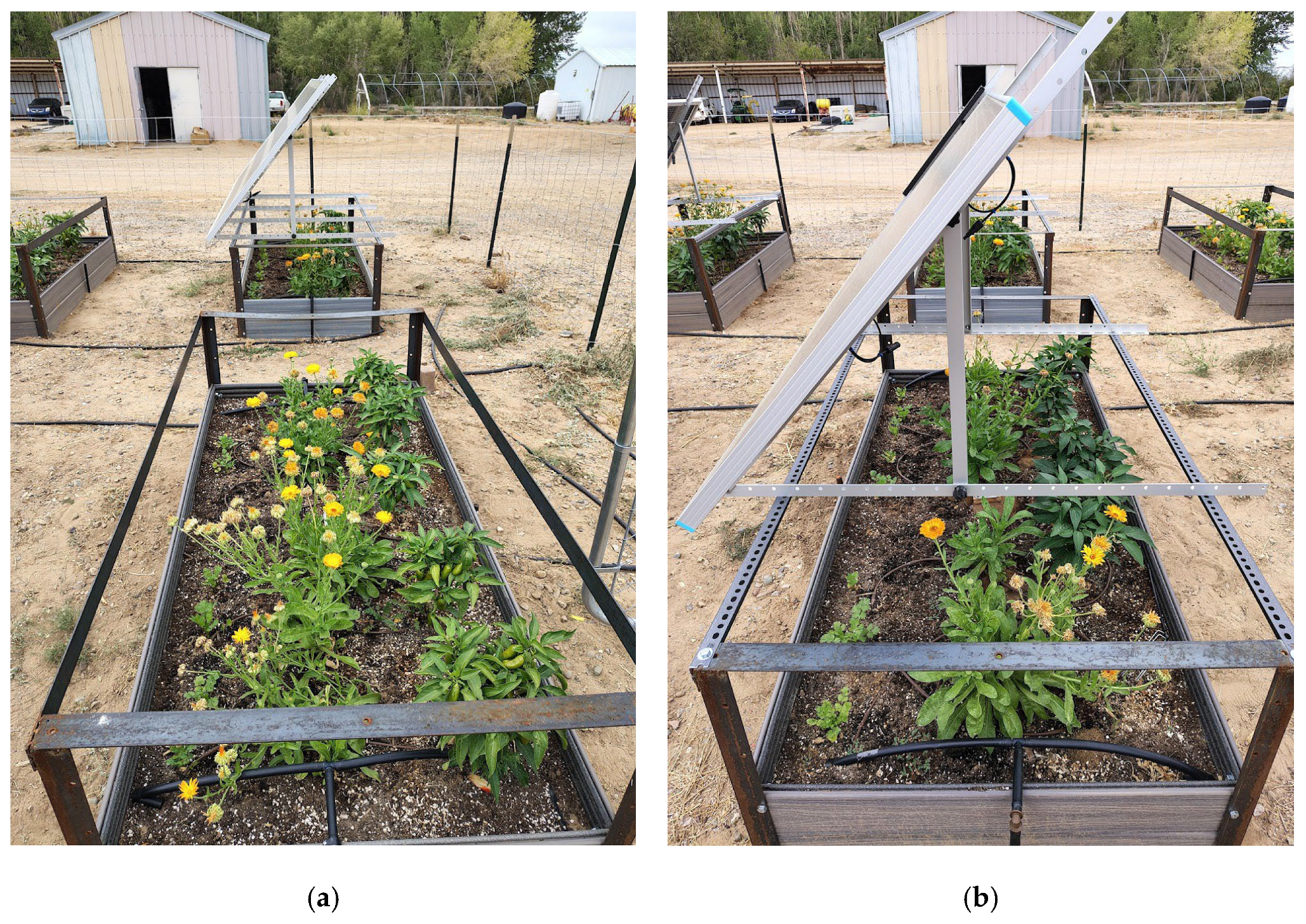
Overall, all three crops grown with and without PV (Figure 6) produced the largest differences in plant growth, quality, and physiology based on date and/or time as a main effect or interaction. These differences aligned with expected seasonal changes, such as higher temperatures and lower soil moisture in hotter months, including July, compared with cooler months or increases in leaf temperature in the afternoon. Air temperature underneath the panels revealed similar trends across the season, regardless of treatment (Figure 3). The control boxes without solar panels did experience the lowest and highest temperatures, though they fell in close range to the garden boxes with PV as well. This is aligned with past research that has observed temperature moderation underneath solar panels by mitigating risks created by peak temperatures [33]. The area under the panels can stay cooler in hotter weather and warmer in colder weather [34]. This temperature modification provides a promising opportunity for season elongation and crop protection, especially in uncertain and changing climates. Light received by the garden boxes was visibly higher throughout the season in the full sun control compared with the PV treatments, especially in peak summer. This is to be expected due to the lack of structure shading the boxes.
Figure 6.
Cilantro, calendula, and chile peppers grown in containerized agrivoltaic system in 2025. (a) Full sun control garden box; (b) garden box with solar panel attached on top.
For all parameters observed in the cilantro treatments, placing solar panels over a garden box produced comparable results to a conventional garden box. Since cilantro fresh weight has increased under red shade cloth [26], it is possible the changes in light created by the panel shade were not conducive to increasing yield or stalk number. Future studies should measure light quality, as well as air temperature and light intensity. The reduction in soil temperature may also not have been enough to promote extra productivity either. RAV studies have monitored the soil temperature of green roof substrates [18,19] and future CAV studies should consider doing this as well.
Similar to other shade studies [28], calendula plant size was also comparable across treatments. Calendula total and average plant fresh weight was significantly higher in the control compared with the PV treatments. Flower number was also highest in the control, though total flower dry weight and average flower dry weight was comparable across treatments and control. This indicates that in full sun treatments, flowering plants, such as calendula, may utilize additional sunlight and energy for biomass and increase flower number but not necessarily increase overall flower size or production. This aligns with other studies where increases in flower fresh weight have also been observed in calendula grown under yellow shade cloth. [28]. This also aligns with other AV studies that observed decreases in flower production and biomass due to shade [19]. This is due to the shade avoidance response that occurs when plants are grown in areas with less sunlight. Plants allocate extra energy to upward vegetative growth, which can result in thinner, lighter, and elongated stems, which eventually results in delays and reductions in flowering and fruiting [35]. Because we analyzed plant fresh weight and were unable to assess dry weight, this increase could be a result of increased water uptake as well. However, since substrate moisture and stomatal conductance were comparable across treatments, this is assumption is not well supported. It is important to note that we only analyzed soil moisture at 10 cm, near the most active root zone. This is also the depth where the ZiaMet soil temperature sensors are located (Table 2). Future studies may also benefit from assessing soil moisture at a deeper depth to provide a clearer idea of water availability throughout the surrounding environment.
Chile pepper total yield and total number were not significantly different, but unmarketable yield and unmarketable number were significantly higher in the control. Peppers produced in the full sun experienced greater rates of sun scald, a physiological disorder caused by sun exposure [36]. This is a common occurrence in pepper production, often mitigated with shade cloth [37]. While we did not observe any disease, sun scald damage on the fruit often contributes to further pathogen inoculation [38], increasing the importance of preventative practices. Solar panels can be a dual-use method to provide shade and electricity generation in chile pepper production.
Additionally, chile pepper plant size was significantly higher in the semi-transparent PV treatment compared with all other treatments and the control. This is likely due to the higher transmission of sunlight through the panels, while still receiving protection from exposure. RAV studies utilizing a shade cloth with a similar transparency to semi-transparent PV, 30%, produced greater or comparable chile pepper plant growth and yield [19]. Semi-transparent PV placed over other crops, such as leafy greens, also increased size and yield [18].
Two interactions based on treatment occurred in chile peppers: leaf temperature and SPAD. Decreases in the afternoon leaf temperature of chile peppers grown under the flex and black PV treatments compared with the control indicate that shade can alter plant response. SPAD measures the transmission of red light and infrared light through the plant or greenness and is often used as an indicator of plant quality [39]. SPAD has been positively correlated with chlorophyll and nitrogen concentrations in tomato leaves [40,41] and leafy greens [42]. The increase in chile pepper SPAD under the silver PV treatment compared with the full sun control indicates that shade can improve crop quality and greenness in certain plant species. While we did not observe differences in calendula SPAD, other studies have observed increases in total chlorophyll when calendula is grown under shade treatments [27,28]. Comparable SPAD values across PV treatments and the control in cilantro and calendula does provide additional reassurance that crop quality will not suffer along with yield in AV systems.
The PV panels selected for this treatment are primarily utilized for off grid purposes. They are small, easy to install panels. The singular panels ranged in price from $109 to $600 (Table 1). We did not see differences in crop growth based on panel type. Therefore, for the purpose of residential CAV, cheaper panels are a viable option when considering the economics and feasibility of food production. However, energy output is a factor that needs to be considered before fully making a recommendation. Since we were unable to quantify that in this study, we must determine future steps based on plant performance and initial expense.
The implications from this study can be generally applied to other small-scale garden boxes. We utilized a peat-based substrate that is common to controlled environment agriculture producers and backyard growers. However, location and environment may influence the success of the system. The mean solar radiation range during the growing season in Farmington, NM was 16–26 MJ/m2 and the average air temperature minimum was always above 6 °C (Table 2). Places with less sun or lower temperatures may struggle to grow plants in shaded environments. This may be especially true for heat-adapted crops, like chile peppers, or calendula, since it experienced decreases in flower number and biomass. Leafy crops, like cilantro, may be equally successful in colder and cloudier climates.
In addition to arable land, fresh produce, and energy, fresh water is also scarce in New Mexico and on the Navajo Nation, due to the region’s aridity and lack of infrastructure. Residential opportunities to grow food with minimum resources will be important for research moving forward. At large, the opportunities for reducing water use in agriculture observed in other studies through AV adoption are important for New Mexico and the southwest. Studies have monitored evaporation and soil moisture under AV systems and observed significant decreases in evaporation and increases in soil moisture compared with areas without PV [28,43]. Models produced from AV installations indicate that irrigation could be reduced by 20% [44]. Due to increased soil moisture, maize grown in AV systems was able to reduce irrigation by 19–47% [45]. Additionally, Swiss chard grown in increasing levels of shade provided by PV produced higher N and K concentrations in leaf tissue [46]. These studies also reveal that decreases in irrigation can result in changes to crop phenology, physiology, and yield. Response to shade and irrigation deficit varies per crop and location, emphasizing the importance of localized and crop-specific research for future studies.
A major limitation of this study is our lack of data on the energy output or performance of the solar panel treatments. The different panel types were not compatible, and it limited our ability to create a larger grid. Therefore, we cannot understand the impact of the plants on the panels in this system. Another limitation of this study is that our replication was low, n = 3, and the experiment only occurred over one season. Low replication can lessen statistical power and limit data interpretation. Additionally, seasonal variability will likely have a large impact on overall crop productivity of CAV systems and AV systems overall, especially as unpredictable weather patterns continue to escalate with climate change [34]. Furthermore, we did not directly limit or stress the plants for water, so we cannot make conclusions about the impact of CAV on the drought tolerance or response of these crops specifically, we can only infer from other AV studies and the water use-related parameters we analyzed. Therefore, future studies should increase replication, conduct the study over multiple seasons, and include water deficit treatments. This ensures relevant and appropriate results for Northwestern New Mexico and the western United States overall.
New Mexico is 315,113 square km [47]. The total population is ~2.1 million and one quarter of that population is located within Albuquerque’s city limits [https://www.census.gov/quickfacts/fact/table/NM, accessed on 28 September 2026]. The rest of the state is incredibly rural and dispersed. Additionally, New Mexico contains eight distinct ecoregions within the state, and they vary considerably by latitude, longitude, and elevation [48]. The negative outcomes of solar energy include damaging biodiversity, interrupting migratory patterns, and increased erosion and dust [49]. Managing solar arrays to prevent downstream environmental consequences is a major concern for many farmers, researchers, and community members [50]. Additionally, New Mexico’s history of resource extraction, especially related to energy, creates a complicated context for solar development. Energy has competed against or directly impeded agricultural production in several areas of the state. For example, the nuclear industry began to replace carrot farming with uranium mining in the Grants-Milan district during the mid-1900s [47]. In the Permian Basin, fracking operations often purchase or lease water rights from farmers, ranchers, or other landowners [51]. During the 2015 Gold King Mine spill, 11.3 million L of acid mine drainage was released into the Animas and San Juan Rivers. The concentrations of lead, arsenic, and other toxic compounds resulted in contaminated agricultural land in Northwestern New Mexico [52], not to mention concerns of severe acute and long-term health consequences [53]. Solar companies have decades of distrust to overcome if they want to create long term equitable solutions for New Mexican and tribal communities.
Ultimately, there are significant gaps in research and environmental justice in the Southwestern US and especially on tribal lands [16]. AV and ecovoltaics, growing native plants for land rehabilitation underneath solar panels [54], present promising strategies to responsibly manage and conserve land while it is being developed for energy production. Utilizing local surveys and interviews to create holistic community-based research methods are essential in the four corners region and beyond. Future research should conduct additional surveys as AV research is completed and disseminated. The incorporation of continuous community feedback can contribute to the adoption and implementation of these systems at residential, community, and larger scales. With a community and environmentally focused approach we can create resilient and sustainable agroenergetic systems.
5. Conclusions
This project was designed to determine crop and solar panel suitability in containerized agrivoltaics (CAV) for residential use and demonstration in Northwestern New Mexico. In regard to cilantro and chile pepper marketable yield, CAV systems can support comparable yields to a traditional garden box. Some flowering and biomass may be reduced in calendula and other crops, but flower and medicinal production is possible. Due to the standard garden box design and the peat-based substrate, it is likely that this project could be repeated in many different locations. Crop selection, irrigation management, fertility applications, and PV choice may require additional studies to precisely integrate these projects into new environments While this study observes crop and shade interactions on a small scale, it may serve as a model for larger systems. Additionally, this system could be adopted beyond communities in Northwestern New Mexico and in urban, rural, and tribal areas to increase food and energy security, access, and resiliency.
Author Contributions
Conceptualization, M.Y.C.; methodology, M.Y.C.; formal analysis, G.M., and C.V.C.; investigation, M.Y.C. and G.M., resources, M.Y.C.; data curation, M.Y.C.; writing—original draft preparation, M.Y.C.; writing—review and editing, M.Y.C., G.M., C.V.C. and M.Y.T.; visualization, G.M., C.V.C. and M.Y.T.; project administration, M.Y.C. All authors have read and agreed to the published version of the manuscript.
Funding
This research was funded by New Mexico State University.
Data Availability Statement
The original data presented in the study are openly available in the NMSU digital commons (https://digitalcommons.nmsu.edu/), accessed on 8 October 2026.
Acknowledgments
Great thanks to the Navajo Nation and to the land where this research occurred. We would also like to thank Emiliano McLane and Kevin Lombard for the construction and design of the CAV system. Additional thanks to all of the NMSU ASC Farmington crew who assisted throughout the duration of the project: Dallen Begay, Jason Thomas, Korbin Nakai, Devaughn Tapaha, Tionna Tapaha, Shawn McKinley, Sarah Trujillo, Chad Begay, Jonah Joe, Tamara Begay, and Corey Benally. Artificial Intelligence tools, Grammarly (accessed on 8 October 2026 and can be found at https://www.grammarly.com/) and Microsoft 365 Copilot (based on GPT-5 chat model, accessed on 8 October 2026, and can be found at https://www.microsoft.com/en-us/copilot), were used by coauthors during the editing process to assist exclusively with grammar, spelling, and punctuation. No generative AI tools were used to generate scientific content, analyze data, or interpret results.
Conflicts of Interest
The authors declare no conflicts of interest.
Abbreviations
The following abbreviations are used in this manuscript:
| AV | Agrivoltaics |
| PV | Photovoltaic |
| CAV | Containerized Agrivoltaics |
| NMSU | New Mexico State University |
| RAV | Rooftop Agrivoltaics |
References
- Omer, A.A.A.; Liu, W.; Li, M.; Zheng, J.; Zhang, F.; Zhang, X.; Mohammed, S.O.H.; Fan, L.; Liu, Z.; Chen, F.; et al. Water evaporation reduction by the agrivoltaic systems development. Sol. Energy 2022, 247, 13–23. [Google Scholar] [CrossRef] [Scilit]
- Balla Thomson, B.M. 2012. Water resources in New Mexico. In Water Policy in New Mexico: Addressing the Challenge of an Uncertain Future; Brookshire, D.S., Gupta, H.V., Matthews, P.O., Eds.; Resources for the Future Press: New York, NY, USA, 2012; pp. 31–67. [Google Scholar]
- Ballard, T.; Bousselot, J.; Conrad, S.; Gornick, B.; Hayes, C.; Hickey, T.; Meyer, R.; Uchanski, M. Agrivoltaics in Colorado. CSU Ext. Fact Sheet 2023, 0, 306. Available online: https://extension.colostate.edu/topic-areas/agriculture/agrivoltaics-in-colorado-0-306/ (accessed on 31 January 2026).
- Barron-Gafford, G.; Pavao-Zuckerman, M.; Minor, R.; Sutter, L.; Barnett-Moreno, I.; Blackett, D.; Thompson, M.; Dimond, Y.; Gerlak, A.; Nabhan, G.; et al. Agrivoltaics provide mutual benefits across the food–energy–water nexus in drylands. Nat. Sustain. 2019, 2, 848–855. [Google Scholar] [CrossRef] [Scilit]
- Bousselot, J.; Slabe, T.; Klett, J.; Koski, R. Photovoltaic array influences the growth of green roof plants. JLIV 2017, 4, 9–18. [Google Scholar] [CrossRef] [Scilit]
- Hickey, T.; Chavez, M.Y.; Bousselot, J.M. A rooftop agrivoltaic system: Pollinator plant establishment. JLIV 2024, 11, 41–55. [Google Scholar] [CrossRef] [Scilit]
- Hickey, T.; Uchanski, M.; Bousselot, J. Vegetable crop growth under photovoltaic (PV) modules of varying transparencies. Heliyon 2024, 10, e36058. [Google Scholar] [CrossRef] [Scilit]
- Uchanski, M.; Hickey, T.; Bousselot, J.M.; Barth, K. Characterization of agrivoltaics crop environment conditions using opaque and thin-film semitransparent modules. Energ. J. 2023, 16, 3012. [Google Scholar] [CrossRef] [Scilit]
- Koka, K. Photovoltaic Module Performance and Thermal Characterizations: Data Collection and Automation of Data Processing. Master’s Thesis, Arizona State University, Tempe, AZ, USA, 2011. [Google Scholar]
- Gupta, S.; Anand, P.; Kakkar, S.; Sagar, P.; Dubey, A. Effect of evapotranspiration on performance improvement of photovoltaic-green roof integrated system. J. Renew. Energy Smart Grid Technol. 2017, 12, 63–76. Available online: https://ph01.tci-thaijo.org/index.php/RAST/article/view/90334 (accessed on 31 January 2026).
- Chalkias, D.A.; Stathatos, E. Designing the Future of Agrivoltaics. In The Emergence of Agrivoltaics: Current Status, Challenges and Future Opportunities; Springer International Publishing: Cham, Switzerland, 2024. [Google Scholar]
- Katsikogiannis, O.A.; Ziar, H.; Isabella, O. Integration of bifacial photovoltaics in agrivoltaic systems: A synergistic design approach. Appl. Energy 2022, 309, 118475. [Google Scholar] [CrossRef] [Scilit]
- Moretti, S.; Marucci, A. A photovoltaic greenhouse with variable shading for the optimization of agricultural and energy production. Energies 2019, 12, 2589. [Google Scholar] [CrossRef] [Scilit]
- Zemlick, K.; Thompson, B.; Chermak, J.; Tidwell, V. Modeled impacts of economics and policy on historic uranium mining operations in New Mexico. NM Geol. 2017, 28, 11–24. Available online: https://par.nsf.gov/biblio/10082843 (accessed on 31 January 2026). [CrossRef] [Scilit]
- Newlun, C.J.; Olis, W.; Bera, A.; Benson, A.; Byrne, R.H.; Nguyen, T.; Mitra, J. Planning for grid decarbonization in new mexico: An energy storage perspective. In Proceedings of the IEEE Electrical Energy Storage Application and Technologies Conference (EESAT) 2024, San Diego, CA, USA, 29–30 January 2024. [Google Scholar]
- McLane, E.; Lombard, K.; Norris-Parish, S.; Lavrova, O.; Edgar, D. Agrivoltaics in the Navajo Nation: A literature review of research and applications in the four corners region. Field Elev. Indig. Voices 2026, 1, 61–71. [Google Scholar]
- McLane, E. Integrating Agrivoltaics in the Navajo Nation: A Synthesis of Research, Community Perceptions, and Demonstration of Agrivoltaics in the Four Corners Region. Master’s Thesis, New Mexico State University, Las Cruces, NM, USA, 2025. [Google Scholar]
- Villa-Ignacio, A.; Chavez, M.; Bousselot, J. Evaluating production of five leafy greens under opaque and thin film semitransparent photovoltaic arrays. HortTech 2025, 35, 402–409. [Google Scholar] [CrossRef] [Scilit]
- Gross, E. Exploring the Impact of Green Roofs on Chile Pepper (Capsicum annuum L.) Production, Growth, and Consumer Acceptance. Master’s Thesis, Colorado State University, Fort Collins, CO, USA, 2025. [Google Scholar]
- Cruz-Escabias, A.; Montes-Romero, J.; Bessa, J.G.; Pérez-Higueras, P.J.; Fernández, E.F.; Almonacid, F. Enhancing Agricultural Sustainability Through Semi-Transparent Agrivoltaic Greenhouses: Multi-Cycle Physiological Impact on Tomato and Lettuce. Sustainability 2026, 18, 6264. [Google Scholar] [CrossRef] [Scilit]
- Villa-Ignacio, A. Evaluating leafy green production in a Colorado rooftop agrivoltaic system. M.S. Thesis, Colorado State University, Fort Collins, CO, USA, 2024. [Google Scholar]
- Gibson, J.L.; Whipker, B.E.; Cloyd, R. Success with container production of twelve herb species. N. C. Flower Grow. Bull. 2000, 45, 2–9. [Google Scholar]
- Hentges, C.; Dunn, B.; Hillock, D. Culinary herbs for Oklahoma gardens: Culture, use and preservation. Okla. SU Coop. Ext. 2020, HLA 6037, 1–8. Available online: https://hdl.handle.net/20.500.14446/343567 (accessed on 31 January 2026).
- Jamil, U.; Hickey, T.; Pearce, J.M. Solar energy modelling and proposed crops for different types of agrivoltaics systems. Energy 2024, 304, 132074. [Google Scholar] [CrossRef] [Scilit]
- Sarada, C.; Kalidasu, G.; Da Reddy, T.Y.; Reddy, P.V. Weather modification for off-season production of coriander (Coriandrum sativum L.) for leaf. J. Agrometeorol. 2011, 13, 54–57. [Google Scholar] [CrossRef] [Scilit]
- Appling, S. Colored Shade Cloth Affects the Growth of Basil, Cilantro, and Parsley. Doctor’s Thesis, Virginia Tech, Blacksberg, VA, USA, 2012. [Google Scholar]
- Casierra-Posada, F.; Ávila-León, O.F. Shade tolerance of marigold plants (Calendula officinalis). Rev. UDCA Actual. Divulg. Científica 2015, 18, 119–126. Available online: http://www.scielo.org.co/scielo.php?pid=S0123-42262015000100014&script=sci_abstract (accessed on 31 January 2026). [CrossRef] [Scilit]
- Abbasnia Zare, S.K.; Sedaghathoor, S.; Padasht Dahkaei, M.N.; Hashemabadi, D. The effect of light variations by photoselective shade nets on pigments, antioxidant capacity, and growth of two ornamental plant species: Marigold (Calendula officinalis L.) and violet (Viola tricolor). Cogent Food Agric. 2019, 5, 1650415. [Google Scholar] [CrossRef] [Scilit]
- Joukhadar, I.; Estrada, M.; Velasco-Cruz, C.; Coon, D.; Lavrova, O.; Thompson, M.; Guzman, I.; Walker, S. Impact of agrivoltaic shade on Beet Curly Top Virus and yield in chile pepper (Capsicum annuum). HortScience 2025, 60, 841–851. [Google Scholar] [CrossRef] [Scilit]
- Kabir, M.Y.; Díaz-Pérez, J.C.; Nambeesan, S.U. Effect of shade levels on plant growth, physiology, and fruit yield in bell pepper (Capsicum annuum L.). Acta Hortic. 2020, 1268, 311–318. [Google Scholar] [CrossRef] [Scilit]
- López-Marín, J.; Gálvez, A.; González, A.; Egea-Gilabert, C.; Fernández, J.A. Effect of shade on yield, quality and photosynthesis-related parameters of sweet pepper plants. Acta Hortic. 2012, 956, 545–552. [Google Scholar] [CrossRef] [Scilit]
- Valiente-Banuet, J.I.; Gutiérrez-Ochoa, A. Effect of irrigation frequency and shade levels on vegetative growth, yield, and fruit quality of Piquin Pepper (capsicum annuum L. var. glabriusculum). HortScience 2016, 51, 573–579. [Google Scholar] [CrossRef] [Scilit]
- Weselek, A.; Bauerle, A.; Hartung, J.; Zikeli, S.; Lewandowski, I.; Högy, P. Agrivoltaic system impacts on microclimate and yield of different crops within an organic crop rotation in a temperate climate. Agron. Sustain. Dev. 2021, 41, 59. [Google Scholar] [CrossRef] [Scilit]
- Folina, A.; Karavas, C.S.; Maraveas, C.; Kakabouki, I.; Bilalis, D. Agrivoltaic Systems as Socio-Ecological Infrastructure for Mitigating Abiotic Stress Under Climate Change. Sustainability 2026, 18, 4819. [Google Scholar] [CrossRef] [Scilit]
- Ruberti, I.; Sessa, G.; Ciolfi, A.; Possenti, M.; Carabelli, M.; Morelli, G.J.B.A. Plant adaptation to dynamically changing environment: The shade avoidance response. Biotech Adv. 2012, 30, 1047–1058. [Google Scholar] [CrossRef] [Scilit]
- Barber, H.N.; Sharpe, P.J.H. Genetics and physiology of sunscald of fruits. Agric. Meteorol. 1971, 8, 175–191. [Google Scholar] [CrossRef] [Scilit]
- Díaz-Pérez, J.C. Bell pepper (Capsicum annum L.) crop as affected by shade level: Fruit yield, quality, and postharvest attributes, and incidence of phytophthora blight (caused by Phytophthora capsici Leon.). HortScience 2014, 49, 891–900. [Google Scholar] [CrossRef] [Scilit]
- Sharma, S.K. Bacterial and Fungal Diseases of Chillies and Bell Pepper. Diseases of Horticultural Crops: Vegetables, Ornamentals, and Mushrooms; Verma, L.R., Sharma, R.C., Eds.; Indus Publishing Co.: New Dehli, India, 1999; p. 370. [Google Scholar]
- Xiong, D.; Jia, C.; Tingting, Y.; Wanlin, G.; Xiaoxia, L.; Yong, L.; Shaobing, P.; Jianliang, H. SPAD-based leaf nitrogen estimation is impacted by environmental factors and crop leaf characteristics. Sci. Rep. 2015, 5, 13389. [Google Scholar] [CrossRef] [Scilit]
- Soval-Villa, M.; Wood, C.W.; Guertal, E.A. Tomato leaf chlorophyll meter readings as affected by variety, nitrogen form, and nighttime nutrient solution strength. J. Plant Nutr. 2002, 25, 2129–2142. [Google Scholar] [CrossRef] [Scilit]
- Mendoza-Tafolla, R.O.; Juarez-Lopez, P.; Ontiveros-Capurata, R.E.; Sandoval-Villa, M.; Iran, A.T.; Alejo-Santiago, G. Estimating nitrogen and chlorophyll status of romaine lettuce using SPAD and at LEAF readings. Not. Bot. Horti Agrobo. 2019, 47, 751–756. [Google Scholar] [CrossRef] [Scilit]
- Jiang, C.; Masahumi, J.; Masaaki, H.; Satoru, T.; Toru, M. A correlation analysis on chlorophyll content and SPAD value in tomato leaves. HortResearch 2017, 71, 37–42. [Google Scholar] [CrossRef] [Scilit]
- Jung, D.; Schönberger, F.; Spera, F. Effects of Agrivoltaics on the Microclimate in Horticulture: Enhancing Resilience of Agriculture in Semi-Arid Zones. AgriVoltaics Conf. Proc. 2023, 2, 1–8. [Google Scholar]
- Elamri, Y.; Cheviron, B.; Lopez, J.M.; Dejean, C.; Belaud, G. Water budget and crop modelling for agrivoltaic systems: Application to irrigated lettuces. Agric. Water Manag. 2018, 208, 440–453. [Google Scholar] [CrossRef] [Scilit]
- Ramos-Fuentes, I.A.; Elamri, Y.; Cheviron, B.; Dejean, C.; Belaud, G.; Fumey, D. Effects of shade and deficit irrigation on maize growth and development in fixed and dynamic AgriVoltaic systems. Agric. Water Manag. 2023, 280, 108187. [Google Scholar] [CrossRef] [Scilit]
- Oleskewicz, K. The Effect of Gap Spacing Between Solar Panel Clusters on Crop Biomass Yields, Nutrients, and the Microenvironment in a Dual-Use Agrivoltaic System. Master’s Thesis, University of Massachusetts, Amherst, MA, USA, 2020. [Google Scholar]
- Szasz, F.M. Larger Than Life: New Mexico in the Twentieth Century; UNM Press: Albuquerque, NM, USA, 2006. [Google Scholar]
- Griffith, G.E.; Omernik, J.M.; McGraw, M.M.; Jacobi, G.Z.; Canavan, C.M.; Schrader, T.S.; Mercer, D.; Hill, R.; Moran, B.C. Ecoregions of New Mexico (Color Poster with Map, Descriptive Text, Summary Tables, and Photographs); U.S. Geological Survey: Reston, VA, USA, 2006.
- Hamed, T.A.; Alshare, A. Environmental impact of solar and wind energy-a review. J. Sustain. Dev. Energy Water Environ. Syst. 2022, 10, 1–23. [Google Scholar] [CrossRef] [Scilit]
- Richardson, J.; Kirk Hall, P.; Morgan, W. Land use conflicts between wind and solar renewable energy and agricultural uses. WVU Coll. Law Res. Pap. 2022, 004, 1–21. [Google Scholar]
- Collins, G.; Rosen, J.A. Frac water acquisition in the major US Unconventional Oil and Gas Plays. In Regulating Water Security in Unconventional Oil and Gas; Springer International Publishing: Cham, Switzerland, 2019. [Google Scholar]
- Jha, G.; Mukhopadhyay, S.; Ulery, A.L.; Lombard, K.; Chakraborty, S.; Weindorf, D.C.; VanLeeuwen, D.; Brungard, C. Agricultural soils of the Animas River watershed after the Gold King Mine spill: An elemental spatiotemporal analysis via portable X-ray fluorescence spectroscopy. J. Environ. Qual. 2021, 50, 730–743. [Google Scholar] [CrossRef] [Scilit]
- Van Horne, Y.O.; Chief, K.; Charley, P.H.; Begay, M.G.; Lothrop, N.; Canales, R.A.; Beamer, P.I. A community-based health risk assessment following the Gold King Mine Spill: Results from the Gold King Mine Spill Diné exposure project. Expo. Health 2024, 16, 643–660. [Google Scholar] [CrossRef] [Scilit]
- Tölgyesi, C.; Bátori, Z.; Pascarella, J.; Erdős, L.; Török, P.; Batáry, P.; Birkhofer, K.; Scherer, L.; Michalko, R.; Košulič, O.; et al. Ecovoltaics: Framework and future research directions to reconcile land-based solar power development with ecosystem conservation. Biol. Conserv. 2023, 285, 110242. [Google Scholar] [CrossRef] [Scilit]

Disclaimer/Publisher’s Note: The statements, opinions and data contained in all publications are solely those of the individual author(s) and contributor(s) and not of MDPI and/or the editor(s). MDPI and/or the editor(s) disclaim responsibility for any injury to people or property resulting from any ideas, methods, instructions or products referred to in the content. |
© 2026 by the authors. Licensee MDPI, Basel, Switzerland. This article is an open access article distributed under the terms and conditions of the Creative Commons Attribution (CC BY) license.