


Abstract
Non-Saccharomyces yeasts shape the aroma, freshness, and reduced-alcohol profiles of wines, yet their oenological contribution is curtailed by a poor tolerance to ethanol. Because ethanol acts on the plasma membrane, the cell’s selective barrier, this limitation is rooted in the membrane lipidome, whose remodeling has been documented but never integrated into a wine-specific, predictive framework. This review provides that synthesis, keeping the non-Saccharomyces wine yeasts as the subject and Saccharomyces cerevisiae as a reference frame. It first describes how ethanol perturbs the bilayer and how the cell compensates through unsaturated fatty acids, ergosterol, phospholipid-class balance, and membrane fluidity. It then traces the concentration- and time-dependent remodeling of the lipidome, together with the medium-chain fatty-acid, temperature, and oxygen co-stressors accompanying it, and the comparative membrane biology distinguishing these yeasts from S. cerevisiae, including the markedly reduced uptake of exogenous sterols under oxygen limitation. Finally, it weighs the nutritional, process, and non-genetically modified strain-improvement strategies that reinforce them. The same lipid descriptors recur throughout, yet are seldom measured in improved wine strains. We argue that the membrane lipidome can be read as a candidate multivariate predictive signature of ethanol tolerance and of fermentation performance, and outline the validation it still requires.
1. Introduction
Wine fermentation has long been understood as the work of Saccharomyces cerevisiae, yet the microbial reality of the grape must is far richer, and the past two decades have seen a deliberate return of the non-Saccharomyces yeasts (non-conventional yeasts, NCYs) that dominate its earliest stages [1]. These yeasts, native to the grape surface and the winery, are now inoculated on purpose to diversify the sensory outcome of fermentation [2,3]. The choice of starter culture is itself an oenological decision, since wine strains are selected for the fermentative and technological traits that shape wine quality and character [4]. Across native isolates assayed under osmotic, ethanol, and acidic-pH stress, several non-Saccharomyces species withstand the stresses of early fermentation, with species such as Lachancea thermotolerans (syn. Kluyveromyces thermotolerans) ranking among the more stress-resistant of the indigenous wine yeasts [5]. Their applied appeal is concrete: they broaden aromatic complexity, sharpen freshness and acidity, and offer a biological route to lowering the final ethanol content of increasingly over-ripe, high-sugar musts [6]. This renewed interest has reframed the non-Saccharomyces not as spoilage organisms to be suppressed, but as functional partners in the modern winery.
The opportunity, however, is bounded by a persistent limitation. Against the S. cerevisiae reference frame, the non-Saccharomyces generally lack competitiveness under oenological conditions: they ferment less vigorously and show lower resistance to fermentation stress [7]. The decisive stressor is ethanol itself, produced by the cells during fermentation. As ethanol accumulates, the growth of native non-Saccharomyces is strongly curtailed or arrested, and at the higher concentrations reached late in fermentation only isolated species persist [5]. The result is the microbial succession in which the non-Saccharomyces drive the early, aroma-shaping phase but are progressively displaced as the alcohol rises, ceding the finish to S. cerevisiae; ethanol drives this displacement together with oxygen and nitrogen availability, temperature, pH, SO2, interspecific competition, and secreted inhibitory metabolites, compounded by the weaker fermentative metabolism of many of these species [3]. Tolerating ethanol, surviving it, and adapting to it over time are likewise not the same as fermenting well or to completion, since sugar uptake, glycolytic flux, redox balance, and nutrient supply set limits of their own. Ethanol sensitivity constitutes one of the principal constraints on how far the oenological promise of these yeasts can be realized.
That constraint is, to a substantial degree, a problem of the plasma membrane (PM). Ethanol partitions into the lipid bilayer, and the cell’s capacity to withstand it depends on how effectively it can reorganize its membrane lipids in response. In S. cerevisiae, where this response is best characterized, tolerance is read through four membrane descriptors: unsaturated fatty acids, ergosterol, phospholipid-class balance, and membrane fluidity. These descriptors already serve as predictive biomarkers in the reference yeast: a wine-relevant benchmark of Saccharomyces strains identifies low phosphatidylethanolamine (PE) together with high ethanol-induced fluidity and permeability as a lipid signature of the more tolerant strains [8]. The corresponding evidence in the non-Saccharomyces is thinner, and only partly concordant. A direct comparison of a wine S. cerevisiae with the non-Saccharomyces Hanseniaspora uvarum (syn. Kloeckera apiculata) associated ethanol tolerance with ergosterol enrichment, increased fatty-acid unsaturation, and maintained phospholipid biosynthesis, the ethanol-induced changes being most marked in the more tolerant strain [9]. Importantly, the lipid levers that confer tolerance are not universal: exogenous ergosterol and oleic acid help some non-Saccharomyces species but not others [10]. Ethanol tolerance itself is not governed by a single gene but is a complex polygenic trait, thought to involve more than 250 genes [7]. Membrane lipid remodeling is therefore one of the central, and most tractable, axes along which this trait is expressed. Ethanol, moreover, is not the only membrane stressor the cells encounter: the medium-chain fatty acids (MCFAs) they secrete during fermentation partition into the same bilayer and compound its effect, so that ethanol and MCFA tolerance are intertwined [11].
The membrane lipidome of the non-Saccharomyces wine yeasts is itself remodeled under ethanol, a phenomenon that is real but still only partly documented. Targeted lipidomic profiling of sterile grape juice fermented by indigenous non-Saccharomyces has shown species-dependent lipid profiles in the resulting wine [12]. The specificity can be pronounced: under ethanol, the wine yeast Wickerhamomyces anomalus (syn. Pichia anomala) inverts the canonical remodeling pattern of S. cerevisiae, undergoing a distinct rearrangement of its fatty-acid complement rather than reproducing the reference response [13]. Crucially, the magnitude of these membrane changes appears graded with phenotype: across a panel of S. cerevisiae and non-Saccharomyces wine yeasts, the extent of the ethanol-driven membrane response tracks each strain’s tolerance and its fermentation performance, whereas the least tolerant Metschnikowia pulcherrima responds the least—its membrane fluidity increases only marginally at low ethanol, and then falls and stiffens at higher concentrations [14]. The membrane lipidome, in other words, behaves as a readout of what the cell can withstand.
Yet this readout is not, in itself, a predictor. No measured lipid profile can say in advance whether a given non-Saccharomyces strain will tolerate ethanol and complete fermentation. The knowledge that could close this gap exists, but in three separate bodies of work that have never been brought together. First, a rich and quantitative literature already exists on ethanol and lipids in S. cerevisiae, where the descriptors introduced above function as predictive biomarkers of tolerance [8]. Second, the corresponding observations in the non-Saccharomyces are real but scattered and unsystematized: a multiple-regression analysis across a small mixed panel of wine yeasts, non-Saccharomyces together with S. cerevisiae, correlated PM oleic acid and ergosterol with ethanol tolerance [15], and chemometric analysis of fatty-acid profiles has been shown to separate S. cerevisiae from the less tolerant Issatchenkia, which reduces monounsaturated fatty acids (MUFAs) under ethanol in opposition to the reference [16]. Third, the broadest 2026 survey quantified total lipids together with fatty-acid and sterol composition in 29 isolates from thirteen species, and found high variability both between species and between strains of the same species [17], establishing species- and strain-specific baselines rather than a single non-Saccharomyces starting state. What is missing is the synthesis: to our knowledge, these three strands have not been combined into a framework that is at once wine-specific, focused on the non-Saccharomyces, and predictive.
The aim of this review is to provide that synthesis and to define the priorities for future research. We integrate the molecular basis of ethanol concentration- and time-dependent membrane lipid remodeling, including its modulation by co-stressors, and its relation to fermentation performance and to ethanol tolerance; the comparative lipid biology of the principal non-Saccharomyces wine yeasts measured against the S. cerevisiae reference frame; the nutritional and process interventions that act on those lipids; and the non-genetically modified (non-GMO) improvement strategies, such as adaptive laboratory evolution (ALE) and hybridization, together with an emerging framework that infers strain tolerance or fermentation performance from lipid profiles. We further identify the principal data gaps, chiefly the wine non-Saccharomyces whose membrane lipidome remains largely unmeasured, and specify the experimental steps required to make both strain tolerance and fermentation performance predictable from lipid composition.
The literature synthesized here was retrieved through iterative searches of Google Scholar, Scopus, and Web of Science, run in English and organized section by section, combining yeast species with membrane lipid descriptors, analytical techniques, and ethanol-tolerance and fermentation outcomes. Work from 2019 onward was prioritized for the comparative and predictive strands, and earlier studies were retained where they establish the biochemistry of the yeast membrane, so the evidence cited spans 1977 to 2026.
2. The Yeast Plasma Membrane Under Ethanol Stress
2.1. Architecture of the Yeast Plasma Membrane
The yeast PM is a fluid lipid bilayer built principally from glycerophospholipids, with their esterified fatty acids (FAs) and sterols [18]. The PM phospholipids (PLs) are phosphatidylcholine (PC), phosphatidylethanolamine, phosphatidylinositol (PI), phosphatidylserine (PS), and phosphatidic acid (PA), in proportions that vary across species (Section 4) [19]. The acyl chains esterified to these PLs are classified as saturated (SFA) or unsaturated (UFA), the latter subdivided into MUFA and poly-unsaturated (PUFA) species; chains of C22 and longer are termed very-long-chain fatty acids (VLCFAs) [13]. The ratio of unsaturated to saturated chains (UFA:SFA), and the related unsaturation index (UI), are first-order determinants of bilayer order, because the proportion of saturated versus unsaturated acyl chains is a key determinant of lipid packing and the resulting membrane fluidity [20]. A defining metabolic constraint separates the reference yeast from its non-conventional relatives: S. cerevisiae possesses a single Δ9 fatty-acid desaturase (encoded by OLE1) and therefore synthesizes only MUFAs, namely oleic and palmitoleic acid, and cannot make PUFAs de novo, although it incorporates exogenous ones (Figure 1) [19].
Figure 1.
Shared and species-dependent fatty-acid desaturation in yeasts. The figure traces fatty-acid biosynthesis from glucose to the saturated C16 and C18 chains, then the desaturation steps that act on them. The solid upper branch depicts Δ9 desaturation to palmitoleic and oleic acids, a step encoded by OLE1 in Saccharomyces cerevisiae [19]. The red dashed line marks the S. cerevisiae biosynthetic limit. The gray branch below it denotes an additional PUFA route absent from S. cerevisiae and present in some non-Saccharomyces yeasts. In Kluyveromyces lactis, a Δ12 desaturase converts oleic acid to linoleic acid, followed by an omega-3, or Δ15, desaturase that converts linoleic acid to alpha-linolenic acid [19]. Metschnikowia pulcherrima, Torulaspora delbrueckii, and Kluyveromyces marxianus synthesize PUFAs de novo [21]. Abbreviations: ALDH, aldehyde dehydrogenase; ACS, acetyl-CoA synthetase; ACC, acetyl-CoA carboxylase; FAS, fatty-acid synthase; ELO, fatty-acid elongase; TCA, tricarboxylic acid cycle. Created in BioRender. Aiello, E. (2026) https://BioRender.com/04x2qm1.
Interleaved among the PLs is ergosterol (Erg), the fungal counterpart of cholesterol and the end product of the ergosterol biosynthetic (ERG) pathway. Sterols modulate bilayer rigidity and help buffer the bilayer against fluidization; their abundance relative to PLs (the sterol:PL ratio) is a recurring index of membrane state [9]. Together, these saturated chains and sterols favor laterally ordered, tightly packed domains, the membrane analog of lipid rafts, whose degree of order can be read out biophysically (e.g., by Laurdan generalized polarization (GP) and 1,6-diphenyl-1,3,5-hexatriene (DPH) fluorescence anisotropy). Critically, no single number captures a biological membrane, and the indirect compositional indices (UI, sterol:PL) do not always track real fluidity, an important limitation outside S. cerevisiae [9]. In sum, the resting yeast membrane is a glycerophospholipid-based, ergosterol-buffered bilayer whose order is governed jointly by acyl-chain unsaturation and sterol content, two distinct structural axes. Throughout this review, membrane lipidome denotes the lipid complement that builds and supplies this bilayer, read at the level each primary study reports. Three levels occur and are not interchangeable: whole-cell or dry-biomass composition, by far the commonest; direct biophysical readouts of bilayer order in living cells or in spheroplasts, by Laurdan-GP and DPH fluorescence anisotropy; and purified plasma-membrane fractions, reported here for a single dataset [15]. Some values are predicted by chemometric models rather than measured directly; the level of each dataset is given in the Method column of the tables in Section 3.1 and Section 4.1.
2.2. Ethanol Perturbation of the Bilayer
Ethanol is an amphipathic small molecule that partitions into the membrane as a polar solvent and increases its fluidity [22], intercalating at the level of the polar head groups [23]. At low concentrations this fluidization stems from increased head-group spacing that depresses the lipid melting transition; at higher concentrations the bilayer can collapse into an interdigitated phase, with a reduction of up to 30% in membrane thickness in model PC bilayers [23]. The functional consequence is a loss of barrier integrity. Above a threshold concentration the membrane becomes markedly leaky to protons: passive H+ influx rises steeply, aquaporin-mediated water transport is inhibited while passive water diffusion is stimulated, and the structure is interpreted as transitioning from a bilayer to non-bilayer structures. This proton leak directly opposes the PM proton-pumping ATPase (H+-ATPase, Pma1), which maintains the transmembrane electrochemical gradient; under combined ethanol and thermal load, net proton efflux can be suppressed entirely, signaling failure of pH homeostasis [24]. Accordingly, in wine yeasts ethanol tolerance and H+-ATPase activity each correlate with membrane oleic acid and ergosterol [15].
That the perturbation is governed by a threshold rather than a smooth gradient is a recurring theme. Biophysical measurements on whole cells show that head-group hydration and order are preserved across a wide range of exogenous ethanol and then break down abruptly at high concentrations, coinciding with loss of viability, evidence that the live cell actively defends its membrane state up to a limit beyond which the bilayer fails [25]. Sterols are central to where that limit lies: ergosterol at sufficient bilayer mole fractions strongly resists the induction of interdigitation, demanding far more ethanol before the membrane destabilizes [23]. The precise dose and time dependence of these changes is the subject of Section 3: how fluidity, UFA:SFA and ergosterol shift quantitatively as ethanol rises and as fermentation proceeds. Overall, ethanol fluidizes and ultimately permeabilizes the bilayer in a threshold-dependent manner, with proton leak and H+-ATPase suppression as the proximate physiological lesions and ergosterol as the principal structural defense.
2.3. The Adaptive Remodeling Response
Yeasts counter membrane fluidization through homeoviscous adaptation: an active, sensor-driven adjustment of lipid composition that restores bilayer order (Figure 2). In S. cerevisiae, the central regulator is the OLE pathway, in which the membrane-bound transcription-factor precursors Mga2 and Spt23 sense the proportion of unsaturated lipids directly within the endoplasmic reticulum bilayer and accordingly regulate OLE1, the gene encoding the sole Δ9 desaturase. The system is tightly balanced: both deletion and overexpression of OLE1 can be lethal, because an excess of saturated lipids triggers bilayer stress and the unfolded-protein response while overproduction of unsaturated lipids is equally harmful [20]. Because ethanol fluidizes the membrane, the cell opposes it by retuning the same two parameters, acyl-chain unsaturation and ergosterol. A widely reported adjustment is a rise in the proportion of UFAs and of ergosterol, but its direction and magnitude vary with strain, ethanol concentration, and growth conditions, and saturated-chain accumulation has also been reported. The identity of the unsaturated chain matters: oleic acid (Δ9Z-C18:1) is the most efficacious UFA in overcoming ethanol toxicity, and tolerance is proposed to arise specifically from oleate incorporation effecting a compensatory decrease in fluidity, whereas the tested C16:1 isomers did not confer ethanol tolerance in S. cerevisiae [26].
Figure 2.
Conceptual schematic of the yeast PM lipidome, its compensatory remodeling under ethanol stress, and three representative divergent non-Saccharomyces responses. (A) The resting bilayer is built from the major glycerophospholipid classes, PC, PE, PI, PS, and PA, in species-dependent proportions, with ergosterol (orange ring structures) intercalated among the acyl chains; baseline order is set by the UFA:SFA balance together with sterol. (B) Ethanol (red curved shapes) partitions into the head-group region, fluidizing and, above a threshold, permeabilizing the bilayer: proton leak rises and the PM H+-ATPase struggles to maintain the gradient. The perturbation is tolerated up to that threshold and then fails abruptly. (C) The cell responds by engaging four co-regulated compensatory mechanisms, each shown as a color-coded band: Δ9 desaturation via the OLE1/OLE pathway raises unsaturated, notably oleic, acyl chains; the ergosterol-biosynthesis (ERG) pathway enriches membrane sterol; phospholipid head-group classes are rebalanced across PC, PE, and PI; and surplus acyl chains are routed into lipid droplets for storage. The band below panel (C) carries the four descriptors these mechanisms converge on: UFA (oleate), ergosterol, phospholipid classes, and membrane fluidity [20,23,25]. Panels (A–C) depict the canonical S. cerevisiae response; panels (D1–D3) show three documented divergences from it, observed in separate studies under different ethanol doses and exposure conditions (4 to 9% v/v, growth or acute exposure), with the illustrated changes drawn from whole-cell lipid composition data. (D1) Wickerhamomyces anomalus stiffens rather than fluidizes: UFA:SFA falls as C16:1/C18:1 decline while very-long-chain C22:0/C24:0 rise. (D2) Hanseniaspora uvarum raises C18:1 but lowers C16:1, leaving its unsaturation index essentially unchanged while the derived UFA:SFA falls. (D3) K. marxianus fails to remodel, leaving its unsaturated fatty-acid degree and ergosterol content unchanged where S. cerevisiae would raise both. Created in BioRender. Aiello, E. (2026) https://BioRender.com/6xrc1zw.
This homeoviscous logic has an important limit. Tolerance is not a monotonic function of the degree of unsaturation: in a lipid-auxotroph model, the most ethanol- and heat-tolerant cells were those enriched in oleate, with tolerance declining as unsaturation increased toward linoleate (C18:2) and linolenate (C18:3), the more unsaturated, more fluid and more oxidation-prone membranes being the most fragile [27]. In the same system ergosterol rose in step with supplement unsaturation yet did not by itself confer tolerance, behaving instead as a counterweight to the fluidizing supplement [27]. The desaturation and sterol arms are co-regulated rather than independent, and in a non-Saccharomyces wine yeast adapting to ethanol both are engaged together: up-regulation of OLE1 alongside induction of ergosterol-biosynthesis genes [13]. A further asymmetry distinguishes the NCYs from the reference yeast, however: the six wine non-Saccharomyces surveyed lack functional homologues of the sterol-uptake transporters AUS1 and PDR11 and take up far less exogenous sterol than S. cerevisiae, depending instead on a conserved, active ergosterol-biosynthesis pathway [28,29]. Beyond fatty-acyl and sterol tuning, cells remodel PL head-group classes, rebalancing PC, PE and PI, and route surplus acyl chains into neutral-lipid stores within lipid droplets [30], with heat-shock proteins assisting [31]; lipid metabolism, cell-wall modification and intracellular homeostasis are among the main processes upregulated to restore ethanol damage [32]. That several non-Saccharomyces wine yeasts synthesize endogenous PUFAs at all, linoleate and linolenate that S. cerevisiae cannot make, already marks their remodeling repertoire as qualitatively distinct from the reference yeast, a distinction taken up quantitatively in Section 4 [21].
These compensatory moves do not translate uniformly into tolerance. Exogenous ergosterol and oleate raise ethanol tolerance in some yeasts but not others, and sterol and UFA levels rise sharply under active oxygenation while falling under oxygen limitation, so the capacity to remodel is conditioned by the environment [10]. Whether higher intrinsic fluidity is protective is genuinely contested: across a panel of S. cerevisiae strains the most tolerant become the most fluid and permeable under ethanol [8], yet on at least one wine strain lower intrinsic fluidity correlated with higher tolerance [22]. This unresolved tension, and the recurring failure of any single index to predict membrane behavior, is why a multivariate lipid signature, built on the same four descriptors introduced here (UFA, especially oleate; ergosterol; PL-class balance; fluidity), becomes the natural object of prediction in Section 7. Taken together, the cell defends its membrane through a co-regulated desaturation–sterol response, with desaturation governed by the OLE pathway and sterol remodeling constrained, in the species surveyed, by their reduced uptake of exogenous sterols under oxygen limitation; but no single descriptor maps cleanly onto tolerance, motivating a signature-level view.
3. Ethanol-Driven Lipid Remodeling Across Concentration and Time
3.1. Dose–Response: From Sub-Lethal to Lethal Ethanol
In S. cerevisiae, the canonical compensatory move is a rise in unsaturation with ethanol dose, though this response is not universal and varies with strain, ethanol concentration, and exposure time (Table 1). The phospholipid UFA:SFA ratio has been reported to climb with ethanol dose (0 to 1.5 M), measured 10 h after ethanol addition to growing cultures, as C18:1 rises and C16:0 falls [33]. Whole-cell UFA:SFA was reported to rise in parallel in cells grown to mid-exponential phase in 10% v/v ethanol [9]. This composition partly offsets fluidization: DPH anisotropy of an ethanol-adapted S. cerevisiae stays nearly flat across 0–12% v/v (0.142 to 0.138), whereas an unadapted population fluidizes steadily (0.173 to 0.131) [9]. Whether this canonical rise reliably protects the membrane is not settled: the fluidity response has been reported inconsistently across studies, conditions, and methods (Section 2.3). In rice wine S. cerevisiae, the dose response proved non-monotonic: membrane fluidity rose only below approximately 4% v/v ethanol before falling at higher doses, relative UFA declined rather than climbed, and OLE1 was repressed at high ethanol, with the most tolerant strain coming closest to holding UFA and fluidity constant [34].
The non-Saccharomyces do not track the S. cerevisiae pattern either; each remodels in its own, species-specific way (Table 1). H. uvarum raises C18:1 but lowers C16:1, so its unsaturation index is essentially unchanged and its derived UFA:SFA falls under a 4% v/v challenge [9]. Issatchenkia and related yeasts decrease, rather than increase, MUFA under ethanol, a divergence proposed to explain their inability to withstand more than 10% alcohol [16]. One of the most complete wine non-Saccharomyces datasets, on W. anomalus, is counterintuitive: under ethanol its Laurdan-GP rises and UFA:SFA falls, C16:1/C18:1 drops while very-long-chain C22:0/C24:0 rise even though OLE1 is induced approximately 1.7-fold [13]. Independent transcriptomic and metabolomic profiling shows that ethanol also remodels its glycerophospholipid and fatty-acid metabolism [35,36]. Indirect indices thus do not always predict real fluidity outside S. cerevisiae.
Dose also orders these strains in a way that tracks the sterol pool more closely than the UFA pool. In one five-strain wine yeast panel, half-inhibitory ethanol concentrations (EC50), defined as the added-ethanol concentration that halves the maximum specific growth rate, were 2.7% v/v for Torulaspora delbrueckii M1-20-4 and 6.5% v/v for H. uvarum B-10, below the 6.9% v/v of the designated S. cerevisiae reference strain, although a flor strain of the same species reached 9.1% v/v. After 4 h at 4% v/v ethanol, the same two non-Saccharomyces strains carried 10.1 and 9.4 compared with 67 µg of ergosterol per mg of purified plasma-membrane protein in the reference strain and 83.2 in the flor strain [15]. A multiple regression on oleic acid, palmitoleic acid and ergosterol closely tracks ethanol tolerance, with the authors identifying ergosterol, rather than UFA, as the key lipid [15]. Consistently, a higher ergosterol/phospholipid ratio (0.37 compared with 0.23 mg/mg) and more PC (43.5% compared with 35.5%) mark the more tolerant S. cerevisiae strain [37]; in the lager yeast Saccharomyces pastorianus CGMCC No. 4466, wheat-gluten peptide supplementation raises ethanol tolerance together with C18:1, UFA:SFA, and ergosterol [38]. The biophysics has an upper limit: the Laurdan-GP in S. cerevisiae holds constant up to 20% v/v and collapses irreversibly at or above 25% v/v, precisely where viability is lost [25]. Above approximately 10% v/v the bilayer becomes leaky to protons, marking the shift from adaptive to damaging perturbation [24]. One qualification frames the whole dose axis: ergosterol is protective under acute shock yet uncorrelated with completion under self-produced ethanol, and approximately 13 vol% already halves fermentative activity [23]. Direct fluidity data on the featured species remain scarce; a study of T. delbrueckii and M. pulcherrima reported a relative fluidity rise (Laurdan-GP) at 10% v/v that scales with tolerance, with the least-tolerant M. pulcherrima UMCC 15 showing the smallest rise and stiffening at 14–18% v/v [14]. On balance, unsaturation and ergosterol enrichment have been reported to defend fluidity in S. cerevisiae, though the response is strain- and dose-dependent, whereas the non-Saccharomyces often shift individual acyl-chain proportions with little net change in their summary indices (UI, UFA:SFA), and lose viability at lower ethanol.
Table 1.
Ethanol-induced membrane lipid remodeling as a function of ethanol dose and exposure by organism.
3.2. Temporal Dynamics: From the Adaptive Early Phase to Late Fermentation
Fermentation time defines a second trajectory, alongside the ethanol-dose axis of Section 3.1, along which composition shifts the other way. Without added ethanol, Saccharomyces phospholipid unsaturation actually falls during growth (0.70 at 8 h to 0.41 at 32 h): the basal tendency is toward saturation as cultures age [33]. During fermentation, UFA declines and SFA plus MCFA rise in all strains, mostly in the exponential phase, as oxygen and lipid precursors deplete [42]. Against this baseline, the adaptive lipidome that predicts success resists the late stiffening: in a 61-strain S. cerevisiae screen the most tolerant strains mount the largest Laurdan-GP fluidity increases at 10% ethanol, while the least-tolerant fail to modulate fluidity and carry significantly elevated PE, with low PE being beneficial [8].
Lipid profiling resolved by fermentation phase connects specific compositional shifts to fermentation outcome (Table 1). In 22 industrial S. cerevisiae strains (primarily wine strains), high PI early in fermentation correlates negatively with biomass and final ethanol, with failed ferments being PI-rich, whereas long-chain unsaturated PC accumulating in the stationary phase correlates positively with both by blunting ethanol fluidization [41]. Ergosterol shows only modest association with cell density and no correlation with ethanol over the time course [41], and in self-fermenting strains is even inversely linked to final ethanol [40]. What tracks viability and membrane integrity over time are the C16/TFA and UFA/TFA ratios, not total lipid or ergosterol content [40]. Adaptation can also be stepwise: raising ethanol incrementally to 10% v/v yields an adapted S. cerevisiae with lower C16:0 and little further C18:1 gain, reaching the tolerant endpoint partly through saturated-chain reduction [39]. Cross-domain and cross-beverage analogs reinforce this: a bioethanol-adapted strain accumulates more ergosterol, trehalose, and UFA, with ergosterol increasing by 107.8% at 10% v/v [43], and a tolerance-evolved rice-wine strain raises oleic acid and the C18/C16 ratio from 34.68 to 40.30% [44]. Comparable time-resolved data for the wine non-Saccharomyces are largely missing, a gap revisited in Section 7. Over the time course, tolerance is signaled less by a single late composition than by the capacity to keep the membrane appropriately fluid through stationary phase, PI-early and PC-late acting as opposing temporal markers.
3.3. Co-Stressors Subordinate to Ethanol
Ethanol never acts alone. Three co-stressors track it through fermentation (Table 2): the MCFA the yeast secretes, the fermentation temperature, and the oxygen that gates sterol and UFA synthesis. Each pushes on the same four descriptors (UFA:SFA, ergosterol, PL classes, fluidity) that shaped the dose and time responses above. They are treated here not as a separate catalog of stresses but as modulators that sharpen or blunt the ethanol signal and, in mixed fermentation, as the route by which one species’ metabolism reaches another’s membrane.
Table 2.
Co-stressors of ethanol (MCFA, temperature, oxygen/sterol) and their membrane lipid effects in wine yeasts.
3.3.1. Medium-Chain Fatty Acids (C8/C10)
MCFAs are the co-stressors most strongly amplified by ethanol. Octanoic (C8) and decanoic (C10) acids reach inhibitory levels during fermentation (0.7–23 mg/L) and, undissociated, insert into PL to lower organization and raise permeability, synergizing with ethanol leakage. The synergy is explicit: 6% v/v ethanol halves growth, and 8 mg/L octanoic adds a further 26–33% inhibition [11]. Decanoic is the more toxic: more liposoluble and, acting as a proton carrier, a stronger enhancer of passive H+ influx that uncouples the gradient [48,49]. The two acids are handled by distinct routes: C8 is detoxified by Pdr12/Tpo1 export and retention in the cell wall, where about 80% of it is recovered, whereas C10 enters by passive diffusion and is esterified to ethyl decanoate [45,46]. Low pH and ethanol jointly potentiate this toxicity by favoring the undissociated species [46,49]. These mechanisms are best resolved in S. cerevisiae; among the non-Saccharomyces tested, Starmerella bacillaris (syn. Candida zemplinina) was the most MCFA-sensitive; as a sole inhibitor MCFA suppresses its growth even at 5 vol% ethanol, but only at higher MCFA doses, with complete inhibition at 80 mg/L [52]. The interaction is therefore intrinsic to mixed fermentation: C8/C10 accumulate as fermentation by-products and become inhibitory to the wine non-Saccharomyces specifically at high ethanol, so rising ethanol and a growing MCFA pool act on their membranes together rather than in isolation. In a non-engineered S. cerevisiae, octanoic adaptation raises C18:1 and chain length without altering fluidity, and exogenous oleate protects against C8-induced leakage [50]. Decanoic acid itself remodels a wine S. cerevisiae membrane, raising C18:1 by 65% and lowering C16:1 by 70%, nearly doubling ergosterol (from 40 to 77.7%), and activating the H+-ATPase fourfold [47]. In a real S. cerevisiae fermentation, MCFA toxicity compounds with SO2: 10 mg/L MCFA cut viability to 45.9%, compared with 74.35% in the control, with 60 mg/L SO2 driving it to 3.1% [51].
3.3.2. Temperature
Temperature modulates the same lipid levers in opposite directions, with low temperature reducing membrane fluidity and raising lipid order [57], the baseline on which ethanol then acts. The evidence is divided by design: fermentations combine temperature and self-produced ethanol, while growth experiments probe thermal adaptation alone. In fermentations at 15, 25, and 35 °C sampled at matched ethanol stages, low temperature elevated PE and short-chain unsaturated PC while 35 °C drove PI extremely high, yet DPH anisotropy stayed essentially constant, consistent with homeoviscous buffering, and membrane ergosterol was highest in the strain that exhibited stuck fermentation at all three temperatures [53]. In fermentations at 13 and 25 °C, S. cerevisiae roughly doubles its unsaturation degree at the lower temperature, whereas Uvaferm UVA (Lallemand), reported as Saccharomyces bayanus and marketed at the time as Saccharomyces uvarum [42,58], left UFA unchanged and raised MCFA instead; its fermentation at 13 °C became stuck, an association proposed rather than demonstrated, since strains with similar profiles at 25 °C fermented very differently [42]. The response is also time-resolved: S. cerevisiae QA23 fermenting at 13 °C raised unsaturation early and shortened chain length as fermentation progressed [59]. Under thermal adaptation alone, the cold-induced MCFA rise is general across the Saccharomyces strains tested, not the trait of one species [60], and in the cryotolerant Saccharomyces kudriavzevii more MCFA and shorter chains accompany better cold adaptation, whereas at 28 °C its fermentations took approximately twice as long to finish as those of S. cerevisiae, a delay the authors relate to its lower tolerance to the accumulating ethanol [61]. Cooler starts also prolong survival: non-Saccharomyces inoculated into must held at 15–17.5 °C for its first three days stayed detectable to day 13, even after the must warmed to 25 °C, whereas in 25 °C controls the indigenous non-Saccharomyces were undetectable by day 8, an indirect lever on the ethanol-tolerance window [62].
3.3.3. Oxygen and Sterol Availability
Oxygen gates both arms of the response, since ergosterol and UFA biosynthesis are O2-dependent. Under anaerobiosis the unsaturation index crashes in both S. cerevisiae (from 0.6 to 0.2) and T. delbrueckii (from 0.5 to 0.2), and ergosterol and oleate fully rescue S. cerevisiae but not T. delbrueckii, in which ergosterol excess instead inhibits fermentation [54]. The reason is that wine non-Saccharomyces, namely H. uvarum, Hanseniaspora guilliermondii, L. thermotolerans, T. delbrueckii, M. pulcherrima, and S. bacillaris, lack the sterol-uptake transporters AUS1/PDR11 and depend on their own O2-requiring synthesis [28]. Anaerobiosis thus both starves them of sterols and favors toxic C8/C10, whose secretion conversely decreases with oxygenation as they are channeled into long-chain biosynthesis [55,56]. Oxygen demand rises in the order L. thermotolerans, then T. delbrueckii, then M. pulcherrima, the last being an obligate aerobe that drives dissolved O2 to zero within hours [56,63], and Metschnikowia may stop growing at zero oxygen because it cannot import membrane lipids [64]. Oxygen limitation can itself be lethal in mixed culture: T. delbrueckii and L. thermotolerans survive approximately 65–70 g/L self-produced ethanol in single culture yet begin to die at approximately 35 g/L in mixed culture, with their death attributed to oxygen deficit rather than toxic metabolites [65]. For these non-Saccharomyces, their markedly reduced sterol uptake turns oxygen limitation into a direct constraint on the ethanol-tolerance lipidome.
Taken together with the dose- and time-resolved responses established largely in S. cerevisiae, these co-stressor effects bring into focus how lipid composition itself differs between S. cerevisiae and the non-Saccharomyces wine yeasts.
4. Comparative Membrane Lipid Composition of S. cerevisiae and the Non-Saccharomyces
4.1. The S. cerevisiae Reference
The S. cerevisiae membrane provides a consolidated, reproducible baseline, albeit one that varies with strain and growth conditions. In rehydrated wine active dry yeast, SFAs hold near 25.4–25.9% and UFAs near 74.1–74.6%, resulting in a derived UFA:SFA ratio of approximately 2.9, with mean chain lengths around 16.4–16.9 carbons on a strain-dependent C16/C18 backbone [66]. The decisive trait is biosynthetic. As introduced in Section 2.1, S. cerevisiae possesses the single Δ9 desaturase OLE1 [19] and therefore yields only MUFAs (oleic, palmitoleic) and no de novo PUFAs [21]. Its glycerophospholipids are dominated by PI, then PC, PE, and PS (Table 3), the major acyl species capped at two double bonds and totaling 32–34 carbons across both chains [67]. This compact, PI-rich membrane, whose unsaturated chains are exclusively mono-unsaturated (no PUFA), is the reference against which the NCYs are compared.
Table 3.
Lipid composition of S. cerevisiae (reference frame) and the principal non-Saccharomyces wine yeasts, organized per species. Units and reference bases are given in each cell and differ across sources, so values are directly comparable only when they come from the same source.
4.2. The Non-Saccharomyces Wine Yeasts
Against that frame, the best-characterized NCYs tend to be more unsaturated and biosynthetically more capable. Two of the best-resolved species, T. delbrueckii and M. pulcherrima, were profiled directly alongside S. cerevisiae under the same experimental conditions, T. delbrueckii carrying the highest pre-stress UFA:SFA of the species (Table 3) [19]. Crucially, both NCYs synthesize PUFAs that S. cerevisiae cannot: linoleic acid (C18:2) is present in T. delbrueckii and M. pulcherrima, while linolenic acid (C18:3) is detected only in M. pulcherrima, which therefore carries the highest unsaturation index [19]. That this is an endogenous capacity, not a medium artifact, was confirmed in synthetic must without lipids, where M. pulcherrima, T. delbrueckii, and Kluyveromyces marxianus all produced PUFAs whereas S. cerevisiae produced only MUFAs [21]. On a cellular-mass basis, total UFA ranked M. pulcherrima (1402.3 µg/g), then K. marxianus (929.5), T. delbrueckii (566.9), and S. cerevisiae (316.9) [30]. A Fourier-transform near-infrared (FT-NIR) survey of five wine NCYs, although inactivated at different growth stages, predicted T. delbrueckii at the top for both MUFA and ergosterol, above the S. cerevisiae values of 2.03 and 0.37 g/100 g dried yeast (Table 3) [68].
The sterol axis, however, decouples from unsaturation. M. pulcherrima concentrates its sterol pool almost entirely as ergosterol yet carries the lowest total sterol content, whereas T. delbrueckii shows the opposite emphasis, with the lowest ergosterol fraction and the highest squalene (Table 3) [19]. Across whole fermentations, M. pulcherrima nonetheless accumulates the highest ergosterol of the species compared [21], and on a dry-mass basis its cellular ergosterol (48.3 µg/g) likewise exceeds that of T. delbrueckii (Table 3) [30]. The resident fatty-acid composition may also shape how each species responds to externally supplied lipids, with the UFA-rich M. pulcherrima and the MUFA-rich K. marxianus behaving differently from one another and from S. cerevisiae [73]. The highest unsaturation index and the highest ergosterol both occur in M. pulcherrima, one of the least ethanol-tolerant species (Section 3.1), showing that neither property by itself confers ethanol tolerance.
H. uvarum is one of the few wine NCYs whose membrane fluidity has been measured directly against S. cerevisiae under ethanol, together with T. delbrueckii and M. pulcherrima (Section 3.1). In H. uvarum ethanol raised oleic acid but lowered palmitoleic acid, so its unsaturation index barely moved (its dose response is resolved in Section 3.1) even as ergosterol rose from 46.1% to 50.9% of total sterols [9]. Within the genus, ethanol tolerance is species-specific: H. guilliermondii approaches S. cerevisiae, carrying the highest ergosterol fraction of total fatty acids and sterols but the lowest oleic acid, unlike the more sensitive H. uvarum (Table 3) [10]. The broadest 2026 wine yeast lipid survey quantified ergosterol per dry mass for these isolates (Table 3) and confirmed that H. guilliermondii, like S. cerevisiae, produces no linolenic acid (C18:3) [17]. For L. thermotolerans a rare quantitative glycerophospholipid baseline keeps the PI-rich pattern, yet its PE, PC, and PI molecular species carry up to five double bonds in total across both acyl chains, compared with at most two in the corresponding classes of S. cerevisiae, a pattern consistent with additional desaturase activity (Table 3) [67]. Consistent with this, its lipid metabolism is part of the transcriptional program that repairs ethanol damage under oxygen depletion [32].
Under ethanol, W. anomalus stiffens rather than fluidizes, accumulating very-long-chain C22:0/C24:0 at the expense of monounsaturated C16:1/C18:1, the opposite of the canonical S. cerevisiae response, as detailed in Section 3.1 [13]. Yet in sterile grape juice fermented by indigenous non-Saccharomyces, unsaturated-fatty-acid biosynthesis was the metabolic pathway most affecting the wine lipid profile across the isolates [12], confirming that lipid change is not uniform across the NCYs.
The secondary taxa add to this heterogeneity. K. marxianus is a clear counterexample: a poorly ethanol-tolerant yeast (growth inhibited above 6% v/v) that fails to remodel, leaving its unsaturated fatty-acid degree and ergosterol content unchanged under ethanol stress, exactly where S. cerevisiae would raise both [74]. A comparative untargeted lipidomic panel of grape-associated yeasts likewise resolved H. uvarum, M. pulcherrima, and Pichia terricola (syn. Issatchenkia terricola) into discrete clusters and confirmed the absence of PUFA in S. cerevisiae, their low abundance in H. uvarum, and the species-level ranking of ergosterol [75].
The most consequential gap concerns S. bacillaris, an ecologically valuable, fructophilic, ethanol-persistent wine yeast whose isolates tolerate up to 14% v/v and produce mostly 8.0–9.5% v/v ethanol in pure culture, with production reaching as high as approximately 14% v/v [76], yet whose complete membrane lipidome has, to our knowledge, not yet been resolved. Reports even conflict on its most basic feature: a GC analysis quantified linoleic and linolenic acids in strain CBS 2649 [72], classified at the time as Candida (Torulopsis) stellata and now assigned to S. bacillaris, whereas a recent GC-MS screening of wine yeast lipid composition found neither acid in the two S. bacillaris isolates tested [17]. Both measurements therefore concern the same species, and the discrepancy remains open. Available data for S. bacillaris remain incomplete: FT-NIR/PLS provides predictions of MUFA and total sterols [71], cellular fatty acids and ergosterol were quantified by GC-MS after growth in a common medium selected to prompt increased lipid biosynthesis [17], and the Starmerella clade’s lipid metabolism has been reviewed as biosynthetic rather than membrane-remodeling [77]. None of these resolves PL-class composition or a membrane-fractionated profile, and a mixed-fermentation study that lowered wine ethanol with this species reports phenotype only, without membrane data [78]. This data gap, together with the fragmentary data available for the other species, is what a predictive lipid signature would have to fill, and Section 8 returns to it as the priority target.
4.3. Transferability of S. cerevisiae Lipid Principles to the Non-Saccharomyces
Not all of the lipid principles established in S. cerevisiae transfer to the NCYs. Three rules transfer cleanly. First, the capacity for endogenous ergosterol synthesis is conserved: ERG6, a marker gene of the ergosterol biosynthetic pathway, retains 66–83% sequence identity across Hanseniaspora, L. thermotolerans, T. delbrueckii, M. pulcherrima, and S. bacillaris [28]. Second, the oleic-acid-and-ergosterol pairing remains a useful, though not universal, tolerance correlate: across a mixed panel of wine yeasts (non-Saccharomyces together with S. cerevisiae), ethanol tolerance and proton-ATPase activity co-vary with combined oleic acid and ergosterol [15]. Third, the unsaturation lever is engaged: the wine non-Saccharomyces remodel their fatty-acyl unsaturation under ethanol (Section 3.1), and, at the wine-lipidome level, unsaturated-fatty-acid biosynthesis is the pathway most affecting composition across indigenous non-Saccharomyces fermentations [12].
Three others do not carry over to the non-Saccharomyces, marking the principal gaps in current knowledge. The most consequential is exogenous sterol uptake: the AUS1/PDR11 transporters that let S. cerevisiae import sterols under hypoxia have no functional homologues in any of the six wine NCYs surveyed, whose sterol uptake falls far below that of Saccharomyces [28]. The NCYs can thus make ergosterol but most cannot rescue their membranes by scavenging it. The second failure is the chain that runs from unsaturation through membrane fluidity to tolerance. The very metric that statistically separates tolerant from sensitive S. cerevisiae is built entirely on Saccharomyces: low PE coupled to high fluidity, with the unsaturation index alone being insufficient [8]. Even within Saccharomyces, the homeoviscous logic is not simple: in an S. cerevisiae × S. uvarum hybrid adapted by ALE, increased ethanol tolerance tracked reduced PE and a more fluid (lower-GP) membrane rather than any change in mean chain length, and the authors stress that saturation shifts alone cannot fully account for tolerance [79]. In the NCYs the link can break outright: W. anomalus stiffens under ethanol while accumulating VLCFA rather than MUFA [13], and the poorly tolerant K. marxianus fails to raise its unsaturation or ergosterol at all (Section 4.2). The third reservation is interpretive: indices derived from sterol:PL or unsaturation can misrepresent the actual membrane state, particularly in species other than S. cerevisiae [9], so a higher proportion of C18:2 does not assure greater ethanol tolerance in the NCYs [19].
Collectively, these NCYs share S. cerevisiae’s biosynthetic capacity but lack its sterol-import route and any single transferable fluidity rule. Where these compositional differences expose vulnerabilities, targeted interventions may close the gap, provided that what works in S. cerevisiae transfers.
4.4. Ethanol Tolerance and Lipid Composition in Saccharomyces Species Other than S. cerevisiae
Within the genus itself, the same comparison tests whether these descriptors are conserved or specific to S. cerevisiae. Across 26 strains of seven Saccharomyces species, the minimum inhibitory ethanol concentration (MIC) for growth ranked S. cerevisiae highest (average 112.5 g/L), then Saccharomyces paradoxus (88.7 g/L) and S. uvarum (as S. bayanus var. uvarum; 80.5 g/L), with S. kudriavzevii lowest (59.3 g/L); in the three strains profiled, the basal UFA:SFA ratio followed the same order while ergosterol did not differ significantly [80]. Patagonian S. uvarum and Saccharomyces eubayanus isolates grew at up to 8% v/v exogenous ethanol and not above [81]. Part of the signature carries over: across eight brewing strains including the S. eubayanus type strain, fermented at 10 and 20 °C with and without 8% v/v ethanol, oleic acid and ergosterol favored growth at the higher ethanol level [82]. Composition diverges elsewhere: S. kudriavzevii carries more MCFAs, shorter chains, and more squalene than S. cerevisiae regardless of growth temperature [61], and during wine fermentation short-chain fatty acids accumulate in S. cerevisiae and its hybrids but not in the S. uvarum or S. kudriavzevii parents [83], a difference too narrowly documented to make any particular MCFA a taxonomic or phylogenetic trait. Hybrids inherit lipid regulation by class: in ethanol-free cultures the lager hybrid S. pastorianus pairs S. cerevisiae-like control of storage lipids with S. eubayanus-like control of cardiolipin [84], while wine hybrids show no common parental pattern [83]. Studies measuring the membrane lipidome, membrane fluidity, and ethanol tolerance together are as scarce within the genus as in the NCYs; the one dataset combining all three concerns a constructed S. cerevisiae × S. uvarum hybrid [79]. Whether the proposed descriptors are phylogenetically conserved therefore remains open: an indicator that fails at this evolutionary distance cannot be assumed to transfer beyond it.
5. Interventions to Improve Non-Saccharomyces Fermentation via Membrane Lipids
5.1. Nutritional and Process Levers
The most direct lever is lipid supply, because the same clarification that produces clean musts strips them of the very nutrients the membrane needs. Grape-must clarification depletes musts of sterols and UFA, which are critical nutrients in alcoholic fermentation, and under high nitrogen this micronutrient starvation actively triggers nitrogen-dependent yeast cell death [85]. Restoring that lipid fraction is correspondingly protective: supplying 1.5% (v/v) grape solids as a source of non-soluble phytosterols and long-chain fatty acids keeps end-of-fermentation viability above 85%, compared to below 60% in clarified must, and a delipidification control, in which solids stripped of their lipids lose the benefit, shows the effect is attributable principally to lipid content rather than to nitrogen or polysaccharide [86]. The choice and timing of the supplement are decisive in their own right: under lipid limitation an excess of nitrogen accelerates rather than prevents death, and adding ammonium early in fermentation triggers cell death whereas the same addition once cells have entered stationary phase does not [85]. These outcomes, all obtained in S. cerevisiae, establish nutritional rules that extend unevenly to the non-Saccharomyces, within the transfer limits set out in Section 5.2.
Sterol identity is a second lever, and its effect is species-dependent. Reviewing oenological thresholds, 2–8 mg/L phytosterols suffice for normal early growth and 15 mg/L ergosterol supports complete fermentations, while 150 g/L of inactivated dry yeast (IDY) delivers roughly 40 µg/L ergosterol [87]. Yet the type of sterol supplied affects the outcome: under sterol limitation native ergosterol preserves more S. cerevisiae viability than phytosterols (49.0% compared with 40.9%) and gives faster ferments under high sugar [88]. The intrinsic lipid profile of each species further conditions the response to any exogenous mixture: supplied fatty-acid/sterol blends improve the three wine non-Saccharomyces far more than the near-insensitive S. cerevisiae EC1118, with M. pulcherrima, T. delbrueckii, and K. marxianus each favoring a different blend [73]. Inactivated non-Saccharomyces biomass differs in sterol content, with T. delbrueckii derivatives carrying the highest ergosterol of the wine species surveyed and M. pulcherrima among the next richest [68]; this compositional ranking applies to the inactivated biomass, not to the donor strain’s own ethanol tolerance.
Oxygenation is the third lever, and its timing is the most consequential, because ergosterol and UFA synthesis are O2-dependent (the mechanism is described in Section 3.3.3). Where phytosterols are absent, 5–10 mg/L O2 restores fermentation rate [87], and an early aeration remodels the non-Saccharomyces membrane directly: in Hanseniaspora vineae it raises the UFA:SFA ratio 3.6-fold and 2.2-fold (after one and two days of aeration) and cuts ethanol by 16.9% in mixed fermentation while prolonging the non-Saccharomyces persistence [89]. One-percent dissolved oxygen sustains L. thermotolerans, T. delbrueckii, and M. pulcherrima while lowering ethanol without loss of quality, although M. pulcherrima benefits from lower oxygen to avoid excess acetic acid [56]. The trade-off sets a practical limit: an aerated M. pulcherrima/S. cerevisiae co-fermentation can lower alcohol by up to 3.7% (v/v), but only at the cost of unacceptable volatile acidity, the practical optimum at 25% air giving a 2.2% (v/v) reduction [63]. Temperature is a milder, indirect lever on the same window: a cold start at 17.5 °C lowers final ethanol by about 0.8% (v/v) and keeps the non-Saccharomyces detectable to day 12–13 (the lipid mechanism is described in Section 3.3.2) [62].
Nitrogen, finally, is necessary but rarely sufficient on its own. In a sequential T. delbrueckii/S. cerevisiae fermentation without cell-to-cell contact, nitrogen alone leaves the ferment stuck even at 600 mg nitrogen/L, and only the combined addition of thiamine, zinc, and amino acids lets S. cerevisiae complete it [90]. Process designs based on persistence extend the time the non-Saccharomyces remain active: a sequential inoculation lengthens the ferment, with the native non-Saccharomyces persisting to the end of fermentation [1], and oxygenation extends S. bacillaris persistence while modulating mainly the acetic acid content [91]. In practice, what sustains the non-Saccharomyces membrane through fermentation is lipid restitution, with grape solids or ergosterol, together with correctly timed oxygen and a complete micronutrient package, not nitrogen alone (Table 4).
Table 4.
Nutritional and process interventions, their membrane lipid bases, and reported outcomes from wine fermentations and complementary assays.
5.2. Transferability of S. cerevisiae Interventions to the Non-Saccharomyces
The most efficacious S. cerevisiae intervention is also the one that does not transfer to the non-Saccharomyces: exogenous sterol supply presumes the AUS1/PDR11 import route that the wine non-Saccharomyces surveyed lack (Section 4.3) [28], as the oenological-threshold literature also notes [87].
Two controlled comparisons quantify this transfer ceiling. Ergosterol (25 mg/L) plus oleic acid (31 mg/L) fully rescues anaerobic growth and fermentation in S. cerevisiae but not in T. delbrueckii; indeed, in the latter, ergosterol excess instead inhibits fermentation, the strain producing 35.9 g/L with no addition, 20.5 g/L with ergosterol, and 45.0 g/L only when oleate is added back (the underlying anaerobic unsaturation index crash is presented in Section 3.3.3) [54]. Extending the panel, exogenous ergosterol plus oleate raise ethanol tolerance only in S. cerevisiae and H. guilliermondii, and not in H. uvarum or T. delbrueckii despite measurable incorporation, while Debaryomyces hansenii does not even incorporate them—a species-dependent transfer ceiling rather than a dosing failure [10]. Its companion study shows the membrane route that does help is upstream: an oxygen-supplied pre-culture, more than anaerobic ergosterol/Tween 80, raises viability at 25% (v/v) ethanol in S. cerevisiae and H. guilliermondii [93]. Anticipating a strain’s response to sterol feeding would require reading its measured lipid signature together with its sterol-uptake capacity and oxygen regime (Section 7). In the end, the most effective S. cerevisiae lever, exogenous sterol rescue, transfers to at most one Hanseniaspora species; for the others, oxygen availability instead supports endogenous sterol and UFA synthesis, but the resulting ethanol-tolerance benefit is species-dependent.
5.3. Reported Ethanol Reduction Outcomes
The ethanol reduction achievable with these non-Saccharomyces strategies ranges from 0.25 to 3.7% (v/v) across inoculation strategies, varying with species and fermentation conditions [62]. These reductions were obtained with heterogeneous strategies, most involving mixed or sequential fermentations. Sequential M. pulcherrima/S. cerevisiae lowers ethanol by about 8 g/L (approximately −1% vol) independently of must composition, with phytosterols modulating the ester and MCFA profile [94], while the two aeration outcomes quantified in Section 5.1 span the rest of the range, with aeration of H. vineae cutting final ethanol by 2.4% (v/v) [89] and respiratory M. pulcherrima reaching the upper bound only with the volatile-acidity penalty [63]. A laboratory-evolved S. cerevisiae (IONYS WF) reduces ethanol by 1.0% (v/v) and raises glycerol, complementing the non-Saccharomyces lever without genetic modification [91]. Some co-starters work through metabolism rather than membrane lipids: S. bacillaris and Zygosaccharomyces bailii co-starters lower wine ethanol (0.45% and 0.80% v/v in sequential and simultaneous inoculation, respectively), a metabolic, non-lipidic mechanism proposed at the laboratory scale [96].
Beyond modulating the fermentation environment, the cell itself can be improved through non-GMO strain development.
6. Non-GMO Strategies for Ethanol Tolerance in Wine Non-Saccharomyces
When environmental levers reach their ceiling, improving the strain itself, without genetic modification, becomes the route. Four non-transgenic strategies upgrade a wine yeast: clonal selection, random mutagenesis, hybridization, and ALE [7]. Their appeal in oenology is partly regulatory: each acts on natural or induced genetic variation rather than recombinant DNA, so the resulting strains escape the consumer-acceptance barriers that constrain transgenic routes in winemaking. The biology, however, is more complex: ethanol tolerance is the quantitative, polygenic trait introduced in Section 1, so what is selected is not a single allele but a whole-genome configuration. Because the membrane lipidome is one system that configuration reshapes (Section 5.2), what matters is whether the lipid signature of the improved strain is ever measured. For the wine non-Saccharomyces, it almost never is (Table 5). Alongside strain improvement, oenology also selects and combines existing strains, from native-collection screening to multispecies consortia (Section 6.3).
Table 5.
Non-GMO strain-improvement studies for ethanol tolerance and ethanol-yield reduction in non-Saccharomyces yeasts, organized per study.
6.1. Adaptive Laboratory Evolution
ALE carries the clearest wine non-Saccharomyces proof of concept. In the first wine case, a native T. delbrueckii from Cabernet Sauvignon must was serially batch-cultured in rising ethanol, from 6% to 12% v/v over roughly 300 generations and 114 days, yielding the clone YCPUC10-F, selected for growth at 11.5% v/v against a parental ceiling of 9% v/v [97]. In a real fermentation, co-inoculated with S. cerevisiae, the evolved-strain pairing reached 10.8% v/v ethanol versus 11.9% v/v for the pure S. cerevisiae control, though it did not significantly outperform the parental co-culture in final ethanol or end-of-fermentation viability [97]. For a fermentation that must survive sulfite, the clone also gained ethanol-to-SO2 cross-protection, shortening its lag 3.4-fold and accelerating growth 1.9-fold under 50 mg/L free SO2 [97]. A second wine case spans another genus: a L. thermotolerans evolved under L-phenylalanine as sole nitrogen source over 200 generations gained ethanol tolerance as a correlated response, derivative AE200-27 reaching 2.26-fold the parental biomass at 8% v/v while also improving high-sugar, SO2, and pH tolerance [98]. ALE thus delivers multi-stress robustness from one selective pressure, but in neither wine case was the membrane interrogated.
Mutagenesis-assisted selection sits alongside ALE here. Screening indigenous wine Hanseniaspora spp. identified low-ethanol-yield isolates, and atmospheric and room-temperature plasma (ARTP) mutagenesis then produced HuC32-2-72, a novel oenological ARTP mutant, which in sequential inoculation cut final ethanol by 1.4% v/v in Merlot versus the S. cerevisiae monoculture [99]. Where an ALE-improved non-Saccharomyces strain has been probed for its lipid program at all, it is cross-beverage: in bioethanol K. marxianus, ALE raised tolerance from 7% to 10% v/v through transcriptional reprogramming rather than ploidy change or fixed mutations, up-regulating UFA-biosynthesis and, under high ethanol, sterol-biosynthesis genes, a transcriptional readout rather than a measured lipidome [107].
6.2. Hybridization and Breeding
Hybridization recombines parental tolerance phenotypes and, like ALE, points to a lipid axis. It has also been attempted across the genus boundary: protoplast fusion of T. delbrueckii and S. cerevisiae, framed as traditional strain breeding, yielded four clones with intermediate fructose consumption; the best-performing clone, F1-11, showed fructose consumption similar to that of the S. cerevisiae parent and higher survival than that parent during a 2 h challenge with ethanol and acetic acid [103]. Membrane lipids were not measured, although ethanol inhibition of sugar transport was [103]. A later study considered true genetically stable hybrids of these species unlikely, describing wine T. delbrueckii strains as haploid, with eight chromosomes compared with 16 in haploid S. cerevisiae [102]. An interspecific S. cerevisiae × S. uvarum hybrid built by rare-mating, an explicitly non-GMO procedure, and sporulation produced the allotriploid H14A7, with ethanol tolerance intermediate between its parents (MIC 11.44–12.16% v/v) [104]. The bridge toward a lipid signature is the transcriptomic asymmetry behind that phenotype: ergosterol biosynthesis (ERG1, ERG3, ERG5, ERG6, ERG27) was over-represented in the S. uvarum subgenome during fermentation, alongside fatty-acid catabolic and short-chain fatty-acid terms linked to membrane composition [104]. The improved tolerance thus tracks an ergosterol-and-membrane program, inferred from expression rather than from measured ergosterol or fatty-acid content. Cross-beverage breeding shows the measured version: de novo S. cerevisiae × S. eubayanus lager hybrids made by the same rare-mating-plus-meiotic-segregation logic carried higher oleic acid and ergosterol favoring high-ethanol growth, with partial least squares–discriminant analysis (PLS-DA) cleanly separating stress conditions on the lipid data [82].
The genetic architecture breeding must navigate has been mapped most thoroughly in engineered Saccharomyces hybrids. Tetraploidization restores fertility to otherwise sterile interspecies hybrids (spore viability up to 98%), enabling multigenerational intercrossing, and the ensuing quantitative-trait-locus analysis placed ethanol-tolerance loci genome-wide while a low-temperature locus intercepted OSH6, a gene of sterol metabolism and membrane fluidity [110]. That gene’s presence in a stress-tolerance interval reinforces the membrane-centered reading of breeding, although the tolerance data themselves came from genetically modified strains (HO and MAT deletions, reciprocal hemizygosity) and therefore fall outside the non-GMO scope of this review. Hybridization thus stands out for tying its tolerance gains to the ergosterol-and-UFA axis, both transcriptionally and in cross-beverage lipidomics, making it a candidate substrate for a future measured signature.
6.3. Directed Evolution, Mutagenesis, Selection, and Consortia
The remaining non-GMO routes are well represented for wine non-Saccharomyces, but are lipid-silent. Non-transgenic mutagenesis works: UV mutagenesis of a wine P. terricola yielded mutants tolerating 10–11% v/v ethanol against the parental 8% v/v while modulating aroma; diethyl sulfate treatment gave only a marginal gain [100]. Spontaneous-mutant selection works under sequential stress: from a wine T. delbrueckii tolerant to 5% but not 10% v/v ethanol, isolating mutants resistant first to SO2, then ethanol, then CO2 overpressure produced derivatives that grow on 10% ethanol and stay industrially stable after 100 doublings [101]. The same group improved a sparkling-wine T. delbrueckii without genetic modification, mixing T. delbrueckii and S. cerevisiae cells, yielding clones with intermediate ethanol, SO2, and copper resistance, and isolating spontaneous mutants resistant to high CO2 pressure, approaching that of S. cerevisiae [102].
Consortium design exploits, rather than overrides, the non-Saccharomyces ethanol ceiling. Controlled multistarter co-cultures of S. bacillaris, L. thermotolerans, T. delbrueckii, and M. pulcherrima with S. cerevisiae achieved significant ethanol reduction, driven by S. bacillaris and M. pulcherrima, when the non-Saccharomyces dominated the inoculum at a 10,000:1 ratio [105]. Rational co-starter choice rests on the native tolerance ranking, in which S. bacillaris and Lachancea outrank the more sensitive Metschnikowia (most isolates fail to grow even at 8%) [2], while pairing S. bacillaris or Z. bailii with S. cerevisiae lowers wine ethanol in practice (an S. bacillaris sequential pairing reaching 11.34% v/v) [96]. Bioprospecting from extreme niches supplies the raw tolerance: isolates from high-sugar musts and high-ethanol flor biofilms yielded a Hanseniaspora opuntiae and a Z. bailii exceeding 10% v/v ethanol in synthetic medium [106].
6.4. The Lipid Signature of Improved Strains
Read across these non-GMO strategies, the improved wine non-Saccharomyces strains share a conspicuous gap: their characterization emphasized growth, fermentation, and aroma over the membrane lipidome. These strains span the evolved T. delbrueckii and L. thermotolerans, the ARTP Hanseniaspora, the mutagenized P. terricola, and the spontaneous T. delbrueckii mutants. The few improved non-Saccharomyces strains whose membrane lipid biology has been characterized at all are cross-beverage: an ALE K. marxianus whose tolerant derivative held higher total fatty-acid methyl esters and ergosterol than its parent [108], a bioethanol ALE strain whose lipid program was read only transcriptionally [107], and an ion-beam mutant of Kazachstania in which TFA rose by 105.48% with no significant shift in UFA proportions, a counterexample to the expectation that greater unsaturation confers greater tolerance, since ergosterol, trehalose, and ATPase activity rose instead [109]. Two of these exceptions show that a measured signature of an improved non-Saccharomyces strain is achievable; the wine counterparts lack it. The same evolved configurations, in Saccharomyces and cross-beverage hybrids, recall the qualitative remodeling already described in Section 3.2 and Section 4.3: the reduced PE and more fluid membrane of an ALE-adapted hybrid [79], the ergosterol and UFA gains of a bioethanol-adapted strain [43] and the unsaturation gains of a rice-wine-adapted strain [44], and the saturated-chain reduction in a stepwise-adapted S. cerevisiae [39]. None of these has a wine non-Saccharomyces equivalent.
The boundary the non-GMO frame imposes is itself illuminating. Transgenic work shows the membrane can be reshaped at a single regulatory node: reverting one lipid transcription-factor allele (INO2) lowers ethanol tolerance together with ergosterol, PE-synthesis, and OLE1 expression [111], and a gain-of-function Pdr1p raises the UFA:SFA ratio and ergosterol while cutting reactive oxygen species under fusel-alcohol stress [112]. Sharp as the mechanism is, engineering a lipid transcription factor is transgenic, outside the non-GMO scope of winemaking. The legitimate routes instead improve, select, or combine wine non-Saccharomyces strains for ethanol tolerance or ethanol-yield reduction without measuring their membrane lipidomes. That gap makes a predictive lipid signature necessary, but measured signatures are documented so far mainly in Saccharomyces and cross-beverage analogs, preventing direct validation from these wine studies.
7. Prediction of Ethanol Tolerance from Lipid Profiles
Across mechanisms, comparisons, interventions, and improvements, one thread recurs: the membrane lipidome is a readout of what the cell can withstand. This section sets out the deficits that keep the field descriptive rather than predictive and formalizes the recurring membrane descriptors as a candidate predictive lipid signature.
Three structural deficits keep the field descriptive rather than predictive. The first is methodological fragmentation: lipid data on the wine non-Saccharomyces are generated by diverse, complementary techniques (GC-FAME; ultra-high-performance liquid chromatography–tandem mass spectrometry, UHPLC-MS/MS; FT-NIR; Laurdan-GP), each capturing a different facet of the lipidome, and individual studies apply these techniques to examine endpoints as different as growth-based tolerance, acute survival, fermentation performance, and deliberate ethanol-yield reduction, yet the resulting data are seldom integrated into the combined compositional and biophysical view that a predictive reading requires. The second is the near-absence of dose-resolved data in these yeasts; that is, lipidome profiles measured across increasing ethanol concentrations rather than at a single point. Even before ethanol enters, the lipidome already shows high inter- and intra-specific variability, as the broadest 2026 survey of thirteen species documents [17], and for ecologically central taxa such as S. bacillaris and Hanseniaspora, to our knowledge, no comprehensive quantitative membrane profile has yet been reported. How that lipidome then shifts as ethanol rises has rarely been resolved. The third is interpretive: the compositional indices in common use, chiefly the unsaturation index and the sterol:phospholipid ratio, were developed largely on S. cerevisiae and have yet to be tested against direct membrane measurements in the non-Saccharomyces (Section 4.3). Where untargeted lipidomics has been pushed to phenotype, the couplings can even run counter to expectation: across industrial strains, phosphatidylinositol correlated negatively with ethanol tolerance, against the canonical oleic-acid paradigm [113]. Relevant data are therefore accumulating, the multispecies UHPLC-MS/MS profiling of indigenous non-Saccharomyces fermentations among them [12]; to our knowledge, however, these accumulating data have not yet been assembled into a predictive model.
That assembly is the thesis of this review: a small set of membrane descriptors (ergosterol and the ergosterol:phospholipid ratio, UFA:SFA, oleic acid, the low-PE signature, the PC:PI balance, and membrane fluidity) can serve as a candidate predictive lipid signature, a lipidome read as a biomarker of ethanol tolerance and of fermentation performance. The precedent is strong but uneven. Formal models that infer tolerance from lipid composition exist almost exclusively for S. cerevisiae and cross-beverage systems (Table 6). Two lipid-based classifiers are methodological precedents rather than models of an ethanol endpoint: the closest non-Saccharomyces precedent, a PCA/LDA of fatty-acid profiles, sets the less tolerant Issatchenkia apart from S. cerevisiae but stops short of quantitative prediction [16], and a PLS-DA of lipid composition on Saccharomyces hybrids and parents classifies the culture condition, not the strain’s tolerance [82]. The only quantitative wine model, in turn, is a mixed-panel regression of oleic acid, palmitoleic acid and ergosterol that pools the non-Saccharomyces with S. cerevisiae; it explains ethanol tolerance well across five strains but has not yet been validated as a predictor. That is, its predictive error has not been estimated outside the data used to fit it, by cross-validation or on strains withheld from it [15] (Table 6). This is the central gap: to our knowledge no validated, multivariate model yet predicts either ethanol tolerance or fermentation performance for wine non-Saccharomyces specifically. Genome-scale metabolic models of several wine non-Saccharomyces already predict their respiratory and fermentative behavior from genome content [114], yet none infers ethanol tolerance or performance from the membrane lipidome.
Table 6.
Lipid-based models and correlates linking membrane composition to the ethanol or fermentation endpoint named in each row.
8. Conclusions and Future Perspectives
The membrane lipidome of the wine non-Saccharomyces co-varies with ethanol tolerance, and separately with fermentation performance, but has not yet been assembled into a formal predictive model. The route to closing that gap runs from S. cerevisiae and the better-studied genera outward to the wine non-Saccharomyces. ALE provides a transferable mechanism: in a non-Saccharomyces yeast, evolved tolerance arose through transcriptional reprogramming of unsaturated fatty acid and, at high ethanol contents, sterol biosynthesis rather than through ploidy change [107], and a measured signature is achievable outside Saccharomyces: an evolved non-Saccharomyces derivative carries higher total fatty-acid methyl esters and ergosterol than its parent [108]. The desaturase axis correlates quantitatively with tolerance in this frame: OLE1 expression tracks growth at 10% v/v ethanol at r = 0.8054 across fifteen strains [34]. One qualification applies to any model, however: tolerance does not always follow unsaturation. In an improved Kazachstania the gain was driven by absolute TFA, ergosterol, trehalose, and ATPase activity with no shift in UFA:SFA at all [109]. In addition, apiculate wine yeasts such as Hanseniaspora remain a particular unknown, their fermentation behavior still only partly mapped [115]. A predictive signature must therefore be multivariate, not a single index.
Four priorities follow. First, build a harmonized lipidomic dataset for the wine non-Saccharomyces, applying an integrated, consistent methodology across species and ethanol doses so that values become comparable and modelable [17]. Second, move beyond the predominantly linear models in Table 6 (chiefly PLS-family and regression models) toward non-linear learners, following the Random Forest template already applied to the lipidome of a marine non-Saccharomyces yeast [116], a shift justified by benchmarks in which gradient boosting outperformed linear models and stress resistance proved more predictable than nutrient-limited growth [117]. Third, prioritize the least-measured species, with S. bacillaris, ethanol-persistent yet lipidomically among the least characterized (Section 4.2), the most conspicuous gap. Fourth, deploy inexpensive biophysical proxies for rapid screening: Laurdan-GP already correlates fluidity with tolerance in a wine S. cerevisiae strain [22], and synchrotron Fourier-transform infrared (synchrotron-FTIR) offers a label-free biophysical readout of membrane lipid state under stress [32]. Pursuing these priorities would turn the membrane lipidome of the wine non-Saccharomyces from a descriptive record into a predictive lipid signature, making strain selection, intervention design, and non-GMO improvement lipid-informed.
Author Contributions
Conceptualization, M.G.; formal analysis, E.A.; writing—original draft preparation, E.A.; writing—review and editing, E.A. and M.P.A.; supervision, A.P. and M.G.; funding acquisition, M.G. All authors have read and agreed to the published version of the manuscript.
Funding
Part of this work was supported by the European Commission’s NextGenerationEU Project “Strengthening the MIRRI Italian Research Infrastructure for Sustainable Bioscience and Bioeconomy” [IR0000005].
Institutional Review Board Statement
Not applicable.
Informed Consent Statement
Not applicable.
Data Availability Statement
No new data were created or analyzed in this study. Data sharing is not applicable to this article.
Acknowledgments
We acknowledge the contribution and support from the Italian national node (MIRRI-IT) of the European Research Infrastructure MIRRI-ERIC. During the preparation of this manuscript, the authors used BioRender (BioRender.com) with its AI-assisted illustration feature for the purposes of drafting some of the graphical elements included in the Graphical Abstract and Figure 2. The authors have reviewed and edited the output and take full responsibility for the content of this publication.
Conflicts of Interest
The authors declare no conflicts of interest.
References
- Padilla, B.; Zulian, L.; Ferreres, À.; Pastor, R.; Esteve-Zarzoso, B.; Beltran, G.; Mas, A. Sequential Inoculation of Native Non-Saccharomyces and Saccharomyces cerevisiae Strains for Wine Making. Front. Microbiol. 2017, 8, 1293. [Google Scholar] [CrossRef] [Scilit] [PubMed]
- Binati, R.L.; Innocente, G.; Gatto, V.; Celebrin, A.; Polo, M.; Felis, G.E.; Torriani, S. Exploring the diversity of a collection of native non-Saccharomyces yeasts to develop co-starter cultures for winemaking. Food Res. Int. 2019, 122, 432–442. [Google Scholar] [CrossRef] [Scilit] [PubMed]
- Jolly, N.P.; Varela, C.; Pretorius, I.S. Not your ordinary yeast: Non-Saccharomyces yeasts in wine production uncovered. FEMS Yeast Res. 2014, 14, 215–237. [Google Scholar] [CrossRef] [Scilit] [PubMed]
- Pulvirenti, A.; De Vero, L.; Blaiotta, G.; Sidari, R.; Iosca, G.; Gullo, M.; Caridi, A. Selection of Wine Saccharomyces cerevisiae Strains and Their Screening for the Adsorption Activity of Pigments, Phenolics and Ochratoxin A. Fermentation 2020, 6, 80. [Google Scholar] [CrossRef] [Scilit]
- García, M.; Crespo, J.; Cabellos, J.M.; Arroyo, T. Growth of Non-Saccharomyces Native Strains under Different Fermentative Stress Conditions. Fermentation 2021, 7, 124. [Google Scholar] [CrossRef] [Scilit]
- Gonzalez, R.; Guindal, A.M.; Tronchoni, J.; Morales, P. Biotechnological Approaches to Lowering the Ethanol Yield during Wine Fermentation. Biomolecules 2021, 11, 1569. [Google Scholar] [CrossRef] [Scilit] [PubMed]
- Pérez-Torrado, R.; Querol, A.; Guillamón, J.M. Genetic improvement of non-GMO wine yeasts: Strategies, advantages and safety. Trends Food Sci. Technol. 2015, 45, 1–11. [Google Scholar] [CrossRef] [Scilit]
- Lairón-Peris, M.; Routledge, S.J.; Linney, J.A.; Alonso-del-Real, J.; Spickett, C.M.; Pitt, A.R.; Guillamón, J.M.; Barrio, E.; Goddard, A.D.; Querol, A. Lipid Composition Analysis Reveals Mechanisms of Ethanol Tolerance in the Model Yeast Saccharomyces cerevisiae. Appl. Environ. Microbiol. 2021, 87, e00440-21. [Google Scholar] [CrossRef] [Scilit] [PubMed]
- Alexandre, H.; Rousseaux, I.; Charpentier, C. Relationship between ethanol tolerance, lipid composition and plasma membrane fluidity in Saccharomyces cerevisiae and Kloeckera apiculata. FEMS Microbiol. Lett. 1994, 124, 17–22. [Google Scholar] [CrossRef] [PubMed]
- Pina, C.; Santos, C.; Couto, J.A.; Hogg, T. Ethanol tolerance of five non-Saccharomyces wine yeasts in comparison with a strain of Saccharomyces cerevisiae—Influence of different culture conditions. Food Microbiol. 2004, 21, 439–447. [Google Scholar] [CrossRef] [Scilit]
- Viegas, C.A.; Rosa, M.F.; Sá-Correia, I.; Novais, J.M. Inhibition of Yeast Growth by Octanoic and Decanoic Acids Produced during Ethanolic Fermentation. Appl. Environ. Microbiol. 1989, 55, 21–28. [Google Scholar] [CrossRef] [Scilit] [PubMed]
- Boban, A.; Vrhovsek, U.; Masuero, D.; Milanović, V.; Budić-Leto, I. Effect of Indigenous Non-Saccharomyces Yeasts on Lipid Compositions of Maraština Wine. Foods 2025, 14, 269. [Google Scholar] [CrossRef] [Scilit] [PubMed]
- Liu, X.; Wang, Y.; Wang, M.; Kuang, Z.; Gong, X.; Zhang, X.; Li, Y. Ethanol perturbs cell wall and membrane homeostasis in Wickerhamomyces anomalus. Biotechnol. Biofuels Bioprod. 2026, 19, 36. [Google Scholar] [CrossRef] [Scilit] [PubMed]
- Aiello, E.; Arena, M.P.; De Vero, L.; Montanini, C.; Bianchi, M.; Mescola, A.; Alessandrini, A.; Pulvirenti, A.; Gullo, M. Wine Yeast Strains Under Ethanol-Induced Stress: Morphological and Physiological Responses. Fermentation 2024, 10, 631. [Google Scholar] [CrossRef] [Scilit]
- Aguilera, F.; Peinado, R.A.; Millán, C.; Ortega, J.M.; Mauricio, J.C. Relationship between ethanol tolerance, H+-ATPase activity and the lipid composition of the plasma membrane in different wine yeast strains. Int. J. Food Microbiol. 2006, 110, 34–42. [Google Scholar] [CrossRef] [Scilit] [PubMed]
- Archana, K.M.; Ravi, R.; Anu-Appaiah, K.A. Correlation between ethanol stress and cellular fatty acid composition of alcohol producing non-Saccharomyces in comparison with Saccharomyces cerevisiae by multivariate techniques. J. Food Sci. Technol. 2015, 52, 6770–6776. [Google Scholar] [CrossRef] [Scilit] [PubMed]
- Pietersen, J.J.; Rollero, S.; Divol, B. Harnessing wine yeasts: Unveiling their potential as lipid supplements. Int. J. Food Microbiol. 2026, 457, 111830. [Google Scholar] [CrossRef] [Scilit] [PubMed]
- van der Rest, M.E.; Kamminga, A.H.; Nakano, A.; Anraku, Y.; Poolman, B.; Konings, W.N. The plasma membrane of Saccharomyces cerevisiae: Structure, function, and biogenesis. Microbiol. Rev. 1995, 59, 304–322. [Google Scholar] [CrossRef] [PubMed]
- Vázquez, J.; Grillitsch, K.; Daum, G.; Mas, A.; Beltran, G.; Torija, M.J. The role of the membrane lipid composition in the oxidative stress tolerance of different wine yeasts. Food Microbiol. 2019, 78, 143–154. [Google Scholar] [CrossRef] [Scilit] [PubMed]
- Ballweg, S.; Ernst, R. Control of membrane fluidity: The OLE pathway in focus. Biol. Chem. 2017, 398, 215–228. [Google Scholar] [CrossRef] [Scilit] [PubMed]
- Williams, C.; Mbuyane, L.L.; Bauer, F.F.; Mokwena, L.; Divol, B.; Buica, A. A Gas Chromatography-Mass Spectrometry Method for the Determination of Fatty Acids and Sterols in Yeast and Grape Juice. Appl. Sci. 2021, 11, 5152. [Google Scholar] [CrossRef] [Scilit]
- Ishmayana, S.; Kennedy, U.J.; Learmonth, R.P. Further investigation of relationships between membrane fluidity and ethanol tolerance in Saccharomyces cerevisiae. World J. Microbiol. Biotechnol. 2017, 33, 218. [Google Scholar] [CrossRef] [Scilit] [PubMed]
- Henderson, C.M.; Block, D.E. Examining the Role of Membrane Lipid Composition in Determining the Ethanol Tolerance of Saccharomyces cerevisiae. Appl. Environ. Microbiol. 2014, 80, 2966–2972. [Google Scholar] [CrossRef] [Scilit] [PubMed]
- Madeira, A.; Leitão, L.; Soveral, G.; Dias, P.; Prista, C.; Moura, T.; Loureiro-Dias, M.C. Effect of ethanol on fluxes of water and protons across the plasma membrane of Saccharomyces cerevisiae. FEMS Yeast Res. 2010, 10, 252–258. [Google Scholar] [CrossRef] [Scilit] [PubMed]
- Genovese, D.M.; Scarzello, F.L.; Domini, G.M.; Crosio, M.; Miranda, P.B.; Wilke, N. Yeast Membrane Hydration is Maintained Under Ethanol Exposure. J. Membr. Biol. 2025, 258, 447–460. [Google Scholar] [CrossRef] [Scilit] [PubMed]
- You, K.M.; Rosenfield, C.-L.; Knipple, D.C. Ethanol Tolerance in the Yeast Saccharomyces cerevisiae Is Dependent on Cellular Oleic Acid Content. Appl. Environ. Microbiol. 2003, 69, 1499–1503. [Google Scholar] [CrossRef] [Scilit] [PubMed]
- Swan, T.M.; Watson, K. Stress tolerance in a yeast lipid mutant: Membrane lipids influence tolerance to heat and ethanol independently of heat shock proteins and trehalose. Can. J. Microbiol. 1999, 45, 472–479. [Google Scholar] [CrossRef] [PubMed]
- Tesnière, C.; Pradal, M.; Legras, J.-L. Sterol uptake analysis in Saccharomyces and non-Saccharomyces wine yeast species. FEMS Yeast Res. 2021, 21, foab020. [Google Scholar] [CrossRef] [Scilit] [PubMed]
- Jordá, T.; Puig, S. Regulation of Ergosterol Biosynthesis in Saccharomyces cerevisiae. Genes 2020, 11, 795. [Google Scholar] [CrossRef] [Scilit] [PubMed]
- Mbuyane, L.L. Investigating the Lipid Requirements of Wine-Related Non-Saccharomyces Yeast. Ph.D. Thesis, Stellenbosch University, Stellenbosch, South Africa, 2022. [Google Scholar]
- Auesukaree, C. Molecular mechanisms of the yeast adaptive response and tolerance to stresses encountered during ethanol fermentation. J. Biosci. Bioeng. 2017, 124, 133–142. [Google Scholar] [CrossRef] [Scilit] [PubMed]
- Vicente, J.; Navascués, E.; Calderón, F.; Santos, A.; Marquina, D.; Benito, S. An Integrative View of the Role of Lachancea thermotolerans in Wine Technology. Foods 2021, 10, 2878. [Google Scholar] [CrossRef] [Scilit] [PubMed]
- Beaven, M.J.; Charpentier, C.; Rose, A.H. Production and Tolerance of Ethanol in Relation to Phospholipid Fatty-acyl Composition in Saccharomyces cerevisiae NCYC 431. Microbiology 1982, 128, 1447–1455. [Google Scholar] [CrossRef] [Scilit]
- Yang, Y.; Xia, Y.; Hu, W.; Tao, L.; Ni, L.; Yu, J.; Ai, L. Membrane Fluidity of Saccharomyces cerevisiae from Huangjiu (Chinese Rice Wine) Is Variably Regulated by OLE1 To Offset the Disruptive Effect of Ethanol. Appl. Environ. Microbiol. 2019, 85, e01620-19. [Google Scholar] [CrossRef] [Scilit] [PubMed]
- Li, Y.; Long, H.; Jiang, G.; Gong, X.; Yu, Z.; Huang, M.; Guan, T.; Guan, Y.; Liu, X. Analysis of the ethanol stress response mechanism in Wickerhamomyces anomalus based on transcriptomics and metabolomics approaches. BMC Microbiol. 2022, 22, 275. [Google Scholar] [CrossRef] [Scilit] [PubMed]
- Chen, Y.; Wan, Y.; Cai, W.; Che, X.; Sun, X.; Peng, H.; Luo, H.; Huang, D.; Fu, G. Transcriptomic and metabonomic to evaluate the effect mechanisms of the growth and aroma-producing of Pichia anomala under ethanol stress. Food Biosci. 2023, 56, 103176. [Google Scholar] [CrossRef] [Scilit]
- Chi, Z.; Arneborg, N. Relationship between lipid composition, frequency of ethanol-induced respiratory deficient mutants, and ethanol tolerance in Saccharomyces cerevisiae. J. Appl. Microbiol. 1999, 86, 1047–1052. [Google Scholar] [CrossRef] [Scilit] [PubMed]
- Jin, X.; Yang, H.; Coldea, T.E.; Andersen, M.L.; Zhao, H. Wheat Gluten Peptides Enhance Ethanol Stress Tolerance by Regulating the Membrane Lipid Composition in Yeast. J. Agric. Food Chem. 2022, 70, 5057–5065. [Google Scholar] [CrossRef] [Scilit] [PubMed]
- Dinh, T.N.; Nagahisa, K.; Hirasawa, T.; Furusawa, C.; Shimizu, H. Adaptation of Saccharomyces cerevisiae Cells to High Ethanol Concentration and Changes in Fatty Acid Composition of Membrane and Cell Size. PLoS ONE 2008, 3, e2623. [Google Scholar] [CrossRef] [Scilit] [PubMed]
- Mannazzu, I.; Angelozzi, D.; Belviso, S.; Budroni, M.; Farris, G.A.; Goffrini, P.; Lodi, T.; Marzona, M.; Bardi, L. Behaviour of Saccharomyces cerevisiae wine strains during adaptation to unfavourable conditions of fermentation on synthetic medium: Cell lipid composition, membrane integrity, viability and fermentative activity. Int. J. Food Microbiol. 2008, 121, 84–91. [Google Scholar] [CrossRef] [Scilit] [PubMed]
- Henderson, C.M.; Lozada-Contreras, M.; Jiranek, V.; Longo, M.L.; Block, D.E. Ethanol Production and Maximum Cell Growth Are Highly Correlated with Membrane Lipid Composition during Fermentation as Determined by Lipidomic Analysis of 22 Saccharomyces cerevisiae Strains. Appl. Environ. Microbiol. 2013, 79, 91–104. [Google Scholar] [CrossRef] [Scilit] [PubMed]
- Torija, M.J.; Beltran, G.; Novo, M.; Poblet, M.; Guillamón, J.M.; Mas, A.; Rozès, N. Effects of fermentation temperature and Saccharomyces species on the cell fatty acid composition and presence of volatile compounds in wine. Int. J. Food Microbiol. 2003, 85, 127–136. [Google Scholar] [CrossRef] [Scilit] [PubMed]
- Wang, Y.; Zhang, S.; Liu, H.; Zhang, L.; Yi, C.; Li, H. Changes and roles of membrane compositions in the adaptation of Saccharomyces cerevisiae to ethanol. J. Basic Microbiol. 2015, 55, 1417–1426. [Google Scholar] [CrossRef] [Scilit] [PubMed]
- Chen, S.; Xu, Y. Adaptive Evolution of Saccharomyces cerevisiae with Enhanced Ethanol Tolerance for Chinese Rice Wine Fermentation. Appl. Biochem. Biotechnol. 2014, 173, 1940–1954. [Google Scholar] [CrossRef] [Scilit] [PubMed]
- Borrull, A.; López-Martínez, G.; Poblet, M.; Cordero-Otero, R.; Rozès, N. New insights into the toxicity mechanism of octanoic and decanoic acids on Saccharomyces cerevisiae. Yeast 2015, 32, 451–460. [Google Scholar] [CrossRef] [Scilit] [PubMed]
- Legras, J.L.; Erny, C.; Le Jeune, C.; Lollier, M.; Adolphe, Y.; Demuyter, C.; Delobel, P.; Blondin, B.; Karst, F. Activation of Two Different Resistance Mechanisms in Saccharomyces cerevisiae upon Exposure to Octanoic and Decanoic Acids. Appl. Environ. Microbiol. 2010, 76, 7526–7535. [Google Scholar] [CrossRef] [Scilit] [PubMed]
- Alexandre, H.; Mathieu, B.; Charpentier, C. Alteration in Membrane Fluidity and Lipid Composition, and Modulation of H+-ATPase Activity in Saccharomyces Cerevisiae caused by Decanoic Acid. Microbiology 1996, 142, 469–475. [Google Scholar] [CrossRef] [Scilit] [PubMed]
- Stevens, S.; Hofmeyr, J.-H. Effects of ethanol, octanoic and decanoic acids on fermentation and the passive influx of protons through the plasma membrane of Saccharomyces cerevisiae. Appl. Microbiol. Biotechnol. 1993, 38, 656–663. [Google Scholar] [CrossRef] [Scilit]
- Viegas, C. Effects of low temperatures (9–33 °C) and pH (3.3–5.7) in the loss of Saccharomyces cerevisiae viability by combining lethal concentrations of ethanol with octanoic and decanoic acids. Int. J. Food Microbiol. 1997, 34, 267–277. [Google Scholar] [CrossRef] [Scilit] [PubMed]
- Liu, P.; Chernyshov, A.; Najdi, T.; Fu, Y.; Dickerson, J.; Sandmeyer, S.; Jarboe, L. Membrane stress caused by octanoic acid in Saccharomyces cerevisiae. Appl. Microbiol. Biotechnol. 2013, 97, 3239–3251. [Google Scholar] [CrossRef] [Scilit] [PubMed]
- Baroň, M.; Kumšta, M.; Prokeš, K.; Tomášková, L.; Tomková, M. The inhibition of Saccharomyces cerevisiae population during alcoholic fermentation of grape must by octanoic, decanoic and dodecanoic acid mixture. BIO Web Conf. 2017, 9, 02025. [Google Scholar] [CrossRef] [Scilit]
- Oláhné Horváth, B.; Fazekas, E.; Kellner, N.; Magyar, I. Influence of medium chain fatty acids on some botrytised wine-related yeast species and on spontaneous refermentation of Tokaj essence. Acta Aliment. 2020, 49, 339–347. [Google Scholar] [CrossRef] [Scilit]
- Henderson, C.M.; Zeno, W.F.; Lerno, L.A.; Longo, M.L.; Block, D.E. Fermentation Temperature Modulates Phosphatidylethanolamine and Phosphatidylinositol Levels in the Cell Membrane of Saccharomyces cerevisiae. Appl. Environ. Microbiol. 2013, 79, 5345–5356. [Google Scholar] [CrossRef] [Scilit] [PubMed]
- Mauricio, J.C.; Millán, C.; Ortega, J.M. Influence of oxygen on the biosynthesis of cellular fatty acids, sterols and phospholipids during alcoholic fermentation by Saccharomyces cerevisiae and Torulaspora delbrueckii. World J. Microbiol. Biotechnol. 1998, 14, 405–410. [Google Scholar] [CrossRef] [Scilit]
- Restrepo, S.; Espinoza, L.; Ceballos, A.; Urtubia, A. Production of Fatty Acids during Alcoholic Wine Fermentation under Selected Temperature and Aeration Conditions. Am. J. Enol. Vitic. 2019, 70, 169–176. [Google Scholar] [CrossRef] [Scilit]
- Shekhawat, K.; Bauer, F.F.; Setati, M.E. Impact of oxygenation on the performance of three non-Saccharomyces yeasts in co-fermentation with Saccharomyces cerevisiae. Appl. Microbiol. Biotechnol. 2017, 101, 2479–2491. [Google Scholar] [CrossRef] [Scilit] [PubMed]
- Aiello, E.; Arena, M.P.; Montanini, C.; Pulvirenti, A.; Gullo, M. Low-Temperature Rehydration of Active Dry Wine Yeasts: Nutrient Effects on Fermentation Performance and Membrane Fluidity. Aust. J. Grape Wine Res. 2026, 2026, 7226681. [Google Scholar] [CrossRef] [Scilit]
- Torija Martínez, M.J. Ecología de Levaduras: Selección y Adaptación a Fermentaciones Vínicas. Ph.D. Thesis, Universitat Rovira i Virgili, Tarragona, Spain, 2002. Available online: https://hdl.handle.net/10803/8643 (accessed on 22 August 2026).
- Beltran, G.; Novo, M.; Guillamón, J.M.; Mas, A.; Rozès, N. Effect of fermentation temperature and culture media on the yeast lipid composition and wine volatile compounds. Int. J. Food Microbiol. 2008, 121, 169–177. [Google Scholar] [CrossRef] [Scilit] [PubMed]
- Redón, M.; Guillamón, J.M.; Mas, A.; Rozès, N. Effect of growth temperature on yeast lipid composition and alcoholic fermentation at low temperature. Eur. Food Res. Technol. 2011, 232, 517–527. [Google Scholar] [CrossRef] [Scilit]
- Tronchoni, J.; Rozès, N.; Querol, A.; Guillamón, J.M. Lipid composition of wine strains of Saccharomyces kudriavzevii and Saccharomyces cerevisiae grown at low temperature. Int. J. Food Microbiol. 2012, 155, 191–198. [Google Scholar] [CrossRef] [Scilit] [PubMed]
- Edwards, C.G.; Aplin, J.J. Application of Cool Fermentation Temperatures to Encourage Non-Saccharomyces Yeasts to Yield Lower Ethanol Concentrations in Wines. Fermentation 2022, 8, 421. [Google Scholar] [CrossRef] [Scilit]
- Morales, P.; Rojas, V.; Quirós, M.; Gonzalez, R. The impact of oxygen on the final alcohol content of wine fermented by a mixed starter culture. Appl. Microbiol. Biotechnol. 2015, 99, 3993–4003. [Google Scholar] [CrossRef] [Scilit] [PubMed]
- Harlé, O.; Legrand, J.; Tesnière, C.; Pradal, M.; Mouret, J.-R.; Nidelet, T. Investigations of the mechanisms of interactions between four non-conventional species with Saccharomyces cerevisiae in oenological conditions. PLoS ONE 2020, 15, e0233285. [Google Scholar] [CrossRef] [Scilit] [PubMed]
- Holm Hansen, E.; Nissen, P.; Sommer, P.; Nielsen, J.C.; Arneborg, N. The effect of oxygen on the survival of non-Saccharomyces yeasts during mixed culture fermentations of grape juice with Saccharomyces cerevisiae. J. Appl. Microbiol. 2001, 91, 541–547. [Google Scholar] [CrossRef] [Scilit] [PubMed]
- Díaz-Hellín, P.; Gómez-Alonso, S.; Borrull, A.; Rozès, N.; Cordero-Otero, R.; Úbeda, J. Membrane Lipid Variability in Saccharomyces cerevisiae Wine Strains Rehydrated in the Presence of Metabolic Activators. J. Agric. Food Chem. 2014, 62, 8679–8685. [Google Scholar] [CrossRef] [Scilit] [PubMed]
- Hein, E.-M.; Hayen, H. Comparative Lipidomic Profiling of S. cerevisiae and Four Other Hemiascomycetous Yeasts. Metabolites 2012, 2, 254–267. [Google Scholar] [CrossRef] [Scilit] [PubMed]
- Civa, V.; Chinnici, F.; Picariello, G.; Tarabusi, E.; Bosaro, M.; Mannazzu, I.; Domizio, P. Non-Saccharomyces yeast derivatives: Characterization of novel potential bio-adjuvants for the winemaking process. Curr. Res. Food Sci. 2024, 8, 100774. [Google Scholar] [CrossRef] [Scilit] [PubMed]
- Heng Ng, K.; Lanéelle, M.-A. Lipids of the yeast Hansenula anomala. Biochimie 1977, 59, 97–104. [Google Scholar] [CrossRef] [Scilit] [PubMed]
- Olstorpe, M.; Pickova, J.; Kiessling, A.; Passoth, V. Strain- and temperature-dependent changes of fatty acid composition in Wickerhamomyces anomalus and Blastobotrys adeninivorans. Biotechnol. Appl. Biochem. 2014, 61, 45–50. [Google Scholar] [CrossRef] [Scilit] [PubMed]
- Molinelli, Z.; Nadai, C.; De Iseppi, A.; Vincenzi, S.; Sparrow, C.; Antoniali, P.; Giacomini, A.; Corich, V. Starmerella bacillaris Yeast Derivatives for Improving Wine Stability: Effect of Cell Wall Composition and Extraction Techniques. Food Front. 2026, 7, e70133. [Google Scholar] [CrossRef] [Scilit]
- Rozès, N.; Garcia-Jares, C.; Larue, F.; Lonvaud-Funel, A. Differentiation between fermenting and spoilage yeasts in wine by total free fatty acid analysis. J. Sci. Food Agric. 1992, 59, 351–357. [Google Scholar] [CrossRef] [Scilit]
- Mbuyane, L.L.; Bauer, F.F.; Bloem, A.; Camarasa, C.; Ortiz-Julien, A.; Divol, B. Species-Dependent Metabolic Response to Lipid Mixtures in Wine Yeasts. Front. Microbiol. 2022, 13, 823581. [Google Scholar] [CrossRef] [Scilit] [PubMed]
- Diniz, R.H.S.; Villada, J.C.; Alvim, M.C.T.; Vidigal, P.M.P.; Vieira, N.M.; Lamas-Maceiras, M.; Cerdán, M.E.; González-Siso, M.-I.; Lahtvee, P.-J.; da Silveira, W.B. Transcriptome analysis of the thermotolerant yeast Kluyveromyces marxianus CCT 7735 under ethanol stress. Appl. Microbiol. Biotechnol. 2017, 101, 6969–6980. [Google Scholar] [CrossRef] [Scilit] [PubMed]
- Bianchi, F.; Spitaler, U.; Robatscher, P.; Vogel, R.F.; Schmidt, S.; Eisenstecken, D. Comparative Lipidomics of Different Yeast Species Associated to Drosophila suzukii. Metabolites 2020, 10, 352. [Google Scholar] [CrossRef] [Scilit] [PubMed]
- Englezos, V.; Rantsiou, K.; Torchio, F.; Rolle, L.; Gerbi, V.; Cocolin, L. Exploitation of the non-Saccharomyces yeast Starmerella bacillaris (synonym Candida zemplinina) in wine fermentation: Physiological and molecular characterizations. Int. J. Food Microbiol. 2015, 199, 33–40. [Google Scholar] [CrossRef] [Scilit] [PubMed]
- Vandeputte, M.; Diependaele, E.; Van Bogaert, I.N.A. Metabolic versatility of the Wickerhamiella/Starmerella yeast clade: From sugar utilization to lipid metabolism. FEMS Yeast Res. 2025, 25, foaf048. [Google Scholar] [CrossRef] [Scilit] [PubMed]
- Englezos, V.; Rantsiou, K.; Cravero, F.; Torchio, F.; Ortiz-Julien, A.; Gerbi, V.; Rolle, L.; Cocolin, L. Starmerella bacillaris and Saccharomyces cerevisiae mixed fermentations to reduce ethanol content in wine. Appl. Microbiol. Biotechnol. 2016, 100, 5515–5526. [Google Scholar] [CrossRef] [Scilit] [PubMed]
- Lairón-Peris, M.; Castiglioni, G.L.; Routledge, S.J.; Alonso-del-Real, J.; Linney, J.A.; Pitt, A.R.; Melcr, J.; Goddard, A.D.; Barrio, E.; Querol, A. Adaptive response to wine selective pressures shapes the genome of a Saccharomyces interspecies hybrid. Microb. Genom. 2021, 7, 000628. [Google Scholar] [CrossRef] [Scilit] [PubMed]
- Arroyo-López, F.N.; Salvadó, Z.; Tronchoni, J.; Guillamón, J.M.; Barrio, E.; Querol, A. Susceptibility and resistance to ethanol in Saccharomyces strains isolated from wild and fermentative environments. Yeast 2010, 27, 1005–1015. [Google Scholar] [CrossRef] [Scilit] [PubMed]
- Origone, A.C.; del Mónaco, S.M.; Ávila, J.R.; González Flores, M.; Rodríguez, M.E.; Lopes, C.A. Tolerance to winemaking stress conditions of Patagonian strains of Saccharomyces eubayanus and Saccharomyces uvarum. J. Appl. Microbiol. 2017, 123, 450–463. [Google Scholar] [CrossRef] [Scilit] [PubMed]
- Krogerus, K.; Seppänen-Laakso, T.; Castillo, S.; Gibson, B. Inheritance of brewing-relevant phenotypes in constructed Saccharomyces cerevisiae × Saccharomyces eubayanus hybrids. Microb. Cell Fact. 2017, 16, 66. [Google Scholar] [CrossRef] [Scilit] [PubMed]
- Contreras-Ruiz, A.; Minebois, R.; Alonso-del-Real, J.; Barrio, E.; Querol, A. Differences in metabolism among Saccharomyces species and their hybrids during wine fermentation. Microb. Biotechnol. 2024, 17, e14476. [Google Scholar] [CrossRef] [Scilit] [PubMed]
- Takahashi, T.; Iwama, R.; Okahashi, N.; Matsuda, F.; Fukuda, R.; Nakasato, R.; Noda, Y. Comprehensive analysis of the lipid composition in Saccharomyces cerevisiae, Saccharomyces eubayanus, and Saccharomyces pastorianus grown at different temperatures by untargeted lipidomics. Biosci. Biotechnol. Biochem. 2026, 90, 1122–1134. [Google Scholar] [CrossRef] [Scilit] [PubMed]
- Duc, C.; Noble, J.; Tesnière, C.; Blondin, B. Occurrence of yeast cell death associated with micronutrient starvation during wine fermentation varies with nitrogen sources. OENO One 2019, 53, 445–456. [Google Scholar] [CrossRef] [Scilit]
- Casalta, E.; Cervi, M.F.; Salmon, J.M.; Sablayrolles, J.M. White wine fermentation: Interaction of assimilable nitrogen and grape solids. Aust. J. Grape Wine Res. 2013, 19, 47–52. [Google Scholar] [CrossRef] [Scilit]
- Girardi Piva, G.; Casalta, E.; Legras, J.-L.; Tesnière, C.; Sablayrolles, J.-M.; Ferreira, D.; Ortiz-Julien, A.; Galeote, V.; Mouret, J.-R. Characterization and Role of Sterols in Saccharomyces cerevisiae during White Wine Alcoholic Fermentation. Fermentation 2022, 8, 90. [Google Scholar] [CrossRef] [Scilit]
- Girardi-Piva, G.; Casalta, E.; Legras, J.-L.; Nidelet, T.; Pradal, M.; Macna, F.; Ferreira, D.; Ortiz-Julien, A.; Tesnière, C.; Galeote, V.; et al. Influence of ergosterol and phytosterols on wine alcoholic fermentation with Saccharomyces cerevisiae strains. Front. Microbiol. 2022, 13, 966245. [Google Scholar] [CrossRef] [Scilit] [PubMed]
- Yan, G.; Zhang, B.; Joseph, L.; Waterhouse, A.L. Effects of initial oxygenation on chemical and aromatic composition of wine in mixed starters of Hanseniaspora vineae and Saccharomyces cerevisiae. Food Microbiol. 2020, 90, 103460. [Google Scholar] [CrossRef] [Scilit] [PubMed]
- Roca-Mesa, H.; Delgado-Yuste, E.; Mas, A.; Torija, M.-J.; Beltran, G. Importance of micronutrients and organic nitrogen in fermentations with Torulaspora delbrueckii and Saccharomyces cerevisiae. Int. J. Food Microbiol. 2022, 381, 109915. [Google Scholar] [CrossRef] [Scilit] [PubMed]
- Englezos, V.; Cravero, F.; Torchio, F.; Rantsiou, K.; Ortiz-Julien, A.; Lambri, M.; Gerbi, V.; Rolle, L.; Cocolin, L. Oxygen availability and strain combination modulate yeast growth dynamics in mixed culture fermentations of grape must with Starmerella bacillaris and Saccharomyces cerevisiae. Food Microbiol. 2018, 69, 179–188. [Google Scholar] [CrossRef] [Scilit] [PubMed]
- Dekker, W.J.C.; Ortiz-Merino, R.A.; Kaljouw, A.; Battjes, J.; Wiering, F.W.; Mooiman, C.; de la Torre, P.; Pronk, J.T. Engineering the thermotolerant industrial yeast Kluyveromyces marxianus for anaerobic growth. Metab. Eng. 2021, 67, 347–364. [Google Scholar] [CrossRef] [Scilit] [PubMed]
- Pina, C.; António, J.; Hogg, T. Inferring ethanol tolerance of Saccharomyces and non-Saccharomyces yeasts by progressive inactivation. Biotechnol. Lett. 2004, 26, 1521–1527. [Google Scholar] [CrossRef] [Scilit] [PubMed]
- Seguinot, P.; Ortiz-Julien, A.; Camarasa, C. Impact of Nutrient Availability on the Fermentation and Production of Aroma Compounds Under Sequential Inoculation with M. pulcherrima and S. cerevisiae. Front. Microbiol. 2020, 11, 305. [Google Scholar] [CrossRef] [Scilit] [PubMed]
- Tesnière, C.; Delobel, P.; Pradal, M.; Blondin, B. Impact of Nutrient Imbalance on Wine Alcoholic Fermentations: Nitrogen Excess Enhances Yeast Cell Death in Lipid-Limited Must. PLoS ONE 2013, 8, e61645. [Google Scholar] [CrossRef] [Scilit] [PubMed]
- Capece, A.; Pietrafesa, A.; Pietrafesa, R.; Garrigós, V.; Tedesco, F.; Romano, P.; Matallana, E.; Siesto, G.; Aranda, A. Impact of Starmerella bacillaris and Zygosaccharomyces bailii on ethanol reduction and Saccharomyces cerevisiae metabolism during mixed wine fermentations. Food Res. Int. 2022, 159, 111649. [Google Scholar] [CrossRef] [Scilit] [PubMed]
- Catrileo, D.; Acuña-Fontecilla, A.; Godoy, L. Adaptive Laboratory Evolution of Native Torulaspora delbrueckii YCPUC10 with Enhanced Ethanol Resistance and Evaluation in Co-inoculated Fermentation. Front. Microbiol. 2020, 11, 595023. [Google Scholar] [CrossRef] [Scilit] [PubMed]
- Lei, X.; Chen, Y.; Gao, B.; Zhao, X.; Sun, Q.; Qin, Y.; Song, Y.; Jiang, J.; Liu, Y. Adaptive laboratory evolution of Lachancea thermotolerans for enhanced production of 2-Phenylethanol and 2-Phenylethyl acetate in wine. Food Chem. X 2025, 27, 102483. [Google Scholar] [CrossRef] [Scilit] [PubMed]
- Yang, H.; Wei, Y.; Feng, W.; Zhang, H.; Jiang, J.; Qin, Y. Screening of Indigenous Hanseniaspora Strains from China for Ethanol Reduction in Wine. Foods 2025, 14, 1113. [Google Scholar] [CrossRef] [Scilit] [PubMed]
- Gao, J.; He, X.; Huang, W.; You, Y.; Zhan, J. Enhancing Ethanol Tolerance via the Mutational Breeding of Pichia terricola H5 to Improve the Flavor Profiles of Wine. Fermentation 2022, 8, 149. [Google Scholar] [CrossRef] [Scilit]
- Velázquez, R.; Martínez, A.; Zamora, E.; Álvarez, M.L.; Bautista-Gallego, J.; Hernández, L.M.; Ramírez, M. Genetic Improvement of Torulaspora delbrueckii for Wine Fermentation: Eliminating Recessive Growth-Retarding Alleles and Obtaining New Mutants Resistant to SO2, Ethanol, and High CO2 Pressure. Microorganisms 2020, 8, 1372. [Google Scholar] [CrossRef] [Scilit] [PubMed]
- Martínez, A.; Zamora, E.; Álvarez, M.L.; Bautista-Gallego, J.; Ramírez, M. Genetic improvement of non-conventional Torulaspora delbrueckii for traditional sparkling winemaking by mixing for eventual hybridization with Saccharomyces cerevisiae. Front. Microbiol. 2022, 13, 1006978. [Google Scholar] [CrossRef] [Scilit] [PubMed]
- Santos, J.; Sousa, M.J.; Cardoso, H.; Inácio, J.; Silva, S.; Spencer-Martins, I.; Leão, C. Ethanol tolerance of sugar transport, and the rectification of stuck wine fermentations. Microbiology 2008, 154, 422–430. [Google Scholar] [CrossRef] [Scilit] [PubMed]
- Lairón-Peris, M.; Pérez-Través, L.; Muñiz-Calvo, S.; Guillamón, J.M.; Heras, J.M.; Barrio, E.; Querol, A. Differential Contribution of the Parental Genomes to a S. cerevisiae × S. uvarum Hybrid, Inferred by Phenomic, Genomic, and Transcriptomic Analyses, at Different Industrial Stress Conditions. Front. Bioeng. Biotechnol. 2020, 8, 129. [Google Scholar] [CrossRef] [Scilit] [PubMed]
- Comitini, F.; Gobbi, M.; Domizio, P.; Romani, C.; Lencioni, L.; Mannazzu, I.; Ciani, M. Selected non-Saccharomyces wine yeasts in controlled multistarter fermentations with Saccharomyces cerevisiae. Food Microbiol. 2011, 28, 873–882. [Google Scholar] [CrossRef] [Scilit] [PubMed]
- Alcalá-Jiménez, M.T.; García-García, J.C.; Mauricio, J.C.; Moreno, J.; Peinado, R.; García-Martínez, T. Selection of Non-Saccharomyces Yeasts from Extreme Oenological Environments for Potential Use in Winemaking. Microorganisms 2025, 13, 1260. [Google Scholar] [CrossRef] [Scilit] [PubMed]
- Mo, W.; Wang, M.; Zhan, R.; Yu, Y.; He, Y.; Lu, H. Kluyveromyces marxianus developing ethanol tolerance during adaptive evolution with significant improvements of multiple pathways. Biotechnol. Biofuels 2019, 12, 63. [Google Scholar] [CrossRef] [Scilit] [PubMed]
- da Silveira, F.A.; de Oliveira Soares, D.L.; Bang, K.W.; Balbino, T.R.; de Moura Ferreira, M.A.; Diniz, R.H.S.; de Lima, L.A.; Brandão, M.M.; Villas-Bôas, S.G.; da Silveira, W.B. Assessment of ethanol tolerance of Kluyveromyces marxianus CCT 7735 selected by adaptive laboratory evolution. Appl. Microbiol. Biotechnol. 2020, 104, 7483–7494. [Google Scholar] [CrossRef] [Scilit] [PubMed]
- Liu, J.; Cui, W.; Zhang, Y.; Dong, J.; Sun, Z.; Mandlaa; Chen, Z. Factors affecting ethanol tolerance in Kazachstania unispora Mkaz: Membrane characteristics and antioxidative stress. Food Microbiol. 2025, 131, 104801. [Google Scholar] [CrossRef] [Scilit] [PubMed]
- Naseeb, S.; Visinoni, F.; Hu, Y.; Hinks Roberts, A.J.; Maslowska, A.; Walsh, T.; Smart, K.A.; Louis, E.J.; Delneri, D. Restoring fertility in yeast hybrids: Breeding and quantitative genetics of beneficial traits. Proc. Natl. Acad. Sci. USA 2021, 118, e2101242118. [Google Scholar] [CrossRef] [Scilit] [PubMed]
- Albillos-Arenal, S.; Alonso del Real, J.; Adam, A.C.; Lairón-Peris, M.; Barrio, E.; Querol, A. Identification of a crucial INO2 allele for enhancing ethanol resistance in an industrial fermentation strain of Saccharomyces cerevisiae. mSystems 2025, 10, e00827-25. [Google Scholar] [CrossRef] [Scilit] [PubMed]
- Xia, H.; Kang, Y.; Ma, Z.; Hu, C.; Yang, Q.; Zhang, X.; Yang, S.; Dai, J.; Chen, X. Evolutionary and reverse engineering in Saccharomyces cerevisiae reveals a Pdr1p mutation-dependent mechanism for 2-phenylethanol tolerance. Microb. Cell Fact. 2022, 21, 269. [Google Scholar] [CrossRef] [Scilit] [PubMed]
- Komori, S.; Okahashi, N.; Iida, J.; Matsuda, F. Lipidome variation of industrial Saccharomyces cerevisiae strains analyzed by LC-QTOF/MS-based untargeted lipidomics. J. Biosci. Bioeng. 2023, 135, 102–108. [Google Scholar] [CrossRef] [Scilit] [PubMed]
- Pettersen, J.P.; Castillo, S.; Jouhten, P.; Almaas, E. Genome-scale metabolic models reveal determinants of phenotypic differences in non-Saccharomyces yeasts. BMC Bioinform. 2023, 24, 438. [Google Scholar] [CrossRef] [Scilit] [PubMed]
- Barbosa, C.; Ramalhosa, E.; Vasconcelos, I.; Reis, M.; Mendes-Ferreira, A. Machine Learning Techniques Disclose the Combined Effect of Fermentation Conditions on Yeast Mixed-Culture Dynamics and Wine Quality. Microorganisms 2022, 10, 107. [Google Scholar] [CrossRef] [Scilit] [PubMed]
- Andreu, C.; Obis, È.; del Olmo, M. Unravelling the Molecular Responses of the Yeast Schwanniomyces etchellsii to Hyperosmotic Stress in Seawater Medium Using Omic Approaches. Int. J. Mol. Sci. 2025, 27, 183. [Google Scholar] [CrossRef] [Scilit] [PubMed]
- Khaiwal, S.; De Chiara, M.; Barré, B.P.; Barrio-Hernandez, I.; Stenberg, S.; Beltrao, P.; Warringer, J.; Liti, G. Predicting natural variation in the yeast phenotypic landscape with machine learning. Mol. Syst. Biol. 2025, 21, 1466–1489. [Google Scholar] [CrossRef] [Scilit] [PubMed]
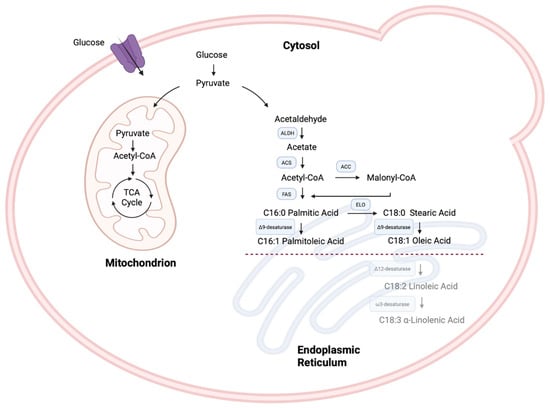
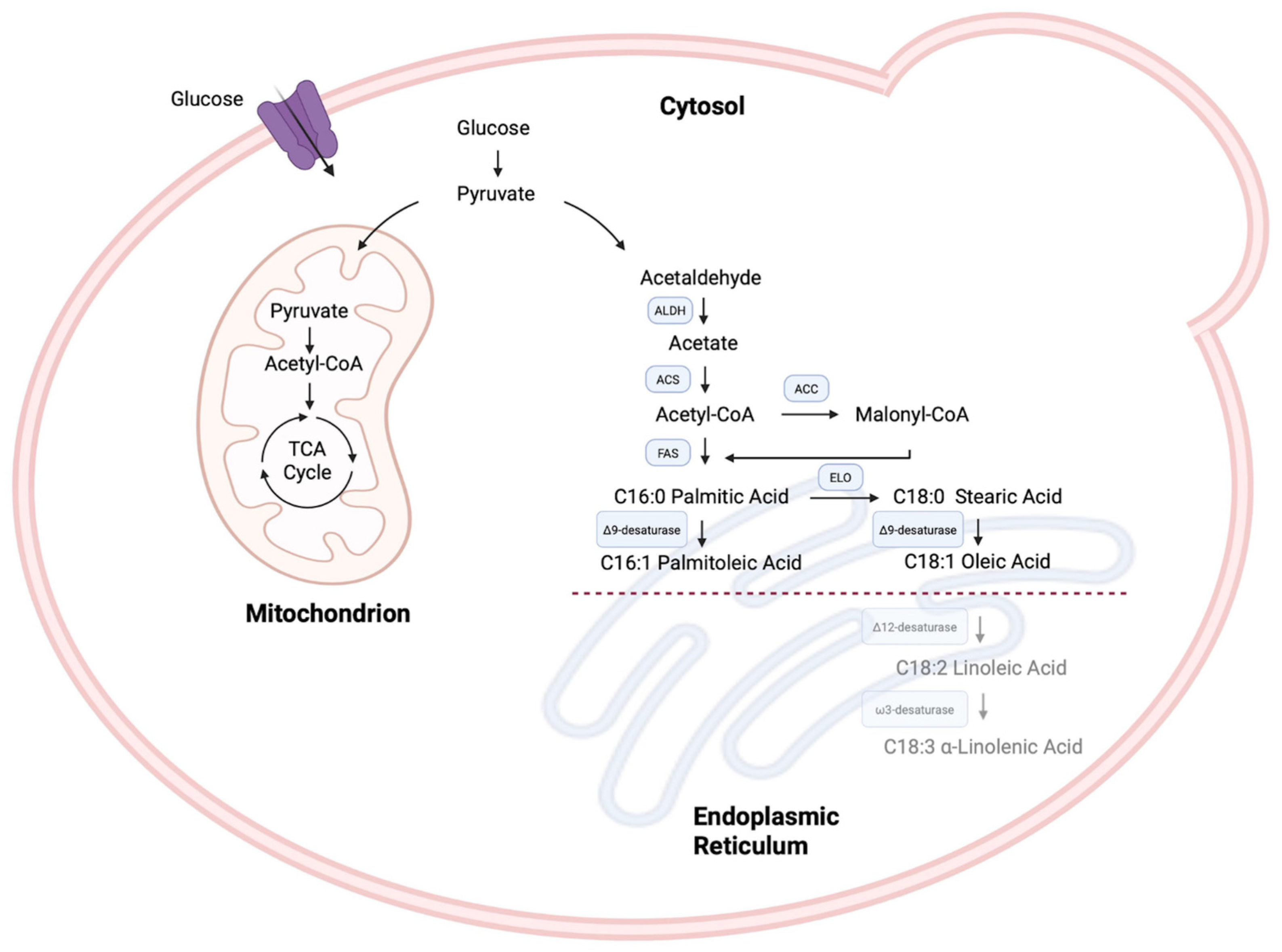
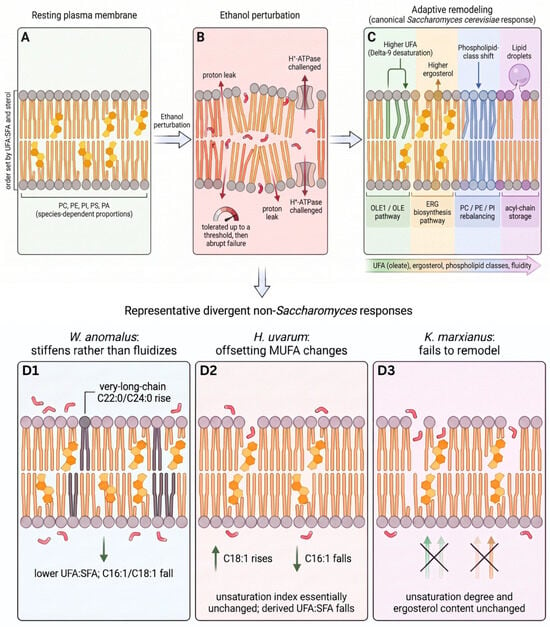
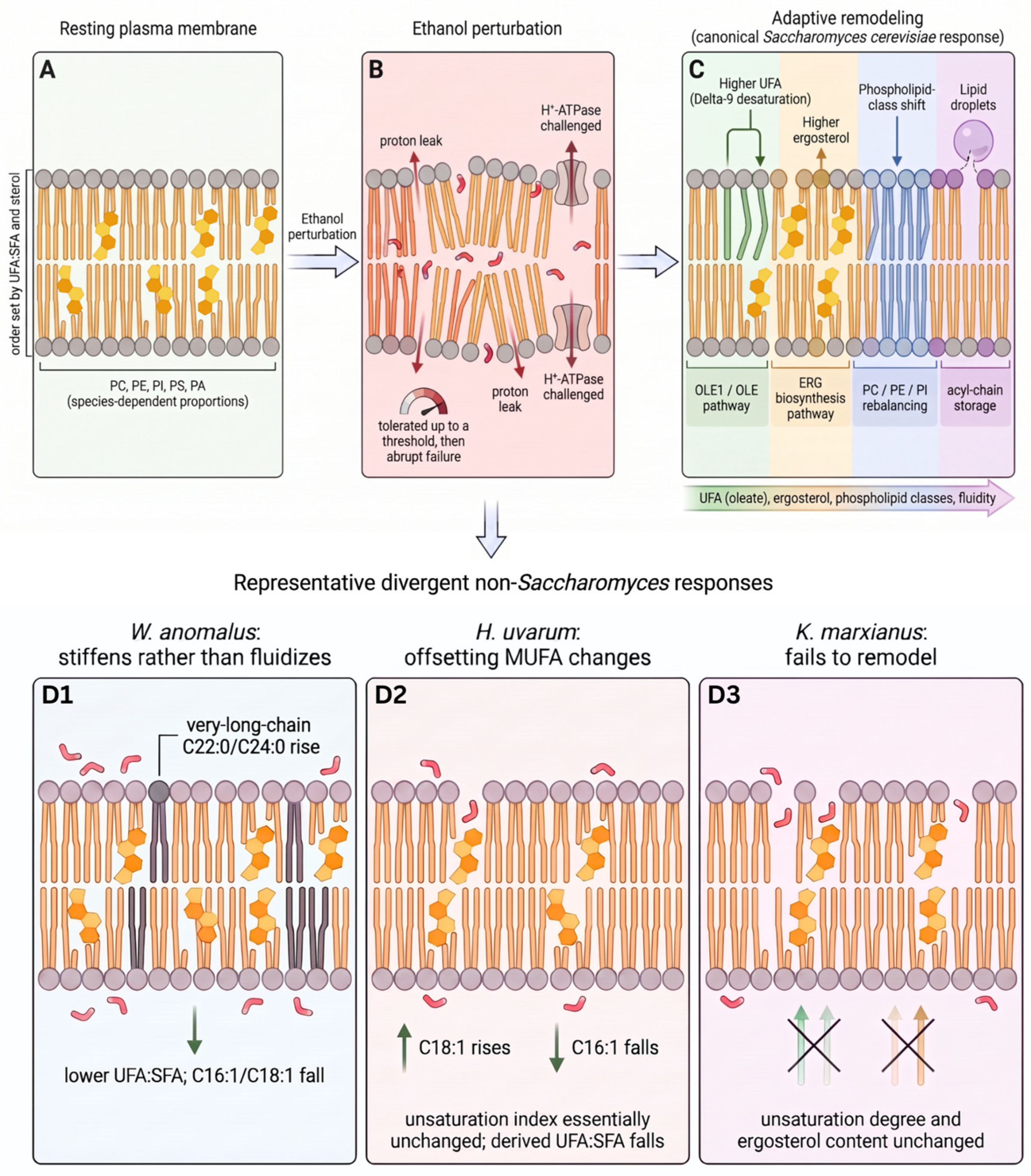

Disclaimer/Publisher’s Note: The statements, opinions and data contained in all publications are solely those of the individual author(s) and contributor(s) and not of MDPI and/or the editor(s). MDPI and/or the editor(s) disclaim responsibility for any injury to people or property resulting from any ideas, methods, instructions or products referred to in the content. |
© 2026 by the authors. Licensee MDPI, Basel, Switzerland. This article is an open access article distributed under the terms and conditions of the Creative Commons Attribution (CC BY) license.