


Abstract
Black rice wine is a traditional cereal-based fermented beverage valued for its colour, flavour and bioactive constituents. However, product innovation is needed to meet increasing consumer demand for fruit-derived aroma, nutritional quality and functional attributes. To address this demand, we developed an integrated processing strategy combining enzymatic pretreatment of pitaya pulp with stage-specific co-fermentation, an approach that has not been systematically evaluated in rice wine systems. Pitaya pulp was first pretreated with pectinase using an orthogonal design to optimise juice yield and betacyanin retention; the enzymatically pretreated pitaya pulp was then introduced either as pulp or as fermented pitaya wine at the saccharification, tank-flushing or ageing stage. The resulting wines were compared with a pitaya-free control and three commercial black rice wines on the basis of physicochemical indices, phenolic and pigment contents, amino acid composition, mineral composition and fuzzy mathematics-based sensory evaluation. Pitaya pulp added at saccharification (Sample THJ) yielded the strongest functional and nutritional profile, with the highest total phenolic content (629.74 mg/L); high flavonoid content (152.07 mg/L); enrichment in Mg, K and Mn; and a broader taste-active amino acid profile. By contrast, pitaya pulp added during tank flushing (Sample CHJ) achieved the highest sensory score (85.3) and had the highest anthocyanin content. These findings indicate that the timing and form of pitaya addition determine the balance between functional enrichment, pigment retention and sensory quality. Co-fermentation with red-fleshed pitaya, particularly the early addition of enzymatically pretreated pitaya pulp, provides a practical route for the development of fruit-flavoured black rice wine with improved nutritional composition and consumer appeal, suggesting the potential for enhanced functional value.
1. Introduction
With a brewing history of approximately 7000 years, Chinese rice wine (CRW) is one of the oldest fermented alcoholic beverages in the world [1]. It has long held an important cultural and commercial position in China [2]. Nevertheless, changing consumer expectations for health attributes, nutrition, safety and palatability have created challenges for the traditional CRW industry and contributed to declining market demand. Therefore, new processing strategies are needed to improve product quality and to develop rice wines that better match contemporary consumption preferences [3,4].
Black rice (Oryza sativa L. indica) is a whole grain rich in anthocyanins, flavonoids and other phenolic compounds, which contribute to its antioxidant potential [5]. Black rice has been used for centuries to brew black rice wine because it provides distinctive colour, flavour and nutritional value [6]. Recent innovation in the black rice wine industry has focused on black rice breeding, improvements in brewing technology and co-fermentation with complementary raw materials [4,7,8]. Fruit-flavoured black rice wines are of particular interest because they combine the cereal matrix of traditional rice wine with fruit-derived aroma and bioactive compounds [9]. The timing of fruit addition is especially important because co-fermentation can promote interactions between fruit and grain substrates, enhance the extraction or transformation of bioactive compounds and improve flavour integration, whereas post-fermentation blending is simpler but may produce a less integrated sensory profile [10].
Pitaya (Hylocereus polyrhizus) is a widely consumed tropical fruit with a vivid red–purple colour, characteristic flavour and high nutritional value. The fruit contains vitamins, minerals and natural antioxidants [11], including betacyanins, the major pigments responsible for its intense colour [12]. Betalains have strong antioxidant activity and may also show antibacterial activity through membrane damage or inhibition of protein synthesis [13]. Therefore, the incorporation of pitaya into fermented beverages offers a promising approach to improving both functionality and sensory quality [14]. Although fruit addition has been investigated in several grain wine systems, the combined use of red-fleshed pitaya and black rice has not been systematically evaluated. In particular, the critical impact of the timing and form of pitaya addition (added as pulp at saccharification, tank flushing or ageing or as wine at ageing) on the balance between functional compound enrichment, pigment stability, and sensory quality remains unknown.
In this study, we optimised the enzymatic pretreatment conditions for red-fleshed pitaya pulp; systematically evaluated the effects of adding the pretreated pulp or fermented pitaya wine at different brewing stages on the physicochemical properties, functional components, amino acid and mineral profiles, and sensory characteristics of black rice wine; and identified the optimal addition strategy to balance nutritional enrichment and sensory acceptability. To the best of our knowledge, this is the first systematic comparison of pitaya addition timing in a grain–fruit co-fermentation system, providing both mechanistic insights and practical guidance for fruit-flavoured rice wine production.
2. Materials and Methods
2.1. Materials and Reagents
Black rice (Oryza sativa L. subsp. indica), cultivar Huamoxiang [15], was provided by the Rice Research Team of Huazhong Agricultural University (Wuhan, Hubei, China). Red-fleshed pitaya (Hylocereus polyrhizus) was obtained from a local fruit supplier in Wuhan, Hubei, China. The sweet yeast, yellow rice wine starter culture AN01 and fruit-wine yeast strain SY were supplied by Angel Yeast Co., Ltd. (Yichang, China). Pectinase (>30,000 U/g) was purchased from Shandong Longkete Enzyme Preparation Co., Ltd. (Jinan, China).
Three commercial black rice wines (BRW-Cs) were purchased from JD.com and included as market-reference samples primarily for sensory and market-preference comparison.
Gallic acid (analytical grade) and rutin (chromatographic grade) were purchased from Shanghai Yuanye Biotechnology Co., Ltd. (Shanghai, China). Folin–Ciocalteu reagent (FCR) was obtained from Beijing Bo’ao Tuoda Technology Co., Ltd. (Beijing, China). Aluminium nitrate (Al(NO3)3), sodium nitrite (NaNO2), sodium hydroxide (NaOH) and other analytical-grade reagents were purchased from Sinopharm Chemical Reagent Co., Ltd. (Shanghai, China). All other chemicals and reagents used in the experiments were of analytical grade.
2.2. Preparation of Pitaya Pulp and Optimisation of Preprocessing
Fresh pitaya was washed, peeled and homogenised with a laboratory blender. Because pulp viscosity and pigment stability can affect both processing efficiency and final wine quality, enzymatic hydrolysis was optimised before fermentation. A three-factor, three-level orthogonal array design (L9(33)) was used after preliminary single-factor tests. The evaluated factors were pectinase concentration (0.2%, 0.3%, 0.4%, 0.5% and 0.6%), hydrolysis temperature (30, 40, 50, 60 and 70 °C) and hydrolysis time (1, 2, 3, 4 and 5 h). The weight assignment (60% for betacyanin retention and 40% for juice yield) was chosen to prioritise pigment preservation—as betacyanins are the key functional and colour-related compounds introduced by pitaya addition—while still maintaining adequate processing efficiency.
2.3. Preparation of Black Rice Wine
Black rice wine was prepared according to the traditional brewing process with the following step-by-step protocol. Black rice (500 g) was washed and soaked in distilled water (1:1.2, w/v) at 25 °C for 12 h, then steamed at 100 °C for 40 min until fully gelatinised. The cooked rice was cooled to 28 °C, mixed with sweet yeast (0.4%, w/w) and held at 28 °C for 48 h for saccharification. After saccharification, distilled water (1:1.8, w/v) was added, and starter culture AN01 (0.5% w/w of rice) was inoculated. The main fermentation was carried out at 28 °C for 7 days with daily stirring. Subsequently, the fermented mash was filtered. Finally, the wine was aged at 10–15 °C for 30 days.
For the pitaya-containing treatments, the preprocessed pitaya pulp (10% of the black rice mass) was added at three different stages:
Sample THJ: Pitaya pulp was added at the beginning of the saccharification step (along with the sweet yeast).
Sample CHJ: Pitaya pulp was added at the start of the tank-flushing (main fermentation) stage.
Sample HHJ: Pitaya pulp was added at the beginning of the ageing stage.
For Sample JHJ, pitaya wine was produced separately by fermenting the same preprocessed pitaya pulp (with 20% sugar addition) using fruit-wine yeast SY (0.1% w/w) at 25 °C for 10 days, followed by filtration and pasteurisation at 65 °C for 15 min. This pitaya wine was then blended with the base black rice wine at a ratio of 1:9 (v/v) at the beginning of the ageing stage. The pitaya-free black rice wine (Sample CJ) was prepared following the same protocol without any pitaya addition. All fermentations were performed in triplicate.
Three commercial black rice wines were used for comparison: Sample ZJJ was produced in Zhejiang, Sample GZJ was produced in Guizhou, and Sample SXJ was produced in Shanxi.
2.4. Physicochemical Analysis
Alcohol content was determined using the alcohol hydrometer method [16]. Total acidity and non-sugar solids were determined according to GB/T 13662-2018 Yellow Rice Wine. Reducing sugars were measured using the 3,5-dinitrosalicylic acid (DNS) colorimetric method [17]. These indices were used to assess whether pitaya addition altered the basic fermentation type and compliance of the wines.
2.5. Determination of Functional Components
Total phenolic content was measured using the Folin–Ciocalteu method with gallic acid as the standard [18]. Absorbance was measured at 760 nm, and results are expressed as milligrams of gallic acid equivalents per litre of wine (mg GAE/L). The standard curve equation was y = 7.6798x + 0.2439 (R2 = 0.9985).
Total flavonoid content was determined using the aluminium nitrate colorimetric method with rutin as the standard [19]. Absorbance was measured at 510 nm. Results are expressed as milligrams of rutin equivalents per litre of wine (mg RE/L). The standard curve equation was y = 0.2437x − 0.0059 (R2 = 0.9992).
Anthocyanin content was analysed using the pH differential method [20]. Absorbance was measured at 528 and 700 nm at pH 1.0 and 4.5, respectively. Results are expressed as milligrams of cyanidin-3-O-glucoside equivalents per litre of wine (mg/L).
Betacyanin content was determined spectrophotometrically [21]. Absorbance was measured at 537 and 600 nm, and results are expressed as milligrams of betanin equivalents per litre of wine (mg/L).
2.6. Analysis of Amino Acid and Mineral Contents
Free amino acids were determined according to the GB 5009.124-2016 National Food Safety Standard—Determination of Amino Acids in Foods [22]. Seventeen free amino acids were quantified using an automatic amino acid analyser (S-4330D, Sykam, Munich, Germany) [23]. Amino acid data were further used to evaluate nutritional balance and taste activity.
Mineral elements were quantified by inductively coupled plasma mass spectrometry (ICP-MS). The nine target elements were potassium (K), calcium (Ca), sodium (Na), magnesium (Mg), manganese (Mn), copper (Cu), iron (Fe), zinc (Zn) and selenium (Se).
2.7. Sensory Evaluation
The sensory evaluation took place in the Food Laboratory at the HZAU campus, with the temperature set at 26 °C. A trained panel of 20 members (10M/10F) evaluated the colour, aroma, taste and body of the samples. All panellists came from alcohol companies with rich experience in sensory evaluation of alcoholic beverages. The panellists received two additional training sessions (each 2 h) specifically for this study, during which they familiarised themselves with the sensory attributes and the scoring scale. All samples were prepared 24 h before the experiment and stored in a refrigerator at 4 °C. Samples (50 mL each) were taken out of the refrigerator 2 h before the sensory evaluation and served at 18 °C in randomised, blinded, coded glasses. Panellists were given a 1 min break between samples and were asked to rinse their mouths with fresh water [24]. A 100-point scoring system was used; the scoring criteria are provided in Appendix A, Table A1. To reduce the influence of a single sensory attribute, overall acceptability was calculated using a fuzzy mathematics-based comprehensive evaluation model [25]. In this model, a fuzzy evaluation set Y was constructed as Y = W × R, where W is the weight vector for the four sensory attributes (colour: 0.20, aroma: 0.30, taste: 0.30, body: 0.20), and R is the fuzzy matrix representing the proportion of panelists assigning each grade (excellent, good, average, poor) to each attribute. The final comprehensive score was calculated as the weighted sum of the membership values multiplied by the corresponding grade scores (90 for excellent, 80 for good, 70 for average, and 60 for poor).
2.8. Statistical Analysis
All experiments were performed in triplicate, and data are expressed as the mean ± standard deviation (SD). Statistical analyses were conducted using SPSS Statistics 27.0. Graphs were generated using GraphPad Prism 10 and Design-Expert 13. Significant differences among means were determined by one-way analysis of variance (ANOVA) followed by Duncan’s multiple range test [26], with p < 0.05 considered statistically significant.
3. Results
3.1. Optimisation of Pitaya Pulp Preprocessing
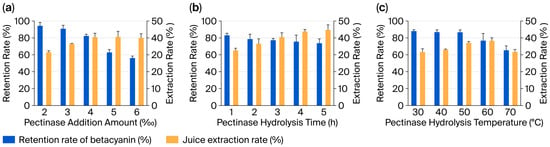
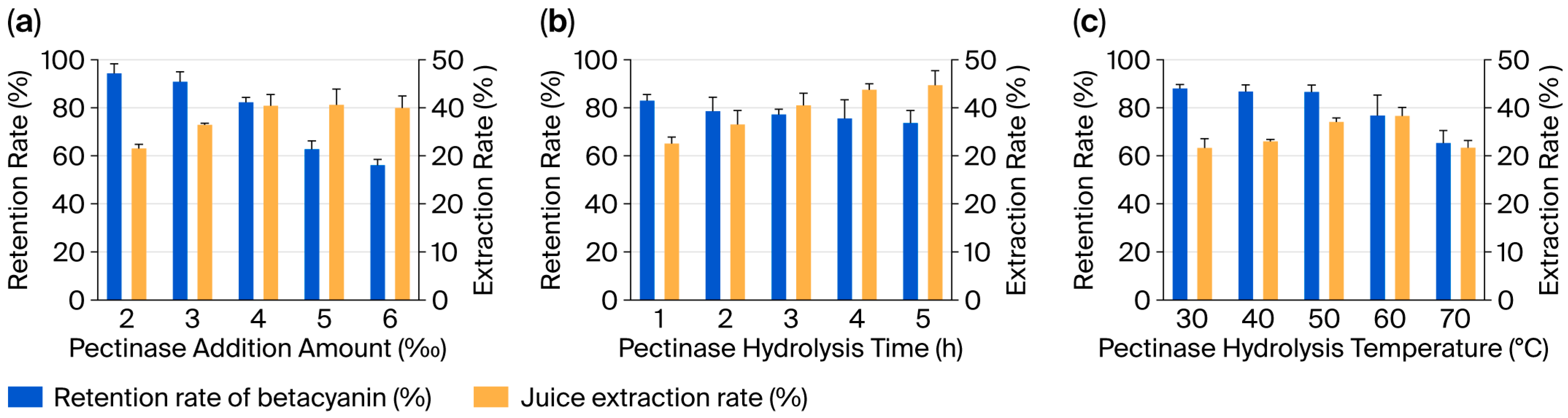
Preprocessing is important because it affects juice yield, the release of fermentable sugars and bioactive compounds and the stability of pitaya pigments. To obtain a substrate suitable for co-fermentation with black rice, the pitaya pulp processing strategy was optimised via a multifactorial orthogonal design. On the basis of single-factor experiments (Figure 1), pectinase concentration (0.3%, 0.4% and 0.5%), hydrolysis temperature (40, 50 and 60 °C) and hydrolysis time (3, 4 and 5 h) were selected for the L9(33) orthogonal experiment. As shown in Table 1, pectinase concentration had the largest effect on the comprehensive score, followed by hydrolysis temperature and hydrolysis time. The optimal conditions were 0.4% pectinase at 50 °C for 4 h, under which the betacyanin retention rate was 84.568% and the comprehensive score was 92.096. These conditions probably promoted pectin degradation, reduced pulp viscosity and increased juice release while limiting pigment loss caused by excessive heating or prolonged hydrolysis.
Figure 1.
Optimisation of pitaya pretreatment. (a) Effects of pectinase addition amount, (b) effects of enzymolysis time and (c) effects of enzymolysis temperature on juice yield and betalain retention during pitaya pretreatment. Different letters indicate significant differences among treatments (p < 0.05). Error bars represent the standard deviation (SD) of three replicate experiments.
Table 1.
Orthogonal experiments on the pretreatment process of pitaya.
ANOVA of the data in Table 1 showed that Factors A (enzyme addition) and B (enzymolysis temperature) significantly affected the comprehensive score of pitaya pretreatment (F > 19.00, p < 0.05), whereas Factor C (enzymolysis time) had no significant effect (F < 19.00, p > 0.05; Appendix A, Table A2).
3.2. Physicochemical Properties of Black Rice Wine
Physicochemical indices are essential for the monitoring of black rice wine fermentation and evaluation of wine quality [27]. Total acidity, reducing sugars, alcohol content and non-sugar solids were compared among wines prepared with different pitaya addition strategies.
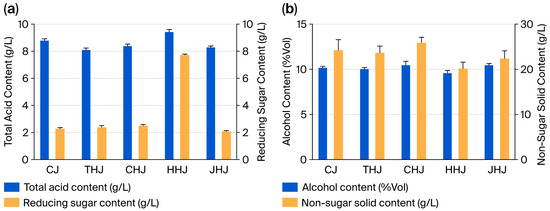
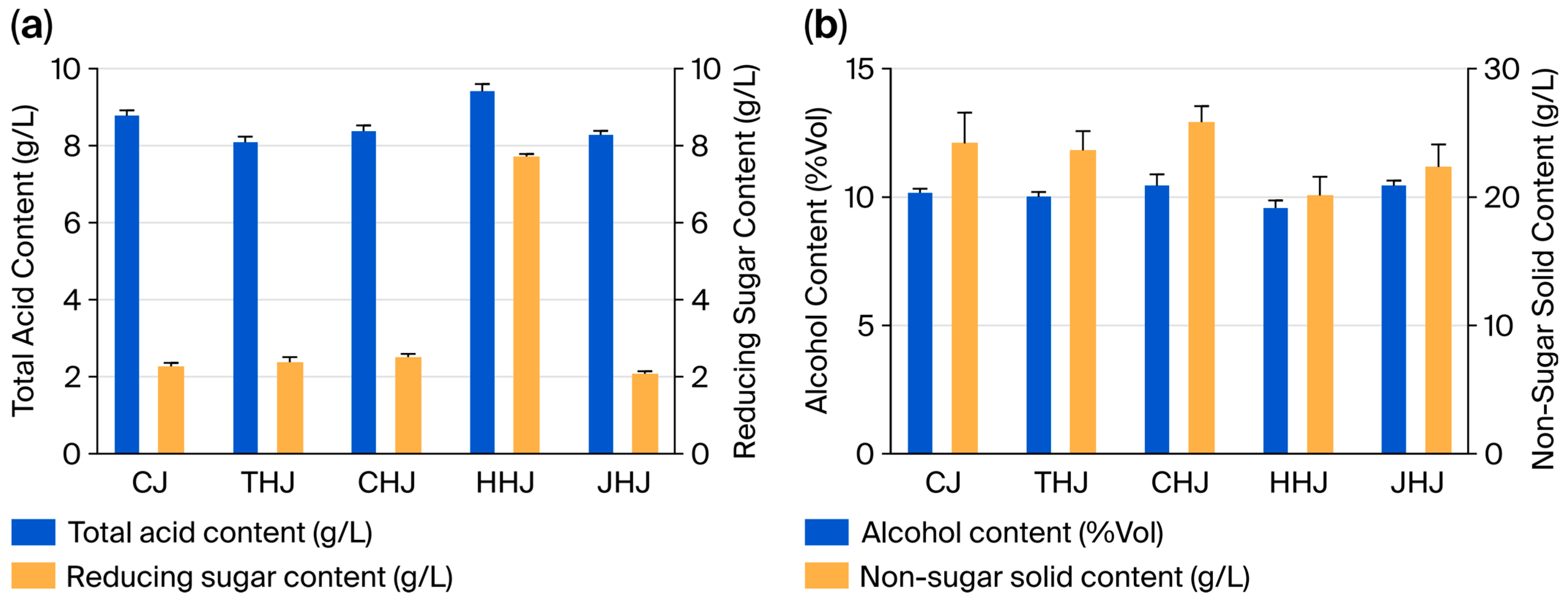
As shown in Figure 2a, Samples THJ and CHJ had lower total acidity than the pitaya-free control (Sample CJ), indicating that co-fermentation of pitaya with black rice reduced acidity and may help soften sourness and astringency. By contrast, Sample HHJ, prepared by adding fresh pitaya pulp during ageing, showed higher total acidity than CJ, probably because organic acids from the pulp were introduced after active fermentation had declined. Reducing sugar contents did not differ significantly between CJ, THJ, CHJ and JHJ, suggesting that pitaya sugars were effectively fermented in these treatments. HHJ had the highest reducing sugar content, consistent with the weaker yeast activity during ageing and the direct contribution of unfermented fructose and organic acids from pulp added late in the process.
Figure 2.
Physicochemical properties of black rice wine samples: (a) total acidity and reducing sugar content; (b) alcohol content and non-sugar solids. Error bars represent the standard deviation (SD) of three independent experiments (n = 3).
All five experimental black rice wines had alcohol contents of approximately 10% vol (Figure 2b), indicating that pitaya co-fermentation had a limited effect on ethanol production. Their non-sugar solids were below 15 g/L, and their alcohol contents were above 8% vol, meeting the requirements for dry yellow rice wine specified in GB/T 13662-2018 Huangjiu [28]. Non-sugar solids, including amino acids, peptides, dextrins, glycerol and non-volatile acids, are important contributors to body, umami and mouthfeel in Huangjiu [29]. Non-sugar solid content was higher in Sample CHJ than in CJ and exceeded 14 g/L in all experimental wines, consistent with the premium-grade requirement.
3.3. Functional Components
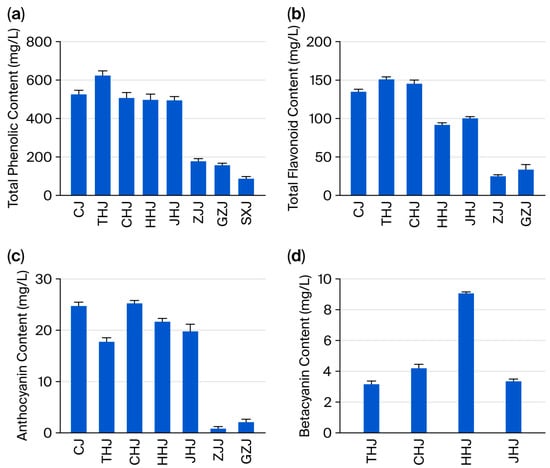
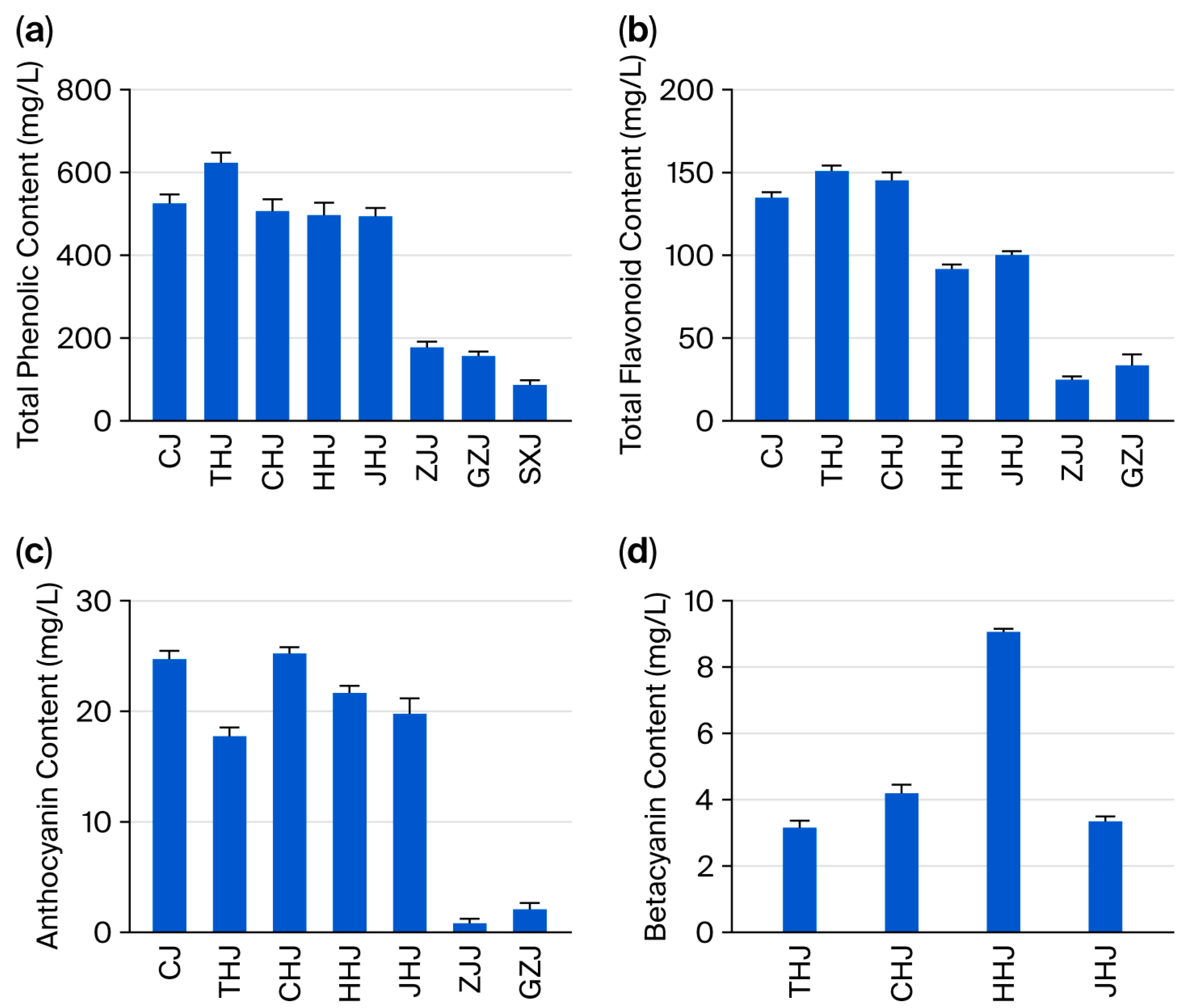
We next evaluated the effects of pitaya addition on major functional components relevant to antioxidant activity (Figure 3).
Figure 3.
Contents of functional components of eight black rice wine samples. (a) Total phenolic content (mg GAE/L); (b) total flavonoid content (mg RE/L); (c) anthocyanin content (mg/L); (d) betacyanin content (mg/L). Error bars represent the standard deviation (SD) of three replicate experiments. ND indicates not detected.
Because phenolic compounds contribute to antioxidant activity [30], total phenolic content was compared across treatments. As shown in Figure 3a, Sample THJ had the highest total phenolic content (629.74 ± 18.77 mg/L) among the samples, including CJ (531.73 ± 15.43 mg/L) and the three commercial black rice wines. This result suggests that adding red-fleshed pitaya during saccharification enhanced phenolic enrichment in black rice wine. Fermentation-derived ethanol and microbial or enzymatic activity may have promoted the extraction of pitaya phenolics, the release of bound phenolics or the formation of new phenolic metabolites.
As shown in Figure 3b, total flavonoid contents were higher in THJ and CHJ than in CJ, indicating that co-fermentation with pitaya can increase flavonoid accumulation in black rice wine. HHJ contained lower flavonoid content than JHJ, which may reflect flavonoid degradation under the acidic conditions associated with late pulp addition. The five experimental wines had higher flavonoid contents than Samples ZJJ and GZJ, whereas flavonoids were not detected in Sample SXJ.
Anthocyanins are water-soluble plant pigments with reported antioxidant and anticancer activities [31]. As shown in Figure 3c, CHJ had the highest anthocyanin content, whereas THJ, HHJ and JHJ contained lower anthocyanin levels than CJ, with the lowest levels detected in THJ. This pattern may reflect anthocyanin degradation or conversion into phenolic acids and related compounds during longer co-fermentation, which is consistent with the high total phenolic content observed in THJ.
Red-fleshed pitaya is rich in betacyanins, which are introduced into black rice wine with pitaya addition. As shown in Figure 3d, HHJ had the highest betacyanin content, probably because pitaya added during ageing experienced milder processing conditions and less fermentation-associated degradation. JHJ had the lowest betacyanin content among the pitaya treatments because fully fermented pitaya wine had been added. THJ contained less betacyanin than CHJ, consistent with its longer fermentation exposure. Betacyanin stability is affected by temperature, pH, oxygen, metal ions and food additives; therefore, shorter processing and fewer handling steps can favour pigment retention.
3.4. Analysis of Amino Acid Composition and Content in Black Rice Wine
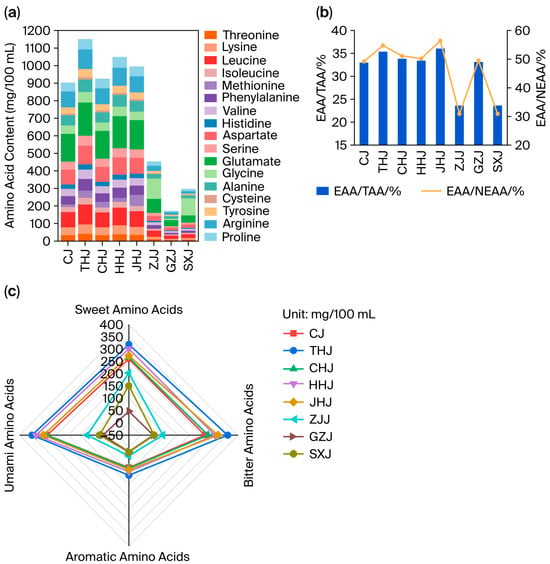
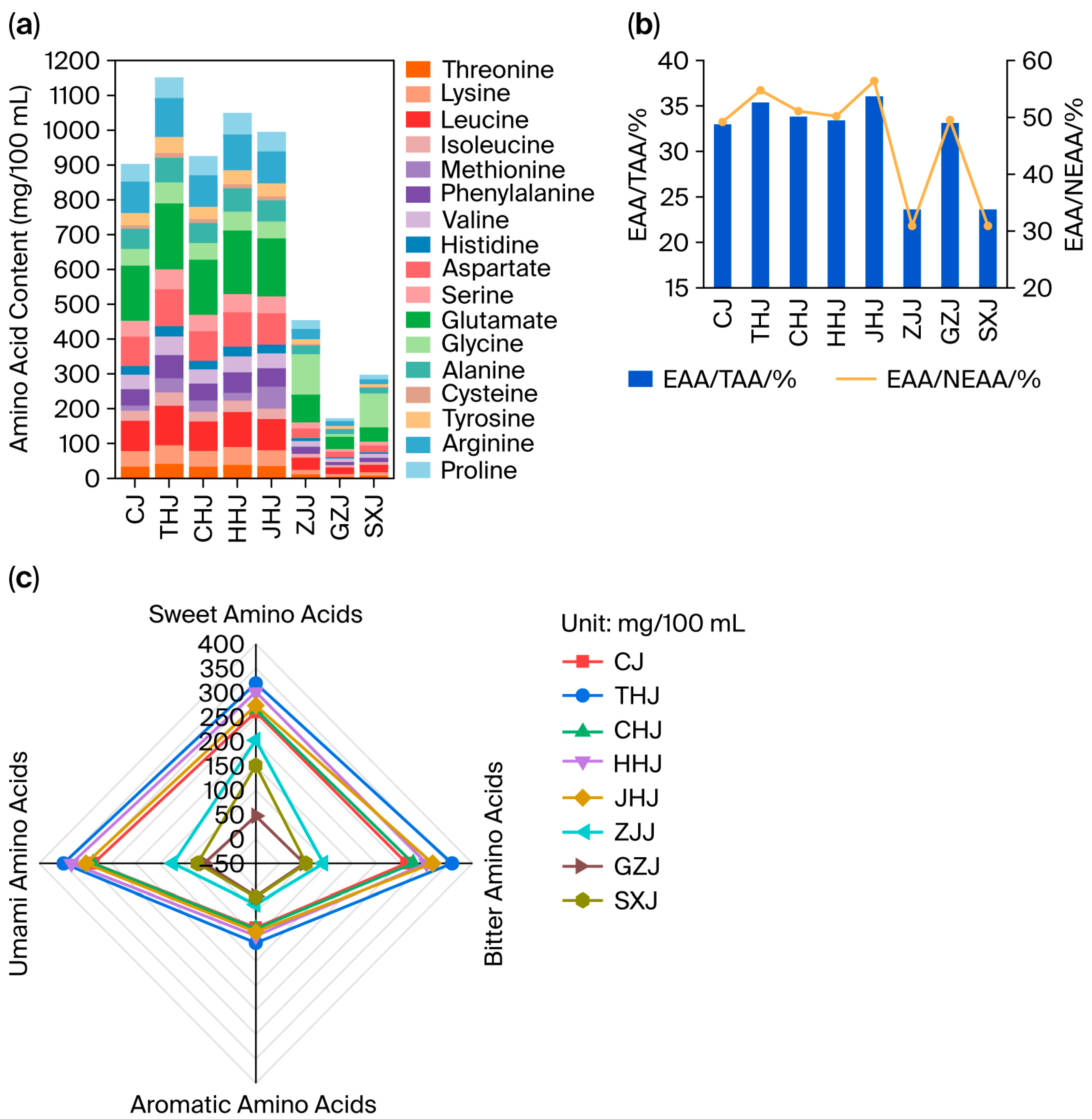
Because amino acid composition strongly affects both nutritional value and flavour in black rice wine [32], we analysed free amino acids across the eight samples. As shown in Figure 4a, the contents of all 17 detected amino acids were higher in THJ than in CJ. THJ also contained higher levels of all detected amino acids than HHJ, suggesting that co-fermentation during saccharification promoted the release or retention of amino acids from the pitaya–black rice matrix. Compared with separate fermentation followed by blending, integrating co-fermentation during saccharification increased the levels of 16 amino acids, although methionine decreased. In contrast to the three commercial wines (ZJJ, GZJ and SXJ), the experimental wines contained methionine, an essential amino acid associated with oxidative-stress metabolism [33]. Although glycine was lower in THJ than in ZJJ, most other amino acids were higher in THJ than in the commercial samples.
Figure 4.
Amino acid composition of black rice wine samples. (a) Amino acid composition and content. (b) Proportions of essential amino acids relative to total amino acids and non-essential amino acids. (c) Radar chart of taste-active amino acid content.
As shown in Figure 4b, the ratio of essential amino acids to total amino acids (EAA/TAA) ranged from 23.61% to 36.06%, and the EAA/NEAA ratio ranged from 30.91% to 56.39%. The WHO/FAO reference pattern suggests an EAA/TAA ratio of approximately 40% and an EAA/NEAA ratio above 60%. The EAA values for methionine + cysteine, phenylalanine + tyrosine and leucine in THJ, CHJ and JHJ exceeded those in the WHO/FAO reference pattern. Among all samples, JHJ was closest to the ideal pattern (EAA/TAA = 36.06%; EAA/NEAA = 56.39%), whereas SXJ deviated the most (EAA/TAA = 23.61%; EAA/NEAA = 30.91%).
According to the WHO/FAO reference pattern, a ratio coefficient (RC) close to 1 indicates that the amino acid composition better matches human nutritional requirements. RC > 1 indicates relative excess, whereas RC < 1 indicates relative insufficiency. As shown in Table 2, phenylalanine + tyrosine and leucine were relatively excessive in CJ, HHJ, JHJ, ZJJ and SXJ. In THJ and CHJ, methionine + cysteine, phenylalanine + tyrosine and leucine were relatively excessive. These results suggest that pitaya–black rice co-fermentation improved the relative contribution of methionine + cysteine in the essential amino acid profile.
Table 2.
RAA, RC and SRC values of essential amino acids in black rice wine.
The score of the ratio coefficient (SRC) is used to evaluate the balance of amino acid nutrition; values closer to 100 indicate a more balanced amino acid profile. As shown in Table 2, SRC values ranged from 45.99 to 73.16. CHJ had the highest SRC value (73.16), followed by CJ (72.46), whereas GZJ had the lowest value (45.99). Thus, CHJ showed the most balanced essential amino acid composition among the tested samples.
Amino acids also contribute directly to taste [34]. The taste activity value (TAV) is commonly used to identify taste-active amino acids, and compounds with TAV > 1 are considered to contribute perceptibly to taste [35,36]. As shown in Table 3, histidine, arginine, valine and glutamic acid had TAV values above 1 in CJ, indicating contributions to sweetness, bitterness and umami. The pitaya-containing wines had a broader range of taste-active amino acids than CJ. In THJ, eight amino acids exceeded the taste threshold: histidine, alanine, arginine, methionine, valine, aspartic acid, glutamic acid and lysine. This broader taste-active profile indicates that pitaya–black rice co-fermentation enriched flavour complexity. In the commercial wines, only glutamic acid had a TAV above 1, suggesting a narrower taste contribution. THJ and HHJ had the highest umami amino acid contents (349.27 and 332.27 mg/100 mL, respectively). THJ had higher amino acid contents than CJ, consistent with a fuller and more layered taste profile of the former.
Table 3.
Taste activity values of amino acids in black rice wine.
3.5. Minerals
The five experimental black rice wines contained nine minerals: K, Ca, Na, Mg, Mn, Cu, Zn, Fe and Se. Macroelements included K, Ca, Na and Mg, and microelements included Cu, Mn, Zn, Fe and Se. Mineral abundance followed the order of K > Mg > Na > Ca > Zn > Mn > Fe > Cu > Se. Se was not detected in the three commercial black rice wines.
As shown in Table 4, the contents of K, Mg, Mn, Cu, Fe, Se and several other elements were higher in the five experimental wines than in the three commercial wines. K and Mg are nutritionally relevant minerals associated with blood-pressure regulation and cardiovascular health [37,38].
Table 4.
Detection and analysis of minerals in black rice wine.
K, Mg and Se contents were higher in the pitaya-containing wines than in CJ, indicating that pitaya addition increased these mineral levels. In particular, the Mg concentration in THJ was 376.15 mg/L, which is 8.88, 4.47 and 7.34 times the Mg levels in ZJJ, GZJ and SXJ, respectively.
K and Mn contents in THJ were also significantly higher than those in ZJJ, GZJ and SXJ. Based on the nutrient reference values specified in the GB 28050-2011 National Food Safety Standard—General Rules for Nutrition Labeling of Prepackaged Foods [39], THJ contained 0.495 mg Mn per 100 mL, corresponding to 16.5% of the NRV. This value was higher than those of CJ (16%), ZJJ (5.5%), GZJ (5.2%) and SXJ (2.4%). Mn is involved in osmotic balance, acid–base balance, energy metabolism, immune function and the synthesis of multiple enzymes [40].
3.6. Sensory Evaluation
The fuzzy mathematics-based sensory evaluation results are summarised in Table 5. CJ scored 75.6, which is lower than the scores of all three commercial wines. By contrast, all pitaya-containing experimental wines scored above 80 and outperformed the commercial samples, despite being unblended products. These results indicate that pitaya addition improved colour, aroma, taste and overall style. CHJ achieved the highest sensory score (85.3) and was characterised by a pomegranate-red colour; a clear and lustrous appearance; integrated rice wine and fruit aromas; and a fresh, soft taste with balanced sweetness and acidity.
Table 5.
Sensory evaluation results.
4. Discussion
Optimising the pitaya pulp pretreatment was the critical first step in this study. Pectinase treatment at 0.4% (w/w) for 4 h at 50 °C effectively reduced pulp viscosity and improved juice yield while maintaining betacyanin retention above 84%. This pretreatment is not merely a processing convenience; it is essential for the creation of a homogeneous substrate that can be uniformly mixed with black rice mash during co-fermentation. Without this step, the high viscosity of pitaya pulp could hinder mass transfer, affect yeast accessibility to fermentable sugars, and result in uneven distribution of fruit-derived pigments and phenolics. The orthogonal design revealed that enzyme concentration had the greatest influence on the comprehensive score (R = 8.069), followed by temperature (R = 4.790) and time (R = 2.124), as shown in Table 1 and Appendix A, Table A2. This hierarchy suggests that enzyme dosage is the primary factor controlling the balance between juice yield and pigment stability, which aligns with previous findings on pectinase-assisted fruit juice processing [41]. A previous study also reported that enzyme concentration exerted the most significant effect on both juice yield and bioactive compound retention in red dragon fruit juice, while optimisation of pectin hydrolysis conditions was critical for the preservation of anthocyanin stability during processing [42].
Recent studies have similarly demonstrated that co-fermentation with fruit or medicinal plant substrates can enhance the bioactive compound profiles of rice-based wines. Wang et al. reported that adding kiwiberry to rice wine increased total phenolic content by approximately 18% [9], comparable to the 18.4% increase observed in our THJ sample. Notably, Hu et al. found that co-fermentation of kiwifruit with black glutinous rice saccharification liquid yielded wines with significantly higher total phenolic (145.55 μg/mL) and flavonoid (35.57 μg/mL) contents compared with sugar-supplemented fermentation while also enhancing the diversity of volatile esters [43]. Similarly, Yao et al. demonstrated that co-fermentation of rice with Dendrobium officinale using Saccharomyces cerevisiae and Wickerhamomyces anomalus resulted in the accumulation of 127 major active compounds, with significant enrichment in phenolic and flavonoid metabolites attributed to the activation of the phenylalanine and amino acid metabolic pathways [44]. Beyond fruit supplementation, adding Pyracantha fortuneana powder to glutinous rice fermentation also significantly elevated total phenolic, flavonoid and anthocyanin contents, accompanied by enhanced DPPH and ABTS radical-scavenging activities [45]. These findings collectively support the notion that introducing plant-derived substrates into cereal-based fermentation systems both enriches the phenolic profile and improves the overall functional quality of the final product, with the extent of enrichment depending on the specific substrate and fermentation stage. In our study, the higher sensory score of CHJ (85.3) compared with three commercial wines may be attributed to the complementary flavour profiles of pitaya and black rice, where the fruity esters and the cereal-derived volatiles form an integrated aroma matrix. It should also be noted that the three commercial products may have been subjected to different processing conditions, such as pasteurisation, blending or terminal heat sterilisation, which may affect heat-labile bioactive compounds and lower their levels.
From a microbial perspective, the observed quality differences between early-stage (THJ and CHJ) and late-stage (HHJ and JHJ) pitaya addition may be attributed to the longer co-fermentation period in the former, which provides greater opportunities for microbial metabolic modulation. For instance, lactic acid bacteria and yeasts present in the fermentation ecosystem can release bound phenolic compounds through glycosidase and esterase activities, and the presence of fruit-derived sugars and organic acids may influence these enzymatic processes [27,46], as yeast-derived metabolites can stimulate LAB growth, while LAB-produced monosaccharides serve as carbon sources for yeasts [47]. Fruit substrate supplementation during rice wine fermentation significantly altered the metabolomic profile, suggesting that fruit-derived components can modulate the metabolic activities of the fermentation microbiota [9]. This cooperative yeast–LAB interaction has been recognised as a key driver of both phenolic transformation and volatile flavour formation in fermented foods [47]. In the present study, the higher phenolic and amino acid contents in THJ, compared with the blended Sample JHJ, may have resulted from enhanced microbial transformation during prolonged co-fermentation. Furthermore, the enzymatic pretreatment of pitaya pulp may indirectly influence microbial metabolism by altering the substrate composition [42], suggesting that the preprocessing step may have cascading effects on the fermentation ecosystem, beyond its immediate impact on juice yield and pigment stability. However, these mechanistic hypotheses require verification through metagenomic or metatranscriptomic analyses, which represent important directions for future research.
From an industrial perspective, the co-fermentation strategy developed in this study offers a practical pathway for product innovation in the traditional rice wine sector. Notably, both black rice wine and pitaya wine fermentations are well-established processes with mature technologies; the proposed method simply integrates these two systems at selected stages without requiring additional specialised equipment or substantial capital investment. The use of pitaya at 10% of the rice mass represents a moderate supplementation level that is economically feasible, particularly in regions where pitaya is readily available. While the additional cost of pectinase and the 4 h hydrolysis step may add marginally to production costs, this increase could be offset by the premium pricing potential of fruit-flavoured functional wines with enhanced nutritional profiles and improved sensory appeal. Nevertheless, several challenges must be considered for commercial scale-up, including the stability of betacyanins and anthocyanins during long-term storage, batch-to-batch variation in pitaya ripeness and pigment content, and the need for pilot-scale trials to validate reproducibility and process economics under production conditions. Addressing these issues through further research will facilitate the translation of this co-fermentation strategy into industrial practice.
We acknowledge several limitations of this study. First, antioxidant activity was not directly determined; while our data showed increased contents of phenolic compounds and flavonoids, standard assays such as DPPH, ABTS or FRAP are needed to confirm the actual radical-scavenging capacity. Second, volatile aroma compounds were not analysed by HS-SPME-GC-MS or comprehensive metabolomics approaches; such analyses would help explain the flavour differences perceived by the sensory panel. Third, the study was conducted at the laboratory scale; pilot-scale trials are needed to validate reproducibility. Fourth, long-term storage studies are required to assess pigment stability and flavour evolution over time. Addressing these limitations through further research will facilitate the translation of this co-fermentation strategy into industrial practice.
5. Conclusions
This study demonstrates that enzymatically pretreated red-fleshed pitaya can be effectively used as a co-fermentation substrate to improve the nutritional and sensory quality of black rice wine. The key scientific findings are outlined as follows:
- (1)
- The timing of pitaya addition is critical in determining the quality profile of the final product. Addition during saccharification (Sample THJ) produced the strongest functional and nutritional profile, characterised by the highest total phenolic content (629.74 mg/L), enriched mineral composition (particularly Mg, K and Mn) and a broader taste-active amino acid spectrum (eight amino acids with TAV > 1).
- (2)
- Addition during tank flushing (Sample CHJ) achieved the highest sensory score (85.3), the highest anthocyanin content and the most balanced essential amino acid profile (SRC = 73.16), indicating that the optimal addition stage depends on whether functional enrichment or sensory acceptability is prioritised.
- (3)
- Early-stage co-fermentation promoted the release of phenolic compounds, amino acids and minerals, likely through enhanced enzymatic and microbial transformation, whereas late-stage addition better preserved betacyanin pigments but resulted in less integrated flavour profiles compared with early-stage co-fermentation.
These findings provide a practical processing basis for the development of fruit-flavoured black rice wine with improved nutritional composition and consumer appeal. However, the limitations of this study—including the laboratory scale and the lack of direct antioxidant activity assays, volatile compound profiling and long-term stability data—should be addressed in future research. Subsequent work should focus on (i) elucidating the microbial community dynamics during co-fermentation using metagenomic approaches; (ii) evaluating the storage stability of pigments, phenolics and sensory quality under different packaging conditions; and (iii) scaling up the process to the pilot-plant level for industrial validation.
6. Patents
Zhu Dina; Li Jinshan; Zhu Chaoyang; Fan Zhanlei; Zhang Qinglu; Xiong Wei; Wu Xin; Liao Bei; Feng Huafang; Zhao Shumiao; Jiang Xuefei; Hu Yongmei; Tian Huanzhang; Liang Yunxiang; A Pitaya Black Rice Wine and Its Preparation Method; 2024-06-19, China, CN202410789261.X.
Author Contributions
Conceptualisation, C.Z. and D.Z.; methodology, C.Z. and D.Z.; software, C.Z.; validation, B.L. and Z.F.; formal analysis, Y.H. and J.L.; investigation, Y.H., S.Z. and Y.L.; resources, S.Z. and B.L.; data curation, C.Z.; writing—original draft preparation, C.Z.; writing—review and editing, D.Z.; visualisation, B.L.; supervision, J.L.; project administration, S.Z. and J.L.; funding acquisition, J.L. All authors have read and agreed to the published version of the manuscript.
Funding
This research was funded by the Joint Fund Key Project of Hubei Provincial Natural Science Foundation of China (2025AFD251) and the National College Student Innovation and Entrepreneurship Training Program Project of China (202410504026).
Institutional Review Board Statement
Ethical review and approval were waived for this study because the sensory analysis involved adult volunteers, and no sensitive personal data were collected or processed. Therefore, the study does not fall within the scope of mandatory ethical review according to Article 3 of the Measures for Ethical Review of Life Science and Medical Research Involving Humans (the National Health Commission of the People’s Republic of China, No. 4, 18 February 2023).
Informed Consent Statement
Informed consent was obtained from all subjects involved in the study.
Data Availability Statement
The data presented in this study are available upon request from the first author and the corresponding author.
Acknowledgments
The authors thank Qinglu Zhang at the National Key Laboratory of Crop Genetic Improvement, Huazhong Agricultural University, for assistance with Huamoxiang black rice and Wei Xiong and Chunjiao Xia at the Experimental Teaching Center of Bioengineering, Huazhong Agricultural University, for assistance with fermentation.
Conflicts of Interest
Author Bei Liao was employed by the Hubei Provincial Key Laboratory of Yeast Function, Angel Yeast Co., Ltd., Yichang. The remaining authors declare that the research was conducted in the absence of any commercial or financial relationships that could be construed as potential conflicts of interest.
Appendix A
Table A1.
Sensory evaluation criteria.
Table A2.
Variance analysis of orthogonal experimental results for the pitaya pretreatment process.
References
- Xu, Y.; Wang, D.; Fan, W.L.; Mu, X.Q.; Chen, J. Traditional Chinese Biotechnology. Biotechnol. China II Chem. Energy Environ. 2010, 122, 189–233. [Google Scholar]
- Chen, S.A.; Xu, Y. The Influence of Yeast Strains on the Volatile Flavour Compounds of Chinese Rice Wine. J. Inst. Brew. 2010, 116, 190–196. [Google Scholar] [CrossRef] [Scilit]
- Xu, E.B.; Wu, Z.Z.; Long, J.; Wang, F.; Xu, X.M.; Jin, Z.Y.; Jiao, A.Q. Improved Bioaccessibility of Phenolics and Antioxidant Activity of Glutinous Rice and Its Fermented Chinese Rice Wine by Simultaneous Extrusion and Enzymatic Hydrolysis. J. Funct. Foods 2015, 17, 214–226. [Google Scholar] [CrossRef] [Scilit]
- Jiao, A.Q.; Xu, X.M.; Jin, Z.G. Research Progress on the Brewing Techniques of New-Type Rice Wine. Food Chem. 2017, 215, 508–515. [Google Scholar] [CrossRef] [Scilit] [PubMed]
- Yang, Z.N.; Li, D.W.; Wei, R.X.; Zhao, X.C.; Lian, X.M.; Ren, C.; Xiao, J.H.; Li, Y.H.; Chen, X.; Wing, R.A.; et al. Whole Grain Black Rice: A Paradigm Shift from Mainly Calories to a Nutritious Food That Benefits Human Health. Sci. China-Life Sci. 2025, 68, 2173–2176. [Google Scholar] [CrossRef] [Scilit] [PubMed]
- Tang, A.X.; Peng, B.Z. Diversifying the Flavor of Black Rice Wines through Three Different Regional Xiaoqus in China and Unraveling Their Core Functional Microorganisms. Foods 2023, 12, 3576. [Google Scholar] [CrossRef] [Scilit] [PubMed]
- Kim, M.O.; Kim, I.D.; Dhungana, S.K.; Lee, J.W.; Shin, D.H. Influence of Blueberry and Black Rice Powders on Quality Characteristics of the Korean Traditional Rice Wine. Food Sci. Biotechnol. 2015, 24, 439–444. [Google Scholar] [CrossRef] [Scilit]
- Tian, H.X.; Li, Y.H.; Lu, Y.R.; Zhang, Q.L.; Wang, Z.J.; Li, S.S.; Zhou, Y.Q.; Zhang, Q.F.; Xiao, J.H. A Cooking and Eating Quality Evaluating System for Whole Grain Black Rice. Mol. Breed. 2025, 45, 7. [Google Scholar] [PubMed]
- Wang, M.Z.; Liu, Y.X.; Guo, X.; Ding, Y.P.; Liu, D.J. Optimizing the Brewing Process, Metabolomics Analysis, and Antioxidant Activity Analysis of Complexed Rice Wine with Kiwiberry. Fermentation 2024, 10, 494. [Google Scholar] [CrossRef] [Scilit]
- Liu, Y.B.; Mengge, L.; Zhang, P.P.; Liu, W.X.; Yang, C.; Cui, J.Y.; Li, H.D.; Pan, C.M. Response Surface Optimization and Flavor Determination of Fermentation Processes of Orange Peel Tea Wine. PeerJ 2025, 13, e19357. [Google Scholar] [CrossRef] [Scilit] [PubMed]
- Yasmin, A.; Sumi, M.J.; Akter, K.; Rabbi, R.H.M.; Almoallim, H.S.; Ansari, M.J.; Hossain, A.; Imran, S. Comparative Analysis of Nutrient Composition and Antioxidant Activity in Three Dragon Fruit Cultivars. PeerJ 2024, 12, e17719. [Google Scholar] [CrossRef] [Scilit] [PubMed]
- Attar, S.H.; Guendesli, M.A.; Uruen, I.; Kafkas, S.; Kafkas, N.E.; Ercisli, S.; Ge, C.F.; Mlcek, J.; Adamkova, A. Nutritional Analysis of Red-Purple and White-Fleshed Pitaya (Hylocereus) Species. Molecules 2022, 27, 808. [Google Scholar] [CrossRef] [Scilit] [PubMed]
- Tenore, G.C.; Novellino, E.; Basile, A. Nutraceutical Potential and Antioxidant Benefits of Red Pitaya (Hylocereus polyrhizus) Extracts. J. Funct. Foods 2012, 4, 129–136. [Google Scholar] [CrossRef] [Scilit]
- Lim, T.W.; Lim, R.L.H.; Pui, L.P.; Tan, C.P.; Ho, C.W. Synergistic Enhancing Effect of Xanthan Gum, Carboxymethyl Cellulose and Citric Acid on the Stability of Betacyanins in Fermented Red Dragon Fruit Drink During Storage. Heliyon 2023, 9, e21025. [Google Scholar] [CrossRef] [Scilit] [PubMed]
- Zhang, Q.L.; Zhang, Q.F.; Xiao, J.H.; Chen, H.; Li, Y.H.; Yu, S.B.; He, Y.Q. Huamoxiang 3, a Variety Bred for Steaming and Cooking Type of Whole Grain Black Rice. Mol. Breed. 2024, 44, 31. [Google Scholar] [CrossRef] [Scilit] [PubMed]
- Tang, A.X.; Peng, B.Z. Uncovering the Flavor Differences between Black Rice Wine and Glutinous Rice Wine by Gc-Ms, Gc-Ims, Hplc, and Electronic Sensory Analysis. Food Biosci. 2024, 60, 104235. [Google Scholar] [CrossRef] [Scilit]
- Miller, G.L. Use of Dinitrosalicylic Acid Reagent for Determination of Reducing Sugar. Anal. Chem. 1959, 31, 426–428. [Google Scholar] [CrossRef] [Scilit]
- Que, F.; Mao, L.C.; Zhu, C.G.; Xie, G.F. Antioxidant Properties of Chinese Yellow Wine, Its Concentrate and Volatiles. LWT-Food Sci. Technol. 2006, 39, 111–117. [Google Scholar] [CrossRef] [Scilit]
- Lin, Y.; Lu, M.F.; Liao, H.B.; Li, Y.X.; Han, W.; Yuan, K. Content Determination of the Flavonoids in the Different Parts and Different Species of L. By Reversed Phase-High Performance Liquid Chromatograph and Colorimetric Method. Pharmacogn. Mag. 2014, 10, 278–284. [Google Scholar] [CrossRef] [Scilit] [PubMed]
- Herbach, K.M.; Maier, C.; Stintzing, F.C.; Carle, R. Determination of Total Monomeric Anthocyanin Pigment Content of Fruit Juices, Beverages, Natural Colorants, and Wines by the Ph Differential Method: Collaborative Study. J. AOAC Int. 2005, 88, 1269–1278. [Google Scholar] [CrossRef] [Scilit]
- Herbach, K.M.; Maier, C.; Stintzing, F.C.; Carle, R. Effects of Processing and Storage on Juice Colour and Betacyanin Stability of Purple Pitaya (Hylocereus polyrhizus) Juice. Eur. Food Res. Technol. 2007, 224, 649–658. [Google Scholar]
- GB 5009.124-2016; National Food Safety Standard—Determination of Amino Acids in Foods. National Health and Family Planning Commission, China Food and Drug Administration: Beijing, China, 2017.
- Yang, L.; Chen, X.; Zhou, Y.; Mei, L.; Wu, Y.T.; Sun, H.J.; Yao, S.F.; Xu, S.Y.; Li, L. Pre-Gelatinization and Cellulase Addition Improve Fermentation Performance and Antioxidant Activity of Black Rice Wine. J. Sci. Food Agric. 2022, 102, 7209–7220. [Google Scholar] [CrossRef] [Scilit] [PubMed]
- Wong, B.; Owens, A.; Phillips, M.; Kam, R. Identifying Sensory Attributes of Korean Rice Wine (Makgeolli) Using Sensory Evaluation and Chemical Analysis. J. Food Sci. 2023, 88, 4247–4261. [Google Scholar] [CrossRef] [Scilit] [PubMed]
- Liu, Y.B.; Qiao, Z.N.; Zhao, Z.J.; Wang, X.; Sun, X.Y.; Han, S.N.; Pan, C.M. Comprehensive Evaluation of Luzhou-Flavor Liquor Quality Based on Fuzzy Mathematics and Principal Component Analysis. Food Sci. Nutr. 2022, 10, 1780–1788. [Google Scholar] [CrossRef] [Scilit] [PubMed]
- Jiang, L.; Su, W.; Mu, Y.C.; Mu, Y. Major Metabolites and Microbial Community of Fermented Black Glutinous Rice Wine with Different Starters. Front. Microbiol. 2020, 11, 593. [Google Scholar] [CrossRef] [Scilit] [PubMed]
- Zhao, C.; Su, W.; Mu, Y.C.; Jiang, L.; Mu, Y. Correlations between Microbiota with Physicochemical Properties and Volatile Flavor Components in Black Glutinous Rice Wine Fermentation. Food Res. Int. 2020, 138, 109800. [Google Scholar] [CrossRef] [Scilit] [PubMed]
- GB/T 13662-2018; Huangjiu. State Administration for Market Regulation: Beijing, China, 2018.
- Alamed, J.; Chaiyasit, W.; McClements, D.J.; Decker, E.A. Characterization of the Key Aroma Compounds in Aged Chinese Rice Wine by Comparative Aroma Extract Dilution Analysis, Quantitative Measurements, Aroma Recombination, and Omission Studies. J. Agric. Food Chem. 2019, 67, 4876–4884. [Google Scholar] [CrossRef] [Scilit] [PubMed]
- Alamed, J.; Chaiyasit, W.; McClements, D.J.; Decker, E.A. Relationships between Free Radical Scavenging and Antioxidant Activity in Foods. J. Agric. Food Chem. 2009, 57, 2969–2976. [Google Scholar] [CrossRef] [Scilit] [PubMed]
- Fimognari, C.; Lenzi, M.; Hrelia, P. Chemoprevention of Cancer by Isothiocyanates and Anthocyanins: Mechanisms of Action and Structure-Activity Relationship. Curr. Med. Chem. 2008, 15, 440–447. [Google Scholar] [CrossRef] [Scilit] [PubMed]
- Chen, L.H.; Wang, S.X.; Li, D.N.; Feng, S.B. Correlations between Microbes and Metabolites of Hulless Barley Wines Fermented with Varieties of Hulless Barley and Different Starters. LWT-Food Sci. Technol. 2021, 152, 112228. [Google Scholar] [CrossRef] [Scilit]
- Martínez, Y.; Li, X.; Liu, G.; Bin, P.; Yan, W.X.; Más, D.; Valdivié, M.; Hu, C.A.A.; Ren, W.K.; Yin, Y.L. The Role of Methionine on Metabolism, Oxidative Stress, and Diseases. Amino Acids 2017, 49, 2091–2098. [Google Scholar] [CrossRef] [Scilit] [PubMed]
- Sun, M.; Yang, F.F.; Hou, W.Y.; Jiang, S.F.; Yang, R.Q.; Zhang, W.; Chen, M.J.; Yan, Y.H.; Tian, Y.X.; Yuan, H.Y. Dynamic Variation of Amino Acid Contents and Identification of Sterols in Xinyang Mao Jian Green Tea. Molecules 2022, 27, 3562. [Google Scholar] [CrossRef] [Scilit] [PubMed]
- Chen, D.W.; Zhang, M. Non-Volatile Taste Active Compounds in the Meat of Chinese Mitten Crab (Eriocheir sinensis). Food Chem. 2007, 104, 1200–1205. [Google Scholar] [CrossRef] [Scilit]
- Yue, C.A.; Wang, Z.H.; Peng, H.; Jiang, L.H.; Yang, P.X.; Li, W.J. Analysis of Taste Quality Differences between High and Low Grades of Ninghong Tea: From the Perspective of Sensory, Metabolite, and Taste Activity Values. Foods 2024, 13, 3957. [Google Scholar] [CrossRef] [Scilit] [PubMed]
- Filippini, T.; Torres, D.; Lopes, C.; Carvalho, C.; Moreira, P.; Naska, A.; Kasdagli, M.I.; Malavolti, M.; Orsini, N.; Vinceti, M. Insights into the Association of Potassium Intake with Blood Pressure: Results of a Dose-Response Meta-Analysis of Randomized Controlled Trials. Proc. Nutr. Soc. 2020, 79, E664. [Google Scholar] [CrossRef] [Scilit]
- Pethő, Á.G.; Fülöp, T.; Orosz, P.; Tapolyai, M. Magnesium Is a Vital Ion in the Body—It Is Time to Consider Its Supplementation on a Routine Basis. Clin. Pract. 2024, 14, 521–535. [Google Scholar] [CrossRef] [Scilit] [PubMed]
- GB 28050-2011; National Food Safety Standard—General Rules for Nutrition Labeling of Prepackaged Foods. National Health and Family Planning Commission: Beijing, China, 2013.
- Meng, H.Y.; Ruan, J.J.; Chen, Y.Q.; Yan, Z.H.; Liu, J.S.; Wang, X.; Meng, X.; Wang, J.R.; Zhang, Q.; Li, X.D.; et al. Trace Elements Open a New Direction for the Diagnosis of Atherosclerosis. Rev. Cardiovasc. Med. 2023, 24, 23. [Google Scholar] [CrossRef] [Scilit] [PubMed]
- Dao, T.P.; Nguyen, L.P.U.; Le, D.T.; Tran, T.Y.N.; Huynh, X.P. Effects of Pectinase Treatment on the Quality of Red Dragon Fruit Juice. Int. Food Res. J. 2023, 30, 945–952. [Google Scholar] [CrossRef] [Scilit]
- Pham, B.A.; Vu, N.D.; Phan, P.H.; Long, H.B.; Long, T.B.; Pham, V. Pectinase-Driven Optimization of Pectin Hydrolysis for Enhanced Clarity, Anthocyanin Retention, and Consumer Appeal in Red Dragon Fruit Mint Flavored Beverage. J. Food Process. Preserv. 2024, 2024, 9273464. [Google Scholar] [CrossRef] [Scilit]
- Hu, W.B.; Yin, X.L.; Li, E.H. Preparation and Quality Analysis of Kiwifruit Wine Supplied with Saccharified Black Glutinous Rice. Food Ferment. Ind. 2023, 49, 23–29. [Google Scholar]
- Yao, L.; Shi, X.Q.; Chen, H.; Zhang, L.; Cen, L.Y.; Li, L.; Lv, Y.Y.; Qiu, S.Y.; Zeng, X.Y.; Wei, C.Y. Major Active Metabolite Haracteristics of Rice Wine Fermented by Saccharomyces Cerevisiae and Wickerhamomyces Anomalus Cofermentation. Foods 2023, 12, 2370. [Google Scholar] [CrossRef] [Scilit] [PubMed]
- Wang, X.Y.; Yang, H.Y.; Tian, R.G.; Mo, Y.W.; Dong, L.J.; Shen, C.; Han, X.Y. Effect of the Joint Fermentation of Pyracantha Powder and Glutinous Rice on the Physicochemical Characterization and Functional Evaluation of Rice Wine. Food Sci. Nutr. 2021, 9, 6099–6108. [Google Scholar] [CrossRef] [Scilit] [PubMed]
- Wu, Y.; Li, S.J.; Tao, Y.; Li, D.D.; Han, Y.B.; Show, P.L.; Wen, G.Z.; Zhou, J.Z. Fermentation of Blueberry and Blackberry Juices Using Plantarum, Streptococcus Thermophilus and Bifidobacterium Bifidum: Growth of Probiotics, Metabolism of Phenolics, Antioxidant Capacity and Sensory Evaluation. Food Chem. 2021, 348, 129083. [Google Scholar] [CrossRef] [Scilit] [PubMed]
- Ji, J.Y.; Jiang, X.Y.; Song, P.P.; Yang, Q.; Sun, M.Y.; Dong, Z.H.; Lu, Y.; Dou, S.H.; Dong, L. Multi-Omics Insights into Microbial Interactions and Fermented Food Quality. Microorganisms 2025, 13, 2679. [Google Scholar] [CrossRef] [Scilit] [PubMed]

Disclaimer/Publisher’s Note: The statements, opinions and data contained in all publications are solely those of the individual author(s) and contributor(s) and not of MDPI and/or the editor(s). MDPI and/or the editor(s) disclaim responsibility for any injury to people or property resulting from any ideas, methods, instructions or products referred to in the content. |
© 2026 by the authors. Licensee MDPI, Basel, Switzerland. This article is an open access article distributed under the terms and conditions of the Creative Commons Attribution (CC BY) license.