


Simple Summary
This review focuses on the application of probiotics and gut microbiome in livestock and poultry breeding. We highlight that probiotic efficacy differs between individuals, and this variation is shaped by host genetic characteristics. Host genes shape cecal and small-intestinal microbial communities of pigs and poultry and influence the ability of probiotics colonize and function, and thus lead to significant genotype–probiotic interactions. Based on the heritable characteristics of the gut microbiome and the regulatory role of host genetics, we propose a new precision breeding strategy: taking “probiotic responsiveness” as a selectable trait, and combining microbiome-wide association studies and genomic selection to cultivate livestock and poultry lines with broad compatibility to lactic acid bacteria, Bacillus and paraprobiotic preparations. This new model has the potential to improve the stability of probiotic effects, enhance feed efficiency, meat quality and intestinal health, and reduce nitrogen emissions, thereby supporting the green, efficient and sustainable development of animal husbandry.
Abstract
As an eco-friendly strategy for improving intestinal health, production performance, and meat quality in livestock and poultry, live probiotic strains (Lactobacillus, Bifidobacterium, Bacillus), paraprobiotics and postbiotics have exhibited considerable application potential in monogastric livestock in animal husbandry. However, probiotic efficacy is commonly characterized by striking individual heterogeneity, and its intrinsic regulatory basis remains poorly understood. This review systematically summarizes the core mechanisms by which probiotics modulate meat quality, feed efficiency and small intestinal and cecal health in pigs and broilers via the gut–muscle axis, nutrient metabolic axis, and immune regulatory axis. We elucidate the heritable effects of host genetics on shaping the gut microbiome and the fundamental principles underlying genotype–probiotic (G×P) interactions, highlighting that host genetic background represents an important of differential responses to probiotics. Accordingly, we propose integrating microbial genome-wide association studies (mGWAS) and genomic selection to develop novel breeding programs targeting probiotic responsiveness, with the aim of establishing a precision breeding system for probiotic-friendly livestock and poultry. This review may facilitate the paradigm shift of probiotic applications from universal administration to precision intervention, and from single nutritional regulation to host–microbiome synergistic breeding, providing a conceptual framework and innovative strategies for the green, efficient, and sustainable development of animal husbandry.
1. Introduction
Modern livestock farming is undergoing a rapid transition toward high efficiency, health, low carbon emissions, and antibiotic-free production. Balancing improved feed utilization, enhanced meat quality, reduced nitrogen excretion, and decreased antibiotic reliance while ensuring animal welfare and production sustainability has become a core scientific challenge and industrial priority for high-quality industry development. As live microorganisms that confer health benefits to the host by restoring gut microbial homeostasis, probiotics have emerged one of the promising strategies for advancing green and healthy farming and replacing antibiotics. Depending on strain and host conditions, probiotics may exert beneficial effects by reshaping microbial community structure, strengthening intestinal barrier integrity, inhibiting pathogenic invasion, regulating immune and redox homeostasis, and optimizing nutrient absorption and metabolism. Extensive studies have demonstrated that dietary supplementation with probiotics effectively improves growth performance, nutrient digestibility, and systemic health in pigs, chickens, ruminants, and other livestock species, while upgrading meat quality and stress resilience, showing broad practical and economic value.
Nevertheless, in both controlled laboratory settings and commercial production systems, probiotic efficacy is highly inconsistent across individuals and genetic lines, with identical strains frequently producing divergent phenotypic outcomes under similar management conditions. This inconsistency represents a major bottleneck restricting the standardization, precision application, and large-scale adoption of probiotics. Traditionally, such variability has been attributed to external factors, including strain type, viable count, compound formulation, dietary composition, environmental stress, feeding regime, and physiological stage. However, the determinative role of host genetic background has long been overlooked. With the convergence of microbiomics and quantitative genetics, accumulating evidence indicates that successful colonization, functional expression, and phenotypic effects of exogenous probiotics are strongly influenced by the intestinal environment shaped by host genetics. In essence, variation in probiotic responsiveness represents a complex quantitative trait regulated by host genetics.
The gut microbiome is not a randomly assembled community but a functionally integrated ecosystem whose structure, diversity, and functional capacity are genetically regulated and heritable. Several core microbial taxa, including Christensenellaceae, Bifidobacterium, and Ruminococcaceae, exhibit moderate to high heritability [1]. Heritable gut microbial communities further act as a critical bridge linking host genotype to livestock production phenotypes [2]. Through genetic variation, the host establishes a personalized intestinal niche, defined by immune recognition patterns, basal inflammatory tone, mucosal glycosylation status, mucus layer architecture, tight junction functionality, and nutrient substrate availability. This niche systematically programs the commensal microbiome and directly governs the adhesion, colonization, proliferation, and functional activity of exogenous probiotics, ultimately giving rise to widespread and functionally impactful genotype–probiotic (G×P) interactions [3,4,5].
Notably, recent studies have revealed that even following extensive microbial disruption induced by antibiotics, the indigenous microbiota maintains strong colonization resistance. Conventional commercial probiotics often fail to stably establish and may even delay the recovery of native microbial communities and intestinal transcriptomic homeostasis. In contrast, personalized probiotics matched to the host background colonize more effectively and provide stronger protective and immunomodulatory effects, further validating the dominant influence of host background on probiotic function [6,7]. Furthermore, multi-omics investigations confirm that probiotics enhance growth performance by remodeling ruminal and intestinal microbiota, altering key metabolite profiles, and regulating host transcriptomic and metabolic phenotypes; however, the magnitude of these effects is strictly dependent on host characteristics, reinforcing the host-dependent nature of probiotic responses [8].
Therefore, understanding probiotic mechanisms requires moving beyond simplistic strain–microbiota interactions to an integrated framework of host gene–indigenous microbiome–exogenous probiotic crosstalk. This paradigm shift supports the transition from a one-size-fits-all administration strategy to precision and personalized probiotic interventions tailored to host genetics. Based on cutting-edge advances in this field, the present review systematically summarizes the molecular mechanisms by which probiotics regulate meat quality, feed efficiency, and gut health through modulating microbial structure and metabolic pathways. We describe the genetic principles underlying microbiome assembly, the heritable basis of microbial communities, and the mechanistic basis of genotype–probiotic interactions. We discuss a conceptual framework and implementation pathway for incorporating probiotic responsiveness as a novel target into modern breeding programs. This review aims to provide a comprehensive scientific foundation for advancing precision probiotic applications and breeding elite livestock and poultry lines adapted for microbiome-integrated healthy production systems.
2. Core Mechanisms of Probiotics: Targeting the Gut Microbiome and Its Metabolic Axis
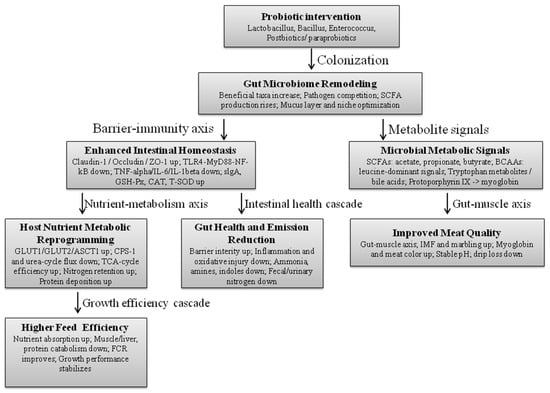
Probiotics exert regulatory functions by reshaping the gut microecological structure and modifying the metabolite profile, using microbial metabolites as key messengers to communicate with the host, and thereby remotely modulating physiological status and production phenotypes. A comprehensive schematic illustrating the cascade regulatory axes from probiotic colonization to the final improvement of production phenotypes is presented in Figure 1, which integrates the barrier–immunity axis, nutrient–metabolism axis and gut–muscle axis covered in the following subsections.
Figure 1.
Schematic diagram of the multi-axis regulatory network by which probiotics reshape gut microbiome and improve livestock production performance. Probiotics (Lactobacillus, Bacillus, Enterococcus, paraprobiotics and postbiotics) colonize the intestinal tract and remodel gut microbial composition to enrich carbohydrate-fermenting commensals and reshape the overall SCFA fermentation profile of the gut community. Nearly all intestinal bacteria are capable of producing acetate, propionate and butyrate at varying levels, so SCFA pools are maintained by collective fermentation of the whole microbiota. The remodeled microbiome drives two core cascades: (1) barrier–immunity axis that maintains intestinal homeostasis, alleviates inflammation and oxidative damage, and reduces nitrogen emissions; (2) microbial metabolite signaling axis including SCFAs, BCAAs, tryptophan metabolites, bile acids and protoporphyrin IX. The barrier–immunity axis further triggers nutrient-metabolism reprogramming to elevate feed efficiency and growth performance, while microbial metabolites act via the gut–muscle axis to improve intramuscular fat deposition and meat pH stability and reduce drip loss, ultimately optimizing meat quality. Key molecular biomarkers involved in each pathway are summarized in corresponding modules.
2.1. Maintaining Intestinal Health: The Foundation of Functional Homeostasis
Intestinal health underpins normal digestion, absorption, immune defense, and production performance in livestock and poultry. Its integrity relies on the coordinated maintenance of intestinal barrier function, microbial community stability, and balanced immune responses. Probiotics systematically stabilize the intestinal microenvironment through multiple pathways, including strengthening physical barriers, regulating immune homeostasis, alleviating oxidative stress, and antagonizing pathogens, thereby laying a foundation for subsequent nutrient metabolism and phenotypic regulation [9,10].
At the physical barrier level, strains such as Limosilactobacillus reuteri, Lactiplantibacillus plantarum and spore-forming Bacillus upregulate tight junction proteins in the small intestines of piglets and broilers, and gene transcription and protein expression of tight junction proteins including Claudin-1, Occludin, and ZO-1. These changes repair structural damage between intestinal epithelial cells, reduce small intestinal epithelial permeability, lower the risk of endotoxin and pathogenic translocation caused by a “leaky gut”, and improve intestinal morphology by increasing villus height and decreasing crypt depth to enhance nutrient absorption [9,10,11]. Supplementation with Bacillus licheniformis SW207 alleviates small intestinal barrier damage and reduces serum endotoxin in weaned piglets and D-lactate levels by enhancing tight junction protein expression, directly confirming its protective effect on the intestinal mechanical barrier. In contrast, pathogenic infection such as enterotoxigenic Escherichia coli severely disrupts tight junction structure and exacerbates barrier impairment [11].
In terms of immune homeostasis, many Lactobacillus and Enterococcus probiotic strains modulate the intestinal TLR4/MyD88/NFκB inflammatory pathway of broilers and pigs. By inhibiting phosphorylation and nuclear translocation of key pathway proteins, probiotics reduce the secretion of pro-inflammatory cytokines, including TNF-α, IL-6, and IL-1β, while increasing anti-inflammatory IL-10 levels, thereby preventing nutritional loss and tissue damage caused by excessive intestinal inflammation [2,9,11,12]. Meanwhile, probiotics effectively promote the synthesis and secretion of secretory immunoglobulin A (sIgA) in the intestinal mucosa, strengthening local mucosal immunity and improving pathogen recognition and clearance. This immunomodulatory effect has been validated in various animal models, including broilers and piglets [9,11,13,14]. Compound Enterococcus and Ligilactobacillus preparations raise sIgA levels in chicken cecal and small intestinal mucosa concentration and optimize the immune status in broilers. Notably, early probiotic intervention suffices to induce long-term immune homeostatic regulation without continuous supplementation [14].
Regarding oxidative stress mitigation, Lactobacillus and Bacillus probiotics boost antioxidant enzyme activity in piglet small intestine and broiler cecum, including GSH-Px, CAT, and T-SOD, reduce the contents of oxidative damage markers such as MDA and MPO, strengthen the intestinal antioxidant defense system, and alleviate oxidative injury induced by pathogenic infection or environmental stress [2,9,11]. Bacillus licheniformis SW207 attenuates intestinal oxidative damage induced by enterotoxigenic Escherichia coli in piglets by boosting antioxidant enzyme activities and decreasing oxidative product accumulation, and this effect is significantly correlated with the inhibition of inflammatory signaling [11].
At the biological barrier and pathogen antagonism level, Lactobacillus probiotics remodel cecal microbial communities of broilers through nutrient competition, spatial occupation, bacteriocin secretion, and organic acid production. Probiotics enrich beneficial microbial groups within the phylum Firmicutes, represented by the family Lachnospiraceae and genus Faecalibacterium. Meanwhile, they suppress the colonization of enteropathogens like Escherichia coli, Salmonella and Clostridium perfringens, which is also classified into Firmicutes but comprises virulent pathogenic strains [9,11,13]. It should be noted that the phylum Firmicutes contains both commensal beneficial microbes and pathogenic species, so the phylum itself cannot be simply regarded as beneficial flora. In pure in vitro culture systems, Lactiplantibacillus plantarum and Lactobacillus acidophilus can generate enough lactic acid to lower environmental pH and produce clear inhibitory activity against Salmonella Heidelberg [13], but this pH-dependent antibacterial mechanism only functions in culture media and anaerobic fermented feed instead of animal intestinal tracts. The abundant buffer substances in gut digesta neutralize organic acids secreted by lactobacilli, making it impossible to sustain the low pH required to suppress Salmonella proliferation in vivo [14]. Compound probiotics can still restrain Salmonella colonization in the chicken cecum and block its spread to visceral organs, yet this in vivo protective effect mainly relies on niche competition and immune regulation rather than acid-induced inhibition, and ultimately elevates the relative abundance of Faecalibacterium and other beneficial microbes to stabilize intestinal microecology.
In addition, probiotics further enhance intestinal health by regulating mucus secretion and optimizing microbial metabolic profiles. Ligilactobacillus salivarius colonizing chicken ceca elevates the synthesis of SCFAs by modulating gut microbial metabolism, which not only supplies energy to enterocytes but also synergistically reinforces barrier function [15]. Live probiotics and postbiotics upregulate heat shock protein expression in small intestinal epithelial cells of Ross 308 broilers, and [16] further demonstrates that paraprobiotics and postbiotics deliver more stable intestinal protective effects compared with live probiotic consortia.
2.2. Regulating Meat Quality: Signaling Transmission via the “Gut–Muscle Axis”
A conserved and highly efficient bidirectional communication system, termed the gut–muscle axis, exists between the intestine and skeletal muscle, representing the central pathway and biological basis by which probiotics remotely regulate meat quality across organs. By reshaping the gut microbiota and driving metabolic reprogramming, Lactobacillus and Bacillus strains colonizing pig and chicken ceca convert intestinal metabolic signals into systemic metabolic signals that remotely act on skeletal muscle via blood circulation, immune modulation, and neural transmission. These signals coordinately regulate myofiber development, intramuscular fat (IMF) deposition, myofiber type transition, and antioxidant status, ultimately determining key meat quality traits including meat color, water-holding capacity, tenderness, flavor, and marbling. This regulatory process relies on a cascade of gut-derived signaling metabolites represented by SCFAs, branched-chain amino acids (BCAAs), tryptophan derivatives, bile acids and protoporphyrin IX [2,17,18,19,20].
At the microbial metabolite level, cecal colonization of Lactobacillus strains significantly increases cecal SCFA concentrations in Ningxiang pigs and broilers. Butyrate, the preferred energy source for enterocytes, positively regulates IMF content via GPR41/GPR43-mediated signaling, whereas acetate directly contributes to flavor precursor synthesis. Together, they improve meat flavor and juiciness. SCFAs also optimize muscular energy supply by modulating hepatic glycolipid metabolism, and reduce the post-mortem glycolysis rate, thereby enhancing meat pH stability and decreasing drip loss [2,20]. The high-IMF phenotype characteristic of indigenous breeds such as Ningxiang pigs is closely associated with elevated intestinal Lactobacillus abundance and increased circulating BCAA levels. Leucine-dominant BCAAs activate the mTORC1 pathway to simultaneously promote muscle protein synthesis and adipocyte differentiation, driving uniform IMF deposition and desirable marbling at the molecular level [17,20]. Microbial tryptophan metabolism represents another critical branch of the gut–muscle axis in meat quality regulation. The tryptophan metabolite kynurenic acid targets and activates the AMPK/PGC-1α pathway in skeletal muscle, promoting the formation of oxidative (Type I) myofibers, enhancing oxygen-binding capacity and antioxidant status, and improving meat color stability and muscle tenderness. This pathway also serves as a promising target for probiotic-mediated mitigation of pathological defects such as wooden breast disease [12,19,21].
Recent studies demonstrate that Lactiplantibacillus plantarum, Ligilactobacillus salivarius, Lactobacillus amylovorus, and related probiotics significantly upregulate cecal protoporphyrin IX synthesis. Upon intestinal absorption and systemic circulation, protoporphyrin IX acts as a key precursor for myoglobin biosynthesis, directly increasing muscular myoglobin content, enhancing mitochondrial oxidative metabolism and oxygen utilization efficiency, reducing muscle glycogen storage, and optimizing post-mortem metabolic rate. These effects jointly improve myofiber density and diameter at both cellular and biochemical levels [20]. At the tissue development and structural regulation level, in ovo probiotic administration modulates embryonic muscle development in broiler chicks during embryonic and postnatal growth via the gut–muscle axis. In ovo injection or early dietary probiotic supplementation significantly increases pectoral myofiber density, reduces myofiber cross-sectional area, elevates myonuclear number, and extends secondary myogenesis, establishing a quantitative foundation for subsequent hypertrophic growth. This process is accompanied by sequential upregulation of myogenic regulatory factors including MYF5, MYOD, and MYOG, as well as growth factors such as IGF-1 and IGF-1R, determining muscle yield and quality from early development [22]. Probiotics also improve muscle microvascularization, increase capillary density and blood perfusion, reduce histopathological lesions including myofiber necrosis and fracture, and lower the incidence of inferior meat quality defects such as wooden breast and white striping. Improved calcium and phosphorus homeostasis serves as an important auxiliary mechanism by which probiotics promote angiogenesis and support normal muscle development [19]. At the signaling pathway and molecular regulation level, Bacillus subtilis and related probiotics activate the AMPK/SIRT1/PGC-1α pathway to drive the transition from glycolytic (Type II) to oxidative (Type I) myofibers, enhancing meat tenderness and antioxidant capacity. They also activate the Nrf2 pathway to upregulate expression of HO-1, CAT, SOD, and GPx, reducing post-mortem lipid peroxidation and MDA accumulation, delaying meat color deterioration, and extending shelf life. The synergistic improvement of myofiber type composition and antioxidant capacity represents a core molecular mechanism underlying probiotic-mediated meat quality enhancement [21]. Butyrate-producing probiotics such as Clostridium butyricum accelerate muscle protein synthesis and inhibit MuRF1- and MAFbx-mediated protein degradation via the IGF-1/Akt/mTOR pathway. They simultaneously reshape ruminal and fecal microbiota structure, increase the abundance of beneficial taxa including Petrimonas and Prevotella, elevate concentrations of functional metabolites such as butyrate and valerate, and further strengthen gut–muscle axis signaling efficiency [23].
2.3. Improving Feed Efficiency and Reducing Nitrogen Emissions: Probiotic-Mediated Nutrient Metabolic Reprogramming and Microbiota Functional Optimization
Feed efficiency and nitrogen emission intensity are core indicators of the green and efficient transition of livestock and poultry production. By reshaping gut microecology, optimizing nutrient metabolic flux, and coordinating host–microbiota crosstalk, probiotics have been reported to improve the utilization efficiency of nitrogen, energy, and other nutrients without compromising growth performance, thereby reducing fecal and urinary nitrogen excretion at the source. This makes probiotics a key technological bridge linking nutritional regulation, microbiological intervention, and low-carbon farming [24,25]. The combined application of probiotics and low-protein balanced amino-acid diets has been validated as an effective emission reduction strategy. It reduces dietary nitrogen intake and body nitrogen excretion without compromising growth rate or productivity, primarily through probiotic-mediated host metabolic reprogramming and gut microbiota optimization, which cooperatively direct nitrogen flux toward efficient anabolic pathways such as protein synthesis, thereby decreasing urea production and excessive ammonia release [24].
Low-protein diets supplemented with probiotics significantly downregulate hepatic carbamoyl phosphate synthetase-I (CPS-1) activity, reduce urea cycle flux, and decrease nitrogen waste caused by excessive amino acid catabolism. Probiotics also upregulate the expression of intestinal glucose and amino acid transporters including GLUT1, GLUT2, and ASCT1, enhancing nutrient uptake and transport efficiency and thus improving overall nitrogen utilization [26]. The synergistic effect of nicotinamide and probiotics further enhances the emission reduction performance of low-protein diets by boosting the activities of tricarboxylic acid cycle key enzymes including pyruvate dehydrogenase, citrate synthase, and glutamate dehydrogenase 1 in the ileum. This strengthens energy metabolism efficiency, reduces amino acid oxidation for energy supply, and achieves the dual goal of “nitrogen saving and energy retention”. Meanwhile, probiotics improve intestinal morphology and increase the villus–crypt ratio, providing a structural basis for efficient nutrient absorption [26]. Dietary starch structure and digestion rate also regulate probiotic-mediated nitrogen utilization. The ratio of amylopectin to amylose affects synchronized absorption of glucose and amino acids by altering intestinal glucose release kinetics, thereby modulating nitrogen retention and protein synthesis efficiency. As reported in laying hen feeding trials, high-amylose feed boosts cecal fermentation in laying hens and elevates the relative abundance of core functional genera including Christensenellaceae and Rikenellaceae, which possess specialized carbohydrate fermentation pathways to contribute to SCFA pools alongside the vast majority of gut commensals; the reshaped microbial community optimizes intestinal microecology, improves nitrogen utilization and lowers nitrogen excretion [27,28].
Probiotics enhance intestinal carbohydrate fermentation and increase the production of SCFAs including acetate, propionate, and butyrate. Propionate serves as a gluconeogenic precursor to reduce protein catabolism in muscle and liver, indirectly increasing nitrogen retention. Butyrate, as the primary energy substrate for enterocytes, maintains intestinal barrier integrity and normal absorptive function, minimizes nutrient diversion caused by intestinal injury and immune activation, and allocates more nutrients to growth and protein synthesis [25,29]. At the microbial level, probiotic intervention significantly enriches functional taxa including Christensenellaceae and Lactobacillus, optimizes gut microbial nitrogen metabolism pathways, promotes microbial protein synthesis, reduces protein putrefaction in the hindgut, decreases the production of harmful substances such as ammonia, biogenic amines, and indoles, alleviates intestinal oxidative and inflammatory damage, and lowers nitrogen excretion [24,25,27]. Studies using growing boars as experimental animals show that fermentable fiber increases intestinal SCFA flux, but excessive fiber may impair mitochondrial respiration and glycolysis in colonic epithelial cells and disrupt energy homeostasis. Bacillus probiotics balance cecal carbohydrate and protein fermentation in growing pigs, coordinate fiber fermentation and protein metabolism, enhance energy harvest while avoiding the accumulation of toxic protein fermentation products, and maintain normal epithelial metabolism and nutrient utilization efficiency [29]. Furthermore, probiotics reduce chronic inflammatory nutrient consumption by inhibiting excessive activation of the TLR4/NF-κB pathway, decrease energy and protein waste caused by immune stress, and further improve feed conversion efficiency [9,12]. Probiotic-mediated microbiota optimization also regulates host NAD+ metabolism and the SIRT1/AMPK signaling pathway, improves energy sensing and metabolic homeostasis, and promotes efficient nutrient utilization. This multi-pathway synergistic regulatory network underlies the mechanisms by which probiotics improve feed efficiency and reduce nitrogen emissions, providing a reliable microbiological strategy and theoretical support for low-carbon and healthy farming [26].
3. Host Genetic Background: The Intrinsic Blueprint Shaping the Gut Microbiome and Modulating Probiotic Responses
Understanding genotype–probiotic interactions may open opportunities for animal breeding by considering high probiotic responsiveness as a potential breeding objective. The intestinal tract includes the duodenum, jejunum, ileum and cecum. The cecum serves as the primary microbial fermentation organ for broilers, laying hens, pigs and cattle. Host genetics act as the fundamental driver for varied probiotic responses across different livestock and poultry strains. Nevertheless, a prominent research blind spot can be observed among animal genetic researchers. Most existing research focuses on how host genomic profiles shape intestinal ecological environments to affect the efficacy of supplemented probiotics. Researchers in this field rarely pay attention to the intrinsic colonization traits of different probiotic strains. Multiple in vivo inoculation trials have been carried out using Ross 308 newborn broilers as experimental animals. The research data show that several genera widely adopted as commercial probiotics cannot maintain long-term survival inside chicken cecal tissue. These microbial groups include Lactobacillus, Bifidobacterium, Bacillus and Enterococcus [30]. These aerotolerant lactic acid bacterial strains only transiently reside in chick ileal and cecal digesta. After the one-time oral feeding treatment, they can only be detected temporarily within ileal and cecal digesta of chicks. They will be cleared out of the intestinal tract within seven days without sustained proliferation [31,32]. In contrast, strictly anaerobic microbes from the phylum Bacteroidetes show an outstanding colonization performance in young broilers. Representative genera of such microbes cover Alistipes, Bacteroides, Barnesiella, Mediterranea, Parabacteroides and Megamonas. A single oral inoculation can support their stable long-term residence inside chicken ceca [30,31]. Such a huge gap in colonization ability is not caused by differences in host genetic backgrounds. It mainly derives from distinct ecological adaptation features of various bacterial strains [32]. Lactobacillus and other lactic acid bacteria have strong tolerance to oxygen. They distribute widely in animal feed and poultry litter materials. Livestock and poultry are continuously exposed to these microbes from surrounding environments. The cecal microecology of chickens has not formed stable ecological niches to retain such transient microbes [32,33]. A common methodological defect exists in a large number of published livestock probiotic trials. Researchers only test production indicators, inflammatory cytokines and fecal short-chain fatty acid levels. They do not adopt strain-specific quantitative PCR to quantify the abundance of supplemented strains inside ileal or cecal digesta. It is impossible to judge whether exogenous probiotics successfully colonize the intestinal tract. Such operation will mean the research conclusions about host genetic regulation lack sufficient reliability [33,34]. It cannot be denied that host genetic variation can restructure the composition of indigenous cecal microbiota and change the matching degree between intestinal microhabitats and different bacterial taxa. However, the inherent biological and ecological characteristics of probiotic strains are the dominant factor to decide their survival and metabolic functions inside animal intestines [32,33]. For animal genetic breeding scholars who carry out host probiotic interaction trials, standardized molecular detection methods for strain colonization must be added to the whole experimental design. This measure can eliminate confounding errors brought by the weak persistence of traditional lactic acid probiotics inside cecal tissue.
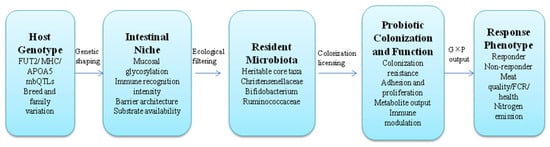
Thus, the ability of exogenous probiotics to overcome colonization resistance, integrate into the microecosystem, and function critically depends on whether the host provides a matching genetic niche. Supplementary analysis further illustrates that supplementation with live probiotics yields clear production benefits only in young piglets and newly hatched broilers with immature cecal microbiota with immature gut microbiota. Typical experimental objects include newborn young livestock and poultry, and individuals receiving antibiotic treatment whose indigenous intestinal flora has been disrupted severely. Adult animals with mature and stable native gut ecosystems rarely obtain ideal improvement effects from conventional probiotic products, because most commercial lactic acid bacterial strains only exist transiently inside intestinal tracts and cannot form persistent colonization [30,32]. For animal genetic breeding scholars who carry out host probiotic interaction trials, standardized molecular detection methods for strain colonization must be added to the whole experimental design. This measure can eliminate confounding errors brought by the weak persistence of traditional lactic acid probiotics inside cecal tissue. To systematically clarify how host genetics determine animal-specific responses to probiotic supplementation, we summarize the complete genotype–microbiota–probiotic interaction cascade in Figure 2, which interprets the origin of individual differences in livestock production performance after probiotic intervention.
Figure 2.
The sequential cascade of host genotype–microbiome–probiotic interaction (G×P) driving differential livestock phenotypic responses. Host genetic variations (including FUT2, MHC, APOA5, mbQTLs, and breed/family differences) genetically shape intestinal niche characteristics such as mucosal glycosylation, immune recognition, epithelial barrier structure and nutrient substrate availability. The intestinal niche further conducts ecological filtering to assemble resident heritable core microbial taxa (Christensenellaceae, Bifidobacterium, Ruminococcaceae). The composition of indigenous microbiota determines the colonization licensing capacity for exogenous probiotics, regulating probiotic adhesion, proliferation, metabolite production and immune modulation. Such genotype-by-probiotics (G×P) interaction ultimately differentiates livestock into probiotic responders and non-responders, resulting in divergent phenotypes covering meat quality, feed conversion ratio, intestinal health and nitrogen emission performance.
3.1. Heritable Characteristics of the Gut Microbiome: A Core Basis for Host Genetic Regulation of Gut Microecology
The gut microbiome is not a randomly assembled ecological community, but a heritable biological trait shaped by host genomic regulation, environmental factors, and microbial interactions. The deterministic modulation of gut microbial composition, community structure, and functional profiles by host genetics constitutes a central prerequisite for defining individual microbial characteristics and determining the colonization and function of exogenous probiotics. In recent years, comparative studies based on twin models, pedigree populations, divergent breeds, and inbred animals have firmly established that the α-diversity, abundance of core phyla, and composition of key functional genera of the gut microbiota in livestock and poultry exhibit significant genetic variation. Several core microbial taxa display moderate to high heritability, providing direct genetic evidence for incorporating gut microbiota as a quantitative trait into breeding selection programs [1,2,35,36]. Host genetic regulation of the gut microbiome exhibits distinct segment-specific and taxon-specific patterns. Microbial communities in the cecum and colon are more strongly governed by host genetics, whereas those in the jejunum and rectum are more susceptible to dietary and environmental perturbations. This tissue specificity further confirms that host genetics shape favorable intestinal niches by regulating intestinal physiology, mucus secretion, immune recognition, and nutrient supply pathways [35,36,37].
At the community level, α-diversity indices (Shannon, Chao1, Observed species) of livestock and poultry gut microbiota generally show low to moderate heritability, with most values below 0.2, indicating that diversity is more plastic and environmentally sensitive. Host genetics primarily determine the proportional composition of core functional microbes rather than overall community richness [36,37]. Variance decomposition studies reveal that the microbiability (m2), or the proportion of phenotypic variance explained by gut microbiota, is even higher than host heritability for certain traits. For example, microbiability of fiber apparent digestibility in pigs reaches 0.31–0.33, compared with a host heritability of only 0.03–0.05. Similarly, microbiability for residual feed intake in laying hens is 0.16, validating that the gut microbiome can serve as an independent genetic target to cooperatively regulate production traits with the host genome [36,37]. Notably, host genetics and gut microbiota do not follow a simple linear relationship. In most livestock populations, the correlation between host relatedness and microbial β-diversity is relatively weak, with only a few core heritable taxa showing stable vertical transmission. This indicates that host genetics specifically target certain functional microbes rather than regulating the entire community [36].
At the specific taxon level, host genetic regulation displays clear species- and breed-specificity. Several functional genera within Firmicutes, Bacteroidetes, and Clostridia exhibit stable heritability. Among them, Christensenellaceae, Bifidobacterium, Faecalicoccus, and Megamonas have been widely recognized as highly heritable taxa across multiple species [35,37,38]. Comparative studies in laying hens show that only about 1.07% of fecal microbial genera have heritability > 0.1, including Anaerosporobacter, Candidatus Stoquefichus, and Fournierella. These heritable taxa are closely associated with economically important traits, including feed efficiency, nitrogen utilization, and intestinal water metabolism [36]. Studies in pigs further confirm that the heritability levels of the Christensenellaceae R-7 group and genus UCG-002 reach 0.312 and 0.104, respectively. Both are core functional taxa involved in fiber degradation and short-chain fatty acid production, and their abundances are directly regulated by host genes such as GALNT7, DDR2, and UAP1, providing molecular evidence for the genetic basis of microbiome heritability [37]. Poultry models offer a precise paradigm for dissecting microbiome heritability. Genetic analysis of fecal moisture in laying hens reveals a moderate heritability of 0.219. Host genetics act primarily by regulating intestinal water and salt metabolism-related genes (SLC family, KCNJ15, FABP6) and core cecal microbiota. Six heritable genera—Cetobacterium, Sterolibacterium, Elusimicrobium, Roseburia, Faecalicoccus, and Megamonas—directly modulate intestinal water and electrolyte homeostasis, demonstrating that host genetics can regulate intestinal physiological phenotypes by shaping specific microbiota [35].
Furthermore, fecal microbiota transplantation (FMT) experiments confirm that colonization of germ-free recipients with highly heritable donor microbiota recapitulates donor production and health phenotypes, directly proving that heritable gut microbiota mediate phenotypic transmission and serve as a critical bridge connecting host genotype to economic traits [2,39]. Comparative studies between humans and livestock collectively demonstrate that heritable gut microbes are predominantly involved in nutrient metabolism, immune regulation, and intestinal barrier maintenance [40]. The heritability of core taxa such as Bifidobacteriaceae, Christensenellaceae, and Lachnospiraceae is conserved across species, and their abundance variations are significantly associated with polymorphisms in key host genes including APOA5, FUT2, and MHC, suggesting that host genetics regulate core commensal colonization through evolutionarily conserved molecular pathways [5,38,41]. Notably, heritable gut microbiota exhibit stable intergenerational transmission independent of environmental factors. Under identical husbandry conditions, individuals with similar genetic backgrounds harbor more similar gut microbiota than genetically distant individuals, providing a feasible foundation for directional optimization of gut microbiota structure through breeding [36,37].
3.2. Genotype × Probiotic Interaction (G×P): The Core Mechanism by Which Host Genetic Background Determines Probiotic Response Heterogeneity
Widespread and significant genotype-by-probiotic (G×P) interactions occur between host genetic background and exogenous probiotic intervention, representing the fundamental biological cause of inconsistent probiotic efficacy across individuals and breeds. In recent years, studies in chickens, pigs, insects, and other models consistently demonstrate that identical probiotic strains, dosages, and environments produce drastically divergent phenotypic outputs depending on host genetic background, including growth performance, immune response, microbial structure, metabolic profiles, intestinal barrier integrity, and meat quality traits [3,4,42]. This interaction is not random fluctuation but a directional selection and licensing effect exerted by the host genome on probiotic colonization, survival, and function via regulation of mucosal niche construction, immune screening strength, indigenous microbiota composition, and metabolic pathway preference. Ultimately, the host is classified as high-responder, low-responder, or non-responder [5,41,43]. From an evolutionary perspective, the genetic regulatory system forged through long-term coevolution between host and commensals prioritizes the stability of indigenous microbiota [44]. Thus, the ability of exogenous probiotics to overcome colonization resistance, integrate into the microecosystem, and function critically depends on whether the host provides a matching genetic niche [45,46]. The most representative and evolutionarily conserved molecular mechanism underlying host regulation of probiotic response is the mucosal glycosyl niche screening effect determined by FUT2-mediated mucosal fucosylation polymorphism. FUT2 (α-1,2-fucosyltransferase 2) controls fucosylation of glycoproteins and glycolipids on the intestinal mucosa, directly determining whether fucose-utilizing commensals such as Bifidobacterium and Lactobacillus can efficiently adhere, colonize, and proliferate [5,43].
In exclusively breastfed infants, full-secretor FUT2 status significantly elevates gut microbial α-diversity and drives an enterotype dominated by Bifidobacterium longum. In contrast, non-secretor and low-secretor phenotypes favor a Bifidobacterium breve-dominated structure, with metabolic pathways shifted toward sucrose degradation and selenoamino acid synthesis rather than energy and nucleotide production [43]. This single-gene polymorphism is sufficient to reshape the entire gut microbial structure and function, conclusively demonstrating that host genes directly shape the ecological space available to probiotics by determining carbohydrate resource availability. In livestock, the FUT2 genotype is similarly associated with intestinal mucus composition, microbial colonization, and immune status, serving as a key marker for predicting probiotic adhesion efficiency and response strength [46,47]. Nevertheless, this genotype-dependent preference for specific bifidobacterial strains brings clear practical risks for long-term livestock breeding programs. Commercial probiotic strains and products are updated rapidly across animal husbandry industries, and researchers cannot accurately predict which bifidobacterial strains will become the mainstream market varieties five years in advance [48]. If breeding selection is only carried out for livestock suitable for Bifidobacterium longum according to current research findings, subsequent industrial practice may find that Bifidobacterium breve delivers better physiological benefits to animals [49]. In this case, the whole set of breeding systems targeted at a single strain will lose practical value. Designing breeding schemes around one fixed probiotic strain equals selecting animal lines for unknown future probiotic products, which greatly reduces the long-term application potential of breeding projects [50]. Therefore, future precision breeding targeting gut microecology should aim to cultivate livestock with broad-spectrum compatible intestinal glycosyl niches instead of focusing on matching one single probiotic species. Broad-adaptable mucosal carbohydrate environments can support stable colonization of multiple beneficial commensal bacteria and keep consistent efficacy against continuously updated commercial probiotic strains [51].
Host immune gene polymorphisms constitute the second core pathway mediating G×P interactions, among which the major histocompatibility complex (MHC) gene family plays a pivotal immune screening role. MHC class I and II molecules govern antigen presentation and immune recognition; their polymorphisms directly define the intensity of microbial recognition, baseline inflammatory tone, and sIgA secretion patterns, thereby continuously shaping and selecting gut microbial community structure [41,45]. Evidence indicates that different MHC genotypes create distinct intestinal immune tolerance windows: pro-inflammatory genotypes enhance immune clearance of probiotics and reduce colonization efficiency, whereas immunotolerant genotypes favor probiotic survival and anti-inflammatory function [45,52]. In chickens, identical probiotics induce divergent effects on immune cell distribution, miRNA expression, and inflammatory cytokine levels across different genetic lines, attributable to variations in MHC and other immune genes [3,42]. Additionally, polymorphisms in pattern recognition receptors and inflammatory pathway genes, including TLR4, MyD88, NF-κB, and NOD2, alter host sensitivity to probiotics, further amplifying phenotypic differences in G×P interactions [46,53]. The indigenous gut microbial community determined by host genetics acts as the direct executor of G×P interactions and the bridge connecting genotype to probiotic response. Genetically shaped and vertically transmitted indigenous microbiota determine the strength of intestinal colonization resistance: more stable and functionally robust indigenous communities impede probiotic engraftment, whereas genetically vulnerable microbiota are more readily modulated by probiotics [35,36,54,55]. Even among genetically similar individuals, subtle variations in indigenous microbiota serve as key predictors of probiotic responsiveness, confirming that the microbiota itself represents a heritable extended phenotype of host genetics [54,56]. Critically, probiotic function highly depends on cooperation from indigenous microbiota. Certain probiotics require cross-feeding substrates, metabolic complementation, or environmental modification provided by the indigenous community to activate downstream signaling pathways, and host genetics determine whether such cooperation occurs [45]. For example, SCFA-producing probiotics rely on host-adapted fiber-degrading microbiota to effectively enhance intramuscular fat deposition and meat quality [20,57].
At the phenotypic output level, G×P interactions permeate all dimensions of production, health, meat quality, and metabolism. In mealworms, probiotic growth promotion exhibits striking strain-dependency: the same probiotic significantly enhances growth in some lines but exerts no effect or even growth inhibition in others [4,58]. In piglets and broilers, improvements in feed conversion ratio, nitrogen retention, and intestinal morphology also show significant G×P interactions across genetic lines [26,45]. For meat quality regulation, the effects of probiotics on myofiber type, intramuscular fat, and meat color via the gut–muscle axis strongly depend on host metabolic genotype. Probiotics effectively activate pathways including AMPK/PGC-1α and mTORC1 to remodel muscle metabolism only in specific genetic backgrounds [12,19,21]. Essentially, the host genome sets a regulatory window, within which probiotics act as amplifiers or correctors rather than independent phenotypic drivers. Notably, G×P interactions are strain-specific: A single pig or chicken genetic line may respond strongly to Bacillus strains but weakly to Lactobacillus strains and weakly to others, highlighting host-strain matching as central to precision intervention [6,7]. Following antibiotic perturbation, conventional commercial probiotics often fail to colonize and may even delay microbial recovery. In contrast, personalized probiotics matched to host genetics rapidly engraft and exert protective effects, directly validating that G×P interactions determine genuine probiotic efficacy [6,7]. From an applied perspective, ignoring G×P interactions results in probiotics that are widely effective yet widely inconsistent. Exploiting G×P interactions enables stable, high-efficiency application of the same strain in matching lines and avoidance in non-matching lines, drastically improving cost-effectiveness.
4. Integrated Breeding Strategies: Framework and Pathway for Selecting “Probiotic-Friendly” Lines
Dissection of genotype–probiotic interactions opens a new frontier for animal breeding: targeting high probiotic responsiveness as a breeding goal to develop elite lines that maximize probiotic benefits.
4.1. Challenge: Precise Definition of the “Probiotic Responsiveness” Phenotype
Probiotic responsiveness is a complex quantitative trait, and its accurate quantification is a prerequisite for directional breeding. Phenomic approaches enable systematic integration of multi-dimensional data to precisely evaluate changes in growth performance, meat quality, health indices, gut microbiota, blood, and fecal metabolic profiles before and after probiotic intervention [59,60]. Experimental studies suggest that multi-generational selection targeting the microbiome alone can directionally shape host phenotypes, indicating that microbial structures conducive to probiotic function represent heritable selectable traits that can be directly incorporated into breeding programs [61,62].
4.2. Opportunity: Genomic Tools Drive Precision Selection
Genomic selection markedly accelerates the breeding of probiotic-friendly lines. Microbiome-wide genome-wide association studies (mGWAS) identify host SNPs (microbiome quantitative trait loci, mbQTLs) associated with beneficial microbial abundance. For instance, genomic breeding values for milk urea nitrogen in dairy cattle correlate with specific rumen microbial characteristics; such loci serve as genetic markers for probiotic responsiveness [63]. Genotyping of key genes including FUT2 also directly predicts host niche compatibility for probiotics [5,64]. Based on these findings, novel genomic prediction models can be constructed. High-value microbial traits are incorporated as intermediate phenotypes for indirect selection in breeding value estimation. Meanwhile, genotype × probiotic interaction analysis enables the development of genome × environment (G×E) models in which probiotic treatment represents a specific environmental factor. These models accurately predict specific breeding values of individuals under probiotic intervention, enabling personalized matching of lines and strains [61,64].
4.3. Prospective Implementation Pathway
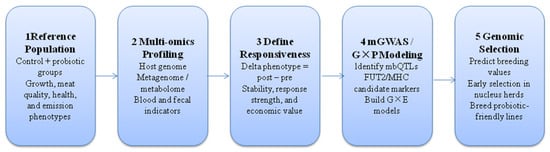
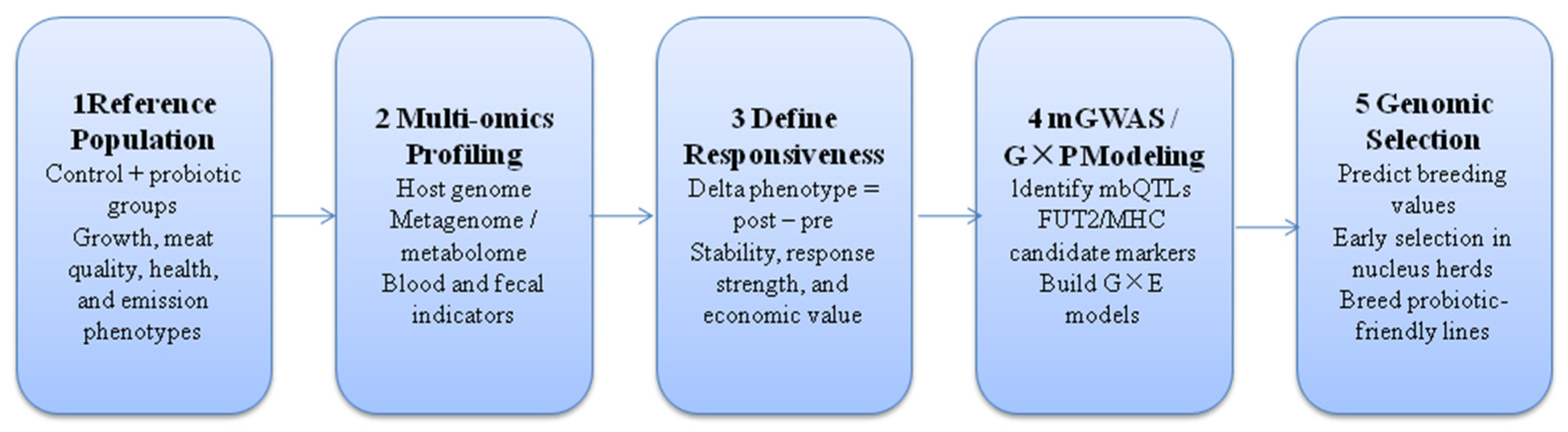
Precise breeding of probiotic-responsive lines follows a systematic workflow: (1) Establish a precision phenotypic reference population by applying control and probiotic treatments in a large cohort, collecting whole-genome, metagenomic, metabolomic, and multi-dimensional phenotypic data [65]. (2) Estimate heritability of probiotic responsiveness and genetic correlations with economic traits to characterize its genetic architecture [66]. (3) Identify key markers via mGWAS and develop genomic selection models integrating host genomic and baseline microbiome information [67]. (4) Implement early-stage precision selection in nucleus breeding herds to continuously improve population responsiveness and stability to target probiotics [68]. To translate the genotype–probiotic interaction theory into practical breeding practice, we proposed a five-stage multi-omics-assisted genomic selection workflow, which is systematically summarized in Figure 3.
Figure 3.
Stepwise technical workflow for genomic precision breeding of probiotic-friendly livestock lines. The integrated breeding pipeline includes five sequential stages: (1) Establish reference populations with control and probiotic-supplemented subgroups to record comprehensive production phenotypes covering growth performance, meat quality, intestinal health and nitrogen emission. (2) Perform multi-omics profiling, including host whole-genome sequencing, gut metagenome, metabolome detection, as well as blood and fecal biochemical indicators. (3) Quantify probiotic responsiveness by calculating delta phenotypes (post-intervention minus pre-intervention values), and evaluate response stability, response magnitude and corresponding economic benefits. (4) Conduct microbiome GWAS (mGWAS) and G×P interaction modeling to screen key mbQTLs, and candidate genes such as FUT2 and MHC, and construct genotype-environment interaction prediction models. (5) Implement genomic selection to estimate individual breeding values, carry out early selection within nucleus herds, and ultimately, breed specialized livestock lines with high responsiveness to probiotic supplementation.
5. Conclusions and Future Perspectives
The regulatory effects of probiotics on livestock health, production performance, and meat quality are complex biological processes jointly determined by strain characteristics, host genetic background, and gut microecology. This review systematically summarizes the molecular mechanisms by which probiotics improve production traits via the gut–muscle axis, immune axis, and nutrient metabolic axis. We clarify the core principle that host genetics drive genotype–probiotic interactions by shaping the intestinal environment and determining microbial structure. These advances shift probiotic application from one-size-fits-all administration to precision intervention based on host genetics and microbiome profiles. Incorporating probiotic responsiveness into modern breeding signifies a paradigm shift in animal agriculture: from selective breeding of host genotypes alone to synergistic optimization of host–microbiome symbiotic systems. Breeding probiotic-friendly lines may represent a promising strategy for simultaneously improving production performance, meat quality, resource utilization efficiency, and environmental sustainability.
Future research should focus on (1) large-scale G×P interaction studies in major livestock breeds to accurately assess economic values; (2) dissection of key host genes and signaling pathways underlying interactions using germ-free models and multi-omics; (3) establishment of standardized high-throughput platforms for phenotyping probiotic responsiveness; and (4) development of multi-omics integrated precision prediction models. Advances in these areas are expected to improve our understanding of host–microbiome interactions and facilitate the development of more targeted probiotic interventions. Ultimately, integrating probiotic interventions with host genetics and microbiome-informed breeding strategies may contribute to more efficient, environmentally sustainable, and resilient livestock production systems.
Author Contributions
Conceptualization, X.L. and J.T.; methodology, J.T.; validation, J.T., L.H., Y.Z., Y.W., S.C. and X.L.; formal analysis, J.T.; investigation, J.T., L.H., Y.Z., Y.W. and S.C.; resources, X.L. and J.T.; data curation, J.T., L.H., Y.Z., Y.W. and S.C.; writing—original draft preparation, J.T.; writing—review and editing, J.T., L.H., Y.Z., Y.W., S.C. and X.L.; visualization, J.T.; supervision, X.L.; project administration, X.L.; funding acquisition, J.T. All authors have read and agreed to the published version of the manuscript.
Funding
This research was funded by the Ningxia Key R&D Program “Prediction of Novel Traits in Dairy Cattle Using High-Throughput Phenotyping and Intelligent Algorithms, and Construction of an Evaluation Framework” (Grant No. 2025BBF02020).
Institutional Review Board Statement
Not applicable.
Informed Consent Statement
Not applicable.
Data Availability Statement
All data included in this review are available upon reasonable request from the corresponding author.
Conflicts of Interest
The authors declare no conflicts of interest.
References
- Manterola, M.; Palominos, M.F.; Calixto, A. The Heritability of Behaviors Associated with the Host Gut Microbiota. Front. Immunol. 2021, 12, 658551. [Google Scholar] [CrossRef] [Scilit] [PubMed] [PubMed Central]
- Chen, B.; Li, D.; Leng, D.; Kui, H.; Bai, X.; Wang, T. Gut microbiota and meat quality. Front. Microbiol. 2022, 13, 951726. [Google Scholar] [CrossRef] [Scilit] [PubMed]
- Dunislawska, A.; Pietrzak, E.; Wishna Kadawarage, R.; Siwek, M. MicroRNA expression in immune tissues of adult chickens after embryo stimulation with bioactive substances. Sci. Rep. 2023, 13, 3076. [Google Scholar] [CrossRef] [Scilit] [PubMed]
- Saint-Jacques, G.; Normandin, É.; Losier, C.; Gunny, N.; Larivière, D.; Benoit-Biancamano, M.O.; Favret, C. Strain-dependent resistance of yellow mealworm (Coleoptera: Tenebrionidae) to bacterial infection with and without probiotic supplementation. J. Econ. Entomol. 2026, 119, 1674–1687. [Google Scholar] [CrossRef] [Scilit] [PubMed]
- Wang, Y.; Choo, J.M.; Richard, A.C.; Papanicolas, L.E.; Wesselingh, S.L.; Taylor, S.L.; Rogers, G.B. Intestinal persistence of Bifidobacterium infantis is determined by interaction of host genetics and antibiotic exposure. ISME J. 2024, 18, wrae107. [Google Scholar] [CrossRef] [Scilit] [PubMed]
- Celiberto, L.S.; Pinto, R.A.; Rossi, E.A.; Vallance, B.A.; Cavallini, D.C.U. Isolation and Characterization of Potentially Probiotic Bacterial Strains from Mice: Proof of Concept for Personalized Probiotics. Nutrients 2018, 10, 1684. [Google Scholar] [CrossRef] [Scilit] [PubMed]
- Suez, J.; Zmora, N.; Zilberman-Schapira, G.; Mor, U.; Dori-Bachash, M.; Bashiardes, S.; Zur, M.; Regev-Lehavi, D.; Ben-Zeev Brik, R.; Federici, S.; et al. Post-Antibiotic Gut Mucosal Microbiome Reconstitution Is Impaired by Probiotics and Improved by Autologous FMT. Cell 2018, 174, 1406–1423.e16. [Google Scholar] [CrossRef] [Scilit] [PubMed]
- Wang, M.; Yi, M.; Wang, L.; Sun, S.; Ling, Y.; Zhang, Z.; Cao, H. Multi-Omics Analysis Reveals the Regulatory Mechanism of Probiotics on the Growth Performance of Fattening Sheep. Animals 2024, 14, 1285. [Google Scholar] [CrossRef] [Scilit] [PubMed]
- Zheng, Y.-N.; Zhang, Z.; Tang, P.; Wu, Y.; Zhang, A.; Li, D.; Wang, C.Z.; Wan, J.Y.; Yao, H.; Yuan, C.S. Probiotics fortify intestinal barrier function: A systematic review and meta-analysis of randomized trials. Front. Immunol. 2023, 14, 1143548. [Google Scholar] [CrossRef] [Scilit] [PubMed]
- Horowitz, A.; Chanez-Paredes, S.D.; Haest, X.; Turner, J. Paracellular permeability and tight junction regulation in gut health and disease. Nat. Rev. Gastroenterol. Hepatol. 2023, 20, 417–432. [Google Scholar] [CrossRef] [Scilit] [PubMed]
- Li, M.; Zhao, D.; Guo, J.; Pan, T.; Niu, T.; Jiang, Y.; Shi, C.; Huang, H.; Wang, N.; Zhang, D.; et al. Bacillus halotolerans SW207 alleviates enterotoxigenic Escherichia coli-induced inflammatory responses in weaned piglets by modulating the intestinal epithelial barrier, the TLR4/MyD88/NF-κB pathway, and intestinal microbiota. Microbiol. Spectr. 2024, 12, e0398823. [Google Scholar] [CrossRef] [Scilit] [PubMed]
- Fan, L.; Xia, Y.; Wang, Y.; Han, D.; Liu, Y.; Li, J.; Fu, J.; Wang, L.; Gan, Z.; Liu, B.; et al. Gut microbiota bridges dietary nutrients and host immunity. Sci. China Life Sci. 2023, 66, 2466–2514. [Google Scholar] [CrossRef] [Scilit] [PubMed]
- Hoepers, P.G.; Nunes, P.L.F.; Almeida-Souza, H.O.; Martins, M.M.; Carvalho, R.D.O.; Dreyer, C.T.; Aburjaile, F.F.; Sommerfeld, S.; Azevedo, V.; Fonseca, B.B. Harnessing probiotics capability to combat Salmonella Heidelberg and improve intestinal health in broilers. Poult. Sci. 2024, 103, 103739. [Google Scholar] [CrossRef] [Scilit] [PubMed]
- Juricova, H.; Matiasovicova, J.; Faldynova, M.; Sebkova, A.; Kubasova, T.; Prikrylova, H.; Karasova, D.; Crhanova, M.; Havlickova, H.; Rychlik, I. Probiotic Lactobacilli do not protect chickens against Salmonella enteritidis infection by competitive exclusion in the intestinal tract but in feed, outside the chicken host. Microorganism 2022, 10, 219. [Google Scholar] [CrossRef] [Scilit]
- Hussain, M.; Aizpurua, O.; Pérez de Rozas, A.; París, N.; Guivernau, M.; Jofré, A.; Tous, N.; Ng’ang’a, Z.W.; Alberdi, A.; Rodríguez-Gallego, E.; et al. Positive impact of early-probiotic administration on performance parameters, intestinal health and microbiota populations in broiler chickens. Poult. Sci. 2024, 103, 104401. [Google Scholar] [CrossRef] [Scilit] [PubMed]
- Cinar, O.O.; Ekim, B.; Calik, A.; Kocak, C.O.; Kocak, E.; Ceylan, A. Comparative effects of probiotic and postbiotic in ovo administration on broiler intestinal development and health. Res. Vet. Sci. 2025, 196, 105918. [Google Scholar] [CrossRef] [Scilit] [PubMed]
- Wang, J.; Zhu, N.; Su, X.; Gao, Y.; Yang, R. Gut-Microbiota-Derived Metabolites Maintain Gut and Systemic Immune Homeostasis. Cells 2023, 12, 793. [Google Scholar] [CrossRef] [Scilit] [PubMed]
- Średnicka, P.; Juszczuk-Kubiak, E.; Wójcicki, M.; Akimowicz, M.; Roszko, M. Probiotics as a biological detoxification tool of food chemical contamination: A review. Food Chem. Toxicol. Int. J. Publ. Br. Ind. Biol. Res. Assoc. 2021, 153, 112306. [Google Scholar] [CrossRef] [Scilit]
- Mann, E.R.; Lam, Y.K.; Uhlig, H.H. Short-chain fatty acids: Linking diet, the microbiome and immunity. Nat. Rev. Immunol. 2024, 24, 577–595. [Google Scholar] [CrossRef] [Scilit] [PubMed]
- Cai, L.; Wang, X.; Zhu, X.; Xu, Y.; Qin, W.; Ren, J.; Jiang, Q.; Yan, X. Lactobacillus-derived protoporphyrin IX and SCFAs regulate the fiber size via glucose metabolism in the skeletal muscle of chickens. mSystems 2024, 9, e0021424. [Google Scholar] [CrossRef] [Scilit] [PubMed]
- Wang, H.; Xiao, C.; Li, J.; Liang, R.; Liu, Y.; Song, Z.; Buyse, J.; Zhu, L. Dietary Bacillus subtilis benefits meat quality by regulating the muscle fiber type and antioxidant capacity of broilers. Poult. Sci. 2024, 103, 104267. [Google Scholar] [CrossRef] [Scilit] [PubMed]
- Muyyarikkandy, M.S.; Schlesinger, M.; Ren, Y.; Gao, M.; Liefeld, A.; Reed, S.; Amalaradjou, M.A. In ovo probiotic supplementation promotes muscle growth and development in broiler embryos. Poult. Sci. 2023, 102, 102744. [Google Scholar] [CrossRef] [Scilit] [PubMed]
- Dou, L.; Liu, C.; Chen, X.; Yang, Z.; Hu, G.; Zhang, M.; Sun, L.; Su, L.; Zhao, L.; Jin, Y. Supplemental Clostridium butyricum modulates skeletal muscle development and meat quality by shaping the gut microbiota of lambs. Meat Sci. 2023, 204, 109235. [Google Scholar] [CrossRef] [Scilit] [PubMed]
- Arshad, M.A.; Hassan, F.U.; Rehman, M.S.; Huws, S.A.; Cheng, Y.; Din, A.U. Gut microbiome colonization and development in neonatal ruminants: Strategies, prospects, and opportunities. Anim. Nutr. (Zhongguo Xu Mu Shou Yi Xue Hui) 2021, 7, 883–895. [Google Scholar] [CrossRef] [Scilit]
- Xu, Y.; Wang, J.; Yuan, R.; Qin, Z.; Long, K.; Gao, P. Targeting the immuno-inflammatory-microbial network: A key strategy for sepsis treatment. Front. Immunol. 2025, 16, 1575516. [Google Scholar] [CrossRef] [Scilit] [PubMed]
- Long, X.; Wei, H.; Wang, Z.; Tang, Z.; Xu, Y.; Peng, X.; Sun, Z.; Wu, L. Impacts of 360 mg/kg Niacinamide Supplementation in Low-Protein Diets on Energy and Nitrogen Metabolism and Intestinal Microbiota in Growing-Finishing Pigs. Animals 2025, 15, 2088. [Google Scholar] [CrossRef] [Scilit] [PubMed]
- Li, Z.; Xu, J.; Zhang, F.; Wang, L.; Yue, Y.; Wang, L.; Chen, J.; Ma, H.; Feng, J.; Min, Y. Dietary starch structure modulates nitrogen metabolism in laying hens via modifying glucose release rate. Int. J. Biol. Macromol. 2024, 279, 135554. [Google Scholar] [CrossRef] [Scilit] [PubMed]
- Rajova, J.; Zeman, M.; Seidlerova, Z.; Vlasatikova, L.; Matiasovicova, J.; Sebkova, A.; Faldynova, M.; Prikrylova, H.; Karasova, D.; Crhanova, M.; et al. In Vivo Expression of Chicken Gut Anaerobes Identifies Carbohydrate- or Amino Acid-Utilising, Motile or Type VI Secretion System-Expressing Bacteria. Int. J. Mol. Sci. 2024, 25, 6505. [Google Scholar] [CrossRef] [Scilit]
- Bekebrede, A.F.; Noorman, L.; Keijer, J.; de Boer, V.C.J.; Gerrits, W.J.J. Functional metabolic capacity of pig colonocytes is differentially modulated by fermentable fibre and poorly digestible protein. Anim. Int. J. Anim. Biosci. 2022, 16, 100625. [Google Scholar] [CrossRef] [Scilit]
- Kubasova, T.; Kollarcikova, M.; Crhanova, M.; Karasova, D.; Cejkova, D.; Sebkova, A.; Matiasovicova, J.; Faldynova, M.; Sisak, F.; Babak, V.; et al. Gut Anaerobes Capable of Chicken Caecum Colonisation. Microorganisms 2019, 7, 597. [Google Scholar] [CrossRef] [Scilit] [PubMed]
- Ju, T.; Marcolla, C.S.; Willing, B.P. Cecal Microbiota Development and Physiological Responses of Broilers Following Early Life Microbial Inoculation Using Different Delivery Methods and Microbial Sources. Appl. Environ. Microbiol. 2023, 89, e00271-23. [Google Scholar] [CrossRef] [Scilit]
- Kubasova, T.; Seidlerova, Z.; Rychlik, I. Ecological Adaptations of Gut Microbiota Members and Their Consequences for Use as a New Generation of Probiotics. Int. J. Mol. Sci. 2021, 22, 5471. [Google Scholar] [CrossRef] [Scilit] [PubMed]
- Rychlik, I. Threats and opportunities when using chickens as a model for host-microbiota studies. Microorganisms 2026, 14, 1330. [Google Scholar] [CrossRef] [Scilit] [PubMed]
- Glendinning, L.; Chintoan-Uta, C.; Stevens, M.P.; Watson, M. Effect of cecal microbiota transplantation between different broiler breeds on the chick flora in the first week of life. Poult. Sci. 2021, 101, 101624. [Google Scholar] [CrossRef] [Scilit] [PubMed]
- Zhang, T.; Zhu, T.; Wen, J.; Chen, Y.; Wang, L.; Lv, X.; Yang, W.; Jia, Y.; Qu, C.; Li, H.; et al. Gut microbiota and transcriptome analysis reveals a genetic component to dropping moisture in chickens. Poult. Sci. 2023, 102, 102242. [Google Scholar] [CrossRef] [Scilit] [PubMed]
- Zhou, Q.; Lan, F.; Gu, S.; Li, G.; Wu, G.; Yan, Y.; Li, X.; Jin, J.; Wen, C.; Sun, C.; et al. Genetic and microbiome analysis of feed efficiency in laying hens. Poult. Sci. 2023, 102, 102393. [Google Scholar] [CrossRef] [Scilit] [PubMed]
- Xu, L.; Du, T.; Zhou, J.; Liu, Q.; Zeng, T.; Ma, J.; Yu, J.; Yin, Y.; Zhao, Q.; Huang, R.; et al. Host genetics and the gut microbiota jointly shape apparent fiber digestibility in pigs. J. Adv. Res. 2026, in press. [Google Scholar] [CrossRef] [Scilit] [PubMed]
- Lim, M.Y.; You, H.J.; Yoon, H.S.; Kwon, B.; Lee, J.Y.; Lee, S.; Song, Y.M.; Lee, K.; Sung, J.; Ko, G. The effect of heritability and host genetics on the gut microbiota and metabolic syndrome. Gut 2017, 66, 1031–1038. [Google Scholar] [PubMed]
- Routy, B.; Jackson, T.; Mählmann, L.; Baumgartner, C.K.; Blaser, M.; Byrd, A.; Corvaia, N.; Couts, K.; Davar, D.; Derosa, L.; et al. Melanoma and microbiota: Current understanding and future directions. Cancer Cell 2024, 42, 16–34. [Google Scholar] [CrossRef] [Scilit] [PubMed]
- Ryu, E.P.; Davenport, E.R. Host Genetic Determinants of the Microbiome Across Animals: From Caenorhabditis elegans to Cattle. Annu. Rev. Anim. Biosci. 2022, 10, 203–226. [Google Scholar] [CrossRef] [Scilit] [PubMed]
- Belasen, A.M.; Riolo, M.A.; Bletz, M.C.; Lyra, M.L.; Toledo, L.F.; James, T.Y. Geography, Host Genetics, and Cross-Domain Microbial Networks Structure the Skin Microbiota of Fragmented Brazilian Atlantic Forest Frog Populations. Ecol. Evol. 2021, 11, 9293–9307. [Google Scholar] [CrossRef] [Scilit] [PubMed]
- Madej, J.P.; Skonieczna, J.; Siwek, M.; Kowalczyk, A.; Łukaszewicz, E.; Slawinska, A. Genotype-dependent development of cellular and humoral immunity in the spleen and cecal tonsils of chickens stimulated in ovo with bioactive compounds. Poult. Sci. 2020, 99, 4343–4350. [Google Scholar] [CrossRef] [Scilit] [PubMed]
- Thorman, A.W.; Adkins, G.; Conrey, S.C.; Burrell, A.R.; Yu, Y.; White, B.; Burke, R.; Haslam, D.; Payne, D.C.; Staat, M.A.; et al. Gut Microbiome Composition and Metabolic Capacity Differ by FUT2 Secretor Status in Exclusively Breastfed Infants. Nutrients 2023, 15, 471. [Google Scholar] [CrossRef] [Scilit] [PubMed]
- Kamada, N.; Chen, G.Y.; Inohara, N.; Núñez, G. Control of Pathogens and Pathobionts by the Gut Microbiota. Nat. Immunol. 2013, 14, 685–690. [Google Scholar] [CrossRef] [Scilit] [PubMed]
- Li, X.D.; Lu, Y.; Luo, C.Y.; Xin, W.G.; Kang, X.; Lin, Y.C.; Lin, L.B. Lacticaseibacillus chiayiensis mediate intestinal microbiome and microbiota-derived metabolites regulating the growth and immunity of chicks. Vet. Microbiol. 2024, 290, 109969. [Google Scholar] [CrossRef] [Scilit] [PubMed]
- Zhao, Y.; Ren, Z.; Xu, Q.; Zhu, T.; Hu, H.; Fu, Y.; Jiang, J.; Zhai, Q. Factors influencing gut microbial colonization: A host-microbe-environment interaction perspective. Curr. Res. Food Sci. 2026, 12, 101361. [Google Scholar] [CrossRef] [Scilit] [PubMed]
- Nordgren, J.; Ågren, R.; Hu, D.Z.; Neijd, M.; Childebayeva, A.; Prüfer, K.; Hagbom, M.; Svensson, L.; Zeberg, H. Natural Selection of a Virus-Protective FUT2 Variant Following the Transition to Agriculture. Mol. Biol. Evol. 2025, 42, msaf243. [Google Scholar] [CrossRef] [Scilit] [PubMed]
- Klinmalai, P.; Kamonpatana, P.; Sodsai, J.; Srisa, A.; Promhuad, K.; Laorenza, Y.; Kovitvadhi, A.; Areerat, S.; Seubsai, A.; Nakphaichit, M.; et al. Probiotics in Pet Food: A Decade of Research, Patents, and Market Trends. Foods 2025, 14, 3307. [Google Scholar] [CrossRef] [Scilit] [PubMed]
- El-Moneim, A.; El-Wardany, I.; Abu-Taleb, A.M.; Wakwak, M.; Ebeid, T.; Saleh, A. Assessment of In Ovo Administration of Bifidobacterium bifidum and Bifidobacterium longum on Performance, Ileal Histomorphometry, Blood Hematological, and Biochemical Parameters of Broilers. Probiotics Antimicrob. Proteins 2020, 12, 439–450. [Google Scholar] [PubMed]
- Da Silva, T.F.; Glória, R.; Américo, M.; Freitas, A.; De Jesus, L.D.; Barroso, F.A.L.; Laguna, J.G.; Coelho-Rocha, N.D.; Tavares, L.M.; le Loir, Y.; et al. Unlocking the Potential of Probiotics: A Comprehensive Review on Research, Production, and Regulation of Probiotics. Probiotics Antimicrob. Proteins 2024, 16, 1687–1723. [Google Scholar] [CrossRef] [Scilit] [PubMed]
- Buzun, E.; Hsu, C.-Y.; Sejane, K.; Oles, R.E.; Vasquez Ayala, A.; Loomis, L.R.; Zhao, J.; Rossitto, L.A.; McGrosso, D.M.; Gonzalez, D.J.; et al. A bacterial sialidase mediates early life colonization by a pioneering gut commensal. Cell Host Microbe 2024, 32, 181–190.e9. [Google Scholar] [CrossRef] [Scilit] [PubMed]
- Kubinak, J.; Stephens, W.; Soto, R.; Petersen, C.; Chiaro, T.; Gogokhia, L.; Bell, R.; Ajami, N.J.; Petrosino, J.F.; Morrison, L.; et al. MHC Variation Sculpts Individualized Microbial Communities That Control Susceptibility to Enteric Infection. Nat. Commun. 2015, 6, 8642. [Google Scholar] [CrossRef] [Scilit] [PubMed]
- Ayoub, M.; Chmouni, Y.A.; Damaa, N.; Eter, A.; Medawar, H.; Ghadieh, H.E.; Bazzi, S.; Khattar, Z.A.; Azar, S.; Harb, F.; et al. Genetic and immunological regulation of gut Microbiota: The Roles of TLRs, CLRs, and key proteins in microbial homeostasis and disease. Gene 2025, 955, 149469. [Google Scholar] [CrossRef] [Scilit] [PubMed]
- Suwal, S.; Wu, Q.; Liu, W.; Liu, Q.; Sun, H.; Liang, M.; Gao, J.; Zhang, B.; Kou, Y.; Liu, Z.; et al. The Probiotic Effectiveness in Preventing Experimental Colitis Is Correlated with Host Gut Microbiota. Front. Microbiol. 2018, 9, 2675. [Google Scholar] [CrossRef] [Scilit] [PubMed]
- Zmora, N.; Zilberman-Schapira, G.; Suez, J.; Mor, U.; Dori-Bachash, M.; Bashiardes, S.; Kotler, E.; Zur, M.; Regev-Lehavi, D.; Brik, R.B.; et al. Personalized Gut Mucosal Colonization Resistance to Empiric Probiotics Is Associated with Unique Host and Microbiome Features. Cell 2018, 174, 1388–1405.e21. [Google Scholar] [CrossRef] [Scilit] [PubMed]
- Grieneisen, L.; Dasari, M.R.; Gould, T.J.; Björk, J.; Grenier, J.; Yotova, V.; Jansen, D.; Gottel, N.; Gordon, J.B.; Learn, N.H.; et al. Gut microbiome heritability is nearly universal but environmentally contingent. Science 2021, 373, 181–186. [Google Scholar] [CrossRef] [Scilit] [PubMed]
- Song, X.; Jin, C.-L.; Wu, R.; Wang, Y.; Wang, X. Gut microbiota and metabolites in lipid metabolism and intramuscular fat deposition: Mechanisms and implications for meat quality. J. Anim. Sci. Biotechnol. 2025, 16, 147. [Google Scholar] [CrossRef] [Scilit] [PubMed]
- Yalveh, B.; Torki, M.; Darbemamieh, M.; Cheghamirza, K.; Sharifi, R. Effects of Tenebrio molitor meal supplemented with Saccharomyces cerevisiae and/or Bacillus velezensis on production performance and egg quality in laying hens. Poult Sci. 2026, 105, 106391. [Google Scholar] [CrossRef] [Scilit] [PubMed]
- Li, D.; Meng, K.; Liu, G.; Wen, Z.; Han, Y.; Liu, W.; Xu, X.; Song, L.; Cai, H.; Yang, P. Lactiplantibacillus plantarum FRT4 protects against fatty liver hemorrhage syndrome: Regulating gut microbiota and FoxO/TLR-4/NF-κB signaling pathway in laying hens. Microbiome 2025, 13, 88. [Google Scholar] [CrossRef] [Scilit] [PubMed]
- Ye, H.; Wang, Y.; Zhu, H.; Huang, C.; Wang, W.; Jia, Y.; Hu, Z.; Zhou, H.; Liang, S.; Ling, C.; et al. Effects of Short-Term Feeding of Resveratrol on Growth Performance, Meat Quality, Antioxidant Capacity, Serum Biochemical Parameters and Intestinal Health in Yellow-Feathered Broilers Under Dexamethasone-Induced Oxidative Stress. Antioxidants 2025, 14, 1459. [Google Scholar] [CrossRef] [Scilit] [PubMed]
- Suzuki, T.A.; Tanja, A.S.; Waters, J.L.; Jakob, D.; Vu, D.L.; Ballinger, M.A.; Di Rienzi, S.C.; Chang, H.; de Araujo, I.E.; Tyakht, A.V.; et al. Selection and transmission of the gut microbiome alone can shift mammalian behavior. Nat. Commun. 2025, 16, 9482. [Google Scholar] [CrossRef] [Scilit] [PubMed]
- Bruijning, M.; Henry, L.P.; Forsberg, S.K.G.; Metcalf, C.; Ayroles, J. Natural selection for imprecise vertical transmission in host-microbiota systems. Nat. Ecol. Evol. 2021, 6, 77–87. [Google Scholar] [CrossRef] [Scilit] [PubMed]
- Martinez-Boggio, G.; Monteiro, H.F.; Lima, F.S.; Figueiredo, C.C.; Bisinotto, R.S.; Santos, J.E.P.; Mion, B.; Schenkel, F.S.; Ribeiro, E.S.; Weigel, K.A.; et al. Investigating relationships between the host genome, rumen microbiome, and dairy cow feed efficiency using mediation analysis with structural equation modeling. J. Dairy Sci. 2024, 107, 8193–8204. [Google Scholar] [CrossRef] [Scilit] [PubMed]
- Honerlagen, H.; Reyer, H.; Abou-Soliman, I.; Segelke, D.; Ponsuksili, S.; Trakooljul, N.; Reinsch, N.; Kuhla, B.; Wimmers, K. Microbial signature inferred from genomic breeding selection on milk urea concentration and its relation to proxies of nitrogen-utilization efficiency in Holsteins. J. Dairy Sci. 2023, 106, 4682–4697. [Google Scholar] [CrossRef] [Scilit] [PubMed]
- Kwoji, I.D.; Aiyegoro, O.; Okpeku, M.; Adeleke, M. ‘Multi-omics’ data integration: Applications in probiotics studies. npj Sci. Food 2023, 7, 25. [Google Scholar] [CrossRef] [Scilit] [PubMed]
- Medrado, B.D.; Pedrosa, V.; Pinto, L.F. Meta-analysis of genetic parameters for economic traits in buffaloes. Livest. Sci. 2021, 251, 104614. [Google Scholar] [CrossRef] [Scilit]
- Wang, Y.; Wang, X.; Sun, S.; Jin, C.; Su, J.; Wei, J.; Luo, X.; Wen, J.; Wei, T.; Sahu, S.K.; et al. GWAS, MWAS and mGWAS provide insights into precision agriculture based on genotype-dependent microbial effects in foxtail millet. Nat. Commun. 2022, 13, 5913. [Google Scholar] [CrossRef] [Scilit] [PubMed]
- Venegas, L.; Ramayo-Caldas, Y.; Bohannan, B.; Derome, N.; Yáñez, J.M. From genomes to hologenomes: Integrating host and microbiome data for complex trait prediction in livestock and aquaculture. Front. Anim. Sci. 2026, 6, 1678538. [Google Scholar] [CrossRef] [Scilit]
Disclaimer/Publisher’s Note: The statements, opinions and data contained in all publications are solely those of the individual author(s) and contributor(s) and not of MDPI and/or the editor(s). MDPI and/or the editor(s) disclaim responsibility for any injury to people or property resulting from any ideas, methods, instructions or products referred to in the content. |
© 2026 by the authors. Licensee MDPI, Basel, Switzerland. This article is an open access article distributed under the terms and conditions of the Creative Commons Attribution (CC BY) license.