


Abstract
Corn dust is an abundant agro-industrial by-product with potential as an alternative energy source. Its use in animal feeding, however, is restricted by high fiber content and low digestibility. This study evaluated the effects of non-starch polysaccharide (NSP) enzymes and yeast (Candida tropicalis KKU20) on the chemical composition, fermentation characteristics, and microbial populations of fermented corn dust. The experiment was conducted using a completely randomized design with a 3 × 2 factorial arrangement plus an additional control treatment. Factor A consisted of three levels of enzyme supplementation (0.02%, 0.04%, and 0.06% of dry matter), and Factor B consisted of yeast supplementation (without yeast or with C. tropicalis KKU20, approximately 1 × 10¹³ cells/g of inoculum). The control treatment consisted of fermented corn dust without enzyme or yeast supplementation. Samples were fermented for 15 days prior to analysis. Yeast inoculation increased crude protein and non-fiber carbohydrate contents while reducing neutral detergent fiber, acid detergent fiber, and acid detergent lignin (p < 0.05). Significant enzyme × yeast interactions were observed for several components, particularly fiber fractions (p < 0.05). The reduction in fiber was more pronounced when enzymes were combined with yeast. Predicted energy values, including metabolizable and digestible energy, were increased following yeast supplementation (p < 0.05). Fermentation characteristics were mainly affected by yeast. Yeast-treated samples exhibited higher pH and ammonia–nitrogen concentrations, indicating increased nitrogen turnover during fermentation. In contrast, lactic and propionic acid concentrations were higher in treatments without yeast, while yeast inoculation was associated with lower acetic acid and slightly higher butyric acid levels. Microbial analysis indicated interactions between treatments for lactic acid bacteria populations, reflecting competition for available substrates. No coliform bacteria were detected, indicating acceptable hygienic quality. Overall, yeast inoculation modified the chemical composition of corn dust, particularly by increasing crude protein and reducing fiber fractions, while NSP enzymes contributed to fiber degradation, especially when combined with yeast. However, these changes reflect compositional modification rather than confirmed feeding value, and further evaluation under rumen or in vivo conditions is required.
1. Introduction
Energy feed ingredients such as ground corn, rice bran, and broken rice are the main components of concentrate diets used in ruminant production systems [1,2]. These feedstuffs are typically characterized by low crude protein (CP) and fiber contents and primarily serve as sources of dietary energy [3]. Even after processing or fermentation, their primary nutritional function remains the provision of dietary energy. However, conventional energy feed ingredients are also widely used in poultry and swine diets, leading to strong competition among livestock sectors [4]. In tropical regions, this competition is exacerbated by seasonal feed shortages and declining feed quality during the dry season, resulting in a continuous increase in feed prices [5]. Feed costs account for more than 70% of total beef cattle production costs, with concentrate feeds representing the largest proportion of this expense [6]. Therefore, the identification of alternative, low-cost energy sources that can partially or fully replace conventional ingredients has become a key strategy for improving the economic sustainability of ruminant production systems [7].
Agro-industrial by-products are considered promising alternative feed resources due to their wide availability and low cost [8]. Nevertheless, many by-products, such as rice straw, corn cobs, and bagasse, are characterized by high fiber content and low energy density, which limit their utilization efficiency when fed directly to ruminants [7,9]. Corn dust has recently gained attention as a potential alternative energy source. It is generated during mechanical corn shelling or milling processes and accounts for approximately 2% of the total corn processed. Corn dust consists of pericarp fragments, starch particles, broken kernels, cob residues, and fine fibrous materials [10]. Although it is often discarded or burned, chemical analyses have demonstrated that corn dust contains considerable metabolizable energy, reported at 16.70 MJ/kg dry matter (DM), and CP levels comparable to whole corn grain [11]. Despite this potential, the use of corn dust in ruminant diets is constrained by its relatively high fiber content. Previous studies have reported reductions in DM and organic matter digestibility, as well as decreases in metabolizable energy, when corn dust is included at high levels in the diet [11]. These effects are accompanied by increased concentrations of neutral detergent fiber (NDF) and acid detergent fiber (ADF) [10]. Therefore, strategies to modify the chemical composition and fermentation characteristics of corn dust prior to feeding are required. However, information on integrated approaches combining yeast fermentation, enzyme supplementation, and post-processing technologies for corn dust remains limited.
Several processing methods have been proposed to improve the utilization potential of agro-industrial by-products, including drying, grinding, enzyme supplementation, and fermentation. Among these approaches, fermentation has received considerable attention because it is relatively low-cost and effective in improving nutrient availability, reducing fiber fractions, and enhancing overall feed quality [12]. Fermentation of corn dust using S. cerevisiae or urea in combination with molasses has been shown to increase CP content and reduce fiber levels. However, S. cerevisiae tends to direct carbon toward ethanol production rather than microbial biomass, produces limited cellulolytic enzymes, and has a relatively narrow optimal temperature range for growth [13]. In contrast, C. tropicalis KKU20, a yeast strain isolated from the rumen of cattle, exhibits higher biomass production, does not accumulate ethanol, and is capable of producing enzymes associated with hemicellulose degradation, making it more suitable for improving fibrous feed materials [14,15,16,17]. This strain also grows efficiently across a broad temperature range of 25–37 °C [18], which supports its practical application under tropical conditions. Moreover, the combination of yeast fermentation with exogenous enzyme supplementation has been shown to further enhance plant cell wall degradation and improve fermentation quality [19].
It was hypothesized that fermentation of corn dust with C. tropicalis KKU20, in combination with NSP-degrading enzymes, would improve its chemical composition, fermentation quality, and microbial characteristics. Therefore, this study aimed to evaluate the effects of enzyme and yeast supplementation on the chemical composition, fermentation characteristics, and microbial populations of corn dust after 15 days of fermentation. This study provides insight into the combined use of rumen-derived yeast and NSP-degrading enzymes as a strategy to improve the chemical composition and fermentation characteristics of agro-industrial by-products. However, these findings reflect compositional modification, and further evaluation is required to confirm their nutritional value and practical relevance in ruminant feeding systems.
2. Materials and Methods
2.1. Raw Material Preparation
Corn dust with an initial DM content of approximately 89.64% was used as the primary substrate in this experiment. The material was obtained from Ton Phuechphon, Sri Rattana District, Sisaket Province, Thailand. Upon receipt, the corn dust was visually inspected to remove foreign materials and was stored under dry conditions until use.
2.2. Yeast Inoculum and Additives
The yeast strain C. tropicalis KKU20 was used as the microbial inoculant. This strain was originally isolated from the rumen of cattle and has been reported to exhibit high biomass production [14]. The yeast inoculum was prepared following the procedure described by Suntara et al. [16]. The inoculum concentration was adjusted to approximately 1 × 10¹³ cells/g of inoculum, as determined by direct microscopic counting. To prepare the growth medium, 250 g of molasses and 10 g of urea were dissolved in 1000 mL of distilled water. Because urea increases alkalinity and may inhibit yeast growth, the pH of the solution was adjusted to 3.5 using 94% formic acid (L.C. Industrial Co., Ltd., Nakhon Pathom, Thailand) following the procedure described by Kanakai et al. [20]. The solution was thoroughly mixed and continuously aerated using an electromagnetic air pump (HAILEA ACO-318 oxygen pump, Sagar Aquarium, Gujarat, India). The inoculum was incubated for 60 h under these conditions before being used for fermentation.
A commercial NSP multi-enzyme complex was used to enhance fiber degradation during fermentation. The enzyme preparation (Agal-Pro®, New Normal Vet, Co., Ltd., Chachoengsao, Thailand) contained α-galactosidase (8000 U/g), xylanase (300,000 U/g), β-mannanase (60,000 U/g), β-glucanase (44,000 U/g), cellulase (35,000 U/g), and pectinase (10,000 U/g). The enzyme was applied at levels equivalent to 0.02%, 0.04%, and 0.06% of substrate DM, following the inclusion rates reported by Dagaew et al. [21].
2.3. Experimental Design and Fermentation Procedure
The experiment was conducted using a completely randomized design with a 3 × 2 factorial arrangement plus an additional control treatment. Factor A consisted of three levels of enzyme supplementation (0.02%, 0.04%, and 0.06% of DM), and Factor B consisted of yeast supplementation (without yeast or with C. tropicalis KKU20 approximately 1 × 10¹³ cells/g of inoculum). The control treatment consisted of fermented corn dust without enzyme or yeast supplementation. A total of seven treatments were evaluated: control (no enzyme or yeast); enzyme supplementation at 0.02%, 0.04%, and 0.06% DM without yeast; and the same enzyme levels combined with yeast inoculation. Each treatment was prepared in quintuplicate (n = 5), with each sealed bag considered an independent experimental unit.
For fermentation, the yeast inoculum was diluted in 10 L of distilled water and combined with the assigned level of NSP enzyme. The mixture was thoroughly mixed with 10 kg of corn dust on a DM basis. The treated materials were adjusted to approximately 60–65% moisture content, then packed tightly into plastic bags at an estimated density of 650–750 kg/m3 fresh matter. The materials were manually compressed to remove entrapped air and subsequently vacuum-sealed to ensure anaerobic conditions during fermentation. Each bag was double-layered to prevent air infiltration, leakage, and physical damage during fermentation. The samples were stored at room temperature for 15 days, following the method of Lunsin et al. [11]. Each experimental unit consisted of one sealed bag (n = 5 per treatment). The ambient temperature ranged from 35 to 37 °C, and anaerobic conditions were maintained by tightly sealing the bags and minimizing residual oxygen. The fermentation period of 15 days was selected based on previous studies demonstrating stabilization of fermentation characteristics within this duration [11].
2.4. Chemical Composition Analysis
After fermentation, approximately 500 g of fresh material was collected to determine DM content by oven-drying at 100 °C for 24 h [22]. A subsample of 20 g was then dried at 60 °C for 48 h, ground to pass through a 1 mm sieve, and used for chemical analysis. Crude protein, ether extract (EE), and organic matter (OM) were analyzed according to AOAC [22]. NDF, ADF, and acid detergent lignin (ADL) were determined using the procedures described by Van Soest et al. [23]. True protein at 0 and 15 days of fermentation was determined following the nitrogen fractionation method described by Licitra et al. [24]. A 0.5 g sample of dried and ground feed was placed in a flask and mixed with 50 mL of distilled water. Sodium tungstate and sulfuric acid were then added to precipitate the protein fraction. The mixture was left to allow complete precipitation before filtration through Whatman No. 54 or 541 filter paper. The residue was collected, and its nitrogen content was measured using the Kjeldahl method. This value was taken as true protein nitrogen. True protein was expressed as CP (nitrogen × 6.25). Total digestible nutrients (TDN), digestible energy (DE), and metabolizable energy (ME) were predicted using multiple linear regression equations based on chemical composition [25]. Non-fiber carbohydrate (NFC) was calculated on a DM basis as 100 − (%CP + %EE + %NDF + %ash), as shown below:
TDN (% of DM) = 1.841OM + 0.339EE − 0.176CP − 0.481NFC − 0.648NDF − 0.862ADL − 56.240
DE = 4.00TDN+ 0.217
ME = 3.74TDN + 0.019
2.5. Fermentation Characteristics
After 15 days of fermentation, samples were collected to evaluate fermentation quality. The pH value was determined using a pH meter (HANNA Instruments HI 83141, Romania). A 10 g subsample was mixed with 90 mL of distilled water, homogenized, and stored at 5 °C for 24 h prior to measurement.
Volatile fatty acids (VFA), namely acetic acid (C2), propionic acid (C3), butyric acid (C4), and iso-butyric and n-butyric acids, were quantified using a gas chromatograph (Nexis GC-2030, Shimadzu Corp., Kyoto, Japan) equipped with a capillary column (molecular sieve 13×, 30–60 mesh, Alltech Associates Inc., Deerfield, IL, USA) [26]. Ammonia–nitrogen (NH3–N) concentration was determined via spectrophotometry (UV–vis spectrometer, PG Instruments Ltd., London, UK) following the method of Fawcett and Scott [27]. Results were expressed as a percentage of total nitrogen. Lactic acid (LAC) concentration was also determined by spectrophotometry using the same instrument according to the method of Borshchevskaya et al. [28]. All analyses were conducted in triplicate.
2.6. Microorganism Population Analysis
Microbial populations were determined after 15 days of fermentation. A 10 g subsample was aseptically collected and homogenized with 90 mL of distilled water. Serial dilutions ranging from 10−1 to 10−7 were prepared following Kaewpila et al. [29]. Lactic acid bacteria (LAB) were enumerated on MRS agar (Difco™, St. Louis, MO, USA) and incubated anaerobically at 37 °C for 48 h using an anaerobic jar (Sugiyamagen Ltd., Tokyo, Japan). Coliform bacteria were counted on blue-light broth agar (Nissui-seiyaku Ltd., Tokyo, Japan) after 2 days of incubation. Aerobic bacteria were cultured on nutrient agar (Difco, USA) and counted after 3 days. Yeasts and molds were cultured on potato dextrose agar (PDA) (Nissui-seiyaku Ltd., Tokyo, Japan). Yeasts were counted after 2 days, and molds after 7 days. Results were expressed as log10 CFU/g fresh matter.
2.7. Statistical Analysis
All data were analyzed using ANOVA within a completely randomized design. A one-way ANOVA was first conducted to compare all seven treatments, including the control, using the PROC GLM procedure of using SAS® Version 9.4 (SAS Institute Inc., Cary, NC, USA) via SAS OnDemand for Academics. Treatment means were separated using Tukey’s honestly significant difference (HSD) test.
Subsequently, a factorial ANOVA (3 × 2) excluding the control was performed to evaluate the effects of enzyme level, yeast supplementation, and their interaction. The control treatment was not included in the factorial model because it did not share the same factor structure. The statistical model used was as follows:
where Yijk is the observed value, μ is the overall mean, αi is the effect of enzyme level, βj is the effect of yeast supplementation, αβij is the interaction effect, and εijk is the residual error.
Yijk = μ + αi + βj + αβij + εijk
When a significant interaction was detected within the factorial treatments (p < 0.05), treatment means were compared using Tukey’s HSD test. In the absence of interaction, main effects were interpreted. The effect of enzyme level was further evaluated using trend analysis, while yeast effects were assessed using linear contrasts. Statistical significance was declared at p < 0.05.
3. Results
3.1. Chemical Composition of Fermented Corn Dust
The chemical composition of corn dust after 15 days of fermentation was affected by enzyme level and yeast supplementation (Table 1). Significant enzyme × yeast interactions were observed for ash, ADF, ADL and EE (p < 0.05). Yeast-treated substrates generally showed higher ash concentrations than substrates without yeast. Fiber fractions were also influenced by the interaction between enzyme and yeast. In yeast-treated substrates, ADF decreased as enzyme inclusion increased, whereas little change was observed in substrates without yeast (p = 0.0060). A similar pattern was observed for ADL (p < 0.0001). Ether extract also showed an interaction effect, with decreasing EE values observed in yeast-treated substrates as enzyme level increased (p < 0.0001). No interaction between enzyme and yeast was detected for non-fiber carbohydrate (NFC) (p = 0.1198). However, yeast supplementation significantly increased NFC content (p < 0.0001). Yeast supplementation also increased DM and CP concentrations and reduced NDF (p < 0.0001). Comparison between the untreated control and fermented samples indicated that fermentation was associated with changes in feed composition. Fermentation resulted in higher DM, ash, CP, and NFC, and lower NDF, ADF, ADL, and EE compared with the control (p < 0.01). Energy-related parameters were also affected by fermentation. Total digestible nutrients were slightly higher in fermented substrates (p = 0.0014). Yeast supplementation significantly increased digestible energy and metabolizable energy (p < 0.01), whereas enzyme level had no significant effect.
Table 1.
Chemical composition of corn dust before and after a 15-day fermentation period.
3.2. True Protein Content
True protein content was affected by enzyme level and yeast supplementation (p < 0.0001), with no interaction between factors (p > 0.05) (Table 2). After 15 days of fermentation, true protein increased across all treatments, from 4.92 to 6.29% DM at day 0 to 8.52–14.77% DM. At day 15, true protein increased with enzyme level, reaching 11.22, 12.03, and 12.91% DM for 0.02, 0.04, and 0.06%, respectively (p < 0.0001). Yeast supplementation resulted in higher true protein compared with non-yeast treatments (13.91 vs. 10.19% DM; p < 0.0001). The highest value was observed in the treatment with 0.06% enzyme combined with yeast supplementation (14.77% DM). The relative increase in true protein ranged from 64.80 to 137.67%, with higher values observed in yeast-treated samples.
Table 2.
Changes in true protein content of corn dust during 15 days of fermentation.
3.3. Fermentation pH and Microbial Populations
The fermentation profile and microbial populations were influenced by yeast supplementation and enzyme inclusion after 15 days of fermentation (Table 3). A significant enzyme × yeast interaction was observed for LAB populations (p < 0.0001). In substrates without yeast, LAB populations increased as enzyme inclusion increased. In contrast, LAB populations declined across enzyme levels when yeast was supplemented. This contrasting response between treatments explains the significant enzyme × yeast interaction observed for LAB populations. Fermentation pH was primarily influenced by yeast supplementation (p < 0.0001). Enzyme level had no significant effect (p = 0.8275), and no interaction between enzyme and yeast was detected (p = 0.9113). Substrates without yeast generally exhibited lower pH values than yeast-inoculated substrates. Yeast populations were affected by both enzyme level (p = 0.0003) and yeast supplementation (p < 0.0001), while the interaction between the two factors was not significant (p = 0.7142). Yeast-inoculated substrates consistently showed higher yeast counts than non-inoculated treatments. Aerobic bacterial populations were not affected by enzyme level, yeast supplementation, or their interaction (p > 0.05) and remained relatively stable across treatments. Coliform bacteria were not detected in any treatment. Comparison between control and fermented substrates indicated that fermentation increased pH, LAB populations, and yeast counts, while aerobic bacterial populations remained relatively unchanged.
Table 3.
Microbial populations of corn dust after 15 days of fermentation.
3.4. Fermentation End Products
Fermentation end products of corn dust after 15 days were mainly influenced by yeast supplementation, whereas enzyme level had limited effects on most fermentation parameters, although a significant effect was observed for n-butyric acid (n-C4; p < 0.05) (Table 4). A significant interaction between enzyme level and yeast supplementation (A × B) was detected for acetic acid concentration (C2; p < 0.05), indicating that the effect of enzyme level on C2 differed depending on the presence of yeast.
Table 4.
Fermentation products of corn dust after 15 days of fermentation.
In substrates fermented without yeast, C2 concentrations showed slight variation across enzyme levels, ranging from 3.46 to 3.53% DM. In contrast, yeast-treated substrates exhibited consistently lower C2 concentrations and remained relatively stable at approximately 2.70–2.71% DM regardless of enzyme level. Yeast supplementation exerted a strong main effect on most fermentation products (p < 0.0001), except for iso-butyric acid (iso-C4; p > 0.05). Lactic acid concentrations were higher in substrates fermented without yeast (9.90–9.96% DM) compared with yeast-treated substrates (7.61–7.83% DM). Similarly, propionic acid (C3) concentrations were greater in non-yeast treatments (0.34–0.36% DM) than in yeast-treated substrates (0.23% DM). In contrast, butyric acid (C4) concentrations increased with yeast supplementation, rising from 0.13 to 0.14% DM in non-yeast treatments to 0.21–0.22% DM in yeast-treated substrates. Branched-chain fatty acids exhibited distinct responses to treatment. Iso-butyric acid (iso-C4) remained unchanged across treatments (p > 0.05), whereas n-butyric acid (n-C4) was significantly affected by enzyme level (p < 0.05), with slightly higher values observed at increasing enzyme inclusion levels. Yeast supplementation also increased n-C4 concentration compared with non-yeast treatments. Ammonia–nitrogen concentrations, expressed as a percentage of total nitrogen, were also markedly higher in yeast-treated substrates (p < 0.05), whereas non-yeast treatments exhibited substantially lower values (2.95–3.02% of total nitrogen). Enzyme level did not significantly affect lactic acid, C3, C4, or NH3–N concentrations (p > 0.05), and no enzyme × yeast interactions were detected for these variables. These results indicate that yeast supplementation was the primary factor influencing fermentation metabolite profiles.
Comparison between control and fermented substrates showed that fermentation slightly reduced lactic acid concentration compared with the mean of fermented treatments (9.79 vs. 8.83% DM) and C3 concentration (0.31 vs. 0.29% DM), while increasing C4 (0.13 vs. 0.17% DM) and NH3–N concentrations (2.95 vs. 4.74% DM). Acetic acid concentration remained relatively unchanged (3.10 vs. 3.11% DM).
3.5. Changes in pH During the Fermentation Period
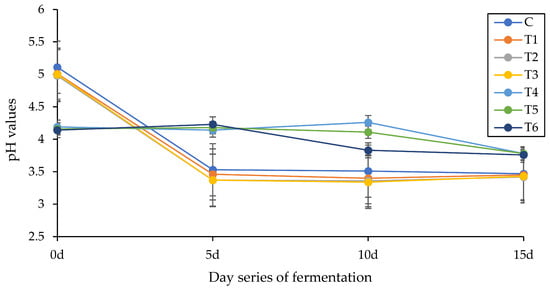
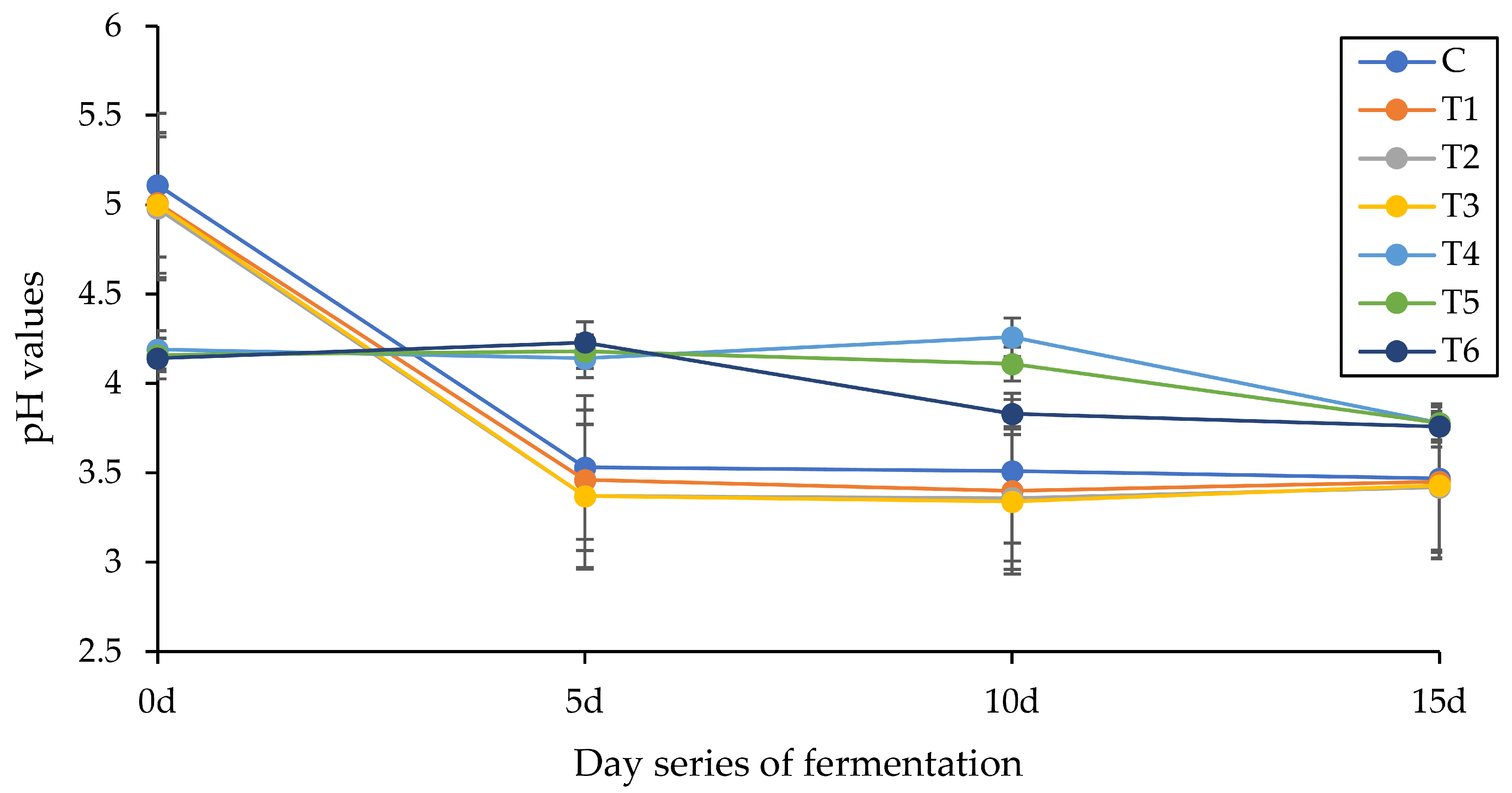
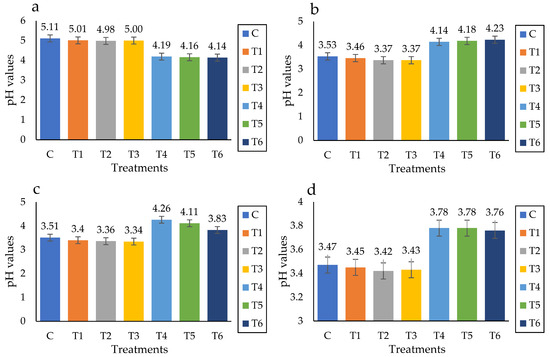
Temporal changes in pH during the 15-day fermentation period are presented in Figure 1, which illustrates the overall pattern of acidification during fermentation. Differences among treatments at each fermentation stage are shown in Figure 2a–d. Across all treatments, pH declined rapidly during the early stage of fermentation and then stabilized. At day 0, treatments without yeast (C and T1–T3) showed higher initial pH values than yeast-treated substrates (T4–T6). A marked reduction in pH occurred during the first five days of fermentation, particularly in enzyme-supplemented substrates without yeast (T1–T3). Yeast-treated substrates maintained higher pH values during this stage. Between day 5 and day 10, pH values changed only slightly in most treatments. Enzyme-only treatments remained lower than yeast-treated substrates. By day 15, pH values stabilized across treatments but remained distinct between treatment groups. Enzyme-only treatments maintained lower final pH values, whereas yeast-treated substrates remained slightly higher.
Figure 1.
Changes in pH during the 15-day fermentation period of corn dust. C, Fermented corn dust; T1, Fermented corn dust + enzyme 0.02%; T2, Fermented corn dust + enzyme 0.04%; T3, Fermented corn dust + enzyme 0.06%; T4, Fermented corn dust + enzyme 0.02% + yeast; T5, Fermented corn dust + enzyme 0.04% + yeast; T6, Fermented corn dust + enzyme 0.06% + yeast.
Figure 2.
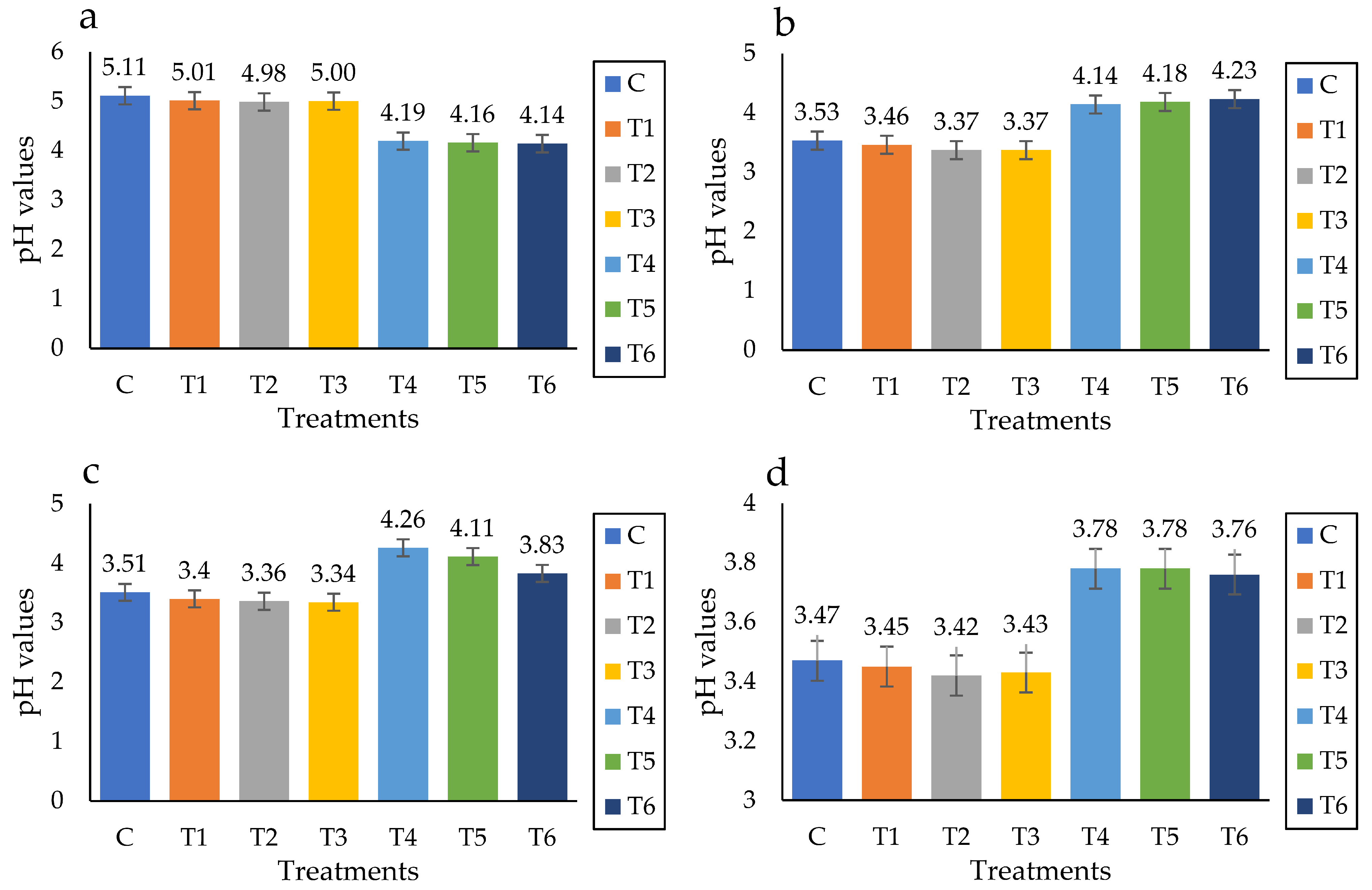
Comparison of pH values among treatments at individual fermentation days: (a) day 0, (b) day 5, (c) day 10, and (d) day 15. Treatments were as follows: C, fermented corn dust; T1, fermented corn dust + enzyme 0.02%; T2, fermented corn dust + enzyme 0.04%; T3, fermented corn dust + enzyme 0.06%; T4, fermented corn dust + enzyme 0.02% + yeast; T5, fermented corn dust + enzyme 0.04% + yeast; and T6, fermented corn dust + enzyme 0.06% + yeast. Error bars represent the standard deviation of the data, and different lowercase letters indicate significant differences among treatments (p < 0.05).
Significant differences among treatments were detected at each fermentation stage (p < 0.05; Figure 2). At day 0 (Figure 2a), treatments without yeast exhibited higher pH values than yeast-treated substrates. At day 5 (Figure 2b) and day 10 (Figure 2c), enzyme-only treatments generally showed the lowest pH values, whereas yeast-treated substrates remained higher. At day 15 (Figure 2d), pH values among treatments became closer but remained significantly different.
4. Discussion
4.1. Nutritive Value
Yeast supplementation combined with graded enzyme inclusion modified the chemical composition of fermented corn dust. Yeast inoculation was the primary factor driving changes in substrate composition during fermentation [30]. These changes were reflected in reduced structural carbohydrates, increased CP concentration, and modest increases in predicted energy-related parameters based on chemical composition [31].
A reduction in structural fiber fractions was observed following yeast supplementation. Lower NDF, ADF, and ADL concentrations indicate partial modification of plant cell wall components during fermentation. The reduction in ADF and ADL was more evident when enzymes were included with yeast. This pattern suggests that enzymatic hydrolysis of plant structural carbohydrates may have occurred more effectively under active microbial fermentation conditions [32].
The reduction in fiber fractions may be related to the ability of C. tropicalis KKU20 and the NSP enzyme complex to disrupt plant cell wall components, thereby increasing access to internal carbohydrates. C. tropicalis KKU20 has been reported to produce enzymes involved in plant cell wall modification, including cellulase and xylanase [15]. These enzymes likely contributed to structural carbohydrate breakdown, enhancing substrate accessibility during fermentation. Hydrolysis of these structural carbohydrates can weaken the plant cell wall matrix and increase accessibility of internal polysaccharides. Such structural changes may facilitate microbial degradation during fermentation.
Previous studies have reported similar effects when C. tropicalis KKU20 was applied to lignocellulosic feed resources. Suntara et al. [14] and Suntara et al. [33] observed reductions in structural carbohydrates during fermentation of rice straw and corn silage using this yeast strain. Surakhai et al. [17] also reported decreased fiber fractions in winged bean tubers fermented with C. tropicalis KKU20, suggesting partial structural modification of the substrate. These findings support the role of yeast-assisted fermentation in modifying plant cell wall structures and improving the degradability of fibrous substrates.
Yeast metabolism may also support favorable fermentation conditions. Yeast cells can remove residual oxygen and help maintain a stable redox environment during fermentation [14]. Such conditions may promote microbial activity and enzymatic reactions within the substrate. Supplementation with multi-NSP enzymes may further enhance degradation of plant cell wall components [20]. Enzymes such as cellulase, xylanase, and pectinase hydrolyze structural carbohydrates, enhancing substrate accessibility during fermentation [19]. These reactions facilitate the release of soluble carbohydrates and increase microbial accessibility to structural substrates [34]. The combined activity of yeast metabolism and exogenous enzymes therefore contributes to the breakdown of structural carbohydrates during fermentation.
Consistent with the reduction in structural carbohydrates, NFC concentration increased following yeast supplementation. This increase likely reflects the release of soluble carbohydrates during enzymatic hydrolysis of plant cell wall polysaccharides [35]. Partial degradation of hemicellulose and related components can generate fermentable sugars and other soluble substrates [36]. These processes increase the proportion of readily digestible carbohydrates within the fermented substrate.
Crude protein concentration also increased following yeast supplementation. This response is commonly associated with microbial biomass synthesis during fermentation. Yeast cells can assimilate nitrogen from non-protein nitrogen sources such as urea and incorporate it into cellular protein through amino acid synthesis pathways [16]. Carbon skeletons required for these reactions are derived from fermentable carbohydrates present in the substrate or added molasses. Incorporation of nitrogen into microbial biomass contributes to enrichment of CP in fermented feed materials. Rapid proliferation of yeast cells during fermentation may further increase protein concentration in the substrate [30,31]. Yeast biomass is recognized as a form of single-cell protein and contains essential amino acids and other nutrients beneficial for ruminant feeding [37]. Accumulation of yeast biomass during fermentation therefore contributes to the increased protein concentration observed in fermented corn dust.
The metabolic characteristics of C. tropicalis KKU20 may also support efficient microbial growth under carbohydrate-rich conditions. This yeast species can convert fermentable sugars into cellular biomass through metabolic pathways such as the pyruvate dehydrogenase bypass [14]. Through this pathway, pyruvate can be redirected toward biosynthetic processes that support microbial growth rather than ethanol formation. Increased yeast biomass production therefore contributes to microbial protein accumulation in the fermented substrate [14,17,31].
Changes in chemical composition were also associated with improvements in energy-related parameters. Increased TDN, digestible energy, and metabolizable energy likely reflect reduced structural carbohydrates and greater availability of fermentable substrates generated during fermentation [15,31]. Although the increase in predicted energy value was moderate, these results suggest a shift toward a more readily fermentable chemical profile [38].
Overall, yeast supplementation was the primary factor modifying the chemical composition of fermented corn dust, while enzyme inclusion enhanced fiber modification mainly when yeast was present. Reduction in structural carbohydrates together with increased CP and NFC indicates a shift in chemical composition of the substrate [39]. These findings suggest that yeast-assisted fermentation may be used to modify the chemical composition of agro-industrial by-products intended for feed use. Although the present study demonstrated improvements in chemical composition, particularly an increase in crude protein and a reduction in fiber fractions, these changes should not be directly interpreted as improved nutritional or biological value in ruminants. Parameters such as in vitro digestibility, gas production kinetics, or animal performance were not evaluated in the present study.
4.2. True Protein Content
The increase in true protein after 15 days of fermentation indicates active microbial involvement in protein formation. The magnitude of this response, reaching up to 137%, suggests substantial incorporation of nitrogen into microbial biomass during fermentation. This increase is primarily associated with microbial biomass synthesis. Yeast, particularly C. tropicalis KKU20, can utilize nitrogen from non-protein nitrogen sources and incorporate it into cellular protein using carbon derived from fermentable substrates [31].
Higher true protein concentrations in yeast-treated substrates therefore reflect enhanced microbial growth and the accumulation of single-cell protein, which contributes directly to the true protein fraction [40]. Similar responses have been reported in fermented plant materials inoculated with ruminal yeast, where increases in protein content were attributed to microbial biomass formation [14,16,17].
Enzyme supplementation also contributed to the increase in true protein. This effect is likely related to the breakdown of structural carbohydrates, which improves the availability of fermentable substrates and supports microbial activity [41,42]. Although no interaction between enzyme and yeast was detected, the highest true protein values were observed when both were applied together, suggesting a complementary relationship between enzymatic hydrolysis and microbial growth.
These findings are consistent with previous studies. Rebelo et al. [43] reported that α-amylase supplementation in corn silage enhances starch availability, thereby supporting microbial protein synthesis. Similarly, Suntara et al. [33] demonstrated that yeast species such as C. tropicalis and P. kudriavzevii can increase protein content during fermentation through the conversion of non-protein nitrogen into microbial protein.
From a ruminant nutrition perspective, the increase in true protein observed in this study is likely to contribute primarily to the rumen degradable protein fraction, which serves as an important nitrogen source for rumen microorganisms and supports microbial protein synthesis and fermentation efficiency. However, the proportion of rumen undegradable protein was not determined, and therefore the extent to which this protein may escape rumen degradation remains unclear. Further studies are required to evaluate its biological availability and utilization under in vivo conditions.
4.3. Microbial Counts
Microbial populations play a key role in determining fermentation dynamics, stability, and overall quality of fermented feed substrates [44]. In the present study, microbial populations were influenced by yeast supplementation and enzyme inclusion after 15 days of fermentation. A significant interaction between enzyme level and yeast supplementation was observed for LAB, indicating that the response of LAB to enzyme addition depended on the presence of yeast [45].
In substrates fermented without yeast inoculation, LAB populations increased with increasing levels of the multi-NSP enzyme complex. This response likely reflects the release of fermentable carbohydrates from plant cell wall polysaccharides during enzymatic hydrolysis, although these substrates were not directly measured in the present study [46]. NSPs in plant tissues can be partially degraded by cellulase and hemicellulase activities, producing soluble sugars and oligosaccharides that serve as substrates for LAB growth [47]. Increased availability of fermentable carbohydrates may stimulate LAB activity and promote lactic acid fermentation, which contributes to the reduction in pH and improved stability of fermented substrates [48]. Similar responses have been reported in previous fermentation studies, where increased carbohydrate availability enhanced microbial activity and stimulated LAB proliferation [49].
In contrast, when yeast was supplemented, LAB populations declined as enzyme inclusion increased. Yeast and lactic acid bacteria may compete for soluble carbohydrates during fermentation, which can influence fermentation pathways and metabolite profiles. This contrasting response may reflect microbial competition for available substrates during fermentation. Certain yeast species, including C. tropicalis KKU20, can rapidly utilize soluble sugars released during NSP hydrolysis as carbon sources for cellular metabolism [16,17]. Under fermentation conditions, yeast may compete with LAB for soluble carbohydrates, thereby altering substrate availability and the profile of fermentation end products [50]. As a result, the availability of fermentable substrates for LAB may be reduced. Competition between yeast and LAB for water-soluble carbohydrates has previously been reported during silage fermentation [14]. Such interactions may limit LAB proliferation when yeast activity is high. In addition to substrate competition, microbial interactions during fermentation are also shaped by physicochemical conditions, particularly pH and oxygen availability [14,15]. Rapid acidification generally favors the growth of lactic acid bacteria, which are well adapted to low pH environments, whereas a relatively higher pH may permit continued activity of yeast populations [28,29]. In the present study, the slightly higher pH observed in yeast-treated substrates may therefore have contributed to the reduced dominance of LAB. Yeast may also influence oxygen dynamics during the early stage of fermentation [15]. By scavenging residual oxygen, yeast can modify the redox environment and support the development of anaerobic conditions [30,33]. However, active yeast metabolism may also slow the rate of acidification, which could influence the early establishment of LAB. In addition, both yeast and LAB rely on soluble carbohydrates as primary substrates, and competition for these resources may further shape microbial activity [45]. Taken together, these factors provide a plausible explanation for the observed shifts in microbial populations. Similar interactions between yeast and LAB have been reported in silage systems, where microbial dominance is influenced by both substrate availability and environmental conditions [14,50].
Yeast populations increased markedly in treatments supplemented with yeast, indicating successful establishment of the inoculated microorganism during fermentation [16]. Ruminal yeasts such as C. tropicalis KKU20 have been reported to produce microbial biomass and enzymes that contribute to microbial activity during feed fermentation [16]. The proliferation of yeast cells therefore reflects active fermentation and adaptation of the inoculated yeast within the substrate environment.
Aerobic bacterial populations remained relatively stable across treatments. This pattern likely reflects the anaerobic conditions established during fermentation, which limit the growth of strictly aerobic microorganisms. Under such conditions, facultative and anaerobic microorganisms tend to dominate the microbial community [51].
Coliform bacteria were not detected in any treatment. The absence of coliforms indicates that the acidic and anaerobic environment established during fermentation effectively suppressed potential pathogenic microorganisms [52]. Such conditions contribute to improved microbiological stability and enhance the safety of fermented feed substrates [53].
4.4. Fermentation Products
Fermentation end products are important indicators of silage quality because they reflect microbial metabolism during the fermentation process [54]. In the present study, fermentation metabolites were primarily influenced by yeast supplementation, whereas enzyme inclusion had relatively minor effects on most parameters. This pattern is consistent with the microbial dynamics observed during fermentation. Lactic acid concentrations were higher in substrates fermented without yeast, reflecting greater activity of lactic acid bacteria in these treatments. Lactic acid is generally the dominant fermentation product in well-preserved silage and plays an important role in reducing pH and stabilizing the ensiled material [53]. In contrast, yeast-treated substrates showed lower lactic acid concentrations, indicating reduced activity of lactic acid bacteria compared with non-yeast treatments. This response likely reflects microbial competition between yeast and LAB for fermentable carbohydrates. Yeasts can rapidly utilize soluble sugars, which may reduce substrate availability for LAB and alter fermentation pathways [14]. Similar responses have been reported in fermented feed systems, where yeast activity altered fermentation pathways and reduced the dominance of LAB during fermentation [14]. From a silage quality perspective, the higher pH and reduced lactic acid concentrations observed in yeast-treated substrates may indicate less efficient acidification compared with conventional lactic-acid-dominated fermentation [53]. Rapid lactic acid production is generally associated with improved preservation and stability, whereas reduced lactic acid concentrations may reflect a shift away from optimal fermentation pathways [55]. Therefore, although yeast supplementation modified fermentation patterns, it should not be interpreted as an improvement in silage quality.
A significant interaction between enzyme level and yeast supplementation was detected for acetic acid concentration. Acetic acid is commonly associated with heterofermentative pathways during silage fermentation and may also reflect shifts in microbial activity within the fermentation environment [55]. In the present study, substrates supplemented with yeast exhibited lower acetic acid concentrations than treatments without yeast. This response may be related to metabolic competition for soluble carbohydrates during fermentation. Yeast metabolism may redirect available substrates toward alternative metabolic pathways rather than organic acid formation, thereby altering the balance of fermentation end products [33].
Propionic acid followed a pattern similar to that observed for lactic acid, with higher concentrations detected in substrates fermented without yeast. Propionic acid formation is often associated with secondary fermentation processes and changes in the microbial community within silage systems [56]. Reduced concentrations in yeast-treated substrates may therefore reflect altered microbial activity resulting from the presence of yeast during fermentation [53]. Butyric acid concentrations increased in yeast-supplemented substrates. Although the absolute values remained low, this increase suggests a shift toward secondary fermentation pathways and should be interpreted cautiously. In well-preserved silage, excessive butyric acid production is usually associated with undesirable clostridial fermentation [57]. The relatively low concentrations observed in the present study suggest that extensive clostridial fermentation was unlikely under the conditions tested, which is consistent with the report by Cheas et al. [53], indicating that reduced butyric acid concentrations are a key indicator of suppressed clostridial activity and reflect effective fermentation. Ammonia–nitrogen concentrations were higher in yeast-treated substrates, indicating increased nitrogen turnover. This may reflect both microbial protein synthesis and partial proteolysis during fermentation [58]. Ammonia–nitrogen formation is commonly associated with proteolysis and microbial deamination processes within the fermentation environment [14]. Although NH3–N concentrations increased following yeast supplementation, the values remained within ranges reported for well-preserved silages. However, excessive NH3–N accumulation is often associated with protein degradation and reduced silage quality and therefore should be interpreted cautiously.
Overall, yeast supplementation appeared to modify fermentation pathways by influencing microbial activity and substrate utilization during fermentation [16,31,33]. These changes altered fermentation metabolite profiles; however, the resulting pattern differed from typical lactic acid–dominated silage and should not be interpreted as improved preservation quality. Therefore, the practical implications of these findings for ruminant feeding systems remain preliminary and should be interpreted with caution until further validation under rumen simulation or in vivo conditions is conducted.
4.5. Changes in pH During the Fermentation Period
Changes in pH during fermentation reflect microbial activity and organic acid production in the silage system [53]. In the present study, pH declined rapidly during the early stage of fermentation and stabilized toward the end of the 15-day period. At the beginning of fermentation (Day 0), treatments without yeast exhibited the natural pH of the unfermented corn dust mixture. In contrast, the lower initial pH observed in yeast-treated substrates was mainly due to adding the liquid yeast inoculum, which had been pre-adjusted to a pH of 3.5 using formic acid during preparation. A rapid decrease in pH occurred during the first five days of fermentation. This reduction was more pronounced in enzyme-supplemented substrates without yeast (T1–T3), which is consistent with the findings of Cheas et al. [53], who reported a sharp decline in pH of fermented total mixed ration (FTMR) within the first 7 days of fermentation, followed by stabilization by day 14. This pattern is also in agreement with Kim et al. [59], who indicated that effective silage preservation depends on a rapid decline in pH within a short fermentation period. Rapid acidification during the early stage of fermentation is commonly associated with the activity of LABs, which utilize water-soluble carbohydrates to produce organic acids that lower pH and stabilize the silage environment [59].
The stronger pH reduction observed in enzyme-treated substrates may be related to the activity of the multi-NSP enzyme complex. Enzymes that degrade non-starch polysaccharides can hydrolyze plant cell wall components and release fermentable sugars [20]. These sugars provide substrates for LAB metabolism and support organic acid production during fermentation [53]. In contrast, yeast-supplemented substrates maintained slightly higher pH values during fermentation, indicating reduced acidification compared with non-yeast treatments, which may negatively affect preservation stability. Yeast cells can utilize soluble carbohydrates through glycolytic pathways, which may influence the availability of fermentable substrates for LAB activity [14]. Interactions between yeast and bacterial populations may therefore influence fermentation dynamics and patterns of acid accumulation within the silage system [59].
During the middle stage of fermentation (day 5–10), pH values changed only slightly across treatments. This pattern suggests that the main phase of acid production had already occurred and that fermentation activity was approaching stabilization. Similar stabilization of pH during the later stages of ensiling has been reported in previous studies [59]. By the end of the fermentation period, pH values stabilized across treatments but remained slightly different between treatment groups. Organic acids accumulated sufficiently to maintain an acidic environment that suppresses undesirable microorganisms and supports preservation of the fermented substrate [48].
Overall, the observed pH patterns reflect the combined effects of enzyme supplementation and yeast inoculation on substrate availability and microbial activity during fermentation.
5. Conclusions
Yeast inoculation and NSP enzyme supplementation modified the chemical composition and fermentation characteristics of corn dust. Yeast played a central role in modifying the chemical composition of the substrate by increasing crude protein and non-fiber carbohydrates while reducing structural fiber fractions. The effect of enzymes was more evident when applied together with yeast, suggesting a complementary role in fiber degradation. Fermentation profiles were largely influenced by yeast activity, which altered metabolite patterns and microbial populations, although the higher pH and butyric acid values in yeast-treated substrates should be interpreted with caution. These changes indicate that microbial and enzymatic processes jointly contributed to modifying the chemical composition and fermentation characteristics. However, further studies are required to confirm digestibility, rumen response, aerobic stability, and feeding value under practical conditions.
Author Contributions
Conceptualization, T.M., Y.Y., S.C., C.S. (Chanon Suntara), M.W., C.S. (Chanadol Supapong), A.L., R.P. and A.C.; Methodology, T.M., Y.Y., S.C., A.L., R.P. and A.C.; Validation, T.M. and A.C.; Formal Analysis, T.M., Y.Y., C.S. (Chanon Suntara), P.I. and A.C.; Investigation, T.M., Y.Y., S.C., C.S. (Chanon Suntara), M.W., C.S. (Chanadol Supapong), A.L., R.P., P.I. and A.C.; Resources, A.C.; Data Curation, T.M., Y.Y. and A.C.; Writing—Original Draft Preparation, T.M. and A.C.; Writing—Review and Editing, T.M., Y.Y., C.S. (Chanon Suntara), M.W., C.S. (Chanadol Supapong), A.L., R.P., P.I. and A.C.; Visualization, T.M. and A.C.; Supervision, C.S. (Chanon Suntara) and A.C.; Project Administration, A.C.; Funding Acquisition, P.I. and A.C. All authors have read and agreed to the published version of the manuscript.
Funding
This research received no external funding.
Institutional Review Board Statement
Not applicable, as no animals were used in this study.
Informed Consent Statement
Not applicable.
Data Availability Statement
The data supporting the findings of this study are available from the corresponding author upon reasonable request.
Acknowledgments
The authors gratefully acknowledge partially financial support from the University of Phayao and the Thailand Science Research and Innovation Fund (Fundamental Fund 2027). Tanapon Mattayaruk acknowledges partial financial support from the Graduate School, Khon Kaen University. The authors further acknowledge the Animal Feed Research Center, Ubon Ratchathani University, for their provision of research facilities and technical assistance. The authors thank the Tropical Feed Resources Research and Development Center (TROFREC) for providing research facilities.
Conflicts of Interest
The authors declare no conflicts of interest.
Generative AI Statement
During the preparation of this work, the authors used ChatGPT-5.3 (OpenAI, Inc., SF, USA) exclusively for grammar correction, language refinement, and readability improvement. The tool was not employed to generate original content or write any part of the manuscript. All content was thoroughly reviewed and edited by the authors, who take full responsibility for the final version of the publication.
References
- Kabsuk, J.; Nusri-un, J.; Binsulong, B.; Gunha, T.; Sommart, K. Effects of substituting cassava pulp with broken rice and cassava chips in crossbred Holstein diets: Rumen fermentation, enteric methane emission, and energy utilization. Animals 2024, 14, 2257. [Google Scholar] [CrossRef] [Scilit]
- Unnawong, N.; Cherdthong, A.; Chankaew, S.; Rakvong, T.; Suriyapha, C.; Suntara, C.; Chanjula, P.; Gunun, P.; Gunun, N.; Polyorach, S. Winged bean tuber as a novel alternative to corn meal in concentrate mixture in Thai native beef cattle diets. BMC Vet. Res. 2025, 21, 230. [Google Scholar] [CrossRef] [Scilit]
- The Working Committee of Thai Feeding Standard for Ruminant (WTSR). Nutrient Requirements of Beef Cattle in Thailand. Klungnanavithaya Press, Khon Kaen, Thailand. 2008. 193p. Available online: https://nutrition.dld.go.th/images/knowledge/NRCthai2008.pdf (accessed on 4 April 2026).
- Pinotti, L.; Cheli, F.; Govoni, C.; Rulli, M.C.; Premarajan, P.; Cattaneo, D.M.I. The “One Nutrition” approach: Connecting crop production, animal nutrition, and human nutrition. Ital. J. Anim. Sci. 2025, 24, 978–987. [Google Scholar] [CrossRef] [Scilit]
- Feed and Additive Magazine. Global Animal Feed Market. 2024. Available online: https://www.feedandadditive.com/global-animal-feed-market/ (accessed on 15 October 2025).
- Alltech. Alltech Agri-Food Outlook 2025: Annual Global Feed Production and Agriculture Outlook Report. 2025. Available online: https://www.bsas.org.uk/assets/files/Alltech_Agrifood_Outlook_2025_v6_1.pdf (accessed on 5 January 2026).
- Alimi, N.; Assani, A.S.; Worogo, H.S.; Baco, N.M.; Traoré, I.A. Livestock feed resources used as alternatives during feed shortages and their impact on the environment and ruminant performance in West Africa: A systematic review. Front. Vet. Sci. 2024, 11, 1352235. [Google Scholar] [CrossRef] [Scilit] [PubMed]
- Inanç, Z.S.; Arik, H.D. In vitro and in situ evaluation of white mulberry (Morus alba) pomace and leaf: Fermentation kinetics, digestibility, and potential as alternative ruminant feed sources. Fermentation 2025, 11, 692. [Google Scholar] [CrossRef] [Scilit]
- Sufyan, A.; Ahmad, N.; Shahzad, F.; Embaby, M.G.; AbuGhazaleh, A.; Khan, N.A. Improving the nutritional value and digestibility of wheat straw, rice straw, and corn cob through solid state fermentation using different Pleurotus species. J. Sci. Food Agric. 2022, 102, 2445–2453. [Google Scholar] [CrossRef] [Scilit]
- Kern, M.; Hooshmand, S. Dry-milled corn and corn products and health: A narrative review. Food Sci. Nutr. 2026, 14, e71518. [Google Scholar] [CrossRef] [Scilit]
- Lunsin, R.; Pilajun, R.; Foiklang, S.; Panatuk, J. Nutritive value and in vitro digestibility of yeast-fermented corn dust with cassava pulp affected by ensiling time. Khon Kaen Agric. J. 2022, 50, 572–585. [Google Scholar] [CrossRef]
- Hao, Y.; Huang, S.; Liu, G.; Zhang, J.; Liu, G.; Cao, Z.; Wang, Y.; Wang, W.; Li, S. Effects of different plant parts on chemical composition, silage fermentation profile, and in vitro and in situ digestibility of paper mulberry. Animals 2021, 11, 413. [Google Scholar] [CrossRef] [Scilit]
- Liu, Z.; Ho, S.; Sasaki, K.; Haan, R.D.; Inokuma, K.; Ogino, C.; van Zyl, W.H.; Hasunuma, T.; Kondo, A. Engineering of a novel cellulose-adherent cellulolytic Saccharomyces cerevisiae for cellulosic biofuel production. Sci. Rep. 2016, 6, 24550. [Google Scholar] [CrossRef] [Scilit]
- Suntara, C.; Cherdthong, A.; Uriyapongson, S.; Wanapat, M.; Chanjula, P. Comparison effects of ruminal Crabtree-negative yeasts and Crabtree-positive yeasts for improving ensiled rice straw quality and ruminal digestion using in vitro gas production. J. Fungi 2020, 6, 109. [Google Scholar] [CrossRef] [Scilit] [PubMed]
- Suntara, C.; Cherdthong, A.; Uriyapongson, S.; Wanapat, M.; Leelavatcharamas, V.; Sawaengkaew, J.; Chanjula, P.; Foiklang, S. Novel Crabtree-negative yeast from rumen fluids can improve rumen fermentation and milk quality. Sci. Rep. 2021, 11, 6236. [Google Scholar] [CrossRef] [Scilit]
- Suntara, C.; Cherdthong, A.; Uriyapongson, S.; Wanapat, M.; Chanjula, P. Improvement of the nutritional quality of Psophocarpus tetragonolobus tubers by fermentation with ruminal Crabtree-negative yeasts on in vitro digestibility and fermentation in rumen fluid. Fermentation 2022, 8, 209. [Google Scholar] [CrossRef] [Scilit]
- Surakhai, T.; Suntara, C.; Srichompoo, P.; Wanapat, M.; Chankaew, S.; Cherdthong, A. The effects of fermenting Psophocarpus tetragonolobus tubers with Candida tropicalis KKU20 as a soybean meal replacement using an in vitro gas technique. Animals 2025, 15, 2328. [Google Scholar] [CrossRef] [Scilit]
- Kurtzman, C.P.; Fell, J.W.; Boekhout, T. (Eds.) The Yeasts: A Taxonomic Study, 5th ed.; Elsevier: Amsterdam, The Netherlands, 2011; Available online: https://pure.knaw.nl/portal/en/publications/the-yeasts-a-taxonomic-study-5th-ed (accessed on 4 April 2026).
- Kirrella, A.A.; Abdo, S.E.; El-Naggar, K.; Soliman, M.M.; Aboelenin, S.M.; Dawood, M.A.O.; Saleh, A.A. Use of corn silk meal in broiler diets: Effects on growth performance, blood biochemistry, immunological responses, and growth-related gene expression. Animals 2021, 11, 1170. [Google Scholar] [CrossRef] [Scilit]
- Kanakai, N.; Wongtangtintharn, S.; Suriyapha, C.; Prachumchai, R.; Suntara, C.; Lunpha, A.; Pilajun, R.; Chanjula, P.; Cherdthong, A. Effect of citric waste fermented with yeast waste pellet and roughage-to-concentrate ratio on gas production, digestibility, and fermentation characteristics using an in vitro gas production technique. BMC Vet. Res. 2025, 21, 386. [Google Scholar] [CrossRef] [Scilit]
- Dagaew, G.; Cheas, S.; Suntara, C.; Supapong, C.; Cherdthong, A. Effects of replacing soybean meal with enzymatically fermented citric waste pellets on in vitro rumen fermentation, degradability, and gas production kinetics. Animals 2025, 15, 2351. [Google Scholar] [CrossRef] [Scilit]
- Association of Official Analytical Chemist (AOAC). Official Methods of Analysis, 15th ed.; Association of Official Analytical Chemists: Washington, DC, USA, 1990; Available online: https://law.resource.org/pub/us/cfr/ibr/002/aoac.methods.1.1990.pdf#page=3.00 (accessed on 4 April 2026).
- Van Soest, P.J.; Robertson, J.B.; Lewis, B.A. Methods for dietary fiber, neutral detergent fiber, and non-starch polysaccharides in relation to animal nutrition. J. Dairy Sci. 1991, 74, 3583–3597. [Google Scholar] [CrossRef] [Scilit]
- Licitra, G.; Hernandez, T.; Van Soest, P. Standardization of procedures for nitrogen fractionation of ruminant feeds. Anim. Feed Sci. Technol. 1996, 57, 347–358. [Google Scholar] [CrossRef] [Scilit]
- Thai Ruminant Feed Standard Committee. Nutrient Requirements of Dairy Cattle in Thailand; Department of Livestock Development: Bangkok, Thailand, 2020; Available online: https://nutrition.dld.go.th/images/knowledge/ThaiNRC_2020.pdf (accessed on 11 July 2025).
- Porter, M.G.; Murray, R.S. The volatility of components of grass silage on oven drying and the inter-relationship between dry matter content estimated by different analytical methods. Grass Forage Sci. 2001, 56, 405–411. [Google Scholar] [CrossRef] [Scilit]
- Fawcett, J.; Scott, J. A rapid and precise method for the determination of urea. J. Clin. Pathol. 1960, 13, 156–159. [Google Scholar] [CrossRef] [Scilit]
- Borshchevskaya, L.N.; Gordeeva, T.L.; Kalinina, A.N.; Sineokii, S.P. Spectrophotometric determination of lactic acid. J. Anal. Chem. 2016, 71, 755–758. [Google Scholar] [CrossRef] [Scilit]
- Kaewpila, C.; Thip-Uten, S.; Cherdthong, A.; Khota, W. Impact of cellulase and lactic acid bacteria inoculant on ensiling characteristics and in vitro digestibility of sweet corn stover and cassava pulp silage. Agriculture 2021, 11, 66. [Google Scholar] [CrossRef] [Scilit]
- Shah, H.; Li, W.; Khan, S.; Patil, P.J.; Basit, R.A.; Zhu, X.; Shakoor, A.; Li, X. Osmotolerant yeast bioaugmentation reshapes microbial community structure and enhances flavor complexity in sauce-flavor baijiu fermentation. Food Biosci. 2026, 78, 108502. [Google Scholar] [CrossRef] [Scilit]
- Surakhai, T.; Suntara, C.; Srichompoo, P.; Wanapat, M.; Chankaew, S.; Cherdthong, A. Biocatalytic upgrading of winged bean tuber by Candida tropicalis KKU20 for sustainable protein production: In vivo validation in cattle. Biocatal. Agric. Biotechnol. 2026, 73, 103961. [Google Scholar] [CrossRef] [Scilit]
- Abid, K. Biotechnological valorization of almond hulls via solid-state fermentation with Saccharomyces cerevisiae and fibrolytic enzyme supplementation: Enhancing ruminal fermentation and reducing greenhouse gas emissions. Fermentation 2026, 12, 106. [Google Scholar] [CrossRef] [Scilit]
- Suntara, C.; Cherdthong, A.; Pongsub, S.; Kanakai, N.; Haitook, T.; Suriharn, K.; Prachumchai, R.; Srakaew, W.; Tunim, S.; Chanjula, P.; et al. Impact of corn shredlage and Crabtree-negative yeast on silage quality and rumen fermentation characteristics. Sci. Rep. 2024, 14, 26474. [Google Scholar] [CrossRef] [Scilit]
- Firkins, J.L.; Henderson, E.L.; Duan, H.; Pope, P.B. International symposium on ruminant physiology: Current perspective on rumen microbial ecology to improve fiber digestibility. J. Dairy Sci. 2025, 108, 7511–7529. [Google Scholar] [CrossRef] [Scilit]
- Wojdyła, D.; Vasylyshyn, R.; Najdecka, A.; Ruchala, J. Lignocellulosic biomass fermentation: A roadmap for Candida famata and Ogataea polymorpha. FEMS Yeast Res. 2025, 25, foaf046. [Google Scholar] [CrossRef] [Scilit]
- Acharya, P.; Fasim, A.; More, V.S.; Shivaram, A.K.; More, S.S. Enzyme technology in value addition of dairy and milk production. In Value-Addition in Beverages Through Enzyme Technology; Academic Press: Cambridge, MA, USA; Elsevier: Amsterdam, The Netherlands, 2023. [Google Scholar] [CrossRef] [Scilit]
- Zhang, L.; Zhou, P.; Chen, Y.; Cao, Q.; Liu, X.; Li, D. Production of single-cell protein from biogas slurry with high ammonia-nitrogen content by screened Nectaromyces rattus. Poult. Sci. 2021, 100, 101334. [Google Scholar] [CrossRef] [Scilit] [PubMed]
- Dong, D.; Yan, Y.; Yang, F.; Yao, H.; Li, Y.; Huang, X.; Aihemaiti, M.; Zhan, F.; Hou, M.; Cui, W. Integrated microbiota and metabolomics analysis of Candida utilis CU-3 solid-state fermentation effects on cottonseed hull-based feed. Microorganisms 2025, 13, 1380. [Google Scholar] [CrossRef] [Scilit] [PubMed]
- Azzahra, D.; Husada, C.P.; Yanto, E. Nutritional evaluation of fermented agro-industrial byproducts as alternative feed ingredients for sustainable livestock production. Feed Nutr. Res. J. 2025, 1, 1–9. Available online: https://journal.univummibogor.ac.id/index.php/FNRJ/article/view/59/46 (accessed on 4 April 2026).
- Alves, S.J.F.; Pires, E.B.E.; da Silva Alexandre, M.A.; Santos, C.C.A.D.A.; Martin, J.G.P.; Campelo, P.H.; Martins, E.; Eller, M.R. Single-cell proteins as alternative sources of proteins and nutrients. Food Res. Int. 2025, 214, 116631. [Google Scholar] [CrossRef] [Scilit]
- Gao, L.; Zhang, Z.; Zhang, Z.; Bao, T.; Ren, F.; Wu, X. The future of food bio-manufacturing: Unleashing the potential of single-cell protein from low-cost raw materials. Future Foods 2025, 12, 100793. [Google Scholar] [CrossRef] [Scilit]
- Abulaiti, N.; Aiyisirehong, G.; Yimamu, A. The effects of adding walnut green husk on the quality of alfalfa mixed silage, protein degradation, microbial community, and their interrelationships. Metabolites 2026, 16, 187. [Google Scholar] [CrossRef] [Scilit] [PubMed]
- Rebelo, L.; Eastridge, M.; Firkins, J.; Lee, C. Effects of corn silage and grain expressing α-amylase on ruminal nutrient digestibility, microbial protein synthesis, and enteric methane emissions in lactating cows. J. Dairy Sci. 2023, 106, 3932–3946. [Google Scholar] [CrossRef] [Scilit] [PubMed]
- Sokra, I.; Somaly, S.; Kong, M.; Lika, R.; Marady, V. Factors influencing fermentation efficiency and product quality: A comprehensive review. J. Agric. Technol. 2026, 2, 109–117. [Google Scholar] [CrossRef]
- Cheng, Z.; Yang, J.; Yan, R.; Wang, B.; Bai, Y.; Miao, Z.; Sun, J.; Li, H.; Wang, X.; Sun, B. Interactive mechanism-guided microbial interaction dynamics in food fermentations: Lactic acid bacteria and yeasts as a case example. Food Biosci. 2025, 68, 106453. [Google Scholar] [CrossRef] [Scilit]
- Sugiharto, S.; Handayani, F.R.; Adli, D.N.; Sholikin, M.M.; Ujilestari, T. Enzyme-assisted valorization of agro-industrial byproducts for sustainable and efficient broiler production. Vet. World 2026, 19, 782–804. [Google Scholar] [CrossRef] [Scilit]
- Jiang, F.; Cheng, H.; Liu, D.; Wei, C.; An, W.; Wang, Y.; Sun, H. Treatment of whole-plant corn silage with lactic acid bacteria and organic acid enhances quality by elevating acid content, reducing pH, and inhibiting undesirable microorganisms. Front. Microbiol. 2020, 11, 593088. [Google Scholar] [CrossRef] [Scilit]
- Chen, Q.; Liu, Z.; Zhou, C.; Zhong, Z.; Wu, J.; Jiang, A.; Yang, H.; Tan, Z.; Lukuyu, B.A.; Kang, J. Effects of Saccharomyces cerevisiae–lactic acid bacteria cocultured maize silage on dairy cows performance and in vitro rumen fermentation. Front. Microbiol. 2026, 17, 1753173. [Google Scholar] [CrossRef] [Scilit]
- Zhang, C.; Zou, H.; Hu, R.; Peng, Q.; Xue, B.; Wang, L.; Li, X. Effects of replacing rice straw with corn straw silage treated with different additives on growth performance, blood parameters, and rumen microorganisms of fattening cattle. Fermentation 2025, 11, 107. [Google Scholar] [CrossRef] [Scilit]
- Wang, L.; Bi, C.; Liu, Y.; Liu, J.; Zhang, S.; Meng, Q.; Shan, A. Microbial metabolic mechanisms of enzyme-mediated synergistic enhancement of lactic acid bioproduction from agricultural waste co-fermentation. Chem. Eng. J. 2026, 530, 173621. [Google Scholar] [CrossRef] [Scilit]
- Zhao, G.; Wu, H.; Li, Y.; Huang, Z.; He, J.; Xie, X. Ensiling characteristics, in vitro digestibility, and bacterial community structure of mulberry leaf silage with or without the addition of cellulase, protease, and starch. Front. Plant Sci. 2025, 16, 1517529. [Google Scholar] [CrossRef] [Scilit]
- Wang, M.; Wang, X.; Jiang, D.; Zong, H.; Zhuge, B. Rapid alcoholic fermentation of Candida glycerinogenes under aerobic conditions. Prep. Biochem. Biotechnol. 2026, in press. [Google Scholar] [CrossRef] [Scilit]
- Cheas, S.; Suntara, C.; Cherdthong, A. Effects of Lactobacillus casei TH14 and Lactobacillus buchneri in combination with molasses on the quality and microbial characteristics of corn- and rice straw-based fermented total mixed rations. ACS Agric. Sci. Technol. 2025, 5, 2470–2479. [Google Scholar] [CrossRef] [Scilit]
- Ren, J.; Han, L.; Ma, X.; Liu, X.; Hao, Y.; Yuan, J.; Ding, Z.; Li, X.; Wang, J.; Sun, J. Integrated bacterial community and differential metabolites reveal the impact of growth stage on the quality of oat silage. Microorganisms 2026, 14, 516. [Google Scholar] [CrossRef] [Scilit] [PubMed]
- Niu, H.; Nair, J.; Yang, H.; McAllister, T.A.; Chevaux, E.; Wang, Y. The effects of a heterofermentative lactic acid bacterial inoculant containing Lentilactobacillus hilgardii and Lentilactobacillus buchneri with or without chitinases on the ensiling, aerobic stability, and in vitro ruminal fermentation of whole-crop corn silages. Fermentation 2026, 12, 29. [Google Scholar] [CrossRef] [Scilit]
- Oliveira, A.S.; Arriola, K.G.; Jiang, Y.; Kim, D.; Adesogan, A.T. Meta-analysis of effects of homofermentative and facultative heterofermentative lactic acid bacteria inoculation on silage fermentation, aerobic stability, and performance of dairy cows. J. Dairy Sci. 2017, 100, 4587–4603. [Google Scholar] [CrossRef] [Scilit]
- Yilmaz, F.; Ertekin, İ. Optimizing agronomic performance, fermentation quality, nutritive value, and aerobic stability of cool-season cereal silage through the harvest stage and glucose supplementation. N. Z. J. Agric. Res. 2026, 69, e70036. [Google Scholar] [CrossRef] [Scilit]
- Di, F.; Gao, J.; Ma, J.; Wang, X.; Jiang, Y.; Qiu, S.; Shi, H. Effects of wilting and additives on fermentation characteristics, microbial composition, metabolome, and ruminal degradation properties of mulberry silage. BMC Microbiol. 2026, 26, 139. [Google Scholar] [CrossRef] [Scilit] [PubMed]
- Kim, D.; Lee, K.D.; Choi, K.C. Role of LAB in silage fermentation: Effect on nutritional quality and organic acid production—An overview. AIMS Agric. Food 2021, 6, 216–234. [Google Scholar] [CrossRef] [Scilit]

Disclaimer/Publisher’s Note: The statements, opinions and data contained in all publications are solely those of the individual author(s) and contributor(s) and not of MDPI and/or the editor(s). MDPI and/or the editor(s) disclaim responsibility for any injury to people or property resulting from any ideas, methods, instructions or products referred to in the content. |
© 2026 by the authors. Licensee MDPI, Basel, Switzerland. This article is an open access article distributed under the terms and conditions of the Creative Commons Attribution (CC BY) license.