


Abstract
Scaling up microalgae cultivation is key to commercial viability. Over the past two decades, the market value of microalgae has expanded exponentially, driven by their applications in the pharmaceutical, nutraceutical, cosmetic, and animal feed industries. High-value compounds such as omega-3 fatty acids, proteins, and pigments are in strong demand. However, supply remains constrained by suboptimal cultivation practices and high harvesting costs. Despite decades of progress in process modeling, control, and optimization, industrial adoption is still limited by dynamic cultivation conditions influenced by weather variability, biological adaptation, and integration challenges. Technical barriers, including limited data accuracy, modest control performance, and the fragility of low-cost devices, further restrict optimization efforts. In response, we examined recent advances in control, optimization, and automated machine learning applied to microalgae cultivation. We propose an automated architecture built on a closed-loop supervisory layer that embeds machine learning within the control loop, enabling real-time monitoring, prediction, and adaptive actuation. This approach aligns with real-time optimization and distributed control system practices, integrating system identification, controller optimization, fault diagnosis and tolerance, and perception to achieve autonomous, uncertainty-aware operation.
1. Introduction
1.1. Overview of Microalgae
Microalgae are photosynthetic microorganisms capable of thriving in diverse aquatic environments, including both freshwater and marine ecosystems. Characterized by simple unicellular architectures (i.e., single-celled) and rapid reproductive cycles, many species exhibit photosynthetic efficiencies significantly higher than those of conventional terrestrial crops [1]. These features position microalgae as highly efficient “photosynthetic cell factories” with the potential to sustainably produce a broad range of bioproducts [2].
The applications of microalgal biotechnology are diverse, encompassing the production of renewable biofuels and the biosynthesis of high-value compounds, such as pigments, lipids, and polysaccharides, for the food, cosmetic, and pharmaceutical industries. Additionally, microalgae contribute to environmental services, such as carbon sequestration and wastewater remediation [2,3,4]. For example, their ability to assimilate inorganic nitrogen and phosphorus makes them a promising solution for wastewater treatment, and recent studies have explored their integration with photo-Fenton processes for pollutant removal [5]. Moreover, microalgae play a fundamental ecological role as primary agents of global CO2 fixation and biomass generation, thereby supporting climate change mitigation efforts [6]. This combined environmental and industrial relevance is reflected in the continuous expansion of the microalgae industry, which is currently growing at an annual rate of approximately 10% and produces more than 57,000 tons of biomass annually [7].
Although the industrial production of microalgae is recognized as a highly sustainable and promising process, its actual competitiveness remains closely tied to effective bioprocess optimization. However, achieving such optimization is far from straightforward. The biological nature of microalgae cultivation, which is characterized by nonlinear dynamics, uncertainties, and adaptive responses to changing conditions, makes modeling, control, and overall improvement remarkably challenging. Additional complexity arises from non-stationary steady states, variable disturbances, and multiscale interactions that span from the cellular to the population level, particularly because of light attenuation and self-shading effects [8]. Moreover, large-scale cultivation often occurs outdoors, where cultures are continuously exposed to fluctuating environmental conditions, such as diurnal variations in light and temperature. Hence, from an engineering perspective, biotechnological microalgae production systems cannot be modeled or controlled in the same manner as conventional industrial processes. Therefore, substantial adaptation is required to apply process control knowledge to these inherently complex biological systems, making coordinated collaboration among specialists in control engineering, chemical engineering, and biotechnology essential for progress.
1.2. From Trial-And-Error to AI-Driven Automation in Microalgae Cultivation
Historically, the optimization of microalgae cultivation has relied on trial-and-error methods, typically involving the sequential adjustment of individual growth-limiting factors while maintaining others constant. Although straightforward to implement, these univariate approaches are labor-intensive, time-consuming, and fundamentally constrained in their ability to identify optimal conditions within the highly complex, nonlinear interaction landscape that governs microalgal growth. Consequently, traditional strategies often fail to capture the critical dependencies between environmental and nutritional variables, resulting in suboptimal and frequently irreproducible outcomes.
In response to these limitations, the field has increasingly adopted systematic methodologies, mainly model-based (including growth models and strategies for control and optimization), further supported by laboratory automation devices [9,10,11,12,13]. This shift has enabled the development of improved test environments that drastically reduce experimental turnaround times. More recently, concepts from robotic process automation, originally focused on software, have been integrated with hardware automation and advanced measurement technologies to create high-throughput platforms. This integration has transformed the experimental landscape, producing robust, high-quality, and reproducible datasets that support large-scale screening and optimization [14]. Collectively, these strategies facilitate the exploration of multidimensional parameter spaces and the identification of key factors and their interactions in microalgae-based processes.
Accordingly, to achieve near-optimal operating conditions and thus competitiveness, mathematical modeling and control strategies have become valuable tools for predicting and optimizing productivity in open and closed photobioreactors (PBRs) [15,16,17]. Accurate models enable the identification of operating regimes that maximize biomass yield (or a desired bioproduct) and CO2 biofixation, while accounting for the nonlinear, dynamic nature of microalgal growth. In the literature, several mathematical models—often centered on the extensively studied species Chlorella vulgaris—have been proposed to describe the relationships among growth kinetics, nutrient uptake, gas transfer, pH, dissolved oxygen, and light distribution [18,19,20,21,22,23]. These models typically comprise nonlinear ordinary differential equations complemented by algebraic equations that capture nutrient limitations and light–mass transfer phenomena, yielding differential–algebraic equation (DAE) formulations [15,16,17,21,23,24,25,26,27,28].
Consequently, the dynamic optimization of microalgae cultivation is commonly cast as a DAE-constrained problem, which poses additional computational challenges. To address this, optimal-control methodologies often reformulate the DAE-constrained problem as a nonlinear programming (NLP) problem solvable by a standard NLP solver [29,30,31,32]. Two principal discretization strategies are prevalent in dynamic optimization: the sequential approach (e.g., control vector parametrization) and the simultaneous approach, which discretizes both control and state variables. The sequential approach has been widely applied in microalgae studies [33,34,35], but it often requires repeated numerical integration and can be computationally intensive. By contrast, simultaneous discretization—although not yet widely exploited for microalgae biomass optimization—offers potential advantages in numerical stability and computational efficiency, albeit at higher computational resource requirements [16,29].
Regarding control strategies, the challenge of microalgae production can be framed as a hierarchical, economics-aware control problem with objectives operating at different time scales. Hierarchical control architectures are widely adopted in industrial practice because they allow complex control and optimization tasks to be decomposed into multiple layers, each responsible for a specific objective and time horizon. The following section provides a detailed overview of these hierarchical structures and their role in modern bioprocess automation.
The integration of artificial intelligence (AI) into industry has been increasing in recent years, and microalgae-based cultivation systems are not an exception. AI-driven models are well-suited to analyzing the large, complex datasets generated by automated cultivation platforms, improving predictive accuracy, accelerating experimentation, and enabling process optimization. For instance, Wu et al. (2025) reported biomass productivity increases of up to 57% and improvements of more than 43% in high-value compound yields compared with conventional approaches [36]. Beyond enhancing predictive power, AI methods have uncovered non-intuitive optimization strategies, such as unexpected media components or environmental conditions that substantially improve yields [37]. Studies further indicate that combining automation and AI can reduce labor and energy demands by up to 30% [38], minimize human errors, and lower overall costs by as much as 28% [39]. These technologies also support scalable production, enable continuous monitoring, and improve resilience by facilitating early detection of process disturbances—benefits that collectively enhance product quality and commercialization potential [40]. Specific applications illustrate this potential: real-time sensing of temperature, light, CO2, and pH increased algal concentration by over 16% [41]; an artificial neural network combined with a genetic algorithm predicted cell growth and biomass productivity with >99% accuracy [42,43]; random forest models classified microalgae species with >94% accuracy [44]; and hybrid approaches integrating response surface methodology with a genetic algorithm (GA) achieved increases of 22% in growth, 37% in lipid productivity, and 41% in eicosapentaenoic acid production [45].
However, most current AI-driven systems for microalgal process optimization remain semi-automated and are typically structured as discrete experimental cycles. Human intervention is frequently required to analyze the results, reset the parameters, or trigger subsequent rounds. Although a considerable step forward, these workflows still fall short of the fully autonomous, continuous closed-loop control required for real-time dynamic optimization in industrial settings. Moreover, much of the literature is at the laboratory scale, where controlled conditions facilitate experimentation, and automation is often implemented as isolated components acting independently. To enhance competitiveness at scale, automation must be conceived as an integrated framework that encompasses smart sensing, monitoring, control, optimization, and supervision, seamlessly connected with AI.
In this review, we examine the state-of-the-art in control, optimization, and automated machine learning applied to microalgae cultivation. We further detail modeling principles of microalgal growth and compare control strategies, from classical feedback to advanced model-based and model-free approaches, to clarify their advantages, limitations, and application domains. Particular attention is given to hierarchical, economics-aware control architectures that reconcile well-characterized process dynamics with partially known kinetics, balancing mechanistic insights with operational flexibility. Furthermore, recent microalgae-based technologies used to enhance production efficiencies or values are examined. Building on this, we propose a roadmap toward fully autonomous, ‘self-driving’ cultivation systems, drawing on mature industrial practices and centered on a closed-loop anomaly detection and resolution automation (CLADRA) framework. This framework integrates the observe–orient–decide–act (OODA) cycle with a real-time optimization and distributed control systems (RTO–DCS) stack to enable adaptive end-to-end governance under uncertainty. We also articulate four enabling pillars to propose an AlOps/AgentOps Platform—system identification, controller design and optimization, fault diagnosis and tolerance, and perception—and discuss how AI/machine learning (AI/ML) embedded in the control loop supports real-time monitoring, prediction, and adaptive actuation to sustain near-optimal performance in the presence of disturbances.
2. An Overview of Microalgae Bioprocess Operation
Modern bioprocess automation has been driven by the coupling of mathematical modeling with optimization and control algorithms, implemented through specialized software platforms. In particular, multiple-input multiple-output (MIMO) strategies are widely employed, as they enable systems to achieve the desired energy and mass transfer while accounting for the underlying physicochemical reactions. The production of high-value bioproducts or intermediates requires cultivation systems that can adapt effectively to fluctuating operating conditions and steady-state demands. To meet these demands, hierarchical control architectures are commonly applied, as mentioned earlier, with optimization and control strategies serving as core tools to manage complex production objectives and operational variability.
In standard industrial practice, these hierarchical control automated systems divide tasks across multiple control levels, from fast, stable primary control to slower, long-term optimization in higher levels. In general, three classic layers are considered: the real-time optimization (RTO) layer, the advanced control layer, and the distributed control system (DCS) layer [46,47]. This hierarchical structure is characterized by distinct time scales and a unidirectional decision-making flow. As illustrated in Figure 1, the RTO layer typically serves as the interface between the planning-and-scheduling layer and the advanced control layer. Steady-state optimizations are carried out within the RTO layer based on real-time economic indicators and production plans. The advanced control layer—often referred to as advanced process control (APC)—handles constrained MIMO setpoint tracking, steering the process toward the steady-state targets determined by RTO. Within APC, model predictive control (MPC) is commonly employed to calculate optimal setpoints for manipulated variables, which are then transmitted to physical actuators through the basic control loops implemented in the DCS.
Figure 1.
Industrial hierarchical automation structure.
Within this hierarchical framework, illustrated in Figure 1, higher-level layers (slow time scale) optimize overall system performance over extended horizons by solving setpoint or trajectory optimization problems. Their objectives include maximizing biomass or a target bioproduct and reducing resource consumption and costs. These long-term goals often incorporate climate and market forecasts to determine optimal setpoints for key process variables such as pH, dissolved oxygen, and culture temperature.
In contrast, lower-level layers (fast time scale) perform local optimization and control tasks on shorter horizons, ensuring accurate tracking of the setpoints provided by upper layers. At this level, the focus shifts to designing strategies that regulate these variables while coping with continuous variability caused by fluctuations in solar irradiation, culture status, and nutrient availability.
Effective coordination among these layers relies on real-time updates of setpoints (or trajectories) and feedback mechanisms, thereby maintaining satisfactory optimization and control performance across the entire system. This hierarchical segmentation enables the decomposition of complex operational objectives, multi-rate constraints, and dynamic behaviors into manageable subproblems that can be solved by relatively independent algorithms with reasonable computational effort.
2.1. Microalgae Growth Kinetic Models
When modeling microalgae cultivation systems, it is important to recognize that the culture broth is a multiphase mixture composed of liquids, dissolved minerals, gases, and unicellular phototrophic microorganisms, with the latter typically considered part of the liquid fraction. The photosynthesis rate is tightly coupled to environmental conditions, including physical and chemical factors such as light (artificial or natural), temperature, self-shading, hydrodynamics (mixing), pH, dissolved oxygen (DO), and nutrient availability. In this context, modeling algal growth kinetics is a valuable tool for predicting and controlling bioprocess conditions and, consequently, for optimizing production parameters.
For a model to be reliable, it should incorporate the most influential process conditions—an inherently difficult but crucial task. A successful model, however, must do so parsimoniously, capturing the key biological parameters and process variables while maintaining mathematical tractability. Consequently, in practice, the most significant parameters are selected, and growth models are built around their contributions [48].
Beyond growth models, control, and optimization, there is active research on photobioreactor (PBR) design aimed at simultaneously improving culture-broth hydrodynamics and maximizing irradiated surface area. Although each PBR has geometry-specific features, all reactor types share common elements in their mass and energy balances: (i) a gas–liquid contact zone (e.g., gas-exchange spargers, bubble columns, or a sump in raceway ponds); (ii) an irradiation surface (e.g., flat panels in flat-plate PBRs, closed tubes in tubular reactors, or open channels in raceway systems); and (iii) a recirculation mechanism (e.g., bubble columns, mechanical agitators, centrifugal pumps, or paddle wheels). Gas–liquid transfer in the column or sump is typically modeled as a perfectly mixed domain, whereas the solar receiver is commonly represented as a plug-flow region subdivided into perfectly mixed compartments. Additional simplifying assumptions—such as treating small reactor volumes as perfectly mixed—are frequently adopted to reduce model complexity, though the optimal configuration and parameterization of these models remain active areas of research.
Thus, regardless of PBR geometry, growth-limiting factor models can be applied across designs. Over the past century, extensive research has elucidated the influence of individual process parameters on microalgal growth and productivity. The most critical factors are light, temperature, nutrient availability, pH, and dissolved oxygen. These effects have been systematically characterized through experimental studies, leading to the development of a wide variety of growth models. Fundamentally, the specific growth rate, an essential indicator of physiological performance, is governed by photosynthetic activity and light availability and further modulated by normalized factors that account for temperature, nutrient concentration, and other culture conditions. From these growth rates, it is possible to derive key process variables, such as biomass accumulation, oxygen production, and inorganic carbon consumption.
To keep the modeling discussion tightly coupled to automation needs, we outline a minimal taxonomy of models that classifies approaches by their utility for real-time estimation, control policy computation, and supervisory optimization. This “fit-for-purpose” view emphasizes parsimony, identifiability, and alignment with available sensors (pH, DO, irradiance, temperature, and flow), enabling robust deployment across open and closed PBRs. Complete reviews of microalgae models can be found in [49,50].
2.1.1. First-Principles Models (Biological, Engineering, Thermal)
First-principles models—biological, engineering, and thermal—are commonly used to describe microalgal cultivation systems [51]. These models fall into three categories:
- Biological: Under conditions of excess nutrients, the most commonly used model states that the microalgal growth rate (μ) is typically expressed as a product of normalized factors that depends on light limitation, specifically photosynthetically active radiation (PAR) and light availability within the culture, represented by average irradiance (Iav), which accounts for self-shading and photoinhibition. In these models’ light-response formulations describe a hyperbolic increase in μ with Iav up to a maximum value of μ (μmax), while respiration terms account for both dark respiration and photorespiration. The influence of normalized temperature, pH, and dissolved oxygen on microalgal growth is typically modeled within the interval [0, 1]. When these three factors (μ(T), μ(pH), and μ(DO)) are at their optimal values (equal to 1), the specific growth rate depends solely on solar radiation and reaches its maximum value. However, if any of these factors deviate from their optimal conditions, they directly reduce growth rates. As with light limitation, the impact of temperature, pH, and dissolved oxygen on microalgal growth has been described by various authors [52,53], forming the basis for microalgal growth limitation models related to these environmental parameters.
- Engineering: During reactor operation, the main variables monitored to assess the state of the microalgae production process are biomass concentration, dissolved oxygen, and pH. To estimate these measurements, engineering models are employed to represent the mass balances that govern system dynamics. These models calculate key balances, including reactor volume, biomass concentration (where growth rate is determined by the biological model), DO, dissolved inorganic carbon (DIC), carbon dioxide, and proton concentration (X[H+]), which directly influences pH. Mass balances are formulated for biomass (growth, decay, dilution), DO (photosynthetic production and gas–liquid/atmospheric transfer), DIC and CO2 (photosynthetic consumption and transfer), and protons (pH via carbonate equilibrium). These formulations link biological rates to measurable states and manipulated inputs such as CO2 injection, aeration, and dilution, enabling accurate monitoring and control of the cultivation process. DIC in culture media exists as aqueous CO2, bicarbonate (HCO3−), and carbonate (CO32−), with their relative abundances determined by pH within the typical cultivation range of pH 6.5–10, where most microalgae thrive [54,55]. Readers interested in further exploring the dependence of microalgal growth on inorganic carbon can refer to the following references and their associated citations [56,57,58,59].
- Thermal: In this approach, culture temperature is modeled through an energy balance driven by irradiance, convection, evaporation, radiation, conduction, and dilution/harvest. Environmental inputs—including irradiance, ambient temperature, humidity, and wind—are used to capture diurnal and seasonal dynamics [60].
These models are typically formulated as nonlinear ODE/DAE systems that combine kinetics, radiative transport (via Iav), and mass transfer, with parameters dependent on geometry and operational conditions (e.g., KLa values, gas holdup). They serve as the foundation for digital twins, optimal operation, and advanced control design for pH/CO2, DO/aeration, and dilution/harvest scheduling and have been validated in both open and closed photobioreactors (PBRs). Complete first principles models for both photobioreactors can be found in [61,62,63]
2.1.2. Data-Driven Models
Data-driven models have emerged as practical alternatives to first-principles approaches for modeling microalgae cultivation systems. While mechanistic models are valuable for process understanding, simulation, and control design, they often require extensive calibration and can be computationally intensive. In contrast, data-driven models offer simpler ways to derive linear and nonlinear representations suitable for control applications. Several studies have focused on modeling pH dynamics using data-driven techniques. For instance, Berenguel et al. (2004) proposed a first-order model with time delay to capture the pH response to CO2 injections and solar radiation, expressed in the Laplace domain [64]. This model includes three transfer functions: TF1 (dominant dynamics from CO2), TF2 (oscillatory behavior due to medium recirculation), and TF3 (overdamped response from solar radiation), with parameters dependent on reactor type, microalgae strain, and seasonal conditions. The model has been validated in both open and closed systems [65,66,67].
In Caparroz et al. 2024, a purely data-driven model was developed using 10 months of operational data from freshwater raceway photobioreactors [68]. The model distinguishes between two dynamic behaviors: the forced response (F1), driven by CO2 injections, and the free response (F2), resulting from photosynthetic activity. F1 is modeled as a first-order differential equation with time delay, where the static gain and time constant depend on solar radiation, temperature, and medium level. F2 is expressed as a growth rate proportional to pH, modulated by dissolved oxygen, radiation, and temperature—key indicators of photosynthetic performance. This model achieved over 80% accuracy across seasons and was used to design adaptive control algorithms.
Other studies have explored linear and nonlinear data-driven approaches such as ARX, NARX, Wiener models, and neural networks to capture the complex nonlinearities of pH dynamics [69,70,71,72]. These models have been successfully applied in control design, demonstrating their effectiveness in real-time regulation of cultivation conditions [73]. Overall, data-driven modeling provides a flexible and scalable framework for capturing key process dynamics, especially when mechanistic knowledge is incomplete or difficult to parameterize.
2.1.3. Convergence and Hybridization
In practice, effective automation frameworks for microalgae cultivation increasingly rely on the hybridization of mechanistic and data-driven modeling. Mechanistic models offer interpretability, safety, and extrapolation capabilities, whereas data-driven components help capture residual nonlinearities, hysteresis, and unmodeled dependencies. These complementary strengths are integrated within real-time optimization and control architectures, including digital twins, to enhance the responsiveness and robustness of the system.
For automation purposes, model complexity should be fit-for-purpose and aligned with specific control objectives, such as pH/CO2 regulation, DO management, harvest scheduling, or real-time optimization of dilution rate, aeration, and CO2 injection. To ensure reliable estimation and control, models must prioritize parsimony, identifiability, and compatibility with available measurements (e.g., pH, DO, irradiance, temperature, flow rates, level, absorbance, and fluorescence).
Critical variables in these systems include incident light and average irradiance (I0 and Iav, accounting for self-shading and depth), temperature, pH, DO, limiting nutrients (e.g., nitrogen and inorganic carbon), basic hydrodynamics (dilution and recirculation), and gas–liquid transfer coefficients (KLa for O2/CO2). Structurally, reactors are often modeled with a sump as a well-mixed compartment and a solar receiver as a plug-flow system (e.g., tanks-in-series), which have demonstrated strong performance in capturing trends in pH, DO, and biomass while remaining tractable for estimation and control purposes.
The validation of these hybrid models is typically performed under real outdoor conditions, accounting for day/night cycles and seasonal variations. Studies have shown good correlation and trend capture for both mechanistic and data-driven approaches, supporting their integration into robust controller designs and supervisory automation layers.
A comparative summary of the microalgae cultivation model types discussed in Section 2.1.1, Section 2.1.2, and Section 2.1 is provided in Table 1. The table highlights each model’s underlying principles, data and computational requirements, interpretability, predictive performance, scalability, and typical use cases—particularly in relation to real-time estimation, control policy computation, and supervisory optimization.
Table 1.
Comparative summary of model types for microalgae cultivation.
2.2. Bioprocess Control
Bioprocess control consists of a set of operations aimed at maintaining the process within the defined target values. Typically, a control strategy is developed during the process development phase. The design of a robust control strategy depends heavily on the depth of the process understanding. There is a direct correlation between the degree of process understanding and the robustness of the control system [74]. Various strategies can be employed for controlling bioprocesses. The choice of control strategy depends on the process requirements and the level of understanding. This, in turn, determines the trade-off between the use of sophisticated instrumentation and complex control algorithms and simpler control laws supported by advanced monitoring systems.
In general, control strategies can be classified into model-based and model-free approaches. In model-based strategies, the performance of the controller is highly dependent on the accuracy of the process models. Consequently, inaccurate or mismatched models may lead to instability in the control system and, consequently, increased resource consumption or other operational inefficiencies [75,76,77].
2.2.1. Open-Loop Control
Open-loop control is the most basic and historically established strategy in process engineering, and it continues to be widely implemented in various bioprocessing applications processes [78,79]. This approach does not require online measurements or feedback from the system; instead, process operations are governed by predefined input profiles determined from initial conditions or empirical knowledge [80,81].
While open-loop strategies offer simplicity and ease of implementation, they exhibit several significant limitations. These include the necessity for accurate prior knowledge of feed and operating profiles as well as substantial difficulties in modeling and controlling nonlinear systems. Additionally, open-loop methods face inherent challenges in real-time applications, as they are unable to compensate for process disturbances or deviations that may arise during operation. Consequently, such strategies cannot provide corrective actions in the case of unexpected events or random failures and often require the maintenance of extensive process databases to support their design and execution. These shortcomings limit the applicability of open-loop control in dynamic and complex bioprocess environments where adaptability and robustness are required.
2.2.2. Proportional Integral Derivative Control
Proportional–integral–derivative (PID) control is widely regarded as one of the most influential developments in the history of automatic control systems. Its origins can be traced back to James Watt’s invention of the steam engine governor in 1769, often considered the first practical negative-feedback control device [82]. Since then, the enduring popularity of PID controllers in modern process industries has been attributed to their simplicity, inherent robustness, and relative ease of implementation and tuning [83]. At its core, a PID controller introduces a feedback mechanism that dynamically adjusts the process variables by combining proportional, integral, and derivative actions. This control law is conceptually and practically more powerful than open-loop strategies because it continuously compensates for disturbances, corrects steady-state errors, and anticipates process deviations.
In bioprocess engineering, conventional controllers, such as PI, and PID, are widely employed because of their simplicity and ease of implementation. However, these controllers exhibit notable limitations, particularly when dealing with nonlinearities, process uncertainties, and dynamically changing environments. Consequently, extensive research has focused on enhancing the performance and adaptability of classic PI and PID controllers. Advances in this domain include modified, adaptive, and intelligent PID strategies, which have demonstrated that these enhanced approaches offer better versatility and effectiveness. For instance, the application of PID controllers, sometimes augmented with internal model control (IMC), to bioreactor systems has demonstrated improved setpoint tracking and disturbance rejection compared with traditional strategies [84,85]. In more complex scenarios, PID performance can be further improved by integrating nonlinear gain compensators or combining fuzzy logic with standard PID algorithms. These modifications have proven particularly advantageous in processes with nonlinear dynamics, enabling smoother transitions and maintaining control accuracy over a broader range of operating conditions [86].
To graphically illustrate the research trajectory of PID-based control strategies in microalgae cultivation systems, we performed a systematic search in the Scopus database (https://www.sciencedirect.com) covering the past five years. A total of 14 relevant studies were identified through the search strategy. As illustrated in Figure 2, these publications are distributed among several research groups across the globe. Notably, the Spanish group from the University of Almería stands out as the leading contributor in this field, accounting for 50% of the works identified. Within this group, Professors Gabriel Francisco Acién and José Luis Guzmán emerge as two of the most influential authors, reflecting their prominent roles in advancing research on PID control systems in microalgae cultivation.
Figure 2.
Network visualization of research related to PID control systems in microalgae cultivation (2021–2025).
Despite these advantages, it is well established that standard PI/PID controllers deliver optimal performance primarily in linear or mildly nonlinear regimes. Many biotechnological systems are inherently nonlinear due to complex physicochemical and biological interactions, and their dynamics can change unpredictably under varying environmental or physiological conditions [15]. Consequently, conventional PID strategies may experience performance degradation or even instability in such contexts, necessitating advanced approaches such as adaptive tuning, robust and optimal PID design, genetic/fuzzy PID, and, more recently, fractional-order PID controllers. The ongoing evolution and hybridization of PID methodologies, driven by advances in control theory and artificial intelligence, remain active areas of research aimed at achieving reliable and high-performance control in the inherently dynamic field of bioprocesses.
2.2.3. Model-Based Control
One of the primary applications of microalgal models is to support control design. Model-based control strategies are fundamental to advanced process optimization and control in biotechnology. These approaches rely on mathematical, empirical, or statistical models to simulate and manage the dynamics of biological systems [71,87]. A typical workflow for model development and application involves model formulation, calibration with experimental data, and subsequent validation; see Figure 3. Once validated, the model serves as the foundation for process optimization, state estimation, and control. This process is inherently iterative; failures in calibration or validation trigger re-iteration steps such as model reformulation or additional data collection.
Figure 3.
(a) Workflow for model development. The process begins with model formulation, followed by calibration with experimental data (parameter estimation) and subsequent validation. A validated model then serves as the foundation for process optimization, state estimation, and control. The development process is inherently iterative; unsuccessful outcomes in calibration or validation trigger re-iteration steps, such as model reformulation or the collection of additional data. Model-based design of experiments can be implemented at any stage to address targeted objectives, such as improving model precision. (b) Application of state estimation to support process monitoring and control. This is illustrated with a photobioreactor example, where dotted lines represent the flow of information.
A variety of modeling approaches have been proposed to describe microalgae growth, many of which are formulated using differential-algebraic equation (DAE) systems. One of the most widely accepted theoretical frameworks is based on the Droop equations, which remain a key reference for predicting microalgal behavior [8,15,20,23,88]. Nevertheless, numerous alternative modeling strategies continue to emerge, reflecting the diversity and complexity of biological systems.
In this context, model predictive control (MPC) has become a robust and versatile technique for reactor control. Its main advantage lies in the use of dynamic process models to predict future system behavior and compute optimal control actions at each time step, explicitly accounting for disturbances and setpoint changes. MPC’s ability to handle multivariable systems and operational constraints makes it particularly attractive for complex biomanufacturing processes. However, broader applications in biotechnology face persistent challenges, primarily because of the difficulty in developing accurate and scalable models for inherently complex and partially understood biological systems.
To overcome these limitations, hybrid MPC strategies have gained traction. These approaches combine mechanistic equations, empirical datasets, real-time sensor measurements and observer-based intelligence. For example, Otálora et al. (2023) developed a nonlinear model predictive control (PNMPC) framework for pH regulation in raceway photobioreactors, integrating artificial neural networks (ANNs) trained and validated using experimental data [69]. Pataro et al. (2023) introduced a learning-based MPC (LBMPC) approach that incorporated online model updates and demonstrated superior performance over the nominal MPC, especially under changing cultivation conditions [66]. Amaro et al. (2023) proposed an adaptive fuzzy generalized predictive control (GPC) strategy for tubular photobioreactors, combining a Takagi-Sugeno fuzzy model with a GPC scheme to enable online adjustment of control parameters in response to system variability [89]. Similarly, Caparroz et al. (2025) explored an adaptive model reference control (MRAC) strategy for pH regulation in raceway systems, integrating a classical MRAC with a PI controller to improve regulation performance compared with standalone PI control [90].
Although these hybrid systems show strong potential, their current applications are mostly limited to setpoint tracking and regulation rather than full optimization under uncertainty. Challenges, such as model inaccuracy, high computational demands, and extensive data requirements, continue to hinder widespread adoption. These limitations highlight the need for further research on real-time adaptive control systems and scalable model development tailored to biotechnological processes.
2.2.4. Intelligent Controllers
Bioprocesses inherently exhibit nondeterministic behavior due to complex interactions between biological systems and abiotic factors, posing significant challenges for classical and even model-based control strategies. As a result, artificial intelligence (AI)-based approaches—particularly neural network (NN) and fuzzy logic controllers—have gained attention for their adaptability and robustness.
Neural Network-Based Control
Neural networks are widely used in engineering and biomedical applications due to their ability to model nonlinear systems and learn from data [91,92]. Despite challenges such as limited datasets, researchers have addressed this by generating artificial data through noise augmentation. For instance, this method was successfully applied to optimize cyanobacterial phycocyanin production in fed-batch processes [93]. More recently, adaptive neural networks capable of learning without prior data have shown promise in tracking control applications [94].
Neural networks also demonstrate strong performance in closed-loop control applications. For instance, a neural network estimator applied to a nonlinear process achieved minimal tracking error and outperformed conventional open-loop methods, even under external disturbances and parametric uncertainties [95]. Various neural network architectures are suited to different control tasks. Radial basis function networks have shown reliable performance in fed-batch bioreactors with time-varying parameters and unmodeled dynamics [96], while multiphase artificial neural networks have successfully predicted fungal biomass across all growth phases, effectively capturing the nonlinear behavior of bioprocesses [97]. Beyond real-time control, neural networks enhance process monitoring and prediction capabilities. For example, combining an artificial neural network with an extended Kalman filter has been shown to improve real-time estimation accuracy [98]. When integrated with MPC, this hybrid structure offers enhanced capabilities for managing nonlinear bioprocesses [99].
However, despite their adaptability and strong performance in nonlinear environments, neural network-based controllers remain limited by data availability, computational complexity, and the need for careful architecture design—factors that can hinder their scalability and real-time deployment in dynamic bioprocesses.
Fuzzy Logic-Based Control
Fuzzy logic is an alternative approach for designing nonlinear controllers, particularly in systems characterized by uncertainty and complexity, such as bioprocesses. Its ability to intuitively incorporate human reasoning and expert knowledge makes it well-suited for decision-making and control in fermentation and cultivation processes. Fuzzy logic controllers have been widely applied across fields like energy, medicine, and pharmacology and are increasingly used to optimize process parameters for improved growth rates and productivity.
Among the most prominent techniques is the Takagi-Sugeno (TS) fuzzy controller, which models the process using fuzzy rules and integrates a fuzzy observer for control design. Studies employing parallel distributed compensation and fuzzy optimal control have demonstrated reduced root mean square error when managing nonlinear dynamics [100]. Similar improvements have been reported in the optimization of secondary metabolite purification [101].
Hybrid approaches combining fuzzy logic with neural networks have also shown promising performances in biochemistry. For example, in fed-batch cultures, an ANN was used as a soft sensor to estimate glucose concentration, while a fuzzy logic controller regulated substrate addition. This combination achieved an estimation error of just 6%, highlighting the potential of integrating AI techniques for robust and accurate control [102].
Fuzzy logic systems are particularly effective in representing biological complexity through rule-based structures that do not require detailed mathematical formulations. This makes them accessible and interpretable, especially when expert knowledge is available. However, they also present limitations. Fine-tuning rule sets can lead to inaccurate parameter estimation, and fuzzy systems often lack adaptability to dynamic changes in process variables. Without built-in learning capabilities, continuous optimization is difficult to achieve, making fuzzy controllers more suitable for maintaining stable operating conditions rather than real-time optimization.
2.2.5. Towards Model-Free Controllers
A distinctive feature of cells is their ability to adapt to persistent stimuli or disturbances that would otherwise drive them away from a desirable steady state [103]. This adaptability, a hallmark of living systems, enables reliable function under fluctuating and often hostile environments. It is achieved through dynamic regulatory architectures—networks of feedback loops and signaling pathways—that counteract deviations from functional equilibrium across multiple organizational levels, from single cells to entire organisms.
Among the various forms of adaptation, robust perfect adaptation (RPA) represents a stringent class where critical outputs return precisely to their setpoints despite sustained disturbances and internal parameter variations [104]. Unlike homeostasis, which tolerates small deviations around reference values, RPA demands exact restoration, imposing strict structural constraints on the underlying regulatory network. These constraints often manifest as integral feedback or incoherent feedforward motifs, which confer resilience even under network or parametric uncertainty [105]. Phenomena of perfect and robust adaptation have been widely documented, including bacterial chemotaxis, mammalian hormonal regulation, and metabolic control policies [104,106,107,108].
From a control engineering perspective, achieving RPA in synthetic or engineered systems mirrors biological principles: it requires architectures that guarantee robustness under uncertainty. However, modeling such systems is inherently challenging because biological networks continuously evolve and adapt, introducing dynamic changes that fixed mathematical models cannot easily capture. This limitation motivates the adoption of model-free control (MFC) strategies, which bypass the need for precise plant models and instead rely on real-time data to ensure stability and performance. By embracing a paradigm that tolerates uncertainty and variability—core features of biological systems—MFC offers a promising pathway for automation and resilient control in bioprocesses and biomanufacturing. These observations call for a re-examination of traditional control design philosophies. Conventional model-based approaches depend on high-fidelity mathematical descriptions of process dynamics, which are often unattainable or unreliable in complex, nonlinear, or poorly characterized biological environments. The intrinsic resilience and adaptability of living systems—achieved without explicit global modeling—suggest that transitioning toward model-free or weakly model-dependent controllers may be both practical and desirable. Inspired by biological regulation, recent advances in MFC aim to deliver robust and adaptive process control while circumventing the need for detailed process models.
This is why a growing trend in control engineering is the adoption of model-free control (MFC), a strategy that has gained significant traction over the past three decades. Its primary motivation is to reduce the time and cost of controller development by minimizing reliance on accurate mathematical models of the plant [27,109,110,111,112]. In this paradigm, the controller is designed and tuned directly from real-time input–output data, providing inherent robustness to model uncertainties and system variations. These features support a plug-and-play philosophy, allowing a single controller to be flexibly deployed across diverse processes or product lines without repeated redesigns. This approach is particularly relevant in bioprocesses and biomanufacturing, where the complexity, variability, and nondeterministic nature of biological systems challenge traditional model-based strategies.
An illustrative example of MFC is active disturbance rejection control (ADRC). This method computes the necessary input for a dynamic plant to achieve a desired output—even without an explicit process model [113]. ADRC requires only a minimal representation of system behavior to design controllers that effectively counteract disturbances without overshooting. Due to its generality and robustness, ADRC is increasingly recognized as a promising solution for highly uncertain and dynamic bioprocesses, such as microalgae cultivation, where classical model-based controllers often prove impractical [114,115]. By providing a framework that guarantees robustness and convergence without detailed modeling, ADRC and related model-free approaches pave the way for automation and resilient control of complex biological production systems [116].
2.2.6. Active Disturbance Rejection Control
Since its inception, ADRC has re-centered feedback controller design around two fundamental principles: Real-time estimation of the lumped effect of uncertainties and disturbances and active cancelation of this effect within the control loop.
This lumped effect, referred to as total disturbance, encompasses two components: endogenous uncertainties and exogenous disturbances. Endogenous uncertainties include unmeasured states such as internal cell quotas, unknown or time-varying parameters, and unmodeled nonlinearities. On the other hand, exogenous disturbances arise from external sources, such as environmental variations and sensor noise.
By estimating and compensating for the total disturbance online, ADRC simplifies the plant model to an idealized form, enabling the design of a systematic and efficient controller architecture without requiring an accurate plant model. In its standard output configuration, ADRC consists of three cooperating components:
- Tracking differentiator (TD): Generates a smooth reference and its derivatives.
- Extended state observer (ESO): Estimates plant states plus an additional “extended” state representing the total disturbance.
- Nonlinear state-error feedback (NLSEF): Uses ESO estimates to cancel disturbances and regulate the nominal system dynamics.
This approach represents a paradigm shift in feedback control and is particularly suited for systems with significant model uncertainties or unmeasured disturbances, which are common in biological and bioprocess applications. The ESO plays a central role in providing a real-time estimation of a generalized algebraically observable disturbance term, ξ(t), which encapsulates external disturbances and internal uncertainties [117]. Through online estimation and compensation of ξ(t), the ADRC achieves robust tracking and regulation without relying on a precise plant model. A general scheme of ADRC applied to microalgae-based bioprocesses is shown in Figure 4.
Figure 4.
General block diagram of the active disturbance rejection control (ADRC) strategy. The dynamic system to be regulated has an input u(t) and an output y(t), whose measurement, ym(t), is affected by noise n(t) and disturbances ζ(t). The control objective is to design a law u(t) such that the output y(t) tracks the reference trajectory y*(t), even in the presence of external disturbances and internal uncertainties caused by unmodeled dynamics. The control scheme is structured in two stages. First, the inner loop employs an extended state observer (ESO) to estimate the total disturbance, which aggregates both external and internal perturbations. This estimation allows disturbance rejection and enforces a nominal model for the plant. Second, in the outer loop, the ADRC feedback controller generates the control signal for trajectory tracking, based on the nominal plant and optionally using the estimated system states provided by the observer. The final plant input results from the combination of nominal control action and the disturbance compensation term. This architecture ensures robust regulation with reduced dependency on precise mathematical modeling of the plant dynamics.
The advantages of ADRC include:
- No need for precise mathematical modeling of the process nonlinearities or uncertainties.
- Robustness to time-varying disturbances and model changes—ideal for bioprocesses where the internal dynamics (e.g., physiological state of microalgae) can change unpredictably.
- The controller synthesis relies only on measurable output variables, e.g., biomass concentration, simplifying implementation.
For further details about ADRC, the reader is referred to the foundational works by Sira-Ramírez and Cortés-Romero [114,115,118,119,120,121]. Specifically, in the context of microalgae cultivation, several applications of ADRC have been documented, including recent studies by Rodriguez-Jara et al. (2023b) and Sangregorio-Soto et al. (2025, 2023), which demonstrate the effectiveness of ADRC-based strategies for the control of microalgal bioprocesses [15,17,28].
2.3. Low-Cost Sensors for Control, Monitoring and Optimization of Microalgae Cultivation Systems
The use of low-cost sensors has become a strategic enabler to reduce capital investment in microalgae cultivation systems. Traditional monitoring of bioprocess variables often relies on expensive spectroscopic devices or offline laboratory analyses, which limit scalability and real-time responsiveness. For example, commercial turbidostat options integrated into photobioreactors—such as those offered by photon systems instruments (www.psi.cz)—are primarily designed for laboratory research and are not easily expandable or functionally upgradeable. Similarly, commercial turbidity probes (e.g., [122]) can be purchased separately and integrated into custom-built systems for biomass control; however, these probes are typically restricted to proprietary interfaces, making them unsuitable for large-scale turbidostat operation. In either case, implementing a system for biomass measurement and control can cost thousands to tens of thousands of dollars per unit [123,124].
Other commercial sensors include specialized instruments from suppliers such as Atlas Scientific [125], which provide probes for dissolved oxygen (DO) and pH measurement, often combined with local data acquisition (DAQ) devices like the LabJack series [126]. While these solutions have been successfully tested at laboratory scale, achieving low maintenance, reduced operational costs, and moderate capital investment (CAPEX) remains essential for improving the competitiveness of microalgae-based processes. These requirements have limited the applicability of such commercial alternatives for large-scale implementations.
In contrast, low-cost platforms such as Arduino and Raspberry Pi provide affordable, modular, and customizable solutions for continuous data acquisition and process control. Furthermore, they required lower CAPEX compared to other systems. These platforms enable the integration of multiple sensors and actuators at a fraction of the cost of conventional systems, supporting real-time monitoring and adaptive control strategies [127]. Key advantages of Arduino and Raspberry Pi in microalgae sensing include:
- Affordability and accessibility: Components such as pH probes, dissolved oxygen sensors, thermistors, photodiodes, photoresistors, and light sensors can be integrated at a fraction of the cost of industrial-grade equipment.
- Flexibility and modularity: Open-source hardware and software ecosystems allow rapid prototyping and adaptation to different photobioreactor configurations.
- Connectivity: Integration with IoT protocols (MQTT, Wi-Fi, Bluetooth) enables remote monitoring and cloud-based analytics.
From an engineering perspective, this entails that achieving such instrumentation levels with low CAPEX requires close collaboration among automation/electronics engineers, chemical engineers, and biological scientists to develop customized low-cost sensors capable of providing reliable measurements for control, optimization, and monitoring of microalgae cultivation. In the literature, some research efforts in this direction are available [128,129]. Typical applications that can be achieved through this approach include:
- Arduino-based controllers coupled with solenoid valves to regulate CO2 injection.
- Customized light and temperature sensors to track diurnal variations and trigger actuators for heating or shading in outdoor systems.
- Turbidity and biomass estimation via optical sensors (LED–photodiode pairs) calibrated against dry weight or OD measurements.
- Affordable electrochemical probes connected to microcontrollers.
Furthermore, recent studies highlight that combining these sensors with software-based estimators (e.g., Kalman filters, artificial neural networks, and extended state observers) significantly improves prediction accuracy for hidden biological variables such as lipid content or pigment concentration [130]. For a comprehensive discussion on software sensors for monitoring microalgae cultivation, the reader is referred to [131] and the references therein.
The use of specific sensors capable of providing reliable measurements of pH, dissolved oxygen (DO), and culture density represents a significant portion of the investment required to implement microalgae cultivation systems. This is particularly important because continuous feedback from a monitoring mechanism is essential for enabling an autonomous control system. Therefore, the adoption of low-cost sensors is critical to ensuring competitiveness in large-scale cultivation, where reliance on specialized commercial instrumentation may render the project economically unfeasible.
3. Automation of Microalgae Cultivation Systems
Despite notable progress in microalgae cultivation technologies, maintaining operation near optimal setpoints remains challenging, limiting overall competitiveness. Microalgal productivity is highly sensitive to environmental and operational fluctuations, requiring continuous monitoring and rapid corrective actions to prevent performance losses or culture collapse (e.g., washout or contamination) [132]. Manipulating parameters such as CO2 delivery, culture depth, and hydraulic retention time is complex and resource intensive. Although innovative photobioreactor (PBR) designs—such as flat-plate reactors [133] and modular automated airlift systems [9]—have expanded configuration options, large-scale integration of automation for critical variables (e.g., dilution rate, mixing, illumination, CO2 concentration, pH, and nutrient supply) remains limited, constraining efficiency and scalability.
To address these limitations, smart automation has emerged as a strategic enabler for improving reliability, efficiency, and scalability in microalgae production systems. While initial capital and operational costs for advanced automation can be significant, early adoption, mainly in high-value applications, may accelerate cost reductions over time. In parallel, improvements in harvesting and biomass processing technologies, although not directly increasing productivity, are expected to enhance economic feasibility and reduce the environmental footprint of microalgae-based bioprocesses. Collectively, these developments position microalgae cultivation as a scalable and sustainable platform for future biomanufacturing [134].
3.1. From Conventional to Intelligent Automation
Microalgae cultivation systems operate under highly dynamic, nonlinear conditions driven by fluctuating light, temperature, nutrient availability, and gas transfer. As discussed in Section 2, these bioprocesses exhibit strong multivariable interactions, time delays, and adaptive biological responses that strain traditional control paradigms. Consequently, static recipes and isolated control loops, effective in more stationary chemical processes, tend to become brittle, widening the gap between laboratory optimization and industrial-scale performance.
In response, the field has progressively adopted advanced control strategies. Cascade architectures enhance disturbance rejection relative to classical PID, while fuzzy logic controllers address uncertainty and sensor noise through rule-based reasoning [22]. Data-driven and adaptive approaches, including artificial neural networks (ANNs) and adaptive control, enable pattern recognition and real-time adjustment under nonlinear, time-varying conditions [101]. Model predictive control (MPC) has emerged as a benchmark for multivariable optimization by forecasting trajectories and enforcing constraints. Although these methods perform well at laboratory scale, where environments are more tightly regulated, their deployment at industrial scale remains limited [135,136].
Translating these strategies outdoors and to larger reactors has concentrated effort on the most impactful variables. Within this context, pH control is the most extensively studied, with strategies ranging from simple on/off control [137,138] and PID [65] to delay-compensated control [139], MPC [64,140,141,142,143], event-based control [144], sliding-mode control [145], learning MPC [66], nonlinear MPC [70], and data-driven adaptive controllers [68,146]. By contrast, dissolved oxygen (DO) regulation has received less attention despite its critical role in microalgal growth. In practice, air is often oversupplied to avoid high DO levels, increasing energy consumption and reducing yields [147,148]. Recent PID-based and event-driven approaches show promise for more efficient DO control [67,149]. In parallel, hierarchical control and real-time optimization are being used to refine dilution and medium injection policies [150,151] and maximize biomass production through multilevel architectures [152].
Against this backdrop, smart process automation is emerging as a unifying, transformative layer. Real-time monitoring, IoT platforms, and machine learning integrate environmental inputs with performance metrics, enabling adaptive control of key variables [133,153]. In practice, this allows dynamic adjustment of CO2 delivery (and thus pH), temperature, culture depth, aeration, and hydraulic retention to maintain operation near quasi-optimal conditions—improving biomass productivity and resource efficiency.
3.1.1. Transition to Intelligent and Autonomous Automation
Microalgae cultivation involves several labor-intensive tasks, notably contamination detection and species identification. This is particularly critical in open systems, where unintended microalgal species or bacteria may colonize the culture, compete with, or even eliminate the target strain, compromising productivity and competitiveness. Species identification is also essential because different strains exhibit distinct capacities to produce specific pigments or metabolites; yet, in practice, it is often conducted manually by isolating cells and assessing morphological features—a process that is time-consuming, expertise-dependent, and not always reliable. These constraints create bottlenecks, especially in open raceway reactors, which are highly prone to species mixing and contamination and therefore require frequent, rapid classification.
Together with the previously discussed challenges in cultivation dynamics, these limitations underscore that automation cannot remain confined to conventional control and optimization. A transition toward intelligent and autonomous automation is needed—one that integrates currently siloed methods into a unified framework and reconceives control not merely as parameter regulation but as a decision-making architecture capable of anticipating, adapting, and optimizing system behavior in real time.
Key enablers of this transition include advances in real-time monitoring (e.g., spectroscopy, hyperspectral imaging, and advanced biosensors), the deployment of IoT platforms for distributed data collection, and the application of machine learning to identify optimal operating regimes and predict performance. Together, these capabilities underpin digital bioprocess twins—virtual replicas of cultivation systems that simulate and optimize responses before implementation, thereby reducing risk and accelerating decision-making.
Microalgae cultivation is particularly well-suited to this paradigm. Because algal growth is highly sensitive to fluctuations in light, dissolved oxygen, temperature, nutrient composition, and CO2 availability, it demands continuous monitoring and rapid adjustment that conventional controllers alone cannot reliably provide. Intelligent automation frameworks can deliver adaptive, predictive, and scalable control, aligning the evolution from conventional to intelligent strategies with the pressing operational and economic challenges of industrial-scale algal biotechnology.
3.1.2. The Role of Artificial Intelligence in Microalgae Automation
Artificial intelligence (AI) is transforming agriculture, manufacturing, healthcare, and environmental sciences, and its application to microalgae cultivation reflects this broader trend. The shift from empirical, trial-and-error practices to AI-driven methodologies is supported by transitional tools such as design of experiments and empirical/macroscopic modeling, which systematically explore parameter spaces and bridge toward fully data-driven approaches [154]. AI enables the optimization of cultivation conditions—light intensity, temperature, pH, nutrients, and CO2 concentration—where traditional methods often struggle to capture nonlinear dynamics and discontinuous behaviors in dynamic optimization problems.
Beyond optimization, AI advances real-time automation, allowing bioreactors to continuously monitor and adjust conditions with minimal human intervention. Recent progress with recurrent neural networks—notably long short-term memory (LSTM) architectures—has shown success in outdoor cultivation by capturing light acclimation effects and informing harvesting strategies [155]. Similarly, multilayer perceptrons, i.e., artificial neurons, have been applied in membrane photobioreactors to simultaneously optimize biomass production, nutrient removal, and photosynthetic efficiency [156].
AI also supports autonomous decision-making through reinforcement learning, decision trees, and multi-agent systems. These techniques dynamically adjust cultivation conditions to maximize productivity while minimizing resource inputs, with case studies reporting significant improvements in CO2 biofixation and biomass productivity compared with traditional optimization methods [157,158].
However, challenges remain. The scarcity of standardized, high-quality datasets for training and validation—compounded by inter-species variability and fluctuating environments—constrains robust AI integration. Developing adaptable and generalizable algorithms is therefore critical for achieving scalability and industrial viability; see Figure 5. If these barriers are addressed, AI can transform microalgae cultivation into a predictive, autonomous, and sustainable process, contributing to renewable energy, carbon mitigation, and food security.
Figure 5.
Evolution from conventional to intelligent automation in bioprocess.
Building on this, the Internet of Things (IoT) provides scalable acquisition of high-frequency, multimodal data streams to train and validate AI models. Such models enable trajectory prediction, support supervisory decision-making, and extend automation across the cultivation workflow [159]. In systems characterized by nonlinearity, variability, and environmental disturbances, AI methods are particularly well suited to manage complexity and uncertainty [160]. When integrated with robotics—especially in early cultivation stages—AI enhances sampling, inoculation, and routine inspection; strengthens monitoring and data management; and enables precise, closed-loop actuation, improving process efficiency and facilitating end-to-end optimization [161].
Within AI, machine learning (ML) underpins tasks such as biomass prediction, species classification, contamination detection, and operating-point optimization [159,162]. While detailed best practices for data quality and validation are beyond this section’s scope, we emphasize algorithm families and their application domains in the microalgae sector. Common algorithm families include (Figure 6):
Figure 6.
Machine learning and evolutionary algorithms commonly used for microalgal analysis. Families include decision tree–based models (Decision Tree, Random Forest, Boosted Regression Tree, eXtreme Gradient Boosting), neighborhood-based models (k-Nearest Neighbors), support vector–based models (Support Vector Machine, Support Vector Regression), neural network–based models (Artificial Neural Networks, Convolutional Neural Networks, Recurrent Neural Networks), and evolutionary algorithms (Genetic Algorithms, Augmented Evolutionary Algorithms). In the bottom-left subfigure, the solid purple line represents the maximum-margin hyperplane that separates the two classes (A and B). The dashed lines indicate the margins associated with the support vector machine trained on samples from both classes. In the bottom-right subfigure, neighborhood-based classification, colored dots represent samples from different classes. The dashed circles indicate the neighborhood regions considered for classification around query points. Larger circles correspond to neighborhoods with higher radius, which influences the decision boundary. Adapted from [163].
- Time-series prediction (biomass, growth rate, photosynthetic efficiency): neural networks (MLP, recurrent architectures) and tree ensembles (Random Forest, Gradient Boosting).
- Classification (species identification, contamination detection): SVMs, k-NN, and tree-based models; CNNs excel with imaging and hyperspectral inputs.
- Optimization (nutrient composition, CO2 delivery profiles, light regimes): evolutionary algorithms (e.g., genetic algorithms) often coupled with surrogate ML models to reduce experimental cost [163].
For reproducible ML development in microalgae systems, datasets are typically partitioned into training, validation, and test sets. Models are trained on the first subset, hyperparameters are tuned using validation data, often through k-fold cross-validation, and final performance is reported on a held-out test set to estimate generalization [164]. Common evaluation metrics include R2, mean absolute error (MAE), and root mean square error (RMSE). While high R2 values may indicate a good fit, they can mask overfitting; therefore, lower MAE and RMSE on unseen data provide stronger evidence of robust predictive capability.
Beyond dataset size and representativeness, heterogeneity-induced noise can degrade model performance. Techniques such as Random Forest (RF) and Support Vector Machines (SVM) exhibit resilience to variability and can be updated through continuous learning, a valuable property in dynamic bioprocess environments [165]. ML and data-driven tools are also employed to impute missing data and detect outliers, improving dataset integrity and overall model quality.
Typical input variables for microalgae growth models include pH, light intensity, temperature, initial biomass concentration, dissolved oxygen, and nitrate concentration. Because optimal conditions depend on the target product, ML helps identify variable combinations that maximize productivity. For example, decision tree models have highlighted CO2 concentration, photoperiod, gas flow rate, and light intensity as critical growth factors, while medium concentrations of N, C, Cu, Si, and PO4 have also been identified as influential [166]. Advanced imaging approaches have likewise been applied to optimize light distribution in photobioreactors for species such as Synechococcus sp. [167] and Chlorella sp. [168].
Recent studies underscore AI’s versatility in microalgae research. Peter et al. 2021 used RGB, CMYK, and HSL color models to monitor Chlorella vulgaris over 10 days, achieving R2 = 0.98 compared with spectrophotometric data [169]. Ansari et al. 2021 developed a three-layer ANN to predict dry cell weight in a wastewater-based consortium with R2 = 0.983 [154]. For species identification, Otalora et al. 2024 combined FlowCam imaging with ANN models to distinguish Scenedesmus almeriensis and C. vulgaris with >99% accuracy [152], while intelligent semi-batch strategies have emerged where image classification models (>90% accuracy) determine optimal recycling times [170].
ML-based applications extend to contamination detection and cell classification. RF models have differentiated live and dead C. vulgaris cells with >96% accuracy when fluorescence signals were included [171]. Similarly, k-NN and SVM approaches have achieved >97% accuracy for species classification based on morphology and texture [172]. ML models have also identified contaminants in cultures of Spirulina platensis, Synechococcus elongatus, and Scenedesmus almeriensis with accuracies exceeding 98%, supporting AI-driven monitoring systems designed to prevent culture collapse and reduce downtime [173].
Beyond monitoring and prediction, AI-driven optimization—often combining ML surrogates with evolutionary algorithms—has been used to enhance productivity and compound accumulation. Lavrinovičs et al. reported a 138% increase in polyphosphate accumulation using augmented evolutionary algorithms, while Nayak et al. achieved a 57% improvement in Scenedesmus biomass with ANN–GA optimization [43,174]. Similar AI-assisted approaches have increased lipid accumulation, nutrient removal, and protein recovery [163,166].
3.2. Evolution of Microalgae Cultivation Control Technologies
As previously discussed, over the past three decades, the control of microalgal cultivation systems has experienced a remarkable transformation. The field has evolved from single-loop PID regulation and open-loop operational recipes to model-based multivariable control, data-driven and adaptive strategies, and, more recently, machine learning–enabled autonomy. A summary of this evolution is presented in Figure 7.
Figure 7.
Evolution and maturity of control technologies for microalgae cultivation [8,20,21,27,159,162,165,172,175,176,177,178,179,180,181,182].
Over decades of research, several factors have been identified as limiting microalgal growth. Among these, photosynthetic efficiency stands out as a key indicator of the physiological status of microalgae, with low values typically associated with stress conditions. Under such stress, lipid accumulation tends to increase while growth rates decline. While photosynthetic efficiency reflects the actual carbon fixation in terms of carbohydrate production, the solar energy-to-biomass conversion efficiency quantifies the fraction of incident light transformed into biomass. This metric can be derived from online measurements of photon flux density (PFD), volumetric biomass productivity, and biomass enthalpy. A comprehensive overview of the key process variables that require monitoring and control in microalgae cultivation systems, including their measurement methods and online/offline availability, is provided in Table 2.
Table 2.
Process control variables with potential for online monitoring and control in microalgae cultivation systems. Adapted from [183].
To complement the timeline presented in Figure 7, Table 3 summarizes the current technology readiness levels (TRLs) of key control approaches discussed throughout this forward-looking paper. Each entry includes the typical verification stage (e.g., laboratory, pilot, or industrial), an assessment of industrial feasibility under current conditions, and the main obstacles or gaps that hinder broader deployment. TRL assignments are based on reported evidence from laboratory experiments, pilot-scale demonstrations, and industrial applications cited in the literature. Technologies such as hybrid modeling, ADRC, and IoT-based sensing stacks show medium to high readiness, while emerging paradigms like AgentOps and LLM-era AIOps remain in early conceptual phases.
Table 3.
Technology readiness levels (TRL) of key microalgae cultivation control technologies.
4. Current Trends in Microalgae Cultivation Technology
Microalgae cultivation technology has evolved significantly in recent years, driven by the need to reduce production costs and improve process robustness and efficiency, even in applications such as micronutrient production and aquaculture [184]. These advances span bioreactor design, biofilm-based cultivation, microbial interactions, and strain engineering, each contributing to enhanced biomass productivity and broader industrial applicability. This section reviews selected recent studies that explore novel strategies to enhance microalgae productivity, categorized according to the fundamental factors influencing growth, including light delivery, nutrient availability, microbial symbiosis, genetic traits, and environmental adaptation.
4.1. Microalgae–Bacteria Interactions
Nitrogen fixation and nitrification by microorganisms are key processes that determine the growth, productivity, and biochemical composition of microalgae. Like higher plants, microalgae require external sources of nitrogen, primarily in the form of ammonium (NH4+), nitrite (NO2−), and nitrate (NO3−), as they cannot synthesize these compounds themselves [185,186]. In natural ecosystems, nitrogen gas (N2) is fixed by diazotrophic bacteria under anaerobic conditions via the enzyme nitrogenase, producing ammonia (NH3). This ammonia is further oxidized by nitrifying bacteria (e.g., Nitrosopumilus maritimus) into nitrite and then nitrate, completing the nitrogen cycle.
Microalgae assimilate these nitrogen compounds through the GS/GOGAT pathway in chloroplasts, converting them into glutamine and glutamate, which are precursors for amino acids and nucleic acids [187]. This process is tightly linked to carbon metabolism via the tricarboxylic acid (TCA) cycle. Limiting nitrogen availability halts protein synthesis and CO2 fixation in the Calvin cycle, leading to oxidative stress and triggering lipid and carotenoid accumulation [188,189].
Beyond nitrogen, phosphorus solubilization by bacteria also plays a role in reducing nutrient requirements. While microalgae can fix inorganic phosphorus directly, cocultures with phospho-solubilizing organisms enhance uptake efficiency. These microbial interactions are increasingly exploited in wastewater treatment systems, where microalgae–bacteria consortia remove nitrogen and phosphorus compounds. For example, Chlorella pyrenoidosa showed increased oleic acid production when cocultured with nitrogen-fixing Rhodotorula fungi [190]. Other strains such as C. vulgaris, Scenedesmus quadricauda, and S. dimorphus demonstrated high removal rates of NH3, NO2−, NO3−, and PO43− from permeates generated in aerobic membrane bioreactors [191].
However, these relationships are not always cooperative. Excessive nitrite production by nitrifying bacteria can inhibit microalgal growth [192]. Mathematical models have been developed to predict these dynamics, showing that pH control is essential for maintaining stable cocultures [193].
4.2. Genetic Engineering and Strain Development
Genetic engineering has emerged as a strategy to enhance microalgae productivity and tailor strains for specific industrial applications. Recent advances focus on modifying metabolic pathways to improve CO2 fixation, nutrient assimilation, and biosynthesis of high-value compounds such as lipids, carotenoids, and proteins.
Microalgal growth is tightly linked to carbon assimilation. Overexpression of RuBisCO activase in Nannochloropsis oceanica under ambient CO2 (0.04%) resulted in a 32% increase in growth rate, 46% higher biomass, and 41% more lipid content, alongside improved photosynthetic efficiency [194]. Similarly, in Chlamydomonas reinhardtii, the leucine zipper transcription factor BLZ8 enhances carbonic anhydrase activity, mitigating oxidative stress and boosting carbon processing [195]. CRISPR-mediated knockout of phosphoenolpyruvate carboxylase has been used to redirect carbon flux from glycolysis toward lipid biosynthesis, significantly increasing lipid accumulation and carbon capture [196].
Phosphorus scarcity limits microalgal productivity. Genetic modification of CrPTC1 and PSR1 in Chlamydomonas enabled record-high phosphorus accumulation (7% of dry weight), allowing complete removal of phosphorus from industrial wastewater compared to 75% by wild-type strains [197]. These engineered strains not only improve sustainability through nutrient recovery but also enhance growth under phosphorus-limited conditions.
The FDA approval of C. reinhardtii for human consumption has spurred efforts to engineer strains for nutraceutical applications [198]. Expression of zeolin, a chimeric protein combining maize zein and bean phaseolin, provides a balanced amino acid profile for protein production [199]. CRISPR-Cas9 deletion of ZEP and AGP genes in C. reinhardtii increased zeaxanthin, lutein, and lipid content, creating strains suitable for high-value edible oils [200]. Similarly, mutations in ISA1 and selection of Chromochloris zofingiensis variants with dysfunctional PKG have led to enhanced carotenoid biosynthesis, including lutein and violaxanthin [201]. Overexpression of FAX1-FAX2-ABCA2 transporters further boosted triacylglycerol (TAG) accumulation by 2.4-fold under nitrogen starvation [202].
4.3. Photobioreactor Innovations and Hybrid Systems
Photobioreactor (PBR) design plays a paramount role in maximizing microalgae yield. Compared to open raceway ponds, PBRs offer higher productivity and reduced contamination risk, albeit at higher operational costs. Hybrid systems combining both approaches have shown synergistic effects, with productivity increases up to 1.5-fold [203].
Recent innovations in PBR design include the following:
Flat-panel and V-shaped reactors: V-shaped designs increased Chlorella vulgaris productivity from 20.7 to 52.0 g·m−2·day−1 [204].
Air spraying and CO2 supplementation: Boosted protein and B-phycoerythrin synthesis by up to 8-fold [205].
Integrated wastewater treatment systems: Multi-stage reactors using sulfur separation, anaerobic digestion, and membrane PBRs achieved nutrient recovery and methane production covering 90% of energy demand [206].
The OMEGA project, led by Jonathan Trent, exemplifies sustainable algae cultivation using floating polyethylene tubes in marine environments, leveraging wave mixing and urban wastewater. Despite promising yields (14.1 ± 1.3 g·m−2·day−1), economic feasibility remains a challenge [207,208].
4.4. Environmental Adaptation and Cultivation Resilience
Microalgae cultivation is highly sensitive to environmental conditions such as temperature variability and solar variation intensity. While optimal regions for outdoor cultivation include the Middle East, western South America, eastern North America, and parts of Africa and Oceania, genetic and adaptive strategies are enabling cultivation even in extreme environments. Some examples are as follows:
Thermotolerance and Acidophily: Cyanidioschyzon merolae, a polyextremophilic red alga, was successfully adapted for outdoor growth in South Arabia, tolerating high temperatures and salinity with minimal supplementation [209].
Cold Adaptation: Transgenic Nannochloropsis salina expressing cyanobacterial alcohol dehydrogenase showed enhanced antioxidant activity and cold tolerance [210].
Temperature Flexibility: Galdieria sulphuraria was evolved over 100 generations to grow efficiently at 28 °C, achieving 1.5× faster growth at lower temperatures [211,212].
Extreme Heat Resistance: Picochlorum sp. (BPE23) was adapted to grow at 49 °C, although with reduced growth rates [213].
Light and Temperature Modeling: Mathematical modeling of photosynthesis under varying light and temperature conditions revealed that short light passes (5 sm) can double productivity across species like C. vulgaris 2.1; N. gaditana 2.1; S. almeriensis 2. Longer passes help mitigate summer heat stress [214].
Phycosphere Protection: Encapsulation of C. sorokiniana with nitrifying bacteria in light-shielding hydrogels improved nitrification and algal growth under high light stress [215].
4.5. Biofilm Cultivation on Lignocellulosic Bio-Carriers
The use of lignocellulosic materials as bio-carriers for microalgal biofilm cultivation presents a promising strategy for enhancing biomass productivity while reducing operational costs. These materials, derived from agricultural waste, are rich in functional groups and possess porous structures that facilitate nutrient adsorption and gradual release, supporting sustained microalgal growth [216].
Microalgal cells and the surface of bio-carriers are influenced by physicochemical properties such as hydrophilicity/hydrophobicity, surface energy and roughness, and biocompatibility and morphology.
Granular bio-carriers, unlike traditional flakes or blocks, offer advantages in terms of medium holding capacity, BET specific surface area, and void volume. Smaller particle sizes and higher layer voidage were found to be more suitable for biofilm formation. For instance, the experiments reported by Lu, R., et al. [216] showed that decreasing particle size led to reduced carbohydrate content, increased protein and ash content and stable lipid levels (11–15%).
Higher laying quantities and smaller particles increased BET surface area and water evaporation, resulting in nutrient uptake and metabolic activity. A moderate increase in salinity further boosted protein biosynthesis. For instance, the “regrowth mode” using Chlorella sp. immobilized on lignocellulosic carriers achieved a productivity of 15.04 g·m−2·day−1, demonstrating the efficiency and scalability of this approach for industrial applications [216].
5. Autonomous Microalgae Cultivation Systems
Industrial-scale microalgae cultivation operates under non-stationary disturbances—weather, fluctuating spectral irradiance, mixing and gas-transfer variability—as well as strain-dependent physiology and biological adaptation [51,217]. Under these conditions, static recipes and isolated control loops become brittle, widening the gap between laboratory optimization and plant-scale performance. These pressures have pushed the field toward automation and machine-learning (ML)-enabled strategies to optimize operations and support scale-up. Yet, unit economics remain constrained; commercial viability frequently depends on high-value products (e.g., pigments and polyunsaturated fatty acids, PUFAs) whose profitability is sustained by premium pricing in niche markets such as pharmaceuticals and nutraceuticals [218,219].
Building on the limitations and advanced strategies discussed in Section 2 and Section 3, a closed-loop, data-driven architecture is indispensable for narrowing the lab-to-plant productivity gap in algal biotechnology. Here, we extend that perspective by incorporating mature principles from hierarchical control into emerging autonomous, ML-driven automation.
5.1. Emerging AI-Driven Supervisory Frameworks for Bioprocesses
To efficiently automate microalgal cultivation, partial automation has shown clear limitations in integrating all variables and addressing the complex interactions that influence cultivation performance [220]. Recent advances in AIOps and agent-based architectures—originally developed for IT systems—are being explored for bioprocess automation. These frameworks leverage machine learning and large language models (LLMs) to process heterogeneous data streams, detect anomalies, and assist in decision-making [221]. For microalgae cultivation, the analogs to IT metrics include pH, dissolved oxygen, CO2 flow, temperature, irradiance, and culture depth; logs correspond to controller events and alarms; and traces represent multi-service control sequences and historian call graphs. Standard operating procedures and batch records provide the documentation layer for context-aware reasoning [222].
LLM-enabled AIOps methods can support predictive maintenance and adaptive control by combining time-series analysis with retrieval-augmented generation over historical incidents and manuals, enabling real-time diagnostics and corrective actions. While promising, these approaches remain conceptual for microalgae systems and require integration with hierarchical control layers and robust safety constraints.
Building on AIOps, AgentOps introduces multi-agent systems capable of perceiving, planning, and acting collaboratively to automate end-to-end workflows. In bioprocess environments, this could enable interconnected agents for perception (sensor fusion), system identification (hybrid modeling), and control optimization (learning-based MPC or ADRC), supervised by fault-tolerant agents. However, practical deployment demands observability, rollback mechanisms, and cybersecurity guardrails to ensure reliability under dynamic outdoor conditions.
5.2. Closed-Loop Supervisory Architecture with Interconnected Agents
We propose a closed-loop supervisory architecture that embeds machine learning within the control loop. The architecture is organized around the observe–orient–decide–act (OODA) cycle and aligned with the real-time optimization–distributed control system (RTO–DCS) hierarchy commonly used in process industries, with advanced process control (APC) as the multivariable control layer. To structure its functions, we adopt four pillars—AI Agents—perception, system identification, controller design and optimization, and fault diagnosis and tolerance. Each agent operates as an autonomous OODA loop, and together they form an interconnected multi-agent system that enables adaptive, explainable, and scalable automation in algal biotechnology [223]. Figure 8 schematically illustrates the role of OODA within this hierarchy.
Figure 8.
The role of the OODA framework in the automation of microalga-based bioprocesses.
Interconnected agents and their roles:
- Perception Agent: Performs multi-sensor fusion of irradiance, CO2, pH/alkalinity, temperature, nutrients, mixing, dissolved oxygen, and imaging analysis. AgentOps integration: Captures agent traces (inputs, outputs, tool calls) and memory checkpoints for observability and rollback.
- System Identification Agent: Implements learning-based MPC—combining mechanistic structures with data-driven surrogates—to provide predictive capability under nonlinearity and disturbances. Examples include sparse identification of nonlinear dynamics (SINDy), physics-informed neural networks (PINNs), and recurrent surrogates such as LSTM networks to estimate latent states, kinetics, and light-history effects. AgentOps integration uses retrieval-augmented generation (RAG) to access historical models and configuration data.
- Controller Design and Optimization Agent: Applies Bayesian autotuning, learning-augmented MPC, and safety-aware reinforcement learning to compute set-points and policies for key levers: CO2 delivery and alkalinity control, light scheduling and spectral modulation, temperature regulation, nutrient dosing, and dilution/harvest timing. Multi-objective trade-offs are reconciled with plant-wide targets through the RTO layer. AgentOps integration: Guardrails and assertions ensure safe execution; redundancy and voting mitigate stochastic failures.
- Fault Diagnosis and Tolerance Agent: Provides high-fidelity fault detection and diagnosis (FDD) and fault-tolerant control to isolate and mitigate failures in sensors, valves, or gas-delivery subsystems. Controllers can reconfigure in real time—e.g., switching between ADRC and MPC modes—to maintain safe operation. gentOps integration: Enables counterfactual testing and rollback from checkpoints for rapid recovery.
The transition toward fully autonomous bioprocesses requires a staged integration of these principles. First, an instrumented AIOps foundation must normalize metrics, logs, and traces while incorporating incident and knowledge bases to support LLM-assisted anomaly detection and root-cause analysis. Second, an AgentOps layer should implement observability, anomaly detection, and rollback mechanisms for each agent to guarantee operational safety. Third, interconnected OODA agents must coordinate perception, system identification, control optimization, and fault tolerance through secure protocols, ensuring adaptive and explainable decision-making. Finally, progressive autonomy emerges by combining intelligent process automation for workflow orchestration with tool-augmented execution, evolving from supervised script generation to closed-loop control. This multi-tiered approach establishes a resilient and scalable framework for microalgal cultivation, where interconnected agents collectively optimize performance under dynamic and uncertain conditions.
By enabling real-time adaptation based on process inputs, this approach supports continuous automation, contamination detection, and operational optimization, leading to substantial improvements in both the productivity and quality of microalgal biomass [164,172,224,225]. Such hierarchical architectures are well-suited to mitigating non-stationary behavior, delivering accurate predictions under changing conditions, and enabling producers to fine-tune practices in real time [162]. The proposed convergence of smart sensing and AI therefore offers a robust foundation for adaptive microalgae cultivation, where IoT devices collect key parameters and AI-driven models optimize them to maximize yields, manage risks, and minimize energy and resource footprints.
Why Interconnected Agents
Unlike monolithic automation, interconnected agents introduce modularity and resilience by distributing intelligence across specialized components. Each agent operates within its own observe–orient–decide–act (OODA) cycle yet shares context through standardized communication protocols such as the model context protocol for tool invocation and agent-to-agent interoperability standards. This architecture enables three critical capabilities [226]:
- (i)
- Agent-ready observability, which captures reasoning paths, memory states, and tool interactions to ensure transparency and rollback in case of anomalies;
- (ii)
- Root-cause analysis and resolution, which distinguishes system-centric, model-centric, and orchestration-centric failures and applies iterative remediation strategies including prompt optimization, policy adaptation, and redundancy; and
- (iii)
- Tool augmentation, which secures actuator-level interventions—such as CO2 dosing or dilution control—under supervisory constraints, closing the loop from perception to action.
Figure 9 presents a comprehensive schematic of the idealized fully autonomous microalgae cultivation system and the pipeline workflow to the agents. This diagram illustrates how the AgentOps platform (Perception, System Identification, Control and Optimization, and Fault Diagnosis and Tolerance) can insert autonomy into microalgae cultivation systems, while each agent is updated on the OODA cycle. Each intelligent agent must possess a broad range of capabilities. For instance, a control and optimization agent should be equipped to handle various control strategies, including MPC, ADRC, and PID controllers. Each of these functionalities must be properly trained, tuned, and validated to ensure alignment with the specific boundaries and constraints of the bioprocess. This is essential not only to guarantee high control performance but also to ensure safe and reliable operation under dynamic and uncertain conditions.
Figure 9.
Conceptual architecture of a fully autonomous microalgae cultivation system.
This proposal focuses on hierarchical control and automation; however, its effectiveness ultimately depends on the physiological characteristics of the microalgae strain and the metabolic pathways associated with the target products. Different species exhibit distinct optimal ranges for temperature, pH, light intensity, and nutrient ratios, which directly influence growth kinetics and biochemical composition. For instance, Nannochloropsis strains tend to accumulate lipids under nitrogen-limited conditions, whereas Spirulina requires alkaline environments to sustain high protein productivity.
This does not imply that the automation architecture must be built with strain-specific agents. However, it does require that each agent be refined and tuned according to the specific characteristics of the species involved. This conception also enables the definition of species-specific objectives—for example, maximizing biomass, enhancing the yield of a desired biocompound, or simultaneously optimizing multiple outputs. In such cases, the system can be configured to maximize overall biomass productivity while steering biochemical profiles toward high-value compounds such as polyunsaturated fatty acids (PUFAs), carotenoids, or proteins.
5.3. Techno-Economic Feasibility and Deployment Costs of the Proposed Autonomous, Agent-Based Architecture
This section (i) quantifies the feasibility and deployment costs of the proposed multi-agent, closed-loop supervisory architecture under current technological conditions and (ii) provides a techno-economic analysis (TEA) with cost comparisons and return-on-investment (ROI) estimates across pilot, demonstration, and commercial scales. We integrate standard TEA with life-cycle costing (LCC)—including financial (fLCC), environmental (eLCC), and societal (sLCC) views.
5.3.1. What “Autonomizing” a Cultivation System Really Costs
We structure costs using the conventional bioprocess breakdown—feedstock, production (energy, chemicals, labor), capital (infrastructure/equipment), O&M, and environmental/regulatory—and add the autonomy-specific layers: instrumentation and actuation, edge/IoT and data infrastructure, advanced control/AI software (APC/MPC/Digital Twin/Agents), and machine learning/operations (AIOps/AgentOps). Evidence from microalgae and broader bioprocessing shows that modern IoT+AI stacks reduce maintenance and downtime materially (see Section 5.3.3.), while low-cost sensing (Arduino/Raspberry Pi, optical/EC probes) can substantially lower CAPEX (capital expenditures) for monitoring and even for selected closed-loop tasks, provided calibration and ruggedization are addressed. These subsystems have TRL 6–8 for monitoring and medium TRL for closed-loop control in outdoor reactors; challenges remain in sensor drift and cyber-hardening.
Advanced control and digital twins. Learning-aided MPC and digital twins for algal systems exhibit TRL 4–6 today. Benefits include improved setpoint tracking and multi-objective operation, but they require high-fidelity calibration, runtime data assimilation, and attention to compute latency—particularly outdoors where disturbances are fast and nonstationary. The proposed multi-agent layer (Perception, System Identification, Control and Optimization, Fault Diagnosis and Tolerance) is designed to sit on the established RTO–APC–DCS hierarchy and inherit its safety interlocks; operational feasibility is therefore “modular” rather than all-or-nothing.
5.3.2. TEA/LCC Methodology and Decision Metrics
To assess the TEA/LCC methodology, we consider three scales over a 15–20-year horizon with discount rates r = 8–12%:
- Pilot: 1–5 m3 PBR or 50–200 m2 raceway.
- Demonstration: 50–200 m3 PBR or 0.5–1 ha raceway.
- Commercial: ≥1000 m3 PBR or 1–5 ha raceway.
TEA covers incremental CAPEX (sensors, actuators, computational sources, comms, software licenses, integration) and operational expenditures (OPEX) (energy for mixing/air/CO2, chemical resources, labor, data/cloud, maintenance). LCC is layered as fLCC (NPV, B/C, IRR), eLCC (monetized environmental externalities; e.g., CO2 credits, nutrient recovery), and sLCC (social costs/benefits). For uncertainty, we recommend DOE-guided sensitivity (global/interaction effects) and Monte Carlo/quasi-Monte Carlo/Latin hypercube sampling over key drivers (energy price, failure rates, productivity seasonality, sensor drift). Decision metrics: NPV, payback, IRR, and benefit–cost (B/C) ratios; documentation of assumptions should accompany the model for reproducibility.
5.3.3. From Recent Microalgae Deployments and Cross-Sector Benchmarks
Productivity gains from IoT-enabled monitoring and AI-assisted control frequently lie in the +9–20% range outdoors; lab-scale AI optimization can report higher figures (up to +57%) but should be downscaled conservatively for field deployment [36,159]. Maintenance costs drop by 12–40%, and unplanned downtime by up to 50%, when condition monitoring and predictive models are in place—directly improving effective capacity and unit costs [39,40,162].
Energy: aeration/air-delivery (DO control) and CO2/pH regulation are major OPEX levers in raceways. Selective DO and pH/CO2 control avoids “always-on” over-aeration and reduces energy per unit biomass while maintaining growth.
Reactor choice: closed PBRs deliver higher and steadier productivities (often reported up to ~30× vs. open ponds) at higher CAPEX; autonomous control particularly helps open systems cope with weather-driven variability and reduce safety margins [192]. These deltas underpin the scenario economics below.
- (A) Pilot (1–5 m3 PBR; 50–200 m2 raceway):Incremental CAPEX for autonomy: +15–25% if relying on industrial-grade instrumentation, or +5–10% with validated low-cost stacks (without full redundancy).Expected OPEX impact: −10–20% energy (air/CO2 delivery optimization), −15–30% maintenance, +10–15% productivity.Indicative payback: 1.5–3 years when downtime reductions (~50%) and energy savings materialize in high-value product lines (e.g., pigments/PUFAs); sensitivity is highest to achieved productivity delta and energy price.
- (B) Demonstration (50–200 m3; 0.5–1 ha).Incremental CAPEX: +8–15% (scale economies in sensing/comms).OPEX impact: productivity +9–20%; maintenance −12–40%; energy savings from selective DO/pH control and optimized dilution/harvest scheduling.Indicative payback: 2–4 years, accelerated if coproduct valorization (e.g., O2, residual heat) or wastewater services are included in revenue.
- (C) Commercial (≥1000 m3 or 1–5 ha).Incremental CAPEX share falls (hardware amortized over area/volume), but integration, cybersecurity, and data operations become substantial line items. ROI is governed by (i) the biomass-to-crude price ratio (or price of targeted coproducts) and (ii) sustained OPEX reductions in air/CO2 power and maintenance. Scenarios with feedstock competition (longer transports, higher nutrient costs) erode margins; GIS-optimized logistics and supply chain planning are recommended within TEA to protect ROI.
Note on externalities (LCSA): When eLCC credits for CO2 biofixation and nutrient recovery are monetized (or when wastewater treatment fees apply), net economics improve materially, often shifting borderline NPV cases into investable territory.
5.3.4. Feasibility of the Agent-Based Architecture Today
Under current TRLs, the autonomous, agent-based architecture is feasible by modules and yields competitive ROI when targeted at energy and maintenance reductions (−12–40%; downtime −50%) and +9–20% productivity outdoors through IoT+AI supervision. With validated low-cost sensing, selective DO/pH/CO2 control, and a calibrated digital twin for economics-aware operation, paybacks of ~1.5–4 years are realistic in high-value product lines and mixed-revenue cases (coproducts/services) [227]. ROI at commercial scale depends on the biomass-to-crude price ratio, logistics (feedstock competition), and the discipline of data/AI operations; these are explicitly captured in the TEA/LCC framework and uncertainty analyses provided here [227].
5.4. Challenges and Outlook: A Realistic Perspective
Realizing fully autonomous cultivation faces significant data and biological hurdles. The performance of AI-enabled systems depends critically on standardized, high-quality datasets spanning strains, seasons, and scales; yet the literature repeatedly notes the lack of interoperable formats and large-scale corpora that capture biological diversity and environmental variability. While automated platforms can generate reproducible datasets, industry-wide data standards remain a prerequisite for robust machine learning generalization and benchmarking.
Moreover, intrinsic biological complexity introduces stochasticity and transient physiological responses. For anomaly detection and control, algorithms must distinguish genuine process faults from benign, short-lived fluctuations, increasing the importance of uncertainty-aware models, confidence measures, and human-interpretable diagnostics within the supervisory layer.
Looking ahead, the proposed architecture naturally extends toward a digital twin of the cultivation system, enabling in silico experimentation at scale to test long-term strategies, optimize policies, and de-risk deployment before consuming physical resources. Its modular design also facilitates integration of advanced sensors—such as Raman spectroscopy—into the observe layer, providing real-time metabolic insights that enrich ML-driven decision-making.
Finally, the global deployment of autonomous microalgae cultivation systems will greatly benefit from standardization and interoperability. Establishing common data models, open APIs, and secure communication protocols, similar to collaborative automation frameworks in other industries, will be essential. These standards will accelerate innovation, facilitate seamless system integration, and promote a more cohesive and sustainable bioeconomy.
5.4.1. Safety Constraints and Risk Mitigation in Autonomous Systems
Control and optimization approaches must incorporate design constraints and boundaries—such as saturation limits—to keep the process within desired ranges. This not only protects the bioprocess but also safeguards human operators interacting with the system. The transition toward fully autonomous microalgae cultivation systems introduces new risks associated with model failures, undesired outputs due to inaccuracies, sensor malfunctions, and unexpected disturbances that may destabilize the process. To prevent failures caused by erroneous predictions or control actions, safety constraints must be embedded at multiple levels of the automation architecture. These mechanisms should ensure that critical variables—such as pH, dissolved oxygen, temperature, and nutrient concentration—remain within biologically acceptable ranges, even under model drift or communication loss. In addition, the system must be able to recover from failures and incorporate rollback mechanisms for automatic recovery in case of model errors.
To satisfy these safety requirements, agents should implement:
Hard safety limits and fallback strategies: Autonomous systems must enforce hard-coded operational boundaries for key variables through supervisory logic. When predictive models or optimization layers propose actions outside these limits, the system should override them and revert to safe fallback strategies, such as PID or ADRC controllers, to maintain stability.
Automatic recovery and rollback: For example, if a sensor fails during operation, the model could be updated using a remote version or a safe default configuration. In such cases, the fault-detection agent should notify the control agent, trigger an automatic rollback, and raise alarms through the supervisory interface. This requires all agents in the architecture to remain interconnected and capable of coordinated response.
5.4.2. Scalability and Experimental Validation at Industrial Scale
Although automation strategies for microalgae cultivation have shown promising results at laboratory and pilot scales, where it is easier to achieve a controlled environment, their translation to industrial environments remains at an early stage. Large-scale photobioreactors, whether tubular or raceway, introduce strong nonlinearities, non-stationary dynamics, and environmental variability that are difficult to replicate under controlled conditions. Recent studies highlight that scale-up involves not only geometric adaptation but also the redesign of control architectures to cope with multi-rate objectives and fast disturbances such as irradiance fluctuations and temperature shifts [51]. For instance, hierarchical control schemes validated in 15,000 L tubular reactors and 30,000 L raceway systems have demonstrated that real-time optimization combined with adaptive pH and dissolved oxygen control can reduce energy consumption by 10–20% and improve biomass productivity by up to 15% compared to static setpoint strategies [228]. However, these results also reveal critical limitations: (i) sensor reliability and calibration under outdoor conditions, (ii) computational demands for model predictive control when integrated with dynamic optimization, and (iii) the need for robust fallback mechanisms (e.g., ADRC or MPC controllers) to ensure operational safety during model drift or communication failures.
From a techno-economic perspective, incremental CAPEX for automation at an industrial scale can range from +8–15%, but payback periods of 2–4 years have been reported when energy savings and downtime reductions are realized [39,40,162]. Nevertheless, achieving these benefits requires modular deployment—starting with selective control of pH/CO2 and dissolved oxygen—before advancing toward fully autonomous architectures with digital twins and multi-agent supervisory layers. Ultimately, scalability is not only a matter of physical design but also of integrating uncertainty-aware models, standardized data pipelines, and interoperable control frameworks capable of sustaining performance under real-world variability.
This is why efforts in automation at pilot scale remain active, as illustrated by recent developments in low-cost automated systems [229]. However, beyond controlling key physico-chemical variables, such as temperature, pH, and nutrient supply needed to sustain healthy microalgae growth, several critical challenges persist. One major issue is microbiological contamination, particularly in open systems, where bacteria, fungi, and competing microalgal species can invade the culture. Such contamination not only reduces biomass yield but also alters the biochemical profile of interest, compromising the quality of bioactive compounds. Another unresolved challenge is the determination of the optimal harvest point, which strongly influences productivity and the accumulation of target metabolites.
In addition, regulatory compliance for large-scale production introduces complexity and cost. Facilities must adhere to stringent environmental and food safety standards, and obtaining the necessary permits can be time-consuming and resource-intensive. Addressing these challenges requires coordinated research across multiple domains, including molecular biology (for strain resilience and contamination control), process engineering (for robust reactor design and monitoring), biotechnology (for metabolic optimization), and economics (for techno-economic feasibility and lifecycle analysis).
6. Conclusions
This review analyzed recent advances in automation for microalgae cultivation, emphasizing the transition from conventional control strategies to hierarchical architectures integrating machine learning and real-time optimization. While significant progress has been achieved at laboratory and pilot scales, industrial deployment remains limited due to the lack of large-scale experimental validation and persistent challenges in dynamic outdoor environments.
Robust nonlinear controllers such as MPC offer promising capabilities but face computational and reliability constraints under fluctuating conditions, such as variations in PAR, temperature, and pH, combined with sensor inaccuracies and failures. These limitations highlight the need for alternative approaches, including model-free strategies like ADRC and adaptive PI controllers, which represent open research directions for scalable automation.
Beyond algorithmic improvements in control and optimization, successful automation requires cost-effective hardware, resilient communication systems, and integration across engineering, biological, and economic domains. Hence, automation of microalgae cultivation systems evolves from a purely engineering solution to a multidisciplinary framework capable of adapting to biological variability and market constraints.
In this sense, the absence of large-scale cost-comparison analyses between conventional and emerging technologies—taking into account factors such as raw material selection, production processes, supply chain dynamics, environmental benefits, and the acquisition, implementation, and maintenance of technical equipment—has limited their widespread adoption [227]. However, continuous monitoring and adjustment of production parameters—enabled by recent advances in AI through the integration of real-time and historical data—offer the potential for significant cost reductions and a sustainable increase in operational efficiency. For this reason, we explored interconnecting agents to advance automated microalgae cultivation systems. These agents not only leverage a broad range of AI-driven solutions that are autonomic and self-tuning but also introduce additional challenges.
For example, data collection in bioprocesses, including microalgal cultivation, is often limited due to the time-intensive nature of data acquisition. Gathering information from multiple sensors at an industrial scale introduces significant complexity, frequently resulting in systematic errors and noise. Additionally, data are often recorded at irregular time intervals, depending on the efficiency and availability of analytical equipment. This irregularity leads to challenges such as missing or inconsistent data.
One promising solution is to combine the strengths of machine learning (ML) and mathematical growth models. ML models can be pretrained using synthetic or historical data generated from mechanistic models and later refined during operation using real-time data. This hybrid approach mitigates the limitations of each method, enabling more accurate predictions, better extrapolation, enhanced interpretability, and reduced data requirements for modeling.
Future research should prioritize the practical deployment of intelligent agents within hierarchical control architectures. However, several challenges must be addressed to ensure their effectiveness. For instance, various filtering techniques—such as Gaussian filters—can be employed to mitigate noise and systematic errors in sensor data. Handling missing values is also critical; imputation methods using statistical metrics like the mean or median, as well as more advanced approaches, can be applied. These include simple imputation, regression-based imputation, hot-deck methods, expectation–maximization, multiple imputation, and machine learning–inspired strategies. Such techniques enhance the quality of datasets and improve the predictive performance of models for microalgae growth and productivity.
Additionally, data augmentation methods, including generative adversarial networks (GANs) and autoencoders, can be used to expand training datasets. However, care must be taken to ensure that synthetic data accurately reflect the statistical properties of real-world data. As highlighted by Lu et al. (2023), biases introduced during synthetic data generation can negatively impact model performance, especially when models are trained on a mix of real and artificial data [230].
Author Contributions
Conceptualization, visualization, original draft preparation, and review and editing, V.S.-S.; supervision, review and editing, E.Y.M.L.; supervision, R.D.L.H. All authors have read and agreed to the published version of the manuscript.
Funding
This research received no external funding.
Institutional Review Board Statement
Not applicable.
Informed Consent Statement
Not applicable.
Data Availability Statement
This review is based on data obtained from systematic queries in bibliographic databases. The list of queries and retrieved references supporting the findings of this article will be made available by the authors upon reasonable request.
Conflicts of Interest
The authors declare that there are no conflicts of interest related to the subject matter of this manuscript. Author Sangregorio-Soto was employed by Oracle. This affiliation did not influence the preparation of this manuscript, and the company had no role in the design, analysis, or interpretation of the work. The remaining authors affirm that the research was conducted in the absence of any commercial or financial relationships that could be construed as a potential conflict of interest.
Abbreviations
The following abbreviations are used in this manuscript:
| ADRC | active disturbance rejection control |
| AI | artificial intelligence |
| ANN | artificial neural network |
| APC | advanced process control |
| B/C | benefit–cost ratio |
| CLADRA | closed-loop anomaly detection and resolution automation |
| CAPEX | capital expenditures |
| CNN | convolutional neural network |
| D(t) | dilution rate, day−1 or h−1 |
| DCS | distributed control system |
| DIC | dissolved inorganic carbon |
| E | available light intensity, µmol·s−1·(109·cell−1) |
| eLCC | environmental LCC |
| ESO | extended state observer |
| fLCC | financial life cycle costing |
| GA | genetic algorithm |
| GPI | generalized proportional-integral (observer) |
| H | Henry’s constant, atm·L·mol−1 |
| Iav | mean irradiance inside the culture volume, μmol·m−2·s−1 |
| IoT | internet of things |
| IRR | internal rate of return |
| kLa | overall gas–liquid mass transfer coefficient of carbon dioxide, h−1 |
| k-NN | k-nearest neighbors |
| LSTM | long short-term memory (a type of recurrent neural network) |
| LCC | life-cycle costing |
| ML | machine learning |
| MLP | multilayer perceptron |
| MPC | model predictive control |
| NPV | net present value |
| OODA | observe–orient–decide–act |
| O&M | Operation and maintenance |
| OPEX | Operating expenses |
| P | photosynthetic production rate normalized to chlorophyll biomass |
| pH | hydrogen ion potential |
| PID | proportional–integral–derivative control |
| PINN | Physics-informed neural network |
| R | respiration rate (dark + photo) |
| RF | random forest |
| RTO | real-time optimization |
| ROI | return-on-investment |
| SINDy | sparse identification of nonlinear dynamics |
| SVM | support vector machine |
| sLCC | societal LCC |
| SHAP | Shapley additive explanations |
| T | temperature, °C |
| TEA | techno-economic analysis |
| µ | growth rate, day −1 or h −1 |
| µmax | Maximum specific growth rate, day −1 or h −1 |
References
- Olguín, E.J.; Sánchez-Galván, G.; Arias-Olguín, I.I.; Melo, F.J.; González-Portela, R.E.; Cruz, L.; De Philippis, R.; Adessi, A. Microalgae-Based Biorefineries: Challenges and Future Trends to Produce Carbohydrate Enriched Biomass, High-Added Value Products and Bioactive Compounds. Biology 2022, 11, 1146. [Google Scholar] [CrossRef] [Scilit] [PubMed]
- Hamed, I. The Evolution and Versatility of Microalgal Biotechnology: A Review. Compr. Rev. Food Sci. Food Saf. 2016, 15, 1104–1123. [Google Scholar] [CrossRef] [Scilit] [PubMed]
- Júnior, A.M.S.; Faustino, S.M.M.; Cunha, A.C. Bioprospection of Biocompounds and Dietary Supplements of Microalgae with Immunostimulating Activity: A Comprehensive Review. PeerJ 2019, 7, e7685. [Google Scholar] [CrossRef] [Scilit] [PubMed]
- Mishra, B.; Tiwari, A.; Mahmoud, A.E.D. Microalgal Potential for Sustainable Aquaculture Applications: Bioremediation, Biocontrol, Aquafeed. Clean Technol. Environ. Policy 2022, 25, 675–687. [Google Scholar] [CrossRef] [Scilit]
- Rodríguez-García, D.; Soriano-Molina, P.; Guzmán Sánchez, J.L.; García Sánchez, J.L.; Casas López, J.L.; Sánchez Pérez, J.A. A Novel Control System Approach to Enhance the Efficiency of Solar Photo-Fenton Microcontaminant Removal in Continuous Flow Raceway Pond Reactors. Chem. Eng. J. 2023, 455, 140760. [Google Scholar] [CrossRef] [Scilit]
- Benemann, J.R. Biofixation of CO2 and Greenhouse Gas Abatement with Microalgae. In Proceedings of the 6th Asia-Pacific Conference on Algal Biotechnology (APCAB), Makati City, Philippines, 12–15 October 2006. [Google Scholar]
- Gerhard, B.M.E.; küch Anton, N.; Irina, P. Research for PECH Committee—The Future of the EU Algae Sector; European Parliament: Strasbourg, France, 2023. [Google Scholar]
- Bernard, O. Hurdles and Challenges for Modelling and Control of Microalgae for CO2 Mitigation and Biofuel Production. J. Process Control 2011, 21, 1378–1389. [Google Scholar] [CrossRef] [Scilit]
- Borowiak, D.; Lenartowicz, P.; Grzebyk, M.; Wiśniewski, M.; Lipok, J.; Kafarski, P. Novel, Automated, Semi-Industrial Modular Photobioreactor System for Cultivation of Demanding Microalgae That Produce Fine Chemicals—The Next Story of H. pluvialis and Astaxanthin. Algal Res. 2021, 53, 102151. [Google Scholar] [CrossRef] [Scilit]
- Chawla, P.; Gola, D.; Dalvi, V.; Sreekrishnan, T.R.; Ariyadasa, T.U.; Malik, A. Design and Development of Mini-Photobioreactor System for Strategic High Throughput Selection of Optimum Microalgae-Wastewater Combination. Bioresour. Technol. Rep. 2022, 17, 100967. [Google Scholar] [CrossRef] [Scilit]
- Erbland, P.; Caron, S.; Peterson, M.; Alyokhin, A. Design and Performance of a Low-Cost, Automated, Large-Scale Photobioreactor for Microalgae Production. Aquac. Eng. 2020, 90, 102103. [Google Scholar] [CrossRef] [Scilit]
- Hossain, S.M.Z.; Sultana, N.; Razzak, S.A.; Hossain, M.M. Modeling and Multi-Objective Optimization of Microalgae Biomass Production and CO2 Biofixation Using Hybrid Intelligence Approaches. Renew. Sustain. Energy Rev. 2022, 157, 112016. [Google Scholar] [CrossRef] [Scilit]
- Saccardo, A.; Felices-Rando, B.; Sforza, E.; Bezzo, F. Droop Model Identification via Model-Based Design of Experiments to Describe Microalgae Nitrogen Uptake in Continuous Photobioreactors. Chem. Eng. J. 2023, 468, 143577. [Google Scholar] [CrossRef] [Scilit]
- Herdean, A.; Hoch, L.; Willis, A.; Benediktyova, Z.; Zunt, R.; Trtilek, M.; Trtilek, J.; Ralph, P.J. Automated Phenotyping of Microalgae: Scalable Solution for High-Throughput Analysis. Bioresour. Technol. 2025, 434, 132763. [Google Scholar] [CrossRef] [Scilit]
- Sangregorio-Soto, V.; Lancheros, E.Y.M.; Mazzanti, G.; Garzón-Castro, C.L. PD-Based ADRC Using Time-Varying Gains: An Application to Microalgal-Based Bioprocess. J. Theor. Biol. 2025, 604, 112074. [Google Scholar] [CrossRef] [Scilit]
- Sangregorio-Soto, V.; Garzón-Castro, C.L.; Figueredo, M. Application of Simultaneous Dynamic Optimization in the Productivity of Microalgae Continuous Culture. Chem. Eng. Res. Des. 2021, 174, 394–404. [Google Scholar] [CrossRef] [Scilit]
- Sangregorio-Soto, V.; Mazzanti, G.; Cortés-Romero, J.A.; Garzón-Castro, C.L. Active Disturbance Rejection Control: An Application to Continuous Microalgae Photobioreactors. J. Chem. Technol. Biotechnol. 2023, 98, 3004–3015. [Google Scholar] [CrossRef] [Scilit]
- Bong, J.T.; Loy, A.C.M.; Chin, B.L.F.; Lam, M.K.; Tang, D.K.H.; Lim, H.Y.; Chai, Y.H.; Yusup, S. Artificial Neural Network Approach for Co-Pyrolysis of Chlorella vulgaris and Peanut Shell Binary Mixtures Using Microalgae Ash Catalyst. Energy 2020, 207, 118289. [Google Scholar] [CrossRef] [Scilit]
- Daliry, S.; Hallajisani, A.; Mohammadi Roshandeh, J.; Nouri, H.; Golzary, A. Investigation of Optimal Condition for Chlorella vulgaris Microalgae Growth. Glob. J. Environ. Sci. Manag. 2017, 3, 217–230. [Google Scholar]
- Droop, M.R. 25 Years of Algal Growth Kinetics A Personal View. Bot. Mar. 1983, 26, 99–112. [Google Scholar] [CrossRef] [Scilit]
- Filali, R.; Badea, A.C.; Tebbani, S.; Dumur, D.; Diop, S.; Pareau, D.; Lopes, F. Optimization of the Interval Approach for Chlorella vulgaris Biomass Estimation. In Proceedings of the 2011 50th IEEE Conference on Decision and Control and European Control Conference, IEEE, Orlando, FL, USA, 12–15 December 2011; pp. 4554–4559. [Google Scholar]
- Luca, L.; Barbu, M.; Ifrim, G.; Ceanga, E.; Miron, M.; Caraman, S. Fuzzy Control of a Microalgae GrowMh Process in Photobioreactors. In Proceedings of the 2018 22nd International Conference on System Theory, Control and Computing (ICSTCC), Sinaia, Romania, 10–12 October 2018; pp. 480–485. [Google Scholar]
- Yuan, S.; Hu, J.; Liu, Z.; Hong, Y.; Wang, X. Modeling Microalgae Growth in Continuous Culture: Parameters Analysis and Temperature Dependence. Energy 2020, 195, 116961. [Google Scholar] [CrossRef] [Scilit]
- Abu-Reesh, I.M. Mathematical Model-Based Optimization of Continuous Flow Photobioreactor Operating at Steady State Using MATLAB Optimization Function. Arab. J. Sci. Eng. 2025, 50, 3779–3792. [Google Scholar] [CrossRef] [Scilit]
- Al Ketife, A.M.D.; Judd, S.; Znad, H. A Mathematical Model for Carbon Fixation and Nutrient Removal by an Algal Photobioreactor. Chem. Eng. Sci. 2016, 153, 354–362. [Google Scholar] [CrossRef] [Scilit]
- Anjos, M.; Fernandes, B.D.; Vicente, A.A.; Teixeira, J.A.; Dragone, G. Optimization of CO2 Bio-Mitigation by Chlorella vulgaris. Bioresour. Technol. 2013, 139, 149–154. [Google Scholar] [CrossRef] [Scilit] [PubMed]
- Tebbani, S.; Titica, M.; Join, C.; Fliess, M.; Dumur, D. Model-Based Versus Model-Free Control Designs for Improving Microalgae Growth in a Closed Photobioreactor: Some Preliminary Comparisons. In Proceedings of the 2016 24th Mediterranean Conference on Control and Automation (MED), IEEE, Athens, Greece, 21–24 June 2016; pp. 683–688. [Google Scholar]
- Rodriguez-Jara, M.; Ramírez-Castelan, C.E.; Samano-Perfecto, Q.; Ricardez-Sandoval, L.A.; Puebla, H. Robust Control Designs for Microalgae Cultivation in Continuous Photobioreactors. Int. J. Chem. React. Eng. 2023, 21, 521–535. [Google Scholar] [CrossRef] [Scilit]
- Biegler, L.T. New Directions for Nonlinear Process Optimization. Curr. Opin. Chem. Eng. 2018, 21, 32–40. [Google Scholar] [CrossRef] [Scilit]
- Biegler, L.T. Nonlinear Programming: Concepts, Algorithms, and Applications to Chemical Processes; MOS-SIAM Series on Optimization; Society for Industrial and Applied Mathematics, SIAM: Philadelphia, PA, USA, 2010; ISBN 978-0-89871-702-0. [Google Scholar]
- Biegler, L.T. An Overview of Simultaneous Strategies for Dynamic Optimization. Chem. Eng. Process. Process Intensif. 2007, 46, 1043–1053. [Google Scholar] [CrossRef] [Scilit]
- Tsiantis, N.; Banga, J.R. Using Optimal Control to Understand Complex Metabolic Pathways. BMC Bioinform. 2020, 21, 1–33. [Google Scholar] [CrossRef] [Scilit]
- Benattia, S.; Tebbani, S.; Dumur, D. Nonlinear Model Predictive Control for Regulation of Microalgae Culture in a Continuous Photobioreactor. In Proceedings of the 22nd Mediterranean Conference on Control and Automation, Palermo, Italy, 16–19 June 2014; pp. 469–474. [Google Scholar]
- Muñoz-Tamayo, R.; Martinon, P.; Bougaran, G.; Mairet, F.; Bernard, O. Getting the Most out of it: Optimal Experiments for Parameter Estimation of Microalgae Growth Models. J. Process. Control. 2014, 24, 991–1001. [Google Scholar] [CrossRef] [Scilit]
- Sebile-Meilleroux, J.; Titica, M.; Pruvost, J. Dynamic Optimization of Closed Photobioreactors in Solar Conditions. A Simulation Study. In Proceedings of the 2020 24th International Conference on System Theory, Control and Computing (ICSTCC), Sinaia, Romania, 8–10 October 2020; pp. 582–587. [Google Scholar]
- Wu, Y.; Shan, L.; Zhao, W.; Lu, X. Harnessing Artificial Intelligence to Revolutionize Microalgae Biotechnology: Unlocking Sustainable Solutions for High-Value Compounds and Carbon Neutrality. Mar. Drugs 2025, 23, 184. [Google Scholar] [CrossRef] [Scilit]
- Otálora, P.; Guzmán, J.L.; Acién, F.G.; Berenguel, M.; Reul, A. An Artificial Intelligence Approach for Identification of Microalgae Cultures. New Biotechnol. 2023, 77, 58–67. [Google Scholar] [CrossRef] [Scilit]
- Zhu, C.; Ji, Y.; Du, X.; Kong, F.; Chi, Z.; Zhao, Y. A Smart and Precise Mixing Strategy for Efficient and Cost-Effective Microalgae Production in Open Ponds. Sci. Total Environ. 2022, 852, 158515. [Google Scholar] [CrossRef] [Scilit]
- Chen, X.; Cao, B.; Pouramini, S. Energy Cost and Consumption Reduction of an Office Building by Chaotic Satin Bowerbird Optimization Algorithm with Model Predictive Control and Artificial Neural Network: A Case Study. Energy 2023, 270, 126874. [Google Scholar] [CrossRef] [Scilit]
- Bhatt, A.; Khanchandani, M.; Rana, M.S.; Prajapati, S.K. Techno-Economic Analysis of Microalgae Cultivation for Commercial Sustainability: A State-of-the-Art Review. J. Clean. Prod. 2022, 370, 133456. [Google Scholar] [CrossRef] [Scilit]
- Kim, M.J.; Lee, J.; Song, J.M. Developing an Algae Culturing System Using a Microcontroller Platform. Int. J. Biotechnol. Food Sci. 2016, 4, 1–9. [Google Scholar]
- Liu, J.-Y.; Zeng, L.-H.; Ren, Z.-H.; Du, T.-M.; Liu, X. Rapid In Situ Measurements of Algal Cell Concentrations Using an Artificial Neural Network and Single-Excitation Fluorescence Spectrometry. Algal Res. 2020, 45, 101739. [Google Scholar] [CrossRef] [Scilit]
- Nayak, M.; Dhanarajan, G.; Dineshkumar, R.; Sen, R. Artificial Intelligence Driven Process Optimization for Cleaner Production of Biomass with Co-Valorization of Wastewater and Flue Gas in an Algal Biorefinery. J. Clean. Prod. 2018, 201, 1092–1100. [Google Scholar] [CrossRef] [Scilit]
- Xu, Z.; Jiang, Y.; Ji, J.; Forsberg, E.; Li, Y.; He, S. Classification, Identification, and Growth Stage Estimation of Microalgae Based on Transmission Hyperspectral Microscopic Imaging and Machine Learning. Opt. Express 2020, 28, 30686–30700. [Google Scholar] [CrossRef] [Scilit]
- Banerjee, A.; Guria, C.; Maiti, S.K. Fertilizer Assisted Optimal Cultivation of Microalgae Using Response Surface Method and Genetic Algorithm for Biofuel Feedstock. Energy 2016, 115, 1272–1290. [Google Scholar] [CrossRef] [Scilit]
- Mirsky, H.; Stelling, J.; Gunawan, R.; Bagheri, N.; Taylor, S.R.; Kwei, E.; Shoemaker, J.E.; Doyle, F.J., III. Automatic Control in Systems Biology. In Springer Handbook of Automation; Nof, S.Y., Ed.; Springer: Berlin/Heidelberg, Germany, 2009; pp. 1335–1360. ISBN 978-3-540-78831-7. [Google Scholar]
- Stephenson, A.; Lastra, L.; Nguyen, B.; Chen, Y.-J.; Nivala, J.; Ceze, L.; Strauss, K. Physical Laboratory Automation in Synthetic Biology. ACS Synth. Biol. 2023, 12, 3156–3169. [Google Scholar] [CrossRef] [Scilit]
- Sangregorio-Soto, V.; Garzón-Castro, C.L.; Mazzanti, G. Input Significance Ranking of Microalgae Continuous Culture Models. J. Chem. Technol. Biotechnol. 2023, 98, 1608–1619. [Google Scholar] [CrossRef] [Scilit]
- Lee, E.; Jalalizadeh, M.; Zhang, Q. Growth Kinetic Models for Microalgae Cultivation: A Review. Algal Res. 2015, 12, 497–512. [Google Scholar] [CrossRef] [Scilit]
- Darvehei, P.; Bahri, P.A.; Moheimani, N.R. Model Development for the Growth of Microalgae: A Review. Renew. Sustain. Energy Rev. 2018, 97, 233–258. [Google Scholar] [CrossRef] [Scilit]
- Guzmán, J.L.; Berenguel, M.; Rodríguez-Miranda, E.; Acién, F.G. Microalgae Production at Industrial Scale: Modelling and Control Challenges*. In Proceedings of the 2025 American Control Conference (ACC), Denver, CO, USA, 8–10 July 2025; pp. 4305–4322. [Google Scholar]
- Bernard, O.; Rémond, B. Validation of a Simple Model Accounting for Light and Temperature Effect on Microalgal Growth. Bioresour. Technol. 2012, 123, 520–527. [Google Scholar] [CrossRef] [Scilit]
- Costache, T.; Acien Fernandez, F.G.; Morales, M.; Fernández-Sevilla, J.; Stamatin, I.; Molina, E. Comprehensive Model of Microalgae Photosynthesis Rate as a Function of Culture Conditions in Photobioreactors. Appl. Microbiol. Biotechnol. 2013, 97, 7627–7637. [Google Scholar] [CrossRef] [Scilit] [PubMed]
- Ifrim, G.A.; Titica, M.; Horincar, G.; Antache, A.; Baicu, L.; Barbu, M.; Guzmán, J.L. Model Based Optimal Control of the Photosynthetic Growth of Microalgae in a Batch Photobioreactor. Energies 2022, 15, 6535. [Google Scholar] [CrossRef] [Scilit]
- Ifrim, G.A.; Barbu, M.; Ceanga, E.; Caraman, S. Modeling and Control of a Multipurpose Biotechnological Plant. Photobioreactor Modeling. In Proceedings of the 2015 19th International Conference on System Theory, Control and Computing (ICSTCC), Cheile Gradistei, Romania, 14–16 October 2015; pp. 55–60. [Google Scholar]
- Baquerisse, D.; Nouals, S.; Isambert, A.; dos Santos, P.F.; Durand, G. Modelling of a Continuous Pilot Photobioreactor for Microalgae Production. In Progress in Industrial Microbiology; Elsevier: Amsterdam, The Netherlands, 1999; Volume 35, pp. 335–342. [Google Scholar]
- Lee, E.; Zhang, Q. Integrated Co-Limitation Kinetic Model for Microalgae Growth in Anaerobically Digested Municipal Sludge Centrate. Algal Res. 2016, 18, 15–24. [Google Scholar] [CrossRef] [Scilit]
- Ippoliti, D.; Gómez, C.; Morales-Amaral, M.d.M.; Pistocchi, R.; Fernández-Sevilla, J.M.; Acién, F.G. Modeling of Photosynthesis and Respiration Rate for Isochrysis galbana (T-Iso) and Its Influence on the Production of This Strain. Bioresour. Technol. 2016, 203, 71–79. [Google Scholar] [CrossRef] [Scilit]
- Bailey, J.E.; Ollis, D.F. Biochemical Engineering Fundamentals; McGraw-Hill: Columbus, OH, USA, 2018. [Google Scholar]
- Rodríguez-Miranda, E.; Acién, F.G.; Guzmán, J.L.; Berenguel, M.; Visioli, A. A New Model to Analyze the Temperature Effect on the Microalgae Performance at Large Scale Raceway Reactors. Biotechnol. Bioeng. 2021, 118, 877–889. [Google Scholar] [CrossRef] [Scilit] [PubMed]
- Fernández, I.; Acién, F.G.; Guzmán, J.L.; Berenguel, M.; Mendoza, J.L. Dynamic Model of an Industrial Raceway Reactor for Microalgae Production. Algal Res. 2016, 17, 67–78. [Google Scholar] [CrossRef] [Scilit]
- Nordio, R.; Rodríguez-Miranda, E.; Casagli, F.; Sánchez-Zurano, A.; Guzmán, J.L.; Acién, G. ABACO-2: A Comprehensive Model for Microalgae-Bacteria Consortia Validated Outdoor at Pilot-Scale. Water Res. 2024, 248, 120837. [Google Scholar] [CrossRef] [Scilit]
- Sánchez-Zurano, A.; Rodríguez-Miranda, E.; Guzmán, J.L.; Acién-Fernández, F.G.; Fernández-Sevilla, J.M.; Molina Grima, E. ABACO: A New Model of Microalgae-Bacteria Consortia for Biological Treatment of Wastewaters. Appl. Sci. 2021, 11, 998. [Google Scholar] [CrossRef] [Scilit]
- Berenguel, M.; Rodríguez, F.; Acién, F.G.; García, J.L. Model Predictive Control of pH in Tubular Photobioreactors. J. Process Control 2004, 14, 377–387. [Google Scholar] [CrossRef] [Scilit]
- Fernández, I.; Peña, J.; Guzman, J.L.; Berenguel, M.; Acién, F.G. Modelling and Control Issues of pH in Tubular Photobioreactors. IFAC Proc. Vol. 2010, 43, 186–191. [Google Scholar] [CrossRef] [Scilit]
- Pataro, I.M.L.; Gil, J.D.; Guzmán, J.L.; Berenguel, M.; Lemos, J.M. A Learning-Based Model Predictive Strategy for pH Control in Raceway Photobioreactors with Freshwater and Wastewater Cultivation Media. Control Eng. Pract. 2023, 138, 105619. [Google Scholar] [CrossRef] [Scilit]
- Pawlowski, A.; Mendoza, J.L.; Guzmán, J.L.; Berenguel, M.; Acién, F.G.; Dormido, S. Selective pH and Dissolved Oxygen Control Strategy for a Raceway Reactor within an Event-Based Approach. Control Eng. Pract. 2015, 44, 209–218. [Google Scholar] [CrossRef] [Scilit]
- Caparroz, M.; Guzmán, J.L.; Berenguel, M.; Acién, F.G. A Novel Data-Driven Model for Prediction and Adaptive Control of pH in Raceway Reactor for Microalgae Cultivation. New Biotechnol. 2024, 82, 1–13. [Google Scholar] [CrossRef] [Scilit]
- Otálora, P.; Guzmán, J.L.; Berenguel, M.; Acién, F.G. Data-Driven pH Model in Raceway Reactors for Freshwater and Wastewater Cultures. Mathematics 2023, 11, 1614. [Google Scholar] [CrossRef] [Scilit]
- Otálora, P.; Guzmán, J.L.; Gil, J.D.; Berenguel, M.; Acién, F.G. Data-Driven Model Predictive Control for pH regulation in Raceway Reactors. IFAC-PapersOnLine 2023, 56, 6223–6228. [Google Scholar] [CrossRef] [Scilit]
- Li, X.; Yan, M.; Zhang, X.; Han, M.; Law, A.W.-K.; Yin, X. Efficient Data-Driven Predictive Control of Nonlinear Systems: A Review and Perspectives. Digit. Chem. Eng. 2025, 14, 100219. [Google Scholar] [CrossRef] [Scilit]
- Banerjee, S.; Otálora, P.; El Mistiri, M.; Khan, O.; Guzmán, J.L.; Rivera, D.E. Control-Relevant Input Signal Design for Integrating Processes: Application to a Microalgae Raceway Reactor. IFAC-PapersOnLine 2024, 58, 360–365. [Google Scholar] [CrossRef] [Scilit]
- Pawlowski, A.; Guzmán, J.L.; Berenguel, M.; Acién, F.G. Control System for pH in Raceway Photobioreactors Based on Wiener Models. IFAC-PapersOnLine 2019, 52, 928–933. [Google Scholar] [CrossRef] [Scilit]
- Rathore, A.S.; Mishra, S.; Nikita, S.; Priyanka, P. Bioprocess Control: Current Progress and Future Perspectives. Life 2021, 11, 557. [Google Scholar] [CrossRef] [Scilit] [PubMed]
- Kim, J.N.; Ma, C.B.; Jo, H.; Han, U.C.; Pak, H.-T.; Hong, S.I.; Kim, R.M. Study on the Switching Model Predictive Control Algorithm in Batch Polymerization Process. Digit. Chem. Eng. 2025, 15, 100232. [Google Scholar] [CrossRef] [Scilit]
- Rossi, F.; Manenti, F.; Buzzi-Ferraris, G.; Reklaitis, G. Stochastic NMPC/DRTO of Batch Operations: Batch-to-Batch Dynamic Identification of the Optimal Description of Model Uncertainty. Comput. Chem. Eng. 2019, 122, 395–414. [Google Scholar] [CrossRef] [Scilit]
- Suhail, S.; Bazaz, M.; Hussain, S. MPC Based Active Disturbance Rejection Control for Automated Steering Control. Proc. Inst. Mech. Eng. Part D J. Automob. Eng. 2021, 235, 3199–3206. [Google Scholar] [CrossRef] [Scilit]
- Berret, B.; Jean, F. Efficient Computation of Optimal Open-Loop Controls for Stochastic Systems. Automatica 2020, 115, 108874. [Google Scholar] [CrossRef] [Scilit]
- Mears, L.; Stocks, S.M.; Sin, G.; Gernaey, K.V. A Review of Control Strategies for Manipulating the Feed Rate in Fed-Batch Fermentation Processes. J. Biotechnol. 2017, 245, 34–46. [Google Scholar] [CrossRef] [Scilit]
- de Macedo Robert, J.; Garcia-Ortega, X.; Montesinos-Seguí, J.L.; Guimaraes Freire, D.M.; Valero, F. Continuous Operation, a Realistic Alternative to Fed-Batch Fermentation for the Production of Recombinant Lipase B from Candida antarctica under the Constitutive Promoter PGK in Pichia pastoris. Biochem. Eng. J. 2019, 147, 39–47. [Google Scholar] [CrossRef] [Scilit]
- Scomparin, A.; Bureik, M. A Convenient New Method for Reproducible Fed-Batch Fermentation of Fission Yeast Schizosaccharomyces pombe. Biotechnol. Lett. 2020, 42, 937–943. [Google Scholar] [CrossRef] [Scilit]
- Kang, C.-G. Origin of Stability Analysis: Ön Governors\” by J.C. Maxwell [Historical Perspectives]. IEEE Control Syst. 2016, 36, 77–88. [Google Scholar] [CrossRef] [Scilit]
- Borase, R.P.; Maghade, D.K.; Sondkar, S.Y.; Pawar, S.N. A Review of PID Control, Tuning Methods and Applications. Int. J. Dyn. Control 2021, 9, 818–827. [Google Scholar] [CrossRef] [Scilit]
- Joanofarc, X.; Nivedhika, D.; Patnaik, S.K.; Panda, R.C. Closed-Loop Performance and Analysis of a Real Time Non-linear Bioreactor Process. In Proceedings of the 2019 2nd International Conference on Power and Embedded Drive Control (ICPEDC), Chennai, India, 21–23 August 2019; pp. 406–412. [Google Scholar]
- Kumar, M.; Prasad, D.; Giri, B.S.; Singh, R.S. Temperature Control of Fermentation Bioreactor for Ethanol Production Using IMC-PID Controller. Biotechnol. Rep. 2019, 22, e00319. [Google Scholar] [CrossRef] [Scilit] [PubMed]
- Şendrescu, D.; Petre, E.; Selisteanu, D. Nonlinear PID Controller for a Bacterial Growth Bioprocess. In Proceedings of the 2017 18th International Carpathian Control Conference (ICCC), Sinaia, Romania, 28–31 May 2017; pp. 151–155. [Google Scholar]
- Zou, Y.; Ma, X.; Yang, Y.; Li, S. An Overview of Chemical Process Operation-Optimization under Complex Operating Conditions. Digit. Chem. Eng. 2025, 16, 100249. [Google Scholar] [CrossRef] [Scilit]
- Zhou, X.; Yuan, S.; Chen, R.; Song, B. Modelling Microalgae Growth in Nitrogen-Limited Continuous Culture. Energy 2014, 73, 575–580. [Google Scholar] [CrossRef] [Scilit]
- Amaro, M.; Mendes, J.; Matias, T.; Araujo, R. Adaptive Fuzzy Generalized Predictive Control of pH in Tubular Photobioreactors on Microalgae Plant. In Proceedings of the 2023 IEEE 2nd Industrial Electronics Society Annual On-Line Conference, Virtual, 8–10 December 2023. [Google Scholar]
- Caparroz, M.; Guzmán, J.L.; Berenguel, M.; Gil, J.D.; Acién, F.G. Model Reference Adaptive Control for pH Regulation. RIAI-Rev. Iberoam. Autom. E Inform. Ind. 2025, 22, 126–134. [Google Scholar] [CrossRef] [Scilit]
- de Campos Souza, P.V.; Dragoni, M. IFNN: Enhanced Interpretability and Optimization in FNN via Adam Algorithm. Inf. Sci. 2024, 678, 121002. [Google Scholar] [CrossRef] [Scilit]
- Wang, Z.; Kim, E.-H.; Oh, S.-K.; Pedrycz, W.; Fu, Z.; Yoon, J.H. Reinforced Fuzzy-Rule-Based Neural Networks Realized Through Streamlined Feature Selection Strategy and Fuzzy Clustering with Distance Variation. IEEE Trans. Fuzzy Syst. 2024, 32, 5674–5686. [Google Scholar] [CrossRef] [Scilit]
- del Rio-Chanona, E.A.; Manirafasha, E.; Zhang, D.; Yue, Q.; Jing, K. Dynamic Modeling and Optimization of Cyanobacterial C-Phycocyanin Production Process by Artificial Neural Network. Algal Res. 2016, 13, 7–15. [Google Scholar] [CrossRef] [Scilit]
- Natarajan, P.; Moghadam, R.; Jagannathan, S. Online Deep Neural Network-Based Feedback Control of a Lutein Bioprocess. J. Process Control 2021, 98, 41–51. [Google Scholar] [CrossRef] [Scilit]
- Rómoli, S.; Serrano, M.; Rossomando, F.; Vega, J.; Ortiz, O.; Scaglia, G. Neural Network-Based State Estimation for a Closed-Loop Control Strategy Applied to a Fed-Batch Bioreactor. Complexity 2017, 2017, 9391879. [Google Scholar] [CrossRef] [Scilit]
- Murugan, C.; Natarajan, P. Estimation of Fungal Biomass Using Multiphase Artificial Neural Network Based Dynamic Soft Sensor. J. Microbiol. Methods 2019, 159, 5–11. [Google Scholar] [CrossRef] [Scilit]
- López, M.E.; Rene, E.R.; Boger, Z.; Veiga, M.C.; Kennes, C. Modelling the Removal of Volatile Pollutants under Transient Conditions in a Two-Stage Bioreactor Using Artificial Neural Networks. J. Hazard. Mater. 2017, 324, 100–109. [Google Scholar] [CrossRef] [Scilit]
- Sena, H.J.; da Silva, F.V.; Fileti, A.M.F. ANN Model Adaptation Algorithm Based on Extended Kalman Filter Applied to pH Control Using MPC. J. Process Control 2021, 102, 15–23. [Google Scholar] [CrossRef] [Scilit]
- Tavasoli, T.; Arjmand, S.; Ranaei Siadat, S.O.; Shojaosadati, S.A.; Sahebghadam Lotfi, A. A Robust Feeding Control Strategy Adjusted and Optimized by a Neural Network for Enhancing of Alpha 1-Antitrypsin Production in Pichia pastoris. Biochem. Eng. J. 2019, 144, 18–27. [Google Scholar] [CrossRef] [Scilit]
- Abyad, M.; Karama, A.; Khallouq, A. Takagi-Sugeno Tracking Control of a Fermentation Process with Respect to Asymmetric Constraints. Int. J. Adapt. Control Signal Process. 2020, 34, 266–282. [Google Scholar] [CrossRef] [Scilit]
- Khamparia, A.; Pandey, B.; Pandey, D.K.; Gupta, D.; Khanna, A.; de Albuquerque, V.H.C. Comparison of RSM, ANN and Fuzzy Logic for Extraction of Oleonolic Acid from Ocimum sanctum. Comput. Ind. 2020, 117, 103200. [Google Scholar] [CrossRef] [Scilit]
- Escalante-Sánchez, A.; Barrera-Cortés, J.; Poggi-Varaldo, H.M.; Ponce-Noyola, T.; Baruch, I.S. A Soft Sensor Based on Online Biomass Measurements for the Glucose Estimation and Control of Fed-Batch Cultures of Bacillus thuringiensis. Bioprocess Biosyst. Eng. 2018, 41, 1471–1484. [Google Scholar] [CrossRef] [Scilit]
- Filo, M.; Kumar, S.; Khammash, M. A Hierarchy of Biomolecular Proportional-Integral-Derivative Feedback Controllers for Robust Perfect Adaptation and Dynamic Performance. Nat. Commun. 2022, 13, 1–19. [Google Scholar] [CrossRef] [Scilit]
- Khammash, M.H. Perfect Adaptation in Biology. Cell Syst. 2021, 12, 509–521. [Google Scholar] [CrossRef] [Scilit]
- Eggleton, P. The Position of Phosphorus in the Chemical Mechanism of Muscular Contraction. Physiol. Rev. 1929, 9, 432–461. [Google Scholar] [CrossRef] [Scilit]
- Aoki, S.K.; Lillacci, G.; Gupta, A.; Baumschlager, A.; Schweingruber, D.; Khammash, M. A Universal Biomolecular Integral Feedback Controller for Robust Perfect Adaptation. Nature 2019, 570, 533–537. [Google Scholar] [CrossRef] [Scilit]
- Muzzey, D.; Gómez-Uribe, C.A.; Mettetal, J.T.; van Oudenaarden, A. A Systems-Level Analysis of Perfect Adaptation in Yeast Osmoregulation. Cell 2009, 138, 160–171. [Google Scholar] [CrossRef] [Scilit] [PubMed]
- Yi, T.-M.; Huang, Y.; Simon, M.I.; Doyle, J. Robust Perfect Adaptation in Bacterial Chemotaxis through Integral Feedback Control. Proc. Natl. Acad. Sci. USA 2000, 97, 4649–4653. [Google Scholar] [CrossRef] [Scilit] [PubMed]
- Blanchini, F.; Fenu, G.; Giordano, G.; Pellegrino, F.A. Model-Free Plant Tuning. IEEE Trans. Autom. Control 2017, 62, 2623–2634. [Google Scholar] [CrossRef] [Scilit]
- Fliess, M.; Join, C. Model-Free Control. Int. J. Control 2013, 86, 2228–2252. [Google Scholar] [CrossRef] [Scilit]
- Michel, L.; Neunaber, I.; Mishra, R.; Braud, C.; Plestan, F.; Barbot, J.-P.; Boucher, X.; Join, C.; Fliess, M. Model-Free Control of the Dynamic Lift of a Wind Turbine Blade Section: Experimental Results. J. Phys. Conf. Ser. 2022, 2265, 032068. [Google Scholar] [CrossRef] [Scilit]
- Salvato, E.; Blanchini, F.; Fenu, G.; Giordano, G.; Pellegrino, F.A. Model-Free Kinematic Control for Robotic Systems. Automatica 2025, 173, 112030. [Google Scholar] [CrossRef] [Scilit]
- Madonski, R.; Herbst, G.; Stankovic, M. ADRC in Output and Error Form: Connection, Equivalence, Performance. Control Theory Technol. 2023, 21, 1–16. [Google Scholar] [CrossRef] [Scilit]
- Sira-Ramírez, H. From Flatness, GPI Observers, GPI Control and Flat Filters to Observer-Based ADRC. Control Theory Technol. 2018, 16, 249–260. [Google Scholar] [CrossRef] [Scilit]
- Sira-Ramírez, H.; Luviano-Juárez, A.; Ramírez-Neria, M.; Zurita-Bustamante, E.W. Active Disturbance Rejection Control of Dynamic Systems: A Flatness Based Approach; Butterworth-Heinemann: Oxford, UK, 2018. [Google Scholar]
- Peng, L.; Xiong, X.; Wang, L. Research on Yarn Tension Control Technology for Knitting Underwear Machine Based on Adaptive ADRC. Sci. Rep. 2025, 15, 9750. [Google Scholar] [CrossRef] [Scilit]
- Diop, S.; Fliess, M. Nonlinear Observability, Identifiability, and Persistent Trajectories. In Proceedings of the [1991] 30th IEEE Conference on Decision and Control, Brighton, UK, 11–13 December 1991; pp. 714–719. [Google Scholar]
- Cortés-Romero, J.; Rojas-Cubides, H.; Coral-Enriquez, H.; Sira-Ramírez, H.; Luviano-Juárez, A. Active Disturbance Rejection Approach for Robust Fault-Tolerant Control via Observer Assisted Sliding Mode Control. Math. Probl. Eng. 2013, 2013, 609523. [Google Scholar] [CrossRef] [Scilit]
- Sira-Ramírez, H.; González-Montañez, F.; Cortés-Romero, J.A.; Luviano-Juárez, A. A Robust Linear Field-Oriented Voltage Control for the Induction Motor: Experimental Results. IEEE Trans. Ind. Electron. 2013, 60, 3025–3033. [Google Scholar] [CrossRef] [Scilit]
- Sira-Ramírez, H.; Luviano-Juárez, A.; Cortés-Romero, J. On the Observer Assisted Sliding Mode Creation: An Active Disturbance Rejection Approach. In Proceedings of the 2012 12th International Workshop on Variable Structure Systems, Mumbai, India, 12–14 January 2012; pp. 57–62. [Google Scholar]
- Sira-Ramírez, H.; Luviano-Juárez, A.; Cortés-Romero, J. Control Lineal Robusto de Sistemas No Lineales Diferencialmente Planos. Rev. Iberoam. Automática Informática Ind. RIAI 2011, 8, 14–28. [Google Scholar]
- Mettler, T. Turbidity Meters/Turbidity Sensors. Available online: https://www.mt.com/de/en/home/products/Process-Analytics/turbidity-meter.html (accessed on 9 November 2025).
- Sorathia, Y.; Pereira, A.; Rangarajan, A.K.; van der Spek, T.; de Vree, J.H.; Lourmière, L.; Ferrer-Ledo, N.; van Nieuwstadt, J.; Sá, M. Online Multiparameter Sensor for Microalgae Cultivation: Prediction of Nitrate, Biomass and Pigment Concentrations. Algal Res. 2025, 90, 104123. [Google Scholar] [CrossRef] [Scilit]
- Nguyen, B.T.; Rittmann, B.E. Low-Cost Optical Sensor to Automatically Monitor and Control Biomass Concentration in Microalgal Cultivation. Algal Res. 2018, 32, 101–106. [Google Scholar] [CrossRef] [Scilit]
- Atlas Scientific|Environmental Robotics. Available online: https://atlas-scientific.com/ (accessed on 9 November 2025).
- LabJack T7 Flexible, Powerful Lab Grade Analog & Digital Measurements. Available online: https://labjack.com/products/labjack-t7 (accessed on 9 November 2025).
- Staroletov, S.M. Arduino Meets Raspberry Pi in Automation: An Implementation of State-Based Distributed Control with Round-Robin Scheduling. In Proceedings of the 2024 International Russian Automation Conference (RusAutoCon), Sochi, Russia, 10–16 September 2024; pp. 109–114. [Google Scholar]
- Wong, W.K.; Teoh, Y.J.; Juwono, F.H.; Ling, J.; Lau, S.Y. Microalgal Density and Mass Estimation Using Low-Cost Spectrometer: NIR-VIS Modeling with Evolutionary Optimization. IEEE Sens. Lett. 2024, 8, 1–4. [Google Scholar] [CrossRef] [Scilit]
- Magalhães, V.; Pinto, V.; Sousa, P.; Afonso, J.A.; Gonçalves, L.; Fernández, E.; Minas, G. A Portable and Low-Cost Optical Device for Pigment-Based Taxonomic Classification of Microalgae Using Machine Learning. Sens. Actuators B Chem. 2025, 423, 136819. [Google Scholar] [CrossRef] [Scilit]
- Havlik, I.; Beutel, S.; Scheper, T.; Reardon, K.F. On-Line Monitoring of Biological Parameters in Microalgal Bioprocesses Using Optical Methods. Energies 2022, 15, 875. [Google Scholar] [CrossRef] [Scilit]
- Porras Reyes, L.; Havlik, I.; Beutel, S. Software Sensors in the Monitoring of Microalgae Cultivations. Rev. Environ. Sci. Biotechnol. 2024, 23, 67–92. [Google Scholar] [CrossRef] [Scilit]
- Borowitzka, M.A.; Vonshak, A. Scaling up Microalgal Cultures to Commercial Scale. Eur. J. Phycol. 2017, 52, 407–418. [Google Scholar] [CrossRef] [Scilit]
- Yaqoubnejad, P.; Rad, H.A.; Taghavijeloudar, M. Development a Novel Hexagonal Airlift Flat Plate Photobioreactor for the Improvement of Microalgae Growth That Simultaneously Enhance CO2 Bio-Fixation and Wastewater Treatment. J. Environ. Manag. 2021, 298, 113482. [Google Scholar] [CrossRef] [Scilit]
- Guieysse, B.; Plouviez, M. Microalgae Cultivation: Closing the Yield Gap from Laboratory to Field Scale. Front. Bioeng. Biotechnol. 2024, 12, 1359755. [Google Scholar] [CrossRef] [Scilit] [PubMed]
- Tebbani, S.; Titica, M.; Caraman, S.; Boillereaux, L. Estimation of Chlamydomonas reinhardtii Growth in a Torus Photobioreactor. IFAC Proc. Vol. 2013, 46, 72–77. [Google Scholar] [CrossRef] [Scilit]
- Ifrim, G.A.; Titica, M.; Barbu, M.; Boillereaux, L.; Cogne, G.; Caraman, S.; Legrand, J. Multivariable Feedback Linearizing Control of Chlamydomonas reinhardtii Photoautotrophic Growth Process in a Torus Photobioreactor. Chem. Eng. J. 2013, 218, 191–203. [Google Scholar] [CrossRef] [Scilit]
- Mehar, J.; Shekh, A.; Nethravathy, M.U.; Sarada, R.; Chauhan, V.S.; Mudliar, S. Automation of Pilot-Scale Open Raceway Pond: A Case Study of CO2-Fed pH Control on Spirulina Biomass, Protein and Phycocyanin Production. J. CO2 Util. 2019, 33, 384–393. [Google Scholar] [CrossRef] [Scilit]
- Wang, Z.; Wen, X.; Xu, Y.; Ding, Y.; Geng, Y.; Li, Y. Maximizing CO2 Biofixation and Lipid Productivity of Oleaginous Microalga Graesiella sp. WBG 1 via CO2-Regulated pH in Indoor and Outdoor Open Reactors. Sci. Total Environ. 2018, 619–620, 827–833. [Google Scholar] [CrossRef] [Scilit]
- Romero-García, J.M.; Guzmán, J.L.; Moreno, J.C.; Acién, F.G.; Fernández-Sevilla, J.M. Filtered Smith Predictor to Control pH during Enzymatic Hydrolysis of Microalgae to Produce L-Aminoacids Concentrates. Chem. Eng. Sci. 2012, 82, 121–131. [Google Scholar] [CrossRef] [Scilit]
- Kumar, A.S.; Ahmad, Z. Model Predictive Control (Mpc) and Its Current Issues in Chemical Engineering. Chem. Eng. Commun. 2012, 199, 472–511. [Google Scholar] [CrossRef] [Scilit]
- Oblak, S.; Škrjanc, I. Continuous-Time Wiener-Model Predictive Control of a pH Process Based on a PWL Approximation. Chem. Eng. Sci. 2010, 65, 1720–1728. [Google Scholar] [CrossRef] [Scilit]
- Becerra-Celis, G.; Hafidi, G.; Tebbani, S.; Dumur, D.; Isambert, A. Nonlinear Predictive Control for Continuous Microalgae Cultivation Process in a Photobioreactor. In Proceedings of the 2008 10th International Conference on Control, Automation, Robotics and Vision, Hanoi, Vietnam, 17–20 December 2008; pp. 1373–1378. [Google Scholar]
- Lazar, C.; Pintea, R.; De Keyser, R. Nonlinear Predictive Control of a pH Process. In Computer Aided Chemical Engineering; Pleşu, V., Agachi, P.Ş., Eds.; 17 European Symposium on Computer Aided Process Engineering; Elsevier: Amsterdam, The Netherlands, 2007; Volume 24, pp. 829–834. [Google Scholar]
- Pawlowski, A.; Mendoza, J.; Guzmán, J.; Berenguel, M.; Acién, F.; Dormido, S. Effective Utilization of Flue Gases in Raceway Reactor with Event-Based pH Control for Microalgae Culture. Bioresour. Technol. 2014, 170, 1–9. [Google Scholar] [CrossRef] [Scilit]
- De Andrade, G.; Pagano, D.; Guzmán, J.; Berenguel, M.; Fernández, I.; Acién, F. Distributed Sliding Mode Control of pH in Tubular Photobioreactors. IEEE Trans. Control Syst. Technol. 2015, 24, 1160–1173. [Google Scholar] [CrossRef] [Scilit]
- Caparroz, M.; Guzmán, J.L.; Gil, J.D.; Berenguel, M.; Acién, F.G. A Hybrid MRAC-PI Approach to Regulate pH in Raceway Reactors for Microalgae Production. Control Eng. Pract. 2025, 156, 106191. [Google Scholar] [CrossRef] [Scilit]
- Peng, L.; Lan, C.Q.; Zhang, Z. Evolution, Detrimental Effects, and Removal of Oxygen in Microalga Cultures: A Review. Environ. Prog. Sustain. Energy 2013, 32, 982–988. [Google Scholar] [CrossRef] [Scilit]
- Mendoza, J.L.; Granados, M.R.; de Godos, I.; Acién, F.G.; Molina, E.; Banks, C.; Heaven, S. Fluid-Dynamic Characterization of Real-Scale Raceway Reactors for Microalgae Production. Biomass Bioenergy 2013, 54, 267–275. [Google Scholar] [CrossRef] [Scilit]
- Barceló-Villalobos, M.; Hoyo, Á.; Rodríguez-Miranda, E.; Guzmán, J.L.; Acién, F.G. A New Control Strategy to Improve the Mass Transfer Capacity and Reduce Air Injection Costs in Raceway Reactors. New Biotechnol. 2022, 70, 49–56. [Google Scholar] [CrossRef] [Scilit]
- McGinn, P.J.; MacQuarrie, S.P.; Choi, J.; Tartakovsky, B. Maximizing the Productivity of the Microalgae scenedesmus AMDD Cultivated in a Continuous Photobioreactor Using an Online Flow Rate Control. Bioprocess Biosyst. Eng. 2017, 40, 63–71. [Google Scholar] [CrossRef] [Scilit]
- Malek, A.; Zullo, L.C.; Daoutidis, P. Modeling and Dynamic Optimization of Microalgae Cultivation in Outdoor Open Ponds. Ind. Eng. Chem. Res. 2016, 55, 3327–3337. [Google Scholar] [CrossRef] [Scilit]
- Otalora, P.; Skogestad, S.; Guzmán, J.L.; Berenguel, M. Modeling, Control and Online Optimization of Microalgae-Based Biomass Production in Raceway Reactors. IFAC-PapersOnLine 2024, 58, 235–240. [Google Scholar] [CrossRef] [Scilit]
- Wang, L.; Zhao, R.; Wang, Q.; Han, Z.; Mao, X. Novel Bioreactor with Inclined Baffles in Cost-Efficiently Increasing Algal Biomass and Carbon Fixation. Energy 2022, 247, 123453. [Google Scholar] [CrossRef] [Scilit]
- Ansari, F.A.; Nasr, M.; Rawat, I.; Bux, F. Artificial Neural Network and Techno-Economic Estimation with Algae-Based Tertiary Wastewater Treatment. J. Water Process Eng. 2021, 40, 101761. [Google Scholar] [CrossRef] [Scilit]
- Yeh, Y.-C.; Syed, T.; Brinitzer, G.; Frick, K.; Schmid-Staiger, U.; Haasdonk, B.; Tovar, G.E.M.; Krujatz, F.; Mädler, J.; Urbas, L. Improving Microalgae Growth Modeling of Outdoor Cultivation with Light History Data Using Machine Learning Models: A Comparative Study. Bioresour. Technol. 2023, 390, 129882. [Google Scholar] [CrossRef] [Scilit]
- Szelag, B.; González-Camejo, J.; Eusebi, A.L.; Barat, R.; Kiczko, A.; Fatone, F. Multi-Criteria Analysis of the Continuous Operation of a Membrane Photobioreactor to Treat Sewage: Modeling and Sensitivity Analysis. Chem. Eng. J. 2024, 496, 154202. [Google Scholar] [CrossRef] [Scilit]
- Keulen, D.; van der Hagen, E.; Geldhof, G.; Le Bussy, O.; Pabst, M.; Ottens, M. Using Artificial Neural Networks to Accelerate Flowsheet Optimization for Downstream Process Development. Biotechnol. Bioeng. 2024, 121, 2318–2331. [Google Scholar] [CrossRef] [Scilit]
- Yu, T.; Fan, F.; Huang, L.; Wang, W.; Wan, M.; Li, Y. Artificial Neural Networks Prediction and Optimization Based on Four Light Regions for Light Utilization from Synechocystis sp. PCC 6803. Bioresour. Technol. 2024, 394, 130166. [Google Scholar] [CrossRef] [Scilit] [PubMed]
- Wang, K.; Khoo, K.S.; Leong, H.Y.; Nagarajan, D.; Chew, K.W.; Ting, H.Y.; Selvarajoo, A.; Chang, J.-S.; Show, P.L. How Does the Internet of Things (IoT) Help in Microalgae Biorefinery? Biotechnol. Adv. 2022, 54, 107819. [Google Scholar] [CrossRef] [Scilit] [PubMed]
- Teng, S.Y.; Yew, G.Y.; Sukačová, K.; Show, P.L.; Máša, V.; Chang, J.-S. Microalgae with Artificial Intelligence: A Digitalized Perspective on Genetics, Systems and Products. Biotechnol. Adv. 2020, 44, 107631. [Google Scholar] [CrossRef] [Scilit] [PubMed]
- Shitanaka, T.; Fujioka, H.; Khan, M.; Kaur, M.; Du, Z.-Y.; Khanal, S.K. Recent Advances in Microalgal Production, Harvesting, Prediction, Optimization, and Control Strategies. Bioresour. Technol. 2024, 391, 129924. [Google Scholar] [CrossRef] [Scilit]
- Lim, H.R.; Khoo, K.S.; Chia, W.Y.; Chew, K.W.; Ho, S.-H.; Show, P.L. Smart Microalgae Farming with Internet-of-Things for Sustainable Agriculture. Biotechnol. Adv. 2022, 57, 107931. [Google Scholar] [CrossRef] [Scilit]
- de Souza Carvalho, J.; Artifon, W.; da Silva, A.; de Andrade, C.J.; de Oliveira, D. Digital Transformation of Microalgae Production: A Review of Potential Optimization Strategies for Chlorella vulgaris through Intelligent Control. Algal Res. 2025, 90, 104216. [Google Scholar] [CrossRef] [Scilit]
- Oruganti, R.K.; Biji, A.P.; Lanuyanger, T.; Show, P.L.; Sriariyanun, M.; Upadhyayula, V.K.K.; Gadhamshetty, V.; Bhattacharyya, D. Artificial Intelligence and Machine Learning Tools for High-Performance Microalgal Wastewater Treatment and Algal Biorefinery: A Critical Review. Sci. Total Environ. 2023, 876, 162797. [Google Scholar] [CrossRef] [Scilit]
- Tummawai, T.; Rohitatisha Srinophakun, T.; Padungthon, S.; Sukpancharoen, S. Application of Artificial Intelligence and Image Processing for the Cultivation of Chlorella sp. Using Tubular Photobioreactors. ACS Omega 2024, 9, 46017–46029. [Google Scholar] [CrossRef] [Scilit]
- Morowvat, M.H.; Ghasemi, Y. Medium Optimization by Artificial Neural Networks for Maximizing the Triglycerides-Rich Lipids from Biomass of Chlorella vulgaris. Int. J. Pharm. Clin. Res. 2016, 8, 1414–1417. [Google Scholar]
- Jung, S.-K.; Lee, S.B. Image Analysis of Light Distribution in a Photobioreactor. Biotechnol. Bioeng. 2003, 84, 394–397. [Google Scholar] [CrossRef] [Scilit] [PubMed]
- Chen, X.; Goh, Q.Y.; Tan, W.; Hossain, I.; Chen, W.N.; Lau, R. Lumostatic Strategy for Microalgae Cultivation Utilizing Image Analysis and Chlorophyll a Content as Design Parameters. Bioresour. Technol. 2011, 102, 6005–6012. [Google Scholar] [CrossRef] [Scilit] [PubMed]
- Peter, A.P.; Chew, K.W.; Koyande, A.K.; Yuk-Heng, S.; Ting, H.Y.; Rajendran, S.; Munawaroh, H.S.H.; Yoo, C.K.; Show, P.L. Cultivation of Chlorella vulgaris on Dairy Waste Using Vision Imaging for Biomass Growth Monitoring. Bioresour. Technol. 2021, 341, 125892. [Google Scholar] [CrossRef] [Scilit]
- Peter, A.P.; Chew, K.W.; Pandey, A.; Lau, S.Y.; Rajendran, S.; Ting, H.Y.; Munawaroh, H.S.H.; Phuong, N.V.; Show, P.L. Artificial Intelligence Model for Monitoring Biomass Growth in Semi-Batch Chlorella vulgaris Cultivation. Fuel 2023, 333, 126438. [Google Scholar] [CrossRef] [Scilit]
- Reimann, R.; Zeng, B.; Jakopec, M.; Burdukiewicz, M.; Petrick, I.; Schierack, P.; Rödiger, S. Classification of Dead and Living Microalgae Chlorella vulgaris by Bioimage Informatics and Machine Learning. Algal Res. 2020, 48, 101908. [Google Scholar] [CrossRef] [Scilit]
- Chong, J.W.R.; Khoo, K.S.; Chew, K.W.; Ting, H.-Y.; Iwamoto, K.; Ruan, R.; Ma, Z.; Show, P.L. Artificial Intelligence-Driven Microalgae Autotrophic Batch Cultivation: A Comparative Study of Machine and Deep Learning-Based Image Classification Models. Algal Res. 2024, 79, 103400. [Google Scholar] [CrossRef] [Scilit]
- González-Hernández, J.; Ciardi, M.; Guzmán, J.L.; Moreno, J.C.; Acién, F.G. A Low-Cost Methodology Based on Artificial Intelligence for Contamination Detection in Microalgae Production Systems. Algal Res. 2025, 85, 103849. [Google Scholar] [CrossRef] [Scilit]
- Lavrinovičs, A.; Mežule, L.; Cacivkins, P.; Juhna, T. Optimizing Phosphorus Removal for Municipal Wastewater Post-Treatment with Chlorella vulgaris. J. Environ. Manag. 2022, 324, 116313. [Google Scholar] [CrossRef] [Scilit]
- Fernández, F.G.A.; Camacho, F.G.; Pérez, J.A.S.; Sevilla, J.M.F.; Grima, E.M. Modeling of Biomass Productivity in Tubular Photobioreactors for Microalgal Cultures: Effects of Dilution Rate, Tube Diameter, and Solar Irradiance. Biotechnol. Bioeng. 1998, 58, 605–616. [Google Scholar] [CrossRef] [Scilit]
- Monod, J. Recherches Sur La Croissance Des Cultures Bacteriennes. Ph.D. Thesis, Hermann, Paris, France, 1942. [Google Scholar]
- Xin, L.; Hong-ying, H.; Ke, G.; Ying-xue, S. Effects of Different Nitrogen and Phosphorus Concentrations on the Growth, Nutrient Uptake, and Lipid Accumulation of a Freshwater Microalga Scenedesmus sp. Bioresour. Technol. 2010, 101, 5494–5500. [Google Scholar] [CrossRef] [Scilit]
- James, S.C.; Boriah, V. Modeling Algae Growth in an Open-Channel Raceway. J. Comput. Biol. 2010, 17, 895–906. [Google Scholar] [CrossRef] [Scilit] [PubMed]
- Fernández, I.; Acién, F.G.; Berenguel, M.; Guzmán, J.L. First Principles Model of a Tubular Photobioreactor for Microalgal Production. Ind. Eng. Chem. Res. 2014, 53, 11121–11136. [Google Scholar] [CrossRef] [Scilit]
- Garzón-Castro, C.L.; Delgado-Aguilera, E.; Cortés-Romero, J.A.; Tello, E.; Mazzanti, G. Performance of an Active Disturbance Rejection Control on a Simulated Continuous Microalgae Photobioreactor. Comput. Chem. Eng. 2018, 117, 129–144. [Google Scholar] [CrossRef] [Scilit]
- Carreño-Zagarra, J.J.; Guzmán, J.L.; Moreno, J.C.; Villamizar, R. Linear Active Disturbance Rejection Control for a Raceway Photobioreactor. Control Eng. Pract. 2019, 85, 271–279. [Google Scholar] [CrossRef] [Scilit]
- Koul, P.; Siddaramu, Y. Machine Learning In Production Engineering: A Comprehensive Review. Int. J. Multidiscip. Res. Arts Sci. Technol. 2025, 3, 01–33. [Google Scholar] [CrossRef] [Scilit]
- Nwoba, E.G.; David, C.-O.; Vadiveloo, A.; Ogbonna, J.C. Process Control Strategies Applied to Microalgae-Based Biofuel Production. In 3rd Generation Biofuels; Woodhead Publishing: Cambridge, UK, 2022; pp. 105–134. [Google Scholar]
- Montenegro-Herrera, C.A.; Sangregorio-Soto, V.; Maroneze, M.M. Heterotrophic Microalgal Bioreactors. In Algal Bioreactors; Elsevier Science Ltd.: Amsterdam, The Netherlands, 2025; pp. 331–344. [Google Scholar]
- Pratte, B.S.; Thiel, T. Comparative Genomic Insights into Culturable Symbiotic Cyanobacteria from the Water Fern Azolla. Microb. Genom. 2021, 7, 000595. [Google Scholar] [CrossRef] [Scilit]
- Hoffman, B.M.; Lukoyanov, D.; Yang, Z.-Y.; Dean, D.R.; Seefeldt, L.C. Mechanism of Nitrogen Fixation by Nitrogenase: The Next Stage. Chem. Rev. 2014, 114, 4041–4062. [Google Scholar] [CrossRef] [Scilit]
- Salbitani, G.; Carfagna, S. Ammonium Utilization in Microalgae: A Sustainable Method for Wastewater Treatment. Sustainability 2021, 13, 956. [Google Scholar] [CrossRef] [Scilit]
- Liang, J.; Wen, F.; Liu, J. Transcriptomic and Lipidomic Analysis of an EPA-Containing Nannochloropsis sp. PJ12 in Response to Nitrogen Deprivation. Sci. Rep. 2019, 9, 4540. [Google Scholar] [CrossRef] [Scilit]
- Yilancioglu, K.; Cokol, M.; Pastirmaci, I.; Erman, B.; Cetiner, S. Oxidative Stress Is a Mediator for Increased Lipid Accumulation in a Newly Isolated Dunaliella Salina Strain. PLoS ONE 2014, 9, e91957. [Google Scholar] [CrossRef] [Scilit]
- Hu, H.; Wu, D.-D.; Yu, L.; Hu, Y.; Meng, F.-L.; Wei, D. Pollutants Removal, Microbial Community Shift and Oleic Acid Production in Symbiotic Microalgae–Bacteria System. Bioresour. Technol. 2023, 370, 128535. [Google Scholar] [CrossRef] [Scilit] [PubMed]
- Singh, G.; Thomas, P.B. Nutrient Removal from Membrane Bioreactor Permeate Using Microalgae and in a Microalgae Membrane Photoreactor. Bioresour. Technol. 2012, 117, 80–85. [Google Scholar] [CrossRef] [Scilit] [PubMed]
- Rozenberg, J.M.; Sorokin, B.A.; Mukhambetova, A.N.; Emelianova, A.A.; Kuzmin, V.V.; Belogurova-Ovchinnikova, O.Y.; Kuzmin, D.V. Recent Advances and Fundamentals of Microalgae Cultivation Technology. Biotechnol. J. 2024, 19, 2300725. [Google Scholar] [CrossRef] [Scilit] [PubMed]
- Yu, H.; Kim, J.; Rhee, C.; Shin, J.; Shin, S.G.; Lee, C. Effects of Different pH Control Strategies on Microalgae Cultivation and Nutrient Removal from Anaerobic Digestion Effluent. Microorganisms 2022, 10, 357. [Google Scholar] [CrossRef] [Scilit]
- Wei, L.; Wang, Q.; Xin, Y.; Lu, Y.; Xu, J. Enhancing Photosynthetic Biomass Productivity of Industrial Oleaginous Microalgae by Overexpression of RuBisCO Activase. Algal Res. 2017, 27, 366–375. [Google Scholar] [CrossRef] [Scilit]
- Choi, B.Y.; Kim, H.; Shim, D.; Jang, S.; Yamaoka, Y.; Shin, S.; Yamano, T.; Kajikawa, M.; Jin, E.; Fukuzawa, H.; et al. The Chlamydomonas bZIP Transcription Factor BLZ8 Confers Oxidative Stress Tolerance by Inducing the Carbon-Concentrating Mechanism. Plant Cell 2022, 34, 910–926. [Google Scholar] [CrossRef] [Scilit]
- Yang, X.; Liang, Q.; Chen, Y.; Wang, B. Alteration of Methanogenic Archaeon by Ethanol Contribute to the Enhancement of Biogenic Methane Production of Lignite. Front. Microbiol. 2019, 10, 2323. [Google Scholar] [CrossRef] [Scilit]
- Wang, L.; Jia, X.; Xu, L.; Yu, J.; Ren, S.; Yang, Y.; Wang, K.; López-Arredondo, D.; Herrera-Estrella, L.; Lambers, H.; et al. Engineering Microalgae for Water Phosphorus Recovery to Close the Phosphorus Cycle. Plant Biotechnol. J. 2023, 21, 1373–1382. [Google Scholar] [CrossRef] [Scilit]
- Masi, A.; Leonelli, F.; Scognamiglio, V.; Gasperuzzo, G.; Antonacci, A.; Terzidis, M.A. Chlamydomonas reinhardtii: A Factory of Nutraceutical and Food Supplements for Human Health. Molecules 2023, 28, 1185. [Google Scholar] [CrossRef] [Scilit]
- Perozeni, F.; Pivato, M.; Angelini, M.; Maricchiolo, E.; Pompa, A.; Ballottari, M. Towards Microalga-Based Superfoods: Heterologous Expression of Zeolin in Chlamydomonas reinhardtii. Front. Plant Sci. 2023, 14, 1184064. [Google Scholar] [CrossRef] [Scilit] [PubMed]
- Song, I.; Kim, S.; Kim, J.; Oh, H.; Jang, J.; Jeong, S.J.; Baek, K.; Shin, W.-S.; Sim, S.J.; Jin, E. Macular Pigment-Enriched Oil Production from Genome-Edited Microalgae. Microb. Cell Factories 2022, 21, 27. [Google Scholar] [CrossRef] [Scilit] [PubMed]
- Ren, Y.; Deng, J.; Lin, Y.; Huang, J.; Chen, F. Developing a Chromochloris zofingiensis Mutant for Enhanced Production of Lutein under CO2 Aeration. Mar. Drugs 2022, 20, 194. [Google Scholar] [CrossRef] [Scilit] [PubMed]
- Chen, R.; Yamaoka, Y.; Feng, Y.; Chi, Z.; Xue, S.; Kong, F. Co-Expression of Lipid Transporters Simultaneously Enhances Oil and Starch Accumulation in the Green Microalga Chlamydomonas reinhardtii under Nitrogen Starvation. Metabolites 2023, 13, 115. [Google Scholar] [CrossRef] [Scilit]
- Narala, R.R.; Garg, S.; Sharma, K.K.; Thomas-Hall, S.R.; Deme, M.; Li, Y.; Schenk, P.M. Comparison of Microalgae Cultivation in Photobioreactor, Open Raceway Pond, and a Two-Stage Hybrid System. Front. Energy Res. 2016, 4, 29. [Google Scholar] [CrossRef] [Scilit]
- Cho, C.; Nam, K.; Seo, Y.H.; Kim, K.; Park, Y.; Han, J.-I.; Lee, J.-Y. Study of Optical Configurations for Multiple Enhancement of Microalgal Biomass Production. Sci. Rep. 2019, 9, 1723. [Google Scholar] [CrossRef] [Scilit]
- Borovkov, A.B.; Gudvilovich, I.N.; Maltseva, I.A.; Rylkova, O.A.; Maltsev, Y.I. Growth and B-Phycoerythrin Production of Red Microalga Porphyridium purpureum (Porphyridiales, Rhodophyta) under Different Carbon Supply. Microorganisms 2022, 10, 2124. [Google Scholar] [CrossRef] [Scilit]
- Seco, A.; Aparicio, S.; González-Camejo, J.; Jiménez-Benítez, A.; Mateo, O.; Mora, J.F.; Noriega-Hevia, G.; Sanchis-Perucho, P.; Serna-García, R.; Zamorano-López, N.; et al. Resource Recovery from Sulphate-Rich Sewage through an Innovative Anaerobic-Based Water Resource Recovery Facility (WRRF). Water Sci. Technol. 2018, 78, 1925–1936. [Google Scholar] [CrossRef] [Scilit]
- Genzman, G.N.; Fredriksson, D.W.; Schultz, M.P.; Trent, J.D. Analysis of the Loads on and Dynamic Response of a Floating Flexible Tube in Waves and Currents; American Society of Mechanical Engineers Digital Collection. In Proceedings of the 2014 33rd International Conference on Ocean, Offshore and Arctic Engineering, San Francisco, CA, USA, 8–13 June 2014. [Google Scholar]
- Wiley, P.; Harris, L.; Reinsch, S.; Tozzi, S.; Embaye, T.; Clark, K.; McKuin, B.; Kolber, Z.; Adams, R.; Kagawa, H.; et al. Microalgae Cultivation Using Offshore Membrane Enclosures for Growing Algae (OMEGA). J. Sustain. Bioenergy Syst. 2013, 3, 18–32. [Google Scholar] [CrossRef]
- Villegas-Valencia, M.; González-Portela, R.E.; de Freitas, B.B.; Al Jahdali, A.; Romero-Villegas, G.I.; Malibari, R.; Kapoore, R.V.; Fuentes-Grünewald, C.; Lauersen, K.J. Cultivation of the Polyextremophile Cyanidioschyzon merolae 10D During Summer Conditions on the Coast of the Red Sea and Its Adaptation to Hypersaline Sea Water. Front. Microbiol. 2023, 14, 1157151. [Google Scholar] [CrossRef] [Scilit]
- Lim, J.-M.; Jung, S.; In, J.-S.; Park, Y.-I.; Jeong, W.-J. Heterologous Overexpression of the Cyanobacterial Alcohol Dehydrogenase Sysr1 Confers Cold Tolerance to the Oleaginous Alga Nannochloropsis salina. Front. Plant Sci. 2023, 14, 1045917. [Google Scholar] [CrossRef] [Scilit]
- Powell, N.; Shilton, A.; Chisti, Y.; Pratt, S. Towards a Luxury Uptake Process via Microalgae—Defining the Polyphosphate Dynamics. Water Res. 2009, 43, 4207–4213. [Google Scholar] [CrossRef] [Scilit] [PubMed]
- Schindler, D.W.; Carpenter, S.R.; Chapra, S.C.; Hecky, R.E.; Orihel, D.M. Reducing Phosphorus to Curb Lake Eutrophication Is a Success. Environ. Sci. Technol. 2016, 50, 8923–8929. [Google Scholar] [CrossRef] [Scilit] [PubMed]
- Barten, R.; Peeters, T.; Navalho, S.; Fontowicz, L.; Wijffels, R.H.; Barbosa, M. Expanding the Upper-Temperature Boundary for the Microalga Picochlorum sp. (BPE23) by Adaptive Laboratory Evolution. Biotechnol. J. 2022, 17, 2100659. [Google Scholar] [CrossRef] [Scilit] [PubMed]
- Rodríguez-Miranda, E.; Sánchez-Zurano, A.; Guzmán, J.L.; Acién, G.; Visioli, A. A Seasonal Simulation Approach for Culture Depth Influence on the Temperature for Different Characterized Microalgae Strains. Biotechnol. J. 2022, 17, 2100489. [Google Scholar] [CrossRef] [Scilit]
- Nishi, K.; Akizuki, S.; Toda, T.; Matsuyama, T.; Ida, J. Advanced Light-Tolerant Microalgae-Nitrifying Bacteria Consortia for Stable Ammonia Removal under Strong Light Irradiation Using Light-Shielding Hydrogel. Chemosphere 2022, 297, 134252. [Google Scholar] [CrossRef] [Scilit]
- Lu, R.; Hong, B.; Wang, Y.; Cui, X.; Liu, C.; Liu, Y.; Wu, X.; Ruan, R.; Zhang, Q. Microalgal Biofilm Cultivation on Lignocellulosic Based Bio-Carriers: Effects of Material Physical Characteristics on Microalgal Biomass Production and Composition. Chem. Eng. J. 2025, 510, 161656. [Google Scholar] [CrossRef] [Scilit]
- Acien, F.G.; Gómez, C.; Morillas, A.; Zouhayr, A.; Sanchez, A.; Nordio, R.; Rodriguez, E.; Guzman, J.L.; Fernández-Sevilla, J.M. Wastewater Treatment by Microalgae-Based Processes. In Algal Systems for Resource Recovery from Waste and Wastewater; IWA Publishing: London, UK, 2023. [Google Scholar] [CrossRef] [Scilit]
- Hoque, M.M.; Iannelli, V.; Padula, F.; Radice, R.P.; Saha, B.K.; Martelli, G.; Scopa, A.; Drosos, M. Microalgae: Green Engines for Achieving Carbon Sequestration, Circular Economy, and Environmental Sustainability—A Review Based on Last Ten Years of Research. Bioengineering 2025, 12, 909. [Google Scholar] [CrossRef] [Scilit]
- Dias, R.R.; Deprá, M.C.; de Menezes, C.R.; Zepka, L.Q.; Jacob-Lopes, E. Microalgae Cultivation in Wastewater: How Realistic Is This Approach for Value-Added Product Production? Processes 2025, 13, 2052. [Google Scholar] [CrossRef] [Scilit]
- Singh, I.; Pandey, A.; Shangdiar, S.; Rai, P.K.; Kumar, A.; Amesho, K.T.T.; Bux, F. Towards Sustainable Energy: Harnessing Microalgae Biofuels for a Greener Future. Sustainability 2023, 15, 14029. [Google Scholar] [CrossRef] [Scilit]
- Zhang, L.; Jia, T.; Jia, M.; Wu, Y.; Liu, A.; Yang, Y.; Wu, Z.; Hu, X.; Yu, P.; Li, Y. A Survey of AIOps in the Era of Large Language Models. ACM Comput. Surv. 2025, 58, 44:1–44:35. [Google Scholar] [CrossRef] [Scilit]
- Wang, Z.; Li, J.; Zhou, Q.; Si, H.; Liu, Y.; Li, J.; Xie, G.; Sun, F.; Pei, D.; Pei, C. A Survey on AgentOps: Categorization, Challenges, and Future Directions. arXiv 2025, arXiv:2508.02121. [Google Scholar] [CrossRef] [Scilit]
- Zhao, X.; Sun, Y.; Li, Y.; Jia, N.; Xu, J. Applications of Machine Learning in Real-Time Control Systems: A Review. Meas. Sci. Technol. 2024, 36, 012003. [Google Scholar] [CrossRef] [Scilit]
- Bejagam, K.K.; Lalonde, J.; Iverson, C.N.; Marrone, B.L.; Pilania, G. Machine Learning for Melting Temperature Predictions and Design in Polyhydroxyalkanoate-Based Biopolymers. J. Phys. Chem. B 2022, 126, 934–945. [Google Scholar] [CrossRef] [Scilit] [PubMed]
- Pilania, G.; Iverson, C.N.; Lookman, T.; Marrone, B.L. Machine-Learning-Based Predictive Modeling of Glass Transition Temperatures: A Case of Polyhydroxyalkanoate Homopolymers and Copolymers. J. Chem. Inf. Model. 2019, 59, 5013–5025. [Google Scholar] [CrossRef] [Scilit] [PubMed]
- Hanchuk, D.O.; Semerikov, S.O. Automating Machine Learning: A Meta-Synthesis of MLOps Tools, Frameworks and Architectures. In Proceedings of the CEUR Workshop Proceedings, Trieste, Italy, 23–24 June 2025; Volume 3917, pp. 362–414. [Google Scholar]
- Priya, R.; Yadav, P. Cost Analysis of Artificial Intelligent-Based Biofuels Industry. In Optimizing Biofuel Production with Artificial Intelligence; John Wiley & Sons, Ltd.: Hoboken, NJ, USA, 2025; pp. 285–310. ISBN 978-1-394-30128-7. [Google Scholar]
- Fernández, I.; Berenguel, M.; Guzmán, J.L.; Acién, F.G.; de Andrade, G.A.; Pagano, D.J. Hierarchical Control for Microalgae Biomass Production in Photobiorreactors. Control Eng. Pract. 2016, 54, 246–255. [Google Scholar] [CrossRef] [Scilit]
- Gorbunova, S.Y.; Avsiyan, A.L. Real-Time Automation and Monitoring of the Batch Growth of Microalga Tetraselmis viridis and Cyanobacterium Limnospira platensis. Syst. Microbiol. Biomanuf. 2025, 5, 795–804. [Google Scholar] [CrossRef] [Scilit]
- Lu, Y.; Chen, L.; Zhang, Y.; Shen, M.; Wang, H.; Wang, X.; van Rechem, C.; Fu, T.; Wei, W. Machine Learning for Synthetic Data Generation: A Review. arXiv 2023, arXiv:2302.04062. [Google Scholar] [CrossRef] [Scilit]
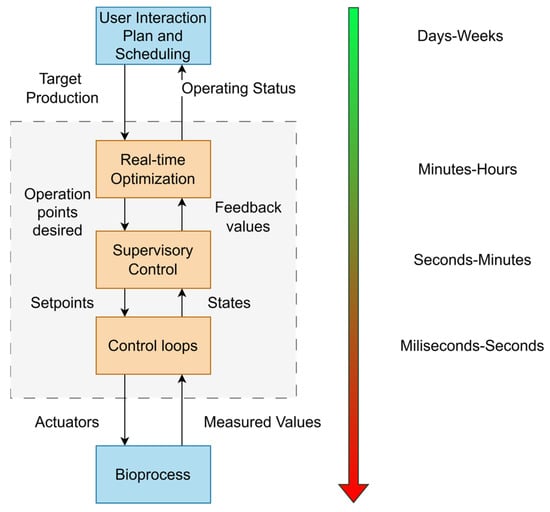
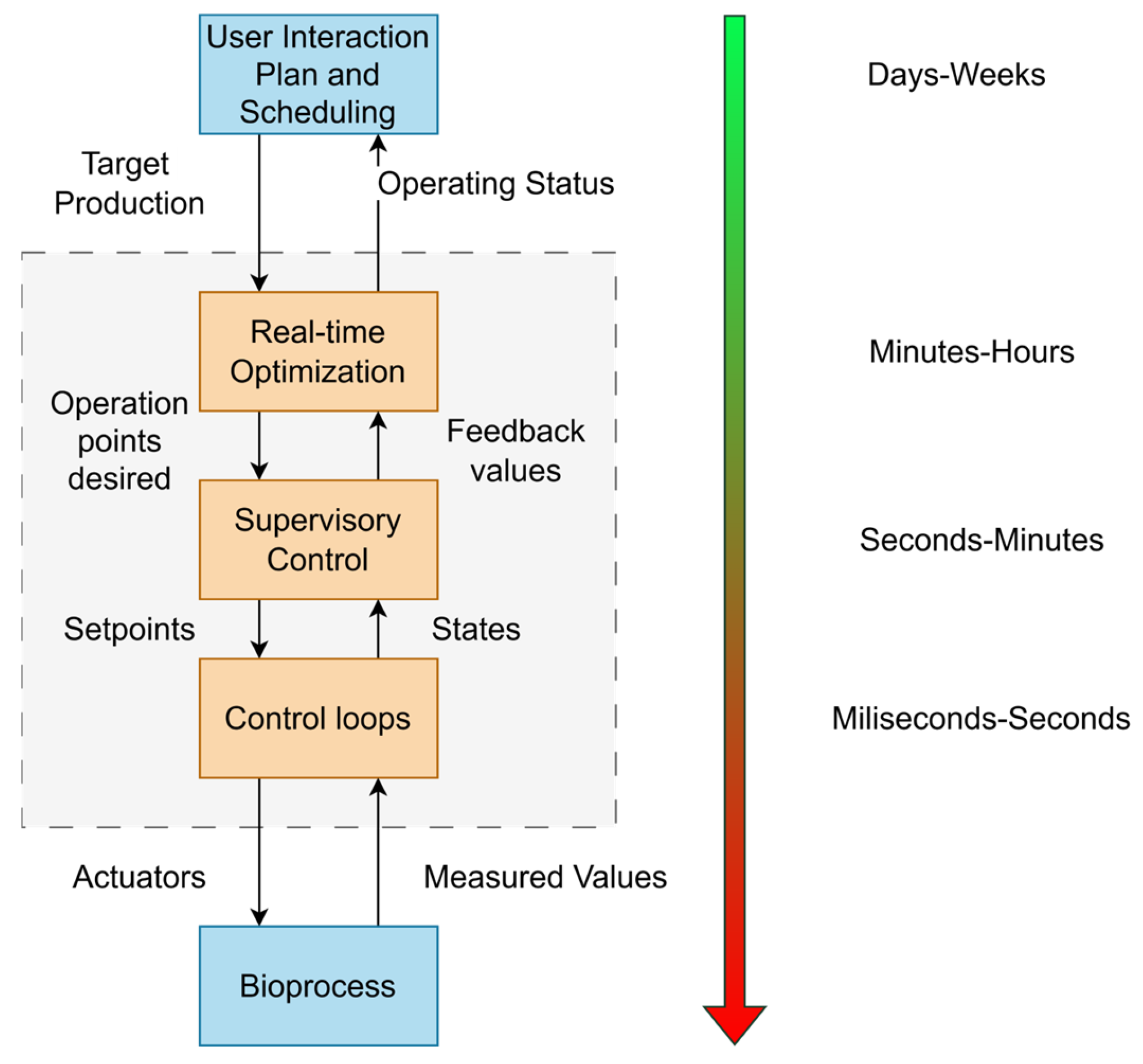
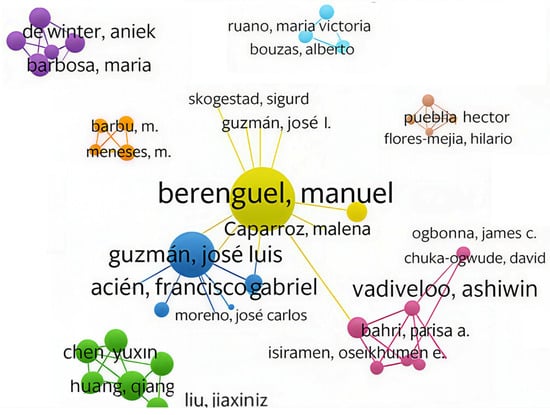
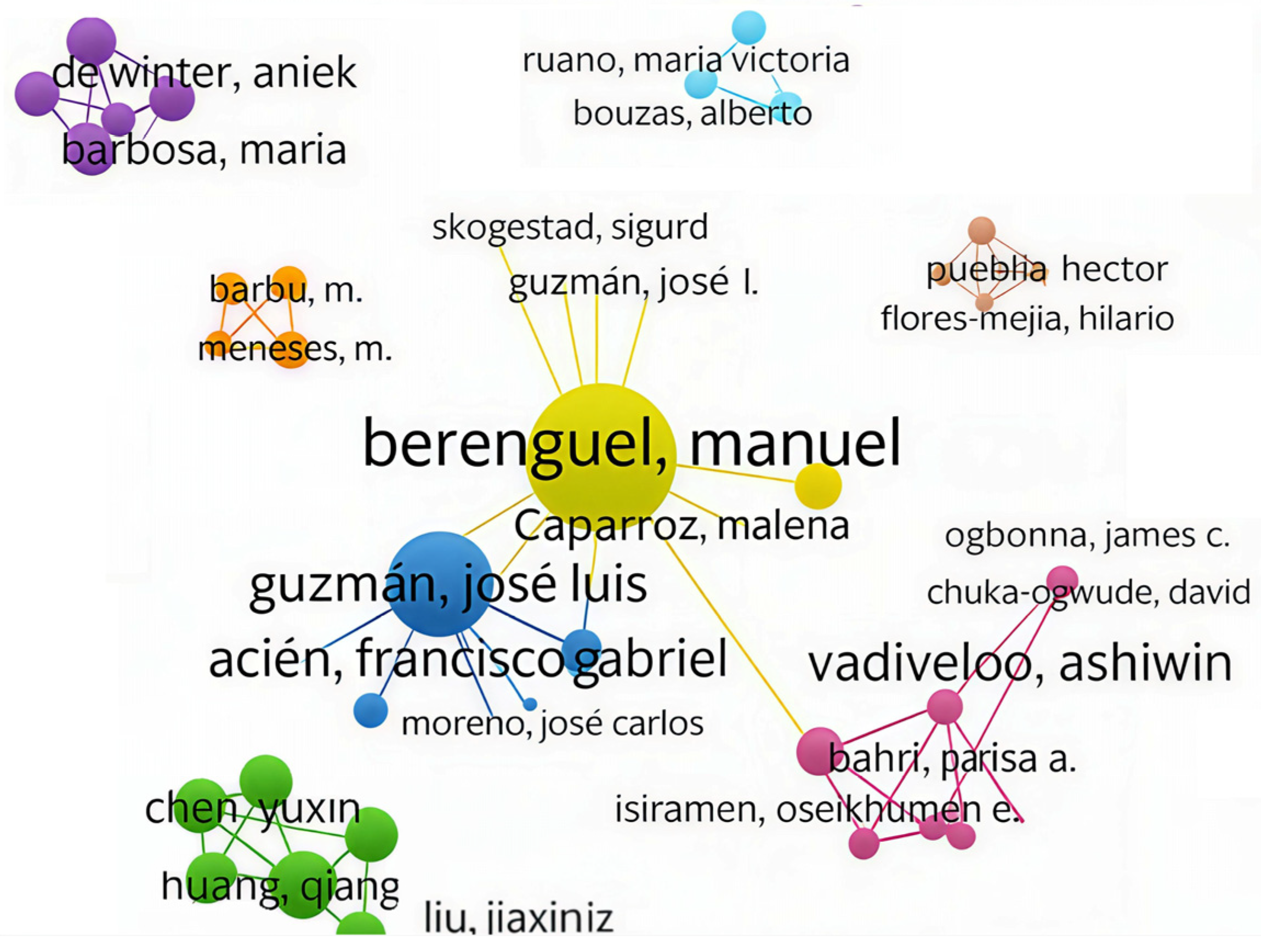
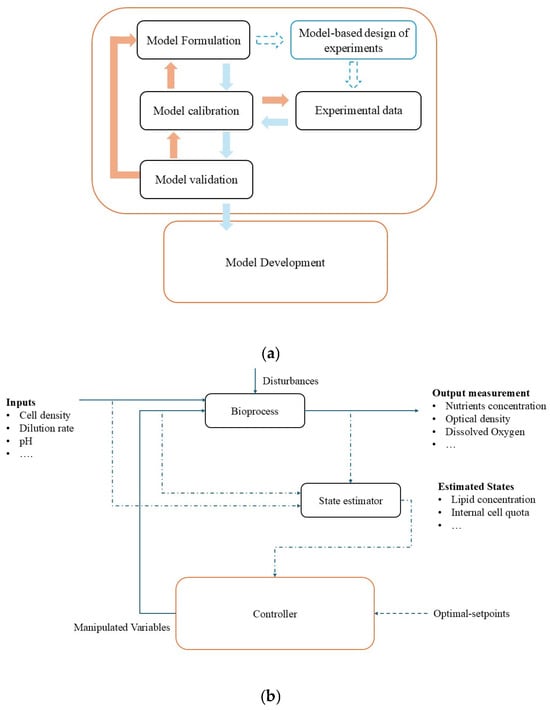
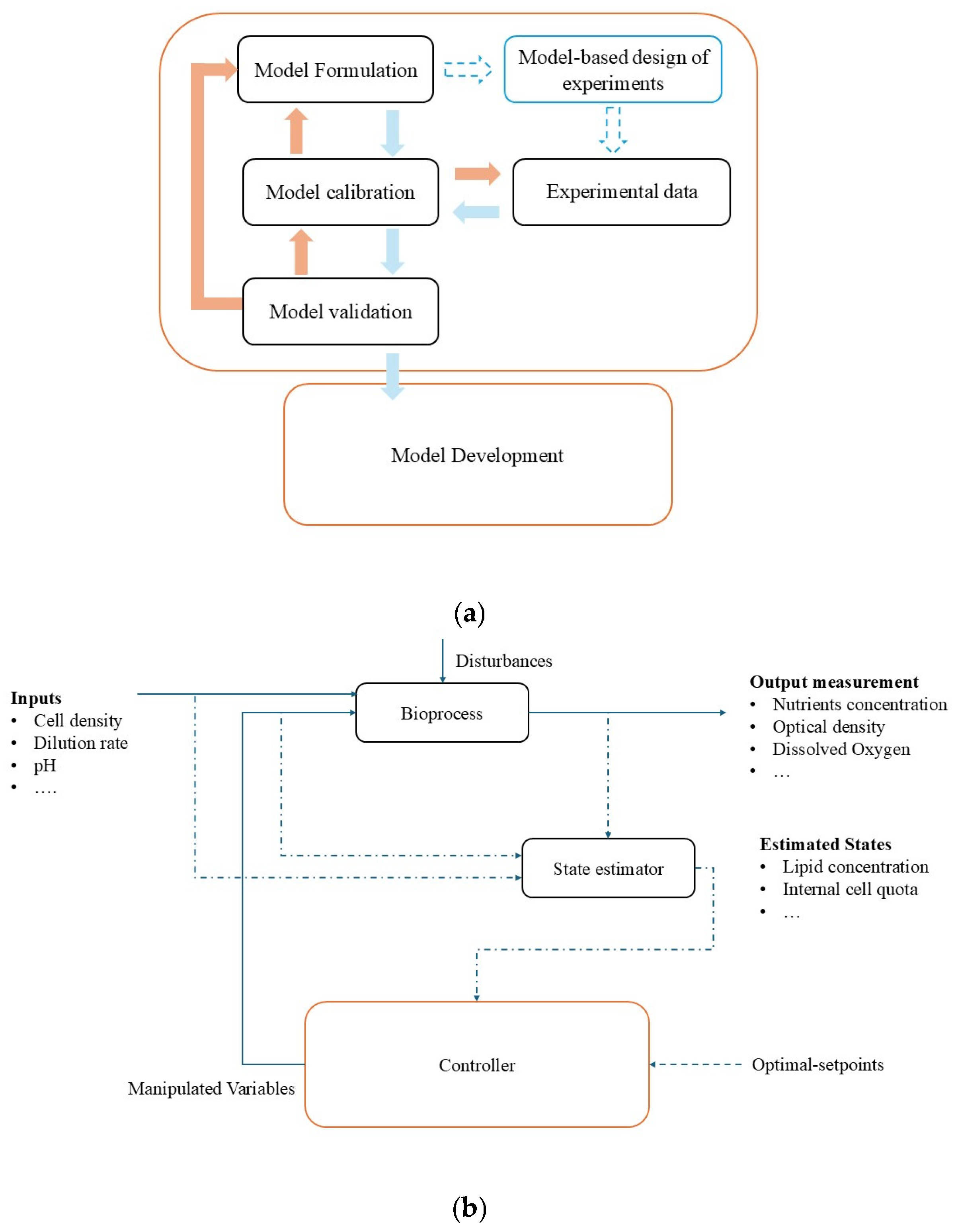
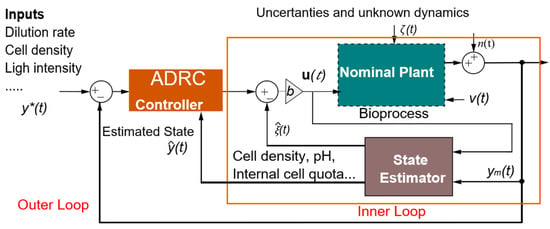
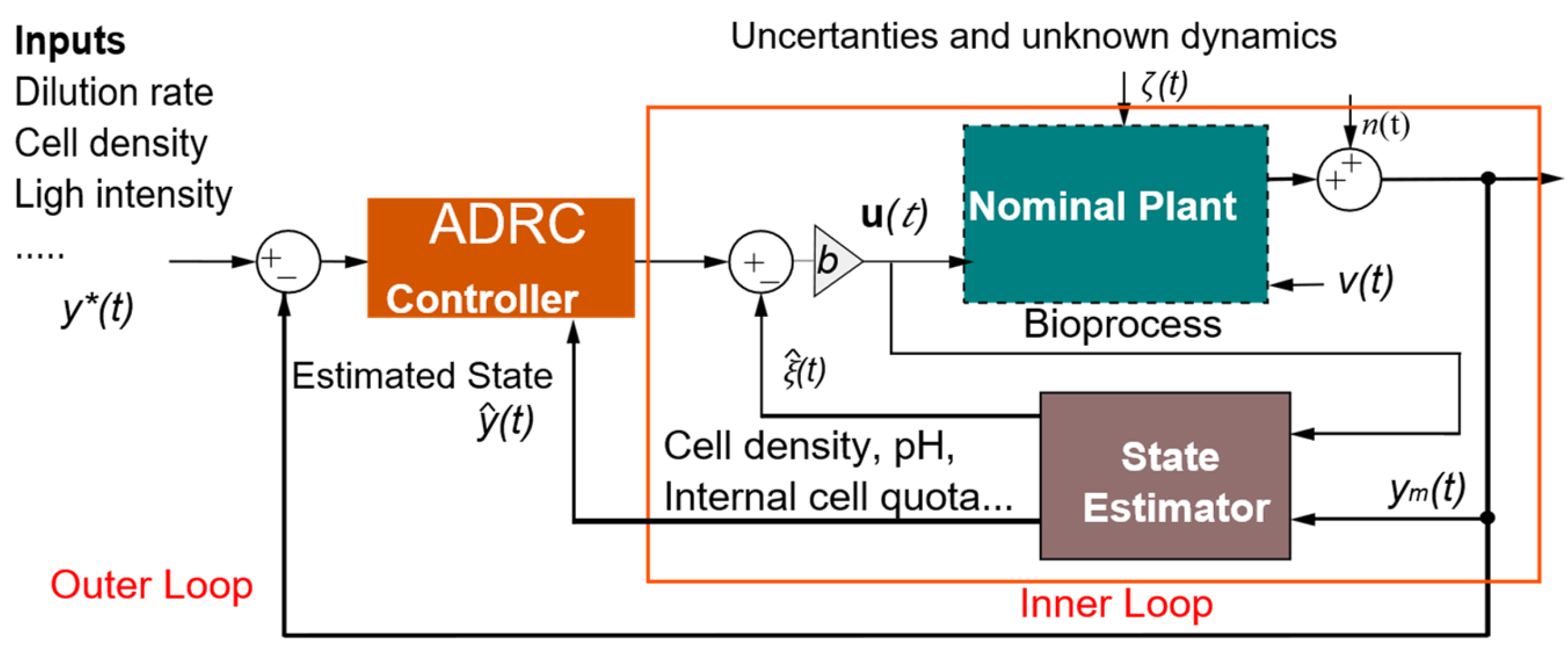
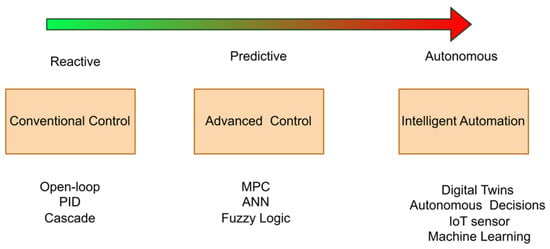
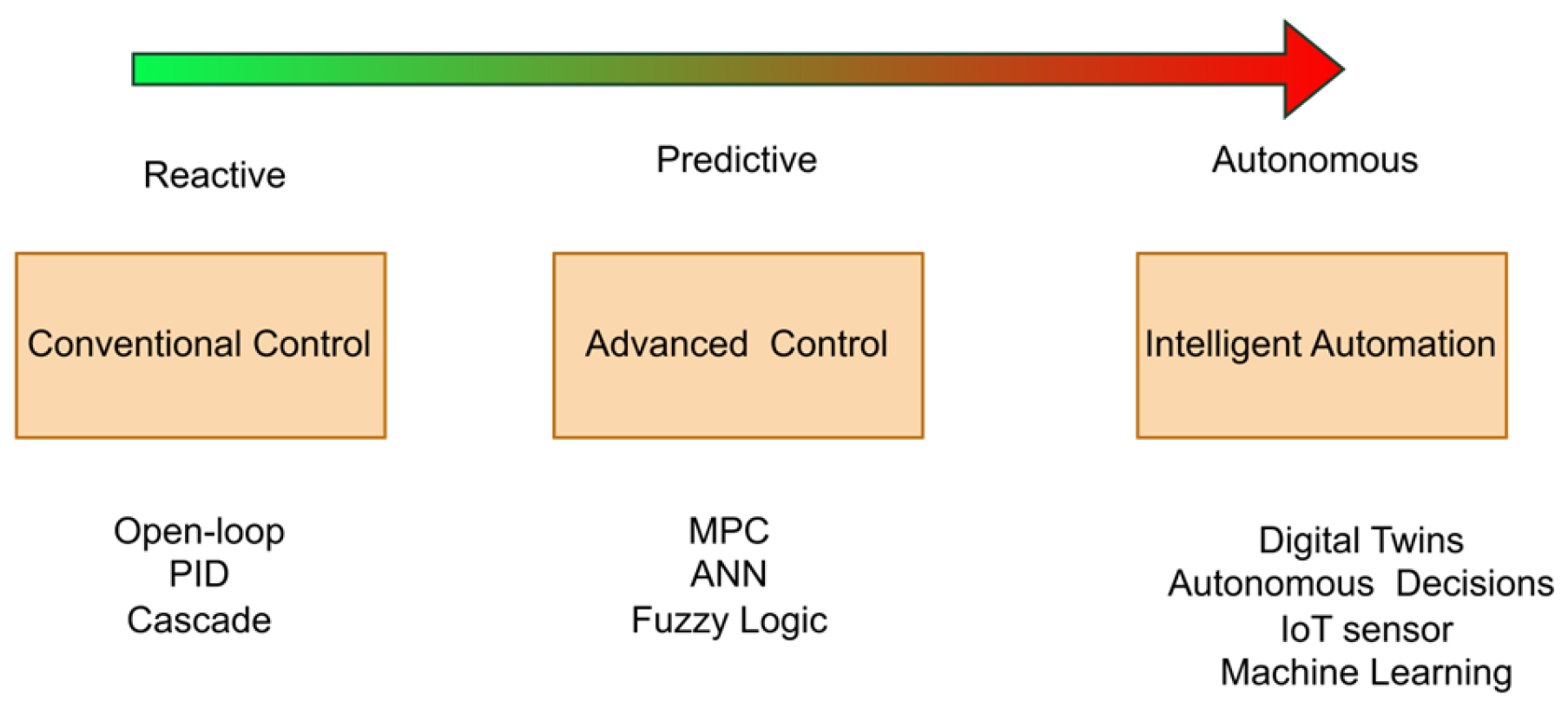
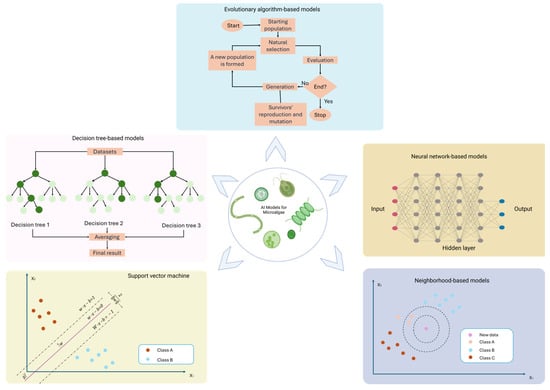
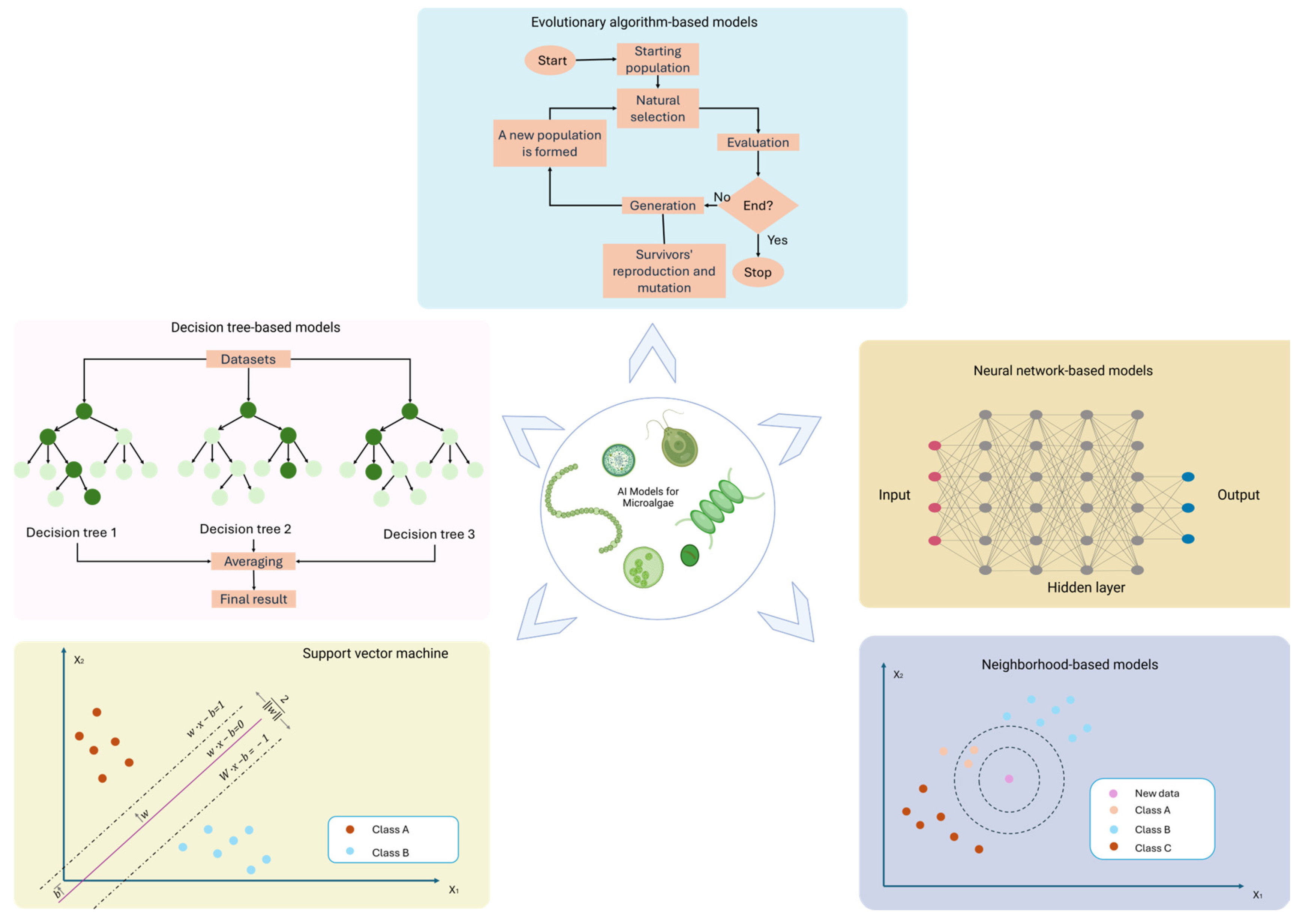
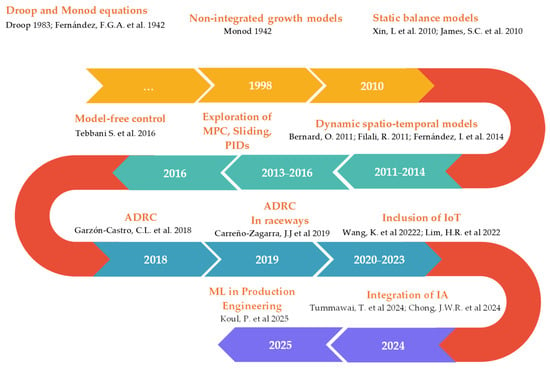
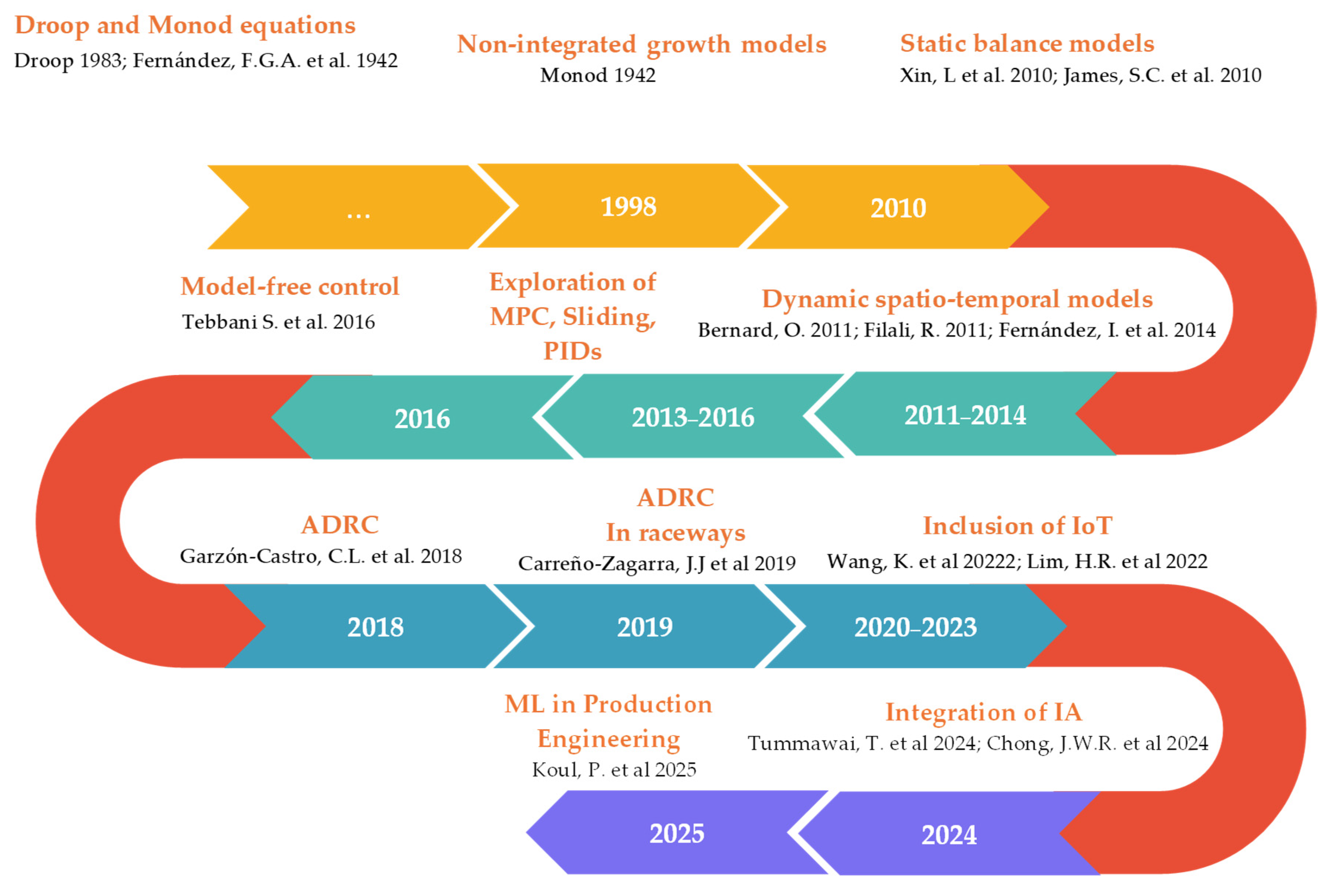
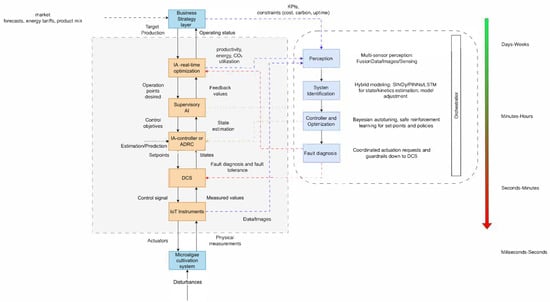
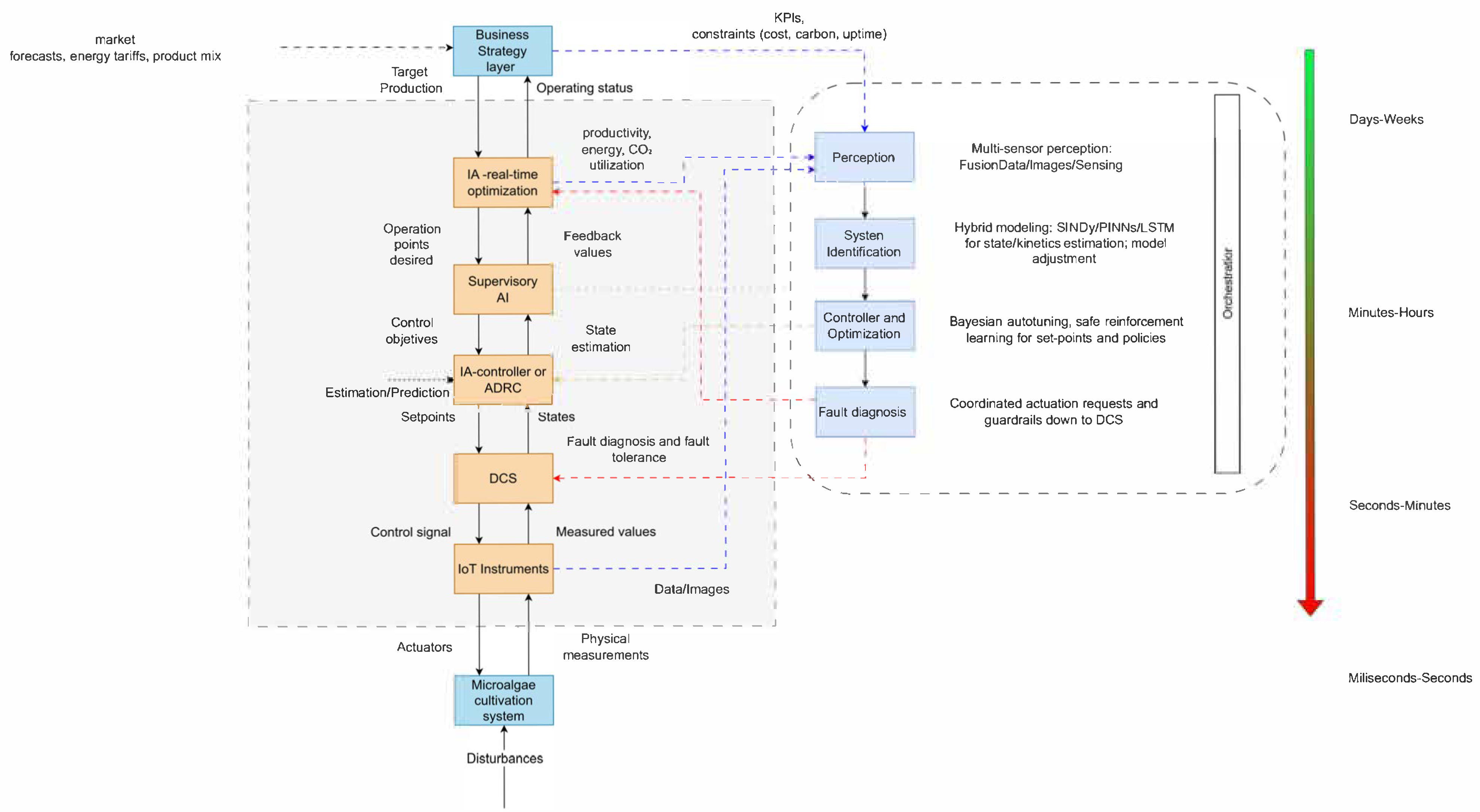
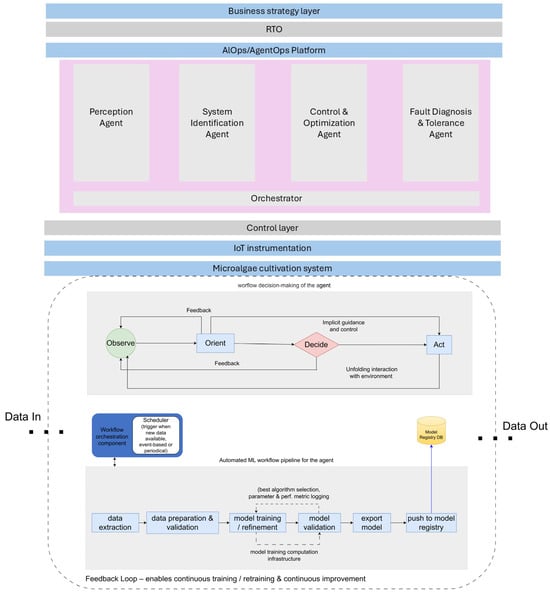
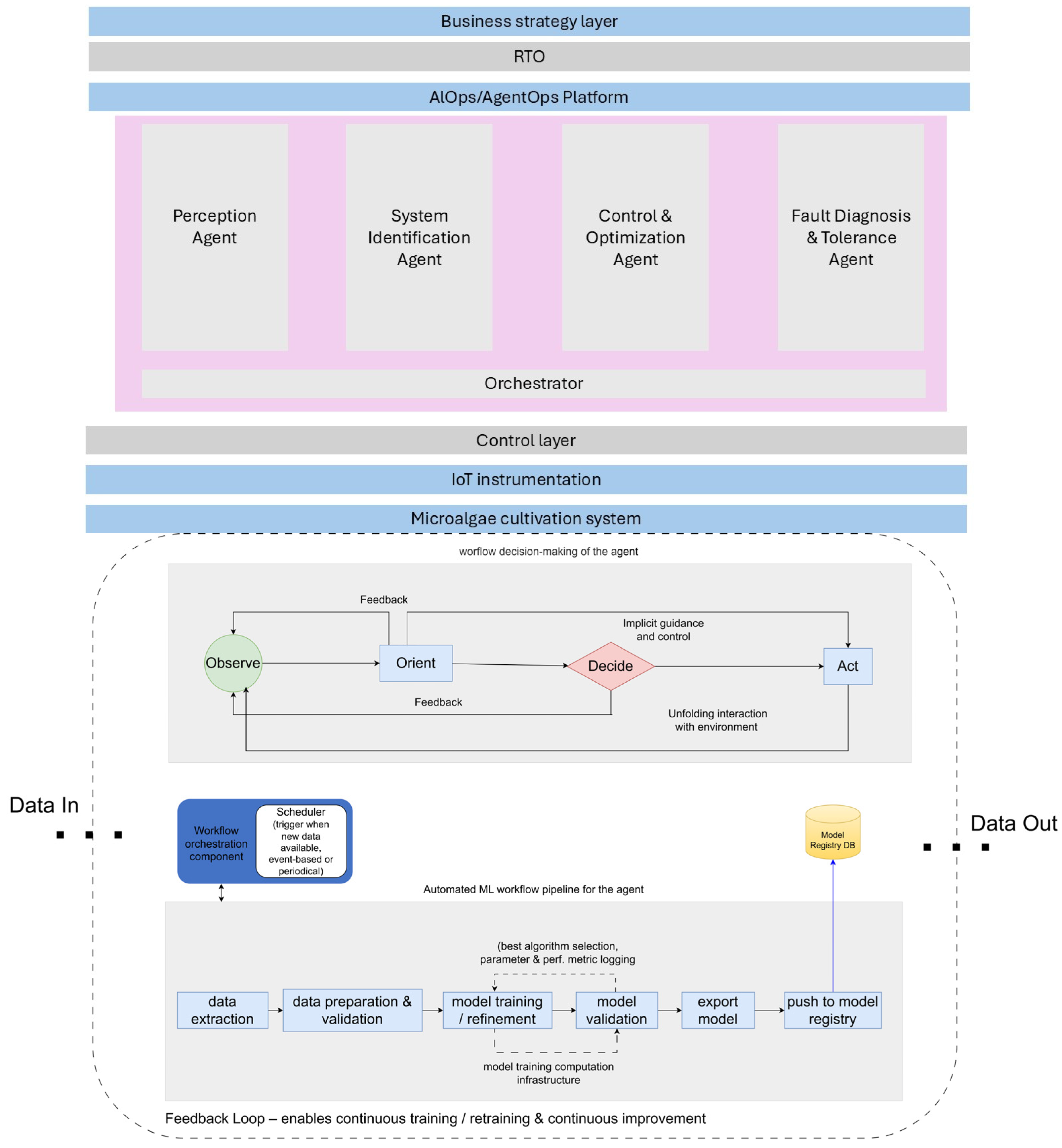

Disclaimer/Publisher’s Note: The statements, opinions and data contained in all publications are solely those of the individual author(s) and contributor(s) and not of MDPI and/or the editor(s). MDPI and/or the editor(s) disclaim responsibility for any injury to people or property resulting from any ideas, methods, instructions or products referred to in the content. |
© 2026 by the authors. Licensee MDPI, Basel, Switzerland. This article is an open access article distributed under the terms and conditions of the Creative Commons Attribution (CC BY) license.